Part spaceship, part shop, the first Vollebak Spaceshop launched in Copenhagen in June. Before it heads off to service nearby galaxies, our friends at Vollebak are sending it on a world tour of Earth first.
Over the last year our friends at Volleback have partnered with sonic powerhouse Bang & Olufsen and Saga Space Architects to build their first prototype interstellar delivery vehicle …the Vollebak Spaceshop.
The craft itself is over 1,000kg of precision engineering that offers a glimpse into a future of interplanetary kit deliveries between Earth, the Moon and Mars. It was designed with SAGA Space Architects whose work includes lunar habitats for the European Space Agency, and lighting systems to help astronauts sleep on the International Space Station. And it’s fitted with Bang & Olufsen’s iconic Beolab 5 and Beosound 2 speakers.
If you missed launch night it involved space-based clothing, Earth-based alcohol, and the sound of the Spaceshop flexing its 120 decibels of muscle with ‘Intergalactic’ by the Beastie Boys. As soon as the next destination has been selected they’ll let you know. And while you’re waiting they have 4 pieces of space-ready cargo available for testing.
It includes their Martian Aerogel Jackets which are built from the Jet Propulsion Laboratory’s hypersonic deep space parachutes that landed the last Rover on Mars – and the same aerogel that stopped it freezing in the vacuum of space, and burning up on entry. They have their awesome Full Metal Jackets engineered from 11 kilometres of disease-resistant copper that were hailed by WIRED as “the virus-killing coat of the future,” and they’ve built to explore how humans could avoid taking diseases from Earth up into space.
You’ll also find electromagnetic Shielding Suits embedded with pure silver that block WiFi, Bluetooth, Ku-band satellites and radar systems, and deflect mid and long wave infrared radiation so they can’t be seen on infrared cameras. And last up they have the world’s first Anodised Jacket. Built with metallic insulation originally engineered by NASA to stop their spacecraft freezing in space, each jacket is fused with a near-invisible layer of metal from a galvanic bath that makes you appear cold or even invisible to infrared cameras.
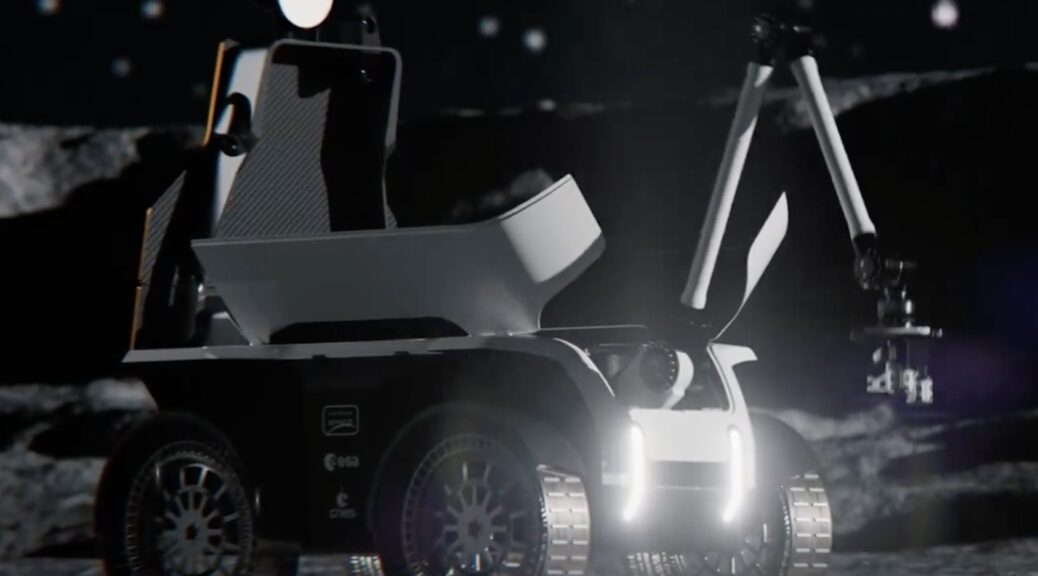
The first outing of the European lunar rover MONA LUNA reflects the collective work of Venturi Space’s three sites. Monaco, Switzerland and France worked hand‑in‑hand to design, develop, assemble and test the rover.
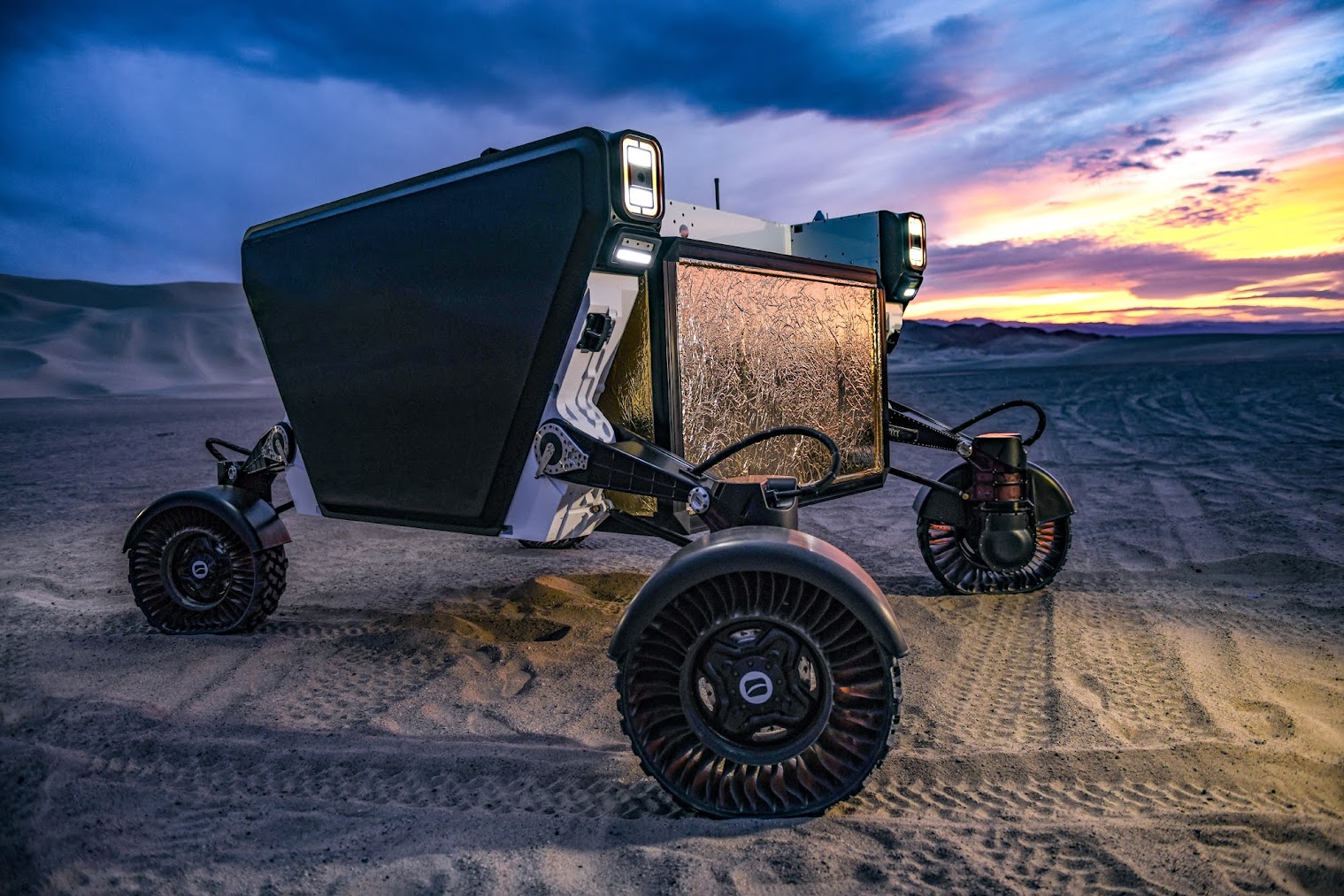
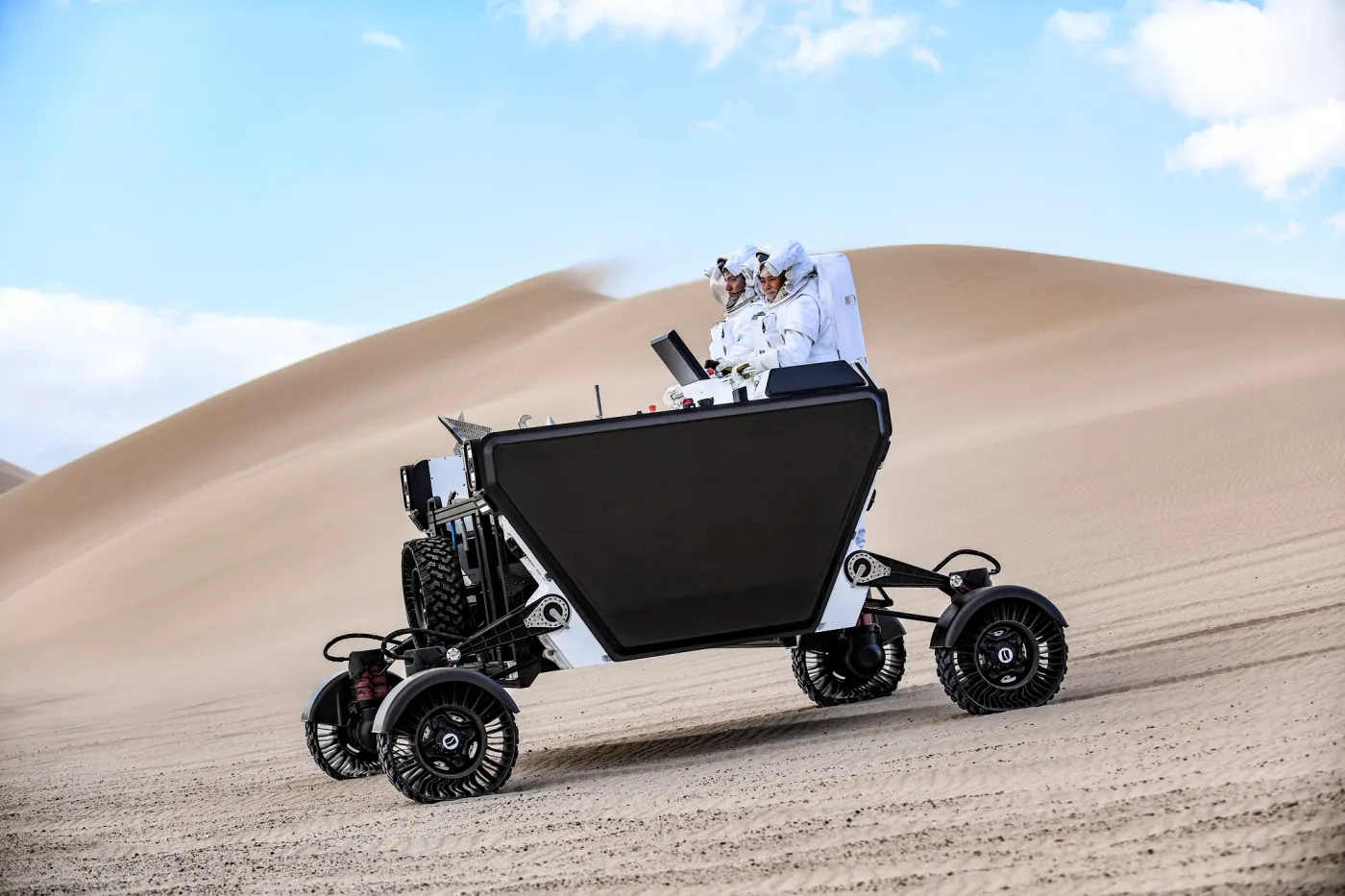
Weighing 750 kg (extendable to 1,000 kg), MONA LUNA will serve two primary objectives: to explore the lunar surface and to test critical technologies for sustainable lunar mobility. Thanks to its four wheel‑drive and four‑wheel steering system, along with passive‑damping suspension, MONA LUNA climbed and descended slopes of up to 33 degrees, exceeding initial expectations. The first results confirm the rover’s potential: The contact area of the hyper‑deformable wheels is exceptional, both on loose soil and rolling terrain.
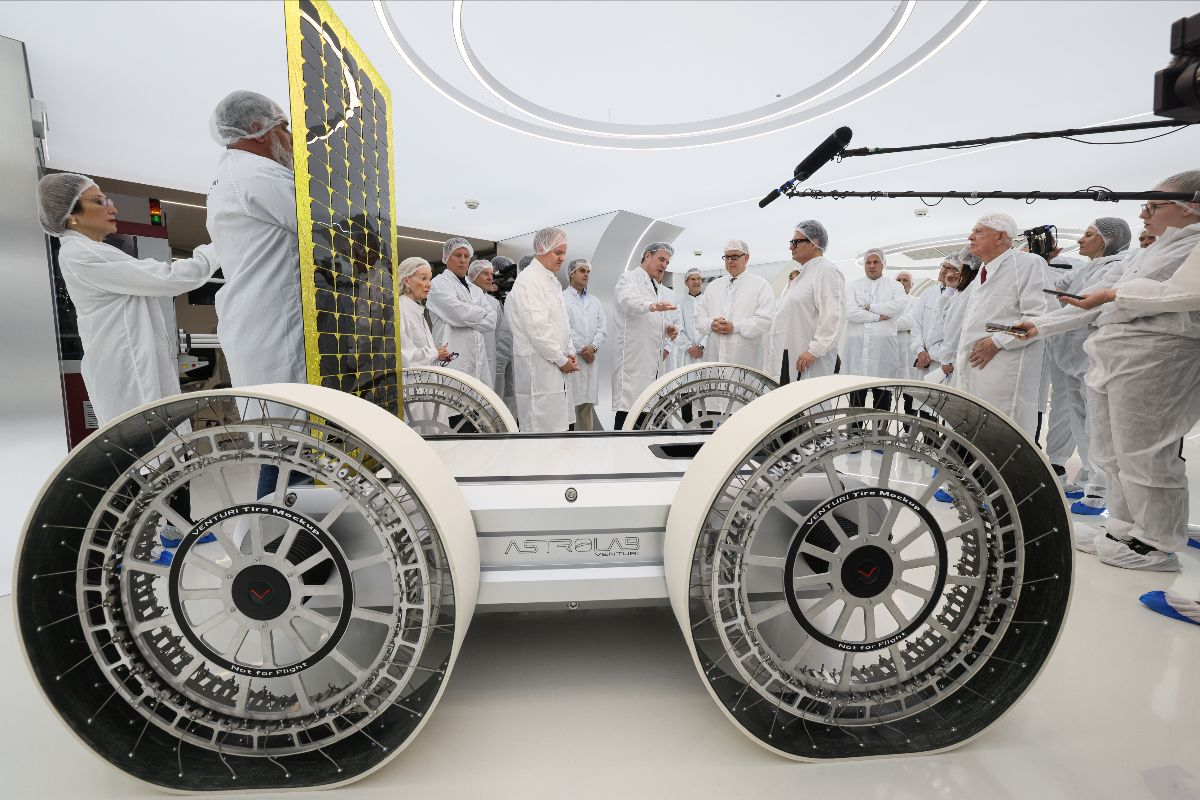
This confirms the findings of intensive tests carried out at NASA between 2022 and 2025,Traction exceeds forecasts, Large rocky obstacles are crossed effortlessly, Dynamic stability on slopes meets programme requirements, The onboard electronic systems demonstrated excellent operational performance. Designed to support the ambitions of the European Space Agency (ESA) and France’s Centre National d’Études Spatiales (CNES), MONA LUNA already incorporates technologies that will operate on the Moon next summer — but on board another rover: FLIP. This vehicle will be equipped with the same hyper‑deformable wheels, batteries, heating systems and temperature sensors as the European rover. FLIP is developed by the North American company Venturi Astrolab, Venturi Space’s strategic partner. FLIP will also benefit from another innovative technology developed by Venturi Space: the mechanical system enabling the rover to exit the lunar lander.
Another shared feature between MONA LUNA and FLIP is their bodywork, designed by Sacha Lakic.In parallel with the MONA LUNA development programme, Venturi Space continues to expand its industrial ecosystem and will lay the first stone of its flagship facility next spring: a site of more than 10,000 m² in Toulouse, just steps away from the Centre National d’Études Spatiales (CNES). It is here that, in the first half of 2028, 150 engineers will work on the design and manufacturing of MONA LUNA, in close collaboration with the Swiss and Monegasque entities responsible for the hyper‑deformable wheels, heating systems, cryogenic materials, the rover‑lander egress system, and the high‑performance batteries.
Quotes Daniel Neuenschwander, Director of Human and Robotic Exploration at the ESA: “I was truly impressed by the way MONA LUNA handled LUNA’s challenging terrain. Watching its wheels deform and adapt to the regolith, slopes and rocks… it is remarkable. If MONA LUNA were to be selected for one of our missions, it would be a tremendous opportunity for Europe.”
Gildo Pastor, President of Venturi Space: “Seeing MONA LUNA operate on the legendary LUNA site is a profound source of pride. This rover demonstrates the performance of our wheels, our suspension systems, our electronics… and therefore the quality of the work achieved by all our teams in Toulouse, Monaco and Switzerland. We know we have only completed 1% of the journey that, I hope, will take us to the Moon.”
Dr. Antonio Delfino, Director of Space Affairs at Venturi Space: “These driving tests were primarily dedicated to locomotion. We wanted to understand how MONA LUNA behaves on loose soil, on slopes and when facing significant obstacles. The results exceed our expectations. The ability of these wheels to ‘float’ on the surface is essential to avoid becoming bogged down in lunar regolith.”
coming soon- NASA CHRISTMAS SPACE MEMORABILIA AUCTIONIS SATURDAY, DEC. 6TH PLACE BIDS VIRTUALLY AT NOON EST
Our friends at Bid Again Auctions of Orlando have more than 200 lots of holiday cheer for that space lover on your gift list at the Saturday, Dec. 6th virtual “NASA Christmas 2025 Space Memorabilia Auction,” a charity fundraiser for the American Space Museum in Downtown Titusville, Florida.
Pre-bids are being taken now on this rich collection of space items. The final hammer falls beginning at 12 noon EST on Dec. 6. The 217 lots range from a rich collection of authentic moonwalker autographs to NASA photographs to real Space Shuttle Thermal Protection Tile. There are dozens of lots with space flown hardware, and even insulation “Kapton foil” flown to the Moon and back covering the Apollo Command Modules.
Auctioneer Chuck Jeffery, and ASM’s collection analyst, had hand-picked some amazing artifacts of the space age that will satisfy any collector at any level. These auctions support the non-profit museum with an added charity fee of 20% that is the bidders in-kind donation to the U.S. Space Walk of Fame Foundation. This is the 41st American Space Museum Charity Space Memorabilia Auction conducted by Bid Again Auctions. For the Silo, Jarrod Barker.
Questions about auction items? Call Bid Again Auctions at: (407) 947-8954 or email: [email protected]. Click on the text block below to preview all auction lots.
Our friends at kommandostore talk about the Cold War on their site so often, it’s become one of their defining aesthetics…..and that’s a good thing- read on!
Grand armies and weapons are arguably less than half of the story.
Many of the cold war ‘battles’ from the 1950s through the 1990s took place in the minds and on the wrists of millions of people. Some might say they certainly still do…
Rogue media campaigns, protests & activism, black ops — they defined the hottest parts of the Cold War. But what if we told you that the watch you were wearing was just as important? The Soviet Union sure thought so…
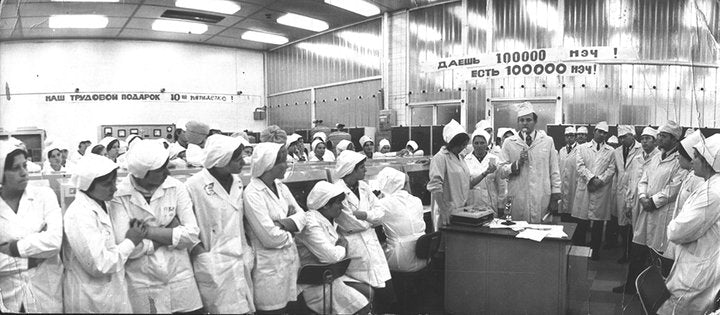
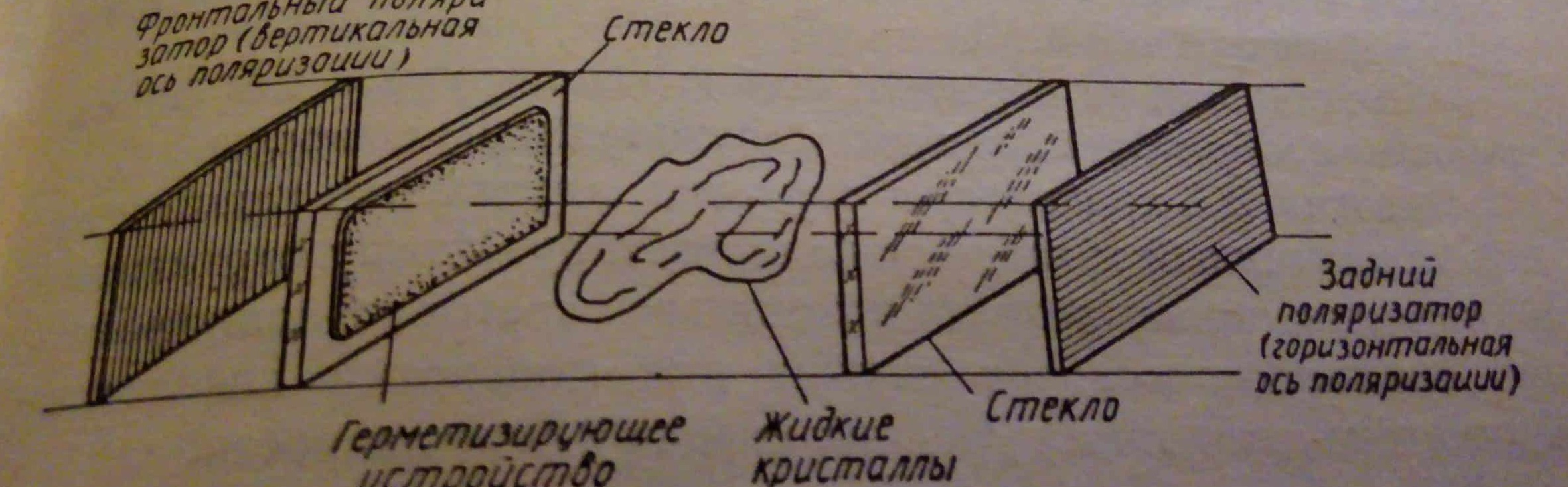
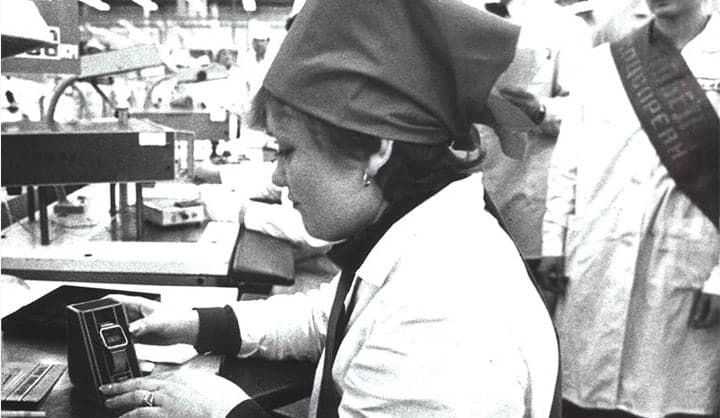
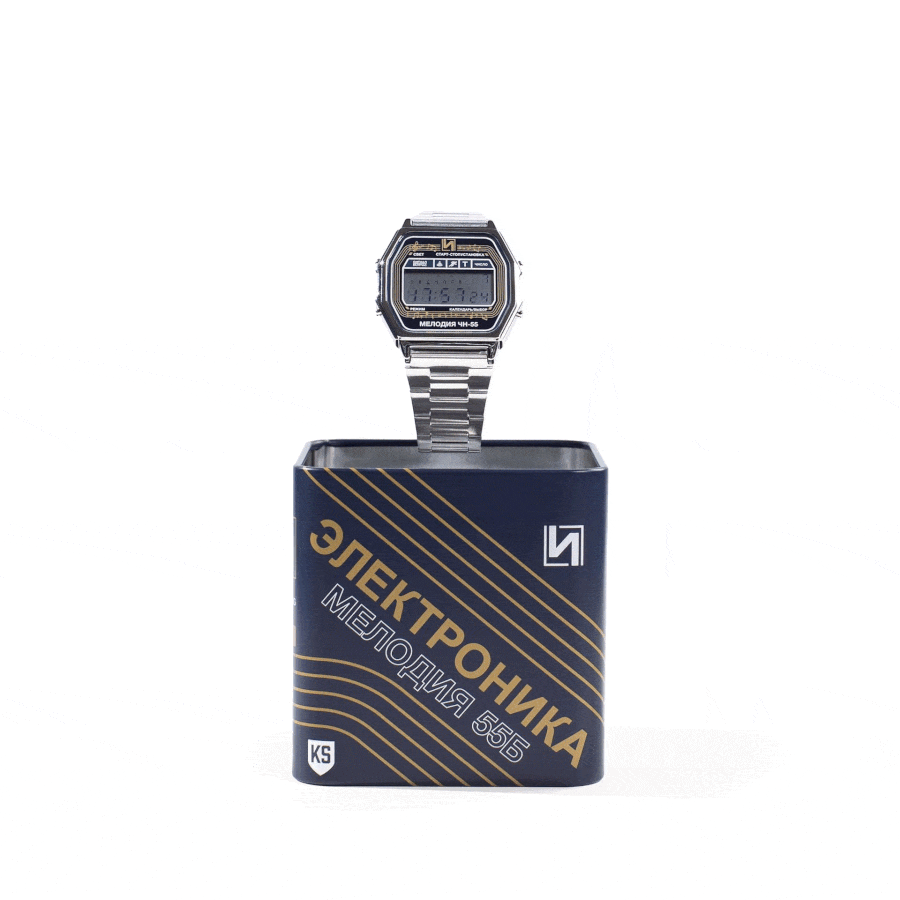
Having gotten sucked into the almost endless lore rabbithole of watches, the first thing that kommandostore sought to bring back from obscurity was the Elektronika 55B — the soviet union’s most popular digital watch that went the way of… well, the Soviet Union… When it collapsed in ’91.
Above all else, there’s one story about this watch that truly stands on its own, a story that will make you realize that there is much more to this little watch that jovially plays chiptune soviet music…
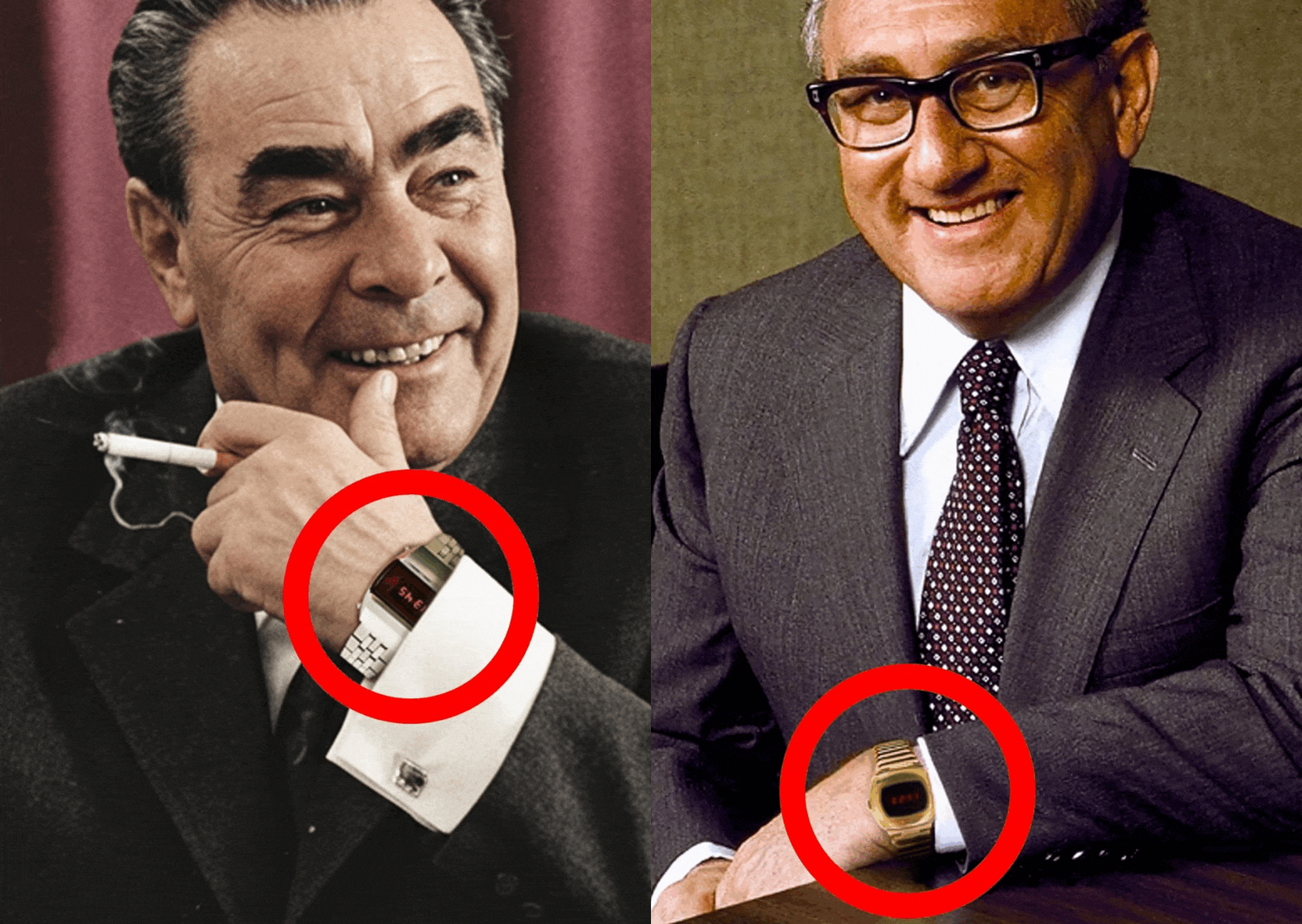
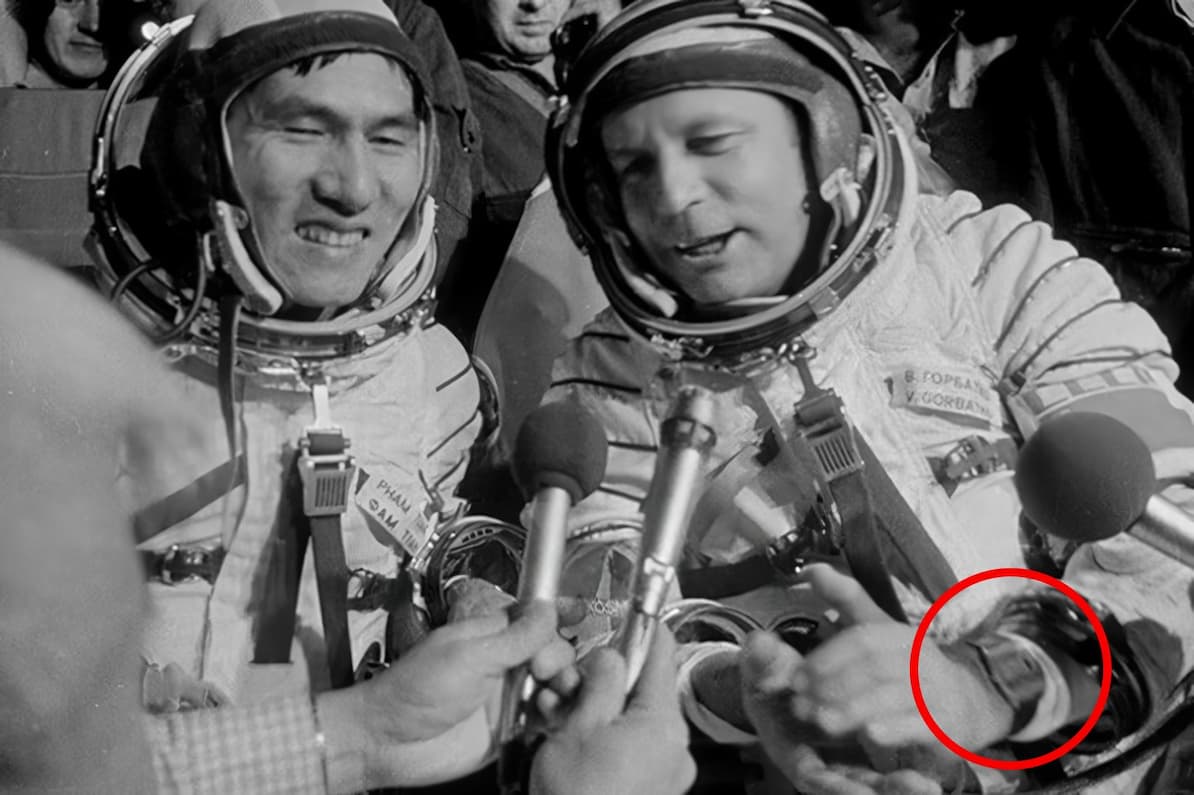
It involves two of the most powerful men in the world, Leonid Brezhnev and Henry Kissinger convening and comparing their new digital watches.
Ok, they weren’t really wearing the watches in that photo, but such an encounter really did happen between the two gentlemen in the early 70s, one that subtly let the United States know that the Soviets were right on the US’s tail for semiconductor technology.
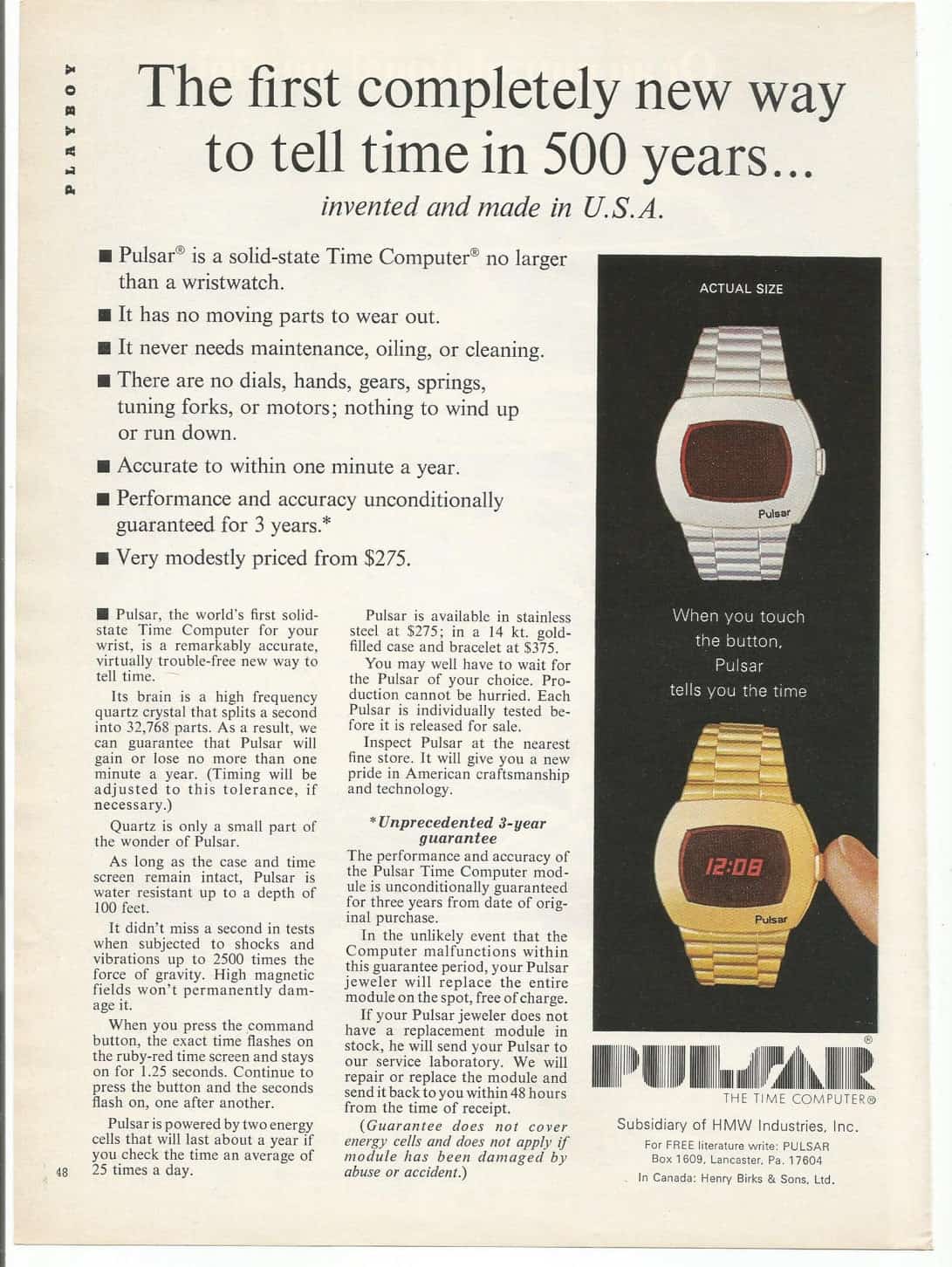
On a somewhat-routine visit to Moscow, US Secretary of State Henry Kissinger wore a Pulsar P2 Watch — one of the very first digital watches. Known for it’s striking red LED display and appearance on the wrist of none other than James bond.
It also carried a hefty price tag, with the 21k gold edition costing enough to buy you a car in today’s money.
You tell us, is $1800 usd/ $2,526 cad in today’s money worth it for one of the two base models?
The meeting was with Leonid Brezhnev, General Secretary of the Soviet Union. He remarked that he did indeed like Kissinger’s watch, being a man of taste.
Then he told Kissinger that the USSR had already developed a prototype using the very same technology.
Kissinger was reportedly astonished — and was presented with a functioning Soviet-Made digital wristwatch, the Elektronika B6-02. Featuring CMOS circuits, it was blocky, brutalist, and affordable enough for practically anyone to buy when it officially launched.
The whole Elektronika series carried this statement — the latest fancy tech of the west is cool, but when it’s done the soviet way, for way cheaper, it’s not a luxury to be worn by only the elites.
It didn’t take a horology enthusiast to buy and wear this watch. It’s Kalashnikov-esque ubiquity meant it was worn by everyone from party members to coal miners.
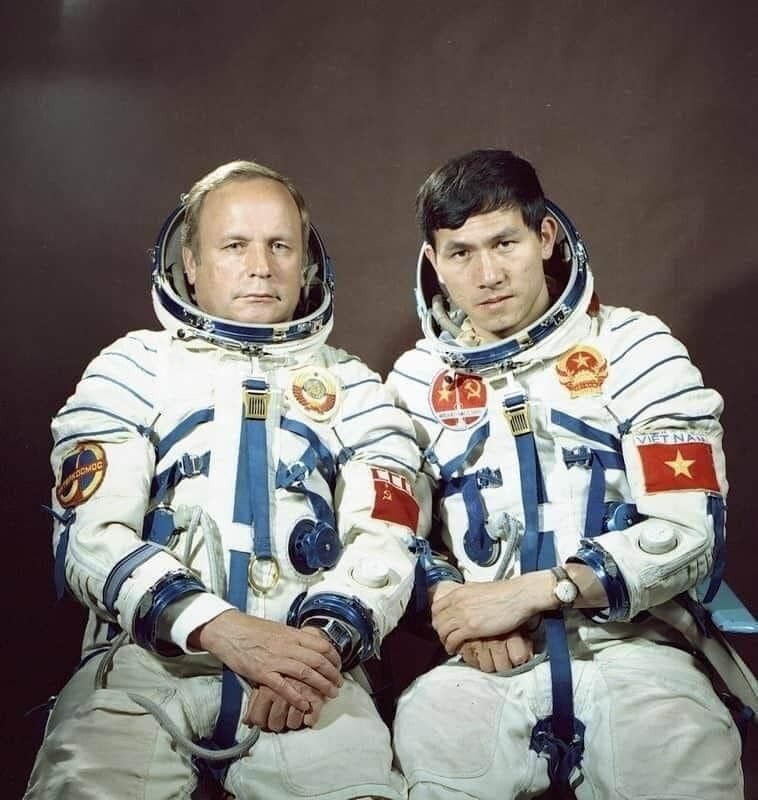
Sure, in 1969 we brought a luxury-watch masterpiece, the Omega Speedmaster, to the Moon before the Soviets were able to. But as a tool of propaganda, the USSR might have had us beat, and the Elektronika 5 appeared in space several more times…
We found it intriguing and somewhat disheartening that Elektronika, what seemed to be the people’s choice, was snuffed out much in the same time period as the Soviet union.
In a world full of Casios & Timexes, who can’t help but succumb to the charm of the plucky Elektronika, so why not give it the wrist time it deserves…because it is now available once again and this time in a near perfect reproduction right down to the packaging.
A 1:1 functional replica of the original Elektronika with 4 new Slav-approved “Melody” alarms. Sanctioned to the second-hand market (pun intended), thankfully kommandostore thought that the watch deserved a proper revival after its unceremonious disappearance following the collapse of the USSR.
Just like the original, it’s an affordable and reliable piece with just enough fun to get even the most uptight horologists asking you questions. But unlike the OGs, the sad truth of capitalism is that we’re slaves to supply and demand. They are running out fast, and even though there are plans to quickly continue production, there may be a slight gap. So, if you’re interested, this is kind of a last call.
Click the following link to place your order while supplies last.
ALUULA Composites, super-strong, lightweight polyethylene material is now being used to develop expandable habitats for NASA’s astronauts to live safely and comfortably on the moon for the 2027 planned landing.
This small company on Canada’s west coast is playing a big role to help astronauts return and orbit the moon in 2026.
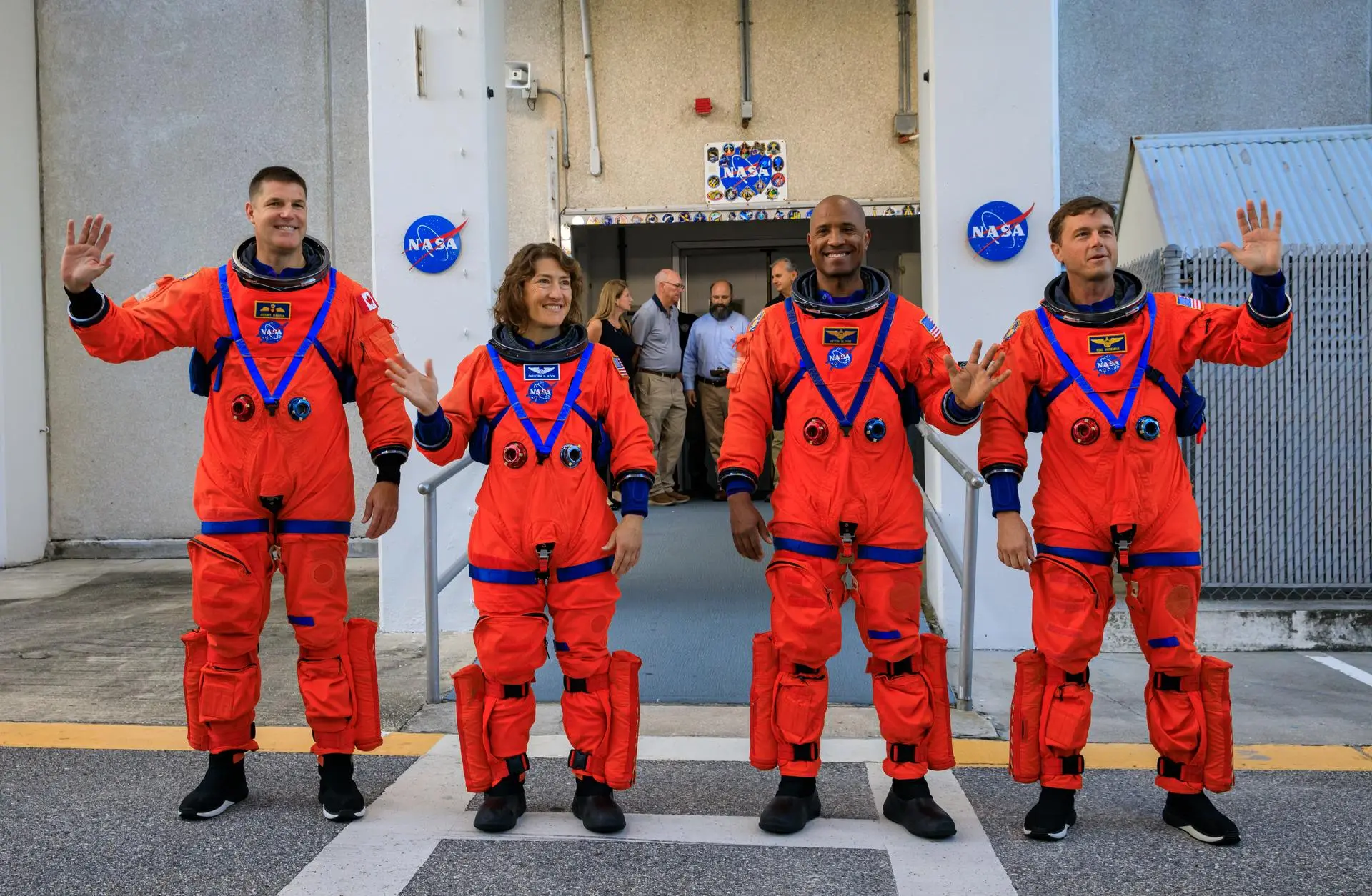
Artemis II crew members (from left) CSA (Canadian Space Agency) astronaut Jeremy Hansen, and NASA astronauts Christina Koch, Victor Glover, and Reid Wiseman walk out of Astronaut Crew Quarters inside the Neil Armstrong Operations and Checkout Building to the Artemis crew transportation vehicles prior to traveling to Launch Pad 39B as part of an integrated ground systems test at Kennedy Space Center in Florida photo: NASA
ALUULA Composites recently signed an agreement with Max Space, an American company, to use its innovative composite material to build space habitats on the moon. The company’s ultra-high-molecular-weight polyethylene (UHMWPE) laminate will be used to create a large living and working area for NASA’s astronauts when they return to the moon in September 2026.
The innovative material was selected because it has eight times the strength-to-weight ratio of steel and is extremely durable, which is ideal for space travel.
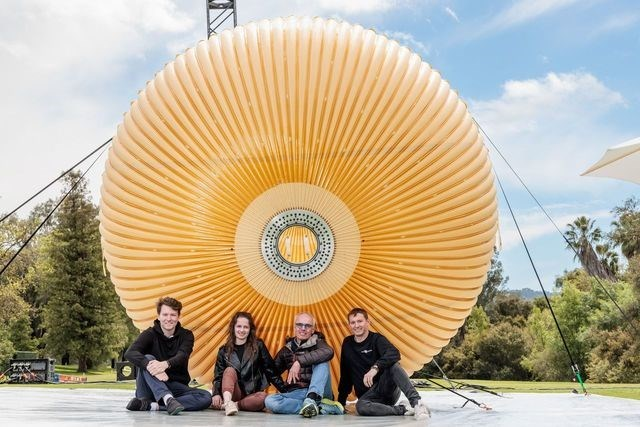
The Max Space team with their new expandable space habitat. photo: Max Space
The first Max Space inflatable space habitat is slated to launch with SpaceX in 2026. The Max Space inflatables can be delivered into space in very small packages and then unfolded and expanded to create a much larger work space. For the Silo, Paul Clarke.
VENTURI SPACE PRESENTS MONA LUNA, THE EUROPEAN LUNAR ROVERMONA LUNA, designed by Sacha Lakic
Paris Air Show, Le Bourget, June 2025 – Venturi Space unveils MONA LUNA, its 100% European-built lunar rover. Designed to support the ambitions of the European Space Agency and the French CNES, the vehicle will be built at Venturi Space France’s facility in Toulouse. The ultimate aim is to provide Europe with a lunar-capable rover by 2030.
European autonomy in lunar mobility is a major strategic challenge. Venturi Space is helping to make that a reality with MONA LUNA, its upcoming lunar rover designed to meet the needs of ESA and national European space agencies. The vehicle will further Europe’s efforts to achieve technological independence in the field of lunar mobility, enabling it to get ahead of the industrial curve and achieve its space ambitions.
A project led by Venturi Space France Venturi Space France will oversee MONA LUNA’s development and space qualification from its base in Toulouse, coordinating every aspect of the process: onboard electronics, avionics, space-to-ground links, energy management systems, assembly, final integration, and acceptance testing in readiness for space flight. All with one clear objective: to deploy MONA LUNA at the Moon’s South Pole by 2030.
Backed by the ESA and CNES The European Space Agency is supporting Venturi Space’s efforts to design and develop the critical technologies required for a large lunar rover, capable of surviving multiple lunar nights. ESA’s support validates Venturi Space’s approach and highlights its expertise. The project will draw on the experience acquired from the programmes to develop the FLIP and FLEX rovers under a strategic partnership with US-based company Venturi Astrolab, Inc. Venturi Space is currently designing and building the hyper-deformable wheels that will be fitted to those vehicles, along with the associated electrical systems (in Switzerland) and high-performance batteries (in Monaco).
Using technology made in Europe MONA LUNA is designed to be carried into space by the Ariane 6.4 launch system and landed on the Moon’s surface by the European Argonaut lunar lander, while the rover itself will be equipped with a robotic arm to handle scientific instruments and payloads. It will be: – electrically powered, recharging via solar panels, – designed to move autonomously, – equipped with three high-performance batteries, – capable of carrying a wide range of payloads, – designed to survive multiple lunar nights, – capable of a top speed of 20 km/h, – designed to weigh a total of 750 kg.
The rover could also be used in an emergency to carry an astronaut in difficulty, as envisaged by the ESA and CNES in their feasibility studies. A clear commercial purpose MONA LUNA’s maiden mission will focus on purely scientific applications, but future deployments could be organized to meet demand from the European private sector for a variety of purposes, including carrying payloads to the South Pole, exploiting lunar resources (such as helium-3) in situ, or even public outreach campaigns. This approach will help establish a sustainable long-term economic model for the rover, in much the same way as the early development of terrestrial mobility.
Gildo Pastor, President of Venturi Space: “I’m still an explorer, first and foremost. Space is a new frontier, and MONA LUNA is how we are actually going to broach it. Alongside Europe, we aim to build an autonomous lunar exploration capability to meet the scientific, economic, and strategic challenges of tomorrow.”
Dr. Antonio Delfino, Director of Space Affairs at Venturi Space: “Our primary focus is to make ourselves fully available to the ESA and European national space agencies. With MONA LUNA, we aim to deliver major technological breakthroughs that will pave the way for extended lunar mobility.”
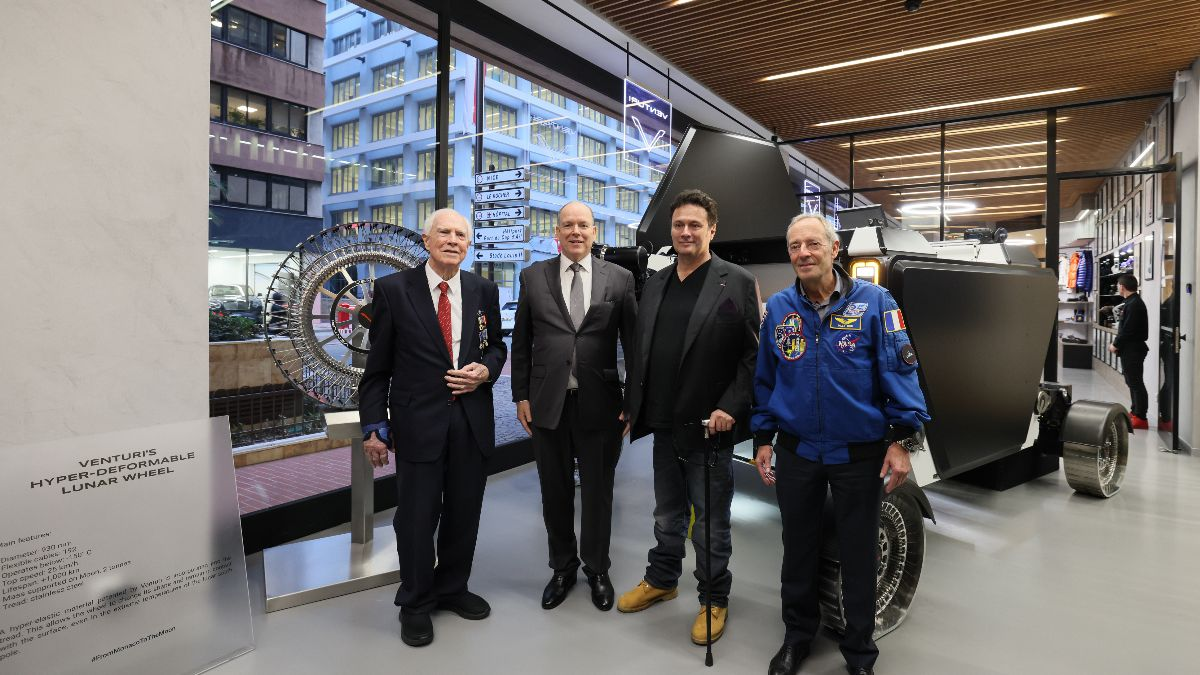
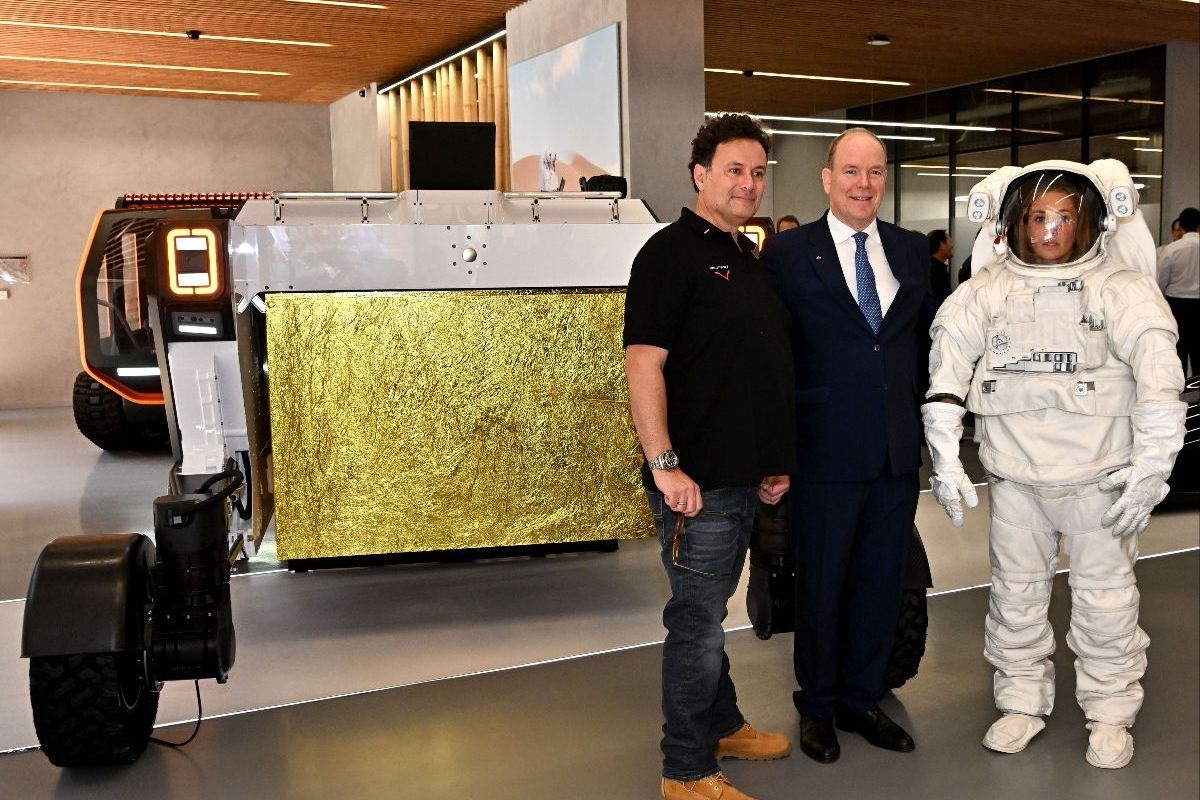
PRINCE ALBERT II OF MONACO, APOLLO 15 COMMANDER DAVID SCOTT AND ASTRONAUT JEAN-FRANCOIS CLERVOY VISITING VENTURI SPACE
Monaco, November 2024 – Gildo Pastor, President of the Monegasque company Venturi Space, welcomed HSH Prince Albert II of Monaco, General David Scott – the first person to have driven a rover on the Moon and Commander of the Apollo 15 mission – and astronaut Jean-François Clervoy.
As a prelude to the lunar missions in which Venturi Space will participate in 2025 and 2026, its President, Gildo Pastor, invited Prince Albert II of Monaco and former astronauts David Scott and Jean-François Clervoy to learn more about the upcoming programme and the advanced technologies developed by Venturi Space’s European bases (Monaco, Switzerland, and France) as part of their collaboration with the North American strategic partner, Venturi Astrolab, Inc. This US-based entity is developing multi-purpose rovers optimised for the needs of the lunar South Pole: FLIP, which will become operational in 2025, and FLEX, scheduled for launch with SpaceX in 2026 at the earliest. FLEX is also one of three mobility solutions shortlisted by NASA for the Artemis V mission in 2030.
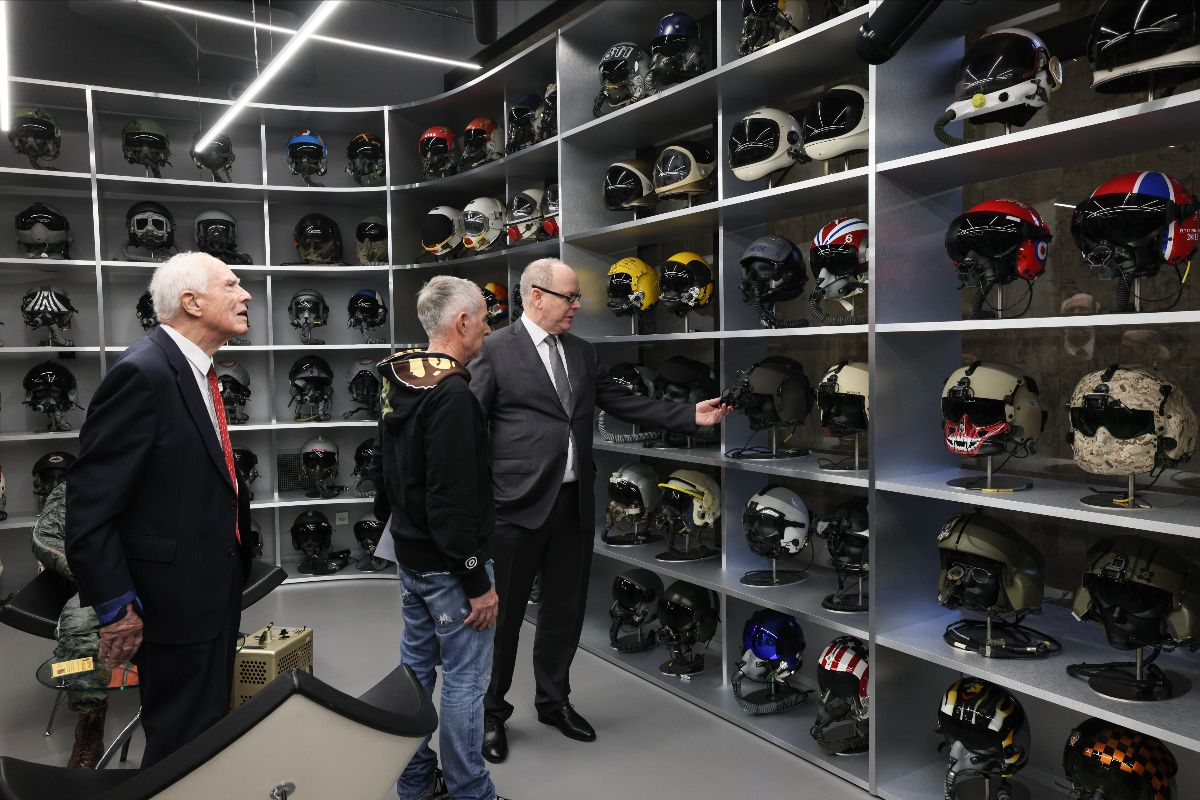
In the presence of Isabelle Berro-Amadeï, Minister for External Relations and Cooperation; Pierre-André Chiappori, Minister for Finance and the Economy; HE Maguy Maccario-Doyle, Monaco’s Ambassador to the United States of America; and Frédéric Genta, Interministerial Delegate for Attractiveness and Digital Transition, the visit consisted of five main stages:
-A presentation of the FLIP and FLEX rovers, -An overview of Venturi Space Monaco’s lunar battery manufacturing technologies and techniques, -A discussion of the upcoming missions of Venturi Astrolab and Venturi Space, featuring insights from David Scott and Jean-François Clervoy, -A presentation of Venturi Space Switzerland’s hyper-deformable lunar wheel technology, -An exhibition by Philippe Tondeur dedicated to the helmets and suits of aerospace history.‘ Venturi Space is taking on a very serious challenge! The FLEX rover is very different from the one I drove, it’s much bigger and will have an enormous operating life. It seems to me that the teams are doing a good job, and I wish them good luck.’ – General David Scott.
‘I’m passionate about space exploration and wheeled vehicles. Welcoming the first person to have driven a rover on the Moon, in the presence of the Sovereign and Jean-François Clervoy, brings me immense pleasure’ – Gildo Pastor, President of Venturi Space.
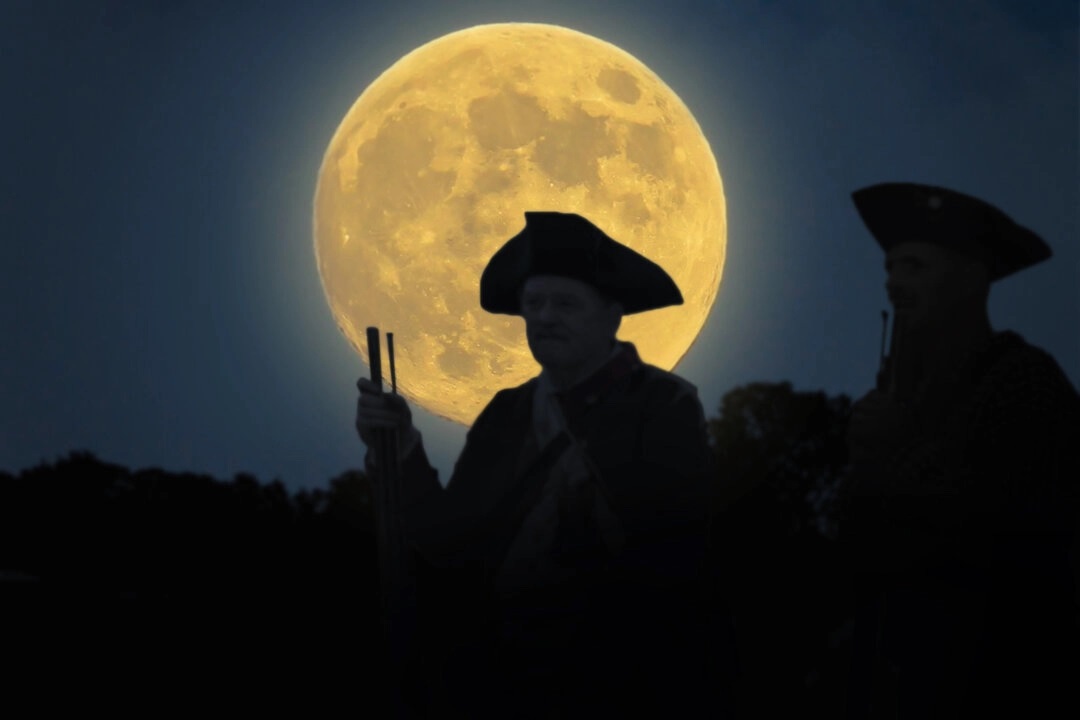
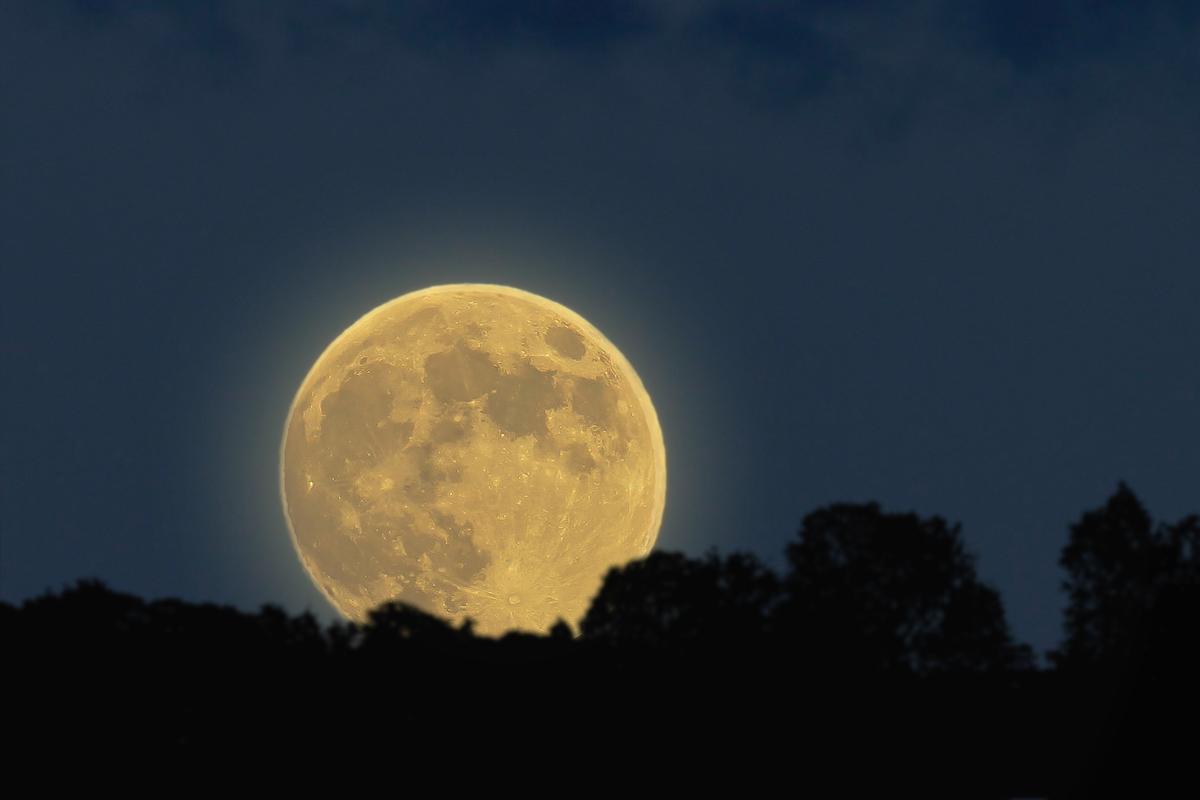
The full Hunter’s Moon—a moon known for its extra-bountiful glow in autumn, one that traditionally helped hunters harvest venison into the late evening, before the winter freeze—will rise on Oct. 17. It will loom larger and brighter than ever. The reason?
It will be a supermoon. But not just any supermoon.
The Hunter’s Moon this October will be the biggest supermoon of the year, the fourth and final one of 2024.
How the Hunter’s Moon Got Its Name
Both Colonial Americans and Canadian Settlers once had to hunt to fill their stores before settling into their lodges for the winter. To this end, they would hunt late into the evening while deer and other large game were easy to spot in the open stubble fields after the harvest.
These night hunts were assisted by moonlight from October’s full moon, which mysteriously rose sooner than expected and loomed larger than was typical. It was as if it provided light specifically for their hunting.
What looked like a helping hand from the full moon gave rise to its traditional name: the Hunter’s Moon.
This year, the Hunter’s Moon falls on Oct. 17, reaching peak illumination at exactly 7:26 a.m. EDT. It will be below the horizon for stargazers here in Canada and the rest of North America at that time. But at sunset that evening you can look eastward and find it still quite full, as it will seem the following evening, on Oct. 18, and the evening prior, on Oct. 16. Moons don’t change their cycles on a dime.
It Will Be a ‘Supermoon’
Similar to September’s huge Harvest Moon, October’s full moon will be a supermoon. It will appear larger and will be closer to the Earth than usual, which happens because the moon’s distance from Earth isn’t fixed. Our largest natural satellite travels along an oval-shaped orbit, so sometimes it’s nearer and other times further away.
When a full moon occurs near the point closest to Earth along said orbit, a point called the perigee, a supermoon results. This occurred in September’s Harvest Moon and will happen again for October’s Hunter’s Moon, making it the fourth and final supermoon of the year; the largest in 2024.
The Hunter’s Moon traditionally follows the Harvest Moon. Shutterstock/Harry L/Richard OD
On Oct. 16, perigee will be reached. At exactly 8:57 p.m. EDT, the moon will be 222,055 miles from Earth, roughly 17,000 miles nearer than average. Not 12 hours later, the full moon will fall. Supermoons can loom 7 percent larger than normal, though human eyes can’t usually tell. It’ll also shine slightly brighter.
Facts And Folklore of Autumn Full Moons
As full moons go, autumn’s are famously big. Supermoon or no supermoon, farmers have long relied on fall full moons for moonlight when working late to bring harvests in before the frost. Folklore says these moons are larger and even seem to forestall their departure mysteriously, as if gracing the harvest with extra illumination.
The “Hunter’s Moon” usually falls in October, but not always. Full moons in September, October, and November sometimes swap names. Harvest Moon always denotes the moon closest to the equinox (the first day of fall) and usually falls in September, and so, they are most commonly in September. But every so often, October’s full moon is closest to the equinox (which is in late September) and thus assumes the title Harvest Moon. When that happens, the Hunter’s Moon gets bumped into November.
Swapping names is unusual for full moons; they don’t follow that tradition in other months. April’s Pink Moon and June’s Strawberry Moon don’t shift, nor do moons of other months. Furthermore, most moon names denote the month’s entire lunar cycle, whereas the Harvest Moon and Hunter’s Moon denote just the full moon event.
Colonial Americans traditionally hunted after the autumn harvest to fill their stores for the winter months. Shutterstock/Maciej Pawlik
Autumn moons loom larger than usual, too. Astronomers say this is just an optical illusion. Autumn moons often appear near the horizon because the moon’s arc is so affected by Earth’s axial tilt during the equinox. They may seem larger when viewed next to terrestrial foreground objects like trees or buildings. The psychological impact this has makes the moon look grander.
It’s just an illusion, though—the “moon illusion.”
But there’s more to the equinox than smoke and mirrors. Some of the strangeness is real, as autumn moons follow a perplexing schedule. On average, throughout the year, the moon rises 50 minutes later each night as its orbit carries it steadily eastward. But around the equinox, it may rise as few as 23 minutes later. This boon to farmers is no illusion.
Astronomers twist their tongues to explain it.
The Old Farmer’s Almanac says it’s because the moon’s arc has its greatest northerly component during fall and is thus at its longest. Now traveling rapidly northward, it appears to rise sooner than expected, and all the more so the further north you go.
All together—the Hunter’s Moon, the extra moonlight, the equinox, the moon illusion, and the largest supermoon of 2024—it seems we’re in for a sublime lunar spectacle. There’s a chill in the air. So grab your fall coat for an evening under the warm glow of the Hunter’s Moon. For the Silo, Michael Wing.
Featured image- Designed by friends at The Epoch Times Shutterstock/solepsizm/Richard OD/Harry L
When the Earth, Moon, and Sun line up in space, we can see an eclipse. NASA studies eclipses from the ground, in our atmosphere, and in space, influencing solar, planetary, and Earth science.
Today on April 8, the Moon’s shadow will sweep across the United States and Canada, as millions will view a total solar eclipse. For many, preparing for this event brings memories of the magnificent total solar eclipse on Aug. 21, 2017.
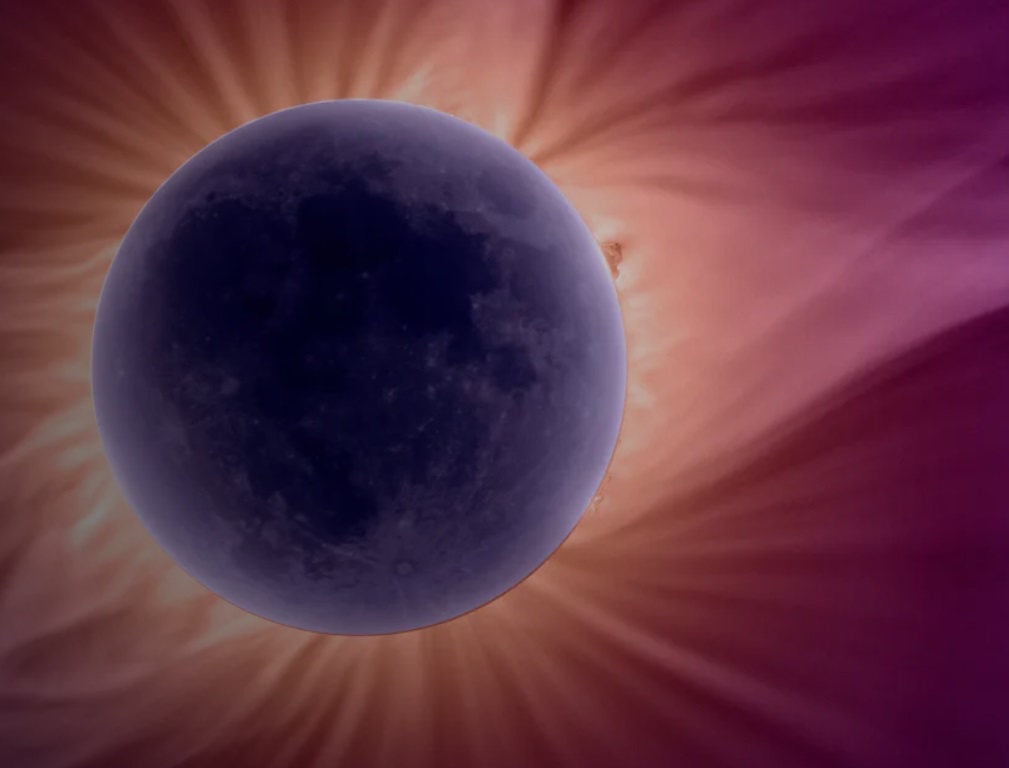
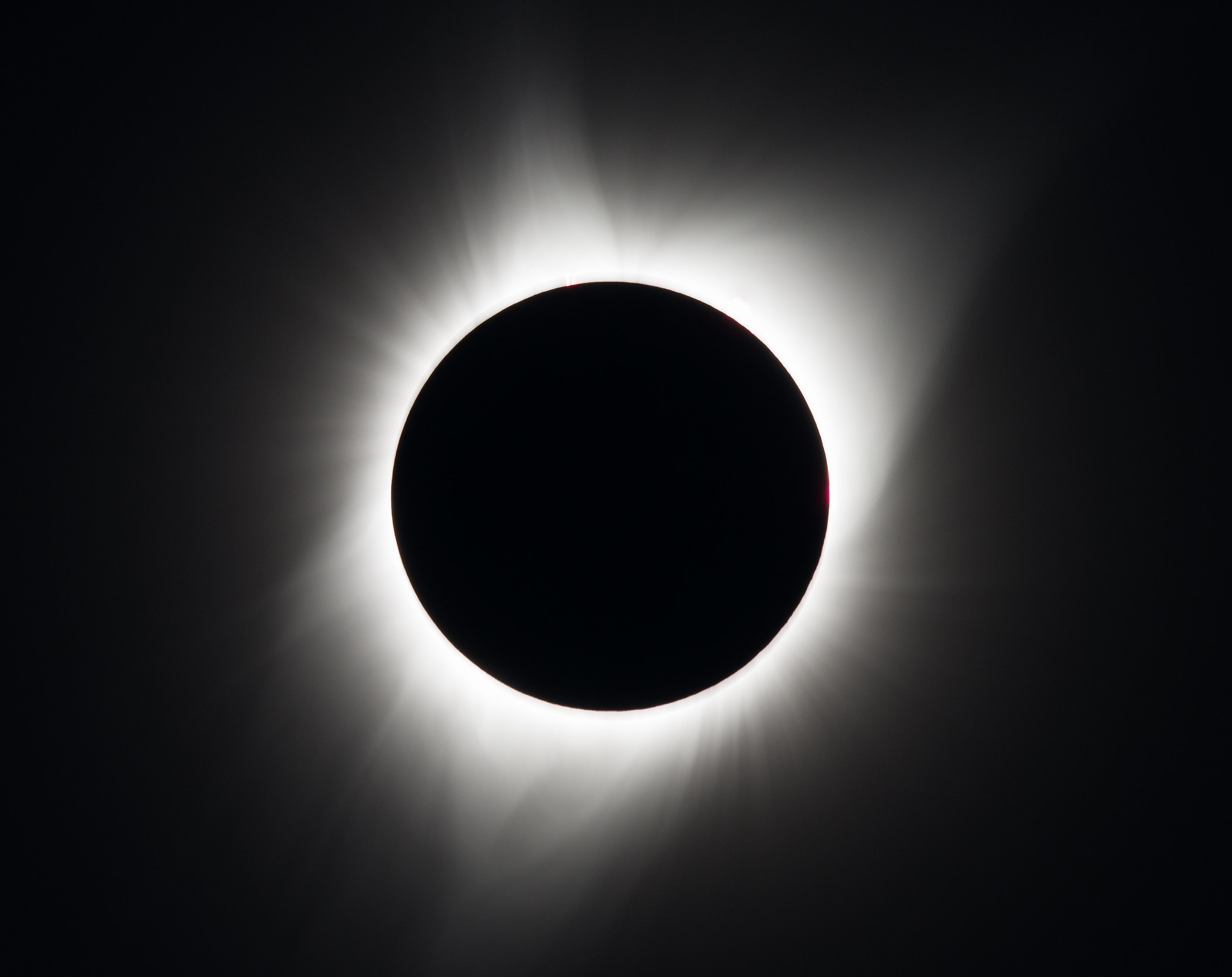
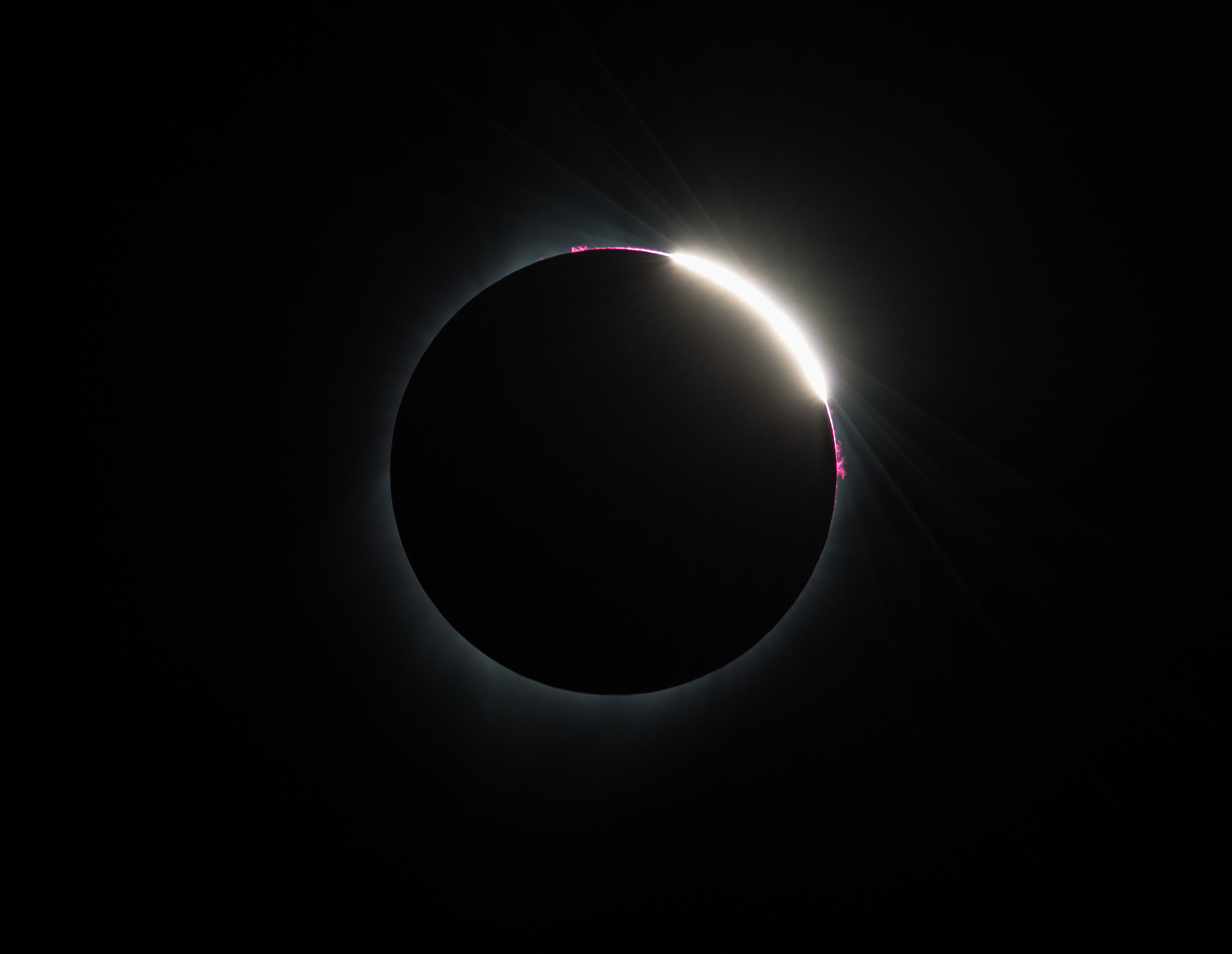
The total solar eclipse on Aug. 21, 2017, was photographed from Madras, Oregon. The black circle in the middle is the Moon. Surrounding it are white streams of light belonging to the Sun’s outer atmosphere, called the corona.
NASA/Aubrey Gemignani
In 2017, an estimated 215 million U.S. and Canadian adults (88% of U.S. adults) viewed the solar eclipse, either directly or electronically. They experienced the Moon pass in front of the Sun, blocking part or all of our closest star’s bright face. The eclipse in 2024 could be even more exciting due to differences in the path, timing, and scientific research.
Wider, More Populated Path
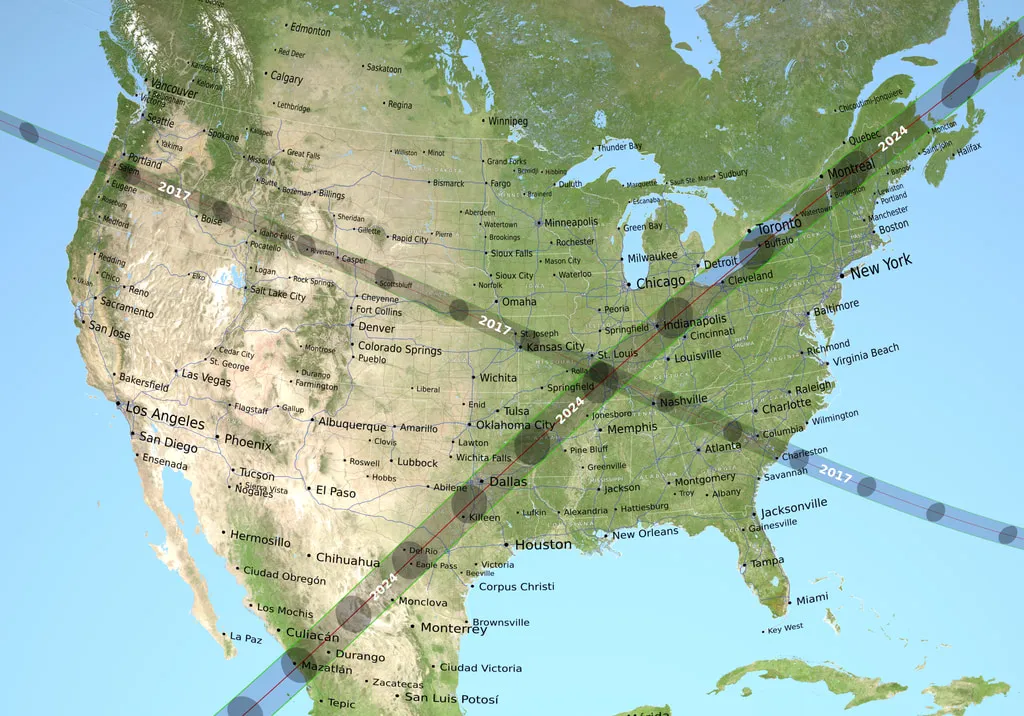
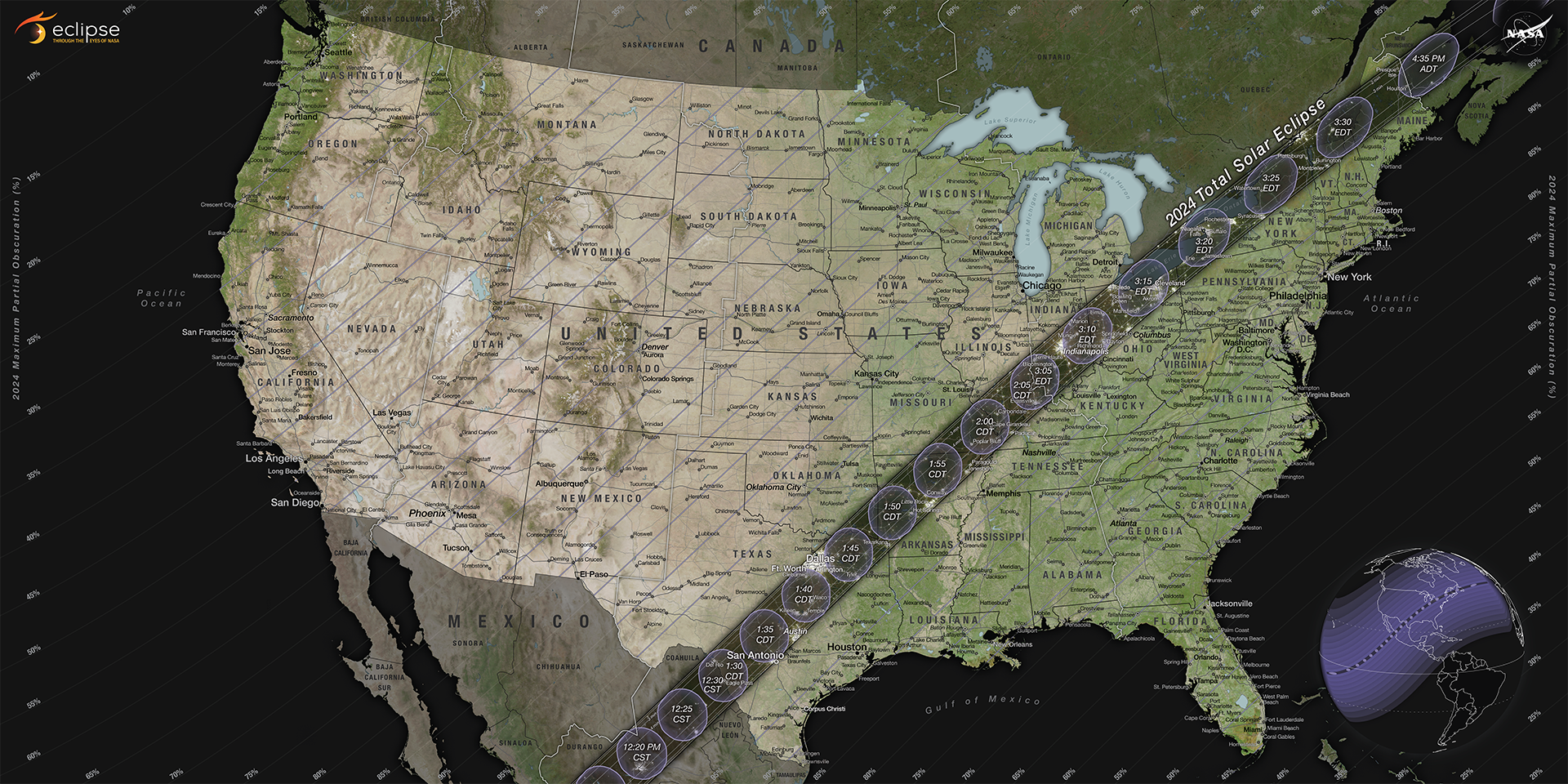
The path of totality – where viewers can see the Moon totally block the Sun, revealing the star’s outer atmosphere, called the corona – is much wider during the upcoming total solar eclipse than it was during the eclipse in 2017 and is expected to occur for viewers along the Great Lakes at 3:33pm EDT. As the Moon orbits Earth, its distance from our planet varies. During the 2017 total solar eclipse, the Moon was a little bit farther away from Earth than it will be during the upcoming total solar eclipse, causing the path of that eclipse to be a little skinnier. In 2017, the path ranged from about 62 to 71 miles wide. During the April eclipse, the path over North America will range between 108 and 122 miles wide – meaning at any given moment, this eclipse covers more ground.
The 2024 eclipse path will also pass over more cities and densely populated areas than the 2017 path did. This will make it easier for more people to see totality. An estimated 31.6 million people live in the path of totality this year, compared to 12 million in 2017. An additional 150 million people live within 200 miles of the path of totality.
This map shows the path of the 2017 total solar eclipse, crossing from Oregon to South Carolina, and the 2024 total solar eclipse, crossing from Mexico into Texas, up to Maine, and exiting over Canada.To see a map showing which areas will experience the partial solar eclipse and which areas will experience the total solar eclipse today April 8, 2024, click the arrows.Ernest Wright/NASA’s Scientific Visualization StudioThis map illustrates the paths of the Moon’s shadow across the U.S. during the 2024 total solar eclipse. Today April 8, 2024, a total solar eclipse will cross North and Central America creating a path of totality. During a total solar eclipse, the Moon completely blocks the Sun while it passes between the Sun and Earth. The sky will darken as if it were dawn or dusk and those standing in the path of totality may see the Sun’s outer atmosphere (the corona) if weather permits.To see a map comparing the 2024 eclipse and the 2017 eclipse paths, click the arrows.NASA/Scientific Visualization Studio/Michala Garrison; Eclipse Calculations By Ernie Wright, NASA Goddard Space Flight Center
You don’t need to live within the path of totality to see the eclipse – in April, 99% of people who reside in the United States will be able to see the partial or total eclipse from where they live. Every contiguous U.S. state, plus parts of Alaska and Hawaii, will experience at least a partial solar eclipse.
Longer Time in Totality
Today, totality will last longer than it did in 2017. Seven years ago, the longest period of totality was experienced near Carbondale, Illinois, at 2 minutes, 42 seconds.
For the upcoming eclipse, totality will last up to 4 minutes, 28 seconds, in an area about 25 minutes northwest of Torreón, Mexico. As the eclipse enters Texas, totality will last about 4 minutes, 26 seconds at the center of the eclipse’s path. Durations longer than 4 minutes stretch as far north as Economy, Indiana. Even as the eclipse exits the U.S. and enters Canada, the eclipse will last up to 3 minutes, 21 seconds.
During any total solar eclipse, totality lasts the longest near the center of the path, widthwise, and decreases toward the edge. But those seeking totality shouldn’t worry that they need to be exactly at the center. The time in totality falls off pretty slowly until you get close to the edge.
Heightened Solar Activity

NASA/ESA’s Solar and Heliospheric Observatory (SOHO) captured this video of a coronal mass ejection on March 13, 2023.NASA/ESA/SOHOSome prominences are seen as the Moon begins to move off the Sun during the total solar eclipse on Monday, Aug. 21, 2017, above Madras, Oregon.NASA/Aubrey Gemignani
Every 11 years or so, the Sun’s magnetic field flips, causing a cycle of increasing then decreasing solar activity. During solar minimum, there are fewer giant eruptions from the Sun, such as solar flares and coronal mass ejections. But during solar maximum, the Sun becomes more active.
In 2017, the Sun was nearing solar minimum. Viewers of the total eclipse could see the breathtaking corona – but since the Sun was quiet, streamers flowing into the solar atmosphere were restricted to just the equatorial regions of the star. The Sun is more magnetically symmetrical during solar minimum, causing this simpler appearance. During today’s 2024 eclipse, the Sun will be in or near solar maximum, when the magnetic field is more like a tangled hairball. Streamers will likely be visible throughout the corona. In addition to that, viewers will have a better chance to see prominences – which appear as bright, pink curls or loops coming off the Sun.
With lucky timing, there could even be a chance to see a coronal mass ejection – a large eruption of solar material – during the eclipse.
Expanded Scientific Research
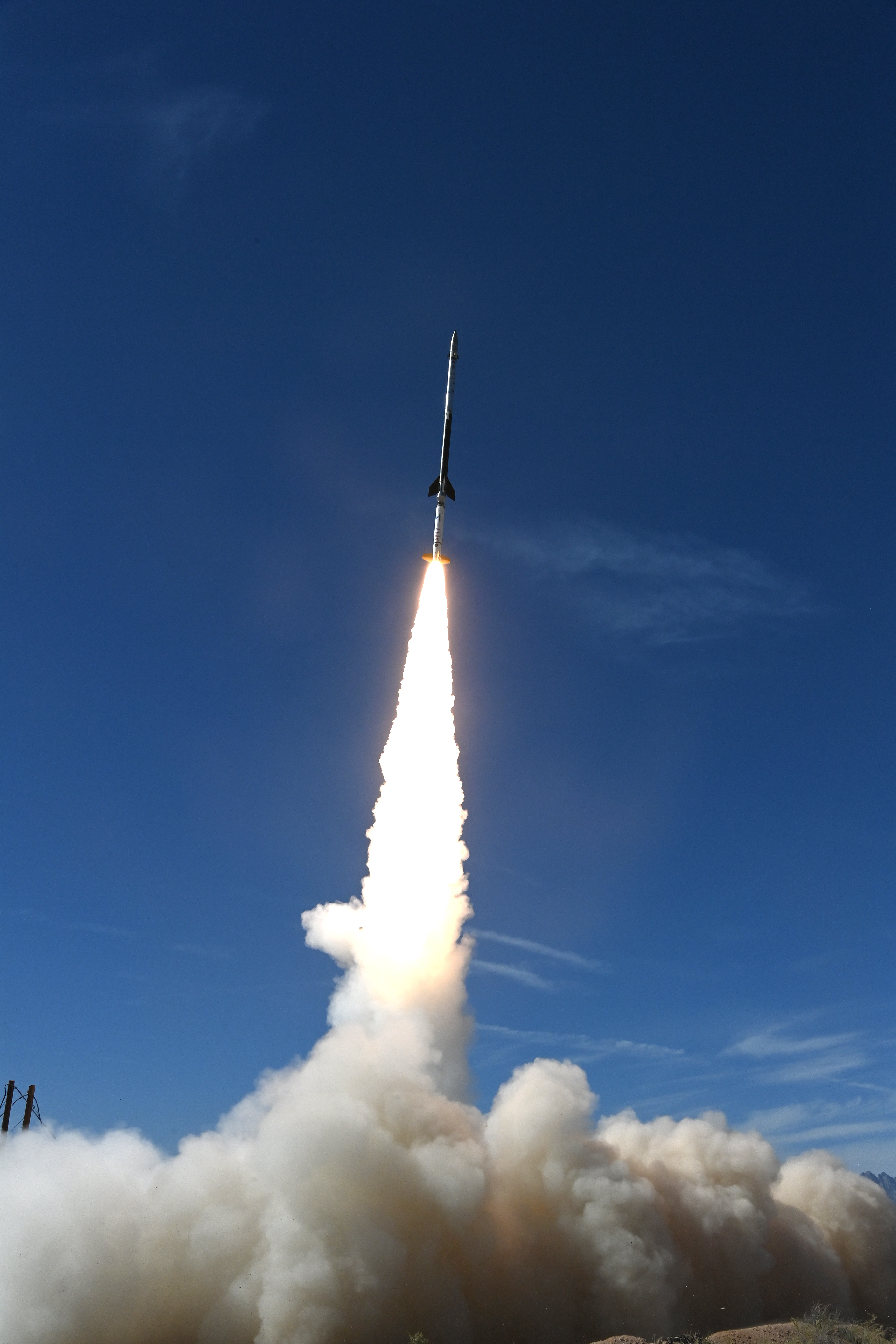
The third rocket launched on Oct. 14, 2023, during the annular solar eclipse leaves the launch pad.
WSMR Army Photo
During the total eclipse in 2024, NASA is funding several research initiatives that build on research done during the 2017 eclipse. The projects, which are led by researchers at different academic institutions, will study the Sun and its influence on Earth with a variety of instruments, including cameras aboard high-altitude research planes, ham radios, and more. In addition to those projects, instruments that were launched during the 2023 annular solar eclipse on three sounding rockets will again be launched during the upcoming total solar eclipse.
Two spacecraft designed to study the Sun’s corona – NASA’s Parker Solar Probe and ESA (European Space Agency) and NASA’s Solar Orbiter – have also launched since the 2017 solar eclipse. These missions will provide insights from the corona itself, while viewers on Earth see it with their own eyes, providing an exciting opportunity to combine and compare viewpoints.
To learn more about the 2024 total solar eclipse and how you can safely watch it, visit NASA’s eclipse website.
Monaco, April 2024 The American company Venturi Astrolab, Inc. (Astrolab), a strategic partner of the Monegasque Venturi Group, has been awarded a NASA contract to support the development of Artemis campaign’s lunar terrain vehicle. Its rover, known as FLEX, is equipped with batteries and wheels developed by Gildo Pastor’s teams in Monaco and Switzerland.
Gildo Pastor is no stranger to specialized high-performance vehicles- here with Bugatti EB110 he drove to win the world record for fastest car on ice in 1995.
Astrolab is one of three teams to win contract awards. Astrolab’s contract is worth up to $1.9 billion usd / $2.56 billion cad. Collectively the three contract winners may be awarded task orders over the next 13 years with a total potential value of $4.6 billion usd/ $6.2 billion cad over the life of the program. The contracts allow for two additional years for the completion of services.
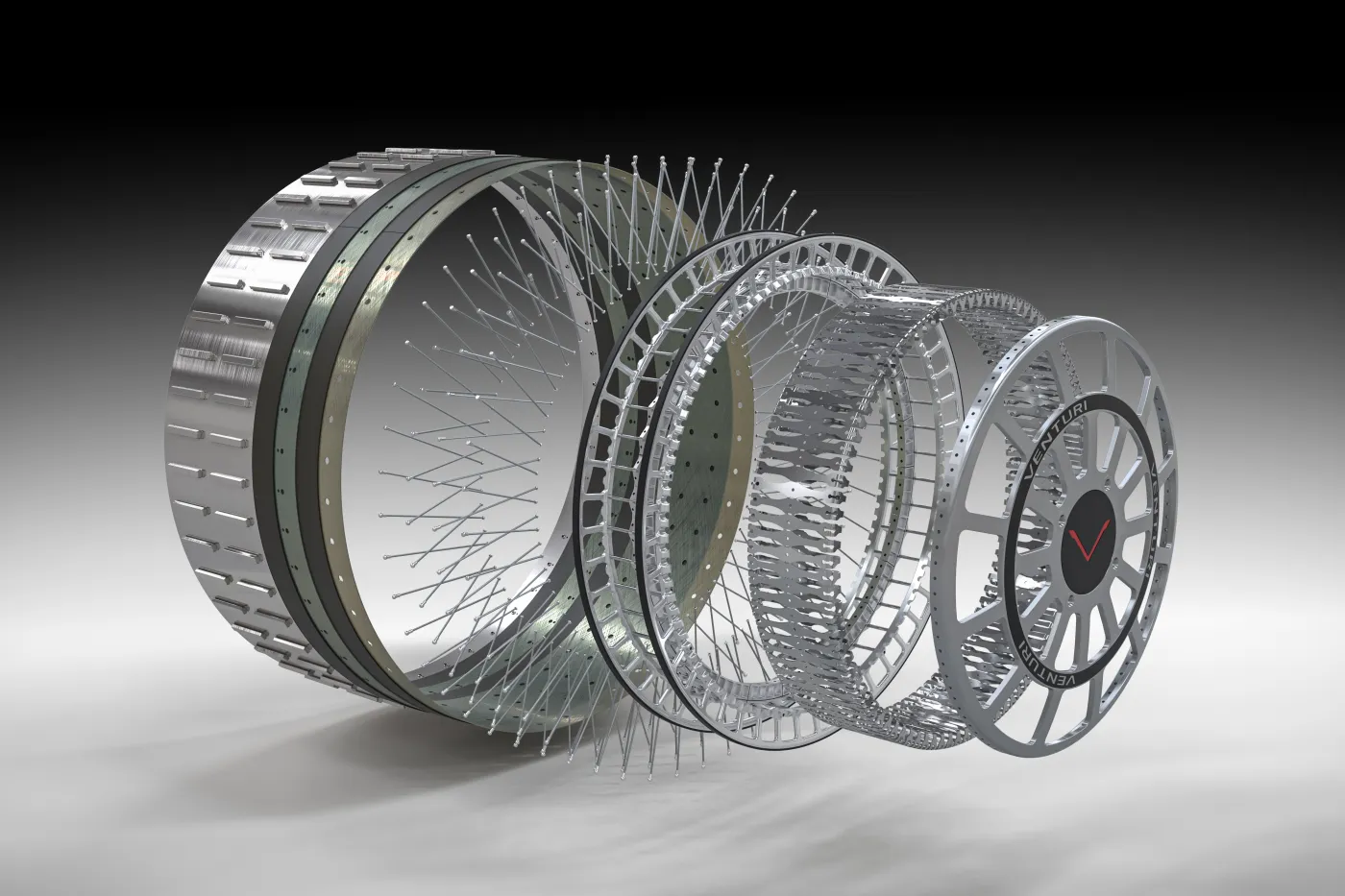
With this announcement, and after two decades dedicated to high-performance terrestrial electric vehicles, Venturi is taking another major step forward. Indeed, the industrial Group led by its President Gildo Pastor designs and manufactures the lunar vehicle’s wheels and batteries.The hyper-deformable wheels, developed and manufactured by the Venturi’s Swiss entity in collaboration with Astrolab, were presented at the Paris Air Show in June 2023. As for the batteries, these will be manufactured in Monaco in specifically designed facilities at the heart of the Venturi’s historic headquarters.
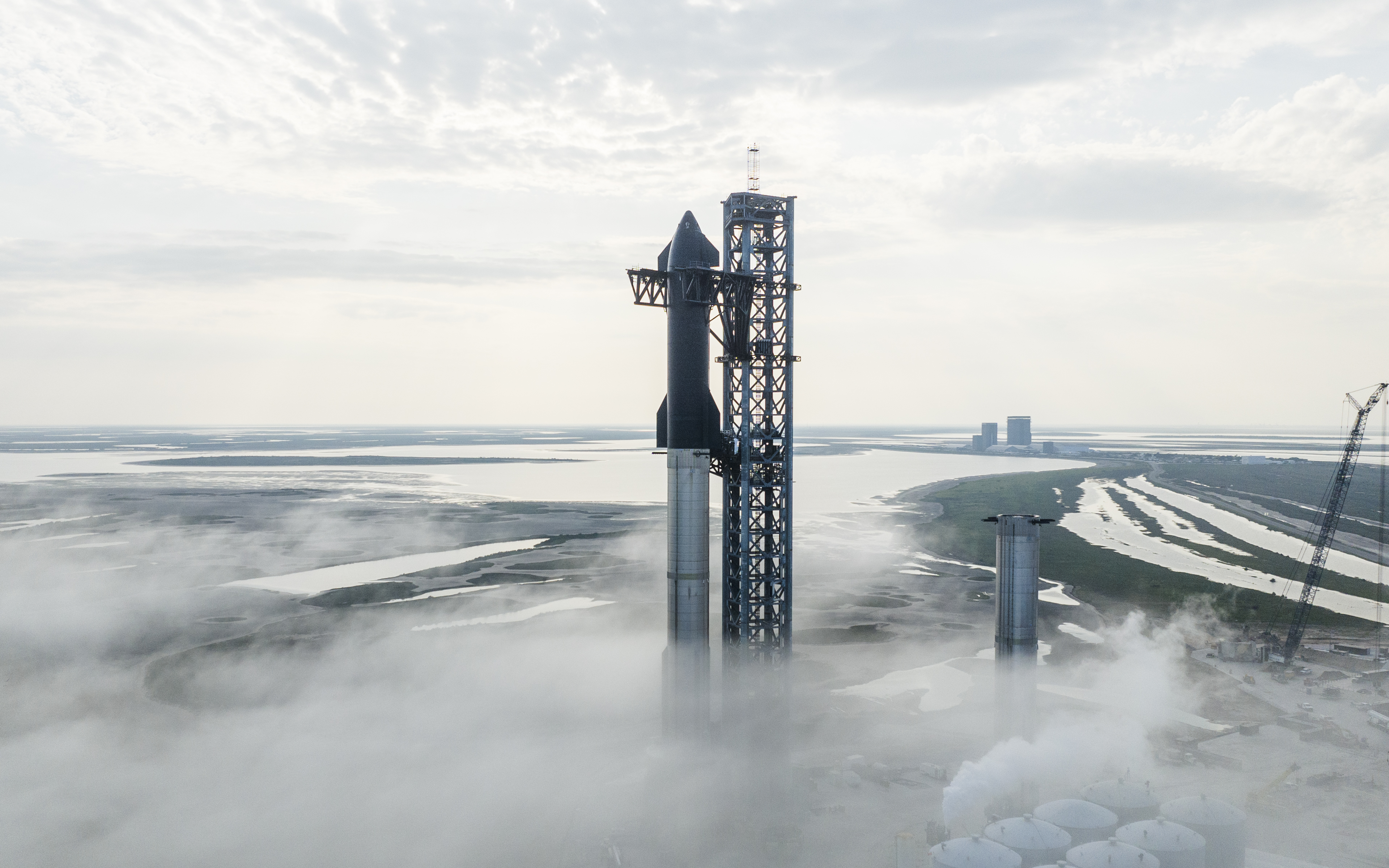
SpaceX’s Starship launch and landing system will deliver FLEX to the lunar surface in mid-2026.
Astrolab first revealed the full-scale working prototypefor its Flexible Logistics and Exploration (FLEX) rover in March of 2022. In the years since, Astrolab, has conducted thousands of hours of laboratory and field testing that has led to numerous design improvements. The improvements to the wheels and batteries came as a result of tests Astrolab conducted together with Venturi’s engineers.
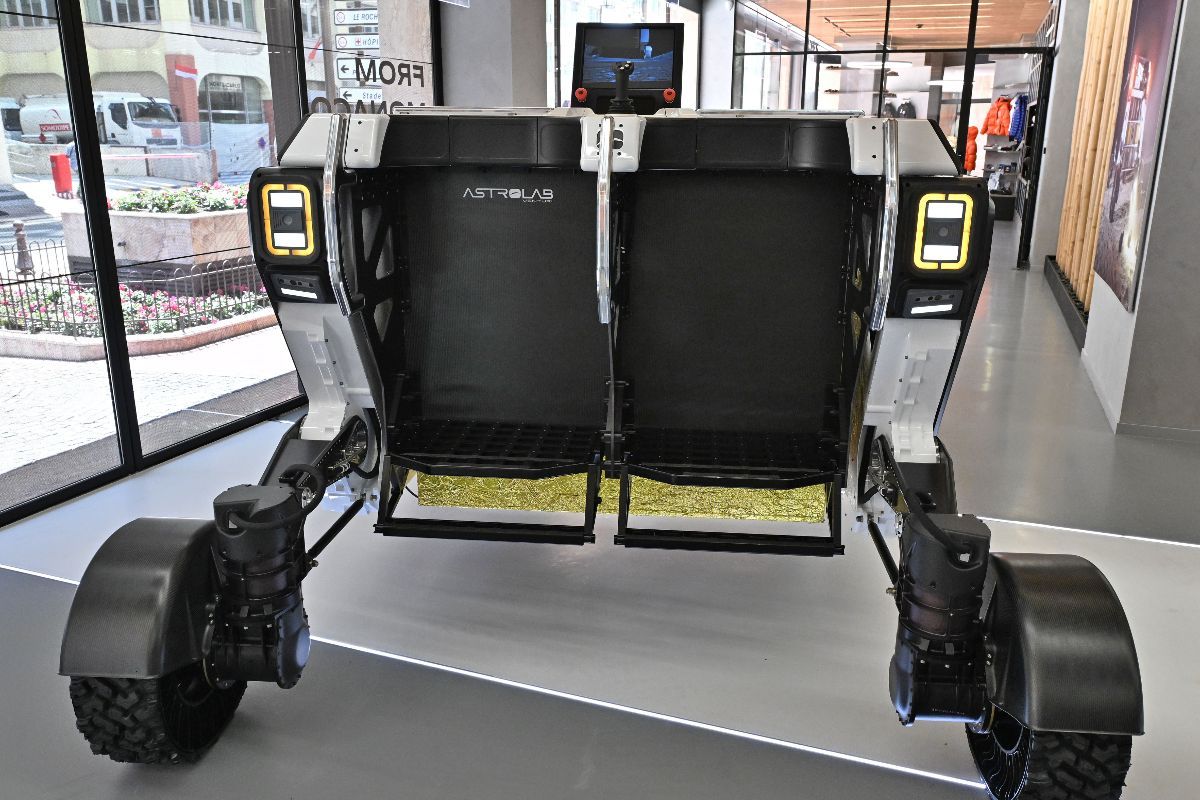
As required by NASA, FLEX can carry two suited astronauts, accommodate a robotic arm to support science exploration, perform robotic cargo logistics, and survive the extreme temperatures at the lunar South Pole, which is a technological challenge, particularly for the hyper-deformable wheels and batteries. FLEX can be operated remotely from Earth even when astronauts are not present, or it can be operated by suited astronauts.
Once FLEX arrives on the lunar surface, Astrolab expects that FLEX will become the largest and most capable rover to ever travel to the Moon. With a maximum combined rover and cargo mass of more than two tons, the FLEX rover is nearly three times the mass of its largest predecessor. This increased capacity provides significantly more opportunities to conduct scientific experiments and commercial endeavors on the lunar surface.
“Through our strategic partnership with Astrolab, I am proud to see the Venturi Group’s know-how validated by NASA. After 20 years of innovation and world speed records in the field of terrestrial electric vehicles, we are now involved in an adventure that will go down in the history books: when Man returns to the Moon! When I see this rover, equipped with our wheels and batteries, operating up there I will have made my greatest dream come true“. – Gildo Pastor, President of the Venturi Group.
“Astrolab is honored to have its FLEX rover selected by NASA to participate in the development of creating a Lunar Terrain Vehicle for the Artemis Campaign. Our entire team, together with our business partners, including our strategic partner Venturi Group, are committed to delivering to NASA an LTV that serves as a critical tool in the agency’s efforts to establish a long-term human presence on the Moon.” – Jaret Matthews, founder & CEO, Astrolab.
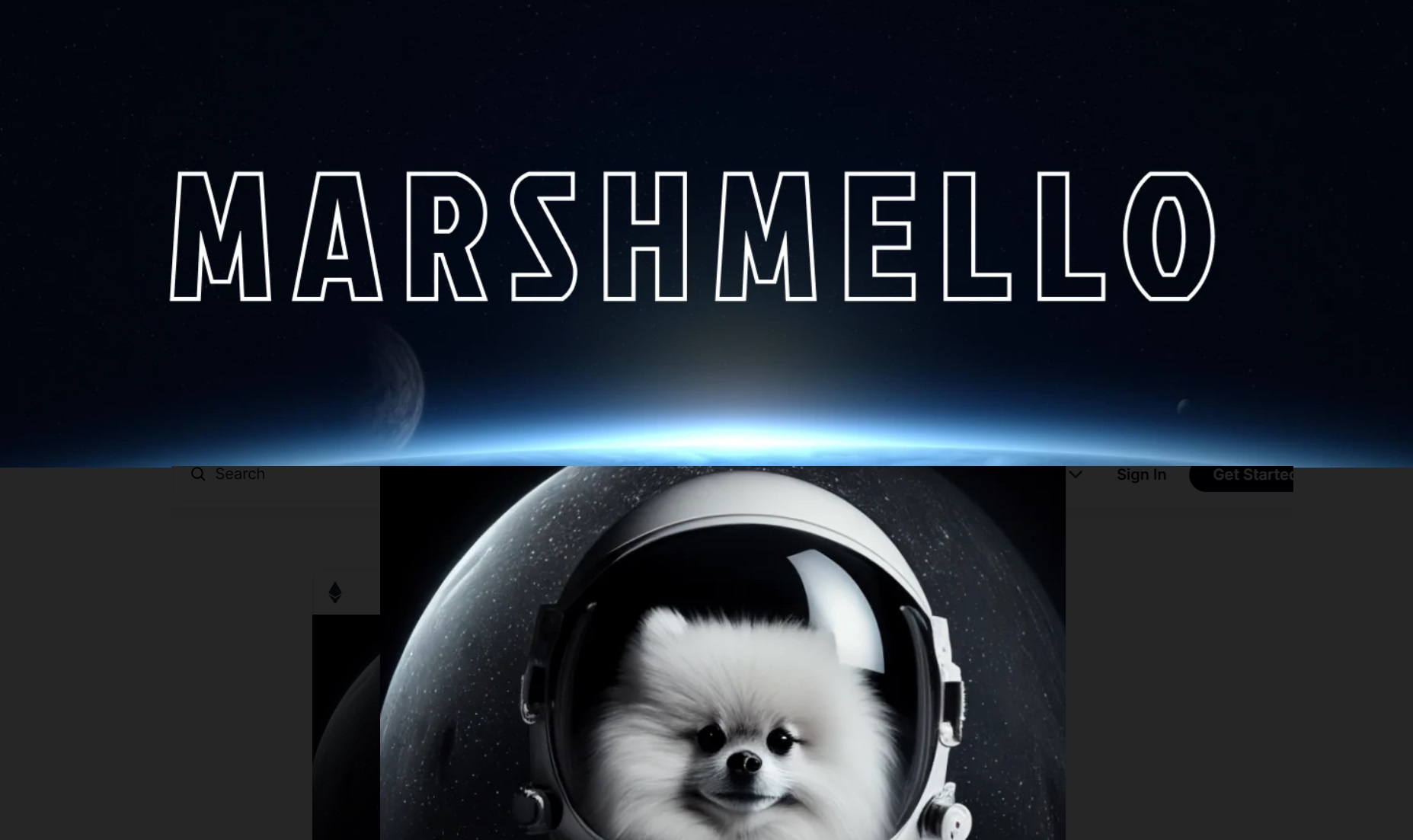
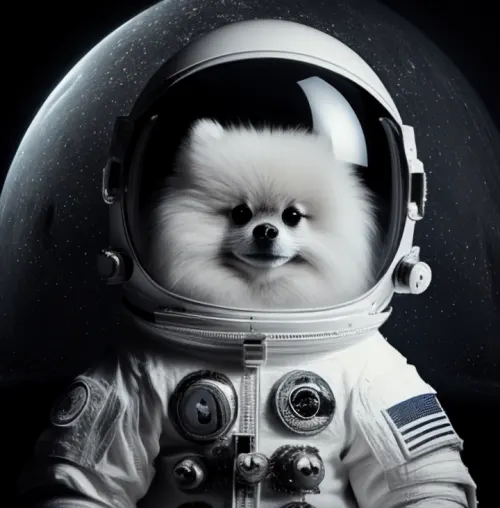
Marshmello the artic pup, also known on instagram as @cryptopup, made history last week, as the first pet digital collectible art project selected for the lunar museum (“Lunaprise”) on the moon. The project was conceived by Dallas Santana, a well-known film director, web 3.0 innovator and Founder of Space Blue, the company that oversees curation of the Lunaprise Museum. Santana first introduced Marshmello the artic pup, to the world as an digital collectable art project in 2018.
Marshmello To The Moon. NFT by Space Blue
The super rare digital collectible art of Marshmello To the Moon, selling for $950K usd / $1.3M cad each, took off from from Cape Canaveral on a ride on SpaceX Falcon 9 and landed on the moon February 22nd , becoming the first pet dog character to land on the moon since the legendary Snoopy, who traveled with Apollo 11 astronauts to the moon back in 1969. The artwork will be auctioned off with 100% of the proceeds donated towards impactful projects for humanity and animals.
Artwork of the popular adorable pet also made history as the first bitcoin art project to land on the moon and is inscribed as a very popular digital art form called bitcoin ordinals.
The Lunaprise Museum on the moon will house digital inscribed twin etched nickel and nanofiche system of the earth based digital collectibles, along with 222 other curated art projects which will last over 1 billion years on the moon. Marshmello the artic pup character has also already confirmed her official NASA boarding pass to be included in the NASA Mars missions, and other space programs coming up.
The twin images of Marshmello’s artwork will be engraved on metallic lunar plates and digital archives which will last over 1 billion years on the moon. Marshmello’s story and her mission set many space and art history records, including the first pet art project selected for this NASA-administered project, and became the first pet dog character to land on the moon since the legendary Snoopy, who traveled with Apollo 11 astronauts to the moon back in 1969. Conceived by a well-known film director and NFT Innovator (Dallas Santana), Marshmello was first introduced to the world as an NFT art project in 2018, long before the term NFT gained widespread recognition.
The Real-life Dog
Marshmello, the real-life dog, is known for many collaborations with top celebrities, movie stars, models from “America’s Top Models”, and “Deal or No Deal” models, all who babysat the adorable pet. Marshmello found fame without even trying, went viral “peeing” on an Oscar Event Red Carpet ( getting millions of views), got over 50 million views while dating Logan Paul’s Pomeranian “Kong”, and appeared in the NFT movie The 9th Raider and many music videos.
As this pioneering canine character prepares for its historic lunar landing, fans can soon explore the captivating Marshmello furry universe through an engaging book series, with an animation series also in development- also all sent to the moon for archiving as digital twin artwork preserved on the moon. This lovable pet dog character is on the brink of capturing hearts and minds across the globe as it embarks on its groundbreaking journey to the final frontier in art history. As mentioned above, Marshmello the character has also confirmed her official NASA boarding pass to be included in the NASA Mars missions, and other space programs coming up. For the Silo, Tiffannie Ramos.
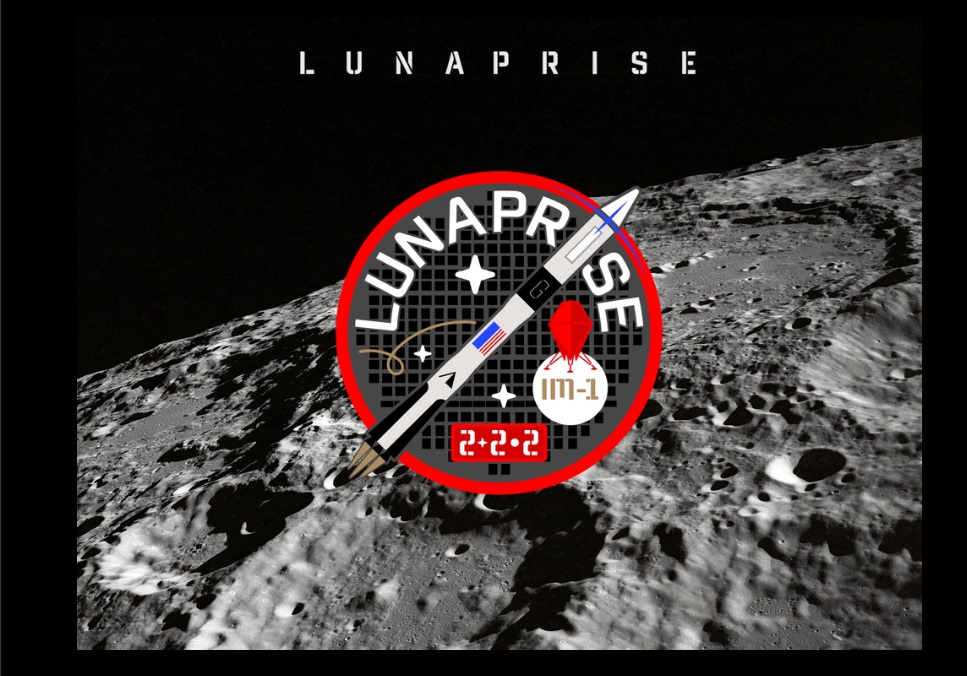
New York City – February, 2024 – In a historic moment that marks a significant milestone in the intersection of art, music, and space exploration, the Lunaprise Museum proudly announced the successful lunar landing of artworks as part of SpaceBlue’s’ curated and managed archive on the recent Lunar Lander as part of the historic space mission. Though not the first art project to involve the Moon (reported here by us July 2019), it is the first art project to remain on the Moon.
Among the historic pioneers is a pioneering trio: designer/artist Kelly Max, artist Samy Halim, and music producer/artist Brayden Pierce. This momentous event sees these creative visionaries become among the first artists in history to archive their works in the form of digital twins on the moon for over a billion years in a nano fiche disk, establishing a lasting legacy that transcends the boundaries of Earth.
A New Horizon for Art and Music
With the successful landing of the Lunar Lander on February 22, 2024 at 6:23PM EST the Lunar Landing has achieved a groundbreaking feat by hosting the first museum on the moon called Lunaprise. Among its prized collections are the collaborative efforts of Kelly Max and Samy Halim on the Modernist Art project, and Brayden Pierce’s musical compositions that have resonated with themes of space exploration and innovation.
The Modernist Art collection, highlighted by the “MoonRider” piece carrying 180 names pivotal to the artists’ journey, alongside a comprehensive collection of 420 Modernist Originals and 9,724 generative Modernist Genesis Artworks, represents a significant contribution to this lunar museum. Selected by Curator SpaceBlue and launched on February 15, 2024, these artworks not only celebrate the creative spirit but also symbolize human achievement and aspiration.
This nickel disc containing compressed files of the artwork is now curated on the Moon.
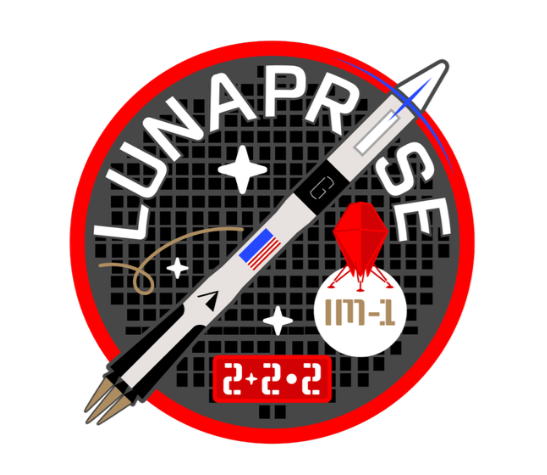
Kelly Max’s contributions to the Lunaprise Museum mission extend far beyond his collaboration with Samy Halim on the Modernist Art project. Together, Kelly and Samy designed the Lunaprise Mission Patch, a symbol of human creativity and resilience in the face of the vast unknown. Kelly’s visionary approach didn’t stop there; his role expanded as he became the lead designer for all key brand communications for the mission, showcasing his leadership and creative expertise in shaping the mission’s identity.
Brayden Pierce: Echoing Through Space
Introduced to the Lunaprise Museum mission by Kelly, Brayden Pierce’s artistic contributions have carved a unique niche in the halls of space history. As the first-ever EDM artist to have his music on the moon, Brayden Pierce’s “Capture The Moon” is immortalized on the moon in two versions: The Modernist Edition and the MOOON.PARTY Mix. This collaboration with Kelly underscores a synergy between the two creatives which exploded into the founding of MOOON.PARTY: a visionary venture that aims to blend art, music, space, and space content recording into a pioneering festival brand. This initiative, co-founded by Kelly and Brayden, is set to redefine immersive entertainment experiences, leveraging the backdrop of space to inspire and captivate audiences worldwide.
“Bringing art and music to the lunar surface goes beyond exploration; it signifies embedding humanity’s creative essence into the fabric of the cosmos. This endeavor isn’t merely a step forward for us as individual artists but represents a monumental leap for global art and culture. Collaborating with Samy, Brayden, and the Lunaprise Museum on this mission has unfolded as a profound journey of discovery, unity, and limitless creativity. Together, we’ve ignited a beacon of human expression on the moon, casting light across the cosmos to inspire future generations to dream beyond the confines of our known world. This project mirrors the moon’s impartial gaze upon Earth, reminding us that in its light, we are all seen equally. Our ultimate aim is to embody this universal perspective, fostering a tangible sense of unity on Earth, now enriched by the presence of art and music in the lunar realm.” adds Kelly Max.
Legacy Beyond the Stars
The Lunaprise Museum landing not only signifies the establishment of the first museum beyond Earth but also serves as a beacon of human creativity and ingenuity. Lunaprise is leading a historic disruption in space tech, leveraging patented technologies to archive and authenticate digital assets using blockchain, heralding the convergence of space exploration and digital technology. Collectors of music and art will delight in rare, verified assets that are one-of-a-kind, linked to identical twin digital files stored in the Lunaprise museum on the moon. The artworks of Kelly Max, Samy Halim and Brayden Pierce, now permanently archived on the lunar surface, stand as a testament to the boundless potential of artistic expression. Their achievements herald a new era where art and music extend their reach into the cosmos, inspiring future generations to dream big and reach beyond the known limits.
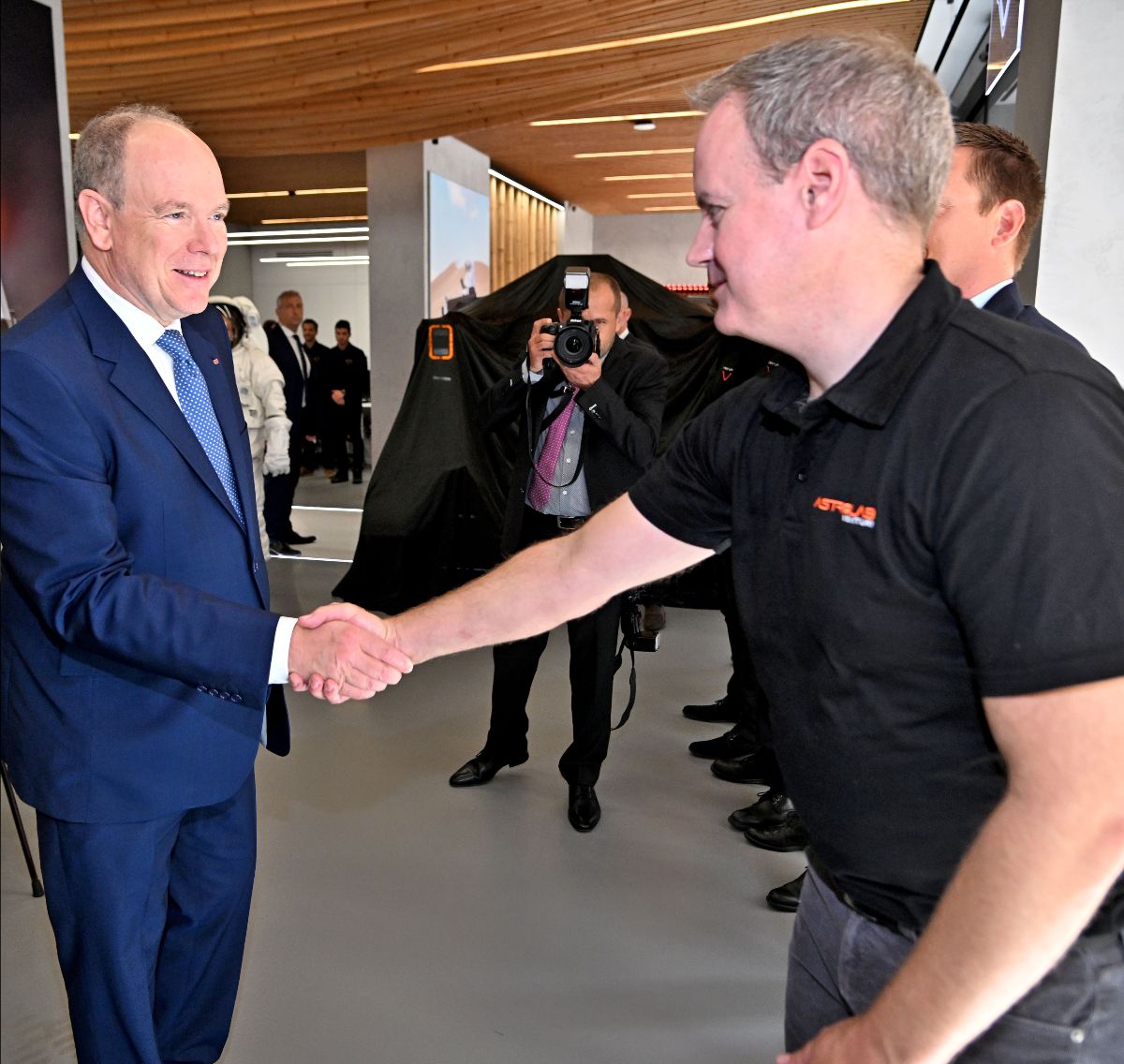
Recently, H.S.H. Prince Albert II of Monaco visited Venturi Group’s Monegasque headquarters.
photos: Venturi/Bebert Welcomed by the Group’s President, Gildo Pastor, the Sovereign was invited to take a historic first look at the lunar rover “FLEX”, developed by Venturi Astrolab (USA) in collaboration with Venturi Lab (Switzerland) and Venturi (Monaco).
FLEX will be the largest and most advanced lunar vehicle ever made.
It will be landed on the surface of the Moon by American firm SpaceX in 2026. Fans of Canada’s robotic space arm Canadarm take note: the lunar rover includes its own ‘in house’ designed and built robotic arm.
Since 2000, the Venturi Group has specialized in the design and manufacture of high-performance electric vehicles. Whether through world records, expeditions on hostile terrain, the creation of the first electric sports car, the development of innovative vehicles or its involvement in the Formula E World Championship, the Venturi Group embodies and demonstrates all the capabilities of the electric vehicle on 2 or 4 wheels.
Since 2021, Venturi Lab is part of the Venturi Group. The company invents, studies, designs and manufactures mobility solutions capable of handling the extreme environmental conditions found on the Moon and Mars. In 2026, Venturi Astrolab’s FLEX rover – for which the Venturi Group will have designed and manufactured innovative technologies resulting from disruptive innovations – will be in operation on the Moon. For the Silo, Fabrice Brouwers/Venturi.
ABOUT VENTURI ASTROLAB, INC. Venturi Astrolab, Inc (Astrolab) is on a mission to advance humanity to the next horizon by designing, building and operating a fleet of versatile rovers for all planetary surface needs. Comprised of a highly specialised team of former NASA, SpaceX and JPL engineers, Astrolab is dedicated to providing adaptive mobility solutions essential to life beyond Earth.
The team has leading experience in terrestrial and planetary robotics, electric vehicles, human spaceflight and more. Astrolab’s extensive experience and strategic partnerships with a wide range of world-class institutions, including the electric vehicle pioneer Venturi Group, allow for the most reliable, flexible and cost-effective lunar and Mars mobility offerings. The company’s headquarters are located in Hawthorne, California.
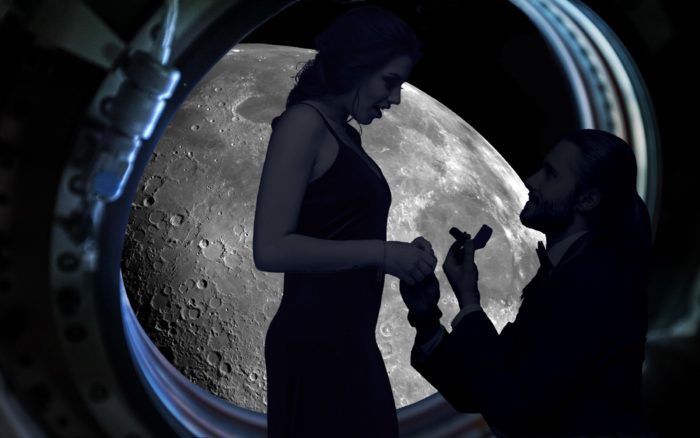
Starting in 2022 it will be possible to ask for the beloved’s hand in marriage while flying over the lunar surface to the sound of Frank Sinatra’s “Fly Me to the Moon”. The one-week interplanetary flight will be carried out using a self-contained and autonomous spacecraft allowing the two lovers to travel alone.
The ApoteoSurprise agency, a French marriage proposal planner specialized in creating extravagant proposals, introduces a whole new service for 145 million dollars which will allow 21st century handsome princes to propose while flying around the Moon. Reaching for the Moon in the name of love is about to become a reality, the ultimate goal of the Paris-based agency being to “stage the craziest and most outstanding marriage proposal of the last 13.8 billion years“.
From March 2022, elite lovers will be able to book the all-included service on the site www.proposeinparis.com and five months later find themselves enjoying the following program:
– Twelve weeks of pre-requisite technical and physical training.
– Takeoff on D-Day from the Kennedy Space Center in Cape Canaveral, Florida.
– Richard Strauss’s “Thus spoke Zarathustra, Op.30” (Theme from 2001 Space Odyssey) resounding in the two space tourists’ helmets when the first effects of weightlessness are felt.
– Arrival in lunar orbit, three days later, flying over the satellite’s grayish surface at only 200/300 kilometers altitude.
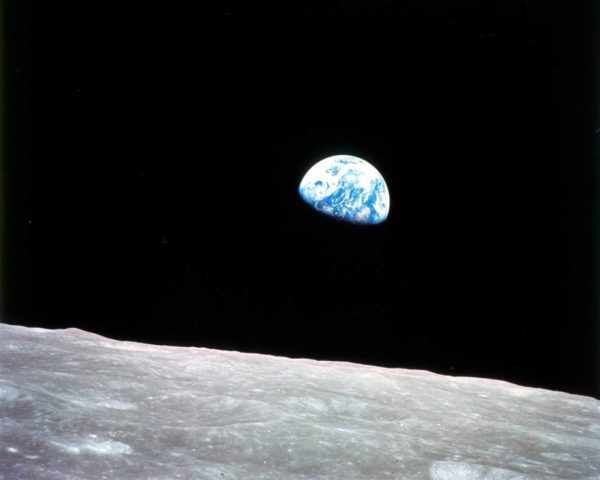
The famous ‘Earthrise’ photo from Apollo 8, the first manned mission to the moon. The crew entered lunar orbit on Christmas Eve, Dec. 24, 1968. That evening, the astronauts held a live broadcast, showing pictures of the Earth and moon as seen from their spacecraft. photo:NASA
– Cut-off of all communication with Earth for around thirty minutes while the capsule flies over the dark side of the Moon.
– The Frank Sinatra song “Fly Me to the Moon” played halfway through the orbital flight, allowing the suitor to make his marriage proposal far from any form of human life (engagement ring secretly hidden in his spacesuit).
– A spectacular Earth-rise seen from behind the lunar craters and return trip of nearly four days before atmospheric re-entry and final touchdown.
The flight-plan followed by the space capsule will mirror that of the mythical Apollo 8 mission in 1968. The spacecraft, traveling at a speed of up to 38,000 km/h, will be equipped with eight cameras allowing the couple to immortalize their entry into the history of the conquest of space and the conquest… of love! For the Silo, Nicolas Garreau.
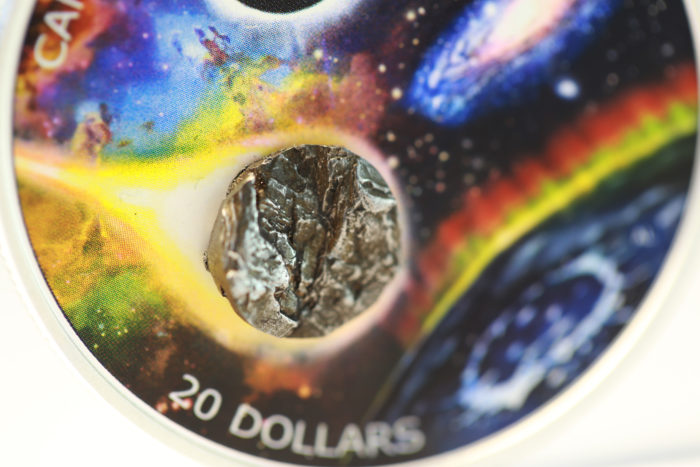
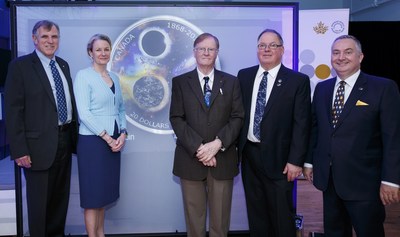
TORONTO, June, 2018 /CNW/ – The Royal Canadian Mint has created a truly out-of-this-world collectible by adding a genuine meteorite fragment to limited edition silver coins marking the 150th anniversary of the Royal Astronomical Society of Canada. This vividly illustrated coin, unveiled at a special ceremony in Toronto attended by RASC officials and former Canadian astronaut Dave Williams. It is available for purchase as of today.
“One hundred and fifty years of research, education and discovery by the Royal Astronomical Society of Canada is an engaging story to share with Canadians,” said Sandra Hanington, President and CEO of the Royal Canadian Mint. “It is only fitting that RASC’s many scientific achievements be recognized on a vividly coloured coin, which breaks barriers of its own by featuring a shard of a real meteorite.”
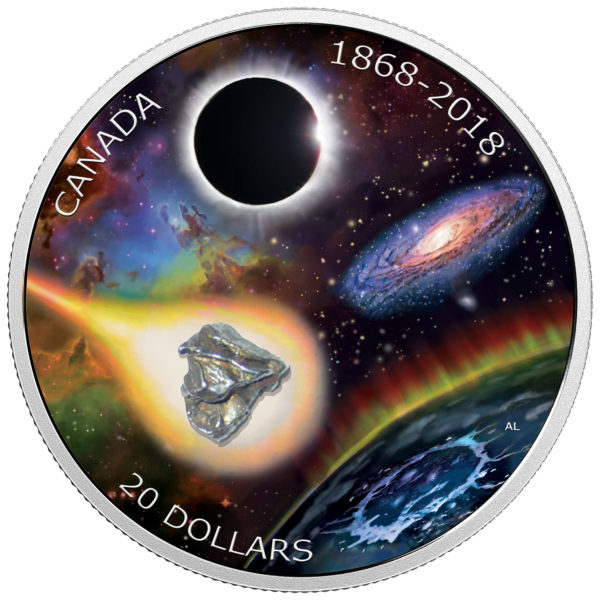
Designed by Canadian artist Alexandra Lefort, the reverse design of this coin features a deep space vista enhanced by engraved textural details and full colour. Prominent design elements include the Eagle Nebula and its pillars of interstellar gas and dust, which are known as the Pillars of Creation. Also featured are the Moon, the Andromeda Galaxy (nearest to our own) and a blazing meteorite, enhanced by a genuine iron meteorite fragment from the Campo del Cielo meteorite field.
“The RSAC is excited to be celebrating our 150th anniversary with the issuance of a coin that symbolically depicts the important contributions of Canadian astronomers,” said Randy Attwood, executive director of the Royal Astronomical Society of Canada.
The 2018 $20 Fine Silver Coin – 150th Anniversary of the Royal Astronomical Society of Canada has a limited mintage of 5,500 and retails for $149.95CDN. It can be ordered by contacting the Mint at 1-800-267-1871 in Canada, 1-800-268-6468 in the US, or online at www.mint.ca. Please mention The Silo when calling. The coin will also soon be available at the Royal Canadian Mint’s boutiques in Ottawa and Winnipeg, as well as through the Mint’s global network of dealers and distributors, including participating Canada Post outlets.
About the Royal Canadian Mint The Royal Canadian Mint is the Crown corporation responsible for the minting and distribution of Canada’s circulation coins. An ISO 9001 certified company the Mint is recognized as one of the largest and most versatile mints in the world, offering a wide range of specialized, high quality coinage products and related services on an international scale. For more information on the Mint, its products and services, visit. www.mint.ca
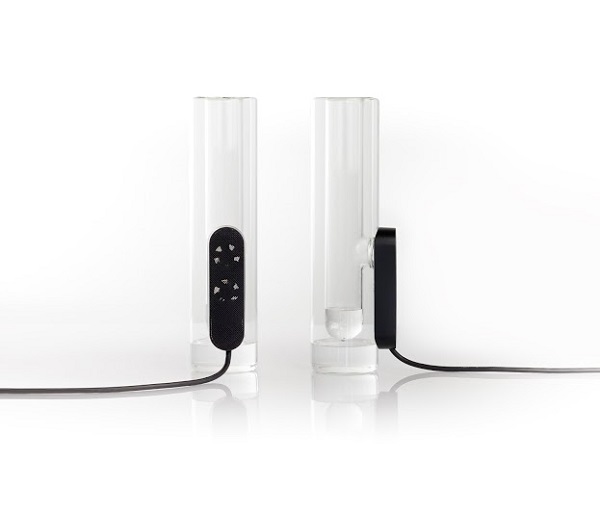
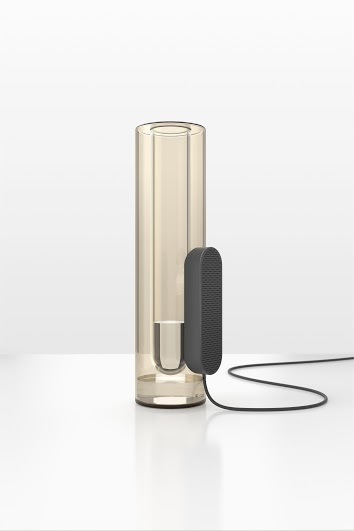
Digital Habits presents Bouquet at Fuorisalone 2016, revolutionary IoT multi-aroma diffuser that blends physiology and olfactory scenarios. A new humanism of industrial projects: technological products become essential and sensitive, able to transform the perception of the environment in which they are placed.
Fuorisalone 2016, April 12th – 17th, Milano, SuperStudioPiù, Selected Objects
At Fuorisalone 2016 (April 12th-17th) following the main theme “White pages”, which refers to those metaphorical ‘white pages’ whereby the future world still needs to be written, Digital Habits presents new products that integrate physical and computing elements, shapes and sensitivity, to draw new atmospheres in the home.
Bouquet is the new product of the Digital Habits collection, which brings a new sensory dimension into the living experience: the sense of smell. This project is extremely innovative and investigates the relation between olfactory perception, physiology and psychology.
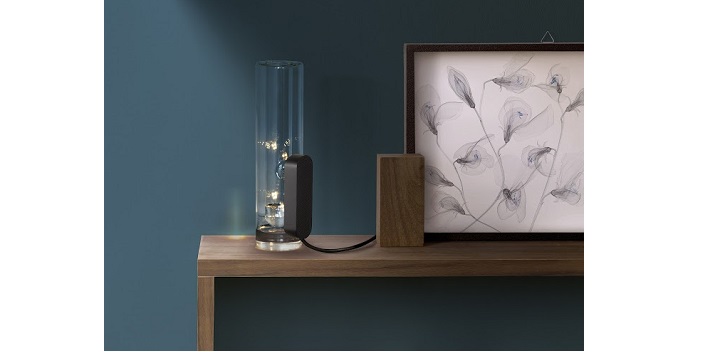
The body, made of blown glass, is divided in two compartments that contain two different aromas. This decision came after studies on the influence that smell can have on different human activities. With Bouquet it is possible to diffuse separately or simultaneously two different scent scenarios: e.g. relaxing, energizing and so on, according to personal preferences.
Thanks to the inner clock and a Mobile App, it’s also possible to schedule via Blutooth the aroma diffusion during the day to create, at the right time, welcoming situations. For example an activating aroma can help a prompt and energetic wake-up in the morning, while a relaxing aroma can create the right conditions to get asleep.
Bouquet has the following characteristics:
Multi-scent, to select the most fitting fragrance to the different moments of the day.
Smartphone App with bluetooth connectivity to manage and set one or more diffusers wirelessly.
Scenario Manager to automatically schedule an aroma diffusion according to the time of the day (wake-up, back-home, getting asleep), personal habits (concentration, relaxation) and the purpose of each room of the house (living room, bedroom, bathroom, kitchen).
Do you have room for another smarthphone app? Sure you do!
Presence, to detect the temporary or permanent presence of people in a room and clean the air or flavor it with a pleasant smell.
Custom Intensity, settings to manage the level of intensity of the fragrance depending on personal preference and room size.
Ecosystem, integration with the Digital Habits product range to create new experiences that blend elements of light, sound and scent and recreate situations such as a natural wake-up.
A colored and tunable white light controlled by the Mobile App, is also integrated in Bouquet to complete the sensory experience. Bouquet complements the collection of Digital Habits multi-sensory products such as Cromatica and OSound Light, which transform the perception of the space in which they are placed creating new domestic atmospheres.
At the Fuorisalone 2016, Digital Habits will also presents:
a new version of Osound Light which combines a Bluetooth speaker and a disc of light that creates unexpected atmospheres and gradients.
Dragon, fractal led lamp that grows in the space thanks to the aggregation of smart modules. Dragon is now presented in new table and wall versions.
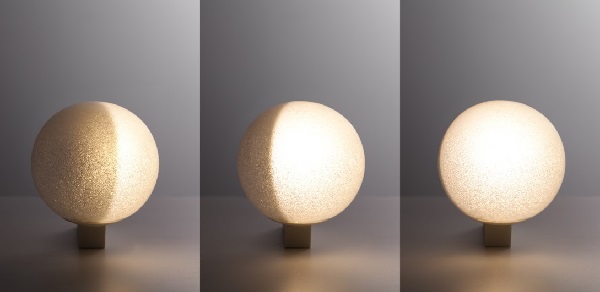
Another Moon and Kizuki, two new IoT projects resulting from the collaboration between Digital Habits and QUANTUM the innovation accelerator based in Tokyo, part of the global advertising agency TBWA. Another Moon is an object that marks the lunar phases within metropolitan private environments where this awareness is fading out. Kizuki is an IoT signage that allows to intuitively and subtly ‘feel’ the climate within your home.
DIGITAL HABITS
Digital Habits is the innovation platform of the international design studio Habits. Founded in 2012, it focuses on creating interactive and IoT products.
The Digital Habits collection includes objects of sound, light and scent. The products create seamless multisensory environments, which involve different perceptions and activate synesthesia.
Digital Habits products are now available in the most exclusive retail locations such as the Armani Mega Store in Via Manzoni in Milan and Mondadori Mega Stores.
Per ulteriori informazioni o per segnalare la tua pubblicazione scrivi all’indirizzo [email protected]
All Alcohol Paintings shown in this post by the Author- Dawn Bank
While searching for ways to expand “the oil painting experience” I came across tiny bottles of Alcohol Inks in all the basic colours, with an extender (strictly rubbing alcohol at 99%) as well as some clean-up solution.
Painting with oils has always been my favorite medium but on occasion I find it kind of rigid- you do this…then that and poof you have a beautiful tree. That’s why using alcohol inks as my new medium has become a new addiction. While doing so, I feel like I am being controlled without the ability to stop working. I have probably used up 3 sets so far.
I had never used inks before and I found myself in uncharted territory. Using inks changed everything. I discovered that they created many outcomes and endless possibilities which then opened up new means of expression to me.
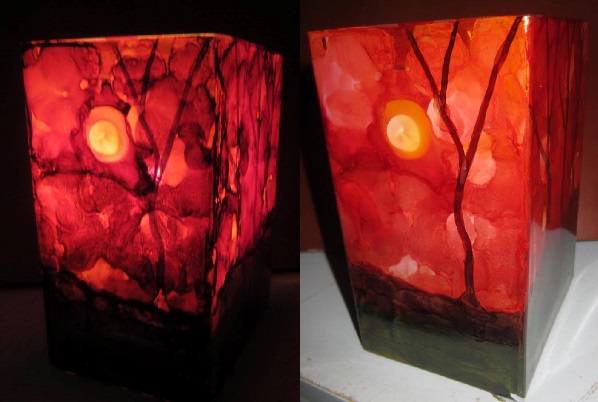
Taking advantage of the translucent qualities of Alcohol Ink- lit (L) & unlit (R) candle holder by the Author
When I begin to ink, I sit down at my table the same way I would when using oils. I Toss little droplets of colour and rotate the tile. Next, I spray rubbing alcohol for a spatter effect and I add a sponging technique that forms a multitude of tiny blotches. I pick out a brush and paint with the alcohol itself paying attention to watching the delicate lines that form as the brush hits the nearly-dry ink. It’s a gentle process and I enjoy the thinning of colour effect from the alcohol spray . For more fun I sometimes go out and buy a can of compressed air. I blow the ink and watch as it begins to layer itself. This is almost magical. It’s so amazing how it all comes together. I think the greatest addiction with this technique is the fact that the results are unpredictable and will never be the same. This whole process takes about half an hour but to me it seems like mere seconds.
Even though the finished ink works are fully dry within a matter of minutes, extra time is required if you choose to work in more detailed designs.
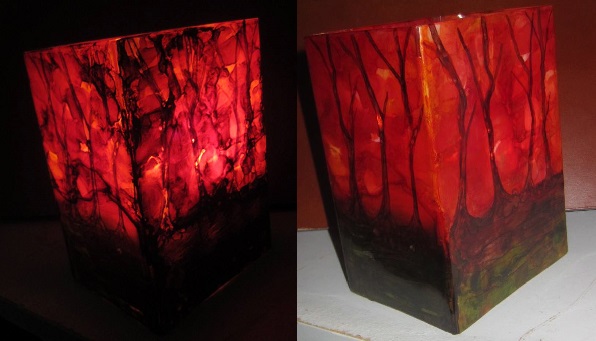
Another view of the Author’s candle holder
Speaking of time….I am amazed that while I work with the inks I completely lose all track of time. I am in a completely different space. My house could be burning down and I’m not sure that I would notice because using this medium makes me extremely focused and relaxed. Peacefulness has added to my life and that is just amazing. I have become so “in tune” with the way that the inks move without totally blending together. It’s an exciting time. I have discovered a new way to express and share my world with the whole world. For The Silo, Dawn Bank of One Lady’s Art. To view more alcohol ink work please visit me at https://www.facebook.com/groups/OneLadysArt/.
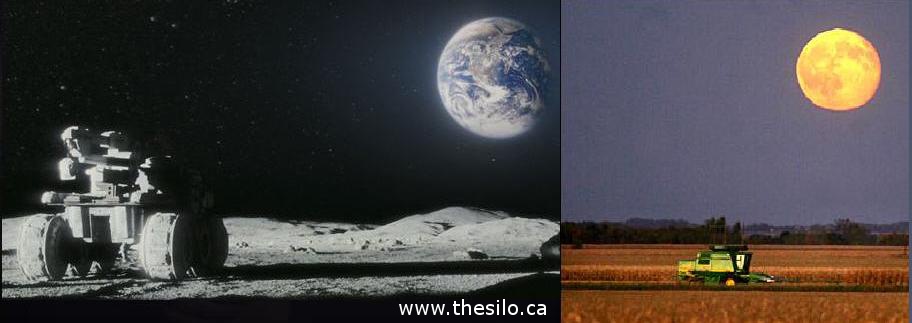
If you’re like me and grew up on a rich diet of 1980’s science fiction films, you should walk (no make that moonwalk) to your nearest video store and ask for MOON. This little gem is an existential journey into the mind of a lonely farmer-astronaut and hits close to home. Sure there’s the usual high contrast and gritty sci-fi production values, but there are also some poignant connections to our rural habitat. Picture a massive, rambling, white combine harvester gathering hay under a full, late fall moon, except that in this case the moon is the earth. A tiny, lonely man is hunched over the controls in an elevated and sealed cockpit. Now remove all semblance of colour, add a few craters and hills, and you get part of what makes this film so familiar and, dare I say, rural.
Growing up here as a boy I imagined that the once plentiful silos and drive-sheds in Norfolk (especially the aluminum ones) were rocket platforms and moon bases. Even the large, four wheeled crop sprayers had a space age look to them. And that is why I felt especially connected to Duncan Jones’ incredibly moving MOON. It pulled me in and felt familiar.
If I had to bet the farm I’d say the production designer looked at both farms and farm machinery while working out the aesthetics of this movie. But more than that, the story pulls at your heartstrings.
Sam (played by the remarkably versatile Sam Rockwell in a breakthrough role) is a lonely astronaut working on the moon, farming the soil for energy until he begins to suffer from extreme isolation- complete with lucid dreams and hallucinations. What follows next is one of the finest surprise plot twists in contemporary cinema.
Satisfying space fiction from son of iconic rocker David Bowie. For the Silo, Jarrod Barker.


 MONA LUNA at Luna · Design: Sacha Lakic ©Venturi Space/Romero

















 Digital Habits presents Bouquet at Fuorisalone 2016, revolutionary IoT multi-aroma diffuser that blends physiology and olfactory scenarios. A new humanism of industrial projects: technological products become essential and sensitive, able to transform the perception of the environment in which they are placed.