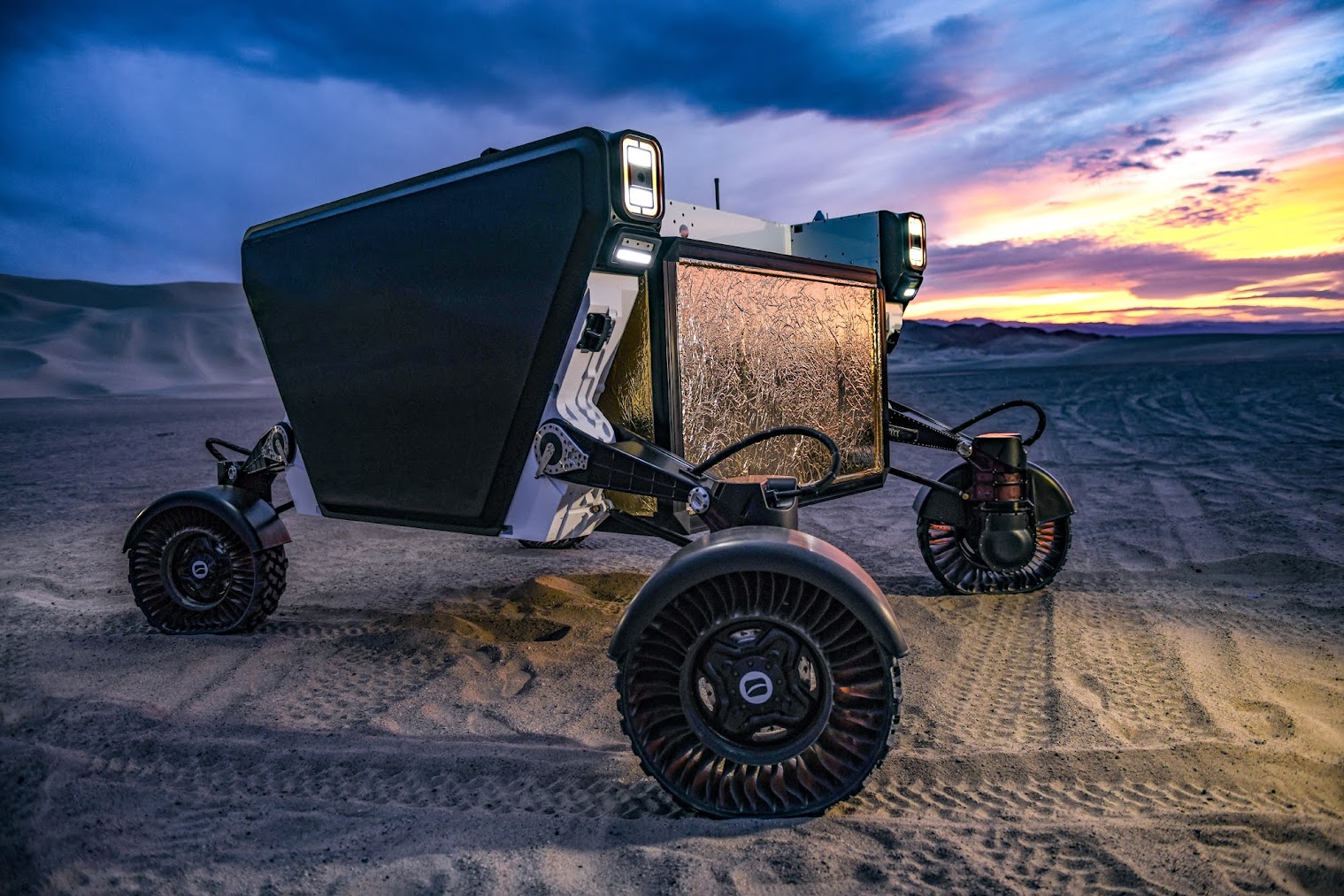

ALTA LUNA © Venturi Space Paris, France September 2026 – Venturi Space unveils ALTA LUNA, a compact and manoeuvrable rover designed for local operations around future lunar bases. Designed to assist astronauts, it will also be able to carry out missions involving the handling and transport of payloads. At the International Space Summit, held in Paris on 9 and 10 September 2026, the team led by Gildo Pastor, President of Venturi Space, is presenting ALTA LUNA. This single-person lunar mobility vehicle has been conceived as a local utility vehicle capable of operating close to habitats.
With a target mass of 300 kg, ALTA LUNA’s compact size gives it a high degree of manoeuvrability. The vehicle is also designed to offer particularly high obstacle-crossing capability.
ALTA LUNA is designed to operate in two modes: with an astronaut on board or autonomously. In autonomous mode, navigation will rely on a combination of LiDAR, stereo cameras and artificial intelligence. AI will also be able to assist the astronaut in driving the vehicle.
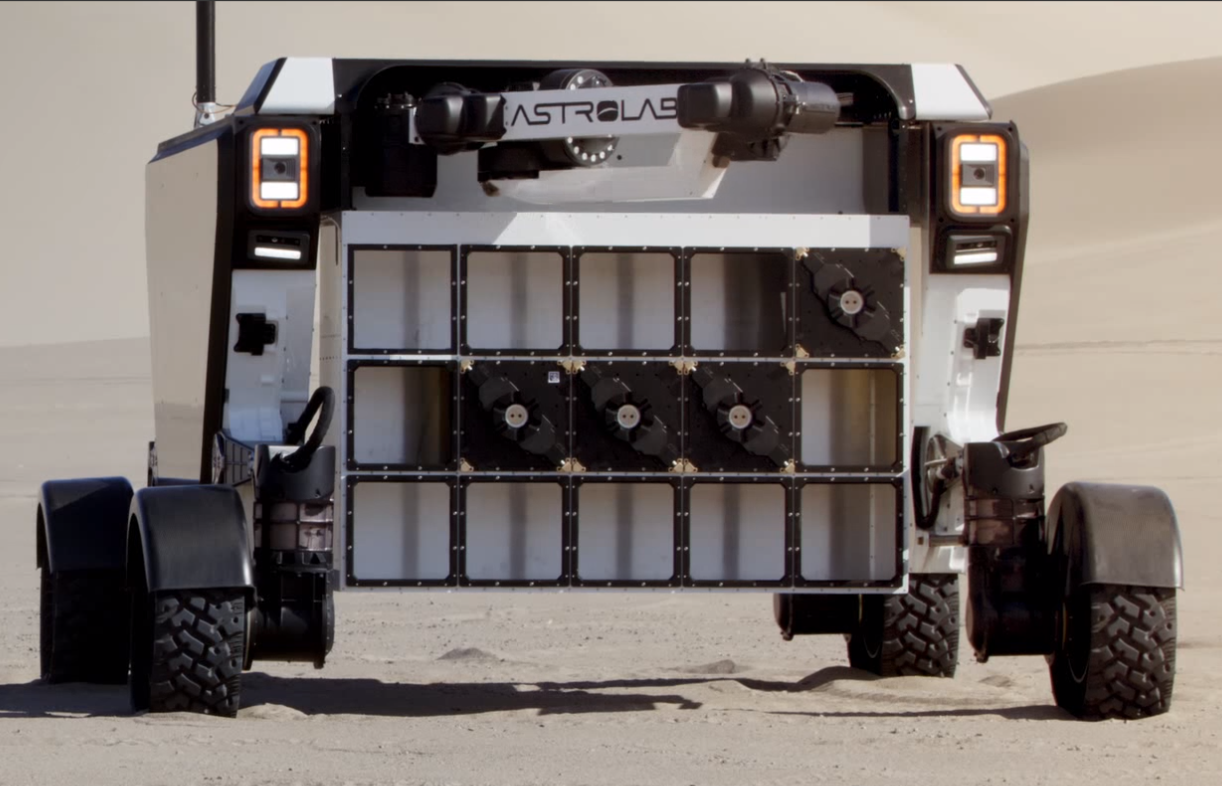
In autonomous mode, ALTA LUNA will be able to carry out operations including excavation, grading and terrain preparation, as well as site development and the creation of routes and basic infrastructure. It will also be able to transport payloads. Each vehicle will be able to operate alone or in coordination with other ALTA LUNA vehicles. For certain operations, several vehicles will therefore be able to work together on the same task, pooling their efforts.
 |
| ALTA LUNA, VENTURI SPACE’S NEW LUNAR UTILITY VEHICLE   ALTA LUNA · Payloads transport © Venturi SpaceThe onboard electronic system is designed to connect to the astronaut’s spacesuit and collect health data. If the astronaut becomes unwell, ALTA LUNA will be able to return the astronaut autonomously to base. The interface will also provide the pilot with essential information for driving and mission safety, including alerts relating to the space environment, such as an approaching solar storm. ALTA LUNA · Payloads transport © Venturi SpaceThe onboard electronic system is designed to connect to the astronaut’s spacesuit and collect health data. If the astronaut becomes unwell, ALTA LUNA will be able to return the astronaut autonomously to base. The interface will also provide the pilot with essential information for driving and mission safety, including alerts relating to the space environment, such as an approaching solar storm. |
With ALTA LUNA, Venturi Space is exploring a tracked mobility architecture for the first time as part of its lunar programmes. This choice has one specific objective: to allow the vehicle to climb steeper slopes than would be possible with a wheeled architecture.
ALTA LUNA will use the battery and battery management system (BMS) developed by Venturi Space. These two technologies are integrated into Venturi Astrolab’s CLV-1, which has been selected by NASA for the Artemis campaign.
Fifteen months after unveiling the MONA LUNA rover, and as the launch of FLIP to the lunar South Pole approaches (*), Venturi Space continues to strengthen its position in the space industry, just five years after its creation.
|
Gildo Pastor, President of Venturi Space:
“I enjoy designing vehicles for extreme environments, but above all I like to see them prove their value in real-world conditions. I will therefore devote all the necessary energy to ensuring that ALTA LUNA supports the first inhabitants of the Moon in their daily lives”
Dr. Antonio Delfino, Director of Venturi Space:
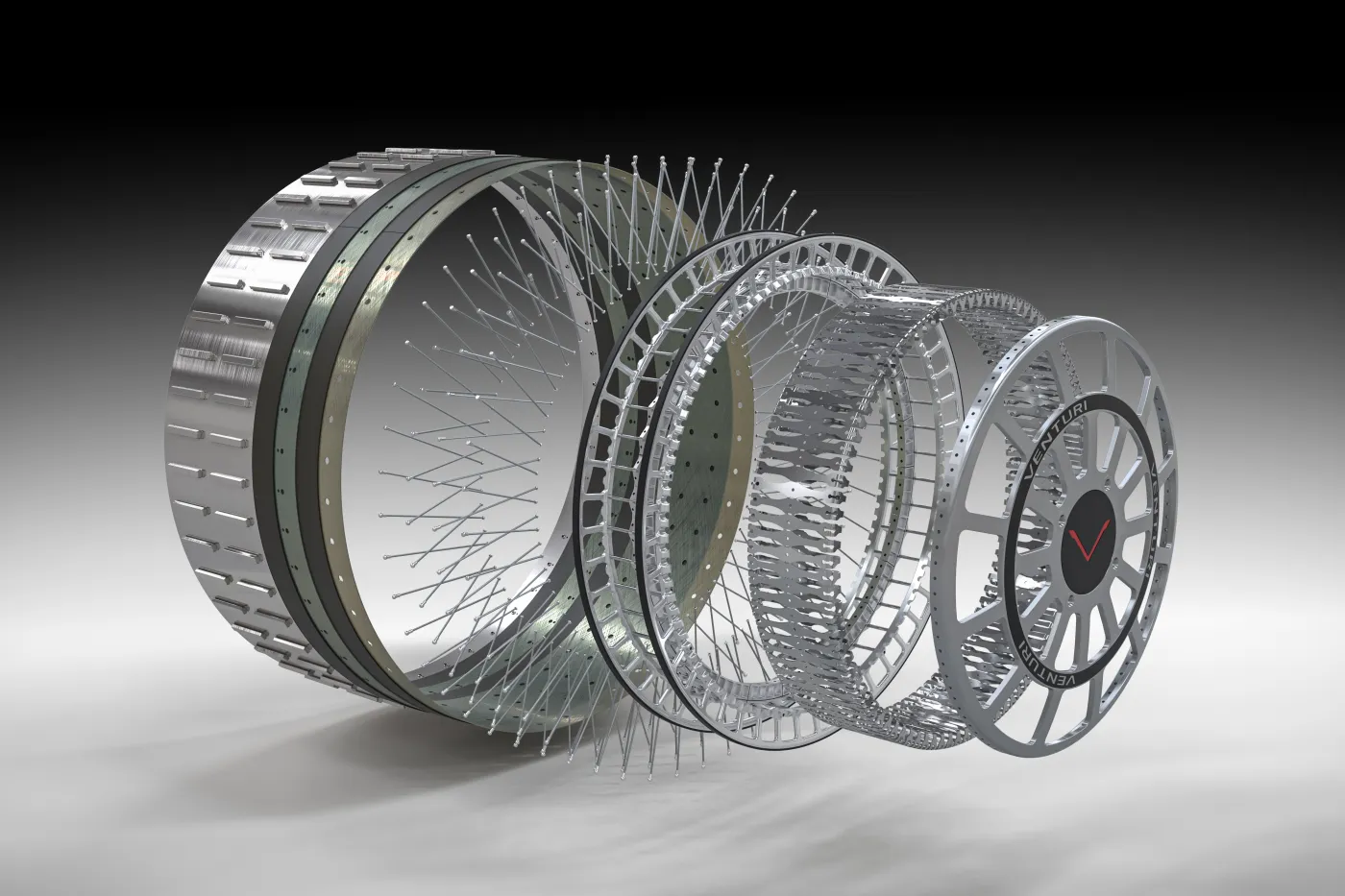
“On the Moon, we will need to build, develop sites, transport, maintain and connect. We will face challenges similar to those of industrialisation on Earth: transport routes, habitats, infrastructure and logistics. This will require a range of specialised mobility solutions capable of operating as a fleet and carrying out a wide variety of missions. This is the new phase of lunar activity that we are preparing for”(*) Developed by the US company Venturi Astrolab, the FLIP rover is equipped with hyper-deformable wheels and high-performance batteries designed and manufactured by Venturi Space. Its launch aboard Astrobotic’s Griffin-1 lander is scheduled by the end of 2026, with the lunar South Pole as its destination. Venturi Space, a European company, is Venturi Astrolab’s strategic partner.
For the Silo, Jarrod Barker.