Tag Archives: clothes from the future

More Clothes From The Future Available Today- A Jacket Made From Stone

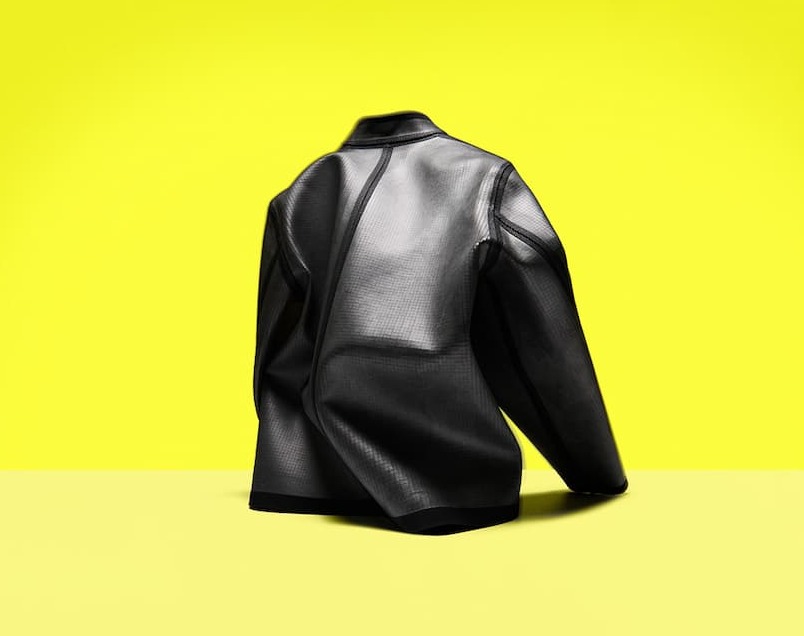
We’ve built new material technologies out of wood, metals and mycelium. Creating a Rock Jacket would be our greatest challenge, a 3-million-year-old problem.

Vollebak Logo
The Rock Jacket | vollebak.com
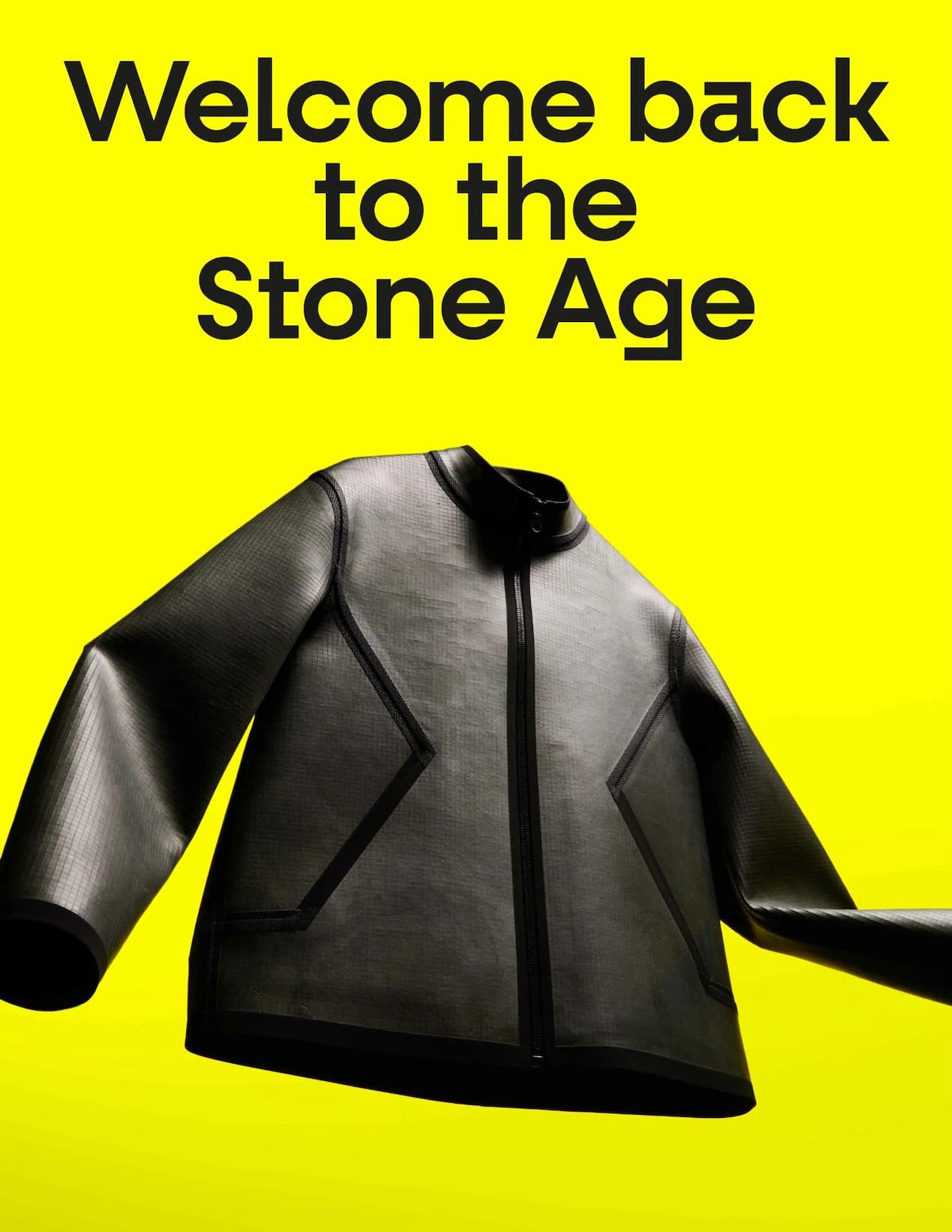
Rock has been our most important technology. It made us apex predators. We used it to build cities and empires. Now we’ve worked out how to wear it. Welcome back to the Stone Age.
The Rock Jacket | vollebak.com
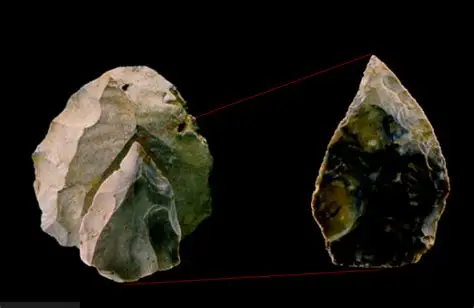
Around 3.3 million years ago, on the shores of Lake Turkana in Kenya, one of our ancestors bashed together two rocks and knocked off a short, sharp flake. It’s the oldest tool we’ve ever found, and it long predates fire, clothing and language.For almost all of prehistory, rock was our cutting edge.

Stone blades and hammerstones meant we could hunt, tear and scrape meat and marrow. And the calories they provided built bigger brains. So we started to think bigger. And taller. By 8000 BCE Jericho was ringed by a stone wall. Stonehenge, the pyramids, the Parthenon and the Pantheon followed. Rock is how we held territory, honoured our gods and told the future we’d been here.

But in more than 3 million years of making good use of rock, we’ve never managed to wear it. Rock is brilliant at not moving. And clothes have to move all the time.We’ve built new material technologies out of wood, metals and mycelium. Creating a Rock Jacket would be our greatest challenge, a 3-million-year-old problem.
The Rock Jacket | vollebak.com

Woowood. stevenleprize.com

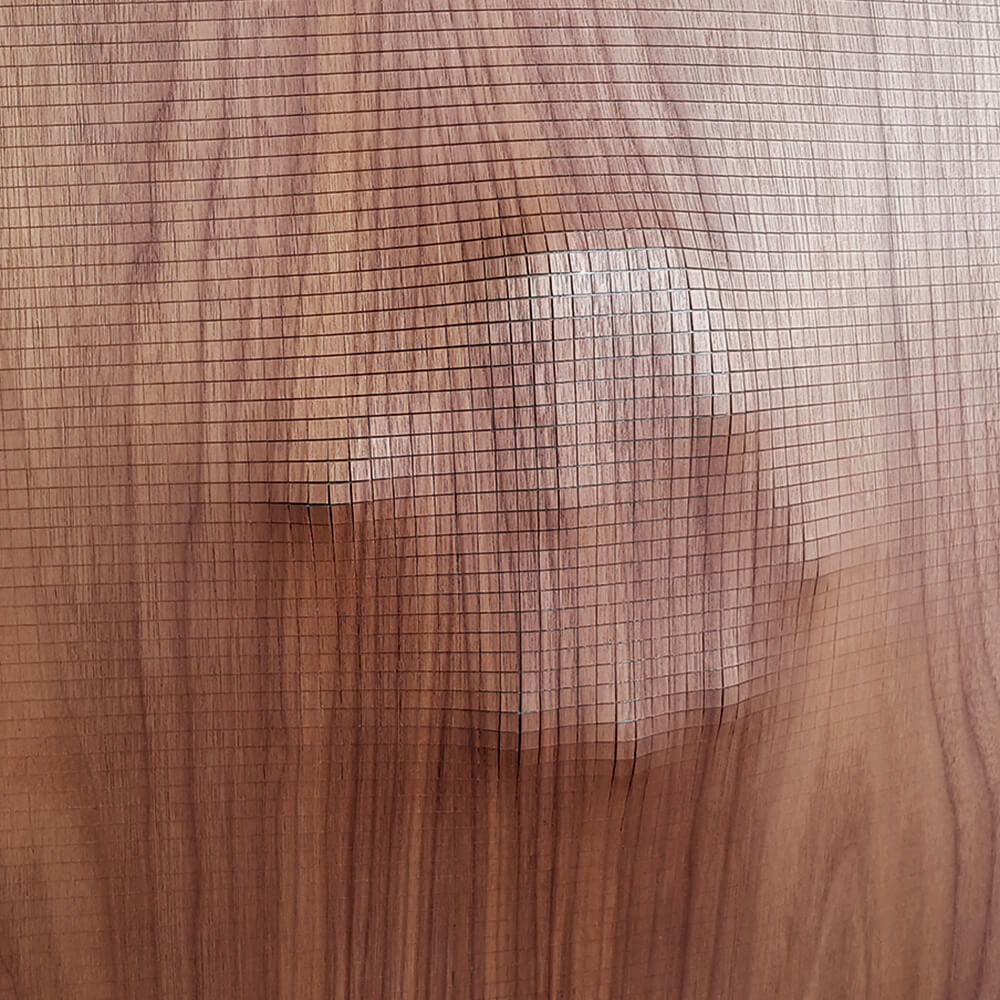
We found part of the solution in Paris. Steven Leprizé is a French designer, material technologist and experimental cabinetmaker. He makes wood that inflates, bends and bonds with metal.Hermès used one of his materials for its KellyWood bag.
Jony Ive commissioned him to make bespoke furniture for his yacht.
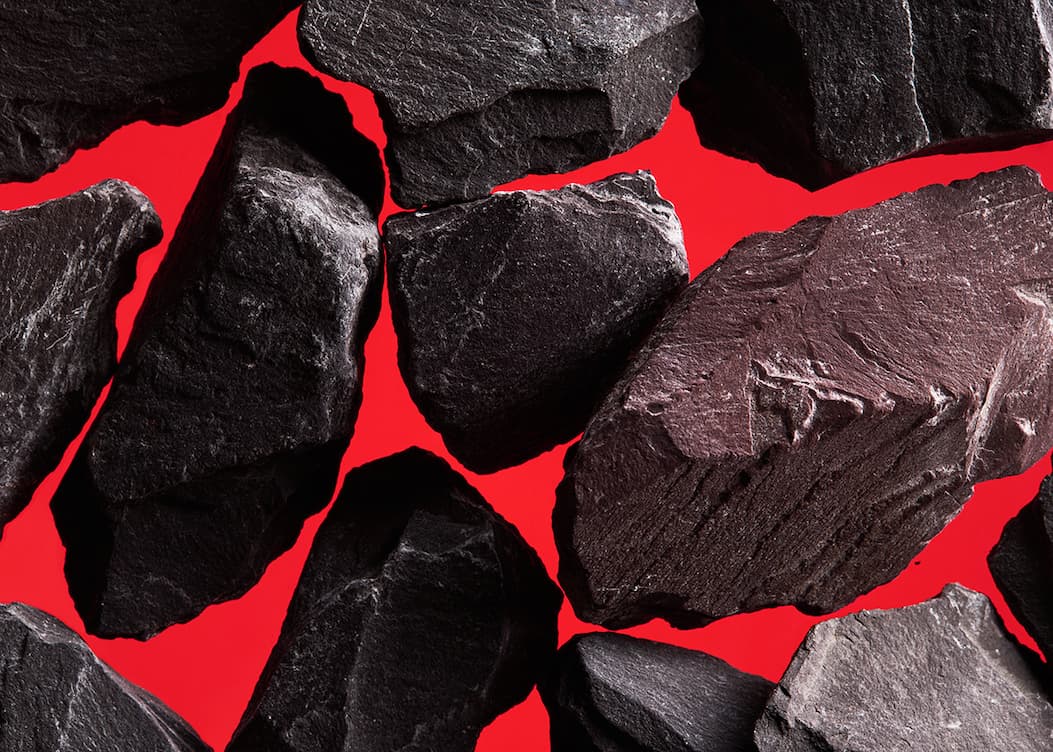
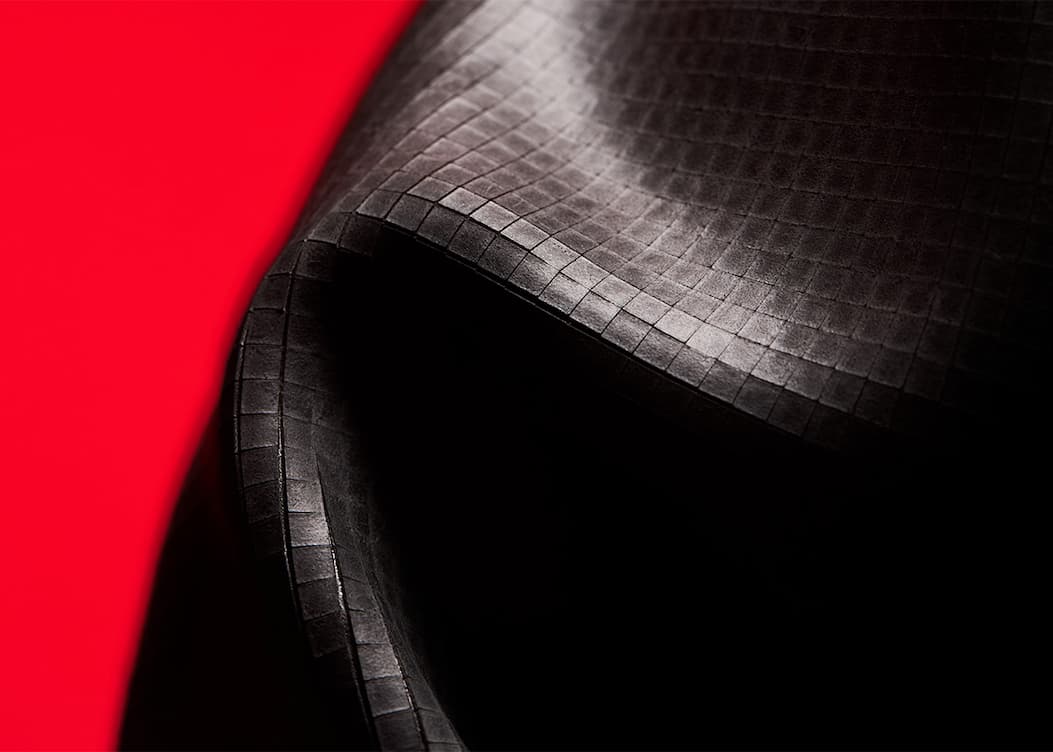
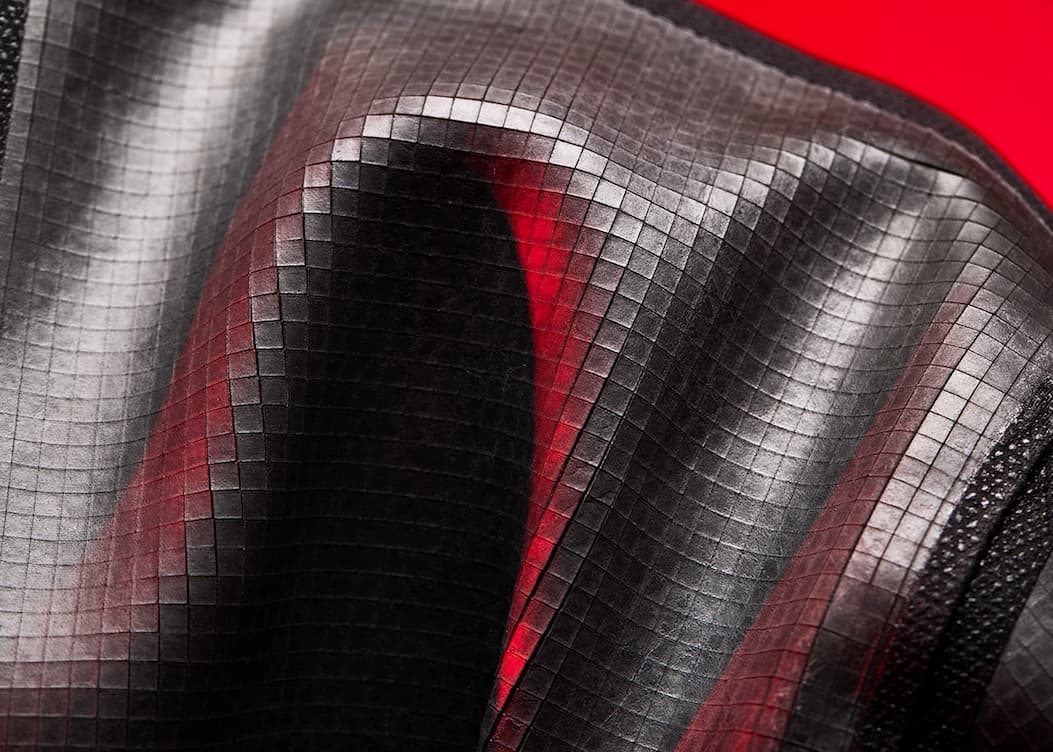
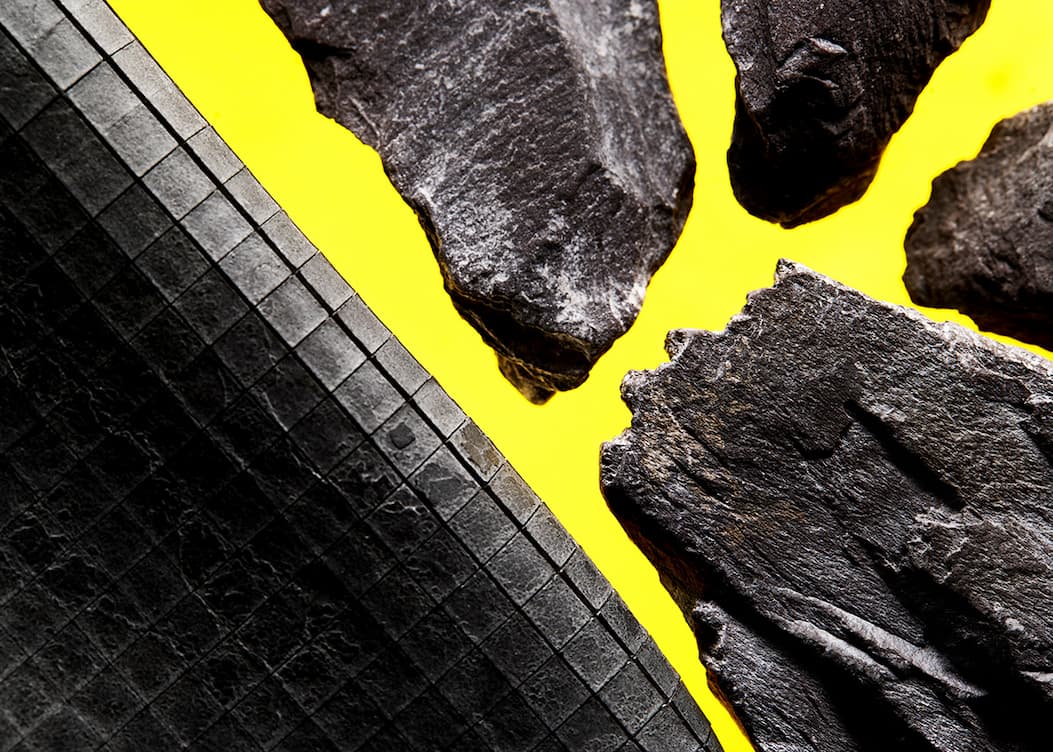
He’d taken WooWood, his elastic marquetry of tiny wood tiles backed with rubber, and made a version in slate.
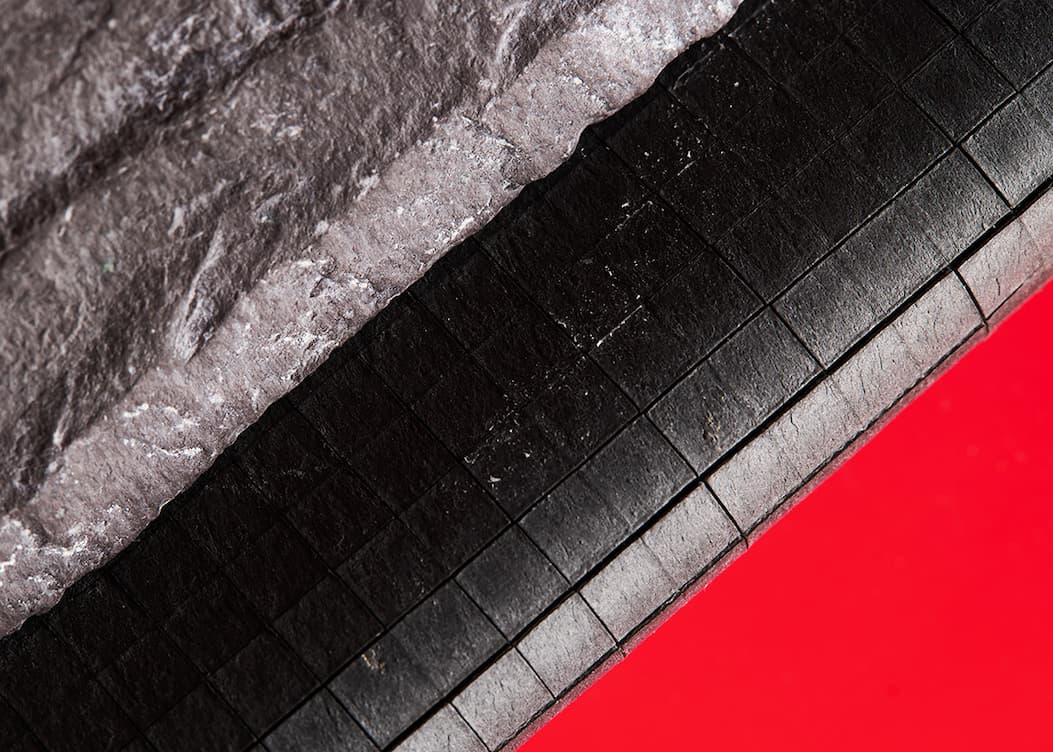
Slate splits along its layers, so it can be peeled incredibly thin. The sheets Leprizé uses arrive at 100cm x 50cm and just 0.5mm thick. Cutting them into perfectly clean 5mm x 5mm squares isn’t easy.
“There are 50 steps to making this material,” says Leprizé, “and the cutting of the tiles is the most important.” Each slice of slate has its own topography of contour lines, peaks and valleys. Preserving that flattened landscape means not losing a single tile.
The Rock Jacket | vollebak.com
“There are 50 steps to making this material,” says Leprizé, “and the cutting of the tiles is the most important.” Each slice of slate has its own topography of contour lines, peaks and valleys. Preserving that flattened landscape means not losing a single tile.
The Rock Jacket | vollebak.com
The tiles are then glued under pressure to a thin neoprene backing, using a technique Leprizé developed with engineers at 3M in Switzerland.
The neoprene comes from a UK supplier whose core business is fetishwear. “I got some funny looks in the office when I was ordering the neoprene online,” says Leprizé. “But it’s really high-quality rubber. It needs to be if you are going to wear it super tight against your skin.”
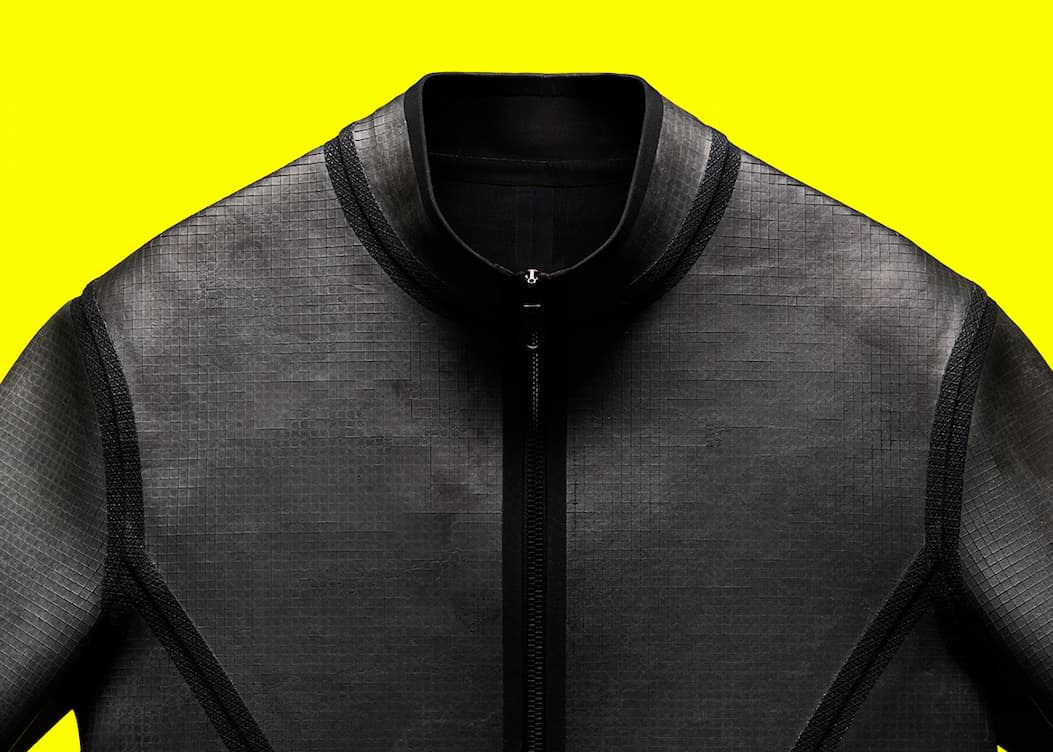
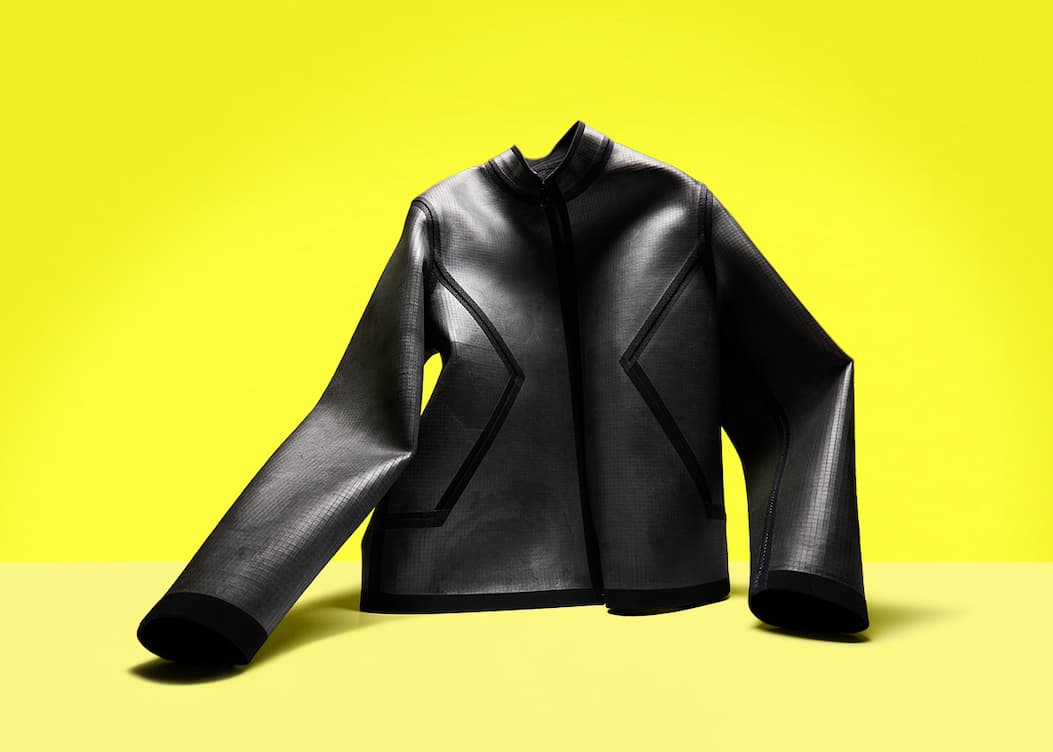
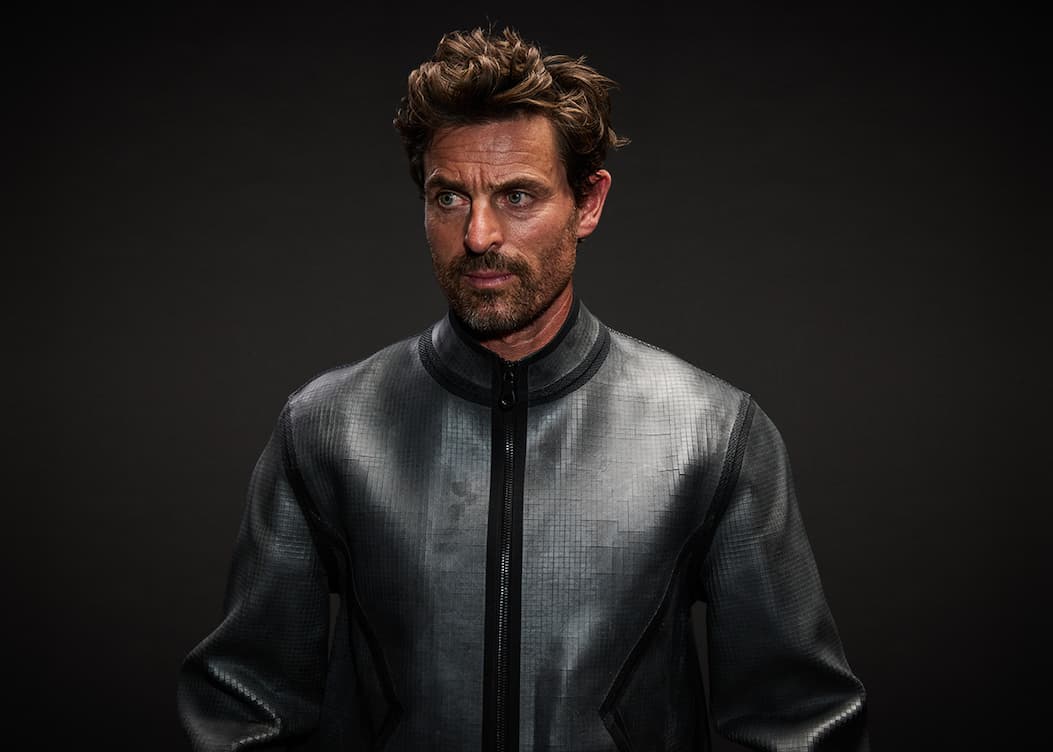
Leprizé’s material got us part of the way there. But we still had to make it truly wearable. In design terms, the material’s armadillo-like tiles ruled out anything too tightly fitted, so we kept bends, sharp turns and gatherings to a minimum.
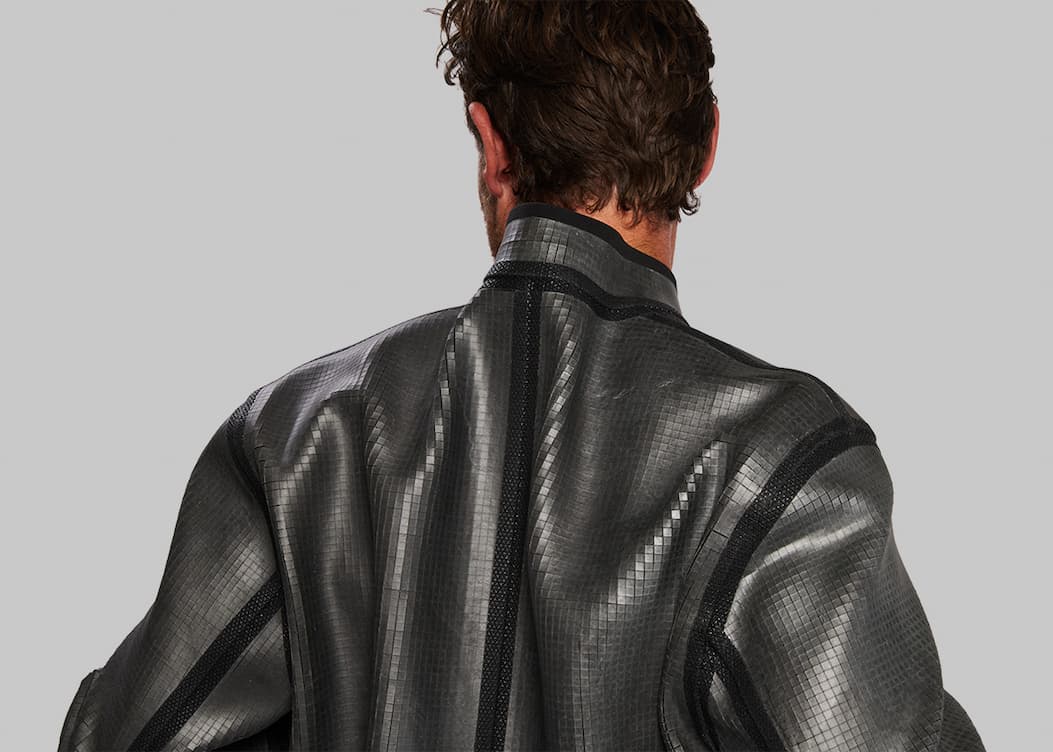
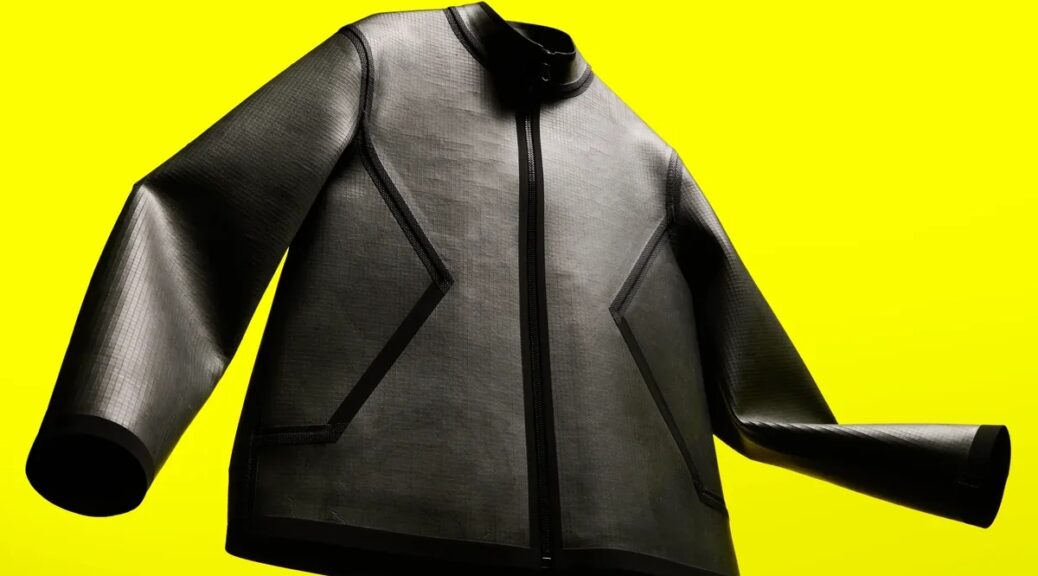
We settled on a minimalist and suitably sci-fi cropped Harrington and laser-cut our way through 5 of Leprizé’s slate sheets. Stitching slate was never an option, so the seams are visibly taped. We added Cordura® pockets and a zip.
The Rock Jacket | vollebak.com
The Rock Jacket is a one-off, a proof of concept. We’re not pretending it’s practical. Not this version anyway. But as with the Wooden Jacket, scalability and day-to-day wearability are the ultimate ambition.In an era when fashion is barely worn before it’s thrown away, our jacket is a piece of Earth’s crust that took millions of years to form. It’s absurd armour and cold, hard couture. And it asks us to rethink our relationship with the oldest materials we have.
 For the Silo, NICK AND STEVE TIDBALL – FOUNDERS Vollebak

Clothes From The Future- A Firefighter Hoodie For All

Vollebak Logo
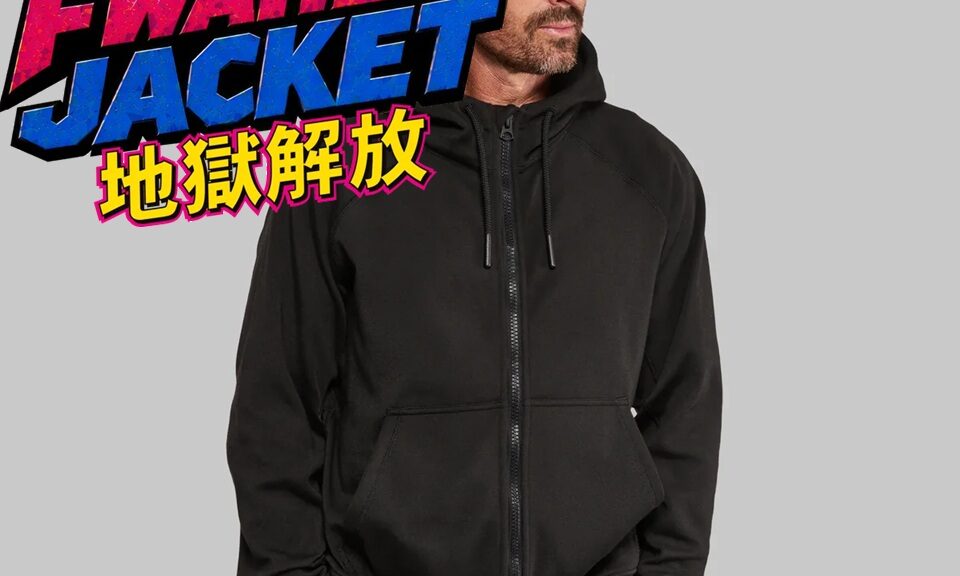
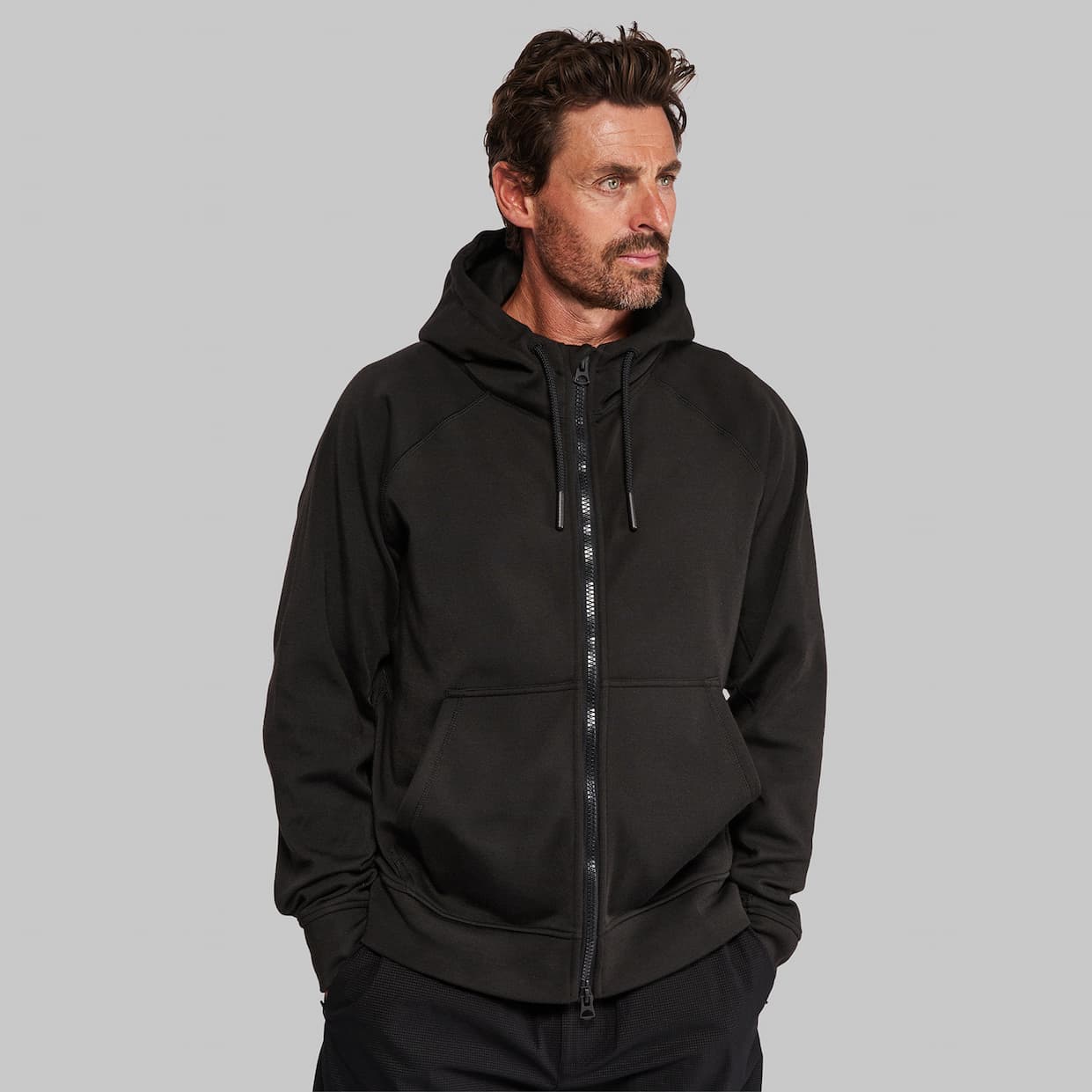
For most of human history our best fire safety strategy has been ‘standing a bit further away.’ So today we’re releasing the Firefighter Hoodie, made from the same fibres as F1 racing suits and firefighter gear.
firefighter hoodie | vollebak.com

For tens of thousands of years our species has been spectacularly good at using fire to get what we want.

We used it to make dinner softer, tastier, and easier to catch in the first place. It helped us build cities and crumble empires by turning rock into copper, bronze and iron.

And even today when we want to leave Earth behind and head to the Moon or Mars, setting stuff on fire sits at the centre of our tech stack. But considering just how dangerous fire is, it’s pretty ironic that at the same time we’ve been spectacularly bad at protecting ourselves from it.

99.9% of everything we’ve ever put on our bodies has been super flammable.

Hide, wool, linen, cotton, synthetics. They’re all really good at going up in flames fast. So for most of human history our best fire safety strategy has been ‘standing a bit further away.’ That was until the arrival of meta-aramids. Made from stable carbon rings and high-energy chemical bonds, today you’ll find them being used in firefighter kit, military flight suits and F1 race suits. Why? Because meta aramid doesn’t burn, drip, or melt. Which is why the new Firefighter Hoodie is made entirely from it.

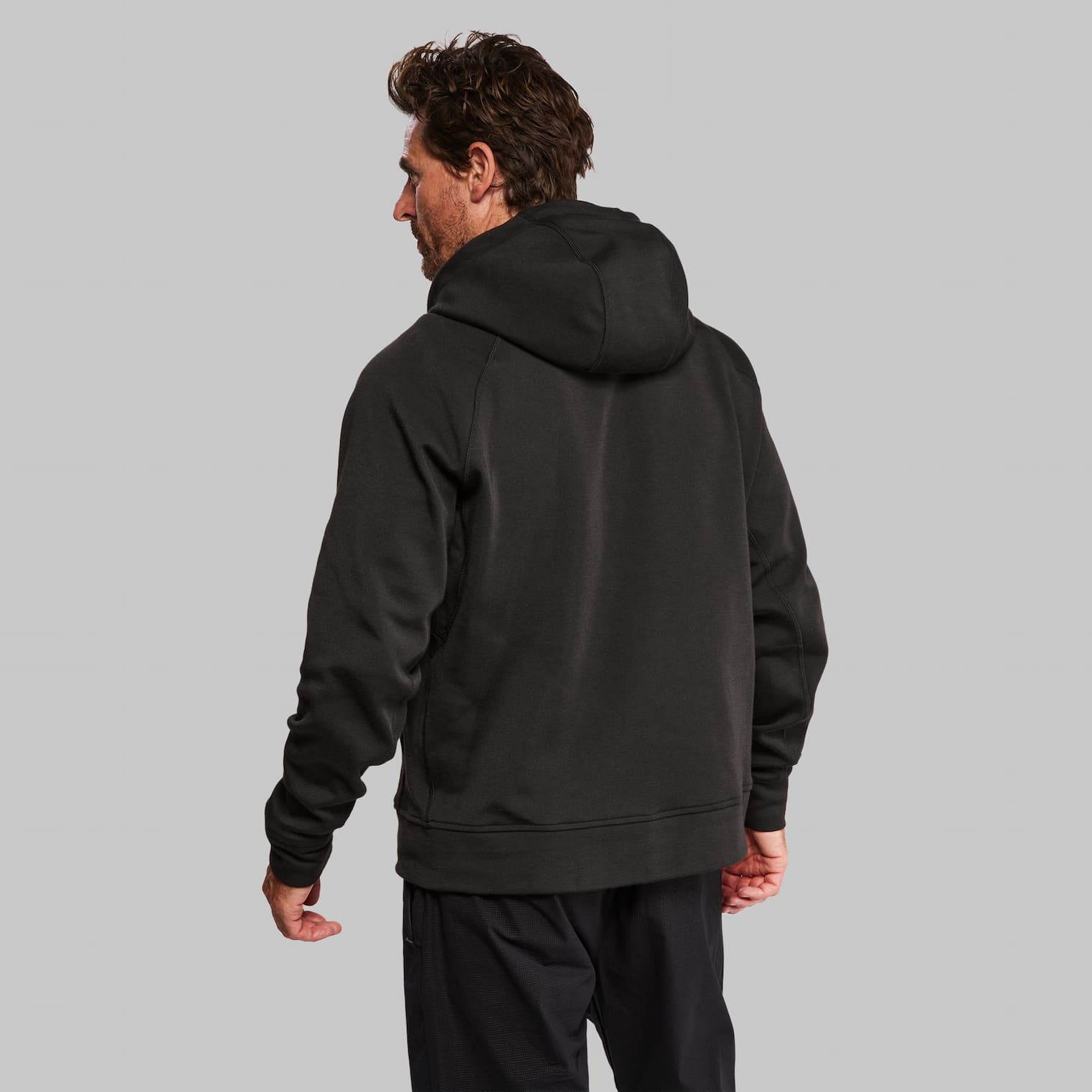
The body, the hood, the cuffs, the hems, the yoke, the underarm panels are all 100% meta-aramid. The 8mm drawcords are flame resistant with silicone dipped ends, and the two-way front zip has flame resistant teeth and a metal puller, hidden behind a roll-over guard. And where you’d normally find metal eyelets for the drawcords, ours are embroidered with flame-resistant thread.

The hoodie is a relaxed fit and feels like a regular hoodie vs protective gear. It comes in 6 sizes from XS to XXL And if you want a hand with sizing you can get in touch with our friends at vollebak here.

For the Silo, Jarrod Barker.

EMI Blocking Clothes From The Future

 Over the last 18 months our friends at Vollebak have been building the Shielding range, a wearable defence system against electromagnetic radiation. Some of it is literally silver and shiny. In other cases, they have integrated the shielding technology more discreetly, in a super comfortable t shirt and, shipping in September, one of the best-looking leather jacket ever made.

Gamma rays turned Bruce Banner into The Hulk. Which turned out to be mostly a good thing. But in reality radiation and human beings don’t go well together.​And as we enter an era of cybersecurity breaches, geopolitical instability, the first manned missions to Mars and increased cosmic radiation exposure, it’s going to present more of a threat.Luckily, there are ways to stop electromagnetic radiation in its tracks.

Long before the Curiosity Rover was sent to Mars to search for signs of life, it had to be tested on Earth. So NASA built an electromagnetic shielding tent to completely block out external radiation during testing – anything from a text message to a chat with the James Webb telescope.

EXPLORE THE Vollebak SHIELDING RANGE    

Vollebak took that technology and put it into clothing.

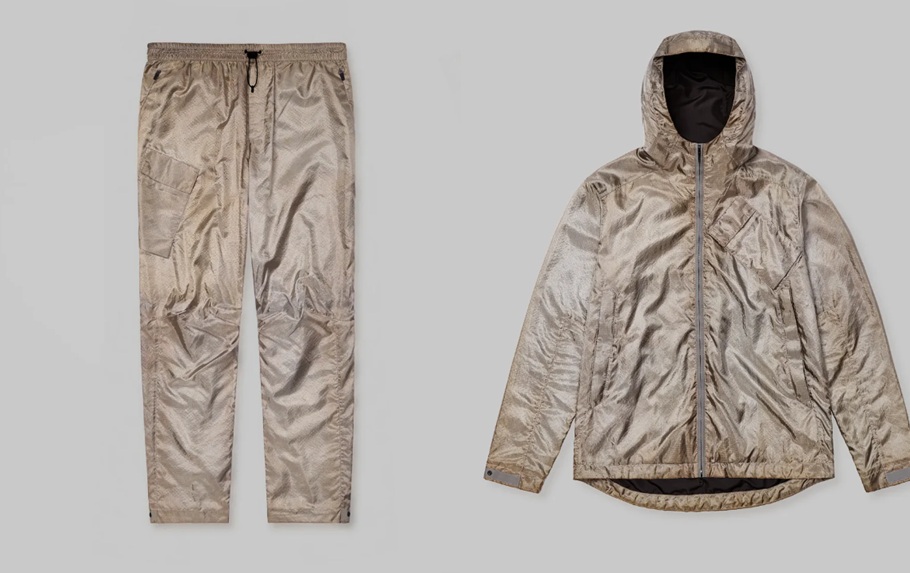
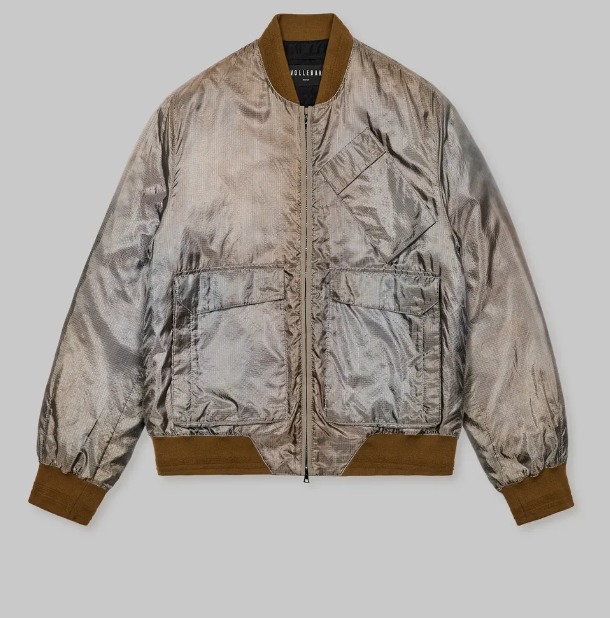
The Shielding Jacket and Shielding Pants are built from a lightweight ripstop embedded with pure silver that blocks radio waves and microwaves across the frequencies used by WiFi, Bluetooth, Ku-band satellites and radar.

This means the jacket and pants deflect infrared, so you can’t be seen on a thermal camera. And each one has a hidden pocket that works like a Faraday cage, sealing your phone off from the outside world whether it’s switched on or off. So you can’t be hacked, tracked or even called.

The Shielding Bomber, based on the original MA-1 flight jacket, wraps this space-age protection in a jet-age shape.

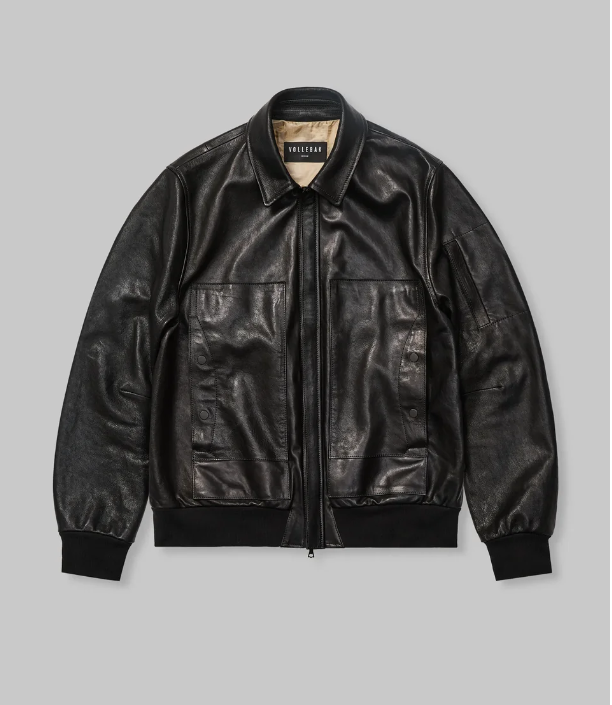
Arriving in September, the Leather Shielding Jacket is a re-engineered version of the A-2, the most famous leather jacket ever made.

It’s cut from black nappa sheep leather, tanned with plant-based tannins so it breathes and ages gracefully, and is lined with the same silver shielding technology as the Shielding Jacket, Pants and Bomber.

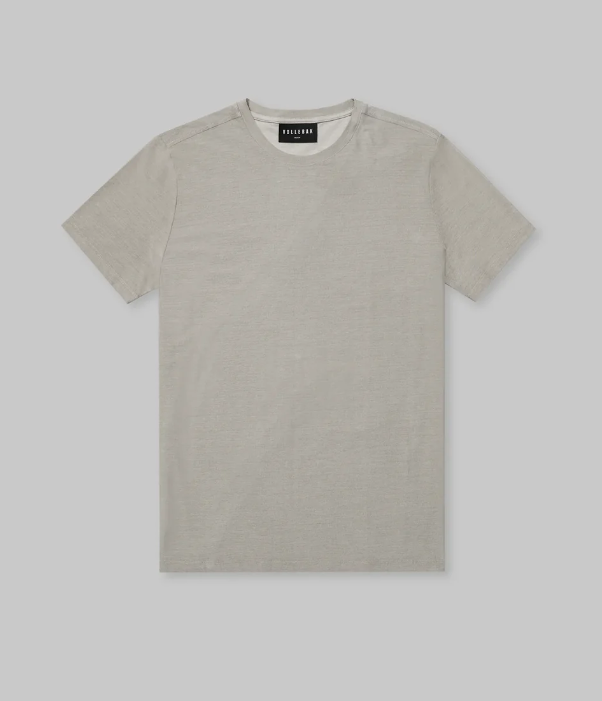
The Shielding T Shirt works slightly differently.

It’s knitted from silver-plated fibres spun from wood pulp, forming a conductive network.

Lab tests show shielding from 30MHz to 10GHz, with the strongest effect across common mobile, WiFi and Bluetooth bands.

It won’t hide you from a satellite, but it’s supersoft, endlessly wearable and the logical thing to put on under everything else. 

This Cardigan Is Grown Underwater & Made From Kelp

Kelp can grow 24 inches a day on nothing but sunlight and saltwater. That’s faster than a triffid, but with a much lower chance of getting eaten. And our friends at vollebak used it to make the Underwater Kelp Cardigan.


In John Wyndham’s classic The Day of the Triffids, much of the world has been blinded by a meteor shower. Eight-foot-tall walking plants – possibly bioengineered by the Soviet Union – sting and then slowly digest stumbling, unsighted humans.

Seaweed, a type of marine algae, is almost as weird and otherworldly. But it doesn’t walk, and it doesn’t eat people.

It might turn out to be one of the most useful organisms on the planet. Which is why they’ve used it to build the Underwater Kelp Cardigan.

What makes seaweed so exciting? Let’s start with how fast it grows. Kelp – the long, ribbon-like brown algae that forms forests on the seabed – can grow by up to 24 inches a day. That makes it one of the fastest-growing organisms on Earth. Faster than triffids. Considerably faster than bamboo.

And it does it on almost nothing. No soil. No freshwater. No fertilizer. No pesticides. Just seawater, sunlight, and dissolved nutrients. Farming on land needs fields, irrigation, and machinery. Cultivating seaweed just needs a rope and a stretch of coastline.

The forests it builds are among the most productive ecosystems anywhere. Underwater rainforests, dense with life, growing up through the water column rather than out across a field. More than 35 million tonnes are now produced globally each year. Most of it is farmed rather than torn from the wild.

What’s inside is more interesting still.

Seaweed’s cell walls are packed with biopolymers – alginate, agar, carrageenan, cellulose – industrial building blocks that are already in everything from ice cream to pharmaceuticals. Extracted and refined, they can be reassembled into films, gels, coatings, and fibers.

These polymers can be spun into yarns that look, feel, and behave like natural fibers, but at a fraction of the environmental cost. They need up to 70 times less water than cotton. They cause zero microplastic pollution. And rather than lingering for centuries, some seaweed-based materials are designed to disappear, biodegrading in a matter of weeks.

Brown and red seaweeds can also – and with much less intervention and engineering – be turned into thin, transparent films that are strong enough for packaging. It’s also compostable. Instead of outliving everyone who ever touched them, they just quietly disappear.

Then there’s everything seaweed does while it’s still growing. It absorbs carbon dioxide straight out of the water. It acts as a living filter, pulling excess nutrients from coastal seas and quietly restoring balance.

It’s not all upside.

Processing seaweed at scale is still energy intensive. But seaweed is more than a single miracle material. It’s the basis of a new material system, a blue biorefinery, where the entire plant gets used across food, feed, chemicals, and textiles with as little waste as possible.

For most of history, seaweed has been seen as an unsightly annoyance. That’s all about to change.

For the Silo, Jarrod Barker.

Clothes From The Future- Indestructible Chinos Woven With Strongest Fibre On Earth

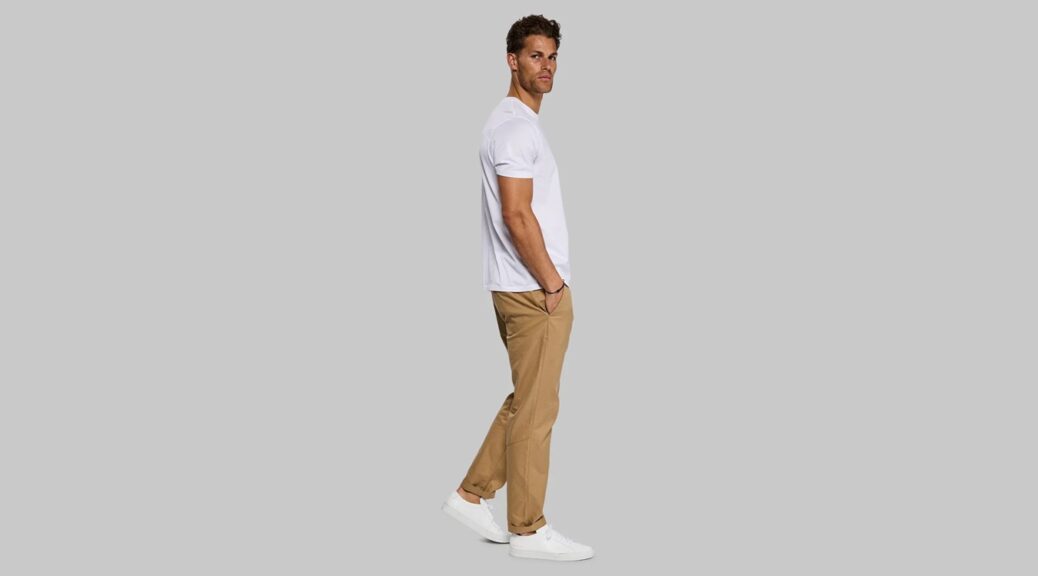
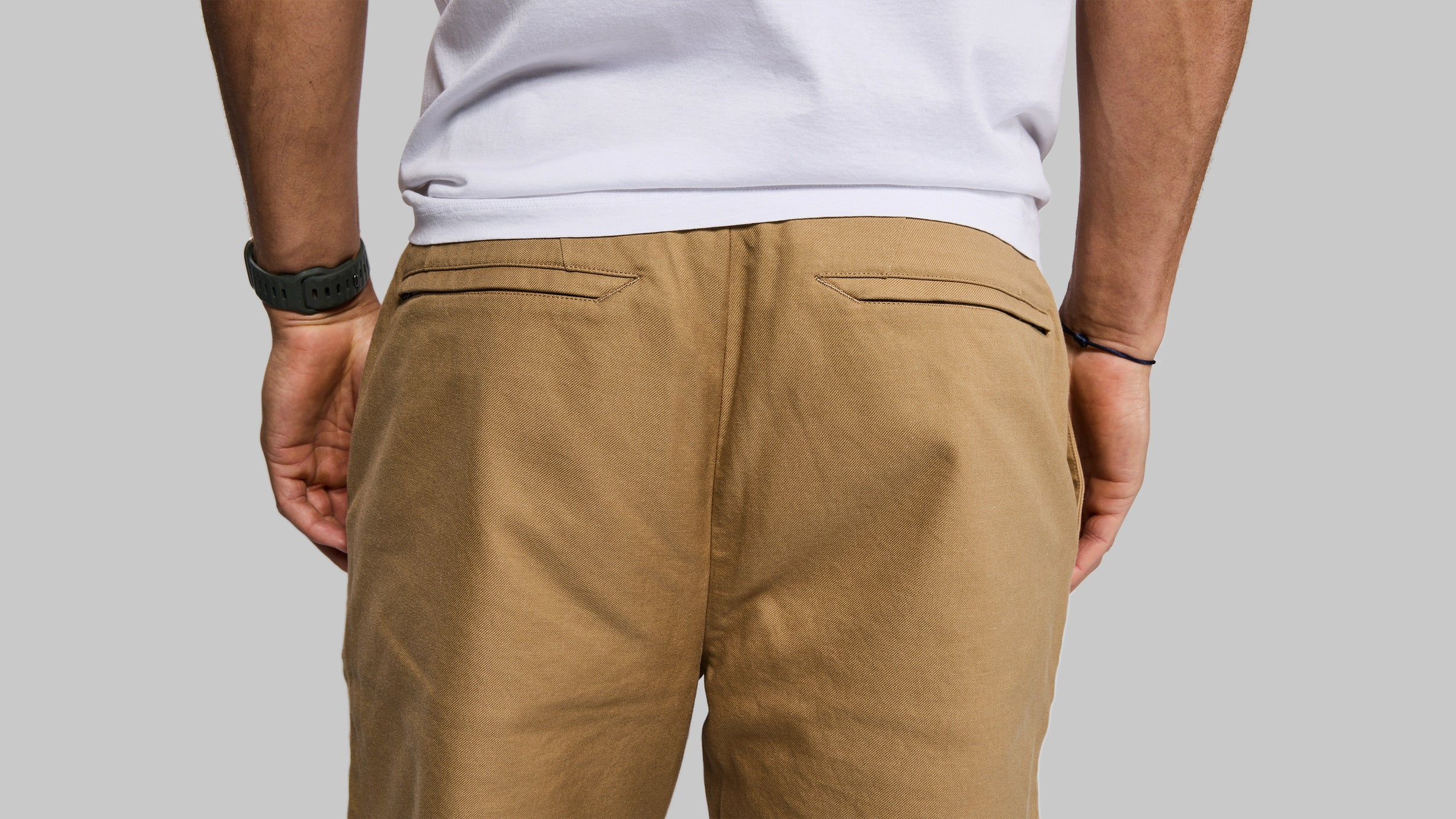
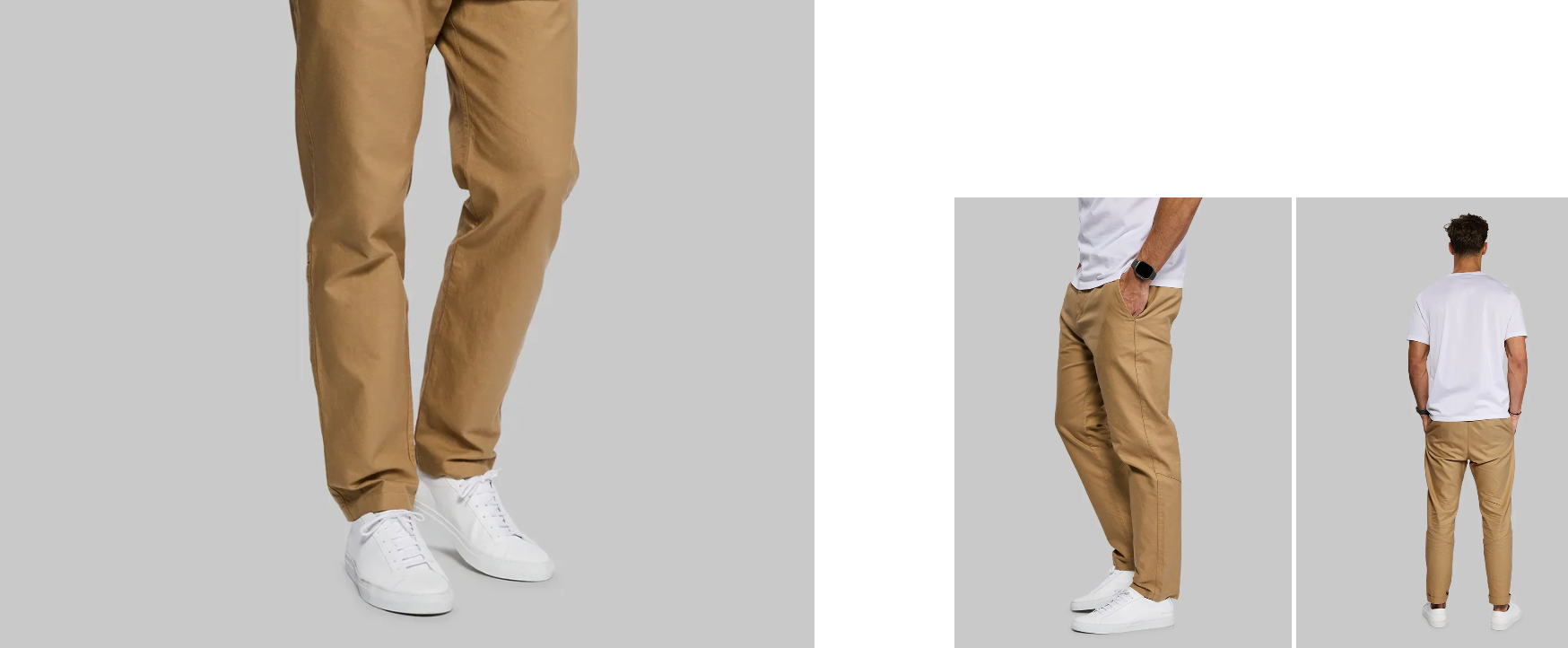
While vollebak’s Indestructible Chinos look and feel exactly like the chinos worn by JFK and Steve McQueen, they’re woven with the strongest fibre on Earth, and are now our best-selling pants. Like most men’s clothing, chinos emerged from war. This time it was the Spanish-American one. They were slim-fitting, flat-fronted, functional, and most importantly… really really dependable.


By 1902, after heavy field-testing, they’d been made an official part of the US Army uniform. But once World War II was over, the guys who’d fought went off to college still wearing them, turning them into an instant hit on the Ivy League campuses.
 
And their reputation was only cemented as a staple of mid-century menswear when they became the standard issue kit for John F. Kennedy and Steve McQueen.
 
Which is why, 120+ years later, you still don’t need to mess with the design. So we haven’t.
 
Instead we’ve taken pants you’ve always been able to rely on, and woven them with the strongest fibre on Earth… so you can rely on them even more. 


Our Indestructible Chinos come in 2 colours. We’ve got a Sand edition (the lighter colour), and a Sandstone edition (which is the slightly darker colour).
 
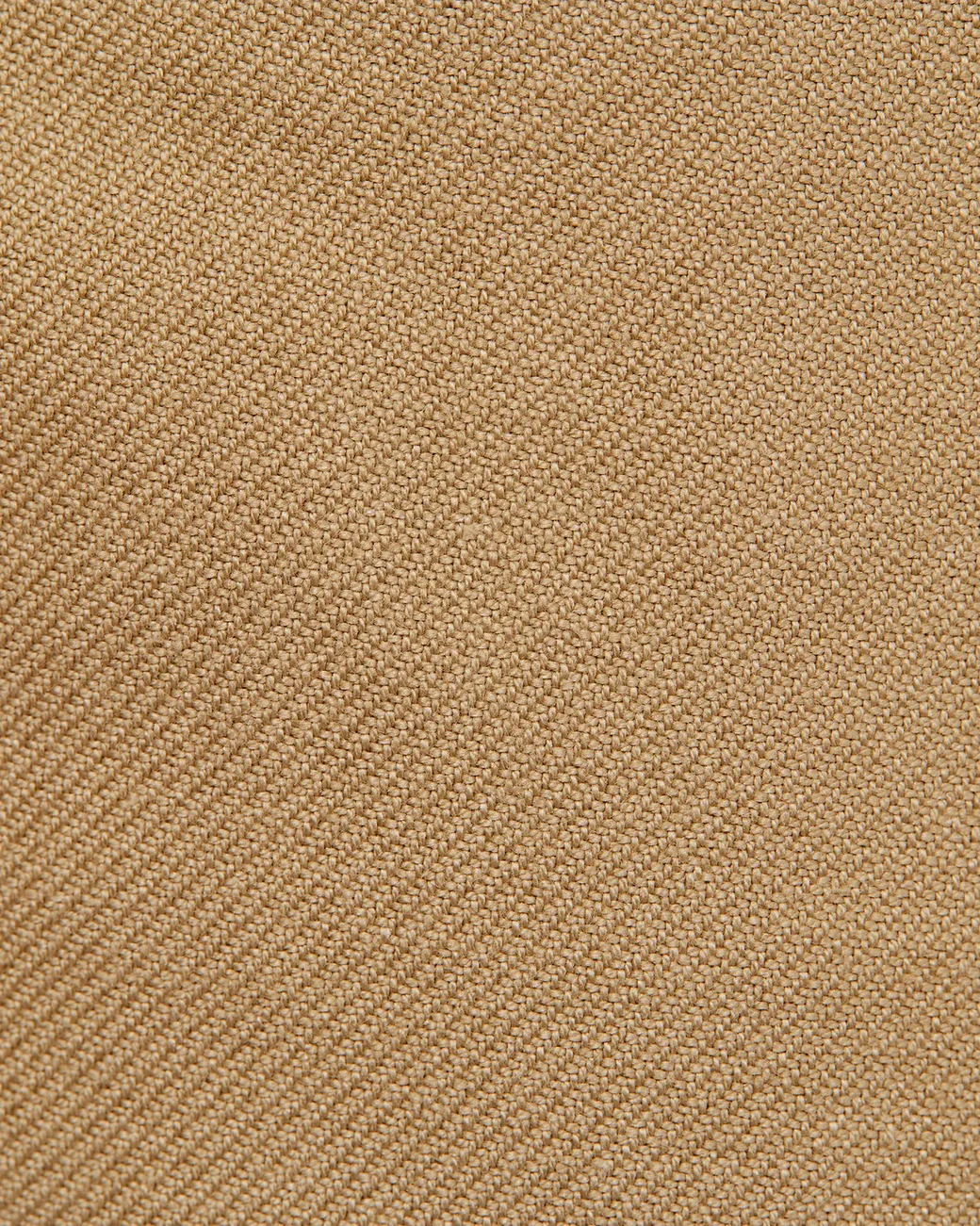
While they look and feel like regular chinos, every pair of Indestructible Chinos is made with a blend of cotton and Dyneema – which is the same stuff used in body armour, arctic ropes and the sides of tanks.

To make the Indestructible Chinos, vollebak worked with Toyoshima, a 180-year-old Japanese textile company that has been certified as Japan’s first Dyneema® Premium Manufacturing Partner.

Of course you’d never know this just by putting them on.

And that’s because the Dyneema is woven in with the cotton during the weaving process, so you’ll only ever feel the softness of the cotton, not the strength of the Dyneema. And they’ve also been garment washed so they feel lived in from day one. So you’ll only ever know about the Dyneema when you suddenly need it.


Fit wise they’re similar to Equator Pants but with a slightly more relaxed cut. And if you want a hand with sizing you can get in touch with us here.  For the Silo, NICK AND STEVE TIDBALL.

Technical Details

  • Material made in Japan: 95% cotton, 5% Dyneema®
  • Highly abrasion resistant
  • Zip fly
  • 5 belt loops
  • 2 front pockets
  • 2 zipped rear pockets
  • Pocket lining: 70% cotton, 30% Cordura
  • Gentle machine washing 30°C
  • Constructed in Portugal

Clothes From The Future Available Now

Vollebak Logo
Part spaceship, part shop, the first Vollebak Spaceshop launched in Copenhagen in June. Before it heads off to service nearby galaxies, our friends at Vollebak are sending it on a world tour of Earth first.
Spaceshop World Tour | vollebak.com
 
Over the last year our friends at Volleback have partnered with sonic powerhouse Bang & Olufsen and Saga Space Architects to build their first prototype interstellar delivery vehicle …the Vollebak Spaceshop.

The craft itself is over 1,000kg of precision engineering that offers a glimpse into a future of interplanetary kit deliveries between Earth, the Moon and Mars. It was designed with SAGA Space Architects whose work includes lunar habitats for the European Space Agency, and lighting systems to help astronauts sleep on the International Space Station. And it’s fitted with Bang & Olufsen’s iconic Beolab 5 and Beosound 2 speakers.

If you missed launch night it involved space-based clothing, Earth-based alcohol, and the sound of the Spaceshop flexing its 120 decibels of muscle with ‘Intergalactic’ by the Beastie Boys. As soon as the next destination has been selected they’ll let you know. And while you’re waiting they have 4 pieces of space-ready cargo available for testing.

It includes their Martian Aerogel Jackets which are built from the Jet Propulsion Laboratory’s hypersonic deep space parachutes that landed the last Rover on Mars – and the same aerogel that stopped it freezing in the vacuum of space, and burning up on entry. They have their awesome Full Metal Jackets engineered from 11 kilometres of disease-resistant copper that were hailed by WIRED as “the virus-killing coat of the future,” and they’ve built to explore how humans could avoid taking diseases from Earth up into space.

You’ll also find electromagnetic Shielding Suits embedded with pure silver that block WiFi, Bluetooth, Ku-band satellites and radar systems, and deflect mid and long wave infrared radiation so they can’t be seen on infrared cameras. And last up they have the world’s first Anodised Jacket. Built with metallic insulation originally engineered by NASA to stop their spacecraft freezing in space, each jacket is fused with a near-invisible layer of metal from a galvanic bath that makes you appear cold or even invisible to infrared cameras.
Spaceshop World Tour | vollebak.com