This August we saw the fifth U.S. Civil War re-enactment at Circle G Ranch, east of Cayuga, Ontario. On Sept. 13, re-enactors of the ‘Blue and Grey’ will go to battle in Otterville.
The American Civil War had a tremendous influence on the British North American colonies, and continues to be of mind.
At onset of the Civil War, Canada did not yet exist as a federated nation. When the war broke out in 1861, Canada was still a subject of Great Britain and had maintained an uneasy peace with its American neighbors since the War of 1812.
William Seward, the American Secretary of State during the Civil War, was an annexationist who felt that British North America was destined to become part of the United States. As it became obvious that the North would emerge victorious there was a fear the Union army would turn its eyes north of the border.
Many in the US government were supporters of Manifest Destiny, an ideology that stated America should conquer the continent. Canadians were concerned about the possibility of a US invasion.
The tensions between the United States and Britain, which had been ignited by the war and made worse by the Fenian Raids, led to concern for the security and independence of the colonies, helping to consolidate momentum for Canadian confederation.
In the election of 1864, the Republican Party used annexation as a means to gain support from Irish Americans and the land-hungry.
In 1866, an annexation bill passed in the US House of Representatives stating the United States acquire all of what is now Canada.
The Underground Railway- major sites in Ontario,Canada.
The Civil War also had an important effect on discussions concerning the nature of the emerging federation. Many Fathers of Confederation concluded the secessionist war was caused by too much power being given to the states, and thus resolved to create a more centralized federation. It was also believed that too much democracy was a contributing factor and the Canadian system was thus equipped with checks and balances such as the appointed Senate and the power of the British-appointed governor-general.
The guiding principles of the legislation which created Canada, the British North American Act, were peace, order and good government – in stark contrast to the perceived rugged individualism of the neighbours south of the border.
Since 1793, thanks to then Lieutenant-Governor John Graves Simcoe, Upper Canada – now present day Ontario – had banned the importation of slaves. Canadians were largely opposed to slavery, and Canada had recently become the destination of the Underground Railroad.
The Underground Railway was a network of safe houses and individuals who helped runaway slaves reach free sates in the American North or in Canada.
It ran from about 1840 to 1860. It was most effective after the passage of the Fugitive Slave Act in 1850, which enabled slave hunters to pursue runaways onto free soil. It is estimated that about 30,000 reached Canada. Several communities were established in Ontario, including one east of Cayuga, at Canfield.
The Civil War claimed 7,000 Canadians and almost 620,000 US lives.
Between 33,000 and 55,000 men from British North America served in the Union army, and a few hundred in the Confederate army. Five served as generals, and 29 received the U.S. Medal of Honour. For the Silo, Toby Barrett MPP Haldimand-Norfolk.
Noted family lawyer Russell Alexander has written a book outlining the path to a successful divorce, taking readers step-by-step through the process from finding a lawyer to handling post- litigation issues. This one of the few books that touches exclusively on Ontario divorce law.
“It made me realize how much hunger there is for information on how divorces work,” said Alexander. “No one ever expects to get a divorce, so it’s not a subject that people spend much time learning about until they are facing one. It can be hard to catch up at such a stressful time.”
In 300+ pages, Alexander’s book, “The Path to a Successful Divorce,” aims to give readers a solid grounding on the key questions about family law that they’ll face as they go through a divorce, including whether they’ll need a separation agreement first, how courts view adultery and why representing yourself is a bad idea.
Using his knowledge of Canadian case law, Alexander also peppered the book with interesting anecdotes about real divorces that illustrate how some of these issues play out, such as a father who sent abusive text messages and a couple who were married in front of 500 people but never obtained a marriage license.
“Every divorce is unique,” Alexander said. “But there are principles that underlie the process that you need to understand before you move forward in a divorce. This is one case where what you don’t know can hurt you. Hopefully this book will help readers avoid that problem.”
The book is now available for purchase on Amazon Kindle and will be available in print on Amazon and on the firm’ s website later this spring. For more details, contact: [email protected]
Russell Alexander Family Lawyers is committed to practicing exclusively in the area of family law in Ontario dealing with all aspects, including separation and divorce, child custody and access, spousal support, child support, and division of family property. A team of lawyers provide guidance from start to finish, helping clients identify and understand the legal issues as well as the options and opportunities available through the transition. The firm has offices in Lindsay, Whitby, and Markham, Ontario. For the Silo, Alison Beckwith .
Saudi Arabia and Iran are vying for regional dominance, as the latter pursues nuclear weapons. Turkey is cozying up to Russia and China. Instability, conflict, and proxy wars have engulfed Syria, Yemen, and beyond. How should the United States respond to changing power, proxy wars, terrorism, and human rights issues in the Middle East? On Thursday, September 12, America’s debate series Intelligence Squared U.S. launches their fall season with a debate not one, but three motions, all investigating “Shifting Power in the Middle East”:
Motion 1: Is Trump right on Saudi Arabia? Motion 2: Is the world safer without the Iran Nuclear Deal? Motion 3: Is Turkey an asset to NATO?
In this latest installment in Intelligence Squared U.S.’s new “Unresolved” series, debaters must declare their “yes” or “no” stance on each separate motion, allowing for both sharp disagreements and unexpected alliances. The debaters will be: * Michael Doran, senior director on the National Security Council under President Bush* Reuel Marc Gerecht, former CIA case officer* Bernard Haykel, professor of Near Eastern Studies at Princeton* Brett McGurk, the State Department’s former Special Presidential Envoy for the Global Coalition to Defeat ISIS* Barbara Slavin, the director of the Future of Iran Initiative
WHAT: Intelligence Squared U.S. Debates “Unresolved: Shifting Power in the Middle East” WHEN: Thursday, September 12 / 7:00-8:45 PM EDT WHERE: Peter Norton Symphony Space, 2537 Broadway, New York, NY TICKETS: $40 ($12 for students w/ ID). To purchase, visit http://www.intelligencesquaredus.org/
Debaters Bios: * Michael Doran, Senior Fellow, Hudson Institute Michael Doran is a senior fellow at the Hudson Institute in Washington, D.C., where he specializes in Middle East security issues. Doran served as a senior director on the National Security Council under President Bush and was responsible for helping to devise and coordinate U.S. strategy on a variety of Middle East issues, including Arab-Israeli relations and U.S. efforts to contain Iran and Syria. He also served in the Bush administration as a senior adviser in the State Department and a deputy assistant secretary of defense in the Pentagon.
* Reuel Marc Gerecht, Senior Fellow, The Foundation for Defense of Democracies & Fmr. CIA Case OfficerReuel Marc Gerecht is a former case officer for the CIA, where he served as a Middle Eastern targets officer with the CIA’s directorate of operations. He is a senior fellow at the Foundation for Defense of Democracies, a non-partisan organization centering on national security, where he focuses on Iran, sanctions, terrorism, and the Middle East. He is the author of “Know Thine Enemy: A Spy’s Journey into Revolutionary Iran” and “The Islamic Paradox: Shiite Clerics, Sunni Fundamentalists, and the Coming of Arab Democracy,” among others.
* Bernard Haykel, Professor of Near Eastern Studies, Princeton University Bernard Haykel is a professor of Near Eastern Studies and the director of the Institute for Transregional Study of the Contemporary Middle East, North Africa and Central Asia at Princeton University. After working as a post-doctoral research fellow at Oxford University in Islamic Studies, he joined New York University in 1998 as associate professor before taking up his post at Princeton. He became a Guggenheim fellow in 2010 and is co-editor of the book, “Saudi Arabia in Transition; Insights on Social, Political, Economic and Religious Change.”
* Brett McGurk, Fmr. Special Presidential Envoy for the Global Coalition to Defeat ISISBrett McGurk served as Special Presidential Envoy for the Global Coalition to Defeat ISIS at the U.S. Department of State, where he helped build and then lead the coalition of 75 countries and four international organizations in the global campaign against ISIS. He served in senior positions in the Bush and Obama administrations and has led some of the most sensitive diplomatic missions in the Middle East over the last decade. McGurk is currently the Frank E. and Arthur W. Payne distinguished lecturer at the Freeman Spogli Institute and Center for Security and Cooperation at Stanford University.
* Barbara Slavin, Director, The Future of Iran Initiative, The Atlantic CouncilBarbara Slavin is the director of the Future of Iran Initiative and a nonresident senior fellow at the Atlantic Council. The author of “Bitter Friends, Bosom Enemies: Iran, the US and the Twisted Path to Confrontation,” she is a regular commentator on U.S. foreign policy and Iran on NPR, PBS, and C-SPAN. Previously, Slavin served as a public policy scholar at the Woodrow Wilson International Center for Scholars. Slavin is a career journalist, and currently writes as columnist for Al-Monitor.com, a website devoted to news from and about the Middle East.
ABOUT INTELLIGENCE SQUARED U.S. DEBATES (IQ2US) A non-partisan, non-profit organization, Intelligence Squared U.S. was founded in 2006 to address a fundamental problem in America: the extreme polarization of our nation and our politics. Their mission is to restore critical thinking, facts, reason, and civility to American public discourse. The award-winning debate series reaches over 30 million American households through multi-platform distribution, including radio, television, live streaming, podcasts, interactive digital content, and on-demand apps on Roku and Apple TV. With over 160 debates and counting, Intelligence Squared U.S. has encouraged the public to “think twice” on a wide range of provocative topics. Author and ABC News correspondent John Donvan has moderated IQ2US since 2008.
Players Can Pilot Presidential Helicopter Around Washington, D.C.
August, 2019 (Washington, D.C.) – The White House Historical Association has just launched a new game in its WHExperience mobile app called “Fly Like Ike.” This interactive game allows users to pilot the president’s helicopter and make stops to learn about several monuments and historic sites in Washington, D.C. before testing their aviation skills by landing on the South Lawn of the White House.
Helicopters have played an important role in transporting the president since 1957 when President Dwight D. Eisenhower became the first president to use a helicopter. The helicopter used in this game is a replica of the Official 2019 White House Christmas Ornament.
“Fly Like Ike” currently features these seven destinations: U.S. Supreme Court, U.S. Capitol, National Mall, Washington Monument, Jefferson Memorial/Tidal Basin, Lincoln Memorial, and the White House.
“Fly Like Ike” is the latest feature on the White House Historical Association’s WHExperience app, which is free to download on iOS, Android devices.
The WHExperience app also provides information and a link to purchase the 2019 Official White House Ornament, which commemorates President Eisenhower’s commitment to innovation as the first president to fly in a helicopter while in office in July 1957.
“Fly Like Ike” requires Wi-Fi or a data plan, and is compatible with iPhone 7 and up and devices running Android version 7.0 and up.
The WHExperience app also includes virtual tours of the White House and a “Presidential Lookalike” selfie feature, which is powered by Amazon Rekognition technology. For the Silo, Jessica Fredericks.
About The White House Historical Association
First Lady Jacqueline Kennedy envisioned a restored White House that conveyed a sense of history through its decorative and fine arts. In 1961, the White House Historical Association was established to support her vision to preserve and share the Executive Mansion’s legacy for generations to come. Supported entirely by private resources, the Association’s mission is to assist in the preservation of the state and public rooms, fund acquisitions for the White House permanent collection, and educate the public on the history of the White House. Since its founding, the White House Historical Association has contributed more than $50 million USD in fulfillment of its mission.
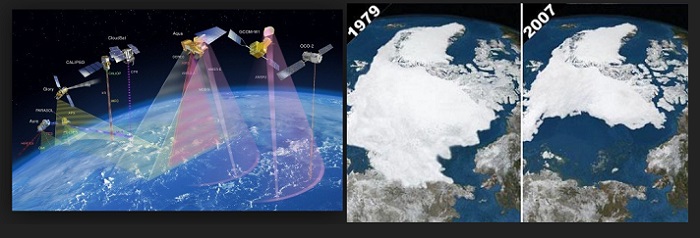
Orbital climate satellites measure changes in energy that is entering and exiting the atmosphere as well as the effect that manmade greenhouse gases (GHG) or aerosols, are having on the atmosphere. image: green.blorge.com
A new, authoritative climate book puts all major aspects of the climate crisis into a broad national and international perspective, revealing that the gravity, imminence, and permanence of the crisis are widely misunderstood.
Climate Peril: The Intelligent Reader’s Guide to Understanding the Climate Crisis (Northbrae Books) by energy and climate expert Dr. John J. Berger has an introduction by Dr. Paul and Anne Ehrlich of Stanford University and a foreword by Dr. Ben Santer, an internationally respected climate scientist with Lawrence Livermore National Laboratory and the Intergovernmental Panel on Climate Change.
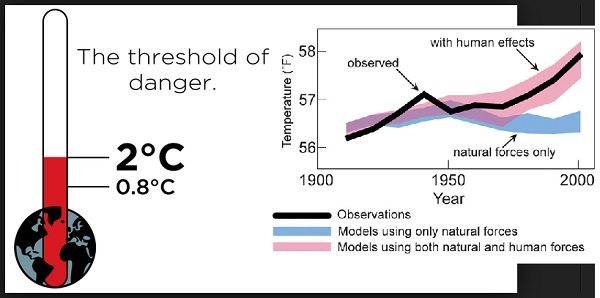
The book underscores the unprecedented urgency of the climate crisis, providing detailed revelations about the grave harm climate change is now doing to human health, national and international security, our economy, natural resources, including the oceans, and biodiversity. Climate Peril demonstrates, for example, that holding global heating to 2° C is no guarantee of climate safety, contrary to the assumptions of many policymakers, and that the world is very likely to exceed this limit anyway.
Readers have found that Climate Peril makes important findings of climate science easily accessible and helps them better understand the breadth of the climate threat to our economy and society. The book begins by explaining how the climate system naturally operates and then illustrates how human activity has disturbed it.
Climate Peril goes on to document the broad consequences of rapid climate change, drawing attention to its impacts on nature, the economy, human health, and national security. In the process, Climate Peril highlights our proximity to irreversible climate tipping points and to ecological catastrophe.
What happened when Katya Eames, a 16 year old female dropped out of High School and joined the tech world by enrolling in a coding school?
Joe Eames, her father, is a successful programmer. He believes in empowering youth and females, through technology. He got his daughter involved in some basic exposure to programming and web development. The more she got involved, the more empowered she felt.
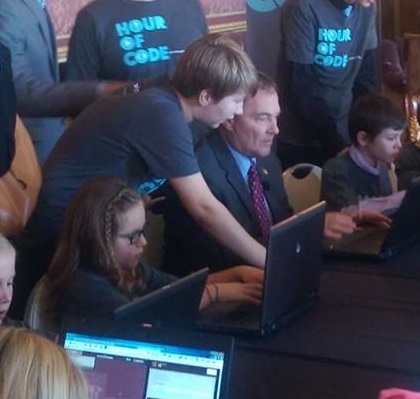
Katya was selected to speak at one of the largest recent gatherings of web developers, ng-conf. Following, she attended an event where she taught Governor Herbert of Utah how to code. Katya will complete her high school requirements using an online high school.
Katya teaching Governor Hubert how to code.
What are the thoughts of a high school age female about dropping out of school to attend DevMountain, a coding school in Utah?
What do you think was missing from your High School experience in terms of your personal interests?
What I think was missing from my high school experience was the ability to actually learn, and to try new things and grow at your own pace. It seemed less like they wanted you to learn, and more like they wanted you to pass tests.
Was it difficult to transition to coding school at your age?
It was. In high school it was easy for me to not pay much attention and do my assignments at the last minute but still get relatively good grades. Then at DevMountain, I had to manage myself and had no grades to try and earn. It was definitely very different from high school.
How important was the role of your father, a professional programmer, in helping you make your decision?
He was really important in my decision because he was an example of how successful I can be doing something I love, and he was really supportive of me choosing to do it though it’s not the normal way to go about getting an education.
Are you finding the online, high school learning experience something you can easily handle?
I haven’t started yet, but from what I’ve seen and heard from friends who do online schooling, it seems to be much more my speed than traditional public schooling.
Would you encourage other members of your generation to think about their options while still in high school, and perhaps go into coding?
Definitely. You should explore your options as much as you can in high school, even if it doesn’t seem like something you would like. You never know when you’ll discover something you seem to have a natural talent/understanding for, or something that excites you that you never thought to pay attention to (or especially something you thought only those of the opposite sex are supposed to do).
Do you think that members of your generation are particularly adept with computers and likely prospects for a coding school experience?
I do. Those in my generation, and the younger Millennials, have grown up with technology always nearby. We know how to use it and we understand newer technology easier than others. Everyone in my generation has ideas on how to make our world better for us and our siblings and our future children. Programming and computer sciences, along with the other sciences, are great ways for us to advance the world in the direction we want it to go.
Have you begun to make an income with your coding knowledge? Are you in the market for a coding job as an employee or contractor?
I have started making an income, not solely on my programming, but also on my unique views as someone who wants to know what they want to do in life at a young age in has taken a very untraditional route to pursue that career. As of now I am in the market for smaller projects while I finish school and continue learning.
Click to watch Katya’s address at this years ng-conf
What do your friends think of this, leaving high school and learning a skill early on in life where you can make an income?
Some of them were worried first about my sudden decision to drop out of school in the middle of my junior year, but now they’re all very supportive of me and think it’s really cool that I’m able to pursue what I want to do. (though they all have the same complaint of missing me at school.)
Lastly, what are the ideal personality characteristics for a young person to become involved and succeed at coding school?
They need to be willing to push themselves and manage their own time. They also need to be able to be critiqued regularly by those who are more experienced than them and know that most, if not all, critiques are done with good intentions. You need to be willing to continue learning. Technology is always changing, and so the languages we use to program that technology have to constantly adapt. You never know everything there is to know when you’re a programmer.
About DevMountain
DevMountain started in 2013 in Utah. With over 300 graduates, two campuses, and six course offerings, DevMountain is the largest coding/technology school in the Intermountain West, and one of the highest rated coding schools in the United States.
Supplemental- Could Amazon’s AWS Lambda signal a new future for ‘automated coding’?
Phragmites is likely the largest invasive plant threat facing Ontario today. It has taken over our wetlands, invaded our ditches and can get a foothold just about anywhere. It’s the monster that keeps coming back – we can’t let our guard down.
Phragmites was first found locally in the Long Point wetlands 20 years ago.
Spraying of glysophate started at Long Point and Rondeau Provincial Parks in September 2016, and has proven 99.7 per cent successful. When the phragmites is dead, the seed bank of native species, like cattails, will reactivate. Although spraying works, it must be followed up by rolling or cutting and burning. On Long Point Bay, there is a combination of private, provincial and federal wetlands. Much of the private wetlands are in the hands of hunt clubs, most of which have been active in controlling phragmites.
The Crown Marsh and the Turkey Point beaches are provincial holdings.
The Canadian Wildlife Service land, which comprises most of the point itself and the Big Creek marsh, are federal. I recently attended the meeting of the Long Point Phragmites Action Alliance – a local group dedicated to fighting this invader. They donated $20,000 toward continuing spraying in the Long Point Crown Marsh last year. Their annual fundraiser, Rocking the Point, will be August 24th.
My office worked tirelessly to ensure phragmites were sprayed last fall at Turkey Point beach after several years of inaction by the previous government. This spring the dead plants were flattened and burned. The Ministry of Natural Resources and Forestry is working with a number of conservation partners to coordinate prevention, control, research and management activities to help address this serious threat in recognition of the importance of the prevention, early detection, early response and eradication of invasive species.
This year the Ontario government is investing over $2 million in invasive species programs and education, and will be investing $850,000 in the centre to support ongoing research and management. Based in Sault Ste. Marie, the centre brings together government, academia, industry and Indigenous communities and organizations to conduct research, response planning, management and habitat restoration.
Early detection is especially important because once invasive species become established it is extremely difficult to remove them, potentially causing long-lasting damage to our environment.
For federal lands, thanks to the actions of MP Diane Finley, the Nature Conservancy of Canada (NCC) will receive $375,000 over the next three years to aid in the removal and prevention of phragmites growth in sensitive ecosystems. Recently, we saw another win for the ongoing control of phragmites with the Ontario Trillium Foundation’s significant contribution of $90,000 to NCC to purchase a boat to control this invasive. Now in its fourth year, the partners have effectively controlled phragmites in over half the coastal wetlands at Long Point and Turkey Point.
With the help of the Ontario Trillium Foundation funds, NCC will be able to continue monitoring the shorelines for phragmites – catching remnant populations before they spiral out of control. Early detection and constant monitoring and control are key to successfully eradicating those devastating invaders and returning the marshes and shorelines to havens for turtles, birds and waterfowl. Although $2 million has been spent on phragmites control in the area, we must be vigilant as the monster will return. For the Silo, Toby Barrett MPP for Haldimand-Norfolk.
You increase your chances of approval when working with a specialist in immigration law.However, you must be careful when choosing a lawyer in order to avoid falling into the wrong hands. Many fraudsters take advantage of applicants who are doing everything they can to move to Canada or any other country. You may pay a high fee for poor services if you make the wrong decision. Some rogue lawyers or consultants do not even deliver the service but give endless excuses after receiving the fees. Here are some tips to help you choose the right immigration lawyer.
1. Utilize Your Consultation Fee Fully
You have an opportunity to ask all manner of questions and judge the quality of services during the consultation process. Ask as many questions as you can about the process. You may only have a few minutes to interact with the lawyer if the firm charges a low consultation fee. However, you can utilize that time fully and determine if the lawyer has enough experience in handling the immigration process.
2. Hire a Specialist
The major reason why you should hire an immigration lawyer is to ensure that your application is completed and submitted within the deadline. If a lawyer handles all types of legal cases, he or she may not have expertise in your type of application. The lawyer may miss some requirements if immigration is not his or her specialty. Ask about the range of services during the consultation process to determine if the lawyer is a specialist in immigration law.
3. Ask About the Fees Before Signing the Contract
A fraudulent lawyer will rush you to sign a contract even before you discuss the fees. Do not fall for this trick with any lawyer. Discuss the fees and agree before signing a contract. The best lawyers will give you an option to choose fixed fees payable in installments. Determine the best rate depending on the nature of services or case and ensure that the agreement appears on the contract. This brings us to another important tip.
4. Ensure that Both of You Sign a Written Contract
Insist on a written contract even if you trust the lawyer. Many lawyers know that clients expect a written document before agreeing to use their services. Fraudulent lawyers will leave out some important clauses such as the fees charged. Others will push you to sign the documents but fail to sign their part. Do not take any excuses for delays in signing the contract. Go through the document to ensure that it is accurate and comprehensive. Ensure that the lawyer signs the necessary parts and keep a copy of the contract.
5. Trust Your Gut
If you develop any doubts during the consultation process or regular communication, stop the negotiations immediately and get another lawyer. Discontinue the process if the lawyer gives dishonest answers even for the simplest questions. If your intuition tells you that a lawyer is not interested in meeting your needs, trust it and move on. If it feels wrong, there are high chances that you are talking to the wrong immigration lawyer.
Hiring the right immigration lawyer is the best decision you can make if you want to move to another country. An immigration specialist will make sure the application process is fast and easier and will relieve much of the stress associated with the whole process. Taking the time to ensure that you have the right lawyer is an essential first step in the process. For the Silo, Dimitry Karloff.
Summer is here, but that doesn’t mean your child can’t keep learning. Karen Sokolof Javitch’s album ‘YOU’RE MATH-ERRIFIC’ is out now.
YOU’RE MATH ERRIFIC features educational songs that can help your children get ahead. Use these songs along with other educational apps to help keep children busy this summer.
Karen’s diverse creations include songs about exercising, celebrities, holidays, political figures, babies, children, math, patriotism, love and family.
The
album contains both fun and educational songs and can be found on her
website, https://jmrproductions.com/
Here today to talk about her music is Karen Sokolof Javitch.
Questions:
What inspired you to create this album? I loved math as a child, but I know that many children struggle with it. So I wanted to write some songs that would be fun to listen to and be helpful with certain math concepts. I would recommend the songs for elementary school students.
How can these songs help children with their math? .All of the songs have catchy melodies and are all fun to listen to. I’ve included a wide variety of subjects – addition, subtractions, shapes, counting, counting coins, And I take certain numbers – like 9 – Mr. 9 (27,000 hits) and expand on the number – there are “9 baseball players on a field,” it’s “in between 8 and 10.” Nine is the “last single digit.” These songs are great in the classroom and for children who are home-schooled. Listen to the album in the car and have your children watch the YouTube when they are home because there are very cute visuals to go along with the songs.
What song is your favorite off the album? The first one – ‘I’m Math-errific!’because it’s very positive about math and about how we are all ‘Math-errific! Math is all around us and it’s fun! “Math is such a part of our lives! One, two, three and four and five! Math gives us such good vibes! That’s why we’re math-errific!”
What other music have you been working on? I just finished my first baby song album – and my two little toddler grandsons love to dance and clap to the songs! It’s really cute! I have written many exercise songs. Sometimes I write satirical political songs – I try and find the humor in politics! Like when all of a sudden there were 23 people running for the democratic nomination, which inspired me to write, “Why Don’t you run for President?”
One of your songs on the mother who had octuplets went viral with about 10 million YouTube views. What are some of your most popular songs and music videos? I have 15 albums and my album about Princess Diana has sold the most copies. Also on youtube, I have thousands of hits on my Princess Diana songs. I wrote a musical about her, as I feel she was such a exceptional human being. Some of my exercise songs are very popular – ‘Shake it for NObesity’ is one and ‘My Workout Place’ is another. – Mr. Nine is very popular. I have over 100 youtube videos.
Where may people find your music? Itunes, Spotify – cdbaby.com – and I have many videos on youtube – just type in my name – Karen Sokolof Javitch – or the title of the song and they will come up. I have a website where you can find my songs – JMRProductions.com – named for my 3 kids – Jenny, Mark and Rachel.
About Karen Sokolof Javitch:
Besides Karen’s 15 albums, she has co-written 4 musicals and was the creator and co-host of a popular Omaha radio show, “It’s the Beat.” Her musicals include “Princess Diana the Musical,” “From Generation to Generation,” and “Love at the Café.” These shows have been performed in many cities in the United States. In addition, Ms. Javitch has raised over $350,000 for national and local charities with her original music.
With all the constant problems in our political system, Karen Sokolof Javitch has released the song ‘We’re So Unhappy with Our Leaders.’
The song talks about the constant arguments between Democrats and Republicans and pleas them to work together to fix the United States of America.
Karen has also released the song ‘Why Don’t You Run For President’ which introduces listeners to the many candidates running for the democratic nomination.
Karen’s diverse creations include songs about exercising, celebrities, holidays, political figures, babies, children, math, patriotism, love and family.
Here to talk about her music is Karen Sokolof Javitch.
What inspired the creation of your song We’re So Unhappy with Our Leaders? I get very tired of listening to the news and all of the fighting that takes place between the republicans and the democrats. the democrats are moving further to the left and that is very frightening. President Trump gets blasted for doing some of the same things that President Obama did.
What ways do you think our government needs to change? Congress needs to call out all of the people in congress who are anti-semitic. They don’t seem to care about that. Ilman Omar is on the foreign relations committee as a freshman and she seems to hate Israel and Jews and everyone on the democratic side keeps their mouths shut about that.
Which candidates do you think have the best chance against Donald Trump? At this point, I don’t think anyone has a good chance. they are too far to the left.
Moving away from Politics, what are some other songs that you have been working on? Exercise songs – for all ages – old and young. I just put up a video for my song – Movin’ to the Beat! where I selected old dance scenes from old movies and it turned out terrific!
What are some of your most popular songs? I have a musical about Princess Diana and I have sold a lot of these albums. On youtube, one of my ‘octomom’ songs went viral and some others have thousands of hits. Again, my Princess Diana youtube videos and my exercise videos have done really well. So have my children’s songs!
About
Karen Sokolf Javitch:
Besides Karen’s 15 albums, she has co-written 4 musicals and was the creator and co-host of a popular Omaha radio show, “It’s the Beat.” Her musicals include “Princess Diana the Musical,” “From Generation to Generation,” and “Love at the Café.” These shows have been performed in many cities in the United States. In addition, Ms. Javitch has raised over $350,000USD for national and local USA charities with her original music.
Email Your Performance And Win 1000$ Donation To A Charity Of Your Choice
Omaha NE) To celebrate someone’s birthday pretty much anyone can belt out the “Happy Birthday” song, but what to sing in celebration of a couple’s anniversary? How can we ceremoniously honor such an important and personal holiday equally melodiously? Read below and discover not only how to, but also what you will receive in return if you email our highlighted songwriter a video of your performance. (Don’t worry the lyrics are only a few lines long and easy to remember.)
To
answer these burning questions, award-winning singer-songwriter Karen
Sokolof Javitch recently announced the worldwide launch of her
personalized “Happy
Anniversary Song.”
To
commemorate this joyous event, Javitch currently has a nationwide
search underway for all couples celebrating an anniversary to submit
a video to her e-mail of them, family or friends singing her song.
Karen will acknowledge the couple’s extreme faithfulness, by
donating $1000USD to the charity of the couple’s choice. All
entries must be submitted by August 30, 2019 to [email protected]
Anyone
who enters will also receive one of Karen’s albums as a gift.
“Everyone
knows the ‘Happy Birthday’ song, yet we all stumble when we try
to sing a song for someone’s anniversary,” explains Javitch. “My
new anniversary song is short and very easy to learn. Now, when you
go to someone’s anniversary party, you’ll know what to sing.
There will never be royalties, licensing or performances fees. It is
my present to the world!”
To register, listen to the Happy Anniversary Song on her website JMRProductions.com, copy the words below and e-mail your video. Though not required to enter, those so inclined may view Javitch’s Happy Anniversary Song music video right here on The Silo:
As
billed, the lyrics to the song are short, sweet and easily stick:
Happy
Anniversary, Happy Anniversary (wife’s name) and (husband’s name)
we’re so happy to be at your (add # of years) Anniversary.
Javitch has raised over $350,000 for national and local charities through her original music.
Besides Javitch’s 15 albums, she has also co-written four musicals performed in many cities throughout the United States and was the creator and co-host of a popular radio show, “It’s the Beat.” Her family-friendly music includes a variety of songs about exercising and good health, celebrities, holidays, weddings, politics, children, babies, education, patriotism, love and family. For the Silo, Gerald McGlothlin.
Have things changed in the past 5 years? Take a look at this article from 2014 and let us know via the comments section below.
In the summer of 2007, Mike Lazardis, co-founder of BlackBerry, got an iPhone to check what’s inside. He pried it open and was shocked on what he saw: BlackBerry wasn’t competing with a phone, he thought, it was competing against a Mac. Lazardis was recalling that moment in an interview with The Globe and Mail, hinting about the months leading to the fall of RIM.
Such is the iPhone’s disruptive story: it put the computer in our phones and made them smart. Suddenly, we could buy and play music in our phones, surf the net via wifi, run desktop-like OS, and, the best defining factor of a smartphone, download apps. We do all that without a keypad (to BlackBerry’s shock). No, Apple didn’t invent these technologies, it innovated them. Over a decade earlier, IBM had Simon, the world’s first smartphone.
In the infographic prepared by our creative team we highlighted the key features in each iPhone launch since the first generation phone came out in 2007. Some features are truly innovative (A series chip, Siri, App Store) and some are unabashed embellishments.
So what’s in store for future iPhones? We can get some clues from Apple patents registered with the U.S. Trademark and Office. Apple is developing an audio jack to double as a headphone jack, plus an audio transducer that doesn’t need a grille to emit sound. That means future iPhones can be totally enclosed or water-proofed. Another patent talks about combining motion analyzer, scenery analyzer, and lockout mechanism to detect if you’re driving and disable Messages Apps. With the increasing text-induced car accidents, expect this feature sooner than later.
Yet another patent indicates that Apple is cooking an intelligent Home Page that brings up the app you need for specific scenarios like when you need to show an electronic ticket in an airport or an e-coupon at a counter. The patent uses location-based signals and tracks user data patterns like calendars, emails, notes, etc. to predict when to bring up the app.
But let’s not talk about the future; rather, let’s see what iPhone users want today. For the Silo, Alex Hillsberg.
Luxurious living, money and fame are things that spring to mind when thinking about hotels London. Many of them have stood the test of time and built a sterling reputation all over the world attracting many of the rich and famous.
Here we’ve compiled a list of the most renowned hotels in London.
Claridge’s, London
Claridge’s London- 5 Star Hotel. Address: 49 Brook St, London, Greater London W1K 4HR, United Kingdom
Opened in 1854 Claridges London is one of the oldest hotels in the city. Located in London’s infamous Mayfair, Its clientele are among the rich and famous with celebrities such as Brad Pitt and Mick Jagger no stranger to its doors. TV favorite Gordon Ramsay also had his own restaurant there for a time.
Its décor and facilities boast the best in fine dining and luxury living unrivalled in London and has over its long lifespan attracted royalty from all over the world. The hotel was also the feature of a 3 part documentary series for the BBC entitled ‘Inside Claridges’.
The Connaught, London
The Connaught London. Five star Hotel. Carlos Pl, London W1K 2AL, United Kingdom
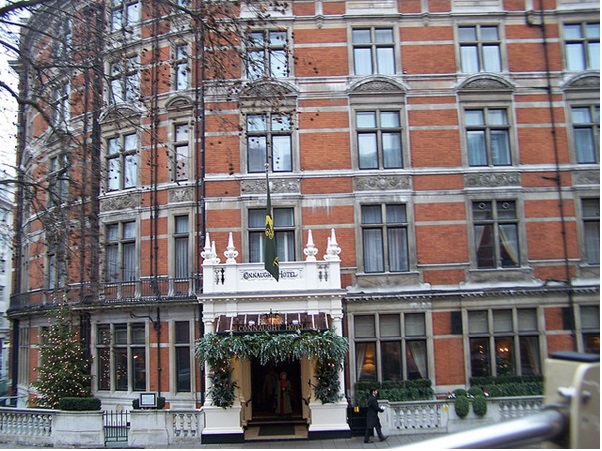
Residing in Mayfair, the Connaught first opened its doors in 1815. The hotel allows both traditional British and contemporary design to co-exist by maintaining its Victorian exterior and completing a 70 million pound internal refurbishment by lead designer Guy Oliver.
This hotel and its staff have won many prestigious awards over its lifespan including its spa winning first prize in the spa category in the Hotel & Lodge Awards 2012 and it’s very own bartender Agostino Perrone winning International Bartender of the Year 2010.
Brown’s, London
Brown’s Hotel London. Five star Hotel. 33 Albemarle St, London W1S 4BP, United Kingdom
One of London’s most established hotels is Browns. Opening its doors in 1837, it celebrated its 175th anniversary in 2012 and has consistently attracted guests of wealth and fame, most notably President Theodore Roosevelt and Oscar Wilde.
Not only does this Mayfair hotel boast a stunning Victorian 5 star setting it is also within walking distance to some of London’s busiest attractions such as Hyde Park, Bond Street, Regent Street and some of its most famous landmarks.
The Great Northern Hotel
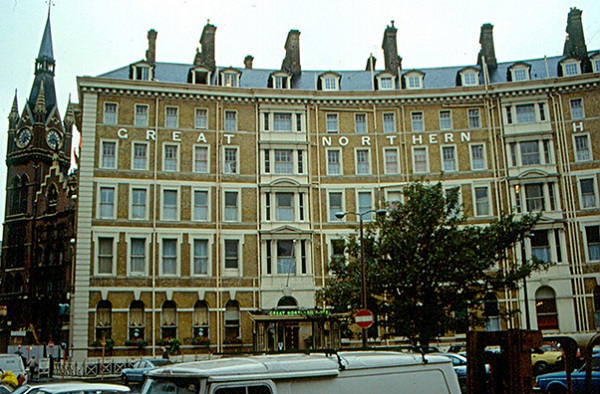
First opened in 1854, London’s Great Northern Hotel is “an exquisitely designed luxury boutique hotel with an extraordinary location, literally within King’s Cross Station and just 25 metres from the Eurostar terminus at St Pancras International.”
Dubbed as ‘The World’s First Great Railway Hotel’ , The Great Northern is a stunning boutique hotel with rail connections to Europe and beyond via the Eurostar. It stands tall above the areas surrounding buildings and it’s a significant point of interest for all arriving into Kings Cross St Pancras station.
Designed by infamous architect Lewis Cubitt stood as the centrepiece for the steam revolution.
The Berkeley
The Berkeley Hotel London is a five star Hotel. Wilton Pl, Knightsbridge, London SW1X 7RL, United Kingdom
The Berkeley is a five star deluxe hotel, located in Knightsbridge, London. Its history spans well over a 100 years and has even moved buildings. The infamous hotel began its life at Berkeley Street and served as accommodation for mail coach drivers travelling to the West Country.
In 1972 it moved to its current location, incorporating an entirely new refurbishment to include London’s only rooftop swimming pool. Aside from its unique facilities and décor the Berkleley has attracted numerous Michelin star chefs including Pierre Koffmann and more recently Gordon Ramsay and his Boxwood Café. For the Silo, Susan Varano.
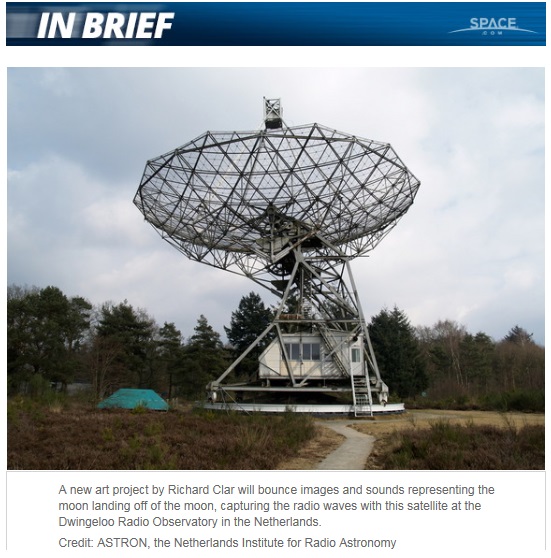
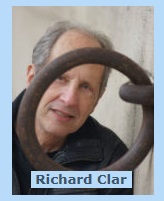
“For me It was an incredible feeling to use this 120 ton radio dish, capable of peering into the far reaches of the universe, to create an artwork focusing on one of the greatest achievements in human history” Richard Clar image: space.com
Los Angeles, CA, – Richard Clar using an earth-moon-earth (EME), or moon bounce as it is also called, radioed two very special signals off the surface of the moon where their return was received at Dwingeloo Radio Observatory in the Netherlands.
Clar’s extraordinary two-part project, Giant Step and Lune sur la Lune, paid tribute respectively to Apollo Astronaut pioneer Neil Armstrong’s first step on the moon on July 20, 1969 and to the far side of the moon itself, something witnessed only by a rare group of individuals, the Apollo Astronauts. The two radio transmissions to the moon and back emanated from a radio dish in Italy.
Giant Step is a personal response to an event Clar personally witnessed back in 1969, and he wanted to use his creativity to pay tribute to those who took part in the Apollo program, and especially Neil Armstrong for what he did on that momentous day.
He wanted this work to say something about the moon itself, using the moon.
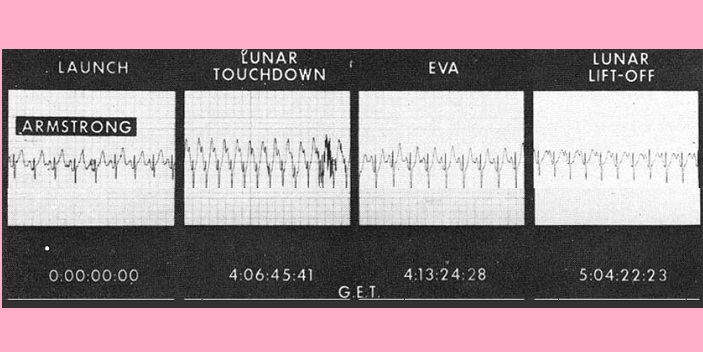
His interest was piqued after hearing about an earth-moon-earth bounce (EME) from Italian artist and colleague, Daniela de Paulis, who together with radio specialist Jan van Muijlwijk developed the process of using EME to send images to the moon and back in 2009. As he researched the Apollo Archives, he came across an Electrocardiogram (EKG) of Neil Armstrong as he took the first step on the moon on July 20, 1969 – and Richard found his inspiration!
While data scientist Dr. Ryan Compton created the sonification tone from Armstrong’s actual EKG graph, prominent Los Angeles-based double-bass jazz performer and composer Roberto Miranda used the tone to create compelling sounds that have been called “edgy and hauntingly beautiful.”
“I wanted the art to say something about the first humans to set foot on the moon. Think how many living beings have observed the moon for eons…and now we have made a number of trips to the moon and back. I want people to have new experiences through my artwork,” says Clar.
Lune sur la Lune, an image of the far side of the moon, was transmitted in a poetic gesture onto the earth facing side of the moon. Since only the Apollo astronauts have seen the far side of the moon, using the radio-reflective surface of the moon to produce a site-specific artwork makes the moon a unique part of the process rather than just a subject matter ─ and also gives people on earth an opportunity to witness this phenomenal event and experience the moon in a new and different way. Shortly after the sound and image from Giant Step and Lune sur la Lune were received and processed at Dwingeloo, and will soon be accessible to the world at www.rockthemoon.com.
There was considerable excitement at the Dwingeloo Radio Dish on September 26th by those who witnessed the sound signal and image signals being received from the surface of the moon after the moon bounce. All in all, the art mission was a great success.
“For me It was an incredible feeling to use this 120 ton radio dish, capable of peering into the far reaches of the universe, to create an artwork focusing on one of the greatest achievements in human history,” stated Clar.
Richard Clar’s timeless work has been exhibited in museums, galleries and universities throughout the United States and Europe. His visionary ‘art in space’ began in 1982 with a NASA-approved concept for an art-payload for the U.S. Space Shuttle. Philosophical in nature, many of Clar’s themes originate in space environment issues, such as orbital debris, war and peace, the Search for Extraterrestrial Intelligence (SETI), and water management on earth.
Clar studied at the Chouinard Art Institute (now Cal-Arts). In 2001 and 2002, he coordinated the Leonardo/OLATS/IAA Space Art Workshops in Paris. Clar is the Director of Art Technologies; a Member of the International Academy of Astronautics (IAA); a Member of the IAA SETI Permanent Study Group; a Member of Women in Aerospace, and a Member of the Leonardo Space Art Working Group. He was the Secretary of the former Art and Literature Subcommittee of the International Academy of Astronautics, and a past Member of the Executive Board, Graphic Arts Council, the Los Angeles County Museum of Art.
An early example of Richard Clar’s Space Art
Clar founded Art Technologies in 1987 as a liaison between the worlds of art and technology. By collaborating with such partners as the U.S. Naval Research Laboratory, Boeing Aerospace Corporation, and contemporary composers, Clar generates high-visibility art works that transform state-of-the-art technology and highly-engineered materials into evocative contemporary art. His work is found in many corporate collections, including JBL Sound, Home Savings of America, and the MGM Grand Hotel in Las Vegas.
After spending the last fourteen years in Paris, Richard Clar now resides in Northern California. For more information on his extraordinary artwork, please visit:
Every year, the public is swarmed with
a range of statistics, estimates and consequences of their energy
consumption. On average, most households go through their energy
supply for similar things, and despite some inconsistencies, could
resolve most of their consumption issues with the same line of
measures.
The use of renewable energy sources has been key to making private residential buildings all the more sustainable. It not only regulates their consumption, but also provides a clearer overview of how much energy is necessary to keep the household going, and ultimately allows homeowners to reduce their carbon footprint.
With so much research and preparation
made against exploitation of limited resources, it is important to
keep informed on the main reasons leading to this practice that
concern each individual homeowner, as well as the key ways to get
started with renewable energy generation.
What is Renewable Energy?
In order to get started with your
housing energy improvements, it is important to know what kind of
process you are dealing with. Renewable energy, specifically, is the
process of generating energy from renewable sources like the sun,
wind, soil, which are largely available in nature.
If done properly, this practice can be rather sustainable, meaning it will help homeowners regulate consumption, reduce expenses and contribute to a healthier environment.
Main Reasons for Renewable Energy
Housing
As noted so far, this practice resolves
some of the major concerns homeowners have, both on the micro and
macro level. Ana from safeatlast.co
has done the work for us, distinguishing a few top priorities that
cause people to turn to renewable energy:
· Cost
– Energy price soars, as well as additional expenses appearing
over the years have had detrimental effects on homeowners’ budgets;
· Climate
change – Greater awareness of the greenhouse effect has made
people more concerned about their home’s carbon footprint;
· Control
– People are alarmed by the realization that they have no idea
how much energy they need to meet their everyday needs;
· The
current state of the home – Construction characteristics,
underground waters, insulation and other features could cause major
problems, calling for a more permanent solution.
Top Ways to Achieve Renewable Energy
Housing
Nowadays, there is a range of
equipment, construction material and entire systems that can be
installed into your existing homes in order to achieve greater energy
conservation. Most of these make use of the natural, renewable
sources of energy to improve the overall quality of life.
While they may be somewhat expensive as
an investment, subsidiary programs and initiatives, as well as the
long-term payout have gotten many homeowners interested in the
following options:
1. Solar
power systems – Solar panels placed on rooftops allow
homeowners to use the sun’s heat to generate heating power for
water, space heating, or electric power generation, alternatively;
2.
Biomass boilers – Burning natural residues, these boilers help
homeowners get rid of waste and keep their homes warm at the same
time, all the while controlling their carbon emissions;
3.
Insulation – Proper insulation is just as crucial as the
systems listed above, with cavity wall, external and internal wall
insulation, as well as high performance doors being the top picks
among homeowners.
Baku, Azerbaijan, July—The city of Fuzhou (China) will host the next session of the World Heritage Committee in 2020. This decision concluded the work of the 43rd session of the World Heritage Committee, meeting in Baku since 30 June.
During this year’s session, the World Heritage Committee inscribed a total of 29 new sites on the World Heritage List (one in Africa, two in the Arab States, ten in the Asia Pacific region, 15 in Europe and North America including Writing-on-Stone Provincial Park in Alberta, Canada and one in Latin America).
The World Heritage List now features 1,121 sites in 167 countries.
The
Committee approved the removal from the List of World Heritage in
Danger of the sites of Humberstone and Santa Laura Saltpeter Works
(Chile) and Birthplace of Jesus: the Church of the Nativity and
Pilgrimage Route, Bethlehem (Palestine). One property has been added to
the List of World Heritage in Danger: the Islands and Protected Areas of
the Gulf of California (Mexico).
This
session reaffirmed the potential of heritage in strengthening
cooperation between States, with the inscription of the transboundary
site of the Erzgebirge Mining Region/Krušnohoří (shared by Germany and
Czechia) and the extension into Albania of the natural and cultural
heritage site of the Ohrid Region (Northern Macedonia).
Cooperation and mediation work on heritage also allowed for consensus on decisions regarding the Middle East thanks to constructive discussion with the delegations concerned, notably Israel, Jordan and Palestine.
Several
major archaeological sites were added to the List, including the Dilmun
Burial Mounds (Bahrain), the Ancient Ferrous Metallurgy Sites of
Burkina Faso and the iconic site of Babylon (Iraq), once the centre of
the Neo-Babylonian Empire and site of the Hanging Gardens, one of the
Seven Wonders of the Ancient World, which have inspired artistic,
popular and religious culture worldwide.
The
inscription of Babylon, combined with significant investment by Iraq,
contributes to UNESCO’s efforts to rebuild the country and its flagship
Reviving the Spirit of Mosul initiative.
Sites
essential for the preservation of global biodiversity have also been
inscribed. They include the Migratory Bird Sanctuaries along the Coast
of Yellow Sea-Bohai Gulf of China (Phase I) (China) and the site of the
French Austral Lands and Seas (France) with a record surface area of
over 67 million hectares that is home to one of the highest
concentrations of birds and marine mammals in the world.
Finally, the inscription of the sites of Budj Bim Cultural Landscape within Australia’s Gundijmara Aboriginal region, and of Canada’s Writing-on-Stone / Áísínai’pi, a sacred landscape of the Blackfoot (Siksikáítsitapi) people, recognizes the knowledge of indigenous peoples, essential for the preservation of cultural and natural heritage.
Significant
efforts are still needed to enhance and preserve African heritage,
which remains largely under-represented on the List. UNESCO also renewed
its call for unflagging rigour, integrity and responsibility in the
examination of nominations so as to ensure the credibility of the World
Heritage Convention and its future standing.
The new natural sites are:
Migratory Bird Sanctuaries along the Coast of Yellow Sea-Bohai Gulf of China (Phase I) (China)
French Austral Lands and Seas (France)
Vatnajökull National Park – dynamic nature of fire and ice (Iceland)
Hyrcanian Forests (Islamic Republic of Iran)
Mixed site:
Paraty and Ilha Grande – Culture and Biodiversity (Brazil)
Cultural sites:
Budj Bim Cultural Landscape (Australia)
Historic Centre of Sheki with the Khan’s Palace (Azerbaijan)
Dilmun Burial Mounds (Bahrain)
Ancient ferrous Metallurgy Sites of Burkina Faso (Burkina Faso)
Writing-on-Stone / Áísínai’pi (Canada)
Archaeological Ruins of Liangzhu City (China)
Landscape for Breeding and Training of Ceremonial Carriage Horses at Kladruby nad Labem (Czechia)
Erzgebirge/Krušnohoří Mining Region (Czechia, Germany)
Water Management System of Augsburg (Germany)
Jaipur City, Rajasthan (India)
Ombilin Coal Mining Heritage of Sawahlunto (Indonesia)
Babylon (Iraq)
Le Colline del Prosecco di Conegliano e Valdobbiadene (Italy)
Mozu-Furuichi Kofun Group: Mounded Tombs of Ancient Japan (Japan)
Bagan (Myanmar)
Megalithic Jar Sites in Xiengkhuang – Plain of Jars (Lao People’s Democratic Republic)
Krzemionki Prehistoric Striped Flint Mining Region (Poland)
Sanctuary of Bom Jesus do Monte in Braga (Portugal)
Royal Building of Mafra – Palace, Basilica, Convent, Cerco Garden and Hunting Park (Tapada) (Portugal)
Seowon, Korean Neo-Confucian Academies (Republic of Korea)
Churches of the Pskov School of Architecture (Russian Federation)
Risco Caido and the Sacred Mountains of Gran Canaria Cultural Landscape (Spain)
Jodrell Bank Observatory (United Kingdom of Great Britain and Northern Ireland)
Canadians
respect the law. Those, who like gambling, do it as well. As soon as
land casinos in this country are legal, they feel free playing in
various gambling clubs placed in different provinces. Nevertheless,
it is much more convenient for many players to stay at home and use
the pros of casinos that work online.
However, as the situation with online gambling business legality is still vague, not to take any risks of breaking laws, Canadians prefer to play in their casinos that have licenses and use playing sites that welcome them and let win real money. Baocasino Canada is exactly this new reliable resource.
Legal
online casino Сanada
for real money
Canada
is inherently a country that offers its residents and guests a huge
selection of diverse entertainment options and a pleasant pastime.
Among such options, a special place is occupied by numerous casinos
and gambling houses.
Besides, Canadians take care of those people, who want to gamble online. Numerous advantages are offered to them here. When they choose Baocasino, they can use all the advantages of this gambling site, including earning crypto, taking part in tournaments and getting the best prizes in Bao way quest.
No
taxes for players
Canada
is a real paradise for those players, who win real money in online
casinos regularly. If in other countries, especially in the USA, the
closest to Canada neighbor, gambling tax in some states can reach
50%, here the situation is different.
However,
there is one “but” even here. Yes, in Canada, there is no tax on
winnings, but if Poker is a person’s main source of income, then
he, as an individual, must pay income tax, the amount of which is
directly proportional to the income for one year.
Progressive
tax rates applied at the federal level:
Taxable
Income – Rate:
Up
to $ 42.707 – 15%;
From
$ 42,707 to $ 85,414 – 22%;
From
$ 85,414 to $ 132 406 – 26%;
From
the sum more than $ 132,406 – 29%.
However,
even in this case, the taxes in Canada are lower than in many
countries (taxes in the gambling sphere, for sure). Canadian
residents, who gamble in the casinos with licenses of other
countries, should also follow these laws. Baocasino, with its license
from Curacao, being a legal playing site, respects the laws, and
follows them.
Bonuses
for gamblers
Playing in the best online legal casinos in Canada, gamblers can claim a variety of bonuses, and get them, withdrawing money following wagering requirements. Those, who register in Baocasino for gambling, not for fun, can also get these bonuses.
Before claiming them, it is recommended to read about the Bonus policy of the casino. In brief, it is as follows:
When a gambler starts playing in Bao with an additional bonus that is over 20 free spins and 100% deposit bonus, this bonus will be added to the first made deposit;
Wagering bonus, the player cannot make the bet over 5 USD or 7, 7 CAD;
Withdrawing money that is won thanks to bonuses usage, the rules works — the maximum withdrawal here is 80 CAD or 50 USD;
Using bonuses, Canadian players must not use any strategies when gambling. If Baocasino finds out that the strategies were used, the win is terminated.
Exciting adventures also offered as prizes
If winning money isn’t amazing enough then take a look at Baocasino’s prize pool: it includes exclusive adventures such as this month’s Chernobyl Tournament. The First place winner is in for a unforgettable trip of a lifetime.
The variety of games
Baocasino
that offers its registered players from Canada the variety of games
that can be found in other gambling resources, but here, players have
a chance to earn Bitcoin and some alternative cryptocurrencies like
Litecoin, Ethereum, Dogecoin, and Bitcoin Cash.
They
can do it when choosing crypto as the main currency for gambling or
playing special crypto games, which are available in this casino. If
a player wins in cryptocurrency, he can withdraw his win instantly.
Baocasino is the best choice for those Canadians, who are seeking for a reliable and legal online casino with a number of cool games, bonuses and interesting promotions. After registration, all these pros become available to a new user. For the Silo, Ella Wilson.
Another year has ticked by and Lyme disease remains a problem across much of North America.
Over
the years I have met with so many people – farmers, outdoor activists,
friends, neighbours – who have come down with Lyme – so many, often
young people, afflicted in
the prime of their life.
Time
and time again I am told our health care system seems unaware and
unprepared to deal with what remains essentially a new and emerging
infectious disease – a disease that
mimics other ailments and all too often has flummoxed those not expert
in tropical diseases or public health.
Compounding the problem is the confusing and somewhat dubious advice prevalent on social media.
We
have government for a reason and to that end in 2015, I introduced
legislation – a Private Member’s Bill – to mandate the Ontario Minister
of Health to develop ‘A Provincial
Framework and Action Plan Concerning Emerging Vector-Borne Diseases,’
to quote the title of the bill.
The bill passed second reading with all-party support and became the law of the land.
Given
my previous background in both research and health, I felt bound to
take a purely objective evidence and science-based approach to creating
this legislation. I called
for a provincial framework and an action plan through our Ministry of
Health – a plan that, primarily, encompasses surveillance, education
materials and guidelines – guidelines for prevention, identification,
diagnosis, treatment and management, including
emergency preparedness – and calls for the sharing of best practices
provincially and across our country. It instructs the Minister of Health
to bolster research collaboration among all concerned, particularly
those in the public.
One
of my goals is to facilitate an efficient, more effective allocation;
essentially, of what I consider scarce health resources. Going back to
prevention, it is much more
cost-effective to prevent than to treat. We know that the worldwide
cost of SARS, for example, was $40 billion, and the bill in Canada came
in at $2 billion, so prevention is key. Prevention is certainly key when
there is no vaccine or little in the way of
effective treatment. When you are dealing with a particular affliction
like Lyme, prevention is the only option.
A committee was struck because of my legislation, and three years after my bill passed, released recommendations in April 2018.
Their
advice included a call for reviews of current tick surveillance
activities; of current testing methodologies for diagnosing Lyme disease
and other tick-borne illnesses;
and a review of current clinical practice guidelines focussing on
assessment, prevention and treatment.
The
committee also, as in my legislation, calls for research, education and
public awareness. It calls for improved communications to regulated
health professionals regarding
standards of practice for diagnosis and treatment, as well as, the
provision of professional education, and a coordinated care model for
patients at all stages of these diseases.
The spread of Lyme disease in Ontario is an important issue for the Ministry of Health.
Health
Quality Ontario (HQO), in partnership with Public Health Ontario (PHO)
and in collaboration with clinical experts, patients and caregivers
across the province has developed
a clinical guidance document for early-localized Lyme disease. HQO
continues to review the evidence and has committed to making any
necessary changes to the guidance document as the evidence warrants.
In my view, the Ministry of Health is making progress.
For the Silo, Toby Barrett -MPP for Haldimand-Norfolk.
In response to the January 23, 1968 North Korea seizure of the USS Pueblo and crew, the Johnson Administration sent an armada of ships and up to nine subs, both nuclear-powered and diesel/electric, into the Sea of Japan. The operation was known as “Formation Star,” the largest build-up of U.S. naval forces around the Korean peninsula since the Korean War. This U.S. naval show-of-force was led by the USS Enterprise, the world’s first nuclear-powered aircraft carrier and the largest warship in the world at the time.
Less known are the stories of the two submarines sent in response to the Pueblo Incident—the USS Segundo and USS Swordfish—both of which failed to execute their missions as planned. In the case of the Segundo, her detection by the North Koreans off the coast of Wonsan, North Korea nearly led to the deaths of the entire crew. And while not life-threatening, the failed Swordfish mission led to a cascade of Cold War events including, according to one author, the sinking of a U.S. sub in retaliation for the sinking of a Soviet sub, which the Russians had falsely attributed to ramming by the USS Swordfish.
In August 2000, decades after the resolution of the Pueblo crisis, a
small California newspaper interviewed Russ Noragon, a member of the
USS Segundo crew. In what a staff writer at the Ventura County Star
described as a “top-secret mission that might be the stuff of a Tom
Clancy spy novel,” Noragon described how his sub had to submerge to
the bottom of the sea off the coast of Wonsan, North Korea to avoid
capture by the North Koreans. At the time, Noragon was a Machinists
Mate (MM); a Chief before retirement.
In an
article titled “Local Submariner Recalls Time on Bottom,” Noragon
told how he and the other 79 men on board had barely escaped with
their lives when the Segundo and crew nearly ran out of air. The
incident occurred on the day the Pueblo was hijacked in international
waters off the coast of North Korea. Noragon said his sub was
“ordered to attempt a rescue of the 83 sailors aboard the
intelligence vessel USS Pueblo…,” the planning of which began
immediately, he said. According to the Segundo’s Chief of the Boat
(COB), there were five special ops on board, but their role was
unknown to the crew.
But
instead of completing their mission undetected, Noragon said North
Korean sonar-equipped patrol boats discovered his sub at periscope
depth shortly after it arrived in the area. They then began
bombarding the Segundo with depth charges, forcing it to the sea
bottom with its engines and most of its equipment shut down. After a
couple of days on the ocean floor, “It was miserable,” Noragon
said. “We all got terrible headaches from the lack of oxygen.”
Noragon, who was assigned to the engine room, said he didn’t even know the depth of the water, only the tenseness of the situation. Meanwhile, the crew covered everything on board with a “special powder” (presumably lithium hydroxide) that absorbed the carbon dioxide in the air that built up in the close quarters. Some fresh air was pumped in from the submarine’s reserve tanks, but only enough to keep the air breathable.
To avoid detection,
Noragon said the crew, who “spoke in whispers,” were ordered to
stay in their bunks when not on watch, in what submariners call
“silent running.” The seriousness of the situation became all too
apparent when classified materials and equipment were readied for
destruction. Noragon said he really got nervous when the radiomen
brought out all of the Segundo’s cryptography gear and the weighted
bags and hammers. At which point, Noragon said to himself, “Oh,
this is not good.” When the commanding officer of the Segundo, Cdr.
David A. Fudge, realized that rescuing the Pueblo crew was no longer
possible, Noragon said his crewmates devised an escape plan.
With
North Korean vessels at the surface lying in wait, Fudge had the crew
eject hollow can targets, alternating between the sub’s bow and
stern. As each target pinged the North Korean sonar, the Segundo
moved a little. “We had all these bubbles down there,” Noragon
recalls. “Pretty soon, there were so many targets, they [the North
Koreans] didn’t know which was real and which were a decoy.” This
allowed the Segundo and crew to finally escape. Now fifty years
later, the ill-effects of this failed mission remain with the
surviving members of the crew.
About
ten days after the Pueblo seizure, the USS Swordfish raced to the Sea
of Japan from her homeport at Pearl Harbor. The sub’s belated
departure might have been to compensate for the withdrawal of Segundo
from the area, or perhaps it was sent to help confront the Soviets
who by then had sent an armada of their own ships and subs to
confront Operation “Formation Star.”
Unfortunately,
in early March, Swordfish struck a block of ice that had drifted
south, bending her mast back at a 45-degree angle; so she departed
the area for the U.S. Naval Base at Yokosuka for repairs, which
required ten days. However, when the Japanese press noticed the
arrival of a damaged submarine on the surface—a rare event—they
requested an explanation from the U.S. Navy. To avoid disclosing the
Swordfish’s secret mission—all submarines on special operations
were classified—the Navy said the Swordfish had come to Yokosuka
for some much-needed R&R. But what about the damage? As the Navy
explained, the “damage was likely caused by hyoryubutsu,”
meaning flotsam or wreckage, not ice.
When a photo of the Swordfish with a bent mast appeared in an article in a Japanese newspaper, the Russians smelled a rat. About a week earlier, K-129, their nuclear-armed Project 629A (NATO reporting name Golf II) diesel-electric powered submarine, sank without explanation. Had the Swordfish intentionally rammed a Soviet submarine, resulting in the death of all 98 men on board? When the Russians confronted the Americans, the Pentagon would only say that the Swordfish was about 2,000 miles from where their Soviet submarine sank—no mention was made of Swordfish’s secret Pueblo mission. According to Ed Offley, the author of “Scorpion Down: Sunk by the Soviets, Buried by the Pentagon,” the Soviets intentionally sank a U.S. submarine, the USS Scorpion, in retaliation for the Swordfish’s sinking of their submarine about two months earlier. For the Silo, Bill Streifer.
In May 2019, the Trump administration filed criminal charges against Huawei for stealing technology calling the firm an espionage threat. The U.S. is asking other countries to follow suit.
Lawrence Ward is a partner at the international law firm Dorsey &
Whitney in international business focusing on U.S. national security
law, CFIUS, and international trade compliance law and licensing. Of the
news he says:
“In sanctioning Huawei , the Trump Administration took an escalated step in its trade war with China and in the race to take the technological lead with respect to 5G. That action means U.S. tech companies can no longer supply Huawei or any of its 70 affiliated entities worldwide once they are officially added to the Entity List.
Additionally, foreign companies can no longer supply U.S.-origin parts and components to those entities and certain foreign-made parts and components that incorporate U.S.-origin parts and components may not be able to be supplied either.
Although in recent years Huawei has only sourced between 10 and 20% of its parts and components from U.S. companies, there is speculation that these parts and components – chips, processors, and OS software – are critical to Huawei’s product offerings and business.
China has threatened retaliatory sanctions that could impact U.S. telecom and tech companies. Not only will these new sanctions present a compliance challenge to U.S. companies but the sanctions will also create unique business challenges as U.S. companies will need to more carefully screen overseas R&D partners to snuff out connections to Huawei,” Ward says. For the Silo, Laura Kelley.
Norm Lewis was just twelve years old in 1958, a student at the old South Public School, when he saw the film A Night To Remember, a straight forward rendering of the Titanic disaster based on the book by Walter Lord. The film was a pivotal experience for Norm, and the beginning of a life-long fascination with this most infamous nautical event.
In 1993 Norm attended a Boston conference of The Titanic Historical Society, meeting enthusiasts from all over the world. He began polling Canadian delegates on the idea of starting their own group and got an overwhelming response. In 1998, this former locksmith and transport driver became the President, Founder and CEO of the Canadian group. Radio stations from Calgary, Kitchener and Toronto all called for an interview, and within a week The Canadian Titanic Society was receiving more letters than Norm could carry.
Norm has collected a great deal of Titanic memorabilia over the years, including 110 underwater photographs taken by Ralph White, the Society’s official “Explorer in Residence” and 2nd Vice-President, who at the time of his death in 2008 had made more dives to the wreck than anyone else in the world. A pioneer in deep sea photography and cinematography, Ralph was the expedition leader for James Cameron’s 1997 epic movie. And you know the name of that one.
With the help of some volunteers, Norm also researched Norfolk County connections to the disaster, finding Titanic crew members, survivors and passengers from the rescue ship Carpathia living like Norm, in Simcoe Ontario though all have now passed away.
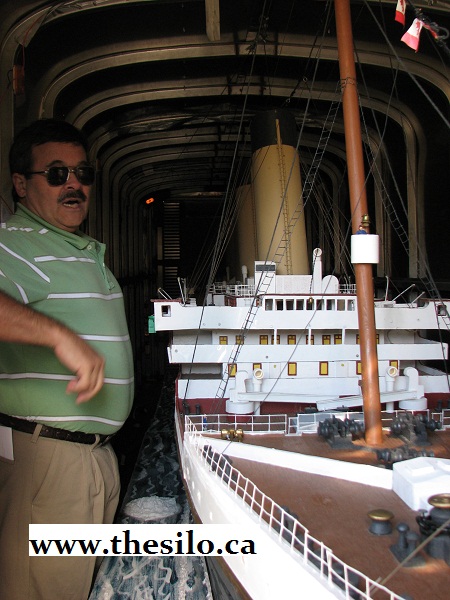
But perhaps most impressive, Norm Lewis is the sole architect of a twenty-foot scale model of R.M.S Titanic that has appeared in parades and exhibitions all over the province. Detailed, historically accurate, and made almost entirely out of wood, the model is the only one of its kind. It has working propellers, smoking funnels and a truly impressive digital recording of the actual titanic whistles. It took him eight years. You might call that obsession, but if you think of a twelve year old boy, rapt in fascination at one of the most spectacular and terrible stories in nautical history, you might just call it a labor of love. For the Silo, Alan Gibson.
More Canadian beaches and
marinas awarded Blue Flags
2018 is another record year for Canada’s waterfronts, 27 beaches and nine marinas have been awarded a coveted Blue Flag, including our very first coastal flag at beautiful Aboiteau Beach, NB. The Blue Flag is the internationally recognized symbol of environmental excellence for beaches and marinas. Read on to find the best waterside spots to spend your Victoria Day weekend.
Time for
the Government
to step up on
plastic waste
Only 11 per cent of Canada’s plastic waste is recycled. Let that sink in for a minute. This problem goes way beyond individual changes, we need the Federal Government to step up and take meaningful action before it’s too late. Sign the petition now to ask for a plastic free environment.
Banned chemicals found in products that babies chew, play and nap on
A new study reveals that 86 per cent of tested products sold in Canada contain toxic chemicals, some of which are banned. Baby bibs, blankets and more were found to contain water and stain resistant chemicals linked to hormone disruption, and even cancer. Find out how you can take action.
Tell Canada that all high-carbon projects need an impact assessment
What the frack?! The Canadian government is proposing to exempt fracking and in situ tar sands from the new federal environmental review process. We have until June 1st to fix this – send a letter now to tell the government that ALL high-carbon projects should get an impact assessment.
One of the many ways the Internet is driving the global economy is through digital payments, making it easy for consumers to buy just about anything from anywhere. VisaNet is the largest payment processing network in the world, connecting 2.4 billion credit cards at 36 million locations across 200 countries.
Those are just a few of the numbers that Visa hired our friends at Visually to shape into the infographic below. The result is a visualization that tells in their words- “the story of the innovation, security and accessibility of this payment processing network.”
OTTAWA, CANADA (June, 2019) – In Defense of Animals applauds Canada’s passing of Bill S-203, the Ending the Captivity of Whales and Dolphins Act, which passed through the House of Commons in Ottawa, Canada on Monday, June 10, 2019.
First introduced by Senator Wilfrid Moore in 2015, the legislation will officially make it illegal to hold any cetacean in captivity, for reasons other than rehabilitation and scientific research. Breeding or trading reproductive materials of whales and dolphins will also be prohibited. Any breach of this ban carries fines of up to $200,000.
“We applaud Canada for passing this progressive legislation, since whales and dolphins suffer greatly in captivity, no matter the size of the tank,” said Marilyn Kroplick M.D., President of In Defense of Animals. “The overwhelming support for this ban demonstrates how many Canadians are opposed to the inherent cruelty of keeping and breeding cetaceans.”
Two facilities currently hold cetaceans captive within Canada.
Vancouver Aquarium holds one dolphin captive. The ‘beluga breeding mill’ was shamed in #9th place on In Defense of Animals’Ten Worst Tanks list, and faced significant public pressure regarding its cruel activities from many concerned citizens including world-famous Dr. Jane Goodall and thousands of In Defense of Animals supporters. The Vancouver Parks Board passed a captive cetacean ban in 2017, prompting the Aquarium to announce its plans to phase out its cetacean exhibit.
Marineland in Ontario is placed as #2 Worst Tank and continues to hold captive more than 50 belugas, five bottlenose dolphins, and Canada’s last captive orca. All of these animals will be grandfathered in, so the passing of the Ending the Captivity of Whale and Dolphin Act will not directly impact them. However, Marineland will be required to halt all captive breeding at its facility, ultimately putting an end to the cetacean captivity industry throughout Canada.
Over 10,000 members of In Defense of Animalscontacted Canadian decision-makers to support this historic bill, demonstrating significant public support for this important animal protection legislation.
Keeping dolphins and whales in captivity, forcing them to perform degrading tricks and being placed on perpetual display, is archaic and not in line with scientific discoveries about their significant cognitive and emotional sophistication.
The time has come for the unethical captive animal industry to dissolve–and Canada has taken steps to ensure this will happen. We urge Marineland to abide by the spirit of the Ending the Captivity of Whales and Dolphins Act, and the wishes of the Canadian people who stand by this landmark legislation, and release the dolphins and whales it holds captive to seaside sanctuaries. For the Silo, Laura Bridgeman/IDA In Defense of Animals.
German budget carrier Eurowings will now charge economy passengers for snacks and drinks on board its flights, the travel platform fromAtoB conducted research into the costs of food and drinks on different airlines.
• Ryanair charges more than other airlines for soft drinks and chocolate
• Ryanair and EasyJet menus relatively expensive
• German airlines offer the cheapest beer and best overall value for money
• Eurowings joins the majority of low-cost airlines, which now charge for snacks and beverages
Berlin, June 2019. None of us are keen to fork out for snacks and drinks on budget airlines, but since we are forced to dispose of liquids before going through security, we are often left with no choice. Travel platform fromAtoB compared the current prices for drinks and snacks in ten European low-cost airlines to see which are the worst offenders.
Water is often the first thing passengers need, and the price of this basic necessity can vary widely. EasyJet, TUIfly, and Wizzair all charge €2.50 for a 500ml bottle of water, while Ryanair and Pegasus charge €3. [One euro at time of publishing = $1.50 Canadian dollar]
Soft
drinks also cost anywhere between €2.50 and €3 for varying sizes. The
price per litre varies significantly between airlines. While TUIfly
charges €6, Ryanair and Eurowings ask for €10.
German airlines offer the cheapest beer
As
is fitting for a country known for its beer, flights to and from
Germany offer the best value, with a 330ml can costing just €3 with
Eurowings and TUIfly. EasyJet makes passengers dig a little deeper into
their pockets, charging twice as much, while a beer on a Ryanair flight
will set passengers back €5.50.
Food for thought
The
cost of a sandwich also varies significantly. The East European carrier
Wizzair offers the cheapest options for just €4, while Eurowings
passengers can expect to pay €5 for a chicken roll. Both Norwegian and
Spanish airline Vueling charge €6.50 for a club sandwich.
TUIfly: best value overall
Almost
all airlines offer a combined menu that often includes a sandwich,
drink, and snack. A Wizzair meal deal costs between €6 and €8.50, while a
meal alone with Norwegian costs €8.
TUIfly
offers the best overall value for money, with all items on the menu
totalling €35.84, compared the Norwegian menu which totals €52.09, and
Easyjet at €50.
Mendon,
Utah – Autonomous Solutions, Inc. (ASI) has received Phase I funding
from the U.S. Army Combat Capabilities Development Command Ground
Vehicles Systems Center (formerly TARDEC) to improve the way heavy
vehicles stop while operating autonomously.
“Bringing large autonomous vehicles to a safe stop in varying environments can be challenging,” said Jeff Ferrin, CTO of ASI. “Having additional funding from the Army to further develop this technology will help us make autonomous vehicles safer, which is always our number-one priority.”
The
objective of the Army in awarding this grant is to develop and
demonstrate a system that can be operated remotely and considers both
the dynamics of the vehicle, as well as the environment, to optimally
and safely bring a large ground vehicle to a complete stop despite the
terrain.
“ASI has been working on terrain characterization with the Army since 2014,” said Ferrin. “This project will use similar technology to make sure the vehicle is aware of the terrain around it. This model of the terrain will then be used by the vehicle to ensure a safer stop is completed.”
A
significant focus of this intelligent urgent stop initiative is machine
learning. This improved technology will continuously monitor the
interaction between a vehicle and its surroundings and update the
internal model that is used to properly halt the vehicle. This process
will allow the vehicle to learn and adapt as the terrain and environment
change.
As the advanced solution is developed, tested and proven, it can be used by ASI’s autonomous vehicles across all the company’s multiple industries, including agriculture, automotive, construction haulage, mining, facility robotics and more.
According to Ferrin, “The system can be used with any drive-by-wire vehicle. It will interface with the brakes and steering to bring the vehicle to a safe, controlled stop.”
Details of the Phase I stage awarded to ASI include development of a concept design using commercial-off-the-shelf (COTS) sensors to perform safe deceleration of a large ground vehicle. A concept design report and performance analysis report are required deliverables before Phase II can be awarded. For the Silo, Brandon Taylor.
About ASI
Autonomous Solutions, Inc. (ASI) is a world leader in industrial vehicle automation. ASI serves clients across the world in the mining, agriculture, automotive, government, and manufacturing industries with remote control, teleoperation, and fully automated solutions from its headquarters and 100-acre proving ground in northern Utah.
Nobilified and Villa de Campo have partnered up to offer their customers a unique art and hospitality experience. A selection of luxurious villas offered by Villa de Campo for rent come with hand-painted portraits of each guest, which are hung throughout the Villa during their stay.
Located in La Romana, Dominican Republic; Casa de Campo is no stranger to luxury. This prestigious Resort spreads over 7,000 acres, featuring three award-winning golf courses, a clay pigeon shooting center, an equestrian center, tennis courts, pools, and restaurants, as well as 1,700 private villas populating the resort, some of which are available for rent. Villa de Campo specializes in giving customers prompt and personalized service for vacation rentals in the resort. Whether it’s understanding your needs and recommending homes to stay in or helping you book a personal chef or schedule your activities, Villa de Campo is stepping up the meaning of the saying “the customer is king”.
With
this partnership with Nobilified, Villa de Campo adds an extra touch of
personalization to one’s holiday—and we aren’t talking about personal
chefs or yacht rentals. Nobilified, which creates hand-painted oil
portraits of its customers as royalty will be using its inspiration to
paint memories of holidays for guests to keep. The paintings will be
inspired by the nature of the trip, whether a romantic couple retreat, a
golf trip with boys, or a family holiday; Nobilified’s classically
trained artists will paint the guests prior to their arrival, according a
certain theme, and have the pieces hung throughout the villa during
their stay. Guest then get to take the pieces home after their stay.
The
Nobilified special aims capture memories in the world of art. Chris
Jensen, the founder of Nobilified, says, “Our aim is to capture one’s
memories in art. We want guests of the villas to remember all the small
things that made their holiday one to remember. When they get home, they
will hang the piece, and each time they look at the piece, they will
remember their holiday. We think that is special.”
Villa de Campo
Villa de Campo offers a selection of luxury villas in which to spend your next activity-filled holiday in the Dominican Republic. Spread over 7000 acres, the Casa de Campo resort is home to over 1700 private villas of which around 100 are available for rent on villadecampo.com.
Punta Aguila #57 is true Casa de Campo villa. The beautiful five bedroom villa was built right in the middle of a beautiful bamboo forest, palms and Embauba trees in a five thousand square meter homesite.
Booking a Villa has become the perfect way to spend a holiday whether with family, friends or as a couple. Our selection of luxury villas are located throughout the entire resort and cater to various tastes and needs. Villa de Campo also includes additional amenities such as complimentary golf carts, private chefs and a holiday concierge to help you book and plan your dream stay. Casa de Campo possesses a variety of restaurants, private beach clubs, a Marina, 3 golf courses, a tennis center, an equestrian center, a spa, and much more.
Nobilified
Nobilified
is dedicated to revolutionizing the art world. Nobilified believes that
while not everyone may have the artistic skills required to paint a
masterpiece, everyone possesses an intuitively creative mind. At
Nobilified, customer dreams and fantasies are transformed into actual
works of art, which can proudly displayed in any home, dorm, office,
cabin, yacht, or even a swanky Chateau. Everyone has an artistic side,
and everyone sees the world in their own unique way. Nobilified wants
this diversity to make an imprint on the course of art history by
immortalizing customers’ wildest dreams.
In addition to providing high quality oil paintings, Nobilified wants to change the way people perceive art, by making it fun and accessible, thus giving customers the opportunity to share or gift a unique custom made oil painting with friends and family. No longer will having an oil painting of oneself hanging above the chimney be out-of-reach. This privilege used to be reserved for the upper tiers of society, but, now, it is shared with everyone, even if they are not knighted. A unique, hand-painted, oil-on-canvas work of art can add a touch of grandeur to any living quarters.
Featured image: Cupid and Psyche by Jacques Louis David
RAPID CITY, SD- Professor Travis Kowalski starts most days with a squiggle.
For the past eight years, the South Dakota School of Mines & Technology math professor has carried on a family tradition started by his father, who would ask the young Travis to make a squiggle on a piece of paper. From that squiggle, his father would create a drawing. Often, Kowalski’s father would give him a squiggle and the two would sit together drawing.
Nowadays,
Kowalski uses a napkin and markers in his “squiggle game,” and the
recipients are his two daughters – Liliana, 13, and Maia, 9. Kowalski
says he started the tradition when Liliana was entering kindergarten,
hoping the lunch napkin art would make her transition to school easier.
Each evening or early in the morning, Kowalski encouraged his oldest to draw a squiggle on a napkin. The next morning, he turned the squiggle into colorful drawings and slipped it into her lunch box. Once Maia arrived, Kowalski began doing the same for her. “She expected it,” he says.
It’s
not exactly what most people expect from a math professor at an
engineering and science university. But Kowalski, a Ph.D. who currently
serves as the interim head of the Department of Mathematics at SD Mines,
says math and art co-mingle perfectly.
His drawings range from a buffalo against a bright pink sky (drawn May 6, 2019) to an astronaut in space (Jan. 24, 2019), to Kermit the Frog (Dec. 7, 2018), to the composer Bach at his harpsichord (May 14, 2018). Kowalski posts both the starting squiggle and the finished product on his Facebook and Instagram pages.
The
two social media platforms are filled with vibrant, colorful drawings
often accompanied by clever taglines – a bear holding up a paw and
asking, “I would like some salmon, please” and a praying mantis playing a
video game under the title, “Playing Mantis.”
Known on campus for his colorful Hawaiian shirts and clever math-related ties, Kowalski is the professor whose office walls are covered with unique visual art. He’s the kind of professor who sneaks his labradoodle Cauchy, named after French mathematician Augustin-Louis Cauchy, into class the last day of the semester to play out an obscure (to the general audience at least) mathematics joke. He’s the math teacher who so passionately talks about the subject that even the least math-minded people can’t help but get excited.
And he’s good at what he does in the classroom. So good that Kowalski was recently awarded the 2019 Burton W. Jones Award by the Mathematical Association of America. The award recognizes post-secondary level math instructors nationally who “foster student excitement about mathematics.”
“It’s cool and humbling to be part of that group,” he admits.
Donald
Teets, a Ph.D. professor in the SD Mines math department, is a previous
winner of the award and the person who nominated Kowalski. In his
nomination, Teets writes, “He is, (in this writer’s opinion) the best
teacher in a department devoted to teaching excellence.”
This
is hardly the first recognition for Kowalski, Teets says. In 2014,
Kowalski was awarded the Benard Ennenga Award, which honors one SD Mines
faculty member each year for teaching excellence; and in 2017, he won
the George Polya Award from the Math Association of America for his College Mathematics Journal article, “The Sine of a Single Degree.”
“His
lecture based on ‘The Sine of a Single Degree’ is as good a mathematics
lecture as you will ever see!” Teets wrote in his nomination.
Teets
says the thing that makes Kowalski so good at this job is his
enthusiasm, noting that students consistently rate him on classroom
surveys as “the best math teacher I’ve ever had.” He’s “innovative,”
constantly striving to engage his students and utilize technology into
his teaching, Teets says. “Like Superman wears the big ‘S’ on his chest,
Dr. Kowalski deserves a big ‘I’ for Innovator.”
As
for Kowalski’s artistic talents, Teets is equally as effusive. “As a
person who can barely draw recognizable stick figures, I am in awe of
Travis’s artistic abilities. It’s a great complement to his
extraordinary skills in mathematics!” he says.
Kowalski
grew up in California, raised by a draftsman father and a “crafty”
stepmother. “My dad drew all of the time,” Kowalski says. “That was the
home I grew up in. You drew.”
In college at University of California, Riverside, Kowalski majored in art. To finish off an academic requirement, he enrolled in Calculus 2. A good student in high school, he had already taken an advanced placement Calculus 1 class. He was class valedictorian, but “I worked hard at it. I was not a prodigy,” he says with a laugh.
He
still remembers the Riverside professor’s name who taught his first
college math course – Albert Stralka. He “taught in a way I hadn’t seen
before,” Kowalski says. “There were ideas behind the math.”
When he got an A in that class, the professor convinced him to take Calculus 3.
Next,
the professor suggested he take topology, which is the study of
geometric properties and spatial relations which are unaffected by the
change of shape or size of figures. “It’s the geometry of shapes under
change,” Kolwaski says. “That class blew my mind.”
The
rest is history – after topology Kolwaski changed his major and
embraced a love of mathematics. But he never left his art behind, and
it’s important to understand that the two subjects go hand-in-hand, he
says. “Half of mathematicians do what they do because they think it’s
pretty,” he says of the geometry of math.
As
a math professor at SD Mines, Kolwaski admits that “I still like to sit
and draw things, but I don’t have as much time anymore,” he says.
That’s where his morning squiggle drawings come in.
Each
one of Kowalski’s squiggles for his daughters takes about 15 to 30
minutes from start to finish. “The first part is to see something,” he
says. He spins the napkin around, looking at the squiggle until he
“sees” the picture that will emerge.
Mia
tends to draw extremely elaborate squiggles, sometimes lobbying for a
specific outcome – for instance a unicorn. Other times, his daughters
will bring home requests from friends for specific drawings.
Liliana
has saved all her napkins over the years, storing them in a plastic
container in her room. That made it a little easier for Kowalski when
she came to him recently to say, “What with my school schedule being so
busy and my lunch break so short and closet so full of the ones you’ve
already made me – which I love, thank you – I just don’t think you need
to make me lunch napkins anymore.” Kowalski playfully posted her words
on social media with an image from Boromir’s death from “Fellowship of
the Rings” with arrows sticking from his heart.
Kowalski
says his older daughter relented, most likely after an intervention
from his wife, and is continuing to play the squiggle game. He’s glad,
hoping that both of his daughters will always remember the squiggle game
and maybe even carry it on with their own families one day.
“It’s definitely a great memory about my dad,” he says. “Hopefully it will be the same for them.” For the Silo, Lynn Taylor Rick.

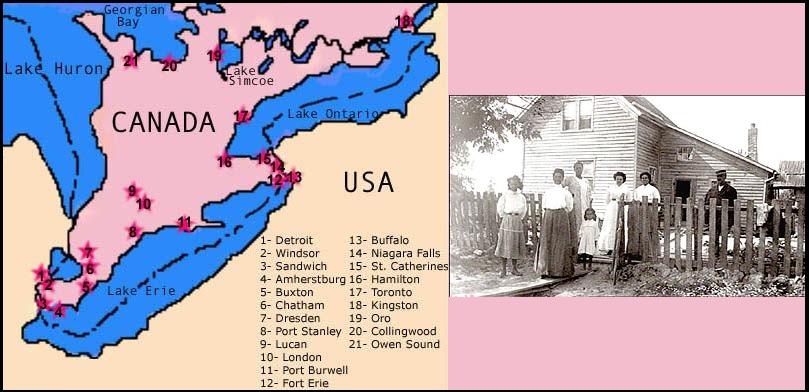


 “It made me realize how much hunger there is for information on how divorces work,” said Alexander. “No one ever expects to get a divorce, so it’s not a subject that people spend much time learning about until they are facing one. It can be hard to catch up at such a stressful time.”