Tag Archives: ShareAmerica

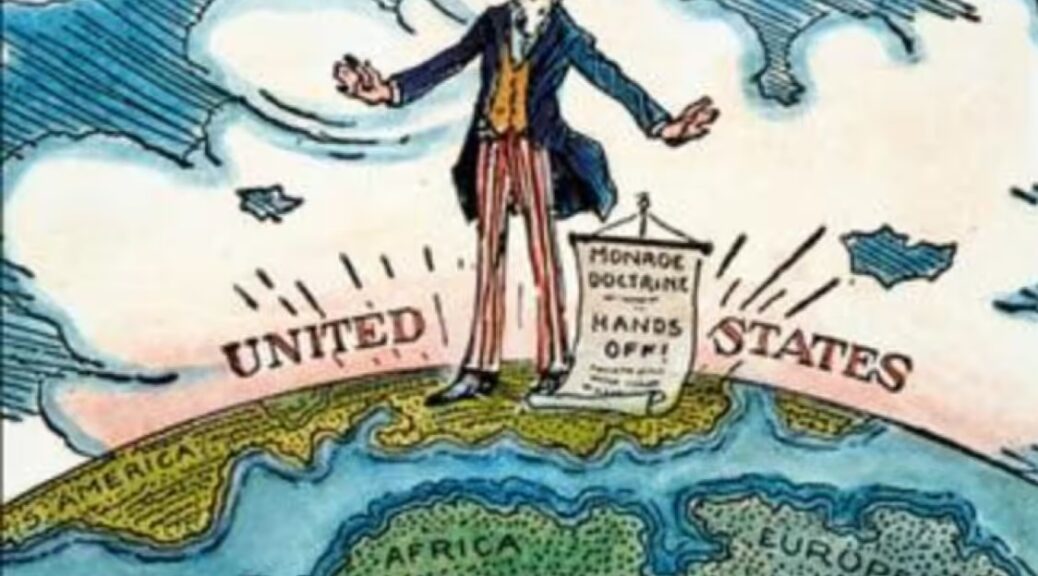
How The Monroe Doctrine Helped America Find Its Footing

United States Department of State

This article is a 5 MINUTE READ

Left: Oil painting of President Monroe (White House Historical Association/Samuel F.B. Morse) Right: The Monroe Doctrine (National Archives)
Then-President James Monroe, seen in an 1819 portrait, rejected foreign interference in a landmark 1823 address to Congress, known as the Monroe Doctrine. (White House Historical Association/Samuel F.B. Morse, National Archives)

In 1817, when James Monroe was inaugurated as America’s fifth president, the United States was a young country finding its place in the world.

It had been a few decades since the signing of the Declaration of Independence, yet European powers still held lands in the Western Hemisphere. Spain was fighting to retain control of Mexico, which won independence in 1821. And during the War of 1812, the British occupied Washington and burned the White House.

In a December 2, 1823, address to Congress, President Monroe rejected foreign interference in the Western Hemisphere and asserted U.S. leadership in the region. “The American continents, by the free and independent condition which they have assumed and maintain, are henceforth not to be considered as subjects for future colonization by any European powers,” he said.

As America celebrates its 250th anniversary, the Monroe Doctrine  stands as a milestone of U.S. sovereignty. Crafted with then-Secretary of State John Quincy Adams, the policy called for separate spheres of influence for the Americas and Europe, and opposed European colonization and interference in the Western Hemisphere.

Echoes of the founding

The Monroe Doctrine served “as a way to build the consciousness of America as independent” and promoted a “sense of nationhood and citizenship and common purpose,” says John Grant, a political science professor at Hillsdale College.

Painting of President Monroe's Cabinet (© Bettman/Getty Images)
Clyde DeLand’s 1912 painting depicts Monroe’s deliberations with advisers including then-Secretary of State John Quincy Adams, far left. (© Bettman/Getty Images)

Grant notes the doctrine followed the U.S. defense of Washington during the War of 1812, which showed Britain, “you’re not going to reconquer us; that’s not going to happen.”

Alison Mann, a curator of the Department of State’s National Museum of American Diplomacy in Washington, says the Monroe Doctrine built on the earlier-President Thomas Jefferson’s efforts to assert U.S. economic power and avoid European entanglements. Monroe consulted Adams on whether the young nation could resist foreign influence, asking if a European power were to try to colonize the United States, could the country rebuff the attempt with economic and military might. Adams said yes.

For Grant, the Hillsdale professor, the doctrine asserts America’s founding principles in a changing world. Monroe and Adams — who after serving as secretary of state would succeed Monroe as president — were the last U.S. presidents to have participated in America’s founding.

Monroe crossed the Delaware River  with George Washington on Christmas night 1776 for an ambush that turned the tide of the Revolutionary War.

Adams served as an aide to his father, John Adams, during negotiations for the Treaty of Paris, which ended the war and secured U.S. independence.

For the Silo, By Noelani Kirschner/ ShareAmerica.

IndyCar Drivers On Track For Washington Race Honoring America’s 250th

The world’s top race car drivers are headed to Washington to blaze around the nation’s capital in honor of the 250th anniversary of America’s founding.

For IndyCar racer David Malukas, the Freedom 250 Grand Prix, August 23, is a “once-in-a-lifetime race” and a chance to grow the sport that helped define the course of his life.

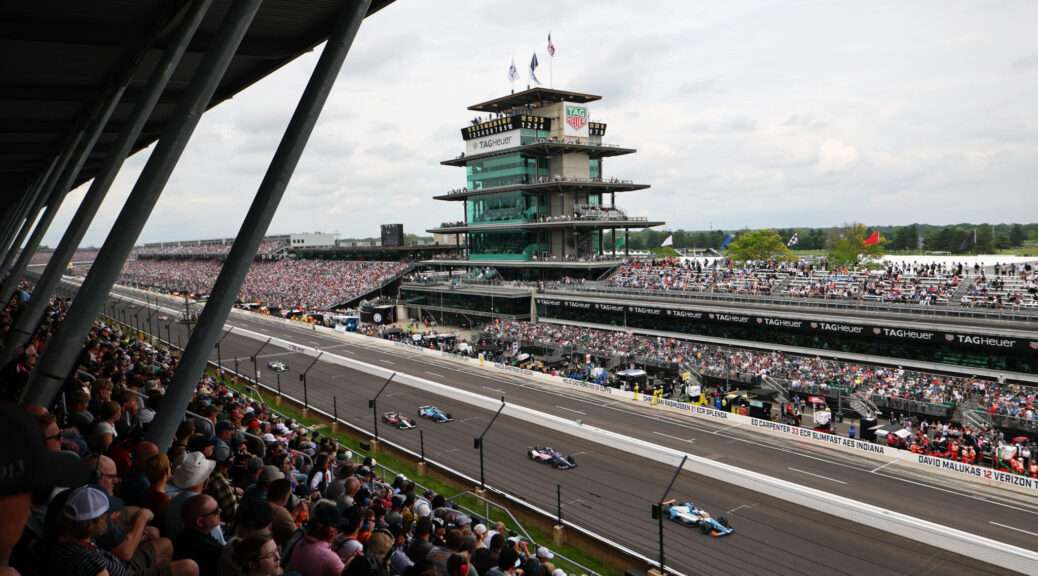
IndyCar racing, especially its marquee event the Indianapolis 500, is an American tradition that has served as a proving ground for automotive innovations that have, in turn, modernized the U.S. auto industry. The race, held each May, draws 350,000 spectators to the Indianapolis Motor Speedway and millions more television viewers from around the world.

The storied history of the ‘Brickyard’

The Indianapolis Motor Speedway is a 2.5-mile (4-kilometer) oval track that was built in 1909, just months after the U.S. debuted the Model T, the world’s first mass-produced car. Now known as the “Brickyard” — it was paved with 3 million bricks — the track has showcased advances in engine performance, aerodynamics, tire design and driver safety.

Artist rendering of race car speeding past U.S. Capitol (Courtesy of IndyCar)
An artist’s rendering of the Freedom 250 Grand Prix planned for August 23 in Washington. (Courtesy of IndyCar)

In 1911, Ray Harroun won the first running of the Indianapolis 500, averaging 75 miles per hour (120 kilometers per hour) in a car that featured the world’s first rearview mirror. Indy cars now reach speeds over 220 miles per hour (355 kilometers per hour). In addition to the rearview mirror, the race has debuted innovations  such as four-wheel drive, alternative fuels and seat belts, according to ESPN.

A new generation

A Chicago native, Malukas fell in love with racing on a childhood trip to Indiana. He began racing go-karts at age 7 and was winning European go-kart championships at 14. Yet he dreamed of racing in the Indianapolis 500. He achieved that goal in 2022 at age 20. IndyCar racing’s trifecta of formats — oval tracks, road courses and street circuits — present a never-ending challenge for racecar drivers.

Now one of the top-ranked American IndyCar drivers, Malukas trains with conditioning coaches (he even exercises his neck) to endure the physical demands of two- to three-hour-long races. In May, Malukas’ Penske Team Chevrolet #12 race car, maintained by a 14-member crew, finished within a half second of the winner at the 2026 Indy500.

A White House pit stop

In July, Malukas rocketed a red, white and blue IndyCar into the White House driveway for a presidential demonstration during which his team changed four tires in six seconds. The visit to the Oval Office visit was “unforgettable,” Malukas says. “It truly felt like a movie.”

President Trump meeting with Indycar drivers in the Oval Office (White House/Daniel Torok)
President Trump meets with IndyCar drivers (from left) David Malukas, Alex Palou and Felix Rosenqvist in the Oval Office July 13. (White House/Daniel Torok)

At the Freedom 250 Grand Prix , Malukas will compete in a race like no other. The 1.7-mile (2.7-kilometer) street circuit follows Pennsylvania Avenue and other Washington thoroughfares against a backdrop of the White House, the U.S. Capitol and the Washington Monument. Repaving is underway to ready the course and Malukas is practicing the circuit on a simulator.

Malukas will join about 25 other racers on August 22, a day before the race, for a round of qualifying to decide position at the start line. Among the field will be this year’s Indycar points leader, Alex Palou, and the reigning Indianapolis 500 champion, Felix Rosenqvist. President Trump, who is likely to wave a green flag to signal the start of the 250-mile (402 kilometer) race, has said it is the first time cars will travel 200 miles per hour (320 kilometers per hour) on the streets of Washington.

For The Silo, By Brandon Lambert/ Share America.

Utah’s Zion National Park Has Otherworldly Landscape

Another superb travel spotlight via our friends at ShareAmerica.

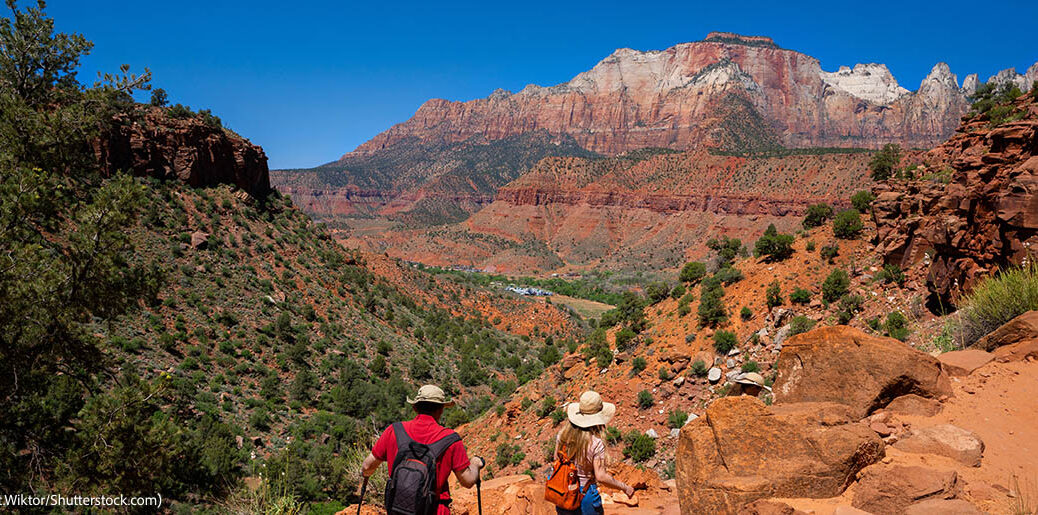
With massive, towering cliffs and deep canyons, Zion National Park consistently ranks as one of America’s most popular spots for outdoor adventure. Designated as a U.S. national park in 1919, Zion, in southwestern Utah and two hours from Las Vegas, now attracts 5 million visitors annually.

Tallest Sandstone Walls In the World

They come for red-and-white sandstone walls, among the tallest in the world, that soar to heights of 2,000 to 3,000 feet (609 to 914 meters) above the canyon floor. Zion’s immense scale and dramatic rock formations lead many to describe the park in spiritual terms. Mormon pioneers who arrived at the canyon in the 1800s gave it the biblical name Zion, meaning “sanctuary” or “refuge.”

Sandstone walls, wildlife and trails

Hikers will find numerous trails, from the near-effortless to the very challenging. Less difficult hikes like the Pa’rus, Riverside Walk and Canyon Overlook provide stunning views and the chance to spot wildlife, including bighorn sheep and mule deer. The more challenging Angels Landing offers panoramic views of Zion’s iconic cliffs, including the Court of the Patriarchs, composed of three biblically named peaks: Abraham, Isaac and Jacob.

Hiking Amazement

Hiking The Narrows trail is a signature Zion adventure. Hikers tread upriver in shallow water into a gorge with soaring cliff walls 1,000 feet (300 meters) high. Boots and hiking poles can help navigate the rocky riverbed. The Narrows is most popular in June through September, when the water is warm and river levels are low.

Another sightseeing option is the Zion Canyon Shuttle , which takes visitors from one scenic spot to the next. The shuttle operates March through November or December and is the only way to access Zion’s Emerald Pools trails, which feature waterfalls and hanging gardens.

Guided tours on horseback are available for those seeking an authentic Western experience. Zion’s Nature Center offers programs for families, including an interactive exhibit where children can explore the park’s geology, history and wildlife.

Stargazing and nature photography

Certified as an International Dark Sky Park, Zion’s high elevation and minimal light pollution make it a premier spot for stargazing and astrophotography. Expect clear nighttime views of the Milky Way, planets and distant galaxies, but bundle up because temperatures drop after sunset.

Nature photography is a Zion favorite at any time of day. The National Park Service recommends taking advantage of nature’s golden hours at sunrise and sunset to capture the changing light on the park’s vivid red cliffs.

Rocky mountains (National Archives/Ansel Adams)
Ansel Adams photographed the Court of the Patriarchs in Zion National Park during the early 1940s. (National Archives/Ansel Adams)

Ansel Adams documented Zion on numerous visits to the park. A series of the legendary photographer’s black-and-white images of Zion taken in 1941 and 1942 are held at the U.S. National Archives, and several can be viewed online . Adams’ photographs are still enticing visitors to experience the rugged beauty of Zion National Park.

For the Silo, Lauren Monsen/ Share America.

Featured image- Margaret Wiktor/Shutterstock.

Tradition Runs Deep At Kentucky Derby

Replete with pageantry, the Kentucky Derby has evolved into much more than a horse race since 10,000 people first watched 15 horses compete on a dirt track in Louisville, Kentucky, in 1875.

Known as “the most exciting two minutes in sports,” the 152nd Kentucky Derby will run May 2, bringing 150,000 spectators to Churchill Downs, the same track where the tradition began a century and a half ago.

Horses racing at the track (Library of Congress/Caufield & Shook, Inc.)
The 1943 Kentucky Derby at the Churchill Downs. (Library of Congress/Caufield & Shook, Inc.)

Rich traditions

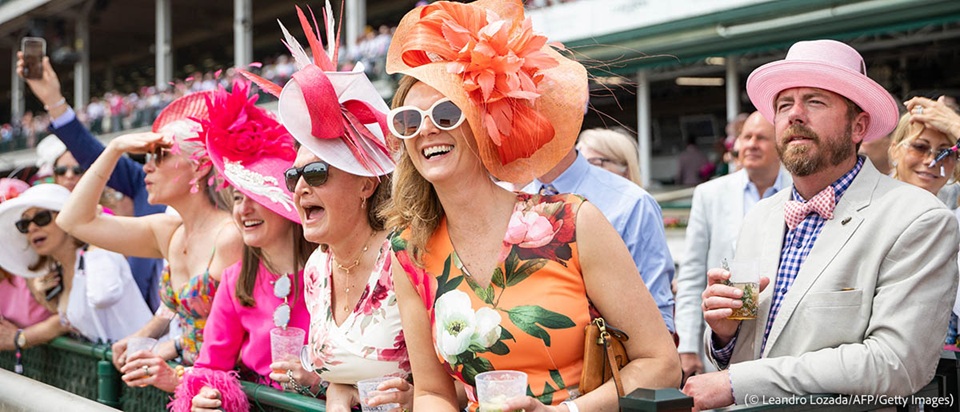
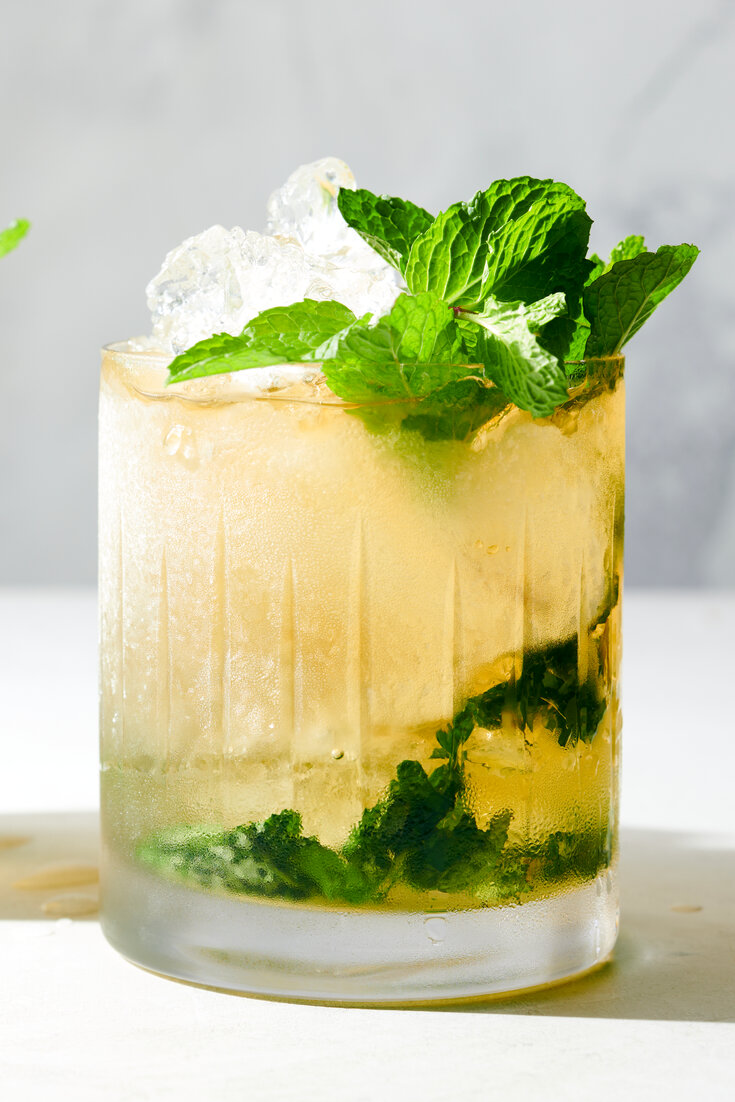
A “social event” that encourages “whimsical fashion” is how Kentucky Derby Museum  curator Chris Goodlett describes the race. Women wear wide-brimmed, feathered hats and pastel dresses. Men sport light-colored suits and derby hats. The mint julep, made with Kentucky bourbon, is the derby’s official drink.

Festivities fill the two weeks leading up to the derby with galas, fireworks and other horse races. Anticipation for the big event culminates with a bugle call 10 minutes before start time, bringing the race’s 20 competitors to the track. As jockeys lead the thoroughbreds to the starting gate, the crowd stands and sings “My Old Kentucky Home.”

Birthplace of legends

The victorious horse ceremoniously trots to the winner’s circle where a 14-karat gold trophy and rose garland await. Secretariat’s winning run in 1973 set a race record that still stands. Only one other horse has broken the two-minute mark in the 1.25-mile (2-kilometer) race.

The first of three races that form America’s Triple Crown of horse racing, the derby runs the first Saturday of May. The Preakness Stakes in Maryland follows in mid-May, and New York’s Belmont Stakes runs in early June. Only 13 horses have taken the famed Triple Crown — winning all three races in the same year. The most recent, Justify, achieved the rare feat in 2018.

Secretariat, Seattle Slew and Sir Barton are among the horses that achieved folklore status after winning the Kentucky Derby on the way to the Triple Crown. Most derby winners go on to become breeder horses with some enjoying retirement at the Kentucky Horse Park , a sanctuary and museum that celebrates the Kentucky Bluegrass region’s love for horses.

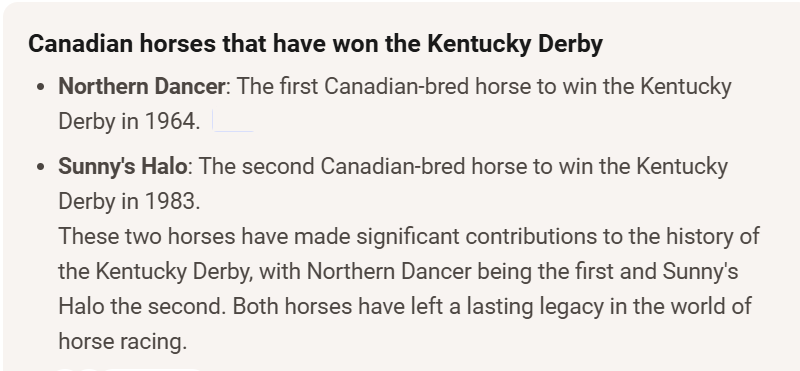
Canadian Bred Horses That Won The Kentucky Derby

Winning a global audience

The derby’s rich history grew from American entrepreneur Meriwether Lewis Clark Jr.’s 1872 visit to England’s Epsom Derby. The race inspired Clark to start the Kentucky Derby in Louisville three years later.

By the mid-20th century, the Kentucky Derby outpaced all other U.S. horse races in attendance and prestige. The 2025 Kentucky Derby was broadcast to 170 countries and territories, and total viewership continues to grow.

Left: Jockeys riding race horses (© Alex Slitz/Getty Images) Right: Horse racing spectators watching racing (© Leandro Lozada/AFP/Getty Images)
Left: Sovereignty wins the Kentucky Derby May 3, 2025. (© Alex Slitz/Getty Images) Right: Fans attend the 2025 derby in colorful attire. (© Leandro Lozada/AFP/Getty Images)

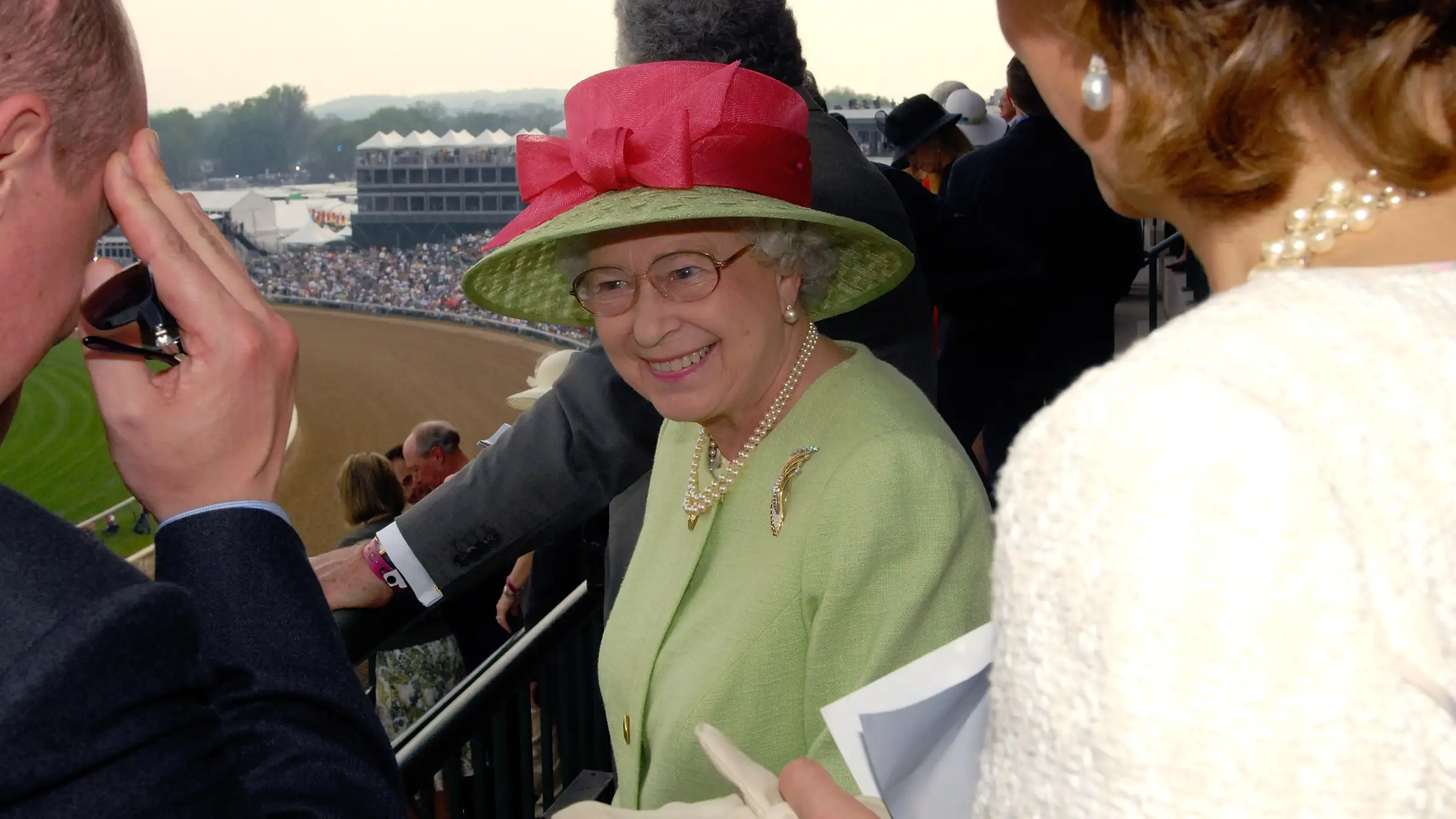
Goodlett, the museum curator, says the derby’s reputation as a national cultural event has helped drive its popularity outside the United States. Queen Elizabeth II attended the derby with her husband Prince Philip in 2007.

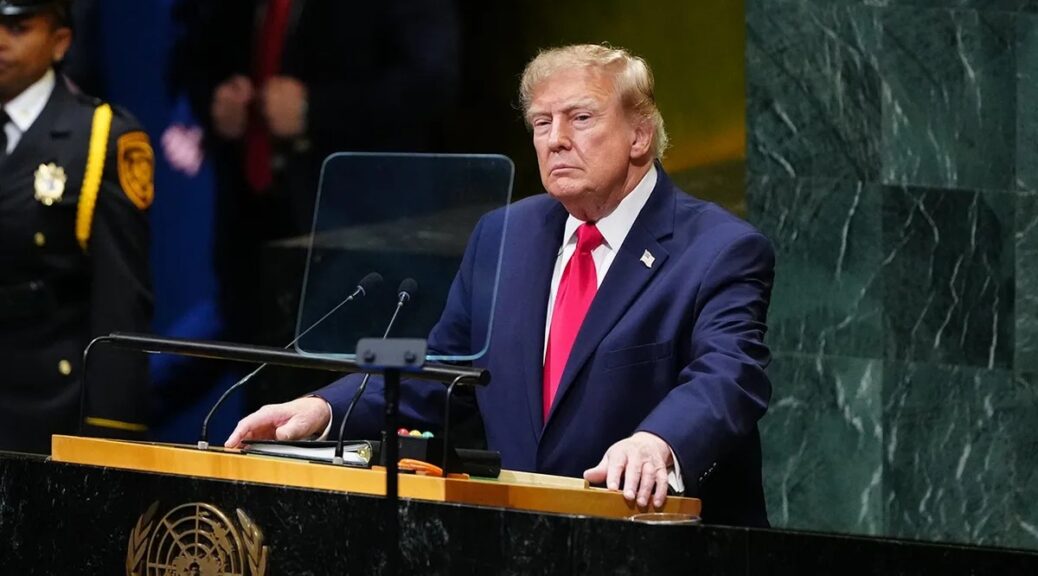
President Trump, who has attended the Kentucky Derby, calls the race “an iconic American institution and an elegant celebration of our culture, customs, and unwavering competitive spirit.”

This article via Brandon Lambert and our friends at U.S. Dept of State.