The world’s top race car drivers are headed to Washington to blaze around the nation’s capital in honor of the 250th anniversary of America’s founding.
For IndyCar racer David Malukas, the Freedom 250 Grand Prix, August 23, is a “once-in-a-lifetime race” and a chance to grow the sport that helped define the course of his life.
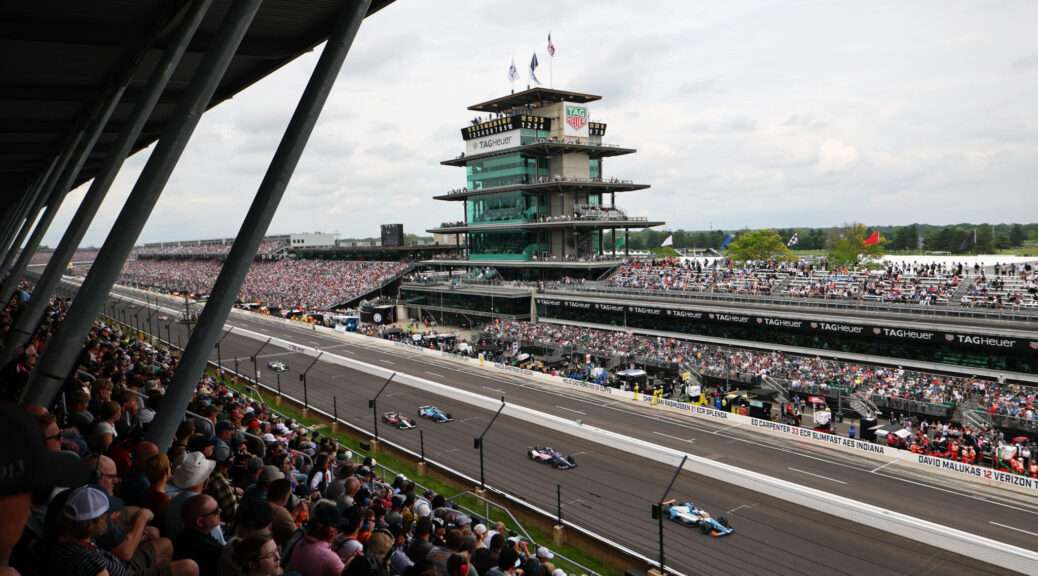
IndyCar racing, especially its marquee event the Indianapolis 500, is an American tradition that has served as a proving ground for automotive innovations that have, in turn, modernized the U.S. auto industry. The race, held each May, draws 350,000 spectators to the Indianapolis Motor Speedway and millions more television viewers from around the world.
The storied history of the ‘Brickyard’
The Indianapolis Motor Speedway is a 2.5-mile (4-kilometer) oval track that was built in 1909, just months after the U.S. debuted the Model T, the world’s first mass-produced car. Now known as the “Brickyard” — it was paved with 3 million bricks — the track has showcased advances in engine performance, aerodynamics, tire design and driver safety.

In 1911, Ray Harroun won the first running of the Indianapolis 500, averaging 75 miles per hour (120 kilometers per hour) in a car that featured the world’s first rearview mirror. Indy cars now reach speeds over 220 miles per hour (355 kilometers per hour). In addition to the rearview mirror, the race has debuted innovations such as four-wheel drive, alternative fuels and seat belts, according to ESPN.
A new generation
A Chicago native, Malukas fell in love with racing on a childhood trip to Indiana. He began racing go-karts at age 7 and was winning European go-kart championships at 14. Yet he dreamed of racing in the Indianapolis 500. He achieved that goal in 2022 at age 20. IndyCar racing’s trifecta of formats — oval tracks, road courses and street circuits — present a never-ending challenge for racecar drivers.
Now one of the top-ranked American IndyCar drivers, Malukas trains with conditioning coaches (he even exercises his neck) to endure the physical demands of two- to three-hour-long races. In May, Malukas’ Penske Team Chevrolet #12 race car, maintained by a 14-member crew, finished within a half second of the winner at the 2026 Indy500.
A White House pit stop
In July, Malukas rocketed a red, white and blue IndyCar into the White House driveway for a presidential demonstration during which his team changed four tires in six seconds. The visit to the Oval Office visit was “unforgettable,” Malukas says. “It truly felt like a movie.”

At the Freedom 250 Grand Prix , Malukas will compete in a race like no other. The 1.7-mile (2.7-kilometer) street circuit follows Pennsylvania Avenue and other Washington thoroughfares against a backdrop of the White House, the U.S. Capitol and the Washington Monument. Repaving is underway to ready the course and Malukas is practicing the circuit on a simulator.
Malukas will join about 25 other racers on August 22, a day before the race, for a round of qualifying to decide position at the start line. Among the field will be this year’s Indycar points leader, Alex Palou, and the reigning Indianapolis 500 champion, Felix Rosenqvist. President Trump, who is likely to wave a green flag to signal the start of the 250-mile (402 kilometer) race, has said it is the first time cars will travel 200 miles per hour (320 kilometers per hour) on the streets of Washington.
For The Silo, By Brandon Lambert/ Share America.