
This article is a 5 MINUTE READ

In 1817, when James Monroe was inaugurated as America’s fifth president, the United States was a young country finding its place in the world.
It had been a few decades since the signing of the Declaration of Independence, yet European powers still held lands in the Western Hemisphere. Spain was fighting to retain control of Mexico, which won independence in 1821. And during the War of 1812, the British occupied Washington and burned the White House.
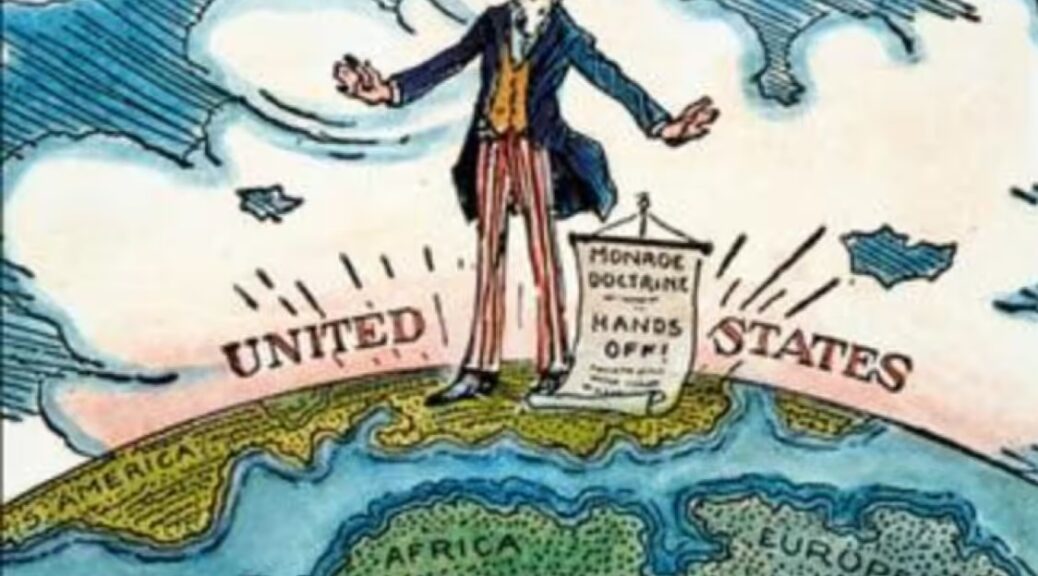
In a December 2, 1823, address to Congress, President Monroe rejected foreign interference in the Western Hemisphere and asserted U.S. leadership in the region. “The American continents, by the free and independent condition which they have assumed and maintain, are henceforth not to be considered as subjects for future colonization by any European powers,” he said.
As America celebrates its 250th anniversary, the Monroe Doctrine stands as a milestone of U.S. sovereignty. Crafted with then-Secretary of State John Quincy Adams, the policy called for separate spheres of influence for the Americas and Europe, and opposed European colonization and interference in the Western Hemisphere.
Echoes of the founding
The Monroe Doctrine served “as a way to build the consciousness of America as independent” and promoted a “sense of nationhood and citizenship and common purpose,” says John Grant, a political science professor at Hillsdale College.

Grant notes the doctrine followed the U.S. defense of Washington during the War of 1812, which showed Britain, “you’re not going to reconquer us; that’s not going to happen.”
Alison Mann, a curator of the Department of State’s National Museum of American Diplomacy in Washington, says the Monroe Doctrine built on the earlier-President Thomas Jefferson’s efforts to assert U.S. economic power and avoid European entanglements. Monroe consulted Adams on whether the young nation could resist foreign influence, asking if a European power were to try to colonize the United States, could the country rebuff the attempt with economic and military might. Adams said yes.
For Grant, the Hillsdale professor, the doctrine asserts America’s founding principles in a changing world. Monroe and Adams — who after serving as secretary of state would succeed Monroe as president — were the last U.S. presidents to have participated in America’s founding.
Monroe crossed the Delaware River with George Washington on Christmas night 1776 for an ambush that turned the tide of the Revolutionary War.
Adams served as an aide to his father, John Adams, during negotiations for the Treaty of Paris, which ended the war and secured U.S. independence.
For the Silo, By Noelani Kirschner/ ShareAmerica.