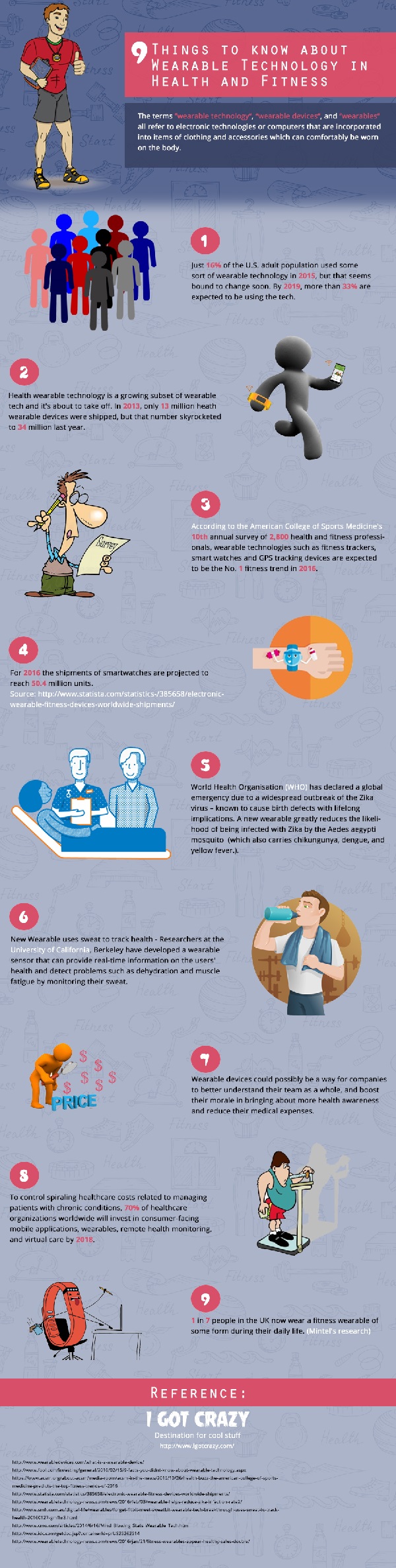
Here’s a fun wearable Infographic from our friends at igotcrazy.com. Do you agree with their projections of use?
• By 2019, more than 33% of U.S. adult population is expected to be using the wearable tech?
• According to a survey wearable technologies such as fitness trackers, smart watches and GPS tracking devices are expected to be the No. 1 fitness trend in 2016.
• Wearable devices could possibly be a way for companies to better understand their team.
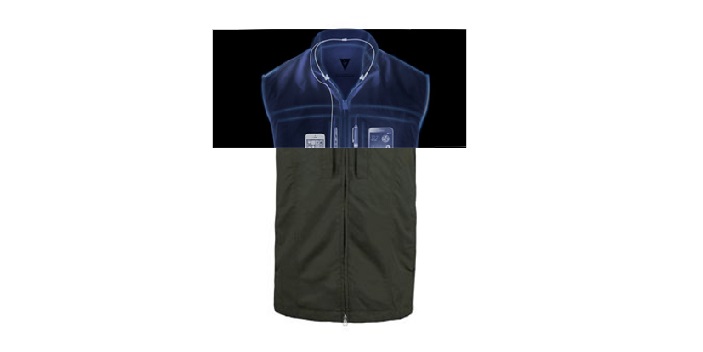
SCOTTeVEST (SeV) – an innovative clothing brand for men and women that lets you carry and use all of your gadgets and daily essentials. SeV’s functional fashion enables wearers to live, work and play in a more organized and hands-free way. With up to 42 cleverly designed pockets in a single garment, SeV apparel guarantees that you never have to worry dropping a phone, losing track of personal items or lugging around an unwanted bulky bag again.
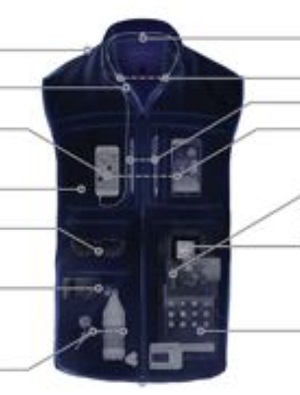
In addition to pockets, SCOTTeVEST clothing has tons of useful features, including the patented PAN (personal area network), RFID-blocking pockets, iPad pockets, clear-touch pockets, ID pockets, key holders, eyeglass chamois, Teflon fabric protector, no bulge pocket technology and much more.
Imagine Giorgio Armani and Bill Gates stranded on a desert island, and you’ll have a good idea of what SCOTTeVEST offers. SeV vests, coats, jackets, shirts and hoodies are the perfect gift for your marathon-training friend, a boss who is constantly traveling, on-the-go parents and grandparents or the outdoorsy significant other in your life. Scott Jordan CEO and Founder SCOTTeVEST
Canada are at the forefront of the technology scene – investing in areas such as quantum computing, space travel, environmental issues, medicine and natural sciences – and they are certainly not letting themselves get left behind when it comes to everyday applications either.
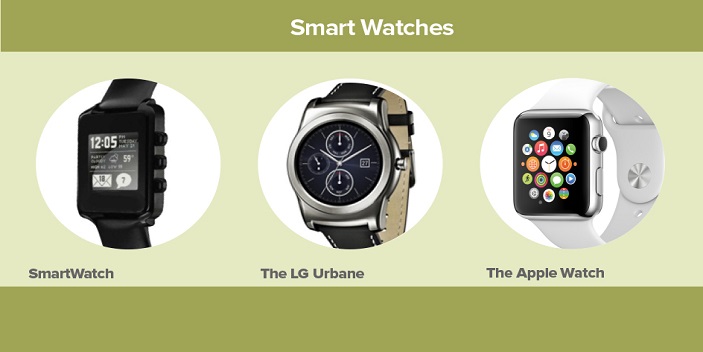
One of the biggest changes to technology over the past half decade has been the emergence of technology on smaller and smaller hardware items – from PCs to laptops, onto tablets and then onto our smartphones and it appears that the latest step has finally arrived. Watch-based technology is now readily-available, with so-called ‘smart-watches’ the most recent must-have items.
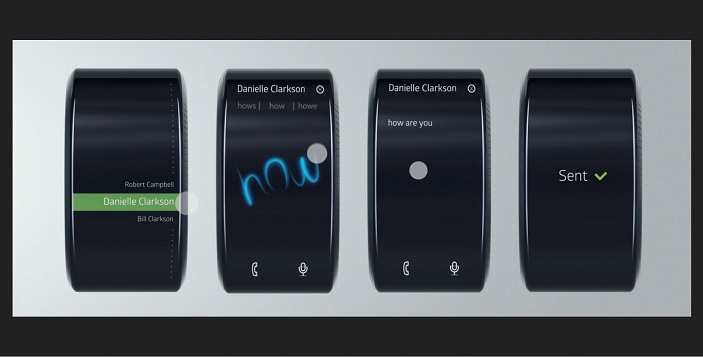
Montreal-based company, Neptune, have brought out the successor to their 2013 creation, ‘The Pine’ – a smart-watch called ‘The Hub’ – and is designed to replace, rather than work in conjunction with your smartphone. This means that it is the first truly mobile wrist-based device, and with increased battery life and functionality, it lends itself to a wide range of applications.
Online gaming is another field that has experienced enormous recent growth, and Royal Vegas Casino has managed to combine these two areas by offering a wide range of casino games and online slot machines direct to your wrist – meaning that you can get away with subtly playing roulette at the dinner table, or making real money on their recently-returned Wheel of Fortune slot-game when you should be paying attention to what your boss is saying at your next briefing.
iPhone6 paired with iWatch- online gaming for your wrist!
As well as a wide range of games (complete with huge welcome bonuses, free spins and access to members-only tournaments and prize draws) Royal Vegas Casino also offer their users access to their regularly updated blog, which keeps players up-to-speed with the latest goings-on from the world of online gaming. This means that you need never miss a release date or a chance to take advantage of limited time offers – and all from your watch!
NYMI wrist-tech from Toronto
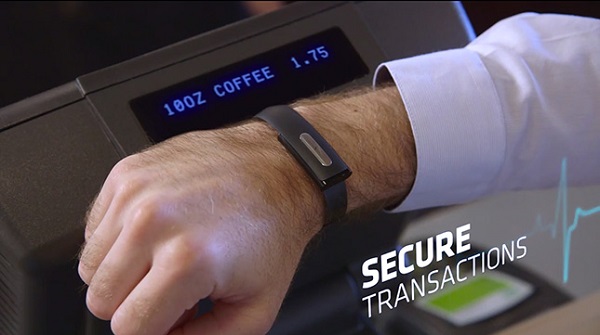
But it seems that Canada is leading the way in more than one wrist-based technology and Toronto tech company ‘NYMI’ have created a wristband that reads heartbeats and has the ability to use them as a form of personal identification, allowing you access to bank accounts or internet services without the risk of them being stolen in the same way that fingerprints can be.
Whichever way you look at it, Canada is at the forefront of cutting edge and user-friendly technology – and if it beeps, chirps or flashes on your wrist, the odds are that it was conceived in The Great White North – and so long as they keep making our lives more interesting, safer or convenient, long may it continue. For the Silo, Jarrod Barker
Premier Kathleen Wynne concluded her second mission to China on Friday the 13th this month in Beijing, where 38 new agreements valued at $750 million were signed by delegates. This brings the estimated total value of agreements from the mission to $2.5 billion. The agreements are expected to create 1,700 jobs in Ontario.
At a signing ceremony in Beijing, Wing On New Group Canada Inc. signed three agreements totaling $230 million, including:
A $100-million agreement with JD.com to purchase Canadian produce and provide business services to Canadian enterprises in the Chinese e-commerce market.
An $80-million agreement with China Telecom Group Best Tone Information Co. Ltd. to import food and Canadian nutritional products to China. The Chinese company will also provide financial services to Wing On and jointly develop a Chinese e-commerce market with Wing On and JD.com.
An agreement with Cross-border City Americo Wholesale to purchase $50 million in Canadian produce over the next three years, and open 30 new stores in 2016, with an Ontario Produce Exhibition Booth in every new store.
Hydrogenics signed four certified integrator agreements to supply fuel cell technology for integration into zero-emission public transport buses. In aggregate, the company anticipates a market opportunity of up to $100 million in revenue over a 3 to 5 year period, with approximately $10 million in the first year.
image: niagarathisweek.com
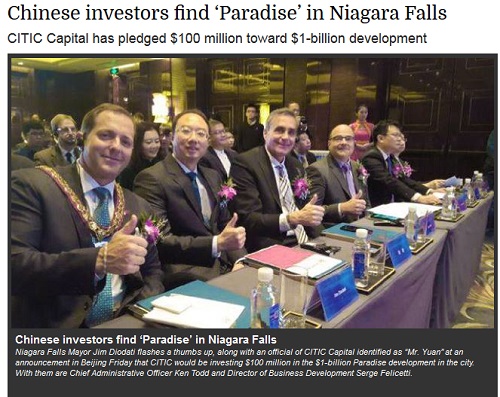
Also in Beijing, CITIC Capital announced a $100 million investment towards Paradise, a new attraction and residential development in Niagara Falls. The development is led by China-based GR Investments Co. Ltd., which has purchased 484 acres of property located west of Marineland and adjacent to Thundering Waters Golf Club.
The Premier also announced that the Ontario Ministry of Agriculture, Food and Rural Affairs (OMAFRA) has hired a new agri-food trade advisor in Shanghai to assist Ontario food exporters. The advisor will increase food export sales by providing international market information and identifying suitable business opportunities and strategic alliances for Ontario food and beverage suppliers. OMAFRA already has trade advisors in India, the United Kingdom and the United States.
During the mission, the City of Wuxi, in Jiangsu Province, and the Region of Durham signed a Friendship Agreement, creating a sister city relationship to promote economic co-operation, trade and collaboration in education and tourism. Also in Wuxi, Trent University entered into a Partnership High School Memorandum of Understanding (MOU) with Wuxi No. 1 High School and Wuxi Foreign Language School.
Investments also formalized include Shenzhen Bauzer Investment Group Co. Ltd., which acquired an 80% share of EDI, a Toronto-based leader in the field of robotics automation. With this acquisition, Shenzhen Bauzer intends to create an additional 200 jobs in Ontario.
Attracting new investments and helping the province’s businesses compete globally is part of the government’s plan to build Ontario up by investing in people’s talents and skills, making the largest investment in public infrastructure in Ontario’s history, creating a dynamic, innovative environment where business thrives, and building a secure retirement savings plan.
QUOTES
“Trade is essential for Ontario’s economic growth and international competitiveness. This mission has strengthened Ontario’s political and economic ties with China. By signing new trade agreements valued at $2.5 billion and further developing our relationships with political leaders, Ontario has made a significant impact throughout this mission.”
— Kathleen Wynne, Premier of Ontario
“The tremendous success of the mission is further evidence of the enduring relationship between China and Ontario and the compelling business case our province offers for global investment. Our government will continue working collaboratively with the private sector and research community to build an innovative, dynamic economy that supports long-term growth and job creation.”
— Brad Duguid, Minister of Economic Development, Employment and Infrastructure
“China is an important and long-term partner for Ontario in trade development, investment attraction, and science and technology collaboration. Our diversity and our highly skilled workforce are advantages that allow Ontario to create products and services for the global marketplace. The successful signings from this mission reinforce Ontario’s position as a top trading economy and will help create more jobs and economic opportunities across our province.”
— Michael Chan, Minister of Citizenship, Immigration and International Trade
QUICK FACTS
On the final day of the mission, Ontario delegates signed 38 agreements, which are valued at $750 million.
Ontario delegates signed more than 100 agreements and MOUs during the mission, with an estimated total value of $2.5 billion.
Over the last two years, Premier Wynne’s 2014 and 2015 missions to China have generated agreements worth an estimated $3.8 billion — including agreements signed by delegates during and after the missions.
Ontario First to Test Automated Vehicles on Roads in Canada
Province Supports Innovation in Transportation Technology
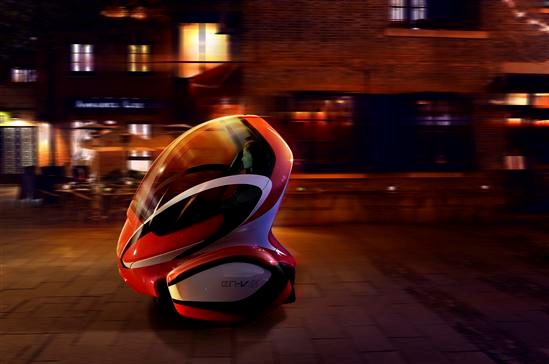
You should take auto-driving cars seriously- every major Auto manufacturer is venturing forward with concepts such as this one from General Motors- the GM EN-V
Ontario is launching a new pilot to allow for the testing of automated vehicles on Ontario roads.
Automated vehicles are driverless or self-driving vehicles that are capable of detecting the surrounding environment using artificial intelligence, sensors and global positioning system coordinates. Automated and connected vehicle technologies have the potential to help improve fuel efficiency as well as reduce traffic congestion, greenhouse gas emissions and driver distraction.
Beginning on January 1, 2016, Ontario will lead Canada as the first province to test automated vehicles and related technology on-road. Currently there are nearly 100 companies and institutions involved in the connected vehicle and automated vehicle industry in the province. The pilot will enable those companies to conduct research and development in Ontario rather than in competing jurisdictions, as well as support opportunities to bring automated vehicles to market.
The province is also pledging an additional $500,000 in funding to the Ontario Centres of Excellence Connected Vehicle/Automated Vehicle Program, in addition to the $2.45 million in funding recently provided. The program brings academic institutions and business together to promote and encourage innovative transportation technology.
Ensuring Ontario’s place as a world leader in the auto, transportation, information and communications technology sectors are part of the government’s plan to build Ontario up. The four-part plan includes investing in people’s talents and skills, making the largest investment in public infrastructure in Ontario’s history, creating a dynamic, innovative environment where business thrives, and building a secure retirement savings plan.
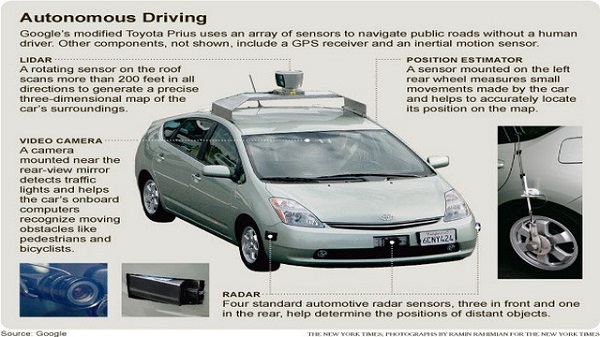
Not all concepts are futuristic looking such as Google’s modded Prius. We’re betting Ontario will test more conservatively styled auto-drivers such as this one. CP image: New York Times
QUOTE
“In the world of transportation, Ontario has the opportunity to show leadership on automated technology. Today, Ontario is making its claim in the global marketplace by taking the next steps in automated vehicle innovation. The automated vehicle pilot will ensure that the province’s roads remain safe without creating burdens that stifle investment and innovation in Ontario’s dynamic business environment.”
— Steven Del Duca, Minister of Transportation
“Ontario is a global leader in developing and manufacturing the next generation of vehicles.
This new pilot program will build on our success, and help Ontario lead the development of automated and connected car technologies. In this highly competitive global economy, investing in people’s talents and skills to create the next generation of innovative technologies is good for business, and can help lead to the easier movement of goods and services across the province.”
— Brad Duguid, Minister of Economic Development, Employment and Infrastructure
QUICK FACTS
Information about applying for the pilot will be available online from the Ministry of Transportation in late November.
Who wouldn’t want to ride/drive Chevrolet’s FNR concept car?
Disponible en français: L’Ontario est la première province à mettre à l’essai les véhicules automatisés La province encourage l’innovation dans les technologies des transports
L’Ontario lance un projet pilote en vue de la mise à l’essai de véhicules automatisés sur ses routes.
Les véhicules automatisés sont des véhicules sans chauffeur ou autoconduits qui peuvent détecter l’environnement avoisinant grâce à l’intelligence artificielle, aux capteurs et aux coordonnées fournies par le système de positionnement global. Les technologies relatives aux véhicules automatisés et connectés ont le potentiel d’améliorer le rendement du carburant et de réduire la congestion routière, les émissions de gaz à effet de serre et la distraction au volant.
Dès le 1er janvier 2016, l’Ontario sera le premier lieu au Canada à mettre à l’essai les véhicules automatisés et les technologies connexes sur la route. Près d’une centaine d’entreprises et d’établissements œuvrent actuellement dans le secteur des véhicules connectés et automatisés dans la province. Le projet pilote permettra à ces entreprises de mener des activités de recherche et de développement en Ontario plutôt que dans les territoires concurrents, en plus de créer des possibilités qui favoriseront l’introduction des véhicules automatisés sur le marché.
La province s’engage aussi à injecter 500 000 $ de plus dans le Programme de recherche sur les véhicules connectés et autonomes par l’intermédiaire des Centres d’excellence de l’Ontario, outre le financement de 2,45 millions de dollars récemment alloué. Ce programme réunit des établissements universitaires et des entreprises en vue de promouvoir les technologies de transport novatrices et d’encourager leur utilisation.
S’assurer de faire de l’Ontario un chef de file mondial dans les secteurs de l’automobile, du transport et des technologies de l’information et des communications s’inscrit dans le plan du gouvernement visant à renforcer la province. Ce plan comprend quatre volets : investir dans les talents et les compétences de la population, faire le plus important investissement dans l’infrastructure publique de l’histoire de l’Ontario, créer un environnement dynamique et novateur où les entreprises prospèrent, et établir un régime d’épargne-retraite sûr. CITATIONS
« L’Ontario a l’occasion de montrer l’exemple par le recours à la technologie automatisée dans le domaine des transports. L’Ontario marque aujourd’hui le marché mondial de son empreinte en franchissant une nouvelle étape pour stimuler l’innovation dans l’automatisation des véhicules. Le projet pilote sur les véhicules automatisés sera mis en œuvre de façon à s’assurer que les routes de la province restent sûres sans créer des fardeaux qui étoufferaient l’investissement et l’innovation dans le dynamique environnement commercial de l’Ontario. »— Steven Del Duca, ministre des Transports
« L’Ontario est un chef de file mondial dans la conception et la fabrication de la prochaine génération de véhicules. Ce nouveau projet pilote misera sur notre succès et aidera la province à prendre les devants dans le développement des technologies des véhicules automatisés et connectés. Dans cette économie mondiale hautement concurrentielle, le fait d’investir dans les talents et les compétences de la population afin de créer la prochaine génération de technologies innovatrices est bon pour les affaires et peut faciliter un mouvement plus fluide des biens et des services dans l’ensemble de la province. »— Brad Duguid, ministre du Développement économique, de l’Emploi et de l’Infrastructure FAITS EN BREF
Le ministère des Transports offrira de l’information en ligne sur la présentation de demandes dans le cadre du projet pilote à la fin novembre.
Way back in August, 2015 the world’s first “intelligent selfie app” was released by Anthropics Technology.
Combining artificial intelligence and image enhancement, Mira understands what makes people look good and lets users airbrush faces automatically.
Chief Mira Scientist Tony Polichroniadis comments:
“By understanding what makes people look beautiful, Mira can improve all aspects of a selfie with just one tap. Users do not need to use any special tools: the app understands what to do and does it for you. This is the culmination of over ten years of research, and we are thrilled to be releasing this technology to smartphone users everywhere.”
PERFECT YOUR SELFIES
Mira’s unique cutting-edge features include:
Relighting – change the light source to flatter your face. World first
Lens correction – fix unflattering cameraphone distortion. World first
Skin perfection – remove spots, wrinkles and blemishes.
Best in class skin enhancer.
Face refining – slim the face and de-emphasize prominent features. Intelligently moves face towards beauty.
Click Me!
About Mira:
Mira has been developed by the makers of PortraitPro, the world’s best-selling portrait enhancement software. Used by over half a million professional photographers and retouchers, PortraitPro is the best reviewed and most advanced software for automatic face enhancement.
About Anthropics Technology:
Anthropics Technology has been the overwhelming world leader in professional face beautification since 2005. We are now bringing our unique intelligent technology to mobiles.
Partnering with innovative businesses to attract talent and spur growth is making Brampton a powerhouse in the fast-growing health and life sciences sector.
Since 2005, the City of Brampton has seen a 50 per cent growth in health and life sciences and is now home to more than 250 companies in the sector.
Mayor Jeffrey
“This is a priority growth area for Brampton. In order to bring the best businesses here, we’re committed to creating strong partnerships with innovative companies that will attract knowledge-based jobs to grow the city and the sector,” said Mayor Linda Jeffrey. “From our young, diverse, educated and highly skilled workforce to our ranking as one of the best places to do business, to the incredible lifestyle that employees can enjoy, Brampton is the best choice for innovative health and life sciences businesses looking to start up or re-locate.”
Leading health and life science companies have proven that Brampton is the best city to work with to grow their business, with the sector currently employing more than 11,700 highly skilled workers in the city. Brampton is a significant contributor in Ontario’s life sciences sector and is located within the province’s biotechnology cluster, currently the third largest in North America.
Innovative and successful health and life sciences companies and headquarters are quickly becoming the norm in Canada’s second-fastest growing city, such as:
Brampton’s William Osler Health System is an emerging leader in health care research and development and plays a critical role in the education of hundreds of future health professionals each year. Its strong clinician-based, formalized research program focuses on improving patient care; shifting to preventative, proactive care; and treating diverse populations – the goal of its Global Health Program. Osler offers world-class technology and innovative, cutting-edge surgical techniques, including hybrid vascular and endovascular surgery – a minimally invasive way to treat diseases of the blood vessels while minimizing the overall risks to patients and reducing hospital stays. Osler inspires a culture of innovation through its annual national student app competition, fusing health care and technology by challenging students to design and develop mobile digital health care applications for the benefit of patients and their families.
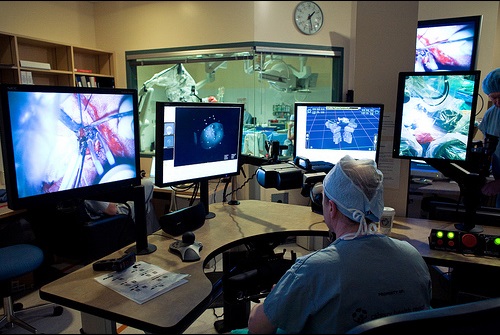
The NeuroArm’s first surgical use: Brain Surgery
MDA Space Missions developed the NeuroArm, a cutting-edge device for neurosurgery. The result of close collaboration between MDA space robotic engineers (of CanadArm fame), the University of Calgary and Alberta Health Services physicians, nurses and scientists, the group is creating an image-guided robotic arm for microsurgery. Controlled by the surgeon, the device allows for more precise surgery with a near real time view of the area being worked on and the location of the surgical tools – truly changing the way that life-saving surgery will be performed in the future.
Taro Pharmaceuticals Inc., a global leader in pharmaceutical manufacturing, refers to its Brampton operation as its worldwide centre of excellence for dermatology, liquid manufacturing and research. Ontario is helping Taro Pharmaceuticals Inc. invest in new manufacturing and R&D equipment to expand research and production at its Brampton facility, with a $7 million investment creating up to 140 new jobs and retaining 395 positions in the city.
Dynacare Medical Laboratories’ main testing facility in Brampton is one of the largest, most state-of-the-art laboratories in North America. Dynacare is at the forefront of researching, developing and validating innovative new screening and diagnostic tests for introduction into the Canadian marketplace. Dynacare has been instrumental in the early delivery of new tests in the areas of allergy, cancer, cardiovascular disease, diabetes, osteoporosis, paternity, ulcers, and other problems of the stomach and intestines and more.
Click to learn about ErinoakKids’ innovative Music Therapy
ErinoakKids Centre for Treatment and Development has broken ground on a new 122,000 square foot treatment facility in Brampton for children with disabilities and special needs. The facility, set to open in 2017, will house Ontario’s largest respite centre for children who are medically fragile/technology dependent, have complex care requirements, behavioural challenges, or autism. The centre will offer a range of services from day to overnight stays and, for the first time, 24/7 service. Specially trained staff will care for the children and youth,providing programmed activities and interactions while offering a period of respite for their parents and caregivers.
CEO Bridget Fewtrell
“We are most fortunate to be part of, and to serve, the growing Brampton community,” said ErinoakKids President and CEO Bridget Fewtrell. “When we open our new facility in 2017, children and youth with disabilities and special needs in Brampton will have more access to better coordinated services to help them reach their true potential. We are truly excited to continue expanding service to this thriving city and its growing population.”
About Brampton: The ninth-largest city in Canada, Brampton celebrates a diverse population that represents people from 209 distinct ethnic backgrounds who speak 89 different languages. Brampton residents and visitors have access to state-of- the-art recreation facilities and one of the fastest-growing transit systems in Canada. Opened in 2007, Brampton Civic Hospital is part of the William Osler Health System, which is one of the largest community hospitals in Canada. For more information, visit www.brampton.ca or follow @CityBrampton on Twitter.
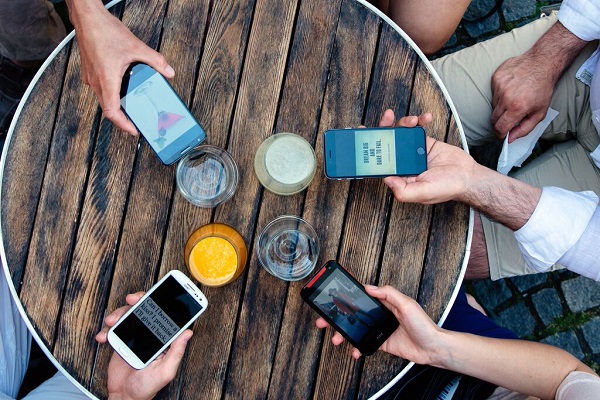
SipSup is a new beverage drinking glass that communicates with smart phones via app technology to become an interactive media display and storage unit. When you have finished drinking your beverage of choice, digital photos and videos you have dropped into your glass via the SipSup app are left behind. The SipSup app enables you to keep your special moments only for yourself (private) or to make them visible to every person who happens to tap their phone to your glass (public). The social interaction possibilities are endless- many of us already spend a lot of time at coffeehouses or pubs, consider bringing your glass along- it would be a great way to meet new people and discover new forms of interaction- all via your hi-tech SipSup glassware. If that wasn’t enough, another feature called “post-it”, allows your guests to leave photos or videos on your glass and even write on a fun message. Hydration will never again be boring. A Slovenian start-up that prides itself on ‘out of the box’ thinking, the SipSup team have taken an object we all use on a daily basis and given it new functions. SipSup will stand out from the other glasses in your kitchen because of it’s distinct curved shape designed to naturally fit your hand. It’s base resembles the ripple effect of a drop falling into water and was inspired by the notion of “dropping moments into a glass”. You can get this great looking piece of smart glassware on Kickstarter. For more information email: [email protected]
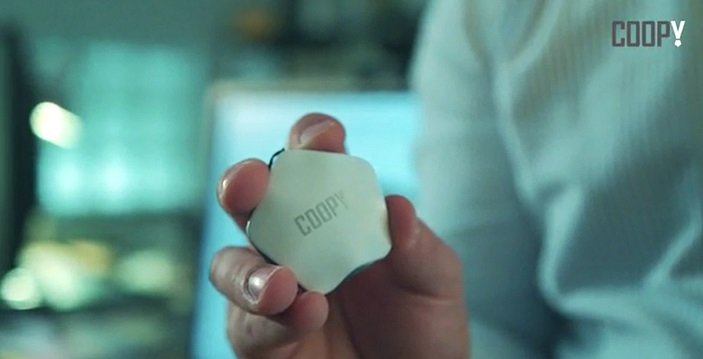
COOPY is a small, hand-held tool which provides users with a solution to complete multiple functions by simply clicking a button.
With the simple action of clicking one of three buttons included on this smart device, COOPY uses its own application to complete designated functions as set by the user. This includes, but is not limited to, sending predefined texts, alerting someone of your geographic location in the case of an emergency, locating objects and turning on home or office appliances, etc.
CLICK ME to watch HD VIDEO
Aleksander Preglej, Chief Technology Officer of Pentasens: “COOPY is perfect for any type of user: a business professional, athlete, parent, young adult or even a child. We also designed this device to include time and location awareness, so the functions automatically change based on where you are and when. This is one of the major features that sets us apart from our competition.
With the ever-growing demands of our day-to-day schedules and the potential danger of multi-tasking at inopportune times, our company wanted to create COOPY as an easy-to-handle gadget that allows you to be as productive as possible without jeopardizing your safety or the safety of those around you. We know that everyone’s time is valuable and sometimes it could pose as a risk when you’re trying to do too much at one time.”
Pentasens rolled out its first product, SensMesh, a wireless sensor system (www.sensmesh.com) in 2014, which evolved into a smart modular solution for boats, BoatEye (boateye.io). Keeping up with the latest trends in technology, Pentasens strives to provide consumers with state-of-the-art products, safe to use and modern and sleek in design.
Kickstarter campaign for COOPY runs until July3rd and can be accessed here.
Swiss invention milKit makes mountain biking with tubeless tires easier than ever. With milKit, riders and racers can quickly measure and check their remaining tire sealant with a simple, portable kit, adding sealant as needed while leaving their tires on the rim, maintaining air pressure, keeping their hands clean and saving time. The inventors are currently running a campaign on IndieGoGo
Tubeless without the tedium: milKit is the fastest way to inspect, measure and add sealant; easy to install and compatible with all standard rims.
Tubeless tires have more traction, a lower rolling resistance and are more puncture proof than traditional bike tires. But they can also be a pain to maintain, potentially slowing you down in the middle of a race — unless you’re riding with milKit.
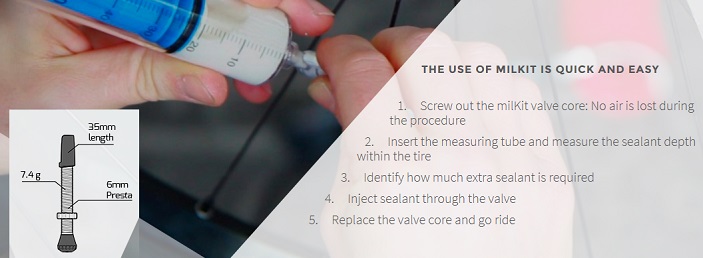
Mountain bikers riding on tubeless tires normally must detach their tires to check their remaining sealant, a time-consuming and messy process. milKit eliminates the guessing game and lets professional and amateur riders alike quickly and easily check and add to their remaining sealant in seconds, while their tires remain on their rims and their bikes stay at the ready.
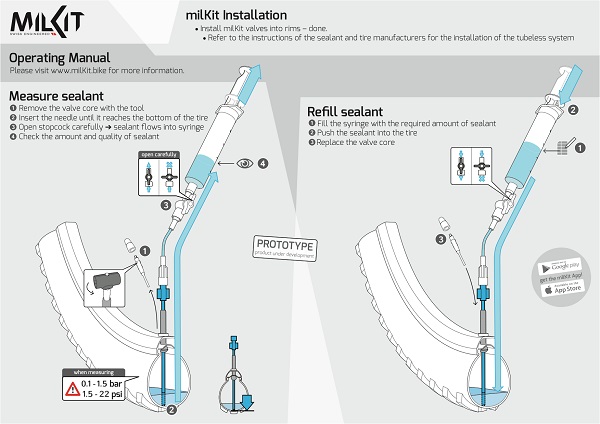
The Swiss invention milKit comprises two easy-to-install valves that are compatible with all standard rims and a custom applicator that lets bikers remove, inspect and inject sealant whenever needed, with no mess or fuss.
Installation:
– Installing milKit is easy: Insert the special milKit valves like usual valves in rims. They fit to any standard rim.
– Pump the tire to 1.5 bar / 22psi
– Insert sealant with the milKit applicator and keep your hands clean
Advantages:
– Save time: Measure and refill sealant without deflating the tire.
– No more guessing games: Riders will always know exactly how much sealant is needed
– A rubber flab prevents sealant from filling and blocking the valves
– Clean hands and simple to use
Maintaining sealant volume and quality is paramount to a safe ride over any terrain, and there’s no better way to do it than with milKit. And milKit means briefer pit stops during endurance races, when a few minutes saved can make all the difference.
Professional riders agree: mountain biking legend Thomas Frischknecht approved of our prototypes, and Cape Epic 2015 champion Christoph Sauser believes they’re “great.”
The portable milKit applicator has a home in every biker’s pack. And now mountain bikers all over the world can use Indiegogo to help make milKit the ubiquitous product it deserves to be. By contributing on Indiegogo riders can ensure they’re among the first to experience easy tubeless mountain biking and faster races. Head to the milKit website to see for yourself what milKit can do.
About milKit
milKit is a Swiss team of experienced engineers, designers and computer scientists that share one passion: mountain biking. They work together to develop solutions to everyday problems that face mountain biking enthusiasts. Checking sealant presented one such a problem, and milKit is the answer.
In late 2014- early 2015, the FCC stood up for more competition and more choice in local broadband. This is a critical step in making faster, cheaper Internet available for all Americans.
You may have heard that the Federal Communications Commission (FCC) just put in place rules to protect ‘net neutrality.’ That’s big news. But there was another important decision today to help keep the Internet competitive and open — and while it’s getting less attention, it may be just as important. As part of its agenda to encourage meaningful competition in high speed broadband for Americans, the FCC supported allowing cities to make their own decisions about investing in new broadband networks. More needs to be done to drive innovation in bigger, faster broadband, but this was a good step.
While the FCC’s net neutrality rules can help prevent Internet access providers from relegating some applications to a “slow lane,” this move alone won’t lead to a world where every consumer has an ultra fast connection to the entire Internet. That’s going to take more competition and innovation in new broadband networks.
It’s been nearly five years since we offered to build a fiber-optic network in one U.S. city as an experiment — and as we’ve expanded Google Fiber into a business, we’ve seen firsthand how faster speeds can improve lives and give cities new platforms for economic development. Google is not the only one innovating in this area. Along with investments by other private providers, cities like Lafayette, LA and Chattanooga, TN have been investing in their own networks and developing public-private partnerships to that end.
The FCC decided that it’s important for users to be able to control their own Internet connections and for communities to make their own choices to suit their local needs for broadband. While it may not make sense for most governments to operate broadband networks themselves, we think faster, better broadband for all Americans is too important to remove an option for deployment.
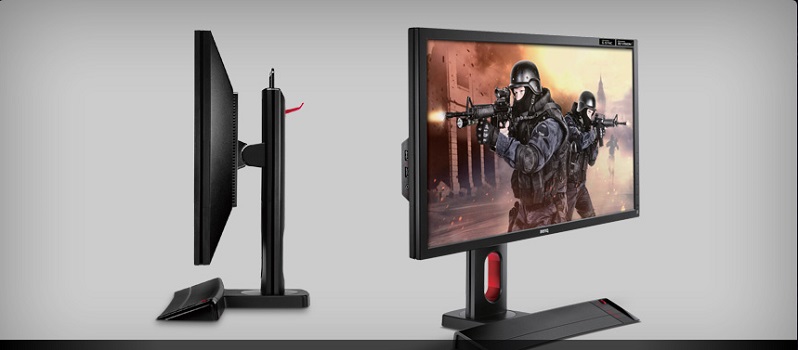
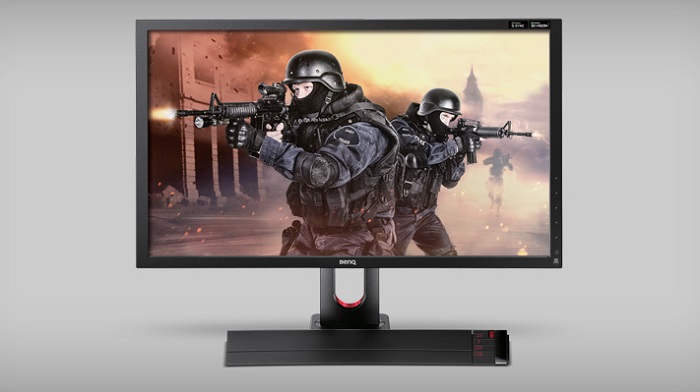
BenQ America, an internationally renowned provider of visual display solutions and a gaming monitor pioneer, today announced the availability of its revolutionary XL2420G monitor. Featuring NVIDIA’s G-SYNC technology, the newest force in gaming allows players to entirely eliminate performance issues related to image tearing, stuttering, and latency — providing gamers with the ultimate in smooth, fast-action play. Unlike any other G-SYNC monitor, the XL2420G gives users the freedom to switch between BenQ’s proprietary Classic Mode and G-SYNC Mode to create a customizable solution that’s made to conquer opponents in any gaming situation.
“Giving players the ability to select between gameplay modes offers customization advantages that are currently unequaled in the marketplace,” said Bob Wudeck, Associate Vice President, Strategy and Business Development for BenQ America Corp. “When paired with BenQ’s RevolutionEyes technology, the XL2420G provides a hybrid experience which is both blazingly fast and incredibly comfortable. With the launch of this long-awaited innovation, BenQ is proud to be behind one of the most significant advancements in the history of competitive gaming technology.”
Equipped with an innovative hybrid engine, BenQ’s XL2420G is the new apex of virtual gaming. Featuring a wide 24-inch screen, amazingly fast 1ms GTG response time, and crisp LED display, the advanced monitor allows users to select between two new gaming modes: G-SYNC Mode, which ensures that images appear instantly the moment they are rendered, and BenQ’s proprietary Classic Mode for added versatility during gaming settings unsupported by G-SYNC. Users simply switch their input cables to match their gaming requirements — elevating gameplay to an entirely new level.
To increase visual comfort, the XL2420G features BenQ’s RevolutionEyes™ technology. Using ZeroFlicker™ capabilities, the monitor eliminates traditional LED flicker issues and supports eSports enthusiasts in longer gaming sessions by providing more comfort during competitive action. The RevolutionEyes monitor also features BenQ’s Black eQualizer, which enables total gaming visibility by allowing players to adjust brightness without over-exposing white levels, revealing critical combat details with improved visibility in darkened areas. In addition, the monitor brings an ultra-fast 144Hz refresh rate for faster pixel rates to give players complete control over any gaming experience.
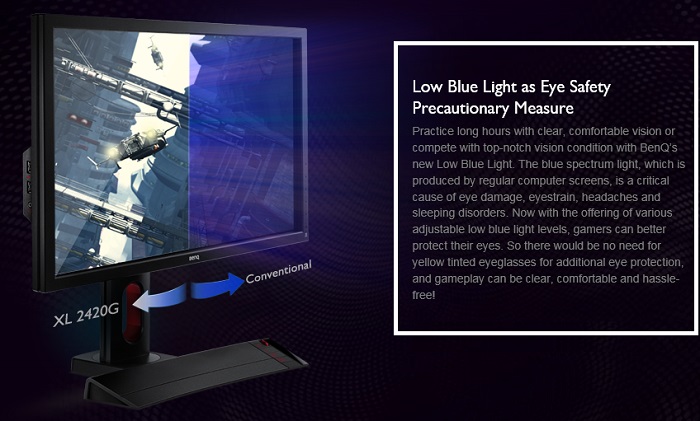
For even more gaming comfort, BenQ’s latest innovation is equipped with Low Blue Light technology. Designed to manage the exposure of blue spectrum light, the monitor helps to protect players’ eyes during extended periods by providing several adjustable low blue light levels that automatically adjust emission without affecting picture quality. For setup flexibility, the monitors are fully height-adjustable and feature an intuitive on-screen user interface and controller, allowing gamers to save and quickly access their gaming preferences.
Now shipping, the XL2420G retails at US$649. More information on the full line of BenQ products is available at www.BenQ.us.
2013 will be remembered for many things, but in the world of consumer electronics it will be remembered as a year when techpreneurs proved that innovation lives and the spirit of enterprise still burns strong.
The technologies propping up the gadgets on display in this infographic are a product of incremental development, iterations of ideas that have been gestating for many years and are slowly being integrated into products that we use daily.
Take fingerprint authentication, for instance, on the new iPhone 5s. For close to ten years, the technology has been commercially viable but Apple made the bold move of finally putting an end to the forgotten password woes of its customers.
HTC finally incorporated the technology Full HD displays on a smartphone with amazing results. The images on HTC one remain unmatched for clarity and color accuracy.
Leap Motion made a leap of faith by investing in technology that changes the way users interact with their devices. Instead of the keyboard, mouse, or screen, we can now use gestures to make devices do our bidding. All for less than a hundred dollars with technology packed into a device no bigger than a bubble gum pack.
Google Glass is setting imaginations on fire with its unique first-person perspective for recording visual images. Is it ethical to photos and videos
of people without their permission and without them noticing that you’re actually doing it? Will the technology be abused? Will it change the way users live their lives?
For many, the questions won’t be as complex or thought-provoking. It might simply be, “Will I get an Xbox One for Christmas?”
Ahhh Jane Jetson- you really know how to take advantage of technology.
We know they let you watch TV on the go, surf online, send emails and, oh yeah, make phone calls. But an innovative new tool now also gives you the power to use your mobile device to switch on any light in your home, open your garage door or turn on any other piece of electronic equipment, no matter where you’re located.
Ontario Technology firm: The Skylink Group – which previously introduced Skylink HomeControl, an affordable and easy-to-use system to wirelessly control your entire house – recently launched a mobile application, Skylink HomeControl App, that effectively turns your smartphone, tablet or PC into a remote control.
The handy app allows users to control just about anything in their home with the touch of a couple buttons on a virtual keypad, which can be customized to the specific devices they want to be able to access remotely.
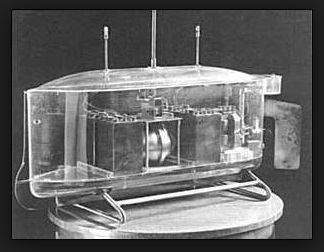
You might be surprised to learn that home automation has been around for a long time and since the earliest days of electricity in the home, inventors and entrepreneurs have scrambled to find a useful and profitable way of harvesting radio waves and electricity. Tesla was one such visionary and among his many accomplishments is perhaps the first use of control by remote- considered at the time, an important form of automation. In 1898 he constructed and demonstrated this remote control model boat in New York. image: kerryr.net
“Anyone who already understands how to use a mobile device or a computer tablet will be able to use this app easily. That’s the key to getting the greatest benefit from new technologies – making them easy to understand and user friendly,” says Philip Tsui, CEO and the Chairman of Skylink Group.
The Skylink HomeControl System is designed for do-it-yourselfers and uses control modules which can be wired out of sight and wireless receivers plugged into wall outlets or lamp sockets, even wall switches and dimmers which replace your existing wall switches. For professionals, the Skylinkhome Wireless Control System has modules with three wires that can be installed almost anywhere.
The Wireless Control System can be used to control anything electronic, including:
. Lamps
. Coffee makers
. Fans
. Stereos
. Fire places
. Ceiling fans
. Indoor and outdoor lighting
. Garage doors
. Security systems
. Countless other electronic devices and appliances
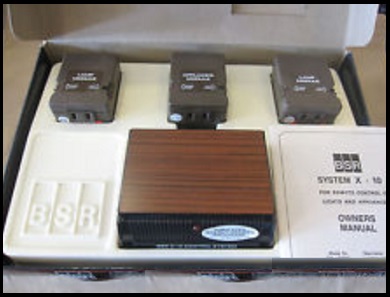
Often cited as the “McDonald’s of Home Automation” X-10 modules were considered a major breakthrough when they entered the consumer market in the 1970’s. A central control unit (here seen in lovely 70’s woodgrain) controlled separate modules that were plugged directly into a home power outlet. An appliance requiring automation such as a lamp, was plugged into the module and controlled via wired or wireless control from the X-10 ‘brain’. CP
For those who may not have a smartphone or computer tablet, Skylink also has a remote control – the credit card-sized SkylinkPad – which can be used to wirelessly control devices in your house.
In addition to convenience, the Skylink HomeControl System helps users realize significant energy savings. With the touch of a button, you can shut off all of your lights or set up motion sensors to work with the system. The wireless system also uses timers to ensure that lights and electronic equipment can be shut off when they’re not needed. Dimmers also reduce energy usage, contributing to a greener environment and lower electricity bills.
About Skylink Group:
The Skylink Group understands the needs and concerns of the homeowner in providing a safe and comfortable environment for their family whether they are at home or away. Established in 1990, Skylink Group operates out of Brampton, Ontario. On
Twitter at @skylinkhome.
The Project: The 980,000 sq. ft. acute care community hospital replaces two aging facilities in the Niagara region and accommodates 375 acute care beds, with associated outpatient and support services.
New Health Care Complex – St. Catharines Site “2oth Century NOT included”
It provides a comprehensive range of clinical services including:
• a cancer centre serving 1,200 patients close to home, relieving them from the stress of travelling to Hamilton or Toronto for treatments
• a longer-term mental health service that includes 53 beds
• dialysis services
• cardiac catheterization services, which provides diagnostic investigation, reduces hospitalizations for heart disease and provides faster local care for residents of the Niagara region
The goal of this project was to provide Niagara Health System with a modern, state-of-the-art, one million square foot building capable of providing one million square feet of care.
In addition to design and construction management, PCL’s [ PCL comprises a family of general contracting companies and is the largest such organization in Canada and the fifth largest in the U.S. CP ]scope of work also included the procurement and installation of more than 25,000 pieces of medical equipment, as well as medical gas, head walls, nurse call system, information technology, audio visual, and security technology.
Some of the many interesting features that set this building apart include construction of the first radiation suites in the Niagara region, an enclosed ambulance bay to provide protection to incoming patients, an interior design that strategically locates departments to minimize clinical travel time by staff, and an exterior design that implements materials indigenous to the Niagara region.
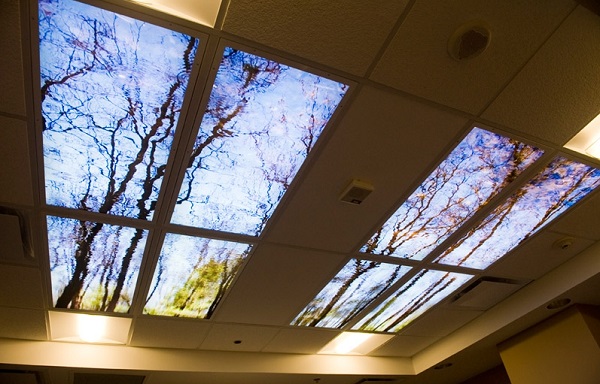
Interior and exterior architectural designs affect patient and staff psychology so why not design accordingly? This ceiling detail of the Walker Cancer Care Treatment Room ceiling reveals the care and consideration that went into the hospitals designs. CP
Architectural
• Main Street feature wall using a combination of indigenous and complementary stones that tell a story of the geological formation of the Niagara Escarpment.
• Use of structural elements in the form of a tree at the main entry and cafeteria to create the canopy.
• First operating rooms in Canada to use Corian wall finishes.
• Integrated interior finishes and way finding system,using landmarks to help visitors and patients locate themselves in the facility.
• Enhanced use of natural light to infiltrate deeper into the building, with particular attention to patient spaces.
• An acoustical design at the building envelope to mitigate and isolate noise generated by a nearby train corridor.
Structural
• Blending structural elements with architectural finish and spectacle.
• Strategy of a structural grid system to maximize open spaces and floor to ceiling height.
• Foundation system and MRI inertia slab to address vibrations created by train traffic and a nearby machine stamping plant.
• Post Disaster design to address potential seismic event, to allow the facility to operate during and after as a relief centre.
• Use of cast-in-place elements to allow equipment flexibility.
Mechanical/Electrical
• Pandemic containment capability to deal with infectious outbreaks and disasters, allowing the facility to isolate building sections and departments.
• Building automation system, fully integrated with building elements and equipment to monitor and ensure optimal building performance.
• Back-up and dual power systems to ensure fundamental building and medical systems remain available and functioning at all times, including integration with the building automation system, to allow targeted load distribution to non fundamental systems to become available as required.
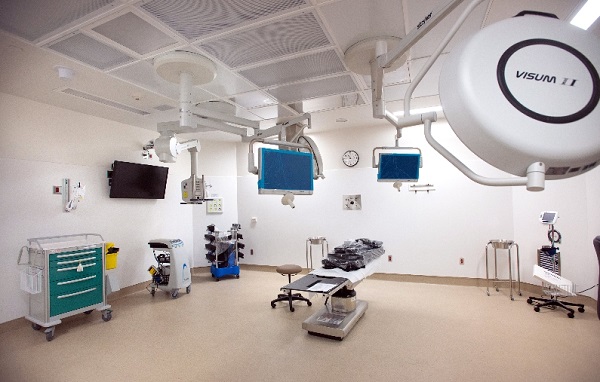
The Operating Theater. It’s understandable if you think that this is a set from Star Trek-
Sustainability
• The project is targeted for LEED® certification. As part of the construction and design strategy, the project team developed several innovations and elements for a significant improvement of the target to LEED® Silver certification – from 26 to 35 points.
• Incorporated an energy efficient lighting strategy using natural lighting as much as possible, as well as the broad use of occupancy sensors and low energy lighting systems.
• Integrated and efficient cooling and heating systems, and an optimized building envelope system that helps to reduce greenhouse gas emissions.
• The overall energy strategy resulted in the Energy Model that realizes an energy savings of 46% relative to the Model Energy Code for Buildings, which is expected to produce savings to the client in excess of $1 million annually.
• Use of native and hardy plant species and an integrated storm water management program, including irrigation and water features to eliminate city water use for landscape elements.
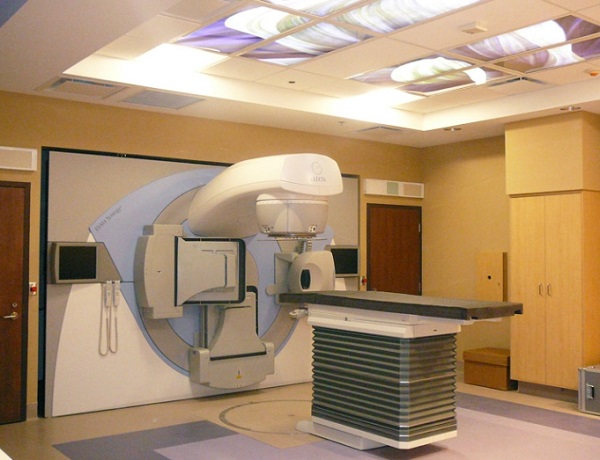
A look at the state-of-the-art radiation treatment facility.


















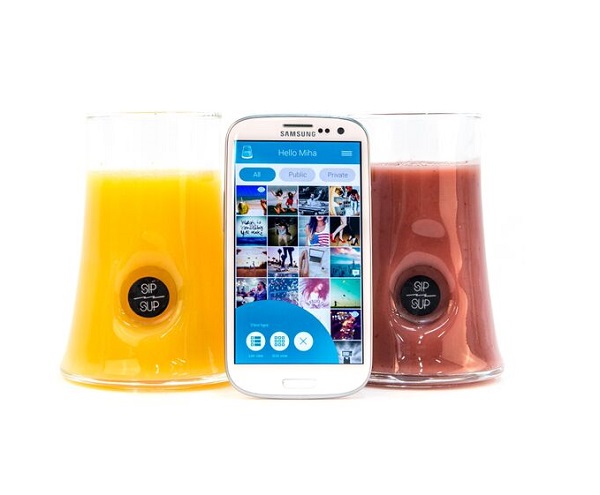 If that wasn’t enough, another feature called “post-it”, allows your guests to leave photos or videos on your glass and even write on a fun message. Hydration will never again be boring.