
Tag Archives: IRGC

The Tricky Part Of Defending Data Centers From Strikes And Drone Attacks

“According to a report from Bloomberg, recently released satellite images appear to show damage done to two Amazon data centers in Bahrain, which the Iranian Revolutionary Guard Corps (IRGC) previously claimed to have hit.” gizmodo.com

With satellite imagery now appearing to corroborate the recent strikes on Amazon’s Bahrain data centers, the question of how commercial data centers actually defend themselves has become live.

Amazon’s presence in Bahrain is registered under Amazon Data Services Bahrain S.P.C, located at Bahrain World Trade Center, Level 9, Building B0001, Isa Al-Kabeer Avenue (Road 365), Flat 938, Clock 316, Manama, Bahrain

 Laurynas Šatas, CEO of Aktyvus Photonics, a defence technology company developing laser-based precision targeting systems for NATO tactical drone platforms. thinks data centers should defend themselves against drones, and partner with the state for missile defense.

A repeat of another attack

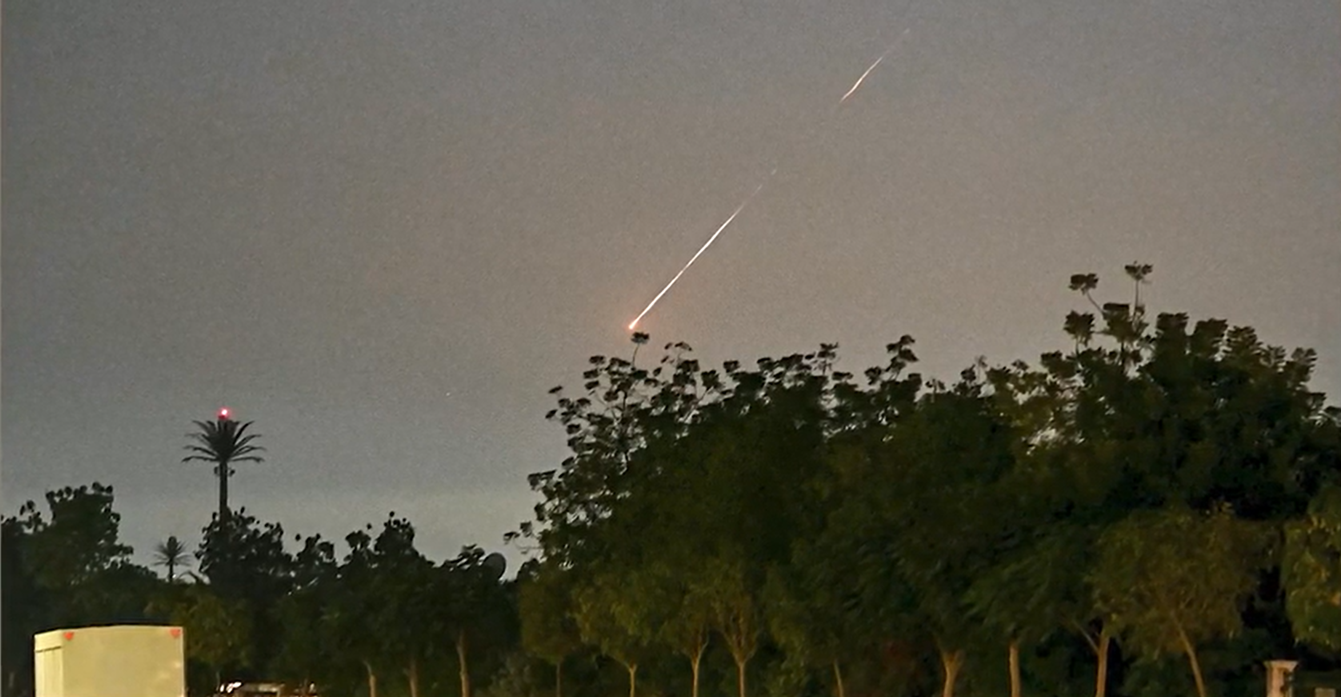
“A very similar attack on AWS data centers happened in March. But it’s worth separating the two events, because they involved different weapons. The confirmed March strikes used one-way attack drones. The July strikes on the Bahrain facilities appear to have involved missiles, and while Amazon hasn’t confirmed the extent of the damage, independent satellite imagery now appears to corroborate that it was significant.

“The March strikes marked a genuine shift. Commercial cloud facilities were never designed to sit inside a kinetic threat environment, and now they are being treated as legitimate military targets. That changes the security conversation for the whole industry.

The Bahrain World Trade Center (where the attacked Amazon data center is said to be housed) makes for a clearly visible and easily targeted object.

Transferable Model Of Defence

“It is important to be precise about the threat, though, because it is not one threat. Slow, low-flying, low-cost drones and high-speed missiles call for very different defences. Against the cheap and persistent drone threat, a layered counter-UAS approach – detect, track, then mitigate – is realistic and increasingly affordable. We already see this in Ukraine, where the private sector has taken on a real part of the air defence task against low-speed threats, using a mix of effectors. That model is transferable to critical civil infrastructure such as data centres.

“Faster-flying threats are a different problem. They require significantly more complex and far more expensive systems, which we cannot realistically expect a commercial operator to afford, or to be cleared and trained to operate. That part stays with state militaries.

“So the practical sequence for data centres is: defend yourself against drones first, and coordinate with the state for the missile threat. I expect this level of protection to become a standard part of how such sites are built and operated.”


For the Silo, Darija Grobova.
USA: Disrupting Iran’s Weapons Procurement

Fact Sheet via Office of the Spokesperson

The Department of State is taking action to designate four Iran- and Belarus-based entities and individuals involved in the procurement of arms and related materiel intended to support Iran’s military.

The United States, as directed in the President’s National Security Presidential Memorandum 2, is committed to disrupting procurement efforts supporting Iran’s military programs.  This action represents the commitment to stop Iran from engaging in activities related to the reconstitution of its proliferation-sensitive programs.

All Department of State targets are being designated pursuant to Executive Order (E.O.) 13949, which targets certain persons with respect to the conventional arms activities of Iran.

The Department of the Treasury is concurrently designating nine entities and individuals who have worked to procure weapons on behalf of Iran’s Islamic Revolutionary Guard Corps (IRGC).  For more information on these actions, please see the Department of the Treasury’s press release.

The Department is designating the following entity and individual pursuant to Section 1(a)(i) of E.O. 13949 for engaging in activity that materially contributes to the supply, sale, or transfer, directly or indirectly, to or from Iran, or for the use in or benefit of Iran, of arms or related materiel, including spare parts. 

Armory Alliance

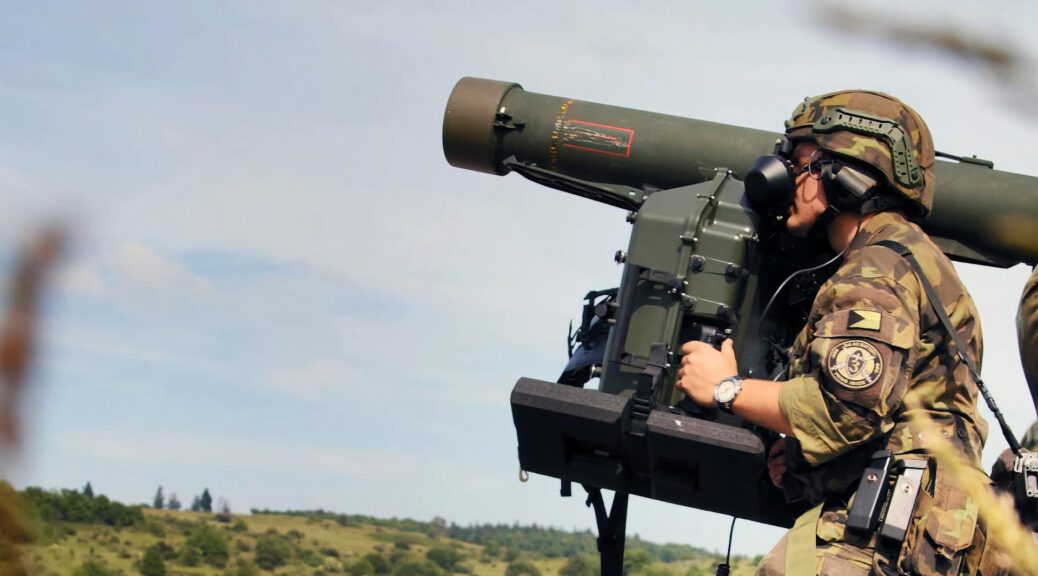
Armory Alliance is a Belarus-based entity that has acted as an intermediary between China-based companies and Iran and has been involved in facilitating the purchase of hundreds of man-portable air-defense systems (MANPADS) and their shipment from China to Iran including attempting to route the shipments through third party countries and obfuscating their origin and true end-user.  The Department of the Treasury previously designated Armory Alliance pursuant to E.O. 13382 on May 8, 2026.

Mohammadmahdi Maleki

Mohammadmahdi Maleki is a Belarus-based Iranian individual who as an employee of ARMORY ALLIANCE has contributed to Armory Alliance’s efforts to procure weapons for benefit of Iran. The Department of the Treasury previously designated Mohammadmahdi Maleki pursuant to E.O. 13382 on May 8, 2026.

The Department is designating the following entity and individuals pursuant to Section 1(a)(ii) of E.O. 13949 for having provided to Iran any technical training, financial resources or services, advice, other services, or assistance related to the supply, sale, transfer, manufacture, maintenance, or use of arms and related materiel described in subsection (a)(i) of section 1 of E.O. 13949.

Center for Innovation and Technology Cooperation

Center for Innovation and Technology Cooperation (CITC) is an Iran-based government entity involved in the procurement of satellite imagery to support kinetic strikes by Iranian armed forces. CITC coordinated with the Iranian Ministry of Intelligence and Security (MOIS) about striking locations within and around a facility hosting U.S. armed forces in late March 2026.  The facility was subsequently targeted by an Iranian attack in late March 2026, resulting in the injury of U.S. service members.  Additionally, officials of CITC have approached China-based facilitators to attempt to procure weapons for use by Iran’s military.  Center for Progress and Development of Iran (CDPI) is the latest name of Iran’s CITC.  CITC was previously designated by the United States on July 12, 2012, pursuant to E.O. 13382.  MOIS was previously designated by the United States on February 6, 2012, pursuant to E.O. 13224 and E.O. 13553.  MOIS was also designated by the United States on April 22, 2012, pursuant to E.O. 1306; September 9, 2022, pursuant to E.O. 13694; and September 8, 2023, pursuant to E.O. 14078.

The Department is designating the following entities pursuant to Section 1(a)(iii) of E.O. 13949 for having engaged, or attempted to engage, in any activity that materially contributes to, or poses a risk of materially contributing to, the proliferation of arms or related materiel or items intended for military end-uses or military end-users, including any efforts to manufacture, acquire, possess, develop, transport, transfer, or use such items, by the Government of Iran (including persons owned or controlled by, or acting for or on behalf of the Government of Iran) or paramilitary organizations financially or militarily supported by the Government of Iran.

Sajjad Ahadzadeh

Sajjad Ahadzadeh (Ahadzadeh) is the head of CITC. Ahadzadeh has approached China-based facilitators, such as U.S.-designated China-based Yushita Shanghai International Trade Co Ltd (Yushita), to procure man-portable air-defense systems (MANPADS).  Ahadzadeh has attempted to facilitate the procurement of weapons and other arms and related materiel from China for use by Iran including through U.S.-designated Yushita.  Yushita was designated by the Department of the Treasury on May 8, 2026, pursuant to E.O. 13382.