|

|

|

|
|
|
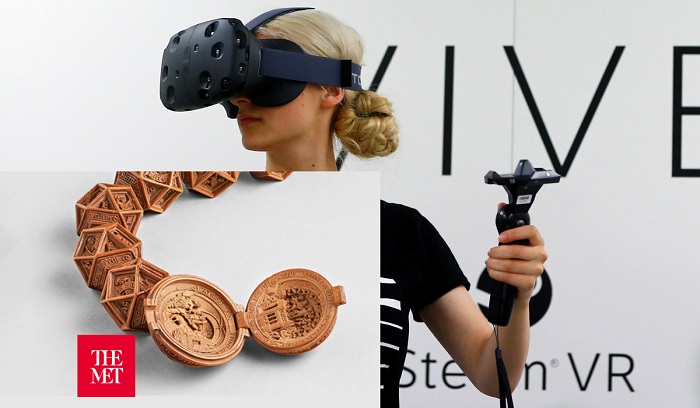
“Walking through 500-year-old art…Once I put the VR headset and headphones on, it truly felt like I was transported to another world. You could walk through the levels of sculpture and detail in the bead, which was a frieze of heaven on top, purgatory in the middle, and hell below it. There were easily 20 fully carved objects – humans, demons, and animals – in the five centimeter bead, with multiple layers of objects on top of one another to create a three-dimensional image. I was astounded to be able to see, as close as I wanted to get, the bead in all its detail.”— Stefan Palios,betakit
The Canadian Film Centre’s Media Lab (CFC Media Lab), Seneca’s School of Creative Arts and Animation, and the Art Gallery of Ontario (AGO) are pleased to announce their groundbreaking virtual reality (VR) collaboration, Small Wonders: The VR Experience. It will screen for a special four-day limited-run as part of The Metropolitan Museum of Art’s new exhibition, Small Wonders: Gothic Boxwood Miniatures, February 22-27, 2017 at The Met Cloisters (99 Margaret Corbin Drive, Fort Tryon Park, New York, NY 10040).
From February 24 to 27 during public hours, visitors can don a VR headset and explore a 3D rendering of a miniature boxwood carving from the AGO’s collection. The experience is free with general admission, reservations required, and marks a significant first for The Met Cloisters—the integrated use of VR to enhance the exhibition experience.
The exhibition Small Wonders: Gothic Boxwood Miniatures, which runs through May 21st, brings together for the first time some 50 rare boxwood carvings from museums and private collections across Europe and North America. The exhibition offers new insight into the methods of production and cultural significance of these awe-inspiring works of art. Small enough to fit in the palm of the hand, these tiny masterpieces depict complex scenes with elegance and precision. Without fail, they inspire viewers to ask how a person could have possibly made them, a question that can only be answered today and a challenge perfect for VR technology.
“Much of the success of new VR will hinge upon the quality of experiences being created. Everyone is searching for that sublime encounter one can only have in VR. With the boxwood miniatures and their high-resolution scans, we have found the perfect, transcendent landscape to explore in this medium,” says Ana Serrano, Chief Digital Officer, CFC, and Producer, Small Wonders: The VR Experience.
The AGO, CFC Media Lab and Seneca’s School of Creative Arts and Animation partnered to create Small Wonders: The VR Experience. Using one of the AGO’s micro-computed topography (micro-CT) scans of the miniatures, the creative and technical team led by interactive artist and designer, Priam Givord, developed an experience specifically for the HTC Vive platform. Viewers can explore the intricate carvings of the prayer bead from various angles and in detail otherwise inaccessible to the human eye. The soundtrack, Treasures of Devotion: Spiritual Songs in Northern Europe 1500-1540, echoes the ambience of the wider show. The result: VR enriches the contemplative and immersive experience.
Barbara Drake Boehm, the Paul and Jill Ruddock Senior Curator for The Met Cloisters said: “At first glance, the VR experience might seem anomalous in the medieval ambiance of The Met Cloisters. But, thanks to the efforts of the CFC Media Lab, Seneca and the AGO, VR opens a portal through which our visitors can tumble into a tiny world, and sense the meditative power that these centuries-old works of art were intended to convey.”
Small Wonders: The VR Experience was created by Lisa Ellis, Conservator of Sculpture and Decorative Arts (AGO); VR Creative and Technical Director Priam Givord (Interactive Artist/Designer); VR Producers Ana Serrano (CFC Media Lab) and Mark Jones (Seneca College); VR Technical Team Craig Alguire, Morgan Young (Quantum Capture) and Tyrone Melkitoy (Mobius Interactive); Composer/Vocalist Anne Azema, Artistic Director (The Boston Camerata); Narrator Gillian McIntyre; and Micro-CT Scanner Andrew Nelson, Associate Professor of Anthropology, Sustainable Archaeology (Western University).
The exhibition continues at The Met Cloisters through May 21, 2017, but the VR experience will only run during public hours, February 24–27. To learn more about the Small Wonders exhibition and to plan your visit, go to: http://www.metmuseum.org/exhibitions/listings/2017/small-wonders
At The Met Cloisters, Small Wonders: Gothic Boxwood Miniatures is made possible by the Michel David-Weill Fund. It was organized by the Art Gallery of Ontario, Toronto; The Metropolitan Museum of Art, New York; and the Rijksmuseum, Amsterdam.
Social Media
| Canadian Film Centre (CFC) @cfccreates.com | facebook.com/cfccreates CFC Media Lab (CFC Media Lab) @cfcmedialab | facebook.com/cfcmedialab |
Seneca College @senecacomms | facebook.com/senecacollegeArt Gallery of Ontario (AGO) @AGOToronto | facebook.com/AGOToronto |
The Metropolitan Museum of Art
@metmuseum | facebook.com/metmuseum
About CFC
The Canadian Film Centre (CFC) is a charitable organization whose mission is to invest in and inspire the next generation of world-class Canadian content creators and entrepreneurs in the screen-based entertainment industry. A significant economic and cultural driver in Canada and beyond, CFC delivers a range of multi-disciplinary programs and initiatives in film, television, music, screen acting, and digital media, which provides industry collaborations, strategic partnerships, and business and marketplace opportunities for talent and participants. For more information, visit cfccreates.com.
About CFC Media Lab
The Canadian Film Centre’s Media Lab (CFC Media Lab) is an internationally acclaimed digital media think tank and award-winning production facility. It provides a unique research, training and production environment for digital media content developers and practitioners, as well as acceleration programs and services for digital entertainment start-ups and related SMEs. The Silo founder and Digital Editor Jarrod Barker and contributor Arthur Maughan are graduates and fellows of the CFC Media Lab. Program participants have emerged as leaders in the world of digital media, producing groundbreaking projects and innovative, sustainable companies for the digital and virtual age. CFC Media Lab is funded in part by the Federal Economic Development Agency for Southern Ontario. For more information, visit cfccreates.com.
About Seneca
With campuses in Toronto, York Region and Peterborough, Seneca offers degrees, diplomas, certificates and graduate programs renowned for their quality and respected by employers. It is one of the largest comprehensive colleges in Canada, offering nearly 300 full-time, part-time and online programs. Combining the highest academic standards with work-integrated and applied learning, expert teaching faculty and the latest technology ensure Seneca graduates are career-ready. Find out more at senecacollege.ca.
About AGO
With a collection of more than 90,000 works of art, the Art Gallery of Ontario is among the most distinguished art museums in North America. From the vast body of Group of Seven and signature Canadian works to the African art gallery, from the cutting-edge contemporary art to Peter Paul Rubens’s masterpiece The Massacre of The Innocents, the AGO offers an incredible art experience with each visit. In 2002, Ken Thomson’s generous gift of 2,000 remarkable works of Canadian and European art inspired Transformation AGO, an innovative architectural expansion by world-renowned architect Frank Gehry that in 2008 resulted in one of the most critically acclaimed architectural achievements in North America. Highlights include Galleria Italia, a gleaming showcase of wood and glass running the length of an entire city block, and the often-photographed spiral staircase, beckoning visitors to explore. The AGO has an active membership program offering great value, and the AGO’s Weston Family Learning Centre offers engaging art and creative programs for children, families, youth and adults. Visit ago.net to learn more.
About The Metropolitan Museum of Art
The Met presents over 5,000 years of art from around the world for everyone to experience and enjoy. The Museum lives in three iconic sites in New York City— The Met Fifth Avenue, The Met Breuer, and The Met Cloisters. Millions of people also take part in The Met experience online. Since it was founded in 1870, The Met has always aspired to be more than a treasury of rare and beautiful objects. Every day, art comes alive in the Museum’s galleries and through its exhibitions and events, revealing both new ideas and unexpected connections across time and across cultures.
The Met presents over 5,000 years of art from around the world for everyone to experience and enjoy. The Museum lives in three iconic sites in New York City— The Met Fifth Avenue, The Met Breuer, and The Met Cloisters. Millions of people also take part in The Met experience online. Since it was founded in 1870, The Met has always aspired to be more than a treasury of rare and beautiful objects. Every day, art comes alive in the Museum’s galleries and through its exhibitions and events, revealing both new ideas and unexpected connections across time and across cultures.
With the global luxury market collectively growing at 4 percent to an estimated $1.15USD (€1.08) trillion in 2016, according to a recent “Bain & Company Luxury Study,” coupled with optimistic forecasts that the luxury goods market will pick up this year, the hospitality industry is gearing up for elevated demand among both leisure and business travelers. This amid evidence that, despite widespread geopolitical uncertainties, luxury consumers are redirecting their spending toward new and more personalized high-end experiences like luxury travel, food and wine.
“The luxury market has reached a maturation point,” said Claudia D’Arpizio, lead author of the study. “Brands can no longer rely on low-hanging fruit. Instead, they really need to implement differentiating strategies to succeed going forward. We are already starting to see clear polarization when it comes to performance with winners and losers emerging across product categories and segments.”
D’Arpizio also underscored that personal luxury market brands that “take an omni-channel, customer-centric approach will rise to the top.” Such is the prevailing wisdom for both the B2C and B2B luxury travel sector, specifically, with personalized experiences, quality of service and private booking options serving as primary distinguishing factors for luxe brand positioning throughout 2017 and beyond.
Here how these key drivers will converge with evolving luxury travel trends to greatly influence various vertical sectors—and, in doing so, the marketplace at large—in the months ahead:
1. Small group cultural immersions loom large.
 Travelers are increasingly seeking exclusive and regionally-authentic itineraries that cater to small groups. Tour companies like Fort Washington, Pennsylvania-based Gate 1 Travel are capitalizing on this trend with offerings that provide the convenience of an escorted tour with the intimate view of local cultures that large groups just can’t provide. “Our small group tours option has seen, by far, the most significant increase in booking volume–up 50% in 2016,” the company reports.
A City Lodge Hotel Group report concurs that the trend of being “connoisseurs of local culture” will boom this year. It emphasizes that indigenous tourism experiences and cultural immersion will remain a big factor whether traveling within your own home country or jaunting to faraway lands. “We’ll see more people wanting to visit more than the big landmarks and monuments of their destination,” it says. “Rather people are more likely to be interested in knowing about the locals–those that call that place home. Trips to the rural communities will become popular, and travelers are likely to be more interested in private guides that teach them about the traditional ways of life.”
2. Private villa travel surpassing leading luxe resorts.
Today’s breed of private villa rentals have become the ultimate in luxury travel lodging for vacationers and business travelers, alike. This is due to the vast array of benefits and creature comforts it proffers for couples, families and small groups. While maximized privacy and security, uber-tailored guest service and 5-star accommodations and amenities are chief reasons the trend toward private villa lodging is exploding, an elite few have offerings far beyond that don’t just rival, but far exceed, those offered by high-end resorts, including their elite Penthouse suit options.
 According to luxury travel agent Sandy Webb who books elite vacations all over the world “private villa residences offering first class, one-of-a-kind services are ushering in an entirely new era of bespoke hospitality around the globe. They are, in fact, single handedly setting a new and decidedly elevated standard for luxe travel worldwide.”
One private villa exemplifying this new standard is Casa Dos Cisnes–Puerto Vallarta’s foremost premier private oceanfront villa vacation experience. This 10,000 square foot Casa Dos Cisnes property, a five-bedroom colonial style home with breathtaking views of the Pacific that can accommodate up to 10 adults, goes well over-and-above to ensure each guest’s needs, desires, hopes and expectations for an extraordinary private villa vacation are fulfilled.
According to owner Cathryn Arnell, this includes proffering a bevy of premium benefits, including an authentic and stylishly-appointed residential setting, custom-prepared gourmet meals from an on-site private chef, 24/7 bilingual butler service and multiple staff, monitored security, housecleaning services, private infinity-edge ocean view pool, fully equipped state-of-the-art gym, large media-entertainment room, concierge and spa service, musicians for hire, sports and boating excursions, VIP treatment at the city’s leading beach club and most renowned restaurants, and more. “Given that guests enjoy complete privacy and security in the most exclusive area in Puerto Vallarta, commandeering the entire 10,000 square foot space with all of the relaxation, solitude and discretion that affords, the result is a one-of-a-kind holiday providing an unparalleled culinary and luxury living experience.”
3. Higher caliber private jet jaunts.
 According to Sergey Petrossov, founder and CEO of JetSmarter—an industry-leading private jet company based in Dubai, people are increasingly growing accustomed to personalized experiences, so much so, that it isn’t a demand anymore; it is now an expectation that needs to be met.
In order for brands to be memorable, they need to remember their customers and offer unique customized experiences. For its part, this JetSmarter achieves by placing a heavy emphasis on member relationships, with each assigned a relationship manager who is responsible for creating personalized and customizable private travel experiences.
JetSmarter also cites that there’s a very thin line between high-end and luxury, with the difference barely noticeable. “The travel industry is inundated with both high-end and luxury brands, however the distinction is relatively minor,” Petrossov said. “People often confuse high-end brands for luxury ones. Luxury brands essentially need to heighten their levels of service to be able to distinguish themselves from their high-end counterparts.”
4. Next-gen travel tech eases and expedites.
 Artificial Intelligence (AI) is another tech trend that will continue to evolve at a rapid pace. According to Advito’s 2017 Industry Forecast, AI has already enabled a range of apps, bots and software that makes it easier for industry purveyors to interact with travelers at every step of a trip to expedite, ease and enhance. AI automates computer processes to work in the same way as the human brain. Natural language processing (NLP) helps computers understand human speech or typing, and AI then applies machine learning to provide a useful response.
Advito reveals that the travel industry is “well-positioned to embrace AI,” and also that the wider travel industry is adopting AI as, for example, KLM passengers are now able to use Facebook Messenger to confirm bookings, get boarding passes and flight status updates. “AI is still in its infancy, but it is in our immediate future,” the report asserts. “As it develops, it will help simplify complex travel decisions, shorten the buying process and deliver a more personalized offering.”
5. Game changing smart suitcases solve perennial problems.
 Travel is tough enough in the best of circumstances and is all-too-often replete with challenges. From crowded freeways, overbooked flights, Wi-Fi downtime and generally not having necessary items at hand, getting from point A to point B can be fraught with more than its fair share of frustrations. Not surprisingly, technologists have responded with problem-solving gadgets and gear that exemplify tremendous innovation and ingenuity both in concept and execution. One glowing example of this is the Bluesmart Suitcase. Billed as “the world’s first smart suitcase,” this carry-on keeps traveler’s belongings tracked, devices charged, bag secure and trips hassle-free thanks to integrated technology that syncs to an associated mobile app that’s compatible with both iPhone and Android.
The suitcase features a built-in battery/charger with 2 USB ports. The substantial 10.000 mAh battery can charge your phone up to six times, juicing up this and any other USB-connectable device from the USB port on the back or the inside. The bag also boasts a 3G+GPS tracker with global coverage to track the suitcase anywhere in the world; a scale built right into the handle that interfaces with the app to tell you the approximate weight of your suitcase; and a remote digital lock that can be set up to lock itself when you step away and to unlock when you return. The TSA- approved smart lock provides distance alerts, notifying you if you leave it behind. Of course, the bag needs to carry you belongings, so the main compartment does provide large space for clothes, shoes, and coats, while a secondary TSA-friendly compartment is able to accommodate up to a 15″ laptop.
Despite the fact that luxury sales fell flat in 2016 as consumers shunned traditional products, it’s experiences—namely travel and entertainment—that are predicted to drive sector sales growth up ahead. “There is a progressive shift from physical products to experiences, especially in the last year,” Federica Levato, partner at Bain & Company and co-author of the study, told Reuters, predicting that trend would continue. With the world economy poised to regain momentum this year and the penchant among wealthy consumers to spend on travel and gourmet food and wine rather than clothes and accessories, the future is bright for high-end hospitality. For the Silo, Merilee Kern.
 About the author: Branding, business and entrepreneurship success pundit, Merilee Kern, MBA, is an influential media voice and lauded communications strategist. As the Executive Editor and Producer of “The Luxe List International News Syndicate,” she’s a revered consumer product trends expert and travel industry voice of authority who spotlights noteworthy marketplace change makers, movers and shakers. Merilee may be reached online at www.TheLuxeList.com. Follow her on Twitter here: http://twitter.com/LuxeListEditor and Facebook here: www.Facebook.com/TheLuxeList.
Sources:
www.clhg.com/blog/2016/11/2017-travel-trends/
https://www.advito.com/advito-industry-forecast-2017/
Spotlight image- centraljetcharter.com
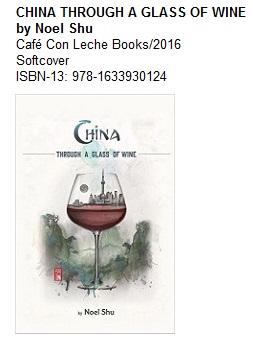 International-renowned sommelier, Noel Shu, provides in-depth look at the modern Chinese wine industry and guides us through the misty vineyards and crowded wineries of China.
Casual wine enthusiasts and travelers as well as serious collectors and globally-minded investors will appreciate the accurate portrayal of China “through a glass of wine.” For the Silo, Trina Kaye.
 About the Author
Internationally-regarded sommelier Noel Shu, Managing Partner for the ultra-luxe, award-winning wine and spirits purveyor Prodiguer Brands, is a 24-year-old self-made millionaire, entrepreneur and author of the newly released title, “China Through a Glass of Wine.” With impeccable panache and style, Shu, has already accomplished more than many do in an entire lifetime. He earned his undergraduate at West Point, completed the U.S. Army’s elite and grueling Combat Diver Qualification Course at the Special Forces Underwater Operations School (regarded by many Soldiers as the toughest military school to endure), and has personally designed and sold extraordinary multi-million dollar timepieces and necklaces to China’s elite through his ancillary, highly successful luxury jewelry business. Always striving to for growth and self-improvement and with a reverence for continuing education, despite his busy schedule Shu is currently pursuing an Ivy League Master’s degree at Columbia University. As a globally-minded business practitioner, Shu understands commerce on both sides of the Pacific and brings that expertise to bear with his various ventures, including the highly anticipated upcoming release of “Regale”—an exclusive wine brand expressly developed for the Chinese marketplace, which will be exported to the region in early 2016. For more information about Noel Shu, visit www.prodiguerbrands.com.
Questions and deliberations concerning globalization are more than a hot topic of extended cross-disciplinary focus in academia; they are also central to the long-simmering debates regarding policies and their implications that today often enter the public arena. For example, a quick perusal of broadly accessible media outlets from late 2013 and early 2014 reflects a suite of still unresolved but vibrant civic pondering: “When did globalization start” (The Economist 2013), “The dark side of globalization: why Seattle’s 1999 protesters were right” (Smith 2014), and “Have we reached the end of globalization?: (CNN 2014).
Yet can such issues really be evaluated judiciously without defining the critical elements of globalization, and then dissecting and assessing its historical scope? Given the broad temporal and spatial elements implied by the concept of “globalization”, it is not most likely that the outcomes and effects of this multifaceted process would be highly variable across time and space?
But through a diachromic and comparative examination of human connections over time, might we see some commonalities and learn relevant lessons?
Continue reading this essay by Gary Feinman by clicking here.
*Banner image of Ronald McDonald -McDonalds China courtesy of image.minyanville.com

I began writing this post after an annual viewing pilgrimage of sorts. Each year on the eve of shopping’s busiest day, I crack open the well worn plastic jewel case and fire up the DVD player. It’s a fictional account but based in fact and is very entertaining and I can’t help but wonder what “might have been” after watching CBC’s 1996 mini-series “the Arrow” again. [You can watch this right here at the end of this post CP]
Over the decades fact and fiction have become tangled but the basic truths remain intact. In the late 1950’s a highly advanced jet interceptor designed to seek (and if necessary destroy) Russian nuclear bombers was conceived, designed, built and flown in Canada by a predominantly Canadian team. Here’s where things get fuzzy. The Arrow was developed when the federal Liberal party were in power but was finished and flown when the Conservatives were in power. It represented not only the technological capability of Canada’s aviation industry- but also the econo-political agenda of the mid-twentieth Century. So what happened at that time to help spell the doom of the Arrow?
-The ICBM- intercontinental ballistic missile was viewed as the future of warfare not the nuclear bomber. This meant that a jet interceptor was obsolete because it would be unable to intercept approaching missiles.
-Bad timing: on the day of the rollout of the very first completed Arrow, the Russians launched Sputnik, the world’s first artificial satellite. In the public eye jets seemed unimportant.
-The American Bomarc missile system was designed to intercept incoming nuclear bombers and ballistic nuclear missiles. The Bomarc had a small nuclear warhead which would detonate in the pathway of approaching missiles (or bombers) and create a nuclear ‘shield’. The Bomarc was highly controversial at the time because our Prime Minister did not want nuclear missiles on Canadian territory. However, our Defence Minister did not agree and eventually resigned over the matter. This defence ‘split’ exacerbated the Arrow program and any chance for an Arrow squadron legacy.
-The Canadian designed Iroquois engines were not readied in time and were not fitted into the Arrow. These engines were innovative and theoretically could have propelled the Arrow to speeds of Mach 2.5 or possibly Mach 3.0- far beyond every fighter of the time with the exception of secret black technology projects like the American Blackbird SR-71. Had the Canadian engines been readied and proven, there seems little doubt that international orders would have offset some of the Arrow’s mounting costs.
Black Friday…….almost 15,000 workers lose their job.

There is no official record of just who ordered the destruction of the remaining Arrows. Other than a few recovered test models, an incomplete cockpit and a few seconds of in flight film, nothing remains of this wonderful airplane . For the Silo, Jarrod Barker.

Supplemental-
University of Saskatchewan The Nuclear Question in Canada http://www.usask.ca/diefenbaker/galleries/virtual_exhibit/nuclear_question_in_canada/
Post Featured Image- http://plunkettgw.deviantart.com/art/AVRO-ARROW-17-139364086
Boeing’s Bomarc Missile http://www.boeing.com/boeing/history/boeing/bomarc.page

2015’s historic JFK 50th assassination Special was a riveting and powerful demonstration of media technology. We co-hosted the CBS feature which “rebroadcast” their original assassination television coverage in real-time, fully and completely. Every detail was reproduced exactly as it was shown on that fateful day- even the interruption of a certain soap opera with the first “bulletin” announcement. Live internet coverage began at 1:38 EDT exactly 50 years to the minute of the initial CBS news broadcasts.
If you have any #JFK thoughts (perhaps you even remember that fateful day)- or if you watch the archived live stream please share your feelings by commenting below at the end of this post. We will respect all requests for anonymity.
In the meantime, you may want to view Newsmax TV documentary: “I killed JFK” claiming to showcase a newly revealed “confessed killer”. In 1978 a US Congressional Investigation into Kennedy’s death determined that there were likely more than one shooter/killer.

JFK visits Ottawa 1961:

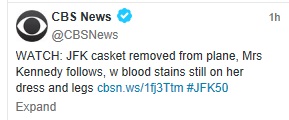
Supplemental- The United States National Archives Report of the Select Committee on Assassinations of the U.S. House of Representatives
References: I. Findings in the Assassination of President John F. Kennedy
Dear Reader, it is difficult to deny that a side of art making is fatally concerned with the poetic grace of the gesture – it is expected that a work should exude a cosmic and ineffable air.
 Regardless of your medium, I hope this glance into the minds of two established poets from very different walks of life can help dissipate the intimidating mist between process and product, as well as remind you that the transcendent and the familiar are often one in the same.
 Global spectator Meena Alexander recognizes that even in the grand art of poetry is a desire to express what cannot be said through its own means. After eight books of poems and a lifetime of travel, Alexander continues to defend her craft as the most ordinary of entities, no more inexplicable than a child’s obvious and impossible sense of language or rhythm.
New York-based Eileen Myles approaches poetry from a reserved and humble perspective, with the intent of striking a tasteful balance between metaphysical grandeur and the habitual rhythm of the everyday.
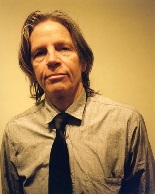 Myles, a breathing artistic currency, treats poetry as an extension of the self with the potency of a movement and the collective memory of a civilization. Myles proves that common experience and abstract phenomena are synonymous when we step back to look.
If the weight of the world seems so immense that the few strands of creativity cannot unravel, the Mayer Foundation offers emergency funding for New York artists facing economic, residential or medical turbulence. Proposals may be submitted at any time, with over two thousand dollars granted to those with concrete objectives and a levelheaded art plan.
It is easy to forget that behind the polished mirror of history is a messy and cumulative reality. There is little difference between the intelligentsia of years past and the friends sitting at your dining room table. For the Silo, Brainard Carey.
Supplemental-
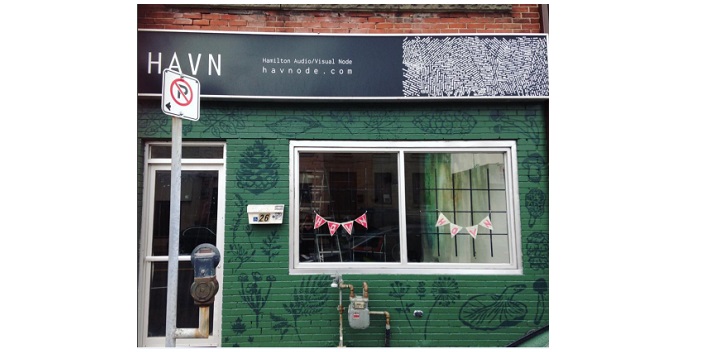
I learned about the Hamilton Audio Visual Node (HAVN) a few years ago by doing the rounds during Art Crawl. Since then it’s become obvious they’re hosting some of the most innovative music and visual art in Hamilton. I sat down with Connor Bennett and Chris Ferguson at the beginning of July to learn more about the collective and discover yet another reason to move to Hamilton. Connor and Chris made it pretty clear you don’t need an invitation to join the party. Featured Title Image, The HAVN Storefront on Barton Street Credit: Ariel Bader-Shamai
Timothy: How did HAVN get started?
Connor: Um, a few of us started a band, and we were practising in the basement of a student house and when it came time to leave that house, we wanted a space where we could continue to play, and show art, and we just lucked out, our collaborator and co-founder Amy McIntosh was living above a storefront and…
Chris: …had a good relationship with the landlord and managed to get the downstairs space at a price we could afford.
Connor: That was May, 2012, we opened up just as most of us were graduating from McMaster University.
Timothy: What does it mean to be a node for the arts? Is the storefront a critical component?
Connor: It’s probably not critical, although it’s nice, it’s really nice. I wouldn’t say it’s critical because we don’t do regular gallery hours, where people can just pop in. It is nice to have the storefront space for things like art crawl. We’re off of James Street but it’s still easier to get people out as compared to a studio space.

Chris: Back to your question, as to what it means to be a node. Nodes are intersection points, which denotes the collaborative nature, the interdisciplinary nature of what we’re trying to do. And it was chosen for the sake of the acronym [Laughter].
Timothy: So what are your activities?
Chris: You could put it into four categories. We do art shows every art crawl, and occasionally outside of art crawl. We do music shows two to five times a month. And then there’s HAVN Records, our cassette tape little label. There’s also some miscellaneous things that are harder to categorize. We’ve done craft nights where people come out. Or if people in the collective supply an idea and make it happen. For a little while we had a darkroom in the backroom where people could develop photos.
Timothy: What are some of the highlights from the past couple of years?
Chris: It wasn’t something that I was involved with personally but I thought the darkroom was a really cool idea. It’s not something that’s widely available and it was a DIY thing where they obtained all the equipment and brought it all together. Some of it was donated by a like-minded friend from Guelph.
Connor: One of the best concerts I’ve seen recently was hosted by Cem Zafir and his partner Donna Akrey at HAVN, and they had a percussionist by the name of Tatsuya Nakatani come in and everyone in the room was transported to a different world, it was a magical moment. Those happen a lot. We’ve been really lucky with a lot of good music.
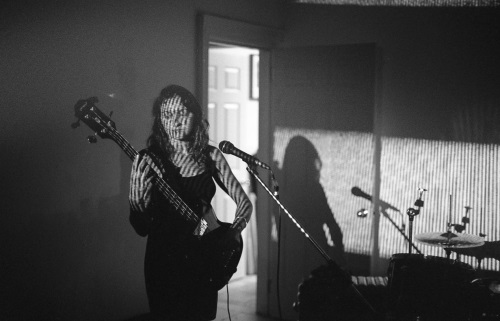
Chris: What was the name of the show, I think Ariel and Petra did it, with the yarn, it was kind of, performance stuff; would you consider it a successor to the Quanta_1 show, where you and Kearon…
Connor: Yeah, yeah, it’s kind of like that…
Chris: An extension of that idea. Petra and Ariel did it, how would you describe it?
Connor: It was kind of a poetic yarn installation, with figures…
Chris: …and quotations.
Connor: It was great.
Chris: Really well executed. Not something you see a lot of.
Connor: Yeah, there’s lots of highlights.
Chris: We could keep going.
Connor: Once you start thinking about it.
Chris: I really liked our show for Supercrawl last year, which ended up being themed around Cootes Paradise, the Cootes to Escarpment EcoPark System, which is a conservation effort beginning with Cootes Paradise all the way into Burlington to connect some critical natural lands. The show really nailed the peaceful nature of it. Supercrawl is very busy, there’s tonnes of people and then you come to HAVN and it’s peaceful, relaxed.
Connor: Serene.
Chris: Yeah, Judy Major-Girardin, a professor at McMaster that taught a lot of the HAVN crew, was very generous with her time and she’s a big supporter of that initiative, so she put up a gorgeous installation with sound recordings from Georgian Bay. Frogs. Printed cheesecloth. It was stunning.
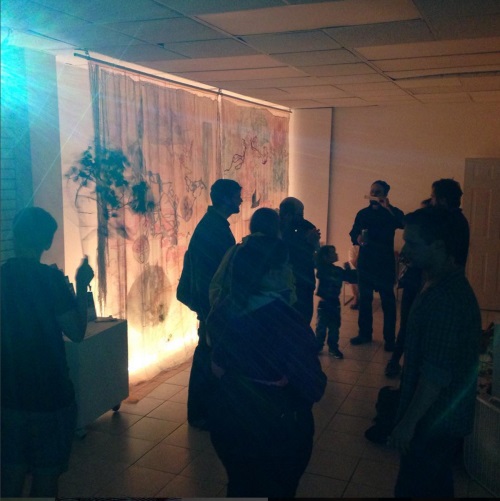
Timothy: What are your objectives? What is the need or desire that you are addressing?
Connor: I’d say from the music side of things, it’s a space for outsider music, for music that doesn’t really fit in a club or a bar. It’s a small space, really intimate, so even if ten people come out it feels like a nice crowd.
Chris: Yeah, It could just be a touring band who might have trouble booking a show at a bigger venue, because they wouldn’t attract a bigger crowd.
Connor: We know a lot of people who are booking shows in Hamilton and we’re filling a bit of a void since they’re not booking these types of shows. Like free jazz, for example, there’s no venues that are booking free jazz but we will gladly and enthusiastically book a free-jazz show.
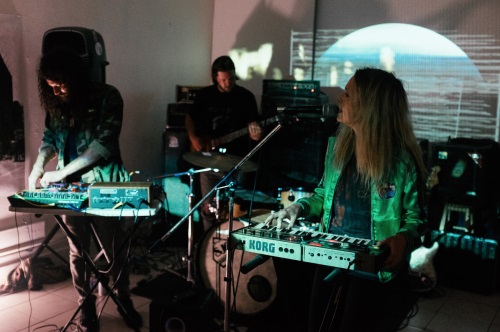
Timothy: How did you determine the scope of your practice?
Connor: Time determined that. When I started out with HAVN I was working a lot more with Kearon on the visual arts and installation projects and with time my interests and time investments moved more towards the music. It’s a natural evolution within the group, that we’ve settled into our roles based on our interests.
Timothy: Were those interests present from the beginning, or have they been nurtured over time?
Connor: One of the reasons why this has worked out for so long is that everyone has been really passionate about creativity, and art in general, and open to all art forms. That’s been the crux of why we’ve been around for so long, and putting on shows that are successful.
Timothy: What is your current relationship with institutional structures like the university and the gallery?
Connor: Well, quite a few professors from McMaster have shown art in our space. Judy and Dr. McQueen had a show recently. Other galleries? We have good relationships with other galleries, in particular, the Factory Media Centre, because we’ve done a lot of media art, not only that, we’ve shown a lot of art there, and both Amy McIntosh and Aaron Hutchinson have been on the board there. Amy’s been involved since the beginning.
Timothy: You position yourself as an alternative, though.
Chris: It’s not an adversarial relationship, like ‘that stuff is no good.’
Connor: We just don’t want to replicate things that are being done elsewhere. I’m sure we do it all the time. But the intention is to fill a void, take a risk.
Timothy: What are the benefits and limitations associated with your present configuration?
Connor: We’ve had trouble finding grants that apply to us. That’s one challenge because we operate with no inflow of money, so it’s just tough to make it work sometimes. That’s one of the limitations.
Chris: Sometimes I wonder if we put more time into the grants whether we would begin to take a different path. Like, having gallery hours wouldn’t be a bad thing, but it would be different than what we do now, and it would mean that we would be travelling down a more traditional path.
Timothy: Can you speak of the benefits and effects of HAVN, for yourselves and the broader community?
Connor: It’s such a useful space for us as artists and musicians, that’s kind of priceless.
Chris: It’s great to have a spot that you’re part of.
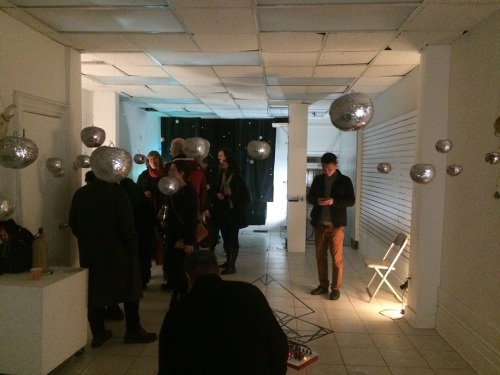
Connor: Ideally we’re providing a space that’s inclusive, and open, where people feel comfortable. But if I was new to Hamilton and I went to HAVN I could understand feeling intimidated because there’s all these people who know each other already.
Chris: I think it’s always hard, because you establish your audience, and your friends, and you want people to have a stake in the space, that they’re part of it, that they’re not just attending shows, but that they’re part of the community too. But you have to balance that with being open and having new people feel that they can be part of it.
Timothy: So do you have any words of advice to people who might want to start a collective?
Chris: If I had any advice it would be pretty cheesy.
Connor: I don’t know. [Laughter]
Chris: The real trick is having the right group of people.
Connor: Get lucky.
Chris: Yeah, we couldn’t have made this happen in a bigger city where the rents are more expensive.
For the Silo, Timothy deVries.
Supplemental- Video Credit: Mubarik Gyenne-Bayere
Video Credit: Footage by Ariel Bader-Shamai, live visuals by Andrew O’Connor https://www.instagram.com/p/BDE-Nhwk0BT/
Video Credit: Footage by Ariel Bader-Shamai, live visuals by Andrew O’Connor https://www.instagram.com/p/BCCFlOBE0FF/
Video Credit: Olga K.
Peter Auto is delighted to announce that the Concours Chantilly Arts & Elegance Richard Mille, which will be held on 4th September in the Chantilly Domain for the third time, is welcoming two new partners: BMW and ACJ (Airbus Corporate Jets).

BMW was present at the 2015 event as entrant in the Concours d’Elégance reserved for concept cars and won the 1st prize with the 3.0 CSL Homage R. In 2016, the year which marks the Bavarian make’s centenary, BMW has joined the Chantilly Arts & Elegance Richard Mille in the context of a wider partnership that will be announced at a later date.
ACJ provides its clients with the most modern business jets in the world based on the full range of planes made by Airbus, leader in the field of aeronautics, thanks to its unique expertise, innovative technology and bespoke customer service. A fully personalised interior can be installed in these very spacious VIP planes including, for example, a lounge, an office, a bedroom and a bathroom. By combining interiors with unique living spaces and a range of action that enables its clients to cover the whole world, ACJ facilitates their life style. With ACJ Chantilly Arts & Elegance welcomes a partner whose values of excellence, innovation and luxury dovetail perfectly with those highlighted by the event.

BMW and ACJ join a list of prestigious partners who have renewed their confidence in Peter Auto in 2016 for the Chantilly Arts & Elegance Richard Mille: DS Automobiles, Le Point, Bonhams, Relais & Châteaux, Charles Heidsieck, Radio Classic, the IDEC Group, etc.
The first two Chantilly Arts & Elegance Richard Mille were an instant success with the public, manufacturers, collectors and partners. They were also rewarded in Great Britain by the prize for the Motor Car Event of the Year in 2014 and 2015 at the International Historic Motoring Awards. In 2015 the event received the backing of the French Ministry of Culture and Communication, which has renewed its support in 2016.
The 3rd Chantilly Arts & Elegance Richard Mille follows in the same vein as the previous ones by continuing with the Concours Automobile allied with a wide range of activities that include the French Art of Living, Fine Arts, Arts of the Table, Fashion, Music, Watch making, etc. with the partnership of prestigious houses and brands. Thus, all the ingredients are combined to make it a rendezvous that’s unique in its field in an exceptional setting only a few kilometres from Paris. The riches of the Chantilly Domain and the eponymous princely town give Chantilly Arts & Elegance Richard Mille the quintessence of art and elegance, which all the visitor can enjoy at this convivial, family event.
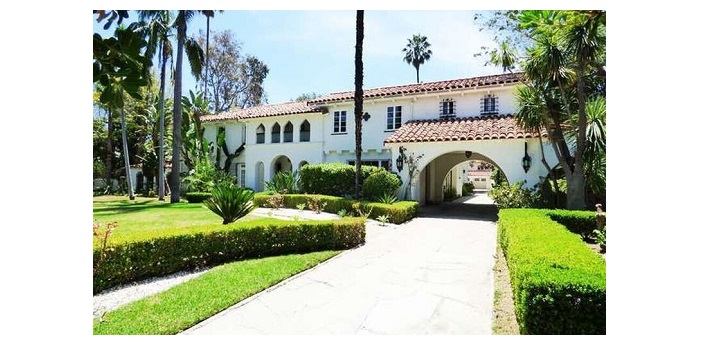
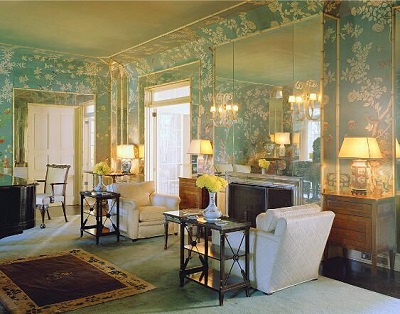
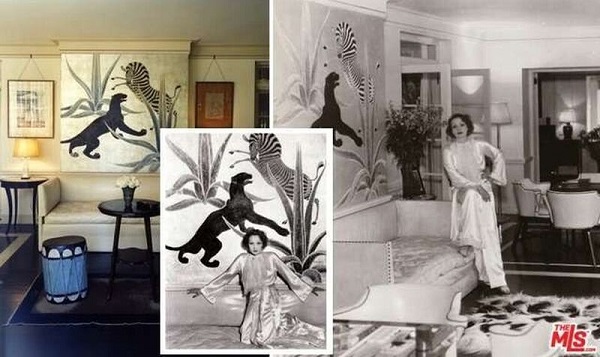
“The Countess of Beverly Hills Mansions” Before Paris Hilton and Kim Kardashian, socialite Dorothy Taylor may have been the first Hollywood celebrity who wasn’t in the entertainment business. She was the ultimate party host and frequent 1930’s scandal rag fodder. Her lovers included Gary Cooper, Bugsy Siegel, George Raft and an Italian count.
 Dorothy’s trip to celebrity fame began after she inherited $12 million in 1916, the equivalent of about $275 million today. The first thing she did with her money was divorce her British aviator husband, Claude Grahame-White, and embark on a long party in Europe’s best circles. In 1923, she married Italian Count Carlo Dentice di Frasso, many years her senior. On the outskirts of Rome, the new countess acquired and restored one of Europe’s most famous homes, Villa Madama, that had been designed in the sixteenth century by Raphael. It was later used by Benito Mussolini during World War II for National Fascist Party functions.
While residing in the villa, actor Gary Cooper was doing a movie in Rome and became quite ill. Dorothy took him in and during his recuperation began an intense affair with him under her husband’s nose. Since she and the count were at that point leading separate lives, Dorothy went on with the affair and moved to Hollywood where she purchased a mansion in Beverly Hills. Making friends of some of Hollywood’s most important stars through her Cooper connections, Dorothy called in the best decorators and landscapers and created a luxurious estate that was classic Art Deco filmdom glamour. Dorothy and Cooper eventually went their own ways but remained distant friends. She was always known as the woman who taught Gary Cooper how to dress, making him the most elegant man in Hollywood.
Through her new Hollywood friends, Dorothy eventually rented her mansion to Marlene Dietrich and headed off to search for sunken treasure on the studio-owned schooner, Metha Nelson; Captain Bligh’s ship in the 1935 movie “Mutiny on the Bounty.” Also on the ship was American gangster Bugsy Siegel. Although the trip turned into a disaster when the schooner was tossed violently by 70 mile-per-hour gale winds that split the main mast and destroyed the sails, it was the start of a new affair with Bugsy. She always rejected gossip of her association with Bugsy, instead referring to him as Benjamin to her friends.
In 1947, Dorothy sold the Beverly Hills house to MGM pianist Jose Iturbi, who lived there until he died in 1980. In 1954, Dorothy died of heart failure in a train compartment while she was traveling with George Raft from Las Vegas to Los Angeles after attending one of Dietrich’s performances.
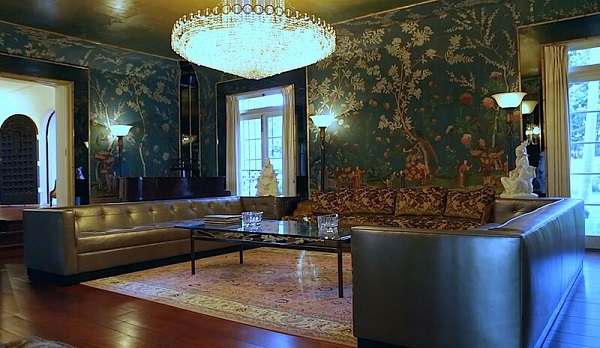
Once again for sale, the beautifully preserved Spanish Revival estate hasn’t changed much since its heyday in the 1930s when it was featured in “House and Garden.” At approximately 8,000 square feet, it has four bedrooms and five baths on 1.12 acres. The home was built for entertaining with large public rooms and although it looks like wallpaper, the walls are covered in hand-painted murals. In the dining room, the walls are mirrored verre églomisé panels that depict towering palms. There is also a two-bedroom guest house and pool nestled within the mature landscaped grounds. The asking price is USD $26.9 million. Dimitri Velis of Hilton and Hyland in Beverly Hills is the listing agent. For the Silo, Terry Walsh.
Visit our friends at TopTenRealEstateDeals.com for more famous homes and real estate news.
COSTA MESA, Calif. — May, 2016 — BenQ America Corp., a globally renowned LED and gaming monitor expert, recently announced that ZOWIE, the company’s eSports brand, would be the official monitor sponsor of DreamHack Austin 2016. Making its first-ever stop in North America as part of the DreamHack ZOWIE Open World Tour, the event took place May 6-8 at the Austin Convention Center. Pro gamers competed using the XL Series eSports monitors for all PC gaming tournaments. Additionally, ZOWIE extended its partnership to supply its RL eSports console monitors for the Capcom Pro Tour’s Street Fighter V and Pokkén Tournament matches.
The North American eSports market has seen phenomenal growth, attracting millions of gamers and online viewers. Committed to eSports, ZOWIE is pleased to partner with DreamHack to deliver the ultimate pro gaming experience with its XL and RL monitor lines.
“BenQ ZOWIE is created for eSports and only eSports. We believe that gaming is all about the experience, whether it’s PC or console eSports. Our relentless pursuit to provide the most professional experience drives us to craft eSports products, including the XL and RL monitors, that are based on a deep understanding of the sport and fine-tuned to meet the pros’ specific usage scenarios,” said Lars Yoder, president of BenQ America. “With our XL and RL monitors, professional players will have the high performance they expect for competition.”

DreamHack Austin 2016 attendees were able to test-drive the full range of ZOWIE products at booth 135. The complete ZOWIE lineup includes the XL and RL series monitors, SR and TF mousepads, as well as the EC, ZA, FK, and newly released FK1+ mice series. ZOWIE mice fit every particular gaming style with options for right- and left-handed players in addition to ambidextrous ones. As a sneak peek, visitors also had an opportunity to experience the soon-to-be-released ZOWIE VITAL audio system, an intuitive, driverless device that provides convenient adjustments to improve both sound and audio communication for games.
ZOWIE also conducted its own Counter-Strike: Global Offensive death match tournament at its booth three times per day each day — noon, 3:00 p.m. and 6:00 p.m. — to give players a chance to win a custom ZOWIE G-SR mousepad.
Follow @DreamHackOpen and @DreamHack on Twitter and stay tuned to @ZOWIEbyBenQ for other deals.
About ZOWIE
Introduced in late 2008, ZOWIE is a brand dedicated to the development of the best competitive gaming products to improve eSports athletes’ combat performance. In 2015, the ZOWIE brand was acquired by BenQ Corp. to aggressively lead the company’s eSports product line with products that deliver true competitive advantages. More information is available at ZOWIE.BenQ.com/.
About BenQ America Corp.
The BenQ digital lifestyle brand stands for “Bringing Enjoyment and Quality to Life,” fusing lifestyle with technology, enjoyment with productivity and aesthetic design with purpose-built engineering. It is this mantra that has made BenQ the No. 1-selling projector brand powered by TI DLP® technology in The Americas(1). BenQ America Corp. offers an extensive line of visual display and presentation solutions that incorporate the very latest technologies. The company delivers a broad range of Colorific™ projectors, ZOWIE eSports gear and monitors, interactive large-format displays, mobile audio products, cloud consumer products and lifestyle lighting for any application and market — education, home, gaming, enterprise, government, house of worship, digital signage, A/V and IT — with cutting-edge models that lead the industry in performance, reliability, environmental sustainability and aesthetics. Whether it’s interactive digital whiteboards for classrooms, full HD 3D projectors for home theaters, short-throw projectors for boardrooms, interactive flat-panel displays for digital signage or LED backlight monitors for professional gaming, BenQ continues to defy the limits of digital displays. The company’s products are available across North America through leading value-added distributors, resellers and retailers.
More information is available at www.BenQ.us.
(1) Based upon Q1’15 – Q3’15 data from the Quarterly Projector Shipment and Forecast Report from PMA Research
About BenQ Corporation
Founded on the corporate vision of “Bringing Enjoyment and Quality to Life,” BenQ Corporation is a world-leading human technology and solutions provider aiming to elevate and enrich every aspect of consumers’ lives. To realize this vision, the company focuses on the aspects that matter most to people today — lifestyle, business, healthcare and education — with the hope of providing people with the means to live better, increase efficiency, feel healthier and enhance learning. Such means include a delightful broad portfolio of people-driven products and embedded technologies spanning digital projectors, monitors, interactive large-format displays, audio products, cloud consumer products, mobile communications and lifestyle lighting. Because it matters.
|
||||||||||
|
1155 Sherbrooke Ouest – Montreal – Quebec – H3A 2N3 – Montreal – Canada
Tel: +1 514 285-9000 – Fax : +1 514 289-1155 – [email protected] – www.sofitel.com/Montreal |
||||||||||
|
 The Holocaust was a time of devastation, hate and corruption and is considered one of the most terrible events in human history.
While the horror and mass extermination of more than six million Jews is known as fact around the world, it is more than just history to Arthur Weisze— it is his most vivid and harrowing memory.
“The most appropriate tribute that we can pay to the victims of the Holocaust is to never let the world forget that it happened,” says Danna Horwood, Executive Director at Margaret’s Legacy. “Education is a vital tool to ensure it is not forgotten and to remind generations why we cannot allow history to repeat itself.”
Margaret’s Legacy is an umbrella agency that seeks to provide Holocaust education through tools such as the documentary ‘Margaret and Arthur’s Story’. This thirty-five minute film chronicles Margaret and Arthur Weiszes’ experiences during WWII, their escape from Hungary to Canada and their new life in Hamilton, Ontario—told through the eyes of Arthur and Weisz’s descendants.
In an effort to give younger audiences a better understanding of what happened during the Holocaust and its lingering effects, the documentary addresses the themes of courage, survival and love, and educates youth about the need for tolerance and kindness in the world.

“As we approach Yom HaShoah, Holocaust Remembrance Day, [Full name is Yom Hashoah Ve-Hagevurah CP] it is important to listen to the stories of those who lived and experienced this tragic time,” adds Danna. “It will become harder as time goes by, to learn from first-hand experiences and to truly feel the impact that the Holocaust had on six-million Jews and their families.”
Danna Horwood and her youngest daughter Jamie Rose (both descendants of Margaret and Arthur Weisz) will present to community members at the Hamilton Hebrew Academy on May 5th. Margaret and Arthur’s Story’ will also be screened. For the Silo, Lauren Dam
For more information, please visit http://www.margaretslegacy.com/site/home.
About Margaret’s Legacy:
Margaret’s Legacy is an umbrella agency that seeks to provide holocaust education through tools such as the documentary ‘Margaret and Arthur’s Story’. Using their harrowing, yet inspirational story as a backdrop, Margaret and Arthur’s Story is a documentary produced specifically for young viewers to educate them about the Holocaust, its impact and why we cannot allow history to repeat itself.
Supplemental- How the Holocaust rocked RUSH front man Geddy Lee
OCCUPY BLACK ROCK! THE METAPOLITICS OF BURNING MAN by MARK VAN PROYEN
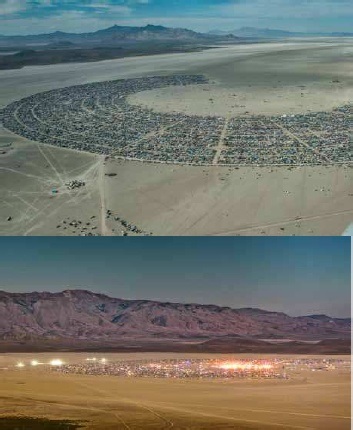
This image followed a long year of public demonstrations that started at Cairo’s Tafir Square in late January 2011, spread to the shores of Tripoli and then moved on to Damascus. In September 2011, it arrived in New York’s Zucotti Park, a tiny sliver of public space surrounded on all sides by the world’s most prominent financial institutions. According to the surging multitudes that participated in what would come to be known as Occupy Wall Street, those institutions were evil, and needed to be called into account.It took the major media a full ten days to report the story of the occupation of that little park, although the story had already been thoroughly distributed via social media networks. The movement’s rhetoric was ingeniously crafted for those modes of distribution, and usually took the form of declarative slogans. These proclaimed that the protestors represented the 99 per cent of the American population that would no longer stand for being fleeced by irresponsible government tax policies, a lack of regulation of the financial markets and a vast system of political bribes routinely called “campaign contributions.” Conservative commentators squealed “Class War!” in comic disregard of an OWS placard reminding its readers “they call it class war when we fight back!” From the OWS point of view, that war had been ongoing since Ronald Reagan’s first term in office. When the major media did get around to picking up the story, “What do they want?” or “What are their demands?” were published everywhere, as if the protestors were unintelligible in their calls for economic justice and political fair play. OWS did not give in to the “demand for demands” and this is crucially important, because their movement never was nor is now a conventional exercise in political advocacy. It is much better to describe it as a case of spontaneous socio-cultural upheaval intended to reshape contemporary political priorities into a more ethical form. In an America where an uber- wealthy minority has garnered a proportionally larger piece of the economic pie for decades, one might have anticipated that the protesters would have adopted a more conventional form of utopian rhetoric. But theirs was decidedly pragmatist. They pointed at real problems that could and should be solved in a political practice governed by simple sanity. One sign read, “I don’t mind you being rich. I mind you buying my government out from under me.” The sign referred to the draconian political atmosphere created when the Supreme Court voted five to four to overturn the McCain/Feingold Campaign Reform Act in the now infamous Citizens United vs Federal Election Commission decision of 2010. 3
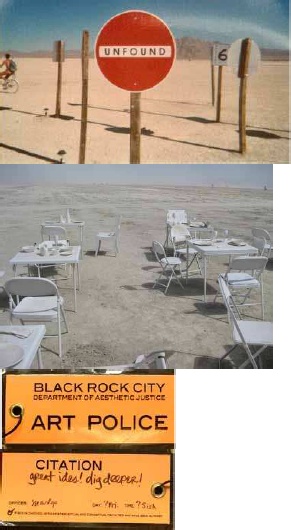

The event was and still is Burning Man. Since the early beginnings of the Internet, many observers have postulated that there was revolutionary potential in its ability to widely and instantaneously distribute unmediated information. Some have proclaimed it to be the new commons, this in recognition of how the forces of neoliberal corporatism have turned the old commons into shopping malls of various kinds, those being places where the subtle doctrine of “pay to play” began to slowly displace all other opportunities for political participation. Burning Man was the first major instance of an organized recognition of this new communal possibility of the digital revolution, and the first to act upon it at any meaningful scale. It did so by “occupying” a piece of public land in a wilderness area, and then configuring itself as a kind of free city where monetary exchange and corporate advertising would not be allowed. Participation, collaboration and self-reliance were upheld as paramount civic virtues, and art was defined and welcomed as the product of any “radical free expression” that any person could devise, regardless of any lack of previous experience or education. When web-browsing software first became available in 1994, Burning Man was already nine years old, and had already been using email networks and virtual bulletin boards to distribute its messages to a growing audience. The emergence of such communications technologies were a natural fit for the event, and even to this day, it has never paid for any advertising beyond the printing and mailing of its own promotional materials. That was the same year that the mass media initially came out to report on the event. The following year, the population doubled, making it clear that a tax on participants was needed to cover necessary costs for staging the event on a much larger sale. Admission tickets were sold, and federal rules were re-written so that the federal Bureau of Land Management could charge the organizers of Burning Man a hefty fee to use the space. Soon after that, much more money was spent in legal fees to support litigation that should have never have come to any court’s attention, if constitutional guarantees of rights to free assembly and self-expression were deemed worthy of any respect. But they weren’t, because it was difficult to convince certain political operators that the self-expressive thing that had engendered Burning Man’s free assembly of pilgrims had anything to do with art. From their point of view, what was happening at an increasingly large scale every year in the Black Rock Desert on Labor Day weekend was much more frightening, in that its almost complete lack of artistic supervision portended something akin to a mass participation Satanic ritual.7 It also threatened to unmask the lie that art had become.
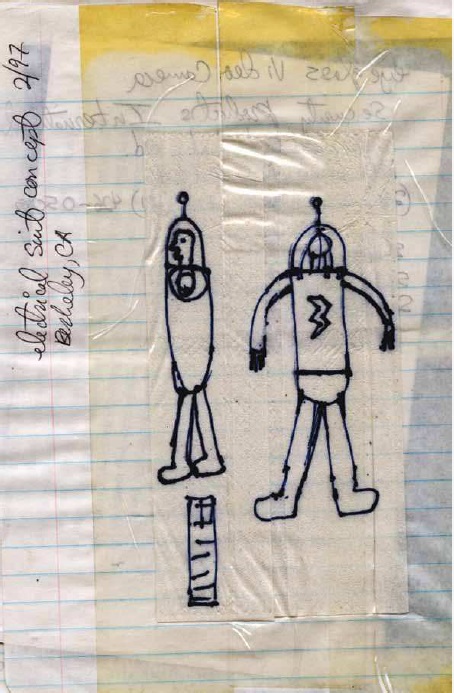
For all of Burning Man’s claims of being a place apart from the default world that it pretends to leave behind, it nonetheless does seem that the event sustains an oblique relationship to that world. During the technologically addled 1990s, Burning Man seemed to be prophetically far ahead of the cultural environment surrounding it. The chief reason for this was its far-reaching imagination of the ways that new technology could recast how social relations might be reconfigured in critical relation to what Naomi Klein would later call “Disaster Capitalism.”17
1.


Six Nations Polytechnic Aboriginal Institute to Offer Standalone Languages Degree Program
Ontario Helping to Expand Post-secondary Options for Indigenous Students
| NEWS | February 8, 2016 |
Ontario is helping to improve access to culturally appropriate postsecondary education and training opportunities for Indigenous learners by making it possible for Six Nations Polytechnic, an Aboriginal Institute, to offer a standalone degree program.
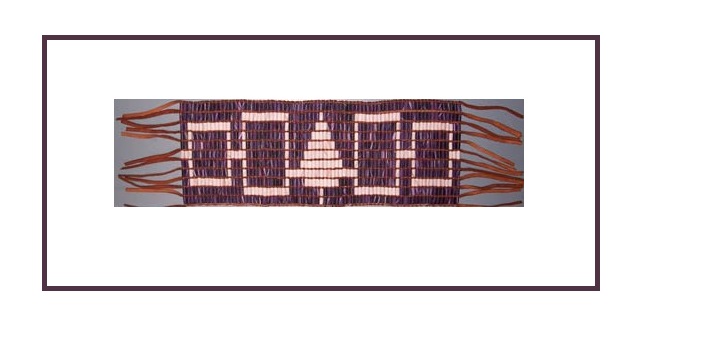
For the first time, the province will make it possible for an Aboriginal Institute, an organization that is run and governed by Indigenous communities, to offer a standalone degree program. As of January 2016, students at Six Nations Polytechnic Aboriginal Institute in Ohsweken can obtain a Bachelor of Arts degree in Ogwehoweh (Cayuga and Mohawk) Languages.
This degree will help promote and protect Ogwehoweh languages and make it possible for students to complete their degree at one institution, closer to home. It also will help students build on their linguistic skills and cultural knowledge as well as expand their opportunities to participate in the labour market. This standalone degree also supports the recommendations of the Truth and Reconciliation Commission, which called for postsecondary institutions to create degree programs in Indigenous languages.
Investing in the talent and skills of First Nation, Métis, and Inuit learners is one of many steps on Ontario’s journey of healing and reconciliation with Indigenous peoples. It reflects the government’s commitment to work with Indigenous partners, creating a better future for everyone in the province.
QUOTES
“Our government has made a clear commitment to learn from the past, build on our success stories, and increase our efforts to help Indigenous learners get the education and training they need. Six Nations Polytechnic is committed to creating an Indigenous environment that is grounded in culture and community, language, research, and academic quality, and this new degree program will help improve Indigenous learners’ access to, participation in, and completion of postsecondary education and training programs in Ontario.”
— Reza Moridi, Minister of Training Colleges and Universities
“I want to thank Six Nations Polytechnic for the leadership and guidance they have provided. Today’s announcement provides a tangible illustration of Ontario’s journey along the path of reconciliation. We will continue to rely on Indigenous partners as we chart a way forward that will produce tangible results.”
— David Zimmer, Minister of Aboriginal Affairs
“Language preservation and protection are at the core values of Six Nations Polytechnic. That’s why we have always had the intention of having our Ogwehoweh Language Diploma Program become a language degree program.”
— Rebecca Jamieson, President Six Nations Polytechnic
“Congratulations to Rebecca and her entire team. They have worked tirelessly to bring about the expansion of Six Nations Polytechnic programming. Education is the cornerstone of the future successes of our local Indigenous students.”
— Dave Levac, Member of Provincial Parliament, Brant
QUICK FACTS
LEARN MORE
Aboriginal Postsecondary Education and Training Bursary
Aboriginal Postsecondary Education and Training Policy Framework
| Belinda Bien, Minister’s Office, 647-823-5489
Tanya Blazina, Communications Branch, 416-325-2746 Public inquiries, 416-325-2929 or 1-800-387-5514 TTY 1-800-268-7095 |
ontario.ca/tcu-news
Disponible en français |
Offre d’un programme indépendant menant à un diplôme à l’institut autochtone Six Nations Polytechnic
L’Ontario contribue à accroître les options d’études postsecondaires des étudiants autochtones
| NOUVELLES | Le 8 février 2016 |
L’Ontario contribue à améliorer l’accès des apprenantes et apprenants autochtones à des possibilités de formation et à des études postsecondaires adaptées à leur culture en permettant à la Six Nations Polytechnic, un institut autochtone, d’offrir un programme d’études indépendant menant à un diplôme.
Pour la première fois, la province accepte qu’un institut autochtone offre un tel programme d’études indépendant. Les instituts autochtones sont des établissements exploités et gérés par des communautés autochtones. À compter de janvier 2016, les étudiants de la Six Nations Polytechnic peuvent recevoir un baccalauréat ès arts dans les langues ogwehoweh (cayuga et mohawk).
Ce baccalauréat contribuera à promouvoir l’usage des langues ogwehoweh et à les protéger. Il permettra également aux étudiants de faire leurs études dans un seul établissement, plus près de chez eux. Ils pourront approfondir leurs compétences linguistiques et leurs connaissances culturelles, en s’ouvrant à davantage de possibilités d’intégrer le marché du travail. En outre, l’offre de ce programme indépendant menant à un diplôme répond à la recommandation de la Commission de vérité et réconciliation voulant que les établissements d’enseignement postsecondaire créent des programmes d’études en langues autochtones.
Investir dans le talent et les compétences des apprenantes et apprenants métis, inuits et des Premières Nations constitue l’une des nombreuses étapes que l’Ontario devra franchir tout au long du processus de guérison et de réconciliation. Cela reflète aussi l’engagement du gouvernement à collaborer avec ses partenaires autochtones et à bâtir un avenir meilleur pour tous les habitants de la province.
CITATIONS
« Il est indéniable que le gouvernement s’est engagé à tirer des leçons du passé, à amplifier ses réussites et à redoubler d’efforts pour aider les apprenants autochtones à entreprendre les études et la formation dont ils ont besoin. La Six Nations Polytechnic s’engage à créer un environnement propice à l’apprentissage des autochtones dont les fondements sont la culture, la communauté, la langue, la recherche et la qualité des programmes. Ce nouveau baccalauréat améliorera l’accès à l’éducation postsecondaire des apprenants autochtones en Ontario et contribuera à l’accroissement du nombre d’étudiants autochtones détenteurs d’accréditations ou de diplômes. »
— Reza Moridi, ministre de la Formation et des Collèges et Universités
« Je souhaite remercier la Six Nations Polytechnic pour le leadership dont elle a fait preuve et pour l’orientation qu’elle a su donner. L’annonce d’aujourd’hui illustre parfaitement le processus de réconciliation entrepris par l’Ontario et nous continuerons de collaborer avec nos partenaires autochtones en vue d’arriver à des résultats concrets. »
— David Zimmer, ministre des Affaires autochtones
« La préservation des langues autochtones est au cœur des valeurs de la Six Nations Polytechnic. C’est d’ailleurs pourquoi nous voulions depuis longtemps que notre programme en langues Ogwehoweh mène à un grade universitaire. »
— Rebecca Jamieson, rectrice, Six Nations Polytechnic
« Toutes mes félicitations à Rebecca Jamieson et à son équipe. En effet, la diversification des programmes offerts à la Six Nations Polytechnic est un travail de longue haleine. Nous savons que l’éducation est la pierre angulaire sur laquelle repose le succès des étudiants autochtones de la région. »
— Dave Levac, député provincial de Brant
FAITS EN BREF
POUR EN SAVOIR DAVANTAGE
Bourses pour l’éducation postsecondaire et la formation autochtones
Cadre d’élaboration des politiques en matière d’éducation postsecondaire et de formation autochtones
 Feelings are at the core of every social interaction. Anger, fear, and sadness are all very different concepts, but together they form part of an emotional compass that allows people to appropriately deal with each other in everyday situations. In short, unlocking the true power behind a person’s feelings – even challenging ones – is actually the key to clarity, love, and a happier life.
As a way to help you understand your feelings and develop your own emotional intelligence, business coach, speaker, and bestselling author Vivian Dittmar has written the insightful book, The Power of Feelings: A Practical Guide to Emotional Intelligence. In this groundbreaking work, Dittmar takes the reader on an introspective journey by examining the inner workings of the human mind and heart. She explains at length the difference between feelings and emotions, how each are created, why each has its own purpose, and why everything you “feel” is not always a feeling.
Divided into five easy-to-read sections, The Power of Feelings is a comprehensive guidebook with 12 self-assessment exercises for exploring your life. By working through these exercises, Dittmar ultimately teaches how understanding and harnessing the power behind your feelings are the keys to your emotional potential and intelligence.
In this fascinating and eye-opening book, Dittmar also reveals:

“When I felt it was time to write my first book, I took a look at what was on the market in the field of personal development and felt the greatest deficit was in the realm of feelings and emotions,” says Dittmar. “I had been emotionally challenged in my life and was unsatisfied with the answers I could find. This dissatisfaction caused me to start investigating the matter within me, with the people I worked with, and in seminars and groups. When it was time to write the book, we collected questions about feelings from people of all walks of life looking for the same answers. This material later became the first version of The Power of Feelings.”
Vivian Dittmar grew up on three continents in three different cultures. In doing so, she developed a unique perspective on humans and their interactions. Traveling between first, second, and third-world nations, she was struck by the contrast between people’s external wealth and their corresponding life issues. Her experiences led her to pursue a career in the fields of self-help and personal development.
Throughout her career, Dittmar has worked in Germany, Indonesia, Australia, Thailand, Costa Rica, Italy, Greece, and Sweden. In Indonesia, she ran her own practice working with clients from all backgrounds. She then returned to Europe and set up the non-profit, Be the Change Foundation for Cultural Change. The foundation offers educational events to raise awareness about ecological and social justice issues.
Dittmar also works as a trainer and coach. As a coach, she helps small and mid-sized business owners and executives develop their emotional intelligence. She is also the author of three successful books – the first of which has been translated from German into English, Italian, and Spanish. Dittmar currently lives between Germany and Italy and is a mother of two sons.
Books are available on VivianDittmar.com and Amazo
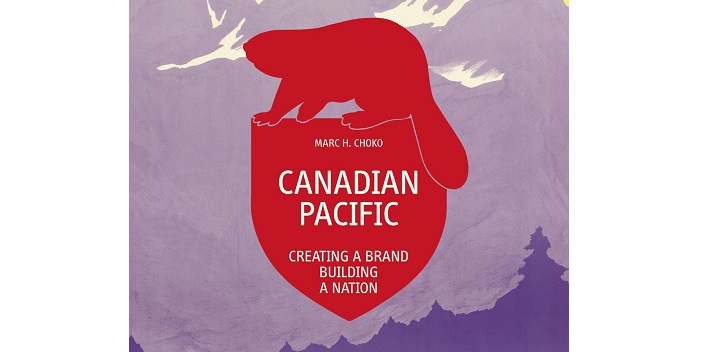
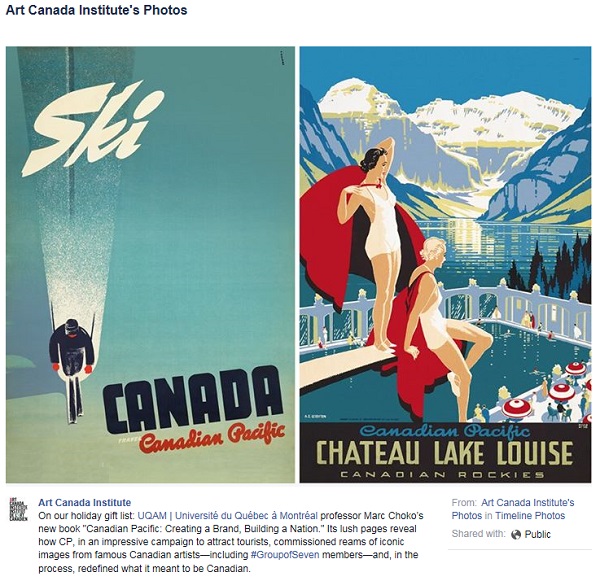
Canadian Pacific: Creating A Brand, Building A Nation, the forthcoming luxury coffee table book from School of Design of the Université du Québec à Montréal professor emeritus Marc H. Choko and Callisto Publishers. The private railway corporation that united Canada and built the world’s greatest transportation system, Canadian Pacific broke boundaries with its powerful commercial design.
 A gorgeous new full-colour, 384-page hardcover from leading design book publisher Callisto, Canadian Pacific: Creating A Brand, Building A Nation [November 15 2015] reveals the intriguing story of the private railway company that united Canada politically – and became, for a time, the world’s greatest and most diverse transportation system. Written by Marc H. Choko – professor emeritus at the School of Design of the Université du Québec à Montréal and an honorary member of the Société des designers graphiques du Québec – Canadian Pacific weaves a concise and compelling narrative recapitulating the first 100 years of the company’s history, beginning in the 1880s. Brought to life by hundreds of advertisements, illustrations, designs, photos, and historical documents – many of which have never been published before – Canadian Pacific is more than a beautiful book: it is an indispensible testament to one of the greatest achievements of entrepreneurship the world has ever seen.
“The history of Canada is inseparable from the history of Canadian Pacific,” writes publisher Matthias C. Hühne in the book’s preface. “A distinct Canadian national identity was still in its infancy in the 19th century, and various stereotypes linked with Canada today are the direct result of decisions made by these artists and Canadian Pacific’s publicity executives.” From adventurous world travelers to potential immigrants considering a move to Canada, Canadian Pacific tells the important and unforgettable story of the impact this private corporation has had on a nation’s economic development and image – and will be a welcome addition to the bookcases, coffee tables, and cottages of history buffs, art lovers, and aesthetes alike.

Among the topics author Marc H. Choko is currently interested in and researching are: Beavers, Banff and propaganda: how commercial design helped a disparate, newly formed nation understand its place in the world and forge an identity. This is Canada: the romanticism and beauty of the images Canadian Pacific’s publicity department produced, and their immeasurable impact on the way Canada is perceived domestically and throughout the world Immigration and colonization: Canadian Pacific’s little-known history of facilitating the process of coming to Canada for hundreds of thousands of citizens. The eminent artists behind Canadian Pacific’s publicity materials: why we cannot separate the interplay of commercial interest and high culture.
About the Author: Marc H. Choko, author of Canadian Pacific: Creating a Brand, Building a Nation is professor emeritus at the School of Design of the Université du Québec à Montréal and former director of the university’s Design Centre. He is also a former research director at the Institut national de la recherche scientifique Urbanisation, Culture et Société. Choko earned a bachelor’s degree in architecture and a master’s degree in planning from the Université de Montréal and a doctorate in urban planning from the Université de Paris VIII. He is the author of numerous publications on graphic design, urbandevelopment and housing, and has curated many exhibitions that toured internationally. Choko is an honorary member of the Société des designers graphiques du Québec.
About the Publisher: Berlin-based Callisto Publishers selects topics from the fields of design, art, and architecture that are especially well suited to be represented by a printed book, rather than an electronic medium, aspiring to create printed works of perfect quality in terms of content, design, and production. Strong contemporary design requires solid knowledge of the designs and methods of the past. Which designs endured, which did not, and why? Callisto’s books analyze trends of the past that are relevant for understanding design today and in the future. Website: https://www.callisto-publishers.com/
 About Canadian Pacific: The Standard Edition of Canadian Pacific: Creating A Brand, Building A Nation will be released this month, and retail for $80CAD / $70USD. The Premium Edition – a larger and technically more sophisticated version, packaged in a hand-crafted collector’s case with a wood veneer cover symbolizing the natural beauty of Canada, and containing additional images and Pantone colours and finishes not included in the Standard Edition – will be released in April 2016 and retail for $720CAD / $600 USD.
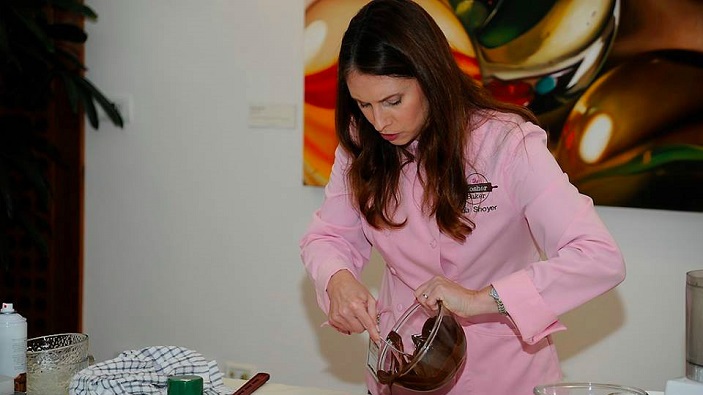
 The Jewish High Holidays are a time when family and friends come together to share a meal and celebrate the new year. Paris-trained pastry chef, Paula Shoyer created the essential baking book for that provides desserts and breads perfect for any Jewish holiday or dinner. THE HOLIDAY KOSHER BAKER has desserts that follow the latest trends but also recipes that remind us of those our grandmothers used to make – but with Paula’s distinctively modern and healthier twist.

 ABOUT PAULA SHOYER
Levallois lithic technology in the USA? The cores tell the story by Richard Doninger EDS. DISCLAIMER- We reproduce here a portion of our disclaimer from Doninger’s PCN Part1 article. Doninger’s collection is controversial and may indeed be a mix of genuine artifacts and geofacts.
One of the primary reasons to look at his material is the story he tells. It is one that the founders, members, and many readers of PCN (click here) are very familiar with. It involves a mainstream science community that is so dogmatic in its beliefs that it is willing to both block evidence or not even look at evidence that might challenge those beliefs. These beliefs include that there were no genuinely ancient people in the Americas and that early people throughout the world were less intelligent than us.
The idea that Lower, Middle, or Early Upper Paleolithic-style tools (in the European archaeology sense) are present in the Americas and mainstream resistance to the possibility is something that founding members geologist Virginia Steen-McIntyre (volcanic ash specialist), archaeologist Chris Hardaker, and geologist, the late Sam L. VanLandingham (diatomist) are/were all too familiar with as are also copy editors Tom Baldwin and David Campbell. This is not to mention the layout editor’s experience of censorship regarding evidence disproving cognitive evolution.
So, in a field where censorship of challenging evidence is routine—anthropology—virtually every proclamation the field makes needs to be questioned. One thing that we can be certain of is that once someone becomes “professional” in this field, in all likelihood, they will already be strongly opinionated regarding what is possible.
Dr. Steen-McIntyre, who started this regular feature section of PCN make it as a means to encourage avocational archaeologists and to help them raise the bar above the mere collecting of artifacts (the easy part) to adopting as many professional practices as possible especially in the recording and presenting of their finds. While Doninger’s artifacts are all surface collected, with few specific details of their discoveries recorded he does, nonetheless, present an interesting case that Levallois technology was established and varied in the southwest Indiana (c. Evansville) region.
Our publishing of Rick’s series is not an endorsement of his collection per se, but a reminder that we in the U.S. need to hold our anthropologists accountable as objective scientists, and, like in the field of astronomy, take the contributions of its amateur enthusiasts with a degree of interest.
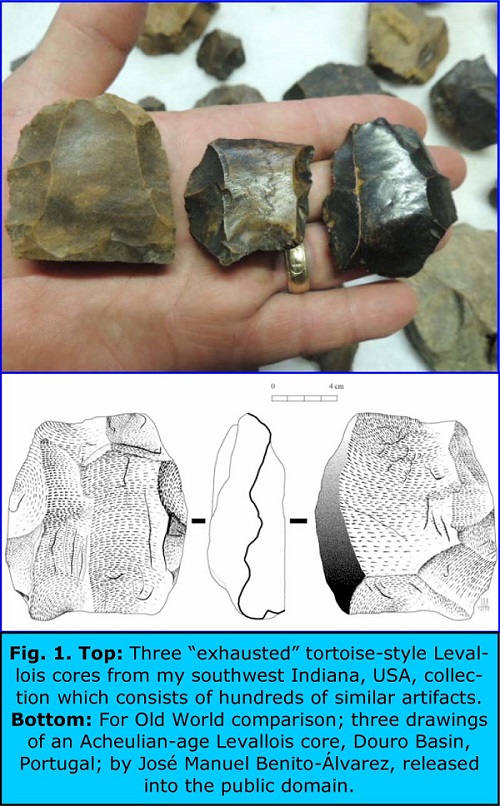
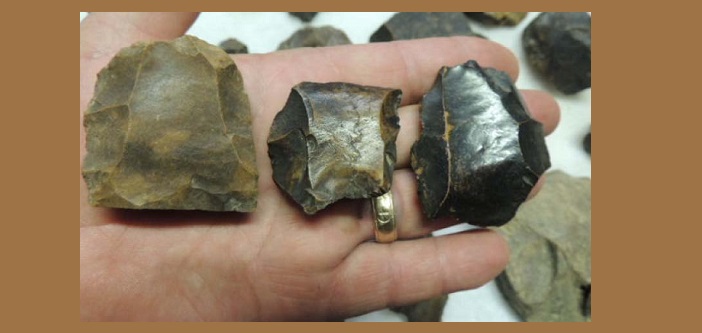
In Part 1, I shared the story of my initial experience in trying to get input from the mainstream American archaeology community regarding Levallois artifacts including cores I have found in southwest Indiana (e.g., Fig.1) They repeatedly told me that such lithic technology wasn’t present in this country. After many years of research and communication with many professionals, I came to realize a few things that I wasn’t aware of. The first thing is that just because someone is an archaeologist by profession it does not mean that they have any expertise in lithic technology from prehistoric times.
The second is that just because an archaeologist has expertise in Native American lithic technology, does not mean they have any knowledge about lithic technology of early man such as that found abroad, e.g., “Levallois.” This leads to the third and most disappointing which is that many mainstream archaeologists will pretend to know a great deal more about the subject than they actually do and, often, rather than admit that they don’t will fall into simply towing the party line and coming back with a standard mainstream answer should you offer them any kind of evidence that challenges their long held beliefs such as about our origins or how old were the “first Americans” or who might they have been.
I guess one lesson I have learned well is that PhD B.S. is still discernible as B.S. even to a window cleaner such as myself and even though the attempt to camouflage it in scholarly data is present.
After almost two decades of inquiry and research on early lithic technology it seems to me that there is still very little known by American archaeologists about what is considered late Lower or Middle Paleolithic technology such as that found in sites abroad which are “usually” associated with Neanderthal occupations. The terms “Acheulian,” “Mousterian,” or “Levallois” all seem to produce perplexed looks when mentioned in most archaeologist circles and among those who are considered experts in the area of ancient flint tools and flint knapping.
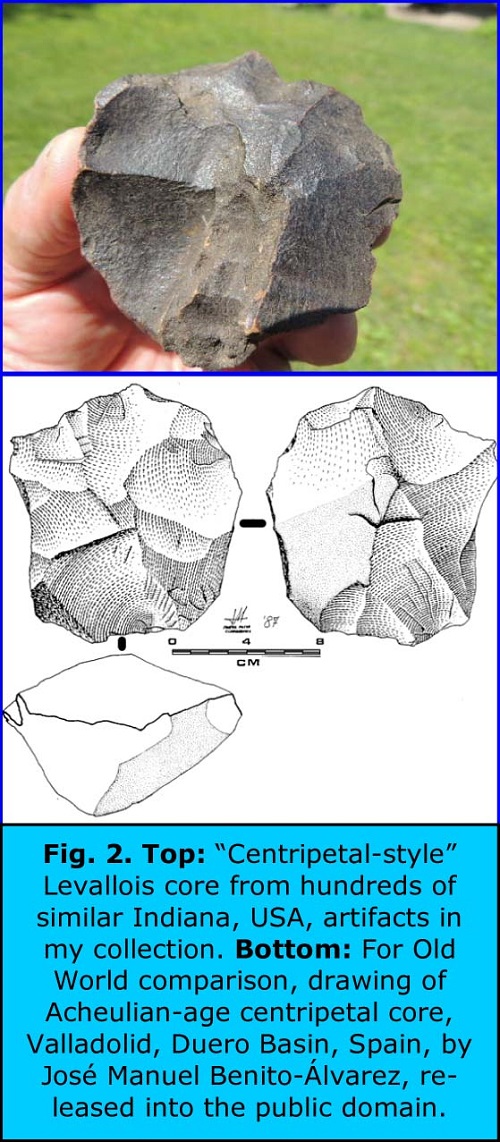
Having said all of these things, I would like to share a bit from an amateur perspective on the subject. I mentioned in my last PCN article that I was told by lithic experts abroad that the only way to identify Levallois lithic reduction was to have some of the cores from which the proposed Levallois flake tools were struck.
Levallois cores are very distinct in appearance and are rarely mistaken for later type technologies such as those blade cores from what is considered the Upper Paleolithic.
There are at least four known core preps which I have found to be considered Levallois which yield several different flake types used in producing a fairly wide variety of tools found from what is considered the late Lower and Middle Paleolithic. All of these are unmistakably different from the American Clovis and later technologies commonly found in the USA.
Those four include the most commonly described “tortoise” (refer to Fig. 1, above), the “centripetal or discoidal” (refer to Fig.2, above),“triangular or chapeau de gendarme,” and the “blocky” core (see Fig.3 below)- all of which yield a very specific type of tool which are similar in morphology and are mostly made on flakes rather than blades (which are the hallmark of most known Native American technologies).
When archaeologists or collectors discover lithic scatters or “debitage” left from Clovis or later archaic tool production it is very recognizable to the trained eye familiar with Native American tool industries. The same applies with Levallois technology and the debitage produced from it. It is unmistakable to the trained eye but can remain virtually invisible to the eye programmed to see Clovis and later evidence, which seems to have been the case for decades now among American archaeologists. They have been recognizing only the evidence that they have been trained to see. That can now change as there is sufficient evidence in enough quantity to recognize what has been considered late Lower and Middle Paleolithic technology all over the world and is now available for analysis here in the USA.
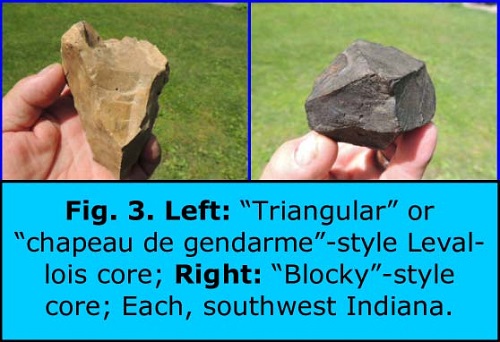
If “the cores tell the story” it can now be told because we have the cores! For this article I have included an example of each core preparation as well as an example point tool (see Fig.4 below) made on Levallois flakes from such cores. A close look at the cores will reveal the negative triangular scars from where triangular flakes were struck revealing the method of reduction.
Levallois lithic reduction has been shown to be a more productive method of tool making in general than the later blade technologies as a wider range of tools can be produced by making the tools on flakes rather than blades. Contrary to the most commonly held belief that later blade technologies such as Clovis or Solutrean were more advanced, I personally believe the Levallois reduction resulted in a much wider range of tools from the same basic core preps which leave one to conclude that it is actually more advanced and complex than those who are assumed to have come later in history.
Over the last several years I have witnessed many who claim expertise in flint knapping who are able to produce virtually every kind of Native American “arrowhead” or bifacial blade tool commonly seen within the known Clovis or later tool industries. Some talented knappers can produce a very fine Clovis point in a matter of minutes and other arrowheads present little challenge in reproduction; but rare are the ones who can reproduce Levallois tools. How the flakes are struck so systematically and consistently from the same core preparation remains a mystery to most. One simply cannot appreciate the complexity of the industry without having such an industry to observe and most American archaeologists have never seen much less handled tools from an actual Levallois assemblage.
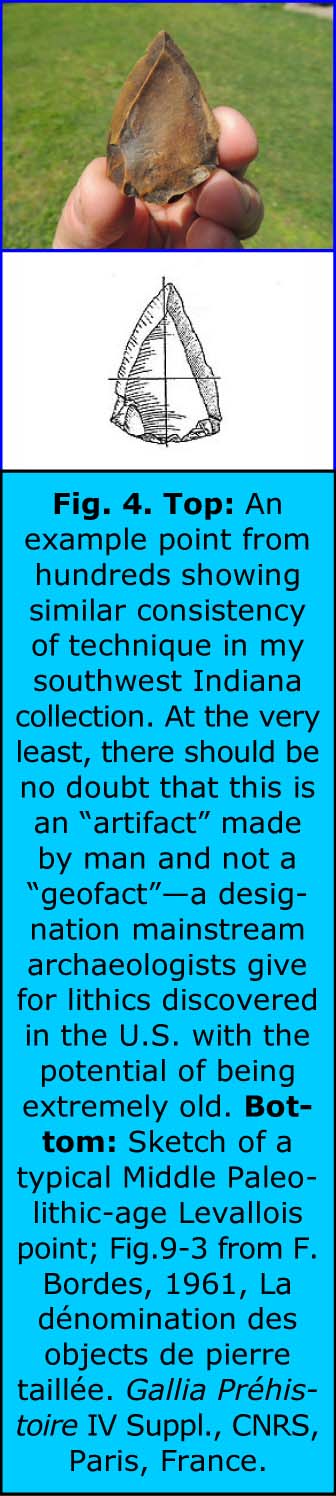 We have in recent years witnessed various claims of alleged “pre-Clovis” tools having been found. There are the tools from Meadowcroft Rock Shelter, Buttermilk Creek, Paisley Cave, Cactus Hill, Topper and others, each producing artifacts believed by the finders to represent cultures living here prior to those which produced the famed Clovis industry.
Unlike Clovis technology which has been found in sufficient quantity to establish an identifiable industry, none of the alleged pre-Clovis artifacts have been proven to be of an identifiable technology which has been seen anywhere else in the world in contexts believed to be older than Clovis, leaving only speculation and theory in regard to an actual identifiable “industry” to accompany the claims of a “pre-Clovis” origin.
This is not the case in regard to the assemblages of Levallois artifacts such as the ones being found in as many as eight different states now. These collections clearly display a specific identifiable technology commonly found in sites around the world which are always believed to be from contexts thousands of years older than any yet recorded in the USA. The scholarly critics of “pre-Clovis” claims often use the reasoning that none of the sites have produced a “coherent set of lithic artifacts” to justify the claims.
Having seen much of the lithic evidence from the sites such as Buttermilk Creek and Meadowcroft, I can understand the reluctance to welcome such scant evidence to support the claims because of the absence of a recognizable technology.
Levallois technology is not ambiguous when it is found, regardless of the location. The name is the first indicator in the process of identification…”prepared core.” When such cores are found, identification of the “industry” can begin and an understanding of the actual “technology” becomes comprehensive.
Although I am only showing a few cores and point tools in this article, there are hundreds more in my possession to support my claims of an actual “industry” based on Levallois reduction.
As I have stated previously, I am making no claims regarding the age of these artifacts but rather the “technology” of the tools which is clearly paralleled in the later Acheulian and Middle Paleolithic Mousterian industries of the Old World.
Although the images shown are some of the basic cores and points of the industry, there are also dozens of other tool types present in our assemblages such as burins, blades, hand axes, bolas, scrapers, planes, awls, ochers and effigies. Tools made on the cores themselves are also common, displaying the life of the core and its utilization as different tools during the reduction process of extracting flakes for points, blades and other utensils.
Although considered and labeled as “primitive man” technology when found abroad to support the proposed “out of Africa” human migration theory, I disagree with such labels and assumptions in regard to this technology. Levallois reduction obviously requires both planning and skillful execution to produce such an industry in such an efficient use of available lithic material resources.
The presence of what has been called “old world” technology here in the USA clearly shows that what is being taught in regard to our origins as a nation is wrong and needs to be acknowledged by those who are promoting such error. The evidence is as solid as the rock from which it is hewn. For the Silo (from PCN Vol7 Issue3)- Richard Doninger, a surface-artifact collector living in Evansville southwest Indiana.
Eds. Comment- Rick makes a very interesting case for a lithic technology that appears to be little-known to archaeologists in the U.S. There is still the problem that the artifacts are not documented as to the exact context of each, which, unfortunately, limits the value of the specimens.
However, if the technology is as abundant as Rick’s collection suggests, we simply recommend that he “re-collect” duplicate examples from specific locations with an exacting record of what he has found and where.
Avocational archaeology is a special section of Pleistocene Coalition News started by PC founding member, Dr. Virginia Steen-McIntyre, to encourage amateur archaeologists.
 SipSup is a new beverage drinking glass that communicates with smart phones via app technology to become an interactive media display and storage unit. When you have finished drinking your beverage of choice, digital photos and videos you have dropped into your glass via the SipSup app are left behind. The SipSup app enables you to keep your special moments only for yourself (private) or to make them visible to every person who happens to tap their phone to your glass (public). The social interaction possibilities are endless- many of us already spend a lot of time at coffeehouses or pubs, consider bringing your glass along- it would be a great way to meet new people and discover new forms of interaction- all via your hi-tech SipSup glassware.
  If that wasn’t enough, another feature called “post-it”, allows your guests to leave photos or videos on your glass and even write on a fun message. Hydration will never again be boring.
  A Slovenian start-up that prides itself on ‘out of the box’ thinking, the SipSup team have taken an object we all use on a daily basis and given it new functions. SipSup will stand out from the other glasses in your kitchen because of it’s distinct curved shape designed to naturally fit your hand. It’s base resembles the ripple effect of a drop falling into water and was inspired by the notion of “dropping moments into a glass”. You can get this great looking piece of smart glassware on Kickstarter. For more information email: [email protected]
Truth and Reconciliation Report – One Oneida Woman’s Perspective
Indian Residential Schools are a large part of Canadian History. I use the present tense. Every Canadian lives with the fallout of these schools which were to, “Kill the Indian in the Child.” Cultural Genocide the TRC [Truth and Reconciliation Commission CP] says in its opening paragraph.
In Canada, we think it a right and obligation for our children to come home safe. We kiss them on the first day of school, knowing that we will see them again when school is finished. How would you feel if your child never came home?

This happens today.
Families who live in small, fly-in communities have to have their children flown south to attend high school. Some never return. http://www.cbc.ca/news/canada/thunder-bay/first-nations-want-inquest-into-7-student-deaths-1.1239226
There are more Native children is the care of the government today than at the height of the Residential Schools. http://news.nationalpost.com/news/canada/a-lost-tribe-child-welfare-system-accused-of-repeating-residential-school-history-sapping-aboriginal-kids-from-their-homes
Rather than empathy or acknowledgement of the past, we are told to, “Just get over it.”
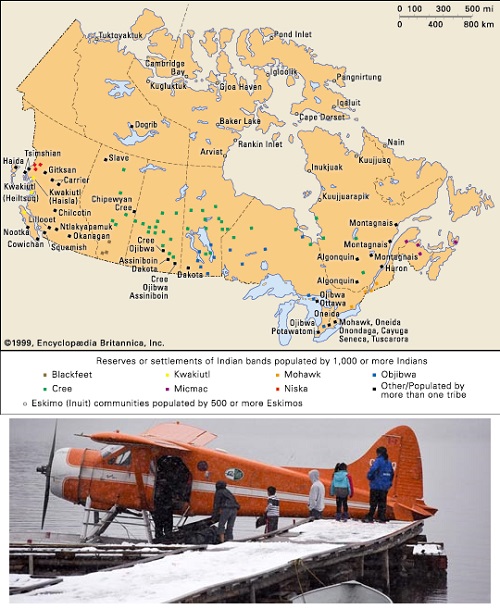
Before colonization, we had no abuse, no addictions. We had no poor. Our needs were met- meaning we were one of the richest people on earth (thank you, Professor John Milloy for pointing that out to me).
I have been told that, “Since the Jews got over the Holocaust that we should just get over it.” That is insulting to both me and those who are Jewish.
Get over it.
First Nations communities suffer from the effects of the Residential Schools by having Intergenerational Trauma. We alone are not the only people who have this. Those with a family history of addictions, or abuse, or neglect feel the same effects. We had a generation or two of people who did not see parenting. They saw institutionalized abuse. How could they possibly know how to parent when they left school?
Without proper healing sources in place, and without feeling stuck in the anger, hurt, and pain which comes from Trauma, no one recovers from it.

I can only speak for myself. My grandfather went to the Mush Hole in Brantford, Ontario. He was a bright student, plus when home, he spoke a couple of the Native Languages on our Six Nations Reserve. I am very proud of that.
However, while he says he (personally) was not sexually abused, he had friends who were. He was not allowed to speak his languages at school. He was denied medical care while at school, which caused permanent damage to his brain. My bright and intelligent grandfather became stuck in the poverty cycle. And, the addictions cycle. He couldn’t cope without the structure which was forced on him at school. He couldn’t function well on the reserve. What the school taught his was agriculture. He worked the tobacco fields when he could. Then, he was on welfare.
On top of his mental capabilities, the alcohol killed him inside. Because of him, my mother was raised in a non-Native foster home, not knowing she was Oneida until she was 18. Her foster home denied her access to knowledge of her family on the reserve which was 10 minutes away.
My mom’s foster family did the best they could according to the times. In the 1940’s and 1950’s, it was best to be seen bringing up a little Indian girl in a good Christian family, a family which included a foster father who also had an addictions issue.
Her upbringing effected how I was raised. She also did the best she could. She tried her best to be a good mom, a mom who loved and cared for her own biological children. But also kept them at bay emotionally. She did not know how to really bond as a mom.
Because of the Residential School, my mom did not learn how to properly parent. As for me, I looked for parents I could follow. I am doing the best I can. I hope I my kids do better.
I hope my kids see that while I am Oneida, that does not make me less-than a full person. I hope they see that the Oneida blood that we share is a privilege, something to be honoured and respected. I hope they see it as something that bonds us to other First Nations people around Turtle Island. We are a strong people. We didn’t die. We learned how to survive. Now, we are striving to learn how to live in peace again.
For, you see, the Residential Schools did not kill the Indian in the child. Even with the horrific events which happened, we did not die. We are blossoming as a rose. We will overcome and heal.
Anger needs to be let go. Treaties need to be upheld. If the Canadian government did not want to fulfill the treaties, why were they included in the Canadian Constitution? They are a matter of law. Deal with it, Harper. We don’t expect handouts. We need the highest levels of Canadian law respected and enforced. The government needs to honour their obligations which they proposed, agreed to, and reinforced in the Constitution in 1982.
There is Truth – they tried to kill us off. Now, please, let there be Reconciliation. We all need to acknowledge the past and present to make a future which honours the laws of Our Lands. We agreed to share our land for the benefit of all, not to be killed off. Let us all honour our agreements. For the Silo, Stephanie MacDonald

The Chopra Center has just announced that the 2015 Global Meditation for Compassion will be held on Saturday, July 11 at 9 a.m. PT In Carlsbad, CA at the Omni La Costa Resort & Spa and meditation will be accessible worldwide for free via livestream in both English and Spanish [see link below DE]. Gabrielle Bernstein, best-selling author and motivational speaker, will lead a conversation around meditation and compassion with Deepak Chopra, M.D., founder of The Chopra Center and best-selling author, and Ismael Cala, acclaimed CNN en Español anchor, best-selling author and speaker.
A 15-minute guided meditation led by Chopra will follow the discussion. In addition, the event will include videos and questions contributed from the global livestreamed audience along with inspiring musical performances and special guest appearances. The Chopra Center 2014 Global Meditation for Peace currently holds the Guinness Book of World Record title for the largest global meditation worldwide with 140,000 in attendance from nearly every country. This will be their second annual global meditation and they are expecting to unite more than 500,000 people worldwide – breaking 2014’s record by nearly four times.
The second annual global movement will also host 1,500 guests at the live event and unite individuals, families and groups across the world for the largest meditation gathering in history. In addition, the event will include videos and questions contributed from the global livestreamed audience along with inspiring musical performances and special guest appearances.

“The Chopra Center’s mission is to serve as the global source for balance, healing, transformation and the expansion of awareness. By creating an opportunity for the world to be a part of the largest guided meditation, we hope to create a more compassionate world,” said Chopra. “It is time to rediscover our common truth – that we are all one.” This year’s meditation aims to increase compassion worldwide, creating a movement towards a kinder, more connected culture. For more information on how to sign up or to learn more, please visit: http://www.chopra.com/globalmeditation.html or email: [email protected] Tickets to the live event are currently available for purchase for 49$USD+service fee at: https://tickets.brightstarevents.com/event/GlobalMeditation
 Please note, Outer Shores Expeditions is in no way affiliated with the ‘Haida Gwaii: On The Edge of the World’ nor is it portrayed in the documentary. What Hot Docs’ best Canadian Feature Documentary explores on film, Outer Shores Expeditions explores by classic wooden schooner.
Documentary film fans were given an intimate look into life on the Haida Gwaii archipelago during Toronto’s Hot Docs film festival in 2015, and now travelers can experience one of the planet’s most spectacular places for themselves with Outer Shores Expeditions, British Columbia’s leading sailing operator.
‘Haida Gwaii: On The Edge of the World’ was awarded top honours at the prestigious documentary film festival. Director Charles Wilkinson’s film about First Nations rights activists, ecologists and locals took home the Best Canadian Feature Documentary award, receiving praise from the Hot Docs festival jury for its “stunning cinematography.”
Toronto audiences were captivated by the film’s journey, as the documentary sold out all four of its screenings throughout the festival. It’s a journey travellers can also experience for themselves aboard Outer Shores Expeditions’ classic 70-foot wooden schooner Passing Cloud this summer.

To those of us familiar with Haida Gwaii, its people, and its history, it really doesn’t come as a surprise that a film placing this spectacular setting at its centre would enrapture audiences,” says Russell Markel, Captain and Founder, Outer Shores Expeditions. “You look around you and you have to believe that a talented filmmaker would find a perfect story of place and people in Haida Gwaii.”

‘Islands of the People’
 Outer Shores guests will be able to experience first hand the history and pre-history of the ‘Islands of the People.’ The expedition is dedicated to exploring and learning about the ecosystems, wildlife and cultural heritage also featured in ‘Haida Gwaii: On The Edge of the World.’ Excursions include Gwaii Haanas National Park Reserve, Haida Heritage Site, National Marine Conservation Area, ancient Haida villages, old-growth forests, estuaries, white-sand beaches and rocky shores.
Expedition Schedule
Outer Shores offers five “”Haida Gwaii Archipelago: Islands at the Edge expedition sailings from June to August.
Outer Shores Expeditions also offers expedition sailings of Pacific Rim National Park , Great Bear Rainforest, the Gulf Islands and Johnstone Strait and Blackfish Sound.
For more information on Outer Shores Expeditions, visit www.outershores.ca or call 1-855-714-7233 Please mention The Silo when contacting.
About Passing Cloud
Passing Cloud is a classic, 70′ schooner designed by William James Roué, famous for designing the legendary schooner Bluenose. Built in Victoria, BC, in 1974, Passing Cloud has a rich history on the BC Coast, renowned for her elegant design, exceptional accommodation, robust construction, and remarkable sailing abilities. Designed to sail around the world, Passing Cloud is an ideal vessel for small-group natural and cultural history expeditions throughout the BC Coast. Among her many features are Passing Cloud’s classic West coast wheelhouse, four private staterooms and gorgeous main salon.
About Outer Shores Expeditions
Outer Shores offers multi-day wildlife and cultural expeditions that are once-in-a-lifetime experiences. Guided by a crew of professional mariners and expert naturalists, Outer Shores Expeditions small groups of 6 to 8 guests explore, experience, and learn about the stunning wildlife and ancient cultures of coastal British Columbia while living and traveling aboard the 70′ classic wooden schooner Passing Cloud. President and Captain Russell Markel holds a PhD in marine biology and is dedicated to hosting guests from around the world while fostering stewardship and supporting conservation-based research in the areas where Outer Shores travels.
 The Qur’anic Concept of War (1979) is one of “4 core texts of jihadists” today. US military officials are finding summaries of it in various languages on captured and killed jihadists. Written by Pakistani Brigadier General S. K. Malik with the first English Indian reprint edition published by Himalayan Books in 1986. This is more than just a study of the military campaigns of the Muslim Prophet Muhammad between 610-630 A.D. against the various tribes inhabiting Saudi Arabia, and those who refused to pay protection-taxes to Muhammad. This book religiously reviews and quotes from the Muslim’s Holy Book: the Qur’an/Koran, detailing how Allah outlined the principles of Islamic warfare.
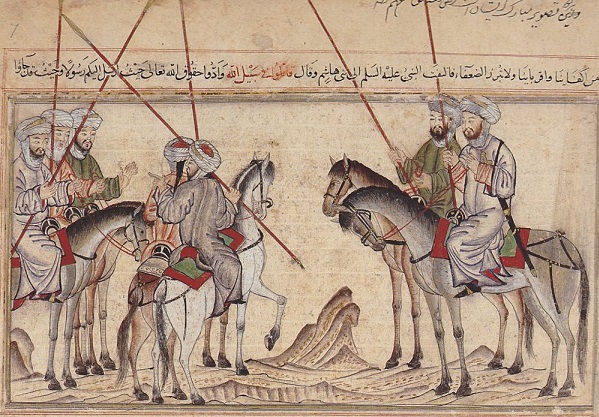
Hip-hop is not rap, although rap is part of hip-hop. Hip-hop is a culture and style that was born in the American city, growing out of the minds and experiences of predominantly African-American communities in late ’70’s New York. But by now it is everywhere. They love hip-hop in India and South America and here where I live in Norfolk, most farmers may not listen to hip-hop, but their kids certainly do.
Hip-hop is also a beat: the beat of rap music, the beat of the city beating here in the country, over the airwaves and out of car windows, vibrating through headphones in the air-conditioned cabs of tractors. It is a beat originally created by isolating the percussion breaks of jazz and funk records and remixing them live for dancing and block party revelry, and later to accompany the flowing, groove poetry of a whole new kind of poet: the rapper, Master of Ceremonies or MC—often poor and disenfranchised, but still creative, soulful and strong. Hip-hop, in its original form, could be considered a kind of technological, urban folk music, in the sense that its early practitioners did not record their sounds, and even resisted recording. Hip-hop was something that happened live.
But was rapping really a new form? There is another part of this story that has always interested me. In many of the African tribes from which slaves were stolen, the griot (pr. gree-oh) was a cultural fixture. Griots were to West-Africa what the bards or troubadours were to Europe: mobile repositories of history in the form of oral tradition; cultural history sung and chanted to the beat of drums. Except in the case of the griot, that beat was African.
Griots were also expected to improvise poetry based on the current social and political scene, and were known for their sharp wit and verbal mastery. In many parts of West-Africa, a party still isn’t a party without a griot.
It is a testimony to the resilience of slaves that, denied the right to speak their own languages, they found other ways to speak, and sing, their true voices. There were the work songs of course, documented before they disappeared in the field recordings of Alan Lomax. But consider other examples. As blacks embraced Christianity, they injected the forms of church with Africanness. Black preaching became famous for its emotional power, spontaneity and, you guessed it, verbal mastery. Black gospel, blues and then jazz took the existing forms of American church music, folk and brass military music and made them African. Jazz and blues again incorporated the principle of the masterful voice, not spoken this time, but sung through the instrument itself, giving us the improvised instrumental solo. And rock and roll is a whole other subject…
Given this history, hip-hop is seen as an urban innovation on an old theme and a turn, perhaps full circle, back to the centrality of The Word. Rap is not merely poetry to a beat: these words flow with and around beats to create layers of syncopation, tickling the mind while they move the body. They are polyrhythms with verbal content.
At this level hip-hop is an art form, and while we may not always like the content of an artist’s message, if we care about art we can still engage with it on the basis of its merits. And we may consider its context. Some people, even creative people, will respond to poverty and systemic oppression with anger and violence. Some will focus their desire on all the trappings of money and fame formerly denied them. It’s not so hard to fathom.
But there are some, a few, who go another direction for justice. These are the warrior-poets who seek from pain the gifts of understanding, even wisdom. Even love. Hip-hop is known to borrow motifs from kung-fu movies, because there, too, you find the archetype of the warrior-artist, skills honed to razor sharpness, delivering beat-downs with fists if necessary, but just as often with the mind itself.
Granted, you will not find much of this style of writing on the radio. But it’s out there. To dig deeper, Google “conscious hip-hop” or “underground hip-hop” and see where that takes you. Word. For the Silo, Chris Dowber.
The City of Buffalo is experiencing an economic and cultural resurgence. Visitors from around the globe have been enjoying the majestic Niagara Falls, Sabres, Bills and Bisons sporting events, breathtaking Canalside, and terrific shopping. Located just steps from Buffalo’s Metro Rail, Hyatt Regency Buffalo is a quick trip to many popular activities, cultural attractions and dining options.
In recent years, Buffalo has undergone an economic and cultural resurgence. Hyatt Regency Buffalo is proud partner with the Buffalo Loves Canada campaign and welcomes all residents from Canada to enjoy the city’s many attractions and rich architecture. Located just steps from Buffalo’s Metro Rail, Hyatt Regency Buffalo is a quick trip to many popular activities, including visiting the Buffalo Museum of Science and HarborCenter, catching an exciting Sabres, Bills or Bisons game, walking around breathtaking Canalside, or shopping at the Fashion Outlets of Niagara, Walden Galleria, Elmwood Village, or Boulevard Mall.

Additionally, Hyatt Regency Buffalo recently unveiled its luxurious new Penthouse Suite, a stunning high-end space with a panoramic view of the skyline of downtown Buffalo. The space is perfect for leisure or business travelers looking for a sophisticated retreat in the heart of downtown Buffalo—and for hosting exclusive corporate board meetings and executive retreats. Guests of the suite receive complimentary transportation in the hotel’s Mercedes-Benz shuttles, as well as their own personal concierge or meeting concierge.
Hyatt Regency has recently announced two exclusive “Maple Leaf” travel packages offering special rates to visitors from Canada. Buffalo is the perfect weekend destination for Canadians to watch hockey and football games, visit the U.S. side of Niagara Falls, and also offers a vibrant cultural scene as well as plethora of dining options.

The “Maple Leaf” package starts at $99 during weekends and $109 during holidays and mid-week. Canadians can also choose from the Maple Leaf PLUS package, which includes luxurious overnight accommodations, complimentary valet parking, a $25 Visa gift card, and 20% discount on rejuvenating treatments in luxurious Spa Alexis (closed on Sundays). Rates for the Maple Leaf PLUS package vary per day. Advance payment and proof of Canadian Residency are required at time of check in. Both packages are non-refundable and subject to availability. Please call 716.856.1234 or visit www.buffalo.hyatt.com for details and to make a reservation. Please mention the Silo when contacting. Blackout dates include Nov. 15, 28 & 29; Dec. 13 & 31; Jan. 24; and Feb. 21, 27 & 28. Additional blackout dates may be added. For the Silo, Katharine Nichols.

About Hyatt Regency Buffalo
Hyatt Regency Buffalo, 2 Fountain Plaza, is a 1922 landmark building in the heart of downtown. Adjacent to the Buffalo Convention Center and minutes from Niagara Falls, Ralph Wilson Stadium and Buffalo’s many cultural attractions, the hotel offers a contemporary retreat for work and play in the beautiful City of Lights. The property has 396 guestrooms, 17 suites and 23,479 square feet of flexible meeting space. Amenities include the StayFitTM fitness center, a 24 hour, state-of-the art business center and pet-friendly rooms. On-site dining includes E.B. Greens Steakhouse and Atrium Bar and Bistro. For reservations, call (716) 856-1234 or visit www.buffalo.hyatt.com.

About Hyatt Regency
The Hyatt Regency brand is an energizing hotel brand that connects travelers to whom and what matters most to them. More than 140 conveniently located Hyatt Regency urban and resort locations in over 30 countries around the world serve as the go-to gathering space for every occasion – from efficient business meetings to memorable family vacations. The brand offers a one-stop experience that puts everything guests need right at their fingertips. Hyatt Regency hotels and resorts offer a full range of services and amenities, including notable culinary experiences; technology-enabled ways to collaborate; the space to work, engage or relax; and expert planners who take care of every detail. For more information, visit hyattregency.com or facebook.com/HyattRegency.
John Buscema and the Crusty Bunkers Conan the Barbarian #45 Page 16 Original Art (Marvel, 1974). Wondrous and horrible things await in this page from “The Last Ballad of Laza-Lanti,” written by Roy Thomas. The ink on Bristol art has an image area of 10″ x 15″ and it is in Very Good condition. Let’s take a look at a single panel from the page on offer.
Buscema, John:John Buscema (American 1927-2002): After the departure of Jack Kirby from Marvel in 1970, John Buscema became one of the company’s most influential artists [Often called the Michelangelo of comics CP]. Buscema is perhaps most celebrated for his Bronze Age work on the Avengers, the Silver Surfer, and Conan the Barbarian. Buscema’s work proved so in-demand in the mid-seventies, he launched the John Buscema Art School which advertised for students in the pages of many Marvel titles. Stan Lee made appearances as a guest lecturer at Buscema’s school and the two collaborated on the wildly popular book How to Draw Comics The Marvel Way, Simon and Schuster, 1978. Comic Art

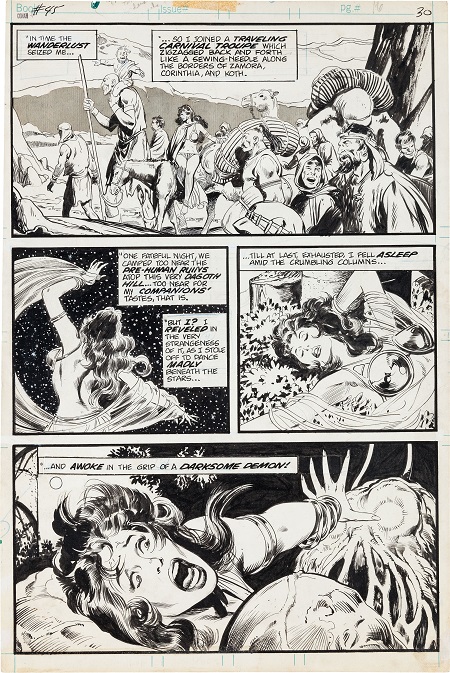
The page was sold to the highest bid which reached $US 2,210.75
Supplemental- L.A. Times’ John Buscema obituary – article from 2002
One of the best epic fantasy films of all time? Sure. We will go that far and say Yes!