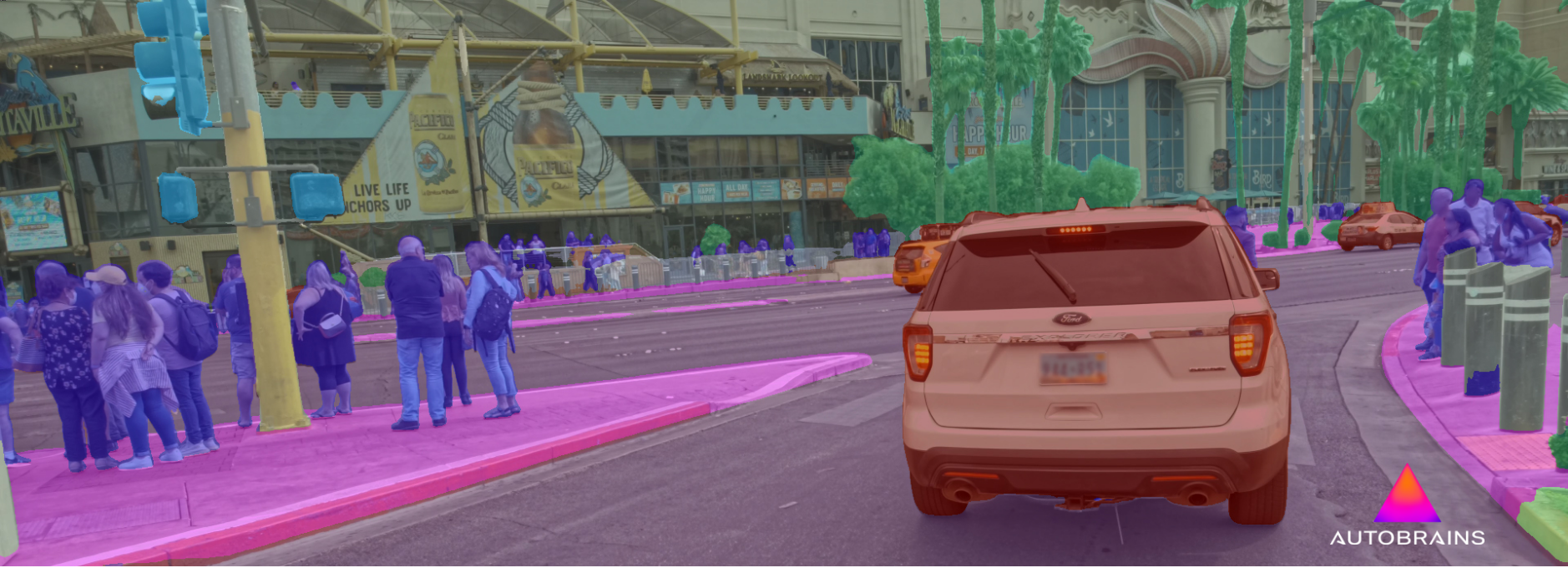
As the automotive industry evolves at a rapid-fire pace, trust in autonomous driving vehicles remains a critical challenge amid pervasive reliability concerns. Addressing this substantial industry pain point is automotive AI technology disruptor Autobrains Technologies. Its game-changing “Liquid AI” innovation—combining AI-assisted driving with its Autonomous Driving capabilities—directly addresses such marketplace reliability concerns, setting new standards for autonomous driving in the process.
“The safety debate surrounding AVs is more relevant than ever,” notes Autobrains Founder and CEO Igal Raichelgauz. “While AVs promise to reduce traffic fatalities by eliminating human error such as distracted driving, there are still significant reliability concerns for both manufacturers and drivers. The ongoing dialogue around AVs is critical, and we’re not only at the forefront of these discussions, but also advancing AI that prioritizes driverless car safety. We believe our Liquid AI technology offers a paradigm shift by mimicking human cognitive processes, thereby improving the system’s adaptability and decision-making in real-time. The automotive industry stands at a crossroad. We are proud to lead this charge, setting new standards for what AI in driving can achieve.”
Driving Change
Autobrains’ revolutionary Liquid AI technology enhances situational awareness and decision-making, providing a safer and more reliable driving experience. As AI continues to evolve, these advancements are crucial in building trust and adoption among drivers and manufacturers, alike. Combining AI-assisted driving with its Autonomous Driving capabilities, Liquid AI enhances situational awareness and decision-making, providing a safer and more reliable driving experience, which is crucial in building trust and adoption among both drivers and manufacturers. As AI continues to be integrated into vehicles, the question of generating trust becomes paramount.
“The reliability of Autonomous Driving has been a significant concern for both manufacturers and drivers,” said Raichelgauz. “We believe that our Liquid AI technology offers a paradigm shift by mimicking human cognitive processes, thereby improving the system’s adaptability and decision-making in real-time. Traditional AI, with its narrow focus, often falls short when faced with the unpredictable nature of real-world driving. Liquid AI, however, marks a significant departure from this approach. By incorporating principles of human cognition, it learns and adapts in real-time, ensuring that our driving systems are predictable and optimized for any real-world driving scenario.”
There are several key factors that differentiate Liquid AI from traditional AI systems. These include:
Robust Edge Case Handling: Effectively addresses the long tail of edge cases that traditional AI systems struggle with.
Human-Like Cognitive Processing: Mimics human decision-making, allowing for better handling of unpredictable real-world conditions.
Efficient Resource Utilization: Lower computational power requirements make it scalable across various vehicle models without compromising performance.
Real-Time Learning: Liquid AI adapts in real-time to new driving scenarios, ensuring higher accuracy and fewer false positives.
With a background in AI innovation spanning multiple disciplines, Raichelgauz is a distinguished technology executive who has co-founded several successful businesses, including Cortica—a company renowned for its self-learning technology in visual perception. Under his leadership, the Autobrains Liquid AI technology is now driving consequential change in the automotive industry by resolving autonomous vehicle reliability.
“The automotive industry stands at a crossroad,” Raichelgauz continued. “As we continue to integrate AI into our vehicles, the question of generating trust becomes paramount. Traditional AI, with its narrow focus, often falls short when faced with the unpredictable nature of real-world driving. Liquid AI, however, marks a significant departure from this approach. By incorporating principles of human cognition, it learns and adapts in real-time, ensuring that our driving systems are predictable and optimized for any real-world driving scenario. At Autobrains, we are proud to lead this charge, setting new standards for what AI in driving can achieve.” For the Silo, Merilee Kern.
Apple has just officially launched iOS 18, a major update that is set to redefine the iPhone experience with enhanced personalization, new capabilities, and seamless integration for gaming and entertainment. Available for download starting today, iOS 18 promises to bring a whole new level of interaction and performance for iPhone users starting with the older generation Xs and up to the latest 16 Pro.
Key Features of iOS 18
– Revamped User Interface (UI): iOS 18 introduces a more customizable interface, with dynamic widgets, a redesigned lock screen, and adaptive app layouts, making the experience more personal than ever.
– AI-Powered Personalization: Leveraging advanced AI, the system learns from user preferences, adjusting app recommendations, notifications, and even battery optimization to match individual habits. This feature promises a smarter, more intuitive user experience.
– Interactive Widgets: For the first time, iOS users can engage with widgets directly from the home screen. Whether it’s checking game stats or adjusting settings, this allows for quicker access to essential functions.
– Performance Boost: Apple has integrated the A18 Bionic chip into the latest iPhones, resulting in faster processing speeds, optimized graphics, and better multitasking capabilities. This is especially beneficial for gaming, where users will notice smoother graphics and higher frame rates.
– Expanded Gaming Capabilities: iOS 18 introduces Game Mode, a dedicated feature that optimizes performance while playing online games by reducing background processes and enhancing network stability. Users will experience faster response times and less lag, which is critical for real-time multiplayer games. This is coupled with Enhanced AR support, bringing online games to life in ways previously unseen.
– Cross-Device Connectivity: With iOS 18, gaming moves seamlessly across Apple devices. Game progress can now be synced across iPhone, iPad, and Mac, allowing users to pick up where they left off, regardless of the device they’re using.
Comparison with Previous iOS Versions
– Performance Gains: Compared to iOS 17, iOS 18 offers up to 30% faster app launches and a 20% increase in battery life for gamers. This is a result of the new battery optimization algorithms and improved processor efficiency.
– Gaming Improvements: The introduction of Game Mode and AR-enhanced experiences is a leap from previous iterations, positioning iOS 18 as the ideal platform for mobile gaming enthusiasts. Apple’s new Metal 3 framework [MetalFX upscaling first seen in an impressive 2022 demo showcasing Resident Evil Village running as a Mac port- see video below CP] also enhances the gaming experience with more detailed textures and faster loading times.
Impact on Online Gaming
iOS 18’s Game Mode and improved connectivity features ensure that mobile gamers can enjoy uninterrupted, high-performance gameplay on online platforms. This feature helps tackle a longstanding challenge of latency and performance dips during competitive play.
“iOS 18 transforms the online gaming landscape by making iPhone not just a communication device, but a full-fledged gaming console in the palm of your hand. With its advanced features, smoother gameplay, and seamless cross-device experience, iOS 18 is a game-changer,” said Vadim Khrulev, Founder and CEO at thesolitaire.com.
With iOS 18, Apple is once again pushing the boundaries of what is possible on a mobile device. For gamers, content creators, and everyday users, the new OS offers unmatched personalization, performance, and cross-platform experiences. As the gaming industry continues to expand, iOS 18 ensures that iPhone remains at the forefront of the digital entertainment world.
This Article is 95.6% Made by Human / 4.4% by Artificial Intelligence
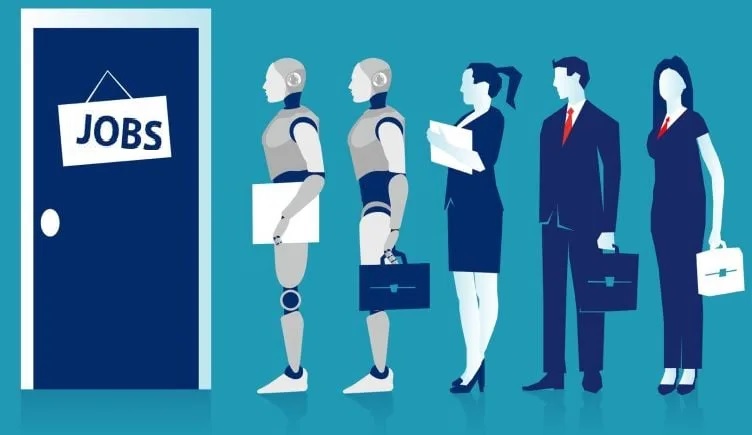
One of the most concerning uncertainties surrounding the emergence of artificial intelligence is the impact on human jobs.
100% Satisfaction Guarantee
Let us start with a specific example – the customer support specialist. This is a human-facing role. The primary objective of a Customer Support Specialist is to ensure customer satisfaction.
The Gradual Extinction of Customer Support Roles
Within the past decade or so, several milestone transformations have influenced the decline of customer support specialists. Automated responses for customer support telephone lines. Globalization. And chat-bots.
Chat-bots evolved with the human input of information to service clients. SaaS-based products soon engineered fancy pop-ups for everyone. Just look at Uber if you want a solid case-study – getting through to a person is like trying to contact the King of Thailand.
The introduction of new artificial intelligence for customer support solutions will make chat-bots look like an AM/FM frequency radio at the antique market.
The Raging Battle: A Salute to Those on the Front Lines
There are a handful of professions waging a battle against the ominous presence of artificial intelligence. This is a new frontier – not only for technology, but for legal precedent and our appetite for consumption.
OpenAI is serving our appetite in two fundamental ways: text-based content (i.e. ChatGPT) and visual-based content (i.e. DALL·E). How we consume this content boils down to our own taste-buds, perceptions and individual needs. It is all very human-driven, and it is our degrees of palpable fulfillment that will ultimately dictate how far this penetrates the fate of other professions.
Sarah Silverman, writer, comedian and actress sued the ChatGPT developer OpenAI and Mark Zuckerberg’s Meta for copyright infringement.
We need a way to leave a human mark. Literally, a Made by Human insignia that traces origins of our labor, like certifying products as “organic”.
If we’re building the weapon that threatens our very livelihood, we can engineer the solution that safeguards it.
The Ouroboros Effect
If we seek retribution for labor and the preservation of human work, we need to remain ahead of innovation. There are several action-items that may safeguard human interests:
Consolidation of Interest. Concentration of efforts within formal structures or establish new ones tailored to this subject;
Litigation. Swift legal action based on existing laws to remedy breaches and establish legal precedents for future litigation;
Technological Innovation. Cutting-edge technology that: (a) engineers firewalls for preventing AI scraping technologies; (b) analyzes human work products; and (c) permits tracking of intellectual property.
Regulatory Oversight. Formation of a robust framework for monitoring, enforcing and balancing critical issues arising from artificial intelligence. United Nations, but without the thick, glacial layers of bureaucracy.
These front-line professionals are just the first wave – yet if this front falls, it will be a fatal blow to intellectual property rights. We will have denied ourselves the ideological shields and weapons needed to preserve and protect origins of human creativity.
At present, the influence of artificial intelligence on labor markets is in our own hands. If you think this is circular reasoning, like some ouroboros, you would be correct. The very nature of artificial intelligence relies on humans.
Ouroboros expresses the unity of all things, material and spiritual, which never disappear but perpetually change form in an eternal cycle of destruction and re-creation.
Equitable Remuneration
Human productivity will continue to blend with artificial intelligence. We need to account for what is of human origin versus what has been interwoven with artificial intelligence. Like royalties for streaming music, with the notes of your original melody plucked-out. Even if it’s mashed-up, Mixed by Berry and sold overseas.
These are complex quantum-powered algorithms. The technology exists. It is along the same lines of code that is empowering artificial intelligence. Consider a brief example:
A 16-year old boy named Olu decides to write a book about growing-up in a war torn nation.
✅Congratulations on your work, Olu!
47.893% Human / 52.107% Artificial
Meanwhile, back in London, a 57-year old historian named Elizabeth receives an email:
✅Congratulations Elizabeth, your work has been recycled!
34.546% of your writing on the civil war torn nation has been used in an upcoming book publication. Click here to learn more.
We need a framework that preserves and protects sweat-of-the-brow labor.
As those on the front-line know: Progress begets progress while flying under the banner of innovation. If we’re going to spill blood to save our income streams – from content writers and hand models to lawyers and software engineers – the fruit of our labor cannot be genetically modified without equitable remuneration.
Ottawa-Funded Misinformation Detection Tool to Rely on Artificial Intelligence
Canadian Heritage Minister Pascale St-Onge speaks to reporters on Parliament Hill after Bell Media announces job cuts, in Ottawa on Feb. 8, 2024. (The Canadian Press/Patrick Doyle)
A new federally funded tool being developed with the aim of helping Canadians detect online misinformation will rely on artificial intelligence (AI), Ottawa has announced.
Heritage Minister Pascale St-Onge said on July 29 that Ottawa is providing almost $300,000 cad to researchers at Université de Montréal (UdeM) to develop the tool.
“Polls confirm that most Canadians are very concerned about the rise of mis- and disinformation,” St-Onge wrote on social media. “We’re fighting for Canadians to get the facts” by supporting the university’s independent project, she added.
Canadian Heritage says the project will develop a website and web browser extension dedicated to detecting misinformation.
The department says the project will use large AI language models capable of detecting misinformation across different languages in various formats such as text or video, and contained within different sources of information.
“This technology will help implement effective behavioral nudges to mitigate the proliferation of ‘fake news’ stories in online communities,” says Canadian Heritage.
With the browser extension, users will be notified if they come across potential misinformation, which the department says will reduce the likelihood of the content being shared.
Project lead and UdeM professor Jean-François Godbout said in an email that the tool will rely mostly on AI-based systems such as OpenAI’s ChatGPT.
“The system uses mostly a large language model, such as ChatGPT, to verify the validity of a proposition or a statement by relying on its corpus (the data which served for its training),” Godbout wrote in French.
The political science professor added the system will also be able to consult “distinct and reliable external sources.” After considering all the information, the system will produce an evaluation to determine whether the content is true or false, he said, while qualifying its degree of certainty.
Godbout said the reasoning for the decision will be provided to the user, along with the references that were relied upon, and that in some cases the system could say there’s insufficient information to make a judgment.
Asked about concerns that the detection model could be tainted by AI shortcomings such as bias, Godbout said his previous research has demonstrated his sources are “not significantly ideologically biased.”
“That said, our system should rely on a variety of sources, and we continue to explore working with diversified and balanced sources,” he said. “We realize that generative AI models have their limits, but we believe they can be used to help Canadians obtain better information.”
The professor said that the fundamental research behind the project was conducted before receiving the federal grant, which only supports the development of a web application.
Bias Concerns
The reliance on AI to determine what is true or false could have some pitfalls, with large language models being criticized for having political biases.
Such concerns about the neutrality of AI have been raised by billionaire Elon Musk, who owns X and its AI chatbot Grok.
British and Brazilian researchers from the University of East Anglia published a study in January that sought to measure ChatGPT’s political bias.
“We find robust evidence that ChatGPT presents a significant and systematic political bias toward the Democrats in the US, Lula in Brazil, and the Labour Party in the UK,” they wrote. Researchers said there are real concerns that ChatGPT and other large language models in general can “extend or even amplify the existing challenges involving political processes posed by the Internet and social media.”
OpenAI says ChatGPT is “not free from biases and stereotypes, so users and educators should carefully review its content.”
Misinformation and Disinformation
The federal government’s initiatives to tackle misinformation and disinformation have been multifaceted.
The funds provided to the Université de Montréal are part of a larger program to shape online information, the Digital Citizen Initiative. The program supports researchers and civil society organizations that promote a “healthy information ecosystem,” according to Canadian Heritage.
The Liberal government has also passed major bills, such as C-11 and C-18, which impact the information environment.
Bill C-11 has revamped the Broadcasting Act, creating rules for the production and discoverability of Canadian content and giving increased regulatory powers to the CRTC over online content.
Bill C-18 created the obligation for large online platforms to share revenues with news organizations for the display of links. This legislation was promoted by then-Heritage Minister Pablo Rodriguez as a tool to strengthen news media in a “time of greater mistrust and disinformation.”
These two pieces of legislation were followed by Bill C-63 in February to enact the Online Harms Act. Along with seeking to better protect children online, it would create steep penalties for saying things deemed hateful on the web.
There is some confusion about what the latest initiative with UdeM specifically targets. Canadian Heritage says the project aims to counter misinformation, whereas the university says it’s aimed at disinformation. The two concepts are often used in the same sentence when officials signal an intent to crack down on content they deem inappropriate, but a key characteristic distinguishes the two.
The Canadian Centre for Cyber Security defines misinformation as “false information that is not intended to cause harm”—which means it could have been posted inadvertently.
Meanwhile, the Centre defines disinformation as being “intended to manipulate, cause damage and guide people, organizations and countries in the wrong direction.” It can be crafted by sophisticated foreign state actors seeking to gain politically.
Minister St-Onge’s office has not responded to a request for clarification as of this posts publication.
In describing its project to counter disinformation, UdeM said events like the Jan. 6 Capitol breach, the Brexit referendum, and the COVID-19 pandemic have “demonstrated the limits of current methods to detect fake news which have trouble following the volume and rapid evolution of disinformation.” For the Silo, Noe Chartier/ The Epoch Times.
“Digital Domestic Dialogues” stages a near future in which technology has acquired an emotional and sensitive intelligence: it is capable of exciting itself and others through everyday gestures as an analog and primordial archive of human communication, culture and social dynamics.
Robots and users interact with a range of seemingly familiar objects through simple and natural gestures, triggering scenarios of everyday wonder. The collection, born out of a design exploration within the Habits Design Studio team, is a reflection on the poetic role of technology in the digital evolution of the domestic scenario. Technical Partners: Laminam, Giovanardi
COSMO
“Cosmo” is a lamp born from the desire to infuse new life into the act of lighting; the idea is to return to the primordial concept of fire, which through propagating from one body to another expands the quantity and at the same time transfers the luminous qualities of the flame.
“Cosmo” is able to learn the characteristics of the light source placed below it, detecting its intensity, color, movement, returning the effect to the environment and creating dynamic light scenarios.
The user is called upon to create the desired atmosphere himself by experimenting with direct sources, such as a candle flame or telephone flashlight; or by showing the lamp a video of a sunset, or another special moment he can evoke a light scenario. Turning it on thus becomes once again an exciting moment of awe and wonder.
The design of the lamp draws inspiration from scientific representations of black holes, the only phenomenon found in nature able to absorb light radiation. The captured light, is then returned to the environment dynamically and three-dimensionally by the spherical diffuser, allowing the creation of a 360° light scene, similar to HDRI images used in digital rendering software.
“Cosmo” redefines the boundaries of properties normally attributed to lighting fixtures with its ability to learn, imitate and stage emotions through light. Project by Selma Antonellini, Habits Design
RITO
The coat rack, a familiar but often overlooked object, is the subject of this project, which offers a contemporary reinterpretation of it with the product “Rito”; no longer just a support point, but an active companion that enriches the daily routine and transforms the experience of entering the home.
Thanks to artificial intelligence, “Rito”reacts to the presence of inhabitants, and recognizes when clothes and objects are hung or removed, interpreting the situation and animating the entrance area with dynamic projections on the wall.
The name “Rito” stems from a reflection on the fact that moments of entry and return home, though fleeting and temporary, are precious fragments of our lives, each with its own unique meaning and value. While some may be more ordinary and repetitive, such as returning after a day’s work or a morning walk with the dog, others can be more special and emotional, like returning after a long journey.
Regardless of the nature of the return, “Rito” aims to transform every entry and departure from home into a moment of warmth and hospitality. Its projections bring the wall to life, animating it with contextual content.
Before leaving the dwelling, “Rito” transforms the wall into a dynamic and inspiring space, offering motivational content, helpful tips, and personalized reminders. Upon return, it welcomes with tailor-made evocative scenarios, reigniting the surrounding environment and making the return even more pleasant and familiar. Project by Ilaria Tarozzi and Ilaria Vitali, Habits Design
VISIONARIA
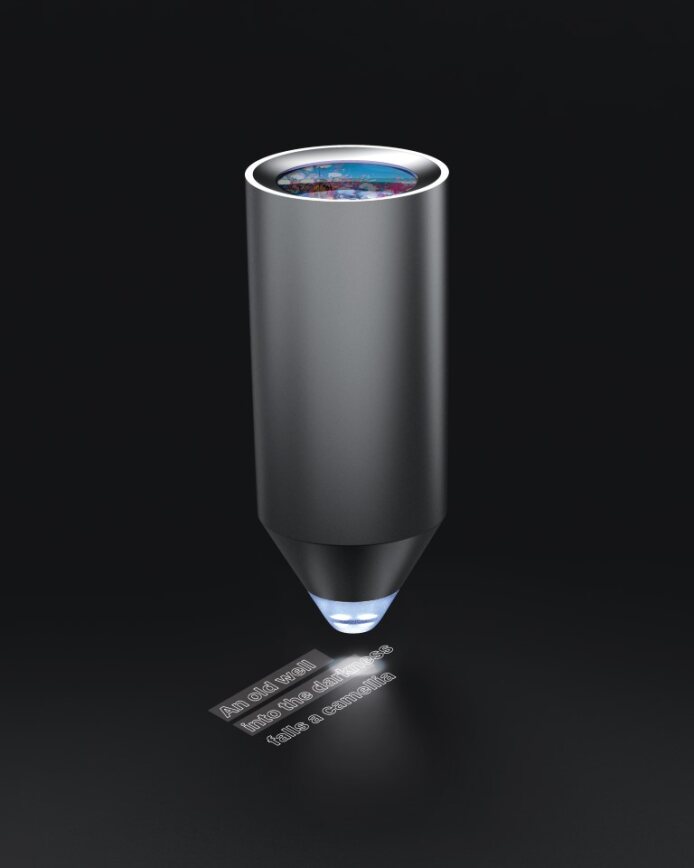
VISIONARIA is a digital device that combines literary tradition with artificial intelligence, offering an innovative reading experience. Digital integration enhances the potential of printed material and opens up new imaginative horizons, transforming reading into a visual and artistic experience.
By swiping across the lines of a page in a book, similarly to how we would underline a beloved or noteworthy phrase, VISIONARIA recognizes the text. The selected phrase is then instantly input as a prompt into a dedicated AI generator, aiming to create an image of the book scene that can be viewed in real-time.
This mode of consumption, aided by the product’s pencil-like shape, introduces a new dimension to the reading experience, encouraging increased engagement that can be intimate and profound or shared on larger devices such as smartphones, TVs, and more, ensuring flexibility depending on the context – be it at home for relaxation and entertainment, in education, enhancing the consumption of educational content, or in public settings, stimulating imagination in artistic installations.
With VISIONARIA, literature evolves and broadens the spectrum of an age-old activity through an extremely accessible mode, towards unexplored scenarios in the world of culture and entertainment. Project by Alberto Milano, Michele Poggi, Marco Rissetto, Habits Design
1g1lm
1g1lm represents the unusual marriage of two seemingly incompatible units of measurement: “g” for weight in grams and “lm” for luminous flux in lumens. This lamp was born from a simple but fascinating question, “What would be the effect if light had a tangible weight?”
To visualize the weight, the lamp uses an elastic fabric on top. By placing an object on top of it, the fabric deforms, generating a unique and unrepeatable aesthetic because it is shaped directly by the weight, not predetermined by the designer. In addition, as the deformation increases, so does the intensity of light. Due to the light diffusion of the fabric, the light seems to take shape and weight. In the act of placing and taking objects, an impossible interaction with the very essence of light is realized, made solid and tangible for a moment.
1g1lm writes a new equation between light and matter, giving birth to a new ritual rich in poetry and at the same time exploring new alternative scenarios: proposing, in contrast to the digitization of the real, to make, through technology, concrete experiences that were once ephemeral and intangible.
Habits Design
Habits is a multidisciplinary industrial design studio, founded in 2004 by Innocenzo Rifino and Diego Rossi in Milan. The work of the studio is focused on technological and interactive projects of international relevance, partnering with companies to design timeless products and experiences.
The team is composed of industrial designers, electronic and mechanical engineers, model makers, interaction and visual designers, and interior designers with a global point of view. Recognizing the unique Asian technological know-how, Habits started a branch in Bangkok in 2021.With over 20 years of experience in a wide range of industries, today Habits mainly covers digital products, home appliances, automation, lighting, UX/UI, and phygital interfaces.
The team awarded more than 180 international design prizes such as Red Dot, IF, Compasso d’Oro, Design Plus, Good Design, and German Design Award. “We study science and art. We design new habits. Prototyping our ideas, embedding electronics, we reduce the gap between physical and digital.”
Laminam
Pioneers since the beginning.
Laminam was born in the early 2000s, following the invention of production technologies to create ultra- thin ceramic surfaces of large dimensions. A pioneering company, it was the first to revolutionize the ceramics market, giving new impetus to a mature sector, betting on the intuition of creating large architectural surfaces and launching innovative sizes and thicknesses on the market. Over the years, the company has developed a production process characterized by innovative methods and highly automated technologies typical of Industry 4.0 such as digital decoration systems, dry cutting systems and internal logistics managed by automatic laser-guided vehicles. These are methods and technologies that increase energy efficiency while reducing environmental impact.
Today Laminam produces and offers a range of eclectic and versatile large ceramic surfaces used in many applications – from traditional and advanced architecture to furniture and design – distributed in over 100 countries worldwide. Over the years, the series have been enriched with new textures and finishes to enhance the creativity of designers, architects and anyone who wants to give a new connotation to their spaces.
Giovanardi
Giovanardi designs, industrializes and manufactures supports for in-store communication (displays, merchandising, shop windows, shop in shop, technical packaging) and for art.
Giovanardi’s history began in 1919 as a manufacturer of plaques and dials: today Giovanardi SpA is an advanced, certified company, structured to process projects of increasing complexity, according to up-to-date technologies, with a network of accredited partners and an attentive, flexible, punctual client-service. For 100 years it has been shaping ideas.For the Silo, Elena Assante.
How Climate Change Could Transform Cities into a Dune-Like Landscape
Dune’s cinematic and literary success reflects our fascination with desert landscapes. But the vast deserts of Arrakis, the movie’s fictional planet, hold a deeper meaning. They serve as a cautionary tale for our own planet threatened by desertification.
A new study by our friends at Top10Casinos.ca reveals how Canadian and other global cities threatened by climate change would look in the Dune Universe as TikTok searches around Dune: Part Two and climate change spike 7,700% in just 30 days.
Dune: Part Two, is already reaching massive box office milestones surpassing $150 million usd/ $204 million cad, and TikTok searches for the ‘new dune movie’ have soared 4,606% in just 30 days. In the past month, searches around the movie’s desert-like filming locations have increased 141%, while queries related to ‘climate crisis 2024’ have spiked 3,100% in the social media platform.
Known for its amazing cinematography and striking desert visuals, Dune’s landscape is something that makes it instantly recognisable. But the movie’s vast deserts are more than just a stunning backdrop. They serve as a stark warning of a potential future for our own world impacted by climate change.
Do Canada’s iconic outdoor skating rinks face a frosty future? While bundling up for harsh winters is a national pastime, a worrying trend is emerging. Since 1950, winter temperatures have soared by over 3°C, outpacing global warming by a factor of three.
Toronto, Ontario
Toronto, once known for its predictable seasons, is grappling with the impacts of climate change. The city is experiencing a rise in average temperatures, leading to more frequent and intense heat waves that strain infrastructure and threaten public health. Winters are becoming shorter and less severe, with unpredictable precipitation patterns bringing both heavier downpours that overwhelm storm drains and periods of drought that stress green spaces and water resources.
Vancouver. British Columbia
Like many coastal, seaport cities, Vancouver is feeling the brunt of climate change. Rising temperatures are a key concern, with projections for hotter, drier summers and wetter winters. Sea levels are also on the rise, threatening coastal areas with flooding. The City of Vancouver itself is planning for up to a 1.4 meter rise by 2100, which would inundate parts of the city during major storms.
Montreal, Quebec
Montreal’s climate is expected to experience significant changes due to climate change. Average temperatures are projected to rise by 1.5-2.3°C by mid-century, leading to more frequent and intense heat waves. This can strain infrastructure, harm public health, and disrupt outdoor activities. The city is also likely to see increased precipitation extremes, with heavier rainfall events and the potential for more flooding.
Niagara Falls, Ontario
Studies suggest Lakes Erie and Ontario, feeding the Niagara River, could see water levels drop a meter by 2050 due to increased evaporation and less snowfall. This decline could impact the Falls’ power and beauty. Additionally, more extreme weather events like flooding could damage surrounding areas. While milder winters might extend tourism, climate change poses significant ecological and aesthetic challenges.
A romantic restaurant opens in Outer SpaceStarting from 2025, it will be possible to propose during an intimate dinner in space. On board a space capsule lifted by a stratospheric balloon, lovers will have the opportunity to savor an exceptional meal prepared by a French Michelin-starred chef and served by an AI-powered robot.
The agency ApoteoSurprise, specialized in orchestrating extravagant marriage proposals in Paris, is launching a brand-new service priced at 750,000 euros/ $1.1 million cad, allowing the romantics of tomorrow to ask for their beloved’s hand at an altitude of 35 kilometers. Upon their arrival at the spaceport, a pilot will welcome the couple and invite them to board a spherical and futuristic space capsule equipped with top-notch amenities for their comfort. In the center of the cabin, a table will be elegantly set, reminiscent of the most refined Parisian restaurants. The lovers will be introduced to StellarEmbrace, the robot that ApoteoSurprise developed in collaboration with a British startup. Equipped with artificial intelligence, the robot will adapt to the emotions and desires of the couple, providing a truly unique interaction. From the moment they meet, StellarEmbrace will address the young woman by her name and, presenting her with a bouquet of roses, announce that a gourmet dinner for two in space awaits. Lifted by a helium-inflated stratospheric balloon, the pressurized capsule will then embark on a peaceful two-hour ascent, offering breathtaking 360° views of our planet through its immense windows. At an altitude of 35 kilometers, the space module will be above 99% of Earth’s atmosphere, allowing the couple to gaze at the curvature of the Earth, its blue halo, and the total darkness of space. Like only 600 astronauts before them, the lovers will experience the overview effect, a cognitive shift that will redefine their view of the world and connect them to all of humanity. The woman and her partner will take their seats at the table, and for three hours, the robot will serve them a five-course gourmet dinner with wines and champagne specially crafted for the occasion by a renowned French chef with two Michelin stars. A carefully selected playlist will accompany the culinary experience, featuring iconic tracks such as “Space Oddity” (David Bowie), “Across the Universe” (The Beatles), or “Walking on the Moon” (Police). Just before dessert, StellarEmbrace will playfully interrupt the tasting to inform the man that he has forgotten something important. The robot will promptly bring him a luminous box that a secret code will open. Suddenly, the suitor will remember the code and enter it. The box will split in two, revealing a luxurious case containing an engagement ring. The man will then propose to his beloved, sealing his love in the eternity of space. A little later, the capsule will begin its slow descent. After a two-hour journey, the betrothed will be back on Earth, discovering that the robot has recorded every moment of their voyage, from their arrival at the capsule to their tender farewells.
About ApoteoSurprise: ApoteoSurprise is a high-end agency specializing in the organization of spectacular marriage proposals in Paris. Founded in 2006 by the aeronautical engineer Nicolas Garreau, the company offers 30 turnkey proposal packages online. These include the appearance of Cinderella’s carriage with a magical slipper, a shower of 1000 roses covering a yacht during a dinner cruise, the sending of a messenger dove to one’s beloved, a limousine tour with a super-bright declaration of love displayed at the foot of the Eiffel Tower, and starting from 2027, a romantic voyage around the Moon. Available at prices ranging from 290 euros to 125 million euros, ApoteoSurprise’s extravagant engagements have enchanted over 2000 lovers in its 17 years of operation. This includes celebrities such as heads of state, Hollywood actors, television stars, or players from the FIFA World Cup.
CENTER FOR ITALIAN ART ANNOUNCES NEW EXHIBITION: NANNI BALESTRINI: ART AS POLITICAL ACTION ONE THOUSAND AND ONE VOICES ON VIEW NOW UNTIL- JUNE 22, 2024
Nanni Balestrini, Cavallo, 1963. Collage on paper. Private collection, courtesy Frittelli arte contemporanea, Florence
(New York, February/March, 2024) – The Center for Italian Modern Art (CIMA) has launched its new exhibition, NANNI BALESTRINI: ART AS POLITICAL ACTION. ONE THOUSAND AND ONE VOICES, curated by Marco Scotini. This is the first retrospective exhibition in the United States of Nanni Balestrini (1935-2019), an Italian experimental visual artist, poet, and novelist known for his revolutionary artistic practice and passionate involvement in the social-political movements of the 1960s and 1970s. Born in Milan in 1935, Balestrini was a key protagonist of post-WW2 Italian literary and social avant-garde movements: he approached experimental poetry with a visual sensibility stemming from the artistic use of collage, and with a compositional practice that gave importance to the editing and recombining of existing texts (especially newspapers, magazines, and political slogans) in search for the expression of a collective enunciation.
Nanni Balestrini born July 1935 died May 2019
Nanni Balestrini, 65000 Ètudiants, 1972. Mixed media on panel. Collezione Emilio Mazzoli, Modena
Nanni Balestrini, Cronogramma, 1960s. Collage on paper. Private collection.
He worked side by side with contemporary composers interested in the creative potential of stochastic music and the relationship between computer technology and art. Much of his radical artistic and literary research also developed in dialogue with his participation in the student and workerist movements of the late 1960s and 1970s, and their explosive political charge. Much emphasis has been placed on the exclusively typographical character of writing in Balestrini’s artistic works. This exhibition will instead draw attention to the double acoustic and visual level of Balestrini’s word or, better yet, to what Paolo Fabbri described as its “phonic-optic indiscernibility.”
NANNI BALESTRINI: ART AS POLITICAL ACTION. ONE THOUSAND AND ONE VOICES, curated by Marco Scotini, focuses on two crucial decades in the career of Balestrini, the 1960s and the 1970s. It includes over 70 works by the artist, along with a range of documentary material. The works from the 1960s illustrate a creative phase when Balestrini shared research interests with Luigi Nono, one of the most important 20th-century experimental composers, and when the neo-avant garde literary movement Gruppo 63 was also founded. The creative relationship between Balestrini and Nono lasted an entire decade, and the exhibition sheds light on the search for the disalienation of the word pursued by both, as well as on their use of technology as a way to seize and subvert the means of industrial production and explore their artistic potential.
The final works in the exhibition date back to the late 1970s; some of them were conceived in connection with a poem dedicated to the New York City electricity blackout of 1977. Planned as an “action for voice” to be performed by Greek-Italian lyricist and vocal experimenter Demetrio Stratos in May 1979, the work was never performed due to the premature death of Stratos and Balestrini’s indictment surrounding the political movement Autonomia Operaia.
The exhibition also includes a reconstruction of Balestrini’s Tape Mark I (1961), one of the earliest examples of computer-generated art. A combinatory poem produced by an algorithm written in the Unix programming language on a massive IBM mainframe computer, Tape Mark I anticipates many of the contemporary questions surrounding Artificial Intelligence, and was featured in the 1962 edition of the Bompiani Literary Almanac, which was dedicated to “the application of computers to ethics and literature”, a theme of utmost relevance today.
To provide context to Balestrini’s work, the show features a selection of early words-in-freedom works by Futurist artist Carlo Carrà, a form of avantgarde visual poetry that liberated words and letters from the conventions of grammar and syntax, making them part of visual and performative compositions. This technique was co-opted by the Italian Neoavanguardia in the 1960s, due to the revolutionary potential of the early Futurist movement. NANNI BALESTRINI: ART AS POLITICAL ACTION. ONE THOUSAND AND ONE VOICES is on view at CIMA (421 Broome Street, 4th Floor, New York, NY 10013) from February 22nd – June 22nd, 2024. See visiting hours below.
Python reconstruction of 1961 electronic poem “TAPE MARK 1”
Nanni Balestrini, Giornale di bordo (La partita a carte), 1964. Collage on paper. Private collection, Mirano (Venezia)
CIMA OPEN HOURS: • Friday and Saturday: 11am to 6pm with guided tours at 11am and 2pm (last entry at 5pm)• Members-only hours: Monday-Thursday by appointment• General admission: $15usd for guided tours; $10usd for open hours• Members & students: free ABOUT CIMA:Founded in 2013, CIMA is a public non-profit dedicated to presenting modern and contemporary Italian art to international audiences. Through critically acclaimed exhibitions—many of them bringing work to U.S. audiences for the first time—along with a wide variety of public programs and substantial support for new scholarship awarded through its international fellowship program, CIMA situates Italian modern art in an expansive historic and cultural context, illuminating its continuing relevance to contemporary culture and serving as an incubator of curatorial ideas for larger cultural institutions. CIMA works to add new voices to scholarship on modern Italian art with annual fellowships that open fresh perspectives and new avenues of research. A visit begins with a complimentary espresso, followed by an informal exhibition tour with one of the resident fellows. Visitors are welcome to linger for additional viewing and conversation.
ABOUT CURATOR MARCO SCOTINI: Marco Scotini is an art critic and curator. He currently is artistic director of FM Centro per l’Arte Contemporanea in Milan, a center specializing in the preservation and enhancement of private collections, artists’ archives and the promotion of contemporary art. Since 2004, he has been director of the Department of Visual Arts at Nuova Accademia di Belle Arti of Milan and Rome. He is scientific director of the Gianni Colombo Archive, the Bert Theis Archive, the Clemen Parrocchetti Archive and the Nanni Balestrini Archive. Since 2014, he has been responsible for the exhibition program of PAV- Parco Arte Vivente in Turin. He was artistic director of the 2nd Yinchuan Biennale in 2018 and was a member of the Italian Council from 2019 to 2021. He has curated exhibitions for leading national and international art institutions, including the Albanian pavilion at the Venice Biennale (2015), three editions of the Prague Biennale (2003, 2005, 2007), Anren Biennale (2017), 2nd Yinchuan Biennale (2018) and was advisor for Bangkok Biennale (2020 and 2022). He took part in the 17th Istanbul Biennale (2022) and the BETA Timișoara Biennale (2022). He has been part of the project TV Politics at documenta 14 (2017). Scotini’s project Disobedience Archive is part of the 60th Mostra Internazionale d’Arte della Biennale di Venezia (2024), curated by Adriano Pedrosa.
The meeting and event planning industry is experiencing a significant transformation amid an era where the vintage charm of wine meets the cutting-edge sharpness of Artificial Intelligence (AI). This renaissance, characterized by a blend of tradition with technology, is reshaping the essence of event-driven wine selection, moving away from the notion that tech seeks to replace tradition. Instead, it introduces a paradigm of harmonious enhancement, where data-driven precision and the sommelier’s artistry converge, creating a personalized wine journey for every guest’s palate as detailed in the narrative below.
To discuss AI’s impact on the meeting and events industry, I would love to connect you with Angel or Arsalan Vossough, CEO and CTO of BetterAI, develooper of the “VinoVoss” AI Sommelier — a wine search engine and recommendation system revolutionizing the $39B usd/ $53B cad wine sector.
The days when the sommelier’s intuition, refined through years of experience and sensory development, solely guided wine selection are evolving. AI, with its vast collection of data and analytical capabilities, steps into the domain as a digital sommelier, marking a critical shift from purely tradition-led approaches. This integration signifies a future where wine recommendations are enhanced by data analytics, achieving a level of personalization and precision once thought impossible.
This shift from traditional expertise to technological innovation in wine selection is reflective of a broader transformation within event planning. AI’s role extends beyond wine selection, revolutionizing aspects from operational logistics to enhancing guest experiences. By leveraging predictive analytics, AI provides planners with deep insights into guest preferences, optimizes inventory management, and significantly cuts waste. This ability to personalize wine lists to the individual tastes of attendees, a feature once reserved for high-end, exclusive gatherings, is now accessible on a larger scale. This transition not only ensures that each wine selection deeply resonates with attendees’ unique preferences but also illustrates the industry’s wider adoption of innovation, prioritizing customization and quality in every aspect of event planning.
The AI-Driven Transformation in Wine Selection
Crafting Personalized Wine Journeys
At the heart of Artificial Intelligence (AI)’s transformative influence within the event planning sphere is its unparalleled ability in providing wine recommendations to align perfectly with individual preferences. This capability is not just about selection but about creating a narrative for each event that is as unique as the guests themselves. By meticulously analyzing vast datasets that include a wide range of variables—from individual guest tastes profile and detailed consumption patterns to the dynamic ups and downs of emerging wine trends—AI crafts wine selections that resonate deeply with the event’s demographic profile. Each recommendation is more than a suggestion; it’s a reflection of the event’s ethos, designed to enhance the dining experience profoundly.
Predictive Analytics: Looking into the Wine Future
Positioned at the forefront of wine selection, AI leverages the power of predictive analytics to cast a visionary gaze into the future of guest expectations and wine trends. This innovative approach advances traditional selection methods by empowering event planners with the ability to not just respond to current tastes but to anticipate and shape them. By using sophisticated algorithms, AI scans through historical data and current market analyses to predict which wines will captivate and delight attendees, opening the way for the introduction of emerging varietals and regions. This strategic approach allows for a level of exploration and discovery that enhances the event experience, inviting guests on a wine journey that is both educational and experiential.
Furthermore, the scope of predictive analytics in wine selection extends beyond individual choices to provide a broader understanding of global shifts in the wine industry. From climate change impacts on vineyard yields to innovations in winemaking techniques, AI’s predictive capabilities offer event planners a curated window into the wine world’s future. This comprehensive approach ensures that wine lists are not just reflective of contemporary tastes but are also forward-thinking, positioning events at the cutting edge of culinary innovation and offering guests a taste of the future, today. In doing so, AI doesn’t simply predict preferences; it helps define them, crafting personalized wine journeys that are as visionary as they are satisfying.
Operational Efficiency Through AI
Streamlining Inventory, Embracing Sustainability
In the world of event planning, the development of Artificial Intelligence (AI) has catalyzed a revolution in operational efficiency, particularly in the domain of inventory management. By utilizing AI’s advanced predictive capabilities, event planners can now make sure that wine orders are carefully aligned with the anticipated demand of each unique event. This precision in forecasting addresses one of the industry’s major challenges—excess inventory and waste—head-on. AI’s ability to analyze past event data, current consumption trends, and even guests’ preferences means that every bottle ordered has a purpose, significantly reducing the likelihood of surplus stock that contributes to waste.
This strategic reduction in waste not only demonstrates a commitment to environmental sustainability but also translates directly into notable cost savings for event organizers. By purchasing only what is needed, events can operate more leanly and efficiently, passing on the benefits of reduced costs to clients while also contributing positively to the planet. This dual advantage spotlights the pivotal role AI plays in driving forward an event planning paradigm that is both economically viable and ecologically responsible.
Moreover, AI’s analytical insights extend beyond just numbers, offering event planners guidance on selecting wines from vineyards and producers committed to sustainable practices. This approach enables events to not only offer of a curated wine selection that is exceptional and environmentally friendly but also aligns with the growing societal demand for responsible consumption. By aligning wine selections with sustainable practices, AI allows event planners to contribute to a larger narrative of environmental responsibility, setting a new standard for the industry.
Synergy Between AI and Human Expertise
Elevating the Sommelier’s Craft
The integration of Artificial Intelligence (AI) into the process of wine selection marks not the end but a significant transformation in the role of the sommelier. This evolution is characterized by the seamless merging of AI’s analytical strengths with the sommelier’s deep understanding of wine, culture, and personal guest interactions. AI’s entry into this domain provides sommeliers with a suite of tools that enrich their ability to tailor wine selections to the precise preferences and tastes of attendees. By accessing AI-generated insights into guest preferences, historical consumption data, and predictive trends, sommeliers are empowered to provide wine experiences that are deeply personalized, enhancing the dining experience in a way that was previously unimaginable.
This synergy between AI and human expertise allows sommeliers to transcend traditional boundaries, enabling them to craft compelling narratives around each bottle. These stories, woven from the rich history of the wine’s heritage, its journey from grape to glass, and its unique flavor profile, transform each tasting into a memorable experience. The collaboration between AI and sommeliers ensures that the human element of wine selection—the personal touch that elevates a meal into an experience—remains intact, blending the precision of technology with the irreplaceable warmth and authenticity of human interaction.
Balancing the Algorithmic with the Authentic
In the delicate dance between leveraging AI and maintaining the authenticity of wine service, the art of sommeliership shines brighter than ever. While AI provides a powerful platform for enhancing operational efficiency and delivering exceptional personalization in wine selection, it is the sommelier who infuses these recommendations with life. The sommelier’s role shifts from mere selection to that of a storyteller, an educator, and a bridge between the guest and the intricate world of wines. This balance between the algorithmic accuracy of AI and the authentic, personal touch of the sommelier ensures that wine selection remains an art form—a deeply human endeavor that connects, enchants, and leaves a lasting impression on guests.
The collaborative relationship between AI and sommeliers doesn’t dilute the human aspect of wine service but rather enhances it, ensuring that each recommendation carries with it a story worth telling. This unique partnership introduces a new chapter in wine selection, one where technology and tradition combine to create experiences that are not only personalized but deeply resonant. The future of wine service, thus, lies in this harmonious blend, where AI opens the door to possibilities that were previously unexplored, and sommeliers guide guests through a journey that is as enriching as it is delightful, marking each event with the signature of unforgettable excellence.
Navigating the Challenges
The Ethical Aspects of Data Use
In the quest to utilize Artificial Intelligence (AI) for enhancing wine selection processes, the ethical handling of data stands as a crucial concern. As AI systems delve deep into personal preferences and consumption patterns to deliver personalized wine recommendations, the need to protect guest privacy increases. This requires not only the implementation of robust data protection measures but also the development of ethical frameworks that govern the use of such data. The goal is to develop a trust-based relationship with guests, reassuring them that their personal information is handled with the highest care and respect. This foundational commitment to privacy and ethical data usage is vital in maintaining the integrity of the digital transformation in wine selection. It’s about ensuring that the technological advancement enhances the guest experience without damaging the trust that is essential to the hospitality industry.
Overcoming Technological and Cultural Barriers
The integration of AI into the traditional art of wine selection introduces a complex set of technological and cultural hurdles. Technological challenges such as system compatibility, data integration, and the seamless operation of AI within existing event planning infrastructures present tangible obstacles. Concurrently, cultural challenges emerge, rooted in skepticism towards the role of technology in an area traditionally dominated by human expertise. Overcoming these barriers necessitates a multifaceted approach:
Education is key in demystifying AI and showcasing its value as a tool for enhancing rather than replacing the sommelier’s role.
Transparent communication plays a crucial role in addressing concerns and setting realistic expectations about what AI can and cannot do.
A focus on AI as an enhancer of human expertise rather than a competitor is essential in shifting perceptions and creating a culture of acceptance.
Together, these strategies form the foundation of a successful transition to AI-enhanced wine curation, bridging the gap between technological innovation and the timeless tradition of personalized wine selection. By addressing these challenges head-on, the event planning industry can fully embrace the benefits of AI, ensuring a future where technology and tradition coexist in harmony to create enriched, personalized wine experiences.
Envisioning the Future
The Next Frontier in Wine Recommendation
As machine learning algorithms become increasingly sophisticated, the future of wine recommendation looks promising. AI’s ability to analyze complex patterns and preferences suggests a horizon where every wine selection is not just personalized but also, anticipating guests’ desires before they even articulate them. This is not just about enhancing the event experience but about reimagining the possibilities of personalization.
The implications of AI in wine curation hint at a broader transformation in event planning. From menu customization to entertainment selection, AI’s potential to personalize every aspect of the event experience is vast. This future, where every detail is personalized to the guest’s tastes, brings a new era of event planning, characterized by a high level of customization and engagement.
The fusion of technology and tradition in wine selection represents more than a shift in methodology; it signifies a fundamental change in how we approach the planning of and execute event planning. As AI continues to weave its narrative through the tapestry of event planning, its promise extends beyond operational efficiency or personalized recommendations. It offers a glimpse into a future where every event is a reflection of the guests’ deepest preferences, a celebration not just of the occasion but of the individuality of each attendee. In this future, tech meets tannins, not as adversaries but as allies, crafting experiences that connect on a personal level, setting a new standard for what events can aspire to be. For the Silo, Arsalan Vossough.
Arsalan Vossough, CTO and Co-Founder of BetterAI, specializes in advanced AI technologies, including Machine Learning and NLP. Solutions include “VinoVoss” (www.VinoVoss.com ), a semantic search and recommendation system creating a virtual wine sommelier. The Silicon Valley-headquartered BetterAI excels in developing cutting-edge AI solutions, and is aptly leveraging leading edge technologies like AI, Machine Learning, Generative AI, Natural Language Processing, and Computer Vision to hone transformative solutions. It’s VinoVoss platform empowers users to make highly-informed decisions about their wine selections, explore new varietals, find new favorites and even rediscover old gems quicker and easier than ever before. With a background in quantitative finance and teaching, Arsalan has a Bachelor’s in Computer Engineering, an MBA from Corvinus University, and a Data Science Master’s from UC Berkeley, graduating with honors. Connect with Arsalan at www.BetterAI.io.
Whilst climate change is at the forefront of most countries’ consciences, the issue is highly pressing here in Canada where we experience climate change at twice the world’s average due to our northerly location. Do you believe in the stated extreme effects of climate change or do you believe in a milder alternative? We would love to hear your thoughts in the comment section at the bottom of this article.
With this in mind, our friends at BonusFinder Canada utilized technology to predict exactly what Canada’s most popular tourist spots could look like in 100 years timeif we do not intervene and try to combat climate change. To do so, they asked OpenAI to write predictions for five top tourist hotspots (Niagara Falls, CN Tower, Notre-Dame Basilica, Hopewell Rocks, Confederation Bridge) based on factors such as global warming, overpopulation and extreme weather, and used these descriptions to generate AI images.
Niagara Falls – no intervention
Niagara Falls – positive intervention
Key changes without intervention:
● Significant reduction in water flow, affecting local ecosystems and the availability of freshwater resources.
● The falls are no longer safe to get close to due to erosion.
● The once lush surroundings have been replaced by concrete and pollution due to overpopulation.
CN Tower – no intervention
CN Tower – positive intervention
Key changes without intervention:
● Toronto is now largely inhospitable due to global warming and extreme weather events.
● Fires are not uncommon due to global warming and an abundance of refuse.
● Toronto faces major impacts of climate change, including higher temperatures, reduced air quality, and persistent heatwaves.
Notre-Dame Basilica – no intervention
Notre-Dame Basilica – positive intervention
Key changes without intervention:
● Extreme weather events, including severe heatwaves, have damaged the Basilica’s exterior and interior.
● The area surrounding the Basilica is overpopulated and increasingly inhospitable.
● The basilica remains heavily reliant on non-renewable energy sources, worsening the effects on the environment.
Hopewell Rocks – no intervention
Hopewell Rocks – positive intervention
Key changes without intervention:
● The main structure of the rocks has collapsed.
● The surrounding area is heavily urbanized and polluted.
● The beach is now dangerous, marshy and overgrown, but still attracts many tourists when the bay is uncovered, bringing further pollution and structural damage with each passing year.
Confederation Bridge – no intervention
Confederation Bridge – positive intervention
Key changes without intervention:
● Confederation Bridge has collapsed in areas, rendering the huge structure unusable.
● The water around the bridge is now full of concrete, industrial waste, pollution and urban runoff.
● Small portions of the bridge still stand in the water, serving as a reminder of our failure to act and combat urbanization and overpopulation.
World Economic Forum’s AI Governance Alliance says a global effort is needed to create equitable access to artificial intelligence. Artificial intelligence holds the potential to address global challenges, but it also poses risks of widening existing digital divides or creating new ones. Three new Forum papers offer recommendations on building safe systems and technologies, ensuring responsible applications and transformation, and advancing resilient governance and regulation.
Davos-Klosters, Switzerland, 18 January 2024 – The AI Governance Alliance (AIGA) released today a series of three new reports on advanced artificial intelligence (AI). The papers focus on generative AI governance, unlocking its value and a framework for responsible AI development and deployment.
The alliance brings together governments, businesses and experts to shape responsible AI development applications and governance, and to ensure equitable distribution and enhanced access to this path-departing technology worldwide.
“The AI Governance Alliance is uniquely positioned to play a crucial role in furthering greater access to AI-related resources, thereby contributing to a more equitable and responsible AI ecosystem globally,” says Cathy Li, Head, AI, Data and Metaverse, World Economic Forum. “We must collaborate among governments, the private sector and local communities to ensure the future of AI benefits all.”
AIGA is calling upon experts from various sectors to address several key areas. This includes improving data quality and availability across nations, boosting access to computational resources, and adapting foundation models to suit local needs and challenges. There is also a strong emphasis on education and the development of local expertise to create and navigate local AI ecosystems effectively. In line with these goals, there is a need to establish new institutional frameworks and public-private partnerships along with implementing multilateral controls to aid and enhance these efforts.
While AI holds the potential to address global challenges, it also poses risks of widening existing digital divides or creating new ones. These and other topics are explored in a new briefing paper series, released today and crafted by AIGA’s three core workstreams, in collaboration with IBM Consulting and Accenture. As AI technology evolves at a rapid pace and developed nations race to capitalize on AI innovation, the urgency to address the digital divide is critical to ensure that billions of people in developing countries are not left behind.
On international cooperation and inclusive access in AI development and deployment, Generative AI Governance: Shaping Our Collective Global Future – from the Resilient Governance and Regulation track – evaluates national approaches, addresses key debates on generative AI, and advocates for international coordination and standards to prevent fragmentation.
Unlocking Value from Generative AI: Guidance for Responsible Transformation – from the Responsible Applications and Transformation track – provides guidance on the responsible adoption of generative AI, emphasizing use case-based evaluation, multistakeholder governance, transparent communication, operational structures, and value-based change management for scalable and responsible integration into organizations.
In addition, for optimized AI development and deployment, a new Presidio AI Framework: Towards Safe Generative AI Models – from the Safe Systems and Technologies track – addresses the need for standardized perspectives on the model lifecycle by creating a framework for shared responsibility and proactive risk management.
AIGA also seeks to mobilize resources for exploring AI benefits in key sectors, including healthcare and education.
Quotes from the initiative:
“As we witness the rapid evolution of artificial Intelligence globally, the UAE stands committed to fostering an inclusive AI environment, both within our nation and throughout the world. Our collaboration with the World Economic Forum’s AI Governance Alliance is instrumental in making AI benefits universally accessible, ensuring no community is left behind. We are dedicated to developing a comprehensive and forward-thinking AI and digital economy roadmap, not just for the UAE but for the global good. This roadmap is a testament to our belief in AI as a tool for universal progress and equality, and it embodies our commitment to a future where technology serves humanity in its entirety.” – H.E. Omar Sultan Al Olama, Minister of State for Artificial Intelligence, Digital Economy and Remote Work Applications of the United Arab Emirates
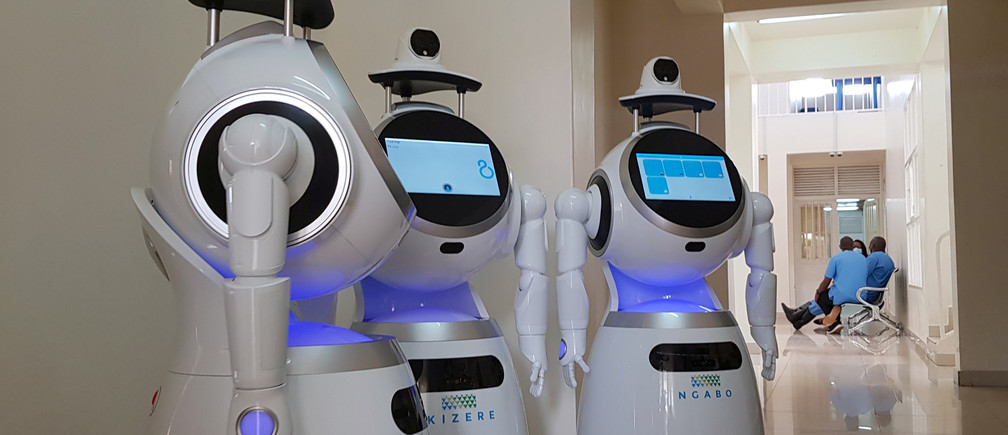
“Rwanda’s participation in the AI Governance Alliance aims to ensure Rwanda and the region do not play catch up in shaping the future of AI governance and accessibility. In line with these efforts, Rwanda’s Centre for the Fourth Industrial Revolution, in collaboration with the World Economic Forum, will host a high-level summit on AI in Africa towards the end of 2024, creating a platform to engage in focused and collaborative dialogue on the role of AI shaping Africa’s future. The event’s primary goal will be to align African countries on common risks, barriers, and opportunities and, ultimately, devise a unified strategy for AI in Africa.” – Paula Ingabire, Minister of Information Communication Technology and Innovation of Rwanda
“IBM continues to drive responsible AI and governance. We all have an obligation to collaborate globally across corporations, governments and civil society to create ethical guardrails and policy frameworks that will inform how generative AI is designed and deployed. IBM is proud to work with the Forum’s AI Governance Alliance as the knowledge partner for this paper series.” – Gary Cohn, IBM Vice-Chairman . “The evolution of AI is unique in that the technology, regulation and business adoption are all accelerating exponentially at the same time. It’s critical that the public and private sector come together to share insights, resources and best practices for building and scaling AI responsibly. Leaders in this space must prioritize inclusive AI so that the benefits of this technology are shared in all parts of the world, including emerging markets. The Forum’s three-part briefing paper series offers insightful considerations across responsible applications, governance and safety to empower businesses, respect people and benefit society.” – Paul Daugherty, Chief Technology Innovation Officer, Accenture.
Whether you need a side hustle or want to make a full career out of AI, here are ways to start
A few years back, I read Warren Buffett’s book, Snowball. It turned out to be one of my favorite books of all time. In this book, Warren shares stories of when he was a kid and some of his favorite books. One book in particular, 1,000 Ways to make $1,000 by F.C. Minaker, helped shape his idea around business and making money.
After reading this legendary book many times, I decided to refresh the concept to help others by sharing ideas on how to use current AI technology to make money. As an entrepreneur who uses AI in my business, I know there are many ways in which AI can help you create side hustles, start businesses, and even help make your current jobs more efficient.
Whether you would like to start a small side business, or whether you want this to be your full career, there are many opportunities to make money with AI.
If you’re not a techie type, there may be a learning curve to become adept at the skills to succeed at AI. But if you have an interest in it and a desire to learn, and are willing to undergo some training and education, it’s possible to learn enough to make money with AI.
Here are three ways to begin your journey into making money with AI technology.
Prompt generators are becoming a lucrative business. Humans will pay for AI prompts that are ‘ready to go’.
Prompt Engineering refers to the process of designing and fine-tuning prompts for natural language processing (NLP) models. It involves creating a set of instructions or guidelines that tell the model what information to look for and how to use that information to generate a response. Here are a few steps and platforms I would use to start earning money today:
Check out this helpful tutorial on YouTube to get you prepared.
Quicklyread over some guidelines on how best to sell prompts to the marketplace to start earning.
Take a look at some successful prompts that are for sale on the marketplace to get an idea how best for you to start earning.
Start earning!
Transcription Services involve the conversion of audio or video recordings into written or text format. This service is provided by professional transcriptionists who are trained to accurately transcribe spoken words into written form. Here are a few steps and platforms I would use to start earning money today:
Quickly read over some FAQ’s on how best to prepare to start earning for transaction services.
Take a look at someones daily schedule for earning money on Speak Write
Start earning!
Labeling and Annotation are processes in which data is manually labeled or tagged with specific attributes or metadata that make it easier for machines to understand and analyze the data. Labeling involves assigning a specific category or label to data, such as identifying objects in an image or sentiment in a text. Annotation involves adding additional information, such as context or relationships between data points. Here are a few steps and platforms I would use to start earning money today:
The next decade will be a ‘Decade of Abundance‘ due to technological advancements like AI. While AI has its detractors, I believe we should be leaning in to explore this life-changing technology because it will empower the globe.
AI has already been able to improve our lives in many ways, and it has the potential to solve some of the world’s most pressing problems, including in healthcare, education, and security. There’s no reason why you cannot be a part of this revolution, too. For the Silo, Joe Nigro.
Connecticut-based Joe Nigro is an investor, advisor, and entrepreneur who has used AI extensively in his career.
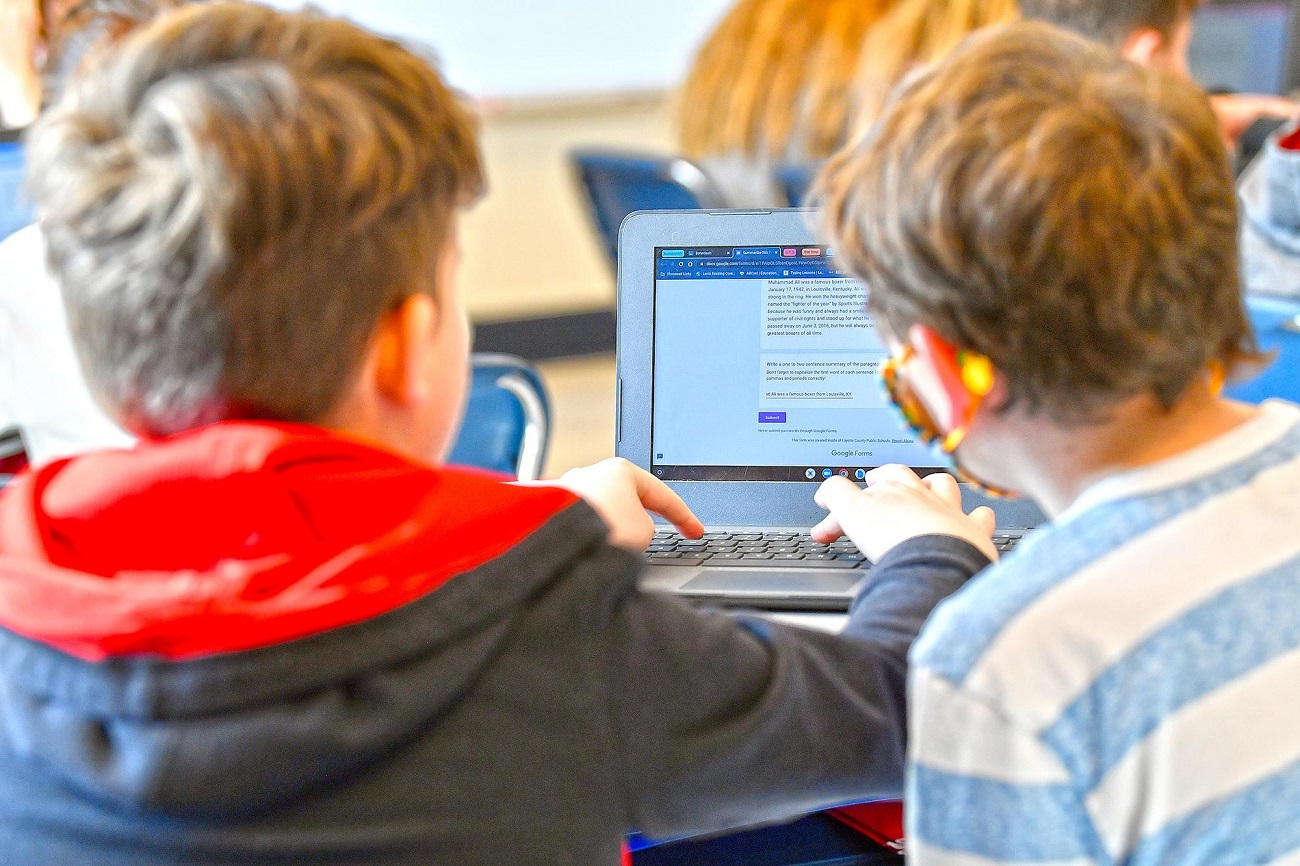
Featured image: Students summarize a text then tried to figure out which summaries were penned by classmates and which was written by a chatbot.Timothy D. Easley, FRE / AP
Misinformation and disinformation are biggest short-term risks, while extreme weather and critical change to Earth systems are greatest long-term concern, according to Global Risks Report 2024.
Two-thirds of global experts anticipate a multipolar or fragmented order to take shape over the next decade.
Report warns that cooperation on urgent global issues could be in short supply, requiring new approaches and solutions.
Geneva, Switzerland, January 2024 – Drawing on nearly two decades of original risks perception data, the World Economic Forum’s Global Risks Report 2024 warns of a global risks landscape in which progress in human development is being chipped away slowly, leaving states and individuals vulnerable to new and resurgent risks. Against a backdrop of systemic shifts in global power dynamics, climate, technology and demographics, global risks are stretching the world’s adaptative capacity to its limit.
These are the findings of the Global Risks Report 2024, released today, which argues that cooperation on urgent global issues could be in increasingly short supply, requiring new approaches to addressing risks. Two-thirds of global experts anticipate a multipolar or fragmented order to take shape over the next decade, in which middle and great powers contest and set – but also enforce – new rules and norms.
The report, produced in partnership with Zurich Insurance Group and Marsh McLennan, draws on the views of over 1,400 global risks experts, policy-makers and industry leaders surveyed in September 2023. Results highlight a predominantly negative outlook for the world in the short term that is expected to worsen over the long term. While 30% of global experts expect an elevated chance of global catastrophes in the next two years, nearly two thirds expect this in the next 10 years.
“An unstable global order characterized by polarizing narratives and insecurity, the worsening impacts of extreme weather and economic uncertainty are causing accelerating risks – including misinformation and disinformation – to propagate,” said Saadia Zahidi, Managing Director, World Economic Forum. “World leaders must come together to address short-term crises as well as lay the groundwork for a more resilient, sustainable, inclusive future.”
Rise of disinformation and conflict
Concerns over a persistent cost-of-living crisis and the intertwined risks of AI-driven misinformation and disinformation, and societal polarization dominated the risks outlook for 2024. The nexus between falsified information and societal unrest will take centre stage amid elections in several major economies that are set to take place in the next two years. Interstate armed conflict is a top five concern over the next two years. With several live conflicts under way, underlying geopolitical tensions and corroding societal resilience risk are creating conflict contagion.
Economic uncertainty and development in decline The coming years will be marked by persistent economic uncertainty and growing economic and technological divides. Lack of economic opportunity is ranked sixth in the next two years. Over the longer term, barriers to economic mobility could build, locking out large segments of the population from economic opportunities. Conflict-prone or climate-vulnerable countries may increasingly be isolated from investment, technologies and related job creation. In the absence of pathways to safe and secure livelihoods, individuals may be more prone to crime, militarization or radicalization.
Planet in peril
Environmental risks continue to dominate the risks landscape over all timeframes. Two-thirds of global experts are worried about extreme weather events in 2024. Extreme weather, critical change to Earth systems, biodiversity loss and ecosystem collapse, natural resource shortages and pollution represent five of the top 10 most severe risks perceived to be faced over the next decade. However, expert respondents disagreed on the urgency of risks posed – private sector respondents believe that most environmental risks will materialize over a longer timeframe than civil society or government, pointing to the growing risk of getting past a point of no return.
Responding to risks
The report calls on leaders to rethink action to address global risks. The report recommends focusing global cooperation on rapidly building guardrails for the most disruptive emerging risks, such as agreements addressing the integration of AI in conflict decision-making. However, the report also explores other types of action that need not be exclusively dependent on cross-border cooperation, such as shoring up individual and state resilience through digital literacy campaigns on misinformation and disinformation, or fostering greater research and development on climate modelling and technologies with the potential to speed up the energy transition, with both public and private sectors playing a role.
Carolina Klint, Chief Commercial Officer, Europe, Marsh McLennan, said: “Artificial intelligence breakthroughs will radically disrupt the risk outlook for organizations with many struggling to react to threats arising from misinformation, disintermediation and strategic miscalculation. At the same time, companies are having to negotiate supply chains made more complex by geopolitics and climate change and cyber threats from a growing number of malicious actors. It will take a relentless focus to build resilience at organizational, country and international levels – and greater cooperation between the public and private sectors – to navigate this rapidly evolving risk landscape.”
John Scott, Head of Sustainability Risk, Zurich Insurance Group, said: “The world is undergoing significant structural transformations with AI, climate change, geopolitical shifts and demographic transitions. Ninety-one per cent of risk experts surveyed express pessimism over the 10-year horizon. Known risks are intensifying and new risks are emerging – but they also provide opportunities. Collective and coordinated cross-border actions play their part, but localized strategies are critical for reducing the impact of global risks. The individual actions of citizens, countries and companies can move the needle on global risk reduction, contributing to a brighter, safer world.”
About the Global Risks Initiative
The Global Risks Report is a key pillar of the Forum’s Global Risks Initiative, which works to raise awareness and build consensus on the risks the world faces, to enable learning on risk preparedness and resilience. The Global Risks Consortium, a group of business, government and academic leaders, plays a critical role in translating risk foresight into ideas for proactive action and supporting leaders with the knowledge and tools to navigate emerging crises and shape a more stable, resilient world.
Generative artificial intelligence (GenAI) tools have far-reaching implications for education and research.
Yet the education sector today is largely unprepared for the ethical and pedagogical integration of these powerful and rapidly evolving technologies.
A recent UNESCO global survey of over 450 schools and universities showed that less than 10% of them had policies or formal guidance on the use of GenAI applications, largely due to the absence of national regulations. And only seven countries have reported that they had developed or were developing training programmes on AI for teachers.
The new guidance, recently launched during UNESCO’s flagship event Digital Learning Week in Paris, calls on countries to implement appropriate regulations, policies, and human capacity development, for ensuring a human-centred vision of GenAI for education and research.
What the guidance is proposing
The guidance presents an assessment of potential risks GenAI could pose to core humanistic values. It offers concrete recommendations for policy-makers and institutions on how the uses of these tools can be designed to protect human agency and genuinely benefit students, teachers and researchers.
The guidance proposes seven key steps for governmental agencies to regulate the use of GenAI in education:
Step 1: Endorse international or regional General Data Protection Regulations or develop national ones. The training of GenAI models has involved collecting and processing online data from citizens across many countries. The use of data and content without consent is further challenging the issue of data protection.
Step 2: Adopt/revise and fund national strategies on AI. Regulating generative AI must be part and parcel of broader national AI strategies that can ensure safe and equitable use of AI across development sectors, including in education.
Step 3: Solidify and implement specific regulations on the ethics of AI. In order to address the ethical dimensions posed by the use of AI, specific regulations are required.
Step 4: Adjust or enforce existing copyright laws to regulate AI-generated content: The increasingly pervasive use of GenAI has introduced new challenges for copyright, both concerning the copyrighted content or work that models are trained on, as well as the status of the ‘non-human’ knowledge outputs they produce.
Step 5: Elaborate regulatory frameworks on generative AI: The rapid pace of development of AI technologies is forcing national and local governance agencies to speed up their renewal of regulations.
Step 6: Build capacity for proper use of GenAI in education and research: Schools and other educational institutions need to develop capacities to understand the potential benefits and risks of GenAI tools.
Step 7: Reflect on the long-term implications of GenAI for education and research: The impact and the implications of GenAI for knowledge creation, transmission and validation – for teaching and learning, for curriculum design and assessment, and for research and copyright.
A human-centered vision for digital learning and AI
UNESCO is committed to steering technology in education, guided by the principles of inclusion, equity, quality and accessibility. The latest Global Education Monitoring Report on technology in education highlighted the lack of appropriate governance and regulation. UNESCO is urging countries to set their own terms for the way technology is designed and used in education so that it never replaces in-person, teacher-led instruction, and supports the shared objective of quality education for all.
With driverless cars already on the streets, will there be similar AI breakthroughs in the future of parking?
In the ’60s, The Jetsons, a cartoon about a family living in the future, featured a flying car that folded down into a briefcase when not in use. It is unlikely that we will ever see that solution to parking become a reality, but many other sci-fi books and films have predicted self-driving vehicles, and we know they are coming because they kind of exist today.
Parking facilities in the future must make allowances for electric vehicles. (Photo by guteksk7/Shutterstock)
While brands like Tesla have pushed the boundaries of driver assistance to become a version of self-driving, including parking the vehicle automatically, currently the parking infrastructure has not really kept up.
But we know that cannot continue, and the reality is that as transport technology evolves, parking solutions will have to evolve as well. But what does that mean long term? Will we be able to arrive at a parking center, get out and leave the car to it, then call it back to us when we want to leave? That seems like the dream approach to parking, but what does it need to make it happen?
Parking tech
There are two parts to that kind of service, the technology in the car park itself, and the technology within the car. For such a seamless experience, the two will need to work together, in that the vehicle must be able to drive autonomously, but also receive information about parking locations and when it should return to the entrance, from the car park itself. Both sets of technology actually exist today, not as refined as required for a reliable autonomous parking experience, but that is only a matter of time and development. But is it the right answer?
Right now, parking systems know which cars are parked where within the car park, this data is used to establish remaining capacities and so on, and while not universal, there are cars that can go off and park themselves when needed. So that future service is nearer than we think, but in the meantime what does car parking look like? Some may say that the future is already here without needing self-driving cars.
In Japan and some cities in the US, lift-based parking solutions offer a similar experience today. You arrive at a parking garage; your vehicle is pulled into a cubicle which is then lifted away. When you want to return to your car, the system finds the right cubicle garage and then returns it to the entrance, so you can drive away.
There are advantages to this approach, without the need for ramps to drive up and down to reach the parking, more cars can be parked in a given space. Because no one actually enters the building where vehicles are stored, it is also incredibly secure too. These systems are being constantly refined, and in the future, it is likely such a garage could be completely automated. With the advantages of space and security, is that more likely to be the future of high-density parking? If we look at other factors, it may well be.
Cities are increasingly looking to decrease car numbers, opening up spaces instead for social areas, encouraging cycling and other more environmentally friendly approaches to transportation. This is unlikely to change even with the widespread adoption of electric cars, so parking will naturally require large hubs with high-density parking that allows easy access to walks, bikes or public transport to central areas. To get an idea for the future of parking, we can look at what technology best fits this scenario.
Robotic Solutions
It is likely that these robotic lift-type solutions that pack more vehicles into each parking area fit the needs of city designers better than any more traditional multi-story or underground system that requires ramps and so on, whether the cars are operated by drivers or park themselves. There are other things that are in favor of this approach too.
Architects are under pressure to soften the appearance of buildings in cities across the world, to create spaces that have more light and elegance. A more compact multi-story space, or an underground alternative with only one small entrance space is easier to disguise with cladding, color and other design tricks that much larger car parks that have ramps and so on.
There is also the matter of technology. While there are cars that can drive themselves in a limited way now, and numbers are only going to increase, they are not all cars, and may never be. Holden stopped making cars in 2020, but in 20 years’ time, there will still be Holden cars driving on the roads. Those cars can never use autonomous parking systems, but they can use the robotic systems that take your car away and bring it back via a crane lift. They can use them today, and they can use them in the future.
Machine learning to park
So, the dream of a car swooshing away into its own spot automatically could well be the future. However, it is more likely to be carried there by a machine rather than drive itself. But not all parking is in cities with integrated parking solutions ran by the local authorities. For parking elsewhere, things will develop alongside vehicle technology, and there is one area that must advance for the future of the automotive industry itself, never mind parking. That is electric car charging.
Right now, charging is a bit of a mess: different speeds depending on the charger installation, there is no real cohesive system and owners often have to wrestle with a number of different apps to access charging networks on the go. Then there are the mechanics of charging, a heavy cable that has to be plugged in, account information and payment input before the car can be charged. As with phones, wireless charging is the solution, it removes much of the hassle and fail points for a better experience. But what would that look like in cars?
The obvious answer is charging areas embedded into the road or parking space, with a vehicle stopping on top of it automatically charging. There are hurdles to this, it would mean an end to the various account systems currently used to access charge networks, and instead have something tied to the vehicle itself. However, this kind of solution offers easy and efficient charging without the hassle we have today.
This would also require new technology for parking. For instance, our robotic car parks could have a charge loop in each container or cubicle, so electric vehicles charge automatically once they are taken away for storage. Likewise, on-road parking at parking meters could include chargers under each space.
This makes the charging process so much less hassle but allows for electric car charging without having to install endless charge stations in streets, and avoiding all the cables that the current system will need. Given the sheer number of electric cars that will be in operation in just a decade or so, and one cable per car, you can see how much an alternative is required.
But while technology will continue to drive the parking experience, and in cities and communities the need for clean, open spaces will change where we park and what that parking looks like, there will still be areas where parking sits outside of these grand designs. At its heart, a parking space is somewhere to store a vehicle while you go off and do something, and that need is not going to change. Large robotic parking systems in cities may appear in numbers, but they are not going to be the norm in areas with a smaller traffic flow or specific needs.
What we may see, and it is happening now, is that entrepreneurs and visionaries can find ways to provide a more selective parking solution on a smaller scale, that caters to a very specific need in a specific location. Not only are these services essential and in high demand, but they can be a source of income for anyone who has access to suitable parking space. With more cars than ever on the roads, and with a shift to electric not changing that, the future of parking looks to be heading in multiple directions.
The centralized systems operated in cities and other large communities will follow an approach that minimizes the space required and seek to integrate such facilities into an overall plan for the area. However, in some areas where there is no overall control of parking operations, the idea that you can rent a parking spot from a single person makes sense. Some people have space, others need that space, and as more cars are used, that space is in ever higher demand. This article is an excerpt from the complete e-book Parking Made Easy by Daniel Battaglia.
The recent rise of Artificial intelligence (AI) programs such as ChatGPT has created a frenzy around AI-related stocks.
C3.AI, a pure play AI stock, is up over 100% since late December.
But is this rally sustainable? After all, the public was already surrounded by AI without realizing it. Almost everything people use in daily life is affected by AI already:
advertising
entertainment streaming services
social media
cars (collision detection and blind spot monitoring)
fraud prevention
screening job applicants
email spam filters
many other applications
C3.AI is a company that creates software to help other companies deploy AI projects. C3 software is being used in multiple ways, including managing inventories, monitoring for energy inefficiencies, and predicting system failures. [Of particular note is one new product from C3 called ex machina which allows users to program AI initiatives without using any coding at all but instead via a series of visual programming tools. CP]
AI stocks, and technology stocks as a whole, were a neglected market in 2022. The Nasdaq 100, an index heavy in technology stock, fell more than 30% in 2022. C3.AI fell over 65% in 2022, and is currently down almost 90% from its 2020 high (even after the 100% rally in 2023). All currency quotes that follow are in USD.
C3.AI recently peaked at $30.92 on February 6. It then reached a low of $20.31 on March 1 before rallying back to $29.98. It has since fallen and is back near the $20.33 low.
This puts the stock at a crucial level.
An analyst from SafeTradeBinaryOptions.com had this input: “Right now, the stock is in an uptrend, albeit a precarious one. The price has been making higher swing lows and higher swing highs throughout 2023. But if the price drops much below $20, that will no longer be the case. The price will have made a lower high on March 6 (compared to February 6) and if the price drops below the March 2 low, that is a lower low. These are signs of a downtrend starting — not an uptrend.”
All facets of our modern world are already in the embrace of A.I. whether we know it or not.
This $20 region is important because if the area holds, this indicates the price is moving in a range, with the possibility of the price moving back up to the top of the range near $29. If that happens, there is still hope that the price will eventually break out of the range to upside, continuing its advance to $40, for example.
However, if the price drops below the $20 region, the range is broken and the uptrend is in jeopardy.
It’s important to watch C3.AI to see how investors are perceiving the future of AI, and what that may mean for the industry’s future.
As of March 2023, C3 doesn’t have a lot of direct competition. The company is not yet even profitable. How the stock moves is based on whether investors believe the company can eventually generate profits — and in this case, its profits largely depend on whether AI becomes even more widespread than it already is. For the Silo, Kat Fleischman.
Yes GTA VI is coming…finally and this trailer makes it official. If this leaves you asking questions and wanting more details ahead of Grand Theft Auto 6 release, you are not alone.
Officially verified facts and features are slim in some cases, but according to 50 Cent’s recent Instagram tease (sorry he deleted his post as this article was being written) and odds from leading sportsbook, Bovada,experts anticipate multiple celebrities to be featured in the blockbuster game. Grand Theft Auto 6 is the latest open-world modern era game set in Miami Vice City and will be returning back into the criminal empires of GTA.
A look at GTA V- will we see even more improved AI and graphics?
From 50 Cent himself (no stranger to having his persona digitized into the videogame world) to Kim Kardashian, Donald Trump and even Rihanna, gamers shouldn’t rule out any of the below cameo possibilities.
50 Cent in the legacy Xbox game Bulletproof
Check out the odds for each below and let us know who you think is a shoe in:
According to a study carried out by America’s Bureau of Labor Statistics in January this year, the restaurant labor force in that country is still over 450,000 jobs below pre-pandemic levels — marking the largest employment deficit among all U.S. industries. Although figures are not currently available for Canada, the situation is the same.
In November 2022, the USA National Restaurant Association found that 63% of full-service restaurants and 61% of limited-service places are operating with fewer employees than needed to accommodate guests.
At the beginning of February this year, The Washington Post reported that although many industries have recovered since the start of the pandemic, in the USA (similar trends in Canada) 2 million hospitality and leisure jobs still remain open.
“Hospitality is still stuck in the dark ages. High-friction ordering, slow and clunky payments, and labor challenges lead to low profitability and a poor customer experience,” notes Brian Duncan, President of me&u USA, a global leader in at-table ordering specializing in restaurants and bars.
The labor shortage has led chefs and restaurateurs to reduce their workweeks, while some restaurant owners have had to increase the wages of their staff by as much as 20% in addition to closing earlier on weeknights. Others have even had to change their business practices to attract new employees.
Technology can bridge the customer service gap when there are fewer employees available. Customers prefer to use self-service kiosks or access the menu by scanning QR codes because they can take additional time to read the menu, find new things to try, and customize their orders exactly to their preferences.
Such technology means shorter waits at the counter, faster table turnover, and more accurate orders because the information is transmitted directly from the customer to the kitchen. Also, Pay-at-the-Table Technology cuts out the back-and-forth trips from the POS terminal to the table to process payments shaving several minutes off each table turn.
“Manual orders are typically expensive, slow, and inefficient. Smart technology reduces labor costs, takes the load off servers, increases spending per order, and elevates the customer experience,” concludes Duncan.
What factors are impacting the restaurant and hospitality industries in the U.S and Canada.?
How can technological innovations help restaurants operate with limited staff and still increase revenue?
How can self-service ordering and streamlined payment tools enhance customer experience?
AMSTERDAM — HUDstats, the pioneering esports data analytics company, has partnered with the leading multi-channel supplier of 24/7 live betting services, Sports Information Services (SIS) to deliver actionable, real-time data for esports betting purposes.
“We’re looking forward to working with SIS and providing esports fans and esports betting aficionados with engaging and fascinating data and statistics for their favourite streams,” said Andrei Bălănescu, CEO of HUDstats.
As part of the partnership, HUDstats will use its proprietary Advanced Video Analysis (AVA) technology to collect, standardize and distribute accurate esports data from SIS Ebasketball and Esoccer streams for the creation of real-time esports betting products.
“Our technology stack allows us to provide a great number of accurate match data points in real-time, at a sub-second speed,” said Bălănescu. “Our partners, SIS, can use them to create engaging on-screen graphics and betting commentary that increase performance for their customers.”
Live AI stats from Counter Strike provide bettors informed choices when wagering on this popular esports game.
Conleth Byrne, Product Director at SIS added, “HUDstats provides a ground-breaking and easy-to-integrate solution that enables us to scale our 24/7 Competitive Gaming content with automated and accurate in-play event tracking.”
Tracking Multiple In-Game Events for Ebasketball and Esoccer
The HUDstats – SIS partnership currently involves tracking more than 20 major in-game events for Esoccer and 40 in-game events for Ebasketball.
For example, in Esoccer, HUDstats covers data points from events such as ball location, free kicks, goal kicks, throw-ins, substitutions, added time, offsides, goals, corners, and more. For Ebasketball, HUDstats can track free throws, 2-pointers, 3-pointers, timeouts, fouls, the team in possession, and others.
“HUDstats showcases all the noteworthy aspects of the match and even more in-depth features, such as what side a corner is taken from or if a free-kick is from a dangerous position,” said Bălănescu. “That’s a feat otherwise impossible to obtain in real-time by manual input.”
Highly-Scalable, Reliable, Sub-Second, Fast Data Collection
HUDstats covers a full range of esports titles such as EA FIFA, NBA2k, EA NHL, EA NFL Madden, as well as the big three: League of Legends, Dota 2, and Counter-Strike: Global Offensive.
Its proprietary technology generates data directly from the esports stream or game server and can collect over 1,000 data points for every single minute of a game.
HUDstats is able to scale its data-collection solution to numerous streams at a time, analysing hundreds of angles and allowing esports bettors to experience a new dimension of esports.
esports team doing their best in CS:GO
About SIS (Sports Information Services)
SIS (Sports Information Services) has been at the forefront of live pictures and data delivery to the global betting industry for over 35 years with a rich heritage in creating and distributing betting events for horse and greyhound racing, as well as esports and live numbers draws.
SIS is the leading supplier of high-quality 24/7 live betting services, delivering a range of 24/7 channels to retail and online operators globally 365 days a year. To complement their horse and greyhound racing, they provide a flexible SIS Trading Services offer, which now includes a fully outsourced managed trading service.
In addition to racing, they also offer over 150,000 highly competitive esports events a year, all underpinned with robust integrity, and provide over 300,000 Live Numbers draws annually.
SIS partners with over 400 operators in more than 50 countries, offering rights holder partners the opportunity to showcase their first-class content across six continents.
Bringing work home can put stress stress on a marriage, especially when that “work” is a beautiful woman who seems too cozy with the husband. But in Bruce Deitrick Price’s genre-busting tragicomedy book “Frankie”, looks are deceiving.
Raymond Mason, an AI genius and college professor, brings Frankie, his latest, most human-like creation, to dinner. Raymond knows his wife will be impressed.
No way! Julia Mason feels competitive and threatened. Raymond touches Frankie in a romantic way.
Julia is hostile and drinks too much. She passes out as Professor Mason runs upstairs to find a gun. An hour later, Julia wakes to find her husband dead and Frankie gone. Julia, semi-hysterical, races into the night to find the missing masterpiece.
Simon, a grad school drug dealer, falls in love with Frankie. He realizes he can build a cult around this spiritually evolved woman. First, he has to hide her.
For different reasons, many people search frantically for Frankie. Meanwhile, more unexplained deaths are reported. Panic sweeps New Jersey. Some experts think that humanity is dealing with an alien invasion.
A pathologist says he has never seen so many beautiful corpses. Cause of death: unknown.
“Elon Musk believes that AI will destroy us.
First there will be lots of misunderstandings, confusion, and paranoia,” Price says. “Frankie is a look into the future of AI. The smarter the robots, the more likely that strange, unanticipated things will happen.”
About the Author
Bruce Deitrick Price is a novelist, poet, artist and education reformer. He wrote his first article about robots around 1990.
Featured image: Historic “Mona Lisa of the Pacific Islands” photograph Mestiza de Sangley, c. 1875
The Picnic Pizza Station saves time, money, and labor by streamlining pizza prep without compromising quality.
An intuitive system makes training and operating a breeze. The Picnic Pizza Station is the essential back-of-house makeline. The modular food prep system fits into any kitchen and uses the owner’s unique recipe, delivering perfect pizza every time. Requiring only one operator, the system can produce up to 100 pizzas per hour which saves labor costs and increases yield through decreased food waste.
Combining sauce, cheese, pepperoni, and granular topping modules into any preferred configuration complements existing kitchen Pizza take out and restaurant operations. Further streamline production by connecting the station directly with an existing oven.
Picnic software solutions integrate with your POS system and includes an intuitive touch screen interface for ordering pizza and a dashboard to track ingredients and predict inventory needs.
Advantages of the Picnic Pizza Station
Reduced labor costs: One operator can make up to 100 pizzas per hour. Reduced food waste: Apply precise amounts of toppings with less than 2% food waste. Consistent product: Use your recipe to create uniform, consistent pizzas every time. Increased hygiene: Contactless assembly system, minimal operator ingredient handling.
• Small footprint. No special hook-ups • Typical install is 86” (218 cm) W X 56” (142 cm) H X 40” (102 cm) D • Easy to install with limited build-out • Modular, configurable design • Commercial-grade; built for food service • Easy to clean. Dishwasher-safe • Intuitive assembly and disassembly • Free delivery. Free installation • Free on-site maintenance checks • Robotics-as-a-service subscription model • Touch-screen interface • Integrates into existing POS • Quick to learn and no-hassle operation • Customized software to meet your needs • Temperature-controlled assembly line • Fresh sliced pepperoni; never pre-cut • Use your recipes with consistent results • Well-lit and accessible from top and front • Reduce food waste • Integrates into existing make lines • Monitor ingredient usage and yield
Thanks to the digital technology, we can carry out commercial transactions online. We can buy and sell items or services, pay bills, make orders, and so much more.
Online enterprises are heavily relying on this commodity. This is why we have numerous online businesses nowadays.
The infographic below from Subscriptionly will inform you about the current and future tech trends that will influence the ecommerce sector. Some of the main trends are as follows.
Personalized Experience
Technology has enabled online businesses to give their customers personalized shopping experiences. For e-shoppers, this has engendered an engaging and satisfying shopping experience.
Businesses recorded an increase in revenue by employing this concept, since 48% of customers spend more when their experience is personalized.
Automated Customer Service
AI has transformed the way customer queries and complaints are attended to. Consumers now have their issues promptly resolved. It was reported that, this year, AI handled 45% of customer queries on its own. And it does this swiftly and effectively, which is definitely a factor that makes customer support a positive experience.
Excellent customer service is essential to building customer loyalty. In fact, 42% of customers buy more when they are served properly.
It is projected that, by 2020, AI will handle 85% of customer interactions.
Cryptocurrency
Soon, commercial transactions will be carried out with cryptocurrency. Via the use of cryptocurrency (such as Bitcoin), customers will get to make secure payments quickly and conveniently.
Also, businesses that add cryptocurrency as a payment method will make better sales. One retail outfit did and in 5 months, it generated $2million alternative currency sales and a 60% boost in new customers.
Drone Delivery
In the nearest future, e-shoppers will possibly have their purchased items delivered the same day. When this become reality, customers will be happier and businesses will undergo a rise in brand awareness and sales. The 72% of shoppers stated they would shop and spend more if same day delivery was available.
A method that is being considered to initiate same day delivery is the drone delivery. DHL tried it and recorded a 70% improvement in first-attempt deliveries, and a 90% success in resolution of customers’ critical cases. When popularized, 40% of parcels will be drone-delivered in 2 hours by 2028. For the Silo, Josh Wardini.
“Your task is not to foresee the future, but to enable it.“
Founded on the values of pioneer pilot Antoine de Saint-Exupéry, a new partnership has formed between the leading Quebec AI research institute, Mila, and France’s IRT Saint Exupéry, which established a Montreal branch one year ago.
This partnership confirms the commitment shared by both parties to advance research in the field of intelligent systems, with a focus on embedded intelligence in critical systems, particularly related to travel (i.e., planes and cars) and healthcare (medical devices).
At the heart of the partnership are two key players in scientific and technological research who have joined forces to promote best practices and tackle the scientific challenges of artificial intelligence driven by industry needs and societal impacts.
Recognized worldwide for its numerous breakthroughs in artificial intelligence, Mila distinguishes itself both in calibre and in number of its researchers. Thanks to this partnership, Mila is enriched by an original model of collaboration, in which industry and academia will work together in a common space to solve scientific questions arising from industrial concerns. This collaborative model, tried and tested at IRT Saint Exupéry in France since 2013, has led to the creation of a French-Canadian research program, *DEEL, mobilizing 14 industrial companies and roughly 20 academic researchers in Toulouse, Montreal and Quebec City, including researchers from Mila. IRT Saint Exupéry now has access to a cooperative space on Mila’s premises. The proximity to Mila’s researchers and industrial partners encourages the development of multi-partner French-Canadian research programs.
If the Canadian branch of IRT Saint Exupéry was selected to integrate within Mila’s ecosystem, considered one of the best in the world for AI research and development, it is thanks to the partnership established two years ago with the Quebec Institute for data valorization IVADO, which was founded to foster AI partnership projects with industry. After the DEEL project, initiated jointly and now integrated into the Toulouse Interdisciplinary Institute of Artificial Intelligence “ANITI” of which it is the driving force, IRT Saint Exupéry and its Quebec partners are now developing new expertise in the field of confidence AI and decision support for critical systems, with applications for land, air and space mobility, but also for health and the environment.
YoshuaBengio, Scientific Director – Mila
“Mila‘s mission is to develop the understanding of intelligent systems in order to put them at the service of all humanity in an ethical, inspiring and sustainable way. More than 500 world-class researchers at the Institute focus on deep learning and neural networks that shape today’s intelligent systems. This partnership with IRT Saint Exupéry Canada broadens our horizons and our network.We are proud to make concrete through this partnership the commitments of collaboration between Canada and France in the field of artificial intelligence.“
Geneviève Fioraso, President – IRT Saint Exupéry
“I am convinced that collaborations with the researchers, engineers, laboratory students and partners of the Mila ecosystem in Montreal will be very stimulating for the IRT Saint Exupéry teams in Canada as well as in Toulouse.By working closely with the Mila Institute, we are going to accelerate our work and strengthen our expertise in AI, thus enhancing the reliability, safety and competitiveness of the fields concerned with critical and complex systems: air, space and ground transportation, medical devices and the environment.Ourlongstanding partnership with IVADO and CRIAQ in Quebec allows us today, alongside Mila, to achieve a new level of deep learning and understanding of intelligent systems.This new alliance with the French-speaking centre of excellence in AI, based on shared scientific and ethical values, also illustrates the willingness of the technological research institutes to open up internationally.“
Guillaume Gaudron, CEO – IRT Saint Exupéry Canada
“We are really excited to join Mila.Working in this privileged environment and close to the very best researchers in the field represents an unprecedented opportunity for the institute to showcase its skills and respond to the deep concerns raised by artificial intelligence.We are also pleased to be able to offer a very unique collaboration model, one which brings together different actors to address common, shared and open challenges.We are mobilizing artificial intelligence on future topics such as the quantum computer, the autonomous vehicle, medical applications (diagnosis of rare diseases), satellites, and more. These are all complex and compelling subjects that need to be supported by very high-level scientific research, and require the use of AI algorithms that are robust, reliable, justifiable and, in the future, certifiable.“
About Mila:
Founded in 1993 by Professor Yoshua Bengio of the Université de Montréal, Mila is a research institute in artificial intelligence which rallies 500 researchers specializing in the field of deep learning. Based in Montreal, Mila’s mission is to be a global pole for scientific advances that inspires innovation and the development of AI for the benefit of all. Mila, a non-profit organization, is recognized globally for its significant contributions to the field of deep learning, Mila has distinguished itself in the areas of language modelling, machine translation, object recognition and generative models. For the Silo, Diane Loth.
About IRT Saint Exupéry Canada (CRAN):
IRT Saint Exupéry Canada or CRAN (Centre de Recherche Aéro-Numérique) settled in Montreal in June 2019. With a specialization in areas of artificial intelligence, it brings together academia and industry through a recognized collaboration model to build multi-partner research programs within a French-Canadian framework.
IRT Saint Exupéry Canada was founded by IRT Saint Exupéry, a French research and innovation institute that is very involved in Franco-Quebec collaborations, particularly through the ambitious DEEL* research program with its partners IVADO and CRIAQ.
——————————————————————————————————————–
« L’avenir tu n’as point à le prévoir mais à le permettre » … c’est sous la formule empruntée à Antoine de Saint-Exupéry que s’engage un nouveau partenariat entre le laboratoire d’excellence en intelligence artificielle Mila et l’IRT Saint Exupéry Canada installé à Montréal depuis un an. Ce partenariat confirme la volonté partagée par les deux parties de faire avancer la recherche en matière de systèmes intelligents, avec un focus sur l’intelligence embarquée dans les systèmes critiques, en particulier liés à la mobilité (avions, voitures) ou la santé (dispositifs médicaux).
L’IRT SAINT EXUPERY DANS LA PLATE-FORME MILA A MONTRÉAL : UN FORMIDABLE ACCÉLÉRATEUR POUR LES PROJETS D’IA
Au cœur du partenariat, ce sont deux acteurs de la recherche scientifique et technologique qui s’allient pour échanger des bonnes pratiques et adresser des défis scientifiques de l’intelligence artificielle motivés par des besoins industriels et les impacts sociétaux.
Reconnu mondialement pour ses nombreuses percées en intelligence artificielle, Mila se distingue tout autant par le niveau de ses chercheurs que par leur nombre. Grâce à ce partenariat, il s’enrichit d’un modèle de collaboration original, dans lequel industriels et académiques travaillent ensemble, en un lieu commun, pour résoudre des questions scientifiques issues de préoccupations industrielles. Ce modèle, expérimenté depuis 2013 à l’IRT Saint Exupéry en France, a conduit à la création d’un programme de recherche franco-canadien, DEEL*, mobilisant à Toulouse, Montréal et Québec 14 industriels et une vingtaine de chercheurs académiques parmi lesquels des chercheurs de Mila. L’IRT Saint Exupéry Canada a désormais accès à un espace coopératif dans les locaux de Mila, la proximité avec les chercheurs et les partenaires industriels de Mila favorisant le montage de programmes de recherche franco-canadiens multi partenariaux.
Si l’antenne canadienne de l’IRT Saint Exupéry a été choisie pour intégrer la plate-forme Mila, considérée comme l’une des meilleures au monde pour la recherche et le développement en intelligence artificielle, c’est bien grâce au partenariat noué il y a deux ans avec le centre de recherche québécois IVADO, Institut de la VAlorisation des DOnnées fondé pour développer des projets partenariaux en IA avec l’industrie. Après le projet DEEL, initié en commun et maintenant intégré à l’Institut Interdisciplinaire d’Intelligence Artificielle toulousain « ANITI » dont il est le moteur, l’IRT Saint Exupéry et ses partenaires québécois développent de nouvelles expertises dans le domaine de l’IA de confiance et d’aide à la décision pour les systèmes critiques, avec des applications pour les mobilités terrestres, aériennes et spatiales, mais aussi pour la santé et l’environnement.
Yoshua Bengio, Directeur scientifique – Mila
« Mila a pour vocation de développer la compréhension des systèmes intelligents pour les mettre au service de toute l’humanité de façon éthique, inspirante et durable. Au sein de l’institut, plus de 500 chercheurs d’excellence se concentrent sur l’apprentissage profond et les réseaux de neurones qui façonnent les systèmes intelligents actuels. Ce partenariat avec l’IRT Saint Exupéry Canada élargit notre horizon et notre réseau : nous sommes fiers de concrétiser par ce partenariat les engagements de collaboration entre le Canada et la France en matière d’intelligence artificielle. »
Geneviève Fioraso, Présidente – IRT Saint Exupéry
« Je suis convaincue que l’interaction avec les chercheurs, les ingénieurs, les étudiants des laboratoires et les partenaires de la plate-forme Mila à Montréal sera tout à fait stimulante pour les équipes de l’IRT Saint Exupéry au Canada comme à Toulouse. En nous rapprochant de l’Institut MILA, nous allons accélérer nos travaux et renforcer notre expertise en IA, au service de la fiabilité, la sûreté et la compétitivité des domaines concernés par les systèmes critiques et complexes : transports aériens, spatiaux, terrestres, dispositifs médicaux, environnement. Notre partenariat plus ancien avec IVADO et le CRIAQ au Québec nous permet aujourd’hui, au sein de MILA, de franchir une nouvelle étape dans l’apprentissage profond et la compréhension des systèmes intelligents. Le rapprochement avec ce pôle d’excellence francophone en IA, fondé sur des valeurs scientifiques et éthiques partagées, illustre également la volonté d’ouverture à l’international des Instituts de Recherche Technologique. »
Guillaume Gaudron, Directeur général – IRT Saint Exupéry Canada
« Nous sommes vraiment ravis de rejoindre le Mila. Travailler dans cet environnement privilégié et à proximité de chercheurs d’excellence représente une opportunité inédite pour l’institut d’exprimer ses compétences et de répondre à des préoccupations profondes posées par l’intelligence artificielle. Nous sommes également heureux de pouvoir proposer un modèle de collaboration assez unique, une capacité de réunir des acteurs différents autour de problématiques communes, partagées et ouvertes. Nous mobilisons l’intelligence artificielle sur des thématiques d’avenir comme l’ordinateur quantique, le véhicule autonome, les applications médicales (diagnostic de maladies rares), les satellites, etc. autant de sujets complexes, séduisants, ayant besoin de s’adosser à une recherche scientifique de très haut niveau, et nécessitant de s’appuyer sur des algorithmes d’IA robustes, sûrs de fonctionnement, explicables et, à l’avenir, certifiables.
À propos de Mila :
Fondé par le professeur Yoshua Bengio de l’Université de Montréal, Mila est un institut de recherche en intelligence artificielle qui rassemble aujourd’hui 500 chercheurs spécialisés dans le domaine de l’apprentissage profond et par renforcement. Basé à Montréal, Mila a pour mission d’être un pôle mondial d’avancées scientifiques qui inspire l’innovation et l’essor de l’IA au bénéfice de tous. Mila est un organisme à but non-lucratif reconnu mondialement pour ses importantes contributions au domaine de l’apprentissage profond, particulièrement dans les domaines de la modélisation du langage, de la traduction automatique, de la reconnaissance d’objets et des modèles génératifs.
À propos de l’IRT Saint Exupéry Canada (CRAN) :
L’IRT Saint Exupéry Canada ou CRAN (Centre de Recherche Aéro-Numérique) s’est installé à Montréal en juin 2019. Spécialisé dans les thématiques d’intelligence artificielle, il fédère académiques et industriels grâce à un modèle de collaboration reconnu pour construire avec eux des programmes de recherche multi-partenariale dans un cadre franco-canadien.
L’IRT Saint Exupéry Canada a été fondé par l’IRT Saint Exupéry, institut français de recherche et d’innovation très engagé dans les collaborations franco-québécoises en particulier au travers de l’ambitieux programme de recherche DEEL* avec ses partenaires IVADO et CRIAQ
COLLEGE PARK, MD: University of Maryland College of Information Studies (UMD iSchool) researchers, led by principal investigator Dr. Susannah Paletz, have been awarded a three-year $616,700 usd grant funded by the Army Research Office (ARO), overseen by ARO Program Manager Dr. Edward Palazzolo. This project examines how teams of intelligence analysts can work together and with artificial intelligence (AI). AI has the potential to support intelligence analysts in reviewing potentially hundreds of thousands of source documents, pulling out key findings, and assembling them into actionable intelligence. AI can also aid in the flow of information and projects among members of the intelligence team, improving the efficiency and accuracy of their work.
“AI-driven technology has sometimes been touted as a replacement for human intelligence,” said Dr. Adam Porter, the project’s co-principal investigator, professor at the UMD Department of Computer Science, and Executive and Scientific Director of the Fraunhofer USA Center for Experimental Software Engineering (CESE). “In practice, however, AI doesn’t always work, or gives limited or biased answers. Human oversight is still required, and it’s therefore critical that we deeply understand how humans and AI can work best together.”
The Human-Agent Teaming on Intelligence Tasks project coordinated through the iSchool will focus on two particular research areas; 1.) how interactive AI agents, such as chatbots, have the ability to mitigate or exacerbate the communication and coordination problems that can occur with shift handovers of intelligence work, such as inaccuracy blindness and overlooking potentially relevant information, and 2.) examining how humans could potentially deal with these blind spots, biases, or inaccuracies.
The research team plans to develop an experimental infrastructure to help test team cognition challenges within the work completed by intelligence analysts consisting of task-relevant input materials, such as mission descriptions and source documents, activity recording tools, experimental monitoring capabilities, and different AI supports for human analysts, such as chatbots offering advice on a particular task.
“We want to develop a task that can raise the problems with asynchronous team cognition in intelligence tasks, but is simple enough to be used by research participants with minimal training,” said Dr. Susannah B.F. Paletz, research professor at the UMD iSchool, and affiliate at the UMD Applied Research Laboratory for Intelligence and Security (ARLIS).
Dr. Susannah B.F. Palletz
This task will substantially increase insight into the strengths and weaknesses of AI technology to support intelligence tasks, help shed light on how and when human analysts can safely place their trust in AI technology, and how they can proactively identify problems in AI-generated input. It will also aid teams of humans, including asynchronous teams, working together in situations that include AI-generated input.
“This basic research is an important step in the early process of learning how humans and agents can collaboratively become a single team with considerably greater capacity and productivity than human only teams,” Palazzolo said. “Moreover, this research has broad implications into the work of many teams focused on knowledge work and information management such as medical teams involved in shift work, collaborative software development teams, and research teams.”
In addition to Porter, the Fraunhofer USA team also includes Dr. Madeline Diep, Senior Scientist, and Jeronimo Cox, Software Developer, at Fraunhofer USA CESE. The Fraunhofer USA team will lead the effort to create configurable AI agents used in the experimental tasks, and a data collection and analysis infrastructure for capturing and understanding participant behaviors.
The UMD iSchool team includes graduate students Tammie Nelson, a fourth year PhD student, Melissa Carraway, incoming first year PhD student, and Sarah Valhkamp, incoming first year PhD, in Information Science.
The grant proposal team includes UMD Office of Research Administration Contract Manager, Stephanie Swann; iSchool Business Manager, Jacqueline Armstrong; and former iSchool Business Manager, Lisa Geraghty.
Outside of UMD, Dr. Aimee Kane, the Harry W. Witt Faculty Fellow and an Associate Professor of Management in the Palumbo-Donahue School of Business at Duquesne University, will be a consultant and an intellectual contributor on this project.
Is there any question that Artificial Intelligence, or “AI”, is going to play a huge role in the future? The short answer is no- it’s already playing a large part today, so let’s delve into this new tech and look at how it is benefiting the energy sector and what we can expect to see from this AI phenomenon in the not so distant future.
A recent OECD report finds that low and middle income earners have seen their wages stagnate and that the income share of middle-skilled jobs has fallen. Rising inequality has led to concerns that top earners are getting a disproportionate share of the gains from global “openness and interconnection”. During a Summer 2017 meeting of OECD, employment outlook revealed that job polarization has been “driven by pervasive and skill-biased technological changes.
Founded in 1945, the United States Council for International Business (USCIB) builds awareness among business executives, educators and policy makers around issues related to employment, workforce training and skills enhancement. CMRubinWorld spoke with USCIB President and CEO Peter M. Robinson, who serves as a co-chair of the B20 Employment and Education Task Force, through which he helped develop recommendations to the G20 leaders on training for the jobs of the future. Robinson also serves on the board of the International Organization of Employers, which represents the views of the business community in the International Labor Organization.
“I think the guiding principle for government should be to protect and enable/retrain the worker, not protect the job. Policy makers and educators should focus on making sure that workers are as equipped as possible to transition to new opportunities” Peter Robinson.
Peter, welcome. How severe do you believe jobsolescence will be over the next 20 years? How big will the challenge be to offset it and maintain a growing workforce?
I really don’t think the overall effect will be as dramatic as some people fear, at least for the medium-term as far as we can tell. There is an over-hype factor at play, but the consequences still deserve serious attention. For one thing, so many of the jobs in the United States, Canada and other advanced economies are in the service sector, and involve interacting with other people. Despite all the advances in AI, we are still a long way off from robotic nurses or home health aides. Overall, history tells us that at least as many new jobs are created as are displaced by technological innovation, even though transitions can be difficult in some sectors and localities, and as long as upskilling takes place.
“The biggest threat is that our educational institutions won’t be able to keep pace with new skills demands.” — Peter Robinson
What do you think are the biggest obstacles facing college grads today trying to enter the workforce?
I actually think the greatest obstacles are faced by those who don’t make it to university or some form of higher education beyond high school (a four-year degree is not the right path for everyone). A 2014 Pew survey found that among workers age 25 to 32, median annual earnings of those with a college degree were $17,500 greater than for those with high school diplomas only. Obviously, everyone at whatever educational level needs to keep their skills sharp, and governments should join with employers and educators to instill better life-long learning. But there are far fewer established paths toward long-term employment at a middle-class level of income for those who don’t graduate from college. A greater emphasis on vocational education and apprenticeships would help. We strongly support the work being done by United States Secretary of Labor Acosta to promote apprenticeships.
Given that machines are in the process of stripping white collar workers from their jobs, what kind of skills are key manufacturing and service industries going to need from new employees?
I think the premise of your question is overstated. We’re all being told that our jobs are doomed by robots and automation. But the OECD estimates that only nine percent of jobs across the 35 OECD nations are at high risk of being automated, although of course even 9% can be generative of social difficulties. But there is an established track record across history of new technologies creating at least as many new jobs as they displace. Usually these new jobs demand higher skills and provide higher pay. The biggest threat is that our educational institutions won’t be able to keep pace with new skills demands.
“It is becoming clear that Versatility matters, in a constantly changing world, so Jim Spohrer’s IBM model of a “T-shaped” person holds true: broad and deep individuals capable of adapting and going where the demand lies.” — Peter Robinson
In an economy with a significant on-demand labor force, what competencies will these workers need to compete?
There are two types of competencies that will be needed: “technical” – or in other words, related to deep knowledge of a specific domain, whether welding or optogenetics; and “transversal,” which applies to all occupations. Those are described by the Center for Curriculum Redesign as skills (creativity, critical thinking, communication, collaboration), character (mindfulness, curiosity, courage, resilience, ethics, leadership) and meta-learning (growth mindset, metacognition).
How will managerial skill requirements change as a result of major structural changes that are likely, including human replacement by machines and growth of the on-demand economy?
OECD’s BIAC surveys of 50 employer organizations worldwide has shown that employers value not just Skills as described above, but also Character qualities as well. Further, it is becoming clear that Versatility matters, in a constantly changing world, so Jim Spohrer’s IBM model of a “T-shaped” person holds true: broad and deep individuals capable of adapting and going where the demand lies.
“We often hear about the need for more STEM education. But I think there is an equal need for a greater emphasis on the humanities and the arts, for their intrinsic value as well as for developing skills and character qualities.” — Peter Robinson
What central changes in school curricula do you envision, both at the secondary school and college levels?
We often hear about the need for more STEM education. But I think there is an equal need for a greater emphasis on the humanities and the arts for their intrinsic value as well as for developing skills and character qualities as described above. As David Barnes of IBM wrote recently, these skills are more durable and are also a very good indicator of long-term success in employment.
How can the evolving changes in competencies required for employment be effectively translated into school curricula? Where are the main opportunities to enable this? e.g. Assessment systems? Business/Education collaboration? Curriculum change?
I’d go back to something else David Barnes said: We need much stronger connections between education and the job market, in the form of more partnerships among employers, governments and education institutions. Everyone needs to step up and create true partnerships. No one sector of society can address this alone. OECD’s BIAC has also documented employers’ wishes for deep curricular reforms to modernize content and embed competencies in order to meet today’s market needs.
What role should government play in ensuring citizens receive a quality and relevant education given the challenges that lie ahead?
I think the guiding principle for government should be to protect and enable/retrain the worker, not protect the job. Policy makers and educators should focus on making sure that workers are as equipped as possible to transition to new opportunities as these develop, and on ensuring that businesses have the freedom to pivot and adopt new technologies and business processes.
For the Silo, C.M. Rubin. C. M. Rubin is the author of two widely read online series for which she received a 2011 Upton Sinclair award, “The Global Search for Education” and “How Will We Read?” She is also the author of three bestselling books, including The Real Alice in Wonderland, is the publisher of CMRubinWorld and is a Disruptor Foundation Fellow.
Artificially intelligent humanoid robot, Sophia, will make her first comic convention appearance at the first annual Ogden UnCon June 7-9, 2019. Sophia the Robot, the masterpiece of Hanson Robotics (www.hansonrobotics.com), has captivated nations and has become an internet sensation. Sophia has met with world leaders, addressed the United Nations, appeared on TV shows such as The Daily Show and The Tonight Show starring Jimmy Fallon, and has graced the cover of Cosmopolitan, ELLE magazine, and more. Now, this modern marvel is coming to Ogden, Utah to meet her fans and kick off Ogden UnCon’s first event.
Ever since her unveiling in 2016, Sophia has quickly rocketed to stardom. Sophia is Hanson Robotics’ most advanced human-like robot, created by combining breakthrough innovations in robotics, AI, and artistry. The epitome of artificial intelligence, Sophia is endowed with remarkable expressiveness, aesthetics, and interactivity, and can simulate a full range of facial expressions, track and recognize faces, and hold natural conversations with people.
Just like Ogden UnCon, Sophia shares a remarkable, unique and unexpected story that captivates and surprises, making her the perfect headliner for our inaugural year.
“Sophia is the personification of the comic con spirit.” says Russ Adams, Ogden UnCon founder. “She is science fiction, fantasy, technological marvel, and superhero come to life. And we are honored she is making her geek-dom debut at Ogden UnCon.”
Fans attending Ogden UnCon will have the chance to engage with Sophia as she greets them on celebrity row, performs on multiple panels and parties with other celebrities and VIP ticket holders at the UnCon VIP Party. Other celebrities such as Naomi Grossman of American Horror Story, Amy Hill of Preacher, Neil Kaplan of Voltron: Legendary Defenders, and many more who have yet to be announced, also round out the show’s guest list.
“Ogden UnCon is going to be a huge event for Ogden,” shares Ogden Downtown Alliance’s Danielle Collier, “not only will it bring guests to share in all Ogden has to offer, but it will drive our local economy, add excitement in a different realm and create an opportunity to celebrate arts and culture.” This three-day event will bring $700,000 USD in economic impact to local businesses.
Ogden UnCon is focused on bringing unconventional shows, panels, workshops and celebrity guests to Northern Utah. As Ogden’s “Untamed & Unconventional” popular culture con, this convention seeks to inspire and support local artists while entertaining and thrilling our community.
Innagural Ogden UnCon June 7-9, 2019 Ogden Eccles Conference Center 2415 Washington Blvd, Ogden Utah 84401
Tickets for Ogden UnCon go on sale October 1, 2018. To see a full celebrity lineup and purchase tickets visit OgdenUnCon.com. Stay up to date with happenings and announcements by following @OgdenUnCon on Facebook, Twitter and Instagram.
Hanson Robotics Limited (HRL) is an AI company dedicated to research, robotics and the creation of the world’s most realistic humanoids. We quest to create robots with intellect, empathy and wisdom, traits future AI technologies and robots will need in order to solve some of humanity’s toughest problems. Led by renowned roboticist, sculptor and former Disney imagineer David Hanson, HRL recently received the prestigious 2018 Edison Prize for Robotics. For more information, please visithttp://hansonrobotics.com.
Toronto, ON — White Shark Fintech, Inc. (the “Company”) a revolutionary free artificial intelligence based trading platform that flourishes in volatility and allows its users to better control their assets, including crypto-currencies, launched recently across Canada. A popular tool among young traders looking for simple ways to buy and sell crypto-currencies, the app has created a waiting list to manage user demand.

The free-to-use app takes speculation out of trading by employing high performance algorithms that signal a user when markets for particular securities, including cryptos, are likely “over bought” or “over sold”. With White Shark users no longer have to guess or rely on self proclaimed experts about the price at which they buy or sell cryptos and other securities.
“Fintech companies, like White Shark, that engage millennials have earned multi billion dollar valuations. With the growing hunt for millennial assets and engagement with other apps, we decided to make the White Shark experience fun, empowering and engaging – regardless of where they hold their assets.” said founder and chairman Marc Wade, “White Shark is truly a user experience company engaging millennials in the capital markets when and where they want.”
“White Shark is a game changer.” White Shark app enthusiast Ryan Kesler of the Anaheim Ducks explains. “It’s so easy and fun to use. Buying and selling crypto has become part of my daily routine. There’s no guess work in making money – the accuracy of the algo trading is the only way to go.”
White Shark’s machine learning algorithms compile market data trends and price book movements into 4 gauges that work together to signal market movements. The app provides the user the ability to respond to changes in market conditions before other traditional indicators.
Now users no longer have to trade blind. Gdax (Coinbase), with over 11.9 million users, is one of the exchanges that can be connected to White Shark.
“So called “experts” have been making speculative and incorrect calls on bitcoin and other cryptos for too long.” Said CEO Stuart Shanus
Stuart Shanus
“Our free trading app isn’t based on speculation. It’s based on mathematical models and machine learning algorithms – and it should be the go-to app for investors whether they are buying and selling crypto-currencies, fiat currencies or equities.”
Investors using the White Shark app connect their preferred broker account including tCoinbase (gdax) , Kraken, Bitfinex, Poloniex and Hitbtc. For the Silo, Amy Saunders.


About White Shark
White Shark is a revolutionary free artificial intelligence based trading app that pairs investors with real time artificial intelligence (AI) to increase returns and mitigate risks. White Shark’s high performance algorithms have been used for 17 years by professional traders who have achieved exceptional returns.