Tag Archives: critical minerals

USA: Mining and Minerals Are Critical To National Sovereignty

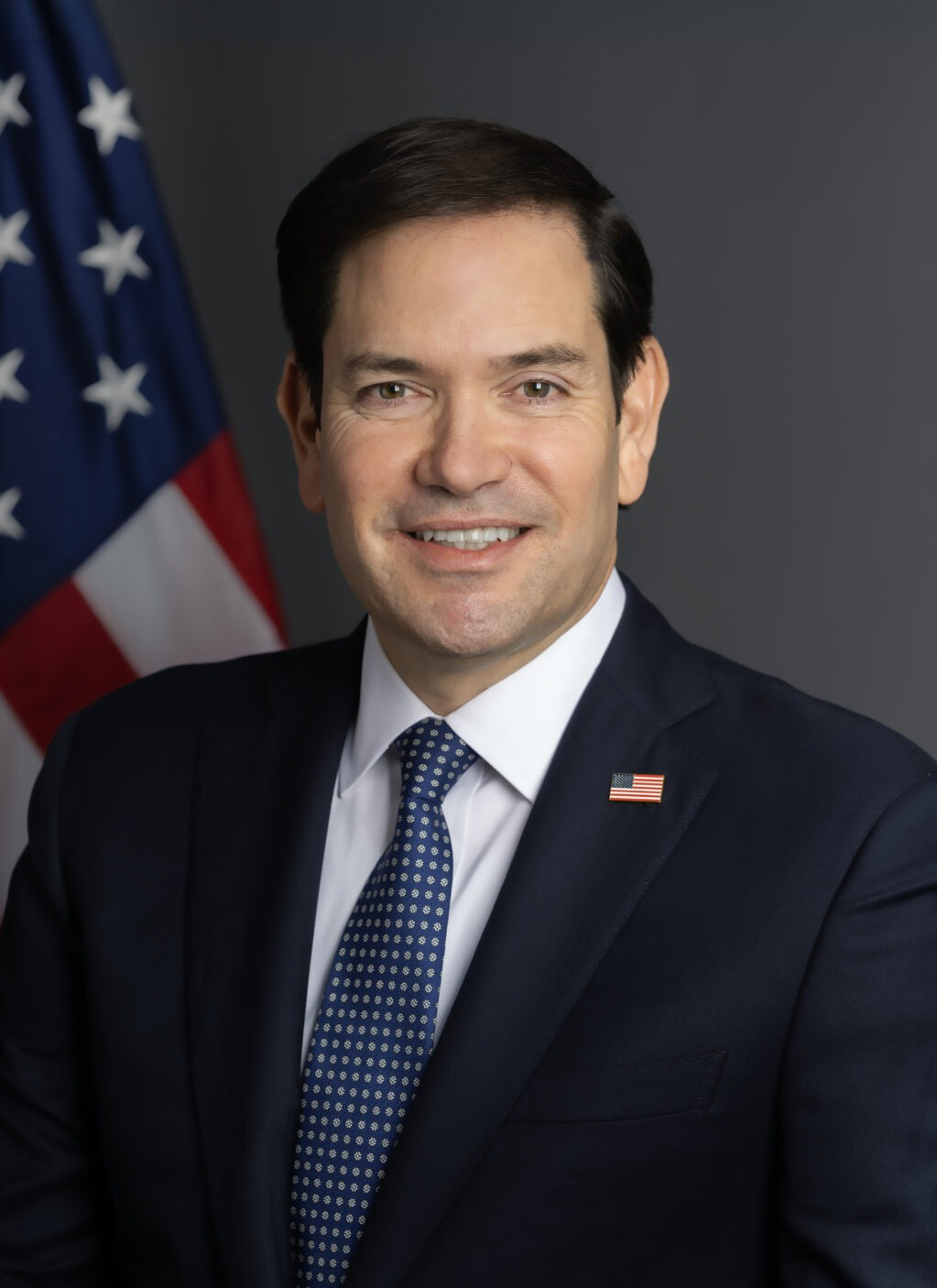
Secretary of State Marco Rubio at President Trump’s Roundtable on American Mining

SECRETARY RUBIO:  Thank you, Mr. President.  Thank you for coming to the State Department.  We like this room a lot, too, and obviously don’t look back; there’s a painting up here.  Just don’t – (laughter) – uh-oh. 

PRESIDENT TRUMP:  (Inaudible.)  That’s a good one.  (Laughter.)  I’m taking it with me. 

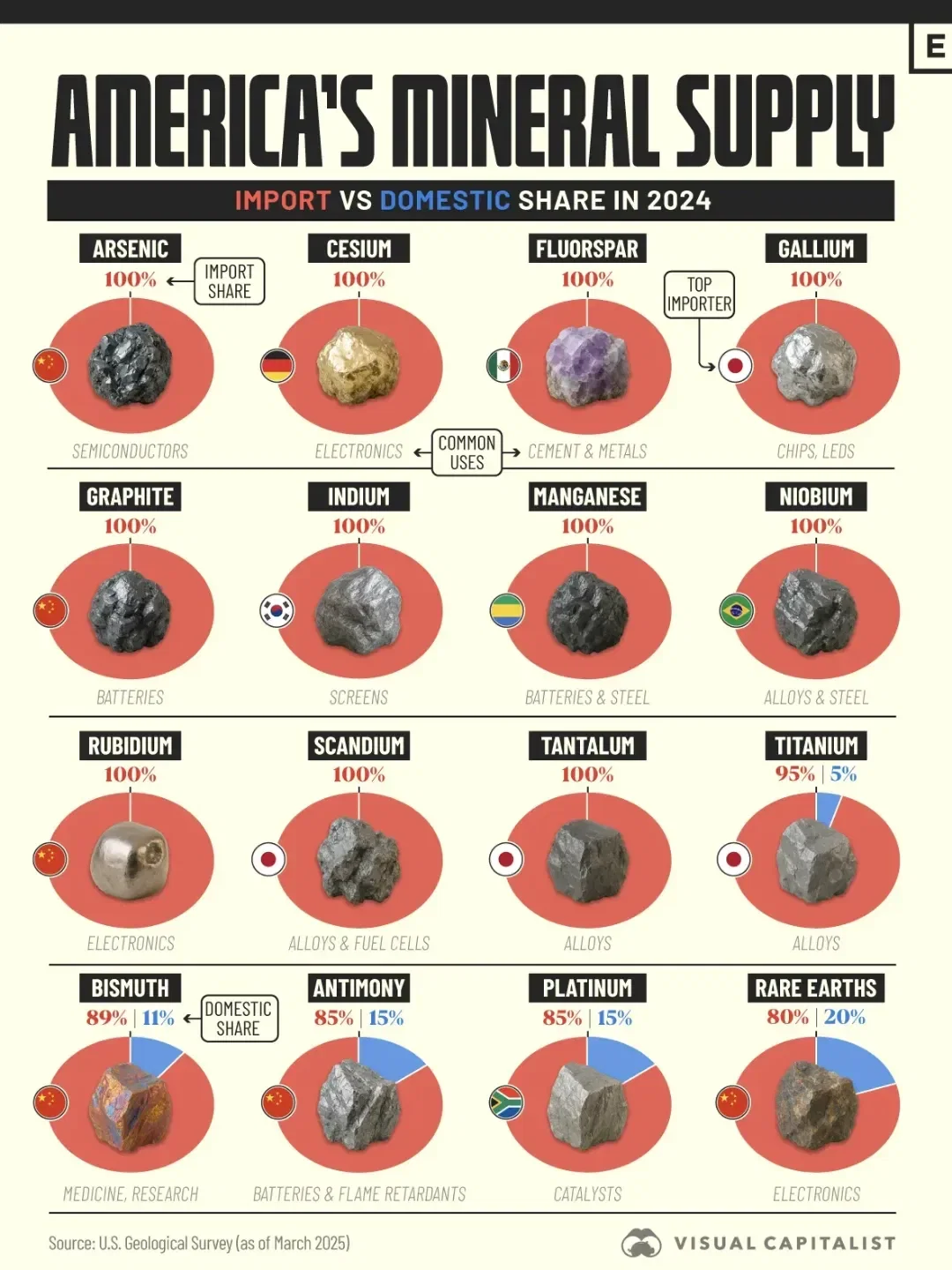
SECRETARY RUBIO:  That – I shouldn’t have said anything.  But anyway, Mr. President, thank you for being here.  Thank you for your leadership on this topic.  It’s a challenge we face in this domain that actually goes to the very survival of the country, and thank you for giving it a priority in your presidency.  This has been going on for 25 years.  We’ve been walking away from the importance of this, and now we’re trying to make up for 25 or 30 years of mistakes under your presidency.  So, we appreciate your presidency valuing this when other presidents did not.

The group of people that are here today represent the whole-of-nation effort that’s involved in this.  It’s – because at the core of this is our industrial strength, but also our national sovereignty – that we never depend on other countries for things we need to prosper and to defend ourselves as a people.  And so, you’ll see here today, as you’ve already pointed out, we have leaders not just from government but from universities, from private industry, from students who are going to be the future of this industry. 

I wanted to briefly – very briefly – touch on what the State Department’s done.  Earlier this year we had a Critical Minerals Ministerial.  We brought in countries from all over the world to – and announced the creation of something called FORGE, which is an international partnership chaired by us in the United States to leverage public finance and coordinate diplomatic support to secure these supply chains around the world.  At that meeting, we signed 11 new critical minerals agreements with countries, adding to the ones that already existed.  Today, under your administration, we’ve already signed 27 critical mineral agreements with other countries.

Pax Silica

We also, under the leadership of someone who needs to be recognized, our Under Secretary Jacob Helberg – I don’t know if Jacob is here, but Jacob has been phenomenal.  He came up with something called Pax Silica, and it’s an initiative that leads our efforts to partner with the private sector and invest in mining and refining and in processing as well as the end-use applications of that. 

There’s still a lot of work left to do, but we at the State Department are willing to utilize our unmatched global presence, our presence all over the world, to ensure that we’re working on this.  And we’re committed to working with industry, with universities, with all the elements of our national power to bring this about.  And so, thank you, Mr. President, for prioritizing this, and I think we all look forward to working not just nationally but with our allies around the world to ensure that we have supply chains that are diversified and reliable and no country can ever hold this over our head and threaten us in the future.  Thank you.

Supplemental- What About Canada?

Canada signs over 20 critical mineral deals but faces $12-billion U.S. challenge to turn diplomacy into mines

Pax Silica Coalition Aims To Advance AI Revolution But Why No Canada?

This article is via friends at share.america.gov. As artificial intelligence fuels a 21st-century industrial revolution, the United States and partner nations are working together to advance technological progress and mutual prosperity.

In December, the U.S. Department of State launched the Pax Silica initiative , inviting countries that are home to advanced technology companies to adopt AI standards and governance models that will foster trusted digital infrastructure and secure supply chains while unleashing the full economic potential of AI.

“This is an economic security coalition built on the reality that our security is inseparable from our technological edge,” Under Secretary of State for Economic Affairs Jacob Helberg said of Pax Silica, named for the Latin words for peace and the element central to modern technologies.

So far, 11 countries have signed on to the Pax Silica declaration along with the United States: Australia, Greece, India, Israel, Japan, Qatar, Republic of Korea, Singapore, Sweden, United Arab Emirates and the United Kingdom. Taiwan has endorsed the Pax Silica principles.

7 people sitting at table and holding up documents (State Dept.)
Under Secretary of State Jacob Helberg, far left, joins international partners at the Pax Silica Summit in Washington December 12. (State Dept.)

A strategy to lead the AI race

Advancing diplomacy and security around future technologies is a pillar of the Trump administration’s AI strategy, Winning the AI Race: America’s AI Action Plan  (PDF, 509KB below). The strategy also aims to build U.S. AI infrastructure and accelerate innovation.

In the 21st century, Helberg says, “power is measured by technology. The ability to design and manufacture critical components … The ability to secure and scale advanced systems. The ability to turn knowledge into production.”

Graphic highlighting key parts of the Pax Silica strategic concept (State Dept./M. Gregory)
(State Dept./M. Gregory)

Countries that have joined Pax Silica are among those already reaping the benefits of innovation. Since November 2022, when U.S.-based OpenAI released ChatGPT, countries that have now joined Pax Silica have averaged 3% to 4% economic growth , three times that of similarly developed nations, Helberg said in congressional testimony in February.

Opportunity for streamlined access

Pax Silica seeks to ensure signatory nations enjoy the benefits of future progress. The State Department is piloting a “concierge” service to streamline partner nations’ access to American-made AI products — including power, cooling, software and hardware.

In February, the U.S. State Department announced foreign assistance to deliver affordable, high-quality smartphones across the Indo-Pacific. This Edge AI Package will bring AI innovations to millions of people while ensuring future users run trusted operating systems.

“When it comes to AI, we will partner with our friends to ensure they take part in this unprecedented economic boom,” Helberg says.

World Economic Forum- Global Cooperation At Crossroads

The Global Cooperation Barometer indicates that international cooperation has “flatlined”, driven by heightened geopolitical tensions and instability, but positive momentum in climate finance, health and innovation offers hope.
In an era of heightened volatility, leaders will need to embrace “disordered” cooperation and dynamic, solutions-driven decision-making to deliver tangible results and build trust. AI and other emerging technologies are reshaping the global landscape and driving upheaval. Concerted cooperation will be critical to harness benefits and minimize risks.

Geneva, Switzerland, January 2025 – The World Economic Forum’s Global Cooperation Barometer offers a critical assessment of the state of global cooperation, showing a world grappling with heightened competition and conflict, while also identifying various areas where leaders can drive progress through innovative collaboration. Released amid geopolitical, technological and sociopolitical upheaval, the Forum’s flagship annual report underscores the urgency of addressing shared challenges and offers leaders guidance on what cooperation can look like in a shifting world.
 
The Global Cooperation Barometer 2025, developed in collaboration with McKinsey & Company, uses 41 indicators to measure the current state of global cooperation. The aim is to offer leaders a tool to better understand the contours of cooperation broadly and along five pillars: trade and capital flows, innovation and technology, climate and natural capital, health and wellness, and peace and security. Now in its second edition, the Barometer draws on new data to provide an updated picture of the global cooperation landscape, with a particular focus on the impact of the new technological age.
 
“The Barometer is being released at a moment of great global instability and at a time when many new governments are developing agendas for the year, and their terms, ahead,” said Børge Brende, President and CEO of the World Economic Forum. “What the Barometer shows is that cooperation is not only essential to address crucial economic, environmental and technological challenges, it is possible within today’s more turbulent context.”
 
“This second edition of the Global Cooperation Barometer focuses on where cooperation stands today and what it can look like in the new technological age,” said Bob Sternfels, Global Managing Partner, McKinsey & Company. “Advancing global innovation, health, prosperity and resilience cannot be done alone. Leaders will need new mechanisms for working together on key priorities, even as they disagree on others, and the past several years have shown this balance is possible.”

The latest edition of the Barometer highlights that global cooperation is at a critical juncture. The report’s analysis reveals that after trending positively for a decade and surpassing pre-pandemic levels, overall cooperation has stagnated.

This has been driven by a sharp decline of the peace and security pillar of the Barometer over the past seven years, caused by mounting geopolitical tensions and competition which have significantly eroded global collective security. Levels of conflict and attendant humanitarian crises have increased in the past year to record levels, driven by crises including, but not limited to, the Middle East, Ukraine and Sudan.

As the largely stable cooperative order that defined the post-Cold War period is giving way to a more fragmented landscape, solutions to pressing challenges – from climate action to technological governance – require collaboration. And despite the global security crises, the new findings indicate that collaboration has continued in various areas including vaccine distribution, scientific research, renewable energy development, and more – offering models for future cooperation.
Notably, peace and security have declined sharply in recent years, but other pillars of the Barometer have remained resilient and reveal emerging opportunities for international cooperation,

Innovation and technology. While geopolitical competition is rising in regard to certain frontier technologies such as semiconductors, overall global cooperation on technology and innovation advanced in 2023, in part due to digitization of the global economy. This helped drive the adoption of new technologies, a strong ramp-up in the supply of critical minerals – and a related drop in price of lithium batteries – and a rebound in student mobility. However, rapid disruption from emerging technologies such as AI is reshaping the global landscape, raising the possibility of a new frontline of geostrategic competition or even an “AI arms race”. Cooperative leadership and inclusive strategies will be key to harness its vast potential while tackling risks.

Climate and natural capital: Cooperation on climate goals improved over the past year, with increased finance flows and higher trade in low-carbon technologies such as solar, wind and electric vehicles. Yet, urgent action is required to meet net-zero targets as global emissions continue to rise. Greater global cooperation will be essential to scale up technologies and secure the financing needed to meet climate goals by 2030.

Health and wellness: Some health outcomes, including life expectancy, continued to improve post-pandemic, but overall progress is slowing compared to pre-2020. While cross-border assistance and pharmaceutical R&D have declined, and cooperation on trade in health goods and international regulations stalled, various health metrics including child and maternal mortality remain strong. Given rising health risks and ageing populations, leaders should invest in global cooperation to bolster public health and sustainable health systems.

Trade and capital flows: Metrics related to the flow of goods and services, trade, capital and people had mixed outcomes in 2023. Goods trade declined by 5%, driven largely by slower growth in China and other developing economies, while global fragmentation continued to reduce trade between Western and Eastern-aligned blocs. Despite this, global flows of services, capital and people showed resilience. Foreign direct investment surged, particularly in strategic sectors like semiconductors and green energy, while labour migration and remittances rebounded strongly, surpassing pre-pandemic levels.Looking ahead, leaders will need to find ways to work together, even as competition increases, as tangible results will be crucial to maintain public trust and support. The report concludes by underscoring the urgent need for adaptive, solutions-driven leadership to navigate a turbulent global landscape. By pivoting towards cooperative solutions, leaders can rebuild trust, drive meaningful change and unlock new opportunities for shared progress and resilience in the complex years ahead.
 
About the Global Cooperation Barometer Methodology
 
The Global Cooperation Barometer – first launched in 2024 – evaluates global collaboration across five interconnected dimensions: trade and capital, innovation and technology, climate and natural capital, health and wellness, and peace and security. The Barometer is built on 41 indicators, categorized as cooperative action metrics (evidence of tangible cooperation, such as trade volumes, capital flows, or intellectual property exchanges) and outcome metrics (broader measures of progress like reductions in greenhouse gas emissions or improvements in life expectancy). Spanning 2012–2023 and indexed to 2020 to reflect pandemic-era shifts, the Barometer normalizes data for comparability (e.g., financial metrics relative to global GDP and migration metrics to population levels) and weights it equally within and across pillars.
 
About the Annual Meeting 2025
 
The World Economic Forum Annual Meeting 2025, taking place in Davos-Klosters from 20 to 24 January, convenes global leaders under the theme, Collaboration for the Intelligent Age. The meeting will foster new partnerships and insights to shape a more sustainable, inclusive future in an era of rapidly advancing technology, focusing on five key areas: Reimagining Growth, Industries in the Intelligent Age, Investing in People, Safeguarding the Planet, and Rebuilding TrustClick here to learn more.