Modern conveniences many take for granted — cell phones, laptops, GPS devices, even coffee makers — run on computer chips introduced by U.S. firms that established America’s leading role in technology. Trace the digital revolution, from its beginnings to the present day, with each groundbreaking advance.
How did these gains happen? Today’s technology emerged from U.S. support for research and development combined with America’s robust private sector, its scientific community, and its innovative spirit.
Bell Labs, a legendary research hub in New Jersey, began as a branch of the Western Electric Company, a subsidiary of the American Telephone and Telegraph Company (AT&T).
Founded in 1925 to meet a growing need for masscommunications, Bell Labs hired top engineers, physicists, chemists, and mathematicians to design and patent equipment (including a high-vacuum tube that transmitted telephone signals across North America).
Bell Labs encouraged interdisciplinary collaboration that produced groundbreaking discoveries. The labs were driven by scientific curiosity, flexible deadlines, and — thanks to AT&T’s budget — stable funding. Lab directors adopted a hands-off management style, and innovation flourished.
DID YOU KNOW?
In 1932, Bell Labs physicist Karl Jansky discovered radio waves coming from outer space. He’s known as the father of radio astronomy.
In the post-World War II period, Bell Labs’ Mervin Kelly assembled an all-star team of scientists to develop a replacement for the vacuum tube, which was bulky, fragile, and prone to burning out.
In 1947, John Bardeen and Walter Brattain — supervised by fellow physicist William Shockley — invented the point-contact transistor, a semiconductor device that amplifies sound and switches electrical currents on and off.
In 1948, Shockley designed the junction transistor, a more robust and reliable transistor. Its small size, low power consumption, and durability paved the way for computers, portable radios, cell phones, and other devices.
Eight years later, Bardeen, Brattain, and Shockley would be awarded the Nobel Prize in physics for this breakthrough.
DID YOU KNOW?
Bell Labs researchers have been awarded 10 Nobel Prizes in physics and chemistry, spanning from 1937 to 2023. While Bell Labs was at its most productive from the 1940s to the 1970s, important research continues today at its New Jersey headquarters.
Bell Labs continued to improve transistor technology during the 1950s, developing the silicon transistor and the metal-oxide-semiconductor field-effect transistor (MOSFET).
The MOSFET proved crucial for building high-density integrated circuits (ICs), or microchips, in the 1960s. Microchips — consisting of billions of tiny transistors crafted from semiconductor materials, commonly silicon — work together to power electronics.
Recognizing the potential for widespread impact and profits, Bell Labs created licensing agreements to share transistor technology with other companies.
In 1955, William Shockley left Bell Labs to establish Shockley Semiconductor Laboratory in Mountain View, California. Within a couple of years, some of his employees — engineers and scientists — formed their own company, Fairchild Semiconductor.
Fairchild is credited with the birth of Silicon Valley. The company became a major player in the growing semiconductor industry, and many Silicon Valley firms — including Intel (founded in 1968) and Apple (in 1976) — have ties to Fairchild alumni to this day.
As demand for semiconductors grew, so did the need for manufacturing capabilities.
Throughout the 1980s and 1990s, Japan, South Korea, and Taiwan became players in the industry, with Japanese companies like Toshiba and NEC influencing the data-storage market and South Korea’s Samsung and SK Hynix focusing on memory-chip production.
Meanwhile, the Taiwan Semiconductor Manufacturing Company (TSMC) upended a traditional business model of integrating chip design and manufacturing. It introduced the fabless-foundry model, encouraging firms to specialize in either design (fabless) or fabrication/manufacturing (foundry).
This increased efficiency. What’s more, it allowed many small firms — those lacking resources to open manufacturing plants — to design chips.
DID YOU KNOW?
The fabless-foundry business model democratized chip production, allowing startups to enter the market without the need for expensive manufacturing facilities.
Experts predict that quantum computing — with its ability to accelerate AI by overcoming limitations on data size, complexity, and processing speeds — will shape the future.
Quantum AI will develop algorithms that could advance pharmaceutical discoveries, predict financial outcomes, improve manufacturing, and bolster cybersecurity. Quantum/AI partnerships already comprise an active and developing market, with U.S. tech giants like IBM and Nvidia investing in both domains.
Industry leaders point to many factors that shape U.S. technological innovation. One such factor is the U.S. system of intellectual property protection, which fosters the spirit of risk-taking, says Walter Copan. (That system is enshrined in the U.S. Constitution, thanks to the foresight of America’s Founding Fathers.)
Sanjay Mehrotra cites the U.S. business culture of “openly, freely being able to debate ideas,” adding, “The best ideas win.”
Thomas Caulfield says, “This is where you can work hard, live your dream, become an entrepreneur, start a company.”
And Jon Gertner notes that key people at Bell Labs came from humble beginnings: “To me, that feels uniquely American — the idea that talent could rise from almost anywhere and shape the future of communications.”
It’s part of Silicon Valley lore that massive tech empires often sprouted from humble roots. As quantum computing and AI herald the next seismic shifts in technology, innovation hubs could emerge in unlikely places. Who knows? The next great U.S. tech companies might now be incubating in a town anywhere in America.
Over the past decade, Canadian math scores on the Program of International Student Assessment (PISA) and Trends in International Mathematics and Science Study (TIMSS) have declined in all provinces. Canadian fourth-grade students performed below the international average on nearly every benchmark level of math achievement on the 2023 TIMSS assessment.
Research shows early math achievement predicts later academic achievement and future earnings. Strong math skills are crucial for career sectors like technology, finance, and data science.
Canada’s declining math performance is an urgent national concern requiring immediate action by provincial governments.
This E-Brief via our friends at the C.D. Howe Institute outlines five recommendations to reverse Canada’s declining math scores: align math instruction with the science of learning; use assessments and data to drive improvement; strengthen provincial math curricula; improve teachers’ math knowledge; and appoint implementers committed to reform goals.
Introduction
Strong math skills are essential for careers that drive Canada’s economy, including technology, artificial intelligence, finance, and data science. To remain globally competitive and address long-term income gaps, improving math achievement among Canadian students must be a national priority.
The link between early math skills and later academic success is well established (Duncan et al. 2011; Siegler et al. 2012). Early math achievement also correlates positively with future career earnings. According to Werner et al. (2024), math achievement in childhood is a better predictor of adult earnings at age 30 than reading, health, or social-emotional skills. These effects were observed across all demographic groups.
Canada ranked in the top 10 in math on the 2022 PISA survey, an international OECD assessment of 15-year-olds. However, ranking near the top of a falling curve does not imply that all is well. Math achievement has been falling for well over a decade, beginning well before the COVID-19 pandemic. More Canadian students now struggle in math, fewer excel, and in several provinces, the decline is roughly equivalent to two or more years of schooling.
The OECD estimates that a 20-point drop on PISA roughly equates to about one year of learning (OECD 2023). Math scores in all provinces declined more than 20 points since 2003. Seven provinces experienced declines of over 40 points,1 representing approximately two years of lost learning, while the 58-point drop in Manitoba and Newfoundland and Labrador is close to three years.
In all provinces, the share of students below Level 2 on PISA increased since 2003, more than doubling in every province except Prince Edward Island and Quebec. Level 2 reflects the baseline level of mathematics proficiency to participate fully in society. Over the same period, the proportion of top performers declined in every province (OECD 2023; Richards 2025). In four provinces, at least 30 percent of students scored below Level 2 on the 2022 PISA test.2
The latest results from TIMSS3 have flown under the radar in Canada, but they should be another wake-up call. PISA and TIMSS assess different constructs. PISA focuses on mathematical literacy while TIMSS tests Grade 4 and Grade 8 students on curriculum-based academic skills (e.g., arithmetic, fractions, pre-algebra), which are essential for later math courses.
Students from Alberta, Manitoba, Newfoundland and Labrador, Ontario, and Quebec wrote the 2023 Grade 4 TIMSS assessment. While not all provinces participated, these jurisdictions educate well over half of Canada’s students. Results showed a clear downward trend since 2015, predating the COVID-19 pandemic: Canadian Grade 4 students scored below their peers in the United States, well below those in England, and significantly below top-performing countries like Singapore (Figure 1).
Even more alarming, Canadian fourth graders fell below the international median at nearly every benchmark level of math achievement (Table 1).
Provincial assessments tell a similar story. Ontario’s most recent EQAO tests show that 36 percent of Grade 3 students, 49 percent of Grade 6 students, and 42 percent of Grade 9 students are not meeting provincial standards in 2024-2025. Scores have remained stagnant over the last three years, despite provincial efforts to improve math performance (EQAO 2025).
Canada invests heavily in education, spending more per student than the OECD average (Figure 2), but higher education spending does not necessarily translate into better outcomes. Evidence suggests that cumulative expenditure per student between ages six and 15 improves PISA performance up to approximately US$100,000/ CAD $139,000, after which additional investment yields minimal measurable gains in student achievement (OECD 2024). For example, the cumulative spending per student between ages 6 and 15 in Canada is US$125,260/ CAD $173,848, yet Canadian 15-year-olds are outperformed by their Japanese counterparts, even though Japan spends approximately 14 percent less per student (OECD 2024). This suggests that increased funding alone cannot resolve educational performance gaps.
High-performing systems tend to strategically allocate resources toward evidence-based interventions, such as teacher quality improvements, rigorous curriculum design, standardized assessments, and targeted student support. For countries already spending above the threshold, including Canada, improving educational outcomes may require refocusing resources rather than increasing spending.
Evidence-based instructional strategies need to drive education investment decisions. This E-Brief outlines actionable policy recommendations to reverse the downward trend in Canada’s math performance and maximize returns on existing educational expenditure.
Align Math Instruction with the Science of Learning
Math Instruction Must be Grounded in High-quality Evidence
A major barrier to improving math outcomes in Canada is that many school math programs are not grounded in scientific evidence about how best to teach and learn math. Many popular math programs emphasize approaches such as inquiry-based or discovery-based learning,5 collaborative problem solving, or open-ended tasks.6 But a large body of research shows that problem-solving ability develops most effectively through explicit teacher-led instruction, which incorporates clear explanations, worked examples, purposeful practice, and feedback (Archer et al. 2011; Fuchs et al. 2021; Hughes et al. 2017; Stockard 2018; Sweller et al. 2010; Kirschner et al. 2006; Hartman et al. 2023; Guilmois et al. 2025).
As Andreas Schleicher, Director for Education and Skills at the OECD, has noted, PISA results reveal that teacher-directed instruction is a stronger predictor of achievement than student-oriented learning (Schleicher 2019). Recent analyses of PISA data from a sample of European countries found that student-oriented (or inquiry-based) instruction was negatively associated with PISA math achievement (Liu et al. 2024). Similar correlations have been observed in the 2010 Pan-Canadian Assessment Program (PCAP) data; the use of teacher-directed instruction was associated with better math performance, while indirect instruction was strongly associated with lower scores (CMEC 2012).
Explicit instruction benefits diverse groups of learners and is particularly critical for novice learners. Powell et al. (2025) describe systematic, explicit instruction as “the instructional approach that has amassed the strongest research base in mathematics, particularly when supporting students with mathematics disabilities or difficulties.” Hughes et al. (2017) identified five essential components of explicit instruction, based on the research literature:
Model: Teacher demonstrates key concepts clearly and concisely.
Break down concepts: Teach complex skills in manageable steps.
Fade support: Gradually reduce instructional guidance as students gain independence.
Respond and feedback: Provide frequent opportunities for student responses and feedback.
Practice: Create purposeful practice opportunities to build mastery.
Teacher professional development in math rarely focuses on explicit instruction. Some popular Canadian math programs even actively discourage teacher-led demonstrations, disparaging explicit instruction as “mimicking” (Boryga 2024). This disconnect between evidence and classroom practices undermines student success.
Provinces Must Set Evidence Standards
Most math programs and instructional approaches are marketed as “research-based,” but the term carries no specific criteria for what qualifies as credible evidence. In science, that phrase usually means rigorous, replicated evidence. In education, it can mean a survey, a case study, or an opinion dressed up as evidence. Without clear standards for what constitutes evidence, schools will continue to adopt programs unsupported by rigorous studies.
The What Works Clearinghouse practice guides published by the Institute of Educational Sciences (IES) identify, evaluate, and rate recommended instructional approaches (e.g., Fuchs et al. 2021; Gersten et al. 2009). High-quality research on effective math instruction has also been summarized by the National Math Advisory Panel (NMAP 2008) and Barak Rosenshine (Rosenshine 2012).
Provincial governments should set evidence standards, drawing on evidence syntheses such as the NMAP Final Report and IES practice guides, prioritizing randomized controlled trials and peer-reviewed studies that show measurable improvements in math achievement. Funding should be directed toward evidence-based programs.
Engage Science of Learning Experts in Math Reform
Cognitive scientists, behavioral scientists, and educational psychologists have warned about the limited use of evidence-based math instruction and persistence of pseudoscientific practices in math classrooms (e.g., Codding et al. 2023; Hartman et al. 2023). These experts offer underused insights about how students develop mathematical knowledge and skills. Provincial governments should actively engage them in setting evidence standards and ensuring that instructional programs align with the best available research on how children learn math.
Math Reform Lags Behind Reading Reform
Recent Right to Read Inquiry reports in Ontario, Saskatchewan, and Manitoba (Ontario Human Rights Commission 2022; Saskatchewan Human Rights Commission 2023; Manitoba Human Rights Commission 2025) found that existing practices ignored the abundance of research on how to best teach reading, known as the “science of reading.” In response, some Canadian provinces and school districts have begun to correct decades of damage done in reading instruction by aligning policies with this evidence (Timmons 2024; CBC Radio 2024; Macintosh 2025). Math has not received the same level of attention or urgency. Despite a strong body of rigorous research, there is limited awareness among educators about how students learn math most effectively. Unlike literacy, where students may gain incidental exposure at home (e.g., by parents reading aloud), many Canadian students are only exposed to meaningful math learning in classrooms, making evidence-aligned instruction even more critical.
Actionable recommendations
Set clear evidence standards for math programs, prioritizing randomized controlled trials and peer-reviewed studies that demonstrate measurable gains in math achievement.
Prioritize funding for math programs and professional development aligned with high-quality evidence.
Engage science of learning experts, such as those in cognitive science, behavioural science, and educational psychology, alongside experienced educators with a track record of effective math instruction, to guide evidence-based practices for teaching math.
Use Assessments and Data to Drive Improvement
Canada lacks clear, consistent measures of student progress in math. Without reliable data, schools cannot accurately diagnose problems early, intervene effectively, or determine whether students are on track in math. Provincial governments should prioritize two types of assessments: standardized tests and universal screening.
Provincial Standardized Testing
Standardized tests are typically given at the end of a term or school year to measure student achievement, monitor system performance, and ensure transparency.
Test scores from school-aged students are a good predictor of later academic outcomes, including post-secondary readiness and future earnings (DeChane et al. 2024). Access to reliable data allows education systems to focus on closing proficiency gaps early, thereby narrowing educational disparities later. Bergbauer et al. (2018) analyzed PISA microdata from over two million students across 59 countries, spanning six testing cycles from 2000 to 2015, and found that accountability systems using standardized tests to compare results across schools and students are associated with higher student achievement. In countries like Estonia and Portugal, standardized assessments have led to rising PISA outcomes and greater equity. In contrast, systems with limited standardized testing, such as Spain in the 1990s, struggled to identify and support struggling students, leading to greater inequality (Crato 2021).
Standardized tests provide critical information for teachers, parents, policymakers, and the public. They give parents a clear picture of their child’s academic progress so they can advocate effectively. They provide policymakers with reliable data to evaluate system effectiveness and target resources. It is standard practice in many countries to conduct annual standardized assessments, with aggregate results published by school districts, enabling transparency and accountability to the public, but it is uncommon in Canada.
Current testing is too infrequent, which hinders early intervention and accountability.7 Moreover, provincial assessments may lack diagnostic value. For example, Ontario’s EQAO assessments allow calculators, even for Grade 3 students, making it impossible to determine whether students have mastered basic arithmetic or learned math facts to automaticity.
Math Fact Fluency Matters
Basic arithmetic fluency is the foundation for later math success, yet many provincial assessments do not adequately determine whether students have mastered foundational skills. England addressed this by introducing mandatory multiplication tables checks for nine-year-old (Year Four) students, sending a clear signal that math fact fluency matters, and prompting schools to prioritize automaticity with math facts (Gibb 2025; Gibb and Peal 2025; UK Department for Education 2025).
The ability to recall math facts, like times tables, accurately and effortlessly from memory, is known as math fact fluency8 or automaticity. This is crucial since it reduces cognitive load, making it easier to tackle complex math problems that involve math facts (National Math Advisory Panel 2008; Hartman et al. 2023; McNeil et al. 2025). For example, when adding two fractions with denominators 6 and 8, math fact automaticity allows students to quickly produce 24 as the least common denominator. Students without math fact automaticity will struggle with fraction arithmetic.
Evidence-based methods for developing math fact fluency have been documented (for example, see Codding et al. 2011; Poncy et al. 2007, 2010 and 2015; and Stokke 2024 for an overview), but if reliable data is not being collected, schools may not devote sufficient resources to this critical skill or may fail to identify students who need support. A mandatory times tables check in primary school is a straightforward, high-impact policy.
Universal screening identifies students at risk of falling behind
While standardized tests provide system-level data, universal screeners are brief, timed assessments given two to three times per year. They are designed to quickly identify students who are behind so that evidence-based interventions can be used to provide remediation to ensure more equitable access to the core curriculum.
Provincial Human Rights Commission reports highlight the importance of universal screening for reading (Ontario Human Rights Commission 2022; Saskatchewan Human Rights Commission 2023; Manitoba Human Rights Commission 2025). Math requires the same urgency. Early studies found that when this kind of data is paired with effective math interventions, student math achievement improved (Fuchs et al., 1989; Fuchs et al., 1991; Allinder et al., 2000; Nelson et al. 2023). The IES practice guide on Response to Intervention recommends screening K-8 students in math twice per year using measures that are efficient (less than 20 minutes), reliable, and demonstrate predictive validity (Gersten et al. 2009). Using valid screeners is essential to accurately identify students at risk (VanDerHeyden et al. 2021; VanDerHeyden and Solomon 2023).
Screening alone is insufficient. Screening must be paired with intervention programs that incorporate evidence-based strategies, since ad hoc or “design your own” programs are unlikely to turn things around for struggling students.
Addressing Myths About Timed Activities
Concerns that timed assessments cause math anxiety are not supported by research. In fact, struggling with math has been identified as a factor in the development of math anxiety (Maki et al. 2024). Therefore, the best way to reduce math anxiety is to improve student achievement in math. Timed activities, such as low-stakes timed practice and timed retrieval practice, are essential for developing fluency. Timed activities are a key recommendation in the IES practice guide on evidence-based supports for struggling students, and there is strong evidence that they increase math achievement (Fuchs et al. 2021). Many timed activities and assessments are brief, and students tend to enjoy them.
Timed activities such as standardized tests and screening are essential to ensure students get the support they need. Standardized tests allow students to show what they have learned, and universal screeners are like academic “check-ups,” helping to catch problems early.
Actionable recommendations
Adopt a mandatory times tables check before the end of Grade 4.
Prohibit calculators on primary school provincial assessments.
Implement universal screening in math for all K-8 students using screening tools with demonstrated predictive validity.
Pair screening with evidence-based interventions.
Strengthen provincial standardized testing, implementing tests at key grades and tracking student progress over time.
Strengthen Provincial Math Curricula
Delays in Foundational Content are Holding Students Back
In a 2015 C.D. Howe Institute Commentary (Stokke 2015), I recommended that K-8 math curricula focus on concepts critical for later success in algebra and beyond. Most Canadian math curricula still delay foundational skills, leaving students behind their peers in other countries. When students build strong fluency early, they are better equipped to participate in advanced problem solving and mathematical reasoning.
Some provinces have made changes since 2015. Alberta’s 2023 revisions of the K-6 curriculum reinstated core concepts at appropriate grade levels. Ontario’s 2020 curriculum update requires recall of multiplication facts up to 12 x 12 by Grade 5. This is later than international benchmarks, and it is unclear whether fluency will improve since EQAO tests permit calculators. Manitoba and Saskatchewan also delay recall of multiplication facts (up to 10 x 10) until the end of Grade 5 and provide no accountability measures to ensure mastery. British Columbia’s 2016 curriculum is even worse, delaying or omitting key concepts entirely, and explicitly stating in the Grade 5 curriculum that “memorization of [math] facts is not intended” (Province of British Columbia, Ministry of Education, 2016). In contrast, the US Common Core and other international curricula expect students to achieve multiplication fact fluency by the end of Grade 3.
Fraction arithmetic is a strong predictor of later math achievement (Siegler et al. 2012), but is not taught in most Canadian provinces until Grades 7 or 8. This is two to three years behind the US Common Core State Standards, where students learn fraction arithmetic in Grades 4 and 5 (National Governors Association Center for Best Practices & Council of Chief State School Officers 2023). The NMAP stressed improving fraction fluency to improve algebra outcomes (NMAP 2008).
Delays in teaching foundational topics widen inequities by disproportionately harming disadvantaged students, whose families are less able to pay for private tutoring to compensate for gaps. Delays reduce practice time, leading to compounding knowledge gaps and lower success in advanced math.
The above table, based on recommendations from the NMAP final report and benchmarks from high-performing jurisdictions, serves as a guide for when key topics should be covered.
Actionable recommendations
Revise provincial math curricula to emphasize foundational topics at earlier grades, using the above table as a guideline.
Require automatic recall of basic math facts as an explicit learning outcome in provincial curricula where it is not currently mandated.
Curriculum changes alone are not enough. Without evidence-based math programs and accountability measures such as mandatory times tables checks, rigorous standardized assessments, and restrictions on calculator use in early grades, even strong curriculum outcomes will have limited impact on improving student achievement.
Strengthen Teacher Content Knowledge in Mathematics
To improve math outcomes for students, we must ensure they are taught by teachers with strong math knowledge. The most practical time to build this knowledge is during university, when teacher candidates complete coursework to prepare for their careers. We have a responsibility to future generations to make this investment now, before teachers enter the profession and impact students.
Math Teachers Need More than High School Math
A high school math background and pedagogy courses are not sufficient preparation for teaching K-8 math. Teachers need deep mathematical knowledge, extending beyond the content they are expected to teach, in order to anticipate misconceptions and prepare students for future math success (Ma 1999; Hill et al. 2005).
Since provincial governments certify teachers, they have a duty to ensure that teacher preparation meets minimum standards. Claims suggesting that teachers’ math knowledge is unimportant or negatively related to teaching effectiveness have been debunked (Barr et al. 2024).
Most Canadian provinces follow a generalist model in K-8, where teachers instruct all subjects, including math. In my 2015 Commentary, I recommended that provinces require K-8 teacher candidates to complete at least six credit hours in math content courses designed to give them a solid understanding of the math they will teach. I also recommended implementing math teacher licensure exams for K-8 teachers to ensure minimum proficiency, a recommendation recently echoed by the National Council on Teacher Quality (NCTQ) (Drake et al. 2025).
The NCTQ recommends that teacher candidates receive at least 105 instructional hours in math content and 45 hours of math pedagogy,9 which is equivalent to three to four university-level math content courses in Canada. Apart from Quebec, no Canadian province meets this expectation, and some are regressing.
Manitoba briefly required two math content courses for students entering teacher preparation programs after 2015, with the first affected cohort graduating in 2020, but eliminated the requirement in 2024 (Macintosh 2025). While intended to boost enrolment in teacher education programs, this decision comes at the expense of students taught by unprepared teachers.
The NCTQ also recommends that elementary teacher candidates pass a strong math licensure exam, covering four core math topics.10 Ontario has recently introduced a Mathematics Proficiency Test for teacher certification, effective February 2025 (EQAO, n.d.). Other provinces have yet to follow suit.
Actionable recommendations
Require a minimum of six credit hours in math content courses tailored to K-8 teachers, as part of licensing requirements.
Implement rigorous math licensure exams for K-8 teachers prior to certification.
Appoint Implementers Committed to the Reform Goals
Reform in math education cannot succeed when implementation is entrusted to individuals who oppose or misunderstand its goals. Policymakers in Canada may recognize the problems within the current system and propose promising solutions to improve math achievement. However, too often, reforms fail when implementation is led by individuals invested in maintaining the very system that needs fixing. For example, despite the Ontario government’s commitment to improving student achievement, improvement has been inadequate, prompting a newly announced external review (Ontario Ministry of Education 2025). To achieve meaningful and lasting improvements in math outcomes, leaders must stay engaged at every stage of the reform process. This includes carefully selecting implementers who are genuinely committed to the goals of reform, building coalitions of educators and stakeholders who support evidence-based practices, and establishing clear accountability measures to track progress and address resistance.
Conclusion
Improving math achievement in Canada requires both immediate action and long-term investments. Policymakers can implement high-impact, low-cost reforms immediately, such as introducing a mandatory times tables check and implementing universal math screening. At the same time, they can work to ensure math instruction aligns with evidence, improve provincial math curricula, and strengthen teacher certification standards.
Below is a summary of actionable recommendations for provincial policymakers and education leaders:
Use assessments and data to drive improvement
Adopt a mandatory times tables check by the end of Grade 4.
Prohibit calculators on primary school provincial assessments to ensure arithmetic fluency.
Implement universal screening in math for all K-8 students, paired with evidence-based interventions.
Strengthen provincial standardized testing by adding assessments at key grades and tracking student progress over time.
Align math instruction with the science of learning
Set clear evidence standards for math instructional programs, prioritizing randomized controlled trials and peer-reviewed studies showing measurable gains in math achievement.
Prioritize funding for math programs and professional development aligned with high-quality evidence.
Engage science of learning experts, such as those in cognitive science, behavioural science, educational psychology, as well as experienced educators with a track record of effective math instruction to guide evidence-based practices for teaching math.
Strengthen provincial math curricula
Revise math curricula to introduce foundational topics earlier, following benchmarks from the National Math Advisory Panel.
Require automatic recall of basic math facts as an explicit learning outcome in all provincial curricula.
Strengthen teacher content knowledge in math
Require a minimum of 6 credit hours in math content courses tailored to K-8 teachers, as part of licensing requirements.
Implement rigorous math licensure exams for K-8 teachers before certification.
Appoint implementers committed to the reform goals
Appoint committed implementers who support evidence-based practices to ensure policies are carried out as intended.
Better math education is crucial for Canada’s students, workforce, and economic future. The time to fix math instruction in Canada is now. With committed leadership, evidence-based policies, and meaningful action, provinces can reverse the decline and set students up for long-term success in mathematics.
The author thanks Colin Busby, Brian Poncy, Narad Rampersad, John Richards, Andrew Sharpe, Benjamin Solomon, Ross Stokke, Rosalie Wyonch, and Tingting Zhang for comments on an earlier draft. The author also thanks John Mighton and Nuno Crato for discussions and advice. The author retains responsibility for any errors and the views expressed.
Archer, Anita, and Charles A. Hughes. 2011. Explicit Instruction: Effective and Efficient Teaching. New York: Guilford Publications.
Barr, Darja, Jim Clark, James Currie, Payman Eskandari, Shakhawat Hossain, Narad Rampersad, Anna Stokke, Ross Stokke, and Matthew Wiersma. 2024. “Fact-checking Research Claims about Math Education in Manitoba.” Nonpartisan Education Review 20(2): 1–47.
Bergbauer, Annika, Eric Hanushek, and Ludger Woessman. 2018. “Testing.” NBER Working Paper 24836. Cambridge, MA: National Bureau of Economic Research. https://doi.org/10.3386/w24836.
Codding, Robin, Corey Peltier, and Jared Campbell. 2023. “Introducing the Science of Math.” Teaching Exceptional Children 56(1): 6-11. https://doi.org/10.1177/00400599221121721.
Codding, Robin, Matthew Burns, and Gracia Lukito. 2011. “Meta–Analysis of Mathematic Basic–Fact Fluency Interventions: A Component Analysis.” Learning Disabilities Research & Practice 26(1): 36-47.
Council of Ministers of Education (CMEC), Canada. 2012. PCAP-2010 Contextual Report on Student Achievement in Mathematics. Toronto: Council of Ministers of Education.
CMEC, Canada. 2023. Measuring Up: Canadian Results of the OECD PISA 2022 Study. Toronto: CMEC.
Crato, Nuno. 2021. “Setting up the Scene: Lessons Learned from PISA 2018 Statistics and Other International Student Assessments.” In Improving a Country’s Education, edited by Nuno Crato. Cham: Springer.
DeChane, Darrin, Takako Nomi, and Michael Podgursky. 2024. “College and Career Ready: How Well Does 8th Grade MAP Performance Predict Post-Secondary Educational Attainment?” CALDER Working Paper No. 300-0524.
Deans for Impact. 2015. The Science of Learning. Austin, TX: Deans for Impact.
Drake, Glenn, Russell Noble, and Heather Peske. 2025. Teacher Prep Review: Solving for Math Success. Washington, DC: National Council on Teacher Quality. April.
Duncan, Greg, and Katherine Magnuson. 2011. “The Nature and Impact of Early Achievement Skills, Attention Skills, and Behavior Problems.” In Whither Opportunity?: Rising Inequality, Schools, and Children’s Life Chances, 47–69.
Fuchs, Lynn, Douglas Fuchs, Carol Hamlett, and Pamela Stecker. (1991). “Effects of Curriculum-Based Measurement and Consultation on Teacher Planning and Student Achievement in Mathematics Operations.” American Educational Research Journal 28(3): 617-641. https://doi.org/10.3102/00028312028003617.
Fuchs, Lynn, Rebecca Newman-Gonchar, Rebecca Schumacher, Barbara Dougherty, Natalie Bucka, Karen Karp, John Woodward, Bradley Clarke, Nancy Jordan, Russell Gersten, Madhavi Jayanthi, Brenda Keating, and Sarah Morgan. 2021. “Assisting Students Struggling with Mathematics: Intervention in the Elementary Grades (WWC 2021006).” Washington, DC: National Center for Education Evaluation and Regional Assistance, Institute of Education Sciences, US Department of Education.
Gersten, Russell, Sybilla Beckman, Benjamin Clarke, Anne Foegen, Laurel Marsh, Jon Star, and Bradley Witzel. 2009. “Assisting Students Struggling with Mathematics: Response to Intervention (RtI) for Elementary and Middle Schools (NCEE 2009-4060).” Washington, DC: National Center for Education Evaluation and Regional Assistance, Institute of Education Sciences, US Department of Education.
Gibb, Nick. 2025. “From Decline to Top Rankings: How England Transformed Education with Nick Gibb.” Interview by Anna Stokke. Chalk & Talk (podcast). May 30. https://www.podbean.com/ew/pb-zps9p-18c1e97.
Gibb, Nick and Robert Peal. 2025. Reforming Lessons: Why English Schools Have Improved Since 2010 and How This Was Achieved. 1st ed. London: Routledge.
Guilmois, Celine, Tom Rohmer, and Maria Popa-Roch. 2025. “Learning basic mathematic skills in primary school: testing the effectiveness of socio-constructivist and explicit instruction.” School Effectiveness and School Improvement. https://doi.org/10.1080/09243453.2025.2536485.
Hartman, Judith, Sarah Hart, Eric Nelson, and Paul Kirschner. 2023. “Designing Mathematics Standards in Agreement with Science.” International Electronic Journal of Mathematics Education 18(3): em0739. https://doi.org/10.29333/iejme/13179.
Hill, Heather, Brian Rowan, and Deborah Ball. 2005. “Effects of Teachers’ Mathematical Knowledge for Teaching on Student Achievement.” American Educational Research Journal 42(2): 371–406. https://doi.org/10.3102/00028312042002371.
Hughes, Charles, Jared Morris, William Therrien, and Sarah Benson. 2017. “Explicit Instruction: Historical and Contemporary Contexts.” Learning Disabilities Research & Practice 32(4). https://doi.org/10.1111/ldrp.12142.
Kirschner, Paul, John Sweller, and Richard Clark. 2006. “Why Minimal Guidance During Instruction Does Not Work: An Analysis of the Failure of Constructivist, Discovery, Problem-Based, Experiential, and Inquiry-Based Teaching.” Educational Psychologist 41(2): 75 86. https://doi.org/10.1207/s15326985ep4102_1.
Liu, Xin, Kajsa Hansen, Valcke, Martin, and Jan Neve. 2024. “A Decade of PISA: Student-Perceived Instructional Quality and Mathematics Achievement across European Countries.” ZDM: The International Journal on Mathematics Education. https://doi.org/10.1007/s11858-024-01630-7.
Ma, Liping. 1999. Knowing and Teaching Elementary Mathematics: Teachers’ Understanding of Fundamental Mathematics in China and the United States. Mahwah, NJ: Lawrence Erlbaum Associates.
Maki, Kathrin, Anne Zaslosky, Robin Codding, and Breanne Woods. 2024. “Math Anxiety in Elementary Students: Examining the Role of Timing and Task Complexity.” Journal of School Psychology 106. https://doi.org/10.1016/j.jsp.2024.101316.
Mayer, Richard. 2017. “Educational Psychology’s Past and Future Contributions to the Science of Learning, Science of Instruction, and Science of Assessment.” Journal of Educational Psychology 110: 174-179. https://doi.org/10.1037/edu0000195.
McNeil, Nicole, Nancy Jordan, Amanda Viegut, and Daniel Ansari. 2025. “What the Science of Learning Teaches Us About Arithmetic Fluency.” Psychological Science in the Public Interest 26(1): 10–57. https://doi.org/10.1177/15291006241287726.
National Mathematics Advisory Panel (NMAP). 2008. Foundations for Success: The Final Report of the National Mathematics Advisory Panel. Jessup, MD: US Department of Education.
Nelson, Gena, Allyson J. Kiss, Robin S. Codding, Nicole M. McKevett, Johna F. Schmitt, Soyoung Park, Monica E. Romero and Jiyung Hwang. 2023. “Review of Curriculum-Based Measurement in Mathematics: An Update and Extension of the Literature.” Journal of School Psychology 97: 1-42. https://doi.org/10.1016/j.jsp.2022.12.001.
OECD. 2023. PISA 2022 Results: The State of Learning and Equity in Education. Vol. I. Paris: OECD Publishing.
Poncy, Brian, Erica McCallum, and Ara Schmitt. 2010. “A Comparison of Behavioral and Constructivist Interventions for Increasing Math-Fact Fluency in a Second-Grade Classroom.” Psychology in the Schools 47(9): 917–930.
Poncy, Brian, Chris Skinner, and Kimberly Jaspers. 2007. “Evaluating and Comparing Interventions Designed to Enhance Math Fact Accuracy and Fluency: Cover, Copy, and Compare versus Taped Problems.” Journal of Behavioral Education 16(1): 27–37.
Poncy, Brian, Kathryn Jaspers, Paul Hansmann, Levita Bui, and William Matthew. 2015. “A Comparison of Taped-Problems Interventions to Increase Math Fact Fluency: Does the Length of Time Delay Impact Student Learning Rates?” Journal of Applied School Psychology 31: 63–82. https://doi.org/10.1080/15377903.2014.963273.
Powell, Sarah, Elizabeth Hughes, Erica Lembke, Matthew Burns, Gena Nelson, Brian Poncy, Robin Codding, Ben Clarke, Corey Peltier, and Genesis Arizmendi. 2025. “The NCTM/CEC Position Statement on Teaching Mathematics to Students with Disabilities: What’s in It and What’s Not.” Research in Special Education 2. https://doi.org/10.25894/rise.2796.
Siegler, Robert, Greg Duncan, Pamela Davis-Kean, Kathryn Duckworth, Amy Claessens, Mimi Engel, Maria Ines Susperreguy, and Meichu Chen. 2012. “Early Predictors of High School Mathematics Achievement.” Psychological Science 23(7): 691–697.
Stockard, Jean, Timothy Wood, Cristy Coughlin, and Caitlin Rasplica Khoury. 2018. “The Effectiveness of Direct Instruction Curricula: A Meta-Analysis of a Half Century of Research.” Review of Educational Research 88(4): 479–507. https://doi.org/10.3102/0034654317751919.
Sweller, John, Richard Clark, and Paul Kirschner. 2010. “Teaching General Problem-Solving Skills Is Not a Substitute for, or a Viable Addition to, Teaching Mathematics.” Notices of the American Mathematical Society 57(10): 1303–1304.
Timmons, Kristy 2024. “Changes Are Coming to Ontario’s Kindergarten Program – What Parents and Caregivers Need to Know.” The Conversation, February 12.
VanDerHeyden, Amanda, Matthew Burns, Corey Peltier, and Robin Codding. 2021. “The Science of Math: The Importance of Mastery Measures and the Quest for a General Outcome Measure.” Communiqué 50(5).
VanDerheyden, Amanda, and Benjamin Solomon. 2023. “Valid Outcomes for Screening and Progress Monitoring: Fluency Is Superior to Accuracy in Curriculum-Based Measurement.” School Psychology. https://doi.org/10.1037/spq0000528.
von Davier, Matthias, Ann Kennedy, Katherine Reynolds, Bethany Fishbein, Lale Khorramdel, Charlotte Aldrich, Allison Bookbinder, Ummugul Bezirhan, and Liqun Yin. 2024. TIMSS 2023 International Results in Mathematics and Science. Boston College, TIMSS & PIRLS International Study Center. https://doi.org/10.6017/lse.tpisc.timss.rs6460.
Werner, Kevin, Gregory Acs, and Kristin Blagg. 2024. “Comparing the Long-Term Impacts of Different Child Well-Being Improvements.” Washington, DC: Urban Institute.
Words like “sweatshirt” and “motel” are so common in Americans’ and Canadians everyday speech that it’s hard to imagine they were ever new. Yet in 1925 those were among the words just coming into regular use in U.S. society, according to Merriam-Webster .
A century later, in 2025, the Springfield, Massachusetts-based company issued the 12th edition of its Collegiate Dictionary, adding 5,000 new words to the volume that the editors call an “up-to-date reference for the current, active vocabulary of American English.”
The new words in Merriam-Webster’s first new Collegiate Dictionary in 22 years offer insight into how American English and the U.S. culture that influences it have evolved over the past two decades.
New additions, like “teraflop,” a measure of computer calculating speed, reflect the technological innovation that is a hallmark of American society.
In a nod to the internet’s continuing influence on North American life, Merriam-Webster President Greg Barlow notes that 1 billion visitors search the company’s website for definitions each year. “But people still love books,” Barlow said, announcing the new Collegiate Dictionary is “thoroughly updated and redesigned for students, professionals and word lovers.”
“Telework” is among the new words that reflect changing cultural trends. Others include “cold brew,” for coffee steeped 12 to 24 hours at room temperature or below, and “farm-to-table,” for food producers sell directly to consumers.
And there are new words for romance. “Love language,” a noun, is “a person’s characteristic means of showing love or care for another,” while “friend zone” is a state of friendship where one person’s romantic interest is unreturned.
The inclusion of informal, slang terms speaks to Merriam-Webster’s mission to “tell the truth about words by describing the language as it’s actually used.” While “rizz” conveys charisma or charm, “adulting” means performing the tasks of a responsible adult. “Doggo” even earned a place as an informal, relaxed term for man’s best friend. (U.S. State Dept./D. Thompson)
When pressure spikes, positive thinking and mental reframing often collapse, leaving people confused about why they cannot regain emotional control. New insights from somatic psychology suggest the issue is not mindset at all, but nervous system capacity. In a timely conversation, Owen Marcus, founder of MELD and a longtime emotional regulation authority, explains how the “window of tolerance” determines whether people stay present or slip into survival responses under stress. His perspective reframes stress, resilience, and emotional stability as trainable physiological skills rather than personal shortcomings, offering a more practical path to lasting regulation and mental steadiness.
Regulation, not mindset, determines how well you handle pressure, emotion, and connection
For years, conversations about stress, emotional regulation, and resilience have focused almost exclusively on mindset. Think differently. Reframe the story. Stay positive. While these approaches sound reasonable, they often fail at the moments people need them most, when the body has already shifted into threat. To understand why so many well-intentioned strategies break down under pressure, it helps to look beneath thoughts and behaviors and examine what is happening in the nervous system itself. That is where the concept of the window of tolerance becomes not just useful, but essential.
The phrase “window of tolerance” is widely used and often misunderstood. Many people treat it as a mindset issue, something to be managed through better thinking or stronger discipline. That framing misses the point. The window of tolerance is a physiological bandwidth. It reflects the capacity of the autonomic nervous system to stay present, relational, and responsive rather than slipping into survival.
When someone is within this window, emotions can be felt without being hijacked by them. Thinking stays flexible. Connection remains possible. When the system falls outside of this range, the nervous system shifts into threat. Choice narrows. Habit takes over. What looks like poor coping is usually a loss of regulatory capacity.
This distinction matters. The goal is not to cope better. Coping is often part of the survival strategy itself. The work is about regulating and recovering more quickly.
What the Window of Tolerance Actually Describes
At its core, the window of tolerance describes how much activation the nervous system can handle before defaulting into protection. Widening that window means increasing the range of activation that can be experienced while staying present.
Within this range, emotions move rather than run the system. Anger becomes an experience that is felt rather than a reaction that spills outward. When anger becomes disproportionate to the moment, it signals that the system has left the window. Others sense that immediately. Disconnection follows. Safety drops. Survival responses cascade.
This is rarely about the situation itself. It is about capacity.
Two Ways the Nervous System Leaves the Window
There are two primary ways the nervous system exits this optimal range.
The first is hyperarousal. This is the familiar fight or flight response. It often appears as anxiety, urgency, anger, fear, or a need for control.
The second is hypoarousal. This is the freeze response. When fighting or fleeing does not feel possible, the system drops into an older survival strategy. Dissociation follows. Emotional and sometimes physical collapse occurs. Fatigue, withdrawal, and numbness dominate.
Most chronic stress problems are not caused by too much stress. They result from too little regulatory capacity. The nervous system loses the ability to stay relaxed under activation.
Why Common Stress Approaches Fail
After decades of working with men and women, including running a mindfulness-based stress reduction company in the 1990s, a consistent pattern emerged. Most stress management approaches fail to create lasting change.
They rely on top-down strategies. Breathe more. Think positively. Reframe thoughts. Avoid triggers. Stay calm.
These methods ask the conscious mind to override a much older survival system. That rarely works when someone is already outside the window of tolerance. In a stress response, physiology dominates. Thinking cannot pull the system back.
The way forward is physiological. Sensation must be reconnected. The nervous system must be reoriented. Insight follows regulation.
The MELD Model and the Order of Change
Drawing on two decades of research and work with thousands of people, the MELD model was developed to align with how the nervous system actually changes.
The first principle is regulation before insight. When regulated, access to creativity, connection, and learning increases. When stressed, resources shift toward survival.
The second principle is capacity before catharsis. Emotional release alone does not widen the window unless the body has enough containment. Regulation must come first.
The third principle is repetition over revelation. Lasting change does not come from a single breakthrough. It comes from repeated mild to moderate activation followed by successful return to regulation. Neuroplasticity follows repetition.
What Widening the Window Looks Like
Widening the window does not mean eliminating activation. It means recovering faster. Spending less time in extremes. Having more choice under pressure.
Tension is noticed earlier. Breath shifts are felt. The body signals reaction before habit takes over. Over time, activation occurs less frequently and resolves more efficiently.
Somatic Awareness as Foundation
Somatic awareness is a foundational skill. It is the ability to track sensation. Stephen Porges describes this as interoception. Awareness of internal signals such as muscle tension, breath changes, or gut tightening.
When these signals are noticed early and named, a different path opens. The system stays within the window rather than sliding into overwhelm. Everything does not need to be felt at once. Small doses are enough.
Practiced over time, this reduces chronic stress, what researchers call allostatic load. Stimuli that once triggered threat become neutral. They pass through without sticking.
The ROC Formula
Another core principle is the ROC formula.
Relax. Slow down and allow the nervous system to settle. Open. Allow awareness beyond insight. Be vulnerable to experience. Connect. First to self. Then to others or the environment.
Emotion follows physiology. When the body is addressed first, the trajectory changes. Without this step, habitual reaction dominates.
Relational Regulation and Co-Regulation
Humans are wired for connection. Attachment theory shows that lack of connection registers as threat. Co-regulation describes how one regulated nervous system helps another settle. Through voice, posture, facial expression, and presence, safety is communicated. Mirror neurons respond automatically. When one person stays within their window, others often follow. Conflict shifts toward cooperation.
Communal Regulation and the Myth of Self-Reliance
The nervous system evolved in communities. Regulation happens more easily together. A supportive group can hold regulation when an individual cannot. Over time, this external regulation trains internal capacity. Children show this naturally. A regulated parent allows a child to settle quickly and return to play. The same principle applies throughout life.
The belief that regulation must be entirely self-generated is flawed. Healthy relationships and group-based somatic work scale capacity far beyond individual effort.
Trauma-Informed Without Trauma-Fixation
Being trauma-informed helps. Being trauma-fixated does not. Much of what is labeled PTSD reflects a physiological pattern stuck outside the window rather than a psychological story needing endless retelling. The goal is presence, not reliving.
Measuring Progress Differently
Progress is not fewer triggers. Triggers remain part of life. Progress is faster awareness. Faster recovery. Greater choice.
The nervous system learns through experience. With the right conditions, it can learn again.
Let’s face it you still misplace your tools from time to time don’t you?
Tools have a habit of disappearing in many shops. Set one down and look away for a moment, and poof! it jumps into an alternate dimension. That happens enough to be a trope, but finding new tools in your shop? Now that’s a wild concept. Could every day be new tool day in your garage? If you know where to look, you’ll probably find these seven.
Funnels
This was one made for some special task, but I have continued to use it because it’s handy. Kyle Smith
Something that is cheap, plentiful, and all of us have a few of that we can never find when we need them. Or worse, are never clean when we need them. Pouring oils and other chemicals can be messy and annoying at best and dangerous at worst, but funnels help keep the liquids flowing where we want them.
And when looking around your shop, a whole host of items are only one sharp blade away from being perfect funnels: Empty oil containers are the prime example. Cut a quart oil container in half, turn it upside down, and suddenly there is a funnel. Empty soda bottles are a great one to consider while on a road trip.
Breaker Bar Extension
Real luxury with the padded handle. Kyle Smith
Sometimes we just need a little extra oomph to get a stuck lugnut or suspension bolt broken loose, and while battery impact wrenches are getting smaller than ever, there is still a time and a place for an old-school breaker bar. And when the two-foot breaker bar still doesn’t have the leverage? Well, make it longer.
There are a few prime things to grab for this, which are often hovering around in a home shop. The handle of a hydraulic jack is often right nearby, but an old metal fence post or other off-cut of tubing is perfect. Be aware though, extending the handle of a breaker bar can create a lot of force for a little effort, so be careful and maybe even prepared for the head of the breaker bar to fail. Don’t put force on the handle in a way that would harm you should it let go. Of course, if you are at this stage, don’t forget penetrating oil and heat as helpers on your stuck-hardware journey.
Light-Duty Jack Extension
A good chunk of 4 x 4 fencepost can be helpful in supporting things a jack can’t reach. Kyle Smith
Floor jacks give us garage-dwellers superhuman strength to pick up and place our rusting hulks on safe stands for work. Sometimes these same jacks are called in to help support items during a repair or maintenance process. Supporting a transmission or lfting a control arm to release the spring pressure from a ball joint are prime examples.
In these instances, it can sometimes be a balancing act to get the car at the right height for the jack to actually reach and provide assistance. For these situations, there is a simpler solution: the good ol’ chunk of wood. Of course, this is something to be used carefully and specifically, and, as always, you should never get below something supported only by a jack. For the example above, the engine is still in its mounts but this block of wood keeps the whole thing from tipping back; the jack alone wouldn’t have reached high enough.
Small Lathe
Kyle Smith
For anyone who reaches a certain level of DIY, the capabilities of a lathe can unlock a kind of superpower. Few of us have the shop space or power required to install a lathe, though, and thus miss out on most of the benefits that come from having a machine to spin parts and pieces. However, you likely have a tiny lathe on your workbench and don’t even realize it: a drill.
Most corded or battery-powered drills have a three-jaw chuck that can hold up to a 1/2-inch round item. This can be useful for cleaning hardware quickly and easily. Chuck small round parts like caliper slide pins in a drill and turn them slowly, giving a perfect even finish when combined with an abrasive pad or polishing compound.
Drain Pans
Free, and easy to drain. Kyle Smith
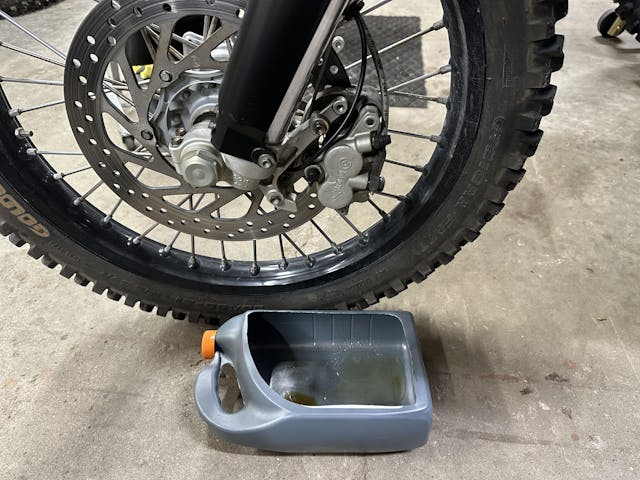
Much like the funnels above, drain or catch pans can be anything—assuming they are well placed. Large sheet drip pans are great for catching the small drops that happen while parked between drives, but smaller catch containers are nice when doing work, and in my shop one that gets heavy use is a coolant jug with the side cut out. This leaves the lid for easy pouring when full, and I have almost a gallon of capacity. This is perfect for draining a differential or a motorcycle crankcase.
Wrench Extender
Leverage is always your friend. Kyle Smith
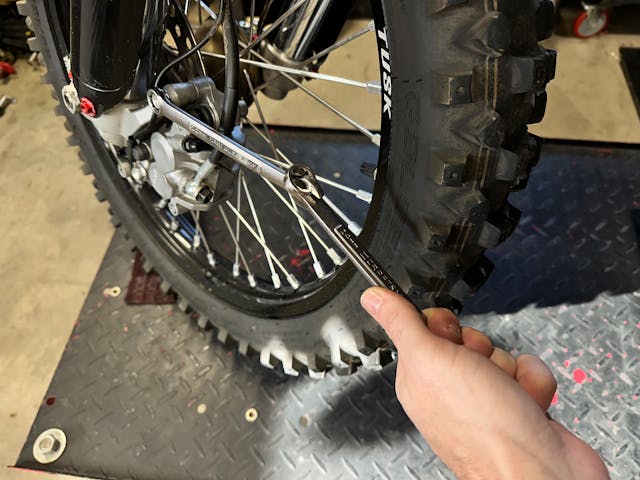
Sometimes all that fits on the bolt you need to get out is a wrench, and while there are some of us who multiple copies of each wrench in various lengths, others have the one set in hand and nothing else. Although a jack handle can be used here as seen in example 2 above, it can be tough to get a pipe that fits over the end of larger wrench sizes or that works well on smaller ones. Instead, look in the same wrench drawer rather than elsewhere.
Grab an open-end wrench a few sizes bigger than the one needed and combine the two to make plenty of leverage. Hooking the two wrenches together does take a little staring and thinking to get right sometimes, but in the end this is often a great solution.
Painting Hangers
Kyle Smith
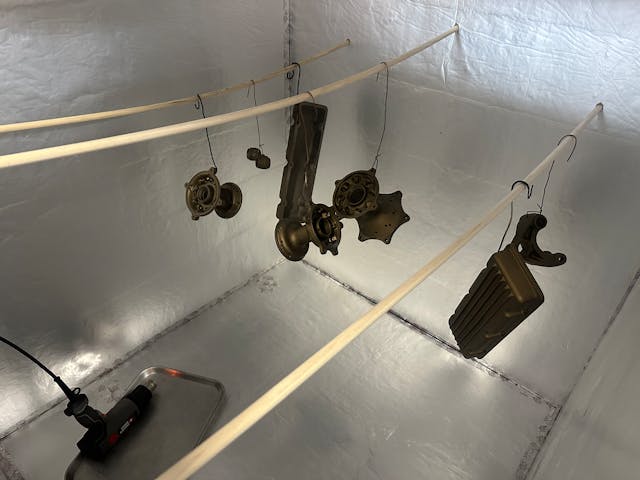
Whether it’s putting a fresh coat of paint on an old part being restored or putting a more durable coat of matching paint on a new part going onto an old car, spraying paint is a common DIY task, and anyone who has done enough of it is familiar with the overspray on fingers and hands that often comes with trying to hold something while spraying. Instead, grab lanyards or wire coat hangers to enable trouble-free suspension of parts, not only for cleaner and more even paint coverage (not to mention cleaner fingers), but also for easy drying.
Modern science lacks a unifying, interdisciplinary theory of life. In other words, current theories are unable to explain why life is the way it is and not any other way.
Dr. David Grinspoon writes about Charley Lineweaver’s review of “Scientists Debate Gaia,” a collection of essays gathered from an American Geophysical Union conference and by the published by MIT press. Charles H. Lineweaver is a Senior Fellow at Australia National University’s Planetary Science Institute.
Gaia author James Lovelock
He explained that James Lovelock (shown) proposed the Gaia hypothesis, in which Earth is an organism or system capable of self-regulation. He wondered: Can the existence of life be recognized from the chemical composition of a planet’s atmosphere? What would the Earth be like now, if life had never evolved on it? Would there be oxygen in the air? Would the surface temperature be hot like Venus or cold like Mars? In the mid-60’s, NASA consulted James Lovelock to assist in developing instruments for the Viking spacecraft to detect life on Mars.
He concluded that it wasn’t necessary to send a spacecraft to Mars. All you needed was to determine the composition of the Martian atmosphere –- if life was there, the atmosphere should be in chemical disequilibrium as it is on Earth. Recent observations, have detected methane on Mars indicating life.
Determining what life is and how to recognize it is the Holy Grail of astrobiology. To make progress, we need to explore the Martian subsurface and analyze the atmospheres of the nearest terrestrial planets. Lovelock’s Gaian chemical equilibrium test for the presence of life is fundamental to these efforts. Both NASA and ESA are putting their astrobiological money into interferometric infrared spectroscopy to look for the traces of chemical disequilibrium in planetary atmospheres as the primary biomarker.
Don’t be fooled by your perspective- we all live on a rotating ball traveling through space!
Lovelock thought that terrestrial life didn’t just passively produce chemical disequilibrium. There seemed to be some element of control or regulation. In 1978, he published a book called “Gaia” that described how the entire biosphere behaves like a living creature suggesting our Earth is alive.
Gaian science and astrobiology have very similar programs. Astrobiologists look at the stars and ask “What has life done to the planets out there and how can we recognize it?” Gaian scientists have been looking at the Earth for decades asking “What has terrestrial life done to our planet and how can we recognize it?” Astrobiology and Gaian science often remain separate fields of inquiry. Astrobiology attracts mainly astronomers and biologists, while Gaian science attracts atmospheric chemists, geologists and concerned ecologists.
The thin Martian atmosphere is mainly composed of carbon dioxide. Planetary scientists have studied the atmosphere of Mars for any signs of gases such as methane that could be generated by life. In this collection, Gaian scientists believe that over the past four and a half billion years, the Sun’s luminosity has increased by about 30 percent, but the temperature of the Earth’s surface doesn’t seem to have followed in step. Lovelock hypothesized that the biosphere regulates the Earth’s surface temperature. There are two obvious ways to do this: Regulate the albedo (light reflected by the planet) and/or regulate the abundances of greenhouse gases in the atmosphere.
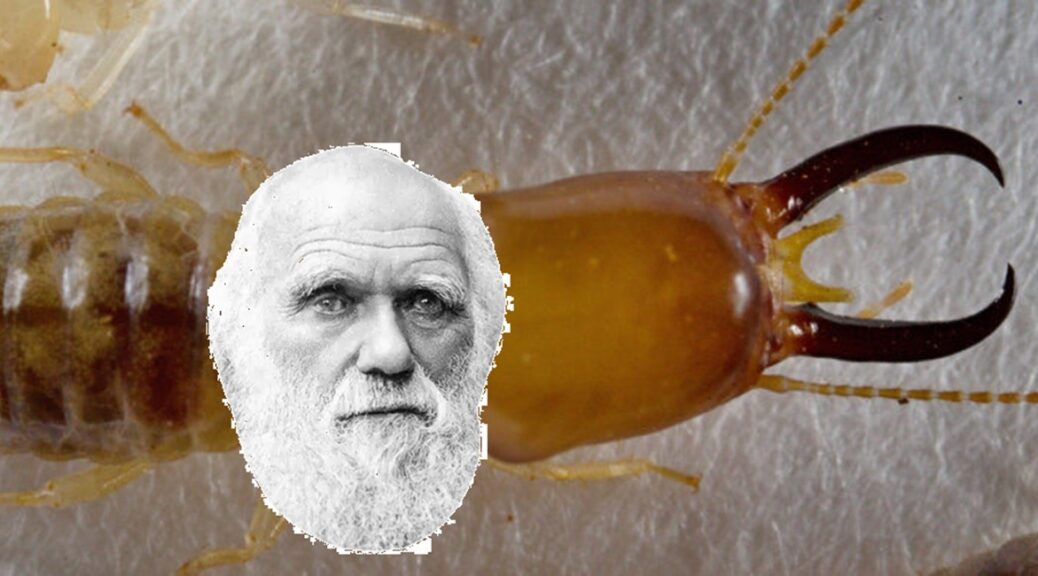
Lovelock invented the parable of Daisyworld to demonstrate that the biosphere could regulate the albedo. A nice Gaian extension of this idea is J. Scott Turner’s analysis of the thermo-regulation of termite colonies. So if a termite ecosystem can evolve to do it, why can’t a big one like the Earth? Thus, Gaia does what good scientific ideas are supposed to do. It extends and extrapolates a fundamental theory, from individuals to groups to ecosystems, up to the entire biosphere.
The central debate of this book is: How can Gaia (Earth) be selfish? How can it do anything “for” itself? Will it protect itself from human destruction of the environment by causing earthquakes, earth lights, an ice age, or a great flood?
Tyler Volk’s book “Gaia’s Body” “Gaia is Life in a Wasteworld of By-products.” He proposed that the atmosphere is one giant waste dump. Life produces wastes, and these wastes build up and affect the environment. They become intolerable for some forms of life, but then along come new forms of life who take advantage of these waste products. Volk’s point is that poop just happens. Thus the effects of the biosphere’s wastes are certainly “by” but not necessarily “for” the biosphere..
Volk suggests using cycling ratios to measure “by and for the biosphere” and to determine how beneficial for life something may be. A cycling ratio is the amount of an element cycling through the Earth and biosphere, divided by the amount that would be cycling through the Earth in the absence of life. Volk estimates the cycling ratio of carbon to be about 200 times more carbon flowing through the veins of Gaia than would be cycling through an Earth without life from plate tectonics and volcanism.
A collection of observations by the Earth Observing System flagship Terra were stitched together into a seamless true-color mosaic of every square kilometer (.386 square mile) of our planet.
Dorion Sagan and Jessica Hope Whiteside’s “Gradient Reduction Theory: Thermodynamics and the Purpose of Life” discussed the second law of thermodynamics as the purpose of life. Agnostics looking for purpose in their lives would do well to digest this chapter with Lovelock’s suggestion that agnostics worship Gaia to fill their religious vacuum. There is grandeur and universality in this thermodynamic view of life that can be applied to life anywhere in the universe.
I’d like to see Gaian scientists recognize that Gaia is part of a larger whole – that the Earth is not a closed system and that Gaia has a mother. We begin to wonder whether our Galaxy is a life form called Galactea. For the Silo, Jarrod Barker.
“It is a must read for any life form that is even pretending to look for extraterrestrial life. /
– See more at: http://www.astrobio.net/ Note: It’s logical Mother Earth or Gaia feels totally threatened by environmental abuse from Earth’s humans and that those humans who are not loving to Mother Earth may be removed.
Albert Einstein (left) and Robert Oppenheimer (right) warned then-President Roosevelt about a number of security threats such as Nazi Germany’s work on an atomic bomb but what they sent along in 1947 was earth-shattering.
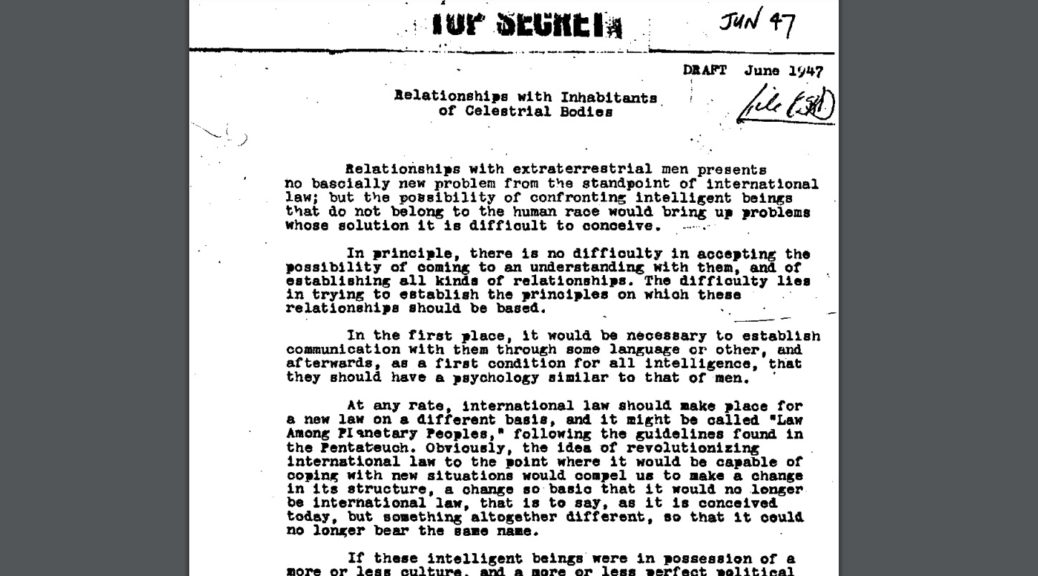
In June of 1947 Albert Einstein and J. Robert Oppenheimer together wrote a TOP SECRET six page document entitled “Relationships with Inhabitants of Celestial Bodies”. Aliens?
It was in 1947 and it said the presence of unidentified spacecraft is accepted as de facto by the military.
It also deals with where do they come from, what should we do in the event of colonization and/or integration of peoples, and why are they here? Finally, the document addresses the presence of celestial astroplanes in our atmosphere as a result of actions of military experiments with fission devices of warfare. Einstein and Oppenheimer encourage consideration of our potential future situation and safety due to our present and past actions in space. How can we avoid a perilous fate?
Extract majestic document:
Relationships with extraterrestrial men presents no basically new problem from the standpoint of international law; but the possibility of confronting intelligent beings that do not belong to the human race would bring up problems whose solution it is difficult to conceive. In principle, there is no difficulty in accepting the possibility of coming to an understanding with them, and of establishing all kinds of relationships.
If these intelligent beings were in possession of a more or less culture, and a more or less perfect political organization, they would have an absolute right to be recognized as independent and sovereign peoples. Another possibility may exist, that a species of Homo sapiens might have established themselves as an independent nation on another celestial body in our solar system and evolved culturally independently from ours. Living conditions on these bodies let’s say the moon,-or the planet Mars, would have to be such as to permit a stable, and to a certain extent, independent life, from an economic standpoint.
Hypothetically other planets may have life forms. Water has been found on our Moon and Mars that can be separated into hydrogen and oxygen, using an electric current or the short wave radiation of the sun. The oxygen could be used for breathing purposes; the hydrogen night be used as a fuel. There is indication that the inhabitants of celestial bodies, or extraterrestrial biological entitle (EBE) desire to settle here.
1.If they are politically organized and possess a certain culture similar to our own, they may be recognized as an independent people.
2.If they consider our culture to be devoid of political unity, they would have the right to colonize. Of course, this colonization cannot be conducted on classic lines. A superior form of colonizing will have to be conceived, that could be a kind of tutelage, possibly through the tacit approval of the United Nations. We cannot exclude the possibility that a race of extraterrestrial people more advanced technologically and economically may take upon itself the right to occupy another celestial body.
The division of a celestial body into zones and the distribution of them among other celestial states. A moral entity? The most feasible solution it seem would be this one, submit an agreement providing for the peaceful absorption of a celestial race(s) in such a manner that our culture would remain intact with guarantees that their presence not be revealed. It would merely be a matter of internationalizing celestial peoples, and creating an international treaty instrument.
The presence of unidentified space craft flying in our atmosphere (and possibly maintaining orbits about our planet) is now accepted by our military. Military strategists foresee the use of space craft with nuclear warheads as the ultimate weapon of war. Attack no longer comes from an exclusive direction, nor from a determined country, but from the sky, with the practical impossibility of determining who the aggressor is.
When artificial satellites and missiles find their place in space, we must consider the potential threat that unidentified space craft pose. One must consider the fact that miss-identification of these space craft for an intercontinental missile in a re-entry phase of flight could lead to accidental nuclear war.
This document was written in 1947 but extremely relevant what with the recent United States declassified UFO release.
The Global Cooperation Barometer 2026 reveals strong pressures on multilateral institutions are causing global cooperation to evolve rather than retreat.
While multilateral forms of cooperation declined, smaller and more agile coalitions of countries –and, at times, companies – were instrumental in maintaining overall cooperation levels.
Climate and technology saw strong increases in cooperation even in the face of headwinds, health and trade stayed broadly flat and there was a sharp drop of cooperation in peace and security.
Learn more about the Barometer and read the accompanying report here. Follow the Annual Meeting 2026 here and on social media using #WEF26.
Geneva, Switzerland, January 2026 – Global cooperation is proving resilient even as multilateralism continues to face strong headwinds, according to the World Economic Forum’s Global Cooperation Barometer 2026. However, cooperation is below where it needs to be to address critical economic, security and environmental challenges. Within a more complex and uncertain geopolitical context, open and constructive dialogue is a critical factor in identifying potential collaborative pathways that advance shared interests.
In its third year, the Global Cooperation Barometer 2026, developed in collaboration with McKinsey & Company, uses 41 metrics to assess the level of cooperation worldwide across five pillars: trade and capital; innovation and technology; climate and natural capital; health and wellness; and peace and security.
The 2026 Barometer indicates that the overall level of cooperation has largely been unchanged in recent years but the composition of cooperation appears to be evolving. Innovative, smaller collaborative arrangements are emerging, often within and between regions, as cooperation through multilateral avenues has weakened. Progress on global priorities has shown the greatest momentum when it aligns with national interests – with climate and nature and innovation and technology seeing relatively strong increases in cooperation. Other pillars, including health and wellness and trade and capital, have stayed flat. The peace and security pillar experienced the largest drop.
“Amid one of the most volatile and uncertain periods in decades, cooperation has shown resilience,” said Børge Brende, President and CEO, World Economic Forum. “While cooperation today may look different than it did yesterday, collaborative approaches are essential to grow economies wisely, accelerate innovation responsibly and prepare for the challenges of a more uncertain era. Flexible, nimble and purpose-driven approaches are most likely to withstand the current turbulence and deliver results.”
“Leaders are reimagining collaboration across borders,” said Bob Sternfels, Global Managing Partner, McKinsey & Company. “Cooperation may look different today, and involve different partners, but importantly, it continues to deliver on some critical shared priorities. Collaborative progress can, and does, continue to happen even amid global divisions.”
Global cooperation is reinventing itself
The changing dynamics of cooperation are visible in each of the five pillars of the Barometer.
Trade and capital cooperation flattened. Cooperation remained above 2019 values, but its makeup is shifting. Goods volumes grew, albeit slower than the global economy, and flows are shifting to more aligned partners. Services and select capital flows show momentum, particularly among aligned economies, especially where they can contribute to bolstering domestic capabilities. While the global multilateral trade system faces rising barriers, smaller coalitions of countries are cooperating through initiatives such as the Future of Investment and Trade (FIT) Partnership.
Innovation and technology cooperation rose to unlock new capabilities even amid tighter controls. IT services and talent flows are up, and international bandwidth is now four times larger than before the COVID-19 pandemic. Restrictions on flows of critical resources, technologies and knowledge expanded – especially, but not only, between the United States and China. However, new cooperation formats are rising, with instances of cooperation on AI, 5G infrastructure and other cutting-edge technologies among aligned countries.
Climate and natural capital cooperation grew, but is still short of global goals. Increased financing and global supply chains stimulated deployment of clean technologies, which reached record levels in mid-2025. While China accounted for two-thirds of additions of solar, wind and electric vehicles, other developing economies stepped up. As multilateral negotiations become more challenging, groups of nations – for example, the European Union and ASEAN (Association of South-East Asian Nations) – are combining decarbonization with energy security goals.
Health and wellness cooperation held steady, with outcomes resilient for now, but aid is under severe pressure. Topline cooperation in this pillar did not fall, in part because health outcomes continued to improve after the end of the COVID-19 pandemic. Although health outcomes have stayed resilient, the stability masks growing fragility. Pressures on multilateral organizations have eroded support flows and development assistance for health contracted sharply – with further tightening in 2025 – affecting low- and middle-income countries most acutely.
Peace and security cooperation continued to decrease, as every tracked metric fell below pre-COVID-19 pandemic levels. Conflicts escalated, military spending rose and global multilateral resolution mechanisms struggled to de-escalate crises. By the end of 2024, the number of forcibly displaced people reached a record 123 million globally. However, growing pressures are creating an impetus for increased cooperation, including through regional peacekeeping mechanisms.
The Global Cooperation Barometer shows countries are rewriting the way they engage in cooperation. Creating new cooperative formats will require new structures, from trade agreements to standards alliances, and new types of partnerships, including public-private and private-private, to manage them effectively. The report concludes by highlighting the need for leaders to focus on rebuilding an effective dialogue with partners as the foundation for identifying and advancing shared interests.
About the Global Cooperation Barometer The Global Cooperation Barometer – first launched in 2024 – evaluates global collaboration across five interconnected dimensions: trade and capital; innovation and technology; climate and natural capital; health and wellness; and peace and security. The Barometer is built on 41 indicators, categorized as cooperative action metrics (evidence of tangible cooperation, such as trade volumes, capital flows, or intellectual property exchanges) and outcome metrics (broader measures of progress such as reductions in greenhouse gas emissions or improvements in life expectancy). Spanning 2012-2025 and indexed to 2020 to reflect pandemic-era shifts, the Barometer normalizes data for comparability (e.g., financial metrics relative to global GDP and migration metrics to population levels). Given rapid developments across all the areas the barometer covers, this year’s report complements the 2024 findings with more recent 2025 data where available, through partial-year data or projections. In addition, two surveys were conducted: one with around 800 executives and another with about 170 experts who are current or former members of the World Economic Forum’s Network of Global Future Councils.
About the Annual Meeting 2026 The World Economic Forum’s 56th Annual Meeting, taking place on 19-23 January 2026 in Davos-Klosters, Switzerland, will convene leaders from business, government, international organizations, civil society and academia under the theme A Spirit of Dialogue. Click here to learn more.
Forum Économique Mondial, public.affairs@weforum.org La coopération mondiale fait preuve de résilience face aux vents contraires géopolitiques
Le Baromètre de la coopération mondiale 2026 indique qu’en dépit de fortes pressions sur les institutions multilatérales, la coopération mondiale ne recule pas, mais progresse.
Alors que les formes multilatérales de coopération ont reculé, des coalitions plus petites et plus agiles de pays, et même parfois d’entreprises, ont contribué à maintenir les niveaux de coopération globaux.
On a pu observer une forte augmentation de la coopération en matière de climat et de technologie, malgré les vents contraires, une relative stabilité en matière de santé et du commerce, et une forte baisse en matière de paix et de sécurité.
Pour en savoir plus sur le Baromètre et consulter le rapport associé, cliquez ici. Suivez l’Assemblée annuelle 2026 ici et sur les réseaux sociaux grâce au hashtag #WEF26.
Genève, Suisse, janvier 2026 – Selon le Baromètre de la coopération mondiale 2026 du Forum Économique Mondial, la coopération mondiale fait preuve de résistance alors même que le multilatéralisme continue d’être confronté à de forts vents contraires. Toutefois, la coopération n’est pas à la hauteur de ce qu’elle devrait être pour relever les défis économiques, sécuritaires et environnementaux décisifs. Dans un contexte géopolitique plus complexe et incertain, un dialogue ouvert et constructif est essentiel pour identifier les voies de collaboration potentielles faisant progresser les intérêts communs. Pour la troisième année, le Baromètre de la coopération mondiale 2026, élaboré en collaboration avec McKinsey & Company, se base sur 41 paramètres pour évaluer le niveau de coopération à l’échelle mondiale, selon cinq dimensions : le commerce et les capitaux, l’innovation et la technologie, le climat et le capital naturel, la santé et le bien-être, ainsi que la paix et la sécurité. Le Baromètre 2026 indique un niveau global de coopération globalement inchangé sur les dernières années, avec toutefois une évolution dans la composition de cette coopération. Des accords de collaboration innovants, souvent de moindre ampleur, émergent au sein d’une même région ou entre régions, dans un contexte de recul de la coopération multilatérale. Les avancées concernant les priorités mondiales ont été les plus marquées lorsqu’elles s’alignaient sur les intérêts nationaux, avec notamment une progression notable de la coopération dans les domaines du climat et de la nature, ainsi que de l’innovation et de la technologie. Les autres dimensions, y compris la santé et le bien être ainsi que le commerce et les capitaux, sont restées stables. La dimension paix et sécurité a connu la plus forte baisse. « Au sein de l’une des périodes les plus instables et incertaines de ces dernières décennies, la coopération a fait preuve de résilience, » déclare Børge Brende, Président-Directeur général du Forum Économique Mondial. « Bien que la coopération actuelle soit différente de ce qu’elle était hier, les approches collaboratives sont essentielles pour faire croître les économies à bon escient, accélérer l’innovation de manière responsable et se préparer aux défis d’une ère plus incertaine. Les approches flexibles, souples et axées sur les objectifs sont les plus susceptibles de résister aux turbulences actuelles et de produire des résultats. » « Les dirigeants redéfinissent la collaboration transfrontalière », déclare Bob Sternfels, Global Managing Partner chez McKinsey & Company. « Si la coopération se présente aujourd’hui sous un nouveau jour, impliquant des partenaires différents, il est important de noter qu’elle continue de 1 répondre à certaines priorités communes essentielles. Le progrès collaboratif peut se poursuivre, et se poursuit, même au milieu des divisions mondiales. » La coopération mondiale se réinvente La dynamique changeante de la coopération est visible dans chacune des cinq dimensions du Baromètre.
La coopération en matière de commerce et de capitaux s’est stabilisée. La coopération est restée supérieure aux valeurs de 2019, mais on observe une évolution de sa composition. Les volumes de marchandises ont augmenté, quoique plus lentement que l’économie mondiale, et les flux commerciaux se redéploient vers des partenaires plus étroitement alignés. On observe un dynamisme des services et de certains flux de capitaux, en particulier au sein des économies alignées, surtout lorsqu’ils peuvent contribuer à renforcer les capacités nationales. Alors que le système de commerce multilatéral mondial est confronté à des obstacles croissants, des coalitions de pays à moindre échelle coopèrent dans le cadre d’initiatives telles que le Partenariat pour l’avenir de l’investissement et du commerce (Future of Investment and Trade – FIT).
La coopération en matière d’innovation et de technologie a augmenté, libérant de nouvelles capacités malgré des contrôles plus stricts. Les services informatiques et les flux de talents sont en hausse, et la bande passante internationale est aujourd’hui quatre fois plus importante qu’avant la pandémie de COVID 19. Les restrictions pesant sur les flux de ressources, de technologies et de connaissances essentielles se sont multipliées, notamment entre les États Unis et la Chine. Toutefois, de nouveaux formats de coopération voient le jour, avec des exemples de coopération en matière d’IA, d’infrastructure 5G et d’autres technologies de pointe entre les pays alignés.
La coopération en matière de climat et de capital naturel s’est développée, mais reste en deçà des objectifs mondiaux. L’augmentation des financements et des chaînes d’approvisionnement mondiales a stimulé le déploiement des technologies propres, avec des niveaux record mi-2025. Si la Chine a été à l’origine de deux tiers des nouveaux véhicules 2 solaires, éoliens et électriques, d’autres économies en développement ont accéléré leurs efforts. Les négociations multilatérales devenant plus difficiles, des groupes de nations, dont, par exemple, l’Union européenne et l’ANASE (Association des nations de l’Asie du Sud-Est), combinent la décarbonisation avec des objectifs de sécurité énergétique.
La coopération en matière de santé et de bien-être est restée stable, avec des résultats qui demeurent pour l’instant résilients, mais l’aide est soumise à de fortes pressions. La coopération en première ligne au sein de cette dimension n’a pas diminué, en partie grâce à l’amélioration des résultats en matière de santé après la fin de la pandémie de COVID 19. La stabilité des résultats en matière de santé masque une fragilité croissante. Les pressions exercées sur les organisations multilatérales ont érodé les flux de soutien, et l’aide au développement de la santé s’est fortement contractée, avec un nouveau resserrement en 2025, affectant plus particulièrement les pays à faible revenu et à revenu intermédiaire.
La coopération en matière de paix et de sécurité a continué à diminuer, tous les indicateurs suivis étant en-deçà des niveaux atteints avant la pandémie de COVID 19. Les conflits se sont intensifiés, les dépenses militaires ont augmenté et les mécanismes multilatéraux de résolution des conflits ont eu du mal à désamorcer les crises. Fin 2024, le nombre de personnes déplacées de force a atteint le chiffre record de 123 millions. Toutefois, des pressions croissantes incitent à une coopération accrue, y compris par le biais de mécanismes régionaux de maintien de la paix. Le Baromètre de la coopération mondiale montre une nouvelle manière pour les pays de s’engager dans la coopération. De nouveaux formats de coopération appelleront des structures renouvelées, des accords commerciaux aux alliances de normalisation, et des partenariats innovants (notamment public-privé et privé-privé) pour en assurer une gestion efficace. Le rapport conclut en soulignant la nécessité pour les dirigeants de se concentrer sur le rétablissement d’un dialogue efficace avec les partenaires, fondement de l’identification et de la promotion d’intérêts communs. À propos du Baromètre de la coopération mondiale Lancé pour la première fois en 2024, le Baromètre de la coopération mondiale évalue la collaboration mondiale à travers cinq dimensions interconnectées : le commerce et les capitaux, l’innovation et la technologie, le climat et le capital naturel, la santé et le bien-être, ainsi que la paix et la sécurité. Le Baromètre s’appuie sur 41 indicateurs, classés en mesures d’action coopérative (preuves d’une coopération tangible, telles que les volumes d’échanges commerciaux, les flux de capitaux ou les échanges de propriété intellectuelle) et en mesures de résultats (mesures plus larges des progrès réalisés, telles que la réduction des émissions de gaz à effet de serre ou l’amélioration de l’espérance de vie). Couvrant la période 2012-2024 et indexé à 2020 pour refléter les changements de l’ère pandémique, le Baromètre normalise les données pour les rendre comparables (par exemple, les mesures financières par rapport au PIB mondial et les mesures migratoires par rapport aux niveaux de population). En outre, deux enquêtes ont été menées : l’une auprès d’environ 800 cadres et l’autre auprès d’environ 170 experts, membres actuels ou passés du réseau des conseils pour l’avenir du monde du Forum Économique Mondial. À propos de la réunion annuelle 2026 La 56e réunion annuelle du Forum Économique Mondial, qui se tiendra du 19 au 23 janvier 2026 à Davos-Klosters, en Suisse, réunira des dirigeants d’entreprises, de gouvernements, d’organisations internationales, de la société civile et du monde universitaire autour du thème Un esprit de dialogue. Cliquez ici pour en savoir plus.
As holistic wellness continues to intersect with technology, science, and sustainability, White Lotus Beauty is emerging as a standout brand redefining how beauty tools and rituals are developed, tested, and used. Founded in 2004 by Kamila Kingston, White Lotus Beauty began not as a consumer brand, but as a specialist cosmetic acupuncture clinic grounded in Traditional Chinese Medicine (TCM) and evidence-informed skin health practices.
Now targeting further expansion in the UK and available to consumers in Canada, the brand has grown into an internationally recognized name, stocked by major global retailers including Ulta Beauty, Nordstrom, Debenhams, and Chemist Warehouse Australia, while maintaining a strong emphasis on ethics, education, and long-term skin integrity.
From Clinic to Global Retail
Unlike many beauty brands that follow trends, White Lotus Beauty’s product development originates in clinical practice. Kingston’s background in cosmetic acupuncture and holistic skin therapy informed the creation of crystal facial tools, gua sha systems, and micro-needling devices designed to support circulation, lymphatic flow, and skin resilience rather than aggressive short-term results.
Their crystal tools—crafted from jade, rose quartz, and other ethically sourced stones—are positioned not as gimmicks, but as precision instruments used to support facial tension release, product absorption, and mindful skincare routines. Each tool is designed to align with both traditional techniques and modern skin science.
Holistic Microneedling, Reimagined
One of the brand’s most notable innovations is its holistic micro-needling system, developed as a safer, gentler alternative to conventional at-home devices. Rather than focusing solely on collagen stimulation, the system emphasizes barrier protection, technique education, and long-term skin health—an approach increasingly favored by practitioners and informed consumers alike.
This philosophy reflects a broader shift in beauty toward preventative care and sustainability, rather than over-treatment.
Ethical Beauty Meets Smart Design
White Lotus Beauty’s product range also includes PETA-certified cruelty-free silk accessories, including pillowcases, eye masks, and hair ties, designed to support skin hydration, hair health, and sleep quality. Their plant-based skincare and ritual kits incorporate adaptogenic botanicals and toxin-free formulations, aligning with growing consumer demand for transparency and clean ingredient sourcing.
The brand has received more than 50 international awards, including Queensland Export Awards and Clean + Conscious Awards, and will be featured in the 2026 Oscars gift bags, further cementing its position as a globally respected innovator.
Why the UK (and Canadian) Market Matters
With UK and Canadian consumers increasingly focused on evidence, sustainability, and ethical manufacturing, White Lotus Beauty’s clinic-led, education-first approach positions it well for continued international growth. The brand’s commitment to female leadership, diversity in global retail, and responsible sourcing aligns closely with the values driving purchasing decisions across wellness, beauty, and lifestyle sectors.
What’s Next
White Lotus Beauty is currently offering UK and Canadian media access to high-resolution imagery, expert commentary, and product reviews. Interviews with founder Kamila Kingston are available, along with insights into crystal beauty tools, holistic micro-needling, and the future of ritual-based, evidence-informed skincare. For the Silo, Kat Fleischmann.
Not all ideas are ‘shot down’ by an intimidating boss- Albert Einstein’s formal letter paved the way to American atom bomb research.
Everyone says they want innovation in their organization, but when an ambitious employee offers it to a Boss or CEO, for example, the idea is often shot down, says Neal Thornberry, Ph.D., faculty director for innovation initiatives at the Naval Postgraduate School in California. There has to be a way of getting your ideas accepted, right?
“Senior leaders often miss the value-creating potential of a new concept because they either don’t take the time to really listen and delve into it, or the innovating employee presents it in the wrong way,” says Thornberry, who recently published “Innovation Judo,” (www.NealThornberry.com), based on his years of experience teaching innovation at Babson College and advising an array of corporate clients, from the Ford Co. and IBM to Cisco Systems.
Neal Thornberry: ” Innovation should be presented as opportunities, not ideas. Opportunities have gravitas while ideas do not!”
Thornberry outlines a template for innovation that works:
1 Intention: Once the “why” is answered, leaders have the beginnings of a legitimate roadmap to innovation’s fruition. This is no small task and requires some soul searching.
“I once worked with an executive committee, and I got six different ideas for what ‘innovation’ meant,” he says. “One wanted new products, another focused on creative cost-cutting, and the president wanted a more innovative culture. The group needed to agree on their intent before anything else.”
2 Infrastructure: This is where you designate who is responsible for what. It’s tough, because the average employee will not risk new responsibility and potential risk without incentive. Some companies create units specifically focused on innovation, while others try to change the company culture in order to foster innovation throughout. “Creating a culture takes too long,” Thornberry says. “Don’t wait for that.”
3 Investigation: What do you know about the problem? IDEO may be the world’s premier organization for investigating innovative solutions. Suffice to say that the organization doesn’t skimp on collecting and analyzing data. At this point, data collection is crucial, whereas brainstorming often proves to be a waste of time if the participants come in with the same ideas, knowledge and opinions that they had last week with no new learning in their pockets.
4 Ideation: The fourth step is also the most fun and, unfortunately, is the part many companies leap to. This is dangerous because you may uncover many exciting and good ideas, but if the right context and focus aren’t provided up front, and team members cannot get on the same page, then a company is wasting its time. That is why intent must be the first step for any company seeking to increase innovation. Innovation should be viewed as a set of tools or processes, and not a destination.
If you’re gonna ‘demo’ your idea you better have practiced and perfected your routine before showing your boss-
5 Identification: Here’s where the rubber meets the road on innovation. Whereas the previous step was creative, now logic and subtraction must be applied to focus on a result. Again, ideas are great, but they must be grounded in reality. An entrepreneurial attitude is required here, one that enables the winnowing of ideas, leaving only those with real value-creating potential.
“Innovation without the entrepreneurial mindset is fun but folly,” Thornberry notes.
6 Infection: Does anyone care about what you’ve come up with? Will excitement spread during this infection phase? Now is the time to find out. Pilot testing, experimentation and speaking directly with potential customers begin to give you an idea of how innovative and valuable an idea is. This phase is part selling, part research and part science. If people can’t feel, touch or experience your new idea in part or whole, they probably won’t get it. This is where the innovator has a chance to reshape their idea into an opportunity, mitigate risk, assess resistance and build allies for their endeavor.
7 Implementation/Integration: While many talk about this final phase, they often fail to address the integration part. Implementation refers to tactics that are employed in order to put an idea into practice. This is actually a perilous phase because, in order for implementation to be successful, the idea must first be successfully integrated with other activities in the business and aligned with strategy. An innovation, despite its support from the top, can still fail if a department cannot work with it.
For the Silo, Neil Thornberry.
Working 9 to 5? Think about the best times to approach your boss.
Neal Thornberry, Ph.D., is the founder and CEO of IMSTRAT, LLC a consulting firm that specializes in helping private and public sector organizations develop innovation strategies. A respected thought leader in innovation, Thornberry is a highly sought-after international speaker and consultant. He also serves as the faculty director for innovation initiatives at the Center for Executive Education at the Naval Postgraduate School in Monterey, Calif. Thornberry, author of “InnovationJudo:Disarming Roadblocks & Blockheads on the Path to Creativity”, holds a doctorate in organizational psychology and specializes in innovation, corporate entrepreneurship, leadership and organizational transformation.
Our friends at Audio-Technica have just introduced the AT-LP7X fully manual belt-drive turntable — The AT-LP7X delivers sound that’s as clean and refined as its appearance. —
STOW, OH, January, 2026 — Audio-Technica is excited to announce the release of the AT-LP7X, blending analog excellence with style and versatility. While designing the AT-LP7X, Audio-Technica paid close attention to chassis geometry to ensure the platter, spindle and tonearm were optimally positioned for accurate, distortion-free tracking. This, along with the J-shaped aluminum tonearm with dual-axis gimbal with precision ball bearings, further enhances the tracking performance.
The turntable’s 20 mm acrylic platter is driven by an optical sensor-monitored motor that ensures a continuously accurate platter rotation speed of 33-1/3 or 45 RPM. The motor is mounted on vibration-dampening rubber bushings designed to decouple the motor from the plinth, minimizing the transmission of mechanical noise and oscillations. An external switching power supply isolates the AC-to-DC conversion to prevent it from adding any electrical interference, and the turntable’s spring-based, height-adjustable isolation feet offer excellent protection against external noise.
Additionally, the AT-LP7X features a dense MDF plinth to minimize unwanted resonance and vibration. The turntable has an elegant, matte black finish.
Equipped with an AT-LT10 headshell and black AT-VM95E cartridge with 0.3 x 0.7 mil elliptical stylus, the AT-LP7X provides excellent channel separation and low distortion for outstanding tonal quality. For easy customization, the stylus can be replaced or interchanged with other styli in the VM95 line, offering a wide array of options for every budget and application. An included MM/MC switch and subcounterweight add to the customization level, making this the perfect turntable for those interested in experimenting with alternate cartridges.
The AT-LP7X comes with a detachable RCA output cable (dual RCA male to dual RCA male with ground), 45 RPM adapter, and removable dust cover, and will be available for $999.00 usd / $1,375 cad MAP on www.audio-technica.com.
When designing the Great Seal of the United States, the Founding Fathers wanted a symbol to convey the strength and independence of the new nation. So they chose the bald eagle.
On the seal — used to authenticate treaties and other official documents — the white-crowned eagle clutches an olive branch (representing peace) in one talon and arrows (representing war) in the other. The eagle faces the olive branch, symbolizing America’s preference for peace.
After the adoption of the seal on June 20, 1782, the bald eagle quickly spread through American culture as a symbol of freedom, patriotism and power , says Preston Cook, a collector of eagle memorabilia and author of American Eagle: A Visual History of Our National Emblem.
The majestic bird, with a wingspan of 1.8 to 2.3 meters (6 feet to 7.5 feet), can spot prey 5 kilometers (3 miles) away, making it a match for a country of natural grandeur and vast, wild landscapes.
The bald eagle has become a decorative motif for everything from furniture and textiles to metalwork. U.S. gold coins have been known as eagles since 1795. Eagle-inspired hood ornaments adorned classic American cars of the 1930s through the 1950s. Philadelphia, which served as the first U.S. capital, has adopted the eagle as its professional football team’s mascot.
Eagles have symbolized power since ancient times, when Roman legions decorated their battle flags with images of the raptors. The Founding Fathers chose the bald eagle to represent their nation because the bird is indigenous to North America, according to Jack E. Davis, author of The Bald Eagle: The Improbable Journey of America’s Bird. But by the 20th century, bald eagles’ numbers in the wild had declined from habitat loss, illegal hunting and the pesticide DDT.
Conservation measures, including the U.S. government’s 1972 DDT ban, increased bald eagle populations. The species was removed from the endangered species list in 2007 and now lives in every U.S. state except Hawaii and in many areas of Canada as well.
The National Eagle Center , located in Wabasha, Minnesota, showcases bald eagles and highlights their connection to American values of freedom and courage. Visitors can meet live birds and, in the summer, take river cruises to spot bald eagles in their natural habitat.
Cook, the collector, donated some 40,000 eagle-related items to the National Eagle Center, including a drum from the U.S. Civil War painted with a bald eagle.
Eagle art on a Civil War drum (Courtesy of National Eagle Center)
After years of researching the bald eagle’s ties to American culture, Cook was surprised to learn the bird had never been officially recognized as a national symbol.
Members of the U.S. Congress from his home state of Minnesota offered legislation he drafted to make the bald eagle the U.S. national bird. In December 2024, Congress unanimously passed the bill and it was signed into law.
Cook continues working with the National Eagle Center and with curator Alex Lien on bald eagle exhibits. The center is planning a new educational exhibit for the United States’ 250th anniversary in 2026.
Eagles, especially bald eagles, “are in every aspect of American culture throughout the past 250 years,” Lien
For the Silo, Lauren Monsen/ShareAmerica. Featured image via State Dept./S. Gemeny Wilkinson.
Our friends at the Porsche Club of America (they have many chapters in Canada btw) sure have and they have a lot of interesting things to share in the following podcast.
Little brothers and ugly cousins
This time, it is Episode 199 where PCA welcome Mike Maurer who sold new Porsches for over 30 years. They are chatting about Porsche’s past entry level cars. How they came to be, and how Porsche enthusiasts accept them (or don’t), what the media at the time thought of those new entry level models when they launched and perhaps most importantly, how entry level Porsches are regarded now.
The original 1997 first gen Porsche Boxster might not be considered entry level by most drivers and automotive reviewers- especially when you consider the cost for a base model at time of launch was $57,000 usd/ $71,400 cad – (adjusted into todays currency for inflation, that works out to $111,100 usd/ $152,500 cad. Big money for an ‘entry level’ car).
When introduced in 1975, the Porsche 924 cost 5,625 British Pounds / $10,400 cad/ $7,560 usd. Accounting for inflation this equals $62,608 cad/ $45,500 usd.
It’s an informative episode that will have you thinking back to a car or two you may have owned. If so, please do leave a comment below…..
The Russia Propaganda Alert is a media analysis initiative of the Digital News Association (DNA) that serves as a resource to detect Russian narratives targeting Spanish-language news outlets in Latin America and the Western Hemisphere. DNA analysts and journalists review the daily dissemination of Russian foreign content on news sites, social media platforms, state-owned media, and the personal pages of Russian foreign officials as part of its Latin America Disinformation Tracking Initiative.
Russia’s Patterns and Propaganda Techniques
A few days ago on Dec. 29-30, 2025 The Washington Times Commentary section published an analysis by DNA Analyst Jeffrey Scott Shapiro, who revealed how Russian state sponsored media organizations were targeting Mexico as part of a deliberate effort to stoke anti-U.S. sentiment and turn America’s southern neighbor against it.
The Washington Times column referenced some of the most common narratives identified by the Digital News Association’s Latin America Disinformation Tracking Initiative and focused on how Moscow is turning its attention to Mexico. According to the column, RT en Español’s cable service is now broadcasting in nearly all Latin American nations, boasting a following of more than 500 million with nearly 10 percent—40 million—in Mexico alone.
In his analysis, “Russia is targeting Mexico with anti-U.S. propaganda,” Shapiro reported that, “The Kremlin’s interest in sewing discord in Mexico was reaffirmed in an April 2024 U.S. diplomatic cable titled, ‘Mexico: RT’s invasion.’ The cable’s findings, according to a recent New York Times report, were supported by a 2024 Justice Department investigation that uncovered a Kremlin sponsored influence campaign called Doppelgänger, which aimed to turn America’s allies and citizens against her. According to the cable, American diplomats were alarmed by the “sudden and dramatic expansion” of Kremlin sponsored news in the North American nation, and troubled by the fact that RT Español’s audience skyrocketed from 191,000 views on X in 2022 to 715 million in 2023.”
Several Common Themes
The Washington Times identified several common themes, asserting that today’s Kremlin propaganda is focused on igniting resentment among Mexicans and other citizens of neighboring Central American nations against the United States, raising war support for the Kremlin’s illegal invasion of Ukraine by falsely aligning Kyiv with “terrorism,” and targeting other U.S. allies such as Israel.
The column revealed that while Russia has had extraordinary success in expanding its audiences throughout Latin America by using conventional methods, it has engaged in covert techniques to ensure that citizens of Central and South American nations are unaware that the information and ‘news’ they are receiving is originating from Kremlin sponsored sources: “These tactics, [the German Marshall Fund] says, include ‘information laundering,’ a process of republishing content from Russian sources on less suspicious third-party websites to damper people’s awareness that they are reading Kremlin propaganda.”
The U.S. cable also discussed that American diplomats were alarmed by the “sudden and dramatic expansion” of Kremlin sponsored news in Mexico and concerned that RT Español’s audience increased from 191,000 views on X in 2022 to 715 million in 2023.
Latin American Country Discussed as Russian Propaganda Target in The Washington Times:
Mexico 🇲🇽
Topics and Issues Covered by Russia
U.S. diplomatic cable titled, “Mexico: RT’s invasion”
U.S. Justice Department uncovering a Kremlin influence campaign called Doppelgänger
RT’s aggressive investment in Mexico and its strategy to undermine the United States
RT Español’s audience increasing from 191,000 views on X to 715 million
British and French officials addressing Mexican officials about Russia’s regional activities
Club de Periodistas de México collaborating with Russian state sponsored media
Russian state media engaging in ‘information laundering,’ to republish content on third-party websites as a covert tactic to infiltrate the information marketplace
Washington Times Column: December 29-30, 2025
Russia is targeting Mexico with anti-U.S. propaganda
A U.S. diplomatic cable says Moscow is exploiting anti-American sentiment in Mexico
A specter is haunting Mexico — the specter of Russian propaganda. And it is part of a Kremlin disinformation campaign designed to turn America’s southern neighbor against it.
Earlier this year, I penned a Washington Times column titled “Russia is turning Latin America against the U.S. with veiled propaganda,” detailing how Kremlin sponsored media outlets such as Russia Today (RT), Sputnik, TASS and RIA Novosti are targeting Central and South America in Spanish with the aim of igniting anti-U.S. sentiment. I wrote that RT Español has a staff of more than 200 Spanish speaking employees in Moscow dedicated to disseminating the Kremlin’s anti-Western viewpoint throughout the region.
The column also revealed that Kremlin-sponsored outlets falsely accused then President-elect Trump of planning to use tariffs to “intensify … covert operations,” in the region and reported that the U.S. Agency for International Development was igniting a civil war in Spain while mischaracterizing Republican support for anti-Maduro sanctions as a political tool to appease Florida’s Latino voters. These outlets also depicted the Putin regime as a defender of Christian values despite the ongoing genocide in Ukraine and Moscow’s mass kidnapping of Ukrainian children — an act Rep. Mike McCaul recently called, “evil in its pure form.”
As Moscow continues to contaminate Latin American with anti-American sentiment, it is taking aim at our southern neighbor. Shortly after the 2024 U.S. elections, the Digital News Association’s Latin America Disinformation Tracking Initiative revealed that Russian media was falsely reporting that Mr. Trump was seeking to ignite a trade war with Mexico to “break the value chains between the Mexican and American economies,” and “end free trade,” while weakening regional currencies.
The Kremlin’s interest in sewing discord in Mexico was reaffirmed in an April 2024 U.S. diplomatic cable titled, “Mexico: RT’s invasion.” The cable’s findings, according to a recent New York Times report, were supported by a 2024 Justice Department investigation that uncovered a Kremlin sponsored influence campaign called Doppelgänger, which aimed to turn America’s allies and citizens against her.
According to the cable, American diplomats were alarmed by the “sudden and dramatic expansion” of Kremlin sponsored news in the North American nation, and troubled by the fact that RT Español’s audience skyrocketed from 191,000 views on X in 2022 to 715 million in 2023. For the Silo, Jeffrey Scott Shapiro.
Ottawa’s forthcoming AI strategy needs to walk a tightrope between two equally important principles: safeguarding Canadians from possible misuses of AI but also giving our private and academic sectors the leeway to use Canada’s AI strengths to develop and commercialize new technologies and products.
Planned AI adoption rose sharply between Q3 2024 and Q3 2025, but progress remains highly uneven across industries. Knowledge-intensive sectors – such as information and cultural industries, finance and insurance, and healthcare – show the strongest gains, while several goods-producing and operational sectors, including manufacturing, wholesale trade, and mining, show stagnant or declining expectations.
The federal government must clearly define a framework for responsible, widespread AI innovation – one that encourages beneficial development and adoption while setting firm expectations about the harms innovators must avoid.
Canada’s competition reforms must keep pace with data-driven business models by empowering authorities with modern tools to detect, assess, and stop conduct that genuinely harms competition, innovation, or consumers.
The explosive growth of online shopping is reshaping Canadian retail by empowering consumers with unprecedented choice, driving omnichannel innovation, and intensifying competition.
Part spaceship, part shop, the first Vollebak Spaceshop launched in Copenhagen in June. Before it heads off to service nearby galaxies, our friends at Vollebak are sending it on a world tour of Earth first.
Over the last year our friends at Volleback have partnered with sonic powerhouse Bang & Olufsen and Saga Space Architects to build their first prototype interstellar delivery vehicle …the Vollebak Spaceshop.
The craft itself is over 1,000kg of precision engineering that offers a glimpse into a future of interplanetary kit deliveries between Earth, the Moon and Mars. It was designed with SAGA Space Architects whose work includes lunar habitats for the European Space Agency, and lighting systems to help astronauts sleep on the International Space Station. And it’s fitted with Bang & Olufsen’s iconic Beolab 5 and Beosound 2 speakers.
If you missed launch night it involved space-based clothing, Earth-based alcohol, and the sound of the Spaceshop flexing its 120 decibels of muscle with ‘Intergalactic’ by the Beastie Boys. As soon as the next destination has been selected they’ll let you know. And while you’re waiting they have 4 pieces of space-ready cargo available for testing.
It includes their Martian Aerogel Jackets which are built from the Jet Propulsion Laboratory’s hypersonic deep space parachutes that landed the last Rover on Mars – and the same aerogel that stopped it freezing in the vacuum of space, and burning up on entry. They have their awesome Full Metal Jackets engineered from 11 kilometres of disease-resistant copper that were hailed by WIRED as “the virus-killing coat of the future,” and they’ve built to explore how humans could avoid taking diseases from Earth up into space.
You’ll also find electromagnetic Shielding Suits embedded with pure silver that block WiFi, Bluetooth, Ku-band satellites and radar systems, and deflect mid and long wave infrared radiation so they can’t be seen on infrared cameras. And last up they have the world’s first Anodised Jacket. Built with metallic insulation originally engineered by NASA to stop their spacecraft freezing in space, each jacket is fused with a near-invisible layer of metal from a galvanic bath that makes you appear cold or even invisible to infrared cameras.
A truism in real estate is that the best time to sell is during the spring and summer months.
You have more buyers, prices and valuations are higher, and your home simply looks better under the bright summer sun than during the drab winter gloom. But what if you really need to sell your home now?
If you have a fence, then it’s the first thing that people encounter as they walk to your home. It should give a good first impression, so you need to fix damages if there are any. You can also consider repainting it to make it look new.
Don’t forget to make sure that the latch works perfectly too. It should close easily enough without any sort of fussy process.
Prune your trees.
The trees near your home shouldn’t block the buyer’s view of your house. Instead, the trees should have silhouettes that frame the house to make it look much better. It’s best to prune your trees during their dormant periods when they don’t have leaves. This makes it easier for you to see the shape and structure of the tree.
Remove the damaged and diseased branches first. Then get rid of the branches that hang low enough to obscure your house and hang over walkways. Finally, thin the crown to improve the air circulation and the amount of light.
Plant snow flowers.
You can plant early narcissi and snowdrops in your garden, along with a few clumps at the edges of your walkways. These can add some color to your home amidst all that white snow.
You can also plant hardy hellebores that thrive during the winter months, such as the Ashwood Neon, the Walberton’s Rosemary or even the stinking hellebore (H. foetidus).
Attract more birds near your home.
Having plenty of birds around is great during the winter. The place seems alive, and you get plenty of colors. You can do this simply by putting up a bird feeder on your property. You can also plant shrubs in your garden that are known to attract birds. These include bayberry, snowberry, and burning bush.
Touch up the house number.
Your house number is important because you want your potential buyers to find your home more easily. Sadly, plenty of homes have rather illegible house numbers.
Even those that are noticeable can seem outdated or downright unattractive. You can improve its look in various ways so that it becomes appealing and also prominent.
Keep the house clean.
One problem during the winter is that plenty of people track in mud after walking around in the snow and sludge. Often doormats aren’t just up to the job of getting rid of all that gooey mess.
However, you can arrange for boots to be removed first before people enter the home. If that’s not possible, you can at least buy and set up an effective boot scraper that can help your doormat get rid of the mess.
Use your Christmas lights.
Put them up early, and leave them up until February if you have to. These lights can really make your home look better.
Use plenty of Christmas décor for more color as well.
Wash your windows.
You need to get rid of the grime in your windows, which prevents the sunlight from getting into your home.
MGO, a glucose metabolite, can temporarily destroy the BRCA2 protein, reducing its levels in cells and inhibiting its tumor-preventing ability.
Via friends at epochtimes. You may have heard that sugar feeds cancer cells, and evidence supports that. However, the missing link in this narrative has been a thorough understanding of just “how” sugar feeds cancer—until now. A study from 2024 published in Cell in April uncovered a new mechanism linking uncontrolled blood sugar and poor diet with cancer risk.
The research, performed at the National University of Singapore’s Cancer Science Institute of Singapore, and led by professor Ashok Venkitaraman and Li Ren Kong, a senior research fellow at the University of Singapore, found a chemical released when the body breaks down sugar also suppresses a gene expression that prevents the formation of tumors.
This discovery provides valuable insights into how one’s dietary habits can impact their risk of developing cancer and forges a clear path to understanding how to reverse that risk with food choices.
Methylglyoxal–A Temporary Off Switch
It was previously believed that cancer-preventing genes must be permanently deactivated before malignant tumors can form. However, this recent discovery suggests that a chemical, methylglyoxal (MGO), released whenever the body breaks down glucose, can temporarily switch off cancer-protecting mechanisms.
Mr. Kong, first author of the study, stated in a recent email: “It has been shown that diabetic and obese individuals have a higher risk of cancer, posing as a significant societal risk. Yet, the exact cause remains debatable.
“Our study now unearthed a clue that may explain the connection between cancer risk and diet, as well as common diseases like diabetes, which arise from poor diets.
“We found that an endogenously synthesized metabolite can cause faults in our DNA that are early warning signs of cancer development, by inhibiting a cancer-preventing gene (known as the BRCA2).”
BRCA2 is a gene that repairs DNA and helps make a protein that suppresses tumor growth and cancer cell proliferation. A BRCA2 gene mutation is associated primarily with a higher risk of developing breast and ovarian cancers, as well as other cancers. Those with a faulty copy of the BRCA2 gene are particularly susceptible to DNA damage from MGO.
However, the study showed that those without a predisposition to cancer also face an increased risk of developing the disease from elevated MGO levels. The study found that chronically elevated levels of blood sugar can result in a compounded increase in cancer risk.
“This study showcases the impact of methylglyoxal in inhibiting the function of tumour suppressor, such as BRCA2, suggesting that repeated episodes of poor diet or uncontrolled diabetes can ‘add up’ over time to increase cancer risk,” Mr. Kong wrote.
The Methylglyoxal and Cancer Relationship
MGO is a metabolite of glucose—a byproduct made when our cells break down sugar, mainly glucose and fructose, to create energy. MGO is capable of temporarily destroying the BRCA2 protein, leading to lower levels of the protein in the cells and thus inhibiting its ability to prevent tumor formation. The more sugar your body needs to break down, the higher the levels of this chemical, and the higher your risk of developing malignant tumors.
“Accumulation of methylglyoxal is found in cancer cells undergoing active metabolism,“ Mr. Kong said. ”People whose diet is poor may also experience higher than normal levels of methylglyoxal. The connection we unearthed may help to explain why diabetes, obesity, or poor diet can heighten cancer risk.”
MGO is challenging to measure on its own. Early detection of elevated levels is possible with a routine HbA1C blood test that measures your average blood sugar levels over the past two to three months and is typically used to diagnose diabetes. This new research may provide a mechanism for detecting early warning signs of developing cancer.
“In patients with prediabetes/diabetes, high methylglyoxal levels can usually be controlled with diet, exercise and/or medicines. We are aiming to propose the same for families with high risk of cancers, such as those with BRCA2 mutation,” Mr. Kong said.
More research is needed, but the study’s findings may open the door to new methods of mitigating cancer risk.
“It is important to take note that our work was carried out in cellular models, not in patients, so it would be premature to give specific advice to reduce risk on this basis. However, the new knowledge from our study could influence the directions of future research in this area, and eventually have implications for cancer prevention,” he said.
“For instance, poor diets rich in sugar or refined carbohydrates are known to cause blood glucose levels to spike. We are now looking at larger cancer cohorts to connect these dots.”
The Diet and Cancer Connection
Dr. Graham Simpson, medical director of Opt Health, stated in an email: “It’s genes loading the gun, but your lifestyle that pulls the trigger. Every bite of food you take is really information. It’s either going to turn on your longevity genes or it’s going to turn on your killer genes. So cancer is very much in large part self-induced by the individual diet.”
A 2018 study published by Cambridge University Press found an association between higher intakes of sugar-sweetened soft drinks and an increased risk of obesity-related cancers. Research published in the American Journal of Clinical Nutrition in 2020 concluded that sugars may be a risk factor for cancer, breast cancer in particular. Cancer cells are ravenous for sugar, consuming it at a rate 200 times that of normal cells.
Healthy Dietary Choices for Reducing Cancer Risk
A consensus on the best dietary approach for reducing cancer risk has yet to be determined, and further research is needed. However, the new findings of the Cell study on MGO support reducing sugar intake as a means to mitigate cancer risk. A study published in January in Diabetes & Metabolism shows that a Mediterranean diet style of eating may help reduce MGO levels.
In 2023, a study published in Cell determined that a ketogenic diet may be an effective nutritional intervention for cancer patients as it helped slow the growth of cancer cells in mice—while a review published in JAMA Oncology in 2022 found that the current evidence available supports a plant-enriched diet for reducing cancer risk.
Dr. Simpson stressed the importance of real food and healthy macronutrients with a low-carb intake for the health of our cells. “The mitochondria is the most important signaling molecule and energy-producing organelle that we have in our body. [Eat] lots of vegetables, healthy proteins, and healthy fats, fish, eggs, yogurt,” he said.
“Lots of green, above-ground vegetables, some fruits, everything that is naturally grown and is not processed.” For the Silo, Jennifer Sweenie.
This rare and refurbished 1969 Vintage Moog Model IIIP Modular Synthesizer System lights up like a Christmas Tree and Is Now For Sale.
This unit has been disassembled, cleaned inside and out, fully refurbished by vintage synth specialists with decades of experience (our friends at tonetweakers.com), systematically tested by perfectionists over a long period and working like new again after 56 years! Few sellers invest the time, love and money tonetweakers do in the preparation of gear, and this is justifiably reflected in their prices.
The Moog modular was one of the first commercially available synthesizers.
Sold in different configurations, the IIIP consisted of 3 portable cabinets of modules. Containing ten (!) 901 series oscillators, the best lowpass and highpass filters in the biz, and a magical spring reverb that makes things sound more organic, I can’t think of any other synth that matches the warmth and fatness of this genuine 1969 vintage Moog modular. Wendy Carlos’s classic album Switched on Bach and I Feel Love by Donna Summer were recorded on similar Moog modular systems.
Tonetweakers just finished refurbishing this gorgeous example (assuming they don’t find any problems as they continue to test every single part of it). Restoration was done in stages and took many months to complete. Total tech time spent was around 85 hours. They hit a snag when some parts ordered turned out to be fakes – a sadly common occurrence these days – but they eventually managed to track down some legit replacements.
They also have a smaller (single cabinet) real vintage Moog Model 15 that’s ready for sale. (Search their website for Moog Model 15).
The first photo and video of this unit in their studio shows 2 switch modules in the right most cabinet which were removed from this system since it does not belong with it. They were replaced with a blank .com metal panel. All other pics here show the .com panel in place.
This system came to tonetweakers without a keyboard. A Kenton Pro-2000 MIDI to CV converter and a MIDI keyboard is a much better option than the original Moog keyboard anyway as it offers so much more control. One of the cases does not have a front cover, which means less closet space wasted once you set it up in your studio.
Tonetweakers are all about negotiation and only ask that interested parties make a serious offer.
Trades of similar vintage modulars considered (ARP 2500, Roland System-700, Buchla Electric Music Box, EMS Synthi 100, Buchla 200/300, Polyfusion, Emu modular, etc). If we don’t get any offers we like, this classic instrument will likely end up in a vintage synth studio museum we may eventually open up here in New York City. Please message us if you’d like to be involved, if and when that happens. For the Silo, Jarrod Barker.
Here are a couple videos of this incredibly tight Moog IIIP in action:
Part of what makes this hobby and the markets surrounding it so interesting is how organic and ever-changing they are. Tastes shift, new people start participating in the old car world, and prices adjust to reflect that. That’s why Hagerty updates our price guide four times per year.
Over the past 12 months, words like “cooling,” “softening,” or “more cautious” have dominated conversations about the market as a whole, but that doesn’t mean there weren’t big moves for certain individual vehicles. Below are the ones that moved the most up, and the most down, in 2025.
These pickups were showroom rivals to GM’s Advanced Design line. They were also Ford’s first all-new postwar vehicles, as well as the very first F-Series, which has since become the most recognized and best-selling line of pickups out there.
The field of classic trucks, however, is a crowded one. Although these first-gen F-Series effectively doubled in value from 2015 to the early 2020s, they’ve been sliding since the beginning of 2024. The current median #2 value is $31,800 usd/ $43,887 cad, which is lower than it was at the beginning of 2019, before even adjusting for inflation.
Fiat marketed attractive convertible models in the U.S. and Canada starting in the 1950s. They were typically lower-priced but less lively than the alternatives from Alfa Romeo. This trend continued into the 1960s with the 124 Spider, introduced in 1966. The handsome, Pininfarina-styled convertible started with a 1.5-liter twin-cam engine but displacement changed over the years, even if the basic styling and layout of the car didn’t. After Fiat left the U.S. market (for the first time) in ’83, Pininfarina picked up the mantle and sold the same basic car as the “Pininfarina Azzurra” for another few years. For decades, these svelte Fiats and Pininfarinas were one of the cheapest ways into motoring dolce vita, but prices have definitely gone up, especially this year.
This is less a story of big-dollar gains than it is one of percentages. In excellent condition, most Fiat-badged versions can be had in the low-$20K usd/ $27,600 cad range. The Pininfarina versions are rarer, supposedly better built, and have a more premium badge, but they still sit at $33K usd/ $45,540 cad in excellent condition. Few classic Italian drop-tops can be had for so little.
Hornets are neat cars. They rode on Hudson’s unique “step-down” chassis that gave it a lower, sleeker profile and driving position than other American cars of their day, and despite the early models’ six-cylinder engines, Hornets regularly bested more powerful competition in early ’50s NASCAR racing.
But Hudson also became a defunct brand before many car enthusiasts were even born. Even with some star power as “Doc Hudson” in the Pixar movie Cars, the Hornet doesn’t have the staying power and wider cultural relevance as something like a Tri-Five Chevy, ’57 Thunderbird, or ’59 Cadillac. Hornet prices grew a bit during the early 2020s along with just about every other classic car, but have been falling since last year. The current median #2 value of $32,300 usd/ $44,577 cad is roughly the same as it was three years ago in pure dollar terms. Adjusted for inflation, though, the value is about where it was in 2013.
Honda’s famous two-seater hatchback, the CRX, brought cheap and cheerful fun to enthusiasts across North America and became an icon of tuner culture. These little cars are definitely still cheerful, but they’re not so cheap anymore, as the supply of clean, unmodified, low-mileage examples has dwindled in front of higher demand.
Indeed, the CRX has made several of these “winner” lists from the Hagerty Price Guide in recent years, and since the beginning of 2020 the median condition #2 value is up by a whopping 168%. The desire for these pocket rockets is so strong that one of the 1988-91 cars in excellent shape is currently worth $45,500 usd/ $62,100 cad. That much money will almost buy you a brand new Civic Type R, which comes with exactly triple the horsepower as well as a warranty, but doesn’t come with the same old-school charm.
On the new car market, the love for pricey, premium luxury 4x4s in North America is as strong as ever. The roots of our affection for luxury SUVs go back a lot further, though, and Jeep’s 1984-91 Grand Wagoneer was the weapon of choice in the affluent suburbs and vacation towns of yuppie-era America.
Nostalgia for those woodgrain-clad boxes helped pull prices up in the late 2010s and values exploded during the early 2020s. In the gotta-have-it, pay-whatever-it-costs craziness of 2022, we even asked if a $154K usd/ $212.5 K cad Grand Wagoneer sale was “peak market insanity.” Yep, turns out it was. Sale prices have definitely come back down to earth since. The median #2 value for Grand Wagoneers at the end of 2025 is $45,900 usd/ $63,350 cad . At first glance that looks a lot higher than the $36,600 usd/ $49,680 cadit was at the beginning of 2020, but when you adjust for inflation the two numbers are within a hundred bucks of each other.
Like the Grand Wagoneer in the ’80s, the Mercedes G-Wagens mostly serve as bougie-mobiles that don’t see anything rougher than a gravel driveway, but the earliest versions (aka the W460) were rugged and relatively simple off-roaders, sort of like a German Land Rover. Mercedes-Benz didn’t market the W460 in America, as we identified the three-pointed star with luxury and high-performance, whereas this was a spartan runabout with underpowered four-, five-, and six-cylinder gas or diesel engines. W460s are therefore pretty rare here.
Several huge sales over the past 12 months have been impossible to ignore, however, and it appears the W460 is gaining a big following. Current values vary widely depending on body style, engine, and model year. Certain hardtop wagon models can be had for under $40K usd/ $55.2 cad (exchange rate at time of posting) in excellent condition, while certain convertibles are nearly 90 grand. For the Silo, Andrew Newton.
RESEARCH SHOWS 50% OF CHRISTMAS TV SHOWS IN THE UK WILL BE REPEATS
Take note viewers of British television programming- Christmas Day will be the worst for TV repeats with 55% of programs having aired before. Years past? For example, a similar situation resulted back in Christmas 2020 seeing a massive 460% increase in downloads of Marmalade Game Studios games, which includes official versions of Monopoly, Taboo, Cluedo, Clue, Jumanji and The Game of Life. The studio believes that at least in part this trend was fueled by ‘boredom’ in watching Christmas TV reruns. The corresponding figure for 2019 was 54% with 2025 trending in the same direction.
In addition, new analysis* from the UK’s leading digital board games publisher reveals 50% of the programs this Christmas on BBC 1, BBC2, ITV 1, Channel 4 and Channel 5 will be repeats. The channels will show 403 programs across Christmas Eve, Christmas Day and Boxing Day, and 202 will be repeats. Marmalade Game Studio’s analysis reveals that 72% of the programs that will air on Channel 5 will be repeats, and the corresponding figures for Channel 4, ITV1, BBC2 and BBC1 will be 55%, 41%, 57% and 21% respectively.
Overall, Christmas Day will be the worst for repeats with 55% of programs having aired before, compared to 50% for Boxing Day and 46% for Christmas Eve.
Marmalade Game Studio’s analysis reveals that 52% of programs shown on the five channels across Christmas Eve, Christmas Day and Boxing Day in 2020 were repeats, and the corresponding figure for 2019 was 54%.
Here’s how things looked a few Christmases ago….
Saturday 18th December 2021
BBC One
6.00am Breakfast 10.00am Saturday Kitchen Live : Countdown to Christmas 11.30am Mary Berry – Love to Cook (Repeat) 12.00 Football Focus 1.00pm BBC News, Weather 1.15pm Bargain Hunt (Repeat) 2.00pm Escape to the Country* (Repeat) 2.30pm Film : Maleficent (2014)* 4.00pm Final Score* 5.10pm BBC News* 5.20pm Regional News, Weather* 5.30pm Superman & Lois* 6.10pm The Weakest Link Strictly Special* 7.00pm Strictly Come Dancing : The Final* 9.05pm Michael McIntyre’s The Wheel* 10.05pm BBC News, Weather* 10.25pm Match of the Day* 11.45pm The NFL Show* 12.15am Film : The Lost Boys (1987)* 1.50am Weather for the Week Ahead* 1.55am BBC News*
*Schedule was slightly changed due to AJ Odudo being injured so couldn’t take part in the Strictly Come Dancing Final. Match of the Day was reduced to 35 minutes because of postponements of some games due to the Coronavirus pandemic.
Replacement Schedule 2.00pm Escape to the Country (Repeat) 3.00pm Film : Maleficent (2014) 4:30pm Final Score 5:15pm BBC Weekend News 5:30pm Regional News 5:35pm BBC Weather 5:40pm Superman & Lois 6:25pm The Weakest Link 7:10pm Strictly Come Dancing 9:00pm Michael McIntyre’s The Wheel 10:00pm BBC Weekend News 10:15pm BBC Weather 10:20pm Match of the Day 10:50pm Euro 2020 : Match of the Day Top 10, Most Memorable Euros Moments 11:20pm The NFL Show 11:50pm Film : The Lost Boys (1987) 1:25am Weather for the Week Ahead 1:30am BBC News
BBC One Wales (as above except)
2.00pm A Welsh-Italian Christmas with Michela Chiappa (Repeat) 2.30pm Best Dishes Ever (Repeat) (until 3.00pm)
BBC One Northern Ireland (as above)
BBC One Scotland (as above except)
2.00pm Escape to the Country (Repeat) 2.30pm Film : Maleficent (2014) 4.00pm Landward 4.30pm Sportscene (until 5.10pm) 11.50pm Sportscene 12.50pm The NFL Show 1.20am Film : Lost Boys (1987) 2.55am Weather for the Week Ahead 3.00am BBC News
Sunday 19th December 2021
BBC One
6.00am Breakfast 7.30am Match of the Day (Repeat) 9.00am The Andrew Marr Show 10.00am Politics England 10.30am Sunday Morning Live 11.30am Heaven Made 12.30pm Bargain Hunt (Repeat) 1.00pm BBC News, Weather for the Week Ahead 1.15pm Songs of Praise : Christmas at Westminster Abbey 1.50pm Film : How to Train Your Dragon 3 : The Hidden World (2019) 3.25pm Frozen Planet (Repeat) 4.25pm BBC News 4.35pm Regional News, Weather 4.45pm Countryfile at Christmas 5.45pm Antiques Roadshow Christmas Special 6.45pm Sports Personality of the Year 9.00pm The Girl Before 10.00pm BBC News 10.20pm Regional News, Weather 10.30pm Match of the Day 2 11.40pm The Women’s Football Show 12.15am Film : Spider-Man : Far From Home (2019) 2.15am Weather for the Week Ahead 2.20am BBC News
Monday 20th December 2021
BBC One
6.00am Breakfast 9.15am Morning Live at Christmas 10.00am Animal Park Christmas Special (Repeat) 10.45am A Countryside Christmas 11.15am Homes Under the Hammer (Repeat) 12.15pm Bargain Hunt (Repeat) 1.00pm BBC News 1.30pm Regional News 1.45pm Lifeline 1.55pm Snow Babies (Repeat) 2.55pm Donkey’s Caroling Christmas-Tacular 3.05pm Film : Moana (2016) 4.45pm Wallace & Gromit : A Matter of Loaf and Death (Repeat) 5.15pm Pointless (Repeat) 6.00pm BBC News, Weather 6.35pm Regional News 7.05pm Mary Berry’s Festive Feasts 8.00pm EastEnders 8.30pm Would I Lie to You? At Christmas 9.00pm The Girl Before 10.00pm BBC News 10.25pm Regional News, Weather 10.35pm Film : King of Thieves (2018) 12.20am Bad Education Christmas Special (Repeat) 12.50am Cuckoo Christmas Special (Repeat) 1.25am Weather for the Week Ahead 1.30am BBC News
Tuesday 21st December 2021
BBC One
6.00am Breakfast 9.15am Morning Live at Christmas 10.00am Animal Park Christmas Special (Repeat) 10.45am A Countryside Christmas 11.15am Homes Under the Hammer (Repeat) 12.15pm Bargain Hunt (Repeat) 1.00pm BBC News 1.30pm Regional News, Weather 1.45pm Spy in the Snow (Repeat) 2.45pm Film : Saving Mr Banks (2013) 4.45pm Wallace and Gromit : The Wrong Trousers (Repeat) 5.15pm Pointless (Repeat) 6.00pm BBC News, Weather 6.30pm Regional News 7.00pm The Goes Wrong Show : The Spirit of Christmas (Repeat) 7.30pm EastEnders 8.00pm Celebrity MasterChef Christmas Cook-Off 9.00pm The Girl Before 10.00pm BBC News 10.25pm Regional News, Weather 10.35pm The Royle Family : Barbara’s Old Ring (Repeat) 11.35pm Have I Got a Bit More News for You (Repeat) 12.20am The Graham Norton Show (Repeat) 1.10am Weather for the Week Ahead 1.15am BBC News
Wednesday 22nd December 2021
BBC One
6.00am Breakfast 9.15am Morning Live at Christmas 10.00am Animal Park Christmas Special (Repeat) 10.45am A Countryside Christmas 11.15am Homes Under the Hammer (Repeat) 12.15pm Bargain Hunt (Repeat) 1.00pm BBC News 1.30pm Regional News, Weather 1.45pm Snow Animals (Repeat) 2.45pm Merry Madagascar (Repeat) 3.05pm Film : Pete’s Dragon (2016) 4.40pm Wallace & Gromit : A Close Shave (Repeat) 5.15pm Pointless Celebrities Christmas Special 6.00pm BBC News, Weather 6.30pm Regional News 7.00pm The Repair Shop at Christmas (Repeat) 8.00pm The Great British Celebrity Sewing Bee Christmas Special 9.00pm The Girl Before 10.00pm BBC News 10.25pm Regional News, Weather 10.35pm Film : Crazy Rich Asians (2018) Premiere 12.30am Michael McIntyre’s The Wheel (Repeat) 1.30am Superman & Lois (Repeat) 2.10am Weather for the Week Ahead 2.15am BBC News
Thursday 23rd December 2021
BBC One
6.00am Breakfast 9.15am Animal Park Christmas Special (Repeat) 10.00am Animal Park Christmas Special (Repeat) 10.45am A Countryside Christmas 11.15am Homes Under the Hammer (Repeat) 12.15pm Bargain Hunt (Repeat) 1.00pm BBC News 1.30pm Regional News, Weather 1.45pm Penguins : Meet the Family (Repeat) 2.45pm Revolting Rhymes (Repeat) 3.15pm Film : Cinderella (2015) 4.50pm Wallace and Gromit : A Grand Day Out (Repeat) 5.15pm Superman & Lois 6.00pm BBC News, Weather 6.20pm Regional News 6.30pm The Weakest Link Christmas Special 7.15pm The Wall Versus EastEnders 8.05pm EastEnders 8.30pm Ghosts Christmas Special 9.00pm Celebrity MasterChef Christmas Cook-Off 10.00pm Not Going Out Christmas Special 10.40pm BBC News 11.10pm Regional News, Weather 11.20pm Gavin & Stacey 12.20am Film : Late Night (2019) 1.55am Weather for the Week Ahead 2.00am BBC News
Christmas Eve Friday 24th December 2021
BBC One
6.00am Breakfast 9.15am CBeebies presents : The Night Before Christmas (Repeat) 9.50am The Farmer’s Llamas (Repeat) 10.20am Room on the Broom (Repeat) 10.45am The Gruffalo (Repeat) 11.15am The Gruffalo’s Child 11.40am Film : Brave (2012) 1.05pm BBC News 1.20pm Regional News, Weather 1.30pm Film : Frozen (2013) 3.00pm Film : Abominable (2019) Premiere 4.30pm Film : Dolittle (2020) Premiere 6.00pm Shaun the Sheep : The Flight Before Christmas 6.30pm BBC News 6.55pm Regional News, Weather 7.00pm The Repair Shop at Christmas 8.00pm EastEnders 8.30pm Top Gear : Driving Home for Christmas 9.30pm I Can See Your Voice 10.30pm The Vicar of Dibley : The Christmas Lunch Incident (Repeat) 11.15pm BBC News, Weather 11.45pm Midnight Mass from St Chad’s Cathedral 1.00am Film : Lost at Christmas (2020) Premiere 2.35am The NFL Show 3.10am Weather for the Week Ahead 3.15am BBC News
Christmas Day Saturday 25th December 2021
BBC One
6.00am Breakfast 9.05am Zog (Repeat) 9.35am Zog and the Flying Doctors (Repeat) 10.00am Christmas Day Service from Coventry Cathedral 11.00am Stick Man (Repeat) 11.25am Shaun the Sheep : The Flight Before Christmas (Repeat) 12.00pm Top of the Pops Christmas 1.00pm BBC News, Weather 1.10pm Film : The Secret Life of Pets 2 (2019) Premiere 2.30pm Superworm 3.00pm The Queen 3.10pm Film : Mary Poppins Returns (2018) Premiere 5.10pm Strictly Come Dancing Christmas Special 6.25pm Michael McIntyre’s Christmas Wheel 7.25pm Blankety Blank Christmas Special 8.00pm Call the Midwife Christmas Special 9.35pm EastEnders 10.20pm Mrs Brown’s Boys Christmas Special 10.50pm The Vicar of Dibley : The Handsome Stranger (Repeat) 11.50pm BBC News, Weather 12.00am On Christmas Night 12.05am Film : Last Christmas (2019) 1.45am Would I Lie to You? At Christmas (Repeat) 2.15am I Can See Your Voice (Repeat) 3.15am Weather for the Week Ahead 3.20am BBC News
Boxing Day Sunday 26th December 2021
BBC One
6:00am Breakfast 9:15am The Snail and the Whale (Repeat) 9:45am The Highway Rat (Repeat) 10:10am Film : Shaun the Sheep: The Movie (2015) 11:30am Film : Trolls (2016) 12:55pm BBC News 1:05pm Regional News, Weather 1:15pm Songs of Praise : Daniel O’Donnell’s Faith Journey 1:50pm Revolting Rhymes Part One (Repeat) 2:20pm Film : Beauty and the Beast (2017) 4:20pm Film : Paddington (2014) 5:50pm Around the World in 80 Days Episode 1 6:40pm Around the World in 80 Days Episode 2 7:30pm Death in Paradise Christmas Special 9:00pm A Very British Scandal 10:00pm EastEnders 10:25pm BBC News, Weather 10:40pm Match of the Day 12:15am Film : The Accountant (2016) 2:15am Weather for the Week Ahead 2:20am BBC News Bank Holiday Monday 27th December 2021
BBC One
6:00am Breakfast 7:45am Match of the Day (Repeat) 9:20am Film : Monsters vs Aliens (2009) 10:45am Film : The Boss Baby (Repeat) 12:15pm Bargain Hunt 1:00pm BBC News 1:20pm Regional News, Weather 1:30pm Film : Finding Dory (2016) 3:00pm Film : Horrible Histories : The Movie Rotten Romans (2019) Premiere 4:30pm Countryfile 5:30pm BBC News 5:45pm Regional News, Weather 5:55pm Film : Paddington 2 (2017) 7:30pm EastEnders 8:00pm MasterChef: The Professionals Rematch 2021 9:00pm A Very British Scandal 10:00pm BBC News 10:25pm Regional News, Weather 10:35pm The Vicar of Dibley The Vicar in White (Repeat) 11:30pm Not Going Out Christmas Special (Repeat) 12:15am Film : When Harry Met Sally (1989) 1:45am Weather for the Week Ahead 1:50am BBC News
Bank Holiday Tuesday 28th December 2021
BBC One
6:00am Breakfast 9:15am Film : Planes (2013) 10:40am Film : Cars 3 (2017) 12:15pm Bargain Hunt Christmas Special (Repeat) 1:00pm BBC News 1:15pm Regional News, Weather 1:25pm Superworm (Repeat) 1:55pm Film : Wallace and Gromit in The Curse of the Were-Rabbit (2005) 3:10pm Monsters vs Aliens : Night of the Living Carrots (Repeat) 3:25pm Film : The BFG (Repeat) 5:15pm Pointless Celebrities (Repeat) 6:00pm BBC News 6:20pm Regional News, Weather 6:30pm The Weakest Link 7:15pm Worzel Gummidge : Twitchers 8:10pm EastEnders 9:00pm A Very British Scandal 10:00pm BBC News 10:25pm Regional News, Weather 10:35pm Match of the Day 12:00am Top Gear : Driving Home for Christmas (Repeat) 1:05am The Great British Celebrity Sewing Bee Christmas Special (Repeat) 2:05am Weather for the Week Ahead 2:10am BBC News
Wednesday 29th December 2021
BBC One
6:00am Breakfast 9:05am Film : Monsters University (2013) 10:40am Film : Big Hero 6 (2014) 12:15pm Bargain Hunt Music Special (Repeat) 1:00pm BBC News 1:30pm Regional News, Weather 1:40pm Film : Inside Out (2015) 3:10pm Kung Fu Panda Holiday (Repeat) 3:30pm Film : A Dog’s Journey (2019) Premiere 5:15pm Pointless Celebrities (Repeat) 6:00pm BBC News 6:20pm Regional News, Weather 6:30pm The Weakest Link 7:15pm Worzel Gummidge : Calliope Jane 8:10pm The Repair Shop (Revised Repeat) 9:00pm Film : A Star Is Born (2018) Premiere 11:10pm BBC News 11:35pm Regional News, Weather 11:45pm Mrs Brown’s Boys Christmas Special (Repeat) 12:20am Blankety Blank Christmas Special (Repeat) 12:55am Citizen Khan (Repeat) 1:25am Superman and Lois (Repeat) 2:05am Weather for the Week Ahead 2:10am BBC News
Thursday 30th December 2021
BBC One
6:00am Breakfast 9:05am Film : Home (2015) 10:30am Dragons: Legend of the Boneknapper Dragon (Repeat) 10:45am Film : Missing Link (2019) 12:15pm Bargain Hunt Entertainment Special (Repeat) 1:00pm BBC News 1:30pm Regional News, Weather 1:45pm Film : Zootropolis (2016) 3:25pm The Madagascar Penguins in A Christmas Caper (Repeat) 3:35pm Film : The Jungle Book (2016) 5:15pm Pointless Celebrities (Repeat) 6:00pm BBC News 6:15pm Regional News, Weather 6:25pm The Weakest Link 7:10pm My Family (Repeat) 7:40pm EastEnders 8:00pm Attenborough and the Mammoth Graveyard 9:00pm The Great British Celebrity Sewing Bee New Year Special 10:00pm BBC News 10:25pm Regional News, Weather 10:35pm Film : Ready Player One (2018) Premiere 12:45am Not Going Out : Resolutions (Repeat) 1:30am Weather for the Week Ahead 1:35am BBC News
New Year’s Eve Friday 31st December 2021
BBC One
6:00am Breakfast 9:10am Film : Captain Underpants : the First Epic Movie (2017) 10:30am Dragons : Gift of the Night Fury (Repeat) 10:55am Film : The Secret Life of Pets 2 (2019) 12:15pm Bargain Hunt 1:00pm BBC News 1:30pm Regional News, Weather 1:40pm Meerkat : A Dynasties Special (Repeat) 2:40pm Film : Coco (2017) 4:15pm Top of the Pops New Year Special 5:15pm Superman and Lois 6:00pm BBC News 6:15pm Regional News, Weather 6:25pm The Weakest Link 7:10pm EastEnders 8:00pm Question of Sport 8:30pm MasterChef : Champion of Champions 9:30pm Have I Got 2021 News for You 10:00pm BBC News, Weather 10:20pm The Graham Norton Show New Year’s Eve Show 11:25pm The Big New Years & Years Eve Party with Kylie and Pet Shop Boys 12:00am Happy New Year Live! 12:10am The Big New Years & Years Eve Party with Kylie and Pet Shop Boys 12:40am Film : I Give It a Year (2013) 2:10am Weather for the Week Ahead 2:15am BBC News
BBC Scotland (as above except)
10:20pm Hogmanay 2021 – Preview 10:30pm Scot Squad Hogmanay Special 11:00pm Queen of the New Year 11:30pm Hogmanay 2021 12:30am The Graham Norton Show 1:35am Film : I Give It a Year (2013) 3:05am Weather for the Week Ahead 3:10am BBC News
New Year’s Day Saturday 1st January 2022
BBC One
6.00am Breakfast 10.00am Saturday Kitchen 11.30am Nigellissima (Repeat) 12.00pm Football Focus 12.30pm Football Focus – Euro 2020 Review 1.00pm BBC News, Weather 1.15pm The Archbishop of Canterbury’s New Year Message 1.20pm Attenborough and the Mammoth Graveyard (Repeat) 2.20pm Film : The Sound of Music (1965) 5.10pm BBC News 5.20pm Regional News, Weather 5.30pm The Hit List 6.15pm The Weakest Link 7.00pm Doctor Who : Eve of the Daleks 8.00pm Michael McIntyre’s The Wheel 9.00pm The Tourist 10.00pm Mrs Brown’s Boys 10.30pm BBC News, Weather 10.45pm Match of the Day 11.45pm The NFL Show 12.15am Film : Man Up (2015) 1.40am Weather for the Week Ahead 1.45am BBC News
Sunday 2nd January 2022
BBC One
6.00am Breakfast 8.30am Match of the Day (Repeat) 9.30am Film : How to Train Your Dragon : Homecoming (2019) 9.55am Film : Paddington (2014) 11.20am Film : Paddington 2 (2017) 1.00pm BBC News 1.10pm Weather for the Week Ahead 1.15pm Songs of Praise 1.50pm Escape to the Country (Repeat) 2.20pm Film : Robin Hood : Prince of Thieves (1991) 4.55pm BBC News 5.10pm Regional News, Weather 5.20pm Countryfile 6.20pm Around the World in 80 Days 7.10pm Around the World in 80 Days 8.00pm Call the Midwife 9.00pm The Tourist 10.00pm BBC News 10.20pm Regional News, Weather 10.30pm Match of the Day 2 11.50pm Film : A Star is Born (2018) 2.00am Weather for the Week Ahead 2.05am BBC News
Bank Holiday Monday 3rd January 2022
BBC One
6.00am Breakfast 9.00am Film : The Railway Children (1970) 10.45am The Moment of Proof 11.15am Homes Under the Hammer (Repeat) 12.15pm Bargain Hunt 1.00pm BBC News 1.15pm Regional News, Weather 1.25pm Father Brown 2.15pm The Repair Shop (Repeat) 3.00pm I Escaped to the Country 3.45pm The Farmer’s Country Showdown 4.30pm Antiques Road Trip 5.15pm Pointless 6.00pm BBC News 6.20pm Regional News, Weather 6.30pm Attenborough’s Wonder of Song 7.30pm Still Open All Hours (Repeat) 8.00pm EastEnders 8.30pm My Family (Repeat) 9.00pm Four Lives 10.00pm BBC News 10.25pm Regional News, Weather 10.35pm Have I Got a Bit More 2021 News for You (Repeat) 11.20pm Question of Sport (Repeat) 11.50am The Graham Norton Show (Repeat) 12.55am Weather for the Week Ahead 1.00am BBC News
Saturday 18th December 2021
BBC Two
6.25am Our Wild Adventures (Repeat) 7.25am Blue Peter : Our Big Christmas Cracker! (Repeat) 7.55pm Film : A Christmas Story (1983) 9.25am Film : King of Kings (1961) 12.00pm Nigella’s Christmas Table (Repeat) 1.00pm Mary Berry’s Country House at Christmas (Repeat) 2.00pm Film : Great Expectations (1946) (b&w) 3.55pm Charles Dickens and the Invention of Christmas (Repeat) 4.55pm Flog It! (Repeat) 5.30pm Chris & Michael Under the Christmas Sky (Repeat) 6.30pm Film : Whisky Galore! (2016) 8.05pm The Snow Wolf : A Winter’s Tale (Repeat) 9.05pm Madonna at the BBC 10.05pm Film : Desperately Seeking Susan (1985) 11.45pm Film : Madonna : Truth or Dare (1991) 1.35am Impeachment : American Crime Story (Repeat)
BBC Two Wales (as above except)
4.55pm The Man Who Took on a Mansion (Repeat) 5:40pm Coast (Repeat) 6:00pm Tudur’s TV Flashback (Repeat) 6:30pm Chris and Michaela : Under the Christmas Sky (Repeat) 7:30pm Film : Whisky Galore (2016) (until 9:05pm)
BBC Two Northern Ireland (as above except)
5:30pm Between the Covers (Repeat) 6:00pm The Wild Gardener (Repeat) 6:30pm Walking With… Jim Moir (Repeat) 7:00pm Gardeners’ World (Repeat) (until 8.05pm)
Sunday 19th December 2021
BBC Two
6.05am Gardeners’ World (Repeat) 7.05pm Countryfile (Repeat) 8.00am Landward (Repeat) 8.30am TV Film : Falling in Love at Christmas (2021) 10.00am Saturday Kitchen Best Bites 10.30am Nadiya’s Fast Flavours (Repeat) 12.00pm Match of the Day Live : Women’s Football Chelsea v West Ham United 2.20pm Live Equestrian 5.00pm Nigella’s Cook, Eat, Repeat (Repeat) 6.00pm Last Woman on Earth with Sara Pascoe (Repeat) 7.00pm Film : The Guernsey Literary and Potato Peel Pie Society (2018) 9.00pm Beauty and the Beast : A Pantomime for Comic Relief 10.00pm The Ranganation Christmas Special 10.45pm Two Doors Down Christmas Special (Repeat) 11.15pm Inside No 9 : The Devil of Christmas (Repeat) 11.45pm Film : The Invisible Woman (2013) 1.30am Question Time (Repeat) 2.30am Holby City (Repeat)
Monday 20th December 2021
BBC Two
6.15am Mary Berry – Love to Cook (Repeat) 6.45am Between the Covers (Repeat) 7.15am Celebrity Antiques Road Trip (Repeat) 8.15am A Very Country Christmas (Repeat) 9.15am TV Film : Heart of the Holidays (2020) 10.45am Snow Wolf Family and Me (Repeat) 11.15am Nadiya’s Party Feasts (Repeat) 12.15pm Inside the Factory Christmas 2016 (Repeat) 1.15pm Great Alaskan Railroads Journeys (Repeat) 1.45pm Film : Carousel (1956) 3.50pm Film : South Pacific (1958) 6.15pm Porridge : The Desperate Hours (Repeat) 7.00pm Dad’s Army : Turkey Dinner (Repeat) 7.30pm Mastermind 8.00pm Only Connect 8.30pm Christmas University Challenge 9.00pm QI Christmas Special : Season’s Greetings 9.30pm Two Doors Down Christmas Special 10.00pm We Wish you a Mandy Christmas 10.20pm Motherland Christmas Special (Repeat) 10.50pm Cinderella : A Comic Relief Pantomime for Christmas (Repeat) 11.50pm Merry Christmas Baby : with Gregory Porter and Friends (Repeat) 12.50am Film : My Week with Marilyn (2011) 2.25am Countryfile (Repeat) 3.20am What We Do in the Shadows (Repeat)
Tuesday 21st December 2021
BBC Two
6.10am MasterChef : The Professionals (Repeat) 7.10am Celebrity Antiques Road Trip (Repeat) 8.10am Lifeline (Repeat) 8.20am A Very Country Christmas (Repeat) 9.20am TV Film : Dancing Through Christmas (2021) 10.50am Snow Wolf Family and Me (Repeat) 11.20am Nigellissima : an Italian Inspired Christmas (Repeat) 12.20pm Inside the Factory Christmas 2017 (Repeat) 1.20pm Great Alaskan Railway Journeys (Repeat) 1.50pm Film : Doctor Zhivago (1965) 5.00pm Remarkable Places to Eat (Repeat) 6.00pm The Good Life : Silly But It’s Fun (Repeat) 6.30pm Mortimer and Whitehouse : Gone Fishing (Repeat) 7.30pm Dad’s Army : Battle of the Giants! (Repeat) 8.30pm Christmas University Challenge 9.00pm A Taste of Christmas with Andi Oliver 10.00pm Impeachment : American Crime Story (Repeat) 11.10pm What We Do in the Shadows 11.35pm What We Do in the Shadows 12.00am What We Do in the Shadows 12.30am NFL This Week 1.20am Mary Berry’s Festive Feasts (Repeat) 2.20am Bridget Riley – Painting the Line (Repeat) 3.20am Dolly : The Sheep that Changed the World (Repeat)
Wednesday 22nd December 2021
BBC Two
6.15am Scotland’s Sacred Islands with Ben Fogle (Repeat) 7.20am Winter : Earth’s Seasonal Secrets (Repeat) 8.20am A Very Country Christmas (Repeat) 9.30am TV Film : Christmas a la Carte (2021) 10.50am Snow Wolf Family and Me (Repeat) 11.20am Rick Stein’s Cornish Christmas (Repeat) 11.50am Rick Stein’s Cornish Christmas (Repeat) 12.20pm Inside the Christmas Factory 2019 (Repeat) 1.25pm Great Alaskan Railroad Journeys (Repeat) 1.55pm Film : Kiss Me Kate (1953) 3.40pm Film : Guys and Dolls (1955) 6.05pm Dad’s Army : For the Love of Three Oranges (Repeat) 6.40pm Some Mothers Do ‘Ave ‘Em : Jessica’s First Christmas (Repeat) 7.30pm Christmas University Challenge 8.00pm The Hairy Bikers Go North for Christmas 9.00pm Inside the Christmas Factory 10.00pm Live at the Apollo Christmas Special 10.45pm Secrets of the Apollo (Repeat) 11.45pm Film : Great Expectations (2012) 1.45am Villages by the Sea (Repeat) 2.15am Surgeons : At the Edge of Life (Repeat) 3.15am MasterChef : The Professionals (Repeat) 4.15am MasterChef : The Professionals (Repeat)
Thursday 23rd December 2021
BBC Two
6.15am Gardeners’ World (Repeat) 7.15am The Polar Bear Family and Me (Repeat) 8.15am Heaven Made (Repeat) 9.15am TV Film : A Christmas to Savour (2021) 10.45am Snow Wolf Family and Me (Repeat) 11.15am Mary Berry’s Festive Feasts (Repeat) 12.15pm The Hairy Bikers Christmas Special (Repeat) 12.30pm Inside the Christmas Factory (Repeat) 1.30pm Great Alaskan Railroad Journeys (Repeat) 2.00pm Film : The Battle of River Plate (1956) 3.55pm Film : The Heroes of Telemark (1965) 6.05pm Upstart Crow : A Christmas Crow (Repeat) 6.45pm Blackadder’s Christmas Carol (Repeat) 7.30pm Christmas University Challenge 8.00pm Blackburn Sings Christmas with Gareth Malone 9.00pm Film : Last Christmas (2019) Premiere 10.35pm Top of the Pops 1984 : Big Hits 11.35pm Elton John Christmas Concert : Old Grey Whistle Test(Repeat) 12.40am Elton John Live in Hyde Park (Repeat) 1.40am The Kinks Christmas Concert (Repeat) 2.40am Amazing Hotels : Life Beyond the Lobby (Repeat) 3.40am Strictly Come Dancing :The Final (Repeat)
Christmas Eve Friday 24th December 2021
BBC Two
6.20am Walking with . . . Jim Moir (Repeat) 6.50am Nadiya’s Fast Flavours (Repeat) 7.20am The Polar Bear Family and Me (Repeat) 8.20am Heaven Made (Repeat) 9.20am TV Film : Fixing Up Christmas (2021) 10.45am A Taste of Christmas with Andi Oliver (Repeat) 11.15am Homes Under the Hammer (Repeat) 12.15pm Bargain Hunt (Repeat) 1.05pm Great Alaskan Railroad Journeys (Repeat) 1.35pm Film : To Catch a Thief (1955) 3.20pm Film : North by Northwest (1959) 5.35pm Dad’s Army : My Brother and I (Repeat) 6.15pm Carols from King’s 7.30pm Christmas University Challenge 8.00pm Gardeners’ World 9.00pm Vienna Blood 10.30pm A Ghost Story for Christmas : The Mezzotint 11.00pm Film : Amazing Grace (2018) 12.30am Carole King and Friends at Christmas (Repeat)1.30am The Carpenters at the BBC (Repeat) 2.05am The Hairy Bikers Go North for Christmas (Repeat) 3.05am Inside the Christmas Factory (Repeat)
Christmas Day Saturday 25th December 2021
BBC Two
6.10am The Polar Bear Family & Me 7.10am Film : Tinker Bell and the Legend of the NeverBeast (2014) 8.20am Malory Towers (Repeat) 8.45am Carols from King’s (Repeat) 10.00am Gangsta Granny (Repeat) 11.10am Film : Casablanca (1942) 12.50pm Film : Meet Me in St Louis (1944) 2.40pm Marvellous Musicals : Talking Pictures (Repeat) 3.10pm The Two Ronnies Christmas Sketchbook (Repeat) 3.40pm The Two Ronnies : The Studio Recordings (Repeat) 4.10pm Quentin Blake – The Drawing of My Life 5.10pm The Queen (Repeat) 5.20pm Film : The Adventures of Robin Hood (1938) 7.00pm The Morecambe and Wise Christmas Show 1971 (Repeat) 7.45pm The Morecambe and Wise Show 1970 : The Lost Tape (Repeat) 8.35pm A Musical Family Christmas with the Kanneh-Masons 9.35pm Film : Pavarotti (2019) Premiere 11.30pm Pavarotti in Hyde Park (Repeat) 1.05am Beauty and the Beast – A Pantomime for Comic Relief (Repeat) 2.05am Impeachment: American Crime Story (Repeat) 3:15am What We Do in the Shadows (Repeat) 3:40am What We Do in the Shadows (Repeat) 4:05am What We Do in the Shadows (Repeat)
Boxing Day Sunday 26th December 2021
BBC Two
6:45am Film : Mary Poppins Returns (2019) 8:45am Gardeners’ World (Repeat) 9:45am Countryfile at Christmas (Repeat) 10:40am Saturday Kitchen Best Bites 12:10pm The Great Food Guys Hogmanay Special (Repeat) 12:40pm Film : Singin’ in the Rain (1952) 2:20pm Film : Some Like It Hot (1959) 4:20pm Final Score 5:20pm The Two Ronnies : Christmas Night with the Two Ronnies 1987 (Repeat) 6:10pm The Perfect Morecambe & Wise Christmas Special (Repeat) 6:40pm Anything Goes : The Musical 9:00pm Mortimer & Whitehouse : Gone Christmas Fishing 10:00pm Adele : The BBC Sessions 11:00pm Tina Live! (Repeat) 1:10am Film : Mr Holmes (2015) 2:50am Strictly Come Dancing Christmas Special (Repeat)
Bank Holiday Monday 27th December 2021
BBC Two
6:15am Mary Berry – Love to Cook (Repeat) 6:45am Between the Covers (Repeat) 7:15am North America : Our Wild Adventures (Repeat) 8:15am Cheetah Family & Me (Repeat) 9:15am Talking Pictures : Musicals (Repeat) 10:05am Film : A Star Is Born (1954) 12:55pm Doris Day – Virgin Territory (Repeat) 1:55pm Film : Calamity Jane (1953) 3:35pm West Side Stories – The Making of a Classic (Repeat) 4:35pm Film : West Side Story (1961) 7:00pm The Hairy Bikers Go North Christmas (Repeat) 8:00pm Only Connect Christmas Special 8:30pm Christmas University Challenge 9:00pm Film : Blade Runner 2049 (2017) 11:30pm Film : Highlander (1986) 1:25am Film : Last Christmas (2019) 3:00am Countryfile at Christmas (Repeat)
Bank Holiday Tuesday 28th December 2021
BBC Two
6:45am MasterChef : The Professionals (Repeat) 7:45am The Frozen North : Our Wild Adventures (Repeat) 8:45am Cheetah Family & Me (Repeat) 9:45am Film : Suspicion (1941) 11:25am Film : Witness for the Prosecution (1957) 1:20pm Amazing Hotels: Life Beyond the Lobby Christmas Special (Repeat) 2:20pm Talking Pictures : Agatha Christie (Repeat) 2:50pm Film : Evil under the Sun (1982) 4:45pm Death on the Nile (1978) 7:00pm Inside the Factory (Repeat) 8:00pm Only Connect Special 8:30pm Christmas University Challenge 9:00pm Amazing Hotels: Life Beyond the Lobby 10:00pm Mock the Week End of Year Special 10:35pm Joanna and Jennifer : Absolutely Champers (Repeat) 11:35pm Absolutely Fabulous : Cold Turkey (Repeat) 12:15am NFL This Week 1:05am Mortimer & Whitehouse : Gone Christmas Fishing (Repeat) 2:05am Scotland’s Sacred Islands with Ben Fogle (Repeat)
Wednesday 29th December 2021
BBC Two
6:40am See Hear 7:10am Villages by the Sea (Repeat) 7:40am Waterhole : Africa’s Animal Oasis (Repeat) 8:40am Bringing Up Baby (Repeat) 10:20am Film : The Nun’s Story (1959) 12:50pm The Best Dishes Ever (Repeat) 1:20pm Amazing Hotels : Life Beyond the Lobby (Repeat) 2:20pm Talking Pictures : Sean Connery (Repeat) 3:10pm Film : The First Great Train Robbery (1978) 4:55pm Film : Murder on the Orient Express (1974) 7:00pm Wild Tales from the Village (Repeat) 8:00pm Only Connect Special 8:30pm Christmas University Challenge 9:00pm Inside the Factory XL : Diggers 10:00pm Frankie Boyle’s New 2021 World Order 10:45pm Frankie Boyle’s New World Order Unseen 11:20pm Lady Gaga at the BBC 12:20am Mock the Week End of Year Special (Repeat) 12:55am Film : Absolutely Fabulous : The Movie (2016) 2:20am See Hear (Repeat) 2:50am Surgeons: At the Edge of Life (Repeat) 3:50am MasterChef: The Professionals (Repeat)
Thursday 30th December 2021
BBC Two
6:45am Gardeners’ World (Repeat) 7:45am Waterhole: Africa’s Animal Oasis (Repeat) 8:45am Talking Pictures : War Films (Repeat) 9:35am Film : Dunkirk (1958) 11:45am Film : Reach for the Sky (1956) 2:00pm Talking Pictures : Anthony Hopkins (Repeat) 2:45pm Film : Shadowlands (1993) 4:50pm Film : The Remains of the Day (1993) 7:00pm Mortimer & Whitehouse : Gone Christmas Fishing (Repeat) 8:00pm Only Connect Special 8:30pm Christmas University Challenge 9:00pm Film : Judy (2019) Premiere 10:50pm Being Bridget Jones (Repeat) 11:50pm Eddie Izzard: Force Majeure (Repeat) 1:20am Film : Alan Partridge : Alpha Papa (2013) 2:45am Nadiya’s Fast Flavours (Repeat) 3:15am Amazing Hotels: Life Beyond the Lobby (Repeat) 4:15am MasterChef: The Professionals (Repeat)
New Year’s Eve Friday 31st December 2021
BBC Two
6:20am Sort Your Life Out (Repeat) 7:20am Waterhole : Africa’s Animal Oasis (Repeat) 8:25am Talking Pictures : Sophia Loren (Repeat) 8:55am Film : El Cid (1961) 11:50am Talking Pictures : Judi Dench (Repeat) 12:30pm Film : Jane Eyre (Repeat) 2:20pm Film : Tea with Mussolini (1999) 4:15pm Nothing Like a Dame (Repeat) 5:35pm Musicals : The Greatest Show (Repeat) 6:55pm Film : Dad’s Army (1971) 8:30pm Christmas University Challenge 9:00pm Film : The Aftermath (2019) Premiere 10:40pm Live at the Apollo Christmas Special (Repeat) 11:25pm Jools’ Annual Hootenanny 1:25am Legends of Glastonbury (Repeat)
New Year’s Day Saturday 1st January 2022
BBC Two
6.25am The Dengineers (Repeat) 6.55am All Over the Place (Repeat) 7.25am Blue Peter (Repeat) 7.55am Film : Strange Magic (2015) 9.25am Malory Towers (Repeat) 9.50am Malory Towers (Repeat) 10.15am New Year’s Day Concert : Live from Vienna 2022 12.40pm Film : She Wore a Yellow Ribbon (1949) 2.25pm Wild West : America’s Great Frontier 3.25pm Inside the Factory (Repeat) 4.25pm The Archbishop of Canterbury’s New Year Message 4.30pm Final Score 5.15pm Flog It! 6.00pm Film : Porridge (1979) 7.30pm My Hero : Hugh Dennis on Ronnie Barker (Repeat) 8.30pm The Perfect Morecambe and Wise (Repeat) 9.00pm This is Joan Collins 10.30pm Film : Dangerous Liaisons (1988) 11.00pm My Generation (Repeat) 12.20am TOTP2 : The 60s (Repeat) 12.50am Film : A Town Like Alice (1956)
Sunday 2nd January 2022
BBC Two
6.30am A-Z of TV Gardening (Repeat) 7.15am Life in a Cottage Garden with Carol Klein (Repeat) 7.45am Gardeners’ World (Repeat) 8.45am Countryfile (Repeat) 9.40am Beechgrove 10.10am Saturday Kitchen Best Bites 11.40am Nigel Slater’s Simple Cooking (Repeat) 12.10pm Amazing Hotels: Life Beyond the Lobby (Repeat) 1.15pm Talking Pictures : Michael Caine (Repeat) 2.05pm Film : The Ipcress File (1965) 3.50pm Film : The Eagle Has Landed (1976) 6.00pm Earth’s Tropical Islands : Madagascar (Repeat) 7.00pm Antiques Roadshow (Repeat) 8.00pm Ski Sunday 9.00pm Mary Queen of Scots (2018) 10.55pm Frankie Boyle’s New World Order 11.40pm Paddy and Christine McGuinness : Our Family and Autism (Repeat) 12.40am Doctor Who : Eve of the Daleks
Bank Holiday Monday 3rd January 2022
BBC Two
6.35am Bargain Hunt (Repeat) 7.20am Bargain Hunt (Repeat) 8.05am Inside the Factory : Diggers (Repeat) 9.05am The Wonder of Animals (Repeat) 9.35am Film : Odette (1950) 11.30am Film : The Wooden Horse (1950) 1.10pm Talking Pictures : War Stories (Repeat) 1.55pm Film : The Train (1964) 4.05pm Film : Operation Crossbow (1965) 6.00pm Richard Osman’s House of Games (Repeat) 6.30pm Rick Stein’s Cornwall (Repeat) 7.00pm Tom Kerridge’s Fresh Start (Repeat) 7.30pm Mastermind 8.00pm Only Connect 8.30pm University Challenge 9.00pm Inside Dubai : Playground of the Rich 10.00pm Film : The Peanut Butter Falcon (2019) 11.30pm Frankie Boyle’s New World Order (Repeat) 12.05am Countryfile (Repeat) 1.00am Zara McDermott : Uncovering Rape Culture (Repeat) 2.00am Take a Hike (Repeat)
Michael Willis, co-CEO at Marmalade Game Studio, said: “Watching TV over Christmas as a family is one of the highlights of the festive season, but with so many repeats being aired, it can be easy to become bored. Playing board games can be a great way to tackle this and bring families together. “We have recently introduced a new Bubble feature, which more than a million families have signed up to, helping people stay in touch by video chat, allowing gamers to add friends and family to group chats, start games from these, and video chat whilst playing.”
When Marmalade Game Studio researched during the height of the Covid pandemic found nearly six out of 10 adults (57%) expected to be playing a board game during the Christmas season with Monopoly or Scrabble the most likely to be played.
Average spending on a new board game will be around £22 ($40.47CAD based on exchange rate at time of posting), the study found, with 828,000 people expecting to spend £50 ($91.98 CAD) or more on board games for the festive period. Digital gaming has surged in popularity and over the period of the lockdowns Marmalade Game Studio estimates downloads have increased 144% in total compared with the previous 18 months.
Marmalade Game Studio is the UK’s leading digital board game publisher, and it recently secured a £22.5 million ($41.39 million CAD) investment from private equity firm LDC to support recruitment and the development of new games, has seen revenues more than double in recent years. Marmalade Game Studio, which has offices in London and Lisbon, has continued to boost staff numbers while its range of games which includes Monopoly and Cluedo has expanded from 3 to 10 titles with more planned.
The internet and its vast adoption have now had a huge impact on our shopping and consumer habits. It provides more choice than ever before when it comes to shopping around. Here’s a boring but necessary example- If you’re going to get your car insured, there are many sites that directly compare providers of insurance so that you don’t have to.
There are also plenty of sites that specialize in allowing you and other consumers to leave honest reviews on products or services that are offered by businesses, no matter what country they’re in. In fact, the sole purpose of some of these websites is to help you, aid you in making informed decisions, and hold businesses to account when it comes to bad reviews to explain themselves and resolve their issues. I bet that there are many of you who have discovered that your highly anticipated Christmas present is ‘not as advertised’. Bummer. The best way of preventing this from happening to others is to leave an honest review.
A lot of choice out there
And if you’re looking to make a choice between one business and another, a review can have a huge sway in eventually helping you decide which is the best one to choose. A fine example is a website called casinos.com that allows users to leave reviews on both online casinos and on the top slot games. And in the casino industry, in particular, competition is so fierce amongst some of the top brands in the industry at the moment that having positive reviews can help them gain more players, so it’s essential they provide good service and an entertaining experience.
The consequences of negative reviews
Put yourself in a typical consumer’s shoes. If you go to a review website and see a raft of bad reviews for a particular store or a particular website, this immediately throws up warning flags. If a business has thousands of reviews left and there’s the odd low rating that can be looked past, but when you notice trends or the vast majority are negative reviews, you won’t consider joining that site. It’s like the internet’s version of word of mouth, and so it’s vitally important that online casinos and businesses in other industries ensure that they have support structures in place to help consumers and online users, rather than them resorting to leaving a bad review.
How many people will look online for a review?
To put into numbers just how influential reviews are, a recent study found that 93% of customers will look at an online review before going ahead and spending money online. That is an absolutely huge majority. And so, essentially, if you have shocking reviews for your business online, on average, about 93% of your potential customers are going to be able to see these negative reviews, and this will more than likely ensure that these are lost sales where they go to one of your competitors. A lot of the top eCommerce sites such as Amazon also allow customers to leave reviews on products following their purchase directly on the site so that users don’t have to go to other sources in order to discover other peoples feedback.
A digital form of word-of-mouth
A lot of our consumer behavior is influenced by what others think. Reviews are just the internet equivalent of a personal recommendation from a friend. You may have had it before where you’ve asked either on social media or directly to friends or family about a recommendation for a certain service, and you’ve gone ahead and chosen their recommendation due to your affiliation and pre-existing relationship with that particular person. And although you don’t know the people directly who leave reviews, there is no doubt that if there is a large quantity, it can certainly influence a purchasing decision.
Reviews of products
Although you’re looking for online reviews, they are only available on online websites. A lot of people will also share reviews in video format on places such as YouTube. This is popular amongst electronics such as smartphones and watches, and a common method as you probably already know is called unboxing, whereby they will show you the features of a certain product after unboxing it.
There are also a lot of blog websites where someone will blog about their experience or their personal views and opinions on a certain service, subject, or product. This is also a very popular resource for people to look at before potentially reaching a decision on whether to buy a product.
In Summary
From what we’ve discussed today, it’s abundantly clear that reviews can and do have a huge influence on our consumer culture and behavior. If you have been slighted by a gift that is not as advertised do us all a favor and leave a review. They help a lot in helping us make informed decisions as consumers prior to making a decision to purchase either a product or a service. For the Silo, Diane Hutton.
Because writing is generally a solitary activity, writers need to cultivate and maintain social contacts. For me the Cape Cod branch of the National League of American Pen Women serves as both a social and professional outlet. The following 1,000-word article was composed as the first in a series intended to deepen the connection between artists and writers who make up our organization.
A four-hour interview with photographer/writer Linda Ohlson Graham was the article’s basis. I think it is a good example of how the methodical collection of information serves a writer. Other than the correct spelling of her name, her town of residence and the general impression that she led an interesting life, I had no specific knowledge about Linda prior to our interview. I’ve conducted countless interviews (and will write about the process in future posts!), but, regardless of length, each one requires people to trust me with something that belongs to them.
A PROVINCETOWN ARTIST: LINDA OHLSON GRAHAM
Linda Ohlson Graham is a woman whose life and art have been defined by space and place. Her stunning photographs of sprawling, near shapeless coastal landscapes depict the glorious union of earth, sea and sky, a theme that has become the core of her writing as well as her photography. Her tiny 200-square-foot room on the ground level of a hilltop house behind Bradford Street in Provincetown, on the very tip of Cape Cod in Massachusetts, USA seems an anomaly until one learns she lived aboard a sailboat for five years and has survived three near-death experiences.
Born and raised in Worcester, Massachusetts, Graham moved to Provincetown at nineteen. Unhappy with the town’s in-season chaos, she decided to visit Detroit and stayed for six months, working in a restaurant and spending long, peaceful days in the presence of the grand frescoes of Diego Rivera in the Detroit Institution of Art. When she returned to Provincetown, she worked at several restaurants, but left again when the opportunity to go sailing arose.
EARTH OCEAN HEAVENS- with love. Photo- Linda Ohlson Graham.
She spent most of her late 20s and early 30s on several boats, exploring the Inland Waterway and covering 12,000 miles visiting ports in the Caribbean and Central and South America. Within these years she learned to meditate and chant, and cites an example of their benefit on a day the boat was becalmed and the engine “clanged and banged, then died,” says Graham. “We chanted for the wind and it came up.” In her travels she used a Canon Rebel with Fuji film to photograph people from diverse cultures and countries and has some particularly striking images of Haitians whom she describes having “joy in their hearts and a lilt in their voices.”
Graham also began developing a skyscape collection. “I always wanted the (shipboard) watches at sunrise and sunset because of the spectacularly gorgeous streams of color,’ she said. “Sunrises and sunsets are each so individual. The name “EARTH OCEAN HEAVENS came to me like a lightning bolt out on the open ocean, with the thought that I would publish a book some day by that title.”
After returning to Provincetown in the fall of 1978, she took a job cooking at the Café Edwige. She also crewed occasionally for the Hindu, a 65-foot, two-masted schooner that made cruises and day trips out of Provincetown. When she was 32, her mother encouraged her to come out to Colorado. In Denver she married Douglas Graham, twenty-three years her senior, who owned an extraordinary 1,000-piece collection of works by English Romantic landscape artist J. M. W. Turner. Together they opened his home as a Turner museum, and in it their daughter Isis was born. “I was proud of the museum and loved living in it,” Graham says. “We had popular concerts there once a month.”
PARADISE
She had not sought an explanation for her dizzy spells until she and her husband separated after nine years of marriage. A physician insisted she have a CAT scan immediately. It revealed a golf ball-sized cyst. She had brain surgery the next day. After surgery she began writing, a voluminous collection now titled “Notes from My Journal Immediately Following Brain Surgery.” She says that the writing simply flowed, and from it she began to pull out single lines or passages that particularly appealed to her. She has made framed work that incorporates both her photography and writings.
When she returned to the Cape in 1996, there was a rainbow over the Sagamore Bridge. Coming back to Provincetown “was heaven,” she says. “It was home in my heart. I know so many people here; I have so many longtime friends here. I’ve known one since he was fourteen. “
Photographs and Mementos
On a recent occasion she was heading back to Provincetown from an Upper Cape meeting on global peace. Her violet wool beret, plum-colored scarf, long black skirt, socks and clogs readily identified her as artistically inclined. She stepped aside to let a visitor enter her L-shaped room which contains a bed, two large chairs, four small chairs, two tables and an inestimable number of books whose titles reveal her interests and passions: Dead Sea Scrolls, the Gnostic Bible, Pablo Neurda, Milton, Discourses on Rumi. Photographs and mementos are everywhere. Colorful rugs cover the floor and a small bowl of dried leaves and silky white milkweed seeds serve as decoration, as do a collection of necklaces, horseshoes, and her daughter Isis’ artwork.
Inches, not feet, separate the components of her home.
A small refrigerator is a few steps away from her bed, table and chairs, and Graham says she does a lot of cooking on the diminutive stove nearby. Perhaps it is her Thoreauvian lack of material burdens that enables Graham to explore whatever interests her, whether Stonehenge monoliths and crop circles in England or Caribbean shores.
But for a free spirit, she has quiet ways. In conversation her dark chocolate brown eyes may glance mischievously for a listener’s response to some surprising revelation or turn aside to watch a distant idea take shape. She plays with her glasses as she recites a poem, one of many she has memorized. She has a soft speaking voice, but demonstration of a chant proves it to be surprisingly loud.
Graham has been a member of the Salt Winds Poets in Harwich and Gulf Gate Poets in Sarasota, Florida. Her art work has been displayed in solo exhibits at the Cape Cod Museum of Fine Art, Falmouth Library, and Cape Cod 5 Bank in Orleans, among others. Out of the majesty of her photographic images and the personal urgency of her prose writing has come a purpose, a mission: global peace.
She has worked on several peace initiatives and was named poet laureate of Colorado’s Department of Peace. Graham believes it is attainable through quieting the human mind. One of her favorite personal writings is “Please hold the thought with me that peace on earth and calm weather patterns can easily happen … in a moment or two of silence in enough of the collective mind.” She continues to write and photograph in hope that her vision of peace will find universal acceptance, if not today, perhaps tomorrow.
Inaugural U.S.-Africa Technical and Regulatory Space Training Meeting
December, 2025. Senior Bureau Official (SBO) in the Bureau of African Affairs Ambassador Jonathan Pratt convened today’s U.S.-Africa Technical and Regulatory Space Training Meeting, the first in a series of technical and regulatory trainings in the leadup to the NewSpace Africa Conference April 20-23, 2026 in Libreville, Gabon.
SBO Pratt conveyed that the United States aims to empower African nations to create locally owned, financially sound, and internationally-aligned space programs – not dependent, opaque, or controlled by outside actors.
This meeting represented the first step in the United States deepening space diplomacy on the African continent, now with more than 60 satellites in orbit. Representatives agreed to work more closely together to advance responsible exploration in space and collaborate transparently and openly.
Participating in the meeting were representatives from the following African space agencies: Senegal, Angola, Mauritius, Djibouti, Nigeria, Kenya, Botswana, Gabon, Ethiopia, Namibia, Rwanda, and Egypt. The meeting also included representatives from the Department of War, Department of Commerce, and the Federal Communications Commission.
Supplemental
With a total of 13 satellites each, South Africa and Egypt have the largest number of satellites in orbit in Africa, while Nigeria also launched a total of seven satellites, according to a report by Statista.
Take a look at the list of African countries with the most satellites in orbit as of August 2024:
country
number of satellites
South Africa
13
Egypt
13
Nigeria
7
Algeria
6
Morocco
3
Since the statistics were published, Morocco launched two more nanosatellites, bringing the total number of satellites to five.
The report also noted that 12 other African countries had satellites in space, namely Kenya, Angola, Ethiopia, Rwanda, Djibouti, Ghana, Mauritius, Senegal, Tunisia, Sudan, Uganda, and Zimbabwe.
South Africa was the first country on the continent to build and launch a satellite, called SUNSAT-1, in 1998.
LA’s Stahl House – Most Famous US Modern Home Since Fallingwater – Lists $25 Million usd/ $34.3 Million cad
In 1945, Arts and Architecture magazine commissioned major architects to create the Case Study Homes, an experiment in architectural design intended as a creative solution to the impending post-war housing boom. Constructed from industrial materials, these homes would help to define the mid-century modern movement, none more so than Case Study House #22, known as the Stahl House.
The Pierre Koenig masterpiece is cantilevered over a Hollywood hillside, which had been deemed unbuildable by previous architects. The home was immortalized by renowned photographer Julius Shulman in an image that shows two women in white party dresses lounging in the living room that seems to float above the glittering city.
It is perhaps the most famous modern-style US home and architectural photograph since Frank Lloyd Wright’s 1930s Fallingwater. A true cultural landmark, the home is a City of Los Angeles Historic-Cultural Monument and listed on the National Register of Historic Places.
Owned by the Stahl family since its inception, this one-of-a-kind icon of modern design has hit the market for the first time.
Representing the optimism of the atomic age, the Stahl House features the steel-and-glass construction so emblematic of the modern movement. Its legendary glass walls were created from the largest glass panels commercially available when it was built between 1958 and 1960. They offer sweeping 270-degree views of Los Angeles. A picture window in the primary bathroom frames the Hollywood Sign.
An airy open floor plan connects the living spaces in the 2,200-square-foot home, anchored by a central fireplace with natural stone details. Blonde wood enhances the charming kitchen, which features a spacious island with counter seating that ingeniously tucks away when not in use. The concrete floors sport radiant heating for ultimate comfort. Sliding doors open onto the gorgeous pool deck with an expansive swimming pool and more awesome views. Situated at the end of a gated drive, the property offers a rare combination of discretion, security, and serenity high above the city. Since 2007, the house has offered public tours, and the family seeks not just a buyer but a custodian who will honor the house’s history, respect its architectural purity, and ensure its preservation for generations to come.
Located in the Hollywood Hills, the house is about a mile from the legendary Sunset Strip, the epicenter of LA’s rock-and-roll scene in the 1960s and still home to top-notch venues for music, comedy and food. The neighborhood is very popular with celebrities, with A-listers like Leonardo DiCaprio, Keanu Reeves, Halle Berry and Taylor Swift owning homes in the hills. The Stahl House is a celebrity in its own right, having been featured in numerous films and TV shows, including Columbo, Nurse Betty and Galaxy Quest. For the Silo, Jarrod Barker.
Tim Allen playing Jason Nesmith in 1999 Galaxy Quest – The Stahl house
The listing is held by William Baker of the Agency Beverly Hills.
Photo Credit: Cameron Carothers; Original Photos by Julius Shulman, courtesy of The Getty Museum
Featured Conversation: In this episode, a talk with Dr. Carlos Canales about his transformative journey from Peru to becoming a pioneering voice in somatic group therapy.
Dr. Canales shares how his experience of separation and cultural displacement in early life shaped his innovative integration of Somatic Experiencing with group psychotherapy.
Our Bodies Carry Culture
We explore what it means to be truly grounded, how our bodies hold both individual and collective trauma, and why attending to physiological responses deepens rather than diminishes group intensity. Dr. Canales offers powerful insights about cultural difference in groups and demonstrates how recognizing and regulating the body creates space for genuine connection—wisdom born from finding belonging between worlds. Throughout, he makes a compelling case for why attachment theory must evolve to address how our bodies carry culture, while sharing his vision for a future of group therapy that integrates generosity and play alongside rigorous clinical work.
For the Silo, Angelo Ciliberti/The Group Dynamics Dispatch.
Amid escalating crises in the Middle East and the developing world, Life for Relief and Development (LIFE) has been recognized as the third-best global humanitarian organization by Charity Navigator. The organization also secured fifth place for its humanitarian work in Palestine, and fifth place worldwide in the fight against poverty. These achievements earned LIFE a 100% rating, an endorsement from the U.S. Agency for International Development (USAID), as well as recognition by Impactful Ninja as one of the top humanitarian organizations in North America. LIFE was further honored with the Humanitarian Partnership Award for its collaborative initiatives.
Sustainable Programs and Comprehensive Seasonal Projects
Vicki Roob, Administrative Director at LIFE, explained that the organization was founded more than 33 years ago in the United States and works across more than 60 countries through 14 international offices.
Over the years, LIFE has distributed more than $624 million usd/ $859 million cad in humanitarian aid, supporting programs in food security, clean water, temporary shelter, healthcare, education, community development, family assistance, refugee support, and emergency relief during wars and natural disasters. Currently, the organization supports more than 13,100 orphans worldwide, providing essential care, nutrition, housing, and education, while also organizing annual Global Orphan Festivals filled with games, gifts, and entertainment to ensure children feel valued and supported.
Tent Camps That Saved Thousands of Lives in Conflict Zones
According to Dr. Abdulwahab Alawneh, Regional Director for Jordan and Palestine, LIFE implemented its “LIFE Organized Camps” project in Gaza, establishing nine camps across the north, center, and south of the Strip. Built with fire-resistant and durable materials, these camps provided shelter for 46,000 displaced people, featuring easily dismantled tents to accommodate recurring displacement. Each tent was equipped with bedding and essentials, alongside medical facilities, solar panels serving 7,000 individuals, and protective insulation for 3,000 residents against extreme weather. Clay ovens benefited 3,500 people, while 23 sanitation units were constructed.so LIFE Assisted 1.3 million Displaced People in general in GAZA.
Adding: “we’ve been proactively preparing to facilitate the delivery of urgent relief—shelter, food, water, medicine, and personal necessities—into Gaza. Our team on the ground has already begun implementing LIFE’s ninth camp project after tents arrived and installation began. We are now working to shelter 15,000 newly displaced families still exposed to the cold as winter approaches.
These are waterproof, cold- and humidity-resistant tents that also provide insulation against heat in summer. Made from PVC material, they have protected more than 29,000 families from fires during nighttime bombings in past years.
Using all borders to Gaza
We faced tough challenges but managed them through our extensive experience. We are not newcomers to Gaza’s relief field. We worked through approval requirements for specific items—like tent specifications—while some organizations struggled to get their tents through the crossings. Tents vary in size and function: family tents, medical point tents, hospital tents, and educational tents.
We are now awaiting approval for mobile housing units. However, shelter items like mattresses and blankets have been entering through Egypt on LIFE’s trucks without obstacles, while food parcels are transported through Jordan.
“For food items previously restricted for NGOs, we purchase them at discounted rates from local traders and distribute them to those most in need. We spared no effort to reach them—using animals or walking long distances on foot when necessary.
We also supply water—each truck carries 15,000 liters per camp, enough for 500 families for a week—alongside baby formula, infant supplies, medical kits, and medicines. We ensure field monitoring of activities, including eight camps already constructed, and we share updates regularly on social media in multiple languages.”
Emergency Relief and Orphan Care at the Forefront
In the past year alone, LIFE allocated approximately $1.1 million usd/ $1.51 million cad in emergency relief to families displaced by conflicts and natural disasters, including earthquake survivors in Afghanistan, Morocco, Nepal, Syria, and Turkey; war-displaced populations in Gaza, Sudan, Syria, and Lebanon; wildfire victims in Bangladesh; flood-affected communities in Afghanistan and Libya; and cyclone-hit regions in Myanmar.
Additionally, $6.4 million usd/ $8.81 million cad was invested in healthcare programs and medical supplies, $4.5 million usd/ $6.2 million cad in educational projects, and $2.1 million usd/ $2.89 million cad in in-kind aid shipments. Orphan support remained a priority, with more than $3.8 million usd/ $5.23 million cad dedicated to orphan sponsorship, education, and healthcare.
Seasonal projects also played a significant role: nearly $1.7 million usd/ $2.34 million cad was spent on Ramadan and Eid initiatives, with more than 11 million meals distributed across 36 countries during Ramadan alone. Over 272,620 individuals in 38 countries benefited from Qurbani (sacrifice) distributions. LIFE also allocated $1.4 million usd/ $1.93 million cad toward emergency food relief and constructed 122 water wells worldwide.
New report reveals that green revenues are growing twice as fast as conventional revenues on average, while companies involved in green markets often secure cheaper capital and typically enjoy valuation premiums.
Yet green markets are moving at different speeds, with mature solutions such as solar, wind, batteries and electric vehicles achieving cost competitiveness at the global level, while costly technologies such as low-carbon hydrogen and carbon capture, utilization and storage (CCUS) require substantial support to bend the cost curve.
Learn more about the report here. Follow the Annual Meeting 2026 here and on social media using #WEF26.
Geneva, Switzerland, December 2025 – Businesses across industries are already benefiting from the strong growth of the green economy, the second-fastest growing sector over the past decade. A new report, Already a Multi-Trillion-Dollar Market: A CEO Guide to Growth in the Green Economy, finds that the green economy has already reached $5 trillion a year and is on track to exceed $7 trillion within the decade.
Developed in collaboration with the Boston Consulting Group, the research indicates that despite economic uncertainty and diverging environments, investment in green technologies continues to reach record highs. The report identifies the green economy as one of the world’s fastest growing sectors, outpaced only by tech, and highlights the advantages enjoyed by many companies embracing green solutions.
“Two years ago, in the World Economic Forum’s Winning in Green Markets: Scaling Products for a Net Zero World, we argued that pioneering in green markets is a bet that would pay off and that large-scale green markets would become a reality proving the business case. Despite the current headwinds for global climate action, this report shows that the green economy is not a distant opportunity but already a major growth engine of this decade,” said Pim Valdre, Head of Climate and Nature Economy, World Economic Forum.
The research shows that companies with green revenues often outperform across multiple financial metrics. On average, green revenues grow two times faster than conventional business lines across the market, while the cost of capital for companies with green revenues is typically lower. Firms generating more than 50% of their revenues from green markets often enjoy valuation premiums of 12%-15% on capital markets, reflecting investor confidence in their long-term resilience and profitability.
Technological cost declines have accelerated this trend, although solutions are moving at different speeds across markets. Since 2010, the cost of solar photovoltaics and lithium batteries has fallen by around 90% and offshore wind by 50%, making low-carbon solutions increasingly cost competitive. The report estimates that 55% of global emissions reductions needed to decarbonize can now be achieved with solutions that are already cost competitive, with another 20% addressable at minor cost premiums and 5% requiring a behavioural change. However, an additional 20% of critical deep decarbonization technologies currently face major cost disadvantages and will require dedicated policy and industry support to achieve cost competitiveness.
These cost declines follow massive investment in clean energy, increasingly led by China. The report finds that in 2024 China invested $659 billion in clean energy and is responsible for over 60% of new global renewable capacity additions through 2030. It leads the world in patents for solar, electrical vehicles and battery technologies, reshaping global supply chains and shifting the centre of green innovation to the East.
Lessons from the Leaders
The report features 14 case studies from members of the World Economic Forum’s Alliance of CEO Climate Leaders, showcasing how pioneering companies have turned participation in green markets into a competitive advantage. The report concludes with a CEO playbook, which shows how leading companies leverage growth accelerators – scaling technologies to cost maturity, shaping regulatory ecosystems and unlocking diversified finance – to win in the green economy.
“Three things are striking: the resilience of the green economy, with investments in green technologies jumping from record to record against a change in public headlines and sentiments; China’s leadership in manufacturing, innovation and deployment of green technologies; and the opportunity for companies operating in green markets to outperform and earn a premium in capital markets,” said Patrick Herhold, Managing Director and Senior Partner, Boston Consulting Group. “With projections to become a $7 trillion market, there will be many more opportunities for companies that act boldly today.”
About the Annual Meeting 2026
The World Economic Forum’s 56th Annual Meeting, taking place 19-23 January 2026 in Davos-Klosters, Switzerland, will convene leaders from business, government, international organizations, civil society and academia under the theme, A Spirit of Dialogue. Click here to learn more.






 Research shows early math achievement predicts later academic achievement and future earnings. Strong math skills are crucial for career sectors like technology, finance, and data science.