Tag Archives: Johnson Space Center

President Trump Launches US Space Force Academy

President Trump, who founded the U.S. Space Force in 2019, has announced plans for a U.S. Space Academy to train future leaders of America’s pioneering space missions.

Trump signed an executive order establishing the Space Academy last month during an August 28 ceremony at NASA’s Johnson Space Center in Houston.

“Given the rapid growth of the U.S. Space Force and commercial space industry, and the expansion of our ambitions to the moon and far beyond … it’s clear we will need to educate and train an entire generation of skilled service members, engineers, and civil operators,” the president said.

Space Is Critical To US

The order describes space as critical “for U.S. national security, economic growth, scientific discovery and technological innovation.”

During the August 28 ceremony, Trump also awarded the Congressional Space Medal of Honor to the crew of the Artemis II mission — NASA’s Christina Koch, Victor Glover and Reid Wiseman, and the Canadian Space Agency’s Jeremy Hansen. Their April flight around the moon set a record for the farthest humans have traveled from Earth.

President Trump holding executive order (NASA/John Kraus)
President Trump presents an executive order establishing the U.S. Space Academy August 28 at Johnson Space Center in Houston. (NASA/John Kraus)

The only nation to land a man on the moon, the United States remains at the forefront of human space exploration. Through the Artemis program, established in Trump’s first term, NASA will return astronauts to the moon and pave the way for a moon base that will serve as a jumping-off point for future human spaceflight to Mars.

The president has prioritized America’s leading role in space exploration. He launched the Artemis Accords, a nonbinding set of principles to guide civil space exploration. Over 70 nations have signed onto the accords.

In August, Trump issued a Presidential Memorandum to reinvigorate U.S. leadership in space transportation , calling on federal agencies to promote space transportation capabilities and facilitate commercial transportation to the moon and Mars.

U.S. Space Force brigadier general swearing 5 officers into Space Force (U.S. Air Force/Technical Sergeant Michael Campbell)
U.S. Space Force Brigadier General Matthew Holston swears new officers into the U.S. Space Force at the Pentagon. (U.S. Air Force/Technical Sergeant Michael Campbell)

NASA Administrator Jared Isaacman will lead a commission that will advise the president on creating the Space Academy, including degree programs, experiential training and service obligations for graduates. The academy will combine “rigorous technical education with leadership development, discipline, and a durable commitment to public service,” the order says.

A Transitional Step

Isaacman called plans for the Space Academy “a transformational step” for future NASA missions to return astronauts to the lunar surface, build a moon base and advance science and discovery. “I have no doubt that so much of the future talent that will graduate and contribute to these exciting endeavors will be educated at the United States Space Academy,” he said.
Where To Sign Up

World First- Venturi’s Hyper-Deformable Lunar Wheel Presented At Paris Air Show

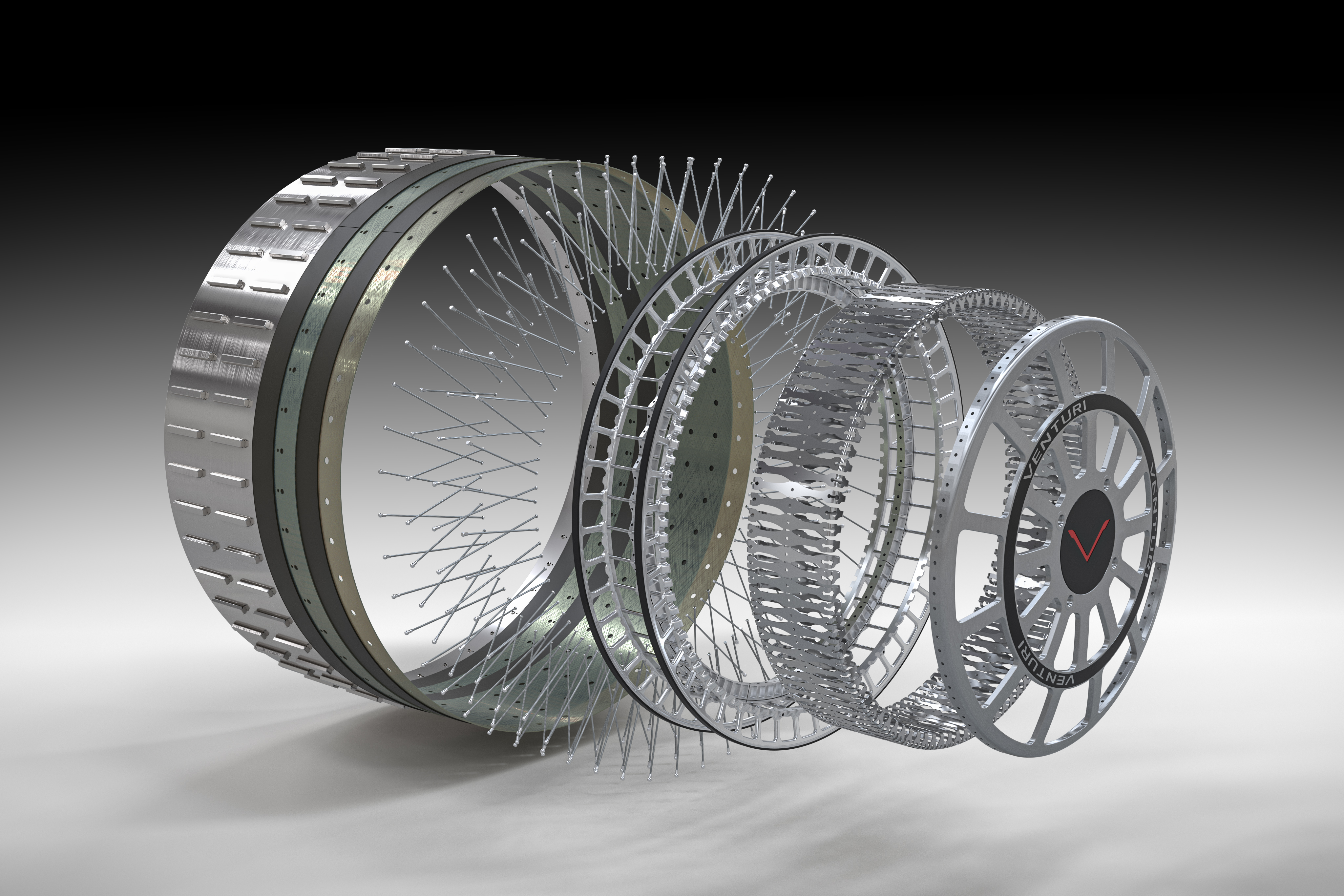
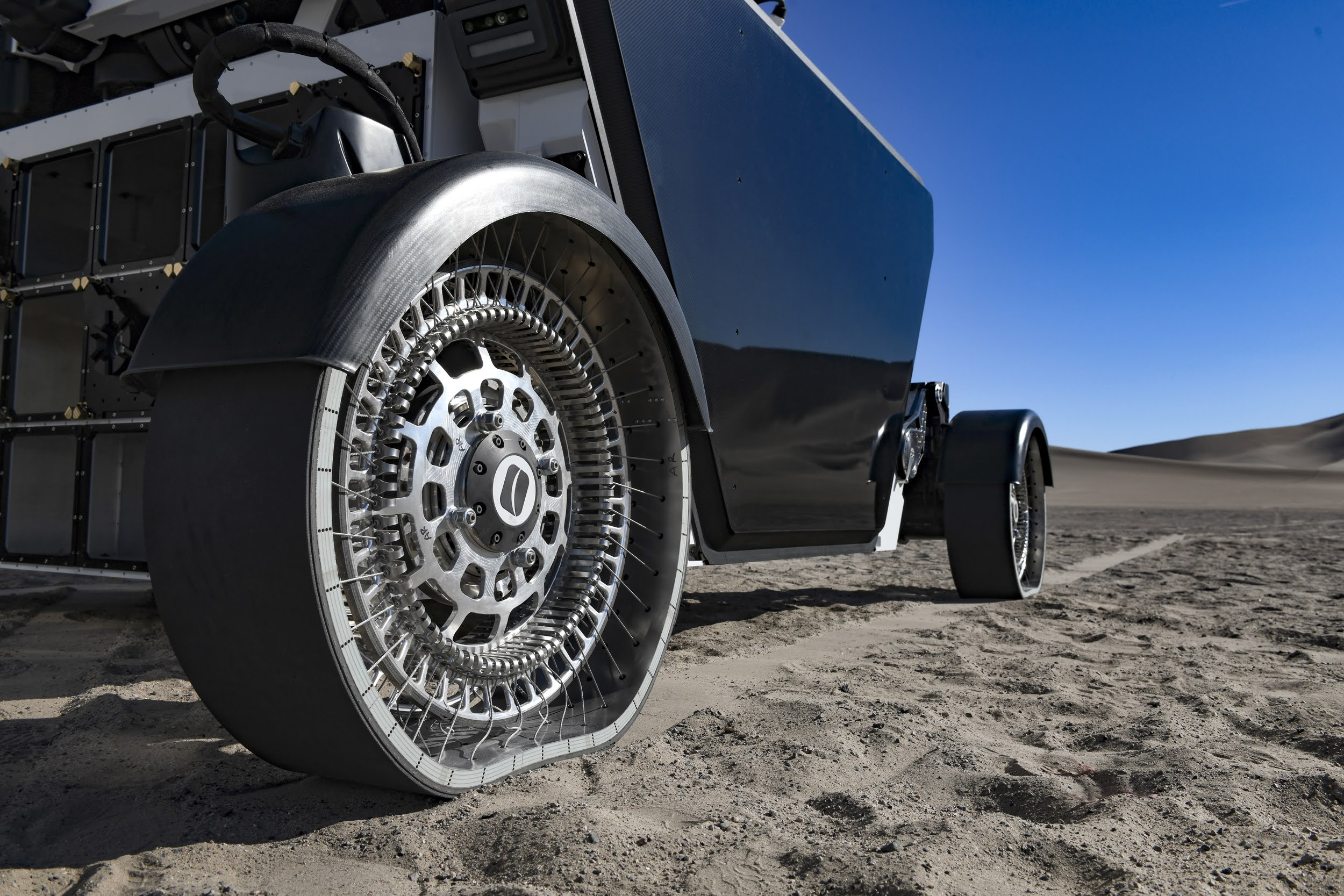
Earlier this week, Venturi Group presented its latest invention at the international Paris Air Show in Le Bourget, France: a hyper-deformable lunar wheel. Venturi Lab designed and manufactured the wheel using materials it created. The Venturi wheel is a world first.


A turning point in the history of the space industry, Venturi has reinvented the wheel. Engineers, chemists and physicists at Venturi Lab in Fribourg, Switzerland have created a unique hyper-deformable lunar wheel. 

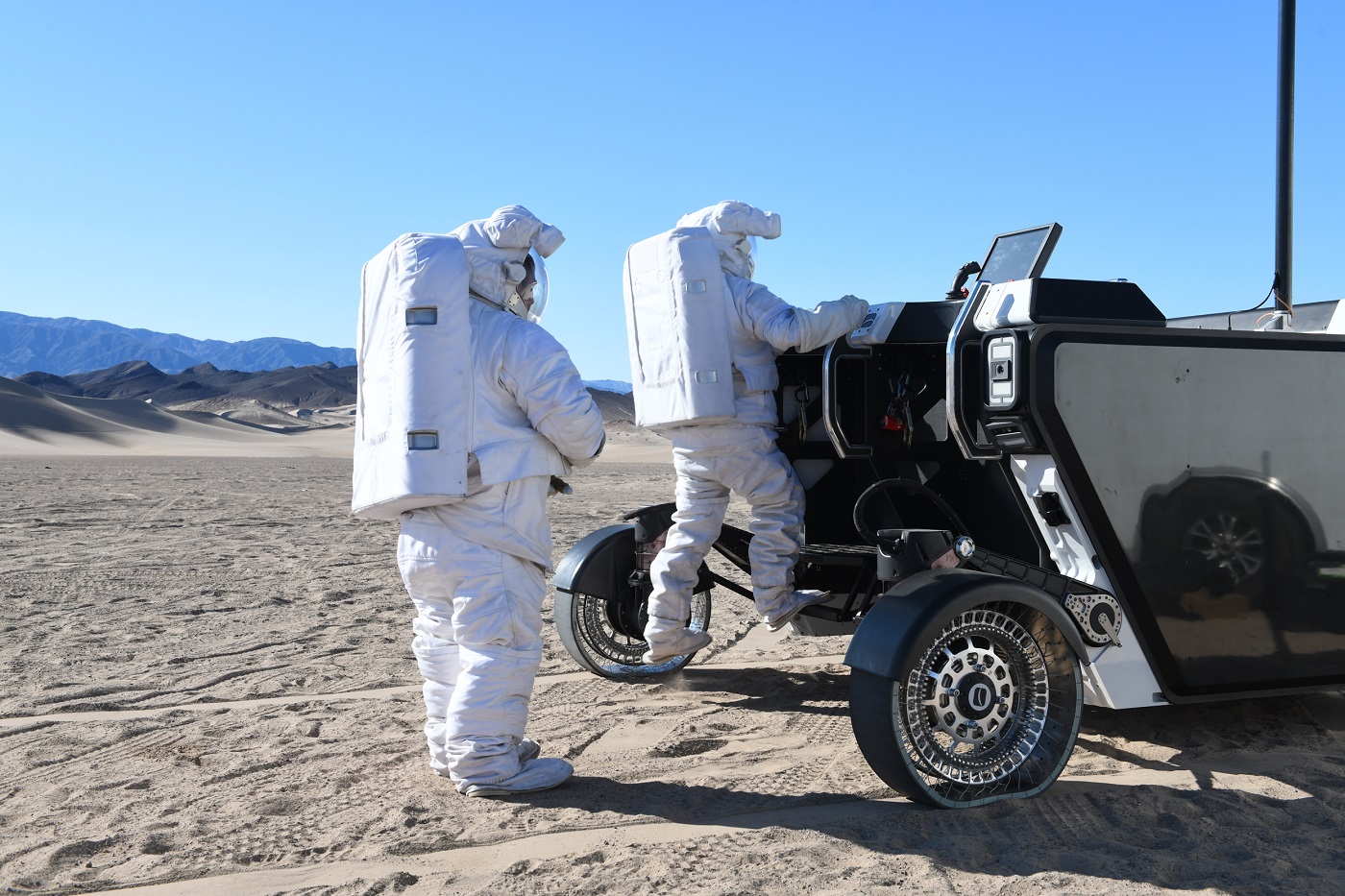
The wheel will be used on Venturi Astrolab’s FLEX rover, a vehicle that will be deposited on the Moon in 2026 by Space X’s Starship rocket and initially used to transport and deploy payloads.

In the past, with the exception of the Apollo missions, space exploration vehicles have always been equipped with rigid wheels. The Venturi wheel, however, is highly deformable while remaining long-lasting and robust. From 2026, when the FLEX rover is put into service at the lunar south pole, where extreme temperatures (-90 to -230°C) prevail, the four wheels supporting the two-tonne vehicle (payload included) will warp in order to absorb ground irregularities as the FLEX travels at 20 km/h. The wheels will need to perform over at least 1,000 kilometres and resist strong radiation from the south pole. 

Features of the Venturi wheel include:
– an exceptional diameter of 930 mm
– a complex system of 192 cables that act as spokes
– a tread made flexible by a newly invented material
– an outer rim equipped with springs

This breakthrough technology, based on unique materials, is equal in importance to the arrival of the rubber, and later pneumatic rimmed tyre in the 19th century.

NASA has selected Venturi Astrolab to test and analyse the Venturi wheel at the NASA Glenn Research Center in Cleveland and the NASA Johnson Space Center in Houston.

ABOUT VENTURI 
Since 2000, the Venturi Group has specialised in the design and manufacture of high-performance electric vehicles. Whether through world records, expeditions on hostile terrain, the creation of the first electric sports car, the development of innovative vehicles or its involvement in the Formula E World Championship, the Venturi Group embodies and demonstrates all the capabilities of the electric vehicle on 2 or 4 wheels. Since 2021, Venturi Lab is part of the Venturi Group. The company invents, studies, designs and manufactures mobility solutions capable of handling the extreme environmental conditions found on the Moon and Mars. In 2026, Venturi Astrolab’s FLEX rover – for which the Venturi Group will have designed and manufactured innovative technologies resulting from disruptive innovations – will be in operation on the Moon.

ABOUT VENTURI ASTROLAB
Venturi Astrolab, Inc (Astrolab) is on a mission to advance humanity to the next horizon by designing, building and operating a fleet of versatile rovers for all planetary surface needs. Comprised of a highly specialised team of former NASA, SpaceX and JPL engineers, Astrolab is dedicated to providing adaptive mobility solutions essential to life beyond Earth. The team has leading experience in terrestrial and planetary robotics, electric vehicles, human spaceflight and more. Astrolab’s extensive experience and strategic partnerships with a wide range of world-class institutions, including the electric vehicle pioneer Venturi Group, allow for the most reliable, flexible and cost-effective lunar and Mars mobility offerings. The company’s headquarters are located in Hawthorne, California.