Inaugural World Economic Forum survey of CSOs (Chief Sustainability Officers) finds the global sustainability transition advancing with a clear economic case despite geopolitical fragmentation; 63% expect progress to hold steady or accelerate over the next 12 months.73% expect AI to meaningfully accelerate sustainability progress, but 77% flag AI infrastructure’s energy and resource intensity as its most significant negative impact.
85% expect adaptation to become a bigger global priority over the next three years, though 62% cite uncertain cost-benefit assessments as the main barrier to investment. Read the report here.
 |
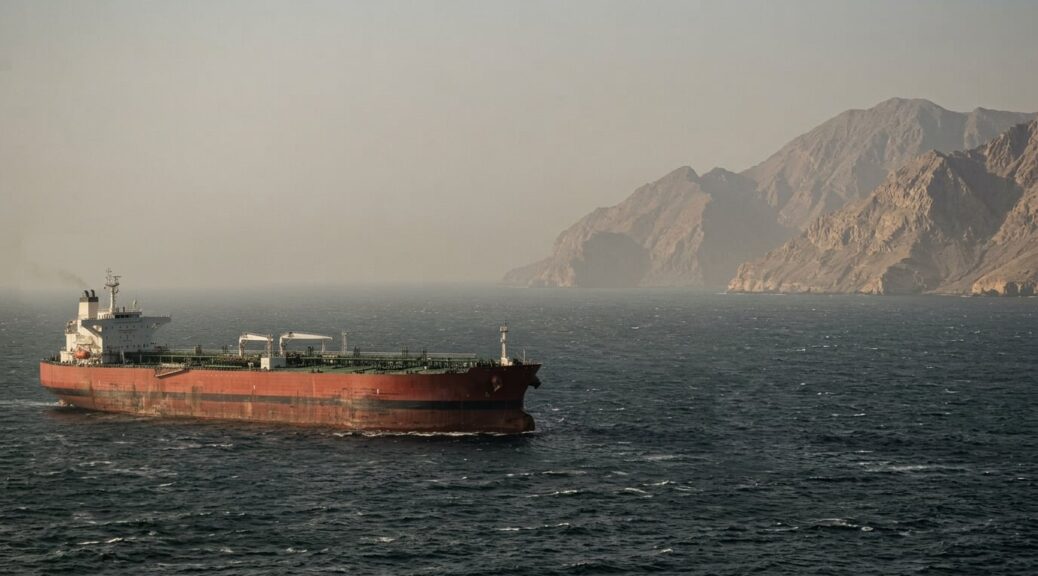
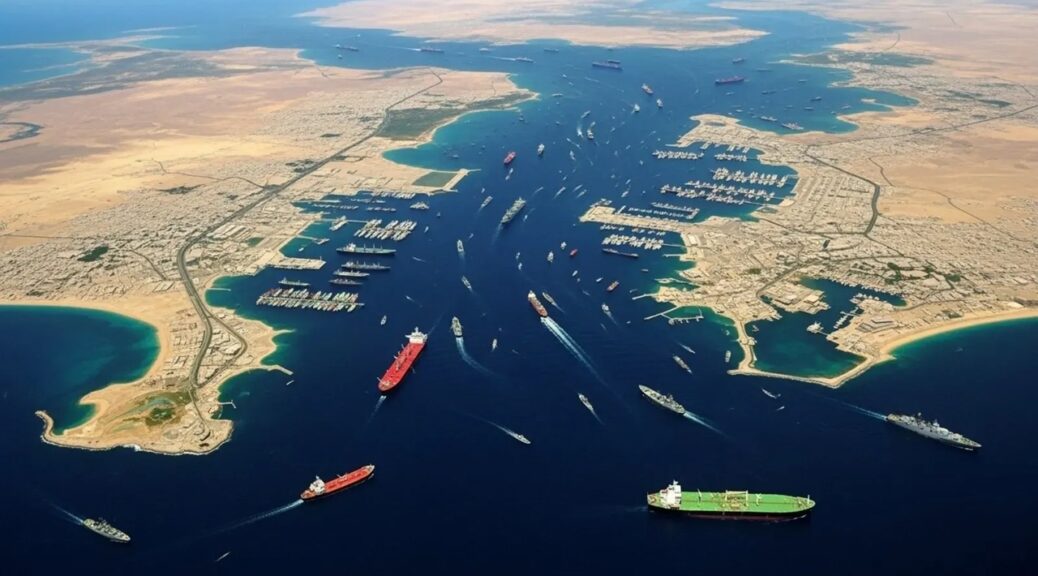
Chief Sustainability Officers Say Commercial Momentum Will Drive Climate Progress – Despite Significant Geopolitical Uncertainty Geneva, Switzerland, September 2026 – The World Economic Forum’s Chief Sustainability Officers Outlook, published today, finds a global transition showing clear signs of progress backed by commercial and technological momentum despite significant drag from geopolitical fragmentation and marked scrutiny on short-term performance. The inaugural survey, conducted as escalating conflict in the Middle East disrupted the Strait of Hormuz and rattled global markets, sees CSOs navigating the geoeconomic volatility with more conviction than caution. Some 63% expect global sustainability progress to hold steady or accelerate over the next 12 months, and three in four expect companies’ transition-related investment to do the same driven by a clear economic argument (64%) and increasingly applicable technologies (56%). The result, according to the report, is a “green divergence”, a transition splitting into different sectors and regions moving at very different speeds, even as the global green economy, now worth more than $5 trillion annually, is on track to top $7 trillion by 2030 and remains among the fastest-growing segments of the world economy. “Chief sustainability officers are telling us the transition is no longer a question of ambition, it’s a question of execution,” said Sebastian Buckup, Managing Director, World Economic Forum. “As companies deliberately anchor sustainability strategies in growth, security and resilience needs, execution speed and priorities increasingly diverge across regions and sectors.” A widening green divergence Despite geopolitical volatility, momentum has not stalled but has fragmented. Some 78% of CSOs expect geopolitical and macroeconomic headwinds, from conflict to inconsistent policy and weakening multilateralism, to weigh on progress over the coming year. Rather than a uniform slowdown, CSOs describe a green divergence – some sectors and markets pulling ahead on the strength of clear economics, while others stall under policy uncertainty or unconvinced boards. AI’s double-edged impact Some 73% of CSOs expect artificial intelligence to meaningfully accelerate sustainability progress over the next year, particularly in measurement, reporting, efficiency and risk modelling. Yet 77% of CSOs flag the energy and resource intensity of AI infrastructure itself as its most significant negative impact, as data centres already account for roughly 1.5% of global electricity demand, a green divergence playing out inside a single technology. Adaptation is becoming the next clear priority Some 85% of CSOs expect adaptation to become a bigger global priority over the next three years and 77% say private-sector investment will be decisive to scaling it. Companies already managing resilience proactively are seeing adaptation bets paying off. CDP estimates that businesses actively managing supply-chain risk have generated $13.6 billion in savings to date, with a further $165 billion in potential financial benefits still on the table. “The conversation is shifting from whether to act on sustainability to how fast we can prove it pays off. CSOs today are expected to deliver a business case as rigorous as any other investment decision, on resilience, on AI, on the transition as a whole. The organizations that treat this as a growth opportunity, not a compliance exercise, are the ones that will be ahead when the numbers are finally called in,” said Katharina Beumelburg, Chief Sustainability and New Technologies Officer, Heidelberg Materials. As the report highlights, “the challenge is no longer recognizing physical risks but demonstrating the value of investing in resilience” – a shift laid bare this year as extreme heat and wildfires forced companies and insurers alike to confront the cost of being unprepared. The clearest signal comes from California. Insurers had paid $22.4 billion in claims from the 2025 Los Angeles wildfires by early 2026, while new analysis suggests that rebuilding affected communities to wildfire-resilience standards could cut projected future losses by around one-third. About the Chief Sustainability Officers Outlook The World Economic Forum’s Chief Sustainability Officers Outlook tracks how the CSO role is evolving and what is driving, or blocking, progress on global sustainability. The inaugural report draws on the Chief Sustainability Officers Outlook Survey, conducted between 10 February and 18 March 2026, gathering responses from 103 sustainability leaders across five continents, members of the Forum’s CSO community, convened by the Forum’s Centre for Nature and Climate. For more information, visit the Centre for Nature and Climate. About the Sustainable Development Impact Meetings 2026 The Sustainable Development Impact Meetings 2026 (SDIM26) will take place in New York, USA, on 21-24 September and bring together senior leaders from across sectors and regions to advance solutions to shared opportunities and challenges, with a particular focus on long-term impact and building momentum before the World Economic Forum Annual Meeting 2027. |
For the Silo, Jarrod Barker.