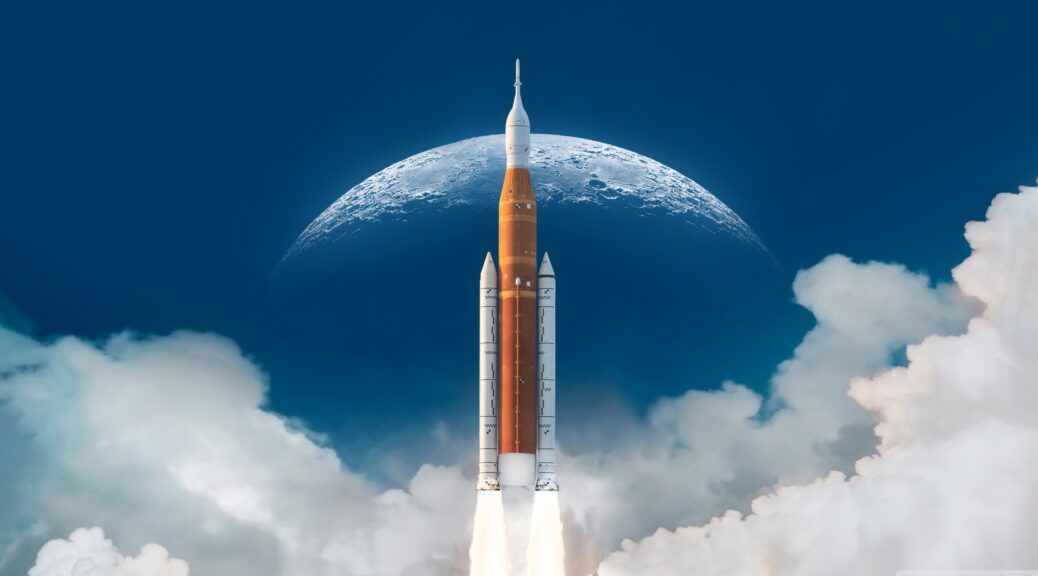
President Trump, who founded the U.S. Space Force in 2019, has announced plans for a U.S. Space Academy to train future leaders of America’s pioneering space missions.
Trump signed an executive order establishing the Space Academy last month during an August 28 ceremony at NASA’s Johnson Space Center in Houston.
“Given the rapid growth of the U.S. Space Force and commercial space industry, and the expansion of our ambitions to the moon and far beyond … it’s clear we will need to educate and train an entire generation of skilled service members, engineers, and civil operators,” the president said.
Space Is Critical To US
The order describes space as critical “for U.S. national security, economic growth, scientific discovery and technological innovation.”
During the August 28 ceremony, Trump also awarded the Congressional Space Medal of Honor to the crew of the Artemis II mission — NASA’s Christina Koch, Victor Glover and Reid Wiseman, and the Canadian Space Agency’s Jeremy Hansen. Their April flight around the moon set a record for the farthest humans have traveled from Earth.

The only nation to land a man on the moon, the United States remains at the forefront of human space exploration. Through the Artemis program, established in Trump’s first term, NASA will return astronauts to the moon and pave the way for a moon base that will serve as a jumping-off point for future human spaceflight to Mars.
The president has prioritized America’s leading role in space exploration. He launched the Artemis Accords, a nonbinding set of principles to guide civil space exploration. Over 70 nations have signed onto the accords.
In August, Trump issued a Presidential Memorandum to reinvigorate U.S. leadership in space transportation , calling on federal agencies to promote space transportation capabilities and facilitate commercial transportation to the moon and Mars.

NASA Administrator Jared Isaacman will lead a commission that will advise the president on creating the Space Academy, including degree programs, experiential training and service obligations for graduates. The academy will combine “rigorous technical education with leadership development, discipline, and a durable commitment to public service,” the order says.
A Transitional Step
Isaacman called plans for the Space Academy “a transformational step” for future NASA missions to return astronauts to the lunar surface, build a moon base and advance science and discovery. “I have no doubt that so much of the future talent that will graduate and contribute to these exciting endeavors will be educated at the United States Space Academy,” he said.