Tag Archives: economics

Digital Serbia Partnership Launches To Set Serbia As Digital Innovation Hub

“Digital Serbia” is the non-profit private partnership initiative launched by Ringier Axel Springer Serbia and leading tech companies. Its mission is to focus on improving the framework and ecosystem required to enable tech entrepreneurship and digital innovation in both industry and education in Serbia. The founding members of the initiative are Infostud, Microsoft, Nordeus, Price Waterhouse Coopers, Ringier Axel Springer, Seven Bridges, Startit, Telekom Srbija and Telenor.

“Digital Serbia” has been established as an association, bringing leading technology, IT and telecommunication companies together to drive digital innovation for Serbia and for its people. The Steering Committee of “Digital Serbia” will be made up of representatives of the founding companies. The Committee will be headed by Branko Milutinović, CEO and co-founder of Nordeus.

All of the association’s activities will be directed towards setting up an improved framework and investment climate to encourage technological entrepreneurship, innovations in the Serbian IT industry and a better level of digital literacy and education in the digital economy. Companies who want to participate in the realization of this goal, and to contribute to Digital Serbia, are invited to join.

“Digital Serbia” has been launched following the success of “digitalswitzerland”, and builds on the efforts of digital hubs such as London, Tel Aviv and Berlin, which joined the digital tech and innovation bandwagon early on.

Jelena Drakulić-Petrović, General Manager of Ringier Axel Springer Serbia and founder and initiator of the Digital Serbia Initiative: “Technological development brings unprecedented change at a high speed. Innovation in business and education helps to increase productivity. It allows for new solutions in the development of products and services. As a media company, we believe in the importance of enhancing digital innovative strength in Serbia, as this will be the driver that helps to create new jobs and grow our business. With “Digital Serbia”, we are seeking to unlock the vast potential we envisage for the Serbian economy and its people.”

Branko Milutinović

Branko Milutinović, CEO and co-founder of Nordeus: “Thanks to digitalization, success can now be boiled down to its essence: creativity, know-how and professionalism. This is our opportunity. Together, we will work hard so Serbian innovations and success stories may develop from a stronger foundation and gain more attention. That’s why our decision to invest in digital education and tech entrepreneurship is so important to the future of our entire community.”

“Digital Serbia” will provide basic information and support to innovative companies, as well as small and medium-sized enterprises in the IT sector, on how to operate in these areas, and will provide assistance to companies and society in establishing contacts through various forums and fairs. In addition, “Digital Serbia” will actively participate in identifying and addressing legal restrictions that slow down the development of e-Business in Serbia, and will provide active support for technology startups.
The website www.dsi.rs has been launched with detailed information about the initiative.

Also building on the success of “digitalswitzerland” is the initiative “Digital Poland”, which will be launched on June 1, 2017 in Krakow during the Impact Conference (www.impactcee.com). The initiative will be supporting digitization for the economy, supporting education and the legal system around issues relating to digitization and innovation, and helping companies in Poland to transition from offline to online. For the Silo,  Fouzia Hussain.

About “digitalswitzerland”

digitalswitzerland is a joint partnership between businesses, public authorities and the scientific community, which wants to shape Switzerland as the leading international hub for digital innovation. digitalswitzerland is already active in a wide range of fields such as knowledge transfer, education, start-up ecosystems, and political framework conditions. The association includes more than 70 of the most renowned companies and organizations as well as innovative locations throughout Switzerland. The initiative was launched in 2015 by Marc Walder, CEO of Ringier AG. More info can be found at www.digitalswitzerland.com

About Ringier Axel Springer Media AG

Ringier Axel Springer Media AG was founded in 2010 by the Swiss Ringier AG and the German Axel Springer SE. The company operates in the growth markets of Poland, Hungary, Serbia, Slovakia, Estonia, Latvia and Lithuania with a broad range of media services, comprising more than 165 digital and print offerings. The company’s registered offices are in Zurich and it employs a total of about 3100 employees.

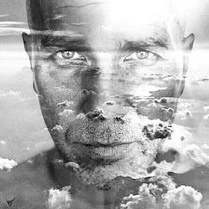
 

Art Of Painting With Camera Focus At Hurban Vortex Exhibit In Cannes

hurban-vortex-boris-wilenskyIf you could choose just one photo exhibit to see all year, it would have to be Hurban Vortex in Cannes.

Often, photography is the visual equivalent of telling a one-word story, expressed through an immediately comprehensible image. In contrast, Parisian photographer Boris Wilensky takes you on a journey through time, space, and humanity. His photos are true documentaries which require time to contemplate, and listen to. Yes, listen to, not just look at. Because all of his work tells a powerful, juxtaposing story. A story of humans in cruel, all-consuming urban environments… facing challenges beyond their control… surviving in harsh conditions… A story that is already written but that is reinvented every time you look at the image.

hurban-vortex-boris-wilensky4
Boris Wilensky’s current exhibition Hurban Vortex at the Suquet des Art(iste)s in Cannes opened on December 9 last year, featuring a selection of 30 of his works. Much has been said and written about it, and him, since, so no further biographical introduction is needed. And what really shaped his life, are locations rather than dates – Israel and Palestine, Tokyo, Fukushima, and Cambodia.
An emotional trip to Israel and Palestine in 2005 left a big impression on the idealistic young man, and he started keeping and publishing travel journals to share his impressions. At some point he began illustrating those with photos. Meanwhile he kept working as a photographer in entertainment and sports.
In 2008, a café in Paris offered him space to display his photos. Thinking to himself, “This is a great opportunity… probably the only one I’ll ever have to exhibit”, he went for it. It was a success, and the impetus to turn his passion into a profession.

hurban-vortex-boris-wilensky3
A visit to Tokyo in 2009 would prove to be the pathway into that professional career as an art photographer. The swirling, frenzied city of dazzling lights around the clock inspired him to find a way to capture the craziness of the megalopolis and the loneliness of its citizens … and he found a way to do so by superimposing two photos taken in the Tokyo subway, of the train and its travelers. It turned out so well that this type of photography would soon become his signature.

On his next visit to Japan – and in fact to Fukushima, just one month after the 2011 reactor catastrophe there – he found a country that had profoundly changed. The Japanese were beginning to awaken to the consequences of boundless, unchecked use of nuclear energy. As a consequence, the garish lights all over town were dimmed, and the mood had become much more somber and sober.

hurban-vortex-boris-wilensky10
This was when the Hurban Vortex project started taking shape in the artist’s mind. “Hurban Vortex is an urban adventure with a big H”, he explains, the constant game between the concepts of humanity and urbanity, extending into notions of modernity and identity, future, sustainable development, ecology and economy. The City, symbolizing Progress and Modernity, in constant growth, now become a “megalopolis”, or a “City-world”, a space built by humans to live in but one that eats them up in return.

For this project, and forever drawn to Asia, Boris Wilensky returns to Tokyo, Shanghai and Bangkok to take as many “photographic backgrounds” as possible. Then he tours Cambodia for two months, the stark contrast to the other cities’ modernity. Here he immerses himself fully in the ancient Khmer culture, taking portraits of men, women and children. Many of those faces bear silent witness to the horrors of the Khmer Rouge regime, and yet retain pride and dignity that speaks of inner strength.

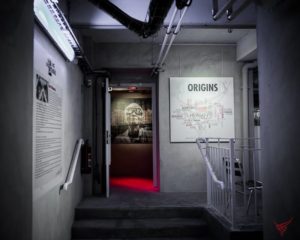
originsOver 15,000 photos later, Hurban Vortex sees the light of day. The ensemble of artistic, esthetic and human adventure are at the core of the triptych that represents his works: Origins corresponds to 2009 (present), the period of an oblivious, profligate, consumerism-driven world. Collapse takes us into 2011 (future)…Fukushima, with its worldwide impact. The glasses and gas masks worn by the humans represent the man-made destruction of a world as we had known it before and which will never be the same. And in Post we find ourselves in an urban landscape filled with waste and shattered ruins. But people are no longer wearing their blinders… Maybe there is hope after all that cities may disappear but humans are still around? Or does the urban jungle always win in the end? You decide, because it is your personal interpretation, after an intense dialogue with the image… exactly what Boris Wilensky wants.
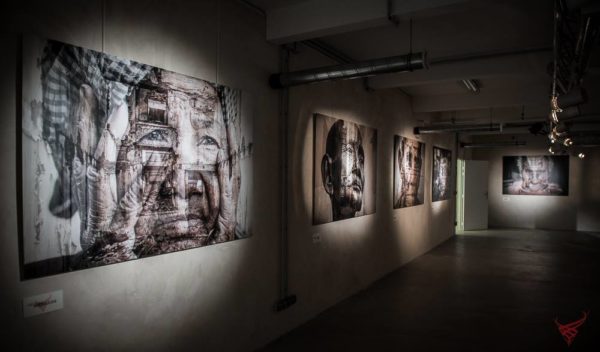
origins2What the viewer sees, is how this artist sees the world – not in the literal but figurative sense. But he does not dictate, he suggests. He considers himself a storytelling portraitist first and foremost, and an urban photographer second. As you look at his large-size pictures (180 x 120 cm), the image in front of you transforms from a flat canvas to a three-dimensional scenography. You are drawn in, pulled onto a stage, you become part of the performance, an actor engaged in a dialogue. You are the person across from the man in the photo, but you also become him, turning outward to the viewer.

origins3The continuous movement – the vortex – pushes and pulls you as the borders between Human and Urban blur and become Hurban. There are violently cold and anonymous city landscapes, consisting of monochromatic and starkly geometric patterns, entirely unlike anything you find in nature. But the human element, superimposed, invariably bestows them with a strangely appealing aesthetic. For the Silo, Natja Igney. This article originates at Riviera-buzz. Banner diptych image Boris Wilensky- concept by Jarrod Barker.

hurban-vortex-boris-wilensky6

Significant Gasoline Price Hikes At Ontario Pumps

January 1st kicked off 2017 with significant gasoline price hikes at the pumps courtesy the Ontario Liberal government’s cap and trade legislation. I obviously voted against that bill.

Ontario’s cap and trade, Canada’s price on carbon

Another reality is that Canada is putting a price on carbon, the nature of which is still being negotiated with the provinces. With national carbon pricing being the new reality, Opposition Leader Patrick Brown has written an open letter to Justin Trudeau indicating that Kathleen Wynne’s cap and trade law “does not have Ontario’s best interests at heart,” and requesting that Ontario cap-and-trade be removed from the Trudeau carbon pricing system. I’m not holding my breath on that one.

The problem with the provincial cap and trade tax and the federal price on carbon is that going electric is neither technologically nor economically feasible for most, thanks to the Ontario Liberal’s Green Energy Act. I also voted against that bill.  The cap and trade tax system serves as a stick to try and modify behavior without offering a viable alternative and without a carrot to reward changes made, other than using the revenue for more subsidies for things like electric cars and Toronto transit.

As Ontario’s Official Opposition we have committed to dismantle the cap and trade system ever bearing in mind the federal government is mandating all provinces put a price on carbon.

On January 1, the province capped greenhouse emissions and will sell allowances to companies who have to exceed the cap. The province will lower the cap over time. Companies exceeding their cap can also buy additional allowances, or if they come in below their annual limit, can sell their emission allowances to other companies within a market comprised of Ontario, Quebec and California.

It is estimated Ontario businesses will be paying $300 million a year to California.

We maintain the government is so desperate to hike taxes, they have rejected a revenue-neutral plan – cap-and-trade money will disappear into general revenues.

Cap and trade has clearly not been designed to return money to those paying – it is a blatant $2 billion-a-year tax grab under the guise of environmentalism. It will seriously impact everyone’s pocket book. Oil refineries for example will pass their recovery costs of cap and trade to their customers at the pumps. It subtracts money from people, not only for gasoline, diesel, propane, natural gas, heating oil and aviation fuel but also for groceries, clothing and other consumer goods produced and delivered by carbon-fueled plant, equipment and transportation.

Ontario drivers are being treated like clowns.

Ontario’s Auditor General reports the cap and trade tax will cost families an extra $156 this year for gasoline and natural gas, rising to $210 by 2019. Added transportation costs for goods and services will be another $75 per household by 2019.

We are committed to dismantling the cap and trade scheme and the Green Energy Act. This is the best way to ensure people’s hard-earned money stays exactly where it should stay…in their pockets.

In conclusion, I ask you the reader – where do we go from here? There probably won’t be an election until June 2018 and this is the time to consult on policy.

Click me!
Click me!

Provincially, the Ontario PC Party has committed to dismantle the Wynne cap and trade law, as well as the Green Energy Act. However, carbon pricing is now the reality in Canada and Ontario will be bound by the Trudeau price on carbon.  For the Silo, Haldimand-Norfolk MPP Toby Barrett.
Economic Aspects Of Globalization In The Past Material World

Questions and deliberations concerning globalization are more than a hot topic of extended cross-disciplinary focus in academia; they are also central to the long-simmering debates regarding policies and their implications that today often enter the public arena. For example, a quick perusal of broadly accessible media outlets from late 2013 and early 2014 reflects a suite of still unresolved but vibrant civic pondering: “When did globalization start” (The Economist 2013), “The dark side of globalization: why Seattle’s 1999 protesters were right” (Smith 2014), and  “Have we reached the end of globalization?: (CNN 2014).

Yet can such issues really be evaluated judiciously without defining the critical elements of globalization, and then dissecting and assessing its historical scope? Given the broad temporal and spatial elements implied by the concept of “globalization”, it is not most likely that the outcomes and effects of this multifaceted process would be highly variable across time and space?

But through a diachromic and comparative examination of human connections over time, might we see some commonalities and learn relevant lessons?

Continue reading this essay by Gary Feinman by clicking here.

*Banner image of Ronald McDonald -McDonalds China courtesy of image.minyanville.com

Canada’s Original Black Friday- ‘Cancelled Arrow’ Was Cutting Edge 1950s Jet Interceptor

The first Arrow RL-201

I began writing this post after an annual viewing pilgrimage of sorts. Each year on the eve of shopping’s busiest day, I crack open the well worn plastic jewel case and fire up the DVD player. It’s a fictional account but based in fact and is very entertaining and I can’t help but wonder what “might have been” after watching CBC’s 1996 mini-series “the Arrow” again. [You can watch this right here at the end of this post CP]

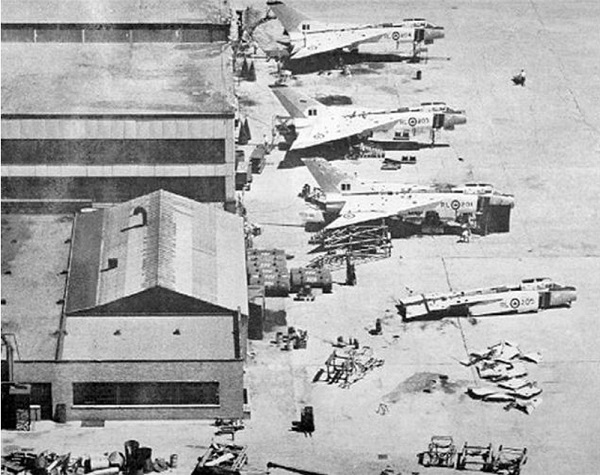
Over the decades fact and fiction have become tangled but the basic truths remain intact. In the late 1950’s a highly advanced jet interceptor designed to seek (and if necessary destroy) Russian nuclear bombers was conceived, designed, built and flown in Canada by a predominantly Canadian team. Here’s where things get fuzzy. The Arrow was developed when the federal Liberal party were in power but was finished and flown when the Conservatives were in power. It represented not only the technological capability of Canada’s aviation industry- but also the econo-political agenda of the mid-twentieth Century. So what happened at that time to help spell the doom of the Arrow?

-The ICBM- intercontinental ballistic missile was viewed as the future of warfare not the nuclear bomber. This meant that a jet interceptor was obsolete because it would be unable to intercept approaching missiles.

-Bad timing: on the day of the rollout of the very first completed Arrow, the Russians launched Sputnik, the world’s first artificial satellite. In the public eye jets seemed unimportant.

-The American Bomarc missile system was designed to intercept incoming nuclear bombers and ballistic nuclear missiles. The Bomarc had a small nuclear warhead which would detonate in the pathway of approaching missiles (or bombers) and create a nuclear ‘shield’. The Bomarc was highly controversial at the time because our Prime Minister did not want nuclear missiles on Canadian territory. However, our Defence Minister did not agree and eventually resigned over the matter. This defence ‘split’ exacerbated the Arrow program and any chance for an Arrow squadron legacy.

-The Canadian designed Iroquois engines were not  readied in time and were not fitted into the Arrow. These engines were innovative and theoretically could have propelled the Arrow to speeds of Mach 2.5 or possibly Mach 3.0- far beyond every fighter of the time with the exception of secret black technology projects like the American Blackbird SR-71. Had the Canadian engines been readied and proven, there seems little doubt that international orders would have offset some of the Arrow’s mounting costs.

Black Friday…….almost 15,000 workers lose their job.

Canadas Black Friday

There is no official record of just who ordered the destruction of the remaining Arrows. Other than a few recovered test models, an incomplete cockpit and a few seconds of in flight film, nothing remains of this wonderful airplane . For the Silo, Jarrod Barker.

 

The completed Arrows being cut up and readied for a Hamilton,ON scrap dealer.


Supplemental-

University of Saskatchewan The Nuclear Question in Canada http://www.usask.ca/diefenbaker/galleries/virtual_exhibit/nuclear_question_in_canada/

Post Featured Image- http://plunkettgw.deviantart.com/art/AVRO-ARROW-17-139364086

Boeing’s  Bomarc Missile http://www.boeing.com/boeing/history/boeing/bomarc.page

Circular Economy Is New Direction For Waste Free Ontario

In late Spring 2016, Ontario passed legislation to divert more waste from landfills, create jobs, help fight climate change and lead towards a waste-free province. Currently, Ontario is producing too much waste, and not recycling enough. Over eight million tonnes of waste is sent to landfill each year. Absolute greenhouse gas emissions from Ontario’s waste have risen by 25 per cent between 1990 and 2012 as the amount of waste disposed in landfills has increased.

The Waste-Free Ontario Act  will: encourage innovation in recycling processes and require producers to take full responsibility for their products and packaging, lower recycling costs and give consumers access to more convenient recycling options to help fight climate change by:

-reducing greenhouse gas pollution that results from the landfilling of products that could otherwise be recycled or composted
-overhaul Waste Diversion Ontario into the Resource Productivity and Recovery Authority, a strong oversight body with new compliance and enforcement powers that will oversee the new approach and existing waste diversion programs until transition is complete.

Solid Waste No More

The province will also be finalizing its draft Strategy for a Waste-Free Ontario: Building the Circular Economy, within three months of the legislation coming into effect. The strategy outlines Ontario’s vision for a zero waste future and proposed plan to implement the legislation.
Harnessing the value of waste as a resource is part of the government’s economic plan to build Ontario up and deliver on its number-one priority to grow the economy and create jobs. The four-part plan includes investing in talent and skills, including helping more people get and create the jobs of the future by expanding access to high-quality college and university education. The plan is making the largest investment in public infrastructure in Ontario’s history and investing in a low-carbon economy driven by innovative, high-growth, export-oriented businesses. The plan is also helping working Ontarians achieve a more secure retirement.

QUOTES
“Ontario is moving in an exciting new direction for managing waste in the province. The Waste-Free Ontario Act is an important step in creating Ontario’s circular economy — a system in which products are never discarded, but reintroduced and reused or recycled into new products. Managing our resources more effectively will benefit Ontarians, our environment and economy and support our efforts to fight climate change.”
Glen Murray, Minister of the Environment and Climate Change

QUICK FACTS
Every 1,000 tonnes of waste diverted from landfill generates seven full-time jobs, $360,000 in wages (paying above the provincial average) and $711,000 in GDP.
Every year in Canada, an estimated $1 billion in valuable resources is lost to landfill.
Eventually the Waste-Free Ontario Act will eliminate industry funding organizations such as the Ontario Tire Stewardship and Ontario Electronic Stewardship.
The Blue Box program is available in about 95 per cent of Ontario households and keeps approximately 65 per cent of residential printed paper and packaging from landfills.

LEARN MORE
Read about the draft Strategy for a Waste-Free Ontario: Building the Circular Economy
Learn more about Ontario’s current waste programs

BACKGROUNDER via Ministry of the Environment and Climate Change
The Waste-Free Ontario Act and Strategy
Ontario has passed the Waste-Free Ontario Act and will be finalizing the draft Strategy for a Waste-Free Ontario: Building the Circular Economy, within three months of the legislation coming into effect.
Together, the proposed legislation and strategy would:
-Foster innovation in product and packaging design that encourages businesses to design long-lasting, reusable and easily recyclable products
-Boost recycling across all sectors, especially in the industrial, commercial and institutional sectors, which will reduce waste and lower greenhouse gas emissions
-Incent companies to look for ways to make their recycling processes more economical while staying competitive
-Shift the costs of the blue box from municipal taxpayers to producers while continuing to provide convenient collection services for Ontarians.
-Develop an action plan to reduce the amount of organic materials going to landfills.

The draft Strategy embraces a vision of “an Ontario where we have zero waste and zero greenhouse gas emissions from the waste sector and where all resources, organic or non-organic, are used and reused productively, maximizing their recovery and reintegrating recovered materials back into the economy.”
Ontario’s vision would be fulfilled with the draft Strategy’s two goals: a zero waste Ontario and zero greenhouse gas emissions from the waste sector. To achieve these goals Ontario would work towards systematically avoiding and eliminating the volume of waste, while maximizing the conservation and recovery of resources. This would also help the province meet its climate change commitments and help Ontario build a low-carbon economy.
Disponible en Français

Six Nuclear Unit Refurbs means Ontario Commits to Future in Nuclear Energy

Ontario has updated its contract with Bruce Power and will proceed with the refurbishment of six nuclear units at the Tiverton-based nuclear generation station.

Nuclear refurbishment will boost economic activity across Ontario, create jobs, ensure savings for ratepayers and secure a clean supply of reliable electricity. The Bruce Power refurbishment project will make up to 23,000 jobs possible and generate about $6.3 billion in annual economic benefits in communities throughout the province. Ontario is home to a globally recognized CANDU nuclear supply chain with more than 180 companies employing thousands of highly skilled workers.

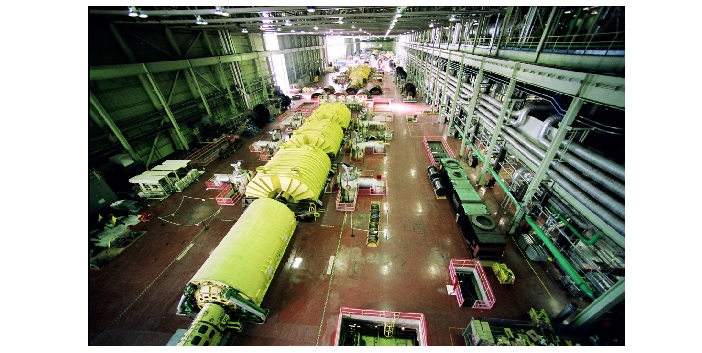
Note: At Bruce Power-station, each reactor has its own turbine set.
              Note: At Bruce Power-station, each reactor has its own turbine set.

The government was further able to optimize the nuclear refurbishment schedule in order to maximize the value of existing nuclear units. The revised timeline will mean construction commences in 2020, rather than the previously estimated start date of 2016.

Accordingly, the updated agreement has achieved $1.7 billion in savings for electricity customers when compared to the forecast in the 2013 Long-Term Energy Plan (2013 LTEP).  This means a reduction in forecast household electricity bills by about $66 each year over the next decade. The contract also protects the interests of electricity consumers by ensuring Bruce Power assumes full risk for any potential cost overruns or delays.

Key aspects of the updated agreement include:

  • Securing 6,300 MW of emissions-free, baseload generating capacity while deferring major project work to 2020, to maximize value of the units
  • Bruce Power would invest approximately $13 billion of its own funds and agrees to take full risk of cost overruns on refurbishments of the six nuclear units
  • Initial price for Bruce Power’s generation set at $65.73/MWh starting January 1, 2016. The average price over the life of the contract is estimated to be $77/MWh, or 7.7 cents per kilowatt hour (kWh).
  • Both prices are within the range assumed in the 2013 LTEP for refurbished nuclear energy and are lower than the average price of electricity generation in Ontario, which in 2015 was $83/MWh
  • Definitive contract off-ramps that allow the government to assess Bruce Power’s cost estimates for each reactor prior to its refurbishment and stop the refurbishment if the estimated cost exceeds a pre-defined amount

The province is achieving balance by contracting affordable, stable and reliable generation for residents and businesses while securing investments that will be a key source of local job creation and economic growth.

Securing clean, reliable baseload power for decades to come is part of the government’s plan to build Ontario up. The four-part plan is includes investing in people’s talents and skills, making the largest investment in public infrastructure in Ontario’s history, creating a dynamic, innovative environment where business thrives and building a secure retirement savings plan.

 Ontario Minister Of EnergyBob ChiarelliQUOTES

“This agreement makes 23,000 jobs possible and supports an estimated $6.3 billion in annual, local economic development. Our updated agreement with Bruce Power secures 6,300 MW of emission-free, low-cost electricity supply. These actions will save the electricity system $1.7 billion and provide important relief for electricity consumers.”

— Bob Chiarelli, Minister of Energy

““Today is a major milestone in the history of Bruce Power as we build on our existing agreement with the province and extensive experience to enter the next phase of our site development. This provides us the opportunity to secure our long-term role as a supplier of low-cost electricity by demonstrating we can successfully deliver this program incrementally.”

— Duncan Hawthorne, President and CEO, Bruce Power

QUICK FACTS

  • Following the release of the 2013 LTEP, the amended BPRIA was negotiated over two years by the Independent Electricity System Operator (IESO).
  • The Bruce nuclear site is the world’s largest operating nuclear facility. Since it was formed in 2001, Bruce Power and its industry partners have engineered and developed first-of-a-kind technologies that helped return four dormant nuclear units to service.
  • Nuclear energy plays a fundamental role in Ontario’s electricity system. It provides over half of Ontario’s annual generation, meeting most of Ontario’s baseload requirements.

LEARN MORE


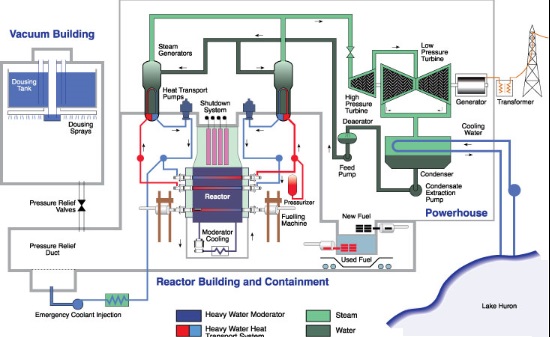
Supplemental- The CANDU Bruce Nuclear Generating Station on Lake Huron is the largest nuclear power plant in the world.

Ontario Increasing Minimum Wage- will also affect Liquor Servers, Students

Province Committed to Providing Fairness for Workers, Predictability for Business

Ontario is raising the general minimum wage from $11 to $11.25 per hour, effective October 1, 2015. Minimum wage rates for jobs in special categories such as liquor servers, homeworkers, and students are also increasing at the same time.

25Cents might not seem like much (after all, payphone calls require two of them) but it does add up: 25 hour part time job works out to an extra $300/ year.

The increase is the result of recent changes to the Employment Standards Act, 2000 (ESA) that tie minimum-wage increases to Ontario’s Consumer Price Index (CPI). This was recommended by the Minimum Wage Advisory Panel in its final report last year.

Increasing the minimum wage in a fair and predictable manner is part of the government’s economic plan for Ontario. The four-part plan is building Ontario up by investing in people’s talents and skills, building new public infrastructure like roads and transit, creating a dynamic, supportive environment where business thrives and building a secure savings plan so everyone can afford to retire.

Kevin Flynn Minister“Our government has taken politics out of minimum wage increases while ensuring wages for Ontario workers keep pace with inflation and businesses have time to prepare for payroll changes. This puts more money in people’s pockets, gives our businesses predictability and helps build a more prosperous economy, while ensuring a fair society for all.”

 – Kevin Flynn, Minister of Labour


QUICK FACTS


  • The government enacted legislation last fall that amended the Employment Standards Act, 2000 (ESA) to tie future annual increases to minimum wage to Ontario’s Consumer Price Index (CPI).
  • This will be the ninth minimum wage increase since 2003.
  • The primary sectors employing minimum wage earners are accommodation and food, retail trade, and agriculture.
  • Minimum wage increases are to be announced by April 1 each year, and will be effective on October 1 of the same year.
 

LEARN MORE


Disponible en français- Contacter le Silo, si vous souhaitez lire ceci en Français


Money Buys Happiness If You Give It Away

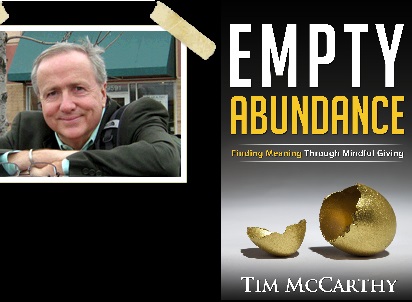
“All of us could invest part of our ‘fortune,’ great or small, on something that gives back on a deeper human level, such as non-predatory loans to individuals from impoverished communities,” Tim McCarthy

North Americans are still choosing to hold onto their money these days, a lesson learned from the 2008-09 financial crash.

It’s good to have savings – but not to the point of hoarding, says entrepreneur and philanthropist Tim McCarthy, author of “Empty Abundance”.

Citizens in the United States of America are saving at a rate of 5.30 percent, well above the record low of 0.80 percent in 2005, according to the U.S. Bureau of Economic Analysis.

The world’s billionaires are holding an average of $600 million each in cash, which is more than the gross domestic product of Dominica, according to the new Billionaire Census from Wealth-X and UBS. That’s up from $60 million the previous year, signaling that the very wealthy are keeping their money on the sidelines and waiting for an optimal investment time.

McCarthy diverts all of his business profits annually to his foundation, The Business of Good, which invests in socially conscious businesses and scalable nonprofit concepts.

The Business of Good Foundation

He reviews what everyone has to gain from mindful giving.

•  Money buys you happiness – up to $75,000 worth. Life satisfaction rises with income, but everyday happiness – another measure of well-being – changes little once a person earns $75,000 per year, according to a 2010 Princeton study. Another widely published survey by psychologist Roy Baumeister suggested that “happiness, or immediate fulfillment, is largely irrelevant to meaningfulness.” In other words, so many who finally achieve financial excess are unfulfilled by the rewards that come with that.

•  Remember the wealth disconnection to overall fulfillment. A Gallup survey conducted in 132 countries found that people in wealthy countries rate themselves higher in happiness than those in poor countries. However, 95 percent of those surveyed in poverty-stricken countries such as Ethiopia, Kyrgyzstan and Sierra Leone reported leading meaningful lives, while less than 60 percent reported the same in wealthier countries.

“While more investigation to wealth, happiness and well-being is certainly in order, I think it’s clear that while money is important, it cannot buy purpose, significance or overall satisfaction,” McCarthy says.

•  Giving money reliably equals happy money. Two behavioral scientists, Elizabeth Dunn and Michael Norton, explore in their recent book, “Happy Money: The Science of Smarter Spending,” what makes people engage in “prosocial behavior” – including charitable contributions, buying gifts and volunteering time. According to Dunn and Norton, recent research on happiness indicates that the most satisfying way of using money is to invest in others.

In 2010, multi-billionaires Warren Buffet and Bill and Melinda Gates co-founded The Giving Pledge, a long-term charitable effort that asks the wealthiest among us to commit to giving more than half of their fortunes to philanthropy. Among the first to join, Michael R. Bloomberg wrote in his pledge letter: “If you want to do something for your children and show how much you love them, the single best thing – by far – is to support organizations that will create a better world for them and their children.”  To date, 115 of our country’s 495 billionaires have pledged.

•  Anhedonia, amnesia and the fallacy of consumption. Anhedonia is the inability to enjoy activities that are typically found pleasurable.

“After making my wealth, I found that I suffered from anhedonia,” McCarthy says. “Mindful giving – intelligent and conscious giving to those who need it – turned out to be my best therapy.”

Everybody has experienced the limits of consumption, the economic law of diminishing returns. One cookie is nice and so, too, is your first $1 million. But at some point, your ability to enjoy eating cookies or earning millions diminishes more with each successive one.

“Everyone learns this lesson, yet the horror is that so many of us succeed in forgetting it,” McCarthy says. “I think that, in every moment, we need to remind ourselves that continually reaching for the next ‘cookie’ is not in our best interest.”

About Tim McCarthy

Tim McCarthy’s first business, WorkPlace Media, eventually built a permissioned database of 700,000 gatekeepers who reach more than 70 million employees with incentives for clients such as Coca-Cola, Lenscrafters and McDonalds. He sold the company in 2007 and recently bought it back. 

New Ontario Gov’t Tax Credit to Benefit Farmers and Communities

A new tax credit is helping put nutritious, fresh, locally grown food on the plates of those who need it most.

The Food Donation Tax Credit for Farmers — the only one of its kind in Canada — is giving farmers a tax credit valued at 25 per cent of the fair market value of the agricultural products they donate to community food programs, including food banks and student nutrition programs.

The tax credit is a part of the Ontario government’s local food strategy and Local Food Act, 2013 to promote the good things that are grown and harvested across the province.

Building a stronger agri-food industry is part of the government’s economic plan to support a dynamic and innovative business climate, invest in people and invest in infrastructure.

QUOTES

“This new tax credit will help farmers donate more fresh food to their local food banks, which will support our farmers, drive local economic growth, and benefit families in communities across the province.”

— Charles Sousa, Minister of Finance

“This new tax credit is an integral part of our government’s commitment to support farmers, increase access to nutritious, locally grown food and promote the good things that are grown right across the province.” Jeff Leal, Minister of Agriculture, Food and Rural Affairs
“This new tax credit is an integral part of our government’s commitment to support farmers, increase access to nutritious, locally grown food and promote the good things that are grown right across the province.”
Jeff Leal, Minister of Agriculture, Food and Rural Affairs


“Ontario’s farmers have a long tradition of donating their agricultural products to charitable causes, and we believe this credit will both honour that tradition and help motivate others to donate.”

Neil Currie, General Manager, Ontario Federation of Agriculture

“Everyone should have the opportunity to enjoy local food, and we applaud the Ontario government for introducing a tax credit that will encourage more farmers to make that food available to families and individuals who need it most. Many food bank clients do not receive the recommended daily servings of fruits, vegetables, and protein, which causes additional strains on one’s health and well-being. A balanced diet with local, fresh, and nutritious foods will help improve the health of food bank clients as well as the health of communities across Ontario.”

— Bill Laidlaw, Executive Director, Ontario Association of Food Banks

“Hamilton Food Share has focused on increasing the amount of fresh product distributed to local emergency food programs as the thousands of people who visit a food bank do not have access to fresh food on an ongoing basis. We remain deeply committed to food security and we believe the new tax credit for farm donations will help us forge new partnerships within the agricultural sector in our community.”

— Joanne Santucci, Executive Director, Hamilton Food Share.

QUICK FACTS

One-third of the 375,000 Ontarians served by a food bank every month are children.
More than 600,000 children and youth participate in breakfast, snack and lunch programs in communities across Ontario.
Under the proclaimed legislation, farmers can claim the new tax credit for donations dating back to Jan. 1, 2014.
Ontario’s agri-food sector contributes about $34 billion to the province’s economy and supports more than 740,000 jobs across Ontario.

LEARN MORE

Find local food sources and organizations on the ministry’s Local Food webpage

Ontario Association of Food Banks

Ontario Student Nutrition Program Network

Student Breakfast Clubs

Seasonal recipes at Foodland Ontario

CNNMoney- Millennials Saying No To Credit Cards

CNN Money No Credit Cards For Millenials


CNNMoney ‏@CNNMoney 13h

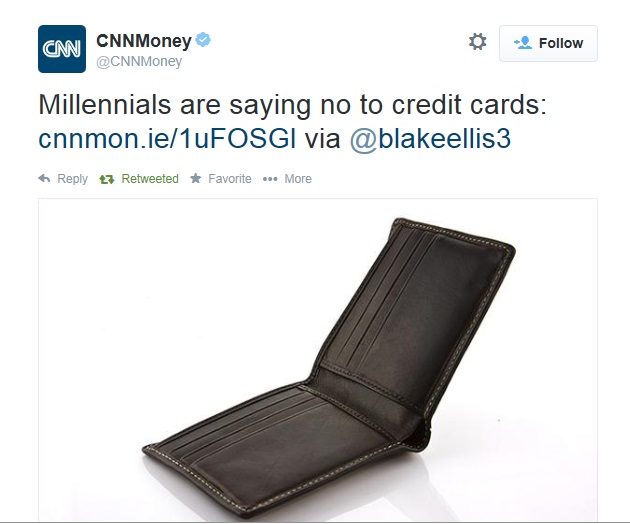
Millennials are saying no to credit cards: http://cnnmon.ie/1uFOSGl  via @blakeellis3 pic.twitter.com/T1U8i7OU2I

What some tweeters are saying:

CalBeach ‏@CalBeach 13h

@CNNMoney @blakeellis3 They’re smart to avoid debt.

YmeYnot ‏@YmeYnot2011 13h

@CNNMoney @blakeellis3 Only use charge card when you can pay entire debt completely before you are charged interest.

NETGAINS ‏@Netgains_ 13h

@CNNMoney @blakeellis3 Great info… Thanks for sharing..

Equality=Peace ‏@angrigarisangri 13h

@CNNMoney @CNN @blakeellis3 Yes to #bitcoin!

Glenn ‏@GlennMPR 13h

@CNNMoney @CNN @blakeellis3 Smarter than my generation then.

Pm3marston ‏@Pm3marston 13h

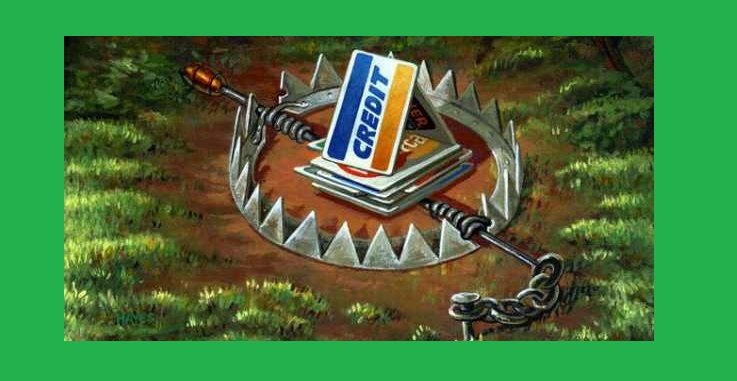
@CNNMoney @CNN @blakeellis3 We know not to be caught in the credit card trap. Only use it as a cash replacement card, not for debt.

Roger Bustos ‏@rogerbgom 13h

@CNNMoney @blakeellis3 like a smart wallet just pass the wallet and charge from your credit or debit just pick with your phone….

BrokenHearted ‏@patientfailure 12h

@CNNMoney @CNN @blakeellis3 Stupid. You’re spending decisions should never change based on your form of payment.

Patrick B ‏@sportbikeguy00 12h

@CNNMoney @CNN @blakeellis3 Credit & debts of any kind should be avoided,my motto is if you can’t pay cash for it,save up or forget it.

mizo ‏@bemelmesre 12h

@CNNMoney @CNN @blakeellis3 Never used a credit card in my life. Only used credit for commercial purposes.

victor ‏@victor_de64 11h

@CNNMoney @CNN @blakeellis3 I’m a baby boomer and cut all mine 19 years ago and never missed them

CynicalPolitico ‏@IndyinTX31 11h

@CNNMoney: Millennials are saying no to credit cards: http://cnnmon.ie/1uFOSGl  via @blakeellis3 pic.twitter.com/sAw87n1GDt”()

FatNoMore™ Fitness ‏@FNM_Fitness 10h

@CNNMoney @blakeellis3 Either buy cast or use paypal. Credit cards are just a disaster waiting to happen #ParentWillAgree

Andrew Smith ‏@iSmitty12 10h

@DaveRamsey thoughts? “@CNNMoney: Millennials are saying no to credit cards: http://cnnmon.ie/1uFOSGl  via @blakeellis3 pic.twitter.com/kcL0lgMyzP

Yvonne Moedt ‏@YvonneMoedt 9h

@CNNMoney That’s great!! You never know what’s left or how big your debt is and will never get out once you start. Real paper money #future

Declan Martens ‏@DeclanMartens 9h

@CNNMoney @blakeellis3 hey that’s us! @Malicious_Tea

Zbolts ‏@zbolts 9h

They use mom/dad?! “@CNNMoney: Millennials are saying no to credit cards: http://cnnmon.ie/1uFOSGl  via @blakeellis3 pic.twitter.com/f1jlE2zlAq

HogsAteMySister ‏@hogsatemysister 9h

@CNNMoney @blakeellis3 Which is easy to do when you still live at home…

Websterwall ‏@Websterwall 8h

@CNNMoney @blakeellis3 It’s true. No card for me. Living within my means

The Epitomy Of An ‏@ErnieBlanco63 8h

@CNNMoney With the job market being so rocky it’s a smart move.

Stephen Cefalu ‏@Scef2308 7h

@CNNMoney @CNN @blakeellis3 they don’t know how to use a CC to maximize the rewards and cash back. Learn how to use credit.

Jay Brausch ‏@BigDogStar 7h

@CNNMoney @CNN @blakeellis3 One of the smartest things of the new millennium that they can do.

KC Simbeck ‏@kc_simbeck 6h

@CNNMoney I’d like to not have a credit card. But it’s pretty much required for building credit.

Liesel Rickert ‏@le_rickert3 6h

Ive been wanting 1, but can’t decided bc of 2 factors here RT “@CNNMoney: Millennials are saying no to credit cards: http://cnnmon.ie/1uFOSGl 


CNBC’s “Secret Lives of the Super Rich”

Secret Lives Of The Super Rich

CNBC’s half-hour primetime series “Secret Lives of the Super Rich,” premiered Tuesday, June 10th at 10PM & hour episodes began airing each Tuesday for four consecutive weeks.

Reported by CNBC’s Robert Frank and featuring New York City super broker Dolly Lenz, “Secret Lives of the Super Rich” unlocks the mansion gates and gives you rare access to a world inhabited by the wealthiest people on the planet. Here’s a sneak peek courtesy of The Silo:
http://video.cnbc.com/gallery/?video=3000236913.

Dolly Lenz
Dolly Lenz

In the first episode, we met a man who’s taken his lifelong Lamborghini obsession from land to water. Also, “Secret Lives of the Super Rich” gets a rare invite on a luxury safari where there’s no shortage of wild life, or champagne. And, an exclusive look inside a Star Trek mega-mansion that may have you wondering if it’s actually the Starship Enterprise (video: http://www.cnbc.com/id/101735785 also see Star Trek Home Theater profiled here at the Silo: https://www.thesilo.ca/beam-me-up-35000000-usd-home-theater-for-sale-in-boca-raton/)


Dover Cheese Shop

How To Start Blogging With Plastic Deerheads And Ironic Moustaches

The trendy and kitschy Owl. images/photos: Charity Blaine

Blog writers are like Indie music that’s about to become “cool”, or rather, they are the people that enjoy the Indie music before it’s “cool”, in fact, they are most likely part of the reason it eventually becomes popular. Only it’s not just music. It’s everything. Lifestyle bloggers like EVERYTHING before it’s cool. Therefore, I, as a blog reader, know about everything cool before it is cool. I, am a blog world hipster, and I’m only partly ashamed to admit it.

To clarify, it’s not just the blogs themselves that set the trends; it’s also the only shops where bloggers sell their handmade goods, such as etsy.com. Years ago, I remember searching for kitschy little polymer clay earrings shaped like foods at etsy, today, when I no longer want them, they are available for a fraction of the price at popular stores such as Clare’s and Arden’s, although truthfully, they do look cheaper. The handmade versions look more like real food than the store bought versions.  You should never believe anything that doesn’t come with proof, so here are three substantial examples of bloggers, not retailers, setting the trends.


1)      Owls. I really hate owls. I don’t think they’re cute. I don’t understand the obsession at all, but so many places these days sell things adorned with owls. Don’t get me wrong, I realize that owls were popular years ago, but this is a reference to the current owl obsession. Forever21.com  and http://verified.codes/Forever-21 sells more than a dozen owl accessories so does Clare’s. Where did I first see an obsession with owls? In the blog world, for example, blogger Elycia Watson (loveelycia.com) from Hamilton, Ontario posted regularly about owls more than three years ago. All the blogs I initially read as a blogger were full of owls.


geometrics


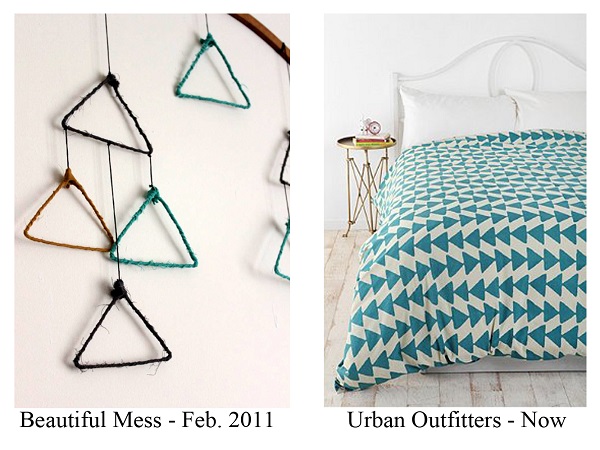
2)      Geometric Shapes. Bloggers love chevrons, triangles, lines, squares, any simple shape that can be coloured pink or gold. This isn’t the best example, but two years ago, the Sidney Crosby  of blogs, A Beautiful Mess, did a ‘do- it –yourself’ project “making a geometric mobile”. It’s a clothes hanger with dangling wire triangles wrapped in yarn, basic and geometric. Most of the bedding at Urban Outfitters these days is adorned with chevrons and triangles. This also points to the ‘do- it- yourself’ trend. These crafty women have been doing it yourself way before pinterest made it popular. To sound even more hipster, I remember when pinterest first started, in those days, there were no weight loss schemes or a surplus of one direction photos, it really was mostly crafts and home décor, and bloggers used it to find inspiration for new blog posts. I love pinterest, so thanks again bloggers for being cool before it was cool.


deer heads


3)      Since I’ve already given four substantial examples I don’t really need a number 3, but just in case you still doubt, take a look at Faux Deer Head for your wall. Flipping through a home décor magazine lately, I found a photo of a plaster deer head, in the style of the mounted, taxidermy deer head that hunters would have on their walls. Currently, even Home Hardware sells them. Bloggers have been doing this for years. They even use old piñata heads. They give the deer head hats and jewelery. The Dainty Squid was one of the first places I really remember seeing this phenomenon. Kayla found a plastic deer head more than 3 years ago, plopped a wig on its head and called it beautiful.

So the conclusion is- if you really want to be ahead of the wave, read blogs, small, crafty, lifestyle blogs. By the time any of that stuff hits the mainstream, you’ll be really sick of it and you can officially embrace your inner hipster and tell everyone, while sporting an ironic moustache, that you liked all those things, including ironic moustaches, before they were cool.  For the Silo, Charity Blaine.  

Supplemental- Street Trends: How Today’s Alternate Youth Cultures Are  Creating Tomorrow’s Mainstream http://www.amazon.com/books/dp/0887308759

A 3D printer Photo Booth prints miniature versions of you http://tinyurl.com/mkw924 


Law Firms Should Nurture A Culture For Growth Factor

Hillel pic Web

There’s a strong correlation between the growth of a law firm and the strength of its culture, according to a new survey published in February’s ABA Journal.

The most successful mid-sized firms are those that put a high value on their culture – how they do business and the written and unwritten rules for behavior, according to the survey conducted by TAGLaw and the Center for the Study of the Legal Profession.

“Firms in which everyone plays by the rules and values dictated by the leadership are more successful in part because, whether they realize it or not, they’re branding themselves,” says Hillel L. Presser, Esq., MBA, author of a new book, “The Lawyers Law of Attraction: Marketing Outside the Box But Inside the Law,” (www.lawyermarketingllc.com).

Branding – developing a unique, distinctive and consistent image — is vital for any lawyer hoping to stand out from the competition, Presser says.

It’s even more important to distinguish oneself in today’s post-Recession economy. Demand for legal services, revenues and rates have all dropped significantly since the Recession began in December 2007, according to a 2013 advisory by Hildebrandt Consulting and Citi Bank.

“The compound annual growth rate for revenues in the legal market was 9.8 percent leading into the Recession. From 2008 to 2012, it was 0.8 percent,” Presser says.  So how does a law firm – or an individual lawyer – develop a brand?

“In a firm, if you have a strong culture, start by giving it a closer look. What values define your culture? What rules govern interactions with clients? Do you have a collaborative team approach or independent individualistic lawyers?” he asks. “All of these answers will help you define your brand.”


Presser Book Cover Web


If you’re an individual lawyer, you are your brand. Your personality, your look, how you present your practice all contribute to your brand identity. To build a successful, strong brand, you need to be sure these things convey what you want them to – and more important, appeal to your market.

Presser offers these tips for building your brand:

• Identify your personality, your specialty and your target market: These form the basis of your brand and it’s important for all three to work well together. Presser defines his personality as “an innovator and educator who’s very social and very serious about financial protection.” His specialty is asset protection, and his target audience is all individuals with money, property or other assets that are not secured in the best way.

• Decide what will appeal to that target audience: If you already have clients, look for what they have in common – it will say a lot about what they value and, hence, what appeals to them. Everything from the clothes they wear to the cars they drive to the information they share about themselves offer clues to what they value. Maybe it’s reliability. Non-conformity. Social status.  Solid quality. Is that who you are? If so, make sure it’s reflected in your brand.

• Think about what makes you different from your competition. From soda companies to athletic apparel manufacturers, every industry includes rivals selling the same products. Through branding, they distinguish themselves to appeal to their target audience – to set themselves apart. What makes you different from other divorce, criminal defense or corporate attorneys? How does that fit in with your personality, specialty and target market?

• Look for ways to incorporate your personality into your practice.Everything from the furnishings in your office to the clothes you wear to your business card and website should incorporate the personality and values you want to convey. If the tone of the copy on your website is casual and light-hearted and you want your brand to say old-fashioned hard work and reliability, you need to have the copy rewritten.

Your brand will be the foundation for your marketing, so take the time necessary to ensure all of the elements work in harmony, Presser says.

“You don’t have to be everything to everyone – you can’t be,” he says. “So focus on your niche audience and what’s important to them as well as what’s important to you. It will make you more successful both in setting yourself apart and attracting the types of clients you want to attract.”

About Hillel L. Presser, Esq., MBA

Hillel L. Presser is the owner of Lawyer Marketing LLC, a company dedicated to helping lawyers effectively market their practices. He’s also the founder of The Presser Law Firm, P.A., representing individuals and businesses in establishing comprehensive asset protection plans. He is a graduate of Syracuse University’s School of Management and Nova Southeastern University’s law school, and serves on Nova’s President’s Advisory Council. He also serves on the boards of several non-profit organizations for his professional athlete clients. He is a former adjunct faculty member of law at Lynn University. For the Silo, Ginny Grimsley.

 

Ontario’s Greens ask MPP’s to support dedicated transit funding


GPOTransit


(Toronto) – GPO leader Mike Schreiner is criticizing the NDP for hurting the economy and environment by refusing to support dedicated revenue tools to fund public transit.    “NDP leader Andrea Horwath sounds like Rob Ford when it comes to funding public transit,” says GPO leader Mike Schreiner.

“Ontario’s economy will grind to a halt if we don’t reduce gridlock with dedicated revenue for public transit.”  

Gridlock costs the GTHA economy $6 billion per year in lost productivity. If the status quo doesn’t change, gridlock will cost the economy $15 billion per year. Congestion hurts our health, environment and takes time away from family and community.   

The GPO is calling on MPPs in the minority legislature to support dedicated funding for transit.    “We need to be realistic about funding public transit,” adds Schreiner. “People are tired of being stuck in traffic. They understand that we can’t afford transit improvements without new revenue. It’s unfortunate the NDP is standing in the way of better public transit for those who need it most.”  

 “The NDP are wasting the opportunity they have in the minority legislature to leave a great legacy for ours and our kids’ future by funding world-class transit across the province,” adds Schreiner. “We need to change direction in transportation planning, and we need to be realistic about funding. Wishful thinking won’t fund transit.”  

Ontario can’t afford to let gridlock continue. Better transit benefits everyone. It means less congestion, fewer accidents and less pollution. For the Silo, Becky Smit

Liberals: Ontario remains on track to eliminate deficit by 2017-18

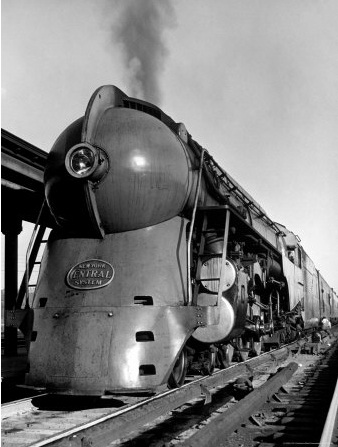
“20th Century Limited Train on Tracks” by Alfred Eisenstaedt

The deficit projection for the current fiscal year has improved by more than $400 million from the 2012 Budget forecast to $14.4 billion. The province remains on track to meet the 2012 Budget deficit targets in 2013-14 and 2014–15 and for the deficit to be eliminated by 2017–18.

Ontario is projecting growth in real gross domestic product (GDP) of 2.0 per cent in 2012, 1.9 per cent in 2013, 2.3 per cent in 2014 and 2.4 per cent in 2015.

As of September 2012, Ontario employment was 356,000 net new jobs above its recessionary low in June 2009. Ontario is expected to create nearly 350,000 net new jobs by 2015, reducing the unemployment rate to 6.8 per cent from a high of 9.4 per cent in June 2009.

The fiscal plan provides no funding for incremental compensation increases for new collective agreements. The government is currently consulting on draft legislation that proposes to freeze compensation for executives and managers across the Ontario Public Service, and the Broader Public Sector (BPS) who are eligible for performance pay. It also proposes to ensure future BPS collective agreements are consistent with the province’s goals to eliminate the deficit and protect jobs and public services. The proposed draft legislation would support avoiding increased spending in the BPS of $2.8 billion over three years and help to protect roughly 55,000 public sector jobs.

QUOTE

“Despite ongoing global economic uncertainty, Ontario is ahead of its targets for lowering the deficit for the fourth year in a row. We will work with anyone who is willing to work with us to meet the objectives of eliminating the deficit and protecting jobs and public services.”
— Dwight Duncan, Minister of Finance

QUICK FACTS

• The 2012–13 revenue projection of $113,019 million is $445 million above the 2012 Budget outlook, largely reflecting a higher estimated 2011–12 tax base. Consistent with the government’s continued effort toward managing the growth in expenses, total expense for 2012–13 has decreased by $3.7 million compared to the 2012 Budget plan.

• Robust business capital investment, a rebound in net trade and increased consumer spending will be key contributors to growth. Over the past two years, business investment spending on plant and equipment has risen by more than 22 per cent, or
$11.1 billion.

• In the 2011–2012 Public Accounts of Ontario, the government announced the deficit for 2011–12 was $13.0 billion, marking the third consecutive year in which the province has improved on its fiscal projections. This result is also 47 per cent lower than the 2009–10 deficit of $24.7 billion forecast in the fall of 2009, at the depth of the global recession.

• The government has brought together business, labour and public sector leaders to form the Jobs and Prosperity Council. Reporting to the Premier, and headed by RBC President and CEO Gordon Nixon, the council will explore additional opportunities in the next few months for a path to sustainable growth that will also help inform the 2013 Ontario Budget.
• The 2012 Budget extended the pay freeze for MPPs by a further two years — for a total of five years.

LEARN MORE

Read Ontario’s Mid-Year Update on Economic and Fiscal Performance for 2012–13.

Read the Ontario Economic Accounts — Second Quarter of 2012

Read a Long Term Plan for Public Sector Compensation.

Read the McGuinty government’s announcement on freezing salaries for Ontario Public Service Managers.

Read the 2012 Ontario Budget.

Read about the strong actions the McGuinty government took in the 2012 Budget to reduce the deficit further.

Read the

Addendum to the 2012 Ontario Budget: Report on Expense Management Measures.

.

www.ontario.ca/finance-news
Disponible en français

Reflecting On Baumgartner’s Free Fall Attempt From The Edge Of Space

Tune in here on Tuesday October 9th and watch Felix Baumgartner make his record freefall attempt.

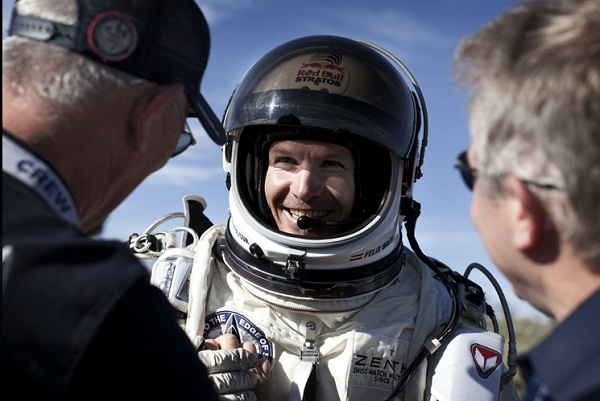
It’s October 5, 2012 and Felix Baumgartner is about to smash the 50+ year old free fall height record and break the sound barrier along the way.

Using a lighter-than-air balloon for the ascent stage, Baumgartner will float above Roswell, New Mexico, USA  to the edge of space and then open the door of his pressurized capsule. It will be one small step for a man, and one giant fall for Felix and one giant marketing coup for RedBull.

When I was a fellow at the Canadian Film Centre’s New Media Lab  in 2009, I was asked to make three predictions about future ‘real-life’ trends. Near the top of my list was increasingly ‘extreme’ extreme sports. I think I have gotten that one right, and if you’d like to know what the other two were drop me an email.  With each leap in technology, mankind has been able to attempt more extreme feats. Technology has allowed us, the viewer, to live directly through real life participants much more vicariously than ever before, and mainstream virtual reality is just around the corner.  Like a feedback loop, technology pushes the boundaries of what the human mind can conceive and what the human body can accomplish. Symbiotically, as we achieve more and more incredible feats, technology is utilized to not only showcase these feats but to instill an empowerment. More on this later….

In the early decades of the last century, extreme sports included seemingly placid activities when viewed with today’s sensibilities.  Consider these examples: crossing the English Channel by airplane, modifying an automobile with solid rockets to reach a speed of 100 miles per hour, diving into the sea from a height of one hundred feet. In their allotted place in time, these activities were considered to be incredibly extreme and borderline committable.

Technology at that time meant that in order for a viewer to share in the participant’s experience, the viewer needed to read about the event in the newspaper, listen to the event on the radio or visit the event in person. This was a time of great internal imagination as methods and technologies in play were mystical and were not an everyday occurrence in those viewers lives. That being said, the crossing of the English Channel by airplane and other flights of fancy were made possible due to “magical signals traveling through the ether”.  Aka: wireless radio technology.  A pilot was now able to fly by honing in on radio signals. This same technology was used to broadcast news of the flight and this connectedness via the same technology  may not be symbiosis in the traditional ecological sense but is most certainly a form of  extreme mutualism. (Spinoza’s Theory of Imagination says essentially the same thing in his Extended Pattern Preservation Doctrine: The persistence of an individual [replace ‘individual’ with ‘same technology’] through time consists not in the sameness of underlying substance but, insofar as it is conceived through extension, in the persistence of a distinctive pattern of communication among moving parts. *

Our era  is markedly different.

It is one of internal and external  imagination. When Felix Baumgartner rides to the edge of space, we get to ride with him. We can watch a live stream of his progress, observe his ‘vital stats’: real-time mission statistics by watching the graphics on our smart device. We can hear the banter between mission control and Felix. We are in effect Felix Baumgartner’s mute passenger.  (We will be hosting the LIVE feed right here in this post at the window below. UPDATE due to high winds today’s rescheduled attempt has been postponed until further notice. Check #freefall on Twitter for latest updates. )

This is a much more immediate and virtual form of reality and the excitement is compounded by our anxiety and our sense of power.

We sense our power because we have the very same technology that makes this attempt possible.  If you happen to be a regular watcher of a reality television show involving a performance and a smartphone voting system you are essentially experiencing an empowerment.  You hold in your hands an actual component of the program and take part in a communal experience.  This is not just “must see t.v.”, this is  “must do t.v.”

“Fearless” Felix

Much like NASA and the current MARS mission,  Baumgartner’s team and sponsor Redbull have come to understand the necessity for hype and sensationalism in order to draw attention to their work and secure future projects. If no bucks=no Buck Rogers, then no Buck Rogers= no bucks.

Gemini and Apollo astronaut Gus Grissom. RIP Gus.

Really though, it’s not an economic strategy that I wish to point out here.

It’s the potential for an economic strategy, the potential for a social strategy, the potential for an emotional strategy and in fact all the potential strategies that our digital age has room for. Extreme human activities are by their very nature extremely emotional. They connect with us on a deep rooted, conscious and subconscious level. It’s like a modern incarnation of the primitive hunt or the ancient journey.

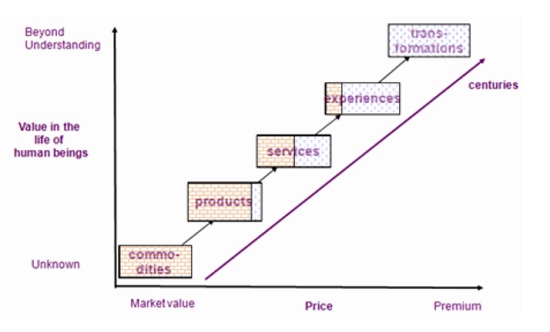
The development of economy and a look at where experience currently influences commerce.

If you choose to experience Felix Baumgartner’s highest free fall record attempt live on your smart device or project it into your living room like we are planning on doing here at the Silo office- you will be transformed on some level. (In the marketing and advertising world this is known as Pine and Gilmore’s Experience Economy.) That’s probably due to the fact that the natural environment, though beautiful, is incredibly dangerous and deadly and throughout our development as we have come to dominate this planet, we have developed and conquered by using technology. Is it incredulous to suggest that by using our smart device to experience these dangerous feats, we are in fact celebrating mankind’s conquering of danger and nature through technology? The very technology that we now hold in our hands? For the Silo, Jarrod Barker.

* Representation and Consciousness in Spinoza’s Naturalistic Theory of the Imagination, D. Garrett, New York University