“I hid a sandwich in my spacesuit,” Astronaut John W. Young confessed in the April 2, 1965, issue of Life Magazine. The conversation about and the consumption of the sandwich, which lasted only about 30 seconds during the Gemini III flight, became a serious matter that drew the ire of Congress and NASA’s administrator after the crew returned home. Congress was particularly upset and brought the matter to leadership’s attention at hearings about NASA’s 1966 budget. Representative George E. Shipley was especially disgusted, knowing how much money and time NASA had spent to prepare the Gemini III spacecraft for launch. The fact that a crewmember brought something into the crew cabin, which Shipley likened to a “surgeon’s operating room,” put the techniques used to prevent a spaceflight mission from failing at risk; crumbs could have made their way behind instrument panels interfering with the operation of flight equipment and the loss of the mission and its crew. Shipley called Young’s antics “foolish” and asked NASA leaders to share their thoughts.
A Beef with Corned Beef
George Mueller, associate administrator for Manned Space Flight, stated unequivocally that the agency did not “approve [of] unauthorized objects such as sandwiches going on board the spacecraft.” And he promised Shipley that NASA has “taken steps, obviously, to prevent recurrence of corned beef sandwiches in future flights. There was no detriment to the experimental program that was carried on, nor was there any detriment to the actual carrying out of the mission because of the ingestion of the sandwich.” Manned Spacecraft Center Director Robert R. Gilruth was more forgiving of Young’s decision. These sort of antics, he told the committee, helped the crews to “break up the strain” of spaceflight, and he hesitated “to be too strict in the future by laying down a lot of rules for men who have this responsibility and who, in all the flights so far, have done such good jobs.” Webb disagreed and said, “this is the United States of America’s space program and, as a matter of policy, we are not going to permit individuals to superimpose their judgment as to what is going to be taken on these flights. I think it is fine for Dr. Gilruth to take a very strong position with respect to the individuality of these men, but from those of us who have to look at the totality of the matter, this was not an adequate performance by an astronaut.”
The loss of a Gemini mission, especially one so early in the program, would have been particularly challenging for an agency attempting to land humans on the Moon where each mission built on the previous flight. The United States was in a race with the Soviet Union, and for Congress at least, the purpose of Gemini and the cost of the space program was far too serious for these sorts of fun and games. For NASA Administrator James Webb, it was a sign that Gilruth was too lax when it came to managing his astronauts. Gemini III was just one example of the lack of control he noticed, and he pressed Gilruth for a report on the sandwich incident to determine if Young should be disciplined or at the very least reprimanded.
The In-Flight Meal
Young hatched the idea during training, when his commander, Virgil I. “Gus” Grissom grew “bored” with the food they practiced with for the mission. Grissom regularly complained about the dehydrated “delicacies” food scientists concocted. Bringing a sandwich onboard, an item that was freshly made and did not have to be rehydrated, “seemed like a fun idea at the time” to Young.

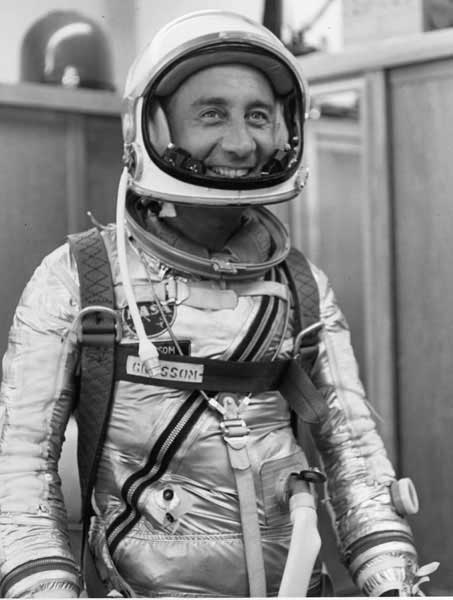
Astronauts Gus Grissom (foreground), command pilot; and John Young, pilot, are shown inside their Gemini III spacecraft as they prepared for their launch from Cape Kennedy, Florida, on March 23, 1965.
NASA
One of the goals of their flight was to evaluate NASA’s flight food packaging and whether the containers leaked when foods were reconstituted, as well as the procedures for disposing of the meal and its packaging after eating. Foods included rehydratable items such as chicken bites, applesauce, or drinks, and compressed foods such as brownie bites. The Gemini food system was not haute cuisine, however, and crews complained about its taste. Young described the chicken bites as “barely edible” in his post-flight debriefing. Don L. Lind, a scientist-astronaut selected in 1967, described the early Gemini food as “strange.” Their class took some to jungle survival training in Panama, and while no one wanted to eat it on the first two days, by the third day they were so hungry that they were willing to give it a try. Another problem was that all rehydrated meals for Gemini were mixed with cold water, which made them less appetizing than a hot meal.
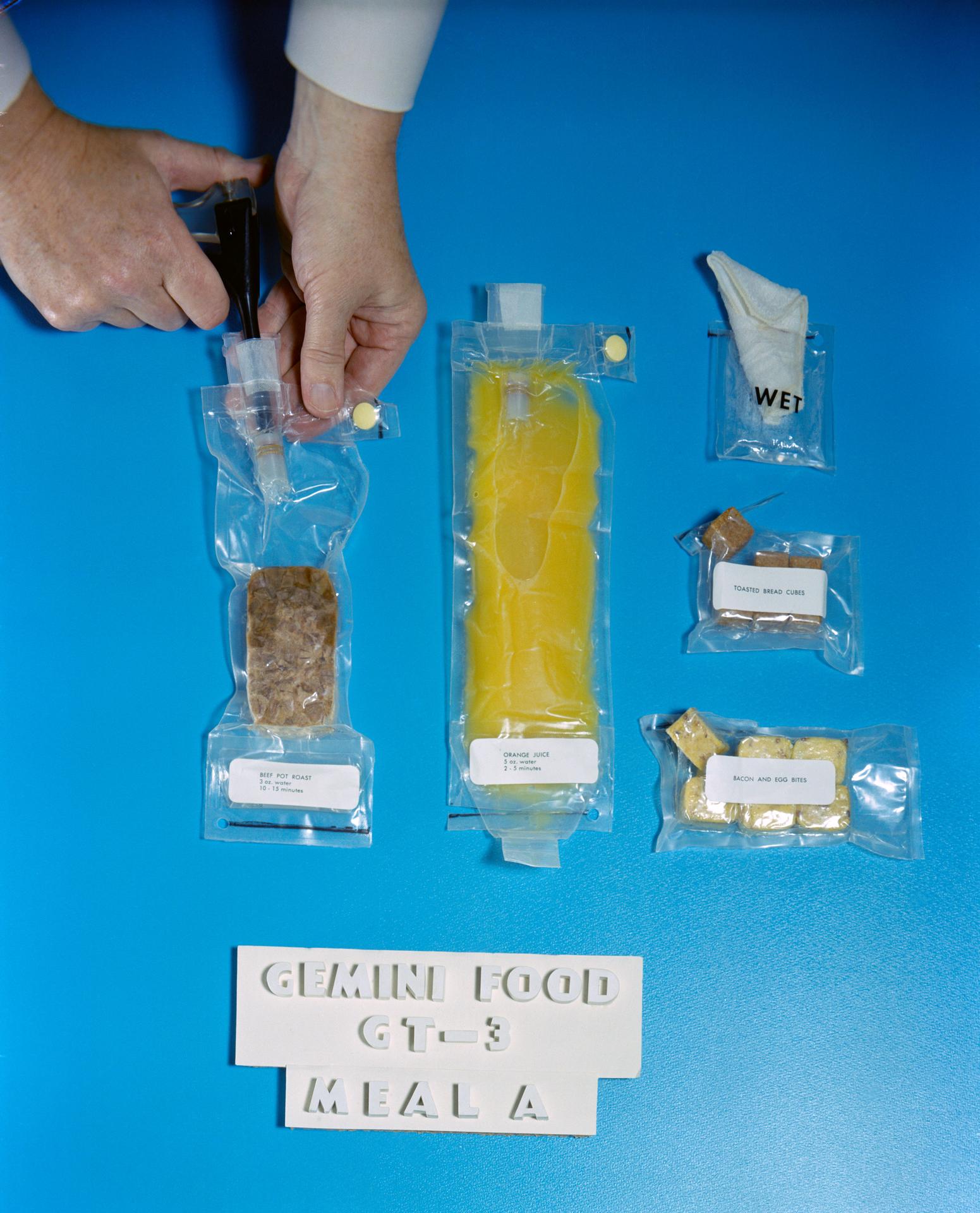
Food packets planned for the Gemini III flight, including dehydrated beef pot roast, bacon and egg bites, toasted bread cubes, orange juice and a wet wipe. The astronaut’s method for rehydrating a pouch of dehydrated food with water is shown in the top left.
Locally Made Corn Beef Sandwich
A freshly made corned beef sandwich made at a local restaurant sounded like a better option, so Young had fellow astronaut and backup command pilot Walter M. “Wally” Schirra pick one up. Schirra purchased the sandwich for Young, and as he headed out to the launchpad, Young put it in the pocket of his pressure suit.
Nearly two hours into the flight, as Young started his food and waste evaluation, he pulled out the sandwich from his suit and offered it to his commander. As captured on the air-to-ground recordings, Grissom asked what it was and where it came from. “I brought it with me,” Young responded, “Let’s see how it tastes.” He didn’t expect the sandwich to be so pungent, “Smells, doesn’t it?” Grissom took a bite but found the rye crumbled so he placed the sandwich in his suit pocket to prevent the crumbs from floating about the cabin.
Where did that come from?
Gus Grissom
Gemini III Commander
Two days later, nearly a thousand members of the media from the United States and around the world gathered to hear from the crew and NASA management at the postflight press conference at the Carriage House Motel in Cocoa Beach, Florida. Space reporter Bill Hines asked Young about the sandwich, erroneously referring to it as a “baloney sandwich,” and what happened when Gus was offered a taste. “And,” he asked, “what became of the sandwich?” Young seemed surprised, “How did you find out about that?” and then laughed adding Grissom “ate the sandwich.”
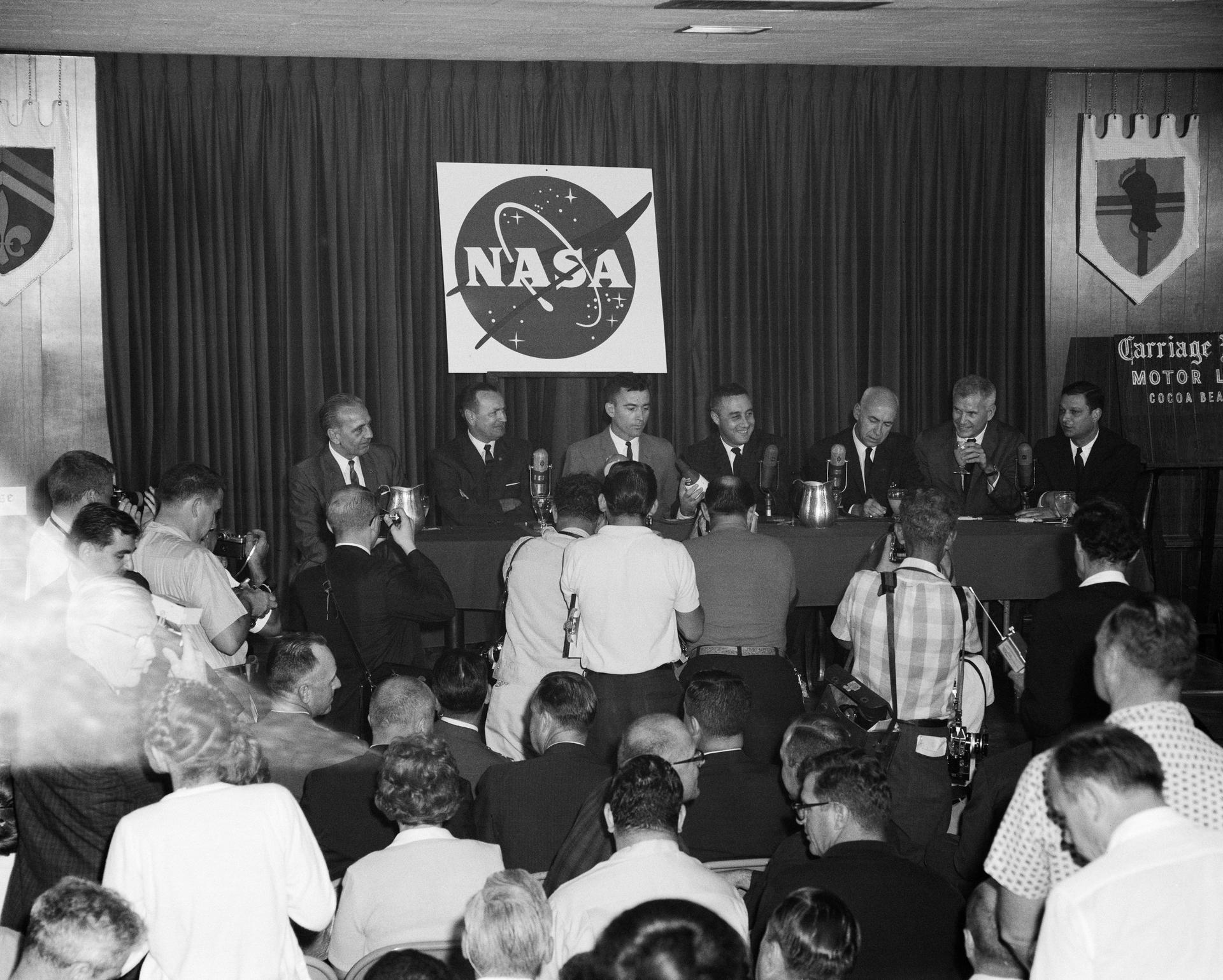
John Young and Gus Grissom speak with the press about the Gemini III mission during a news conference at the Carriage House Motel in Florida. Behind the table, left to right, are Dr. Kurt H. Debus, director of Kennedy Space Center, Christopher C. Kraft, Jr., MSC assistant director for Flight Operations, astronauts John Young and Gus Grissom, Dr. Robert R. Gilruth, MSC director, Dr. Robert C. Seamans, NASA associate administrator, and Julian Scheer, assistant administrator for NASA’s Office of Public Affairs.
Carry-on Restrictions for Spaceflights
Ironically the Gemini Program offered astronauts more control over their flights than during Project Mercury, including the ability to maneuver their spacecraft and to be more independent from Mission Control; but the uproar over this event led NASA to draft rules about what astronauts could and could not take onboard a spacecraft. Starting with Gemini IV, flight crews had to present a list of items they planned to take on their missions. Prohibited items naturally included sandwiches as well as bulky or heavy items or metal that could negatively impact the operation of spacecraft equipment. (NASA still allowed astronauts to take personal items such as wedding bands or coins for families and friends in their personal preference kit.)
Young never received a formal reprimand for the incident but was made aware of Congress’s frustration. Others in the corps were advised to avoid similar stunts and to focus on the mission. The decision to bring a sandwich onboard did not have a negative impact on Young’s career. He was the first astronaut to fly to space six times —two Gemini missions; two Apollo missions, including the dress rehearsal for the first lunar landing; and two space shuttle missions including STS-1, known as the bravest test flight in history. He also served as chief of the Astronaut Office for 13 years.
For the Silo,
Jennifer Ross-Nazzal. NASA Human Spaceflight Historian
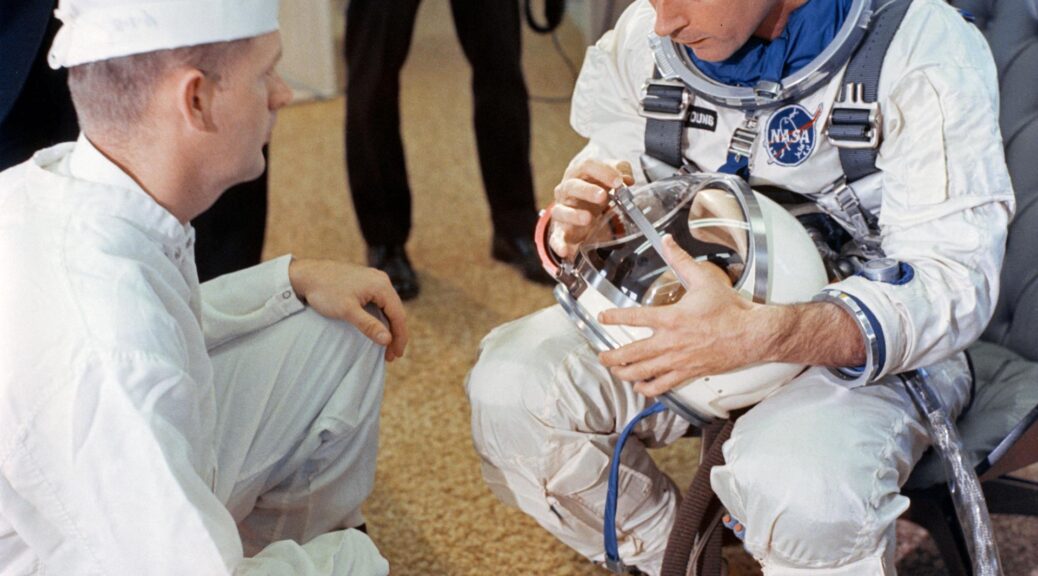
Featured image- Astronaut John W. Young, the pilot for Gemini III, checks over his helmet prior to flight. Credits: NASA