Tag Archives: art

MODERNISM ADORED: 20th Century Art A New Online Exhibition Now Open

“Art cannot be modern. Art is primordially eternal.” Egon Schiele 

New York City, New York, April 2024. Our friends at Helicline Fine Art proudly announces the opening of its new online exhibition, Modernism Adored: 20th Century Art, a celebration of the revolutionary artistic movements that defined the 20th century. The exhibition runs through June 30 and features a curated selection of paintings, drawings and sculptures from important to rediscovered artists, Modernism Adored explores essential movements that shaped the artistic landscape during the 20th century from ashcan, cubism, art deco, Vorticism, WPA, abstraction, abstract expressionism, caricature and outsider art. It brings together a diverse range of artwork that reflects the spirit of innovation and creativity that defined these pivotal periods in art history. As we are a NYC based gallery, the history of New York inspires us to include art that glorifies our great city.

“We are thrilled to present Modernism Adored: 20th Century Art. This is stuff in our hearts and we are honored to share it with collectors and curators throughout America and worldwide,” said Helicline proprietors Keith Sherman and Roy Goldberg. They continued, “This exhibition is our “eye,” it exemplifies the enduring impact of modernism in art and provides a unique opportunity to witness the evolution of artistic expression over the course of the 20th century.” 

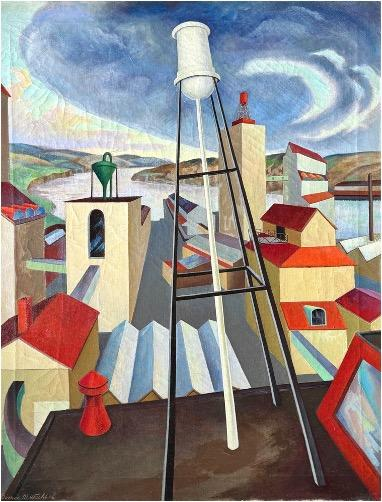
Highlights of Modernism Adored: 20th Century Art include three early Stuart Davis drawings, Vorticist linocuts by Sybil Andrews and Lill TschudiMaurice Guiraud-Riviere’s breathtaking “La Comete” silvered bronze, several works by Al Hirschfeld, abstracts by Florence Henri and O. Louis Guglielmi, a Charles Demuth drawing of bathers, an early Daniel Celentano oil, a precisionist industrial scene by Simon Wachtel, and much more. 

Artists in the exhibition include: Sybil Andrews, Maurice Becker, A. Aubrey Bodine, Jo Cain, Staats Cotsworth, Daniel Celentano, Robert Cronbach, James Daugherty, Stuart Davis, Charles Demuth, Donald Deskey, George Pearse Ennis, William Gropper, O. Louis Guglielmi, Harold Haydon, Florence Henri, Al Hirschfeld, Mervyn Jules, Max Kalish, William Kienbusch, Georgina Klitgaard, Henry Koerner, Leon Kroll, Vladimir Lebedev, Carlos Lopez, James McCracken, Alfred Mira, Irene Rice Periera, Antonio Petruccelli, Arthur Rosenman Ross, Hilla Rebay, Maurice Guiraud-Riviere, Joseph Solman, Lill Tschudi, Gerrit Van Sinclair, Samuel Wachtel, Katherine Wiggins, John Winters and Purvis Young. 
Florence Henri (1893 – 1982)Composition18 ½ x 12 ½ inchesGouache on paper Monogrammed F.H. and dated 1926 lower rightGeorge Pearse Ennis (1884 – 1936)Forging a Gun Tube #146 x 37 inches, 1918 Signed lower right
There is great debate about what modern art is.
Numerous descriptions abound. It is a series of genres from the mid-19th century to the present that challenged the Western standards of fine art and embraced new forms of expression. It is often seen as beginning with realism, which rejected the traditional subjects of art and focused on common people. 

Others say modernism was a movement in the arts in the first half of the 20th Century that rejected traditional values and techniques and emphasized the importance of individual experience. A broader perspective, which we at Helicline embrace, modernism was a break with the past and the concurrent search for new forms of expression. It is in fact, constant reinvention, and it’s significant because it fundamentally asks us to change our perspectives as time passes.  

“The strangeness will wear off and I think we will discover the deeper meaning in modern art.”  Jackson Pollock
Daniel Ralph Celantano (1902-1980)Long Beach8 x 10 inchesOil on artist boardSigned lower leftTitled in pencil, versoHarold Haydon (1909 – 1994)History of the US Postal Service21 x 25 inchesoil on canvas, c. 1938

Why Modern Art Continues To Influence Contemporary Artists

The 20th century distinguished itself from the previous century with a new form of industrial revolution- one tied much more intimately to an advancing technology that propelled society into a state of speed and frenzy. Not just the streamlining of railway trains and automobiles or the advancements in transcontinental travel brought on by first lighter than airships, then seaplanes and jet airliners- the motion of advancement and relocation had a seminal effect on culture and thought. The skyscraper and new vertical constructions created its own influence and metamorphosis: hundreds of families could now be housed in a singular structure adding a homogeneity and imposing bold linear designs and influences. Two world wars and a multitude of others pushed existentialism into the minds of many academics and thus filtered into other areas of discipline such as literature, music and design. The development of the transistor created miniaturization and gadgetry that became an essential component to living spaces and personal effects. Television became a manifestation of any imaginable visual image and transfixed society into another state of readiness- a state ready for instant and dense media served quickly and directly. All of these things (and more) gave rise to new forms of art- most often recognized by the general public in modern abstract paintings. The ‘sense’ of all the above was captured by artists using new ways of communicating through their work: immediacy (action painting) and abstraction were more aligned with the zeitgeist then earlier classical forms of artwork.
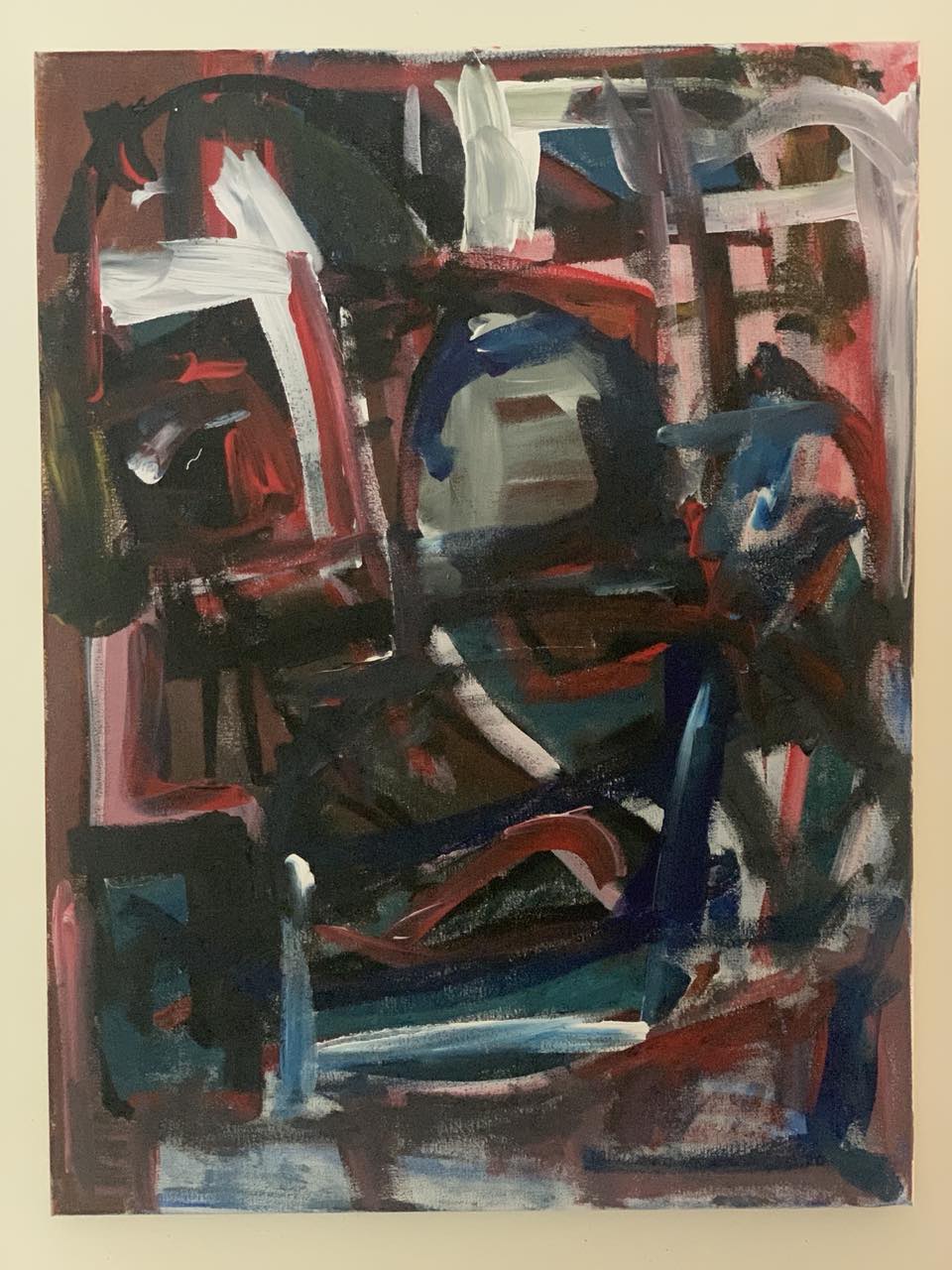
Untitled abstract 11 Jarrod Barker 2024

The 21st century has seen many parallel and analogous developments. Though we are ‘only 24 years’ into this latest age, the concept of quick advancement and speed is in full effect. From the maturation of the digital age (the internet) and digital communication (email) to rapidly advancing personal communication (smartphones) and powerful and inexpensive computers to today’s exhilarating advancements in AI (artificial intelligence) and robotics. These ‘re-mapped’ and repeated driving forces from the last century continue and their effects most readily recognized are still key components of contemporary ‘neo-modern’ artwork.

MORE ABOUT HELICLINE FINE ART:
Helicline Fine Art, founded in 2008 by Roy Goldberg and Keith Sherman, specializes in American and European modernism. The gallery’s core offerings are works from the WPA period. Additionally, Helicline offers American scene, social realism, mural studies, industrial landscapes, regionalism, abstracts, and other artwork. Located in a private space in midtown Manhattan, Helicline is open by appointment. The artworks on the site represent a sampling of available works. Helicline’s offerings are also available on artsy.net and 1stDibs.com.
Caption for image at the top of this article: Simon Wachtel (1900 – 1965)Factory Yards N. 336 x 24 inchesOil on canvas, c.1930s Signed lower right

A New Poetic Role Of Technology In Our Homes

Digital Domestic Dialogues 

Digital Domestic Dialogues” stages a near future in which technology has acquired an emotional and sensitive intelligence: it is capable of exciting itself and others through everyday gestures as an analog and primordial archive of human communication, culture and social dynamics. 

Robots and users interact with a range of seemingly familiar objects through simple and natural gestures, triggering scenarios of everyday wonder. The collection, born out of a design exploration within the Habits Design Studio team, is a reflection on the poetic role of technology in the digital evolution of the domestic scenario.  Technical Partners: Laminam, Giovanardi 

COSMO 

“Cosmo” is a lamp born from the desire to infuse new life into the act of lighting; the idea is to return to the primordial concept of fire, which through propagating from one body to another expands the quantity and at the same time transfers the luminous qualities of the flame. 

“Cosmo” is able to learn the characteristics of the light source placed below it, detecting its intensity, color, movement, returning the effect to the environment and creating dynamic light scenarios.  

The user is called upon to create the desired atmosphere himself by experimenting with direct sources, such as a candle flame or telephone flashlight; or by showing the lamp a video of a sunset, or another special moment he can evoke a light scenario. Turning it on thus becomes once again an exciting moment of awe and wonder. 

The design of the lamp draws inspiration from scientific representations of black holes, the only phenomenon found in nature able to absorb light radiation. The captured light, is then returned to the environment dynamically and three-dimensionally by the spherical diffuser, allowing the creation of a 360° light scene, similar to HDRI images used in digital rendering software. 

“Cosmo” redefines the boundaries of properties normally attributed to lighting fixtures with its ability to learn, imitate and stage emotions through light. Project by Selma Antonellini, Habits Design 

RITO 

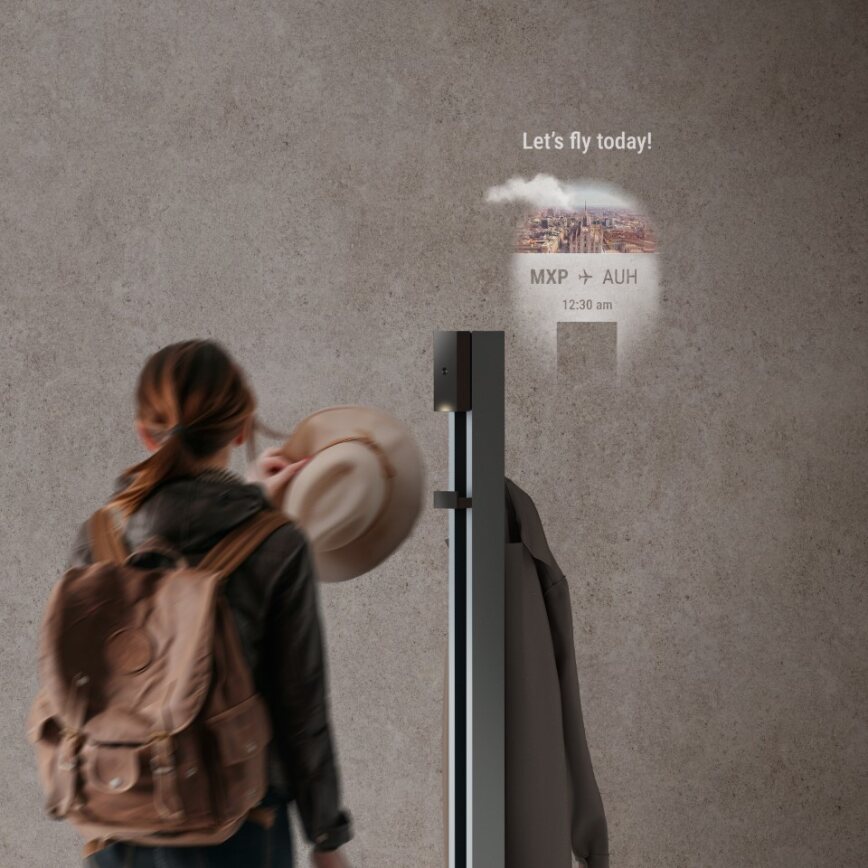
The coat rack, a familiar but often overlooked object, is the subject of this project, which offers a contemporary reinterpretation of it with the product “Rito”; no longer just a support point, but an active companion that enriches the daily routine and transforms the experience of entering the home. 

Thanks to artificial intelligence, “Rito” reacts to the presence of inhabitants, and recognizes when clothes and objects are hung or removed, interpreting the situation and animating the entrance area with dynamic projections on the wall. 

The name “Rito” stems from a reflection on the fact that moments of entry and return home, though fleeting and temporary, are precious fragments of our lives, each with its own unique meaning and value. While some may be more ordinary and repetitive, such as returning after a day’s work or a morning walk with the dog, others can be more special and emotional, like returning after a long journey. 

Regardless of the nature of the return, “Rito” aims to transform every entry and departure from home into a moment of warmth and hospitality. Its projections bring the wall to life, animating it with contextual content.  

Before leaving the dwelling, “Rito” transforms the wall into a dynamic and inspiring space, offering motivational content, helpful tips, and personalized reminders. Upon return, it welcomes with tailor-made evocative scenarios, reigniting the surrounding environment and making the return even more pleasant and familiar.  Project by Ilaria Tarozzi and Ilaria Vitali, Habits Design 

VISIONARIA 

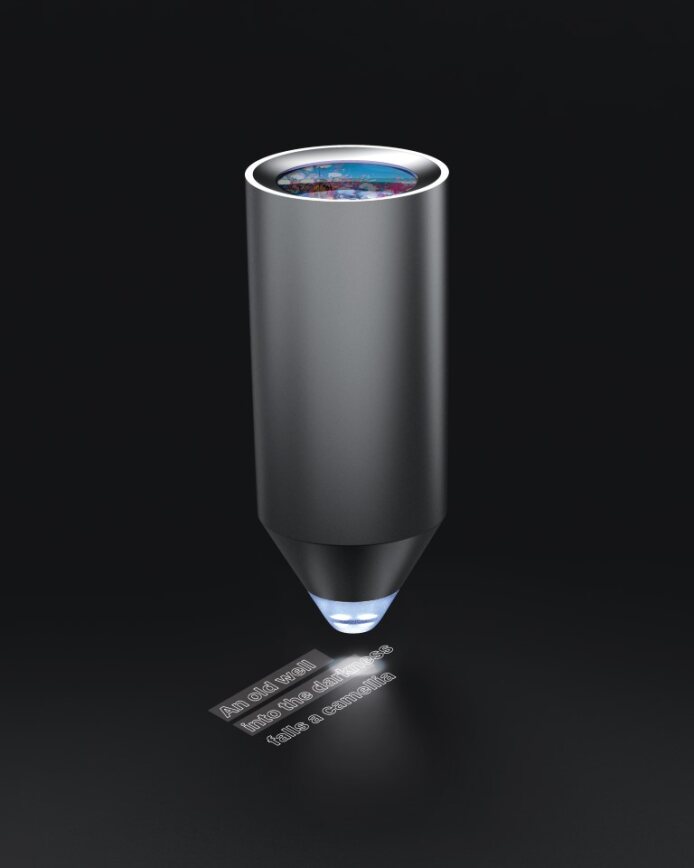
VISIONARIA is a digital device that combines literary tradition with artificial intelligence, offering an innovative reading experience. Digital integration enhances the potential of printed material and opens up new imaginative horizons, transforming reading into a visual and artistic experience. 

By swiping across the lines of a page in a book, similarly to how we would underline a beloved or noteworthy phrase, VISIONARIA recognizes the text. The selected phrase is then instantly input as a prompt into a dedicated AI generator, aiming to create an image of the book scene that can be viewed in real-time. 

This mode of consumption, aided by the product’s pencil-like shape, introduces a new dimension to the reading experience, encouraging increased engagement that can be intimate and profound or shared on larger devices such as smartphones, TVs, and more, ensuring flexibility depending on the context – be it at home for relaxation and entertainment, in education, enhancing the consumption of educational content, or in public settings, stimulating imagination in artistic installations. 

With VISIONARIA, literature evolves and broadens the spectrum of an age-old activity through an extremely accessible mode, towards unexplored scenarios in the world of culture and entertainment. Project by Alberto Milano, Michele Poggi, Marco Rissetto, Habits Design 

1g1lm 

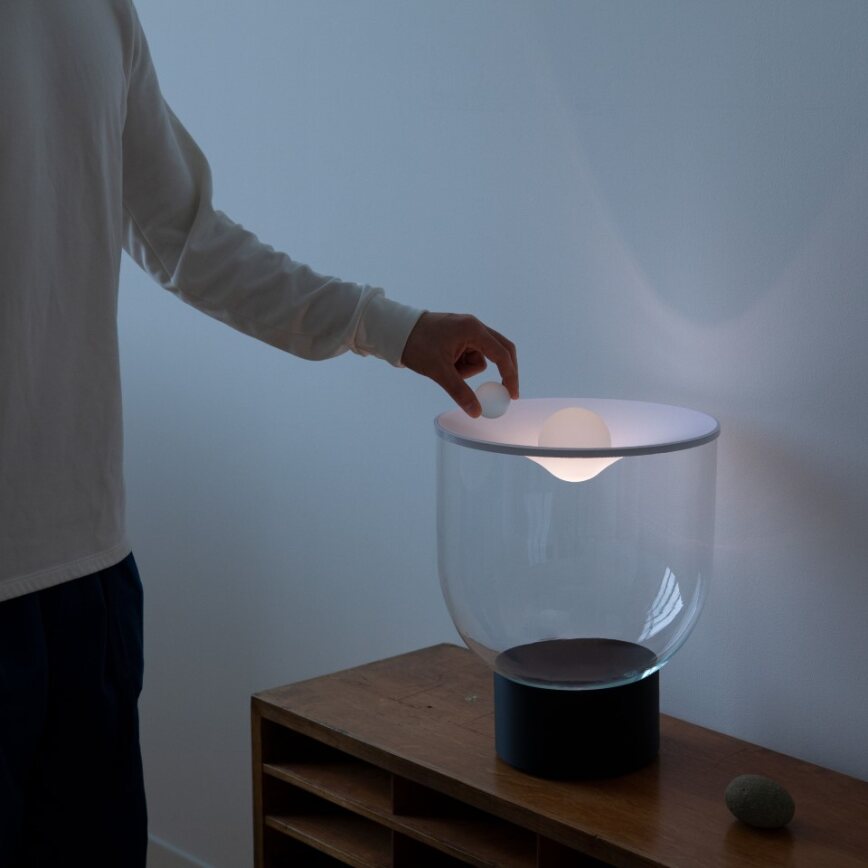
1g1lm represents the unusual marriage of two seemingly incompatible units of measurement: “g” for weight in grams and “lm” for luminous flux in lumens. This lamp was born from a simple but fascinating question, “What would be the effect if light had a tangible weight?” 

To visualize the weight, the lamp uses an elastic fabric on top. By placing an object on top of it, the fabric deforms, generating a unique and unrepeatable aesthetic because it is shaped directly by the weight, not predetermined by the designer. In addition, as the deformation increases, so does the intensity of light. Due to the light diffusion of the fabric, the light seems to take shape and weight. In the act of placing and taking objects, an impossible interaction with the very essence of light is realized, made solid and tangible for a moment. 

1g1lm writes a new equation between light and matter, giving birth to a new ritual rich in poetry and at the same time exploring new alternative scenarios: proposing, in contrast to the digitization of the real, to make, through technology, concrete experiences that were once ephemeral and intangible

Habits Design 

Habits is a multidisciplinary industrial design studio, founded in 2004 by Innocenzo Rifino and Diego Rossi in Milan. 
The work of the studio is focused on technological and interactive projects of international relevance, partnering with companies to design timeless products and experiences. 


The team is composed of industrial designers, electronic and mechanical engineers, model makers, interaction and visual designers, and interior designers with a global point of view.  Recognizing the unique Asian technological know-how, Habits started a branch in Bangkok in 2021.  With over 20 years of experience in a wide range of industries, today Habits mainly covers digital products, home appliances, automation, lighting, UX/UI, and phygital interfaces. 

The team awarded more than 180 international design prizes such as Red Dot, IF, Compasso d’Oro, Design Plus, Good Design, and German Design Award. 
“We study science and art. We design new habits. Prototyping our ideas, embedding electronics, we reduce the gap between physical and digital.” 

Laminam 

Pioneers since the beginning. 

Laminam was born in the early 2000s, following the invention of production technologies to create ultra- thin ceramic surfaces of large dimensions. A pioneering company, it was the first to revolutionize the ceramics market, giving new impetus to a mature sector, betting on the intuition of creating large architectural surfaces and launching innovative sizes and thicknesses on the market. Over the years, the company has developed a production process characterized by innovative methods and highly automated technologies typical of Industry 4.0 such as digital decoration systems, dry cutting systems and internal logistics managed by automatic laser-guided vehicles. These are methods and technologies that increase energy efficiency while reducing environmental impact. 

Today Laminam produces and offers a range of eclectic and versatile large ceramic surfaces used in many applications – from traditional and advanced architecture to furniture and design – distributed in over 100 countries worldwide. Over the years, the series have been enriched with new textures and finishes to enhance the creativity of designers, architects and anyone who wants to give a new connotation to their spaces. 

Giovanardi 

Giovanardi designs, industrializes and manufactures supports for in-store communication (displays, merchandising, shop windows, shop in shop, technical packaging) and for art.  

Giovanardi’s history began in 1919 as a manufacturer of plaques and dials: today Giovanardi SpA is an advanced, certified company, structured to process projects of increasing complexity, according to up-to-date technologies, with a network of accredited partners and an attentive, flexible, punctual client-service.  For 100 years it has been shaping ideas.  For the Silo, Elena Assante.

Genius Works Of Calder On Display At Gray Gallery

For each of them Calder establishes a general fated course of movement, then abandons them to it: time, sun, heat and wind will determine each individual dance… Each of its twists and turns is an inspiration of the moment… It is a little hot-jazz tune, unique and ephemeral, like the sky, like the morning.

-Jean-Paul Sartre, 1947

[NEW YORK -April, 2024] — GRAY is pleased to announce Calder, an exhibition of sculptures by Alexander Calder from the 1950s and 60s. The decades at mid-twentieth century were especially significant for the artist, whose objective to create space and movement at ever more immersive scales is expressed by the range of work in the exhibition. From the intimate interplay of color seen at a small scale in Contrepoids jaune, c. 1953 to the monumental statement in black and white of Clouds over Mountains, 1962, one experiences the breadth of Calder’s invention in color, volume, form, gesture, and motion. 

Calder is the twelfth exhibition at GRAY to include works by the artist, whose 1966 solo show at Richard Gray Gallery was installed at the gallery’s very first location in Chicago. The exhibition opens at GRAY New York (1018 Madison Avenue) on April 18 and will be on view through June 21, 2024. 

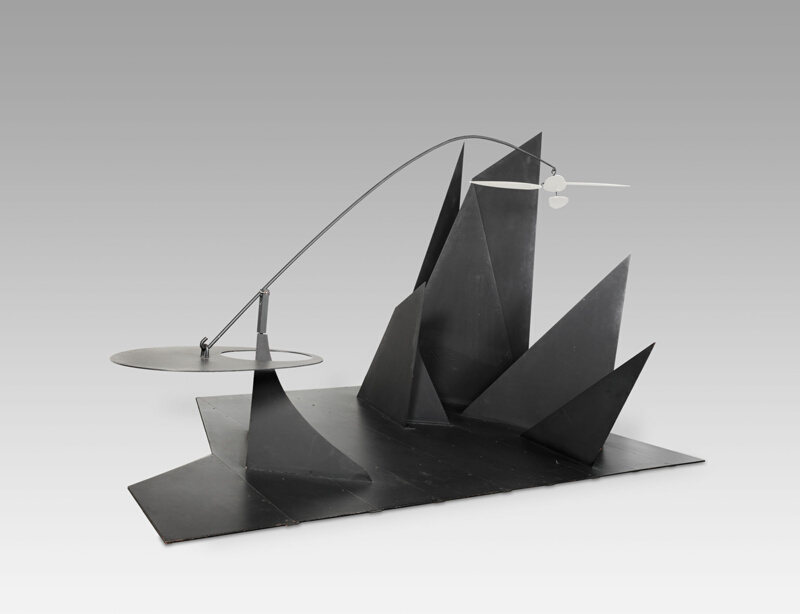
Clouds over Mountains.

At the center of the exhibition is the large-scale sculpture Clouds over Mountains, which combines a series of angular black silhouettes with four curved white forms that hover above. Celebrated in the year it was made by leading critics such as John Canaday and Donald Judd, Clouds over Mountains is a seminal work, representing a milestone in Calder’s development of expansive standing mobiles.

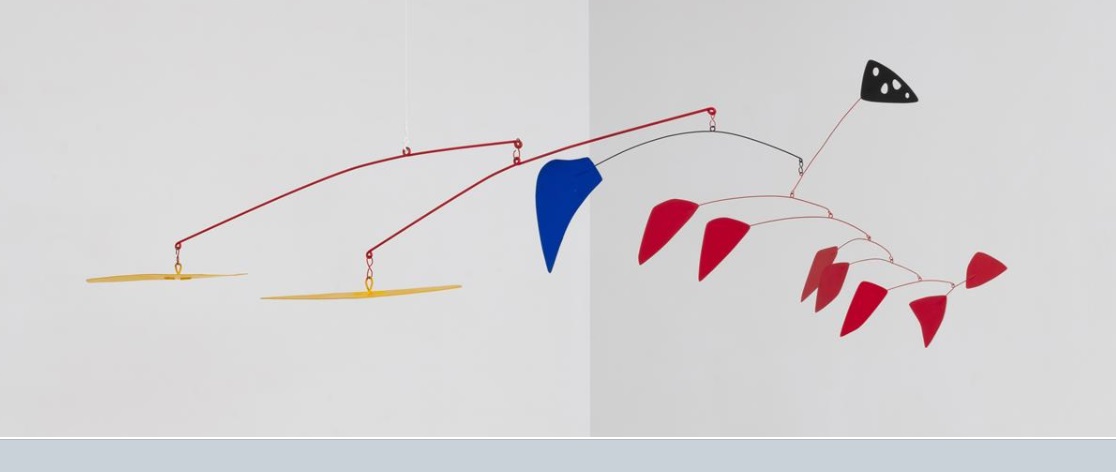
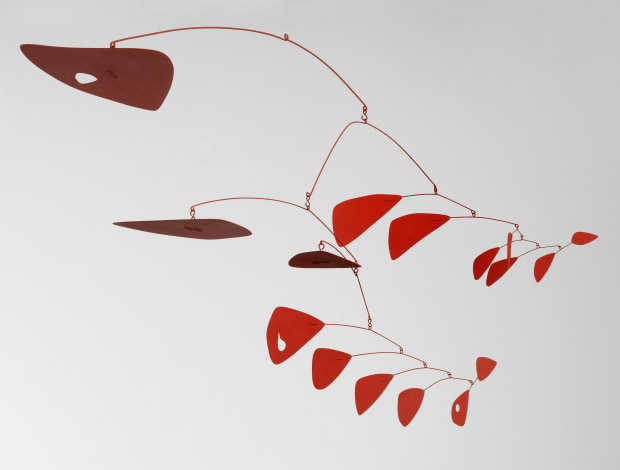
The exhibition also features two important mobiles: Horizontal Red Moon Gong, 1957 and The Two Yellows, 1962. Both hanging mobiles, the works are key examples of Calder’s ability to find harmonic balance in an orchestra of counterweighted elements created in painted sheet metal, and brass in the case of the former work.

The exhibition takes place in GRAY’s New York gallery on the Upper East Side, the entrance of which is framed by a terrazzo sidewalk designed by Calder in 1970. The sidewalk, a cunning pattern of arcs and rectangles, was commissioned by three galleries then located on the block–including Calder’s long-time gallery Perls Galleries–and stretches from 1014-1018 Madison Avenue.

Calder at GRAY reactivates the physical location of the gallery. From the dynamic sculptures installed within the gallery to the geometric forms fixed in terrazzo outside, Calder’s eye for kinetic potential endures.

ABOUT ALEXANDER CALDER

Alexander Calder (b. 1898, Lawnton, Pennsylvania–d. 1976, New York City), whose illustrious career spanned much of the twentieth century, is the most acclaimed and influential sculptor of our time. Born in a family of celebrated, though more classically trained artists, Calder utilized his innovative genius to profoundly change the course of modern art. He began in the 1920s by developing a new method of sculpting: by bending and twisting wire, he essentially “drew” three-dimensional figures in space. He is renowned for the invention of the mobile, whose suspended, abstract elements move and balance in changing harmony. From the 1950s onward, Calder increasingly devoted himself to making outdoor sculpture on a grand scale from bolted steel plate. Today, these stately titans grace public plazas in cities throughout the world. 

Calder’s 1966 inaugural solo presentation at GRAY was the first of a number of exhibitions to feature the artist across the decades, including Sculpture Works on Paper, 1974; Contemporary Masters, 1987; Forty Years, 2003; Fun House, 2013; GRAY at 60, 2023; and most recently Calder, 2024.

Featured image: Alexander Calder, The Two Yellows, 1962.
© 2024 Calder Foundation, New York / Artists Rights Society (ARS), New Yor

Ontario Storm Chasers Warn Public Through Photography

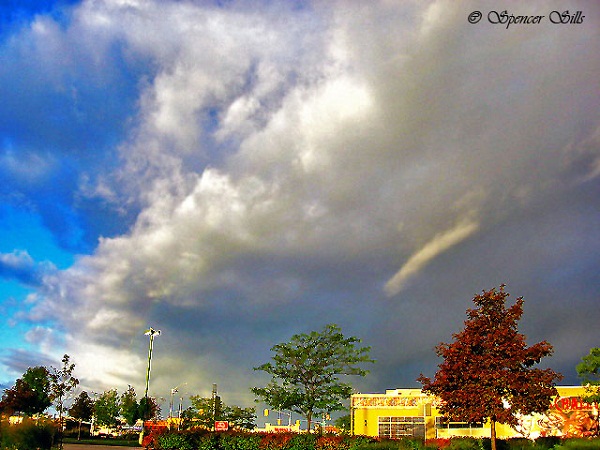
Photo shot in London, Ontario. Shot during a tornado warning for Middlesex county. photo: S. Sills

Did you know on average 12 tornadoes strike Ontario each year? That’s why David Chapman (@northof44pics) and I (@wxspencersills) commit our springs and summers to capturing severe thunderstorms on video and through photography.

My name is Spencer Sills and I am a chaser located in South Western Ontario. I have been chasing storms for about 20 years. I became obsessed with the weather and more specifically severe weather in 1996. On April 20, 1996 a tornado had hit Williamsford, Ontario. This was my first experience with a tornado and it has become a permanent fixture in my mind, partially due to the fact there was still snow on the ground the day it had hit.

Then in the summer of 2011, there were fourteen confirmed tornadoes including  the Goderich F3 tornado as well as three tornadoes during the August 24th severe weather outbreak during the late afternoon and evening. I was unable to be out during either of these days but what I was able to do was keep the public informed of the current severe weather as well as help give warning for the tornadoes.

Photo shot in South West London, Ontario. A waterspout advisory was in effect for Lake Huron and Erie, while on the way to Lake Huron I came across this Cold Core Funnel off of a early morning thunder shower. image: S. Sills

A Summer from years ago was…interesting.  I witnessed more than  my fair share of active weather. I encountered five funnel clouds, several gust fronts or more commonly known as squall lines here in Ontario, and hail from pea size to golf ball sized  in Seaforth. I’ve also encountered strong wind storms which included a storm in Birr, Ontario which uprooted several large trees.

My personal worst storm occurred on June 7, 2011 in Elora, Ontario. A large and intense cell came through late at night bringing with it 80-90 km/h winds, heavy downpours, frequent lightning and quarter-coin size hail. I was fortunate to not be injured during this storm because I was in a tent at the time and had no warning beforehand other than a loud lightning strike before it hit. There was a severe thunder storm warning with the cell but our campground chose not to relay that information to campers and I only found out about the warning once I put on my portable radio after the storm came.  That same storm went on to produce a tornado warning over Hamilton but did not spawn a tornado that night. It did however cause extensive wind damage in the city.

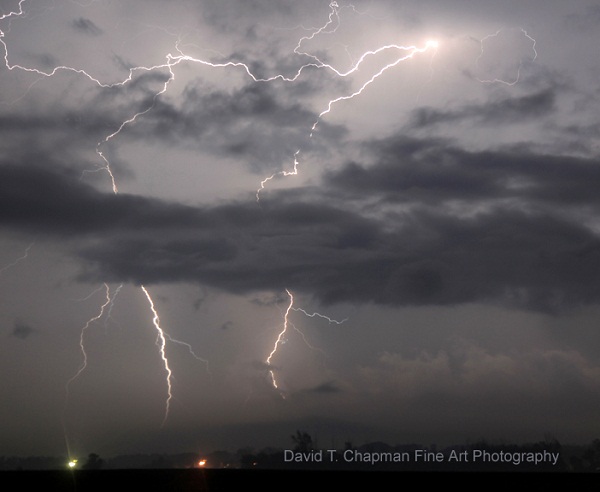
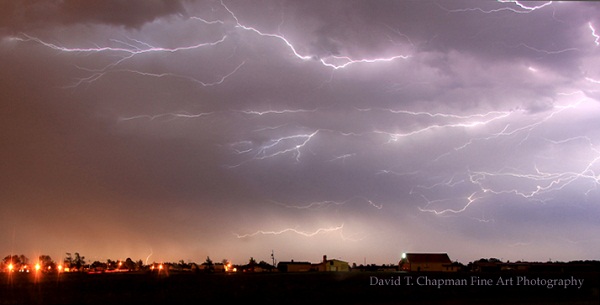
Cloud to Ground Lightning: photographed by D. Chapman

My chase partner is David Chapman.  David and I both grew up within minutes of each other but never met until recently due to the power of twitter.  From twitter I was able to glean that we both have similar interests and goals which will allow us to mesh well together. [ Check the hashtage #WX on twitter for tweets related to extreme weather CP ]

Hello Silo readers. My name is David T. Chapman and I am a professional photographer with a passion for storm photography. I developed an interest in weather when lightning hit my house in Guelph, Ontario, years ago. The thunder was terrifying and the rain was so heavy that even though I was only three years old at the time, I have clear, vivid memories of the storm. My interest in weather was rekindled in the late 1990’s when I spotted my first multi-vortex tornadoes with my dad and brother. Since then, I have followed the weather every day to determine the best time for photography in all kinds of conditions.

Waaaay back in 2011 , the Ontario storm season was an active one. It allowed me to get a personal record number of lightning photographs in one season with 105, not including sheet lightning shots. My first storm was in April, when a very weak storm pushed into the Niagara region. Something that you don’t see very often is a thunderstorm with snow on the ground, but that night I had both. But the storm chasing season  really didn’t start seriously until the end of May when an evening storm rolled through Southwestern Ontario right into my area. The squall line formed directly to our west and there was no way around it. We had to puncture the core of the storm to try to find a dry slot. We were hit hard with heavy rains, strong winds and continuous lightning.

Anvil Crawler: photographed  Southeast of Hamilton, Ontario image: D. Chapman

One of the hardest things to get is a lightning photograph when there is a downpour because it blurs the image. The first line of storms went through when we crossed an open field area and then we were hit by a strong second line of storms. Extremely strong straight lines came at us with winds easily in excess of 90 km/hr. We got into position, but unfortunately, with the rain still pounding our photography team, it made it impossible to get crisp, clear lightning shots. It wasn’t until after the storm had passed that the back end of it lit up and we were able to capture some very beautiful lightning.

The summer carried on with sporadic thunderstorm activity consisting of small thunderstorm cells with intense lightning and hail. Generally, with smaller storms, you only get 4 to 5 lightning shots. I’ve come back after chasing a storm perfectly with only 1 or 2 lightning shots to show for it. It wasn’t until the outbreak of thunderstorms that our team had a very successful night of shooting. On that night, Faith Beni and I ended up in St. Mary’s, Ontario. There were tornado watches all across Ontario, the most I had ever seen. The thunderstorm cell that we were interested in was towards Nairn, Ontario. We left the Niagara region at 5:30 p.m. and got to St. Mary’s around 7:45 p.m.

Without daylight left, the thoughts of getting a tornado quickly changed to an opportunity for lightning photographs instead. One of the most dangerous things to do is to chase a tornadic thunderstorm in the dark, which is why our team has a policy to not chase these types of storms at night. We tend to focus on weaker storm cells that don’t have the tornadic potential but still have lots of lightning. The night of the 24th, though, was different. It seemed that any storm cell had the potential to drop a tornado. We pulled back to St. Mary’s and then we started getting reports of rotation heading to St. Mary’s.

In just under 2 minutes, I saw 4 reports of rotation for St. Mary’s. We started to get pounded with large hail and the the hydro went out. We left St. Mary’s and pushed north towards what looked to be some late evening twilight. We got to the back of the storm and were able to photograph the lightning that was in it. We got some of the best anvil-crawlers that I have ever seen. Anvil-crawlers are a particular type of lightning that can either go for short distances or for distances over 100 km.

This year for the first time, Spencer Sills and I will be working together to get some very powerful images. Our biggest goal is to get a photograph of a tornado. Last year, I was close 3 times. The first was in Grimsby, where an EF0 hit and damaged a small gazebo. Eric Chapman and I were right on the storm but unfortunately we could not see the tornado because of heavy precipitation. The second was the Nairn tornado and the third was a rotating wall-cloud that I photographed towards Bryson, Quebec.

Spencer and I often hear about how tornadoes don’t happen here. We want to let the public know that they can and do occur here, in South Western Ontario so that watches and warnings should always be taken seriously. The Goderich tornado in 2011, in which one person died, is a grim reminder of just how intense tornadoes can be and that they do, in fact, affect Ontario residents.

Photo shot in Nairn, Ontario. Tornado damage in Shady Pines Campground in Nairn. A tornado touched down the previous night and bent these pine trees in half, the tornado also caused extensive tree damage in the area as well as damaged a house and destroyed a metal silo. image: S. Sills

David and I both have experience in chasing storms, and take safety very seriously. We will be travelling with a First Aid kit just as well as weather alert radios and radar to help us along our way, we hope that we don’t ever need the kit but it’s always a great idea especially if others are in need of help, we could very well be the first people on the scene of a possible tragedy so we must be prepared. We will be posting pictures and videos throughout the season but do not recommend that anyone attempt to recreate either of them and place themselves in danger.

I will be working with David Chapman in hopes to help warn others as well as capture these storms through video and photography to share with others who may not get to experience them. We are ready to combine our passion for storms to get the best results possible and share those results with others.

Marshmello (@cryptocup) NFT Makes History With Lunaprise Launch on SpaceX

Marshmello the artic pup, also known on instagram as @cryptopup, made history last week, as the first pet digital collectible art project selected for the lunar museum (“Lunaprise”) on the moon. The project was conceived by Dallas Santana, a well-known film director, web 3.0 innovator and Founder of Space Blue, the company that oversees curation of the Lunaprise Museum. Santana first introduced Marshmello the artic pup,  to the world as an digital collectable art project in 2018.

Marshmello To The Moon. NFT by Space Blue

The super rare digital collectible art of Marshmello To the Moon, selling for $950K usd / $1.3M cad each, took off from from Cape Canaveral on  a ride on SpaceX Falcon 9 and landed on the moon February 22nd , becoming the first pet dog character to land on the moon since the legendary Snoopy, who traveled with Apollo 11 astronauts to the moon back in 1969. The artwork will be auctioned off with 100% of the proceeds donated towards impactful projects for humanity and animals.

Artwork of the popular adorable pet also made history as the first bitcoin art project to land on the moon and is inscribed as a very popular digital art form called bitcoin ordinals

The Lunaprise Museum on the moon will house  digital inscribed twin etched  nickel and nanofiche system of the earth based digital collectibles, along with 222 other curated art projects which will last over 1 billion years on the moon. Marshmello the artic pup character has also already confirmed her official NASA boarding pass to be included in the NASA Mars missions, and other space programs coming up.

The twin images of Marshmello’s artwork will be engraved on metallic lunar plates and digital archives which will last over 1 billion years on the moon. Marshmello’s story and her mission set many space and art history records, including the first pet art project selected for this NASA-administered project, and became the first pet dog character to land on the moon since the legendary Snoopy, who traveled with Apollo 11 astronauts to the moon back in 1969. Conceived by a well-known film director and NFT Innovator (Dallas Santana), Marshmello was first introduced to the world as an NFT art project in 2018, long before the term NFT gained widespread recognition.

The Real-life Dog

Marshmello, the real-life dog, is known for many collaborations with top celebrities, movie stars, models from “America’s Top Models”, and “Deal or No Deal” models, all who babysat the adorable pet. Marshmello found fame without even trying, went viral “peeing” on an Oscar Event Red Carpet ( getting millions of views), got over 50 million views while dating Logan Paul’s Pomeranian “Kong”, and appeared in the NFT movie The 9th Raider and many music videos.

As this pioneering canine character prepares for its historic lunar landing, fans can soon explore the captivating Marshmello furry universe through an engaging book series, with an animation series also in development- also all sent to the moon for archiving as digital twin artwork preserved on the moon. This lovable pet dog character is on the brink of capturing hearts and minds across the globe as it embarks on its groundbreaking journey to the final frontier in art history. As mentioned above, Marshmello the character has also confirmed her official NASA boarding pass to be included in the NASA Mars missions, and other space programs coming up. For the Silo, Tiffannie Ramos.

Rice University Art Exhibition Focuses On Human Body & Land Connections

Resonant Earth: Contemporary Perspectives on Land and Body features works from Kelly Akashi, Lisa Alvarado, Eddie Rodolfo Aparicio, Andrea Chung, Sky Hopinka, and Anna Mayer On view through August 17, 2024.
Kelly Akashi, Life Forms, 2022. Collection of Barbara and Michael Gamson. Courtesy of the artist. Photo by Paul Salveson.
March, 2024 [Houston, TX]— The Moody Center for the Arts at Rice University announces the exhibition Resonant Earth: Contemporary Perspectives on Land and Body opening May 31 and on view through August 17, 2024. Bringing together new and recent work by six contemporary artists based in the United States, the exhibition explores vital connections between the human body and the land. This focused presentation emphasizes how art and artists can build awareness toward integrated ecosystems in the face of intergenerational trauma, continued exploitation of the Earth’s resources, and climate change. 

Featured artists include Kelly Akashi, Lisa Alvarado, Eddie Rodolfo Aparicio, Andrea Chung, Sky Hopinka, and Anna Mayer. Spanning a variety of media, including sculpture, painting, ceramics, collage, photography, video, and sound, the presentation also features two site-specific interventions commissioned by the Moody. Lisa Alvarado will create a monumental wall mural and Anna Mayer will mount an installation with locally sourced clay consisting of more than fifty new objects. The diverse practices presented in Resonant Earth demonstrate a critical engagement with histories of the land, primarily in the Western and Southern United States. Collectively, the exhibition addresses the local environment while considering the forced migration and displacement of people and plants across geographies.  

Executive Director Alison Weaver notes, “This project foregrounds artworks that speak to our lived experience in the United States, highlighting how personal and social histories shape our natural surroundings and our individual bodies. This summer we look forward to welcoming visitors who bring their own experiences to the galleries.” 
Sky Hopinka, Mnemonics of Shape and Reason,2022. Still. Courtesy of the artist.
About the Exhibition Resonant Earth: Contemporary Perspectives on Land and Body seeks to illuminate the intertwined social and material histories of specific ecologies, ranging from farms along the US-Mexico border, to former Japanese American internment camps in Arizona, to the extraction of land in and around Houston. With geographical references that privilege biological memory and somatically inherited knowledge over a dominant linear history, these artists highlight the intergenerational pain of displacement and the healing power of reconnection to our place on the planet.
The artworks on view echo our fraught engagement with the environment, while implying webs of interdependence in which the natural and the cultural are inseparable. The six selected artists draw on Indigenous and diasporic forms of knowledge, culture, and materials to envision modes of transformation and regeneration in relation to ongoing struggles for environmental and social justice. 
A selection of new and recent work by Kelly Akashi underscores the artist’s interest in temporality and memory as contained in the land and the body. Her sculptural work incorporates a range of material processes and is installed spatially as a constellation of objects that reference her personal and family history as well as the passage of time, the ephemerality of the human body, and the impermanence of the natural world. For example, in Conjoined Tumbleweeds, Akashi cast entangled plants growing at the site of a Japanese American incarceration camp in Poston, AZ. The bronze sculpture refers to her father’s imprisonment there during World War II.
A cast of the artist’s own body, fragmented, appears as a blue crystal hand in Inheritance. Adorned with Akashi’s grandmother’s ring, the fingers wrap around a stone from Poston, invoking the biological memory of the body as well as geological time.  Through double-sided hanging paintings, and a major site-specific wall mural accompanied by a sound installation, artist and musician 

Lisa Alvarado explores social histories of the land, including the Chicana/o Movement and her own family’s experience along the US-Mexico border. Her free-hanging abstract paintings allude to generations of migrant farmers in the region, while referencing textile traditions and muralism of the Americas.

Compositionally anchored at the corner of the gallery space and expanding outward along horizontal and vertical planes, Alvarado’s site-specific mural suggests “being in-between,” both spatially and conceptually. In the monumental painting that encompasses the viewer, Alvarado also considers meridians—both celestial, in relation to one’s position on Earth and the sky, and those used in traditional non-Western medicine to trace the pathways within one’s own body. Cast from the trunks of non-native trees in Los Angeles, large-scale sculptural works from Eddie Rodolfo Aparicio’s Caucho (Rubber) series reference intertwined histories of plants and people. The artist, whose family is from El Salvador, considers experiences of migration, solidarity, and civil war that resonate with some Central American communities in Los Angeles.
Deeply invested in the social histories of materials, Aparicio’s artistic media suggests layers of meaning and the inseparability of the natural and the cultural. For instance, his use of rubber, which is made from the bloodlike sap of trees, recalls its importance as an Indigenous Mesoamerican technology and subsequent exploitation by colonialist extraction and trade. An immersive planetarium installation together with collages by Andrea Chung reflect the interconnected histories of materials, processes, and places of the island nations in the Caribbean Sea and Indian Ocean. In her research-based practice, Chung often subverts tools of European colonialism while considering the multiplicity of the relationships that enslaved people had with the Earth. Inspired by star charts, and seeking to invert colonial maps, The Westerlies: Prevailing the Winds is a dome structure shrouded in cyanotype canvas that invites the viewer to be surrounded by the night sky and ocean as both expanse and enclosure.
In collages featuring late-nineteenth-century ethnographic photographs of African women, Chung adorns the images with intricate beadwork, gold ink, and reproductions of delicate flora atop traditional birthing cloth, exploring the relationship between the people depicted and the land. Videos by filmmaker, photographer, and poet Sky Hopinka portray landscapes traversed by the artist, interweaving personal and collective memory. A member of the Ho-Chunk Nation of Wisconsin and the Pechanga Band of Luiseño Indians, Hopinka explores Indigenous homeland and language through rhythmic and poetic accounts. In the selected videos, the artist layers visual and audio recordings, music, and text, to consider intergenerational connections to a place as well as the ongoing effects of colonialism while prompting the viewer to consider one’s own relationship to landscape and memory. 
Twenty-five pairs of newly created wall-mounted ceramic vessels and sculptures will be part of a site-specific installation by Houston-based artist Anna Mayer, who engages with the land locally. Known for her social and sculptural practice, Mayer’s process involves analog firing techniques while critically engaging pre- and post-petroculture. In her hand-built ceramics, the artist incorporates what she calls “gleaned clay” (available as a by-product of other processes such as flooding, drought, or construction), sourced from the Houston area. 
Described as “implements” by the artist, the shapes of the wall-mounted objects reference drill bits and hammers as well as body parts and geological sediment. The series will be installed over photographic wallpaper depicting damp cement, suggesting water seeping up from the ground into the gallery. Additionally, Mayer is making new large-scale ceramic vessels that will be positioned among existing furniture at the Moody, underscoring their corporeal presence and connection. 
This new body of work examines how tools function as an extension of the body, commonly used to excavate earth, while reflecting a polyvalent approach to the land. Resonant Earth is curated by Molly Everett, Assistant Curator, Moody Center for the Arts. The exhibition is made possible by the City of Houston through Houston Arts Alliance, the Brad and Leslie Bucher Artist Endowment, the Tamara de Kuffner Fund, the Kilgore Endowment Fund, and the Sewall Endowment. 
Eddie Rodolfo Aparicio, Ruta de las flores, 2022. Courtesy of the artist and Commonwealth and Council, Los Angeles
About the Artists Kelly Akashi’s (b. 1983, Los Angeles, CA) major solo exhibition, Kelly Akashi: Formations, originated at the San José Museum of Art (2022–23), and traveled to the Frye Art Museum in Seattle (2023), and the Museum of Contemporary Art San Diego (2023–24). Her work is currently the subject of a solo presentation at the Henry Art Gallery, University of Washington, Seattle, WA (2023–24) and has been included in several group exhibitions internationally. Akashi is based in Los Angeles, CA. 

Lisa Alvarado (b. 1982, San Antonio, TX) has exhibited and performed widely, with recent solo exhibitions at the Wadsworth Atheneum Museum of Art, Hartford, CT (2023) and at REDCAT, Los Angeles, CA (2023). Originally from San Antonio, TX, Alvarado now lives and works in Chicago, IL. 

Eddie Rodolfo Aparicio’s (b. 1990, Los Angeles, CA) work is the subject of a solo exhibition at The Museum of Contemporary Art, Los Angeles, CA, on view until June 16, 2024. His work is featured in the 2024 Whitney Biennial in New York, NY, and Prospect.6 in New Orleans, LA. The artist lives and works in Los Angeles. 

Andrea Chung (b. 1978, Newark, NJ) has received solo presentations at the John Michael Kohler Arts Center, Sheboygan, WI (2023), the Art Gallery of Ontario, Toronto (2022), and the Museum of Contemporary Art San Diego, CA (2017). Her work has been exhibited at the J. Paul Getty Center, Los Angeles, CA (2021), the Pérez Art Museum, Miami, FL (2019), and in Prospect.4, New Orleans, LA (2017). Chung grew up in Sugar Land, TX, and is now based in San Diego, CA. 

Sky Hopinka’s (b. 1984, Ferndale, WA) work has been the subject of several solo exhibitions, including at the Museu de Arte de São Paulo, Brazil (2023), LUMA Arles, France (2022), Speed Art Museum, Louisville, KY (2022), and the Center for Curatorial Studies, Bard College, Annandale-on-Hudson, NY (2020). He is a 2022 MacArthur Fellow. Hopinka recently joined the faculty at Harvard University as an Assistant Professor in the Department of Art, Film, and Visual Studies, and is currently based in Cambridge, MA. 

Anna Mayer’s (b. 1974, Macomb, IL) practice spans Los Angeles and Houston. Her recent solo presentation at the Houston Center for Contemporary Craft (2021) was preceded by exhibitions at Ballroom Marfa, Marfa, TX (2016–17), and the Hammer Museum, Los Angeles, CA (2012). She lives in Houston, TX, and is an Associate Professor of sculpture at the University of Houston. 
Lisa Alvarado, Spinning Echo, 2023. Courtesy the artist and Bridget Donahue, New York.
Special EventsFriday, May 31, 6–8 p.m. Opening Reception for Resonant Earth: Contemporary Perspectives on Land and Body Celebrate the start of the exhibition with the artists.Saturday, June 1, 4–6 p.m. Dimensions Variable: National Information Society Together with her band National Information Society, featured artist Lisa Alvarado will activate the gallery space with a special musical performance.Fridays, June 7, 14, 21, and 28 at 12 p.m.

The Moody Wellness Series Join us on Fridays in June for meditation and yoga in the galleries, offered through a collaboration with the Barbara and David Gibbs Recreation and Wellness Center. Saturdays, June 8, 15, 22, 29, 2–4 p.m.

Moody ArtLab Guests of all ages are invited to create a hands-on craft inspired by artwork featured in the summer exhibition at our self-guided activity station on Saturdays in June. Materials and instructions provided. Saturday, July 20, 12–5 p.m.

Summer Jam Community Day Celebrate summer at this all-day, family-friendly event featuring an indoor farmer’s market, art activities, and local food vendors. 
Featured image: Mnemonics. Sky Hopinka
About the Moody Center for the Arts Inaugurated in February 2017, the Moody Center for the Arts at Rice University is a state-of-the-art, non-collecting institution dedicated to transdisciplinary collaboration among the arts, sciences, and humanities. The 50,000-square-foot facility, designed by acclaimed Los Angeles-based architect Michael Maltzan, serves as an experimental platform for creating and presenting works in all disciplines, a flexible teaching space to encourage new modes of making, and a forum for creative partnerships with visiting national and international artists. The Moody is free and open to the public year-round.

Website: moody.rice.edu

Social Media: @theMoodyArtsPhone: +1 713.348.ARTSAddress: Moody Center for the Arts at Rice University6100 Main Street, MS-480, Houston, TX 77005(University Entrance 8, at University Boulevard and Stockton Street)

Hours & Admission Exhibition spaces are open to the public and free of charge Tuesday through Saturday from 10 a.m. to 5 p.m. and closed on Sundays, Mondays, and holidays. Events and programs are open to the public. For schedule, tickets, and prices as applicable, visit moody.rice.edu.

Directions & Parking The Moody Center for the Arts is located on the campus of Rice University and is best reached by using Campus Entrance 8 at the intersection of University Boulevard and Stockton Street. As you enter campus, the building is on the right, just past the Media Center. There is a dedicated parking lot adjacent to the building. Payment for the Moody Lot is by credit card only.
For campus maps, visit www.rice.edu/maps.

About Rice University Located on a 300-acre forested campus in Houston, Rice University is consistently ranked among the nation’s top 20 universities by U.S. News & World Report. Rice has highly respected schools of Architecture, Business, Continuing Studies, Engineering, Humanities, Music, Natural Sciences and Social Sciences and is home to the Baker Institute for Public Policy. With 3,879 undergraduates and 2,861 graduate students, Rice’s undergraduate student-to-faculty ratio is 6-to-1. Its residential college system builds close-knit communities and lifelong friendships, just one reason why Rice is ranked No. 1 for quality of life and for lots of race/class interaction and No. 2 for happiest students by the Princeton Review. Rice is also rated as the best value among private universities by Kiplinger’s Personal Finance.

Inuk Artist, Shuvinai Ashoona Wins Governor General’s Award in the Arts

Inuk artist becomes the second person from the West Baffin Cooperative to receive prestigious award.


Kinngait (Cape Dorset), Nunavut – Inuk artist Shuvinai Ashoona has been named a recipient of the Governor General’s Awards in the Arts for her dedication to the expression and practice of Inuit art and her contribution to Canada’s larger contemporary art community.

ᓱᕕᓇᐃ ᐊᓱᓇ
SHUVINAI ASHOONA


For more than two decades, Ashoona has been changing the face of Inuit art. Working from her home base in Kinngait, Nunavut, Ashoona’s ever-evolving drawing practice has resulted in a still growing body of work that stands as a unique contribution to the artistic expression of her time. Ashoona’s innovative drawings, many of which are ambitiously scaled, freely mix elements drawn from historic Inuit culture with contemporary references to more recent history and popular culture.

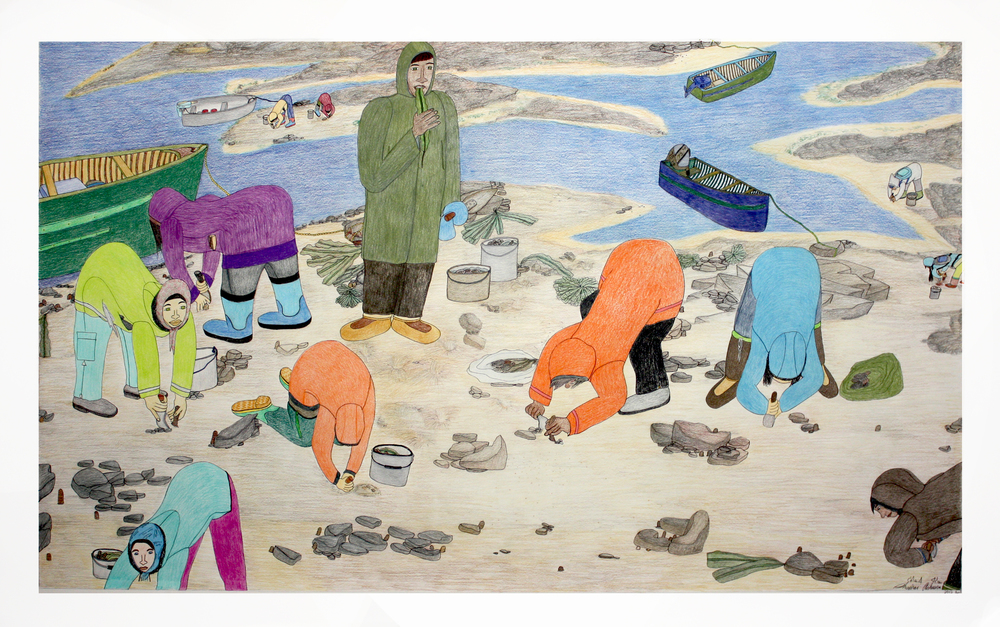
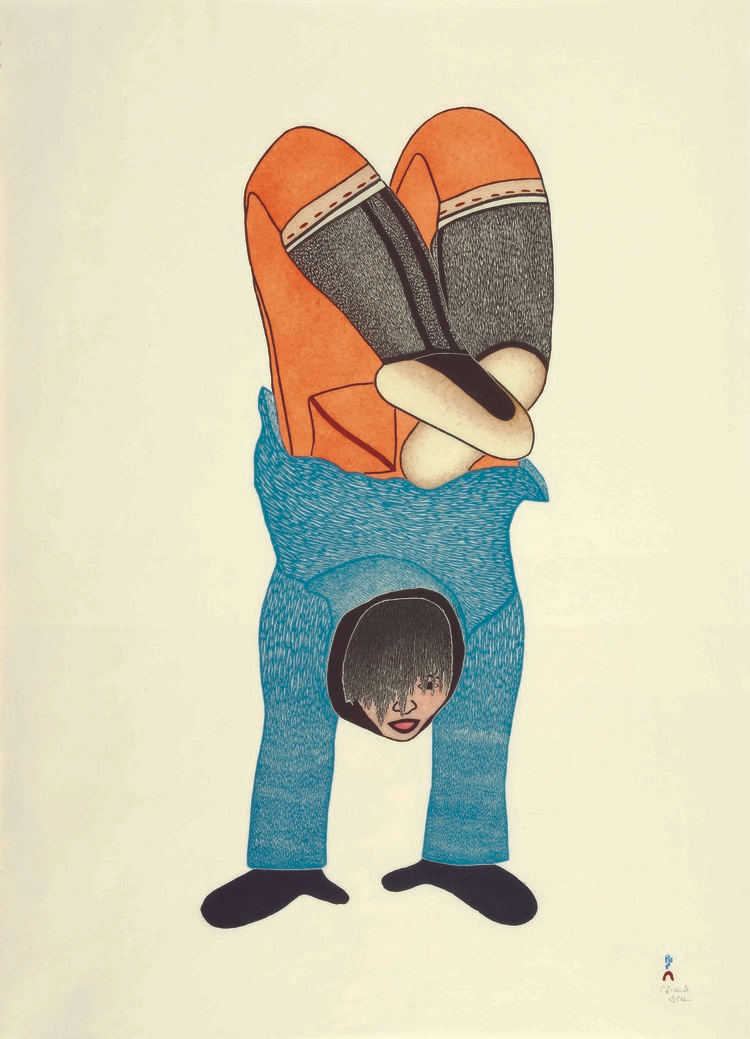
Untitled. 2010.

Her subjects include fantastical and otherworldly beings
as well as self-reflexive images that comment directly on the process and practice of representation. Never content to follow rules and expectations, Ashoona’s unconventional artistic vision has successfully challenged and revolutionized how the public perceives Inuit art and contemporary Indigenous art more generally, helping
to create a new space for expression and artistic freedom.

A longtime artist member of West Baffin Cooperative, Ashoona works frequently at the organization’s Kinngait Studios and has become a mentor to many next generation Inuit creators.
“I don’t even think about getting awards for making my art,” said Shuvinai Ashoona. ‘I’m just happy when people can see my drawings in galleries and museums and books. I think this award means that many, many people are getting to see my artworks.”


Throughout her career, Ashoona has maintained a busy practice supported by an expansive program of exhibitions.

Her work has been featured in several important exhibitions at the National Gallery of Canada, including Sakahàn: International Indigenous Art, that institution’s landmark 2013 showcase of contemporary Indigenous expression from around the world.
“Shuvinai Ashoona is one of Canada’s most influential visual artists and has fast become an internationally important creator,” said West Baffin Cooperative President Pauloosie Kowmageak. “Ashoona has achieved remarkable success and recognition for her art practice and for the community of Kinngait; I can’t imagine a more deserving recipient of this prestigious award.”

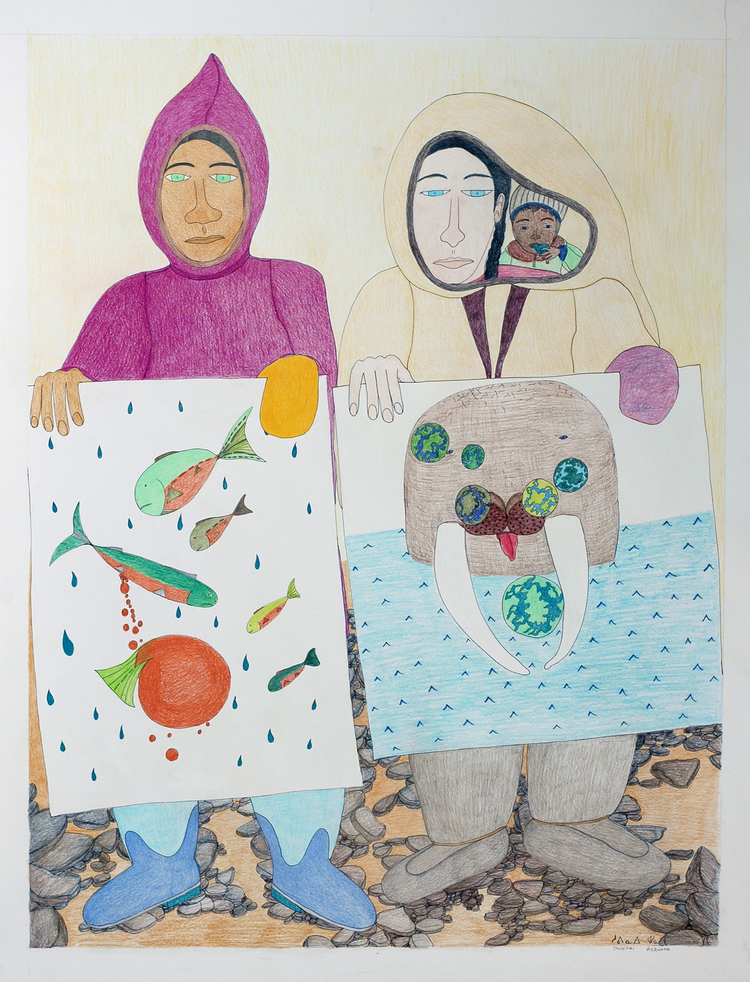
Handstand. 2010. Stonecut and stencil.


Ashoona has been active within the commercial gallery sphere as well. Her work has been featured in several solo and group commercial exhibitions, many of which have been presented by Vancouver’s Marion Scott Gallery, which nominated her for this award, and Toronto’s Feheley Fine Arts. Ashoona’s drawings have also been collected by many of Canada’s major art institutions, including the Art Gallery of Ontario, the National Gallery of Canada, the Winnipeg Art Gallery, Musée des beaux arts de Montréal and the Vancouver Art Gallery.

Ashoona has also collaborated with artists from beyond her Baffin Island community, including Shary Boyle (2015) and John Noesthedan (2008).

“Shuvinai Ashoona’s startling expression makes connections and bridges cultures,” said Robert Kardosh, third generation owner of Vancouver’s Marion Scott Gallery. “Her images tell us something important about ourselves and the world we all share. This award acknowledges and celebrates that deep resonance. It’s also a testament to her tenacious dedication to her vision and community.”


In 2022, she produced her first immersive installation, entitled Help Us. Commissioned by the Marion Scott Gallery, Ashoona’s floating constellation of drawn geometric forms was featured that same year at Art Toronto, where it earned critical and popular acclaim.


The last five years have been especially important ones for the artist, not just for her continuing creative growth but also in terms of her growing national and, increasingly, international profile. In 2019, The Power Plant Contemporary Art Gallery in Toronto presented Shuvinai Ashoona: Mapping Worlds, an exhibition that brought together a decade’s worth of Ashoona’s most ambitious works. Curated by Nancy Campbell, the high-profile exhibition toured to several venues across Canada, exposing the general public to Ashoona’s singular vision while confirming her status as one of Canada’s most exciting and talked about contemporary artists.

The exhibition’s catalogue is itself a monument to Ashoona’s practice and place in contemporary Canadian art. At the beginning of 2019, just as the Power Plant’s exhibition was being launched, it was announced that Ashoona had won the 2018 Gershon Iskowitz Prize at the AGO, making her the first Inuk in history to win this prestigious award. In 2021, as part of the terms of the prize, the artist’s work was profiled at the Art Gallery of Ontario in a major exhibition that was entitled Shuvinai Ashoona: Beyond the Visible, making her work even more visible to a wider audience.

Alongside these major breakthroughs within Canada’s borders has been a recent series of announcements, exhibitions and awards that reflect Ashoona’s steadily growing reputation abroad. In 2021, Ashoona’s work was featured in a solo exhibition at the Institute of Contemporary Art Miami, entitled Shuvinai Ashoona: Drawings. The exhibition in Miami wasn’t only Ashoona’s first show in a US museum, but it also marked the first time that a US contemporary art institution has presented a solo exhibition by a Canadian Inuk artist.

In 2022, Ashoona’s work was included in The Milk of Dreams, the 59th International Art Exhibition, also known as the Venice Biennale.

Ashoona’s inclusion in this major international showcase brought her distinctive expression to the attention of a global audience for the first time. The official jury’s decision to award Ashoona one of two special mentions brought even more attention to her installation, further attesting to her work’s unique power and appeal. Those same drawings are currently being featured at London’s The Perimeter, in a presentation entitled Shuvinai Ashoona: When I Draw, the artist’s second solo exhibition in the UK. For more biographical information about Shuvinai Ashoona click here. For the Silo, Paul Clarke.

Featured image: SHUVINAI+ASHOONA-2009 untitled graphite coloured pencil and pentel pen.

Nanni Balestrini Political Art Retrospective Exhibition Includes Early Computer Works

CENTER FOR ITALIAN ART ANNOUNCES NEW EXHIBITION: 
NANNI BALESTRINI: ART AS POLITICAL ACTION ONE THOUSAND AND ONE VOICES ON VIEW NOW UNTIL- JUNE 22, 2024
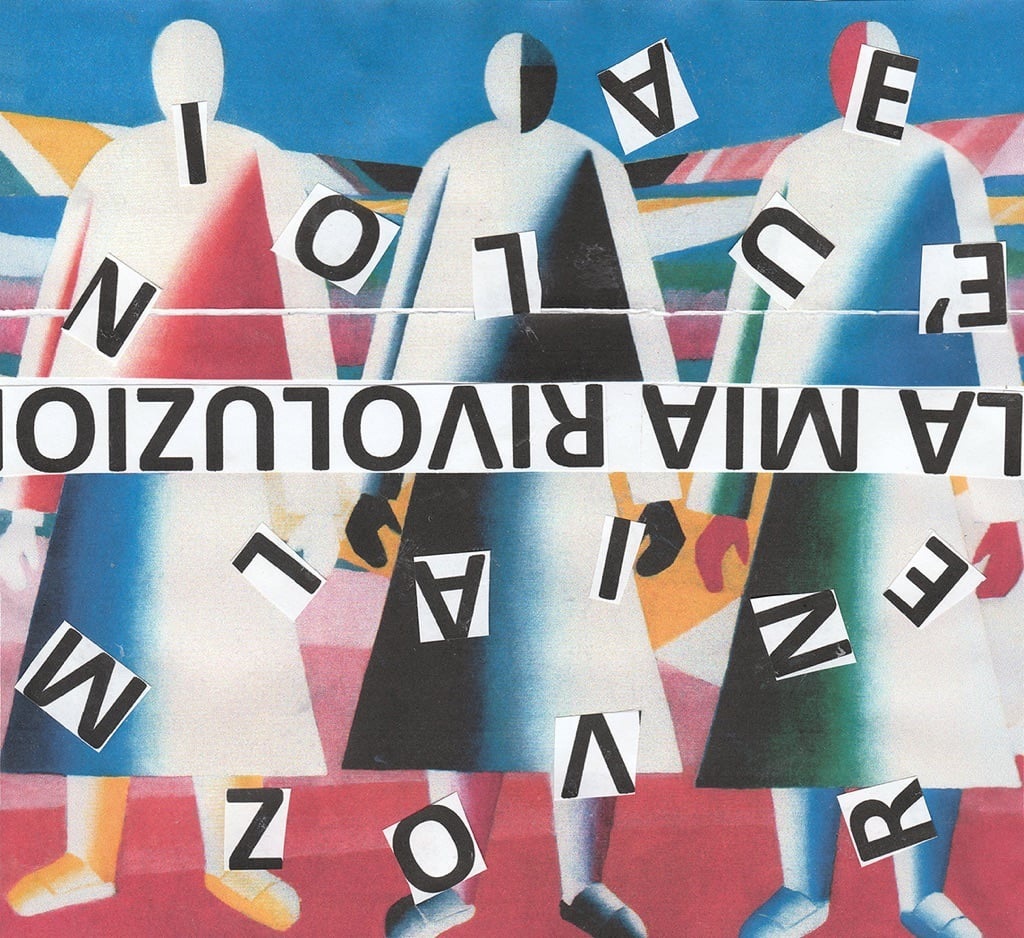
Nanni Balestrini, Cavallo, 1963. Collage on paper. Private collection, courtesy Frittelli arte contemporanea, Florence
(New York, February/March, 2024) – The Center for Italian Modern Art (CIMA) has launched its new exhibition, NANNI BALESTRINI: ART AS POLITICAL ACTION. ONE THOUSAND AND ONE VOICES, curated by Marco Scotini. This is the first retrospective exhibition in the United States of Nanni Balestrini (1935-2019), an Italian experimental visual artist, poet, and novelist known for his revolutionary artistic practice and passionate involvement in the social-political movements of the 1960s and 1970s. 
Born in Milan in 1935, Balestrini was a key protagonist of post-WW2 Italian literary and social avant-garde movements: he approached experimental poetry with a visual sensibility stemming from the artistic use of collage, and with a compositional practice that gave importance to the editing and recombining of existing texts (especially newspapers, magazines, and political slogans) in search for the expression of a collective enunciation.

Nanni Balestrini born July 1935 died May 2019

Nanni Balestrini, 65000 Ètudiants, 1972. Mixed media on panel. Collezione Emilio Mazzoli, Modena
Nanni Balestrini, Cronogramma, 1960s. Collage on paper. Private collection.

He worked side by side with contemporary composers interested in the creative potential of stochastic music and the relationship between computer technology and art. Much of his radical artistic and literary research also developed in dialogue with his participation in the student and workerist movements of the late 1960s and 1970s, and their explosive political charge. Much emphasis has been placed on the exclusively typographical character of writing in Balestrini’s artistic works. This exhibition will instead draw attention to the double acoustic and visual level of Balestrini’s word or, better yet, to what Paolo Fabbri described as its “phonic-optic indiscernibility.”

NANNI BALESTRINI: ART AS POLITICAL ACTION. ONE THOUSAND AND ONE VOICES, curated by Marco Scotini, focuses on two crucial decades in the career of Balestrini, the 1960s and the 1970s. It includes over 70 works by the artist, along with a range of documentary material. The works from the 1960s illustrate a creative phase when Balestrini shared research interests with Luigi Nono, one of the most important 20th-century experimental composers, and when the neo-avant garde literary movement Gruppo 63 was also founded. The creative relationship between Balestrini and Nono lasted an entire decade, and the exhibition sheds light on the search for the disalienation of the word pursued by both, as well as on their use of technology as a way to seize and subvert the means of industrial production and explore their artistic potential.

The final works in the exhibition date back to the late 1970s; some of them were conceived in connection with a poem dedicated to the New York City electricity blackout of 1977. Planned as an “action for voice” to be performed by Greek-Italian lyricist and vocal experimenter Demetrio Stratos in May 1979, the work was never performed due to the premature death of Stratos and Balestrini’s indictment surrounding the political movement Autonomia Operaia.

The exhibition also includes a reconstruction of Balestrini’s Tape Mark I (1961), one of the earliest examples of computer-generated art. A combinatory poem produced by an algorithm written in the Unix programming language on a massive IBM mainframe computer, Tape Mark I anticipates many of the contemporary questions surrounding Artificial Intelligence, and was featured in the 1962 edition of the Bompiani Literary Almanac, which was dedicated to “the application of computers to ethics and literature”, a theme of utmost relevance today. 

To provide context to Balestrini’s work, the show features a selection of early words-in-freedom works by Futurist artist Carlo Carrà, a form of avantgarde visual poetry that liberated words and letters from the conventions of grammar and syntax, making them part of visual and performative compositions. This technique was co-opted by the Italian Neoavanguardia in the 1960s, due to the revolutionary potential of the early Futurist movement.
NANNI BALESTRINI: ART AS POLITICAL ACTION. ONE THOUSAND AND ONE VOICES is on view at CIMA (421 Broome Street, 4th Floor, New York, NY 10013) from February 22nd – June 22nd, 2024. See visiting hours below. 

Python reconstruction of 1961 electronic poem “TAPE MARK 1”

Nanni Balestrini, Giornale di bordo (La partita a carte), 1964. Collage on paper. Private collection, Mirano (Venezia)
CIMA OPEN HOURS: • Friday and Saturday: 11am to 6pm with guided tours at 11am and 2pm (last entry at 5pm)• Members-only hours: Monday-Thursday by appointment• General admission: $15usd for guided tours; $10usd for open hours• Members & students: free
ABOUT CIMA:Founded in 2013, CIMA is a public non-profit dedicated to presenting modern and contemporary Italian art to international audiences. Through critically acclaimed exhibitions—many of them bringing work to U.S. audiences for the first time—along with a wide variety of public programs and substantial support for new scholarship awarded through its international fellowship program, CIMA situates Italian modern art in an expansive historic and cultural context, illuminating its continuing relevance to contemporary culture and serving as an incubator of curatorial ideas for larger cultural institutions. CIMA works to add new voices to scholarship on modern Italian art with annual fellowships that open fresh perspectives and new avenues of research. A visit begins with a complimentary espresso, followed by an informal exhibition tour with one of the resident fellows. Visitors are welcome to linger for additional viewing and conversation.

ABOUT CURATOR MARCO SCOTINI: Marco Scotini is an art critic and curator. He currently is artistic director of FM Centro per l’Arte Contemporanea in Milan, a center specializing in the preservation and enhancement of private collections, artists’ archives and the promotion of contemporary art. Since 2004, he has been director of the Department of Visual Arts at Nuova Accademia di Belle Arti of Milan and Rome. He is scientific director of the Gianni Colombo Archive, the Bert Theis Archive, the Clemen Parrocchetti Archive and the Nanni Balestrini Archive. Since 2014, he has been responsible for the exhibition program of PAV- Parco Arte Vivente in Turin. He was artistic director of the 2nd Yinchuan Biennale in 2018 and was a member of the Italian Council from 2019 to 2021. He has curated exhibitions for leading national and international art institutions, including the Albanian pavilion at the Venice Biennale (2015), three editions of the Prague Biennale (2003, 2005, 2007), Anren Biennale (2017), 2nd Yinchuan Biennale (2018) and was advisor for Bangkok Biennale (2020 and 2022). He took part in the 17th Istanbul Biennale (2022) and the BETA Timișoara Biennale (2022). He has been part of the project TV Politics at documenta 14 (2017). Scotini’s project Disobedience Archive is part of the 60th Mostra Internazionale d’Arte della Biennale di Venezia (2024), curated by Adriano Pedrosa.

National Black Arts Festival 2024


NBAF is manifesting more this year: more impact, more engaging programming, more opportunities for artists, more exposure, and more funding. We are coming for it all in the new year! In celebration of what will be an amazing year, it is my honor to give you a peek into what we have in store as we prepare to do things even bigger and better in 2024.  

Our programming theme for this year is “Artistry Unbound,” an exploration of the resounding power of African American art to propel us toward the realization of our collective freedom. This theme celebrates the profound contributions of African American artists in their relentless pursuit of social justice, equality, and financial equity. It celebrates the trailblazers who have paved the way for a new generation of artists, continuing the legacy of social commentary and artistic innovation. This theme calls us to be “black on purpose” and create programs that directly speak to the injustices that we still face as a people and find artistic and creative ways to address these issues.

We are excited to bring this theme to life through carefully curated programming that will kick off with the NBAF Black History Month event, “Blacklisted! Banned Book Fair”, which speaks directly to the injustices highlighted through recent campaigns designed to censor and diminish Black voices.

Blacklisted! Banned Book Fair takes place on February 24th and 25th, and aligns with NBAF’s mission to:

  • Expose audiences to important and diverse works by African American authors,
  • Educate the public on how the banning of African American literature has been part of a larger pattern of censoring voices that advocate for social justice, civil rights, and the dismantling of racial prejudices,
  • Engage young and old readers alike with the wealth of African American books available to them, and
  • Entertain audiences with informative panel discussions, staged readings, an indie book market, and more!
             For more info, please visit our Black History Month page on nbaf.org

There are so many exciting things on the horizon for NBAF this year and we look forward to bringing you quality multi-disciplinary programming focused on uplifting and highlighting Black art and artists in new ways throughout 2024.  As we continue our transition back to larger immersive events and chart a path back to the renowned NBAF Festival, our team is committed to innovatively presenting the best in Black art and we look forward to continuing to make an impact in the community with your partnership. We look forward to seeing you soon online or at an upcoming event! For the Silo, Stephanie R. Owens.

Reflecting on the remarkable journey of 2023, we’re excited to share the significant impact your support has made on our mission and community. We encourage you to delve into the highlights and accomplishments of the past year in our 2023 Impact Report, available here.

Click on the image above to view a visual journey of the transformative moments and positive change that helped us achieve in 2023.

NBAF PROGRAMS & EVENTS

Check out these upcoming events from NBAF!

Blacklisted! Banned Books Fair
Saturday & Sunday, February 24th & 25th
Atlanta, GA
Calling all authors, literature lovers, and vendors to join us in celebrating the written word!
NBAF’s 2024 Black History Month program, Blacklisted! Banned Book Fair celebrates the African American authors creating work that challenges the status quo and speaks truth to power.

The programming features:

• Moderated panel discussions with Black Authors, Activists & Intellectuals
• Indie Black Book Market featuring African American booksellers and authors
• Youth Book Fair with interactive children’s activities
• Community Book Drive to benefit youth-centered non-profits
• Interactive exhibitions about banned African-American literature and authors
• Social Photo booths, food vendors & more!

Mark your calendars and get ready for a weekend filled with storytelling, creativity, and activism. This interactive experience is in partnership with the Morehouse College Movement Memory and Justice Project, South Fulton Arts, 44th & 3rd Bookseller and the Black Writers Weekend.

If you’re an author, bookseller, or have literature/education or activism related products, apply to be a vendor on the NBAF website. Spaces are limited, so secure your space today!
Authors Vendor AppPublishers Vendor AppMerch Vendor App

SAVE THE DATE!

Saturday, March 27

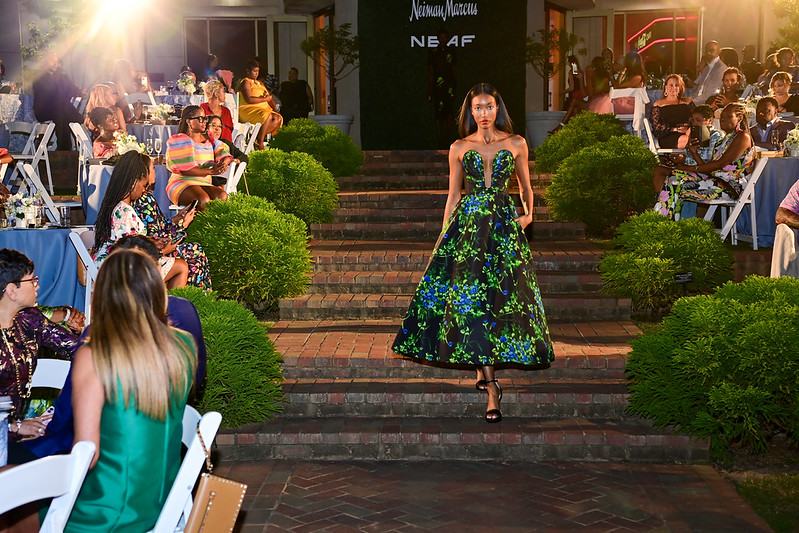
Taking place at the Atlanta History Center and in partnership with Neiman Marcus, FA+F attendees enjoy food + drinks, an impeccably curated fashion show, fashion icons and artists award presentations, and are introduced to the winning student designer of the annual Fashion Forward Student Design Competition.

Fine Art + Fashion raises funds to support NBAF’s operations and programs for artists of all ages and disciplines, particularly our youth arts education programs for underserved students of African descent.

LEARN MORE AND PURCHASE YOUR SEAT!
2024 NBAF Fashion Forward
A Competition for Student Fashion Designers
NBAF Fashion Forward honorees are selected by a distinguished panel of judges and receive a cash prize of $1,500. The 2024 NBAF Fashion Forward honorees will be presented at NBAF’s Fine Art + Fashion Benefit on Wednesday, March 27, 2024 in Atlanta, GA. To get started, check out nbaf.org/fashion-forward to download the Fashion Forward Fact Sheet to learn more about the application requirements. If you have any questions or need further information, please contact Fashion Forward Coordinator, Page Yang, at [email protected]. Please mention thesilo.ca when contacting.
The deadline to apply is Friday, January 26, 2024 at 11:59 PM EST. APPLY HERE!
2024 Artist Project Fund Applications
Eligible Metro Atlanta Artists Apply Today  
The 2024 Artist Project Fund (APF) is a $2,000 usd grant and 6-month artistic development program for Metro Atlanta artists seeking funds to complete an ongoing project. APF supports 20 professional artists in the completion of an ongoing artistic project, fosters a sense of community and creative collaboration, and provides immersive artistic and career development experiences to help them grow as artists and creative entrepreneurs.
The deadline to apply is Friday, February 2, 2024 at 11:59 PM EST.
APPLY HERE!

SHOP THE NBAF STORE

New Merch! Your purchase supports NBAF’s year round programming.

Select from special limited edition art prints, t-shirts, tote bags, note books, and more!Black Art Matters TeeNBAF Commemorative PinsRadcliffe Bailey NBAF 10th Anniversary PostersBlack Art Matters stainless steel tumblerNBAF tote bagNBAF Logo Unisex Hoodie
With Shop Pay you can get it now and pay later! Pay in 4 interest-free installments for orders over $50.00.  

Don’t miss out on NBAF news and events.
Follow us on social to stay in the know!

The Met Acquires Monumental Tiffany Window

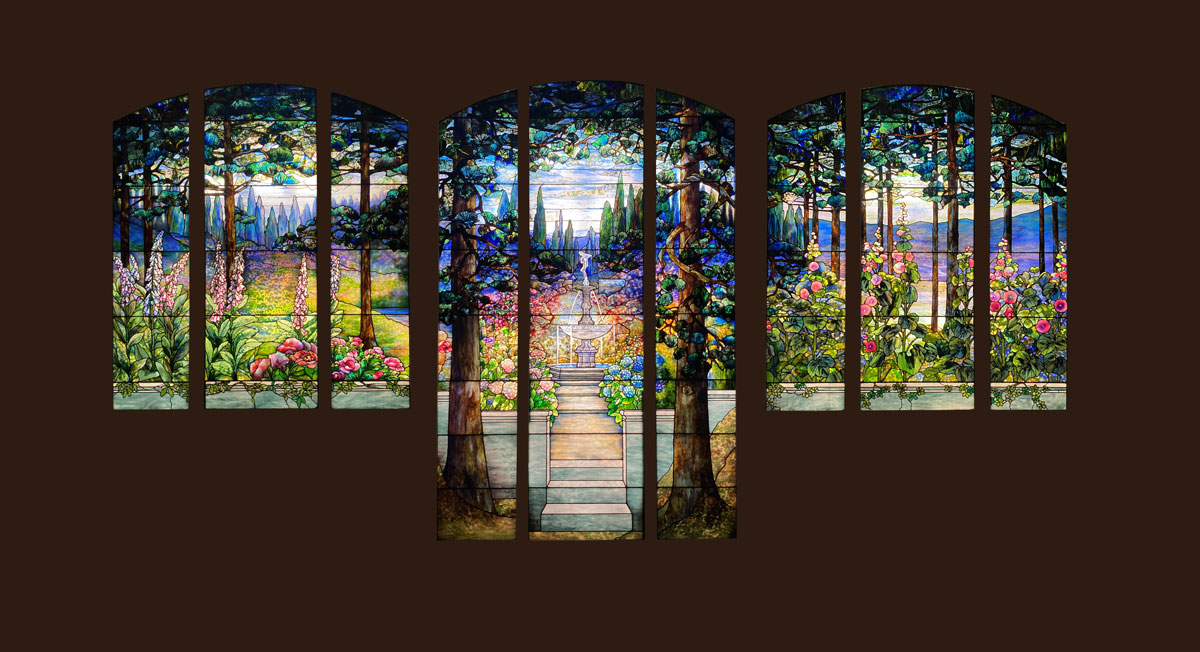
(New York, December, 2023)—The Metropolitan Museum of Art has announced the acquisition of a monumental Tiffany three-part window, Garden Landscape. The window—over ten feet wide and nearly seven feet tall—was designed by Agnes Northrop in the studios of Louis Comfort Tiffany, the attribution of which is based on a signed design drawing for the center panel that resides in The Met collection.

As part of the Museum’s American Wing 100th anniversary, the window will be installed in the Charles Engelhard Court in November 2024. The window will be dramatically framed by the columns from Laurelton Hall, Tiffany’s Long Island country estate.

The acquisition is made possible by Alan Gerry Gift; 2023 Benefit Fund; Louis V. Bell, Harris Brisbane Dick, Fletcher, and Rogers Funds and Joseph Pulitzer Bequest; funds and gifts from various donors, by exchange; Ronald S. Kane Bequest, in memory of Berry B. Tracy; Lila Acheson Wallace, several members of The Chairman’s Council, The Erving and Joyce Wolf Foundation, Martha J. Fleischman, Elizabeth J. and Paul De Rosa, Women and the Critical Eye, Mr. and Mrs. Richard Lockwood Chilton Jr., Cheryl and Blair Effron, The Felicia Fund, Julie and James Alexandre, Elizabeth and Richard Miller, Anonymous, John and Margaret Ruttenberg, and The Gerald H. Ruttenberg Foundation Gifts.

Max Hollein, The Met’s Marina Kellen French Director and CEO, said: “This stunning work of art is an extraordinary example of the transformational creativity of Agnes Northrop and Tiffany Studios. Magnificent in concept and execution and more than grand in size, it deepens the American Wing’s Tiffany holdings and will enhance the already stunning Engelhard Court with a powerful, immersive viewing experience.”

Sylvia Yount, Lawrence A. Fleischman Curator in Charge of the American Wing at The Met, said: “Northrop’s remarkable environmental work further strengthens our representation of women artists in the American Wing and allows us to share broader stories of early-20th-century culture with our visitors.”

The window was originally commissioned by Sarah Cochran, Pittsburgh businesswoman and philanthropist, for Linden Hall, the grand Tudor-Revival estate she had built in 1912 in Dawson, Pennsylvania. She personally requested the subject of the window, which represents a lush landscape and garden suggestive of her own at the estate. Placed on the stair landing of the house, the window enticed the viewer up marble steps and offered a long vista through tall, majestic pines flanking a central fountain amidst profuse flowers—pink and blue hydrangeas, poppies, and nasturtiums. The two side panels depict, on the left, foxglove and peonies, and on the right, hollyhocks, exquisitely rendered in glass. These were subjects favored by Northrop and American Impressionist painters.

Northrop was one of the most important designers in Tiffany’s employ and his preeminent woman designer. In a field dominated by men, Northrop established herself as one of the leading designers of windows, and was recognized for her work by winning a prestigious award at the Exposition Universelle in Paris in 1900. She helps shed light on the critical and often unrecognized role played by women in the art of Louis Comfort Tiffany. Northrop and Tiffany pioneered new landscape and garden subject matter for stained glass, and the window reveals Northrop’s careful observations of nature and her gift for translating it into glass.

Alice Cooney Frelinghuysen, Anthony W. and Lulu C. Wang Curator of American Decorative Arts, said: “This extraordinary evocation of a garden landscape is Northrop’s masterpiece. Made during the height of Louis Tiffany’s career, it was conceived, commissioned, and crafted by women. Featuring flowers in bloom from spring through summer, seen in the enigmatic light of approaching twilight, the window presents a luxuriant garden perennially in bloom.”

Tiffany’s opalescent glass shares a zeitgeist with American Impressionism, merging imagery with chromatic light. Northrop exploited the varied textures, lush colors, and light effects that were only possible with Tiffany’s special Favrile glass made at his furnaces in Corona, Queens, utilizing especially innovative and unusual techniques, some unique in a stained-glass window. The ingenious selection of the glass as well as the cutting of the glass into often thousands of pieces of almost impossible shapes was done by Tiffany’s skilled artisans, who were also largely women. Tiffany deemed the Linden Hall window of such note that he put it on public view in his New York showroom before shipping it to Cochran’s Pennsylvania home.
Featured image: Image: Three-part Garden Landscape window for Linden Hall, Designed by Agnes F. Northrop (1857–1953), Tiffany Studios (1902–32), New York, 1912. Leaded Favrile glass. 124 × 82 inches; 88 3/4 × 81 5/8 inches; 88 3/4 × 81 5/8 inches; center panel: 124 × 82 in. (315 × 208.3 cm); side panels: 88 3/4 × 81 5/8 in. (225.4 × 207.3 cm)

What Is The Mystery Phenomenon Of Shoe Tossing?

Shoe tossing and shoe posting are seen in most Canadian cities and rural motorways.

Its history and its symbolism are remarkably complex.

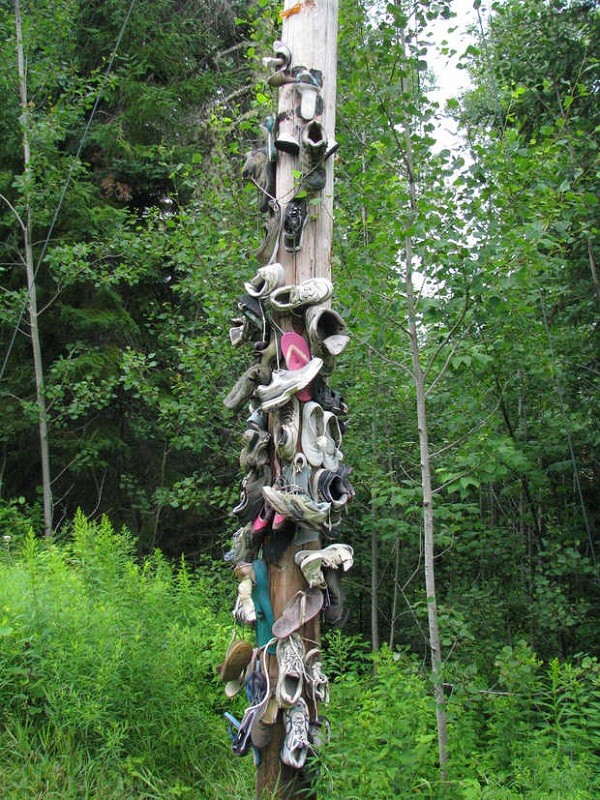
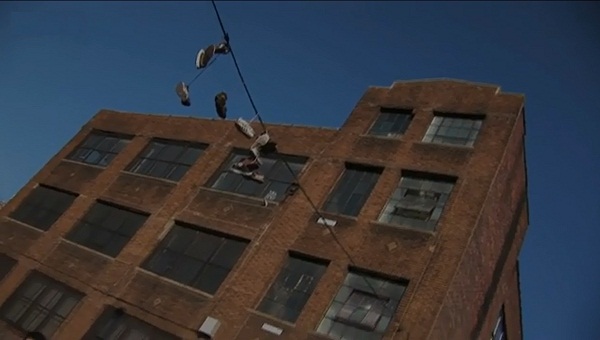
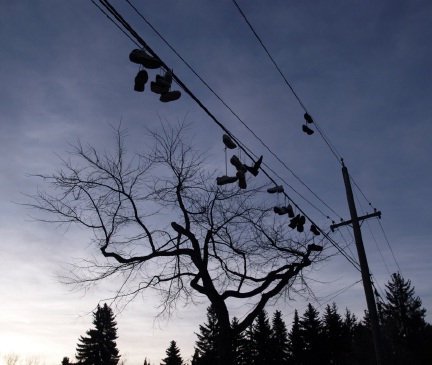
Shoe tossing is when shoelaces are tied and tossed over telephone or power lines so that the shoes hang loosely above the ground. Yet shoe tossing does not accurately describe shoes that are affixed to telephone poles or other inanimate objects using nails and staples. It seems that “shoe posting” would be a more appropriate terms for such occurrences. Nevertheless, each tossed or posted shoe represents either personal or cultural meaning.

There is a cultural meaning to each and every ‘tossed’ shoe- but what is it?

It may come as some surprise that shoe tossing holds a distressing history.

For example, many have noted that tossed shoes indicate the specific location where drugs like crack and heroin are used or sold. Moreover, others have mentioned that tossed shoes signify the physical boundaries of gang territory. For this reason the mayor of Los Angeles, California launched a campaign to remove tossed shoes from the city altogether. Further still, shoe tossing may be the product of bullying, theft and other forms of civil disobedience.

Is it safe to say that shoe tossing is primarily a form of civil disobedience or is there more to it?

On the other hand, there are some positive aspects of this mysterious phenomenon.

Shoe tossing, for instance, has been known to represent a rite of passage associated with graduation from an educational institution or a discharge from military service. While tossed and posted shoes mark our social environment in negative and positive ways they also call to mind images from the not so distant past.

Could there be a deep rooted collective unconscious meaning to shoe posting/nailing? H Joie Crockett Photos – Near the entrance to Rangeley Lake State Park you will find this oddity of a telephone pole with shoes nailed to it. The question is “Why?”

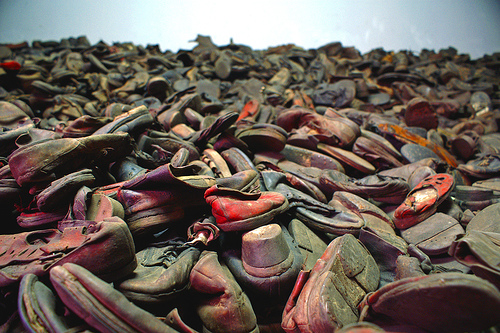
The pilfering of clothing and other possessions in extermination camps by Nazi forces during World War II included the shoes of men, women and children. These shoes were generally thrown on top of each other one by one. The result is a dense heap of shoes that were once filled with Jewish feet. Now, these shoes piles exist in Holocaust museums around the world as evidential markers of Nazi atrocity.

Holocaust shoes

Can tossed or posted shoes be thought of without considering the indelible Nazi shoe piles?

This is an idea that has not been explored and deserves further attention in visual culture discourse.
It is difficult to deny that the formal appearance of tossed and posted shoes in contemporary society reference past images of Nazi piles of Jewish shoes during the Holocaust. This may arguably be a far stretch for some; but for others, the sight of tossed and posted shoes may trigger the painful memories and agonizing reminders.
Shoe tossing is at once close to life but never far from death. The meaning one subscribes to these curious objects is, like most things, one’s own. However that does not suggest that particular objects seen in everyday life, like tossed or posted shoes, cannot allude to the images of history. For the Silo, Dr.Matthew Ryan Smith

Prehistoric Ocarinas-Ancient Flints Contain Musical Scales

A few years back, I posted the “I Found a… Pipe” blogpost – an attempt to initiate a series of found object accounts; exploring the dynamics of curiosity, the chance encounters, the chains of association, the pratfalls and prat-uplifts that may accompany such discoveries. 

One of the persistent themes is the idea that electronic-equivalents of sound-making processes can be found for free in the physical world – an ideal driven by poverty and its resultant anti-capitalism, and accompanying skepticism towards commercial electronic hardware flavours-of-the-months.  Whereas the “pipe of 2018” had limited sound-making value, this new blogpost examines the musical scales obtainable from multi-holed hollow flints, found during pandemic walkabouts.

I’ve been traipsing around fields. 

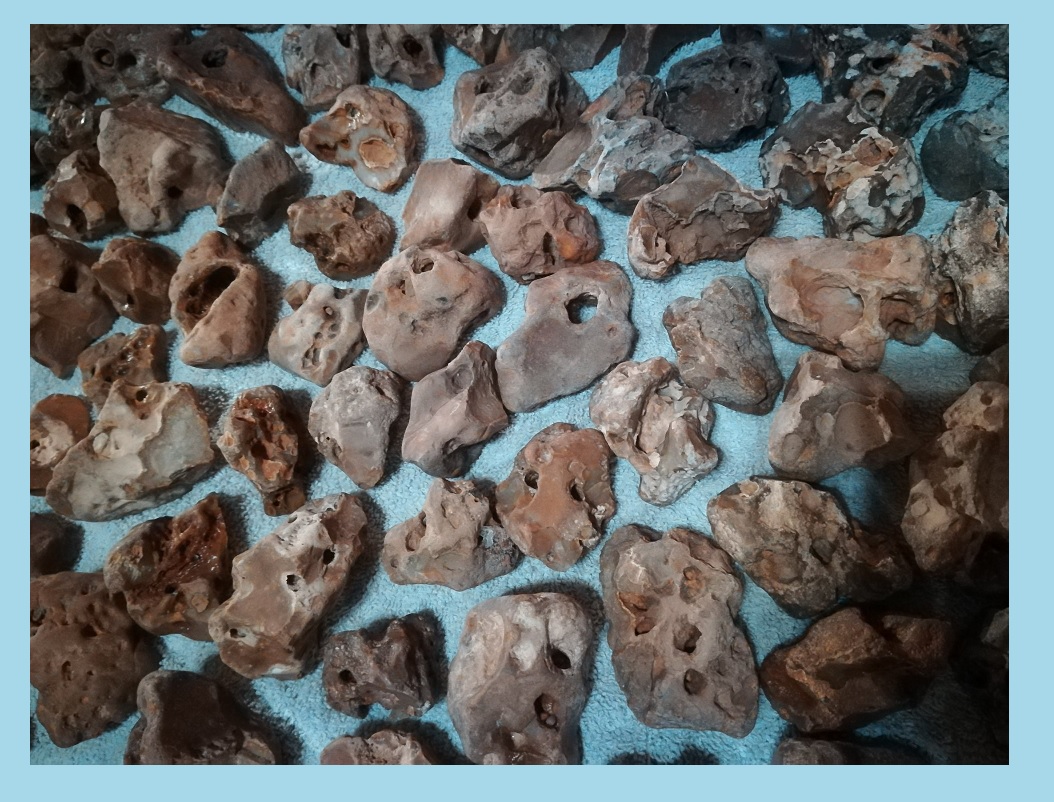
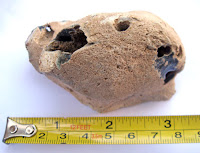
The flint-rich geology of the locale boasts rocks with hollow cavities – channels left by decayed ancient sea sponges.  These hollow flints are difficult to spot, as their holes are usually clogged with mud.  After some cleaning with water and bell-wire, the cavities can be cleared, creating almost ocarina-like ‘instruments’.  So far, a number of different flints have been found with interlinked channels, each offering unique microtonal musical scales.

These stones, each with their own in-built set of pitches formed 500 million years ago, are good grist for the arbitrary tuning mill. 

Why is arbitrary tuning important?  I consider it a topic all-too-frequently dismissed.  For those who enjoy the divergent aspects of differently-tuned music, or wish to escape the ubiquity of the equal tempered musical scale, it may be surprising that microtonal/xenharmonic music offers very little refuge – it is here that just intonation and “pure” harmonic mathematical dogmatism supplants one tyranny with another.  I exaggerate here a bit, but it’s fair to say that random/arbitrary musical scales are generally viewed as unsophisticated in microtonal music circles.

https://twitter.com/i/status/1273936272562753536

A few years ago I tried to establish a historical basis for ‘intuitively selected tuning systems’ in my Radionics Radio project (on Sub Rosa records), but drawing upon a fringe science – no matter how artistically groundbreaking those acoustic-radionic activities were in the late 1940s – didn’t convince many (radionics involves ‘psychically’ selecting frequencies that correspond to thoughts). 

Random tunings offer complete freedom, and reveal the idiosyncrasies of the instruments used, as well as the identities of soundmakers.  I would go as far to politicise it: arbitrary tuning is perhaps the ultimate musical ‘decolonisation’ whilst also being a practical and philosophical ideal for microtonal music’s LGBTQ+ lineage that embraces such varied personalities as Kathleen Schlesinger, Elsie Hamilton, to Harry Partch and Wendy Carlos – a lineage rarely-discussed, but deeply rooted, I believe, in the opposition to the norms of western equal temperament (and the contra-norms of just intonation and equal divisions of the octave).

The hollow flint… containing a scale.

Hollow flints found in fields speak of the primacy of arbitrary tunings: random, fully individuated tunings literally set in stone

My favourite is a handheld flint with five channels.  Unlike the specially-lipped ocarina, hollow flints cannot produce pure tones when blown into, unless a sharp ‘labium tip’ is expertly chiselled into it somehow (a feature of all fipple flutes).  This isn’t necessarily a problem – for instance, sound artist Akio Suzuki has been playing upon unrefined natural stones for decades, eliciting exploratory pitched noise: half-tonal, half-percussive, and sensitively done.  Covering the holes on the flint while blowing does produce vague pitches, but too broad to measure precisely.

Kathleen Schlesinger, in her 1939 deep-study of ancient greek auloi (reeded wind instruments dug up from historical sites) and their possible scales remarked that “it is impossible to determine the pitch, scale, or modality of any pipe that lacks a mouthpiece which will play it”. 

These rocks are not instruments, and it is indeed tricky treating them as such: even if a fipple mouthpiece (from a wind recorder, for instance) is introduced to the rock (which I did), the pitch of the notes varies due to its player’s breath pressure: the more open holes there are, the more breath pressure is required to produce a tone – and the natural reflex action is to supply more breath pressure, an action so unconscious that it almost feels as if the rock becomes an extension of the body.  Try it yourself.

It is possible to connect a small lapel microphone to a loudspeaker amplifier, and place the microphone inside the flint to hear feedback.  The feedback pitch is relative to the cavity, and alters according to the fingering of the cavities.  I did a brief experiment with this on camera, and posted it to Facebook to advertise the episode of Wavelength on Resonance FM where I describe these experiments.

On the internet, there’s always either a miserable don’t-know-who, or a know-it-all nonsenseclown poised to blurt. 

If they’re remotely connected to creative doings, it tends to spur on the mission to legitimise arbitrary scales.  On this occasion, one such character (I can’t discern which) emerged from the woodwork to advertise their obliviousness to these experiments’ contexts: “eh, this is like sticking a piezo transducer in anything. Ok; weird, somewhat regulated noise. ‘Man farting in field’ has been Lucier’d to death.”

Maybe this person is rightfully irate to some extent: the volume required to obtain the pitches of the flint cavity is horrendous on the ear.  To record it, one rainy afternoon I walked to the field where the flint originated, specifically to avoid remonstrations.  Alvin Lucier used compressors to limit the volume of his object-based feedback.  This feedback technique actually pre-dates Lucier’s work by eight decades – the feedback flute was proposed by Alfred Graham, patented in 1894 – a failed history I’ve excavated and written about in ‘Magnetic Music…‘ and ‘Failed Histories of Electronic Music‘, and recreated as a working model.  Graham recognised the many variables affecting the flute’s pitch, such as battery power, the shape and construct of the loudspeaker and microphone, and their relative positions. 

Nevertheless, the feedback flint, if held stable enough, is a fairly accurate approximation of the pitch intervals obtainable.  By comparing the feedback-generated intervals with the intervals obtained with an attached fipple, and also with the vague windy tones created when blowing, mean averages can be obtained.

Alfred Graham’s feedback flute, 1894.

With the lowest note registering as 669Hz, the ratios are calculable as 1/1, 737/669, 775/669, 263/223, 269/223 and 828/669 (giving an ascending 167.590, 254.628, 285.622, 324.674, 369.149 in cents).

What can be done with these notes? 

Well, the scale of this handheld flint encompasses less than four semitones (3.69, to be exact), which is a restrictive set of notes, but frequent exposure to the notes acclimatises the ear to soundmaking/melodic possibilities.  This is something noted by the composer Susan Alexjander who derived scales from DNA bases.  DNA bases’ tunings might as well be arbitrary, such is the inharmonic chaos – they seemed “so strange and alien that one at first despairs of ever creating a beautiful work of art, or making any coherent ‘sense’ out of them”, according to Alexjander.  By constant exposure to the new scales “played over and over on the synthesiser, some arrestingly beautiful combinations began to appear”…  so when dealing with such disorientating scales, perseverance is key! For the Silo, Dan Wilsen.

More can be heard on Wavelength, broadcast on Resonance 104.4FM on 19th June 2020. “A programme of multiple agendas presented by William English. This week: a tape sync with Oscillatorial Binnage member Daniel Wilson who, prevented from bin-diving during the Covid-19 epidemic, instead turns to “ground-diving” to dig out unusual stones from the earth. The potential for producing ‘rock music’ is showcased after a lengthy preliminary chat with William on the current state of the second-hand book trade.”

Loafers And Flats Are Perfect For Fall

Attract attention to your feet with these two new VENUS additions to the 2568’s collection.

Are you a shoe junky? If you are, you might take a special interest in 2568’s men’s and women’s new footwear line.

These shoes are comfortable classics with a twist: moccasins, loafers and boots, ballet and pointy flats, in unexpected materials and pattern featuring distinctive fabrics and leathers. Unique details also include colorful laces and decorative tassel bows. 2568 Shoes http://2568shoes.com  are inspired by Guatemalan creativity found in garments, handbags and small leather goods.

Fun,bold and funky colour patterns. The Venus line from 2568 Shoes.

The Venus loafers and Vanessa flats come in five different patterns with colors ranging from dark blues and blacks to reds and oranges. The colorful fabrics can make any outfit and can easily transition throughout the seasons.

The Vanessa line from 2568

Sizes range from 8.5 to 12. Price points range from $79 [USD]  and up, and for every shoe purchase, 2568 will send a free Guatemalan friendship bracelet. About the owners: Lorenzo Castellon  is the Manufacturing/Business Manager and Jamie Lawenda  is the Creative Director. The couple met on a job interview and thirty years later are married, have a child and own a sourcing and shoe Design Company.

Another Vanessa example

At first they created shoes and boots for other brands, including Sendra, a Goodyear welted high-end line of leather boots made in Spain. The couple continues to design and sell Sendra in the US.

The SAMOSA boot has a decidely Guatemalan influence. #goodlooking #boot

Cross-border shopper alert! The Venus loafers and Vanessa flats can be purchased at PiperLime, ThomShoes, ShoeInn and FreePeople. The Newman is available in four other colors: patent leather black and red, silver snakeskin embossed leather, and white leather.

This Fall -Rebecca Myers Nature Inspired Handcrafted Jewelry


JOIN ME FOR THESE UPCOMING FALL SHOWS
Fall is almost here and I’ve got a ton of great events coming up, including this weekend’s much-anticipated Long’s Park Amphitheater Art Festival in Lancaster, PA. These shows are more than just shopping experiences; they’re opportunities to connect with passionate artisans and discover one-of-a-kind pieces.  They’re also a great way to start your holiday shopping early (or grab some special pieces for yourself). Can’t make it to the shows? Swing by the Baltimore showroom in Cross Keys or shop all of my new pieces online at rebeccamyersdesign.com. See the full list of events on my events page… https://www.rebeccamyersdesign.com/events
Looking forward to seeing everyone! xo, Rebecca


SAINT LOUIS ART FAIR
September 8 – 10 | Downtown Clayton | St. Louis, MO This year we will celebrate our 30-year history of the art fair — still attracting high-quality artists and celebrating the diversity of the community through a celebration of the Arts. The Saint Louis Art Fair (SLAF) produced by Cultural Festivals has been working diligently to Reconnect Through Art with the health and safety of artists, volunteers, and the public as its top priority. TICKETS & INFO
CRAFT NEW YORK September 30 – October 1 | Damrosch Park at Lincoln Center | NYCNYC’s most unique curated shopping event! Find wearable art like clothing, jewelry and handbags; home decor such as functional and sculptural works in ceramics, glass, metal, wood and mixed media; as well as fine art painting, printmaking and photography; and more. All handmade and all unique! Also, make sure to visit the expanded gourmet foods and specialties boutique including distillery and winery tastings. TICKETS & INFO
THE WALTERS ART GALA: AN EVENING AT THE WALTERS October 21 | 6pm | The Walters Art Gallery | Baltimore, MD My favorite party is coming up! The BEST night out in Baltimore is also a great way to support one of our most wonderful institutions. Get your tickets for the Walters Gala! Don’t miss it! PURCHASE YOUR TICKETS

The Protected Origin And Definition Of Spanish Cheese

One of my newest cheese loves is not a new cheese at all, but, actually, the traditional cheese of Spain. Manchego is a smaller wheel of Spanish sheep’s milk cheese that just makes the mouth water. It is regulated by Spain under the PDO (Protected Designation of Origin), which was granted through the European Union. (in a nutshell, PDO allows for exclusive food/geographical production so for example, in Europe, Parma Ham can only be sold and labelled as Parma Ham if it originated in Parma see link below for more CP ) This means that it must meet specific regulations in order to be called Manchego. It must be made from whole sheep’s milk taken from animals that have grazed in autumn in La Mancha province. Finished cheese must be aged from 60 days to 2 years. The milk must contain at least 6% fat and each stone, or wheel, of cheese must weigh between 2 and 3.5 kg.


View Larger Map

There is a distinctive pattern engraved in the inedible brown rind of the cheese.

Originally, the Manchego curd was hand pressed in plaited esparto grass baskets. The grass was taken from the same fields where the sheep grazed, and  the grass-flowers pressed into the top. Today, however, press moulds are formed using the traditional pattern and the grass baskets have been phased out of production. Still, the traditional zigzag is how you can recognize Manchego at your favourite cheese shop—and always look for the PDO label.

The inside of the cheese, or the paste, is an off-white that hints at golden. As the cheese gets closer to the rind, the colour progresses to more of an umber. Very small pockets of air are produced as the cheese ages and releases co2.

But enough of all this—the important part of Manchego is the taste. It has a wonderful, mellow flavour that is rich and subtle at the same time. There are slight hints of smoke, woody nuts, tobacco, honey and leather, and it finishes with the distinctive taste that only sheep’s milk can give you. Manchego can be served with olives, sundried tomatoes or hearty crusty bread. It pairs easily with a fine Rioja red wine or a fruity sherry—a wonderful way to stay warm on a winter’s evening.

Recently I heard that Manchego, cut in smaller chunks and dipped in honey poured on a plate, makes a fine conclusion to full meal. I tried this desert idea and the flavours of honey and cheese together are just wonderful. The smoky taste that coats the taste buds is a joy.

For the more daring, this traditional dessert of Spanish Manchego and honey also pairs well with a fine Cuban cigar. Enjoy your cheese.

Waaay back in 2007 the “Govinator” raised a few eyebrows at Ottawa’s Westin Hotel. After taking in a Sen’s hockey game, Arnold made an unscheduled stop for a 16$ Partagas Cuban

For the Silo, Scott Jensen.

Supplemental- Protected Designation of Origin Labelling, Terroir and the implications for Ontario agriculture: www.sustainontario.com/2010/05/11/2180/food-processing/protected-designation-of-labelling

Parma Ham and PDO:  www.prosciuttodiparma.com

Arnold enjoys Cuban Cigar while in Ottawa: www.activerain.com/blogsview/114533/-arnie-partakes-in-the-luxury-of-a-fine-cuban-stogie-after-hockey-game-in-ottawa

SwissArtExpo 2023 Will Be Most Visited Hotspot In Zurich

   
This year’s SWISSARTEXPO 2023 will be held in the beautiful Zurich main station. The art festival expects to draw 80,000 passers-by every day at the most visited hotspot in Zurich!
   
What is the ARTBOX.PROJECTS?
The ARTBOX.PROJECTS have been taking place at regular intervals since 2015 at the most sought-after art hot spots worldwide. The aim of the ARTBOX.PROJECTS is to provide a platform for specially emerging artists so that they can be seen by a large audience. So far, for example, very successful exhibitions have been held in the following locations: Miami during Art Basel, New York during Armory Art Week, Basel during Art Basel, Barcelona, Venice during the Biennale d’Arte and many more!
How does the ARTBOX.PROJECT Zurich 5.0 work?
Our most popular art project, the ARTBOX.PROJECT Zurich, takes place every year during the SWISSARTEXPO. SWISSARTEXPO is a Swiss art festival that takes place in late summer in Zurich’s venerable Main Station Hall and presents over 100 artists from all over the world. The ARTBOX.PROJECT has a very prominent place in the front part of the exhibition, where the two 86″ HD screens are located, on which the artworks of the ARTBOX.PROJECT Zurich participants are presented digitally throughout all exhibition days.

Visit Our Friends to the South in Buffalo & Take In July 4 Celebrations

The Obelisk- MacKinley Monument near Buffalo City Hall

If you’re looking for a spur-of-the-moment day trip from Niagara, Canada side, I have the answer for you.

A visit to downtown Buffalo can be your answer. It’s about an hour away nestled on the American side of the Peace Bridge and it’s a place still oozing with charm. The older downtown area offers a step-back-in-time experience. Forget the Chicken wings; the historic buildings here make a statement about style and sophistication.

July Fourth Fireworks Galore!

There are many places to catch amazing fireworks displays in and around the city core.

Canalside Fireworks, Fourth of July, Fireworks in Buffalo NY

Cool Architecture and Art Deco Stylings

Fantastic architecture abounds in Buffalo- here is Buffalo City Hall, a fine example of Art Deco styling

Old City Hall
Start your day of exploring with a visit to Buffalo’s Art Deco City Hall. It dominates everything in the downtown area. Built during the early 1930’s (at the height of the great depression) this is a must see. The building is open free of charge Monday to Friday between 8:30 am and 4:30 pm. Take the elevator to the 22tnd floor, and then walk the stairway to the observation area. You’ll feel like you’re on top of the Empire State building in New York City. You’re rewarded with an awe inspiring view of the city, Niagara River and nearby Fort Erie. Free tours of City Hall are offered Monday to Friday at noon. Just meet in the lobby and a volunteer will put you through your paces as he or she walks and talks about the history of this Buffalo charmer. I was convinced, I was in a time warp. Docent (an American term which usually refers to a historic tour guide),

The term docent is an “Americanistic term” but has roots in the Germanic language

Rick Smyth, a retired teacher explained the meaning behind the many murals and statues that adorn the inside of the building. He said, “They tell about the friendship between Canada and the United States that has extended since the end of the War of 1812″.
Niagara Square
Outside City Hall is Niagara Square .Dominating the square is a monument built to honour the memory of William McKinley, the 25th president of the United States (1897-1901) who was assassinated in Buffalo at the Pan American Exposition in 1901. If you love old architectural buildings and their history you’ve hit the jackpot. Take your pick, the perimeter of the square beckons you. All of these century old buildings have stories to tell. Escorted walking tours can be arranged at www.buffalotours.org or 716-852-3300.
Lafayette Square
Lafayette Square is three blocks to the east of City Hall. It’s a park in the centre of the downtown. The block, which was once square, is lined by many of the city’s tallest buildings including the Liberty Building, and Rand Building. The Buffalo and Erie County Public Library (www.buffalolib.org) is an interesting place to explore. You can a get a first hand glimpse of the manuscripts of the Adventures of Huckleberry Finn. by Samuel L. Clemens, better know by his non de plume, Mark Twain lived in Buffalo between 1869 and 1871. The library is open daily at 8:30 am, except Sunday, free of charge. This block is surrounded by the Niagara Frontier Transportation Authority’s Metro Rail light rail rapid transit, which runs about 12 blocks above-ground along Main Street in what is called the Free Fare Zone. Try it you’ll love it. The ride really is free.
Live Theatre
You’d be hard-pressed to leave this area without visiting one of the many historical theatres that offers touring Broadway shows, concerts, opera, dance and classic film series. Shea’s Performing Arts Center (www.sheas.org) on Main Street, built in the style of 1926 European Opera House, has an outstanding line-up of live entertainment. Greats like George Burns and Frank Sinatra have performed here in the past.

Find a tall building downtown (like the City Hall building) for a great panoramic look of the skyline.

Where to Eat
When the hunger pains start to come on I recommend the Spot Coffee Restaurant (www.spotcoffee.com) at the corner of Delaware Avenue and Chippewa Streets. This independently owned coffee shop is more authentic than places like Starbucks. They have good reasonably priced food and plenty of it. Uneven floors, wood tables and exposed brick make this the perfect neighbourhood eatery. They open at 7 am and close at 11 pm. It’s where I like to hang out during the annual St. Patrick’s Day Parade. The parade takes place this year on Sunday, March 18 and begins at 2pm.
Downtown Parking
Street parking is reasonable here. Be sure to carry lots of American 25 cent coins to feed the $1 an hour meters. Lot parking is about $8.00 for the day.
For More Information TELL ’em The Silo sent ya ;>
www.visitbuffaloniagara.com or 1-800-283-3256.

For the Silo, George Bailey.

Canada’s Jim Carrey Lists L.A. Brentwood Mansion

Jim Carrey’s prolific career includes marquee comedy roles such as The Riddler,  The Mask and Ace Ventura and critically acclaimed dramas Eternal Sunshine of the Spotless Mind, for which he won two golden globes and eleven MTV awards.

In 2022, he announced that he was taking a break from acting and was considering retirement. The prolific star has relocated to his vacation property in Maui and put the Brentwood estate where he has lived for the last 30 years up for sale. 


Now listed for $26.5 million USD/ $35.2 CAD, reduced from $28.9 million USD/ $38.4 million CAD, the sprawling ranch-style mansion is nestled behind huge hedges and private red-brick gates.

The 12,700-square-foot home features five bedrooms, six full bathrooms, and three half baths. The stylish residence’s pitched high-beam ceilings offer tons of airflow, while skylights let in plenty of natural light to bathe the bright white walls and Jim’s extensive art collection, including his own impressive creations. The living, dining, and family rooms flow together with hardwood and polished stone floors, fireplaces and ample windows with views of the lushly landscaped grounds. The well-appointed chef’s kitchen offers an indoor BBQ. A circular breakfast nook looks out onto flowering pear trees. Multiple sliding glass doors open onto a central courtyard that provides space for entertaining or lounging in the classic California indoor/outdoor living style. 

Jim’s primary bedroom suite includes its own private patio, plus a stunning wood-paneled bathroom with a copper-hooded fireplace, leaded glass windows, and a soaking tub. An Art Deco-style home theater pays homage to the movie palaces of old, with mohair-covered sofas, burl wood columns, and a lavish marble bathroom. The spacious gym and home office are perfect for the modern remote-work lifestyle. The massive two-acre grounds are a rarity in LA and include a full-size tennis court, a waterfall swimming pool, a pool house with bar, a sauna/steam room, vegetable gardens, and numerous mature trees. Walking paths wind through the serene environment, leading to the yoga and meditation platform. Carrey called the home “a place of enchantment and inspiration” and hopes it will continue to be “a magical sanctuary” for its next occupant.

One of LA’s most sought-after neighborhoods, Brentwood is right next to the hustle and bustle of Santa Monica but retains a community feel. Known for its tree-lined streets, unique mansions, and one of the best farmer’s markets in Los Angeles, Brentwood is home to numerous celebrities, including Arnold Schwarzenegger, LeBron James, and Tobey Maguire. Options for entertainment include the world-class Getty Museum, the Brentwood Golf Club, and the upscale shops and restaurants on San Vicente Blvd. 

The listing is held by Janelle Friedman of Sotheby’s International. 

The 12,700-square-foot home features five bedrooms, six full bathrooms, and three half baths, plus tennis courts, a waterfall pool, and an enormous two-acre lot. 


For the Silo, Bob Walsh. Photos: Daniel Dahler for Sotheby’s International Realty

Hotel Bayerischer Hof: Iconic Bavarian Gem Has Historic & Legendary Design Collaboration 

While choosing popular cities to travel, the obvious choices are always Rome, Berlin, Barcelona and London, but how about those ‘alternative’ cities you may have never thought of or come across? That is where Munich, Germany comes in. 

Nestled in the heart of Munich, Hotel Bayerischer Hof is one of Germany’s most historically important hotels, renowned for its timeless elegance and world-renowned design partnerships.

The aura of royalty is imminent as soon as one steps foot into the hotel. The property’s renowned collaboration with Belgian designer Axel Vervoordt, a global tastemaker, is designed with full picturesque and captivating minimalist interiors.

The unveiling of the art dealer, curator, designer, and antiquary Vervoordt’s latest revamp has transformed a section of the hotel into an artistic wonder– harmoniously mixing old and new, creating a design aesthetic that is hugely influential in Germany. He counts royalty within his clientele, with a nod to celebrities like Kanye West, Robert De Niro, and Calvin Klein.

Vervoordt’s collaboration with Hotel Bayerischer Hof is nothing short of incredible.

The Penthouse Garden Suite, Atelier, Garden restaurant, Cinema Lounge, and Palaishalle all bear the designer’s characteristic artistic touch. The new wing embodies a captivating minimalist design that is both modern and timeless in the same beat. Vervoordt’s talent helps the property keep in step with the ever-changing expectations of the hotel industry and attracts discerning guests who appreciate design that cleverly combines the present and the past.

Founded by female entrepreneur and owner Innegrit Volkhardt, who is dubbed “one of the most renowned hoteliers in the world,” her family has owned the Hotel Bayerischer Hof for over four generations, so the blood runs deep. The hotel recently celebrated 125 years of ownership. Volkhardt, a true Bavarian local, has immaculately maintained the hotel’s legacy while successfully integrating new design collaborations like that of Vervoordt.

Tucked away within the elegant shopping district, the hotel is near the city’s must-see attractions, including the Marienplatz, Viktualienmarkt, and the Hofbrauhaus, a fun and traditional beer house with live music (apparently it’s where the Nazis used to meet).

One can even say that you don’t need to leave the hotel, with a full service spa, a tiki bar underground, a glorious dome-shaped bar and networking area, a ballroom, and best of all, dinner at The Garden. The restaurant offers fan favorites like a goat cheese, fig and cottage cheese salad, as well as filet mignon with a side of spinach and potatoes. A sweet finish with a trio of sorbets to cleanse the palate and keep it light.

Hotel Bayerischer Hof boasts over 300 luxurious rooms and suites that capture its deep history, blending luxury with design.

The collaborative designs of Axel Vervoordt have played an immensely significant role in helping the hotel innovate and evolve without losing the essence that has made it a Bavarian favorite for 125 years. If you’re looking to indulge in an unforgettable experience, Hotel Bayerischer Hof is undoubtedly one of the best options in Munich. For The Silo, Ellie Ross.

Defoy At Heart Of Official Quebec Antique Dealer Route

“It’s the tiny town of Defoy. Only a gravel road from the main highway, but about a half a mile down there is the wonderful “antiques dump” of Rene Boudin and his freres.” photos: P. Ross

By the winter of 1982, we had been going to the Harbourfront Antique market every Sunday for about a year, and were making a pretty good living selling things we had bought at local auctions and garage sales. Then one day, I read in the excellent and entertaining “bible” of Antique dealing The Furniture Doctor” by George Grotz ,  that the village of Defoy, Quebec was mecca for the antique picker.

To quote “there’s a wonderful secret wholesale place up in the province of Quebec. It’s the tiny town of Defoy. Only a gravel road from the main highway, but about a half a mile down there is the wonderful “antiques dump” of Rene Boudin and his freres. And here under enormous sheds you will find literally acres of antique furniture, chests, and tables piled three to five pieces high”.

“…it wasn’t hard to find because it was near town, and his name was painted boldly on the barn.”

https://goo.gl/maps/ZhW6d7x5Z72G7buz6?coh=178572&entry=tt

The book had been out quite awhile so there was no telling if this situation still existed, so I asked the old guys at the market if they knew of such a place. I got several reports of it’s glory days, followed by “of course that was years ago and nobody goes anymore. That being said they also all encouraged me to give it a go, and gave me “leads” as to who may still be active. We gathered up our courage, our baby, and what cash we had, and set off.

That first twelve hour drive felt like an eternity. It was a tired crew who pulled in late afternoon to a tiny motel in Victoriaville, Quebec.

Our first move was to look up Marcel Gosselin in the phone book because he was one of our most promising leads. To our delight he was listed, and he answered and told us where and how to come the next morning. It wasn’t hard to find because it was near town, and his name was painted boldly on the barn. Marcel greeted us warmly and proceeded to lead us to his main barn. There, behind the red and white cross doors was the biggest pile of dining chairs I had ever seen. About thirty feet across it reached to the top of the barn.

Through the hatch work of legs I could see tantalizing glimpses of a cupboard and some chests. Then he took us upstairs where in a loft he had sorted hundreds of chairs in sets of four, six, or more. Some were painted and some varnished. It was $45cdn each for simple painted chairs, $65cdn each for nicer pressbacks and/or varnished ones. We got a couple of sets knowing we would get about $150cdn-$250cdn each for these when refinished., Next I asked him about that cupboard I had seen in the giant pile downstairs. He told me all about it including the age, condition and reasonable price of $250cdn and told me he would extricate it and have it ready for my next trip if I wanted it.

I said I did, and then he didn’t even want a deposit.

“That’s not the way we do it down here. Your word is good enough, until it isn’t” Marcel (R) Phil (L)

“That’s not the way we do it down here. Your word is good enough, until it isn’t. I liked him immediately and knew he was a man I would enjoy doing business with.

Next he took us to the garage attached to his 100 year old frame house. The downstairs was filled with every kind of “smalls” including small boxes, glassware, pottery, antique clothing, folk art, etc, etc; and the tiny, about to collapse, upstairs loft was filled with hundreds of pottery washsets. There were some beauties, and this was a hot item at the time in Toronto. Prices ranged from $45cdn-$75cdn per set. We bought 8 of the nicest sets knowing we would get between $145cdn to $375cdn back home.

This was getting truly exciting.

We spent a terrific four hours or so with Marcel that first day and pulled away from his place, with half our money spent, and half our truck full of interesting, excellent quality, and reasonably priced stuff, not to mention the overwhelming sense of warmth, excitement and wonderment of that first glimpse into a Quebec picker’s life. We were hooked, and we knew it was the first of many more trips to see Marcel.  For the Silo, Phil Ross.

Featured image courtesy of tourismecentreduquebec.com     

Selina Berlin Mitte Launches, Offering ‘Nook for Art and Music Lovers’ in the Heart of Berlin

Berlin’s vibrant art scene just got a little more exciting with the opening of Selina Berlin Mitte, the latest property from skyrocketing hospitality company, Selina. Dubbed an ‘art-forward’ hotel, Selina Berlin Mitte boasts a guest concept that revolves around art and music, offering visitors a memorable cultural experience to feel like a local.

Located in the heart of Berlin’s Mitte district, Selina Berlin Mitte offers guests an eclectic mix of accommodations, including standard, suite, shared, and hybrid options.

I was offered one of the suites, and I literally felt like I had relocated to my very own apartment in Berlin, stocked with a kitchen, fridge, modern shower and bathroom, couch, vintage record player and expansive views of the city. Perfectly situated for exploring the city, the hotel is steps away from some of Berlin’s best design stores and boutiques, galleries, restaurants, shops, and bars.

If you are looking to socialize, Selina Berlin Mitte features a rooftop co-working and bar area, plus a restaurant with contemporary Israeli and Mediterranean cuisine called HOWM, a grab-and-go dining option available 24 hours, and even a communal kitchen.

If you grab a drink at the hotel rooftop, you will be surrounded by lounge seating, fun board games, and a 360-view of the city, including Berlin’s iconic TV Tower. Selina goers can meet up for a “welcome drink,” rooftop yoga classes and meditation sessions. If you are searching for activities on the property, you can choose from workshops, live music, DJ sets, art exhibits, and lectures.

Sprawled along the hotel walls are carefully curated artworks by Berliners and international artists, with installations highlighting mixed media– reclaimed wood, mirrors, and vintage art objects. Using earthy and hip furniture, Selina has an industrial feel that opens your eyes to innovation and connection. Common areas are filled with murals, while in-room art combines classical Berlin prints and artworks. Large-scale artistic works are woven throughout the reception area, rooftop, corridors, and suite rooms.

On a mission to keep digital nomads connected, enabling them to travel and work without borders, Selina has plans to open 10-15 hotels in 2023, catering to millennials and Gen Z travelers.

On April 14-16, Selina Berlin Mitte celebrated its opening with the “Welcome to the Hau(E)” event, a 3-day experience showcasing curated local programming, food pop-ups, wellness activities, live music DJs, and a local artisan market.

Selina Berlin Mitte is the “IT” hotel, where art and music lovers unite into a cultural melting pot. Book a stay and indulge in the avant-garde, art-centric German capital, and all it has to offer. For the Silo, Kat Fleischmann.

For more information or to book a stay at Selina Berlin Mitte, visit www.selina.com.

Exploring Outsider Visionary Art

For the last couple of decades the term “Outsider art” has come into popular use as a catch all phrase to describe the work of those who live “outside” society.  Prisoners, religious visionaries, the institutionalized, and hermits all fall into this category.

It is quite often grouped together with folk art in that it is also primarily work by an untrained hand, but it differs in that the work is often more wildly imaginative,  or “edgy”.

Back in the early 90’s, I was fortunate enough to participate in the second and third Outsider Art Fairs  in New York.  I was struck and amazed at the high levels of both positive and negative energy  generated by the various works from around the world on display there.

Everything from giant nightmare fantasies to what could best be described as visions of heaven fighting it out side by side.  It was intense and worthwhile.   It was also an interesting lesson in marketing, in that I observed how a handful of powerful art dealers control and establish who is “hot” and how much these works were going to cost.

The newly found amazing collage/paintings of Henry Darger were presented initially at about $4,000 for a small one.  The second year the price was $40,000.

The book had come out on the Chicago recluse who spent all his days writing his posthumously discovered 15,145-page, single-spaced fantasy manuscript called The Story of the Vivian Girls, in What is known as the Realms of the Unreal, of the Glandeco-Angelinnian War Storm, Caused by the Child Slave Rebellion, along with several hundred drawings and watercolor paintings illustrating the story.  Beautiful and disturbing.

Betwixt and Between: Henry Darger's Vivian Girls
Betwixt and Between: Henry Darger’s Vivian Girls

[This is a picture of Elsie Paroubek who was murdered at the age of five in 1911 in Chicago. The picture is most likely to have come from the Chicago Daily News. It was one of many newspaper photos of children collected by artist Henry Darger. According to his autobiography, his copy of Miss Paroubek’s photo was in amongst some items that were stolen when his locker at work was broken into, and he was unable to locate the picture in the newspaper archives. The tragic death of Miss Paroubek and the loss of her image inspired him to begin writing his monumental fantasy novel “The Story of the Vivian Girls.” Miss Paroubek was a central character in the novel, under the name Anna Aronburg. Photo is in the public domain. Text excerpt from wikipedia CP]

In Canada, there are just a few documented artists who could be considered “outsiders”.   There is Clarence Webster who drew interesting childlike pictures to cheer up the walls of his institutional room.

A very interesting visionary artist was Alma Rumball who lived in a rural Muskoka cabin. Following a vision of Jesus, she became a clairvoyant recluse, at age 50, creating prolific, intricate, coloured pen and ink drawings.  She watched, as “The Hand” drew by itself, unfamiliar forms, faces, and characters, separate from her consciousness.

There is a good Vision T.V. documentary on this artist.  Another example is Gilbert DesRochers, who after a religious vision moved to his brother’s farm near Perkinsfield, where he lived in a small trailer and attended church regularly, producing many religious based sculptures.  He was discovered and documented by artist John Hartman in 1980 and a solo exhibition of his work was held at the McMichael Canadian Art Gallery from November 3, 1991 to March 1, 1992. For the Silo, by Phil Ross. 

Featured image- The ascension of Gilbert DesRochers. Beaverbrook Art Gallery. 

The World’s Weirdest Museums You Must Visit

More often than not, all our museum experiences are quite similar. We see some art or historical artifacts, learn about a subject, and sometimes listen to a lesson during a tour. 

And while every museum is invaluable, sometimes the heart wants something quirkier and unusual.  Evidently, many people had the same sentiment because if you really look, you’ll find some incredible gems in the world of museums. 

Here are the world’s weirdest museums you must visit. 

Momofuku Ando Instant Ramen Museum, Osaka, Japan 

Ramen is synonymous with Japan, so no wonder there is a museum dedicated to it! Momofuko Ando, the Taiwanese-Japanese inventor, invented Chicken ramen noodles in his backyard shed in 1958.  

The Momofuku Ando Instant Ramen Museum shows this Japan’s cult food that went global by displaying ramen noodle packages from around the world and giving the opportunity to taste limited-edition ramen from Hokkaido island and Tohoku region.  Visitors can also design their personal soup packet at the “My Cupnoodles” Factory.  

Spy Museum, Washington DC, USA  

Love spy movies or novels? Then this museum is for you! International Spy Museum in Washington DC has the largest public collection of espionage artifacts that includes various gadgets, cameras, secret weapons, cipher machines, and counterfeit money. 

It’s a rare chance to take a look at this secret profession and see how it’s developed over the years. 

Museum visitors can participate in interactive spy adventures, watch never-seen-before videos of spies and revel in the impressive photo collection.  And who wouldn’t wish for a super-gadget that would help make life easier, to help you in high-stakes situations like basketball betting on BetAmerica.com?  

Sulabh International Museum of Toilets, New Delhi, India 

Roughguides.com names the Sulabh International Museum of Toilets, New Delhi, India, which shows the history of hygiene and sanitation from 2500 B.C. to today, as one of the weirdest museums a person can visit. 

The visitors can see the toilet evolution over the ages – from Roman emperors’ gold-plated toilets to medieval toilets of peasants.  A fun fact – you can find a collection of rare toilet poems in the museum as well.  

British Lawnmower Museum, Merseyside, England 

Can there be something more British than a Lawnmower museum?  If you’re a garden enthusiast or simply like quirky things, you must visit the museum, which details this garden tool’s history. 

Lawnmowers - Picture of British Lawnmower Museum, Southport - Tripadvisor

You’ll find such items as the lawnmowers of Prince Charles and Princess Diana or the world’s first solar-powered robot grass-chopper in the collection.  Probably the cutest lawnmower at the museum is less than five centimeters high and is fully functional!  
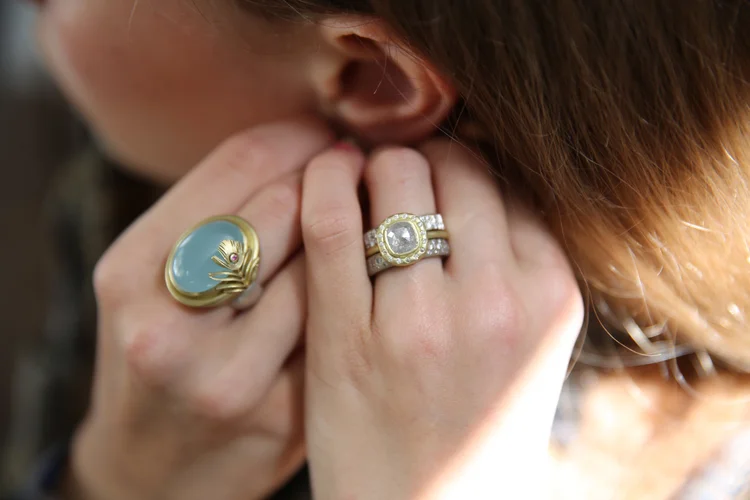
Siriraj Medical Museum (Museum of Death), Bangkok, Thailand 

If it sounds scary, that’s because it is. Even though officially named a Medical museum, most people call it simply the museum of death.  If you’re squeamish or find the subject distressing, it’s probably best to skip this one.  

You’ll find severed and mutilated legs and arms, brains, skulls pierced with bullets, lungs that have been stabbed, and other similar things in the collection.  They all illustrate the dark and gruesome ways to transition to death and leave no one indifferent.  

If that’s not enough, you can also see the mummified body of a notorious cannibal Si Quey and the museum’s founder’s skeleton.  

The Museum of Broken Relationships, Zagreb, Croatia 

It is just as sad and beautiful as it sounds. It started as a joke by two Croatian artists who broke up after a long relationship and said they wanted to create a museum to honor it. Well, they did, and it blew up all over the world. 

You can see various mementos from people’s relationships in different countries that include an ax used to destroy a cheating partner’s furniture, jewelry, postcards, and more.  

Paris Sewer Museum, France 

Nobody likes to talk about it, but sewer systems are the basis for a civilized society! However, it’s not the first or even the fifth thing people want to see when visiting the city of love.  

Still, it’s so fascinating and complex.  Lifehack.org explains that it’s an entire network of tunnels as large as the city itself, and also a museum that tourists can visit and explored, complete with tour guides.   Don’t worry, it doesn’t smell that bad, and you’ll see a part of Paris you never thought you would. For the Silo, Milda Urbonaite.

AI Induced Shifting Subtexts- What Is And What Isn’t Art?

Let’s go back to 2016 and re-consider how the works highlighted below are more relevant today than ever when asking “What is and isn’t art?”.  The recent surge in AI and chatbot produced ‘art’ has created new challenges in recognition, interpretation and validation. Or has it? [J.Barker Content Producer for The Silo]   It became immediately apparent that the rephrasing of the question “What is art?” to “What isn’t art?” signaled a dissolution of the boundary separating metaphor from reality.

Since, citizen and artist alike have been plunged headlong into the bacchanals of postmodernity, and the question has been obscured under a heap of incongruous discourse and subtexts.

Eva Davidova multimedia installation view

Two curious and intrepid artists offer their answers to this exhausting and illuminating question in their discussions of unexplored spaces and shifting subtexts.

Painter and multimedia artist Eva Davidova  tests the digital waters of virtual reality through immersive, programmatic experiences. Articulating the conviction that emerging technology is obliged to transcend commercial application, Davidova’s phantasmagoric 3D renderings attempt to draw the strings away from the hands of big business. Topics mentioned include the beauty of academic reciprocity, the fiscal realities of living in the metropolis, and the future of collaborative artistic environments.

julie mehretu dispersion
Julie Mehretu’s Dispersion

Behind the meticulous and sweeping abstract landscapes from the mind of Julie Mehretu are subtle societal and historical cues, which inform and enrich the surface of her paintings. In her ebullient interview, Mehretu speaks of the benefits and restrictions that arise from using architectural semantics to ground explorations of political and social change.

Wrought from countless painterly quotations, the identity of Mehretu’s brushstroke vanishes the moment it falls under interpretation.

The elusive and curious nature of the Ethiopian artist’s aesthetic experiments, coupled with a steady ethical subtext make for an engaging and memorable listen.

Featured image- “A Questionable Tale(#1)” 2022 Marina Zurkow/DALL-E (AI) 

For the Silo, Brainard Carey.

Art Auction: A Better Way to Collect Art

Have you ever dreamed of owning a piece of fine art but felt that it was out of reach financially? An art auction may be the answer to your dreams! Art auctions are an excellent way to purchase original artworks without breaking the bank. With the right approach, art auctions can be a great way to build a collection of art and save money.

The benefits of an art auction

For those who are looking to add to their art collection or simply just want to try something new, art auctions can be an excellent way to obtain art. Art auctions offer a unique opportunity to purchase artwork from all over the world at competitive prices. With a broad selection of works to choose from, they provide an exciting and engaging experience. 

One of the main advantages of attending an art auction is that buyers have the chance to buy authentic artwork without the risk of buying a counterfeit piece. This can save buyers both money and time since they don’t need to worry about being scammed by an online seller. 

Auctions also provide an opportunity for the buyer to get to know the artist and their work, as well as to discuss any questions with auctioneers or knowledgeable collectors. 

How to participate in an art auction

Attending an art auction is a great way to find unique and valuable pieces of art. But it can be intimidating if you’ve never attended one before. Here are some tips to help make sure your first experience at an art auction is a successful one. Before you attend the auction, take some time to research the artwork that is being offered. Learn about the artist and the piece you are interested in. Knowing what you are bidding on can help you make informed decisions during the auction.
The difference between an art auction and an online sale

Auctions and online sales both offer a great way for art collectors to purchase artwork, but there are some key differences between the two. An art auction is a live event where bidders compete in a competitive environment to purchase pieces of art. Bidding is fast-paced and participants must be willing to pay the highest price in order to secure the artwork they desire. 

Online sales are much different in that they are usually conducted over a longer period of time. Instead of a competitive environment, buyers have the opportunity to browse through the artwork and make their selections at their own pace. This allows buyers to take their time, research the piece, and evaluate whether it’s worth purchasing or not. 

Furthermore, buyers may be able to negotiate a lower price as they may not have to compete with other bidders. Another difference between an art auction and an online sale is that auctions are typically reserved for more expensive pieces of art, while online sales tend to feature more affordable artwork. As a result, those who want to purchase high-end artworks may find it more beneficial to attend an art auction than to purchase from an online store.

Some Monitors Are Actually Designed For Specific Video Games

IRVINE, Calif. – Waaaay back in Summer 2011, BenQ America Corp. announced that as the official gaming monitor sponsor of Major League Gaming (MLG), the world’s largest competitive video game league, it would be supplying monitors for the then upcoming 2012 MLG Pro Circuit Summer Championship that were held in Raleigh, North Carolina. At the tournament, hundreds of the top gamers from around the world competed using BenQ’s RL2450HT and GL2450HM monitors, designed specifically for professional gaming and engineered to meet the specific needs of eSports athletes. The GL2450HM was also featured in the Virtua Fighter(TM) 5 and Skullgirls(TM) Exhibition Tournaments, alongside the Pro Circuit competition.
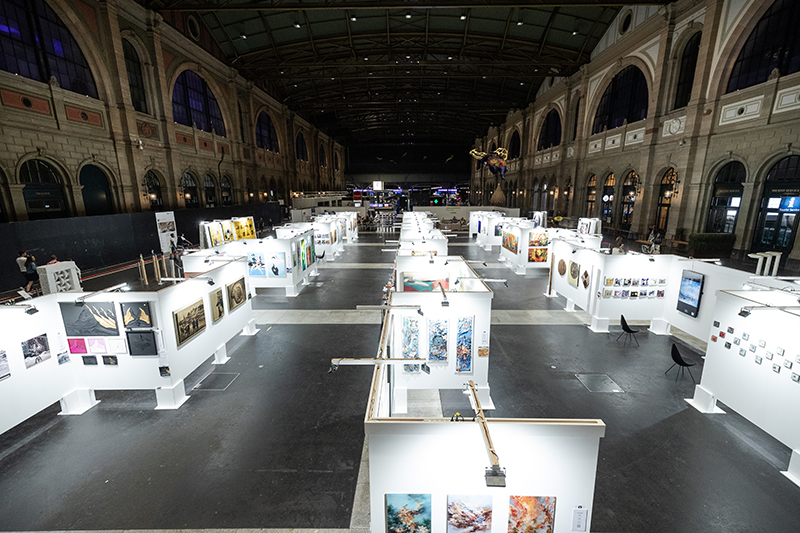
At the 2012 MLG Pro Circuit Summer Championship, gamers — including BenQ-sponsored Team Dynamic and Manuel “Grubby” Schenkhuizen — competed for their share of nearly $215,000 in prizes playing the real-time strategy (RTS) games StarCraft(R) II: Wings of Liberty and League of Legends(R) on PC, and fighting games Mortal Kombat(TM) and SoulCalibur(R) V on the PlayStation(R)3 (PS3(TM)).

[Then] 26 year old Dutch professional videogamer Manuel “Grubby” Schenkhuizen and friend Cassandra. How good is he? Check out- http://www.sk-gaming.com/player/90-Grubby image:courtesy MechWarrior online
Thousands of spectators watched the tournament at the Raleigh Convention Center, and hundreds of thousands of fans watched the action online at www.majorleaguegaming.com/live.

For those retro system fans, there was even a Summer Championship that let fans get in on the action with Virtua Fighter 5 and Skullgirls Exhibition Tournaments, played on the good old PS3.

Anyone with a Raleigh Spectator or Competitor Pass could participate in these tournaments, which were sponsored by PlayStation. Winners of the best-of-three matches held the station until defeated and could re-enter as many times as they wished. The two players for each game with the longest winning streaks battled it out for $2,000 per tournament in the Finals on the
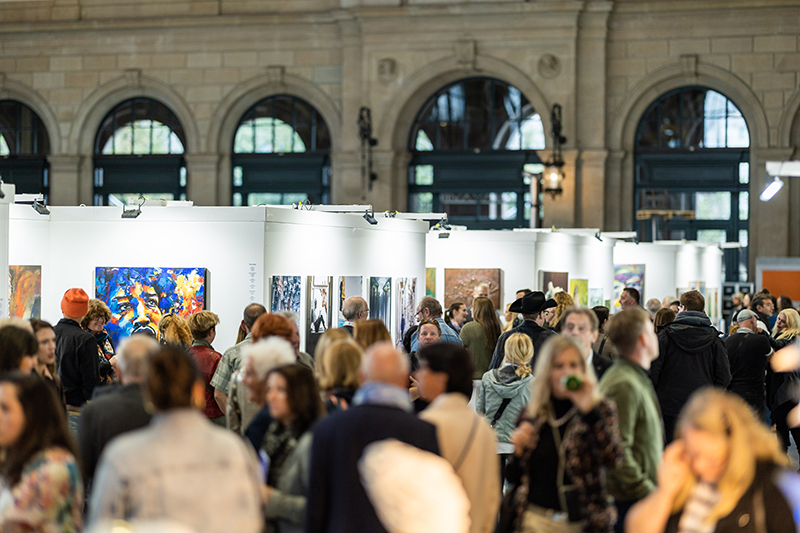
Fighting Games Main Stage.

Crowd shot from the MLG #gamerompfest

“The Summer Championship in Raleigh [was] sure to provide an exciting culmination to an amazing summer season, and we [were] honored to have our RL2450HT and GL2450HM in the middle of the action,” said Bob Wudeck, Director of Retail and e-Commerce at BenQ America Corp. “The fast response times of BenQ’s monitors result in high-action competition, while features such as the RL2450HT’s Black eQualizer help eSports athletes not just play the game, but conquer it. In addition, the incredibly low lag of the GL2450HM provides perfect timing in fighting and shooting games.”

Delivering a supreme RTS gaming experience, the RL2450HT was used for StarCraft II: Wings of Liberty and League of Legends PC games tournaments at the Summer Championship. The RL2450HT was engineered with input from the world-class StarCraft II professional gaming team, STARTALE, which is sponsored by BenQ. For top-level RTS gamers, the monitor features a 60-Hz refresh rate for smooth movement, an LED light engine for great color and low power consumption, and a 2-ms GtG response time with 12 million to 1 contrast ratio.

The RL Series RTS Mode maximizes StarCraft II visibility and optimizes color, while its Black eQualizer enables total visibility by allowing gamers to adjust the screen brightness without over-exposing white levels — revealing critical combat details with improved visibility in darkened areas. The RL Series Display Mode allows gamers to interchange between monitor screen sizes, while the Smart Scaling feature gives them the freedom to scale the screen manually to any custom size — from 17 to 24 inches — depending on their preferences. In addition, the unit’s adjustable height stand allows for optimal screen positioning.

The 24-inch-wide GL2450HM monitor is an ideal choice for console gaming platforms, featuring brilliant LED backlighting, a dynamic contrast ratio of 12 million to 1, and a 2-ms GtG response time that yields high dynamic videos without ghosting or other artifacts.

At a later MLG Summer Championship, console games Mortal Kombat and SoulCalibur V were played on the GL2450HM, in addition to Virtua Fighter 5 and Skullgirls in the Exhibition Tournaments sponsored by PlayStation.
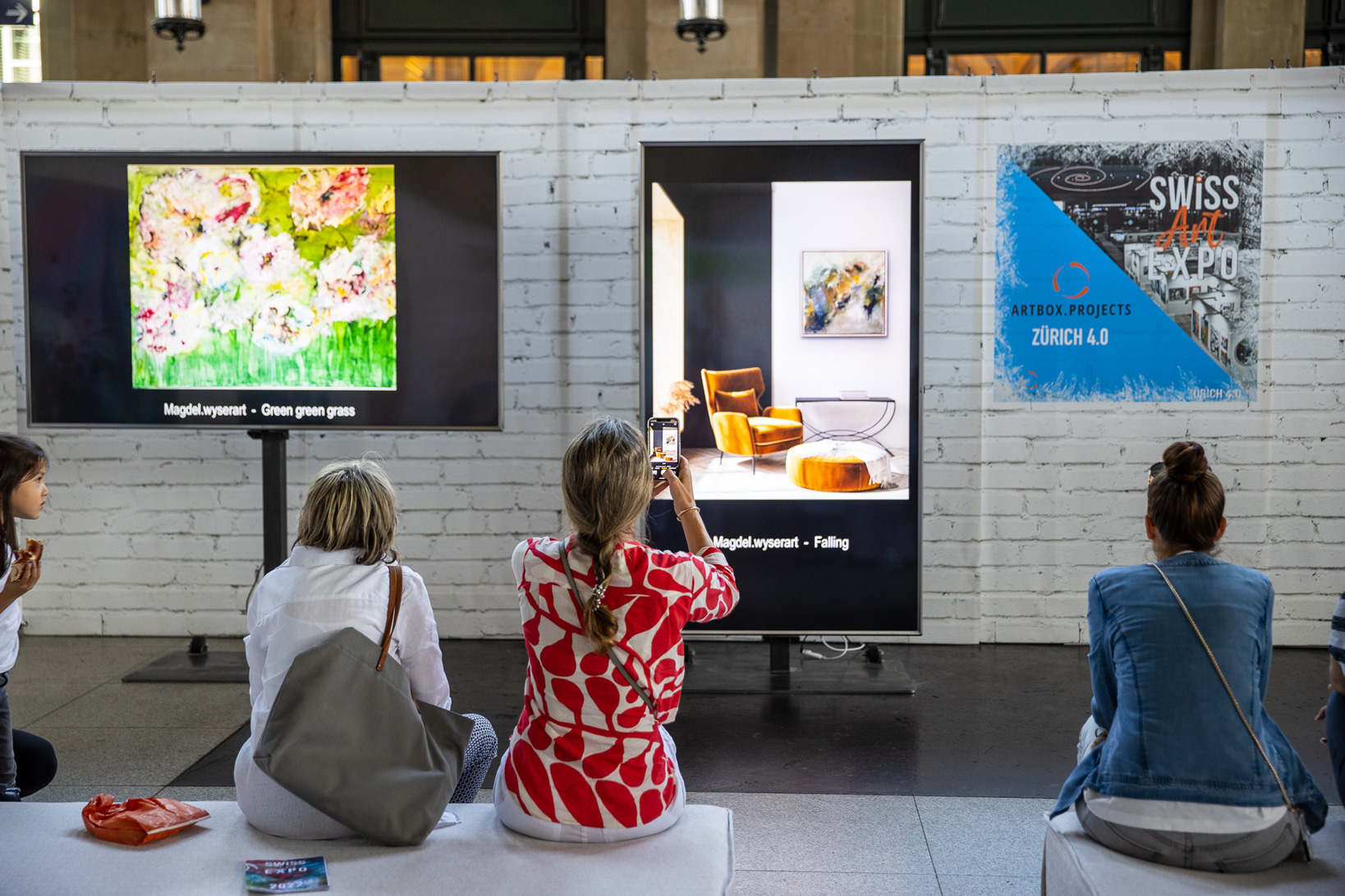
Supporting competitive and competitive retro gaming, BenQ offered the monitors used in the tournament at special discount pricing available to all MLG tournament fans.

Mission Possible: Find Classic Unrestored Cars In Tennessee Fields

19 (!) 1957 Chevy cars in a Tennesee field

Once again I find myself Down in the Southern U.S checking out beautiful un-restored classic cars in their usual (usual here) worn out aged condition. With very little rust. It never ceases to amaze me the sheer quantity of classics down here. I look at such a wide array of any make or model. (people actually think that they have all been picked already!). One short cruise down one back-road down here and I guarantee that you will spot at least an old Chevy truck parked out back behind a house, in a barn, or just barely sticking out of an old garage that is coming down around it.
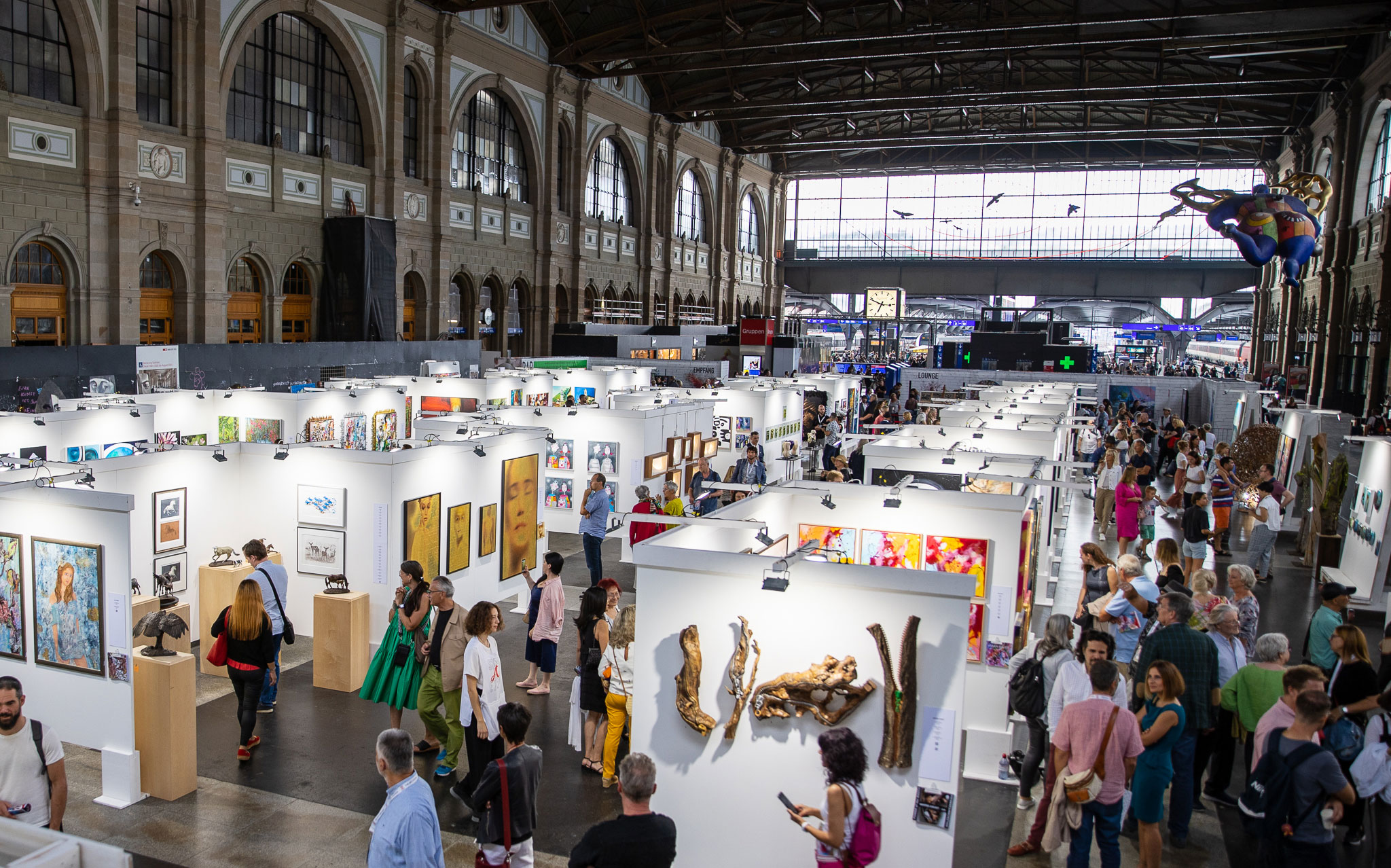
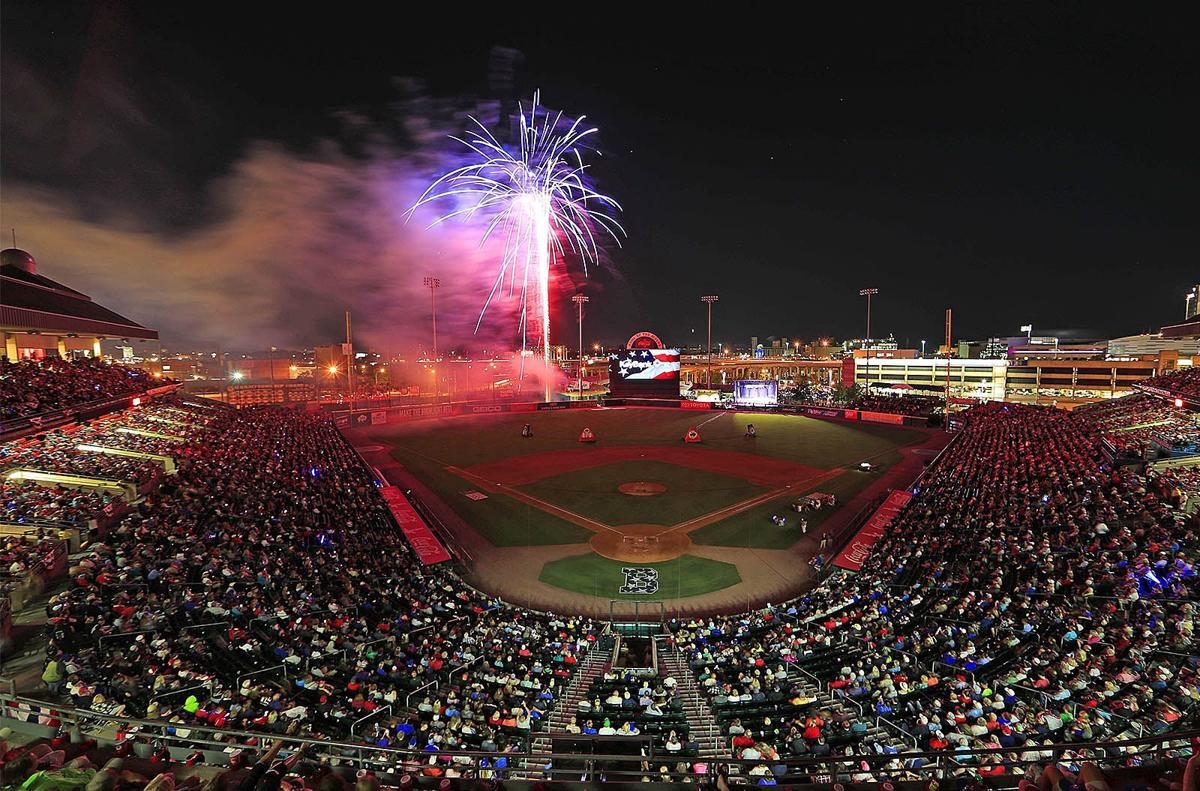
As an extreme car enthusiast, all I can say is that it is unreal.

This, not planned, but longer than expected trip to Georgia, brought me to see a sweet 1968 el Camino SS, with a 383 stroker engine and nice black interior. I almost got to look at an original, untouched 1963 split window Corvette, parked in a carport for like 20 years. Apparently under a couple inch thick layer of dust. Go figure it was gone before I even got there.

A teaser sneak-peek at the back end and side of the 1968 ElCamino. Complete with black interior and a 383 Stroker engine. 

A couple of the more odd-ball cars I looked at were a 1985 Corvette on 20inch 140spoke knock-off rims ( I don’t understand this one!), and a metallic orange 85 Monte Carlo SS jacked up about 14 inches sitting on 24’s, and featuring real bullet holes that it received in a police shootout (the guy who had it, bought it from a police auction). Neat looking car.

I also met a man down here who had to have had about 6 or 7, 58-60 Corvettes in different stages of repair. With one I believe, 1959 Corvette completely restored, in a high-gloss black, with a mint convertible top, and factory 4speed standard (manual to our UK and European friends) transmission. He also had one 1958, close to finished. They were both sweet cars. I must also add that the other 4 or 5 were scattered around his property among scrap, building supplies, and bushes. It was quite a sight.

These very rare cars in abundance on this property.

I walked out behind his shop and he had a 1957 Chevy 210 Station Wagon with no engine, but complete interior down to the factory radio! This car just parked, with bushes and weeds growing around it. (I think I am going to buy this one to build with my son and daughter and keep as the Sunday cruiser). I’m thinking a nice, loud, built small block, flat-black paint, and white wall tires on gloss-red rallys. I love these cars!

You probably noticed the first photo in this post right? Well, on a previous trip down here about two years ago I caught wind of a guy in Tennessee who apparently had 19, (that’s right!!! 19!) 1957 Chevy cars.

I couldn’t believe it when I got there and I don’t think too many people can say that they’ve seen nineteen 1957 Chevys all in one spot. It was incredible.

This guy had acres and acres of farm with cars tucked away everywhere you looked. 1951 Fords, A 59 Chrysler, 38 Chevy coupe, 59 International pickup, a 1929 Chevy Hot-rod, an I think 1930 Nash, all kinds of cars and trucks that you never see. In nearly original condition. My actual favorite here though, was his personal “parts getter” 1929 Chevy Truck Rat-rod, it was clever right down to the piston rad cap that stuck out of the hood. I really liked this one. The cool thing about finding all these cars is meeting their owners and hearing all of their stories. Car people are usually fun to hang out with, especially in the south.

1929 Chevy Truck “Rat Rod”.

I’m coming back with a friend who bought a 1966 Big back window, Chevy custom-10 short-box. Its not a half bad truck. He’s gonna fix it up. Maybe add a small block V-8. We’ll see. I’m heading back to Canada tomorrow. Goodbye t-shirt days in January, goodbye five dollar all-you- can eat buffets, goodbye three dollar smokes and goodbye constant, rare car sightings. Oh well, I always know that there will be future adventures in the deep south. Checking out sweet old cars for people, and telling them where they’re at. It’s always cool to have someone ask if I know of an old car they have been looking for and can’t find, and I can tell them “I can give you the phone number of a guy who’s got one of those”. It’s always very cool to have someone bring you a new project. So many possibilities with every car that rolls in…

For the Silo, Robb Price. Photos via the author. Check out Robb’s auto biz on Facebook.

Gilda Garza Pushing Boundaries Between Emotion & Art

Venice, ITALY – Known as “the most influential artist in Mexico,” Gilda Garza is an internationally recognized painter constantly pushing the boundaries between emotion and art. This award-winning Mexico native prepares to make history with a moving collaborative collection by sculptural artist Mario Furlan in a live exhibition at New Murano, Atelier Muranese.

“I have always put my entire heart and soul into my work,” shares Garza. “I’m extremely grateful to create real world impact through art – the thing I love most. It is a true honor to see my influence and efforts reflected in a once-in-a-lifetime glass rendition by the historic New Murano Gallery in Venice.”

Widely regarded as the master of Murano Sculptural Art, Mario Furlan will transform Garza’s epic pieces into three-dimensional glass structures before a live audience of exhibition attendees. The finished works will then display at the more than 1,500-year old Atelier Muranese studio. Through the presentation of glass masters, fine art, conceptual art, and collectible design, the Venetian gallery supports the creative vision of Murano/Venetian artisan culture. The “Glass Queen” exhibition serves their ongoing mission to expose the creative art process, from interpretation to object, using centuries-old skills of muranese high manufacturing. 

In the US, Garza’s work can also be seen in an exclusive jewelry collection at Jason of Beverly Hills, Roberto Cavalli Haute Couture, and the House of Bijan on Rodeo Drive. Garza has been officially recognized for her cultural contributions by the Senate of the Republic constitutionally Chamber of Senators of the Honorable Congress of the Union in Mexico City.

The Gilda Garza Pendant. 18kt Gold with 2.41 Carats of White Diamonds. $14,995 USD/ $20/566 CAD

She is also acclaimed for donating $80,000 USD/ $109,800 CAD from the sale of a Vice President Kamala Harris-inspired painting to the World Woman Foundation, committed to empowering one million woman by 2030. Gilda Garza is famously recognized as the first artist to have an art exhibition on Las Vegas strip. Since then, she has showcased various collections in the iconic Caesars Palace Hotel.

Gilda Garza poses with one of her paintings.

Featured image- Playboy magazine chose Gilda’s art for the cover for the first art special edition.