Category Archives: Sci-Tech

Connection Between Music And Math

I remember the first time I heard the statement “Did you know that listening to classical music enhances your mathematical abilities?”

I was both intrigued and excited, intrigued because I did not understand how music and math, two seemingly unrelated subject could possibly affect each other. I was also excited because I began to view classical music as some kind of magical potion that would transform my math skills from decent to extraordinary. When I had the opportunity to write this web paper for The Silo, I immediately jumped into the topic of music and math. The questions that I wish to answer throughout this paper are; does listening to music really help you do better in math? If so, which part of the brain is controlling the correlation between math and music? In addition, how does music stimulate the brain in a way that enhances mathematical abilities?

It turns out that there is much evidence that supports the positive effects of music on one’s ability to do math.

Most research shows that when children are trained in music at a young age, they tend to improve in their math skills. The surprising thing in this research is not that music as a whole is enhancing math skills. It is certain aspects of music that are affecting mathematics ability in a big way.

Studies done mostly in children of young age show that their academic performance increases after a certain period of music education and training. One particular study published in the journal ‘Nature’ showed that when groups of first graders were given music instruction that emphasized sequential skill development and musical games involving rhythm and pitch, after six months, the students scored significantly better in math than students in groups that received traditional music instruction. (1)

The result of this study posed another important question. How does this type of music that emphasized sequential skills, rhythm and pitch manage to improve children’s ability to do math? It turned out that there are two distinguished types of reasoning, spatial temporal (ST) reasoning and Language analytical (LA) reasoning. LA reasoning would be involved in solving equations and obtaining a quantitative result. ST reasoning would be is utilized in activities like chess when one needs to think ahead several moves.

The effect of music on math sometimes termed the Mozart effect.

The Mozart effect gain its name after the discovery that listening to Mozart’s compositions, which is very sequential, produces a short-termed enhancement of spatial-temporal reasoning. Some key reasoning features used in spatial temporal reasoning are:

1. The transformation and relating of mental images in space and time

2. Symmetries of the inherent cortical firing patterns used to compare physical and mental images and

3. Natural temporal sequences of those inherent cortical patterns (3).

The same people who conducted the Mozart effect experiment also suggested that spatial-temporal reasoning is crucial in math. The areas of math that require ST reasoning are geometry and certain aspects of calculus, which require transformations of images in space and time. In higher mathematics, the ability to write mathematical proofs is also associated with ST reasoning because proof writing is a task that requires intuitive sense of natural sequences and the ability to think ahead several steps.

As to the question, what part of the brain controls the correlation between math and music, there are also many resources that provide answers.

Dr. Gottfried Schlaug, found that certain regions of the brain such as the corpus callosum and the right motor cortex, were larger in musician who started their musical training before the age of 7 (2). As to what happens in that area of the brain when one listens to music, we turn to the experiment performed by Xiaodeng Leng and Gordon Shaw. Gordon and Leng developed a model of higher brain function, which is based on the trion model. The trion model is a highly structured mathematical realization of the Mountcastle organization principle, with the column as the basic neuronal network in mammalian cortex. The column comprises mini-columns called trions.

One particular columnar network of trions has a large repertoire of spatial-temporal firing patterns, which can be excited and used in memory and higher brain functions (3). Shaw and Leng performed an experiment in which they mapped the trion model of firing patterns in that particular column onto various pitches and instruments producing recognizable styles of music. This mapping of the trions gaves insight to relate the neuronal processes involved in music and abstract spatial-temporal reasoning (3).

It shows that the part of the cortex, which contains the repertoire of spatial-temporal firing patterns, can be excited by music and is utilized in higher brain functions such as spatial-temporal thinking in mathematics.

In conclusion, my research into math and music does seem to suggest that music truly enhances mathematics skills. Music targets one specific area of the brain to stimulate the use of spatial-temporal reasoning, which is useful in mathematical thinking. However, as to the question of whether or not music is the magical portion that will elevate anyone’s ability to do math, the answer unfortunately . . .would be no.

Just because most mathematicians are fond of music, doesn’t mean that all musicians are fond of mathematics. I found a letter posted on the web written by a fourteen-year-old overachiever to a mathematics professor. The student expresses his frustration that even though he is an excellent musician, math is one of his weakest subjects. In math, he is not making the grades that he needs to stay in a certain prestigious academic program (4).

This letter seems to suggest that listening to music, or being able to master a musical instrument does not automatically guarantee that one can perform well in math. In other words, there are many musicians who are good in music but not in math. Music is a lot more than notes conforming to mathematical patterns and formulas. Music is exhilarating because of the intricacies of the patterns that occurs. Whether or not these patterns resemble math has no relevance to many musicians. More often than not, musicians are inclined to practice music because of the wonders and awe that they feel for music even if they are not aware of the math that is in music. Cindy Zhan

WWW Resources (1)Making the case of music education (2)Music on the mind (3)Spatial-temporal versus language-analytical reasoning: the role of music training (4)Letter written by a young musician

This Is Your Brain On Music BookThis Is Your Brain on Music: The Science of a Human Obsession is a popular science book written by the McGill University neuroscientist Daniel J. Levitin, and first published by Dutton Penguin in the U.S. and Canada in 2006, and updated and released in paperback by Plume/Penguin in 2007. It has been translated into 18 languages and spent more than a year on The New York Times, The Globe and Mail, and other bestseller lists, and sold more than one million copies.



How The Old iPhone5 Was Made & Why It Still Matters

Courtesy of Silo tech writer Alex Hillsberg
The Silo's new Sci-tech writer Mr. Alex Hillsberg
The Silo’s new Sci-tech writer Mr. Alex Hillsberg

Best Technology For Professional Home Inspections

A good residence isn’t dependent on mere infrastructure. There are lots of things to take into consideration. Even the neighborhood is an essential component in deeming an area suitable for life. Therefore, one should think carefully before choosing a house in a particular region. 

Regardless of the other factors, every house always requires a thorough check before somebody decides to move in. This check includes all key aspects, including the rooms, yard, and drainage systems. For sewerage checking and repairs, ReliableDP may be the best option. Although working in limited areas, their extraordinary team provides satisfactory services without having to leave your house.

House inspection is a necessary process. It is a standard procedure worldwide to check the house for all faults beforehand. But during this unfortunate situation of the global pandemic, people cannot inspect new residences for themselves. But technology and the internet have been helpful in this regard as well. Here is the best-specialized software at your expense for those looking to check a house without risking their health. 

1. HomeGauge

This website provides one of the fastest and best inspection services in the country. Thousands of professional inspectors are available on the site who can check properties on demand. The software works with both home and commercial properties, and there are dedicated employees for both types of housing. HomeGauge has reviews from thousands of happy customers who recommend the software to other people because of its quality of service. 

A user can find an inspector on the site who will check the land on their demand. Whatever aspects the user wants to review, the inspector will look over them. They will then report back to them using a printed report or sending it online. The information can be in the form of video, document, customizable template, and other intuitive options. It is available for many devices, and users can access it for free or pay for the complete package. 

2. Spectora

As powerful as its name, Spectora is a marvelous software that allows property inspection. Working on the same principles as the other software in the market, Spectora stands out because of its easy interface and quick navigation. Users save time and have the opportunity to explore the website and software in depth. 

Spectora is a software best suitable for small-scale to medium-sized businesses. For those that require a simple but professional inspection report, this software is a great choice. While it provides numerous benefits to people in dire need of an inspector for their property, it is also available on other mobile platforms. Spectra offers a free trial until five professional inspections. Their subscription package starts from $99 per month, which only includes the software. The bundle package contains more features but is more expensive than the primary option. 

3. EZ Home Inspection Software

This software is excellent to use. It provides lots of different features for a single purpose. It allows users to write detailed reports with minimal effort. While they may be easy to write, users can highlight their areas of interest with different colors. They can also create different sections, so every inspector knows which aspect to examine. 

Also, the software provides photo attachments, commenting, and template services. Users can also create a precise summary from their report to send to their client. The software is available in different packages, and a trial of 30 is also a viable option for those in urgent need. For people looking to send a quick analysis of their observations, this software might do the job perfectly. 

4. Property Inspect

Another great option for inspection and reporting is Property Inspect that is more advanced than other software. It provides as many features as the different software on this list, but it is ranked relatively low due to its sophisticated layout and employment range. Nevertheless, it is an excellent piece of technology that users can employ for checking on their necessary properties. 

Property Inspect is the software of choice for real estate agents, property managers, universities, commercial inspectors, and many other people. It provides loads of features, ranging from offline report management to custom templates. It also offers standard audio communication, an ordinary dictionary, and many other engaging intuitive. The company offers different plans for usage, with a free trial option for 14 days.

5. Horizon Software

This software comes from a person who has been in the field for almost 44 years. Carson Dunlop created this website where people could find inspecting officers for commercial buildings and warehouses. These professionals can perform their duty very well, and the methods to report back to their clients are pretty remarkable. It also provides scheduling so that one can send their officer at the time of their requirement. 

Horizon Software is also available on all major mobile devices. One of Carson Dunlop’s project’s best features is that it also provides support and training in inspection to those looking for skill. Web hosting and archiving are also available on their website. Users can try it for free for a limited time. After that time, they’ll have to pay at least $67 a month to keep it. 

Choosing one of these technological inspecting prospects can save a lot of your time. They work effectively and have excellent reviews from satisfied customers online. While some are available for free, others might offer a premium package for more services, but that’s up to you depending upon your needs. 

Technology Brings Exciting Change to Home Improvements

Technology has revolutionized our modern life by leaps and bound. It has radically changed every aspect of our life, especially the home improvement sector. The home improvement industry is adopting advanced technologies to add new features and make them available to mass people. 

Techniques that were triumphant a few years back are no longer available now. With the advancement in technology, both working processes and homeowners’ expectations have met a radical change. People can avail themselves of prompt and expert services without breaking their banks. 

Using cutting edge technology RF radio frequencies to gauge moisture levels in a home basement. image: pomwaterproffing

Reaching sustainable renovation and development has become more available nowadays. For example, pomwaterproofing.ca ensures cutting-edge technology-backed waterproofing services to their customers at a very affordable rate. No matter if you want exterior waterproofing or need immediate water discharging from weeping tiles, Pom Group is always there to serve you the best.

Technology is Changing Home Improvement Industry

Are you thinking about how the ever-advancing technology has brought about innovative changes in the home improvement sector? Let’s get an in-depth overview of various ways. 

Eco-friendly Environment

Ensuring eco-friendliness is the ‘hot cake’ of the modern world. Homeowners now want sustainable and eco-friendly home renovation ways. The evolving and new technologies have allowed them to go for eco-friendly ways to combat global warming and save mother nature. With the help of new technologies, manufacturers are now focusing on producing environment-safe materials.

Lounge chair made using reclaimed wood.

One surpassing development in this sector is reclaimed wood. It is not only environment friendly but also improves the home decor by offering a rustic look. Reclaimed furniture, green flooring, using solar panels are some of the cost-effective technology-driven innovative ways of renovating your home. They are energy-saving, as well as eco-friendly. 

Another renovating gift of advanced technology is a tankless water heater that can cut your energy consumption to almost half, reducing cost dramatically. It is durable, comes with a small form factor, and enables you to use it only when necessary. 

Easy Access to Professional Help

That time had passed away when people had to roam around different places and search for experts to take on their home improvement projects. With the blessings of technology, you can find hundreds of professional contractors near you only with a few clicks online! You can now judge their professionalism, get an idea about their services from the reviews and hire the best service at a price within your reach. 

Do not worry about reaching information about the service you want to purchase. Go through the website of a specific contractor, and you can know everything you need!

Want to know the best part of this technological feature? You are only shown the services available at your doorstep!

Augmented Reality

The virtual sector of availing of essential stuff is another blessing of modern technology, especially in the home renovation industry. Anything you want to make your home look the way you want is only some clicks away! The benefits of augmented reality and the virtual sector has made tons of things available to people at their doorstep. You can buy whatever you want from there to improve your home decor. 

Furthermore, you have tons of handly applications available online that offer you innovative designing features. So, before you decide on anything, you can have a better concept. With these apps, you can visualize how a design, for instance, flooring, windows, etc., would look and pick the best one to blend with your home aesthetic. 

Play it Smartly

Different technological inventions have made homeowners go for smarter ways of revolutionizing their life. People now have the command to control home appliances using mobile apps. These excellent features, no doubt, have taken the home improvement industry to the next level! With their internet-regulated mechanism, people can control temperature, security, lighting, etc., seamlessly. 

Besides, you can use energy star home appliances to minimize your energy consumption at a high rate. Thanks to their improved and highly-efficient motors, blades, etc., they need less energy to operate these appliances. So you save power and cut your energy cost. 

Home Entertainment

The ever-evolving technology has left no sector of modern life untouched. With its innovative inventions, it has made entertainment more available to mass people. Besides, it has revolutionized the entertainment sector also. With the blessings of modern technology, people can enjoy modern and easy ways of entertainment at home. Now, people do not have to wait for weekends to go to cinemas and spend quality time with their loving ones. With the advanced home-theater setup, they can enjoy fun times with their family at home whenever they desire! It does not only save your hard-earned money but also offers a way to mesmerize your visitors. Some of the easily reachable and affordable entertainment facilities modern technology offers are high-definition television, music, playing games, etc. 

Remote Technology for Better Safety

Many of the risky home improvement tasks are getting automated nowadays that were handled manually in the past. Thanks to the advanced inventions that have made our lives safer. Moreover, with remote technology, some risky tasks are controlled by a single person staying from a secure distance. Thus the chances of risks have decreased to a great extent.

Highest End Media Streamer Offers Optional Flux Capacitor Upgrade

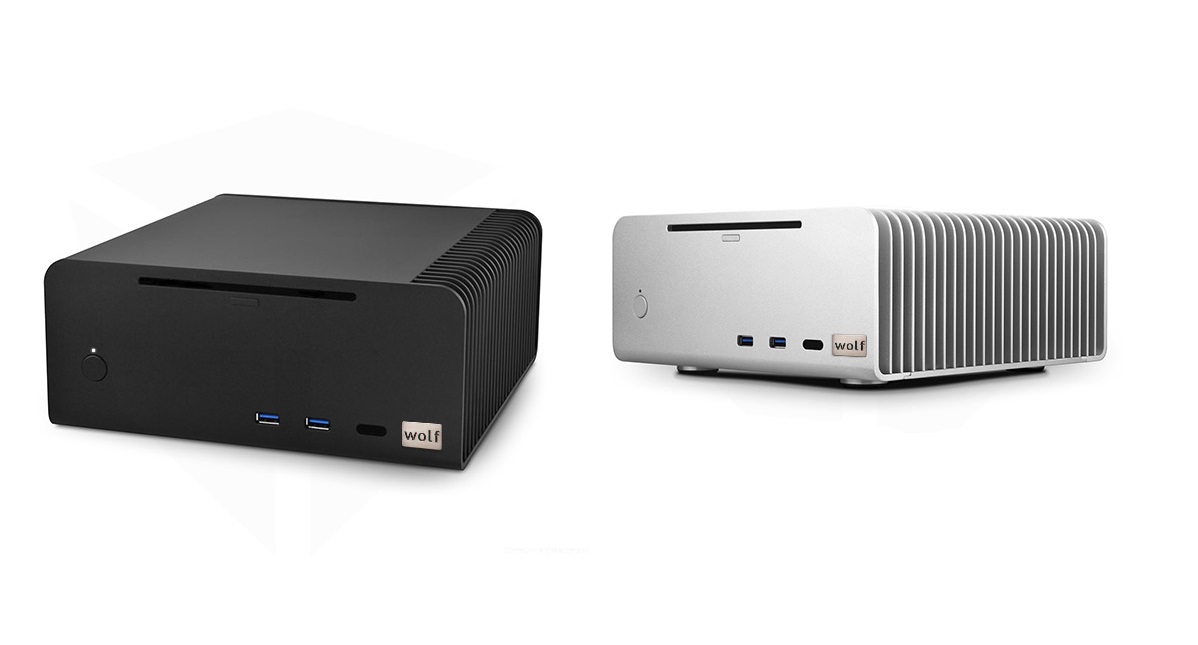
Wolf Audio Systems Announces Its Luna R High Fidelity Audio Servers

JACKSONVILLE, FL,  — Wolf Audio Systems, a company dedicated to providing the ultimate in digital music source components today announced the introduction of its Luna R Audio Server, created to deliver the finest-available high-resolution and streaming audio playback. Leveraging technology and infrastructure developed for the award-winning  Alpha 3 SX class of audio servers, Wolf has refined the second generation of the Luna to achieve audio quality levels previously found only in Wolf’s full-sized server lines.

Upgrade

The Wolf Luna R is, first and foremost, engineered to deliver extraordinary audio performance. Utilizing the same silicon architecture found in the Alpha 3 SX, Wolf’s second-generation Luna brings the Luna line much closer to Alpha and Red Wolf-level sound quality. The redesigned Flux Capacitor master clock is an optional upgrade; by operating at a high 24MHz clock rate, the Flux Capacitor ensures more accurate reconstruction and transmission of digital audio.

Depending on the option chosen, the Luna R features either an audio-modified Windows 10 Pro or new, proprietary Linux-based WolfOS operating system. The Luna R offers 2TB storage capacity (expandable to 32TB), 24-bit and DSD playback capability, an upgraded Flux Capacitor 24 MHz master clock and additional improvements. The Flux Capacitor creates one of the most perfect USB Audio signals with less jitter and better accuracy, for a more natural and more involving musical presentation, whether in stereo or multichannel PCM and DSD.

Versatile and Compact

The Luna R has a sleek, half-rack design that fits easily into any audio system. It can play back a wide variety of stereo and multichannel audio formats including FLAC, WAV, AIFF, ALAC, SACD, DSF, DFF, (PCM) from 16 – 32 bits, 44.1, 88.2, 96, 176.4, 192, 384, and 768 kHz audio, and DSD DoP and Native up to DSD1024.

At the heart of the Luna R is Wolf’s Windows-based operating system. Users can also opt to utilize WolfOS Linux-based operating system, based on Ubuntu software. The WolfOS features a custom kernel that offers the lowest I/O latency possible, keeps the audio functions isolated from the rest of the server and works seamlessly with the Luna R’s output circuitry. The Luna R includes 2TB of SSD (solid state drive) storage capacity for ultra-fast access to all content. An optional 32TB of expansion capability can also be added internally, while the Luna R can interface with external hard drives and any NAS system via the network. The Luna R’s Teac Blu-ray transport, now standard on Wolf audio servers, enables users to rip CDs and play audio discs in DVD and Blu-ray. The drive can also burn discs for storage or transport.

The SX Upgrade

The Luna R incorporates a host of additional refinements to ensure ultimate audio performance. These upgrades are the result of a collaboration between Wolf Audio Systems, Stillpoints and eXemplar Audio. The refinements address the areas of micro-vibration control, electrical grounding and radio frequency interference (RFI) suppression. For example, the server incorporates Portals, a new patent-pending type of grounding-noise conditioning, to remove MHz- and GHz-frequency power contamination and deliver a new level of clarity and resolution. Stillpoints internal standoffs are used to attenuate internal micro-vibrations, while constrained layer damping materials reduces ambient vibration to the case and non-critical componentry. Audience OHNO high-purity oxygen-free copper internal wiring ensures maximum signal purity.

The Luna R offers easy access to its musical content via HDMI and DisplayPort for use with a television and/or monitor. Its wireless connectivity also allows the user to control all functions using a wireless keyboard, mouse or tablet, or via a home automation system remote control, and also remote access via web browser and iOS/Android applications.

Like all Wolf Audio servers, the Luna R is compatible with a wide range of audio applications and streaming audio formats including Roon, JRiver, Audirvana, Qobuz, Tidal, Deezer and others. The server can connect to a TV or monitor to display album cover art, artist, track and album information and more. It offers a full complement of USB, Ethernet, HDMI and IR inputs and outputs, ensuring compatibility and full function for years to come.

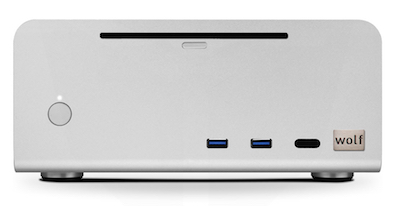
The Luna R is currently available in black or silver finish at a retail price of $4,500 usd with 2TB of storage, and $5,000 usd for the Luna R Pure Digital Edition, with the Flux Capacitor included and 4TB of storage. The unit can be supplied with optional Stillpoints Mini SS isolation feet at an additional $500 usd.

High Tech Houseplants That grow air

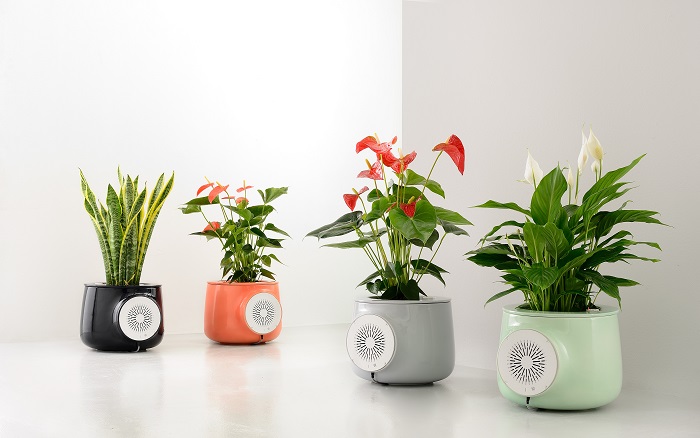
Clairy is an astounding handcrafted object that monitors your indoor air quality and when VOCs (Volatile Organic Compounds such as cigarettes, solvents, pesticides, copy machine chemicals etc.) levels are bad, eliminates pollution in your homeIt makes you and your beloved ones breathe better and live better. It is much more than a pretty houseplant.

How is that possible?

Following an 80s NASA Clean Air Program research project, Clairy uses the power of specific species of plants to trap the air pollutants into their roots. That’s why it doesn’t need filters: the plant is the filter!

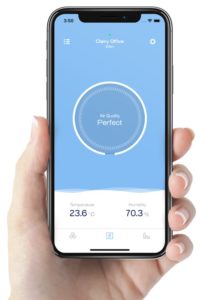
Clairy smartphone appClairy has also tech sensors that communicate with an app, so you can check directly the levels of humidity, temperature, and VOCs of your home with your smartphone.

What makes Clairy so beautiful?

It’s 100% Made in Italy by the artisans of Nove, near Vicenza, where the techniques of working with ceramics have been transmitted from father to son for centuries.

You can choose from four different colors: Corallo, Alabastro, Acquamarina and Blu Mare.

You should also consider our Premium Edition, Nero and Rame, made with the special technique called “Terzo Fuoco”. A masterpiece of Italian design you must have in your home. Holiday time is approaching, and we all want to give a gift that can be beautiful and useful at the same time. Clairy is the answer. For the Silo, Andrea Passador. 

5G Technology And Induction Of Coronavirus Into Skin Cells

NOTE- the journal paper was retracted by the author a few days after receiving publication. We do not hold that the paper is factual or not, only that the content is interesting and deserves speculative consideration.

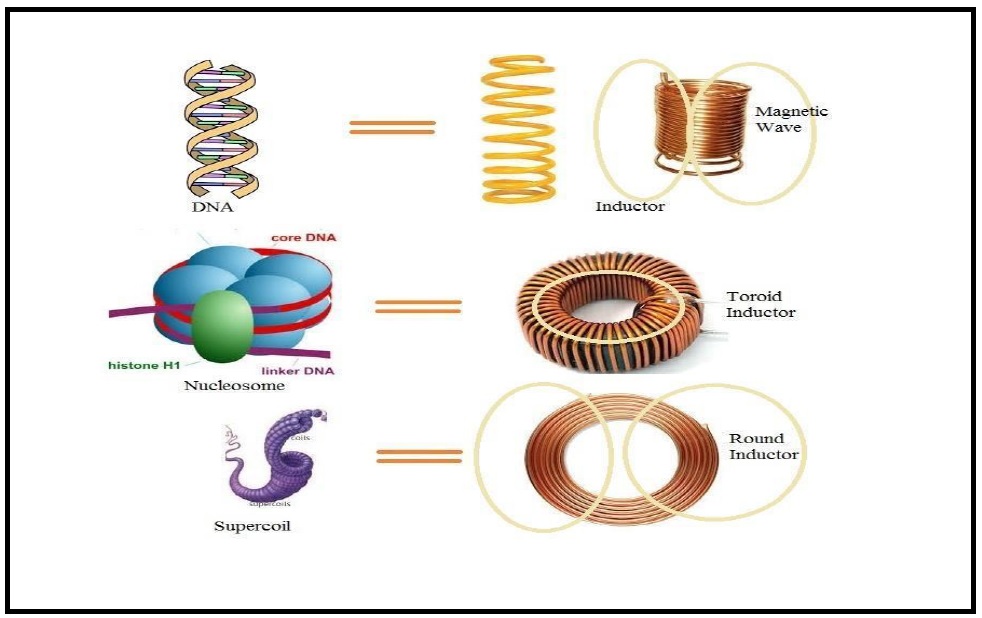
In this research, we show that 5G millimeter waves could be absorbed by dermatologic cells acting like antennas, transferred to other cells and play the main role in producing Coronaviruses in biological cells. DNA is built from charged electrons and atoms and has an inductor-like structure. This structure could be divided into linear, toroid and round inductors. Inductors interact with external electromagnetic waves, move and produce some extra waves within the cells. The shapes of these waves are similar to
shapes of hexagonal and pentagonal bases of their DNA source. These waves produce some holes in liquids within the nucleus. To fill these holes, some extra hexagonal and pentagonal bases are produced.

These bases could join to each other and form virus-like structures such as Coronavirus. To produce these viruses within a cell, it is necessary that the wavelength of external waves be shorter than the size of the cell. Thus 5G millimeter waves could be good candidates for applying in constructing virus-like structures such as Coronaviruses (COVID-19) within cells.

Coronavirus disease (COVID-19) is the main problem this year involving the entire world (1- see full PDF below).

This is an infectious disease caused by a newly discovered coronavirus. This virus is a member of related viruses that cause diseases in mammals and birds. In humans, coronaviruses cause respiratory tract infections that can be mild, such as some cases of the common cold (among other possible causes, predominantly rhinoviruses), and others that can be lethal, such as SARS, MERS, and COVID-19.

Among them, COVID-19 is an enveloped virus with a positive-sense single-stranded RNA genome and a nucleocapsid of helical symmetry. The genome size of coronaviruses ranges from approximately 27 to 34 kilobases, the largest among known RNA viruses (2, 3 see full PDF below). To date, many scientists have tried to find a method to cure this disease (4, 5 see full PDF below); however, without success.

COVID-19 may have effects on different types of cells. For example, it has been argued that this virus may have some effects on dermatologic cells (6 see full PDF below). On the other hand, it has been known that some waves in 5G technology have direct effects on the skin cells (7 see full PDF below).

Thus, there are some similarities between effects of COVID-19 and waves in 5G technology.

A new question arises regarding a relationship between 5G technology and COVID-19. The 5G technology is the fifth-generation mobile technology in which its frequency spectrum could be divided into millimeter waves, mid-band, and low-band. To find out how this may cause the creation of COVID-19 in human cells continue here to read the full PDF.

Silo article via – Biolife 0393-974X (2020)
Copyright © by BIOLIFE, s.a.s.
This publication and/or article is for individual use only and may not be further reproduced without written permission from the copyright holder.
Unauthorized reproduction may result in financial and other penalties
DISCLOSURE: ALL AUTHORS REPORT NO CONFLICTS OF
INTEREST RELEVANT TO THIS ARTICLE. 3
JOURNAL OF BIOLOGICAL REGULATORS & HOMEOSTATIC AGENTS Vol. 34, no. 4, xx-xx (2020)

Dr Massimo Fioranelli,
Department of Nuclear,
Sub-nuclear and Radiation Physics,
Guglielmo Marconi University,
Via Plinio 44-00193, Rome, Italy
e-mail: [email protected]
5G Technology and induction of coronavirus in skin cells
M. Fioranelli1, A. Sepehri1, M.G. Roccia1, M. Jafferany2, O. Yu. Olisova3,
K.M. Lomonosov3 and T. Lotti1,3
1Department of Nuclear, Sub-nuclear and Radiation Physics, G. Marconi University, Rome, Italy;
2Central Michigan Saginaw, Michigan , USA; 3Department of Dermatology and Venereology, I.M.
Sechenov First Moscow State Medical University, Moscow, Russia

Whole City COVID Testing Will Begin In Liverpool UK

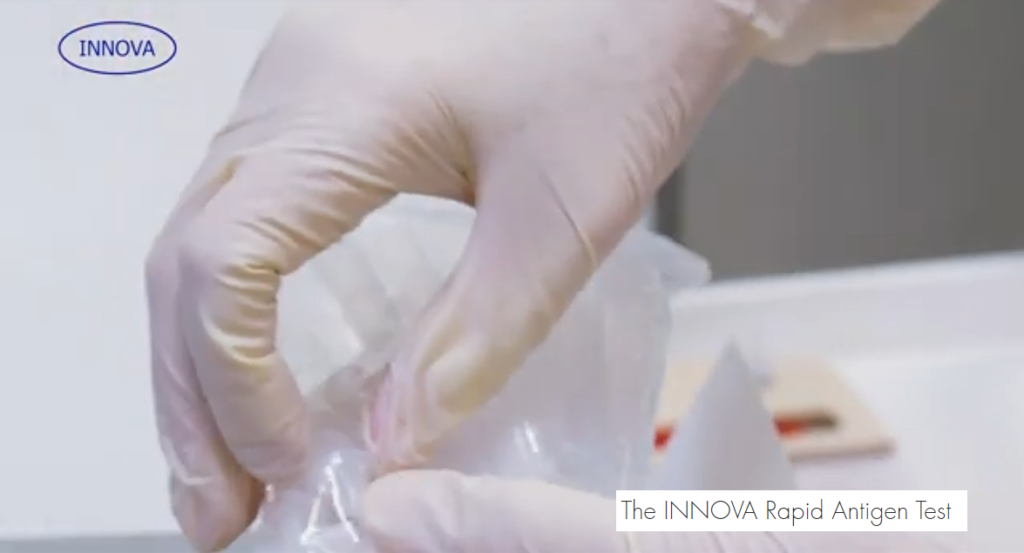
Pasadena, Calif. (November, 2020) – Innova Medical Group, Inc. (IMG) has partnered with the UK Government in its roll out of whole city screening and testing, beginning in Liverpool, with its INNOVA SARS-CoV-2 Antigen Rapid Qualitative Test Kits. 

Innova Medical’s lateral flow antigen test uses nasal and throat swab samples to screen for infection, with highly accurate results in as little as 15-minutes. This test can be easily and safely administered anywhere, on both asymptomatic and symptomatic people, without costly delays and the need for a full-scale laboratory. With its low cost per test, about the same as a coffee and biscuit in London, at-risk populations and many with inequitable access to healthcare, can achieve peace-of-mind with a negative result. U.K. Government data showed the IMG rapid SARS-CoV-2 antigen test screened asymptomatic individuals with 98.98 percent accuracy.

https://youtu.be/S2qRibNrBPs

Dr. Susan Hopkins, Incident Director at Public Health England, said, “The tests we are using in Liverpool are accurate, especially in finding people who are infectious at that moment in time and so are more likely to pass it on to others. Part of the purpose of working with Liverpool to roll out whole city testing is to better understand how these tests work in the field, improve understanding of why people get tested, and the impact of this approach on reducing the transmission rate.”

Using the National Health Service (NHS COVID-19) app, people can book a test and later input their test results.

Individuals taking part in the roll out of Operation Moonshot will be notified of positive or negative results by text or email. With this important test-and-trace system in place, public health authorities can diagnose cases, isolate infected patients, trace their contacts, and implement stringent infection control policies to reduce outbreaks.

With colder months and the holiday season ahead, the risk of virus transmission accelerates with more indoor gatherings and travel. If people do not know they have COVID-19, it is unlikely they will take precautions to prevent virus spread. Research studies show that to achieve disease control both asymptomatic, people who are infected but never develop symptoms, and pre-symptomatic, infected people who develop symptoms later, must be isolated.

Under Operation Moonshot, the UK Government hopes to flatten the curve by employing proactive, rather than reactive, measures in its COVID-19 response. Up to 1-in-5 United Kingdom coronavirus infections present with no symptoms, but they are still contagious. The Centers for Disease Control and Prevention (CDC) says up to 40 percent of infected people are asymptomatic and should be tested if they have been exposed. Typically, a person develops symptoms 5 days after being infected; however, infectivity was found to be highest a day before symptom onset. After symptoms, such as a cough, fever, and shortness of breath, first appear, a person can remain contagious for at least ten days.

The Innova Rapid Antigen Test quickly identifies infectiousness. The lateral flow test can identify people with a high viral load who are the most likely to spread the virus. Daniel Elliott, President of Innova Medical Group, Inc., said, “Our lateral flow device incorporates a German nitrocellulose membrane partially composed of nanoparticles of colloidal gold. [ Colloidal gold is nanoparticles of gold in a liquid solution. These gold nanoparticles are coated in such a way that they detect Covid antibodies. CP ] This advanced, proprietary technology combined with our room temperature reagent, allows testing at point-of-care settings such as workplaces, universities, and airports.”

GLOBAL SUPPLY CHAIN AND PRODUCTION

Innova Medical Group Inc. offers a global supply chain including the innovative and respected firms, GE Healthcare (USA) and Sartorius (Germany). IMG secured exclusive manufacturing and distribution agreements for its best-in-class portfolio of screening and diagnostic tests. By the end of November 2020, IMG will produce millions of kits per day in its Brea, California plant, combined with activity from plants in other global locations. After being selected over a large number of submissions to take part in Operation Moonshot, IMG is also exploring options for production in the United Kingdom.

The Innova test carries a CE Marking indicating that this IVD device complies with the European In-Vitro Diagnostic Devices Directive (98/79/EC). This device may be legally commercialized in the European Union (EU). For the Silo, Julie R. Manley.

About Innova Medical Group

Innova Medical Group, Inc. (IMG), is a wholly-owned subsidiary of Pasaca Capital (Pasadena, Calif.). IMG strategically pivoted and leveraged its expertise in Healthcare and Medical Devices to create an ecosystem to respond to the COVID-19 pandemic. The Innova Medical Ecosystem is delivering millions of tests every day to satisfy the diverse, point-of-care requirements of the world’s governments, large corporations, and institutions. IMG offers a global supply chain including the innovative and respected firms, GE Healthcare (USA), and Sartorius (Germany). IMG secured exclusive manufacturing and distribution agreements for its best-in-class portfolio of screening and diagnostic tests. For more information, visit www.innovamedgroup.com.

Audiophile Release Ups Ante With Innovative Mix Mastering

Octave Records Releases Temporary Circumstances by Clandestine Amigo, Recorded in Pure DSD Hi-Res Audio 

  • PS Audio label’s second release featuring singer/songwriter Jessica Carson is available on SACD and via download, with limited-edition vinyl to come  

Boulder, Colorado, October, 2020 – PS Audio’s Octave Records label has released its second album, Temporary Circumstances by singer/songwriter/pianist Jessica Carson and the band Clandestine Amigo. Featuring Jessica’s reflective songs about lost love and resilience, Temporary Circumstances is recorded in pure high-resolution Direct Stream Digital (DSD) and mastered using Octave Records’ DSD Direct Mastering process, where the mastering occurs at the same time as the mixing, thereby eliminating a generation of audio processing to maintain maximum sonic purity.  

Limited Release

Temporary Circumstances is available in a limited-edition release of 1,300 hybrid SACD discs that have a master DSD layer and a CD layer, and as a download bundle including DSD64, DSD Direct Mastered 192kHz/24-bit, 96kHz/24-bit and 44.1kHz/24-bit PCM formats. The album will also be offered as a 2-disc 45 RPM virgin vinyl edition limited to 500 copies, in December, 2020. 

Temporary Circumstances was engineered by Gus Skinas, mixed by Gus Skinas, Giselle Collazo and Jessica Carson, and mastered by Gus Skinas. The recording was made using a Sonoma digital audio workstation (DAW) in pure one-bit DSD. The C24, DPA 4006 and Sony C-100 microphones were fed into Forsell SMP-2 and Grace m108 mic preamps and an EMM Labs/Meitner ADC8 A/D converter, then to the Sonoma, and mixed on a Studer 963 console. 

Bit Wars

Currently, most DSD recordings have a short fall in that they must be converted to PCM and back to DSD a multitude of times in order to perform post production such as mixing and mastering. This is where PS Audio ups the ante- by mastering during the mixing phase, the back and forth conversion which results in noticeable degraded listening experiences is avoided.

The ‘old’ PCM pulse code modulation system.
The ‘new’ DSD direct stream digital system.

The musicians include songwriter Jessica Carson (vocals and piano), Michael Wooten (drums), Giselle Collazo (vocals), Chris Brunhaver (bass), Kyle Donovan (guitar, vocals), Miguel Ramos (violin, viola), and “The Burroughs” horn section featuring Alec Bell (trumpet), Scott Flynn (trombone), Hayden Farr (baritone saxophone) and Briana Harris (trumpet, horn arrangement). 

Jessica recorded her piano parts on a Yamaha 7-1/2-foot concert grand piano at Animal Lane Studios in Lyons, Colorado. Next, the vocals and other instruments were tracked at Octave Records’ recording facility at PS Audio. Jessica’s lead vocals and Giselle’s harmony vocals were recorded simultaneously using a single Tim de Paravicini-modified AKG C24 stereo mic and a Bock Audio 507 mic. Temporary Circumstances’ sparse but full-bodied arrangements let the personality of each vocalist and player be heard with stunning clarity, presence and dimensionality. 

Audiophiles Take Note

The goal of recording and producing Temporary Circumstances was to combine musically accurate, state of the art sound with inviting and compelling music. As Jessica Carson notes, “I know what the songs mean to me but I think they’ll mean something different to every listener.” 

For the Silo, Frank Doris. 

About PS Audio 

Founded in 1973, PS Audio has earned a worldwide reputation for excellence in manufacturing innovative, high-value, leading-edge audio products. Located in Boulder, Colorado at the foothills of the Rocky Mountains, PS Audio’s staff of talented designers, engineers, production and support people build each product to deliver extraordinary performance and musical satisfaction. The company’s wide range of award-winning products include the all-in-one Sprout100 integrated amplifier, audio components, power regenerators and power conditioners.  www.psaudio.com/octave-records  www.psaudio.com 

Supplemental-

Paul’s Daily Posts 
PS Audio Community 
Copper Magazine 

Importance Of Indoor Air Quality Testing

Have you ever wondered whether the air that we breathe indoors can be equally harmful as outdoors?

When it comes to healthy living, the air that circulates inside our house is often more crucial than the outdoor air, pollution, smog and other environmental factors. Research suggests that the indoor environments can have up to five times more pollutants than outdoor ones thus affecting several parts of our body including skin, lungs, nose, eyes, and throat among others. Once inhaled, these very air pollutants can continue to have harmful effects as and when it is processed through our systems. Just think over it. Ever felt stuffy in a room only to feel refreshed once you have stepped out? That lethargic feeling is directly related to the poor quality of air inside the house. And when you are exposed to such an indoor environment year after year, it can have a serious effect on your daily life.


What are the root causes of poor indoor air quality? 

According to the experts from The American Society of Heating, Refrigeration, and Air-Conditioning Engineers (ASHRAE) here are the factors that can lead to poor indoor air quality: 

  • Building Design and construction 
  • Building wasn’t checked thoroughly to see if it was suitable for the occupants 
  • Ventilation systems are dirty and damp 
  • Indoor contaminant sources 
  • The equipment and activities carried out indoors that add to the contaminants 
  • Moisture trapped in the building enclosures 
  • Failure to check filtration and air cleaning 
  • Poor outdoor air quality 
  • Poor ventilation rates 

 With Canadians spending over 90% of their time staying indoors combined with the COVID-19 pandemic, it is now more than ever that the role of indoor air quality has gained prominence. First, we need to understand the need for getting an air quality test done within your premises. 

https://gatewaymechanical.ca/indoor-air-quality-testing/

Why is an Indoor Air Quality Testing required? 

  • Healthy buildings improve performance and productivity of the residents 
  • Healthy folks take lesser sick leaves 
  • The test validates your space’s current indoor air quality 
  • Verification of your space meeting the indoor air quality standards 
  • Address any concern or issue arising due to a complaint 
  • Prioritize the health and safety of the occupants 
  • Obtain or renew LEED, WELL or BOMA BEST certification 

Gateway Mechanical as a company continuously strives to assess, audit and improve health and safety program to reduce the risk of injury in a changing work environment. The indoor air quality test offered by Gateway Mechanical will solve all your queries regarding the health of your space’s air quality. This test investigates the air quality within your premises for the following: 

  • Temperature 
  • Relative Humidity 
  • Particulate counts for PM2.5 and PM10 
  • Carbon dioxide (CO2) 
  • Carbon monoxide (CO) 
  • Total volatile organic compounds (TVOC) 
  • Ammonia (NH3) 
  • Chlorine (Cl) 
  • Formaldehyde (HCHO) 
  • Hydrogen Sulphide (H2S) 
  • Nitrogen Oxide (NO) 
  • Sulphur Dioxide (S02) 
https://gatewaymechanical.ca/can-hvac-systems-spread-coronavirus-covid19/

For in depth information on the procedures involved in getting the Gateway Mechanical air quality testing done within your premises, you can always go and check out on gatewaymechanical.ca  

It turns out there’s a lot we can do to control and reduce these contaminants to make our facilities, buildings, and spaces safer. To summarize, good indoor air quality significantly increases occupant health and experience in the provided space, enhances performance and productivity, drastically reduces absenteeism, optimizes returns on your investments, and eventually boosts your triple bottom line.  For the Silo, Mike Robert.

Video Producers Using Unreal Game Engine For AR Graphics And Sets

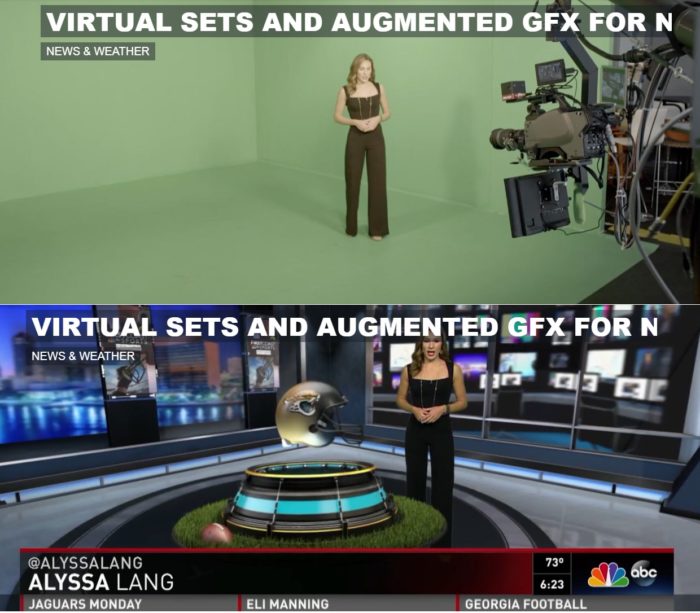
LAS VEGAS —  A couple of years ago, ChyronHego announced a partnership with leading game developer Epic Games to integrate the Unreal Engine with ChyronHego’s family of augmented reality (AR) graphics and virtual sets solutions. With the integration, news broadcasters and other customers of ChyronHego’s Neon and Plutonium software will be able to leverage Unreal’s industry-leading rendering and real-time special effects capabilities to add powerful new photorealistic and hyper-realistic elements to their on-air virtual sets. Only a decade ago, editDROID and other Laserdisc based systems were still commonly in use with a much more rudimentary set of effects possibilities- this new Neon and Plutonium software system is an industry wide ‘game changer’.

Here is a look at 2017’s  ChyronHego’s live use demo-

“In an environment that’s more competitive than ever, our broadcast news customers are on a constant search for innovative ways to tell a better story and captivate viewers,” said Olivier Cohen, senior product manager, virtual solutions, ChyronHego. “Virtual sets that harness the amazing graphics capabilities of world-class gaming engines are the wave of the future for news, sports, and weather broadcasting, and Epic Games is the perfect partner to take us there. The integration with Unreal is just the latest link in our CAMIO Universe strategy to place the industry’s most powerful storytelling tools at news producers’ fingertips and drive template-based, unified news and weather workflows.”

“Since we launched Unreal Engine 4, it has become one of the world’s most powerful rendering engines for the game industry — but its flexibility, real-time performance, and robust set of tools make it ideal in just about any type of content creation workflow,” said Marc Petit, general manager, Unreal Engine Enterprise at Epic Games.

Augmented Reality Broadcaster set

“ChyronHego’s AR and virtual set solutions for broadcast production are the ideal match for Unreal Engine. By partnering with one of the leading broadcast graphics providers, we can continue to expand our presence in the broadcast, film, and entertainment industries.”

ChyronHego will work to integrate the CAMIO graphic asset management server with Unreal Engine, including creating broadcast-specific camera movements. Unreal’s 3D graphics engine enables producers to generate AR graphics through the templated workflows of the CAMIO Universe. Via custom user interfaces built with ChyronHego Live Assist panels, producers can then present the AR graphics on air using ChyronHego’s Plutonium and Neon virtual set and robotic camera tracking solutions.

Unreal GFX Engine logo

Cohen added, “As one of the world’s most powerful rendering engines from one of the world’s foremost gaming companies, Unreal will bring new levels of openness and scale-ability to our virtual set solutions. Unreal Engine is easily customizable and expandable, and five million users around the world will benefit from Epic Games’ vast reach across the global community of gamers and game developers. It means news broadcasters will be able to render effects in their virtual sets that rival anything their viewers have seen in the gaming world, with special effects like real-time shaders, bumps, sliders, and highly photo-realistic objects.”  For the Silo, Lyndsey Albright. 

Supplemental- The Revolutionary Video Toaster and Amiga Computer system 1991. 

Million Dollar Race Car The Hoonicorn RTR Was Built Secretly

Tech and cars go together: the Hoonicorn RTR, the famous hybrid race and demo car.

The first tech start-up in a garage wasn’t Hewlett Packard. Back in the day, pre-Silicon Valley, it was the men and women bolting together cars, optimizing engines, lovingly perfecting car technology in their garages and taking it to the streets.

Profiled on RxSpeed’s website in the LAB [link below CP], take a visual tour of this incredible car and wild video and other modified cars.

Like building a spaceship around an astronaut, this million-dollar racecar was built around a driver, the needs of his craft and the exploration of a genre.

For two years the Hoonicorn RTR was kept a secret.

No one outside the very small and tight-knit circle knew about the project; even best friends were left out. Shrouded in secrecy, the six-cylinder 1965 Mustang Notchback 3-speed was cut and sewn back together into the Hoonicorn RTR, a hybrid race and demo car.

Cell phones and computers provide access to such an incredibly fast-paced information network that keeping anything hidden from prying eyes is becoming increasingly rare—and a Ken Block Gymkhana car is on another level of vulnerability. With over a quarter of a billion views on the Gymkhana franchise, the reveal of the next-generation car is on par with anything the automakers can throw out, which is why the Hoonicorn RTR was such a big surprise to the world.

It’s not cheap or quick modifying a stock car. To keep costs down, motorheads can visit RxSpeed to check out where to buy automotive products at the lowest cost. More over-the-top car stories can be found in the LAB

About RxSpeed

www.rxspeed.com is a comparison shopping engine for the automotive aftermarket. It saves consumers time & money during their research and purchase process. Their proprietary software platform catalogs millions of parts from hundreds of brands to help match customers with retailers easier and faster than ever before.

Unusual Features Of SARS Covid Genome Suggest Laboratory Creation Not Nature

The COVID-19 pandemic caused by the novel coronavirus SARS-CoV-2 has led to over 910,000 deaths worldwide and unprecedented decimation of the global economy. Despite its tremendous impact, the origin of SARS-CoV-2 has remained mysterious and controversial. The natural origin theory, although widely accepted, lacks substantial support.

Censorship Of Alternative Theory

A recent Reddit page

The alternative theory that the virus may have come from a research laboratory is, however, strictly censored on peer-reviewed scientific journals. Nonetheless, SARS-CoV-2 shows biological characteristics that are inconsistent with a naturally occurring, zoonotic virus.

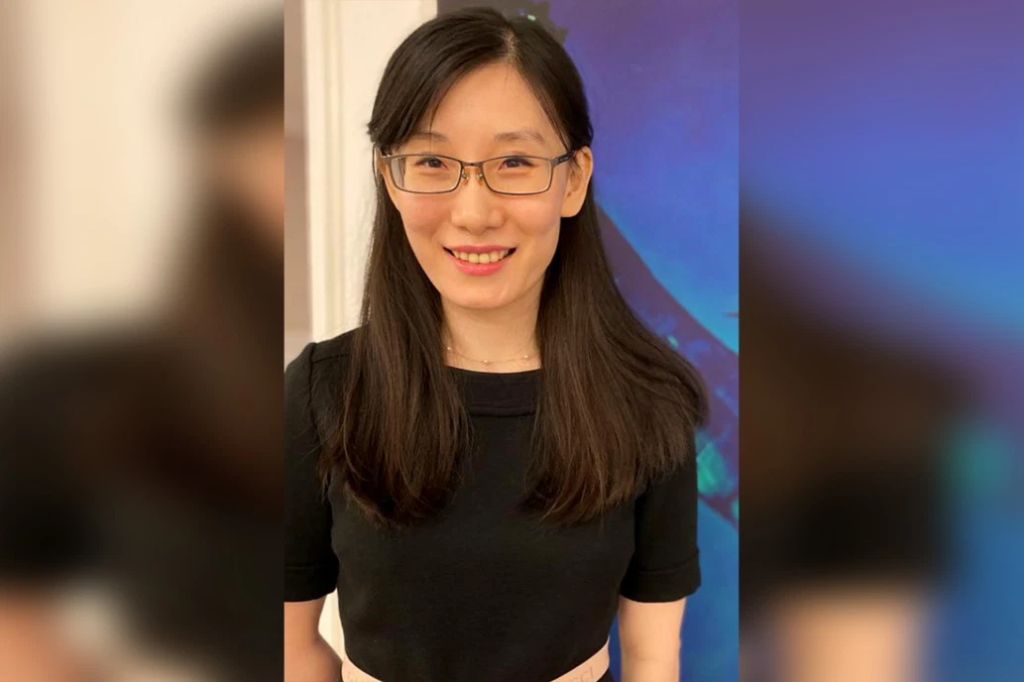
Dr. Li-Meng Yan, one of the key authors of the report has been labeled as a whistle blower by Western media.

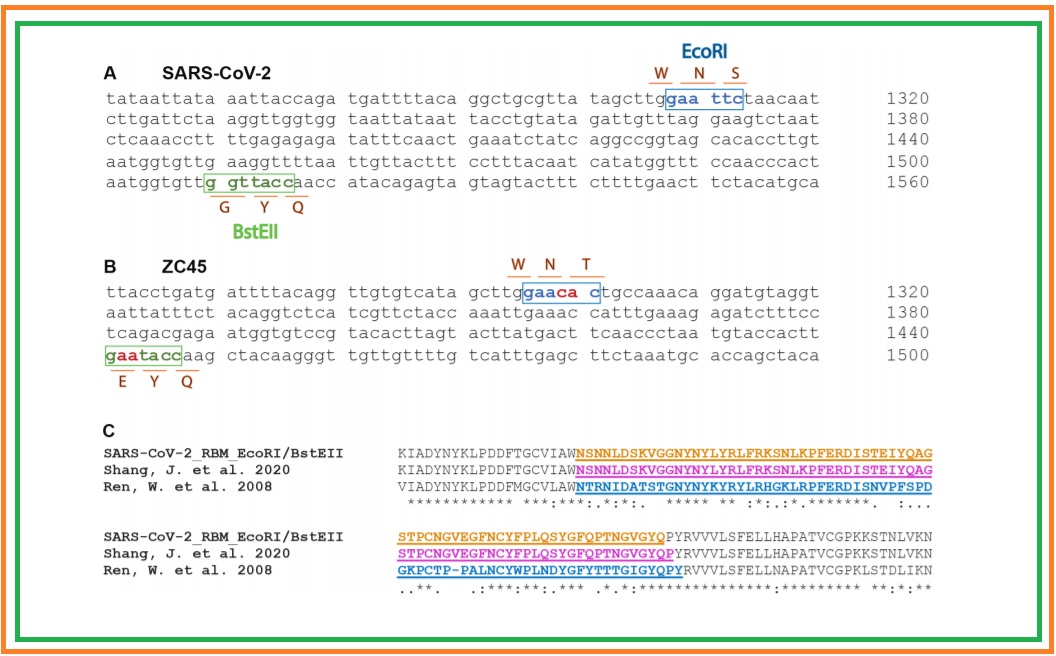
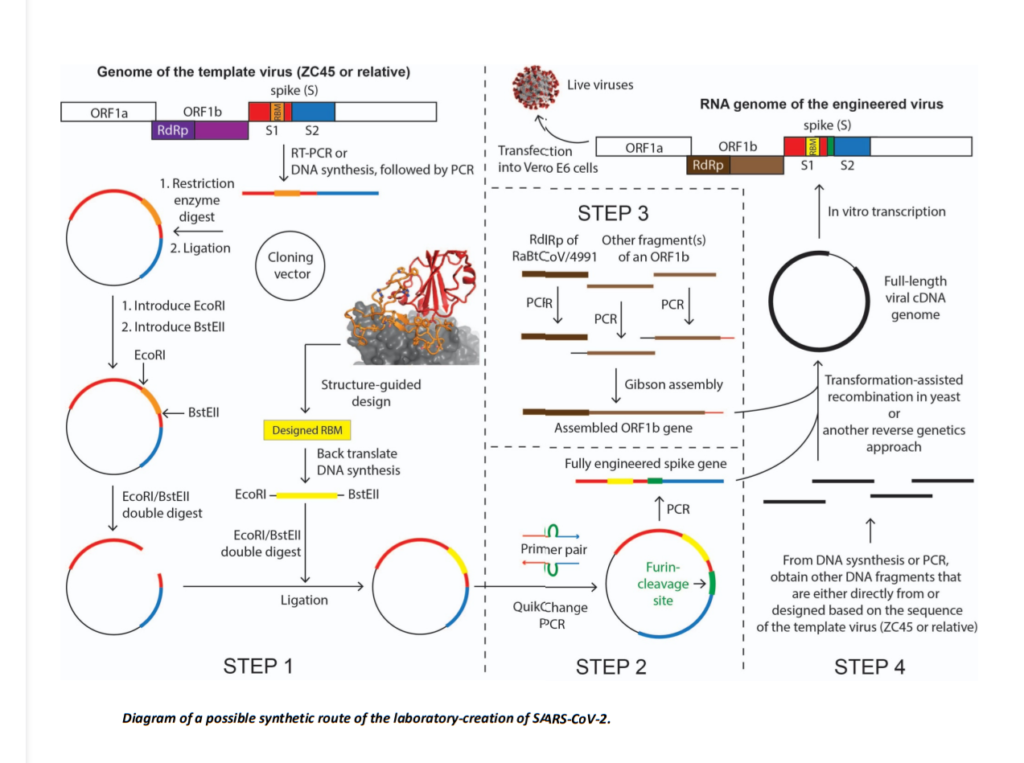
In this report, the authors describe the genomic, structural, medical, and literature evidence, which, when considered together, strongly contradicts the natural origin theory. The evidence shows that SARS-CoV2 should be a laboratory product created by using bat coronaviruses ZC45 and/or ZXC21 as a template and/or backbone. Building upon the evidence, we further postulate a synthetic route for SARS-CoV-2, demonstrating that the laboratory-creation of this coronavirus is convenient and can be accomplished in approximately six months.

Our work emphasizes the need for an independent investigation into the relevant research laboratories. It also argues for a critical look into certain recently published data, which, albeit problematic, was used to support and claim a natural origin of SARS-CoV-2.

From a public health perspective, these actions are necessary as knowledge of the origin of SARS-CoV-2 and of how the virus entered the human population are of pivotal importance in the fundamental control of the COVID-19 pandemic as well as in preventing similar, future pandemics.

Introduction

COVID-19 has caused a world-wide pandemic, the scale and severity of which are unprecedented. Despite the tremendous efforts taken by the global community, management and control of this pandemic remains difficult and challenging. As a coronavirus, SARS-CoV-2 differs significantly from other respiratory and/or zoonotic viruses: it attacks multiple organs; it is capable of undergoing a long period of asymptomatic infection; it is highly transmissible and significantly lethal in high-risk populations; it is well-adapted to humans since the very start of its emergence ; it is highly efficient in binding the human ACE2 receptor (hACE2), the affinity of which is greater than that associated with the ACE2 of any other potential host.

The origin of SARS-CoV-2 is still the subject of much debate.

A widely cited Nature Medicine publication has claimed that SARS-CoV-2 most likely came from nature. However, the article and its central conclusion are now being challenged by scientists from all over the world.

Continuing Reading The Full Paper

Click here to continuing reading and for citation listings. Li-Meng Yan (MD, PhD) , Shu Kang (PhD) , Jie Guan (PhD) , Shanchang Hu (PhD) & Rule of Law Society & Rule of Law Foundation, New York, NY, USA.

Franco-Quebec Artificial Intelligence Partnership Strengthened

MILA AND IRT SAINT EXUPÉRY CANADA SHAKE HANDS

Your task is not to foresee the future, but to enable it.

Founded on the values of pioneer pilot Antoine de Saint-Exupéry, a new partnership has formed between the leading Quebec AI research institute, Mila, and France’s IRT Saint Exupéry, which established a Montreal branch one year ago.

This partnership confirms the commitment shared by both parties to advance research in the field of intelligent systems, with a focus on embedded intelligence in critical systems, particularly related to travel (i.e., planes and cars) and healthcare (medical devices).

Click here to learn about France’s AI strategy report.

At the heart of the partnership are two key players in scientific and technological research who have joined forces to promote best practices and tackle the scientific challenges of artificial intelligence driven by industry needs and societal impacts.

Recognized worldwide for its numerous breakthroughs in artificial intelligence, Mila distinguishes itself both in calibre and in number of its researchers. Thanks to this partnership, Mila is enriched by an original model of collaboration, in which industry and academia will work together in a common space to solve scientific questions arising from industrial concerns. This collaborative model, tried and tested at IRT Saint Exupéry in France since 2013, has led to the creation of a French-Canadian research program, *DEEL, mobilizing 14 industrial companies and roughly 20 academic researchers in Toulouse, Montreal and Quebec City, including researchers from Mila. IRT Saint Exupéry now has access to a cooperative space on Mila’s premises. The proximity to Mila’s researchers and industrial partners encourages the development of multi-partner French-Canadian research programs.

If the Canadian branch of IRT Saint Exupéry was selected to integrate within Mila’s ecosystem, considered one of the best in the world for AI research and development, it is thanks to the partnership established two years ago with the Quebec Institute for data valorization IVADO, which was founded to foster AI partnership projects with industry. After the DEEL project, initiated jointly and now integrated into the Toulouse Interdisciplinary Institute of Artificial Intelligence “ANITI” of which it is the driving force, IRT Saint Exupéry and its Quebec partners are now developing new expertise in the field of confidence AI and decision support for critical systems, with applications for land, air and space mobility, but also for health and the environment.

Yoshua Bengio, Scientific Director – Mila

“Milas mission is to develop the understanding of intelligent systems in order to put them at the service of all humanity in an ethical, inspiring and sustainable way. More than 500 world-class researchers at the Institute focus on deep learning and neural networks that shape today’s intelligent systems. This partnership with IRT Saint Exupéry Canada broadens our horizons and our network. We are proud to make concrete through this partnership the commitments of collaboration between Canada and France in the field of artificial intelligence.

Geneviève Fioraso, President – IRT Saint Exupéry

I am convinced that collaborations with the researchers, engineers, laboratory students and partners of the Mila ecosystem in Montreal will be very stimulating for the IRT Saint Exupéry teams in Canada as well as in Toulouse. By working closely with the Mila Institute, we are going to accelerate our work and strengthen our expertise in AI, thus enhancing the reliability, safety and competitiveness of the fields concerned with critical and complex systems: air, space and ground transportation, medical devices and the environment. Our longstanding partnership with IVADO and CRIAQ in Quebec allows us today, alongside Mila, to achieve a new level of deep learning and understanding of intelligent systems. This new alliance with the French-speaking centre of excellence in AI, based on shared scientific and ethical values, also illustrates the willingness of the technological research institutes to open up internationally.

Guillaume Gaudron, CEO – IRT Saint Exupéry Canada

  We are really excited to join Mila. Working in this privileged environment and close to the very best researchers in the field represents an unprecedented opportunity for the institute to showcase its skills and respond to the deep concerns raised by artificial intelligence. We are also pleased to be able to offer a very unique collaboration model, one which brings together different actors to address common, shared and open challenges. We are mobilizing artificial intelligence on future topics such as the quantum computer, the autonomous vehicle, medical applications (diagnosis of rare diseases), satellites, and more. These are all complex and compelling subjects that need to be supported by very high-level scientific research, and require the use of AI algorithms that are robust, reliable, justifiable and, in the future, certifiable.

About Mila:

Founded in 1993 by Professor Yoshua Bengio of the Université de Montréal, Mila is a research institute in artificial intelligence which rallies 500 researchers specializing in the field of deep learning. Based in Montreal, Mila’s mission is to be a global pole for scientific advances that inspires innovation and the development of AI for the benefit of all. Mila, a non-profit organization, is recognized globally for its significant contributions to the field of deep learning, Mila has distinguished itself in the areas of language modelling, machine translation, object recognition and generative models. For the Silo, Diane Loth.

About IRT Saint Exupéry Canada (CRAN):

IRT Saint Exupéry Canada or CRAN (Centre de Recherche Aéro-Numérique) settled in Montreal in June 2019. With a specialization in areas of artificial intelligence, it brings together academia and industry through a recognized collaboration model to build multi-partner research programs within a French-Canadian framework.

IRT Saint Exupéry Canada was founded by IRT Saint Exupéry, a French research and innovation institute that is very involved in Franco-Quebec collaborations, particularly through the ambitious DEEL* research program with its partners IVADO and CRIAQ.

——————————————————————————————————————–

« L’avenir tu n’as point à le prévoir mais à le permettre » … c’est sous la formule empruntée à Antoine de Saint-Exupéry que s’engage un nouveau partenariat entre le laboratoire d’excellence en intelligence artificielle Mila et l’IRT Saint Exupéry Canada installé à Montréal depuis un an. Ce partenariat confirme la volonté partagée par les deux parties de faire avancer la recherche en matière de systèmes intelligents, avec un focus sur l’intelligence embarquée dans les systèmes critiques, en particulier liés à la mobilité (avions, voitures) ou la santé (dispositifs médicaux).
L’IRT SAINT EXUPERY DANS LA PLATE-FORME MILA A MONTRÉAL : UN FORMIDABLE ACCÉLÉRATEUR POUR LES PROJETS D’IA
Au cœur du partenariat, ce sont deux acteurs de la recherche scientifique et technologique qui s’allient pour échanger des bonnes pratiques et adresser des défis scientifiques de l’intelligence artificielle motivés par des besoins industriels et les impacts sociétaux.
Reconnu mondialement pour ses nombreuses percées en intelligence artificielle, Mila se distingue tout autant par le niveau de ses chercheurs que par leur nombre. Grâce à ce partenariat, il s’enrichit d’un modèle de collaboration original, dans lequel industriels et académiques travaillent ensemble, en un lieu commun, pour résoudre des questions scientifiques issues de préoccupations industrielles. Ce modèle, expérimenté depuis 2013 à l’IRT Saint Exupéry en France, a conduit à la création d’un programme de recherche franco-canadien, DEEL*, mobilisant à Toulouse, Montréal et Québec 14 industriels et une vingtaine de chercheurs académiques parmi lesquels des chercheurs de Mila. L’IRT Saint Exupéry Canada a désormais accès à un espace coopératif dans les locaux de Mila, la proximité avec les chercheurs et les partenaires industriels de Mila favorisant le montage de programmes de recherche franco-canadiens multi partenariaux.
Si l’antenne canadienne de l’IRT Saint Exupéry a été choisie pour intégrer la plate-forme Mila, considérée comme l’une des meilleures au monde pour la recherche et le développement en intelligence artificielle, c’est bien grâce au partenariat noué il y a deux ans avec le centre de recherche québécois IVADO, Institut de la VAlorisation des DOnnées fondé pour développer des projets partenariaux en IA avec l’industrie. Après le projet DEEL, initié en commun et maintenant intégré à l’Institut Interdisciplinaire d’Intelligence Artificielle toulousain « ANITI » dont il est le moteur, l’IRT Saint Exupéry et ses partenaires québécois développent de nouvelles expertises dans le domaine de l’IA de confiance et d’aide à la décision pour les systèmes critiques, avec des applications pour les mobilités terrestres, aériennes et spatiales, mais aussi pour la santé et l’environnement.

Yoshua Bengio, Directeur scientifique – Mila
« Mila a pour vocation de développer la compréhension des systèmes intelligents pour les mettre au service de toute l’humanité de façon éthique, inspirante et durable. Au sein de l’institut, plus de 500 chercheurs d’excellence se concentrent sur l’apprentissage profond et les réseaux de neurones qui façonnent les systèmes intelligents actuels. Ce partenariat avec l’IRT Saint Exupéry Canada élargit notre horizon et notre réseau : nous sommes fiers de concrétiser par ce partenariat les engagements de collaboration entre le Canada et la France en matière d’intelligence artificielle. »

Geneviève Fioraso, Présidente – IRT Saint Exupéry
« Je suis convaincue que l’interaction avec les chercheurs, les ingénieurs, les étudiants des laboratoires et les partenaires de la plate-forme Mila à Montréal sera tout à fait stimulante pour les équipes de l’IRT Saint Exupéry au Canada comme à Toulouse. En nous rapprochant de l’Institut MILA, nous allons accélérer nos travaux et renforcer notre expertise en IA, au service de la fiabilité, la sûreté et la compétitivité des domaines concernés par les systèmes critiques et complexes : transports aériens, spatiaux, terrestres, dispositifs médicaux, environnement. Notre partenariat plus ancien avec IVADO et le CRIAQ au Québec nous permet aujourd’hui, au sein de MILA, de franchir une nouvelle étape dans l’apprentissage profond et la compréhension des systèmes intelligents. Le rapprochement avec ce pôle d’excellence francophone en IA, fondé sur des valeurs scientifiques et éthiques partagées, illustre également la volonté d’ouverture à l’international des Instituts de Recherche Technologique. »

Guillaume Gaudron, Directeur général – IRT Saint Exupéry Canada

« Nous sommes vraiment ravis de rejoindre le Mila. Travailler dans cet environnement privilégié et à proximité de chercheurs d’excellence représente une opportunité inédite pour l’institut d’exprimer ses compétences et de répondre à des préoccupations profondes posées par l’intelligence artificielle. Nous sommes également heureux de pouvoir proposer un modèle de collaboration assez unique, une capacité de réunir des acteurs différents autour de problématiques communes, partagées et ouvertes. Nous mobilisons l’intelligence artificielle sur des thématiques d’avenir comme l’ordinateur quantique, le véhicule autonome, les applications médicales (diagnostic de maladies rares), les satellites, etc. autant de sujets complexes, séduisants, ayant besoin de s’adosser à une recherche scientifique de très haut niveau, et nécessitant de s’appuyer sur des algorithmes d’IA robustes, sûrs de fonctionnement, explicables et, à l’avenir, certifiables.

À propos de Mila :
Fondé par le professeur Yoshua Bengio de l’Université de Montréal, Mila est un institut de recherche en intelligence artificielle qui rassemble aujourd’hui 500 chercheurs spécialisés dans le domaine de l’apprentissage profond et par renforcement. Basé à Montréal, Mila a pour mission d’être un pôle mondial d’avancées scientifiques qui inspire l’innovation et l’essor de l’IA au bénéfice de tous. Mila est un organisme à but non-lucratif reconnu mondialement pour ses importantes contributions au domaine de l’apprentissage profond, particulièrement dans les domaines de la modélisation du langage, de la traduction automatique, de la reconnaissance d’objets et des modèles génératifs.

À propos de l’IRT Saint Exupéry Canada (CRAN) :
L’IRT Saint Exupéry Canada ou CRAN (Centre de Recherche Aéro-Numérique) s’est installé à Montréal en juin 2019. Spécialisé dans les thématiques d’intelligence artificielle, il fédère académiques et industriels grâce à un modèle de collaboration reconnu pour construire avec eux des programmes de recherche multi-partenariale dans un cadre franco-canadien.
L’IRT Saint Exupéry Canada a été fondé par l’IRT Saint Exupéry, institut français de recherche et d’innovation très engagé dans les collaborations franco-québécoises en particulier au travers de l’ambitieux programme de recherche DEEL* avec ses partenaires IVADO et CRIAQ

Elon Musk Backed Neuralink Company Demos Hard Wired Human Brain Machine

Elon Musk is one step closer to connecting a computer to your brain.

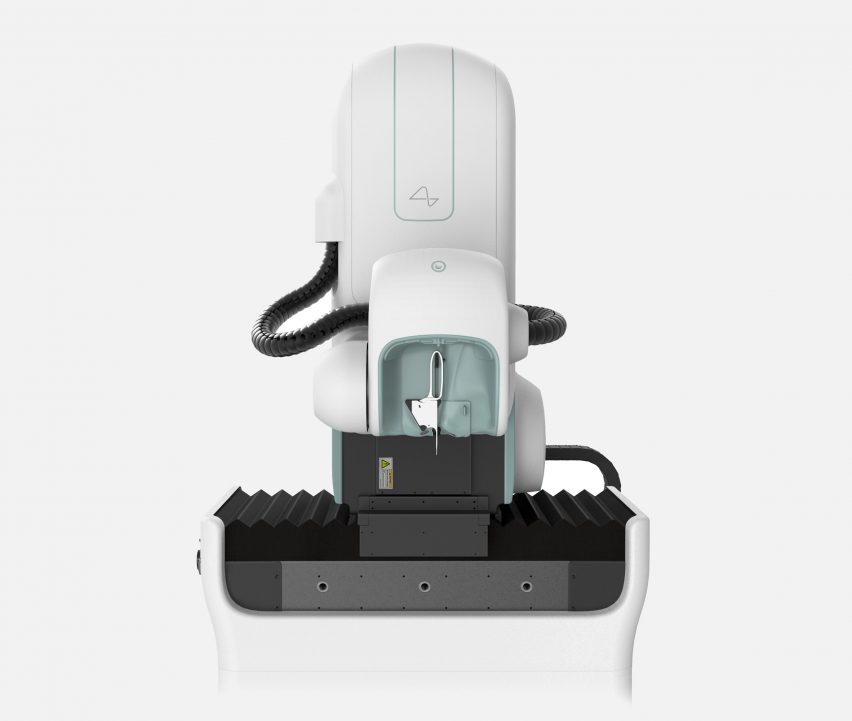
Neuralink is building a brain-machine interface as well as a little robot that installs the necessary wiring directly into your skull. Neuralink, the mysterious neuroscience company backed by Elon Musk, revealed more details about its plans to connect computers to human brains recently.

Musk explained that his off-the-radar neuroscience company Neuralink continues to push the boundaries of science with its latest model: the aim being not only for a smaller interface but for a vastly more powerful interlink.

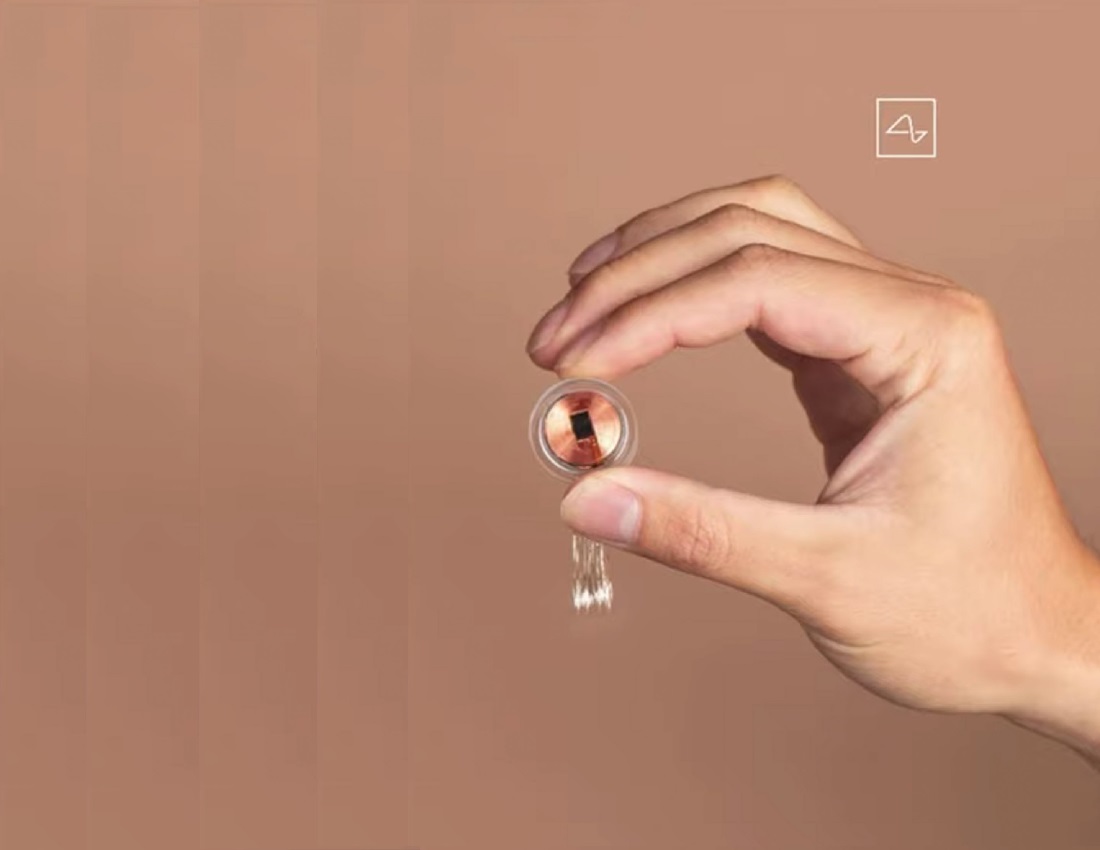
The size of the flexible threads, attached to a fingertip for scale.
 Image: Neuralink

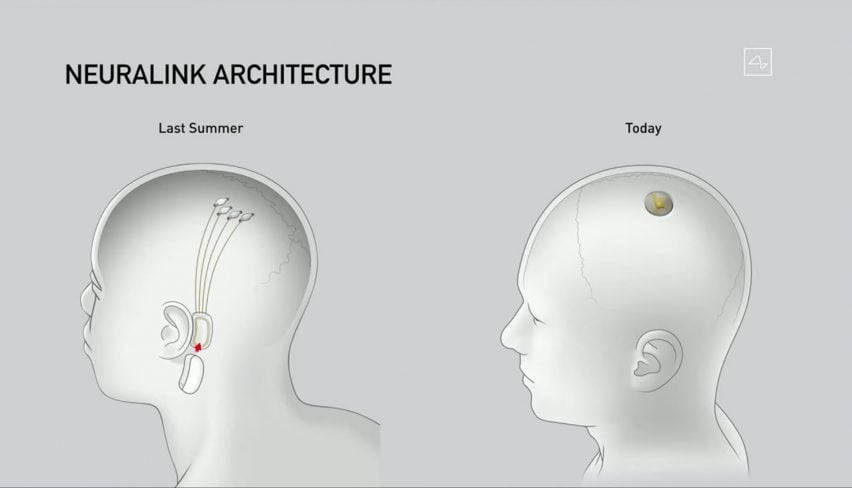
In 2019, using tiny wired pathways or neural links implanted directly into the head , a discrete behind the ear ‘controller’ received the wired pathway signals wirelessly. Computers running proprietary software are able to track the brain activity in real time. The latest version, just announced is a coin size device that sits on top of your head and is wired to go directly into your brain.

The chip that amplifies signals and sends them off to a computer.
The chip in the last years’behind the ear’ receiver.

Elon Musk unveils new Neuralink brain implant design and robot that inserts it.
Unlike last years behind the ear model, the new model on the right is almost impossible to notice.

Cyber Frankensteins

This technology in a cruder form, has been used already to enable amputee control over prosthetic robotic limbs but the neural link was not hard wired or physically connected to the body.

Musk stressed the wide variety of spinal and neurological conditions — including seizures, paralysis, brain damage, and depression — that Neuralink technology could help treat. “These can all be solved with an implantable neural link,” said Musk. “The neurons are like wiring, and you kind of need an electronic thing to solve an electronic problem.”

Elon Musk unveils new Neuralink brain implant design and robot that inserts it
Woke Studios designed Surgical Robot that inserts neural threads.

However, this new hard wired development changes things- not only in terms of faster and more accurate tracking of brain impulses but in the implications of what may be possible using hard wire. How about human pilots directly wired into the flight and combat systems of an advanced flying craft? Or a neural link human network where brain impulses can be transmitted and received between linked in people? Or a monkey that can control an advanced computer? Oh wait, that last one actually happened….

For the Silo, Jarrod Barker.

University Of Maryland Will Investigate AI Limitations Via Army Research Grant

COLLEGE PARK, MD: University of Maryland College of Information Studies (UMD iSchool) researchers, led by principal investigator Dr. Susannah Paletz, have been awarded a three-year $616,700 usd grant funded by the Army Research Office (ARO), overseen by ARO Program Manager Dr. Edward Palazzolo. This project examines how teams of intelligence analysts can work together and with artificial intelligence (AI). AI has the potential to support intelligence analysts in reviewing potentially hundreds of thousands of source documents, pulling out key findings, and assembling them into actionable intelligence. AI can also aid in the flow of information and projects among members of the intelligence team, improving the efficiency and accuracy of their work.

“AI-driven technology has sometimes been touted as a replacement for human intelligence,” said Dr. Adam Porter, the project’s co-principal investigator, professor at the UMD Department of Computer Science, and Executive and Scientific Director of the Fraunhofer USA Center for Experimental Software Engineering (CESE). “In practice, however, AI doesn’t always work, or gives limited or biased answers. Human oversight is still required, and it’s therefore critical that we deeply understand how humans and AI can work best together.”

The Human-Agent Teaming on Intelligence Tasks project coordinated through the iSchool will focus on two particular research areas; 1.) how interactive AI agents, such as chatbots, have the ability to mitigate or exacerbate the communication and coordination problems that can occur with shift handovers of intelligence work, such as inaccuracy blindness and overlooking potentially relevant information, and 2.) examining how humans could potentially deal with these blind spots, biases, or inaccuracies. 

The research team plans to develop an experimental infrastructure to help test team cognition challenges within the work completed by intelligence analysts consisting of task-relevant input materials, such as mission descriptions and source documents, activity recording tools, experimental monitoring capabilities, and different AI supports for human analysts, such as chatbots offering advice on a particular task. 

“We want to develop a task that can raise the problems with asynchronous team cognition in intelligence tasks, but is simple enough to be used by research participants with minimal training,” said Dr. Susannah B.F. Paletz, research professor at the UMD iSchool, and affiliate at the UMD Applied Research Laboratory for Intelligence and Security (ARLIS). 

Susannah Paletz
Dr. Susannah B.F. Palletz


This task will substantially increase insight into the strengths and weaknesses of AI technology to support intelligence tasks, help shed light on how and when human analysts can safely place their trust in AI technology, and how they can proactively identify problems in AI-generated input. It will also aid teams of humans, including asynchronous teams, working together in situations that include AI-generated input.

“This basic research is an important step in the early process of learning how humans and agents can collaboratively become a single team with considerably greater capacity and productivity than human only teams,” Palazzolo said. “Moreover, this research has broad implications into the work of many teams focused on knowledge work and information management such as medical teams involved in shift work, collaborative software development teams, and research teams.”

In addition to Porter, the Fraunhofer USA team also includes Dr. Madeline Diep, Senior Scientist, and Jeronimo Cox, Software Developer, at Fraunhofer USA CESE. The Fraunhofer USA team will lead the effort to create configurable AI agents used in the experimental tasks, and a data collection and analysis infrastructure for capturing and understanding participant behaviors.

The UMD iSchool team includes graduate students Tammie Nelson, a fourth year PhD student, Melissa Carraway, incoming first year PhD student, and Sarah Valhkamp, incoming first year PhD, in Information Science.

The grant proposal team includes UMD Office of Research Administration Contract Manager, Stephanie Swann; iSchool Business Manager, Jacqueline Armstrong; and former iSchool Business Manager, Lisa Geraghty.

Outside of UMD, Dr. Aimee Kane, the Harry W. Witt Faculty Fellow and an Associate Professor of Management in the Palumbo-Donahue School of Business at Duquesne University, will be a consultant and an intellectual contributor on this project.

ARO is an element of the U.S. Army Combat Capabilities Development Command’s (CCDC) Army Research Laboratory. The Human-Agent Teaming on Intelligence Tasks project (grant no. W911NF-20-1-0214) is slated to run through June 30, 2023. For the Silo, Mia Hinckle.

Astrophysicist Wins Millions Of Dollars For Blackhole And Quasar Study

Schmidt Futures Grants Lehman Astrophysicist $2.94 Million USD For Study of Quasars, Black Holes

BRONX, N.Y. – (August , 2020) – A Lehman College astrophysicist has been awarded a $2.94 million grant by Schmidt Futures, for a five-year study about the structure and evolution of the universe, black holes, quasars and dark energy.

Where have all the quasars gone?

Schmidt Futures is a philanthropic initiative, founded by Eric and Wendy Schmidt. Eric Schmidt is the former CEO of Google. The grant will award $1.8 million directly to Lehman College and the remainder as a subaward to the University of Montreal.

“This by far is the biggest project we’ve ever attempted,” said Matthew O’Dowd, an associate professor in the Physics and Astronomy Department and writer and host of PBS Space Time. “It’s quite ambitious…and will define the next five years of our scientific lives.”

O’Dowd will lead a team of researchers and students from Lehman, the Borough of Manhattan Community College (BMCC) and the University of Montreal as they study data collected from the Vera C. Rubin Observatory (previously referred to as the Large Synoptic Survey Telescope (LSST), currently under construction on Cerro Pachón in Chile. It is an 8-meter-class telescope coupled to a 3.2-gigapixel camera – the world’s largest digital camera ever fabricated for optical astronomy.

A photograph and rendering mix of the exterior of the Vera C. Rubin Observatory building on Cerro Pachón in Chile. Image credit: LSST/NSF/AURA

The observatory, the first in the U.S. to be named after a woman, will survey the entire sky of the Southern Hemisphere every three days for the next decade, O’Dowd said, and will map the dynamic nature of the universe. Each single snapshot will cover an area 40 times the size of the full moon.

O’Dowd’s team will develop a machine-learning pipeline (also known as artificial intelligence) for the observatory “to analyze the flickerings of thousands of distant quasars whose light in the very distant universe is powered by violent storms of matter falling into gigantic black holes,” he said.

Due to the enormous dataset and the non-linearity of the problem, machine learning methods are the only viable method for integrating these effects into a model and analyzing thousands of quasars in real time.

“I believe I have assembled the only people in the world who can do this before LSST begins operation, including some machine learning leaders who have just taken faculty jobs at the University of Montreal,” he said. “So that’s our plan: to develop new machine-learning techniques and build them into an analysis pipeline for (the observatory).”

“People are fascinated by these things and we hope to extend their curiosity about the wonders of the universe,” O’Dowd said.

Once the team begins work, O’Dowd will invite Lehman graduates, post-doctoral fellows and current Lehman undergraduates to participate in the project.

“This project is exciting and will help us attract excellent grad students and if it also helps influence other students to come to Lehman, then that’s fantastic,” he said.

“This is an excellent project that will push the limits of precision of measurement and very difficult computing to clarify important questions in cosmology and high-energy astrophysics,” said Stuart Feldman, chief scientist of Schmidt Futures. “We are delighted to support this path breaking work.”

“This is an incredibly prestigious award and we are incredibly proud of Matt,” said Dr. Pamela Mills, dean of the College’s School of Natural and Social Sciences. “He is very good at communicating science and is an amazing physicist. He is, and has been tapped, as one our young leaders.”

1966 Chevy C-20 Custom Pickup Rescued From Mojave Desert

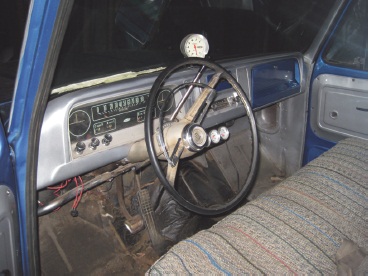
1966 Chevrolet C-20 Custom pick-up. Found in a wrecking yard in the Mojave Desert by the author.

Lloyd’s 66 Chevy C-20 Custom is the epitome of the classic story of finding a sweet ride, a diamond in the rough. Just tucked away somewhere conspicuous collecting dust down south. I found this truck in a wrecking yard in the Mojave Desert being neglected for over 12 years. Imagine the looks on the guys faces that walked by this old truck in the yard if they could see what it turned into now. (funny enough, this is the same yard in which I found my own personal truck of the same body style over 25 years ago.)

I went to California and worked on this truck for 3 weeks to get it running and road worthy before making the epic over 2500 mile trip back to WC Kustoms in Windham Centre. First thing was the engine. I took that dirty, tired, old 350 and swapped it out with a fresh Crane Cams build-up 60 over 350. I gave it a nice shiny new classic Chevy orange paint job and topped it off with everything chrome (edelbrock endurashine carb, high-rise intake, and Mr. Gasket chrome dress-up kit.) To make sure that you really know when it’s passing you, I added some Flo-tec headers and sold him a Magnaflow Stainless dual exhaust kit (the kit was installed by Queensway Garage in Simcoe.)

For outside looks, this sweet 66 got a stock, two-tone custom, color scheme using two 2011 factory Chevrolet colors. A wicked combination of Metallic Blue and Silver to make this truck as colorful as the character that owns it. Inside it also received a blue, back-lit Equus tach and gauge set. In pure Lloyd style one of the first additions was blue street-glow lighting. Deleye’s in Simcoe also installed a chrome custom trim kit, painted grille and front bumper, and a rear roll pan bumper that looks really good. This truck is a vast contrast from the old farm trucks that many would attribute this body style to.

If you’re a  retro gamer and Grand Theft Auto (San Adreas) fan, you should consider changing up the default tow-truck with the ’66 Chevy C-20 pickup.

For the Silo, by Robb Price.

WC Kustoms in Windham Centre, Ontario can be reached at 519-410-8308. 

Long Time Ago In A Galaxy Far Away We Weren’t Overloaded With Content

It all used to be so simple and satisfying- a long time ago, tv content was delivered from a long distance transmitter and received by a roof antenna. That antenna had to be manually or automatically positioned whenever you wanted to watch distant channels. Work was involved. Mystery was involved. Finding something to watch was satisfying. Channel 3 Barrie-Orillia for example had classic movies. CP
TV content used to be delivered from a long distance transmitter and received by a roof antenna on your house. The antenna had to be manually or automatically positioned whenever you wanted to watch distant channels. Work was involved. Mystery was involved. Finding something to watch was satisfying.

I’m often asked what I think about the original Star Wars series versus the “new stuff”. A debate that continues to rear its ugly head again ever since Episode VII was released back in December 2015 . I think, for me, I’ve determined what the problem is and why those of us who grew up with Darth, Luke, Han and Leia have a hard time with the newer movies when the younger generation just loves them.

If you're approaching or passing 40 years of age, you might remember your grandparents having a set up like this. You might have dreaded the day you visited because you were forced to watch black and white television and fiddle around with the 'rabbit ears'. To those readers who have no idea what I'm talking about (LOL) the 'rabbit ears' are those two metal rods sticking up from the corner of the television set. The rods could be rotated, pulled apart, shortened and lengthened etc. All in the hopes of receiving a television signal as clearly as possible. There was an art to this stuff. Trust me, I'm old. CP
The ‘rabbit ears’: two metal rods sticking up from the television set. The rods could be rotated, pulled apart, shortened and lengthened etc. to fine tune a distant channel.

The Empire Strikes Back was released in 1980.  I was an impressionable nine year-old. Although I had seen the original Star Wars, it didn’t resonate with me as much as Empire did. When May 21 of that year hit, my life it would seem was changed forever. After seeing the film, it was all I could do to stop thinking about it and what I had seen. The cliffhanger ending was killing me and yet I seemed okay with the fact that I was going to have to wait three more years to find out what happened to Han (no spoilers here in case somehow you have somehow missed Return of the Jedi).

With no VCR in his home, Syd watched The Empire Strikes Back at the cinema...13 times! CP

That summer I saw the movie 13 times. The world was a different place. I took the bus by myself downtown to the beautiful Capitol Theatre (now the even more beautiful Sanderson Centre in Brantford). There was no internet (at least, not that mere mortals could access). I got excited by the occasional mention of the Star Wars universe on the television and I wouldn’t even get a VCR for four more years so the idea of being able to watch the movie “on demand” was not even a thought in my young mind. Instead, I had to rely on my mind through my memories and imagination.

For me, getting the action figures from the movies and being able to recreate scenes from the film helped bring me back to my happy place inside the Star Wars universe. We couldn’t afford to get all the playsets and ships, so I built a lot of them out of cardboard. I used my creative side to paint them like I remembered them in the movies and as soon as I could I ordered the photo books from the school book service so that I could go back there. When the movie eventually made it onto television, a VCR-less me compromised by recording the audio of the film onto cassette. I could then listen (and listen I did) to the movie with my eyes closed and pictured it all in my mind.

If I told this story to a nine year-old today, I would get strange looks. “Dude, why wouldn’t you just watch it on Netflix or look it up on your iPad?” It just wasn’t possible. I was so desperate for a connection to the universe I even cut out the black and white mini-movie poster that was printed into the newspaper with the local theatre listings and posted it on my bedroom wall. Yes, that’s honestly how it was.

Today, I feel like the instant access we have to everything “on demand” somehow diminishes our connections to content. I am pretty sure good movies have been made after the 80s, but I would be hard pressed to find one that hasn’t held such a close connection with me. Not only is there instant access to so much of the content we get today that there is, in fact, more content out there than I can possibly keep up with. This got me to thinking, how do others deal with content overload?

In my case the biggest problem I have is video games. With over 15,000 to choose from I am rarely bored. However, I have needed to come up with a system to keep track of everything I want to play. In my vast game collection there are surely a ton of stinkers, but there are also some amazing games from the 80s, 90s, and early 2000s that I have missed. Heck, I’ve missed a lot of the games that made the most critically acclaimed lists in the past few years. So I had to come up with a system.

How easy is it to have access to thousands of movies? Netflix can be streamed anytime to your I-phone. There's no need to adjust an antenna or fine tune video settings with an actual dial control. The older crowd reminisce about having to work to get results, the new generation can't see the point. CP
How easy is it to have access to thousands of movies? Netflix can be streamed anytime to your I-phone.

What I do now is maintain a list on Dropbox.com that I can access anywhere. It’s called “Games I need to play.txt” (notice the “need” and not “want”). It has two sub-sections: “Started and Never Finished” and “Games to Play”. I don’t really like leaving games unfinished and so when I look at this list I am reminded of what I need to finish up (as I am often playing more than one game at a time) and then for my larger list I prioritize it with what should be next “on deck”. The list is dynamic, changing as I remember what I want to play or come across things of influence from my colleagues. I also have to admit sometimes I choose to play shorter games so that I can get through them and feel more “accomplished”.  The site www.howlongtobeat.com  is an amazing resource for this sort of thing.

When I asked my friends how they deal with content overload I got some interesting feedback.  One of them, John, actually has an algorithm for dealing with his backlog of books. John shared it with me and it goes something like this:

1. I always have one serious and one fun book on the go and which I put on top of the night stand along with my reading glasses. Sometime I cheat and have two of each kind on the go.
2. I keep a pile of books I want to read someday in my night stand.
3. If I get bored with a book, I trade it with one in my night stand.
4. When I finish a book, I choose another from inside my night stand.
5. If I get tempted by a new book I buy it. If it will not fit in my night stand, then I discard the book that interests. Same goes for books that I’m given.
6. I do have a book shelf at work and one at home for books that I want to keep for later reference. If they get too full, I discard things of least interest.
7. I discard books by giving them to someone, donation to a charity or yard sale.

That’s pretty organized. It’s a little more efficient than how I deal with movies I have yet to watch. Presently, the ones that are on the shelf (Blu-ray or DVD) get “pulled out” a little bit so I can see them clearly among all of my other movies. Since they are all in alphabetical order I don’t want to just pull them out randomly and create a new pile.

A friend shared with me a good way to deal with television content. Just PVR or DVR all the content and then watch as you can. I tried this, but filled up my hard drive so I had to go out and buy an external drive. That drive is now dangerously full. There was some good advice in there, however. “What I do is record all the episodes of a TV show and then when it’s all done I go on a watching marathon and binge on the content for an entire day or two. If it’s a new series and I find out it has been cancelled before I even watch it, I delete all of the content and that way I’m not investing in a show that will ultimately let me down with no additional content.”

Algorithms, mechanisms, processes and lists all to deal with an over abundant amount of content. It’s a wonder there is any room left in our brains to remember or think about what we consumed last week, let alone last year. Yet I find myself looking forward to more content in an ADHD kind of way, I can’t seem to get enough. This is, ultimately, why there will never be anything better in my life than the original Star Wars and other films of the 80s (Raiders of the Lost Ark, Ghostbusters, Stripes, Uncle Buck, Back to the Future). At the end of the day, I’m okay with it because there is always something good and interesting around the corner, even if I have to implement a system to manage it all. There are definitely worse things in life. For the Silo, Syd Bolton.

New Organism Discovered On Space Station 6 Years Ago

Life in Space  Joe Martino writes, “In what is a cool mainstream find, Russian cosmonauts have discovered LIFE clinging to the outside of the International Space Station. This is the first time living organisms have been found on the space station and scientists are not sure how “it” got there.

“Results of the experiment are absolutely unique,” Russian ISS Orbital Mission Chief Vladimir Solovyev told the ITAR-TASS News Agency. “This should be studied further.”

In 2014, Cosmonauts found microorganisms on the exterior of the Inter national Space Station. The creatures were found during a space walk to clean the surface of the space station. The organisms seem to be a type of sea plankton and how they remained alive in space is what seems to be troubling scientists. According to Sploid, Russian scientists are both “shocked by [the] discovery and can’t really explain how [it] is possible.”

“Results of the experiment are absolutely unique,” Russian ISS Orbital Mission Chief Vladimir Solovyev told the ITAR-TASS News Agency. “This should be studied further.”

So far authorities have been withholding actual imagery of the discovered life forms. image: Earth Ocean Plankton examples

To some of us we might already believe in aliens, others may not hold that belief, either way; this is cool news because it further shows the possibility of life in space for those that currently don’t believe it’s possible.

Some scientists believe that the organisms were carried from the ocean by uplifting air currents. Since the organisms are not native to Baikanour, Kazakhstan where the vessel took off, many don’t believe they were brought up during flight. This makes it very difficult to answer the question: “How did they get there?”

The organisms found on the vessel have a mouth, limbs, digestive tract, muscles, and a nervous system! They are aliens! Just not in the typical sense we may picture when thinking about life in space. Known as tardigrades, these little creatures are amazing at enduring harsh conditions, which is why drawing the conclusion that they could have originated in space isn’t so tough.

To believers in aliens this is a mainstream discovery that will help open the minds of those who deny any possibility of life in space.

For the Silo, George Flier via File’s Files #41

No ocean in sight! Baikanour "Space City" in Kazakhstan where launches to the ISS originated from.
No ocean in sight! Baikanour “Space City” in Kazakhstan where launches to the ISS originated from.

Supplemental- Phytoplankton life cycle animation  What are “tardigrades”?

Digital Habits Is Innovation Platform Founded In Milan Italy

Digital Habits is an extension of the international design studio Habits.

Founded in Milan in 2012, it specializes in connected objects. For example, a few years ago during the 2017 edition of the Superdesign Show by Superstudio, Digital Habits examined in depth the relationship between the user, the context and controls of electronic products.
Since then, they haven’t looked back and their new prototypes go beyond the natural interfaces designed by others in the past. In fact, present multisensory systems now connect gestures, space, attention and feedbacks.

The presented products are control devices designed around humans, their anthropometry, their spaces and their best perceiving or moving abilities; they are not based on technical elements such as the size of the display, the currently available sensors or computational capability. Where need be they engineer and manufacture what does not already exist.

This is cutting edge stuff. 

These devices express a new design Humanism where the user has a central role prevailing to the underlying technology sophistication. This is a different approach from the usual ‘technological one’ where the tendency to standardize components brings also the standardization of user experiences.

Instead, Digital Habits has presented three new projects that have colour as a common thread linking the user experience, the object and the environment:


OSOUND XL: a new Air Gesture Control Bluetooth Loudspeaker, covered by colourful fabrics; Its wide size qualifies OSOUND XL as piece of smart furniture rather than just a well-designed electronic device.


COLOR SWING: an ambient light detection system of the color information of an object surface which is returned as a light feedback to the environment XVOID: a new generation of air gesture interfaces, to control light/colour intensity; for the exhibited project, the presented case is the control of white and coloured light.
Digital Habits has already won several international awards (RedDot Design, Core 77, Expo Award) and received a vast press coverage (selected by CNN as best 10 Technology objects for your home, presented on TED Talks ideas worth spreading, The Telegraph, Mashable, Gizmag, etc.). Digital habits products are available in most exclusive retailers. For the Silo, Jarrod Barker.

Opinion: Young Jamaican’s Invention Could Help End Spread Of Viruses Like COVID-19

Email_Header_Opinion.png
Five years ago more than 40 babies born in Jamaican hospitals became infected with lethal bacteria – half of them died. The bacteria Klebsiella, like the coronavirus, is spread from person-to-person or via contaminated surfaces. It can be killed by hand-washing with warm soapy water.The situation caught the attention of technology student Rayvon Stewart based in Jamaica who set about finding a way to curb the spread of harmful germs. “I made a determined decision that I was going to find a solution to limit the transfer of pathogens to multiple surfaces, thereby saving lives,” says Rayvon.
20190731_Secretary-General_op-ed_photo_landscape.jpg
Patricia Scotland
Young innovators in health
I met Rayvon at the Commonwealth Health Ministers Meeting (CHMM) in Geneva last year. He was among the finalists shortlisted for last year’s Commonwealth Health Innovation Awards. He took part in an exhibition on the theme ‘Universal Health Coverage: Reaching the unreached, ensuring that no-one is left behind’ which highlighted how young people are tackling age-old challenges with modern technology and disruptive thinking.

The event underlined Commonwealth commitment to empowering young people as outlined in our charter and also our contribution to achieving the Sustainable Development Goals. I spoke to five extraordinary innovators who made it as finalists of the Commonwealth Health Innovation Awards which recognize outstanding young people whose groundbreaking projects have made a real impact in helping their countries achieve Sustainable Development Goal 3, which is to ‘ensure healthy lives and promote well-being for all at all ages’.

William Wasswa was working on a digital pathology platform for automated diagnosis and classification of cervical cancer from pap-smear images. Then there was Midia Hassan using 3D printing technology to provide prosthetics to amputees living in refugee camps and poverty zones. Another timely invention is that of Nitash Jangir who was one of 15 finalists at our SDG innovation awards. Nitash invented a neonatal breathing support device for low resource settings, with multiple powering options. It maintains respiration and oxygenation in premature neonates with Respiratory Distress Syndrome by providing constant airflow and pressure to keep the lungs open during transport to a tertiary care setting.

I was struck by the ability of young minds to find solutions to real problems in their communities, and their persistence in finding support to scale-up their projects.In Rayvon’s case, he focused on the most common places where bacteria and viruses could easily be left by one person and picked up directly by another. He came up with what he calls ‘Xermosol’- a simple-to-install device that automatically disinfects door knobs and handles after each use.

The innovation uses ultraviolet light to target and specifically kill harmful microorganisms, while being harmless to human beings.

The potential to save lives
The potential impact of Rayvon’s invention could now be even more important than when he first conceived it, as the world battles the frightening COVID-19 pandemic. The coronavirus lives up to two or three days on stainless steel and metal, and several hours on fabric depending on factors such as temperature and humidity. Field and laboratory testing has validated Xermosol’s efficiency in killing more than 99.9% of deadly pathogens. In addition to health facilities, Rayvon hopes it could help reduce transmission of germs in other public spaces such as schools and businesses.

Tests carried out in conjunction with University of Technology, Jamaica and University of the West Indies show Xermosol destroys organisms such as MRSA and E-coli and destroys viral cells such as influenza virus H1N1.This is a huge step in the fight against microorganisms and offers new ways of thinking around combatting viral cells such as Coronavirus.

Supporting young people to innovate
Rayvon says the recognition he received from the Commonwealth Health Innovation Awards was a key moment in Xermosol’s progress, generating immense interest in the project. But now the production of Xermosol faces a number of considerable challenges – from development funding to finding a manufacturer to mass produce. Financing options are mostly focused on large-scale innovation, but the Commonwealth is exploring and proposing that all 54 member-countries go into partnership with the Global Innovation Fund to help young innovators like Rayvon.

Over the past two years, the Commonwealth Youth Health Network has worked closely with the Commonwealth Secretariat and member states to leverage the unique capabilities of young people and drive forward progress toward SDG3 (which includes a bold commitment to end the epidemics of AIDS, tuberculosis, malaria and other communicable diseases) and health-related development goals. Citizens aged under 30 comprise 60 per cent of the Commonwealth’s population – a proportion that is 10 per cent higher than the global average.

In the course of my interaction in and with our member countries I am continually impressed by the drive of these 1.4 billion young people. They have the ideas, energy and talent to make a huge difference in their communities – and they are doing so. For the Silo, Patricia Scotland, Commonwealth Secretary-General. Featured image: mock up of one type of door handle with integrated UV light.

Supplemental

The History of UV light disinfection.

Why UVGI? - UV Systems Stop Kennel Cough, Parvo, Influenza & More!

FlyKly Wheel Transforms Any Bicycle Into 21st Century Smart Bike

The FlyKly Wheel turns ordinary bicycles into 21st century smart bikes that offer the benefits of both electric and pedal power to make bicycle commuting a viable option for everyone.

Cycling anywhere just got easier with the release of the FlyKly Smart Wheel, that lets urban cyclists climb hills and travel longer distances faster without breaking a sweat. Featuring an all-in-one design that puts a motor, battery and sensors together in a compact hub on the wheel, and weighing only 3 kg, the FlyKly Smart Wheel replaces the rear wheel on nearly any ordinary bike to transform it into a pedal-assisted electric bicycle. The FlyKly Smart Wheel has already earned three international patents and is the first all-in-one pedal assist for bicycles to hit the market.

Fly Kly 1

“With bike to work movement all over the world, we strongly believe that the moment is now to accelerate this trend and fundamentally transform urban transportation by making riding a bike effortless, smooth and smart — basically, by finally making it a truly attractive alternative to driving a car. This is the promise of FlyKly Smart Wheel” said Niko Klansek, founder and CEO of FlyKly. FlyKly launched its prototype wheel a  few years ago in a successful crowdfunding campaign on Kickstarter. To take the wheel to the next level, the FlyKly team ventured to Italy—a country well known for producing beautiful, high performance bikes—to partner with a team of designers, engineers and software developers from the prestigious Polytechnic University of Milan.

Fly Kly 2

Today, the Italian-designed FlyKly Smart Wheel is significantly smaller and lighter than the original design and offers a smoother ride while enabling cyclists to travel up to 100 km on a single charge depending upon how much of a boost they need or want from the motor. After production in Italy, the wheel is assembled in Slovenia. The FlyKly wheel and riding experience are controlled and customizable through the FlyKly App (iOS and Android), which works on smartphones and other devices using Bluetooth 2.3.

Design The FlyKly Smart Wheel comes in three rim sizes — 20,” 26” and 28” — to fit practically any bike and enable cyclists to easily transform their own bikes into pedal-assisted electric bikes. It takes fewer than five minutes to mount the fully assembled wheel. The sturdy, weatherproof casing for the all-in-one motor at the wheel’s hub comes in two colors—either pure white or silver gray—and is less than 18 cm in diameter. Bikes with the FlyKly Wheel do not look at all like traditional electric bikes, which are generally larger and heavier.

Fly Kly 4

How it works The expression “it’s as easy as riding a bike” still applies when riding a bicycle enhanced with the FlyKly Smart Wheel. After initially pairing the wheel with the FlyKly App, the rider can customize and change their riding experience whenever they wish, setting things such as how much of a boost they want from the motor — ranging from 0 % to 100% — or what maximum assisted speed they want, up to 25 km per hour. After that, the rider simply hops on the bike and starts pedaling per usual. In response to the rider’s settings, sensors in the wheel tell the motor when and how much to kick in to give the rider the boost they want. The 250W motor shuts off when the rider stops pedaling, and Smart Wheel’s regenerative braking system then kicks in to slow the bike and recharge the battery at the same time, making it possible to go even further on a single charge. With a 100%-assist from the motor, a rider can go up to 40 km on a single charge, and much farther if they require less assistance or can add to the charge while going downhill. It takes 2-3 hours to fully charge FlyKly Wheel’s 30 Volt lithium battery using an electric wall charger, which comes with the wheel.

Fly Kly 5

Test locations So far, riders can test FlyKly Smart Wheel in Europe (Copenhagen, Oslo, Ljubljana) and in US (New York). Exact test locations can be found here.

Fly Kly 6

Smart Light Smart Light is bike light, phone holder and phone charger at the same time. It comes with USB and DC power connectors, silicon elastic phone straps that holds your phone firmly and dynamo, which generates power to the light while you ride the bike. It comes in white color and compliments Smart Wheel nicely.

Fly Kly 7

Smart App In addition to being able to customize their riding experience through the FlyKly App, riders can use the Smart App to track their riding speed, distance traveled and trip duration. In the future, the app will be able to make route recommendations based upon the rider’s stated preferences and actual riding style. Riders will also be able can share any of this information with other riders, and offer it to city officials to help with plans to make their cities more bike- and environmentally friendly.

Pricing and availability The FlyKly Smart Wheel is available now in rim sizes 20”, 26” or 28” and may be purchased for 970 EUR and the FlyKly Smart Light can be purchased for 89 EUR on the company’s website at FlyKly online store. The companion FlyKly App is available for free in the iTunes App Store (iOS) and in the Google Play Store (Android).

About FlyKly Inc. FlyKly, Inc. designs and manufactures smart tools for smart urban transportation. Its flagship product is the FlyKly Smart Wheel, which turns ordinary bicycles into pedal-assisted electric bikes. The Italian-designed and Slovenian-assembled FlyKly Smart Wheel, which has earned three international patents, was released in January 2015 and is the first all-in-one pedal assist for bikes to hit the market. The company was founded in 2010 by Niko Klansek and is headquartered in Brooklyn, New York. More information is available at www.flykly.com or contact [email protected]

Hidden Treasure SATA Data Cable Upgrades Music Server & Computer Audio Performance

San Marcos, CA– Audience is now shipping its Hidden Treasure SATA Data Cable. The new SATA (Serial AT Attachment) cable is designed as an upgrade for internal connections of music server/computer storage devices, solid-state and disk drives and other hardware.

The new Hidden Treasure SATA cable provides better data transfer by reducing jitter and RF contamination, resulting in a lower noise floor and notably improved sound quality in audio components such as computer-based music systems. It can be easily installed as a DIY upgrade.

“More audiophiles are turning to music servers and other data storage, drive-based devices for their music listening, and these devices require a SATA cable for connecting the drive to the rest of the internal electronics,” noted John McDonald, president of Audience. “As a cable manufacturer it was a logical area for us to look into. We’ve discovered that upgrading the stock SATA cable with our Hidden Treasure cable can significantly improve the sound.”

Transmission of data including digital audio signals through a SATA cable happens at a much higher speed than via a USB connection and as a result, is more susceptible to jitter and internal system noise. The Audience Hidden Treasure SATA cable employs newly developed proprietary design techniques intended to block noise and ensure optimum signal condition and data integrity. By removing layers of sonic “grunge,” the audible result is greater low-level detail and a smoother, more inviting sonic presentation.

Although the retrofit of a component’s stock SATA cable with a Hidden Treasure SATA cable is a simple un-plug and re-plug function, Audience recommends that the upgrade be performed by a qualified technician. Audience also recommends consideration of the manufacturer’s warranty that could potentially be voided when modifying a particular music player. Audience accepts no liability for damage caused by improper installation.

The Audience Hidden Treasure SATA data cable is currently available. Suggested retail pricing in USD is as follows: 12-inch cable, $180; 18-inch cable, $200; 24-inch cable, $220.

About Audience

Audience was formed in November 1997 by John McDonald and the late Richard Smith, as a design and production company focused on building the best possible audio and video equipment. To pass the Audience test, each product must truly make a significant contribution to the reproduction of audio and/or video. Audience offers loudspeakers, electronics, cables, power conditioners, high-resolution capacitors and the Auric Illuminator optical disk resolution enhancement.

Audience’s commitment is to develop the very best products possible, and the company is committed to unexcelled customer service and product support. All Audience cables have an unconditional lifetime warranty and power conditioners have a ten-year warranty.

How Technology Will Shape Teaching In The Future

In the past decade and a half cellphones have evolved from contraptions you make calls from to devices that do so much more. Now they can help you organize your social life, perform your banking and act as a food diary. There’s an app to be found that is based on your entire existence!

With tablets being commonly used in schools, and the fact that ICT is a relatively new subject, technology is changing the way students are being taught.

In this piece, we’ll provide a comprehensive guide of how technology will shape the future of education and what students will be studying and using in years to come.

From making use of 3D printers, to using virtual reality as part of an immersive learning experience, the possibilities are endless!

So what are you waiting for? Take that first step to get ahead in the future by having a sneak peek in this infographic from our friends at educationcity.com.

Audio-Technica Offering Innovative 2020 Audio Products

At CES 2020 Audio-Technica will introduce a host of innovative products including headphones, turntables and mics across a wide variety of categories, from high value to ultimate-performance.

New QuietPoint truly wireless in-ear headphones combine next-generation truly wireless technology with digital hybrid active noise-cancelling electronics. The result is improved high-fidelity sound with superior noise cancelling performance.

A new belt-drive turntable combines an exceptional vinyl listening experience with a stunning, high-gloss piano black finish that complements any music system. The turntable includes a VM95E phono cartridge, built-in phono preamp and accessories.

Audio-Technica will introduce four all-new high-end headphones. The on-ear models combine beautifully crafted exotic woods with superb sound. The in-ear model features an exclusive hybrid multi-driver system for unmatched in-ear listening. All offer Hi-Res Audio quality.

Two Sonic Sport in-ear headphones will make their debut. One model features a built-in portable music player for the ultimate in on-the-go listening convenience. Both headphones offer a host of fitness-friendly features and powerful, immersive sound.

Audio-Technica’s newly upgraded ATR Series microphones feature improvements such as USB-C connectivity, high-performance internal A/D converters and restyled designs. They’re ideal for streaming, podcasting, recording, live performance and more. For the Silo, Frank Doris.

If you find yourself in the area, please visit us at CES Booth 20648, South Hall 1, Las Vegas Convention Center to hear these and other products.

Why Smart Speakers Were Popular Gift Idea Again This Holiday Season

Smart Speakers 101  The trendy devices can help you with everything from appointment reminders to grocery shopping lists to playing your favorite music and podcasts. It’s that last item that has the radio world excited. Find out why all the buzz is good news not only for broadcasters but also importantly for you.

A recent trend has shown an increase in radio listenership through popular smart speakers such as Google Home and Amazon Alexa. So what can broadcasters do to take advantage of this trend? Steve Goldstein of Amplifi Media and Sonic Ai aims to help.

A broadcaster by trade, most recently as EVP at Saga Communications, Steve saw a shift to on-demand content, and in 2015 launched Amplifi, a firm focused on developing on-demand audio—the intersection of podcasting and broadcasting. Earlier this year, Steve partnered with Jacobs Media on Sonic Ai, who develops smart speaker skills (more on skills later) for podcasters and broadcasters.

So what is it about smart speakers that make it easier for people to listen to radio? Steve explains, “There are a number of factors. For starters, the number of radios in the home has been on a steady decline. By some estimates, two-thirds of homes do not have radios. Generationally it’s even fewer.” Steve says the notion that it’s a choice between a radio and something else isn’t really true anymore – in some homes, there is no radio.

While it may be hard for those of us in the broadcast industry to imagine, the smartphone has replaced the radio and clock radio in many homes. “The smartphone is an entertainment hub,” Steve says. “It’s where people listen to music, get the news, watch videos, and so on. It’s transitioned from a telephone to a full-fledged hub. Part of that hub can be radio, but very little listening to radio occurs through the device.”

Steve says radio stations need to think beyond the transmitter and audio stream. While there are only so many radio stations in a market, there are 100,000 radio stations available via the TuneIn Radio app, streaming services like Spotify and Pandora, and 400,000 podcasts. “You’re talking about an awful lot of audio,” he asserts. “The focus needs to be on-demand content. That’s the trend. The expectation today is that content is available on-demand.” The ability to listen whenever and wherever a listener desires—in the car, while they’re walking the dog, when they’re exercising—is in step with today’s lifestyles.

Steve Goldstein

It’s the same arc we’ve seen on the video side with on-demand services such as Netflix, Hulu, and others. While adoption has been slower on the audio side, the conversion is happening rapidly among millennials.

An Edison Research study from NPR earlier this year showed that somewhere between 7-11% of homes in the U.S. have these devices and the largest group of users is millennials (18-34). And we should expect this trend to continue, especially with the holidays upon us. “We should expect these devices are going to sell like hotcakes over holiday season,” Steve says. He points out that some analysts predict that market penetration may increase to 15-18% by the end of the year.

Smart Speaker

With the trend toward radio and audio consumption through smart devices, it’s apparent the way forward for broadcasters is to develop new ways to connect audiences to their content.

Got Skills?
You’ve probably heard the term skills thrown about when smart speakers are discussed. So what exactly are skills? And how do they relate to broadcast audio consumption via smart speakers? Steve explains. “Think of smart speakers as computers… They don’t know what to do until you teach it. In this case, Amazon refers to the learning aspect of the device as a skill. We develop skills and invocations for the stations we work with.”

As an example, Sonic Ai built a skill for WMMR in Philadelphia called ‘Open MMR.’ The listener hears a greeting from the morning show, then is offered a menu of choices. Listeners can choose to listen to the live stream, the latest podcast of the morning show, or the show’s top feature, called ‘The Bizarre Files’—an 8-12 minute piece of audio you can listen to without sitting through the entire morning show. Steve says WMMR has seen significant traction from listeners who missed the segment on the morning show tuning in to listen at a time convenient to them.

For a top-performing morning show, this is huge; for the first time, there’s a retention strategy, with the ability to repurpose and reuse audio. Additionally, in PPM markets, listening to content within 24 hours of the original broadcast is accretive to a station’s ratings.

Steve points out that when it comes to a radio station’s invocations and skills, getting it right is essential. Depending on the name or phrase used to identify a station, the invocation might not provide the audio stream you’re looking for. Steve cites the phrase ‘Lite FM’ as an example. “If you say ‘Play Lite FM’ as your invocation, you’re going to get Lite FM in Beirut, Lebanon, or an Inspirational station in Albany, NY. So you need to get your name and invocation correct, and register it.”

Steve suggests however that if stations are only doing this for streaming purposes, that’s not enough. “The real opportunity is with on-demand audio, which is what we’re focused on.”

The capabilities of smart speakers are constantly being enhanced, and they’re used for a variety of tasks, but audio is by far the top option. That’s the good news, Steve says, but the challenge for broadcasters is that that audio is coming from a variety of sources. “The linear AM/FM notion is going away, but the notion that broadcasters create relevant content is not, so they need to be more flexible about where content is being consumed, less focused on the transmitter, and more focused on devices that can play audio.”

It’s a new challenge, but with booming sales of smart speakers and potential for a measurable increase in listeners, it’s a challenge broadcasters need to embrace. Steve sums it up. “Broadcasters need to get out of the radio business and into the audio business. That will change your thinking about everything.” For the Silo, Dave Sarkies/Telos Alliance.

Supplemental-
For more about the impact of smart speakers on the broadcast industry, check out TWiRT 372 – Tom Vernon on Smart Speakers 

Why We Have A Romantic Conception Of Reverberation

Reverberation. Why are its effects so pleasing to our ears and how is reverberation designed and controlled?