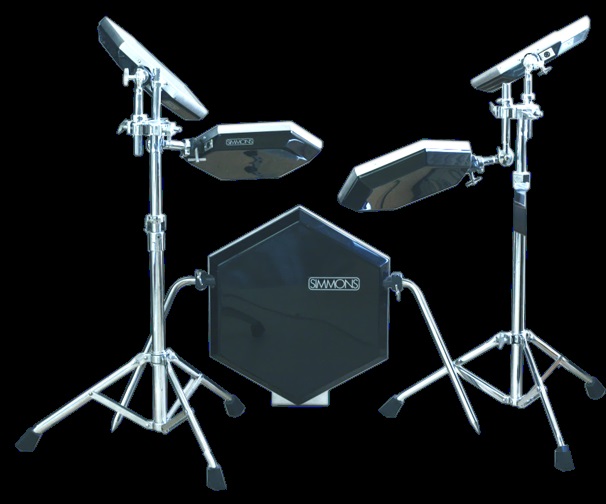
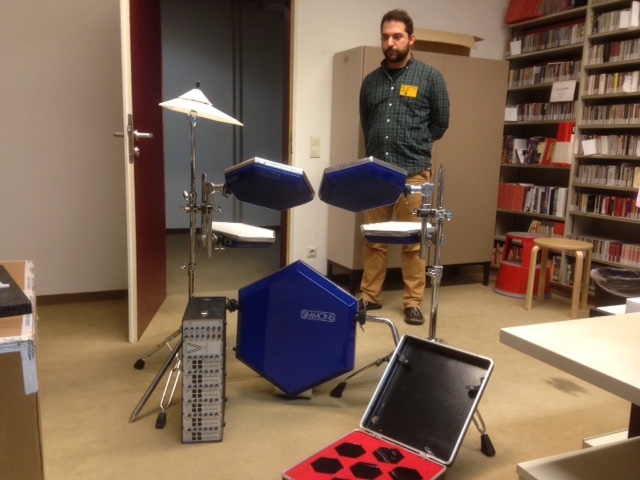
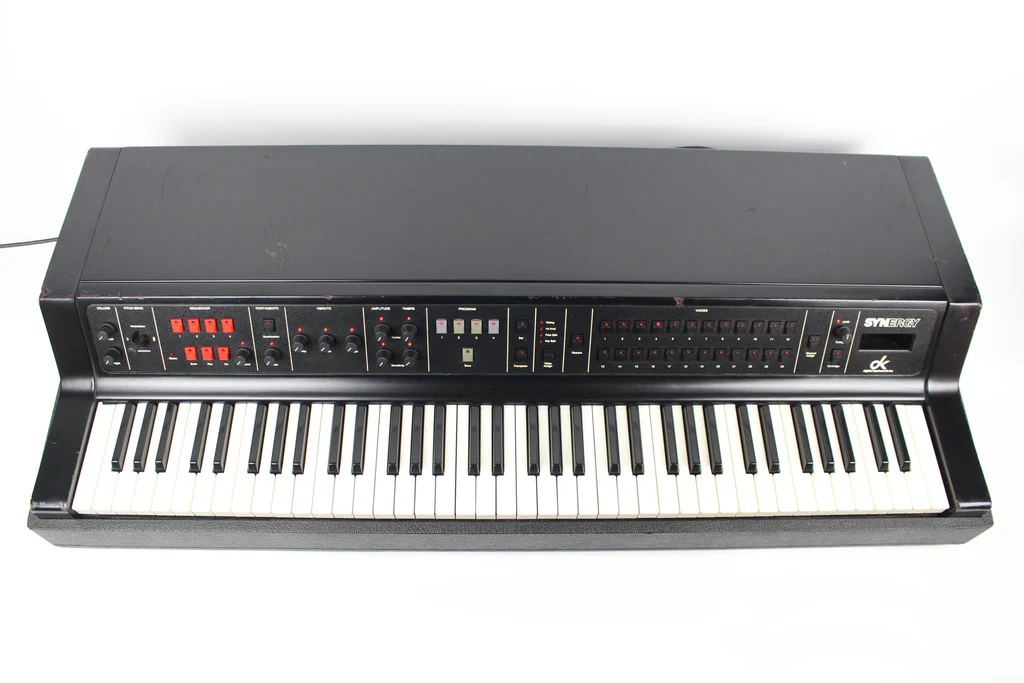
Why on earth do you collect old Simmons electronic drums?” At some point I stopped counting how often I was asked this question. But probably the following story is a part of the answer.
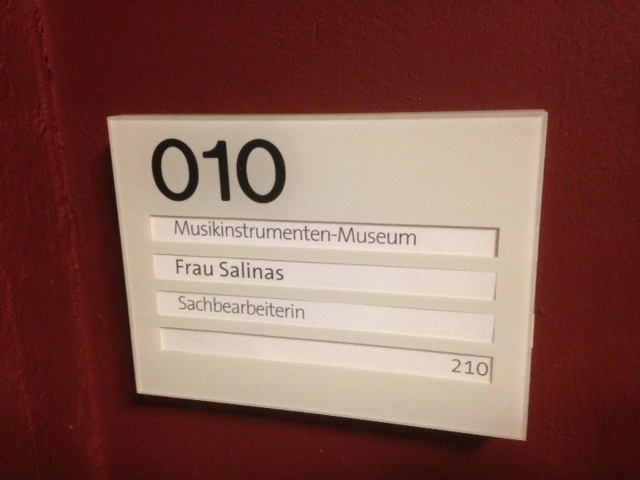
Years ago, in May 2015, a scientific assistant of the National Museum of Music Research in Berlin contacted me. He explained that his institute is running a musical instruments museum. They were planning a special exhibition about the history of electronic musical instruments and if I would be willing to provide a Simmons exhibit. Of course I was!
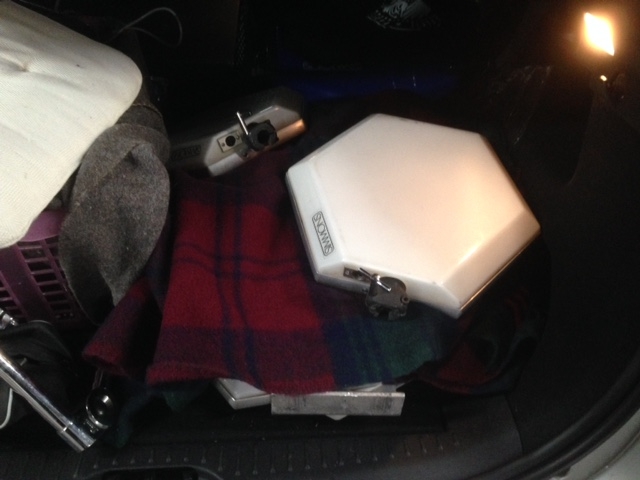
Presenting Simmons gear is always better than storing it until the end of days. But nothing happened. He did finally contact me again and we negotiated the conditions. He was interested in an SDSV and I preferred to bring it by car (600km) rather than unromantically sending it with a carrier. Although the exhibition was from March to June, the institute needed the exhibits at the end of November in order to make the catalogue in time. So just a week before that deadline, I jumped into my car with a blue SDSV with brain and cymbal pad plus my Suitcase Kit and headed for Berlin.
Incidentally at the same time there was another SDSV for sale in Berlin.
I took the opportunity to bring one kit to the museum but also to bring a new kit back home. However… I had the chance to visit the museum and I am glad that I did. It was extremely cool!
Musical instruments representing all centuries.
Musical instruments I have never heard of. Very impressive. If you happened to have been in the Berlin area between March 25th and June 25th at that time and managed to visit the special exhibition “Good Vibrations – A story about electronic musical instruments” you know exactly what I am talking about. If you missed out- there is always this video to fill the void:
Early in the morning… Don’t make appointments at noon if you have 600km to go
At least not much traffic at that time
12:30. We are about to land soon
First stop in Berlin: Appointment with the seller of a white SDSV pad set. To be honest: A friend of mine asked me NOT to buy those pads and leave them for him. I agreed. He had been waiting for years to find a pad set for his brain. A round of applause for my modesty, please…
There is still some time until I meet the guy from the museum. Time to discover some essential buildings
Finally! The hall of fame!
After we brought the gear inside I explained how to set up the kit right
Inside the box on the left there’s a Mini Moog. The exhibition will include around 70 exhibits
I am invited to visit the museum.
It is much much bigger than I thought. It shows classical instruments from the 17th century as well as contemporary gear. But the focus is on classical instruments. My favorite exhibit is a “Trautonium”, a predecessor of the synthesizer
This is the space for the special exhibition. In some special events some of the gear will be explained and played
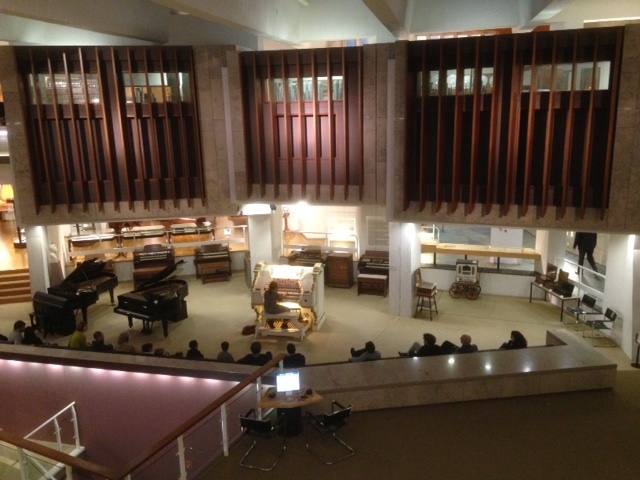
The craziest musical instrument I have ever seen. The organ is only the controller of a hall full of instruments like percussion, snares, timpanies, chromatic percussion, organ pipes… all triggered by compressed air.
I counted more than 20 harpsichords. All vintage and all restored in the institutes own workshop
I really recommend this museum if you are interested in music.
I will come and visit again (Will any of the instruments still recognize me?) and of course I went back to pick up my SDSV once the exhibition had ended. For the Silo, Wolfgang Stoelzle. Read much, much more about Simmons drums at Wolfgang’s blog here.
There’s an old joke, later made into an internet meme, that goes something like this: “Have you seen my dog? He has brown fur, he’s missing his right ear, blind in one eye and has three legs. He answers to the name of ‘Lucky’.” An underdog if ever there was one. And it’s in that spirit that I share the next installment of a sadly, almost endless list of cars with not-so-good reputations. They’re cars that for reasons neither I, my parents, my children, my wife, my close friends, nor even mere acquaintances can explain—I still want.
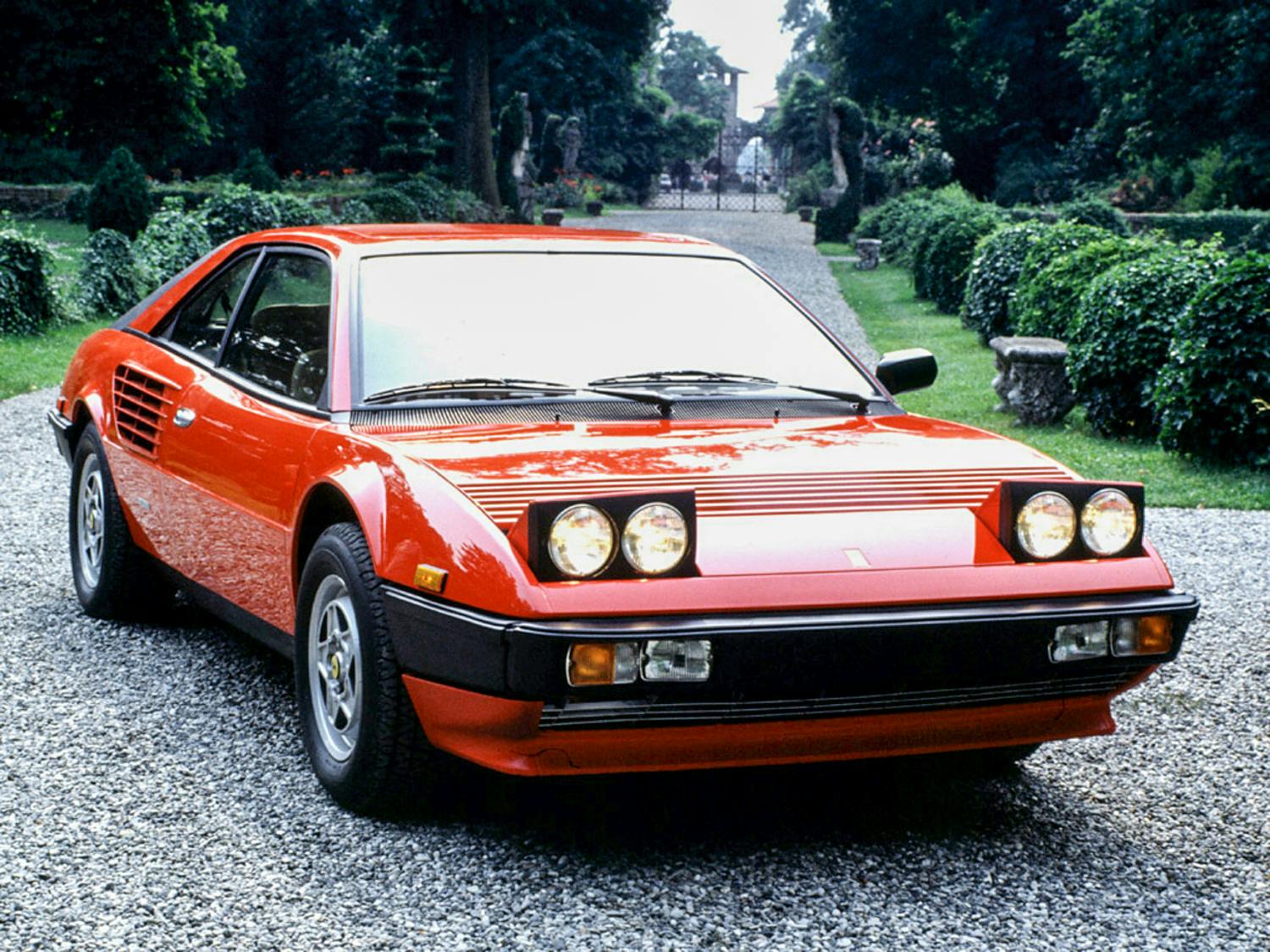
1980–82 Ferrari Mondial 8
Ferrari
What it is: The Mondial was the replacement for the Bertone-designed Ferrari (Dino) 308 GT4, a rather underrated, wedge-shaped mid-engine 2+2. The Mondial incorporated some of the design language of the Berlinetta Boxer and the Testarossa along with a pair of semi-usable rear seats. A cabriolet was added later.
What makes it bad: Road & Track asked if this was Ferrari’s Oldsmobile. Ouch. The two-valve, fuel-injected 3.0-liter V-8 was a bit of a dog. With a little over 210-horsepower, the Mondial 8 took an excruciating 9 seconds to reach 60 miles per hour. Mondial 8s were rust-prone and had fuse boxes reminiscent of the junior electrical engineer educational toy that brother bought my kid for his birthday a few years ago. Some people also found them unattractive. I find that assessment harsh, but truth be told, its predecessor, the 308 GT4 has aged better.
Why I want one: Ten years ago, I had a 308 GTS. It was great. Reliable (once I replaced the fuse box with a modern one), and a lot of fun to drive. Was it fast? Not really, but it sounded great, smelled great, and was wonderful to look at. Sadly, today I’d have to settle for a project car for what I paid for my perfect 21,000-mile 308 back then, so a Mondial is kind of it Ferrari-wise, unless I want to launch a raid on my kids’ college funds. I think the key here is to buy a coupe (the only way the two-valve 8 came). In black, they’re actually quite attractive, and there’s nothing like the sound of the little flat-plane crank V-8 and the tactility of a real gated shifter.
1985–89 Merkur XR4Ti
Ford
What it is: Ford had one success to its name in importing and selling one of its European sporty cars—the Capri was a sort of mini-Mustang that was hugely popular until exchange rate fluctuations made it less profitable to sell here. By the early 1980s, the exchange rate again favored the U.S. dollar and then-V.P. of Ford Bob Lutz thought it might be a good idea to import an Americanized version of the Ford Sierra, under the banner of “Merkur,” which is German for “Mercury.” Get it? The 2.3-liter turbo four, also found in the Thunderbird Turbo Coupe and SVO Mustang made the XR4Ti a credible E30 BMW competitor, but like every car on this list, there were issues.
What makes it bad: Apparently European Ford quality in the ’80s wasn’t at the top of the priority list and the XR4Ti suffered from electrical problems, overheating, and turbochargers with a short life. Mercury dealers despised them, and with Ford’s then-new 48-month/50,000-mile warranty, they saw tons of them. After 1989, the Merkur signs came down and Ford was done with the XR4Ti and its larger brother the Scorpio. Immediately after warranties expired, Merkurs began the not-so-slow slog into the automotive fossil record.
Why I want one: I love the Merkur’s many quirks like the goofy biplane rear spoiler, and XR4Tis are rare even at RADwood or LeMons events, which is precisely why I want one. Honestly, you could do worse that to put together a collection of Bob Lutz-inspired cars—Everything from a BMW Bavaria, to a Viper and a Pontiac G8. An XR4Ti would fit nicely in the middle, and a perfectly nice one would barely cost five figures.
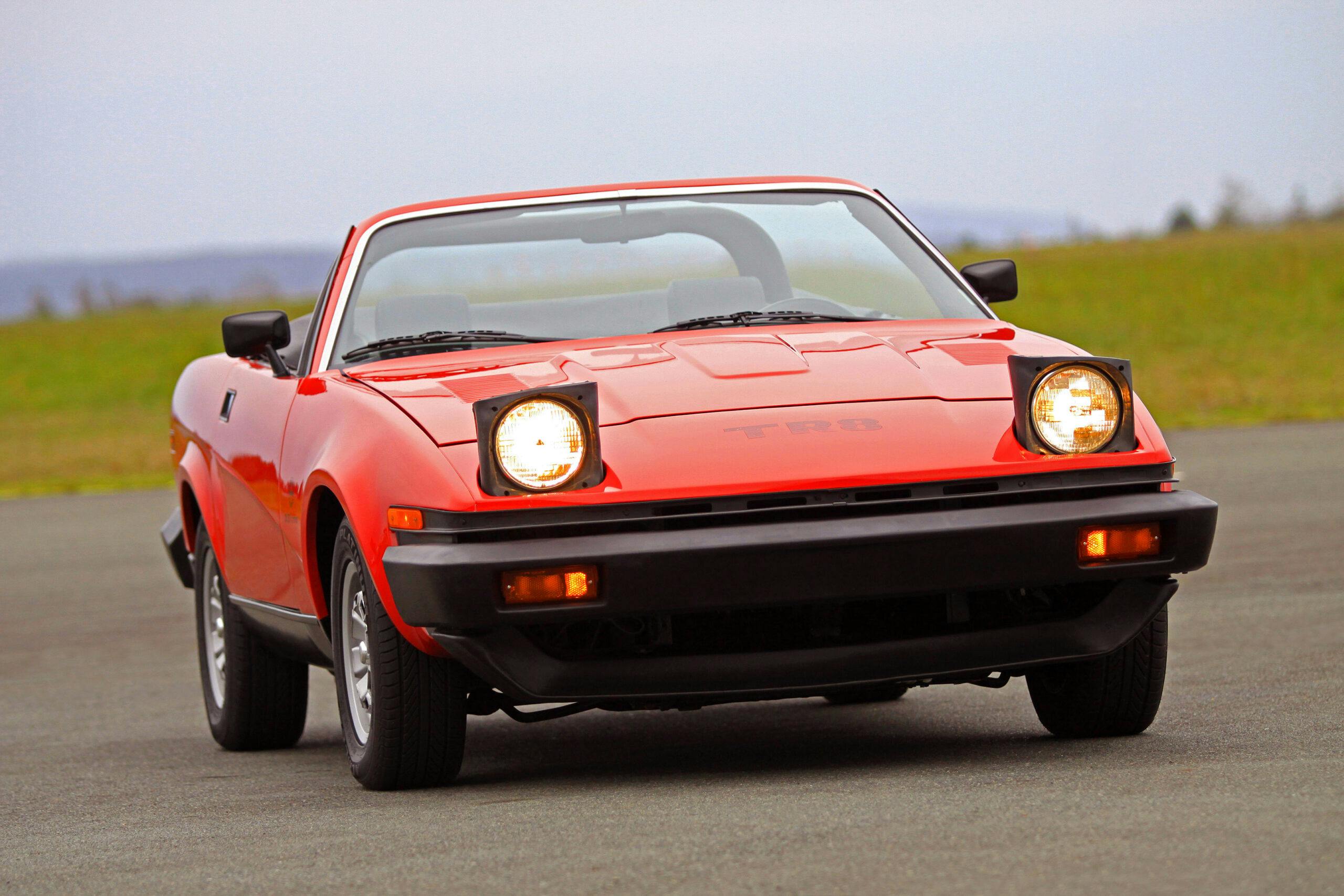
1980–81 Triumph TR8
Triumph
What it is: The Triumph TR7 was supposed to be the car that brought the British sports car out of the paleolithic era of pushrod tractor engines and separate bodies and chassis. And while the story that Harris Mann designed it on the back of a cocktail napkin (after a lot of cocktails) might be apocryphal, it’s totally plausible. The idea behind the TR8 was to make buyers forget about the four-cylinder TR7’s odd looks by offering V-8 noise and performance. The ex-Olds/Buick/Pontiac aluminum 3.5-liter V-8 by Rover just about did the trick.
What makes it bad: The same thing that made every British car of the era bad—lousy workmanship, poor quality components from suppliers that still included the infamous Lucas, and low R&D budgets. While the TR8 was predominantly produced in what was arguably one of Jaguar/Rover/Triumph’s better plants (the Rover factory in Solihull which is still cranking out Land Rovers to this day), the TR7’s reputation soiled the TR8.
Why I want one: What can I say? I’m a glutton for punishment, and I happen to love a V-8 stuffed into a small British sports car. Of the three most famous—Shelby Cobra, Sunbeam Tiger and Triumph TR8—only the latter remains affordable. Nice ones can be had in the high-teens to low-20s.
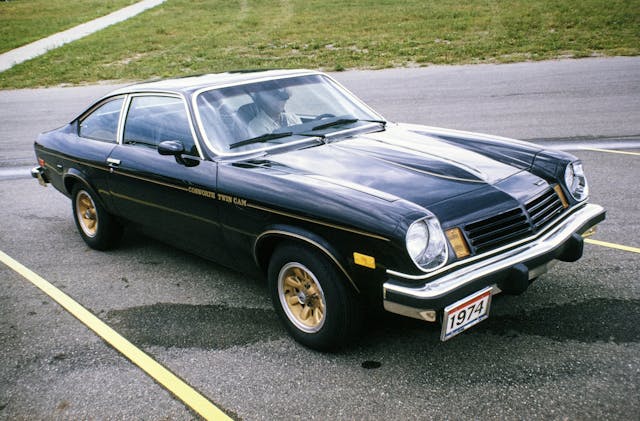
1975–76 Chevrolet Cosworth Vega
Chevrolet
What it is: The Cosworth Vega was supposed to be a high-performance version of the compact Vega that had debuted for 1971. Cosworth in the U.K. developed an alloy DOHC cylinder head for the Vega’s four-cylinder, which was mated with Bendix electronic fuel injection. It was very modern, very European.
What makes it bad: While the Vega finally had a smooth, powerful engine, it still made 110 horsepower instead of the anticipated 140. Then there was the fact that it still wore the maligned Vega badge, and while good handling and balance were always part of the package, indifferent assembly quality and rustproofing were in the Vega’s DNA as well. Oh, and it was also barely cheaper than a Corvette.
Why I want one: The magazines of the day touted Cosworth Vegas as instant collectibles, and many of the cars were stored, or intentionally kept with very low miles. The idea of owning a genuine Malaise Era time-capsule is more than intriguing. Plus, I’ve always liked the way Vegas look, a bit like miniature Camaros.
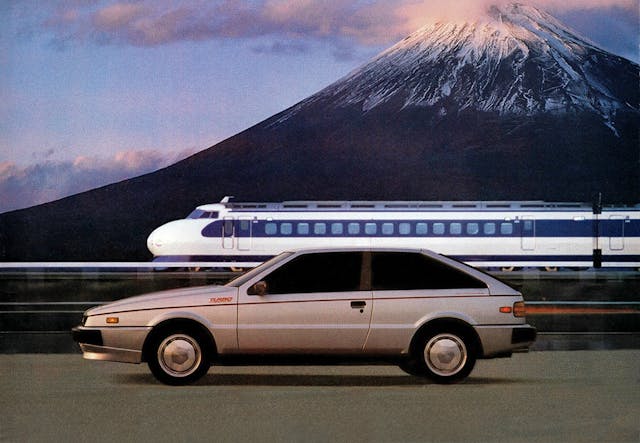
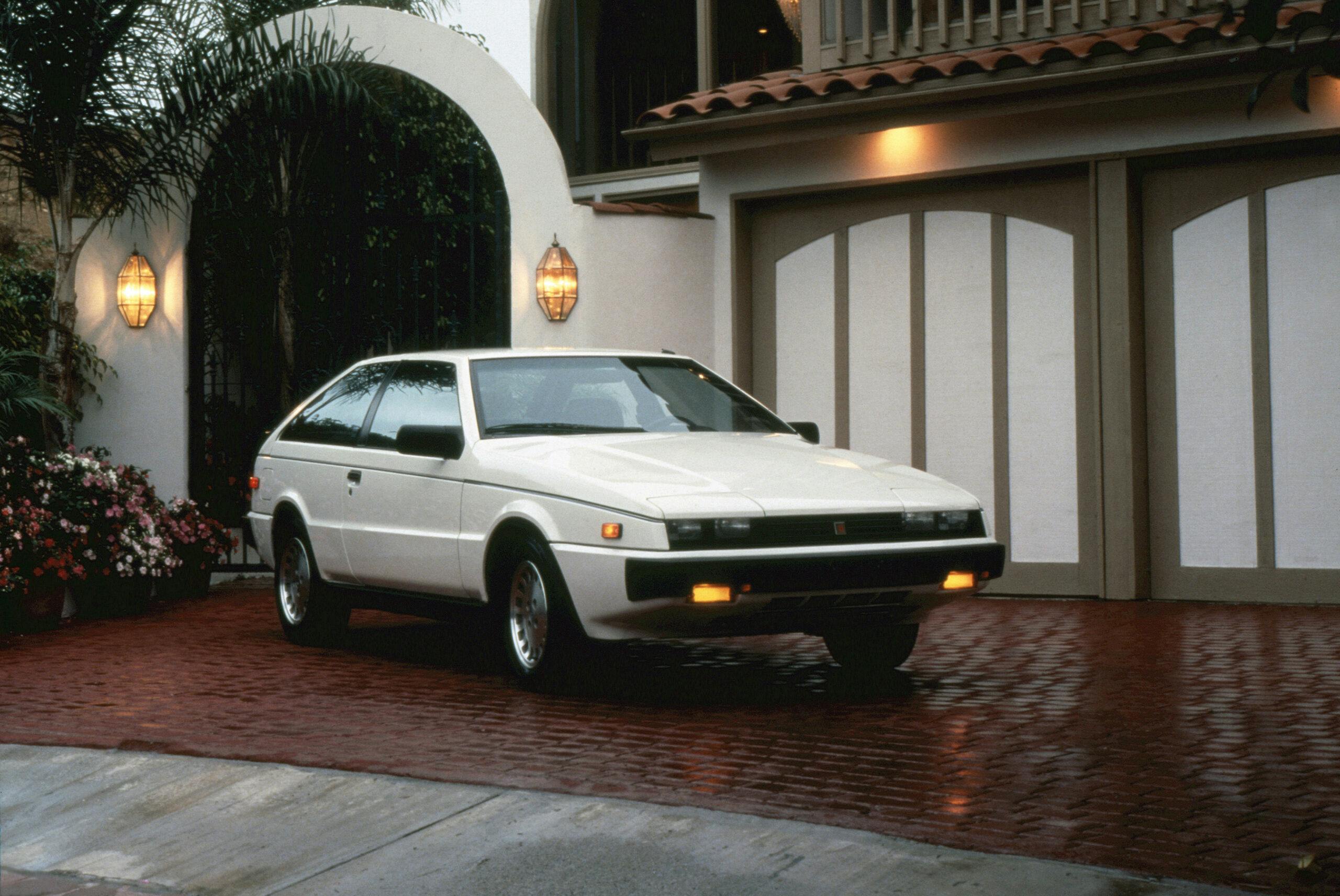
1983–89 Isuzu Impulse
Isuzu
What it is: Isuzu had a surprisingly fruitful relationship with the great Giorgetto Giugiaro of Italdesign, and it stretched back to the 1960s, when Giugiaro styled the lovely Isuzu 117 coupe. That car lasted all the way up until 1981, so because of its longevity and popularity, its successor had to be something special. The car was teased as a nearly production-ready Isuzu “Ace of Clubs” concept car. It went on sale the next year as the Piazza outside of North America, and as the Impulse in the U.S. and Canada.
What made it bad: Seemingly, the entire budget for the car went to Italdesign. Brakes, chassis and engine were bargain-basement stuff, as under its pretty Italian skin, the Piazza/Impulse was based on the General Motors T-car platform. That’s right, it wouldn’t be much of a stretch to call the Impulse a Chevette in an Italian suit. Things did get a bit better later in the car’s run with turbocharging and chassis refinements by Lotus, but few were sold and almost none survive.
Why I want one: The low survivorship factor makes these cars exceedingly rare, and it’s one of the few opportunities that anyone has to own something that looks like an ’80s concept car. It’s also an opportunity to be king for a day at RADwood, and when Impulses do turn up, they’re almost always cheap.
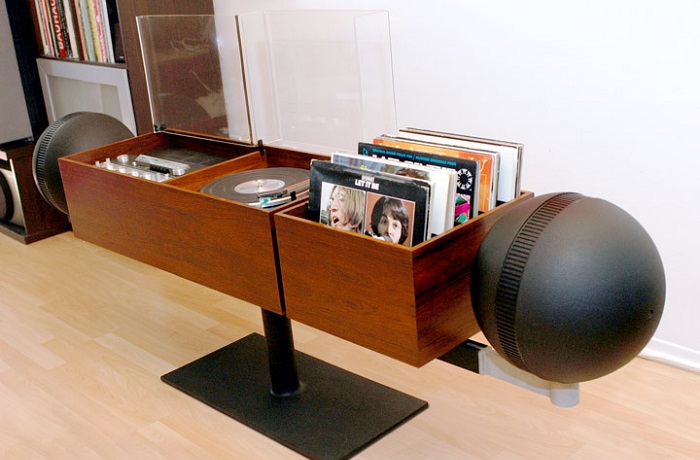
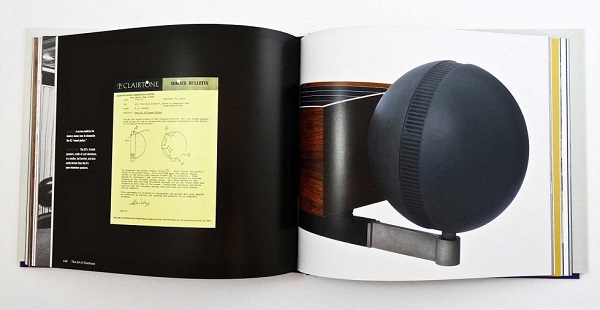
The Art of Clairtone: The Making of a Design Icon, 1958-1971 is a fully illustrated stylish look back at the stereo story behind a Canadian design icon. This handsome hardcover is by Nina Munk and Rachel Gotlieb and is available on Amazon.
For an entire decade, in the 1960s, Clairtone Sound Corporation captured the spirit of the times: sophisticated, cosmopolitan, liberated. From its modern oiled-walnut and teak stereos to its minimalist logos and promotional materials, Clairtone produced a powerful and enduring body of design work. Founded in 1958 by two young Canadians, Peter Munk and David Gilmour, Clairtone quickly became known for its iconic designs and masterful advertising campaigns.
Its acclaimed Project G stereo, with its space-age styling, epitomized the Swinging Sixties. Famously, Hugh Hefner owned a Project G. So did Frank Sinatra.
Oscar Peterson affirmed that his music sounded as good on a G as it did “live”. In 1967, suggesting how deeply Clairtone’s G series had come to be identified with popular culture, the G2 appeared in The Graduate with Dustin Hoffman and Anne Bancroft.
With 250 illustrations, including previously unpublished drawings, rare film stills, confidential memorandums, and original photography, The Art of Clairtone is a candid and in-depth look at the company’s skyrocketing success — and sensational collapse.
Through the recollections of those who knew Clairtone best, from its founders to its designers, engineers, and salesmen, and with comments from Karim Rashid, Douglas Coupland, Tyler Brûlé, and Bruce Mau, among others, this elegant book, published on the 50th anniversary of Clairtone’s launch, celebrates an iconoclastic company that once seemed to represent the promise of Canada. For the Silo, Jarrod Barker.
This rare and refurbished 1969 Vintage Moog Model IIIP Modular Synthesizer System lights up like a Christmas Tree and Is Now For Sale.
This unit has been disassembled, cleaned inside and out, fully refurbished by vintage synth specialists with decades of experience (our friends at tonetweakers.com), systematically tested by perfectionists over a long period and working like new again after 56 years! Few sellers invest the time, love and money tonetweakers do in the preparation of gear, and this is justifiably reflected in their prices.
The Moog modular was one of the first commercially available synthesizers.
Sold in different configurations, the IIIP consisted of 3 portable cabinets of modules. Containing ten (!) 901 series oscillators, the best lowpass and highpass filters in the biz, and a magical spring reverb that makes things sound more organic, I can’t think of any other synth that matches the warmth and fatness of this genuine 1969 vintage Moog modular. Wendy Carlos’s classic album Switched on Bach and I Feel Love by Donna Summer were recorded on similar Moog modular systems.
Tonetweakers just finished refurbishing this gorgeous example (assuming they don’t find any problems as they continue to test every single part of it). Restoration was done in stages and took many months to complete. Total tech time spent was around 85 hours. They hit a snag when some parts ordered turned out to be fakes – a sadly common occurrence these days – but they eventually managed to track down some legit replacements.
They also have a smaller (single cabinet) real vintage Moog Model 15 that’s ready for sale. (Search their website for Moog Model 15).
The first photo and video of this unit in their studio shows 2 switch modules in the right most cabinet which were removed from this system since it does not belong with it. They were replaced with a blank .com metal panel. All other pics here show the .com panel in place.
This system came to tonetweakers without a keyboard. A Kenton Pro-2000 MIDI to CV converter and a MIDI keyboard is a much better option than the original Moog keyboard anyway as it offers so much more control. One of the cases does not have a front cover, which means less closet space wasted once you set it up in your studio.
Tonetweakers are all about negotiation and only ask that interested parties make a serious offer.
Trades of similar vintage modulars considered (ARP 2500, Roland System-700, Buchla Electric Music Box, EMS Synthi 100, Buchla 200/300, Polyfusion, Emu modular, etc). If we don’t get any offers we like, this classic instrument will likely end up in a vintage synth studio museum we may eventually open up here in New York City. Please message us if you’d like to be involved, if and when that happens. For the Silo, Jarrod Barker.
Here are a couple videos of this incredibly tight Moog IIIP in action:
Part of what makes this hobby and the markets surrounding it so interesting is how organic and ever-changing they are. Tastes shift, new people start participating in the old car world, and prices adjust to reflect that. That’s why Hagerty updates our price guide four times per year.
Over the past 12 months, words like “cooling,” “softening,” or “more cautious” have dominated conversations about the market as a whole, but that doesn’t mean there weren’t big moves for certain individual vehicles. Below are the ones that moved the most up, and the most down, in 2025.
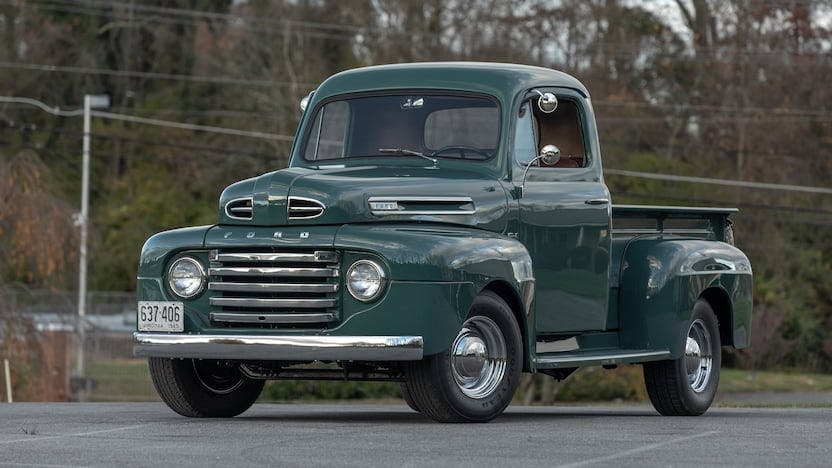
These pickups were showroom rivals to GM’s Advanced Design line. They were also Ford’s first all-new postwar vehicles, as well as the very first F-Series, which has since become the most recognized and best-selling line of pickups out there.
The field of classic trucks, however, is a crowded one. Although these first-gen F-Series effectively doubled in value from 2015 to the early 2020s, they’ve been sliding since the beginning of 2024. The current median #2 value is $31,800 usd/ $43,887 cad, which is lower than it was at the beginning of 2019, before even adjusting for inflation.
Fiat marketed attractive convertible models in the U.S. and Canada starting in the 1950s. They were typically lower-priced but less lively than the alternatives from Alfa Romeo. This trend continued into the 1960s with the 124 Spider, introduced in 1966. The handsome, Pininfarina-styled convertible started with a 1.5-liter twin-cam engine but displacement changed over the years, even if the basic styling and layout of the car didn’t. After Fiat left the U.S. market (for the first time) in ’83, Pininfarina picked up the mantle and sold the same basic car as the “Pininfarina Azzurra” for another few years. For decades, these svelte Fiats and Pininfarinas were one of the cheapest ways into motoring dolce vita, but prices have definitely gone up, especially this year.
This is less a story of big-dollar gains than it is one of percentages. In excellent condition, most Fiat-badged versions can be had in the low-$20K usd/ $27,600 cad range. The Pininfarina versions are rarer, supposedly better built, and have a more premium badge, but they still sit at $33K usd/ $45,540 cad in excellent condition. Few classic Italian drop-tops can be had for so little.
Hornets are neat cars. They rode on Hudson’s unique “step-down” chassis that gave it a lower, sleeker profile and driving position than other American cars of their day, and despite the early models’ six-cylinder engines, Hornets regularly bested more powerful competition in early ’50s NASCAR racing.
But Hudson also became a defunct brand before many car enthusiasts were even born. Even with some star power as “Doc Hudson” in the Pixar movie Cars, the Hornet doesn’t have the staying power and wider cultural relevance as something like a Tri-Five Chevy, ’57 Thunderbird, or ’59 Cadillac. Hornet prices grew a bit during the early 2020s along with just about every other classic car, but have been falling since last year. The current median #2 value of $32,300 usd/ $44,577 cad is roughly the same as it was three years ago in pure dollar terms. Adjusted for inflation, though, the value is about where it was in 2013.
Honda’s famous two-seater hatchback, the CRX, brought cheap and cheerful fun to enthusiasts across North America and became an icon of tuner culture. These little cars are definitely still cheerful, but they’re not so cheap anymore, as the supply of clean, unmodified, low-mileage examples has dwindled in front of higher demand.
Indeed, the CRX has made several of these “winner” lists from the Hagerty Price Guide in recent years, and since the beginning of 2020 the median condition #2 value is up by a whopping 168%. The desire for these pocket rockets is so strong that one of the 1988-91 cars in excellent shape is currently worth $45,500 usd/ $62,100 cad. That much money will almost buy you a brand new Civic Type R, which comes with exactly triple the horsepower as well as a warranty, but doesn’t come with the same old-school charm.
On the new car market, the love for pricey, premium luxury 4x4s in North America is as strong as ever. The roots of our affection for luxury SUVs go back a lot further, though, and Jeep’s 1984-91 Grand Wagoneer was the weapon of choice in the affluent suburbs and vacation towns of yuppie-era America.
Nostalgia for those woodgrain-clad boxes helped pull prices up in the late 2010s and values exploded during the early 2020s. In the gotta-have-it, pay-whatever-it-costs craziness of 2022, we even asked if a $154K usd/ $212.5 K cad Grand Wagoneer sale was “peak market insanity.” Yep, turns out it was. Sale prices have definitely come back down to earth since. The median #2 value for Grand Wagoneers at the end of 2025 is $45,900 usd/ $63,350 cad . At first glance that looks a lot higher than the $36,600 usd/ $49,680 cadit was at the beginning of 2020, but when you adjust for inflation the two numbers are within a hundred bucks of each other.
Like the Grand Wagoneer in the ’80s, the Mercedes G-Wagens mostly serve as bougie-mobiles that don’t see anything rougher than a gravel driveway, but the earliest versions (aka the W460) were rugged and relatively simple off-roaders, sort of like a German Land Rover. Mercedes-Benz didn’t market the W460 in America, as we identified the three-pointed star with luxury and high-performance, whereas this was a spartan runabout with underpowered four-, five-, and six-cylinder gas or diesel engines. W460s are therefore pretty rare here.
Several huge sales over the past 12 months have been impossible to ignore, however, and it appears the W460 is gaining a big following. Current values vary widely depending on body style, engine, and model year. Certain hardtop wagon models can be had for under $40K usd/ $55.2 cad (exchange rate at time of posting) in excellent condition, while certain convertibles are nearly 90 grand. For the Silo, Andrew Newton.
LA’s Stahl House – Most Famous US Modern Home Since Fallingwater – Lists $25 Million usd/ $34.3 Million cad
In 1945, Arts and Architecture magazine commissioned major architects to create the Case Study Homes, an experiment in architectural design intended as a creative solution to the impending post-war housing boom. Constructed from industrial materials, these homes would help to define the mid-century modern movement, none more so than Case Study House #22, known as the Stahl House.
The Pierre Koenig masterpiece is cantilevered over a Hollywood hillside, which had been deemed unbuildable by previous architects. The home was immortalized by renowned photographer Julius Shulman in an image that shows two women in white party dresses lounging in the living room that seems to float above the glittering city.
It is perhaps the most famous modern-style US home and architectural photograph since Frank Lloyd Wright’s 1930s Fallingwater. A true cultural landmark, the home is a City of Los Angeles Historic-Cultural Monument and listed on the National Register of Historic Places.
Owned by the Stahl family since its inception, this one-of-a-kind icon of modern design has hit the market for the first time.
Representing the optimism of the atomic age, the Stahl House features the steel-and-glass construction so emblematic of the modern movement. Its legendary glass walls were created from the largest glass panels commercially available when it was built between 1958 and 1960. They offer sweeping 270-degree views of Los Angeles. A picture window in the primary bathroom frames the Hollywood Sign.
An airy open floor plan connects the living spaces in the 2,200-square-foot home, anchored by a central fireplace with natural stone details. Blonde wood enhances the charming kitchen, which features a spacious island with counter seating that ingeniously tucks away when not in use. The concrete floors sport radiant heating for ultimate comfort. Sliding doors open onto the gorgeous pool deck with an expansive swimming pool and more awesome views. Situated at the end of a gated drive, the property offers a rare combination of discretion, security, and serenity high above the city. Since 2007, the house has offered public tours, and the family seeks not just a buyer but a custodian who will honor the house’s history, respect its architectural purity, and ensure its preservation for generations to come.
Located in the Hollywood Hills, the house is about a mile from the legendary Sunset Strip, the epicenter of LA’s rock-and-roll scene in the 1960s and still home to top-notch venues for music, comedy and food. The neighborhood is very popular with celebrities, with A-listers like Leonardo DiCaprio, Keanu Reeves, Halle Berry and Taylor Swift owning homes in the hills. The Stahl House is a celebrity in its own right, having been featured in numerous films and TV shows, including Columbo, Nurse Betty and Galaxy Quest. For the Silo, Jarrod Barker.
Tim Allen playing Jason Nesmith in 1999 Galaxy Quest – The Stahl house
The listing is held by William Baker of the Agency Beverly Hills.
Photo Credit: Cameron Carothers; Original Photos by Julius Shulman, courtesy of The Getty Museum
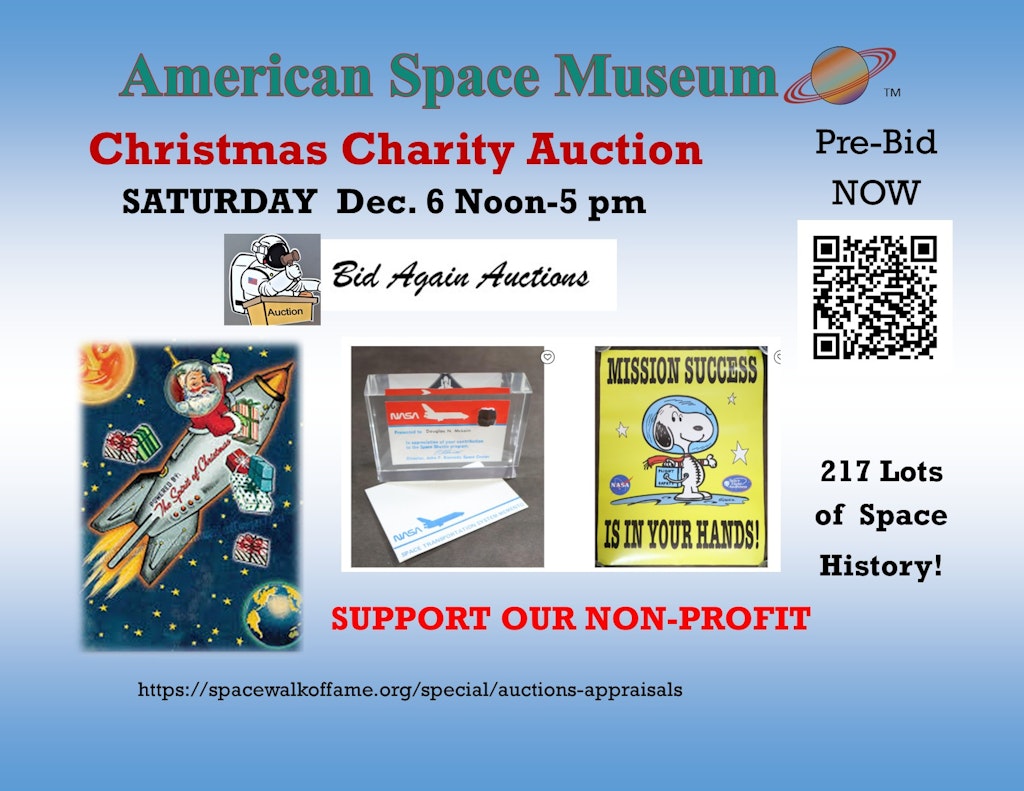
coming soon- NASA CHRISTMAS SPACE MEMORABILIA AUCTIONIS SATURDAY, DEC. 6TH PLACE BIDS VIRTUALLY AT NOON EST
Our friends at Bid Again Auctions of Orlando have more than 200 lots of holiday cheer for that space lover on your gift list at the Saturday, Dec. 6th virtual “NASA Christmas 2025 Space Memorabilia Auction,” a charity fundraiser for the American Space Museum in Downtown Titusville, Florida.
Pre-bids are being taken now on this rich collection of space items. The final hammer falls beginning at 12 noon EST on Dec. 6. The 217 lots range from a rich collection of authentic moonwalker autographs to NASA photographs to real Space Shuttle Thermal Protection Tile. There are dozens of lots with space flown hardware, and even insulation “Kapton foil” flown to the Moon and back covering the Apollo Command Modules.
Auctioneer Chuck Jeffery, and ASM’s collection analyst, had hand-picked some amazing artifacts of the space age that will satisfy any collector at any level. These auctions support the non-profit museum with an added charity fee of 20% that is the bidders in-kind donation to the U.S. Space Walk of Fame Foundation. This is the 41st American Space Museum Charity Space Memorabilia Auction conducted by Bid Again Auctions. For the Silo, Jarrod Barker.
Questions about auction items? Call Bid Again Auctions at: (407) 947-8954 or email: [email protected]. Click on the text block below to preview all auction lots.
Restored in its originally delivered livery of Speedster White over Red leatherette
Considerable history dating back to the late-1970s, documenting long-term preservation into the late 2010s
Original U.S.-specification 1600 Speedster delivered to Hoffman Motors
Fitted with a period-correct 1956 1,600-cc engine with twin Solex carburetors paired with its numbers-matching transmission
Furnished with a copy of its factory Kardex warranty card, Porsche CoA, owner’s manual, and toolkit
Chassis No. 82181
Engine No. 63249 Transmission No. 8775
USD 485,000$/ CAD 678,130$ (exchange rate at time of posting)
Dispatched to Hoffman Motors in New York City in the spring of 1956, this 1956 Porsche 356 A 1600 Speedster was among those U.S.-market examples delivered via the legendary American-market distributor and tastemaker. It left the factory wearing Weiss (White) paint over Red leatherette, the same striking livery it wears today. Additional options noted on the Kardex include a speedometer in miles and sealed beam headlights.
The earliest history of the car dates to the late 1970s when it was sold via Weldon Scrogham’s G&W Motorwerkes to R.A. Hendricks of Waynesboro, Virginia. Service invoices show that by at least 1983 the car was in the hands of long-term owner Carter Elliott based in nearby Charlottesville. Elliott would take fastidious care of the car while under his ownership, a span that would last over three decades.
Invoices on file reveal more
Invoices remain on file showing parts purchases and work completed by the best suppliers throughout the 1980s and 1990s, including Stoddard, Performance Products, and H.G. Bieker. In 2018 the story of Speedster chassis number 82181 simultaneously began anew and circled back to familiar hands when noted 356 Porsche expert and restorer Cole Scrogham (son of Weldon) was tasked with a thorough refresh. Directed by its then-owner to keep as much of the original car intact as possible, Scrogham is said to have been able to retain the majority of its original, Reutter-built sheet metal with an eye on preservation while the car was refinished to “show quality” in its original shade of Speedster White.
A period-correct 1,600-cc flat-four (serial number 63249) from a 1956 356 A powers the wheels through its numbers-matching transmission. In the nicely detailed engine compartment, you’ll find proper FRAM and Bosch decals, correct finishes and components, as well as a pair of Solex carburetors topped by silver Knecht air cleaners.
Today, this Speedster appears just as Max Hoffman and the Porsche factory intended: in elegant White over Red, with such details as accessory chrome guards protecting the sealed-beam headlights, period-style Michelin XZX 165 tires, and gold-tone badging serving as clear indicators as the quality of its restoration. A matching red vinyl boot (trunk) covers the occasional soft top when it’s folded. Inside, the red vinyl bucket seats made famous by the Speedster wear contrasting ivory edge piping. A correct ivory two-spoke steering wheel with a horn ring frames a body color dashboard covered with a red upholstered top. VDO instruments feature with correct green lettering — including a miles-per-hour speedometer, as specified in the original Kardex. In a smart nod to modernity, the car is equipped with a pair of vintage style lap belts. Otherwise, Speedster chassis number 82181 presents very much as it did when delivered new in 1956 — down to its exquisite color selection.
In addition to extensive documentation dating back more than four decades, this iconic 356 A Speedster is furnished with a toolkit, a spiral-bound driver’s manual, a Porsche Certificate of Authenticity, a copy of its Kardex warranty card, and side curtains with their protective case.
Click on the full auction catalog below to learn about this unique car.
The Zürich Auction1 November 2025 The Dolder Grand – Zürich, Switzerland
Swiss-Sourced Collector Cars
It is no surprise that our friends at Broad Arrow are proud to present a selection of Swiss-sourced vehicles to be offered at their inaugural Zürich Auction. The vehicles are varied and exceptional and the setting could not be better.
Switzerland’s reputation for precision, care, and high standards extends beyond its watches and craftsmanship. These qualities are frequently reflected in the quality of its vehicles with Swiss-sourced cars often offering distinct advantages including:Exceptional Maintenance Standards: Thanks to strict technical inspections, such as the MFK, Swiss vehicles are typically kept in excellent condition. Low Mileage: Cars in Switzerland generally show less wear, as average annual mileage trends lower than many other markets. Clean, Verifiable History: Rigorous registration and control systems mean provenance is often clear and verifiable. Favorable Tax Conditions for Classic Cars: As with several European countries, vehicles over 30 years old may qualify for reduced VAT rates. Reliable Logistics Support: Broad Arrow has established partners throughout the region available to assist with customs, shipping, and other logistical needs. For more information on any of the offerings in our Zürich Auction, and for a complete list of Swiss-sourced vehicles, I invite you to contact their knowledgable team of specialists, or to reach out to their client service team.
Bidder registration is open with options for in-person, telephone, internet, and absentee bidding available. Contact their client service team for personalized assistance at [email protected]. Please mention the Silo when contacting. For the Silo, Jarrod Barker.
Our friends at kommandostore talk about the Cold War on their site so often, it’s become one of their defining aesthetics…..and that’s a good thing- read on!
Grand armies and weapons are arguably less than half of the story.
Many of the cold war ‘battles’ from the 1950s through the 1990s took place in the minds and on the wrists of millions of people. Some might say they certainly still do…
Rogue media campaigns, protests & activism, black ops — they defined the hottest parts of the Cold War. But what if we told you that the watch you were wearing was just as important? The Soviet Union sure thought so…
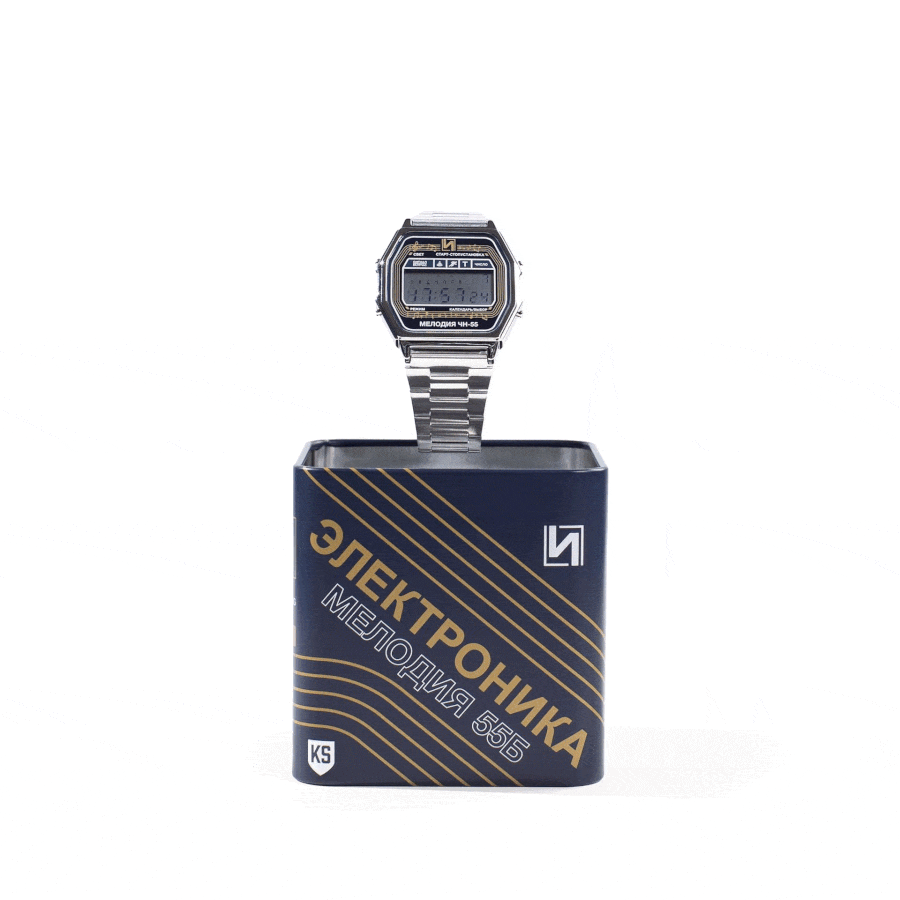
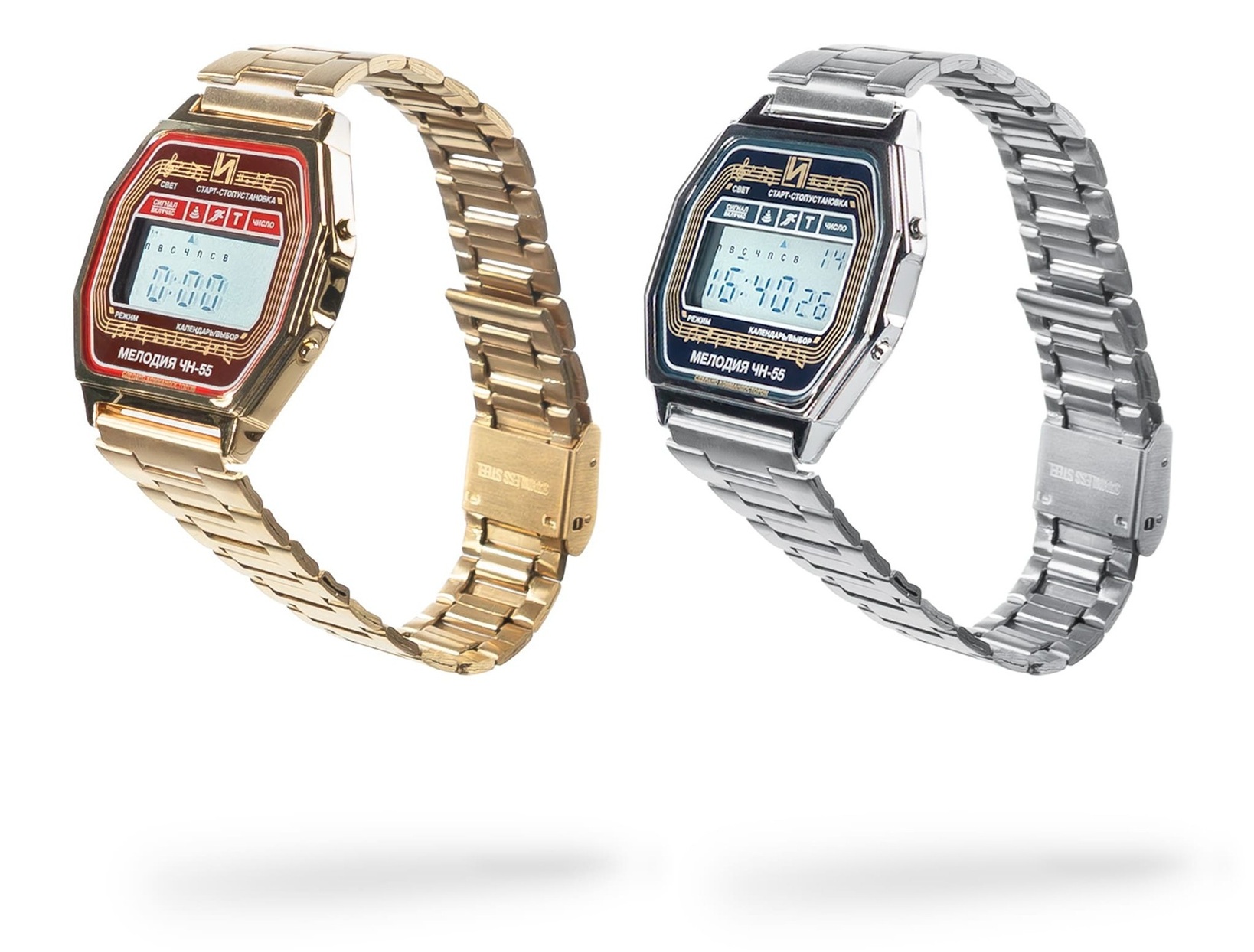
Having gotten sucked into the almost endless lore rabbithole of watches, the first thing that kommandostore sought to bring back from obscurity was the Elektronika 55B — the soviet union’s most popular digital watch that went the way of… well, the Soviet Union… When it collapsed in ’91.
Above all else, there’s one story about this watch that truly stands on its own, a story that will make you realize that there is much more to this little watch that jovially plays chiptune soviet music…
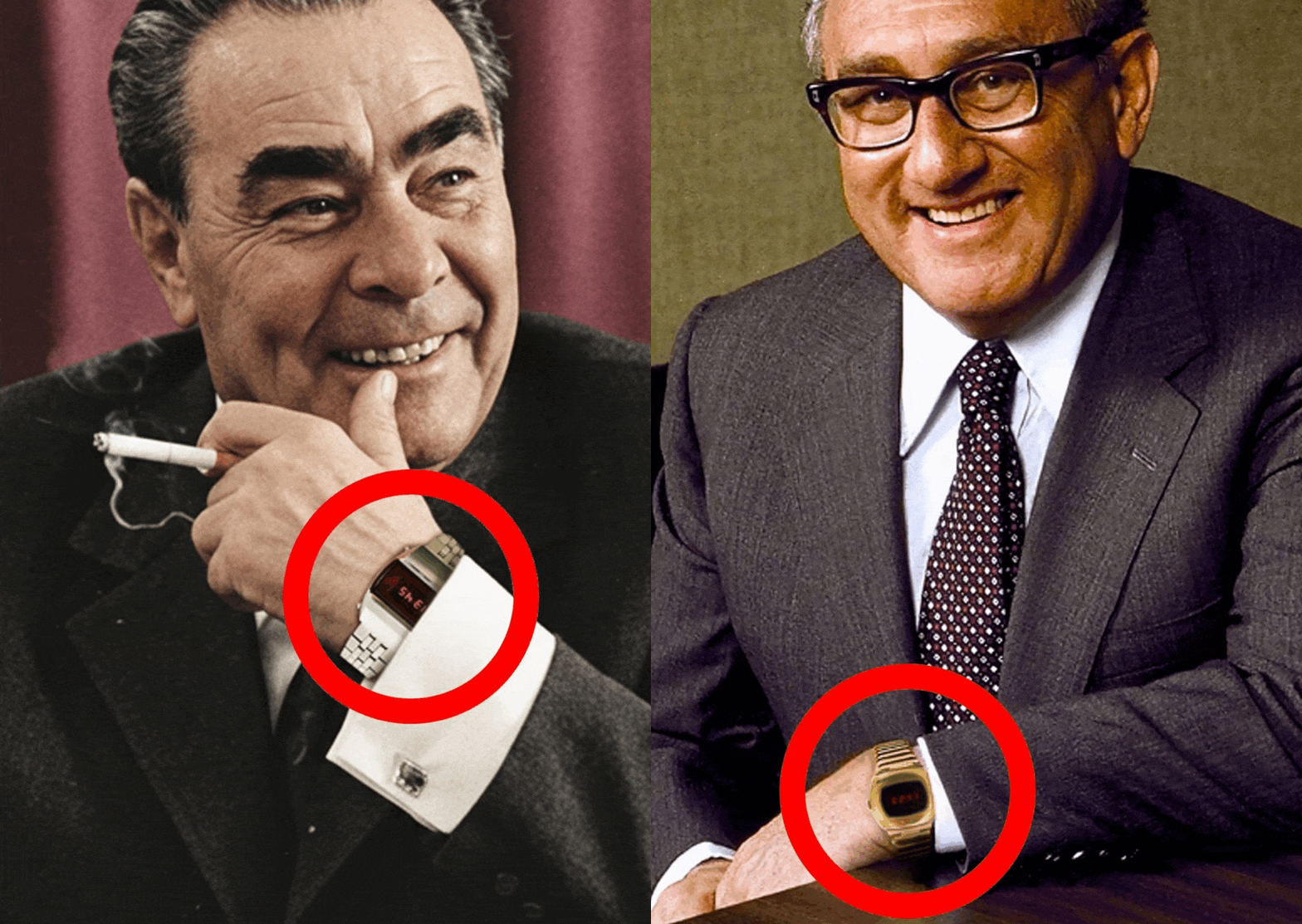
It involves two of the most powerful men in the world, Leonid Brezhnev and Henry Kissinger convening and comparing their new digital watches.
Ok, they weren’t really wearing the watches in that photo, but such an encounter really did happen between the two gentlemen in the early 70s, one that subtly let the United States know that the Soviets were right on the US’s tail for semiconductor technology.
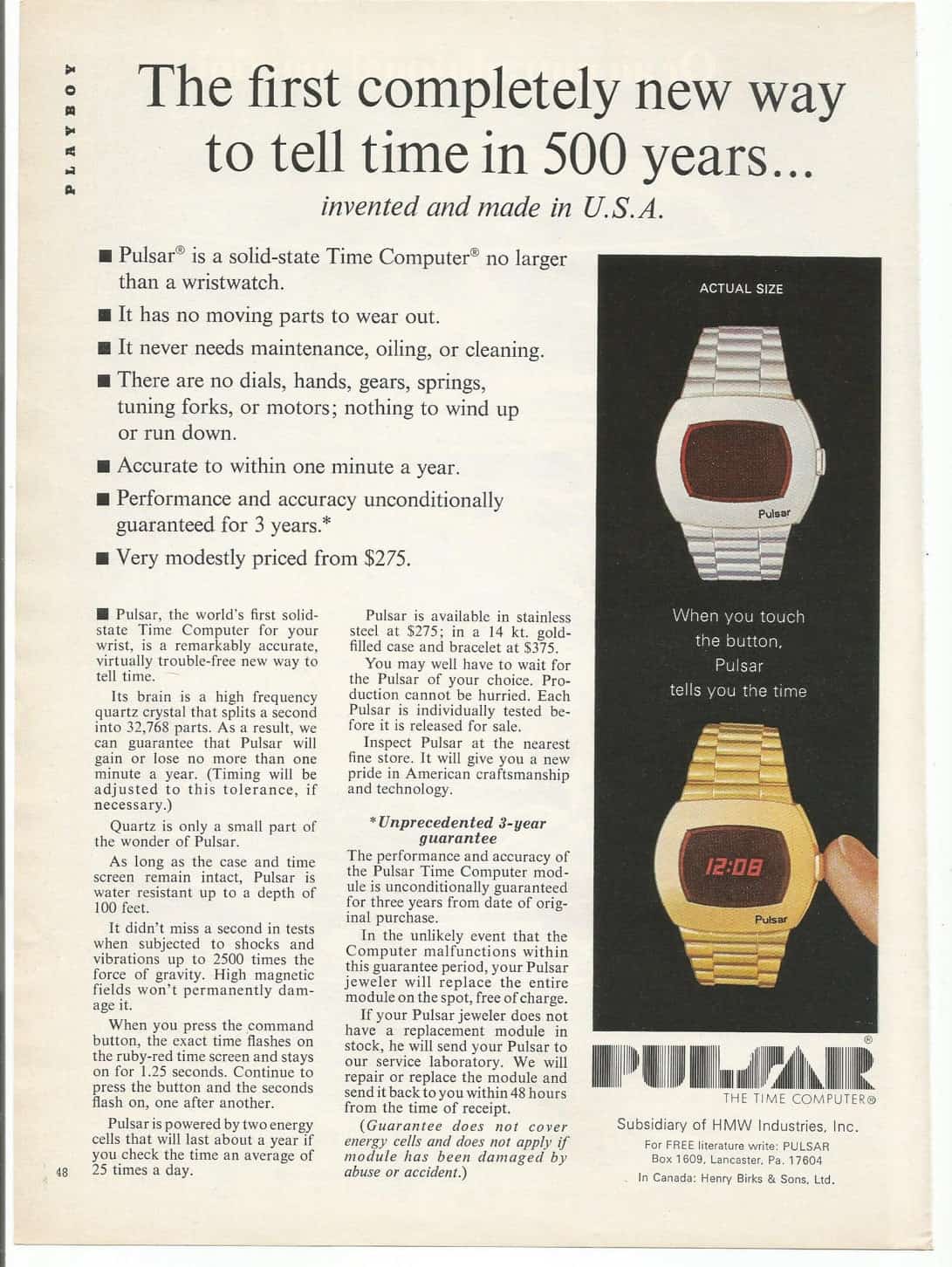
On a somewhat-routine visit to Moscow, US Secretary of State Henry Kissinger wore a Pulsar P2 Watch — one of the very first digital watches. Known for it’s striking red LED display and appearance on the wrist of none other than James bond.
It also carried a hefty price tag, with the 21k gold edition costing enough to buy you a car in today’s money.
You tell us, is $1800 usd/ $2,526 cad in today’s money worth it for one of the two base models?
The meeting was with Leonid Brezhnev, General Secretary of the Soviet Union. He remarked that he did indeed like Kissinger’s watch, being a man of taste.
Then he told Kissinger that the USSR had already developed a prototype using the very same technology.
Kissinger was reportedly astonished — and was presented with a functioning Soviet-Made digital wristwatch, the Elektronika B6-02. Featuring CMOS circuits, it was blocky, brutalist, and affordable enough for practically anyone to buy when it officially launched.
The whole Elektronika series carried this statement — the latest fancy tech of the west is cool, but when it’s done the soviet way, for way cheaper, it’s not a luxury to be worn by only the elites.
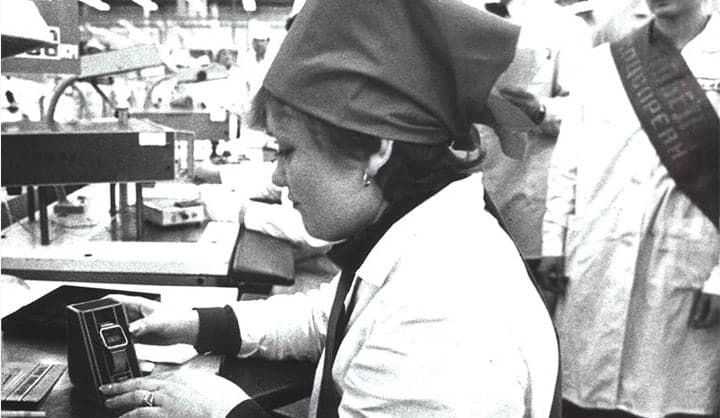
It didn’t take a horology enthusiast to buy and wear this watch. It’s Kalashnikov-esque ubiquity meant it was worn by everyone from party members to coal miners.
Sure, in 1969 we brought a luxury-watch masterpiece, the Omega Speedmaster, to the Moon before the Soviets were able to. But as a tool of propaganda, the USSR might have had us beat, and the Elektronika 5 appeared in space several more times…
We found it intriguing and somewhat disheartening that Elektronika, what seemed to be the people’s choice, was snuffed out much in the same time period as the Soviet union.
In a world full of Casios & Timexes, who can’t help but succumb to the charm of the plucky Elektronika, so why not give it the wrist time it deserves…because it is now available once again and this time in a near perfect reproduction right down to the packaging.
A 1:1 functional replica of the original Elektronika with 4 new Slav-approved “Melody” alarms. Sanctioned to the second-hand market (pun intended), thankfully kommandostore thought that the watch deserved a proper revival after its unceremonious disappearance following the collapse of the USSR.
Just like the original, it’s an affordable and reliable piece with just enough fun to get even the most uptight horologists asking you questions. But unlike the OGs, the sad truth of capitalism is that we’re slaves to supply and demand. They are running out fast, and even though there are plans to quickly continue production, there may be a slight gap. So, if you’re interested, this is kind of a last call.
Click the following link to place your order while supplies last.
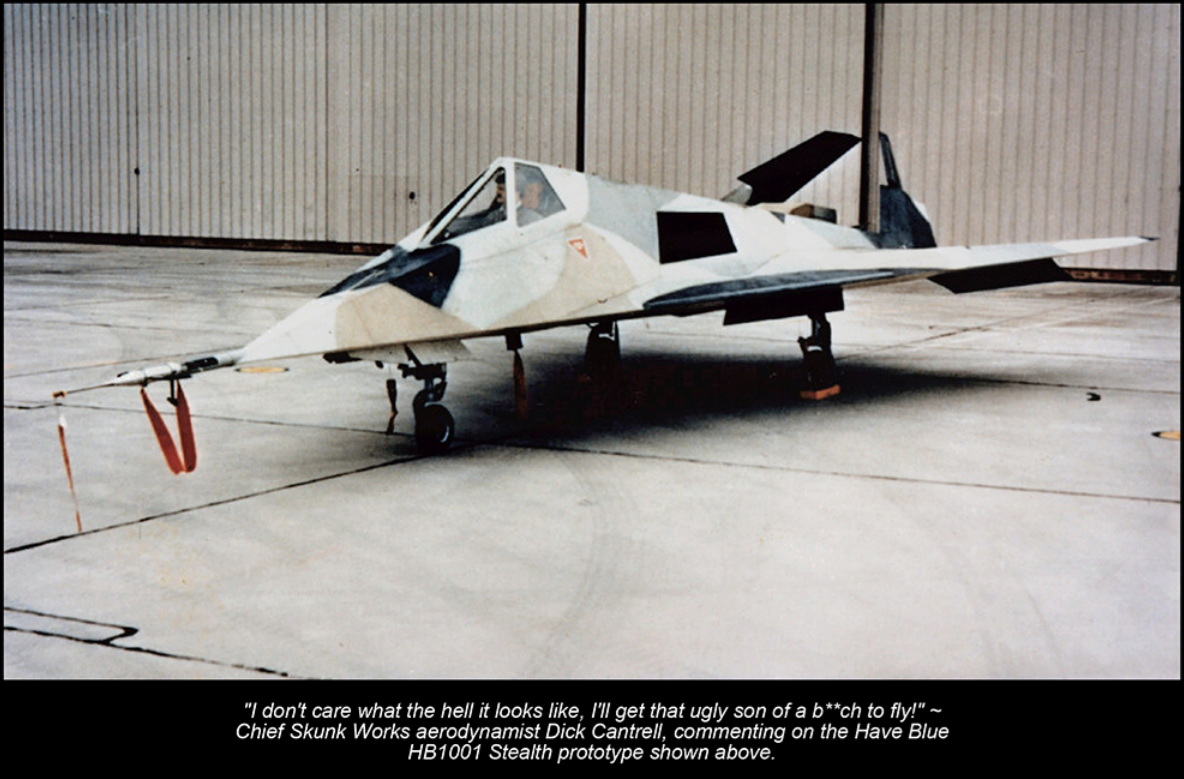
35 years ago, a mysterious and strikingly beautiful aircraft touched down on a dusty airfield in the Nevada desert. Can you imagine what kind of advanced aircrafts are being developed now?
The F-117 Nighthawk
Since its public reveal decades ago (consider that development started in the 1970’s on this amazing machine), the Nighthawk served with quiet distinction through the latter half of the Cold War, the first Gulf War, a kerfuffle in Yugoslavia (bet you don’t remember that one) , and the invasion of Iraq in 2003. Despite and official ‘retirement’ in 2008, the F-117 still gets spotted in the skies over Nevada where it is rumored to serve as an ‘aggressor aircraft’, helping to train pilots.
What’s the F-117 about?
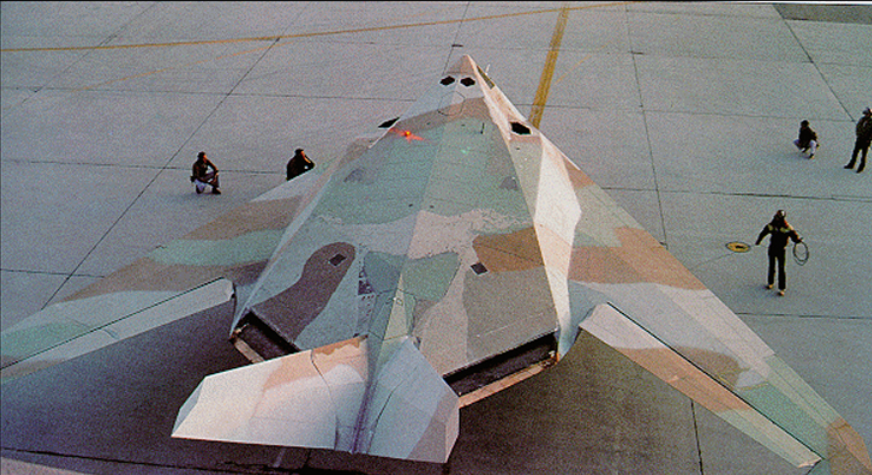
With it’s cyberpunk like profile and stunning angles, the F-117 Nighthawk instantly captured the public’s imagination and birthed a lot of UFO /UAP stories, especially in the late 1980’s and early 1990’s when it’s unusual shape confused expectations of what an aircraft could and should look like. A radical departure from the retro-aerodynamic curves of traditional aircraft design, the F-117’s odd shape serves a singular purpose.
Stealth.
The Nighthawk was conceived by Lockheed’s Skunk Works, a secretive development team responsible for some of the most capable aircraft of the 20th century. Designed to slip through deep Soviet territory, the Nighthawk incorporated radical new technology to achieve an incredibly small radar and thermal signature. Hard edges, radar-absorbing coatings, a unique twin-tail, and special endinge cowlings reduced the aircraft to the size of a sparrow on Soviet radar. The Nighthawk was deemed fully operational in the early 1980’s and nearly a decade her pilots and crew flight night sorties in complete secrecy. Seven years later, the USAF and the Department of Defense decided the Nighthawk would work better as a deterrent if the world knew about it and it’s capabilities.
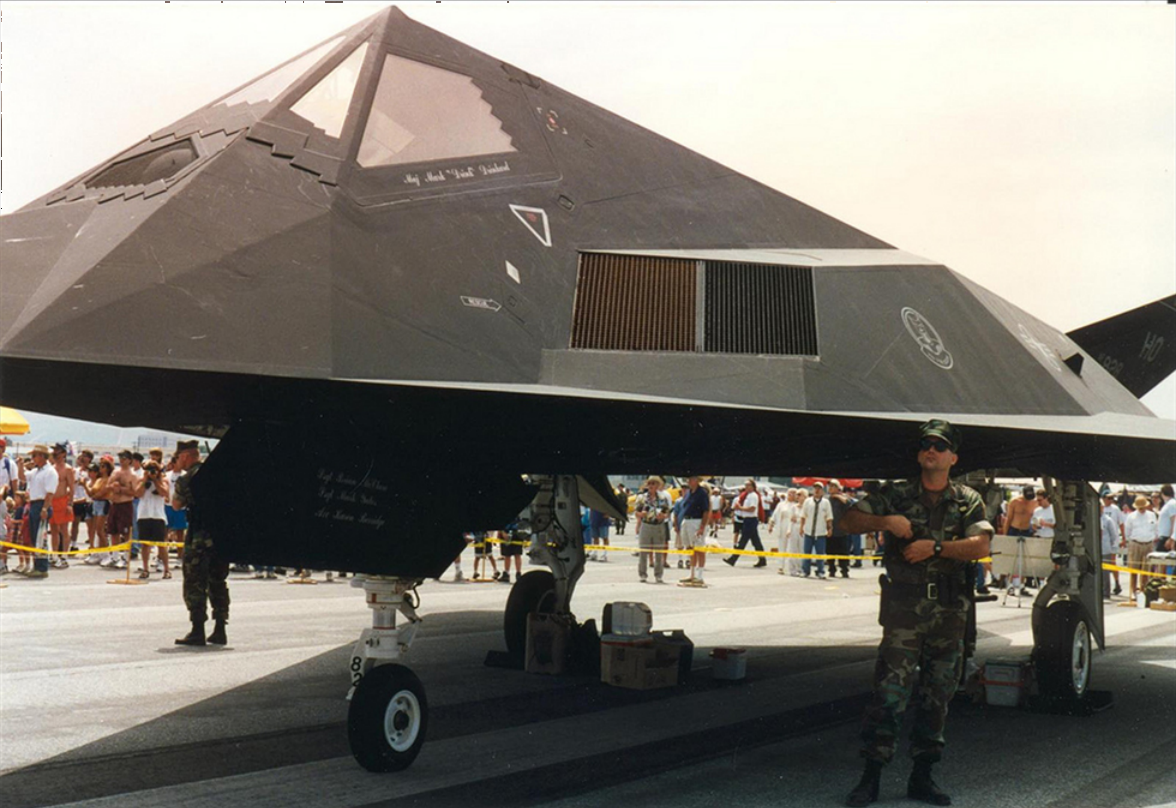
Plans were made to reveal the aircraft to the world at Nellis AFB on April 21, 1990. Those of us who saw this event live on television will always remember the shock and awe inspiring gasp it created- nothing like it had ever been seen before and it surely looked like something from a science fiction novel or movie. On a hot spring day, a flight of two F-117s landed in front of thousands of cheering spectators, kicking off one of the most memorable air shows in US history. After opening the show, the F-117s sat quietly on the tarmac surrounded by an entourage of armed airmen and curious onlookers. Although little was said about the new “stealth fighters”- blimps, fighter jets, and mock dog fights continued the day’s entertainment in style.
Even with talks of ‘spending prioritization’ and ‘doctrinal appropriateness’, the Nighthawk has endured, in it’s own special way, for nearly 40 years. Everything about the F-117 that made it great in the 1980’s still captivates us today. It’s razor-sharp edges, futuristic technology, and it’s family tree of stealthy cousins (foreign and domestic). Here is hoping many more years of this little black triangle up in the sky… via our friends at kommandostore.com
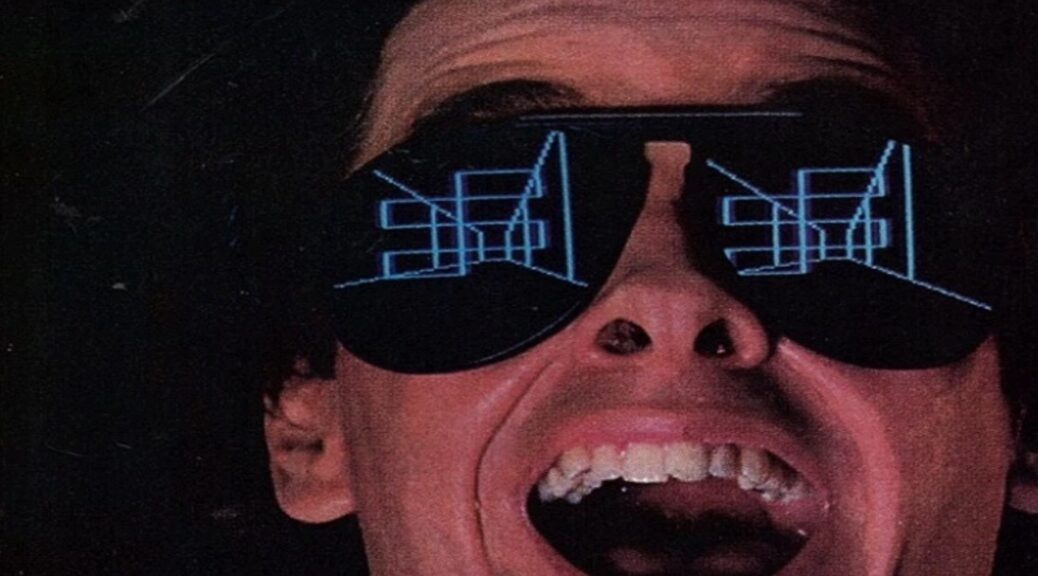
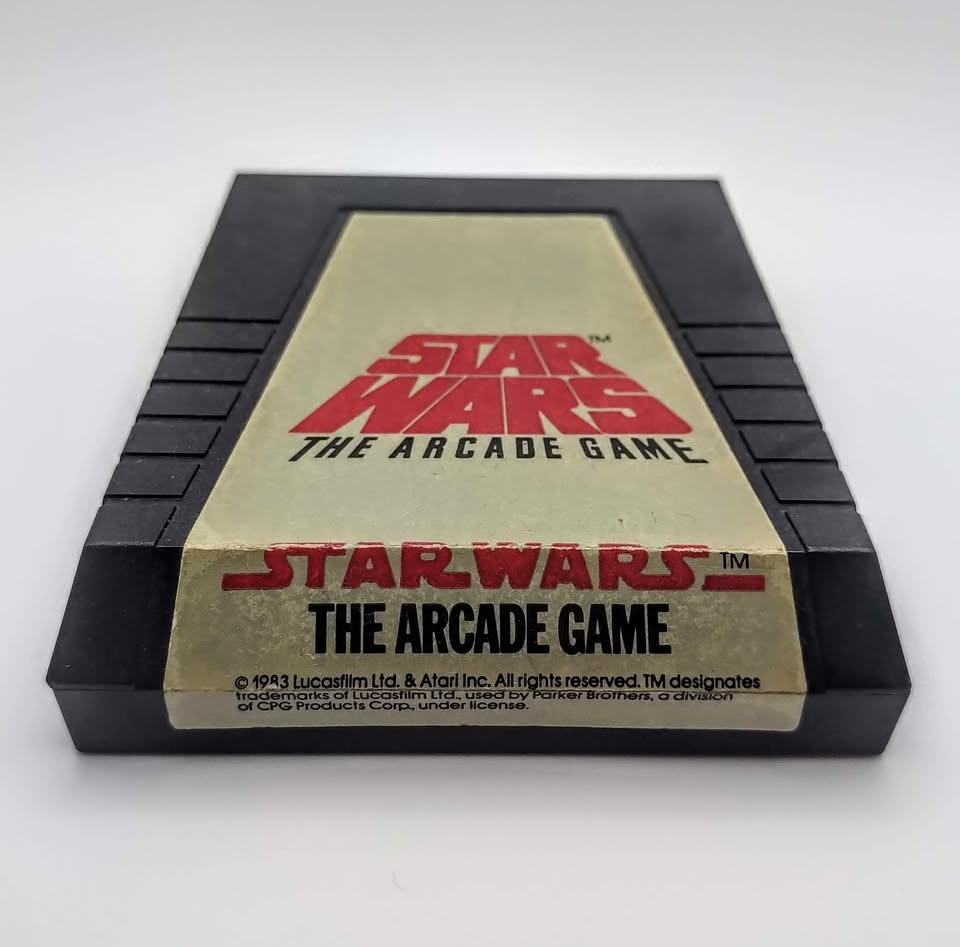
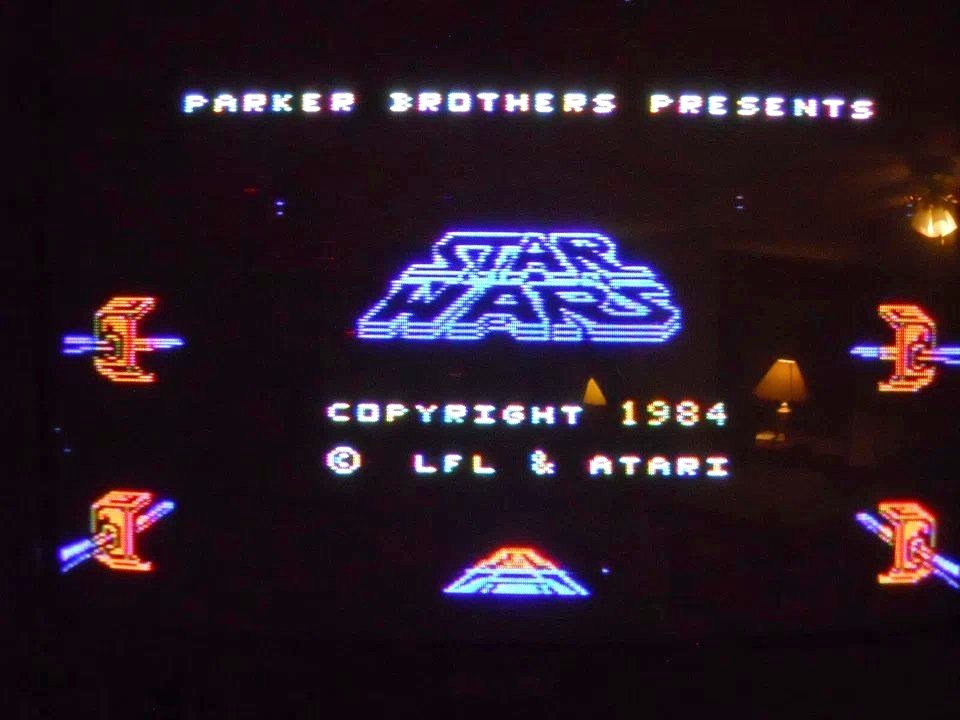
Star Wars:The Arcade Game (ColecoVision, 1984) Game Cartridge – Early Concept & Film Screening Logo
Star Wars was an important movie for many reasons beyond the success it achieved as a motion picture. The Star Wars phenom had been born.
Not only did we see the almost immediate impact it would have on motion picture technology, or computer camera controlled stop motion animation, but it wrote the playbook on movie merchandising. Merchandising that included arcade games and home video games. Converting a state of the art Vector graphic arcade game into a home system was a challenge for all systems except for when it came to the ahead-of-its-time Coleco Vision. More on this later….
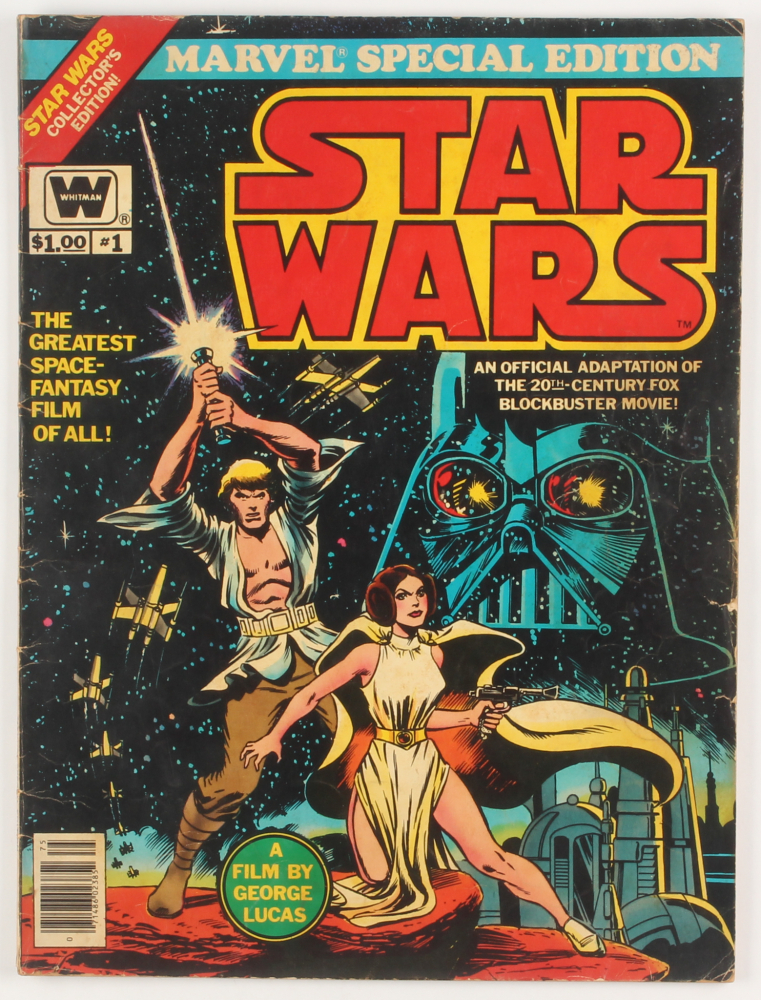
Had to pay for movie adaptation comic to be created
It’s hard to believe that a movie we have ‘only ever known to enjoy’ the runaway success it has now didn’t have that success so assured early on. That it really came down to one man, first LFL marketer Charles Lippincott – who barely managed to get a toy deal done with Kenner (after MEGO turned him down), and who had to pay (via Fox/Alan Lad Jr.) for the first 5 issues in order for Marvel to agree to draw and write the comic book series, and have the first issue ready before the movie would hit theaters in 1977.
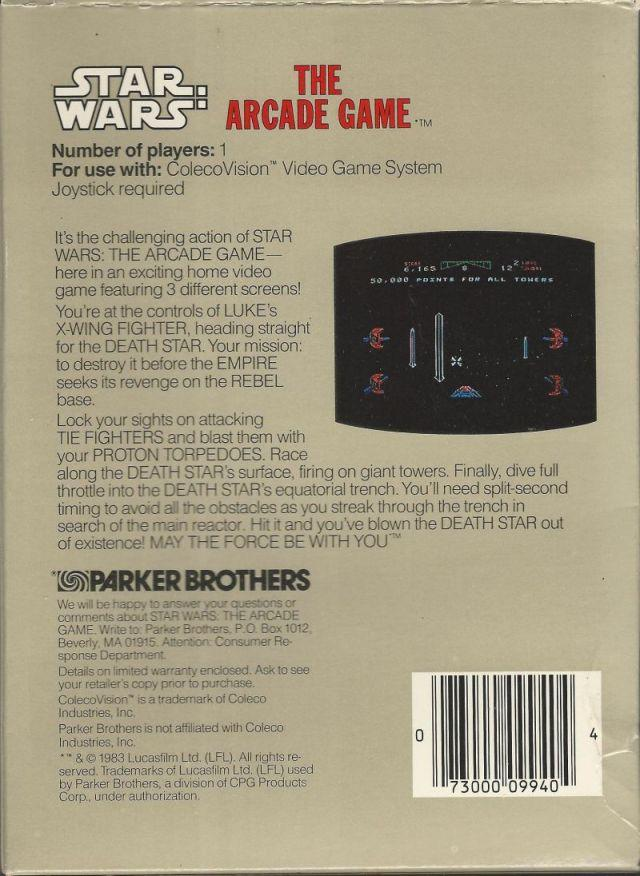
By the time this video game was made by Parker Bros. for the Coleco Vision game console, Star Wars had become a movie merchandising juggernaut, and it was now time to not only refashion the same thrill late 70’s kids experienced through toys, comics and trading cards, but to open up their imagination by reinterpreting iconic ships like the X-Wing and TIE Fighters in pitched battle in a video game format to be played on on their own TV screens at home.
In 1984, Coleco Vision released this Star Wars arcade game.
And to anyone remembering the vibe and nostalgia of growing-up in those early days of video games and the arcade experience, it’s an image that’s been burned into your brain. However, what you might not realize is that this arcade conversion cartridge utilized a very early logo that was used on the first movie poster. It was part of early concepts logos that Ralph McQuarrie had come up with for use in the very early screenings of the movie. The cone-top of this original early Star Wars logo evokes the iconic opening crawl of the film, which was completely unknown to audiences in 1977. Don Perri, the person who came up with the conceptual design, was influenced by the 1939 film Union Pacific’s opening credits.
Label Variant
There are collectors of early arcade games, there are collectors of early Star Wars cartridges and video games, and then there are collectors who just buy any of the early logos used on merchandise. Because of the label, this cart has great cross-collector appeal, and while I haven’t tested it for some time (used to play it with my oldest, who is now off to college), here is a screenshot I took when we played it on our home projector. I have decided to pass this beauty on and so it is for sale and I am happy to tell you more about this totally awesome cartridge.
Earlier this month our friends at Hagerty reported on the some of the absolute cheapest ways to get into the old-car hobby. These included cars like the 1975–81 Triumph TR7, the 1986–91 Cadillac Seville, and the 1973–77 Olds Vista Cruiser. The “ew gross” reaction these cars elicited in some of the comments wasn’t too surprising; no one, it seems, wants to shop for fun cars at a suburban Goodwill.
But what about the fun cars you might find at, say, the Goodwill in Beverly Hills?
That’s right, we’re talking about bargain-basement exotics—not exactly a tagline that inspires confidence when shopping for often-temperamental imports, but they are out there. Just know that service history and records are important to consider here. And just because a car is cheap, or keenly priced, if you prefer, doesn’t mean it’s not worth owning, especially if it provides entry into a marque you’ve always coveted. So give some consideration to these five once-distinguished Euro-mobiles, the cheapest models from their makers and all rated in #3 (good) condition. Let us know if you think we have missed any other contenders.
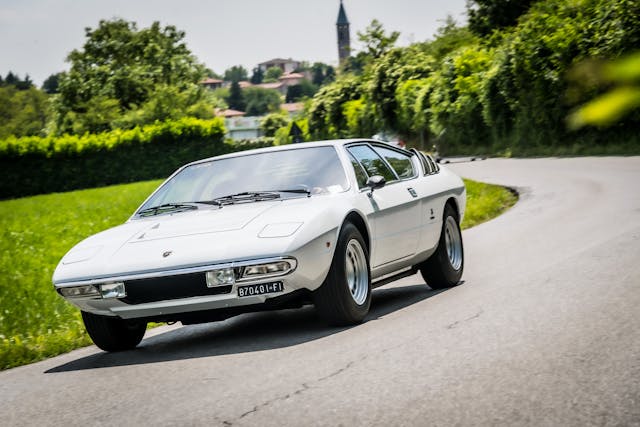
1973–77 Lamborghini Urraco
Lamborghini/Massimiliano Serra
Lamborghini announced the Urraco in 1970 as a Marcello Gandini–styled 2+2 coupe with a transverse V-8 mounted amidships. As a sharper-edged follow-up to the swoopy Miura, it foreshadowed the shape of Lambos to come. When it finally arrived for 1973, it made a fine competitor to the Ferrari Dino 308 GT4 and was available in 220-hp 2.5-liter P250 form, while the 265-hp 3.0-liter P300 launched in 1975. When that car arrived in the U.S. a year later, however, power was severely choked by emissions equipment, down to around 180 horses. Not many were built—just 522 of the P250s and 205 P300s—but today a #3 example ranges from $49,000 usd/ $68,350 cad for a P250 to $59,000 usd/ $82,290 cad for the P300. Given the ascendancy of Miura, Countach, Diablo, and Murcielago prices in recent years, that the Urraco is still so cheap is a bit surprising.
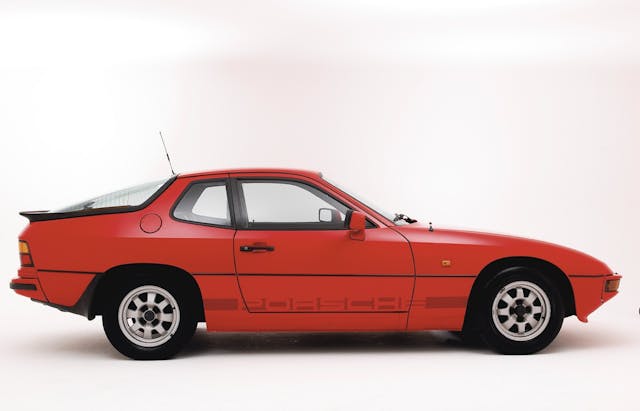
1977–82 Porsche 924
Getty Images
From the start, it seemed like Porsche vs. the world when it came to the 924. Whether because it was front-engined, or water-cooled, or simply a discount sports car meant to be a Volkswagen, plenty of people discounted it from the get-go. Until they drove it and realized, hey, this thing’s great. And it was great. Still is. With just enough power (110 hp from ’77 on) from a VW/Audi-sourced 2.0-liter four to complement its finely poised chassis, the 924 remains an excellent, easily approachable driver’s car, with good club support. Rust has killed many of them, and although Porsche built around 150,000 examples, parts are available but spendy, especially interior bits. A good #3 example should set you back about $8500 usd/ $11,856 cad. For comparison, an early 944 in the same shape is around $10,500 usd/ $14,645 cad.
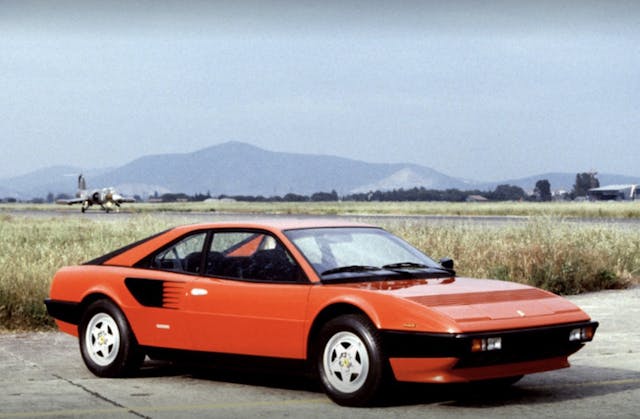
1980–87 Ferrari Mondial 8 / Mondial 3.2 Coupe
Ferrari
When it came time to replace the Bertone-designed Dino 308 GT4, Ferrari tapped Pininfarina, and the resulting Mondial debuted in 1980 as a 2+2 coupe, with a convertible joining the lineup four years later. The GT4’s 2927-cc transversely mounted V-8 carried over, with Bosch fuel injection replacing Weber carbs, and in the Mondial it made 214 hp. They were sharp handlers, with more interior space than their predecessor, but no one ever accused them of being fast. Other Mondial variants arrived throughout the ’80s to address that, however, including the Quattrovalvole (QV) in 1984, the 260-hp 3.2 of 1986, and the radically different t of 1989, but it is the early coupes, along with the 3.2 coupes, that are most affordable. Today, a #3 Mondial 8 or 3.2 coupe costs about $22,000 usd/ $30,686 cad.
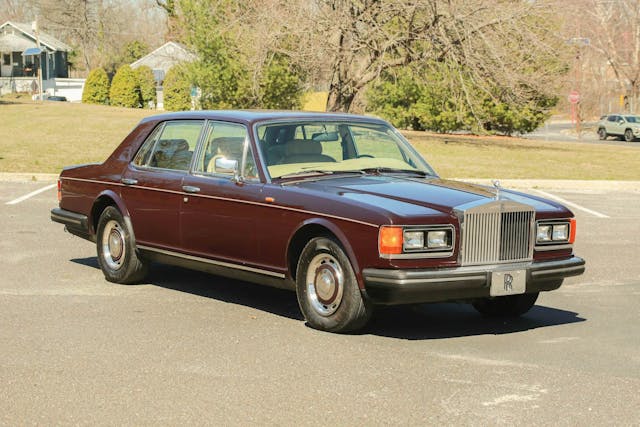
1981–87 Rolls-Royce Silver Spirit
Hagerty Marketplace/William_Cooper
If you’re an enthusiast of affordable opulence and Dijon mustard, then then look no further than the Silver Spirit. Successor to the upright Silver Shadow, the Spirit utilized a 220-hp 6.75-liter V-8 mated to a three-speed automatic. Inside, of course, you got all the trimmings, with Connolly leather seating, Wilton wool carpeting, and burl walnut inlays, as well as A/C and power everything. Giving the Spirit its silky-smooth road manners was a Citroën-sourced self-leveling hydropneumatic suspension. Rolls-Royces from this era have never been cheap to maintain, and deferred maintenance issues claimed many of them, so records are key with any Silver Spirit you might have your sights on. The right one, in #3 condition, won’t cost you much, at around $8400 usd/ $11,716 cad, but it will likely have needs, which could cost a lot.
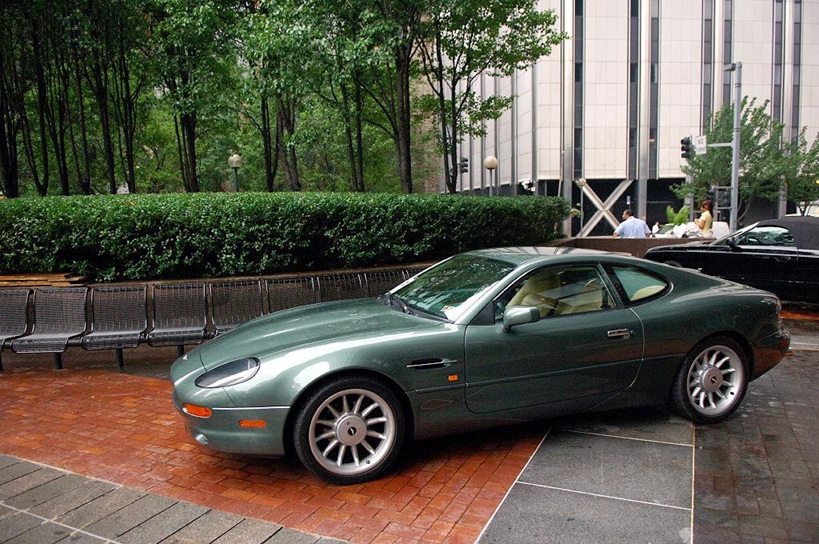
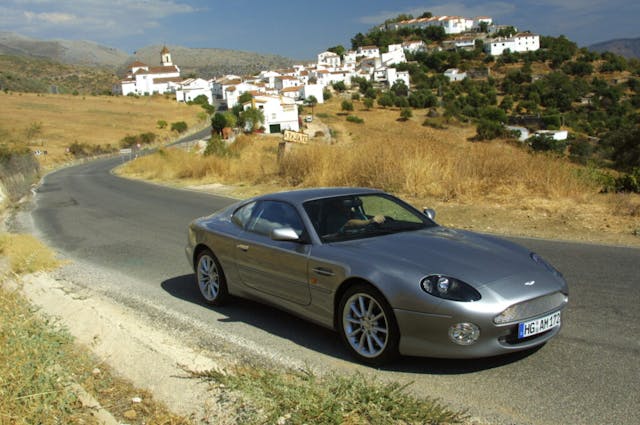
1997–99 Aston Martin DB7
Aston Martin
Even 30 years on, the 335-hp Aston DB7 still looks gorgeous from every angle, and upon its arrival, it was instantly an Aston worthy of the famous DB badge. If you can overlook its relative lack of exclusivity, with more than 7000 produced in both coupe and convertible form, what you get is a proper English grand tourer with excellent performance and luxurious interior appointments. Subtle differences set it apart from the contemporary Jaguar XK8 (which costs less, it should be noted), and the higher costs associated with maintenance and repair are likely to set it apart as well. But right around $21,000 usd/ $29,291 cad should get you a good coupe, with the convertibles slightly cheaper.
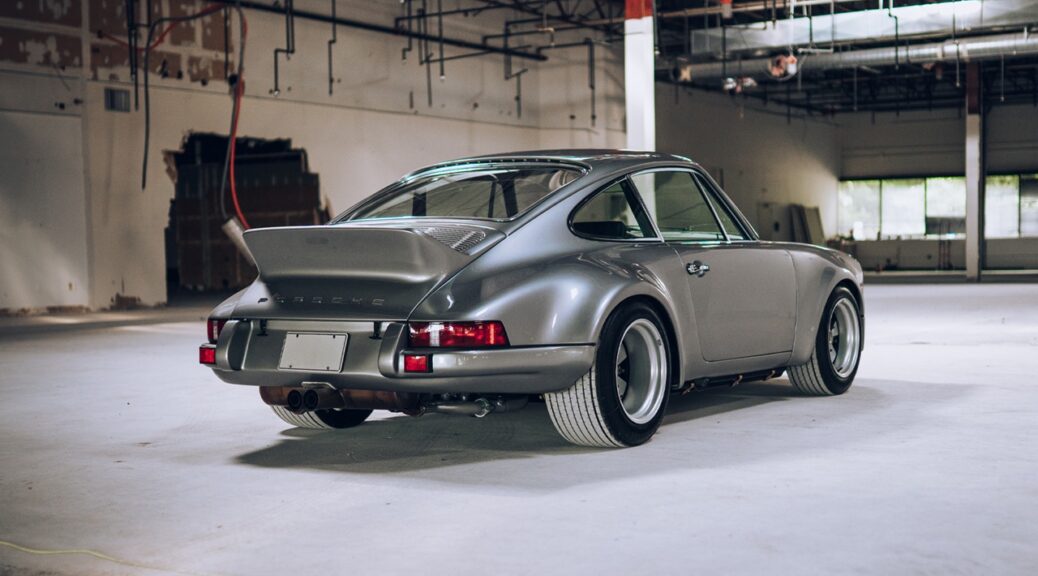
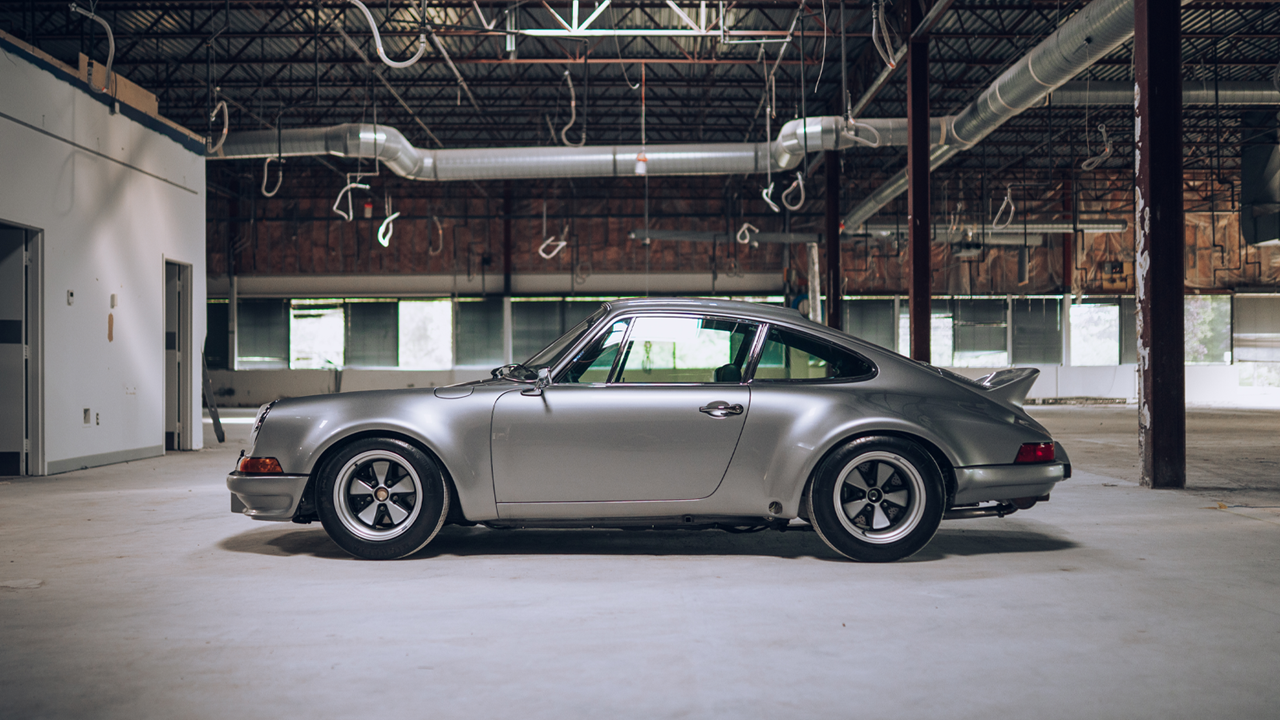
Joe Rogan’s car collection already includes a SharkWerks 997 GT3 RS, a 964 RS America, and a 993 Gunther Werks 911. Now, the comedian and podcast host has taken delivery of a custom-built Porsche 911 RSR tribute from The RSR Project. Nicknamed Silver 2, the car is designed to echo Porsche’s early motorsport roots while offering upgraded performance for modern driving.
The Build Process
The project began with a galvanized 1985 Carrera tub, which was stripped down and reworked with steel flares and fiberglass panels to achieve the classic long-hood RSR profile. The body was finished in a glossy silver paint that recalls bare metal and paired with period touches such as a ducktail spoiler, fiberglass bumpers, and 15-inch Braid Fuchs wheels wrapped in Michelin TB15 vintage tires
Power and Engineering
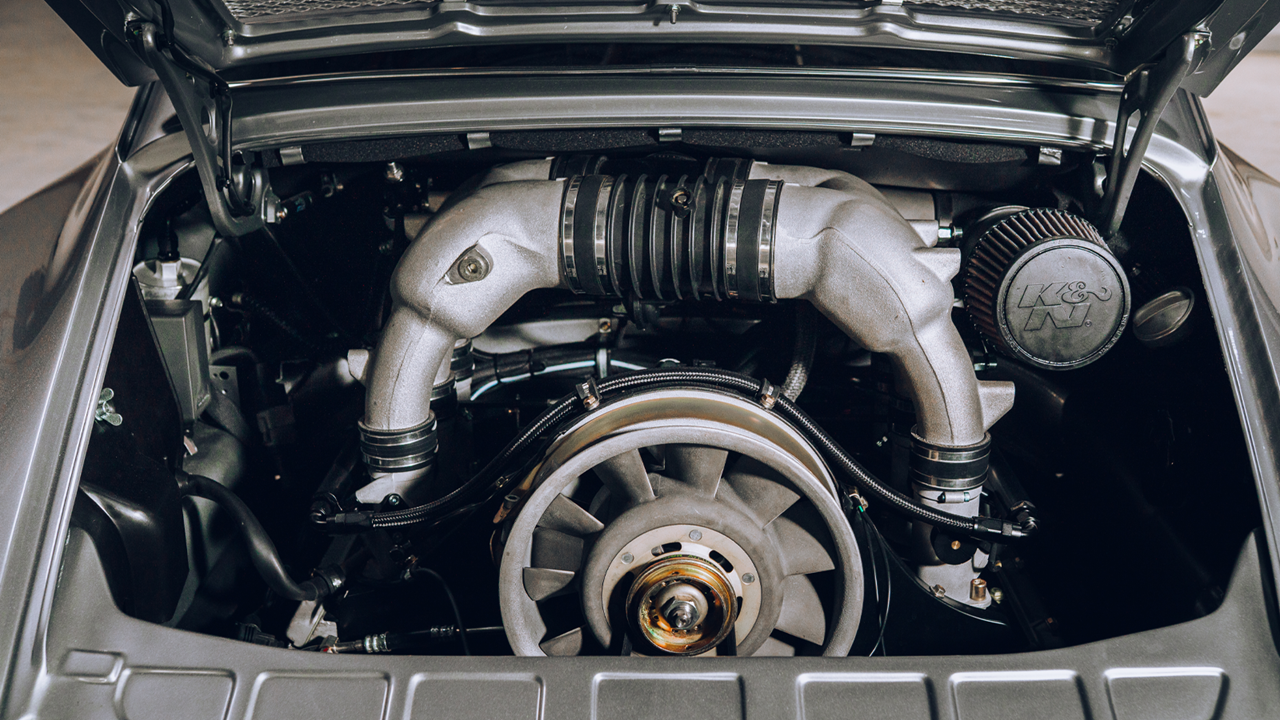
Founder Richard Schickman led the build, which included a complete mechanical overhaul. Rogan’s car is powered by a 3.5-liter flat-six producing 310 horsepower, equipped with twin-plug heads, GT3 intake plenum, Clewett Engineering throttle bodies, Elgin cams, Lucas injectors, and Bosch ignition components. The motor is controlled by an Emtron SL ECU and paired with a fully rebuilt transmission. Suspension and braking systems were also refreshed to meet both performance and reliability standards.
“Our goal with every build is to honor Porsche’s motorsport heritage while elevating performance to meet modern expectations,” Schickman explained.
Precision Rebuild Standards
Every RSR Project car undergoes a full teardown. Engines are disassembled, magnafluxed, and sonic cleaned, while rotating components are balanced to within a gram. Cylinder heads are resurfaced, valve guides replaced, and transmissions rebuilt with new synchros and seals. The result, according to the company, is a drivetrain that looks factory-new but performs with modern precision and durability.
Interior Details
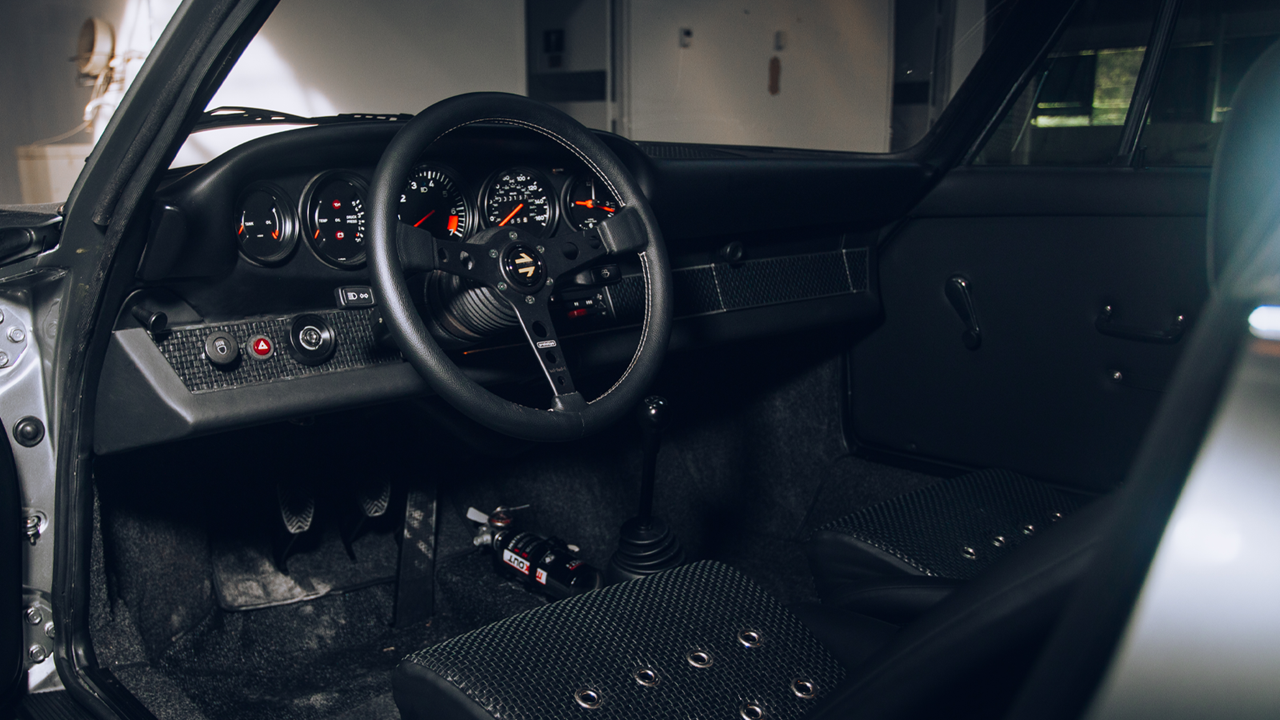
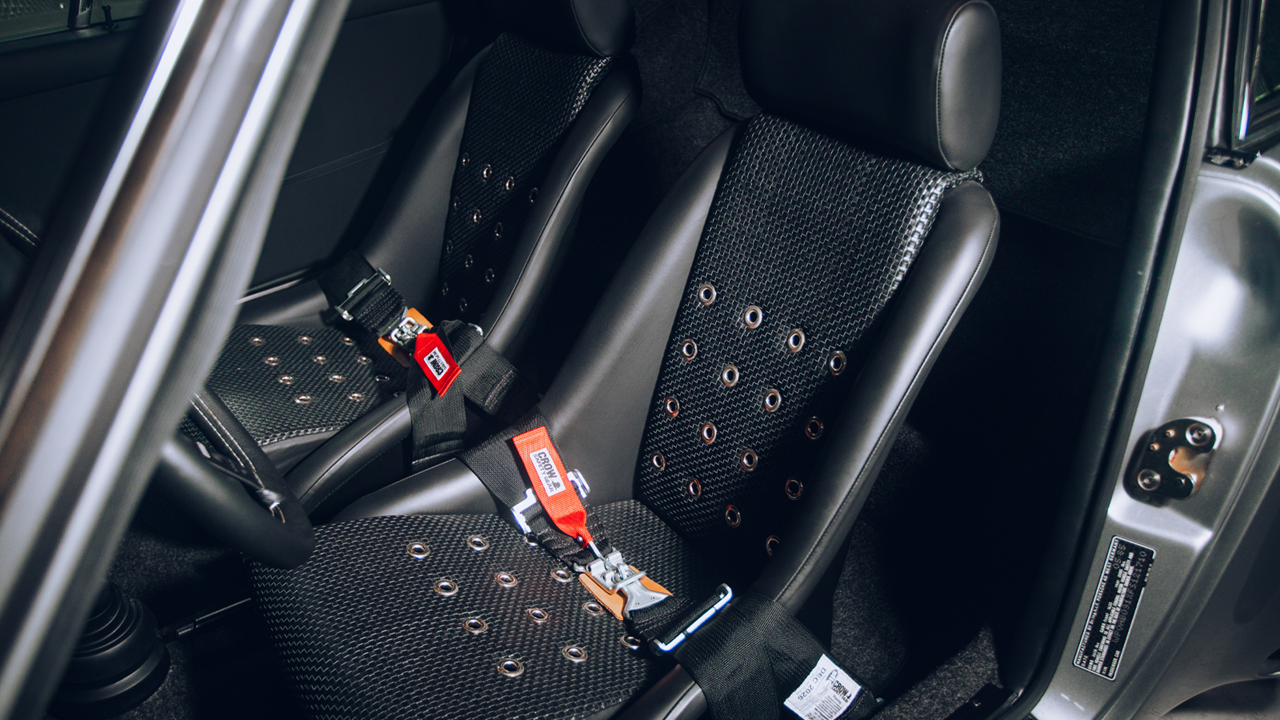
The interior follows the same philosophy of heritage blended with bespoke craftsmanship. Rogan’s build features black fixed-shell bucket seats trimmed in woven leather with nickel grommets, a nod to 1960s GT40s. The dashboard was replaced with a Porsche Classic unit, paired with RS-style door panels, lightweight Perlon carpeting, and a Momo Prototipo steering wheel. The minimalist approach is reinforced by details like pull straps, a radio block-off plate, and a Wevo short shifter.
Rogan declined extras like a sound system, opting instead for a stripped-down cabin that celebrates Porsche’s racing DNA. The only modern concession is an electric air conditioning system.
Road-Proven Performance
The RSR Project emphasizes that its cars are built for driving, not static display. Rogan’s Porsche underwent more than 700 miles of testing before delivery to ensure reliability and fine-tuned performance. As Schickman noted, “Every RSR we create is built to be driven and enjoyed thoroughly.”
Time and Cost of an RSR Build
Building a Porsche to this level is a significant undertaking. Each project typically requires 12 to 18 months to complete, with prices starting at $375,000 usd/ $516,750 cad (at time of posting). Clients can select additional options such as upgraded engines, modernized braking systems, and electric air conditioning. Earlier in the year, the company also unveiled RSR Project No. 21, a Signal Orange homage to the 1973 Rennsport Rennwagen.
Another boss article via friends at Hagerty. Vintage Corvettes have been bought and sold as collector vehicles for decades, and so you could be forgiven for thinking that all the hot ones have been accounted for, and that the current body of research has documented all that’s known about them.
That’s not the case, and to seasoned Corvette hunters like Kevin Mackay, that’s actually good news. Mackay started his business, Corvette Repair, 30 years ago in Valley Stream, N.Y. His timing could not have been better. Chevy had just launched the exciting C4 model, and the Corvette collector hobby was shifting into hyper drive. That trend brought a renewed interest in the Corvette’s heritage, including racing.
Canada Corvette Connection?
There were already expert collectors well versed in Corvette history, but history has a way of changing. As deeper dives would reveal gaps in Corvette knowledge, those who applied the resourcefulness and tenacity of TV police detective Columbo were able to find and authenticate super-rare Corvettes.
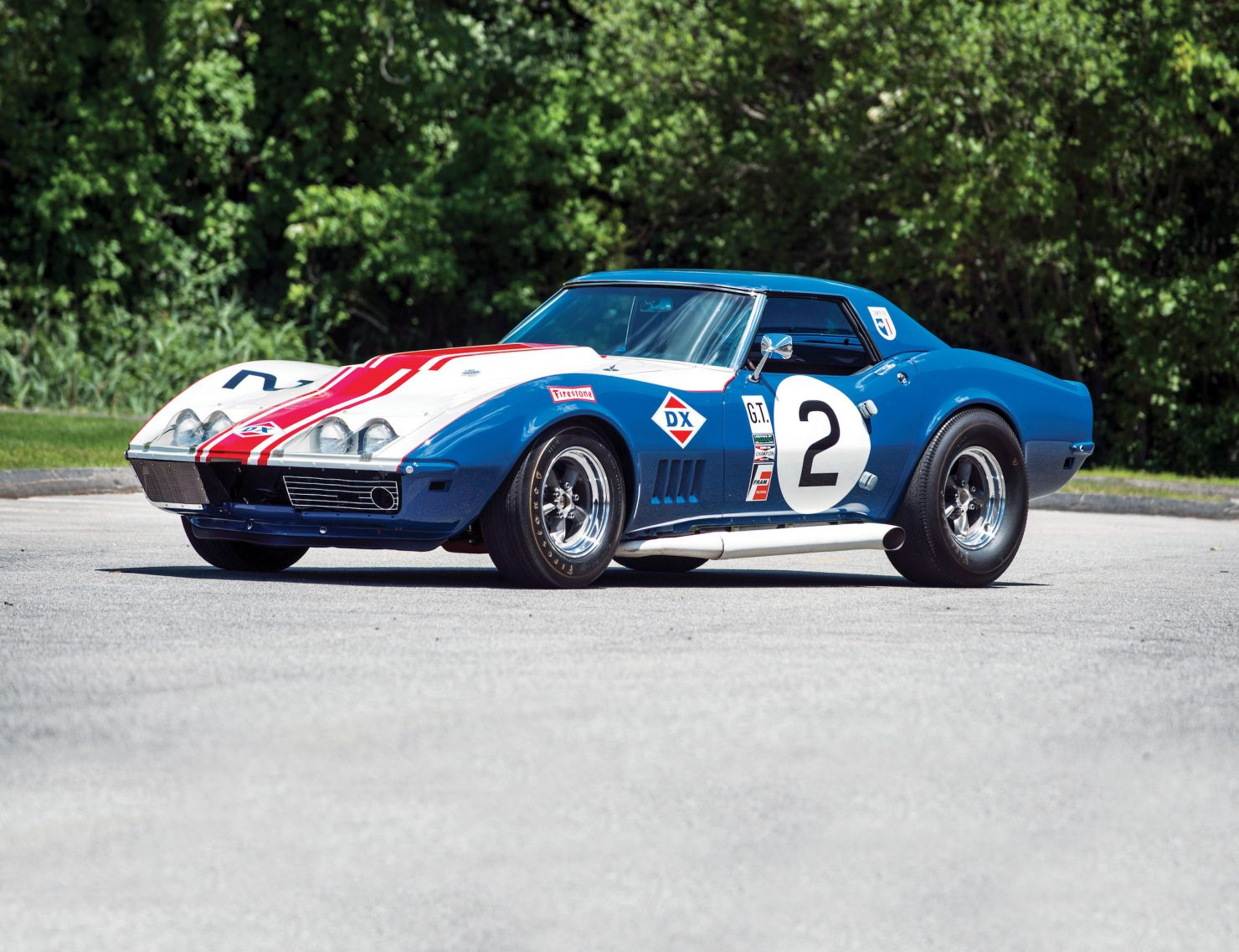
1968 Sunray DX L88
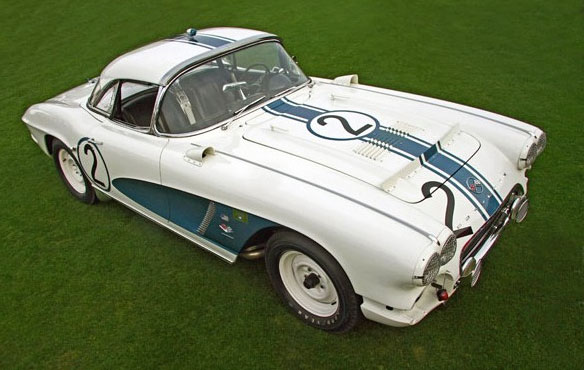
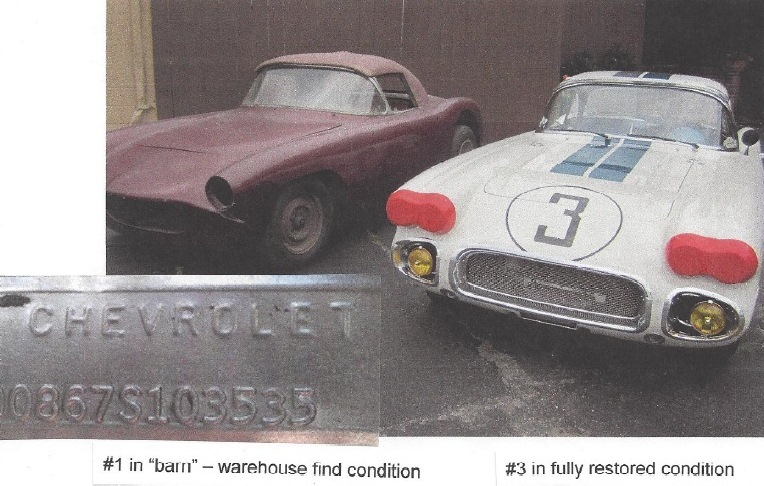
You won’t find Mackay wearing a rumpled raincoat around his shop, but his detective work continues to uncover cars thought to have been lost. Some of those are race cars that have come through his shop, including the 1960 Briggs Cunningham Le Mans car, 1962 Yenko Gulf Oil, 1966 Penske L88, 1968 Sunray DX L88 (found in a barn) and 1969 Rebel L88. All were Le Mans, Daytona or Sebring class winners. Corvette aficionados will see a pattern: Among lost Vettes that Mackay hunts are ones campaigned in those races.
The Rebel was one of the most successful C3 Corvette race cars ever, winning the GT class at Daytona and Sebring in 1972, where it also took fourth overall behind two prototype-class Ferraris and a prototype Alfa Romeo. Mackay tracked the car to a southern scrapyard 24 years ago and restored it; the car sold at Barrett-Jackson’s Scottsdale sale in January 2014 for $2.86 million usd/ $3.95 million cad.
“I know where every Corvette that raced Le Mans is,” Mackay said. Knowing, of course, is only the start of a long road to acquiring a car. Aspiring Corvette hunters might take note of other cars that grab Mackay’s interest.
Listen to What The Man Says
It could go without saying that any Corvette collector would want to stumble upon an L88 hiding in a barn. It’s a comparatively small group of cars, but it’s bigger than originally thought.
“We located 13 factory L-88 cars not previously known,” said Mackay, adding that three of the 20 1967 L88s are still missing. So, when an elderly man approached him with a claim that he still owned a 1967 L-88 that he bought new, Mackay listened, if with a skeptic’s ear.
“That happens a lot,” he said. “Guys claim they have a car that nobody has ever seen.”
A doubter may dismiss such claims, but Mackay says his experience has shown that sometimes, they lead to Corvette treasure. For example, he knows of a 1967 L-89 car, one of 16 made, that hasn’t been seen in decades; it was driven just 11 miles / 17.7KM from new and put away.
Not every lead pans out, but patience can lead to gold, Mackay advises.
“I waited 11 years to buy one particular car,” he said. “I’d call the owner every year. It was all about building trust.”
And so comes another lesson in hunting and buying classic Corvettes: It’s not always about the money. Mackay said that some owners are too emotionally attached to their cars to let go. And some never do, leaving valuable cars to be auctioned by heirs. In such cases, years of patience and building trust can seem wasted. But Mackay loves the challenge of the hunt.
For another car, he waited 19 years. And he’s got a list of others.
“There are two cars I’ve been waiting nine years to buy,” he said. “I always tell the owner that he’s just holding them for me for free storage.”
Follow the Clues
Many car enthusiasts enjoy reading old magazine articles. Mackay reads them for clues. “I look for names of people associated with cars, such as race mechanics, and then I look for those people,” he said.
Knowing where a Corvette was sold can be a help for an experienced hunter. If you have a Corvette’s VIN, you can get its original shipping data – including the selling dealer – from the National Corvette Restorers Society (NCRS) for $40. Even if the dealer is no longer in business, the information could lead to other clues.
Sometimes, answering an ad for parts leads to whole cars. While hunting down a lead on parts for a 1969 Baldwin-Motion Phase III Corvette, Mackay stumbled across a super-rare Phase III GT that turned out to be a car a customer owned when new and had regretted selling many years before. Mackay has also found engines and then later located the cars they belong to.
Serial Boxes
Some collectors like to own “firsts” and “lasts” and therefore hunt low and high serial number cars. The top prize in that category would of course be the very first Corvette built, but the first two were test cars thought to have been destroyed. Yet, as Lt. Columbo might ask, “Where’s the body?”
Mackay can claim something close. He found the original chassis to 1953 serial No. 3 for a customer. He explained: “The first three made were test cars. Before GM sold No. 3, they swapped the chassis, because the first one had been used in Belgian block testing, and there were concerns about possible stress cracks.”
Somehow, the first chassis got out of GM’s grasp and was discovered underpinning a 1955 body in the 1970s. Another chassis swap ensued, and 1953 No. 3 just needed to be reunited with its original body. Mackay said the owner of that car, however, was not interested.
So, instead, Mackay is building a unique cutaway 1953 Corvette around the chassis. It’s something he said could be shown and enjoyed by the whole Corvette hobby.
Other aspects can catch a collector’s fancy. It should be no surprise that original color can affect value, but the effect might be bigger than you thought.
“Black is the most sought-after color for Vettes,” said Mackay. “A black 427/435 car could be worth double a green version.”
And then there are production oddities, the kinds of things that likely would never happen on today’s computerized assembly lines with their just-in-time parts inventory control systems. The fabulous center knockoff wheel offered as an option for the 1964-1966 Corvette actually made an earlier appearance. Mackay said 12 cars got the wheels in 1963. One is claimed to be a Z06 “big-tank” car.
Have a clue to a “lost” Corvette? Mackay would love to hear about it: [email protected] For the Silo, Jim Koscs/Hagerty.
We’ve passed the mid-way point in the year, and driving season is in full swing. In the classic car market, the first half has been a roller coaster with an optimistic start in January, then a steady softening as we made it through spring. Moving into the second half of the year, and with this week’s newest release of the Hagerty Price Guide, it seems that trend is primed to continue.
That’s not the case with everything, though.
Our friends at Hagerty did watch some vehicles buck the trend and post some meaningful gains in value. Here are just a few of the more newsworthy winners this past quarter (measured by average value increase across all four condition ratings).
Got questions about how they arrived at these changes? You can read more about the methodology behind the Hagerty Price Guide here.
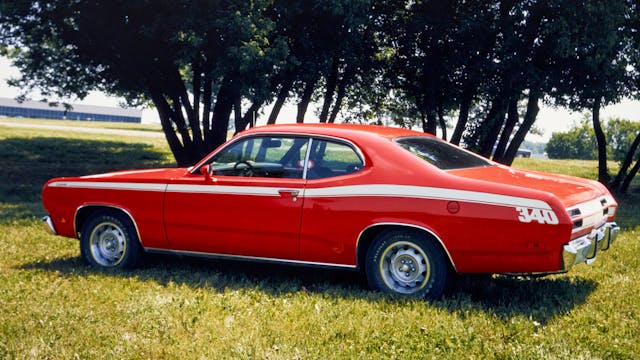
Based on the A-Body along with the Valiant and Dodge Dart, Plymouth’s Duster offered the Mopar faithful a sporty, compact car on a budget. Much like its market competitors (Chevy Nova, Ford Maverick, AMC Hornet), Dusters could be had with everything from a fuel-sipping six-cylinders to fire-breathing V-8s, along with some truly outrageous graphics packages. A Duster 340 making 275hp was king of the hill for this series, eventually being replaced by a more moderately rated Duster 360, choked down by smog regulations and lower compression. Like the Mopars of today, a dizzying number of different packages were available, from the Gold Duster and Space Duster to the efficiency-minded Feather Duster.
This spring, Dusters performed exceptionally well, racking up big gains in public sales, listings and insurance quotes. Standard 318-powered cars can still be had cheaply, and $18,000-$20,000 usd / $24,640 cad- $27,380 cad (via exchange rate at time of posting) will land you a good (#3) condition car. The spicier 340-powered cars will reach into the $30,000 usd- $41,060 cad range, which is still a lot of muscle for the money, but an average increase of 32% is shocking for a 50-plus-year-old car from a brand that’s been dead for nearly 25.
So, what gives? Why the sudden jump?
Well, for one, cheaper cars are still performing well, and even though the majority of muscle cars are softening in value, they’re still inexpensive fun. Our theory, though, is pop culture. Around the time Duster prices started climbing, a new crime series debuted on Max. The name of the show, funny enough, is Duster, and it prominently features a Duster 340. Coincidence? Perhaps, but we’ve seen this phenomenon before. As an honorable mention, the sibling Dodge Dart also experienced a bump, but at a more modest 17% average gain. You can bet that Dusters will be a car to watch for a while, strong sales usually bring more and more quality examples to market, offering further insights into this unexpected jump.
Yes it’s exclusive and yes it’s expensive, so it’s probably easy to tune out and move on, but hear me out. The S/T is not just some badge-engineered 911 that Porsche overcharged for. It’s an obsessively lightened 911 with the high-revving engine out of the GT3, and it’s actually both quicker and lighter than a GT3. It’s more exclusive as well, with just 1960 cars produced worldwide. Not necessarily rare, but you’re gonna have to work to stumble across one. Ultimately, if you’re a Porsche fan with the money, this is a car to have.
Just as impressive as the raw performance is the market performance. The standard MSRP last year was $292,000 usd – $399,689 cad without optional extras, and that’s if you could manage to secure an allocation from your local dealer. The market for these cars is simple supply and demand. Porsche made them just scarce enough that buyers are willing to shell out major money. Public transactions have shown that buyers are willing to pay $700,000 usd- $958,160 cad or more to get their hands on one. The case of the 911 S/T also shows the world that there is still an appetite for cars geared towards hyper-enthusiasts; they want performance-focused cars, and they want them with a manual transmission. More companies should get the hint. While most of us will never afford something like a 911 S/T, or perhaps wouldn’t care to own one if we could, the insane enthusiast response to it may be the wake up call to all manufacturers to start making cars we actually want.
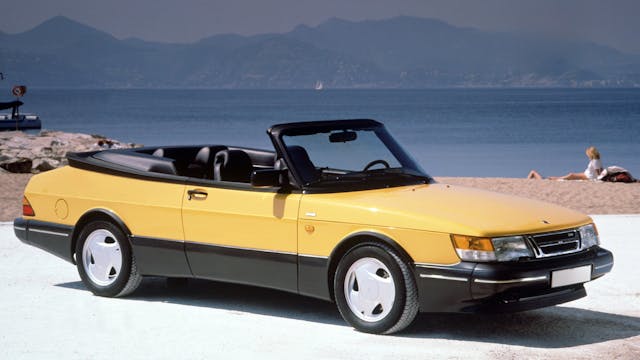
This sweet Swede is one rad ride. I know because I have owned and enjoyed three Saab 900 cars over the years including a beauty 5 speed with moonroof which I regret selling to this day. If Saab does anything well, it’s coming up with something truly unique. This company, which is also well-known for its aeronautical division, does an exceptional job of combining practicality and safety along with a dash of the sportiness of a Saab 37 Viggen fighter jet. This mid-size automobile came in standard commuter trim, but a warmed-over Turbo and SPG version could be had to satiate the hot hatch enthusiasts.
The Saab might be a bit of an oddity or a cult vehicle here in the states, but it does carry strong enthusiast interest. It is really everything that embodies the coolness and nostalgia of the 1980s and 1990s, and they’re generally affordable. Even with the strong percentage increase, a base 900 can be scored for under $10,000 usd- $13,690 cad in good condition, while a Turbo can be picked up in the mid-teens. If you’re after the more taut and sporty SPG, be prepared to shell out around $26,000 usd- $35,590 cad for a decent one. If you’re after a fun and funky car from the ’80s, the 900 is worth a look, and with market activity picking up, more may be coming out of the woodwork. Fortunately they remain relatively affordable, just not as dirt cheap as they used to be.
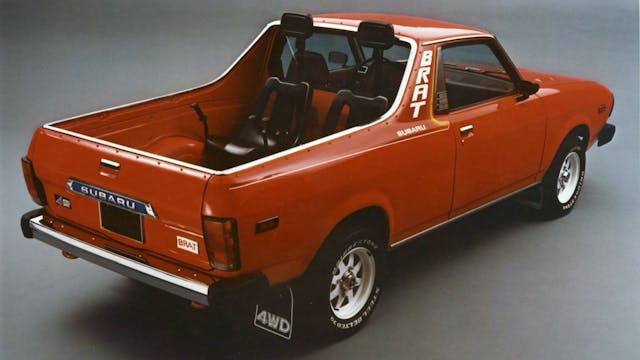
Subaru’s Bi-drive Recreational All-terrain Transporter, or Brat, was one of many small Japanese trucks coming into the US in the 70s and 80s. Except it wasn’t a truck, technically, but we’ll cover that in a minute. Based on a car chassis, much like the Ranchero or El Camino, it was small yet capable, featuring a single-range four-wheel drive system, not far removed from the all-wheel drive setup for which Subaru is so well regarded today. Where things go off the rails a bit is when you look in the truck bed. Like I said, it’s a truck, but not technically. In the back, there is a pair of jump seats affixed to the back, which in the legal sense made the Brat a car. This was a workaround from the U.S. tariff scheme, which taxed imported cars at a rate of 2.5% instead of the 25% for trucks.
These are funky vehicles that could only have existed in the 1980s, when Japanese manufacturers were trying everything. They’re incredibly well loved around the world and are seeing an uptick in popularity here in the U.S. They’re still moderately affordable; a good example will fetch nearly $20,000 usd- $27,380 cad these days, but due to recent transactions, that’s up noticeably from the recent past. While not as commonly seen as other Japanese trucks of the era, these things are cool as hell and certainly a conversation starter, so we expect interest will stay strong.
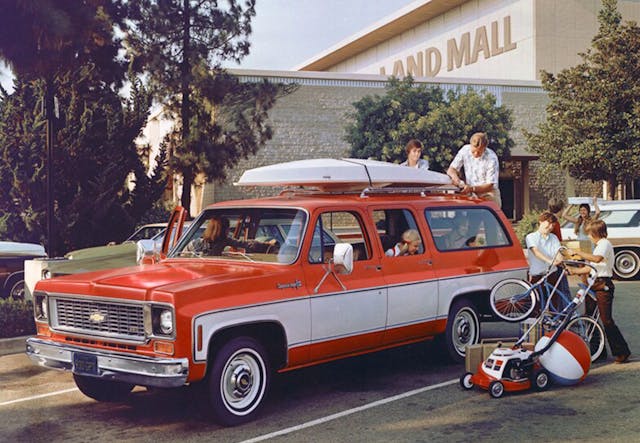
North America’s longest serving nameplate is still the mighty Suburban, lasting an astonishing 90-years, and counting.
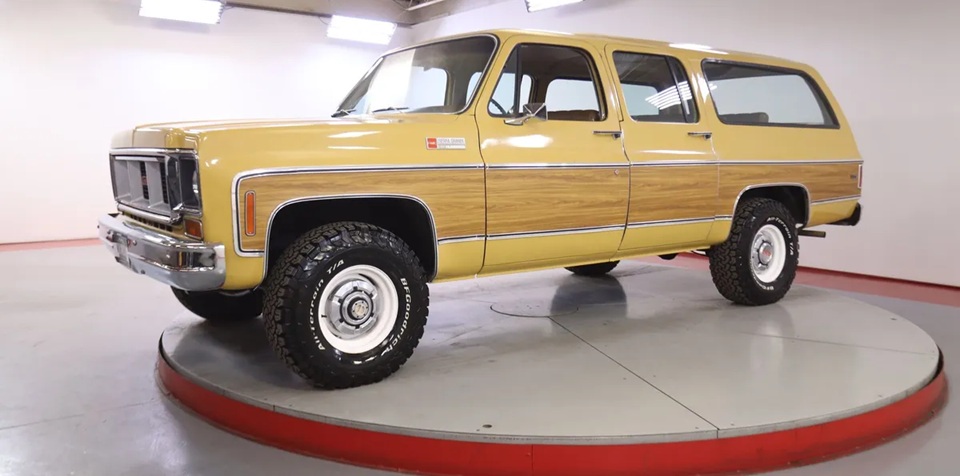
It began as a truck-based station wagon in the 1930s, but the Suburban we know and love today saw its roots planted in 1973. The update to GM’s truck line, known by enthusiasts today as the “square body” saw the Suburban go from a three-door to four-door for better passenger accessibility, and it dripped in creature comforts missing from previous models. Better sound deadening, cushy seats and multiple trim levels evolved the Suburban from a utilitarian people hauler to more of a luxury truck. This design stuck around until 1991, when GM added the Suburban and Blazer to the GMT400 line. The rest, as they say, is history. Suburbans would become more and more cushy (and expensive), making them somewhat of a discreet status symbol today.
The 1973-91 Suburban is a sweet spot for enthusiasts; they’re plentiful compared to earlier series, parts are easy to come by, and they are extremely usable. They’re also still pretty affordable compared to the pickups and Blazers from the same era. A good condition Suburban can be scored for under $20,000 usd-$27,380 cad , even for the 4×4 versions. We’ve observed an uptick in sales and market activity with these trucks, and combined with our quote data suggesting that Suburban owners are averaging on the younger side, this could be a strong indicator that this bump in value will stick or even grow over time.
For the Silo, Jarrod Barker courtesy of friends at Hagerty Insurance.
Vintage mid-century modern homes are as popular today as they were when built in the 1950s and ’60s. Arts & Architecture magazine’s post-war Case Study Houses, for example, rarely come up for sale, and when they do, are usually snapped up by aficionados almost as quickly as the listing goes into print. Case Study House #16 is now for sale and priced at $5.4 million usd/ $7.4 million cad.
When World War II ended and the American troops were returning home, it was the start of the baby boom and a monumental housing shortage. Well-known architects in the country were asked to design simple, affordable homes that could be built en masse.
The magazine Arts & Architecture put out a challenge to architects that included Richard Neutra, Raphael Soriano, Craig Ellwood and Ray Eames. The Case Study Houses were numbered 1 through 28, and two apartments were included. They were built from 1945 sporadically through 1966. Thirteen were never built, and from the ones that were, at least three were later demolished. A couple of them have been renovated rather than restored, and the rest are lived in and cared for today.
NUMBER 16
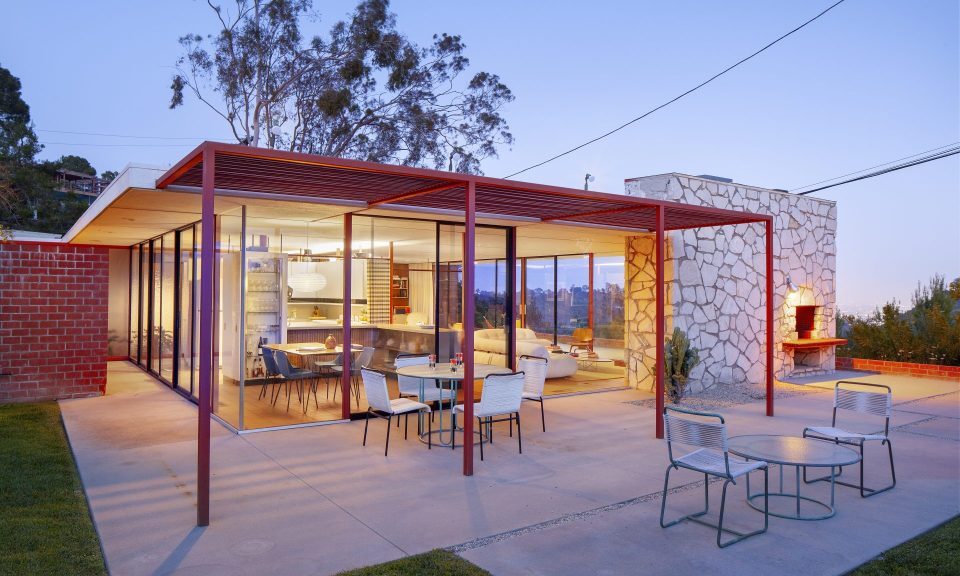
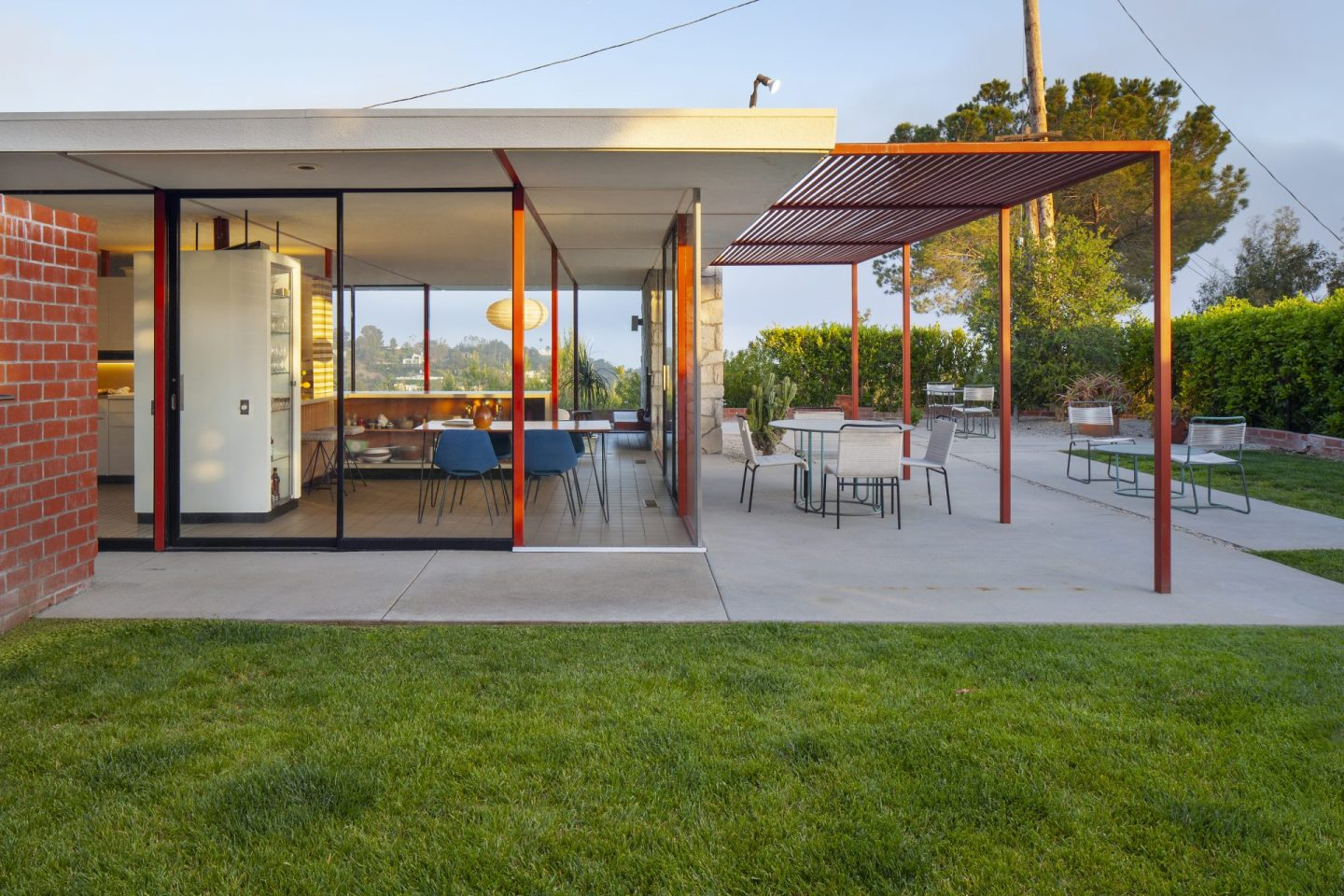
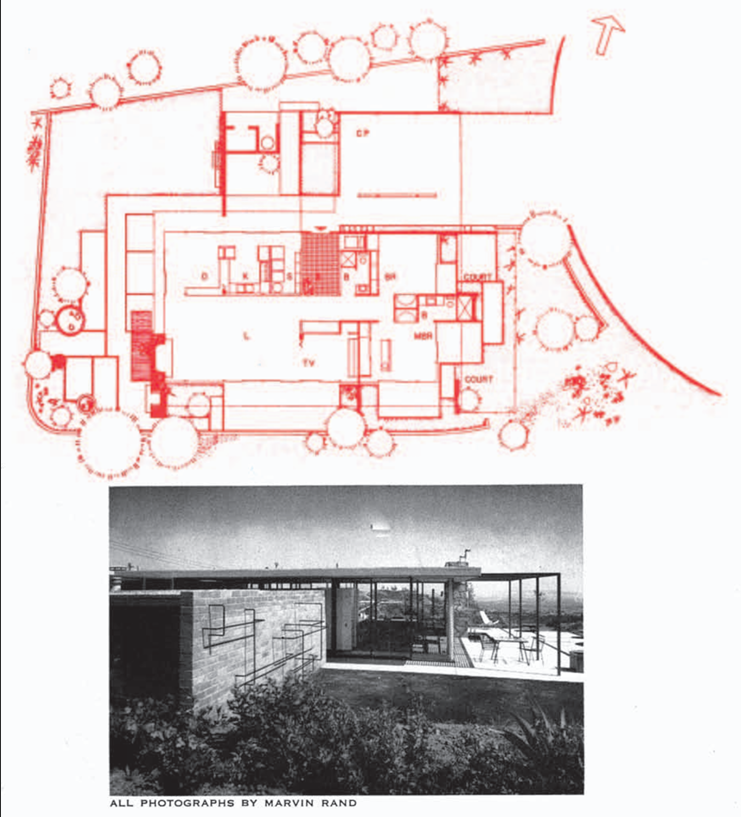
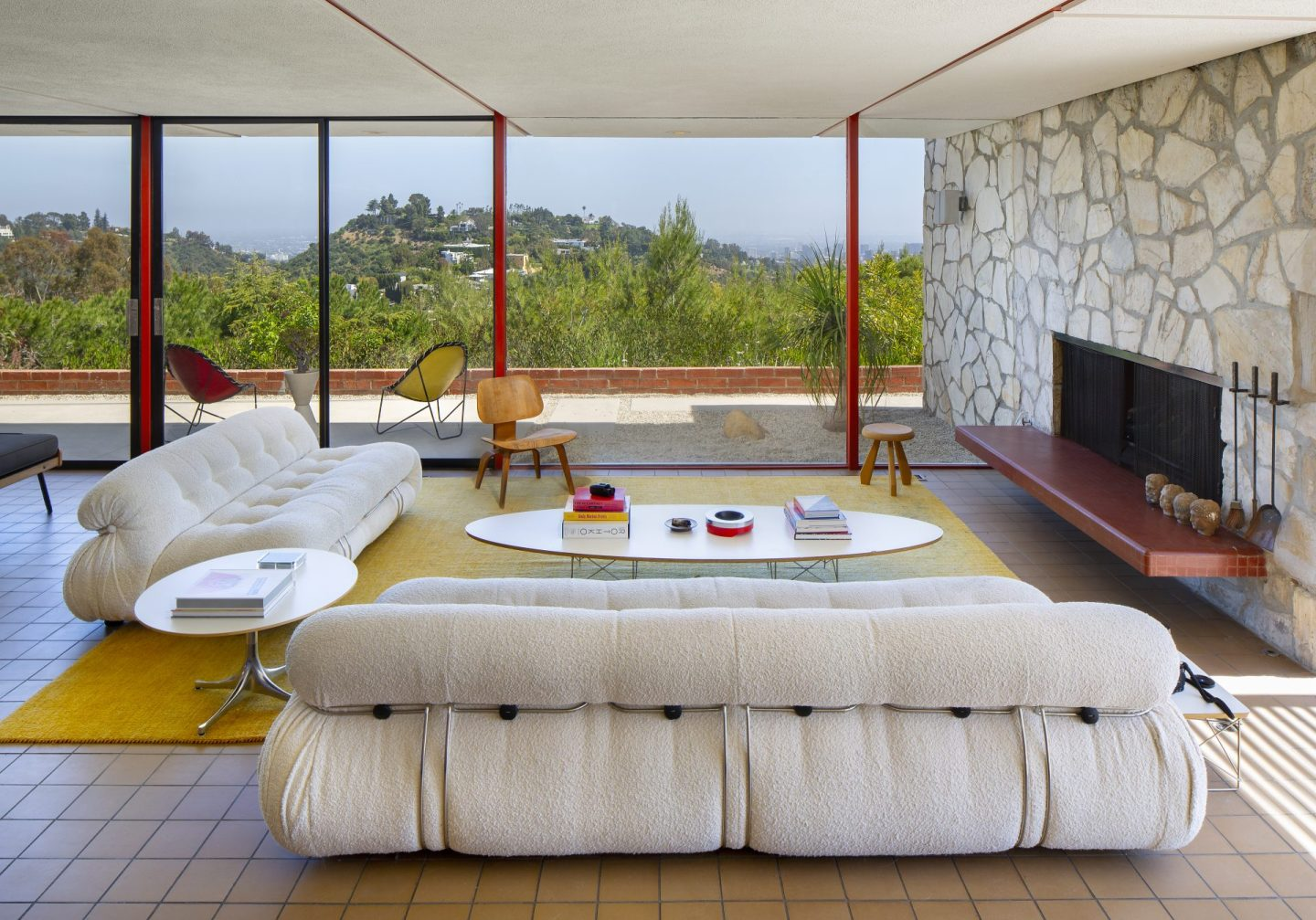
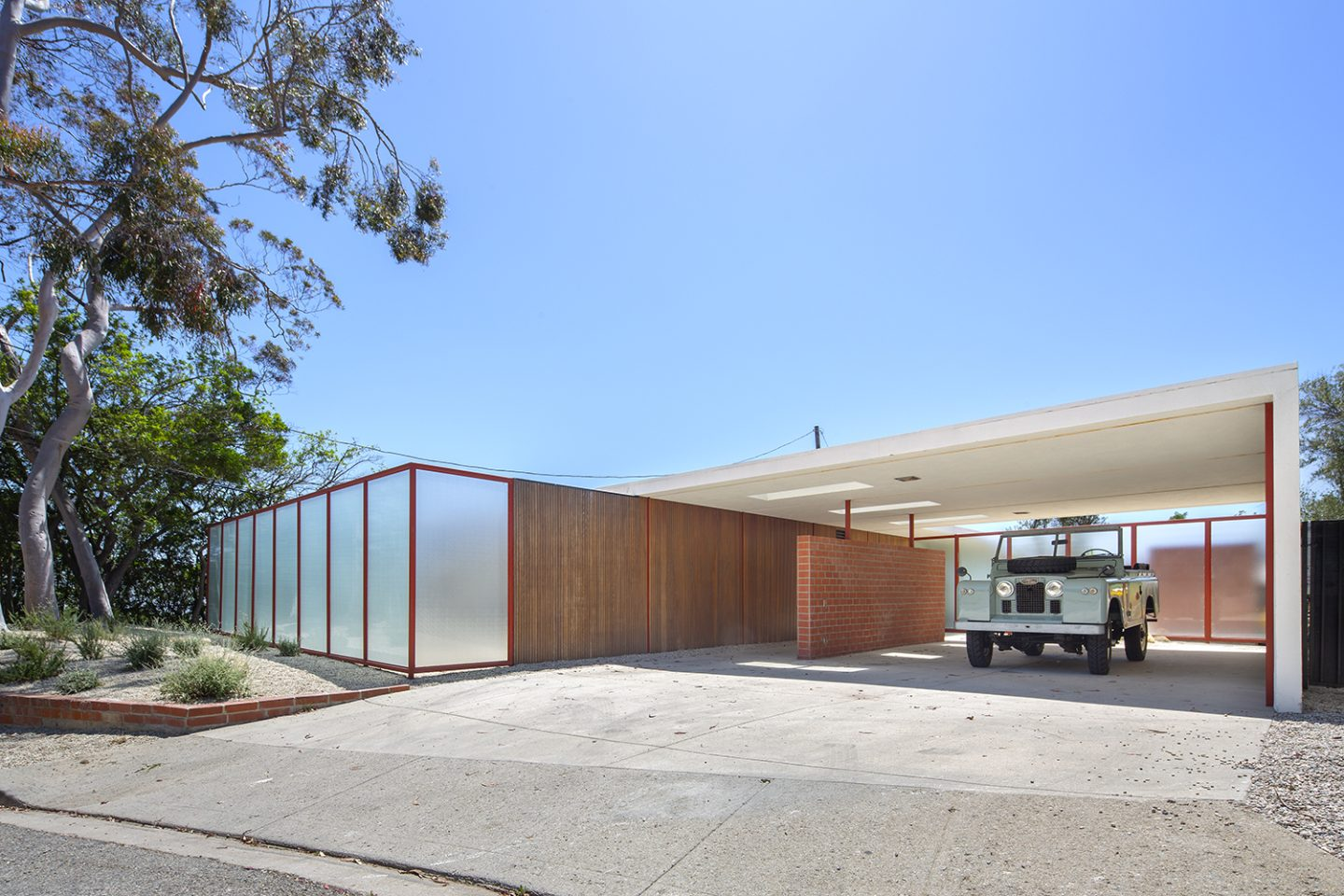
Number 16 was the first of three Case Study Houses designed by Craig Ellwood. Completed in 1953 in Bel Air, the house was innovative in its use of exposed steel-structural framing and floor-to-ceiling glass walls to optimize the views and open to the grounds, making it feel twice the size.
Ellwood was actually an engineer rather than an architect, and placed a lot of emphasis on the stability of the structure using steel, glass, and concrete built on a slab. The 1,664-square-foot home with two bedrooms and two baths is just as contemporary today as when it was built. The living room has a dramatic stone fireplace set into the glass wall that extends beyond it into a terraced area. Set into mature landscaping, the house appears to rest on a cushion of greenery.
The historic Case Study House #16 is for sale in Bel Air, Los Angeles, California. Priced at $5.4 million usd/ $7.4 million cad, the listing agent is Veronika Sznajder with Crosby Doe Associates. For the Silo, Bob Walsh/ toptenrealestatedeals.com
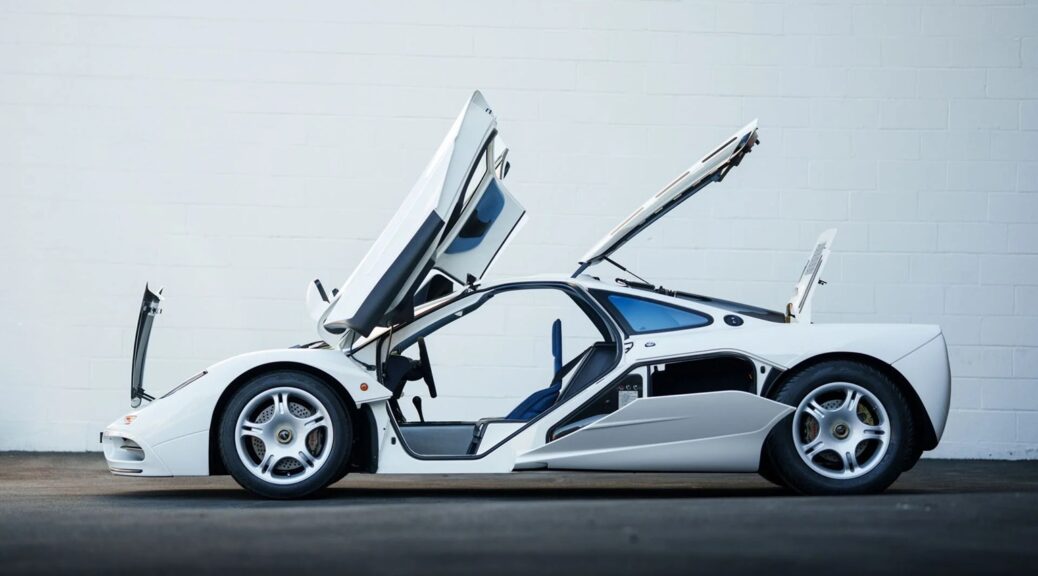
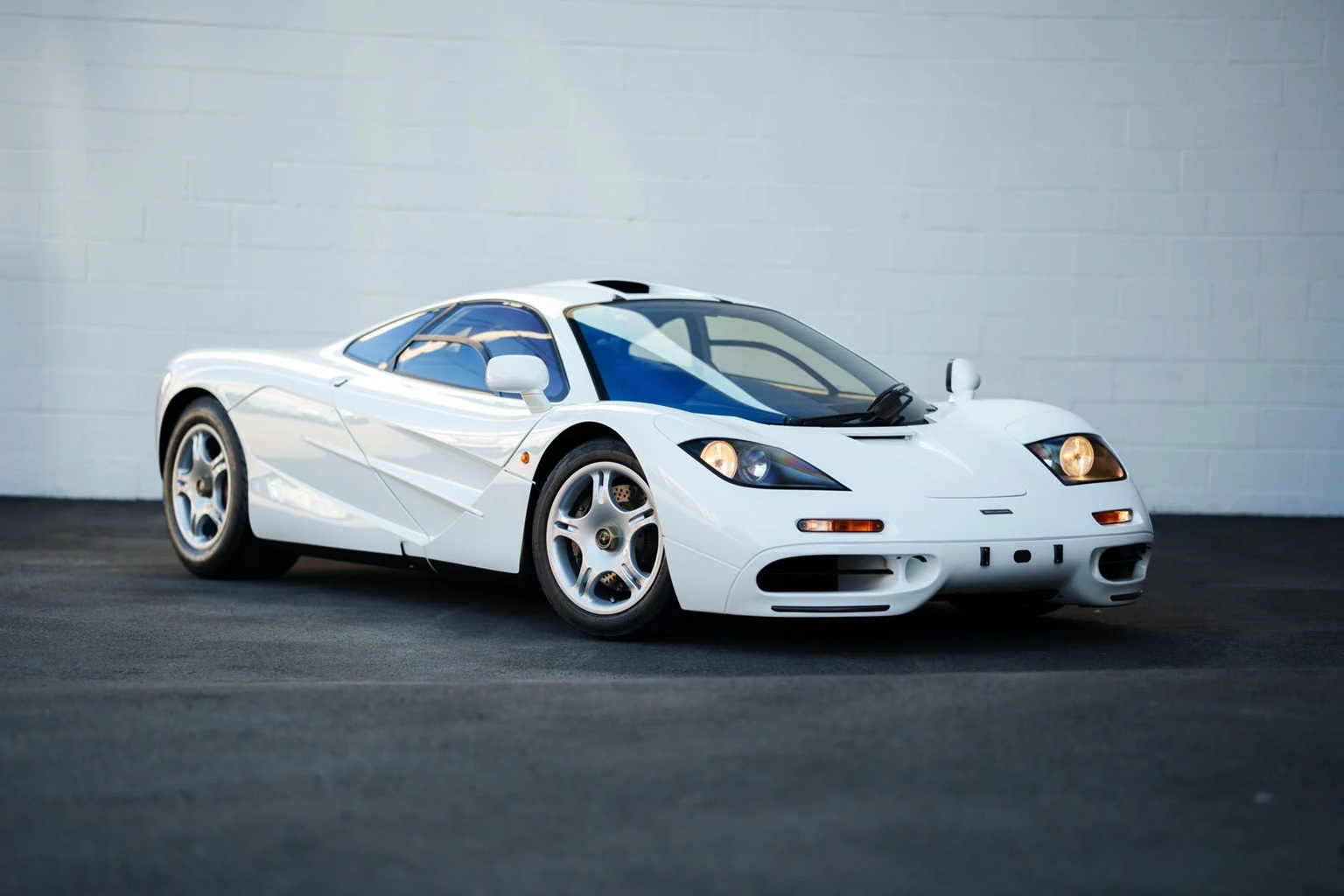
One of only two McLaren F1 road cars finished in the striking Marlboro White exterior
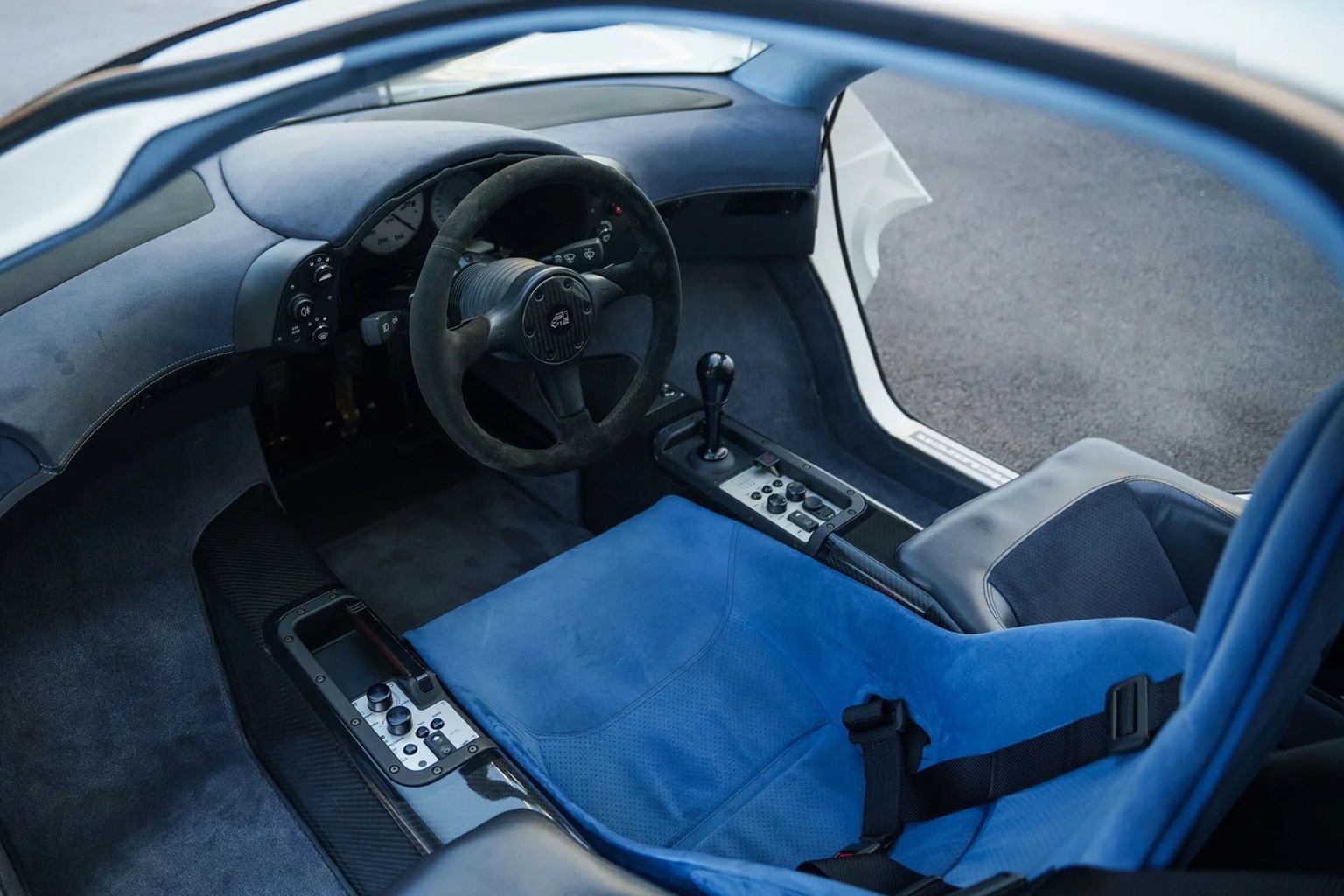
Attractive interior configuration with light blue Alcantara driver’s seat and dark blue/grey leather and Alcantara passenger seats
Incredibly low mileage with just 1,291 kilometers (802 miles) from new
Unaltered and maintained exclusively by McLaren Special Operations in Woking throughout its life
Received a fuel cell replacement in 2021, followed by comprehensive recent maintenance in November 2024
Documented ownership history from new, beginning with Japanese racing team owner Kazumichi Goh
Complete with original owner’s manuals, fitted luggage set, tool roll, and Facom toolchest
Chassis No. SA9AB5AC6S1048053
The McLaren F1 emerged from what might be the most consequential airport delay in automotive history. In 1988, following the Italian Grand Prix, TAG-McLaren Group executives Ron Dennis and Mansour Ojjeh found themselves stranded at Linate Airport alongside McLaren’s Technical Director Gordon Murray and head of marketing Creighton Brown. Their conversation turned to creating the ultimate road car—not just another supercar, but in Dennis’s words, “…the finest sports car the world had ever seen.”
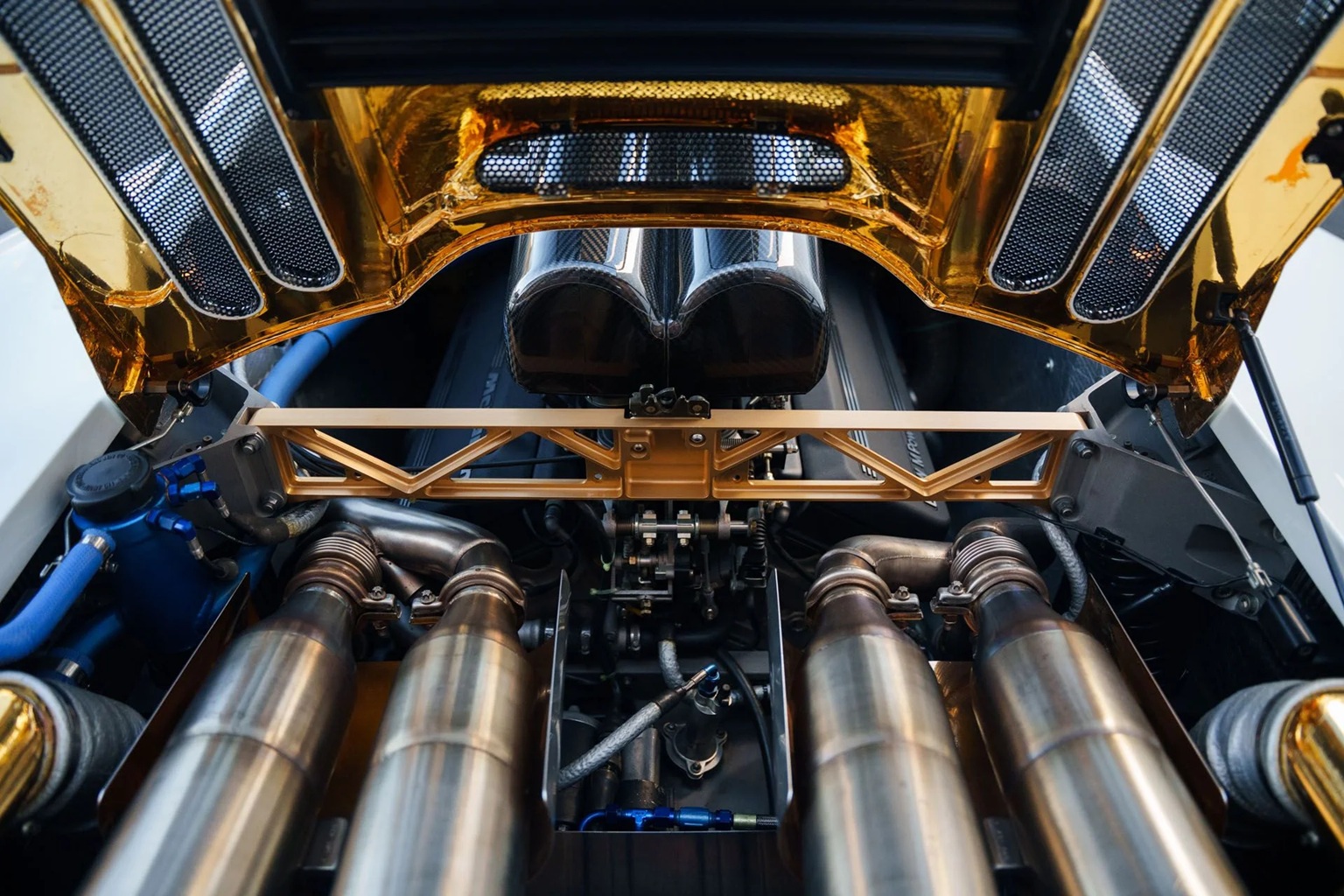
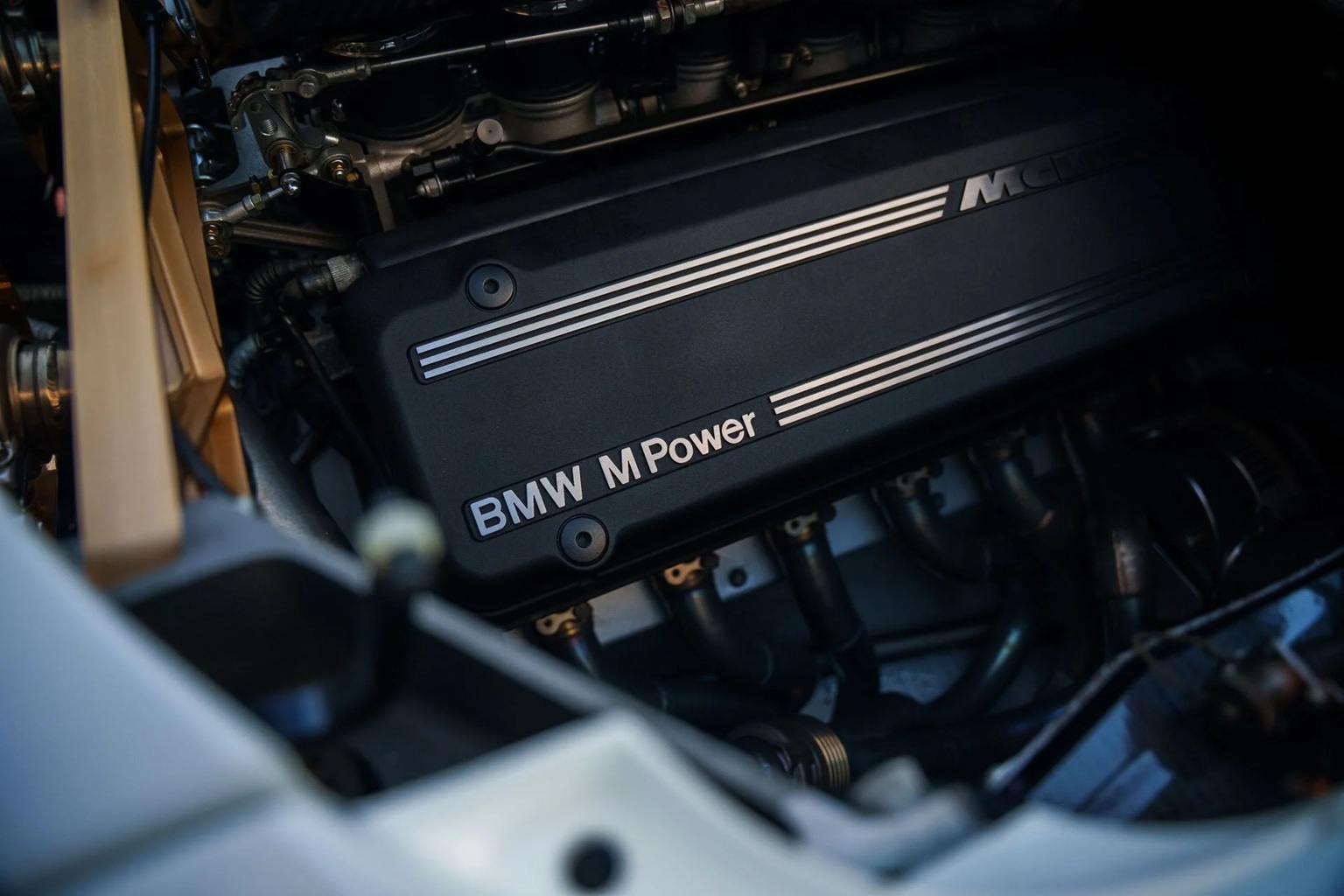
In May 1992 at Le Sporting Club Monaco, the McLaren F1 redefined the supercar genre upon its unveiling. Built around a carbon fiber monocoque—a world first for a production road car—and powered by a bespoke 6.1-liter BMW Motorsport V12 engine, the F1 delivered 627 horsepower and a power-to-weight ratio of 550 horsepower per ton. Its unique central driving position, gold-lined engine bay, and no-compromise approach to performance and driver engagement set new standards that remain unmatched to this day. Limited to just 106 examples across all variants, only 64 were built as standard road cars, making them the most revered and sought after supercar of the modern era.
This superlative example of the F1, chassis number 053, was ordered on 31 March 1995, and assigned production sequence 044. Assembly began on 28 July 1995, with the car being officially delivered “ex-works” on 27 November 1995, showing just 193 kilometers on the odometer. The original purchaser was Kazumichi Goh, the Japanese businessman behind Team Goh, which would go on to win the All Japan Grand Touring Car Championship (JGTC) in 1996 with a pair of McLaren F1 GTRs sponsored by Philip Morris cigarette brand Lark.
Chassis 053 featured a highly distinctive specification highlighted by its Marlboro White exterior finish—one of only two F1 road cars to wear this color. The cabin was finished with a unique blue-themed interior featuring dark blue/grey leather with pierced blue/grey Alcantara cloth central panels for the passenger seats, while the central driver’s seat was entirely covered in light blue Alcantara. This bespoke specification was completed with blue Wilton carpet, light blue Alcantara headlining, and an optional black suede steering wheel. The car was also delivered with a matching bespoke luggage set in dark grey leather with a blue Alcantara strip carrying the embossed chassis number. Factory driver settings were configured with the steering wheel at height position A (highest), pedals at position C (long), reach at position A (near), clutch foot rest at position D (extra long), and standard seat with extra long rails.
In 2004, chassis 053 was purchased by another Japanese collector. By late 2006, the car showed just 432 kilometers when it was sold by WHA Corporation of Nagoya, Japan, to dealer SPS Automotive Ltd. (Hong Kong) on 28 November. The car subsequently came to Europe in 2007 when it was acquired by dealer Lukas Huni AG in Switzerland on behalf of a European client with a recorded mileage of 482 kilometers. On 14 March 2014, chassis 053 was sold via Morris & Welford to collector in the United States. During this ownership, the car spent time in both the U.S. and U.K., and the mileage had increased to 1,108 kilometers. On 16 November 2016, the car was acquired by its next long-term European owner via McLaren Special Operations in Woking and subsequently registered in the U.K. with the appropriate license plate “53 MCL.”
Throughout its life, chassis 053 has been meticulously maintained by McLaren Special Operations. The service book records regular maintenance with all work completed at McLaren’s Woking headquarters on December 12, 2006 (481 kilometers), 14 June 2010 (998 kilometers), 25 October 2016 (1,185 kilometers), 24 April 2018 (1,238 kilometers), and most recently on 12 November 2024 (1,290 kilometers). In July 2021, the car received a comprehensive fuel cell service at McLaren Special Operations totaling £52,061.55 (excluding VAT), which included £31,624.50 in labor charges and £15,472.74 for the fuel cell unit itself. A covering letter from McLaren Heritage Manager Thomas Reinhold noted the return of a “favourite F1” to MSO, an F1 that also “drives extremely well.”
Further work was carried out in November 2021, including replacement of various pipes, fittings, suspension rose-joints and bushes, plus a new water pump at a cost of £23,992.05 (excluding VAT). Most recently, the car returned to MSO in late 2024 for a “3 Year Life Items” service, during which the steering wheel battery, instrument binnacle battery, key fob battery, air conditioning receiver dryer, engine oil and filters, gearbox oil, and coolant were all replaced. The car also underwent a full suspension set-up and headlamp alignment at a cost of £4,861.10 (excluding VAT). Heritage Manager Michael Wrigley’s covering email following this most recent service summed up the car’s exceptional condition: “It’s a truly lovely example so there is very little of note to comment on!”
With just 1,291 kilometers recorded from new, chassis 053 represents one of the lowest mileage and most original McLaren F1 road cars in existence. Its unique color combination, low mileage, comprehensive documentation, complete set of factory tools, owner’s manuals, and fitted luggage make it an unparalleled example of Gordon Murray’s masterpiece. Maintained throughout its life without regard to cost and exclusively serviced by McLaren Special Operations, this McLaren F1 offers its next custodian the opportunity to acquire the ultimate modern collector car in truly museum-quality condition.
If you have them should you keep them? Read on via this interesting article from our friends at Hagerty.
The nuts and bolts that make up our beloved automobiles have not changed that much over the last 150 years. But the tools needed to maintain them? Those have changed a lot. Software has cemented itself as part of a service technician’s day-to-day regimen, relegating a handful of tools to the history books. (Or, perhaps, to niche shops or private garages that keep many aging cars alive and on the road.)
How many of these now-obsolete tools do you have in your garage? More to the point, which are you still regularly using?
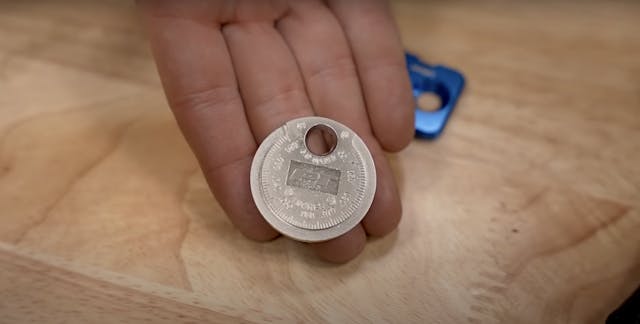
Though spark-plug gap tools can still be found in the “impulse buy” section of your favorite parts store, these have been all but eliminated from regular use by the growing popularity of iridium and platinum plugs. These rare-earth metals are extremely resistant to degradation but, when it comes time to set the proper gap between the ground strap and electrode, they are very delicate. That’s why the factory sets the gap when the plug is produced.
These modern plugs often work well in older engines, meaning that gapping plugs is left for luddites—those who like doing things the old way just because. Nothing wrong with that; but don’t be surprised if dedicated plug-gapping tools fade from common usage fairly quickly.
Verdict: Keep. Takes up no real space.
Dwell meter
sodor/eBay
50 years ago, a tuneup of an engine centered on the ignition system. The breaker points are critical to a properly functioning ignition system, and timing how long those points are closed (the “dwell”) determines how much charge is built up in the ignition coil and thus discharged through the spark plug. Poorly timed ignition discharge is wasted energy, but points-based ignition systems disappeared from factory floors decades ago, and drop-in electronic ignition setups have never been more reliable (or polarizing—but we’ll leave that verdict up to you.)
Setting the point gap properly is usually enough to keep an engine running well, and modern multifunction timing lights can include a dwell meter for those who really need it. A dedicated dwell meter is an outdated tool for a modern mechanic, and thus most of the vintage ones are left to estate sales and online auction sites.
Verdict: Toss once it stops working. Modern versions are affordable and multifunctional.
Distributor wrench
Snap On tools
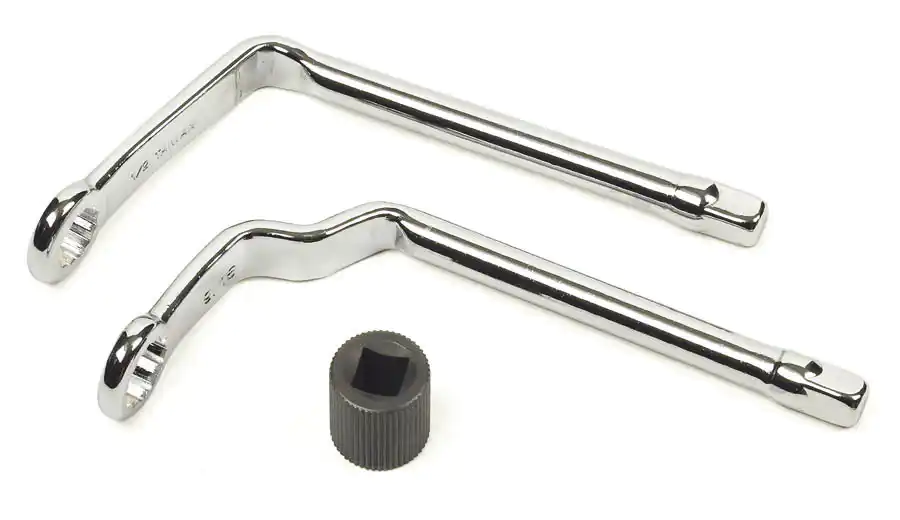
When mechanics did a lot of regular timing adjustments and tuning, a purposely bent distributor wrench made their lives much easier. However, much like ignition points, distributors have all but disappeared. Thanks to coil-on-plug ignition systems and computer-controlled timing, the distributor is little more than a messenger: It simply tells the computer where the engine is at in its rotation.
Timing adjustments have become so uncommon that a job-specific tool is likely a waste of space. If you’ve got room in your tool chest, keep yours around; but know that a standard box-end wrench can usually get the job done and is only fractionally less convenient than the specialized version.
Verdict: Keep if you have them. No need to buy if you don’t.
Prior to the required standardization of on-board diagnostic computers by the U.S. in 1996, a single car could host a wild mix of analog and digital diagnostic methods. OBDII, which stands for On-Board Diagnostic II, wasn’t the first time that a small computer was used to pull information from the vehicle via an electronic connection; it merely standardized the language.
Throughout the 1980s and early 1990s each OEM had its own version of a scan tool. Now those tools can be reverse-engineered and functionally spoofed by a modern computer, allowing access to diagnostic info tools that, at the time, were only available to dealers. Since many pre-OBDII cars are now treated as classics or antiques and driven far less frequently, the need for period-correct diagnostic tools is dropping.
Verdict: Keep. These will only get harder to find with time, and working versions will be even rarer.
Distributor machine
A distributor is simple in concept. Trying to balance the performance and economy of the ignition system, with the distributor attached to a running engine, and achieving proper operation starts to get pretty complicated. That’s where a distributor machine comes in.
A distributor is attached to the apparatus and spun at engine speed by an electric motor. This allows you to literally see how the points are opening and closing. You can also evaluate the function of vacuum or mechanical advance systems. These machines are still great but the frequency that this service is needed these days is few and far between, especially when trying to justify keeping a large tool around and properly calibrated.
Verdict: Keep, if you are a specialty shop or tool collector.
Engine analyzer
ajpperant
Even a casual enthusiast can see there is a lot more information that can be gleaned from a running engine than whatever readouts might be on the dash. Enter the engine analyzer, a rolling cabinet of sensors and processors designed to fill in the data gaps between everything that is happening in a car and what its gauges report.
An engine analyzer is essentially a handful of additional instruments packaged into a small box hanging around the bottom of your tool drawers. It can also house a lot of sensors in a giant cabinet, which was likely wheeled into the corner of the shop in 1989 and left to gather dust. Now engine analyzers can be found listed online for as cheap as $200usd/ $287cad.
The funny thing is that many of the sensors in these engine analyzers are often the same systems that come built into modern dynamometer tuning systems. In a dyno, the sensors allow the operator to see more than max power; they also show how changes to an engine’s tune affect emissions. Maybe engine analyzers didn’t disappear so much as change clothes.
Verdict: Toss. The opportunity cost of the space these take up can be tough for most home garages. Sensors went out of calibration decades ago so the information you might get from one is dubious at best.
Most pneumatic tools (for home shops)
Ingersoll Rand
Air tools hold an odd place in the hearts of many gearheads. For many years the high-pitched zizzzz and chugging hammers of air-driven die grinders and impact drills were the marks of a pro. Or, at least, of someone who decided that plumbing high-pressure air lines around the shop was easier than installing outlets and maintaining corded tools. Air tools are fantastic for heavy use, as they are much easier to maintain and can be rebuilt and serviced.
Those tools can really suffer in lack of use, though, since pneumatic tools rely on seals and valves, neither of which deal well with dry storage. Battery tools have caught up to air tools for most DIY folk. No more air lines or compressors taking up space in the shop—and requiring additional maintenance—and, in return, a similarly sized yet more agile tool.
Verdict: Keep, if you already have the compressor. Don’t have one? Invest in battery tools.
Babbitt bearing molds/machining jigs
Every engine rebuild has to have bearings made for it in some fashion. Today’s cars use insert bearings that are mass-produced to surgical tolerances for a multitude of applications. If you wanted—or more accurately needed—new bearings in your Model T circa 1920, you needed to produce your own … in place … inside the engine. Welcome to Babbitt bearings.
The process is a true art form, from the setup of the jigs to the chemistry of pouring molten metal and machining the resulting orbs to actually fit the crankshaft and connecting rods. Now there are newly cast blocks for your T that replace the Babbitt with insert bearings. Since those antique Ford engines just don’t get abused the way they used to, and lead fairly pampered lives, they need rebuilding far less often than they did in-period. Modern oils also do a better job of protecting these delicate bearings. Since they are less and less in demand, the tooling and knowledge to make Babbitt bearings are difficult to find, and precious when you do.
Verdict: Keep. It’s literally critical to keeping a generation of cars alive.
Split-rim tire tools
Universal Rim Tool Company
Among the realm of scary-looking tools that have earned their infamy, split-rim tools hold court. The concept is simple: The rim is sectioned, allowing it to contort into a slight spiral that can be “screwed” into a tire. (This is almost the reverse of a modern tire machine, which stretches the tire around a solid wheel rim.) When tires needed tubes, both tire and rim were relatively fragile, and the roads were rough, split rims were popular—and for good reason. Now the tooling for drop-center wheels is ubiquitous and shops often won’t take on split-rim work. Success is hard to guarantee, even if techs are familiar with split rims—and they rarely are.
Verdict: Keep. No substitute for the right tools with this job.
These tools might not make much sense in a dealership technician’s work bay, but that doesn’t mean they should disappear forever. Knowing how to service antiquated technology is as important as ever, whether using old tools or new ones. If you’ve got any of these items, consider it your responsibility to document what the tool does and how to safely use it. Keeping alive the knowledge of where our modern tools came from is powerful.
Brunette knockout Christina Estrada modeled for some of the world’s top brands and appeared in the famous Pirelli calendar. Born in the USA, the glamorous Estrada has been based in London since 1998. She was previously married to Saudi billionaire Sheikh Walid Juffali, but the couple divorced in 2016, leaving Estrada the sole owner of a fabulous Beverly Hills villa. The supermodel has listed the stunning estate for sale at $26 million usd/ $37.7 million cad. According to the listing agent, Gary Gold, “This is the quintessential Beverly Hills estate located on the best block of the best street in the Flats. This is the type of home you see in a movie portraying the good life.”
Built in the 1930s, the mansion has been painstakingly restored, blending the irreplaceable craftsmanship of a bygone era with all the latest in modern luxury.
Spanning 9,000 square feet with five bedrooms, eight bathrooms, and luxe modern amenities, the residence will be sold fully furnished.
The two-story home boasts an imposing Italian-style facade. Old World styling is evident throughout the mansion, with columns, archways, wrought-iron details, and exquisite beamed ceilings. Enter through the impressive two-story foyer, featuring double staircases, coved archways, a wonderful chandelier, and a hand-painted ceiling. The chef’s kitchen boasts top-of-the-line appliances and a spacious butler’s pantry, while the formal dining room includes seating for 12. A cozy breakfast offers a more relaxed atmosphere, with yard access for al fresco dining.
The spacious primary suite includes big windows for lots of natural light, a generously appointed bathroom with marble accents and a glamorous mirrored powder room, plus a walk-in closet fit for a supermodel’s wardrobe. Upstairs, find three more bedrooms with their own en-suites, furnished in a classic style. A step-down living room with steel-case windows and an attractive great room with an inviting fireplace offer lots of space for lounging. Meticulous attention to detail is evident in every room, while the chic but understated furnishings allow the home’s timeless beauty to shine.
The spectacular yard offers a resort-like atmosphere with a stylish pool, manicured lawns, and tall hedges for lots of privacy. Multiple balconies offer pool views, while the den and family room connect with the outdoor spaces for seamless indoor-outdoor living, taking advantage of LA’s year-round pleasant weather. The covered loggia is especially lovely, with intricate columns and a curtained gazebo. Other amenities include a library with built-in bookshelves, a five-car garage, and a separate guest house with two bedrooms and two baths.
Located just off world-famous Sunset Blvd, the mansion is convenient to the music and entertainment venues of the Sunset Strip, the high-end shops on Rodeo Drive, the Getty Museum, and the Los Angeles Country Club. Known for its beautiful homes on large lots, the Flats is one of 90210’s most exclusive neighborhoods. Just a few of the zipcode’s illustrious residents include Adele, Taylor Swift, Jennifer Aniston, Jack Nicholson, Ashton Kutcher and Katy Perry. For the Silo, Bob Walsh/ toptenrealestatedeals.com.
The listing is held by Gary Gold at Forward One. Photo Credit: Jennifer Mann, The Luxury Level
Ugh it’s winter and here in Southern Ontario as I type this we are at the tail end of the Polar Vortex. It’s damn cold out. But there are some things that lend themselves well to “tossing another log on” and staying cozy while enjoying being indoors or perhaps in your heated shop or garage.
In fact, the winter is a great time to take stock and plan for your automotive future. Maybe you’ve packed your summer car away for the season and realized there’s still room for one more, or perhaps you’ve been whiling away the winter daydreaming about the car that got away years ago.
Get Out The Hair Gel
Whatever the case, our friends at Hagerty put together their latest valuation info to find some cool ’80s-vintage North American cars and trucks that we would like to add to our collections, and we think you might agree with at least some of them. Read on brave winter warrior….
The following six vehicles can all be had for less than $25,000 usd/ $35,8300 cad in #3 (Good) condition. That’s a solid starting place for a classic you plan on putting some miles on, and a great place to start if you want a running and driving project that you can cruise to RADwood with. Here then are their excellent picks, in descending order based on value.
1989 Ford Mustang LX 5.0
Ford
#3 Value: $24,900 usd/ $35,680 cad
The LX was a bit of a sleeper as it had the same EFI 5.0-liter V-8 as the GT without the flashy bits. We like the later Fox-body styling, and while the ’89 comes close to the $25,000 usd price cap, 1987 and 1988 models look just as good and tend to be just a bit more affordable. Of course, four-eyed Fox-body Mustangs (which some of the Hagerty team find more stylish) tend to be even less expensive, but they are also less powerful. One of these later LX models would be a great place to start for a mild build to enjoy the fantastic 5.0-liter soundtrack, as few platforms have the kind of aftermarket behind it that the Fox-body still enjoys.
1987 Buick Regal T-Type Turbo
Mecum
#3 Value: $23,800 usd/ $38,400 cad
Speaking of sleepers, the turbocharged Buicks of the ’80s are some of the most infamous. Even when the sinister black Grand National gained a reputation, the less overt turbocharged Buick models still flew under the radar. The later turbo Buicks were fuel injected and Buick kept improving the punchy 3.8-liter V-6, with final models getting upgraded airflow by way of a new charge cooler, an aluminum intake manifold, and an improved turbocharger. The final tweaks gave 1987 turbo Buicks 245 hp and 355lb-ft of torque. While those numbers aren’t particularly impressive when compared to more modern performance cars (keeping in mind that hp isn’t everything when it comes to performance measurements) , or family sedans for that matter, they put Buicks firmly in the fight for the title of quickest new cars on the market. Their interesting development history makes them a worthy collectible, and the less flashy T-Type is a great entry point at about 35 percent less than a comparable Grand National.
1989 Chevrolet Corvette Callaway
Callaway Cars
#3 Value: $23,800 usd/ $34,100 cad
If 245 horsepower was a lot in 1987 (it was), imagine how exotic a 382hp twin-turbo Corvette must have been. The late Reeves Callaway had a long history of building exciting and powerful Corvettes, and even the earliest models were an ambitious project. The first twin-turbo Corvettes his company turned out in 1987 produced 345 hp, the same rating the first C5 Corvettes would receive with their naturally aspirated LS1 V-8s starting in 1997. Ever improving, Callaway soon had the 350-cubic-inch small-block pumping out 382 hp and 525 lb-ft of torque, making it one of the most powerful cars you could buy. It even came with a 12-month warranty. Just 69 Callaway Twin-Turbo Corvettes were built in 1989 and today their #3 value is just less than the $26,000 usd cost of the B2K RPO code that indicated the rare powertrain option. They might be more trouble to maintain than the rugged and simple 350 that came in everyday C4 Corvettes, but the Callaway Twin-Turbo mill was truly special. It’s also one of the best-looking C4 variants ever created, if you ask us.
1988 Stutz Bearcat
Stutz Motor Car Company
#3 Value: $23,100 usd/ $33,100 cad
The Stutz Bearcat is not well known, and those that do have any knowledge of the low-volume cars probably remember the ’60s iteration, a reemergence of the nameplate, and based on the Pontiac Grand Prix. Few will remember the original: a racy, brass-era runabout, and you can bet that if you arrived at a show in the final version of the Bearcat, based on the third-gen Firebird and sporting a carbon fiber composite body built in Turin, you’d be met with a lot of puzzled looks. Only about a dozen were built on the F-body platform, making them a truly rare sight. While the ubiquitous small-block drivetrain would make them easy to maintain, everything else about the car would be difficult to replace. Still, it’s quite a head-turning piece of American and Italian coachwork.
International Harvester gave its Scout lineup a makeover for its final year, featuring a new grille designed by Dick Hatch that used rectangular headlights. We think that the final grille is a great fit for the simple, blocky trucks and SUVs. The one shown above, with orange and yellow graphics, is practically perfect. While the standard wheelbase Scout II and the stretched Scout Traveler SUV are both outside of our $25,000 usd threshold, the stretched wheelbase Terra pickup is a more affordable entry point to Scout and meets the criteria when equipped with either the six-cylinder Nissan turbodiesel or the 196-cube four-cylinder that used the passenger bank of the company’s venerable 392 V-8. We love these rugged rigs and the Terra, with its 118-inch wheelbase and short overhangs, combines a decent-sized bed with maneuverability that’s appreciated off-road. The final year of Scout production would make an excellent addition to a collection where it could pitch in with its rugged utility and look great doing it.
1989 Chevrolet Camaro IROC-Z
Courtesy Throttlestop/Andrew Marvan
#3 Value: $18,800 usd/ $26,900 cad
Chevrolet’s competitor to the lighter, more angular Mustang GT was the IROC-Z, the performance-oriented F-body that finally got the 350-cubic-inch Tuned-Port Injection (TPI) engine from its big brother, Corvette, starting in 1987. The 5.7-liter powerplant was only available with a four-speed auto as the T5 transmission that fits under the Camaro’s floorplan couldn’t handle the larger motor’s torque. The TPI intake, perched like a spider on top of the engine, featured long runners that favored low-speed torque. Unfortunately the intake, and the engine’s meager cylinder heads, weren’t great at maintaining that torque to get the power numbers up, Still, it competed well against the smaller Ford V-8 in the Mustang. Contemporary reviews praised the IROC-Z’s power, road-holding, steering feel, and traction compared to its Mustang counterpart, but the 5.0-liter Mustangs were formidable opponents. Your choice might come down to brand loyalty or whether you prefer the boxy Fox-body or the sleek F-body. If we found one of these in our garage, we’d be tempted to troll eBay and swap meets for vintage ’80s speed parts to build a day-two IROC-Z for canyons and backroads. But that is just us.
January 2015, Villa Erba, Italy. Our friends at Broad Arrow Auctions are thrilled to announce the consignment of what many consider to be one of the most original early Ferrari models extant to its inaugural Concorso d’Eleganza Villa d’Este Auction. Never before offered for public sale, the 1948 Ferrari 166 Spyder Corsa with Coachwork by Carrozzeria Ansaloni is one of two examples purchased by the Besana brothers, Ferrari’s earliest customers.
Complete with Ferrari Classiche White Book certification with its original body, chassis, 2.0-liter V12 engine, and five-speed racing gearbox, it is further complemented by 50-year family ownership from 1965 to 2015 with multiple in-depth editorial pieces documenting its impressive provenance.
1948 Ferrari 166 Spyder Corsa Coachwork by Carrozzeria Ansaloni Chassis No 004 C Engine No. 004 C Estimate: €5,500,000 – €7,500,000 / $8,180,000 cad- $11,540,000 cad. Classiche White Book certified with its original body, chassis, 2.0-liter V12, and five-speed racing gearbox. One of two 166 Spyder Corsas purchased by the Besana brothers, Ferrari’s earliest customers. Sixth overall at the 1948 Targa Florio, a veteran of the 1948 and 1949 Mille Miglias, period Formula Two races, and hill climbs. Long-term 50-year family ownership 1965-2015 with multiple in-depth editorial pieces. 2004 Pebble Beach Concours d’Elegance class award—displayed at Pebble Beach within Casa Ferrari in 2019 and 2022. Best of Show at the 2003 FCA National Meet, Cavallino and FCA Platinum Awards; feature car at the 2006 Cavallino Classic.
Decorating with a mix of new and found/retrieved objects image: shelterpop.com
Nearly fifty years ago, a couple of Canadian kids with no money stood in front of a minister and said, “I do.” We needed household furnishings to set up for our first apartment together. We only had one part-time job, no credit card, no line of credit, and no Mommy and Daddy bank. This forced us to be very resourceful. Think…..curbside shopping for example.
My wife and I came from accounting backgrounds.
The mind and the ways of the accountants are very different from that of our friends’ parents. Going to the store to purchase a Popsicle at the age of seven was different than other families. When I got home from the store, my Dad would ask “Where’s the receipt?” This was my conditioning; my way of life. Money was not to be wasted. When added to our poor economic conditions, we had to become very resourceful. Being in debt when we got married was not an option. Luckily the woman I married was also schooled in the same mantra of no debt.
As a city dweller, I had advantages.
Every garbage day homeowners could put out furniture, boxes of used dishes, and other unwanted items they didn’t use or need. I thought it was wasteful and unnecessary that these items went to the dump; a nicer term for landfill site. Our engagement turned out to be a year and a half long, so this gave us plenty of time to collect items for our first apartment. I called this CURBSIDE SHOPPING. My fiancée and I at the time did not have a car so we walked, rode our bicycles or took the bus. As we walked up and down the streets, my then fiancée and I discussed our future together, buying house wares, and setting up a home together. On the occasion that we were lucky to have a ride, I always had my eyes peeled for “free bargains.”
I recall on one occasion when we would be traveling around town with our friends that had a car, I suddenly yelled out, “STOP!” There at the curbside was a solid side chair with a bag of garbage on the seat. “Back up,” I demanded. “What for?” said the driver. “I saw a chair,” I quickly replied.
“I’m not stopping for a dirty old chair.” was the reply.
“Then let me out,” I demanded. The driver backed up about three or four houses away. I got out and examined my new find. The chair looked much neglected and had a small slanted back with right and left arms that curved around to the front. The horizontal spindle of the right arm had broken off. The upholstery on the seat was ripped and of the dark brown type of material that feels like a hairbrush if you sit on it. I saw potential. I loaded it into our friend’s car and we sped off. My future in-laws basement had became our storage area #1 for our new found treasures.
Another time my fiancée and I were out on garbage night browsing, when I spotted a large wooden spool. This was the kind of spool that the hydro company had left behind when they were replacing overhead wiring. It was made of rough, hardwood, loaded with knots, but very solid. After using some of my father’s left over stain, and then a liquid varathane, the spool was transformed into a spectacular coffee table. Soon, the curbside treasures brought back to our #1 storage area, was starting to fill up. This prompted us to expand to storage area #2 in my parent’s basement.
Curbside finds bring many unlikely but useful items into your household.
I found a box of material that had upholstery weight and light textile weight fabrics as well as sewing notions. I had acquired an old bundle buggy for a carrier to transport my finds.
(You guessed it; it was free at the curb) When I got home and went through the box of materials, on the bottom were several women’s long evening gowns from many years gone by. In our first apartment, my wife and I used this flowing gown material as drapes. We had stylish and elegant green taffeta window coverings for one set of windows. Another long gown, we used the material to reupholster four dining room chairs in gold velvet. The last gown material of blue velvet was used for the chair which I had taken both arms off and reconditioned as a beautiful, armless side chair. The cost was zero.
If you can wrap a gift, then you can upholster a chair!
You get all kinds of “great stuff” at the curbside. I found out that what people throw out can be very unique and sometimes bizarre. On one of my free shopping trips, I found a box of new, sealed, unopened jars of poultry seasoning. 144 jars to exact. I scooped these jars up so that they could be used as “traders” in the future. My traders brought me a new blender. As the storage areas #1 and #2 filled up, my fiancées parents wanted us to start our new life with a “new couch” for our first apartment. They gave us $200 cash which at the time was a lot of money and could purchase a very plush stylish piece of furniture.
We walked downtown with money in hand to pick up our first piece of new furniture together. We thought we were rich! Fortunately for us, and unfortunately for the parents, we passed a second-hand shop at the first intersection. I spied two blocks before we went in the store an old chair that had been put outside the store on the curb. Inside the store window was a very old loveseat (Queen Anne style I was told) with all 35 of the springs almost touching the floor. The store wanted $25.00 for the item. It was a real hardship for me to part with the money that we had in our hands, but we knew the loveseat could be transformed. We bought the loveseat, and also took the old chair at the curb. From the $200.00 cash, we had $175.00 left which we used to buy a new bed and box spring. The rest of the items in our apartment including lamps, tables, carpets, pots and pans, kitchen accessories, pictures, bedroom furniture, kitchen table and chairs, were all found free at the curbside.
Hats off to my wonderful father-in-law who many a time was called to bring his car to transport a second-hand loveseat and chair, or other curbside shopping items to our storage areas in our parent’s homes. This “father” never asked me for a receipt. For the Silo, Blair R. Yager.
These 5 Hot-Rodders Forged the Legacy of the Flathead
The impact of Ford’s flathead V-8 on the hot rod scene is undeniable. But the individuals that immortalized this engine—and, along the way, laid the foundation for the hot-rod scene—are the real heroes.
photo- Brandan Gillogly
n the early 1900s, horsepower was almost exclusively for the Gatsbys of the world. Ford’s flathead V-8, introduced in the depths of the depths of the Great Depression, changed all that. But it needed some help from car obsessives, who went on to invent what we now know as hot-rodding. Learn about them below, then check out Preston Lerner’s deep dive on the Flathead and its impact here.—Ed.
While it’s not without its flaws, the Ford flathead V-8 marked a significant milestone in the history of American performance. Ford’s mass production of the flathead opened up racing to a whole new audience and helped an industry flourish. Ford wasn’t alone, however, as the factory-built flathead was just a building block. Several individuals, through their own innovation and business acumen, were able to build flathead V-8s to horsepower levels that pushed boundaries of speed, developed a massive segment of our hobby, and forged long-lasting businesses, many of which are still with us today. Here are five pioneers of the aftermarket that used the flathead V-8 to cement themselves and their companies in American culture.
Ed Winfield
Magnifico
1901-1982
Known as “The Father of Hot-Rodding,” Winfield got his first job in a blacksmith shop when he was just eight. By the time he was 11, he was stripping down the neighbor’s Model T to shed weight and make it faster. Two years later, he was working on carburetors in Harry A. Miller’s Los Angeles shop where Barney Oldfield’s groundbreaking Golden Submarine race car was being built. With a knack for machinery and an intimate knowledge of engines, Winfield started his own carburetor company in 1919 and began grinding cams the following year. His carburetors were used on eight of the ten Indy 500 winners from 1933-1946, the only exception was Wilbur Shaw, who had won with a Winfield-fed Shaw/Offenhauser engine in 1937 and switched to Maserati power for his wins in 1939 and 1940.
Winfield did it all, from serving as a riding mechanic and racing at Ascot Speedway to working with major automakers in developing engines. Winfield also helped a young Ed Iskendarian with cylinder head work. He was inducted into the Indianapolis Motor Speedway Hall of Fame in 1983 and the Motorsports Hall of Fame in 2011.
Vic Edelbrock Sr.
Magnifico
1913-1962
Already an established mechanic, Vic Edelbrock Sr. designed the Slingshot intake manifold for flathead Ford V-8s in 1938 and tested it on his own 1932 Ford roadster on Southern California’s dry lakes. After WWII, Vic moved into a new shop in Holywood and designed his first cast aluminum cylinder head for flathead V-8s. Also in 1946, Edelbrock created its first catalog of speed parts, and soon its products were found on cars competing in virtually every form of racing, whether it was on the 1/4-mile, on circle tracks, or America’s dry lakes. His son, Vic Jr., took over the business after his passing and expanded the business to include fuel injection and superchargers. Vic Jr. passed away in 2017, but the company continues to make performance parts. To this day, the company makes Victor and Victor Jr. cylinder heads and intake manifolds that keep their legacy alive.
Stu Hilborn
Magnifico
1917-2013
Born in Canada, Hilborn came to southern California in time to graduate high school and attend junior college in Los Angeles before enlisting in the Army Air Corps (you’re going to notice a trend here). While working on aircraft, Hilborn began scheming up a new way to feed fuel to engines, and once he was back in Southern California, he built a dry lakes racer that would prove his constant-flow fuel injection could compete and win against carburetors. The sleek racer was the first to eclipse 150 mph on the dry lakes and graced the fourth cover of Hot Rod magazine in April, 1948.
Hilborn continued to modify and improve his fuel injection design, and in 1952 Bill Vukovich drove the Fuel Injection Special in the Indy 500, where he led 150 laps and was just nine laps from the finish when a steering issue sidelined the car. That was tough luck for Vukovich, but 22-year-old Troy Ruttman passed him and took the win. Rutman, like Vukovich, was running Hilborn fuel injection, as were the remaining drivers on the podium. You can think of Hilborn’s mechanical fuel injection taking over for Winfield’s carburetors, as the individual throttle body system became the induction of choice for America’s top racers, dominating the Indy 500 for decades, claiming 34 victories along the way. Hilborn stacks appeared on road racers of all kinds, and the company’s two-port units could be found atop supercharged drag cars as well, but it all started with the dry lakes flathead.
Alex Xydias
Magnifico
1922-2024
Alex Xydias passed away earlier this year at the age of 102, leaving behind an impressive legacy of business achievement and generosity. His name is synonymous with the So-Cal Speed Shop, the Burbank speed equipment emporium he founded after leaving the Army Air Corps in 1946. The most famous product of that enterprise is the iconic belly tank lakester that graced the January 1949 cover of Hot Rod magazine after it ran using Ford V-8-60 power. The So-Cal Speed Shop followed on the success of the lakester with a sleek streamliner that would go on to be powered by a Mercury flathead that would push the car to 210.8962mph, the fastest time of Speed Week 1950, earning Xydias back-to-back spots on the coveted Hot Rod trophy, and the first in excess of 200mph.
Xydias forged relationships with speed parts manufacturers and helped get race-winning parts into the hands of southern California hot-rodders through his shop, but So-Cal Speed Shop also sold parts across the country through its mail-order catalog, using the fame of his racing success to get more enthusiasts involved by proving what the flathead was capable of.
Ed Iskenderian
Magnifico
1921-
Ever a hot-rodder, Ed Iskenderian’s T roadster was and continues to be an influential build, but there’s a reason he’s known as the Camfather. Shortly after returning from United States Army Air Corps service during WWII, Iskendarian was eager to return to building engines, particularly flatheads, but the booming demand vastly exceeded supply. He didn’t waste time waiting for other cam grinders to catch up. Instead, Isky, already experienced with tool and die work, purchased a machine and converted it to grind cams. Not only were his camshafts effective, but Isky was a talented marketer, coining the term “5-Cycle Cam” to describe his camshafts that used valve overlap and the escaping exhaust gases to scavenge the incoming intake charge. In addition to his many pioneering valvetrain advancements, Isky is also credited with selling logo t-shirts before anyone else.
Iskendarian cams are still used by some of the quickest and fastest racers today.
Featured image via –Historic Vehicle Association For the Silo, Fabian Hoberg / Hagerty.
If your old enough to remember big ass tube tv’s or roof antennas dangling on the roofs of the neighborhood houses then consider this- theme songs from those TV shows can immediately bring back memories and nostalgia from your childhood or teenage life. That is pretty powerful stuff right? One of the reasons why many theme songs continue to be so memorable is because they’re truly unique, written and performed by top-notch musical talent.
But which iconic tune has had the most influence over the years?
By exploring IMDb’s 100 greatest TV theme songs, our friends at Spin Genie have revealed the composers and musicians who have accumulated the most success for their contribution to iconic TV series. Using this data we will analyze the total streams, monthly listeners, and estimated earnings in CAD dollars for the appropriate TV show theme tune.
We will also judge the TV series by reviewing IMDb ratings and Rotten Tomatoes scores, as well as the annual searches for each theme song. Sound fair? Let’s dig in.
PS If you have some spare time in between binging on your favorite TV shows, check out the latest online slots available on Spin Genie.
The most successful TV theme songs:
The Sopranos
Woke Up This Morning – Alabama 3
Royalty score: 8.43 out of 10
In first place is “Woke Up This Morning”, a song by British band Alabama 3 from their 1997 album Exile on Coldharbour Lane. Best known as the opening theme song for the American television series The Sopranos. “Woke Up This Morning” has over 37.9 million streams on Spotify, with estimated earnings of $231,206, and the band has 320,321 monthly listeners. The Sopranos is one of the most influential TV dramas, smashing IMDb ratings with a score of 9.2 out of 10. On Rotten Tomatoes, the drama received a 96% audience rating and recorded 24,600 annual worldwide searches for its theme song as of July 2024.
Get a Life
Stand – R.E.M.
Royalty score: 7.57 out of 10
Following up in second place is “Stand”, a song by American alternative rock band R.E.M., released as the second single from the album Green in 1989. It was used as the theme for the 1990-1992 Fox sitcom Get a Life, starring Chris Elliott. The theme song has amounted to 46.6 million Spotify streams with earnings of almost $284,100.
Get a Life is one of the top-rated TV series on our list, recording a perfect 100% audience rating on Rotten Tomatoes. The show also performed well on IMDb, with ratings of 8.1 out of 10.
The Fresh Prince of Bel-Air
The Fresh Prince of Bel-Air – DJ Jazzy Jeff & The Fresh Prince
Royalty score: 7.07 out of 10
DJ Jazzy Jeff & The Fresh Prince’s “The Fresh Prince of Bel-Air” rounds out the top three, heard in 1990 as the theme song for the NBC sitcom The Fresh Prince of Bel-Air. The lyrics were composed by rapper and sitcom star Will Smith, performing under his stage name, the Fresh Prince, with Jeffrey Townes producing the song under his stage name DJ Jazzy Jeff. Originally, composer and producer Quincy Jones pitched the song, but Smith wrote the lyrics after reading up on an episode script. Jones immediately loved it and accepted it as the theme song.
Further findings:
The song “The Fresh Prince of Bel-Air” from the sitcom of the same name is the most streamed theme song on Spotify, with a total of 123.2 million streams.
The Sopranos achieved the best IMDb rating of 9.2 out of 10, making it the highest-reviewed TV show.
M*A*S*H, an American war comedy-drama television series that aired on CBS from 1972 to 1983, has the most-searched-for theme song with almost 200,000 people searching for it. It’s a song that was written specifically for the show by Johnny Mande and Michael Altman and is called “Suicide Is Painless”.
There could be a number of reasons why you are looking to sell coins in Toronto. Maybe you inherited a whole bunch and you aren’t quite sure what to do with them – or maybe you are collector and want to sell off a few for a bit of extra money. You could also be someone who found a stash of old coins at home and are wondering if any are rare and can be worth something.
In either case, it’s important that you go to a trusted source that can ensure you are getting the right value for your coins. If you visit Muzeum.ca/pages/coins you will see that they offer free evaluations by experts who can tell you if you have something worthwhile on your hands.
What They Buy
This Toronto storefront of the famous Great Canadian Roadshow will buy Canadian and American coins, but because of their large network of collectors they are able to take any kind of gold or silver coin off your hands.
Gold Coins
Worldwide from any nation (Austrian, Mexican, etc.)
American – Gold Eagle, Liberty Head, Indian Head
Olympic
Centennial
Royal Canadian Mint
Silver Coins
Worldwide from any nation (Austrian, Mexican, etc.)
Canadian dated 1968 and Earlier
American dated 1964 and Earlier
JFK Half Dollars 1969 and Earlier
British Coins dated 1946 and Earlier
They will also buy numismatic, commemorative, proof, and uncirculated coins.
What Makes a Coin Valuable?
There are a number of factors that go into what makes coinage valuable – precious metal content being one of them. If coinage is made of gold or silver it will be worth money purely based on the fact that it is made of precious metals.
Typically, Canadian and American coins from the mid-1960s and earlier were made of silver, making them more valuable than coinage dated later. This is because after the Great Depression it became harder to make coins out of silver, so they began to make them out of bronze, copper, and/or steel.
But even then some coins like the Canadian 1948 silver dollar (dubbed the “King of Canadian Silver Dollars”) can be worth a lot of money simply because so few of them were minted. In fact, though 18,780 coins were minted only a few are said to have survived. Therefore, rarity is another determining factor of coinage value.
Another factor is the design of the coin and whether or not there were any errors in its production. Take, for instance, the 1906 Canada “Small Crown” Quarter where the crown was printed in error with a smaller crown than what it should have. These few misprints can be worth almost $1,000.
Finally, coinage maintains its value when it is well taken care of. A scale of 1 to 70 is used to determine the grade of a coin. Mint condition, uncirculated, or dated coinage is usually rated between 65 and 70.
Only One Way to Be Sure
After all is said and done, the only way you can tell for sure how much your coins might be worth is by taking them in to get evaluated. An expert will be able to check whether your items are authentic based on multiple factors including weight, precious metals, design, and minting.
The Digital Keyboards Inc Synergy II+ is a digital additive/FM synthesizer that sounds like no other. Somewhat similar to the extremely popular Japanese Yamaha DX7, its tone is mellower and warmer. The Synergy appealed to many performers and composers in that it was, like the Synclavier (one of Michael Jackson’s famous early synthesizers) , made in USA.
It’s estimated that only 700-800 Synergy keyboards were made and that less than 100 are in operation today.
Due to it’s rarity and lack of many working examples, it is not easy to garner modern day opinions and user experiences and so it makes sense to paste some stuff from wiki:
“Analog synths of the same era (the late 1970s and early 1980s when the Z-80 computer chip ruled the electronic world) were subject to environmental changes in the input controls that meant every performance, even after a short delay, would be different. The tuning capacitors would drift due to performance venue temperature changes or recording studio humidity and temperature changes making it very difficult to stay in tune with other instruments and especially other electronic instruments.
One way around this was to spend huge sums of money on the latest high end digital synthesizers that held their tunings digitally. Famous electronic artist Wendy Carlos (her originally soundtrack for The Shining remains unused to this day and I have yet to hear it. If you have a link please share in the comments below) owned a Crumar General Development System, or GDS, that was released in 1980 and sold at that time for $30,000USD / $41,544 CAD or $114,300 USD / $158,271 CAD in today’s prices after adjusting for inflation . “
The GDS was used famously on the Tron soundtrack.[9] She was also one of the instrument’s most devoted users, and still uses it to this day.
Digital Keyboards Synergy
The GDS Leads to the Synergy
With microchip prices falling including the Z-80 and with further work on the same basic concept of the GDS (additive synthesis, a system microcomputer, programmable sound generators, and a number of different input devices) the lower-cost Synergy was released in 1981.[10] More affordable and more powerful computer chips meant that The Synergy was able to remove earlier expensive design parameters that would have required a separate stand alone computer component, and re-packaged the entire system into a case with a 77-key keyboard.
Due to it’s high price, the GDS did not sell well, allowing the Synergy to find some market share. However, when the famous Yamaha DX7 was released in 1983, it quickly took over the market. The DX7’s FM synthesis offered the same basic control over output sound as an additive synth, but could duplicate the effects of many ganged oscillators in as few as two.[11] Its $2,000 usd/ or around $7,000 usd in today’s money when adjusted for inflation. This price point eliminated any competition from the additive synths and production of the Synergy ended in 1985.
Mulogix Slave 32
A final version of the original Synergy machine was produced after Digital Keyboards was shut down in early 1985. More on this below. Digital Keyboards’ chief designer, Mercer “Stoney” Stockell, decamped and formed Mulogix with Jim Wright and Jerry Ptascynski. The Mulogix Slave 32 was a Synergy re-packaged into a 2U rack-mount module with a MIDI interface. The Slave 32 could read and write EPROM cartridges from the Synergy.[12]
Final Version
Later models of the Synergy, known as the Synergy II+, feature MIDI implementation, 24 user voice RAM, and an RS-232 computer port. This allowed support for Kaypro II portable computer systems running Synergy voicing software to open up the possibility to finally edit the sounds of the Synergy as well as to save patch and sequence data on to floppy disk. (via vintagesynth.com)
If you are searching for one of the most desirable synthesizers ever, fear not, because our friends at ToneTweakers just fully serviced a unit and it’s working great and its a desirable II+ model. Check out the video below to hear the preset sounds. For the Silo, Jarrod Barker.
A charming read about quirky and rare Canadian built cars from our friends at Hagerty–
Less than a week ago, we all celebrated Canada Day, aka Fête du Canada, the anniversary of Canadian Confederation that occurred on July 1, 1867. It’s a day to “reflect on what it means to be Canadian, to share what makes us proud,” and it “highlights the richness of our land, our diversity, our culture, our contributions, but above all, our people,” according to our government’s official website. It’s a glorious day for Canada, and though we are a little tardy on the dateline, we’re looking at some of the popular classic vehicles to come from the Great White North, and how much they’re worth in today’s market.
Starting in the early twentieth century, the big Detroit automakers south of the border built factories in Canada to sell to Canadians, rather than ship U.S.-built vehicles north.
This was because of tariffs between the two countries, and while many Canadian-built Ford, GM and Chrysler products were similar to the ones driven by Americans, others were rather uniquely Canadian. There were Meteors (Ford), McLaughlin Buicks, Fargo (Dodge) trucks, and Plymouths trimmed out as Dodges, and Acadians and Beaumonts (both GM). After the Canada-United States Automotive Products Agreement in 1965, though, cross-border trade loosened up. The specifically Canadian models and marques gradually disappeared, although promising independents like the Bricklin SV-1 or Manic GT continued to pop up. Today they’re all interesting, somewhat obscure classics. Below are the Canadian vehicles we most often see on the market.
1960 Frontenac
Flickr/Michael
When Ford introduced its compact Falcon in 1960, Ford Canada brought out an all-new marque to bring the compact party up north. They called it the Frontenac, short for a 17th-century Governor General of New France (I guess Louis de Buade, Comte de Frontenac et de Palluau was too long to fit on a badge) and built it in Oakville, Ontario. Frontenacs were essentially a mildly restyled Falcon, and were available in two- and four-door sedan body styles as well as two- and four-door wagons. All were powered by the 144-cubic inch Thriftpower straight-six. Ford Canada sold over 9500 Frontenacs for 1960 but discontinued the brand after only one year, replacing it with the Comet for 1961.
Frontenac prices differ by body style, ranging from $13,100 (CAD 17,900) for a four-door wagon at the bottom to $23,000 (CAD 31,400) for a two-door wagon at the top.
1948–52 Mercury M-Series Pickups
Mecum
To American eyes, pickup trucks with a Mercury badge seem a little Twilight Zone, like a budget city car sporting a Rolls-Royce grille or Kia making a mid-engine exotic. But from the postwar years up until the late 1960s, Mercury M-Series pickups were a very real thing for Canadian buyers.
At the time, many parts of the country didn’t have a Lincoln/Mercury dealership and a Ford dealership, so the Mercury M-Series gave truck-buying customers an option even if there was no Ford store around. The first-generation 1948-52 M-Series followed the same format as the first-generation Ford F-Series. Mercury M-Series trucks came in most of the configurations available on the Ford versions down south, but with fewer engine options. Currently, we only have the 1/2-ton, 239-cid eight-cylinder M-Series in the Hagerty Price Guide, and their #2 values range from $44,600 (CAD 60,900) for the earlier 1948-50 M-47 to $40,800 (CAD 55,700) for the 1951-52 M-1 model. Condition #3 values currently sit in the mid-$20K (CAD 27,300) range.
1968–69 Beaumont
Mecum
Of all the special Canadian market versions of Big Three vehicles, General Motors’ Acadian and Beaumont lines were arguably the most distinctive.
In 1962 GM launched Acadian, referring to the 17th- and 18th-century French settlers of eastern Canada, as its own brand. Its first model was based on the Chevy II/Nova compact but with different grille and trim, and different models included the mid-tier Acadian Invader and the range-topping Acadian Beaumont. In 1964 when the mid-size Chevelle came out, then Acadian added a Chevelle-based model to the lineup, recycling the Beaumont name. Then, in 1966, Beaumont became its own brand. When the second-generation Chevelle arrived for 1968, Beaumont followed suit. This was short-lived, however, as GM Canada axed the Beaumont brand after 1969 in favor of the Americanized Chevelle and Pontiac LeMans.
Built in Ontario and sold at Pontiac/Buick dealers, the 1968-69 Beaumont looks like a Chevelle with a few scoops of Pontiac mixed in, and generally followed the Chevelle in terms of trim and powertrains, which included 283, 307, 327, 350 and 396 cid engines as well as three- and four-speed manuals or Powerglide and Turbo Hydramatic automatics. Equivalent to Chevrolet’s Super Sport (SS) trim on the Chevelle was Beaumont’s Sport Deluxe (SD).
The average condition #2 value for a 1968-69 Beaumont is $24,200 (CAD 33,000) but, like their Chevrolet-badged cross-border cousins, prices vary widely depending on drivetrain and body style. The cheapest V-8 model in the Hagerty Price Guide is the 1968 307/200 hp sedan with a #2 value of $9600, while the most expensive is the extremely rare 396/350 hp L34-powered convertible with a #2 value of $81,800 (CAD 111,700).
1974–75 Bricklin SV-1
Joe Ligo
Seven years before John DeLorean came out with his own ambitious but under-powered, ill-fated gullwing sports car, Malcolm Bricklin built one in New Brunswick, Canada. Bricklin, the serial automotive entrepreneur who brought Subaru to North America, imported Fiat sports cars under the Bertone and Pininfarina brands and was the man behind the Yugo, envisioned a small and reasonably priced sports car with gullwing doors when planning his next business venture in the early 1970s. As the concept developed, Bricklin snagged a few million dollars in funding from the government of New Brunswick and set up two facilities in Saint John and Minto. The company officially unveiled the production version of the Bricklin SV-1 at the Four Seasons in New York in 1974.
By its looks, one might think that SV-1 stands for “Sports Velocity-1” or something wild like that, but it actually stands for “Safety Vehicle”.
The frame of the Bricklin includes an integrated roll cage, and each bumper is designed to absorb 5-mph impacts, both forward-thinking steps at the time. The bodywork is color-impregnated (five shades available) acrylic resin bonded to fiberglass, and the famous doors raise via hydraulic cylinders in about 12 seconds.
When Bricklin went looking for a parts bin to raid, it settled on AMC, so the SV-1 borrows its suspension from the Hornet, and early SV-1s have AMC’s 360-cubic inch four-barrel V-8. Later ones got Ford’s two-barrel 351 Windsor. Most SV-1s got a three-speed automatic, but a few buyers selected a Borg-Warner four-speed manual. In the end, Bricklin suffered the same fate as a lot of upstart carmakers, including the later DeLorean, minus the sting operation and tired Back to the Future redemption arc. There were quality control problems and supplier hold-ups, while a ballooning price and Malaise Era V-8 performance in a nearly 3500-pound car made the SV-1 difficult to sell. Only about 3000 were built.
Canada’s sports car has never been particularly expensive, but some strong sales for clean cars have seen prices surge surprisingly to a current median condition #2 value of $38,000 (CAD 51,900).
The current #3 value sits at $23,000 (CAD 31,400) and the #4 value at $9,000 (CAD 12,300). The later Ford-powered cars would theoretically be easier to service, but the 351 was rated with lower grunt than the AMC 360 (175 hp vs. 220), so the two carry similar values. Add a few grand for the four-speed.
Hagerty maintains a Canadian version of our popular online valuation tool, complete with prices shown in Canadian dollars. It can be accessed here.