Tag Archives: sports car

The Safest Used Cars Under 20K For Teens

Consumer Reports and the Insurance Institute for Highway Safety have released their newly updated 2026 rankings of the safest used vehicles for teen drivers, identifying dozens of models under $10,000 and $20,000 that deliver significantly better crash protection and safety technology without breaking the family budget. The report also reinforces a sobering reality: teen drivers have crash rates nearly four times higher than drivers age 20 and older, making vehicle choice one of the most important safety decisions parents will make.

Automotive retail analysts and car consumer advocates Ray and Zach Shefska help consumers go beyond the rankings, explaining which of Consumer Reports’ recommendations truly represent the best values in today’s used-car market, where buyers should negotiate aggressively, which popular models parents should avoid despite attractive prices, and how to determine whether spending a few thousand dollars more for advanced safety technologies like automatic emergency braking is actually worth it. They recommend that buyers always perform due deligence and research today’s used-car pricing, financing costs, depreciation trends, and try to understand how dealer tactics are affecting families shopping for a safe first vehicle.

Key Considerations For Parents Considering Buying are:

  • The safest used cars parents can buy for under $20,000 usd/ $27,740 cad (exchange rate at time of posting)
  • Why the cheapest used car often becomes the most expensive mistake
  • Hidden dealer markups and fees first-time buyers should avoid
  • Which safety features are non-negotiable for teen drivers
  • The best negotiation strategies in today’s used-car market
  • Whether buying new is beginning to make more financial sense than buying used
  • How to tell whether a used car is actually priced fairly before you buy
  • The online tools and data every used-car shopper should use before stepping into a dealership
  • The pricing data, VIN history, and market trends smart buyers use to avoid overpaying
  • Look online for a number of free resources that can help families compare used cars, spot bad deals, and negotiate with confidence

Top used cars for teens combine safety, affordability, and reliability, with models like the Mazda 3, Honda Civic, and Toyota Corolla leading the list.

Key Considerations for Teen Drivers

When choosing a used car for a teen, prioritize:

  • Safety: Look for vehicles with strong crash-test ratings and features like automatic emergency braking (AEB) and stability control caroutlay.comcaroutlay.com.
  • Affordability: Cars under $20,000 are ideal, with some safe options available for under $8,000 CarGurusCarGurus+1.
  • Reliability: Low maintenance costs and proven durability help reduce long-term expenses.
  • Insurance Costs: Avoid high-horsepower or luxury models to keep premiums manageable caroutlay.comcaroutlay.com.

Top Recommended Used Cars

  1. Mazda 3 (2014–2019)
    • Available in sedan and hatchback styles
    • Fun to drive with predictable handling
    • Top Safety Pick+ ratings from IIHS
    • Optional all-wheel drive for colder climates EdmundsEdmunds+2
  2. Honda Civic (2016–2021)
    • Sedan, hatchback, and coupe options
    • Reliable, fuel-efficient, and safe
    • Affordable with strong aftermarket support for customization
    • Excellent IIHS and Consumer Reports ratings MotorTrendMotorTrend
  3. Toyota Corolla (2014–2019)
    • Known for reliability and low maintenance costs
    • Good crash-test scores and standard safety features
    • Practical for daily commuting and long-term ownership EdmundsEdmunds
  4. Subaru Impreza (2015–2019)
    • Standard all-wheel drive
    • Strong safety ratings and solid reliability
    • Available in sedan and hatchback versions, suitable for snowy regions EdmundsEdmunds
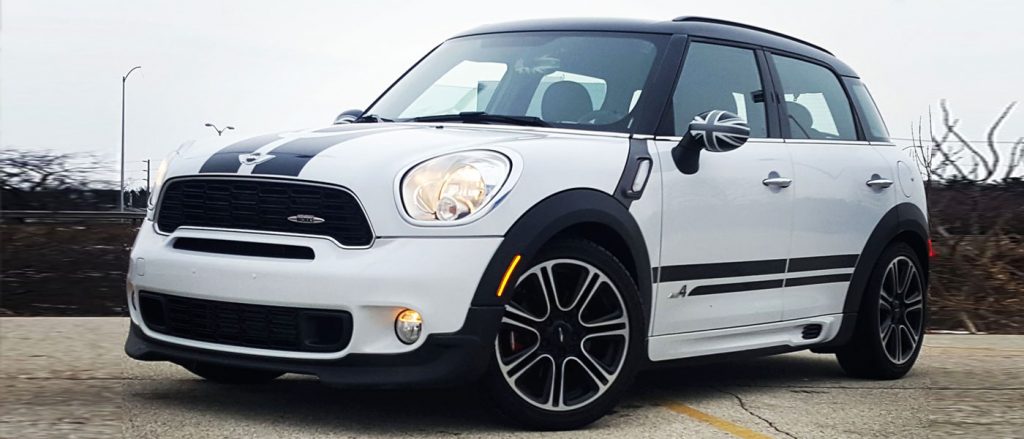
  5. Mini Countryman (2014–2017)
    • Compact SUV with good crash ratings
    • Affordable used options starting around $4,600
    • Offers a fun driving experience while remaining practical caroutlay.comcaroutlay.com

Budget-Friendly Options Under $8,000

For families on a tighter budget, consider:

  • Older Toyota Corolla or Honda Civic models
  • Mazda 3 from earlier model years
  • Minivans like the Honda Odyssey or Toyota Sienna, which are surprisingly safe and practical for teens CarGurusCarGurus

Final Tips

  • Check vehicle history reports and maintenance records before purchase.
  • Prioritize moderate engine power to reduce accident risk and insurance costs.
  • Consider sedans or hatchbacks over coupes or sports cars for better safety and practicality.
  • Use online tools to estimate five-year ownership costs, including insurance, fuel, and maintenance caroutlay.comcaroutlay.com.
    By focusing on safety, reliability, and affordability, these used cars provide a balanced choice for teen drivers while keeping long-term costs manageable.

With decades of combined experience analyzing vehicle pricing, dealership practices, and consumer buying behavior, Ray and Zach Shefska translate complex automotive data into practical advice that helps families purchase safer vehicles while avoiding costly mistakes. Their insights complement Consumer Reports’ safety testing with real-world market expertise, giving buyers the information they need to make smarter, more confident purchasing decisions.

For the Silo, Marsha Zorn and Stephanie Fisher.

Who Are CarEdge?


CarEdge is a leading car consumer advocacy platform dedicated to empowering car shoppers to make confident, informed and financially savvy decisions. With trusted resources that includes AI agent shoppers, a Car Dealer Transparency Index, and hundreds of guides and videos on YouTube, CarEdge is redefining transparency, fairness and value in the automotive industry.

Source: Consumer Reports

4 Canadian-Built Classic Cars That Are Unusual and Attainable

A charming read about quirky and rare Canadian built cars from our friends at Hagerty

Less than a week ago, we all celebrated Canada Day, aka Fête du Canada, the anniversary of Canadian Confederation that occurred on July 1, 1867. It’s a day to “reflect on what it means to be Canadian, to share what makes us proud,” and it “highlights the richness of our land, our diversity, our culture, our contributions, but above all, our people,” according to our government’s official website. It’s a glorious day for Canada, and though we are a little tardy on the dateline, we’re looking at some of the popular classic vehicles to come from the Great White North, and how much they’re worth in today’s market.

Starting in the early twentieth century, the big Detroit automakers south of the border built factories in Canada to sell to Canadians, rather than ship U.S.-built vehicles north.

This was because of tariffs between the two countries, and while many Canadian-built Ford, GM and Chrysler products were similar to the ones driven by Americans, others were rather uniquely Canadian. There were Meteors (Ford), McLaughlin Buicks, Fargo (Dodge) trucks, and Plymouths trimmed out as Dodges, and Acadians and Beaumonts (both GM). After the Canada-United States Automotive Products Agreement in 1965, though, cross-border trade loosened up. The specifically Canadian models and marques gradually disappeared, although promising independents like the Bricklin SV-1 or Manic GT continued to pop up. Today they’re all interesting, somewhat obscure classics. Below are the Canadian vehicles we most often see on the market.

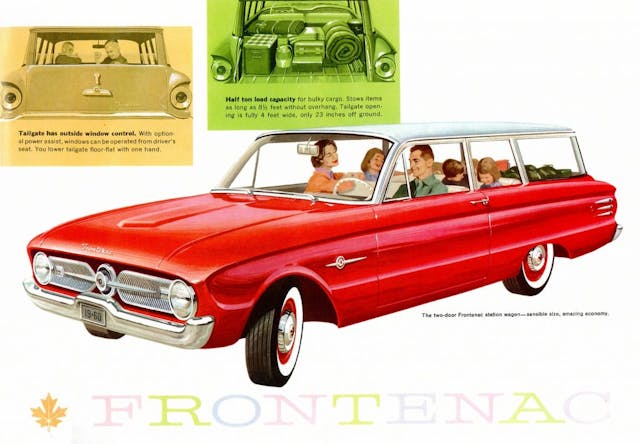
1960 Frontenac

Canadian Frontenac Car ad
Flickr/Michael

When Ford introduced its compact Falcon in 1960, Ford Canada brought out an all-new marque to bring the compact party up north. They called it the Frontenac, short for a 17th-century Governor General of New France (I guess Louis de Buade, Comte de Frontenac et de Palluau was too long to fit on a badge) and built it in Oakville, Ontario. Frontenacs were essentially a mildly restyled Falcon, and were available in two- and four-door sedan body styles as well as two- and four-door wagons. All were powered by the 144-cubic inch Thriftpower straight-six. Ford Canada sold over 9500 Frontenacs for 1960 but discontinued the brand after only one year, replacing it with the Comet for 1961.

Frontenac prices differ by body style, ranging from $13,100 (CAD 17,900) for a four-door wagon at the bottom to $23,000 (CAD 31,400) for a two-door wagon at the top.

1948–52 Mercury M-Series Pickups

1951 Mercury Pickup front
Mecum

To American eyes, pickup trucks with a Mercury badge seem a little Twilight Zone, like a budget city car sporting a Rolls-Royce grille or Kia making a mid-engine exotic. But from the postwar years up until the late 1960s, Mercury M-Series pickups were a very real thing for Canadian buyers.

At the time, many parts of the country didn’t have a Lincoln/Mercury dealership and a Ford dealership, so the Mercury M-Series gave truck-buying customers an option even if there was no Ford store around. The first-generation 1948-52 M-Series followed the same format as the first-generation Ford F-Series. Mercury M-Series trucks came in most of the configurations available on the Ford versions down south, but with fewer engine options. Currently, we only have the 1/2-ton, 239-cid eight-cylinder M-Series in the Hagerty Price Guide, and their #2 values range from $44,600 (CAD 60,900) for the earlier 1948-50 M-47 to $40,800 (CAD 55,700) for the 1951-52 M-1 model. Condition #3 values currently sit in the mid-$20K (CAD 27,300) range.

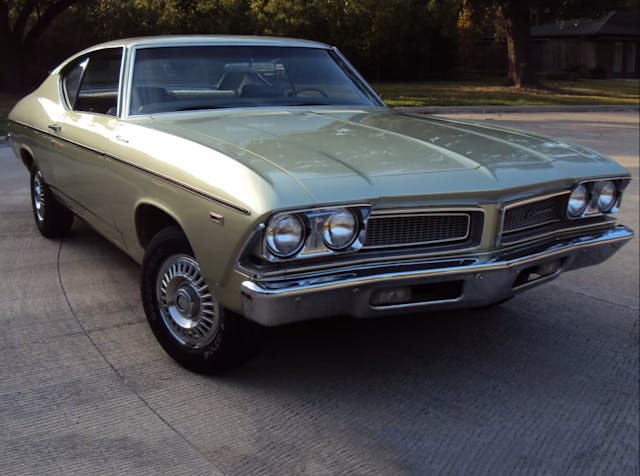
1968–69 Beaumont

1969 Beaumont front
Mecum

Of all the special Canadian market versions of Big Three vehicles, General Motors’ Acadian and Beaumont lines were arguably the most distinctive.

In 1962 GM launched Acadian, referring to the 17th- and 18th-century French settlers of eastern Canada, as its own brand. Its first model was based on the Chevy II/Nova compact but with different grille and trim, and different models included the mid-tier Acadian Invader and the range-topping Acadian Beaumont. In 1964 when the mid-size Chevelle came out, then Acadian added a Chevelle-based model to the lineup, recycling the Beaumont name. Then, in 1966, Beaumont became its own brand. When the second-generation Chevelle arrived for 1968, Beaumont followed suit. This was short-lived, however, as GM Canada axed the Beaumont brand after 1969 in favor of the Americanized Chevelle and Pontiac LeMans.

Built in Ontario and sold at Pontiac/Buick dealers, the 1968-69 Beaumont looks like a Chevelle with a few scoops of Pontiac mixed in, and generally followed the Chevelle in terms of trim and powertrains, which included 283, 307, 327, 350 and 396 cid engines as well as three- and four-speed manuals or Powerglide and Turbo Hydramatic automatics. Equivalent to Chevrolet’s Super Sport (SS) trim on the Chevelle was Beaumont’s Sport Deluxe (SD).

The average condition #2 value for a 1968-69 Beaumont is $24,200 (CAD 33,000) but, like their Chevrolet-badged cross-border cousins, prices vary widely depending on drivetrain and body style. The cheapest V-8 model in the Hagerty Price Guide is the 1968 307/200 hp sedan with a #2 value of $9600, while the most expensive is the extremely rare 396/350 hp L34-powered convertible with a #2 value of $81,800 (CAD 111,700).

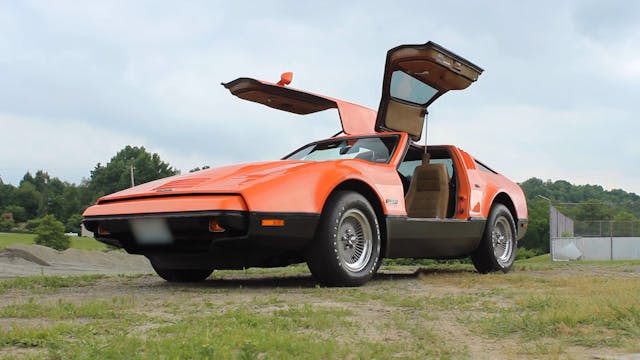
1974–75 Bricklin SV-1

bricklin front three-quarter doors raised
Joe Ligo

Seven years before John DeLorean came out with his own ambitious but under-powered, ill-fated gullwing sports car, Malcolm Bricklin built one in New Brunswick, Canada. Bricklin, the serial automotive entrepreneur who brought Subaru to North America, imported Fiat sports cars under the Bertone and Pininfarina brands and was the man behind the Yugo, envisioned a small and reasonably priced sports car with gullwing doors when planning his next business venture in the early 1970s. As the concept developed, Bricklin snagged a few million dollars in funding from the government of New Brunswick and set up two facilities in Saint John and Minto. The company officially unveiled the production version of the Bricklin SV-1 at the Four Seasons in New York in 1974.

By its looks, one might think that SV-1 stands for “Sports Velocity-1” or something wild like that, but it actually stands for “Safety Vehicle”.

The frame of the Bricklin includes an integrated roll cage, and each bumper is designed to absorb 5-mph impacts, both forward-thinking steps at the time. The bodywork is color-impregnated (five shades available) acrylic resin bonded to fiberglass, and the famous doors raise via hydraulic cylinders in about 12 seconds.

When Bricklin went looking for a parts bin to raid, it settled on AMC, so the SV-1 borrows its suspension from the Hornet, and early SV-1s have AMC’s 360-cubic inch four-barrel V-8. Later ones got Ford’s two-barrel 351 Windsor. Most SV-1s got a three-speed automatic, but a few buyers selected a Borg-Warner four-speed manual. In the end, Bricklin suffered the same fate as a lot of upstart carmakers, including the later DeLorean, minus the sting operation and tired Back to the Future redemption arc. There were quality control problems and supplier hold-ups, while a ballooning price and Malaise Era V-8 performance in a nearly 3500-pound car made the SV-1 difficult to sell. Only about 3000 were built.

1974-75 Bricklin SV-1, condition #2 (“excellent”) values

Canada’s sports car has never been particularly expensive, but some strong sales for clean cars have seen prices surge surprisingly to a current median condition #2 value of $38,000 (CAD 51,900).

The current #3 value sits at $23,000 (CAD 31,400) and the #4 value at $9,000 (CAD 12,300). The later Ford-powered cars would theoretically be easier to service, but the 351 was rated with lower grunt than the AMC 360 (175 hp vs. 220), so the two carry similar values. Add a few grand for the four-speed.

Hagerty maintains a Canadian version of our popular online valuation tool, complete with prices shown in Canadian dollars. It can be accessed here.