Tag Archives: gullwing doors

Blue Chip vs. New Chip: Modern Equivalents of Classic Favorites

Recently, much of the value growth in collector cars is coming from newer vehicles. While cars of the ’90s and 2000s may seem wildly different from vintage cars, some of these newer collectibles actually share many attributes with “blue chip” classics we know and love. Learn more below via this article from our friends at Hagerty.

Note prices below are in USD.

In the investment world, the term “blue chip” applies to companies with good reputations and solid financials, as well as a track record of stability and long-term growth. Dependable places to park money, in other words. In the car world, blue chip has come to signify something slightly different. Essentially, they’re high-end vintage cars which, like their stock market equivalents, are well-known and have a long-term record of desirability and growth. We define Blue Chip Index as “the automotive A-list… a stock market-style index that averages the values of 25 of the most sought-after collectible automobiles of the postwar era.”

Recently, though, a lot of the value growth in collector cars is in newer vehicles, stuff from the very end of the 20th century and the very beginning of the 21st. Many of them share several attributes with traditional blue chip classics; they’re just newer. So, here’s a hand picked handful of these “new chip” collector cars pitted them against classic counterparts.

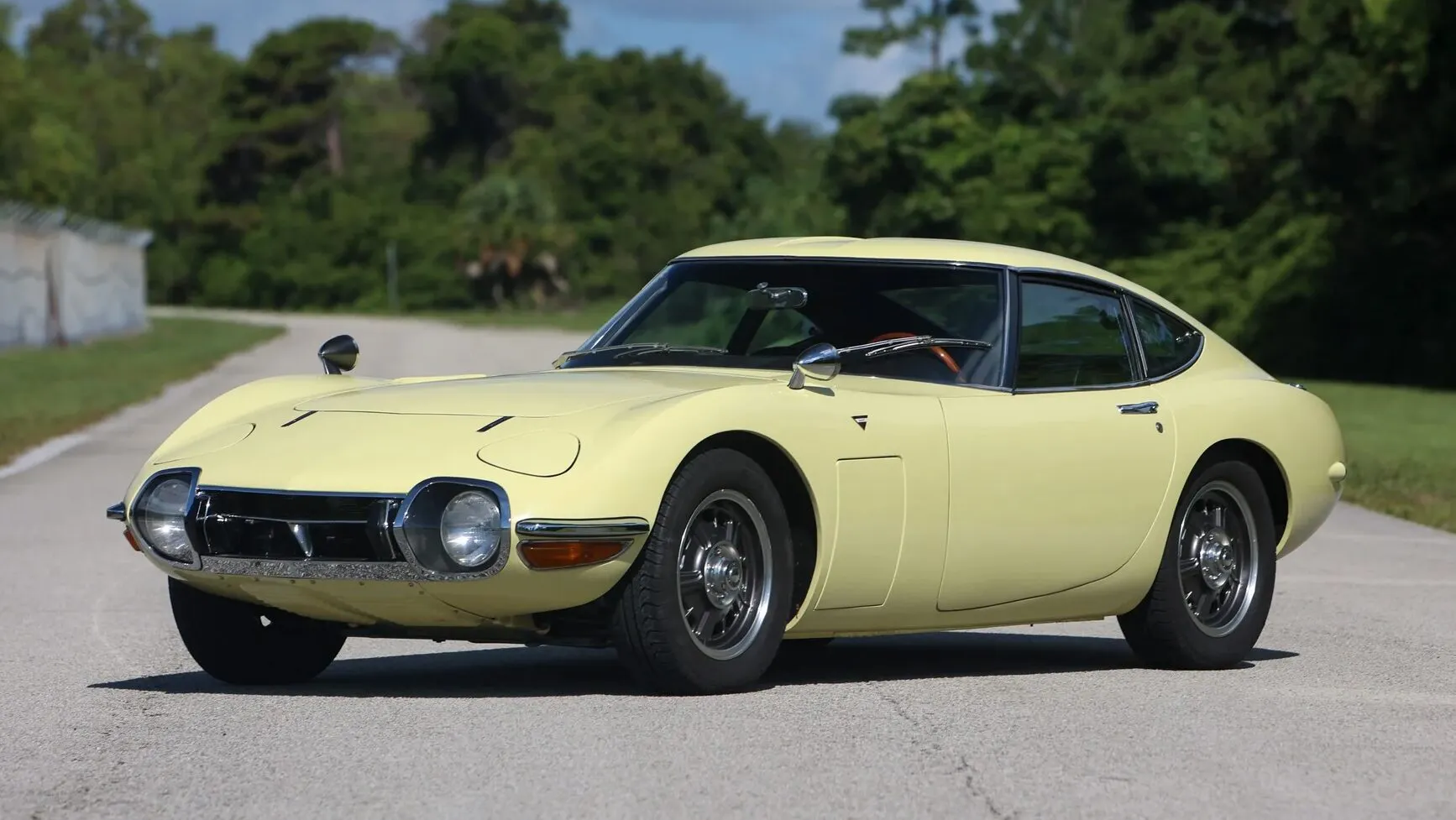
Blue Chip: Toyota 2000GT
New Chip: Lexus LFA
Toyota GT front three quarter
Broad Arrow

These high-revving coupes both represent the peak of Toyota in their respective eras, and both were coincidentally created with help from Yamaha. Both were extremely expensive when they were new and both had a very low production run—just 351 units for the 2000GT, 500 units for the LFA.

The 1967–70 Toyota 2000GT was also the first Japanese vehicle to sell for more than $1M at auction (in 2013), and a 2000GT race car is the only Japanese car to top $2M at auction. In the world of vintage Japanese cars, it’s king, and in our price guide it currently carries a condition #2 (excellent) value of $1M even.

The 2011–12 LFA is the clearest modern equivalent to its Toyota-badged predecessor. The LFA’s ascent to the seven-figure club happened later, during the first part of the 2020s, but today it carries somewhat similar values. For a base version of the LFA, the current #2 value is $775K. For cars with the track-tuned Nürburgring Package, it’s $1.65M.

Hagerty MarketplaceBrowse all auctions

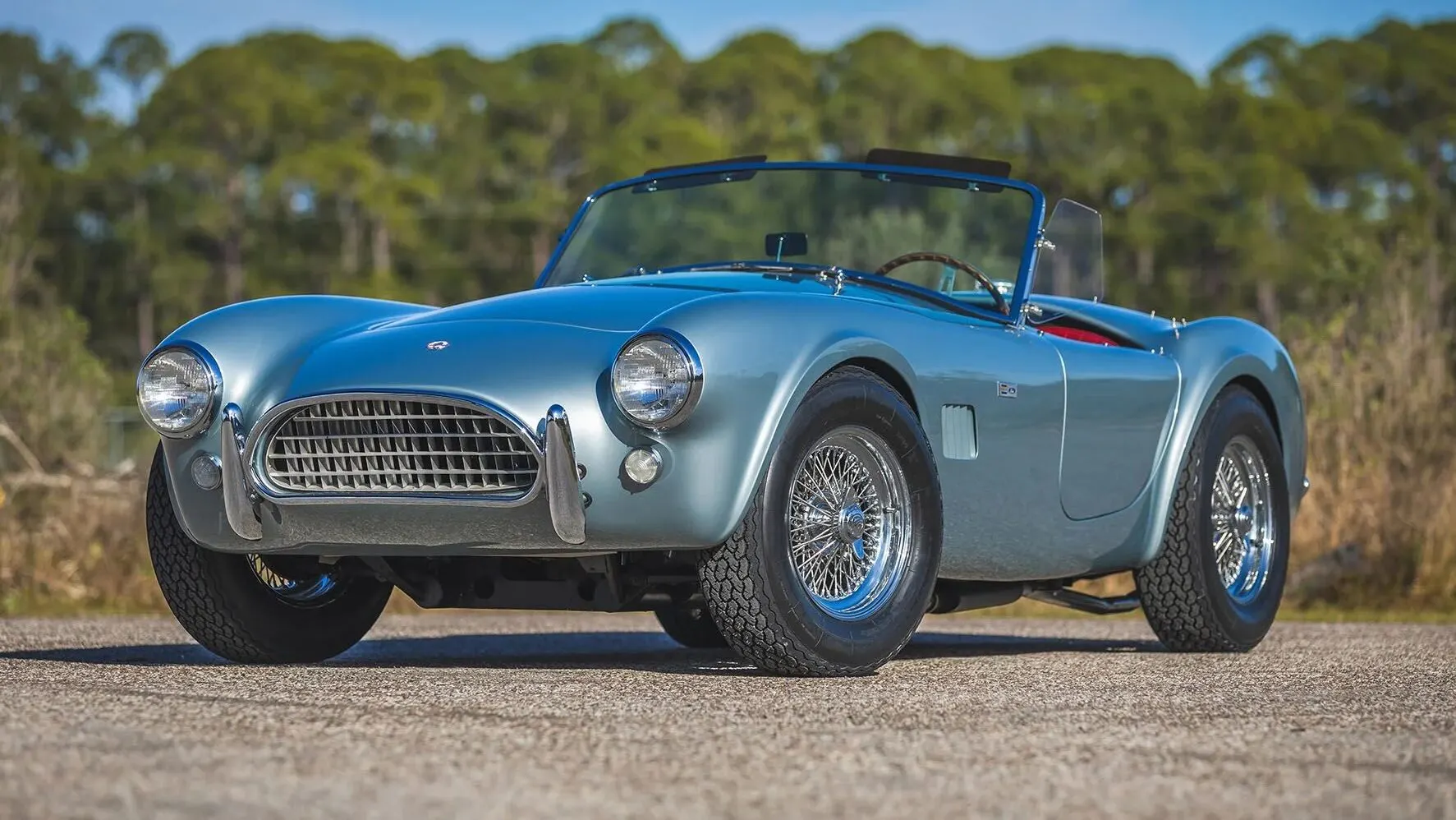
Blue Chip: Shelby Cobra
New Chip: Ford GT
1964-shelby-289-cobra front three quarter
Broad Arrow

Both the 1962–67 Shelby Cobra and 2005–06 Ford GT are low-ish-production, high-performance, mostly uncompromising cars from Ford’s vast performance portfolio. The Cobras famously took the fight to Corvette and Ferrari on the race circuits of the 1960s, and Cobras for both road and track have been among the most valuable vintage sports cars money can buy for several decades now. With about 1000 of all types built, Cobras are also rare, but common enough that they make regular appearances on the market. Condition #2 values vary depending on engine and configuration, but range from just under $1M for early 260- and 289-powered cars up to the mid- to high-$2M range for the fire-breathing 427 Competition and S/C versions.

The Ford GT is an homage to the GT40 racers that won Le Mans 40 years prior, but in terms of production and price it arguably has more in common with the Cobra. Ford built 4038 examples of the GT, so they come to market regularly, and condition #2 values range from $471K for a base model to $622K for the blue-and-orange Heritage Edition. Unlike the 2017–22 Ford GT, the 2005–06 cars have also consistently risen in value for many years, so the “blue chip” label seems appropriate.

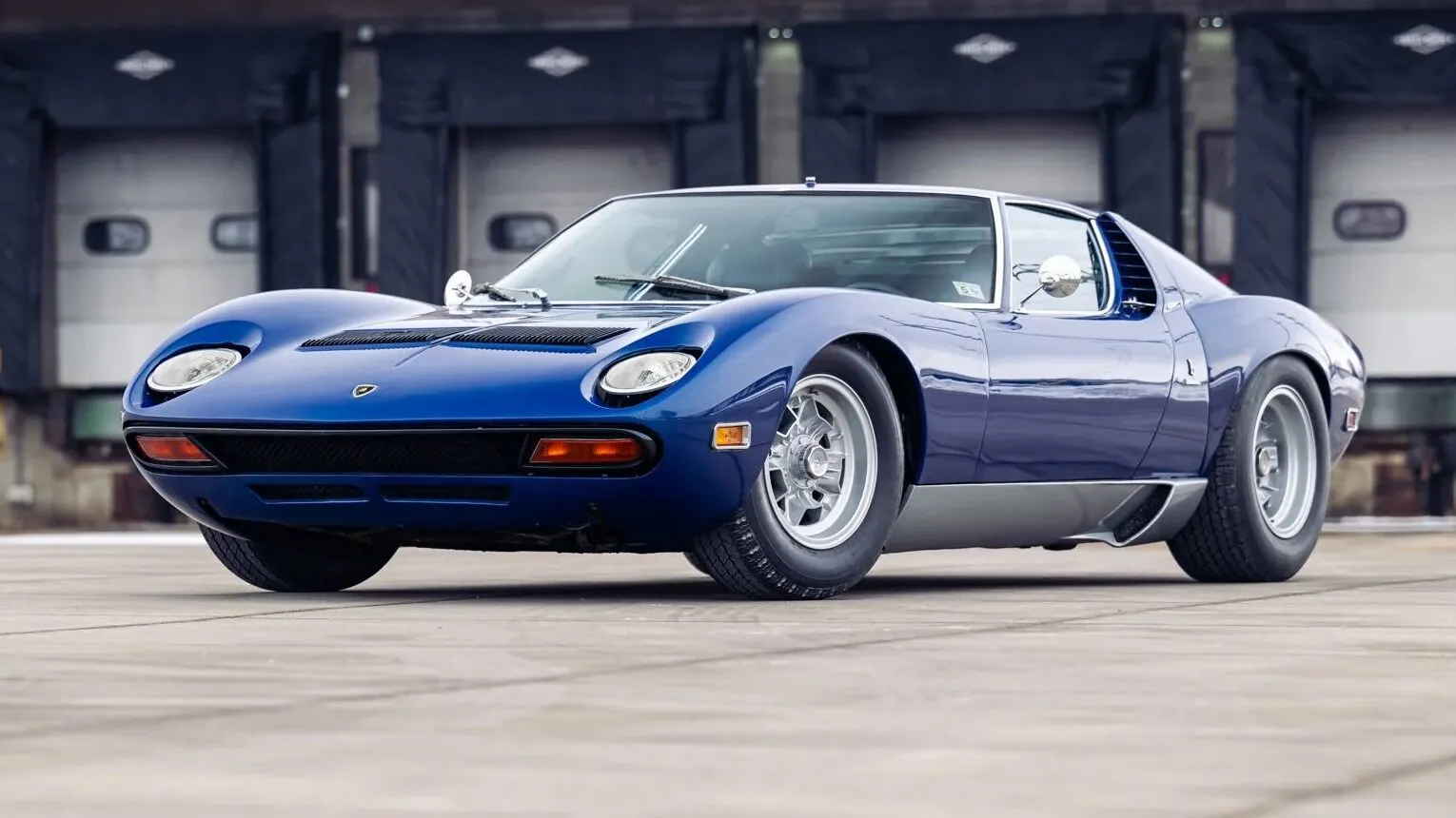
Blue Chip: Lamborghini Miura
New Chip: Bugatti Veyron
1972-lamborghini-miura-p400-sv front three quarter
Broad Arrow

The Miura was a genre-defining supercar, creating the template for high-powered, mid-engine, wild-looking Italian exotics when it debuted 60 years ago. Lamborghini built 762 Miuras from 1966 to 1972, and the current median condition #2 price for one is $2.9M, nearly triple what it was a decade ago.

What the Miura did for supercars in the 1960s and ’70s, the 2006–15 Veyron arguably did for hypercars in the 2000s. Like the Miura, it was a top performer with a top-shelf price tag in its day, and although both cars were extremely fast, they were never meant for the race track. The Veyron has a similar, sub-1000-unit production run (450 in the Bugatti’s case), as well as similar values, with #2 numbers ranging from $1.65M to $2.35M.

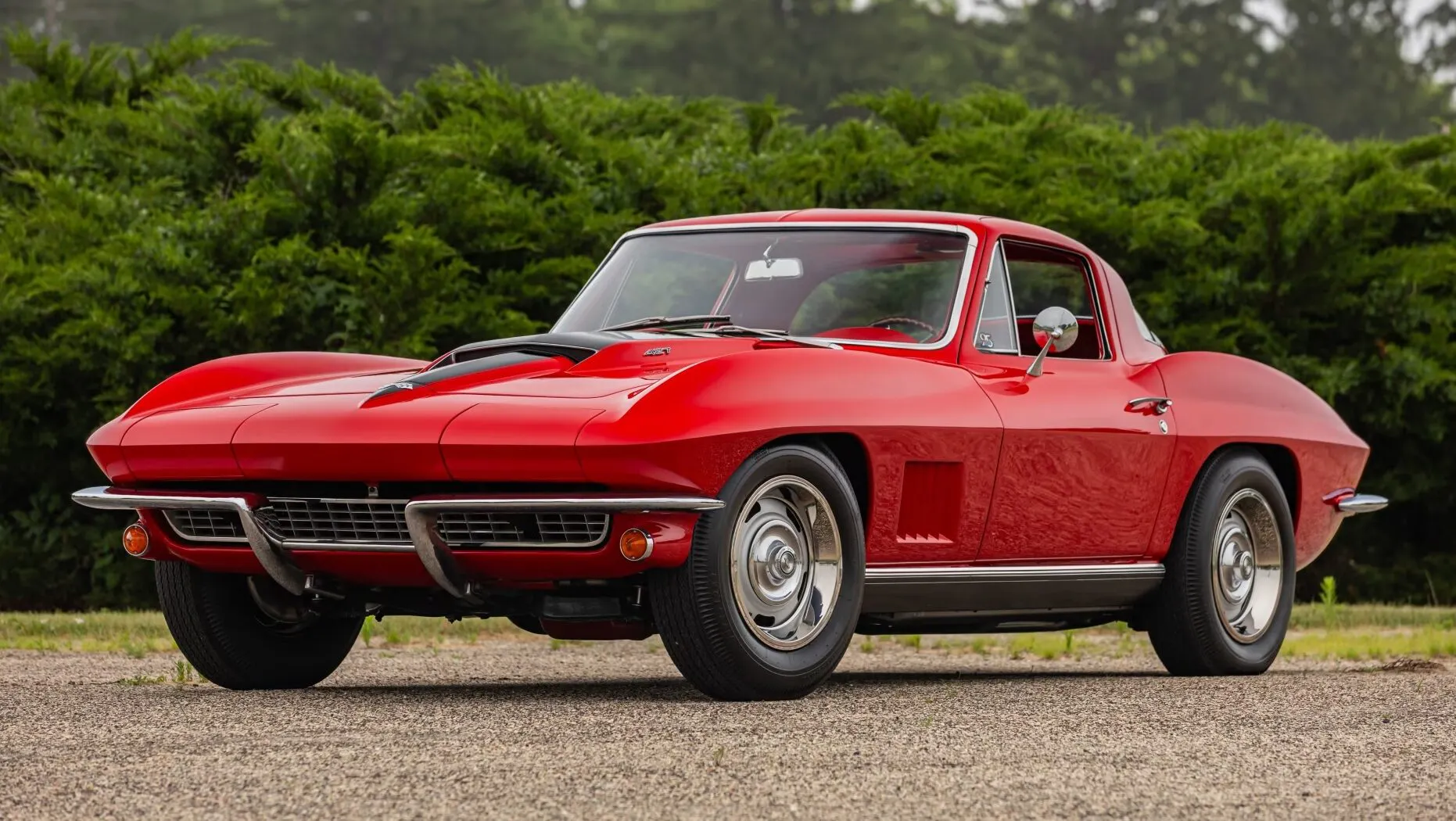
Blue Chip: Corvette L88
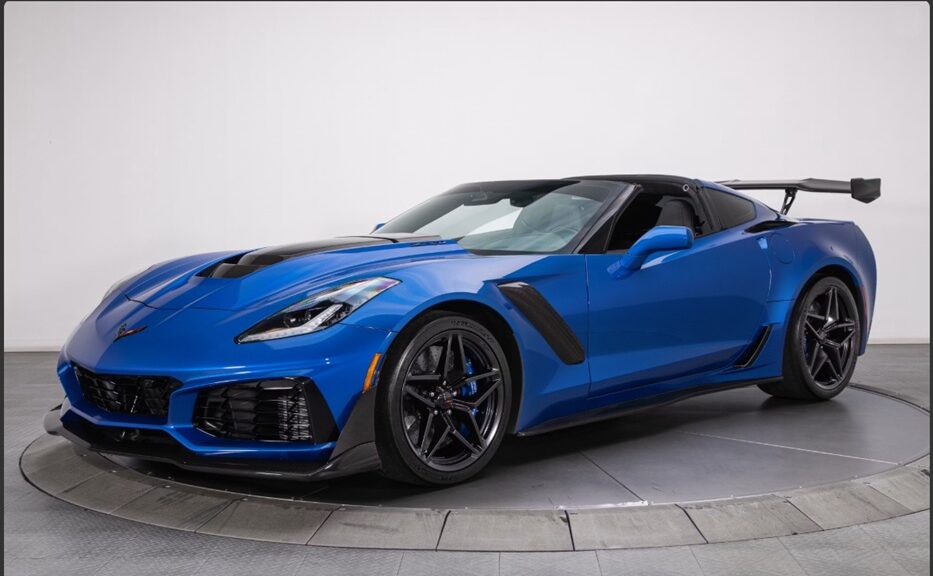
New Chip: Corvette C7 ZR1
Red Corvette L88 front three quarter
Mecum

Offered for three very short years, from 1967 to ’69, the extremely expensive and never-advertised L88 package represented the pinnacle of what a Corvette could be in the ’60s, offering a race-tuned 427 and heavy-duty everything. Today, values reflect that. The 1967 model (20 built) is the most expensive production Corvette of all, with a #2 value of $2.2M for coupes and $2M for convertibles. For the 1968 (80 built), it’s $444K for coupes and $509K for convertibles. And for the ’69 (116 built), it’s $442K for coupes and $549K for convertibles.

The C7 ZR1 doesn’t have the same direct racing connection as the old L88, but it is another rare (2953 built), short-lived model that was also peak Corvette when it was built, thanks in large part to its 755-horsepower supercharged LT5. It is also arguably peak front-engine Corvette, full stop, as it was the C7’s sendoff and built only for the 2019 model year, before the mid-engine C8 debuted for 2020. It’s certainly the fastest front-engine production Corvette. And, like the rest of the C7 lineup, was the last Vette available with a manual. Condition #2 values for the 2019-only ZR1 are $227K for convertibles, and $220K for coupes.

Blue Chip: Mercedes-Benz 300SL
New Chip: Porsche 911 GT3 RS (997)
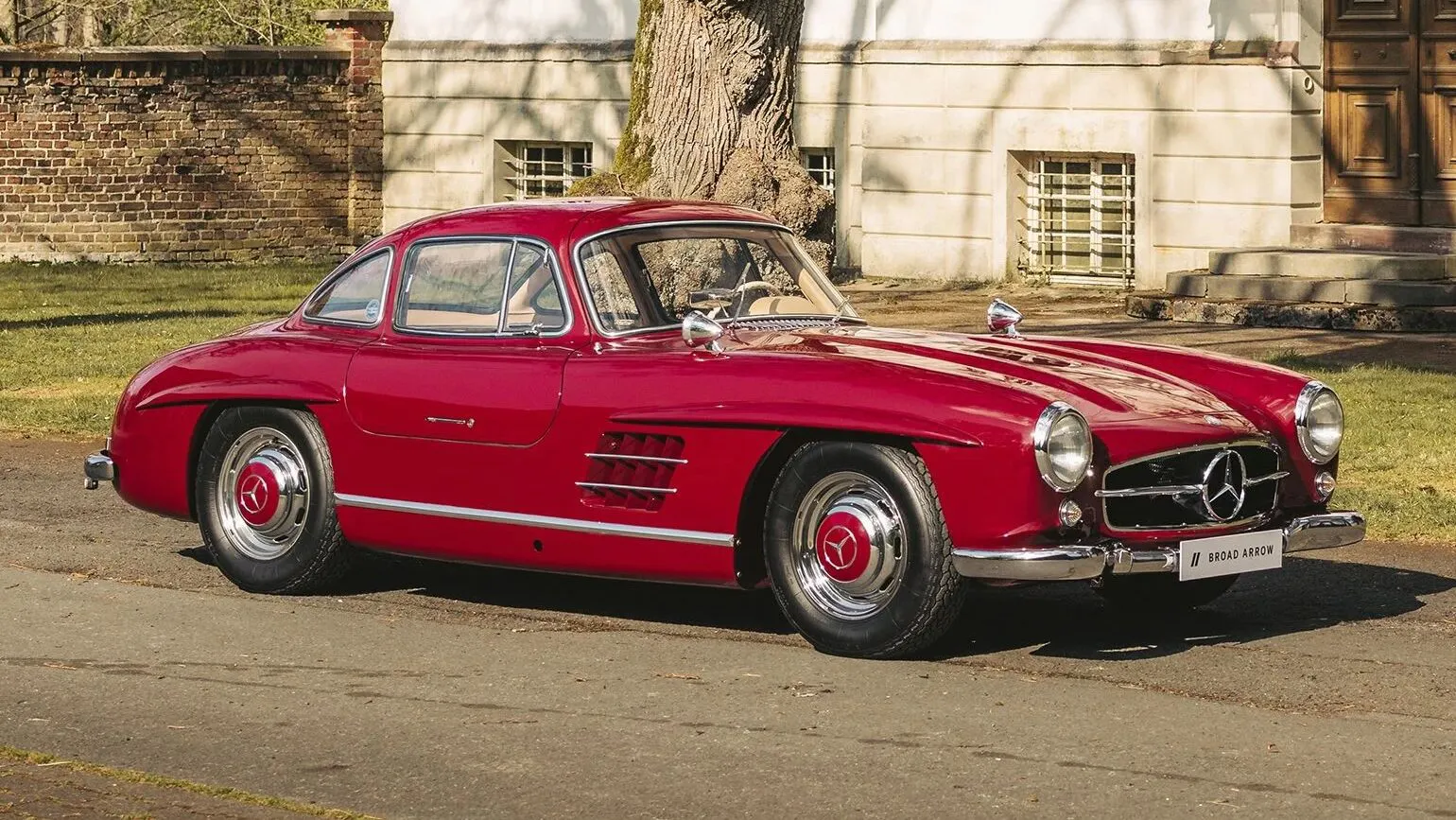
1955-mercedes-benz-300-sl-gullwing-coupe
Broad Arrow

The 300SL was among the fastest things on four wheels in the 1950s and early ’60s, as well as one of the most expensive. But with more than 3000 examples of all types built from 1954 to ’64, it’s also not particularly hard to find a 300SL for sale. In fact, the 300SL occupies a unique place in the classic car market in that no other vehicles in the $1M-plus segment come up for sale so regularly, so 300SLs can be a useful barometer for what’s going on at the top end of the market. We even created a 300SL Index to provide insight about the market as a whole. Depending on year and body style, current #2 values for these German favorites range from $1.35M to $1.85M.

A more modern German favorite is Porsche’s hallmark track-oriented 911, the GT3.

Specifically, the GT3 built on the 997 platform from 2007 to 2012. The second-generation GT3 continued the formula of less weight, sharpened controls, naturally aspirated engine, rear-wheel drive, and manual gearbox. For 2010, the engine grew from 3.6 to 3.8 liters and other upgrades were added in the “997.2” version (earlier cars are known as “997.1”). There were even quicker “RS” versions of both, and in 2011 Porsche introduced a GT3 RS 4.0, with nearly 500 hp and a production run of just 600. More than 8000 of these 997 GT3s of all types were built, but less than half of them were the RS and RS 4.0 models, which currently carry condition #2 values of $305K (997.1 GT3 RS), $350K (997.2 GT3 RS), and $825K (GT3 RS 4.0).

Blue Chip: Plymouth Hemi Cuda
New Chip: Dodge Challenger Demon 170
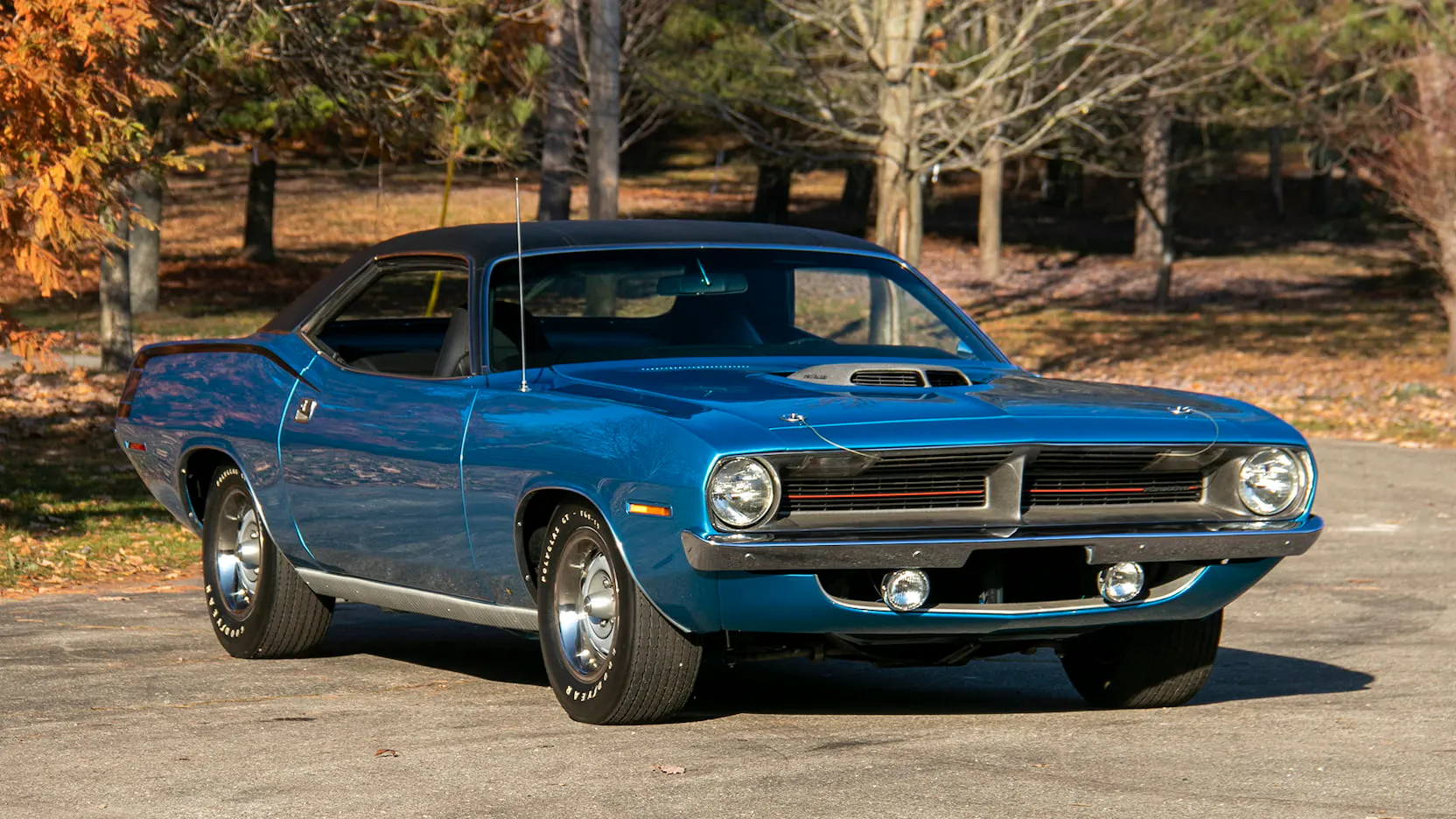
Plymouth Hemi Cuda front three quarter
Mecum

No offense to the Bowtie and the Blue Oval, but “Hemi” is the first name in high-displacement American muscle cars from the late 1960s to early ’70s. The 1970–71 Hemi Cuda was the last gasp of the original 426 Street Hemi, and the last of unrestricted Mopar muscle. By muscle car standards, Hemi Cudas are also quite scarce, with just 666 built in 1970 and 114 in ’71, so values are naturally top shelf by muscle car standards—especially for the ultra-rare convertibles, with barely two dozen built over two years and #2 values of $2.5M (1970) and $3.05M (’71). Coupes are closer to earth, but still expensive at $245K for the 1970 and $376K for the ’71.

The Challenger Demon 170 occupies a similar position in Mopar history, a little over 50 years later. This was the last gasp of the Hellcat era, and in the 2008–23 Challenger’s impressive production run, the last example built was the 2023 Demon 170. Its 1025 hp and 945 lb-ft are shocking numbers for a mass-produced Dodge, though production was relatively low, at 3000 units (plus 300 for Canada). Prices started at roughly $100K, but the collector car market never slept on these, and the #2 value is already up to $141K.

For the Silo, Jarrod Barker.

4 Canadian-Built Classic Cars That Are Unusual and Attainable

A charming read about quirky and rare Canadian built cars from our friends at Hagerty

Less than a week ago, we all celebrated Canada Day, aka Fête du Canada, the anniversary of Canadian Confederation that occurred on July 1, 1867. It’s a day to “reflect on what it means to be Canadian, to share what makes us proud,” and it “highlights the richness of our land, our diversity, our culture, our contributions, but above all, our people,” according to our government’s official website. It’s a glorious day for Canada, and though we are a little tardy on the dateline, we’re looking at some of the popular classic vehicles to come from the Great White North, and how much they’re worth in today’s market.

Starting in the early twentieth century, the big Detroit automakers south of the border built factories in Canada to sell to Canadians, rather than ship U.S.-built vehicles north.

This was because of tariffs between the two countries, and while many Canadian-built Ford, GM and Chrysler products were similar to the ones driven by Americans, others were rather uniquely Canadian. There were Meteors (Ford), McLaughlin Buicks, Fargo (Dodge) trucks, and Plymouths trimmed out as Dodges, and Acadians and Beaumonts (both GM). After the Canada-United States Automotive Products Agreement in 1965, though, cross-border trade loosened up. The specifically Canadian models and marques gradually disappeared, although promising independents like the Bricklin SV-1 or Manic GT continued to pop up. Today they’re all interesting, somewhat obscure classics. Below are the Canadian vehicles we most often see on the market.

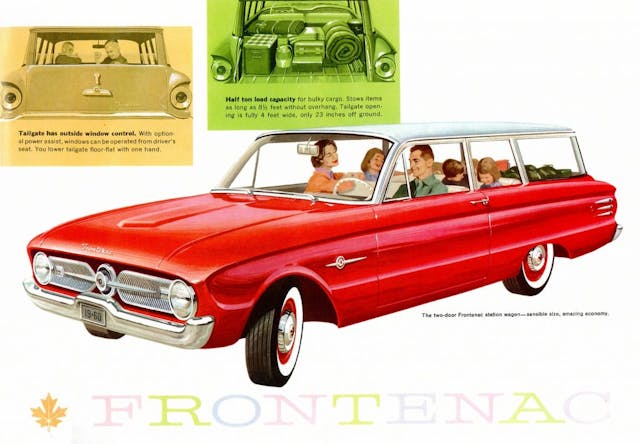
1960 Frontenac

Canadian Frontenac Car ad
Flickr/Michael

When Ford introduced its compact Falcon in 1960, Ford Canada brought out an all-new marque to bring the compact party up north. They called it the Frontenac, short for a 17th-century Governor General of New France (I guess Louis de Buade, Comte de Frontenac et de Palluau was too long to fit on a badge) and built it in Oakville, Ontario. Frontenacs were essentially a mildly restyled Falcon, and were available in two- and four-door sedan body styles as well as two- and four-door wagons. All were powered by the 144-cubic inch Thriftpower straight-six. Ford Canada sold over 9500 Frontenacs for 1960 but discontinued the brand after only one year, replacing it with the Comet for 1961.

Frontenac prices differ by body style, ranging from $13,100 (CAD 17,900) for a four-door wagon at the bottom to $23,000 (CAD 31,400) for a two-door wagon at the top.

1948–52 Mercury M-Series Pickups

1951 Mercury Pickup front
Mecum

To American eyes, pickup trucks with a Mercury badge seem a little Twilight Zone, like a budget city car sporting a Rolls-Royce grille or Kia making a mid-engine exotic. But from the postwar years up until the late 1960s, Mercury M-Series pickups were a very real thing for Canadian buyers.

At the time, many parts of the country didn’t have a Lincoln/Mercury dealership and a Ford dealership, so the Mercury M-Series gave truck-buying customers an option even if there was no Ford store around. The first-generation 1948-52 M-Series followed the same format as the first-generation Ford F-Series. Mercury M-Series trucks came in most of the configurations available on the Ford versions down south, but with fewer engine options. Currently, we only have the 1/2-ton, 239-cid eight-cylinder M-Series in the Hagerty Price Guide, and their #2 values range from $44,600 (CAD 60,900) for the earlier 1948-50 M-47 to $40,800 (CAD 55,700) for the 1951-52 M-1 model. Condition #3 values currently sit in the mid-$20K (CAD 27,300) range.

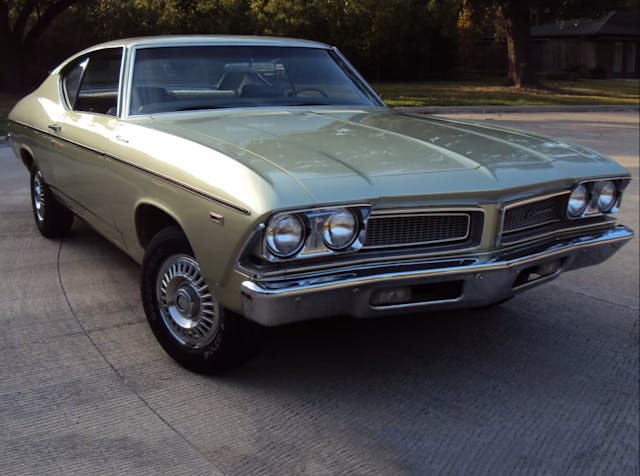
1968–69 Beaumont

1969 Beaumont front
Mecum

Of all the special Canadian market versions of Big Three vehicles, General Motors’ Acadian and Beaumont lines were arguably the most distinctive.

In 1962 GM launched Acadian, referring to the 17th- and 18th-century French settlers of eastern Canada, as its own brand. Its first model was based on the Chevy II/Nova compact but with different grille and trim, and different models included the mid-tier Acadian Invader and the range-topping Acadian Beaumont. In 1964 when the mid-size Chevelle came out, then Acadian added a Chevelle-based model to the lineup, recycling the Beaumont name. Then, in 1966, Beaumont became its own brand. When the second-generation Chevelle arrived for 1968, Beaumont followed suit. This was short-lived, however, as GM Canada axed the Beaumont brand after 1969 in favor of the Americanized Chevelle and Pontiac LeMans.

Built in Ontario and sold at Pontiac/Buick dealers, the 1968-69 Beaumont looks like a Chevelle with a few scoops of Pontiac mixed in, and generally followed the Chevelle in terms of trim and powertrains, which included 283, 307, 327, 350 and 396 cid engines as well as three- and four-speed manuals or Powerglide and Turbo Hydramatic automatics. Equivalent to Chevrolet’s Super Sport (SS) trim on the Chevelle was Beaumont’s Sport Deluxe (SD).

The average condition #2 value for a 1968-69 Beaumont is $24,200 (CAD 33,000) but, like their Chevrolet-badged cross-border cousins, prices vary widely depending on drivetrain and body style. The cheapest V-8 model in the Hagerty Price Guide is the 1968 307/200 hp sedan with a #2 value of $9600, while the most expensive is the extremely rare 396/350 hp L34-powered convertible with a #2 value of $81,800 (CAD 111,700).

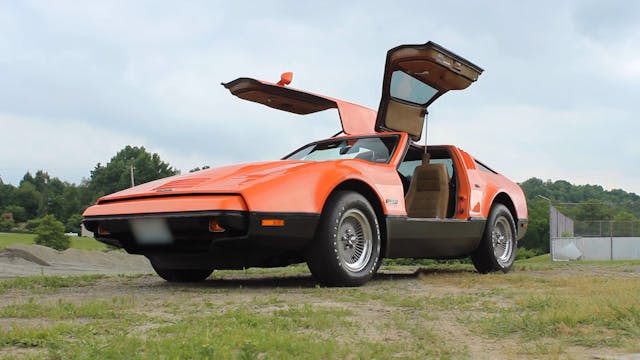
1974–75 Bricklin SV-1

bricklin front three-quarter doors raised
Joe Ligo

Seven years before John DeLorean came out with his own ambitious but under-powered, ill-fated gullwing sports car, Malcolm Bricklin built one in New Brunswick, Canada. Bricklin, the serial automotive entrepreneur who brought Subaru to North America, imported Fiat sports cars under the Bertone and Pininfarina brands and was the man behind the Yugo, envisioned a small and reasonably priced sports car with gullwing doors when planning his next business venture in the early 1970s. As the concept developed, Bricklin snagged a few million dollars in funding from the government of New Brunswick and set up two facilities in Saint John and Minto. The company officially unveiled the production version of the Bricklin SV-1 at the Four Seasons in New York in 1974.

By its looks, one might think that SV-1 stands for “Sports Velocity-1” or something wild like that, but it actually stands for “Safety Vehicle”.

The frame of the Bricklin includes an integrated roll cage, and each bumper is designed to absorb 5-mph impacts, both forward-thinking steps at the time. The bodywork is color-impregnated (five shades available) acrylic resin bonded to fiberglass, and the famous doors raise via hydraulic cylinders in about 12 seconds.

When Bricklin went looking for a parts bin to raid, it settled on AMC, so the SV-1 borrows its suspension from the Hornet, and early SV-1s have AMC’s 360-cubic inch four-barrel V-8. Later ones got Ford’s two-barrel 351 Windsor. Most SV-1s got a three-speed automatic, but a few buyers selected a Borg-Warner four-speed manual. In the end, Bricklin suffered the same fate as a lot of upstart carmakers, including the later DeLorean, minus the sting operation and tired Back to the Future redemption arc. There were quality control problems and supplier hold-ups, while a ballooning price and Malaise Era V-8 performance in a nearly 3500-pound car made the SV-1 difficult to sell. Only about 3000 were built.

1974-75 Bricklin SV-1, condition #2 (“excellent”) values

Canada’s sports car has never been particularly expensive, but some strong sales for clean cars have seen prices surge surprisingly to a current median condition #2 value of $38,000 (CAD 51,900).

The current #3 value sits at $23,000 (CAD 31,400) and the #4 value at $9,000 (CAD 12,300). The later Ford-powered cars would theoretically be easier to service, but the 351 was rated with lower grunt than the AMC 360 (175 hp vs. 220), so the two carry similar values. Add a few grand for the four-speed.

Hagerty maintains a Canadian version of our popular online valuation tool, complete with prices shown in Canadian dollars. It can be accessed here.