This article focuses on the challenges for authors of dealing with an editor’s and reviewers’ comments within the manuscript publication process. The paper commences with an overview of the peer review process. The nature and style of comments from editors and reviewers is outlined and the inherent meaning demystified. Using a wide range of anonymised examples, sample comments are categorised according to their ease of being addressed and whether or not the author agrees with them and the need to respond highlighted. Advice is offered regarding the construction of a response document, outlining how editor and reviewer comments have been addressed in the revised manuscript and an example comprising both editor and reviewer comments and author responses provided.
Category Archives: Culture
More dogma in North American Archaeology ? Euro-style tools being discounted.
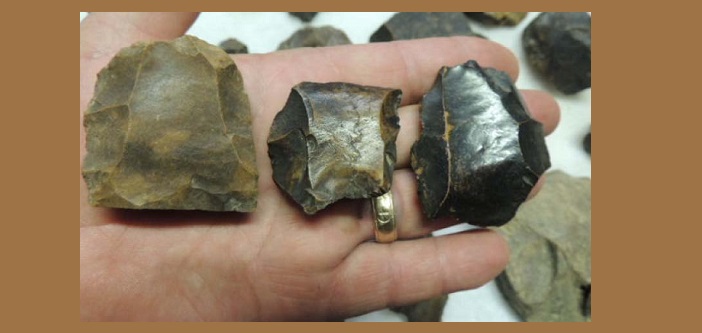
Levallois lithic technology in the USA? The cores tell the story by Richard Doninger EDS. DISCLAIMER- We reproduce here a portion of our disclaimer from Doninger’s PCN Part1 article. Doninger’s collection is controversial and may indeed be a mix of genuine artifacts and geofacts.
One of the primary reasons to look at his material is the story he tells. It is one that the founders, members, and many readers of PCN (click here) are very familiar with. It involves a mainstream science community that is so dogmatic in its beliefs that it is willing to both block evidence or not even look at evidence that might challenge those beliefs. These beliefs include that there were no genuinely ancient people in the Americas and that early people throughout the world were less intelligent than us.
The idea that Lower, Middle, or Early Upper Paleolithic-style tools (in the European archaeology sense) are present in the Americas and mainstream resistance to the possibility is something that founding members geologist Virginia Steen-McIntyre (volcanic ash specialist), archaeologist Chris Hardaker, and geologist, the late Sam L. VanLandingham (diatomist) are/were all too familiar with as are also copy editors Tom Baldwin and David Campbell. This is not to mention the layout editor’s experience of censorship regarding evidence disproving cognitive evolution.
So, in a field where censorship of challenging evidence is routine—anthropology—virtually every proclamation the field makes needs to be questioned. One thing that we can be certain of is that once someone becomes “professional” in this field, in all likelihood, they will already be strongly opinionated regarding what is possible.
Dr. Steen-McIntyre, who started this regular feature section of PCN make it as a means to encourage avocational archaeologists and to help them raise the bar above the mere collecting of artifacts (the easy part) to adopting as many professional practices as possible especially in the recording and presenting of their finds. While Doninger’s artifacts are all surface collected, with few specific details of their discoveries recorded he does, nonetheless, present an interesting case that Levallois technology was established and varied in the southwest Indiana (c. Evansville) region.
Our publishing of Rick’s series is not an endorsement of his collection per se, but a reminder that we in the U.S. need to hold our anthropologists accountable as objective scientists, and, like in the field of astronomy, take the contributions of its amateur enthusiasts with a degree of interest.
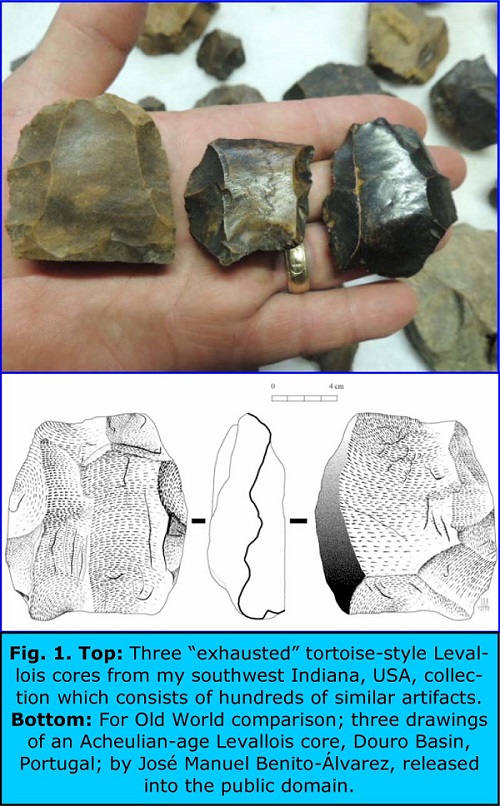
In Part 1, I shared the story of my initial experience in trying to get input from the mainstream American archaeology community regarding Levallois artifacts including cores I have found in southwest Indiana (e.g., Fig.1) They repeatedly told me that such lithic technology wasn’t present in this country. After many years of research and communication with many professionals, I came to realize a few things that I wasn’t aware of. The first thing is that just because someone is an archaeologist by profession it does not mean that they have any expertise in lithic technology from prehistoric times.
The second is that just because an archaeologist has expertise in Native American lithic technology, does not mean they have any knowledge about lithic technology of early man such as that found abroad, e.g., “Levallois.” This leads to the third and most disappointing which is that many mainstream archaeologists will pretend to know a great deal more about the subject than they actually do and, often, rather than admit that they don’t will fall into simply towing the party line and coming back with a standard mainstream answer should you offer them any kind of evidence that challenges their long held beliefs such as about our origins or how old were the “first Americans” or who might they have been.
I guess one lesson I have learned well is that PhD B.S. is still discernible as B.S. even to a window cleaner such as myself and even though the attempt to camouflage it in scholarly data is present.
After almost two decades of inquiry and research on early lithic technology it seems to me that there is still very little known by American archaeologists about what is considered late Lower or Middle Paleolithic technology such as that found in sites abroad which are “usually” associated with Neanderthal occupations. The terms “Acheulian,” “Mousterian,” or “Levallois” all seem to produce perplexed looks when mentioned in most archaeologist circles and among those who are considered experts in the area of ancient flint tools and flint knapping.
Having said all of these things, I would like to share a bit from an amateur perspective on the subject. I mentioned in my last PCN article that I was told by lithic experts abroad that the only way to identify Levallois lithic reduction was to have some of the cores from which the proposed Levallois flake tools were struck.
Levallois cores are very distinct in appearance and are rarely mistaken for later type technologies such as those blade cores from what is considered the Upper Paleolithic.
There are at least four known core preps which I have found to be considered Levallois which yield several different flake types used in producing a fairly wide variety of tools found from what is considered the late Lower and Middle Paleolithic. All of these are unmistakably different from the American Clovis and later technologies commonly found in the USA.
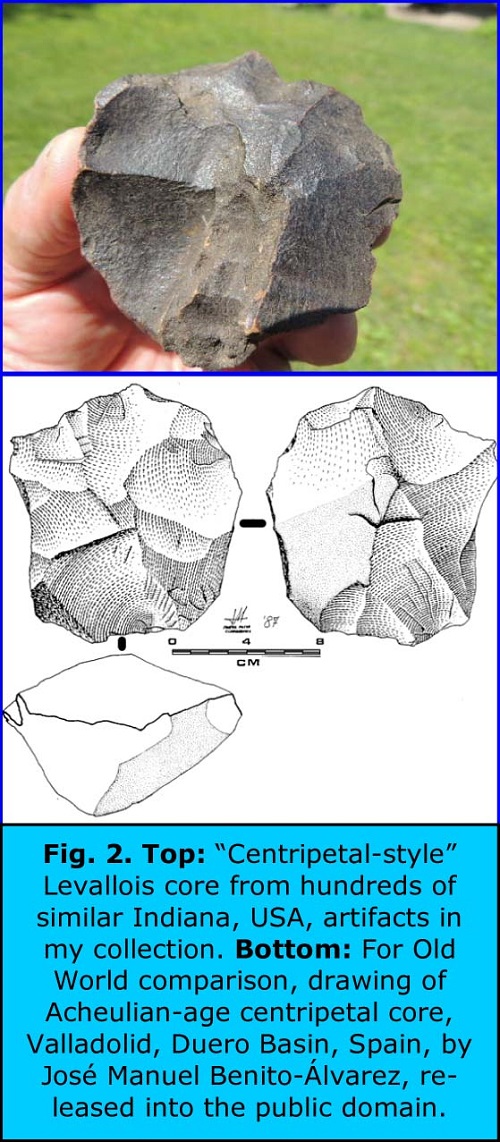
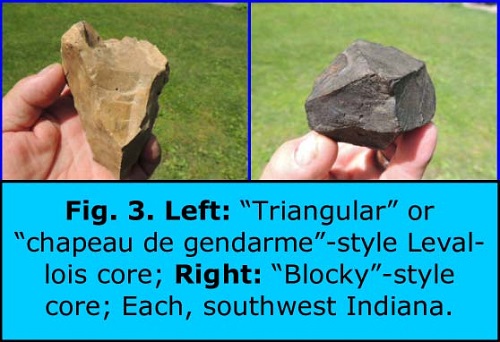
Those four include the most commonly described “tortoise” (refer to Fig. 1, above), the “centripetal or discoidal” (refer to Fig.2, above),“triangular or chapeau de gendarme,” and the “blocky” core (see Fig.3 below)- all of which yield a very specific type of tool which are similar in morphology and are mostly made on flakes rather than blades (which are the hallmark of most known Native American technologies).
When archaeologists or collectors discover lithic scatters or “debitage” left from Clovis or later archaic tool production it is very recognizable to the trained eye familiar with Native American tool industries. The same applies with Levallois technology and the debitage produced from it. It is unmistakable to the trained eye but can remain virtually invisible to the eye programmed to see Clovis and later evidence, which seems to have been the case for decades now among American archaeologists. They have been recognizing only the evidence that they have been trained to see. That can now change as there is sufficient evidence in enough quantity to recognize what has been considered late Lower and Middle Paleolithic technology all over the world and is now available for analysis here in the USA.
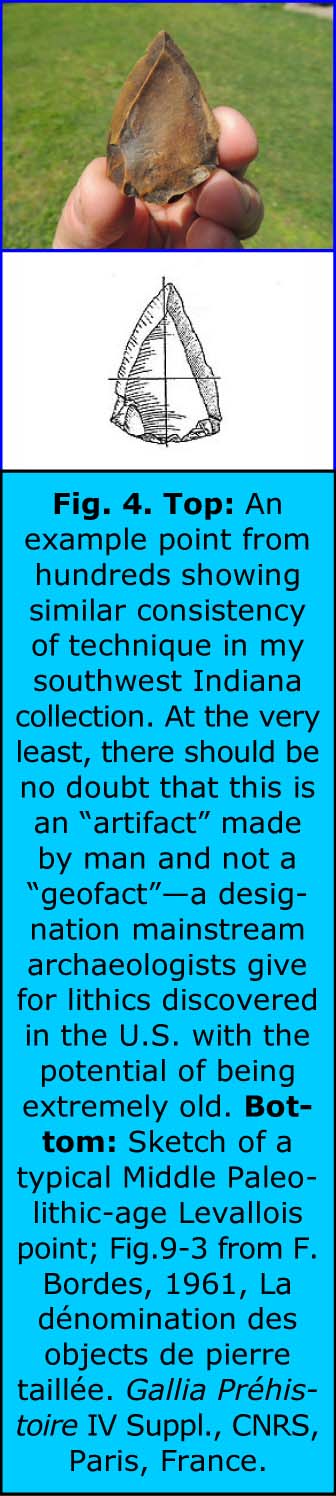
If “the cores tell the story” it can now be told because we have the cores! For this article I have included an example of each core preparation as well as an example point tool (see Fig.4 below) made on Levallois flakes from such cores. A close look at the cores will reveal the negative triangular scars from where triangular flakes were struck revealing the method of reduction.
Levallois lithic reduction has been shown to be a more productive method of tool making in general than the later blade technologies as a wider range of tools can be produced by making the tools on flakes rather than blades. Contrary to the most commonly held belief that later blade technologies such as Clovis or Solutrean were more advanced, I personally believe the Levallois reduction resulted in a much wider range of tools from the same basic core preps which leave one to conclude that it is actually more advanced and complex than those who are assumed to have come later in history.
Over the last several years I have witnessed many who claim expertise in flint knapping who are able to produce virtually every kind of Native American “arrowhead” or bifacial blade tool commonly seen within the known Clovis or later tool industries. Some talented knappers can produce a very fine Clovis point in a matter of minutes and other arrowheads present little challenge in reproduction; but rare are the ones who can reproduce Levallois tools. How the flakes are struck so systematically and consistently from the same core preparation remains a mystery to most. One simply cannot appreciate the complexity of the industry without having such an industry to observe and most American archaeologists have never seen much less handled tools from an actual Levallois assemblage.
We have in recent years witnessed various claims of alleged “pre-Clovis” tools having been found. There are the tools from Meadowcroft Rock Shelter, Buttermilk Creek, Paisley Cave, Cactus Hill, Topper and others, each producing artifacts believed by the finders to represent cultures living here prior to those which produced the famed Clovis industry.
Unlike Clovis technology which has been found in sufficient quantity to establish an identifiable industry, none of the alleged pre-Clovis artifacts have been proven to be of an identifiable technology which has been seen anywhere else in the world in contexts believed to be older than Clovis, leaving only speculation and theory in regard to an actual identifiable “industry” to accompany the claims of a “pre-Clovis” origin.
This is not the case in regard to the assemblages of Levallois artifacts such as the ones being found in as many as eight different states now. These collections clearly display a specific identifiable technology commonly found in sites around the world which are always believed to be from contexts thousands of years older than any yet recorded in the USA. The scholarly critics of “pre-Clovis” claims often use the reasoning that none of the sites have produced a “coherent set of lithic artifacts” to justify the claims.
Having seen much of the lithic evidence from the sites such as Buttermilk Creek and Meadowcroft, I can understand the reluctance to welcome such scant evidence to support the claims because of the absence of a recognizable technology.
Levallois technology is not ambiguous when it is found, regardless of the location. The name is the first indicator in the process of identification…”prepared core.” When such cores are found, identification of the “industry” can begin and an understanding of the actual “technology” becomes comprehensive.
Although I am only showing a few cores and point tools in this article, there are hundreds more in my possession to support my claims of an actual “industry” based on Levallois reduction.
As I have stated previously, I am making no claims regarding the age of these artifacts but rather the “technology” of the tools which is clearly paralleled in the later Acheulian and Middle Paleolithic Mousterian industries of the Old World.
Although the images shown are some of the basic cores and points of the industry, there are also dozens of other tool types present in our assemblages such as burins, blades, hand axes, bolas, scrapers, planes, awls, ochers and effigies. Tools made on the cores themselves are also common, displaying the life of the core and its utilization as different tools during the reduction process of extracting flakes for points, blades and other utensils.
Although considered and labeled as “primitive man” technology when found abroad to support the proposed “out of Africa” human migration theory, I disagree with such labels and assumptions in regard to this technology. Levallois reduction obviously requires both planning and skillful execution to produce such an industry in such an efficient use of available lithic material resources.
The presence of what has been called “old world” technology here in the USA clearly shows that what is being taught in regard to our origins as a nation is wrong and needs to be acknowledged by those who are promoting such error. The evidence is as solid as the rock from which it is hewn. For the Silo (from PCN Vol7 Issue3)- Richard Doninger, a surface-artifact collector living in Evansville southwest Indiana.
Eds. Comment- Rick makes a very interesting case for a lithic technology that appears to be little-known to archaeologists in the U.S. There is still the problem that the artifacts are not documented as to the exact context of each, which, unfortunately, limits the value of the specimens.
However, if the technology is as abundant as Rick’s collection suggests, we simply recommend that he “re-collect” duplicate examples from specific locations with an exacting record of what he has found and where.
Avocational archaeology is a special section of Pleistocene Coalition News started by PC founding member, Dr. Virginia Steen-McIntyre, to encourage amateur archaeologists.

ArtyA’s Timepiece Will Be Exhibited In Swiss Musée d’Ethnographie de Neuchâtel
Skulls & Bones: Skulling the heights of perfection
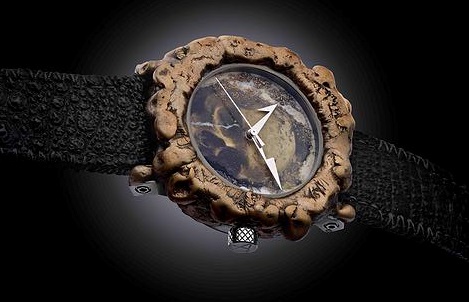
The skull motif made popular in watchmaking by ArtyA has long been copied, resulting in a whole range of derivatives. Now, the fully independent brand has taken the helm once again. The Skulls & Bones is an extreme timepiece that pushes the creative concept to the limit.
Word has it that if you really can’t compare a Swiss watch to any other, it really is original. By that standard the Skulls & Bones is one original watch.
ArtyA’s latest creation doesn’t do things by halves, and it certainly isn’t a mass-market kind of timepiece. Critics might say that it’s rather extreme – and they wouldn’t be entirely wrong. But more objective minds will first and foremost note its wholly coherent style.
Back in the day, the Skull universe, popularized many years ago by Yvan Arpa, was decried in the world of watchmaking as being in frightfully bad taste. Since then, it’s become trendy and fashionable, as people started wearing this style of timepiece to try and stand out from the crowd – with varying degrees of success. But in most cases, the relevant styling doesn’t go much further than a dial illustration, some sort of ‘skull’ motif on the hands, and little else. Until now, that is.
Skull-tural!
With the Skulls & Bones, ArtyA has embarked once again on the style trajectory it was the first to pioneer (with many following in its wake), as ArtyA’s CEO and designer Yvan Arpa guides the concept to what must surely be its ultimate destination. The skull is much more than a simple drawing: sculpted and engraved, it’s been released from the two-dimensional representations to which it’s been confined elsewhere. As is its wont, ArtyA has suffused the Skulls & Bones symbols with new meaning, taking concepts through to their logical conclusion, and once again placing the artistic dimension at the heart of its work. The dial is fully hand-made.

Every one of the new 47 mm models is unique, featuring hand-crafted engravings and sculptures. Each includes the brand’s own movement, frequently used in its Son of a Gun collections. This results in a reliable, high-performance caliber, the heart of which is incorporated within a small central space. Its surface is covered by a rough, seemingly unfinished steel plate surface, featuring a twitchy drawing of a skull, rather like a hastily spray-painted tag.

This is surrounded by six hand-engraved skulls in polished steel outlined in black. The style is at once tribal and urban, modern and ancestral. ArtyA leaves the interpretation of this universal symbol to each individual’s imagination. By definition, each timepiece will be unique, with each person free to have their own take on the skull universe.
Gangs of skulls
The Skulls & Bones bezel sports another dazzling spectacle, exploring both “skulls” and “bones”. Here, ArtyA extends the core theme to encompass other graphic elements such as crosses, totems, barbed wire, guitars, and guns, expressing the whole gamut of the world of rock. Here too, ArtyA has not gone for simple cookie-cutter drawings, instead favouring genuine steel engravings. The shapes of the movement are seemingly drawn inexorably towards the bezel, each feature setting off the other.

Are More Native Children In Gov’t Care Today Than At Height Of Residential Schools?
Truth and Reconciliation Report – One Oneida Woman’s Perspective
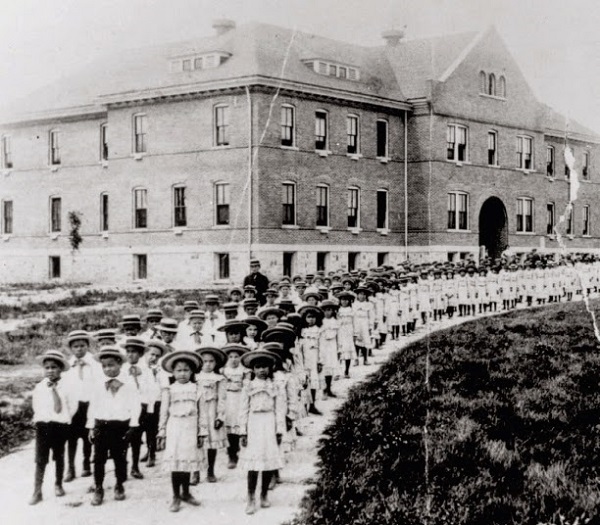
Indian Residential Schools are a large part of Canadian History. I use the present tense. Every Canadian lives with the fallout of these schools which were to, “Kill the Indian in the Child.” Cultural Genocide the TRC [Truth and Reconciliation Commission CP] says in its opening paragraph.
In Canada, we think it a right and obligation for our children to come home safe. We kiss them on the first day of school, knowing that we will see them again when school is finished. How would you feel if your child never came home?

This happens today.
Families who live in small, fly-in communities have to have their children flown south to attend high school. Some never return. http://www.cbc.ca/news/canada/thunder-bay/first-nations-want-inquest-into-7-student-deaths-1.1239226
There are more Native children is the care of the government today than at the height of the Residential Schools. http://news.nationalpost.com/news/canada/a-lost-tribe-child-welfare-system-accused-of-repeating-residential-school-history-sapping-aboriginal-kids-from-their-homes
Rather than empathy or acknowledgement of the past, we are told to, “Just get over it.”
Before colonization, we had no abuse, no addictions. We had no poor. Our needs were met- meaning we were one of the richest people on earth (thank you, Professor John Milloy for pointing that out to me).
I have been told that, “Since the Jews got over the Holocaust that we should just get over it.” That is insulting to both me and those who are Jewish.
Get over it.
First Nations communities suffer from the effects of the Residential Schools by having Intergenerational Trauma. We alone are not the only people who have this. Those with a family history of addictions, or abuse, or neglect feel the same effects. We had a generation or two of people who did not see parenting. They saw institutionalized abuse. How could they possibly know how to parent when they left school?
Without proper healing sources in place, and without feeling stuck in the anger, hurt, and pain which comes from Trauma, no one recovers from it.
I can only speak for myself. My grandfather went to the Mush Hole in Brantford, Ontario. He was a bright student, plus when home, he spoke a couple of the Native Languages on our Six Nations Reserve. I am very proud of that.
However, while he says he (personally) was not sexually abused, he had friends who were. He was not allowed to speak his languages at school. He was denied medical care while at school, which caused permanent damage to his brain. My bright and intelligent grandfather became stuck in the poverty cycle. And, the addictions cycle. He couldn’t cope without the structure which was forced on him at school. He couldn’t function well on the reserve. What the school taught his was agriculture. He worked the tobacco fields when he could. Then, he was on welfare.
On top of his mental capabilities, the alcohol killed him inside. Because of him, my mother was raised in a non-Native foster home, not knowing she was Oneida until she was 18. Her foster home denied her access to knowledge of her family on the reserve which was 10 minutes away.
My mom’s foster family did the best they could according to the times. In the 1940’s and 1950’s, it was best to be seen bringing up a little Indian girl in a good Christian family, a family which included a foster father who also had an addictions issue.
Her upbringing effected how I was raised. She also did the best she could. She tried her best to be a good mom, a mom who loved and cared for her own biological children. But also kept them at bay emotionally. She did not know how to really bond as a mom.
Because of the Residential School, my mom did not learn how to properly parent. As for me, I looked for parents I could follow. I am doing the best I can. I hope I my kids do better.
I hope my kids see that while I am Oneida, that does not make me less-than a full person. I hope they see that the Oneida blood that we share is a privilege, something to be honoured and respected. I hope they see it as something that bonds us to other First Nations people around Turtle Island. We are a strong people. We didn’t die. We learned how to survive. Now, we are striving to learn how to live in peace again.
For, you see, the Residential Schools did not kill the Indian in the child. Even with the horrific events which happened, we did not die. We are blossoming as a rose. We will overcome and heal.
Anger needs to be let go. Treaties need to be upheld. If the Canadian government did not want to fulfill the treaties, why were they included in the Canadian Constitution? They are a matter of law. Deal with it, Harper. We don’t expect handouts. We need the highest levels of Canadian law respected and enforced. The government needs to honour their obligations which they proposed, agreed to, and reinforced in the Constitution in 1982.
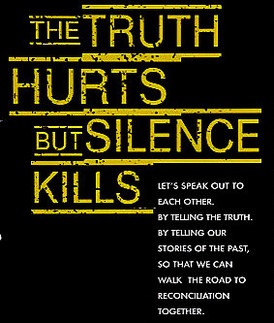
There is Truth – they tried to kill us off. Now, please, let there be Reconciliation. We all need to acknowledge the past and present to make a future which honours the laws of Our Lands. We agreed to share our land for the benefit of all, not to be killed off. Let us all honour our agreements. For the Silo, Stephanie MacDonald

Elementary Forces By Timothy deVries


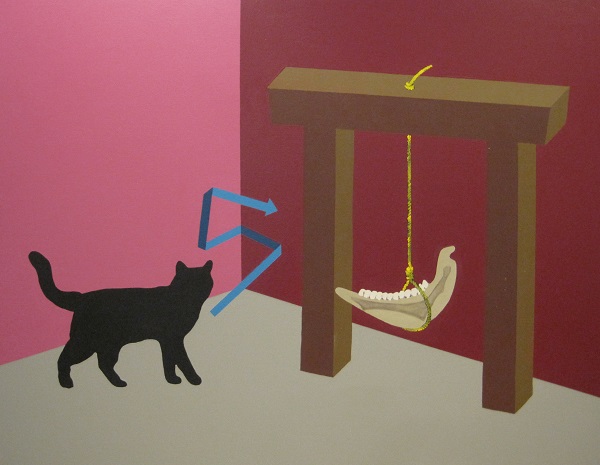
What is a corner? The corner represents a symbolic value. Children are told to stand in the corner when they are disobedient. The corner is a place where one meditates on one’s shortcomings. One can be ‘backed into a corner’ and left with few options or one can retreat into a corner for safety. Animals corner their prey. Corners are places where things get lost and are found. Corners are neglected and swept in the spring. Unfortunate artists can paint themselves into a corner if they are not aware of the space around them and the area beneath their feet. Corners are forgotten with the bustle of activity in the centre of the room.
Gilles Deleuze’s book on Francis Bacon contains a short chapter in which he describes some of the possible reasons for why Bacon consistently displayed his figures against a “round area or ring.”1 Deleuze asserts that the main reason for utilizing this “simple technique” is to create a “place” and to isolate the Figure.2 There is a progression and fatefulness in assigning the Figure to this place. Deleuze claims that the round area or ring relates the Figure to the setting and, in so doing, posits the Figure or painting as a kind of fact or isolated reality.3

The horizon, ring, corner or wall is a painterly convention frequently revisited by contemporary artists. Although many painters have excluded these settings in favour of fields (e.g. a field of pure colour, or a field of refuse), such settings are useful constructs for displaying objects of value or inducing value within objects. Fields are distinct from settings in that they form a systematic or total (rather than operative or local) context for objects. Conversely, settings function by separating the object from its context so that the viewer can have an unmediated experience of that object. The setting recedes ‘into the background’ as a decorative relief or incidental support.
Corners are specific settings that feature the intersection of three planes (i.e. two walls and a floor). The intersection forms a point. The corner can function simply as the intersection of three planes or as a construct that creates depth and dimensionality. This bivalent nature hints at its duplicity as a setting. It creates a false depth. In this respect, the play of surfaces conspires to become a point of convergence or vanishing point. As a convergence of three surfaces it is a point of ‘agreement’, or perhaps a type of foreclosure; three colours and three lines converge to form a dimensional whole. The duplicity of the corner consists of its character as both a play of surfaces and as a convergence of three lines. The duplicity consists in the fact that the corner realizes both the idea of form and the Form itself through both a convergence (of surface and line) and a construction (of dimensionality).
Two of the most significant questions a painter may ask is, “What must I paint?” and “What is the painting about?” The idea of form contained in a painting is inevitably ‘about’ a sensation or perception. The painter’s nervous system is trained not only to recognize particular sensations and perceptions but to actualize them in the materiality of paint.4 Painters practice their art as a way of learning to live with a given set of perceptions and sensations. The act of representation in painting is therefore second to the sensations and perceptions which inaugurate it.

The critic’s judgment (i.e. the critique) is the genesis of painterly sensations and perceptions. Critique is the limit of art and limits art to what it alone can do. It functions as a form of violence that is inflicted, observed or endured and occurs when one form overcomes another or when a form is ‘deformed’ by a superior consciousness. The deformation heralds a new and hitherto unappreciated beauty. It is the beauty of a projection or displacement of the painter’s subjective point of view into the materiality of paint. The transformation of sensations and perceptions through the pure and practical reason of the painter reflects the painter’s critique of power. What power? The power of judgment. The critique is therefore absorbed into the very colour of the picture.
Ludwig Wittgenstein’s picture theory holds great explanatory appeal in these cases because it contains propositions regarding the logic and structure of a picture. The painter labels the painting with a title because it represents a state of affairs. There is a close correspondence between the fact represented by the title and the pictorial content of the painting. It is in this sense that the picture functions as a relation between the physical or material world and the thoughts of the painter. Within this context, pictures are criticological constructs. Their titles are statements or propositions that are endowed with sense. As a function of these statements the painting’s pictorial components correspond almost identically with a set of defined elementary forces.
The corner can therefore play several conscious roles within a painting. They are the place of an encounter between a convergence and a defined space. These corners embody a perception. Moreover, corners function as a limit. As the limit of pictorial space they set up a picture plane that functions as a limit to logical thought. By using corners in this way, painters can represent unusual objects with a degree of normative ‘factuality’ – even if they are only representations. Finally, corners function as a place or setting. These corners are settings in which something can take place as well as a destination for various ideas. They instantiate and materialize Form in unanticipated ways. For the Silo, Timothy deVries http://www.timothydevries.ca/
- Gilles Deleuze, Francis Bacon: The Logic of Sensation (New York: Continuum, 2003), 1
- Deleuze, Francis Bacon, 2
- Deleuze, Francis Bacon, 52

Global Meditation for Compassion will livestream FREE & feature Deepak Chopra
The Chopra Center has just announced that the 2015 Global Meditation for Compassion will be held on Saturday, July 11 at 9 a.m. PT In Carlsbad, CA at the Omni La Costa Resort & Spa and meditation will be accessible worldwide for free via livestream in both English and Spanish [see link below DE]. Gabrielle Bernstein, best-selling author and motivational speaker, will lead a conversation around meditation and compassion with Deepak Chopra, M.D., founder of The Chopra Center and best-selling author, and Ismael Cala, acclaimed CNN en Español anchor, best-selling author and speaker.
A 15-minute guided meditation led by Chopra will follow the discussion. In addition, the event will include videos and questions contributed from the global livestreamed audience along with inspiring musical performances and special guest appearances. The Chopra Center 2014 Global Meditation for Peace currently holds the Guinness Book of World Record title for the largest global meditation worldwide with 140,000 in attendance from nearly every country. This will be their second annual global meditation and they are expecting to unite more than 500,000 people worldwide – breaking 2014’s record by nearly four times.
The second annual global movement will also host 1,500 guests at the live event and unite individuals, families and groups across the world for the largest meditation gathering in history. In addition, the event will include videos and questions contributed from the global livestreamed audience along with inspiring musical performances and special guest appearances.
“The Chopra Center’s mission is to serve as the global source for balance, healing, transformation and the expansion of awareness. By creating an opportunity for the world to be a part of the largest guided meditation, we hope to create a more compassionate world,” said Chopra. “It is time to rediscover our common truth – that we are all one.” This year’s meditation aims to increase compassion worldwide, creating a movement towards a kinder, more connected culture. For more information on how to sign up or to learn more, please visit: http://www.chopra.com/globalmeditation.html or email: marketingdirector@thesilo.ca Tickets to the live event are currently available for purchase for 49$USD+service fee at: https://tickets.brightstarevents.com/event/GlobalMeditation

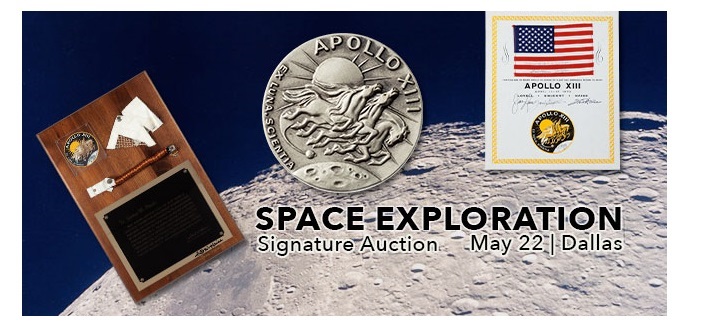
Invest in iconic Space flown items with Heritage Live! Auctions
Don’t miss out on incredible historic space items such as the first complete Lunar Bible flown aboard Apollo 14. Heritage Live! allows you to place late proxy bids and compete live against the auction floor from your PC or mobile device*. We recommend placing proxy bids before the live session in the unlikely event either side experiences technical problems during the auction.
The software is available for Android, Safari for iPhone, and Opera Mobile version 10+. More will be supported in the coming months.
For more details contact marketingdirector@thesilo.ca
Click here for Free download on HA’s gorgeous 140 page colour Auction catalogue.
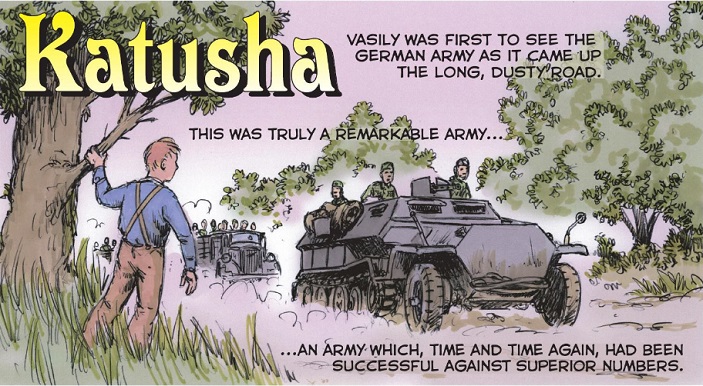
WW2 Graphic Novel KATUSHA goes daily in free WEBCOMIC debut

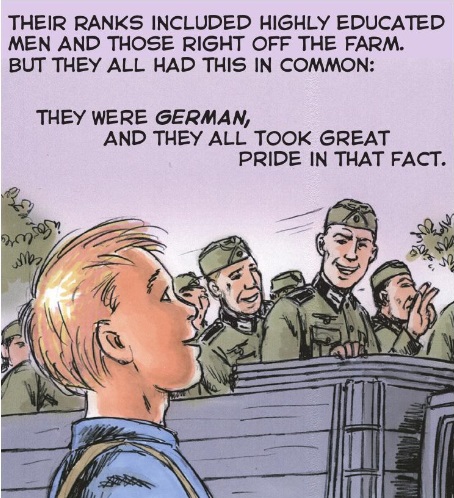
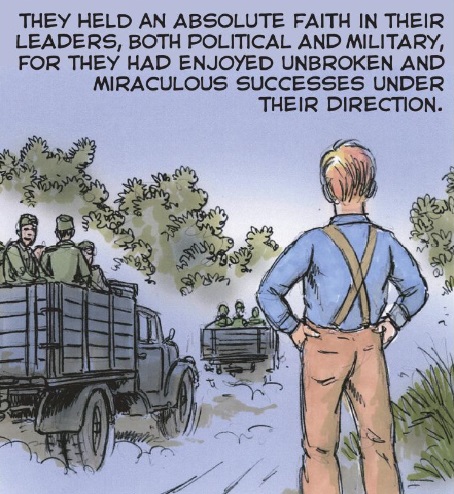
KATUSHA BOOK ONE opens with young Katusha’s graduation from her tenth and final year of school. The next morning, Sunday June 22, 1941, Nazi Germany invades the Soviet Union. The young woman and her family escape to the forests to begin a partisan war against the German occupiers. In KATUSHA BOOK TWO, Katusha and her sister Milla join the Red Army and are sent to tank school. Trained to operate the mighty T-34, Katusha fights from countryside to cities and learns the steep price to pay for victory.
Vansant has chronicled history in comics format since 1986. He was the primary artist for Marvel’s acclaimed Vietnam War title, THE ‘NAM, and he has recently returned to historical fiction with his three-volume series KATUSHA, an epic of the eastern front of World War II. He has researched, written, and illustrated many non-fiction graphic novels on subjects including the Korean War, Abraham Lincoln and Frederick Douglas, and the Battle of Antietam. Since 2013 Vansant has released six non-fiction graphic novels through Zenith Publishing. Vansant is a native of Georgia and served in the United States Navy during the Vietnam War era.
A Second Look At Ontario Bill83 AKA SLAPP
Canadian free speech, journalistic powers or lack there of are back in the news. Here is a related story about Ontario’s Bill 83 from last year that deserves a second read.
Bill83. The threat of abusive lawsuits claiming damages like slander and defamation is deterring a significant number of Ontarians from speaking out against big business on issues of public interest.

Strategic Litigation Against Public Participation (SLAPP) are lawsuits brought by companies with the specific aim of distracting or silencing defendants. The defendants, usually ordinary citizens or public interest groups, feel threatened by the prospect of paying legal fees over several years and the possibility of paying large damage awards in the end. Even if the lawsuits have no merit, they often result in a “chill” on free speech in general because SLAPPs are also meant to intimidate the general public who are watching it all play out in the media.

Attorney General John Gerretsen has introduced Bill 83 ( In its 2nd reading at the time of this original posting, now referred to the Standing Committee on Social Policy CP) to address this dubious use of Ontario’s publicly funded court system. The proposed legislation would force the courts to identify within 60 days whether a suit was in the public interest or an intimidation tactic to limit debate on an important local issue.
In communities facing fast paced economic development, this legislation is sure to play an important role in protecting the ordinary courage of citizens to tell their story, to share local knowledge and research findings and to insist on an authentic community vision for a healthy and sustainable future. For the Silo, Leslie Cochran. Originally published in print March 21, 2014.
Jack White’s Guacamole Recipe Was Rider “Inside Joke”
FOR GOD SAKES!
dear journalists and other people looking for drama or a diva,
even in the age of the short attention span internet article, it’s still hard to believe you
are STILL writing about this:
wow. classy.
seems like there’s a new rule number one for up and coming journalists: dont let the facts get in the way of click bait.
at the risk of incurring even more of this hoo haa (and i’ve definitely turned my cheek more than once lately) and even
though our management sent out a letter to clarify this, and since
this seems to be all anyone can ask me about lately,
here’s the real deal, and hopefully it’ll explain this nonsensical scenario and we can move on with our lives. (or what have you).
first off, this is none of your business, but i have no specific demands in my dressing room. i know i could ask for lots of
things but i actually dont ask for ANYTHING. i take with me what i need,
and that aint much.
anything on the rider is for the band and the crew.
this “guacamole recipe” is my hilarious tour managers inside
joke with the local promoters, it’s his recipe, not mine. it’s just something to break
up the boredom, seeing who can make it best. though i wouldn’t
know because i’ve never had it. i can’t even make kool aid
let alone cook any real food enough to have a “recipe”. sorry, i dont have that talent.
bananas: did it occur to anyone someone on the tour
might have an allergy to them? no? hmmm. one day some fantasy journalist out
there will call someone in the biz and actually have a rider explained to them, maybe
none of them have ever been on tour. oh well, let’s move on,
first amendment issues: i fully believe in the freedom of the press (though
the supposed search for truth from the press requires microscopes and some morton salt), and i also defend anyone’s right
to free speech (just look at my lack of respect for grammar in this letter and tell me i’m not for communicating freely)
and i defend the right to free information in regards to public funds, but never in my 20 years of playing
shows has my contract and tour rider been published in the paper that i recall.
do you know why we dont do that or want that? a hundred articles about bananas, free speech, and guacamole is why;
it’s because people dont understand what a rider is or what the terms of a contract are. they’re out of their element,
and you can’t blame them for it. and people who write about that know this. people WANT a rider to be a list of demands that
a diva insists occur lest he or she refuse to play a note of music.
but in reality, it’s just some food and drinks backstage for the
hundred workers and guests who have to live in a concrete
bunker for 15 hours. some people bring thier own living rooms on tour,
some people ask for a huge spread. who cares? what you’r looking for
is someone throwing a tantrum because they didn’t get their brown m and m’s,
sorry to dissappoint.
someone printed that i’m never going to oklahoma again?
not true. i love oklahoma, that’s why i booked this show instead
of playing chicago or atlanta for four times as much money.
ask around in tulsa. i’ve been
there at least three times on these last two albums. i love it there.
our booking agent warned the college that other artists might
not book shows there? of course they did, it’s bad business
what that school paper did and really rude. of course they are going to tell them to wise up.
am i pissed at the students at oklahoma university? absolutely not. am i dissappointed in young journalists at their school paper?
absolutely. but i forgive them, they’re young and have learned
thier lesson about truth and ethics hopefully. all they have to do is
google this to know that it’s not worth it. look for real problems instead
next time. look for the truth, not fake drama. i got pissed during my show and berated
the crowd? no. sorry, didn’t happen.
i made jokes about the paper publishing that info, so which of us is thin skinned?
they have freedom of speech but i dont? at my show? ok. i guess the rules change for different
people. the crowd were amazing and we played for 2 and a half hours that night.
people were told to delete
photos on their camera? : i dont know much about that but it must
be a miscommunication about what was
public property at the college and the contract we had with the university to
let us do our work in peace; but i’ll give you an example,
if someone working at a theater we played at started taking pictures of all of
our workers and our gear they’d probably get fired by their theater or promoter.
sorry to the student paper budding press papparazi on that one, but is this a tmz assignment or can
you give us some peace while we try to put on a show for the students? give us a break man.
i know it’s a fun thing for people to try to turn me into a jerk and a diva, but in
this case it’s pretty ridiculous and has almost nothing to do with me. my relationship
with the fans at that show and how we got to a new place together through music remains intact
and i’d love to do it again with them.
i think that’s everything, can i go back to making music now? no? ok. crochet it is.
jack white
III
Supplemental- It might get loud
Understanding The Jihadist Threat And Qur’an’s Scriptured Concept of War
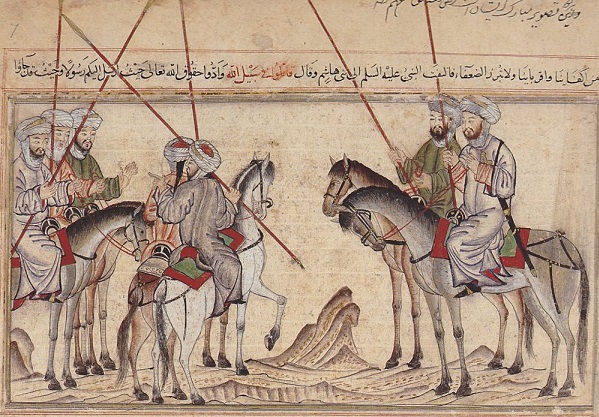
The Qur’anic Concept of War (1979) is one of “4 core texts of jihadists” today. US military officials are finding summaries of it in various languages on captured and killed jihadists. Written by Pakistani Brigadier General S. K. Malik with the first English Indian reprint edition published by Himalayan Books in 1986. This is more than just a study of the military campaigns of the Muslim Prophet Muhammad between 610-630 A.D. against the various tribes inhabiting Saudi Arabia, and those who refused to pay protection-taxes to Muhammad. This book religiously reviews and quotes from the Muslim’s Holy Book: the Qur’an/Koran, detailing how Allah outlined the principles of Islamic warfare.Augmented Reality Billboards Invading Google Streetview Maps
It’s an old story- at least in terms of internet “best before” dates. In 2010 sites began reporting on new Streetview Advertising patent applications submitted by Google . The complete details of the patents were not readily made available to the press but essentially it all boiled down to a new way for Google to generate advertising revenue by superimposing digital advertisements and billboards over top of existing “real world” advertising and structures. This was justified by Google by explaining that there is a need to update Streetview images that contained existing advertisements that are no longer current.
Fast forward to today and what we are seeing is this: not only are “real world” ads being updated but new digital ads are being superimposed over Streetview structures that do not contain advertisements in the “real world”. This is interesting. It is a form of AR (augmented reality). It is ethically questionable and here’s why……

Absolute power corrupts absolutely-
As virtual realty becomes claimed for advertising space there will more incentive to place AR ads on spaces that are in the “real world” off limits to billboards and marquee signage. What will prevent Google from selling AR ads that will appear on the side of the Eiffel Tower? Since they own the imagery presented on Streetview existing municipal bylaws are non-applicable.
As head worn AR devices such as Google Glass and Sony SmartGlass begin to enter the consumer kingdom this year- the future of AR advertising is clear.
Griots And A Strong Sense Of What Hip-Hop Means

Hip-hop is not rap, although rap is part of hip-hop. Hip-hop is a culture and style that was born in the American city, growing out of the minds and experiences of predominantly African-American communities in late ’70’s New York. But by now it is everywhere. They love hip-hop in India and South America and here where I live in Norfolk, most farmers may not listen to hip-hop, but their kids certainly do.
Hip-hop is also a beat: the beat of rap music, the beat of the city beating here in the country, over the airwaves and out of car windows, vibrating through headphones in the air-conditioned cabs of tractors. It is a beat originally created by isolating the percussion breaks of jazz and funk records and remixing them live for dancing and block party revelry, and later to accompany the flowing, groove poetry of a whole new kind of poet: the rapper, Master of Ceremonies or MC—often poor and disenfranchised, but still creative, soulful and strong. Hip-hop, in its original form, could be considered a kind of technological, urban folk music, in the sense that its early practitioners did not record their sounds, and even resisted recording. Hip-hop was something that happened live.
But was rapping really a new form? There is another part of this story that has always interested me. In many of the African tribes from which slaves were stolen, the griot (pr. gree-oh) was a cultural fixture. Griots were to West-Africa what the bards or troubadours were to Europe: mobile repositories of history in the form of oral tradition; cultural history sung and chanted to the beat of drums. Except in the case of the griot, that beat was African.
Griots were also expected to improvise poetry based on the current social and political scene, and were known for their sharp wit and verbal mastery. In many parts of West-Africa, a party still isn’t a party without a griot.
It is a testimony to the resilience of slaves that, denied the right to speak their own languages, they found other ways to speak, and sing, their true voices. There were the work songs of course, documented before they disappeared in the field recordings of Alan Lomax. But consider other examples. As blacks embraced Christianity, they injected the forms of church with Africanness. Black preaching became famous for its emotional power, spontaneity and, you guessed it, verbal mastery. Black gospel, blues and then jazz took the existing forms of American church music, folk and brass military music and made them African. Jazz and blues again incorporated the principle of the masterful voice, not spoken this time, but sung through the instrument itself, giving us the improvised instrumental solo. And rock and roll is a whole other subject…
Given this history, hip-hop is seen as an urban innovation on an old theme and a turn, perhaps full circle, back to the centrality of The Word. Rap is not merely poetry to a beat: these words flow with and around beats to create layers of syncopation, tickling the mind while they move the body. They are polyrhythms with verbal content.
At this level hip-hop is an art form, and while we may not always like the content of an artist’s message, if we care about art we can still engage with it on the basis of its merits. And we may consider its context. Some people, even creative people, will respond to poverty and systemic oppression with anger and violence. Some will focus their desire on all the trappings of money and fame formerly denied them. It’s not so hard to fathom.
But there are some, a few, who go another direction for justice. These are the warrior-poets who seek from pain the gifts of understanding, even wisdom. Even love. Hip-hop is known to borrow motifs from kung-fu movies, because there, too, you find the archetype of the warrior-artist, skills honed to razor sharpness, delivering beat-downs with fists if necessary, but just as often with the mind itself.
Granted, you will not find much of this style of writing on the radio. But it’s out there. To dig deeper, Google “conscious hip-hop” or “underground hip-hop” and see where that takes you. Word. For the Silo, Chris Dowber.
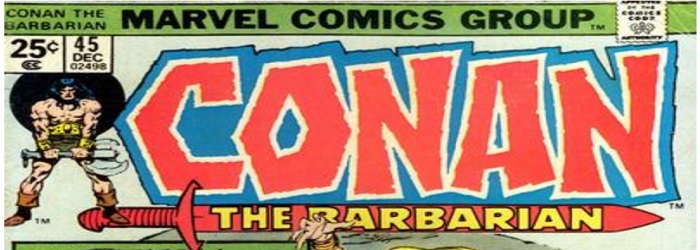
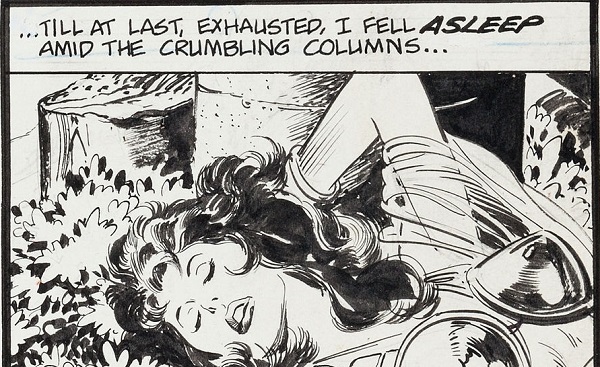
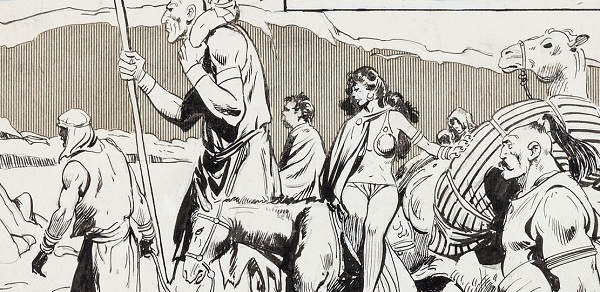
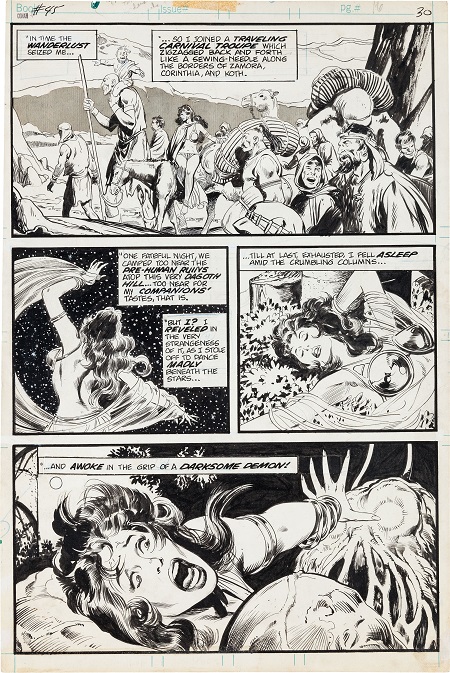
Vintage Conan the Barbarian original comic page sold via Heritage Auctions
John Buscema and the Crusty Bunkers Conan the Barbarian #45 Page 16 Original Art (Marvel, 1974). Wondrous and horrible things await in this page from “The Last Ballad of Laza-Lanti,” written by Roy Thomas. The ink on Bristol art has an image area of 10″ x 15″ and it is in Very Good condition. Let’s take a look at a single panel from the page on offer.

Buscema, John:John Buscema (American 1927-2002): After the departure of Jack Kirby from Marvel in 1970, John Buscema became one of the company’s most influential artists [Often called the Michelangelo of comics CP]. Buscema is perhaps most celebrated for his Bronze Age work on the Avengers, the Silver Surfer, and Conan the Barbarian. Buscema’s work proved so in-demand in the mid-seventies, he launched the John Buscema Art School which advertised for students in the pages of many Marvel titles. Stan Lee made appearances as a guest lecturer at Buscema’s school and the two collaborated on the wildly popular book How to Draw Comics The Marvel Way, Simon and Schuster, 1978. Comic Art
The page was sold to the highest bid which reached $US 2,210.75
Supplemental- L.A. Times’ John Buscema obituary – article from 2002
One of the best epic fantasy films of all time? Sure. We will go that far and say Yes!
Money Buys Happiness If You Give It Away

North Americans are still choosing to hold onto their money these days, a lesson learned from the 2008-09 financial crash.
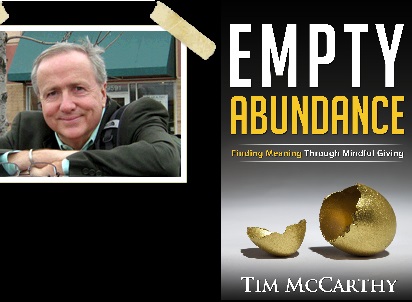
It’s good to have savings – but not to the point of hoarding, says entrepreneur and philanthropist Tim McCarthy, author of “Empty Abundance”.
Citizens in the United States of America are saving at a rate of 5.30 percent, well above the record low of 0.80 percent in 2005, according to the U.S. Bureau of Economic Analysis.
The world’s billionaires are holding an average of $600 million each in cash, which is more than the gross domestic product of Dominica, according to the new Billionaire Census from Wealth-X and UBS. That’s up from $60 million the previous year, signaling that the very wealthy are keeping their money on the sidelines and waiting for an optimal investment time.
McCarthy diverts all of his business profits annually to his foundation, The Business of Good, which invests in socially conscious businesses and scalable nonprofit concepts.
He reviews what everyone has to gain from mindful giving.
• Money buys you happiness – up to $75,000 worth. Life satisfaction rises with income, but everyday happiness – another measure of well-being – changes little once a person earns $75,000 per year, according to a 2010 Princeton study. Another widely published survey by psychologist Roy Baumeister suggested that “happiness, or immediate fulfillment, is largely irrelevant to meaningfulness.” In other words, so many who finally achieve financial excess are unfulfilled by the rewards that come with that.
• Remember the wealth disconnection to overall fulfillment. A Gallup survey conducted in 132 countries found that people in wealthy countries rate themselves higher in happiness than those in poor countries. However, 95 percent of those surveyed in poverty-stricken countries such as Ethiopia, Kyrgyzstan and Sierra Leone reported leading meaningful lives, while less than 60 percent reported the same in wealthier countries.
“While more investigation to wealth, happiness and well-being is certainly in order, I think it’s clear that while money is important, it cannot buy purpose, significance or overall satisfaction,” McCarthy says.
• Giving money reliably equals happy money. Two behavioral scientists, Elizabeth Dunn and Michael Norton, explore in their recent book, “Happy Money: The Science of Smarter Spending,” what makes people engage in “prosocial behavior” – including charitable contributions, buying gifts and volunteering time. According to Dunn and Norton, recent research on happiness indicates that the most satisfying way of using money is to invest in others.
In 2010, multi-billionaires Warren Buffet and Bill and Melinda Gates co-founded The Giving Pledge, a long-term charitable effort that asks the wealthiest among us to commit to giving more than half of their fortunes to philanthropy. Among the first to join, Michael R. Bloomberg wrote in his pledge letter: “If you want to do something for your children and show how much you love them, the single best thing – by far – is to support organizations that will create a better world for them and their children.” To date, 115 of our country’s 495 billionaires have pledged.
• Anhedonia, amnesia and the fallacy of consumption. Anhedonia is the inability to enjoy activities that are typically found pleasurable.
“After making my wealth, I found that I suffered from anhedonia,” McCarthy says. “Mindful giving – intelligent and conscious giving to those who need it – turned out to be my best therapy.”
Everybody has experienced the limits of consumption, the economic law of diminishing returns. One cookie is nice and so, too, is your first $1 million. But at some point, your ability to enjoy eating cookies or earning millions diminishes more with each successive one.
“Everyone learns this lesson, yet the horror is that so many of us succeed in forgetting it,” McCarthy says. “I think that, in every moment, we need to remind ourselves that continually reaching for the next ‘cookie’ is not in our best interest.”
About Tim McCarthy
Tim McCarthy’s first business, WorkPlace Media, eventually built a permissioned database of 700,000 gatekeepers who reach more than 70 million employees with incentives for clients such as Coca-Cola, Lenscrafters and McDonalds. He sold the company in 2007 and recently bought it back.
Has SARS Prepared Ontario For Ebola Possibility?
In October, 2014 Dr. Eric Hoskins, then Minister of Health and Long-Term Care, and Dr. David Mowat, Interim Chief Medical Officer of Health, issued the following statement on Ontario’s preparedness for Ebola virus disease in Ontario:
“We know that Ontarians may have concerns related to the ongoing challenges in West Africa and recent events in the United States regarding the spread of the Ebola virus.

Let us assure you that the safety of Ontario’s health care workers, patients and the public are our top priority.
We are confident that Ontario is prepared and ready to contain and treat any potential case of Ebola virus in our province — protocols are in place and we’ve seen the system work well in Ontario hospitals.
With the experience and lessons learned from the Severe Acute Respiratory Syndrome (SARS) epidemic, our health care facilities now have sophisticated infection control systems and procedures to protect health care providers, patients and all Ontarians. They are fully equipped to deal with any potential cases of Ebola.

But all health care workers, especially those providing care to patients, must be safe and protected. This is why we are working with health care employers to ensure they are providing appropriate training for their staff on the proper use of personal protective equipment and other occupational health and safety measures. We are also continuing to work with health care workers and employers to further strengthen protective measures and ensure they’re in place at all times.
Our health care workers are on the front lines and it is times like these when we are all reminded of how critical their work is in protecting the public. We want them to feel safe.
We will be reaching out to our health care partners to ensure they have the maximum protection possible and plan to release revised guidelines by the end of the week.
The government, in collaboration with our health system partners, is monitoring the Ebola situation and is continually assessing our state of readiness should a case of Ebola ever occur in Ontario.
On behalf of both the ministry and the government of Ontario, we would like to thank our health care workers for their selfless and tireless work on behalf of all Ontarians.”
Carbon Monoxide alarms now mandatory in all Ontario homes

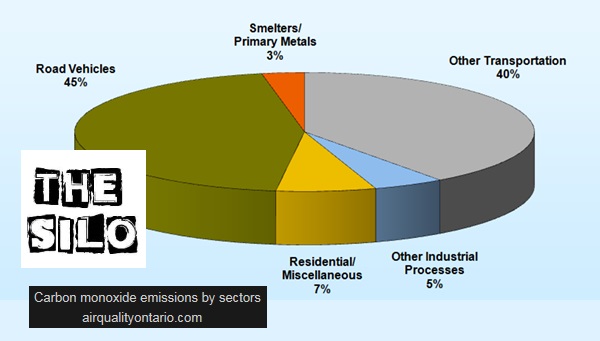
Keeping Ontarians Safe from Carbon Monoxide- Ontario is taking another step to keep families and homes in Ontario safe by making carbon monoxide alarms mandatory in all residential homes.
The new regulation, which comes into effect October 15, updates Ontario’s Fire Code following the passage of Bill 77 last year. These updates are based on recommendations from a Technical Advisory Committee which was led by the Office of the Fire Marshall and Emergency Management and included experts from fire services, the hotel and rental housing industries, condo owners and alarm manufacturers.
Carbon monoxide detectors will now be required near all sleeping areas in residential homes and in the service rooms, and adjacent sleeping areas in multi-residential units. Carbon monoxide alarms can be hardwired, battery-operated or plugged into the wall.
QUOTES
” We want Ontarians to be aware of the dangers of carbon monoxide poisoning because these tragedies are preventable. The change to the Fire Code is all about making sure we keep our families and homes safe. I urge all Ontarians to install a carbon monoxide alarm in their homes immediately.”
– Yasir Naqvi
Minister of Community Safety and Correctional Services

” Mandating the installation and maintenance of carbon monoxide alarms in existing homes with a fuel-fired heating system or appliance, fireplace or attached garage under the Fire Code, and providing the authority for municipal fire services to conduct inspections and promote CO awareness, are significant steps forward for enhancing public safety.”
– Tadeusz (Ted) Wieclawek
Ontario Fire Marshal & Chief of Emergency Management
” The fatal effects of carbon monoxide left us with an irreplaceable family loss. Keep your family safe and install a CO alarm so we can combat the silent killer.”
– John Gignac
Co-Chair, Hawkins-Gignac Foundation for CO Education
QUICK FACTS
* More than 50 people die each year from carbon monoxide poisoning in Canada, including 11 on average in Ontario.
* Bill 77, an Act to Proclaim Carbon Monoxide Awareness Week and to amend the Fire Protection and Prevention Act, 1997, received royal assent in December 2013.
* The first Carbon Monoxide Awareness Week will take place November 1-8, 2014.
* The Ontario Building Code requires the installation of carbon monoxide alarms in homes and other residential buildings built after 2001.
LEARN MORE
* Read the Technical Advisory Committee’s recommendations on carbon monoxide alarms
* Learn more about the Ontario Fire Code
* Read about the Ontario Building Code
* Read about the Hawkins-Gignac Foundation for CO Education
NOUVELLES- ministère de la Sécurité communautaire et des Services correctionnels
L’Ontario prend une nouvelle mesure pour protéger les familles et les foyers ontariens en rendant obligatoire l’installation d’avertisseurs de monoxyde de carbone dans toutes les habitations.
Le nouveau règlement, qui entre en vigueur le 15 octobre, met à jour le Code de prévention des incendies de l’Ontario à la suite de l’adoption du projet de loi 77 l’année dernière. Ces mises à jour visent à renforcer la sécurité de la population ontarienne. Elles s’appuient sur les recommandations d’un comité consultatif technique dirigé par le Bureau du commissaire des incendies et de la gestion des situations d’urgence et composé d’experts des services d’incendie, des secteurs de l’hôtellerie et de la location à usage d’habitation, de propriétaires de condos et de fabricants d’avertisseurs.
Des avertisseurs de monoxyde de carbone seront désormais exigés à proximité des chambres à coucher dans les maisons, ainsi qu’à l’intérieur des locaux techniques et à proximité des chambres à coucher adjacentes dans les immeubles à logements multiples. Les avertisseurs de monoxyde de carbone peuvent être câblés, fonctionner sur piles ou être branchés dans une prise murale.
CITATIONS
« Nous voulons que les Ontariens et Ontariennes soient conscients des risques d’intoxication au monoxyde de carbone parce que ces tragédies sont évitables. Cette modification au Code de prévention des incendies vise à protéger nos familles et nos foyers. J’exhorte tous les Ontariens et Ontariennes à installer immédiatement un avertisseur de monoxyde de carbone à leur domicile.»
– Yasir Naqvi
ministre de la Sécurité communautaire et des Services correctionnels
« En rendant obligatoires, en vertu du Code de prévention des incendies, l’installation et l’entretien d’avertisseurs de monoxyde de carbone dans les maisons existantes dotées d’un système de chauffage ou d’un appareil à combustible, d’une cheminée ou d’un garage attenant, et en conférant aux services d’incendie municipaux le pouvoir d’effectuer des inspections et de promouvoir la sensibilisation au CO, nous franchissons des étapes importantes pour améliorer la sécurité du public. »
– Tadeusz (Ted) Wieclawek
commissaire des incendies et chef de la gestion des situations d’urgence de l’Ontario
« Nous avons perdu des membres irremplaçables de notre famille à cause des effets mortels du monoxyde de carbone. Protégez votre famille et installez un avertisseur de CO afin que nous puissions lutter contre le tueur silencieux.»
– John Gignac
Fondation de l’éducation au CO Hawkins-Gignac
FAITS EN BREF
* Plus de 50 personnes meurent chaque année d’intoxication au monoxyde de carbone au Canada, dont 11 personnes en moyenne en Ontario.
* Le Projet de loi 77, Loi proclamant la Semaine de sensibilisation au monoxyde de carbone et modifiant la Loi de 1997 sur la prévention et la protection contre l’incendie, a reçu la sanction royale en décembre 2013.
* La première semaine de sensibilisation au monoxyde de carbone se déroulera du 1er au 8 novembre 2014.
* Le Code du bâtiment de l’Ontario exige l’installation d’avertisseurs de monoxyde de carbone dans les maisons et autres immeubles d’habitation construits après 2001.
POUR EN SAVOIR DAVANTAGE
* Recommandations du Comité consultatif technique sur les avertisseurs de monoxyde de carbone <http://www.mcscs.jus.gov.on.ca/french/FireMarshal/Legislation/TechnicalGuidelinesandReports/OFM_COAlarms_fr.html>
* Le Code de prévention des incendies de l’Ontario (disponible en anglais seulement)<http://www.e-laws.gov.on.ca/html/regs/english/elaws_regs_070213_e.htm>
* Renseignements sur le Code du bâtiment de l’Ontario <http://www.mah.gov.on.ca/Page5847.aspx>
* La Fondation de l’éducation au CO Hawkins-Gignac (disponible en anglais seulement)<http://endthesilence.ca/>
Lauren Callighen Bureau du ministre
416 325-5982
Carol Gravelle Bureau du commissaire des incendies et de la gestion des situations d’urgence
416 325 3138
Disponible en ligne<http://news.ontario.ca/mcscs/fr/2014/10/proteger-les-ontariens-et-ontariennes-contre-le-monoxyde-de-carbone.html>
Available in English<http://news.ontario.ca/mcscs/en/2014/10/keeping-ontarians-safe-from-carbon-monoxide.html>
Small Talk Vineyards on how to Master the art of “Small Talk”

Anyone who’s been caught at a wedding reception or a cocktail party discussing recent changes in the weather knows that these situations can quickly go from bad to worse and that making small talk isn’t as easy as it sounds.
Conversations with strangers can sometimes be stilted and uncomfortable, often resulting in a mad dash for the door as soon as is socially acceptable, but it doesn’t have to be this way.
“Small talk is an art,” says Small Talk Vineyards Owner, Hank Hunse. “It isn’t a skill that people are born with, but it can be mastered. Small talk is the starting point of all relationships and whether you are at a friend’s wine tasting party or a networking event it is an important starting point for everyone.”
Small Talk Vineyards, located in Niagara-on-the-Lake, knows all about the art of good conversation and the winery’s staff have become experts at small talk.
“A big part of our business is engaging our visitors in conversation,” said Hunse. “With hundreds of people visiting the winery each season, we have had to learn how to keep our guests engaged in conversation while ensuring they feel comfortable.”

To help us conquer our jitters of awkward meetings and functions, Small Talk Vineyards has compiled a list of five tips to mastering the art of small talk:
Remember Names
Introductions tend pass in a blur. Names are forgotten just as quickly as the hors d’oeuvres disappear, but make an effort to slow down and stay present. Repeat the person’s name in your head a few times and if you forget a name, discreetly ask a third party for help. Remembering someone’s name goes a long way and they are more likely to approach you at future gatherings.
Establish Eye Contact
This may sound like a no-brainer, but in uncomfortable situations people tend to avoid eye contact. Casual eye contact and a warm, friendly smile demonstrate your interest and desire to communicate. Eye contact for five to ten seconds indicates curiosity and is generally considered friendly. Make an effort to keep your body language open and relaxed – you’ll send out confident and friendly signals that will draw people to you
Discuss the Setting
Finding a topic of discussion after introductions is the hardest part of small talk. By commenting on the location of the event — how long the line is for drinks or floral arrangements — you are creating common ground. For example, if we sense that someone is uncomfortable during a wine tasting, we often comment on the bright paint colours that decorate the winery to find common ground.
Have Fun!
It’s important to remember that you aren’t alone. There are others in the room feeling just as uncomfortable as you, so stop hiding behind your glass of wine and enjoy yourself! Allow yourself to be curious and ask questions, you never know who you might meet.
Make a Clean Escape
When your conversation starts to draw to a close, take the opportunity to make a natural exit. Using phrases such as “I need to grab another drink” or “I need to say hello to a friend who just arrived” allows you to make a clean exit. Make sure to end the conversation with something like: “I’ve enjoyed talking to you, and I hope to talk to you again.” This keeps the lines of communication open for another meeting.
To learn more about Small Talk Vineyards please visit www.smalltalkvineyards.com. Follow Small Talk on Twitter @SmallTalkWines and like it on Facebook at www.facebook.com/smalltalkwinery
About Small Talk Vineyards:
Small Talk Vineyards is an innovative, boutique, small-production VQA winery located in Niagara-on-the-Lake. The estate vineyard is family run and has been in operation since 1955. Small Talk’s labels are about attending dinner parties and engaging in conversation, the front label in the “Speech Bubble” is what we say out loud during these gatherings and the back label, the “thought bubble” expresses what we’re thinking. Small Talk Vineyards features bold, fresh VQA wines that expose the dramatic gap between what you say … and what you really think!
1,969 Words on Having Experienced Domestic Abuse
Dear Silo,
In light of the [RayNFL domestic abuse controversy, I decided to write to you about my experience of domestic abuse.
My abuser was my husband. We had children. We had good jobs. People told us how happy we looked.
I had to look happy. He demanded my loyalty. He demanded I speak publicly, often at church, about how much I loved him and was grateful to him for providing for me and the children.
I was raped constantly. Not by knife, though, and not by physical restraints. He ruled my brain and body, he told me. As his wife, it was demanded that I have sex with him whenever he wanted. If I said no, he would be angry for days, calling me names, telling me that no other man would ever want me, that if I didn’t give it to him, he would take the children and never give them back. He would email me at work to continue the fight during the day. He would text me at night if I wasn’t with him.
When I came home from work one day to find all of my belongings on the front yard, I believed he was telling me the truth. I felt like an ungrateful woman who treated her husband horribly. My church leaders even told me that a husband could not rape his wife. One did tell me to leave, but I wasn’t strong enough then.
He took the air out of my tires so I couldn’t go out with a girlfriend. One of our children witnessed it.
I finally turned to the police. They wrote our episodes up as domestic disputes, which didn’t break the Canada’s Criminal Code (I have the reports, highly redacted). My husband was too smart to do something for which he could be charged.
Neighbours called the Police on him. My family also called the Police, afraid he was going to kill me because of a status on Facebook they thought was directed at me. The OPP showed up, questioned him, but did nothing when he said he would never harm me.
He kept a knife under his pillow. Why? He told our children that he felt I was going to kill him in his sleep and he had to be protected from me.
I was accused of many affairs. I was unfaithful to him even if I talked with a girlfriend on the phone. I was told that when I was home, I was to only spend time with family, but he meant with him. I couldn’t watch tv with the kids because he demanded that I stay with him.
On nights when I chose to get away from him to watch tv with them, he would bombard me with texts, telling me how horrible I was, keeping my attention on him, not the kids. On really bad days, he would charge into the room where I was with the kids to yell at me there, making sure they knew I was horrible, too.
He told me for 6 years that he wanted a divorce, to keep me in fear of breaking up the family. He would tell me that no man would want to be with a mom of so many kids. He also said that if I ever found someone to be with me, he would make sure he told him about the kinky sex I liked (true or not). I was damaged goods. No one would want me.
For years, I thought that was all I was worth.
That changed. Five years ago, I started planning to get out. It took that long because I had to convince myself that, even if I stayed single, the children and I deserved to not live on egg shells anymore.\
I had to find the strength to be a single mom.
Five years of getting my ducks in a row. Five years of emotionally divorcing him in my head.
When I told him I wanted a divorce, he begged to stay. He told the oldest children without me in the room that I asked for the divorce, that I was kicking him out. My kids hated me.
Then, he played the cancer card. He told the oldest children that the doctors suspected he had cancer and I was still kicking him out of the house. The day he before he was to have his scope, I asked him why he wasn’t clearing out his colon, like I had to do when I had mine scoped. He yelled at me, told me I didn’t know what I was talking about and went to our room.
Well, by then, it was his room alone. I was kicked out.
He told the kids he was moving east on a Friday. With our youngest away for the weekend at a camp with me, she kept asking if her dad was going to be home when she got there. When was he leaving? She was in knots all weekend. He didn’t tell her that he chose to stay. We found out when we got home.
Two weeks later, he said he was moving again. He actually packed the car this time. He said his good-byes before they left for school. He got as far as Quebec when he begged to come back. I refused.
He lived in his car. He lived in a cheap hotel. He told the kids I put him on the street. He emailed or texted me constantly to 1) let him back in, promising he’d change or 2) he’d make sure the kids knew it was all my fault. He told them he’d do anything to let him back in but I refused to forgive him.
Forgiveness was never an issue for me. It was a refusal to live under fear and anger any longer.
The kids and I didn’t have stress in our house anymore after he moved out. It only took a few days of him being away before they told me the house felt so much better without him there, without him yelling anymore.
Then he did something which put the fear back into my heart, fear that he could really hurt us this time. Until then, he had never done anything physical.
When I called the OPP to report it, they put everything back on me. I was told to stop slinging mud at him. They said I was never afraid for my safety before, so this episode was nothing. I was just trying to get him in trouble.
What do you do when the people you most trust to protect you, don’t? The church and the OPP did nothing to help. He was (is) a charmer and manipulator, he had everyone believing he was innocent of everything. Remember, a wife can’t say no to her husband.
I was not perfect. No one is. I was diagnosed with PTSD not long after he moved out.
But people have to stop blaming the victims of abuse for the abuse. We don’t ask for it. He was mad at me by my daily living, why would I do something deliberately to piss him off? No one deserves name-calling, harassment, manipulated into actions they don’t want to do, to walk on egg shells to keep him happy.
I stayed because there was no way in hell I would let him have custody of the kids. I stayed because for years, I believed I was worthless and that no man would ever want me. I was damaged goods. It took me years to get that thinking out of my brain. I am well educated. I have a great career. Abuse doesn’t care.
Abuse doesn’t infect any social status of people more than any other. Abuse infects the minds of women and children who are raised to believe it is the only way to live. Abused people believe they are worthless. Abused people don’t think they deserve any better.
On average it takes women 7-10 attempts to get out of that situation to follow through. Why? It is because they keep getting pulled back in with apologies, gifts. Grand gestures are made in front of children to make the woman look bad.
Example: the first time I said I wanted a divorce (years beforehand), he proposed to me again (with ring) in front of the children, promising things would be different. He gave me diamond earrings, too (he used the mortgage money to pay for them). I didn’t have the strength then to say no. The kids were counting on me to keep the family together. The kids were counting on me to protect them from him.
I failed more times than I care to count.
He came to my workplace once, after using my GPS location at a lawyer’s office, asked me in front of co-workers for a moment to speak to me, put me in his car and screamed at me for wanting a divorce. How dare I try to ruin our family!! I was allowed to leave the car, went back to my desk and cried. My officemate patted my shoulder and asked if I wanted to talk. I couldn’t. How could I let her know I was so badly abused by him and was terrified to leave?
Oh, he also hacked into my digital journal. Private thoughts were no longer private. They became tools to be used against me.
I thought I was strong enough to get out then. He beat me back down verbally, psychologically, financially, emotionally, sexually – yet he never broke the law. He had asked me for years for a divorce. Suddenly, following through with his wishes, I was bad – bad because I was actually pursuing it.
Last week, he used the ‘cancer card’ again, this time on our youngest children. The only thing they know of cancer was watching it slowly kill his dad years ago. It killed his mom, too. He told the kids that doctors thought he had cancer and that he was getting tested. He told them alone in the car, without even his girlfriend to even hear. Manipulative, conniving control freak. He played the pity card to keep them close. He didn’t care about what the news did to them. He only wants control. He demands loyalty.
Laws in this country, and many other countries, need to change. Why does it take a punch to the head to get the police to act? What kind of proof is needed for harassment via texting? I printed out the texts he sent to me at all hours of the night and brought them to the OPP. Nothing was done. Because nothing was done, he continued until I blocked his number. Email is now the only safe way to communicate. I have kept every one for the past 10 years. Plus, screen captures of texts.
Will it make a difference? I don’t know.
Getting a divorce is complicated. And expensive. My ex said he’d pay all court costs. Really? He’ll pay court costs but not child support?
The process is worse when you are divorcing a control freak who refuses to cooperate. He dropped out of mediation. He dropped out of counselling. He only wants divorce on his terms. That is not going to happen. I am levelling off this power struggle.
I don’t know what the future holds with the divorce. What I do know is that when the children are with me, they live in a home without fear, a home where they are trusted, a home where they can tell me whatever they want, even if it hurts my feelings. They can’t do the same with him.
They are the other victims of spousal abuse.
To be continued….
Information has been changed or deleted for fear of retribution.

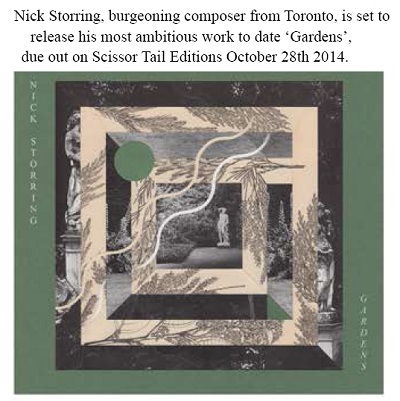
Toronto Composer Nick Storring sends listener on a journey with “Gardens”
Nick Storring — Gardens
- Open Your Eyes And Forget (16.21)
- (Come To My) Thicket (5.30)
- Unexpecting (3.52)
- Nothing Seems To Rhyme (7.25)
- Inside Every Man Lives the Seed of a Flower (13.21)

Gardens was composed, performed, recorded and mixed spring 2011-autumn 2013. All instruments performed by Nick Storring. The work was designed as an informal tribute to arranger/ producer/ composer Charles Stepney. Its titles refer to the Come To My Garden by Minnie Riperton which Stepney co-wrote, produced and arranged. No musical materials were borrowed, however.
The creative processes which birthed this album was funded by the 2011 Toronto Emerging Composer Award, which is administered by the Canadian Music Centre and generously supported by Michael Koerner and Roger D. Moore. No effects processing was employed aside from simple dynamics, equalization, mixing, and spatialization. Other ‘processing’ is strictly through acoustic or electromechanical means.
Instrumentation: violin, cello, electric mandola, electric bass, guitalele, Strumstick, banjo, harpsicle, autoharp, esraj, kemence, rebab, ananda lahari, Hohner Pianet-T, Yamaha CP60M stage piano, glockenspiel, steel pan, thumb pianos, toy pianos, roto-toms, snare drum, djembe, khol, bells, thunder tubes, rainstick, woodblocks, cymbals, other found/ homemade percussion, jaw harps, melodicas, harmonicas (diatonic and chromatic), tuning reeds, harmonium, khêne, mey, hulosi, xaphoon, concert flute, bansuris, sulings, recorders (alto, soprano, sopranino), various other flutes, mijwiz, been, pan pipes, kazoo, found wind instruments, voice.
Additional implements: bows, mallets, plectra, e-bow, handheld fan, electric toothbrush, vibrator, microphones,contact microphones, amps, speakers, earbuds, Headrush Shockrock vibration speaker, Danelectro Free Speech Talkbox, Sansui RA-700 spring reverb.
Many thanks to those who offered listening, feedback, instruments, support and exposure (through various channels) during the creation of this work. There are many of you, and I truly value your contributions.
© 2013 Nick Storring
all tracks SOCAN
Supplemental- Blouin Artinfo article about Nick’s recent practice the première of Terminal Burrowing at the AKOUSMA Festival, October 2013
Wendy Carlos Soundtrack Composer
TRDWTR “Treadwater” launches as new mature themed Superhero franchise

TRDWTR, pronounced ‘treadwater’, is a mature take on the superhero genre, set in a plausible geopolitical future. The franchise will kick off with a graphic novel on September 30th, 2014. A live-action series based on the novel is set to follow suit in 2015. A preview of the graphic novel will be staged in America’s largest comic book store today, September 10th. To commemorate the launch, a teaser trailer for the TRDWTR franchise has been made available to the general public. And here it is!
Canada Migrant Worker Program Not Perfect But Seen As World Model
TORONTO, CANADA – The world’s most successful program connecting seasonal workers with agricultural employers has kicked into high gear.
Administered by Foreign Agricultural Resource Management Services (F.A.R.M.S.), the Seasonal Agricultural Worker Program (SAWP) links approximately 14,000 requests for seasonal workers with jobs at Ontario farms this growing season.
Not only does the 52-year-old program provide a long list of benefits to the workers and the farmers, but also it creates two Canadian jobs in the agrifood industry for every worker employed through SAWP at Ontario agricultural operations, says Ken Forth, president of F.A.R.M.S.
“Governments and agricultural organizations around the world are looking at this program as a model,” Forth says. “For decades, this program has provided Ontario farmers a steady source of reliable labour as a supplement to local labour. At the same time it gives the seasonal workers well-paying employment, benefits and educational opportunities not available at home.”

Seasonal workers employed at Ontario farm operations through SAWP:
- Sign contracts that guarantee them all the protections and benefits that Canadian workers receive, including WSIB, certain EI benefits and provincial health care coverage.
- Receive an hourly wage rate set by Human Resources & Skills Development Canada.The hourly rate is not less than the provincial minimum wage rate or the local prevailing rate paid to Canadians doing the same job, whichever is greatest.
- Earn up to five times more than they could in their own countries, which enables them to support their families, educate their children and buy and operate businesses and farms in their own countries.
Farmers have also realized great benefits from the program for more than 40 years, enabling them to hire staff that would otherwise be extremely challenging to find because of the ongoing shortage of suitable and available local Canadian workers.

“Ontario farmers pay the highest farm worker wages in North America and face intense competition from low-wage competitors,” Forth says. “Without this program, many Ontario farmers simply couldn’t continue to grow fruits and vegetables. They’d stop growing altogether or move into less labour-intensive crops.
About the Seasonal Agricultural Worker Program:
More information about Canada’s Seasonal Agricultural Worker Program (SAWP) can be found at www.farmsontario.ca
Supplemental- NSI study highlighting concerns related to the program’ http://www.nsi-ins.ca/wp-content/uploads/2012/10/2006-Migrant-Workers-in-Canada-A-review-of-the-Canadian-Seasonal-Agricultural-Workers-Program.pdf

CNNMoney- Millennials Saying No To Credit Cards
Millennials are saying no to credit cards: http://cnnmon.ie/1uFOSGl via @blakeellis3 pic.twitter.com/T1U8i7OU2I
What some tweeters are saying:
@CNNMoney @blakeellis3 They’re smart to avoid debt.
@CNNMoney @blakeellis3 Only use charge card when you can pay entire debt completely before you are charged interest.
@CNNMoney @blakeellis3 Great info… Thanks for sharing..
Equality=Peace @angrigarisangri 13h
@CNNMoney @CNN @blakeellis3 Yes to #bitcoin!
@CNNMoney @CNN @blakeellis3 Smarter than my generation then.
@CNNMoney @CNN @blakeellis3 We know not to be caught in the credit card trap. Only use it as a cash replacement card, not for debt.
@CNNMoney @blakeellis3 like a smart wallet just pass the wallet and charge from your credit or debit just pick with your phone….
BrokenHearted @patientfailure 12h
@CNNMoney @CNN @blakeellis3 Stupid. You’re spending decisions should never change based on your form of payment.
Patrick B @sportbikeguy00 12h
@CNNMoney @CNN @blakeellis3 Credit & debts of any kind should be avoided,my motto is if you can’t pay cash for it,save up or forget it.
@CNNMoney @CNN @blakeellis3 Never used a credit card in my life. Only used credit for commercial purposes.
@CNNMoney @CNN @blakeellis3 I’m a baby boomer and cut all mine 19 years ago and never missed them
CynicalPolitico @IndyinTX31 11h
“@CNNMoney: Millennials are saying no to credit cards: http://cnnmon.ie/1uFOSGl via @blakeellis3 pic.twitter.com/sAw87n1GDt”()
FatNoMore™ Fitness @FNM_Fitness 10h
@CNNMoney @blakeellis3 Either buy cast or use paypal. Credit cards are just a disaster waiting to happen #ParentWillAgree
@DaveRamsey thoughts? “@CNNMoney: Millennials are saying no to credit cards: http://cnnmon.ie/1uFOSGl via @blakeellis3 pic.twitter.com/kcL0lgMyzP”
@CNNMoney That’s great!! You never know what’s left or how big your debt is and will never get out once you start. Real paper money #future
Declan Martens @DeclanMartens 9h
@CNNMoney @blakeellis3 hey that’s us! @Malicious_Tea
They use mom/dad?! “@CNNMoney: Millennials are saying no to credit cards: http://cnnmon.ie/1uFOSGl via @blakeellis3 pic.twitter.com/f1jlE2zlAq”
HogsAteMySister @hogsatemysister 9h
@CNNMoney @blakeellis3 Which is easy to do when you still live at home…
@CNNMoney @blakeellis3 It’s true. No card for me. Living within my means
The Epitomy Of An♈️ @ErnieBlanco63 8h
@CNNMoney With the job market being so rocky it’s a smart move.
@CNNMoney @CNN @blakeellis3 they don’t know how to use a CC to maximize the rewards and cash back. Learn how to use credit.
@CNNMoney @CNN @blakeellis3 One of the smartest things of the new millennium that they can do.
@CNNMoney I’d like to not have a credit card. But it’s pretty much required for building credit.
Liesel Rickert @le_rickert3 6h
Ive been wanting 1, but can’t decided bc of 2 factors here RT “@CNNMoney: Millennials are saying no to credit cards: http://cnnmon.ie/1uFOSGl ”
5 tips to Make sure first year Students transition from high school to Biz school
How to succeed in business school: Five tips for first year students
ST. CATHARINES, Ont. – The start of university can be intimidating enough for most first-year students. But business students face an extra set of challenges as they balance their coursework with gaining work and extra-curricular experience to help take them from campus to career. 
From co-op work placements to mock interviews and networking breakfasts, the business school experience is designed to help students gain professional polish, acquire leadership skills and learn the foundations of management, accounting and entrepreneurship.
So how can new students and their parents make sure they are ready to take advantage of the available opportunities? These five tips will make sure first year students are ready for the transition from high school to business school:
- Be prepared (Textbook not required)
There’s is no need to read your textbooks cover-to-cover over the summer. Instead, spend some time getting comfortable with all that is available at your future school- both offline and online.
Spend a day on campus before the first day of class and figure out where your classes will be held. Don’t forget to attend your orientation. Most schools will offer a faculty specific orientation in the days leading up to the first day of classes.
And do your research online. Follow your business school on Facebook, Twitter and Instagram. Figure out the online registration system, how to access your student email and the online learning platforms. These online tools will be used throughout the academic year so access them early so you don’t miss any emails or messages.
- Going to University is your full-time job
While University doesn’t pay you a regular paycheck, it does pay you in grades. At the end of your degree, you will be able to use your straight A’s as currency to get a great job.
Everything you learned at your summer job about responsibility, punctuality and honesty can be used in business school. So, impress your professor just like you would your boss. Show up to class. Stay on top of your assignments and hand them in on time.
- Get involved (and stay involved)
Want to stand out at a job interview? Join a business student club. These clubs focus on everything from accounting to marketing and every subject area in between. Joining a club is a great way to make new friends and apply coursework to real life situations.
One key tip: it’s not enough to sign up and attend the occasional meetings. If you really want to have an experience that stands out on your resume, get involved on the executive team, attend a case competition or organize an event. You’ll have an experience you’ll never forget and something unique to mention during a job interview.
- Make friends (with everyone)
We guarantee that you’ll make friends in your classes and in residence. But don’t forget to build meaningful relationships with faculty, staff and upper year students. They can become important mentors who can help point you to on-campus resources and introduce you to new connections. Plus, if you know your career centre staff they’ll be sure to recommend you to employers who are hiring students.
Do you want to guarantee straight A’s on group projects? One successful strategy we’ve seen Goodman students use is to have a group of friends from different concentrations. When it comes time to write that paper, you’ll have every subject area covered, from HR to entrepreneurship.
- Ask for help
It’s a new school, a new environment and new friends. This is a big transition and it’s normal for there to be ups and downs during your first year. Fortunately, your university has resources available to help you succeed. From study skill workshops to mental health resources, there is a lot of support available to you on-campus.
If you need any type of help, talk to your academic advisor or a professor as early as possible. Don’t put your academic career at risk; there are people available to help you get through any type of problem you encounter. For the Silo, Don Cyr, dean of the Goodman School of Business at Brock University.

About the Goodman School of Business:
Based at Brock University in St. Catharines, Ont., the Goodman School of Business is one of only eight schools in Ontario that is accredited by the Association to Advance Collegiate Schools of Business International. The Goodman School of Business is home to more than 2,600 undergraduate students, 450 graduate students and has 7,000 alumni worldwide.
La Prochaine Soirée Du Restaurant Le Renoir
RENOIR SAUVAGE- Vous êtes cordialement conviés à la prochaine destination de l’Apéro Sauvage en cavale qui vous fait découvrir à chaque dégustation, un chef et un resto, en plus des merveilles de notre terroir sauvage. La prochaine soirée aura lieu le 3 septembre prochain sur la magnifique terrasse du restaurant Le Renoir, sur la rue Sherbrooke, au centre-ville de Montréal.
L’Apéro Sauvage en cavale propose des 5@7 de réseautage épicurien, de plaisirs gourmands pour tous les sens et de découverte des produits sauvages du Québec, en 2 ou 3 bouchées copieuses, en accord avec des vins et cocktails d’exception. Cette édition très spéciale mets en vedette les champignons sauvages en 3 accords exceptionnels, crées par le grand chef Olivier Perret et le maître-pâtissier Roland Del Monte – MOF, du restaurant Le Renoir, en collaboration avec Terroirs Québec, Bobby Grégoire et Natalie Richard. Venez célébrer les champignons sauvages et les découvrir comme vous ne les avez jamais goûté, grâce au savoir-faire et à la créativité de deux grands maîtres de l’art gastronomique.
Achetez vos billets en ligne ICI.
Mercredi soirs jusqu’au 17 septembre
Venez faire votre propre cueillette de champignons sauvages avec le chef Perret! Tous les mercredis à partir de 18h, dans le cadre de l’Apéro Sauvage, en collaboration Terroir Québec.
Poêlée de champignons sauvages au choix sur tartines de pain grillé de la boulangerie Hof Kelsten, servi avec accompagnements saisonniers
RESTAURANT LE RENOIR
1155 Sherbrooke Ouest, Montréal, Québec, Canada, H3A 2N3
www.restaurant-renoir.com | 514-788-3038 | h3646@sofitel.com
Country Music Of Johnny Mac Slater

For those in the country music scene, talented Johnny Mac has a song for you. Known first to family and friends as John McIntosh, he added ‘Slater’ as a surname, hence his stage name is Johnny Mac Slater. It is a handle that fits his style well. He writes stories from the heart and magically transforms the words into beautiful songs which he sings and plays. Johnny Mac Slater spent some time in Nashville, writing songs and developing his craft. Now living in Hamilton, and happy to be close to his roots, he is working on a new project. Johnny says “I’ve recently been recording at Westmoreland Recording Studios in Hamilton for awhile now, and a CD release will happen soon.” You can bet he will stick with his life’s stories and experiences. Typically his lyrics are centered around girls and love, both lost or found, and then performed with passion and filled with emotion. He also appreciates a good party and quirky story. All of which are found in his songs. It is easy to see, he feels that “nothing makes a better song than a good story.” Some of his early influences you’ll find varied, including Glen Campbell, Keith Urban, Eric Church, Micheal Martin Murphy, Elton John, Kris Kristofferson, and even Boston, Pete Townsend and Motley Crue. The musicians he has teamed up with for his soon to be released CD have added some great sound. From a strong drum beat, clean bass lines and some very sweet guitar licks. There is no doubt it will be a hit CD. Watch his You Tube home page for a sneak preview of a song or two that will be on the new CD.
Supplemental – http://music.cbc.ca/#/artists/Johnny-Mac-Slater – https://www.facebook.com/pages/Johnny-Macs-Music-Kitchen/108086535919900?fref=ts
29 Years Young And On A Quest To Learn To Play The Guitar

As a younger man, I was like a cat in a bag, probably not unlike most, scratching for meaning and adventure. So when I got the chance for a job teaching in the Bahamas, I decided to go for it. Before I went out to my post on the island of Andros, I stopped over in Nassau to meet with my cousin who lived there. She cooked me dinner, and afterward she showed me around her house. In the basement there was a sandy old guitar leaning against the wall. She didn’t play it anymore and suggested I take it out to the island. I told her I didn’t know how to play, didn’t know anything about music, and didn’t want to take it. But I took it anyway. That teaching job was a total washout, but that’s a story for another time. Six weeks later I was back in Canada, with no job for a year, living with my parents again as a 29 year-old. It was a difficult circumstance. For some reason, that old guitar made the trip back to Canada with me, and I remember it staring at me in my bedroom. I didn’t know E from G, but decided that for me to be in this situation, with this guitar, with the time to learn it, was some kind of important sign I needed to recognize. So I started taking lessons, once a week, at my local hometown music store. Like any beginner it was a struggle, but struggle I did, learning those Neil Young songs that all the kids start with. It was very liberating. A couple of years later I met a real nice girl—Lisa, a chiropractor. Definitely marriage material. I’d been seeing her for quite a while, and it was getting to that crux-time of commitment, where future plans need solidifying, lest a biological clock begin to ring too loudly.
I was keenly aware of my responsibilities and knew that I loved this girl, but I just wasn’t sure if I was ready or not. The soul-searching had been going on for weeks and the matter continued to be grey, and I’m certain she felt me creating a certain distance while I figured things through. It was at my house one day when decisiveness finally cleared a path through my tangled emotions. “Don’t worry, I’m not going to leave you” came out of my mouth. Lisa wasn’t in the house when I said that. Nobody was. But my guitar was sitting snugly in its stand, and it heard those words, and that was it. I broke up with Lisa the next day.
Such an important part of that decision was knowing my guitar playing would essentially stop if I went to the next level with her, and I was just starting to make real leaps in my ability, and had so much further to go since I’d started so late in my life. I couldn’t leave it behind now. The chapter was still being written. As much as I loved Lisa, I had to let her move on. Since then I’ve probably written 100 songs (definitely a couple about that situation), released a CD, cut my teeth in Nashville…too many things to mention. I’ve met so many great people and had so many great opportunities because of that guitar. The spirit and the energy surrounding it all is unparalleled. None of it would have been realized if I had different words for my guitar that day. As tough as it was, I know I made the right decision. Lisa is married and has a child now, and I feel really good about that.
For the Silo by John McIntosh (Speaking of Nashville, it really is true that you’ve got to “know when to hold ’em, know when to fold ‘em.” It’s a key to life. I’m reminded as well of a cameo in the Canadian road movie One Week. Tragically Hip frontman Gordon Downie is questioned by the protagonist: “How do you know if you’re really in love.” His answer is uncommonly succinct: “If you have to ask, you’re not.” Maybe the real question is: who, or what, do you love enough to live by? ed.)
Canada Sent Untested Experimental Ebola Vaccine To WHO
*translated from original Cuban-Spanish article from cubadebate.cu 
Gregory Taylor, Deputy Director of public health at the health agency of Canada, said that you between 800 and 1 000 doses of the vaccine, known as VSV-EBOV, doctors without borders were sent to a hospital in Geneva at the request of the who, and also to the organization.
The drug has not been used in humans, but Tuesday the ethics of the who panel said that the severity of the current epidemic in West Africa justifies the use of unapproved drugs.
The new fatality in Nigeria is a worker of the economic community of West African States (Ecowas) who died at age 36 in Lagos.
He informed the organization that had infected by having contact with the American Advisor to the Liberian Government, which flew in July to Lagos and there led disease. The man fainted at the airport and was treated without that were known at the beginning that it was ebola.
Since then, the employee of Ecowas was quarantined. His case raises three deaths by the virus in Nigeria, where there are more than 100 people in observation. Gambia, Ivory Coast and Zambia have suspended flights from that country for fear of contagion. Doctors without borders, which has hundreds of partners in West Africa, welcomed the decision of the who to use experimental drugs, but warned that they alone will not stop the problem and making it remains to increase massively the medical team.
As of August 9, 2014 there were about 1,800 confirmed and suspected cases of ebola in the region and more than 1,000 deaths, according to who figures.