Tag Archives: design

Found Objects & Waste Transmutation Dominates African Art?

Found Object, Recycled Art, Readymade or Junk Art?

Abstract

The phenomenon of found objects and waste transmutation into works of art, dominates contemporary African art ostensibly as the new continental creative identity. Majority of contemporary African artists experiment with waste as their preferred artistic medium and find in them (waste), potent metaphors for creative expressionism. However, although this art form is rapidly gaining prominence and international acclaim, it is surrounded by equivocations emanating from available literature sources.

Calixte Dakpogan – between tradition and modernism | AFRICAN CONTEMPORARY ART NOW (wordpress.com)

Discourses have emerged which attempts to theorize this genre of art but such discourses have only created varying levels of ambiguities which impedes understanding of its history, conceptuality and context in contemporary art-space. This article reviews recent literature dealing with found object appropriation in Africa, to expose the obscurities inherent in such studies. Using discourse analysis, this review indicates the existence of ambiguities ranging from terminology devising and classification to issues of hegemonic exclusivity and problems of contextualization. On the premise of these existing gray areas, I propose an in-depth study into this modern African art type, such study should adopt a particularized system to investigate the methodology of African found object art, its ideology and cultural motivation as basic criteria to enable our understanding and establishing of this modern art form as traditional to Africa in form, content and context and subsequently differentiate it from those of European art conventions to which it is currently erroneously likened to.

Keywords: Found Object, Readymade, Ambiguity, Junk Art, Upcycling, Surrealistic Object, Bricolage.

1. Introduction

Incorporation of materials from pop culture into African visual practice may have existed since the continent’s encounter with the west during slave trade and even earlier, as evidenced in the use of European spirit bottles assembled to build deities and shrines (Shiner 1994). But very little is found in literature that provides an account of any in-depth investigation into the historiography of this African art convention. This art genre (waste and found objects appropriation) has proliferated across the entire continent and now dominates contemporary art practice. As observed by Sylla and Bertelsen (1998), “found object art dominates modern African visual practice and very few are those who have not practice found object appropriation art in the continent”.

Numerous reasons are responsible for the fast propagation of this art type and subsequent adoption of ‘bricolage’ creative methodology by African artists, but the most noticeable factor is globalisation (Shiner 1994, Sylla & Mertelsen 1998). While through 21 st century advances in technology and innovations the world is becoming a global village, it conversely leads to increased consumption and accompanying generation of varieties of waste. These waste and found materials occasioned by modernity, become materials for artistic use (Kart 2009). Modern waste (the bye products of modernity and civilization) are employed by Africans as effective visual metaphors for creative explorations and expressionism. This interconnectivity between globalization, modernity and waste generation, accompanied by technological advancements in contemporary Africa, results in waste uniquely adapted into art to a high level it has even been argued that, discarded objects incorporation into art originated from Africa. Evans (2010, p.1) posited that, “through found object transformation, African artists have created a truly unique art form and have bequeathed a new art context to the world”. Reasons being that, for many contemporary African artists trained in western art education systems and equipped with such artistic conceptualism, interrogating the rich meanings locked in waste and found objects is considered quintessential for artistic self expressionism and creation of heighten multifarious layers of meanings since according to Aniakor (2013), “images and objects are plaited with meanings and only by interrogating them, that knowledge is extended and certain messages and ideologies expressed”. Thus, such artists tailor their creative experimentations towards achieving artistic self expressionism and higher codified meanings. This is because as observed by O.Connor, found object artworks are believed to be enriched with superlative double fluidity of meaning (Op cit 2013).

Mamiwata, 2006 Calixte Dakpogan

It is perhaps achieving that fluidity of meaning which has driven modern African artists to position themselves as material experimentalist to creatively interrogate waste and found objects, exploring their artistic qualities and meanings, as well as using such works to reflect societal circumstances and issues in contemporary Africa, as the basis for their art. They do so because, according to Fontaine (2010, p57), “by engaging with ready-mades from pop culture, the artist becomes an agency through which the inherent beauty and art qualities trapped in found/waste materials are brought to lime light via transmutation”.

From an African

Arts and Design Studies www.iiste.org ISSN 2224-6061 (Paper) ISSN 2225-059X (Online) Vol.12, 2013 42 trajectory, not just the beauty in waste is considered but the circumstances creating these waste (globalization, modernity and consumption) forms the ideological/conceptual framework for waste transformation into new art conventions. Whilst this genre of art is gaining prominence and widespread international recognition, it has stirred up scholarly interest from both African/western art historians and critics. Available literature with regards to this contemporary African art form, consist of numerous ambiguities which impedes understanding of its contextual artistic existence. Such literatures have sprang up in the 21st century by scholars [African and western] who, ignoring the historiography of this African art form, only problematically treat found object transmutation into art in Africa as a recent artistic endeavour.

A lot of hasty generalizations and confused contextualizations exist, pointing to the fact that no in-depth research has been conducted to provide clarity to existing gaps in this body of knowledge. Some scholars have struggled with devising a rubric for this art form that will define and categorize it as African. Others have adopted what may be considered a problematic discourse of likening this art form in parallel morphological and ideological terms with European Readymade, Dadaism, Surrealism and Found Object Art, indicating the extent to which scholars have grappled with this subject.

The rubric ‘Recycling in Contemporary African Art’ has been problematically adopted by scholars to holistically describe this African art form in the past two decades, a rubric which Binder (2008) argues that is “misleading”. Binders view point is supported by Van-Dyk who observed that “A lot of artists have made art out of found materials before the word ‘recycle’ was even known in our society… the term Recycling in African Art therefore is a misconception” (Van- Dyk, 2013. P2). This paper reviews recent articles and catalogues which deals with waste transmutation into art, in order to reveal the ambiguities surrounding this modern art genre in Africa, it goes further to posit that for proper understanding to be attained, an in-depth research into found object art is exigent.

Providing solutions to these existing gaps is beyond the scope of this paper, however, in the course of this discourse, insights will be provided into ways through which studies can be effectively directed using cultural perspectivalism of particularised methodological investigation which will enable the possible establishing of this contemporary art convention as African in form, content, and context and, distinguish it from those of western art culture.

2. Articles, Submissions and Gray Areas on waste ‘Upcycling’ into contemporary Africa art:

Four literature sources (three papers and a book) are reviewed in this section to bring to lime light gray areas and gaps in the body of knowledge with regards to found object appropriation in contemporary African art.

African Folk Art Recycled Tin Can Turtle Tanzania

2.1 Globalizing East African Culture: From Junk to Jua Kali Art.

By Margaretta Swigert-Gacheru 2011 Swigert-Gacheru’s paper focuses on waste transformation into art practiced in East Africa, using Kenya as case study. The main idea from an economic and innovative view point purported by the author is that, Jua Kali Ingenuity which culminates into Kenyan Junk Art is a contemporary East African renaissance movement which not only defines a unique genre of art, but contributes to boosting the economy through its bricolage productivity. Also, the author pointed out that Jua Kali is the most dynamic contemporary art form in Kenya which exists as a heighten level of creative ingenuity inspired by the presence of global waste/throw-away and poverty (Swigert- Gacheru 2011. P129).

She further observed that, by virtue of its appropriation of global waste, Jua Kali Junk Art bridges the gap between African and western art worlds by creating a global flow through such hybridization which in turn defies the myth of tribal art and primitive order (Swigert-Gacheru 2011. P127). Another submission made by the author is that, through creative resuscitation of discarded materials deposited in East Africa from Europe, Jua Kali Junk Art combines makeshift creativity with entrepreneurship as a strategy for survival (Swigert-Gacheru 2011. P129). Thus, poverty is cited as the motivation for the innovation of Jua Kali Junk Art in Kenya, whilst various artists inspired by economic hardship are listed. Although Swigert-Gacheru presents evidence of how makeshift creativity in the arts can boost the economy of both the artists and the nation, and also brought to lime light the fact that this ingenuity in East Africa was relegated to the background before now by scholars, the authors classification of what constitutes junk and debris is very confusing and especially problematic because this classification is the proviso for her dubbing of this art form as Junk Art.

The author stated that Junk Art is made from electronic garbage and found natural objects, while environmental debris and old clothes are used in installation (Swigert-Gacheru 2011, p. 131). This classification brings about various unanswered questions which subvert this genre of contemporary African art. For instance, can all art made from junk in Africa be classified as Junk Art? How does natural found object like stones, sea shells etc which are not electronic garbage justify their inclusion in the categorisation Junk Art? Or, does the inclusion of discarded materials into an artwork in this case as the author enumerated (old clothes and environmental debris), automatically transform such works into installation art? Is discarded material Upcycling into art, the-same as installation art? By using media as the criterion for devising the rubric ‘Jua Kali Junk Art’, one will assume that all artworks in East Africa or Africa at large made from found, discarded or readymade

Arts and Design Studies www.iiste.org ISSN 2224-6061 (Paper) ISSN 2225-059X (Online) Vol.12, 2013 43 objects will ideally fall into this category (junk art) but this isn’t the case. Castellote (2011) observed that Olu Amoda uses discarded materials and junk which he prefers to call ‘Re-Purpose Materials’, and that his art be looked at as ‘Repurpose Material Art’. One observes that, Olu Amoda and other African artists even though make use of junk, devise different names for their waste materials and refuse that their artworks be called junk art. This is why Swigert-Gacheru’s adoption of the term junk art to generalize found objects transmutations in Kenya is problematic because other waste appropriation artists in Kenya have different names for their waste materials. Furthermore, by using numerous names for waste materials, devised by different artists as the main trust or generic mode of investigation to explore and interrogate this genre of African art, such line of enquiry as adopted by Swigert-Gacheru and other scholars has only lead to different confused classifications. Two issues stand out from Swigert-Gacheru’s study.

Firstly, the fact that the categorization of what constitutes waste and what falls into the typology debris is problematic means the terminology adopted for this art form is equally problematic. From the author’s submissions, it implies that natural objects, old clothes or environmental debris are excluded from the typology Junk art and by virtue of their waste composition, have become installation art. Also, classifying electronic garbage as the material used for making Junk Art, means they can’t be used in installation art by the author’s submission which makes her proposition very confusing. Secondly the author’s problematic waste categorisation culminates in an inability to differentiate junk art from Installation art. We are thus left with a rubric (Junk Art), which doesn’t even encompass all of Kenya’s found object appropriation, neither does it, reflect or encompass found object transmutation practiced elsewhere in East Africa, nor the entire African continent, and submissions which leaves us unaware of the boundaries between this art (Junk Art) and Installation Art. These unanswered questions and issues stated above, indicates the presence of more than a modicum of gray areas and uncertainties in Swigert-Gacheru’s paper.

2.2 Zimbabwe: The Lost and Found Art.

By Knowledge Mushohwe 2012 This article provides peripheral insights into contemporary African found object appropriation and possesses accompanying obscurities. The main purport of the article is the branding of art that utilizes available waste or ready-mades as ‘Found Object Art’, with the author positing that Zimbabwean artists use found object art as a way of finding meaning in thrash to communicate encoded messages. One major assertion made by the author is that, found object works of art are superlative to the more mundane forms of sculptures which are the old conventions. Arguing that, the punctuated coding system within found object art gives such sculptures a contemplative challenging quality which is an edge over traditional forms of sculpture (Mushohwe, 2012. P1). That additive aesthetic edge is born out of the complex creative process which the author describe as ‘Organised Vandalism’, a process which involves displacing old meanings and forms of objects to create and accord them new forms and meanings (Mushohwe, 2012. P1).

Whilst pointing to the fact that, found object art involves re-contextualisation of objects by dislocating them from their original context and locating them in higher realms of artistic existence, the author equally draws ones attention to the fact that its vandalising nature constitutes a cause for concern as critics question the legality of such practice. Most noticeably and ambiguously so too, is the fact that the author describes and associates found object art in Africa to those of western rebellious art movements. He stated that, “the rebel nature of this found object art is traced to Dadaism and its principal exponent is Marcel Duchamp” (Mushohwe, 2012. p2). Such a bold assertion however, is not proven with adequate facts which make it confusing and problematic as will be enunciated in the next paragraph. Although this paper provides some new insights into this genre of contemporary African sculpture, especially by branding it ‘Found Object Art’ and establishing the fact that, because this art form dislocates discarded objects from their original context to a new creative realm, it assumes contemplative/challenging qualities which accord them aesthetic/creative edge over traditional forms of sculpture such as modelled statues, carvings etc, the article notwithstanding, constitutes further ambiguities and raises various questions.

The author’s likening of this African art convention to Dadaism and purporting that Marcel Duchamp is the founder of Dadaism is shrouded in obscurities without sufficient scholarly evidence to support such claims. Firstly, in as much as Duchamp, Ricaba and Man Ray started anti art in America, Duchamp is not the founder of Dadaism.

Dadaism began in Zurich with artist like Tristan Tzara, Marcel Janco, Jean Arp, etc credited for stemming the process that lead to Dadaism (Hans 1965, Uwe M 1979, Sandqvist 2006). However, Duchamp a pioneer member of anti-art in America originated the ‘Readymade’ which varies from Dadaist Surrealistic objects in various respects. Therefore, his linking of Duchamp’s Readymade and Surrealistic Found Object in same category is problematic. This is because, he implies by such proposition that Duchamp’s Readymade and Surrealist found objects are same art types which from literally evidence is not the case. Duchamp’s Readymade is a conceptual art style arrived at through his disinterested art ideology and experimentation with his ‘Creative Order and Infrathin’ [aesthetics of indifference] emphasizes the intellectual/conceptual content of an artwork over its visual form, to question what defines/constitute art and the entire art institution. Furthermore, such Readymade were unaltered by the artist and only assumed the dignity of art through ‘Dislocated Contextual Description’ (Read 1985, Obalk 2000, Arts and Design Studies www.iiste.org ISSN 2224-6061 (Paper) ISSN 2225-059X (Online) Vol.12, 2013 45 El Anatsui’s works and practice methodology.

Her main submission is that Anatsui’s works frequently interpreted principally in relation to clothe, should instead be read as conceptual contemporary sculpture, and a localized reading be adopted in discussing his practice of incorporating locally available or sourced materials into his art. The author also argues that the rubric ‘Recycling in Contemporary African Art’ used to describe all modern African art involving material reclamation is misleading. Also, the term Found Object Art is said to be inappropriate and a wrong reflection of Anatsui’s practice and works since the artist himself chooses to refer to his materials and works as “Objects the Environment Yielded” (Binder 2008, p.27). Thus, she refers to Anatsui’s works as ‘Transformations’ instead of Found Object Art on the premise that the term ‘Found Object’ was born to art history of a particular European movement not relating to Africa, so the term ‘Transformation’ is more appropriate and not only signifies ownership but also an elevation of the material form of Anatsui’s art.

Citing Dilomprizulike (The Junk man of Africa) who works with discarded materials and always requires his works whether they are transformed or not to be called ‘Junk’ as an example, Binder argues that although many artists in Africa work with discarded materials, they are dissimilar in many ways thus, the dubbing of this art type “Recycling in Contemporary African Art” is cloaked in misconceptions. Another valid contribution in this paper is the advocating for a ‘Localized Reading’ of discarded material appropriation in modern African art as the most appropriate method of investigation for understanding its individual cultural peculiarities, since studies and categorizations with emphasis on material rather than practice methodology is inadequate. (Binder 2008, p.35)

By proposing a ‘Localized Reading’, the author indicates that dissimilarities exist between African artists practicing found object appropriation and between this African art convention and those of western art cultures. This view is supported by Olu Oguibe who observed that “the found object for Anatsui was not complete in and of itself, but required the transfiguring intervention of human agency in order to be translated into sculptural form thus, his works differ from others” (Oguibe 1998, p.48). This is why Binder proposed a localized reading into individual’s practices to be able to understand this art phenomenon.

What this reiterates is the fact that, the individual/cultural ideology, methodology and motivation behind found object creative manipulation are key to understanding the works produced and determines the way we perceive and appreciate such oeuvres. This is because “ones aesthetic responses are often functions of what one’s beliefs and perceptions about an object are” (Danto 1981. p99). Furthermore, the suggestion for a localized reading into this genre of contemporary African art is one that will provide a possible vantage point towards really understanding its modern art qualities and conceptuality. If a localized methodological reading is adopted perhaps alongside cross cultural comparison, then Binder’s argument that the adopted rubric ‘Recycling in Contemporary African Art’ for this art genre by western and African scholars is ambiguous and misleading will properly be understood and addressed.

This is because, only by understanding the practice methodology, cultural inspiration and ideology upon which these works derive the potency for their artistic being that the point of departure can be established that will lead to a comprehensive understanding as to why this art form may be peculiarly African. This said, propositions in Binder’s article raises a lot of issues that further contribute to the obscurity ubiquitous on this subject matter. The author classifies Anatsui’s artworks as ‘Transformations’ and her decision to adopt this terminology as appropriate for this style of art, hinges on two hypothesis; on the one hand is the fact that the found materials are manipulated creatively and the degree of such manipulation is employed as a vital coefficient and on the other hand, the ideology and intended codified messages locked in the piece to be expressed or communicated to the general public.

This paradigm of thinking though insightful, leads to the following lines of questioning; If the degree of manipulation of the discarded is the basis for devising the rubric and classification ‘Transformation’, how is Anatsui’s works different from Jua Kali Junk Art which adopts even deeper levels of material manipulation? By adopting the degree of artistic manipulation of the discarded as the sine qua non for classification, it is apparent that Anatsui’s assemblages or constructions are not different from Kenyan Junk art nor are they different from those of other Nigerian and African artists who work with found objects. On this premise, can those other works be classified too as Transformations? Or, the other way round, Anatsui’s works as Junk Art? Furthermore, by citing technique of making (Construction) as the basis for differentiating Anatsui’s works from others, does it mean that artworks made with this same technique (Assemblage/Construction) using different materials are or not qualified for this sobriquet Transformations?

Another trajectory in Binder’s investigation is the use of intent/metaphoric content (ideology) behind the works as a criterion and reason for underpinning the exclusive categorization of Anatsui’s works as Transformations. If the conceptuality, and metaphoric content are central to terminology devising for art types, then it becomes very confusing why Anatsui’s art should be treated as exclusive from others nor is there any need for discussing and differentiating found object appropriation in Africa under numerous terminologies by scholars because, almost all African artists who engage in this practice uses their art for same purposes; which according to Peek (2012), “is to create aesthetic objects for appreciation or to comment on the present condition of modern societies”. Issues relating to over consumerism, socio-economic and political ills and cultural/moral decadence are regular Arts and Design Studies www.iiste.org ISSN 2224-6061 (Paper) ISSN 2225-059X (Online) Vol.12, 2013 46 themes associated with this art genre in Africa, which is equally the conceptual feature in most postcolonial art.

Which is the aesthetics of humanity that engages with the current and transforming state of human race and defined by such extend of engagement with these concerns (Young 2010). As this is the case, based squarely on ideology and messages conveyed like in most post colonial African art, there are no major differences between Anatsui’s art and those of other African artist who work with waste and convey same contemporary concerns in visual form.

Olu Amada “Trois Jeunes Filles

Conversely, will it then be a misplaced submission, if Anatsui’s art is called Junk or Found Object art? Or can Jua Kali Junk Art or that of Zimbabwe, those of Delomprizulike or the works of Olu Amoda qualify to fall under the typology Transformations? While Binder’s article provides great insights into Anatsui’s practice, as well as pointing out the fact that, attempting to generalize this genre of African art under the rubric ‘Recycling in Contemporary African Art’ as is often the case is misleading, and further observing that, adopting Euro-American terminologies and likening African found object art tradition to those of the west is a faulty proposition, her assertions in this article equally bellies lots of uncertainties observed above which hasn’t help provide clarifications needed on this subject.

3. Ambiguities Identified

This brief survey indicates the presence of gaps in the knowledge and discourse of found object appropriation in modern Africa. Thus, various issues emanating from the reviewed literature sources are categorised into the following problems subheadings:

3.1 Muddle Terminologies and Classification Problem

From the foregoing, it is apparent that the first ambiguity is the problem of classification. Terminologies such as Junk Art, Trash Art, Found Object Art, Recycled Art, Transformations, Readymade, Objects the environment yielded, Re-purpose Material Art, etc have all been adopted by scholars and artists alike to exclusively discuss and describe their art as products of individual ingenuity even though their artworks like those of others, equally involves the use of same creative methodologies and ideologies for waste and found object appropriation from pop culture into art in Africa. This trenchant attempt at carving out a unique individualistic identity or for ethnic groups or gilds working in this modern African art convention as is the main purport in many literary discourses, is an evidence of classification ambiguity which constitutes into grappling with devising or coining a suitable terminology for this art form which will effectively categorize it as individually exclusive or holistically encompassing to accommodate all African art forms made from readymade or found materials into one typology.

3.2 Hegemonic Exclusion of the Historiography of African Found Object Appropriation

There is also the problem of hegemonic exclusion which is made manifest in the writings of western scholars on African contemporary art. In an attempt to co-opt other art traditions into western art mainstreams, these scholars have refused to investigate or make any references to the origin of found object art in Africa and have concentrated in treating this art form as a recent artistic endeavour. In doing so over the years, that is ignoring the historiography of this African art convention, western scholars have fashioned a discourse on African found object transmutation art, which problematically excludes its historic context (origin). The resultant effect is evidenced in the fact that, even African scholars and critics have adopted this paradigm and thus, problematically treats African found object appropriation as simply an extension of European modernism rather than an art form with any cultural particularities/inspirations or determined by traditional philosophies.

So long as this remains the case and the origin of this art convention in Africa hegemonically excluded from contemporary discourse, the ambiguities surrounding it will continue to impede any comprehensive understanding of its contemporary artistic existence.

3.3 Problem of Contextualization

“There has been much debate surrounding the applicability of Euro-American terminology and classification to systems of art production outside of that specific history. While I am in no way arguing that these terms are not also applicable to practices other than those in Europe and America, I am suggesting a considered application rather than a catch-all grouping of the work as either recycling or found object. The answer is to acknowledge the local while assessing the reciprocity of art practices in a global historical context” (Binder 2008, p36) Binder’s argument is on the premise that, Euro-American terminologies may not effectively reflect or apply to art traditions or styles that fall outside the specific history which generated such terminologies.

If this happens, that is, Euro-American terminologies applied to outside art traditions, it will deprive such art forms or traditions drawn into European art mainstreams, of their true cultural artistic value, identity and conceptuality. Binder’s observation exhibits another level of ambiguity surrounding found object appropriation art in Africa as equally observed in the studies surveyed earlier in this paper, which is the problem of contextualization. Most writers both African and western, have applied Euro-American terminologies to describe this genre of art and in the process contextualize it based on western art movements of the 1900s like Readymade, Found Object, Dadaism etc. This application has not proven to be exceptionally adequate because, the ideological and conceptual frameworks that gave birth to those art forms and movements in the west are not responsible for the innovation.

Arts and Design Studies www.iiste.org ISSN 2224-6061 (Paper) ISSN 2225-059X (Online) Vol.12, 2013 47 of this modern African art form. This means that such Euro-American terminologies cannot effectively reflect and encompass this art type in Africa. Other writers have invented terminologies to treat this art type as uniquely African yet they fall into the pit fall of making references to and likening this African art convention to western terminologies/theories and modernists art movements attempting to justify their course, but in the process, do not provide enough evidence to establish why this art form is uniquely African and different from those of the west. Such multifarious terminology devising and faulty contextualization for exclusivity purposes by these scholars and artists end up excluding others in the continent who work in same style convention and beclouding their art practices in ambiguities.

This problem exists because contemporary African artists and critics as well as their western counterparts have consciously and continuously engaged in the discourse of treating found object art in Africa as a very recent artistic endeavor and have avoided any trace of history to establish the origin of this African art form. If an in-depth research into the origin and growth of found object art in Africa is conducted, then the problem of contextualization of this art genre will be addressed.

4 Conclusion

Whilst found object appropriation into art in Africa has become the core of almost all contemporary creative experimentation, artist’s inventions of numerous rubrics to describe their materials in unison with some African and western scholars, has lead to problematic and obscured submissions. Such problematic propositions as this paper illustrates, has created various levels of obscurities (muddle terminologies/classification problem, problem of western hegemonic exclusion of the historiography of this art form in Africa and the problem of contextualization) which impedes understanding of this modern art convention.

Available literature sources reviewed in this discourse which contextualizes this art type in analogous aesthetic context with European art movements are misleading, while those that treat it as traditional to Africa provide insufficient information to underpin their assertions. Conversely, it is my opinion that for clarity to be attained, an in-depth research into found object transmutation into art in Africa is exigent. The point of departure firstly for such investigation will be to examine the origin and history of found object art in Africa. If the origin is established, it will determine if this art convention is inspired by traditional culture or occasioned by western influences.

Furthermore, such study should adopt a particularized reading system to examine the practice methodologies of African found object appropriation artists, the ideologies and cultural motivations behind this art convention. If a particularized reading is conducted into these three key aspects of African found object art, both the colonial, cultural and contemporary context of waste and found object appropriation into African art will be accorded much needed clarity and the problem of contextualization addressed. If this is done, it will effectively establish it (found object and waste appropriation genre of art in the continent), as African in form, content and context as well as differentiate it from European art movements/art cultures for which it is currently erroneously likened to. Providing solutions to these ambiguities is beyond the scope of this investigation.

Rather, what I have done is simply bringing to lime light the various obscurities surrounding this modern art type and suggesting directions for further investigations. For the Silo, Clement Emeka Akpang, School of Art and Design, University of Bedfordshire, Luton, United Kingdom.

Featured image- Dadaab Refugee Camp :: Behance

References

Adewunmi, A. ed (2008) Art is Everything 7: International Waste-to-art Workshop Catalogue. Nigeria: Timex Press Aniakor, C. (2013) ‘Interrogation of Objects and Images as means for Postgraduate Visual Enquiry in Environmental Sciences’ [Oral Interview]. Cross River University of Technology Calabar-Nigeria. 20th June, 2013 Arthur, D. (1981) The Transfiguration of the Commonplace. Cambridge: Harvard University Press. Breton, A (1938) Surrealist Situation of the Object, in Manifestoes of Surrealism, trans. R. Seaver and H. R. Lane Michigan: University of Michigan Press, 272. Breton, A. (1987) Mad Love, trans. Mary Ann Caws. Lincoln: University of Nebraska Press. Binder, L. M. (2008). ‘El Anatsui: Transformations’. African Arts, 41(2), 24-37. Castellote, J (2011) ‘Olu Amoda’ A View From My Corner [Online] Available at: http://jesscastellote.wordpress.com/2011/01/16/olu-amoda/ Accessed on: 10 th June 2013 Emgin, B. (2012) ‘Trashion: The Return of the Disposed’. Design Issues, 28(1), 63-71. Evans, B (2010) ‘Contemporary African Art’ Contemporary African Art Newsletter [Online],

Available at :http://www.contemporary-african-art.com/contemporary-african- art.html#sthash.wGlqQyzZ.dpuf….14 Accessed: 3rd June 2013 Hans, R. (1965), Dada: Art and Anti-art. Oxford: University Press. Iversen, M (2004) ‘Readymade, Found Object, Photograph’ Art Journal Vol. 63, No. 2, pp. 44-57 Kart, S. (2009). ‘The Phenomenon of Récupération at the Dak’Art Biennale’ African Arts, 42(3), 8-9. Mushohwe, K. (2012) ‘Zimbabwe: The Lost and Found Art’. The Herald [Online]

Available at: Arts and Design Studies www.iiste.org ISSN 2224-6061 (Paper) ISSN 2225-059X (Online) Vol.12, 2013 48 http://www.allafrica.com/stories/201210240435.html?viewall=1 Accessed: 8th April 2013. O’Connor, L., (2013) ‘El Anatsui: When I Last Wrote to You about Africa’ CAA Reviews [Online] p.1-3. Available from: Art Full Text (H.W. Wilson), Ipswich. Accessed June 5, 2013. Oguibe, O. (1998). “El Anatsui: Beyond Death and Nothingness,’ African Arts 21(1):48-55. Sandqvist, T. (2006) Dada East: The Romanians of Cabaret Voltaire. London: MIT Press Shiner, L. (1994) ‘`Primitive fakes,’ `Tourist Art,’ and the Ideology of Authenticity’, Journal of Aesthetics & Art Criticism, 52 (2), pp.225. Swigert-Gacheru, M. (2011) ‘Globalizing East African Culture: From Junk to Jua Kali Art’, Perspectives on Global Development & Technology, 10 (1), pp.127-142 Sylla, A., Betelsen, M. (1998) ‘Contemporary African Art: A Multilayered History’, Diogenes, 46 (184), pp.51- 70. Uwe M, S. (1979), George Grosz, His life and work: Universe Books Van Dyk, M. (2013) ‘The Transformer: Mine Hill artist Re-imagines Found Objects as Art’ Daily Report [Online].

Available at: http://www.dailyrecord.com/article/20130509/GRASSROOTS/305090005/The- transformer-Mine-Hill-artist-re-imagines-found-objects-art?nclick_check=1 Accessed on: 29 th August, 2013 Young R. J. C. (2010) Explorations – What do we mean by Postcolonial Art [Video]. Edinburgh: British Council. Available Online At: http://vimeo.com/15559912 Accessed: 5th June 2013.


Top Ten Emerging Technologies Set To Change World

Dalian, People’s Republic of China, June 2024 – The World Economic Forum announces today the publication of its annual Top 10 Emerging Technologies Report featuring technologies with the greatest potential to make a positive impact in the world in the next three to five years.

“Organizations make better choices when they understand the factors shaping the future. The report identifies technologies poised to significantly influence societies and economies,” said Jeremy Jurgens, Managing Director, World Economic Forum and Head of the Centre for the Fourth Industrial Revolution. “It also spotlights technologies with immense potential for revolutionizing connectivity, addressing the urgent challenges of climate change and driving innovation across various fields.”

“Drawing on the expertise of Frontiers’ Chief Field Editors worldwide brings our shared commitment to transformative science into clear focus, bringing insight and clarity to breakthrough technology that has the ability to change societies, economies, and lives for the better,” said Frederick Fenter, Chief Executive Editor, Frontiers. “This is open science in action and we are delighted to partner with the World Economic Forum in bringing these technologies to the attention of business, science and political leaders across the globe.”

The Top 10 Emerging Technologies of 2024 are:

  1. AI for scientific discovery: While artificial intelligence (AI) has been used in research for many years, advances in deep learning, generative AI and foundation models are revolutionizing the scientific discovery process. AI will enable researchers to make unprecedented connections and advancements in understanding diseases, proposing new materials, and enhancing knowledge of the human body and mind​​.
     
  2. Privacy-enhancing technologies: Protecting personal privacy while providing new opportunities for global data sharing and collaboration, “synthetic data” is set to transform how information is handled with powerful applications in health-related research.
     
  3. Reconfigurable intelligent surfaces: These innovative surfaces turn ordinary walls and surfaces into intelligent components for wireless communication while enhancing energy efficiency in wireless networks. They hold promise for numerous applications, from smart factories to vehicular networks​​.
     
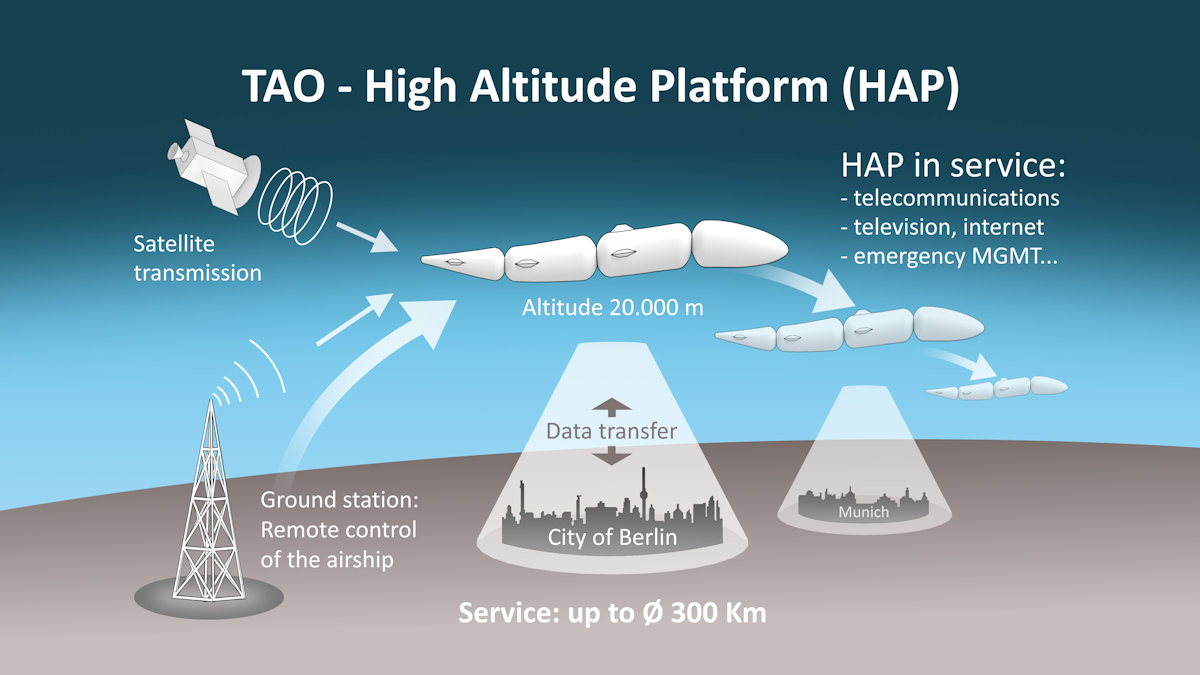
  4. High-altitude platform stations: Using aircraft, blimps and balloons, these systems can extend mobile network access to remote regions, helping bridge the digital divide for over 2.6 billion people worldwide​​. 
     
  5. Integrated sensing and communication: The advent of 6G networks facilitates simultaneous data collection (sensing) and transmission (communication). This enables environmental monitoring systems that help in smart agriculture, environmental conservation and urban planning. Integrated sensing and communication devices also promise to reduce energy and silicon consumption.
     
  6. Immersive technology for the built world: Combining computing power with virtual and augmented reality, these technologies promise rapid improvements in infrastructure and daily systems​. This technology allows designers and construction professionals to check for correspondence between physical and digital models, ensuring accuracy and safety and advancing sustainability.
     
  7. Elastocalorics: As global temperatures rise, the need for cooling solutions is set to soar. Offering higher efficiency and lower energy use, elastocalorics release and absorb heat under mechanical stress, presenting a sustainable alternative to current technologies.
     
  8. Carbon-capturing microbes: Engineered organisms convert emissions into valuable products like biofuels, providing a promising approach to mitigating climate change.
     
  9. Alternative livestock feeds: protein feeds for livestock sourced from single-cell proteins, algae and food waste could offer a sustainable solution for the agricultural industry.
     
  10. Genomics for transplants: The successful implantation of genetically engineered organs into a human marks a significant advancement in healthcare, offering hope to millions awaiting transplants.

About the Top 10 Emerging Technologies Report
The Top 10 Emerging Technologies Report, now in its 12th edition, serves as a vital source of strategic intelligence for professionals. Drawing on insights from scientists, researchers and futurists, the report identifies 10 technologies poised to significantly influence societies and economies.
In addition to promising major benefits to societies and economies, these emerging technologies must also be disruptive, attractive to investors and researchers, and expected to achieve considerable scale within five years.

This year’s edition introduced an innovative trend analysis methodology, incorporating academic literature, funding trends and patent filings, to ensure the accuracy and relevance of the selected technologies. The technologies featured in the report, produced in collaboration with Frontiers, were identified through a rigorous selection process involving over 300 world-leading academics and experts from the Forum’s Global Future Councils, the University and Research Network, the Frontiers network comprising over 2,000 chief editors worldwide from top institutions, and Mariette di Christina and Bernard Meyerson, Co-Chairs of the Emerging Technologies Steering Group.

Raketa “Avant-Garde” Wristwatch Is Art In Motion

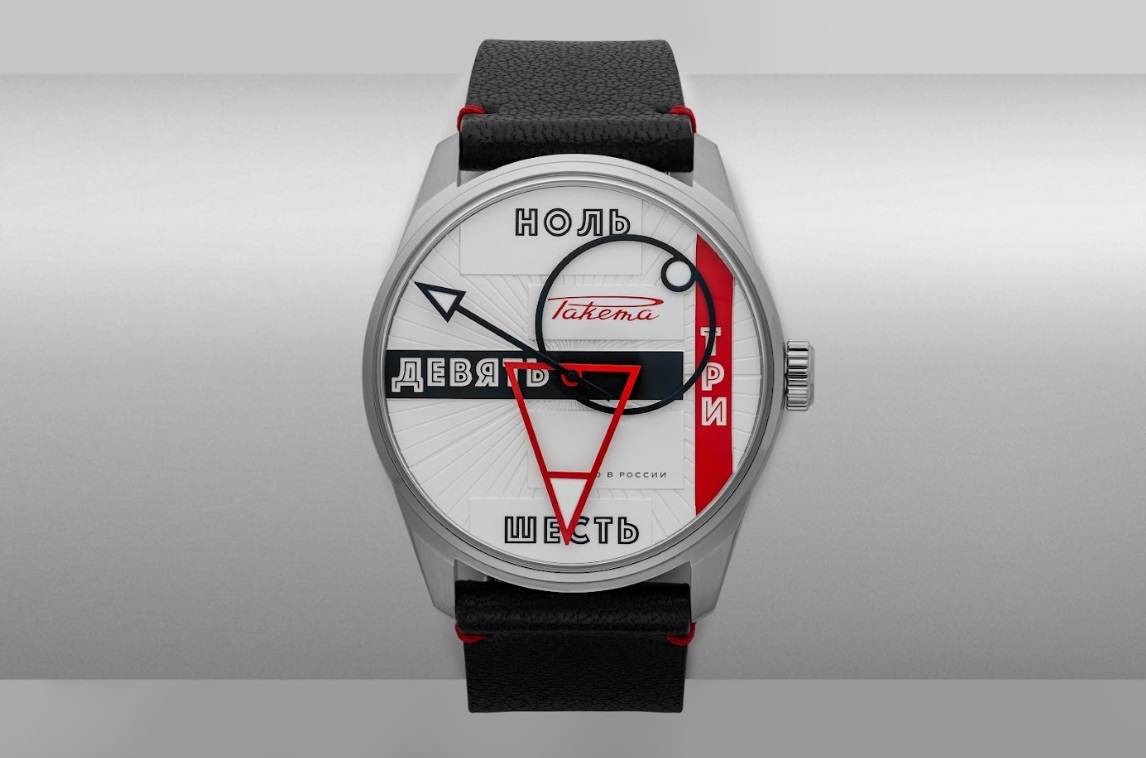
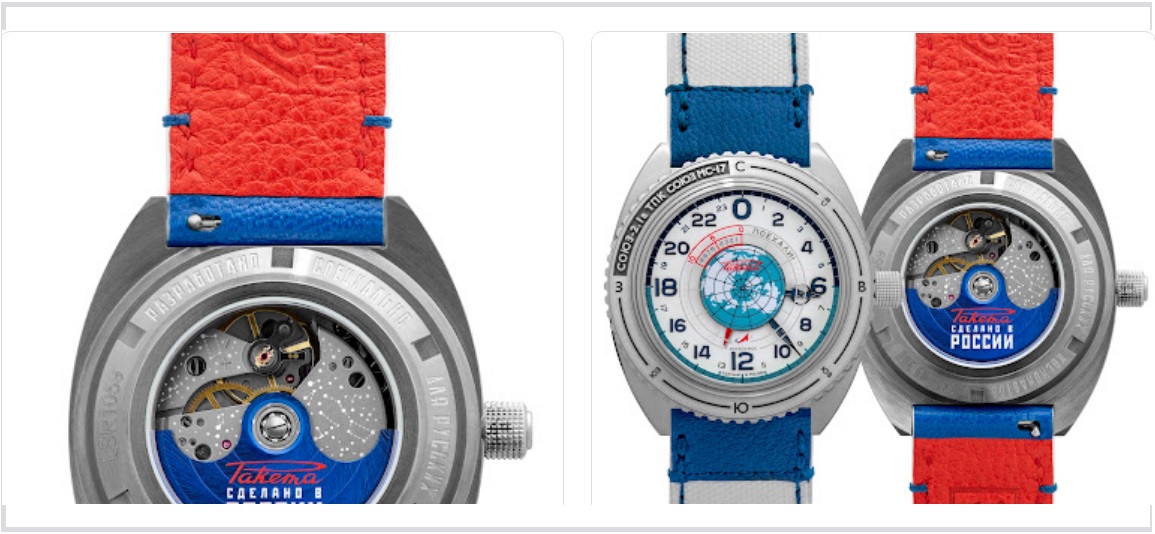
The new version of the Avant-Garde watch, while based on the original model with its famous red triangular hand, rises to a fundamentally new design level.

It now has a multi-layered dial, a sophisticated case and more striking hands with Super-LumiNova glow, showing the time even in the darkest dark. One of the main design innovations was to replace the usual numbers with words: zero, three, six, nine. Three main avant-garde colours – red, white, and black – combined with the austere geometry of hands and fonts help emphasize the beauty and uniqueness of each moment. Even a quick glance at your wrist will remind you of this, revealing each time a new art composition on the dial.


Drawing on the idea that the Raketa Avant-Garde model is “art in motion”, you can constantly interpret and reinterpret this ever-changing artwork, filling it each time with new meanings.

The abstract geometrical shapes on the dial are set in motion by a Raketa automatic movement designed and manufactured at the Raketa Watch Factory in St. Petersburg. Looking through the transparent case back, you can appreciate the beauty of the movement and enjoy its harmonious work.

Specifications

Factory:Raketa Watch Factory (Saint-Petersburg)
Movement:
Calibre:2615
Functions:Automatic
Number of jewels:24
Testing positions:4
Average rate (s/d):-10+20
Average running time (h):40
Frequency/hour:18.000 / 2.5Hz
Bi-directional automatic windingYes
Stopper of self-winding unit activated during manual winding:Yes 
Decoration:Laser engraving
Neva wavesPrint
Case:
Material:Stainless steel
Size:39,5 mm
Front glass:Sapphire 
Back glass:Mineral 
Crown:Ruby stone ​​inside the crown
Water resistance:5 АТМ
Hands:Super-LumiNova
Strap/bracelet:
Material:Genuine leather
Width:22 mm
Sex:Unisex

FR                     

 Raketa “Avant-Garde”

L’art en mouvement


Basée sur le modèle original avec sa célèbre aiguille triangulaire rouge, la nouvelle version de la montre Raketa “Avant-Garde” monte en gamme.

Ce modèle a désormais un cadran multicouche, un boîtier plus sophistiqué ainsi que des aiguilles plus saisissantes qui, grâce au Super-LumiNova, indiquent l’heure même dans l’obscurité. Mais une des principales décisions en matière de design a été de remplacer les chiffres habituels par des lettres : zéro, trois, six, neuf. Les trois principales couleurs de l’art avant-gardiste – rouge, blanc et noir – associées à une géométrie stricte des aiguilles et des polices de caractères permettent de souligner la beauté et le caractère unique de chaque instant. Même un bref coup d’œil à votre poignet vous le rappellera, révélant chaque fois une nouvelle œuvre d’art sur le cadran de la montre.

S’inspirant de l’idée que le modèle Raketa “Avant-Garde” est de l’art en mouvement, vous pourrez réinterpréter inlassablement à votre manière la composition qui se renouvelle sans cesse sur le cadran, et lui conférer des significations nouvelles.

Le déplacement des formes géométriques abstraites sur le cadran est assuré par un mouvement automatique Raketa conçu et fabriqué à la manufacture horlogère Raketa de Saint-Pétersbourg. Le fond transparent du boîtier permet d’apprécier l’élégance du mouvement et de son fonctionnement harmonieux.

Le prix

Spécifications

Le prix est de 1.950 Euros (TVA comprise)/ $2,863 CAD. Pour le confort de nos clients, les montres sont livrées gratuitement jusqu’à leur porte par DHL.

Manufacture :Manufacture de montres Raketa (Saint-Pétersbourg)
Mouvement :
Calibre:2615
Fonctions :Automatique
Nombre de rubis :24
Positions de reglages :4
Marche moyenne (s/j) :-10+20
Réserve de marche moyenne (h) :40
Fréquence/heure :18.000 / 2.5Hz
Remontage automatique bidirectionnel :Oui 
Système de débrayage du module automatique lors du remontage manuel:Oui
Décoration :Gravage laserCôtes de NevaCouleur azur
Boitier :
Matériau :Acier inoxydable 
Diamètre :39,5 mm
Glace côté cadran :Sapphire 
Glace arrière :Minéral 
Couronne :Rubis à l’intérieur de la couronne
Etanchéité :5 АТМ
Aiguilles :Super-LumiNova
Bracelet :
Matériau :Cuir véritable
Largeur :22 mm
Sexe :Unisexe 

$7500 Phono Cartridge Supercharges Record Players

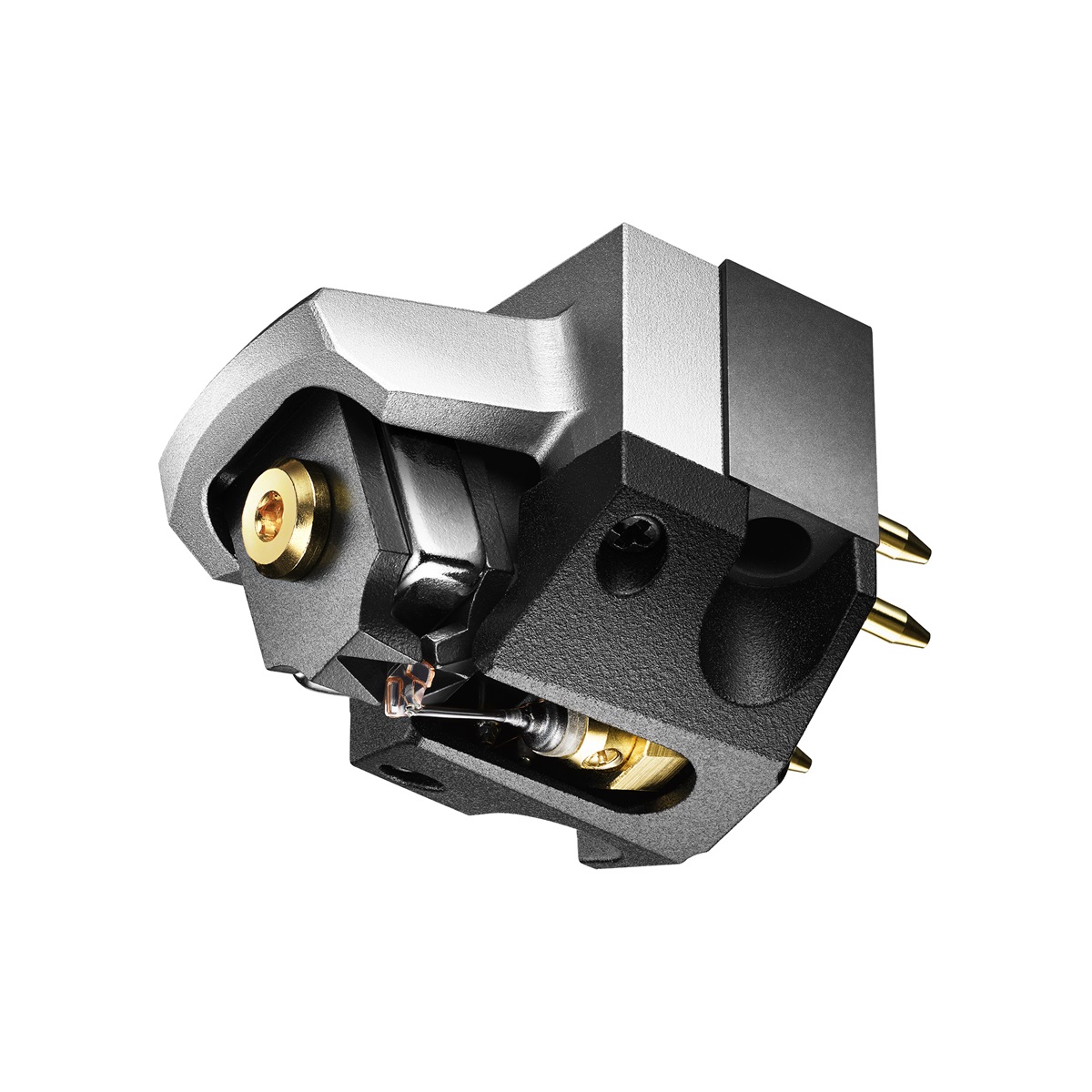
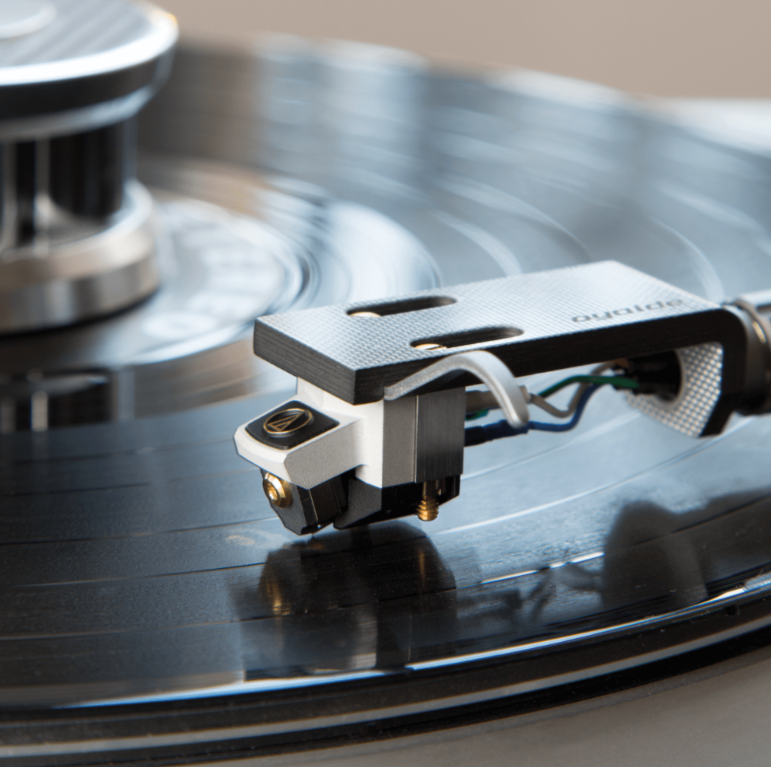
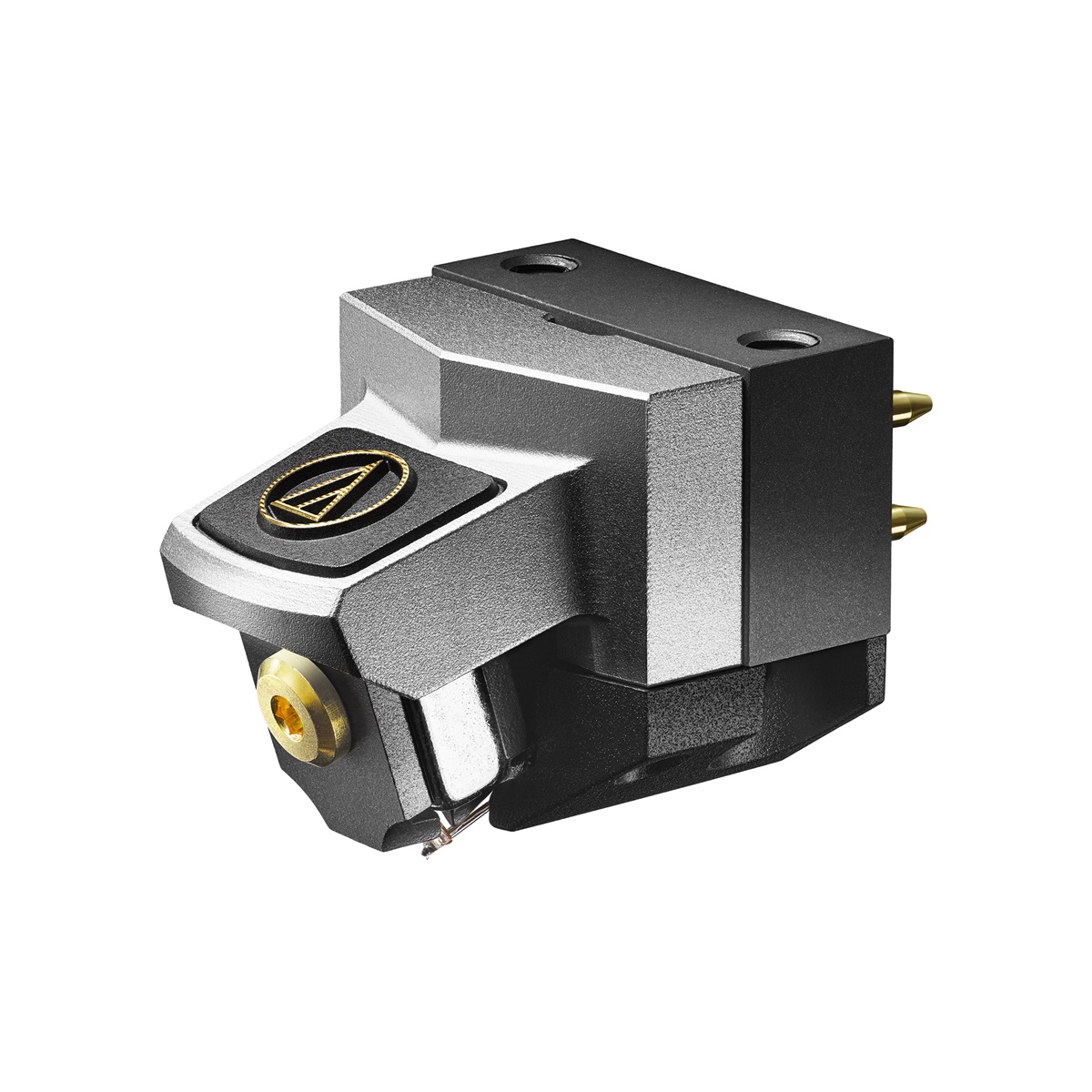
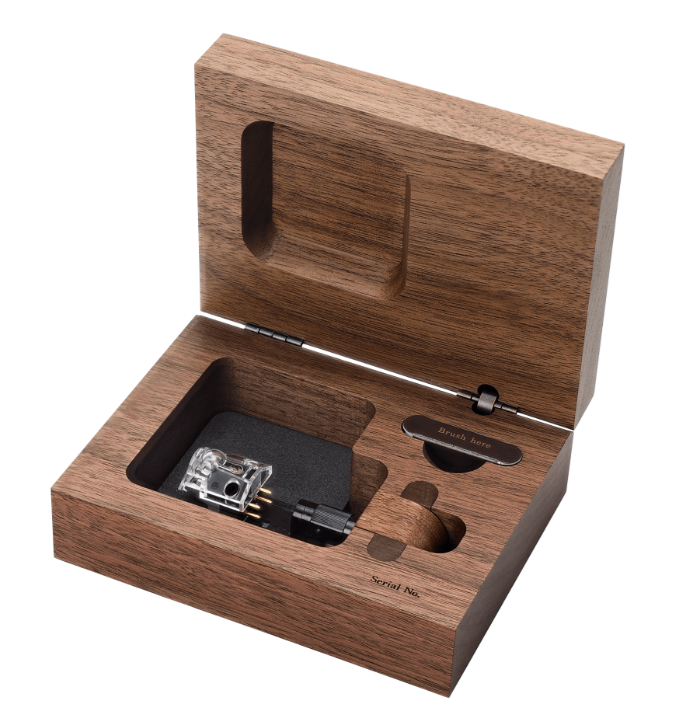
STOW, OHIO, June, 2024 — Audio-Technica today announced the introduction of its new top-of-the-line phono cartridge, the AT-ART1000X Direct Power Stereo Moving Coil Cartridge. Hand built in Tokyo, Japan, the AT-ART1000X builds upon the engineering excellence of the previous rave-reviewed AT-ART1000 with improvements in design and materials, and threaded mounting holes for easier installation.

Innovative New Design

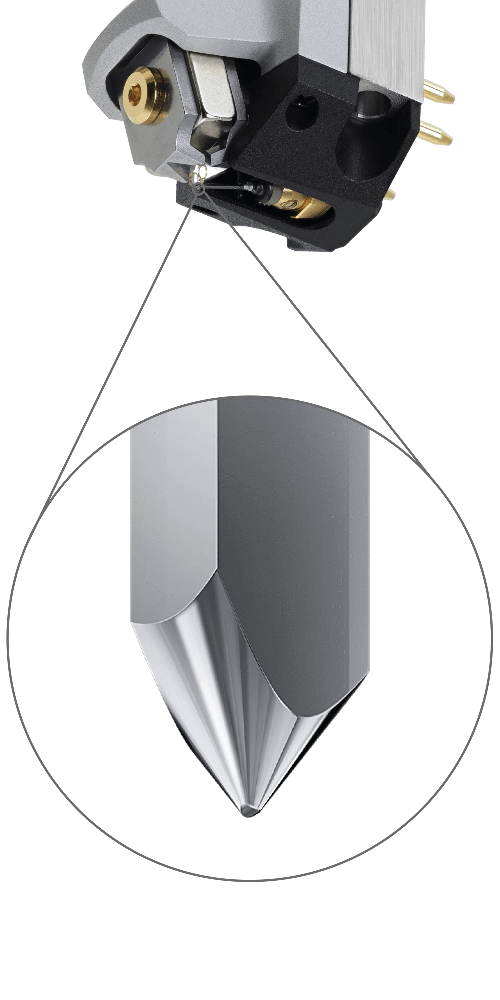
Unlike conventional moving coil cartridges, the AT-ART1000X’s Direct Power System places its dual moving coils on top of the stylus tip rather than at the base of the cantilever, enabling the cartridge to deliver extraordinary fidelity with greater musical detail. The AT-ART1000X’s coils are now rectangular rather than round, which positions more of their surface area in the magnetic field. This provides improved reproduction of record groove modulations, along with a higher output voltage for better signal-to-noise ratio and an expanded low-frequency range.

“By placing the moving coils, which convert the motion of the stylus and cantilever into electrical signals, directly on top of the stylus, the effects of the cantilever’s length and material type are minimized,” noted Yosuke Koizumi, Audio-Technica Cartridge Engineer. “This design and the additional refinements we’ve made to the AT-ART1000X achieve a new level of sonic realism, with remarkable resolution, tonal and spatial accuracy, and dynamic impact.”

Pure Copper Coils Make A Difference

Each of the AT-ART1000X’s two moving coils is made of 20 µm diameter PCOCC (Pure Copper by Ohno Continuous Casting) wire, hand-wound in eight turns to create a 1.1 mm x 0.6 mm (0.043 in x 0.024-inch) rectangle. The coils are contained in an ultra-thin 25 µm (0.98 mil) special film and housed in an 0.5 mm (0.020-inch) gap of the powerful magnetic circuit (smaller than the previous 0.6 mm gap), enabling each coil to generate a higher 0.22 millivolt output with a 3.5-ohm coil impedance, despite having a non-magnetic core.

The AT-ART1000X employs a special line-contact stylus and solid boron cantilever for superb accuracy in tracking the record groove.

The support base for the magnetic circuit, stylus and cantilever is made from titanium. The base, and the cartridge’s aluminum housing and hard plastic cover all operate together to disperse any internal resonances that would otherwise affect sound quality. In addition, a special coating protects the magnetic circuit from corrosion. The musical result is rich, natural full-bodied reproduction of vocals and instruments, with weight, presence, and depth, presented on an expansive soundstage.

The Audio-Technica AT-ART1000X Direct Power Stereo Moving Coil Cartridge is now available at US$5,499.00/ CAD$7,574. For the Silo, Jamie Bobek.

Limited Edition Apple Watch Cases Fuse Sweden With France

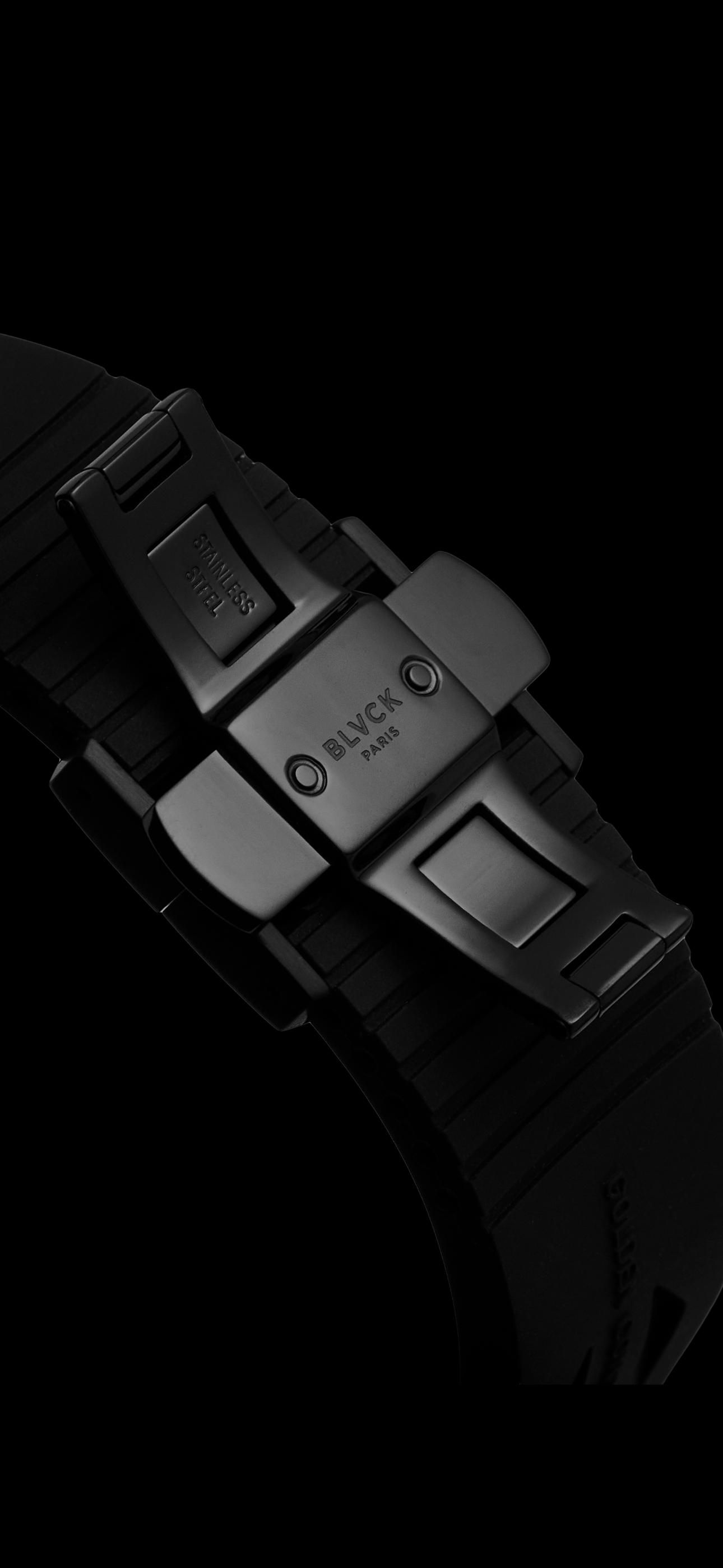
Discover the exceptional collaboration between Golden Concept, the Swiss master of ultra-luxurious Apple Watch Cases, and Blvck Paris, renowned for its ‘All Black’ luxury lifestyle apparel and accessories. Together they unveil a groundbreaking line that merges Parisian chic with Swedish sophistication, redefining the realm of high-end tech fashion. The limited-edition styles are now live and range from $899usd / $1,234cad to $1299usd / $1,783cad. The collaboration features two of Golden Concept’s top-selling pieces that have been expertly modified into exclusive black editions. This unique transformation combines the signature luxury and craftsmanship of Golden Concept with the distinct, all-black aesthetic of Blvck Paris. The pieces come in two sizes; one compatible with the Apple Watch 45 mm and the other one compatible with the Apple Watch 49 mm. These reimagined pieces perfectly represent both brands’ renowned styles, offering an unparalleled luxury experience for Apple Watch enthusiasts.
“We are super excited about this collaboration with the exquisite brand of Blvck Paris. My passion has always been in the design and creation process and to embark on this together with Julian and his team has been a real treat. We hope the customers love it as much as we do,” says Puia Shamsossadati, CEO and Creative Director of Golden Concept. “At Blvck Paris, we’re excited to team up with Golden Concept. Both brands have a deep appreciation for aesthetics and luxury, making this collaboration a natural fit. Our shared vision is to create designs that are both elegant and contemporary, offering something truly special for our customers.” – Julian O’hayon, Founder & CEO of Blvck Paris.
For the Silo, Melissa Nicholls.
About Golden Concept

Golden Concept is the premier brand of luxurious tech accessories where design and style take center stage. Founded by Puia Shamsossadati in 2014, we are now celebrating a decade in the market. Our product range also includes mobile cases, accessories, and apparel with prices ranging from $1,000usd / $1,373 to $250,000usd/ $343,125cad. Golden Concept is available at over 150 premium retail locations worldwide, as well as flagship stores in Tokyo, Taipei, Singapore, Bangkok, and Shanghai, with worldwide shipping from Golden Concept.  

About Blvck
Blvck Paris is a luxury lifestyle brand founded in 2017 by French designer Julian O’hayon. Blvck is known for its ‘All Black’ clothing, accessories, and digital goods. Blvck strives to pioneer an aspirational lifestyle from visual content to merchandise, pursuing quality and design. To date, the brand opened stores worldwide in California, Tokyo, Taipei, Taichung, Hong Kong and Macau.

These American 1990s Concept Cars Were Cool AF

Flickr/Alden Jewell

Our friends at Hagerty know a thing or two about cars and really love talking about concept cars of every era, but the 1990s have a special place in their heart. Read on and tell us which one is your fav and why in the comments section below.

It was a good decade for automotive diversity, especially for enthusiasts: SUVs were emerging as a hot new segment, true, but none of them purported to be a coupe or track star. Sport sedans thrived. So did hot hatches. The Miata debuted in 1989, kicking off the roadster craze. Chrysler was, for most of that decade, just Chrysler—not some confusing multinational conglomerate with a name that no one remembers.

Even the automotive ideas that didn’t make production had pizzazz—in a few cases, as you’ll see below, perhaps a little too much pizzazz. We’ve covered ’90s concepts before, but after a spin through the treasure trove that is Alden Jewell’s catalog of car brochures on Flickr, we decided it was time to focus on the concept cars from the U. S. of A., rather than the European contingent that dominated that last list.

Step back in time with us to an era when Buick was thinking of wild sedans, Pontiac was still cool, Mercury … existed, and Dodge was high off the Viper.

1999 Buick Cielo

1999 Buick Cielo concept convertible
Flickr/Alden Jewell

If you thought Buick’s newest concept car was unorthodox, prepare yourself: The Cielo is much, much more out-of-the-box. (Despite that throwback grille texture, which is very Y-Job.) A four-door convertible, with retractable headlights and voice-operated doors? You’d never know this thing was based on a highly modified Regal GS. The top, complete with its rear glass, stowed beneath a panel at the back thanks to a cable system hidden in the two arches that frame the “roof.” Power came from a supercharged 3.8-liter V-6 making 240 horsepower.

Judging by the much tamer concept of the same name that Buick showed off the following year—and marketed as a possible limited edition—the automaker thought the convertible four-door idea had legs. In Buick’s words, the Cielo “proves just how broad and flexible and contemporary the idea of a premium family car really is.” Little did Buick know that, 15 years later, the only premium family car the people would want was an SUV …

1999 Buick Cielo concept convertible
Flickr/Alden Jewell

1997 Mercury MC4

1997 Mercury MC4 concept
Flickr/Alden Jewell

Motortrend got rather excited about the MC4 when it debuted in 1997: “The MC4 is for Mercury what the Viper Roadster was for Dodge nine years ago.” Yes, it was far more interesting to look at than the blob-like Mystique or the softly contoured Mountaineer … but no one knew that, 13 years later, Mercury would stop producing vehicles, its sales cannibalized by parent company Ford.

In 1997, however, Mercury’s star shone far brighter. The MC4 wore the edgy, minimalist look characteristic of Ford’s New Edge design language, initiated by the GT90 concept in 1990 and most familiar to folks on the 1999 Mustang. A trapezoidal grille and emphasized wheel arches are common to both that Mustang and the MC4, which actually started life as a V-8–powered ’96 Thunderbird. Unlike the T-Bird, the Mercury concept boasts four doors and a rear cargo area accessed by a pair of gullwing doors. It had style, space, and, of course, a healthy dose of tech that hadn’t quite been readied for production: video cameras instead of side- or rearview mirrors, nickel-chrome plate bedazzling the interior, and heated and cooled cupholders.

1997 Pontiac Rageous Concept

1997 Pontiac Rageous Concept

Flickr/Alden Jewell

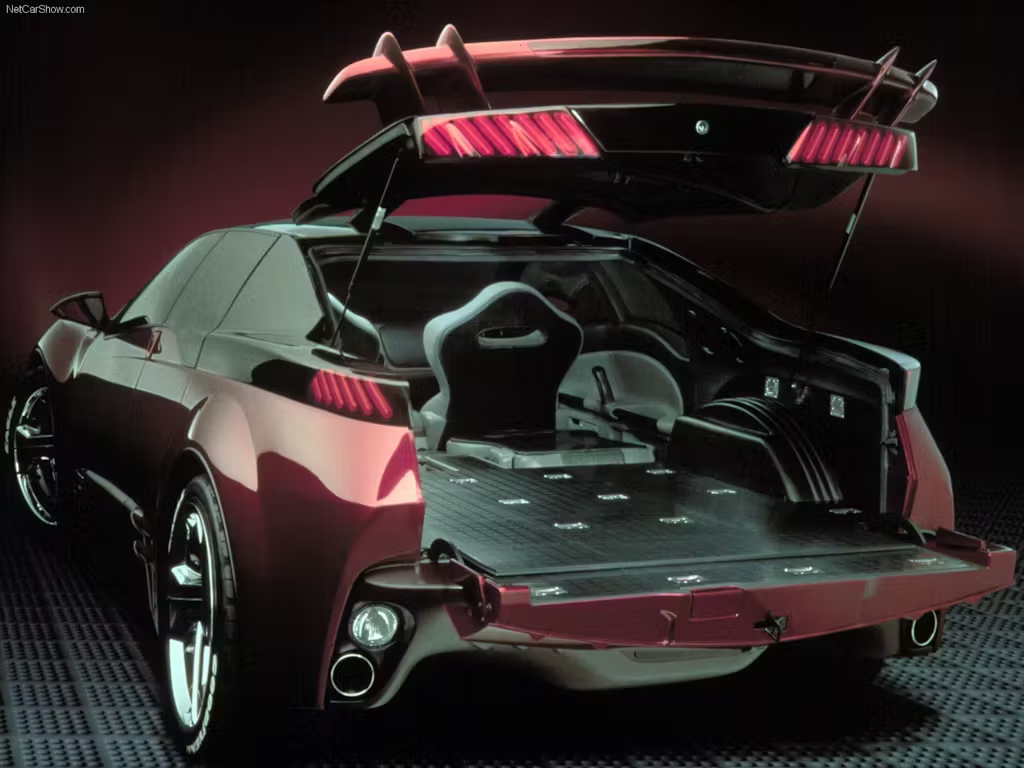
In 1997, Pontiac had four-door cars, and it had V-8–powered cars, but it didn’t have any V-8–powered, four-door cars. The Rageous, with its 350-cubic-inch small-block and vestigial set of rear doors, aimed to fix that. It could carry four people, but the trunk was accessed via a top-hinged hatch, making this more of a hatchback than a sedan. The Rageous had a six-speed manual transmission and a heavily vented, pointy schnoz that put that of the contemporary Firehawk to shame.

1997 Pontiac Rageous concept interior

Pontiac

1994 Dodge Venom

1994 Dodge Venom concept

Flickr/Alden Jewell

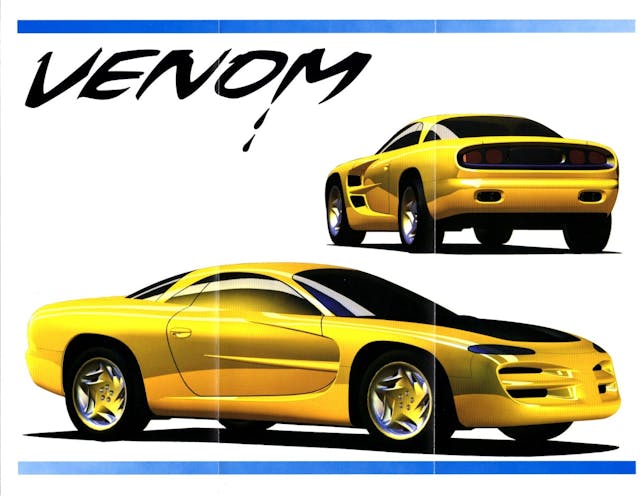
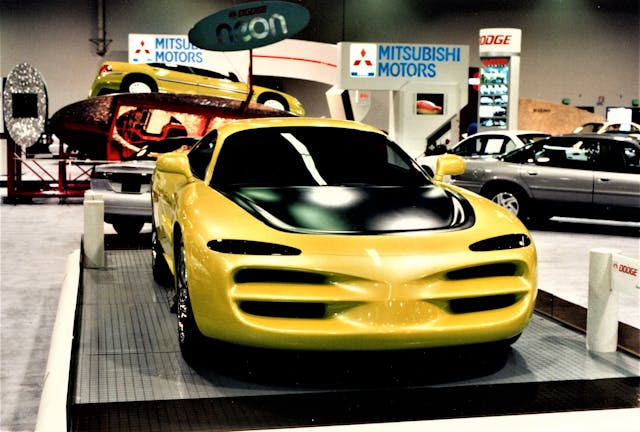
If the Dodge Venom reminds you of a Neon, you’re on the right track: This 1994 concept was built on a version of the Neon’s platform. Unlike that compact, however, the Venom was rear-wheel drive. Compared to the sportiest Neon, the SRT-4, the Venom boasted an iron-block six-cylinder engine with 24, rather than 16, valves, and more power: 245 rather than 215 horses. The Venom looked like the perfect little brother to the Viper, which it honored with that side-scoop and squinty headlights atop a four-section grille. The concept even made the cover of Car and Driver‘s March 1994 issue, accompanied by the question: “Dodge’s pony car of the future?”
We wish such an affordable, spunky two-door had made production: Dodge wouldn’t have a direct competitor to the Mustang and the Camaro until the Challenger, which hit the streets 14 years later.

1994 Dodge Venom concept
Flickr/Alden Jewell

1995 Chevrolet El Camino SS Concept

1995 Chevrolet El Camino SS Concept
Flickr/Alden Jewell

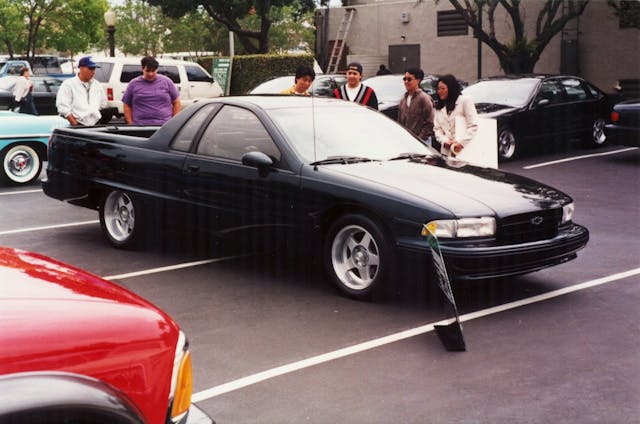
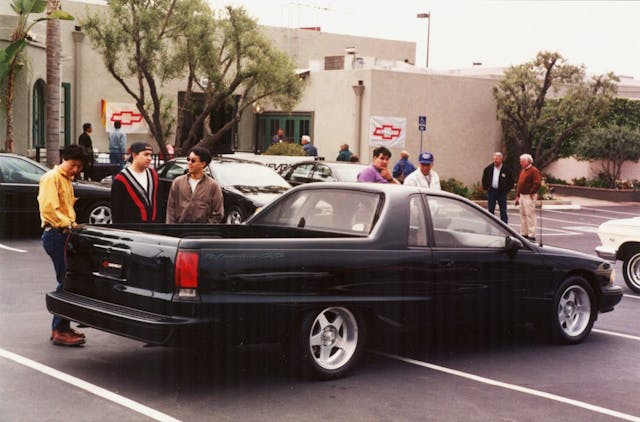
It may remind GM fans of a Holden, but the El Camino SS Concept ute is a GM B-body at its core. GM’s Advanced Vehicle Development Center in North America built this ute out of a Caprice station wagon in just 16 weeks, grafting onto that people-hauler the nose of an Impala SS. Many of the steel body panels were made by hand. Power came from a 300-hp version of the LT1 V-8 found in the Corvette and the Impala SS (in different tunes) and was channeled to the rear wheels via a 4L60E Hydramatic transmission. Unfortunately, the platform that gave it birth spelled its doom: GM killed the age-old B-body at the end of 1996. RIP.

1995 Chevrolet El Camino SS Concept
Flickr/Alden Jewell

1994 Plymouth Expresso Concept

1994 Plymouth Expresso Concept
Flickr/Alden Jewell

Would you believe us if we said this was a Plymouth? Maybe not, because the Expresso is more interesting than anything Plymouth made in the ’90s … until the Prowler arrived for the 1997 model year, at least. (That retro-mobile debuted in concept form the year before the urban runabout Expresso debuted.) The Expresso was built on the shortened frame of a Neon, to be sold under both the Dodge and Plymouth brands, and used the compact’s 2.0-liter four-cylinder to power its front wheels.

The four-door bubble would never reach production, but its name stuck around in the Plymouth lineup as a trim package on the Neon, the Voyager, and the Breeze. Be prepared to explain yourself if you mention this concept in front of a coffee snob: This weirdo’s name really is EX-presso, not Espresso. The proper pronunciation would be too … well, proper. For the Silo, Grace Houghton/Hagerty.

Genius Works Of Calder On Display At Gray Gallery

For each of them Calder establishes a general fated course of movement, then abandons them to it: time, sun, heat and wind will determine each individual dance… Each of its twists and turns is an inspiration of the moment… It is a little hot-jazz tune, unique and ephemeral, like the sky, like the morning.

-Jean-Paul Sartre, 1947

[NEW YORK -April, 2024] — GRAY is pleased to announce Calder, an exhibition of sculptures by Alexander Calder from the 1950s and 60s. The decades at mid-twentieth century were especially significant for the artist, whose objective to create space and movement at ever more immersive scales is expressed by the range of work in the exhibition. From the intimate interplay of color seen at a small scale in Contrepoids jaune, c. 1953 to the monumental statement in black and white of Clouds over Mountains, 1962, one experiences the breadth of Calder’s invention in color, volume, form, gesture, and motion. 

Calder is the twelfth exhibition at GRAY to include works by the artist, whose 1966 solo show at Richard Gray Gallery was installed at the gallery’s very first location in Chicago. The exhibition opens at GRAY New York (1018 Madison Avenue) on April 18 and will be on view through June 21, 2024. 

Clouds over Mountains.

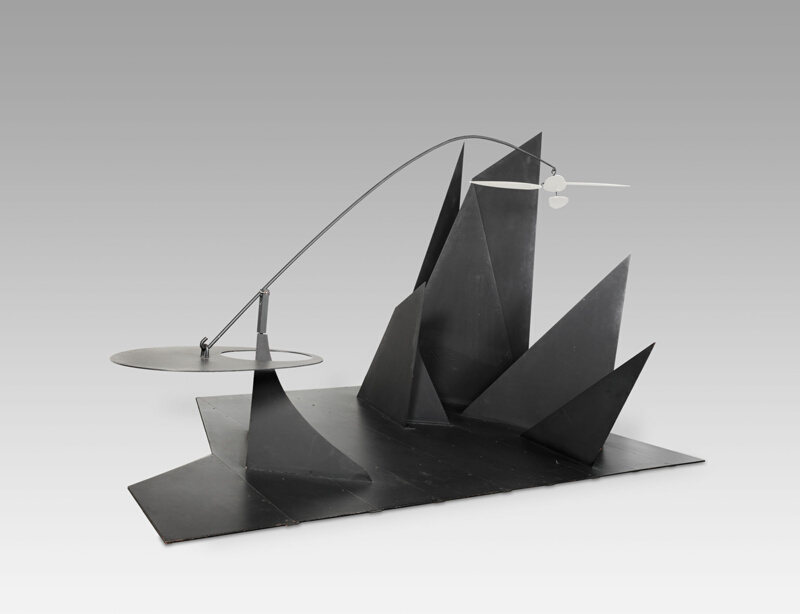
At the center of the exhibition is the large-scale sculpture Clouds over Mountains, which combines a series of angular black silhouettes with four curved white forms that hover above. Celebrated in the year it was made by leading critics such as John Canaday and Donald Judd, Clouds over Mountains is a seminal work, representing a milestone in Calder’s development of expansive standing mobiles.

The exhibition also features two important mobiles: Horizontal Red Moon Gong, 1957 and The Two Yellows, 1962. Both hanging mobiles, the works are key examples of Calder’s ability to find harmonic balance in an orchestra of counterweighted elements created in painted sheet metal, and brass in the case of the former work.

The exhibition takes place in GRAY’s New York gallery on the Upper East Side, the entrance of which is framed by a terrazzo sidewalk designed by Calder in 1970. The sidewalk, a cunning pattern of arcs and rectangles, was commissioned by three galleries then located on the block–including Calder’s long-time gallery Perls Galleries–and stretches from 1014-1018 Madison Avenue.

Calder at GRAY reactivates the physical location of the gallery. From the dynamic sculptures installed within the gallery to the geometric forms fixed in terrazzo outside, Calder’s eye for kinetic potential endures.

ABOUT ALEXANDER CALDER

Alexander Calder (b. 1898, Lawnton, Pennsylvania–d. 1976, New York City), whose illustrious career spanned much of the twentieth century, is the most acclaimed and influential sculptor of our time. Born in a family of celebrated, though more classically trained artists, Calder utilized his innovative genius to profoundly change the course of modern art. He began in the 1920s by developing a new method of sculpting: by bending and twisting wire, he essentially “drew” three-dimensional figures in space. He is renowned for the invention of the mobile, whose suspended, abstract elements move and balance in changing harmony. From the 1950s onward, Calder increasingly devoted himself to making outdoor sculpture on a grand scale from bolted steel plate. Today, these stately titans grace public plazas in cities throughout the world. 

Calder’s 1966 inaugural solo presentation at GRAY was the first of a number of exhibitions to feature the artist across the decades, including Sculpture Works on Paper, 1974; Contemporary Masters, 1987; Forty Years, 2003; Fun House, 2013; GRAY at 60, 2023; and most recently Calder, 2024.

Featured image: Alexander Calder, The Two Yellows, 1962.
© 2024 Calder Foundation, New York / Artists Rights Society (ARS), New Yor

Astrolab FLEX Moon Rover Nears South Pole Mission

Monaco, April 2024 The American company Venturi Astrolab, Inc. (Astrolab), a strategic partner of the Monegasque Venturi Group, has been awarded a NASA contract to support the development of Artemis campaign’s lunar terrain vehicle. Its rover, known as FLEX, is equipped with batteries and wheels developed by Gildo Pastor’s teams in Monaco and Switzerland.

Gildo Pastor is no stranger to specialized high-performance vehicles- here with Bugatti EB110 he drove to win the world record for fastest car on ice in 1995.

Astrolab is one of three teams to win contract awards. Astrolab’s contract is worth up to $1.9 billion usd / $2.56 billion cad. Collectively the three contract winners may be awarded task orders over the next 13 years with a total potential value of $4.6 billion usd/ $6.2 billion cad over the life of the program. The contracts allow for two additional years for the completion of services.
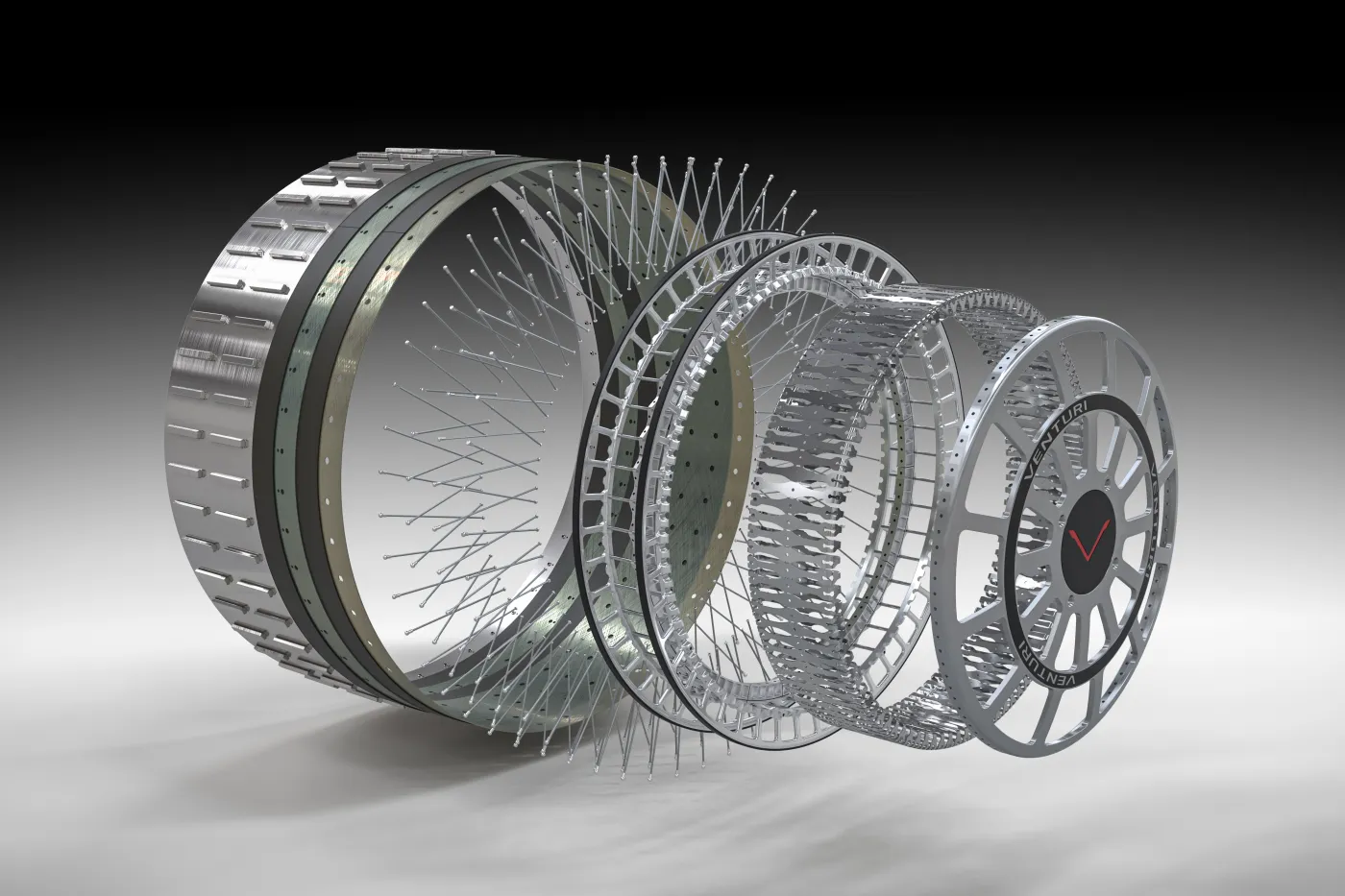
With this announcement, and after two decades dedicated to high-performance terrestrial electric vehicles, Venturi is taking another major step forward. Indeed, the industrial Group led by its President Gildo Pastor designs and manufactures the lunar vehicle’s wheels and batteries. The hyper-deformable wheels, developed and manufactured by the Venturi’s Swiss entity in collaboration with Astrolab, were presented at the Paris Air Show in June 2023. As for the batteries, these will be manufactured in Monaco in specifically designed facilities at the heart of the Venturi’s historic headquarters.

SpaceX’s Starship launch and landing system will deliver FLEX to the lunar surface in mid-2026.

Astrolab first revealed the full-scale working prototype for its Flexible Logistics and Exploration (FLEX) rover in March of 2022. In the years since, Astrolab, has conducted thousands of hours of laboratory and field testing that has led to numerous design improvements. The improvements to the wheels and batteries came as a result of tests Astrolab conducted together with Venturi’s engineers.

As required by NASA, FLEX can carry two suited astronauts, accommodate a robotic arm to support science exploration, perform robotic cargo logistics, and survive the extreme temperatures at the lunar South Pole, which is a technological challenge, particularly for the hyper-deformable wheels and batteries. FLEX can be operated remotely from Earth even when astronauts are not present, or it can be operated by suited astronauts.
Once FLEX arrives on the lunar surface, Astrolab expects that FLEX will become the largest and most capable rover to ever travel to the Moon. With a maximum combined rover and cargo mass of more than two tons, the FLEX rover is nearly three times the mass of its largest predecessor. This increased capacity provides significantly more opportunities to conduct scientific experiments and commercial endeavors on the lunar surface.
Through our strategic partnership with Astrolab, I am proud to see the Venturi Group’s know-how validated by NASA. After 20 years of innovation and world speed records in the field of terrestrial electric vehicles, we are now involved in an adventure that will go down in the history books: when Man returns to the Moon! When I see this rover, equipped with our wheels and batteries, operating up there I will have made my greatest dream come true“. – Gildo Pastor, President of the Venturi Group.

Astrolab is honored to have its FLEX rover selected by NASA to participate in the development of creating a Lunar Terrain Vehicle for the Artemis Campaign. Our entire team, together with our business partners, including our strategic partner Venturi Group, are committed to delivering to NASA an LTV that serves as a critical tool in the agency’s efforts to establish a long-term human presence on the Moon.” – Jaret Matthews, founder & CEO, Astrolab.

Why Costume Designers Always First To Encounter Actors

During the 12-year span of The Naked Truth, many of the world’s most alluring and enchanting actresses passed through the costume fitting room doors of costume designer Jean-Pierre Dorléac atelier.

Among them were Maude Adams, Jonelle Allen, Eve Arden, Belinda Bauer, Marisa Berenson, Joan Blondell, Ahna Capri, Kim Cattrall, Rosemary Clooney, Arielle Dombasle, Barbara Eden, Britt Eklund, Anne Francis, Eva Gabor, Erin Grey, Pamela Hensley, Olivia Hussey, Anne Jeffries, Maren Jensen, Carole Lawrence, Kay Lenz, Sondra Locke, June Lockhart, Sarah Miles, Anita Morris, Patricia Neal, Sheree North, Andrea Marcovicci, Yvette Mimieux, Donna Pescow, Eleanor Parker, Daphne Maxwell-Reid, Barbara Rush, Cybill Shepherd, Brooke Shields, Jill St. John, Jean Simmons, Laurette Spang, Camila Sparv, Stella Stevens, Ann Southern, Gloria Swanson, Liz Torres, Sela Ward, Lesley Ann Warren, Nancy Walker, Alfre Woodard and “Mae West.”

Original Battlestar Galactica Costume Design Sketch

Forget about a painted façade, towering elaborate hairdo, ostentatious and chunky borrowed jewelry, an overly pushed up décolletage and a see-through spangled gown—the true magnificence of a movie star is in her demeanor and sincerity, not in the all-too-plastic manifestation.  As has been stated many times, “beauty is only skin deep.”  With all the cosmetic surgery and filler injections available now, that is hardly true any longer.

Deep beneath the surface of what everyone sees is where the true splendor of a person lies.  It’s not in the eyeliner or false eyelashes, bright lip gloss, rouged cheeks, stiletto pumps or wearing something someone else has borrowed from a designer you never heard of … although in the ongoing Hollywood parade where everyone tries to out “glam” one another, it appears to be de rigueur.

Few of the true beauties ever subscribe to such theories.  What made each of them unique and magnificent were their skills, goodness, kindness and attitude, above all.

Life Looks Better When You Do 1985

Many of the greats never wore anything but casual clothes when they went about their daily lives, sans make-up and glitz.  Few were pretentious and none thought of themselves as better than anyone else.  The ones that professed to be “the best” usually had the shortest careers in the long run.

Since costume designers are always the first to encounter an actor or actress, usually hired unseen through casting, their experiences are the bar by which those who have yet to work with these performers is measured.  Depending on the first encounter, many artists are never hired again because of their lack of professionalism and ability.

In The Naked Truth, award-winning costume designer Jean-Pierre Dorléac’s entertaining chronicle of 12 years, readers will revel in the highly explosive stories that are filled with entertaining confrontations of every nature and, heretofore, untold tales of the glitter and tinsel capital’s drastic change that began in the early ’70s.

This often funny and quite fortuitous success story is filled with splashy tales and entertaining confrontations involving glamour, politics, graft, sex, scandal, and candid accounts of the glitter and tinsel capital’s assets being sold off by the new capitalist.

About the Author
Jean-Pierre Dorléac is no stranger to the film industry.  His award-winning costume designs can be seen in Somewhere in Time, The Blue Lagoon, Heart and Souls, Battlestar Galactica, Quantum Leap, Knightrider, Airwolf, The Lot and numerous other award winning productions.

The Naked Truth
by Jean-Pierre Dorléac
Publisher:  Monad Books
ISBN: 0974551111
Book and e-book available nationwide at independent and major book stores, Amazon.com or contact [email protected]

Audio-Technica Intros NARUKAMI Ultra-High-End Tube Headphone Amplifier & Headphones

STOW, OHIO,USA, March, 2024 — For more than 60 years, Audio-Technica has sought to expand the limits of audio technology. With the introduction of its NARUKAMI ultra-high-end audio products, Audio-Technica has taken the pursuit of analog sound reproduction to a remarkable new level of excellence.

Making their U.S. premiere at CanJam NYC 2024 (March 9 – 10 at the Marriott Marquis, New York), the NARUKAMI HPA-KG NARU Tube Headphone Amplifier and ATH-AWKG Closed-Back Dynamic Wooden Headphones are stunning, ultimate-quality works of audio art.

Narukami- the Japanese thunder god.

Taking their name from the Japanese god of thunder, NARUKAMI products are designed to ignite elemental passions, while embodying the meticulous Japanese craftsmanship that is an Audio-Technica hallmark.

Audio-Technica NARUKAMI HPA-KG NARU Tube Headphone Amplifier

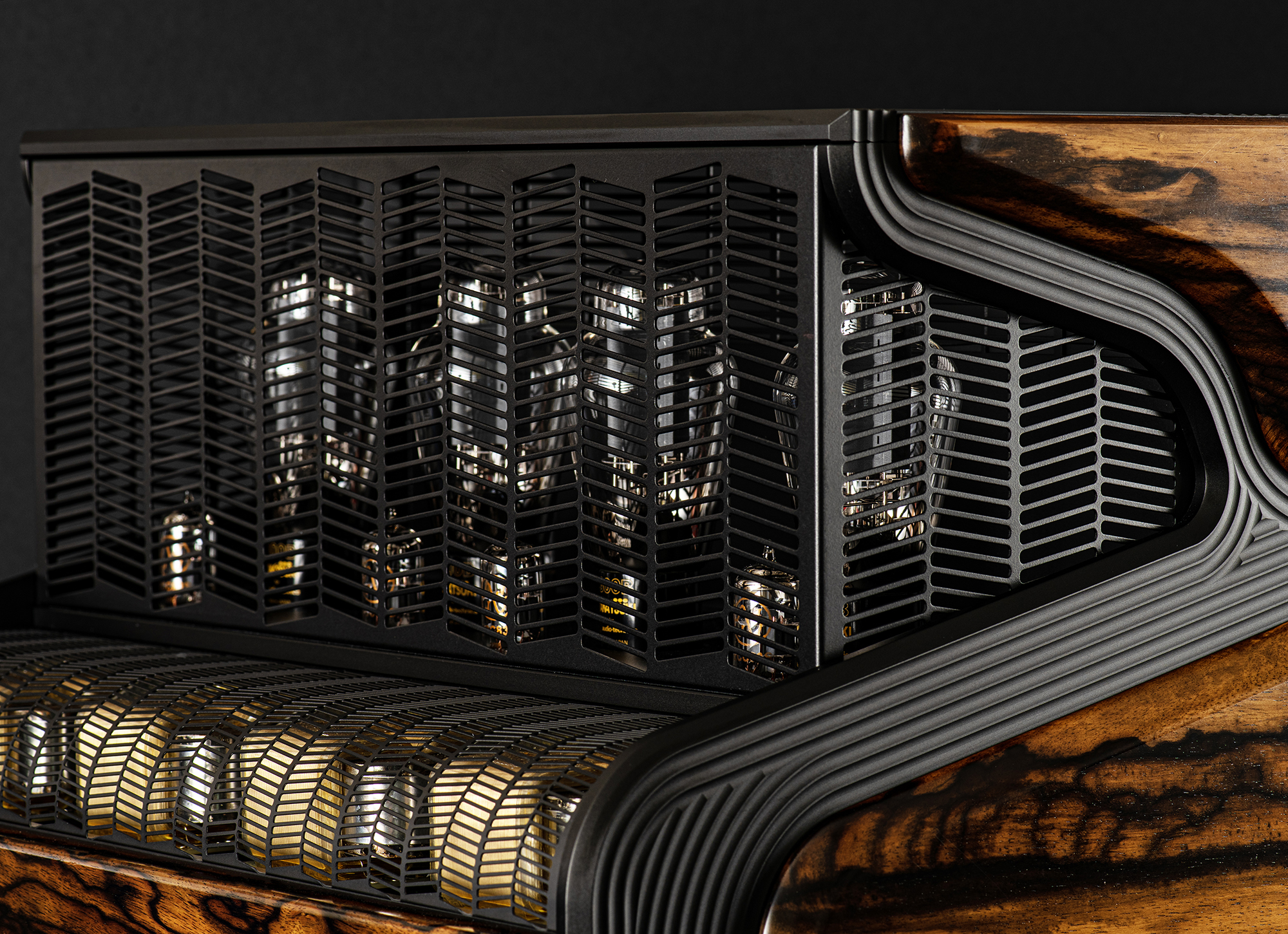
The front and side panels of the HPA-KG NARU tube amplifier/preamplifier (SRP: US$108,000 / CAD$145,400) are crafted from precious kurogaki wood, Japanese black persimmon wood with striking wavy black figuring that can be found nowhere else. The metal mesh covering that protects the vacuum tubes is evocative of the pattern of the flat needles of the Ayasugi tree. The top of the HPA-KG NARU tube amplifier/preamplifier is styled to reflect the appearance of a KARESANSUI or dry landscape garden, representing water flows.

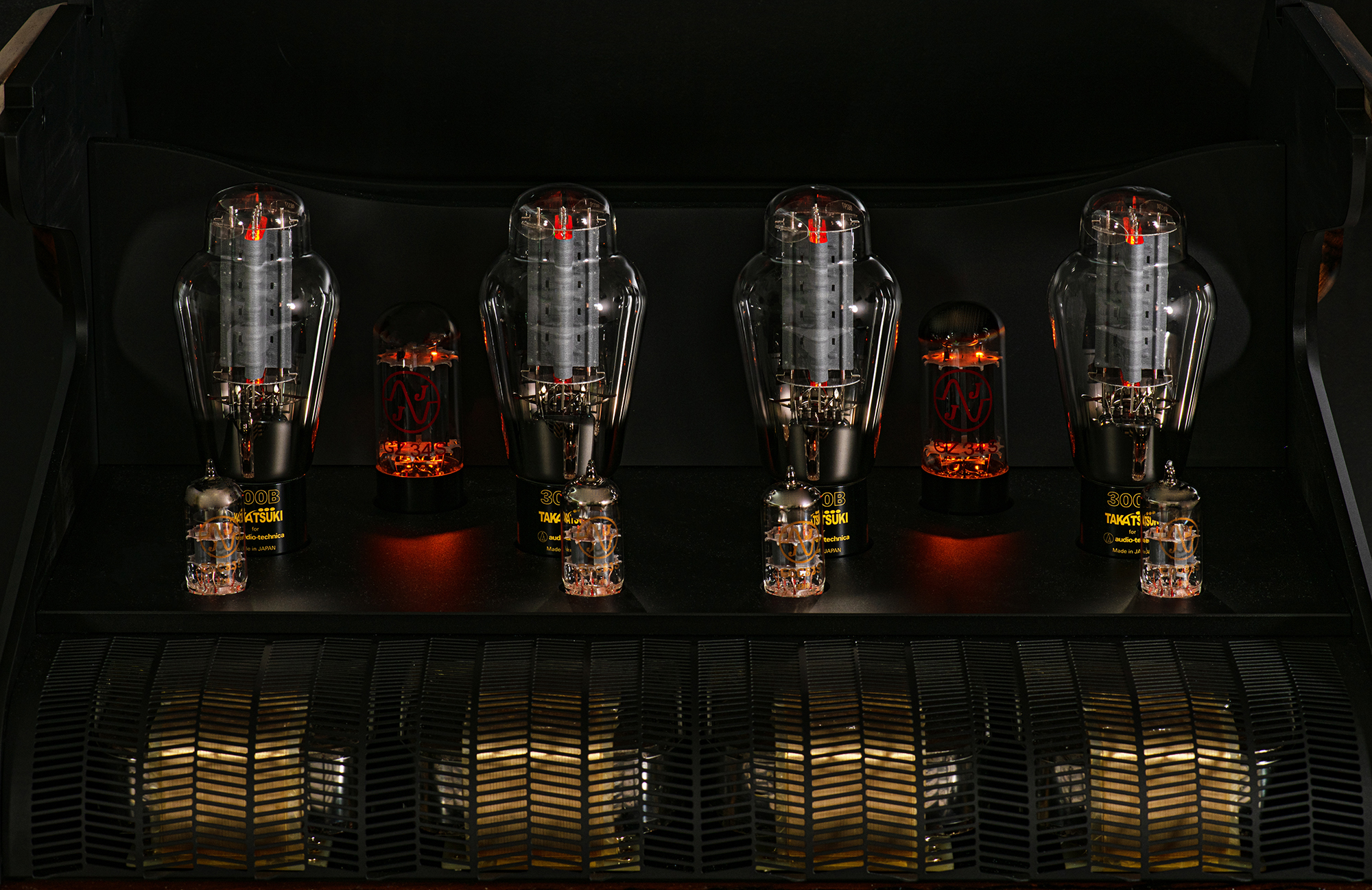
The HPA-KG NARU is as technologically refined as it is beautiful. The headphone amplifier/preamplifier employs four Takatsuki 300B power tubes, considered by connoisseurs to be among the finest of their type ever produced, and with ECC83S gold pin small-signal tubes. The HPA-KG NARU utilizes a dual-mono configuration and has a fully-balanced drive design, for richly detailed sound with remarkable depth and presence. It offers both balanced 4.4 mm and standard 1/4-inch headphone jacks.

The amplifier provides an impedance selector switch to perfectly match with the widest range of headphones. No effort was spared in the quality of the internal components, which include amorphous-core silver-wire Lundahl input and output transformers to deliver the highest level of sonic clarity. In addition to its unsurpassed capabilities as a headphone amplifier, the HPA-KG NARU serves as a preamplifier, and offers balanced and single-ended inputs and outputs. Companion AW-KG NARU headphones are included with the HPA-KG NARU amplifier.

“We spent 10 years creating the HPA-KG NARU amplifier in an arduous process, working our way through 11 prototypes before settling on a design that met our high expectations,” said R&D engineer Koichi Irii. “The lifelike sound of the HPA-KG NARU is a testament to the power of our human approach.”

The ATH-AWKG headphones (SRP: US$4,200 / CAD$5,650) are equally exceptional. Like the HPA-KG NARU, the headphones are handcrafted in Tokyo, Japan, from rare kurogaki wood. In addition to its distinctive appearance, the acoustic properties of the kurogaki housings contribute to the headphones’ extraordinary sound quality. The hand-applied lacquer finish brings out the wood’s natural beauty.

Audio-Technica NARUKAMI ATH-AWKG Closed-Back Dynamic Wooden Headphones

The ATH-AWKG features purpose-designed 53-mm drivers with Permendur magnetic circuitry. Each driver is equipped with a titanium flange and a 6N-OFC high-purity oxygen-free voice coil to ensure precise movement and optimum signal transfer. Audio-Technica’s exclusive D.A.D.S. Double Air Damping System provides smooth, accurate bass response.

The ATH-AWKG is designed for maximum long-wearing comfort, and is supplied with an additional set of ZMF Universe Hybrid earpads for a unique alternate listening experience. The headphones are equipped with Audio-Technica’s A2DC jacks and two 9.8-foot (3.0 mm) detachable cables with 4-pin balanced and standard 1/4-inch jacks. Adding to its elegance, the ATH-AWKG comes in a presentation box with kurogaki wood accents.

Audio-Technica was founded in 1962 with the mission of producing high-quality audio for everyone.

Though these latest releases are aimed at those with deep pockets and the means to buy the ultimate in design and offering, we have grown in other areas and just as importantly to design critically acclaimed headphones, turntables and microphones at all price points. We have retained the belief that great audio should not be enjoyed only by the select few, but accessible to all. Building upon our analog heritage, we work to expand the limits of audio technology, pursuing an ever-changing purity of sound that creates connections and enriches lives.

Raketa Releases Watch With Counterclockwise Movement

Raketa “Russian Code”
In the beat of the Universe

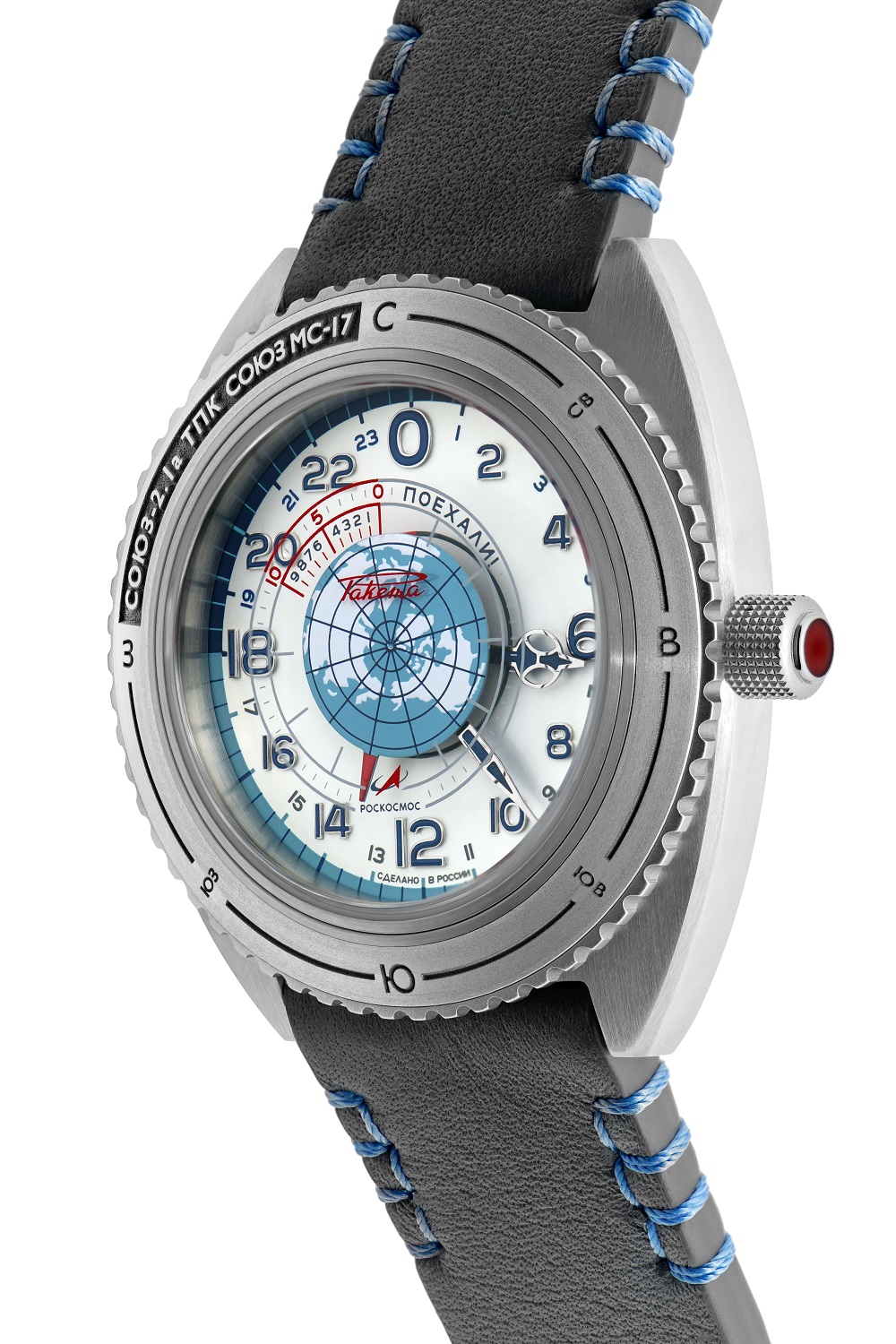
The “Russian Code”, one of Raketa’s most recognizable models with a counterclockwise movement, is finally launched as part of Raketa’s main collection.
The watch is crafted in an all-new case: a combination of sharp facets and rounded curves are enhanced by a mix of satin-brushed finishing with polished edges, while the sapphire glass has a more complex domed shape. A synthetic ruby is yet another update of the case: it glows behind Raketa factory’s logo carved on the side of the crown.


The centre of the dial displays the constellations over St. Petersburg on the morning of April 12, 1961, when Yuri Gagarin made history by becoming the first man to fly into space.
Textured polished indexes with two types of coatings (light rhodium on even and dark on odd numerals) convey an extra 3-dimensional aspect to the already multilayered dial.


Behind the elegant design lies the revolutionary concept that time should move in harmony with the natural counterclockwise movement of the planets in our Solar System. Therefore,
just like the planets around the Sun, the hands of the Raketa “Russian Code” rotate in a counterclockwise direction around the dial.
The case back reveals a beautifully decorated automatic movement entirely manufactured and assembled at the Raketa Watch Factory in Saint-Petersburg.
Are you ready to move on to the new generation of watches that tick to the beat of the Universe?


A watch that invites you to be different


To wear this watch, you will have to break free from the most fundamental rule of time-reading — the clockwise movement of time that was taught to us from ancestral times.
Indeed, early people read the time with sundials by observing the clockwise movement of the sun in the sky (from left to right) and of the corresponding shade on the dial (from right to left). When our ancestors finally invented the concept of hands (instead of shade) moving around a dial, they naturally decided to keep this clockwise movement that they observed in nature

However, there is a serious flaw in this decision: the Sun doesn’t move clockwise in the sky.
It’s an illusion — it actually doesn’t move at all. It is the Earth that moves in a counterclockwise direction around the Sun!

The sun follows a clockwise movement in the sky when it is seen from the Earth’s northern hemisphere: in the southern
hemisphere, it goes in the opposite direction. The reason why early watchmakers decided to replicate on dials the clockwise
movement as seen in the northern hemisphere is simply because this is where they always lived (and as a matter of fact where
90% of the world population has always lived).

The Raketa Watch Factory corrected this mistake by designing a watch where the movement of time follows the natural movement in the Universe.
This watch is certainly not for the faint-hearted but rather for people who are willing to stand out from the crowd and be different!


A watch that is true to Raketa’s DNA


By following the movement in the Solar System, this watch underlines the link between Raketa and the Cosmos: the brand Raketa (which means “Space Rocket” in Russian) was
created in 1961 in honour of the first manned space flight by the Soviet cosmonaut Yuri Gagarin. Since then, Raketa’s designers and engineers were always inspired by space and regularly made watches for cosmonauts and watches celebrating the Solar System.


A watch with a very special movement


The counterclockwise movement of the hands is powered by a very special Raketa automatic movement (2615R). The engineers of the Raketa Watch Factory inverted the movement of the hands by changing the construction of the 2 most important parts of the
mechanical movement: the mainspring barrel and the anchor module! This engineering feat could only be accomplished because Raketa produces in-house 100% of these parts.


Price


The watch costs 1950 Euros (VAT included)/ $2,865 cad. All Raketa watches are delivered worldwide by DHL free of charge.

Specifications
Factory: Raketa Watch Factory (Saint-Petersburg)
Movement:

Calibre: 2615 CR
Functions: Automatic with reverse direction of hands
Number of jewels: 24
Testing positions: 4
Average rate (s/d): -10+20
Average running time (h): 40
Frequency/hour: 18.000 / 2.5Hz
Bi-directional automatic winding: Yes
Stopper of self-winding unit
activated during manual winding: Yes
Decoration: Nanocoating
Neva waves Print

Case:

Material: Stainless steel
Diameter: 39,5 mm
Front glass: Sapphire
Back glass: Mineral
Crown: Synthetic ruby stone inside the crown
Water resistance: 5 ATM
Hands: Superluminova

Strap/bracelet:

Material: Genuine leather
Width: 22 mm
Sex: Unisex

Iconic Mid-Century Modern Home For Sale

Pierre Koenig was one of the most iconic architects of the mid-century modern movement, which focused on functional designs, harmony with nature, geometric lines, and the use of steel and glass. Koenig’s final project, a gorgeous geometric home in Santa Monica known as the Schwartz House, has been listed for sale at $4.55 million usd / $6.13 million cad. 

More like a work of art than a typical house, the rare historic home sits atop four structural steel columns, designed to minimize the home’s ecological impact and promote a harmonious relationship with nature. The residence’s rotated design is focused on southern exposure and capturing the sea breezes to conserve energy but also offers an attention-getting look. Stark lines, black-steel framing, galvanized wall panels, and floor-to-ceiling glass provide the classic mid-century modern aesthetic for which Koenig is so famous.

More from our friends at toptenrealestatedeals.com. Photos by Cameron Carothers.

The Met Acquires Monumental Tiffany Window

(New York, December, 2023)—The Metropolitan Museum of Art has announced the acquisition of a monumental Tiffany three-part window, Garden Landscape. The window—over ten feet wide and nearly seven feet tall—was designed by Agnes Northrop in the studios of Louis Comfort Tiffany, the attribution of which is based on a signed design drawing for the center panel that resides in The Met collection.

As part of the Museum’s American Wing 100th anniversary, the window will be installed in the Charles Engelhard Court in November 2024. The window will be dramatically framed by the columns from Laurelton Hall, Tiffany’s Long Island country estate.

The acquisition is made possible by Alan Gerry Gift; 2023 Benefit Fund; Louis V. Bell, Harris Brisbane Dick, Fletcher, and Rogers Funds and Joseph Pulitzer Bequest; funds and gifts from various donors, by exchange; Ronald S. Kane Bequest, in memory of Berry B. Tracy; Lila Acheson Wallace, several members of The Chairman’s Council, The Erving and Joyce Wolf Foundation, Martha J. Fleischman, Elizabeth J. and Paul De Rosa, Women and the Critical Eye, Mr. and Mrs. Richard Lockwood Chilton Jr., Cheryl and Blair Effron, The Felicia Fund, Julie and James Alexandre, Elizabeth and Richard Miller, Anonymous, John and Margaret Ruttenberg, and The Gerald H. Ruttenberg Foundation Gifts.

Max Hollein, The Met’s Marina Kellen French Director and CEO, said: “This stunning work of art is an extraordinary example of the transformational creativity of Agnes Northrop and Tiffany Studios. Magnificent in concept and execution and more than grand in size, it deepens the American Wing’s Tiffany holdings and will enhance the already stunning Engelhard Court with a powerful, immersive viewing experience.”

Sylvia Yount, Lawrence A. Fleischman Curator in Charge of the American Wing at The Met, said: “Northrop’s remarkable environmental work further strengthens our representation of women artists in the American Wing and allows us to share broader stories of early-20th-century culture with our visitors.”

The window was originally commissioned by Sarah Cochran, Pittsburgh businesswoman and philanthropist, for Linden Hall, the grand Tudor-Revival estate she had built in 1912 in Dawson, Pennsylvania. She personally requested the subject of the window, which represents a lush landscape and garden suggestive of her own at the estate. Placed on the stair landing of the house, the window enticed the viewer up marble steps and offered a long vista through tall, majestic pines flanking a central fountain amidst profuse flowers—pink and blue hydrangeas, poppies, and nasturtiums. The two side panels depict, on the left, foxglove and peonies, and on the right, hollyhocks, exquisitely rendered in glass. These were subjects favored by Northrop and American Impressionist painters.

Northrop was one of the most important designers in Tiffany’s employ and his preeminent woman designer. In a field dominated by men, Northrop established herself as one of the leading designers of windows, and was recognized for her work by winning a prestigious award at the Exposition Universelle in Paris in 1900. She helps shed light on the critical and often unrecognized role played by women in the art of Louis Comfort Tiffany. Northrop and Tiffany pioneered new landscape and garden subject matter for stained glass, and the window reveals Northrop’s careful observations of nature and her gift for translating it into glass.

Alice Cooney Frelinghuysen, Anthony W. and Lulu C. Wang Curator of American Decorative Arts, said: “This extraordinary evocation of a garden landscape is Northrop’s masterpiece. Made during the height of Louis Tiffany’s career, it was conceived, commissioned, and crafted by women. Featuring flowers in bloom from spring through summer, seen in the enigmatic light of approaching twilight, the window presents a luxuriant garden perennially in bloom.”

Tiffany’s opalescent glass shares a zeitgeist with American Impressionism, merging imagery with chromatic light. Northrop exploited the varied textures, lush colors, and light effects that were only possible with Tiffany’s special Favrile glass made at his furnaces in Corona, Queens, utilizing especially innovative and unusual techniques, some unique in a stained-glass window. The ingenious selection of the glass as well as the cutting of the glass into often thousands of pieces of almost impossible shapes was done by Tiffany’s skilled artisans, who were also largely women. Tiffany deemed the Linden Hall window of such note that he put it on public view in his New York showroom before shipping it to Cochran’s Pennsylvania home.
Featured image: Image: Three-part Garden Landscape window for Linden Hall, Designed by Agnes F. Northrop (1857–1953), Tiffany Studios (1902–32), New York, 1912. Leaded Favrile glass. 124 × 82 inches; 88 3/4 × 81 5/8 inches; 88 3/4 × 81 5/8 inches; center panel: 124 × 82 in. (315 × 208.3 cm); side panels: 88 3/4 × 81 5/8 in. (225.4 × 207.3 cm)

PS Audio Is Now Shipping Its Impressive Music Streamer

 – Versatile music streamer offers exceptional sound quality and easy setup –
Boulder, Colorado, September, 2023 – PS Audio is now shipping its AirLens music streamer, designed to deliver the ultimate in sound quality from streaming audio sources. The new AirLens (SRP: US $1,999.00 / CAD $2,709 ) offers high-resolution streaming via Roon and services such as TIDAL, Qobuz, Spotify, JRiver, and Audirvana, as well as from an NAS storage device or any DLNA-compatible server.

“The secret of the AirLens’ exceptional sound quality is its galvanic isolation,” noted Paul McGowan, PS Audio CEO. “Removing the physical connection between input and output stages eliminates the unwanted noise that can be introduced by USB, Ethernet or Wi-Fi. The AirLens also perfectly re-clocks the digital signal. The result is a remarkable improvement in resolution, timbral realism, and dynamics.”

The PS Audio AirLens connects to a network via Ethernet or Wi-Fi, and provides I2S and coaxial digital outputs to connect to a DAC. Typically, noise from any number of sources including a computer, long runs of Ethernet cable, EMI interference via Wi-Fi, and modems and routers all contribute to increased jitter and a loss of fidelity. PS Audio’s galvanic isolation removes this sonic degradation by eliminating the electrical connection between the input and output stages, using only air as the interface. This ensures 100 percent isolation and noise-free delivery of the digital audio signals. In addition, the signal is re-clocked at the output stage for jitter-free, pure digital audio.

Available in silver and black, the AirLens offers PCM decoding up to 352.8 kHz, and DSD to 256 (4x). Its compact size (10 by 7 by 1.5 inches) and sleek design make it easy to integrate into any audio system. Like every PS Audio product, the AirLens is manufactured using premium-quality parts and construction.

AirLens Features at a Glance:

Galvanically isolated from input to output to eliminate network and Wi-Fi noise and offer extraordinary signal purity and sound quality. Connects to a network via 10/100/1000 Ethernet or 2.4 and 5 GHz Wi-FiI2S and coaxial digital outputs. Offers PCM up to 352.8 kHz/32-bit and native DSD up to 256 (4x, up to DSD 128 via coax output)DoP (DSD over PCM) operation. Roon-ready, DLNA-ready, compatible with TIDAL Connect (via Roon), Spotify Connect, mconnect, Qobuz (via Roon and mconnect), Dropbox (via Roon), MQA, DLNA 1.5 and UPnP A/V 1.0 Digital Media Renderer. Available in silver or black10″ x 7″ x 1.5″, 4.8 lbs.

About PS Audio

Founded in 1973, PS Audio has earned a worldwide reputation for excellence in manufacturing innovative, high-value, leading-edge audio products. Located in Boulder, Colorado at the foothills of the Rocky Mountains, PS Audio’s staff of talented designers, engineers, production and support people build each product to deliver extraordinary performance and musical satisfaction. The company’s wide range of award-winning products include the all-in-one Sprout100 integrated amplifier, audio components, power regenerators and power conditioners.

This Fall -Rebecca Myers Nature Inspired Handcrafted Jewelry


JOIN ME FOR THESE UPCOMING FALL SHOWS
Fall is almost here and I’ve got a ton of great events coming up, including this weekend’s much-anticipated Long’s Park Amphitheater Art Festival in Lancaster, PA. These shows are more than just shopping experiences; they’re opportunities to connect with passionate artisans and discover one-of-a-kind pieces.  They’re also a great way to start your holiday shopping early (or grab some special pieces for yourself). Can’t make it to the shows? Swing by the Baltimore showroom in Cross Keys or shop all of my new pieces online at rebeccamyersdesign.com. See the full list of events on my events page… https://www.rebeccamyersdesign.com/events
Looking forward to seeing everyone! xo, Rebecca


SAINT LOUIS ART FAIR
September 8 – 10 | Downtown Clayton | St. Louis, MO This year we will celebrate our 30-year history of the art fair — still attracting high-quality artists and celebrating the diversity of the community through a celebration of the Arts. The Saint Louis Art Fair (SLAF) produced by Cultural Festivals has been working diligently to Reconnect Through Art with the health and safety of artists, volunteers, and the public as its top priority. TICKETS & INFO
CRAFT NEW YORK September 30 – October 1 | Damrosch Park at Lincoln Center | NYCNYC’s most unique curated shopping event! Find wearable art like clothing, jewelry and handbags; home decor such as functional and sculptural works in ceramics, glass, metal, wood and mixed media; as well as fine art painting, printmaking and photography; and more. All handmade and all unique! Also, make sure to visit the expanded gourmet foods and specialties boutique including distillery and winery tastings. TICKETS & INFO
THE WALTERS ART GALA: AN EVENING AT THE WALTERS October 21 | 6pm | The Walters Art Gallery | Baltimore, MD My favorite party is coming up! The BEST night out in Baltimore is also a great way to support one of our most wonderful institutions. Get your tickets for the Walters Gala! Don’t miss it! PURCHASE YOUR TICKETS

New Tech Japan Debut Earphone Audio Game Changer

Keep your conversations and audio completely private with newly debuted technology featured in the nwm MBE001 True Wireless On-Ear Speakers ! In addition to proffering stellar audio quality and comfort, they also notably prioritize privacy via advanced “Personalized Sound Zone” tech that eliminates sound leakage while letting ambient sounds in, keeping conversations and other audio private (even if someone is sitting right next to you) while also maintaining situational awareness and ability to engage with others. The North Star Boys group (55+ million followers strong) pictured/quoted below are praising this comfortable, non-invasive on-ear speaker that can be used in public spaces without disturbing the wearer’s surroundings—or having prying ears listening in no matter how close the other person is.

Japanese Tech Behemoth ‘NTT’ Launches Next Generation of Open-Ear Wireless Earphones Only the Wearer Can Hear

Prioritizing Privacy: NTT subsidiary, NTT sonority, introduces ground-breaking, true wireless on-ear speakers featuring proprietary Personalized Sound Zone technology that eliminates sound leakage while letting ambient sounds in for utmost situational awareness;

Founders of the leading Asian-American creator group and pop band the North Star Boys, 55 million+ social media followers strong, praise the nwm-branded MBE001 wireless headphones—the latest innovation in the company’s ambitious R&D pipeline—which keep the listener’s audio private while enabling human connectivity, conversation and engagement fostering seamless sound for a seamless world


518WpTXzHhL._AC_SX679_.jpg

With the global earphone and headphone market’s size forecasted to grow to USD $126 billion usd / $170 billion cad by as soon as 2030, numerous factors are propelling the category to these extreme fiscal heights. This includes rising customer expectations for increased audio quality coupled with the expansion of the music industry, mobile technologies and Internet penetration at large. Earphones have also become a ubiquitous accessory for the numerous ways the device enhances daily lives. From 2-way communication, music, entertainment, fitness and gaming immersion to more utilitarian needs like concentration, noise cancellation and hearing protection, earphones enrich the human experience in so many ways. As this sector burgeons, one visionary company realized the still untapped potential of this product category and is single-handedly taking earphone technology to exciting new heights: NTT sonority—Japan’s audio brand that is a subsidiary of NTT, which is a leading global technology company.


This tech behemoth has significantly raised the bar and is permanently disrupting the market with the launch of its ground-breaking nwm MBE001 True Wireless On-Ear Speakers, now available at www.PersonalizedSoundZone.com, featuring its proprietary “Personalized Sound Zone” (PSZ) Technology. Revolutionizing the way we experience audio, the PSZ innovation allows users to enjoy audio with utmost privacy, situational awareness, sound quality and comfort. The technology minimizes audio leakage by containing sound to the ear, enabling users to use this on-ear speaker in public spaces without worrying about disturbing their surroundings—or having prying ears listening in … even if they are sitting or standing right next to you. This audio technology advancement is at the product’s core, providing users with the ultimate private acoustic space and balanced sound experience allowing them to hear their world differently than ever before.

Couple.jpg

“It is important for users to remain connected to their environment while indulging in their favorite audio content, and this additional safety element is among the key features setting nwm MBE001 apart from other earphones on the market—both wireless and wired,” said Hiroshi Sakai, NTT sonority Managing Director and CEO. “The technology enables users to enjoy their own personal sound zone without disturbing those around them or allowing them to accidentally or intentionally listen in. With the nwm MBE001 open earphones, audio is confined to within a few centimeters of the ear, ensuring music, audiobooks, videos, conversations and other sounds remain entirely private. These earphones concurrently allow users to stay aware of what’s around them, but without compromising audio quality, comfort or discretion. The wearer will hear more and miss less.”

So noteworthy the innovation, the music industry is quickly taking notice. This as the wildly popular Asian-American creator group and pop band The North Star Boys founded by brothers Sebastian Moy and Oliver Moy, which boasts over 55 million followers combined on social media platforms and a reported 20 million monthly views on their syndicated Snapchat shows, is praising the earphone advancement.


“I’ve always wished for headphones that don’t go directly inside my ear but also have perfect sound that cancels out noise,” Sebastian said. “I’m so happy to use NTT sonority’s nwm wireless headphones! They’re super comfortable and the special technology prevents other people from listening in, even if they’re sitting right next to me. Favorite headphones!”

Oliver Moy is also spreading the love for NTT sonority’s newest earphones, sharing, “Been using the nwm wireless on ear speakers for a couple of days now and, as a music producer, these on-ear speakers bring great quality with great practicality for everyday use. Cannot leave to the gym without them, as they are very comfortable and do not slip off my ear like other ear speakers… and they feel weightless while sitting on my ears.”

Trio.jpg

User Experience is Everything

The nwm MBE001 on-ear speakers are thoughtfully designed to address numerous factors that directly impact user satisfaction. These key benefits include:

  • 51Gt077ygXL._AC_SX679_.jpgReduced audio escape for utmost privacy. 
  • These earphones feature “PSZ Technology” creating a Personalized Sound Zone, which reduces audio leakage and ensures a private audio experience … whether that be a conversation, music, video or any other sound source. The PSZ technology resolves the long-lamented sound leakage problem, finally allowing users to listen to music, audiobooks, phone calls and attend online meetings in cafes and other public spaces with peace of mind.
  • Balanced listening comfort. In addition, the nwm MBE001 open-ear speakers offer balanced listening comfort by not blocking the ears, allowing users to hear ambient sounds and even their own voice clearly. The 12mm diameter drivers provide a natural listening comfort, similar to listening to background music, allowing a unique and equitable listening experience both through and outside of the earphones. Perfect for those who frequently use online communication, the open ears make it easy to speak without blocking the sound of your own voice.


  • Situational awareness and interaction. Because the device is not inserted inside the ear canal and does not block the ears, users can engage in natural conversations with people around them … even while listening to music or any other audio. They no longer have to remove the device when paying at the cash register, asking a quick question at the gym or responding to co-workers. Most importantly, users can remain alert to the sounds of approaching cars and other possible hazards—fostering potentially life-saving situational awareness.
  • Superior sound quality. Advanced sound technology allows users to experience crystal-clear audio. These on-ear speakers deliver rich, balanced sound across all genres, elevating the music listening experience to new heights.
  • Seamless wireless connectivity: The latest Bluetooth technology provides hassle-free pairing and a reliable, uninterrupted wireless connection that allows users to move freely, without any limitations.
  • Customizable sound via a dedicated app. nwm Connect (for iOS and Android only) is a dedicated app available as a free download. The EQ feature allows you to select your favorite preset and enjoy the sound that best fits to your environment.
  • Ultra-comfort for extended wear. The earphones are also ultra-light, weighing only 9.5g, ensuring those using the nwm MBE001 wireless on-ear speakers can avoid fatigue from extended use. Its ultra-lightweight, ergonomic design, coupled with the stability of the ear-hook, reduces stress on the ear amid prolonged wear.
  • Extended battery life: The built-in microphone and zero need to continually recharge throughout the work day or night makes these earphones ideal for remote work and online meetings. Users can enjoy conversations, their favorite music and other audio all day long. The nwm MBE001 wireless on-ear speakers boast an impressive battery life, ensuring the earphones are always ready whenever needed. Moreover, the included charging case and cable provides convenient on-the-go charging.
  • Button controls: Effortlessly control your audio experience with a simple physical button built into the wearable device. With a simple push, you can play.

“We are committed to pushing the boundaries of audio technology and delivering innovative products that enhance our customers’ audio experiences and lifestyle overall,” Sakai continued. “Our relentless pursuit of balance between sound pressure, quality, ergonomics and aesthetics has led to the disruptive, cutting-edge design of our new nwm MBE001 wireless on-ear speakers. They are not just about sound, but rather connection as they offer a new way of engaging with the world … complete with your very own Personalized Sound Zone. With them, you’re in tune with your world by being in control of your sound.”

Revolutionary Technology


NTT sonority’s journey taking the nwm MBE001 wireless on-ear speakers from concept to product launch was marked by countless trials and adjustments to balance sound pressure and quality while minimizing sound leakage. The company’s PSZ technology is a key innovation that applies the principle of noise cancellation by producing an inverted soundwave to neutralize sound. Unlike conventional audio devices that house the speaker unit in a box to prevent interference, PSZ technology has redefined this norm by confining sound within a 360-degree radius around the ear to minimize sound leakage. This non-directional speaker design offers stress-free, continuous listening without the pressure or vibrations associated with bone conduction earphones.

0-HelloWorld.jpg

To incorporate PSZ technology into the nwm MBE001 on-ear speakers , the company had to reduce the size of the speaker units to their smallest possible dimensions. The challenge was to maintain sound quality while achieving sound pressure in the ear. The unique approach of using the inverted waveform from the back of the speaker to cancel out sound has also led NTT sonority to undertake R&D on both aircraft seats that provide a more private acoustic space as well as automobile seats that allow different audio playback for each user—all to improve comfort in ground and air transport vehicles WITHOUT using earphones or headphones. The ability to enjoy audio comfortably in a private space will make long journeys more enjoyable and comfortable while also enabling seamless communication with those around you.

For the Silo, Anne Gold.


About nwm


NTT sonority’s New Wave Maker (nwm) audio brand was created in November 2022 with the goal of creating an optimal audio experience. The company aims to expand its audio solutions to address future ways of working and living by creating not just a sense of immersion, but the comfort of being connected. Learn more at us.nwm.global . 

About NTT sonority


NTT sonority is an audio engineering-focused subsidiary of NTT, which is a leading global technology company providing services in over 190 countries and regions to consumers and business as a mobile operator, infrastructure, networks, applications and consulting provider. The company’s mission is to foster connection through sound, by letting people choose what they want to hear, and what they want others to hear. The company’s core R&D in sound physics and related hardware powers ground-breaking consumer product lines as well as B2B use cases with wide societal impact. Learn more at https://ntt-sonority.com/en

Source:

https://www.globenewswire.com/en/news-release/2023/01/19/2592042/0/en/Global-Earphones-and-Headphones-Market-Size-To-Grow-USD-126-Billion-By-2030-CAGR-of-20.html#:~:text=New%20York%2C%20United%20States%20%2C%20Jan,20%25%20during%20the%20forecast%20period

Photos copyright nwm / NTT sonority

A world first: The City of Lahti pilots a deposit system to encourage recycling of textile waste

Residents of the City of Lahti in Southern Finland live close to nature. More than one in two live less than 300 metres from a quiet area. In Lahti, an area is defined as quiet when there are mainly natural sounds and no traffic noise, for example. Quiet places in Lahti include the extensive outdoor areas of Salpausselkä ridge system, many parks, and protected natural areas. www.lahti.fi

Inspired by the country’s highly effective deposit system for beverage containers, the Finnish city is piloting an incentive-based system for recycling textiles. Finns recycle up to 97% of aluminum cans, will a small reward inspire them to sort and recycle their old fabrics?

The average European throws away 11kg of textiles every year*. Around the world, a truckload of textiles is landfilled or incinerated every single second. Separate collection of textile waste is set to be rolled out across the EU by 2025, but to change our bad textile habits, a lot of work is needed. Lahti’s textile deposit hopes to inspire a change in consumer behavior.

“As a pioneer in urban environmentalism, Lahti has set a goal of being a waste free city by 2050. The textile deposit is a great example of an everyday innovation that directly aims to minimize the amount of waste and showcases the potential of discarded textiles as a raw material for industries and design,” says Communications Director Veera Hämäläinen from the City of Lahti.

New Waste Act promotes circularity

Finland took a step towards a circular economy for textiles at the beginning of the year, as a new law requiring cities and municipalities to make separate collection bins for textile waste available to all Finns came into effect. The separate collection of textile waste makes it possible for discarded clothes and household textiles to be reused as recycled fiber.

“Our future depends on a circular economy, but it can’t just be the consumers’ responsibility to take care of recycling. With this pilot we want to ask what countries, cities and companies can do to help make recycling easier and more attractive to people. Deposits have worked well before, maybe there could be one for textiles in the future”, says Kimmo Rinne, Development Manager at Salpakierto, a municipal company that handles waste management in the Lahti Region.

The textile Deposit asks if an incentive can inspire locals to recycle

The pilot on a textile deposit aims to investigate if a citywide reward system can incentivise locals to recycle their textiles. At the pilot stage, Lahti residents can exchange a bagful of textiles for vouchers for local services, such as cafes or passes to a local pool. Initially, the pilot will run during the first weeks of June. Cities have a major role in making recycling easy for people. As a leading environmental city, Lahti wants to be in the forefront of leading the conversation on how cities can lead the change into a more sustainable lifestyle.

The City of Lahti is also launching a national design competition that aims to find new and creative uses for discarded textiles. The competition runs from now to 13 August 2023. With the design competition Lahti wants to promote innovation and entrepreneurship in the field of circular economy. The competition is organized in collaboration with the Sustainable Lahti Foundation, LAB University of Applied Sciences and Salpakierto.

The textiles collected in Lahti will be processed into recycled fiber at Finland’s largest textile processing facility in Paimio. In the spirit of circular economy, the recovered fiber can be used in the production of new products, such as thread, insulation materials and acoustic panels. For the Silo, Veera Hämäläinen.

*EU Commission: https://ec.europa.eu/commission/presscorner/detail/en/QANDA_22_2015

Lahti 
Lahti tackles future challenges together with residents, companies and the educational sector. A sustainable future calls for action, which is why Lahti will achieve carbon neutrality by 2025. As the leading environmental city in Finland, we offer our citizens everyday life that is both smooth and sustainable.

Was Fabled Pontiac Aztek Design Influenced by Bladerunner?

Upon it’s release in 1982 Bladerunner polarized film critics and quickly divided the viewing audience. Critics had no cinematic basis on which to make a comparison and watchers were unsure what to make of it. There were a few forward thinkers who sensed its bold departure from the ordinary and they mainly focused on the mindblowing design of its imagined world. We can say the same about the Pontiac Aztek upon it’s release in 2001.

Image result for bladerunner city street

More than an exercise in design.

Bladerunner crammed a lot into a relatively short running time: a detective story (which really should used the phrase “bounty hunter adventure”), a love story (how could Deckard NOT fall for the gorgeous Rachel?) , a revenge story (Batty’s answer to the inevitable end of his four year life span was to murder his creator)and a number of subplots that are beyond the scope of this short article. As the years passed, re-cuts and re-releases proved the critics to be wrong. Bladerunner is Shakespearean.

Before becoming a leading Futurist and designer for Hollywood, Syd Mead was an automobile concept artist.
Top: A taxi cab design by Mead for Bladerunner. Bottom: The 2001 Aztek GT in Aztek Yellow.

Aztek

When it was released, The 2001 Aztek GT didn’t win over automobile reviewers or the car-shopping public but in the last half decade perspectives have changed, online fan pages have sprung up and buying demand is on the rise.

2021 Chevrolet Trailblazer

Selina Berlin Mitte Launches, Offering ‘Nook for Art and Music Lovers’ in the Heart of Berlin

Berlin’s vibrant art scene just got a little more exciting with the opening of Selina Berlin Mitte, the latest property from skyrocketing hospitality company, Selina. Dubbed an ‘art-forward’ hotel, Selina Berlin Mitte boasts a guest concept that revolves around art and music, offering visitors a memorable cultural experience to feel like a local.

Located in the heart of Berlin’s Mitte district, Selina Berlin Mitte offers guests an eclectic mix of accommodations, including standard, suite, shared, and hybrid options.

I was offered one of the suites, and I literally felt like I had relocated to my very own apartment in Berlin, stocked with a kitchen, fridge, modern shower and bathroom, couch, vintage record player and expansive views of the city. Perfectly situated for exploring the city, the hotel is steps away from some of Berlin’s best design stores and boutiques, galleries, restaurants, shops, and bars.

If you are looking to socialize, Selina Berlin Mitte features a rooftop co-working and bar area, plus a restaurant with contemporary Israeli and Mediterranean cuisine called HOWM, a grab-and-go dining option available 24 hours, and even a communal kitchen.

If you grab a drink at the hotel rooftop, you will be surrounded by lounge seating, fun board games, and a 360-view of the city, including Berlin’s iconic TV Tower. Selina goers can meet up for a “welcome drink,” rooftop yoga classes and meditation sessions. If you are searching for activities on the property, you can choose from workshops, live music, DJ sets, art exhibits, and lectures.

Sprawled along the hotel walls are carefully curated artworks by Berliners and international artists, with installations highlighting mixed media– reclaimed wood, mirrors, and vintage art objects. Using earthy and hip furniture, Selina has an industrial feel that opens your eyes to innovation and connection. Common areas are filled with murals, while in-room art combines classical Berlin prints and artworks. Large-scale artistic works are woven throughout the reception area, rooftop, corridors, and suite rooms.

On a mission to keep digital nomads connected, enabling them to travel and work without borders, Selina has plans to open 10-15 hotels in 2023, catering to millennials and Gen Z travelers.

On April 14-16, Selina Berlin Mitte celebrated its opening with the “Welcome to the Hau(E)” event, a 3-day experience showcasing curated local programming, food pop-ups, wellness activities, live music DJs, and a local artisan market.

Selina Berlin Mitte is the “IT” hotel, where art and music lovers unite into a cultural melting pot. Book a stay and indulge in the avant-garde, art-centric German capital, and all it has to offer. For the Silo, Kat Fleischmann.

For more information or to book a stay at Selina Berlin Mitte, visit www.selina.com.

Extraordinary Porsche 959 Attracted Extraordinary Customers

The sound. The style. The power. The experience. All inimitable….. Introducing you to classic PORSCHE 959, an exquisitely-produced book from publishers Delius Klasing. 

porsche959testvehicles

This fascinating boxed set is a literary monument to the Porsche 959 that is still breathtaking to behold 36 years after its first roll-out.

Readers will be taken through the history of one of the most exceptional vehicles in automotive history. Continue reading Extraordinary Porsche 959 Attracted Extraordinary Customers

Interior Design On Yachts Is “Art On Art”

As the world continues to grapple with the pandemic and challenging mental health issues, it’s more important than ever to find ways to bring joy and beauty into our lives. One way to do this is by infusing our living spaces with personality, whether it’s our homes, offices, or our boats. For refined yacht owners, it’s natural to diverge towards things that bring comfort on-board – including art. 

Not falling short on sophistication, the real value of art lies in its ability to inspire and uplift us. In practicality, however, when it comes to decorating a yacht, there are a few key concerns to keep in mind. 

  1. It’s important to consider the amount of art one wants to display. While it might be tempting to fill every inch of wall space with your favorite pieces, it’s important to strike a balance between aesthetics and functionality. An overcrowded space can be overwhelming and distract from the overall design. Equally essential, durability is a crucial factor to consider as art on-board will be exposed to elements like water and must withstand rough seas. Fortunately, there are experts in yacht customization that can deliver art in the most practical way.
  2. For yacht owners, the key areas where art can really make a difference are the master bedroom, living area, and bathroom. In the master bedroom, a carefully chosen piece can create a calming and relaxing atmosphere, while in the living area, a bold and eye-catching piece can be the perfect conversation starter. In the bathroom, a fun and whimsical piece can add a touch of lightness. 
  3. For those who wish to incorporate contemporary art, The Margulies Warehouse boasts an extensive collection, featuring artists such as Jennifer Steinkamp and Daniela Wicki, who play with the symbiosis of materials and technology. Another great choice for those with eclectic taste and looking for individual pieces is The Gallery by Rudolf Budja, which offers a selective collection of texturized canvases and photography sure to impress any art lover.
  4. Delving into ways to bring art on board, it is captivating to incorporate design elements into the very fabric of the yacht itself, a popular trend in yacht design. For example, Futurestones and KMD are experts in creating stone finishes. They transform spaces and bring a unique energy to the yacht with the use of murals and large-scale artwork as a backdrop for the interior. These details help create a cohesive design aesthetic and add a touch of personality to the vessel. 

At the most recent Miami Discovery Boating Show, I observed a surge in stylish watercrafts, ranging from medium-sized yachts to super yachts.

One brand that stood out to me as an excellent example of balance in design elements is Fiart Mare, particularly their 35′ Seawalker and 39′ Seawalker models. These boats offer an exceptional combination of functionality and Italian design, maximizing the available cabin space. Yacht Creators, the exclusive dealer for Fiart Mare, has collaborated with top shipyards worldwide to bring unparalleled interior design to the US market.

In addition to Fiart Mare, Yacht Creators represents other renowned brands such as Prime Yachts, Van Der Valk, Leven Yachts, and Waterdream, all of which are built with exceptional craftsmanship and worth the time for someone who dreams of building and owning something special. 

For me, interior design on yachts is “art on art”.

While yacht craftsmanship is a complex process that involves multiple layers of design, art on board can take many forms, from custom-designed furniture and fixtures to entire walls/doors adorned with intricate patterns and designs. These bespoke furnishings can range from tables and chairs to lighting and cabinetry, and serve to enhance the yacht’s individuality and make it truly one-of-a-kind. 

The sky’s the limit when it comes to bringing a touch of artistic flair to a vessel and creatively maxing out cabin space. So whether you’re a seasoned collector or just starting out, don’t be afraid to bring a little bit of art on board your life – and your yacht.

For the Silo, Nancy Gonzalez/Private Yacht Finance. Featured image: Fiart Seawalker 35.

AI Induced Shifting Subtexts- What Is And What Isn’t Art?

Let’s go back to 2016 and re-consider how the works highlighted below are more relevant today than ever when asking “What is and isn’t art?”.  The recent surge in AI and chatbot produced ‘art’ has created new challenges in recognition, interpretation and validation. Or has it? [J.Barker Content Producer for The Silo]   It became immediately apparent that the rephrasing of the question “What is art?” to “What isn’t art?” signaled a dissolution of the boundary separating metaphor from reality.

Since, citizen and artist alike have been plunged headlong into the bacchanals of postmodernity, and the question has been obscured under a heap of incongruous discourse and subtexts.

Eva Davidova multimedia installation view

Two curious and intrepid artists offer their answers to this exhausting and illuminating question in their discussions of unexplored spaces and shifting subtexts.

Painter and multimedia artist Eva Davidova  tests the digital waters of virtual reality through immersive, programmatic experiences. Articulating the conviction that emerging technology is obliged to transcend commercial application, Davidova’s phantasmagoric 3D renderings attempt to draw the strings away from the hands of big business. Topics mentioned include the beauty of academic reciprocity, the fiscal realities of living in the metropolis, and the future of collaborative artistic environments.

julie mehretu dispersion
Julie Mehretu’s Dispersion

Behind the meticulous and sweeping abstract landscapes from the mind of Julie Mehretu are subtle societal and historical cues, which inform and enrich the surface of her paintings. In her ebullient interview, Mehretu speaks of the benefits and restrictions that arise from using architectural semantics to ground explorations of political and social change.

Wrought from countless painterly quotations, the identity of Mehretu’s brushstroke vanishes the moment it falls under interpretation.

The elusive and curious nature of the Ethiopian artist’s aesthetic experiments, coupled with a steady ethical subtext make for an engaging and memorable listen.

Featured image- “A Questionable Tale(#1)” 2022 Marina Zurkow/DALL-E (AI) 

For the Silo, Brainard Carey.

Audio-Technica Wowed by Response to Limited-Edition Release of “Sound Burger” Portable Turntable

To commemorate the company’s 60th anniversary, Audio-Technica released a limited-edition Sound Burger portable turntable this past November – four decades after its original debut. A-T never imagined the overwhelming response the release would generate.

That limited-edition AT-SB2022 retro red Sound Burger sold out in a matter of days worldwide – faster than anyone projected.

The Sound Burger will return in spring 2023.

Inspired by the response and acknowledging the loud chorus of fans who were not able to purchase the limited-edition model (but were still hungry for Sound Burgers), the company has announced that the Sound Burger will return in the spring of 2023.

“The response to the 60th anniversary limited-edition model of the Sound Burger portable turntable was nothing less than extraordinary,” said Gary Boss, Director of Marketing. “We heard loud and clear the frustration of those who hoped to buy one of these turntables but were unable to do so. While the new model coming in the spring will not feature the 60th anniversary numbered badge, color and packaging of the limited-edition version, it will be more widely accessible. We hope Sound Burger fans will be just as excited about this new model and that it will inspire the next generation of analog enthusiasts.”


Love at first listen, the Sound Burger is an affordable entry-level machine in terms of both features and price. For those who are new to vinyl records, it is a doorway to a deeper knowledge of analog music.

Thanks to its Bluetooth® connection and compact, lightweight design, the Sound Burger is the perfect partner for parties, picnics, or condensed living spaces. It easily connects to Bluetooth headphones or speakers for up to 12 hours of wireless record listening.

The Sound Burger offers high-quality sound reproduction with a belt-drive system that plays 33-1/3 and 45 RPM records. To achieve both portability and stability, the tonearm employs a dynamic balance system in which stylus pressure is applied via a spring. In addition, a high-precision DC motor maintains stable rotation. Accessories include a 45 RPM adapter, RCA audio cable (3.5 mm male to dual RCA male), and USB cable for charging (USB Type-A / USB Type-C™). The stylus on the Sound Burger can be upgraded with the higher quality ATN3600L (sold separately).

Here Is How Concrete Contractors Adapt To Canada Winter

Concrete workers are unsung heroes. Their work doesn’t end, even when winter hits and the temperature drops.

Unlike people who work in the warmth of an indoor space, they may not have the luxury of avoiding the harsh weather

Without the right precautions, they may suffer from problems such as hypothermia, frostbite, or trench foot. The wet weather can also increase their risk of injury. If the weather is extremely harsh, then work can be called off for safety reasons. 

However, workers who are trained and experienced to work in cities that experience colder climates usually adapt well. For example, if you need someone to help you with concrete cutting in Calgary – then you can easily find a reputable and professional locally owned and operated company that’s been serving clients in cold climates for decades. 

Here are a few ways concrete contractors adapt to the winter: 

#1 They Pay Attention to the Weather Forecast

When working outside, contractors pay attention to the weather forecast. They identify potential weather-related issues so that they can prepare in advance. They also try to use daylight to their advantage and have artificial light to help if necessary. 

#2 They Protect Their Body

When working in the cold, concrete contractors usually wear multiple layers. Some also wear insulated clothes, which shield the skin from moisture, and thermal undergarments. The outer layers are waterproof and quickly removable. On their heads, they may wear a wool liner under their hard hat. 

In the winter, contractors may take more short breaks to warm up their bodies or their clothes. They may also try to get the most work done during the warmest part of the day. The buddy system also comes in handy during the winter, where partners can look out for each other. 

#3 They Protect Their Hands

Gloves are especially important in the winter. Many contractors prefer leather gloves because they’re more resistant than cotton gloves, which can get damp. When the temperature drops to less than 20 C, they may switch to mittens. However, mittens aren’t always practical for work. 

#4 They Protect Their Feet

Waterproof boots are a must in the winter. Contractors may treat their leather boots to waterproof them further and wear insulated socks. They may also wear multiple layers of socks, with the outer sock being the largest size. Some carry extra socks in case they need to work outdoors for longer periods. 

#5 They Protect Their Equipment 

After donning the proper equipment, concrete contractors also take precautions with their equipment. They avoid using cold tools because this can lead to problems. Instead, the tools are warmed up before they can contact concrete.  

Tools with metal handlebars are treated with extra caution. Metal handles are covered with an insulating material to protect workers. Usually, contractors only use equipment that’s designed to be handled with gloves or mittens. Contractors may also use powerful tools that are integrated with dust collection to avoid cutting wet. 

These are a few ways concrete contractors adapt to the winter when doing outdoor work. With the right precautions and appreciation from their clients, they get the job done correctly and safely. 

Thrilling Test Drive Of Rolls Royce Wraith

Now THAT'S how you launch a new Rolls....and especially one called Wraith- smoke, vapor, mist, theatrics and a spooky performer. All images A. Maughan/The Silo
Now THAT’S how you launch a new Rolls….and especially one called Wraith- smoke, vapor, mist, theatrics and a spooky performer. All images A. Maughan/The Silo

A Silo look back article 🙂

It’s Fall 2013 and the “now brand new” Wraith from the Rolls-Royce car company is not something I get exposed to often. Let’s face it,  I’m a mid size car guy. Not high-end luxury.  I rationalize my affordability factor by saying that high end’s are too ‘heavy’ and shee-shee poo-poo. Up until now, that may have been as true.

Rolls had an unveiling of their new car The Wraith the other week here in beautiful Vancouver. And well, like the locale, the car itself did stand out even beyond the scenery. The Silo was invited to attend and I earned the assignment. Life is hard 😉

After entering the front doors of the party where a silver painted goddess of sorts and a sleek feather black wraith slowly and elegantly moved around the scene, one can only be sure to expect nothing short of the best attention to these prospective buyers.

There was jewelry set to the tone of $425,000 (Canada’s biggest pink Diamond); a price tag similar to the cars standing right next to them. The food was excellent and the company certainly discerning.

"Emily" or the Flying Lady is the venerable hood ornament for Rolls-Royce automobiles. The live actress seen here on the right captured the mystery and drama behind the creation of the emblem.
“Emily” or the Flying Lady is the venerable hood ornament for Rolls-Royce automobiles. The live actress seen here on the right captured the mystery and drama behind the creation of the emblem.

There was not shortage of demonstration of other models and those with mostly older not only in lineage but also in style, heralding a tradition one has come to know of Rolls Royce. Which is why when the time came for the unveiling of the new car, there was nothing short of a surprise. The car looked sleek and modern while maintaining the more discernable feature Rolls is known for. It looked like, well, not quite a Rolls. It seemed sporty even.

For those who wanted performance but still the luxury that comes with expectations. People actually gasped and well, they should have.

Once the shock settled opera singers belted out a song of elegance that matched the vehicle’s looks and appearance. I became transported and wanted to change careers all of sudden.

On hand for the North American launch of the Wraith? Only, the largest pink Diamond in Canada.

The show was a success, so now came the long shot that I would get to test-drive one of them. I am not a buyer, no sir.


“So when can I test drive one, ahahaha”


“Are you free tomorrow at 3pm?”


Ummm….yeah maybe sure….oh look at that I am free. Perfect” Gulp.


So on to the test drive.

I show up at the Rolls dealership in Vancouver and was met with nothing but interest and enthusiasm for someone who clearly was not in the market for such a car. That didn’t matter much as they were very excited to show off their new marvel. Ha! I thought. No way this thing can actually drive as cool as it looks. Well, my dear readers, was I wrong.

0-100 in 4.4 seconds. Quite. Handles like a dream. Smooth. Great suspension. 14 speaker sound system. Crazy navigation. Just crazy. The holographic road map was floating next to a virtual speedometer in/on (?) the windshield. Touch sensitive screen for drawing on. I mean the whole thing was about performance from interior to engine.

"There she is!" My first look at the Wraith and I'm getting ready to test drive this gorgeous machine. It looks fast.
“There she is!” My first look at the Wraith and I’m getting ready to test drive this gorgeous machine. It looks fast.

The camera system is a cool feature, however at the end of the experience I didn’t really know how to use them. What happens is a 5-camera system captures unique perspectives and through an algorithm creates a bird eyes view of the car. Very cool. However, I just used my mirrors and the over–the-shoulder-one-arm-on-the-back –of-the-passenger-seat to look behind me for the approach in backing up. Technology is great but it has to actually be effective or helpful. Give the user a certain level of confidence that she or he would never have alone otherwise.

And boy did I check my mirrors often when driving. I didn’t want to risk a dent or a scratch.

Just pulling out for the first time was nerve racking, but once you got the feel for it, which happens quick, you are instantly spoiled as a driver which is of course the point when dealing with luxury cars. And it seems Rolls still has been able to retain the  ability to spoil its driver no matter what. The wraith delivers. For the Silo,  Arthur Maughan.

Yes it was rainy and a bit wet that day. Yes, the Wraith had a secret umbrella compartment. Now where is that machinegun button ?

Click to view on I-tunes

Are Gaming Reviews Always Reliable? Keep These 4 Things In Mind

Much like movies, gaming as an industry has grown to be a robust machine churning out titles, both big and small, at an obliterative pace. Suffice it to say that it is impossible to try and play all games that release every year. Moreover, considering that the price of games has been on the rise for the past few years, partly due to increased production cost and partly due to inflation, it is impossible to purchase and play all games.

So, in order to not get blown away in the confusing hype created by reviewers, here’s what you should keep in mind about gaming reviews.

1. The problem of big titles:

The issue with game reviewers is that they mostly expend time and effort praising AAA titles that release every year instead of lesser known artistic or Indie games. Not everyone likes major titles with repetitive gameplay. You would rarely see any famous gamers play with Online casino, Karamba, an indie mobile game, or let’s say the games that aren’t don’t get into enough limelight. We’re talking about the games that are niche and aren’t very popular in the industry of gaming reviewers.

Play Karamba on any mobile device with upto50GBP|Karamba Casino


2. Appeals vary widely:

The issue with gaming in general is that it is almost impossible to please everyone. In terms of narratives and themes, games tend to include only a limited number in their arsenal. However, with time, the expectation from games increases. It isn’t rare for reviewers to expect deeper political or social commentary from games, after the success of titles like Detroit Become Human.

However, it is impossible for games, like Assassin’s Creed that seek to be historically accurate to both portray the times while tending to demands of politically correctness. Two distinct possibilities arise here: Either the game sticks to its roots, and builds a good gaming but gets scathing reviews for not doing enough or for being problematic. Or, it can fit political pandering in its theme and make itself a terrible game, but get hearty praise from reviewers. An example for this is Assassins Creed: Odyssey, for which Ubisoft got rid of all its Assassins’ roots and made it a messy poor quality RPG, that looks like a poorly made copy of Witcher 3.

3. Mismatch between target audience and reviewers:

A big issue where the premise of reviews falls flat is that hardcore gamers usually do not fit the target audience of reviews. Gamers can be broadly classified into hardcore or serious gamers and causal gamers. And while most games are made with the former in mind, game reviews are made keeping the latter in mind. That’s because game reviews too, are a market that needs to pander to an audience to sell itself. While most reviewers are knowledgeable and competent enough to make detailed reviews, most of their audience wouldn’t consume such reviews.

Face-Off: Batman: Arkham Knight • Eurogamer.net
Batman: Arkham Knight

As sad as it is, most casual gamers just want to play a first person shooter for fun. They do not care about social commentary, or beautifully written characters or aptly composed music scores. When reviews are written keeping them in mind, blissfully average games like Call of Duty keep getting very high reviews. And while playing CoD is definitely fun, it fails to hold its own against impressive games like Witcher 3 or Batman: Arkham Knight.

4. The issue with influence:

A second issue with gaming reviews being a business is that these sites depend on developers for content for their channels. Reviewers that bring out reviews earlier obviously stand to gain since there is a flux of readers to their channels about the exciting new title, which earns them a lot of money. This in turn means review sites depend on developers to send them early and free copies of games for them to try out, and review. For every bad review they give, they turn off the developer from dealing with them in future, which in turn makes competing review channels benefit.

This creates a dangerous nexus between gaming review channels and developers. This in fact harms smaller developers more since they effectively make lesser games than bigger developers. Thus, an Electronics Arts, can utilize this nexus for their benefit much better than a CD: Projekt Red, although the latter is arguably a much better developer. And this means, very average EA games will get much better reviews than a fantastic game developed by CD:PR.

CD PROJEKT RED. : Gamingcirclejerk

In Conclusion

However, as we know, making video games are one of the most elevated forms of contemporary human art. And art, by virtue of interpretation, is extremely subjective.

Thus, in an effort to pick and choose games that are worth our time and money, we obviously tend to look at gaming reviews. Not only do they offer a valuable insight into what each title is about, but they also explain important details like the brilliance of narratives, character development, gameplay mechanics, multiplayer experience, presence of inhibitive micro transactions, and tend to give an overall suggestion on whether or not they recommend the game. 

Therefore, it is foolhardy to expect reviews to do a perfect job in terms of recommending games that you may like. For the Silo, Ritik Pandey.

Globetrotting CEO Develops Ready To Wear Line For Female Business Execs

Introducing Lindsay Nicholas New York, an empowering female RTW line, created out of necessity for power women, by none other than a power woman.

Nicholas, the designer, found a gap in the market for stylish pieces that were instantly put together and effortless to wear. Female executives and powerhouses’ closets craved comfort, while their lifestyles demanded convenience. Their careers dictate professionalism, but personalities insisted on creativity. Lindsay developed a priceless solution that could fit any career, any season and any woman who wants to wear confidence while she takes on the world, simultaneously paying attention to detail, cut and quality of fabric.

While having a career in marketing, Lindsay Nicholas traveled extensively and craved clothing that would take her from work-to-play, day-to-night, between coasts and hemispheres, all while offering effortless-cool style. Lindsay knew she wasn’t alone in requiring modern basics that live outside of the seasons to suit this global lifestyle. It was this, coupled with an obsession for fashion, which inspired her to begin Lindsay Nicholas New York.

Nicholas states, “I needed clothes that would take me from summer to winter by simply changing out a strappy sandal for a knee boot and adding a jacket to a sleeveless shell. I might also have work meetings all day, but also a weekend where I needed to stay over for the next week of work. I wanted clothes that were simple and created a palette for me to create super stylish outfits. I wanted to be that woman I would see in the airport lounge that just had it all going on. Incredible style that could go from the boardroom to being comfortable enough to travel in.

I created Lindsay Nicholas New York to address the wardrobe needs of the creative professional who, like me, insists on defining her own dress code.

We want to reinvigorate the definition of modern dress. Our pieces are meant to be loved and not thrown away at the end of the season. These are pieces that stay in your wardrobe year after year, and while the way you style them may change, the pieces themselves are timeless.”

Interestingly enough, Lindsay is also an image consultant, and purposely built the collection to be flattering and solve problems. Nicholas also has a team of mostly women at the company. Two of the signature pieces are The Perfect Dress, which comes in two lengths, so you can wear it right away. The other signature piece is the M.I.N.Y. Pants ™ shorts (MINY stands for Made in New York). They come in a Boxer Fit and a Trouser Fit (including a Skinny MINY, which is great for women with svelte thighs).

More about Lindsay Nicholas:

Lindsay Nicholas

Lindsay holds certificate degrees from Parsons School of Design in Fashion Design and the Fashion Institute of Technology in Image Consulting. Every piece she designs incorporates her understanding of quality fabrics, fit and construction. Lindsay is a former board member of the Association of Image Consultants International and also was the Executive Director of Marketing for The Shoppes at Marina Bay Sands in Singapore, one of the top luxury malls in the world. Lindsay’s appreciation for luxury craftsmanship is evident in her designs.

Her clothes aren’t fast-fashion; they are timeless pieces you’ll covet for years to come.

Now living between NYC and Melbourne, with regular stops in Singapore, Boston and Sydney, Lindsay still embodies the global lifestyle and her perspective certainly impacts not just logistics, but also her eye for design and ability to anticipate what women may be missing in their closets. She has a team of mostly women who are experts in their field and an all-female production team in NYC who bring her designs to life, with insightful input from a seasoned fit model.

Space Watch Uses Real Parts from Soyuz and Space Suits

Officially made from a piece of metal of a “Soyuz” space launcher and from the fabric of a space suit “Sokol”, this Raketa “Space Launcher” watch brings you very close to the experience of flying to space.

Officially made from a piece of metal of a “Soyuz” space launcher and from the fabric of a space suit “Sokol”, this Raketa 24-hour watch brings you very close to the experience of flying to space. 

All of the incredible achievements of Soviet/Russian cosmonauts over the past 60 years would not have been possible without the famous Soyuz space launcher. Thanks to its simplicity and reliability, this iconic space rocket has made over 1.700 flights since it was first engineered in the 1960s, and remains to this day by far the most frequently used space launcher in the world.

This watch is a tribute to this iconic space launcher.

Its bezel is made from a metal piece of the space launcher “Soyuz-2.1a” which took off on 14 October 2020 and made a record breaking 3 hour flight from the Baikonur launch pad to the ISS! 

The cosmonauts Sergey Ryzhikov and Sergey Kud-Sverchkov, who were sent to space by this space launcher, actively participated in the design and production of this watch. They both insisted that the only crucial complication needed in space is a 24-hour movement to enable them to distinguish day from night in the ISS (where they have 16 sunrises and sunsets every 24 hours).

To bring you even closer to the experience of flying in the Soyuz rocket, the cosmonauts also suggested making the strap from the fabric of the famous Russian space suit “Sokol” that is worn by all cosmonauts flying in the Soyuz rocket. This space suit, made from a very robust white nylon canvas with royal blue trim, has all the features necessary to keep the cosmonaut alive at all times during the space flight in the Soyuz. 

While you are still on Earth, you can wear the watch with a leather strap (this additional strap is offered with the watch). Both the “space suit” strap & leather strap have a « quick-change » system so that you can easily change them depending on where you are: training on Earth or flying to Space!

This watch is officially designed and produced in collaboration with the Russian Space Agency “Roscosmos”.

Each watch is delivered with a certificate of Roscosmos certifying the true origin of the rocket metal and the space suit fabric. The collaboration between Roscosmos and Raketa made perfect sense: 

  • The brand “Raketa” (which means “space rocket” in Russian) was specially created in tribute to the first ever manned spaceflight by the Russian cosmonaut Yuri Gagarin in 1961. Since then, the Raketa Watch Factory accompanied every step of the space conquest by engineering watches for Soviet/Russian cosmonauts. 
  • The Raketa mechanical movement was developed in the 60s and is well known for its simple & robust engineering construction: exactly like the “Soyuz” rocket launcher also developed in the 60s, which, thanks to its simplicity & reliability, has become the most used space rocket in the world.

See you in space!

Description of the watch

The Raketa “Space Launcher” model is limited to:

  • 300 pieces with white dials; and
  • 300 pieces with blue aventurine dials (reminding the sparkling stars in space). 

It has the following features: 

  • The bezel is made from a metal piece of the actual “Soyuz-2.1a” launcher that took off on 14 October 2020 and made a record breaking 3 hour flight from the Baikonur launch pad to the ISS! The full name of the space rocket (as well as the cardinal marks) is engraved in Russian on the bezel. 
  • The strap (with a “quick change” system) is made from the real fabric of the famous Russian “Sokol” space suit that is worn by all cosmonauts/astronauts who fly on the Soyuz rocket. 
  • The second hand is represented by the Earth revolving around its axis.
  • The seconds’ scale (printed on the sapphire glass) emphasises on the countdown to launch (last 10 seconds).
  • The movement is beautifully decorated with constellations printed on the bridges of the movement and a special coating on the rotor.
  • A few design elements discreetly pay tribute to the first manned space flight by Yuri Gagarin: 
  • The design of the hour & minute hands replicates the hands on the control panel of Gagarin’s spacecraft.
  • On the model with a white dial, the countdown printed on the sapphire glass is followed by the word “Poyekhali!” (Let’s go!) that Gagarin pronounced as he flew off. 

Each watch is delivered with:

  • a complimentary leather strap (with a “quick change” system), 
  • a brochure providing more detailed information, 
  • the official insignia of this space mission; and 
  • a certificate of Roscosmos (certifying the true origin of the rocket metal and the space suit fabric). 

Price of the watches

The Raketa “Space Launcher” is offered in 2 versions: 

  • with a white dial: its price is 1.458 Euros (without VAT);
  • dark blue aventurine dial: its price is 1.542 Euros (without VAT)

For the comfort of customers, Raketa watches are delivered worldwide free of charge by DHL within 2 to 5 days. 

Specifications of the Raketa “Space Launcher” watch:

Factory:Raketa Watch Factory (Saint-Petersburg)
Movement:Raketa
Calibre:2624A
Functions:Automatic with 24 hours
Number of jewels:24
Testing positions:4
Average rate (s/d):-10+20
Average running time (h):40
Frequency/hour:18.000 / 2.5Hz
Bi-directional automatic winding:Yes
Stopper of self-winding unit activated during manual winding:Yes
Decoration:Print
Case:
Material:Stainless steel 
Rotating bezel:Metal piece of the “Soyuz-2.1a” launcher
Size:43 mm
Front glass:Sapphire
Back glass:Mineral
Crown:Screwed-in crown
Water resistance:20 АТМ
Hands:Superluminova
Dial:Version 1: white dial (with Superluminova);Version 2: dark blue aventurine stone dial (with Superluminova)
Strap/bracelet:
Material:Fabric from “Sokol” space suit Genuine leather (additional strap)
Width:22 mm
Sex:Man

French version

RAKETA ”SPACE LAUNCHER”

Une montre qui vous propulsera dans l’espace !

Faites l’expérience de voler dans l’espace 

Fabriquée à partir d’un morceau de métal d’un lanceur spatial “Soyouz” et d’un morceau de tissu du scaphandre spatial “Sokol”, cette montre Raketa 24 heures vous permet d’accéder au plus près de l’expérience de voler dans l’espace.

Sans le célèbre lanceur spatial “Soyouz”, aucun des exploits incroyables des cosmonautes soviétiques/russes des 60 dernières années n’aurait été possible. Grâce à sa simplicité et à sa fiabilité, cette fusée spatiale emblématique a effectué plus de 1.700 vols depuis sa conception dans les années “60” et reste à ce jour et de loin le lanceur le plus utilisé dans le monde.

Cette montre rend hommage à ce lanceur spatial emblématique. Sa lunette est confectionnée à partir d’une pièce de métal provenant du lanceur spatial “Soyouz-2.1a” qui a décollé le 14 octobre 2020 et a effectué un vol record de 3 heures depuis la base de lancement de Baïkonour jusqu’à la station “ISS”.

Les cosmonautes Sergey Ryzhikov et Sergey Koud-Skvertchkov, qui ont été envoyés dans l’espace avec ce lanceur spatial, ont activement participé à la conception et à la production de cette montre. Ils ont tous deux insisté sur le fait que la seule complication nécessaire était un mouvement 24 heures permettant de distinguer le jour de la nuit dans l’ISS (où ils voient 16 levers et couchers du soleil par 24 heures).

Pour vous rapprocher le plus près possible de l’expérience d’un vol dans la fusée Soyouz, les cosmonautes ont également suggéré de fabriquer le bracelet à partir du tissu du célèbre scaphandre spatial russe “Sokol” que portent tous les cosmonautes empruntant le vaisseau Soyouz. Ce scaphandre, fait en toile de nylon blanc très robuste avec des garnitures bleu roi, possède toutes les caractéristiques nécessaires pour assurer la survie du cosmonaute à tout moment du vol spatial dans le vaisseau Soyouz.

Tant que vous êtes encore sur terre, vous pouvez porter cette montre avec un bracelet en cuir (ce bracelet supplémentaire est offert avec la montre). Le bracelet “spatial” et le bracelet en cuir sont tous deux munis d’un système “quick change” qui vous permet de facilement les changer en fonction de là où vous êtes : à l’entrainement sur terre ou volant vers l’espace !

Cette montre est officiellement conçue et produite en collaboration avec l’agence spatiale russe “Roscosmos”. Chaque montre est livrée avec un certificat de Roscosmos certifiant l’origine du métal de la fusée et du tissu de scaphandre spatial. La collaboration entre Roscosmos et Raketa allait de soi :

  • La marque Raketa (qui signifie “fusée spatiale” en russe) a été spécialement fondée en hommage au premier vol spatial habité du cosmonaute russe Youri Gagarine en 1961. Depuis, la Manufacture horlogère Raketa a accompagné chaque étape de la conquête de l’espace en concevant des montres pour les cosmonautes soviétiques/russes. 
  • Le mouvement mécanique Raketa a été développé dans les années “60” et est réputé pour sa construction à la fois simple et robuste, exactement de la même façon que le lanceur “Soyouz” qui, également développé dans les années “60”, est devenu, grâce à sa simplicité et à sa fiabilité, le lanceur le plus utilisé dans le monde. 

Rendez-vous dans l’espace !

Description de la montre

Le modèle Raketa “Space launcher” est limité à :

  • 300 pièces avec cadrans blancs, et
  • 300 pièces avec cadrans en aventurine bleue (rappelant les étoiles scintillant dans l’espace).

Il présente les caractéristiques suivantes:

  • La lunette est fabriquée à partir d’un morceau de métal original provenant du lanceur “Soyouz-2.1a” qui a décollé le 14 octobre 2020 et a effectué un vol record de 3 heures depuis la base de lancement de Baïkonour jusqu’à l’ISS! Le nom complet du vaisseau spatial (de même que les points cardinaux) est gravé en russe sur la lunette. 
  • Le bracelet (muni d’un système “quick change”) est fabriqué à partir du tissu original provenant du scaphandre spatial russe “Sokol” porté par tous les cosmonautes/astronautes empruntant le vaisseau Soyouz.
  • La graduation des secondes (imprimée sur le verre en saphir) met l’accent sur le compte à rebours avant le lancement (10 dernières secondes).
  • Le mouvement est magnifiquement décoré de constellations imprimées sur les ponts et d’un revêtement spécial sur la masse oscillante.
  • Quelques éléments rendent discrètement hommage au premier vol spatial habité de Youri Gagarine :
    • Le design des aiguilles des heures et des minutes reproduit les aiguilles du tableau de bord du vaisseau spatial de Gagarine. 
    • Sur le modèle à cadran blanc, le compte à rebours imprimé sur le verre en saphir est suivi du mot “Poyekhali !” (C’est parti !) que Gagarine a prononcé en décollant.

Chaque montre est livrée avec :

  • un second bracelet en cuir (muni d’un système “quick change”), 
  • une brochure fournissant des informations plus détaillées, 
  • l’insigne officiel de cette mission spatiale et 
  • un certificat de Roscosmos (certifiant l’origine du métal de fusée et du tissu du scaphandre spatial). 

La montre “Space Launch” est proposée en deux versions :

  • Avec un cadran blanc au prix de 1.458 Euros (hors TVA)
  • Avec cadran en aventurine bleu au prix de 1.542 Euros (hors TVA)

Pour le confort des clients, les montres Raketa sont livrées dans le monde entier gratuitement par DHL en 2 à 5 jours.

Spécifications de la montre Raketa “Space Launcher”:

Manufacture :Manufacture de montres Raketa (Saint-Pétersbourg)
Mouvement :Raketa
Calibre:2624А
Fonctions :Automatique avec 24 heures
Nombre de rubis :24
Positions de réglages :4
Marche moyenne (s/j) :-10+20
Réserve de marche moyenne (h) :40
Fréquence/heure :18.000 / 2.5Hz
Remontage automatique bidirectionnel :Oui 
Système de débrayage du module automatique lors du remontage manuel:Oui
Décoration :Décalque/revêtement
Boitier :
Matériau :Acier inoxydable 
Lunette rotative  Métal provenant du lanceur spatial “Soyouz-2.1a”
Diamètre :43 mm
Glace côté cadran :Sapphire 
Glace arrière :Minéral 
Couronne :Couronne vissée
Etanchéité :20 АТМ
Aiguilles :Superluminova
Cadran :Version 1 : cadran blanc white (avec Superluminova);Version 2 : cadran en aventurine bleu foncé (avec Superluminova)
Bracelet :
Matériau :Tissu du scaphandre “Sokol”Cuir véritable (bracelet supplémentaire)
Largeur :22 mm
Sexe :Homme