Our friends at the Porsche Club of America (they have many chapters in Canada btw) sure have and they have a lot of interesting things to share in the following podcast.
Little brothers and ugly cousins
This time, it is Episode 199 where PCA welcome Mike Maurer who sold new Porsches for over 30 years. They are chatting about Porsche’s past entry level cars. How they came to be, and how Porsche enthusiasts accept them (or don’t), what the media at the time thought of those new entry level models when they launched and perhaps most importantly, how entry level Porsches are regarded now.
The original 1997 first gen Porsche Boxster might not be considered entry level by most drivers and automotive reviewers- especially when you consider the cost for a base model at time of launch was $57,000 usd/ $71,400 cad – (adjusted into todays currency for inflation, that works out to $111,100 usd/ $152,500 cad. Big money for an ‘entry level’ car).
When introduced in 1975, the Porsche 924 cost 5,625 British Pounds / $10,400 cad/ $7,560 usd. Accounting for inflation this equals $62,608 cad/ $45,500 usd.
It’s an informative episode that will have you thinking back to a car or two you may have owned. If so, please do leave a comment below…..
The Russia Propaganda Alert is a media analysis initiative of the Digital News Association (DNA) that serves as a resource to detect Russian narratives targeting Spanish-language news outlets in Latin America and the Western Hemisphere. DNA analysts and journalists review the daily dissemination of Russian foreign content on news sites, social media platforms, state-owned media, and the personal pages of Russian foreign officials as part of its Latin America Disinformation Tracking Initiative.
Russia’s Patterns and Propaganda Techniques
A few days ago on Dec. 29-30, 2025 The Washington Times Commentary section published an analysis by DNA Analyst Jeffrey Scott Shapiro, who revealed how Russian state sponsored media organizations were targeting Mexico as part of a deliberate effort to stoke anti-U.S. sentiment and turn America’s southern neighbor against it.
The Washington Times column referenced some of the most common narratives identified by the Digital News Association’s Latin America Disinformation Tracking Initiative and focused on how Moscow is turning its attention to Mexico. According to the column, RT en Español’s cable service is now broadcasting in nearly all Latin American nations, boasting a following of more than 500 million with nearly 10 percent—40 million—in Mexico alone.
In his analysis, “Russia is targeting Mexico with anti-U.S. propaganda,” Shapiro reported that, “The Kremlin’s interest in sewing discord in Mexico was reaffirmed in an April 2024 U.S. diplomatic cable titled, ‘Mexico: RT’s invasion.’ The cable’s findings, according to a recent New York Times report, were supported by a 2024 Justice Department investigation that uncovered a Kremlin sponsored influence campaign called Doppelgänger, which aimed to turn America’s allies and citizens against her. According to the cable, American diplomats were alarmed by the “sudden and dramatic expansion” of Kremlin sponsored news in the North American nation, and troubled by the fact that RT Español’s audience skyrocketed from 191,000 views on X in 2022 to 715 million in 2023.”
Several Common Themes
The Washington Times identified several common themes, asserting that today’s Kremlin propaganda is focused on igniting resentment among Mexicans and other citizens of neighboring Central American nations against the United States, raising war support for the Kremlin’s illegal invasion of Ukraine by falsely aligning Kyiv with “terrorism,” and targeting other U.S. allies such as Israel.
The column revealed that while Russia has had extraordinary success in expanding its audiences throughout Latin America by using conventional methods, it has engaged in covert techniques to ensure that citizens of Central and South American nations are unaware that the information and ‘news’ they are receiving is originating from Kremlin sponsored sources: “These tactics, [the German Marshall Fund] says, include ‘information laundering,’ a process of republishing content from Russian sources on less suspicious third-party websites to damper people’s awareness that they are reading Kremlin propaganda.”
The U.S. cable also discussed that American diplomats were alarmed by the “sudden and dramatic expansion” of Kremlin sponsored news in Mexico and concerned that RT Español’s audience increased from 191,000 views on X in 2022 to 715 million in 2023.
Latin American Country Discussed as Russian Propaganda Target in The Washington Times:
Mexico 🇲🇽
Topics and Issues Covered by Russia
U.S. diplomatic cable titled, “Mexico: RT’s invasion”
U.S. Justice Department uncovering a Kremlin influence campaign called Doppelgänger
RT’s aggressive investment in Mexico and its strategy to undermine the United States
RT Español’s audience increasing from 191,000 views on X to 715 million
British and French officials addressing Mexican officials about Russia’s regional activities
Club de Periodistas de México collaborating with Russian state sponsored media
Russian state media engaging in ‘information laundering,’ to republish content on third-party websites as a covert tactic to infiltrate the information marketplace
Washington Times Column: December 29-30, 2025
Russia is targeting Mexico with anti-U.S. propaganda
A U.S. diplomatic cable says Moscow is exploiting anti-American sentiment in Mexico
A specter is haunting Mexico — the specter of Russian propaganda. And it is part of a Kremlin disinformation campaign designed to turn America’s southern neighbor against it.
Earlier this year, I penned a Washington Times column titled “Russia is turning Latin America against the U.S. with veiled propaganda,” detailing how Kremlin sponsored media outlets such as Russia Today (RT), Sputnik, TASS and RIA Novosti are targeting Central and South America in Spanish with the aim of igniting anti-U.S. sentiment. I wrote that RT Español has a staff of more than 200 Spanish speaking employees in Moscow dedicated to disseminating the Kremlin’s anti-Western viewpoint throughout the region.
The column also revealed that Kremlin-sponsored outlets falsely accused then President-elect Trump of planning to use tariffs to “intensify … covert operations,” in the region and reported that the U.S. Agency for International Development was igniting a civil war in Spain while mischaracterizing Republican support for anti-Maduro sanctions as a political tool to appease Florida’s Latino voters. These outlets also depicted the Putin regime as a defender of Christian values despite the ongoing genocide in Ukraine and Moscow’s mass kidnapping of Ukrainian children — an act Rep. Mike McCaul recently called, “evil in its pure form.”
As Moscow continues to contaminate Latin American with anti-American sentiment, it is taking aim at our southern neighbor. Shortly after the 2024 U.S. elections, the Digital News Association’s Latin America Disinformation Tracking Initiative revealed that Russian media was falsely reporting that Mr. Trump was seeking to ignite a trade war with Mexico to “break the value chains between the Mexican and American economies,” and “end free trade,” while weakening regional currencies.
The Kremlin’s interest in sewing discord in Mexico was reaffirmed in an April 2024 U.S. diplomatic cable titled, “Mexico: RT’s invasion.” The cable’s findings, according to a recent New York Times report, were supported by a 2024 Justice Department investigation that uncovered a Kremlin sponsored influence campaign called Doppelgänger, which aimed to turn America’s allies and citizens against her.
According to the cable, American diplomats were alarmed by the “sudden and dramatic expansion” of Kremlin sponsored news in the North American nation, and troubled by the fact that RT Español’s audience skyrocketed from 191,000 views on X in 2022 to 715 million in 2023. For the Silo, Jeffrey Scott Shapiro.
Ottawa’s forthcoming AI strategy needs to walk a tightrope between two equally important principles: safeguarding Canadians from possible misuses of AI but also giving our private and academic sectors the leeway to use Canada’s AI strengths to develop and commercialize new technologies and products.
Planned AI adoption rose sharply between Q3 2024 and Q3 2025, but progress remains highly uneven across industries. Knowledge-intensive sectors – such as information and cultural industries, finance and insurance, and healthcare – show the strongest gains, while several goods-producing and operational sectors, including manufacturing, wholesale trade, and mining, show stagnant or declining expectations.
The federal government must clearly define a framework for responsible, widespread AI innovation – one that encourages beneficial development and adoption while setting firm expectations about the harms innovators must avoid.
Canada’s competition reforms must keep pace with data-driven business models by empowering authorities with modern tools to detect, assess, and stop conduct that genuinely harms competition, innovation, or consumers.
The explosive growth of online shopping is reshaping Canadian retail by empowering consumers with unprecedented choice, driving omnichannel innovation, and intensifying competition.
Part spaceship, part shop, the first Vollebak Spaceshop launched in Copenhagen in June. Before it heads off to service nearby galaxies, our friends at Vollebak are sending it on a world tour of Earth first.
Over the last year our friends at Volleback have partnered with sonic powerhouse Bang & Olufsen and Saga Space Architects to build their first prototype interstellar delivery vehicle …the Vollebak Spaceshop.
The craft itself is over 1,000kg of precision engineering that offers a glimpse into a future of interplanetary kit deliveries between Earth, the Moon and Mars. It was designed with SAGA Space Architects whose work includes lunar habitats for the European Space Agency, and lighting systems to help astronauts sleep on the International Space Station. And it’s fitted with Bang & Olufsen’s iconic Beolab 5 and Beosound 2 speakers.
If you missed launch night it involved space-based clothing, Earth-based alcohol, and the sound of the Spaceshop flexing its 120 decibels of muscle with ‘Intergalactic’ by the Beastie Boys. As soon as the next destination has been selected they’ll let you know. And while you’re waiting they have 4 pieces of space-ready cargo available for testing.
It includes their Martian Aerogel Jackets which are built from the Jet Propulsion Laboratory’s hypersonic deep space parachutes that landed the last Rover on Mars – and the same aerogel that stopped it freezing in the vacuum of space, and burning up on entry. They have their awesome Full Metal Jackets engineered from 11 kilometres of disease-resistant copper that were hailed by WIRED as “the virus-killing coat of the future,” and they’ve built to explore how humans could avoid taking diseases from Earth up into space.
You’ll also find electromagnetic Shielding Suits embedded with pure silver that block WiFi, Bluetooth, Ku-band satellites and radar systems, and deflect mid and long wave infrared radiation so they can’t be seen on infrared cameras. And last up they have the world’s first Anodised Jacket. Built with metallic insulation originally engineered by NASA to stop their spacecraft freezing in space, each jacket is fused with a near-invisible layer of metal from a galvanic bath that makes you appear cold or even invisible to infrared cameras.
A truism in real estate is that the best time to sell is during the spring and summer months.
You have more buyers, prices and valuations are higher, and your home simply looks better under the bright summer sun than during the drab winter gloom. But what if you really need to sell your home now?
If you have a fence, then it’s the first thing that people encounter as they walk to your home. It should give a good first impression, so you need to fix damages if there are any. You can also consider repainting it to make it look new.
Don’t forget to make sure that the latch works perfectly too. It should close easily enough without any sort of fussy process.
Prune your trees.
The trees near your home shouldn’t block the buyer’s view of your house. Instead, the trees should have silhouettes that frame the house to make it look much better. It’s best to prune your trees during their dormant periods when they don’t have leaves. This makes it easier for you to see the shape and structure of the tree.
Remove the damaged and diseased branches first. Then get rid of the branches that hang low enough to obscure your house and hang over walkways. Finally, thin the crown to improve the air circulation and the amount of light.
Plant snow flowers.
You can plant early narcissi and snowdrops in your garden, along with a few clumps at the edges of your walkways. These can add some color to your home amidst all that white snow.
You can also plant hardy hellebores that thrive during the winter months, such as the Ashwood Neon, the Walberton’s Rosemary or even the stinking hellebore (H. foetidus).
Attract more birds near your home.
Having plenty of birds around is great during the winter. The place seems alive, and you get plenty of colors. You can do this simply by putting up a bird feeder on your property. You can also plant shrubs in your garden that are known to attract birds. These include bayberry, snowberry, and burning bush.
Touch up the house number.
Your house number is important because you want your potential buyers to find your home more easily. Sadly, plenty of homes have rather illegible house numbers.
Even those that are noticeable can seem outdated or downright unattractive. You can improve its look in various ways so that it becomes appealing and also prominent.
Keep the house clean.
One problem during the winter is that plenty of people track in mud after walking around in the snow and sludge. Often doormats aren’t just up to the job of getting rid of all that gooey mess.
However, you can arrange for boots to be removed first before people enter the home. If that’s not possible, you can at least buy and set up an effective boot scraper that can help your doormat get rid of the mess.
Use your Christmas lights.
Put them up early, and leave them up until February if you have to. These lights can really make your home look better.
Use plenty of Christmas décor for more color as well.
Wash your windows.
You need to get rid of the grime in your windows, which prevents the sunlight from getting into your home.
MGO, a glucose metabolite, can temporarily destroy the BRCA2 protein, reducing its levels in cells and inhibiting its tumor-preventing ability.
Via friends at epochtimes. You may have heard that sugar feeds cancer cells, and evidence supports that. However, the missing link in this narrative has been a thorough understanding of just “how” sugar feeds cancer—until now. A study from 2024 published in Cell in April uncovered a new mechanism linking uncontrolled blood sugar and poor diet with cancer risk.
The research, performed at the National University of Singapore’s Cancer Science Institute of Singapore, and led by professor Ashok Venkitaraman and Li Ren Kong, a senior research fellow at the University of Singapore, found a chemical released when the body breaks down sugar also suppresses a gene expression that prevents the formation of tumors.
This discovery provides valuable insights into how one’s dietary habits can impact their risk of developing cancer and forges a clear path to understanding how to reverse that risk with food choices.
Methylglyoxal–A Temporary Off Switch
It was previously believed that cancer-preventing genes must be permanently deactivated before malignant tumors can form. However, this recent discovery suggests that a chemical, methylglyoxal (MGO), released whenever the body breaks down glucose, can temporarily switch off cancer-protecting mechanisms.
Mr. Kong, first author of the study, stated in a recent email: “It has been shown that diabetic and obese individuals have a higher risk of cancer, posing as a significant societal risk. Yet, the exact cause remains debatable.
“Our study now unearthed a clue that may explain the connection between cancer risk and diet, as well as common diseases like diabetes, which arise from poor diets.
“We found that an endogenously synthesized metabolite can cause faults in our DNA that are early warning signs of cancer development, by inhibiting a cancer-preventing gene (known as the BRCA2).”
BRCA2 is a gene that repairs DNA and helps make a protein that suppresses tumor growth and cancer cell proliferation. A BRCA2 gene mutation is associated primarily with a higher risk of developing breast and ovarian cancers, as well as other cancers. Those with a faulty copy of the BRCA2 gene are particularly susceptible to DNA damage from MGO.
However, the study showed that those without a predisposition to cancer also face an increased risk of developing the disease from elevated MGO levels. The study found that chronically elevated levels of blood sugar can result in a compounded increase in cancer risk.
“This study showcases the impact of methylglyoxal in inhibiting the function of tumour suppressor, such as BRCA2, suggesting that repeated episodes of poor diet or uncontrolled diabetes can ‘add up’ over time to increase cancer risk,” Mr. Kong wrote.
The Methylglyoxal and Cancer Relationship
MGO is a metabolite of glucose—a byproduct made when our cells break down sugar, mainly glucose and fructose, to create energy. MGO is capable of temporarily destroying the BRCA2 protein, leading to lower levels of the protein in the cells and thus inhibiting its ability to prevent tumor formation. The more sugar your body needs to break down, the higher the levels of this chemical, and the higher your risk of developing malignant tumors.
“Accumulation of methylglyoxal is found in cancer cells undergoing active metabolism,“ Mr. Kong said. ”People whose diet is poor may also experience higher than normal levels of methylglyoxal. The connection we unearthed may help to explain why diabetes, obesity, or poor diet can heighten cancer risk.”
MGO is challenging to measure on its own. Early detection of elevated levels is possible with a routine HbA1C blood test that measures your average blood sugar levels over the past two to three months and is typically used to diagnose diabetes. This new research may provide a mechanism for detecting early warning signs of developing cancer.
“In patients with prediabetes/diabetes, high methylglyoxal levels can usually be controlled with diet, exercise and/or medicines. We are aiming to propose the same for families with high risk of cancers, such as those with BRCA2 mutation,” Mr. Kong said.
More research is needed, but the study’s findings may open the door to new methods of mitigating cancer risk.
“It is important to take note that our work was carried out in cellular models, not in patients, so it would be premature to give specific advice to reduce risk on this basis. However, the new knowledge from our study could influence the directions of future research in this area, and eventually have implications for cancer prevention,” he said.
“For instance, poor diets rich in sugar or refined carbohydrates are known to cause blood glucose levels to spike. We are now looking at larger cancer cohorts to connect these dots.”
The Diet and Cancer Connection
Dr. Graham Simpson, medical director of Opt Health, stated in an email: “It’s genes loading the gun, but your lifestyle that pulls the trigger. Every bite of food you take is really information. It’s either going to turn on your longevity genes or it’s going to turn on your killer genes. So cancer is very much in large part self-induced by the individual diet.”
A 2018 study published by Cambridge University Press found an association between higher intakes of sugar-sweetened soft drinks and an increased risk of obesity-related cancers. Research published in the American Journal of Clinical Nutrition in 2020 concluded that sugars may be a risk factor for cancer, breast cancer in particular. Cancer cells are ravenous for sugar, consuming it at a rate 200 times that of normal cells.
Healthy Dietary Choices for Reducing Cancer Risk
A consensus on the best dietary approach for reducing cancer risk has yet to be determined, and further research is needed. However, the new findings of the Cell study on MGO support reducing sugar intake as a means to mitigate cancer risk. A study published in January in Diabetes & Metabolism shows that a Mediterranean diet style of eating may help reduce MGO levels.
In 2023, a study published in Cell determined that a ketogenic diet may be an effective nutritional intervention for cancer patients as it helped slow the growth of cancer cells in mice—while a review published in JAMA Oncology in 2022 found that the current evidence available supports a plant-enriched diet for reducing cancer risk.
Dr. Simpson stressed the importance of real food and healthy macronutrients with a low-carb intake for the health of our cells. “The mitochondria is the most important signaling molecule and energy-producing organelle that we have in our body. [Eat] lots of vegetables, healthy proteins, and healthy fats, fish, eggs, yogurt,” he said.
“Lots of green, above-ground vegetables, some fruits, everything that is naturally grown and is not processed.” For the Silo, Jennifer Sweenie.
This rare and refurbished 1969 Vintage Moog Model IIIP Modular Synthesizer System lights up like a Christmas Tree and Is Now For Sale.
This unit has been disassembled, cleaned inside and out, fully refurbished by vintage synth specialists with decades of experience (our friends at tonetweakers.com), systematically tested by perfectionists over a long period and working like new again after 56 years! Few sellers invest the time, love and money tonetweakers do in the preparation of gear, and this is justifiably reflected in their prices.
The Moog modular was one of the first commercially available synthesizers.
Sold in different configurations, the IIIP consisted of 3 portable cabinets of modules. Containing ten (!) 901 series oscillators, the best lowpass and highpass filters in the biz, and a magical spring reverb that makes things sound more organic, I can’t think of any other synth that matches the warmth and fatness of this genuine 1969 vintage Moog modular. Wendy Carlos’s classic album Switched on Bach and I Feel Love by Donna Summer were recorded on similar Moog modular systems.
Tonetweakers just finished refurbishing this gorgeous example (assuming they don’t find any problems as they continue to test every single part of it). Restoration was done in stages and took many months to complete. Total tech time spent was around 85 hours. They hit a snag when some parts ordered turned out to be fakes – a sadly common occurrence these days – but they eventually managed to track down some legit replacements.
They also have a smaller (single cabinet) real vintage Moog Model 15 that’s ready for sale. (Search their website for Moog Model 15).
The first photo and video of this unit in their studio shows 2 switch modules in the right most cabinet which were removed from this system since it does not belong with it. They were replaced with a blank .com metal panel. All other pics here show the .com panel in place.
This system came to tonetweakers without a keyboard. A Kenton Pro-2000 MIDI to CV converter and a MIDI keyboard is a much better option than the original Moog keyboard anyway as it offers so much more control. One of the cases does not have a front cover, which means less closet space wasted once you set it up in your studio.
Tonetweakers are all about negotiation and only ask that interested parties make a serious offer.
Trades of similar vintage modulars considered (ARP 2500, Roland System-700, Buchla Electric Music Box, EMS Synthi 100, Buchla 200/300, Polyfusion, Emu modular, etc). If we don’t get any offers we like, this classic instrument will likely end up in a vintage synth studio museum we may eventually open up here in New York City. Please message us if you’d like to be involved, if and when that happens. For the Silo, Jarrod Barker.
Here are a couple videos of this incredibly tight Moog IIIP in action:
Part of what makes this hobby and the markets surrounding it so interesting is how organic and ever-changing they are. Tastes shift, new people start participating in the old car world, and prices adjust to reflect that. That’s why Hagerty updates our price guide four times per year.
Over the past 12 months, words like “cooling,” “softening,” or “more cautious” have dominated conversations about the market as a whole, but that doesn’t mean there weren’t big moves for certain individual vehicles. Below are the ones that moved the most up, and the most down, in 2025.
These pickups were showroom rivals to GM’s Advanced Design line. They were also Ford’s first all-new postwar vehicles, as well as the very first F-Series, which has since become the most recognized and best-selling line of pickups out there.
The field of classic trucks, however, is a crowded one. Although these first-gen F-Series effectively doubled in value from 2015 to the early 2020s, they’ve been sliding since the beginning of 2024. The current median #2 value is $31,800 usd/ $43,887 cad, which is lower than it was at the beginning of 2019, before even adjusting for inflation.
Fiat marketed attractive convertible models in the U.S. and Canada starting in the 1950s. They were typically lower-priced but less lively than the alternatives from Alfa Romeo. This trend continued into the 1960s with the 124 Spider, introduced in 1966. The handsome, Pininfarina-styled convertible started with a 1.5-liter twin-cam engine but displacement changed over the years, even if the basic styling and layout of the car didn’t. After Fiat left the U.S. market (for the first time) in ’83, Pininfarina picked up the mantle and sold the same basic car as the “Pininfarina Azzurra” for another few years. For decades, these svelte Fiats and Pininfarinas were one of the cheapest ways into motoring dolce vita, but prices have definitely gone up, especially this year.
This is less a story of big-dollar gains than it is one of percentages. In excellent condition, most Fiat-badged versions can be had in the low-$20K usd/ $27,600 cad range. The Pininfarina versions are rarer, supposedly better built, and have a more premium badge, but they still sit at $33K usd/ $45,540 cad in excellent condition. Few classic Italian drop-tops can be had for so little.
Hornets are neat cars. They rode on Hudson’s unique “step-down” chassis that gave it a lower, sleeker profile and driving position than other American cars of their day, and despite the early models’ six-cylinder engines, Hornets regularly bested more powerful competition in early ’50s NASCAR racing.
But Hudson also became a defunct brand before many car enthusiasts were even born. Even with some star power as “Doc Hudson” in the Pixar movie Cars, the Hornet doesn’t have the staying power and wider cultural relevance as something like a Tri-Five Chevy, ’57 Thunderbird, or ’59 Cadillac. Hornet prices grew a bit during the early 2020s along with just about every other classic car, but have been falling since last year. The current median #2 value of $32,300 usd/ $44,577 cad is roughly the same as it was three years ago in pure dollar terms. Adjusted for inflation, though, the value is about where it was in 2013.
Honda’s famous two-seater hatchback, the CRX, brought cheap and cheerful fun to enthusiasts across North America and became an icon of tuner culture. These little cars are definitely still cheerful, but they’re not so cheap anymore, as the supply of clean, unmodified, low-mileage examples has dwindled in front of higher demand.
Indeed, the CRX has made several of these “winner” lists from the Hagerty Price Guide in recent years, and since the beginning of 2020 the median condition #2 value is up by a whopping 168%. The desire for these pocket rockets is so strong that one of the 1988-91 cars in excellent shape is currently worth $45,500 usd/ $62,100 cad. That much money will almost buy you a brand new Civic Type R, which comes with exactly triple the horsepower as well as a warranty, but doesn’t come with the same old-school charm.
On the new car market, the love for pricey, premium luxury 4x4s in North America is as strong as ever. The roots of our affection for luxury SUVs go back a lot further, though, and Jeep’s 1984-91 Grand Wagoneer was the weapon of choice in the affluent suburbs and vacation towns of yuppie-era America.
Nostalgia for those woodgrain-clad boxes helped pull prices up in the late 2010s and values exploded during the early 2020s. In the gotta-have-it, pay-whatever-it-costs craziness of 2022, we even asked if a $154K usd/ $212.5 K cad Grand Wagoneer sale was “peak market insanity.” Yep, turns out it was. Sale prices have definitely come back down to earth since. The median #2 value for Grand Wagoneers at the end of 2025 is $45,900 usd/ $63,350 cad . At first glance that looks a lot higher than the $36,600 usd/ $49,680 cadit was at the beginning of 2020, but when you adjust for inflation the two numbers are within a hundred bucks of each other.
Like the Grand Wagoneer in the ’80s, the Mercedes G-Wagens mostly serve as bougie-mobiles that don’t see anything rougher than a gravel driveway, but the earliest versions (aka the W460) were rugged and relatively simple off-roaders, sort of like a German Land Rover. Mercedes-Benz didn’t market the W460 in America, as we identified the three-pointed star with luxury and high-performance, whereas this was a spartan runabout with underpowered four-, five-, and six-cylinder gas or diesel engines. W460s are therefore pretty rare here.
Several huge sales over the past 12 months have been impossible to ignore, however, and it appears the W460 is gaining a big following. Current values vary widely depending on body style, engine, and model year. Certain hardtop wagon models can be had for under $40K usd/ $55.2 cad (exchange rate at time of posting) in excellent condition, while certain convertibles are nearly 90 grand. For the Silo, Andrew Newton.
RESEARCH SHOWS 50% OF CHRISTMAS TV SHOWS IN THE UK WILL BE REPEATS
Take note viewers of British television programming- Christmas Day will be the worst for TV repeats with 55% of programs having aired before. Years past? For example, a similar situation resulted back in Christmas 2020 seeing a massive 460% increase in downloads of Marmalade Game Studios games, which includes official versions of Monopoly, Taboo, Cluedo, Clue, Jumanji and The Game of Life. The studio believes that at least in part this trend was fueled by ‘boredom’ in watching Christmas TV reruns. The corresponding figure for 2019 was 54% with 2025 trending in the same direction.
In addition, new analysis* from the UK’s leading digital board games publisher reveals 50% of the programs this Christmas on BBC 1, BBC2, ITV 1, Channel 4 and Channel 5 will be repeats. The channels will show 403 programs across Christmas Eve, Christmas Day and Boxing Day, and 202 will be repeats. Marmalade Game Studio’s analysis reveals that 72% of the programs that will air on Channel 5 will be repeats, and the corresponding figures for Channel 4, ITV1, BBC2 and BBC1 will be 55%, 41%, 57% and 21% respectively.
Overall, Christmas Day will be the worst for repeats with 55% of programs having aired before, compared to 50% for Boxing Day and 46% for Christmas Eve.
Marmalade Game Studio’s analysis reveals that 52% of programs shown on the five channels across Christmas Eve, Christmas Day and Boxing Day in 2020 were repeats, and the corresponding figure for 2019 was 54%.
Here’s how things looked a few Christmases ago….
Saturday 18th December 2021
BBC One
6.00am Breakfast 10.00am Saturday Kitchen Live : Countdown to Christmas 11.30am Mary Berry – Love to Cook (Repeat) 12.00 Football Focus 1.00pm BBC News, Weather 1.15pm Bargain Hunt (Repeat) 2.00pm Escape to the Country* (Repeat) 2.30pm Film : Maleficent (2014)* 4.00pm Final Score* 5.10pm BBC News* 5.20pm Regional News, Weather* 5.30pm Superman & Lois* 6.10pm The Weakest Link Strictly Special* 7.00pm Strictly Come Dancing : The Final* 9.05pm Michael McIntyre’s The Wheel* 10.05pm BBC News, Weather* 10.25pm Match of the Day* 11.45pm The NFL Show* 12.15am Film : The Lost Boys (1987)* 1.50am Weather for the Week Ahead* 1.55am BBC News*
*Schedule was slightly changed due to AJ Odudo being injured so couldn’t take part in the Strictly Come Dancing Final. Match of the Day was reduced to 35 minutes because of postponements of some games due to the Coronavirus pandemic.
Replacement Schedule 2.00pm Escape to the Country (Repeat) 3.00pm Film : Maleficent (2014) 4:30pm Final Score 5:15pm BBC Weekend News 5:30pm Regional News 5:35pm BBC Weather 5:40pm Superman & Lois 6:25pm The Weakest Link 7:10pm Strictly Come Dancing 9:00pm Michael McIntyre’s The Wheel 10:00pm BBC Weekend News 10:15pm BBC Weather 10:20pm Match of the Day 10:50pm Euro 2020 : Match of the Day Top 10, Most Memorable Euros Moments 11:20pm The NFL Show 11:50pm Film : The Lost Boys (1987) 1:25am Weather for the Week Ahead 1:30am BBC News
BBC One Wales (as above except)
2.00pm A Welsh-Italian Christmas with Michela Chiappa (Repeat) 2.30pm Best Dishes Ever (Repeat) (until 3.00pm)
BBC One Northern Ireland (as above)
BBC One Scotland (as above except)
2.00pm Escape to the Country (Repeat) 2.30pm Film : Maleficent (2014) 4.00pm Landward 4.30pm Sportscene (until 5.10pm) 11.50pm Sportscene 12.50pm The NFL Show 1.20am Film : Lost Boys (1987) 2.55am Weather for the Week Ahead 3.00am BBC News
Sunday 19th December 2021
BBC One
6.00am Breakfast 7.30am Match of the Day (Repeat) 9.00am The Andrew Marr Show 10.00am Politics England 10.30am Sunday Morning Live 11.30am Heaven Made 12.30pm Bargain Hunt (Repeat) 1.00pm BBC News, Weather for the Week Ahead 1.15pm Songs of Praise : Christmas at Westminster Abbey 1.50pm Film : How to Train Your Dragon 3 : The Hidden World (2019) 3.25pm Frozen Planet (Repeat) 4.25pm BBC News 4.35pm Regional News, Weather 4.45pm Countryfile at Christmas 5.45pm Antiques Roadshow Christmas Special 6.45pm Sports Personality of the Year 9.00pm The Girl Before 10.00pm BBC News 10.20pm Regional News, Weather 10.30pm Match of the Day 2 11.40pm The Women’s Football Show 12.15am Film : Spider-Man : Far From Home (2019) 2.15am Weather for the Week Ahead 2.20am BBC News
Monday 20th December 2021
BBC One
6.00am Breakfast 9.15am Morning Live at Christmas 10.00am Animal Park Christmas Special (Repeat) 10.45am A Countryside Christmas 11.15am Homes Under the Hammer (Repeat) 12.15pm Bargain Hunt (Repeat) 1.00pm BBC News 1.30pm Regional News 1.45pm Lifeline 1.55pm Snow Babies (Repeat) 2.55pm Donkey’s Caroling Christmas-Tacular 3.05pm Film : Moana (2016) 4.45pm Wallace & Gromit : A Matter of Loaf and Death (Repeat) 5.15pm Pointless (Repeat) 6.00pm BBC News, Weather 6.35pm Regional News 7.05pm Mary Berry’s Festive Feasts 8.00pm EastEnders 8.30pm Would I Lie to You? At Christmas 9.00pm The Girl Before 10.00pm BBC News 10.25pm Regional News, Weather 10.35pm Film : King of Thieves (2018) 12.20am Bad Education Christmas Special (Repeat) 12.50am Cuckoo Christmas Special (Repeat) 1.25am Weather for the Week Ahead 1.30am BBC News
Tuesday 21st December 2021
BBC One
6.00am Breakfast 9.15am Morning Live at Christmas 10.00am Animal Park Christmas Special (Repeat) 10.45am A Countryside Christmas 11.15am Homes Under the Hammer (Repeat) 12.15pm Bargain Hunt (Repeat) 1.00pm BBC News 1.30pm Regional News, Weather 1.45pm Spy in the Snow (Repeat) 2.45pm Film : Saving Mr Banks (2013) 4.45pm Wallace and Gromit : The Wrong Trousers (Repeat) 5.15pm Pointless (Repeat) 6.00pm BBC News, Weather 6.30pm Regional News 7.00pm The Goes Wrong Show : The Spirit of Christmas (Repeat) 7.30pm EastEnders 8.00pm Celebrity MasterChef Christmas Cook-Off 9.00pm The Girl Before 10.00pm BBC News 10.25pm Regional News, Weather 10.35pm The Royle Family : Barbara’s Old Ring (Repeat) 11.35pm Have I Got a Bit More News for You (Repeat) 12.20am The Graham Norton Show (Repeat) 1.10am Weather for the Week Ahead 1.15am BBC News
Wednesday 22nd December 2021
BBC One
6.00am Breakfast 9.15am Morning Live at Christmas 10.00am Animal Park Christmas Special (Repeat) 10.45am A Countryside Christmas 11.15am Homes Under the Hammer (Repeat) 12.15pm Bargain Hunt (Repeat) 1.00pm BBC News 1.30pm Regional News, Weather 1.45pm Snow Animals (Repeat) 2.45pm Merry Madagascar (Repeat) 3.05pm Film : Pete’s Dragon (2016) 4.40pm Wallace & Gromit : A Close Shave (Repeat) 5.15pm Pointless Celebrities Christmas Special 6.00pm BBC News, Weather 6.30pm Regional News 7.00pm The Repair Shop at Christmas (Repeat) 8.00pm The Great British Celebrity Sewing Bee Christmas Special 9.00pm The Girl Before 10.00pm BBC News 10.25pm Regional News, Weather 10.35pm Film : Crazy Rich Asians (2018) Premiere 12.30am Michael McIntyre’s The Wheel (Repeat) 1.30am Superman & Lois (Repeat) 2.10am Weather for the Week Ahead 2.15am BBC News
Thursday 23rd December 2021
BBC One
6.00am Breakfast 9.15am Animal Park Christmas Special (Repeat) 10.00am Animal Park Christmas Special (Repeat) 10.45am A Countryside Christmas 11.15am Homes Under the Hammer (Repeat) 12.15pm Bargain Hunt (Repeat) 1.00pm BBC News 1.30pm Regional News, Weather 1.45pm Penguins : Meet the Family (Repeat) 2.45pm Revolting Rhymes (Repeat) 3.15pm Film : Cinderella (2015) 4.50pm Wallace and Gromit : A Grand Day Out (Repeat) 5.15pm Superman & Lois 6.00pm BBC News, Weather 6.20pm Regional News 6.30pm The Weakest Link Christmas Special 7.15pm The Wall Versus EastEnders 8.05pm EastEnders 8.30pm Ghosts Christmas Special 9.00pm Celebrity MasterChef Christmas Cook-Off 10.00pm Not Going Out Christmas Special 10.40pm BBC News 11.10pm Regional News, Weather 11.20pm Gavin & Stacey 12.20am Film : Late Night (2019) 1.55am Weather for the Week Ahead 2.00am BBC News
Christmas Eve Friday 24th December 2021
BBC One
6.00am Breakfast 9.15am CBeebies presents : The Night Before Christmas (Repeat) 9.50am The Farmer’s Llamas (Repeat) 10.20am Room on the Broom (Repeat) 10.45am The Gruffalo (Repeat) 11.15am The Gruffalo’s Child 11.40am Film : Brave (2012) 1.05pm BBC News 1.20pm Regional News, Weather 1.30pm Film : Frozen (2013) 3.00pm Film : Abominable (2019) Premiere 4.30pm Film : Dolittle (2020) Premiere 6.00pm Shaun the Sheep : The Flight Before Christmas 6.30pm BBC News 6.55pm Regional News, Weather 7.00pm The Repair Shop at Christmas 8.00pm EastEnders 8.30pm Top Gear : Driving Home for Christmas 9.30pm I Can See Your Voice 10.30pm The Vicar of Dibley : The Christmas Lunch Incident (Repeat) 11.15pm BBC News, Weather 11.45pm Midnight Mass from St Chad’s Cathedral 1.00am Film : Lost at Christmas (2020) Premiere 2.35am The NFL Show 3.10am Weather for the Week Ahead 3.15am BBC News
Christmas Day Saturday 25th December 2021
BBC One
6.00am Breakfast 9.05am Zog (Repeat) 9.35am Zog and the Flying Doctors (Repeat) 10.00am Christmas Day Service from Coventry Cathedral 11.00am Stick Man (Repeat) 11.25am Shaun the Sheep : The Flight Before Christmas (Repeat) 12.00pm Top of the Pops Christmas 1.00pm BBC News, Weather 1.10pm Film : The Secret Life of Pets 2 (2019) Premiere 2.30pm Superworm 3.00pm The Queen 3.10pm Film : Mary Poppins Returns (2018) Premiere 5.10pm Strictly Come Dancing Christmas Special 6.25pm Michael McIntyre’s Christmas Wheel 7.25pm Blankety Blank Christmas Special 8.00pm Call the Midwife Christmas Special 9.35pm EastEnders 10.20pm Mrs Brown’s Boys Christmas Special 10.50pm The Vicar of Dibley : The Handsome Stranger (Repeat) 11.50pm BBC News, Weather 12.00am On Christmas Night 12.05am Film : Last Christmas (2019) 1.45am Would I Lie to You? At Christmas (Repeat) 2.15am I Can See Your Voice (Repeat) 3.15am Weather for the Week Ahead 3.20am BBC News
Boxing Day Sunday 26th December 2021
BBC One
6:00am Breakfast 9:15am The Snail and the Whale (Repeat) 9:45am The Highway Rat (Repeat) 10:10am Film : Shaun the Sheep: The Movie (2015) 11:30am Film : Trolls (2016) 12:55pm BBC News 1:05pm Regional News, Weather 1:15pm Songs of Praise : Daniel O’Donnell’s Faith Journey 1:50pm Revolting Rhymes Part One (Repeat) 2:20pm Film : Beauty and the Beast (2017) 4:20pm Film : Paddington (2014) 5:50pm Around the World in 80 Days Episode 1 6:40pm Around the World in 80 Days Episode 2 7:30pm Death in Paradise Christmas Special 9:00pm A Very British Scandal 10:00pm EastEnders 10:25pm BBC News, Weather 10:40pm Match of the Day 12:15am Film : The Accountant (2016) 2:15am Weather for the Week Ahead 2:20am BBC News Bank Holiday Monday 27th December 2021
BBC One
6:00am Breakfast 7:45am Match of the Day (Repeat) 9:20am Film : Monsters vs Aliens (2009) 10:45am Film : The Boss Baby (Repeat) 12:15pm Bargain Hunt 1:00pm BBC News 1:20pm Regional News, Weather 1:30pm Film : Finding Dory (2016) 3:00pm Film : Horrible Histories : The Movie Rotten Romans (2019) Premiere 4:30pm Countryfile 5:30pm BBC News 5:45pm Regional News, Weather 5:55pm Film : Paddington 2 (2017) 7:30pm EastEnders 8:00pm MasterChef: The Professionals Rematch 2021 9:00pm A Very British Scandal 10:00pm BBC News 10:25pm Regional News, Weather 10:35pm The Vicar of Dibley The Vicar in White (Repeat) 11:30pm Not Going Out Christmas Special (Repeat) 12:15am Film : When Harry Met Sally (1989) 1:45am Weather for the Week Ahead 1:50am BBC News
Bank Holiday Tuesday 28th December 2021
BBC One
6:00am Breakfast 9:15am Film : Planes (2013) 10:40am Film : Cars 3 (2017) 12:15pm Bargain Hunt Christmas Special (Repeat) 1:00pm BBC News 1:15pm Regional News, Weather 1:25pm Superworm (Repeat) 1:55pm Film : Wallace and Gromit in The Curse of the Were-Rabbit (2005) 3:10pm Monsters vs Aliens : Night of the Living Carrots (Repeat) 3:25pm Film : The BFG (Repeat) 5:15pm Pointless Celebrities (Repeat) 6:00pm BBC News 6:20pm Regional News, Weather 6:30pm The Weakest Link 7:15pm Worzel Gummidge : Twitchers 8:10pm EastEnders 9:00pm A Very British Scandal 10:00pm BBC News 10:25pm Regional News, Weather 10:35pm Match of the Day 12:00am Top Gear : Driving Home for Christmas (Repeat) 1:05am The Great British Celebrity Sewing Bee Christmas Special (Repeat) 2:05am Weather for the Week Ahead 2:10am BBC News
Wednesday 29th December 2021
BBC One
6:00am Breakfast 9:05am Film : Monsters University (2013) 10:40am Film : Big Hero 6 (2014) 12:15pm Bargain Hunt Music Special (Repeat) 1:00pm BBC News 1:30pm Regional News, Weather 1:40pm Film : Inside Out (2015) 3:10pm Kung Fu Panda Holiday (Repeat) 3:30pm Film : A Dog’s Journey (2019) Premiere 5:15pm Pointless Celebrities (Repeat) 6:00pm BBC News 6:20pm Regional News, Weather 6:30pm The Weakest Link 7:15pm Worzel Gummidge : Calliope Jane 8:10pm The Repair Shop (Revised Repeat) 9:00pm Film : A Star Is Born (2018) Premiere 11:10pm BBC News 11:35pm Regional News, Weather 11:45pm Mrs Brown’s Boys Christmas Special (Repeat) 12:20am Blankety Blank Christmas Special (Repeat) 12:55am Citizen Khan (Repeat) 1:25am Superman and Lois (Repeat) 2:05am Weather for the Week Ahead 2:10am BBC News
Thursday 30th December 2021
BBC One
6:00am Breakfast 9:05am Film : Home (2015) 10:30am Dragons: Legend of the Boneknapper Dragon (Repeat) 10:45am Film : Missing Link (2019) 12:15pm Bargain Hunt Entertainment Special (Repeat) 1:00pm BBC News 1:30pm Regional News, Weather 1:45pm Film : Zootropolis (2016) 3:25pm The Madagascar Penguins in A Christmas Caper (Repeat) 3:35pm Film : The Jungle Book (2016) 5:15pm Pointless Celebrities (Repeat) 6:00pm BBC News 6:15pm Regional News, Weather 6:25pm The Weakest Link 7:10pm My Family (Repeat) 7:40pm EastEnders 8:00pm Attenborough and the Mammoth Graveyard 9:00pm The Great British Celebrity Sewing Bee New Year Special 10:00pm BBC News 10:25pm Regional News, Weather 10:35pm Film : Ready Player One (2018) Premiere 12:45am Not Going Out : Resolutions (Repeat) 1:30am Weather for the Week Ahead 1:35am BBC News
New Year’s Eve Friday 31st December 2021
BBC One
6:00am Breakfast 9:10am Film : Captain Underpants : the First Epic Movie (2017) 10:30am Dragons : Gift of the Night Fury (Repeat) 10:55am Film : The Secret Life of Pets 2 (2019) 12:15pm Bargain Hunt 1:00pm BBC News 1:30pm Regional News, Weather 1:40pm Meerkat : A Dynasties Special (Repeat) 2:40pm Film : Coco (2017) 4:15pm Top of the Pops New Year Special 5:15pm Superman and Lois 6:00pm BBC News 6:15pm Regional News, Weather 6:25pm The Weakest Link 7:10pm EastEnders 8:00pm Question of Sport 8:30pm MasterChef : Champion of Champions 9:30pm Have I Got 2021 News for You 10:00pm BBC News, Weather 10:20pm The Graham Norton Show New Year’s Eve Show 11:25pm The Big New Years & Years Eve Party with Kylie and Pet Shop Boys 12:00am Happy New Year Live! 12:10am The Big New Years & Years Eve Party with Kylie and Pet Shop Boys 12:40am Film : I Give It a Year (2013) 2:10am Weather for the Week Ahead 2:15am BBC News
BBC Scotland (as above except)
10:20pm Hogmanay 2021 – Preview 10:30pm Scot Squad Hogmanay Special 11:00pm Queen of the New Year 11:30pm Hogmanay 2021 12:30am The Graham Norton Show 1:35am Film : I Give It a Year (2013) 3:05am Weather for the Week Ahead 3:10am BBC News
New Year’s Day Saturday 1st January 2022
BBC One
6.00am Breakfast 10.00am Saturday Kitchen 11.30am Nigellissima (Repeat) 12.00pm Football Focus 12.30pm Football Focus – Euro 2020 Review 1.00pm BBC News, Weather 1.15pm The Archbishop of Canterbury’s New Year Message 1.20pm Attenborough and the Mammoth Graveyard (Repeat) 2.20pm Film : The Sound of Music (1965) 5.10pm BBC News 5.20pm Regional News, Weather 5.30pm The Hit List 6.15pm The Weakest Link 7.00pm Doctor Who : Eve of the Daleks 8.00pm Michael McIntyre’s The Wheel 9.00pm The Tourist 10.00pm Mrs Brown’s Boys 10.30pm BBC News, Weather 10.45pm Match of the Day 11.45pm The NFL Show 12.15am Film : Man Up (2015) 1.40am Weather for the Week Ahead 1.45am BBC News
Sunday 2nd January 2022
BBC One
6.00am Breakfast 8.30am Match of the Day (Repeat) 9.30am Film : How to Train Your Dragon : Homecoming (2019) 9.55am Film : Paddington (2014) 11.20am Film : Paddington 2 (2017) 1.00pm BBC News 1.10pm Weather for the Week Ahead 1.15pm Songs of Praise 1.50pm Escape to the Country (Repeat) 2.20pm Film : Robin Hood : Prince of Thieves (1991) 4.55pm BBC News 5.10pm Regional News, Weather 5.20pm Countryfile 6.20pm Around the World in 80 Days 7.10pm Around the World in 80 Days 8.00pm Call the Midwife 9.00pm The Tourist 10.00pm BBC News 10.20pm Regional News, Weather 10.30pm Match of the Day 2 11.50pm Film : A Star is Born (2018) 2.00am Weather for the Week Ahead 2.05am BBC News
Bank Holiday Monday 3rd January 2022
BBC One
6.00am Breakfast 9.00am Film : The Railway Children (1970) 10.45am The Moment of Proof 11.15am Homes Under the Hammer (Repeat) 12.15pm Bargain Hunt 1.00pm BBC News 1.15pm Regional News, Weather 1.25pm Father Brown 2.15pm The Repair Shop (Repeat) 3.00pm I Escaped to the Country 3.45pm The Farmer’s Country Showdown 4.30pm Antiques Road Trip 5.15pm Pointless 6.00pm BBC News 6.20pm Regional News, Weather 6.30pm Attenborough’s Wonder of Song 7.30pm Still Open All Hours (Repeat) 8.00pm EastEnders 8.30pm My Family (Repeat) 9.00pm Four Lives 10.00pm BBC News 10.25pm Regional News, Weather 10.35pm Have I Got a Bit More 2021 News for You (Repeat) 11.20pm Question of Sport (Repeat) 11.50am The Graham Norton Show (Repeat) 12.55am Weather for the Week Ahead 1.00am BBC News
Saturday 18th December 2021
BBC Two
6.25am Our Wild Adventures (Repeat) 7.25am Blue Peter : Our Big Christmas Cracker! (Repeat) 7.55pm Film : A Christmas Story (1983) 9.25am Film : King of Kings (1961) 12.00pm Nigella’s Christmas Table (Repeat) 1.00pm Mary Berry’s Country House at Christmas (Repeat) 2.00pm Film : Great Expectations (1946) (b&w) 3.55pm Charles Dickens and the Invention of Christmas (Repeat) 4.55pm Flog It! (Repeat) 5.30pm Chris & Michael Under the Christmas Sky (Repeat) 6.30pm Film : Whisky Galore! (2016) 8.05pm The Snow Wolf : A Winter’s Tale (Repeat) 9.05pm Madonna at the BBC 10.05pm Film : Desperately Seeking Susan (1985) 11.45pm Film : Madonna : Truth or Dare (1991) 1.35am Impeachment : American Crime Story (Repeat)
BBC Two Wales (as above except)
4.55pm The Man Who Took on a Mansion (Repeat) 5:40pm Coast (Repeat) 6:00pm Tudur’s TV Flashback (Repeat) 6:30pm Chris and Michaela : Under the Christmas Sky (Repeat) 7:30pm Film : Whisky Galore (2016) (until 9:05pm)
BBC Two Northern Ireland (as above except)
5:30pm Between the Covers (Repeat) 6:00pm The Wild Gardener (Repeat) 6:30pm Walking With… Jim Moir (Repeat) 7:00pm Gardeners’ World (Repeat) (until 8.05pm)
Sunday 19th December 2021
BBC Two
6.05am Gardeners’ World (Repeat) 7.05pm Countryfile (Repeat) 8.00am Landward (Repeat) 8.30am TV Film : Falling in Love at Christmas (2021) 10.00am Saturday Kitchen Best Bites 10.30am Nadiya’s Fast Flavours (Repeat) 12.00pm Match of the Day Live : Women’s Football Chelsea v West Ham United 2.20pm Live Equestrian 5.00pm Nigella’s Cook, Eat, Repeat (Repeat) 6.00pm Last Woman on Earth with Sara Pascoe (Repeat) 7.00pm Film : The Guernsey Literary and Potato Peel Pie Society (2018) 9.00pm Beauty and the Beast : A Pantomime for Comic Relief 10.00pm The Ranganation Christmas Special 10.45pm Two Doors Down Christmas Special (Repeat) 11.15pm Inside No 9 : The Devil of Christmas (Repeat) 11.45pm Film : The Invisible Woman (2013) 1.30am Question Time (Repeat) 2.30am Holby City (Repeat)
Monday 20th December 2021
BBC Two
6.15am Mary Berry – Love to Cook (Repeat) 6.45am Between the Covers (Repeat) 7.15am Celebrity Antiques Road Trip (Repeat) 8.15am A Very Country Christmas (Repeat) 9.15am TV Film : Heart of the Holidays (2020) 10.45am Snow Wolf Family and Me (Repeat) 11.15am Nadiya’s Party Feasts (Repeat) 12.15pm Inside the Factory Christmas 2016 (Repeat) 1.15pm Great Alaskan Railroads Journeys (Repeat) 1.45pm Film : Carousel (1956) 3.50pm Film : South Pacific (1958) 6.15pm Porridge : The Desperate Hours (Repeat) 7.00pm Dad’s Army : Turkey Dinner (Repeat) 7.30pm Mastermind 8.00pm Only Connect 8.30pm Christmas University Challenge 9.00pm QI Christmas Special : Season’s Greetings 9.30pm Two Doors Down Christmas Special 10.00pm We Wish you a Mandy Christmas 10.20pm Motherland Christmas Special (Repeat) 10.50pm Cinderella : A Comic Relief Pantomime for Christmas (Repeat) 11.50pm Merry Christmas Baby : with Gregory Porter and Friends (Repeat) 12.50am Film : My Week with Marilyn (2011) 2.25am Countryfile (Repeat) 3.20am What We Do in the Shadows (Repeat)
Tuesday 21st December 2021
BBC Two
6.10am MasterChef : The Professionals (Repeat) 7.10am Celebrity Antiques Road Trip (Repeat) 8.10am Lifeline (Repeat) 8.20am A Very Country Christmas (Repeat) 9.20am TV Film : Dancing Through Christmas (2021) 10.50am Snow Wolf Family and Me (Repeat) 11.20am Nigellissima : an Italian Inspired Christmas (Repeat) 12.20pm Inside the Factory Christmas 2017 (Repeat) 1.20pm Great Alaskan Railway Journeys (Repeat) 1.50pm Film : Doctor Zhivago (1965) 5.00pm Remarkable Places to Eat (Repeat) 6.00pm The Good Life : Silly But It’s Fun (Repeat) 6.30pm Mortimer and Whitehouse : Gone Fishing (Repeat) 7.30pm Dad’s Army : Battle of the Giants! (Repeat) 8.30pm Christmas University Challenge 9.00pm A Taste of Christmas with Andi Oliver 10.00pm Impeachment : American Crime Story (Repeat) 11.10pm What We Do in the Shadows 11.35pm What We Do in the Shadows 12.00am What We Do in the Shadows 12.30am NFL This Week 1.20am Mary Berry’s Festive Feasts (Repeat) 2.20am Bridget Riley – Painting the Line (Repeat) 3.20am Dolly : The Sheep that Changed the World (Repeat)
Wednesday 22nd December 2021
BBC Two
6.15am Scotland’s Sacred Islands with Ben Fogle (Repeat) 7.20am Winter : Earth’s Seasonal Secrets (Repeat) 8.20am A Very Country Christmas (Repeat) 9.30am TV Film : Christmas a la Carte (2021) 10.50am Snow Wolf Family and Me (Repeat) 11.20am Rick Stein’s Cornish Christmas (Repeat) 11.50am Rick Stein’s Cornish Christmas (Repeat) 12.20pm Inside the Christmas Factory 2019 (Repeat) 1.25pm Great Alaskan Railroad Journeys (Repeat) 1.55pm Film : Kiss Me Kate (1953) 3.40pm Film : Guys and Dolls (1955) 6.05pm Dad’s Army : For the Love of Three Oranges (Repeat) 6.40pm Some Mothers Do ‘Ave ‘Em : Jessica’s First Christmas (Repeat) 7.30pm Christmas University Challenge 8.00pm The Hairy Bikers Go North for Christmas 9.00pm Inside the Christmas Factory 10.00pm Live at the Apollo Christmas Special 10.45pm Secrets of the Apollo (Repeat) 11.45pm Film : Great Expectations (2012) 1.45am Villages by the Sea (Repeat) 2.15am Surgeons : At the Edge of Life (Repeat) 3.15am MasterChef : The Professionals (Repeat) 4.15am MasterChef : The Professionals (Repeat)
Thursday 23rd December 2021
BBC Two
6.15am Gardeners’ World (Repeat) 7.15am The Polar Bear Family and Me (Repeat) 8.15am Heaven Made (Repeat) 9.15am TV Film : A Christmas to Savour (2021) 10.45am Snow Wolf Family and Me (Repeat) 11.15am Mary Berry’s Festive Feasts (Repeat) 12.15pm The Hairy Bikers Christmas Special (Repeat) 12.30pm Inside the Christmas Factory (Repeat) 1.30pm Great Alaskan Railroad Journeys (Repeat) 2.00pm Film : The Battle of River Plate (1956) 3.55pm Film : The Heroes of Telemark (1965) 6.05pm Upstart Crow : A Christmas Crow (Repeat) 6.45pm Blackadder’s Christmas Carol (Repeat) 7.30pm Christmas University Challenge 8.00pm Blackburn Sings Christmas with Gareth Malone 9.00pm Film : Last Christmas (2019) Premiere 10.35pm Top of the Pops 1984 : Big Hits 11.35pm Elton John Christmas Concert : Old Grey Whistle Test(Repeat) 12.40am Elton John Live in Hyde Park (Repeat) 1.40am The Kinks Christmas Concert (Repeat) 2.40am Amazing Hotels : Life Beyond the Lobby (Repeat) 3.40am Strictly Come Dancing :The Final (Repeat)
Christmas Eve Friday 24th December 2021
BBC Two
6.20am Walking with . . . Jim Moir (Repeat) 6.50am Nadiya’s Fast Flavours (Repeat) 7.20am The Polar Bear Family and Me (Repeat) 8.20am Heaven Made (Repeat) 9.20am TV Film : Fixing Up Christmas (2021) 10.45am A Taste of Christmas with Andi Oliver (Repeat) 11.15am Homes Under the Hammer (Repeat) 12.15pm Bargain Hunt (Repeat) 1.05pm Great Alaskan Railroad Journeys (Repeat) 1.35pm Film : To Catch a Thief (1955) 3.20pm Film : North by Northwest (1959) 5.35pm Dad’s Army : My Brother and I (Repeat) 6.15pm Carols from King’s 7.30pm Christmas University Challenge 8.00pm Gardeners’ World 9.00pm Vienna Blood 10.30pm A Ghost Story for Christmas : The Mezzotint 11.00pm Film : Amazing Grace (2018) 12.30am Carole King and Friends at Christmas (Repeat)1.30am The Carpenters at the BBC (Repeat) 2.05am The Hairy Bikers Go North for Christmas (Repeat) 3.05am Inside the Christmas Factory (Repeat)
Christmas Day Saturday 25th December 2021
BBC Two
6.10am The Polar Bear Family & Me 7.10am Film : Tinker Bell and the Legend of the NeverBeast (2014) 8.20am Malory Towers (Repeat) 8.45am Carols from King’s (Repeat) 10.00am Gangsta Granny (Repeat) 11.10am Film : Casablanca (1942) 12.50pm Film : Meet Me in St Louis (1944) 2.40pm Marvellous Musicals : Talking Pictures (Repeat) 3.10pm The Two Ronnies Christmas Sketchbook (Repeat) 3.40pm The Two Ronnies : The Studio Recordings (Repeat) 4.10pm Quentin Blake – The Drawing of My Life 5.10pm The Queen (Repeat) 5.20pm Film : The Adventures of Robin Hood (1938) 7.00pm The Morecambe and Wise Christmas Show 1971 (Repeat) 7.45pm The Morecambe and Wise Show 1970 : The Lost Tape (Repeat) 8.35pm A Musical Family Christmas with the Kanneh-Masons 9.35pm Film : Pavarotti (2019) Premiere 11.30pm Pavarotti in Hyde Park (Repeat) 1.05am Beauty and the Beast – A Pantomime for Comic Relief (Repeat) 2.05am Impeachment: American Crime Story (Repeat) 3:15am What We Do in the Shadows (Repeat) 3:40am What We Do in the Shadows (Repeat) 4:05am What We Do in the Shadows (Repeat)
Boxing Day Sunday 26th December 2021
BBC Two
6:45am Film : Mary Poppins Returns (2019) 8:45am Gardeners’ World (Repeat) 9:45am Countryfile at Christmas (Repeat) 10:40am Saturday Kitchen Best Bites 12:10pm The Great Food Guys Hogmanay Special (Repeat) 12:40pm Film : Singin’ in the Rain (1952) 2:20pm Film : Some Like It Hot (1959) 4:20pm Final Score 5:20pm The Two Ronnies : Christmas Night with the Two Ronnies 1987 (Repeat) 6:10pm The Perfect Morecambe & Wise Christmas Special (Repeat) 6:40pm Anything Goes : The Musical 9:00pm Mortimer & Whitehouse : Gone Christmas Fishing 10:00pm Adele : The BBC Sessions 11:00pm Tina Live! (Repeat) 1:10am Film : Mr Holmes (2015) 2:50am Strictly Come Dancing Christmas Special (Repeat)
Bank Holiday Monday 27th December 2021
BBC Two
6:15am Mary Berry – Love to Cook (Repeat) 6:45am Between the Covers (Repeat) 7:15am North America : Our Wild Adventures (Repeat) 8:15am Cheetah Family & Me (Repeat) 9:15am Talking Pictures : Musicals (Repeat) 10:05am Film : A Star Is Born (1954) 12:55pm Doris Day – Virgin Territory (Repeat) 1:55pm Film : Calamity Jane (1953) 3:35pm West Side Stories – The Making of a Classic (Repeat) 4:35pm Film : West Side Story (1961) 7:00pm The Hairy Bikers Go North Christmas (Repeat) 8:00pm Only Connect Christmas Special 8:30pm Christmas University Challenge 9:00pm Film : Blade Runner 2049 (2017) 11:30pm Film : Highlander (1986) 1:25am Film : Last Christmas (2019) 3:00am Countryfile at Christmas (Repeat)
Bank Holiday Tuesday 28th December 2021
BBC Two
6:45am MasterChef : The Professionals (Repeat) 7:45am The Frozen North : Our Wild Adventures (Repeat) 8:45am Cheetah Family & Me (Repeat) 9:45am Film : Suspicion (1941) 11:25am Film : Witness for the Prosecution (1957) 1:20pm Amazing Hotels: Life Beyond the Lobby Christmas Special (Repeat) 2:20pm Talking Pictures : Agatha Christie (Repeat) 2:50pm Film : Evil under the Sun (1982) 4:45pm Death on the Nile (1978) 7:00pm Inside the Factory (Repeat) 8:00pm Only Connect Special 8:30pm Christmas University Challenge 9:00pm Amazing Hotels: Life Beyond the Lobby 10:00pm Mock the Week End of Year Special 10:35pm Joanna and Jennifer : Absolutely Champers (Repeat) 11:35pm Absolutely Fabulous : Cold Turkey (Repeat) 12:15am NFL This Week 1:05am Mortimer & Whitehouse : Gone Christmas Fishing (Repeat) 2:05am Scotland’s Sacred Islands with Ben Fogle (Repeat)
Wednesday 29th December 2021
BBC Two
6:40am See Hear 7:10am Villages by the Sea (Repeat) 7:40am Waterhole : Africa’s Animal Oasis (Repeat) 8:40am Bringing Up Baby (Repeat) 10:20am Film : The Nun’s Story (1959) 12:50pm The Best Dishes Ever (Repeat) 1:20pm Amazing Hotels : Life Beyond the Lobby (Repeat) 2:20pm Talking Pictures : Sean Connery (Repeat) 3:10pm Film : The First Great Train Robbery (1978) 4:55pm Film : Murder on the Orient Express (1974) 7:00pm Wild Tales from the Village (Repeat) 8:00pm Only Connect Special 8:30pm Christmas University Challenge 9:00pm Inside the Factory XL : Diggers 10:00pm Frankie Boyle’s New 2021 World Order 10:45pm Frankie Boyle’s New World Order Unseen 11:20pm Lady Gaga at the BBC 12:20am Mock the Week End of Year Special (Repeat) 12:55am Film : Absolutely Fabulous : The Movie (2016) 2:20am See Hear (Repeat) 2:50am Surgeons: At the Edge of Life (Repeat) 3:50am MasterChef: The Professionals (Repeat)
Thursday 30th December 2021
BBC Two
6:45am Gardeners’ World (Repeat) 7:45am Waterhole: Africa’s Animal Oasis (Repeat) 8:45am Talking Pictures : War Films (Repeat) 9:35am Film : Dunkirk (1958) 11:45am Film : Reach for the Sky (1956) 2:00pm Talking Pictures : Anthony Hopkins (Repeat) 2:45pm Film : Shadowlands (1993) 4:50pm Film : The Remains of the Day (1993) 7:00pm Mortimer & Whitehouse : Gone Christmas Fishing (Repeat) 8:00pm Only Connect Special 8:30pm Christmas University Challenge 9:00pm Film : Judy (2019) Premiere 10:50pm Being Bridget Jones (Repeat) 11:50pm Eddie Izzard: Force Majeure (Repeat) 1:20am Film : Alan Partridge : Alpha Papa (2013) 2:45am Nadiya’s Fast Flavours (Repeat) 3:15am Amazing Hotels: Life Beyond the Lobby (Repeat) 4:15am MasterChef: The Professionals (Repeat)
New Year’s Eve Friday 31st December 2021
BBC Two
6:20am Sort Your Life Out (Repeat) 7:20am Waterhole : Africa’s Animal Oasis (Repeat) 8:25am Talking Pictures : Sophia Loren (Repeat) 8:55am Film : El Cid (1961) 11:50am Talking Pictures : Judi Dench (Repeat) 12:30pm Film : Jane Eyre (Repeat) 2:20pm Film : Tea with Mussolini (1999) 4:15pm Nothing Like a Dame (Repeat) 5:35pm Musicals : The Greatest Show (Repeat) 6:55pm Film : Dad’s Army (1971) 8:30pm Christmas University Challenge 9:00pm Film : The Aftermath (2019) Premiere 10:40pm Live at the Apollo Christmas Special (Repeat) 11:25pm Jools’ Annual Hootenanny 1:25am Legends of Glastonbury (Repeat)
New Year’s Day Saturday 1st January 2022
BBC Two
6.25am The Dengineers (Repeat) 6.55am All Over the Place (Repeat) 7.25am Blue Peter (Repeat) 7.55am Film : Strange Magic (2015) 9.25am Malory Towers (Repeat) 9.50am Malory Towers (Repeat) 10.15am New Year’s Day Concert : Live from Vienna 2022 12.40pm Film : She Wore a Yellow Ribbon (1949) 2.25pm Wild West : America’s Great Frontier 3.25pm Inside the Factory (Repeat) 4.25pm The Archbishop of Canterbury’s New Year Message 4.30pm Final Score 5.15pm Flog It! 6.00pm Film : Porridge (1979) 7.30pm My Hero : Hugh Dennis on Ronnie Barker (Repeat) 8.30pm The Perfect Morecambe and Wise (Repeat) 9.00pm This is Joan Collins 10.30pm Film : Dangerous Liaisons (1988) 11.00pm My Generation (Repeat) 12.20am TOTP2 : The 60s (Repeat) 12.50am Film : A Town Like Alice (1956)
Sunday 2nd January 2022
BBC Two
6.30am A-Z of TV Gardening (Repeat) 7.15am Life in a Cottage Garden with Carol Klein (Repeat) 7.45am Gardeners’ World (Repeat) 8.45am Countryfile (Repeat) 9.40am Beechgrove 10.10am Saturday Kitchen Best Bites 11.40am Nigel Slater’s Simple Cooking (Repeat) 12.10pm Amazing Hotels: Life Beyond the Lobby (Repeat) 1.15pm Talking Pictures : Michael Caine (Repeat) 2.05pm Film : The Ipcress File (1965) 3.50pm Film : The Eagle Has Landed (1976) 6.00pm Earth’s Tropical Islands : Madagascar (Repeat) 7.00pm Antiques Roadshow (Repeat) 8.00pm Ski Sunday 9.00pm Mary Queen of Scots (2018) 10.55pm Frankie Boyle’s New World Order 11.40pm Paddy and Christine McGuinness : Our Family and Autism (Repeat) 12.40am Doctor Who : Eve of the Daleks
Bank Holiday Monday 3rd January 2022
BBC Two
6.35am Bargain Hunt (Repeat) 7.20am Bargain Hunt (Repeat) 8.05am Inside the Factory : Diggers (Repeat) 9.05am The Wonder of Animals (Repeat) 9.35am Film : Odette (1950) 11.30am Film : The Wooden Horse (1950) 1.10pm Talking Pictures : War Stories (Repeat) 1.55pm Film : The Train (1964) 4.05pm Film : Operation Crossbow (1965) 6.00pm Richard Osman’s House of Games (Repeat) 6.30pm Rick Stein’s Cornwall (Repeat) 7.00pm Tom Kerridge’s Fresh Start (Repeat) 7.30pm Mastermind 8.00pm Only Connect 8.30pm University Challenge 9.00pm Inside Dubai : Playground of the Rich 10.00pm Film : The Peanut Butter Falcon (2019) 11.30pm Frankie Boyle’s New World Order (Repeat) 12.05am Countryfile (Repeat) 1.00am Zara McDermott : Uncovering Rape Culture (Repeat) 2.00am Take a Hike (Repeat)
Michael Willis, co-CEO at Marmalade Game Studio, said: “Watching TV over Christmas as a family is one of the highlights of the festive season, but with so many repeats being aired, it can be easy to become bored. Playing board games can be a great way to tackle this and bring families together. “We have recently introduced a new Bubble feature, which more than a million families have signed up to, helping people stay in touch by video chat, allowing gamers to add friends and family to group chats, start games from these, and video chat whilst playing.”
When Marmalade Game Studio researched during the height of the Covid pandemic found nearly six out of 10 adults (57%) expected to be playing a board game during the Christmas season with Monopoly or Scrabble the most likely to be played.
Average spending on a new board game will be around £22 ($40.47CAD based on exchange rate at time of posting), the study found, with 828,000 people expecting to spend £50 ($91.98 CAD) or more on board games for the festive period. Digital gaming has surged in popularity and over the period of the lockdowns Marmalade Game Studio estimates downloads have increased 144% in total compared with the previous 18 months.
Marmalade Game Studio is the UK’s leading digital board game publisher, and it recently secured a £22.5 million ($41.39 million CAD) investment from private equity firm LDC to support recruitment and the development of new games, has seen revenues more than double in recent years. Marmalade Game Studio, which has offices in London and Lisbon, has continued to boost staff numbers while its range of games which includes Monopoly and Cluedo has expanded from 3 to 10 titles with more planned.
The internet and its vast adoption have now had a huge impact on our shopping and consumer habits. It provides more choice than ever before when it comes to shopping around. Here’s a boring but necessary example- If you’re going to get your car insured, there are many sites that directly compare providers of insurance so that you don’t have to.
There are also plenty of sites that specialize in allowing you and other consumers to leave honest reviews on products or services that are offered by businesses, no matter what country they’re in. In fact, the sole purpose of some of these websites is to help you, aid you in making informed decisions, and hold businesses to account when it comes to bad reviews to explain themselves and resolve their issues. I bet that there are many of you who have discovered that your highly anticipated Christmas present is ‘not as advertised’. Bummer. The best way of preventing this from happening to others is to leave an honest review.
A lot of choice out there
And if you’re looking to make a choice between one business and another, a review can have a huge sway in eventually helping you decide which is the best one to choose. A fine example is a website called casinos.com that allows users to leave reviews on both online casinos and on the top slot games. And in the casino industry, in particular, competition is so fierce amongst some of the top brands in the industry at the moment that having positive reviews can help them gain more players, so it’s essential they provide good service and an entertaining experience.
The consequences of negative reviews
Put yourself in a typical consumer’s shoes. If you go to a review website and see a raft of bad reviews for a particular store or a particular website, this immediately throws up warning flags. If a business has thousands of reviews left and there’s the odd low rating that can be looked past, but when you notice trends or the vast majority are negative reviews, you won’t consider joining that site. It’s like the internet’s version of word of mouth, and so it’s vitally important that online casinos and businesses in other industries ensure that they have support structures in place to help consumers and online users, rather than them resorting to leaving a bad review.
How many people will look online for a review?
To put into numbers just how influential reviews are, a recent study found that 93% of customers will look at an online review before going ahead and spending money online. That is an absolutely huge majority. And so, essentially, if you have shocking reviews for your business online, on average, about 93% of your potential customers are going to be able to see these negative reviews, and this will more than likely ensure that these are lost sales where they go to one of your competitors. A lot of the top eCommerce sites such as Amazon also allow customers to leave reviews on products following their purchase directly on the site so that users don’t have to go to other sources in order to discover other peoples feedback.
A digital form of word-of-mouth
A lot of our consumer behavior is influenced by what others think. Reviews are just the internet equivalent of a personal recommendation from a friend. You may have had it before where you’ve asked either on social media or directly to friends or family about a recommendation for a certain service, and you’ve gone ahead and chosen their recommendation due to your affiliation and pre-existing relationship with that particular person. And although you don’t know the people directly who leave reviews, there is no doubt that if there is a large quantity, it can certainly influence a purchasing decision.
Reviews of products
Although you’re looking for online reviews, they are only available on online websites. A lot of people will also share reviews in video format on places such as YouTube. This is popular amongst electronics such as smartphones and watches, and a common method as you probably already know is called unboxing, whereby they will show you the features of a certain product after unboxing it.
There are also a lot of blog websites where someone will blog about their experience or their personal views and opinions on a certain service, subject, or product. This is also a very popular resource for people to look at before potentially reaching a decision on whether to buy a product.
In Summary
From what we’ve discussed today, it’s abundantly clear that reviews can and do have a huge influence on our consumer culture and behavior. If you have been slighted by a gift that is not as advertised do us all a favor and leave a review. They help a lot in helping us make informed decisions as consumers prior to making a decision to purchase either a product or a service. For the Silo, Diane Hutton.
Because writing is generally a solitary activity, writers need to cultivate and maintain social contacts. For me the Cape Cod branch of the National League of American Pen Women serves as both a social and professional outlet. The following 1,000-word article was composed as the first in a series intended to deepen the connection between artists and writers who make up our organization.
A four-hour interview with photographer/writer Linda Ohlson Graham was the article’s basis. I think it is a good example of how the methodical collection of information serves a writer. Other than the correct spelling of her name, her town of residence and the general impression that she led an interesting life, I had no specific knowledge about Linda prior to our interview. I’ve conducted countless interviews (and will write about the process in future posts!), but, regardless of length, each one requires people to trust me with something that belongs to them.
A PROVINCETOWN ARTIST: LINDA OHLSON GRAHAM
Linda Ohlson Graham is a woman whose life and art have been defined by space and place. Her stunning photographs of sprawling, near shapeless coastal landscapes depict the glorious union of earth, sea and sky, a theme that has become the core of her writing as well as her photography. Her tiny 200-square-foot room on the ground level of a hilltop house behind Bradford Street in Provincetown, on the very tip of Cape Cod in Massachusetts, USA seems an anomaly until one learns she lived aboard a sailboat for five years and has survived three near-death experiences.
Born and raised in Worcester, Massachusetts, Graham moved to Provincetown at nineteen. Unhappy with the town’s in-season chaos, she decided to visit Detroit and stayed for six months, working in a restaurant and spending long, peaceful days in the presence of the grand frescoes of Diego Rivera in the Detroit Institution of Art. When she returned to Provincetown, she worked at several restaurants, but left again when the opportunity to go sailing arose.
EARTH OCEAN HEAVENS- with love. Photo- Linda Ohlson Graham.
She spent most of her late 20s and early 30s on several boats, exploring the Inland Waterway and covering 12,000 miles visiting ports in the Caribbean and Central and South America. Within these years she learned to meditate and chant, and cites an example of their benefit on a day the boat was becalmed and the engine “clanged and banged, then died,” says Graham. “We chanted for the wind and it came up.” In her travels she used a Canon Rebel with Fuji film to photograph people from diverse cultures and countries and has some particularly striking images of Haitians whom she describes having “joy in their hearts and a lilt in their voices.”
Graham also began developing a skyscape collection. “I always wanted the (shipboard) watches at sunrise and sunset because of the spectacularly gorgeous streams of color,’ she said. “Sunrises and sunsets are each so individual. The name “EARTH OCEAN HEAVENS came to me like a lightning bolt out on the open ocean, with the thought that I would publish a book some day by that title.”
After returning to Provincetown in the fall of 1978, she took a job cooking at the Café Edwige. She also crewed occasionally for the Hindu, a 65-foot, two-masted schooner that made cruises and day trips out of Provincetown. When she was 32, her mother encouraged her to come out to Colorado. In Denver she married Douglas Graham, twenty-three years her senior, who owned an extraordinary 1,000-piece collection of works by English Romantic landscape artist J. M. W. Turner. Together they opened his home as a Turner museum, and in it their daughter Isis was born. “I was proud of the museum and loved living in it,” Graham says. “We had popular concerts there once a month.”
PARADISE
She had not sought an explanation for her dizzy spells until she and her husband separated after nine years of marriage. A physician insisted she have a CAT scan immediately. It revealed a golf ball-sized cyst. She had brain surgery the next day. After surgery she began writing, a voluminous collection now titled “Notes from My Journal Immediately Following Brain Surgery.” She says that the writing simply flowed, and from it she began to pull out single lines or passages that particularly appealed to her. She has made framed work that incorporates both her photography and writings.
When she returned to the Cape in 1996, there was a rainbow over the Sagamore Bridge. Coming back to Provincetown “was heaven,” she says. “It was home in my heart. I know so many people here; I have so many longtime friends here. I’ve known one since he was fourteen. “
Photographs and Mementos
On a recent occasion she was heading back to Provincetown from an Upper Cape meeting on global peace. Her violet wool beret, plum-colored scarf, long black skirt, socks and clogs readily identified her as artistically inclined. She stepped aside to let a visitor enter her L-shaped room which contains a bed, two large chairs, four small chairs, two tables and an inestimable number of books whose titles reveal her interests and passions: Dead Sea Scrolls, the Gnostic Bible, Pablo Neurda, Milton, Discourses on Rumi. Photographs and mementos are everywhere. Colorful rugs cover the floor and a small bowl of dried leaves and silky white milkweed seeds serve as decoration, as do a collection of necklaces, horseshoes, and her daughter Isis’ artwork.
Inches, not feet, separate the components of her home.
A small refrigerator is a few steps away from her bed, table and chairs, and Graham says she does a lot of cooking on the diminutive stove nearby. Perhaps it is her Thoreauvian lack of material burdens that enables Graham to explore whatever interests her, whether Stonehenge monoliths and crop circles in England or Caribbean shores.
But for a free spirit, she has quiet ways. In conversation her dark chocolate brown eyes may glance mischievously for a listener’s response to some surprising revelation or turn aside to watch a distant idea take shape. She plays with her glasses as she recites a poem, one of many she has memorized. She has a soft speaking voice, but demonstration of a chant proves it to be surprisingly loud.
Graham has been a member of the Salt Winds Poets in Harwich and Gulf Gate Poets in Sarasota, Florida. Her art work has been displayed in solo exhibits at the Cape Cod Museum of Fine Art, Falmouth Library, and Cape Cod 5 Bank in Orleans, among others. Out of the majesty of her photographic images and the personal urgency of her prose writing has come a purpose, a mission: global peace.
She has worked on several peace initiatives and was named poet laureate of Colorado’s Department of Peace. Graham believes it is attainable through quieting the human mind. One of her favorite personal writings is “Please hold the thought with me that peace on earth and calm weather patterns can easily happen … in a moment or two of silence in enough of the collective mind.” She continues to write and photograph in hope that her vision of peace will find universal acceptance, if not today, perhaps tomorrow.
Inaugural U.S.-Africa Technical and Regulatory Space Training Meeting
December, 2025. Senior Bureau Official (SBO) in the Bureau of African Affairs Ambassador Jonathan Pratt convened today’s U.S.-Africa Technical and Regulatory Space Training Meeting, the first in a series of technical and regulatory trainings in the leadup to the NewSpace Africa Conference April 20-23, 2026 in Libreville, Gabon.
SBO Pratt conveyed that the United States aims to empower African nations to create locally owned, financially sound, and internationally-aligned space programs – not dependent, opaque, or controlled by outside actors.
This meeting represented the first step in the United States deepening space diplomacy on the African continent, now with more than 60 satellites in orbit. Representatives agreed to work more closely together to advance responsible exploration in space and collaborate transparently and openly.
Participating in the meeting were representatives from the following African space agencies: Senegal, Angola, Mauritius, Djibouti, Nigeria, Kenya, Botswana, Gabon, Ethiopia, Namibia, Rwanda, and Egypt. The meeting also included representatives from the Department of War, Department of Commerce, and the Federal Communications Commission.
Supplemental
With a total of 13 satellites each, South Africa and Egypt have the largest number of satellites in orbit in Africa, while Nigeria also launched a total of seven satellites, according to a report by Statista.
Take a look at the list of African countries with the most satellites in orbit as of August 2024:
country
number of satellites
South Africa
13
Egypt
13
Nigeria
7
Algeria
6
Morocco
3
Since the statistics were published, Morocco launched two more nanosatellites, bringing the total number of satellites to five.
The report also noted that 12 other African countries had satellites in space, namely Kenya, Angola, Ethiopia, Rwanda, Djibouti, Ghana, Mauritius, Senegal, Tunisia, Sudan, Uganda, and Zimbabwe.
South Africa was the first country on the continent to build and launch a satellite, called SUNSAT-1, in 1998.
LA’s Stahl House – Most Famous US Modern Home Since Fallingwater – Lists $25 Million usd/ $34.3 Million cad
In 1945, Arts and Architecture magazine commissioned major architects to create the Case Study Homes, an experiment in architectural design intended as a creative solution to the impending post-war housing boom. Constructed from industrial materials, these homes would help to define the mid-century modern movement, none more so than Case Study House #22, known as the Stahl House.
The Pierre Koenig masterpiece is cantilevered over a Hollywood hillside, which had been deemed unbuildable by previous architects. The home was immortalized by renowned photographer Julius Shulman in an image that shows two women in white party dresses lounging in the living room that seems to float above the glittering city.
It is perhaps the most famous modern-style US home and architectural photograph since Frank Lloyd Wright’s 1930s Fallingwater. A true cultural landmark, the home is a City of Los Angeles Historic-Cultural Monument and listed on the National Register of Historic Places.
Owned by the Stahl family since its inception, this one-of-a-kind icon of modern design has hit the market for the first time.
Representing the optimism of the atomic age, the Stahl House features the steel-and-glass construction so emblematic of the modern movement. Its legendary glass walls were created from the largest glass panels commercially available when it was built between 1958 and 1960. They offer sweeping 270-degree views of Los Angeles. A picture window in the primary bathroom frames the Hollywood Sign.
An airy open floor plan connects the living spaces in the 2,200-square-foot home, anchored by a central fireplace with natural stone details. Blonde wood enhances the charming kitchen, which features a spacious island with counter seating that ingeniously tucks away when not in use. The concrete floors sport radiant heating for ultimate comfort. Sliding doors open onto the gorgeous pool deck with an expansive swimming pool and more awesome views. Situated at the end of a gated drive, the property offers a rare combination of discretion, security, and serenity high above the city. Since 2007, the house has offered public tours, and the family seeks not just a buyer but a custodian who will honor the house’s history, respect its architectural purity, and ensure its preservation for generations to come.
Located in the Hollywood Hills, the house is about a mile from the legendary Sunset Strip, the epicenter of LA’s rock-and-roll scene in the 1960s and still home to top-notch venues for music, comedy and food. The neighborhood is very popular with celebrities, with A-listers like Leonardo DiCaprio, Keanu Reeves, Halle Berry and Taylor Swift owning homes in the hills. The Stahl House is a celebrity in its own right, having been featured in numerous films and TV shows, including Columbo, Nurse Betty and Galaxy Quest. For the Silo, Jarrod Barker.
Tim Allen playing Jason Nesmith in 1999 Galaxy Quest – The Stahl house
The listing is held by William Baker of the Agency Beverly Hills.
Photo Credit: Cameron Carothers; Original Photos by Julius Shulman, courtesy of The Getty Museum
Featured Conversation: In this episode, a talk with Dr. Carlos Canales about his transformative journey from Peru to becoming a pioneering voice in somatic group therapy.
Dr. Canales shares how his experience of separation and cultural displacement in early life shaped his innovative integration of Somatic Experiencing with group psychotherapy.
Our Bodies Carry Culture
We explore what it means to be truly grounded, how our bodies hold both individual and collective trauma, and why attending to physiological responses deepens rather than diminishes group intensity. Dr. Canales offers powerful insights about cultural difference in groups and demonstrates how recognizing and regulating the body creates space for genuine connection—wisdom born from finding belonging between worlds. Throughout, he makes a compelling case for why attachment theory must evolve to address how our bodies carry culture, while sharing his vision for a future of group therapy that integrates generosity and play alongside rigorous clinical work.
For the Silo, Angelo Ciliberti/The Group Dynamics Dispatch.
Amid escalating crises in the Middle East and the developing world, Life for Relief and Development (LIFE) has been recognized as the third-best global humanitarian organization by Charity Navigator. The organization also secured fifth place for its humanitarian work in Palestine, and fifth place worldwide in the fight against poverty. These achievements earned LIFE a 100% rating, an endorsement from the U.S. Agency for International Development (USAID), as well as recognition by Impactful Ninja as one of the top humanitarian organizations in North America. LIFE was further honored with the Humanitarian Partnership Award for its collaborative initiatives.
Sustainable Programs and Comprehensive Seasonal Projects
Vicki Roob, Administrative Director at LIFE, explained that the organization was founded more than 33 years ago in the United States and works across more than 60 countries through 14 international offices.
Over the years, LIFE has distributed more than $624 million usd/ $859 million cad in humanitarian aid, supporting programs in food security, clean water, temporary shelter, healthcare, education, community development, family assistance, refugee support, and emergency relief during wars and natural disasters. Currently, the organization supports more than 13,100 orphans worldwide, providing essential care, nutrition, housing, and education, while also organizing annual Global Orphan Festivals filled with games, gifts, and entertainment to ensure children feel valued and supported.
Tent Camps That Saved Thousands of Lives in Conflict Zones
According to Dr. Abdulwahab Alawneh, Regional Director for Jordan and Palestine, LIFE implemented its “LIFE Organized Camps” project in Gaza, establishing nine camps across the north, center, and south of the Strip. Built with fire-resistant and durable materials, these camps provided shelter for 46,000 displaced people, featuring easily dismantled tents to accommodate recurring displacement. Each tent was equipped with bedding and essentials, alongside medical facilities, solar panels serving 7,000 individuals, and protective insulation for 3,000 residents against extreme weather. Clay ovens benefited 3,500 people, while 23 sanitation units were constructed.so LIFE Assisted 1.3 million Displaced People in general in GAZA.
Adding: “we’ve been proactively preparing to facilitate the delivery of urgent relief—shelter, food, water, medicine, and personal necessities—into Gaza. Our team on the ground has already begun implementing LIFE’s ninth camp project after tents arrived and installation began. We are now working to shelter 15,000 newly displaced families still exposed to the cold as winter approaches.
These are waterproof, cold- and humidity-resistant tents that also provide insulation against heat in summer. Made from PVC material, they have protected more than 29,000 families from fires during nighttime bombings in past years.
Using all borders to Gaza
We faced tough challenges but managed them through our extensive experience. We are not newcomers to Gaza’s relief field. We worked through approval requirements for specific items—like tent specifications—while some organizations struggled to get their tents through the crossings. Tents vary in size and function: family tents, medical point tents, hospital tents, and educational tents.
We are now awaiting approval for mobile housing units. However, shelter items like mattresses and blankets have been entering through Egypt on LIFE’s trucks without obstacles, while food parcels are transported through Jordan.
“For food items previously restricted for NGOs, we purchase them at discounted rates from local traders and distribute them to those most in need. We spared no effort to reach them—using animals or walking long distances on foot when necessary.
We also supply water—each truck carries 15,000 liters per camp, enough for 500 families for a week—alongside baby formula, infant supplies, medical kits, and medicines. We ensure field monitoring of activities, including eight camps already constructed, and we share updates regularly on social media in multiple languages.”
Emergency Relief and Orphan Care at the Forefront
In the past year alone, LIFE allocated approximately $1.1 million usd/ $1.51 million cad in emergency relief to families displaced by conflicts and natural disasters, including earthquake survivors in Afghanistan, Morocco, Nepal, Syria, and Turkey; war-displaced populations in Gaza, Sudan, Syria, and Lebanon; wildfire victims in Bangladesh; flood-affected communities in Afghanistan and Libya; and cyclone-hit regions in Myanmar.
Additionally, $6.4 million usd/ $8.81 million cad was invested in healthcare programs and medical supplies, $4.5 million usd/ $6.2 million cad in educational projects, and $2.1 million usd/ $2.89 million cad in in-kind aid shipments. Orphan support remained a priority, with more than $3.8 million usd/ $5.23 million cad dedicated to orphan sponsorship, education, and healthcare.
Seasonal projects also played a significant role: nearly $1.7 million usd/ $2.34 million cad was spent on Ramadan and Eid initiatives, with more than 11 million meals distributed across 36 countries during Ramadan alone. Over 272,620 individuals in 38 countries benefited from Qurbani (sacrifice) distributions. LIFE also allocated $1.4 million usd/ $1.93 million cad toward emergency food relief and constructed 122 water wells worldwide.
New report reveals that green revenues are growing twice as fast as conventional revenues on average, while companies involved in green markets often secure cheaper capital and typically enjoy valuation premiums.
Yet green markets are moving at different speeds, with mature solutions such as solar, wind, batteries and electric vehicles achieving cost competitiveness at the global level, while costly technologies such as low-carbon hydrogen and carbon capture, utilization and storage (CCUS) require substantial support to bend the cost curve.
Learn more about the report here. Follow the Annual Meeting 2026 here and on social media using #WEF26.
Geneva, Switzerland, December 2025 – Businesses across industries are already benefiting from the strong growth of the green economy, the second-fastest growing sector over the past decade. A new report, Already a Multi-Trillion-Dollar Market: A CEO Guide to Growth in the Green Economy, finds that the green economy has already reached $5 trillion a year and is on track to exceed $7 trillion within the decade.
Developed in collaboration with the Boston Consulting Group, the research indicates that despite economic uncertainty and diverging environments, investment in green technologies continues to reach record highs. The report identifies the green economy as one of the world’s fastest growing sectors, outpaced only by tech, and highlights the advantages enjoyed by many companies embracing green solutions.
“Two years ago, in the World Economic Forum’s Winning in Green Markets: Scaling Products for a Net Zero World, we argued that pioneering in green markets is a bet that would pay off and that large-scale green markets would become a reality proving the business case. Despite the current headwinds for global climate action, this report shows that the green economy is not a distant opportunity but already a major growth engine of this decade,” said Pim Valdre, Head of Climate and Nature Economy, World Economic Forum.
The research shows that companies with green revenues often outperform across multiple financial metrics. On average, green revenues grow two times faster than conventional business lines across the market, while the cost of capital for companies with green revenues is typically lower. Firms generating more than 50% of their revenues from green markets often enjoy valuation premiums of 12%-15% on capital markets, reflecting investor confidence in their long-term resilience and profitability.
Technological cost declines have accelerated this trend, although solutions are moving at different speeds across markets. Since 2010, the cost of solar photovoltaics and lithium batteries has fallen by around 90% and offshore wind by 50%, making low-carbon solutions increasingly cost competitive. The report estimates that 55% of global emissions reductions needed to decarbonize can now be achieved with solutions that are already cost competitive, with another 20% addressable at minor cost premiums and 5% requiring a behavioural change. However, an additional 20% of critical deep decarbonization technologies currently face major cost disadvantages and will require dedicated policy and industry support to achieve cost competitiveness.
These cost declines follow massive investment in clean energy, increasingly led by China. The report finds that in 2024 China invested $659 billion in clean energy and is responsible for over 60% of new global renewable capacity additions through 2030. It leads the world in patents for solar, electrical vehicles and battery technologies, reshaping global supply chains and shifting the centre of green innovation to the East.
Lessons from the Leaders
The report features 14 case studies from members of the World Economic Forum’s Alliance of CEO Climate Leaders, showcasing how pioneering companies have turned participation in green markets into a competitive advantage. The report concludes with a CEO playbook, which shows how leading companies leverage growth accelerators – scaling technologies to cost maturity, shaping regulatory ecosystems and unlocking diversified finance – to win in the green economy.
“Three things are striking: the resilience of the green economy, with investments in green technologies jumping from record to record against a change in public headlines and sentiments; China’s leadership in manufacturing, innovation and deployment of green technologies; and the opportunity for companies operating in green markets to outperform and earn a premium in capital markets,” said Patrick Herhold, Managing Director and Senior Partner, Boston Consulting Group. “With projections to become a $7 trillion market, there will be many more opportunities for companies that act boldly today.”
About the Annual Meeting 2026
The World Economic Forum’s 56th Annual Meeting, taking place 19-23 January 2026 in Davos-Klosters, Switzerland, will convene leaders from business, government, international organizations, civil society and academia under the theme, A Spirit of Dialogue. Click here to learn more.
The first outing of the European lunar rover MONA LUNA reflects the collective work of Venturi Space’s three sites. Monaco, Switzerland and France worked hand‑in‑hand to design, develop, assemble and test the rover.
Weighing 750 kg (extendable to 1,000 kg), MONA LUNA will serve two primary objectives: to explore the lunar surface and to test critical technologies for sustainable lunar mobility. Thanks to its four wheel‑drive and four‑wheel steering system, along with passive‑damping suspension, MONA LUNA climbed and descended slopes of up to 33 degrees, exceeding initial expectations. The first results confirm the rover’s potential: The contact area of the hyper‑deformable wheels is exceptional, both on loose soil and rolling terrain.
This confirms the findings of intensive tests carried out at NASA between 2022 and 2025,Traction exceeds forecasts, Large rocky obstacles are crossed effortlessly, Dynamic stability on slopes meets programme requirements, The onboard electronic systems demonstrated excellent operational performance. Designed to support the ambitions of the European Space Agency (ESA) and France’s Centre National d’Études Spatiales (CNES), MONA LUNA already incorporates technologies that will operate on the Moon next summer — but on board another rover: FLIP. This vehicle will be equipped with the same hyper‑deformable wheels, batteries, heating systems and temperature sensors as the European rover. FLIP is developed by the North American company Venturi Astrolab, Venturi Space’s strategic partner. FLIP will also benefit from another innovative technology developed by Venturi Space: the mechanical system enabling the rover to exit the lunar lander.
Another shared feature between MONA LUNA and FLIP is their bodywork, designed by Sacha Lakic.In parallel with the MONA LUNA development programme, Venturi Space continues to expand its industrial ecosystem and will lay the first stone of its flagship facility next spring: a site of more than 10,000 m² in Toulouse, just steps away from the Centre National d’Études Spatiales (CNES). It is here that, in the first half of 2028, 150 engineers will work on the design and manufacturing of MONA LUNA, in close collaboration with the Swiss and Monegasque entities responsible for the hyper‑deformable wheels, heating systems, cryogenic materials, the rover‑lander egress system, and the high‑performance batteries.
Quotes Daniel Neuenschwander, Director of Human and Robotic Exploration at the ESA: “I was truly impressed by the way MONA LUNA handled LUNA’s challenging terrain. Watching its wheels deform and adapt to the regolith, slopes and rocks… it is remarkable. If MONA LUNA were to be selected for one of our missions, it would be a tremendous opportunity for Europe.”
Gildo Pastor, President of Venturi Space: “Seeing MONA LUNA operate on the legendary LUNA site is a profound source of pride. This rover demonstrates the performance of our wheels, our suspension systems, our electronics… and therefore the quality of the work achieved by all our teams in Toulouse, Monaco and Switzerland. We know we have only completed 1% of the journey that, I hope, will take us to the Moon.”
Dr. Antonio Delfino, Director of Space Affairs at Venturi Space: “These driving tests were primarily dedicated to locomotion. We wanted to understand how MONA LUNA behaves on loose soil, on slopes and when facing significant obstacles. The results exceed our expectations. The ability of these wheels to ‘float’ on the surface is essential to avoid becoming bogged down in lunar regolith.”
The holiday gifting rush is here, and finding the perfect item for everyone on your list can feel like a daunting task. Sound familiar? Don’t stress because we have so many perfect ideas for you. Let’s begin!
Whether you’re shopping for the tech-savvy, the fashion-forward, the wellness enthusiast, the gourmand, the home body or the impossible-to-buy-for, our curated holiday gift guide has you covered. From splurge-worthy surprises to budget-friendly finds, these handpicked ideas are sure to make your loved ones smile—and maybe even earn you the title of “Most Thoughtful Gift Giver.” Get ready to wrap up the holidays with confidence and ease.
GADGETS
JURA ENA 8 Automatic Coffee Machine
The new JURA ENA 8 Automatic Coffee Machine expands the possibilities for coffee lovers, with more one-touch specialty options than ever before for the award-winning ENA 8 design. This high-technology compact machine now features a two-cup function to brew two cups of coffee or espresso at the same time – and an Extra Shot option to supercharge a cappuccino, flat white or latte macchiato for an extra boost. A brilliant combination of state-of-the-art technologies guarantees the ultimate coffee experience – always freshly ground, not capsuled. The Professional Aroma Grinder achieves a more consistent grind, enhancing coffee aroma by 12.2% versus conventional grinders. With its two-cup function, the ENA 8 can now make two black coffee specialties at the same time. JURA’s innovative fine foam technology creates beautifully light milk foam for trend specialties. With the easy-to-use touchscreen display and intuitive operation, 15 specialties can each be prepared at a single touch. The milk system cleaning function can be initiated at the touch of a button, ensuring the utmost in hygiene. Thanks to integrated Wi-Fi technology, the ENA 8 is compatible with the JURA Operating Experience (J.O.E.®), so it can be operated from a smartphone or tablet. J.O.E. lets users personalize their favorite beverages, initiate brewing, view maintenance instructions and videos, and more. The ENA 8 stands out for its compact footprint that fits anywhere. The minimalist design features clean lines, high-quality materials, and elegant accents, such as the chrome-plated cup tray and the crystal-clear diamond-look water tank – perfect for anyone who appreciates good design and perfect coffee.
X-TERRA ELITE Metal Detector from Minelab
Help your loved one strike gold this holiday season. The X-TERRA ELITE Metal Detector from Minelab redefines treasure hunting by combining cutting-edge Multi-IQ technology with affordability, versatility and unmatched performance. Perfect for both professionals and hobbyists, it’s designed to excel in all terrains with features that elevate the hunting experience. The X-TERRA ELITE combines the capabilities of multiple detectors—ensuring no terrain or treasure is out of reach. Its pre-programmed search modes (2 Park, 2 Field, 2 Beach) make it effective everywhere, from open fields to underwater depths of 16 feet, thanks to its IP-68 waterproof rating. Other key features include stable IDs and 25 sensitivity levels for extreme precision, versatile audio tones for target clarity and advanced iron bias and volume controls to separate treasure from trash. Plus, the included V12X coil offers exceptional coverage, with additional compatible coil options for greater flexibility. Built for durability and extended use, this metal detector features lighting, vibration alerts and backlit controls for nighttime scavenging. The X-TERRA ELITE comes with a three-year warranty and is supported by Minelab’s global network—affirming the company’s place in the market as where innovation meets adventure.
TikiTunes Portable Bluetooth Wireless Speaker by Limitless Innovations
This holiday season, create the ultimate oasis atmosphere with the perfect pairing: A playlist and some mood lighting. The original TikiTunes Portable Bluetooth Wireless Speaker provides up to nine hours of continuous audio playtime and a tiki-inspired LED flickering flame. Equipped with an IP65 rating, which indicates a product is protected against dust and water, it’s the perfect speaker for use at home or on-the-go—offering true stereo sound by connecting the two speakers together for a dynamic experience. Or, if you want an even more authentic tiki look, grab a pole and ground stake to easily attach the speaker and line the yard in tropics-inspired style. The company even offers its own compatible accessory Pole & Ground Stake for an additional cost. TikiTunes Portable Bluetooth Wireless Speaker is compatible with iPhones, Androids, Pixels, tablets and laptops from Apple and other brands. Since 2012, Limitless Innovations has operated as a small, family-owned business with a passion for conceptualizing and developing products that help consumers simplify, charge and enjoy their life. Limitless Innovations has grown from the idea of a single cable organization, to developing several award-winning and nationally-recognized brands of products that span across five different categories: Consumer electronics; home goods; lighting; hardware; and personal protective equipment.
G-ROK Wireless Golf Speaker by ROKFORM
Wanting to upgrade your loved one’s golfing experience this holiday? Look no further than ROKFORM’s G-ROK Wireless Golf Speaker. This award-winning tech allows users to enjoy great music on the green—all from a magnetic, rugged and portable device. With a 24-hour battery life, 30-foot range, quality sound and powerful ability to hold to golf carts or any other metal surfaces, the waterproof G-ROK Wireless Golf Speaker provides directional audio control through your phone and can be connected to a TV, tablet or any Bluetooth device. Even more, it includes a handy aluminum hook that can easily attach to a golf bag. No phone? No problem. The speaker comes with an optional SD card that can store up to 5,000 songs, so owners can play music with or without a device. It can also be double-upped with a second G-ROK for the ultimate stereo experience. These durable speakers have an IPX7 water rating and can be submerged in one meter of water for up to 30 minutes. They’re also dustproof for use in rain or shine, while their heavy-duty construction resists shocks and drops.
FlexBeam Wearable Red Light Therapy Device by Recharge Health
Looking for an effective way to relieve pain, recover faster, boost energy levels and optimize health? FlexBeam by Recharge Health is a powerful, wearable red light therapy device that’s transforming the world of recovery and longevity. Developed with NASA-inspired technology and trusted by global elite athletes, this non-pharmaceutical and non-invasive solution offers 5.9 watts of total optical power output—outperforming competitors threefold. It also is engineered for maximum effectiveness in the infrared spectrum and delivers eight times more power than leading products in this space. How does it work? Scientists discovered that light at specific red-and near-infrared wavelengths stimulate the body’s natural process of healing. FlexBeam’s targeted infrared light therapy device can be worn on different areas of the body, helping to support gut health by boosting the microbiome and promoting melatonin production for better sleep. Even more, customers experience 33 percent faster recovery after a muscle pull, 40 percent improvement in strength performance and 75 percent reduction in muscular-skeletal pain. Based in Norway, Recharge Health’s team of innovators are dedicated to unlocking the full potential of the human body. The company’s FlexBeam device has gained the endorsement of top-tier athletes like Casper Ruud and Martin Ødegaard—making it a game-changer in the athletic world. With many ways to wear for the ultimate benefits, give the gift of better health this holiday season with this revolutionary device.
Smart Lock U100 by Aqara
Give the gift of peace of mind this holiday with Aqara’s Smart Lock U100. This advanced home system seamlessly blends reliable security features with a sleek and modern design. Users can enjoy keyless entry, remote access control and real-time monitoring—all through the convenience of their smartphones. Its high-precision fingerprint reader offers unparalleled convenience with an accuracy rate of 98.6 percent and the ability to store up to 50 fingerprints locally, serving you and your family effortlessly. The Smart Lock U100 also integrates with Apple Home Key—allowing your loved one to say goodbye to the hassle of fumbling with keys, instead welcoming the efficient experience of unlocking their front door with a simple touch of an iPhone or Apple Watch. Other features include easy installation with simple tools, without the need of drilling for most doors, and permanent, periodic and one-time passwords to grant access to friends, services or guests in an Airbnb. Even more, Aqara’s device touts a long battery life that lasts up to eight months and functions off AA batteries that can be easily replaced. Live in areas with extreme weather? The Smart Lock U100’s outer panel is 1P65-rated and operates at temperatures ranging from negative-31 degrees Fahrenheit to 150-degrees Fahrenheit. It even offers additional ways to access your door during an emergency, including physical keys or the USB-C emergency port located on the outer panel to ensure there’s always a back-up plan to enter the home.
Standard Issue 8×25 Waterproof Binoculars by Nocs Provisions
An ideal present for outdoor enthusiasts, the Standard Issue 8×25 Waterproof Binoculars by Nocs Provisions are ready to join on any trip and bring owners closer to their surroundings. These pro-level performance accessories offer an unrivaled, ultra-wide field of view with true edge-to-edge clarity, multilayer phase-correction coatings applied to the Swiss-designed prism and a close focus of less than 6 feet—allowing the light of the outside world to match the inside optics. Other notable core features include its IPX7 waterproof and fog-proof capabilities, which make the binoculars submersible for 30 minutes in up to 3 feet of water, while their medical-grade, O-ring assembly injects the binoculars with inert nitrogen gas so they will never fog up in the field—guaranteed. Lastly, the binocular’s ridges are not only aesthetically pleasing but are designed to fit in small and large hands alike and provide plenty of grip. These patented ridges also double to protect the optics from impact by dissipating impact force, making them rugged enough to take just about anywhere.
Ayla Mini Vacuum by Ayla & Co.
We all know that a home or office full of chaos can make it difficult to stay efficient, and it can increase the stress in our lives, too. Meet The Ayla Vacuum by Ayla & Co.—the trendy and effective new way to clean at home, work or traveling that can help you be your most productive self. Cleaning up after spills and messes is part of life, but that doesn’t mean you have to resort to a shop vac or heavy vacuum to get the job done. Why not opt for convenience and use a lightweight, powerful and cordless device that easily fits in your bag or tucked away in any cabinet at home? Think about those nooks and crannies of the couches, car, refrigerator, freezer, pantry, office space, etc. It’s an everyday lifesaver designed to make daily tasks easier by providing a quick cleanup wherever and whenever it happens. The 1-pound vacuum has several key features, including dual suction, a removable and washable filter, rechargeable USB battery and patented, ergonomic design. Since 2020, Ayla & Co. has grown from a small start-up with three products to a reputable brand with more than 300 product stock keeping units (SKUs). Still, the family-owned company’s goal behind its creation remains the same: help parents everywhere navigate the chaos of parenthood with a little more ease.
FASHION AND STYLE
Cubic Zirconia Tennis Bracelet from Diamond Veneer
Looking for a show-stopping gift for that special someone, without breaking the bank? Diamond Veneer has you covered with the Cubic Zirconia Tennis Bracelet with Safety Chain. This stunningly-crafted alternative captures all of the brilliance and elegance desired from a traditional diamond bracelet—at a fraction of the cost. Plus, safety chains serve both practical and aesthetic purposes and are true chameleons in the jewelry sphere. Not only do they provide bracelets with an air of authenticity, but also give the sparkling accessory more weight and value with its added security. Think of them as the bouncers of the bracelet world, helping to prevent the wrist adornment from making a dramatic exit during wild dance moves or accidental tugs. Adding a safety chain also instantly elevates the bracelet’s style. It’s like slipping on a tailored blazer over a T-shirt—it says, “I’m here to impress.” The chain dangles gracefully, catching the light and winking at admirers with extra flair. Diamond Veneer’s Cubic Zirconia Tennis Bracelet and Safety Chain comes in the standard seven-inch length, but is available in varying longer sizes for an extra cost. This piece offers a combination of benefits making it a great gift choice1) Deceptive Glamour: Safety chains can give your bracelet an air of authenticity. At a fancy event, when onlookers admire your wrist, you can hold your secret with a smile, letting them wonder if it’s the real deal; 2) The Illusion Game: Just like makeup can enhance features, safety chains can make your CZ bracelet appear more substantial and valuable. With a slight tilt, you’ll leave people guessing if it’s platinum or white gold; 3) Value Perception: Wearing a bracelet with a safety chain elevates it in others’ eyes, suggesting you have taste and sophistication, making it a delightful accessory; 4) Sophistication Upgrade: A safety chain adds instant class, catching the light and drawing admiration. It transforms your CZ from ordinary to extraordinary; 5) Security Last: Think of safety chains as protectors, ensuring your bracelet stays secure during lively outings. Enter code FLASH60 at checkout to receive the $19.99 usd price, which is 60% off the regular retail price of $49.99 usd.
Artisan Fine Jewelry with Lifetime Buy Back Guarantee by Sonalore
In today’s saturated jewelry market, finding the best brand from which to gift someone something special during the holidays can be challenging. But, thanks to Sonalore Fine Jewelry, you can find gorgeous, ethically made artisan pieces made to last. From bracelets and necklaces to rings and earrings, Sonalore Fine Jewelry prides itself on offering a selection of gold jewelry and precious stones without the inflated industry markups and full product transparency. Even more, the company’s lifetime buyback guarantee program allows customers to get instant and fair buyback valuations based on the current market price of gold, turning your accessories into assets … also allowing you to refresh your collection anytime. In fact, Sonalore Fine Jewelry’s AI-powered platform offers upfront estimates and one click transactability—similar to how other industry technologies can provide instant estimates for a new car or home. Other brand highlights include exclusive designs crafted by global artisans from India to Italy, fair wages for workers, virtual try-ions and superior customer service. Sonalore Fine Jewelry was founded by two friends who wanted to shake up the U.S. jewelry market by offering affordable, quality 18-karat gold pieces and precious gemstones that don’t tarnish. Its products were crafted with the freedom to be passed down through generations or sell back whenever.
Lucy Ostrich Feather Handbag from Gus & Violet
Do you have a fashionista on your gift list this year? Elevate their versatile style with Gus & Violet’s fashionable and functional Lucy Ostrich Feather Handbag. The accessory’s stunning fusion of genuine ostrich feathers and patent leather trim screams luxury, and is available in chic black and nude/cream colors. But, that’s not all. Owners can mix it up with interchangeable bracelet handles or a sleek chain strap in gunmetal, silver or gold—giving fashionistas endless styling possibilities with a single handbag. The bag includes a drawstring interior to keep phones and necessities protected inside, while the felt dust bag keeps the exterior in tip-top shape with proper storage. Whether you’re feeling bold and edgy or classic and elegant, Gus & Violet allows you to effortlessly switch up your look, believing accessories should be as unique as you are. The company’s premium handbags and belts are designed with interchangeable hardware to match any mood or occasion—ranging from feather and fringe handbags to knotted belt buckles. Gus & Violet’s build your bag or belt feature on its website showcases just how customizable its accessories are, and encourages shoppers to create their own garment from the handle to the finished piece. After all, when it comes to style, why settle for one when you can have it all?
Floral Red Mary Poppins Weekender Carpet Bag from Max Carpetbags Works
Elevate someone’s travel game with the Floral Wine Mary Poppins Weekender Carpet Bag, a stunning fusion of Victorian elegance and modern practicality from Max Carpetbag Works. Handcrafted with care, this bag features thick chenille carpets for a luxurious feel, paired with genuine leather accents that add timeless charm. Perfect for weekend getaways or short trips, the Floral Red Mary Poppins Weekender bag offers both style and functionality and measures at 19 and ¼ inches wide, 8 and ¼ inches in diameter and 14 and ⅛ inches tall—providing ample room for all your essentials. The interior is thoughtfully designed with a zippered pocket covered in leather and six slip pockets for easy organization, while the bronze stands at the bottom add vintage flair that keep the bag stable and upright. For added versatility, the weekender bag comes with a detachable and adjustable 55-inch shoulder strap made from the same lush chenille material, allowing you to carry it comfortably in hand or as a crossbody option. Whether for yourself or as a gift, the Floral Wine Mary Poppins Weekender combines classic design, durable materials and practical features—making it a must-have for stylish travelers.
Classic Mulberry Silk Pajama Set from Fishers Finery
Winter is pajama season and what better way to ring in this cozy time of year than with a brand-new set? Introducing the Classic Mulberry Silk Pajama Set, Fishers Finery’s two-piece item that includes a button-front top with silk covered buttons and a full-length pant with drawstring waist. This luxe duo is constructed with 100 percent pure mulberry silk—the same as the brand’s Good Housekeeping award-winning pillowcases—and is beautifully constructed with high-quality French seams. The set also comes with a gorgeous gift box and mesh wash bag for easy cleaning. Perfect for a slumber party with friends or the night before your wedding, the Classic Mulberry Silk Pajama will make for an amazing gift or addition to your or your loved one’s wardrobe with nine different color options. Plus, this stylish outfit will even provide its wearer a more restful sleep. With all the benefits of silk’s natural fibers, sleeping in Fishers Finery’s 100 percent silk pajama set provides breathability, sleep temperature regulation and a hypoallergenic option all year round. Earning the tried and tested Good Housekeeping seal and the Oeko-Tex “Made in Green” certification, the industry standout sleep outfit gives owners peace of mind that their pjs have been tested for harmful substances, manufactured using environmentally friendly processes and created under socially responsible conditions.
Eco-Minded Clothing by Coalatree
Not sure how to show your favorite outdoor enthusiast you care this season? Get them some quality gear that they can look and feel good about wearing. Coalatree’s Trailhead Pants are constructed from revolutionary ripstop nylon with four-way ripstop stretch, anti-microbial fabric and a water-repellent finish. These fan-favorite pants already have more than 2,000 five-star reviews and are available in seven colors and two pant widths. A popular feature of the Trailhead Pants is that they can be packed down for easy travel and storage by stuffing them into the front right pocket of the garment. They’re also adaptable for both an urban or mountain adventure, featuring functional drawstring ankle ties to wear long or cinch up into capris. Coalatree’s Trailhead Shorts are another ideal option for movers, coming in identical styles for men and women. Wearers can expect that same breathable, four-way stretch the brand’s bottoms are known for and offer extra versatility with its pack-down into the front pocket function. Even more, the shorts’ water-proof, stain-resistant, tear-resistant and antimicrobial design allows customers to wear them all day long. Coalatree strives to use sustainable materials throughout the production process, including recycled coffee grounds. The company regularly gives back to its surrounding communities by partnering with local organizations to maintain the hiking and biking trails its employees frequent and to protect the integrity of area watersheds.
Forme’s Posture-Correcting Fitness Apparel
Do you find yourself or someone you know slouching over the computer during the work day? Collectively improve posture this year with Forme’s Posture-Correcting Garments. The company’s Power Bra is an FDA-registered posture-correcting bra designed to immediately improve the wearer’s upper body alignment and body foundation. Celebrities like Taylor Swift can even vouch for the bra’s effectiveness, as she’s been seen wearing Forme’s posture-correcting sports bra while rehearsing for the Eras Tour. Embedded with posture-correcting, wearable technology, the six varied tension fabrics and eight double-fabric panels aid in both fashion and function. Forme’s posture bra has patented technology inside that transforms and trains the body to develop muscle memory that allows people to walk, sit and stand straighter without conscious effort. The brand’s best-selling Sculpt+ Leggings and Sculpt Shorts go a step further by not only correcting its owner’s posture, but also helping prevent hip, knee and foot pain. These leggings are designed to provide lower back support and engage the core, spine and hip muscles—allowing customers to get the most out of their yoga practice. The item’s patented, five-inch, triple mesh high waistband engages muscle memory in the core, glutes, hamstring and spine to improve owners’ daily ergonomics and tucks. It also supports the midsection to streamline the wearer’s silhouette and improve form and posture. The leggings come in six colors and sizes from XS to XXL. Forme is ranked in the top 20 percent of Inc.’s Fastest Growing Companies in America this year and offers a transformative solution for daily posture training.
T-100 Elite-Series Insoles by Protalus
While the outer look of shoes is important, what’s on the inside can actually have the most impact. The T-100 Elite-Series Insoles by Protalus are designed for running shoes, tennis shoes, dress shoes, athletic shoes, sneakers and everyday wear–helping you to feel comfortable from the first moment you step into them. This universal insole is constructed with patented rebound foam and patented alignment technology that provides superior relief by keeping your ankle aligned and in a safe range of motion. In fact, Protalus insoles improve the alignment of the ankle by 31 percent when compared to generic stock shoe inserts. They specifically offer support for the subtalar joint, preventing overpronation or oversupination and reducing stress on the ankles, knees and hips by creating less weight per square inch of your foot. The innovative combination of high-quality materials provides excellent impact reduction and moisture-wicking capabilities for unmatched comfort for up to a year of use. Protalus based its unique insole design on 50-plus years of medical research and third party laboratory testing, breaking down everything medical history knows about foot pain and relief. It’s no coincidence that over 95 percent of people who try Protalus have positive results—it’s by design.
Personalized Dog Collars by Angie & Allie
Gift your favorite dog parent something for their furry friend with Angie & Allie’s comfortable and stylish Personalized Dog Collars. Made with 100 percent organic cotton, these soft and breathable accessories are gentle on dogs’ skin, ensuring ultimate comfort even for pets with sensitivities. They are a natural choice for eco-conscious pet owners who want the best for their four-legged companions and the planet, and not only look great but are also incredibly functional. The collars’ organic cotton material provides a lightweight yet durable solution, perfect for daily wear. Customization is made easy with options to engrave you or your loved one’s pet’s name, phone number and address in six elegant fonts—giving l peace of mind in case your pet wanders off. Paired with sleek black or brass hardware, the collars balance practicality with a touch of sophistication, with sizes ranging from XX-Small to XX-Large so every breed can find the perfect fit in Angie and Allie’s collection. And, shopping couldn’t be easier—enjoy worldwide shipping and free delivery on all U.S. orders. This holiday season, choose Angie & Allie’s Personalized Dog Collars for a blend of comfort, safety and timeless style that’s as unique as your pet.
FOOD & KITCHEN
14-Piece Forged Cutlery Set by Viking Culinary
Give the home chef in your life the best tools to add to their culinary arsenal this year with essential, razor-sharp knives forged from high carbon, 1.4116 German steel. Viking Culinary’s 14-Piece Forged Cutlery Set features a collection of full-tang blades that run the entire length of the handle for impeccable balance—becoming natural extensions of any cook’s hands. The knives’ forged design showcases ergonomic, triple-riveted ABS handles that ensure a secure, hygienic and comfortable grip and heftier weighted bolsters for improved safety and accurate cutting control. Plus, the German steel’s high-carbon content allows these knives to hold a precise, sharper edge for much longer than other cutlery, while their taper ground edges are carefully laser tested for an exact, 15-degree cutting edge. The 14-Piece Forged Cutlery Set includes all the essentials, including an 8-inch chef’s knife, 8-inch bread knife, 8-inch carving knife, 8-inch honing steel, 5-inch utility knife, 3.5-inch paring knife, kitchen shears, set of six non-serrated steak knives and an elegant black rubberwood block for easy countertop storage. The Viking brand began 40 years ago with the introduction of the iconic Viking Range line, which was later followed by the creation of Viking Culinary to meet the performance levels of chefs and cooking enthusiasts with quality cookware and kitchenware for home kitchens.
12-inch Portable Electric Indoor and Outdoor Pizza Oven by Newair
Up your friends and family’s home culinary game this holiday with Newair’s 12-Inch Portable Electric Indoor and Outdoor Pizza Oven. It’ll transform your kitchen into a pizzeria, delivering delicious, restaurant-quality pizzas in minutes. Simple controls, dual-heating elements and temperatures reaching up to 900 degrees Fahrenheit ensure artisan-style results at home or on the go every time. The advanced heating elements and a ceramic-coated surface ensure a perfectly crispy crust and toppings cooked to perfection every time. This portable, electric appliance is compact and thoughtfully designed, coming with essential accessories to create restaurant-quality ‘zas cooked to perfection in minutes. Newair’s foldable legs and a compact construction that make it easy to bring along for tailgates, camping trips and any outdoor gatherings. Plus, it includes a durable, dustproof camp cover to protect the oven during transport and storage. All essential accessories are included for ultimate convenience: a door baffle, pizza peel and ceramic pizza stone. Its temperature control dial was crafted with convenience in mind—eliminating the cumbersome presets and control settings to automatically distribute heat throughout the oven evenly. Founded in Orange County, California, the 20-year-old company was built by and for the consumer, and aims to provide customers with quality products and services that make life more enjoyable where you live, where you work and where you play.
Self-Cleaning Glass Bowl Air Fryer by Fritaire
The Self-Cleaning Glass Bowl Air Fryer by Fritaire is the ultimate solution for smart, chic, healthy and more convenient cooking—and a top-tier gift for just about anyone this holiday season. Beyond its beautiful design, the air fryer’s 1500 watts, 400-degree Fahrenheit halogen heater and engineered vortex convection achieve crispy and even results every time, while the unique self-cleaning glass bowl makes for effortless post-cooking clean up. Fritaire’s Self-Cleaning Glass Bowl Air Fryer features three cooking accessories—the rotisserie, the french tumbler and the air stand—and offers six one-touch cooking functions for ultimate versatility and convenience. It’s also the first-ever self-cleaning air fryer with BPA-free and Teflon-free certifications, and is free of plastics and phthalates for an even healthier cooking experience. After enjoying a Fritaire-made meal, the air fryer’s self-cleaning process is simple: just fill the bowl with water, add some dish soap and turn it on according to the self-clean guide instructions. From there, the device does the rest. Choose from the brand’s eye-catching colorways and retro-chic aesthetic to make the perfect accessory for your loved one’s countertop, including lavender, mauve rose, cherry, sage green, lily white, orange and black.
Air Fryer Cooking Tools & Recipes from Cathy Yoder, the “Queen of Air Fryers”
Amid holiday cooking and gifting season and those New Year wellness goals beyond, Cathy Yoder—affectionately known as the “Queen of Air Fryers”—is helping us make festive meals easier, healthier and even more fun with an assortment of affordable air fryer finds under $25 usd. Yoder, a mother of eight who built a social media empire around her dislike for cooking, which she parlayed into air-frying expertise, went from simply experimenting with recipes to amassing nearly 730,000 followers across socials and over a million monthly visitors to her platforms. Each day, Yoder empowers throngs of home cooks to dust off their air fryers and turn quick, tasty meals into a daily routine. To help home chefs elevate their air fryer, or gifting, game without breaking the bank, Yoder offers a curated selection of budget-friendly tools and resources through her online store, Pine & Pepper—the eComm arm of her Empowered Cooks multimedia platform that provides an array of video instruction and other resources specific to the joy of air fryer cooking. The paperback book “Easy Air Fryer Recipe Book: Best Air Fryer Cookbook Recipes for Beginners to Advanced” provides readers find more than 150 easy and delicious recipes complete with gorgeous photos. This includes delicious, healthy and effortless meals conveniently organized into six sections: Breakfast, Main Dishes (grouped by protein), Veggies & Sides, Snack & Sandwiches, and Desserts. At the end of the book, you’ll find additional quick tips, cheat sheets, conversion charts, and other resources. For those who like precision, the Instant Read Food Thermometer is ideal for checking the internal temperature of meats and other delicate dishes. This little gadget ensures food is cooked perfectly, adding both safety and satisfaction to your meals. Achieve a perfect, light coat of oil without drowning your food in calories with the Mistifi 6oz Oil Spray Bottle. This compact sprayer helps evenly distribute oil on foods, making it essential for getting crispy results without excess oil. Plus, it’s easy to refill and looks sleek on any kitchen counter. Say goodbye to stuck-on messes! The Pine & Pepper Premium Air Fryer Liners keep food from sticking and make cleanup a breeze. They’re especially useful for messier recipes and ensure that your air fryer basket stays in pristine condition. A quick solution to save time, hassle, and scrubbing.
Self Heating & Cleaning Lunchbox by UVI
In today’s age, what’s old has been re-made new. That includes the dependable lunch bag of yesterday, which has gotten a major upgrade—and is the perfect gift for essentially everyone in your life. A brand of the The Future Products Company innovation house, the UVI Self Heating and Cleaning Lunchbox is the solution for enjoying hot and healthy meals on the go. Featuring a plug-in design with a powerful heat source, it can heat refrigerated food in 25 minutes, cook rice and steam vegetables, among other abilities. It boasts an integrated UV light that kills up to 99 percent of bacteria, along with a detachable power cord for easy refrigerator storage. The box’s insulated liner keeps food hot for up to two hours without power, while its movable divider easily accommodates different foods of various shapes and sizes. Durable and leak-proof, the UVI’s shell and odor-resistant liner are easy to maintain, too. After rinsing the box, simply put the washed tableware into the lunch box, close the lid and touch the UV button to start the disinfection process. Capture your loved one’s personality with one of the UVI Self Heating and Cleaning Lunchbox’s three contemporary colors: Green Pea; Salmon and Yellow.
Mrs. G’s Hot Pepper Jellies
Spice up your holiday table or loved one’s stocking this year with a little sweet heat. Mrs. G’s Hot Pepper Jellies can quite literally elevate hundreds of recipes with their fresh, non-GMO ingredients. With just enough sweet kick to complement grilled meats, veggies, desserts or charcuterie spreads, these gluten-free hot pepper jellies contain no preservatives to ensure excellent taste and quality. Mrs. G’s Hot Jellies are sourced, produced and packaged in Southern California—offering a delicious collection of four classic flavors: Ja-Ha (Jalapeño-Habanero), Jalapeño Garlic Lime, Mango Ginger Habanero and Peach Habanero. Each is sold individually in 10-ounce packaging or in the brand’s festive Sampler Collection Gift Box, which features 5-ounce jars of all four options. Now in its eleventh year of business, Mrs. G’s Hot Jellies began when Cindy Greaver started making jalapeño and habanero jellies for friends and family out of her kitchen and garden. Over the years, she began expanding her reach to various retailers and customers throughout the country but stayed true to her original recipes. In Temecula, California, you can find these sweet and spicy jellies in many of the area wineries’ lavish charcuterie boards and gift shops, on a PB&J burger at a popular local bistro or on the shelves of retailers in Old Town Temecula. Bottom line: they’re a sure hit for every creative home chef on your gift list.
Gourmet Chocolates and Treats from Bonnie & Pop
Whether you’re a certified chocoholic or just someone who appreciates a good sugar fix, chocolate is a classic holiday gift that’s always in style. As you put on your Santa hat and check your list twice this year, Bonnie & Pop has you covered. This mother-daughter-owned business has put together an unbelievable selection of irresistible gourmet treats—ranging from decadent chocolates and sweet and salty, to fruity and creamy and nutty and chewy for all your friends, relatives, co-workers, teachers, the dog-walker, your hairdresser (you get the picture) to enjoy! Take Bonnie & Pop’s Forbidden Fruits Basket. If you know a “hostess with the mostest,” they’ll love this brightly assorted basket turned tray that is filled to the brim with artisanal slices of Washington apple wedges, Mediterranean apricots and California yellow peaches. Other yummy fruits include mango slices, pears, kiwi slices, California dates, Angelina plums and prunes. All items are kosher-certified by Star-K-Parve. For cocoa fanatics, the company’s Belgian Bliss Truffle Treasures offer its best-selling batch of Belgian white, milk and dark chocolates. The perfect treat for the sweet-and-salty lover, this kosher-certified gift includes 36 individually wrapped Belgian chocolate truffles. Bonnie & Pop’s Savory Snacker’s Stash satiates your favorite cravings with treats like praline peanuts, spicy pub mix, decadent mixed nuts and more, and is also kosher-certified by OK Kosher-Dairy. Each festive gift box or basket is beautifully packaged, shipped and delivered contact-free right to the recipient’s door. Order now and the company guarantees customers’ purchases will make delivery in time for the December holidays. You can even enter code “PRBONNIE” at checkout and get $5 usd off your order. For the Silo, Merilee Kern. Just us next time for part 2 with more interesting and unique Holiday Gift ideas. Seasons Greetings!
Merilee Kern, MBA is an internationally-regarded brand strategist and analyst who reports on cultural shifts and trends as well as noteworthy industry change makers, movers, shakers and innovators across all categories, both B2C and B2B. This includes field experts and thought leaders, brands, products, services, destinations and events. As a prolific lifestyle, travel, dining and leisure industry voice of authority and tastemaker, Merilee keeps her finger on the pulse of the marketplace in search of new and innovative must-haves and exemplary experiences at all price points, from the affordable to the extreme. Her work reaches multi-millions worldwide via broadcast TV (her own shows and copious others on which she appears) as well as a myriad of print and online publications. Connect with her at www.TheLuxeList.com and www.SavvyLiving.tv / Instagram www.Instagram.com/MerileeKern / Twitter www.Twitter.com/MerileeKern / Facebook www.Facebook.com/MerileeKernOfficial / LinkedIN www.LinkedIn.com/in/MerileeKern.
***Some or all of the accommodations(s), experience(s), item(s) and/or service(s) detailed above may have been provided or arranged at no cost to accommodate if this is review editorial, but all opinions expressed are entirely those of Merilee Kern and have not been influenced in any way.***
December, 2025 – Trade tensions, regulation and growth-stifling taxes are depressing business investment in Canada, undercutting productivity growth and workers’ incomes, according to a new C.D. Howe Institute report. The report notes that the US is far more robust, hurting Canadian competitiveness and threatening to widen the gap between US and Canadian living standards.
.William B.P. Robson and Mawakina Bafale warn that (read below) a decade-long decline in capital per member of Canada’s labour force is putting Canada on a path toward a more labour-intensive, lower-wage economy. The authors urge policymakers to equip Canadian workers with the tools they need to compete and thrive.
Canada stuck in a vicious cycle
“Canada is stuck in a vicious cycle. We need higher productivity to spur capital investment – but we need higher capital investment to spur productivity,” says Robson, President and CEO of the C.D. Howe Institute. “Canadian workers today effectively have less and older capital to work with than they did a decade ago. We need to address this crisis by fixing growth-stifling regulations and taxes.”
Looking globally, the picture is even more concerning. Many OECD peers, and most notably the United States, have increased their investment levels more strongly than Canada, widening longstanding gaps. For example, in 2024, Canadian workers received 41 cents of machinery and equipment investment for every dollar received by US workers. The pattern is similar in intellectual property, where Canadian workers received just 32 cents for every US dollar of investment. These gaps translate directly into differences in productivity and wages, and they affect Canada’s ability to attract and retain talent.
Robson and Bafale identify several factors behind Canada’s weak investment performance: a long-standing tilt toward residential construction; regulatory delays for major projects; tax structures that discourage scaling up; elevated government consumption crowding out private investment; and growing policy and trade uncertainty. Rising US protectionism and the upcoming 2026 CUSMA review add an additional layer of risk for Canadian businesses assessing long-term investments.
To reverse the decline, the authors call for streamlined regulations, more competitive tax policies, stronger innovation support, a clearer path for energy investment, and a more assertive trade strategy.
“We need a renewed focus on growth and investment,” says Bafale, Research Officer for the C.D. Howe Institute. “Without faster, clearer rules and stronger incentives for businesses and workers, Canada will continue to fall behind its international peers.”
Business investment in Canada has been so weak since 2015 that capital per member of the workforce is falling, undermining growth in labour productivity and compensation.
The longstanding gap between investment per available worker in Canada and other OECD countries narrowed from the late 1990s through the early 2010s, but has since widened, especially relative to the United States. In 2025, Canadian workers will likely receive only 70 cents of new capital for every dollar received by their counterparts in the OECD as a whole and 55 cents for every dollar received by US workers.
Labour productivity and business investment go together. Rising productivity creates opportunities and competitive pressures that spur businesses to invest. Investment increases productivity by equipping workers with better tools. Low investment per worker signals that businesses see fewer opportunities in Canada and prefigures lagging growth in earnings and living standards.
Regulatory and fiscal policy changes, particularly those affecting natural resources and investment-related taxes, can prevent Canadian workers from being relegated to lower value-added activities compared to their counterparts in the United States and other advanced economies.
Introduction and Overview
Slow growth in Canadian productivity and living standards has become a top-of-mind concern for Canadian economy watchers and, increasingly, for Canadians themselves. Recent publications highlight Canada’s declining real gross domestic product (GDP) per person and its ominous implications for future living standards (Porter 2024, Marion and Ducharme 2024, McCormack and Wang 2024). Escalating trade tensions between the United States and Canada have led many firms to delay investment decisions (Bank of Canada 2025). Sluggish productivity growth has been a key factor behind Canada’s stagnant living standards, as the Organisation for Economic Co-operation and Development (OECD) recently highlighted in its Economic Survey of Canada (OECD 2025a).
The OECD predicts that the real GDP per capita in Canada will fall for the third consecutive year in 2025. This slide is a troubling break from Canada’s historical pattern of rising living standards. It contrasts with what is happening in other OECD countries, which have overtaken Canada, and contrasts especially strongly with the United States (Figure 1). Declining output per person implies that Canada is becoming a less attractive place for talented people to live and work.
Many influences on GDP per person may not be easily or desirably influenced by policy.
More people participating in the workforce and/or working longer hours will raise output per person, but more work per person has obvious costs. Higher human capital – enhanced skills and more education – and improved technology can raise output per person, but building human capital takes time, and improved technology is not, on its own, something policymakers can directly engineer. Increasing the amount of capital per worker, by contrast, is relatively straightforward to achieve and has positive results that are relatively likely to occur.
High or low levels of business capital, such as non-residential structures, machinery and equipment, and intellectual property products, are strongly associated with higher or lower output per worker. Productivity gains spur investment, and investment in turn boosts productivity. Higher productivity creates opportunities and competitive threats that promote business investment. In turn, higher business investment gives workers newer and better tools, embodies new technologies and gives managers and workers new opportunities to “learn by doing” – all of which raise each worker’s productivity.1
These links between investment and labour productivity make recent figures on Canada’s capital stock and new investment worrying. Canada’s capital stock in the business sector has grown so little since 2015 that capital per member of Canada’s labour force has been falling. Clearly, the recent extraordinary growth in Canada’s labour force, driven by permanent and temporary immigration, has not prompted businesses to provide tools to augment the productivity of the newly available brains and hands.
The spectacle of falling capital per worker forces attention to the fact that capital and labour are not only complementary factors of production – they are also substitutes. Industries and production methods vary in how intensively they use capital relative to labour. In international trade, countries with higher capital per worker tend to specialize in capital-intensive goods and services, while countries with lower capital per worker gravitate toward labour-intensive ones. Since living standards are higher in capital-intensive countries, Canada must confront the risk that low business investment and fast workforce growth are leading Canada down a labour-intensive path.
The United States and other OECD countries are investing at higher rates. Business investment per available Canadian worker was closing in on US and OECD levels from the early 2000s to the middle of the last decade, but the convergence stopped around 2015. Canada’s relative performance then plummeted during the COVID pandemic and has lagged badly since.
Canada’s workers need better tools to thrive and compete. Governments must change policies that are taking Canada’s economy down a more labour intensive, lower-wage path.
The Numbers
Many types of capital enhance productivity and living standards. Our focus in this report is on “reproducible” or “built” capital in the business sector. Human capital and natural capital, such as skills, land and water matter, but they cannot be reliably measured or compared internationally. Capital created and owned by governments also matters, but the services it yields are harder to relate to production and income.
Measures of built capital are relatively robust and easier to compare internationally. Non-residential buildings include offices, warehouses and industrial facilities, as well as engineering structures such as transportation infrastructure. Machinery and equipment (M&E) includes motor vehicles, tools and electronic equipment. Intellectual property (IP) products have three major sub-components (see Box 1). These types of built capital complement other types of capital – human, natural and government – in producing goods and services, generating incomes and helping workers compete internationally.
Labour force measures are also relatively robust and normally easy to compare internationally.2 However, the surge in temporary residents in Canada in recent years has coincided with a growing discrepancy between the number of temporary foreign workers reported by Immigration, Refugees and Citizenship Canada (IRCC) and the number of temporary residents reported in Statistics Canada’s Labour Force Survey (LFS), the most widely used source of data on the workforce and the one relied on by the OECD. Skuterud (2025) shows that IRCC’s count exceeded the LFS figure by 1.3 million in 2024. In translating Statistics Canada’s labour-force count to our measure of available workers, we multiply the labour-force figures since the first quarter of 2022 by the ratio of the populations in Statistics Canada tables 17-10-0009-01 and 14-10-0287-01. This adjustment adds 272,000 more available workers on average to the LFS numbers since the first quarter of 2022.
Notwithstanding variations in the efficiency with which various countries combine labour and business capital to produce output – variations arising from other inputs and influences such as organization of firms, often grouped under the term “multifactor productivity” – countries with high capital stocks tend to enjoy high output. Labour productivity growth and investment interact. Anticipated higher productivity creates opportunities for growth and profit for businesses, as well as threats from innovative competitors and losses. Those opportunities and threats incent investment, which increases the quantity and quality of the capital stock. A larger, newer capital stock raises productivity and workers’ incomes. The correlation between capital stock per member of the labour force (adjusted for undercount in Canada’s case) – for which we use the term “available worker” – and output per available worker across countries is clear (Figure 2).3
The fact that capital formation is both a result of productivity growth and a driver of it makes recent trends in Canada’s capital stock troubling. Figure 3 shows real stocks of each type of capital per available worker.
Total non-residential capital per available worker in Canada peaked in the last quarter of 2015.4 By the third quarter of 2025, per-worker levels of all types of capital were well below the late 2015 benchmark. IP products per available worker were down 4 percent. Engineering construction was down 6 percent. Non-residential buildings were down 12 percent. M&E was down a dramatic 20 percent. The dismal summary: the latest figures show the average member of Canada’s labour force had 9 percent less capital to work with than in 2015.
Because we do not have comparable time-series of capital stocks for many other countries, we turn to a closely related flow measure – gross business non-residential investment – to set up an international comparison over time. Figure 4 shows the Canadian numbers for the three types of business investment – non-residential structures (buildings and engineering), M&E and IP products – per available worker since 1990.
Absent major changes in estimated depreciation and write-offs, changes in gross investment should closely track changes in net capital stock. From 1990 to 2014, notwithstanding setbacks during the slump of the early 1990s and the 2008-2009 financial crisis and recession, the trend in investment per worker was up. But during the second half of the 2010s, investment in structures and M&E per member of the workforce declined, and investment in IP products flatlined. The economic shutdowns and uncertainty around the COVID-19 pandemic hurt business investment in everything except IP products.
Since then, performance in all three categories has been lacklustre. Adjusted per-available-worker investment in the third quarter of 2025 was only about $15,000 in 2024 dollars – down almost one quarter from its 2014 peak of $19,400.
Predictably, low levels of new investment have coincided with ageing of the capital stock and a decrease in the average remaining productive lives of assets.5 When new investment exceeds depreciation and scrapping, the remaining useful life of assets tends to rise, as it did in most categories before 2015. When new investment falls short of depreciation and scrapping, the remaining useful life of assets declines, as it has since then. In 2024, the remaining useful life ratio of non-residential buildings was 1 percent below its 2015 peak, whereas the ratios for IP and engineering construction were 13 and 7 percent lower than their 2015 benchmarks, respectively. An exception is machinery and equipment, where a shift in spending toward longer-lived assets such as transportation equipment has offset weak gross spending. Overall, the remaining useful life ratio of non-residential capital in 2024 was 4 percent below its 2015 peak. This trend highlights the need for increased investment to maintain Canada’s productive capacity as its capital stock ages and becomes obsolete.
Canada’s Investment Performance in International Perspective
Many factors that affect business investment in Canada also affect other developed countries. Over the long term, the growing importance of intangible assets beyond those measured in IP products, such as organizational efficiency, and services that escape traditional measures of value-added, such as internet search engines, may make lower levels of traditional business investment consistent with rising living standards everywhere. Short-term influences such as the pandemic and trade uncertainty also affect many countries. We can check Canada’s experience against that of the United States and other OECD countries with comparable data (the same countries that appear in Figure 2). Is Canada’s apparent path toward lower capital intensity part of a broader and possibly benign global pattern, or is Canada on a unique path that raises unique concerns?
Canada versus the United States
Canada and the United States collect similar capital investment data, and Statistics Canada takes particular care to compare Canadian to US prices. We can therefore measure investment per available worker in the two countries with some confidence that we are getting meaningful comparisons.
We convert the different types of capital investment into Canadian dollars using Statistics Canada’s measures of relative capital-equipment price levels to adjust for purchasing power differences.6 This approach gives a clearer sense of the “bang per buck” spent on structures, M&E or IP products on either side of the border. The results of these calculations appear in Figure 6, panels A through D.
Canada has a longstanding edge in investment in structures (panel A), reflecting the importance of non-residential buildings and engineering structures in natural resource industries. This gap was particularly wide in 2014, at almost $4,000 per worker, when Canadian investment in natural resources, notably oil and gas production and transmission, was booming. Since then, it has shrunk – to less than $500 in 2024.
The picture for M&E investment (panel B) is markedly different. The United States has always invested more heavily in M&E, and that advantage has grown over the past 15 years. Recently, US M&E investment per available worker has been almost three times higher than in Canada – about $11,000 annually in the US compared to $4,600 in Canada. Given the potentially outsized importance of M&E investment for productivity growth (Sala-i-Martin 2001, Rao et al. 2003, Stewart and Atkinson 2013), this gap bodes poorly for the competitiveness of Canadian workers and for Canada’s attractiveness as a place to live and work.
The IP products gap (panel C) is worse yet. In 2024, the Canadian figure stood at about $3,300, up from about $2,600 in 2014, while the US figure stood at $10,600, up from $7,000 in 2014. Part of this gap reflects slumping exploration expenditures and their associated IP by Canada’s struggling resource sector. In general, Canadian firms tend to use IP products owned abroad more than US firms do, which reflects in part Canada’s relative lack of success in commercializing domestic intellectual property.
Looking at all three categories combined (panel D), the United States has outpaced Canada since the 1990s. The gap narrowed in the 2000s but widened markedly after the mid-2010s and expanded further after the pandemic, reaching $13,300 per potential worker in 2024. That is a chasm. Differences in investment per worker on that scale could represent a significant shortening of the replacement and upgrade cycle for equipment such as trucks, excavators, machine tools, workplace equipment, and the potential replacement of entire information and communications technology systems – meaning US workers benefit from more modern tools and higher productivity.
One way to summarize these differences is to ask how many cents of new investment per available Canadian worker occur for every dollar of new investment per available US worker. Figure 7 presents our measure of investment in Canada per dollar of its US equivalent in total and in each investment category.
Canada’s relatively robust rate of structures investment stands out in Figure 7. The surge in the early 2010s is striking: in 2013, each available Canadian worker was getting $1.63 for every dollar received by a US worker. The subsequent decline is just as striking. By 2024, the average member of the Canadian workforce received $1.05 of new non-residential structures for every dollar received by the average member of the US workforce.
As the comparison in Figure 6 suggests, the contrast is worse for M&E. After improving from just 50 cents around the turn of the century to nearly 70 cents around the time of the 2008-2009 financial crisis and slump, Canada’s relative performance has deteriorated. In 2015, M&E investment for every available Canadian worker per dollar enjoyed by a US worker stood at 47 cents for every US dollar. By 2024, it had dropped to a dismal 41 cents – a number that has fallen further since (Robson and Bafale 2025).
The situation with IP products is worse yet. A declining trend since the mid-2000s has led to the point where the average member of the Canadian workforce in 2024 enjoyed only 32 cents of new investment in IP products for every dollar enjoyed by their US counterpart. The measurement of IP products in the two countries is not identical (Box 1), but focusing on the comparable categories reveals that US investment per worker in software is about double Canadian investment per worker, and that US investment in R&D is about four times Canadian investment.
Canada versus the OECD
Widening the international comparison to other OECD countries offers more perspective on Canada’s situation.7 This broader and more forward-looking view comes with caveats. Not all OECD countries break down business investment by type the same way Canada and the United States do, and some measures, notably IP products, differ across countries. Therefore, we use aggregate investment with less confidence that we are comparing like with like. We also do not have current measures of relative prices for different types of investment. We resort to a less precise “bang-per-buck” adjustment: purchasing-power-adjusted exchange rates benchmarked to relative prices of capital investment goods and services in 2017.
For consistency, we use the same OECD measures for the United States as well, which means that the per-available-worker numbers in Canadian dollars are not identical to those in our Canada-US comparison. But the big picture – notably, the story of Canadian underperformance – is consistent (Figure 8).8
Investment per available worker in the other OECD countries with comparable data has typically been less robust than in the United States but more robust than in Canada. This tendency was less pronounced in the early 2010s, when Canada’s resources sector was booming and many other advanced economies were suffering the lingering effects of the 2008-2009 financial crisis and slump. At that point, the gap between investment per Canadian labour-force member and those in other OECD countries (excluding the United States) narrowed, and the two measures were almost equal in 2014.
Since then, the gap has widened again. The OECD’s projections for 2025 yield a figure of about $19,300 of new capital per available worker this year for the other OECD countries, compared with just $15,800 for Canada. In other words, the OECD’s projections for countries other than Canada and the United States indicate that gross new capital per available worker in Canada will be about 20 percent less than in those countries this year.
Figure 9 highlights this relative performance by showing Canadian investment per worker for each dollar invested elsewhere. The figure shows how much new capital each available worker in Canada enjoyed per dollar of new capital per available worker in the United States, the OECD as a whole and in the other OECD countries since 1991, along with the figures calculated from the OECD’s 2025 projections.
For every dollar of investment received by the average worker across the OECD as a whole, the average Canadian worker enjoyed about 75 cents in the early 2000s. Excluding the United States, Canadian workers enjoyed 79 cents. By 2014, this gap had narrowed: the average Canadian worker was enjoying some 89 cents of new investment for every dollar invested per worker in the OECD overall, and 97 cents relative to workers in other OECD countries. By 2025, however, Canadian workers will likely enjoy only about 70 cents of new capital for every dollar enjoyed by their OECD counterparts. The figure compared to workers in OECD countries other than the US is 82 cents. The figure compared to US workers is a dismal 55 cents.
Canada’s Productivity Performance in International Perspective
Higher investment is not a goal in itself. Subsidies and regulations that spur investment in uneconomic assets could raise capital spending but lower productivity and future incomes.9 Our concern about these numbers is their implication that Canadian businesses either do not see opportunities and competitive threats that would prompt them to undertake productivity-improving capital projects, or that when they see such opportunities and threats they respond slowly or incompletely. To that extent, these numbers presage trouble for Canadian workers.
As the relationship in Figure 2 illustrates, and as previous research such as Rao et al. (2003) has noted, countries with higher capital intensity tend to have higher productivity and higher wages. Likewise, countries with lower capital intensity tend to lag on both fronts. Unless human capital per worker is rising and/or multifactor productivity is rising fast enough to offset it, falling built-capital per worker means less output generated per hour worked.
In the 1990s, the US economy produced $27,000 more per available worker than Canada, and the gap has widened since. In the 2000s and 2010s, Canadian output per available worker averaged $128,000 and $136,000, respectively, compared with $164,000 and $184,000 in the United States. By 2024, Canada generated $143,000 per available worker, compared to almost $200,000 in the United States (Figure 10).
Canada generated more output per worker than in other OECD countries in the 1990s, but that advantage has disappeared. Specifically, in the 1990s, Canadian workers produced $3,000 more per worker than their counterparts in other OECD countries. By 2024, notwithstanding a productivity decline post-COVID, workers in other OECD countries were generating $10,000 more per worker than those in Canada.
As with investment per available worker, we can highlight Canada’s relative performance by showing Canadian output per available worker for each dollar of output generated per available worker elsewhere (Figure 11).
In the 1990s, Canadian workers produced 80 cents for every dollar of output generated by US workers. By the 2010s, the ratio was around 74 cents, and by 2024, it had fallen further to 72 cents. In the 1990s, Canada generated $1.03 per worker for every dollar generated per worker in other OECD countries. By 2024, this figure had dropped to 93 cents.
Diagnoses and Possible Responses
What lies behind these ominous numbers and how might Canadian governments respond? Causation flows both ways between labour productivity and investment, but an investigation can usefully start by asking why Canadian businesses may not respond to opportunities and threats as much as they did previously or compared to businesses in other countries. We explore that question in the next subsection, and then ask why Canadian businesses might see fewer opportunities and threats than before and fewer than those in other developed countries.10
Why Might Canadian Businesses Respond Less to Opportunities and Threats?
Do Canadian businesses have some structural predisposition against innovation, entrepreneurship, investment and productivity growth? Porter (2023) provides a list of commonly blamed factors, including low population density, a cold climate, reliance on resource-sector revenues, weak private-sector research and development efforts and interprovincial barriers. As Porter points out, however, other countries with similar characteristics are outperforming Canada. Moreover, factors that have remained unchanged for decades cannot fully explain Canada’s poor performance since the mid-2010s, unless their impact has intensified. What, then, might have changed?
One possible factor is Canada’s bias toward residential construction.11
The federal government backs mortgage lending through Canada Mortgage and Housing Corporation (CMHC) insurance, likely leading lenders to favour residential over non-residential investments (Omran and Kronick 2019). Although mortgage lending has exceeded business lending in Canada since the mid-1980s, a tougher environment for non-residential investment and higher immigration since the mid-2010s may have made residential investment even more attractive. While imports can augment the resources available for capital investment in a given year, domestic output over time limits the total amounts available for consumption and investment of all kinds. As a result, a growing share of residential investment in GDP could limit the responsiveness of non-residential investment to opportunities and threats.
Another clearly negative influence has been the hostile regulatory environment for Canada’s fossil fuel industry since 2015.12
While global investment in oil and natural gas dropped when prices weakened in 2014, the subsequent recovery spurred a much stronger response in the United States than in Canada. Oil and gas investment per worker in Canada has fallen relative to the US, indicating a muted response to strong demand and high prices on the Canadian side of the border. A hint about the importance of the regulatory environment in the Canadian data is the relatively robust performance of investment in conventional oil production in Canada, which has followed a path more similar to that of the US industry. In contrast, investment in oil sands projects, which involve larger commitments of capital for longer periods, has been more subdued.
Porter’s list of suspects also includes the small scale of many Canadian businesses. The widening gaps between the effective tax rate on small businesses and both the general corporate income tax rate and personal income tax rates, combined with generally low interest rates, might have dulled business response to incentives that could have otherwise spurred investment and growth. The wider the gap between the small business tax rate and other rates, the stronger the incentive to keep earnings and assets below the thresholds at which the small business rate phases out, increasing marginal tax rates over that range. This creates distortions (OECD 2025a) and a “lock-in’’ effect, where businesses are incentivized to reinvest earnings within even mediocre firms rather than taking them as personal income. This incentive varies with the return on assets: the lower the rate of return, the larger the marginal effective rate on earnings in the clawback zone.
Dachis and Lester (2015) argue that providing preferential tax treatment to small businesses steers capital from larger, more productive firms to smaller, less productive ones. Since 2009, the gap between effective small business tax rates and ordinary corporate and higher-income personal tax rates has widened, and is wider in Canada than in other G7 countries. Against a backdrop of generally lower returns on assets, this widening gap might help explain relatively lower business investment in Canada in recent years.
The US tax reforms of 2017 likely lowered investment in Canada and certainly did so relative to the United States. Prior to 2017, Canada had improved its tax treatment of investment relative to the United States, with reforms from the late 1980s to the early 2010s reducing the federal general corporate income tax rate from nearly 38 percent to 15 percent and reducing the aggregate marginal effective tax rate on investment in Canada (Chen and Mintz 2015, Bazel and Mintz 2021). These steps strengthened Canada’s investment performance and capital stock (Wen and Yilmaz 2020). As noted already, Canada’s investment performance relative to the US and other OECD countries did improve from the early 1990s until 2014, when the slump documented in this report began.
Those 2017 US reforms, notably the reduction of the federal corporate income tax rate from 35 to 21 percent and faster write-offs for M&E, undid Canada’s business tax advantage (Bazel and Mintz 2021, McKenzie and Smart 2019). As intended, the US reforms lowered the marginal effective tax rate on business investment. Bazel and Mintz (2021) calculate the average US federal and state effective marginal rate at less than 26 percent in 2019, down from nearly 40 percent in 2000. By contrast, the average Canadian federal and provincial/territorial rate was above 26 percent, down much less from nearly 30 percent in 2000.
Chodorow-Reich et al. (2023) compare investment by US-based companies to investment by similar companies abroad, including those in Canada, around the time of the reforms and find a stronger investment performance among the US group, post-reforms. Crawford and Markarian (2024) similarly show that the reforms reversed Canada’s previous tax advantage. They find that US companies significantly increased their capital spending compared to Canadian firms after the reforms.
The US tax reforms also aimed to encourage US-based multinationals to repatriate profits held abroad. Although success in that respect would likely depress capital formation in Canada (Mathur and Kallen 2017, McKenzie and Smart 2019), that result is not guaranteed. Foreign investments can complement domestic investments, and the immediate post-reform US global intangible low-tax income (GILTI) regime applied only to foreign income above 10 percent of foreign tangible capital, which created an offsetting incentive for businesses to invest abroad. However, matched-firm analyses by Chodorow-Reich et al. (2023) found weaker investment among Canadian firms than among US firms following the reforms, and Crawford and Markarian (2024) conclude that the surge in US investment was driven primarily by domestic activity.
A notable trend since 2017 is the decline in Canadian M&E investment per worker relative to the United States, despite Canada responding to the US reforms by introducing accelerated depreciation on almost all capital assets in 2018. This suggests that some of the robust US domestic investment might have come at Canada’s expense or that other factors made Canadian companies’ investment weaker than that of their US counterparts.
The GILTI regime also addressed previous incentives for US multinationals to hold and commercialize IP products abroad (Singh and Mathur 2019). Since the 2017 reforms, Canada’s performance in IP investment relative to the US has been worse than its performance in other asset types. The GILTI rules imposed such a significant tax burden that many IP investments yielded higher after-tax returns in the US than overseas. This reduced the tax advantage of locating intangible assets outside the US. While this does not prove causation, it strongly suggests that the US reforms have played a significant role.13
Why Might Canadian Businesses See Fewer Opportunities and Threats?
A regular critique of Canadian business, also noted by Porter (2023), is a lack of entrepreneurial drive and risk tolerance. These traits may have become more problematic with the rise of information and communication technology, which rewards countries with stronger human capital in these areas. This could explain Canada’s recent poorer showing against the United States.
Another reason for Canadian businesses revising their investment-spurring expectations down, at least relative to US firms, is increased population growth since the mid-2010s.14 This surge reflects higher immigration, shifted toward students and temporary foreign workers, and lower economic stream thresholds. This may have led businesses to favour labour substitution over capital investment (Doyle et al. 2024).
The rising share of government consumption may also mean fewer opportunities for Canadian businesses.15 Government consumption – spending on public employees and other resources – draws directly on the same resources as the private sector. It is expected to rise during downturns, such as the early 1990s, the 2008 financial crisis, the 2014 oil-price collapse, and the pandemic, while business investment – which is strongly affected by economic cycles – falls. But if government consumption remains elevated as the economy strengthens, it can crowd out private spending, including business investment. Canada’s post-pandemic experience is concerning because government consumption has continued to rise while business investment has struggled (Figure 12). Although recent slack in the Canadian economy might appear to reduce the potential for government consumption to crowd out other uses of resources, the sluggish growth in productive capacity prefigured by current feeble investment suggests that competition for resources by government will remain a problem if governments do not reduce their claims on the economy.
Another factor behind Canada’s lower investment rates is US protectionism. Donald Trump’s recent trade policies are exacerbating a problem with many roots. Secure access to the US market has long been a goal of Canadian trade policy, ensuring that Canada remains an attractive production base. Even before Donald Trump’s 2017 inauguration, the 2016 campaign featured anti-NAFTA rhetoric from both parties, potentially discouraging Canadian investment. The 2024 campaign prefigured more protectionism, which hammered Canada’s exports of goods to the United States after his inauguration, down 22 percent between January and August 2025.
Domestic policy uncertainty may also have reduced business dynamism, slowing productivity growth and blunting competition that spurs investment. Key sectors – such as energy, plastics, financial services and telecommunications – have faced restrictive regulations, reducing innovation, competition and investment across the economy. Cette et al. (2025) provide evidence that phasing out restrictive regulations in these key upstream sectors could significantly boost productivity and investment.
The OECD’s Product Market Regulation (PRM) project quantifies regulatory burdens by comparing national regulations to international best practices (OECD 2024). The latest PRM data compare 2023 to 2018. In 2018, Canada scored 1.43, slightly better than the OECD average of 1.46 (lower scores indicate less distortion), but worse than the 0.8 average of top performers. By 2023, Canada improved to 1.38, yet lagged behind the OECD average (1.30) and top performers (0.67). Problem areas include licensing, foreign direct investment barriers, public procurement, and governance of state-owned enterprises (OECD 2024).
Furthermore, indexes of policy uncertainty rose far more in Canada after 2014 than in the United States, Europe and even globally (Figure 13).16 While trade tensions have boosted the Canadian index, other policies that undermine business confidence are more directly under the control of Canadian policymakers. Eliminating internal trade barriers and phasing out supply management in dairy, eggs and poultry would reduce these distortions, lowering prices for consumers and costs for businesses that use the affected products as inputs.
What tax-related influences might account for slower productivity growth in Canada and the reduced perception by Canadian businesses of investment opportunities and threats?
One influence is the increased distortion from varying marginal effective tax rates across industries and capital types. Bazel and Mintz (2021) find inter-industry and inter-asset dispersion in marginal effective tax rates more than doubled from 2016 to 2020. Manufacturing investments faced a 13.7 percent average rate – negative in Atlantic Canada due to tax credits – while communications investments faced an average rate of 22.1. Such disparities reduce overall capital productivity.
Labour mobility and personal income tax salience have grown. Post-pandemic remote work enabled more Canadians to work abroad, and emigration data – though incomplete and affected by a methodology change17 – show increased churn since 2015.18 Remote work may have increased opportunities for higher-earning Canadians to work abroad.19 The associated loss of high-skilled workers may reduce incentives for domestic capital investment.
Populist tax policies further undermine investment confidence. The “Canada Recovery Dividend,” imposed on the largest banks and insurers post-COVID, and higher corporate tax rates on large financial institutions introduced in the 2022 budget, lacked economic rationale (Kronick and Robson 2023). The 2021 luxury tax was based on a similar logic (Halpern-Shavin and Balkos 2023). The abortive move to increase capital gains tax rates in 2024 badly shook entrepreneurial confidence. Like policy uncertainty, perceptions of capricious tax policy reduce the dynamism that could otherwise spur consumer-friendly investment.
Potential Responses
The list of likely negative influences on investment in Canada that may have worsened since 2014 is long, and the list of potential policy responses is nearly as long. Some issues are easier to address in the short run than others.20
The bias toward residential construction is difficult to tackle. Slowing the inflow of permanent and temporary immigrants, whose rapid growth has intensified housing market pressure, would reduce the draw of residential investment on resources otherwise available for non-residential capital investment and lessen any disincentive created by abundant low-skilled labour (Doyle et al. 2024). But the government’s announcements have so far not moved the actual numbers much (C.D. Howe Institute 2025).
Current plans to cut business immigration and shift away from human-capital-based selection toward filling in-demand occupations risk undermining Canada’s ability to attract high-skill workers (Mahboubi 2025). Prioritizing lower-skill positions does little to encourage the high-skilled labour that complements business investment.
By contrast, the hostile regulatory environment for Canada’s fossil fuel industry is easier to fix. The case for Canada to suppress its fossil fuel production to lead global emissions reduction has never been convincing. Global energy demand continues rising, fossil fuels supply most of the world’s energy, and Canadian fossil fuels are economically, strategically and environmentally preferable to most others. The federal government’s recent announcements about easing impediments to expanded production and exports are promising; if followed by action, they could boost capital investment measurably in the years to come.
The materialization of US protectionism demands a proactive and strategic defence of Canada’s trade interests, mirroring the diplomatic intensity seen during the 1988 Canada-US Free Trade Agreement and the evolution of NAFTA into the Canada-US-Mexico Agreement (CUSMA). As the 2026 CUSMA review approaches, Ottawa must calibrate trade concessions and complementary initiatives – such as boosting Canadian defence capabilities – and reinforce the mutual benefits of North American economic integration to US businesses, consumers and policymakers. Canada must also reduce its trade exposure to the US by diversifying trade via agreements with the UK and the Association of Southeast Asian Nations (ASEAN), accelerating high-impact energy and mineral projects, investing in trade infrastructure, and working with provinces to lower internal trade and labour mobility barriers.
Reducing policy uncertainty requires clearer processes and criteria. Businesses need stable rules and predictable outcomes. The federal government needs more rigorous ex post evaluations of regulations (OECD 2025b). At present, it often misses critical insights from the real-world evidence on whether rules work as intended. The federal government’s recent initiatives to accelerate approvals for major projects may help, and a national infrastructure plan sounds good, but specific initiatives such as privatizing federal airports are too few and far off to make a difference.
Addressing the bevy of negative tax-related distortions is required. These include the gap between effective tax rates on small and large businesses; the lower effective tax rate on investment in the post-2017 United States; uneven tax rates across regions, sectors and assets (exacerbated by the November 2025 budget’s faster write-offs for selected machinery and processing equipment only); and Canada’s high personal income tax rates all point to the need for comprehensive, long-overdue tax reform. Options include adopting an allowance for corporate equity (Milligan 2014; Boadway and Tremblay 2016), shifting to a cash-flow tax base (McKenzie and Smart 2019) or taxing only distributed profits (Mintz 2022) could foster more investment and higher productivity. To stimulate innovation, Scientific Research and Experimental Development (SR&ED) incentives should better support large firms, link post-secondary research funding to commercialization plans and reorient the Industrial Research Assistance Program (IRAP) toward commercialization (Lester 2025). Eliminating capital gains tax on Canadian small and medium-sized enterprise (SME) shares would incentivize domestic scale-up. A review of small business supports is also needed to ensure they do not entrench low-productivity firms.
Near-term reforms may need to be less ambitious. Consensus on Canada’s tax system flaws and solutions is weaker than in the United States before its 2017 reforms.21 Major tax reforms are easier when they reduce revenue, but most senior governments in Canada are wary of forgoing revenue at that scale. The most promising near-term responses may be simple reductions in the most distorting tax rates – a lower general corporate income tax rate and lower top personal rates.
Though politically challenging, such cuts are easy to legislate, and evidence suggests the relevant tax bases are elastic enough to limit revenue loss.22 Lower top rates do not fix all tax system flaws that blunt business responses to opportunities, but they are uniquely broad in reducing distortions that suppress investment and productivity.
Another near-term option to jolt Canada out of a low-investment, low-productivity trap is a temporary general investment tax credit. Though more complex to legislate and administer than a tax rate cut, a general investment tax credit (ITC) is a familiar tool with predictable effects. Ideally, it would replace the Atlantic Investment Tax Credit and pre-empt other sector-specific ITCs like the Clean Technology Manufacturing Investment Tax Credit. However, a meaningful general credit – say 5 percent – would entail major short-run revenue costs.
Applying a lower tax rate to business income from IP products would directly address Canada’s lagging performance in this sector. The term “patent boxes” is too narrow: applying the lower rate to income from IP embedded in other goods and services would better incentivize broader IP investment and align with emerging international norms than a lower rate on income from patents alone. The federal government could offset near-term revenue costs by reducing R&D subsidies for small firms, which likely promote too much low-quality, non-commercializable work (Lester 2022).
Beyond changing the tone of tax policy, the federal government must change its fiscal stance. It should rein in regular program spending and subsidies delivered through the tax system, which are disguised spending that raise borrowing costs and interest payments. Even after pandemic-related measures wound down, projections in successive fall economic statements and the November 2025 budget have shown projected federal spending rising sharply (Robson 2025).
Call to Action
Ongoing economic uncertainty continues to plague Canadian firms, which, according to the Bank of Canada’s latest Business Outlook Survey, report weak investment intentions and limited expansion plans (Bank of Canada 2025). This backdrop increases the urgency for policy changes that can reverse Canada’s unprecedented, prolonged decline in capital per worker.
The risk that Canadian workers will become increasingly concentrated in lower-value activities relative to their US and international peers should prompt Canadian policymakers to take action. Canada’s persistently weak business investment, relative to its historical performance and that of OECD economies, threatens long-term prosperity and competitiveness.
It is encouraging that Canada’s low productivity and chronic underinvestment have recently gained more prominence in public discourse. Awareness is a critical first step. Addressing the challenge requires decisive action, however: more effective tax and regulatory policies, and a fundamental reorientation of economic policy toward sustained, long-term growth.
The authors extend gratitude to Don Drummond, Alexandre Laurin, John Lester, Nick Pantaleo, Daniel Schwanen, Trevor Tombe and several anonymous referees for valuable comments and suggestions. The authors retain responsibility for any errors and the views expressed.
REFERENCES
Allen Rupert, Wulong Gu and Ryan Macdonald. 2025. “Data, Intangible Capital and Economic Growth in Canada.” Statistics Canada Catalogue 11F0019M, No. 482. March 13.
Bafale, Mawakina, and William B.P. Robson. 2022. “Canadian Investment in Intellectual Property Products is Too Low.” Intelligence Memo. Toronto: C.D. Howe Institute. May.
Baker, Scott R., Nicholas Bloom, and Steven J. Davis. 2016. “Measuring Economic Policy Uncertainty.” Quarterly Journal of Economics 131(4): 1593-1636.
Bank of Canada. 2025. “Business Outlook Survey – Third Quarter of 2025.” October.
Bazel, Philip, and Jack Mintz. 2021. “2020 Tax Competitiveness Report: Canada’s Investment Challenge.” SPP Research Papers 14(21). University of Calgary.
Boadway, Robin, and Jean-Francois Tremblay. 2016. Modernizing Business Taxation. Commentary 452. Toronto: C.D. Howe Institute. June.
Caselli, Francesco, and James Feyrer. 2007. “The Marginal Product of Capital.” The Quarterly Journal of Economics 122(2): 535-568.
Casi, Elisa, Mohammed Mardan, and Barbara M.B. Stage. 2023. Citizenship/Residence by Investment and Digital Nomad Visas: The Golden Era of Individual Tax Evasion and Avoidance? NHH Department of Business and Management Science Discussion Paper 2023/12. Bergen: Norwegian School of Economics, Department of Business and Management Science. August.
Cette, Gilbert, Jimmy Lopez, Giuseppe Nicoletti, and Oceane Vernerey. 2025. “The Potential Impact of Pro-competitive Regulatory Reforms on Productivity and Growth in Canada.” International Productivity Monitor, No. 49, Fall 2025.
Chen, Duanjie, and Jack M. Mintz. 2015. “The 2014 Global Tax Competitiveness Report: A Proposed Business Tax Reform Agenda.” SPP Research Papers 8(4). University of Calgary.
Chodorow-Reich, Gabriel, Matthew Smith, Owen Zidar, and Eric Zwick. 2023. “Tax Policy and Investment in a Global Economy.” Working Paper no. 2023-141. Becker Friedman Institute for Research in Economics, University of Chicago. November.
Crawford, Steven, and Garen Markarian. 2024. “The Effects of the Tax Cuts and Jobs Act of 2017 on Corporate Investment.” Journal of Corporate Finance 87. August.
Cross, Philip, and Jack Mintz. 2024. “Canada’s Resource Sector: Protecting the Golden Goose.” Ottawa: Macdonald Laurier Institute.
Dachis, Benjamin, and John Lester. 2015. Small Business Preferences as a Barrier to Growth: Not So Tall After All. Commentary 426. Toronto: C.D. Howe Institute.
Doyle, Matthew, Mikal Skuterud, and Christopher Worswick. 2024. Optimizing Immigration for Economic Growth. Commentary 662. Toronto: C.D. Howe Institute.
Grootendorst, Paul, Javad Moradpour, Michael Schunk, and Robert Van Exan. 2022. Home Remedies: How Should Canada Acquire Vaccines for the Next Pandemic? Commentary 622. Toronto: C.D. Howe Institute. May.
Gu, Wulong. 2024. “Investment Slowdown in Canada After the Mid-2000s: The Role of Competition and Intangibles.” Analytical Studies Branch Research Paper Series, Statistics Canada. February 22.
Halpern-Shavim, Zvi, and Elena Balkos. 2023. “Evaluating Canada’s New Federal Luxury Tax.” Perspectives on Tax Law and Policy 4(1).
Kronick, Jeremy M., and William B.P. Robson. 2023. “Special Taxes on Large Canadian Banks and Life Insurers: How Necessary? How Evil?” Perspectives on Tax Law and Policy 4(1).
Laurin, Alexandre. 2018. “Unhappy Returns: A Preliminary Estimate of Taxpayer Responsiveness to the 2016 Top Tax Rate Hike.” E-Brief. Toronto: C.D. Howe Institute.
Lester, John. 2022. “Tax Support for R&D and Intellectual Property: Time for Some Bold Moves.” E-Brief. Toronto: C.D. Howe Institute, July.
_________. 2025. “An Economic Strategy for Canada’s Next Government.” Special Policy Report. Toronto: C.D. Howe Institute, April.
_________. 2024 “Federal Business Subsidies: Explosive Growth Since 2014.” SPP Research Papers 17(1). University of Calgary.
Mahboubi, Parisa. 2025. “Liberal immigration plan needs more clarity”. Intelligence Memo. Toronto: C.D. Howe Institute. November.
Marion, Stéfane, and Alexandra Ducharme. 2024. “Canada is caught in a population trap.” National Bank of Canada. January 15.
Marple, James. 2021. “Meeting Canada’s Innovation Challenge through Targeted Investment and Competition.” TD Economics. July.
Mathur, Aparna, and Cody Kallen. 2017. “Business Tax Reform, Investment and GDP: Potential Impacts of the Tax Cuts and Jobs Act.” Daily Tax Report 1-7. American Enterprise Institute. December.
McCormack, Carter, and Weimin Wang. 2024. “Canada’s gross domestic product per capita: Perspectives on the return to trend.” Statistics Canada. April 24.
McKenzie, Kenneth J., and Michael Smart. 2019. Tax Policy Next to the Elephant: Business Tax Reform in the Wake of the US Tax Cuts and Jobs Act. Commentary 537. Toronto: C.D. Howe Institute. March.
Milligan, Kevin. 2014. Tax Policy for a New Era: Promoting Economic Growth and Fairness. Benefactors Lecture 2014. Toronto: C.D. Howe Institute and Chartered Professional Accountants Canada.
Mintz, Jack M., and V. Balaji Venkatachalam. 2020. “Adjusting to Reality: As Proposed, Restricting Corporate Interest Deductibility Is Ill-Advised.” E-Brief. Toronto: C.D. Howe Institute. April.
Mintz, Jack M. 2022. “A Proposal for a ‘Big Bang’ Corporate Tax Reform.” SPP Research Papers. University of Calgary.
Omran, Farah, and Jeremy Kronick. 2019. “The Productivity Opportunity in Canada’s Financial Sector.” Intelligence Memo. Toronto: C.D. Howe Institute. November 21.
Organisation for Economic Co-operation and Development. 2009. Measuring Capital – OECD Manual 2009: Second edition. Paris: OECD Publishing. https://doi.org/10.1787/9789264068476-en.
Porter, Douglas. 2023. “Canada’s Perennial Productivity Puzzle.” Focus: A Weekly Financial Digest. Bank of Montreal. November 3.
_________. 2024. “Canadian Growth: Time for a Rethink.” BMO Economics. March 8.
Rao, Someshwar, Jianmin Tang, and Weimin Wang. 2003. “Canada’s Recent Productivity Record and Capital Accumulation.” Industry Canada.
Raymunt, Monica. 2023. “VW lays off workers at key EV factory over cratering demand.” The Financial Post. September 14.
Robson, William B.P., and Mawakina Bafale. 2022. Decapitalization: Weak Business Investment Threatens Canadian Prosperity. Commentary 625. Toronto: C.D. Howe Institute. August.
_________. 2025. “We Need to Get Going on Canada’s Four-Alarm Productivity Emergency.” Intelligence Memo. Toronto: C.D. Howe Institute. October.
Robson, William B.P. 2024. “Weak Canadian Investment and Productivity: How Tax Policy Can Help.” Canadian Tax Journal.
_________. 2025. “Fiscal Fantasies: Four Incredible Projections in the November 2025 Federal Budget.” C.D. Howe Institute Verbatim. November 13.
Robson, William B.P., Don Drummond, and Alexandre Laurin. 2023. The Morning After: A Post-Binge Federal Shadow Budget for 2023. Commentary 638. Toronto: C.D. Howe Institute. February.
Sala-i-Martin, Xavier. 1997. “I Just Ran Four Million Regressions.” National Bureau of Economic Research. Working Paper 6252.
_________. 2001. “15 Years of New Growth Economics: What Have We Learnt?” Speech, Fifth Annual Conference of the Central Bank of Chile. November.
Schwanen, Daniel. 2018. “NAFTA: The Case for More Competition in the Dairy Market.” Intelligence Memo. Toronto: C.D. Howe Institute. September.
Sharpe, Andrew, and Tim Sargent. 2023. “The Canadian Productivity Landscape – An Overview.” Canadian Tax Journal 71(4).
Singh, Kartikeya, and Aparna Mathur. 2019. “The Impact of GILTI and FDII on the Investment Location Choice of U.S. Multinationals.” Columbia Journal of Tax Law 10(2). September.
Skuterud, Mikal. 2025. “The Growing Data Gap on Canada’s Temporary Resident Workforce.” E-Brief. Toronto: C.D. Howe Institute. February.
Stewart, Luke A., and Robert D. Atkinson. 2013. “Restoring America’s Lagging Investment in Capital Goods.” The Information Technology & Innovation Foundation. October.
Trebilcock, Michael. 2017. “Ontario’s Green Energy Experience: Sobering Lessons for Sustainable Climate Change Policies.” E-Brief. Toronto: C.D. Howe Institute.
Wen, Jean-Francois, and Fatih Yilmaz. 2020. “Tax Elasticity Estimates for Capital Stocks in Canada.” IMF Working Paper WP/20/77.
The views expressed here are those of the authors and are not attributable to their respective organizations. The C.D. Howe Institute does not take corporate positions on policy matters.
Introducing the Raketa “BIG ZERO” Lebedev- Time for What Matters
The Raketa Watch Factory and the famous Russian designer Artemy Lebedev release together the Big Zero Lebedev, an edition limited to 300 models, inspired by the iconic Big Zero model. This collaboration marks the 30th anniversary of Artemy’s studio – Art Lebedev Studio.
Big Zero Lebedev is all about neat forms, monochrome black, and simplicity. But why these style and design choices? Today’s world is overwhelmed with details, events, and information. We need some visual anchors that structure our perception instead of adding up to this noise.
True to the strict minimalist design, oversized numerals, and the iconic large zero, Artemy Lebedev has added contemporary flair: a black-on-black scheme, matte convex markers and dial, matte hands, and a tinted back glass revealing the Studio’s logo on a black rotor.
For the first time, Raketa uses a rubber strap with customizable length to fit your wrist perfectly. For easy adjustment, a video tutorial by Artemy Lebedev is available via QR code. So, you will act a bit like a watchmaker when adjusting the strap!
The heart of the Big Zero Lebedev is a Russian self-winding movement, manufactured from A to Z at the Raketa Watch Factory, one of the few manufacturers worldwide that still produce their own in-house movements.
Watch Model Specification:
Stainless steel case with vertical matte satin finishing and glossy polish
Dimensions: 40 mm x 43 mm x 14.05 mm
Black matte hands and dial
Matte convex markers
Self-winding Calibre 2615movement and black rotor
Tinted back glass
Rubber strap with customizable length and deployant clasp with leaf spring
Set includes a special measuring bracelet and a pin remover for adjusting the length
Black box packaging serving as a watch case
Limited edition of 300 pieces
Price
The price of this watch is 2250 EUR (excluding VAT). Currency rate conversion at time of posting: 3631 CAD 2619 USD 1965 GBP. For the comfort of customers, Raketa watches are delivered worldwide free of charge by DHL directly up to the front door. For the Silo, Jarrod Barker.
How about an extraordinary gift for the whiskey lover in your life this season? The WhistlePig 10 Limited Edition PiggyBank Rye from WhistlePig Whiskey is pure gold in a bottle. In its third year, the brand’s annual WhistlePig 10 PiggyBank Rye Limited Edition shines bright with an all-gold makeover to celebrate WhistlePig’s standing as the world’s most awarded rye whiskey. The original Berkshire Bitter Pig replica decanter is gold-coated from the snout down to the jingle balls, making a hog-like home for WhistlePig’s flagship, 10-year aged rye whiskey with an extra 10 proof for holiday cheer—bottled at 110 proof.
With each year adding a little more sparkle and shine, this limited-edition collectible is the golden hog of the holiday season, the crown jewel of any festive feast and sure to hog all the attention on your home bar or mantle. The one-of-a-kind collectible packaging even doubles as a piggy bank, complete with a coin slot to begin saving for that next great cause.
The WhistlePig farm is a rugged and fertile ground for whiskey exploration and is surrounded by 500 acres of rye and experimental crop fields in Shoreham, Vermont. Always brimming with new ideas, the WhistlePig team focuses on big-age statements and bold flavors that can be found in its collection of 16 available whiskeys.
Grand Cru Collection Gift Set by L’Ecole № 41
Do you have a few wine lovers on your gift list this holiday season? Look no further than the Grand Cru Collection Gift Set by L’Ecole № 41. This luxurious offering features three of the brand’s most esteemed wines—each representing the pinnacle of L’Ecole № 41’s winemaking expertise: The 2021 Ferguson from its Estate Ferguson Vineyard; 2021 Perigee from its Estate Seven Hills Vineyard; and 2021 Apogee from Pepper Bridge Vineyard, all hailing from the renowned Walla Walla Valley. With its robust structure and complex flavors, the 2021 Ferguson showcases the unique terroir of the winery’s Estate Ferguson Vineyard in a pre-eminent Bordeaux blend.
Customers can expect complex, mineral-laced aromas of cassis, blueberry, boysenberry, iron, tobacco and sandalwood. The 2021 Perigee from L’Ecole № 41’s Estate Seven Hills Vineyard, on the other hand, offers a harmonious blend of perfumy fruit and refined tannins—embodying the essence of its celebrated vineyard. And, as the winery’s flagship wine, the Perigee explodes with pretty aromas of spiced cassis, black raspberry, tobacco leaf, pencil lead, leather and cocoa lifted by notes of spring flowers, sage and rosemary.
The last of the trio, the 2021 Apogee, derives from L’Ecole № 41’s Pepper Bridge Vineyard and delivers a bold, spicy and sophisticated profile—making it a standout in any collection. Each gift set is beautifully presented in a box with a personalized gift message and complementary ground shipping throughout the United States. Whether for the holidays, a special occasion or a thoughtful gesture, L’Ecole № 41’s Grand Cru Collection Gift Set is the perfect choice for wine enthusiasts and collectors, alike.
Premium Wine Gift Sets—Silver Oak & Donum Estate
What better way to toast the holiday season and usher in the New Year than with a stellar glass of wine?
Donum Estate and Silver Oak wineries both have premium gift sets that are sure to impress any wine aficionado. Donum Estate’s 2020-2022 Zodiac Vertical celebrates the winery’s 2020-2022 Carneros Estate Pinot Noirs with this special collector’s bundle, created in homage to artist Ai Weiwei’s “Circle of Animals/Zodiac Heads.” Ai Weiwei’s iconic artwork adorns Donum Estate’s wine labels, with this unique vertical of its flagship Carneros Estate Pinot Noir helping to recognize Weiwei’s talent. The 2020-2022 Zodiac Vertical includes a bottle from the Year of the Rat (2020), the Ox (2021) and the newly released Tiger (2022).
A perfect gift for any wine collector, this set beautifully blends fine art with exceptional winemaking. Another exclusive set, Silver Oak’s Two-Bottle Holiday Gift features one bottle each of Silver Oak’s famously American oaked 2020 Alexander Valley and 2019 Napa Valley Cabernet Sauvignon wines. The fan-favorite bottles come packaged in the brand’s classic holiday gift box and are sure to make a luxurious addition to a red wine-lover’s collection.
Frog’s Leap Wine: Chavez Leeds Ranch Collection Gift Set
Here’s an A-plus wine gift sure to please. Frog’s Leap’s Chavez Leeds Ranch Collection Gift Set showcases the best of the Napa Valley-based winery, including a special appearance of its estate-grown olive oil. An homage to Frog’s Leap’s special relationship with the Chavez-Leeds family, and their ranch which has been part of the winery since 1989, this collection highlights made from some of the finest crops grown on the prized Rutherford land.
The 2019 Chavez Leeds Vineyard Cabernet Sauvignon features a rich, black and silky fruit that offers notes of dried herbs and flowers that embody the “Rutherford dust.” The second bottle in the Chavez Leeds Ranch Collection Gift Set, Frog’s Leap’s 2022 Cabernet Franc is a special, rare lot of Cabernet Franc and is prized for its lush red fruited character, black pepper and spice aromas. The winery’s estate grown Extra Virgin Olive Oil showcases the olive trees that feed pollinators and provide habitat for birds and other organisms essential to organic farming. Growing olives extends Frog’s Leap’s harvest season—ensuring the winery’s crews have year-round employment. Frog’s Leap is a family-owned and-operated winery with 100-percent organically grown grapes and upholds a commitment to eco-friendly practices with deep respect for the natural expression of the vine to promote balanced farming.
Frog’s Leap wines are deliciously drinkable, versatile and ideal for food pairing. For wine and food lovers in your life, the Chavez Leeds Ranch Collection Gift Set helps you feel good knowing you’re choosing a wine that’s as ethical as it is exquisite.
The Stemless Glassware by Glasvin
Housewarmings aren’t the only reason to elevate a living space and its accessories. Give the gift of premium, versatile drinkware with Glasvin’s Stemless collection. This ultra-light, all-purpose option is ideal for any household, whether for drinking fine wine, a crafted cocktail or simply hydrating with water. Every glass is hand blown and crafted by skilled artisans—making each one unique.
The stemless glassware’s elegant and modern design, along with a functional aesthetic, ensures that the glassware can be a sophisticated addition to any table setting. Glasvin takes pride in its partnerships with experienced glassblowers, working directly with them to refine the craft and ensure fair compensation for their expertise. By cutting out the middleman and offering direct pricing, Glasvin delivers luxury, hand-crafted glassware that is accessible to all for everyday use (and is dishwasher-safe) without the fear of high-breakage costs typically associated with premium glassware.
The company is breaking metaphorical glass as well—working to increase the participation of minorities in the exclusive world of wine as a proud minority-owned business. Glasvin is the trusted choice of 100-plus restaurants, including more than 25 Michelin-starred establishments such as Torrisi, Oiji Mi and Gabriel Kreuther in New York, Alinea and Indienne in Chicago, Niku Steakhouse in San Francisco and Kato in Los Angeles.
Personalized Wine Selections via the ‘VinoVoss AI Sommelier’ by BetterAI
The VinoVoss AI Sommelier app is a revolutionary smartphone app and web-based semantic wine search and recommendation system, developed by BetterAI, is designed to elevate your own wine discovery experience—and that for gift-giving. VinoVoss picks the perfect wine for any occasion courtesy of a highly advanced artificial intelligence architecture. The tool leverages advanced artificial intelligence to act as your personal sommelier, providing tailored wine recommendations based on your unique taste preferences, occasion, and budget. The app’s signature feature, Smart Somm, is an AI-powered chatbot trained by world-renowned sommeliers, ready to answer any wine-related questions and guide you to the perfect bottle.
The interactive Smart Somm chat intelligently assists in wine exploration, answers questions, and provides educational insight. The database is continually updated and monitored by the VinoVoss team of wine experts and sommeliers to keep up-to-date with today’s wine trends. From beginner to seasoned devotee, this search engine is a powerful and streamlined tool to help users build knowledge and shop, sip, and savor.
VinoVoss understands that the process of selecting wine can be overwhelming. The breadth of viniculture is challenging to navigate without a skilled guide, and the subjective nature of taste has long stumped traditional search engines. The VinoVoss platform provides a solution, combining the power of AI with the knowledge of sommeliers in a pocket-size package. With an intuitive interface, VinoVoss allows users to search for wines by grape variety, region, or price, and offers detailed tasting notes to enhance your wine appreciation. On iOS, Android, and Desktop, users can browse wines using its advanced natural language search bar, which can understand prompts of any length or complexity. The app also includes innovative features like scanning multiple wine bottles simultaneously, comparing expert and peer ratings, and creating a personalized wine collection.
Whether you’re a novice or a connoisseur, VinoVoss makes finding the ideal wine for any occasion effortless and enjoyable. VinoVoss greatly simplifies wine discovery, exploration and enjoyment of wines of the world. It is a personalized, interactive experience that empowers users to make wine selections with confidence.
FOR THE HOME
Green Chintz Tablecloth by Decor Mantra
When it comes to mealtime, who says the food has to be the centerpiece of the dining table?
Decor Mantra’s Green Chintz Tablecloth is the perfect addition to a host’s arsenal—helping infuse timeless charm into any dining space for both casual or formal gatherings. Inspired by the historic “Indian chintz,” the tablecloth’s pattern features intricate florals in a fresh green palette, which are meticulously hand-painted, block-carved and printed by skilled artisans.
The Green Chintz Tablecloth is also crafted from 100 percent premium cotton, is durable, machine-washable and easy to iron—making it both practical and beautiful. After all, its versatile and monochromatic design offers endless styling possibilities and ensures the dining table is always beautifully set. Committed to preserving traditional textile arts, Decor Mantra supports artisan communities through ethical sourcing, small batch productions and fair wages.
Through this mission, the company delivers sustainable, beautifully made products that bring both elegance and a touch of tradition into customers’ homes. And, with more than 450 five-star reviews, Decor Mantra is sure to complement anyone’s personal style and taste, while livening up the space, with its diverse tablecloth selections that are available in various shapes and sizes.
PeachSkinSheets’ Luxury Bedding Products
‘Tis the season for all things cozy and comforting!
The Original PeachSkinSheets has just the items for all your gifting needs this year. The brand’s luxurious Sheet Set, available in fully 34 colorways, is made from a breathable, high-performance and athletic-grade SMART fabric that is great for hot sleepers since it has thermal-control and moisture-wicking properties. In addition, the ultra-soft, brushed finish provides a softness level that parallels 1500 thread count cotton, without the high cost, shrinkage, wrinkles and pilling.
PeachSkinSheets’ quality product also includes OEKO-TEX Standard 100 certification that keeps owners safe from harmful substances. Versatile and suitable for bed frames of all sizes, these deep-pocket sheets include elastic all the way around—capable of fitting mattresses up to 22-inches thick, such as memory foam, custom number and double pillow top. Instead of a mattress, the company’s PeachyMink X PeachSkinSheets Luxury Faux Mink Robe was created to be wrapped around its owners—whether they’re indoors or outdoors.
The incredibly soft and luxurious garment features a shawl lapel, oversized hood, lined pockets, belted tie with loops, soft jersey lining and an ultra-plush faux fur exterior. Made from 100 percent polyester, the Luxury Faux Mink Robe is an equal opportunity robe ideal for both men and women and is available in sizes small to 5X in colors Arctic White Mink and Black Mink.
Live Moss Air Filter Minis by MossPure
Transform your loved one’s space this holiday season with stunning live moss art Minis by MossPure. After all, who doesn’t want a little greenery to liven up their home or office décor? MossPure is the world’s only company to use 100 percent live moss as an air filter, stress relief device and aesthetically pleasing accentuate that requires no watering, sunlight or maintenance.
The brand’s patent-pending design and award-winning science allows the moss to live indefinitely, and the company reports it has also been tested for air quality by a certified U.S. laboratory. Rather than simply adding live moss to a décor piece for it to only last a few days, every square foot of MossPure’s live moss air filters capture 300,000 ppm of carbon dioxide and 1.5 million particles of toxic pollutants, including dust and allergens — all in just two minutes. MossPure was created at a startup competition at MIT in June 2020, where it won first place.
During the competition, it was realized that other moss wall and décor companies use preserved moss, which is no longer living and processed with toxic chemicals. This type of moss has several disadvantages: not lasting more than one year without needing to be replaced or thrown out; producing a strong chemical smell; and being a low-quality product. MossPure’s founder reportedly applied their 20 years of experience in biology and engineering to create the Minis’ revolutionary technology that is now the world’s only plant-based product to have certified air quality testing—all while helping to create a modern environment for owners to enjoy.
Outdoor Cushion Seat Set by BADESOFA
Add a touch of comfort to you or your loved one’s outdoor space with the ultra-versatile Outdoor Seat Set by BADESOFA. Perfect for use both in and out of the water, this set of three seat pillows is especially great for placement on a hot pool deck surface, a Jacuzzi with a hard exterior or in shallow pool water. After all, relaxation truly becomes a complete experience when it maximizes comfort and is free of sharp edges and rough spots.
Developed with sofa-style quality, the Outdoor Seat Set pillows retain their shape with CleanDry+ technology—effortlessly preventing water logging for continued use. The UV-resistant fabric makes the pillows ideal to withstand the elements of the outdoors, and the cover and inner pillow can be separated for washing purposes. BADESOFA was founded with the goal of revolutionizing the bathing and wellness experience. In fact, the name “bath sofa” is a direct translation of the brand name from German’s “Badesofa.”
For Founder Natalie Steger, even bathing in her beautiful—yet oversized—bathtub felt more like acrobatics than relaxation. This discomfort was the catalyst for her to tackle the problem and develop the first comfortable bathtub cushion: BADESOFA. With the innovative product’s creation, the case for outdoor use became even more apparent. Consumers can complete the set with optional back and foot cushions—helping to set a new relaxation standard.
Pro-Lifter 20 Heavy Lifting Tool by GRABO
Transform your favorite do-it-yourselfer, hobbyist or construction worker into the ultimate pro this holiday season with GRABO’s Pro-Lifter 20. This smart and professional-grade power tool revolutionizes heavy lifting with its robust vacuum pump technology—capable of handling surfaces weighing up to 375 pounds. The Pro-Lifter 20’s digital pressure sensor and display, smart weight and pressure settings can lift any slab of flat, solid material. And, unlike other large and expensive material handling solutions, this device is portable, reliable and ergonomically designed to provide better grip and less fatigue when moving heavy objects. It works perfectly with glass, wood, ceramic tiles, metals and other flat materials, and also serves as an effective vacuum lifter for dusty, semi-porous or rough surfaces.
The Pro-Lifter 20’s operation is also simple. Just turn on the unit and place it straight onto the surface you want to lift. Its innovative technology automatically activates the vacuum pump, maintaining optimal pressure and performance while eliminating guesswork. With an impressive airflow of 20 liters per minute, the tool can last for 900 cycles or up to 1.5 hours on nonstop running. Users can also expect the Pro model to come with four metal external anchor points for official and third-party attachments—opening up a world of lifting possibilities.
SELF CARE
‘BFF’ Beauty, Fresh & Fun Makeup Starter Set from M2U NYC
If there’s a popular makeup trend that’s taken 2025 by storm, it’s the no-makeup, makeup look. For this holiday season, M2U NYC has shoppers covered with its BFF: Beauty, Fresh & Fun Makeup Starter Set. Whether just starting a makeup journey or refreshing the tried-and-true routine, this kit includes everything needed to enhance natural beauty with ease. Inside, owners will find five essential products designed to deliver performance, versatility and convenience. The Liquid Blush offers a lightweight, blendable formula for a healthy, rosy glow, while the Tubing Mascara provides smudge-proof, buildable volume and length for lashes that last all day.
The Liquid Highlighter adds a radiant touch to any look, while the creamy Eye Crayon brightens eyes effortlessly. To finish, the Lip Gloss does its job by giving a glossy, moisturizing touch for a polished look that feels as good as it appears. Each product is crafted with skincare-infused, clean, vegan and cruelty-free formulas—making it a thoughtful choice for beauty lovers. The set’s compact and travel-friendly design ensures easy touch-ups at home or on the go. Either as a gift for a loved one, or a little self-care treat, this all-in-one collection will inspire confidence, elevate routines and help everyone shine this season.
Medical Grade Silicone Gel Scar Diminishing Serum from ScarScience
Help your friends and family say goodbye to scars old and new this year with ScarScience’s Medical Grade Silicone Gel Scar Diminishing Serum. Perfect for sensitive skin, this self-dispensing treatment comes in two no-touch application formats: Brush or Massage Roller. Both are housed in a clickable, pen-like tube that is portable and easy-to-use—even for children. The odorless gel dries in minutes to form a flexible, breathable, non-tacky and waterproof protective covering over the affected area.
Massage as long as recommended by doctors to break up collagen and soften tissue, improving the appearance of scars. The massage roller option combines this technique with clinically-proven silicone technology to offer a unique, two-pronged approach to scar reduction. It’s proven to eliminate redness, maintain moisture and hydration, improve elasticity and soften and minimize the appearance of scars and blemishes.
The Scar Diminishing Serum is ideal for hypertrophic or keloid scars resulting from injuries, burns, surgeries, cosmetic procedures, piercings, acne, stretch marks, cuts and more. Trusted globally by doctors, dermatologists and plastic surgeons, ScarScience is dedicated to merging dermatological expertise with pioneering technology, ensuring every scar is just a chapter and not the entire story of its owner’s experience. Even more, it’s the No. 1 doctor-recommended scar reduction treatment in the U.S.
For the Silo, Merilee Kern. Happy Holidays!
Merilee Kern, MBA is an internationally-regarded brand strategist and analyst who reports on cultural shifts and trends as well as noteworthy industry change makers, movers, shakers and innovators across all categories, both B2C and B2B. This includes field experts and thought leaders, brands, products, services, destinations and events. As a prolific lifestyle, travel, dining and leisure industry voice of authority and tastemaker, Merilee keeps her finger on the pulse of the marketplace in search of new and innovative must-haves and exemplary experiences at all price points, from the affordable to the extreme. Her work reaches multi-millions worldwide via broadcast TV (her own shows and copious others on which she appears) as well as a myriad of print and online publications. Connect with her at www.TheLuxeList.com and www.SavvyLiving.tv / Instagram www.Instagram.com/MerileeKern / Twitter www.Twitter.com/MerileeKern / Facebook www.Facebook.com/MerileeKernOfficial / LinkedIN www.LinkedIn.com/in/MerileeKern.
***Some or all of the accommodations(s), experience(s), item(s) and/or service(s) detailed above may have been provided or arranged at no cost to accommodate if this is review editorial, but all opinions expressed are entirely those of Merilee Kern and have not been influenced in any way.***
It’s that time of the year again and giving is caring. There’s the mailman, mail woman and the doorman, door woman, the pet sitter and personal trainer, not to forget the housekeeper, home healthcare worker and many others. So just who do you tip this holiday season and how much?
Sharon Schweitzer, an international etiquette expert, author, and the founder of Protocol & Etiquette Worldwide, offers this simple tipping checklist of which service providers you need to tip this holiday season and how much:
Business (check corporate policy):
Clients: Business gift baskets of chocolate, edible fruit, nuts, cheese, wine, cookies, petite fours; golf balls & non-logo gifts.
CEO/Boss: Group gift to their favorite charity or non-profit foundation
Assistant: Bonus or gift based on relationship length
Colleagues: gift they will like for sports, hobby, or dining, gift card.
Office Gift Exchange: don’t go rogue, follow the spending guidelines.
Education & Schools (follow policy):
Professor: greeting card, no gift
Teacher: Consider a group gift with parents pooled funds
Assistant /Aide: $25 – $50 gift certificate
Multiple Teachers: small gift, candle, baked goods, gift certificate.
Principle: Holiday card & baked goods
School Secretary: café gift card, small gift or gift certificate
School Nurse: café gift card, small gift or gift certificate
Home or Building Personnel:
Live-in help (cook or butler): between a week-month’s pay, plus a gift
Housekeeper: if they come once a week: equivalent of a day’s pay, or $50. If they come daily: equivalent of a week’s pay, and possibly a gift
Gardener: equivalent of a week’s service
Landscaping crew: equivalent of a week’s service, divided among the crew
Pool cleaning crew: equivalent of one session, divided among the crew.
Garage attendant: between $15 and $40 or give a small gift
Garbage/recycling: if city permits, $10-$30 each for extra holiday effort
Doorman: between $50 – $100 each, or gift, depending on extra duties
Elevator Operator and Handyman: between $20 – $50 each
Newspaper delivery: between $10 – $35, or give a small gift
Healthcare providers:
Private health care nurse: week’s pay or a gift of similar value
Home health employee: follow policy / generous gift basket of holiday treats
Nursing home staff: follow policy / gift basket of holiday treats for all
Personal grooming:
Hairstylist, manicure, pedicure, specialist: equivalent of a visit
Barber: haircut & shave equivalent or give a gift
Massage therapist/personal trainer: session equivalent or give a gift
Pet care:
Groomer: equivalent of one session or give a gift
Walker: week’s pay equivalent or “1-2 visits” per com
Sitter: a week’s pay and a paw print note from your pet
Package & Mail Delivery:
The United States Postal Service provides the public with a tipping and gift receiving policy on their website, FedEx and UPS do not. The information provided for FedEx and UPS is from customer service representatives who preferred not to give their names.
United States/Canada Postal Service:
Employees may accept baked goods (homemade/store bought) items to share with the branch office. Customers may give edible arrangements, gift cards for merchandise or services valued up to $20 per interaction. Gifts cannot exceed $50 per calendar year.
Company policies discourage gift cash or gift cards. The driver will politely decline the holiday gratuity. If the customer is insistent, the driver may ultimately accept the gift.
UPS
UPS does not have a limit; tipping is left to customer’s discretion.
Avoid giving holiday tips to people on this list; send holiday e-cards instead:
WARSAW, Poland (Dec., 2025) — In a monumental victory for animals and a devastating blow to the global fur trade, Poland has officially enacted a ban on fur farming. The legislation, signed into law by President Karol Nawrocki, marks the end of an era for the European Union’s largest remaining fur producer.
The victory comes after intense international pressure, including a campaign by In Defense of Animals, which rallied supporters to write thousands of letters to President Nawrocki and Marshal of the Senate Małgorzata Kidawa-Błońska. While initial reports suggested leadership might block the ban, the overwhelming global outcry helped ensure the measure was signed into law.
The timing of this legislation sends a shockwave through the fashion industry, arriving just days after activists across the U.S. rallied for Fur Free Friday, and as major fashion institutions, including Vogue, increasingly pivot toward coverage of ethical, cruelty-free alternatives.
Anti-fur demonstrators rally outside the Louis Vuitton flagship store in Beverly Hills, California, on Fur Free Friday, Nov. 28, 2025
“This is a watershed moment in the history of animal protection. By dismantling the fur industry in its largest European stronghold, Poland has effectively dealt a devastating blow to the global fur trade,” said Katie Nolan, Wild Animals Campaign Specialist for In Defense of Animals. “Just last week, Americans marched for Fur Free Friday, and today, we see the results of that global momentum. Whether it is the pages of Vogue or the halls of the Polish Parliament, the message is clear: the future of fashion is fur-free.”
Poland’s exit from the industry holds significant weight for the American market. As the European Union’s largest producer, the country’s ban will drastically reduce the volume of animal pelts available to global fashion houses, disrupting the supply chain and accelerating the industry’s decline in the United States and abroad.
Beyond economics, the ban addresses severe public health risks that transcend borders. Polish fur farms have recently been identified as hotspots for COVID-19 and avian influenza, posing a global threat that this legislation helps mitigate. This victory also reinforces the ethical momentum building stateside, aligning with legislation already passed in California and bans in major fashion cities to further isolate the few remaining supporters of the fur trade.
The new law mandates a phase-out of the industry, ending the confinement of millions of mink, foxes, and raccoon dogs. These animals, in particular the semi-aquatic mink, have historically been forced into barren wire cages, denied their natural needs, and subjected to gruesome deaths via gassing or electrocution.
In Defense of Animals celebrates this victory with its supporters and coalition partners who refused to let this ban die in the US Senate.
Next year, the United States will host the world’s 20 largest economies for the first time since 2009. Coinciding with America’s 250th anniversary, the 2026 G20 will be a chance to recognize the values of innovation, entrepreneurship, and perseverance that made America great, and which provide a roadmap to prosperity for the entire world. We’ll showcase these values and more when we host the G20 Leaders’ Summit in December 2026 in one of America’s greatest cities, Miami, Florida.
Under President Trump’s leadership, the G20 will use four working groups to achieve progress on three key themes: removing regulatory burdens, unlocking affordable and secure energy supply chains, and pioneering new technologies and innovation. The first Sherpa and Finance Track meetings will be held in Washington, DC, on December 15-16, followed by a series of meetings throughout 2026. As the global economy confronts the changes driven by technologies such as Artificial Intelligence, and shakes off ideological preoccupations around green energy, the President is prepared to lead the way.
We will be inviting friends, neighbors, and partners to the American G20. We will welcome the world’s largest economies, as well as burgeoning partners and allies, to America’s table. In particular, Poland, a nation that was once trapped behind the Iron Curtain but now ranks among the world’s 20 largest economies, will be joining us to assume its rightful place in the G20. Poland’s success is proof that a focus on the future is a better path than one on grievances. It shows how partnership with the United States and American companies can promote mutual prosperity and growth.
The contrast with South Africa, host of this year’s G20, is stark.
South Africa entered the post-Cold War era with strong institutions, excellent infrastructure, and global goodwill. It possessed many of the world’s most valuable resources, some of the best agricultural land on the planet, and was located around one of the world’s key trading routes. And in Nelson Mandela, South Africa had a leader who understood that reconciliation and private sector driven economic growth were the only path to a nation where every citizen could prosper.
Sadly, Mandela’s successors have replaced reconciliation with redistributionist policies that discouraged investment and drove South Africa’s most talented citizens abroad. Racial quotas have crippled the private sector, while corruption bankrupts the state.
The numbers speak for themselves. As South Africa’s economy has stagnated under its burdensome regulatory regime driven by racial grievance, and it falls firmly outside the group of the 20 largest industrialized economies.
Rather than take responsibility for its failings, the radical ANC-led South African government has sought to scapegoat its own citizens and the United States. As President Trump has rightly highlighted, the South African government’s appetite for racism and tolerance for violence against its Afrikaner citizens have become embedded as core domestic policies. It seems intent on enriching itself while the country’s economy limps along, all while South Africans are subject to violence, discrimination, and land confiscation without compensation. Its former Ambassador to the United States was openly hostile to America. Its relationships with Iran, its entertainment of Hamas sympathizers, and cozying to America’s greatest adversaries move it from the family of nations we once called close.
The politics of grievance carried over to South Africa’s Presidency of the G20 this month, which was an exercise in spite, division, and radical agendas that have nothing to do with economic growth. South Africa focused on climate change, diversity and inclusion, and aid dependency as central tenets of its working groups. It routinely ignored U.S. objections to consensus communiques and statements. It blocked the U.S. and other countries’ inputs into negotiations. It actively ignored our reasonable faith efforts to negotiate. It doxed U.S. officials working on these negotiations. It fundamentally tarnished the G20’s reputation.
For these reasons, President Trump and the United States will not be extending an invitation to the South African government to participate in the G20 during our presidency. There is a place for good faith disagreement, but not dishonesty or sabotage.
The United States supports the people of South Africa, but not its radical ANC-led government, and will not tolerate its continued behavior. When South Africa decides it has made the tough decisions needed to fix its broken system and is ready to rejoin the family of prosperous and free nations, the United States will have a seat for it at our table. Until then, America will be forging ahead with a new G20.
Marco Rubio was sworn in as the 72nd secretary of state on January 21, 2025. The secretary is creating a Department of State that puts America First.
The Burnaby Village Museum will once again transform into a glittering, festive village this winter, as Concord Pacific returns as the presenting sponsor of the beloved Festive Village celebration. From November 22, 2025, to January 2, 2026, families can step back in time to the 1920s and experience the sights, sounds, and nostalgia of an old-fashioned Christmas, free of charge.
For several years running, Concord Pacific Developments has proudly supported the event, helping to make it one of the most anticipated family-friendly celebrations in Metro Vancouver. The partnership has allowed the museum to expand programming, enhance light displays, and continue offering free admission to thousands of visitors each season.
“For so many Burnaby families, making a trip to the Festive Village event is a beloved holiday tradition,” said Mayor Mike Hurley. “We’re grateful to have the opportunity to spread some holiday cheer and support those in need at this time of year.”
Spread across 10 acres, the Burnaby Village Museum feels like stepping onto the set of a holiday film. Its cobbled streets, vintage storefronts, and decorated period homes glow under thousands of lights. Visitors can wander through the General Store, peek into the historic post office, or stop by the Chinese Herbalist Exhibit, a beautifully authentic recreation of a traditional medicine shop that tells the story of Burnaby’s early Chinese communities.
The Festive Village event is one of Burnaby Village Museum’s most popular events. “It really transforms the whole site into this magical town. We’re lucky to have Concord Pacific as our presenting sponsor,” says Jane Lemke, the Museum Curator.
One of the main attractions is a scavenger hunt based on the 12 Days of Christmas song that takes families across the whole site looking for different clues inside some of the 38 exhibits. Lemke says her favourite clue is the 12 Ladies Dancing exhibit – “a popular selfie site for many of our visitors.”
The 1912 carousel is always a centerpiece for families. The carousel was originally owned by the Lone Star Circus before making its way to the Happyland amusement park, the precursor to Playland at the Vancouver Exhibit Grounds, in 1936. In 1989, the Friends of the Vancouver Carousel Society bought the carousel, restored and rebuilt it, and it found a permanent home at the Burnaby Village Museum.
The five-week celebration kicks off with Bright in Burnaby, the official tree-lighting ceremony, featuring live music, carolers, and a visit from Father Christmas. The event also supports the Burnaby Christmas Bureau, with proceeds from carousel rides matched by Concord Pacific to help buy toys for local children in need.
This year’s Festive Village festivities will include eco-art installations, live theater, caroling, crafts, and performances by roving entertainers dressed as elves, bakers, and holiday characters. Guests can grab a hot chocolate or treat from Mai’s Café (formerly the Ice Cream Parlour) or one of several food trucks parked along the heritage streets.
For Concord Pacific, the ongoing partnership with the Burnaby Village Museum reflects the company’s broader commitment to community, culture, and family-focused events across the region. Known for supporting local traditions such as the Concord Pacific Dragon Boat Festival and the Honda Celebration of Light, the developer’s support for Festive Village helps ensure the event remains accessible to everyone.
“Festive Village captures the joy and togetherness that make this season so special,” said a representative from Concord Pacific Vancouver. “We’re proud to continue our support for an event that connects families and celebrates Burnaby’s history.”
Whether it’s your first visit or a yearly tradition, Festive Village at the Burnaby Village Museum is one of those rare events that feels timeless. It’s a place where history meets holiday magic—and thanks to Concord Pacific’s continued sponsorship, it remains open and free for all to enjoy.
For the Silo, Liam Barker.
Event Details
Dates: November 22, 2025 – January 2, 2026 (closed December 24 & 25) Location: Burnaby Village Museum, 6501 Deer Lake Avenue, Burnaby Admission: Free (donations to the Burnaby Christmas Bureau encouraged) Tip: Arrive early or take transit—parking fills quickly! For hours, updates, and accessibility info, visit our friends at burnabyvillagemuseum.ca.
The tiny home sector is big on innovation as exemplified by a new crop of amazing Accessory Dwelling Unit (ADU) designs across the U.S. and Canada showcasing state-of-the-art architectural and interior features, thoughtful layouts and stunning aesthetics that redefine what’s possible in small-space living. Maxable—North America’s leading provider of resources for building guest houses, casitas, in-law suites, granny flats, pool houses and other ADUs—has officially named the the #1 best ADU of 2025 and other of the ’10 Best’ for the year based on a mix of criteria: visual appeal, use of space, creativity and functionality. Multiple photos for each are showcased online demonstrating the extreme ingenuity of each build.
Every year, Maxable’s ‘Best ADU of the Year’ competition celebrates the most innovative and impressive tiny home projects from across North America. Accessory dwelling units (ADUs) that don’t just look great, but solve real challenges of space, budget, and lifestyle. And the Top 10 have just been named! “If there’s one thing we’ve learned this year, it’s that accessory dwelling units ADUs aren’t going anywhere,” says Maxable CEO Paul Dashevsky. “In fact, they’re chugging along at full force as new regulations make their mark, homeowners are letting their creativity bloom, and designers are pushing the limits of what’s possible in small-space living.”
Here is the #1 winner and other of the top 10 best ADUs that have earned their keys in 2025. ______________________________________________________
#1 Best ADU of 2025:
Ashby ADU, Piedmont, CA
Designer: Tuan Le Design
Builder: Atelier19AD6
Size: 800 sq ft, 2 bed, 1 bath
Built on a steep slope, the project faced challenges with utility coordination, subcontractors, supply chain delays, and neighbor considerations, yet the team navigated every obstacle to deliver a standout result. The unit is fully electric, with a heat pump, water heater, and solar panels, making it efficient and environmentally conscious. Skylights and floor-to-ceiling four-panel sliding glass doors fill the interior with natural light, creating a bright, airy atmosphere. The modern design continues on the exterior with sleek wood paneling that complements the contemporary interior. The result is a stylish, functional ADU that maximizes both the views and the livable space
Other Top 10 Best ADUs of 2025
Chamomile Cottage, Arlington, MA
Modular Design and Build: Backyard ADUs
Size: 567 sq ft, 1 bed, 1 bath
If a cozy cup of tea was an ADU, we think it’d look like this! Designed to bring an aging father closer to his family and young grandchildren, this modular build balances warmth, accessibility, and beautiful design. As one of the first detached ADUs completed under Massachusetts’ new ADU law, it also marks a milestone for backyard living in the state. Built with collaboration between Backyard ADUs and a homeowner with impeccable design taste, the result is both functional and heartfelt. Chevron wood flooring, warm olive walls, and a charming fireplace make the space feel like home from the moment you step inside. Skylights fill the rooms with natural light, while the ADA-compliant bathroom ensures comfort and safety for years to come.
Alora ADU, San Diego, CA
Designer: Ruland Design Group
Builder: Glann Fick, Coastline Construction
Size: 1,000 sq ft, 2 bed, 2 bath duplex
This project is a beautiful example of how ADUs can bring generations together while adding long-term value to a property. The homeowners created not one, but two attached backyard homes. One was designed for an aging mother, and the other for rental income to support the family. Together, the units make space for four generations to stay close while still maintaining privacy and independence. Both ADUs were designed with light, openness, and connection to the outdoors in mind. High ceilings and clerestory windows fill the interiors with natural light, while large sliding glass doors open to private patios for easy indoor-outdoor living. Each space feels modern and welcoming, complete with well-appointed kitchens and roomy islands perfect for family meals or morning coffee. It’s a true example of multigenerational living done right.
Copperline ADU, San Diego, CA
Designer and Builder: SnapADU
Size: 980 sq ft, 2 bed, 2 bath
This Spanish-style ADU in Rancho Santa Fe was designed to blend seamlessly with the community’s strict architectural standards. The homeowner, a roofing contractor, personally installed the boosted tile roof to match the main home, turning HOA requirements into an opportunity to create a timeless retreat. Today, the ADU serves as a private space for family and guests. Every element, from hand-textured stucco to arched porch openings and copper gutters, was carefully chosen to mirror the primary residence. Inside, faux wood ceiling beams add warmth to the great room, while custom shelving and professional-grade appliances enhance the kitchen. Each bedroom features an ensuite bath and walk-in closet, with a back entrance leading to a mudroom and laundry area.
Brick House ADU, Denver, CO
Designer and Builder: ADU4U
Size: 938 sq ft, 1 bed, 1.5 bath
This ADU project breathes new life into an old, historic building, while preserving its authentic character and respecting its roots. Building a modern structure within an 138 year old structure was an innovative solution to achieve this. In historic Curtis Park, Denver’s oldest neighborhood, an 1886 brick carriage house stands as a testament to the passage of time. The building sits inside the boundaries of Denver’s historic Curtis Park, so all exterior design and material selections had to be approved through the city’s Landmark Commission.
ADU4U turned this once-unlivable structure into a cozy, modern home while preserving its historic charm. To bring it up to today’s safety standards, the team strengthened the old brick with a new steel frame and carefully reused original materials throughout the interior. The hayloft door became the powder room door, and the old floor joists were turned into a beautiful kitchen peninsula. Now, this light-filled ADU perfectly balances historic character with modern comfort. It’s truly a shining example of how old buildings can be reimagined for today’s living.
Longview ADU, Washington D.C.
Designer: Ileana Schinder
Builder: J Cabido Designs
This project is a creative transformation of an abandoned garage and storage space into a bright and efficient one-bedroom ADU. By keeping the original structure’s footprint, the design team minimized both construction costs and the visual impact on the surrounding property. Every detail was planned with sustainability in mind. From upgraded insulation to energy-efficient mini splits and an energy recovery ventilator, the ADU meets Washington DC’s strict environmental standards while maintaining year-round comfort. Restoring the building’s existing openings allowed natural light to flood the interior, creating a warm and inviting space that feels much larger than its footprint. The result is a thoughtful blend of preservation, sustainability, and smart design, breathing new life into what was once an overlooked structure.
Sagebrush ADU, Menlo Park, CA
Designer: Inspired ADUs
Builder: Integrum Construction
This ADU is a masterclass in craftsmanship and timeless design. Every detail, from the cedar shake siding to the copper flashings, was carefully chosen to mirror the main home and create a seamless, cohesive look. Instead of competing with the original architecture, it enhances it, feeling like it has always been part of the property. Natural materials play a starring role here. The cedar and copper will continue to age beautifully, adding warmth and character over time. Inside, handmade tile, custom cabinetry, and a cozy loft make the space feel elevated yet inviting. Every inch was designed with intention, balancing function, beauty, and authenticity. This ADU proves that small-scale construction can be both refined and enduring.
Brushstroke ADU, Newcastle, CA
Designer and Builder: A+ Construction ADU Builders
Size: 1,198 sq ft + 800 sq ft deck, 3 bed, 2 baths
The client didn’t want to separate three generations of their family, so they built a second home in their backyard. This ADU allows their parents to live independently with their own routines and art studio, while staying just steps from family dinners, grandkid hugs, and everyday life together. At 1,200 sq. ft., the ADU includes three bedrooms, two bathrooms, and a large open living area. The layout prioritizes comfort, easy movement, and aging-in-place, with wide circulation paths, direct deck access from the primary bedroom, and plenty of natural light. A dedicated art studio with custom cabinetry and large windows supports the grandmother’s creative routine. The best feature? An 800 sq. ft. covered deck and carefully chosen exterior finishes. All of these details make the ADU feel integrated with the main home, creating a thoughtful, functional, and long-term living space for the whole family.
Alcove ADU, Los Angeles, CA
Designer: Homeowner
Builder: Doobek Brothers
Size: 593 sq ft, 1 bed, 1 bath
What started as a retrofit for a carport turned into a fully functional ADU, making smart use of limited space while navigating strict city codes. Because the property sits on a hillside, any addition beyond the existing roofline would have required expensive drainage to the street, so the design works entirely within the original footprint. The interior feels calm and spacious thanks to thoughtful layout, finishes, and furniture. A double wall between the kitchen and bathroom cleverly hides appliances while providing storage for cleaning supplies, making the space feel open and uncluttered. Temperature and sound insulation reduce energy costs for both units, making it highly efficient. Windows were sized to align with the upstairs unit, creating visual harmony. With parking right outside and a potential deck planned for the upper unit, this ADU demonstrates how careful design can turn code restrictions into a livable home.
Elevare ADU, San Diego, CA
Designer: Sergio Perlata
Builder: HM Construction
Size: 479 sq ft, 1 bed, 1 bath
This daring ADU was built on top of the homeowner’s existing house to preserve the garage while creating a luxurious, functional space. What started as a bold idea and labor of love resulted in a retreat that balances comfort, style, and modern California living. The design maximizes natural light, features high-end finishes, and offers seamless indoor-outdoor flow. Privacy for the main house was carefully considered, and practical choices like spa-like micro-cement in the bathroom create a durable, low-maintenance, and rental-friendly space. More than just a guest house, this ADU is a thoughtfully crafted space that inspires relaxation and connection.
This article provided by our friends at Share America/ US Department of State.
President John F. Kennedy meets with members of the Executive Committee of the National Security Council regarding the crisis in Cuba, in October 1962. (White House/Cecil Stoughton/John F. Kennedy Presidential Library and Museum)
The Cuban missile crisis of October 1962 was the moment that the United States and the Soviet Union came closest to nuclear war. The conventional wisdom is that decision-making occurred “with relatively little input from the respective bureaucracies typically involved in the foreign policy process.”
In fact, the lawyers in the State Department’s Office of the Legal Adviser played a crucial role in crafting a strategy that would simultaneously project American strength and maximize decision-makers’ political flexibility.
A brewing crisis
In July 1962, the Soviet Union secretly agreed with the Castro regime to place medium and intermediate range ballistic nuclear missiles in Cuba, a mere 90 miles off of the Florida coast, targeting the entire eastern and middle United States and a large portion of Mexico, Central and South America.
A right side view of two vehicle-mounted Soviet R-14 Chusovaya (NATO code name SS-5 Skean) intermediate-range ballistic missiles.
In early September 1962, U.S. intelligence discovered evidence of a general Soviet arms buildup, including IL-28 “Beagle” tactical nuclear bombers.
On September 4, 1962, the White House issued a statement that “All Americans, as well as all of our friends in this hemisphere, have been concerned over the recent moves of the Soviet Union to bolster the military power of the Castro regime in Cuba,” that approximately 3,500 Soviet military technicians were “in Cuba or en route,” but that there was “no evidence” of “offensive ground-to-ground missiles; or of other significant offensive capability either in Cuban hands or under Soviet direction and guidance. … Were it to be otherwise, the gravest issues would arise.” Then-President John F. Kennedy promised that the United States “shall continue to make information available as fast as is obtained and properly verified.”
On October 3, 1962, the Congress passed a joint resolution declaring that “the United States is determined to prevent by whatever means may be necessary, including the use of arms, the Marxist-Leninist regime in Cuba from extending, by force or the threat of force, its aggressive or subversive activities to any part of this hemisphere.”
On October 14, 1962, a U.S. U-2 aircraft took several pictures clearly showing sites for nuclear-armed, medium-range and intermediate-range ballistic missiles under construction in Cuba.
A map of Cuba, with a partial listing of Soviet military equipment, used during the president’s meetings with political and military advisers. (John F. Kennedy Presidential Library and Museum)
The president and his advisers considered a range of options. Some, including all members of the Joint Chiefs of Staff, argued for an air strike to destroy the missiles followed by a U.S. invasion of Cuba. Others argued for warnings to Cuba and the Soviet Union without action. The president decided upon a middle course. On October 22, 1962, he ordered a naval “quarantine” of Cuba.
The use of the word “quarantine” legally distinguished this action from a blockade, which assumed a state of war existed. The use of “quarantine” instead of “blockade” also enabled the United States to receive the support of the Organization of American States. The goal was to prevent further military deliveries to Cuba and to apply pressure on the Soviet Union to remove the existing missiles and bombers.
That same day, the president sent a letter to Soviet Premier Nikita Khrushchev declaring that the United States would not permit offensive weapons to be delivered to Cuba and demanding that the Soviets dismantle the missile bases already under construction or completed and return all offensive weapons to the Soviet Union.
The letter was the first in a series of direct and indirect communications between the White House and the Kremlin throughout the remainder of the crisis. That evening, Kennedy announced to the nation via a televised address that the United States had confirmed that a series of offensive Soviet missile sites were in “preparation” and that their purpose “can be none other than to provide a nuclear strike capability against the Western Hemisphere.”
On October 23, 1962, the president issued Proclamation 3504 , “Interdiction of the Delivery of Offensive Weapons to Cuba.” The order included “Surface-to-surface missiles; bomber aircraft; bombs, air-to-surface rockets and guided missiles; warheads for any of the above weapons; mechanical or electronic equipment to support or operate the above items; and any other classes of materiel hereafter designated by the Secretary of Defense for the purpose of effectuating this Proclamation” and provided that “to enforce this order, the Secretary of Defense shall take appropriate measures to prevent the delivery of prohibited materiel to Cuba, employing the land, sea and air forces of the United States in cooperation with any forces that may be made available by other American States.”
On October 25, 1962, the U.S. military was ordered to DEFCON 2, the alert state just short of nuclear war and the highest-level alert ever issued in U.S. history.
A Russian IL-28 bomber.
On October 28, 1962, the Soviet Union announced the dismantling of its missiles in Cuba.
On November 20, 1962, following the Soviet Union’s agreement to withdraw the IL-28 nuclear bombers from Cuba, the president terminated the quarantine.
A low-altitude reconnaissance photograph shows destroyed launch pads at medium-range ballistic missiles site number 2 in San Cristóbal, Cuba. (Department of Defense/John F. Kennedy Presidential Library and Museum)
How the legal adviser empowered U.S. decision-makers
The State Department’s Office of the Legal Adviser played a pivotal role by creating options for the president and other U.S. decision-makers to shape U.S. diplomatic strategy.
In September 1962, after it became clear that the Soviet Union was rapidly building an offensive military capability in Cuba, the White House tasked the State Department’s Office of the Legal Adviser with assessing the United States’ international legal obligations and commitments. The Kennedy administration thought that the best option available — short of military invasion or an aerial campaign — was to prevent any additional military equipment from reaching Cuba.
A problem was that Secretary of State Dean Rusk and Vice President Lyndon Johnson had both recently testified to Congress that a blockade of Cuba would be “an act of war.” Legal Adviser Abram Chayes advised against such a blockade in a now-declassified legal memo:
An excerpt from September 10, 1962, memorandum by State Department Legal Adviser Abram Chayes (John F. Kennedy Presidential Library and Museum)
Accordingly, the administration shifted from the idea of a blockade to a “defensive quarantine.” The State Department’s Office of the Legal Adviser had proposed that shift during a meeting of the Executive Committee of the National Security Council on October 19, 1962. While a defensive quarantine would not be an act of war, it would still be a use of force. Thus, a defensive quarantine would be analyzed under Article 2(4) of the United Nations Charter : “All Members shall refrain in their international relations from the threat or use of force against the territorial integrity or political independence of any state, or in any other manner inconsistent with the Purposes of the United Nations.”
The Office of the Legal Adviser analyzed the word “other” in Article 2(4) to mean that only threats or uses of force inconsistent with the purposes of the United Nations were prohibited. In other words, even measures that might impinge on the territorial integrity or political independence of a state would not necessarily violate Article 2(4) as long as such measures were not inconsistent with the purposes of the U.N. The purpose of the quarantine was to safeguard peace and stability in the region, and Article 52 of the U.N. Charter affirms that regional organizations could enact their own solutions for peace and security.
The Office of the Legal Adviser therefore turned to the Organization of American States Charter and the Rio Treaty . Article 6 of the Rio Treaty sets forth a broad authorization for regional security: When a situation “might endanger the peace of America,” the Member States would “meet immediately in order to agree on … the measures which should be taken for the common defense and for the maintenance of the peace and security of the [American] Continent.” Based on that, the State Department concluded that a defensive quarantine — and even a blockade — authorized by the Organization of American States would be consistent with the purposes of the U.N. and international law.
Now-declassified Top Secret account of the critical Organization of American States’ meeting on October 23, 1962 (John F. Kennedy Presidential Library and Museum)
The member states unanimously adopted the U.S. resolution, authorizing them to “take all measures, individually and collectively including the use of armed force which they may deem necessary to ensure that the Government of Cuba cannot continue to receive from the Sino-Soviet powers military material and related supplies which may threaten the peace and security of the Continent and to prevent the missiles in Cuba with offensive capability from ever becoming an active threat to the peace and security of the Continent.” Notably, Cuba had been suspended from the Organization of American States earlier that year because its communist government threatened the region.
The United States’ deployment of a quarantine consistent with international law proved highly effective. On October 24 and 25, some Soviet ships turned back from the quarantine line, while others were stopped by U.S. naval forces but allowed to proceed after confirming they were not carrying offensive weapons. The quarantine helped convince Soviet dictator Nikita Khrushchev to come to the negotiating table. By October 28, the United States and the Soviet Union reached a deal for the removal of the Cuban missiles, effectively ending the crisis.
Lessons learned
The Cuban missile crisis case study proves that creative legal advice can help counter U.S. adversaries, build international coalitions and preserve peace. Then, the Office of the Legal Adviser developed practical alternatives providing American political and military leaders maximum flexibility in action while at the same time informing and supporting the administration’s public diplomacy strategy. Today, the Office of the Legal Adviser provides the legal advice needed to help our clients advance American interests worldwide, and the results are evident: from Gaza to the Caucasus to eastern Africa and beyond, the president, the secretary of state, and other senior policymakers are leveraging the Office of the Legal Adviser’s innovative ideas to help make America safer, stronger and more prosperous.
For the Silo, Reed D. Rubinstein/ Legal Adviser of the U.S. Department of State.
Supplemental- How Canada was affected by the Crisis
The Cuban Missile Crisis heightened military readiness in Canada, strained U.S. Canada relations, and had lasting political implications for the Canadian government.
Military Readiness and Alert Status
During the crisis, Canada faced a direct threat from the Soviet missiles stationed in Cuba, capable of reaching both the United States and Canada. In response, Canadian armed forces were placed on heightened alert. National Defence Minister Douglas Harkness requested that Canadian military units raise their alert level to the “Ready State”, equivalent to the U.S. DEFCON 3. This decision was delayed due to internal cabinet debates, reflecting the cautious approach of Prime Minister John Diefenbaker, who was hesitant to fully commit Canadian forces without U.S. approval.
Political Implications
Diefenbaker’s indecisiveness during the crisis soured relations with the United States. His reluctance to provide unequivocal support for U.S. actions, such as the naval blockade of Cuba, led to tensions between the two countries. Diefenbaker’s government faced criticism for its handling of the crisis, which contributed to the its downfall in the 1963 election. The crisis highlighted the complexities of Canada-U.S. relations, particularly regarding military cooperation and sovereignty issues, as Diefenbaker sought to assert Canada’s independence in foreign policy.
Military Cooperation and Lessons Learned
The crisis also underscored the importance of military cooperation between Canada and the United States. Canadian naval forces participated in patrols to locate Soviet submarines in the North Atlantic, demonstrating the close coordination between the Royal Canadian Navy (RCN) and the U.S. Navy. The experience gained during the crisis influenced future Canadian military operations and emphasized the need for readiness in the face of potential threats.
Conclusion
Overall, the Cuban Missile Crisis had a profound impact on Canada, affecting its military posture, political landscape, and diplomatic relations with the United States. The events of October 1962 served as a critical moment in Canadian history, sharing its approach to defense and foreign policy in the subsequent Cold War era.
coming soon- NASA CHRISTMAS SPACE MEMORABILIA AUCTIONIS SATURDAY, DEC. 6TH PLACE BIDS VIRTUALLY AT NOON EST
Our friends at Bid Again Auctions of Orlando have more than 200 lots of holiday cheer for that space lover on your gift list at the Saturday, Dec. 6th virtual “NASA Christmas 2025 Space Memorabilia Auction,” a charity fundraiser for the American Space Museum in Downtown Titusville, Florida.
Pre-bids are being taken now on this rich collection of space items. The final hammer falls beginning at 12 noon EST on Dec. 6. The 217 lots range from a rich collection of authentic moonwalker autographs to NASA photographs to real Space Shuttle Thermal Protection Tile. There are dozens of lots with space flown hardware, and even insulation “Kapton foil” flown to the Moon and back covering the Apollo Command Modules.
Auctioneer Chuck Jeffery, and ASM’s collection analyst, had hand-picked some amazing artifacts of the space age that will satisfy any collector at any level. These auctions support the non-profit museum with an added charity fee of 20% that is the bidders in-kind donation to the U.S. Space Walk of Fame Foundation. This is the 41st American Space Museum Charity Space Memorabilia Auction conducted by Bid Again Auctions. For the Silo, Jarrod Barker.
Questions about auction items? Call Bid Again Auctions at: (407) 947-8954 or email: chuck@americanspacemuseum.org. Click on the text block below to preview all auction lots.



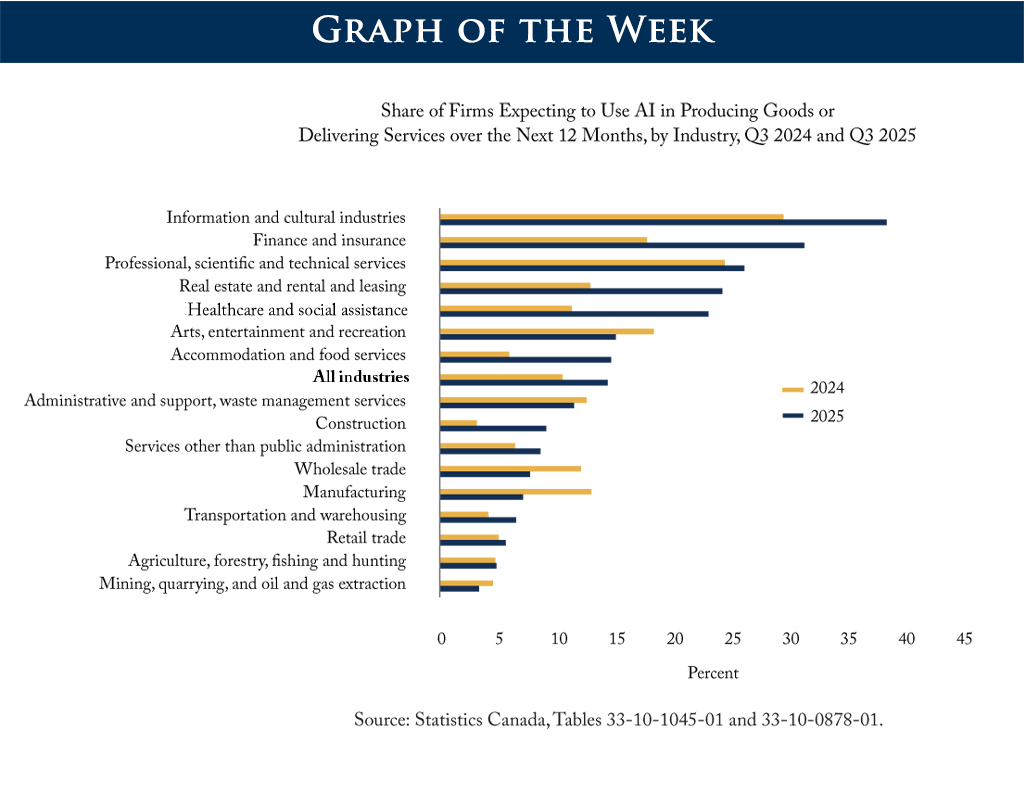


















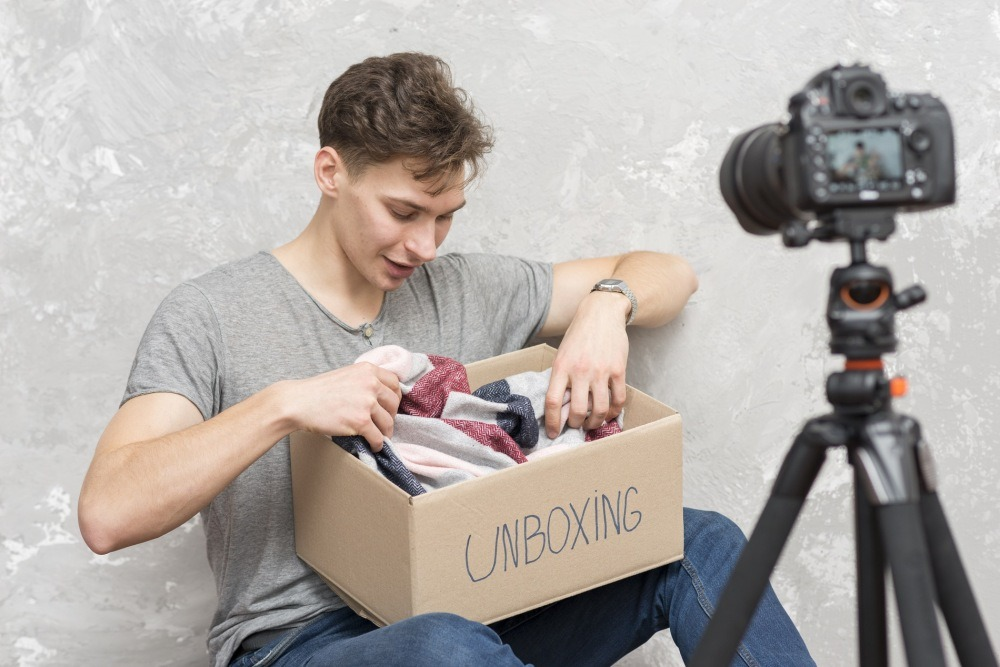









 MONA LUNA at Luna · Design: Sacha Lakic ©Venturi Space/Romero