| The Metropolitan Museum of Art Launches New Immersive Virtual Reality and Online Feature with Iconic Works from Its Collection The Temple of Dendur and works from the Arts of Oceania galleries have been transformed for virtual reality (VR) experience and on the web The Met’s new features, created in collaboration with the platform Atopia, introduce a new way for cultural institutions around the world to build their own VR and online exhibitions(New York, November, 2025)— The Metropolitan Museum of Art has launched two new virtual reality (VR) features, Dendur Decoded and Oceania: A New Horizon of Space and Time, that explore the Museum’s beloved Temple of Dendur and monumental works from the Oceanic art collection in the newly reopening Michael C. Rockefeller Wing—such as the Ceremonial House Ceiling from the Kwoma people of Papua New Guinea, the Asmat bisj poles, and Atingting kon(slit gongs) from Vanuatu—in 3D. The experiences will allow global audiences to view these treasured galleries and works using a personal VR headset or on The Met’s website. Designed in collaboration with Atopia, a platform for immersive art and culture, The Met’s virtual experiences introduce a new way for art institutions to create and publish their own VR and web features, providing more digital access to VR innovations across the museum field. The Met’s first VR experiences, Dendur Decoded and Oceania: A New Horizon of Space and Time were developed in close consultation with Met curators. They feature original, innovative storytelling and high-resolution 3D scans created by The Met’s Imaging team. This experience allows virtual visitors to delve into artworks through movement, sound, interaction, and play. From stepping inside the Temple of Dendur to bringing the 17-foot bisj poles to eye level, these virtual experiences offer a singular opportunity to explore these iconic works. “The Met collection is enjoyed by millions of visitors a year, and by exploring the vast possibilities of virtual spaces, we can offer unparalleled cultural experiences to audiences no matter where they are located,” said Max Hollein, The Met’s Marina Kellen French Director and CEO. “These two new VR and web features foreground compelling storytelling and curatorial scholarship, and they provide immersive, participatory access to some of The Met’s remarkable works of art.” Annabell Vacano, founder of Atopia, said, “Until now, immersive exhibitions were bespoke and expensive. We created Atopia so museums of all sizes could design, publish, and scale interactive storytelling so their collections can be accessed from anywhere in the world. The Met has been an incredible partner in designing Atopia’s storytelling tools, and it’s been an honor to work with their world-class teams.” Dendur Decoded The Dendur DecodedVR and web experience is organized as a vividly detailed adventure arranged in four “acts” and includes over 150 newly presented pieces of content, including materials (images and video) from archives at The Met and UNESCO. The content was created in collaboration with Isabel Stünkel, Curator, Department of Egyptian Art, and Erin Peters, Assistant Professor, Art History & Visual Culture at Appalachian State University; with support from Diana Craig Patch, Lila Acheson Wallace Curator in Charge of Egyptian Art, and Janice Kamrin, Curator in Egyptian Art at The Met. It begins with “Act I: Explore Dendur,” which introduces the Temple and helps visitors learn how to read aspects of the temple’s decoration, and continues with “Act II: Dendur in Nubia,” presenting a 3D and 360-degree film about the Temple of Dendur’s original location along the West bank of the Nile River and how it was dismantled as part of the international UNESCO Campaign to Save the Monuments of Nubia to protect it from being submerged beneath Lake Nasser and then awarded to the United States in 1967. “Act III: Reconstructing Dendur” invites visitors to virtually rebuild part of the temple and learn how The Met reassembled it in New York in a new gallery that was opened to the public on September 27, 1978. “Act IV: Reflection” showcases past MetLiveArts performances and the ways in which contemporary artists have been inspired by the Temple. There is also an optional opportunity to leave a personal contemplation or observation through a voice note. Oceania: A New Horizon of Space and Time Oceania: A New Horizon of Space and Time celebrates the dazzling Oceanic works in the Museum’s newly reopened Michael C. Rockefeller Wing. Fifteen objects are contextualized with sound, story, and a spatial design inspired by an outdoor environment that evokes the Pacific Islands. Within the space, these objects are accompanied by illuminating content such as immersive original audio and Pacific storytelling, archival imagery, 360-degree video, and high-resolution 3D models. Featuring works from across The Met collection of Oceanic art, highlights in the VR and web experience include The Met’s impressive Ceremonial House Ceiling, which evokes the polychrome interior of a men’s ceremonial house in the Sepik River region of Papua New Guinea five soaring upright spirit poles (bisj) from the Asmat people of Western New Guinea; and the 14-foot-tall Atingting kon (slit gong) from Vanuatu. In this exploratory environment there is a lush virtual gallery populated by the 3D-scanned objects and immersive soundscapes. Examples include the Sawos Ancestor Figure, which invites close looking through a compelling audio story about a battle in which the ancestral figure came to life, paired with an interactive 3D model. The Ceremonial House Ceiling includes a game where visitors discover motifs across the 270 pangal (painted panels), including crocodiles, insects, and cassowaries. The Body Mask, created by an Asmat artist, includes contemporary photography by Joshua Irwandi, a documentary photographer based in Jakarta, Indonesia, showing how these masks are made and worn by the Asmat people of southwest New Guinea. For the Silo, Jarrod Barker. Developed along with Maia Nuku, The Met’s Evelyn A. J. Hall and John A. Friede Curator for Arts of Oceania, and Sylvia Cockburn, Senior Research Associate for Arts of Oceania, the experience will be animated with voices from across the Pacific Islands, including a greeting by Michael Mel (PhD, performance artist, lecturer, curator, and teacher and currently Senior Lecturer and Head of Expressive Arts Department at the University of Goroka), and a concluding sunset ceremony by Che Wilson (Ngāti Rangi-Whanganui, Tūwharetoa, Mōkai Pātea, Ngāti Apa, Ngā Raurua), a Māori leader with a career that spans cultural advocacy, governance, and leadership. VR and Online Innovations for the Cultural Sector For The Met’s virtual experiences, the Museum’s Emerging Technology and Digital department worked collaboratively with Atopia to develop a feature that will enable museums of all sizes to design and publish similar immersive exhibitions in-house. Through a “no-code” editor available on the platform, museum curators and designers can drag and drop images, 3D scans, and didactic information from their collections into virtual spaces. These can then be launched on the platform, becoming instantly available on the web and in VR. Access and Availability The two immersive exhibitions are available now for free on The Met’s website and on Meta Quest 2/3/3s Audio across the experience is closed caption. Atopia is compatible with both standard web browsers on a desktop and laptop and on personal VR headsets. It also supports both individual and invite-only multiplayer visits. Related Programs These VR and web features will also be activated through several events, including Met Expert Talks. These talks include the opportunity for Museum visitors to interact with the virtual experiences on headsets provided by The Met for a deeper and more contextualized viewing. There will also be VR pop-ups at Teens Take The Met on May 15, 2026, as well as during an upcoming Teen Friday Career Labs, where teens can hear directly from the VR creative team. For homebound audiences unable to visit the new Arts of Oceania galleries in person, special Collection Tours will be offered for Oceania: A New Horizon of Space and Time via headsets provided by the Museum. More details and VR events at The Met will be announced. Credits Dendur Decoded and Oceania: A New Horizon of Space and Time were created with a cross-disciplinary team from across The Met, led by Brett Renfer, Senior Project Manager of Emerging Technologies, along with Curatorial, Education, Imaging, and Digital. This project is made possible by the Director’s Fund. About The Metropolitan Museum of Art The Met presents art from around the world and across time for everyone to experience and enjoy. The Museum lives in two iconic sites in New York City—The Met Fifth Avenue and The Met Cloisters. Millions of people also take part in The Met experience online. Since it was founded in 1870, The Met has always aspired to be more than a treasury of rare and beautiful objects. Every day, art comes alive in the Museum’s galleries and through its exhibitions and events, revealing both new ideas and unexpected connections across time and across cultures. Discover more at metmuseum.org. About Atopia Atopia is a new way to experience culture online. From any web browser or VR headset, audiences can step inside immersive exhibitions designed by leading museums worldwide. Our no-code platform empowers cultural institutions to create and share virtual experiences at scale—bringing exhibitions to global audiences beyond physical walls. Our mission: to open access to culture everywhere. Discover more at https://atopia.space |
Tag Archives: virtual reality

VR Sailing At Night
Back in February we wrote about the superb Oculus Rift virtual reality sailing app MarineVerse Cup. This fully immersive and accurate simulation surprised us with its physics based playset and incredibly realistic sense of actually sailing. (Add a fan moving air into your face and body for an even more visceral experience.) It is a most welcome virtual reality experience.

MarineVerse started development with a focus on regattas while aiming to create what the developers called “a chill sailing game”. Like all robust apps, the developments and updates continued and I wouldn’t be surprised if one day we might see knot tying or rigging etc. as part of their sailing school.
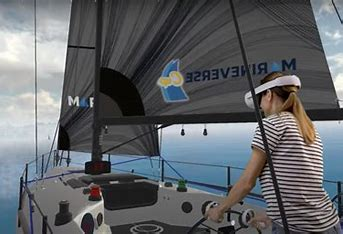
Night Sailing!
The latest update allows VR mariners to try night sailing & boating and experience relaxing sailing under the stars at Akalana Island while testing navigation skills like never before.
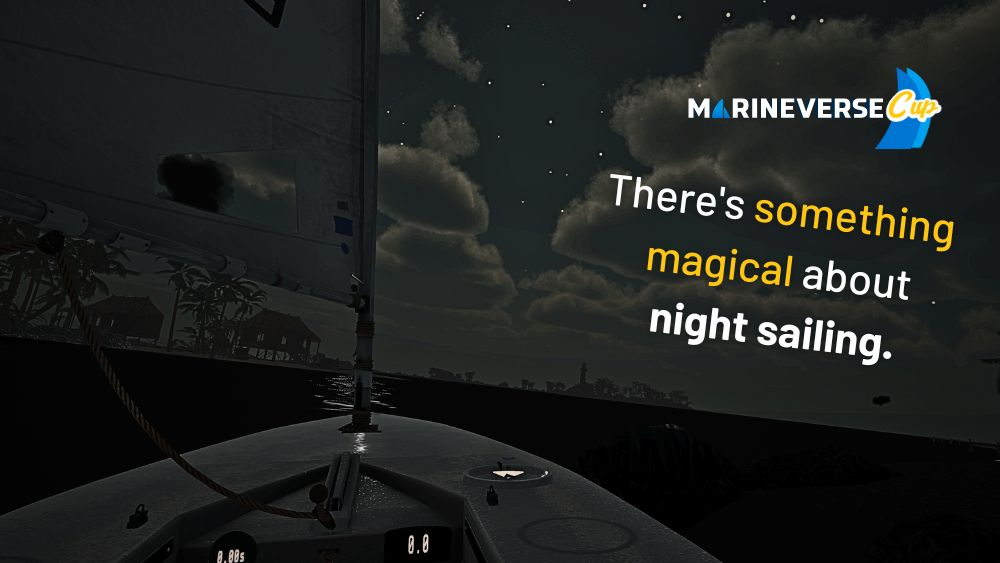
Night Navigation Practice
Have you ever sailed at night? Can you distinguish safe water from an isolated danger mark by just looking at its lights? Often a feared outing for a novice sailor in the real world, you can learn safely, at your own pace, and without the fear of grounding your boat and risking your life.
Test your skills in MarineVerse Cup:
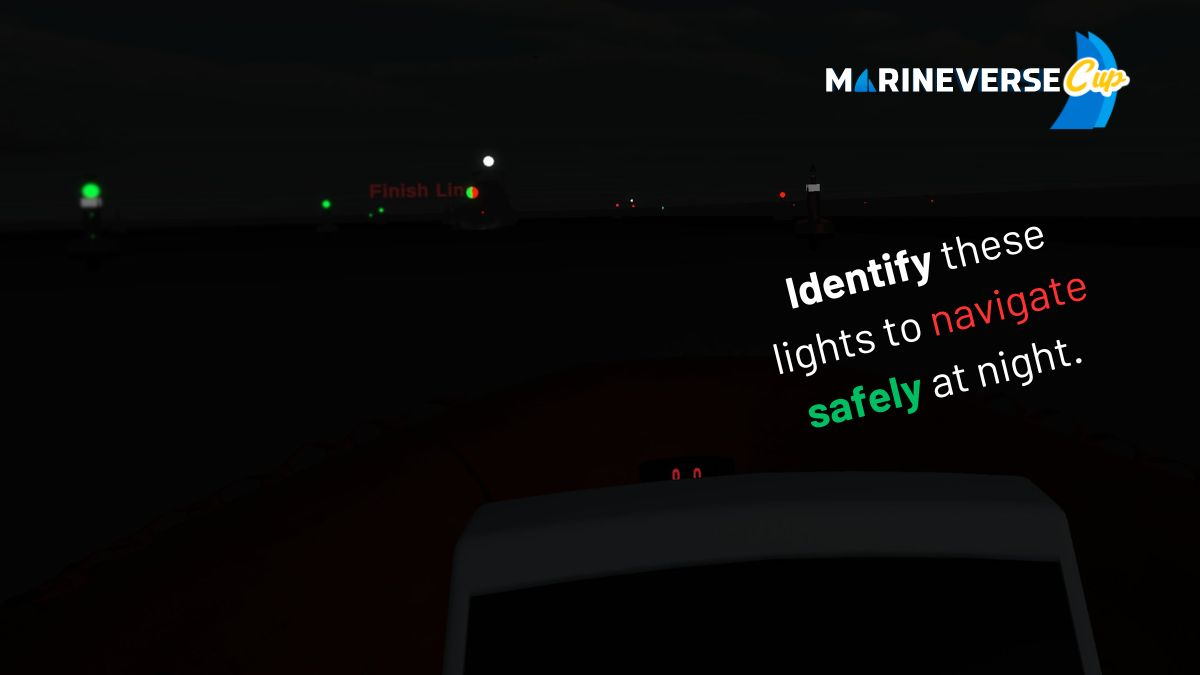
( The video doesn’t do it full justice; make sure to try it in VR yourself. )
To access – visit NauticEd Training Room in the MarineVerse Cup and select Navigation Rules. ( If you need a general refresher on Nav Rules, don’t miss this free NauticEd course )
Are you a MV VR skipper or a real world sailor interested in joining MarineVerse? Let them know via Discord. https://discord.gg/marineverse
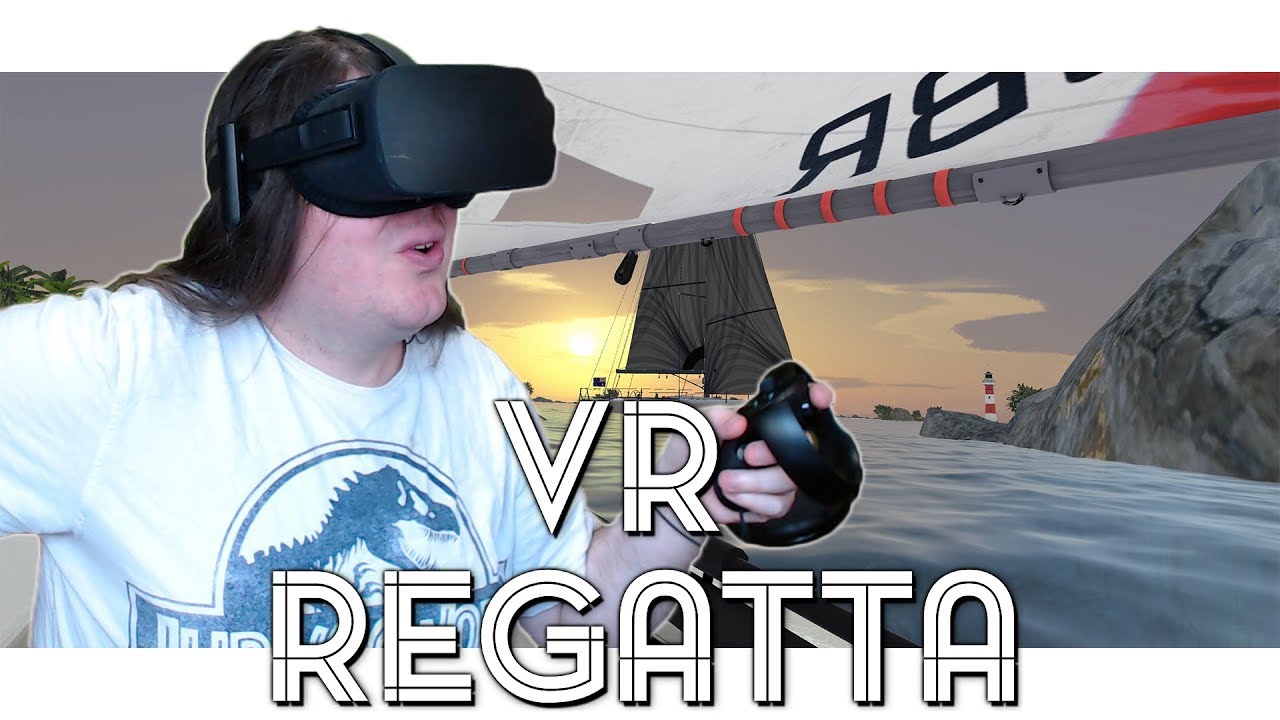
VR Sailing On Oculus Now More Real With Wave Motions
Ahoy! VR Mateys! Aaargghh!
Ever wished the MarineVerse Cup felt just a bit more like the real thing?
What is MarineVerse?
MarineVerse mission is to inspire, train and connect sailors, and share the feeling of this amazing sport with a wide global audience all via the virtual reality wonder of the Oculus Quest 2 (& the newer Quest 3) headset and hand controllers.
Through our VR sailing projects we bring entertainment and education together through virtual reality (VR). We create experiences to enable more people to sail through the creation of games, training experiences and more.
We’ve been busy over the last few weeks, rolling out some cool updates to the MarineVerse Cup simulation.
One of the first new features you can dive into is “visual waves.”
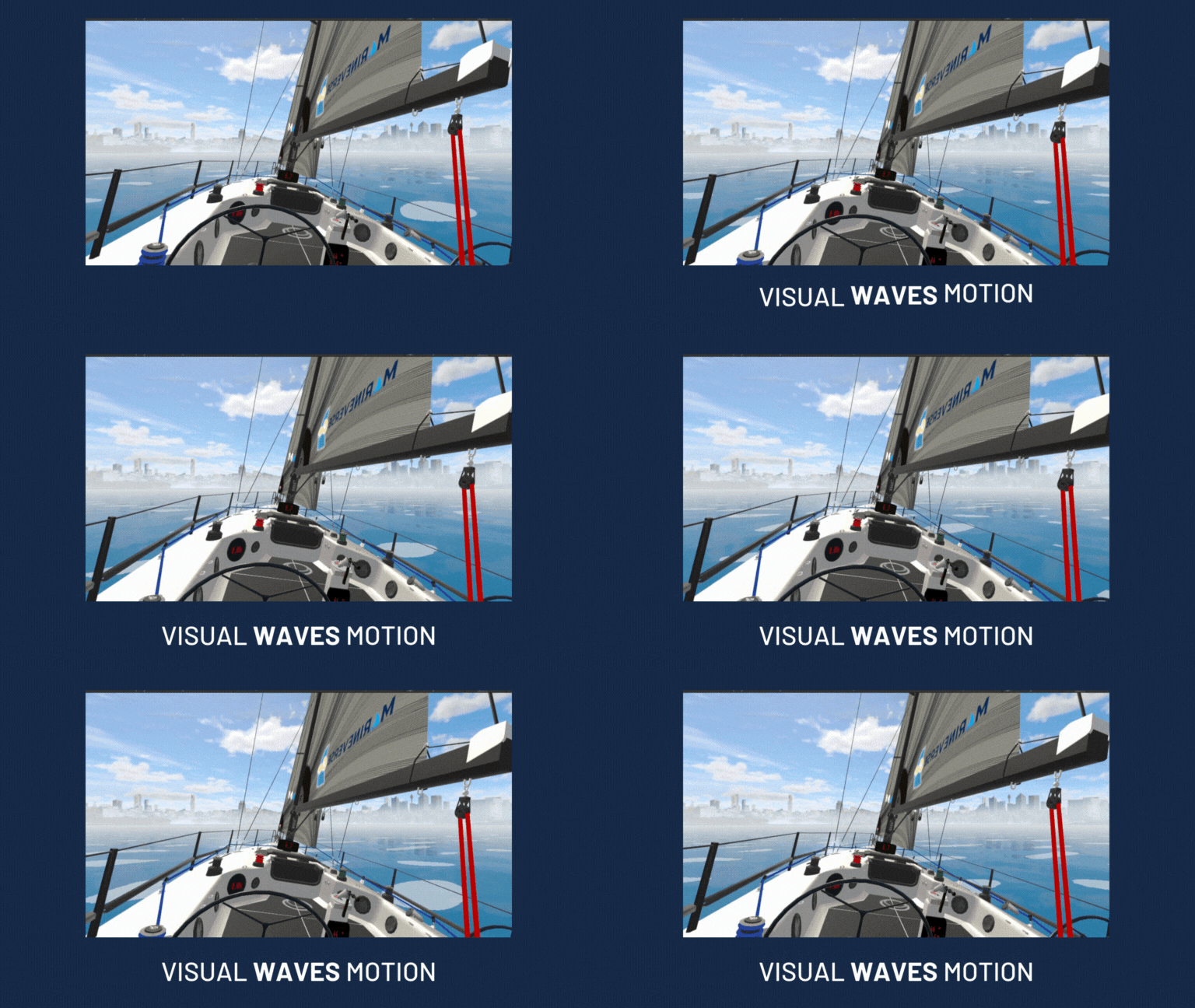
Check out what people from our Discord chat said after giving it a try:
“Waves are awesome!”
“Wave motion is great! doesn’t make me feel sick 🙂 it’s kind of calming, and it feels a little more like I’m in a real boat”“Strange to say I found it great in free sailing but when I raced with it I felt a bit sweaty.”
“I love the wave action. Adds realism.”
Want to try it out? Just go to the Main Menu, hit Settings -> Boat -> Enable Waves Motion. You can find more details here:
After you’ve had a chance to test it out, I’d really like to hear your thoughts. Did you enjoy it? Please leave your comments below at the end of my article.
—
PS – By popular demand, you can now adjust the wind speed in Free Sail mode, giving you control over your sailing conditions like never before:
For the Silo, Greg Dziemidowicz Director & Lead Developer @ MarineVerse – Virtual Reality Sailing

AI Induced Shifting Subtexts- What Is And What Isn’t Art?
Let’s go back to 2016 and re-consider how the works highlighted below are more relevant today than ever when asking “What is and isn’t art?”. The recent surge in AI and chatbot produced ‘art’ has created new challenges in recognition, interpretation and validation. Or has it? [J.Barker Content Producer for The Silo] It became immediately apparent that the rephrasing of the question “What is art?” to “What isn’t art?” signaled a dissolution of the boundary separating metaphor from reality.

Since, citizen and artist alike have been plunged headlong into the bacchanals of postmodernity, and the question has been obscured under a heap of incongruous discourse and subtexts.
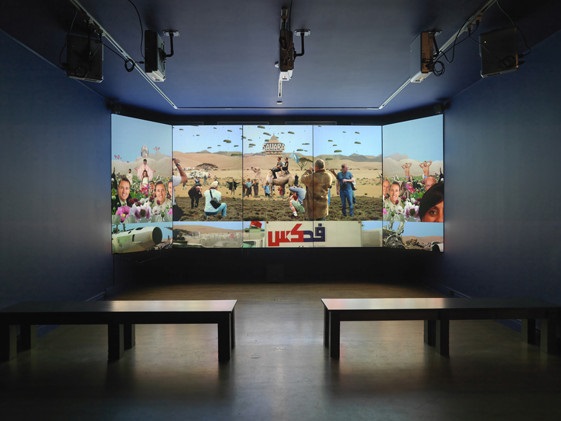
Two curious and intrepid artists offer their answers to this exhausting and illuminating question in their discussions of unexplored spaces and shifting subtexts.
Painter and multimedia artist Eva Davidova tests the digital waters of virtual reality through immersive, programmatic experiences. Articulating the conviction that emerging technology is obliged to transcend commercial application, Davidova’s phantasmagoric 3D renderings attempt to draw the strings away from the hands of big business. Topics mentioned include the beauty of academic reciprocity, the fiscal realities of living in the metropolis, and the future of collaborative artistic environments.
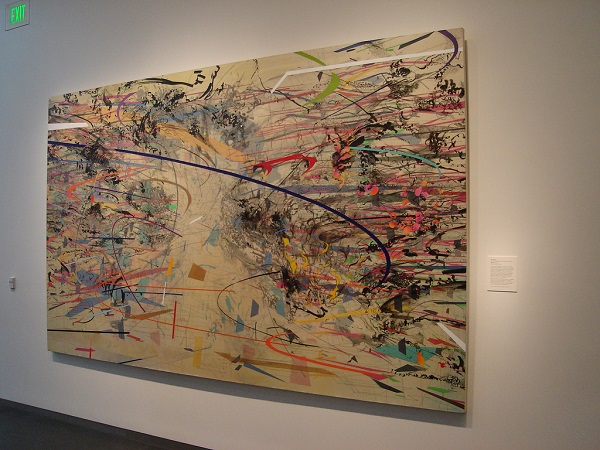
Behind the meticulous and sweeping abstract landscapes from the mind of Julie Mehretu are subtle societal and historical cues, which inform and enrich the surface of her paintings. In her ebullient interview, Mehretu speaks of the benefits and restrictions that arise from using architectural semantics to ground explorations of political and social change.
Wrought from countless painterly quotations, the identity of Mehretu’s brushstroke vanishes the moment it falls under interpretation.
The elusive and curious nature of the Ethiopian artist’s aesthetic experiments, coupled with a steady ethical subtext make for an engaging and memorable listen.
Featured image- “A Questionable Tale(#1)” 2022 Marina Zurkow/DALL-E (AI)
For the Silo, Brainard Carey.
Dead Media- 3D
I’ve always been fascinated with stereo viewers. Once upon a time, when I was a wee lad, I visited my great-grandmother at her wee home in Jolly Olde England. It turned out that she had the same regard for immersive technology as I did- she had a Victorian era stereograph viewer and a sick collection of antique 3D stereo cards. Steampunk or what?
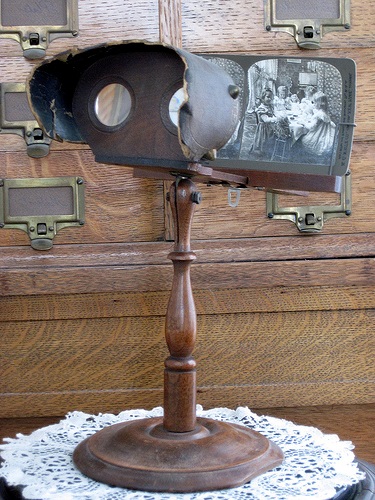 Yes, stereoscopy has been around for a long time. That contraption belonging to my great-grandmother was made of wood and had two glass lenses. It weighed so much I had to brace it on the floor, on top of a pillow, and lie in front, resting my head on my elbows. It was worth the effort. I could see ‘into’ the photograph and felt like I was transported into space and time. On a side note- I had this experience again decades later when I bought a heavily discounted (read: cheap) Nintendo Virtual Boy.
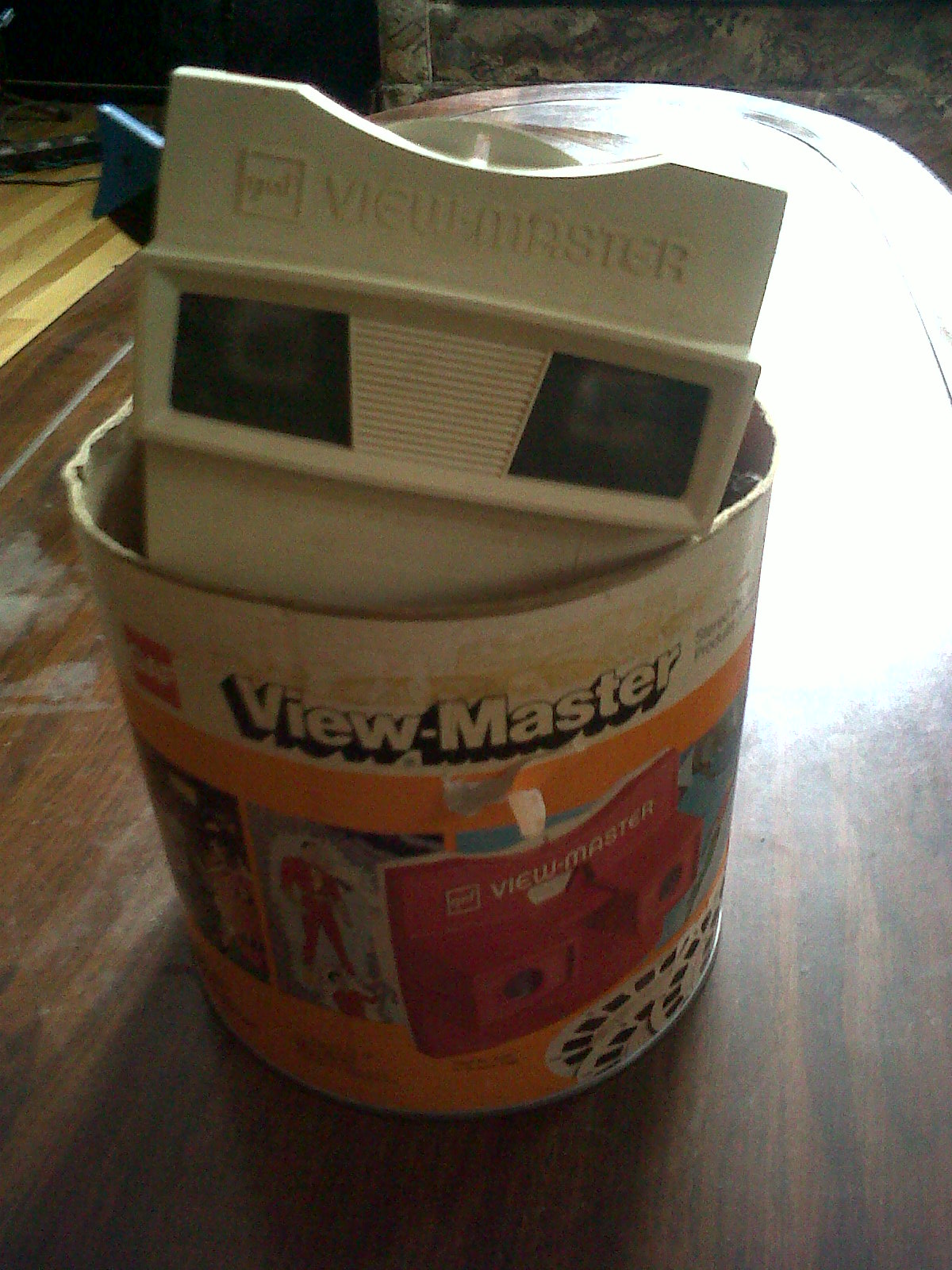
View-Master
This feeling of traveling outside of the body and experiencing a sense of virtual surroundings was shared by millions of kids and adults when the View-Master was first released in the late 1930’s. Here’s what Wikipedia has to say: “View-Master, since 1939, has been a device for viewing seven 3-D images (also called stereo images) on a paper disk. Although the View-Master is now considered a childrens’ toy, it was originally marketed as a way for viewers to enjoy stereograms of colourful and picturesque tourist attractions.”
Whatever the original intent was, View-Master has become synonymous with several generations of Pop Culture geeks and depending on your age, the sight of a black or red (or red and blue) View-Master conjures up images of Donald Duck, The Lone Ranger, or E.T., The Extra-Terrestrial.
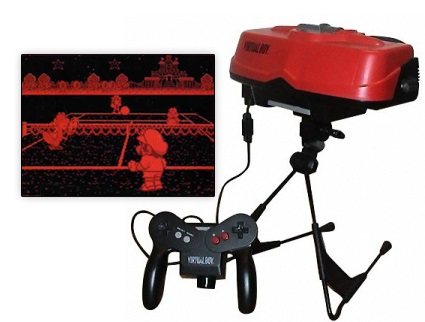
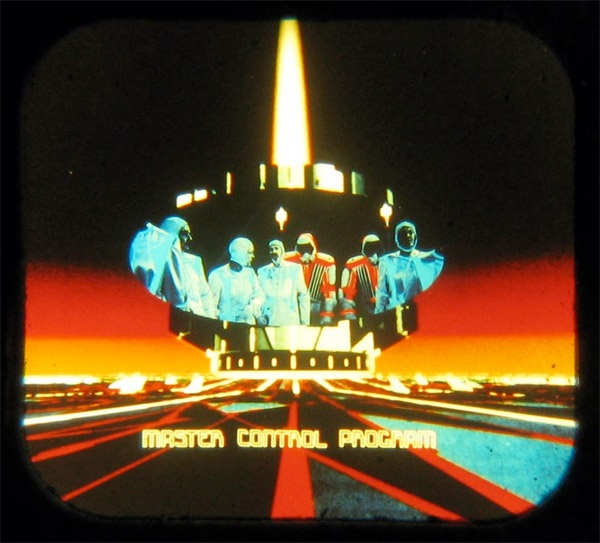
Like most immersive technologies, educational and practical uses were developed. The U.S. Military used the View-Master as an aid in the identification of airplanes. The Gruber Company used the View-Master to develop human anatomy study guides. But for all of this, the best View-Master reels are 1960’s Batman and 3D stills from the original Tron film. Of course this is highly personal and your tastes may be different.
3D is back sort of…..although the last few years have seen North American releases of 3D blurays finally end (and no 3D televisions being manufactured), Europe continues to see new releases and these can be purchased online. This is a good thing. Sure I can dust off the bluray 3D version of Tron (Tron: Legacy). and still enjoy it’s jaw dropping immersion but it’s nice to know that the newer releases such as Wonder Woman 1984 can still be added to the collection.
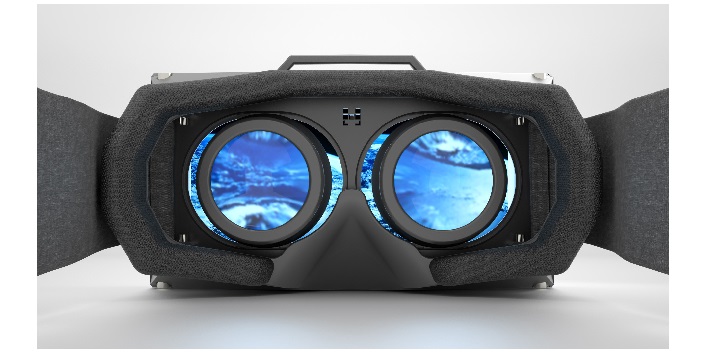
Oculus Quest 2
If 3D is dying a slow death the same can’t be said for it’s direct descendant. Virtual Reality gaming and simulation takes immersion to an entirely other level: it provides a full 360 degrees of movement and viewing, complete with real world effects such as light and shadow movement and visual scaling. If you haven’t already tried VR gaming then you are missing out. But that’s a story for a future article.
For the Silo, Jarrod Barker.
The Evolution of F1 Racing Video Games
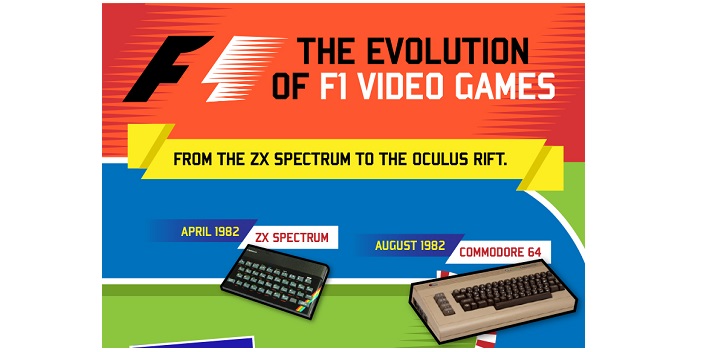
According to our friends ‘over the pond’ at Select Car Leasing UK, (big time racing fans- go figure!) the history of F1 Racing Video Games began with 1982’s ZX Spectrum home computer. Cue up the time machine and take a look at this nifty info-graphic to discover the rest.

Video Producers Using Unreal Game Engine For AR Graphics And Sets
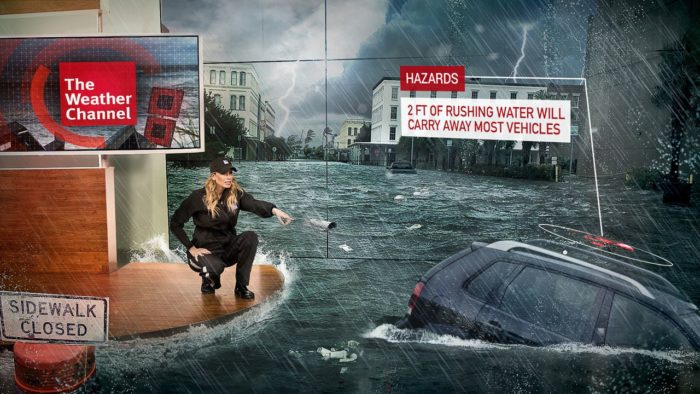
LAS VEGAS — A couple of years ago, ChyronHego announced a partnership with leading game developer Epic Games to integrate the Unreal Engine with ChyronHego’s family of augmented reality (AR) graphics and virtual sets solutions. With the integration, news broadcasters and other customers of ChyronHego’s Neon and Plutonium software will be able to leverage Unreal’s industry-leading rendering and real-time special effects capabilities to add powerful new photorealistic and hyper-realistic elements to their on-air virtual sets. Only a decade ago, editDROID and other Laserdisc based systems were still commonly in use with a much more rudimentary set of effects possibilities- this new Neon and Plutonium software system is an industry wide ‘game changer’.
Here is a look at 2017’s ChyronHego’s live use demo-
“In an environment that’s more competitive than ever, our broadcast news customers are on a constant search for innovative ways to tell a better story and captivate viewers,” said Olivier Cohen, senior product manager, virtual solutions, ChyronHego. “Virtual sets that harness the amazing graphics capabilities of world-class gaming engines are the wave of the future for news, sports, and weather broadcasting, and Epic Games is the perfect partner to take us there. The integration with Unreal is just the latest link in our CAMIO Universe strategy to place the industry’s most powerful storytelling tools at news producers’ fingertips and drive template-based, unified news and weather workflows.”
“Since we launched Unreal Engine 4, it has become one of the world’s most powerful rendering engines for the game industry — but its flexibility, real-time performance, and robust set of tools make it ideal in just about any type of content creation workflow,” said Marc Petit, general manager, Unreal Engine Enterprise at Epic Games.
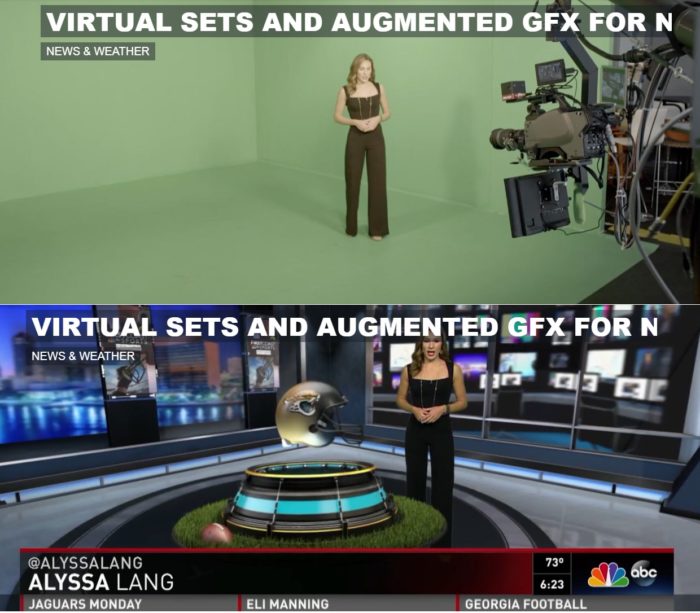
“ChyronHego’s AR and virtual set solutions for broadcast production are the ideal match for Unreal Engine. By partnering with one of the leading broadcast graphics providers, we can continue to expand our presence in the broadcast, film, and entertainment industries.”
ChyronHego will work to integrate the CAMIO graphic asset management server with Unreal Engine, including creating broadcast-specific camera movements. Unreal’s 3D graphics engine enables producers to generate AR graphics through the templated workflows of the CAMIO Universe. Via custom user interfaces built with ChyronHego Live Assist panels, producers can then present the AR graphics on air using ChyronHego’s Plutonium and Neon virtual set and robotic camera tracking solutions.

Cohen added, “As one of the world’s most powerful rendering engines from one of the world’s foremost gaming companies, Unreal will bring new levels of openness and scale-ability to our virtual set solutions. Unreal Engine is easily customizable and expandable, and five million users around the world will benefit from Epic Games’ vast reach across the global community of gamers and game developers. It means news broadcasters will be able to render effects in their virtual sets that rival anything their viewers have seen in the gaming world, with special effects like real-time shaders, bumps, sliders, and highly photo-realistic objects.” For the Silo, Lyndsey Albright.
Supplemental- The Revolutionary Video Toaster and Amiga Computer system 1991.
Human Consciousness & Artificial Intelligence Meet In Designer’s Fabrics
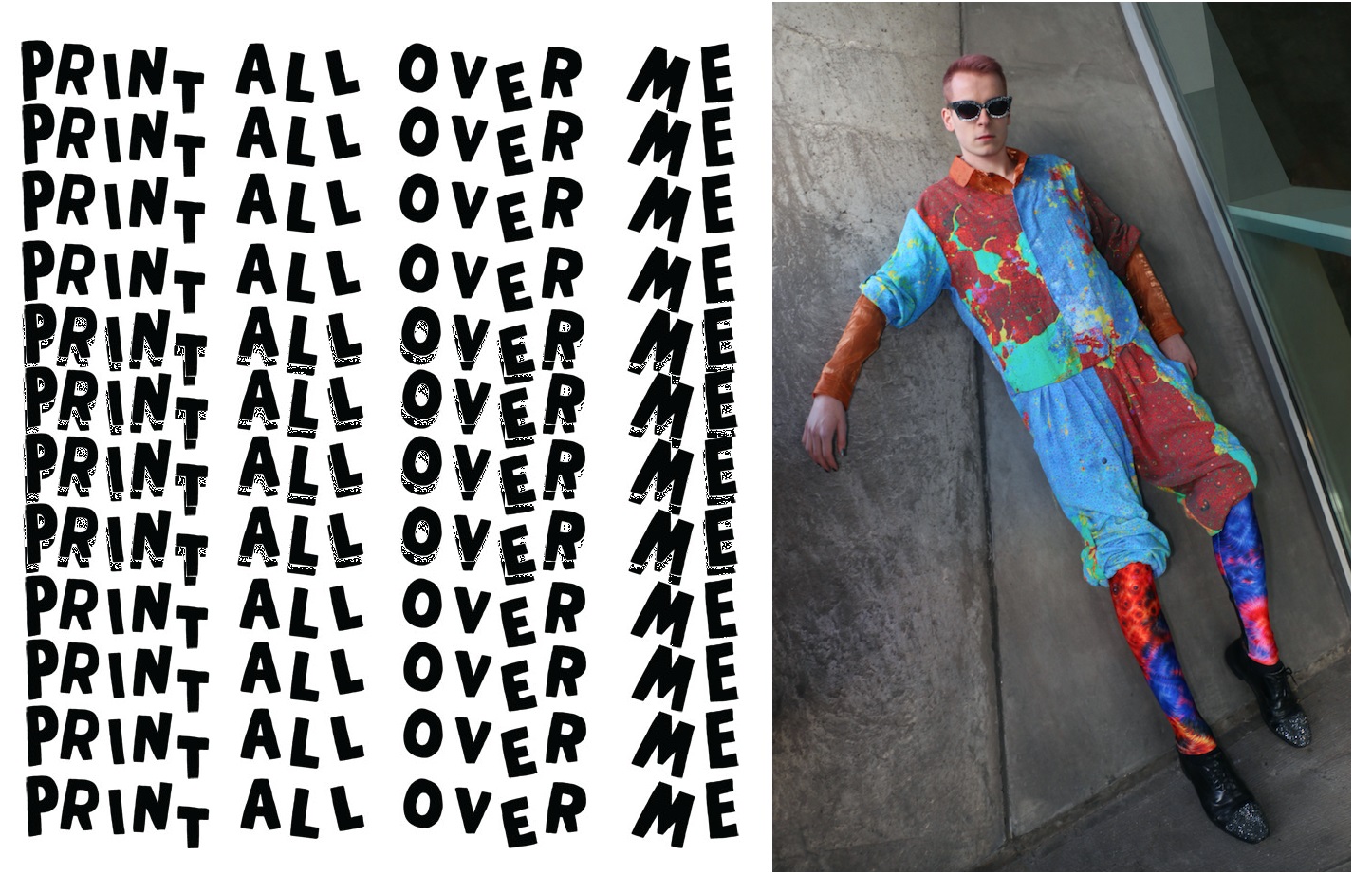
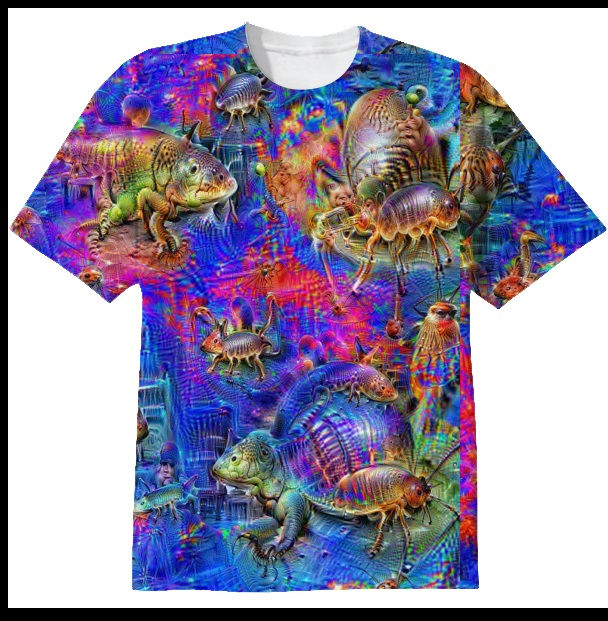
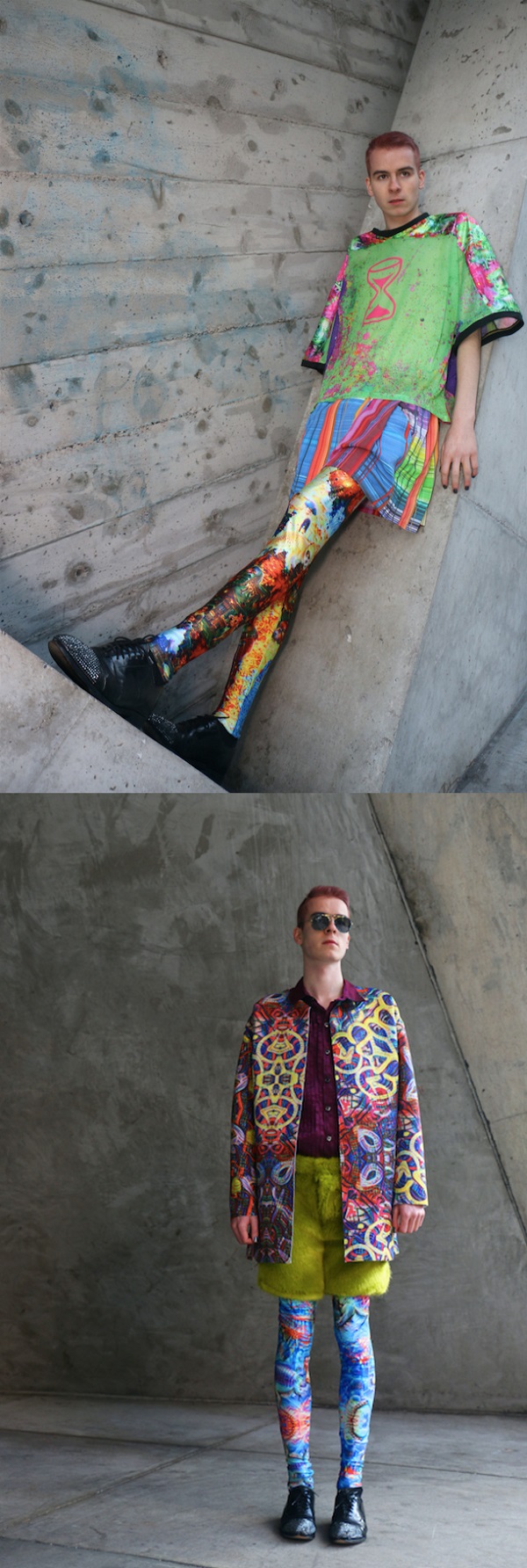
Featured Designer Brian Swift used PAOM to print fabric for his latest collection inspired by the Technological Singularity: a theoretical time in which human consciousness and Artificial Intelligence merge and become a new, unrecognizable species.
 Brian collaborated with a machine learning algorithm to imbibe his photographs with a psychedelic quality. These computer generated compositions were then printed onto fabric and used throughout his latest collection.
For more work check out Brian’s site brianswift.com

Supplemental- MONA the world’s first artificial intelligence clothing designer
Fast Track To The Future With Virtual Reality
 The implications of what Virtual Reality can achieve are vast, and it is predicted that VR will seep into every area of our lives in the very near future. VR is not just a concept that excites the entertainment business, but has a very real presence in some of the world’s most essential industries. However, many people remain skeptical about the impact virtual reality will actually have and suggest that it is only an attractive concept for gamers. Although it is true that VR is a fantastic way to improve online gaming, it has already been used in the medical and manufacturing industries, proving that virtual reality is not just a tool for play. Others fear VR could replace physical social interaction and they are therefore reluctant to consider the many benefits it actually presents. By taking a selection of real-life situations in which virtual reality is already used, we can assess its impact and perhaps decide whether it is to be embraced or discarded.
Surgery
It may not surprise you to know that the health sector is one of the biggest users and advocates of virtual reality. VR is of exceptional benefit in surgical training, improving student skills whilst minimizing risk to potential patients. This type of training can improve confidence and allow students to explore surgical procedures and options that would otherwise be inaccessible to them during the initial stages of their training. Virtual reality is already used by surgical staff, trainee nurses, dentists, and in numerous other health settings, world wide, allowing students to quickly gain skills without putting themselves or other individuals at risk.
Therapy
The authentic nature of VR allows therapists to assist patients with certain phobias. VR promotes controlled environments which can quickly be changed or eradicated during a course of therapy. For example, a person suffering from arachnophobia would perhaps find it more helpful and less daunting to experience holding a spider via VR rather than in a real life situation, and of course, a virtual reality headset can be turned off immediately should the situation require it. Other phobias and aversions could be tackled through the use of VR, including water aversion, acrophobia (fear of extreme heights) or aviophobia (fear of flying).
 Entertainment
For some people, the online world is their only connection to society and if virtual reality gaming can help them continue to connect, then this can only be perceived as a positive thing. There is no denying that virtual reality is an amazingly entertaining concept and, when done well, is an excellent way to experience online gaming. Being fully immersed in a game is a highly attractive idea: whether it be one that takes you to a battlefield, or a game that allows you to feel as if you are actually being dealt cards at a plush casino in Vegas. Currently, gamers can connect with people from all over the world, or play slots in the comfort of their own home by visiting a site such as www.luckynuggetcasino.com yet imagine the thrill of full immersion through the power of virtual reality.
Transport and Training
Again, we touch upon the benefits virtual reality provides to many aspects of training and, in this particular situation, to the world of transport. For years the aviation industry has been using simulations to help train pilots and virtual reality is a welcome advance in such training. VR flight training presents minimal risk to both the pilot and passengers whilst allowing pilots to experience the difficulties that may arise whilst being in control of the aircraft. The most spectacular example of virtual reality based vehicle training is perhaps that used by NASA to train its astronauts. The training includes various simulations including that of an astronaut having to perform repairs during zero-gravity conditions, as well as a simulated detachment from the shuttle with the astronaut having to use a powered backpack to return. NASA has even managed to use VR in space, keeping astronauts up to date with training whilst on a mission and it has been suggested that VR will be used to entertain astronauts in space in the future. Just imagine, you could soon be sharing your virtual poker table with the astronauts of tomorrow!
Supplemental- Gamers are talking about the Oculus Rift and the Playstation VR but the HTC Vive looks pretty sweet too!
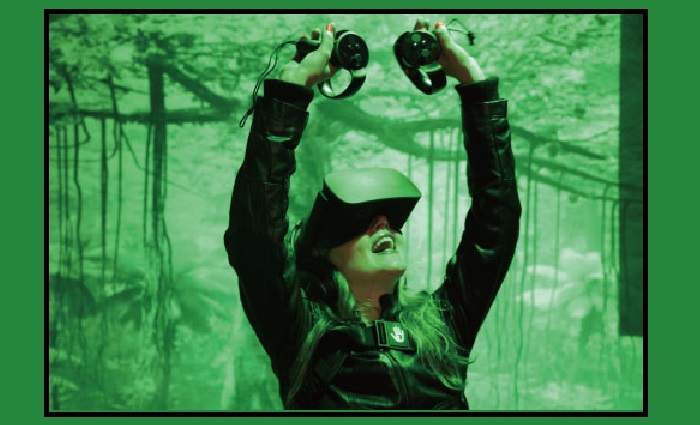
Virtual Reality Use In Classroom Shows Deforestation Reality
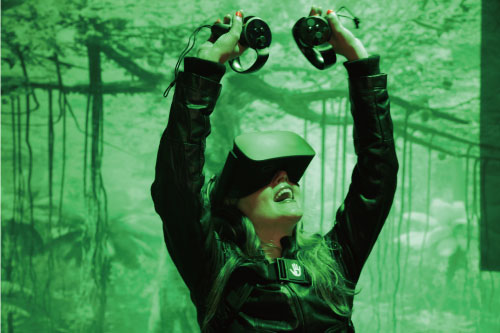
“When the viewer looks down, they’ll see their arms are branches, their body is the trunk, and when they move, the tree moves too.” – Winslow Porter
Virtual Reality (VR) and Augmented Reality Markets are expected to reach US$162 billion by 2020. How can schools use virtual reality to make learning more engaging?
Most of us don’t live in a rainforest but we do know that they are in great danger. Classrooms are looking for ways to help young learners better understand the deforestation crisis, for which we urgently need to find global solutions. What if it were possible to have first-hand experience on how we as humans are contributing to the extinction of trees?
Tree is a hyper-realistic VR experience that transforms the audience into a living and breathing rainforest tree. The viewer can see and feel the tree’s growth from a seedling into its fullest form and witness its fate firsthand. In a collaboration between MIT Media Lab and filmmakers Milica Zec and Winslow Porter, a fully immersive virtual reality story about a tree was created. The film has been presented to date at over 70 conferences and film festivals (including Sundance and Tribeca).
The Global Search for Education welcomed Winslow Porter to talk about the reality of deforestation and how Treecan help.
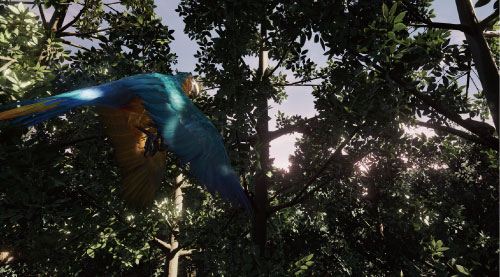
People often develop a personal connection to the tree after viewing the experience.” – Winslow Porter
Winslow, what motivated you to tell this story? How did you come up with the idea?
Everything started with our first project, Giant, in which we depicted an innocent family trapped in a war-zone. Giant speaks about the destruction humans do to each other, and we wanted to continue in our second piece with how humans destroy nature. That is how the idea of Tree was born. We wanted to shift the perspective of the audience and place them in the position of nature, so that they can witness firsthand how we as humans contribute to deforestation.
What does the VR experience really add to our viewing experience in this story? Are we missing something if we don’t see this movie in VR?
In our piece, we use VR as a tool to transform the viewer into a living and breathing tree. When the viewer looks down, they’ll see their arms are branches, their body is the trunk, and when they move, the tree moves too. We use multi-sensory elements so the viewer feels the growth from a tiny seed underground, to the tallest tree in the rainforest. We use a Subpac – essentially a backpack with bass speakers in it – to vibrate along with the piece, simulating the feeling of growing and expanding. The viewer can also smell the soil and the rainforest, sense the change in temperature and feel the wind on their face when they reach their tallest height. As of now, we believe that VR is the only medium that allows us to closely replicate what it is like to be a tree.
How do people react during and after the Tree experience? What kind of emotional connection is evoked?
So far, we have brought Tree to over 70 festivals and conferences and witnessed thousands of people from across the globe take off the headset. Most people have a very emotional reaction to the piece, strongly identifying with the tree. There is no language in the piece, just the sounds of nature, which creates a universal story that anyone can relate to. After the experience, people have a stronger understanding of the deforestation happening all around the world. People often develop a personal connection to the tree after viewing the experience.
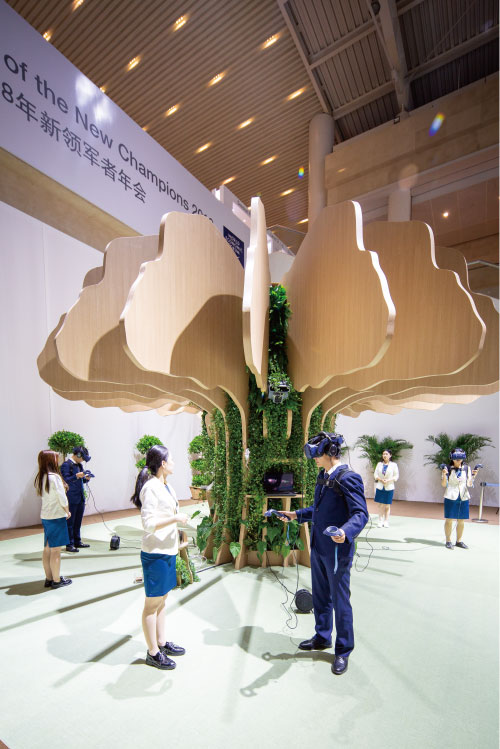
“At the end of the experience, we give each viewer the seed of the tree they just embodied with the message “take this seed as a reminder to keep our forests standing.” – Winslow Porter
Climate Change and the Environment are timely topics. In what ways do you believe Tree can add to our understanding of these issues? How would it be different from traditional ways we learn about The environment and climate change?
Since most of us do not live inside of a rainforest, it’s difficult to imagine what is really happening. Tree brings you into that environment and shifts a viewer’s perspective to shed light on a topic that many people haven’t really thought about before. We partnered with the Rainforest Alliance, which helped us remain scientifically accurate while creating the project, and also provided us with a lot of knowledge about deforestation. People often come out of the headset asking what they can do to help, so at the end of the experience, we give each viewer the seed of the tree they just embodied with the message “take this seed as a reminder to keep our forests standing.” We link them to our website and the Rainforest Alliance, so they can discover the many different ways they can help.
What can you tell us about your next project, Rainforest? What’s the story and what’s the inspiration?
Rainforest is a mixed reality game. In Tree, we focused on a singular rainforest tree, when in reality there are many plants and animals that inhabit those forests. We want to educate people on this entire wonderous world that is being threatened by extinction. To do that, we wanted to bring the actual scale rainforest into the player’s room. Rainforest allows people to play in the environment, and through entertainment and fun they can discover and learn about all the life within. They will also learn about the dangers that rainforests are facing and actively participate in the preservation of those ecosystems.
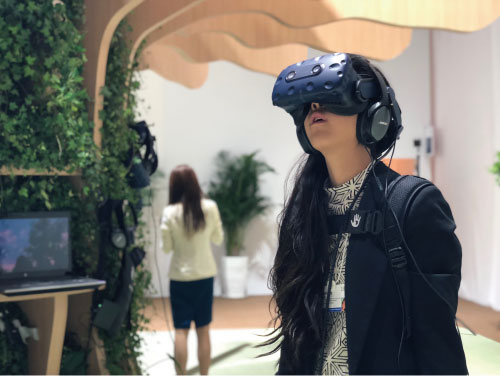
“With VR, the screen is no longer just across from us, but all around us, and viewers have the ability to be a part of the piece they are viewing.” – Winslow Porter
The global VR market is growing rapidly. As the technology improves in the next 5 years or so, what do you believe are the additional benefits for storytellers/creators as well as entertainment consumers? What are the challenges?
With VR, the screen is no longer just across from us, but all around us, and viewers have the ability to be a part of the piece they are viewing. We’re breaking the boundaries and making entertainment more visceral and real, no matter where people are. Instead of watching movies on a TV screen, the movie can be playing all around someone, even inside their home. The viewer is getting the opportunity to become a participant in these pieces and decide on where the story should go, and how it should progress. The biggest challenge is that although we’re developing these projects with ground-breaking technology, not everything is ready for mass consumption, however, that time is coming very soon. For the Silo, David Wine/CMRubinWorld.
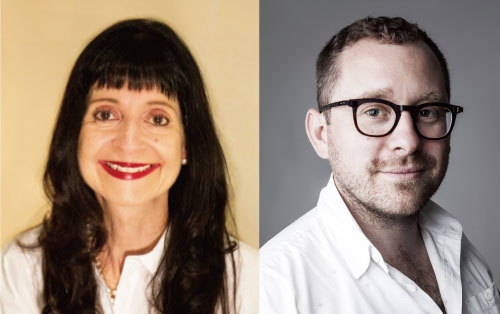
C M Rubin and Winslow Porter
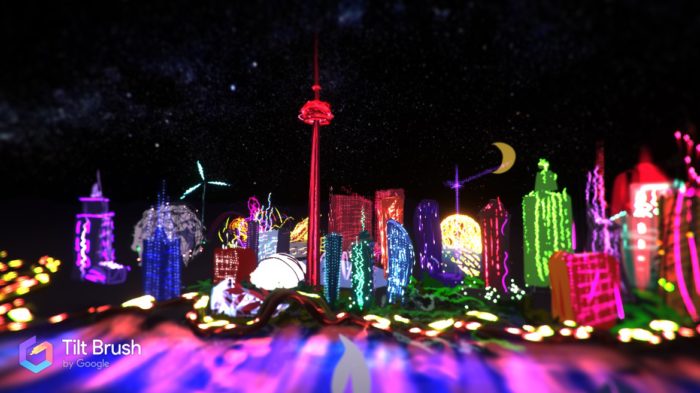
My Road To VR Toronto Art
My name is Olga and I’m a Virtual Reality VR artist/sculptor based in Toronto,Ontario. In 2016 I was hired by Google to create VR experience for YouTube Plus event. This was my first introduction to Google Tiltbrush. I live painted the Toronto skyline in front of hundreds of people.
Since then I was involved in Google projects and many other events and conferences. My VR works were featured on national media chains such as the CBC and Space Channel. I would very much like to share them with you as well. Since Russian is my native language, I often prefer to speak through video and if a picture is worth a thousand words then a video must be worth even more.
The presentation “ My road to VR art” is about how my traditional art skills and experiences translated into the Virtual Reality VR world.
I am very passionate about this new medium. I have talent and humor and would love to work on big VR / AR art project. Perhaps there are others like me, looking to collaborate? I would be happy to hear from you.

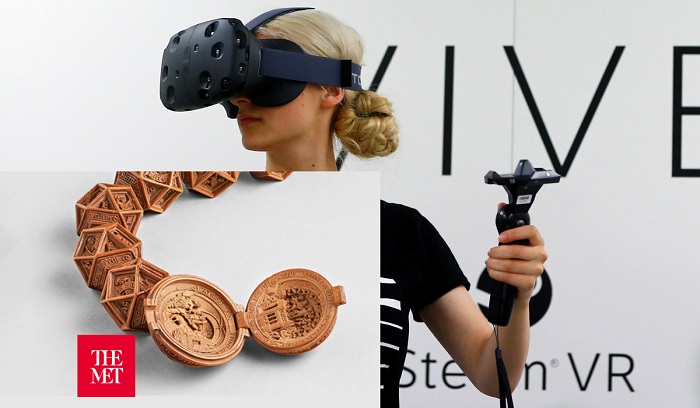
US Premiere of Small Wonders: The VR Experience At Metropolitan Museum Of Art
“Walking through 500-year-old art…Once I put the VR headset and headphones on, it truly felt like I was transported to another world. You could walk through the levels of sculpture and detail in the bead, which was a frieze of heaven on top, purgatory in the middle, and hell below it. There were easily 20 fully carved objects – humans, demons, and animals – in the five centimeter bead, with multiple layers of objects on top of one another to create a three-dimensional image. I was astounded to be able to see, as close as I wanted to get, the bead in all its detail.”— Stefan Palios,betakit
The Canadian Film Centre’s Media Lab (CFC Media Lab), Seneca’s School of Creative Arts and Animation, and the Art Gallery of Ontario (AGO) are pleased to announce their groundbreaking virtual reality (VR) collaboration, Small Wonders: The VR Experience. It will screen for a special four-day limited-run as part of The Metropolitan Museum of Art’s new exhibition, Small Wonders: Gothic Boxwood Miniatures, February 22-27, 2017 at The Met Cloisters (99 Margaret Corbin Drive, Fort Tryon Park, New York, NY 10040).
From February 24 to 27 during public hours, visitors can don a VR headset and explore a 3D rendering of a miniature boxwood carving from the AGO’s collection. The experience is free with general admission, reservations required, and marks a significant first for The Met Cloisters—the integrated use of VR to enhance the exhibition experience.
The exhibition Small Wonders: Gothic Boxwood Miniatures, which runs through May 21st, brings together for the first time some 50 rare boxwood carvings from museums and private collections across Europe and North America. The exhibition offers new insight into the methods of production and cultural significance of these awe-inspiring works of art. Small enough to fit in the palm of the hand, these tiny masterpieces depict complex scenes with elegance and precision. Without fail, they inspire viewers to ask how a person could have possibly made them, a question that can only be answered today and a challenge perfect for VR technology.
“Much of the success of new VR will hinge upon the quality of experiences being created. Everyone is searching for that sublime encounter one can only have in VR. With the boxwood miniatures and their high-resolution scans, we have found the perfect, transcendent landscape to explore in this medium,” says Ana Serrano, Chief Digital Officer, CFC, and Producer, Small Wonders: The VR Experience.
The AGO, CFC Media Lab and Seneca’s School of Creative Arts and Animation partnered to create Small Wonders: The VR Experience. Using one of the AGO’s micro-computed topography (micro-CT) scans of the miniatures, the creative and technical team led by interactive artist and designer, Priam Givord, developed an experience specifically for the HTC Vive platform. Viewers can explore the intricate carvings of the prayer bead from various angles and in detail otherwise inaccessible to the human eye. The soundtrack, Treasures of Devotion: Spiritual Songs in Northern Europe 1500-1540, echoes the ambience of the wider show. The result: VR enriches the contemplative and immersive experience.
Barbara Drake Boehm, the Paul and Jill Ruddock Senior Curator for The Met Cloisters said: “At first glance, the VR experience might seem anomalous in the medieval ambiance of The Met Cloisters. But, thanks to the efforts of the CFC Media Lab, Seneca and the AGO, VR opens a portal through which our visitors can tumble into a tiny world, and sense the meditative power that these centuries-old works of art were intended to convey.”
Small Wonders: The VR Experience was created by Lisa Ellis, Conservator of Sculpture and Decorative Arts (AGO); VR Creative and Technical Director Priam Givord (Interactive Artist/Designer); VR Producers Ana Serrano (CFC Media Lab) and Mark Jones (Seneca College); VR Technical Team Craig Alguire, Morgan Young (Quantum Capture) and Tyrone Melkitoy (Mobius Interactive); Composer/Vocalist Anne Azema, Artistic Director (The Boston Camerata); Narrator Gillian McIntyre; and Micro-CT Scanner Andrew Nelson, Associate Professor of Anthropology, Sustainable Archaeology (Western University).
The exhibition continues at The Met Cloisters through May 21, 2017, but the VR experience will only run during public hours, February 24–27. To learn more about the Small Wonders exhibition and to plan your visit, go to: http://www.metmuseum.org/exhibitions/listings/2017/small-wonders
At The Met Cloisters, Small Wonders: Gothic Boxwood Miniatures is made possible by the Michel David-Weill Fund. It was organized by the Art Gallery of Ontario, Toronto; The Metropolitan Museum of Art, New York; and the Rijksmuseum, Amsterdam.
Social Media
| Canadian Film Centre (CFC) @cfccreates.com | facebook.com/cfccreates CFC Media Lab (CFC Media Lab) @cfcmedialab | facebook.com/cfcmedialab |
Seneca College @senecacomms | facebook.com/senecacollegeArt Gallery of Ontario (AGO) @AGOToronto | facebook.com/AGOToronto |
The Metropolitan Museum of Art
@metmuseum | facebook.com/metmuseum
About CFC
The Canadian Film Centre (CFC) is a charitable organization whose mission is to invest in and inspire the next generation of world-class Canadian content creators and entrepreneurs in the screen-based entertainment industry. A significant economic and cultural driver in Canada and beyond, CFC delivers a range of multi-disciplinary programs and initiatives in film, television, music, screen acting, and digital media, which provides industry collaborations, strategic partnerships, and business and marketplace opportunities for talent and participants. For more information, visit cfccreates.com.
About CFC Media Lab
The Canadian Film Centre’s Media Lab (CFC Media Lab) is an internationally acclaimed digital media think tank and award-winning production facility. It provides a unique research, training and production environment for digital media content developers and practitioners, as well as acceleration programs and services for digital entertainment start-ups and related SMEs. The Silo founder and Digital Editor Jarrod Barker and contributor Arthur Maughan are graduates and fellows of the CFC Media Lab. Program participants have emerged as leaders in the world of digital media, producing groundbreaking projects and innovative, sustainable companies for the digital and virtual age. CFC Media Lab is funded in part by the Federal Economic Development Agency for Southern Ontario. For more information, visit cfccreates.com.
About Seneca
With campuses in Toronto, York Region and Peterborough, Seneca offers degrees, diplomas, certificates and graduate programs renowned for their quality and respected by employers. It is one of the largest comprehensive colleges in Canada, offering nearly 300 full-time, part-time and online programs. Combining the highest academic standards with work-integrated and applied learning, expert teaching faculty and the latest technology ensure Seneca graduates are career-ready. Find out more at senecacollege.ca.
About AGO
With a collection of more than 90,000 works of art, the Art Gallery of Ontario is among the most distinguished art museums in North America. From the vast body of Group of Seven and signature Canadian works to the African art gallery, from the cutting-edge contemporary art to Peter Paul Rubens’s masterpiece The Massacre of The Innocents, the AGO offers an incredible art experience with each visit. In 2002, Ken Thomson’s generous gift of 2,000 remarkable works of Canadian and European art inspired Transformation AGO, an innovative architectural expansion by world-renowned architect Frank Gehry that in 2008 resulted in one of the most critically acclaimed architectural achievements in North America. Highlights include Galleria Italia, a gleaming showcase of wood and glass running the length of an entire city block, and the often-photographed spiral staircase, beckoning visitors to explore. The AGO has an active membership program offering great value, and the AGO’s Weston Family Learning Centre offers engaging art and creative programs for children, families, youth and adults. Visit ago.net to learn more.
About The Metropolitan Museum of Art
The Met presents over 5,000 years of art from around the world for everyone to experience and enjoy. The Museum lives in three iconic sites in New York City— The Met Fifth Avenue, The Met Breuer, and The Met Cloisters. Millions of people also take part in The Met experience online. Since it was founded in 1870, The Met has always aspired to be more than a treasury of rare and beautiful objects. Every day, art comes alive in the Museum’s galleries and through its exhibitions and events, revealing both new ideas and unexpected connections across time and across cultures.
The Met presents over 5,000 years of art from around the world for everyone to experience and enjoy. The Museum lives in three iconic sites in New York City— The Met Fifth Avenue, The Met Breuer, and The Met Cloisters. Millions of people also take part in The Met experience online. Since it was founded in 1870, The Met has always aspired to be more than a treasury of rare and beautiful objects. Every day, art comes alive in the Museum’s galleries and through its exhibitions and events, revealing both new ideas and unexpected connections across time and across cultures.
Why The Future Of Healthcare Is Virtual Reality
Presently and in the not too distant future, virtual reality in healthcare will become the norm. In this piece, we’ll show you how VR can help detect, treat and cure patients in all sorts of different sectors, such as Surgery and Dentistry, as well as teaching the Nurses of the future.

VR will also be used to help the development of people suffering from mental disabilities such as Autism and help cure phobias and tend to soldiers dealing with Post Traumatic Stress Disorder. Via the Luminous Group, for the Silo, Georgia Davies.

Why You’ll Be Wearing Your Next Computer
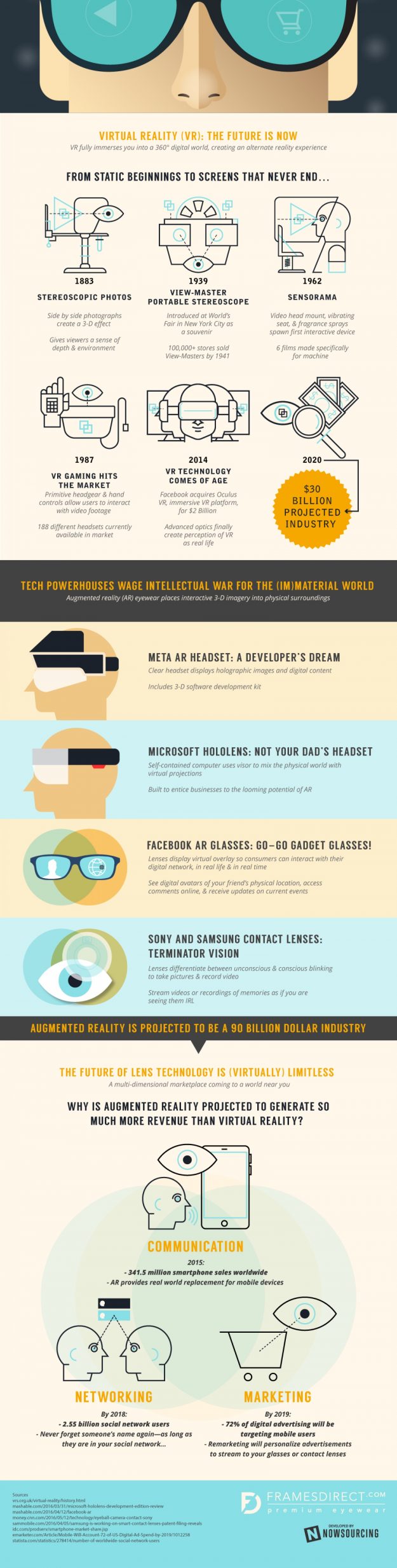
Imagine looking in your glasses to see updates from your friends on social media. The future is coming sooner than you think and yes, you will be wearing your next computer- check out this future ready infographic from our friends at Frames Direct.
Supplemental- Building the World of Tomorrow, 1939 New York World’s Fair
The first published concept of Virtual Reality: Pygmalion’s Spectales (short story) by Stanley G. Weinbaum ‘You drink,’ said the elfin, bearded face, ‘to make real a dream. Is it not so? Either to dream that what you seek is yours, or else to dream that what you hate is conquered. You drink to escape reality, and the irony is that even reality is a dream.’ Published June 1935 ~ Wonder Stories
Getting Social: Living in the Age of Tech and Social Media

When you’re a 20-something, what’s the first and the last thing you do? You check your Facebook or you tweet. When you want to buy a pair of jeans and you want to ask your friends’ opinions, you post a picture on Instagram with a #needyourhelp! And who needs to go to a store when Amazon is only a click away right? Social Media and E-Commerce have permeated your personal and social lives. Nowadays, to keep up with the rest of the world, you have to have a smart phone, a tablet and at least 3 social media accounts. Your thought process can now be summarized into: Click. Like. Share. Repeat. Information in an instant !
The coolest thing about Social Media and online stores is the ease by which you send and receive information. The idea that you can connect to a friend in Asia, check out the latest happenings in Europe, and buy the outfit you’ve been eyeing for on discount via Amazon still fascinates many. Not only does the connection happen in real-time, it is also extremely convenient for the hyperactive, multitasking yuppie. Who would’ve thought that you can talk to someone halfway around the world while riding the train? Or that now, you can buy everything you need online while working out. Literally, the world is at your fingertips.
What about Design my Home?
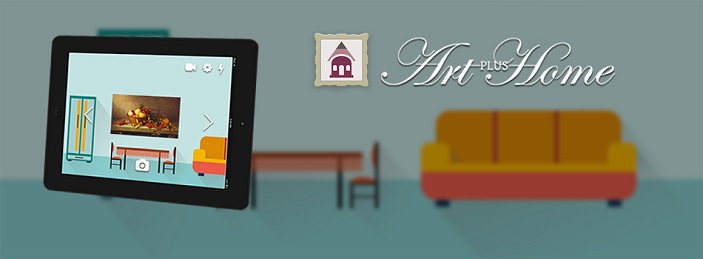
If social media transformed the way you connect with the world, then mobile technology is revolutionize the way you see and experience it. With its public launch in February 2015, everyone is expected to rock the new Art Plus Home Virtual app and two words are sure to be immensely popular: “Share and Buy” This new breakthrough promises to merge the real, the virtual, and the social. Indeed, the possibilities are endless. Two fields that can definitely benefit from this innovation are art and design, particularly for the home. As more and more young professionals climb the ladders of success, you find yourselves located in a condo or in an apartment at the heart of the city. And in the name of individuality, almost all of you are heavily involved in truly making your homes a place to call your own. “I’m a minimalist guy. I like a lot of black and white pieces,” shared Alex, a young accountant. “I’ve always had a penchant for quirky furniture and eclectic painting, both of which are very hard to find by the way,” explains Jessica, a law graduate.
Here lies the conundrum. In as much as you newly-empowered breed want to go all out to design your homes, you simply don’t have the time. “Designing your own place is a completely different animal. It’s almost a full-time job,” says Ashley. She went on further, “It’s almost like a cat and mouse game. You go to an art gallery to find a good painting. Then you have to go to another store for the drapes. Then you go look for a nice coffee table. They’re a perfect match in your head but after you install them in the living room, they just look horrible.” Dary Rees, an artist and a designer herself, knew exactly what Ashley meant.
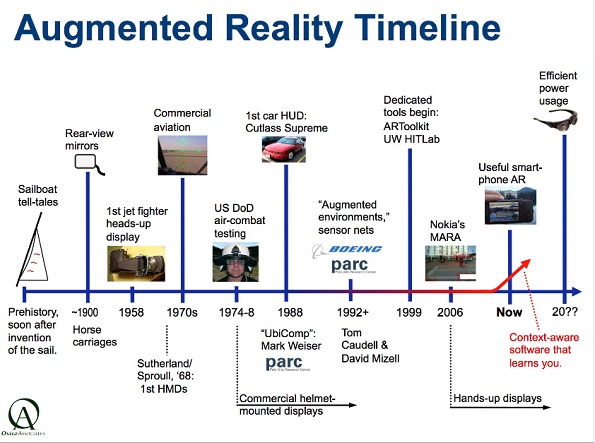
“Designing your home takes a lot of imagination. All the time, you have to close your eyes and visualize how every art piece, every furniture, and every drape will come together. That’s not easy. But it should be.” Then idea struck! Bringing together a team of people, Dary went to work. After months of development, the Art Plus Home virtual app was born. “With the Art Plus Home app, you can shop, visualize, and buy for your home in your own time and at your own convenience. You get to choose anything you like from the online gallery, superimpose them together in your space, and see how it looks – all in a matter of minutes. You can even share the design to friends! If you like the design, you can buy them right then and there. If not, you can start all over,” explains Dary. This is perfect for the Gen Y who is always on the go. You can design and buy for your home on the way to work, after a Yoga session, or even before you go to bed. The Art Plus Home app is also ideal if you’re on the look out for the latest in art and design. Check-out gallery openings, up and coming artists, or simply browse what’s hot (and not) so you have something to talk to with your date.. The Art Plus Home app is available in Android and in iOS.
Generation Y is a new breed. You’re motivated to succeed, you’re proud of your individuality, you’re always mobile, and you’re extremely connected to the world around you. With such a personality, you’re a perfect match for the Art Plus Home app! www.ArtPlusHome.com and download the free app at any app store.
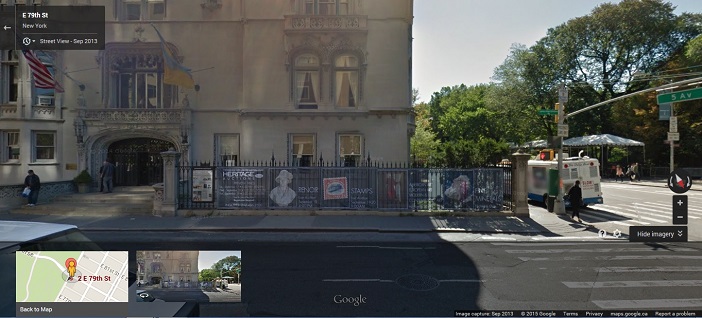
Augmented Reality Billboards Invading Google Streetview Maps
It’s an old story- at least in terms of internet “best before” dates. In 2010 sites began reporting on new Streetview Advertising patent applications submitted by Google . The complete details of the patents were not readily made available to the press but essentially it all boiled down to a new way for Google to generate advertising revenue by superimposing digital advertisements and billboards over top of existing “real world” advertising and structures. This was justified by Google by explaining that there is a need to update Streetview images that contained existing advertisements that are no longer current.
Fast forward to today and what we are seeing is this: not only are “real world” ads being updated but new digital ads are being superimposed over Streetview structures that do not contain advertisements in the “real world”. This is interesting. It is a form of AR (augmented reality). It is ethically questionable and here’s why……
Absolute power corrupts absolutely-
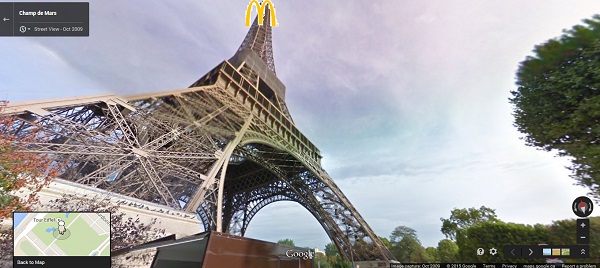
As virtual realty becomes claimed for advertising space there will more incentive to place AR ads on spaces that are in the “real world” off limits to billboards and marquee signage. What will prevent Google from selling AR ads that will appear on the side of the Eiffel Tower? Since they own the imagery presented on Streetview existing municipal bylaws are non-applicable.
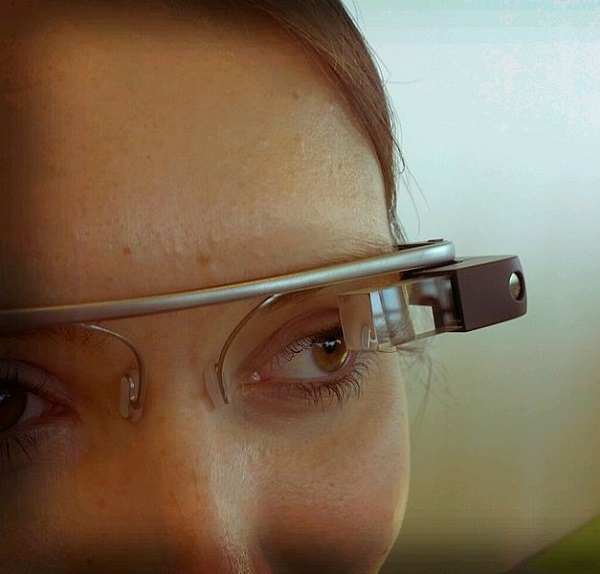
As head worn AR devices such as Google Glass and Sony SmartGlass begin to enter the consumer kingdom this year- the future of AR advertising is clear.
Canada To Allow Passenger Use Of VR Headsets During All Flight Phases
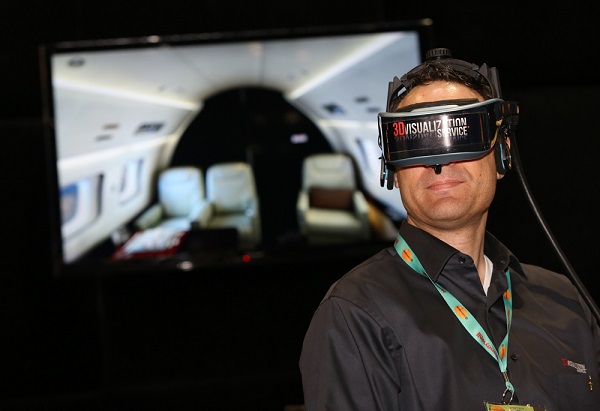
Last month, The Honorable Lisa Raitt, Minister of Transport, announced an important change that will benefit travelers flying with Canadian air operators, as well as the aviation industry. Passengers will soon be able to use portable electronic devices such as cameras, electronic games, tablets and computers during all phases of flight. This includes while an aircraft takes off, climbs, descends and lands, provided the device is in non-transmitting, or flight mode, and that their airline has met certain safety conditions outlined by Transport Canada.
Previously, passengers could not use their devices at their leisure during take off and landing. This change, which is made possible through an exemption to the Canadian Aviation Regulations, means that passengers will soon be able to work or play whenever they please on flights in Canada. It strikes the appropriate balance between safety and passenger comfort that Transport Canada and airlines always strive to achieve. The use of electronic devices on any flight will be at the discretion of the air operators, who must demonstrate that their aircraft are not affected by the use of the devices and that during critical phases of flight and during emergencies, all passengers are aware of and able to follow crew instructions.
Quick Facts
- Canada has an aviation safety record that remains one of the best in the world.
- Passengers will soon be in a position to use portable electronic devices such as cameras, electronic games, tablets and computers during all phases of flights, provided their airline has met certain safety conditions.
- As always, passengers who use transmitting portable electronic devices such as tablets, smartphones or e-readers, will need to ensure they are in a non-transmitting or flight mode before using them on an aircraft.“This is great news for air passengers, and an exciting day for the Canadian aviation industry. By collaborating with our aviation partners, we are able to offer airlines the tools they need to safely enable passengers to use portable electronic devices on airplanes, while still maintaining the highest standards of aviation safety.”Associated Links
- The Honourable Lisa Raitt, Minister of Transport
- Quote
- Regulations for portable electronic devices (PEDs)
- For more information about passenger safety on aircraft, visit http://www.tc.gc.ca/eng/air-passengers-safety-tips-safety-on-board-573.htm
- Aviation Circular 700-005
Reflecting On Baumgartner’s Free Fall Attempt From The Edge Of Space
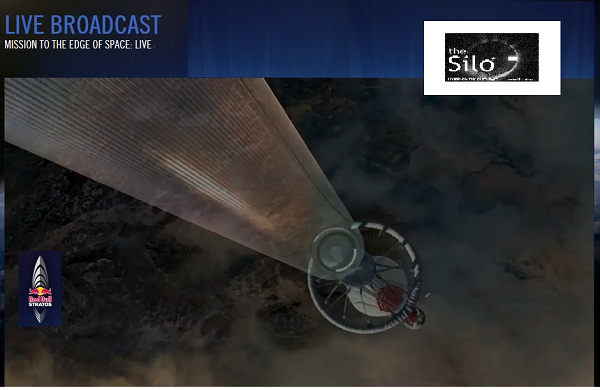
It’s October 5, 2012 and Felix Baumgartner is about to smash the 50+ year old free fall height record and break the sound barrier along the way.
Using a lighter-than-air balloon for the ascent stage, Baumgartner will float above Roswell, New Mexico, USA to the edge of space and then open the door of his pressurized capsule. It will be one small step for a man, and one giant fall for Felix and one giant marketing coup for RedBull.
When I was a fellow at the Canadian Film Centre’s New Media Lab in 2009, I was asked to make three predictions about future ‘real-life’ trends. Near the top of my list was increasingly ‘extreme’ extreme sports. I think I have gotten that one right, and if you’d like to know what the other two were drop me an email. With each leap in technology, mankind has been able to attempt more extreme feats. Technology has allowed us, the viewer, to live directly through real life participants much more vicariously than ever before, and mainstream virtual reality is just around the corner. Like a feedback loop, technology pushes the boundaries of what the human mind can conceive and what the human body can accomplish. Symbiotically, as we achieve more and more incredible feats, technology is utilized to not only showcase these feats but to instill an empowerment. More on this later….
In the early decades of the last century, extreme sports included seemingly placid activities when viewed with today’s sensibilities. Consider these examples: crossing the English Channel by airplane, modifying an automobile with solid rockets to reach a speed of 100 miles per hour, diving into the sea from a height of one hundred feet. In their allotted place in time, these activities were considered to be incredibly extreme and borderline committable.
Technology at that time meant that in order for a viewer to share in the participant’s experience, the viewer needed to read about the event in the newspaper, listen to the event on the radio or visit the event in person. This was a time of great internal imagination as methods and technologies in play were mystical and were not an everyday occurrence in those viewers lives. That being said, the crossing of the English Channel by airplane and other flights of fancy were made possible due to “magical signals traveling through the ether”. Aka: wireless radio technology. A pilot was now able to fly by honing in on radio signals. This same technology was used to broadcast news of the flight and this connectedness via the same technology may not be symbiosis in the traditional ecological sense but is most certainly a form of extreme mutualism. (Spinoza’s Theory of Imagination says essentially the same thing in his Extended Pattern Preservation Doctrine: The persistence of an individual [replace ‘individual’ with ‘same technology’] through time consists not in the sameness of underlying substance but, insofar as it is conceived through extension, in the persistence of a distinctive pattern of communication among moving parts. *
Our era is markedly different.
It is one of internal and external imagination. When Felix Baumgartner rides to the edge of space, we get to ride with him. We can watch a live stream of his progress, observe his ‘vital stats’: real-time mission statistics by watching the graphics on our smart device. We can hear the banter between mission control and Felix. We are in effect Felix Baumgartner’s mute passenger. (We will be hosting the LIVE feed right here in this post at the window below. UPDATE due to high winds today’s rescheduled attempt has been postponed until further notice. Check #freefall on Twitter for latest updates. )
This is a much more immediate and virtual form of reality and the excitement is compounded by our anxiety and our sense of power.
We sense our power because we have the very same technology that makes this attempt possible. If you happen to be a regular watcher of a reality television show involving a performance and a smartphone voting system you are essentially experiencing an empowerment. You hold in your hands an actual component of the program and take part in a communal experience. This is not just “must see t.v.”, this is “must do t.v.”
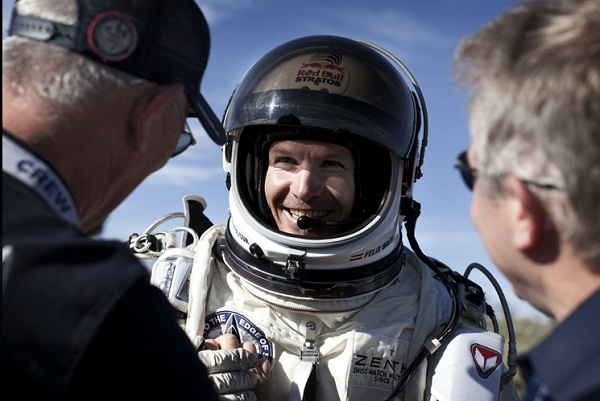
Much like NASA and the current MARS mission, Baumgartner’s team and sponsor Redbull have come to understand the necessity for hype and sensationalism in order to draw attention to their work and secure future projects. If no bucks=no Buck Rogers, then no Buck Rogers= no bucks.

Really though, it’s not an economic strategy that I wish to point out here.
It’s the potential for an economic strategy, the potential for a social strategy, the potential for an emotional strategy and in fact all the potential strategies that our digital age has room for. Extreme human activities are by their very nature extremely emotional. They connect with us on a deep rooted, conscious and subconscious level. It’s like a modern incarnation of the primitive hunt or the ancient journey.
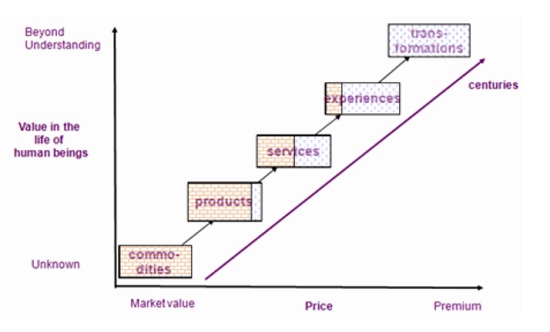
If you choose to experience Felix Baumgartner’s highest free fall record attempt live on your smart device or project it into your living room like we are planning on doing here at the Silo office- you will be transformed on some level. (In the marketing and advertising world this is known as Pine and Gilmore’s Experience Economy.) That’s probably due to the fact that the natural environment, though beautiful, is incredibly dangerous and deadly and throughout our development as we have come to dominate this planet, we have developed and conquered by using technology. Is it incredulous to suggest that by using our smart device to experience these dangerous feats, we are in fact celebrating mankind’s conquering of danger and nature through technology? The very technology that we now hold in our hands? For the Silo, Jarrod Barker.
Archaeology Added To World Of Warcraft Expansion Pack
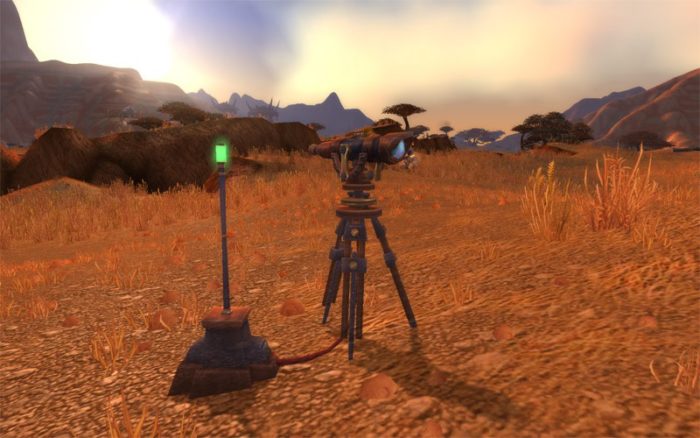
In the videogame world there’s immersive gaming and then there’s immersive gaming. Take Blizzard’s World of Warcraft for example. Not only can you buy “virtual treasure and items” on eBay using real life money, there’s a new cataclysm expansion pack that allows your character to learn a new archaeology skill and visit “virtual dig sites” to gather your own artifacts. This sort of ingame depth and detail is why over 12,000,000 people spend a great deal of time “existing” in the virtual World of Warcraft.
Featured image- middlesavagery.files.wordpress.com