Tag Archives: share.america.gov

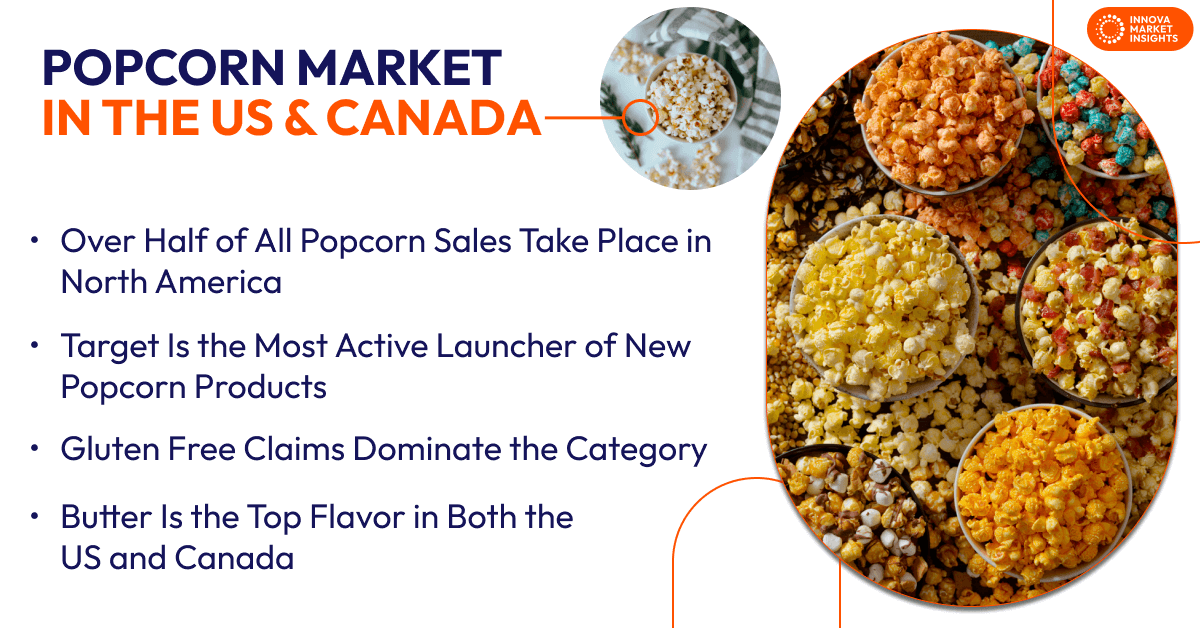
Modern Day Popcorn Hails From America Heartland But What About Ancient Origins?

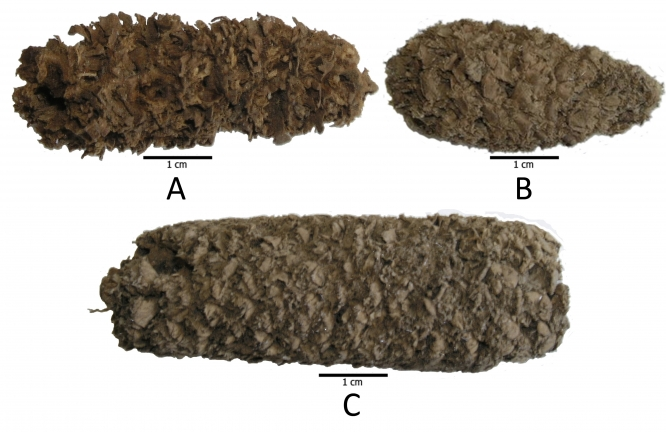
Evidence of popped corn discovered in Peru shows people’s love affair with the light and fluffy snack dates back 6,700 years. But if you’ve enjoyed popcorn in more recent times, it likely came from the United States.

While estimates vary, U.S. popcorn production accounts for upward of 80% of popcorn seed  sold worldwide. Much of it comes from the Midwest, the heartland region where the world’s first popcorn popper debuted at the World’s Columbian Exposition in Chicago in 1893.

Scientifically Adapted Popcorn

For decades, U.S. seed scientists have adapted popcorn to thrive in the agriculturally rich region, helping drive the snack’s evolution from a movie theater and TV-night favorite to a healthy snack enjoyed around the world.
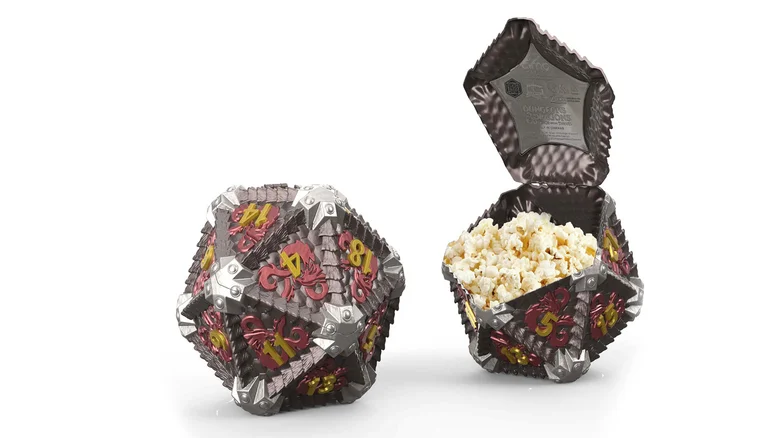
“The era of ‘over the top’ collectible popcorn buckets is among us” The Most Ridiculous Popcorn Buckets Ranked By How Much We Want To Eat Out Of Them

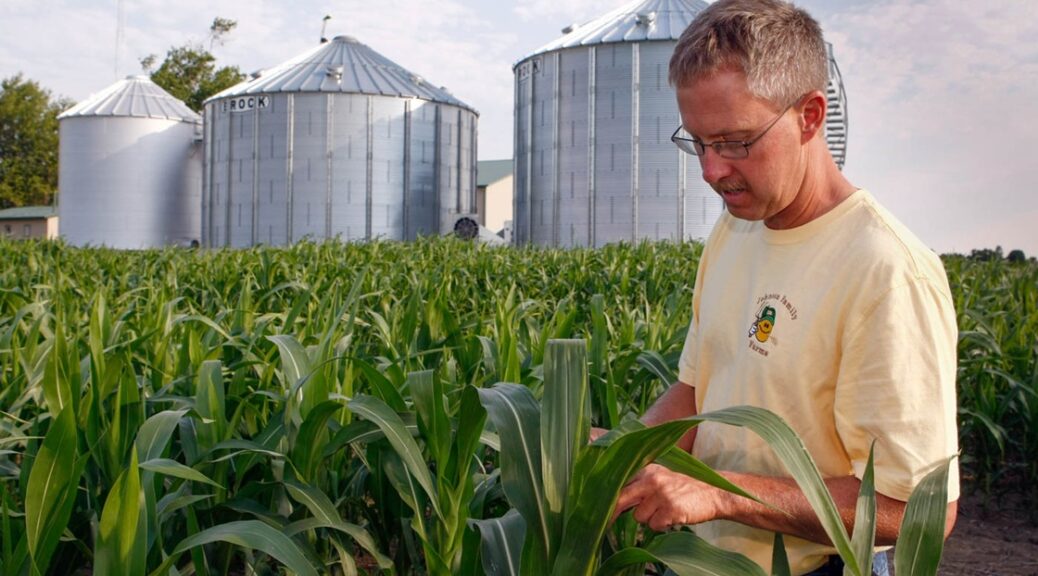
Dan Quinn, corn program director at Purdue University in West Lafayette, Indiana, says years of localized breeding and fertilization techniques have increased farmers’ popcorn yields and developed traits for optimal popping.
Why Different Corn Hybrids Make Sense

Different hybrids have been developed for microwave popping versus large commercial kettles, Quinn says. Research considers everything from moisture levels to hull thickness (the part of the seed that explodes during cooking) and focuses on both major popcorn shapes: butterfly and mushroom.

Which State Is Producing The Most Popcorn?

Indiana now produces 40% of America’s popcorn, more than any other U.S. state. Indiana and Purdue’s rich popcorn legacy includes Orville Redenbacher, the bow-tie-clad pitchman who refined his kernels at Purdue before launching his business from the state. He later popularized his brand with TV commercials in the 1970s and 1980s.

A few states over, in Nebraska, researchers are enhancing popcorn’s inherent nutritional qualities. The University of Nebraska and private sector partners recently developed a popcorn variety rich in an amino acid essential for healthy diets, says David Holding , a professor and researcher at the school. “This is a product that lends itself to organic production and can be marketed as a novel popcorn variety,” he says.

Aaron Whalen, sales manager at Ag Alumni Seed, which partners with Purdue University and growers in 20 countries, says the popcorn market is trending toward healthier products, as well as those that allow for adding culturally specific flavors.

For The Silo, Brandon Lambert/ & friends at share.america.gov.
Fifty Years Ago Viking 1 Placed Humanity’s First Eyes On Mars

July, 2026- 5 MINUTE READ

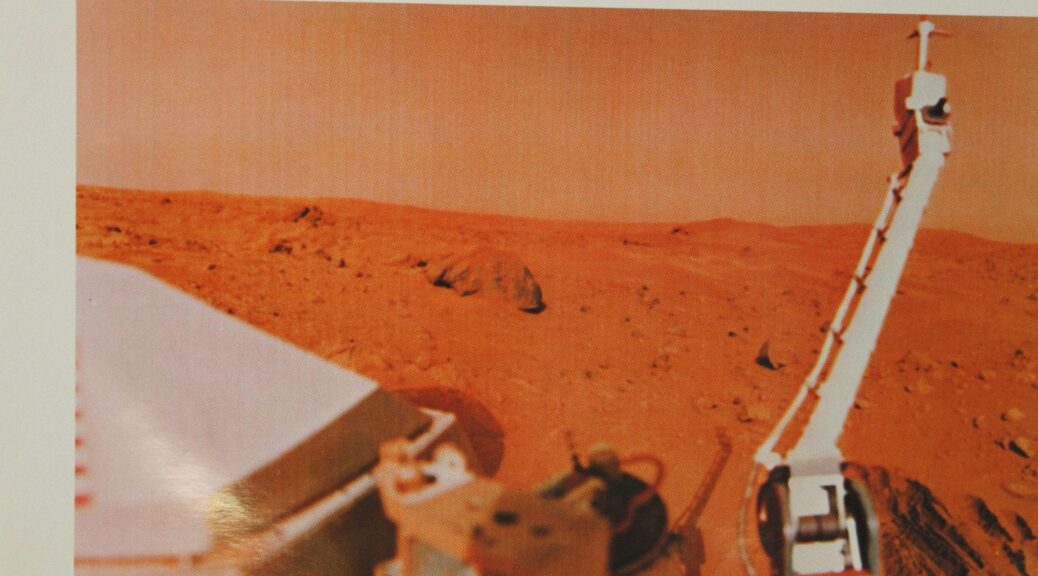
Orange, rocky landscape (NASA/JPL)
The Viking 1 lander’s photographs gave the world its first look at the surface of Mars, including this image taken before sunset August 21, 1976. (NASA/JPL)

On July 20, 1976, seven years after NASA landed a man on the moon, the U.S. space agency safely landed the first spacecraft on Mars.

Viking 1 operated for six years, far exceeding its planned 90-day mission. The lander tested soil and sent home the world’s first images of the Martian surface. While Viking 1 — consisting of an orbiter and a lander — did not find signs of life, its successful landing led to future exploration of Mars, including by the Perseverance rover launched in July 2020.

As the 50th anniversary of Viking 1 approaches, the United States is again reaching for Mars with missions that serve as a stepping stone toward sending astronauts to the red planet. NASA’s Artemis program aims to create a permanent moon base by 2032 to test human habitation on other planets and inform missions to Mars.

“We will pursue our manifest destiny into the stars, launching American astronauts to plant the Stars and Stripes on the planet Mars,” President Trump said in his January 2025 inaugural address.

Mars missions continue

Digital rendering of NASA's Space Reactor 1 Freedom (NASA)
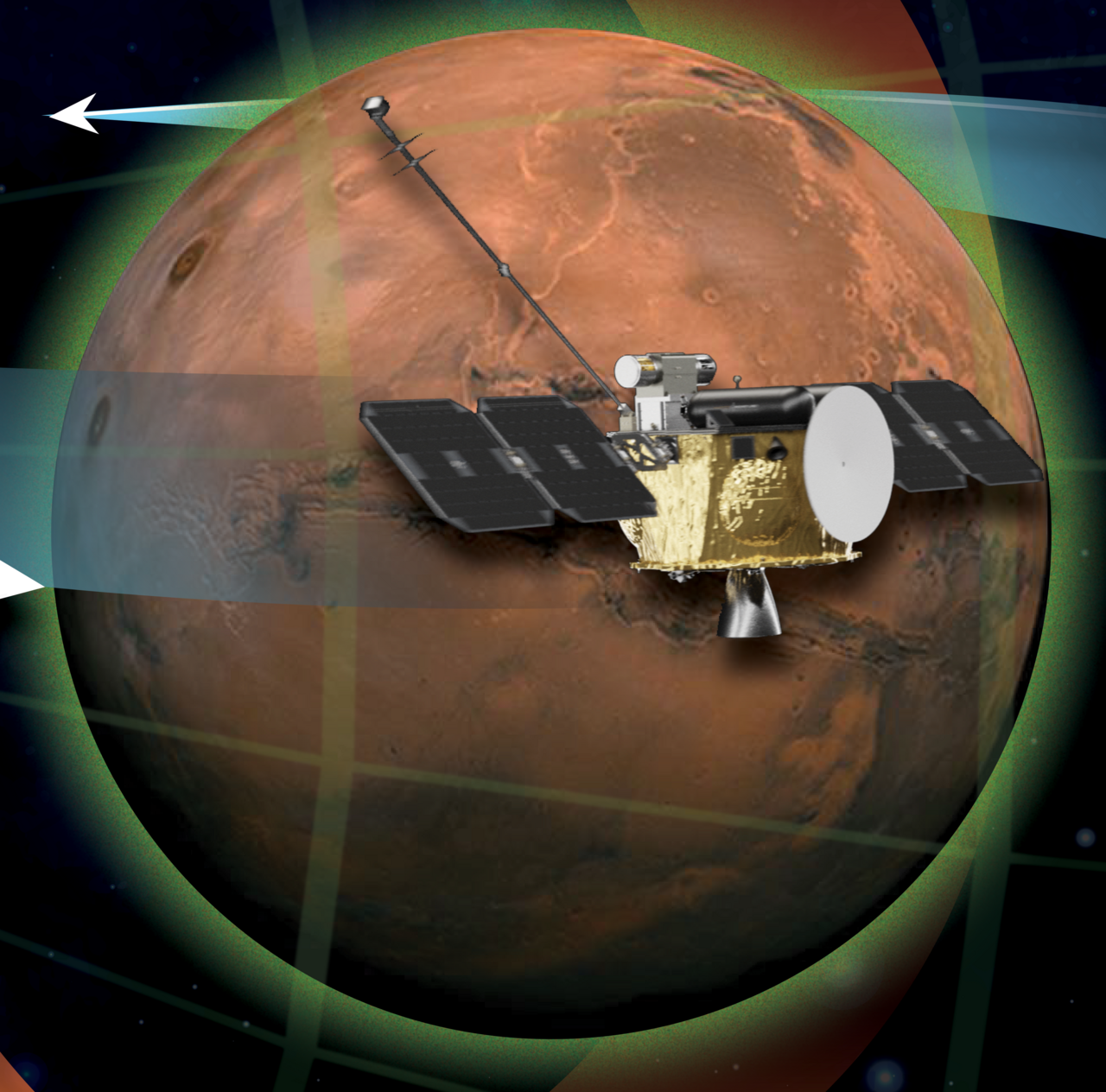
This digital rendering provides a conceptual image of the Space Reactor 1 Freedom that NASA will use to study Mars. (NASA)

Other NASA missions are carrying on Viking 1’s legacy , furthering scientific knowledge of the fourth planet from the sun. Launched in November, NASA’s Escapade and Plasma Acceleration and Dynamics Explorers mission will reach Mars in 2027. The twin spacecraft will orbit Mars, collecting data on space-weather conditions to inform future robot and human missions.

In 2028, NASA will launch the Space Reactor‑1 Freedom to Mars, an uncrewed mission designed to demonstrate whether nuclear electric propulsion can work in deep space, an essential element for human flight to Mars.

A pioneering legacy

Viking 2 image of surface of Mars (NASA)
A Viking 2 image of Mars’ Utopia Plain (NASA)

Successfully landing Viking 1 on Mars was an extraordinary achievement. While other nations had tried, communications were lost on touchdown. Yet NASA repeated the feat two months later with the safe landing of Viking 2 on September 3, 1976.

Project managers weren’t certain what to expect from either mission. The Viking 1 landing, originally scheduled for America’s bicentennial on July 4, 1976, was delayed when the planned landing site appeared too rocky. Yet the Viking missions’ legacy endures. Viking orbiters mapped 97% of Mars’ surface and sent home 52,663 images. The landers returned 4,500 photos before Viking 1 finally stopped operating in November 1982.

While neither mission discovered signs of life, the search continues as scientists revisit findings from Viking and later missions. In September, NASA announced  that a soil sample Perseverance collected may contain evidence of ancient microbial life, calling it “the closest we have ever come to discovering life on Mars.”

For the Silo, Charles Hoskinson/ Share America.

Softball Returns To Olympics 2028

Softball comes home for Olympics in 2028

The sport, which started in the U.S., is now played in 60 countries including Canada, where the women’s team won a bronze medal in Tokyo 2020.

Graphic of gold, silver, and bronze medals listing softball medalists in 1996, 2000, 2004, 2008 and 2020 (held in 2021 due to Covid) Olympics.
Olympic rings with photos of people playing softball, lacrosse, flag football, cricket and squash (Photos: Shutterstock.com)
Softball joins baseball as a combined 2028 Olympic sport, with women playing softball and men, baseball. Lacrosse and cricket also return, while flag football and squash debut. (Photos: Shutterstock.com)

Softball’s return to the Olympics, for the games to be held in Los Angeles in 2028, will mark the first time a nation has twice hosted the sport for Olympic competition, a fitting tribute for the country where the game began.

Softball’s origins date to 1887, when reporter George Hancock saw someone in Chicago hitting a boxing glove with a broom handle. In 1895, firefighters in Minneapolis played a similar game using a ball of yarn wrapped in leather.

Originally called “indoor baseball,” the game later moved outside to fields that were too small for a baseball diamond. In 1926, Walter Hakanson, who would later become president of the Amateur Softball Association, proposed unifying the various versions of the game into one sport called softball.

While the rules and size of the ball have varied over the ensuing decades, different versions of softball are still played across the United States and the world.

An Olympic return

At the LA28 Olympics, softball joins baseball as a combined Olympic sport, with women playing softball and men playing baseball.

“It’s great for the sport that we’re back,” USA Softball Executive Director Craig Cress said, noting softball’s U.S. popularity helped get the sport included in the 2028 Olympics.

Softball player crosses plate in front of her teammates (© USA Softball)
The U.S. Women’s National Team celebrates Tiare Jennings’ game-winning home run against Japan in game 4 of the 2025 World Games in Chengdu, China. (© USA Softball)

Upward of 9 million people played softball in the United States in 2023, according to the Sports and Fitness Industry Association. And Little League Softball , started in the United States in 1974, has expanded to where 300,000 participants now play on 25,000 teams across 25 countries.

It’s important for us to “show the values of what our sport does, and how important it is,” to the United States and other countries, Cress said. More than 60 countries compete internationally in softball.

LA28 marks softball’s sixth appearance in the Olympics. Softball debuted as a medal sport in Atlanta in 1996, then was played in Sydney 2000, Athens 2004, Beijing 2008 and Tokyo 2020.

How to play

Although similar to baseball, softball is played with a larger ball and on a smaller field. The pitcher throws underhand using a fast windmill motion that can generate pitches in excess of 112 kilometers per hour (70 miles per hour). Pitchers throw from a flat circular area, in contrast to baseball where pitchers stand on a raised mound. A softball game is also shorter than baseball, with only seven innings compared to nine.

The 2028 Olympic softball games will be played in Oklahoma City, 2,000 kilometers (1,243 miles) east of Los Angeles. Oklahoma City’s 13,000-seat stadium will allow players to compete on an existing field made for softball, rather than a reworked baseball field or a newly constructed complex.

Six countries will compete in the Olympic softball tournament. As the host nation, the United States is guaranteed entry. Other qualifiers will include the winners of the World Baseball Softball Confederation’s 2027 Women’s Softball World Cup, regional championships and a last-chance qualifier tournament.

The teams competing in the 2028 Olympics will first compete against each other in a preliminary round, with the gold medal game scheduled for the day before the Olympic closing ceremony.

For the Silo, Deborah Charles.