Tag Archives: Artemis program

Fifty Years Ago Viking 1 Placed Humanity’s First Eyes On Mars

July, 2026- 5 MINUTE READ

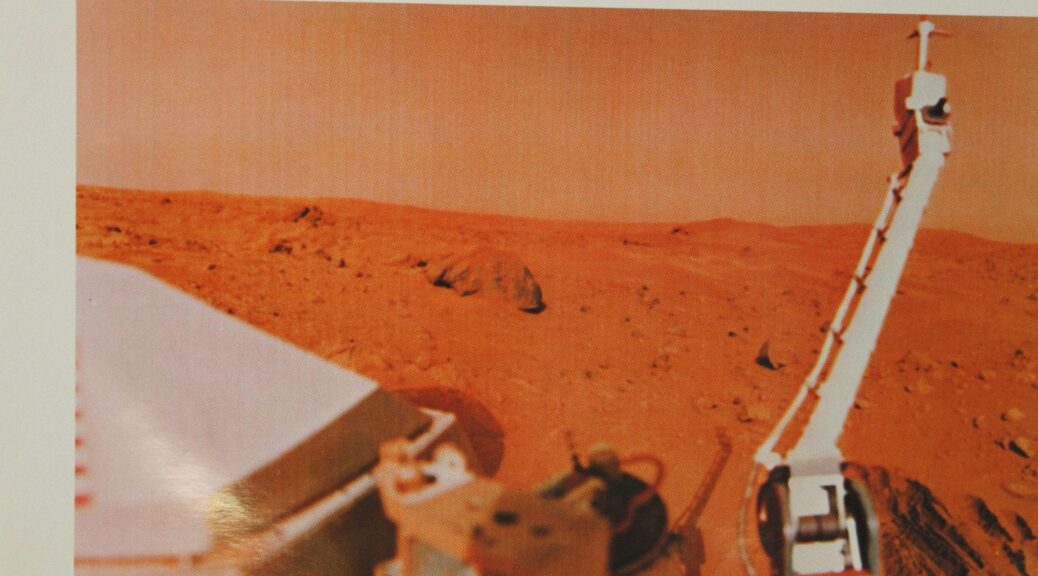
Orange, rocky landscape (NASA/JPL)
The Viking 1 lander’s photographs gave the world its first look at the surface of Mars, including this image taken before sunset August 21, 1976. (NASA/JPL)

On July 20, 1976, seven years after NASA landed a man on the moon, the U.S. space agency safely landed the first spacecraft on Mars.

Viking 1 operated for six years, far exceeding its planned 90-day mission. The lander tested soil and sent home the world’s first images of the Martian surface. While Viking 1 — consisting of an orbiter and a lander — did not find signs of life, its successful landing led to future exploration of Mars, including by the Perseverance rover launched in July 2020.

As the 50th anniversary of Viking 1 approaches, the United States is again reaching for Mars with missions that serve as a stepping stone toward sending astronauts to the red planet. NASA’s Artemis program aims to create a permanent moon base by 2032 to test human habitation on other planets and inform missions to Mars.

“We will pursue our manifest destiny into the stars, launching American astronauts to plant the Stars and Stripes on the planet Mars,” President Trump said in his January 2025 inaugural address.

Mars missions continue

Digital rendering of NASA's Space Reactor 1 Freedom (NASA)
This digital rendering provides a conceptual image of the Space Reactor 1 Freedom that NASA will use to study Mars. (NASA)

Other NASA missions are carrying on Viking 1’s legacy , furthering scientific knowledge of the fourth planet from the sun. Launched in November, NASA’s Escapade and Plasma Acceleration and Dynamics Explorers mission will reach Mars in 2027. The twin spacecraft will orbit Mars, collecting data on space-weather conditions to inform future robot and human missions.
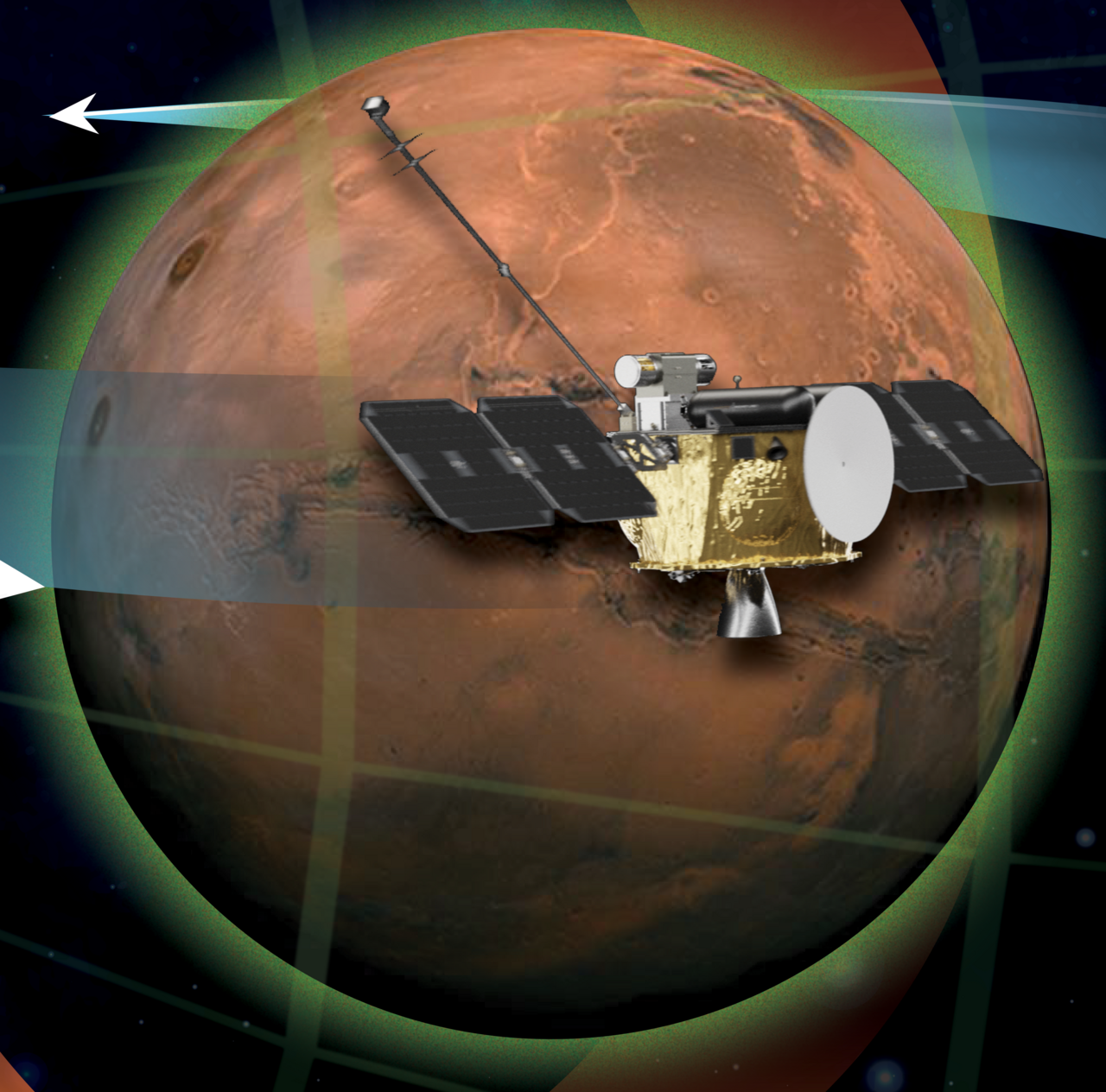
In 2028, NASA will launch the Space Reactor‑1 Freedom to Mars, an uncrewed mission designed to demonstrate whether nuclear electric propulsion can work in deep space, an essential element for human flight to Mars.

A pioneering legacy

Viking 2 image of surface of Mars (NASA)
A Viking 2 image of Mars’ Utopia Plain (NASA)

Successfully landing Viking 1 on Mars was an extraordinary achievement. While other nations had tried, communications were lost on touchdown. Yet NASA repeated the feat two months later with the safe landing of Viking 2 on September 3, 1976.

Project managers weren’t certain what to expect from either mission. The Viking 1 landing, originally scheduled for America’s bicentennial on July 4, 1976, was delayed when the planned landing site appeared too rocky. Yet the Viking missions’ legacy endures. Viking orbiters mapped 97% of Mars’ surface and sent home 52,663 images. The landers returned 4,500 photos before Viking 1 finally stopped operating in November 1982.

While neither mission discovered signs of life, the search continues as scientists revisit findings from Viking and later missions. In September, NASA announced  that a soil sample Perseverance collected may contain evidence of ancient microbial life, calling it “the closest we have ever come to discovering life on Mars.”

For the Silo, Charles Hoskinson/ Share America.

New Zealand United States Space Cooperation Strengthened

Joint Statement on U.S.-New Zealand Space Dialogue

Post via US Secretary of State Office of the Spokesperson

Pursuant to the desire of the Government of The United States of America and the Government of New Zealand, the countries held a bilateral Space Dialogue in Washington, D.C. on March 23 and on March 26 to strengthen bilateral space cooperation. The Space Dialogue demonstrates the robust and growing cooperation between the United States and New Zealand in outer space.

The U.S. delegation was led by Valda Vikmanis, Director of the Office of Space Affairs of the Bureau of Oceans and International Environmental and Scientific Affairs, and by Eric Desautels, Director of the Office of Critical Domains for the Bureau of Emerging Threats. The New Zealand delegation was led by Andrew Johnson, Deputy Head of the New Zealand Space Agency. Chris Seed, New Zealand’s Ambassador to the United States, delivered opening remarks that underscored priorities of strengthening commercial space ties, enhancing space security cooperation, and advancing scientific collaboration. Both delegations included whole-of-government participation.

The participants welcomed the holding of the Dialogue during a period in which the United States and New Zealand share a close cooperation on space which has had mutual benefits for both countries. In October 2024, New Zealand became the third most frequent launcher of orbital rockets, with U.S. headquartered and New Zealand founded company Rocket Lab propelling New Zealand to these new heights.

A significant focus of the Dialogue was the evolving role of the commercial space sector in supporting both economic growth and shared security interests. Discussions covered the changing role of government in enabling commercial activity and the expanding range of applications, with both sides expressing their intent to continue cooperation on spaceflight safety, launch, payloads, science and innovation, and associated technology security measures. Both sides also discussed opportunities for further cooperation to address space-related threats to shared security interests, including military space cooperation and managing the risks to ground-based space infrastructure.

The delegations recognized the potential for expanded cooperation on policy and regulatory interoperability related to commercial space, including space situational awareness, launch and reentry, and commercial remote sensing. They decided to work closely together to address regulatory constraints that hinder effective cooperation, commercial engagement, and mutual benefits.

Participants welcomed the open and productive nature of the Dialogue, which included discussion on space cooperation grounded in the principles of the Artemis Accords, to which New Zealand was an early signatory. Both sides emphasized the importance of promoting peaceful and transparent behavior in outer space.

Participants acknowledged New Zealand’s geographic advantages have enabled frequent and responsive launches for U.S. industry and government agencies, adding strategic resilience to launch capacity. New Zealand’s location has enabled hosting of ground-based space infrastructure to enhance both space situational awareness and communications with spacecraft. The United States noted New Zealand’s recently passed, world‑first legislation on the operation of ground-based space infrastructure, which strengthens its ability to protect New Zealand’s national interests and values.

New Zealand’s growing focus on space security has opened new avenues for cooperation, strengthening the United States and New Zealand partnership and advancing practical efforts to promote stability, resilience, and the responsible use of space.

New Zealand’s Space Scholarships program, where New Zealand funds post graduate students to complete a three-month internship at the Jet Propulsion Laboratory in Southern California, where they contribute to cutting-edge space technology projects, was acknowledged as a way to create enduring space connections between New Zealand and the United States.

Participants also welcomed the announcement of the first round of joint research projects between New Zealand research institutes and NASA centers, focusing on Earth observation. These projects lay the foundation for future collaborations in other research areas, including potential contributions to the Artemis program following the March 24-25 Ignition events and announcements at NASA headquarters.

Both countries resolved to continue working together in these areas and to explore other opportunities for strengthening bilateral cooperation, including facilitating bilateral commercial connections.