Tag Archives: inflation

World Economic Forum 56th Annual Meeting Has Spirit Of Dialogue Theme

Chief Economists Perceive Relative Resilience but Remain Concerned about Asset Prices, Debt and Geoeconomic Tensions

Acknowledging the relative resilience of the global economy amid turbulence, 53% of chief economists surveyed expect global economic conditions to weaken in the year ahead, down from 72% in September 2025.Uncertainty around technology remains high, with 52% expecting AI-related stocks to decline and 40% expecting gains. On growth, expectations diverge by region, with economists expecting strong momentum in South Asia and East Asia and weak to moderate growth in Europe.

On macroeconomics, nearly a third of respondents are concerned about sovereign debt crises in advanced economies and nearly half in emerging economies; over 60% expect governments to rely on higher inflation and tax revenues to manage elevated debt.Learn more about the Chief Economists’ Outlook here.

Follow the Annual Meeting 2026 here and on social media using #WEF26.

Geneva, Switzerland, January 2026 – The global economic outlook has improved modestly but remains uncertain, with asset valuations, mounting debt, geoeconomic realignment and rapid artificial intelligence deployment creating both opportunities and risks, according to the World Economic Forum’s latest Chief Economists’ Outlook, published today. Although 53% of chief economists expect global economic conditions to weaken in the year ahead, this marks a significant improvement from the 72% who held this view in September 2025.
 
“The Chief Economists survey reveals three defining trends for 2026: surging AI investment and its implications for the global economy; debt approaching critical thresholds with unprecedented shifts in fiscal and monetary policies; and trade realignments,” said Saadia Zahidi, Managing Director, World Economic Forum. “Governments and companies will have to navigate an uncertain near-term environment with agility while continuing to build resilience and invest in the long-term fundamentals of growth.”
 
AI and other asset valuations are under scrutiny
Concentrated AI stock gains are splitting the views of the chief economists. A narrow majority (52%) are expecting AI-related US stocks to decline over the next year, but 40% foresee further increases. Should values fall sharply, 74% believe impacts would spread across the global economy. Cryptocurrencies face bleaker prospects, with 62% anticipating further declines following market turbulence, while 54% believe gold has peaked after recent rallies.
 
When it comes to the potential expected returns from AI, there is wide variation across regions and sectors. Roughly four in five chief economists expect productivity gains within two years in the US and China. Chief economists expect the information technology sector to adopt AI fastest, with nearly three-quarters anticipating imminent productivity gains. Financial services, supply chain, healthcare, engineering and retail follow as “fast-movers”, with one to two-year timelines. By firm size, the chief economists expect companies with 1,000+ employees to see gains earlier than others: 77% of chief economists expect meaningful productivity gains within two years.
 
The employment picture in relation to AI is expected to evolve over time: two thirds expect modest job losses over the next two years, but views diverge sharply over the longer term: 57% anticipate net losses over 10 years, while 32% foresee gains as new occupations emerge.
 
Debt may drive difficult trade-offs
Managing elevated debt levels has become a central challenge for policy-makers, particularly as spending pressures rise. Defence spending is almost unanimously expected to increase, with 97% of chief economists anticipating rises in advanced economies and 74% in emerging markets. Digital infrastructure and energy spending are also expected to rise. Most other sectors are expected to see stable levels of spending, while a majority of surveyed economists anticipate spending on environmental protection to decline in both advanced (59%) and emerging economies (61%).
 
Views are split equally on the likelihood of sovereign debt crises in advanced economies, while nearly half (47%) see them as likely in the year ahead in emerging economies. A large majority of chief economists expect governments to rely on higher inflation to reduce burdens (67% in advanced economies, 61% in emerging markets). Tax increases are also viewed as likely by 62% for advanced economies and 53% for emerging markets. Some 53% of chief economists anticipate seeing debt restructuring or default as a debt management strategy in emerging markets over five years, compared to just 6% for advanced economies.
 
Trade flows and regional growth outlooks are realigning
Global trade and investment are adjusting to a new, competitive reality. Chief economists expect import tariffs between the US and China to remain mostly stable, though competition could intensify in other domains. Some 91% expect US tech export restrictions to China to remain or increase; 84% anticipate the same for Chinese critical mineral restrictions.
 
In this new context, 94% of chief economists expect more bilateral trade deals and 69% anticipate growth in regional trade agreements. Some 89% expect Chinese exports into non-US markets to further increase, while surveyed economists are split on the future of global trade volumes. Meanwhile, almost half of them foresee the continued rise of international investment flows, and 57% expect FDI into the US to increase compared to 9% who expect increased inflows to China.
 
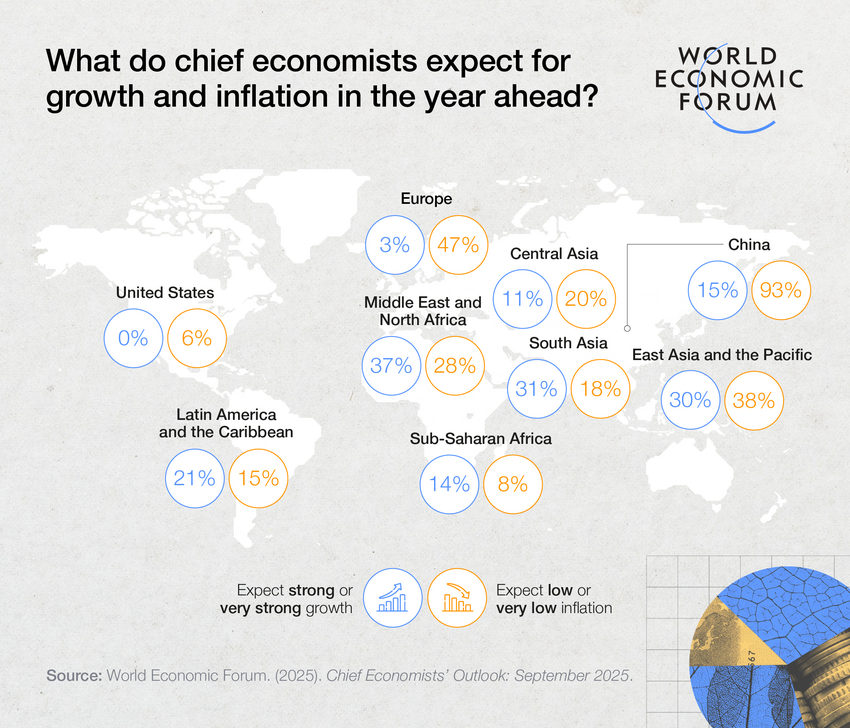
When it comes to growth expectation among the chief economists surveyed, South Asia leads with 66% anticipating strong or very strong performance, driven by robust growth in India. Some 45% expect strong growth and 55% moderate growth in East Asia and the Pacific. Some 36% expect strong growth and 64% moderate growth in the MENA region. The US outlook improved notably, with 69% expecting moderate growth versus 49% in September 2025, but only 11% expecting strong growth. China faces mixed prospects, with 47% expecting moderate growth and 24% strong growth and nearly an equal number – 29% – expecting weak growth. Europe confronts the weakest outlook, with 53% expecting weak growth, 44% moderate growth, and only 3% anticipating strong growth.
 
About the Chief Economists’ Outlook
The report builds on extensive consultations and surveys with chief economists from the public and private sectors, organized by the World Economic Forum’s Centre for the New Economy and Society. The report supports the Forum’s Future of Growth Initiative, aiming to foster dialogue and actionable pathways to sustainable and inclusive economic growth. The Chief Economists’ Outlook is complemented by other recent publications with economic foresight. Four Futures for the New Economy and Four Futures for Jobs in the New Economy explore strategic implications for businesses navigating geopolitical shifts, technology disruption and workforce transformation through 2030, offering indicators to track and strategies to prepare for multiple scenarios.
 
About the Annual Meeting 2026
The World Economic Forum’s 56th Annual Meeting, taking place today the 19th and running until 23 January 2026 in Davos-Klosters, Switzerland, will convene leaders from business, government, international organizations, civil society and academia under the theme, A Spirit of Dialogue. Click here to learn more.
 
A Spirit of Dialogue Brings Record Numbers of World Leaders to Davos for World Economic Forum Annual Meeting 2026

A record 400 top political leaders, including close to 65 heads of state and government – with six G7 leaders expected – nearly 850 of the world’s top CEOs and chairs, and almost 100 leading unicorns and technology pioneers will convene in Davos-Klosters for one of the highest-level gatherings in the Annual Meeting’s history.  Held under the theme of A Spirit of Dialogue, the 56th Annual Meeting will provide an impartial platform for close to 3,000 participants from over 130 countries to navigate the major economic, geopolitical and technological forces reshaping the global landscape.

A major focus will be on the unprecedented speed of innovation and technological advancement with key voices from industry and academia present.– At a pivotal moment for global cooperation, the World Economic Forum will convene its 56th Annual Meeting today in Davos-Klosters, Switzerland, bringing together close to 3,000 cross-sector leaders from over 130 countries under the theme A Spirit of Dialogue. Marking record levels of governmental participation, 400 top political leaders – including close to 65 heads of state and government and six of the G7’s leaders – are expected to take part, alongside nearly 850 of the world’s top CEOs and chairpersons, and almost 100 leading unicorns and technology pioneers.  
 
Amid the most complex geopolitical backdrop in decades – marked by rising fragmentation and rapid technological change – the need for an impartial platform that brings together diverse and sometimes diverging voices across industries, regions, and generations is urgent. Building on the Forum’s long-standing tradition of providing a trusted space for dialogue and public-private collaboration, the Annual Meeting 2026 will enable an open exchange of ideas and perspectives on the issues that matter most to people, economies and the planet, turning shared understanding into action.
 
“Dialogue is not a luxury in times of uncertainty; it is an urgent necessity,” said Børge Brende, President and CEO, World Economic Forum. “At a critical juncture for international cooperation – marked by profound geoeconomic and technological transformation – this year’s Annual Meeting will be one of our most consequential. With historic levels of participation, it will provide a space for an unparalleled mix of global leaders and innovators to work through and look beyond divisions, gain insight into a fast-shifting global landscape, and advance solutions to today’s and tomorrow’s biggest and most pressing challenges.”
 
“As the World Economic Forum enters its next chapter, this year’s Annual Meeting is bringing together a record number of global leaders from government, business, and non-governmental organizations at a moment when dialogue matters more than ever,” said Larry Fink, Interim Co-Chair, World Economic Forum. “Understanding different perspectives is essential to driving economic progress and ensuring prosperity is more broadly shared.”
 
“At a moment when cooperation matters more than ever, the Annual Meeting provides a unique space to turn dialogue into meaningful progress,” said André Hoffmann, Interim Co-Chair, World Economic Forum. “By bringing together leaders across regions and sectors, it creates the conditions to rebuild trust, align priorities and advance solutions that support long-term, sustainable growth for all, within planetary boundaries.”
 
Switzerland is the host country for the meeting. 400 government leaders are expected to attend this year, representing the highest level of government participation in the Annual Meeting’s history, including close to 65 heads of state and government, 55 ministers for economy and finance, 33 ministers for foreign affairs, 34 ministers for trade, commerce and industry, and 11 Governors of Central Banks. High-level government representation is expected from all key regions, including six G7 leaders and heads of state from countries central to dialogue on critical global situations – from Ukraine to Gaza and the broader Middle East, and beyond.   
  
Top political leaders taking part include:
 
Top political leaders taking part include: Donald Trump, President of the United States of America; Mark Carney, Prime Minister of Canada; Friedrich Merz, Federal Chancellor of Germany; Ursula von der Leyen, President of the European Commission;  He Lifeng, Vice-Premier of the People’s Republic of China; Javier Milei, President of Argentina; Prabowo Subianto, President of Indonesia; Pedro Sánchez, Prime Minister of Spain; Guy Parmelin, President of the Swiss Confederation 2026; Vahagn Khachaturyan, President of the Republic of Armenia; Ilham Aliyev, President of the Republic of Azerbaijan; Bart De Wever, Prime Minister of Belgium; Gustavo Petro, President of Colombia; Félix-Antoine Tshisekedi Tshilombo, President of the Democratic Republic of the Congo; Daniel Noboa Azín, President of Ecuador; Alexander Stubb, President of Finland; Kyriakos Mitsotakis, Prime Minister of Greece; Micheál Martin, Taoiseach, Ireland; Aziz Akhannouch, Head of Government, Kingdom of Morocco; Daniel Francisco Chapo, President of Mozambique; Dick Schoof, Prime Minister of the Netherlands; Mian Muhammad Shehbaz Sharif, Prime Minister of Pakistan; Mohammed Mustafa, Prime Minister of the Palestinian National Authority; Karol Nawrocki, President of Poland; Mohammed Bin Abdulrahman Al Thani, Prime Minister and Minister of Foreign Affairs of the State of Qatar; Aleksandar Vučić, President of Serbia; Tharman Shanmugaratnam, President of Singapore; Isaac Herzog, President of the State of Israel; Ahmad Al Sharaa, President of Syria; Volodymyr Zelenskyy, President of Ukraine.     
 
Heads of international organizations taking part include:
 
António Guterres, Secretary-General of the United Nations; Ngozi Okonjo-Iweala, Director-General of the World Trade Organization; Ajay S. Banga, President of the World Bank Group; Kristalina Georgieva, Managing Director of the International Monetary Fund; Mark Rutte, Secretary-General of the North Atlantic Treaty Organization; Tedros Adhanom Ghebreyesus, Director-General of the World Health Organization; Alexander De Croo, Administrator of the United Nations Development Programme; Mathias Cormann, Secretary-General of the Organisation for Economic Co-operation and Development; Doreen Bogdan-Martin, Secretary-General of the International Telecommunication Union; Barham Salih, UN High Commissioner for Refugees; Jasem Al Budaiwi, Secretary-General of the Gulf Cooperation Council. 
 
Around 1,700 business leaders, including close 850 of the world’s top CEOs and chairpersons from the World Economic Forum’s Members and Partners, will also participate, alongside almost 100 CEOs and chairpersons of Unicorn companies and Tech Pioneers who are transforming industries and shaping the future or technology worldwide.
 
Some of the top voices in technology and innovation taking part include:
 
Jensen Huang, NVIDIA; Satya Nadella, Microsoft; Dario Amodei, Anthropic; Dina Powell McCormick, Meta; Demis Hassabis, Google DeepMind; Yoshua Bengio, Université de Montréal; Alex Karp, Palantir Technologies; Sarah Friar, OpenAI; Yuval Harari, Centre for the Study of Existential Risk; Khaldoon Khalifa Al Mubarak, Mubadala; Peggy Johnson, Agility Robotics; Arthur Mensch, Mistral AI; Bret Taylor, Sierra; Peng Xiao, G42; Eric Xing, Mohamed bin Zayed University of Artificial Intelligence.
 
“In an era where exponential technological innovation and geopolitical disruption are deeply intertwined, the need for constructive dialogue between policy-makers and industry is clear,” said Mirek Dušek, Managing Director, World Economic Forum. “Leaders will share views from across sectors to help build the understanding needed to balance short-term priorities and immediate challenges with long-term value creation.”
 
Close to 200 leaders from civil society and the social sector – including labour unions, non-governmental and faith-based organizations, as well as experts and heads of the world’s leading universities, research institutions and think tanks – will also participate in the meeting.
 
Heads of civil society organizations participating include: 

 
David Miliband, President and CEO, International Rescue Committee; Sania Nishtar, CEO, Gavi, The Vaccine Alliance; Luc Triangle, General Secretary, International Trade Union Confederation; Kirsten Schuijt, Secretary General, WWF International; Mohammad Al-Issa, Secretary General, Muslim World League; Comfort Ero, President and CEO, International Crisis Group; Pinchas Goldschmidt, Chief Rabbi and President, Conference of European Rabbis; Oleksandra Matviichuk, Nobel Peace Laureate and Chair, Ukraine Center for Civil Liberties; Peter Sands, Executive Director, The Global Fund; Amitabh Behar, Executive Director, Oxfam International; Aulani Wilhelm, President and Executive Director, Nia Tero.
 
 
The 2026 programme is centred around five pressing global challenges where public-private dialogue and cooperation, involving all stakeholders, are critical for collective progress:How can we cooperate in a more contested world?How can we unlock new sources of growth?How can we better invest in people?How can we deploy innovation at scale and responsibly?How can we build prosperity within planetary boundaries?  “In a global economy shaped by technology, geoeconomics, and demographics, the defining challenge will be whether opportunity is broadly shared or if growth remains sluggish and uneven,” said Saadia Zahidi, Managing Director, World Economic Forum. “The meeting will connect leaders to discuss how to unlock growth, jobs and economic transformation that translate into progress for communities everywhere.
“The meeting’s Arts and Culture Programme will further amplify the diversity of voices and perspectives needed to advance impact, while showcasing the power of art, influence, and culture to drive change and create unique space for dialogue.
 
Renowned artistic and cultural leaders in attendance include:

 
Marina Abramović, Jon Batiste, Thijs Biersteker, Sabrina Elba, Renaud Capuçon, Hiro Iwamoto, Suleika Jaouad, Sir David Beckham, Ahmad Joudeh, Yo-Yo Ma, Emi Kusano, Harvey Mason Jr, Hans Ulrich Obrist, Katie Piper, Ronen Tanchum, JR and will.i.am.
 
The Open Forum, now in its 23rd year, will host public panel discussions for the local community and participants from around the world, encouraging wider participation and open dialogue on key global issues.

Black Friday Shopping: Fastest Growing Products, and Credit Card Trends

From Black Friday electronics deals and top appliance discounts to the best savings on furniture, sporting goods, and smartphones, North America’s biggest shopping event is fueled by one major factor: the use of credit cards for Black Friday purchases.

To understand how spending patterns have evolved, and how credit cards shape the Black Friday season, researchers from our friends at InvestorsObserver analyzed Black Friday shopping trends over the past three decades.

Though the focus was USA based (looking at trends on state-by-state and national sales data for durable goods, credit card transaction volumes, and shifts in consumer spending across key product categories like electronics, appliances, furniture, sporting goods, and jewelry), some parallels can be drawn between Canada and Mexico shopping habits.

The report reveals what was really driving Black Friday sales from 1997 till 2024. It shows which states and product categories had the biggest surge in spending, how much of that growth was fueled by increased credit card use, and which items have fallen out of favor with today’s shoppers.

Essentially, North Americans are using credit to buy smarter, invest in technology and fitness, and adapt their Black Friday shopping to reflect quickly changing priorities and lifestyles.

Key findings

  • Nationwide, US inflation-adjusted spending on durable goods during the Black Friday season increased by over 90% between 1997 and 2024, with states like Florida and Texas more than doubling their totals. Inflation is also a factor in Canada and Mexico.
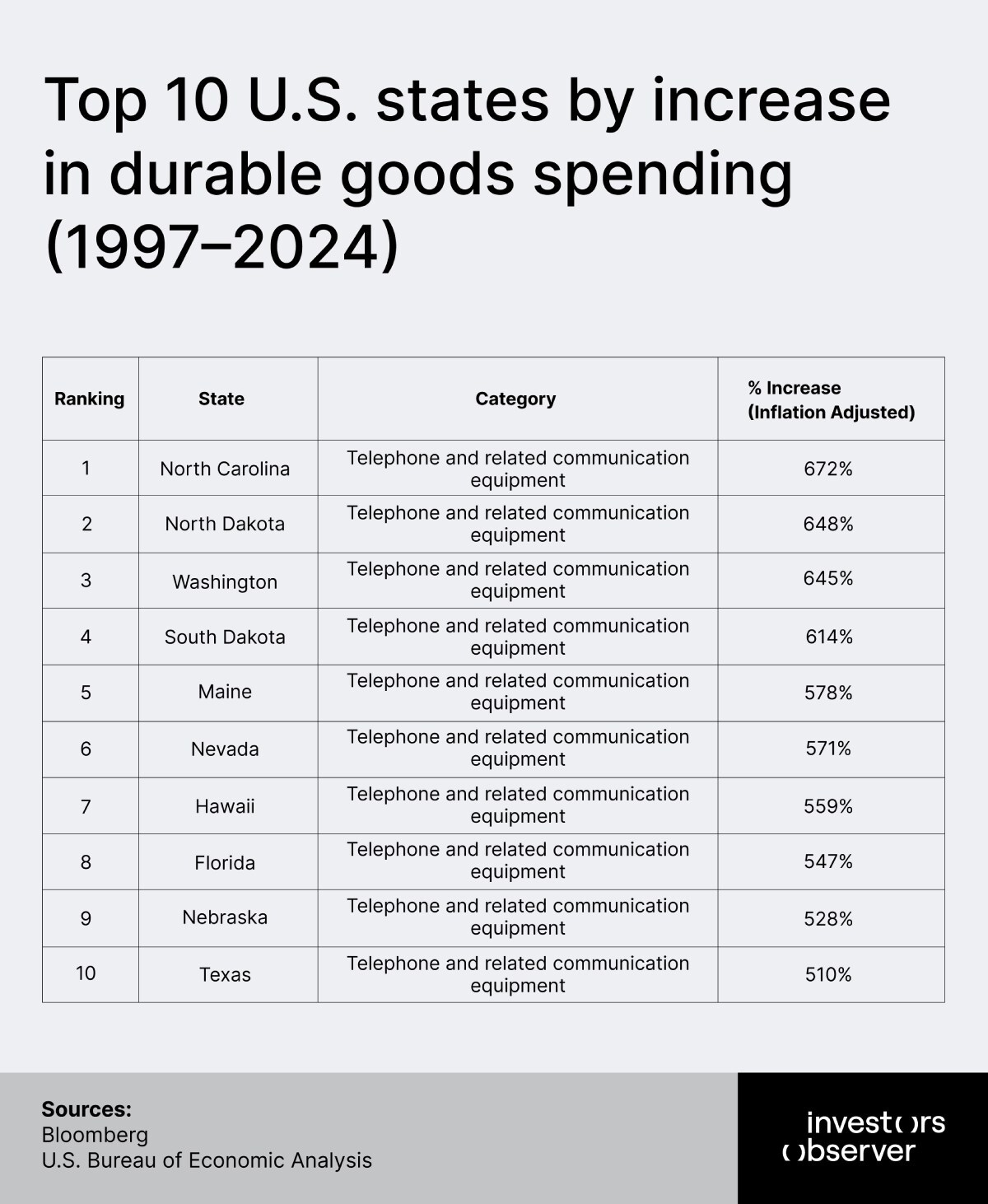
  • Spending on telephone and related communication equipment surged over 600% in the top states.
  • Average credit card balances at major issuers (Amex, Discover, Capital One) have grown at an average monthly rate of 0.5% (approximately 6% per year) since 2020, with bold spikes during the Black Friday season.
  • Spending on traditional Black Friday luxury items, such as jewelry and new vehicles, dropped in several states.
  • Spending on sporting equipment, guns, and related goods soared, making these some of the fastest-growing Black Friday categories nationwide.

The 10 states where Black Friday spending on durable goods has skyrocketed

Over the past 30 years, Black Friday has exploded into a huge shopping event, totally changing how and where North Americans splurge on big-ticket items.

A few states are crushing it, with locals ramping up real spending on durable goods at huge rates during Black Friday season. The top 10 show not just wild shopper hype, but big shifts in what people actually purchase when those deals drop.

These states have seen their Black Friday durable goods spending, especially in technology, surge ahead of the national average. When Black Friday advertising kicks in, shoppers increasingly target the best deals on electronics, particularly smartphones, tablets, and communication devices.

Retailers have responded to it, making Black Friday the primary opportunity to upgrade devices and connect households at a fraction of the regular price.

  • North Carolina and North Dakota lead with over 600% growth, showing how the appetite for electronics has exploded since the late ‘90s, as more homes gained internet connectivity and mobile devices.
  • The Pacific Northwest and Sun Belt, including Washington, Nevada, and Texas, have also surged, which aligns with fast-growing populations and tech-forward consumer culture.
  • Hawaii and Maine’s high growth rates highlight how even small, geographically unique states have embraced Black Friday to shop for technology that bridges distances – both literal and social.

The overwhelming increase in spending on communication technology during the Black Friday season shows how the event has become less about traditional holiday shopping and more about allowing households to seize the latest digital opportunities. For millions of North Americans, Black Friday is now the time to connect and upgrade their devices.

Where Black Friday spending fell: Top 10 states with the biggest drops in durable goods purchases

While most states saw Black Friday spending on durable goods soar over the past 25 years, not every category or region had gains. In fact, several states experienced notable declines, particularly in traditional big-ticket Black Friday items like jewelry, watches, and new cars.

This change reveals new consumer values, the impact of modern technology, and a growing focus on more practical or tech-driven purchases.

Jewelry and watches in retreat

The sharpest drop comes from jewelry and watches. Vermont, Maine, Connecticut, Iowa, and Michigan all had double-digit declines. This suggests that big-ticket jewelry has lost its luster as a Black Friday buy. Americans may be choosing technology upgrades and home improvements over luxury items that were once holiday staples.

New motor vehicles lose their spot

For decades, Black Friday was also the season of auto deals and year-end vehicle promotions. However, states like Illinois, Connecticut, Michigan, and Ohio had a significant real decline (–10 to –15%) in Black Friday spending on new cars. Today’s shoppers may be holding onto cars longer, buying used, or shifting their big December purchases toward electronics and appliances.

The fall of traditional electronics

West Virginia stands out as one of the few states where spending on video, audio, photographic, and information processing equipment has actually declined since 1997, dropping by 16% when adjusted for inflation. West Virginians are moving away from traditional Black Friday electronics, like older TVs, cameras, and stereo systems, and are investing less in these categories than they did a generation ago.

What’s behind these Black Friday drops?

  • Priorities are changing. North Americans are investing in what makes daily life more comfortable and modern, leaving behind items seen as old-fashioned luxuries.
  • The tech has taken over. Gadgets, home entertainment, and fitness equipment now win out over jewelry and autos for Black Friday deals.
  • Economic reality has shifted. The increasing role of credit cards and shifting family budgets means shoppers are looking for purchases that deliver daily utility rather than show status.

In other words, today’s Black Friday is less about “once-in-a-lifetime” traditional purchases and more about value, technology, and practical upgrades. The states with the biggest declines in jewelry and car sales are signals of this broader cultural and economic change.

America’s top 10 states for Black Friday durable goods spending (2024)

Black Friday remains the biggest shopping event of the year, and nowhere is this more apparent than in the nation’s leading states for durable goods purchases. Some states outpace the rest of the U.S. in total spending on high-value items, like appliances, electronics, home furnishings, and more, during the Black Friday season. Their money and excitement drive shopping trends across the country.

Massive market size

California, Texas, and Florida are not just the largest states by population. They’re also the biggest spenders. Together, they account for nearly a quarter of all U.S. durable goods bought during Black Friday. This shows the influence of large, diverse, and economically dynamic populations.

Urban economies and consumer power

States such as New York, Illinois, and Pennsylvania maintain their spots in the top ten thanks to their large metropolitan areas and strong traditions of holiday shopping, where residents spend big on household upgrades and electronics.

Quick growth in the Sun Belt

North Carolina and Georgia have shot up the rankings in recent years. Their booming real estate, ongoing migration trends, and family-driven consumption translate into strong demand for appliances, furniture, and home technology each Black Friday.

Consistent Midwest and Northeast strength

Ohio and New Jersey round out the list, proving that established economies with significant suburban populations continue to drive major Black Friday spending, particularly for goods that make life more comfortable and connected.

In essence, these top 10 states are the engine rooms of North American Black Friday shopping. Their combined impact shapes national retail sales and spotlights where the most dollars flow when the country’s biggest holiday deals are up for grabs.

Top 10 increases in durable goods spending 2020–2024

The years since 2020 have been some of the most dynamic for Black Friday shopping in North American history. Faced with a global pandemic, shifting work habits, and new priorities at home, North Americans unleashed a wave of spending on major purchases, especially during the Black Friday season when deals were too good to pass up.

Some American states stand out for their extraordinary growth in durable goods spending, which reveals where the economic recovery and post-pandemic demand have hit hardest and fastest.

Pandemic-era investment in the home

From 2020 to 2024, North Americans spent more time at home than ever before, fueling a rush on Black Friday for home electronics, appliances, workout gear, and home office upgrades. For example, this is reflected in the double-digit growth seen in states like North Carolina, Nevada, and Texas.

Southern and Mountain West States are leading

The Sun Belt and fast-growing Western states dominate the top of the list. With population inflows, a hot housing market, and greater focus on quality-of-life purchases, places like Florida, Nevada, and Idaho led the way in increased spending.

Credit card power and Black Friday strategy

More consumers used credit cards to access historic Black Friday discounts, and they didn’t hold back. Their willingness to borrow, upgrade, and outfit homes helped power this unprecedented jump in durable goods purchases.

The return of consumer confidence

After the initial shock of the pandemic, these states came roaring back with strong job markets and economic growth. This confidence spilled over into Black Friday shopping, with many households finally making upgrades or purchases they had delayed.

Not just the big states – smaller markets shine

States like Idaho, Utah, and New Hampshire emerged as “growth champions,” showing that the Black Friday boom was not limited to the biggest economies, but spread across America’s most dynamic regions.

In essence, between 2020 and 2024, Black Friday’s power as an engine for big purchases was on full display in these top 10 states. The post-pandemic years became a transformation period for millions of households, with Americans seizing the moment – and Black Friday deals – to upgrade, renovate, and invest in what matters most.

Methodology and sources

The Personal Consumption Expenditure (PCE) data is collected from the U.S. Bureau of Economic Analysis.

The data is provided for every U.S. state.

For each state, we collected data on consumption expenditures in the following categories:

  • Durable goods: New motor vehicles; Furniture and furnishings; Household appliances; Tools and equipment for house and garden; Video, audio, photographic, and information processing equipment and media; Sporting equipment, supplies, guns, and ammunition.
  • Other durable goods: Jewelry and watches; Telephone and related communication equipment.
  • Expenditures are expressed in millions of dollars. The data covers the years 1997 through 2024. Each year’s data is adjusted for inflation using the Consumer Price Index for All Urban Consumers: All Items in the U.S. City Average (CPIAUCSL)

We calculated how expenditures have changed over time (1997–2024). All calculations are inflation-adjusted.

We pulled monthly credit loan issuance data (2018–2025) for American Express, Discover, and Capital One straight from Bloomberg.

For the Silo, Živilė Kasparavičiūtė

Chief Economists Warn of Weak Growth as Economic Environment Shifts

中文 | 日本語 | Español 
Quick Takeaways
-72% of chief economists expect global economy to weaken in 2026 as disruptions in trade, technology, resources and institutions signal a shift to a new economic environment.
-Regional growth pathways are diverging: 56% anticipate greater divergence between advanced and developing economies, with MENA and South Asia emerging as bright spots.
-Debt risks are intensifying in advanced economies, with 80% of respondents expecting vulnerabilities to grow.


New York, USA, October 2025 – The global economy is entering a period of weak growth and systemic disruption, according to the World Economic Forum’s latest Chief Economists’ Outlook, published today. Some 72% of surveyed chief economists expect the global economy to weaken over the next year, amid intensifying trade disruption, rising policy uncertainty and accelerating technological change. The findings point to the emergence of a new economic environment shaped by persistent disruption and growing fragmentation.

 
Diverging Pathways in a Fragmented Global Economy
The Outlook highlights sharp regional fault lines. Emerging markets are anticipated to be the main engines of growth, with the Middle East and North Africa (MENA), South Asia and East Asia and Pacific seen as bright spots. One in three chief economists expect strong or very strong growth in these regions. The outlook for China is more mixed, with 56% of chief economists anticipating moderate growth, though deflationary pressures are expected to persist. Growth is expected to remain more stagnant in advanced economies. In Europe, 40% expect weak growth with fiscal loosening (74%) and low or moderate inflation (88%). In the United States [& Canada ed.], most chief economists (52%) anticipate weak or very weak growth and high inflation (59%) as monetary policy is loosened (85%).
 
The chief economists warn that advanced and developing economies are on increasingly divergent growth pathways – 56% expect greater divergence over the next three years.
 
Towards a New Economic Environment
Chief economists overwhelmingly agree that today’s disruptions are structural rather than cyclical. Large majorities anticipate long-term disruption in natural resources and energy (78%), technology and innovation (75%), trade and global value chains (63%) and global economic institutions (63%). This marks an important shift. The global economy is not so much weathering isolated shocks as realigning, raising the stakes for new forms of leadership, cooperation and resilience.
 
“The contours of a new economic environment are already taking shape, defined by disruption across trade, technology, resources and institutions,” said Saadia Zahidi, Managing Director, World Economic Forum. “Leaders must adapt with urgency and collaboration to turn today’s turbulence into tomorrow’s resilience.”
 
Trade Realignment, Fiscal Strain and Debt Risks
Structural shifts in the global economy are playing out most visibly in trade, fiscal policy and debt. Some 70% of surveyed chief economists rate the current level of trade disruption as “very high”, far above other domains of the economy, and over three-quarters also expect disruption to trade and global value chains to cascade into other domains. In financial markets and monetary policy, 45% of surveyed economists rate disruption as high or very high, yet only 21% expect it to last. Even so, while 52% see a major near-term crisis in advanced economies as unlikely, 85% warn that any shock could have wide systemic effects.
 
With global public debt levels mounting, the chief economists surveyed highlight that debt vulnerabilities, once largely associated with emerging economies, are increasingly centred in advanced ones – 80% expect risks in advanced economies to grow in the year ahead. Fiscal vulnerabilities are also more frequently identified among the top growth inhibitors in advanced economies (41%) compared to developing economies (12%).
Follow the Sustainable Development Impact Meetings 2025 here and on social media using #SDIM25.
 
About the Chief Economists’ Outlook
The report builds on extensive consultations and surveys with chief economists from the public and private sectors, organized by the World Economic Forum’s Centre for the New Economy and Society. The report supports the Future of Growth Initiative, aiming to foster dialogue and actionable pathways to sustainable and inclusive economic growth.
 
About the Sustainable Development Impact Meetings 2025
The Sustainable Development Impact Meetings 2025 takes place from 22 to 26 September in New York, bringing together over 1,000 global leaders from diverse sectors and geographies. Held ahead of the World Economic Forum Annual Meeting 2026, these meetings are part of the Forum’s year-round work to accelerate progress on the growth, resilience and innovation through multistakeholder dialogues and action. 

For the Silo, Jarrod Barker.

Nine Percent Of Canada High Incomers Considering Using Foodbanks

Few Canadians are immune to the rising cost of living, according to a new report from Statistics Canada, with 9 percent of those in the highest income quintile considering using a food bank.

Data from spring 2024 shows that while 42 percent of Canadians are concerned over rising food prices, about 9 percent of those in the highest income bracket report they may have to turn to a food bank or similar community organization for help. That number rises to 14 percent for those in the second-highest income bracket, StatCan said.

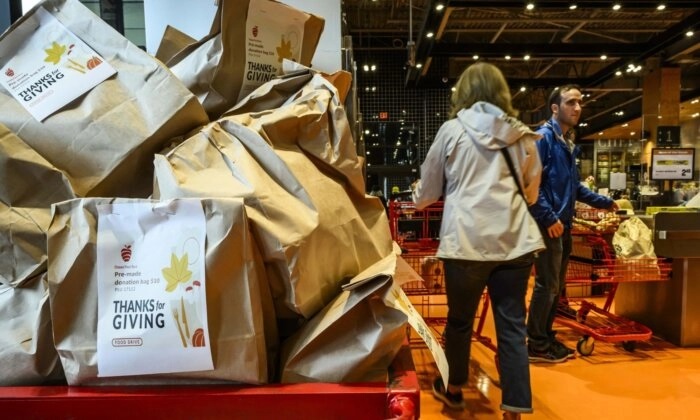
A cart is filled with bags of food during a Thanksgiving food drive for the Ottawa Food Bank, at a grocery store in Ottawa on Oct. 7, 2023. The Canadian Press/Justin Tang

Nearly half of Canadians report struggling to meet day-to-day expenses, up 12 percentage points from 2022 to 45 percent.

The survey found that the number of Canadians who feel “quite a bit” or “extremely” stressed over financial issues increased slightly since 2022, from 33 percent to 35 percent this year.

Families with children and those living with a disability are struggling the most, StatCan said.

Fifty-five percent of families with children say rising costs have impacted their ability to cover daily expenses, compared to 42 percent of households without children and 37 percent of single Canadians.

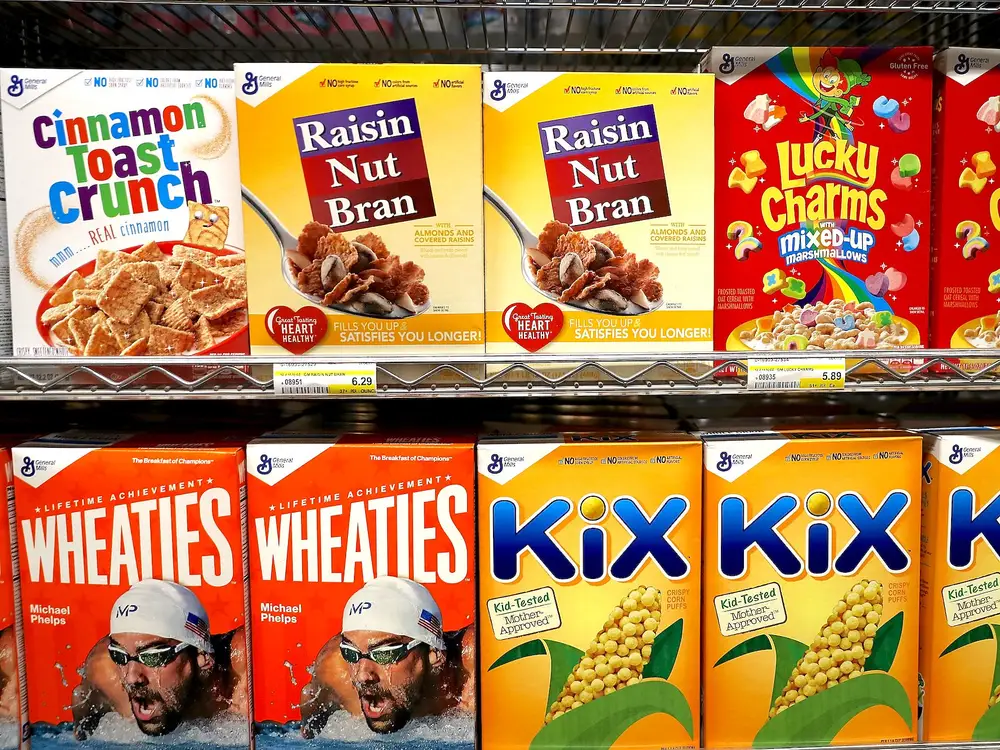
Shrinkflation– a sneaky way of charging more by giving less. General Mills shrunk its “family size” boxes from 19.3 ounces to 18.1 ounces. Justin Sullivan/Getty Images

Those with disabilities are also more likely to be facing financial difficulties, with 57 percent saying they are struggling to meet daily costs, compared with 43 percent of those without a disability.

Housing is one of the biggest concerns Canadians cite, with nearly four in 10 saying they are concerned about their ability to afford a home because of rising prices. The number has risen from 30 percent in 2022 to 38 percent this year.

StatCan found that renters are more uneasy about increasing prices than homeowners, with nearly two-thirds of renters “very” concerned over housing affordability compared with about one-third of homeowners.

Food prices are another top concern for those surveyed, with more than one in five Canadians saying they may not be able to afford groceries. The number has risen to 23 percent, up from 20 percent two years ago.

Of those worried about food prices, 8 percent say they are very likely to need help from an organization such as a food bank. Another 15 percent say they are somewhat likely to need community help.

More than one in four families with children say they expect to turn to food banks and similar organizations, compared to one in five for other household types, StatCan said.

About one-third of Canadians with a disability say they expect to get food from a community organization in the next six months, compared to one in five of those without a disability, the agency said. For the Silo, Chandra Philip / The Epoch Times. The data was collected between April 19 and June 3.

Related Stories

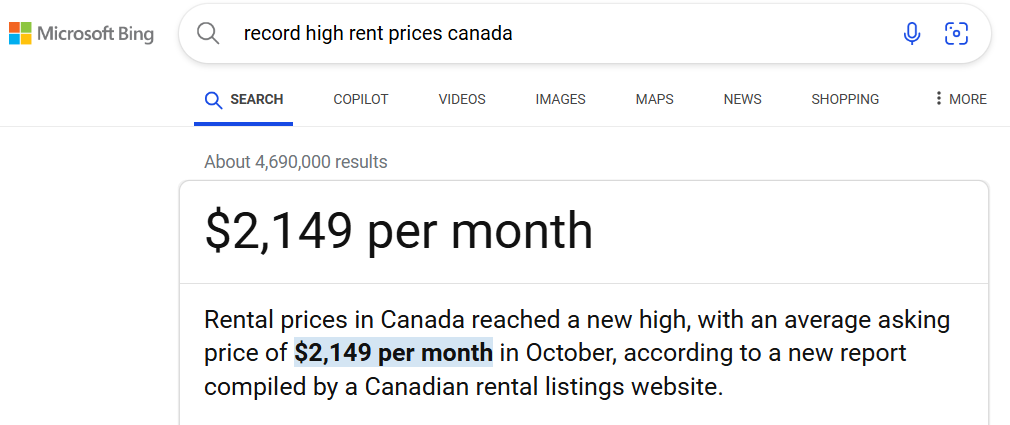
Rent Prices Hit Record High Across Canada, New Report Finds

Rent Prices Hit Record High Across Canada, New Report Finds

Grocery ‘Shrinkflation’: Some Products Reduced Over 20 Percent in Size, Study Finds

Grocery ‘Shrinkflation’: Some Products Reduced Over 20 Percent in Size, Study Finds

This is Where Canadians Want to Travel to This Summer

The trending destinations Canadians want to go on vacation this summer based on Google searches.

Where do Canadians want to go on their summer vacation in 2024?

With soaring inflation prices and the cost of essential shopping skyrocketing, millions of Canadians will plan to cut back on vacation spending. According to data from Ipsos*42% of Canadians say they plan to minimize their spending on vacations in 2024 as a way of dealing with the increased cost of living. Now, as the season changes into spring, more people are wondering what this summer has in store for them from a vacation perspective.

Are Canadians really looking to cut costs when it comes to their annual trip? Or has the economy got us looking outside of our usual go-to destinations?

Our friends at Top10casinos.ca, have used Google search data looking at terms around ‘summer vacations’ to find out which destinations around the world are most in-demand by Canadians looking to book their summer vacation in 2024. So, whether you need some inspiration for your next big trip, or just love a good list, here are the trending destinations Canadians want to go on vacation this summer based on Google searches.canada's favorite summer vacation

Revealed: Canada’s Top 10 Most in Demand Summer Vacation Hotspots in 2024

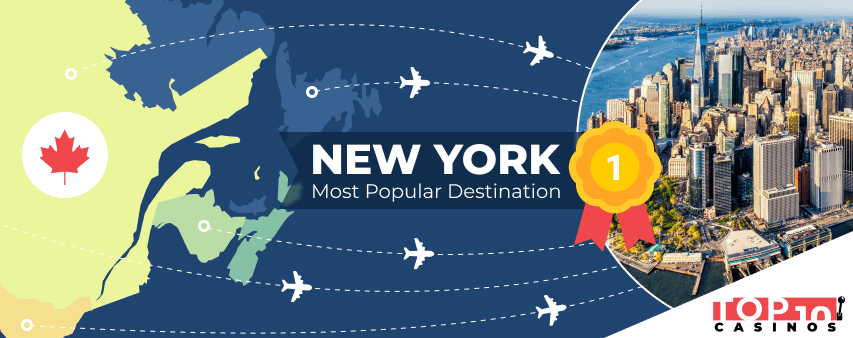
Research Reveals New York Will Be Canada’s Favorite Summer Vacation in 2024 – Getting 1.9 Million Searches Every Month

With 1.9 million monthly searches and a 6% increase in searches in the last 30 days, the metropolis of New York is officially Canada’s most desired destination for a summer vacation this year. Analyzing individual attractions that Canadians are most interested in visiting, searches for ‘new york broadway shows 2024’ are up 9,900% and people searching for ‘new york yankees schedule 2024’ are up 5,800%. For Canadians looking for an early Spring vacation, searches for ‘new york weather in April’ are up 750% in the last 30 days.

City Break Destinations Incredibly Popular for Canadian Summer Vacations in 2024

Half of the top 10 most-searched for summer vacation spots by Canadians are city break destinations with San Francisco, Las Vegas and Honolulu topping the list. The data shows that Vancouver residents are getting heart eyes for San Francisco. In the last month, there were 16,550 searches for summer vacations in the Golden Gate City and searches for ‘Vancouver San Francisco cruises’ are up 29% since the same time last year.

  • The Cold European Country of IcelandThe Cold European Country of Iceland Has the MOST Search Increases – Ranking Above Beach Favorite, Mexico Beaches, relaxing by the pool and all you can drink cocktails are usually synonymous with summer, but according to our study, Canadians want to escape the heat in favor of colder climes. With an average of over 689,980 monthly searches and a huge 122% increase in 30 days, Iceland surprisingly ranks in front of Mexico as a go-to vacation destination this summer. Looking at why Canadians might be interested in visiting the land of ice and fire, searches for ‘northern lights’ are up 10,900% and people looking at ‘portugal v iceland’ have increased 1,043% on Google. According to the regional data, Niagara Falls residents in particular are looking for a totally unique experience this summer, with searches for ‘Iceland summer vacation’ up 200% since the same time last year.

  • Cuba Revealed as Canada's Most Desired Beach DestinationCuba Revealed as Canada’s Most Desired Beach Destination This Summer – Ranking Above Mexico and Costa RicaWith more than 712,000 monthly searches and an increase of 36% in 30 days, Cuba is revealed as Canada’s most desired beach vacation destination for summer 2024. According to the data, Canadians are researching long distance swimming in the country, with searches for ‘swim from cuba to florida’ up 3,500% and ‘vacations to cuba’ up 333%.

  • The Dominican Republic Ranks in Top 10The Dominican Republic Ranks in Top 10 With over 97,000 monthly searches for ‘The Dominican Republic summer vacation’ and a 35% increase in the past month – it’s evident the Caribbean Island will be one of the most coveted destinations by Canadians this summer, which is why it features in the top 10. When analyzing search trends on a city level, Montréal has seen a 25% increase in residents’ searching for the beautiful beach spot, and Ottawa shows a 20% surge.
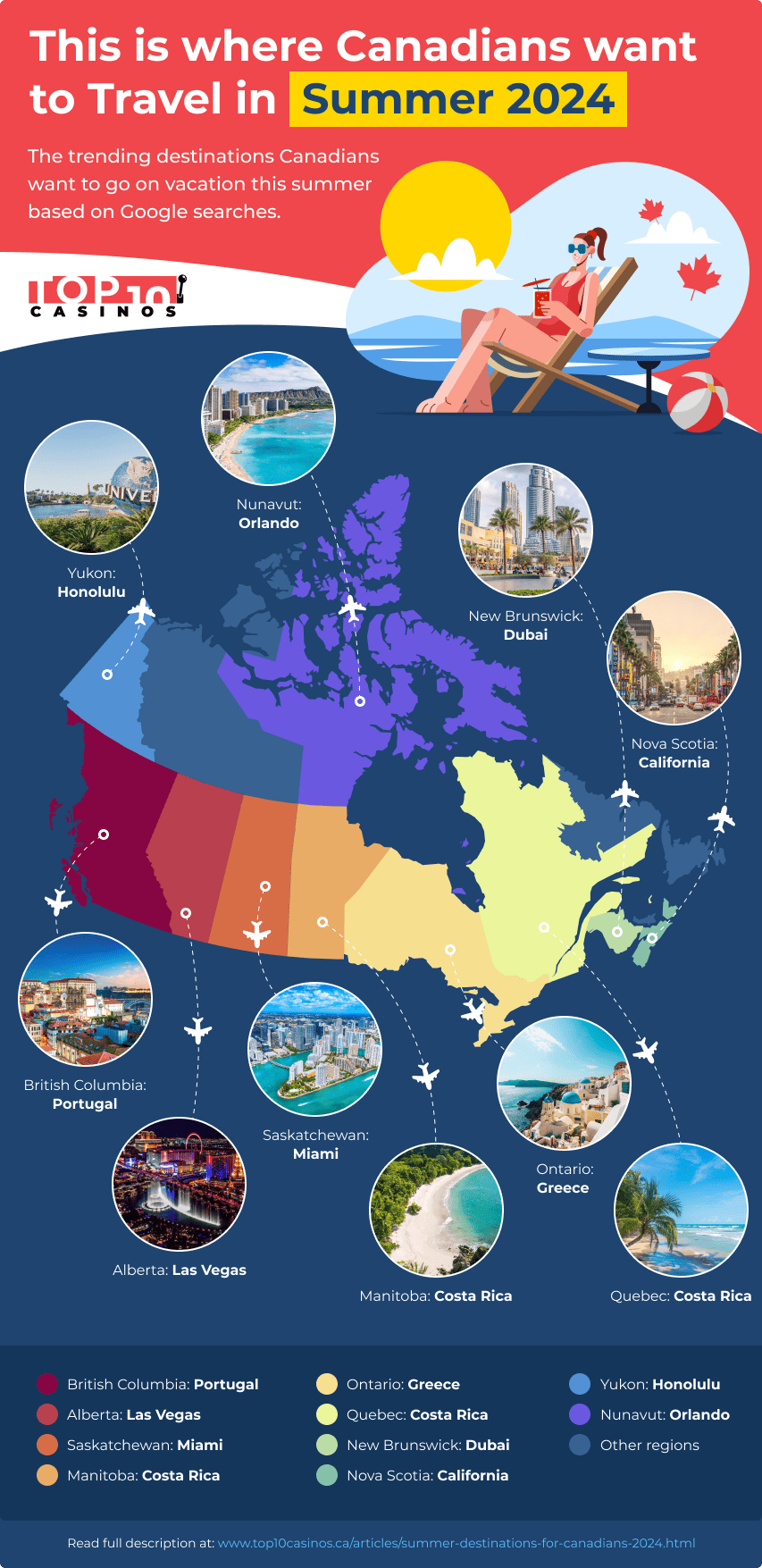

trending destinations canadians want to go on vacation

Mapped: Most Desired Vacation Destinations Across Canada, Revealed

  • Las VegasLas Vegas Named the Most Desired Destination The gambling capital of the world is the most searched for city across the 10 cities of Alberta with searches spiking by nearly half (48%) since the same time last year. With 1.7 million monthly searches and a 12% increase in Canadian’s searching for the desert oasis summer vacation, Las Vegas has seen a 6% increase in search increases than topspot New York, the city also ranks above favorites Cuba and Mexico.

  • GreeceGreece Ranks Second as Research Reveals European Summer Vacations Most Popular with Ontario ResidentsThe data shows there’s a rapid number of Canadians looking to experience a European summer vacation this year, with both Greece and Italy coming up top in Ontario. Looking at the most searched for destinations, searches for Greece’s picturesque Santorini have increased by 67% since the same period last year across Canada, and Italy’s Rome have spiked 25%.

  • Costa RicaCosta Rica is the Most Desired Destination by Two ProvincesFilled with rugged rainforests, pristine lagoons and beautiful beaches, it’s little wonder the Central American country of Costa Rica is the most desired by two parts of Canada. Provinces of Quebec and Manitoba both had Costa Rica as their favorite destination, with searches for the tropical country up by an average of 81% across 10 cities in Quebec since the same time last year. Looking at locations on a city level, searches for ‘all inclusive Costa Rica vacations’ are up 300% in Quebec City, highlighting a need to escape busy metropolitan life.

  • Toronto's 3 Favorite Summer Vacation SpotsToronto’s 3 Favorite Summer Vacation Spots are all City DestinationsResidents hailing from Ontario’s capital, Toronto, are interested in keeping the summer city spirit alive, with 3 favorite destinations also being city spots. According to the data, Toronto’s favorite destination is Dubai with a 49% increase in searches since the same time last year. Closely followed by Rome (22%), and Miami (20%).

Methodology

  1. Using articles around the topic of “bucket list travel destinations”, “best vacations in 2024” we were able to collect a list of approx 100 dream global travel destinations. To allow for us to make sure we’re focusing on those who want to holiday in these locations we assigned the prefixes “summer vacations in” to all locations. These terms were then entered into keywordtool.io to collect the average monthly search volume and search trends (over the last 12 months) per state.
  2. Search volumes and trends were gathered using https://keywordtool.io/
  3. All data correct and accurate as of 11th April 2024

Sources

https://www.ipsos.com/en-ca/canadians-cut-back-2023-and-plan-continue-cuts-2024

For the Silo, Amanda Evans

International Monetary Fund- World Economy Still Recovering

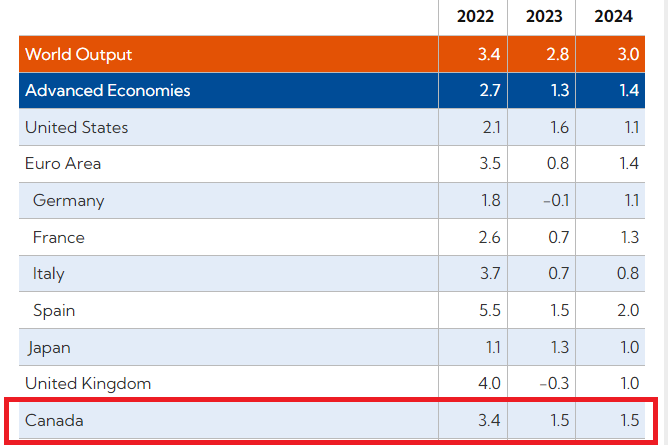
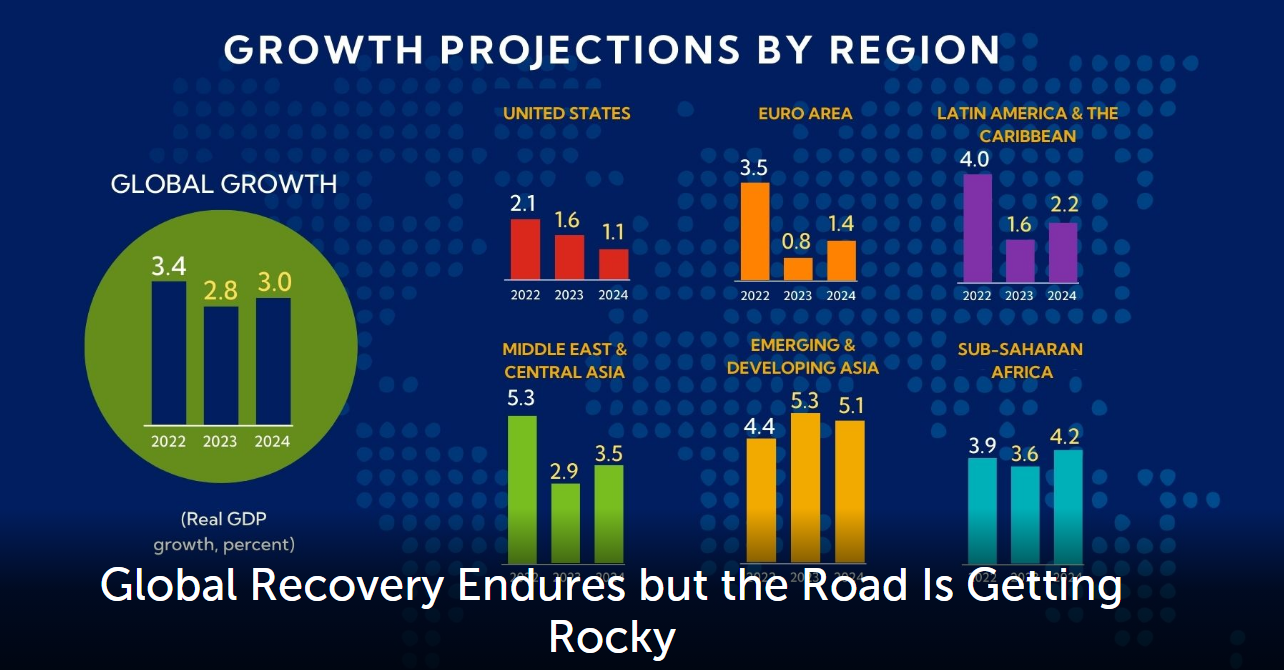
The IMF announced today (Tuesday, April 11, 2023) in the World Economic Outlook’s press briefing that the baseline forecast for global output growth is 0.1 percentage point lower than predicted in the January 2023 WEO Update, before rising to 3.0 percent in 2024.

“The world economy is still recovering from the unprecedented upheavals of the last three years, and the recent banking turmoil has increased uncertainties.”

“We expect global output growth to fall from 3.4% last year to 2.8% in 2023, before rising to 3% in 2024, mostly unchanged from our January projections. Advanced economies are expected to see an especially pronounced growth slowdown from 2.7% in 2022 to 1.3% in 2023. Global headline inflation is set to fall from 8.7% in 2022 to 7% in 2023 on the back of lower commodity prices but underlying core inflation is proving to be stickier. Importantly, this outlook assumes that recent financial stresses remain contained,” said Pierre-Olivier Gourinchas, the IMF’s Chief Economist.

Much uncertainty clouds the short- and medium-term outlook as the global economy adjusts to the shocks of 2020–22 and the recent financial sector turmoil. Recession concerns have gained prominence, while worries about stubbornly high inflation persist.

Chart- world economic outlook projections including Canada.

“Once again, risks are heavily tilted to the downside, they have risen with the recent financial turmoil. Most prominently, recent banking system turbulence could result in a sharper and more persistent tightening of global financial conditions. The simultaneous rate hikes across countries could have more contractionary effects than expected, especially as debt levels are at historical highs. There might be a need for more monetary tightening if inflation remains stickier than expected. These risks and more could all materialize at a time when policymakers face much more limited policy space to offset negative shocks, especially in low-income countries,” added Gourinchas.

With the fog around current and prospective economic conditions thickening, policymakers have a narrow path to walk towards restoring price stability while avoiding a recession and maintaining financial stability. Achieving strong, sustainable, and inclusive growth will require policymakers to stay agile and be ready to adjust as information becomes available.

“First, as long as financial stress is not systemic as it is now, the fight against inflation should remain the priority for central banks. Second, to safeguard financial stability, central banks should use separate tools and communicate their objectives clearly to avoid unwarranted volatility. Financial policies should remain laser focused on preserving financial stability and watch for any buildup of risks in banks, non-banks, and the real estate sectors. Third, in many countries fiscal policy should tighten to ease inflation pressures, restore debt sustainability, and rebuild fiscal buffers. Finally, in the event of capital outflows that raise financial stability risks, emerging market and developing economies should use the integrated Policy framework, combining temporary targeted foreign exchange interventions and capital flow measures where appropriate,” said Gourinchas.

Novel Warns North Americans Of Corrupt Bankers And Valueless Dollar

Back in 2012 The Silo reported on a dark novel titled Zurabia. That book held a plot that seems less like fiction with each passing year.  Corrupt bankers, a practically valueless dollar, hyper-unemployment and underemployment, home-grown terrorism, the uptick in natural disasters and the overall lack of trust in our most important institutions – these are some of the reasons all North Americans should be very, very concerned, according to author Peter Dash a world-traveled researcher for Harvard University’s Center for International Affairs.

Peter Dash and his novel

“I predict a brutal world ahead of us,” says Dash, author of “ZUrabia,” a book about rogue forces taking over the world’s most important institutions. “Unfortunately, I have been right since my research at Harvard in 1986, when I questioned the viability of government institutions to meet general needs and growing problems, both domestically and abroad.”

The pragmatic holiday shopper this year will purchase items to safeguard their families against these threats, which have been long in the making and won’t disappear quickly, he says.

From Dash’s homepage- a map of Zurabia complete with mountains and a mushroom cloud. Biblical ! CP

“Terrorism wasn’t inaugurated with 9-11; extremism in Muslim sects has been growing for decades, and Neo-Nazi groups are starting to flourish in failing states like Greece,” he says. “The dollar has been steadily losing its value since the creation of the Federal Reserve in 1913; climate change has been on the radar for quite a while; and there have been greedy bankers since, well, banks have existed.”

“If you’re confident that everything is sure to be okay, then you’re not paying attention,” he says.

He offers a four-point survival strategy for holiday and everyday shopping:

• Gold is good: The dollar has lost 95 percent of its value in 100 years, and it will continue losing value. As
the Reserve continues to flood money into the system, thereby reducing current or potential value, more inflation is inevitable, acting as yet another tax on wages. So, collect and buy any gold that you can and consider spending federal notes while they’re still worth something to businesses. Think about your
jewelry, and buying more. Silver is a good option if gold is too expensive, and there are Exchange Traded Funds, or ETFs, that are backed by physical gold. A reputable banker or broker can help explain for those who are interested. “TD Ameritrade or Charles Schwab may be good places to start getting information on gold and silver ETF trading,” according to Dash.

• Inflation: Spend your money now or smartly invest it before you lose it. Remember, banks often give clients less than one percent on many accounts, but inflation on food and real items we use, like gasoline, are going up by much more. In essence, your banker is stealing your money through the assistance of the Fed, which is killing your savings rate by cheapening money. As if to pour salt on this wound, the bank,
in many cases, lends money at four percent or higher. Rerouting some bank savings/wages by investing in canned food, for example, may protect you against the scourge of food inflation, as well as other disasters.

• Worthy purchases: With food and water, a failed society puts a premium on additional goods. They include home insulation, gardening tools and materials, computer programs and language learning kits – perhaps Spanish or Chinese – because of the increasing prominence of other cultures. Guns, security systems and other measures to protect one’s home will likely prove extremely valuable should law enforcement be spread too thin, or fail as an institution.

• Buy in bulk: Places like Wal-Mart or Costco will help you get the most value with large purchases of food. It’s important to be well-stocked if something happens that results in the emptying of grocery markets, but remember to have adequate space in your house, apartment or cabin for a “safe” room, which is part of a sound strategy for protecting you and your family.

Peter Dash has been a teacher, professor and corporate trainer for the last 17 years, working in Saudi Arabia, the former Soviet Union and China. He has an applied science degree in forestry from the University of British Columbia and a Masters in applied teaching from Southern Queensland in Australia. He was a researcher in world (dis) order and youth groups at Harvard University’s Center for International Affairs, started by Henry Kissinger. He follows the investment field intensely, focusing on commodity funds and trends.
Fifteen percent of his book’s royalties will go to needy students consistent to the many years Dash has worked in assisting voluntary youth organizations. He lives on a small tropical island that is stocked with the finest well water, fish and food. Dash invests in Gold ETFs and commodity trading companies.

SupplementalCBC radio interview with Dash on Zurabia

Silo Reader Says All Products And Services Should Compete In A “Free Market”

Letters to the Silo

The [ image that is shown with Toby Barrett’s recent letter ] is certainly worth a thousand words. Government is consuming too much.

But why do we continue to feed government? Why would we participate in any political or economic system that is not serving our best interests?

Government is basically unproductive and can only give what it takes. Bigger government takes more and gives less.

The fruits of our labour are controlled, confiscated, and redistributed through taxation, inflation, interest, and government spending. There is also a systemic shortage of official currency, which leads to a shortage of paid employment, and the jobs that are available might be completely unproductive. We are forced to compete for currency that is systemically scarce, even though there are plenty of worthwhile activities that can be done and there are plenty of people who are willing and able to do productive work.

There seems to be an increasing level of dissatisfaction with government and the political process, but there certainly isn’t a consensus in defining the problem or offering a solution that will sufficiently address all of our concerns or satisfy everyone. This poses a challenge, but it also presents us with an opportunity to carefully examine the form and function of government, and explore a full range of possible alternatives.

If we have freedom of choice and a free market then we should be able to individually select the goods and services that we wish to purchase from a variety of producers and providers, who should be able to compete for customers based on the quality and price of their products and services. All products and services, including government programs and services, should be able to compete in a free market.

Trade and exchange should be voluntary and mutually beneficial. We should not be forced to pay for anything that we don’t want or don’t use, and we should not have to do business with anyone who consistently offers poor quality goods and services or who does not pay their legitimate debts.

If we have economic freedom then we should be able to negotiate agreeable prices, accept or refuse any form of payment, control the allocation of our credit, and use any method or medium of exchange. We should not be compelled to use a systemically scarce currency that is created as interest-bearing debt.

If the purpose of an economic system is to facilitate the production and exchange of goods and services then it should be possible to create numerous ways to serve this purpose, with various concurrent systems operating in any location. This would give us more control over our time, labour, skills, and resources.

If government is a provider of services then it should compete for customers based on the quality and price of any services that it is actually willing and able to provide, including education, health care, and defence. If government services were the best ones available then we would presumably choose to use them. Our wealth should not be confiscated and redistributed to pay for anything that we don’t want or don’t use.

We can already seek membership in various communities, organizations or other groups, based on our own political, religious, social, recreational, or business interests. If we have freedom of association and political freedom then we should even be able to choose a apolitical system and type of government, without having to move to a different place, and without imposing or choice on anyone else. This would give us the option to hire people to manage our affairs and make decisions on our behalf, but we would not be represented or lead without imposing our consent.

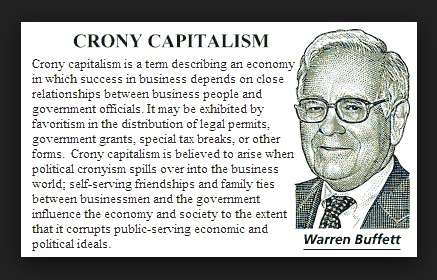
Crony Capitalism Warren Buffett

Any imposed political system or government is a method of control. Political freedom does not exist if an individual is forced to accept the decisions of any other individual or group, even if it calls itself a majority.

Imposed political systems and territorial governments with their restrictive geopolitical boundaries can be replaced with a variety of voluntary communities, mutual benefit associations, and autonomous protective groups, with overlapping membership in any location. Multiple communities can exist in any geographic region, without any imposed territorial monopolies for the provision of services.

Individual participation in any economic or political system should be entirely voluntary, based on choice and consent, rather than coercion and compulsion. No person is an island, but everyone should essentially be able to individually decide how he or she would like to organize and manage his or her economic and political activities.

Government is a human invention that has changed over time and will continue to change, but the direction of this change will be determined by the way we think and the choices we make.

Diverse methods and arrangements can co-exist simultaneously in any location to facilitate the production, provision, distribution, and exchange of goods and services, for the mutual benefit of all voluntary participants, at their own risk and expense. James Clayton

Note- boldfacing was not indicated in the original submitted letter to the Silo.

Wagon Wheel Corn Maze