Plastic Surgeon Says There Are Three Ways Your Face Can Lie

image: http://www.tips-tricks.net/lifestyle/face-reading-techniques/

Social science experts agree — much of what we “say” is  never actually spoken.

“Facial expressions and other body language account for more than half of our communication,” says Adam J. Scheiner, M.D.,
www.adamscheinermd.com, an international Oculoplastic surgeon who’s been featured on “The Dr. Oz Show” and “The Doctors.”

“When we look at someone, especially when we’re meeting for the first time, we quickly scan the eye and mouth areas of the other person’s face to make some quick judgments: Are they friendly or a potential threat? Are they trustworthy? We form first impressions within 7 seconds of meeting.”

Those first impressions can become misleading due to the normal aging process and damage caused by stress, diet and environmental factors, particularly sun exposure.

“I call them the three D’s of aging: Our skin begins to  deteriorate; our faces deflate, making them narrower and wrinkled; and our eyelids and face descend, causing drooping and sagging,” Scheiner says. “All of these can affect what our face communicates to those around us.”

It’s bad enough to communicate something you don’t really feel, he says. It’s worse when people react to that communication so often, such as saying, “You look so tired,” that you actually begin to believe you are tired, he says.

He shares the three common “miscommunications”:

•  “People say I look tired when I’m not.”
As we age, our eyelids can begin to droop and look heavy, Scheiner says. The lower eyelid region often develops fullness below the lower lashes due to changes in the fat around the eye and changes in the facial fat of the surrounding cheek region. A lower eyelid height, heaviness of the upper or lower eyelid, or an eyebrow falling into the upper eyelid space can also occur. Whatever the cause, having baggy, puffy eyes can make a person look tired, sleepy, old or sick.

•  “People avoid me because they say I look stern, even angry. I’m neither!”
Whether through genetics or aging, eyebrows may lack or lose the arc that opens up the eye area and the entire face. A fairly straight eyebrow can convey a closed, unapproachable personality.

•  “People think I’m sick or have no energy.”
The brain expects to see a smooth curve from the temple to the cheek through the jawline to the chin. Any break in the curve is read as a lack of vibrancy. Normal facial aging causes loss of youthful fullness due to facial fat changes. This can cause a break in the curve that translates as a lack of vibrancy. In addition, poorly injected facial fillers can cause unnatural results.

Cosmetic procedures shouldn’t aim to turn you into something you’re not, Scheiner says.

“For rejuvenation, you simply want your face to communicate how you really feel inside. When you accomplish that, it’s so natural, people
will say, ‘Wow, you look great!’ But they won’t be able to put their finger on why.” For the Silo, Ginny Grimsley.

Body Language

Adam J. Scheiner, M.D. is world-renowned in laser eyelid and facial plastic surgery for his groundbreaking treatment for Festoons. He wrote the medical text on the condition and treated two complex causes of Festoons for the Dr. Oz and The Doctors TV shows.


Get Fit With The Toughest Obstacle Courses In The United Kingdom

Thinking of getting fit but need a challenge to really motivate you? Or perhaps you just want to test your fitness against some of the toughest challenges the UK has to offer. Then perhaps you’d like to look through this guide to find out what event will suit you best- brought to the Silo by our friends at The Craig Manor Hotel in Bowness, Windemere, England.

The guide below includes some of the UK’s biggest and best endurance races that are open for all to enjoy. There are assault courses that will get you muddy, extreme swims, brutal cycles and runs that make marathons look like a walk in the park.

We’ve added a ‘Brownlee meter’ to try and put just how tough these races are into context, but beware; this is all relative and even the lowest rated events will require lots of training and superior fitness levels.


Are you tough enough
by Craig Manor.

Toughest UK Obstacle Course Resized For SmartPhones

Sustainable Urban Renewal Example In Copenhagen Neighbourhood

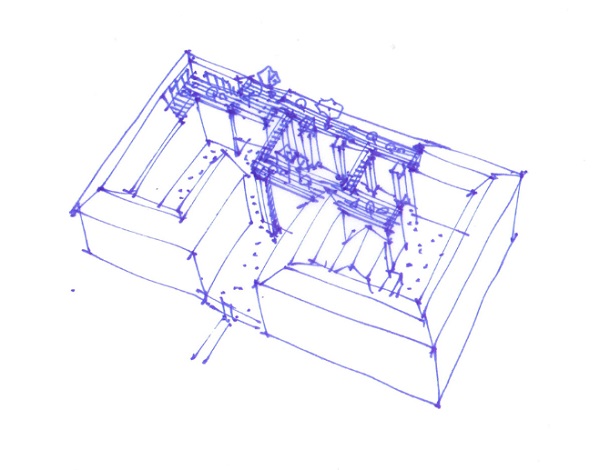
HenningLarsen design sketch
Henning Larsen Architects: design sketch

Henning Larsen Architects  lead a design team in establishing an overall sustainable solution for the renewal of buildings, courtyards, and streetscapes in a selected residential block of Skt. Kjelds Climate Resilient Neighborhood in Østerbro.  The competition for Copenhagen Climate Resilient Neighborhood was won with a proposal that serves as a future “showcase” of holistic and sustainable approaches to urban renewal while opening possibilities for realizing the objectives of a sustainable and climate-friendly Copenhagen. In addition to Henning Larsen Architects, the winning team also included Henrik Larsen consulting engineers, TagTomat and V!GØR.

“Copenhagen Climate Resilient Neighborhood , as a flagship project, demonstrates how a holistic and innovative approach to renovation and rainwater management can create a better living environment and courtyard atmosphere in a typical residential block. The designated block in Skt. Kjelds neighborhood therefore became a climate-front runner, implementing new solutions that can inspire other blocks—not only in Copenhagen but also in the many northern European cities where blocks of courtyard buildings are a dominant type of housing,” says Signe Kongebro, architect and partner at Henning Larsen Architects.Signe Kongebro

The project reflects a holistic approach with focus on energy retrofitting, climate adaption, architecture and daylight. From start to finish, the execution of the project will be implemented in close dialogue with Copenhagen Municipality and especially the residents and the building owners in the block.

HenningLarsenSketch2

The project was based on four main strategic focus points: rainwater management; increasing recreational space by re-configuring parking and introducing green areas; strengthening of the neighborhood’s identity with community gathering points; and, optimization of existing buildings in terms of energy consumption, daylight and indoor climate.

HenningLarsenSketch3

Workshops kick-started the sustainable urban renewal process wherein the team, in close and innovation-driven dialogue with residents and the municipality, began the transformation from traditional residential block to a climate-resilient neighborhood. Throughout the project, physical prototypes, exhibitions, mock-ups, and other visual tools contributed to give the residents a realistic insight into the transformation of their block and keep the process alive and relevant.  Connect with Henning Larsen Architects on Instagram  and on Facebook.

HenningLarsenSketch4

Supplemental-

History: http://henninglarsen.com/about/history.aspx

Profile:  http://henninglarsen.com/about/profile.aspx

Awards: http://henninglarsen.com/about/awards.aspx

Take This Quiz And Find The Right Exercise Type For You

It can be hard to choose the right exercise regime for you. On top of the time constraints of modern life, the sheer number of options is enough to confuse most of us.

Whether you’re a lone wolf, a team player or looking to become truly zen – this will set you on the right course to fulfilling your fitness needs.

Our friends at gapmedics.com have put together a quiz which identifies which style of exercise matches your personality.


Carnivores Anonymous Doctor Says Plant Based Diet Fuels Athletic Success

Vegan Cardiologist Heather Shenkman hosts free Carnivores Anonymous 12-Step programs (the next one held on January 22 in Woodland Hills , Los Angeles) to achieve optimum health and tackle food addiction through plant-based eating. While Dr. Shenkman performs complex angioplasties to open up clogged coronary arteries, she prefers to help her patients reduce their risk of heart disease through a healthy lifestyle, including a plant-based diet and regular exercise, in addition to medication when appropriate.

Dr. Heather Shenkman“I am a strong believer in a plant-based diet for heart health,” said Dr. Shenkman. “Join me at Carnivores Anonymous  to learn how a plant-based diet has fueled my athletic success, and why I recommend it for all my patients.”

Dr. Shenkman has followed a plant-based diet for thirteen years. She is also an avid athlete, having completed over a hundred events of various distances, from sprint triathlons to Ironman distance triathlons, marathons and ultra-marathons, and several hundred-mile century cycling events.

Carnivores Anonymous meetings brings together a fellowship of like-minded people who share their experience, strength, and hope with each other to recover from eating animal products including meat, dairy, fish, and eggs. The only requirement for membership is a desire to move toward a vegan diet.

“Carnivores Anonymous is a safe and supportive space that enables you to achieve your goals,” said Carnivores Anonymous Director, Marilyn Kroplick M.D. “We encourage everyone to come down to our meeting in Woodland Hills.”

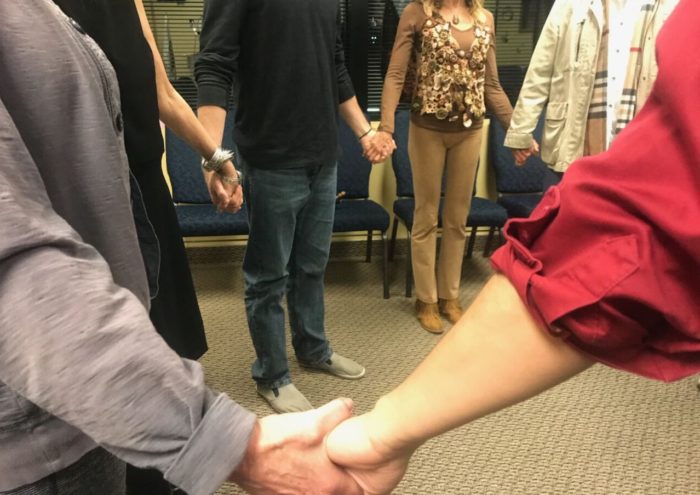
Whether you are a carnivore, vegan, or somewhere in-between, join Carnivores Anonymous and explore food in a whole new way. For the Silo, Alyson Burton.  Featured image- Carnivores Anonymous group meeting. photo by Fleur Dawes. 

Carnivores Anonymous Logo

Digital Blessings For Auto Restoration And Repair

CarForumMemeOne of the biggest influences that the internet and social media has on the automotive industry is the now ease of finding hard-to-find parts and procedures. Go on Google, type in your year, make, and model, followed by the part  or procedure you are looking for, and in the results you are bound to find (at the very least) a forum, web group, or page dedicated to your vehicle specifically. What this means to you is that now you can discuss (with others who love the same vehicle as you) parts, repair procedures, styling, or just why you love your vehicle so much! What this also means is that you now can draw from a vast pool of knowledge from others who share your same interest.

So be it a complicated repair or common problem, you can usually chat with someone who has already been there and done that. (a majority of the time) and a lot of the forums usually have step by step procedures with pictures.  This came in handy for me last month when a certain silver Smart car I know had starting issues. The  first problem? Where is the starter? This may sound dumb but, Look under the bonnet (hood under the trunk) and you tell me where the starter is. I would bet 5 bucks that you could not, even from underneath. Unless, you have messed with one, prior. The next Issue, where the heck is this starter supposed to fit out? Lastly, How  do you even get to the bolts that hold it in?


Let's say you need a part for an old Edsel- just plug in the parameter in your fave search engine (give bing.com a try) and voila: related links CP

Luckily for me, there are many Smart car pages based out of the U.K. and one really good one I found, had many members who were very knowledgeable in this topic, this page also had step by step  detailed instructions along with very clear pictures. This is substantial considering that one cannot even get a repair manual for these cars, almost nobody has parts listings OR interchanges for any of these cars  with a model year prior to 2008 (this car being a 2006). Who knew that to change this starter there was insane procedure including dropping the engine and removing the intercooler system.  A bunch of people on this page had already been through this and had come up with a very efficient shortcut. This saved me hours of time.  All this from a free membership.   Here are a few Facebook pages that I follow:

corvettesyndicate

“Restoring Old Cars” – a lot of classic car posts,  “Lifted Trucks USA”- lots of pics of lifted trucks lol, “Chevy Chevelle”- Lots of Chevelle pics, ”Chevy Militia”- jacked up Chevy truck pics, and my two favorite ones “Bow-tie Society”- for everything Chevrolet, also where Ford and Dodge Trollers come to get put back in their respective places.  And “Black Crow Car Education System” –this guy posts all kinds of cool classic auto industry pics, vintage, and artistic mechanical pics. All of these pages are very cool. Check em out by searching them on Facebook. Till next time. For the Silo, Robb Price, WC Kustoms.

Ancient Arrowheads Made From Ancient Haldimand Stone

I am sure some of  you may have heard this story before, a friend goes out for a walk in the forest and returns back later holding what appears to be an arrowhead.  Conversations about the artifact are followed with curiosity to learn more.  Questions are asked such as, who made the artifact? How old is it? What type of rock was used to make it?  How was it used?

For most people, arrowhead is a popular name used to describe the artifact they have found.  In archaeology, arrowheads are generally called projectile points, but we will call them points for now.  However, names are given to different types of points based on how archaeologists think they were used.  Depending on their weight, size, and shape points can be called a spear, dart, or arrow point.  Spear points are normally heavy, large, measure between 8cm to 17cm in length, and most likely tipped the end of a long wooden shaft.  Dart points tend to be thick in the middle, light in weight, usually measure from 4cm to 8cm in length, and tipped the end of a long narrow wooden shaft thrown with the help of a dart-thrower.  Arrow points are almost always triangular in shape, very thin in the middle, very light in weight, measure 2cm to 4cm in length, and hafted to a short narrow wooden shaft fired from a bow.

So who made these artifacts?

In most cases, they are referred to as Indians.  In fact the name Indian was given to the first people met by Europeans arriving in the New World because at first they thought they had landed in India.  The name has stayed ever since.  Aboriginal is a name used by anthropologists and archaeologists alike when discussing the first people to the New World.  We now know Aboriginals lived a hunting-gathering life style whether they lived nomadic or sedentary life styles.  We don’t know the original names of Aboriginal groups, but names have been given to their points to distinguish one type from another.  Some example names like Hilo, Nettling, and Genesee have been created for specific types of points.

Just how old projectile points are is determined using a technique called radiocarbon dating when uncontaminated organic material is recovered next to a point.

Archaeologists have been able to determine when a point was made in a specific time period based on the results of radiocarbon dating methods, but these are approximate dates.  In Canada, the oldest known points are called Clovis points dating up to 11,200 years ago.  Similar points have been found in the Great Lakes region dating around 10, 600 years ago.

Most projectile points found in the Lake Erie region of  Norfolk and Haldimand County are made from a sedimentary rock high in silica called chert giving the stone a glassy ring to it when two pieces are hit together.  What is unique to this region is that almost all points found in Norfolk County were made from chert originating from Haldimand County.  Aboriginals either made their points in Haldimand County or picked up chert as rectangular nodules and carried it in tumpline baskets into Norfolk County where stone tools were made, including points.

Chert was only one of several materials used to make these points.  Other materials such as wood, bone, and antler were also used, but because they are organic materials most of these points have decomposed over time.  There were some attempts to make points from metal such as natural copper, but after contact with Europeans arrow points began to be made from metal products traded with Aboriginals.

Most often projectile points were used to hunt animals because they could create a serious wound to an animal to slow it down, but they were also useful as other types of tools.

While points are sharply tapered, many are wide with rounded or curved cutting edges suggesting as use other than hunting animals.  Many points were used every day as knives, scrapers, and even drills because the chert they were made from produced a very sharp edge.  However, the one problem with all points is that they break frequently during use and need repairing on a regular basis.  This would explain why many broken projectile points been found.

Why are so many projectile points different from one another? 

Archaeologists suggest points were used to distinguish one group of people from another.  The abundance of points also suggests many were made for the purpose of exchanging and bartering for other resources, especially if they were made from a chert that was considered exotic in colour or resistant to breakage.  In fact, chert found along the Onondaga escarpment in Haldimand County and ends in southern New York State was widely transported and exchanged because it was resistant to breakage compared to other types of chert.  Lastly, point styles may reflect a response by Aboriginals to adjust the shape or style of the point to changing environments and food resources.

So the next time you get a chance to visit a museum with Aboriginal artifacts with a friend who found a projectile point, or maybe you found a point yourself, think about the amount of history held within this one artifact.  Remember, it was made by a person who once lived, breathed, and walked across the very same landscape you live on today.  If you look closely at a projectile point imagine what stories it could tell you about the past. For the Silo, Lorenz Bruechert.


Cookbook Provides Uncomplicated Yet Sophisticated Cooking for Everyday

Award-winning cookbook author, Lee Clayton Roper, shows home cooks how to explore their culinary creativity with her award-winning, delicious cookbook, Fresh Tastes.  This beautiful book delivers over 170 flavorful recipes, essential cooking tips and delightful stories to spark inspiration in your kitchen.

Lee takes the “complicated” out of timeless classics, simplifying the process while ramping up flavors, using fresh ingredients when and where possible.  She shares personal reflections on lessons she has learned in the kitchen from those who have inspired her, along with 65 beautiful food photos, along with process shots of key preparation steps.

Fresh Tastes CookbookFresh Tastes epitomizes Lee’s culinary tastes, balancing an innovative approach with uncomplicated preparation techniques. Sophisticated in flavor and beautiful to present, the recipes in Fresh Tastes are prepared with the best quality, readily available ingredients designed to maximize flavor. Some of Lee’s delicious recipes include:
Prosciutto, Fig and Goat Cheese Tarts
Roasted Eggplant and Tomato Soup
Tomato and Peach Salad with Lime-Balsamic Dressing
Layered Salmon Salad with Avocado-Lime Yogurt Dressing
Grilled Rosemary-Dijon Chicken Breasts
Spicy Pork Chops with Argentine Chimichurri Sauce
Halibut with Celery Root Puree and Tomato Garnish
Chipotle Lime Shrimp Tacos with Tomato Mango Salsa
Roasted Root Vegetable Pot Pie
Peruvian Artichoke Tart
Pear Kuchen
Fresh Fruit with Brandy Custard Sauce
Drawing from her decades of experience, Lee provides readers with helpful advice on what is best for the dish, the flavor and the cook, considering such essential variables as seasonality and availability. Recipes in Fresh Tastes were evaluated by a team of volunteer testers across the country. Only the best, most flavorful, eye catching dishes made the cut. Fresh, flavorful and inspired, this collection of hand selected recipes in Fresh Tastes transcends the kitchen, reminding us all that every meal can and should be a simple yet sophisticated celebration of life.
“My approach with this cookbook starts with the confidence that, with the right preparation and a pinch of creativity, every dish can be extraordinary,” Lee explains.  “I have intentionally kept recipes and ingredients easy to get, often providing alternative substitutions.”
Lee Clayton Roper is an award-winning cookbook author, cooking instructor, public speaker and TV personality.  Her first book, A Well-Seasoned Kitchen received numerous rave reviews and is often featured in local and national press.  In 2010, A Well-Seasoned Kitchen achieved national acclaim, winning the prestigious “Living Now” gold medal.  With Fresh Tastes Lee expands her recipe collection, serving up fresh, delicious and sophisticated dishes guaranteed to inspire creativity in kitchen everywhere.  Lee tours the country sharing recipes and cooking tips and techniques in sold-out classes, leading cooking demonstrations, and is a frequent guest on radio and television and in print. 
“Roper’s follow up to A Well-Seasoned Kitchen expands on the approachable favorites that made her first cookbook such a hit, this time with a ‘fresh’ take on classics that lend themselves to parties and get-togethers.  This is a solid effort with practical dishes readers will likely find themselves returning to.”
Publisher’s Weekly and Entertaining Inspiration
FRESH TASTES
From A Well-Seasoned Kitchen
By Lee Clayton Roper
Southwestern Publishing Group
Hardcover/$34.95 usd
ISBN-13: 978-0984116362
Try these fresh and delicious recipes ( reprinted with permission from Fresh Tastes by Lee Clayton Roper):
APPLE, WALNUT AND STILTON CHEESE SALAD
SERVES: 6
The British have known for years that apples and Stilton cheese are a wonderful combination. In this delicious salad, they’re mixed together with spinach, walnuts and a walnut-flavored vinaigrette.I like to serve this salad with any grilled meat or alone as a meal.
1/4 cup raspberry balsamic vinegar*
1 1/2 teaspoons freshly squeezed lemon juice
1/2 cup walnut oil*
Salt, to taste
Freshly ground black pepper, to taste
10 ounces mixed baby greens (spinach, arugula, lettuce)
2 large Gala or other red apples, unpeeled, cored and chopped
1 cup (6 ounces) chopped walnuts, lightly toasted
1 1/2 to 2 cups (6 to 8 ounces) Stilton cheese, crumbled**
*If you can’t find raspberry balsamic vinegar, use regular raspberry vinegar and add 1 to 2 tablespoons of honey. If you can’t find walnut oil, substitute olive oil and add a few more walnuts.
**There are 2 types of Stilton cheese: blue and white. Either will work in this recipe. If you can’t find Stilton, you can substitute Gorgonzola or other forms of blue cheese.
In a medium glass jar with fitted lid (an empty Dijon mustard jar works well), whisk together the vinegar, lemon juice and oil until well blended. Season to taste with salt and pepper. Cover and set aside.
In a large bowl, toss together mixed greens, chopped apple, walnuts and cheese. Just before serving, toss with just enough dressing to coat the lettuce (you may have some dressing left over). Season to taste with salt and pepper.
VARIATION IN PRESENTATION: If you want to have a more formal, individually plated salad, then instead of chopping the apples, core and slice them. Toss the greens with part of the dressing and divide among six individual salad plates. Arrange the apple slices in a circular pattern over the spinach. Sprinkle the walnuts and cheese crumbles over the top. Drizzle with remaining dressing.
SEA BASS WITH A PISTACHIO CRUST
SERVES: 6
This dish comes together quickly and is delicious paired with green beans and roasted potatoes. It’s a bit on the rich side, so I suggest using fillets no more than 5 ounces each. If using one large fillet, you may need to increase the cooking time by a few minutes.
While the general rule of thumb for cooking fish is 10 minutes per inch of thickness, I’ve included the option to cook these filets for 12 minutes per inch. I find that with the crust on top, it can take a bit longer. It’s really to your taste — just remember, it will continue cooking after you take it out of the oven and let it rest.
6 (4- to 5-ounce) skinless Chilean sea bass fillets
1 cup salted, dry roasted pistachio nuts, very finely chopped (can chop in a food processor)
1/2 cup firmly packed brown sugar
3 tablespoons fresh lemon juice
1 tablespoon chopped fresh dill or 1 teaspoon dried dill
Freshly ground black pepper, to taste
Preheat oven to 400 degrees. Line a 15- by 10- by 1-inch baking pan with parchment paper.
Place sea bass fillets in prepared pan. In a small bowl, combine the nuts, sugar, lemon juice, dill and pepper. Spoon the mixture evenly over each fillet, pressing down to adhere.
Bake for 10 to 12 minutes per 1-inch of thickness of the fillet, or until fish reaches 140 to 145 degrees when measured with an instant-read thermometer. Let stand for 5 minutes before serving.
MAKE AHEAD: Fish with topping can be prepared but not baked up to 4 hours in advance, covered and refrigerated.
For the Silo, Trina Kaye. 

Three Diverse And Groundbreaking Graphic Novels

THE CASE OF ALAN TURING: THE EXTRAORDINARY AND TRAGIC STORY OF THE LEGENDARY CODEBREAKER An intimate graphic novel biography of Alan Turing the heroic British codebreaker of World War II, a brilliant gay man living in an intolerant world.He was recruited by the British government to help decipher messages sent by Nazi Germany’s Enigma machines during World War II.

The Case Of Alan Turing Graphic Novel CoverTuring’s work was instrumental in saving countless lives, millions in goods and merchandise, and is estimated to have shortened the war in Europe by four years.The specifics of Turing’s work at Hut 8 were only recently made available to the public—they were declassified in 2012. Authors Liberge and Delalande use this new information to create a graphic biography that is both scientifically rigorous, moving, and accessible. Story by Eric Liberge Illustrated by Arnaud Delalande Translated by David Homel 

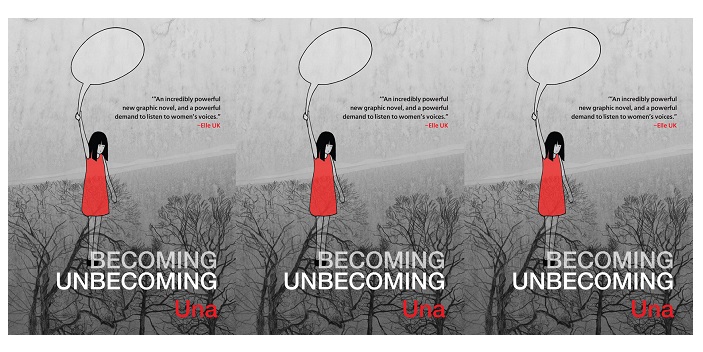
BECOMING UNBECOMING by UNA This extraordinary graphic novel is part survivor memoir, part true crime story and a denunciation of sexual violence against women. As seen through the eyes of a twelve-year-old girl named Una, it takes place in northern England in 1977, as the Yorkshire Ripper, a serial killer of women, is on the loose and creating panic among the townspeople.

Becoming Unbecoming explores what it means to grow up a girl in a global rape culture where male violence largely goes unpunished and unquestioned. Through image and text, Una questions and challenges a media and broader society who allow a serial killer, Peter Sutcliffe, to become a “fascination,” while the women he murdered are barely remembered.

UNA (a pseudonym) is an artist, academic, and comics creator. Her self published graphic narratives have explored disability, psychosis, political activism, and violence against women and girls. Becoming Unbecoming, which took seven years to create, is her first book. She lives in the U.K. unacomics.com

AVAILABLE NOVEMBER 2016 ISBN 978-1-55152-647-8 6 x 9 | 280 pp | reinforced paper full-colour throughout $26.95 USD/CAN Published by Arsenal Pulp Press US sales & Distribution by Consortium www.cbsd.com Canadian sales by Ampersand Distribution in Canada by UTP

CLICK HERE TO VIEW SAMPLE PAGES

SUCH A LOVELY LITTLE WARSuch A Lovely Little War Graphic Novel Cover SAIGON 1961-63 Written and drawn by Marcelino Truong Translated by David Homel

This riveting, beautifully produced graphic memoir tells the story of the early years of the Vietnam war as seen through the eyes of a young boy named Marco, the son of a Vietnamese diplomat and his French wife.

Marco’s father is called back to Saigon in 1961, where he becomes Prime Minister Ngo Dinh Diem’s personal interpreter. As the growing conflict between North and South intensifies, so too does turmoil within Marco’s family; his mother’s manic and depressive episodes (she suffers from bipolar disorder) escalate and increase. MARCELINO TRUONG is an illustrator, painter, and author. The son of a Vietnamese diplomat in 1957 in the Philippines, he and his family moved to America (where his father worked for the embassy), then to Vietnam at the outset of the war. He attended the French Lycée in London, then moved to Paris to earn degrees in law at the Paris Institute of Political Studies, and English literature at the Sorbonne.

 ISBN 978-1-55152-650-9 9x 11 | 101 pp | paper over board | full-color throughout $23.95 USD/CAN Published by Arsenal Pulp Press US sales & Distribution by Consortium www.cbsd.com Canadian sales by Ampersand Distribution in Canada by UTP

CLICK HERE TO VIEW SAMPLE PAGES

10 Worst Zoos For Elephants In Captivity

SAN RAFAEL, Calif. (Jan 9, 2018) – The shocking hidden suffering of captive elephants has been exposed today by In Defense of Animals on its respected annual list of the Ten Worst Zoos For Elephants in North America. The 2017 list reveals premature deaths, brutal breeding procedures, and flagrant violations of the Animal Welfare Act. Zoos all over the US and one zoo in Canada appear on the Ten Worst Zoos list, with Topeka Zoo in Kansas shamed as the #1 Worst Zoo for “gross neglect” of a dying elephant.

Bubbles the Elephant at Myrtle Beach Safari
Bubbles the Elephant at Myrtle Beach Safari.

“Elephants have suffered horrendously in North American zoos in 2017,” said In Defense of Animals elephant scientist, Toni Frohoff Ph.D. “Zoos violate elephants’ rights and submit them to horrific and unnecessary abuses. Urgent action is needed to shut down the archaic zoo exhibits on this list, and retire the elephants to sanctuaries where they can live in peace.”

Elephants in zoos across North America are being subjected to barbaric bullhooks, sexual mistreatment, grossly inadequate conditions, egregious disregard for their needs, forced performances, captivity-caused health problems, unsuitable enclosures, cold climates, incompatible companions, and crushing solitary confinement.

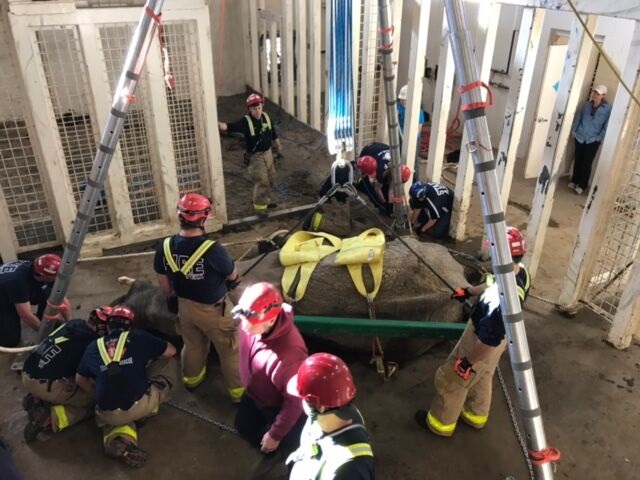
Topeka Zoo, named worst in 2017, has a long history of violating the Animal Welfare Act. The zoo failed miserably to adequately care for Shannon, a 35-year-old African elephant who died on December 11, 2017, after spending ten brutal hours down on her side without any monitoring from zoo staff who had left for the night. Shannon had to be hoisted to her feet by firefighters the day before, after enduring a lengthy “downed” ordeal.

Topeka Zoo Director Brendan Wiley himself admitted that for elephants, “lying down for several hours can potentially be fatal, given their body mass.” On the day of her death, Wiley said on camera, “We think she was down for a total of about 10 hours yesterday and… probably about the same amount of time today.” “That’s a lot of time for an elephant to be down.”

Shannon the Elephant Topeka Zoo
Shannon the Elephant at Topeka Zoo

The zoo chose not to keep someone on site to monitor Shannon’s video feed and staff went home for the night. Given the seriousness of Shannon’s condition, the zoo’s actions were nothing short of gross neglect and blatantly inadequate care.

“The gross neglect and death of Shannon at Topeka Zoo is only the tip of an iceberg that threatens the lives of all elephants who remain there”, said Dr. Frohoff. “It should be patently obvious that a severely sick elephant must be watched closely around the clock. Not bothering to check Shannon’s video feed for over 9 hours, the night after an emergency ordeal, is inexcusable. Proper observation would have likely minimized Shannon’s suffering, and could possibly have prevented her death. At 35-years old, Shannon should have been living some of her best years, yet she was sick and died at Topeka Zoo.”

Medical records indicate that Shannon was suffering for weeks, showing signs of pain, tremors, and weakness. Topeka Zoo reports that it has now bought a new video monitoring system, which is far too little – far too late.

Shannon’s death is indicative of the longtime problems that continue to plague Topeka Zoo and its animals. The zoo has been cited numerous times for violations of Federal Animal Welfare regulations which include animal deaths, injuries, and lack of proper veterinary care. In 2013, the zoo paid a $45,000 usd civil penalty to settle charges brought against it by the USDA for at least 51 willful violations of the Animal Welfare Act. The charges included failure to provide adequate veterinary care for elephants Tembo and Sunda, including problems with their skin, feet, and nutrition.

The elephants remaining at Topeka Zoo are at risk. Asian elephant Sunda has a history of chronic foot disease caused by lack of movement and standing on hard surfaces throughout many years. Topeka’s sub-freezing winters exacerbate health problems, as the elephants are forced to remain indoors for excessively long periods with minimal exercise. Cora, an Asian elephant, who came to the zoo in 2016 with Shannon, is particularly at risk because of the health issues associated with performing unnatural circus tricks, which she did for many years before coming to the zoo.

In Defense of Animals is calling for the urgent relocation of the Topeka Zoo elephants for their safety and wellbeing. Dr. Frohoff said, “We urge Topeka Zoo and the USDA to avert further tragedy and release elephants, Cora, Tembo and Sunda to an accredited sanctuary where they can receive the professional health care they need and deserve.”

10 WORST ZOOS

1. Topeka Zoo, Topeka, Kansas

2. Pittsburgh Zoo and International Conservation Center, Pittsburgh, Pennsylvania

3. Omaha’s Henry Doorly Zoo and Aquarium, Omaha, Nebraska

4. Louisville Zoo, Louisville, Kentucky

5. Oregon Zoo, Portland, Oregon

6. Myrtle Beach Safari, Myrtle Beach, South Carolina

7. Two Tails Ranch, Williston, Florida

8. St. Louis Zoo, St. Louis, Missouri

9. Natural Bridge Zoo, Rockbridge County, Virginia

10. Riverbanks Zoo and Garden, Columbia, South Carolina

DISHONORABLE MENTION – Repeat Offenders

Calgary Zoo Elephant Lucy
Calgary Zoo elephant “Lucy”- image: savelucy.ca

Edmonton Valley Zoo, Alberta, Canada

Bronx Zoo, Bronx, New York

Featured image- Infant elephant at Pittsburgh Zoo by Andrew Rush/ AP

Discover the full list of the Ten Worst Zoos For Elephants in North America 2017

In Defense of Animals is an international animal protection organization with over 250,000 supporters and a 30-year history of fighting for animals, people and the environment through education, campaigns and hands-on rescue facilities in India, Africa, and rural Mississippi.

IN DEFENSE OF ANIMALS • 3010 KERNER BLVD. • SAN RAFAEL, CA 94901 • 415-448-0048

New App Demystifies Coding For Kids

NEW YORK, NY (PRWEB)- According to the White House, by 2018, 51 percent of STEM jobs will be in computer science-related fields. However, the number of tech employees has not increased along with the number of jobs available. Why? The answer is simple: lack of relevant education. The White House maintains that just one quarter of K-12 schools offer high-quality computer science with programming and coding. In addition, in 2016, the PEW Research Center reported that only 17% of adults believed they were “digitally ready.” Technology is changing the way that we live and work, and it’s happening fast. So how do we ensure that individuals (especially girls and women) are digitally literate?

In my new interview below with C.M. Rubin (founder of CMRubinWorld), Derek Lo says he started Py because he wanted to demystify “coding”. His app does this by making coding fun. The program also avoids using any programming jargon until the learner is ready. Lo states that “gamification isn’t a hindrance to learning—-it accelerates it.” He further notes that coding “instills a greater aptitude for systematic thinking and logical decision making.” Lo recently partnered with the not for profit Girls Who Code to further reduce the gender gap and “change people’s image of who a coder is.”

Coding in language children understand

“We specifically write our content using language that even young children can understand.” — Derek Lo

Why were 600,000 high-paying tech jobs unfilled in 2015 in the United States alone, or is the better question: Is technology developing faster than humans can learn to handle it?

When we look at diversity, things only get worse. In 2015, 22 percent of students taking the AP Computer Science exam were girls while 13 percent were African-American or Latino. These statistics are not U.S. specific; in 2015, Australia reported that only 28 percent of ICT jobs were held by women.

Coding has always been regarded as a mysterious field, something Derek Lo, co-founder of the new application “Py”, wants to change. Launched in 2016, the application offers interactive courses on everything from Python to iOS development. The “unique value proposition,” as Lo puts it, has been a revolutionary success. The fun-oriented application has so far resulted in over 100,000 downloads on both iTunes and Google Play.

Most parents frown when kids use their phones at the dinner table, but what if the kids were learning to code over Sunday roast? “Ok, so maybe not the Sunday roast, but seriously, could a more accessible and fun coding application make all the difference?”

The Global Search for Education is excited to welcome one of Py’s founders, Derek Lo, to discuss how Py’s revolutionary approach is literally making coding cool.

Coding creates websites but also stimulates thought

“Coding can provide people with the awesome ability of being able to create tangible things like websites and apps. It also instills less tangible things like a greater aptitude for systematic thinking and logical decision making.” — Derek Lo

People say education today is often treated as a business and that individual students’ needs have not been prioritized enough. As the number of qualified applicants increases, can individualized learning tools, such as Py, help today’s generations remain competent in our globalized world, even with “broken” education systems?

Yes. As college acceptance rates decline, more people will need alternatives for learning career-essential skills, and we believe Py will be a big part of that. Using machine learning algorithms, we’re able to adapt the user experience based on prior skill and behavior within the app, creating a tailored curriculum. Having a personal tutor in your pocket that knows how you learn and what you should be learning is powerful and why we are investing in personalization.

Py App On Google Play

Py provides its users with a simple and easy platform while many other coding applications (e.g. Solo Learn) have opted for more traditional and serious lesson plans. Does making learning applications appear more serious fuel the conception that coding is a hard and scary thing to learn? Are we over-complicating the field of coding and making it seem inaccessible for people or should students really be this wary of programming?

One of the reasons that my co-founder and I started Py is to demystify “coding”. We make it easy by making it fun. When you’re dragging pretty blocks around and pressing colorful buttons, it doesn’t feel like work. Yet users are still soaking up all the same knowledge they would be by slogging through a boring textbook. We also intentionally avoid programming jargon until the learner is ready. A good example is when we teach users about loops—-we use words like “repeat” instead of “iterate”. Almost all of Py’s courses are focused on teaching the fundamental concepts using simple language and in an interactive fashion.

Also, many people are scared away from learning how to code because they hear from friends that computer science is such a difficult major in school. An important thing to realize is that there’s a big difference between theoretical computer science and making a simple website. An art major might not need to understand Dijkstra’s algorithm, but would greatly benefit from knowing a bit of HTML and CSS.

Getting Young Adults Interested In Coding

“We’re extremely excited about helping to change people’s image (and self-image) of who a coder is and actively encourage more girls to get into coding.” — Derek Lo

What would you say to skeptics who question whether a game-like application like Py can truly help people learn how to code properly?

Gamification isn’t a hindrance to learning—-it accelerates it. By keeping you excited and engaged, Py teaches you better than if you got bored or zoned out. When you’re having fun, you actually learn faster and better.

Another way to phrase this question might be, “Even if Py is fun, do you walk away having learned something from it?” The answer is yes, definitely. We’re very data-driven, constantly improving our courses by analyzing our users’ progress. We can see (and track) real progress in our users’ ability to understand everything from basic semantics to high-level algorithms and design principles.

Do you think Py’s game-like surface allows younger generations to become more involved with coding?

Yes. We specifically write our content using language that even young children can understand. In fact, a parent emailed us just the other day telling us he was using Py to teach his 10-year old son Python! Currently our target demographic is definitely a bit older than that though. We think of Py as the learn-to-code solution for the SnapChat generation.

What general skills does coding teach kids/ young adults?

Coding can provide people with the awesome ability of being able to create tangible things like websites and apps. It also instills less tangible things like a greater aptitude for systematic thinking and logical decision making.

Understand Algorithm Before Typing It

“Once you understand how an algorithm works, typing it out should be an afterthought. The important thing is to understand it—once you do, it’s yours forever.” — Derek Lo

Py has recently partnered with Girls Who Code. Why do you think coding has been branded throughout history as a ‘male’ profession and how do you hope to eliminate this gender gap?

Historically some of the most important computer scientists are women. Ada Lovelace and Grace Hopper are considered pioneers of programming. Stereotypes aside, men and women are obviously equally capable of becoming great software engineers. We’re extremely excited about helping to change people’s image (and self-image) of who a coder is and actively encourage more girls to get into coding. We’re huge fans of Girls Who Code and we’re so excited to provide them free premium subscriptions for some of their students.

When we think of coding, we mostly envision computer screens, yet we tend to use our phones more often than we do our computers. How does Py bridge the gap between using a computer screen as opposed to learning how to code on smaller devices? Is the coding world shifting to using smartphones or is coding still a generally ‘computer’ based field?

People actually don’t need to type lots of code to learn the concepts necessary to become great programmers. We’ve built interaction types like “fill-in-the-blank” that let users quickly edit code on the fly without any typing. Recently we’ve also created a custom keyboard that allows users to type real code on their phones in a friction-less way. This is great for short programs and practicing the fundamentals, and it’s how we’re making the transition from computer to phone and vice versa easier. Applying this knowledge to create a website or app does still primarily take place on computers. But the world is seeing a wave of new mobile learning applications, and I think we’re at the forefront of that trend.

How do you envision the world of coding changing in the next 15-20 years? How will Py keep up with these changes in the field?

Coding will become less about rote memorization of basic syntax and more about high-level understanding of what’s really going on. At a minimum, programming languages have morphed from low-level (shifting bits and allocating memory) to high-level (abstract data structures and functional programming), from obtuse (assembly, machine code) to human friendly (Python, Swift).

That’s why Py focuses on high-level concepts. Once you understand how an algorithm works, typing it out should be an afterthought. The important thing is to understand it—once you do, it’s yours forever.

CM Rubin and Derek Lo
(l) C. M. Rubin & (r) Derek Lo


(All photos are courtesy of CMRubinWorld except featured image by J. Barker)

For the Silo, David Wine /CMRubinWorld with contributions by Zita Petrahai.

The Best Inventions Of 2017

These are real inventions: self healing concrete…airport sleeping pods…DIY drones and that’s just for starters. So much incredible technology and cool imagination at work. Watch this video and tell us below which is your favorite by using our live video uplink from your smart device.

Best Inventions 2017
Click me to play!

[vidrack align=”center” ext_id=”345″ desc=”some description”]