Tag Archives: South Africa

Art Of Camouflage- Rhodesian Brushstroke

There are an insane variety of camouflage patterns. From subtle and understated but effective (solid polar white for snowy battlefields) to ostentatious and loud but surprisingly battle proven (the Belgian jigsaw pattern anyone?).
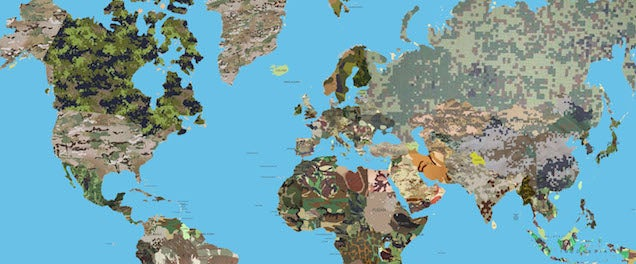
Main camo patterns of the world.

A Few Interesting Examples. Be Sure To Click On The B/W Images To View In Color.

You get the idea. But what is the best camouflage pattern?

That is an objective question and no doubt everyone has a personal favorite. Our friends at the kommandostore.com make a pretty solid case for the Rhodesian brushstroke pattern. Let’s take a closer look at the history of the Rhodesian Army and the buildup towards the Bush War where said pattern was dutifully employed.

Rhodesia Leading Up To The Bush War: An Overview

What we now know as Zimbabwe was Southern Rhodesia was one of three states merged in 1953 to form the British-administered Federation of Rhodesia and Nyasaland (also known as the Central African Federation). This union was largely a marriage of convenience, as the British protectorates of Northern Rhodesia and Nyasaland were significantly less developed than self-governing Southern Rhodesia.

However, the Federation balkanized and dissolved in 1963 amid ethnic tensions, political instability, and deep cultural divides. Simultaneously, changing political winds in London favored a policy of rapid decolonization and majority rule. The collapse of the Central African Federation was viewed as proof positive that failing to quickly implement majority rule would result in the collapse of European-lead African governments.
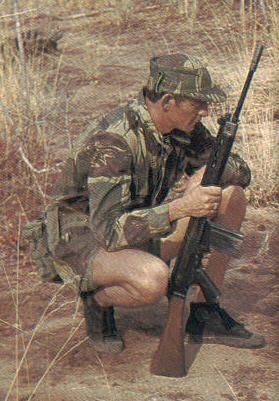
An early type brushstroke pattern.

The reality was more complex.

Western-style democratic republics require a certain level of social infrastructure in order to function as intended. While the white population of the Central African Federation carried western traditions with them from Europe, the myriads of African ethnic groups had long traditions of tribal organization along ethnic lines, with their own rivalries and blood feuds.

To address this, Southern Rhodesia had created the best educational system in Africa, spending enormous sums on literacy programs, primary and secondary schools, vocational education, technical colleges, and universities. On a GDP adjusted basis, Southern Rhodesia’s expenditures on education were not just the best in Africa, they were world leading. By 1959 this approach yielded incredible results with roughly 85% native children enrolled in school, a trend that would only accelerate through the 60s. Similar initiatives had developed road and rail networks, the best healthcare system in Africa, modern water purification, and cheap, plentiful electricity.

The British governed protectorates of Northern Rhodesia and Nyasaland enjoyed little of this economic or social development. In these areas western ideas held no hope for the future and only served to destabilize traditional power structures. These communities, dominated by subsistence farming and rural poverty, contrasted sharply with the economic miracle happening just across the border.

Fresh from the bloody partition of India, English politicians failed to appreciate the likelihood of a similarly violent outcome in the push for immediate majority rule in their African colonies.

Amid intense pressure to solve Britain’s problems at home, the UK’s rush to divest its colonies created a power vacuum that China and the USSR were more than happy to exploit by funding, training, and arming the Marxist-nationalist ZANU and ZAPU groups in Northern Rhodesia and Nyasaland.

Southern Rhodesia unilaterally declared independence (known as “UDI”), from Britain, forming the state of Rhodesia in 1965. And almost in unison, the Bush War began.

Formed around a small cadre of 10,000 highly experienced WWII combat soldiers and airmen, the Rhodesian military benefited from extensive counter-insurgency experience serving alongside British forces in the Malayan Emergency of the 1950s. Due to the stability, security, and prosperity in Rhodesia, the military had no problem recruiting a racially-integrated and majority native fighting force. The 60s and 70s would also see an influx of adventure seeking British and American expats, including many Vietnam veterans…

Cool Camouflage. Where Can I Get Some?

I thought you’d never ask. Made in South Africa, this legendary camo has been brought back to life by kommandostore and it is epic.

A Blank Canvas

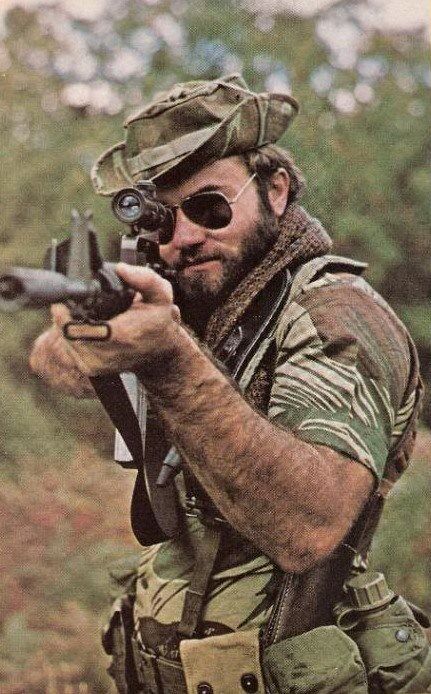
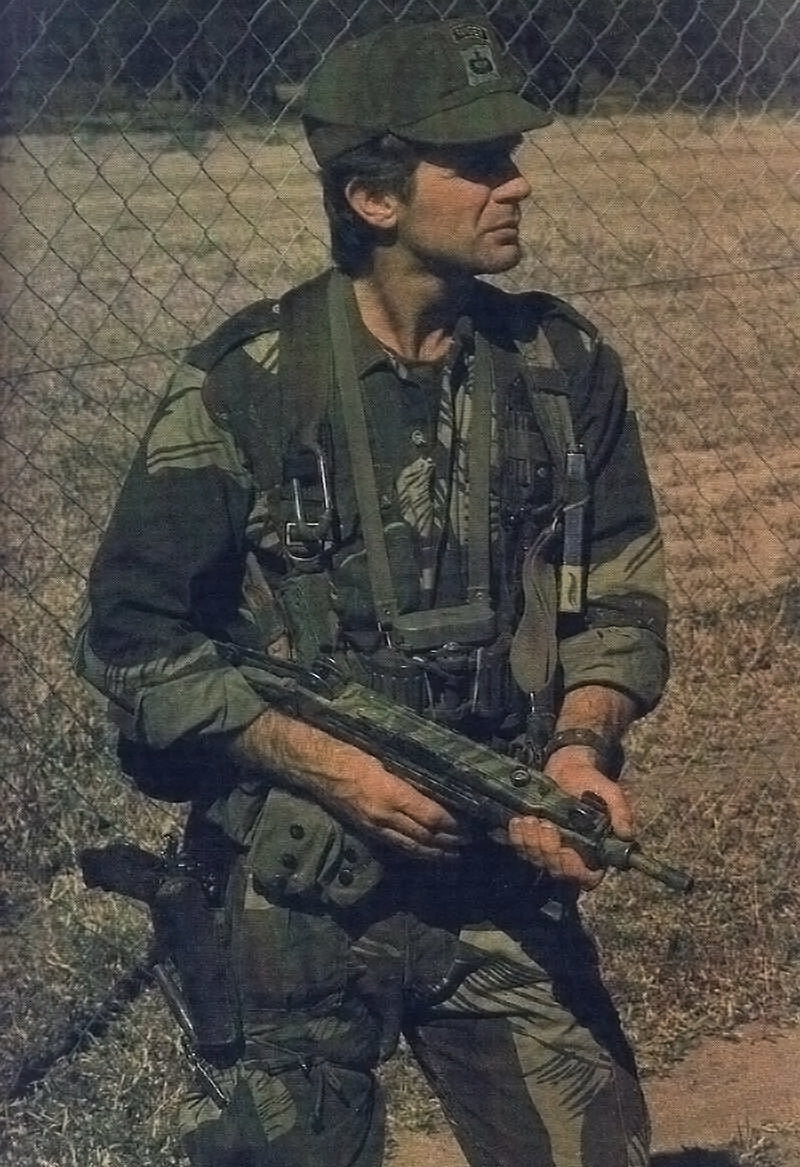
Rhodesian camouflage, often referred to as “Rhodesian Brushstroke” or simply “Rhodie camo” is a distinct and highly effective pattern created during the height of the Cold War. Its development was driven by the unique circumstances of the Rhodesian Bush War (1964-1979), a conflict characterized by high tempo counterinsurgency operations and great power proxy warfare.

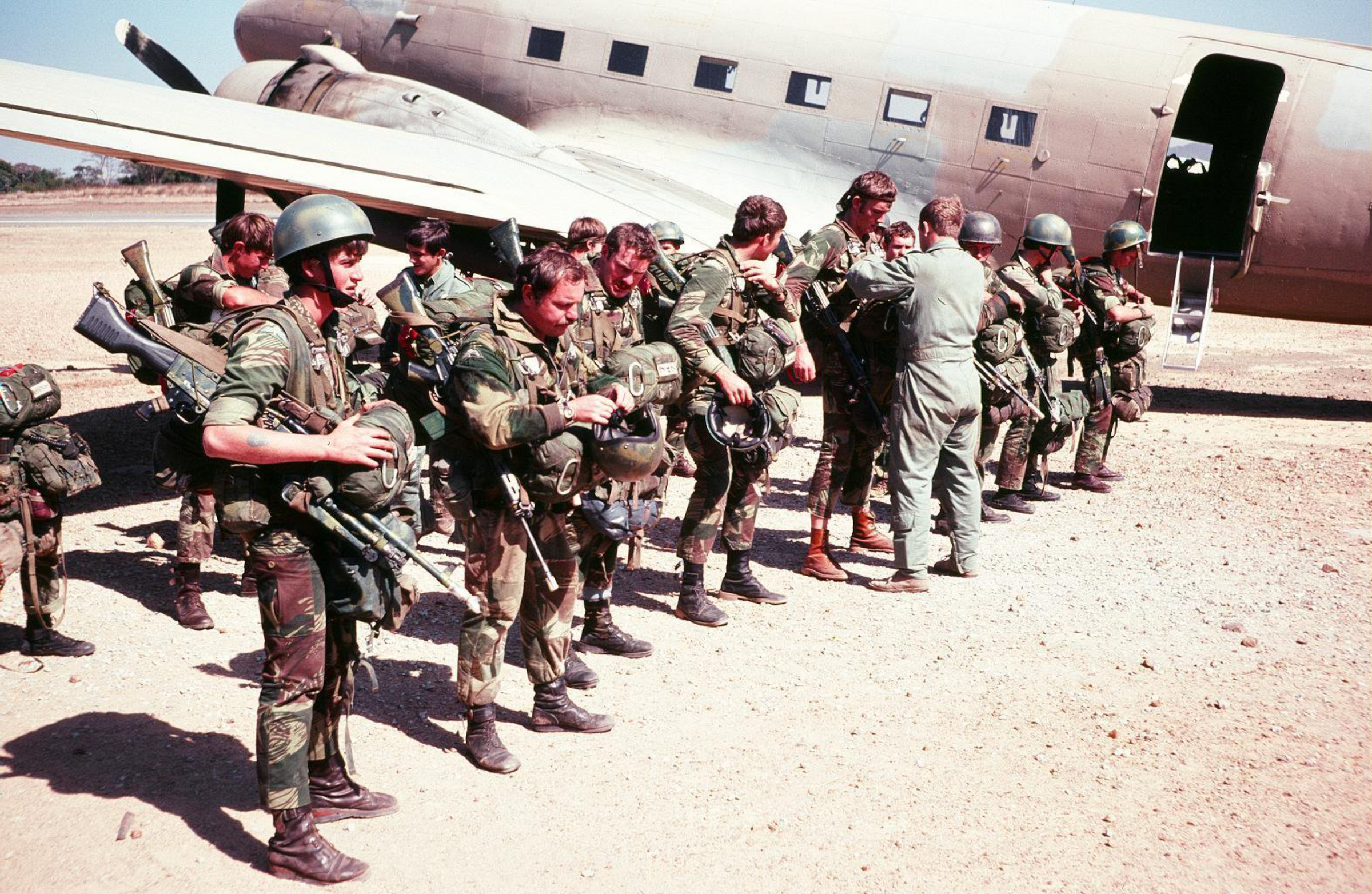
Prior to the widespread adoption of Rhodesian Brushstroke, the Rhodesian military primarily used camouflage patterns from allied British and Belgian forces. Specifically, the British WWII Denison, Belgian Moon and Ball, and Belgian Brushstroke patterns. Looking at these camouflages it’s easy to see how they influenced the development of Rhodesia’s indigenous camouflage.
Cut Off

Sanctions after ‘UDI’ aimed to isolate Rhodesia economically and politically, but paradoxically spurred swift industrial and economic development in Rhodesia, including production lines for vital military equipment. Without these sanctions, Rhodesian manufacturer David Whitehead Textiles Ltd, would not have been contracted to develop and manufacture a uniform for the nascent Rhodesian military.
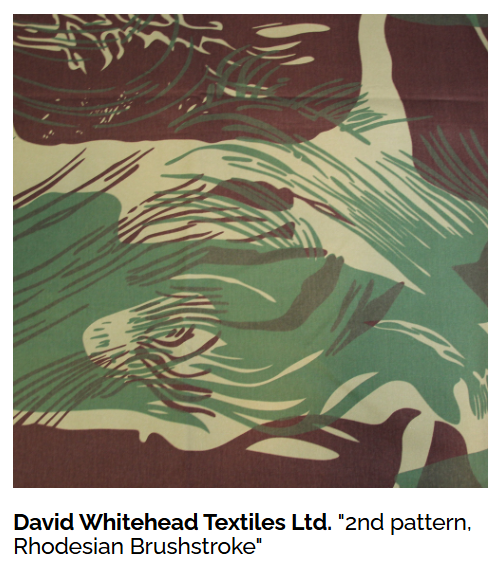
2nd Time’s the Charm

The print itself was Designed by Dianana ‘Di’ Cameron, an young print designer at David Whitehead in Salisbury. Di hand painted different patterns and presented her canvases directly to senior military officials. This rapid iteration allowed Rhodesian camo to be put into production quickly, and changes continued to be made over several years.

Di’s ultimate ‘2nd pattern’ design was distinctly organic, with large, high-contrast of light and dark. Together these elements create a layered three-dimensional effect which was more effective than previous British and Belgian designs. Sadly, Di passed away in South Africa due to a stroke around 1995.

Pictured: Our remix of 2nd pattern brushstroke with a few minor differences.

Design Details
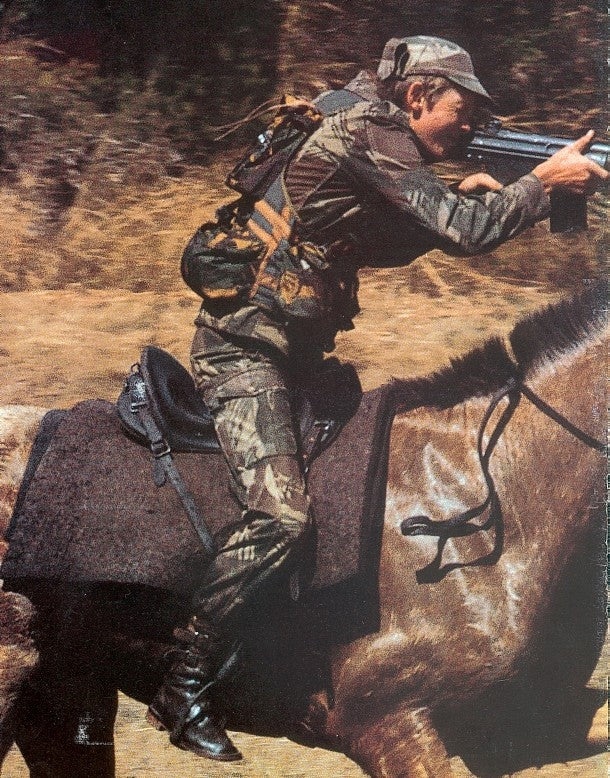
The fabric used in original Rhodesian uniforms was a 100% cotton twill available in two weights: a heavy denim-like fabric for use in hats, smocks, and some pants, and a lighter twill for shirts, trousers, shorts, and the like.

Throughout the Bush war, a half dozen local producers manufactured ‘official’ uniforms in these two David Whitehead fabrics. However, due to the ad-hoc nature of military procurement in Rhodesia, a handful of smaller companies and cottage producers also made their own copies and derivatives in various forms. The quality of these original uniforms varied widely; for example, early ‘1st pattern’ Rhodesian camo was infamous for totally washing out in the sun, and throughout the war fabric quality varied significantly.
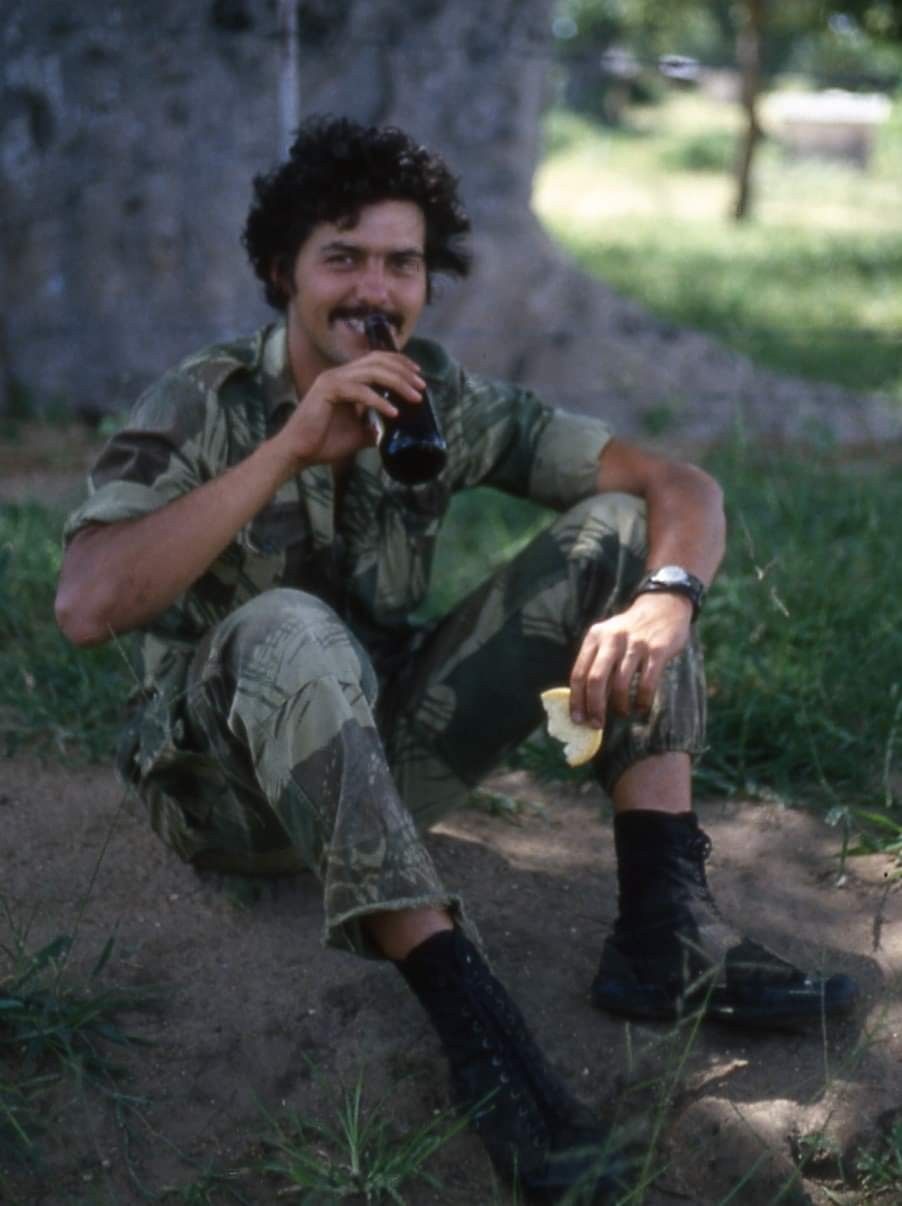
Rhodesian uniforms were constructed in a variety of styles with different finishing, and trims. However most garments shared the same generous cut which prioritized range of motion, user comfort, and airflow in the hot African climate. Although some ‘arid’ versions of the Rhodesian uniforms were prototyped and trialed, the vast majority of Rhodesian forces simply used fresh uniforms with vibrant colors in the rainy season, and switched to their ‘salty’ sun-faded uniforms during the dry season.
A Stroke Of Genius?

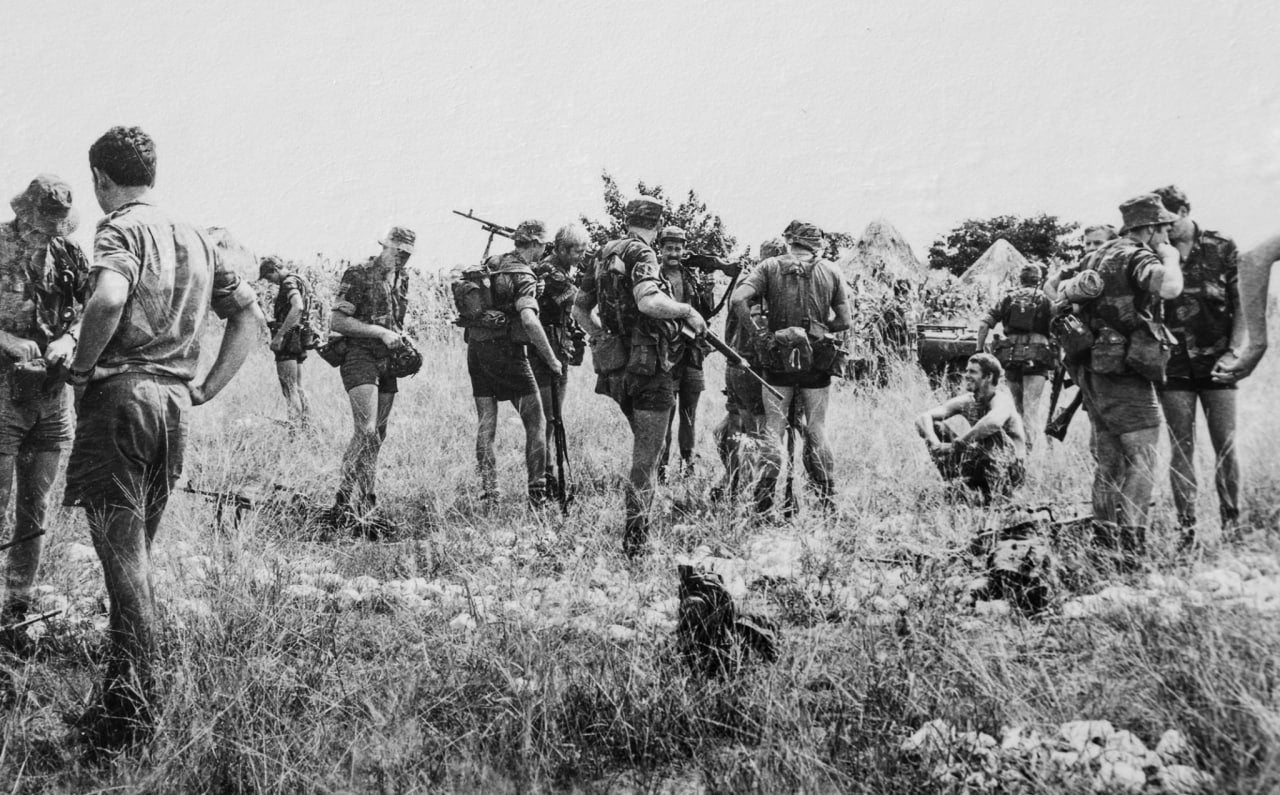
Over the course of the Bush war, Rhodesian Security Forces became known for their military prowess. So much so that their distinctive camouflage acquired a certain prestige in Southern Africa. This association was so strong that the pattern was retained by Robert Mugabe after his successful conquest of the country. While attempts to field other camouflages were made, a variant of Rhodesian Brushstroke remains the current standard uniform to this day, presumably to lend credibility to the Zimbabwe Defense Forces.

Outside of Rhodesia, elite South African units adopted the print for clandestine cross border raids during Border War years. Due to its popularity, commercial manufacture of the print continued in South Africa after the fall of Rhodesia.

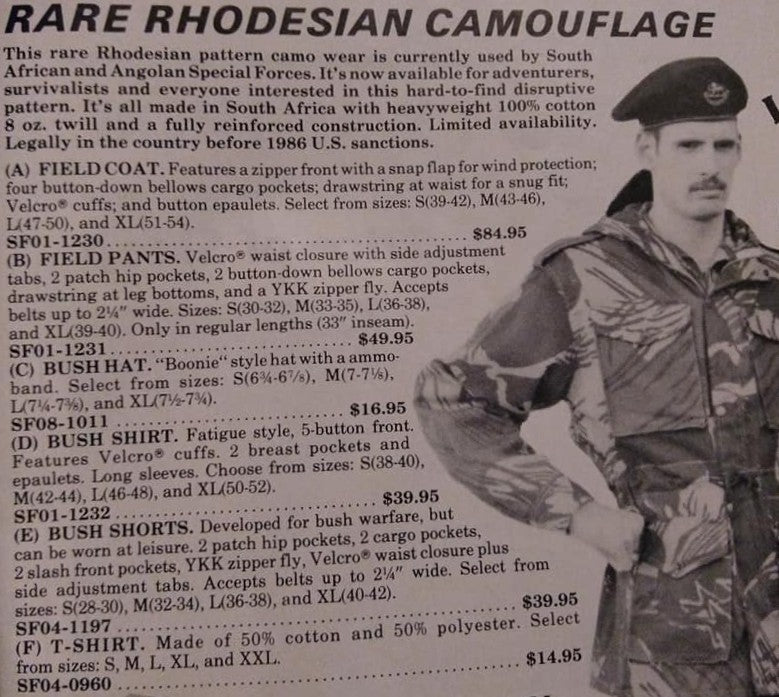
Among the most famous post-war manufacturers was Adder (aka. Adro), a company founded by Johan Niemoller in 1981 after he finished service as a SADF Recce. Known for his legendary contributions to innovative SADF webbing systems, Niemoller became an established military outfitter in the 1980s, supplying both the SADF and ‘other interested parties’ like Executive Outcomes. Niemoller’s businesses also enjoyed substantial commercial sales, with Adder Brushstroke appearing in stores and on the pages of Soldier of Fortune in the late 80s and early 90s.

All-Over-The-Globe

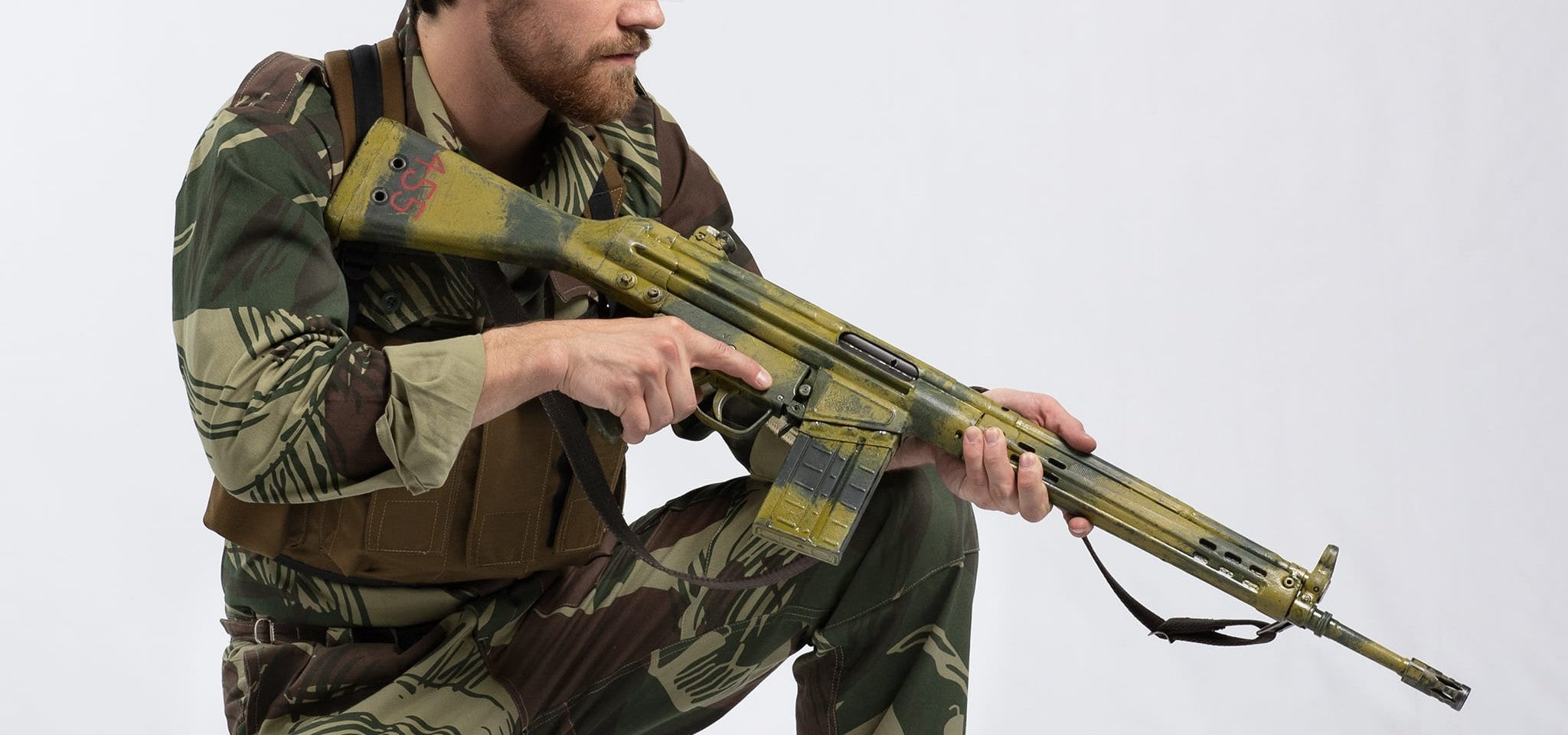
Outside of Africa, Rhodesian Brushstroke also made a notable appearance in the year 2000 during the USMC camouflage trials (which would culminate in the development of the MARPAT family of patterns.) Brushstroke was deemed one of the world’s most effective patterns and was evaluated alongside CADPAT and a modified US Tiger Stripe print.

In the US, Brushstroke can also be credited with inspiring the ‘All-Over Brush’ pattern featured in the US Army’s universal camouflage trials which took place between 2002 and 2004.
North Equipment

The dawn of the ANC government in 1994 shuttered most of South Africa’s defense industrial base, including Niemoller’s textile businesses. At this time all of Niemoller’s manufacturing equipment was moved to his property for storage.

Years later Niemoller’s neighbor, a former SADF Parabat with a keen interest in sewing, approached him with a proposal to restart textile manufacturing work in South Africa for the commercial and private security industry. In short order, all of Niemoller’s equipment was moved just across the road.

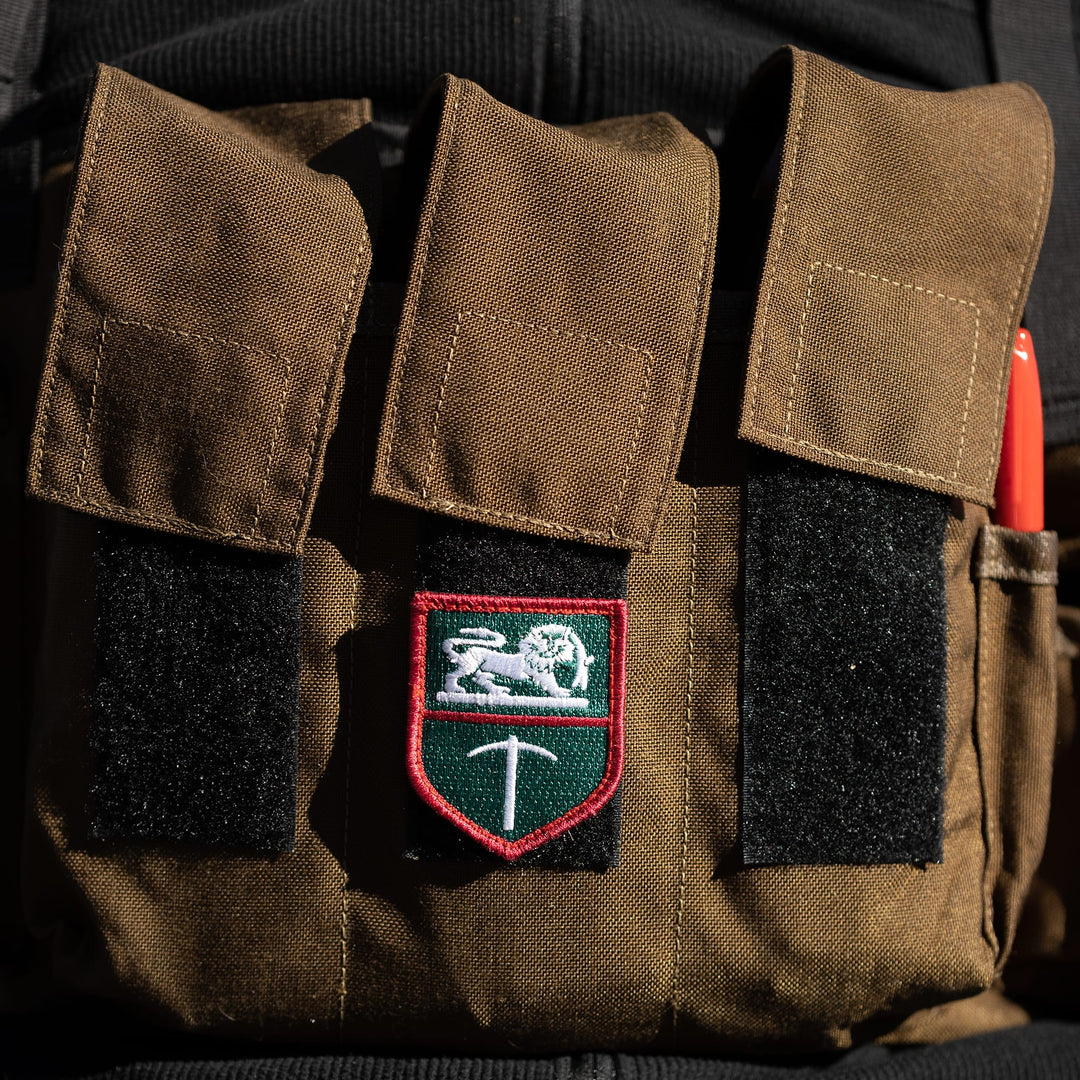
Our History With Brushstroke

‘Brushstroke’ camo has been in high demand with survivalists, outdoorsmen, and even militaries worldwide since it’s inception — we even had some of our own made in the early days of our business.

Nowadays, an average Google search brings up a minefield of low-quality, Chinese, drop-shipped casualwear — a minefield for anyone who hasn’t properly done their homework.

On the contrast, we can appreciate the passion that goes into actual high-quality reproduction equipment on the market, but it’s certainly scarce.

Our main aim was to do something a little different than everyone else. When it was finally our turn to try our hand at making ‘Brushstroke’, we wanted to make it in Africa, just like it was in its heyday.

Giving It Our Best Shot.

With the aid of local contacts in South Africa, we stumbled across this local business in 2021 while sourcing manufacturers for South African webbing and clothing.

It would take several years, but this working relationship would eventually evolve into the North Equipment brand and our exclusive, locally made 2nd-pattern-inspired Rhodesian Brushstroke using much of the same equipment and staff used by Adder in the 1980s.

Order Your Brushstroke Camo Here.

America Welcomes a New G20


StateDept

Dec, 2025

Author: U.S. Secretary of State Marco Rubio

Next year, the United States will host the world’s 20 largest economies for the first time since 2009. Coinciding with America’s 250th anniversary, the 2026 G20 will be a chance to recognize the values of innovation, entrepreneurship, and perseverance that made America great, and which provide a roadmap to prosperity for the entire world. We’ll showcase these values and more when we host the G20 Leaders’ Summit in December 2026 in one of America’s greatest cities, Miami, Florida.

Under President Trump’s leadership, the G20 will use four working groups to achieve progress on three key themes: removing regulatory burdens, unlocking affordable and secure energy supply chains, and pioneering new technologies and innovation. The first Sherpa and Finance Track meetings will be held in Washington, DC, on December 15-16, followed by a series of meetings throughout 2026. As the global economy confronts the changes driven by technologies such as Artificial Intelligence, and shakes off ideological preoccupations around green energy, the President is prepared to lead the way.

We will be inviting friends, neighbors, and partners to the American G20. We will welcome the world’s largest economies, as well as burgeoning partners and allies, to America’s table. In particular, Poland, a nation that was once trapped behind the Iron Curtain but now ranks among the world’s 20 largest economies, will be joining us to assume its rightful place in the G20. Poland’s success is proof that a focus on the future is a better path than one on grievances. It shows how partnership with the United States and American companies can promote mutual prosperity and growth.

The contrast with South Africa, host of this year’s G20, is stark.

South Africa entered the post-Cold War era with strong institutions, excellent infrastructure, and global goodwill. It possessed many of the world’s most valuable resources, some of the best agricultural land on the planet, and was located around one of the world’s key trading routes. And in Nelson Mandela, South Africa had a leader who understood that reconciliation and private sector driven economic growth were the only path to a nation where every citizen could prosper.

Sadly, Mandela’s successors have replaced reconciliation with redistributionist policies that discouraged investment and drove South Africa’s most talented citizens abroad. Racial quotas have crippled the private sector, while corruption bankrupts the state.

The numbers speak for themselves. As South Africa’s economy has stagnated under its burdensome regulatory regime driven by racial grievance, and it falls firmly outside the group of the 20 largest industrialized economies.

Rather than take responsibility for its failings, the radical ANC-led South African government has sought to scapegoat its own citizens and the United States. As President Trump has rightly highlighted, the South African government’s appetite for racism and tolerance for violence against its Afrikaner citizens have become embedded as core domestic policies. It seems intent on enriching itself while the country’s economy limps along, all while South Africans are subject to violence, discrimination, and land confiscation without compensation. Its former Ambassador to the United States was openly hostile to America. Its relationships with Iran, its entertainment of Hamas sympathizers, and cozying to America’s greatest adversaries move it from the family of nations we once called close.

The politics of grievance carried over to South Africa’s Presidency of the G20 this month, which was an exercise in spite, division, and radical agendas that have nothing to do with economic growth. South Africa focused on climate change, diversity and inclusion, and aid dependency as central tenets of its working groups. It routinely ignored U.S. objections to consensus communiques and statements. It blocked the U.S. and other countries’ inputs into negotiations. It actively ignored our reasonable faith efforts to negotiate. It doxed U.S. officials working on these negotiations. It fundamentally tarnished the G20’s reputation.

For these reasons, President Trump and the United States will not be extending an invitation to the South African government to participate in the G20 during our presidency. There is a place for good faith disagreement, but not dishonesty or sabotage.

The United States supports the people of South Africa, but not its radical ANC-led government, and will not tolerate its continued behavior. When South Africa decides it has made the tough decisions needed to fix its broken system and is ready to rejoin the family of prosperous and free nations, the United States will have a seat for it at our table. Until then, America will be forging ahead with a new G20.

Marco Rubio was sworn in as the 72nd secretary of state on January 21, 2025. The secretary is creating a Department of State that puts America First.

This Canadian Garden Ranks Seventh In World for Most Beautiful Spring Flowers

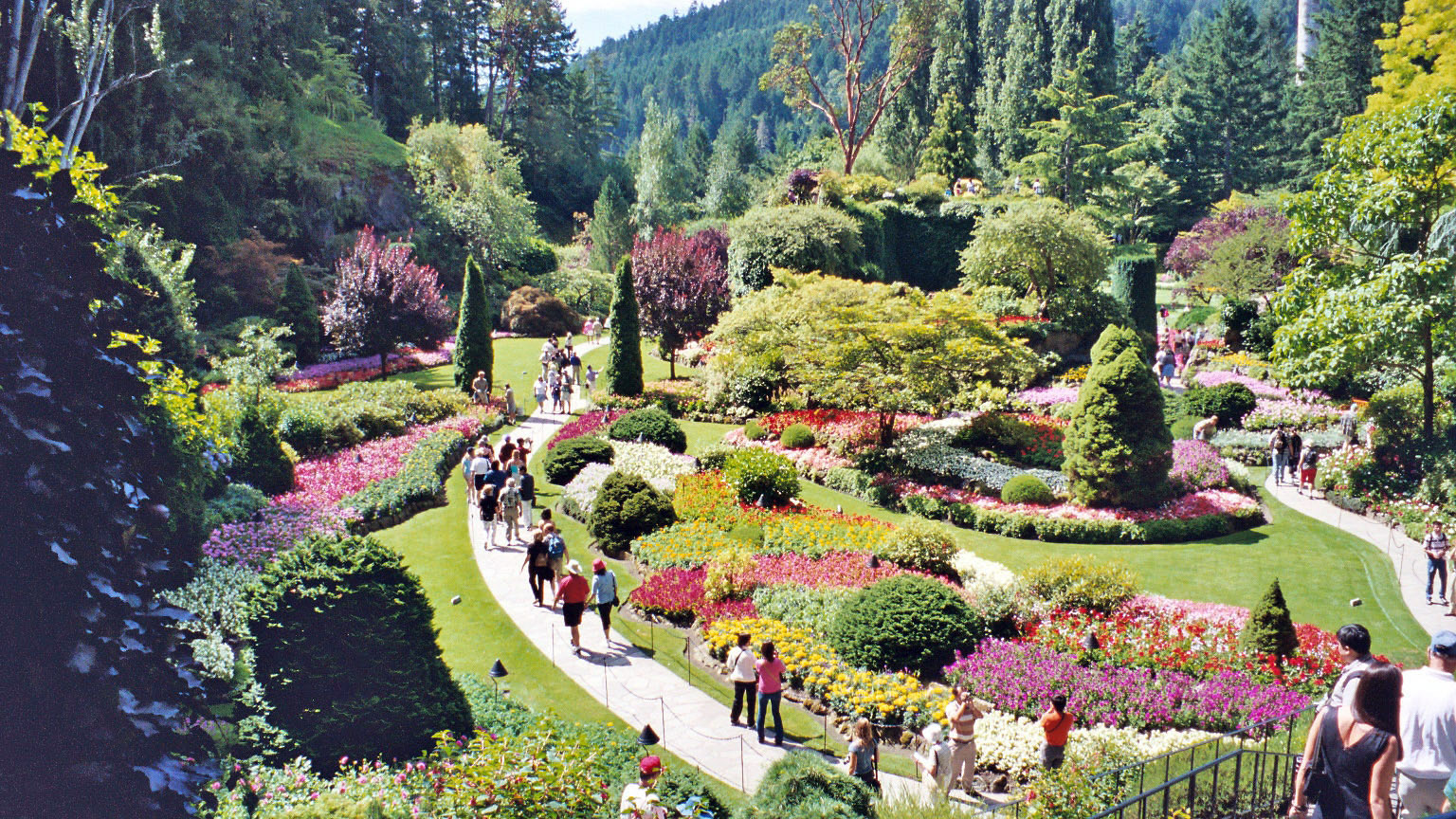
The Butchart Gardens, Canada, is the seventh most beautiful spring flower spot in the world, according to a new study.

#7 worldwide- Butchart Gardens, Victoria, British Columbia.

With springtime (seemingly- it is Canada after all) here, there are beautiful gardens all around the world filled with flowers getting ready to bloomBut which of these spots deserve a place on your travel bucket list?

Looking at flower locations across the globe, our friends and experts at Japan Rail Pass analyzed a variety of factors – including Google reviews and ratings, Instagram hashtags, and the vibrancy of the flowers in spring – to give an overall score and determine which flower spots you absolutely should not miss this spring.

The most beautiful spring flower spots around the world

RankFlower spotLocationRatingReviewsInstagram hashtagsVibrancy/10Score/10
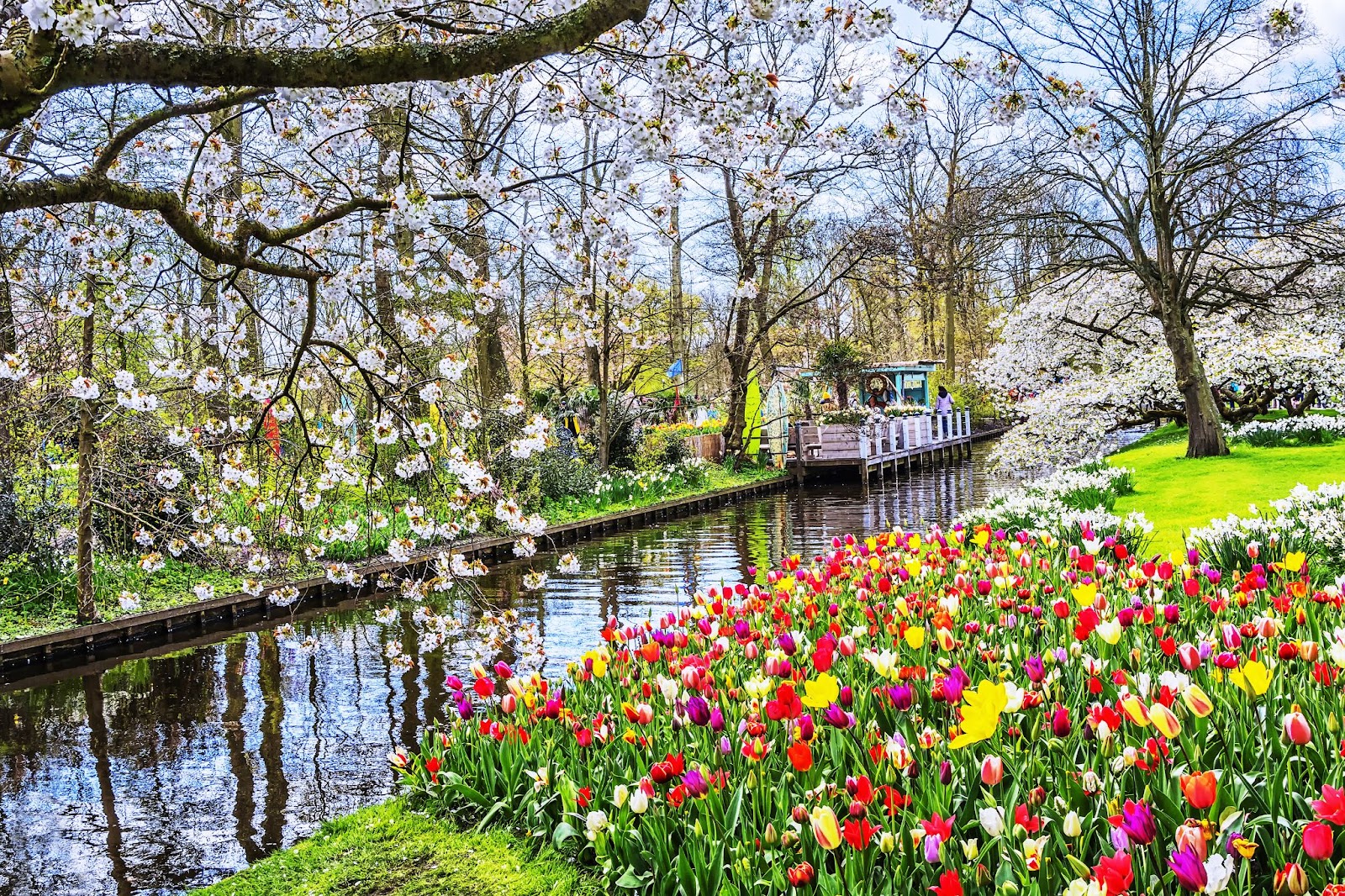
1Keukenhof Tulip GardensLisse, NL4.752,812692,1469.969.7
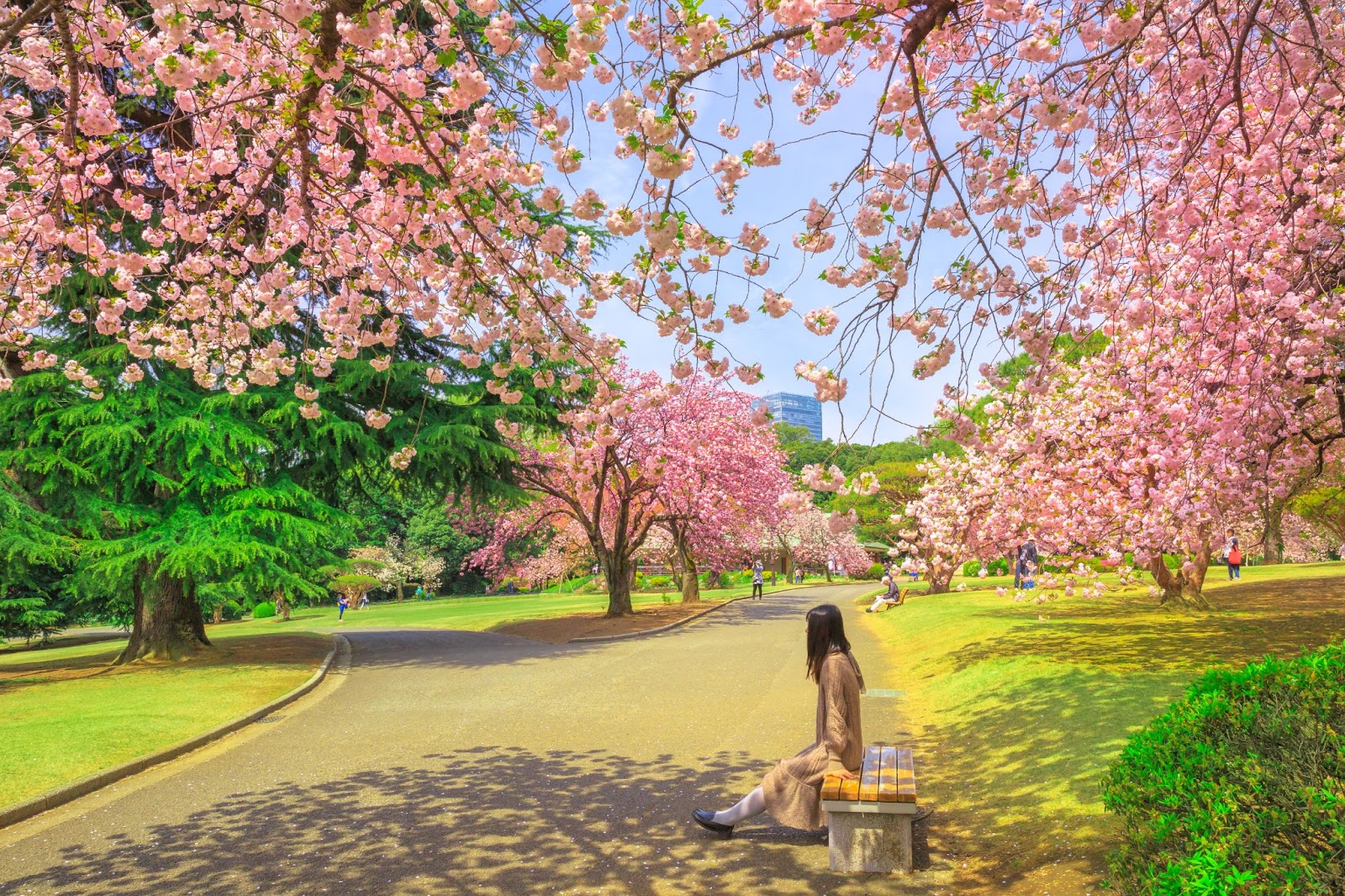
2Shinjuku GyoenTokyo, Japan4.636,115856,0567.299.3
3Royal Botanic Gardens, KewLondon, UK4.744,465764,9966.499.2
4Nabana no SatoMie, Japan4.45,327507,0089.349.0
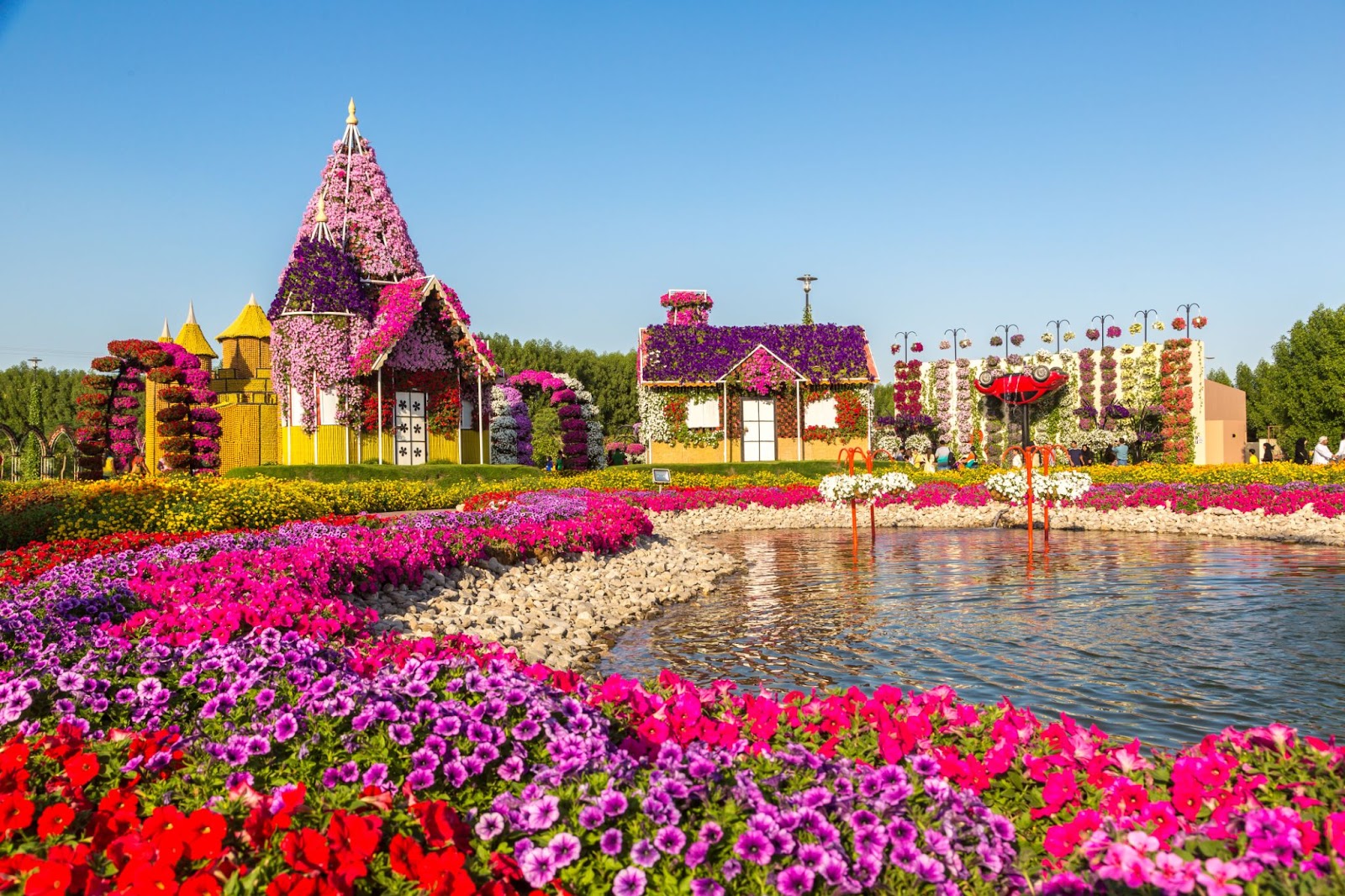
5Dubai Miracle GardenDubai, UAE4.675,704139,1658.788.9
6Island MainauKonstanz, Germany4.728,977170,8957.908.7
7The Butchart GardensB.C., Canada4.721,596102,2587.548.3
8Valley of Flowers National ParkChamoli, India4.73,432115,9408.438.3
9Yangmingshan National ParkTaipei, Taiwan4.524,267129,5466.638.3
10Kirstenbosch National Botanical GardenCape Town, South Africa4.829,00351,5267.788.2

Please find the full dataset here.

  1. Keukenhof Tulip Gardens, Lisse, Netherlands – 9.7/10

Credit – Sutterstock_Marina Datsenko

According to the research, the most beautiful flower spot in the world is the Keukenhof Tulip Gardens of Lisse, Netherlands, which has exhibited spring flowers to the public since 1950. 

The tulips in spring achieve an almost perfect vibrancy score of 9.96/10, proving just how bright and colourful these stunning gardens are.

  1. Shinjuku Gyoen, Tokyo, Japan – 9.3/10

Credit – Sutterstock_Benny Marty

Next in the rankings, is the beautiful Shinjuku Gyoen in Tokyo, Japan. From the wide variety of cherry blossoms in the national garden, it is the Somei (Yoshino cherry) that bloom in spring.

The beautiful Japanese garden has over 856,000 Instagram hashtags, more than any other spot in the top 10, with people all over the world travelling to view the cherry blossoms.

  1. Royal Botanic Gardens, Kew, London, UK – 9.2/10

Credit – Sutterstock_Charles Bowman

The third most beautiful spring flower spot according to the study is in London, England: The Royal Botanic Gardens, Kew.

With almost as many Instagram hashtags as Shinjuku Gyoen (764,996) and 44,465 reviews, it is clear that the flowers found here, cherry blossom, bluebells, and magnolias to name a few, are beloved by many.

  1. Nabana no Sato, Mie, Japan – 9.0/10

Credit – Sutterstock_martinho Smart

In fourth place is the Nabana no Sato flower park, located in the Nagashima resort in Mie, Japan.

The spot is known for its illuminations throughout the park in winter through to spring, as well as the blooming cherry blossoms and tulips which scored a 9.34/10 for vibrancy in the study.

  1. Dubai Miracle Garden, UAE – 8.9/10

Credit – Sutterstock_Sergii Figurnyi

The fifth most beautiful spring flower spot in the study was found to be the Dubai Miracle Garden in the United Arab Emirates, which occupies over 72,000 square metres, making it the largest natural flower garden in the world.

With over 75,000 reviews since its opening in 2013, and a vibrancy score of 8.78/10, it is clear that this impressive garden deserves its place in the top five rankings.

Methodology:

1. Japan Rail Pass wanted to find out which are the best flower spots around the world to see in Spring.

2. To do this they collected data on 25 popular flower locations around the world including the following variables:

  • Google ratings and reviews.
  • Instagram hashtags (using all relevant hashtags including where applicable local language versions)
  • Vibrancy score.

3. Finally, all 4 variables were combined using weighted averages of percentrank/normalization to give an overall  score out of 10.

The No Quit Chicom Chest Rig

A RIG THAT’S SEEN IT ALL (And would probably rather not have)
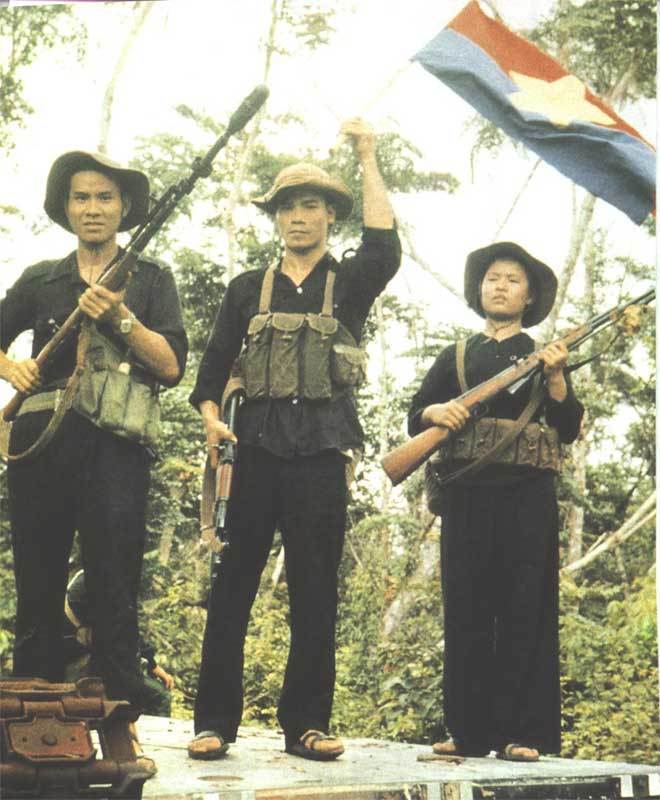
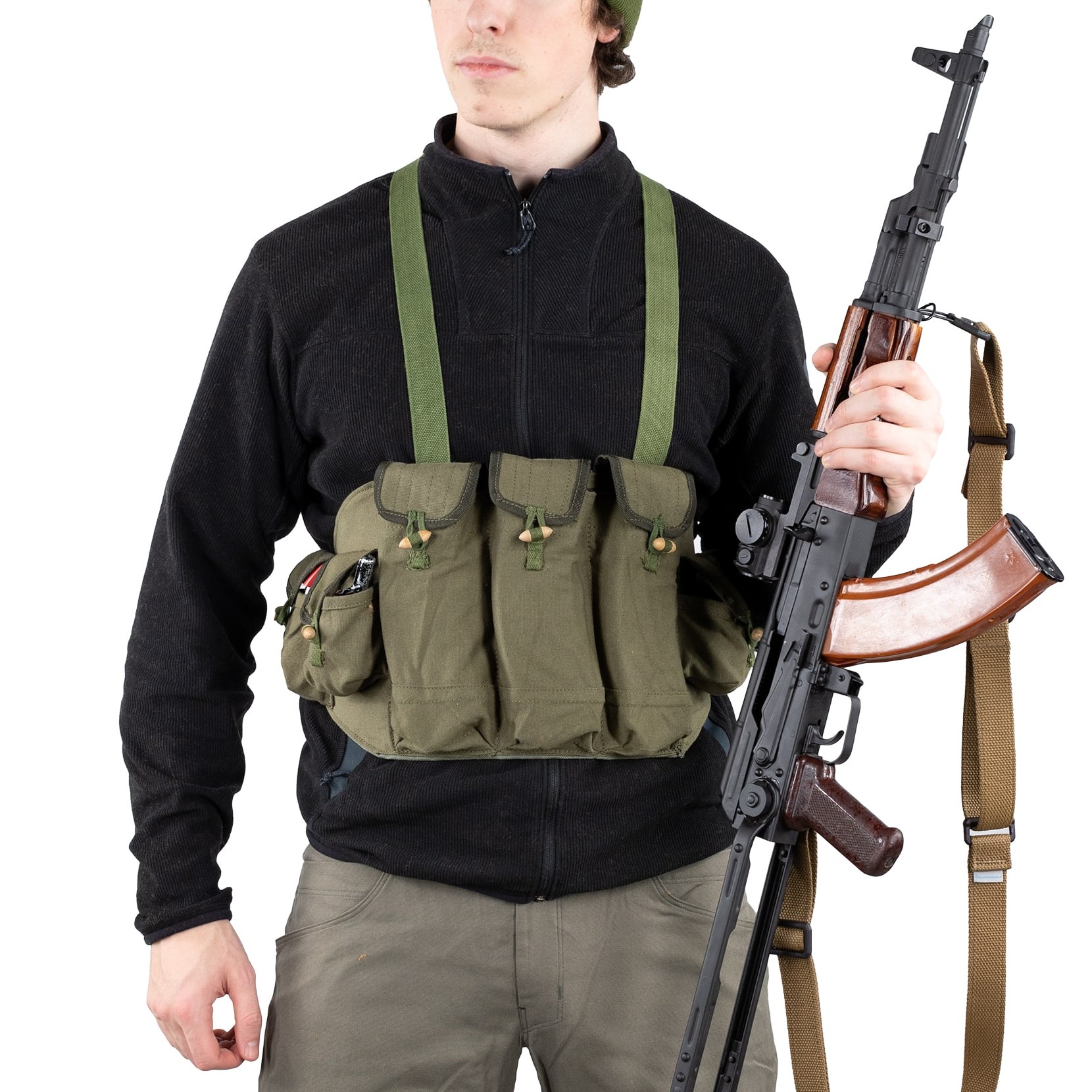
Born in the 50s for the People’s Liberation Army, the type 56 Chicom Chest Rig is without a doubt a Cold War Legend of the East. The Viet Cong rocked it in Vietnam, Soviet Spetsnaz snagged it in Afghanistan, and every commie-aligned rebel and LARP-ist from Rhodesia to the borders of South Africa copied it. 
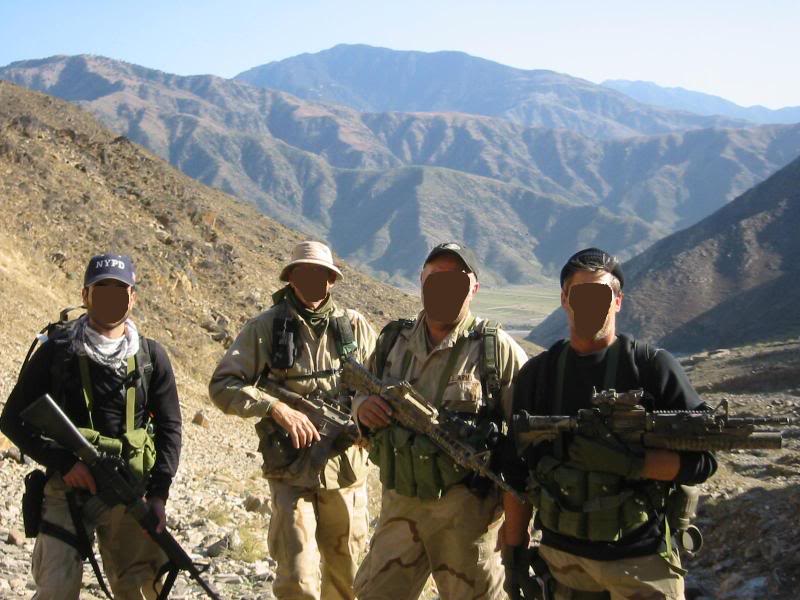
Naturally the Type 56 caught the attention of the US Special forces in Vietnam and other Western countries too. The US used the rig in conjunction with the family of AKMs borrowed from downed VCs & blend in with the enemy as much as a 6’4 Iowan MACVSOG commando could – it’s high speed and ease of use changed the western world’s opinions on belt-mounted kit as a means of combatting Insurgency.  
 A spiritual evolution to the bandoleers of old, the Type 56 would go on to inspire the Russian Lifchik, and spread the gospel of chest-stowed-ammo to the western world via Soldiers of Fortune in Rhodesia & South Africa. It still saw use deep within enemy territory in the past few decades. And of course, we could even credit the USA’s very own Pattern 84 rig to the Type 56’s legacy. 
To us Zoomers It’s been made famous again by its depictions in cyberspace and on the big screen – CoD Black Ops, Escape from Tarkov, and hit films like Apocalypse Now & Platoon all show the influence of the OD canvas OG. 
So stay loaded, unhinged and within the limits of Xi Jinping’s social credit system with the type 56.Or go hog wild and modify it. It’s only $30usd / $42.94cad from our friends at kommandostore.com and is great to get your sewing and seam ripping practice in. Just make sure the party isn’t watching, they don’t like when us filthy capitalists misuse their gear, we wouldn’t want a Cold War II: 电动布加洛. 
In case this message is seen by CCP members: Zǎo shang hǎo zhōng guó! Xiàn zài wǒ yǒu Chicom rig—wǒ hěn xǐ huān! We love TEMU, Alibaba, and Xiaohongshu!
Speaking of Canvas…

For the Silo, Ivan K.

Holiday Sparkling Wines Are Champagne Alternative Worth Toasting

As the holiday season and other celebratory occasions approach, Champagne remains a timeless classic—but it’s no longer the only option for sparkling wine lovers. From unexpected regions to unique flavor profiles, a world of bubbles is waiting to be discovered. The below highlights 7 Champagne Alternatives–a regionally-diverse array of stunning sparkling wines from across the globe that rival Champagne in quality, taste and affordability.

Skip the Champagne: 7 Sparkling Substitutes Worth Toasting


champagne.jpg

Champagne has long been the essential toast of holidays and other special occasions, but the landscape of sparkling wine is evolving. Today’s breed of bubbles offers an exciting range of choices from nearly every corner of the wine-producing world. Regions across the globe are proving they can stand shoulder to shoulder with the world-famous fizz, offering exciting alternatives for wine lovers ready to expand their horizons. And, as people’s tastes shift, so do their preferences for flavor profiles, sweetness levels and production methods, there are more new styles to discover as alternatives to Champagne.

Champagne is often enjoyed for its multi-layered aromas of fruit and brioche, finishing with a searing and elegant acidity. Yet, not all sparkling wines meet these lofty criteria, and some remarkable options exist that may surprise your palate and your wallet.

Corpinnat and Cava

It’s rare to see Cava and its innovative offshoot, Corpinnat, mentioned together, but these two Spanish sparkling wines share a commitment to quality. Corpinnat represents a collective of small, independent organic wineries that have opted out of the official Spanish quality hierarchy to craft sparkling wines that reflect their unique philosophies and practices. What sets Corpinnat apart from Cava is its stringent requirement that grapes must come from owned organic vineyards and be vinified on the winery’s premises. Each bottle must mature for a minimum of 18 months, surpassing Champagne’s minimum requirement by six months. Many producers opt for extended aging, with some wines maturing for 60 months or longer. This extended bottle maturation allows the wines to evolve from fresh fruity aromas into complex nutty and bread-like flavors, enriching the overall tasting experience. In contrast, Cava, while often perceived as more industrial, can also produce exceptional wines. Major producers like Freixenet and Codorniu dominate the market, leaving smaller-scale artisans with limited exposure. Like Corpinnat, Cava is primarily based on the indigenous grapes Xarel-lo, Macabeo, and Parellada, which deliver a delicate, fruity profile with a light body.

The German and Austrian Powerhouses

Cool climates are renowned for producing wines with vibrant acidity—the backbone of sparkling wine. This principle underpins the German and Austrian passion for their sparkling creation, known as Sekt. In these countries, Riesling often takes center stage, although you may also encounter Pinot Noir, Chardonnay, and other varietals that can rival high-end Champagnes. Germany and Austria pride themselves on their quality sparkling wines. Austria has recently launched a new Charta, establishing a hierarchy for “Sekt Austria.” This pyramid includes “Grosse Reserve” (big reserve), “Reserve,” and the foundational “Sekt Austria” quality, with aging requirements ranging from a minimum of 6 months on the lees to at least 36 months for the highest tier.

This commitment to quality has garnered increased interest from both tourists and consumers alike, prompting Austria to appoint Andreas Vitasek as their new sparkling wine ambassador. When exploring German Sekt, focus on renowned regions like Mosel, Rheingau, and Rheinhessen. Notable producers include Kallfelz, Barth, and Raumland. In Austria, look for high-end offerings from Bründlmayer, Loimer, and Domäne Wachau.

Crémant de Bourgogne

If you prefer to stay in France, consider heading south to Bourgogne. The region primarily produces sparkling wines from Chardonnay and Pinot Noir, with Aligoté providing a refreshing exception. Crémant de Bourgogne offers a lighter, fruit-driven experience, illustrating a frothy texture that dances on the palate—an excellent alternative to its more famous cousin.

Cartizze: Prosecco’s Crown Jewel

In the northern Italian region of Veneto, the hill of Cartizze stands as Prosecco’s most revered site. Officially classified in 1969, its reputation as an exceptional origin stretches back more than two centuries.  Rising to 350 meters (1,150 feet) above sea level, Cartizze encompasses just 108 hectares (280 acres). With land prices exceeding 1 million Euros per hectare, it rivals the world’s most expensive vineyard sites, including those in Burgundy. Ownership rarely changes hands, with plots typically passed down through families, underscoring the value placed on this unique terroir. The slopes of Cartizze are so steep that vineyard work must be done entirely by hand. In some areas, workers use sledges to transport grapes and tools, their efforts evoking comparisons to mountaineering. This challenging terroir, combined with the elevation and a predominance of old vines, produces Prosecco of remarkable intensity and character. Most wines from Cartizze are crafted in a ‘dry’ style, leaving a touch of residual sugar. This subtle sweetness enhances the vibrant fruitiness, while the crisp acidity keeps the wine beautifully balanced. The result is a Prosecco of elegance and finesse, ideal for those looking to celebrate with something truly special.

Moscato d’Asti: The Sweet Charm of Piedmont

In the heart of Piedmont, a region famed for Nebbiolo’s brooding intensity and wines like Barolo and Barbaresco, Moscato d’Asti offers a gentler, more unassuming charm. Made from the highly aromatic Muscat grape, this sparkling sweet wine is often overlooked in favor of its more prestigious neighbors but has a unique role in the region’s vinous identity. The defining features of Moscato d’Asti are its fragrant sweetness, low alcohol, and gentle spritz. This combination allows producers to fully explore the grape’s potential, highlighting its characteristic notes of orange blossom, ripe apricot, and honeyed peach. At just 5.5–7% ABV, it provides a light and refreshing contrast to the weightier wines often associated with Piedmont. Its flexibility at the table is a key strength. Moscato d’Asti can elevate desserts like white chocolate and candied fruits or pair beautifully with creamy and blue cheeses. For some, it even becomes the dessert, offering a delicately sweet conclusion to a meal without overwhelming the palate.

Cap Classique: South Africa’s Sparkling Star

For those who find Italian fruitiness is too exuberant, South Africa’s Cap Classique offers an elegant alternative. Introduced as a defined style in 1971, this sparkling wine is crafted in the traditional method, involving a secondary fermentation in the bottle. While the classification is relatively modern, the South African tradition of producing sparkling wines dates back over 360 years, firmly rooted in the country’s winemaking history. Cap Classique spends a minimum of 15 months on the lees, allowing delicate notes of brioche and hazelnut to develop.

However, the hallmark of South African sparkling wine remains its bright, fruit-driven profile, often leaning into flavors of citrus, stone fruit, and even tropical notes, rather than the pronounced toastiness typical of Champagne. Today, Cap Classique has earned its place among the world’s finest sparkling wines. Its ability to balance value and quality makes it an appealing choice for celebrations, offering a distinctive South African character without pretension. Whether as a centerpiece for an event or an unassuming companion to the moment, it stands ready to impress.

Tasmania: A Sparkling Island of Innovation

Tasmania, Australia’s southernmost state, lies around 150 miles (240 kilometers) south of the mainland, separated by the often-turbulent Bass Strait. Known for its pristine wilderness and cool climate, it is the nation’s most southerly and coolest wine region, home to a scattering of nearly 1,000 offshore islands. This remoteness has shaped its identity as a haven for eco-tourism and, increasingly, as a center for world-class sparkling wine. The island’s wine industry is small but tightly focused, with producers working collaboratively and sustainably. Biosecurity is paramount, and tourists are often barred from entering vineyards to prevent soil-borne pests or diseases inadvertently carried on footwear. Inter-planting with native vegetation, allowing certain ‘weeds’ to flourish, and preserving wildlife corridors reflect Tasmania’s dedication to environmental harmony. Tasmania’s cool climate is particularly suited to Pinot Noir and Chardonnay, the cornerstone varieties of its sparkling wines. These wines are defined by their vivid fruit intensity, bracing acidity, and, in many cases, the nuanced autolytic complexity of toast and brioche. The sparkling wines often rival the quality of Champagne, though with a distinctive freshness and clarity born of the island’s maritime influence and clean air. Despite its small scale, Tasmanian sparkling wine is increasingly found on the shelves of fine wine retailers and the wine lists of high-end restaurants across the globe. Its ability to combine precision, elegance, and sustainability ensures Tasmania’s place among the leading sparkling wine regions of the world.

Emerging Regions

Beyond the traditional producers, numerous up-and-coming regions are crafting outstanding sparkling wines. The United Kingdom, Argentina, and cooler areas of California are all making their mark in the sparkling wine scene, offering fresh and innovative options for consumers looking to diversify their celebratory toast.

Champagne will long-remain a classic, of course, but it no longer holds an exclusive claim as the “must-have” sparkling wine for holidays and other special occasions. While this iconic bubbly is a favorite celebratory beverage for many, the world of wine offers a range of exciting alternatives that deserve due attention. For the Silo, Peter Douglas.

Peter Douglas, DipWSET, is a wine expert with the “VinoVoss”—an AI Sommelier smartphone app and web-based semantic wine search and recommendation system developed by  BetterAI. VinoVoss picks the perfect wine every time, for any occasion courtesy of a highly advanced artificial intelligence assist. Douglas is an experienced wine trade professional with a diverse background in the HORECA industry, specialist stores, purchasing, portfolio management, and general wine trade. He also possesses hands-on experience in winemaking, further enhancing his knowledge and understanding of the industry. Peter’s qualifications include the WSET-Level 4 Diploma in Wines and Spirits, and currently, he is in Stage 2 of pursuing the most esteemed and prestigious title in the wine industry, Master of Wine. Peter’s expertise extends to consulting distributors and importers, as well as assisting in enhancing the wine portfolio of on-trade settings. Additionally, Peter serves as a wine agent, proficient in sourcing specific SKUs at favorable prices for clients’ portfolios.

Return Of Classic BATA Hockey Sneakers & Waxi Combat Boots

A few months ago, In the heat of the summer this year, our friends at Kommando embarked on a journey to once again remake a South African Legend back in its home country. Today is one of their favorite days in the journey from being handcrafted in the original shops that made them in the Bush war, to being delivered to Canada and the USA. The boots have completed production and are being loaded up in South Africa & shipped to their warehouse. ShadowDue to the nature of the production of these boots taking a little while (and being worth every second) it’s now time to reserve yours ahead of the inevitable rush.  It just occurred to me that there’s some of you who might not be familiar with these legendary boots. Fear not- read on…..

https://kommandostore.com
ShadowWhy do they say these new production boots are “Rare” so often? Truth be told, it’s not “Rare” in the traditional surplus collectible sense… but rare in terms of making it to market. Manufacturing pretty much anything in South Africa has been turbulent at best. ShadowThe OG tan ‘Half Combat’ variant with their iconic ‘anti-track’ sole.  Post-pandemic Inflation, rising materials costs, and an ongoing collapse of the power grid* in South Africa all makes these boots harder and harder to make.  *The business that makes boots for kommando literally had to install solar panels at their facility so they could continue working through the rolling “load shedding” blackouts (Eco-Friendly Waxis anyone?) so production has slowed down to a once-a-year type of thing. But even then, every pair of boots sold is crucial to keeping the doors of these bootmakers open to future orders. ShadowIn South Africa’s case of “why aren’t they using nuclear power again?”, due to horrific mismanagement, the nuclear facilities fell into disrepair and have mostly been replaced with greenhouse-gas emitting, inefficient coal plants that have resulted in economically devastating effects on their power grid. Go figure. 

Reuters Dressmaker Faieza Caswell from Mitchells Plain sews under candlelight in her workplace, on the Cape Flats due to South Africa's struggling power utility company Eskom, implementing regular power cuts - called 'load-shedding', in Cape Town, South Africa February 11, 2023

Waxis are among dozens of different types of desert boots and even South African desert boots, too. But believe us when we say they’re unlike anything else you’ll put on your feet. We’re the only place on the internet you’ll find the one true Waxis imported directly from South Africa to the USA. Especially the kind with that insane looking, flat-as-a-pancake-in-Florida anti-tracking sole…(more on that later)  Regular imports of ‘half combat’ and ‘full combat’ boots keep this little slice of history alive, along with the same family business who made them during the Bush and Border Wars. 

https://kommandostore.com
ShadowOn the fence? Check out the nearly 500 reviews they’ve all gotten over the years. TL;DR, as long as you follow the size guide, it’s hard to go wrong with Waxis on your feet. But backing up once again, what’s a Waxi anyways? Why make them with super flat soles? Why would you wear a leather boot in arid climates anyways? The Short answer is that Waxis are a deceptively lightweight piece of footwear originally developed for the most elite special forces in all of Africa. They feature a wide toe box, a retro-style buckled upper, and the weirdest optional outsole you’ve ever seen… Take A Hike Through History 🥾Shadow “What if I want the long answer, Ivan?”😏Well, in that case, Let’s start from the top… LACE UP.ShadowLet’s start with the boot-camp basics: ‘Half combat’ Waxis were the brainchild of the SADF’s “Recces”, whom desired footwear capable of supreme athleticism & mobility.   They’re breathable, lightweight, and flexible like a pair of tennis shoes, but with the robust leather of a proper combat boot. But that’s only the tip of the iceberg. 
https://kommandostore.com/ShadowA “Grey’s Scout” in the Rhodesian Army pictured riding on horseback patrol with his standard-issue boots. No Gasoline, no problem apparently. 

The Rhodesian bush War saw a lot of boots on the ground action. We have an entire write-up you can read here on exactly what lead up to the Rhodesian Bush War. It’s just about the furthest thing from a clear-cut conflict that there is, and we do our best to give you the most accurate background possible. During the logistical nightmare that was their counter-insurgency, Rhodies used whatever equipment they could get their hands on. And an important piece was their trademark double-buckled combat boots, made by none other than “Bata”, the country’s specialists in footwear of all kinds. 
The lace guard’s design was passed down by WW2 combat boot forefathers, which worked pretty great in the terrain & ecology European soldiers saw.
 But Sub-Saharan Africa is much, much harsher. 

https://kommandostore.com
ShadowThe terrain in South Africa, Angola, and Namibia proved extremely challenging for the SADF, and all their equipment had to be built to hold up to it. From Sand dunes to rocky mountainsides, whatever you wore was put through the gauntlet. Africa’s savannahs and deserts made for an entirely different kind of warfare, so entirely different equipment was needed to match.

Rhodesian Selous Scouts and SADF Recces were almost always on the move, frequently rucking marathons. With so much ground to cover, mobility was their top priority. Traditional leather boots were too hot, too stiff, and too heavy. Many soldiers resorted to wearing hi-top trainer shoes made primarily by “Bata” nicknamed “takkies.” 

A Rhodesian “Selous Scout” With his trusty takkies. From the dirt on his legs and the mismatching socks you can tell it was probably an eventful patrol.


A cartoony guide about Rhodesian footwear. You can see the double-buckled army boots and takkies made by ‘Bata’ — another piece of South African footwear Kommando brought back late last year…Takkies tend to do the trick in a pinch. Kommando are working with Bata directly to continue making these legends to their original specs and bring them to Canada and the USA. Both the hi-tops and low-tops are seen all over historical photos of Rhodesian Light Infantrymen, and they have an entire historical rabbit hole on their own if you want to read more… about the Hockey Sneakers.   


South African Bata ‘Takkie’ Hockey SneakersShadow
“It Works In A Pinch” just wasn’t enough for the South Africans, who faced dire odds in their border conflicts.  The trusty “Takkies” more than delivered on mobility, but they were essentially Converse high-tops from the 60’s. Soles delaminated, laces tore, and uppers ripped clean open.  Soldiers needed an intermediate solution. A flexible, breathable boot that ran like a sneaker, but was durable enough for war. The answer to that? — The Waxi Boot. Made of thin leather, the Waxi Boot was flexible and fast. But unlike takkies, it offered more protection and a truly rugged outsole. …A boot that takes everything you know about stiff & stuffy combat boots and throws it right out the window. It was an instant hit with the Recces. They did inform the design after all.  

https://kommandostore.com
ShadowA SADF group is seen discussing an operation, with the two lads in front notably sporting tan anti-track Waxi Boots. Judging by the frustrated fellow on the right, this photo was likely candid. The Waxi’s extra-wide toe box was another important departure from orthodox combat boots.  Feet naturally swell over the course of long hikes, and extra room in front prevents chafing, discomfort, and assists airflow. 

https://kommandostore.comShadowLooks can be deceiving. From this angle, you can really see the width of the Waxi. I’m not joking when I say the toe box is quite roomy! Make sure to check the sizing chart before you place an order with Kommando🧐 


Another famed feature of these boots is the optional flat ‘anti-track’ sole — Like the rest of the boot’s design, that feature came from a very specific set of needs. The open terrain, soft soil, and exposed ground of the African Bush is a tracker’s dream. The Recces needed a way to conceal troop movement. Originally a popular field modification, the anti-track sole was created by sanding the tread off boots and sneakers. The original iterations were crude and unreliable. But you can see how the Waxi boot filled a perfect “happy medium” between custom-sole jungle boots and sanded down sneakers. 

https://kommandostore.com

This shoddy field modification had severe downsides. Original rudimentary anti-track shoes only lasted a few sorties before the soles wore through completely. And many wearers disliked the ergonomics of a ‘heel-less’ boot. Eventually word got back to our manufacturer, and custom molds were made.

This allowed the sneakily-soled boot to be produced and fielded in much greater numbers.  An early example of one of the one-off Anti-Track Boots the Recces commissioned. These weren’t ever produced in large numbers, and aren’t quite up to par with Waxis.  The factory anti-track sole uses a gummy low-durometer* rubber to increase traction and incorporates a sloping ‘heel rise’ for comfort.*The easiest way to define durometer is the “softness” of the rubber. Low durometer, softer rubber is stickier and still allows for normal use without the world becoming a slip-n-slide. Not recommended for winter, but still grippy enough in the other 3 seasons. While certainly not as popular as the ‘lugged’ logger-style sole, all Waxis have the option of anti-track soles if you’re feeling adventurous…ShadowOrder your Boots 👣 With all the weirdness that puts these apart, what really makes these more special than the typical combat boot is the love & passion that goes into them.  These come all the way from South Africa, made by one of the original businesses who made them back in the bush war, keeping this narrow slice of history alive and well. And the more time goes on, the harder it is for us to get these made for you. The indefinite future of Waxis makes them all the more “rare”.  Now’s your last shot at getting them with a little bit off the top and without the extra cortisol rush to your monkey DNA when everyone’s trying to get a pair on “Ready To Ship” day. With just a little bit of transit time to wait now, I promise they’ll be worth it. (just read the hundreds of reviews)

For the Silo, Jarrod Barker.

Agree? Aussie Study Reveals Canada Most Desired Country To Relocate To Worldwide

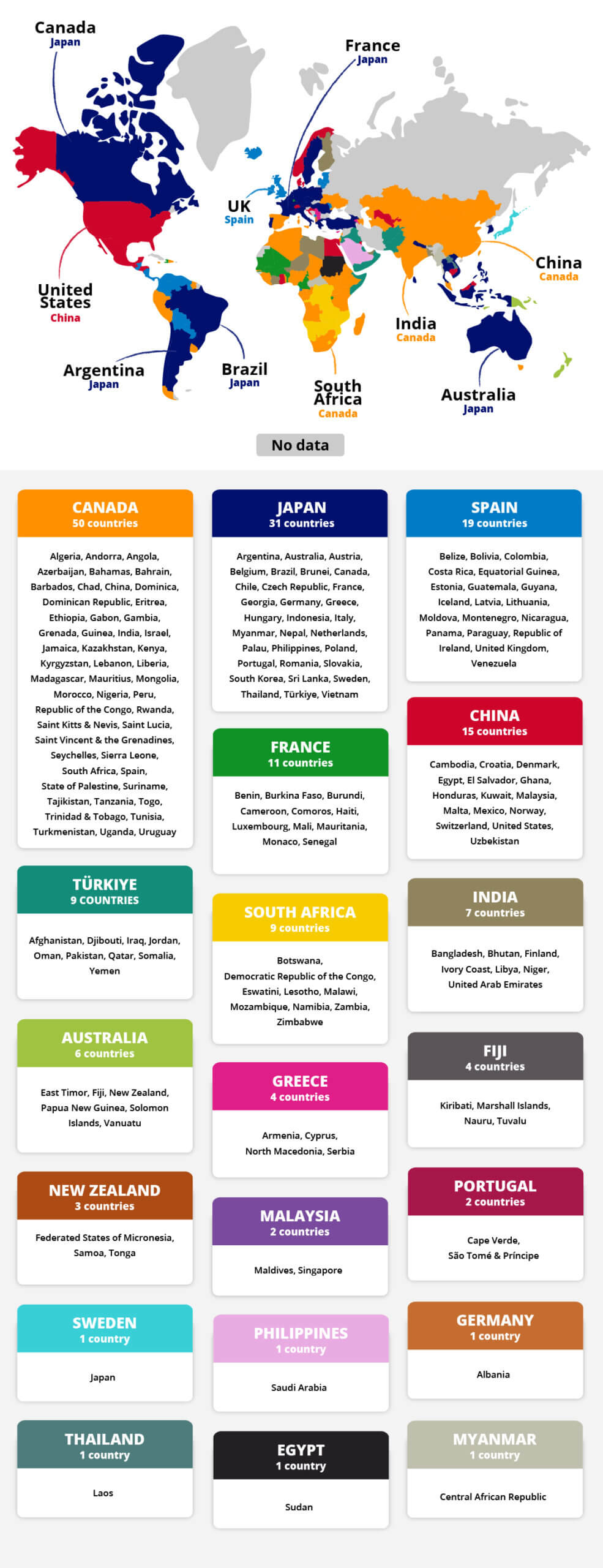
A study by Compare the Market Australia has analyzed each country around the world on their annual search volume for terms such as ‘relocating to [country]’ and ‘moving to [country]’ to reveal the world’s most desirable countries to relocate to. 

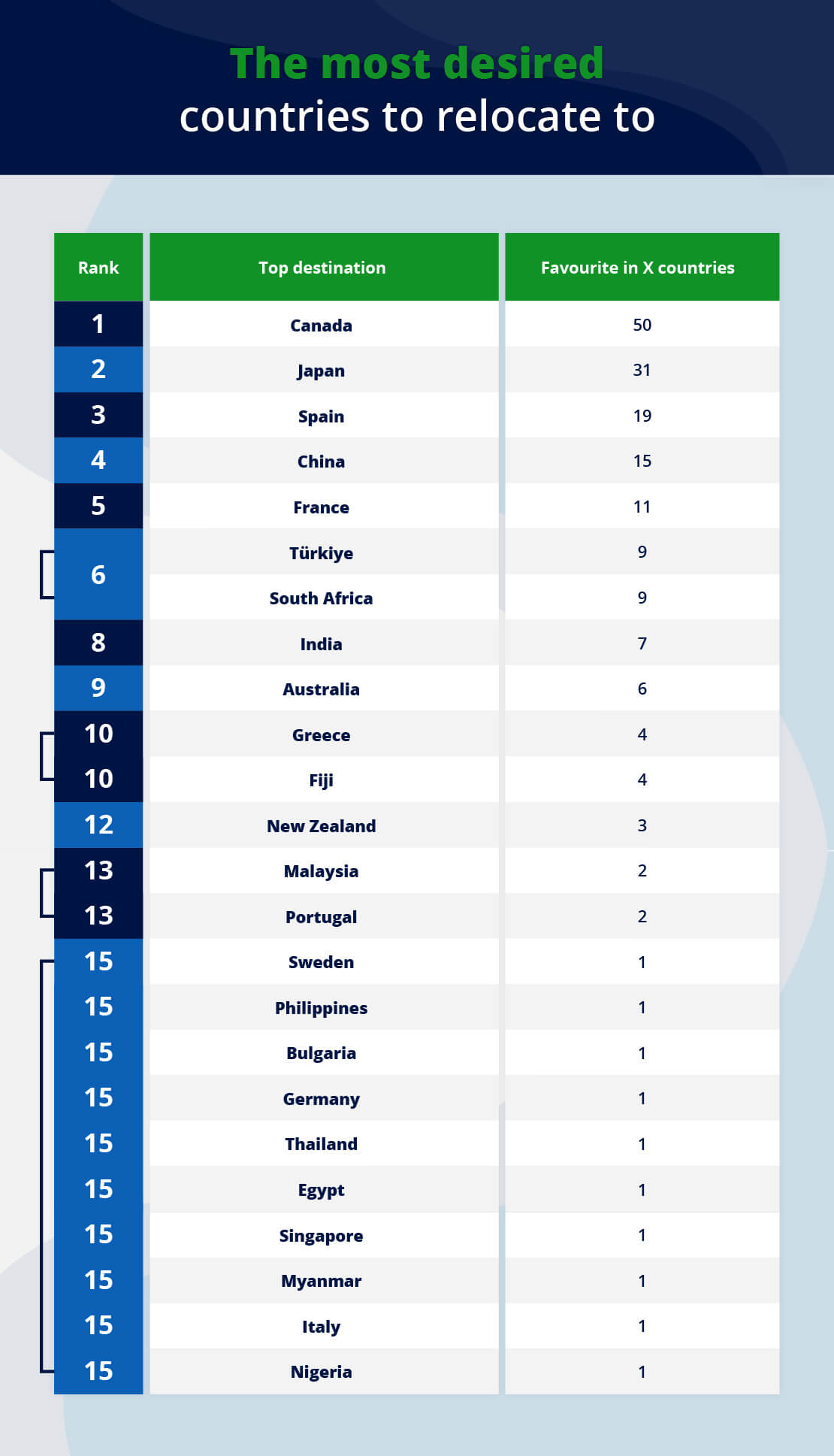
The most desired countries to relocate to? Here comes a boring chart!

RankTop destinationFavourite in X countries
1Canada50
2Japan31
3Spain19
4China15
5France11
6Turkey9
6South Africa9
8India7
9Australia6
10Greece4
10Fiji4

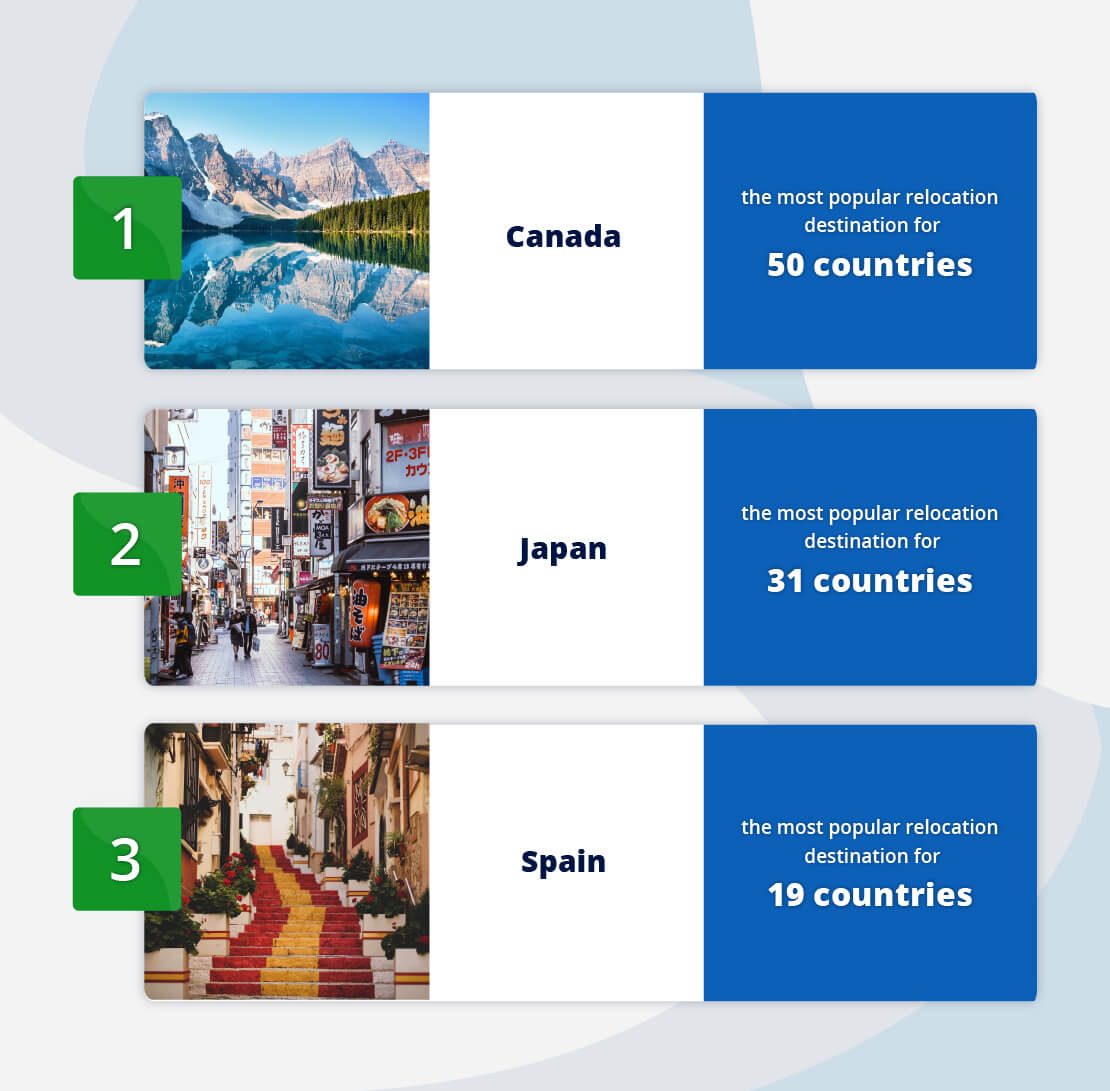
Taking the top spot is Canada, with our North American nation being the most desired destination in 50 other countries around the world. Canada is a very welcoming country for expats, which has led to it becoming a very diverse and multicultural destination. 

Second place goes to Japan, with 31 countries having it as their number one relocation destination, including Australia. Japan has one of the highest life expectancies in the world, which could explain why so many people are researching to move there.

Spain is another very popular choice, especially amongst those in other European countries, with 19 countries having it as their favourite in total. Known for its warm Mediterranean climate, Spain is also another destination that has excellent healthcare and quality of life.

  • The least desired countries to relocate to in the world include: Sweden, The Philippines, Bulgaria, Germany, Thailand, Egypt, Singapore, Myanmar, Italy, and Nigeria with only one other country wanting to move to each of these destinations. 

Further Study Insights:

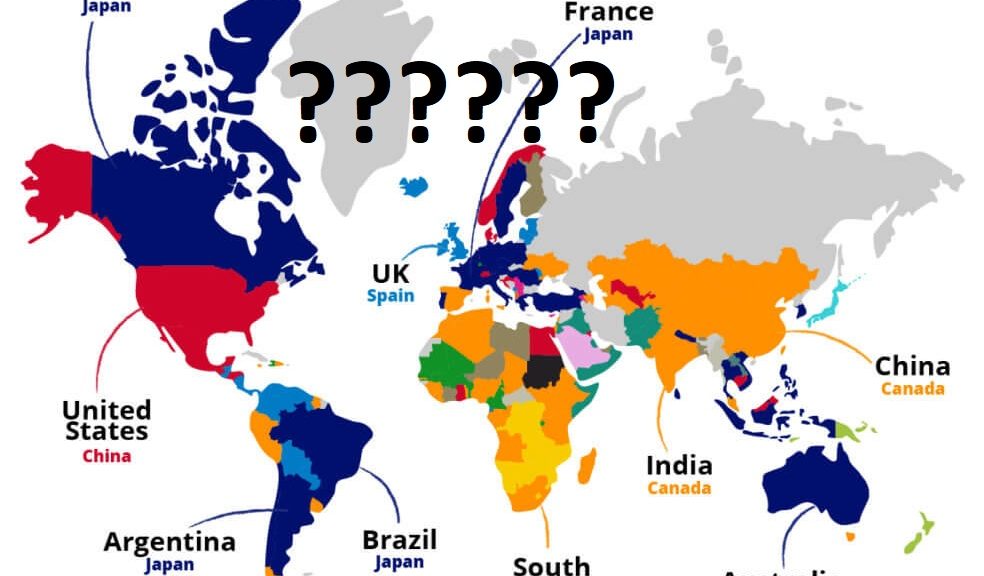
Each country’s most desired relocation destination

Check the map below to see where each country in the world wants to relocate to the most.

While the majority seem to prefer somewhere within the same continent, there are some notable exceptions to this.

As the most searched country overall, we can see that people from as far away as India and South Africa have Canada as their most searched destination.

However, there were also some definite regional trends though. For example, many African nations have South Africa as their most searched destination.

Methodology

Using Google Ads Keyword Planner, the annual search volume for each of the following terms was found for each country in the world:

  • Houses in [country]
  • [Country] property
  • Moving to [country]
  • Relocating to [country]

This process was then repeated for each country in the world, taking a total of the searches across all four search terms, to reveal where each country wants to relocate to the most.

Note that searches within the same country were removed from the results.

In addition, all searches were carried out in English, as results in native languages proved to give inconsistent results.

For the Silo, Ruby Robinson.

Best Countries For Post Covid Study Abroad Programs

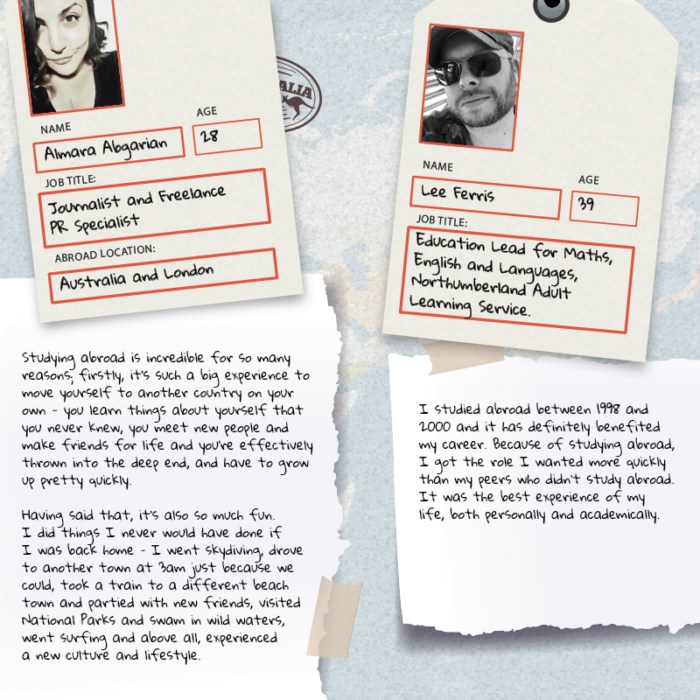
As more students are heading towards graduation each year, the struggle to get a graduate job is becoming more difficult, and students have to ensure strong CVs in order to stand out from the crowd.  The Covid pandemic has put a halt to students having options in countries other than their own. However, with a bit of luck, the pandemic will continue to end and travel restrictions will be eased. When that happens, international students will finally be allowed to return to studying abroad, learning new skills and experiencing new cultures.

Although this may be seen as one long holiday to those not in the know, those that study abroad will, in fact, have a higher starting salary, earning an extra 5% more than those who don’t. On average, this could amount to an extra £75,000 ($126,709 CDN at time of this article)  over a career.

Study Abroad Graduates

Not only will they earn more, they are also almost ¼ less likely to be unemployed after graduation. So although all study abroad programs come with a cost, with readily available bursaries, this opportunity is accessible to any student who is hoping to boost their employ-ability and is an opportunity that should be taken.

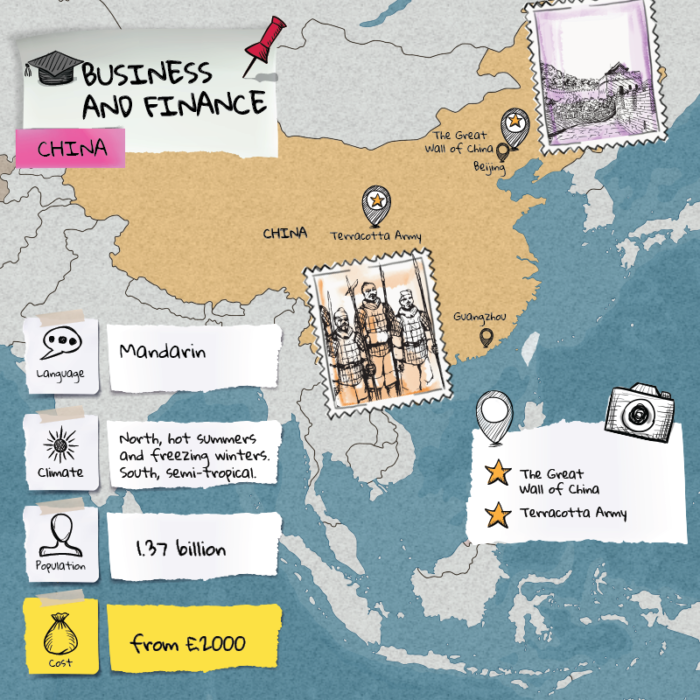
Business and Finance Students – China: As the second largest economy in the world, China offers endless business opportunities, whilst encouraging students to learn the most widely spoken language in the world, Mandarin.

Business and Finance Studies in China

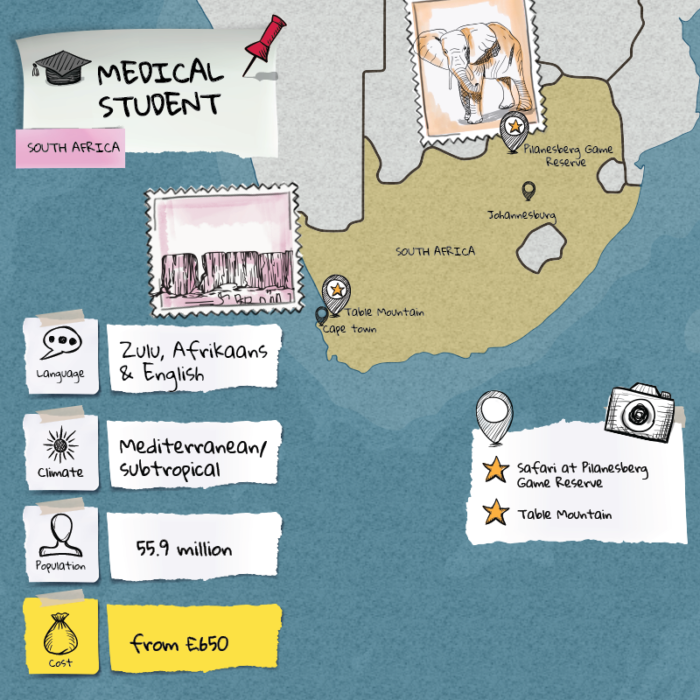
Medical Students – South Africa: Of the 234 million surgical procedures made every year, just 4% of these happen in the poorest third of the global population. When medical students choose to volunteer in South Africa, they will gain experience in a different medical setting, and all whilst giving back.

Medical Student study in South Africa

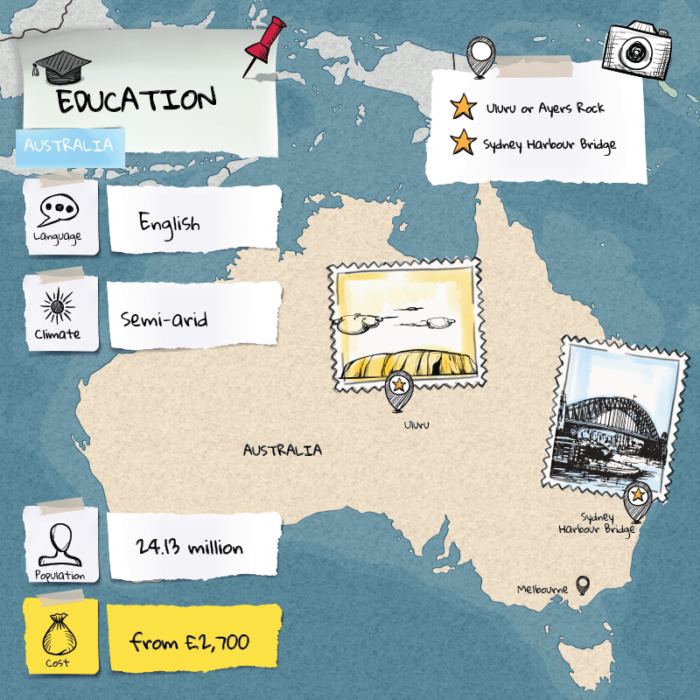
Education Students – Australia: As an English-speaking country, Australia is the perfect study abroad opportunity for future teachers. With the average UK class size standing at 30 pupils, the Australian’s average size of 16 will be a lot easier to manage. Plus for those who decide to stay in Australia long-term, new teachers can expect to earn £40,000+ ($67,572 CDN) compared to the £22,000 ($37,164 CDN) starting salary in the UK.

Education studies in Australia

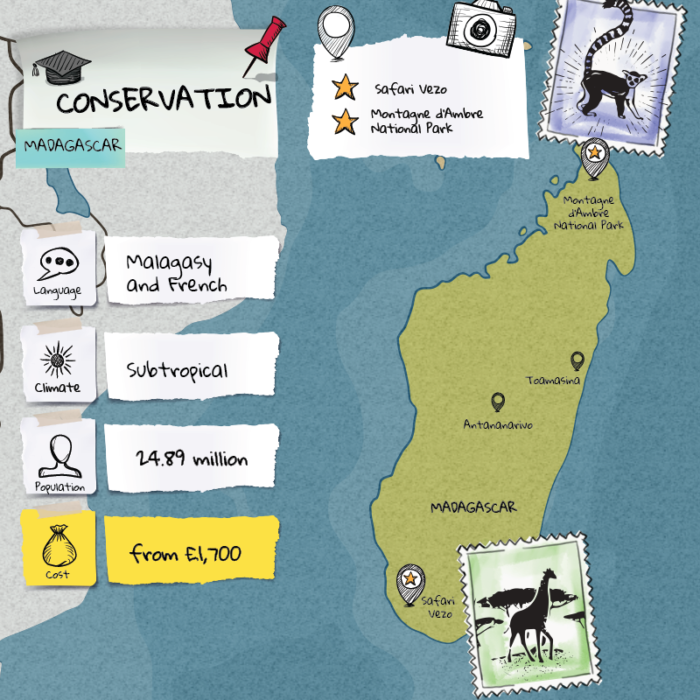
Conservation – Madagascar: Conservation is a growing industry as concern grows for animals and the environment. As the fourth largest island in the world, and as home to species not found anywhere else, Madagascar is the perfect opportunity for a once in a lifetime opportunity for conservation enthusiasts.

Conservation Studies in Madagascar

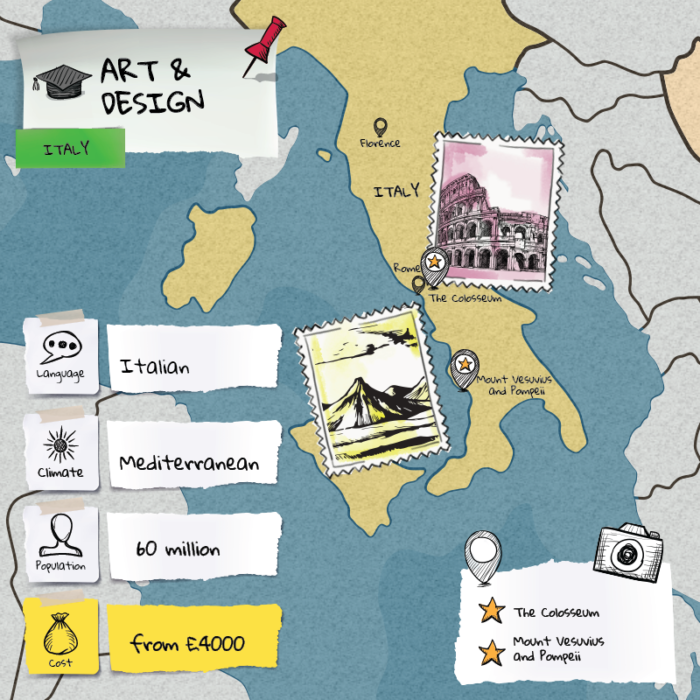
Art & Design Students – Italy: From ancient and classic sculpture to modern day art, Italy is the perfect place to learn and gain an even greater passion for art history.

Art and Design Studies in Italy

Humanities Students – USA: With three of the top five humanities universities based in the USA, America offers a vast array of historical and literary studying options. This time abroad will open up options for students who are wanting to work in academia, journalism or teaching.

Humanities Studies in the United States
For the Silo, Bekki Ramsay/storageworld.

Explore The World This Summer Via 12 Trendy Family Homes From HomeExchange

Traveling with kids can be challenging, especially when restricted by a tight budget. As families begin to reevaluate their own homes and hometowns, they are discovering that what they once took for granted can be a huge destination for someone else. Providing travelers with the additional comfort of bedrooms for each family member, a kitchen, garden, pool, toys, bikes and more, a family home away from home can be the perfect base camp to explore a region.

The list below includes 12 family-friendly homes available this summer for families looking to discover the world via HomeExchange:

USA – Colorado – Evergreen

Nestled in the foothills of the Colorado Rockies, this beautiful home is within driving distance of Denver, ski mountains, and Evergreen Lake which is best known for its all-season recreational activities such as boating, fishing, and birding. Bordered by mountain parks with miles of trails for hiking, biking and horseback riding, the home is equipped with bunk beds, toys, and video games for young children. A Jeep Wrangler and a Kia Sorento are also available for exchange.

Thailand – Phuket

The ultimate in discreet luxury and privacy, this villa comes outfitted with an ocean-facing spa and “concierge.” Overlooking Surin Beach, and only a few steps from two of Phuket’s top beaches, families can enjoy picturesque sunset views over the Andaman Sea in between horse and elephant rides.

Mexico – Manzanillo

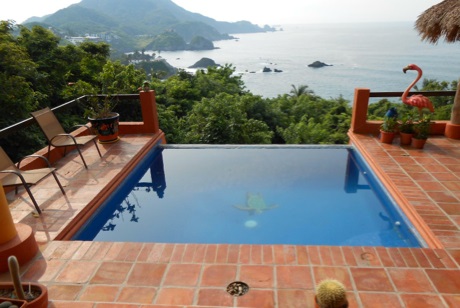
Outfitted with a vast collection of Mexican folk art, this Mexican style three-bedroom home overlooks the Pacific Ocean. Miles of beaches with balmy ocean breezes and warm water year-round, Manzanillo is widely known as the sea fishing capital of the world. The house is about two miles from the great beach of Santiago Bay where house guests will be treated to a beach club membership.

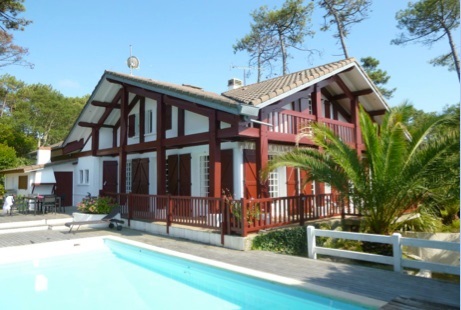
France – Seignosse

This large Basque Landes-style house is located right on the beach. The five bedroom home boasts several terraces and is located less than two miles from the seaside town of Hossegor. The area is internationally renowned for its Atlantic surf spots and gastronomy, as well as golfing, surfing, and cycling.

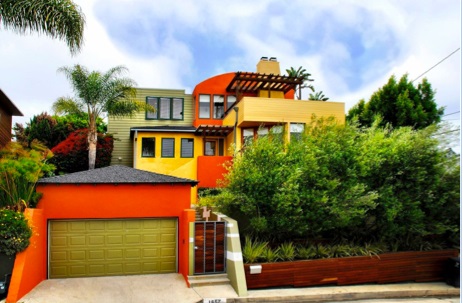
USA – California – Santa Monica

Vibrant both inside and out, this ocean view four-bedroom house is full of light. Situated in a quiet neighborhood of Santa Monica, families will have easy access to shopping, restaurants, bike paths, and the beach. For families looking to venture further into the state of California, a Ford Expedition that can fit up to eight passengers is included in the exchange!

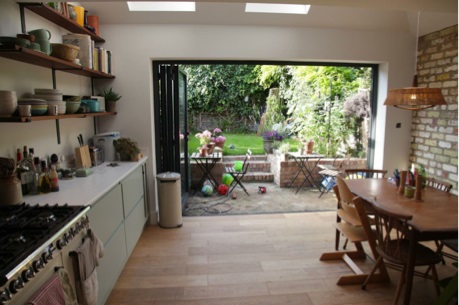
United Kingdom – London

Nestled on a quiet residential road in the middle of East London, this spacious Victorian family home has a lovely garden and plenty of toys for children. The vibrant neighborhood is only a bus ride or train away from Central London.

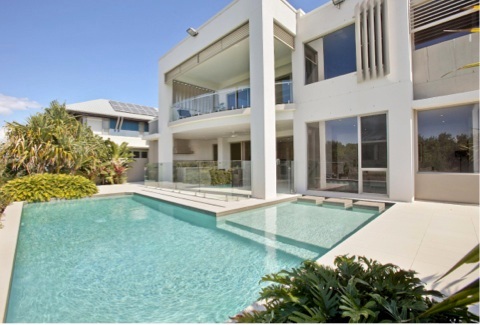
Australia – Kingscliff

Beachfront luxury on the magical Gold Coast, one hour from Brisbane City. With miles of beach, bicycle tracks, and local restaurants within a two-minute walk, this home is a perfect holiday for families.

Canada – West Vancouver

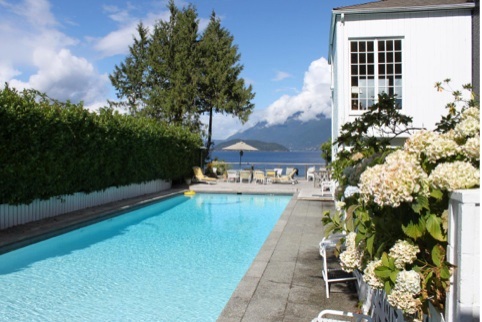
This waterfront seven bedroom villa with beach access, a private deck, spacious swimming pool, boats, and three cars are all located within a half hour drive from downtown Vancouver and mere minutes from parks, mountains, shopping, and restaurants.

Costa Rica – Puntarenas

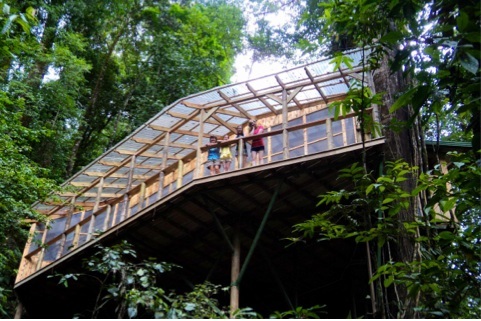
This literal treehouse is situated in the canopy of the jungle that National Geographic called “the most bio-diverse place on earth.” This home is the perfect respite after a day of ziplining, swimming, waterfall hiking, and bird watching. Providing a true sense of adventure and an off-the-grid feel, this abode is free of televisions, hair dryers, and internet access.

Ireland – Stradbally

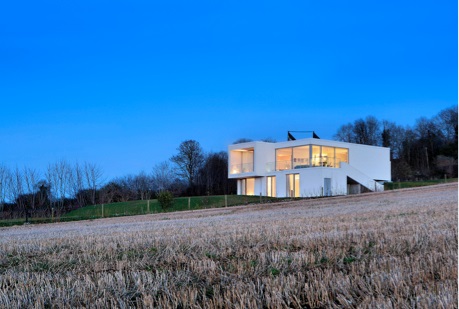
A kid-friendly home located one-hour away from Dublin, this modern home comes with a separate nanny studio in the garden, swings, slide, playroom, and lots of toys and bicycles. Nearby historic castles, beautiful woodlands, an equestrian center in Stradbally, a fishing lake and a championship golf course designed by golf legend Steve Ballesteros make this a must-stay neighborhood.

South Africa – Cape Town

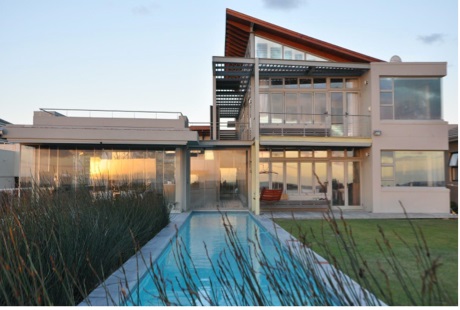
This golf course estate boasting breathtaking views of Table Mountain and modern architect is only 15 minutes away from the city center. With direct beach access to Sunset Beach, the internationally-renowned windsurfing and kitesurfing hotspot of Africa, families will not have to venture far to create lifelong memories.

USA – New York – Montauk

Located directly across the street from the ocean, Montauk represents a classic and relaxed old American lifestyle. For those looking to juxtapose their stay with a trip to the bustling city of New York, several means of transport are available to get to Manhattan. Travelers can also opt for a seaplane for a quick forty-five-minute flight into the city.

For the Silo, Alexandra Origet du Cluzeau.
About HomeExchange  Founded by Ed Kushins, a pioneer of the “collaborative consumption” movement, HomeExchange has facilitated over one million home swaps since 1992. “It was the inspiration for the still popular 2006 movie “The Holiday” starring Cameron Diaz, Kate Winslet and Jude Law. In 2016, 67,000 HomeExchange members made 135,000 home swaps across 150 countries. HomeExchange makes it easy to plan and enjoy a home exchange vacation and offers travelers a memorable, authentic experience. Last year, it was awarded “Best Site for Booking Your Stay” by USA Today readers.