Tag Archives: Hagerty Insurance

5 ‘Bad Cars’ I Still Want Anyway And Why

Isuzu

There’s an old joke, later made into an internet meme, that goes something like this: “Have you seen my dog? He has brown fur, he’s missing his right ear, blind in one eye and has three legs. He answers to the name of ‘Lucky’.” An underdog if ever there was one. And it’s in that spirit that I share the next installment of a sadly, almost endless list of cars with not-so-good reputations. They’re cars that for reasons neither I, my parents, my children, my wife, my close friends, nor even mere acquaintances can explain—I still want.

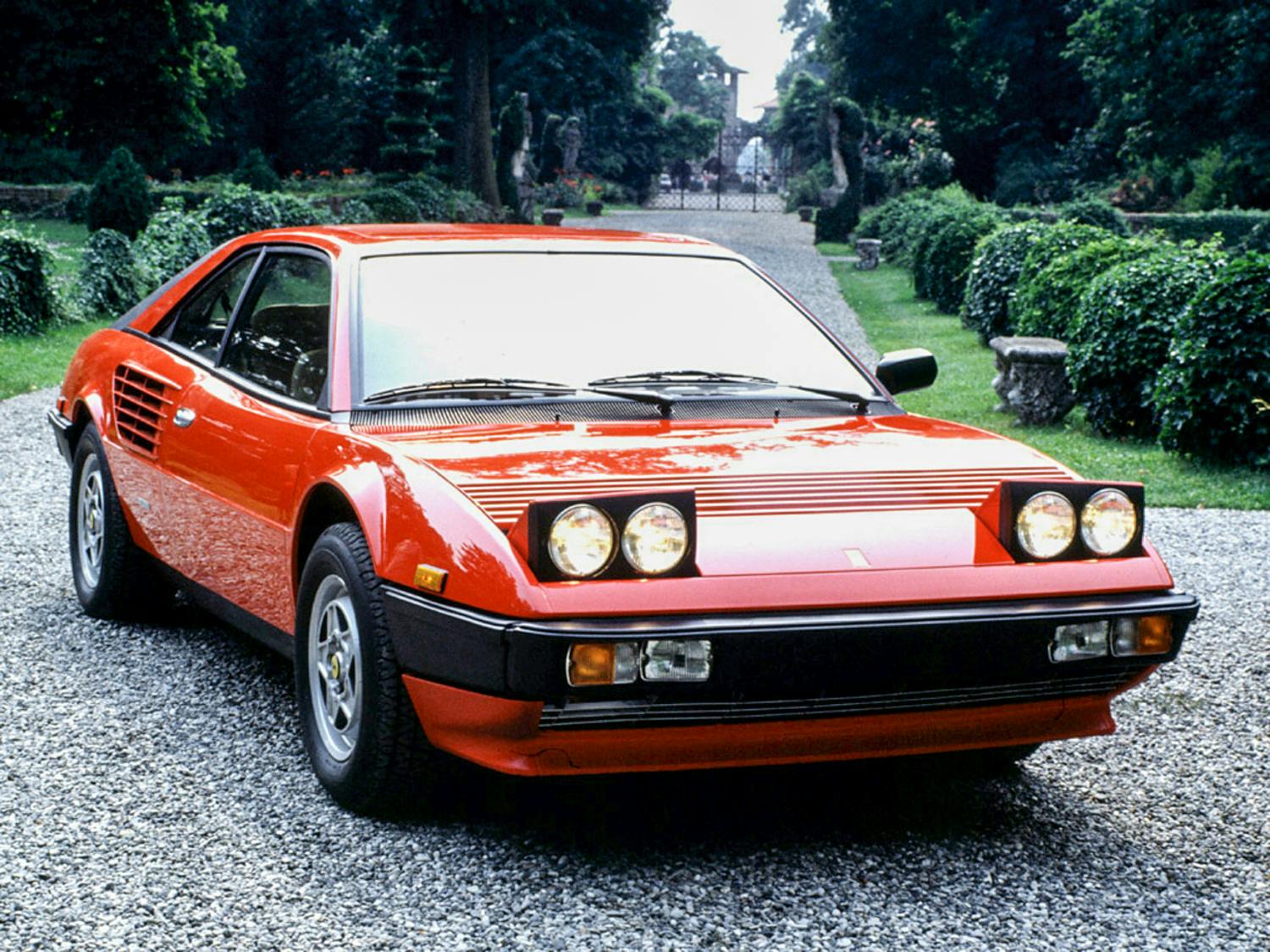
1980–82 Ferrari Mondial 8
Ferrari Mondial
Ferrari

What it is: The Mondial was the replacement for the Bertone-designed Ferrari (Dino) 308 GT4, a rather underrated, wedge-shaped mid-engine 2+2. The Mondial incorporated some of the design language of the Berlinetta Boxer and the Testarossa along with a pair of semi-usable rear seats. A cabriolet was added later.

What makes it bad: Road & Track asked if this was Ferrari’s Oldsmobile. Ouch. The two-valve, fuel-injected 3.0-liter V-8 was a bit of a dog. With a little over 210-horsepower, the Mondial 8 took an excruciating 9 seconds to reach 60 miles per hour. Mondial 8s were rust-prone and had fuse boxes reminiscent of the junior electrical engineer educational toy that brother bought my kid for his birthday a few years ago. Some people also found them unattractive. I find that assessment harsh, but truth be told, its predecessor, the 308 GT4 has aged better.

Why I want one: Ten years ago, I had a 308 GTS. It was great. Reliable (once I replaced the fuse box with a modern one), and a lot of fun to drive. Was it fast? Not really, but it sounded great, smelled great, and was wonderful to look at. Sadly, today I’d have to settle for a project car for what I paid for my perfect 21,000-mile 308 back then, so a Mondial is kind of it Ferrari-wise, unless I want to launch a raid on my kids’ college funds. I think the key here is to buy a coupe (the only way the two-valve 8 came). In black, they’re actually quite attractive, and there’s nothing like the sound of the little flat-plane crank V-8 and the tactility of a real gated shifter.

1985–89 Merkur XR4Ti

Merkur xr4ti front three quarter snow
Ford

What it is: Ford had one success to its name in importing and selling one of its European sporty cars—the Capri was a sort of mini-Mustang that was hugely popular until exchange rate fluctuations made it less profitable to sell here. By the early 1980s, the exchange rate again favored the U.S. dollar and then-V.P. of Ford Bob Lutz thought it might be a good idea to import an Americanized version of the Ford Sierra, under the banner of “Merkur,” which is German for “Mercury.” Get it? The 2.3-liter turbo four, also found in the Thunderbird Turbo Coupe and SVO Mustang made the XR4Ti a credible E30 BMW competitor, but like every car on this list, there were issues.

What makes it bad: Apparently European Ford quality in the ’80s wasn’t at the top of the priority list and the XR4Ti suffered from electrical problems, overheating, and turbochargers with a short life. Mercury dealers despised them, and with Ford’s then-new 48-month/50,000-mile warranty, they saw tons of them. After 1989, the Merkur signs came down and Ford was done with the XR4Ti and its larger brother the Scorpio. Immediately after warranties expired, Merkurs began the not-so-slow slog into the automotive fossil record.

Why I want one: I love the Merkur’s many quirks like the goofy biplane rear spoiler, and XR4Tis are rare even at RADwood or LeMons events, which is precisely why I want one. Honestly, you could do worse that to put together a collection of Bob Lutz-inspired cars—Everything from a BMW Bavaria, to a Viper and a Pontiac G8. An XR4Ti would fit nicely in the middle, and a perfectly nice one would barely cost five figures.

1980–81 Triumph TR8
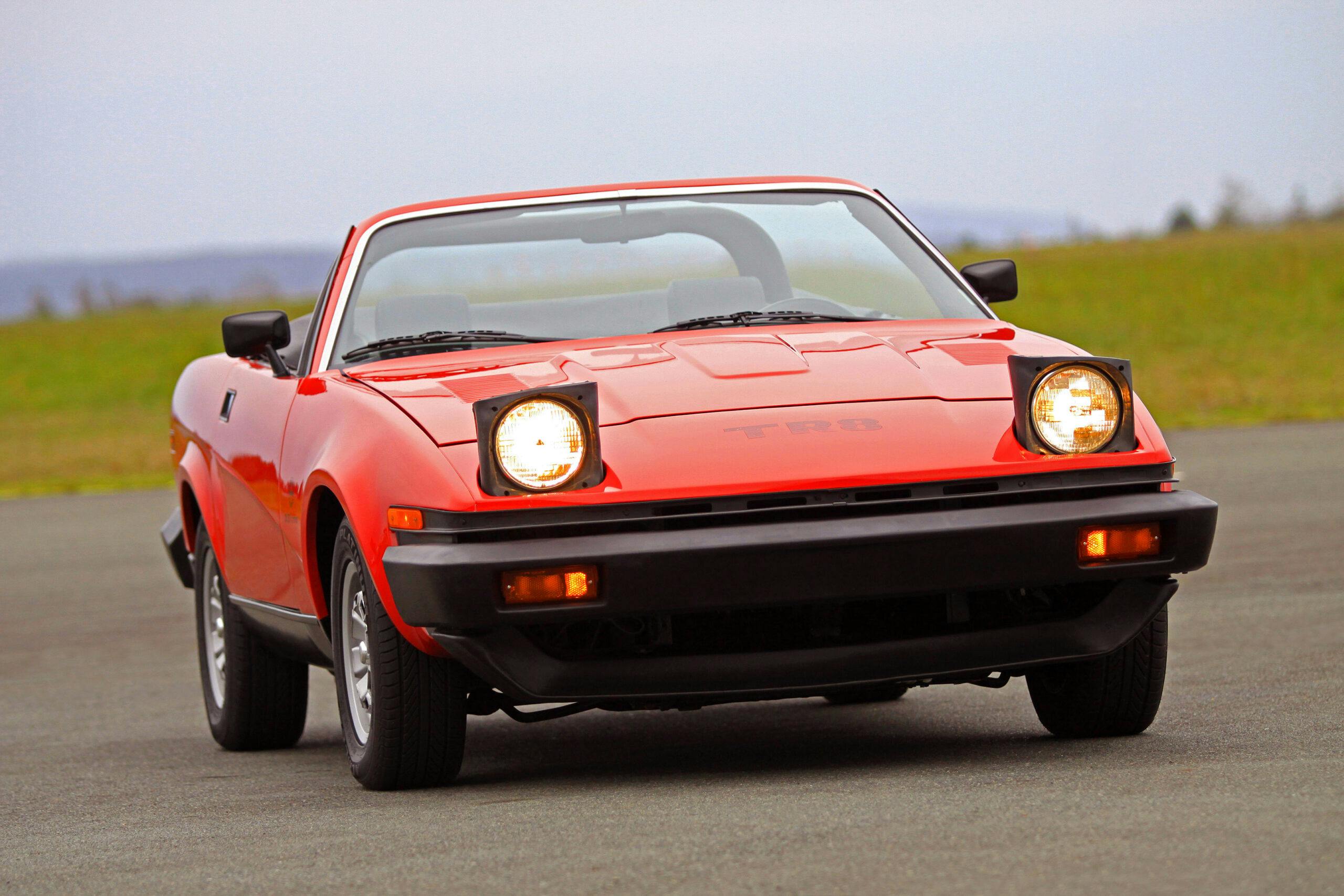
Triumph TR8 convertible front three quarter
Triumph

What it is:  The Triumph TR7 was supposed to be the car that brought the British sports car out of the paleolithic era of pushrod tractor engines and separate bodies and chassis. And while the story that Harris Mann designed it on the back of a cocktail napkin (after a lot of cocktails) might be apocryphal, it’s totally plausible. The idea behind the TR8 was to make buyers forget about the four-cylinder TR7’s odd looks by offering V-8 noise and performance. The ex-Olds/Buick/Pontiac aluminum 3.5-liter V-8 by Rover just about did the trick.

What makes it bad: The same thing that made every British car of the era bad—lousy workmanship, poor quality components from suppliers that still included the infamous Lucas, and low R&D budgets. While the TR8 was predominantly produced in what was arguably one of Jaguar/Rover/Triumph’s better plants (the Rover factory in Solihull which is still cranking out Land Rovers to this day), the TR7’s reputation soiled the TR8.

Why I want one: What can I say? I’m a glutton for punishment, and I happen to love a V-8 stuffed into a small British sports car. Of the three most famous—Shelby CobraSunbeam Tiger and Triumph TR8—only the latter remains affordable. Nice ones can be had in the high-teens to low-20s.

1975–76 Chevrolet Cosworth Vega
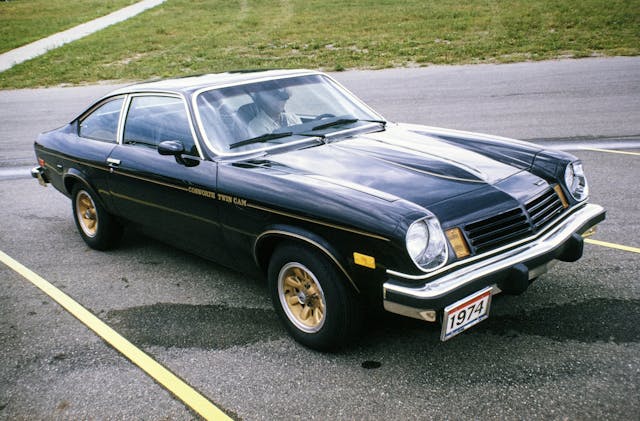
1975 Chevrolet Cosworth Vega
Chevrolet

What it is: The Cosworth Vega was supposed to be a high-performance version of the compact Vega that had debuted for 1971. Cosworth in the U.K. developed an alloy DOHC cylinder head for the Vega’s four-cylinder, which was mated with Bendix electronic fuel injection. It was very modern, very European.

What makes it bad:  While the Vega finally had a smooth, powerful engine, it still made 110 horsepower instead of the anticipated 140. Then there was the fact that it still wore the maligned Vega badge, and while good handling and balance were always part of the package, indifferent assembly quality and rustproofing were in the Vega’s DNA as well. Oh, and it was also barely cheaper than a Corvette.

Why I want one:  The magazines of the day touted Cosworth Vegas as instant collectibles, and many of the cars were stored, or intentionally kept with very low miles. The idea of owning a genuine Malaise Era time-capsule is more than intriguing. Plus, I’ve always liked the way Vegas look, a bit like miniature Camaros.

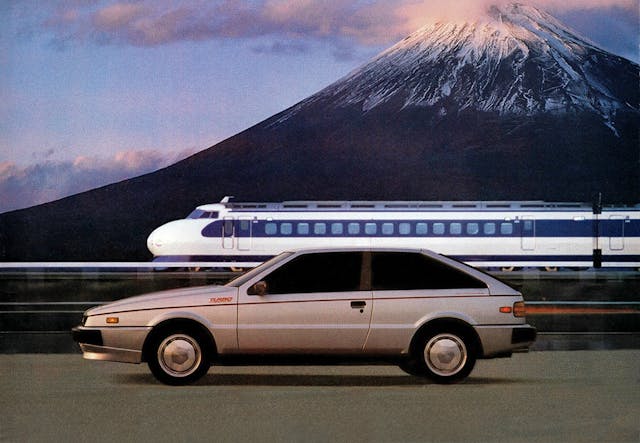
1983–89 Isuzu Impulse
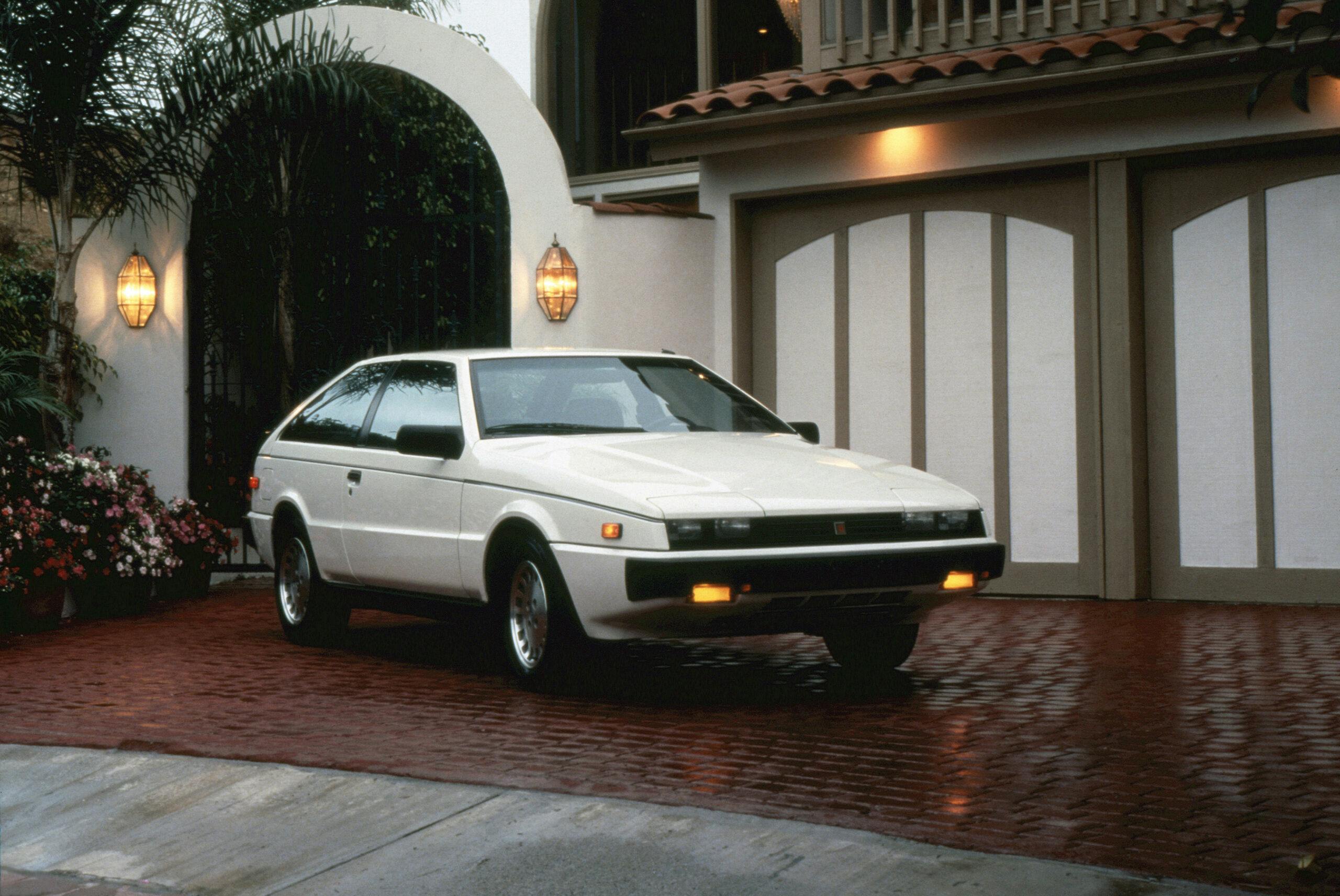
Isuzu Impulse front three quarter
Isuzu

What it is:  Isuzu had a surprisingly fruitful relationship with the great Giorgetto Giugiaro of Italdesign, and it stretched back to the 1960s, when Giugiaro styled the lovely Isuzu 117 coupe. That car lasted all the way up until 1981, so because of its longevity and popularity, its successor had to be something special. The car was teased as a nearly production-ready Isuzu “Ace of Clubs” concept car. It went on sale the next year as the Piazza outside of North America, and as the Impulse in the U.S. and Canada.

What made it bad:  Seemingly, the entire budget for the car went to Italdesign. Brakes, chassis and engine were bargain-basement stuff, as under its pretty Italian skin, the Piazza/Impulse was based on the General Motors T-car platform. That’s right, it wouldn’t be much of a stretch to call the Impulse a Chevette in an Italian suit. Things did get a bit better later in the car’s run with turbocharging and chassis refinements by Lotus, but few were sold and almost none survive.

Why I want one:  The low survivorship factor makes these cars exceedingly rare, and it’s one of the few opportunities that anyone has to own something that looks like an ’80s concept car. It’s also an opportunity to be king for a day at RADwood, and when Impulses do turn up, they’re almost always cheap.

For the Silo, Rob Sass.

7 Tools Hiding In Plain Sight On Most Workbenches

Let’s face it you still misplace your tools from time to time don’t you?

Tools have a habit of disappearing in many shops. Set one down and look away for a moment, and poof! it jumps into an alternate dimension. That happens enough to be a trope, but finding new tools in your shop? Now that’s a wild concept. Could every day be new tool day in your garage? If you know where to look, you’ll probably find these seven.

Funnels

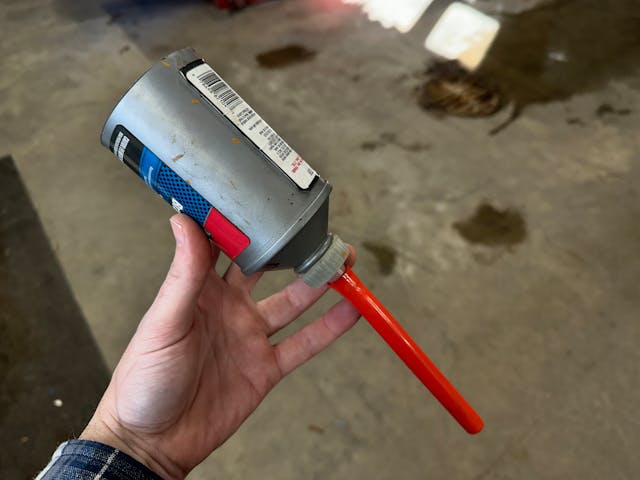
makeshift funnel 1
This was one made for some special task, but I have continued to use it because it’s handy. Kyle Smith

Something that is cheap, plentiful, and all of us have a few of that we can never find when we need them. Or worse, are never clean when we need them. Pouring oils and other chemicals can be messy and annoying at best and dangerous at worst, but funnels help keep the liquids flowing where we want them.

And when looking around your shop, a whole host of items are only one sharp blade away from being perfect funnels: Empty oil containers are the prime example. Cut a quart oil container in half, turn it upside down, and suddenly there is a funnel. Empty soda bottles are a great one to consider while on a road trip.

Breaker Bar Extension

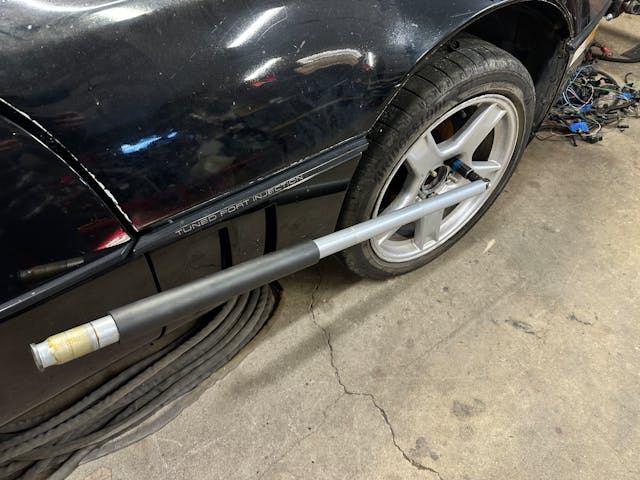
breaker bar exstension jack handle 1
Real luxury with the padded handle. Kyle Smith

Sometimes we just need a little extra oomph to get a stuck lugnut or suspension bolt broken loose, and while battery impact wrenches are getting smaller than ever, there is still a time and a place for an old-school breaker bar. And when the two-foot breaker bar still doesn’t have the leverage? Well, make it longer.

There are a few prime things to grab for this, which are often hovering around in a home shop. The handle of a hydraulic jack is often right nearby, but an old metal fence post or other off-cut of tubing is perfect. Be aware though, extending the handle of a breaker bar can create a lot of force for a little effort, so be careful and maybe even prepared for the head of the breaker bar to fail. Don’t put force on the handle in a way that would harm you should it let go. Of course, if you are at this stage, don’t forget penetrating oil and heat as helpers on your stuck-hardware journey.

Light-Duty Jack Extension

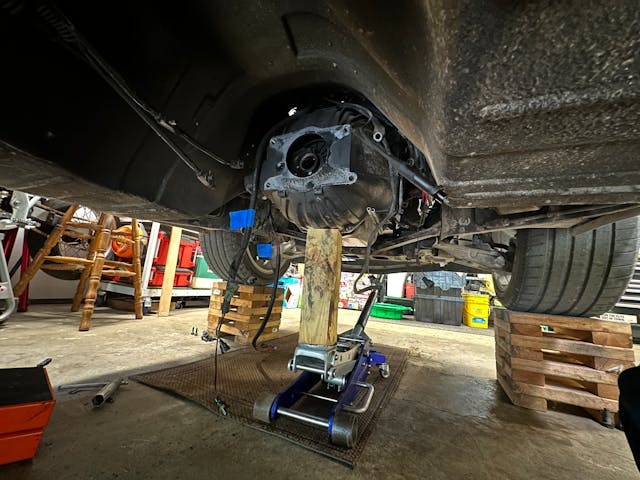
wood supporting transmission
A good chunk of 4 x 4 fencepost can be helpful in supporting things a jack can’t reach. Kyle Smith

Floor jacks give us garage-dwellers superhuman strength to pick up and place our rusting hulks on safe stands for work. Sometimes these same jacks are called in to help support items during a repair or maintenance process. Supporting a transmission or lfting a control arm to release the spring pressure from a ball joint are prime examples.
In these instances, it can sometimes be a balancing act to get the car at the right height for the jack to actually reach and provide assistance. For these situations, there is a simpler solution: the good ol’ chunk of wood. Of course, this is something to be used carefully and specifically, and, as always, you should never get below something supported only by a jack. For the example above, the engine is still in its mounts but this block of wood keeps the whole thing from tipping back; the jack alone wouldn’t have reached high enough.
Small Lathe

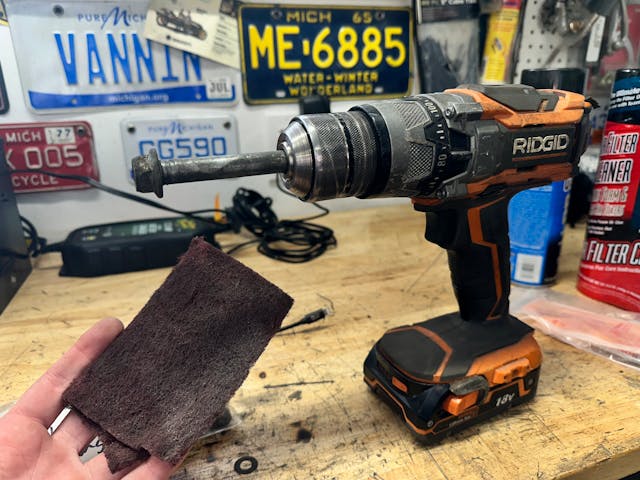
lathe drill 1
Kyle Smith

For anyone who reaches a certain level of DIY, the capabilities of a lathe can unlock a kind of superpower. Few of us have the shop space or power required to install a lathe, though, and thus miss out on most of the benefits that come from having a machine to spin parts and pieces. However, you likely have a tiny lathe on your workbench and don’t even realize it: a drill.

Most corded or battery-powered drills have a three-jaw chuck that can hold up to a 1/2-inch round item. This can be useful for cleaning hardware quickly and easily. Chuck small round parts like caliper slide pins in a drill and turn them slowly, giving a perfect even finish when combined with an abrasive pad or polishing compound.

Drain Pans

KTM front master swap 10
Free, and easy to drain. Kyle Smith

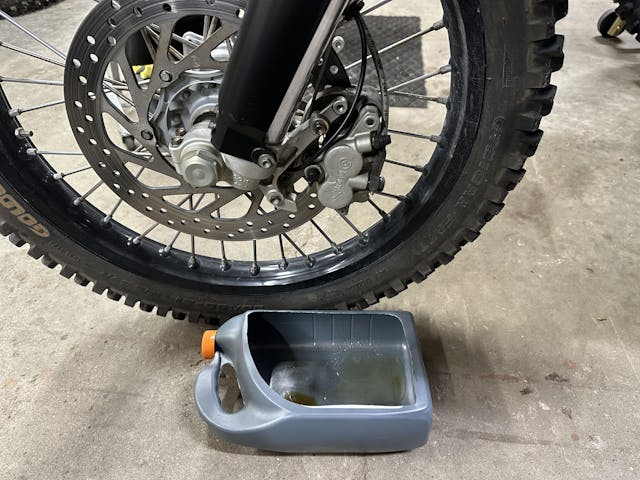
Much like the funnels above, drain or catch pans can be anything—assuming they are well placed. Large sheet drip pans are great for catching the small drops that happen while parked between drives, but smaller catch containers are nice when doing work, and in my shop one that gets heavy use is a coolant jug with the side cut out. This leaves the lid for easy pouring when full, and I have almost a gallon of capacity. This is perfect for draining a differential or a motorcycle crankcase.

Wrench Extender

double wrench trick 3
Leverage is always your friend. Kyle Smith

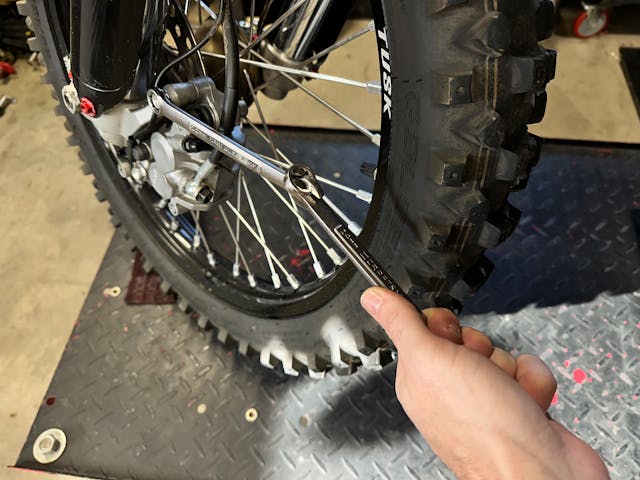
Sometimes all that fits on the bolt you need to get out is a wrench, and while there are some of us who multiple copies of each wrench in various lengths, others have the one set in hand and nothing else. Although a jack handle can be used here as seen in example 2 above, it can be tough to get a pipe that fits over the end of larger wrench sizes or that works well on smaller ones. Instead, look in the same wrench drawer rather than elsewhere.

Grab an open-end wrench a few sizes bigger than the one needed and combine the two to make plenty of leverage. Hooking the two wrenches together does take a little staring and thinking to get right sometimes, but in the end this is often a great solution.

Painting Hangers

home built paint booth Kyle Smith 4
Kyle Smith

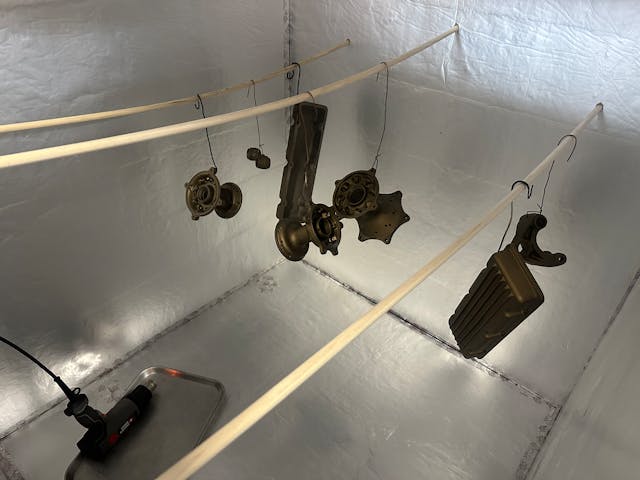
Whether it’s putting a fresh coat of paint on an old part being restored or putting a more durable coat of matching paint on a new part going onto an old car, spraying paint is a common DIY task, and anyone who has done enough of it is familiar with the overspray on fingers and hands that often comes with trying to hold something while spraying. Instead, grab lanyards or wire coat hangers to enable trouble-free suspension of parts, not only for cleaner and more even paint coverage (not to mention cleaner fingers), but also for easy drying.

For the Silo, Kyle Smith/ Hagerty.

Collector Car Market’s Big Winners And Losers In 2025

Mecum

Part of what makes this hobby and the markets surrounding it so interesting is how organic and ever-changing they are. Tastes shift, new people start participating in the old car world, and prices adjust to reflect that. That’s why Hagerty updates our price guide four times per year.

Over the past 12 months, words like “cooling,” “softening,” or “more cautious” have dominated conversations about the market as a whole, but that doesn’t mean there weren’t big moves for certain individual vehicles. Below are the ones that moved the most up, and the most down, in 2025.

1948-52 Ford F-Series

1949 Ford F1 pickup
Mecum

Median condition #2 change: -32%

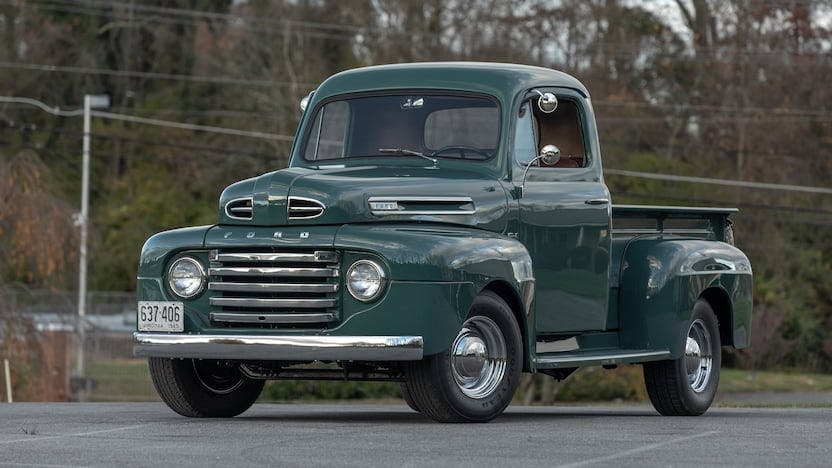
These pickups were showroom rivals to GM’s Advanced Design line. They were also Ford’s first all-new postwar vehicles, as well as the very first F-Series, which has since become the most recognized and best-selling line of pickups out there.

The field of classic trucks, however, is a crowded one. Although these first-gen F-Series effectively doubled in value from 2015 to the early 2020s, they’ve been sliding since the beginning of 2024. The current median #2 value is $31,800 usd/ $43,887 cad, which is lower than it was at the beginning of 2019, before even adjusting for inflation.

1966-83 Fiat 1241983-85 Pininfarina Azzurra

Fiat 124 Sport Spider Pininfarina front three-quarter
Flickr/Gilles Péris y Saborit

Median condition #2 change: +45%

Fiat marketed attractive convertible models in the U.S. and Canada starting in the 1950s. They were typically lower-priced but less lively than the alternatives from Alfa Romeo. This trend continued into the 1960s with the 124 Spider, introduced in 1966. The handsome, Pininfarina-styled convertible started with a 1.5-liter twin-cam engine but displacement changed over the years, even if the basic styling and layout of the car didn’t. After Fiat left the U.S. market (for the first time) in ’83, Pininfarina picked up the mantle and sold the same basic car as the “Pininfarina Azzurra” for another few years. For decades, these svelte Fiats and Pininfarinas were one of the cheapest ways into motoring dolce vita, but prices have definitely gone up, especially this year.

This is less a story of big-dollar gains than it is one of percentages. In excellent condition, most Fiat-badged versions can be had in the low-$20K usd/ $27,600 cad range. The Pininfarina versions are rarer, supposedly better built, and have a more premium badge, but they still sit at $33K usd/ $45,540 cad in excellent condition. Few classic Italian drop-tops can be had for so little.

1951-57 Hudson Hornet

Median condition #2 change: -30%

Hornets are neat cars. They rode on Hudson’s unique “step-down” chassis that gave it a lower, sleeker profile and driving position than other American cars of their day, and despite the early models’ six-cylinder engines, Hornets regularly bested more powerful competition in early ’50s NASCAR racing.

But Hudson also became a defunct brand before many car enthusiasts were even born. Even with some star power as “Doc Hudson” in the Pixar movie Cars, the Hornet doesn’t have the staying power and wider cultural relevance as something like a Tri-Five Chevy, ’57 Thunderbird, or ’59 Cadillac. Hornet prices grew a bit during the early 2020s along with just about every other classic car, but have been falling since last year. The current median #2 value of $32,300 usd/ $44,577 cad is roughly the same as it was three years ago in pure dollar terms. Adjusted for inflation, though, the value is about where it was in 2013.

1985-91 Honda CRX

1991 honda crx si teal
Mecum

Median condition #2 change: +50%

Honda’s famous two-seater hatchback, the CRX, brought cheap and cheerful fun to enthusiasts across North America and became an icon of tuner culture. These little cars are definitely still cheerful, but they’re not so cheap anymore, as the supply of clean, unmodified, low-mileage examples has dwindled in front of higher demand.

Indeed, the CRX has made several of these “winner” lists from the Hagerty Price Guide in recent years, and since the beginning of 2020 the median condition #2 value is up by a whopping 168%. The desire for these pocket rockets is so strong that one of the 1988-91 cars in excellent shape is currently worth $45,500 usd/ $62,100 cad. That much money will almost buy you a brand new Civic Type R, which comes with exactly triple the horsepower as well as a warranty, but doesn’t come with the same old-school charm.

1984-91 Jeep Grand Wagoneer

Median condition #2 change: -28%

On the new car market, the love for pricey, premium luxury 4x4s in North America is as strong as ever. The roots of our affection for luxury SUVs go back a lot further, though, and Jeep’s 1984-91 Grand Wagoneer was the weapon of choice in the affluent suburbs and vacation towns of yuppie-era America.

Nostalgia for those woodgrain-clad boxes helped pull prices up in the late 2010s and values exploded during the early 2020s. In the gotta-have-it, pay-whatever-it-costs craziness of 2022, we even asked if a $154K usd/ $212.5 K cad Grand Wagoneer sale was “peak market insanity.” Yep, turns out it was. Sale prices have definitely come back down to earth since. The median #2 value for Grand Wagoneers at the end of 2025 is $45,900 usd/ $63,350 cad . At first glance that looks a lot higher than the $36,600 usd/ $49,680 cadit was at the beginning of 2020, but when you adjust for inflation the two numbers are within a hundred bucks of each other.

1979-1992 Mercedes-Benz G-Class (W460)

Mercedes-Benz

Median condition #2 change: +68%

Like the Grand Wagoneer in the ’80s, the Mercedes G-Wagens mostly serve as bougie-mobiles that don’t see anything rougher than a gravel driveway, but the earliest versions (aka the W460) were rugged and relatively simple off-roaders, sort of like a German Land Rover. Mercedes-Benz didn’t market the W460 in America, as we identified the three-pointed star with luxury and high-performance, whereas this was a spartan runabout with underpowered four-, five-, and six-cylinder gas or diesel engines. W460s are therefore pretty rare here.

Several huge sales over the past 12 months have been impossible to ignore, however, and it appears the W460 is gaining a big following. Current values vary widely depending on body style, engine, and model year. Certain hardtop wagon models can be had for under $40K usd/ $55.2 cad (exchange rate at time of posting) in excellent condition, while certain convertibles are nearly 90 grand. For the Silo, Andrew Newton.

Hallmark Of All Porsche Sportscars For Sale

  • Extensive restoration within the last decade
  • Restored in its originally delivered livery of Speedster White over Red leatherette
  • Considerable history dating back to the late-1970s, documenting long-term preservation into the late 2010s
  • Original U.S.-specification 1600 Speedster delivered to Hoffman Motors
  • Fitted with a period-correct 1956 1,600-cc engine with twin Solex carburetors paired with its numbers-matching transmission
  • Furnished with a copy of its factory Kardex warranty card, Porsche CoA, owner’s manual, and toolkit

Chassis No. 82181

Engine No. 63249
Transmission No. 8775

USD 485,000$/ CAD 678,130$ (exchange rate at time of posting)

Dispatched to Hoffman Motors in New York City in the spring of 1956, this 1956 Porsche 356 A 1600 Speedster was among those U.S.-market examples delivered via the legendary American-market distributor and tastemaker. It left the factory wearing Weiss (White) paint over Red leatherette, the same striking livery it wears today. Additional options noted on the Kardex include a speedometer in miles and sealed beam headlights.

The earliest history of the car dates to the late 1970s when it was sold via Weldon Scrogham’s G&W Motorwerkes to R.A. Hendricks of Waynesboro, Virginia. Service invoices show that by at least 1983 the car was in the hands of long-term owner Carter Elliott based in nearby Charlottesville. Elliott would take fastidious care of the car while under his ownership, a span that would last over three decades.

Invoices on file reveal more

Invoices remain on file showing parts purchases and work completed by the best suppliers throughout the 1980s and 1990s, including Stoddard, Performance Products, and H.G. Bieker. In 2018 the story of Speedster chassis number 82181 simultaneously began anew and circled back to familiar hands when noted 356 Porsche expert and restorer Cole Scrogham (son of Weldon) was tasked with a thorough refresh. Directed by its then-owner to keep as much of the original car intact as possible, Scrogham is said to have been able to retain the majority of its original, Reutter-built sheet metal with an eye on preservation while the car was refinished to “show quality” in its original shade of Speedster White.

A period-correct 1,600-cc flat-four (serial number 63249) from a 1956 356 A powers the wheels through its numbers-matching transmission. In the nicely detailed engine compartment, you’ll find proper FRAM and Bosch decals, correct finishes and components, as well as a pair of Solex carburetors topped by silver Knecht air cleaners.

Today, this Speedster appears just as Max Hoffman and the Porsche factory intended: in elegant White over Red, with such details as accessory chrome guards protecting the sealed-beam headlights, period-style Michelin XZX 165 tires, and gold-tone badging serving as clear indicators as the quality of its restoration. A matching red vinyl boot (trunk) covers the occasional soft top when it’s folded. Inside, the red vinyl bucket seats made famous by the Speedster wear contrasting ivory edge piping. A correct ivory two-spoke steering wheel with a horn ring frames a body color dashboard covered with a red upholstered top. VDO instruments feature with correct green lettering — including a miles-per-hour speedometer, as specified in the original Kardex. In a smart nod to modernity, the car is equipped with a pair of vintage style lap belts. Otherwise, Speedster chassis number 82181 presents very much as it did when delivered new in 1956 — down to its exquisite color selection.

In addition to extensive documentation dating back more than four decades, this iconic 356 A Speedster is furnished with a toolkit, a spiral-bound driver’s manual, a Porsche Certificate of Authenticity, a copy of its Kardex warranty card, and side curtains with their protective case.

For the Silo, Alexander Weaver/ Hagerty.

Own One Of These Exotic Cars While On A Budget

Earlier this month our friends at Hagerty reported on the some of the absolute cheapest ways to get into the old-car hobby. These included cars like the 1975–81 Triumph TR7, the 1986–91 Cadillac Seville, and the 1973–77 Olds Vista Cruiser. The “ew gross” reaction these cars elicited in some of the comments wasn’t too surprising; no one, it seems, wants to shop for fun cars at a suburban Goodwill.

But what about the fun cars you might find at, say, the Goodwill in Beverly Hills? 

That’s right, we’re talking about bargain-basement exotics—not exactly a tagline that inspires confidence when shopping for often-temperamental imports, but they are out there. Just know that service history and records are important to consider here. And just because a car is cheap, or keenly priced, if you prefer, doesn’t mean it’s not worth owning, especially if it provides entry into a marque you’ve always coveted. So give some consideration to these five once-distinguished Euro-mobiles, the cheapest models from their makers and all rated in #3 (good) condition. Let us know if you think we have missed any other contenders.

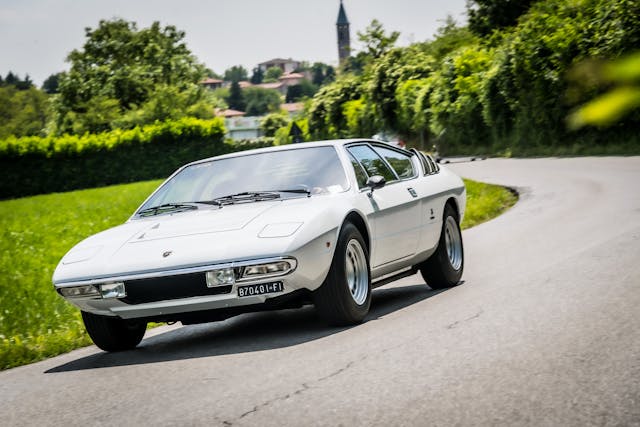
1973–77 Lamborghini Urraco

lamborghini Urraco front three-quarter action
Lamborghini/Massimiliano Serra

Lamborghini announced the Urraco in 1970 as a Marcello Gandini–styled 2+2 coupe with a transverse V-8 mounted amidships. As a sharper-edged follow-up to the swoopy Miura, it foreshadowed the shape of Lambos to come. When it finally arrived for 1973, it made a fine competitor to the Ferrari Dino 308 GT4 and was available in 220-hp 2.5-liter P250 form, while the 265-hp 3.0-liter P300 launched in 1975. When that car arrived in the U.S. a year later, however, power was severely choked by emissions equipment, down to around 180 horses. Not many were built—just 522 of the P250s and 205 P300s—but today a #3 example ranges from $49,000 usd/ $68,350 cad for a P250 to $59,000 usd/ $82,290 cad for the P300. Given the ascendancy of Miura, Countach, Diablo, and Murcielago prices in recent years, that the Urraco is still so cheap is a bit surprising.

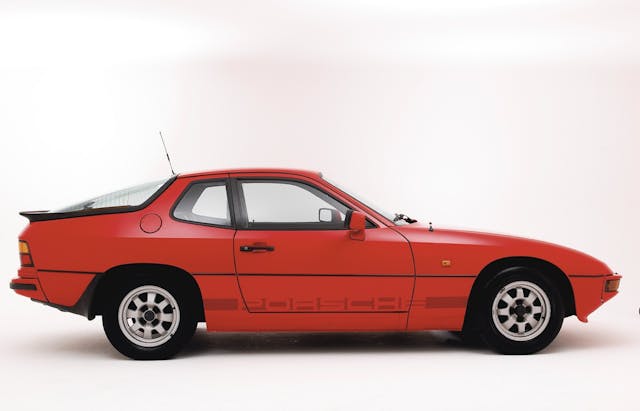
1977–82 Porsche 924

1983 Porsche 924 side
Getty Images

From the start, it seemed like Porsche vs. the world when it came to the 924. Whether because it was front-engined, or water-cooled, or simply a discount sports car meant to be a Volkswagen, plenty of people discounted it from the get-go. Until they drove it and realized, hey, this thing’s great. And it was great. Still is. With just enough power (110 hp from ’77 on) from a VW/Audi-sourced 2.0-liter four to complement its finely poised chassis, the 924 remains an excellent, easily approachable driver’s car, with good club support. Rust has killed many of them, and although Porsche built around 150,000 examples, parts are available but spendy, especially interior bits. A good #3 example should set you back about $8500 usd/ $11,856 cad. For comparison, an early 944 in the same shape is around $10,500 usd/ $14,645 cad.

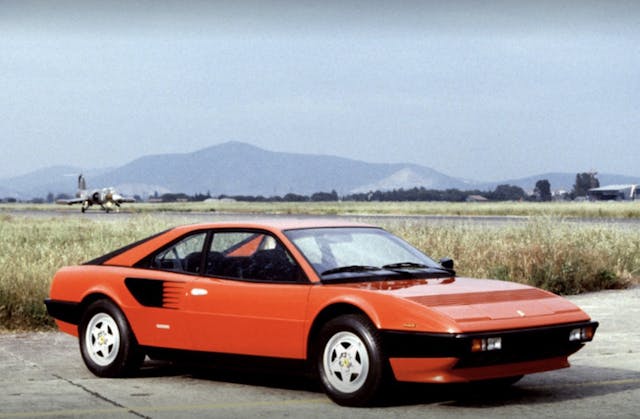
1980–87 Ferrari Mondial 8 / Mondial 3.2 Coupe

Ferrari Mondial 8
Ferrari

When it came time to replace the Bertone-designed Dino 308 GT4, Ferrari tapped Pininfarina, and the resulting Mondial debuted in 1980 as a 2+2 coupe, with a convertible joining the lineup four years later. The GT4’s 2927-cc transversely mounted V-8 carried over, with Bosch fuel injection replacing Weber carbs, and in the Mondial it made 214 hp. They were sharp handlers, with more interior space than their predecessor, but no one ever accused them of being fast. Other Mondial variants arrived throughout the ’80s to address that, however, including the Quattrovalvole (QV) in 1984, the 260-hp 3.2 of 1986, and the radically different t of 1989, but it is the early coupes, along with the 3.2 coupes, that are most affordable. Today, a #3 Mondial 8 or 3.2 coupe costs about $22,000 usd/ $30,686 cad.

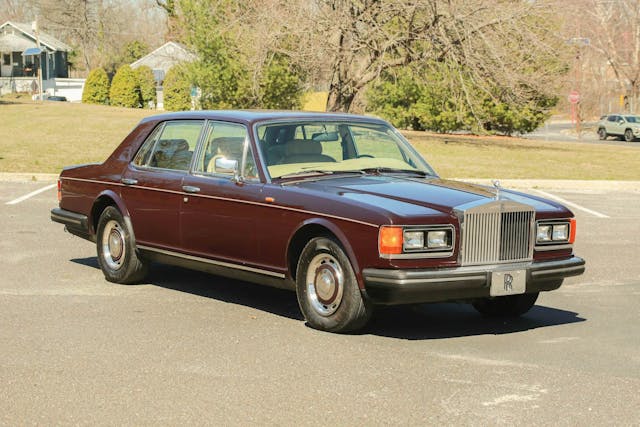
1981–87 Rolls-Royce Silver Spirit

1982 Rolls-Royce Silver Spirit front 3/4
Hagerty Marketplace/William_Cooper

If you’re an enthusiast of affordable opulence and Dijon mustard, then then look no further than the Silver Spirit. Successor to the upright Silver Shadow, the Spirit utilized a 220-hp 6.75-liter V-8 mated to a three-speed automatic. Inside, of course, you got all the trimmings, with Connolly leather seating, Wilton wool carpeting, and burl walnut inlays, as well as A/C and power everything. Giving the Spirit its silky-smooth road manners was a Citroën-sourced self-leveling hydropneumatic suspension. Rolls-Royces from this era have never been cheap to maintain, and deferred maintenance issues claimed many of them, so records are key with any Silver Spirit you might have your sights on. The right one, in #3 condition, won’t cost you much, at around $8400 usd/ $11,716 cad, but it will likely have needs, which could cost a lot.  

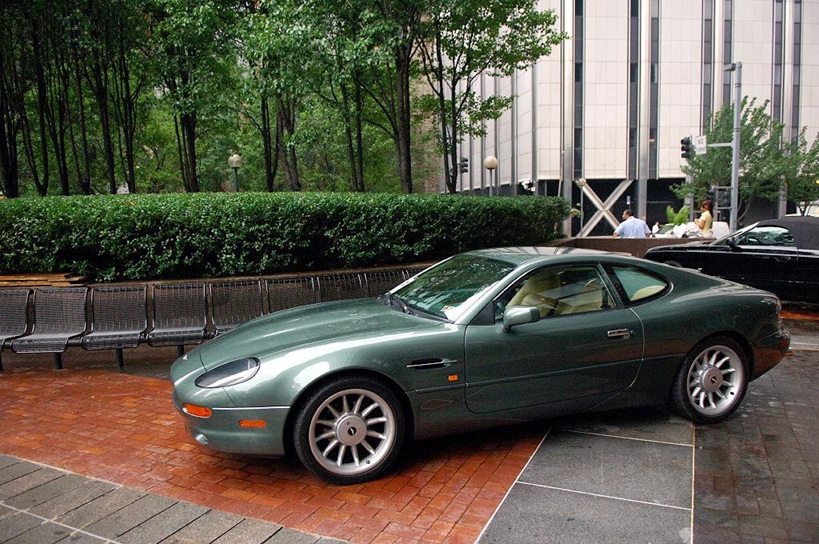
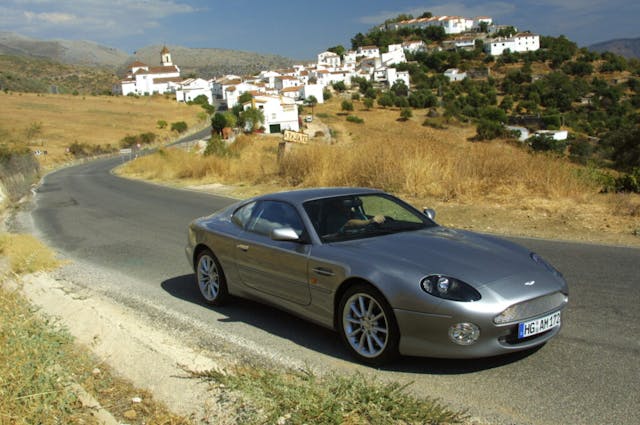
1997–99 Aston Martin DB7

Aston Martin DB7 Vantage
Aston Martin

Even 30 years on, the 335-hp Aston DB7 still looks gorgeous from every angle, and upon its arrival, it was instantly an Aston worthy of the famous DB badge. If you can overlook its relative lack of exclusivity, with more than 7000 produced in both coupe and convertible form, what you get is a proper English grand tourer with excellent performance and luxurious interior appointments. Subtle differences set it apart from the contemporary Jaguar XK8 (which costs less, it should be noted), and the higher costs associated with maintenance and repair are likely to set it apart as well. But right around $21,000 usd/ $29,291 cad should get you a good coupe, with the convertibles slightly cheaper. 

For the Silo, Stefan Lombard, Author at Hagerty Media.

Hagerty protects all kinds of collector cars, trucks, and modified vehicles. Let’s talk about your special ride.

Get an insurance quote

Art and Science of Hunting Rare Corvettes

Another boss article via friends at Hagerty. Vintage Corvettes have been bought and sold as collector vehicles for decades, and so you could be forgiven for thinking that all the hot ones have been accounted for, and that the current body of research has documented all that’s known about them.

That’s not the case, and to seasoned Corvette hunters like Kevin Mackay, that’s actually good news. Mackay started his business, Corvette Repair, 30 years ago in Valley Stream, N.Y. His timing could not have been better. Chevy had just launched the exciting C4 model, and the Corvette collector hobby was shifting into hyper drive. That trend brought a renewed interest in the Corvette’s heritage, including racing.

Canada Corvette Connection?

There were already expert collectors well versed in Corvette history, but history has a way of changing. As deeper dives would reveal gaps in Corvette knowledge, those who applied the resourcefulness and tenacity of TV police detective Columbo were able to find and authenticate super-rare Corvettes.

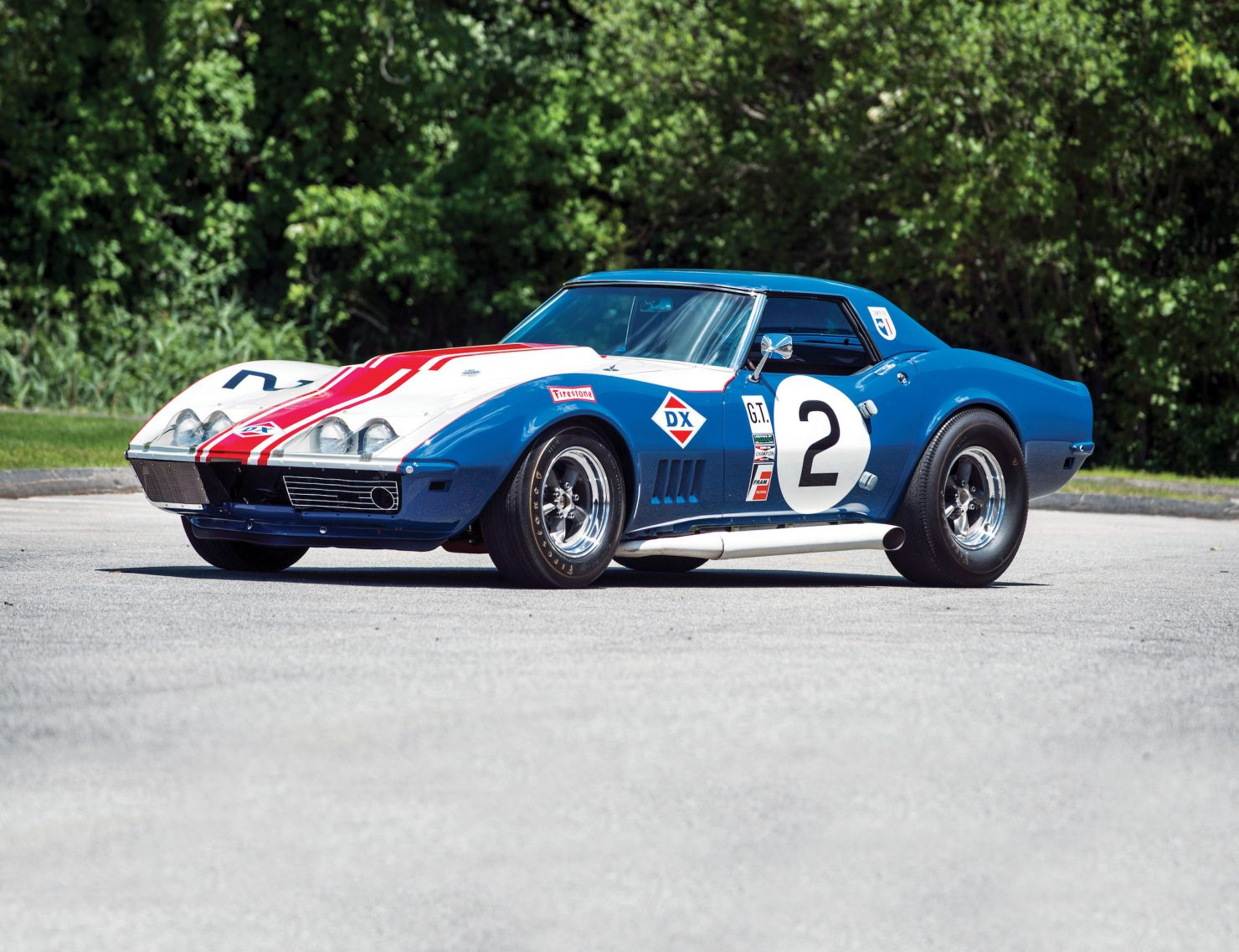
1968 Sunray DX L88

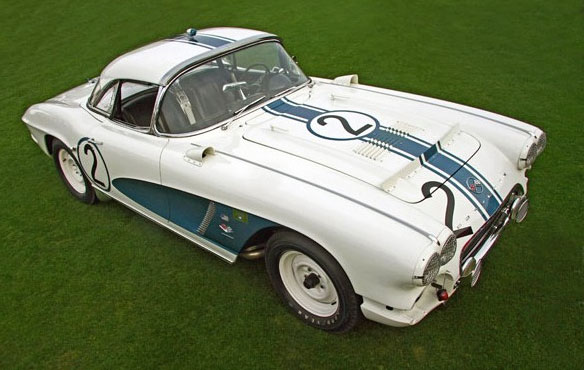
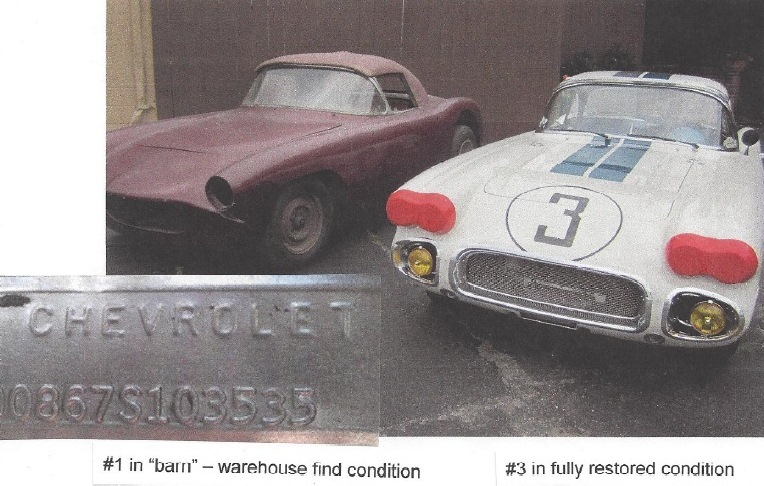
You won’t find Mackay wearing a rumpled raincoat around his shop, but his detective work continues to uncover cars thought to have been lost. Some of those are race cars that have come through his shop, including the 1960 Briggs Cunningham Le Mans car, 1962 Yenko Gulf Oil, 1966 Penske L88, 1968 Sunray DX L88 (found in a barn) and 1969 Rebel L88. All were Le Mans, Daytona or Sebring class winners. Corvette aficionados will see a pattern: Among lost Vettes that Mackay hunts are ones campaigned in those races.

The Rebel was one of the most successful C3 Corvette race cars ever, winning the GT class at Daytona and Sebring in 1972, where it also took fourth overall behind two prototype-class Ferraris and a prototype Alfa Romeo. Mackay tracked the car to a southern scrapyard 24 years ago and restored it; the car sold at Barrett-Jackson’s Scottsdale sale in January 2014 for $2.86 million usd/ $3.95 million cad.

“I know where every Corvette that raced Le Mans is,” Mackay said. Knowing, of course, is only the start of a long road to acquiring a car. Aspiring Corvette hunters might take note of other cars that grab Mackay’s interest.

Listen to What The Man Says

It could go without saying that any Corvette collector would want to stumble upon an L88 hiding in a barn. It’s a comparatively small group of cars, but it’s bigger than originally thought.

“We located 13 factory L-88 cars not previously known,” said Mackay, adding that three of the 20 1967 L88s are still missing. So, when an elderly man approached him with a claim that he still owned a 1967 L-88 that he bought new, Mackay listened, if with a skeptic’s ear.

“That happens a lot,” he said. “Guys claim they have a car that nobody has ever seen.”

A doubter may dismiss such claims, but Mackay says his experience has shown that sometimes, they lead to Corvette treasure. For example, he knows of a 1967 L-89 car, one of 16 made, that hasn’t been seen in decades; it was driven just 11 miles / 17.7KM from new and put away.

Not every lead pans out, but patience can lead to gold, Mackay advises.

“I waited 11 years to buy one particular car,” he said. “I’d call the owner every year. It was all about building trust.”

And so comes another lesson in hunting and buying classic Corvettes: It’s not always about the money. Mackay said that some owners are too emotionally attached to their cars to let go. And some never do, leaving valuable cars to be auctioned by heirs. In such cases, years of patience and building trust can seem wasted. But Mackay loves the challenge of the hunt.

For another car, he waited 19 years. And he’s got a list of others.

“There are two cars I’ve been waiting nine years to buy,” he said. “I always tell the owner that he’s just holding them for me for free storage.”

Follow the Clues

Many car enthusiasts enjoy reading old magazine articles. Mackay reads them for clues. “I look for names of people associated with cars, such as race mechanics, and then I look for those people,” he said.

Knowing where a Corvette was sold can be a help for an experienced hunter. If you have a Corvette’s VIN, you can get its original shipping data – including the selling dealer – from the National Corvette Restorers Society (NCRS) for $40. Even if the dealer is no longer in business, the information could lead to other clues.

Sometimes, answering an ad for parts leads to whole cars. While hunting down a lead on parts for a 1969 Baldwin-Motion Phase III Corvette, Mackay stumbled across a super-rare Phase III GT that turned out to be a car a customer owned when new and had regretted selling many years before. Mackay has also found engines and then later located the cars they belong to.

Serial Boxes

Some collectors like to own “firsts” and “lasts” and therefore hunt low and high serial number cars. The top prize in that category would of course be the very first Corvette built, but the first two were test cars thought to have been destroyed. Yet, as Lt. Columbo might ask, “Where’s the body?”

Mackay can claim something close. He found the original chassis to 1953 serial No. 3 for a customer. He explained: “The first three made were test cars. Before GM sold No. 3, they swapped the chassis, because the first one had been used in Belgian block testing, and there were concerns about possible stress cracks.”

Somehow, the first chassis got out of GM’s grasp and was discovered underpinning a 1955 body in the 1970s. Another chassis swap ensued, and 1953 No. 3 just needed to be reunited with its original body. Mackay said the owner of that car, however, was not interested.

So, instead, Mackay is building a unique cutaway 1953 Corvette around the chassis. It’s something he said could be shown and enjoyed by the whole Corvette hobby.

Other aspects can catch a collector’s fancy. It should be no surprise that original color can affect value, but the effect might be bigger than you thought.

“Black is the most sought-after color for Vettes,” said Mackay. “A black 427/435 car could be worth double a green version.”

And then there are production oddities, the kinds of things that likely would never happen on today’s computerized assembly lines with their just-in-time parts inventory control systems. The fabulous center knockoff wheel offered as an option for the 1964-1966 Corvette actually made an earlier appearance. Mackay said 12 cars got the wheels in 1963. One is claimed to be a Z06 “big-tank” car.

Have a clue to a “lost” Corvette? Mackay would love to hear about it: [email protected] For the Silo, Jim Koscs/Hagerty.

These Classic Cars Gaining Value In A Slowing Market

We’ve passed the mid-way point in the year, and driving season is in full swing. In the classic car market, the first half has been a roller coaster with an optimistic start in January, then a steady softening as we made it through spring. Moving into the second half of the year, and with this week’s newest release of the Hagerty Price Guide, it seems that trend is primed to continue.

That’s not the case with everything, though.

Our friends at Hagerty did watch some vehicles buck the trend and post some meaningful gains in value. Here are just a few of the more newsworthy winners this past quarter (measured by average value increase across all four condition ratings).

Got questions about how they arrived at these changes? You can read more about the methodology behind the Hagerty Price Guide here.

1970-76 Plymouth Duster

Plymouth-Duster-rear-three-quarter-crop
Plymouth

Average increase: +32%

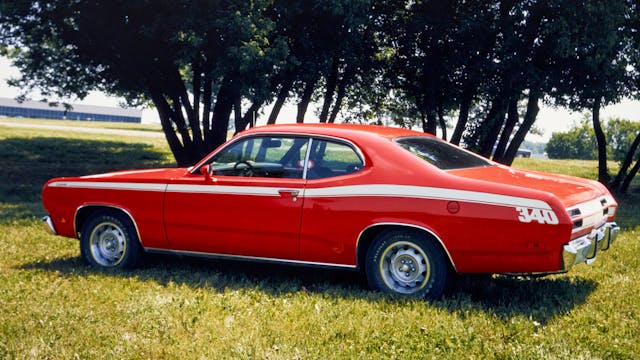
Based on the A-Body along with the Valiant and Dodge Dart, Plymouth’s Duster offered the Mopar faithful a sporty, compact car on a budget. Much like its market competitors (Chevy Nova, Ford Maverick, AMC Hornet), Dusters could be had with everything from a fuel-sipping six-cylinders to fire-breathing V-8s, along with some truly outrageous graphics packages. A Duster 340 making 275hp was king of the hill for this series, eventually being replaced by a more moderately rated Duster 360, choked down by smog regulations and lower compression. Like the Mopars of today, a dizzying number of different packages were available, from the Gold Duster and Space Duster to the efficiency-minded Feather Duster.

This spring, Dusters performed exceptionally well, racking up big gains in public sales, listings and insurance quotes. Standard 318-powered cars can still be had cheaply, and $18,000-$20,000 usd / $24,640 cad- $27,380 cad (via exchange rate at time of posting) will land you a good (#3) condition car. The spicier 340-powered cars will reach into the $30,000 usd- $41,060 cad range, which is still a lot of muscle for the money, but an average increase of 32% is shocking for a 50-plus-year-old car from a brand that’s been dead for nearly 25.

So, what gives? Why the sudden jump?

Well, for one, cheaper cars are still performing well, and even though the majority of muscle cars are softening in value, they’re still inexpensive fun. Our theory, though, is pop culture. Around the time Duster prices started climbing, a new crime series debuted on Max. The name of the show, funny enough, is Duster, and it prominently features a Duster 340. Coincidence? Perhaps, but we’ve seen this phenomenon before. As an honorable mention, the sibling Dodge Dart also experienced a bump, but at a more modest 17% average gain. You can bet that Dusters will be a car to watch for a while, strong sales usually bring more and more quality examples to market, offering further insights into this unexpected jump.

2024 Porsche 911 S/T

Porsche 911 ST heritage appearance package
Porsche

Average increase: +25%

Yes it’s exclusive and yes it’s expensive, so it’s probably easy to tune out and move on, but hear me out. The S/T is not just some badge-engineered 911 that Porsche overcharged for. It’s an obsessively lightened 911 with the high-revving engine out of the GT3, and it’s actually both quicker and lighter than a GT3. It’s more exclusive as well, with just 1960 cars produced worldwide. Not necessarily rare, but you’re gonna have to work to stumble across one. Ultimately, if you’re a Porsche fan with the money, this is a car to have.

Just as impressive as the raw performance is the market performance. The standard MSRP last year was $292,000 usd – $399,689 cad without optional extras, and that’s if you could manage to secure an allocation from your local dealer. The market for these cars is simple supply and demand. Porsche made them just scarce enough that buyers are willing to shell out major money. Public transactions have shown that buyers are willing to pay $700,000 usd- $958,160 cad or more to get their hands on one. The case of the 911 S/T also shows the world that there is still an appetite for cars geared towards hyper-enthusiasts; they want performance-focused cars, and they want them with a manual transmission. More companies should get the hint. While most of us will never afford something like a 911 S/T, or perhaps wouldn’t care to own one if we could, the insane enthusiast response to it may be the wake up call to all manufacturers to start making cars we actually want.

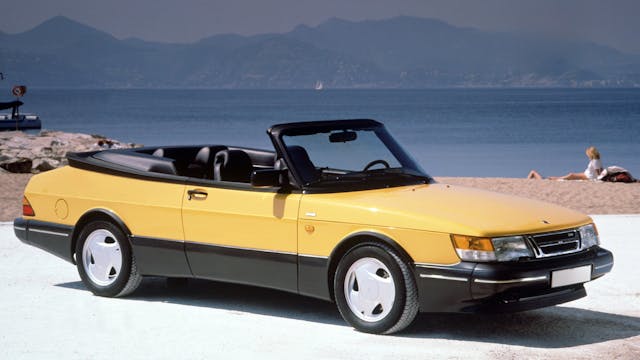
1979-94 Saab 900

Saab-900-Turbo-Cabriolet-front-three-quarter-yellow
Saab

Average increase: +20%

This sweet Swede is one rad ride. I know because I have owned and enjoyed three Saab 900 cars over the years including a beauty 5 speed with moonroof which I regret selling to this day. If Saab does anything well, it’s coming up with something truly unique. This company, which is also well-known for its aeronautical division, does an exceptional job of combining practicality and safety along with a dash of the sportiness of a Saab 37 Viggen fighter jet. This mid-size automobile came in standard commuter trim, but a warmed-over Turbo and SPG version could be had to satiate the hot hatch enthusiasts.

The Saab might be a bit of an oddity or a cult vehicle here in the states, but it does carry strong enthusiast interest. It is really everything that embodies the coolness and nostalgia of the 1980s and 1990s, and they’re generally affordable. Even with the strong percentage increase, a base 900 can be scored for under $10,000 usd- $13,690 cad in good condition, while a Turbo can be picked up in the mid-teens. If you’re after the more taut and sporty SPG, be prepared to shell out around $26,000 usd- $35,590 cad for a decent one. If you’re after a fun and funky car from the ’80s, the 900 is worth a look, and with market activity picking up, more may be coming out of the woodwork. Fortunately they remain relatively affordable, just not as dirt cheap as they used to be.

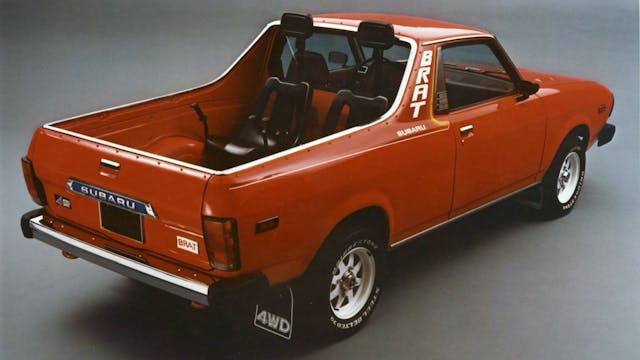
1978-87 Subaru Brat

Subaru Brat studio rear three quarter
Subaru

Average increase: +18%

Subaru’s Bi-drive Recreational All-terrain Transporter, or Brat, was one of many small Japanese trucks coming into the US in the 70s and 80s. Except it wasn’t a truck, technically, but we’ll cover that in a minute. Based on a car chassis, much like the Ranchero or El Camino, it was small yet capable, featuring a single-range four-wheel drive system, not far removed from the all-wheel drive setup for which Subaru is so well regarded today. Where things go off the rails a bit is when you look in the truck bed. Like I said, it’s a truck, but not technically. In the back, there is a pair of jump seats affixed to the back, which in the legal sense made the Brat a car. This was a workaround from the U.S. tariff scheme, which taxed imported cars at a rate of 2.5% instead of the 25% for trucks.

These are funky vehicles that could only have existed in the 1980s, when Japanese manufacturers were trying everything. They’re incredibly well loved around the world and are seeing an uptick in popularity here in the U.S. They’re still moderately affordable; a good example will fetch nearly $20,000 usd- $27,380 cad these days, but due to recent transactions, that’s up noticeably from the recent past. While not as commonly seen as other Japanese trucks of the era, these things are cool as hell and certainly a conversation starter, so we expect interest will stay strong.

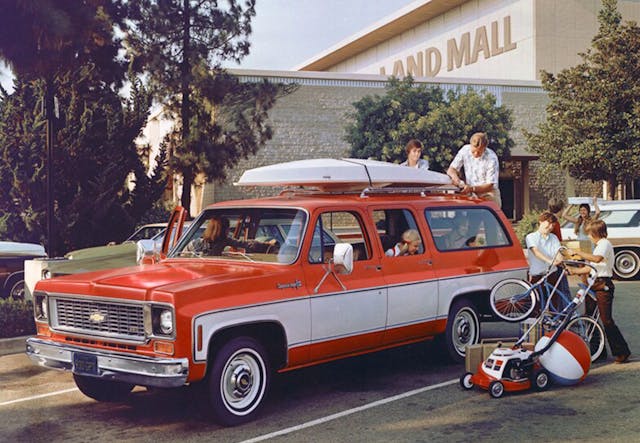
1973-91 Chevrolet/GMC Suburban

1974 Chevy Suburban front three-quarter
GM

Average increase: +12%

North America’s longest serving nameplate is still the mighty Suburban, lasting an astonishing 90-years, and counting.

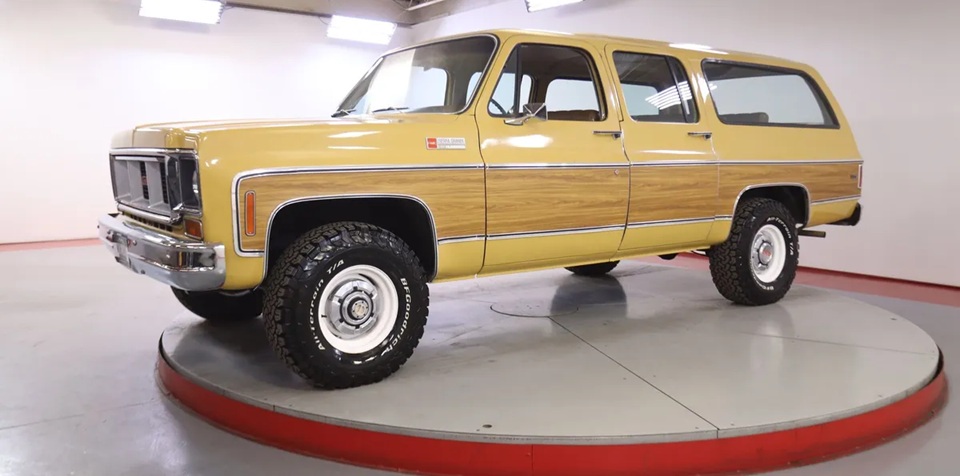
It began as a truck-based station wagon in the 1930s, but the Suburban we know and love today saw its roots planted in 1973. The update to GM’s truck line, known by enthusiasts today as the “square body” saw the Suburban go from a three-door to four-door for better passenger accessibility, and it dripped in creature comforts missing from previous models. Better sound deadening, cushy seats and multiple trim levels evolved the Suburban from a utilitarian people hauler to more of a luxury truck. This design stuck around until 1991, when GM added the Suburban and Blazer to the GMT400 line. The rest, as they say, is history. Suburbans would become more and more cushy (and expensive), making them somewhat of a discreet status symbol today.

The 1973-91 Suburban is a sweet spot for enthusiasts; they’re plentiful compared to earlier series, parts are easy to come by, and they are extremely usable. They’re also still pretty affordable compared to the pickups and Blazers from the same era. A good condition Suburban can be scored for under $20,000 usd-$27,380 cad , even for the 4×4 versions. We’ve observed an uptick in sales and market activity with these trucks, and combined with our quote data suggesting that Suburban owners are averaging on the younger side, this could be a strong indicator that this bump in value will stick or even grow over time.

For the Silo, Jarrod Barker courtesy of friends at Hagerty Insurance.

5 Tips for Regularly Driving Your Vintage Car

Summer, and thus driving season, is currently in full swing for much of Canada. Most of us that have them are trying to drive our classics every chance we get. Here are some vital reminders to heed if your vintage ride gets called up into everyday action.

Where I live is currently in the beautiful pocket of time where the mornings are cool yet bright and the sun only really gets hot in the middle of the afternoon. All of my cars love this weather, and I love driving just that little bit more. So I’m trying to drive as much as I can, and if you are doing the same, here are a handful of reminders for the times your vintage ride gets called up into more routine service.

Before we dive in though, it’s worth mentioning that old cars were once new cars. Someone drove and treated my Chevrolet Corvair the way I currently behave while behind the wheel of my wife’s Jeep Renegade—a daily driver. Traffic 30, 40, or even 90 years ago was radically different than traffic today, and many of our common-sense habits have shifted meaning to the point that what makes total sense for you in your old car will look insane to a common road user. While old cars require an additional amount of care and attention to be used regularly, driving your car is the best thing you can do for it. Don’t be scared of using the car exactly how it was intended.

Old cars have old brakes

Model A cast brakes
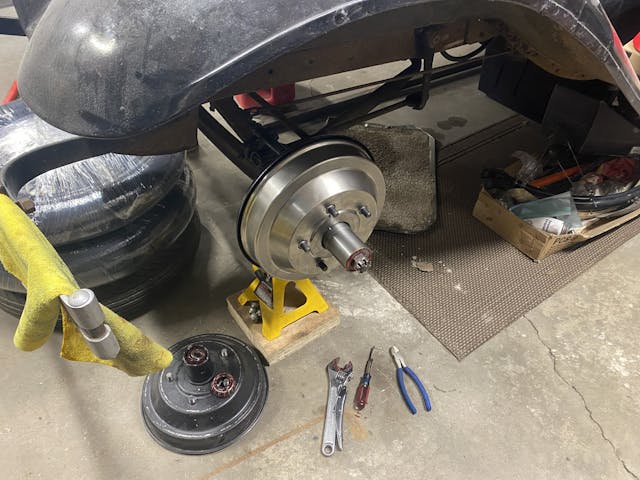
Fresh wheel bearings and drums made for a big improvement in drivability and safety on my Model A Ford.Kyle Smith

It’s easy to get lured into driving like those around you, but be careful. Without notice, you’ll find yourself tailgating at the same distance as the modern cars, and when that line of cars taps the brakes, suddenly the concept of 5-mph bumpers doesn’t seem so comical.

Vintage brakes can be made to work very well with a bit of care and attention, but even I have to admit vintage designs and materials just cannot compare to modern brakes—that is before even mentioning driver assist systems like anti-lock braking or emergency braking. Give yourself plenty of room.

Check your fluids often

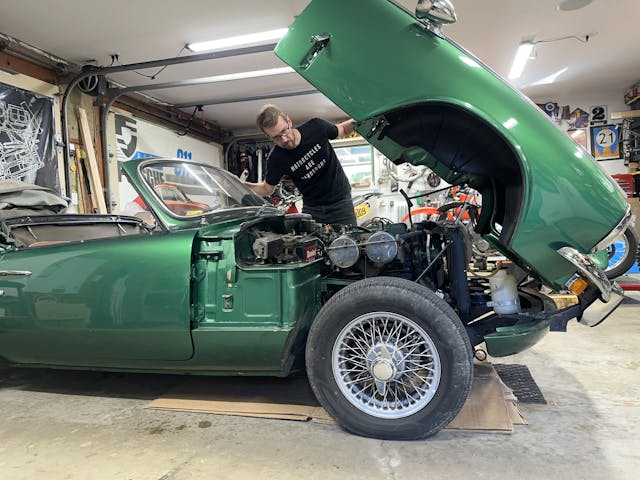
Triumph spitfire hood up
Kyle Smith

Modern cars have spoiled us with the ability to drive thousands of miles without opening the hood. Regardless of how you feel about the separation between driver and mechanic over time, driving your vintage car on more than just a couple weekends a month requires staying on top of topping of fluids.

Old engines can and often do consume oil at a rate much higher than modern engines. Add in even just a small leak and suddenly the bottom of the dipstick is bone dry and before long, so is the oil pickup. Engine oil also helps cool an engine, so keeping oil topped up helps for multiple reasons beyond just proper lubrication. Also keep an eye on brake fluid and coolant.

Get used to the gauges

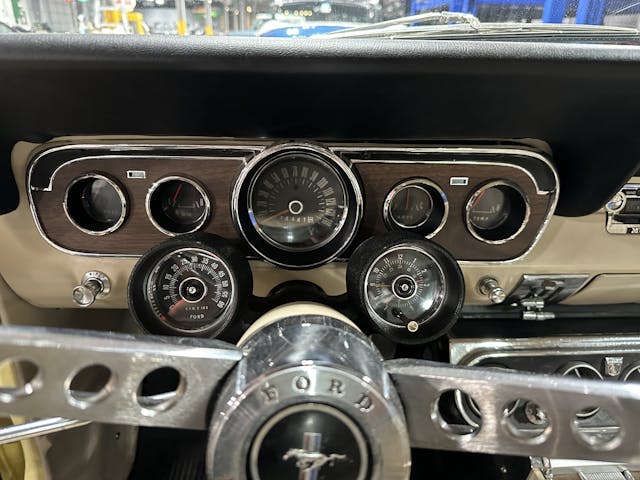
Modern car gauges are “normalized,” meaning that they often will be basically stationary while driving despite slight fluctuation in the pressures, temperatures, and levels they monitor. On older cars, a coolant temp gauge might rise slightly when caught at a long stoplight, but it might not actually be a cause for concern. Most automotive engines operate best when coolant temps are between 180 and 210 degrees Fahrenheit. Modern gauges will be stationary for that entire range, but an old-school mechanical gauge will transmit everything. This means coolant temp could drop slightly when you turn on the heater, or increase some with long periods of idling or while an air conditioner is cycling.

Make your escape plans

Traffic on the IH-10 Katy Freeway viewed facing west near Loop 610
Smiley N. Pool/Houston Chronicle/Getty Images

Even in great condition, aging cars can and do break down. Think through what common failures might occur with your car and formulate a plan for how you will handle the situation. This can mean packing a tool kit, re-upping your roadside assistance membership, or choosing routes and times of day that will help ensure you have a smooth trip. Some vintage cars will have zero trouble in modern traffic, but if yours tends to overheat or get cranky sitting still, make sure that you scout an escape route, should you get snarled in traffic. Being stuck on the side of the road is infinitely better than being stuck in the middle of the road. Trust me. There are a few roads around town that I avoid in my vintage cars due to the lack of shoulder or safe place to veer off. Paranoid? Maybe a little, but I don’t want to get hit while sitting on the side of the road.

Be aware of your tires

Classic Car Tires Ganz Alfa Romeo
Andrew Ganz

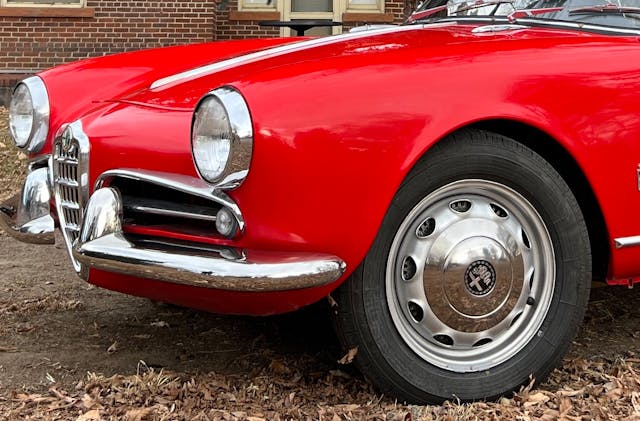
Modern tires are downright amazing and often go underappreciated. Since vintage cars get less mileage than their modern counterparts, a lot more people are willing to drive on older or poor-condition tires, sometimes out of pure ignorance or from lack of inspection. Tread depth and age are big considerations, but if you’re running modern reproductions of older tire designs, there is also the way those tires handle water. Siping and water control have a huge impact on handling and braking. You might have brand-new tires, but if the design is 50 years old, they are going to handle that way. Again, not a bad thing, but something to adjust to. For the Silo, Kyle Smith.

9 Old Automotive Tools Almost Nobody Uses Anymore

If you have them should you keep them? Read on via this interesting article from our friends at Hagerty.

The nuts and bolts that make up our beloved automobiles have not changed that much over the last 150 years. But the tools needed to maintain them? Those have changed a lot. Software has cemented itself as part of a service technician’s day-to-day regimen, relegating a handful of tools to the history books. (Or, perhaps, to niche shops or private garages that keep many aging cars alive and on the road.)

How many of these now-obsolete tools do you have in your garage? More to the point, which are you still regularly using?

Spark-plug gap tool

Though spark-plug gap tools can still be found in the “impulse buy” section of your favorite parts store, these have been all but eliminated from regular use by the growing popularity of iridium and platinum plugs. These rare-earth metals are extremely resistant to degradation but, when it comes time to set the proper gap between the ground strap and electrode, they are very delicate. That’s why the factory sets the gap when the plug is produced.

These modern plugs often work well in older engines, meaning that gapping plugs is left for luddites—those who like doing things the old way just because. Nothing wrong with that; but don’t be surprised if dedicated plug-gapping tools fade from common usage fairly quickly.

Verdict: Keep. Takes up no real space. 

Dwell meter

Snap On dwell meter
sodor/eBay

50 years ago, a tuneup of an engine centered on the ignition system. The breaker points are critical to a properly functioning ignition system, and timing how long those points are closed (the “dwell”) determines how much charge is built up in the ignition coil and thus discharged through the spark plug. Poorly timed ignition discharge is wasted energy, but points-based ignition systems disappeared from factory floors decades ago, and drop-in electronic ignition setups have never been more reliable (or polarizing—but we’ll leave that verdict up to you.)

Setting the point gap properly is usually enough to keep an engine running well, and modern multifunction timing lights can include a dwell meter for those who really need it. A dedicated dwell meter is an outdated tool for a modern mechanic, and thus most of the vintage ones are left to estate sales and online auction sites.

Verdict: Toss once it stops working. Modern versions are affordable and multifunctional. 

Distributor wrench

Snap on distributor wrench set
Snap On tools

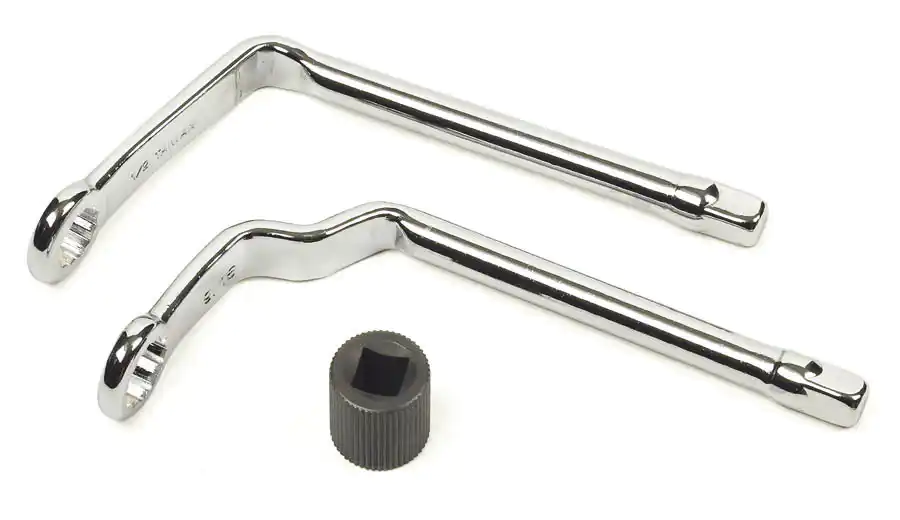
When mechanics did a lot of regular timing adjustments and tuning, a purposely bent distributor wrench made their lives much easier. However, much like ignition points, distributors have all but disappeared. Thanks to coil-on-plug ignition systems and computer-controlled timing, the distributor is little more than a messenger: It simply tells the computer where the engine is at in its rotation.

Timing adjustments have become so uncommon that a job-specific tool is likely a waste of space. If you’ve got room in your tool chest, keep yours around; but know that a standard box-end wrench can usually get the job done and is only fractionally less convenient than the specialized version.

Verdict: Keep if you have them. No need to buy if you don’t. 

Pre-OBDII diagnostic scan tools

Prior to the required standardization of on-board diagnostic computers by the U.S. in 1996, a single car could host a wild mix of analog and digital diagnostic methods. OBDII, which stands for On-Board Diagnostic II, wasn’t the first time that a small computer was used to pull information from the vehicle via an electronic connection; it merely standardized the language.

Throughout the 1980s and early 1990s each OEM had its own version of a scan tool. Now those tools can be reverse-engineered and functionally spoofed by a modern computer, allowing access to diagnostic info tools that, at the time, were only available to dealers. Since many pre-OBDII cars are now treated as classics or antiques and driven far less frequently, the need for period-correct diagnostic tools is dropping.

Verdict: Keep. These will only get harder to find with time, and working versions will be even rarer. 

Distributor machine

A distributor is simple in concept. Trying to balance the performance and economy of the ignition system, with the distributor attached to a running engine, and achieving proper operation starts to get pretty complicated. That’s where a distributor machine comes in.

A distributor is attached to the apparatus and spun at engine speed by an electric motor. This allows you to literally see how the points are opening and closing. You can also evaluate the function of vacuum or mechanical advance systems. These machines are still great but the frequency that this service is needed these days is few and far between, especially when trying to justify keeping a large tool around and properly calibrated.

Verdict: Keep, if you are a specialty shop or tool collector. 

Engine analyzer

Sun Master Motor Tester
ajpperant

Even a casual enthusiast can see there is a lot more information that can be gleaned from a running engine than whatever readouts might be on the dash. Enter the engine analyzer, a rolling cabinet of sensors and processors designed to fill in the data gaps between everything that is happening in a car and what its gauges report.

An engine analyzer is essentially a handful of additional instruments packaged into a small box hanging around the bottom of your tool drawers. It can also house a lot of sensors in a giant cabinet, which was likely wheeled into the corner of the shop in 1989 and left to gather dust. Now engine analyzers can be found listed online for as cheap as $200usd/ $287cad.

The funny thing is that many of the sensors in these engine analyzers are often the same systems that come built into modern dynamometer tuning systems. In a dyno, the sensors allow the operator to see more than max power; they also show how changes to an engine’s tune affect emissions. Maybe engine analyzers didn’t disappear so much as change clothes.

Verdict: Toss. The opportunity cost of the space these take up can be tough for most home garages. Sensors went out of calibration decades ago so the information you might get from one is dubious at best. 
Most pneumatic tools (for home shops)

Ingersoll Rand air impact
Ingersoll Rand

Air tools hold an odd place in the hearts of many gearheads. For many years the high-pitched zizzzz and chugging hammers of air-driven die grinders and impact drills were the marks of a pro. Or, at least, of someone who decided that plumbing high-pressure air lines around the shop was easier than installing outlets and maintaining corded tools. Air tools are fantastic for heavy use, as they are much easier to maintain and can be rebuilt and serviced.

Those tools can really suffer in lack of use, though, since pneumatic tools rely on seals and valves, neither of which deal well with dry storage. Battery tools have caught up to air tools for most DIY folk. No more air lines or compressors taking up space in the shop—and requiring additional maintenance—and, in return, a similarly sized yet more agile tool.

Verdict: Keep, if you already have the compressor. Don’t have one? Invest in battery tools. 

Babbitt bearing molds/machining jigs

Every engine rebuild has to have bearings made for it in some fashion. Today’s cars use insert bearings that are mass-produced to surgical tolerances for a multitude of applications. If you wanted—or more accurately needed—new bearings in your Model T circa 1920, you needed to produce your own … in place … inside the engine. Welcome to Babbitt bearings.

The process is a true art form, from the setup of the jigs to the chemistry of pouring molten metal and machining the resulting orbs to actually fit the crankshaft and connecting rods. Now there are newly cast blocks for your T that replace the Babbitt with insert bearings. Since those antique Ford engines just don’t get abused the way they used to, and lead fairly pampered lives, they need rebuilding far less often than they did in-period. Modern oils also do a better job of protecting these delicate bearings. Since they are less and less in demand, the tooling and knowledge to make Babbitt bearings are difficult to find, and precious when you do.

Verdict: Keep. It’s literally critical to keeping a generation of cars alive. 

Split-rim tire tools

split rim tool ad
Universal Rim Tool Company

Among the realm of scary-looking tools that have earned their infamy, split-rim tools hold court. The concept is simple: The rim is sectioned, allowing it to contort into a slight spiral that can be “screwed” into a tire. (This is almost the reverse of a modern tire machine, which stretches the tire around a solid wheel rim.) When tires needed tubes, both tire and rim were relatively fragile, and the roads were rough, split rims were popular—and for good reason. Now the tooling for drop-center wheels is ubiquitous and shops often won’t take on split-rim work. Success is hard to guarantee, even if techs are familiar with split rims—and they rarely are.

Verdict: Keep. No substitute for the right tools with this job. 

These tools might not make much sense in a dealership technician’s work bay, but that doesn’t mean they should disappear forever. Knowing how to service antiquated technology is as important as ever, whether using old tools or new ones. If you’ve got any of these items, consider it your responsibility to document what the tool does and how to safely use it. Keeping alive the knowledge of where our modern tools came from is powerful.

For the Silo, Kyle Smith.

A Geek’s Guide To Microfiber Towels

Microfibers were invented by Japanese textile company Toray in 1970, but the technology wasn’t used for cleaning until the late 1980s.

The key, as the name suggests, is in the fiber: Each strand is really tiny—100 times finer than human hair—which allows them to be packed densely on a towel. That creates a lot of surface area to absorb water and pick up dust and dirt. Plus, microfibers have a positive electric charge when dry (you might notice the static cling on your towels), which further helps the towel to pick up and hold dirt. “They tend to trap the dirt in but not allow it to re-scratch the finish,” explains professional concours detailer Tim McNair, who ditched old T-shirts and terry cloths for microfibers back in the 1990s.

These days, the little towels are ubiquitous and relatively cheap, but in order to perform wonders consistently, they need to be treated with respect. Below, a miniature guide to microfibers.

Care for Your Towels: Dos and Don’ts

“They’re just towels,” you might say to yourself. But if you want them to last and retain their effectiveness, microfiber towels need more care than your shop rags:

DO: Keep your microfiber towels together in a clean storage space like a Rubbermaid container. They absorb dirt so readily that a carelessly stored one will be dirty before you even use it.

DON’T: Keep towels that are dropped on the ground. It’s hard to get that gunk out and it will scratch your paint.

DO: Reuse your towels. “I have towels that have lasted 15 years,” says McNair. That said, he recommends keeping track of how they’re used. “I’ll use a general-purpose microfiber to clean an interior or two, and I’ll take them home and wash them. After about two, three washings, it starts to fade and get funky, and then that becomes the towel that does lower rockers. Then the lower rocker towel becomes the engine towel. After engines, it gets thrown away.”

DON’T: Wash your microfibers with scented detergent, which can damage the fibers and make them less effective at trapping dirt. OxiClean works great, according to McNair.

DO: Separate your microfibers from other laundry. “Make sure that you keep the really good stuff with the really good stuff and the filthy stuff with the filthy stuff,” says McNair.

DO: Air-dry your towels. Heat from the dryer can damage the delicate fibers. If you’re in a rush, use the dryer’s lowest setting.

How Do You Know Microfiber Is Split Or Not?

A widespread misunderstanding is that you can “feel” if a microfiber towel is made from split microfiber or not by stroking it with your hand. This is false!

The theory is that if it feels like the towel “hooks” onto tiny imperfections on dry  unmoisturized hands, this is because the fibers are split and they microscopically grab your skin. Although this is partially true, you cannot feel split microfiber “hook” onto your skin. These microscopic hooks are way too small to feel, but do generate a general surface resistance called “grab”. Yet, this is not the “individual” hooking sensation you feel when you touch most microfiber towels. It’s the tiny loops in loop-woven microfiber that are large enough to actually feel grabbing imperfections on your hands (minute skin scales). 

Try it for yourself: gently stroke a loop-weave microfiber towel of any kind, split or not. If your hands are dry and unmoisturized, you will feel the typical “hooking” sensation most people hate. It’s simply the loops that catch around the scales on your skin like mini lassos. Take a picture of the microfiber material with your smartphone, zoom in and you can clearly see the loops.

Now try stroking a cut microfiber towel which is not loop-woven, split or not, and it will not give that awful hooking sensation. If you take a picture of this material, you will see a furry surface without those loops. Because there are no loops, it won’t “hook”.

Now you know the truth: it’s the loops that latch onto your skin when you touch a microfiber towel, regardless if the towel is split microfiber or not. Tightly woven microfiber towels without pile (e.g. glass towels) can also have the “hooking” effect, caused by the way their fibers are woven, but less pronounced than loop weave towels.

Another misunderstanding is that a towel that is made of non-split microfiber will “push away” water and is non-absorbent. This also is not true!

Although a non-split microfiber fiber is not absorbent, water is still caught in between the fibers. You can do the test: submerge a 100% polyester fleece garment (check the label), which is always non-split fiber, in a bucket of water and take it out after about 10 sec. Wring it out over an empty bucket and you’ll see that it holds quite a bit of water, meaning it is absorbent.

So, another myth is busted: non-split microfiber can’t be determined simply by testing if it holds water. You can however test how much water it holds. Compare it to a similar dry-weight towel that is known to be split 70/30 microfiber: Submerge both in a bucket of water. If they hold about the same amount of water, they are both split microfiber. If the 70/30 towel holds more than twice as much water, the test towel is more than likely non-split material.   

How do you know if Microfiber is split or not?

A widespread misunderstanding is that you can “feel” if a microfiber towel is made from split microfiber or not by stroking it with your hand. This is false!

The theory is that if it feels like the towel “hooks” onto tiny imperfections on dry  non-moisturized hands, this is because the fibers are split and they microscopically grab your skin. Although this is partially true, you cannot feel split microfiber “hook” onto your skin. Our friends at classiccarmaintenance.com have more to say about this- “these microscopic hooks are way too small to feel, but do generate a general surface resistance called “grab”.” Yet, this is not the “individual” hooking sensation you feel when you touch most microfiber towels. It’s the tiny loops in loop-woven microfiber that are large enough to actually feel grabbing imperfections on your hands (minute skin scales). 

Try it for yourself: gently stroke a loop-weave microfiber towel of any kind, split or not. If your hands are dry and unmoisturized, you will feel the typical “hooking” sensation most people hate. It’s simply the loops that catch around the scales on your skin like mini lassos. Take a picture of the microfiber material with your smartphone, zoom in and you can clearly see the loops.

Now try stroking a cut microfiber towel which is not loop-woven, split or not, and it will not give that awful hooking sensation. If you take a picture of this material, you will see a furry surface without those loops. Because there are no loops, it won’t “hook”.

Now you know the truth: it’s the loops that latch onto your skin when you touch a microfiber towel, regardless if the towel is split microfiber or not. Tightly woven microfiber towels without pile (e.g. glass towels) can also have the “hooking” effect, caused by the way their fibers are woven, but less pronounced than loop weave towels.

Another misunderstanding is that a towel that is made of non-split microfiber will “push away” water and is non-absorbent. This also is not true!

Although a non-split microfiber fiber is not absorbent, water is still caught in between the fibers. You can do the test: submerge a 100% polyester fleece garment (check the label), which is always non-split fiber, in a bucket of water and take it out after about 10 sec. Wring it out over an empty bucket and you’ll see that it holds quite a bit of water, meaning it is absorbent.

So, another myth is busted: non-split microfiber can’t be determined simply by testing if it holds water. You can however test how much water it holds. Compare it to a similar dry-weight towel that is known to be split 70/30 microfiber: Submerge both in a bucket of water. If they hold about the same amount of water, they are both split microfiber. If the 70/30 towel holds more than twice as much water, the test towel is more than likely non-split material.   

Tim’s Towels

The budget pack of microfiber towels will serve you fine, but if you want to go down the detailing rabbit hole, there’s a dizzying variety of towel types that will help you do specific jobs more effectively. Here’s what McNair recommends:

General Use: German janitorial supply company Unger’s towels are “the most durable things I’ve ever seen,” says McNair.

Drying: Towels with a big heavy nap are great for drying a wet car (but not so great for taking off polish).

Griot's Garage blanket towel
Griot’s Extra-Large Edgeless Drying towel, $45usd/ $65.09cad Griot’s Garage

Polishing: Larger edgeless towels are good at picking up polishing compound residue without scratching the paint.

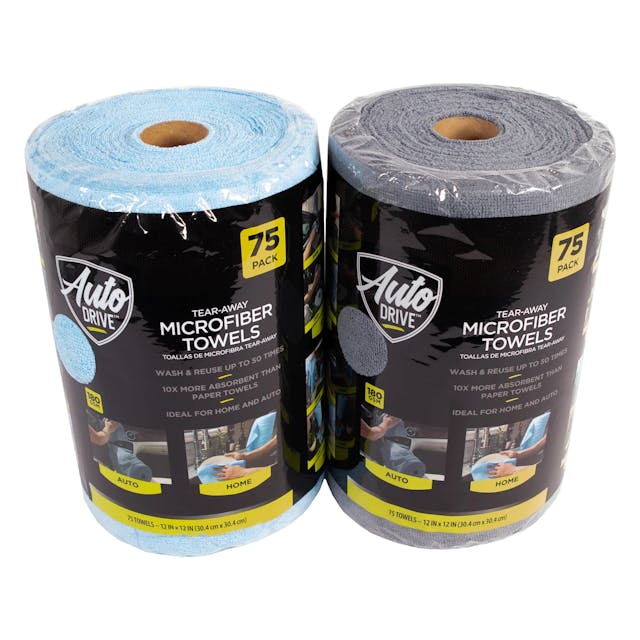
Wheels and other greasy areas: This roll of 75 microfiber towels from Walmart is perfect for down-and-dirty cleaning, like wire wheels. When your towel gets too dirty, throw it away and rip a new one off the roll.

Glass: There are specific two-sided towels for glass cleaning. One side has a thick nap that is good for getting bugs and gunk off the windshield. The other side has no nap—just a smooth nylon finish—that’s good for a streak-free final wipe down.

Griot's Garage glass towels
Griot’s Dual Weave Glass Towels, Set of 4, $20usd/ $28.93 cad Griot’s Garage

Six Pack Of American 1980s Cars For Under 25K

Ugh it’s winter and here in Southern Ontario as I type this we are at the tail end of the Polar Vortex. It’s damn cold out. But there are some things that lend themselves well to “tossing another log on” and staying cozy while enjoying being indoors or perhaps in your heated shop or garage.

In fact, the winter is a great time to take stock and plan for your automotive future. Maybe you’ve packed your summer car away for the season and realized there’s still room for one more, or perhaps you’ve been whiling away the winter daydreaming about the car that got away years ago.

Get Out The Hair Gel

Whatever the case, our friends at Hagerty put together their latest valuation info to find some cool ’80s-vintage North American cars and trucks that we would like to add to our collections, and we think you might agree with at least some of them. Read on brave winter warrior….

The following six vehicles can all be had for less than $25,000 usd/ $35,8300 cad in #3 (Good) condition. That’s a solid starting place for a classic you plan on putting some miles on, and a great place to start if you want a running and driving project that you can cruise to RADwood with. Here then are their excellent picks, in descending order based on value.

1989 Ford Mustang LX 5.0

1987 Ford Mustang coupe side proifle
Ford

#3 Value: $24,900 usd/ $35,680 cad

The LX was a bit of a sleeper as it had the same EFI 5.0-liter V-8 as the GT without the flashy bits. We like the later Fox-body styling, and while the ’89 comes close to the $25,000 usd price cap, 1987 and 1988 models look just as good and tend to be just a bit more affordable. Of course, four-eyed Fox-body Mustangs (which some of the Hagerty team find more stylish) tend to be even less expensive, but they are also less powerful. One of these later LX models would be a great place to start for a mild build to enjoy the fantastic 5.0-liter soundtrack, as few platforms have the kind of aftermarket behind it that the Fox-body still enjoys.

1987 Buick Regal T-Type Turbo

Buick-Regal-T-Type-Turbo-rear-three-quarter
Mecum

#3 Value: $23,800 usd/ $38,400 cad

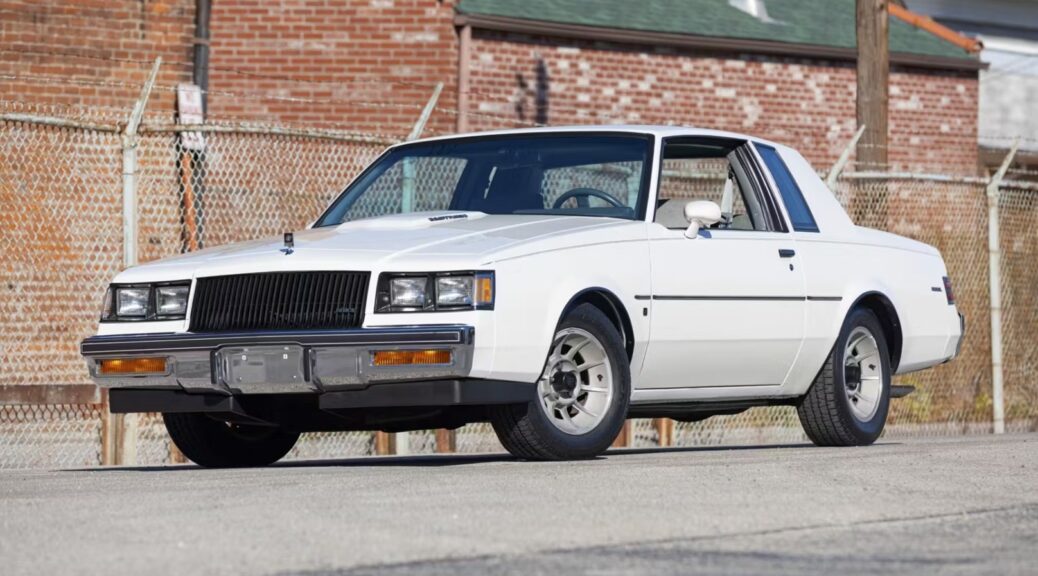
Speaking of sleepers, the turbocharged Buicks of the ’80s are some of the most infamous. Even when the sinister black Grand National gained a reputation, the less overt turbocharged Buick models still flew under the radar. The later turbo Buicks were fuel injected and Buick kept improving the punchy 3.8-liter V-6, with final models getting upgraded airflow by way of a new charge cooler, an aluminum intake manifold, and an improved turbocharger. The final tweaks gave 1987 turbo Buicks 245 hp and 355lb-ft of torque. While those numbers aren’t particularly impressive when compared to more modern performance cars (keeping in mind that hp isn’t everything when it comes to performance measurements) , or family sedans for that matter, they put Buicks firmly in the fight for the title of quickest new cars on the market. Their interesting development history makes them a worthy collectible, and the less flashy T-Type is a great entry point at about 35 percent less than a comparable Grand National.

1989 Chevrolet Corvette Callaway

1989 Chevrolet Corvette Callaway
Callaway Cars

#3 Value: $23,800 usd/ $34,100 cad

If 245 horsepower was a lot in 1987 (it was), imagine how exotic a 382hp twin-turbo Corvette must have been. The late Reeves Callaway had a long history of building exciting and powerful Corvettes, and even the earliest models were an ambitious project. The first twin-turbo Corvettes his company turned out in 1987 produced 345 hp, the same rating the first C5 Corvettes would receive with their naturally aspirated LS1 V-8s starting in 1997. Ever improving, Callaway soon had the 350-cubic-inch small-block pumping out 382 hp and 525 lb-ft of torque, making it one of the most powerful cars you could buy. It even came with a 12-month warranty. Just 69 Callaway Twin-Turbo Corvettes were built in 1989 and today their #3 value is just less than the $26,000 usd cost of the B2K RPO code that indicated the rare powertrain option. They might be more trouble to maintain than the rugged and simple 350 that came in everyday C4 Corvettes, but the Callaway Twin-Turbo mill was truly special. It’s also one of the best-looking C4 variants ever created, if you ask us.

1988 Stutz Bearcat

1988-Stutz-Bearcat-II
Stutz Motor Car Company

#3 Value: $23,100 usd/ $33,100 cad

The Stutz Bearcat is not well known, and those that do have any knowledge of the low-volume cars probably remember the ’60s iteration, a reemergence of the nameplate, and based on the Pontiac Grand Prix. Few will remember the original: a racy, brass-era runabout, and you can bet that if you arrived at a show in the final version of the Bearcat, based on the third-gen Firebird and sporting a carbon fiber composite body built in Turin, you’d be met with a lot of puzzled looks. Only about a dozen were built on the F-body platform, making them a truly rare sight. While the ubiquitous small-block drivetrain would make them easy to maintain, everything else about the car would be difficult to replace. Still, it’s quite a head-turning piece of American and Italian coachwork.

1980 International Harvester Scout Terra

#3 Value: $22,400 usd/ $32,100 cad

International Harvester gave its Scout lineup a makeover for its final year, featuring a new grille designed by Dick Hatch that used rectangular headlights. We think that the final grille is a great fit for the simple, blocky trucks and SUVs. The one shown above, with orange and yellow graphics, is practically perfect. While the standard wheelbase Scout II and the stretched Scout Traveler SUV are both outside of our $25,000 usd threshold, the stretched wheelbase Terra pickup is a more affordable entry point to Scout and meets the criteria when equipped with either the six-cylinder Nissan turbodiesel or the 196-cube four-cylinder that used the passenger bank of the company’s venerable 392 V-8. We love these rugged rigs and the Terra, with its 118-inch wheelbase and short overhangs, combines a decent-sized bed with maneuverability that’s appreciated off-road. The final year of Scout production would make an excellent addition to a collection where it could pitch in with its rugged utility and look great doing it.

1989 Chevrolet Camaro IROC-Z

Courtesy Throttlestop/Andrew Marvan

#3 Value: $18,800 usd/ $26,900 cad

Chevrolet’s competitor to the lighter, more angular Mustang GT was the IROC-Z, the performance-oriented F-body that finally got the 350-cubic-inch Tuned-Port Injection (TPI) engine from its big brother, Corvette, starting in 1987. The 5.7-liter powerplant was only available with a four-speed auto as the T5 transmission that fits under the Camaro’s floorplan couldn’t handle the larger motor’s torque. The TPI intake, perched like a spider on top of the engine, featured long runners that favored low-speed torque. Unfortunately the intake, and the engine’s meager cylinder heads, weren’t great at maintaining that torque to get the power numbers up, Still, it competed well against the smaller Ford V-8 in the Mustang. Contemporary reviews praised the IROC-Z’s power, road-holding, steering feel, and traction compared to its Mustang counterpart, but the 5.0-liter Mustangs were formidable opponents. Your choice might come down to brand loyalty or whether you prefer the boxy Fox-body or the sleek F-body. If we found one of these in our garage, we’d be tempted to troll eBay and swap meets for vintage ’80s speed parts to build a day-two IROC-Z for canyons and backroads. But that is just us.

Did You Know These 5 Famous Cars in Movies & TV Are Fake?

The recent Netflix series, Senna, got our friends at Hagerty thinking about movie cars that—often for practical reasons—aren’t exactly what they seemThis story originally ran on their site in 2013, and we’ve freshened it up a bit to provide some helpful and entertaining context for today’s movie-car choices.

Hollywood loves to incorporate hot classic cars into movies and television shows. Producers and insurers are also notoriously risk-averse, preferring to use replicas rather than the hyper-valuable real deal whenever possible. Here are some of our favorite big- and small-screen fakes.

Nash Bridges

1971 Plymouth Hemi ‘Cuda: The ’90s San Francisco cop show revived Don Johnson’s career, pairing him with Cheech Marin (half of the stoner comedy team of Cheech and Chong). The yellow car that appeared to be an ultra-rare Hemi ‘Cuda convertible was actually what is known as a “clone,” or a car that started out as a lesser model but was restored to appear as a top shelf ‘Cuda. The difference in price is staggering—around $180,000 usd/ $259,000 cad for a convertible with the 383, more than $3M usd/ $4.25M cad for the real deal (both prices reflect #2 condition).

Ferris Bueller’s Day Off (1985)

1960 Ferrari 250 GT California Spyder: The Ferris Bueller Ferrari is probably the best-known big screen fake and that’s why we choose it for this article’s feature image. From a distance, it appears reasonably accurate, but Ferrari aficionados can spot the differences in their sleep, from the Triumph-sourced gauges to the MGB taillights. And don’t get them talking about the bogus Italian Borrani wire wheels. A real California Spyder in #2, or Excellent, condition is nearly $20 million usd/ $28.3 million cad today.

Miami Vice (1984)

1972 Ferrari 365 GTS/4 Daytona: Don Johnson appears to be a bit of a magnet for fake cars. His black Daytona Spyder was actually a fake built on a Corvette chassis, and few Ferrari fans shed tears when the car was blown up in sight of Johnson’s character, Sonny Crockett, and his pet alligator, Elvis. Afterward, Crockett took to driving a white Ferrari Testarossa—a real one, this time.

Top Gun (1986)

1958 Porsche Speedster: Kelly McGillis’ character drove this one around San Diego in the classic ’80s movie. Porsche Speedsters are among the most replicated cars ever—most are convincing fiberglass bodies slapped on top of a VW Beetle platform.

The replica featured in Top Gun appears to have been one of the good ones, built by longtime Speedster replica-maker Intermeccanica. They’re still in business in British Columbia, Canada, turning out extremely high-quality vintage Porsche replicas.

Indiana Jones and the Temple of Doom (1984)

1935 Auburn 851 Boattail Speedster: Indy’s sidekick Short Round still holds the record for the best automotive chase involving a pre-teen driver. With blocks tied to the pedals, Short Round takes Jones and a lounge singer Willie Scott on a wild ride through prewar Shanghai. The car was, of course, a complete fake, and not a particularly convincing one at that. For the Silo, Rob Sass/Hagerty.

Did we miss any? Let us know in the comments below.

Great Tips For Winter Storing Your Classic

The trees are almost bare and the evening arrives sooner each day. We all know what that means: It’s time to tuck away our classics into storage.

Just when you thought you’d heard every suggestion and clever tip for properly storing your classic automobile, along comes another recommendation—or two, or three or twelve 😉

As you can imagine, I’ve heard plenty of ideas and advice about winter storage over the years. Some of those annual recommendations are repeated here. And some have been amended—for example, the fragrance of dryer sheets is way more pleasing to noses than the stench of moth balls, and the fresh smell actually does a superior job of repelling mice.

Wash and wax

ferrari 458 wax
Sabrina Hyde

It may seem fruitless to wash the car when it is about to be put away for months, but it is an easy step that shouldn’t be overlooked. Water stains or bird droppings left on the car can permanently damage the paint. Make sure to clean the wheels and undersides of the fenders to get rid of mud, grease and tar. For added protection, give the car a coat of wax and treat any interior leather with a good conditioner.

Car cover

Viper car cover
Don Rutt

Even if your classic is stored in a garage in semi-stable temperatures and protected from the elements, a car cover will keep any spills or dust off of the paint. It can also protect from scratches while moving objects around the parked car.

Oil change

Checking oil 1960 plymouth fury
Sabrina Hyde

If you will be storing the vehicle for longer than 30 days, consider getting the oil changed. Used engine oil has contaminants that could damage the engine or lead to sludge buildup. (And if your transmission fluid is due for a change, do it now too. When spring rolls around, you’ll be happy you did.)

Fuel tank

camaro red fill up gas
Sabrina Hyde

Before any extended storage period, remember to fill the gas tank to prevent moisture from accumulating inside the fuel tank and to keep the seals from drying out. You should also pour in fuel stabilizer to prevent buildup and protect the engine from gum, varnish, and rust. This is especially critical in modern gasoline blended with ethanol, which gums up more easily. The fuel stabilizer will prevent the gas from deteriorating for up to 12 months.

Radiator

This is another area where fresh fluids will help prevent contaminants from slowly wearing down engine parts. If it’s time to flush the radiator fluid, doing it before winter storage is a good idea. Whether or not you put in new antifreeze, check your freezing point with a hydrometer or test strips to make sure you’re good for the lowest of winter temperatures.

Battery

car battery
Optima

An unattended battery will slowly lose its charge and eventually go bad, resulting in having to purchase a new battery in the spring. The easiest, low-tech solution is to disconnect the battery cables—the negative (ground) first, then the positive. You’ll likely lose any stereo presets, time, and other settings. If you want to keep those settings and ensure that your battery starts the moment you return, purchase a trickle charger. This device hooks up to your car battery on one end, then plugs into a wall outlet on the other and delivers just enough electrical power to keep the battery topped up. Warning: Do not use a trickle charger if you’re storing your car off property. In rare cases they’ve been known to spark a fire.

Parking brake

For general driving use it is a good idea to use the parking brake, but don’t do it when you leave a car in storage long term; if the brake pads make contact with the rotors for an extended period of time, they could fuse together. Instead of risking your emergency brake, purchase a tire chock or two to prevent the car from moving.

Tire care

Ferrari tire care
Sabrina Hyde

If a vehicle is left stationary for too long, the tires could develop flat spots from the weight of the vehicle pressing down on the tires’ treads. This occurs at a faster rate in colder temperatures, especially with high-performance or low-profile tires, and in severe cases a flat spot becomes a permanent part of the tire, causing a need for replacement. If your car will be in storage for more than 30 days, consider taking off the wheels and placing the car on jack stands at all four corners. With that said, some argue that this procedure isn’t good for the suspension, and there’s always this consideration: If there’s a fire, you have no way to save your car.

If you don’t want to go through the hassle of jack stands, overinflate your tires slightly (2–5 pounds) to account for any air loss while it hibernates, and make sure the tires are on plywood, not in direct contact with the floor.

Repel rodents

buick in the barn
Gabe Augustine

A solid garage will keep your car dry and relatively warm, conditions that can also attract unwanted rodents during the cold winter months. There are plenty of places in your car for critters to hide and even more things for them to destroy. Prevent them from entering your car by covering any gaps where a mouse could enter, such as the exhaust pipe or an air intake; steel wool works well for this. Next, spread scented dryer sheets or Irish Spring soap shavings inside the car and moth balls around the perimeter of the vehicle. For a more proactive approach and if you’re the killing type, you can also lay down a few mouse traps (although you’ll need to check them regularly for casualties).

Maintain insurance

In order to save money, you might be tempted to cancel your auto insurance when your vehicle is in storage. Bad idea. If you remove coverage completely, you’ll be on your own if there’s a fire, the weight of snow collapses the roof, or your car is stolen. If you have classic car insurance, the policy covers a full year and takes winter storage into account in your annual premium.

  • “An ex-Ferrari race mechanic (Le Mans three times) recommends adding half a cup of automatic transmission fluid to the fuel tank before topping up, and then running the engine for 10 minutes. This applies ONLY to carburetor cars. The oil coats the fuel tank, lines and carb bowls and helps avoid corrosion. It will easily burn off when you restart the car.”
  • A warning regarding car covers: “The only time I covered was years ago when stored in the shop side of my machine shed. No heat that year and the condensation from the concrete caused rust on my bumpers where the cover was tight. The next year I had it in the dirt floor shed and the mice used the cover ties as rope ladders to get in.”
  • “I use the right amount of Camguard in the oil to protect the engine from rust. It’s good stuff.”
  • Your car’s biggest villain is rust, that’s why I clean the car inside and out, and wax it prior to putting it in storage. For extra protection, I generously wax the bumpers and other chrome surfaces, but I do not buff out the wax. Mildew can form on the interior; to prevent this I treat the vinyl, plastic, and rubber surfaces with a product such as Armor All.
  • “Ideally, your car should be stored in a clean, dry garage. I prepare the floor of the storage area by laying down a layer of plastic drop cloth, followed by cardboard. The plastic drop cloth and cardboard act as a barrier to keep the moisture that is in the ground from seeping through the cement floor and attacking the underside of my car.”
  • “Fog out the engine. I do this once the car is parked where it is to be stored for the winter, and while it is still warm from its trip. Remove the air cleaner and spray engine fogging oil into the carburetor with the engine running at a high idle. Once I see smoke coming out of the exhaust, I shut off the engine and replace the air cleaner. Fogging out the engine coats many of the internal engine surfaces, as well as the inside of the exhaust with a coating of oil designed to prevent rust formation.”

Relax, rest, and be patient

Ford Model a roadster in garage
Gabe Augustine

For those of us who live in cold weather provinces or states, there’s actually a great sense of relief when you finally complete your winter prep and all of your summer toys are safely put to bed before the snow flies. Relax; you’ve properly protected your classic. It won’t be long before the snow is waist-high and you’re longing for summer—and that long wait may be the most difficult part of the entire storage process. Practice patience and find something auto-related to capture your attention and bide your time. You’ll be cruising again before you know it. (Keep telling yourself that, anyway.) For the Silo, Rob Siegel/Hagerty.

Founders Of Hot Rodding Include Canada Born Hilborn

These 5 Hot-Rodders Forged the Legacy of the Flathead

The impact of Ford’s flathead V-8 on the hot rod scene is undeniable. But the individuals that immortalized this engine—and, along the way, laid the foundation for the hot-rod scene—are the real heroes.

photo- Brandan Gillogly

n the early 1900s, horsepower was almost exclusively for the Gatsbys of the world. Ford’s flathead V-8, introduced in the depths of the depths of the Great Depression, changed all that. But it needed some help from car obsessives, who went on to invent what we now know as hot-rodding. Learn about them below, then check out Preston Lerner’s deep dive on the Flathead and its impact here.—Ed.

While it’s not without its flaws, the Ford flathead V-8 marked a significant milestone in the history of American performance. Ford’s mass production of the flathead opened up racing to a whole new audience and helped an industry flourish. Ford wasn’t alone, however, as the factory-built flathead was just a building block. Several individuals, through their own innovation and business acumen, were able to build flathead V-8s to horsepower levels that pushed boundaries of speed, developed a massive segment of our hobby, and forged long-lasting businesses, many of which are still with us today. Here are five pioneers of the aftermarket that used the flathead V-8 to cement themselves and their companies in American culture.

Ed Winfield

Ed Winfield
Magnifico

1901-1982

Known as “The Father of Hot-Rodding,” Winfield got his first job in a blacksmith shop when he was just eight. By the time he was 11, he was stripping down the neighbor’s Model T to shed weight and make it faster. Two years later, he was working on carburetors in Harry A. Miller’s Los Angeles shop where Barney Oldfield’s groundbreaking Golden Submarine race car was being built. With a knack for machinery and an intimate knowledge of engines, Winfield started his own carburetor company in 1919 and began grinding cams the following year. His carburetors were used on eight of the ten Indy 500 winners from 1933-1946, the only exception was Wilbur Shaw, who had won with a Winfield-fed Shaw/Offenhauser engine in 1937 and switched to Maserati power for his wins in 1939 and 1940.

Winfield did it all, from serving as a riding mechanic and racing at Ascot Speedway to working with major automakers in developing engines. Winfield also helped a young Ed Iskendarian with cylinder head work. He was inducted into the Indianapolis Motor Speedway Hall of Fame in 1983 and the Motorsports Hall of Fame in 2011.

Vic Edelbrock Sr.

Vic Edelbrock Senior
Magnifico

1913-1962

Already an established mechanic, Vic Edelbrock Sr. designed the Slingshot intake manifold for flathead Ford V-8s in 1938 and tested it on his own 1932 Ford roadster on Southern California’s dry lakes. After WWII, Vic moved into a new shop in Holywood and designed his first cast aluminum cylinder head for flathead V-8s. Also in 1946, Edelbrock created its first catalog of speed parts, and soon its products were found on cars competing in virtually every form of racing, whether it was on the 1/4-mile, on circle tracks, or America’s dry lakes. His son, Vic Jr., took over the business after his passing and expanded the business to include fuel injection and superchargers. Vic Jr. passed away in 2017, but the company continues to make performance parts. To this day, the company makes Victor and Victor Jr. cylinder heads and intake manifolds that keep their legacy alive.

Stu Hilborn

Stu Hilborn
Magnifico

1917-2013

Born in Canada, Hilborn came to southern California in time to graduate high school and attend junior college in Los Angeles before enlisting in the Army Air Corps (you’re going to notice a trend here). While working on aircraft, Hilborn began scheming up a new way to feed fuel to engines, and once he was back in Southern California, he built a dry lakes racer that would prove his constant-flow fuel injection could compete and win against carburetors. The sleek racer was the first to eclipse 150 mph on the dry lakes and graced the fourth cover of Hot Rod magazine in April, 1948.

Hilborn continued to modify and improve his fuel injection design, and in 1952 Bill Vukovich drove the Fuel Injection Special in the Indy 500, where he led 150 laps and was just nine laps from the finish when a steering issue sidelined the car. That was tough luck for Vukovich, but 22-year-old Troy Ruttman passed him and took the win. Rutman, like Vukovich, was running Hilborn fuel injection, as were the remaining drivers on the podium. You can think of Hilborn’s mechanical fuel injection taking over for Winfield’s carburetors, as the individual throttle body system became the induction of choice for America’s top racers, dominating the Indy 500 for decades, claiming 34 victories along the way. Hilborn stacks appeared on road racers of all kinds, and the company’s two-port units could be found atop supercharged drag cars as well, but it all started with the dry lakes flathead.

Alex Xydias

Alex Xyadias
Magnifico

1922-2024

Alex Xydias passed away earlier this year at the age of 102, leaving behind an impressive legacy of business achievement and generosity. His name is synonymous with the So-Cal Speed Shop, the Burbank speed equipment emporium he founded after leaving the Army Air Corps in 1946. The most famous product of that enterprise is the iconic belly tank lakester that graced the January 1949 cover of Hot Rod magazine after it ran using Ford V-8-60 power. The So-Cal Speed Shop followed on the success of the lakester with a sleek streamliner that would go on to be powered by a Mercury flathead that would push the car to 210.8962mph, the fastest time of Speed Week 1950, earning Xydias back-to-back spots on the coveted Hot Rod trophy, and the first in excess of 200mph.

So-Cally Belly Tank Lakester front three quarter
Brandan Gillogly

Xydias forged relationships with speed parts manufacturers and helped get race-winning parts into the hands of southern California hot-rodders through his shop, but So-Cal Speed Shop also sold parts across the country through its mail-order catalog, using the fame of his racing success to get more enthusiasts involved by proving what the flathead was capable of.

Ed Iskenderian

Ed Isky Eskidarian
Magnifico

1921-

Ever a hot-rodder, Ed Iskenderian’s T roadster was and continues to be an influential build, but there’s a reason he’s known as the Camfather. Shortly after returning from United States Army Air Corps service during WWII, Iskendarian was eager to return to building engines, particularly flatheads, but the booming demand vastly exceeded supply. He didn’t waste time waiting for other cam grinders to catch up. Instead, Isky, already experienced with tool and die work, purchased a machine and converted it to grind cams. Not only were his camshafts effective, but Isky was a talented marketer, coining the term “5-Cycle Cam” to describe his camshafts that used valve overlap and the escaping exhaust gases to scavenge the incoming intake charge. In addition to his many pioneering valvetrain advancements, Isky is also credited with selling logo t-shirts before anyone else.

Iskendarian cams are still used by some of the quickest and fastest racers today.

Featured image via –Historic Vehicle Association For the Silo, Fabian Hoberg / Hagerty.

7 Of The Best Sounding Car Exhausts

We asked our friends at Hagerty what defines a great sounding automotive engine. Here’s what they had to say.

When executed just right, a proper exhaust is the cherry on top of the perfect automotive sundae—it stands out in its own right, but it also completes the package. And it’s not just the sound, glorious though it may be. The visual—and sometimes the artistry—that a good set of pipes can add sometimes does more to define a car than any bit of thoughtfully penned bodywork.

We got to thinking about the sights and sounds that captivate us most, and this list was the result. We could have gone on for days, though, and we bet you have some favorites, too, so give our submissions a read, then tell us your favorite exhaust—for whatever reasons you choose—in the comments!

Ford GT40

I’m going to go with the Ford GT40’s “bundle of snakes” exhaust. When you stop to consider the precision with which such a system had to be fabricated, your mind kind of melts a bit. If you’ve never YouTubed one of these things at full honk, do yourself a favor and click play below. — Nate Petroelje

https://youtube.com/watch?v=iMocr95cYfU%3Fsi%3DSRXSg-GEQNSI5Tcf%26enablejsapi%3D1

Gurney Eagle

Dan Gurney Eagle-Weslake T1G Grand Prix Of Great Britain 1968
Dan Gurney, Eagle-Weslake T1G, Grand Prix of Great Britain, Silverstone, 20 July 1968.Bernard Cahier/Getty Images

The first time I ever saw a Gurney Eagle was at Gooding’s Pebble Beach auction in 2013.

The car was on display in the lobby area of the tent, and I remember being flabbergasted at the intricacies of the exhaust pipes coming out of that Gurney-Weslake V-12. I’d never seen anything like it, and all I could think of was spaghetti twirled up on a fork. — Stefan Lombard

1966 AAR Gurney Eagle Mk I-1
Stefan Lombard

Outlaw Dirt Sprint Car

Outlaw Dirt Track Sprint Cars race action
Cameron Neveu

No question, there are some lovely-to-look-at exhausts here, but I’m more moved by the sound an engine makes through that exhaust, and that’s a tough call. On several occasions I’ve been lucky enough to be at a racetrack when vintage Ferrari Formula 1 cars were making an exhibition run, and the Ferrari 412 T2’s fabric-tearing sound from its 3.0-liter V-12 is just otherworldly. But I’m picking something far less sophisticated: An exhaust note made by simple unmuffled headers fed by a 410-cubic-inch V-8 engine in an outlaw dirt sprint car. One car is loud; 24 sprint cars, representing about 21,600 horsepower, is thunder. The biggest sanctioning body for sprint cars is the World of Outlaws, which runs about 90 races a year, in a season that, in 2024, starts on February 7 and ends on November 9.

Due to local zoning laws, the WoO requires mufflers for 22 of the races. Since my hearing is shot already (Kids! Don’t do drugs, but DO wear earplugs!), I’ll take the unmuffled races, and the unmistakable smell of methanol in the evening. — Steven Cole Smith

Drag Headers

2021 Dream Cruise woodward ave action hot rod
Cameron Neveu

The best exhaust systems are the ones that end after the headers.

I couldn’t have said it much better than SCS. A 410 engine belching out of unmuffled Schoenfeld headers is tops.

But a close second are drag headers. Zoomies or fenderwell are my favorite on old drag cars. That cackle. That’s the noise I’d like to hear out of the trumpets as I approach heaven’s gate. Oh, and the visual appearance of four pipes directing exhaust up and over fat slicks, or peaking around the lip of a fender. Get outta here! — Cameron Neveu

Milan Nostalgia Drags Willys Truck Gasser
“The Haymaker” Willys gasser.Cameron Neveu

Mercedes SLR McLaren and 1987–93 Mustang LX

Mercedes-Benz SLR McLaren exhaust
Mercedes Benz

My favorite exhaust in terms of looks is the side exit exhaust of the 2003–10 Mercedes SLR McLaren, because of that insane amount of space between the front wheel and the cowl and the subtle little twin pipes peeking under that area. The flat belly pan likely made this a mandatory location, but that only adds to the appeal. But when it comes to looks and sounds, for me there’s nothing like a 1987-93 Mustang LX with its signature chrome double-barreled shotgun tailpipes, and that small block Ford rumble. I could look and listen to that exhaust all day. — Sajeev Mehta

1990 ford mustang LX exhaust
Ford

Shelby Mustang GT350

1966 Ford Mustang Shelby GT 350
Ford

I grew up on V-8s in a GM family.

That said, the first time I heard the idle and subsequent roar of a 289 in an early Shelby GT350, I knew Ford had done something right.

It wasn’t till I was older that I learned all about how firing order, crank design, and exhaust setup influenced the amazing sounds that come from our favorite engines. That 289 was what I remember as my earliest favorite so that’s what I picked for this response, but like Steven Cole Smith said, there are so many great sounds out there that it’s a really tough call. Eddy Eckart

4 Canadian-Built Classic Cars That Are Unusual and Attainable

A charming read about quirky and rare Canadian built cars from our friends at Hagerty

Less than a week ago, we all celebrated Canada Day, aka Fête du Canada, the anniversary of Canadian Confederation that occurred on July 1, 1867. It’s a day to “reflect on what it means to be Canadian, to share what makes us proud,” and it “highlights the richness of our land, our diversity, our culture, our contributions, but above all, our people,” according to our government’s official website. It’s a glorious day for Canada, and though we are a little tardy on the dateline, we’re looking at some of the popular classic vehicles to come from the Great White North, and how much they’re worth in today’s market.

Starting in the early twentieth century, the big Detroit automakers south of the border built factories in Canada to sell to Canadians, rather than ship U.S.-built vehicles north.

This was because of tariffs between the two countries, and while many Canadian-built Ford, GM and Chrysler products were similar to the ones driven by Americans, others were rather uniquely Canadian. There were Meteors (Ford), McLaughlin Buicks, Fargo (Dodge) trucks, and Plymouths trimmed out as Dodges, and Acadians and Beaumonts (both GM). After the Canada-United States Automotive Products Agreement in 1965, though, cross-border trade loosened up. The specifically Canadian models and marques gradually disappeared, although promising independents like the Bricklin SV-1 or Manic GT continued to pop up. Today they’re all interesting, somewhat obscure classics. Below are the Canadian vehicles we most often see on the market.

1960 Frontenac

Canadian Frontenac Car ad
Flickr/Michael

When Ford introduced its compact Falcon in 1960, Ford Canada brought out an all-new marque to bring the compact party up north. They called it the Frontenac, short for a 17th-century Governor General of New France (I guess Louis de Buade, Comte de Frontenac et de Palluau was too long to fit on a badge) and built it in Oakville, Ontario. Frontenacs were essentially a mildly restyled Falcon, and were available in two- and four-door sedan body styles as well as two- and four-door wagons. All were powered by the 144-cubic inch Thriftpower straight-six. Ford Canada sold over 9500 Frontenacs for 1960 but discontinued the brand after only one year, replacing it with the Comet for 1961.

Frontenac prices differ by body style, ranging from $13,100 (CAD 17,900) for a four-door wagon at the bottom to $23,000 (CAD 31,400) for a two-door wagon at the top.

1948–52 Mercury M-Series Pickups

1951 Mercury Pickup front
Mecum

To American eyes, pickup trucks with a Mercury badge seem a little Twilight Zone, like a budget city car sporting a Rolls-Royce grille or Kia making a mid-engine exotic. But from the postwar years up until the late 1960s, Mercury M-Series pickups were a very real thing for Canadian buyers.

At the time, many parts of the country didn’t have a Lincoln/Mercury dealership and a Ford dealership, so the Mercury M-Series gave truck-buying customers an option even if there was no Ford store around. The first-generation 1948-52 M-Series followed the same format as the first-generation Ford F-Series. Mercury M-Series trucks came in most of the configurations available on the Ford versions down south, but with fewer engine options. Currently, we only have the 1/2-ton, 239-cid eight-cylinder M-Series in the Hagerty Price Guide, and their #2 values range from $44,600 (CAD 60,900) for the earlier 1948-50 M-47 to $40,800 (CAD 55,700) for the 1951-52 M-1 model. Condition #3 values currently sit in the mid-$20K (CAD 27,300) range.

1968–69 Beaumont

1969 Beaumont front
Mecum

Of all the special Canadian market versions of Big Three vehicles, General Motors’ Acadian and Beaumont lines were arguably the most distinctive.

In 1962 GM launched Acadian, referring to the 17th- and 18th-century French settlers of eastern Canada, as its own brand. Its first model was based on the Chevy II/Nova compact but with different grille and trim, and different models included the mid-tier Acadian Invader and the range-topping Acadian Beaumont. In 1964 when the mid-size Chevelle came out, then Acadian added a Chevelle-based model to the lineup, recycling the Beaumont name. Then, in 1966, Beaumont became its own brand. When the second-generation Chevelle arrived for 1968, Beaumont followed suit. This was short-lived, however, as GM Canada axed the Beaumont brand after 1969 in favor of the Americanized Chevelle and Pontiac LeMans.

Built in Ontario and sold at Pontiac/Buick dealers, the 1968-69 Beaumont looks like a Chevelle with a few scoops of Pontiac mixed in, and generally followed the Chevelle in terms of trim and powertrains, which included 283, 307, 327, 350 and 396 cid engines as well as three- and four-speed manuals or Powerglide and Turbo Hydramatic automatics. Equivalent to Chevrolet’s Super Sport (SS) trim on the Chevelle was Beaumont’s Sport Deluxe (SD).

The average condition #2 value for a 1968-69 Beaumont is $24,200 (CAD 33,000) but, like their Chevrolet-badged cross-border cousins, prices vary widely depending on drivetrain and body style. The cheapest V-8 model in the Hagerty Price Guide is the 1968 307/200 hp sedan with a #2 value of $9600, while the most expensive is the extremely rare 396/350 hp L34-powered convertible with a #2 value of $81,800 (CAD 111,700).

1974–75 Bricklin SV-1

bricklin front three-quarter doors raised
Joe Ligo

Seven years before John DeLorean came out with his own ambitious but under-powered, ill-fated gullwing sports car, Malcolm Bricklin built one in New Brunswick, Canada. Bricklin, the serial automotive entrepreneur who brought Subaru to North America, imported Fiat sports cars under the Bertone and Pininfarina brands and was the man behind the Yugo, envisioned a small and reasonably priced sports car with gullwing doors when planning his next business venture in the early 1970s. As the concept developed, Bricklin snagged a few million dollars in funding from the government of New Brunswick and set up two facilities in Saint John and Minto. The company officially unveiled the production version of the Bricklin SV-1 at the Four Seasons in New York in 1974.

By its looks, one might think that SV-1 stands for “Sports Velocity-1” or something wild like that, but it actually stands for “Safety Vehicle”.

The frame of the Bricklin includes an integrated roll cage, and each bumper is designed to absorb 5-mph impacts, both forward-thinking steps at the time. The bodywork is color-impregnated (five shades available) acrylic resin bonded to fiberglass, and the famous doors raise via hydraulic cylinders in about 12 seconds.

When Bricklin went looking for a parts bin to raid, it settled on AMC, so the SV-1 borrows its suspension from the Hornet, and early SV-1s have AMC’s 360-cubic inch four-barrel V-8. Later ones got Ford’s two-barrel 351 Windsor. Most SV-1s got a three-speed automatic, but a few buyers selected a Borg-Warner four-speed manual. In the end, Bricklin suffered the same fate as a lot of upstart carmakers, including the later DeLorean, minus the sting operation and tired Back to the Future redemption arc. There were quality control problems and supplier hold-ups, while a ballooning price and Malaise Era V-8 performance in a nearly 3500-pound car made the SV-1 difficult to sell. Only about 3000 were built.

1974-75 Bricklin SV-1, condition #2 (“excellent”) values

Canada’s sports car has never been particularly expensive, but some strong sales for clean cars have seen prices surge surprisingly to a current median condition #2 value of $38,000 (CAD 51,900).

The current #3 value sits at $23,000 (CAD 31,400) and the #4 value at $9,000 (CAD 12,300). The later Ford-powered cars would theoretically be easier to service, but the 351 was rated with lower grunt than the AMC 360 (175 hp vs. 220), so the two carry similar values. Add a few grand for the four-speed.

Hagerty maintains a Canadian version of our popular online valuation tool, complete with prices shown in Canadian dollars. It can be accessed here.

These American 1990s Concept Cars Were Cool AF

Flickr/Alden Jewell

Our friends at Hagerty know a thing or two about cars and really love talking about concept cars of every era, but the 1990s have a special place in their heart. Read on and tell us which one is your fav and why in the comments section below.

It was a good decade for automotive diversity, especially for enthusiasts: SUVs were emerging as a hot new segment, true, but none of them purported to be a coupe or track star. Sport sedans thrived. So did hot hatches. The Miata debuted in 1989, kicking off the roadster craze. Chrysler was, for most of that decade, just Chrysler—not some confusing multinational conglomerate with a name that no one remembers.

Even the automotive ideas that didn’t make production had pizzazz—in a few cases, as you’ll see below, perhaps a little too much pizzazz. We’ve covered ’90s concepts before, but after a spin through the treasure trove that is Alden Jewell’s catalog of car brochures on Flickr, we decided it was time to focus on the concept cars from the U. S. of A., rather than the European contingent that dominated that last list.

Step back in time with us to an era when Buick was thinking of wild sedans, Pontiac was still cool, Mercury … existed, and Dodge was high off the Viper.

1999 Buick Cielo

1999 Buick Cielo concept convertible
Flickr/Alden Jewell

If you thought Buick’s newest concept car was unorthodox, prepare yourself: The Cielo is much, much more out-of-the-box. (Despite that throwback grille texture, which is very Y-Job.) A four-door convertible, with retractable headlights and voice-operated doors? You’d never know this thing was based on a highly modified Regal GS. The top, complete with its rear glass, stowed beneath a panel at the back thanks to a cable system hidden in the two arches that frame the “roof.” Power came from a supercharged 3.8-liter V-6 making 240 horsepower.

Judging by the much tamer concept of the same name that Buick showed off the following year—and marketed as a possible limited edition—the automaker thought the convertible four-door idea had legs. In Buick’s words, the Cielo “proves just how broad and flexible and contemporary the idea of a premium family car really is.” Little did Buick know that, 15 years later, the only premium family car the people would want was an SUV …

1999 Buick Cielo concept convertible
Flickr/Alden Jewell

1997 Mercury MC4

1997 Mercury MC4 concept
Flickr/Alden Jewell

Motortrend got rather excited about the MC4 when it debuted in 1997: “The MC4 is for Mercury what the Viper Roadster was for Dodge nine years ago.” Yes, it was far more interesting to look at than the blob-like Mystique or the softly contoured Mountaineer … but no one knew that, 13 years later, Mercury would stop producing vehicles, its sales cannibalized by parent company Ford.

In 1997, however, Mercury’s star shone far brighter. The MC4 wore the edgy, minimalist look characteristic of Ford’s New Edge design language, initiated by the GT90 concept in 1990 and most familiar to folks on the 1999 Mustang. A trapezoidal grille and emphasized wheel arches are common to both that Mustang and the MC4, which actually started life as a V-8–powered ’96 Thunderbird. Unlike the T-Bird, the Mercury concept boasts four doors and a rear cargo area accessed by a pair of gullwing doors. It had style, space, and, of course, a healthy dose of tech that hadn’t quite been readied for production: video cameras instead of side- or rearview mirrors, nickel-chrome plate bedazzling the interior, and heated and cooled cupholders.

1997 Pontiac Rageous Concept

1997 Pontiac Rageous Concept
Flickr/Alden Jewell

In 1997, Pontiac had four-door cars, and it had V-8–powered cars, but it didn’t have any V-8–powered, four-door cars. The Rageous, with its 350-cubic-inch small-block and vestigial set of rear doors, aimed to fix that. It could carry four people, but the trunk was accessed via a top-hinged hatch, making this more of a hatchback than a sedan. The Rageous had a six-speed manual transmission and a heavily vented, pointy schnoz that put that of the contemporary Firehawk to shame.

1997 Pontiac Rageous concept interior
Pontiac

1994 Dodge Venom

1994 Dodge Venom concept
Flickr/Alden Jewell

If the Dodge Venom reminds you of a Neon, you’re on the right track: This 1994 concept was built on a version of the Neon’s platform. Unlike that compact, however, the Venom was rear-wheel drive. Compared to the sportiest Neon, the SRT-4, the Venom boasted an iron-block six-cylinder engine with 24, rather than 16, valves, and more power: 245 rather than 215 horses. The Venom looked like the perfect little brother to the Viper, which it honored with that side-scoop and squinty headlights atop a four-section grille. The concept even made the cover of Car and Driver‘s March 1994 issue, accompanied by the question: “Dodge’s pony car of the future?”

We wish such an affordable, spunky two-door had made production: Dodge wouldn’t have a direct competitor to the Mustang and the Camaro until the Challenger, which hit the streets 14 years later.

1994 Dodge Venom concept
Flickr/Alden Jewell

1995 Chevrolet El Camino SS Concept

1995 Chevrolet El Camino SS Concept
Flickr/Alden Jewell

It may remind GM fans of a Holden, but the El Camino SS Concept ute is a GM B-body at its core. GM’s Advanced Vehicle Development Center in North America built this ute out of a Caprice station wagon in just 16 weeks, grafting onto that people-hauler the nose of an Impala SS. Many of the steel body panels were made by hand. Power came from a 300-hp version of the LT1 V-8 found in the Corvette and the Impala SS (in different tunes) and was channeled to the rear wheels via a 4L60E Hydramatic transmission. Unfortunately, the platform that gave it birth spelled its doom: GM killed the age-old B-body at the end of 1996. RIP.

1995 Chevrolet El Camino SS Concept
Flickr/Alden Jewell

1994 Plymouth Expresso Concept

1994 Plymouth Expresso Concept
Flickr/Alden Jewell

Would you believe us if we said this was a Plymouth? Maybe not, because the Expresso is more interesting than anything Plymouth made in the ’90s … until the Prowler arrived for the 1997 model year, at least. (That retro-mobile debuted in concept form the year before the urban runabout Expresso debuted.) The Expresso was built on the shortened frame of a Neon, to be sold under both the Dodge and Plymouth brands, and used the compact’s 2.0-liter four-cylinder to power its front wheels.

The four-door bubble would never reach production, but its name stuck around in the Plymouth lineup as a trim package on the Neon, the Voyager, and the Breeze. Be prepared to explain yourself if you mention this concept in front of a coffee snob: This weirdo’s name really is EX-presso, not Espresso. The proper pronunciation would be too … well, proper. For the Silo, Grace Houghton/Hagerty.

Twenty-One Vehicles With Elite Silhouettes

There’s nothing quite like the sleek side profile of a vehicle with a long hood, a fast roof, and a smooth decklid. But there is more to our shared love of cars, because, we should also consider the smooth, singular sideline of a minivan. While that isn’t an answer one would expect when asking about the most appealing vehicle silhouettes, a minivan is indeed one of the many candidates our friends at Hagerty received here in their latest installment of our According to You series.

So what other vehicles deserve a mention here? Have a look below and tell us what you think in the comments!

Porsche 928 GT

The original series 928 was clean and wonderfully well balanced and was striking from every angle but take a look at this silhouette and marvel that this design is almost fifty years old.

Shelby Daytona Coupe

1965 Shelby Daytona Coupe ReplicaMecum

@DUB6: Hard to beat an early 911 in my book, but really, I’m voting for the Shelby Daytona Coupe. It has some of the muscle of the Cobras built in, with the sloped down nose for aero, the long, sleek roofline, and then that striking rear spoiler and chopped-off tail.

It may not be the most beautiful, but to me, it’s the most striking silhouette out there.

Chevrolet Corvette

1968 Chevrolet Corvette Stingray Side Profile
GM

@Bernard: The first few years of the C3 Corvette. I wasn’t around to see them new, but the C3 has always stood out in the school of cool, IMO, especially the silhouette. I think the crash bumpers and other stuff of the later years softened them up too much, but the silhouettes of the early ones could’ve been used as scalpels.

@Tony: I’d say any modern Corvette. They’re all designed in the wind tunnel these days so they’re all aero-efficient, but the later C4s with the rounded ends I think look great.

@Dave Massie: C3 Corvettes—especially the ’80–82 models.

@C: I agree. I am partial to my 1973 Corvette coupe. It’s a one-year-only design and looks great in silhouette.

@Paul: 1984–90 C4 Corvette. The concave rear bumper is just cool. On the other hand, the convex 1990 ZR-1 bumper and its use on the 1991–96 models are strong candidates. In my C4-centric world, the Corvettes nailed the Silhouette Sweepstakes.

Jaguar XKE

Mecum

@Ken_L: I am partial to my C3 Corvette, but I must say the Jaguar XKE coupe has been my favorite since I was very young.

@Howard: And its “top-down” sibling, the XKE droptop roadster … great road car.

@Doug: Hands down, Jaguar E -ype coupe (XKE)

@Jeff: Had a ’68 XKE roadster. I was about to cast my vote for it, but you astutely beat me to it!

@Lew: The first Jag E-Types with the worthless bumpers and glassed headlights.

Jaguar XK-120

Mecum

@Gayle: In ’56, my uncle bought a ’53 Jaguar XK-120 FHC and I have been enamored with that gorgeous profile ever since, especially with the disc wheels and the spats (skirts)!

1963 Riviera

Buick

@Snailish: ’63 Riviera … Not sure what got us there, but for decades after, so many vehicles owed it a debt. It would likely still be a cutting-edge design if evolved to today’s construction methods/rules. But it’s also amazing from several directions, not just the side.

Lamborghini Countach

Alpine Electronics, Inc.

@Shiven: Lamborghini Countach! It absolutely accentuates the ’70s and ’80s realm of excess!

Toyota Previa

Toyota

@ap41563: Toyota Previa! Turn the lights off and illuminate it from behind and the egg shape still looks fresh today, even at 30 years old.

Hyundai Genesis Coupe

Hyundai_Genesis_Coupe_R-Spec_2009_Profile
Hyundai

@Colton: For the more modern, cheaper cars, I’d say the first generation of the Hyundai Genesis Coupe. The car itself was a mixed bag (I owned one for eight years), but the side profile, especially in low light, just highlighted how well that body was sculpted.

MG TF

Mecum

@T.J.: Without a doubt, my 1954 MG TF is a constant head turner with classic vehicle lines (running boards, smooth curvature in fenders, spoked wheel on the exterior of the gas tank, etc.). A timeless beauty.

1961–63 Ford Thunderbird

Ford

@Jon: I have always liked the 1961–63 “bullet” Thunderbirds. There was just something perfect about their profiles.

Third-Generation Pontiac Firebird

1982 Pontiac Firebird S/EPontiac

@Espo70: Third-gen Firebird/Formula/Trans Am. One of the best designs to come out of GM. Still looks exotic today.

Aston Martin Project Vantage

Aston Martin

@George: I might be biased, but the Aston Martin Project Vantage Concept—which became the Vanquish—is the most cohesive and accomplished shape of all time.

1958 Chevrolet Impala

1958 Chevrolet Impala
Mecum

@Don: How about the 1958 Chevy Impala 2-door hardtop? My wife’s uncle thought it looked like a water buffalo!

GMC Motorhome

1978 GMC RV
Hemmings

@Chuck: For oversize vehicles, the 1973–78 GMC Motorhome. Ahead of its time when new, smooth and sleek (compared to other coaches), and has aged gracefully.

@Kent: Still a very sought-after vehicle after all these decades. Would love to have one!

Ferrari 250 GTO

Amalgam Models 250 GTO 4
Amalgam Models

@David: One of the most recognizable, and possibly the most desirable profiles of them all: The 1962 Ferrari 250 GTO by Scaglietti.

Fiat 500

Fiat 500
Stellantis

@Alex: 2012–19 FIAT 500: Totally unique and unmistakable. You would never confuse it for any other car from any other marker.

1966 Oldsmobile Toronado

Oldsmobile

@John: Without question for me it is the 1966 (and only the 1966) Oldsmobile Toronado.

Bugatti Type 57SC Atlantic

Brandan Gillogly

@Tom: So many Ferraris—the Dino, 250 GTO, 275 GTB, La Ferrari, etc., as well as the GT40, Miura, E-Type, and numerous British Roadsters of the ’50s and ’60s. But the granddaddy of all side silhouettes has to be the Bugatti Type 57SC Atlantic.

2003–08 Mazda Mazda6

Mazda

@Mike: From a basic sedan point of view I’ve always loved the 2007 Mazda 6 profile with the spoiler.

1956–57 Continental Mark II

Continental/Ford

@Jeff: The 1956 Continental Mark II is still the most elegant and beautiful production American car.

1984–86 Pontiac Fiero

1984 Pontiac Fiero Coupe
GM

@Jack: 1984–86 Pontiac Fiero notchback. Best-looking shape of the 1970s and ’80s wedge cars.

Flintstones Car

Mecum

@Greg: The log car that Barney Rubble drove on The Flintstones … feet and all!

Featured image: 1984 Chevrolet Corvette.