Tag Archives: architecture

What Interior Design Is All About

Maybe you watch all the TV shows, follow the blogs, and read all the magazines (or perhaps just look at the pretty pictures) and still wonder what Interior Design really is, what a Designer does, and if you would benefit from working with one?  If so, then read on because here’s the nitty gritty on Interior Design and the passionate Designers working within it.

Interior Design is about providing “creative design solutions for interior environments and its clients.  It is the combination of technical and analytical skills with an aesthetic vision to achieve spaces that are functional, support the health, safety and well-being of users, enhance the quality of life of the occupants, and are visually attractive.

Balancing Factors

Interior Design can cover a variety of disciplines, including residential, corporate/workplace, retail, healthcare, hospitality, public, and institutional design.  Designers pay special attention to function, space planning, ergonomics, lighting, and of course the “pretty” surface elements such as colours and fabrics.  Interior Designers can be thought of as an “interior architect” and are skilled in the aspects of spatial planning, preparing technical drawings and documents, and can help design and renovate interiors from drawing up the initial floor plans to placing the last decorative accent.

How does an Interior Designer gets to be a certified professional? 

 It begins with 3-4 years of schooling, followed by a minimum of 2-3 years of work experience, and then certified by rigorous examinations facilitated by the professional bodies of ARIDO and IDC.  Designers are required to carry liability insurance, participate in ongoing professional development programs, and uphold a professional code of ethics and standards to maintain their credentials.

Interior Designers can be hired for remodels, renovations, redecorating, and new build projects.   They often work with architects, trades, and other design professionals to achieve the clients’ goals while following safety standards and building codes.  Designers are often involved with planning from the very beginning but can be brought in at any stage of the design and construction process.

The cost of hiring an Interior Designer may seem prohibitive for those on a tight budget, but the benefits are advantageous.

Those who don’t have the time or desire to plan, shop, select, and oversee their project will ultimately profit from hiring an expert.  An Interior Designer can prevent clients from making costly mistakes; whether it is with project management, decision-making, or providing savings on products and materials purchased.  Designers bring with them an array of professional contacts for trades, suppliers, custom fabricators, and favorite stores.  Regardless of the project size and needs, clients often have the option to choose from a variety of services to suit their budget.

interior design banner

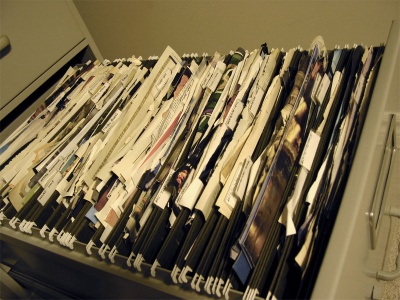
If you are considering hiring an Interior Designer know what you want by determining your needs beforehand, and define your style through design and architecture magazine clippings.  You can find a Designer through word of mouth, web-based research, professional associations, or trade magazines.

Most of all- have fun.

Interview them to review their portfolio, determine that your personalities mesh, discuss your project scope as well as the designer’s fees and process.  Most important of all, have fun with the process – your interiors will thank you, and you will have made an investment into the enjoyment and functionality of your space. For the Silo, Ramee Cyr/ R Design Studio.

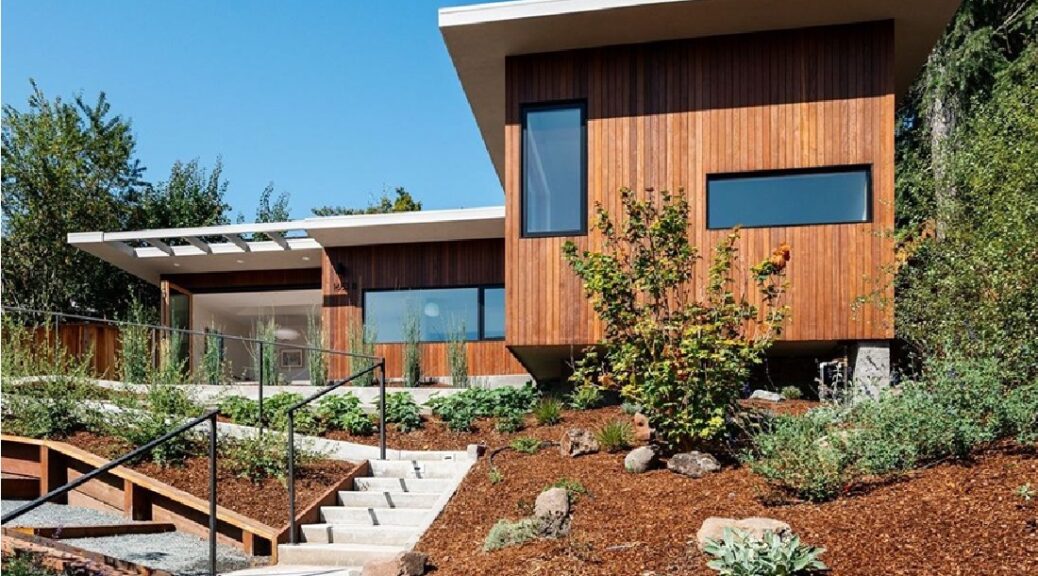
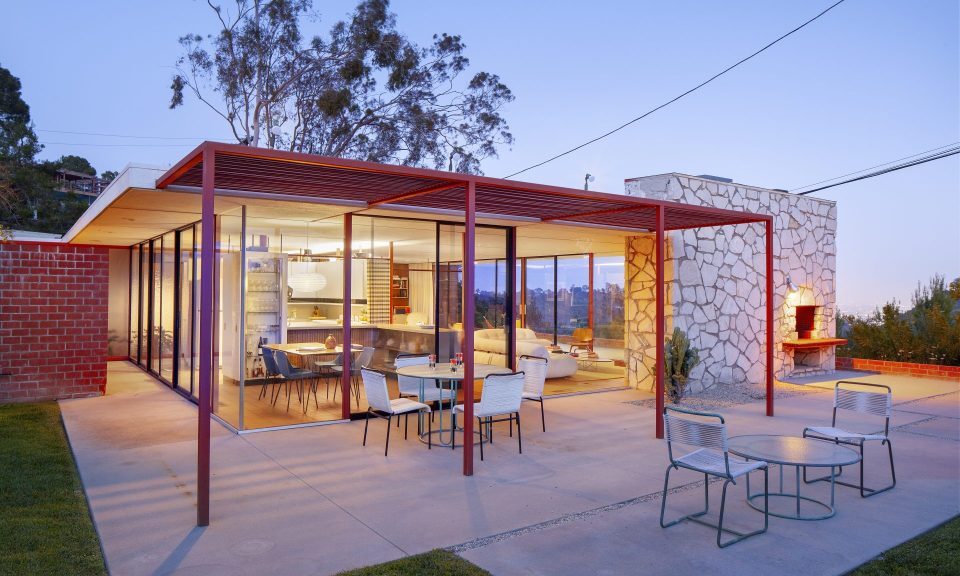
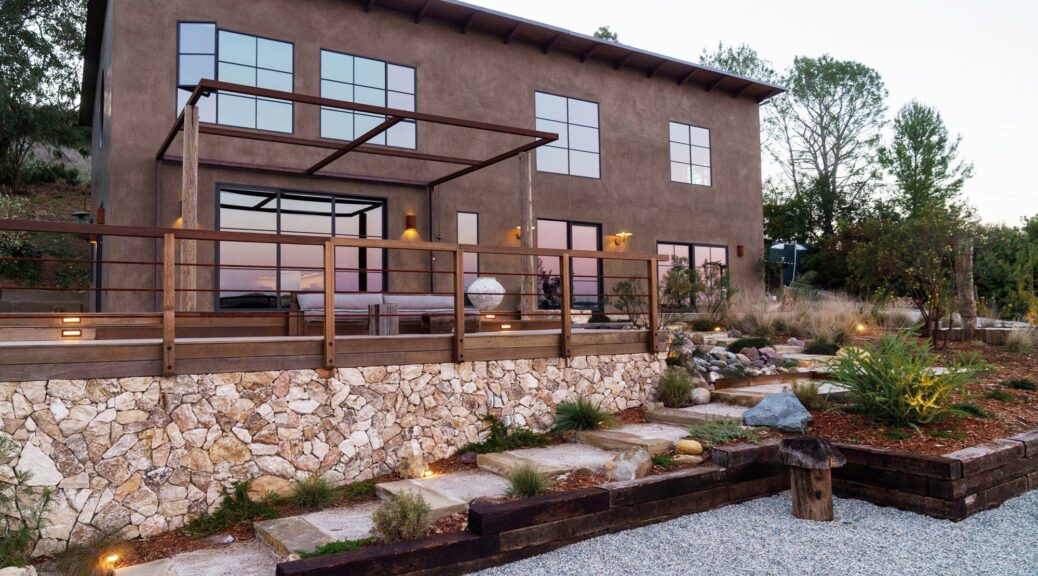
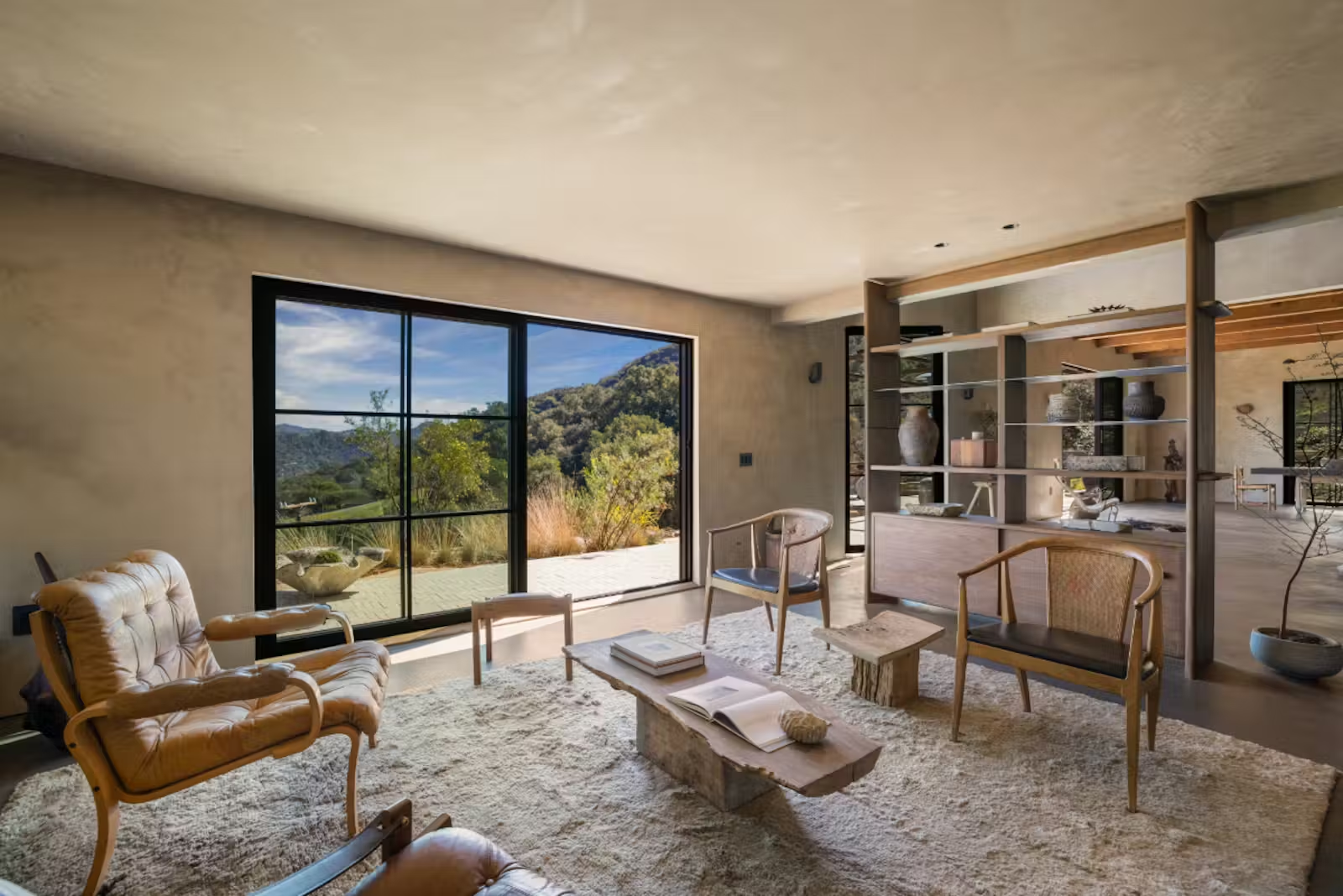
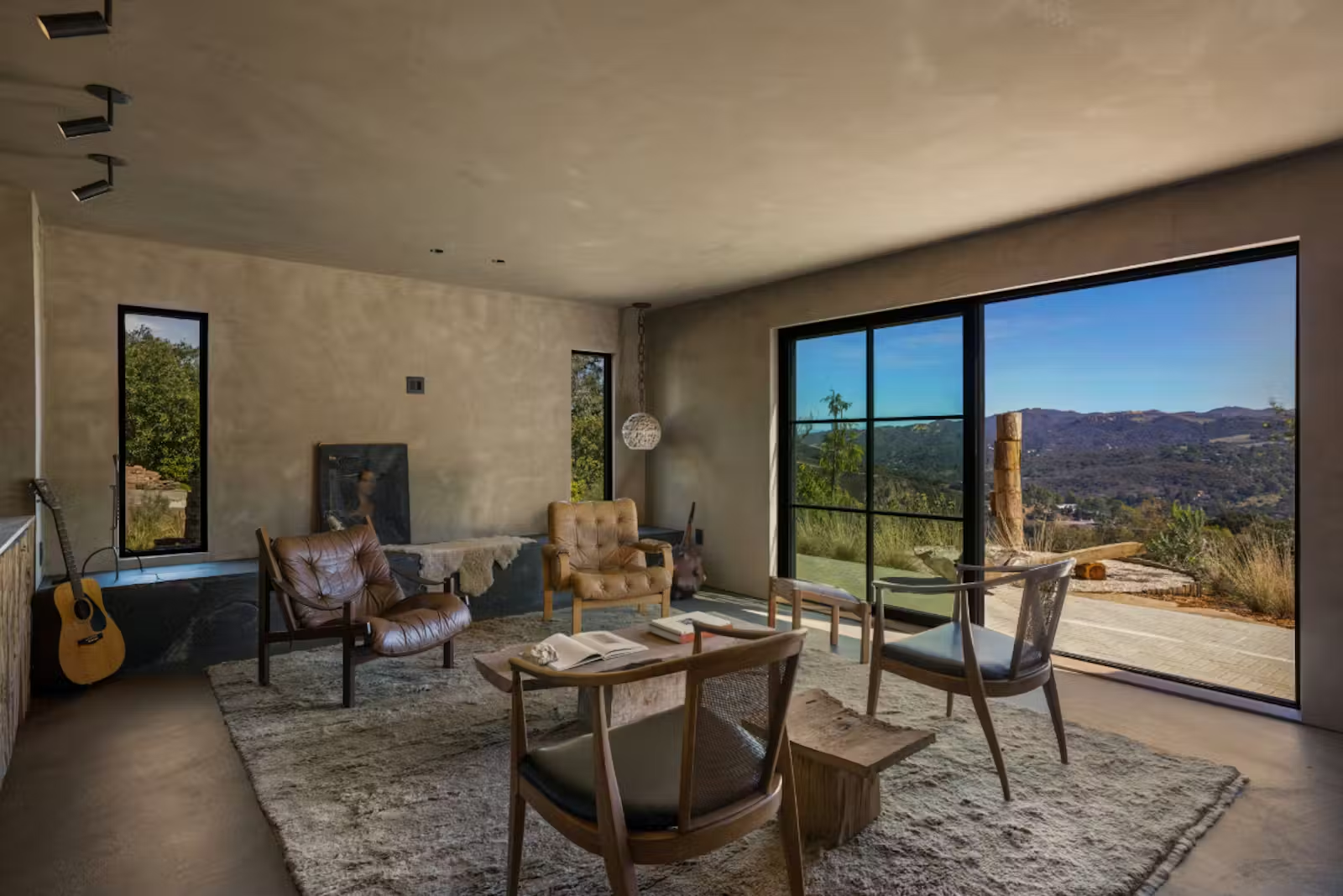
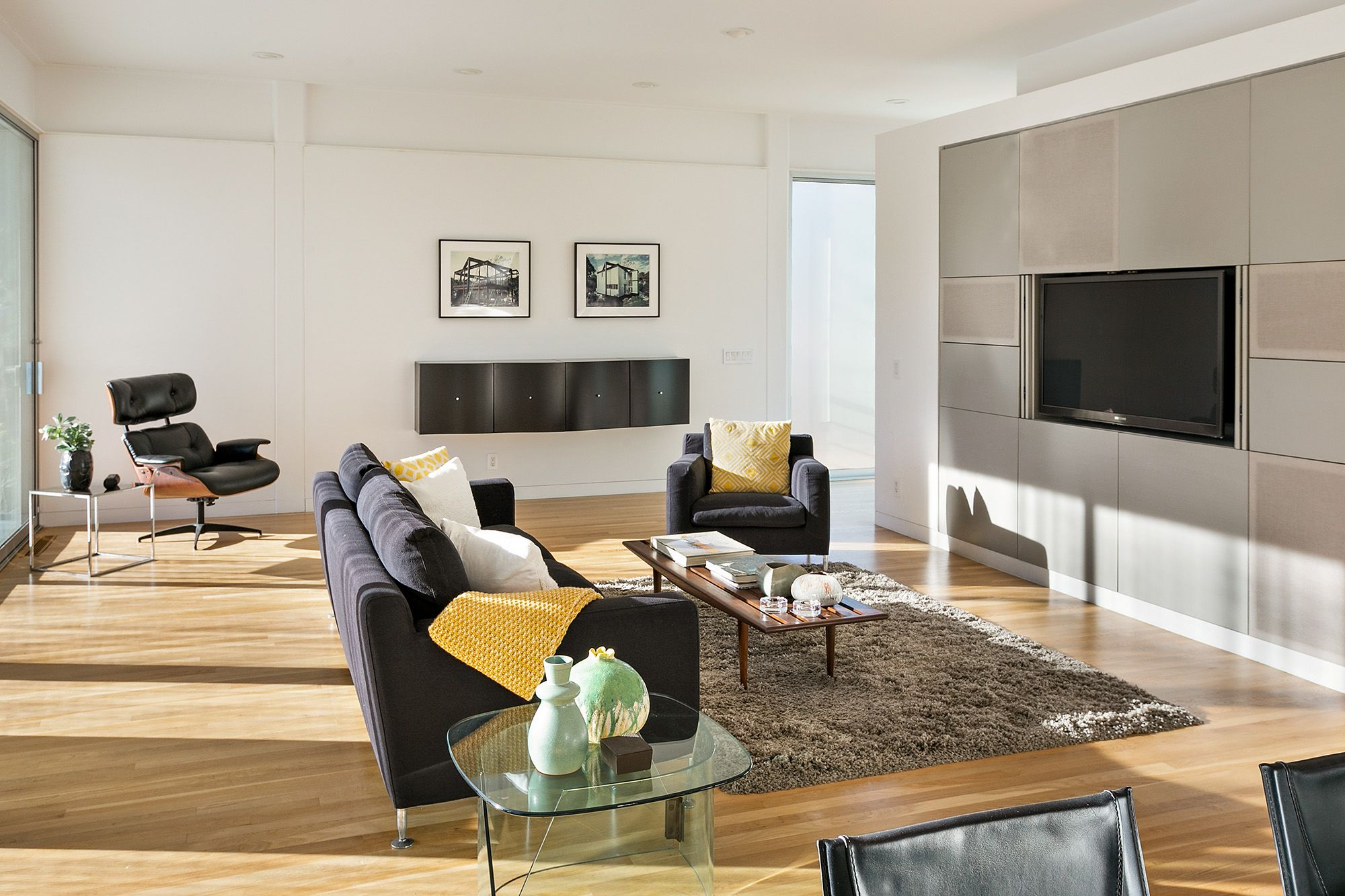
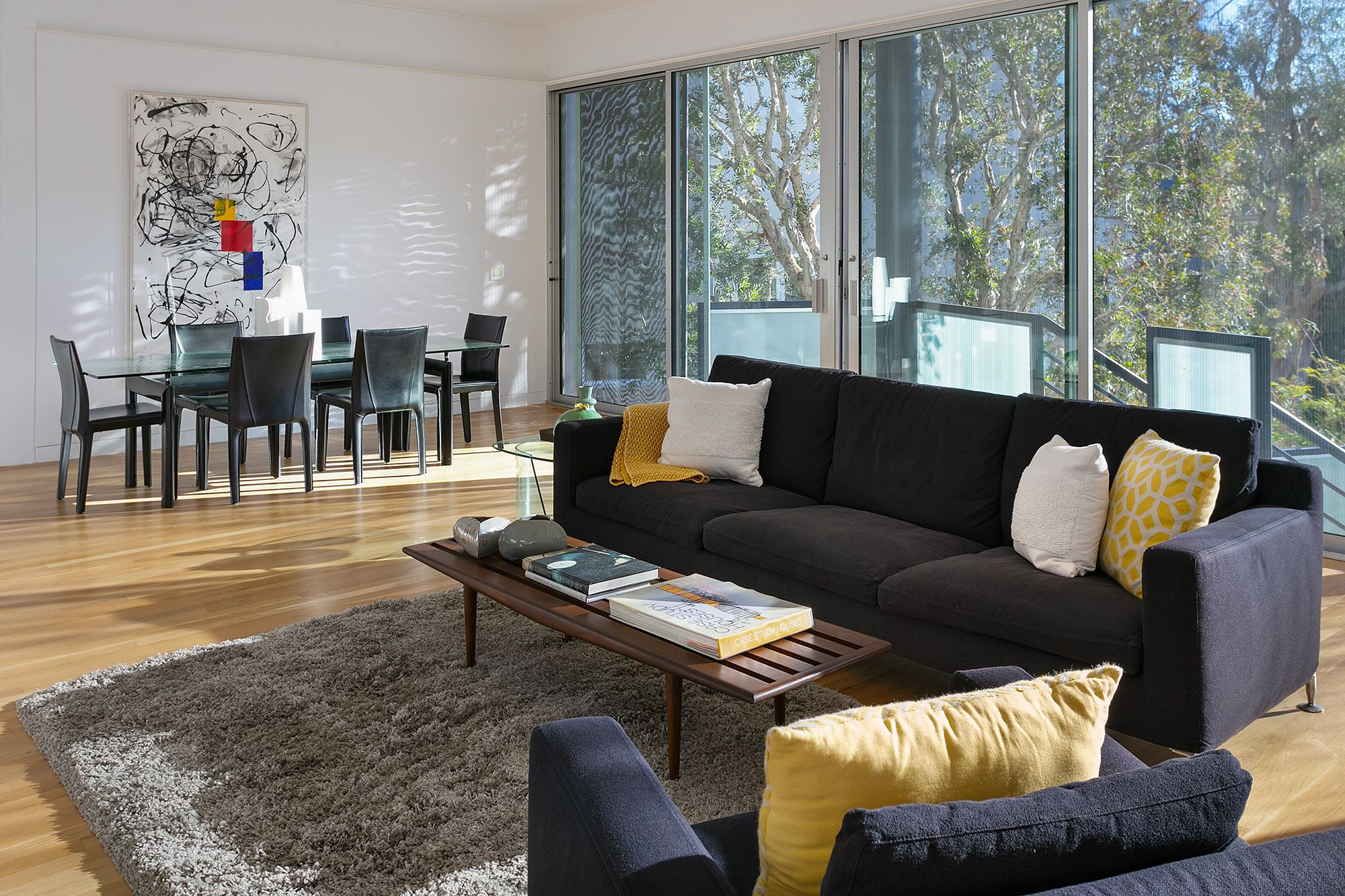
Featured image- Colwood house is a perfect mid-century nod to a modern Canada home designed by Erica Colpitts Interior Design.

LA’s Famous Atomic Age Stahl House For Sale

LA’s Stahl House – Most Famous US Modern Home Since Fallingwater – Lists $25 Million usd/ $34.3 Million cad

In 1945, Arts and Architecture magazine commissioned major architects to create the Case Study Homes, an experiment in architectural design intended as a creative solution to the impending post-war housing boom. Constructed from industrial materials, these homes would help to define the mid-century modern movement, none more so than Case Study House #22, known as the Stahl House.

The Pierre Koenig masterpiece is cantilevered over a Hollywood hillside, which had been deemed unbuildable by previous architects. The home was immortalized by renowned photographer Julius Shulman in an image that shows two women in white party dresses lounging in the living room that seems to float above the glittering city.

It is perhaps the most famous modern-style US home and architectural photograph since Frank Lloyd Wright’s 1930s Fallingwater. A true cultural landmark, the home is a City of Los Angeles Historic-Cultural Monument and listed on the National Register of Historic Places. 

Owned by the Stahl family since its inception, this one-of-a-kind icon of modern design has hit the market for the first time.

Representing the optimism of the atomic age, the Stahl House features the steel-and-glass construction so emblematic of the modern movement. Its legendary glass walls were created from the largest glass panels commercially available when it was built between 1958 and 1960. They offer sweeping 270-degree views of Los Angeles. A picture window in the primary bathroom frames the Hollywood Sign. 

An airy open floor plan connects the living spaces in the 2,200-square-foot home, anchored by a central fireplace with natural stone details. Blonde wood enhances the charming kitchen, which features a spacious island with counter seating that ingeniously tucks away when not in use. The concrete floors sport radiant heating for ultimate comfort. Sliding doors open onto the gorgeous pool deck with an expansive swimming pool and more awesome views. Situated at the end of a gated drive, the property offers a rare combination of discretion, security, and serenity high above the city. Since 2007, the house has offered public tours, and the family seeks not just a buyer but a custodian who will honor the house’s history, respect its architectural purity, and ensure its preservation for generations to come. 

Located in the Hollywood Hills, the house is about a mile from the legendary Sunset Strip, the epicenter of LA’s rock-and-roll scene in the 1960s and still home to top-notch venues for music, comedy and food. The neighborhood is very popular with celebrities, with A-listers like Leonardo DiCaprio, Keanu Reeves, Halle Berry and Taylor Swift owning homes in the hills. The Stahl House is a celebrity in its own right, having been featured in numerous films and TV shows, including ColumboNurse Betty and Galaxy Quest For the Silo, Jarrod Barker.

Tim Allen playing Jason Nesmith in 1999 Galaxy Quest – The Stahl house

The listing is held by William Baker of the Agency Beverly Hills.

Photo Credit: Cameron Carothers; Original Photos by Julius Shulman, courtesy of The Getty Museum

These Award Winning Tiny Homes Draw Attention As Sector Gains

The tiny home sector is big on innovation as exemplified by a new crop of amazing Accessory Dwelling Unit (ADU) designs across the U.S. and Canada showcasing state-of-the-art architectural and interior features, thoughtful layouts and stunning aesthetics that redefine what’s possible in small-space living. Maxable—North America’s leading  provider of resources for building guest houses, casitas, in-law suites, granny flats, pool houses and other ADUs—has officially named the the #1 best ADU of 2025 and other of the ’10 Best’ for the year based on a mix of criteria: visual appeal, use of space, creativity and functionality. Multiple photos for each are showcased online demonstrating the extreme ingenuity of each build.

Every year, Maxable’s ‘Best ADU of the Year’ competition celebrates the most innovative and impressive tiny home projects from across North America. Accessory dwelling units (ADUs) that don’t just look great, but solve real challenges of space, budget, and lifestyle. And the Top 10 have just been named! “If there’s one thing we’ve learned this year, it’s that accessory dwelling units ADUs aren’t going anywhere,” says Maxable CEO Paul Dashevsky. “In fact, they’re chugging along at full force as new regulations make their mark, homeowners are letting their creativity bloom, and designers are pushing the limits of what’s possible in small-space living.”

Here is the #1 winner and other of the top 10 best ADUs that have earned their keys in 2025.
______________________________________________________


#1 Best ADU of 2025:

Ashby ADU, Piedmont, CA

Designer: Tuan Le Design

Builder: Atelier19AD6

Size: 800 sq ft, 2 bed, 1 bath

Built on a steep slope, the project faced challenges with utility coordination, subcontractors, supply chain delays, and neighbor considerations, yet the team navigated every obstacle to deliver a standout result. The unit is fully electric, with a heat pump, water heater, and solar panels, making it efficient and environmentally conscious. Skylights and floor-to-ceiling four-panel sliding glass doors fill the interior with natural light, creating a bright, airy atmosphere. The modern design continues on the exterior with sleek wood paneling that complements the contemporary interior. The result is a stylish, functional ADU that maximizes both the views and the livable space

 
Other Top 10 Best ADUs of 2025


Chamomile Cottage, Arlington, MA

1-adu.jpg

Modular Design and Build: Backyard ADUs

Size: 567 sq ft, 1 bed, 1 bath

If a cozy cup of tea was an ADU, we think it’d look like this! Designed to bring an aging father closer to his family and young grandchildren, this modular build balances warmth, accessibility, and beautiful design. As one of the first detached ADUs completed under Massachusetts’ new ADU law, it also marks a milestone for backyard living in the state. Built with collaboration between Backyard ADUs and a homeowner with impeccable design taste, the result is both functional and heartfelt. Chevron wood flooring, warm olive walls, and a charming fireplace make the space feel like home from the moment you step inside. Skylights fill the rooms with natural light, while the ADA-compliant bathroom ensures comfort and safety for years to come.

Alora ADU, San Diego, CA

2-adu.jpg

Designer: Ruland Design Group

Builder: Glann Fick, Coastline Construction

Size: 1,000 sq ft, 2 bed, 2 bath duplex

This project is a beautiful example of how ADUs can bring generations together while adding long-term value to a property. The homeowners created not one, but two attached backyard homes. One was designed for an aging mother, and the other for rental income to support the family. Together, the units make space for four generations to stay close while still maintaining privacy and independence. Both ADUs were designed with light, openness, and connection to the outdoors in mind. High ceilings and clerestory windows fill the interiors with natural light, while large sliding glass doors open to private patios for easy indoor-outdoor living. Each space feels modern and welcoming, complete with well-appointed kitchens and roomy islands perfect for family meals or morning coffee. It’s a true example of multigenerational living done right.

Copperline ADU, San Diego, CA

3-adu.jpg

Designer and Builder: SnapADU

Size: 980 sq ft, 2 bed, 2 bath

This Spanish-style ADU in Rancho Santa Fe was designed to blend seamlessly with the community’s strict architectural standards. The homeowner, a roofing contractor, personally installed the boosted tile roof to match the main home, turning HOA requirements into an opportunity to create a timeless retreat. Today, the ADU serves as a private space for family and guests. Every element, from hand-textured stucco to arched porch openings and copper gutters, was carefully chosen to mirror the primary residence. Inside, faux wood ceiling beams add warmth to the great room, while custom shelving and professional-grade appliances enhance the kitchen. Each bedroom features an ensuite bath and walk-in closet, with a back entrance leading to a mudroom and laundry area.

Brick House ADU, Denver, CO

4-adu.jpg

Designer and Builder: ADU4U

Size: 938 sq ft, 1 bed, 1.5 bath

This ADU project breathes new life into an old, historic building, while preserving its authentic character and respecting its roots. Building a modern structure within an 138 year old structure was an innovative solution to achieve this. In historic Curtis Park, Denver’s oldest neighborhood, an 1886 brick carriage house stands as a testament to the passage of time. The building sits inside the boundaries of Denver’s historic Curtis Park, so all exterior design and material selections had to be approved through the city’s Landmark Commission.

ADU4U turned this once-unlivable structure into a cozy, modern home while preserving its historic charm. To bring it up to today’s safety standards, the team strengthened the old brick with a new steel frame and carefully reused original materials throughout the interior. The hayloft door became the powder room door, and the old floor joists were turned into a beautiful kitchen peninsula. Now, this light-filled ADU perfectly balances historic character with modern comfort. It’s truly a shining example of how old buildings can be reimagined for today’s living.

Longview ADU, Washington D.C.

5-adu.jpg

Designer: Ileana Schinder

Builder: J Cabido Designs

This project is a creative transformation of an abandoned garage and storage space into a bright and efficient one-bedroom ADU. By keeping the original structure’s footprint, the design team minimized both construction costs and the visual impact on the surrounding property. Every detail was planned with sustainability in mind. From upgraded insulation to energy-efficient mini splits and an energy recovery ventilator, the ADU meets Washington DC’s strict environmental standards while maintaining year-round comfort. Restoring the building’s existing openings allowed natural light to flood the interior, creating a warm and inviting space that feels much larger than its footprint. The result is a thoughtful blend of preservation, sustainability, and smart design, breathing new life into what was once an overlooked structure.

Sagebrush ADU, Menlo Park, CA

6-adu.jpg

Designer: Inspired ADUs

Builder: Integrum Construction

This ADU is a masterclass in craftsmanship and timeless design. Every detail, from the cedar shake siding to the copper flashings, was carefully chosen to mirror the main home and create a seamless, cohesive look. Instead of competing with the original architecture, it enhances it, feeling like it has always been part of the property. Natural materials play a starring role here. The cedar and copper will continue to age beautifully, adding warmth and character over time. Inside, handmade tile, custom cabinetry, and a cozy loft make the space feel elevated yet inviting. Every inch was designed with intention, balancing function, beauty, and authenticity. This ADU proves that small-scale construction can be both refined and enduring.

Brushstroke ADU, Newcastle, CA

8-adu.jpg

Designer and Builder: A+ Construction ADU Builders

Size: 1,198 sq ft + 800 sq ft deck, 3 bed, 2 baths

The client didn’t want to separate three generations of their family, so they built a second home in their backyard. This ADU allows their parents to live independently with their own routines and art studio, while staying just steps from family dinners, grandkid hugs, and everyday life together. At 1,200 sq. ft., the ADU includes three bedrooms, two bathrooms, and a large open living area. The layout prioritizes comfort, easy movement, and aging-in-place, with wide circulation paths, direct deck access from the primary bedroom, and plenty of natural light. A dedicated art studio with custom cabinetry and large windows supports the grandmother’s creative routine. The best feature? An 800 sq. ft. covered deck and carefully chosen exterior finishes. All of these details make the ADU feel integrated with the main home, creating a thoughtful, functional, and long-term living space for the whole family.

Alcove ADU, Los Angeles, CA

9-adu.jpg

Designer: Homeowner

Builder: Doobek Brothers

Size: 593 sq ft, 1 bed, 1 bath

What started as a retrofit for a carport turned into a fully functional ADU, making smart use of limited space while navigating strict city codes. Because the property sits on a hillside, any addition beyond the existing roofline would have required expensive drainage to the street, so the design works entirely within the original footprint. The interior feels calm and spacious thanks to thoughtful layout, finishes, and furniture. A double wall between the kitchen and bathroom cleverly hides appliances while providing storage for cleaning supplies, making the space feel open and uncluttered. Temperature and sound insulation reduce energy costs for both units, making it highly efficient. Windows were sized to align with the upstairs unit, creating visual harmony. With parking right outside and a potential deck planned for the upper unit, this ADU demonstrates how careful design can turn code restrictions into a livable home.

Elevare ADU, San Diego, CA

10-adu.jpg

Designer: Sergio Perlata

Builder: HM Construction

Size: 479 sq ft, 1 bed, 1 bath

This daring ADU was built on top of the homeowner’s existing house to preserve the garage while creating a luxurious, functional space. What started as a bold idea and labor of love resulted in a retreat that balances comfort, style, and modern California living. The design maximizes natural light, features high-end finishes, and offers seamless indoor-outdoor flow. Privacy for the main house was carefully considered, and practical choices like spa-like micro-cement in the bathroom create a durable, low-maintenance, and rental-friendly space. More than just a guest house, this ADU is a thoughtfully crafted space that inspires relaxation and connection.

For the Silo, Jarrod Barker.

Supplemental- ANC Brantford, Ontario, Canada

Canada Is One Of World Economic Forum Top Technology Pioneers

From electro-chromatic e-windows to using supernova explosions to explore the earth for mineral deposits: World Economic Forum 2025 Technology Pioneers Leading New Wave of Global Innovation

  • The World Economic Forum selects 100 start-ups from 28 countries to join its Technology Pioneers community.
  • The new cohort marks a global surge of emerging technologies, from smart robotics and spatial AI to flying taxis and scalable quantum solutions.
  • Now in its 25th year, the community has recognized over 1,200 start-ups that have gone on to transform industries and societies worldwide.
  • For more information on the Annual Meeting of the New Champions 2025, visit wef.ch/amnc25 and share on social media using the hashtag #amnc25, or #2025夏季达沃斯#. Read more about the 2025 Technology Pioneers here.

Geneva, Switzerland, 2025 – The World Economic Forum 2025 Technology Pioneers community is a group of 100 early-stage companies from 28 countries driving innovation across industries and borders. Now in its 25th year, the program celebrates its strongest cohort yet, marked by broader geographical representation, greater diversity beyond Silicon Valley and the rise of more ambitious frontier technologies.

Reflecting wider shifts in the innovation landscape, many of the companies spotlighted are using artificial intelligence (AI) to reach greater scale and sophistication with fewer resources. Several are venturing into less explored frontiers – from asteroid mining and flying electric taxis, to leveraging satellite imagery to transform agriculture and harnessing energy from supernova explosions to locate critical minerals beneath the Earth’s surface.

The geography of innovation is also evolving.

While the United States remains the top contributor to the community, Europe’s share has surged to 28% – up from 20% last year – reflecting the rise of strong tech ecosystems across the region. China and India are also emerging as major tech innovation hubs.

“There has never been a more exciting time to dive headfirst into tech innovation. But no one gets far alone – you need a community to move your mission forward,” said Verena Kuhn, Head of Innovator Communities, World Economic Forum. “As we mark 25 years of the Technology Pioneers programme, this global community continues to connect start-ups to the networks and ecosystems they need to scale.”

This year also marks the 25th Anniversary of the Technology Pioneers programme. Since its inception in 2000, the community has championed early-stage innovation and recognized more than 1,200 companies, many of which have gone on to reshape industries worldwide. Alumni include household names such as Google, PayPal, Dropbox and SoundCloud, underscoring the community’s role as a launchpad for ideas and impact.

The 2025 cohort stands out for its concentration of companies developing breakthrough technologies to address pressing global challenges. These include advanced robotics, customisable space launch services, micro nuclear reactors and more accessible quantum computing applications. These pioneers will contribute cutting-edge insights to Forum initiatives over a two-year engagement program and will also be invited to participate in the Annual Meeting of the New Champions 2025, taking place on 24-26 June in Tianjin, People’s Republic of China.

The 2025 Technology Pioneers include:

Australia
•    Cauldron – Commercializing advanced continuous fermentation technology to unlock price parity for mainstream bio-manufactured goods.

Brazil
•    Brain4care – Using AI-based technology to enable timely medical interventions for patients with neurological conditions.

Canada


•    Ideon Technologies – Harnessing the energy from supernova explosions in space to image deep beneath the Earth’s surface, transforming how mining companies recover critical minerals.
•    Miru – Developing dynamic electrochromic windows that deliver high functionality, experience and energy efficiency for the automotive, transportation and architectural sectors.

Greater China
•    Deep Principle – Integrating advanced AI models and quantum chemistry to accelerate the discovery and development of chemical materials.
•    GS Biomats – Developing furan bio-based material, a renewable alternative to petroleum-based chemicals, for various uses including biomedical applications.
•    HiNa Battery – Producing more sustainable, high-performance, low-cost sodium-ion batteries.
•    KaiOS – Providing affordable internet and access to financial services to unserved populations, primarily in South Asia and Africa.
•    Lightstandard – Making large language model computing faster and more energy-efficient with photonic computing.
•    Noematrix – Focusing on researching and developing embodied intelligence systems and related tools and platforms, which are compatible with diverse hardware.
•    Novlead – Designing a molecular technology platform providing available, accessible and affordable nitric oxide solutions for major clinical needs.
•    Shengshu Technology – Building generative AI infrastructure that develops native multi-modal large models such as images, 3D and video. 
•    TRANSTREAMS – Engineering chips and solutions to address the computing power shortages in China during the era of AI-generated content.
•    Turing – Providing cutting-edge computing infrastructure and comprehensive AI solutions to drive the future of intelligent computing.

Colombia
•    Plurall – Supporting early-stage entrepreneurs in emerging markets with fast, accessible working capital and digital payment solutions, leveraging AI models for risk assessment, collections and embedded lending.

Denmark
•    Arcadia eFuels – Developing and deploying technology to produce electro-sustainable aviation and diesel fuels using renewable electricity, seawater, and captured CO2.

Egypt
•    Thndr – Offering a digital investment platform with a range of flexible funding methods and educational resources to empower investors.

France
•    Ascendance Flight Technologies – Decarbonizing aviation with a hybrid electric propulsion system and hybrid vertical take-off and landing (VTOL) aircraft.
•    Beyond Aero – Building the first electric business aircraft powered by hydrogen propulsion, as a sustainable alternative to traditional business jets.
•    CO2 AI – Helping large and complex organizations measure their environmental impact, identify credible levers and decarbonize at scale through AI.
•    Jimmy – Developing a micro nuclear reactor to provide carbon-free, competitive heat for industrial processes.
•    Nabla – Reducing clinician burnout by automating clinical documentation with AI.
•    Orakl Oncology – Creating a biology and AI-powered simulation platform to revolutionize oncology drug development.
•    Phagos – Deploying a sustainable alternative to antibiotics using bacteriophages and AI
•    Quobly – Making scalable, cost-competitive, large-scale quantum computers.
•    Sweetch Energy – Enabling osmotic power generation by harnessing the salinity gradient between freshwater and seawater.

Germany
•    Accure – Providing predictive battery analytics software to enhance safety, optimize performance and extend the lifetime of battery systems.
•    Black Forest Labs – Building generative deep learning models for media, particularly images and videos
•    eleQtron – Developing quantum computers by leveraging trapped-ion technology.
•    Tozero – Pioneering the delivery of recycled lithium in Europe by sustainably recovering critical materials from battery waste.

India
•    Agnikul – Providing affordable and customizable space launch services.
•    CynLr – Building robots with intuitive vision and enabling manufacturers and logistics providers to build fully automated factories.
•    Dezy – Leveraging AI-powered diagnostic technology to build affordable and accessible dental care. 
•    Digantara – Providing crucial operational support to commercial space operators and space surveillance intelligence to global space agencies.
•    Equal – Providing an integrated solution that combines identity verification with consent-driven financial data sharing.
•    Exponent Energy – Making 15-minute rapid charging for electric vehicles affordable and scalable through an innovative battery management system, charging algorithms, thermal management and a charging network.
•    Freight Tiger – Building India’s largest software-enabled freight network to help businesses move goods with full visibility, efficiency and lower costs.
•    GalaxEye – Creating a comprehensive, multi-sensor Earth observation system.
•    SolarSquare – Helping homes switch to solar in India with its full-stack solar panel systems.
•    The ePlane Co. – Developing flying electric taxis designed for intra-city transportation.

Ireland
•    Equal1 – Democratizing quantum computing by leveraging existing semiconductor technologies.

Israel
•    Fermata – Providing computer vision solutions for farmers to reduce crop losses and pesticide use.
•    Illumex – Empowering organizations to run governed and reliable AI agents through unified business data language and to democratize data access to every user.
•    LightSolver – Building a photonic supercomputer by harnessing the power of coupled lasers.
•    NanoSynex – Offering a rapid and accurate diagnostic platform for bacterial resistance.
•    ZutaCore – Developing waterless direct-to-chip liquid cooling for AI and high-performance computing (HPC) data centres.

Italy
•    Arsenale Bioyards – Building new lab-to-production infrastructure enabling fast, low-cost biomanufacturing at an industrial scale.

Japan
•    Sagri – Leveraging satellite data and AI to transform agriculture through land use optimization and sustainability.

Republic of Korea
•    Hylium Industries – Providing safe and innovative liquid hydrogen solutions for carbon-free mobility.
•    NARA Space – Building South Korea’s first microsatellite constellation for methane point source detection. 
•    Robocon – Developing robotics and smart factory solutions for the construction and steel industries.

Luxembourg
•    Tokeny Solutions – Building the compliance infrastructure for digital assets in blockchain and fintech.

Mexico
•    Allie – Creating closed-loop optimization systems for manufacturing that autonomously adjust production parameters in real time.

Nigeria
•    Cybervergent – Providing a platform to automate cybersecurity compliance and risk governance.
•    Sabi – Powering the sourcing and distribution of physical goods and critical commodities in Africa.
•    ThriveAgric – Empowering smallholder farmers across Africa by linking them to finance, data-driven best practices, and access to local and global markets.

Saudi Arabia
•    Intelmatix – Making enterprise AI accessible through industry-specific, context-aware AI agents.

Singapore
•   Manus – Automating a wide range of practical tasks for personal and professional use with a general AI agent.
•    Rize – Decarbonizing rice cultivation in Asia through scalable agricultural innovations.

Spain
•    Crisalion Mobility – Offering sustainable air and ground mobility solutions.
•    INBRAIN Neuroelectronics – Developing brain-computer interfaces to treat neurological disorders.

Sweden
•    Graphmatech – Developing advanced materials infused with graphene to make large-scale industries more innovative and resource efficient.
•    Lovable – Using AI to help users create software and web apps without coding expertise.

Switzerland
•    HAYA Therapeutics – Developing RNA-based medicines to treat heart, lung and tissue diseases.
•    Neural Concept – Accelerating product design through 3D generative engineering and AI.

Uganda
•    Numida – Using credit models and digital underwriting to provide loans to micro businesses.

Ukraine
•    Respeecher – Enabling scalable voice cloning across languages and contexts.

United Kingdom
•    CuspAI – Using frontier AI to accelerate the discovery and development of materials with specific functionalities.
•    Obrizum – Offering personalized digital learning services at scale through an AI-powered platform.
•    Oxford Ionics – Building high-performance quantum computers using trapped-ion technology.

United States
•    Ammobia –Fuelling the world with cost-effective, lower-carbon ammonia production.
•    Archetype AI – Pioneering a new form of Physical AI capable of perceiving, understanding and reasoning about the world through analysing real-time, multimodal sensor data.
•    Arine – Integrating cutting-edge AI, clinical expertise and advanced data analytics to deliver medication-based care interventions at the population level.
•    AstroForge – Making critical minerals more accessible to humanity by mining asteroids.
•    BforeAI – Using behavioural AI to predict and automatically pre-empt malicious campaigns and stop cyberattacks before they occur. 
•    Candidly – Developing an AI-powered platform to help borrowers manage and overcome educational loans.
•    Claryo – Helping warehouse operators maximize operational efficiency by leveraging spatial generative AI.
•    Distyl AI – Enabling enterprises to seamlessly integrate AI agents into operations.
•    Emvolon – Converting methane emissions into carbon-negative fuels for hard-to-abate sectors onsite.
•    Exowatt – Delivers solar power on demand by storing energy and converting it into electricity as needed, helping data centres and the grid run on clean energy 24/7.
•    Foundation Alloy – Commercializing solid-state metals technology to make higher performance metals using less energy.
•    HAIQU – Developing a new application execution stack for all modalities of near-term quantum computers.
•    Hertha Metals – Developing technology to decarbonize primary steel production.
•    Hyfe – “Turns food processing waste into chemicals that replace petroleum in everyday goods”.
•    Lumu Technologies – Providing cybersecurity operations capabilities to help businesses control the impact of cybercrime.
•    One Bio – Using biotechnology to add anti-inflammatory plant-based fibres to everyday foods.
•    Oberon Fuels – Developing innovative carbon-neutral fuels for maritime, propane, and hydrogen sectors.
•    Osmo – Combining frontier AI and olfactory science to digitize scent and enhance well-being.
•    Outtake – Securing digital identities by detecting and removing harmful AI-generated content.
•    Parallel Learning – Providing licensed therapy and instruction to students with learning differences through a digital platform.
•    Pavilion – Increasing efficiency in US public procurement with an AI-enabled government marketplace.
•    Reality Defender – Offering multimodal detection of AI-generated media to prevent fraud and disinformation.
•    RoboForce – Building AI-powered robotic systems designed for high-risk or repetitive work, to enhance efficiency, productivity and safety across industries.
•    Rubi Laboratories – Using biocatalysis to transform CO2 into essential materials like cellulose.
•    Shiru – Leveraging AI to identify and develop naturally occurring functional ingredients.
•    Starcloud – Constructing data centres in space to solve the AI energy challenge.
•    Waterplan – Delivering an AI-powered platform to measure, manage and mitigate water risk.
•    Workera – Providing AI-driven workforce skills intelligence and upskilling pathways.
•    Workhelix – Helping companies identify AI transformation opportunities and measure return on investment.

Uruguay
•    Prometeo – Creating a single, borderless banking application programming interface to connect companies with financial institutions across the Americas.

About the Annual Meeting of the New Champions 2025
The 16th Annual Meeting of the New Champions will take place from 24 to 26 June 2025 in Tianjin, People’s Republic of China, under the theme “Entrepreneurship for a New Era.” The meeting will convene over 1,700 leaders from business, government, civil society, academia, international organizations, innovation and media to explore entrepreneurial solutions to global challenges.

About the Technology Pioneers
Launched in 2000, the Technology Pioneers community marks its 25th anniversary in 2025 as a leading platform for early-stage companies from around the world that are shaping the future through breakthrough technologies and innovations. These companies are selected for their potential to have a significant impact on business and society and are invited to engage with public and private sector leaders through the World Economic Forum’s global platform.

The Technology Pioneers community is part of the Innovator Communities within the Forum’s Centre for the Fourth Industrial Revolution. The Innovator Communities convene the world’s leading global start-ups across different growth stages from early-stage Technology Pioneers to growth-stage Global Innovators and unicorn companies valued at more than $1 billion usd/ $ 1.373 billion cad.

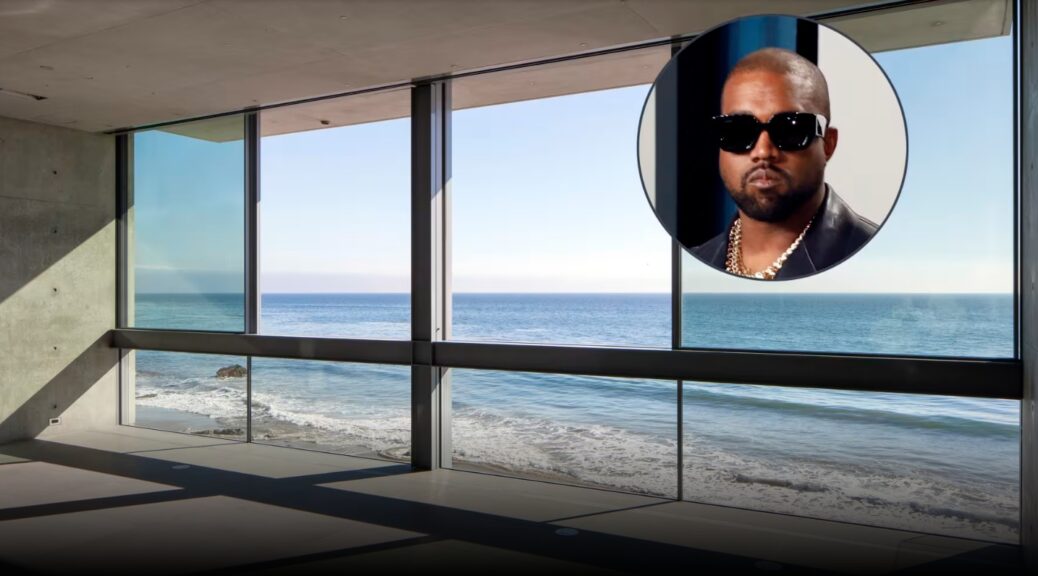
Kanye’s Malibu Mansion Saga Continues

The concrete Malibu mansion abandoned mid-renovation by Kanye West is back on the market with a previous deal now on the rocks. 

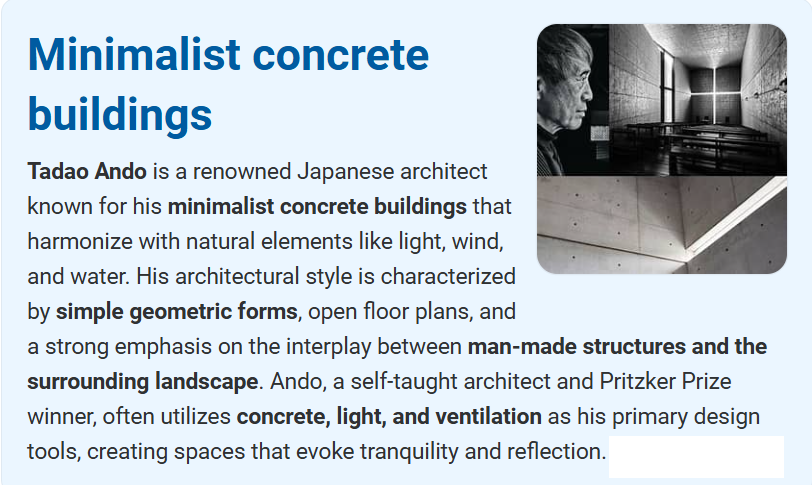
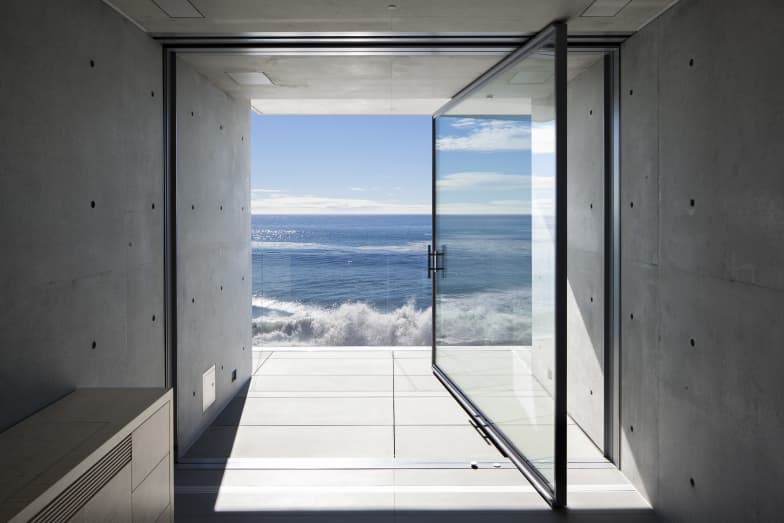
The Malibu Beach home that Kanye West bought in 2021 for $57.3 million usd/ $79.03 million cad but then gutted, abandoned and sold for $21 million usd/ $28.97 million cad has hit a new snag. The 4,000-square-foot home, designed by renowned architect Tadao Ando, has bounced between several developers and is now back on the market for $34.9 million usd/ $48.14 million cad. 

It’s the latest twist in the saga of the oceanfront house, designed by award-winning Japanese architect Tadao Ando, which the rapper purchased in 2021. 

West bought the three-story home for $57.3 million—and then immediately gutted it, leaving only a concrete shell with no windows, plumbing or electricity when he dumped the project about two years later

Note- prices below are in USD, please read intro paragraph above for CAD conversion at time of publication.

The skeletal beach house then sold for $21 million last year to Steven “Bo” Belmont, a developer who returned it to the market within months. He quickly went into contract to sell it to another developer, the Montana-based Andrew Mazzella, for $30 million, both parties confirmed.

Listing images show the home before a gut renovation was begun.The Oppenheim Group/Roger Davies

The deal with Mazzella, a luxury home developer, was scheduled to close in May but has now stalled, as the shell of a house was back on the market as of Wednesday asking $34.9 million, down from an initial ask in March of $39 million.

According to Belmont, CEO of crowdfunding platform Belwood Investments, the deal is enirely dead, he told Mansion Global on Monday. Belmont cancelled the contract after Mazzella requested a third extension to find financing when the second extension expired on July 31. 

Mazzella confirmed that they mutually cancelled the contract earlier this month, but was quoted as saying he’s “not out of the game just yet”, and is “still interested in negotiating a deal for the house”. 

Roughly 1,200 tons of concrete were used to build the original home.The Oppenheim Group/Roger Davies

Prior to the March deal, Belmont had already begun the $8.5 million process of returning the 4,000-square-foot home to its original design by the Pritzker Prize-winning architect, built in 2013 for financier Richard Sachs, he said. He consulted with Sachs and hired the same design-build firm, Marmol Radziner, who had constructed the house originally. 

Belmont plans to sell the building as-is at the new price to recoup the money already invested, or return to the original plan of restoring it and selling the completed house—which he expects to be in even more demand in the wake of the January wildfires. 

“Malibu is going to get a full face lift, with fire-retardant concrete homes, and we have the ultimate high-end concrete home. A tsunami can’t take it out. A fire can’t take it out,” Belmont said. “And it’s the only Ando for sale.” 

The listing is with Jason Oppenheim of the Oppenheim Group and Mauricio Umansky of the Agency, who have been representing the seller from the start. Oppenheim previously repped Kanye in the sale to Belmont, as well. Neither immediately responded to a request for comment. 

Realtor.com first reported the home’s return to the market.

Mazzella had also planned to complete the reno of the house and list it closer to Kanye’s original purchase price. “It’s a very complicated construction project,” he said. 

Who knew? The relationship between Kanye West and architecture – nss magazine

Mazzella is working on restoring another Los Angeles mansion and plans to keep looking for opportunities if the deal for this one does fall through. “I consider my business style to be that of Trump, Musk and Carl Icahn combined so it’s not an easy process,” he said.

For the Silo, Liz Lucking/ Mansion Global, Jarrod Barker.

Coming To Streaming & Disc- Eileen Gray & The House By The Sea

She designed a sanctuary for herself.
Unfortunately, it turned out to be a modern masterpiece.

E.1027
Eileen Gray and the House by the Sea
Streaming & DVD Launch September 9, 2025!
Coming to Amazon, Apple & Kanopy
 
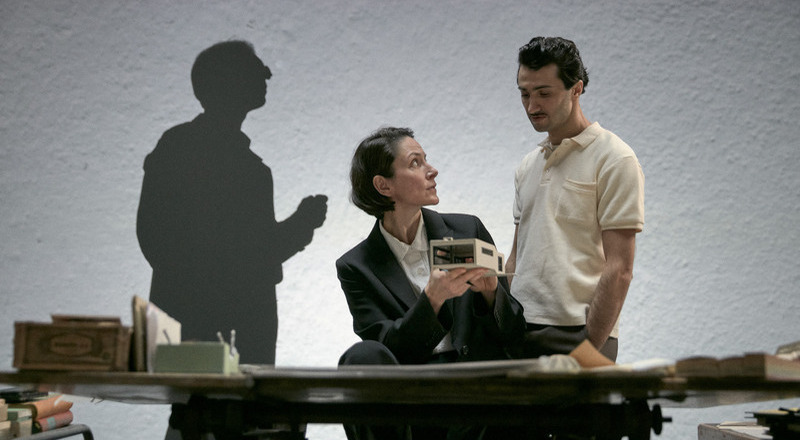
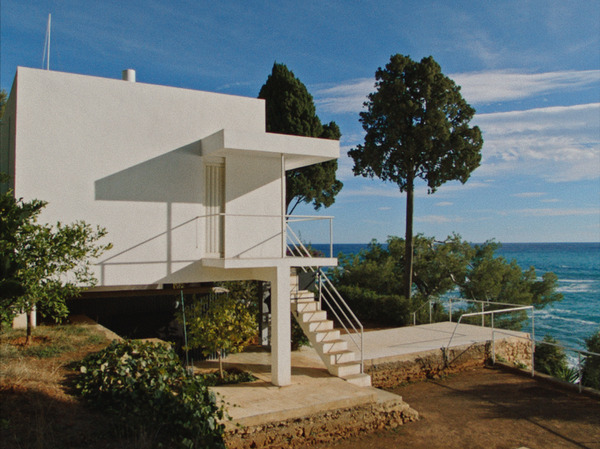
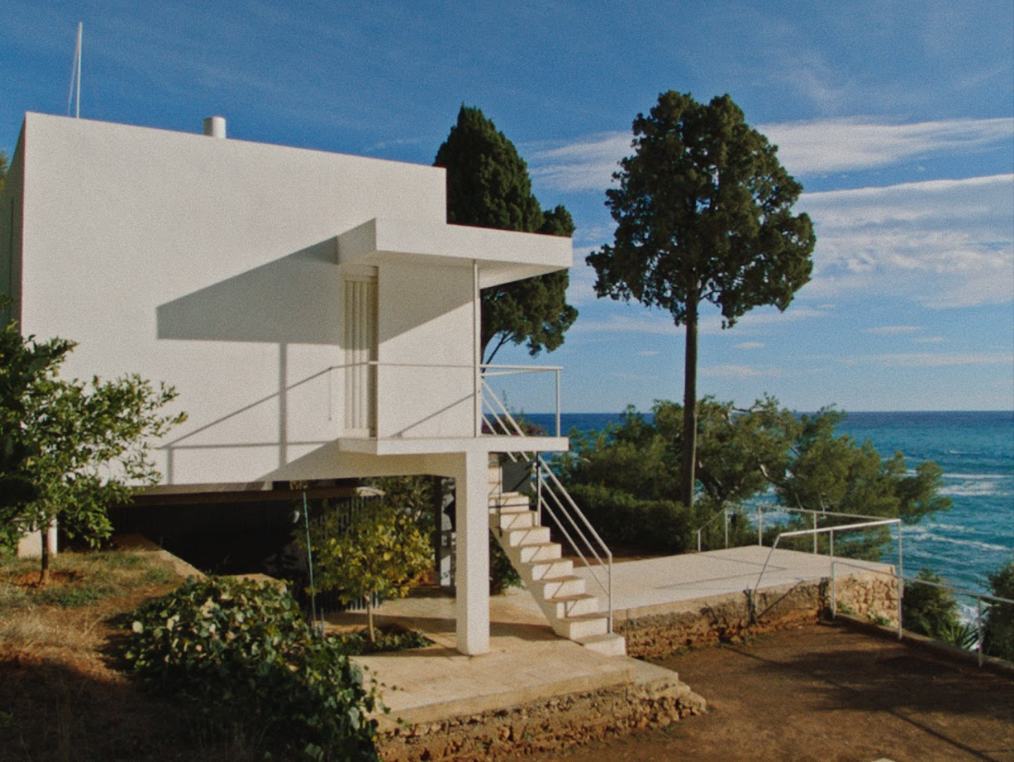
In 1929, Irish designer Eileen Gray created E.1027 on the sun-soaked Côte d’Azur – a bold and hidden gem of avant-garde architecture. This striking house was meant to be a personal refuge.

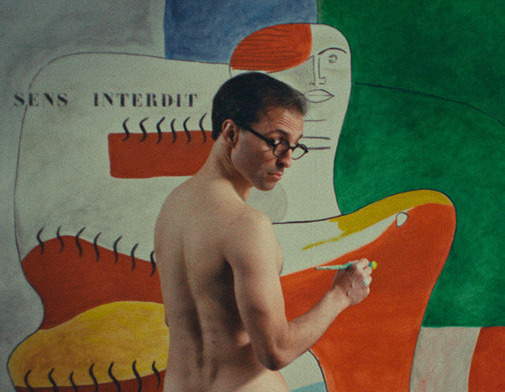
But when the legendary architect Le Corbusier stumbled upon it, fascination turned to obsession. He covered its walls with his murals, completely disregarding Gray’s wishes and her vision. His defiant act ignited a battle for creative control, with Gray demanding restitution for the destruction of her work. He ignored her wishes and instead built his famous Cabanon house directly behind E.1027.

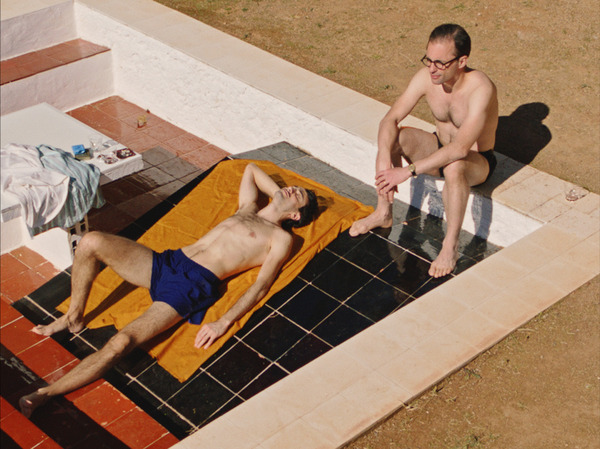
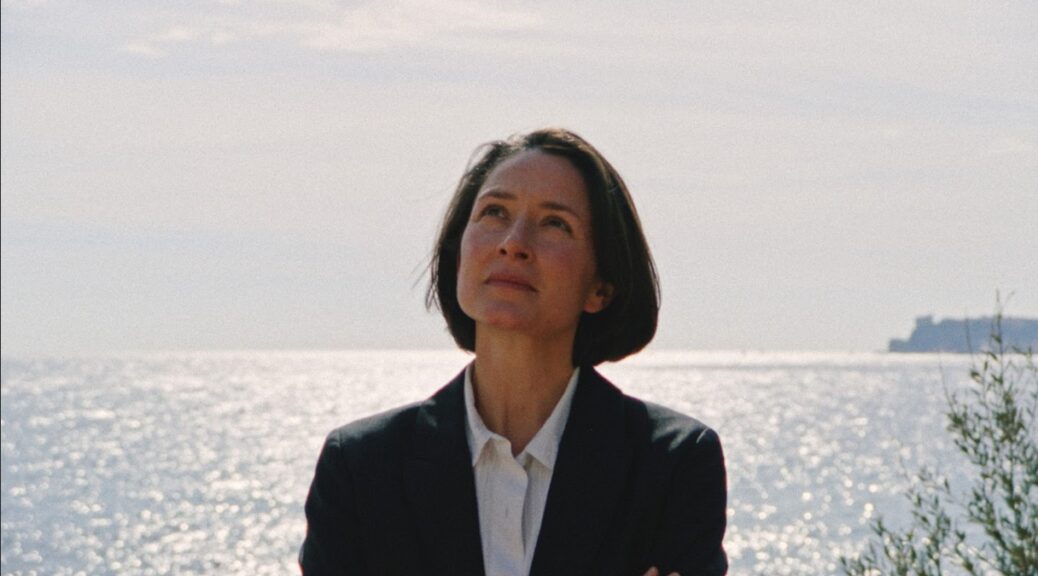
E.1027 – Eileen Gray and the House By the Sea is an unusual hybrid docu-fiction film that tells a story about the power of one woman’s creative expression and a man’s desire to control it.
“A unique and uniquely satisfying experience…a bold movie because it takes a deep dive on characters and a house that may not widely known, at least for American audiences. There is nothing quite like it.”
– John Soltes, Hollywood Soapbox
A story of passion, craft, and betrayal…aesthetically beautiful and a great summer watch.” – Fiona Rae, Film Threat
“Shot on location at E.1027, this feature-documentary hybrid matches the sleekness of its setting – its serenity, its surface poetry, its fragments of grace.” – Barlo Perry, ParisLA
“Eileen Gray was a creative genius and the first woman to conquer the world of architecture at a time when men controlled it all. This new film reflects on Gray’s impressive career and her stunning modernist house on the Cote d’Azur.” – Meredith Taylor, Finito World

“The directors put architecture in dialogue with cinema in order to bring to life the sensibility of a woman who was a visionary yet is too rarely celebrated. Elegant and well thought-out, the film uses the cinematic medium to enrich a discourse.” – Giorgia Del Don, Cineuropa

“Based on the memoirs of Eileen Gray, this meticulously crafted docu-drama, where poetry slips into frames, angles and tones, almost feels like a hallucination.” – Maroussia Dubreuil, Le Monde
A First Run Features / Architecture & Design Film Festival Release
E.1027 – Eileen Gray and the House By the Sea

Written & Directed by Beatrice Minger
Co-Directed by Christoph Schaub
With Natalie Radmall-Quirke, Axel Moustache & Charles Morillon
90 minutes, color, 2024 | English & French w/English subtitles

Streaming & physical media disc Launch Date: September 9, 2025
Streaming Platforms: Amazon, Apple & Kanopy
DVD SRP: $19.95 usd| DVD UPC: 7-20229-91843-5

For the Silo, Kelly Hargraves/ First Run Features.

Buckminster Fuller’s Fascinating Unbuilt Buildings

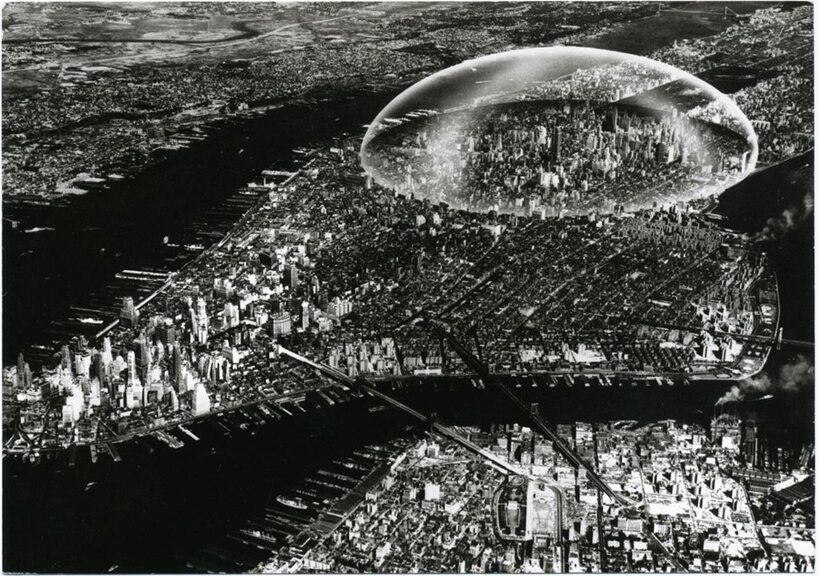
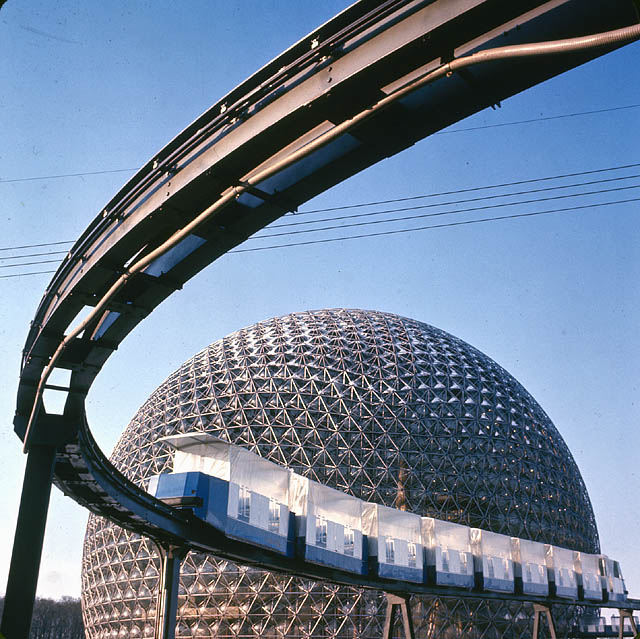
Buckminster was a genius and his geodesic dome buildings were not only revolutionary in their construction but were also incredibly unique and memorable. Perhaps your grandparents attended Expo67 in Montreal (you guessed it, waaay back in 1967) and visited the United States Pavilion- read this snippet for a time capsule account:

“The United States exhibit, entitled Creative America, is designed to illustrate technological and esthetic inventiveness in the U.S.A.A huge transparent geodesic “bubble” contains a multi-level system of exhibit platforms interconnected by escalators, and walkways. The platforms support a variety of exhibit components specially selected or designed for the new environment created by the structure. Situated on Ile Sainte-Hélène close to the Métro station from which there is Minirail connection with the Expo-Express, the bubble is 20 stories high and has a spherical diameter of 250 feet .By day, the bubble glistens as the sun highlights the structure and, by night, the bubble “glows” from interior lighting. The interior exhibits reflect different aspects of the United States and include folk art, cinema and fine arts displays, as well as a space exhibit which is reached by a 125 foot escalator and a simulated lunar landscape supporting full scale lunar vehicles. A 300-seat theatre features a 3-screen color film showing the games children play.”

Photo- National Archives of Canada

If you think that was pretty amazing check out some of Buckminster’s buildings that unfortunately didn’t make it past the planning stage.

Fascinating Unbuilt Buildings

Historic Mid Century Modern Case Study House #16

Los Angeles’s Case Study House #16
Vintage mid-century modern homes are as popular today as they were when built in the 1950s and ’60s. Arts & Architecture magazine’s post-war Case Study Houses, for example, rarely come up for sale, and when they do, are usually snapped up by aficionados almost as quickly as the listing goes into print. Case Study House #16 is now for sale and priced at $5.4 million usd/ $7.4 million cad.

When World War II ended and the American troops were returning home, it was the start of the baby boom and a monumental housing shortage. Well-known architects in the country were asked to design simple, affordable homes that could be built en masse.


The magazine Arts & Architecture put out a challenge to architects that included Richard Neutra, Raphael Soriano, Craig Ellwood and Ray Eames. The Case Study Houses were numbered 1 through 28, and two apartments were included. They were built from 1945 sporadically through 1966. Thirteen were never built, and from the ones that were, at least three were later demolished. A couple of them have been renovated rather than restored, and the rest are lived in and cared for today.

NUMBER 16

Number 16 was the first of three Case Study Houses designed by Craig Ellwood. Completed in 1953 in Bel Air, the house was innovative in its use of exposed steel-structural framing and floor-to-ceiling glass walls to optimize the views and open to the grounds, making it feel twice the size.

Ellwood was actually an engineer rather than an architect, and placed a lot of emphasis on the stability of the structure using steel, glass, and concrete built on a slab. The 1,664-square-foot home with two bedrooms and two baths is just as contemporary today as when it was built. The living room has a dramatic stone fireplace set into the glass wall that extends beyond it into a terraced area. Set into mature landscaping, the house appears to rest on a cushion of greenery.

The historic Case Study House #16 is for sale in Bel Air, Los Angeles, California. Priced at $5.4 million usd/ $7.4 million cad, the listing agent is Veronika Sznajder with Crosby Doe Associates. For the Silo, Bob Walsh/ toptenrealestatedeals.com

Rock Star Haven Egg House In Topanga Canyon Is For Sale

Topanga Canyon’s One of a Kind “Egg House”
Topanga Canyon is one of LA’s most unique neighborhoods. Nestled in the Santa Monica mountains, the tight-knit community is known for its spectacular nature and Bohemian vibes. During the 1960s and 70s, the neighborhood was a haven for rock stars, including Canada’s own Neil Young and Joni Mitchell along with Jim Morrison, several members of The Eagles, and even country legend Linda Ronstadt among its talented residents. R&B superstar Marvin Gaye described Topanga as “a place where I can create my masterpiece,” and numerous artists agreed. Local venue The Topanga Corral hosted some of the all-time greats and inspired The Doors’ hit “Roadhouse Blues.” Simultaneously accessible and remote, the region remains a sanctuary for artists of all kinds. 

The opportunity to own a piece of this special neighborhood presents itself with the listing of Topanga Canyon’s “Egg House” for $4.995 million usd/ $6.790 million cad. This sculptural masterpiece of brutalism and organic design proudly sits at 225 Powderhorn Ranch Road.


Designed and built by artist couple Chad Hagerman and Allison Ochmanek of Rascal Makers, the home is inspired by the concept of the embryo – the origin of life, potential, and transformation. Combining brutalist architecture with organic materials, the bespoke home offers a serene aesthetic with touches of Japanese minimalism. The home is a true statement piece, with handcrafted plaster walls,  stone floors, artisan fixtures, and thoughtful details throughout. With four beds and five baths, the stunning home offers 3,350 square feet of living space. 

For The Silo, Jarrod Barker.

Exploring the Timeless National Hotel Miami Beach

A Silo Travel spotlight. The Art of Escape: Inside the Enduring Miami Beach Property Where Vintage Glamour Meets Contemporary Luxury

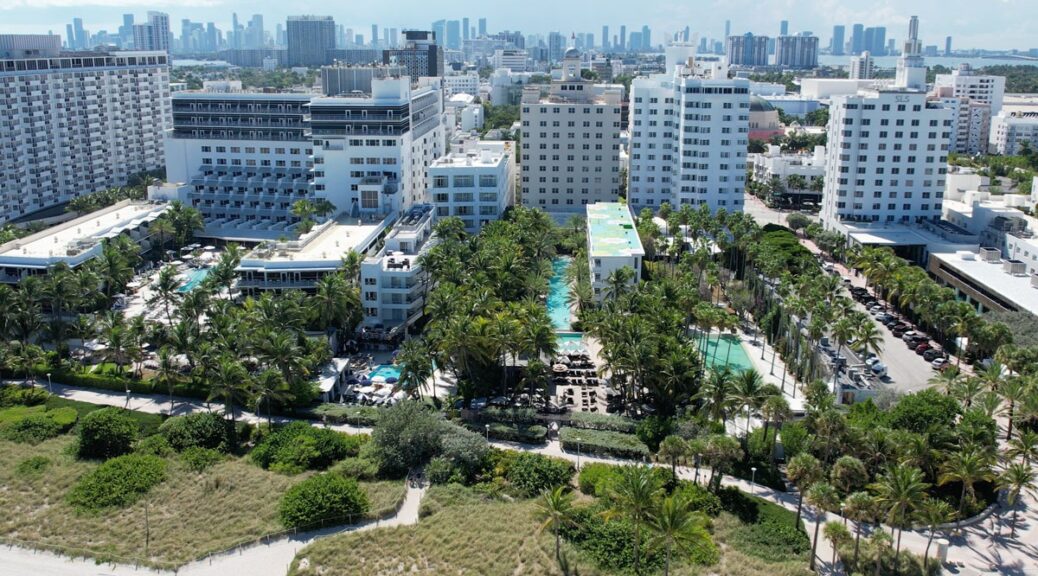
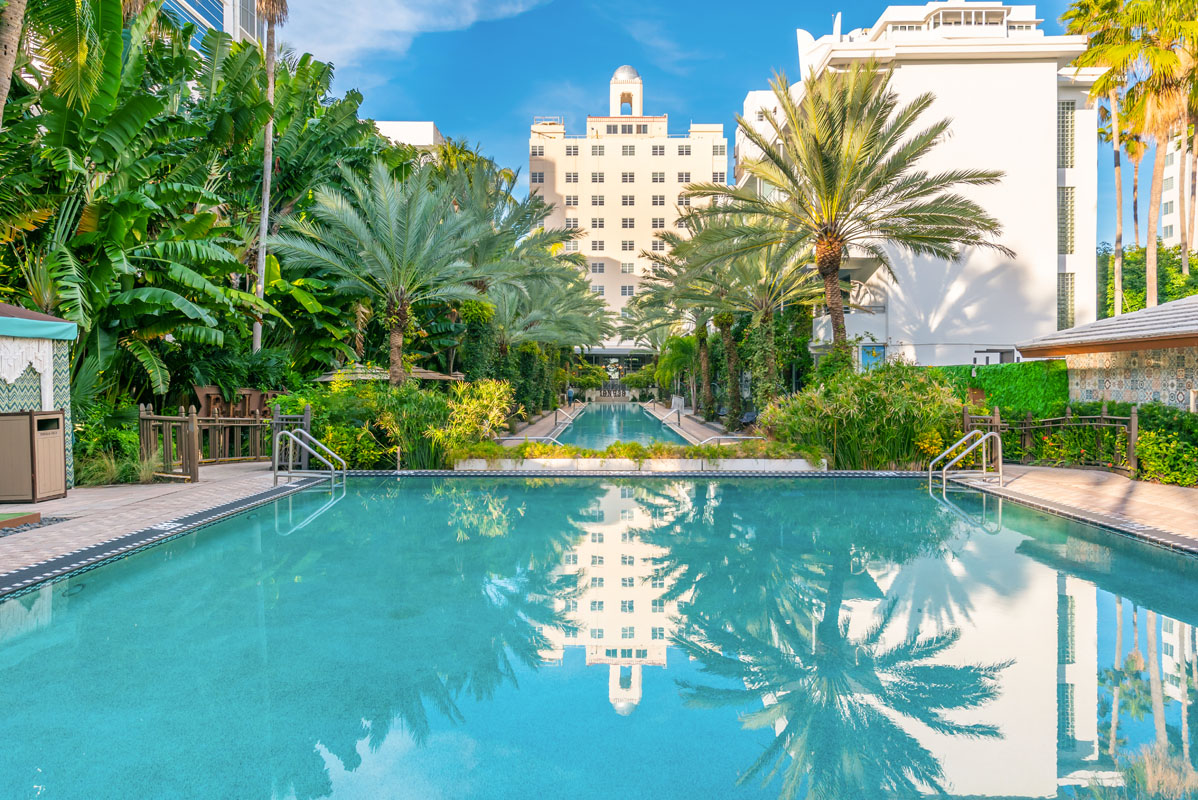
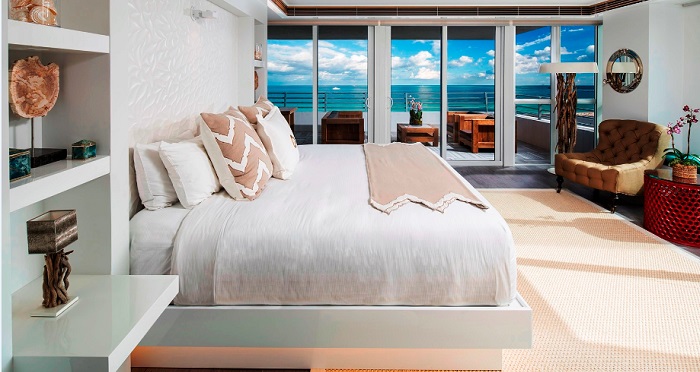
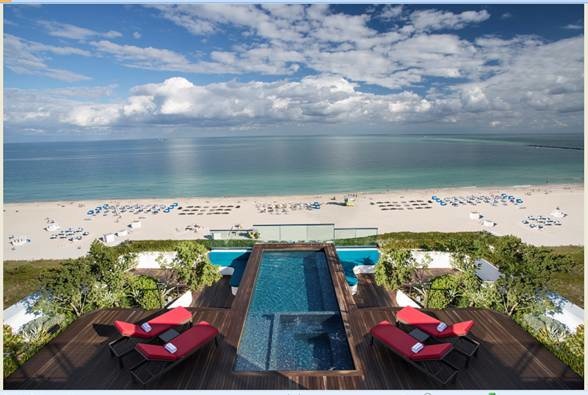
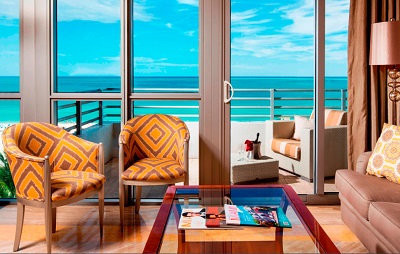
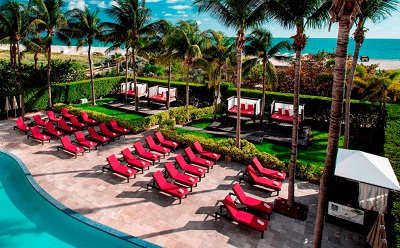
Those looking for a SoFlo escape exuding art, culture and timeless sophistication need look no further than the National Hotel Miami Beach, where the city’s vintage glamour meets contemporary coastal luxury. Perfectly situated in South Beach’s iconic Art Deco district, this adults-only, pet-friendly, oceanfront retreat offers a distinctly cinematic experience—from its sweeping palm-lined pathways to Miami Beach’s longest infinity-edge pool.


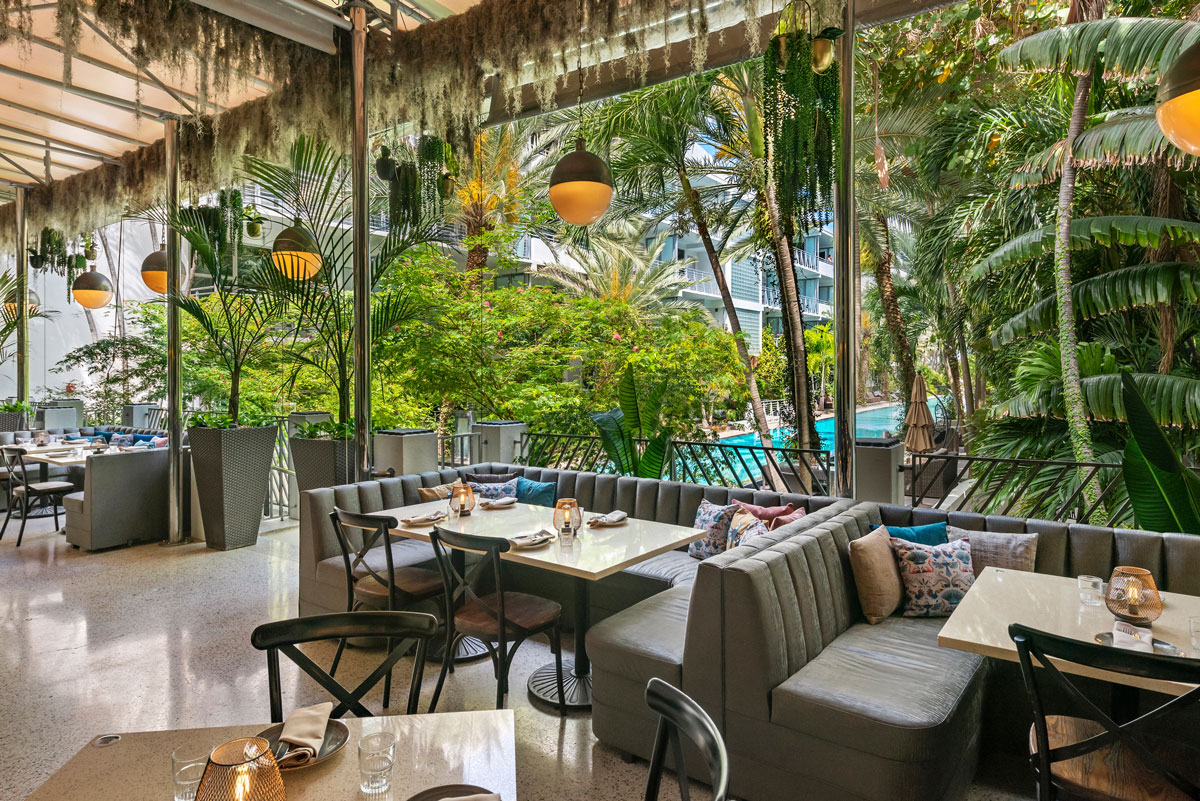
Whether unwinding in a newly redesigned ocean view suite or indulging in craft martinis and natural wines at the hotel’s Spanish tapas restaurant, Mareva1939, guests are immersed in a sensory celebration of both past and present. It’s the quintessential backdrop for a Miami Beach escape—and the perfect setting for a candid, deep-dive conversation with Stephane Mercier, Managing Director at The National Hotel Miami Beach, who shares insight into what makes the National Hotel such a standout destination.

MK: The National Hotel is known for its strong commitment to art. Can you describe the philosophy behind incorporating artwork into the guest experience—both in the copious common spaces and guestrooms and suites?

SM:
The National’s philosophy behind incorporating artwork into the guest experience is deeply rooted in its iconic Miami Beach Art Deco hotel identity. We want guests to feel immersed in a unique, sophisticated revival of a golden age of Miami Beach, while enjoying contemporary hospitality. Designed by renowned architect Roy France, credited with creating the Miami Beach skyline with his string of Art Deco and streamlined towers, the hotel remains a testament to his visionary work.

Though renovated to offer the modern, yet sophisticated, classic look and feel experienced by guests today, the hotel continues to stay true to France’s philosophy and artful design. Signature architectural elements, including corner windows, original terrazzo floors, chrome wall sconces and era-inspired details, preserve the National Hotel’s timeless elegance, seamlessly blending classic style with contemporary luxury.


MK: What about the property gives it overarching appeal in the luxury travel sector?

SM:
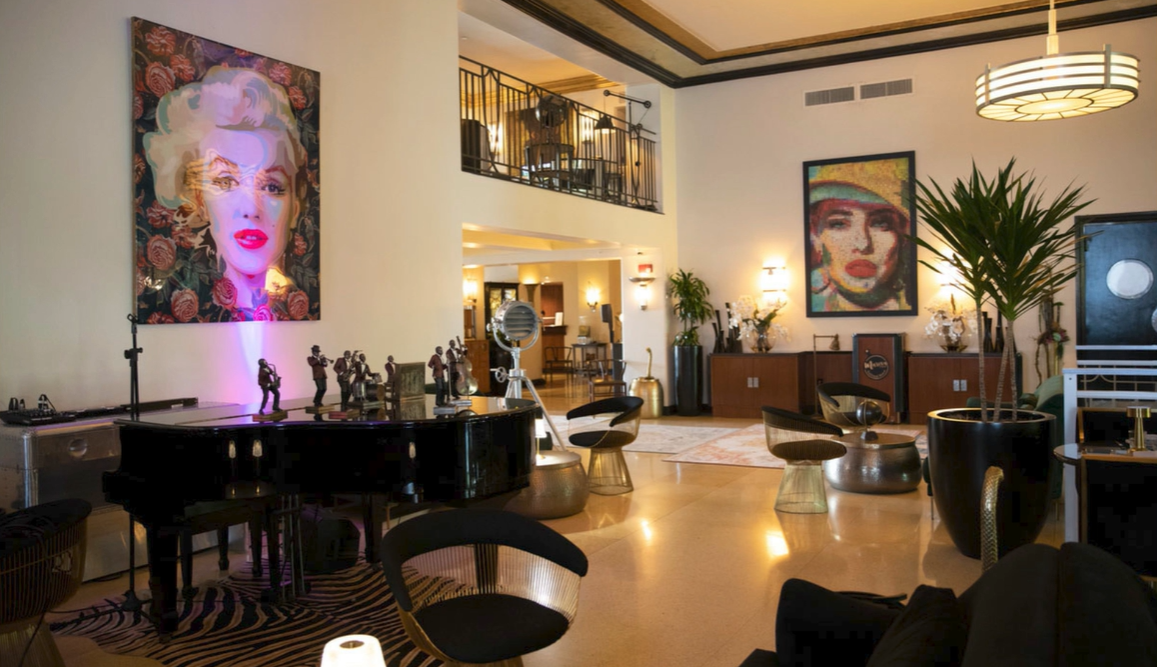
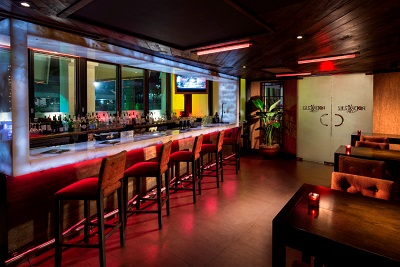
The National Hotel is one of the few South Beach properties that remains true to the iconic Art Deco era, preserving its timeless elegance and charm, and is the only beachfront, adults-only hotel in the destination, promising an elevated experience for a discerning set of travelers. Guests can be assured that the amenities and atmosphere onsite cater to adults that value culture, history and curated experiences. Since its opening in the 1940s, Bar 1939 has embodied the hotel’s rich history, capturing the glamour and sophistication of the period. This luxurious open space features suede lounge chairs, copper cobras emerging from side tables, flooring embedded with hundreds of shiny coins and a grand piano. Guests and locals alike can enjoy our vibrant cultural happenings onsite, including live music on Saturdays, seasonal highlights—including holiday celebrations and New Year’s—and musical collaborations like the Musimelange chamber music series, occurring now through May 19. Solidifying the vintage feel of the Art Deco era is the show-stopping bar, a monumental slab of ornately carved hardwood flanked by elaborate stools.

While design throughout the hotel pays homage to the property’s history, the exclusive Artist Collection Suite embodies the uniqueness found at the National Hotel Miami Beach. Designed by world-renowned artist Elizabeth Fatone, the accommodation features one-of-a-kind, hand-painted murals and Art Deco-inspired furnishings, celebrating the artistic spirit and distinctive character that define the unique experience at the hotel.

MK: How do the art pieces showcased at the hotel enhance the overall ambiance and storytelling of the property?

SM: The hotel’s carefully curated pieces do more than enhance décor, they immerse guests in the timeless elegance of the Art Deco era. From the grand Bar 1939, with its carved hardwood bar and vintage-inspired furnishings, to the Artist Collection Suites featuring the aforementioned Elizabeth Fatone and Renoma Suite, every detail tells a story. Upon arrival, guests can find a sculpture by Carole Feuerman at the property’s entrance, colorful murals by the pool and revolving art present across the hotel throughout the year. Each artistic touch reinforces the hotel’s rich history, ensuring a seamless blend of past and present.

MK: How does the property’s distinctive style, both in architecture and décor, influence the guest experience?

SM: The National Hotel’s Art Deco architecture and décor offer a modernized tribute to the classic Miami Beach style. Miami Beach holds the appeal of having an artful combination of heritage and modernity. Art Deco hotels sprung forth from this intrigue and the National Hotel Miami Beach has solidified its place in the region’s history by achieving, and long maintaining, a sense of artful timelessness with modern appeal. On a year-round rotating basis, local and famed artist showcases or classics can be found in the hotel’s lobby, restaurants and additional common spaces. The hotel also works with local art and design communities to support and be included in Art Deco history tours. This seamless fusion of history, artistry and elegance not only enhances the ambiance, but also invites guests to become part of the hotel’s timeless legacy.

MK: Are there any architectural elements or décor pieces that are original to the hotel?

SM: The hotel has maintained its traditional foundation including corner windows, original terrazzo floors, chrome wall sconces and preserved the original check-in desk that is now on display for guests to enjoy during their stay. In front of the long pool, guests can see the mosaic Girl With The White Glove and the Compass, two pieces exclusive to the property.

MK: The National Hotel has a fascinating and storied history. Can you share some of the most intriguing or lesser-known anecdotes about its past?

SM: Since its inception, the hotel has drawn sun-loving socialites and celebrities, from the glamorous 1950s crowd, to the South Beach revivalists of the 1970s, to modern-day travelers looking for a boutique, sophisticated stay along the beach. Designed by Roy France, the National Hotel’s timeless Art Deco style and its striking 14-story tower are a testament to his influence in shaping the Miami Beach skyline. A Midwest native, France relocated to Miami Beach after a trip to Florida with his wife in 1931. The hotel remains true to France’s vision, maintaining its Art Deco charm while seamlessly integrating modern style and elevated amenities, services and culinary highlights.

MK: Can you describe the unique features and amenities of the ocean-view and other premium-level suites at the National Hotel?

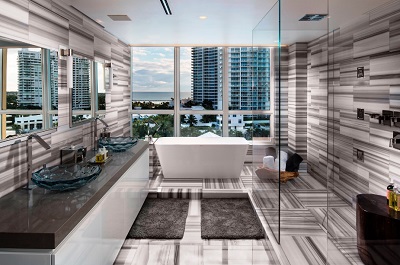
SM: Ranging from the city vie rooms to our penthouse suite, guests can find roomy accommodations and relaxed luxe amenities with stunning views of the blue ocean and our infinity pool. Favorite features in our upper room categories include radios, slippers and a robe beginning in our cabana rooms and suites; balconies in our Cabana rooms; bold, fun murals in our Artist Collection Suites designed by Elizabeth Fatone; and the tri-level space of our Penthouse Suite.

MK: The property’s Mareva1939 on-site restaurant has become a standout feature of the National Hotel. What inspired its culinary concept and name?

SM: Mareva1939, the National Hotel’s signature, award-winning Spanish tapas-style restaurant, was inspired by the year the hotel began welcoming guests. The restaurant’s culinary concept was designed to take guests through a gastronomic journey to Spain, offering a curated menu that blends traditional dishes with a modern, locally driven Miami Beach twist. The family-style menu encourages a convivial atmosphere, keeping the Spanish culture alive by inviting guests to connect around the table. To elevate the meal, the restaurant offers an extensive selection of organic, natural wines and handcrafted cocktails, thoughtfully paired to enhance the flavors of each dish. The creative culinary team ensures that dining remains exciting year-round with seasonal menus for holidays, local events and the hotel’s participation in Miami’s celebrated Miami Spice program. As an extension of Mareva1939, the Martini Bar takes guests back to the hotel’s opening era with original 1939 design elements, a specialty cocktail menu and live music over the weekends, offering an intimate and elevated space for unwinding.

MK: How does the menu reflect—or complement—the hotel’s overall brand and history?

SM: The culinary experience at Mareva1939 takes inspiration from the hotel’s artistic history in the plating and ingredients from the coastal setting, infusing Spanish traditions and tropical influences.


MK: The property features bars reminiscent of a speakeasy that are a draw for guests and even city locals. To what do you attribute the appeal?

SM: Their nostalgic charm and intimate ambiance, which transport guests and locals into this Art Deco era. The rich, vintage design elements paired with expertly crafted cocktails create a sophisticated setting that encourages relaxation and socialization. The hotel’s Bar 1939 and Martini Bar offer classic 1930s-era cocktails alongside modern drink options in a refined setting, with live music on Saturdays. The intimate nature of these bars, combined with their elevated atmosphere, makes them not just a place to enjoy a drink, but an immersive experience that draws both guests and locals looking for a unique, upscale night out.

MK: What are some of the other standout amenities that set the National Hotel apart from other luxury properties in Miami Beach?

SM: The National is adults-only, creating an intimate escape for couples, groups, friends and diners seeking a quieter, more sophisticated experience. The hotel is also pet-friendly and offers amenities for furry friends, so travelers can enjoy their Miami Beach getaway together with their pups.

MK: The expansive pool is a defining feature of the hotel. Can you share more about its design and guest appeal?

SM: The National Hotel’s expansive infinity pool is a standout feature that perfectly complements the hotel’s sophisticated, adults-only atmosphere. Stretching 205 feet, the longest infinity pool in the area offers guests a space to relax and take in breathtaking views, with a design that complements the hotel’s chic Art Deco style, creating a luxurious and serene environment to soak up the year-round sunny weather. Guests can unwind in the comfort of a poolside cabana or lounger, taking full advantage of the idyllic coastal setting. The Aqua Bar & Grill enhances the experience by offering delicious poolside bites and drinks, allowing guests to stay refreshed without leaving the water’s edge. Just steps away, guests can access a prime bit of Miami Beach shoreline.

MK: How does the property balance its legacy as a historic landmark with vintage charm with the needs of modern travelers, and what technology helps facilitate the guest experience?

SM: The hotel incorporates convenient technology solutions to deliver an elevated guest experience, such as providing QR codes on the beach to order food & beverages, Smart TVs in all the rooms, an elevated new fitness center and Apple Pay at all outlets.

MK: As the National Hotel continues to evolve, what future plans or updates can guests look forward to?

SM: The National continues to evolve and adapt its offerings while hosting anticipated annual events among some of Miami Beach’s most vibrant happenings, like South Beach Wine & Food Festival, Miami Swim Week and Art Basel. Guests can continue to spend these exciting occasions at The National, while looking forward to continuous and more experiential events and activations that speak to the history of the hotel and the story of The National.

MK: How do you see the hotel’s role in the Miami Beach hospitality scene developing in the coming years?

SM: As an original Art Deco hotel and mainstay of the city’s cultural landscape, The National will continue to embody the classic Miami Beach experience merged with an independent approach, adults-only atmosphere and arts-focused cultural calendar. Guests know to expect an intimate hospitality experience marked by authentic, historic features not found in newer developments.

MK: Are there any famous guests or notable events in the hotel’s history that stand out as particularly memorable?

SM: Mariah Carey performed at The National during the 2005 MTV Video Music Awards. Another legendary artist, Whitney Houston, filmed her ‘Heartbreak Hotel’ music video onsite. The hotel has also played host to international artists during Art Basel each year.

As Mercier reminds us, the magic of the National Hotel Miami Beach lies in its ability to blend nostalgia and novelty, creating a stay that’s both storied and stylish. Whether it’s lounging by the shimmering infinity pool, savoring curated culinary experiences, or exploring the pulse of South Beach just steps away, every element is designed to transport guests to a timeless version of Miami. For travelers seeking both serenity and sophistication in the heart of the city’s most iconic neighborhood, the National remains an unforgettable destination—elegantly redefined.

For the Silo, Merilee Kern. More from Merilee- https://www.thesilo.ca/?s=merilee+kern

Merilee Kern, MBA is an internationally-regarded brand strategist and analyst who reports on cultural shifts and trends as well as noteworthy industry change makers, movers, shakers and innovators across all categories, both B2C and B2B. This includes field experts and thought leaders, brands, products, services, destinations and events. As Founder, Executive Editor and Producer of “The Luxe List,”
Merilee is a prolific business, lifestyle, travel, dining and leisure industry voice of authority and tastemaker. She keeps her finger on the pulse of the marketplace in search of new and innovative must-haves and exemplary experiences at all price points, from the affordable to the extreme. Her work reaches multi-millions worldwide via broadcast TV (her own shows and copious others on which she appears) as well as a myriad of print and online publications. Connect with her at www.TheLuxeList.com / Instagram www.Instagram.com/MerileeKern / Twitter www.Twitter.com/MerileeKern / Facebook www.Facebook.com/MerileeKernOfficial / LinkedIN www.LinkedIn.com/in/MerileeKern.

***Some or all of the accommodations(s), experience(s), item(s) and/or service(s) detailed above may have been provided or arranged at no cost to accommodate if this is review editorial, but all opinions expressed are entirely those of Merilee Kern and have not been influenced in any way.***

Fabulous  Mid-Century Modern Home Hits The Market

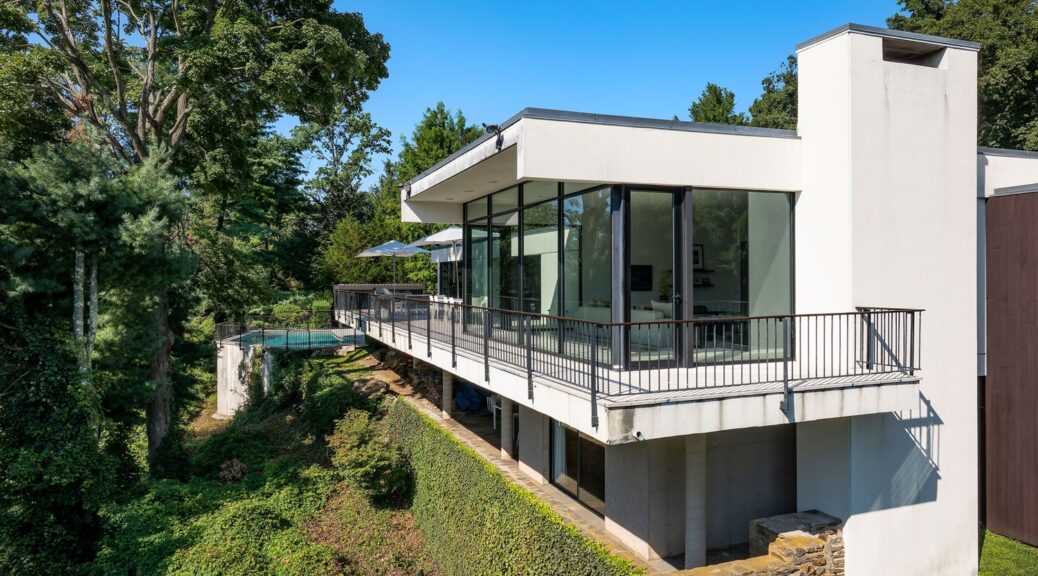
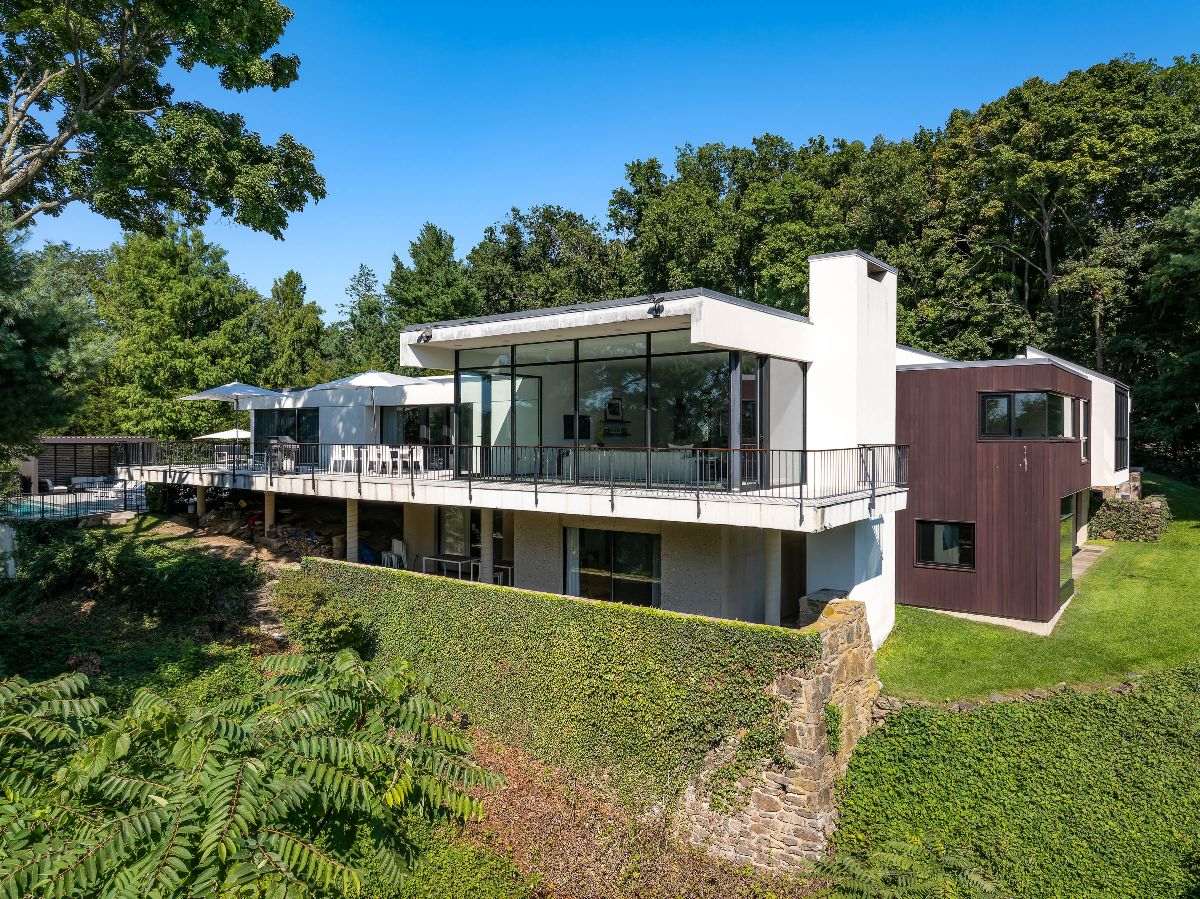
Yale School of Architecture’s Dean, Deborah Berke, is an accomplished and decorated architect. The founder of the TenBerke firm, she is responsible for such notable projects as the Residential Colleges at Princeton University, the Cummins Indy Distribution Headquarters, the Rockefeller Arts Center at SUNY Fredonia, the Yale School of Art in New Haven, Connecticut, and the 21c Museum Hotels across the South and Midwest. She is the winner of the Topaz Medallion, the highest honor for architectural education, the Berkeley-Rupp Prize at the University of California at Berkeley, which is given to an architect who has advanced the position of women in the profession, and the AIA Gold Medal Award for a lasting impact on the theory and practice of architecture. In 2014, the venerable architect completed a bespoke renovation of a stunning mid-century-modern home in Rye, NY, winning the 2015 Hudson Valley Design Award. That home has now hit the market for $4.95 million usd/ $6.89 million cad.

Originally built in 1969 by notable architect Milton Klein, the 6,500-square-foot residence is a classic California-style modern with the walls of glass, steel-frame construction, stark lines, and an open floor plan characteristic of the coveted aesthetic. As described in her book, House Rules: An Architect’s Guide to Modern Life, Berke was primarily inspired by nature in her home renovation, a philosophy in keeping with the ethos of the modern design movement. She chose materials like warm mahogany to act as a deep contrast to the concrete and stucco features. 

Eileen Gray and the House By the Sea Hybrid Documentary

She designed a sanctuary for herself.
Unfortunately, it turned out to be a modern masterpiece.

E.1027
Eileen Gray and the House by the Sea
Opens May 16 at the IFC Center in New York City
& May 23 at Laemmle Theatres in Los Angeles
Director Beatrice Minger will attend the New York and Los Angeles premieres and is available for interviews.
 
In 1929, Irish designer Eileen Gray created E.1027 on the sun-soaked Côte d’Azur – a bold and hidden gem of avant-garde architecture. This striking house was meant to be a personal refuge.

But when the legendary architect Le Corbusier stumbled upon it, fascination turned to obsession. He covered its walls with his murals, completely disregarding Gray’s wishes and her vision. His defiant act ignited a battle for creative control, with Gray demanding restitution for the destruction of her work, He ignored her wishes and instead built his famous Cabanon house directly behind E.1027.

E.1027 – Eileen Gray and the House By the Sea is an unusual hybrid docu-fiction film that tells a story about the power of one woman’s creative expression and a man’s desire to control it.
“Eileen Gray was a creative genius and the first woman to conquer the world of architecture at a time when men controlled it all. This new film reflects on Gray’s impressive career and her stunning modernist house on the Cote d’Azur.” – Meredith Taylor, Finito World

“The directors put architecture in dialogue with cinema in order to bring to life the sensibility of a woman who was a visionary yet is too rarely celebrated. Elegant and well thought-out, the film uses the cinematic medium to enrich a discourse.” – Giorgia Del Don, Cineuropa

“Based on the memoirs of Eileen Gray, this meticulously crafted docu-drama, where poetry slips into frames, angles and tones, almost feels like a hallucination.” – Le Monde

“As more women have the opportunity to make films, a distinct form of female narrative based on a particular female gaze and female sensitivity is being developed.” – Melita Zajc, Modern TImes Review
A First Run Features / Architecture & Design Film Festival Release
E.1027 – Eileen Gray and the House By the Sea
Written & Directed by Beatrice Minger
Co-Directed by Christoph Schaub
With Natalie Radmall-Quirke, Axel Moustache & Charles Morillon
90 minutes, color, 2024 | English & French w/English subtitles

For the Silo, Kelly Hargraves.

Artist Torkwase Dyson Uses Black Compositional Thought In Latest Exhibit At Gray

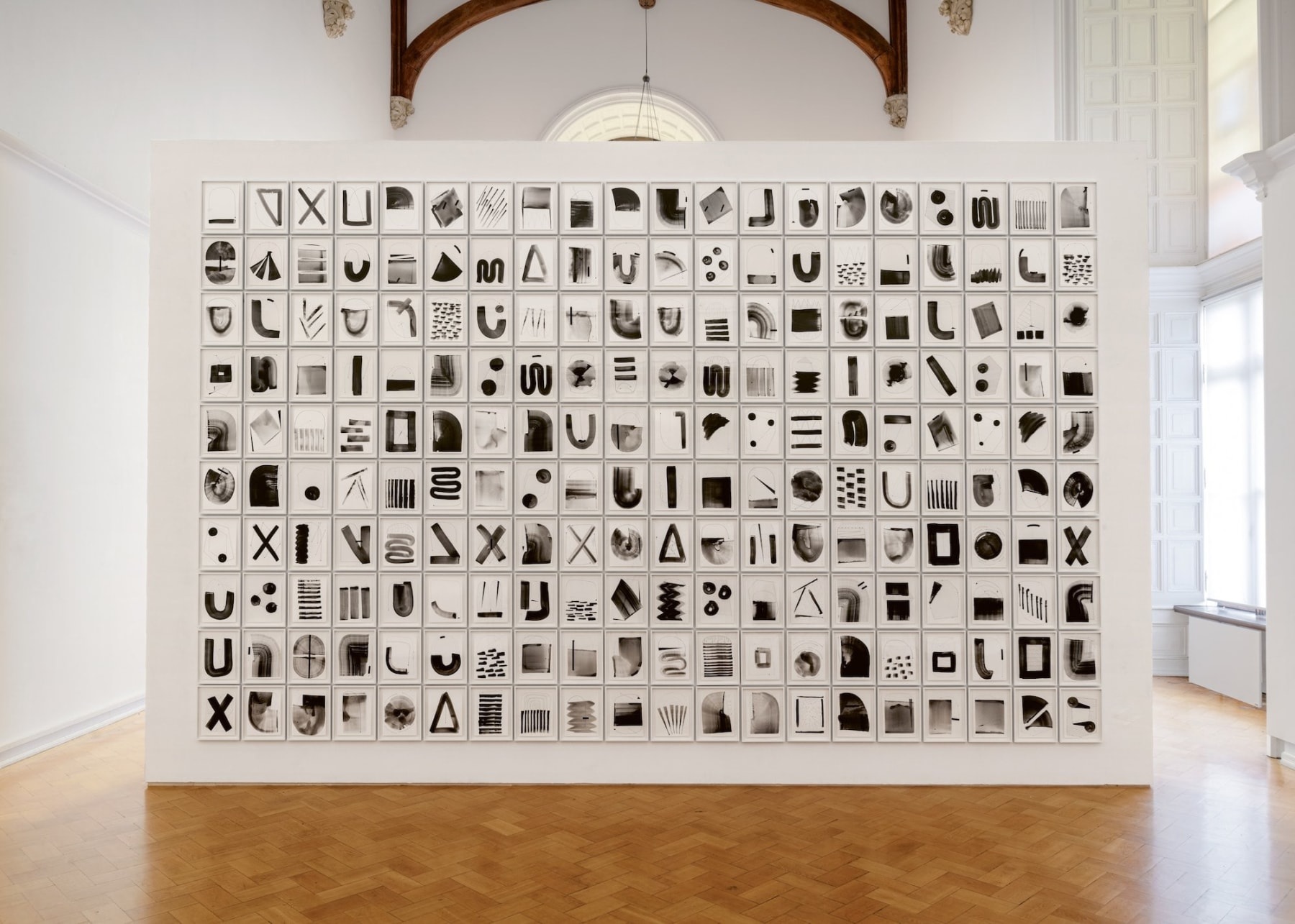
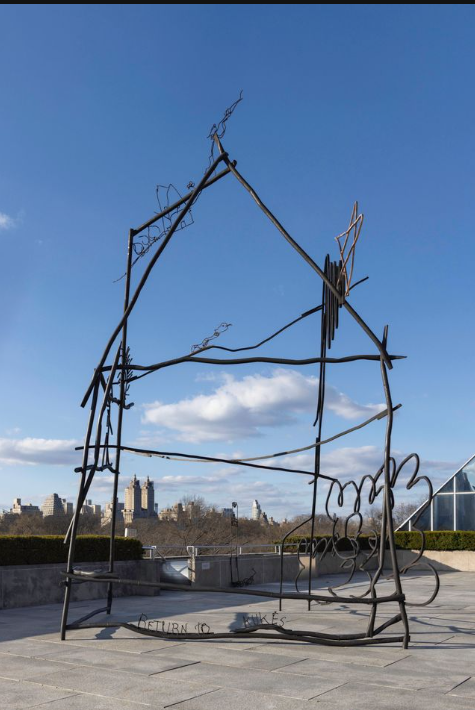
 , Installation view of Torkwase Dyson, Errantry, 2024, at Art Basel Unlimited. Image courtesy Gary Yeh / ArtDrunk.

Installation view of Torkwase Dyson, Errantry, 2024, at Art Basel Unlimited. Image courtesy Gary Yeh / ArtDrunk.

Chicago Gallery

GRAY is pleased to present Torkwase Dyson: Of Line and Memory, the artist’s first solo exhibition in GRAY’s Chicago gallery. Installed over three distinct spaces, the exhibition debuts a monumental sculpture in steel and painted wood, an immersive installation of new paintings, and new cast glass and wood constructions. Of Line and Memory opens at GRAY Chicago with a public reception for the artist on November 8 and remains on view through January 25, 2025.

Dyson works across the disciplines of painting, drawing, installation, and sculpture, distilling the spatial and affective residues of diasporic histories to envision new modes of environmental liberation. Through an improvisational process of mindful abstraction, which she calls “Black Compositional Thought,” Dyson seeks to create work that is fluid, abstract, poetic, and open to possibility. “If there is systemic oppression, there must be systemic liberation,” says the artist, “and I am in that zone… trying to condition myself in this relationship of a transhistorical liberation practice.”1

Of Line and Memory draws from years of research and Dyson’s own spatial memory of navigating the waterways and urban architecture of Chicago. Using the South Shore Cultural Center, a lakeshore landmark with rich historical and architectural significance, as a point of departure, Dyson extracts, reduces, and refines architectural and visual cues into geometric shapes and painterly abstractions. According to the artist, “Of Line and Memory asks, as we move through dramatic and ever-changing geographies, what memories are stored in these new and improvisational choreographies?”

Down-down, 2018
Exhibited inTorkwase Dyson, 2021-22 Hall Art Foundation
Schloss Derneberg Museum, Holle, Germany

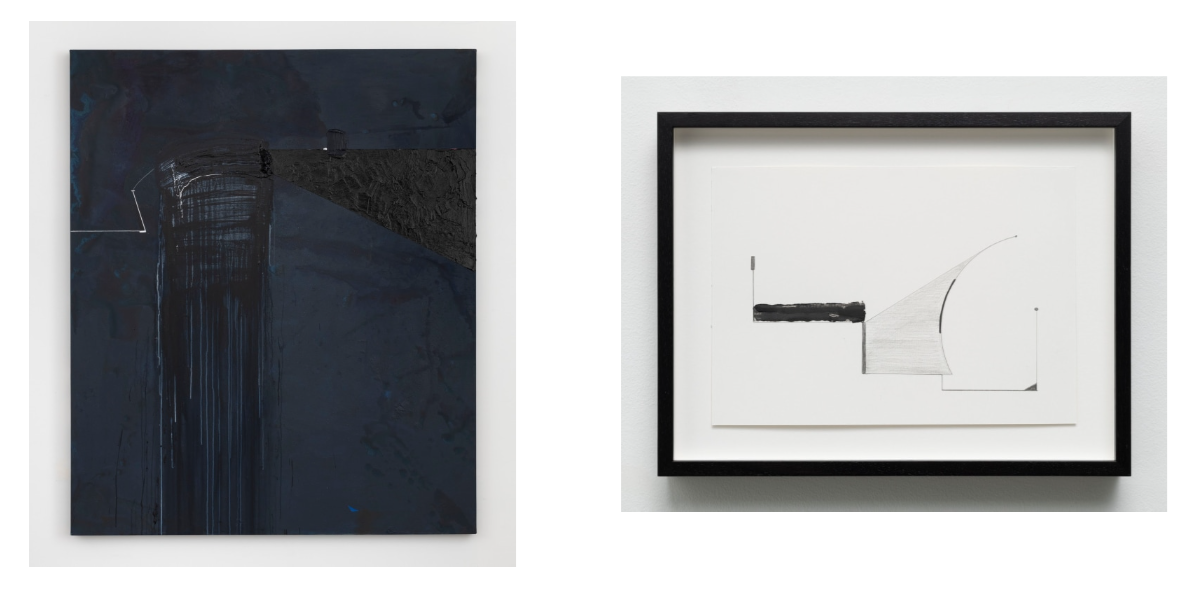
An immersive, dynamic interplay of materials emerges throughout the exhibition. The Clearing, a cantilevered steel, wood, and graphite sculpture in two parts, balances monumental, curved shapes upon the weight of rectangular steel bases. Dyson’s new paintings unlock a sense of “state change” between thinly poured layers of deep blues and reds, opaque blacks, and the shapes and lines of geometric abstraction. Likewise, her Hypershape constructions in glass and graphite-coated wood balance the solidity of wood and graphite with the translucence of cast glass.

Of Line and Memory underscores Torkwase Dyson’s deep commitment to transforming complex histories of diasporic and urban landscapes into powerful abstractions. The artist states: “the topography echoes familiar and enigmatic ecologies in my consciousness without the promise of stability. Embracing this indeterminacy, I think through how the transhistorical ethos of infrastructure space, both visible and invisible, resonates in liberation and world-building.”

ABOUT TORKWASE DYSON


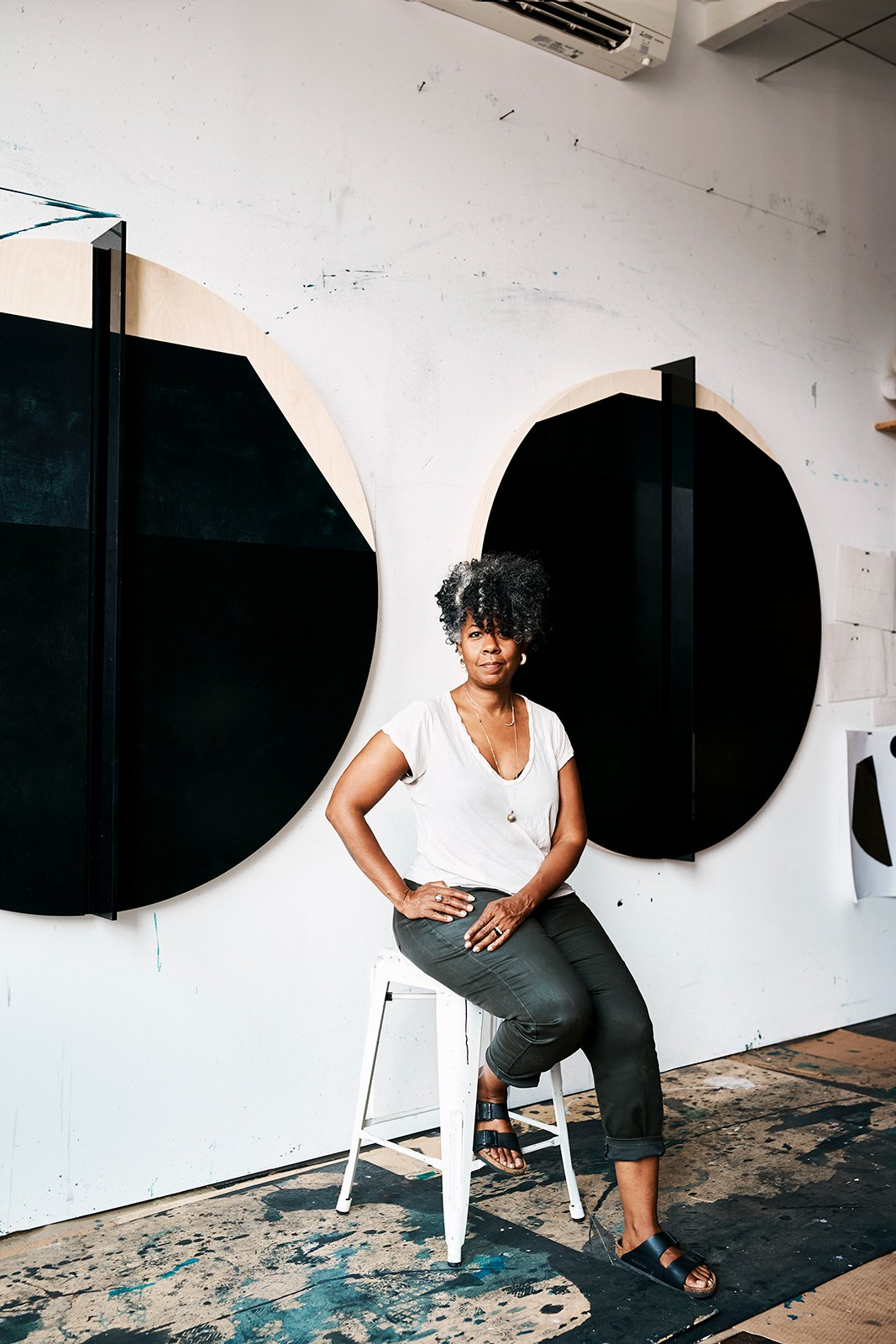
American interdisciplinary artist Torkwase Dyson (b. 1973 Chicago) combines expressive mark-making and geometric abstraction to explore the continuity between ecology, infrastructure, and architecture. Working across the disciplines of painting, sculpture and architecture, Dyson deconstructs, distills, and interrogates the built environment, exploring how individuals, particularly black and brown people, negotiate, negate, and transform systems and spatial order. Throughout her work and research, Dyson confronts issues of environmental liberation and envisions a path toward a more equitable future. 

One of today’s most innovative artists, Dyson’s work has been the focus of solo exhibitions at ‘T’ Space Rhinebeck, New York; Mildred Lane Kemper Art Museum, St. Louis, Missouri; New Orleans Museum of Art, Louisiana; Colby College Museum of Art, Maine; Graham Foundation for Advanced Studies in the Fine Arts, Chicago, Illinois; Schuylkill Center for Environmental Education, Philadelphia, Pennsylvania; Suzanne Lemberg Usdan Gallery, Bennington, Vermont; Hall Art Foundation, Derneburg, Germany; and Serpentine Galleries, London, UK.  
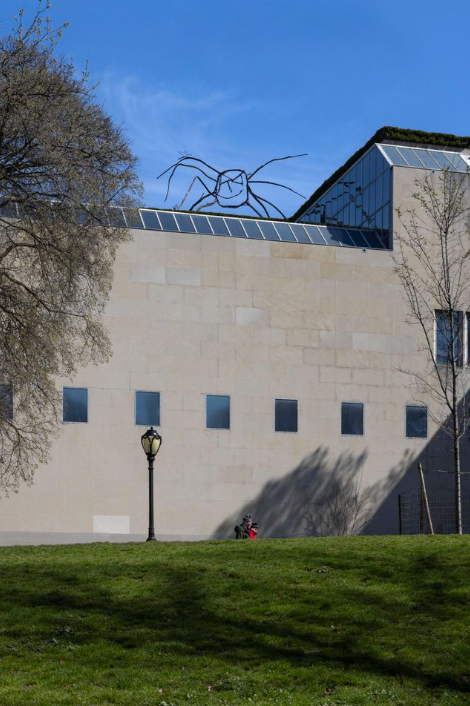
Group exhibitions and biennials include the Liverpool Biennial, Liverpool, UK; Bienal de São Paulo, Brazil; Desert X, California; California African American Museum, Los Angeles; The Museum of Modern Art, New York; Studio Museum in Harlem, New York; Whitney Museum of American Art, New York; The Drawing Center, New York; Corcoran School of the Arts and Design, Washington DC; Smithsonian National Museum of African Art, Washington, DC; and Wexner Center for the Arts, Columbus, Ohio, among others. Her architectural sculpture Liquid Shadows, Solid Dreams (A Monastic Playground), commissioned for the 2024 Whitney Biennial, is on view at the Whitney Museum of American Art’s fifth floor terrace through February 9, 2025. Torkwase Dyson will create the conceptual design for The Costume Institute’s Spring 2025 exhibition, Superfine: Tailoring Black Style, at The Metropolitan Museum of Art.

Public collections include the Art Institute of Chicago, Illinois; Hall Art Foundation, Reading, Vermont; Hirshhorn Museum and Sculpture Garden, Washington, DC; The Long Museum, Shanghai, China; Mead Art Museum, Amherst College, Massachusetts; Mildred Lane Kemper Art Museum, St. Louis, Missouri; Smith College Museum of Art, Northampton, Massachusetts; Smithsonian National Museum of African American History & Culture, Washington, DC; Studio Museum in Harlem, New York; and Williams College Museum of Art, Massachusetts. Dyson studied sociology and social work at Tougaloo College, Mississippi, and received a Bachelor of Fine Arts in Painting from Virginia Commonwealth University and a Master of Fine Arts in Painting from Yale School of Art. Dyson lives and works in Beacon, New York.

PUBLICATION
The exhibition will be accompanied by a fully illustrated catalogue, to be published in 2025.


ABOUT GRAY


GRAY is a globally recognized team of art professionals devoted to fostering the development of historically important artists’ careers and to building outstanding art collections. Founded in 1963, GRAY has established its reputation as a resource for Modern, Postwar, and Contemporary art with prominent private and institutional clients worldwide. Known for producing critically acclaimed exhibitions and programming from its galleries in Chicago and New York, GRAY represents a roster of internationally recognized artists such
as McArthur Binion, Torkwase Dyson, Theaster Gates, David Hockney, Rashid Johnson, Alex Katz, Ellen Lanyon, Jaume Plensa, Leon Polk Smith, and Evelyn Statsinger.

1 Torkwase Dyson, lecture, SAIC Visiting Artists Program, School of the Art Institute of Chicago, March 7, 2023.

Featured image- Tuning (Hypershape, 311-520), 2018, exhibited in Torkwase Dyson 2022 Hall Art Foundation, Schloss Derneberg Museum, Holle, Germany

Watercolorist Designs Large Scale Homes That Integrate With Surroundings

Beverly Hills Artist, Energy Guru & Landscape Designer Also Does Dreamy Homes!

Beverly Hills-based architect Brian Tichenor is a man of many talents, widely recognized for original, artful building designs that integrate large-scale residences and their surrounding landscapes. A graduate of UCLA, Tichenor is a member of the architecture faculty at rival school University of Southern California. Some of his most notable projects include the new LA Times Headquarters and Nantworks, a campus of DNA sequencing and R&D labs on reclaimed oil fields in the north Baldwin Hills that use methane capture, solar infrastructure, and co-generation to achieve energy self-sufficiency.

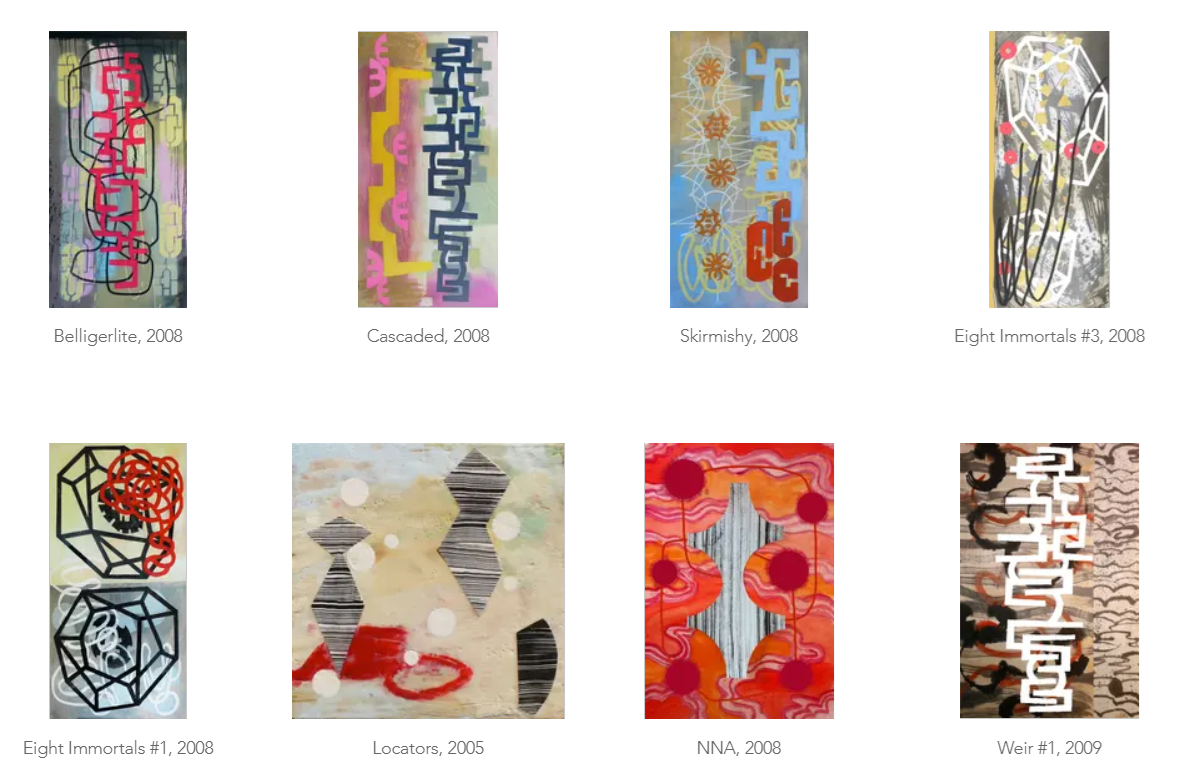
The Artist

In the art world, Tichenor’s colorful watercolors are found in the homes of many art collectors. And Brian has completed more than 100 gardens throughout the world. With his wife, fellow architect Raun Thorp, he is the author of Outside In: The Houses and Gardens of Tichenor & Thorp, published by Vendome Press in 2017.

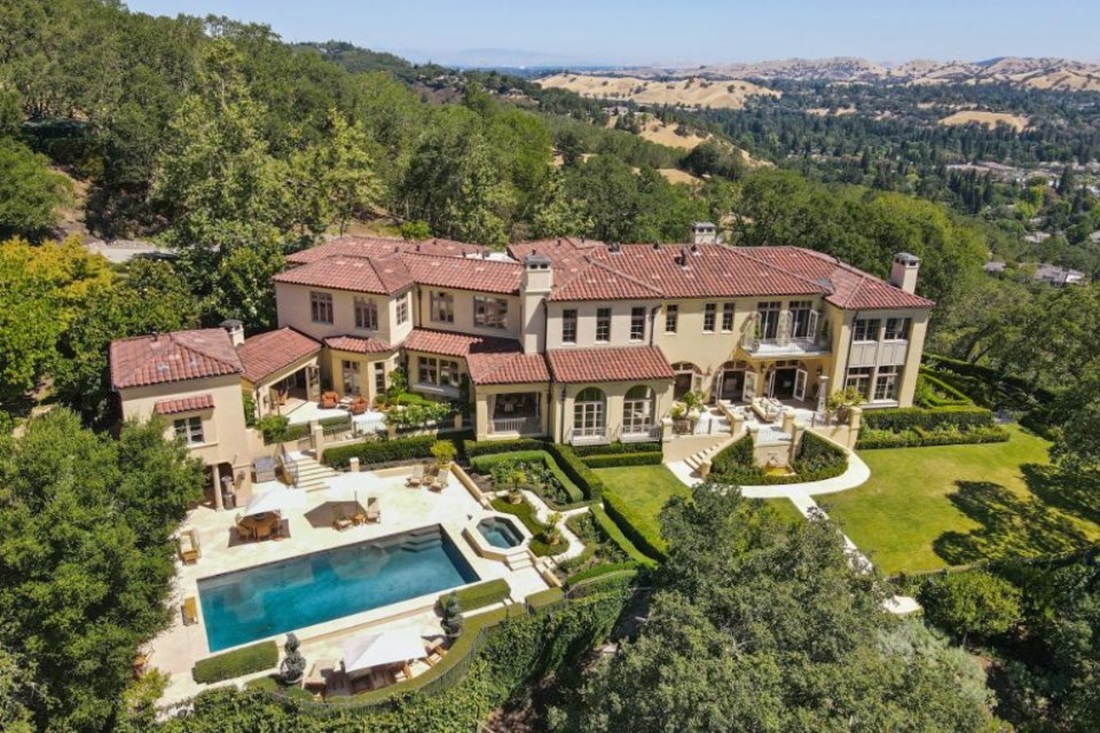
A ten-acre estate in Alamo, thoughtfully designed by Tichenor, has been listed for sale at $17.75 million usd/ $24.4 million cad.

Known as Lark Ridge Estate, the property includes Tichenor’s trademark landscaping featuring Mediterranean-style gardens, a lion’s-head fountain with Emperador dark marble surround, a dark plaster pool, and an octagon-shaped spa, complemented by the property’s stunning views of Mt. Diablo and the surrounding valley.

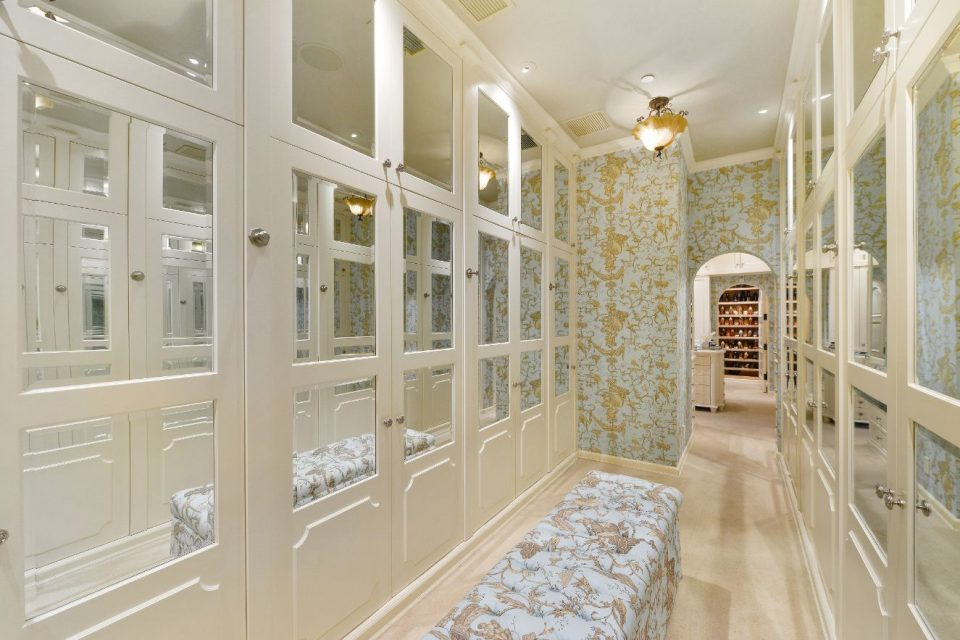
Three houses sit on the grounds, protected by private gates. The 9,812-square-foot main house includes six bedrooms and nine bathrooms. The two-story mansion is the classic Mediterranean with a red-tile roof.  Exquisitely designed for indoor-outdoor living, the floor plan offers grand-scale entertaining spaces, casual living areas, sitting rooms, private bedroom retreats, enormous walk-in closets, spa-like bathrooms, dual-executive-office spaces, a gym, and a media room.

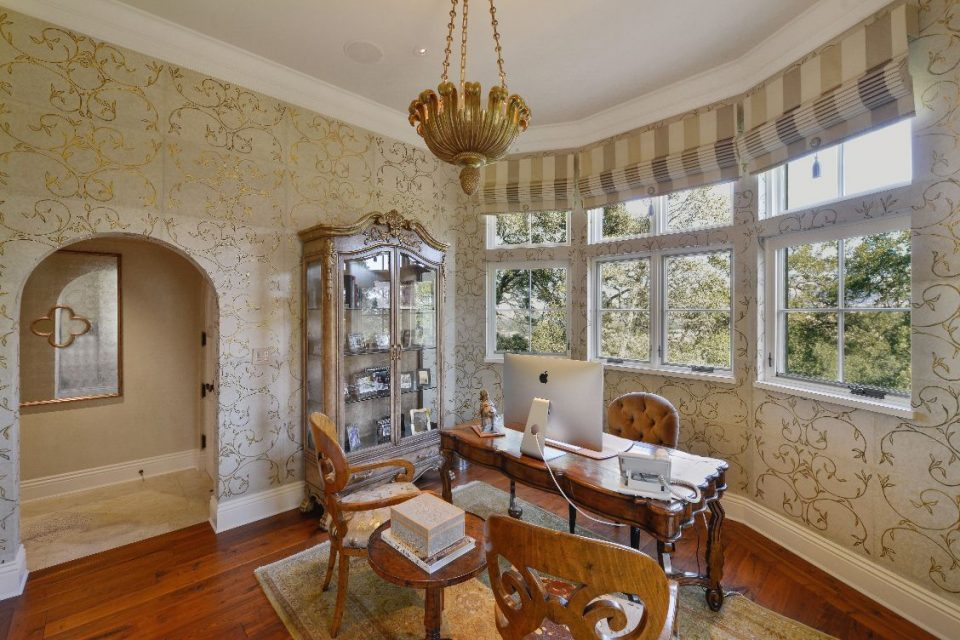
French doors, extensive use of Venetian gold from Italian artisans, antique fireplaces, rock crystal chandeliers, and custom onyx-and-marble countertops impart an air of decadent luxury. Each room is unique, with truly stunning wall coverings, including parchment and gold-leafed wallpaper in the executive office, pearlized Venetian plaster walls in the master suite,  custom hand-painted grass-cloth walls in the family room, and a fireplace from New York’s Plaza Hotel. Miele appliances, state-of-the-art AV & security systems, motorized shades, and a computerized lighting system offer the ultimate in high-tech living.

The 917-square-foot carriage house provides a one-bedroom/one-bathroom guest home with a full kitchen and laundry room over an impressive nine-car secondary garage. The 718-square-foot tennis house offers a similar one-bedroom/one-bathroom layout with a kitchenette. Perfect for entertaining, the tennis house opens onto the full-sized lighted tennis court with a basketball hoop and the entertainment deck with a two-way fireplace. An outdoor kitchen and bar, ample poolside lounging areas, and resort-inspired amenities are sure to charm even the most discerning guests.

Located 28 miles south of San Francisco, Alamo is a suburban community known for its bucolic feel and relaxed atmosphere, close enough to San Francisco and Silicon Valley for a comfortable commute but secluded from the hustle and bustle of the city. Lark Ridge Estate sits just above the Iron Horse Regional trail, beloved by walkers, runners and cyclists. Numerous parks and wilderness areas surround the community, which has not yet been heavily developed. Celebrities who call Alamo home include Olympic gold medalist Kristi Yamaguchi, MLB record-setter Mark McGwire, and Oakland Raiders owner Marc Davis. 

The listing is held by Dana Green of Dana Green Team of Compass, Lafayette, California.

Photos:  Courtesy of Compass

Source: larkridgeestate.com

North America’s Largest Convention Center Installs Bird Saving Window Film

CHICAGO (October, 2024) After receiving nearly 50,000 emails from In Defense of Animals supporters, McCormick Place Lakeside Center has taken a crucial step in safeguarding migratory birds by installing bird-safe window film on its iconic glass walls. This renovation addresses the soaring number of bird deaths caused by window collisions at the convention center, which claimed the lives of over 1,000 birds in a single night last fall.

“Windows collisions rank among the deadliest threats to birds,” said Katie Nolan, Wild Animals Campaigns Specialist for In Defense of Animals. “With wild birds in steep decline — over 3 billion lost in the past 50 years — we are delighted that the Metropolitan Pier and Exposition Authority has taken a crucial step by installing bird-safe window film at McCormick Place. This sets a new standard for all North American buildings to follow. Building managers can save millions by installing bird-safe window film and turning off lights.”

McCormick Place, situated along the Mississippi Flyway — a crucial migration route — has long been a site of concern for bird collisions, particularly during spring and fall migrations. In Defense of Animals and its Interfaith Vegan Coalition witnessed the devastating impact firsthand when attending a conference at McCormick Place in 2023.

“The bird deaths we witnessed at McCormick Place were heartbreaking,” said Lisa Levinson, Campaigns Director for In Defense of Animals. “While a member of our Interfaith Vegan Coalition was able to rescue one injured bird, many more had perished in a single night. We couldn’t be happier that McCormick Place has stepped up to protect these vulnerable birds.”

The Metropolitan Pier and Exposition Authority, which manages McCormick Place, announced the $1.2 million usd/ $1.62 million cad project to install bird-safe film has been completed, covering two American football fields’ worth of glass / or approximately 1.3 Canadian football fields’ worth of glass. The newly installed bird-safe window film is a critical part of reducing bird collisions, along with measures such as dimming or turning off lights during peak migration seasons. These actions help protect migratory birds, many of whom face deadly threats from light pollution and reflective windows.

McCormick Place’s efforts align with broader city initiatives like Lights Out Chicago, which aims to reduce bird deaths by encouraging buildings to dim their lights during migration periods. The installation of bird-safe window film will go a long way in ensuring that migratory birds continue to travel safely through the city. For the Silo, Jarrod Barker.

Boho Living In New Hotel Perched Above Turkey Aegean Sea

Bobo by The Stay Opens in Bodrum

Bringing refined bohemian living to Türkiye’s Aegean coast

Image: Bobo by The Stay

London, England – (June 2024) Bobo by The Stay, the newest of the Stay Hotels, has now opened in Bodrum, Turkey. Perched high above the sparkling Aegean Sea, Bobo offers guests ​​exclusive access to the turquoise waters of Cennet Bay, on the Turkish Riviera.

Bobo was designed by visionary architect Mahmut Anlar and his team at Geo ID.

The hotel, tailored for adults, opens with 24 exclusive rooms and suites, each with nature-inspired curved walls and floor-to-ceiling windows allowing breath-taking views of the surrounding coastline and centuries-old olive groves. The hotel’s layout ensures space and privacy for every guest.

True to its name, Bobo has been created to celebrate refined bohemian living, and offers a unique fusion of entertainment, gastronomy, and the arts. Guests can look forward to a vibrant array of cultural and artistic events, including pop-up comedy festivals, guest chefs, and sunset parties throughout the summer. For those who enjoy nightlife, the hotel offers a private nightclub for guests to let their hair down to the beat of international DJs.

Image: Paraliaki Restaurant located in Bobo by The Stay

Bobo brings the flavours of Istanbul’s Bebek Hotel by the Stay to Bodrum, featuring locally sourced dishes, live music, and signature cocktails by the sea.

Dragon, famed for its stellar Cantonese and Szechuan cuisine in Istanbul, opens its second restaurant at Bobo, while the Greek-inspired Paraliaki restaurant creates menus focused on fresh seafood. As evening descends, guests are treated to an unforgettable dining experience. With dishes created to celebrate the region’s rich maritime heritage and seating on grass or sand, guests can unwind in a laid-back atmosphere that captures the essence of Bobo living.

The hotel’s private beach club, Bobo Beach, features sun loungers on a secluded stretch of Cennet Bay, creating a perfect spot for relaxing and sampling gourmet dishes by the sea. The hotel also offers an exclusive yacht catering service for those who are exploring the beautiful waters of Cennet Bay. In keeping with the relaxed coastal vibe, there’s an outside gym and holistic Stay Spa with saunas and rejuvenating ice baths overlooking the forested bay. The Bobo Store, a boutique housed in a domed tent, will offer beachwear, artisanal wares from local craftspeople, and Turkish brands that reflect the local Aegean culture.

About The Stay Hotels

The Stay Hotels group is a collection of design-focused, culturally connected properties across Türkiye, including four in Istanbul, one in Alaçatı on the Çeşme Peninsula, and the newest on the Bodrum Peninsula. Each hotel combines modern, stylish design with respect for local heritage, offering intimate stays with attentive service.

In Istanbul, guests can choose from The Stay Nisantasi Boulevard, an art-filled mansion in the Fashion Quarter; The Stay Nisantasi, a sleek retreat in the same area; The Stay Bosphorus, a revamped 19th-century waterside mansion; and the Bebek Hotel by the Stay, a glamorous hotel overlooking the Bosphorus. In Alaçatı, The Stay Warehouse is a beautifully restored former warehouse near the coast. With the opening of Bobo by The Stay, the Stay Hotels adds a coastal retreat with light-filled rooms, cultural events, and pop-up restaurants to its stable of hotels.

Muhammad Ali’s Beautiful LA Mansion

Widely regarded as the greatest heavyweight boxer of all time, Muhammad Ali was named “Sportsman of the Century” by Sports Illustrated in 1999.

Born Cassius Clay in Louisville, Kentucky, he started boxing at the age of twelve. At eighteen, he took home gold in the 1960 Olympics before going pro. In 1964, he upset Sonny Liston to become the heavyweight champion of the world, converted to Islam, and changed his name. Citing his religious beliefs, he refused to be drafted during the Vietnam War, fighting a draft-dodging conviction all the way to the Supreme Court. His stance against the war and his prominence as a black sportsman during the civil rights era made him a hero to African Americans and the counterculture. His fancy footwork and unorthodox movement made him the world heavyweight champion three separate times between 1964 and 1978, while his brash style and poetic trash-talking influenced hip-hop music.

Outside the ring, he was nominated for two Grammys for his spoken word albums. The superstar retired from boxing in 1979 and died in 2016.

Muhammad Ali’s former mansion, a beautiful Italian Renaissance home in a prime Los Angeles neighborhood, is set to be auctioned by Concierge Auctions. Built in 1916 by John C. Austin, architect of the Griffith Observatory and LA’s City Hall, the estate much like the Champ exudes charm and grandeur. A stained glass personally designed by Louis Comfort Tiffany tops a collection of priceless architectural features, including antique fireplaces, French Empire chandeliers, and imported Italian marble.

Ali owned the home from 1979 to 1984.

Stone steps lead up to a European-style facade. Set up for entertaining in style, the mansion’s lower floor features a grand entry hall, a sun room with a glass roof, a spacious salon, an ornate formal dining room, a living room with oversized bay windows, and a den with a wet bar. The estate has hosted a parade of luminaries, including Sylvester Stallone, Clint Eastwood and President Obama. 

Upstairs, find bedrooms and offices, including a massive primary suite with its own fireplace. The suite opens onto a columned deck that overlooks two beautifully landscaped gardens. The park-like grounds include a swimming pool, lush lawns, a pergola terrace, stone fountains, and patios. Sitting on a 1.5-acre corner lot, the 10,500-square-foot mansion and 1,000-square-foot guesthouse are surrounded by privacy hedges and nestled behind the guarded gates of Fremont Place, an exclusive gated community in Hancock Park.

Hancock Park is an upscale Los Angeles neighborhood known for its architecturally important homes.

A haven for Golden Age celebrities, some of Ali’s neighbors included Mae West, Clark Gable, and Nat King Cole, plus titans of industry A.P. Giannini (founded Bank of America) and King Gillete of Gillete Inc. Contemporary stars who call the region home include Margot Robbie and Fred Savage. Nearby options for entertainment include the Los Angeles County Museum of Art and the Wilshire Country Club. 

Previously listed for $13.5 million usd/ $18.5 million cad, the estate will be auctioned with a reserve. Bidding will close on May 15th. 

Photos: Concierge Auctions. Article courtesy of friends at toptenrealestatedeals.com

The Met Roof Garden Commission-Petrit Halilaj

Abetare Petrit Halilaj (born Kosovo, 1986) is known for immersive installations that express a desire to alter the course of personal and collective histories, creating complex artistic worlds that claim space for freedom, intimacy, and identity. Halilaj was inspired by children’s doodles, drawings, and scribblings found on desks at the school he attended in Runik, Kosovo.

For The Met commission, he expanded his research to other schools in Albania and countries from the former Yugoslavia, which are now undergoing significant cultural and sociopolitical change. Furtive drawings from kids’ desks have been enlarged into three-dimensional metal sculptures, each retaining the trace of the original. Together, they bring to public view the collective memory and imaginative power of generations of students whose lives were marked by traumatic conflicts and territorial divisions.

Kosovo experienced the last of a series of wars in the Balkan region in the 1990s, during which many children were denied access to education on ideological grounds. Abetare borrows its title from the book the artist and his peers used to learn the alphabet at school, each letter linked to a lesson in pictures and text. In Abetare, culturally specific references to different political ideologies, religions, and local heroes coexist with more universal symbols and playful nods to pop culture, art history, and sports.

Spread around The Iris and B. Gerald Cantor Roof Garden, the “drawings in space” merge with the surrounding architecture and landscape to create a multi vocal scenography with an open-ended narrative. A celebration of the shared impulse for personal expression and mark making, Abetare is an opportunity for discovery and an invitation to expand our capacity to imagine transformative futures. For the Silo, Alexandra Kozlakowski.

#CantorRoof #MetPetritHalilaj Exhibition Dates: running now until–October 27,2024 Exhibition Location: The Met Fifth Avenue The Iris and B. Gerald Cantor Roof Garden, Gallery 926

A New Poetic Role Of Technology In Our Homes

Digital Domestic Dialogues 

Digital Domestic Dialogues” stages a near future in which technology has acquired an emotional and sensitive intelligence: it is capable of exciting itself and others through everyday gestures as an analog and primordial archive of human communication, culture and social dynamics. 

Robots and users interact with a range of seemingly familiar objects through simple and natural gestures, triggering scenarios of everyday wonder. The collection, born out of a design exploration within the Habits Design Studio team, is a reflection on the poetic role of technology in the digital evolution of the domestic scenario.  Technical Partners: Laminam, Giovanardi 

COSMO 

“Cosmo” is a lamp born from the desire to infuse new life into the act of lighting; the idea is to return to the primordial concept of fire, which through propagating from one body to another expands the quantity and at the same time transfers the luminous qualities of the flame. 

“Cosmo” is able to learn the characteristics of the light source placed below it, detecting its intensity, color, movement, returning the effect to the environment and creating dynamic light scenarios.  

The user is called upon to create the desired atmosphere himself by experimenting with direct sources, such as a candle flame or telephone flashlight; or by showing the lamp a video of a sunset, or another special moment he can evoke a light scenario. Turning it on thus becomes once again an exciting moment of awe and wonder. 

The design of the lamp draws inspiration from scientific representations of black holes, the only phenomenon found in nature able to absorb light radiation. The captured light, is then returned to the environment dynamically and three-dimensionally by the spherical diffuser, allowing the creation of a 360° light scene, similar to HDRI images used in digital rendering software. 

“Cosmo” redefines the boundaries of properties normally attributed to lighting fixtures with its ability to learn, imitate and stage emotions through light. Project by Selma Antonellini, Habits Design 

RITO 

The coat rack, a familiar but often overlooked object, is the subject of this project, which offers a contemporary reinterpretation of it with the product “Rito”; no longer just a support point, but an active companion that enriches the daily routine and transforms the experience of entering the home. 

Thanks to artificial intelligence, “Rito” reacts to the presence of inhabitants, and recognizes when clothes and objects are hung or removed, interpreting the situation and animating the entrance area with dynamic projections on the wall. 

The name “Rito” stems from a reflection on the fact that moments of entry and return home, though fleeting and temporary, are precious fragments of our lives, each with its own unique meaning and value. While some may be more ordinary and repetitive, such as returning after a day’s work or a morning walk with the dog, others can be more special and emotional, like returning after a long journey. 

Regardless of the nature of the return, “Rito” aims to transform every entry and departure from home into a moment of warmth and hospitality. Its projections bring the wall to life, animating it with contextual content.  

Before leaving the dwelling, “Rito” transforms the wall into a dynamic and inspiring space, offering motivational content, helpful tips, and personalized reminders. Upon return, it welcomes with tailor-made evocative scenarios, reigniting the surrounding environment and making the return even more pleasant and familiar.  Project by Ilaria Tarozzi and Ilaria Vitali, Habits Design 

VISIONARIA 

VISIONARIA is a digital device that combines literary tradition with artificial intelligence, offering an innovative reading experience. Digital integration enhances the potential of printed material and opens up new imaginative horizons, transforming reading into a visual and artistic experience. 

By swiping across the lines of a page in a book, similarly to how we would underline a beloved or noteworthy phrase, VISIONARIA recognizes the text. The selected phrase is then instantly input as a prompt into a dedicated AI generator, aiming to create an image of the book scene that can be viewed in real-time. 

This mode of consumption, aided by the product’s pencil-like shape, introduces a new dimension to the reading experience, encouraging increased engagement that can be intimate and profound or shared on larger devices such as smartphones, TVs, and more, ensuring flexibility depending on the context – be it at home for relaxation and entertainment, in education, enhancing the consumption of educational content, or in public settings, stimulating imagination in artistic installations. 

With VISIONARIA, literature evolves and broadens the spectrum of an age-old activity through an extremely accessible mode, towards unexplored scenarios in the world of culture and entertainment. Project by Alberto Milano, Michele Poggi, Marco Rissetto, Habits Design 

1g1lm 

1g1lm represents the unusual marriage of two seemingly incompatible units of measurement: “g” for weight in grams and “lm” for luminous flux in lumens. This lamp was born from a simple but fascinating question, “What would be the effect if light had a tangible weight?” 

To visualize the weight, the lamp uses an elastic fabric on top. By placing an object on top of it, the fabric deforms, generating a unique and unrepeatable aesthetic because it is shaped directly by the weight, not predetermined by the designer. In addition, as the deformation increases, so does the intensity of light. Due to the light diffusion of the fabric, the light seems to take shape and weight. In the act of placing and taking objects, an impossible interaction with the very essence of light is realized, made solid and tangible for a moment. 

1g1lm writes a new equation between light and matter, giving birth to a new ritual rich in poetry and at the same time exploring new alternative scenarios: proposing, in contrast to the digitization of the real, to make, through technology, concrete experiences that were once ephemeral and intangible

Habits Design 

Habits is a multidisciplinary industrial design studio, founded in 2004 by Innocenzo Rifino and Diego Rossi in Milan. 
The work of the studio is focused on technological and interactive projects of international relevance, partnering with companies to design timeless products and experiences. 


The team is composed of industrial designers, electronic and mechanical engineers, model makers, interaction and visual designers, and interior designers with a global point of view.  Recognizing the unique Asian technological know-how, Habits started a branch in Bangkok in 2021.  With over 20 years of experience in a wide range of industries, today Habits mainly covers digital products, home appliances, automation, lighting, UX/UI, and phygital interfaces. 

The team awarded more than 180 international design prizes such as Red Dot, IF, Compasso d’Oro, Design Plus, Good Design, and German Design Award. 
“We study science and art. We design new habits. Prototyping our ideas, embedding electronics, we reduce the gap between physical and digital.” 

Laminam 

Pioneers since the beginning. 

Laminam was born in the early 2000s, following the invention of production technologies to create ultra- thin ceramic surfaces of large dimensions. A pioneering company, it was the first to revolutionize the ceramics market, giving new impetus to a mature sector, betting on the intuition of creating large architectural surfaces and launching innovative sizes and thicknesses on the market. Over the years, the company has developed a production process characterized by innovative methods and highly automated technologies typical of Industry 4.0 such as digital decoration systems, dry cutting systems and internal logistics managed by automatic laser-guided vehicles. These are methods and technologies that increase energy efficiency while reducing environmental impact. 

Today Laminam produces and offers a range of eclectic and versatile large ceramic surfaces used in many applications – from traditional and advanced architecture to furniture and design – distributed in over 100 countries worldwide. Over the years, the series have been enriched with new textures and finishes to enhance the creativity of designers, architects and anyone who wants to give a new connotation to their spaces. 

Giovanardi 

Giovanardi designs, industrializes and manufactures supports for in-store communication (displays, merchandising, shop windows, shop in shop, technical packaging) and for art.  

Giovanardi’s history began in 1919 as a manufacturer of plaques and dials: today Giovanardi SpA is an advanced, certified company, structured to process projects of increasing complexity, according to up-to-date technologies, with a network of accredited partners and an attentive, flexible, punctual client-service.  For 100 years it has been shaping ideas.  For the Silo, Elena Assante.

Iconic Mid-Century Modern Home For Sale

Pierre Koenig was one of the most iconic architects of the mid-century modern movement, which focused on functional designs, harmony with nature, geometric lines, and the use of steel and glass. Koenig’s final project, a gorgeous geometric home in Santa Monica known as the Schwartz House, has been listed for sale at $4.55 million usd / $6.13 million cad. 

More like a work of art than a typical house, the rare historic home sits atop four structural steel columns, designed to minimize the home’s ecological impact and promote a harmonious relationship with nature. The residence’s rotated design is focused on southern exposure and capturing the sea breezes to conserve energy but also offers an attention-getting look. Stark lines, black-steel framing, galvanized wall panels, and floor-to-ceiling glass provide the classic mid-century modern aesthetic for which Koenig is so famous.

More from our friends at toptenrealestatedeals.com. Photos by Cameron Carothers.

Amadeus Mozart Last Castle To Be Auctioned Off

According to many musical fans and our friends at toptenrealestatedeals.com, Wolfgang Amadeus Mozart is often considered the greatest musical genius to have ever lived. With over 800 works including operas, symphonies, and concertos, he defined the classical period and inspired later composers including Beethoven and Tchaikovsky.

Historic rooms abound.

His music continues to be performed all over the world to this day.

A child prodigy, Mozart composed his first pieces at age five and his first symphony at eight. With his family, he toured Europe performing for royalty. At only 13 years old, he was appointed court concertmaster in Salzburg in 1769 and would go on to work for various royal patrons including Emperor Joseph II before striking out on his own as an independent. In 1791, at just 35 years old, Mozart fell ill while conducting the premiere of his opera, La Clemenza di Tito, and died. His final year was a productive one, responsible for some of his best-loved works, including the opera The Magic Flute and his Requiem, which he was unable to finish before his passing. 

Mozart’s final work was commissioned by Count Franz von Walsegg of Schloss Stuppach in Salzburg, present-day Austria.

This historic castle, one of the few in lower Austria still in private hands, will be auctioned at Sotheby’s Concierge Auctions in New York, with bidding open to December 14. The palace was previously listed for 12 million euros. Known as “Mozart’s Last Castle” the property currently serves as a world-class performance space, including several independent businesses. The experience theatre, club salon, concert program, and castle shop are included in the property purchase. 

Modern entertainment via a home cinema.

The castle’s rich history dates to at least 1130, with partial redesigns in the 15th and 17th centuries. In 1945, the Nazis ordered the castle blown up to prevent it from falling into Soviet hands, but the officer in charge refused and the castle survived. Its architecture reflects the different periods of its construction, with elements of medieval, Renaissance and Baroque styles.

The gorgeous four-story residence is surrounded by a landscaped park with elaborate gardens and ancient trees.

The requiem chapel dates back to the Renaissance.

Inside, the historic home is appointed with priceless antiques. The castle’s 50 rooms include numerous entertainment spaces such as a cinema, two halls, formal dining rooms, and a library. The estate also includes the Renaissance-era Requiem chapel and a dungeon. Besides Mozart, other famous visitors to the castle include Napoleon Bonaparte, Franz Schubert, Pope Pius VI, Princess Isabelle von Bourbon-Parma, and Emperor Franz Stephan von Lothringen.

Simple, modern bedroom furnishings exist today.

Schloss Stuppach is located in the small mountain town of Gloggnitz, Austria. The area offers numerous Gothic and Baroque buildings and lots of history. Conveniently placed, it is only about an hour by train or car from Vienna. Known as the “City of Music”, Vienna has a long and storied history of opera, theatre, and classical music. Mozart himself spent much of his career in the city, was married at its St. Stephen’s Cathedral, and lies buried at its Cemetery of St. Marx. His preserved apartment, a museum, and numerous monuments attest to the composer’s deep connection with Austria’s vibrant capital. 

Yes there is a dungeon!

The auction will be held by Sotheby’s Concierge Auctions. Photos: Thomas Meyer Photography provided by Concierge Auctions.

Source: www.conciergeauctions.com

In The Studio With Conceptual Artist Margaret Innerhofer

A behind the scene look of the conceptual artist’s solo show SHADOWLAND
It is the first Saturday of Upstate Art Weekend and I am standing in a chemistry classroom of a former public school looking at inverted works, listening to Gregorian chants meets Jimmy Hendrix inspired music, and feeling that I am falling into a trance. In reality, I am meeting the artist Margaret Innerhofer for the first time at her solo show SHADOWLAND, at Ethan Cohen Gallery at The Kube Art Center in Beacon, NY. The renowned gallery describes her exhibition as:
“Photo-based prints and framed canvases that explore the transitional spaces between spiritual and psychological borderlands. Each of the large-scale meditative compositions printed in color has a jarring and surreal black and white reflection that invites the viewer into an alternate psychological and temporal dimension.”
So, what is behind these works laden with heavy and deep symbolism of awake versus sleep? I sat down with the elegant and stylish Margaret to understand how a dreamy child from the Tyrolean mountains became a philosophical artist in Beacon, NY. It turns out that we are all in a trance.
SHADOWLAND at Ethan Cohen Gallery at The Kube Art Center in Beacon
Let’s begin with your upbringing. Where were you born and raised? 
I was born, and raised in the Tyrolean Alps, Italy, immersed in the idyllic beauty of its nature and harmonious sounds. My childhood was filled with long mountain climbs, horseback riding, yodeling, playing the guitar and drums, and singing Gregorian chants in a strict convent boarding school.  I found fascination in Western movies and the Apache Indian lifestyle, particularly their deep connection with nature and the imagery of wild horses roaming freely in vast deserts, accompanied by their rhythmic chants and drum circles.
These early experiences forged a profound bond with the natural world, which continues to be a driving force behind my visual and sonic artistic expression.
SHADOWLAND at Ethan Cohen Gallery at The Kube Art Center in Beacon
What was your first introduction to art, and how did you start evolving as an artist?
During my Architectural and Fine Art studies, I relocated to Milan, a city that would leave a lasting impact on my artistic path. Dating an artist during that time exposed me to a bohemian lifestyle and immersed me in Milan’s dynamic art, architecture, and design scene. The conceptual and minimalist concepts of the Arte Povera Movement captivated me, drawing me deeper into the contemporary art world.
Socially engaging with fellow artists and actively attending art shows in galleries and museums across Italy and Europe, I was inspired by the diverse expressions of creativity. My early fascination with photography, particularly the works of conceptual artists from the Dada and Surrealist Movements, like Man Ray and Andre Breton, further fueled my artistic interests.
This multifaceted exposure played a pivotal role in shaping me as an artist. It broadened my horizons, offered fresh perspectives, and allowed me to find my own artistic voice.
DECONSTR-ACTIVIST II, 2023
You now have a solo show called SHADOWLAND at Ethan Cohen Gallery at The Kube Art Center in Beacon, NY. What is the main inspiration for the three different series: SandmenHeavy Metal, and Deconstr-Activist
In my latest exhibition, I delve into the intricate realms of the subconscious, guided by profound philosophical and scientific readings. Carl Jung’s exploration of collective consciousness has deeply fascinated me, leading me to explore how our subconscious influences our waking decisions and movements.
Through my artwork, I seek to unravel the enigma of our subconscious control, drawing inspiration from scientific research, which reveals that a significant 80% of human behavior is governed by our subconscious, heavily influenced by experiences from our formative years, particularly ages 0 to 10. This revelation sheds light on why logical arguments may often be overshadowed by emotional reactions rooted in the gut.
Another crucial thread in my exhibition revolves around the environment. I have been an environmental activist well before it became a trend, and I’ve actively co-produced environmental films and fought against practices like fracking. In SHADOWLAND, the subjects in my works interact with nature, and, in many instances, nature appears to reclaim them. This theme highlights the fragile bond between humanity and the natural world, provoking contemplation on our relationship with the environment.
Is it this exploration into the subconscious why the artworks are designed to be inverted? That they can be hung in either vertical orientation?
As I present my art to viewers, I give them the unique opportunity to evoke different visual and emotional responses by allowing them to choose how to hang each piece. They can opt for the color side up, revealing a figurative and realistic view of the artwork. Alternatively, they can explore the more conceptual, surreal, abstract, and volumetric perspective of the black-and-white ‘Shadow image’ when it faces upward.
What’s intriguing is that showing the ‘Shadow image’ facing up, actually, represents a more realistic worldview, one that most people might be unaware of. It’s a perspective that delves into the subconscious, which I believe rules humanity and ‘runs the show.’ It’s a fascinating paradox: while the color side portrays the conscious perception of the world—what’s readily visible—the ‘Shadow image’ uncovers the hidden depths and complexities that shape our lives.
By offering this choice of orientation, I invite viewers to question their own understanding of reality and delve into the intricacies of their subconscious minds. This art goes beyond mere aesthetics; it prompts introspection and contemplation, creating a multi-layered experience that challenges us to consider the complexities of human perception.
DECONSTR – ACTIVIST III, 2023Signature on the back. Archival Pigment Print on Hahnemühle Cotton Canvas,109.2 x 109.2 cm, 43 x 43 in, Edition of 3
Looking specifically at the three different subjects, can you first tell us more about Deconstr-Activist?
My Deconstr-Activist series draws inspiration from the ‘Deconstructivism’ architectural movement, challenging the rationality of modernism and embracing and revealing chaos and complexity. I delve into the intriguing world of shadows, volumes, negative versus positive space, and the interplay between light and darkness. This exploration stems from my background in architecture, which ignited my fascination with these artistic elements.
Throughout the series, I endeavor to capture neglected structures that are gradually being reclaimed by nature. By doing so, I aim to shed light on the physical structures we create to accommodate our fragmented psyches. The juxtaposition of abandoned structures being overtaken by nature serves as a compelling visual metaphor for the inherent fragility and impermanence of human constructs.
HEAVY METAL – VOLKS WAGEN, 2023Signature on the back. Archival Pigment Print on Hahnemühle Cotton Canvas,109.2 x 109.2 cm, 43 x 43 in, Edition of 3
What about Heavy Metal?
In my “Heavy Metal” series, the transition from the pristine mountain range to the Hudson Valley exposed me to a striking contrast—defunct cars replacing the beauty of flowers in many backyards. This encounter sparked an obsession, leading me to spend years capturing these scenes with vintage analog Leica cameras, which I acquired from flea markets, embracing the slight imperfections in their lenses as a welcomed artistic element.
In this body of work, I explore my fascination with American vintage cars left abandoned and outdated, captured within the passage of time and the encroachment of nature. Each photograph alludes to the poignant collision between the past and the future, symbolizing our own embodiment within these vehicles that are increasingly outdated, yet perpetually trapped in the present.
In “Heavy Metal,” I seek to evoke a sense of nostalgia while urging reflection on the transient nature of our material possessions and the fleeting nature of human creations. The juxtaposition of these forgotten vehicles with the ever-encroaching embrace of nature serves as a poignant reminder of the impermanence of all things, urging us to ponder our place in the grand tapestry of time and the inescapable passage into the unknown future.
SANDMEN III, 2023Signature on the back. Archival Pigment Print on Hahnemühle Cotton Canvas,152.4 x 152.4 cm, 60 x 60 in, Edition of 3
And finally, what can you tell us about Sandmen? 
Within each frame, beachgoers blissfully inhabit the horizon, seemingly unaware of their inverted doppelgängers lurking just below the surface. This juxtaposition of colors and reflections becomes a visual metaphor for the duality of human existence—the conscious experience of the moment above the surface and the hidden depths of the subconscious below.
Drawing inspiration from Carl Jung’s concept of the Shadow persona and Quantum Physics, I explore how these profound elements influence human actions and behaviors. The dreamy beachscapes serve as a canvas for contemplating the interplay between our conscious and unconscious selves, the tangible and the intangible aspects of our existence.
In this series, I invite viewers to immerse themselves in the enigmatic world of “Sandmen,” where time seems to stand still, and the boundaries between reality and imagination blur. The photographs become a gateway to introspection, inviting you to reflect on the transient nature of human experiences and the profound complexities that shape our perceptions and actions.
What is your favorite piece in the show and why? 
As an artist, it’s challenging for me to pick a favorite, each image represents a moment of inspiration, creativity, and a reflection of my inner world. Each image carries a distinct essence, resonating with different viewers in various ways. 
Together with the sound piece ‘Shadowland’ that I have composed, performed, and recorded specifically for this show, the fusion and synergy between my visual art and sound adds a multi-dimensional layer to the overall experience. 
The fusion of visual and auditory expressions allows each piece to resonate on a deeper level, connecting with viewers in unique and profound ways.
SANDMEN II, 2023On the back. Archival Pigment Print on Hahnemühle Cotton Canvas,152.4 x 152.4 cm, 60 x 60 in, Edition of 3
What is next on the horizon? 
A beach vacation in Italy, is on the immediate horizon! 

Eames: Iconic Husband & Wife 20th/21st Century Designers

The next time that you sit down to a table in a local restaurant for a nice meal with friends, rest in a waiting room, or even thumb through an Ikea catalogue (apologies to those that ‘yuck’ on that idea)—take note of the furniture that stands before your eyes…have you ever given it more thought than the function it is about to perform for you?  It has been designed by someone, who, perhaps, has been hired to make sure it is (hopefully) structurally sound, aesthetically appealing (again, hopefully), and possibly economically purchased, therefore mass produced.

The Eames’ designed Christmas Card

Is it a work of art? Do you consider it the work of a master?

Often little attention is given to the ingenuity and craftsmanship of design, so in order to pay it a little respect, I would like to introduce you to a pair whose work you might be somewhat familiar, or dare I say “comfortable” with, Charles Eames and his wife Ray Kaiser Charles Eames (American, b.1907), studied architecture at the Washington University in Illinois, during a time of great innovation in the discipline.

Great advances in building technology at the turn of the 20th century, namely steel reinforced concrete, allowed architects the design freedom to build taller buildings on a steel skeleton permitting the use of more glass and therefore, more natural light and a better view of the outdoors. After graduation in the late 1920s, Eames was fortunate enough to tour Europe and see the revolutionary designs of such masters in his field as Le Corbusier, Mies Van der Rohe and Walter Gropius.  Although this was a time of reconstruction after the Great War and utilitarianism was the mode, steel technology allowed this group of architects the freedom to use more organic forms in their designs and, as a result of the option to employ more glass in their structures, buildings that were based more around their external surroundings.

Eames Motorcycle- Note: who's driving

Eames’ own work really began to take off when he joined forces with his second wife, Ray Kaiser (American, b.1912).  Ray was a student of famous painter Hans Hoffman and had keen interest in all the arts, including film and dance. The pair, finding it difficult to secure work during the depression, settled in Los Angeles, Eames finding work designing sets for MGM and Kaiser creating covers for architectural magazines.

Secretly, in the evenings, the couple conducted plywood experiments in their apartment turned studio.

Their aim, along with several collaborators, was to make functional furniture with an attractive design that could be produced cheaply and quickly on a massive scale. Their experiments and designs proved to be successful and the Eames began to get contracts for their moulded plywood furniture that combined an organic aesthetic with technical ingenuity.  Branching out from wood, the couple also pioneered such technologies that are widely used today, such as fibreglass, plastic resin, and wire mess chairs.  Most notable is the 1956 Lounge Chair, made from leather and plywood, a design that is still quite popular in rec rooms today.

Eames Chair and Ottoman- Ikea anyone?

For the sake of the Eames lasting legacy in the history of modern architecture, it is necessary to mention the Eames House was constructed in 1949.  The design for this landmark structure was proposed by the husband and wife team for the famous Case Study house program for Arts and Architecture magazine. The goal of this program was to have an architect design a modern house, elaborating on its functional requirements and then actually build the home.  The house proposed by the Eames reflected their needs as a young married couple looking for a place to live, work and entertain.

They choose a site along the Pacific coast, and using mostly pre-fabricated steel and glass walls, constructed a home heavily influenced by cubist painter Mondrian’s “Composition in Red, Yellow and Blue”.

As a result, of the replacement of concrete walls for glass, the inhabitant of the home is afforded a spectacular view of the coastal property and exterior greenery, meanwhile, taking advantage of the natural light that is allowed to stream throughout the house. Of all of the proposals that were submitted for the Case Study houses, the Eames House is considered to be the most successful, as it not only made a definite architectural statement, but also functioned quite well as a comfortable and practical living space.  The property is still maintained by the Eames family, who continue to use it as an occasional residence, and it was designated a National Historic Landmark in 2006.

Eames House

So… consider this: although you might not find the Eames furniture in your hospital waiting room, rec room,or local restaurant, many mass produced models still bear their innovative legacy, either in their design, comfort or materials.  For the Silo, Eve Yantha.

Top 8 Places to Visit: The Most Beautiful Destinations Around the World

Our planet is incredibly beautiful! On every continent, even on the tiniest island lost in the vast ocean, there are striking places, meeting which leaves a long-lasting memory. Gritty fjords and impregnable cliffs of northern cities, idyllic corners of tropical coasts, clouds on the tops of mountains and flowing rivers in deep canyons, man-made and natural monuments will bring even more positive emotions than generous casino offers. Everyone is sure to find their paradise on earth. And you don’t always have to go far away – often there are places of fabulous beauty right next to us, if you only look around.

Jaisalmer - Wikipedia

Jaisalmer

The golden city of Jaisalmer is often ignored by travelers because of its remoteness. But once you visit this place, you will not be able to forget it. It is an exotic city in the great desert of Rajasthan. It has incredible architecture, craft shops and of course camel rides in the silent desert.

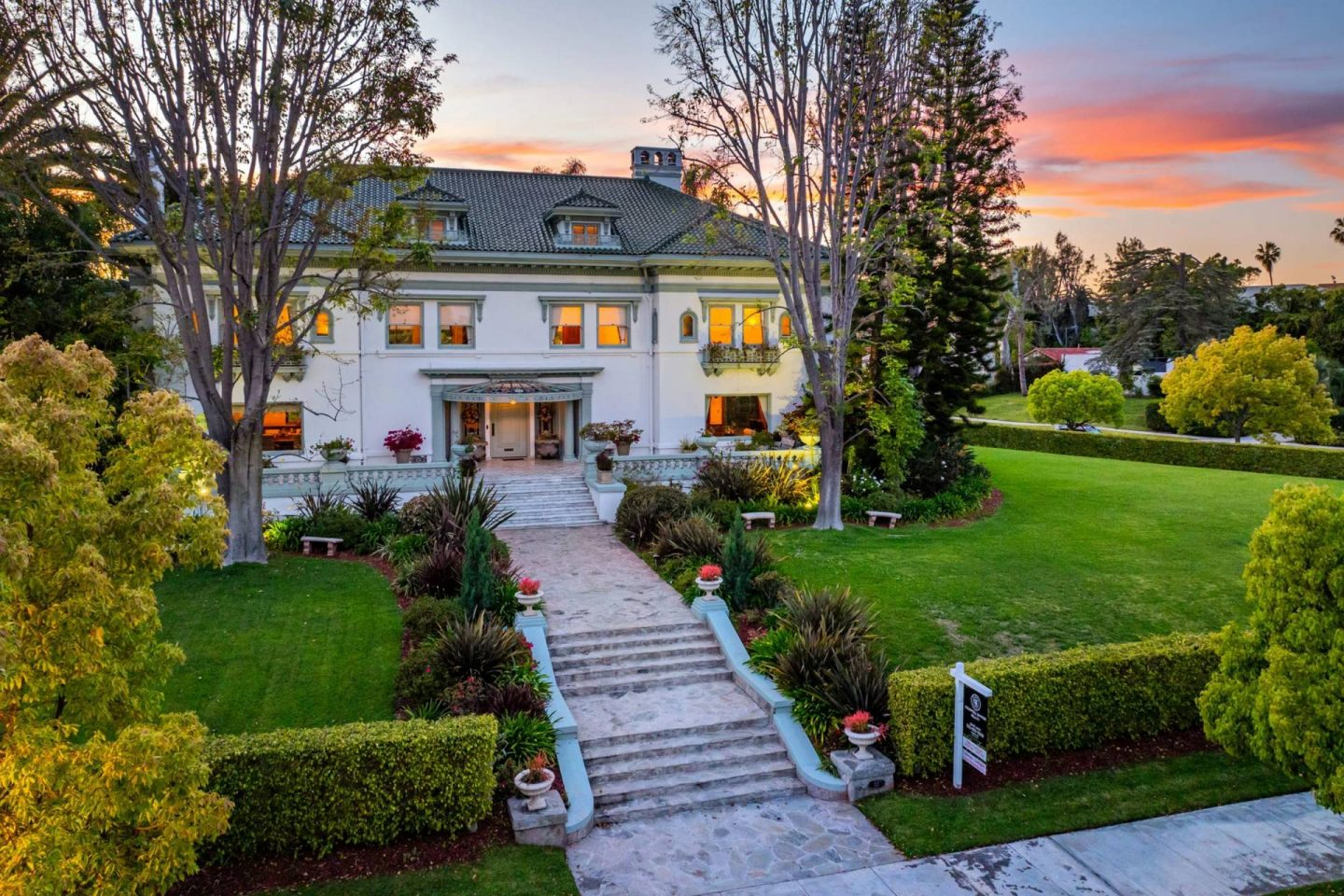
Where to go in the Amazon | Audley Travel

Amazon

The most full-flowing and one of the longest rivers on the planet was named one of the Seven Natural Wonders of the World in 2011. The Amazon and the rainforest along its course are populated by many rare plants, animals and fish, many of which are relict or endangered.
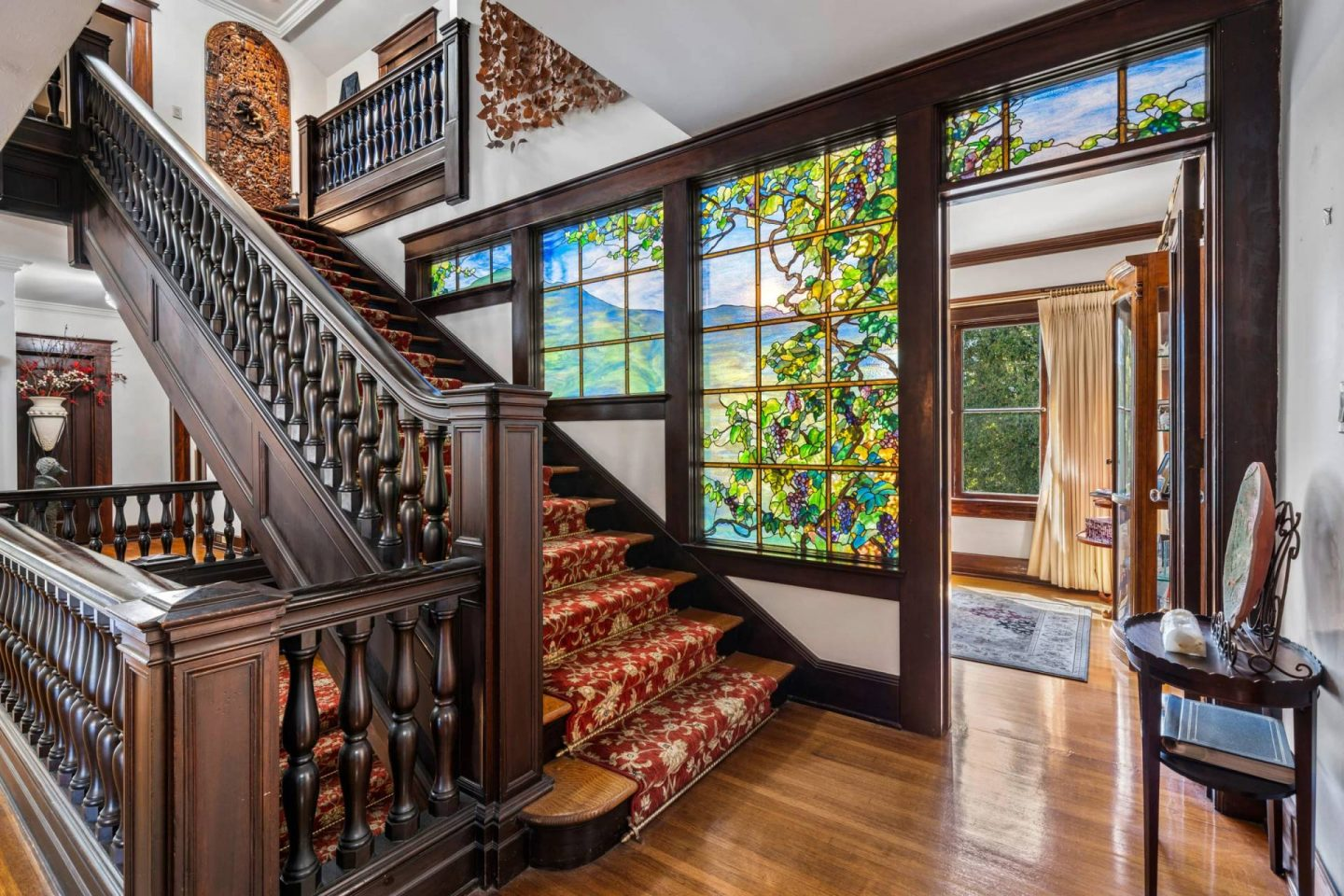
10 Things To Do in Fez Morocco — Ultimate Morocco Travel Guide

Fez

Morocco is an inexpensive version of an oriental fairy tale. And Fez is the second largest city, home to palaces, old markets, and quaint cafes serving Moroccan mint tea with local pastries.

Schloss Neuschwanstein

When the impregnable Neuschwanstein was built in the south of Germany in the 19th century, it immediately became a magnet for all those seeking peace and security. Its fabulous outline became the prototype of the palace built in Disneyland, where Sleeping Beauty lived, fell asleep and then met her love.

Windhoek, Namibia Event Space & Hotel Conference Rooms | Successful Meetings

Windhoek

If you have always dreamed of seeing Africa’s “rusty” deserts and animals in their natural environment, now is the time. Unlike other parts of Africa, Namibia has many safaris. It is home to many African animals: giraffes, rhinos, cheetahs and elephants. It’s also a low-cost place.

Amid criticism, 80,000 tourists visit Antarctica to swim with penguins

Antarctica

Antarctica is an amazing continent. It’s the coldest, even though it’s at the South Pole. Relative to the World Ocean, Antarctica is elevated more than other continents, it has the lowest relative humidity, the strongest and longest wind blows and the most significant solar radiation. At first glance, this is a harsh land consisting solely of ice. But it is not! Here you can find algae, mushrooms and even flowers – isn’t it an occasion to see it all with your own eyes!

Old Bridge Area of the Old City of Mostar - UNESCO World Heritage Centre

Mostar

Mostar is an ancient city and untouched section of the Ottoman Empire. The place is unique in that it coexists two different cultures (Europe and Asia), two religions (Islam and Christianity), and connects them by a medieval arch bridge (Star Most), the history of which is as unique as the city.

The Best Beaches In Montenegro To Keep You Cool! | Chasing the Donkey

Montenegro

Travelers who decide to come to Montenegro will be greeted by massive mountains, ancient Roman villas, clear waters, and incredible scenery. In addition, there are chic Adriatic beaches in Budva, Becici and on the Island of Sveti Stefan. And also the famous spa resorts of the Bay of Kotor. For the Silo, Batya Gill. Featured image: Jaisalmer India Desert City

Landmarks of Ancient Yemen added to UNESCO’s World Heritage List

Paris, January, 2023 – The World Heritage Committee meeting in an extraordinary session on Thursday inscribed the Landmarks of the Ancient Kingdom of Saba, Marib (Yemen) on the List of World Heritage in Danger.


The Landmarks of the Ancient Kingdom of Saba, Marib, is a serial property comprising seven archaeological sites that bear witness to the rich Kingdom of Saba and its architectural, aesthetic and technological achievements from the 1st millennium BCE to the arrival of Islam around 630 CE.

Yemen’s recorded history started when it was known as Saba/Sheba three thousand years ago, on the main spice route from the east to Europe, and was rich and powerful. The Queen of Sheba’s visit to King Solomon appears in both the Bible and the Koran.


They bear witness to the complex centralized administration of the Kingdom when it controlled much of the incense route across the Arabian Peninsula, playing a key role in the wider network of cultural exchange fostered by trade with the Mediterranean and East Africa.


Located in a semi-arid landscape of valleys, mountains and deserts, the property encompasses the remains of large urban settlements with monumental temples, ramparts and other buildings.

The irrigation system of ancient Ma’rib reflects technological prowess in hydrological engineering and agriculture on a scale unparalleled in ancient South Arabia, resulting in the creation of the largest ancient man-made oasis.

Marib Dam photos before and after the destruction. photo: German Archaeological Institute/Burkhard Vogt


The World Heritage Committee used an emergency procedure to inscribe this site on the List of World Heritage in Danger, due to threats of destruction from the ongoing conflict.


The List of World Heritage in Danger provides access to enhanced international assistance, both technical and financial, and helps mobilize the entire international community for the protection of sites.

Historic Architect Edmund Burke Shaped Look Of Today’s Toronto

Since 1793, when the Town of York, the second capital of Upper Canada, was founded, Toronto has been an important economic and political hub.

The first governor of the Town of York, John Graves Simcoe, believed that this town would become a powerful industrial metropolis, and when Toronto became one of the top financial centres in the world, his dreams came true.  Toronto, as the fifth most populous city in North America, is evaluated by experts and economists from the Economist Intelligence Unit as one of the world’s most livable cities.

Iconic Prince Edward Viaduct by E. Burke

The provincial capital of Ontario is dominates many sectors, including business services, finance, telecommunications, media, arts, film, music, television, software production, tourism, medical research, and engineering. There’s no doubt that Toronto is one of the fastest developing and growing cities in North America. We should remember and appreciate the most significant people in our city’s history who contributed to this prosperity.

Toronto is a perfect example of how the life and spirit of every city in the world is defined and influenced by its architecture.

Each part of Toronto has its own unique atmosphere that reflects its cosmopolitanism. The architecture of Toronto preserves various styles from different eras and centuries. Nevertheless, there were several architects whose work and designs significantly shaped the look of Toronto as we know it today. Let’s take a closer look at the work of the most significant Torontonian architects.

Edmund Burke (1850-1919)
Early Years
Burke was born in Toronto on October 31st, 1850 as the eldest child of lumber merchant and builder William Burke and his wife, Sarah Langley. Edmund Burke finished his studies at Upper Canada College and started to work as an architectural apprentice under the guidance of his uncle, Henry Langley, who was very distinguished among the first generation of architects who were taught in Canada. Back then, Burke was a twenty-year-old man with considerable skill and an open mind who was eager to learn as much as possible from his uncle. A great deal of knowledge about traditional styles was passed from Langley on to his young nephew. Langley’s influence can be recognized in the conservative undertones of Burke’s works. In 1872, he entered a partnership with his uncle. This year marked the formal beginning of his rich and successful career. His own business was set up in 1892, and in first years on his own, he worked on two important architectural projects: the Jarvis Street Baptist Church and McMaster Hall (now the Royal Conservatory of Music) on Bloor Street.

Members of the Toronto Architectural Guild meeting at Edmund Burke’s summer home in 1888. Burke is circled in red. Photo: archives.gov.on.ca

This was the first time that he was truly independent and could express himself without any limitations, making this a period of crucial importance for understanding Burke’s work. Gilbert Scott, one of the most notable figures in British architecture, was his biggest influence in his early works. However, Burke was able to brilliantly combine his progressive and innovative sensibilities with traditional architectural styles. Angela Carr, Assistant Professor of Art History at Carleton University, wrote in her study, Toronto Architect Edmund Burke: Redefining Canadian Architecture, that “Burke’s work developed consistently through a variety of building types in all periods, accommodating technological advances almost as rapidly as these appeared and expressing the new aesthetic of a changing society.“

Burke, Horwood, and White
Burke, after two years as a sole practitioner, established a partnership together with J.C.B. Horwood, and they were later joined by Murray White. All three of them were former students of Henry Langley. Their firm, which designed a vast number of churches across Canada, many luxurious mansions for wealthy citizens of Ontario, and many commercial buildings, was one of the most successful architectural companies in the country. The firm combined different historical styles with new techniques and new materials such as glazed terra cotta, early iron, reinforced concrete frames, and forms of fire protection.

Edmund Burke was eager to seek a new innovative solution that would encourage the modernization of technology. He shared his knowledge with his colleagues by giving lectures and issuing publications. His biographer noted that Burke “presided over the transformation of the architect from the craftsman to consulting professional.“ Burke is responsible for bringing to the practice of architecture in Canada the new vocabularies and technologies used in that era in the United States. He worked with American models, a type of plan than became standard across the country in the last two decades of the 19th century, when he was working on the Jarvis Baptist Church from 1874 to 1875. Moreover, he was responsible for introducing the “curtain-wall“ construction to Canada when designing the Robert Simpson store in 1894, which, in the following decades, inspired many architects of retail department stores across the country.

St. Luke's United Church Toronto
St. Luke’s United Church Toronto

It is worth noting that Burke was also active in urban planning activities for the City of Toronto and that he also was a part of several committees established by the Ontario Association of Architects and Toronto’s Guild of Civic Art. He is the author of the Prince Edward Viaduct, also known as the Bloor Viaduct, which he designed together with the city engineer’s office. Moreover, he participated and worked on projects improving the city’s traffic flow.

Burke’s Work in Professional Architectural Societies
Edmund Burke was one of the leading figures responsible for the recognition of the architectural profession and for having a substantial influence on Torontonian architecture in the 19th century. Burke played a major role in codifying standards of practice and education in the field of architecture, which ensured basic rules and and proper working conditions for architects as well as protection from unqualified practitioners.


The ever-growing competition from the United States was the main reason for the establishment of innovative learning programs, the introducing of modern technologies, and the formation of professional architectural organizations. Burke was responsible for the establishment of the Ontario Association of Architects in 1889, which he later led as its president in 1984 and 1905 to 1907. Furthermore, he was one of the three founding members of the Royal Architecture Institute of Canada. His support of quality education was an important aspect of his contribution to Canadian architecture. He noted that “if we train our students thoroughly and see that no one but first class men are permitted to enter the profession, I think the rest will take care of itself.“

Edmund Burke devoted his life to architecture and introduced a new way of combining the newest trends with traditional styles. The last years of his life were dedicated to public and professional service. The face of Toronto continued to be shaped by his works and ideas through the works of his colleagues and students for many years.

“Few men of the present generation of architects have so widely held the respect and esteem of their confrères, or been more closely identified with the building progress of the country. Practicing continuously for a period of over forty years, during the time when Canada was passing from its more backwards state to the present great strides of nationhood, his efforts stand out prominently in the modern character of Canadian architectural work.“ Obituary of E.Burke, Construction (January 1919)

Notable Buildings Designed by Edmund Burke
Jarvis Street Baptist Church (1878) – Jarvis Street
Prince Edward Viaduct, also known as the Bloor Viaduct (1881)
Trinity-St. Paul’s United Church (1887–1889) – Bloor Street, west of Spadina Avenue
Owens Art Gallery (1893) – Mount Allison University, New Brunswick
St. Luke’s United Church (1874) – Sherbourne Street and Carlton Street
Beverley Street Baptist Church (1886) – 72 Beverley Street
Robert Simpson’s Department Store Building (1908) – 176 Yonge Street [*perhaps the building Burke is most famous for CP]
St. Andrew’s Evangelical Lutheran Church (1878) – 383 Jarvis Street
McMaster Hall, now The Royal Conservatory of Music (1881) – 273 Bloor Street West

Burke worked on several buildings and projects outside of Ontario including the design and construction of Owens Art Gallery in New Brunswick

For the Silo by Jamie Sarner.  

Supplemental- Discover the book, Edmund Burke- a genius revisited

Ukraine: How UNESCO Supports Odesa’s Heritage & Cultural Life

Paris, 30 August 2022 – At a meeting with UNESCO Director-General Audrey Azoulay at the Organization’s Headquarters, Oleksandr Tkachenko, Ukrainian Minister of Culture and Information, announced that his country will request the inscription of Odesa on UNESCO’s World Heritage List. For its part, the Organization will deploy new measures to protect Ukrainian cultural heritage, particularly in Odesa and L’viv.

Since the beginning of the war, UNESCO has been deploying emergency measures in Ukraine as part of its mandate for education, culture, science, information and communication.

The Organization has mobilized close to $7 million USD/ $9.17 million CAD to date, provided numerous in-kind grants and made its experts available to advise professionals on the ground.

A working meeting was held at UNESCO Headquarters on Tuesday between Ms Azoulay, UNESCO Director-General, Mr Tkachenko, Ukrainian Minister of Culture and Information, and Ernesto Ottone, UNESCO Assistant Director-General for Culture, to ensure the proper implementation of these actions in the field of culture. On this occasion, the Minister also expressed new needs which UNESCO is committed to meet.

Image via artreview.com Artist I. Levi modifies existing artwork to reflect changes to old works caused by wartime damage that have occurred since the Ukraine War began. Inga Levi, March 15, 2020: The Willow’s Catkins have Blossomed, Klaipėda/ The House Window in the Obolon District after a Direct Airstrike, Kyiv, 2022, pencil

Inscription of Odesa on the World Heritage List

Oleksandr Tkachenko announced Ukraine’s decision to submit t the nomination of the Historic Centre of Odesa for inscription on UNESCO’s World Heritage List. Nationally recognized and protected, this site is located only a few dozen kilometres from the front line and has already been struck by artillery fire. On 24 July 2022, part of the large glass roof and windows of Odesa’s Museum of Fine Arts, inaugurated in 1899, were destroyed.

At the request of Ukraine, UNESCO has already mobilized international experts to provide technical support to the country so that this nomination can be examined urgently by Member States sitting on the World Heritage Committee, with a view of inscribing it on the World Heritage List and on the List of World Heritage in Danger.

The World Heritage Committee will also be recommended to add UNESCO’s World Heritage sites of Kyiv and L’viv, which are also under threat, to the List of World Heritage in Danger.

Image via artreview.com Inga Levi, March 5, 2022: Lviv’s view from the New Building / People are Hiding under the Ruins of the Bridge from the Russian Aircraft and Artillery, Irpin, 2022, pencil

UNESCO completes its emergency measures on the ground

In parallel to these steps and in view of the new needs expressed by professionals in the field, the Director-General announced at this meeting that UNESCO would strengthen its support to the city of Odesa by providing:

  1. Funding to repair the damage inflicted on the Odesa Museum of Fine Arts and the Odesa Museum of Modern Art since the beginning of the war, and to finance the hiring of additional staff dedicated to the protection of collections.
     
  2. Support for the digitization of at least 1,000 works of art in Odesa as well as the documentary collection of the Odesa State Archives, through the  provision of appropriate hardware.
     
  3. New equipment to the Odesa Regional Administration for the in situ protection of cultural property: protective panels, sandbags, fire extinguishers, fireproof fabrics and gas masks will be delivered to the Department of Culture, Religion and Protection of Architectural Heritage. They will allow the recovery of public monuments and sculptures, which has been underway since the beginning of the war, to continue.

With a view to boosting the recovery of Ukraine’s cultural sector, the Director-General also offered the Organization’s support for the creation of a UNESCO Cultural Centre in L’viv, as requested by the city mayor. It would be a place for artists to meet and share experiences, and would host training programmes, various activities and events. A budget of $1.5 million usd/ $1.96 million cad has already been earmarked to finance its opening and operational costs over several months.

In addition, the Director-General of UNESCO decided to deploy a liaison officer in Kyiv to coordinate these actions. The officer will complement the team of local experts already working in the field. For the Silo, Clare O’Hagan/UNESCO.

“Kardashian Penthouse” Hilton-Bentley Miami Available For Stays

Patio View Hilton Miami

The AAA 4 Diamond award winning Hilton Bentley South Beach recently debuted a newly renovated 3000 sq. feet penthouse suite with gorgeous wrap around views overlooking the ocean and the beautiful southern tip of South Beach, where the ocean meets the bay at South Pointe Park. This two story suite is complete with two master bedrooms and 3 full bathrooms. Now one of the most sumptuous of suites available on the beach, the suite was once home to sisters Kim, Kloe, Kourtney when the Kardashians filmed the first season of their reality show in Miami.

Kardashian Sisters In MiamiFollowing a multimillion dollar renovation a few years ago, the penthouse boasts a private rooftop pool, a Jacuzzi, spacious deck and two private terraces for relaxing or entertaining.

With a full stainless steel kitchen, a personal wine chiller, elegant dining room, living room with oversized retractable LED television, marble bathrooms, and immaculately decorated, the Hilton Bentley Penthouse is perfect for romantic getaways, family vacations, or as the ultimate bridal suite.

The suite is an iso technologically advanced with an all encompassing Dolby surround sound system, electric privacy shades and climate controls all accessed through the touch of the in suite iPad, or from the guest’s own iPhone.

Night rates for the penthouse range from $2,500 USD / $3,212 CAD – $7500 USD/ $9,638 CAD.

ABOUT HILTON BENTLEY:

The Hilton brand’s South Beach outpost, Hilton Bentley offers travelers a luxurious beachfront oasis situated at the southernmost tip of Ocean Drive in the exclusive “South of Fifth” enclave. Guests are footsteps away from Miami’s most sought after restaurants and nightlife. For visitors looking to vacation within the hotel, the amenity rich Hilton Bentley is a one stop shop for entertainment including celebrity chef Douglas Rodriguez’s restaurant DeRodriguez Cuba on Ocean, Myles Chefetz’s Prime Italian, the indulgent Bentley Beach Club, and the zen sanctuary Spa 101. Designed by the famed Architectonica and appointed with handcrafted European furnishings, this all suite property is the definition of opulence with modern upscale services.

Interior Miami HiltonInsuite Bar Miami HiltonInterior2 Miami HiltonMain Pool for Kardashian Penthouse Miami Hilton