When thinking about grant writing, it helps to first consider this story that tells about luck. In it, a farmer’s horse runs away and all his neighbors come by to say what bad luck this is. The farmer replies “maybe.” His horse returns and with it brings wild horses. The neighbors all say what good luck this is to which the farmer says, “maybe.” The farmer’s son, attempting to tame one of the wild horses, is thrown and breaks a leg. Bad luck, say the neighbors, “maybe” says the farmer. At last the army comes to town gathering up all the able bodied young men to go off to war. Seeing the farmer’s son with his broken leg they pass on by.
The story ends here, but it shows that things are often connected in ways we can’t possibly predict. A Lebanese saying reaches toward the very same point, “Don’t curse your bad luck because it may turn out to be your good luck.” Again the message here is that you can’t possibly know whether a single event is truly good or bad.
Failure can and should be viewed through the lens of stories and phrases like these. When we stumble, it is easy to fall into the trap of thinking of this one moment as some sort of endgame. On the contrary, every so-called failure is nothing more than the next step in your journey.
Failure feels personal. When you have worked hard on something, poured your very soul into it, only to have things not come to fruition, it can feel like the universe is pointing a finger directly at your forehead. Putting things into some context is one way to start seeing the bigger picture.
Shakey Graves- Roll the Bones. Bandcamp.
Grant applications are quite probably one of the best examples of this. There is so much riding on any given application, whether it is for a specific project or an artist’s general practice. Grants are one of the ways in which working artists stay afloat and they are not only time-consuming, they can feel extremely personal.
Not receiving a grant can set off a cycle of emotions. Everything from wondering what is wrong with your work or your application, to convincing yourself that this is the last chance and there’s no point trying again. Let’s unpack these very common reactions and shed some light on the reality of the situation.
For any given grant you may apply to, there are countless others also spending long hours writing up their own applications. Grants range all over the place in size and popularity, so to speak. Even smaller scale grants (say, those offered by lesser known organizations or tightly specified to certain disciplines) will often attract many applicants.
While there are certain strategies when it comes to writing a good grant application, there is no single, objective way to ensure that yours will be the one chosen. When it comes down to final decision time, there is a level of subjectivity built into the process. Art for example, is not a quantitative subject and nor are grants being awarded via algorithm. Rather, they are being decided by panels of human beings with a range of subjective emotions about a field that is as unscientific as it gets.
For the reasons above, when you do not receive a grant, think of it in terms of the many, many other applications rather than simply in terms of what you personally did wrong. Do not ignore this as a learning experience and do reach out the grant organization for feedback whenever possible, but do not let “no” from one or even a string of grant organizations stop you in your tracks.
Instead, recall the story and expression above. Think of every grant, in fact, every action, as nothing more than a single ripple on the surface of the vast river that is your journey. When you do not get into a gallery, carry on and find others. Down the line when you look back, you will have the clarity to see the progression of events. When you are passed over for a residency, apply to three more. If a project doesn’t work out the way you thought it would, evaluate what happened, learn from the experience, and move on down the road.
Brainard Carey. image: elmcityexpress.blogspot
No one is claiming that this is easy. This isn’t about somehow detaching from your feelings and letting rejection slide like water off a duck’s back. Of course not. Rejection hurts. No matter how impersonal it might actually be when we are told no it isn’t a good feeling.
But remembering that every moment is just that, a single blip on the screen rather than a career breaking catastrophe can help you heal and recharge sooner after you’ve had a misstep. Carry the simple answer of the farmer with you at all times, “maybe.”
For the Silo, Brainard Carey.
Brainard is currently giving free webinars on how to write a better Artist bio and statement and how to get a show in a gallery – you can register for that live webinar and ask questions live by clicking here.
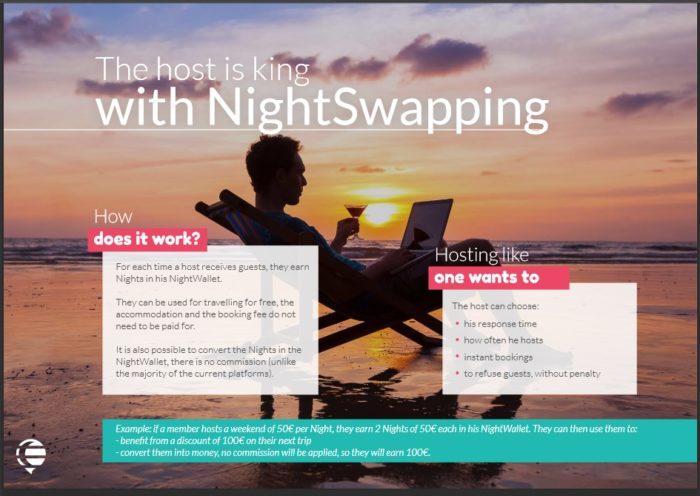
Nights Exchange Leader NightSwapping Acquires MyTwinPlace NightSwapping is the first Nights exchange community with more than 250,000 members throughout 160 countries. It pioneered a new concept in 2012 which is unique in the sharing economy travel market. Read the PDF backgrounder by clicking here.
It takes the best parts of vacation rentals, home exchanges and Couch-surfing to let members travel for less or earn money. Whether you’re a traveler or a host, you earn Night credits with each trip which you can them use to travel or convert into money commission free.
Thanks to the innovative idea, you can keep traveling locally, authentically and meet friendly hosts and guests, all the while enjoying improved safety conditions and saving money.
In order to speed up its development, NightSwapping has acquired a Spanish competitor founded in 2013. MyTwinPlace’s community consists of 55,000 members throughout the world.
Serge Duriavig
According to Serge Duriavig, founder of NightSwapping, “this acquisition, which we have been preparing for the last few months, will allow us to significantly strengthen our community by bringing even more travel opportunities to our members, particularly in the booming Spanish market.
This deal affirms our ambition to become a mainstay in the sharing economy travel market. Thanks to MyTwinPlace, our goal to reach 300,000 members in 2017 is already realized. We aspire to reach 1,000,000 members in the next 2 years.”
For Xavier Labollos de Jesus and Jean Noel Saunier, the heads of MyTwinPlace, “the acquisition by NightSwapping is a guarantee that our community lives on serenely.”
In 2014 and 2016, NightSwapping raised 2 million euros successively with venture funds, Family Offices and Business Angels. A fundraising round that allowed the French upstart to grow its community tenfold. A new round is scheduled before the end of the year, so NightSwapping can keep expanding, with an eye on the American market.
The website is available in seven languages; English, French, Spanish, Italian, Portuguese, German and Dutch. An app will soon be released on Google Play and the iPhone App Store.
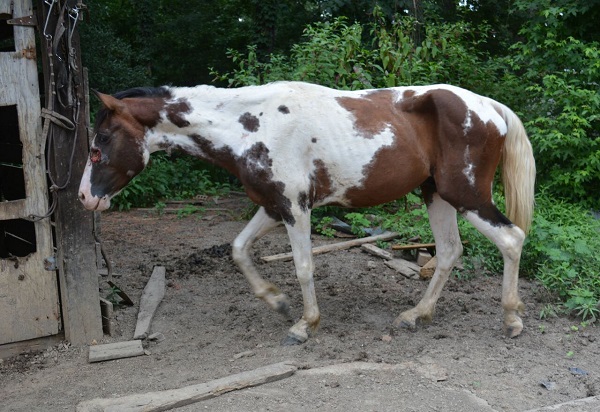
This article contains graphic images. Cascilla, Miss. – Two Mississippi animal protection organizations have joined forces to rescue four neglected horses in Cascilla, Tallahatchie County. In Defense of Animals’ Justice for Animals Campaign and Jackson-based Mississippi Horses seized the starving and wounded animals from a property on Smith Road.
Concerned people who passed the property contacted the Justice for Animals campaign after witnessing the horses in a state of neglect.
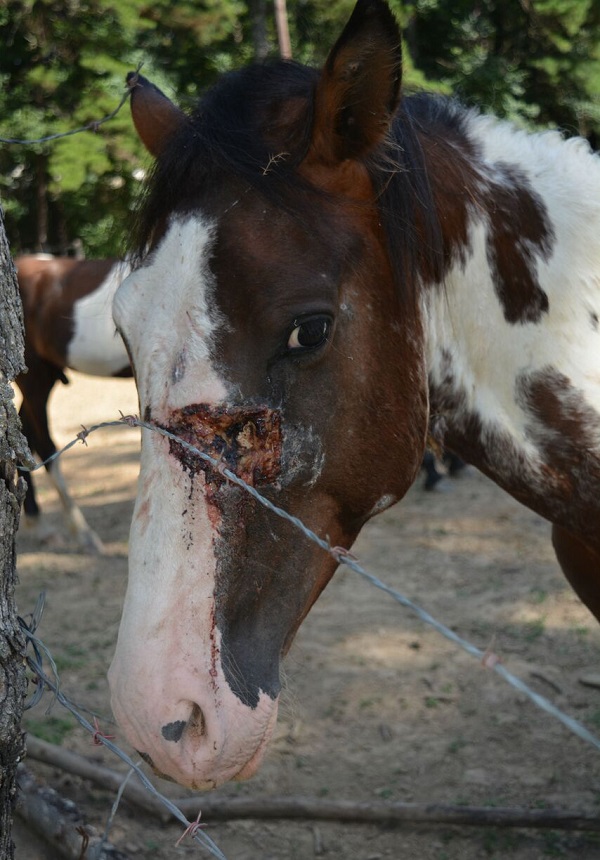
Justice for Animals Director Doll Stanley and Tallahatchie County Deputy Albert Griffin met with the property owner to examine the conditions of the neglected horses. Two stallions, one mare, and her colt were confined to an area with no grass or other food to support the horses and no drinking water. One of the horses had a severe, untreated wound on his face.
A fifth horse was present on the property who seemed well-cared for. The badly-injured stallion had apparently stuck his head through an opening in the stall of the well-cared-for horse in an attempt to reach food, and had been severely bitten. One side of his head and his neck were scraped in the struggle to free himself when the other horse attacked him, leaving a ghastly bite wound that left an exposed section of bone on his face. The horse had not received medical attention.
An order was granted to the Tallahatchie County Sheriff’s Department for the seizure of the four horses on July 14 and was enforced that afternoon. Mississippi Horses immediately transported the injured horse to Mississippi State University Veterinary School for emergency treatment. The three other horses have been taken into the organization’s care for rehabilitation.
“In many cases of unintentional neglect, often in ignorance, we give guidance to animal guardians and monitor the recovery or check on the animals’ improved environment,” said Justice for Animals Director, Doll Stanley. “In this case, friendly guidance was not an option. Failure to provide the basic sustenance for horses and direly needed medical care, and failing to even reach out for help, has caused inexcusable suffering to these poor horses.”
In Defense of Animals has served in Mississippi for 24 years, aiding victims and law enforcement with hundreds of cruelty cases. In Defense of Animals’ Justice for Animals Campaign works with law enforcement to provide guidance on animal cruelty laws, advocate for stronger humane ordinances and statutes, and coordinate aid to rescue neglected and intentionally harmed animals.
Eleven miles south of Grenada, Mississippi, In Defense of Animals operates Hope Animal Sanctuary which rescues and cares for hundreds of animals including many victims of cruelty cases. Hope Animal Sanctuary is currently full and mid-way through a renovation project to replace its 20-year-old facilities with buildings, fencing, and modern amenities so that it may continue to provide hope for Mississippi’s cast-off, neglected, and unwanted animals for many years to come. Please support your local sanctuary www.idausa.org/HASrebuild2
In Defense of Animals’ Justice for Animals Campaign is working tirelessly to advance the cause for justice and show state legislators that the people of Mississippi are united against senseless and horrific animal abuse. Campaign members are aligning with Mississippi judges, prosecuting attorneys, law enforcement officials, legislators, animal advocates and concerned citizens to pass tougher state statutes and meaningful regional ordinances that will protect animals when state statutes fail. For the Silo, Doll Stanley IDA.
In Defense of Animals is an international animal protection organization with over 250,000 supporters and a 30-year history of fighting for animals, people and the environment through education, campaigns and hands-on rescue facilities in India, Africa, and rural Mississippi.
All images- Fleur Dawes (In Defense of Animals)
IN DEFENSE OF ANIMALS • 3010 KERNER BLVD. • SAN RAFAEL, CA 94901 • 415-448-0048
As the civic holiday some refer to as Simcoe Day approaches, I wish to shine light on Upper Canada’s first lieutenant-governor.
Born Feb. 25, 1752, in England, John Graves Simcoe, although best known as lieutenant-governor, was also a member of British Parliament, colonial administrator, army officer, and commander of the Queen’s Rangers during the Revolutionary War.
Largely comprised of Loyalists and deserters from George Washington’s army, the Queen’s Rangers were named in tribute to Queen Charlotte, the wife of King George the Third. As a 400-man elite fighting force, established during the Seven Years War (1756-1763), they trained in woodcraft, scouting and guerilla warfare. Simcoe didn’t follow the protocol of the time of strict and rigid maneuvers. The Rangers wore green uniforms for camouflage, depended on speed and surprise, and were known to defeat forces three times their size.
Simcoe took time from the war to pursue a young lady named Sarah “Sally” Townsend. On Feb. 14, 1779, he sent her a poem in which he extolled her beauty and his love for her – the first recorded Valentine’s Day letter in North America.
That year Simcoe was ambushed by rebels, captured and imprisoned in New Jersey. He was treated harshly and his one attempt at escape was foiled. He was finally released on the signature of Benjamin Franklin as part of a prisoner of war exchange.
Following the defeat of the British at Yorktown in 1781, Simcoe spirited the Queen’s Rangers colours to England. Today they are on display in the officers’ mess of the Queen’s Rangers at Fort York, Toronto.
Simcoe returned to England, married Elizabeth Posthuma Gwilliam and was elected Member of Parliament for the borough of St. Maws, Cornwall.
On Sept. 12, 1791, Simcoe was appointed lieutenant-governor of the newly-created Upper Canada.
With his appointment, Simcoe had a goal to develop Upper Canada as a model community with aristocratic and conservative principles, and to demonstrate the superiority of these ideas in contrast to the Republicanism of the United States.
He opened the first elected parliament in what is now Ontario 225 years ago on Sept. 17, 1792. He is credited for installing British common law, trial by jury, the standardization of weights and measures and the establishment of Ontario’s system of municipal government.
In 1793, under Simcoe, the assembly passed the first act against the importation of slaves in the British Empire. Slavery had completely ended in Upper Canada before it was abolished in the British Empire as a whole in 1834.
Simcoe realized Newark was an unsuitable capital because it was on the border and open to attack. He suggested moving the capital to a defensible position, named the location London and renamed its main river the Thames. This proposal was rejected, but Simcoe’s second choice, the present site of Toronto, was accepted. The capital was moved there in 1793 and renamed York.
The Queen’s Rangers were revived and Simcoe had them begin construction on Yonge Street.
Simcoe returned to England for health reasons in July 1796 and died there on Oct. 26, 1806.
Over two centuries later, many refer to the Civic Holiday in August as Simcoe Day. Attempts to give Simcoe Day provincial recognition has failed.
To celebrate Ontario’s 225th; visit my web site at www.tobybarrett.com to test your knowledge of our province.
Neighbor disputes are fairly common. They can arise for a number of reasons, such as shared land and amenities, repairs, boundaries, noise or parking spaces. How you deal with these could determine how comfortable you feel in your house and your neighborhood. So many times, disputes can escalate unnecessarily and leave both parties stressed, angry and sometimes out of pocket.
In this guide we look at some of the most common neighbor disputes in Britain and give tips on how to handle them and more importantly, how to resolve them peacefully.
Infographic courtesy of our friends at castironradiators4u.co.uk
The mayor of a beautiful American city filled with wonderful people-but part of a state often thought to be in a different country, had a serious but undiagnosed problem. It was known to many residents, but the mayor seemed blissfully unaware for months of what was going on. Violence and robberies dominated the local newscasts daily. Sometimes, homeless people wandered the streets, some aimlessly talking to themselves and sometimes angrily punching the air.
The crime and other mayoral inaction were causing businesses both bigger and small to consider leaving the city or see their cash flow diminish to dangerously low positions. Mayor R.J. Berry was forced to make some small moves, when the situation continued to deteriorate.
Winter 2016- via CBS news. Click to read more.
However, a little known urban legend said that the mayor had become inwardly obsessed with what he felt he had really accomplished for the city. In private communications with upper level staff, friends and family, it’s said the mayor had even begun referring to his city as Wonderland.
Those who knew better were both flabbergasted and horrified when a local chamber of commerce presented the mayor with a public safety award. They worried that it seemed to further help him edge closer to becoming a legend in his own mind.
We wanted to know what a few of our Joy Junction homeless shelter guests felt about safety in Albuquerque. Their reactions were a mixed bag.
We asked them about walking in downtown “Wonderland” (also known as Albuquerque), if they felt safe, and whether they had answers for our burgeoning crime situation.
One person was quite blunt, saying “Crime in downtown Albuquerque is getting more dangerous and violent everyday. No, I do not feel safe (there). If I have to go downtown, I leave as soon as I am finished with business. I do not have any answers to our increasing crime issues.”
One man said what many of us know, that crime is “really high” in downtown.
“Walking throughout the areas I have been in, I always feel a sudden sensation come over me and I am instantly on guard. I have seen here a different side of addiction that I have not been exposed to.”
He added, “We were moved to the point we sent our teenage daughters to finish school in another state.”
One woman said that in her opinion, crime in Albuquerque has risen dramatically, especially in the area known as the International Zone (formerly the War Zone).
“Downtown is beginning to be the same way. I don’t know what can possibly be done; maybe more police officers. I have two grandchildren, and I do have concern that they are kept safe even at school. I pray here at Joy Junction that we are kept safe and that no one ever comes and does harm to people here.’
Another woman said she thinks “Albuquerque is focused on extremes like bad, bigger and bolder than the norm.”
She continued, “I do feel safe mostly because I walk safe, stay alert to people surroundings and sound. I adapt to strange or abnormal situations, and react or change my path or seek a different route. I have never really encountered a dangerous situation on the sidewalks. Only a few drunks at the bus stops, and the panhandling for cigarettes and change are maddening and relentless though.”
Her parting shot was, “I have no answers. If I did I would run for city council.”
One woman said she feels that crime in Albuquerque has definitely risen since she moved here in the fall of 2014.
She continued, “Car thefts seem to be happening a lot. There is a lack of respect for law enforcement, and criminals have no fear of consequences … I feel a little apprehensive. Even just going through Downtown in a vehicle is somewhat unnerving.”
She was shocked when her family told her, “‘Do not ever walk especially by yourself anywhere downtown because you can be attacked and the crime is extremely high.’ It is very sad that crime was the first thing I was told (about) when moving here.”
Her solution was to “Put God back in America.
She added, “We need to get on our knees and pray. We as a country are reaping what we have sown, and we will be judged for all our actions and as Christians we know that the end is coming and God’s judgment is coming.”
So what do I think of Berry’s plan? Well, I don’t share the local newspaper’s enthusiasm. Too little and way too late. An enhanced police presence and independent security are good, but what about those who for whatever reason don’t want, or aren’t in a state of mind, to receive help?
Another of the mayor’s efforts is to make downtown cleaner, with more street sweepers and trash pickup. Preventative maintenance would have been a whole lot more helpful. Really, it took a crisis to come up with this?
And then only Mayor Wonderful could have come up with this one. Having strong relationships with businesses downtown, to make sure they stay downtown. And we couldn’t have put this into place before now?
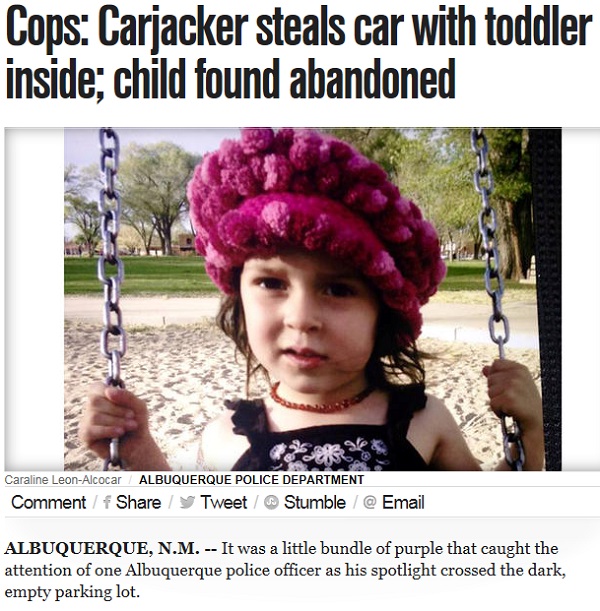
And the grant to the city from Bloomberg Philanthropies for $1.2 million USD. The by now infamous Albuquerque Chamber of Commerce award was given to Berry at least in part for using a portion of it for intelligent ways to solve crime. However, it looks like up until now the funds have been used to develop plans for Albuquerque’s Arts and Culture District.
Never fear, though. The city says plans for public safety initiatives funded by the grant are moving forward.
No one except apparently the mayor thinks his solutions to crime (or homelessness) are magical. This is not (Alice in) Wonderland. The stakes are much higher. For the Silo, Jeremy Reynalds- Joy Junction/HNS (Homeless News Service).
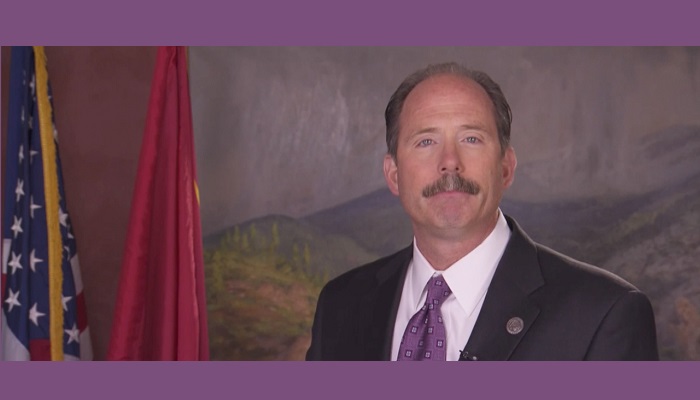
Featured image- Albuquerque Mayor R. J. Berry via PBS. A portion of this article is satire, and as such is protected speech.
Supplemental- The other perspective. Downtown Albuquerque residents defend their neighborhood-
Author Lacey Dearie moved her marriage date and delayed her honeymoon departure so that she didn’t miss any of the French F1 Grand Prix coverage that year.
The first time I watched an F1 Grand Prix was the race in Australia in 1998. I’d been persuaded by a friend who loved Canadian driver, Jacques Villeneuve, to watch and found myself gripped. Being a Scot, my instinct was to cheer for my fellow countryman, David Coulthard. I was thrilled when he led the race, then devastated when he pulled over and let Mika Hakkinen win due to a “gentleman’s agreement” made before the race had begun. As disappointing as the situation was, I couldn’t help but adore the spectacle I’d just witnessed. It’s that kind of exhilaration that has kept me tuning in to watch every race since March 1998.
The drama is just part of why I’m a fan. I love the pre-race interviews with the drivers who can be either insightful or guarded and often humorous, the anticipation when the red lights go out, the horror when someone crashes, the relief when drivers walk away from mangled wrecks and the bliss when my favourite team or driver win and receive their trophy on the podium. I have the whole spectrum of emotions while watching a race. It just makes you feel alive.
Being a female fan of a male dominated sport means most of my girlfriends find F1 boring, or they just don’t get it. To them, it’s a bunch of foreigners driving in circles. To me, it’s so much more. However, there are advantages to being a female fan. A shared love of motor sport is the only thing I have in common with my middle aged male boss and fills awkward gaps in conversation during lunch breaks or trips away from the office. When my male friends roll their eyes because I don’t understand soccer’s offside rule, I counter that with a sarcastic sigh when they ask me to explain how KERS works.
The only thing that ever concerned me, as a female fan, was the lack of merchandise available for women, but it has greatly improved in the last couple of years. Ferrari even sell their very own bikini, although I can’t imagine any of the female fans I know wearing one while watching a race.
At the time of this writing, only five women have ever reached the fringes of Formula One and only one of them has ever won a race in a Formula One car- Desiré Wilson.
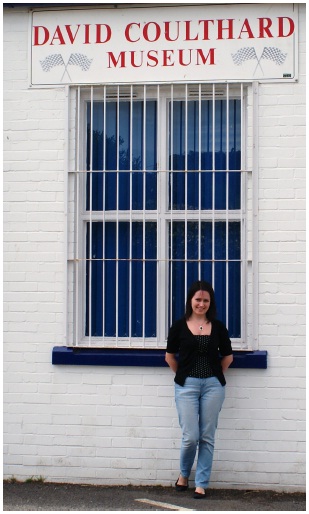
My husband doesn’t share my passion for F1, but was extremely understanding when I suggested we got married on a Friday and delayed the departure for our honeymoon to the following Monday so that I didn’t miss any of the French Grand Prix coverage that year. He’s accompanied me on several trips to the David Coulthard Museum in Twynholm, Scotland and humored me when I suggested that, if our son grows up to become an F1 fan, we make the family holiday each year a trip to a different Grand Prix. I even joke that I planned the birth of my son for February to ensure I didn’t miss any races due to childbirth. Obviously I’m not serious, although my friends and family are skeptical.
Women who don’t appreciate my love of the sport can be critical of the lack of female participants, but it’s honestly something that never occurred to me until I heard men discussing whether it was wrong or right. All the current F1 drivers are men, and the majority of people involved in the sport are male too. I genuinely don’t care. I’m sure if there were any women out there with the skills and talent to participate, they wouldn’t be denied the chance to race. I don’t believe in positive discrimination, so until such a woman comes along, I’m content to keep watching while men dominate.
Lacey Dearie is an indie author from Ayrshire, Scotland and a new writer for the Silo. Her first novel, The Tangled Web became #1 in the Amazon UK Free Download Chart in January 2012. If you would like to read more about The David Coulthard Museum, please visit the website www.dcmuseum.co.uk/museum
The Canada Aviation and Space Museum is proud to support OEX Recovery Group Incorporated (“OEX”), in a project involving the search-and-recovery of nine free-flight Avro Arrow models from Lake Ontario. The project was created by OEX as a Canada 150 initiative.
As one of the three museums under the new Ingenium banner, the Canada Aviation and Space Museum – in collaboration with the Canadian Conservation Institute – will provide historical information to support the conservation, treatment, and collection of any recovered models or materials.
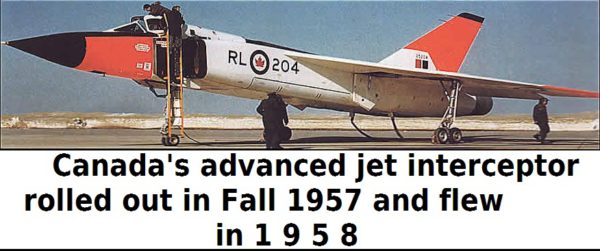
The Avro Arrow was the first and last supersonic interceptor designed and built in Canada. Developed between 1953 and 1959, it was produced to counter jet-powered Soviet bombers that had the potential to attack North America over the Arctic.
The nine Avro Arrow free-flight models that OEX hopes to locate and recover were test models used to evaluate aerodynamic qualities and stability of the storied aircraft’s design. They were flown over Lake Ontario between 1954 and 1957.
Through a national partnership involving the Canada Aviation and Space Museum, OEX, the Royal Canadian Air Force and the Canadian Conservation Institute, the Museum will keep the public apprised of any milestones in the search-and-recovery mission. It will also provide periodic updates on plans for conservation, preparation and public exhibition of the artifacts.
OEX holds survey and recovery permits from the Ontario Ministry of Tourism, Culture and Sport. It is financially supported by a group of Canadian mining companies and financial institutions, and is funding survey and recovery work, as well as committing to conservation work and display costs.
Follow this exciting story as it unfolds, using the hashtag #raisethearrow or via IngeniumCanada.org.
Quotations
“Our museum is thrilled to be partnering on this historically significant search-and-recovery project. The Canada Aviation and Space Museum’s collection comprises the largest surviving pieces of the Avro Arrow: a nose section and two wingtips. A free-flight model would be a wonderful addition to our collection, and to the Arrow story we share with Canadians.”
– Fern Proulx, interim President and CEO of Ingenium
“As professional explorers in the mining business, we initiated this program about a year ago with the idea of bringing back a piece of lost Canadian history to the Canadian public. As individuals, as a company, as a group and with our partners and our project participants in this search effort, we all have the same goal in mind: to find and return these beautiful pieces of Canadian technology to the public eye during this anniversary year of our incredible country. Like Avro, our own corporate group was built on dreams, and this project is a proud reminder of what we as Canadians have done, what we do, and what we can do.”
– John Burzynski, President and CEO of Osisko Mining Inc. and head of OEX Recovery Group Incorporated
For the Silo, Zoë Lomer.
About the Canada Aviation and Space Museum
Located on a former military air base just 5 kilometres from the Prime Minister’s residence at 24 Sussex Drive in Ottawa, the Museum focuses on aviation in Canada within an international context, from its beginnings in 1909 to the present day. As Canada’s contribution to aviation expanded to include aerospace technology, the Museum’s collection and mandate grew to include space flight. The Collection itself consists of more than 130 aircraft and artifacts (propellers, engines) from both civil and military service. It gives particular, but not exclusive, reference to Canadian achievements. The most extensive aviation collection in Canada, it is also considered one of the finest aviation museums in the world.
Museum Highlights: Largest surviving pieces of the famous Avro Arrow (its nose section and two wing tips); the original Canadarm used on the Endeavour space shuttle; Lancaster WWII bomber; Life in Orbit: The International Space Station exhibition.
About Ingenium – Canada’s Museums of Science and Innovation
Launched in June 2017, Ingenium is a new national brand established to preserve and share Canada’s story of scientific and technological heritage. This corporate brand, which celebrates ingenuity, encompasses three national institutions – the Canada Agriculture and Food Museum, the Canada Aviation and Space Museum, and the Canada Science and Technology Museum. Under the Ingenium brand, these three museums are places where the past meets the future, with spaces where visitors can learn and explore, play and discover. Ingenium also has an eye to the future with a state-of-the-art Collections Conservation Centre, set to open in 2018, digital and social media platforms, and travelling national and international exhibitions to educate, entertain and engage audiences across Canada and around the world. For more, visit us: IngeniumCanada.org.
Association entre le Musée de l’aviation et de l’espace du Canada et des partenaires nationaux pour la recherche et la récupération d’appareils Arrow de Avro à vol libre dans le lac Ontario
OTTAWA, le 14 juillet 2017 – Le Musée de l’aviation et de l’espace du Canada est fier de soutenir le OEX Recovery Group Incorporated (« OEX ») pour un projet de recherche et de récupération de neuf appareils Arrow de Avro à vol libre dans le lac Ontario. OEX a mis sur pied ce projet dans le cadre d’une initiative Canada 150.
Le Musée de l’aviation et de l’espace du Canada, l’un des trois musées de la bannière Ingenium, en collaboration avec l’Institut canadien de conservation, fournira des renseignements historiques pour soutenir la conservation, le traitement et la collecte de tout appareil ou matériel récupéré.
L’appareil Arrow de Avro a été le premier et le dernier intercepteur supersonique de conception et de fabrication canadienne. Créé entre 1953 et 1959, il a été produit pour résister aux bombardiers à turboréacteurs soviétiques qui avaient la capacité d’attaquer l’Amérique du Nord en passant par l’Arctique.
Les neuf appareils Arrow de Avro à vol libre que OEX espère repérer et récupérer étaient des maquettes utilisées pour évaluer les caractéristiques aérodynamiques et la stabilité de la conception légendaire de l’aéronef. Ils ont survolé le lac Ontario entre 1954 et 1957.
Dans le cadre d’un partenariat national entre le Musée de l’aviation et de l’espace du Canada, OEX, l’Aviation royale canadienne et l’Institut canadien de conservation, le Musée tiendra le public informé sur les étapes de la mission de recherche et de récupération. Il fournira également des mises à jour périodiques sur les plans de conservation, de préparation et d’expositions publiques des artefacts.
OEX détient des permis de reconnaissance et de récupération du ministère du Tourisme, de la Culture et du Sport de l’Ontario, et est soutenu financièrement par un groupe de sociétés minières et d’institutions financières. L’organisme finance le travail de reconnaissance et de récupération, et s’engage à soutenir les coûts de conservation et d’exposition.
Suivez le déroulement de cette passionnante histoire à l’aide du mot-clic #rechercherArrow ou en cliquant sur IngeniumCanada.org.
– 30 –
Citations
« Notre Musée est ravi de son partenariat pour ce projet de recherche et de récupération d’importance historique. La collection du Musée de l’aviation et de l’espace du Canada compte les plus grandes pièces restantes de l’Arrow d’Avro : une partie avant et deux extrémités d’ailes. Un appareil à vol libre serait un merveilleux ajout à notre collection ainsi qu’à l’histoire du Arrow que nous partageons avec les Canadiens. »
– Fern Proulx, président-directeur général par intérim d’Ingenium
« En tant qu’explorateurs professionnels du secteur minier, nous avons lancé ce programme il y a environ un an dans le but de présenter un morceau perdu de l’histoire canadienne aux citoyens. En tant qu’individus, qu’entreprise, que groupe et avec nos partenaires et les personnes participant à ce projet de recherche, nous avons un seul objectif : retrouver et retourner ces magnifiques pièces de technologie canadienne au public pendant l’année anniversaire de notre superbe pays. Tout comme Avro, notre propre groupe de sociétés s’est bâti sur des rêves, et ce projet rappelle fièrement ce que nous avons fait, ce que nous faisons et ce que nous pouvons faire en tant que Canadiens. »
– John Burzynski, président-directeur général de la minière Osisko et chef du OEX Recovery Group Incorporated
Le Musée de l’aviation et de l’espace du Canada
Le Musée : Situé sur une ancienne base militaire à seulement cinq kilomètres du 24, prom. Sussex à Ottawa, résidence du premier ministre, le Musée concentre ses activités sur l’aviation au Canada dans un contexte international, des débuts de l’aviation au Canada en 1909 jusqu’à nos jours. Comme la contribution à l’aviation du Canada a évolué pour inclure les technologies aérospatiales, la collection et le mandat du Musée se sont aussi élargis pour inclure les vols spatiaux. La collection comprend plus de 130 aéronefs et artéfacts (hélices, moteurs) militaires et civils. L’accent est mis, mais n’est pas exclusif, sur les réalisations canadiennes. Il s’agit de la collection d’aéronefs la plus importante au Canada, et l’un des plus beaux musées mondiaux de l’aviation.
Pièces de résistance: Le plus gros élément du fameux Avro Arrow encore disponible (le nez de l’appareil); le Canadarm d’origine de la navette spatiale Endeavour; le bombardier Lancaster WWII; l’exposition Vivre en orbite : la station spatiale internationale.
À propos d’Ingenium : Musées des sciences et de l’innovation du Canada
Dévoilée en juin 2017, Ingenium est une nouvelle identité qui a été adoptée pour préserver et raconter l’histoire du patrimoine scientifique et technologique du Canada. S’inspirant de la racine latine du mot « ingéniosité », cette identité corporative englobe trois institutions nationales, soit le Musée de l’agriculture et de l’alimentation du Canada, le Musée de l’aviation et de l’espace du Canada et le Musée des sciences et de la technologie du Canada. Sous l’identité Ingenium, ces trois musées deviennent des lieux où le passé rejoint le futur, et où les visiteurs peuvent apprendre et explorer, s’amuser et faire des découvertes. Ingenium se tourne aussi vers l’avenir grâce à son Centre de conservation des collections à la fine pointe de la technologie, dont l’ouverture est prévue en 2018, à ses plateformes numériques et sociales, ainsi qu’à ses expositions itinérantes d’envergure nationale et internationale qui sauront éduquer, divertir et captiver des publics de tous âges partout au Canada et dans le monde entier. Pour en savoir davantage, visitez-nous à IngeniumCanada.org/fr.
I’d like to tell you about an easy shopping hack that moves coupon clipping into the 21st Century.
Gumdrop by Goodshop is a new free browser button which automatically finds and applies the best coupons at checkout when you are shopping online at more than 30,000 retailers including Kohl’s, Toys R Us and Amazon. It takes just a few seconds to add and then you can enjoy big discounts and save precious time by not having to search for antiquated ‘print’ coupons or cut and paste promo codes!
In addition, if you select a cause, a portion of what you spend at participating stores will be donated to that cause for free.
To date, Gumdrop has saved shoppers more than $100 million USD and donated nearly $13 million USD which has gone to find homes for stray animals, build playgrounds, fund cancer research and more. For the Silo, J.J. Ramberg.
Based in Hangzou, China, AliExpress is a global e-commerce platform made up of small business sellers offering a wide variety of consumer products worldwide. This growing platform already has (at the time of this writing) over 3 million likes on Facebook. An impressive number that speaks to the desirability of products on hand.
What makes AliExpress unique is the cellular nature of its structure. Many small businesses looking for a safe harbor are connected together and operate under the umbrella support of the larger corporate structure. Is this the ‘best of both worlds?’ We think it’s an interesting model and worth paying attention to. After all, a smaller company no longer has to struggle to develop an online identity or spend valuable resources designing and implementing a shopping ap. Yep- AliExpress has a pretty cool Ap that allows you to shop from Facebook and beyond…
Here’s a look at some of its Fashion small business sellers- Did you find something you like?
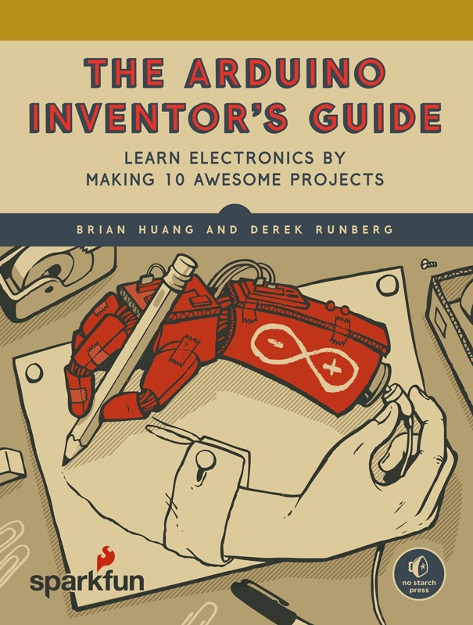
San Francisco, CA —School’s out for summer, but learning doesn’t have to stop at the classroom door. For parents and educators looking to keep their students exploring, tinkering, and creating, No Starch Press offers the latest addition to its lineup of STEM books. This time focusing on the Arduino microcontroller.
The Arduino Inventor’s Guide (No Starch Press, $29.95USD, 336 pp., June 2017) is a project-packed introduction to building and coding with the Arduino microcontroller. With each hands-on project, total beginners learn useful electronics and coding skills while building an interactive gadget.
This is No Starch Press’s second installment in its introductory-level educational series for aspiring makers. The series is a collaboration with SparkFun Electronics, the popular electronics parts retailer dedicated to making the world of electronics more accessible to the average person. Authors Brian Huang and Derek Runberg of SparkFun’s Department of Education use their teaching experience to make learning about electronics an adventure.
“We wanted to share the magic that happens when you build something interactive with electronics,” says Huang. “The goal is to teach real, valuable hardware skills, one project at a time,” adds Runberg.
Readers learn how to make their hardware move, buzz, flash, and interact with the world as they build 10 projects, including:
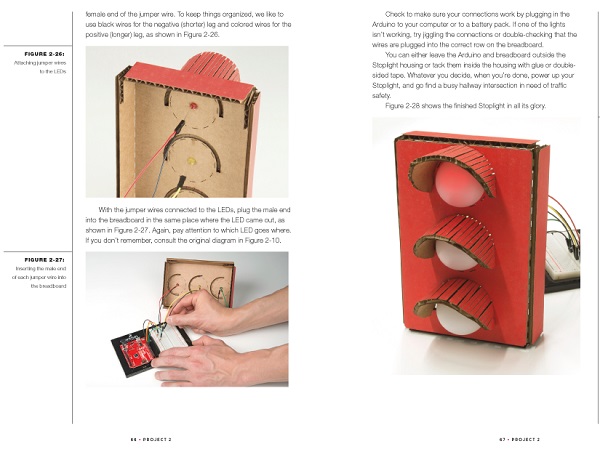
A miniature traffic light
A light-sensitive, color-changing night-light
A temperature-sensing mini greenhouse
A motorized, programmable robot
A tiny, playable electric piano
“We’ve teamed up with SparkFun to make electronics and coding skills achievable for anyone,” says No Starch Press founder Bill Pollock. “This book will take total beginners from blinking their first LED to programming their first robot.”
Sample pages from The Arduino Inventor’s Guide:
For the Silo, Amanda Hariri.
About the Authors
Brian Huang is the Education Engineer for SparkFun Electronics. He combines his knowledge of teaching and engineering to create professional development materials.
Derek Runberg works in the Department of Education at SparkFun Electronics, where he runs workshops about technology in classrooms and at conferences. He is the author of The SparkFun Guide to Processing.
SparkFun Electronics is an online retail store that sells electronic parts for DIY projects. It offers classes for the public as well as resources, tutorials, and professional development for educators through its Department of Education.
The Arduino Inventor’s Guide
Publisher: No Starch Press
Authors: Brian Huang and Derek Runberg
Print ISBN: 978-1-59327-652-2
Price: $29.95USD
Publication Date: June 2017
Specs: 336 pp., 4C Available in fine bookstores everywhere, contact marketingdirector@thesilo.ca for locations near you and online ordering information.About No Starch Press
From deep in the heart of San Francisco’s start-up gulch, No Starch Press carefully crafts the finest in geek entertainment. The growing list of award-winning No Starch Press bestsellers covers topics like LEGO, hacking, STEM, programming, science, and math. Our titles have personality, our authors are passionate, and our books tackle topics that people care about.
The numbers are staggering. For over 50 years, the tars sands industry in Alberta has been producing a toxic brew of water, sand, silt and petrochemical waste products and storing them in what the industry refers to as “tailings ponds”. And, the volumes are only growing – surpassing 1 TRILLION litres, covering an area greater than Toronto and Vancouver combined!
Every day 25 million new litres of tailings are added to the ever growing toxic tailings ponds. These tailings ponds leach toxic chemicals, like lead, mercury, arsenic and benzene – putting local and downstream communities at risk. First Nations living in Fort Chipewyan, 200 km downstream from the oil sands development sites, have experienced higher than normal rates of cancer as a result.
We cannot stand idly by and do nothing.
We are working hard to ensure that regulations are implemented that are stringent, binding and effective. And, that they reduce the volume of tailings, guarantee existing tailings ponds are treated at a faster rate than they are produced and make oil sands companies bear full financial responsibility for the cleanup (now estimated at over $45 billion and growing).
With my sincere gratitude,
Dale Marshall
National Program Manager
P.S. We just released our report on Alberta’s tailings ponds – you can read it and check out the live trackings of tailings ponds volume and clean up liability here.



 Nights Exchange Leader NightSwapping Acquires MyTwinPlace NightSwapping is the first Nights exchange community with more than 250,000 members throughout 160 countries. It pioneered a new concept in 2012 which is unique in the sharing economy travel market. Read the






 Never fear, though. The city says plans for public safety initiatives funded by the grant are moving forward.



 “Our museum is thrilled to be partnering on this historically significant search-and-recovery project. The Canada Aviation and Space Museum’s collection comprises the largest surviving pieces of the Avro Arrow: a nose section and two wingtips. A free-flight model would be a wonderful addition to our collection, and to the Arrow story we share with Canadians.”
 “As professional explorers in the mining business, we initiated this program about a year ago with the idea of bringing back a piece of lost Canadian history to the Canadian public. As individuals, as a company, as a group and with our partners and our project participants in this search effort, we all have the same goal in mind: to find and return these beautiful pieces of Canadian technology to the public eye during this anniversary year of our incredible country. Like Avro, our own corporate group was built on dreams, and this project is a proud reminder of what we as Canadians have done, what we do, and what we can do.”

 In addition, if you select a cause, a portion of what you spend at participating stores will be donated to that cause for free.