Tag Archives: world politics

Global Cooperation Shows Resilience In Face of Geopolitical Headwinds

  • The Global Cooperation Barometer 2026 reveals strong pressures on multilateral institutions are causing global cooperation to evolve rather than retreat.
  • While multilateral forms of cooperation declined, smaller and more agile coalitions of countries –and, at times, companies – were instrumental in maintaining overall cooperation levels.
  • Climate and technology saw strong increases in cooperation even in the face of headwinds, health and trade stayed broadly flat and there was a sharp drop of cooperation in peace and security.
  • Learn more about the Barometer and read the accompanying report here. Follow the Annual Meeting 2026 here and on social media using #WEF26.

Geneva, Switzerland, January 2026 – Global cooperation is proving resilient even as multilateralism continues to face strong headwinds, according to the World Economic Forum’s Global Cooperation Barometer 2026. However, cooperation is below where it needs to be to address critical economic, security and environmental challenges. Within a more complex and uncertain geopolitical context, open and constructive dialogue is a critical factor in identifying potential collaborative pathways that advance shared interests.


In its third year, the Global Cooperation Barometer 2026, developed in collaboration with McKinsey & Company, uses 41 metrics to assess the level of cooperation worldwide across five pillars: trade and capital; innovation and technology; climate and natural capital; health and wellness; and peace and security.

The 2026 Barometer indicates that the overall level of cooperation has largely been unchanged in recent years but the composition of cooperation appears to be evolving. Innovative, smaller collaborative arrangements are emerging, often within and between regions, as cooperation through multilateral avenues has weakened. Progress on global priorities has shown the greatest momentum when it aligns with national interests – with climate and nature and innovation and technology seeing relatively strong increases in cooperation. Other pillars, including health and wellness and trade and capital, have stayed flat. The peace and security pillar experienced the largest drop.

“Amid one of the most volatile and uncertain periods in decades, cooperation has shown resilience,” said Børge Brende, President and CEO, World Economic Forum. “While cooperation today may look different than it did yesterday, collaborative approaches are essential to grow economies wisely, accelerate innovation responsibly and prepare for the challenges of a more uncertain era. Flexible, nimble and purpose-driven approaches are most likely to withstand the current turbulence and deliver results.”

“Leaders are reimagining collaboration across borders,” said Bob Sternfels, Global Managing Partner, McKinsey & Company. “Cooperation may look different today, and involve different partners, but importantly, it continues to deliver on some critical shared priorities. Collaborative progress can, and does, continue to happen even amid global divisions.”

Global cooperation is reinventing itself

The changing dynamics of cooperation are visible in each of the five pillars of the Barometer.

  • Trade and capital cooperation flattened. Cooperation remained above 2019 values, but its makeup is shifting. Goods volumes grew, albeit slower than the global economy, and flows are shifting to more aligned partners. Services and select capital flows show momentum, particularly among aligned economies, especially where they can contribute to bolstering domestic capabilities. While the global multilateral trade system faces rising barriers, smaller coalitions of countries are cooperating through initiatives such as the Future of Investment and Trade (FIT) Partnership.
  • Innovation and technology cooperation rose to unlock new capabilities even amid tighter controls. IT services and talent flows are up, and international bandwidth is now four times larger than before the COVID-19 pandemic. Restrictions on flows of critical resources, technologies and knowledge expanded – especially, but not only, between the United States and China. However, new cooperation formats are rising, with instances of cooperation on AI, 5G infrastructure and other cutting-edge technologies among aligned countries.
  • Climate and natural capital cooperation grew, but is still short of global goals. Increased financing and global supply chains stimulated deployment of clean technologies, which reached record levels in mid-2025. While China accounted for two-thirds of additions of solar, wind and electric vehicles, other developing economies stepped up. As multilateral negotiations become more challenging, groups of nations – for example, the European Union and ASEAN (Association of South-East Asian Nations) – are combining decarbonization with energy security goals.
  • Health and wellness cooperation held steady, with outcomes resilient for now, but aid is under severe pressure. Topline cooperation in this pillar did not fall, in part because health outcomes continued to improve after the end of the COVID-19 pandemic. Although health outcomes have stayed resilient, the stability masks growing fragility. Pressures on multilateral organizations have eroded support flows and development assistance for health contracted sharply – with further tightening in 2025 – affecting low- and middle-income countries most acutely.
  • Peace and security cooperation continued to decrease, as every tracked metric fell below pre-COVID-19 pandemic levels. Conflicts escalated, military spending rose and global multilateral resolution mechanisms struggled to de-escalate crises. By the end of 2024, the number of forcibly displaced people reached a record 123 million globally. However, growing pressures are creating an impetus for increased cooperation, including through regional peacekeeping mechanisms.

The Global Cooperation Barometer shows countries are rewriting the way they engage in cooperation. Creating new cooperative formats will require new structures, from trade agreements to standards alliances, and new types of partnerships, including public-private and private-private, to manage them effectively. The report concludes by highlighting the need for leaders to focus on rebuilding an effective dialogue with partners as the foundation for identifying and advancing shared interests.
 
About the Global Cooperation Barometer
The Global Cooperation Barometer – first launched in 2024 – evaluates global collaboration across five interconnected dimensions: trade and capital; innovation and technology; climate and natural capital; health and wellness; and peace and security. The Barometer is built on 41 indicators, categorized as cooperative action metrics (evidence of tangible cooperation, such as trade volumes, capital flows, or intellectual property exchanges) and outcome metrics (broader measures of progress such as reductions in greenhouse gas emissions or improvements in life expectancy). Spanning 2012-2025 and indexed to 2020 to reflect pandemic-era shifts, the Barometer normalizes data for comparability (e.g., financial metrics relative to global GDP and migration metrics to population levels). Given rapid developments across all the areas the barometer covers, this year’s report complements the 2024 findings with more recent 2025 data where available, through partial-year data or projections. In addition, two surveys were conducted: one with around 800 executives and another with about 170 experts who are current or former members of the World Economic Forum’s Network of Global Future Councils.

About the Annual Meeting 2026
The World Economic Forum’s 56th Annual Meeting, taking place on 19-23 January 2026 in Davos-Klosters, Switzerland, will convene leaders from business, government, international organizations, civil society and academia under the theme A Spirit of Dialogue. Click here to learn more.

For the Silo, Jarrod Barker.

en Francais

Forum Économique Mondial, [email protected]
La coopération mondiale fait preuve de résilience face aux vents contraires
géopolitiques

  • Le Baromètre de la coopération mondiale 2026 indique qu’en dépit de fortes pressions sur les
    institutions multilatérales, la coopération mondiale ne recule pas, mais progresse.
  • Alors que les formes multilatérales de coopération ont reculé, des coalitions plus petites et plus
    agiles de pays, et même parfois d’entreprises, ont contribué à maintenir les niveaux de
    coopération globaux.
  • On a pu observer une forte augmentation de la coopération en matière de climat et de
    technologie, malgré les vents contraires, une relative stabilité en matière de santé et du
    commerce, et une forte baisse en matière de paix et de sécurité.
  • Pour en savoir plus sur le Baromètre et consulter le rapport associé, cliquez ici. Suivez
    l’Assemblée annuelle 2026 ici et sur les réseaux sociaux grâce au hashtag #WEF26.
  • Genève, Suisse, janvier 2026 – Selon le Baromètre de la coopération mondiale 2026 du Forum
    Économique Mondial, la coopération mondiale fait preuve de résistance alors même que le
    multilatéralisme continue d’être confronté à de forts vents contraires. Toutefois, la coopération n’est
    pas à la hauteur de ce qu’elle devrait être pour relever les défis économiques, sécuritaires et
    environnementaux décisifs. Dans un contexte géopolitique plus complexe et incertain, un dialogue
    ouvert et constructif est essentiel pour identifier les voies de collaboration potentielles faisant
    progresser les intérêts communs.
    Pour la troisième année, le Baromètre de la coopération mondiale 2026, élaboré en collaboration
    avec McKinsey & Company, se base sur 41 paramètres pour évaluer le niveau de coopération à
    l’échelle mondiale, selon cinq dimensions : le commerce et les capitaux, l’innovation et la technologie,
    le climat et le capital naturel, la santé et le bien-être, ainsi que la paix et la sécurité.
    Le Baromètre 2026 indique un niveau global de coopération globalement inchangé sur les dernières
    années, avec toutefois une évolution dans la composition de cette coopération. Des accords de
    collaboration innovants, souvent de moindre ampleur, émergent au sein d’une même région ou entre
    régions, dans un contexte de recul de la coopération multilatérale. Les avancées concernant les
    priorités mondiales ont été les plus marquées lorsqu’elles s’alignaient sur les intérêts nationaux, avec
    notamment une progression notable de la coopération dans les domaines du climat et de la nature,
    ainsi que de l’innovation et de la technologie. Les autres dimensions, y compris la santé et le bien
    être ainsi que le commerce et les capitaux, sont restées stables. La dimension paix et sécurité a
    connu la plus forte baisse.
    « Au sein de l’une des périodes les plus instables et incertaines de ces dernières décennies, la
    coopération a fait preuve de résilience, » déclare Børge Brende, Président-Directeur général du
    Forum Économique Mondial. « Bien que la coopération actuelle soit différente de ce qu’elle était hier,
    les approches collaboratives sont essentielles pour faire croître les économies à bon escient,
    accélérer l’innovation de manière responsable et se préparer aux défis d’une ère plus incertaine. Les
    approches flexibles, souples et axées sur les objectifs sont les plus susceptibles de résister aux
    turbulences actuelles et de produire des résultats. »
    « Les dirigeants redéfinissent la collaboration transfrontalière », déclare Bob Sternfels, Global
    Managing Partner chez McKinsey & Company. « Si la coopération se présente aujourd’hui sous un
    nouveau jour, impliquant des partenaires différents, il est important de noter qu’elle continue de
    1
    répondre à certaines priorités communes essentielles. Le progrès collaboratif peut se poursuivre, et
    se poursuit, même au milieu des divisions mondiales. »
    La coopération mondiale se réinvente
    La dynamique changeante de la coopération est visible dans chacune des cinq dimensions du
    Baromètre.
  • La coopération en matière de commerce et de capitaux s’est stabilisée. La coopération est
    restée supérieure aux valeurs de 2019, mais on observe une évolution de sa composition. Les
    volumes de marchandises ont augmenté, quoique plus lentement que l’économie mondiale, et
    les flux commerciaux se redéploient vers des partenaires plus étroitement alignés. On observe
    un dynamisme des services et de certains flux de capitaux, en particulier au sein des économies
    alignées, surtout lorsqu’ils peuvent contribuer à renforcer les capacités nationales. Alors que le
    système de commerce multilatéral mondial est confronté à des obstacles croissants, des
    coalitions de pays à moindre échelle coopèrent dans le cadre d’initiatives telles que le
    Partenariat pour l’avenir de l’investissement et du commerce (Future of Investment and Trade –
    FIT).
  • La coopération en matière d’innovation et de technologie a augmenté, libérant de nouvelles
    capacités malgré des contrôles plus stricts. Les services informatiques et les flux de talents sont
    en hausse, et la bande passante internationale est aujourd’hui quatre fois plus importante
    qu’avant la pandémie de COVID 19. Les restrictions pesant sur les flux de ressources, de
    technologies et de connaissances essentielles se sont multipliées, notamment entre les États
    Unis et la Chine. Toutefois, de nouveaux formats de coopération voient le jour, avec des
    exemples de coopération en matière d’IA, d’infrastructure 5G et d’autres technologies de pointe
    entre les pays alignés.
  • La coopération en matière de climat et de capital naturel s’est développée, mais reste en
    deçà des objectifs mondiaux. L’augmentation des financements et des chaînes
    d’approvisionnement mondiales a stimulé le déploiement des technologies propres, avec des
    niveaux record mi-2025. Si la Chine a été à l’origine de deux tiers des nouveaux véhicules
    2
    solaires, éoliens et électriques, d’autres économies en développement ont accéléré leurs efforts.
    Les négociations multilatérales devenant plus difficiles, des groupes de nations, dont, par
    exemple, l’Union européenne et l’ANASE (Association des nations de l’Asie du Sud-Est),
    combinent la décarbonisation avec des objectifs de sécurité énergétique.
  • La coopération en matière de santé et de bien-être est restée stable, avec des résultats qui
    demeurent pour l’instant résilients, mais l’aide est soumise à de fortes pressions. La coopération
    en première ligne au sein de cette dimension n’a pas diminué, en partie grâce à l’amélioration
    des résultats en matière de santé après la fin de la pandémie de COVID 19. La stabilité des
    résultats en matière de santé masque une fragilité croissante. Les pressions exercées sur les
    organisations multilatérales ont érodé les flux de soutien, et l’aide au développement de la santé
    s’est fortement contractée, avec un nouveau resserrement en 2025, affectant plus
    particulièrement les pays à faible revenu et à revenu intermédiaire.
  • La coopération en matière de paix et de sécurité a continué à diminuer, tous les indicateurs
    suivis étant en-deçà des niveaux atteints avant la pandémie de COVID 19. Les conflits se sont
    intensifiés, les dépenses militaires ont augmenté et les mécanismes multilatéraux de résolution
    des conflits ont eu du mal à désamorcer les crises. Fin 2024, le nombre de personnes déplacées
    de force a atteint le chiffre record de 123 millions. Toutefois, des pressions croissantes incitent à
    une coopération accrue, y compris par le biais de mécanismes régionaux de maintien de la paix.
    Le Baromètre de la coopération mondiale montre une nouvelle manière pour les pays de s’engager
    dans la coopération. De nouveaux formats de coopération appelleront des structures renouvelées,
    des accords commerciaux aux alliances de normalisation, et des partenariats innovants (notamment
    public-privé et privé-privé) pour en assurer une gestion efficace. Le rapport conclut en soulignant la
    nécessité pour les dirigeants de se concentrer sur le rétablissement d’un dialogue efficace avec les
    partenaires, fondement de l’identification et de la promotion d’intérêts communs.
    À propos du Baromètre de la coopération mondiale
    Lancé pour la première fois en 2024, le Baromètre de la coopération mondiale évalue la collaboration
    mondiale à travers cinq dimensions interconnectées : le commerce et les capitaux, l’innovation et la
    technologie, le climat et le capital naturel, la santé et le bien-être, ainsi que la paix et la sécurité. Le
    Baromètre s’appuie sur 41 indicateurs, classés en mesures d’action coopérative (preuves d’une
    coopération tangible, telles que les volumes d’échanges commerciaux, les flux de capitaux ou les
    échanges de propriété intellectuelle) et en mesures de résultats (mesures plus larges des progrès
    réalisés, telles que la réduction des émissions de gaz à effet de serre ou l’amélioration de l’espérance
    de vie). Couvrant la période 2012-2024 et indexé à 2020 pour refléter les changements de l’ère
    pandémique, le Baromètre normalise les données pour les rendre comparables (par exemple, les
    mesures financières par rapport au PIB mondial et les mesures migratoires par rapport aux niveaux
    de population). En outre, deux enquêtes ont été menées : l’une auprès d’environ 800 cadres et l’autre
    auprès d’environ 170 experts, membres actuels ou passés du réseau des conseils pour l’avenir du
    monde du Forum Économique Mondial.
    À propos de la réunion annuelle 2026
    La 56e réunion annuelle du Forum Économique Mondial, qui se tiendra du 19 au 23 janvier 2026 à
    Davos-Klosters, en Suisse, réunira des dirigeants d’entreprises, de gouvernements, d’organisations
    internationales, de la société civile et du monde universitaire autour du thème Un esprit de dialogue.
    Cliquez ici pour en savoir plus.

America Welcomes a New G20


StateDept

Dec, 2025

Author: U.S. Secretary of State Marco Rubio

Next year, the United States will host the world’s 20 largest economies for the first time since 2009. Coinciding with America’s 250th anniversary, the 2026 G20 will be a chance to recognize the values of innovation, entrepreneurship, and perseverance that made America great, and which provide a roadmap to prosperity for the entire world. We’ll showcase these values and more when we host the G20 Leaders’ Summit in December 2026 in one of America’s greatest cities, Miami, Florida.

Under President Trump’s leadership, the G20 will use four working groups to achieve progress on three key themes: removing regulatory burdens, unlocking affordable and secure energy supply chains, and pioneering new technologies and innovation. The first Sherpa and Finance Track meetings will be held in Washington, DC, on December 15-16, followed by a series of meetings throughout 2026. As the global economy confronts the changes driven by technologies such as Artificial Intelligence, and shakes off ideological preoccupations around green energy, the President is prepared to lead the way.

We will be inviting friends, neighbors, and partners to the American G20. We will welcome the world’s largest economies, as well as burgeoning partners and allies, to America’s table. In particular, Poland, a nation that was once trapped behind the Iron Curtain but now ranks among the world’s 20 largest economies, will be joining us to assume its rightful place in the G20. Poland’s success is proof that a focus on the future is a better path than one on grievances. It shows how partnership with the United States and American companies can promote mutual prosperity and growth.

The contrast with South Africa, host of this year’s G20, is stark.

South Africa entered the post-Cold War era with strong institutions, excellent infrastructure, and global goodwill. It possessed many of the world’s most valuable resources, some of the best agricultural land on the planet, and was located around one of the world’s key trading routes. And in Nelson Mandela, South Africa had a leader who understood that reconciliation and private sector driven economic growth were the only path to a nation where every citizen could prosper.

Sadly, Mandela’s successors have replaced reconciliation with redistributionist policies that discouraged investment and drove South Africa’s most talented citizens abroad. Racial quotas have crippled the private sector, while corruption bankrupts the state.

The numbers speak for themselves. As South Africa’s economy has stagnated under its burdensome regulatory regime driven by racial grievance, and it falls firmly outside the group of the 20 largest industrialized economies.

Rather than take responsibility for its failings, the radical ANC-led South African government has sought to scapegoat its own citizens and the United States. As President Trump has rightly highlighted, the South African government’s appetite for racism and tolerance for violence against its Afrikaner citizens have become embedded as core domestic policies. It seems intent on enriching itself while the country’s economy limps along, all while South Africans are subject to violence, discrimination, and land confiscation without compensation. Its former Ambassador to the United States was openly hostile to America. Its relationships with Iran, its entertainment of Hamas sympathizers, and cozying to America’s greatest adversaries move it from the family of nations we once called close.

The politics of grievance carried over to South Africa’s Presidency of the G20 this month, which was an exercise in spite, division, and radical agendas that have nothing to do with economic growth. South Africa focused on climate change, diversity and inclusion, and aid dependency as central tenets of its working groups. It routinely ignored U.S. objections to consensus communiques and statements. It blocked the U.S. and other countries’ inputs into negotiations. It actively ignored our reasonable faith efforts to negotiate. It doxed U.S. officials working on these negotiations. It fundamentally tarnished the G20’s reputation.

For these reasons, President Trump and the United States will not be extending an invitation to the South African government to participate in the G20 during our presidency. There is a place for good faith disagreement, but not dishonesty or sabotage.

The United States supports the people of South Africa, but not its radical ANC-led government, and will not tolerate its continued behavior. When South Africa decides it has made the tough decisions needed to fix its broken system and is ready to rejoin the family of prosperous and free nations, the United States will have a seat for it at our table. Until then, America will be forging ahead with a new G20.

Marco Rubio was sworn in as the 72nd secretary of state on January 21, 2025. The secretary is creating a Department of State that puts America First.

Strengthening Canada’s Trade Laws to Address Emerging Global Threat

Key Canadian trade laws do not refer to national security as a factor that allows Canada to counter threats from imports of goods or services. Given the tense geopolitical situation, I propose ways to close this “national security gap.” 

The gap is particularly worrisome in two key import-governing legislation: (1) the Customs Tariff Act and (2) the Export and Import Permits Act.

I will show why the omission of the national security element in these and possibly other statutes needs to be remedied.

National Security & Chinese Exports

The Americans imposed surcharges on Chinese EVs, steel, aluminum, semiconductors and other products in May 2024 in response to heavily subsidized Chinese imports that were said to have breached international trade rules. 

The EU started applying countervailing duties on Chinese EVs in July this year, using a more standard trade remedy process to counter the injurious impact of subsidized imports on the European automotive industry. 

The danger posed by Chinese EVs, steel and aluminum imports, plus these actions by Canada’s major trading partners, led the Canadian government to apply comparable tariff surcharges. The strategic threat posed by China’s state-subsidized exports made for the right response by Canada. 

While existing laws allowed the federal cabinet to take action in this case, it also brought home the fact that there is an absence of any reference to “national security” in some of Canada’s major trade law statutes.

Section 53 – Canada’s Rapid  Response Mechanism

In the United States, Section 232 of the 1962 Trade Expansion Act, along with Section 301 of the 1974 Trade Act, authorize the president to increase tariffs on imports if the quantity or circumstances surrounding those imports are deemed to threaten national security.1

Section 232 was used by the Trump administration in 2018 to apply surcharges to a range of imports from numerous countries, including Canada. However, these tariffs were ultimately dropped in the face of threats by Canada to retaliate against American goods exported to Canada.

Unlike the US, Canada lacks the legislative means to impose import surcharges on the basis of national security. The closest we have is Section 53 of the Customs Tariff Act, which focuses on the enforcement of Canada’s rights under trade agreements and responses to practices that negatively affect Canadian trade. It was Section 53 that was used in the August decision on Chinese EVs, etc., referred to earlier.

Indeed, there are similarities between Section 301 of the US Trade Act of 1974 and Section 53 of the Customs Tariff Act.But while existing laws allowed the federal cabinet to act in this case, the case brought home the fact that there is an absence of any reference to “national security” in some of Canada’s major trade law statutes.

Governments have shied away from using Section 53 as a policy tool over the years. It was used only once before its present deployment, in response to the Trump administration’s surcharges on Canadian steel and aluminum in 2018 and 2020.2

 The surcharges were ultimately withdrawn when the US tariffs were terminated.Section 53 comes under Division 4 of the Actentitled “Special Measures, Emergency Measures and Safeguards,” giving the government broad powers to apply unilateral tariff measures on the joint recommendation of the ministers of Finance and Global Affairs:

…for the purpose of enforcing Canada’s rights 

under a trade agreement in relation to a country 

or of responding to acts, policies or practices of 

the government of a country that adversely affect, 

or lead directly or indirectly to adverse effects on, 

trade in goods or services of Canada…

There is no requirement for public consultations or input under this provision. Although the government held a round of stakeholder consultations before moving on Chinese imports in August, it was not legally obliged to do so. While the ministerial recommendations must be fact-based and supported by credible data, the law is effective in that nothing inhibits rapid action by the federal cabinet. In this respect, it is a superior tool to Section 232 of the American legislation.3

The critical shortcoming, on the other hand, is that while allowing the government to protect Canadian trade interests in a fairly rapid fashion, Section 53 does not allow action on imports found to be threatening national security, whether it be economic, military or other. There is clearly a need to repair this omission, not only here but in Canada’s other trade laws.

In my view, we need a national security component in Section 53 as the Canadian counterpart to Section 232 of the US Trade Expansion Act.

Import Controls and National Security

Together with tariff measures, Canada can control imports under the Export and Import Permits Act(EIPA) through the creation of import (and export) control lists designed to achieve particular strategic, security and economic objectives. These lists are established by orders-in-council, 

requiring listed goods and technology to have a permit in order to be imported or exported. These permits are issued by the Trade Controls and Technical Barriers Bureau in Global Affairs Canada (GAC). Without a permit, imports of controlled items are illegal.

While Section 5(1) of EIPA provides for the creation of import control lists covering arms, ammunition and military items, it fails to provide for imports of goods or technology to be controlled for national security reasons. The Act could not have been used, for example, to deal with the effects on national security of imports of Chinese EVs, steel, aluminum or any other goods or technology. EIPA is thus deficient in this regard.

There is a related issue when it comes to export controls. Section 3(1) of EIPA authorizes the establishment of export control lists, among other reasons:

“(a)…to ensure that arms, ammunition, 

implements or munitions of war, etc. … otherwise 

having a strategic nature or value will not be made 

available to any destination where their use might 

be detrimental to the security of Canada.”

The reference to the “security of Canada” under paragraph (a) is the only such reference in the statute and is confined to the security aspects of imports of arms, ammunition, munitions of war, etc. While not as significant as the problems regarding import controls, it is nonetheless a serious omission.

The result is that as EIPA is currently drafted, the federal government lacks the legal authority to create import or export controls designed to protect or safeguard Canadian security. EIPA needs to be amended to add this authority on the part of the government.

Indeed, it may be desirable to re-consider much of the architecture of EIPA from the viewpoint of safeguarding Canada’s security interests on both the export and import side.

Controlling Imports Through Sanctions

Canada’s sanctions laws are found in the Justice for Victims of Corrupt Foreign Officials Act (JVCFOA), the United Nations Act, and, notably, the Special Economic Measures Act (SEMA). Each of these statutes allows the federal cabinet to issue sanctions through regulations 

applicable to specific countries and/or jurisdictions and prohibiting transactions in specific items of goods or technology. None of these laws allow sanctions for matters related to Canadian security.

SEMA is Canada’s most widely used sanctions legislation. Section 4 is the only part of the Act that uses the term “security,” but only in instances when, among other matters:

(b) a grave breach of international peace and 

security has occurred that has resulted in or is likely 

to result in a serious international crisis.

Because of the restrictions on international peace and security, the government lacks the authority to issue sanctions dealing with national security interests.4

For example, Canada’s sanctions on Russia are directed at countering actions that “constitute a grave breach of international peace and security that has resulted or is likely to result in a serious international crisis,” with no reference to Canadian national security interests.

SEMA should be amended to allow prohibitions of any transaction or dealings of any kind where Canada’s national security is at risk.

Trade Remedies and National Security

In accordance with the GATT/WTO Agreement, antidumping and countervailing (AD/CV) duties can be applied to dumped or subsidized imports when a domestic industry is injured or threatened with injury from exactly the same imports as that industry produces. In Canada, these are provided for under the Special Import Measures Act (SIMA).

SIMA actions are driven by complaints filed by domestic producers who make exactly the same or directly competitive products as the imported items. It means, for example, that in the absence of a Canadian industry threatened with injury or actually injured by the same type of Chinese EVs, aluminum or steel imports as those producers make, AD/CV duty remedies would not be available. SIMA makes no reference to national security as a factor in the application of these duties.

In short, because the SIMA process is geared to provide protection to domestic producers and private sector industries, it is inappropriate as a vehicle for dealing with national economic security concerns that range well beyond those private interests.

The same is true in the case of safeguards, another kind of trade action allowed under the World Trade Organization (WTO) Agreement to counter floods of imports that are not dumped or subsidized but, because of their volume, cause or threaten serious injury to domestic producers of the same product.

In Canada, safeguard measures come under the Canadian International Trade Tribunal Act, where an inquiry takes place and, if recommended by the Tribunal, are applied under the Customs Tariff Act.

As in the case of dumped or subsidized imports, safeguard measures are designed to protect specific domestic industries and not to deal with overarching national security issues.

Again, because the objective of these remedial measures in international and Canadian trade law is to protect a domestic industry from financial harm due to imports and not to deal with broader questions of national security, the absence of reference to “security” in these various statutes does not seem to be a significant issue.

National Security under International Trade Law

Article XXI of the 1947 General Agreement on Tariffs & Trade (GATT) is the only provision in the entire WTO package that deals with national security. That article (entitled “Security Exceptions”) allows departures from normal trade rules to permit unilateral trade-restrictive measures that a contracting party “considers necessary for the protection of its essential security interests…taken in time of war or other emergency in international relations.”

The drafting of GATT Article XXI dates back to the post-World War II Bretton Woods era. What was considered an international emergency at that time was war, regional armed conflict or a global pandemic like the Asian flu of 1918-1920. The same broad view of international emergency conditions was applied when the Uruguay Round negotiations took place (1991-1994) leading to the conclusion of the WTO Agreement.

With recent cataclysmic changes in the world, whatever the WTO-administered multilateral system might prescribe, governments are moving to protect a range of national (and economic) security concerns by means of unilateral measures in ways that were not envisaged when the Bretton Woods architecture was devised in the late 1940s.

For decades, there was little recourse to Article XXI exceptions. However, their use emerged in the last number of years with the unilateral surcharges imposed by Trump. 

The situation is different – and materially different – in the case of Chinese exports, not only EVs, steel or aluminum but also in technologically advanced or other critical items. These are goods that, by abundant evidence, are heavily subsidized, with massive overcapacity, exported to global markets as part of the Chinese government’s strategy to enhance its geopolitical position – facts uncovered in the EV situation through detailed investigations by the EU and the US.5

Thus, aggressive actions by China and possibly other countries in strategically sensitive areas take the issue beyond the WTO ruling in the US-Section 232 case and raise these to the level of an “emergency in international relations.”

In summary, the concept of an international emergency is much changed in today’s digitized, cyber-intensified world, including the aggressive and destabilizing policies of Chinese state capitalism and other bad actors. The application of GATT/WTO rules drafted in 1947 and updated in the 1990s must be adapted to deal with today’s realities if they are to provide governments with meaningful recourse.

Conclusions

In conclusion, Canada has a panoply of criminal, investment, intelligence gathering and other laws that address national security concerns. However, there is a notable absence of the term “national security” in Canada’s core trade law statutes.

This absence is of concern in the Customs Tariff Act and the Export and Import Permits Act, two important statutes that give the government authority to act to counter injurious imports threatening Canada’s national security.

Given the state of world affairs and the challenges Canada faces from aggressive players like China, Russia, Iran and others, the omissions in these statutes need to be remedied. This should be acted on immediately. There is also a lack of reference to national security in Canada’s sanctions legislation, notably the Special Economic Measures Act (SEMA), the main Canadian sanctions statute. 

Amendments should be made to make security concerns a ground for imposing sanctions here as well. The findings of EU agencies on Chinese BEV after a detailed investigation support the view that Chinese state capitalism and its centrally planned industrial capacity are geared toward dominating world markets in critical goods, part of that country’s geopolitical strategy. These and other similar governmental actions can be said to meet the “emergency in international relations” threshold under the WTO Agreement. 

Given the state of affairs at the WTO, including the paralysis of its dispute settlement system, amendments to or reinterpretation of the GATT rules are difficult, if not impossible. The result is that governments will be resorting to unilateral application of the Article XXI exclusion in their own national security measures. While the situation may evolve at the WTO, and without diminishing Canada’s support for the multilateral rules-based system, the federal government should bring forth measures to add reference to national security interests in the above statutes.  For the Silo, Lawrence L. Herman/ C.D. Howe Institute.

International Economic Policy Council Members 

Co-Chairs: Marta Morgan, Pierre S. Pettigrew Members: Ari Van Assche Stephen Beatty Stuart Bergman Dan Ciuriak Catherine Cobden John Curtis Robert Dimitrieff Rick Ekstein Carolina Gallo Victor Gomez Peter Hall Lawrence Herman Caroline Hughes Jim Keon Jean-Marc Leclerc Meredith Lilly Michael McAdoo Marcella Munro Jeanette Patell Representative, Amazon Canada Joanne Pitkin Rob Stewart Aaron Sydor Daniel Trefle

1 The Trade Expansion Act of 1962 (Pub. L. 87–794, 76 Stat. 872, enacted October 11, 1962, codified at 19 U.S.C. ch. 7); The Trade Act of 1974 (Pub. L. 93–618, 88 Stat. 1978, enacted January 3, 1975, codified at 19 U.S.C. ch. 12).

2 The government announced it was applying these “to encourage a prompt end to the U.S. tariffs, which negatively affect Canadian workers and businesses and threaten to undermine the integrity of the global trading system.” See: “United States Surtax Order (Steel and Aluminum),” Government of Canada, June 28, 2018, https://gazette.gc.ca/rp-pr/p2/2018/2018-07-11/html/sordors152-eng.html. 

3 Section 232 of the Trade Expansion Act allows the president to impose import restrictions – but these must be based on an investigation and affirmative determination by the Department of Commerce that certain imports threaten to impair US national security.

4 The array of Canada’s sanctions can be found on the GAC website at: https://www.international.gc.ca/world-monde/international_relations-relations_internationales/sanctions/current-actuelles.aspx?lang=eng. 

5 The EU measures followed a countervailing duty approach, as opposed to direct action in the case of Canada and the US. In its extremely detailed investigation, EU agencies found, on the basis of massive evidence, that:
“ . . . the BEV [battery electric vehicle] industry is thus regarded as a key/strategic industry, whose development is actively pursued by the GOC as a policy objective. The BEV sector is shown to be of paramount importance for the GOC and receives political support for its accelerated development. Including from vital inputs to the end product. On the basis of the policy documents referred to in this section, the Commission concluded that the GOC intervenes in the BEV industry to implement the related policies and interferes with the free play of market forces in the BEV sector, notably by promoting and supporting the sector through various means and key steps in their production and sale.”See: “Commission Implementing Regulation (EU) 2024/1866,” European Union, July 3, 2024, at para. 253, https://eur-lex.europa.eu/eli/reg_impl/2024/1866/oj

USA, Germany Ratings Weaker As Russia Suffers Global Rebuke

U.S. leadership ratings retreated after the U.S. withdrew from Afghanistan, with most of the world disapproving of Russia’s leadership after its invasion of Ukraine 

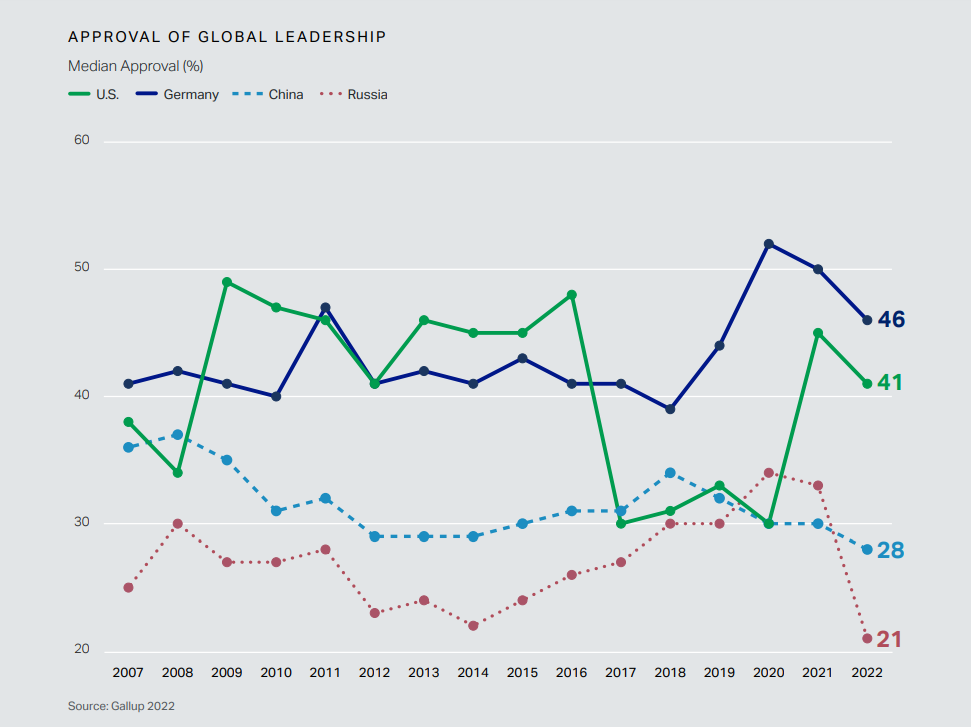
Washington, D.C. — A new Gallup report based on interviews in 137 countries in 2022 shows the honeymoon is over for U.S. President Joe Biden, and Germany’s image has lost some of its clout under new Chancellor Olaf Scholz. Though global approval ratings of the U.S. and Germany dipped in 2022, both countries are still in much stronger positions than Russia — which saw its ratings plunge after its invasion of Ukraine — and China.

German Chancellor Olaf Scholz (L) with Canada Prime Minister Justin Trudeau (R)

Here are some of the key findings from Gallup’s Rating World Leaders 2023 report:

  • U.S. leadership ratings around the world rebounded in 2021 in the first year of Biden’s presidency but declined in his second.
  • Ratings for the U.S. first slipped after withdrawal from Afghanistan in August 2021.
  • There were double-digit decreases in U.S. leadership approval in 36 countries between 2021 and 2022 — mostly in Europe and the Americas.
  • Russia’s approval ratings plunged worldwide after the invasion of Ukraine, and the majority of adults around the world now disapprove of Russia’s leadership.
  • Majorities in 81 of the 137 countries surveyed disapproved of Russian leadership.

A look back to last year’s rankings and previous years.

Implications Beyond 2023:

One of the biggest foreign policy challenges facing the U.S. and its allies in 2023 and beyond will be to ensure the transatlantic unity that was so greatly tested in 2022 does not fracture as Russia’s war against Ukraine continues.

The images of the U.S. and Germany are in slightly weaker positions than before the war started, but they are still in much stronger positions than Russia. But perhaps more importantly, the soaring disapproval of Russia’s leadership in all parts of the world shows they are not the only countries that care.

Intelligence Operative- Iran Source Of Explosives Causing Beirut Nuke Like Destruction

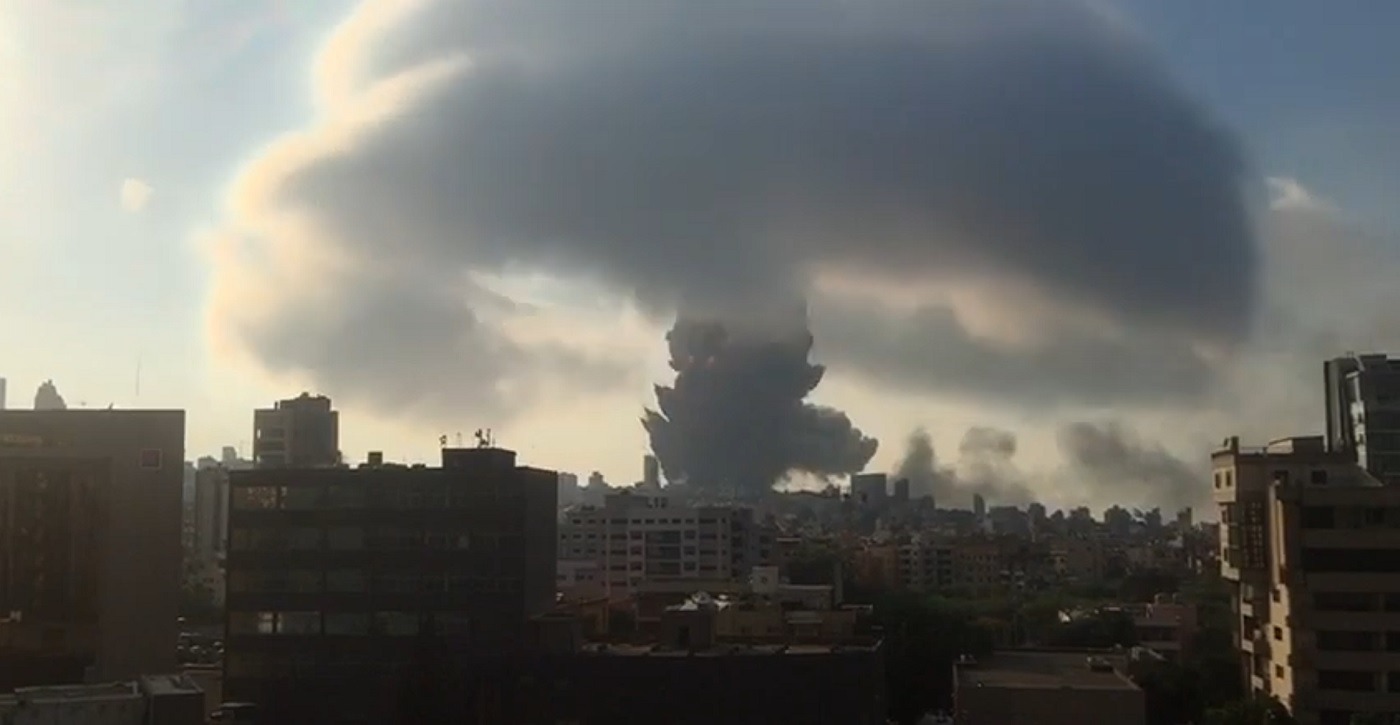
Beirut / Tehran – The 2,750 metric tons of ammonium nitrate which caused a massive explosion in the port of Beirut originated in Iran before being loaded onto the Russian ship MV Rhosus whose cargo ultimately ended up being unloaded in the port of Beirut.

This revelation comes from an intelligence operative within Tehran’s government who has been secretly working with pro-democracy activists. The information comes from the NGO ‘The New Iran’ which has a track record of successfully smuggling sensitive information out of Iran, including much of the video footage seem in the media of widespread protests within Iran following the Iranian military shooting down Ukraine National Airlines flight PS752. 

Intelligence Operative Connected to Pro-Democracy Movement

The intelligence operative communicated the details over a secure messaging technology The New Iran uses for coordinating with their democratic allies within the country.  

Lebanese government sources have disclosed that the ammonium nitrate was seized in 2013. This date is perhaps significant the source says because it follows shortly after the opening of an ammonium nitrate factory within Iran.  

“Our source is risking his life to bring us this information,” says Dr. Iman Foroutan, Chairman of The New Iran, “because he believes that recent developments within the government are going to make these kinds of disasters more common.”

At the end of June, the government of Iran approved an agreement for a “25-year comprehensive cooperation plan between Iran and China.”

The two countries are calling it a “strategic partnership.”

The agreement is designed to help Iran get around the punishing sanctions of the United States, which more and more is being looked at as a common enemy by both Tehran and Beijing. China will be investing $400 billion USD into Iran with an immediate payment of $320 billion USD – a substantial portion of which is going into strengthening ports and military capability.  

“The Iranian regime is the world’s leading sponsor of terrorism,” says Dr. Foroutan who along with other influential Iranians in exile are working to fully expose the danger of Ayatollah Ali Khamenei’s radicalism and eventually free the Iranian people. “Now with the cover of China, one of the world’s rising superpowers, Iran will be able to move more weapons and weapons components throughout the region and the world.” 

Hezbollah leader Hassan Nasrallah has already twice threatened to blow up the port of Haifa in Israel. Hezbollah allegedly sought to acquire ammonium nitrate via Syria since 2009 and tried to infiltrate the agriculture ministry in Lebanon to do so, according to leaked diplomatic cables.  

In February 16, 2016 Nasrallah also said that ammonia is stored in Haifa and that there are 15,000 tons of gas Haifa and that explosions there might cause the deaths of tens of thousands of people. “the expert added that this is exactly like a nuclear bomb. In other words, Lebanon has a nuclear bomb. This is not an exaggeration.” Nasrallah laughs as he says this in the video. 

https://youtu.be/hp_Pdew_sG8

“With the agreement between China and Tehran allowing the regime to ship under the cover of China, potentially deadly materials like ammonia nitrate [may be] circumventing US sanctions,” says Iman Foroutan, “The next explosion may not be an accident.” For the Silo, Lance Laytner.

“Doomsday Clock” Update Scheduled For Today In Washington, D.C.

Announcement Comes As Nuclear, Climate, and Tech Issues Dominate An Unsettled World Stage; Experienced World Leaders to Join Bulletin Experts on Climate and Nuclear Warfare.

WASHINGTON, D.C. – NEWS ADVISORY  The Bulletin of the Atomic Scientists will host a live international news conference at 10 a.m. EST/1500 GMT on Thursday, January 23rd, 2020 to announce whether the minute hand of the iconic “Doomsday Clock” will be adjusted. The decision is made by the Bulletin of the Atomic Scientists’ Science and Security Board in consultation with the Bulletin’s Board of Sponsors, which includes 13 Nobel Laureates.

The factors contributing to the decision about the Doomsday Clock time will be outlined today.

The Doomsday Clock did not move in 2019.  However, the Doomsday Clock’s minute hand was set forward in January 2018 by 30 seconds, to two minutes before midnight, the closest it has been to apocalypse since 1953 in the early years of the Cold War. Previously, the Clock was moved from three minutes to midnight to two and a half minutes to midnight in January 2017. Click the image below to watch the live stream of the news announcement.

News event speakers for the Doomsday Clock announcement on January 23rd, 2020 will include:

  • Former UN Secretary-General Ban Ki-moon, deputy chair, The Elders; and former South Korean Foreign Minister;
  • Former California Governor Jerry Brown, executive chair, Bulletin of the Atomic Scientists;
  • Former President of Ireland Mary Robinson, chair, The Elders; and former UN High Commissioner for Human Rights;
  • Rachel Bronson, president and CEO, Bulletin of the Atomic Scientists;
  • Robert Rosner, William E. Wrather Distinguished Service professor, Departments of Astronomy & Astrophysics and Physics at the University of Chicago; and chair, Science and Security Board, Bulletin of the Atomic Scientists;
  • Sharon Squassoni, research professor, Institute for International Science and Technology Policy, Elliott School of International Affairs, The George Washington University; and member, Science and Security Board, Bulletin of the Atomic Scientists;
  • Robert Latiff, member, Science and Security Board, Bulletin of the Atomic Scientists; fellow, University of Notre Dame Institute for Advanced Study; and member, Intelligence Community Studies Board, and the Committee on International Security and Arms Control of the National Academies of Sciences, Engineering, and Medicine; and
  • Sivan Kartha, member, Science and Security Board, Bulletin of the Atomic Scientists; and senior scientist, Stockholm Environmental Institute.

For the Silo, Alex Frank & Max Carlin.

Prime Minister Trudeau On Barcelona Terrorist Attack

The Prime Minister, Justin Trudeau, issued the following statement on the terrorist attack in Barcelona:

“I am deeply saddened by today’s terrorist attack in Barcelona that has killed and injured so many innocent people.

“Sophie and I join all Canadians in offering our sincere condolences to the families and friends who have lost loved ones, and our best wishes for a fast and full recovery to those injured [yesterday].

“While we cannot ignore the outrage we feel, together we must renew our commitment to protect the freedom found in societies that promote unity, openness and inclusion.

“Spain, we grieve with you and denounce hate and violence in all of its forms. Canada will continue working with the international community to fight terrorism and build a world where we can all feel safe and secure.”