
The formula for a life well lived might look something like this: Dive in head first > fail > repeat.
Life is a series of cycles.
There is of course the broad cycle, we are born, we live, we age, we die. But within this scope are countless other cycles for every part and parcel of our time on the planet. The cycle of making mistakes, of continually pouring your guts out to the world and enduring the consequences, is one of the most important there is for artists. From this process you learn the most about who you are, and how you fit in the world. There will be plenty of moments when you are a total mismatch, when you throw yourself into the deep end and struggle to stay afloat. Under no circumstances should these moments be viewed as set-backs or failure.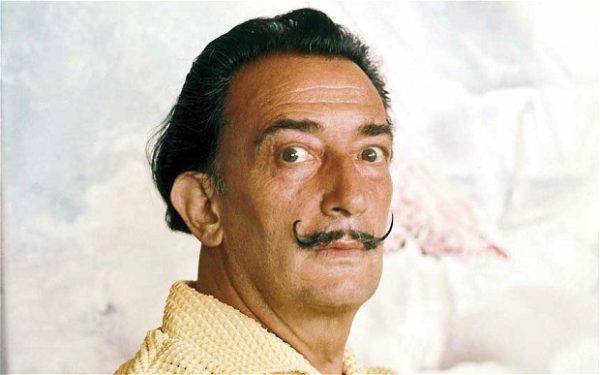
Salvador Dali once said, “Have no fear of perfection, you’ll never reach it.” Take a minute to consider that.
Really let it sink in. Let your mind internalize this notion and let it unleash a wave of relief through your whole body. What fantastic news this is, no matter what you do, no matter how long you live, you, I, we, not one of us, will ever be perfect. So how can you take this beautiful knowledge and use it to your own advantage? Once you are free from the restraints of perfection, how can this inform the way you continue on your path?
By adopting the formula above and not letting go no matter what.
You probably know stories about how mistakes have changed history for the better over and over again. The accidental discovery of Penicillin because scientists noticed that the mold on some forgotten fruit killed bacteria. Or the invention of silly putty (perhaps not on par with life-saving antibiotics when it comes to historic moments, but a great boon to childhood all the same) quite by accident in a military lab as scientists tried to create an inexpensive substitute for rubber. But have you ever really stopped to consider what these stories mean to an artist? How they can be freeing examples of the importance of making mistakes?
There is likely not a person out there who truly believes that perfection is attainable, but we are told far too often that we ought to strive for it. This leads to untold restraint, dissatisfaction, and who knows how many missed opportunities for glorious screw ups. Do not let this trap take hold of you. Throw your best and worst, craziest and most tame ideas out there for all the world to see. Who cares if you land flat on your face, as long as you’re still able to pick yourself up there’s no harm done.
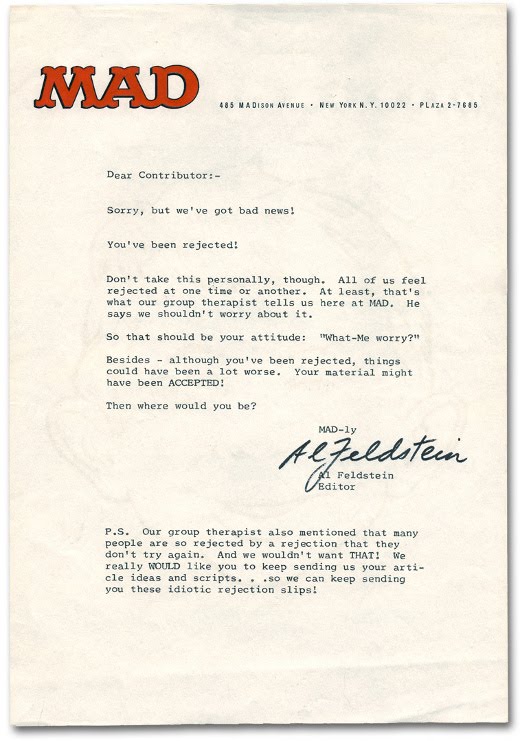 As an artist you will be the recipient of rejection letters and emails.
Stacks of them. Count on it. In every creative field, there are piles and piles of rejections to be gone through. Walt Disney was once fired for what his editor deemed a lack of imagination. Countless famous artists throughout history were rejected in their lifetimes, some only achieving posthumous success. Van Gogh, Manet, Turner, they all have in common that they faced painful rejection in their lifetimes. They also have in common that they didn’t give up their unique perspective on the world nor did they allow something as insignificant as rejection stand in the way of their forward momentum.
Collect your rejection letters. Create a special binder for them. Own them with pride knowing that you earned each and every one of them by putting a piece of yourself out into the world. Begin to think of rejection as a victory in itself because it means you tried. The moment you receive a rejection letter, consider that at that same moment, had you not tried, there would be nothing at all. Not trying isn’t really a way of avoiding rejection, it is simply a way of hiding from the world. You will never get anywhere at all if you don’t reveal yourself.
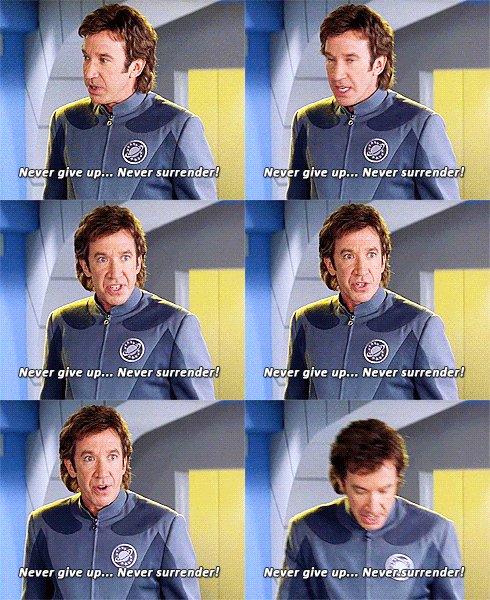
Artists are perhaps particularly vulnerable when it comes to the consequences of baring their souls to the world. Art is highly personal and the thought of making a mistake when the stakes are so intimately high can be enough to frighten even the boldest spirit. Rejection can feel like a very personal affront and can make it difficult to want to try again. It comes down to a choice really, to stay safe and make no progress, or let it all hang out and learn from every single mistake.
Just like with everything else in life, you will become accustomed to accepting rejection and mistakes as par for the course. There will come a day when you will leaf through your binder of rejection letters with a wisdom that can only be gained through the repeated process of failing. For the Silo, Brainard Carey.






 Alison Jackson













 This concern, of course, is not unique and strikes at the heart of something that all those in creative professions fear and must face. The ownership of ideas is difficult to prove. If you tell someone your plan in confidence and they, in turn, use it for their own purposes, there is very little you can do to show that you are the originator. Spreading this rumor is likely to make you look like the bad guy. It’s no wonder that this sort of generosity is cause for concern.
 But what about sharing your networks or some trade secrets that helped you get to where you are today? While you may have worked tooth and nail for everything you’ve gained, there were surely people along the way who said yes at the right moment and assisted your progress. No one can ask more than this, and as an artist of a certain standing, there is nothing wrong with offering this sort of help.
 No one exists in a vacuum. Even you, who may have scraped and fought your way to where you are today, benefited from the acceptance and help of others. Sure, you may have pounded the pavement endlessly in order to secure your position but that is no reason not to pay forward the success you have achieved. It is too easy to forget, once you have achieved a certain status, the myriad small moments that led you there. While it may seem as though hardly anyone was out to help you in the early days, surely there were some, otherwise you could not be where you are today. Even if it was just a few gallerists who were finally willing to take a chance, there are always rungs of assistance in the ladder to every success, no matter how small.
 For these reasons, there is a lot to be said for good old-fashioned face-to-face interaction. Being the sort of artist who is willing to mentor in the real world sets you apart. Establishing this sort of reputation, for being the one who will gladly share the bounty you have created, seldom reverses one’s own success and frequently opens new doors you may never have considered.
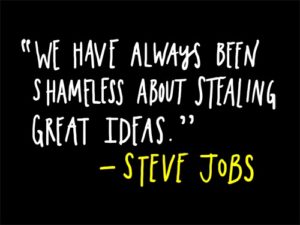
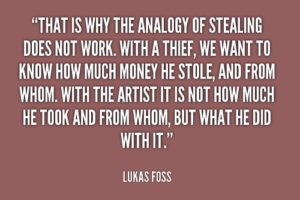 Arguably, there is no such thing as original art. Even some of the most contemporary artists’ work is derivative of past creations. Marina Abramovic, in her unique style, has absolutely drawn from (and occasionally been accused of copying) works by other artists. Pablo Picasso (and perhaps more famously, Steve Jobs who quoted him) said, “good artists copy, great artists steal.” This doesn’t mean that you should open yourself up to idea theft, but it does mean that perhaps being stingy with your concepts, your network, your position as an established artist, doesn’t count for as much security as you might think. Be smart about things, but in general, it is always a good idea to reach down the ladder and help those coming up behind you find the next rung. For the Silo, Brainard Carey.













 Regardless of your medium, I hope this glance into the minds of two established poets from very different walks of life can help dissipate the intimidating mist between process and product, as well as remind you that the transcendent and the familiar are often one in the same.
 Global spectator
 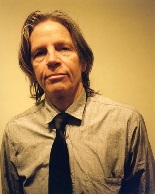 Myles, a breathing artistic currency, treats poetry as an extension of the self with the potency of a movement and the collective memory of a civilization. Myles proves that common experience and abstract phenomena are synonymous when we step back to look.