Tag Archives: United States of America

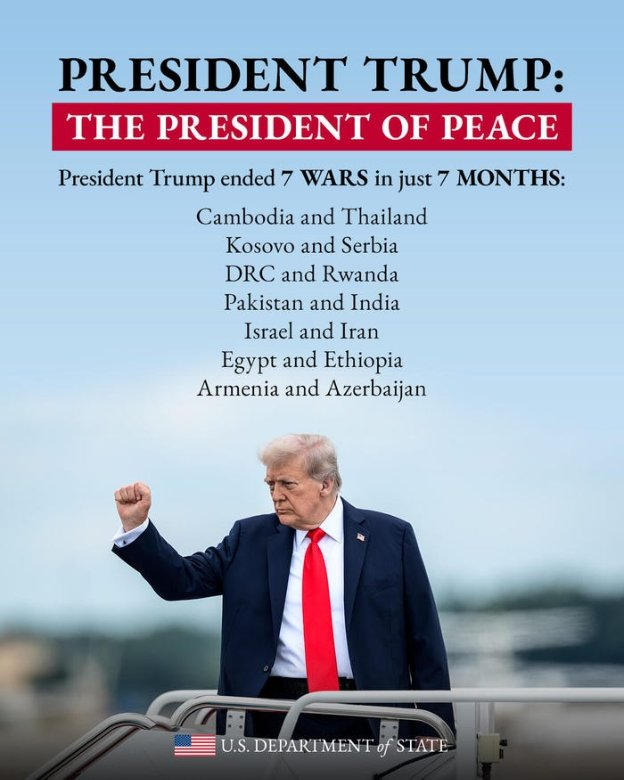
Ceasefire Violations In Eastern Democratic Republic of the Congo

Joint Statement from the International Contact Group for the Great Lakes (ICG) on the Situation in the Eastern Democratic Republic of the Congo (DRC)

Via our friends at the US State Department Office of the Spokesperson

March 6, 2026

The Governments of the United States of America, Belgium, Denmark, France, Germany, the Netherlands, Sweden, Switzerland, the United Kingdom, and the European Union, chaired by Sweden, issue the following statement on situation in the eastern DRC:

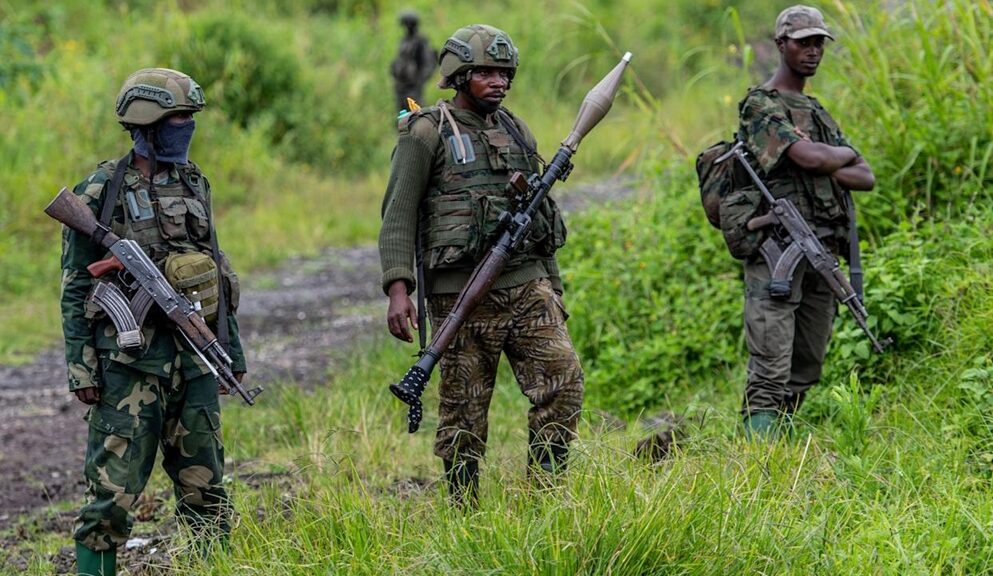
The ICG expresses its profound concern regarding the continued and recent violations in eastern DRC of the ceasefires upheld by the signing of the Washington Accords on 4 December 2025 and the commitment in Doha on 19 July 2025 to a permanent ceasefire and a permanent cessation of hostilities. Such violations include the use of drones in military attacks which also pose an acute risk to civilian populations. All parties involved should urgently and unequivocally recommit to ceasing the hostilities and return to negotiations.

There can be no military solution to the conflict.

We urge all parties to fully implement their obligations and commitments made under the Washington Accords and the Doha process and to comply with the relevant UN Security Council resolutions, including resolutions 2773 and 2808, and the full respect of territorial integrity. The ICG commends the ongoing mediation by the AU-appointed mediator, Faure Gnassingbé, President of the Council of the Republic of Togo, and the Panel of Facilitators, as well as the crucial mediation conducted by the US and Qatar. We welcome the efforts by Qatar, the ICGLR and MONUSCO to establish a ceasefire monitoring and verification mechanism. We recall the importance of creating conditions for an inclusive inter-Congolese dialogue with all key Congolese stakeholders – a necessary element for durable peace in the DRC – and welcome the consultations undertaken by the Republic of Angola.

We stand ready to support these efforts.

The ICG calls on all parties to honor their obligations to respect international humanitarian law and to ensure full, safe and unimpeded humanitarian access to enable critical assistance to those in need. We welcome positive steps forward such as the commitments by governments and actors in the region to improve and facilitate humanitarian access, including following the visit of EU Commissioner Lahbib; the reopening of the border between the DRC and Burundi; and the use of the Goma airport during the recent visit to Goma by MONUSCO Interim Head and Special Representative of the Secretary-General van de Perre, which should lead to the sustained reopening of the Goma airport for humanitarian flights.

The ICG further calls on parties to stop incitement to hatred, discrimination or violence, including against Rwandophone minorities, and other actions that gravely endanger civilian populations and social cohesion.

USA- Breaking The Cycle of Foreign Assistance Enabling Corruption

Moral Hazard – A situation where one party assumes greater risk because it understands that another will remedy the harmful effects.

While the hundreds of billions of dollars in U.S. foreign assistance spent over the years have dramatically improved many people’s lives and livelihoods around the world, too often the United States’ approach to foreign assistance failed to advance U.S. interests, failed to spur systematic development, and enabled and perpetuated dependence and corruption by leaders in recipient countries. Since 1991, the United States has provided more than $200 billion in foreign assistance to Africa, yet the African Union reports that African countries lose an estimated $88 billion each year through tax evasion, money laundering, and corruption. Too often, what is needed for economic growth and development is not more money, but sound reforms that incentivize enduring private investment and growth.

Instead of insisting on mutual accountability to use U.S. assistance to address the causes of poverty and underdevelopment, too often we funded outputs to allay the symptoms. In so doing, we failed both the American taxpayer and the citizens of developing countries who looked to their governments and ours to help create the conditions to realize a better future.

For decades, the United States did not have a consistent policy as to even whether assistance was charity or a foreign policy tool. We did not require a committed partner, a coherent business plan, equity collateral at risk, or funding subject to performance-based disbursements. We infantilized recipient governments instead of having candid discussions on mutual performance expectations. Too often our approach to developing countries – frequently perpetuated by the excuses of those same governments – reflected the soft bigotry of low expectations. We excused away the lack of political will as “capacity constraints,” dismissed it with “we shouldn’t expect too much,” and did not challenge them when governments acted in contrast to their professed commitments.

Too often, we were content to confuse governments’ commitments for actions. We misinterpreted our access to leaders as influence with those leaders. We mischaracterized aid projects’ outputs as outcomes and program objectives as results. We misconstrued governments’ permission for us to expend aid as evidence that they shared a commitment to advance professed objectives. Perhaps worst, we failed to acknowledge when leaders of aid recipient countries demonstrated over and over through their actions that they prioritized their personal interests over, and at the expense of, the interests of their own country and citizens. Virtually never did we withhold assistance funds because host governments failed to deliver on their commitments, instead we responded by providing even more aid “because they have needs.” By trying to save people from bearing the brunt of the bad governance and corruption of their leaders, we helped perpetuate that very same corruption and bad governance.

Quite simply, we violated the central maxim of international development: the donor cannot want development more than the recipient. By doing so, we fueled moral hazard. From the pure greed of Malawi’s “Cashgate” scandal under Joyce Banda to the systematic kleptocracies of Bangladesh or South Sudan, by back filling health and social service needs recklessly created by bad governance, we have enabled and underwritten government corruption. In the worst cases, such as the predatory abuses of Mali’s Ibrahim Keita or Guinea’s Alpha Conde against their own populations, corruption and the failure to deliver basic public services needs led to military coups and incursions by terrorist organizations.

American foreign assistance is not charity but a tool to advance American diplomacy, security, and prosperity.

To accomplish these goals, we must focus our assistance and insist on administering it with host-government buy-in and mutual accountability for outcomes. This, in turn, will leave space for market driven growth that will also help close off the means by which malign international actors exploit developing economies and workers. We should not be dissuaded by detractors who will attempt to vilify a more transactional approach as “neocolonialism.” Quite the opposite is true. By insisting on systematic reforms that spur transparent and accountable growth and allow governments to retain funds to support their people, the United States can do more to catalyze actual economic development and the upliftment of developing countries’ societies – and advance tangible U.S. interests – better than we have in recent decades. It is the dependency-oriented, NGO-driven old model of development that is fundamentally colonial in mindset – refusing to respect development nation sovereignty, determinism, or agency.

Operationalizing this approach involves adopting investment-oriented goals, requirements, and incentives:

  • A Serious Host Nation: Secretary Rubio has been clear, “Americans should not fund failed governments in faraway lands…we will favor those nations that have demonstrated both the ability and the willingness to help themselves.” If a government is not already taking steps to stem corruption and grow the economy when its own funds are at stake, we should have no expectation that they will be better stewards of U.S. funds. Without an aligned host-government, we should focus our resources elsewhere.
  • The Right Focus: Our purpose is not to give money away, but to catalyze systemic reforms that enable sustainable growth and opportunities for the U.S. and recipient country. Neither governments nor donors create growth; instead, our roles are to foster conditions for the private sector to invest, create jobs, spur growth, and pay taxes to fund public services. Hence, U.S. foreign assistance should focus on curbing corruption and overcoming and remediating binding constraints to growth to lay the foundation for a transparent, level, and accountable business enabling environment.

  • Confidence in The Business Plan: Most developing countries have national development plans, but too often they are unresourced and unprioritized works of fantasy, and seldom do governments enforce accountability for their actual implementation. What President Trump explained in clearly delineating America’s national interests in this year’s National Security Strategy is equally true of developing countries: when everything is supposedly a priority, nothing really can be. We should help sincere host governments develop focused, realistic strategies based on core sectors and targeting key constraints that are founded on candid analysis and include specific, tailored tactics.

  • Skin in the Game: If a country is not going to put its own resources behind an effort, it is either not really a priority, they are not really serious, or they don’t have confidence in their plan. Few investors would engage where the owner hasn’t put collateral down or his own equity at risk. Why should foreign assistance not require the same? Here, the Millennium Challenge Corporation (MCC) has demonstrated two key best practices that ensure buy-in. The first is a requirement for co-financing by the host government. The second is conditions precedent: tangible reform actions a host government takes before funding even begins, to enable the success of the project outcomes.

  • The Right Resources: Again, our purpose is not to give assistance away, and the history of both corruption and assistance has shown that money is not what is most lacking to spur development. So, building on an analysis of binding constraints to growth and a business plan that we have confidence in, it is incumbent on the United States and the recipient government to craft a bespoke package of technical assistance interventions to inform and enable the reforms needed. This should not be an approach of letting a thousand flowers bloom, and it must not be built around the question of “how can we help?” Instead, we must start with the questions “what are the outcomes we want to achieve in the American interest and what needs to happen to realize them?” and build an assistance program around that.

  • Have a Contract: Unlike the Development Objective Agreements (DOAGs) of USAID that bound the U.S. to fund sectors but seldom included host governments’ performance commitments, the MCC model again provides a best practice. Explicitly detailing shared objectives and commitments by both governments – typically ratified by the legislature to carry the force of law – reduces uncertainty and improves accountability by enshrining the binding obligations of both parties.

  • Performance-Based Funding: Too often, once development projects were approved, donors’ focus turned inward to implementation, achieving outputs, and keeping funds flowing even if receiving governments actively undermined them. Gradually, funding agencies have begun shifting to performance-based disbursements. By requiring a host government to demonstrate – through its actions, not merely its rhetoric – that it remains politically and financially committed to achieve professed objectives, we ensure that U.S. assistance achieves greater impacts.

Under President Trump and Secretary Rubio’s leadership, we have the opportunity and courage to acknowledge our mistakes, to embrace candid lessons learned, and to do better. America’s generosity in doing business with those who help themselves remains as strong as ever. We are not turning away from less developed nations, instead now is the time to lean in to lend a useful hand to those who are sincere and treat them as mature stakeholders. In engaging valued, sincere nations, nothing should be imposed, hidden, given as ultimatums, or come at the partner’s expense; we are not China. Foreign assistance that delivers for the American people and our partners must be founded on sincere, voluntary, and transparent engagement. But it must be backed by tangible action and, if a recipient nation proves through their actions that they are not committed to our professed shared objectives, our allegiance must first be to the American people to be stewards of their resources.

Having dedicated my life and career to Africa and the developing world, I am invigorated by the massive potential these nations possess, and I have witnessed how the United States can help turn that potential into a reality that benefits both nations. By restructuring our approach to foreign assistance and engaging developing countries based on national interest, we can help curb the corruption that deprives families of the hope of that better future. We can deliver lasting and systematic growth alongside recipient countries. And, we can deliver tangible value for the American people through a more secure and prosperous world.

For the Silo, U.S. Ambassador Michael C. Gonzales.

Michael C. Gonzales is the U.S. Ambassador to the Republic of Zambia and the U.S. Special Representative to the Common Market of Eastern and Southern Africa (COMESA). He has held senior posts throughout Africa and Asia over his career.
Terrorist Designations of Antifa Ost and Three Other Violent Antifa Groups

Press Statement

Marco Rubio, Secretary of State

November 13, 2025

Today, building on President Trump’s historic commitment to confront Antifa’s campaign of political violence, the Department of State is designating German-based Antifa Ost, along with three other violent Antifa groups in Italy and Greece, as Specially Designated Global Terrorists and intends to designate all four groups as Foreign Terrorist Organizations, effective November 20, 2025. The designation of Antifa Ost and other violent Antifa groups supports President Trump’s National Security Presidential Memorandum-7, an initiative to disrupt self-described “anti-fascism” networks, entities, and organizations that use political violence and terroristic acts to undermine democratic institutions, constitutional rights, and fundamental liberties. Groups affiliated with this movement ascribe to revolutionary anarchist or Marxist ideologies, including anti-Americanism, “anti-capitalism,” and anti-Christianity, using these to incite and justify violent assaults domestically and overseas.

The United States will continue using all available tools to protect our national security and public safety and will deny funding and resources to terrorists, including targeting other Antifa groups across the globe.

Designations of Antifa Ost and Three Other Violent Antifa Groups

Fact Sheet

Office of the Spokesperson

November 13, 2025

Today, the Department of State announces the designation of Antifa Ost, Informal Anarchist Federation/International Revolutionary Front, Armed Proletarian Justice, and Revolutionary Class Self-Defense as Specially Designated Global Terrorists (SDGTs) and the intent to designate all four groups as Foreign Terrorist Organizations (FTOs), effective November 20, 2025. 

Antifa Ost

  • Antifa Ost (also known as Antifa East and Hammerbande) is a Germany-based militant group. Antifa Ost conducted numerous attacks against individuals it perceives as “fascists” or part of the “right-wing scene” in Germany between 2018 and 2023 and is accused of having conducted a series of attacks in Budapest in mid-February 2023.
  • On September 26, 2025, Hungary declared Antifa Ost to be a terrorist organization and added the group to its national anti-terrorism list.

Informal Anarchist Federation/International Revolutionary Front (FAI/FRI)

  • FAI/FRI is a militant anarchist group that primarily operates in Italy with historical self-proclaimed affiliates across Europe, South America, and Asia. FAI/FRI declares the necessity of the revolutionary armed struggle against nation states and “The Fortress Europe.”
  • Since 2003, FAI/FRI has claimed responsibility for threats of violence, bombs, and letter bombs against political and economic institutions, including a courthouse and other “capitalist institutions.”

Armed Proletarian Justice

  • Armed Proletarian Justice is a Greek anarchist and “anti-capitalist” group that has attempted and conducted improvised explosive device (IED) attacks against Greek government targets.
  • Armed Proletarian Justice claimed responsibility for planting a bomb near the Greek riot police headquarters in Goudi, Greece on December 18, 2023.

Revolutionary Class Self-Defense

  • Revolutionary Class Self-Defense is a Greek anarchist and “anti-capitalist” group. The group links its actions to broader political and social issues and cites opposition to “capitalist structures,” “state repression,” and solidarity with Palestine.
  • Revolutionary Class Self-Defense claimed responsibility for two IED attacks targeting the Greece Ministry of Labor (February 3, 2024) and the Hellenic Train offices (April 11, 2025).

Terrorist designations expose and isolate entities and individuals, denying them access to the U.S. financial system and resources they need to carry out attacks.

All property and property interests of designated individuals or groups that are in the United States or that are in possession or control of a U.S. person are blocked. U.S. persons are generally prohibited from conducting business with sanctioned persons. It is also a crime to knowingly provide material support or resources to those designated, or to attempt or conspire to do so.

Persons that engage in certain transactions or activities with those designated today may expose themselves to sanctions risk.  Notably, engaging in certain transactions with them entails risk of secondary sanctions pursuant to counterterrorism authorities.

Today’s actions are taken pursuant to section 219 of the Immigration and Nationality Act and Executive Order 13224.  FTO designations go into effect upon publication in the Federal Register.

Petitioners requesting removal of those designated from the Specially Designated Nationals and Blocked Persons List should refer to the Department of State’s Delisting Guidance page.

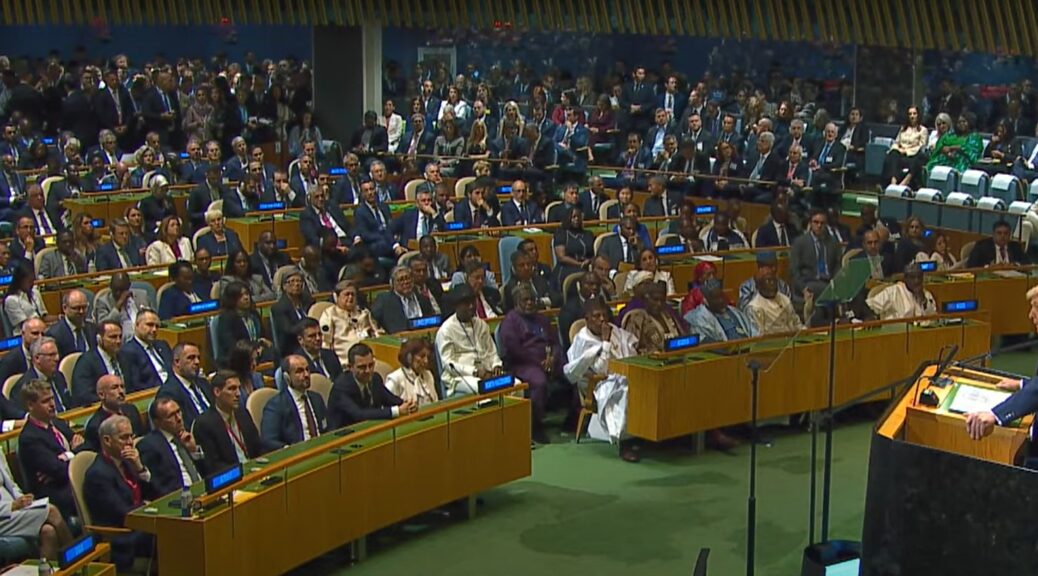
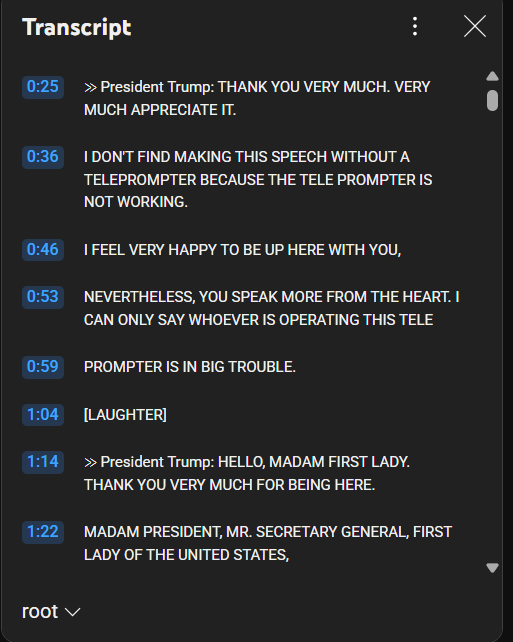
POTUS Delivers Poignant Remarks To UN General Assembly Without Teleprompter

Earlier this month marked the 80th session of the United Nations General Assembly (UNGA80), which opened  on September 9, 2025.  UNGA High-Level Week also took place this week and ends today, when leaders from around the world will gather in New York City.  

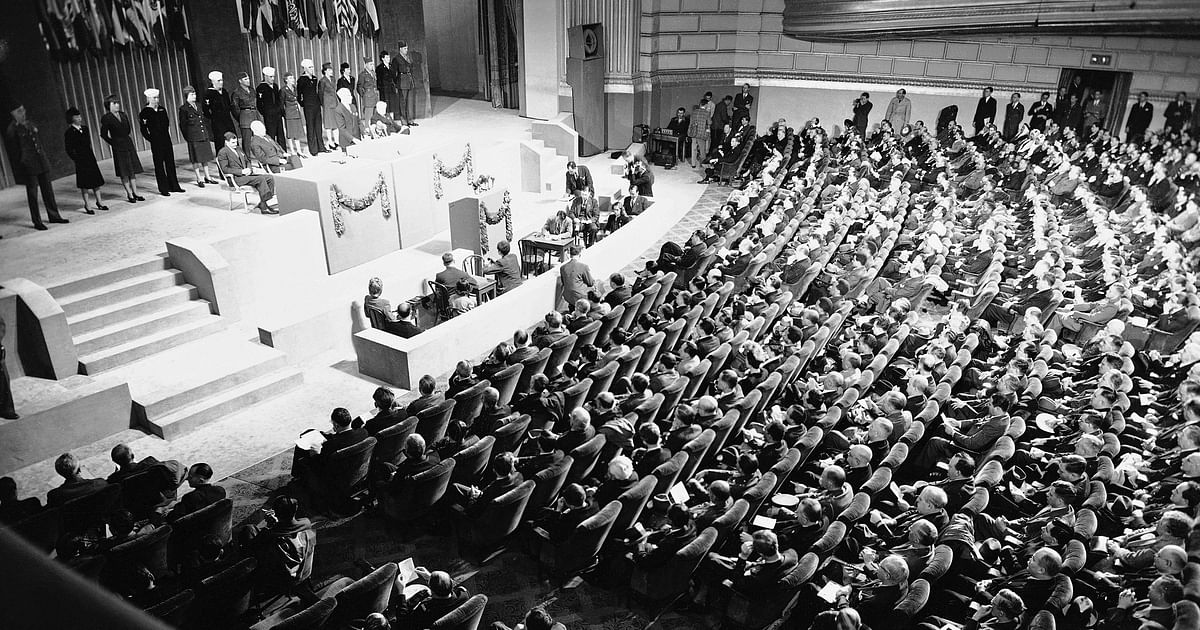
The 80th Anniversary of the founding of the UN is an opportunity to return the organization back to its founding mission of promoting peace and security around the world. This year the United States is prioritizing three themes through their engagement at the United Nations:  Peace, Sovereignty, and Liberty. 

“POURING IN OVER FOUR YEARS OF THE INCOMPETENT BIDEN ADMINISTRATION AND NOW WE HAVE IT STOPPED, TOTALLY STOPPED. IN FACT, THEY’RE NOT EVEN COMING BECAUSE THEY KNOW THEY CAN’T GET THROUGH. BUT WHAT TOOK PLACE IS TOTALLY UNACCEPTABLE. THE U.N. SUPPOSED TO STOP INVASIONS NOT CREATE THEM AND NOT FINANCE THEM.

IN THE UNITED STATES, WE REJECT THE UNITED STATES MASS NUMBERS OF PEOPLE FROM FOREIGN LANDS CAN BE PERMITTED TO TRAVEL HALFWAY AROUND THE WORLD, TRAMPLE OUR BORDERS, CAUSE CRIME AND DEPLETE OUR SOCIAL SAFETY NET. WE HAVE REASSERTED THAT AMERICA BELONGS TO THE AMERICAN PEOPLE AND I ENCOURAGE ALL COUNTRIES TO TAKE THEIR OWN STANCE IN DEFENSE OF THEIR CITIZENS, AS WELL. YOU HAVE TO DO THAT BECAUSE I SEE IT. I’M NOT MENTIONING NAMES, I SEE IT AND I COULD CALL EVERY SINGLE ONE OF THEM OUT, YOU ARE ENJOYING YOUR COUNTRIES, THEY ARE ENJOYING — BEING DESTROYED.

THEY ARE BEING BY ILLEGAL ALIENS LIKE NOBODY EVER SEEN BEFORE. ILLEGAL ALIENS ARE POURING IN AND NOBODY IS DOING ANYTHING TO CHANGE IT, TO GET THEM OUT. IT IS NOT SUSTAINABLE AND BECAUSE THEY CHOOSE TO BE POLITICALLY CORRECT, THEY ARE DOING ABSOLUTELY NOTHING ABOUT IT.” President Donald Trump

This article courtesy of the U.S. Department of State.

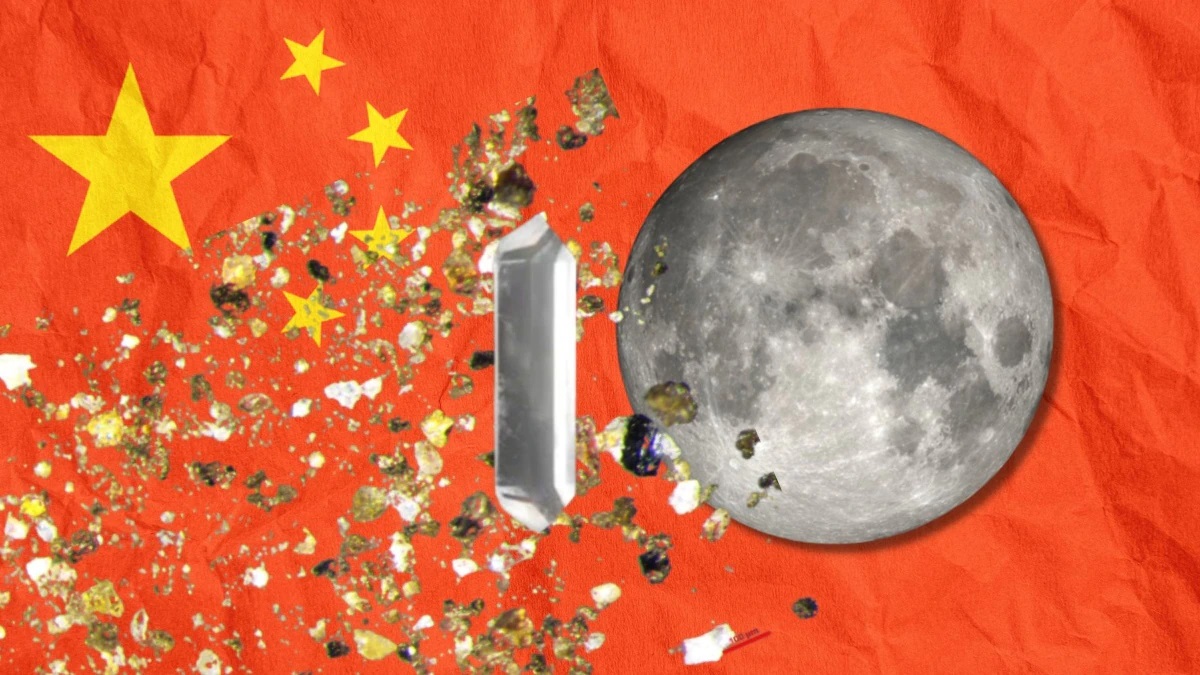
9 Years Since China Landing- NASA Warns They Could Take Over The Moon

It’s the 9th anniversary of China’s 2014 Moon landing and it deserves special attention. Many Westerners are unaware of their impressive accomplishment because for the most part it was not reported in the mainstream media. Even now, getting information on China’s mission is challenging and the reports that are readily available seem to be from non-Western sources such as Al-Jazeera or in the case of the following video: WION- India’s self proclaimed “first world news network”.

Something else you may be unaware of

China's Tiangong space station- basically Mir2.0
Tiangong, officially the Tiangong space station, is a permanently crewed space station constructed by China and operated by China Manned Space Agency in low Earth orbit between 340 and 450 km above the surface. wikipedia

Should we be surprised that these nations are eager to distribute their news and accomplishments? China and India are the main rivals to the United States in terms of Space launches and exploration and if they are ahead of the West then chances are no one here wants to run headlines emphasizing this fact.

The politicization of space is not a new concept.

Shortly after the end of World War 2,  Russia and America (using captured Nazi German rockets and scientists) relied on their own geniuses such as Sergei Korolev and Katherine Johnson in a heated race to enter space and to push forward with the goal of landing a man on the Moon. President Lyndon Johnson called this “the ultimate high ground“.  Russia did not succeed in a manned Moon landing but they did successfully land an advanced Rover which was controlled from the Earth by a team of operators. Clearly the Moon is an important place to visit even at incredible risk and financial cost.

What compelled China to show up decades later than the USA?

"It was confirmed as a new mineral by voting by the New Mineral Classification and Nomenclature Committee (CNMNC) of the International Mineralogical Association (IMA). This mineral is the sixth new mineral discovered by humans on the moon."

What can we expect next? China is planning a crewed landing. America is planning a crewed landing. It’s a brand new space race.  For the Silo, Neil Corman. 

Best Countries For Post Covid Study Abroad Programs

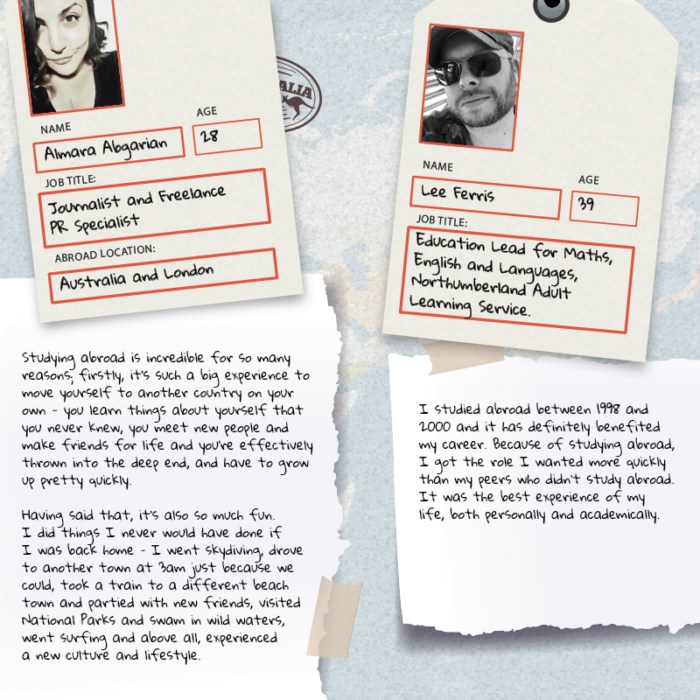
As more students are heading towards graduation each year, the struggle to get a graduate job is becoming more difficult, and students have to ensure strong CVs in order to stand out from the crowd.  The Covid pandemic has put a halt to students having options in countries other than their own. However, with a bit of luck, the pandemic will continue to end and travel restrictions will be eased. When that happens, international students will finally be allowed to return to studying abroad, learning new skills and experiencing new cultures.

Although this may be seen as one long holiday to those not in the know, those that study abroad will, in fact, have a higher starting salary, earning an extra 5% more than those who don’t. On average, this could amount to an extra £75,000 ($126,709 CDN at time of this article)  over a career.

Study Abroad Graduates

Not only will they earn more, they are also almost ¼ less likely to be unemployed after graduation. So although all study abroad programs come with a cost, with readily available bursaries, this opportunity is accessible to any student who is hoping to boost their employ-ability and is an opportunity that should be taken.

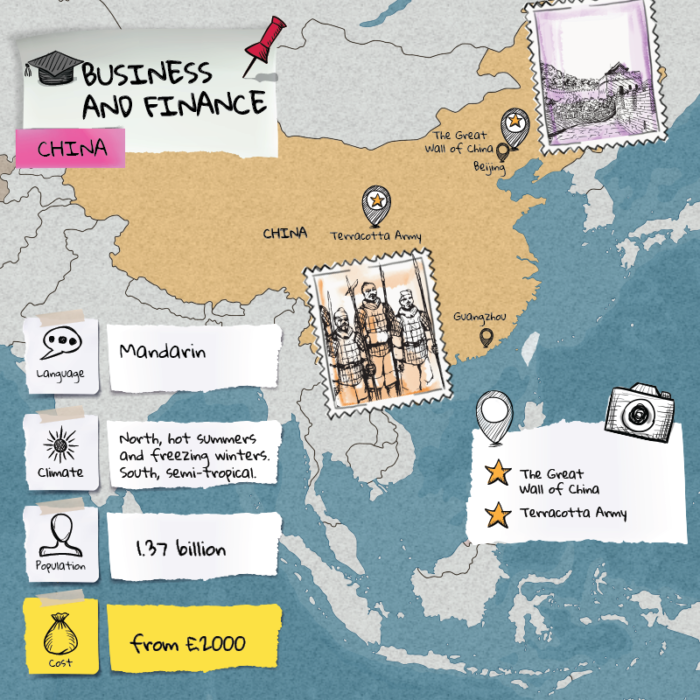
Business and Finance Students – China: As the second largest economy in the world, China offers endless business opportunities, whilst encouraging students to learn the most widely spoken language in the world, Mandarin.

Business and Finance Studies in China

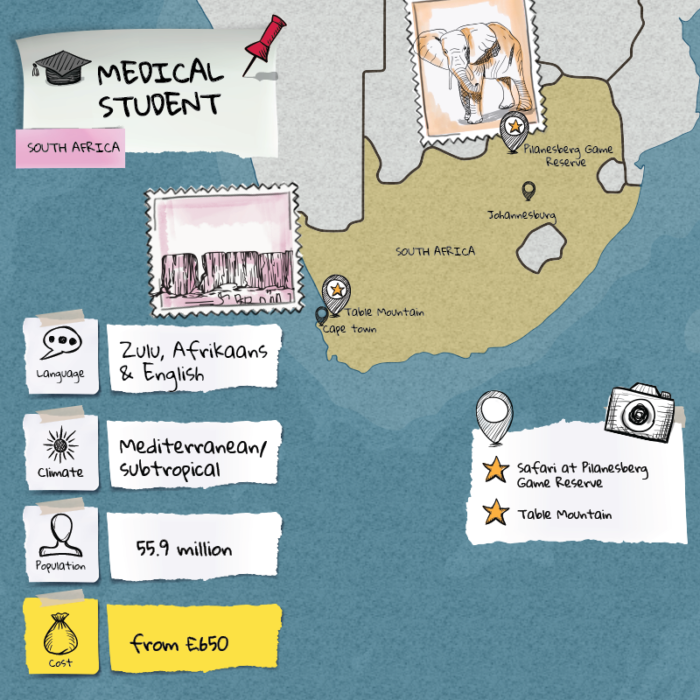
Medical Students – South Africa: Of the 234 million surgical procedures made every year, just 4% of these happen in the poorest third of the global population. When medical students choose to volunteer in South Africa, they will gain experience in a different medical setting, and all whilst giving back.

Medical Student study in South Africa

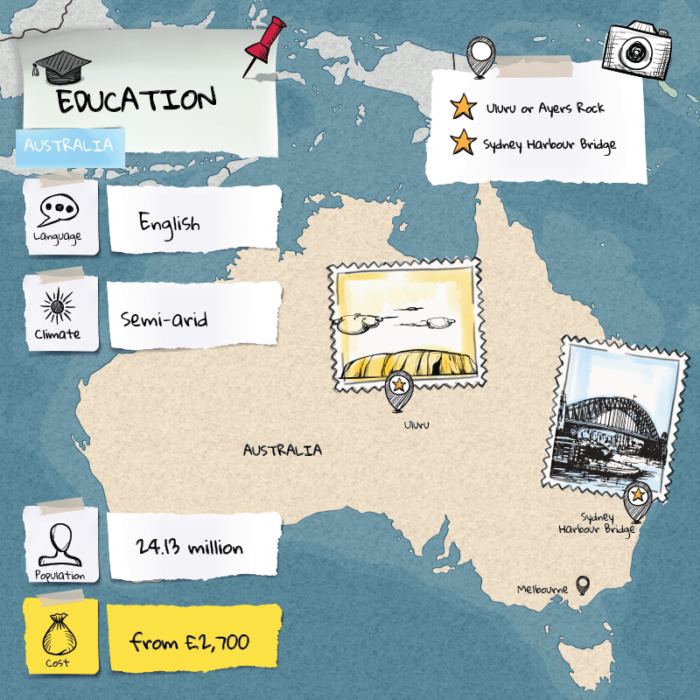
Education Students – Australia: As an English-speaking country, Australia is the perfect study abroad opportunity for future teachers. With the average UK class size standing at 30 pupils, the Australian’s average size of 16 will be a lot easier to manage. Plus for those who decide to stay in Australia long-term, new teachers can expect to earn £40,000+ ($67,572 CDN) compared to the £22,000 ($37,164 CDN) starting salary in the UK.

Education studies in Australia

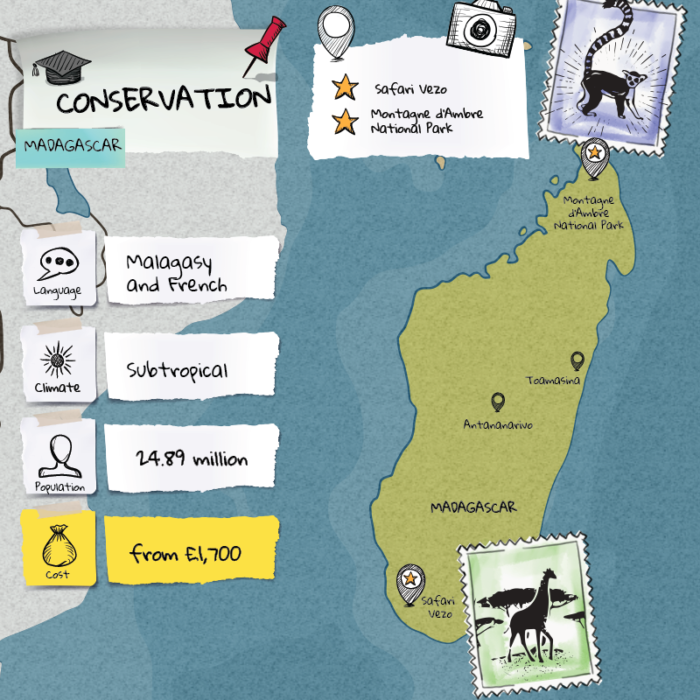
Conservation – Madagascar: Conservation is a growing industry as concern grows for animals and the environment. As the fourth largest island in the world, and as home to species not found anywhere else, Madagascar is the perfect opportunity for a once in a lifetime opportunity for conservation enthusiasts.

Conservation Studies in Madagascar

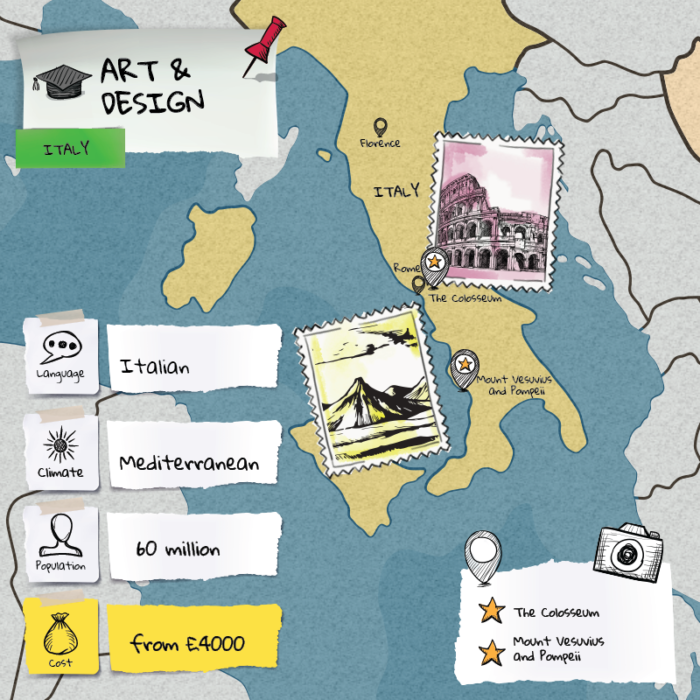
Art & Design Students – Italy: From ancient and classic sculpture to modern day art, Italy is the perfect place to learn and gain an even greater passion for art history.

Art and Design Studies in Italy

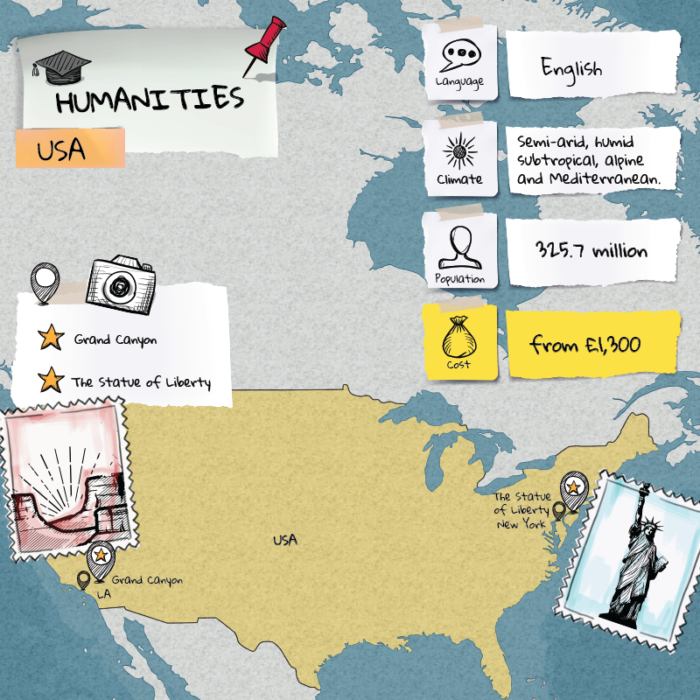
Humanities Students – USA: With three of the top five humanities universities based in the USA, America offers a vast array of historical and literary studying options. This time abroad will open up options for students who are wanting to work in academia, journalism or teaching.

Humanities Studies in the United States
For the Silo, Bekki Ramsay/storageworld.

Winners And Losers Around The World In School Lunches

School has ‘been in’ for awhile now. Does your child’s school lunches sound healthy to you? How do you think it compares to school dinners from around the world? And how much do school meals affect energy levels for post-lunch learning and does that have an impact on PISA test results?

Check out this infographic to discover what the school meals of other countries look like and how each nation scores on the PISA test. For the Silo, Dinah Makani.

around the world in school lunchboxes infographic
CLICK ME to visit this graphic’s sponsor 🙂

911 Heroes Memorial Run Series Happening Across America And The World

The Travis Manion Foundation (TMF), one the nation’s leading veterans advocacy organizations, is hosting its flagship event – the 10th annual 9/11 Heroes Memorial run in more than 50 communities across the country and around the world this September, including locally in in Annapolis, MD, and Alexandria, VA. The annual race series unites communities across the country to remember the nearly 3,000 lives lost on 911, as well as to honor our veterans, military, and first responders who serve our country. Proceeds from the 9/11 Heroes Run will benefit the Travis Manion Foundation, which empowers veterans and families of fallen heroes to develop character in future generations.

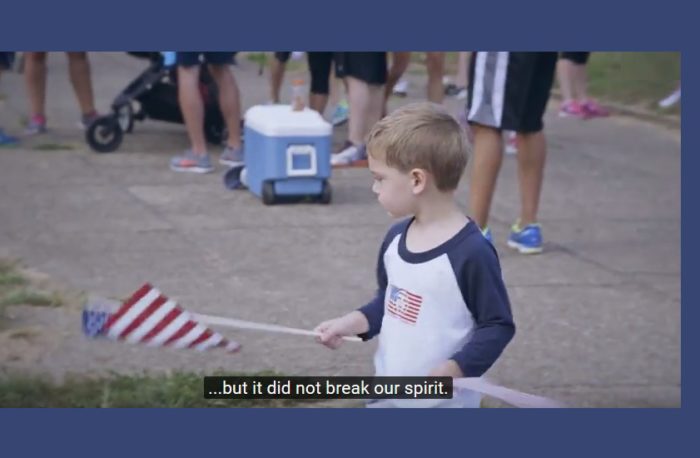
The 9/11 Heroes Run 5K series was inspired by Marine 1st Lt. Travis Manion, who was killed by a sniper in Iraq in April 2007 as he selflessly protected his battalion. Before his final deployment, Travis visited Rescue One in NYC—famous for losing almost all of their men on 9/11—and returned home with deeper passion about why he was fighting in Iraq. At its heart, the 9/11 Heroes Run is a tribute to a personal commitment to never forget the heroes of that day. Now in its tenth year, the 9/11 Heroes Run national race series will be held in more than 50 locations across the country and around the world. As part of the marketing campaign for the race series, TMF released the video found at the start of this article, to inspire runners and walkers of all ages to participate.

Last year, more than 50,000 people participated in race locations around the world or as virtual runners, to support military, veterans, first responders and their families through TMF. National sponsors of the events include Comcast NBC Universal and CBS Radio. Last year’s Annapolis run drew a crowd of over 2,000 participants including Maryland Governor Larry Hogan and midshipmen from the U.S. Naval Academy.

Ryan Manion, TMF President and Travis Manion’s sister, provided this statement:

“As I reflect on the 10 year anniversary of the 9/11 Heroes Run, I’m in awe at the number of communities across the country and around the world that have united to honor all those touched by the events of September 11th, 2001. We challenge all Americans to join us this September, to ensure our next generation never forgets the sacrifices of our veterans, active duty military, first responders, and civilians who were affected by the attacks on 9/11 and in the wars since.”

5 Key Races

  • 9/11 Run Alexandria, VA on Saturday September 9, 2017 at 9:00am ET
  • 9/11 Run Philadelphia, PA on Sunday September 9, 2017 at 9:00am ET
  • 9/11 Run Houston, TX on Sunday September 9, 2017 at 8:00am CT
  • 9/11 Run Annapolis, MD on Sunday September 17, 2017 at 2:00pm ET
  • 9/11 Run Doylestown, PA on Sunday September 24, 2017 at 2:00pm ET

See details for over 20 other races in cities across the U.S. linked here.

For the Silo, Tyler Bryant.

TMF empowers veterans and families of fallen heroes to develop character in future generations. In 2007, 1stLt Travis Manion (USMC) was killed in Iraq while saving his wounded teammates. Today, Travis’ legacy lives on in the words he spoke before leaving for his final deployment, “If Not Me, Then Who…” Guided by this mantra, veterans and survivors continue their service, develop strong relationships with their communities, and thrive in their post-military lives. As a result, communities prosper and the character of our nation’s heroes live on in the next generation.