A whopping 1.3 billion international tourist arrivals were recorded in 2023.
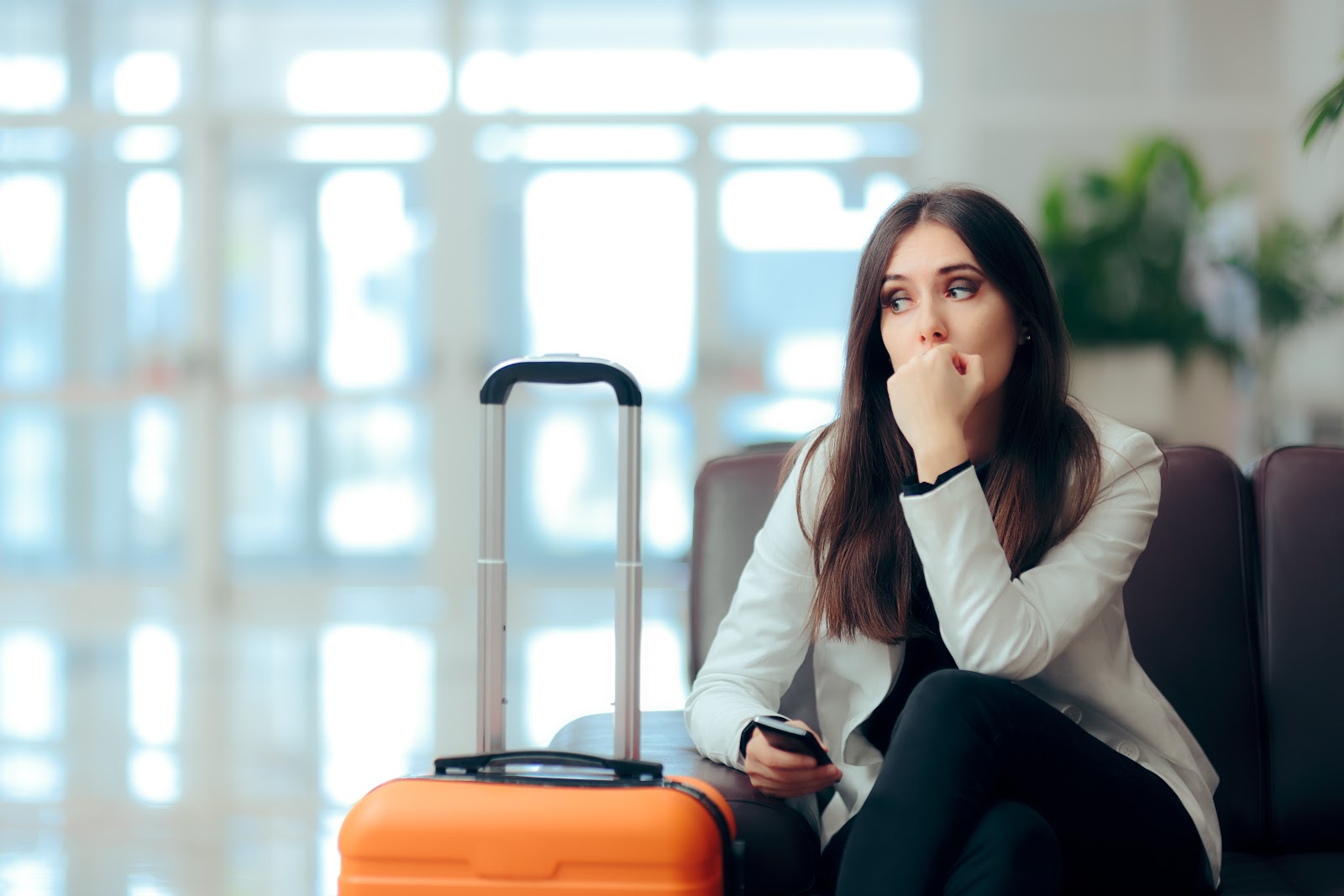
Undoubtedly, travel has become an integral part of many people’s lives. And while it can bring many joys, it can also cause stress.
With travel season fast approaching, the experts and our friends at HAYPP wanted to help those struggling with travel anxiety by providing helpful tips on how to best overcome it.
Five healthy ways to overcome travel anxiety
1. Understand your anxiety
To be able to best cope with your travel anxiety, you need to have a good understanding of the things that actually cause it. Pinpoint specifically what is making you feel anxious about your trip – is it that you’ll be on the road for hours, that there would be things out of your control, that you would have to be surrounded by a lot of people at an airport? Once you understand what triggers your anxiety, you can ensure to plan ahead for the best ways to handle those triggers.
2. Create a detailed plan for your trip
One of the reasons for experiencing anxiety when travelling is that you’re being taken out of your comfort zone and won’t have full control over everything. To help ease that anxious feeling, try to plan out your trip in as much detail as possible. Write down an itinerary, either on paper, or you can make use of a trip planner app like TripIt, Wanderlog, or Sygic Travel, for every day that you can follow, which will give you a sense of control, but it’s equally as important to think of alternative plans of action for anything that could potentially not go as planned, so that you’re prepared.
3. Learn to use relaxation techniques
Deep breathing by taking long breaths through the nose and then exhaling slowly through the mouth is a technique proven to help reduce any feelings of stress. Another useful way to calm your mind is by meditating, which can take many different forms from listening to music to focusing on your breath. To make sure you find the mindfulness technique that works best for you, try out a few different ones before your trip, so when the time for travelling comes you can use the most efficient one to set your mind at ease.
4. Ensure you have things that bring you joy
Having things with you that generally bring you joy can be extremely useful in distracting you from your negative feelings. These can include physical items like a journal in which to write your thoughts, a book to read, or a game to occupy your attention. Alternatively, you can create a playlist of songs you love or make sure you have your favourite TV show (or movie) with you, as these will keep your mind occupied, decreasing your feelings of anxiety.
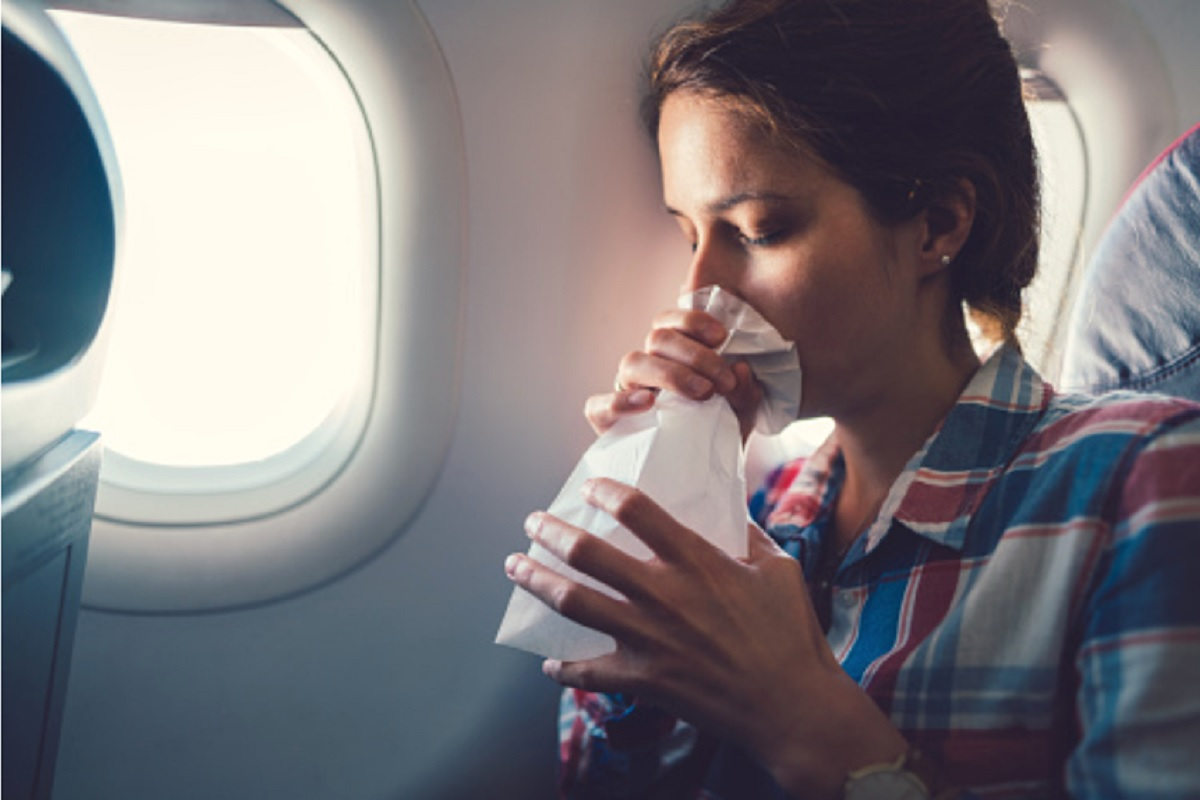
5. Take care of your physical health
Being physically active is a great way to reduce feelings of anxiety and stress. Even if it’s just a long walk, make sure to incorporate physical activity in your days, especially the days leading up to your trip and if possible, during the trip as well. Spending some time outside and connecting with nature, be it only by visiting a park, can have a positive effect on your physical and mental being, which in turn will help reduce your anxious thoughts.
For the Silo, Caitlin Purvis.



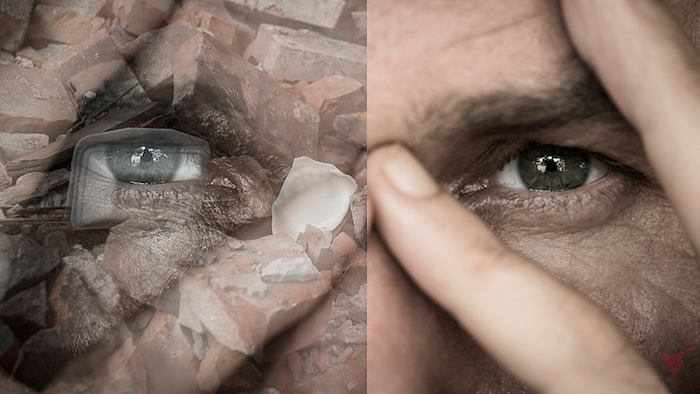
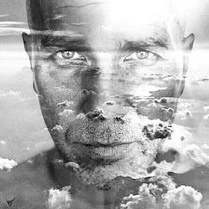 If you could choose just one photo exhibit to see all year, it would have to be

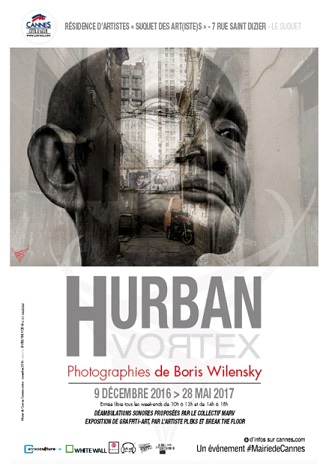
 Over 15,000 photos later, Hurban Vortex sees the light of day. The ensemble of artistic, esthetic and human adventure are at the core of the triptych that represents his works: Origins corresponds to 2009 (present), the period of an oblivious, profligate, consumerism-driven world. Collapse takes us into 2011 (future)…Fukushima, with its worldwide impact. The glasses and gas masks worn by the humans represent the man-made destruction of a world as we had known it before and which will never be the same. And in Post we find ourselves in an urban landscape filled with waste and shattered ruins. But people are no longer wearing their blinders… Maybe there is hope after all that cities may disappear but humans are still around? Or does the urban jungle always win in the end? You decide, because it is your personal interpretation, after an intense dialogue with the image… exactly what Boris Wilensky wants.
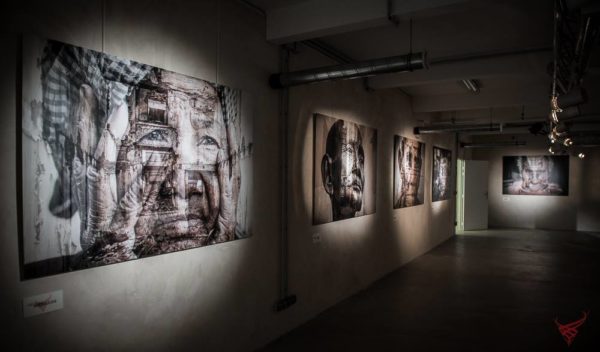 What the viewer sees, is how this artist sees the world – not in the literal but figurative sense. But he does not dictate, he suggests. He considers himself a storytelling portraitist first and foremost, and an urban photographer second. As you look at his large-size pictures (180 x 120 cm), the image in front of you transforms from a flat canvas to a three-dimensional scenography. You are drawn in, pulled onto a stage, you become part of the performance, an actor engaged in a dialogue. You are the person across from the man in the photo, but you also become him, turning outward to the viewer.
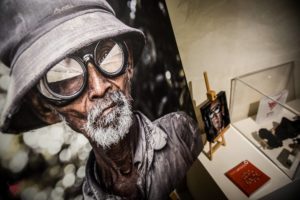 The continuous movement – the vortex – pushes and pulls you as the borders between Human and Urban blur and become Hurban. There are violently cold and anonymous city landscapes, consisting of monochromatic and starkly geometric patterns, entirely unlike anything you find in nature. But the human element, superimposed, invariably bestows them with a strangely appealing aesthetic. For the Silo,