5 Dog Myths That Can Lead To Tragedy

It’s the kind of headline that makes dog behaviorist and author Melissa Berryman’s blood boil: “Dog on Trial after Attacking Child.”

According to the report, a pointer-hound mix named Milo, a dog that had never caused any problems, was napping on the couch in his home in January when a 6-year-old neighbor arrived. The boy sat down on the couch and started petting the sleeping dog.  The child was bitten in the face after being left alone with the dog.  No one witnessed the incident.

“The dog was put on trial for an accident that’s preventable when people understand what our behavior means to dogs,” says Berryman, who has spent years studying dog bites and is the author of “People Training for Good Dogs:What Breeders Don’t Tell You and Trainers Don’t Teach”. She also teaches classes on safety and liability protection for dog owners, provides community safety solutions andpromotes the right way to behave around dogs through The Dog Owner Education and Community Safety Council
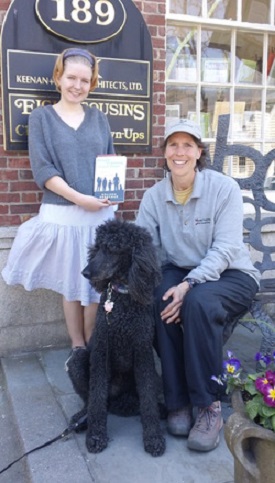
Author Melissa Berryman (right) is a US national dog bite consultant.

“Dog owners are set up for failure because our default is to blame the dog. Owners get fined or sued for repeated human mistakes. Dogs often pay with their lives for mistakes made by people,” Berryman says.

That’s the case for the American canine Milo. At his Feb. 27 hearing in Mansfield, Mass., selectmen voted to euthanize him.  The owners have 10 days to appeal.

“Prevention has to be the priority,” Berryman says. “Sure, it’s cute to us when the baby hugs the dog. But dogs do not say ‘I love you’ with a hug. When one dog ‘hugs’ another, it’s an act of domination. It should be a given that people do not hug dogs. Yet the message for children to hug dogs is prevalent in our culture and the facial bites continue.”

What are some other common misperceptions people have about dog and human behaviors – and how you can change to prevent catastrophes?

Berryman shares 5:

1.     Myth: When greeting a new dog, you should extend your hand for it to sniff.

Fact: Dogs don’t sniff each other’s paws when greeting and like us prefer to be asked before being touched by a stranger. Instead, ask the owner and then also ASK the dog by tapping your hand on your thigh simulating a wagging tail and act friendly.  The dog will relax and nuzzle you, need to sniff more to get to know you or will stay away.

2.     Myth: Breed dictates temperament.

Fact: Dogs, first and foremost, are predatory canines that live in groups. Breeds are generalizations that enable breeders to better market the product they sell.   What dictates temperament is their pack position, the role you, the human, play in the group and the rank of group members.  Dogs have superior/inferior interrelationships and command and defer accordingly.  And just as siblings in a family have the same parents yet are very different, one cannot purchase behavior by buying a dog of a certain breed.

3.    Myth: When a dog charges, there is nothing you can do.

Fact: When a dog charges you, it’s trying to decide if you are friend, foe or prey.   Their eyesight is poor so hats, sunglasses and other objects you may push or carry can scare them.  Act like a friend and pretend you are not afraid. Stand facing the dog with relaxed body language, tap your thigh with your hand and use a high-pitched voice for a friendly greeting like “good girl.” Fake it if you are afraid.

4.    Myth: Posting a “Beware of Dog” sign will protect you from liability if your dog injures someone on your property.

Fact: Dogs can only read body language.  These signs make people react to your dog in a fearful manner, which is more likely to cause a dog to consider visitors prey and bite them.  Use No Trespassing and Dog At Play signs instead.

5.    Myth: Only bad dogs owned by bad people bite.

Fact:  Even responsible dog owners operate under the same false beliefs about human and canine behavior.  They are also encouraged to take a passive role concerning their dog.  Any dog can bite especially when it feels personally threatened, is exposed to prey behavior or thinks that someone lower in rank threatens its resources, such as food, toys, bedding and the attention of its owner.

About Melissa Berryman– author of  People Training for Good Dogs:What Breeders Don’t Tell You and Trainers Don’t Teach

A Massachusetts animal control officer from 1993 to 1999, Melissa Berryman is a US national dog bite consultant who founded the Dog Owner Education and Community Safety Council (www.doecsc.org) and works with communities, rescue groups, dog owners and bite victims. She also designed and teaches a safety and liability class for dog owners, from which “People Training for Good Dogs” is derived. She has worked with more than 10,000 dogs. Berryman holds an undergraduate degree in Animal Science Pre-Veterinary Medicine, and a master’s in Public Administration.  For the Silo, Ginny Grimsley. 

Virtual Trucking On USA Highways In Truck Simulation 19

astragon Entertainment and developer Jujubee are happy to present the virtual trucking trucks of the next license partner of the mobile game Truck Simulation 19. The originally licensed trucks of US manufacturer MACK® will give virtual truckers the opportunity to drive along iconic United States highways and make their American truckin’ dream come true. The mobile game Truck Simulation 19 will be released for iPhone®, iPad® and smartphones and tablets using the AndroidTM operating system.

Diverse environments and more than 30 US cities aren’t the only aspects creating an immersive trucker feeling in Truck Simulation 19. Other essential elements are authentic vehicles in the typical US truck design with enough horsepower for the transport of different kind of freights as well as pulling heavy trailers. Of course a real US truck also needs to provide a certain level of pleasant driving comfort.

All those important features come together in the three true-to-original truck models of the truck brand MACK®: the MackAnthemTM, the PinnacleTM Axle Back and the TITAN BY MACKTM.

As is possible with every other truck in the game, the truck models of MACK® can be equipped with different kinds of cabs for short-, middle- and long-range trips. If these customization options aren’t enough, every owned MACK® truck can be customized in a variety of ways. Truck Stop Truck Simulation 19Compared to other playable trucks in Truck Simulation 19 the customization options for the three MACK® trucks are widely expanded with a lot more modifications to choose from offer quite some additional modifications to choose from: Not only the color of each model but also the bumpers, the wheels and the wheel sizes, the rims as well as the exterior mirrors and many more parts are completely customizable. By doing so truck fans will be able to conquer the highways with a special MACK® truck that reflects their unique tastes and preferences.

 

© 2018 astragon Entertainment GmbH. © 2018, Jujubee S.A. Jujubee® and the Jujubee logo are registered trademarks of Jujubee S.A. Published and distributed by astragon Entertainment GmbH. The MACK trademarks and designs are registered rights of the AB Volvo Group and are used pursuant to a license.

Ultimate Trucker Cap by Paid To Blaze Clothing
Click me!

Apple, the Apple logo, iPhone, iPad, and iPod touch are trademarks of Apple Inc., registered in the U.S. and other countries. App Store is a service mark of Apple Inc. Google Play and the Google Play logo are trademarks of Google Inc. All other registered trademarks or trademarks are property of their respective owners.

______________________________

astragon Entertainment GmbH

astragon Entertainment (founded in 2000) ranks among the leading independent games publishers in Germany. Our versatile product portfolio focuses on high-quality technical simulation games such as Construction Simulator, Farming Simulator or Bus Simulator, but also covers complex economic simulations and strategy games. The distribution of the Big Fish franchise (Mystery Case Files, Dark Parables, Grim Tales) completes our exciting product range. Games by astragon are available world- wide on many different platforms such as consoles, smartphones, tablets and PC. 

Jujubee

Jujubee S.A. is a game development studio that has developed titles like “FLASHOUT 3D,” “Suspect in Sight,” “Take Off – The Flight Simulator,” the real-time strategy game “Realpolitiks,” and the upcoming documentary-adventure game “KURSK.” The company’s goal is to create inspiring and unconventional games for all significant device platforms, such as iOS (iPhone, iPod, iPad), Android, Mac, PC and consoles. 

Summer Of Change Ahead Of New NHL Season

The new NHL season is just around the corner and you can’t say it’s been a quiet summer for the league. Throughout the NHL, there have been twists and turns throughout the offseason, setting the foundations for another fascinating campaign. On the back of a thrilling 2018/19 season in which the St. Louis Blues lifted the Stanley Cup after an enthralling finals series, over half the league will feel as though they have a realistic chance of going all the way this year. 


So, ahead of the start of the new regular season, let’s take a look at the offseason’s biggest stories:


Fenton’s Fall

Undoubtedly, the story of the summer has to be Paul Fenton’s dismissal from his role in charge of the Minnesota Wild after one dismal year. While the decision to replace Fenton with Bill Guerin was understandable, to do so after the draft and free agency has been something many have questioned. The question is now whether or not the Wild will respond on the ice.


RFAs Still On Offer

It’s particularly strange to see so many restricted free agents still available at this point in the offseason. Mitch Marner (now signed), Mikko Rantanen, Kyle Connor and Ivan Provorov are just four unsigned RFAs, with many more still expected to hold talks with their franchises throughout preseason training, with some potentially remaining up in the air by the time the regular campaign gets started.  


Devils And Rangers Set To Do Battle


The division that has caught the attention the most throughout the summer has been the Metropolitan. The New Jersey Devils and the New York Rangers could be set to rekindle their rivalry after picking up the top two draft selections as well as signing some top veterans – both now around 40/1 with the latest NHL betting odds to win the Stanley Cup. It’s been a while since these two were able to battle it out at the top of the Metropolitan, but that could change this season.

Managerial Merry-Go-Round

Having a Red Wings hero as a player, Steve Yzerman is back in Detroit this season looking to have a similar impact as a general manager after leaving Tampa Bay. The man he’s replacing, Ken Holland, will look to turn around the fortunes of Edmonton. In terms of head coaches, six teams will start the new season with a new man behind their bench. They may be two years away from joining the league but Seattle’s NHL team know former Pittsburgh, Carolina and Toronto man Ron Francis will be their general manager.

“Matt Duchene” (CC BY-SA 2.0) by 5of7

Predators Risk It All

There’s no doubt the Nashville Predators needed to solve the huge power-play issues they struggled with last year but they may have taken a big risk to try to achieve that. To make room for forward Matt Duchene, the Predators decided it was P.K. Subban who would have to make way for Duchene, with the defenceman joining the Devils. Now, we will see whether swapping one of the best defenders in the league for, hopefully, a game-breaking forward pays off.

What We Learn From The Death Of A Spouse And How To Find Love Again

He had no idea his life would change so significantly……For 31 years, Dennis and Hope Freed had a fulfilling marriage. They raised a family, built a home, and shared their dreams with one another and their two sons.

Overcoming Spiritual Midlife CrisisThen Hope got cancer, and their lives changed drastically overnight. She fought a long brave battle, and went through over 250 chemotherapy treatments, but on April 7, 2012, on an evening that heralded Passover in the United States and Easter in Israel, she died.
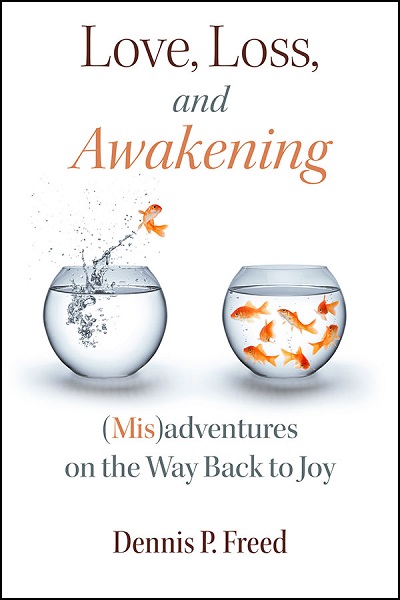
Dennis Freed’s beloved wife and best-trusted friend had gone, leaving him alone to figure out a future he’d never imagined. For the first year, he sorted through what society expected of a long-term caregiver and widower. Eventually, Dennis emerged from mourning, his heart ready for life’s next chapter. Is there love after marriage?

In Love, Loss and Awakening, Dennis Freed tells the story of how he began to go out with women again. He shares the reality of dating at age 50-plus—how he endured the awkward and hilarious encounters and embarrassments a man experiences when he hasn’t been on a date with a new woman for decades. Dennis’s book chronicles how one finds love after the death of a spouse. He describes his courageous and uplifting journey through sorrow, his search for new love, and his rediscovery of love and happiness.

Drawing upon the wisdom and personal experiences he acquired dating middle-aged women in all the wrong places, Freed takes the mystery out of the many lessons he learned. Dennis found out that as a widow or widower you can find love again, but it’s a difficult road. Love isn’t unique to the person you loved first. That love never fades, but your heart has room for more. You can get love back in your life. Your new love becomes a special love in its own right.

Here are just a few of the valuable insights:

Hole Heart/ Whole Heart

When you lose your best, most trusted friend, the hardships just begin. You are now alone. Your whole heart collapses to half its size. It transforms into a Hole Heart. The process of resurrecting it to wholeness is like Lego construction, built one little brick at a time. At first, bricks of varying shapes and sizes are sorted through and meticulously placed. Slowly they assume the weight and shape of your newly imagined Whole Heart.

Learn How to Be Physical, Affectionate, and Intimate

You spent thirty-plus years kissing no one but your spouse. If you spend your time worrying about the “what if” instead of enjoying the right now, it will rob you of your joy today. Sometimes you just have to learn something new, like all the kissing pleasures one never experienced. It’s not such a bad idea. Understand that it takes time and practice, and that each person you meet is unique. You’ll make hurtful intimacy mistakes just like a teenager. You’ll make stupid and inconsiderate mistakes. It’s a fact. Practice and learn so that when the right person comes along, you’ll be ready.

A Hundred Bottles of Beer on the Wall

You are going to date a lot of people. It is okay to be sad, mad, depressed, empty, lost after a date that isn’t perfect. Embrace the journey! Feel! Live it! Then get on to the next one so your failures don’t consume you. Have fun searching. Let your dating escapades become the target of jokes for your friends. Entertain them with style!

LoveLossAndAwakeningDennisPFreedBookCoverLove, Loss and Awakening

Dennis P. Freed

 List $ 12.95US

88 pages, trade softcover, also available in ebook version

ISBN 978-0-9971916-1-5

Tolawaken Press

 The death of a loved one is devastating, and can leave us questioning our new path. Will I ever want to find love again, and if so, how do I find it? What’s appropriate behavior for a widowed fifty-four-year-old? Should I explore dating sites? Meet women in bars? Rely on introductions from friends? The questions far outnumber the answers. In Love, Loss and Awakening, Dennis Freed shares his experiences and his journey to new love and the rediscovery of happiness.

For more information, visit www.LoveLossandAwakening.com


About the Author

Dennis P. Freed is a native of Brooklyn, New York, and, from age three, grew up in Oceanside, Long Island, where he later raised his family. He earned a BS in Civil Engineering at the University of Rhode Island. After a stint as a structural engineer, he entered the Construction Management and Development profession in New York City, where he has led teams to construct and develop more than sixty-five buildings. Also an associate professor at Pratt University in New York, he teaches Construction Management to architecture students.

Sunset

What People Are Saying

“Love, Loss, and Awakening is an engaging story of how one man bounces back after losing the love of his life. It is an ode to the power of being in relationship, especially when faced with incredibly difficult and heartbreaking loss. And it is with much humor that Dennis Freed takes the reader on a journey to find what we are all looking for to be joyous and fulfilled in relationship.”

—Harville Hendrix, Ph.D., and Helen LaKelly Hunt, Ph.D., Creators of Imago Therapy and authors of Getting the Love You Want

“This is a story of digging deep after loss, finding that being with another is worth the risk, and staying open to lessons both human and Divine. At times an excruciating memoir of living with cancer, at others, a combination of ‘How To’ and, more useful, ‘How NOT To’ of middle-aged dating. Those who have loved deeply will be reminded of what they have or have lost; for others, it’s the promise of how good a relationship can be. The book has a happy ending, yet acknowledges that seeking love must always include a willingness to lose again.”

—Cynthia Wall, LCSW, author of The Courage to Trust: A Guide to Building Deep and Lasting Relationships

“Get ready to cry, laugh, cringe, and howl with wonder and delight as you go through Dennis Freed’s amazing experiences after the loss of his wife. He offers heartfelt real-life insights on how to cope with the despair and overcome the pain so you can face the world and find love and happiness anew.”

—Paul J. Krupin, author of Words People Love to Hear Simple Verbal Recipes for Making the People Around You Feel Good

Ontario Modernizing Building Code Services

Ontario is modernizing services related to the province’s building code to help speed up the construction of new housing and building projects. Better services, up-to-date tools and new resources will help people better understand and meet building code requirements, while maintaining the same high standards for public safety.

“This should be a good step forward towards alleviating housing shortages across our two counties,” said Toby Barrett, Haldimand-Norfolk MPP. “For many years the building sector and the public have been calling on government to do a better job of providing a range of services related to the Building Code,” said Steve Clark, Minister of Municipal Affairs and Housing. “We are proposing some solutions and are launching a consultation to find out what people think.”

The government is proposing to create an administrative authority that could deliver new and enhanced services, such as:

* Developing digital tools to support municipal e-permitting and make the building code easier to use and understand;

* Providing supports to help municipal governments increase the number of building inspectors in Ontario;

* Introducing continuing professional development to make sure registered building code professionals remain up-to-date on building code requirements; and

* Providing supports to small, rural and northern municipalities to help them deliver local building services. Maintaining Ontario’s high standards for building safety is a priority, so our government is also proposing to strengthen enforcement tools to address non-compliance with the building code.

“A new administrative authority for building services in Ontario could address a range of municipal challenges. E-permitting, for example, would help streamline development. It could also help with capacity issues, training and retention of building officials, and improved enforcement of building codes,” said AMO President, Jamie McGarvey, Mayor, Town of Parry Sound. “AMO looks forward to working with the Province to ensure the initiative meets these goals. To create safe and thriving communities, we need to make sure we get this right.”

The public and building sector professionals are invited to share their thoughts on the proposed changes https://ero.ontario.ca/notice/019-0422 online. The consultation closes Nov. 25, 2019. A new innovation guide https://ontario.ca/page/add-second-unit-your-house was also released today to help people who want to add a second unit, like a basement apartment, to their home. Second units can help address the shortage of lower-cost rental housing.

They can also produce income to help with mortgage payments or provide independent living space for a senior parent or adult child. The guide is the first in a series being developed to encourage a wider range of options in housing. “This guide is a useful tool to home owners who are looking to create new rental units as well as the municipalities who approve the suites,” said Matt Farrell, President, Ontario Building Officials Association (OBOA). “It translates complex building code language into user-friendly information that will help all applicants as they move through the process of developing secondary suites. It needs to be at the front counter of every municipal office so building officials can advise residents accordingly.”

Quick Facts

* An administrative authority is a not-for-profit corporation that helps ensure Ontario’s consumer protection and public safety laws are applied and enforced.

* Ontario’s construction industry contributes an estimated $38 billion annually to the province’s economy.

* Over 131,000 building permits were issued in Ontario in 2018.

* Proposed changes to building code services respond to recommendations made by the Association of Municipalities of Ontario in their recent report, Fixing the Housing Affordability Crisis https://www.amo.on.ca/AMO-PDFs/Reports/2019/Fixing-Housing-Affordability-Crisis-2019-08-14-RPT.aspx.

Letters To The Silo, Life Is A Hassle So Tell Your Story

Prometheus> Dear Silo, It’s your life.
> You are the star of your own movie, it’s as important as that of the billionaire and the celebrity, just don’t expect anybody else to watch it or care about it.
>
> Social media is where you connect and share with your friends, if you’re doing it to brag and establish a career, you’re doing it wrong.
>
> Friends are everything. Build your crew. Share your ideas. Laugh. If your buds are unsatisfying, feel free to bring in new blood, or to graduate all together. But accolades without a posse to enjoy them are worthless.
>
> Money is irrelevant. Not if you don’t have enough, then that’s unfortunate and it’s all you can think about. But if you can pay for food, health and shelter, don’t nickel and dime, at the end of your life you’ll realize it’s just not worth it. Give a few extra percentage points as a tip. Lend money and don’t ask for it back. Pay the fee to put your bag underneath the plane as opposed to schlepping it on board. Being cheap only hurts yourself.
>
> You’re your own hero. The truth is everybody else is just as clueless as you. Don’t look up to anyone else, just build your confidence, and know that everybody’s unsure of the path.
>
> Having said that, everyone has expertise in different areas, it’s the nature of life. You’ll find if you share your dilemmas with others they’ll have loads of insight and will help you navigate what you find so challenging.
>
> Your experience is all that matters, and when you’re gone it evaporates with you.
>
> The government can’t protect you from the scam. Maybe after the fact it can help you claw some money back, but the truth is deception and even fraud are the cornerstones of even the biggest businesses. Just try to cancel a service… It’s nearly impossible. Better yet, try to renegotiate your cable bill. You’ll spend hours on the phone and only few will get a great deal. Buying a car has been democratized by the internet, but signing up, canceling and adjusting your cable bill is akin to the wild west.
>
> Don’t let the testosterone get you. Feel free to say no to the group. Get guys together and one will propose the outrageous and the others will be afraid to be labeled wimps and will go along with what might be dangerous. It takes a lot to say no, but if your insides tell you to, do so.
>
> And just because your fellow travelers in estrogen tell you you’re beautiful and rally around you when your romantic life is challenged, don’t think they’ve got accurate insight into guys. Sure, there are cads, players and manipulators, never mind those who don’t follow through. But the truth is most men are clueless and moldable. If there’s a spark, feel free to text and call them, you’re in the driver’s seat…unless you place all your faith in testosterone and go where your man goes, but that might leave you in a bad place, just like the guys above.
>
> Buy something if you’re gonna use it, don’t buy it to show it off. The truth is no one cares.
>
> Tell your story. Women are good at this, men are bad at this, fearful of appearing weak. But once you tell somebody the way that you feel…you’ve got the opportunity for them to respond in a warm, understanding way and you’ll feel connected, which is the ultimate desire of all people on this planet.
>
> Life is a hassle. You’ll lose and be hurt and despite having plenty of people to blame, you won’t get compensation, or if you do it won’t make up for your loss. Accept this. Plans will get broken, as will you. You can stay at home and never go out or you can enter the world and have unexpected, great experiences, but you’ll be exposed to greater danger. Life is a risk. If you’re playing it safe, it’s pretty damn boring.
>
> Work is about fulfillment more than money. Don’t envy those who don’t work, they’re empty and unsatisfied at the core. Try to have a job you love, but don’t assume just because you’re passionate about it you’ll get rich. But it’s okay to have a mediocre job to support your hobbies. Just don’t have a mediocre job and a mediocre life.
>
> Change happens. The journey to the other side will be painful. But you’ll always end up in a better spot, as long as you can let go of the past.
>
> Don’t be vindictive. Don’t try to get even. No one is keeping score and the longer you try to settle scores the more time you’re losing in life.
>
> Relationships are not about love but commitment, never forget it.
>
> Divorce may be necessary, but it will haunt you forever.
>
> Children center your life, they give you something to live for, they give you purpose. But don’t have them with someone who is unwilling to make themselves subservient to your progeny.
>
> Most of what popular culture will tell you is important is not. Enjoy that movie, follow politics, but if you think it amounts to a hill of beans you’re too deep in the weeds. Records and movies come and go. Who is President will affect you, via Supreme Court decisions if nothing else, but what’s in the news every day is about selling advertising.
>
> The older you get, the less you know. When someone is sure, they’re usually young or insecure.
>
> He who is famous today is forgotten tomorrow. If you’re doing it to be remembered, you won’t.
>
> Lefsetz…………..
> —
> Visit me: http://lefsetz.com/wordpress/
> —
> http://www.twitter.com/lefsetz

Supplemental- “Prometheus”: The Human Struggle

Fundraising Survey Shows More Canadians Are Giving But Giving Less

(Toronto, Ontario) Seven in ten Canadians have given to charity in 2018, and almost half of donors are open to different sorts of giving approaches than just the traditional solicitation letter, according to the 2018 What Canadian Donors Want Survey, conducted by the Association of Fundraising Professionals (AFP) Foundation for Philanthropy – Canada in partnership with Ipsos.

The survey, which featured 1,500 Canadians age 18 or older, found that the percentage of people giving to charity in 2017 jumped by four points from the 2015 survey, returning to previous giving levels. Even as more Canadians are giving, they are giving less—an average of $772 cdn in 2017 compared to average giving levels of $924 cdn in 2015 and $726 cdn in 2013.

Eighty percent of donors give to more than one cause, with 23 percent giving to 4-5 charities and 13 percent supporting 6 or more causes. The top recipients of donations are social services and health charities—more Canadians (59% and 57%) gave to those causes than any other.

Overall, Canadians are more confident in the charitable sector than ever before, with nearly eight in ten respondents (78%) saying they’re confident in the organizations that comprise the charitable sector. That figure represents a five-point increase from 2015 and is significantly higher than confidence in the private sector (67%) or the public sector (60%).

Roger Ali Foundation for Philanthropy Canada

“Overall, the survey shows a Canadian population that is very supportive of the work of the country’s charities and a good understanding of how charities work to support communities,” said Roger Ali, CFRE, chair of the AFP Foundation for Philanthropy – Canada. “However, there are signs that donors are changing how they want to give and interact with charities, and the sector needs to understand and adapt to these changes so that we remain relevant to the people who support us and the people we serve.”

Changes in Volunteering, Giving Behavior

One troubling sign is a drop in volunteerism rates. According to the survey, one-third of Canadians volunteered their time to a charity or non-profit in the past 12 months and spent an average of 88 hours—down precipitously from 110 hours in 2015. “We’ll be watching this closely in our next survey to see if this is a one-time drop or a trend,” Ali added.

Canadians continue to change in how they want to be approached for donations. While 44% express a preference for traditional requests, such as mail, one quarter prefer a more personal approach like peer-to-peer contact or crowdfunding. Three in ten (31%) say they’re open to anything, having no specific preference.

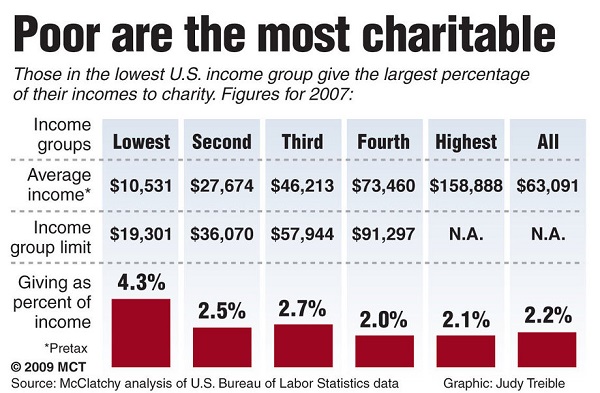
Poor Are Most Charitable In USA

Fundraising preferences vary significantly by age. Baby Boomers (54%) are the most likely to prefer being solicited through traditional requests, compared to Gen X’ers (43%) or Millennials (33%). By contrast, Millennials (17%) lead the way on crowdfunding, preferring this option to a greater extent than their Gen X (11%) or Boomer (5%) counterparts.

Perceptions of Charity Roles, Performance

Many underlying views on charities have remained relatively stable over time. Three-quarters of Canadians continue to agree that charities play an important role in society to address the needs not being met by the government, the public sector or the private sector. Majorities also believe that charities are trustworthy (61%) and act responsibly with the donations they receive (63%).

Canadians are more divided on how much charities spend on their programs and services vs. how much they spend on supplies, administration, salaries and fundraising. A growing majority (58%, up six percentage points from 2015) trust charities on how much they say they spend money on programs and overhead.

However, about a third of Canadians (34%, down 4 points) are less trusting, indicating that charities overstate how much they spend on the cause or programs (24%), or that charities are being intentionally misleading (10%). Yet, when presented with factors and asked how important each one is in evaluating a charity’s effectiveness, Canadians placed more emphasis on a charity’s ability to achieve its mission and create impact than managing its operation or its fundraising.

“Donors are looking for charities that create impact to change the world for the better,” said Lorelei Wilkinson, CFRE, chair of the AFP Foundation for Philanthropy – Canada Research Committee. “But it’s always clear that they keep a careful eye on administrative costs and a charity’s operations. The charitable sector needs to do a better job of explaining that overhead costs are essential for growth and sustainability —for things like equitable salaries, updated computer equipment, etc.— as part of being efficient with their use of donor dollars.”

Looking Ahead

Almost half of Canadians (46%) indicate that they are very likely to give in the next 12 months, while another one-third (34%) are somewhat likely to donate. However, 59% say they are also concerned about the economy, which may force them to reassess their giving plans.

A considerable number of Canadians (42%) proactively seek out information on the cause/charity and contact them to donate, while six in ten (58%) say the charity approaches them and they donate based on the information they receive. When looking for information on charities they support, Canadians continue to rely on online information (75%) as opposed to family, friends or colleagues (39%).

Social Media

The 2018 What Canadian Donors Want Survey also asked general questions about Canadians’ use of social media.

Similar to 2015, eight in 10 Canadians (81%) have a social media account. This applies across every age group, from 91% of Millennials through to 85% of Gen X’ers and 70% of Baby Boomers. Women (84%) are more likely than men (78%) to maintain at least one social media account.

Facebook dominates the Canadian social media landscape: three in four Canadians (75%) say they have a Facebook account, placing it well ahead of Twitter (29%), Instagram (28%), Reddit (5%) or other social media (13%).

Nearly two in ten Canadians on social media (18%) have donated to a charity in response to a request that came through their social media account. Millennials (23%) and Gen X Canadians (19%) are more likely than Baby Boomers (13%) to have made a charitable donation in response to a social media invitation or post.

“As generations age, we expect that email and social media will continue to become more prevalent in fundraising,” said Mary Bowyer, CFRE, member of the AFP Foundation for Philanthropy – Canada Research Committee. “For now, we’re seeing a blend of different approaches, and the most successful charities will be those who personalize their appeals based on what individual donors want, meaning a mix of mail, email, videos, Tweets and other communications.”

About the Survey

The 2018 What Canadian Donors Want Survey was based on a poll conducted between October 10 and October 17, 2017, on behalf of the AFP Foundation for Philanthropy – Canada. For this survey, a sample of 1,500 Canadians aged 18+ was interviewed. Weighting was then employed to balance demographics to ensure that the sample’s composition reflects that of the adult population according to Census data and to provide results intended to approximate the sample universe.

The precision of Ipsos online polls is measured using a credibility interval. In this case, the poll is accurate to within ±2.5 percentage points, 19 times out of 20, had all Canadian adults been polled. The credibility interval will be wider among subsets of the population. All sample surveys and polls may be subject to other sources of error, including, but not limited to coverage error, and measurement error.

The Association of Fundraising Professionals (AFP) is the largest international association of fundraising professionals in the world.  AFP has over 33,000 members world-wide, with 3,800 in Canada.  AFP promotes the importance and value of philanthropy, and enables people and organizations to practice ethical and effective fundraising.   AFP Canada was formally created in 2017.

As the philanthropic arm of AFP, the AFP Foundation for Philanthropy – Canada supports many programs and services through its fundraising efforts.  Fulfilling the promise of philanthropy by funding programs and services in the areas of research, diversity & inclusion, supporting the profession and leadership.  To find out more, please visit www.afpnet.org.


Renewable Energy Outlook for 2040 Includes Cancelling Your Print Newspapers

Hey Silo readers! This infographic courtesy of FuelFighterUK demonstrates how production could look in 2040 and what is being done to make our world a greener place. The infographic covers the projected worldwide growth in energy demand, what is being invested to change the renewable outlook and some awesome eco-friendly innovations that have been made by technology companies. For the Silo, Louis Dixon


Energy Outlook For 2040 Infographic 

These Classes Help Your Kids Explore Their Creative Side

Kids love to make things. Everyone is born creative – if you feel like you don’t have a creative bone in your body, it’s not because you lack some inherent trait. It’s because your natural instinct to imagine was educated out of you by a school system that values standardized testing over creativity. That’s something you can help your kids avoid.

Students in exams

Creativity isn’t a mysterious trait only possessed by artists and entrepreneurs. It’s something that can be encouraged and cultivated, like any skill or body of knowledge. And business today is hungry for innovation. Businesses are looking for leaders who can think outside the box and come up with their industry’s next Big Idea. That takes creativity.

Signing up your kids for classes that foster creativity helps them continue to explore and nurture their imaginative side.

1 Photography

The technology in smartphones and tablets means that kids have more access to cameras than any time in the past. A photography class can give kids skills way beyond your average selfie. Photography classes teach kids about timing, focus, perspective, and framing. They may also learn how to use editing technology and bring their digital photos to new heights.

Photography is an outlet to share their creative perspective and refine their skills.

2 Video Game Coding Classes for Kids

Learning how to make a video game combines creativity with math and problem-solving skills. All creative endeavors come down to problem solving one way or another: how do you use the materials you have to create the effect you want? When it comes to making video games, the solutions lie in the coding language and what you can tell a computer to do.

You can find coding classes at Real Programming 4 Kids for a wide range of ages and ability levels. From age 7 up, coding courses for kids introduce the logic and language of coding. Intermediate and more advanced levels begin teaching kids the coding languages used by professional video game developers today.

Coding is a great way for students who are more mathematically inclined or interested in computers to exercise their imaginative muscles.

3 Painting and Drawing

Visual art requires specialized skills and learning how to use the tools of the medium: paint, brushes, pencils, charcoal. It takes discipline and patience to learn how to use your materials and transform it into the vision you see in your head on the page.

Painting and drawing starts with the imagination, but it becomes about the process of making something come to life.

Behind every creative pursuit is a valuable lesson. Not only are kids being taught skills that help them bring their projects to life, they’re also learning the patience and discipline it takes to master those skills.

An arts education is far more than time to play or imagine. PBS reports that kids who participate in the arts regularly (three hours a day at least three days in a week) are four times more likely to excel at academics and receive some kind of recognition for it.

Arts are an important part of childhood development from a young age to the teenage years. Sign your kids up for creative classes today. For the Silo, Mila Urosevic.

Working Toward Sustainable Health Care System For Ontarians

During meetings, doorknocking and attending community events, I find the provision of health care remains the number one issue for Ontario taxpayers. Access to publicly funded health care is fundamental to our shared understanding of what it means to be an Ontarian and a Canadian. However, there are threats to the long-term sustainability of our system – not the least of which includes an increasingly aging population with complex needs.

The future of the health care system we cherish and expect is at risk. To that end, Ontario’s Health Minister Christine Elliott attended AMO – Association Municipalities of Ontario – to present our plan to build a modern, connected and sustainable public health care system. Our system is in need of transformational change. With the creation of Ontario Health, the province’s new central health agency, and the work toward establishing the first wave of local Ontario Health Teams, the goal is to build a connected, integrated, coordinated system of care — centered on the patient.

To ensure patient-centered care, health teams will be based on and driven by local communities. We must also consider how best to deliver public health, a central component of community health care, in a way that is resilient, efficient, nimble, and modern. Municipalities stress the need to consult more broadly. That is why Premier Ford made a commitment to pause any changes to the funding for 2019. Doing so will offer municipalities the time needed to find ways to support the shared objective for a more sustainable public health care system.

Starting January 1, 2020, all municipalities will transition to a 70-30 cost sharing funding model – 70 province and 30 municipality. I sit on the Standing Committee on Public Accounts. In 2017, Ontario’s Auditor General reported that public health units are poorly coordinated and duplicative. Since 2014, one-third of public health units have undertaken research on a number of common topics – like sugar-sweetened beverages, energy drinks, e-cigarettes and alcohol. We question the need to invest taxpayer dollars to produce multiple reports on the same topics. People need to know that the services offered by their public health unit are available to them, no matter where they live in the province.

Currently, there is inconsistency across Ontario in the services available. Something has to be done.

The status quo is not an option. That is why our government will launch renewed consultation with municipalities and other partners in public health. The next phase of engagement will be open and transparent, anchored by the release of a discussion paper. Among other aspects of the new regional entities, this paper will outline our proposals for boundaries for the new regional public health entities.

Ontario will not be reducing funding to land ambulance services.

In fact, municipalities will receive on average nearly four per cent more in funding for the 2019 calendar year, and can expect continued growth for 2020. Together, we are building a modern, sustainable and integrated health care system that starts and ends with the patient. Modernizing our public health sector and our emergency health services are an important part to the plan. Because of the important work being done today, people in Ontario can rest assured that there will be a sustainable health care system for them when and where they need it. For the Silo, Toby Barrett MPP Haldimand-Norfolk.

Why A College Of Kinesiology For Ontario?

FYI exercise is medicine image: www.hungry-runner.com

Toronto, Ontario  – The numbers are well-known – regular exercise can reduce the risk of heart disease by 40 per cent, lower the risk of stroke by 27 per cent, decrease the incidence of high blood pressure and diabetes by 50 per cent and lower the risk of colon cancer by 60 per cent.  Exercise has also been noted to reduce mortality and the risk of recurrent cancer by 50 per cent and to reduce the risk of developing Alzheimer’s by a third.

It is clear that the role of exercise and the profession of Kinesiology, as human movement professionals, will continue to grow.

“The creation of  the College of Kinesiology of Ontario set the stage for a significantly increased focus on the role of physical activity in both the prevention and a treatment of illness and chronic disease,” said Janice Ray, President of the Ontario Kinesiology Association.

But instead of being concerned with the single hour that clients and patients spend in the gym or rehab facility, many Kinesiologists are focusing on ways to help promote optimal health during the other 23 hours of the day as well.

Dr. Chris Ardern, a Kinesiology Professor at York University, and a Research Scientist at Southlake Regional Health Centre in Toronto, has spent his career focusing on obesity and physical activity and how they affect a number of other precursors to chronic disease.  Dr. Ardern has published or co-authored almost three dozen papers on obesity and physical activity.

Beyond the standard focus on leisure-time activity, says Dr. Ardern, more attention needs to be paid to curbing the sedentary time people spend at work or commuting. A focus on  daily routine from a more holistic point of view is required instead of just how much time is spent being “moderate-to-vigorously active” if we are to make a more significant impact on preventing obesity, chronic disease and other illnesses.

Like obesity, physical inactivity is now understood as a serious problem, says Dr. Ardern. He suggests that aggressive promotion of physical activity is vital to offseting the impact of obesity and chronic disease. For Kinesiologists who see the consequences of our current lifestyles every day, there is a sense of urgency to counter-act the relentless marketing surrounding foods high in fat and sugar, and the inactvie lifestyles that come from sitting in front of some kind of screen for hours on end.

“Every little bit helps,” says Ray, referring to every opportunity, nor matter how small, to get moving throughout the day.  “Modern lifestyles often don’t leave much time for dedicated physical activity, and too many if us aren’t even programmed to think about the little opportunities that can really make a difference.”

Here are some simple ideas to get you started:

·      Avoid elevators and escalators – take the stairs whenever possible (at least take them down if up is too much) ·      Park in the back corner of the shopping mall or workplace parking lot (spots are easier to find too) ·      Walk to the corner store (remember walking is a real mode of transportation) ·      You don’t have to be a smoker to get outside on your break, (go ahead, enjoy a breath of fresh air and move around) ·      Share a walk with your kids, spouse, significant other, sibblings, parents, friends etc. (it’s a great way to talk without having to look at each other, or just as good – not talk)

The important role of physical activity to reduce the risk of chronic disease are well documented.  Large and small efforts all combine to reduce the risks of many chronic diseases, and when combined with the benefits physical activity brings to the treatment and management of chronic disease and illness and the it becomes clear the Provincial Government should be including a greater focus on physical activity to improve outcomes for patients and improve the quality of life for the people of Ontario.

About Kinesiology
As authorities on movement and exercise, Kinesiologists are committed to enhancing quality of life through the promotion of physical activity and workplace safety, the prevention and management of injury and chronic disease, and the improvement of health and performance.

About the Ontario Kinesiology Association (OKA)
The Ontario Kinesiology Association (OKA) is the voice for Kinesiologists in Ontario. Actively working on behalf of its members, the OKA is dedicated to promoting Kinesiology as an integral part of Ontario’s healthcare team and raising the profile of the profession across the province. For the Silo, John Armstrong

Life Lessons Everyone Can Learn From Olympic Athletes

All eyes were on Rio for two weeks when the world’s greatest athletes competed in the 2016 Summer Games. Next years Summer Olympics look to be no different. While it’s great to enjoy the games, there are actually some very important lessons that everyone can learn from watching Olympic athletes.

Steve Siebold
Steve Siebold

Steve Siebold, a former professional athlete, psychological performance coach and author of 177 Mental Toughness Secrets of The World Class, says there are 10 important lessons we can all learn about success from Olympic athletes:

  1. They never stop learning: Olympic athletes are at the top of their games because they spend so much time practicing, watching replays of their performance and strategizing with their coaches. If you want to be the best at something, you must commit yourself to being a student for life.

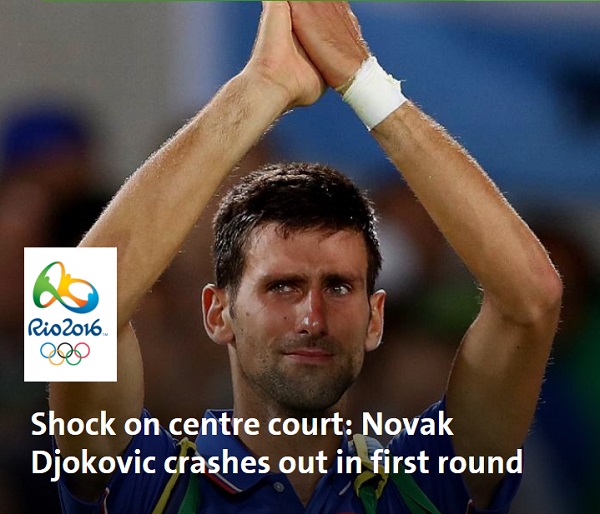
2. They overcome obstacles: When most people run into an obstacle, they seek escape.  Olympic athletes have a plan to push forward when this happens and learn all they can from the challenge.  They know facing adversity is part of being successful.

You can beat adversity! The no1 ranked player lost to skill and mental toughness.
Click me! You can beat adversity! The 2016 #1 ranked player lost to skill and mental toughness.

  1. They think big: Ask most people what they’re thinking at any given time, and you might be surprised to learn how many think about just getting by.  That’s called selling yourself short.  If you ask every athlete in Rio if they think they are going to win the gold, they would all tell you ‘yes.’ They fully believe in themselves and their abilities, and nothing you could say will talk them out of it. They think big and therefore get big results.
  1. They know consciousness is contagious. Olympic athletes live together and spend so much time together because consciousness is contagious. Your level of success in any area of your life is most likely the same as the people you spend the most time with.  If you want to be better at something, get around people who push you to greatness.
  1. They are consistently great.  The reason Olympians are so consistent is because their actions are congruent with their thought processes.  They have a very clear mental picture of what they want, why they want it and how to move closer to their target objective.  Do you?
  1. They compartmentalize their emotions.  In other words, Olympic athletes have the ability to put aside anything else going on at that very moment, and focus only on the task in front of them: winning the gold.
  1. They know very good is bad.  For the average person, to be classified as very good is something to be proud of.  For the great ones like Olympians, it’s an insult. Don’t settle for mediocrity. Why just be happy with the bronze or silver when you can go for the gold?
  1. They are held accountable: Olympic athletes are held accountable on so many levels.  One of the biggest problems is that most people have no means of accountability or a support system in place when it comes to what they’re trying to accomplish. Whether it’s losing weight, making more money or anything else, being held accountable changes everything.
  1. They know it’s their desire that counts. Olympic athletes know winning isn’t everything.  It’s wanting to win that counts.  Olympians have a “whatever it takes” attitude.  They’ve made the decision to pay any price and bear any burden in the name of victory.
  1. They are comeback artists: While most people are demoralized by setbacks and defeat, Olympians know that large scale success is based on a series of comebacks. Emotionally speaking, they don’t understand the concept of giving up. On the physical plane, they have perseverance. On the mental plane, they have toughness.  On the spiritual plane, we call it artistry. For the Silo, Jack Allen.

Supplemental- Top Ten All Time Sporting Upsets