Toronto Drops To Sixth As Washington DC Enters World Safety City Index

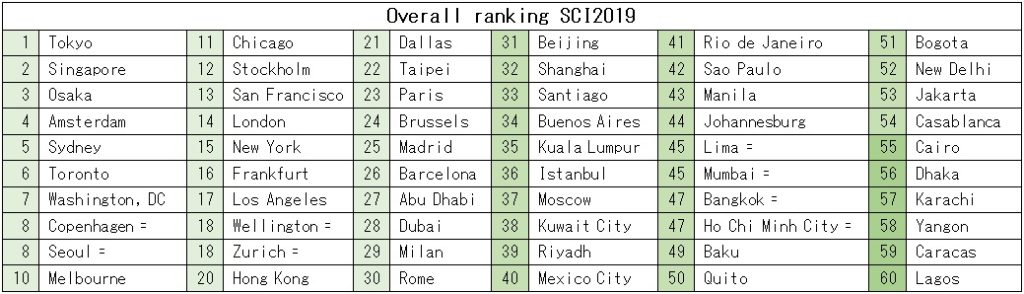
Tokyo edges Singapore (2nd) and Osaka (3rd) again to take the top spot globally in 2019.Two North American cities make up the top ten, including Toronto (6th) and Washington, DC, (7th).The remaining top ten cities are: Amsterdam (4th), Sydney (5th), Copenhagen and Seoul (tied 8th) and Melbourne (10th).The 2019 edition of the index includes ten new indicators, of which eight are related to environmental resilience. 

The Economist Intelligence Unit today releases the third edition of the Safe Cities Index (SCI) at the Safe Cities Summit in Singapore. The index, which is the centre piece of a research project sponsored by NEC Corporation, ranks 60 cities worldwide across five continents. It measures the multifaceted nature of urban safety, with indicators organised across four pillars: digital, infrastructure, health and personal security.  

Cities in the Asia-Pacific (APAC) region make up six of the top ten safest cities, with Tokyo taking the top spot for the third time in a row. Along with Tokyo, other APAC cities, as in the past, dominate the SCI2019. Singapore and Osaka come second and third, while Sydney and Melbourne also make the top ten.  

Toronto and Washington, DC, are the highest ranked North American cities in the SCI2019, with Washington, DC, entering the top ten for the first time. Overall, North American cities perform well in digital security, accounting for seven of the top ten cities in this category. These cities include Chicago, Washington, DC, Los Angeles, San Francisco, Dallas, New York and Toronto. 

Vaibhav Sahgal, consultant at The Economist Intelligence Unit, says: “US cities continue to perform well in digital security as the government strengthens its cyber-security regulations, while Canadian cities tend to fare better than their US counterparts in personal security. None of the cities in the US make it into the top 20 in the personal security category—Washington, DC, only ranks 23rd, together with Shanghai.” 

The SCI2019 benefits from a major revision designed to better capture “urban resilience”—the ability of cities to absorb and bounce back from shocks—a concept that has had an increasing influence on thinking in urban safety over the last decade, especially as policymakers worry about the implications of climate change. The 2019 edition is the third, following the 2015 and 2017 iterations.The SCI2019 scores are not evenly spread, with a large number of cities clustered at the top, and the rest showing wider variation in scores. Just ten points separate the overall scores of the top 24 cities, while the following 36 are 40 points apart. The research shows that levels of transparency in cities correlate as closely as income with index scores. 
Research shows that the performance of different safety pillars correlates very closely with each other, signifying that different kinds of safety are thoroughly intertwined. The top performers in each pillar are as follows: Digital security: Tokyo (1), Singapore (2), Chicago (3), Washington, DC, (4), Los Angeles/San Francisco (5)Health security: Osaka (1), Tokyo (2), Seoul (3), Amsterdam (4), Stockholm (5)Infrastructure security: Singapore (1), Osaka (2), Barcelona (3), Tokyo (4), Madrid (5)Personal security: Singapore (1), Copenhagen (2), Hong Kong (3), Tokyo (4), Wellington (5)
The leading cities got the basics right, including easy access to high-quality healthcare, dedicated cyber-security teams, community-based police patrolling and/or disaster continuity planning. The accompanying SCI2019 report explores the index results, incorporating 14 in-depth interviews with industry experts around urban safety. 

Naka Kondo, senior editor at The Economist Intelligence Unit, and editor of the SCI2019 report says: “Overall, while wealth is among the most important determinants of safety, the levels of transparency—and governance—correlate as closely as income with index scores. Our research shows the many ways that transparency and accountability are essential in every pillar of urban security, from building safer bridges to developing the trust needed for relevant stakeholders to share information on cyber-attacks. The research also highlights how different types of safety are thoroughly intertwined—that it is rare to find a city with very good results in one safety pillar and lagging in others. Policies, service planning and provision should also take this into account—and this year, we have decided to convene stakeholders from around the world in a Safe Cities Summit to discuss such matters around urban safety.”

Should Fantasy Sports Be Classed As Gambling?

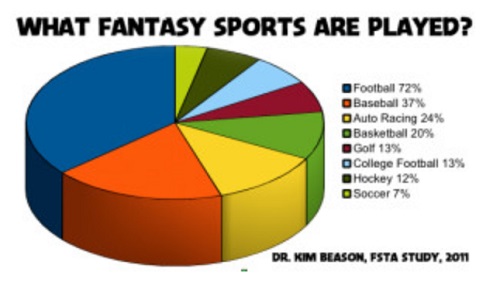
What Fantasy Sports Are PlayedOnline fantasy sport games are becoming increasingly popular in the modern era, with more and more variations on traditional fantasy games. There are now fantasy games for most sports, including but not limited to American football, soccer and rugby union. In particular, companies have latched onto major sporting competitions and offer fantasy games for those events. Most recently, there have been plenty of fantasy games created for the Rugby World Cup, which took place in England and Wales throughout September and October a few years ago.

Traditionally, fantasy sport games have been created purely for entertainment reasons. However, in recent years, a number of fantasy games have been created that require people to pay in order to enter the leagues. DraftKings is perhaps the most famous and widely advertised, and they offer DAILY fantasy leagues on a number of sports, mainly baseball, American football and ice hockey. To enter these fantasy leagues, you need an account and can stake money in order to win funds, which you can in turn choose to withdraw or restake.

It’s a little confusing for the fantasy novice and even more so for those who have been playing old-school free fantasy games for decades. But this new system appears to work, although the amount of skill and ability needed certainly makes it close to gambling. For example, you need skill to play online casino games like Blackjack by 32Red. This is widely recognized as gambling, so why should it be any different simply because it’s linked to an online fantasy game? Many people believe it shouldn’t. Both take up a reasonable level of talent to play, and require funds – in a way, they are incredibly similar.

Furthermore, quite a few people have compared staking money on fantasy football to placing a bet on players to score in real-life sporting events. For example, you can place wagers on Houston Texans wide receiver DeAndre Hopkins on DraftKings but you can also stake money on Hopkins to score a touchdown, rack up ‘x’ amount of receiving yards and other markets at a range of both online and offline bookmakers.

However, many fantasy games are free to enter and don’t require additional funds. The NFL fantasy football game allows players to play free of charge, and users are able to compete in either NFL-managed leagues or custom-made leagues with friends and family members. For American football fans, this is the perfect fantasy game for those players who are more concerned about the enjoyment and having fun rather than winning money – even the NFL teams understand the need for the public to play. It’s a relatively simple website and they also have a downloadable app that can send reminders for changing and setting your line-up.

Most importantly, you don’t have to pay anything. You say have because there is the option to open a league with a prize fund. However, that is a season-long thing and certainly shouldn’t be considered as gambling. There aren’t any fantasy options at websites like 32Red, blackjackballroom, or caesarscasino but you can stake money on real-life American football matches and build accumulators. Fantasy football is an incredibly popular game across the world and free versions will always be welcomed by those who aren’t too concerned about winning money and those who play purely for the enjoyment and excitement of competing against others.

Moreover, soccer fans can access the Premier League’s official fantasy game free of charge, too. Football is one of the greatest sports on the planet and millions of people keep up to date with all of the latest injury news and transfers in the sporting world. The Premier League version could branch out to allow those wanting to stake funds the opportunity to do so, but for now it remains a free game for the masses. As soccer is so universally followed, many have called for the Premier League’s fantasy football game to offer a paid version and it wouldn’t be a huge surprise to see this in the future.

Are paid fantasy games gambling? Well, it depends on a number of key variables and external factors. If you’re staking on a daily basis, playing more because you’re addicted and focused on winning money than for the sheer enjoyment of fantasy sports, then that’s a worry. However, the majority of fantasy users aren’t like that and enjoy placing simple stakes, quite like many of the same people who enjoy playing online casino games such as Blackjack and Roulette. For the time being, there isn’t a huge need to classify fantasy sports as gambling but that could change if fantasy games adopt a similar stance as DraftKings and they all become ‘pay-to-play’ games in the future.


Get Dirty And Grow Organic

Rick’s lettuce- yummylicious

We’re too fat.  That’s what the media tell us.

We’re too lazy.  They say that too.  And North Americans in general are pretty unhealthy.  I’m saying that. Yet at the same time there are daily press releases about eating healthier, supporting local agriculture, the 100-mile diet, and buying organic produce.  Of course, that requires some thought and decision-making.  The default setting is to support economies of California or China, which we do, pay for the increasing cost of importing,which we do, and wonder what residual chemicals are in our salad greens, which we should.

I was at a high-end organic market in the GTA recently and I hate to say it, but the organic vegetables were a great disappointment.  I felt it was a misrepresentation of what organic produce should be.  But what if you grew your own? Or at least tried?

You don’t need a degree in agriculture, and don’t have to be intimidated by those who have been gardening for years.  It’s OK to be new.  It’s fun to be new.  There are all kinds of health benefits derived from gardening, aside from the produce itself.   And it gives you some time alone with your thoughts.

My advice is to just do it. 

Time and experience will be your best teachers.  Start simple, start small.  I had mini-gardens in townhouse patios and on apartment balconies for years.   At this point, I’m a big supporter of raised bed gardening for almost endless reasons. If you don’t want to go it alone, find a friend or two and have a competition. Like – who will have the first ripe tomato, (Grow the heirloom variety called stupice to win), or the biggest carrot, (oxheart will win, if you can find seed). The first thing to do is select your site.  Simply, the more sun the better.

The second step:  Prepare the bed. 

If you are going to put in a raised bed, you can just mound up the soil into a kind of plateau, or actually construct a container.  Avoid using pressure treated wood since the chemicals could leach out into the soil.  I’ve seen beds built with bricks and patio stones stood up on their edges.  I am
experimenting with various-sized lumber.

The next step is to add or amend the soil. 

The key is to add organic matter, and not just fertilizer pellets.  I think of it like feeding a child – you would never give your kids just water and vitamin pills and expect them to thrive.  Mixed organic matter (leaves, composted kitchen waste, composted manure, old straw…) builds the soil, feeds the worms, and adds the micro-nutrients that will eventually find their way into your vegetables.  Shortcuts are not sustainable. The most important rule is this:  feed the soil, and the soil will feed the vegetables.

If the soil is healthy, the plants will also tend to be healthy and be less susceptible to infestation by insect pests.  It’s one of the laws of nature that the sick and the weak are targets for the predator.  So it is in the garden.   Also consider “companion planting” for plant health.  Among other things I plant strategically-placed marigolds, nasturtium and herbs for insect control.

In selecting the plants for your garden, in the beginning start with what your family likes.  Even for the small garden you can get a pretty good yield in a small space.  For early spring grow leaf lettuce.  You can extend the season by picking off the outer leaves or cutting off the entire head about an inch above ground.  It will push more tender leaves until the summer heat arrives.

Love peas?

Try early bush snow peas, inter-planted with carrots and radishes.  All of them are great for small spaces. Grow herbs for your salads and seasoning.  You’ll decrease the desire for salt and sugar on your plate which will help you stay healthy. You just have to grow tomatoes. Locate a source for an heirloom variety.  Nothing compares with the taste of an old-fashioned vine-ripened tomato still holding the sun’s heat. For the Silo, Rick Posavad.

How Canada Influenced American Civil War

This August we saw the fifth U.S. Civil War re-enactment at Circle G Ranch, east of Cayuga, Ontario. On Sept. 13, re-enactors of the ‘Blue and Grey’ will go to battle in Otterville.

The American Civil War had a tremendous influence on the British North American colonies, and continues to be of mind.

At onset of the Civil War, Canada did not yet exist as a federated nation. When the war broke out in 1861, Canada was still a subject of Great Britain and had maintained an uneasy peace with its American neighbors since the War of 1812.

William Seward, the American Secretary of State during the Civil War, was an annexationist who felt that British North America was destined to become part of the United States. As it became obvious that the North would emerge victorious there was a fear the Union army would turn its eyes north of the border.

Many in the US government were supporters of Manifest Destiny, an ideology that stated America should conquer the continent. Canadians were concerned about the possibility of a US invasion.

The tensions between the United States and Britain, which had been ignited by the war and made worse by the Fenian Raids, led to concern for the security and independence of the colonies, helping to consolidate momentum for Canadian confederation.

In the election of 1864, the Republican Party used annexation as a means to gain support from Irish Americans and the land-hungry.

In 1866, an annexation bill passed in the US House of Representatives stating the United States acquire all of what is now Canada.

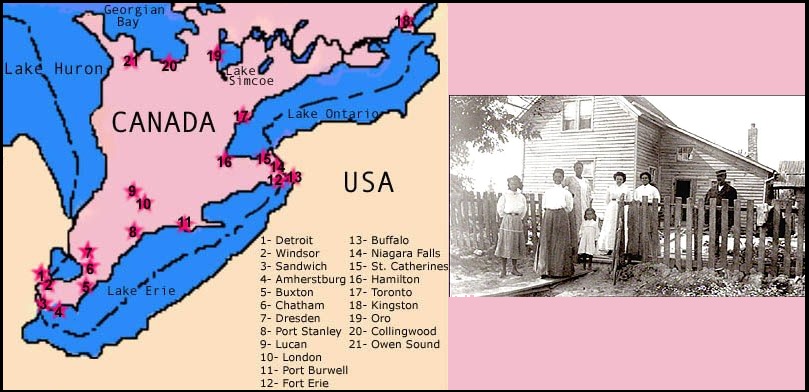
The Underground Railway- major sites in Ontario,Canada.

The Civil War also had an important effect on discussions concerning the nature of the emerging federation. Many Fathers of Confederation concluded the secessionist war was caused by too much power being given to the states, and thus resolved to create a more centralized federation. It was also believed that too much democracy was a contributing factor and the Canadian system was thus equipped with checks and balances such as the appointed Senate and the power of the British-appointed governor-general.

The guiding principles of the legislation which created Canada, the British North American Act, were peace, order and good government – in stark contrast to the perceived rugged individualism of the neighbours south of the border.

Since 1793, thanks to then Lieutenant-Governor John Graves Simcoe, Upper Canada – now present day Ontario – had banned the importation of slaves.
Canadians were largely opposed to slavery, and Canada had recently become the destination of the Underground Railroad.

The Underground Railway was a network of safe houses and individuals who helped runaway slaves reach free sates in the American North or in Canada.

It ran from about 1840 to 1860. It was most effective after the passage of the Fugitive Slave Act in 1850, which enabled slave hunters to pursue runaways onto free soil. It is estimated that about 30,000 reached Canada. Several communities were established in Ontario, including one east of Cayuga, at Canfield.

The Civil War claimed 7,000 Canadians and almost 620,000 US lives.

Between 33,000 and 55,000 men from British North America served in the Union army, and a few hundred in the Confederate army. Five served as generals, and 29 received the U.S. Medal of Honour. For the Silo, Toby Barrett MPP Haldimand-Norfolk.

Ontario Lawyer Book Outlines Path To Successful Divorce

Noted family lawyer Russell Alexander has written a book outlining the path to a successful divorce, taking readers step-by-step through the process from finding a lawyer to handling post- litigation issues. This one of the few books that touches exclusively on Ontario divorce law.

“It made me realize how much hunger there is for information on how divorces work,” said Alexander. “No one ever expects to get a divorce, so it’s not a subject that people spend much time learning about until they are facing one. It can be hard to catch up at such a stressful time.”


In 300+ pages, Alexander’s book, “The Path to a Successful Divorce,” aims to give readers a solid grounding on the key questions about family law that they’ll face as they go through a divorce, including whether they’ll need a separation agreement first, how courts view adultery and why representing yourself is a bad idea.

Using his knowledge of Canadian case law, Alexander also peppered the book with interesting anecdotes about real divorces that illustrate how some of these issues play out, such as a father who sent abusive text messages and a couple who were married in front of 500 people but never obtained a marriage license.

“Every divorce is unique,” Alexander said. “But there are principles that underlie the process that you need to understand before you move forward in a divorce. This is one case where what you don’t know can hurt you. Hopefully this book will help readers avoid that problem.”

The book is now available for purchase on Amazon Kindle and will be available in print on Amazon and on the firm’ s website later this spring. For more details, contact:  marketingdirector@thesilo.ca

Russell Alexander Family Lawyers is committed to practicing exclusively in the area of family law in Ontario dealing with all aspects, including separation and divorce, child custody and access, spousal support, child support, and division of family property. A team of lawyers provide guidance from start to finish, helping clients identify and understand the legal issues as well as the options and opportunities available through the transition. The firm has offices in Lindsay, Whitby, and Markham, Ontario. For the Silo, Alison Beckwith .

Intelligence Squared U.S. Begins Season Debating Saudi Arabia, Iran & Turkey – In NYC & Online September 12

Saudi Arabia and Iran are vying for regional dominance, as the latter pursues nuclear weapons. Turkey is cozying up to Russia and China. Instability, conflict, and proxy wars have engulfed Syria, Yemen, and beyond. How should the United States respond to changing power, proxy wars, terrorism, and human rights issues in the Middle East? On Thursday, September 12, America’s debate series Intelligence Squared U.S. launches their fall season with a debate not one, but three motions, all investigating 
“Shifting Power in the Middle East”:

Motion 1: Is Trump right on Saudi Arabia?
Motion 2: Is the world safer without the Iran Nuclear Deal?
Motion 3: Is Turkey an asset to NATO?

In this latest installment in Intelligence Squared U.S.’s new “Unresolved”
series, debaters must declare their “yes” or “no” stance on each separate motion, allowing for both sharp disagreements and unexpected
alliances. The debaters will be:
* Michael Doran, senior director on the National Security Council under
President Bush* Reuel Marc Gerecht, former CIA case officer* Bernard
Haykel, professor of Near Eastern Studies at Princeton* Brett McGurk, the State Department’s former Special Presidential Envoy for the Global
Coalition to Defeat ISIS* Barbara Slavin, the director of the Future of Iran Initiative

The debate will be held at NYC’s Symphony Space and stream live online, then air soon after as part of the syndicated public radio show and podcast “Intelligence Squared U.S.” On September 12, online viewers can tune in at IQ2US’s website: https://www.intelligencesquaredus.org/debates/unresolved-shifting-power-middle-east

 WHAT: Intelligence Squared U.S. Debates “Unresolved: Shifting Power in the Middle East”
WHEN: Thursday, September 12 / 7:00-8:45 PM EDT
WHERE: Peter Norton Symphony Space, 2537 Broadway, New York, NY
TICKETS: $40 ($12 for students w/ ID). To purchase, visit http://www.intelligencesquaredus.org/  

Debaters Bios: * Michael Doran, Senior Fellow, Hudson Institute
Michael Doran is a senior fellow at the Hudson Institute in Washington, D.C., where he specializes in Middle East security issues. Doran served as a senior director on the National Security Council under President Bush and was responsible for helping to devise and coordinate U.S. strategy on a variety of Middle East issues, including Arab-Israeli relations and U.S.
efforts to contain Iran and Syria. He also served in the Bush
administration as a senior adviser in the State Department and a deputy assistant secretary of defense in the Pentagon. 

* Reuel Marc Gerecht, Senior Fellow, The Foundation for Defense of
Democracies & Fmr. CIA Case OfficerReuel Marc Gerecht is a former
case officer for the CIA, where he served as a Middle Eastern targets
officer with the CIA’s directorate of operations. He is a senior fellow at the Foundation for Defense of Democracies, a non-partisan organization
centering on national security, where he focuses on Iran, sanctions,
terrorism, and the Middle East. He is the author of “Know Thine Enemy: A Spy’s Journey into Revolutionary Iran” and “The Islamic Paradox: Shiite Clerics, Sunni Fundamentalists, and the Coming of Arab Democracy,”
among others.  

* Bernard Haykel, Professor of Near Eastern Studies, Princeton University Bernard Haykel is a professor of Near Eastern Studies and the
director of the Institute for Transregional Study of the Contemporary
Middle East, North Africa and Central Asia at Princeton University. After working as a post-doctoral research fellow at Oxford University in
Islamic Studies, he joined New York University in 1998 as associate
professor before taking up his post at Princeton. He became a
Guggenheim fellow in 2010 and is co-editor of the book, “Saudi Arabia in Transition; Insights on Social, Political, Economic and Religious Change.” 

* Brett McGurk, Fmr. Special Presidential Envoy for the Global Coalition to Defeat ISISBrett McGurk served as Special Presidential Envoy for
the Global Coalition to Defeat ISIS at the U.S. Department of State, where he helped build and then lead the coalition of 75 countries and four
international organizations in the global campaign against ISIS. He served in senior positions in the Bush and Obama administrations and has led some of the most sensitive diplomatic missions in the Middle East over
the last decade. McGurk is currently the Frank E. and Arthur W. Payne
distinguished lecturer at the Freeman Spogli Institute and Center for
Security and Cooperation at Stanford University. 

* Barbara Slavin, Director, The Future of Iran Initiative, The Atlantic CouncilBarbara Slavin is the director of the Future of Iran Initiative and a nonresident senior fellow at the Atlantic Council. The author of
“Bitter Friends, Bosom Enemies: Iran, the US and the Twisted Path to
Confrontation,” she is a regular commentator on U.S. foreign policy and
Iran on NPR, PBS, and C-SPAN. Previously, Slavin served as a public policy scholar at the Woodrow Wilson International Center for Scholars. Slavin
is a career journalist, and currently writes as columnist for
Al-Monitor.com, a website devoted to news from and about the Middle
East.   

ABOUT INTELLIGENCE SQUARED U.S. DEBATES (IQ2US)
A non-partisan, non-profit organization, Intelligence Squared U.S. was
founded in 2006 to address a fundamental problem in America: the
extreme polarization of our nation and our politics. Their mission is to
restore critical thinking, facts, reason, and civility to American public
discourse. The award-winning debate series reaches over 30 million
American households through multi-platform distribution, including
radio, television, live streaming, podcasts, interactive digital content, and on-demand apps on Roku and Apple TV. With over 160 debates and
counting, Intelligence Squared U.S. has encouraged the public to “think
twice” on a wide range of provocative topics. Author and ABC News
correspondent John Donvan has moderated IQ2US since 2008.

Free Presidential Helicopter Game Via White House Historical Association

NEW GAME Added to White House Experience App

“Fly Like Ike”

Players Can Pilot Presidential Helicopter Around Washington, D.C.

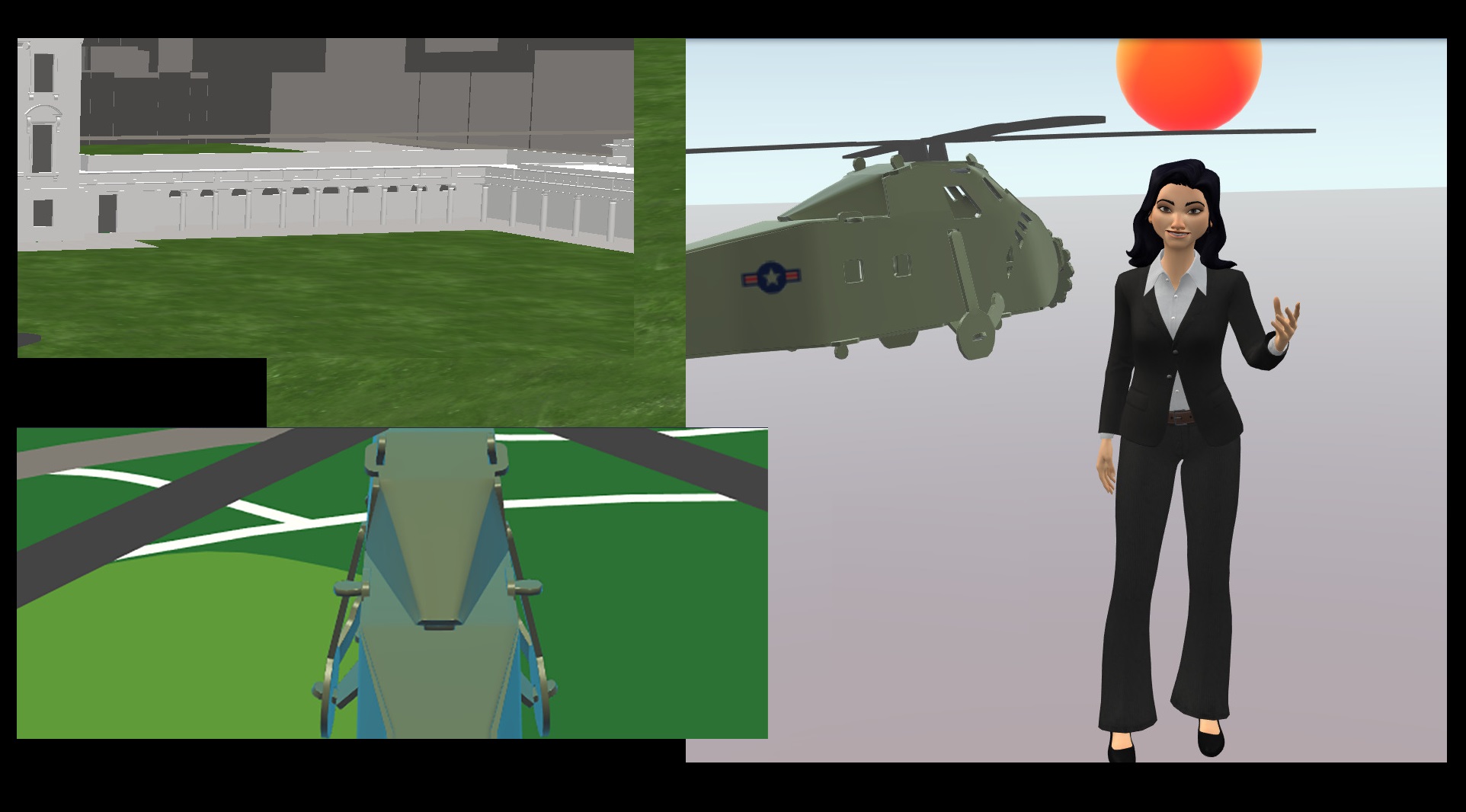
August, 2019 (Washington, D.C.) – The White House Historical Association has just launched a new game in its WHExperience mobile app called “Fly Like Ike.” This interactive game allows users to pilot the president’s helicopter and make stops to learn about several monuments and historic sites in Washington, D.C. before testing their aviation skills by landing on the South Lawn of the White House.

A picture containing grass, sky, outdoor

Description automatically generated

Helicopters have played an important role in transporting the president since 1957 when President Dwight D. Eisenhower became the first president to use a helicopter. The helicopter used in this game is a replica of the Official 2019 White House Christmas Ornament.

“Fly Like Ike” currently features these seven destinations: U.S. Supreme Court, U.S. Capitol, National Mall, Washington Monument, Jefferson Memorial/Tidal Basin, Lincoln Memorial, and the White House.

“Fly Like Ike” is the latest feature on the White House Historical Association’s WHExperience app, which is free to download on iOS, Android devices.

The WHExperience app also provides information and a link to purchase the  2019 Official White House Ornament, which commemorates President Eisenhower’s commitment to innovation as the first president to fly in a helicopter while in office in July 1957.

“Fly Like Ike” requires Wi-Fi or a data plan, and is compatible with iPhone 7 and up and devices running Android version 7.0 and up.  

The WHExperience app also includes virtual tours of the White House and a “Presidential Lookalike” selfie feature, which is powered by Amazon Rekognition technology. For the Silo, Jessica Fredericks.

About The White House Historical Association

First Lady Jacqueline Kennedy envisioned a restored White House that conveyed a sense of history through its decorative and fine arts. In 1961, the White House Historical Association was established to support her vision to preserve and share the Executive Mansion’s legacy for generations to come. Supported entirely by private resources, the Association’s mission is to assist in the preservation of the state and public rooms, fund acquisitions for the White House permanent collection, and educate the public on the history of the White House. Since its founding, the White House Historical Association has contributed more than $50 million USD in fulfillment of its mission.  

Climate Peril Book Highlights Predicted Ecological Catastrophe

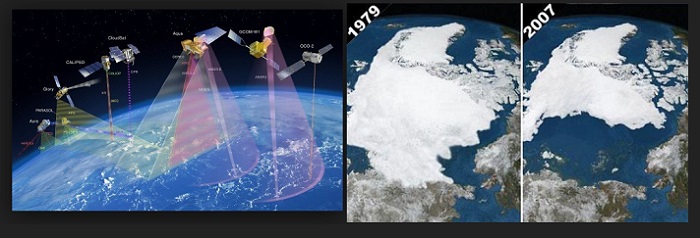
How do we know? "Orbital climate satellites will measure changes in energy that is entering and exiting the atmosphere as well as the effect that manmade greenhouse gases (GHG) or aerosols, are having on the atmosphere." http://green.blorge.com/2011/01/the-glory-climate-satellite-will-join-the-a-train/
Orbital climate satellites measure changes in energy that is entering and exiting the atmosphere as well as the effect that manmade greenhouse gases (GHG) or aerosols, are having on the atmosphere. image: green.blorge.com

A new, authoritative climate book puts all major aspects of the climate crisis into a broad national and international perspective, revealing that the gravity, imminence, and permanence of the crisis are widely misunderstood.

Climate Peril
Climate Peril: The Intelligent Reader’s Guide to Understanding the Climate Crisis (Northbrae Books) by energy and climate expert Dr. John J. Berger  has an introduction by Dr. Paul and Anne Ehrlich of Stanford University and a foreword by Dr. Ben Santer, an internationally respected climate scientist with Lawrence Livermore National Laboratory and the Intergovernmental Panel on Climate Change.

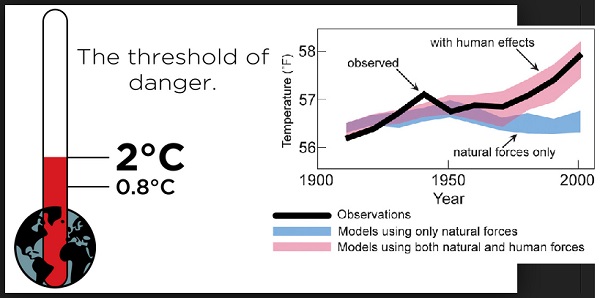
The book underscores the unprecedented urgency of the climate crisis, providing detailed revelations about the grave harm climate change is now doing to human health, national and international security, our economy, natural resources, including the oceans, and biodiversity. Climate Peril demonstrates, for example, that holding global heating to 2° C is no guarantee of climate safety, contrary to the assumptions of many policymakers, and that the world is very likely to exceed this limit anyway.

2degrees threshold

Readers have found that Climate Peril makes important findings of climate science easily accessible and helps them better understand the breadth of the climate threat to our economy and society. The book begins by explaining how the climate system naturally operates and then illustrates how human activity has disturbed it.

Climate Peril goes on to document the broad consequences of rapid climate change, drawing attention to its impacts on nature, the economy, human health, and national security. In the process, Climate Peril highlights our proximity to irreversible climate tipping points and to ecological catastrophe.

Supplemental- Why a two degrees C increase in global average temperature IS a big deal by Elizabeth May  https://www.greenparty.ca/blogs/7/2013-01-21/why-two-degree-celsius-increase-global-average-temperature-big-deal

High School Student Dropped Out Joins Tech World Via Coding School

CodingWhat happened when Katya Eames, a 16 year old female dropped out of High School and joined the tech world by enrolling in a coding school?

Joe Eames, her father, is a successful programmer. He believes in empowering youth and females, through technology. He got his daughter involved in some basic exposure to programming and web development. The more she got involved, the more empowered she felt.

Katya was selected to speak at one of the largest recent gatherings of web developers, ng-conf. Following, she attended an event where she taught Governor Herbert of Utah how to code.  Katya will complete her high school requirements using an online high school.

Katya teaching Governor Hubert how to code.

What are the thoughts of a high school age female about dropping out of school to attend DevMountain, a coding school in Utah?

  1. What do you think was missing from your High School experience in terms of your personal interests?

What I think was missing from my high school experience was the ability to actually learn, and to try new things and grow at your own pace. It seemed less like they wanted you to learn, and more like they wanted you to pass tests.

  1. Was it difficult to transition to coding school at your age?

    It was. In high school it was easy for me to not pay much attention and do my assignments at the last minute but still get relatively good grades. Then at DevMountain, I had to manage myself and had no grades to try and earn. It was definitely very different from high school.

Computer Code

  1. How important was the role of your father, a professional programmer, in helping you make your decision?

    He was really important in my decision because he was an example of how successful I can be doing something I love, and he was really supportive of me choosing to do it though it’s not the normal way to go about getting an education.

  1. Are you finding the online, high school learning experience something you can easily handle?

    I haven’t started yet, but from what I’ve seen and heard from friends who do online schooling, it seems to be much more my speed than traditional public schooling.


  1. Would you encourage other members of your generation to think about their options while still in high school, and perhaps go into coding?

    Definitely. You should explore your options as much as you can in high school, even if it doesn’t seem like something you would like. You never know when you’ll discover something you seem to have a natural talent/understanding for, or something that excites you that you never thought to pay attention to (or especially something you thought only those of the opposite sex are supposed to do).

  1. Do you think that members of your generation are particularly adept with computers and likely prospects for a coding school experience?

Start Coding

    I do. Those in my generation, and the younger Millennials, have grown up with technology always nearby. We know how to use it and we understand newer technology easier than others. Everyone in my generation has ideas on how to make our world better for us and our siblings and our future children. Programming and computer sciences, along with the other sciences, are great ways for us to advance the world in the direction we want it to go.

  1. Have you begun to make an income with your coding knowledge?  Are you in the market for a coding job as an employee or contractor?

    I have started making an income, not solely on my programming, but also on my unique views as someone who wants to know what they want to do in life at a young age in has taken a very untraditional route to pursue that career. As of now I am in the market for smaller projects while I finish school and continue learning.

Click to watch Katya's address at this years ng-conf
Click to watch Katya’s address at this years ng-conf

  1. What do your friends think of this, leaving high school and learning a skill early on in life where you can make an income?

    Some of them were worried first about my sudden decision to drop out of school in the middle of my junior year, but now they’re all very supportive of me and think it’s really cool that I’m able to pursue what I want to do. (though they all have the same complaint of missing me at school.)

  1. Lastly, what are the ideal personality characteristics for a young person to become involved and succeed at coding school?

    They need to be willing to push themselves and manage their own time. They also need to be able to be critiqued regularly by those who are more experienced than them and know that most, if not all, critiques are done with good intentions. You need to be willing to continue learning. Technology is always changing, and so the languages we use to program that technology have to constantly adapt. You never know everything there is to know when you’re a programmer.

About DevMountain

DevMountain started in 2013 in Utah. With over 300 graduates, two campuses, and six course offerings, DevMountain is the largest coding/technology school in the Intermountain West, and one of the highest rated coding schools in the United States.

Supplemental- Could Amazon’s AWS Lambda signal a new future for ‘automated coding’?

Click to view on I-tunes

Ontario Can’t Afford To Not Win War On Phragmites

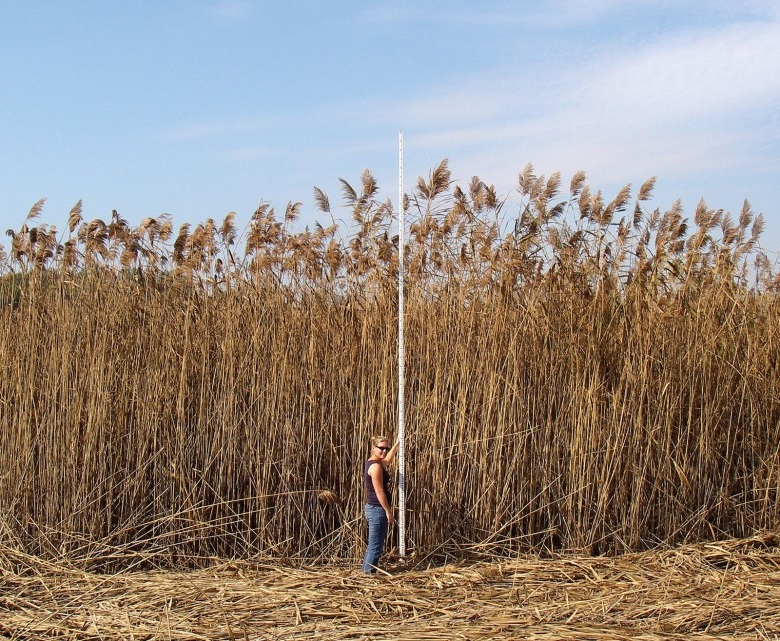
Phragmites is likely the largest invasive plant threat facing Ontario today. It has taken over our wetlands, invaded our ditches and can get a foothold just about anywhere. It’s the monster that keeps coming back – we can’t let our guard down.

Phragmites was first found locally in the Long Point wetlands 20 years ago.

Spraying of glysophate started at Long Point and Rondeau Provincial Parks in September 2016, and has proven 99.7 per cent successful. When the phragmites is dead, the seed bank of native species, like cattails, will reactivate. Although spraying works, it must be followed up by rolling or cutting and burning. On Long Point Bay, there is a combination of private, provincial and federal wetlands. Much of the private wetlands are in the hands of hunt clubs, most of which have been active in controlling phragmites.

The Crown Marsh and the Turkey Point beaches are provincial holdings.

The Canadian Wildlife Service land, which comprises most of the point itself and the Big Creek marsh, are federal. I recently attended the meeting of the Long Point Phragmites Action Alliance – a local group dedicated to fighting this invader. They donated $20,000 toward continuing spraying in the Long Point Crown Marsh last year. Their annual fundraiser, Rocking the Point, will be August 24th.

My office worked tirelessly to ensure phragmites were sprayed last fall at Turkey Point beach after several years of inaction by the previous government. This spring the dead plants were flattened and burned. The Ministry of Natural Resources and Forestry is working with a number of conservation partners to coordinate prevention, control, research and management activities to help address this serious threat in recognition of the importance of the prevention, early detection, early response and eradication of invasive species.

This year the Ontario government is investing over $2 million in invasive species programs and education, and will be investing $850,000 in the centre to support ongoing research and management. Based in Sault Ste. Marie, the centre brings together government, academia, industry and Indigenous communities and organizations to conduct research, response planning, management and habitat restoration.

Early detection is especially important because once invasive species become established it is extremely difficult to remove them, potentially causing long-lasting damage to our environment.

For federal lands, thanks to the actions of MP Diane Finley, the Nature Conservancy of Canada (NCC) will receive $375,000 over the next three years to aid in the removal and prevention of phragmites growth in sensitive ecosystems. Recently, we saw another win for the ongoing control of phragmites with the Ontario Trillium Foundation’s significant contribution of $90,000 to NCC to purchase a boat to control this invasive. Now in its fourth year, the partners have effectively controlled phragmites in over half the coastal wetlands at Long Point and Turkey Point.

With the help of the Ontario Trillium Foundation funds, NCC will be able to continue monitoring the shorelines for phragmites – catching remnant populations before they spiral out of control. Early detection and constant monitoring and control are key to successfully eradicating those devastating invaders and returning the marshes and shorelines to havens for turtles, birds and waterfowl. Although $2 million has been spent on phragmites control in the area, we must be vigilant as the monster will return. For the Silo, Toby Barrett MPP for Haldimand-Norfolk.

Supplemental- The Ontario Phragmites Working Group.

Featured image- Phragmites Great Lakes region photo by Janice Gilbert 2007

5 Tips For Choosing Good Immigration Lawyers

You increase your chances of approval when working with a specialist in immigration law. However, you must be careful when choosing a lawyer in order to avoid falling into the wrong hands. Many fraudsters take advantage of applicants who are doing everything they can to move to Canada or any other country. You may pay a high fee for poor services if you make the wrong decision. Some rogue lawyers or consultants do not even deliver the service but give endless excuses after receiving the fees. Here are some tips to help you choose the right immigration lawyer.

1. Utilize Your Consultation Fee Fully
You have an opportunity to ask all manner of questions and judge the quality of services during the consultation process. Ask as many questions as you can about the process. You may only have a few minutes to interact with the lawyer if the firm charges a low consultation fee. However, you can utilize that time fully and determine if the lawyer has enough experience in handling the immigration process.

2. Hire a Specialist
The major reason why you should hire an immigration lawyer is to ensure that your application is completed and submitted within the deadline. If a lawyer handles all types of legal cases, he or she may not have expertise in your type of application. The lawyer may miss some requirements if immigration is not his or her specialty. Ask about the range of services during the consultation process to determine if the lawyer is a specialist in immigration law.

3. Ask About the Fees Before Signing the Contract
A fraudulent lawyer will rush you to sign a contract even before you discuss the fees. Do not fall for this trick with any lawyer. Discuss the fees and agree before signing a contract. The best lawyers will give you an option to choose fixed fees payable in installments. Determine the best rate depending on the nature of services or case and ensure that the agreement appears on the contract. This brings us to another important tip.

4. Ensure that Both of You Sign a Written Contract
Insist on a written contract even if you trust the lawyer. Many lawyers know that clients expect a written document before agreeing to use their services. Fraudulent lawyers will leave out some important clauses such as the fees charged. Others will push you to sign the documents but fail to sign their part. Do not take any excuses for delays in signing the contract. Go through the document to ensure that it is accurate and comprehensive. Ensure that the lawyer signs the necessary parts and keep a copy of the contract.

5. Trust Your Gut
If you develop any doubts during the consultation process or regular communication, stop the negotiations immediately and get another lawyer. Discontinue the process if the lawyer gives dishonest answers even for the simplest questions. If your intuition tells you that a lawyer is not interested in meeting your needs, trust it and move on. If it feels wrong, there are high chances that you are talking to the wrong immigration lawyer.

NewZealand Immigration
Hiring the right immigration lawyer is the best decision you can make if you want to move to another country. An immigration specialist will make sure the application process is fast and easier and will relieve much of the stress associated with the whole process. Taking the time to ensure that you have the right lawyer is an essential first step in the process. For the Silo, Dimitry Karloff.

Featured image- Imgur: The magic of the Internet