Wild Horses And Burros Spared From Slaughter

WASHINGTON, DC- In Defense of Animals welcomes the decision made by appropriations leaders in Congress in the United States to reject budget language that would have led to the mass slaughter of North America’s imperiled wild horses and burros and the reintroduction of equine slaughterhouses in the US.

“For the love of  North America’s heritage, for the respect of wild horses and burros, we are thrilled that Congress has rejected this sick horse slaughter plans,” said Marilyn Kroplick M.D. President of In Defense of Animals. “In America, Congress has sent an important message that it will not have the blood of sentient beings on its hands. This is a victory for animal advocates and the majority of  North Americans who want solutions, not slaughter.”

In its 2018 spending request, the Trump Administration asked to authorize the killing and sale to slaughter of tens of thousands of captive wild horses and burros and the destruction of up to 50,000 free-roaming equines the BLM claims are “excess” on public lands. Secretary of the Interior Ryan Zinke and his pro-slaughter allies actively pushed the killing plan, aiming to reduce the number of wild horses to 27,000, the same number that triggered the passage of the 1971 Wild Horses and Burros Act to prevent their extinction.

The Administration also proposed funding inspections for equine slaughter in the US, a step that would bring back the days of horse meat markets and threaten the US food supply with unregulated contaminants.

Advocates and animal welfare groups pushed back hard. Thousands of In Defense of Animals supporters and other advocates jammed Congressional phone lines with calls and sent tens of thousands of emails to maintain federal protections for these heritage animals. In Defense of Animals and nearly 100 civic organizations presented a Unified Statement (read full PDF click here) outlining principles and recommendations for humane, cost-effective, on-range management of America’s wild horses and burros.

In response to constituent pressures and the united voices of advocates, the Senate chose to keep protections in place. The language released today for the Omnibus spending bill for 2018 contains no language authorizing horse slaughter or wild equine killing. The Omnibus budget is scheduled to be put to a vote soon.

But the fight is far from over. The Trump Administration’s FY 2019 budget request again calls for Congress to approve “unlimited sales” and mass killing of wild horses and burros in holding facilities and on the range.

“The battle is won, but the fight is far from over,” said Kroplick. “We will never back down or stop fighting for wild horses to remain on public lands.”   For the Silo, Charlotte Roe.

In Defense of Animals is an international animal protection organization with over 250,000 supporters and a 30-year history of fighting for animals, people and the environment through education, campaigns and hands-on rescue facilities in India, Africa, and rural Mississippi.

IN DEFENSE OF ANIMALS • 3010 KERNER BLVD. • SAN RAFAEL, CA 94901 • 415-448-0048

Coco Avant Chanel Is An Outstanding French Bio Pic

I used to watch more foreign films. In my idealistic twenties I guess. But lately I’ve gotten lazy, and when I sit down for a movie the last thing I want to do is read subtitles. I do make some exceptions however. This is fortunate, for there are some truly exceptional films out there not made in English. And really, after five or ten minutes I completely forget I’m reading anyway.

A few years ago, I caught two incredible French films on Netflix Canada that I still highly recommend. The first is 2010’s Les Emotifs Anonymes (Romantics Anonymous), a genuinely delightful romantic comedy that follows the formula to some extent, but also transcends it with the originality of its script and the utterly captivating performances of its leads.

The formula I’m referring to is this: two attractive people meet, there is instant chemistry, and then numerous obstacles appear to twist and turn the plot and thwart their progress in realizing their love. The difference here is that the male and female protagonists look like real people, and the principle obstacles at play are their near crippling anxiety disorders.

How refreshing it is to watch a female lead (the luminous Isabelle Carre) who is truly “pretty as a picture,” but with imperfect hair and very-little-to-no makeup, make sparks and then run away from a co-star (Benoit Poelvoorde), who looks like the quintessential everyman, and, simultaneously, like a quirky and charming French gentleman.

This is a laugh out loud comedy that may have you, by the end, falling in love with one or both of these marvelous, messed up characters and doing some deep, warm smiling in the process, something I value most highly.

The second film, Coco Avant Chanel (Coco Before Chanel), goes back to 2009 and stars French beauty Audrey Tautou (Amelie, Dirty Pretty Things) as the now iconic Gabrielle “Coco” Chanel.

In this outstanding bio-pic we watch Chanel transform from a smart but bitter young woman in late 19th century France who must overcome obstacles of her own—in this case gender and poverty, two major impediments to success and independence at that time—to realize her dream of something greater. We watch that dream, vague at first, take greater definition and clarity until Chanel is revealed as the creative and business genius whose name would become a household word and whose designs would literally revolutionize women’s fashion in the west.

Gone are the restrictive corsets http://www.marquise.de/en/themes/korsett/korsett.shtml and meringue-y feathers and frills; Chanel was inspired to make clothes for women that were simple, elegant, modern and, perhaps most revolutionary of all, comfortable to wear. Tautou herself, as Chanel, becomes more compelling and beautiful as her character gradually realizes her destiny. And I would be remiss not to mention another dynamite performance by Benoit Poelvoorde, whose demeanor is so different in this film that I didn’t even recognize him as the same actor. Of course he has a mustache here as well—devious disguise.

This story solidifies Chanel’s stature as the woman who changed the direction of western fashion and created couture. How many artists have such a profound effect on their culture, let alone in their own lifetimes? Chanel continued to work until her death in 1971. Both films can be found by searching their English names on Netflix or, if you’re lucky, at your local video store. For the Silo, Alan Gibson.

Supplemental: If you enjoy foreign, kooky, and subtitled films, spend a few minutes at Backyard Asia. There’s some solid trailer action and a bunch of info stuff CP  http://backyard-asia.blogspot.ca/2011_01_01_archive.html

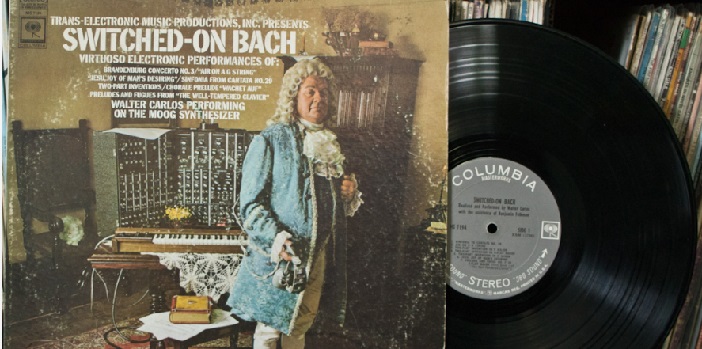
Vinyl Records Reconstruct History Of Moog Synthesizer

One of the early (but not earliest) analog modular Moog synthesizers.

Original vinyl recordings of popular music provide a rich source of data to supplement other historical research. Vintage recordings and associated liner notes provide details about the chronologic, geographic, biographic, and artistic elements that contribute to an understanding of music, music technology, and popular culture of the time.

Information derived from a study of vinyl music recordings can fortify and supplement their forms of research in popular culture, artists, and music.

[Did you know that many early recordings of the Moog synthesizer went uncredited? The Beatles used a modular Moog synthesizer for featured tracks on their Abbey Road LP]

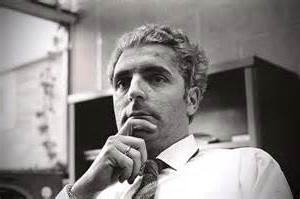
Dr. Robert "Bob" Moog- designer and architect of mainstream synthesizers.
Dr. Robert “Bob” Moog- designer and architect of mainstream synthesizers.


Click here to read the rest of Thom Holme’s essay on your device.

Disney Buys 21st Century Fox Readies New Streaming Service

Disney’s acquisition of 21st Century Fox means that the House of Mouse now controls a huge amount of our most beloved films and television series.

Announced in December 2017 and expected to take until at least 2021 to complete, this $66.1 Billion USD deal (that included taking on a size-able debt portfolio from Fox) ranks among the largest mergers of its kind in history.

We’ve compared these media giants, looked at the potential impact of the deal on both their own employees and the end user and demonstrated how Disney is looking to leverage this deal to break into new markets.

Read on to see how the merger will affect everything from television and the cinema box office to streaming platforms and sports broadcasting this comprehensive infographic from our friends at abcfinancial.co.uk.

Effects of Disney Buying 21st Century Fox

New Way Of Experiencing New York Adirondack Mountains

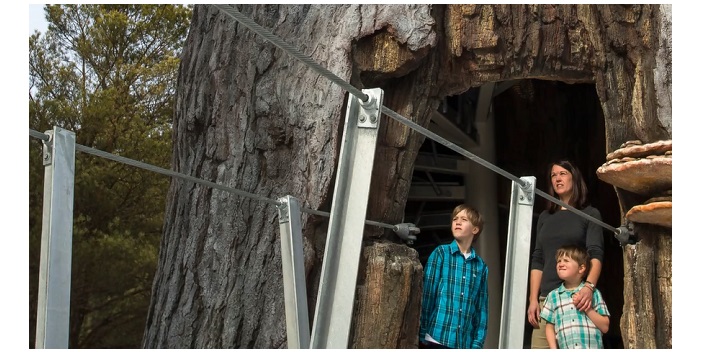
Wild Walk, or the “High Line of the Forest” is changing the way people experience and interact with nature, and is just another reason to travel to the revered Adirondack Mountains this summer.

Adirondack Mountains Hollow Tree Platform

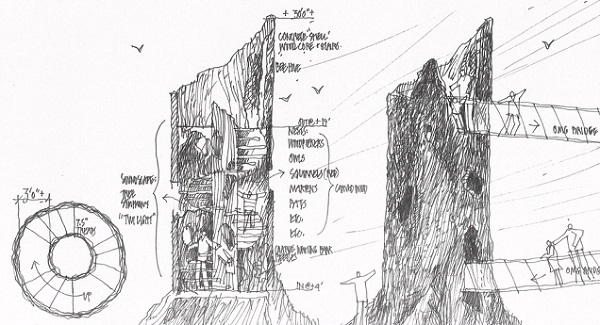
An elevated path that takes visitors up a winding trail of bridges and platforms from ground level to breathtaking treetops, Wild Walk gives visitors a novel and one-of-a-kind perspective on nature from groundbreaking angles such as a four-story twig tree house, swinging bridges, a human-sized spider’s web hovering 24-feet off the ground and a walk through a giant dead tree to see the amazing life thriving within.

Wild Walk Preview Video from The Wild Center on Vimeo.

Demonstrations at vantage points throughout the walk bring everything to life, such as how spiders can 3D print different threads for different uses, that within a dead tree is actually something more like a high rise building filled with life, and more.

Quick Facts:

  • This summer marks the 11th anniversary of The Wild Center, a pioneering “un-museum” that helps people not only explore the Adirondacks but their relationship with nature.  
  • Gas Prices: If gas prices decrease as predicted and with travelers heightened interest in exploring the US – this is the summer for road trips
  • The Power of Awe: Studies show that a sense of awe (often caused by majestic, natural landscapes) can make you happier, less-stressed, and more creative – one more reason to make nature a focus for summer travels this year
  • Adirondacks: The untouched and authentic Upstate New York experience for all ages with additional attractions including camping, glamping, kayaking, local breweries, wineries, farmer’s markets, Lake Placid and more
  • Family Travel: Educational and entertaining trips where kids are safe to run free and explore; the boardwalk is also wheelchair and stroller accessible
  • Accessibility: Wild Walk is accessible to people of all generations and abilities. There will be side paths and options to take, suspension bridges, and stairs down, but the entire main structure, from the trail leading to Feeder Alley all the way to the viewing pod on the final tower platform was built specifically so that it would afford everyone the chance to experience the Walk.

For the Silo, Alexis Chernoff


Support Needed To Ensure Clean Water Supplies In Ontario Greenbelt

Dear Silo, in December last year 2017, the Province launched a consultation process on expanding the Greenbelt to protect critical water resources in Ontario. While several significant water systems are included in the proposal, key vulnerable areas are missing.

We have 24 hours to tell the government to expand their proposal to ensure clean water supplies for future generations.

Over 1.25 million people in our region rely on groundwater for their drinking needs. And, our lakes and wetlands are home to numerous at-risk species of fish and wildlife. We urgently need features like moraines, wetlands and headwaters that filter and store water protected from the impacts of urban sprawl and climate change.

9 in 10 Ontarians support the Greenbelt’s protection of water, farmland and nature. You can be one of them.

Together we can grow the Greenbelt to protect our most precious resource, water.

Thank you,

Susan Lloyd Swail
Livable Communities, Senior Manager

P.S. you can read our blog to learn more.

Digital Bus Stops Replacing Paper Timetables In Australia

Catching a bus in Sydney just got a whole lot smarter, thanks to the new digital bus stops from Mercury Innovation and Visionect. These intelligent signs run on solar power and have been developed on energy-saving electronic paper technology to ease the daily commute in the bustling Australian metropolis.

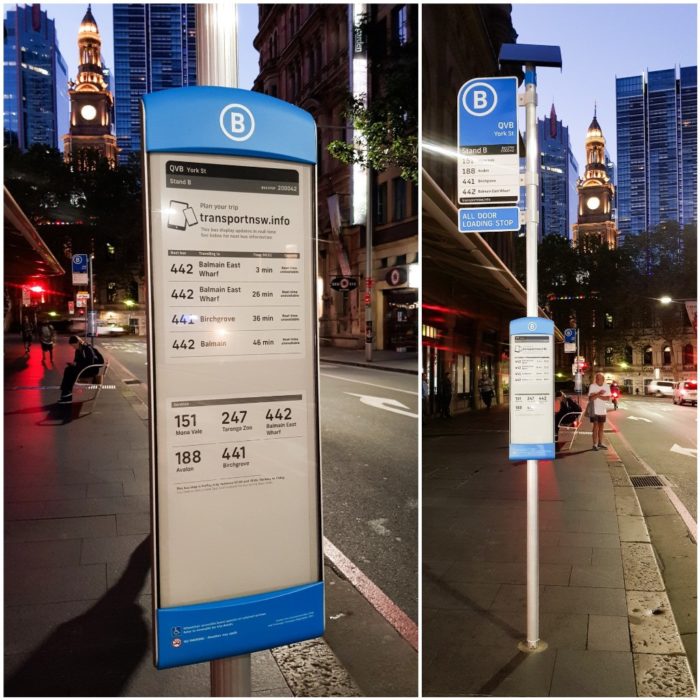
eStops    New digital bus stops have been installed around Sydney’s Town Hall, replacing traditional bus stop paper timetables. Dubbed ‘eStops’ and developed on electronic paper, the displays have been developed with the commuter in mind, making access to travelling information and emergency notifications easier than ever before.

Visionect Digital eInk Bus Schedule Signage

The digital stops provide real-time bus arrivals, as well as capacity information, service notifications and any other relevant commuter information right at the stop.

Best of all, each eStop is solar-powered, running on the plentiful Australian sunshine, a natural resource that Sydney has in abundance.

This makes the display not only simple to install, but also completely independent from the power grid, making it accessible to even the most remote of areas. Transport for NSW can now communicate critical notifications at exactly the right moment, keeping passengers up to date and ensuring accurate information is delivered at the point of action, no matter your location.

Nowhere is this more crucial than in Sydney—one of the busiest cities in the world, the metropolis is host to a variety of special events, such as the upcoming Mardi Gras Parade, with streets closed off and normal city flows disturbed.

The new eStop displays allow service disruption information about such events to be communicated to the public in real-time, before and during the event, allowing for efficient interaction with bus commuters, increasing the service experience for passengers and providing an effective management system for the city.

Not only this, in cases of emergency, the eStop can provide crucial emergency information to not only the bus ridership, but Sydneyites in general, displaying notifications even during blackouts, when other digital displays fail.

Based on electronic paper technology, they eStops have been designed and manufactured by Australian engineering company Mercury Innovation and the EU-based Visionect, the world leaders in outdoor e-paper products.

The eStop is another breakthrough product in the partnership between Visionect and Mercury. Together, Mercury and Visionect are making outdoor sustainable signage a reality, following the success of their 2016 installation of solar powered e-paper traffic signs in Sydney, a world first, running uninterrupted with an unprecedented zero failure rate more than 2 years later.

Technology and research at Visionect


The Fuss About Archaeology Conducted On Ontario Farmlands

Farmland development throughout wind-powered Ontario has resulted in the hiring of many consulting archaeologists by developers of solar panels and wind turbine farms and the public continues to wonder why so much attention is given to archaeological sites several thousand years old that hold little or no cultural value to the people who live there today. One reason is simple to explain: developers closely follow the laws of the Ontario Heritage Act, which promotes the protection, and conservation of heritage sites before and after European Contact and therefore are bound to archaeology. The Heritage Act came into force in 1975 as a way to protect archaeological sites. Even architectural structures built over a century ago come under the protection of the Heritage act if deemed of historical significance.

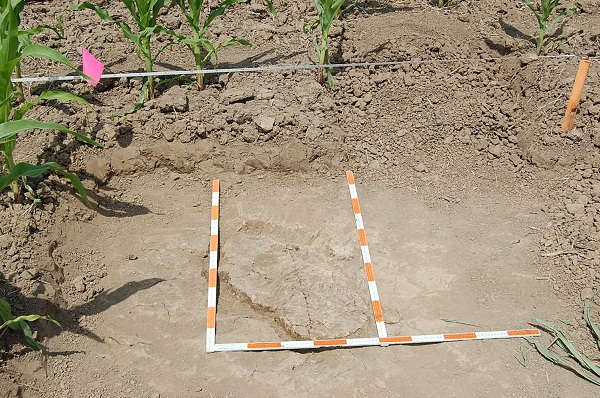
This photo shows a ‘feature’- where stone flakes were recovered from a flintknapping moment about 7,000 years ago.

But other than the legal issues, what is all the fuss about these archaeological sites in Ontario rural municipalities? Well, a lot has to do with how little the public knows about the earliest people who began to inhabit the Great Lakes region over 10,000 years ago. Increased development has resulted in many archaeological sites being uncovered, which helps to answer questions such as: who were these early people? How did they survive? [Especially during a time of mammoths and glaciers CP] Where did they come from? How were they impacted by climatic changes? How long did they live on the landscape before being replaced by other groups of people? Which leads to another, penultimate question: How can these questions be answered?

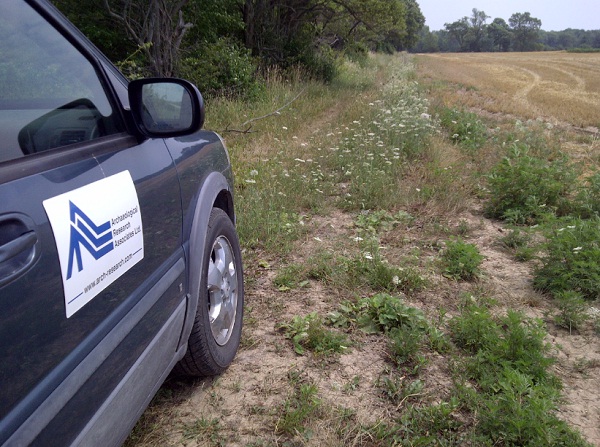
Complying with the Heritage Act- solar and wind power developers are hiring more and more consultant archaeology firms to conduct studies of Ontario farmland. This picture taken on July 17, 2012 at an area East of Nanticoke, Ontario. photo: The Silo

Here is one way. Archaeologists working on a site discovered a location where an ancient person was breaking stone into smaller pieces for making stones tools. Archaeologists found a location below the ground surface where pieces of stone fell and remained for over 7,000 years. One of the first questions archaeologists tried to answer is was that person standing or sitting down at that particular location when they dropped the pieces of stone.

The best way to answer that question was to do “experimental archaeology”. In this case, stone tools left in a forest are observed to determine how natural processes move and cover artifacts over time. Some stone tools are ‘dropped’ or left while standing and others while sitting down on a log or other structure. The difference in posture and stance and the difference in the height of the drop affect the way the pieces of stone fall, land and how they orient themselves on the ground.

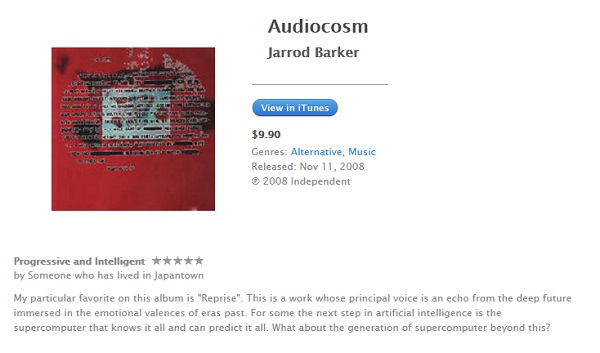
Click to view on I-tunes

This affects the way that they are weathered, covered and deposited. After a long period of experimenting and observation, it was determined that a person likely sat on a log while making their stone tools. The broken flakes of stone, covered and protected by forest debris, resulted in a well-preserved location where someone once sat down to made stone tools.
So the next time you come across a scatter of broken stone try to imagine who sat there as they made their stone tools and what the land once looked like long ago. For the Silo, Lorenz Bruechert. /Jarrod Barker.