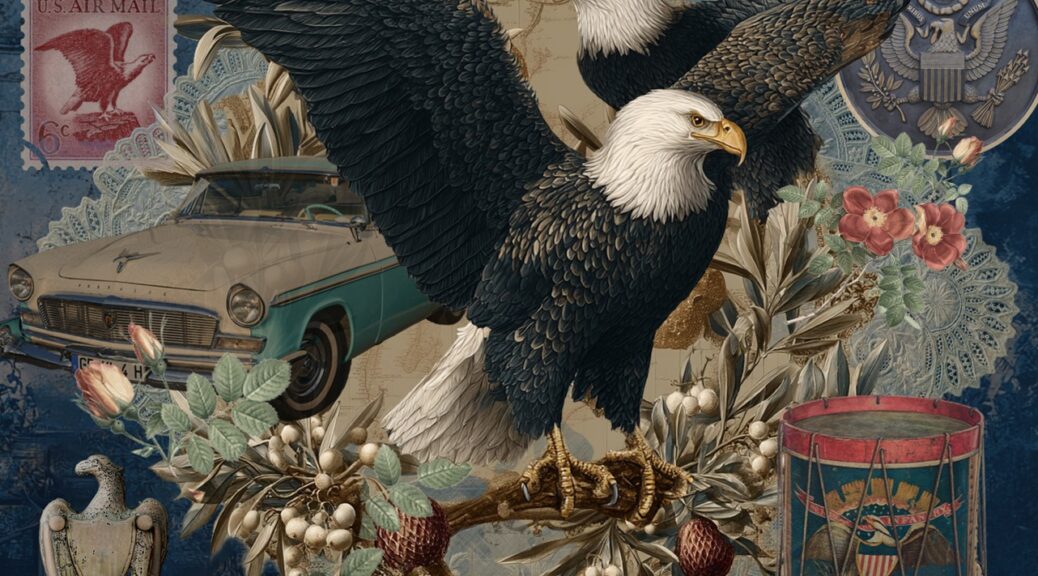
When designing the Great Seal of the United States, the Founding Fathers wanted a symbol to convey the strength and independence of the new nation. So they chose the bald eagle.
On the seal — used to authenticate treaties and other official documents — the white-crowned eagle clutches an olive branch (representing peace) in one talon and arrows (representing war) in the other. The eagle faces the olive branch, symbolizing America’s preference for peace.
After the adoption of the seal on June 20, 1782, the bald eagle quickly spread through American culture as a symbol of freedom, patriotism and power , says Preston Cook, a collector of eagle memorabilia and author of American Eagle: A Visual History of Our National Emblem.
The majestic bird, with a wingspan of 1.8 to 2.3 meters (6 feet to 7.5 feet), can spot prey 5 kilometers (3 miles) away, making it a match for a country of natural grandeur and vast, wild landscapes.
The bald eagle has become a decorative motif for everything from furniture and textiles to metalwork. U.S. gold coins have been known as eagles since 1795. Eagle-inspired hood ornaments adorned classic American cars of the 1930s through the 1950s. Philadelphia, which served as the first U.S. capital, has adopted the eagle as its professional football team’s mascot.
Eagles have symbolized power since ancient times, when Roman legions decorated their battle flags with images of the raptors. The Founding Fathers chose the bald eagle to represent their nation because the bird is indigenous to North America, according to Jack E. Davis, author of The Bald Eagle: The Improbable Journey of America’s Bird. But by the 20th century, bald eagles’ numbers in the wild had declined from habitat loss, illegal hunting and the pesticide DDT.
Conservation measures, including the U.S. government’s 1972 DDT ban, increased bald eagle populations. The species was removed from the endangered species list in 2007 and now lives in every U.S. state except Hawaii and in many areas of Canada as well.
The National Eagle Center , located in Wabasha, Minnesota, showcases bald eagles and highlights their connection to American values of freedom and courage. Visitors can meet live birds and, in the summer, take river cruises to spot bald eagles in their natural habitat.
Cook, the collector, donated some 40,000 eagle-related items to the National Eagle Center, including a drum from the U.S. Civil War painted with a bald eagle.
Eagle art on a Civil War drum (Courtesy of National Eagle Center)
After years of researching the bald eagle’s ties to American culture, Cook was surprised to learn the bird had never been officially recognized as a national symbol.
Members of the U.S. Congress from his home state of Minnesota offered legislation he drafted to make the bald eagle the U.S. national bird. In December 2024, Congress unanimously passed the bill and it was signed into law.
Cook continues working with the National Eagle Center and with curator Alex Lien on bald eagle exhibits. The center is planning a new educational exhibit for the United States’ 250th anniversary in 2026.
Eagles, especially bald eagles, “are in every aspect of American culture throughout the past 250 years,” Lien
For the Silo, Lauren Monsen/ShareAmerica. Featured image via State Dept./S. Gemeny Wilkinson.
WARSAW, Poland (Dec., 2025) — In a monumental victory for animals and a devastating blow to the global fur trade, Poland has officially enacted a ban on fur farming. The legislation, signed into law by President Karol Nawrocki, marks the end of an era for the European Union’s largest remaining fur producer.
The victory comes after intense international pressure, including a campaign by In Defense of Animals, which rallied supporters to write thousands of letters to President Nawrocki and Marshal of the Senate Małgorzata Kidawa-Błońska. While initial reports suggested leadership might block the ban, the overwhelming global outcry helped ensure the measure was signed into law.
The timing of this legislation sends a shockwave through the fashion industry, arriving just days after activists across the U.S. rallied for Fur Free Friday, and as major fashion institutions, including Vogue, increasingly pivot toward coverage of ethical, cruelty-free alternatives.
Anti-fur demonstrators rally outside the Louis Vuitton flagship store in Beverly Hills, California, on Fur Free Friday, Nov. 28, 2025
“This is a watershed moment in the history of animal protection. By dismantling the fur industry in its largest European stronghold, Poland has effectively dealt a devastating blow to the global fur trade,” said Katie Nolan, Wild Animals Campaign Specialist for In Defense of Animals. “Just last week, Americans marched for Fur Free Friday, and today, we see the results of that global momentum. Whether it is the pages of Vogue or the halls of the Polish Parliament, the message is clear: the future of fashion is fur-free.”
Poland’s exit from the industry holds significant weight for the American market. As the European Union’s largest producer, the country’s ban will drastically reduce the volume of animal pelts available to global fashion houses, disrupting the supply chain and accelerating the industry’s decline in the United States and abroad.
Beyond economics, the ban addresses severe public health risks that transcend borders. Polish fur farms have recently been identified as hotspots for COVID-19 and avian influenza, posing a global threat that this legislation helps mitigate. This victory also reinforces the ethical momentum building stateside, aligning with legislation already passed in California and bans in major fashion cities to further isolate the few remaining supporters of the fur trade.
The new law mandates a phase-out of the industry, ending the confinement of millions of mink, foxes, and raccoon dogs. These animals, in particular the semi-aquatic mink, have historically been forced into barren wire cages, denied their natural needs, and subjected to gruesome deaths via gassing or electrocution.
In Defense of Animals celebrates this victory with its supporters and coalition partners who refused to let this ban die in the US Senate.
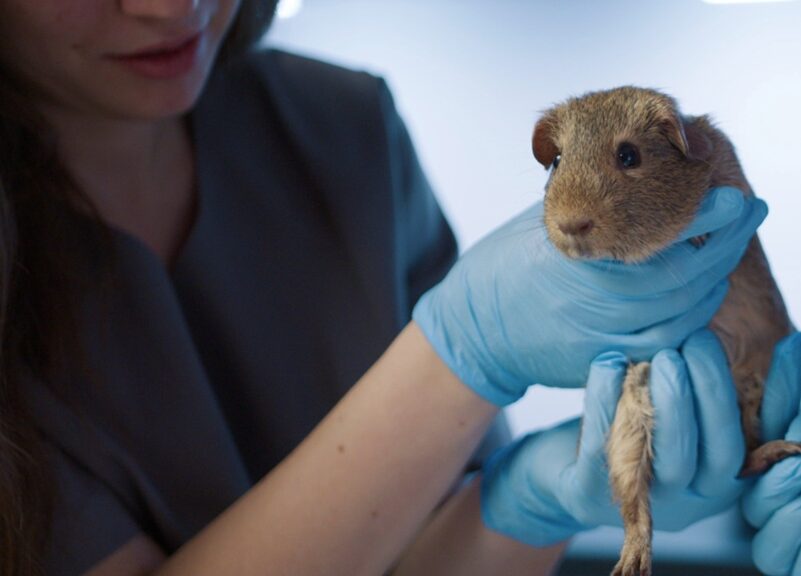
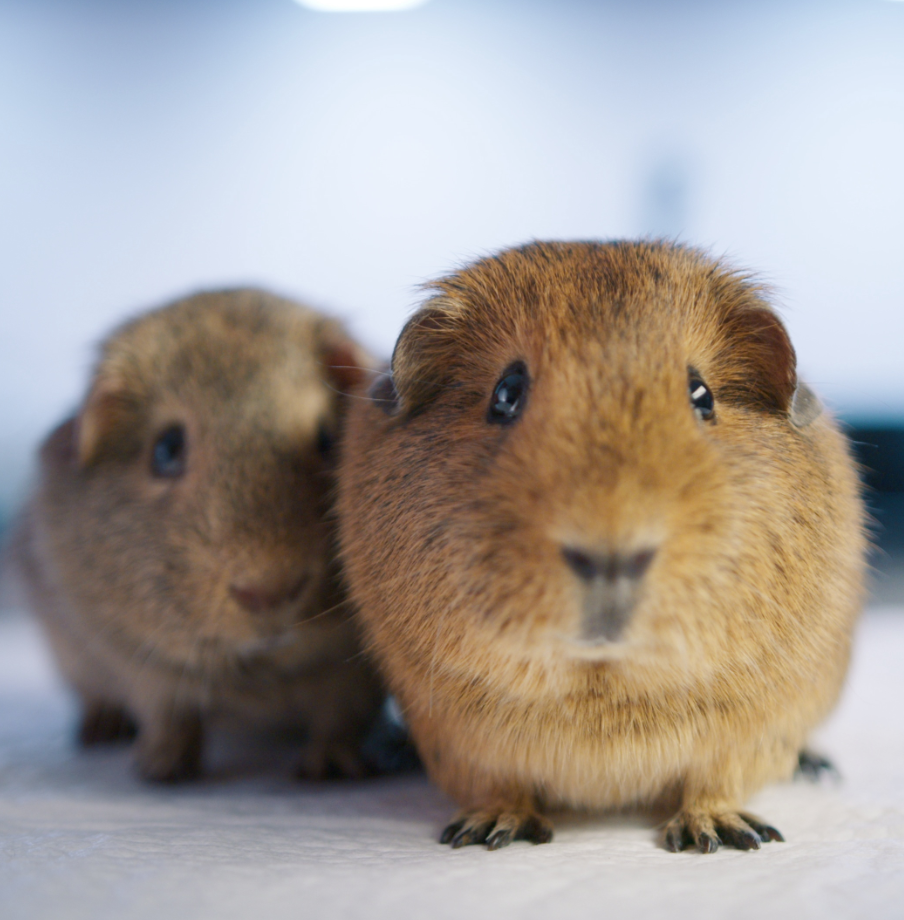
The decidedly disturbing headlines around small pets like guinea pigs and rabbits underscore an escalating ‘disposable pet’ mentality, with certain factors exacerbating the problem. Case in point, this guinea pig rescue in Nova Scotia, Canada.
With the holidays looming, shelters are bracing for yet another spike in guinea pig surrenders in particular. Industry sources speculate there may be tens of millions of guinea pigs worldwide, yet shelter data point to troubling trends with some shelters seeing numbers more than triple since the pandemic. One facility reportedly took in over 650 guinea pigs in a single year! Sadly, this species is all too often treated as disposable.
Surveys show that roughly 7 million U.S. households own “small animals” like guinea pigs and roughly another 1 million Canadian households. The holiday season, when guinea pigs are frequently purchased as gifts, intensifies problematic ownership as many families underestimate the care required … only to relinquish these pets weeks or months later.
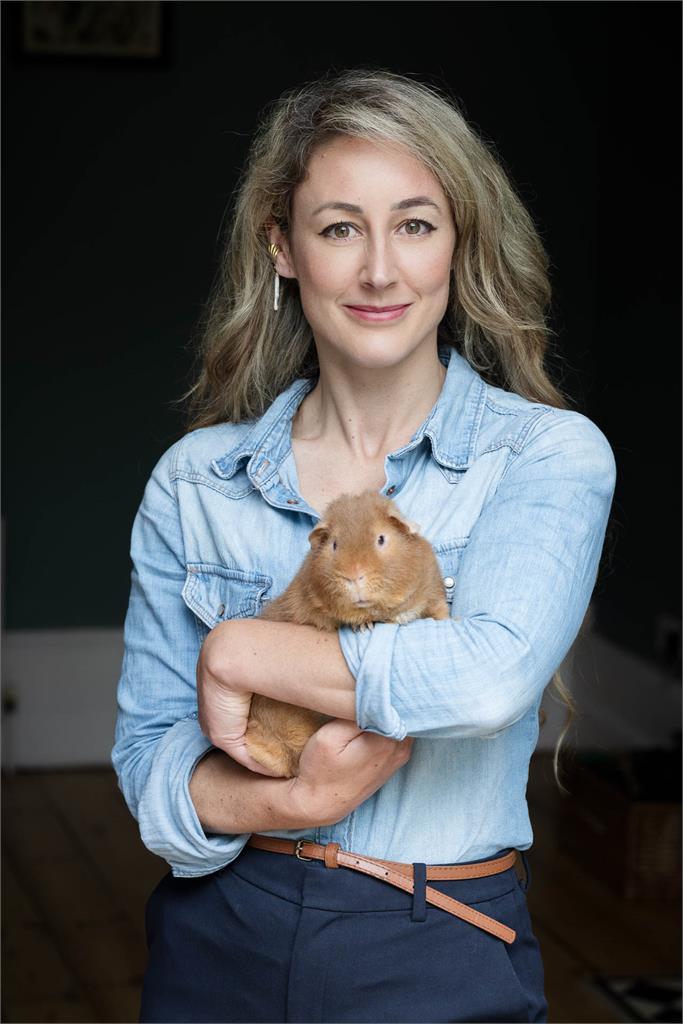
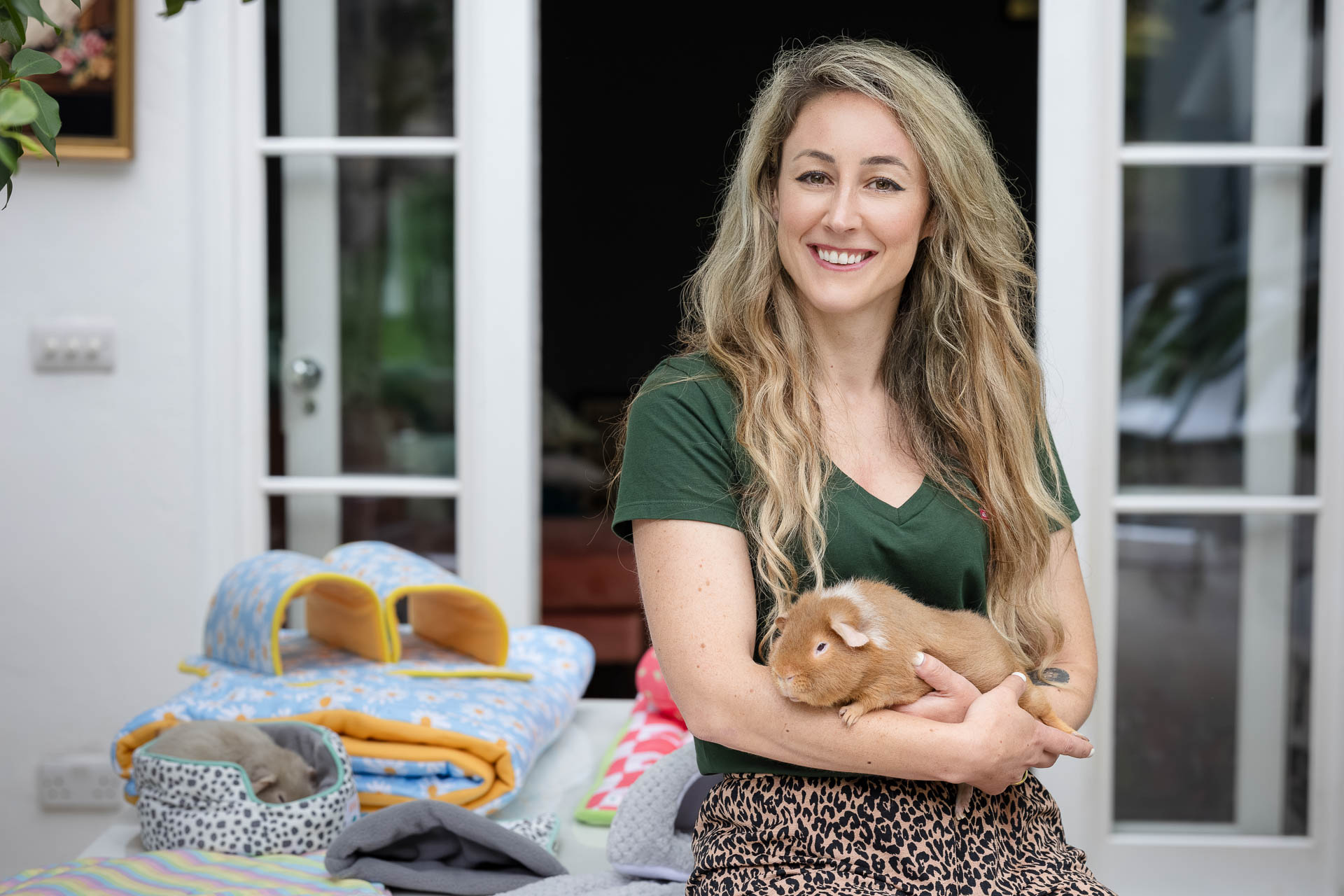
Clementine Schouteden, CEO of Kavee—the world’s leading guinea pig habitat brand, points out the following key issues:
Families should use a checklist to decide if they are truly ready for a small pet like a guinea pig or rabbit
Note the hidden costs and long-term commitments families often overlook before bringing home a guinea pig or rabbit
There are emotional and developmental benefits guinea pigs and rabbits can bring to children when cared for responsibly
Rising surrenders are straining shelters already overwhelmed with cats and dogs
Reach out to shelters and advocacy groups for recommendations on reducing post-holiday pet abandonment
Be aware that guinea pigs require larger, safer enclosures than most pet stores provide
Better guinea pig housing, enrichment, and education can prevent health issues and neglect
Common health problems are often tied to poor diets or improper housing—now how to spot them early
Consider simple changes that can make homes safer and more enriching for guinea pigs and rabbits
Be a proud part of the growing movement to elevate small pet care standards to the same level as cats and dogs
Market Trends
The small pet category may be niche, but the market data tells a compelling story.
The U.S. pet industry overall is projected to hit $157 billion usd/ $218.6 billion cad in 2025, up from $151.9 billion usd/ $211.5 billion cad in 2024, with $33.3 billion usd/ $46.4 billion cad of that dedicated to supplies, habitats, bedding, and related essentials (APPA). Within that, ~7.7 million North American households own small animals such as guinea pigs, rabbits, and hamsters (Forbes), representing a sizable and under-served customer base. Globally, the rodent pet accessories market is valued at $1.2 billion usd/ $1.7 billion cad in 2024 and forecasted to double to $2.5 billion usd/ $5.2 billion cad by 2033 (Verified Market Reports), while the guinea pig cage market alone is worth $455 million usd/ $633.6 million cad today and on track to reach $715 million usd/ $995.7 million cad by 2033 (Growth Market Reports). Complementary comfort products like cuddle cups are also on the rise, already a $134.7 million usd/ $187.6 million cad global market growing at a 7.4% CAGR.
Add to this the growing concerns in shelters and rescues about guinea pig welfare (HumanePro), and the momentum is clear: consumers, advocates, and regulators alike are demanding safer, higher-quality, and more enriching products. The fact that species-specific U.S. data for guinea pig habitats and accessories is still sparse only underscores the opportunity for Kavee to lead with content, education, and product innovation—filling a gap that few others have recognized, let alone acted on. For the Silo, Merilee Kern.
Schouteden’s journey is a masterclass in spotting underserved markets and scaling with vision. Below, she shares how a single decision transformed her entrepreneurship path, how her eCommerce brand is reshaping an overlooked corner of the pet industry and what’s next for small pet care innovation.
MK: Clementine, let’s start at the beginning. What inspired you to create Kavee? CS: It really began with my own guinea pigs. In March 2015, I adopted Bagpipe, a long-haired Peruvian and Livingstone, a short-haired Agouti. Later, Efendi joined the family. I couldn’t bring myself to put them in a tiny pet shop cage as it just didn’t feel right. Instead, I had a friend build a large wooden cage and I set up play areas in my flat so they could explore. Watching them thrive in a spacious environment showed me how much better life could be for small pets.
MK: What sets Kavee products apart from traditional cages? CS: We’ve always designed for the animals first. Our C&C cages are modular, easy to clean and expandable. We encourage pet parents to go larger than outdated minimums. For example, while many guidelines say a 2×3 cage is fine for two guinea pigs, at Kavee we recommend 2×4 for sows and 2×5 for boars, since they need more room to coexist peacefully. Our fleece liners, accessories and enrichment toys also bring comfort, safety and playfulness into their habitats.
MK: Kavee has grown from a startup to an international brand. What has that journey looked like? CS: In the early days, it was just me packaging orders on weekends while still working full-time as a consultant. Within six months, demand grew and I partnered with an “impact employment” group to provide jobs for people with disabilities. That freed me to scale the business. By 2018, I left consulting to run Kavee full-time. Since then, we’ve expanded into four online stores, grown a passionate team and provided spacious homes for over 50,000 guinea pigs.
MK: Beyond products, you’ve built a strong educational and advocacy component. Why is that important?
CS: Kavee is not just about selling supplies; it’s about changing perceptions of small pets. Too often they’re seen as “starter pets” for kids, but they’re intelligent and sensitive. Through blogs, social media and the Kavee Rescue initiative, we provide guidance on diet, grooming, habitat design and more. Our team even answers customer questions about gardening for guinea pigs! That level of community engagement makes a real difference.
MK: What role does sustainability and ethical business play in Kavee’s mission? CS: It’s at the core of what we do. Our products are designed to last, reducing waste. We carefully source safe, durable materials and we support inclusive hiring practices. Since 2023, our Kavee Rescue partnership has been another way to give back. Ultimately, if I wouldn’t use it with my own pets, it doesn’t go to market.
MK: Looking ahead, where do you see Kavee and small pet care evolving? CS: The future lies in rethinking standards. Minimum cage guidelines are outdated and pets deserve larger, more enriching spaces. I also see small pets becoming mainstream companions for professionals and singles, not just families. At Kavee, we’ll continue innovating, expanding product ranges and advocating for animal welfare globally.
MK: What were the biggest challenges you faced as a female founder in the pet care industry? CS: Breaking into a space that historically overlooked small pets was challenging enough, but as a female founder, I also had to fight to be taken seriously. Early on, suppliers and partners often assumed this was just a “side project.” Proving the demand, scaling internationally and building a team showed that Kavee was not just a niche brand but a movement.
MK: Was there a moment when you realized Kavee had truly “made it”?
CS: Yes. When I saw our first international orders come in, especially from the U.S., it hit me that we were filling a huge gap worldwide. Another milestone was when customers started sending photos of their piggies “popcorning” in our cages. Knowing our products were directly improving lives was the moment I felt Kavee had arrived.
MK: How do you balance innovation with customer feedback?
CS: We listen closely to our community. Many of our product upgrades, such as folding coroplast bases or fleece liners with new absorbent layers, came directly from customer suggestions. I believe true innovation happens when you combine design expertise with real-world feedback from the pawrents using the products daily.
MK: What advice would you give aspiring entrepreneurs who want to turn a passion into a business?
CS: Start small, test your idea and don’t be afraid of imperfect beginnings. Kavee began with one cage model and a very simple website. What made the difference was consistency, passion and being deeply connected to my “why,” which is improving small pet welfare. If you keep that clarity, growth will follow.
MK: As a female founder, what role do you think women play in shaping the future of entrepreneurship?
CS: Women bring unique perspectives to business, often blending empathy with innovation. In my case, it was about seeing the overlooked needs of small pets that weren’t being met and creating meaningful solutions. I believe more women in leadership will mean more industries reimagined with compassion, creativity and long-term impact at the core.
MK: How do you use your platform to inspire or empower other women in business?
CS: I make it a point to be visible and open about the realities of building a company from scratch. Sharing the challenges as well as the successes helps other women see that it is possible to turn a passion into a thriving business. I also mentor aspiring entrepreneurs, especially women, because representation and encouragement can be the push someone needs to take that first step.
MK: Looking back, what’s the most rewarding part of building Kavee?CS: Without a doubt, it is knowing we have improved the lives of thousands of animals. Every time I hear a story about a guinea pig who went from lethargic in a tiny cage to playful and thriving in a Kavee habitat, it reminds me why this journey matters. That impact is priceless.
From rescuing mice and birds as a child in rural France to transforming the global small pet industry, Clementine has proven that passion paired with innovation can create lasting change. Through Kavee, she’s redefined what it means to care for guinea pigs and rabbits. In the process she’s raising standards, fostering community and inspiring pawrents to think bigger.
In Clementine’s words: “Quite simply, if your piggies aren’t running around in their cage, something isn’t right.”
Thanks to her efforts, thousands of piggies—and the humans who love them—are finally getting it right.
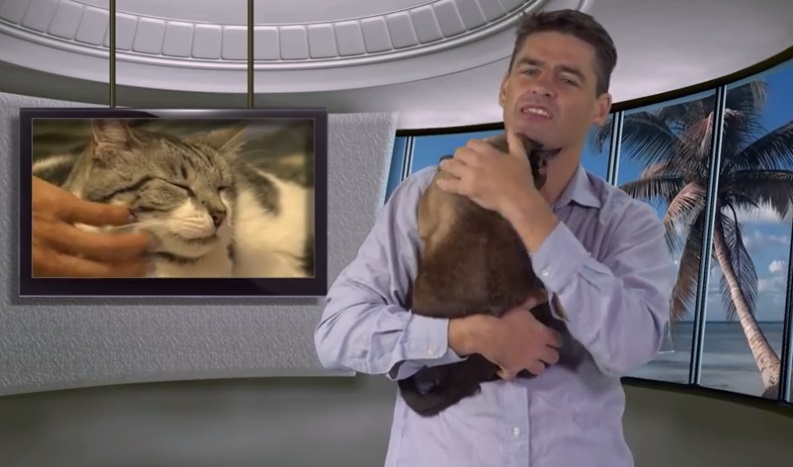
It’s a funny thing about cats and babies. When babies cry, we desperately try to understand why. When a cat meows on the other hand, we usually take it as if he or she’s just being…… well, annoying. To be fair, it depends on the pitch of the meow. If it’s more of a screech, well then you and I probably take that as a sign to stay away. But not with babies. Have you ever wondered why the different treatment?
Why do people put extra time into analyzing baby behaviors compared to cats?
I mean, both are obviously trying to say something to us.And we know from research that cats have a language of their own. In fact the meows you hear could be one of 20 different sounds they’re making, all with slightly different inflections and behavioral responses.
We can now learn the full range of complex emotions we previously thought were reserved only for human beings — as they are actually happening to our cat children.
Cats can have a sense of guilt, for example. And if you can spot the emotions, you’ll know exactly when they misbehave!
Cats can feel lonely, as we already pointed out. And oftentimes they’ll try and hide from you, much like a teenager who secretly needs to be consoled in some way.
Cats can even be manipulative. But you already knew that, or at least suspected it every time your cat showed you some warmth and love right before chow time!
Dog Lovers might be interested in the Bowlingual.
Dogs, in comparison, can never quite get past a five-year-old’s more narrow emotional spectrum. It’s either happy or sad for them.
Don’t believe me? Check it out and see firsthand what your cat is trying to tell you today by clicking here.
“The way to read a fairy tale is to throw yourself in.” ― W.H. Auden
“In a utilitarian age, of all other times, it is a matter of grave importance that fairy tales should be respected.” (Frauds on the Fairies, 1853)” ― Charles Dickens, Works of Charles Dickens
“If you want your children to be intelligent, read them fairy tales. If you want them to be more intelligent, read them more fairy tales.” ― Albert Einstein
I was “that child”, the one who wanted fairy tales and magic to be real. As far back as I can remember I dreamed about having supernatural powers (always good of course…well, almost always) having carpets that flew, potions that could transform anyone or anything, the ability to speak to animals. I never understood why Darren and Samantha worked so hard at concealment. Or why Jeannie didn’t dump the Major and go back to live with the Djinn….I mean, LOOK at the decor!!!! Who wouldn’t rather have scarves and pillows and elaborate brass lamps instead of that godawful avocado and mustard vibe?
Music for fairy tales. Click me.
Books fueled this. Small witches, talking mice, flying nannies, rings and boxes and mysterious rooms and islands all combined in a grand and glorious stew. Why couldn’t I have a wizard for a teacher? (maybe I would have learned math) Why couldn’t bullies simply be turned into flowerpots? Alas, eventually the adulting creeps in. And people stop being indulgent about your whimsy. And your imagination….
You stop inviting your friends over to play make believe. Or, at least, they stop accepting. And you are encouraged to put away childish things. To accumulate the right kind of books….improving books. High tone books. Books with Purpose. The wishing frogs and tall towers and magic mirrors are packed away… Book Snobbery. Where Fantasy books in the annoying “Y.A.” category are barely tolerated. Stuff and Nonsense.(keeping it G rated here. I expect points…) Children should be encouraged to read whatever they want and adults should enjoy the same free pass. You should be proud of displaying your book on the bus whether you are reading Kafka or Twilight. There are life lessons to be found in fantasy. Fairy tales teach you that sometimes bad things do happen. (The original version of some of the most beloved and well known can be a bit brutal.
For example, the Ugly Stepsisters in Cinderella actually cut their toes off to fit into the slipper. Kiddiewinkle Disney this ain’t.. ) But good and kind usually triumph. Sometimes help can come from unexpected areas. And there is always a way out of the woods. I do live in the real world. Drive. Work. Pay taxes. Cook, clean, shop. Watch the political situation (although “real” and politics lately….never mind) When I sit at a stop light I do not think a gnome is changing the colors. I rarely look for dragons. But I still yearn for them. Magic is everywhere and everything. It may not have glittery wings, it may not be vanquished with a sword, there might not be a house dropped on it or a incantation spoken…..but it is here.
Writers poets, artists, storytellers; all know this on some level. Even if we disguise it.The human imagination is ancient. The roots of stories are found far back in oral traditions and the tales were only modified later to make them illustrations of good versus evil. We do research, we discuss, we delve and write learned papers. We collect quotes and materials, and most importantly buy the books buy the books buy the books…. Books are the real magic. The tangible, in your hands, in your face, take you wherever you want to go – Magic. Read it. Whatever the cover, whatever the rating.
If you like it, read it. Do not let any house of cards pompous proclamation tell you it’s wrong. Secretly we are looking for the elves. We want there to be fairies in the garden. We never see a shooting star without wishing. And if you are very, very lucky. You will never lose that. For the Silo, Jaye Tomas.
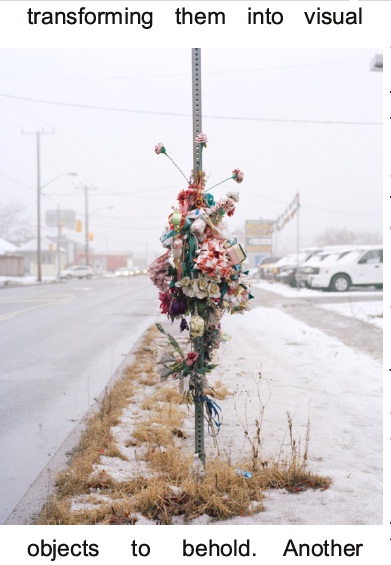
One of Toronto based photographer Erin Riley’s series of photographs depicting roadside memorials in and around the GTA
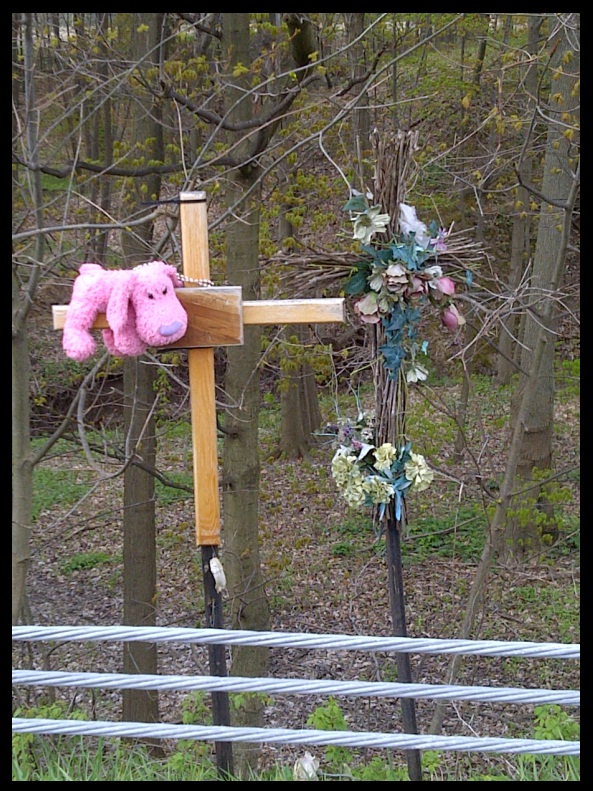
Indeed, the prevalence of roadside memorials has increased significantly over the past several decades and there is little doubt that each of us has encountered them at some point. Roadside memorials are essentially visual manifestations of profound suffering and loss. They mark the site where a motor vehicle accident has occurred and the death that resulted from it (however , many memorials, especially in major cities, have little to do with motor vehicle accidents and more to do with cycling accidents, innocent bystanders or anything else that faithfully marks the site of passing).
In areas where large gravestones or plaques cannot be placed, for a variety of reasons, makeshift memorials take their place. These sites grow with each flower, ribbon or object and deplete with the wind, rain or snow; they are in a continuous state of flux. The organic quality of roadside memorials may directly reference the very epehemerality of life itself. Moreover, in their various forms and inclinations, they challenge Western society’s visual seperation of the living from the dead; therefore, as they subsist, roadside memorials carry the spectre of mortality into the public sphere, a space where even speaking of death remains taboo.
Post-mortem/momento mori photography during the Victorian age is a fascinating though dark and unsettling movement.
Roadside markers are a rural and urban feature- this marker is located on Front Road, near St. Williams, Ontario, Canada image: www.thesilo.ca
Encountering the idea of death may be one of the reasons why people take issue with the appearance of roadside memorials. For them, they represent a veritable “distraction” while driving, are considered “unsightly” or a “vandalism of public property”. For the families of the deceased, roadside memorials allow the opportunity to mourn their loved one(s) at the very place of their passing. The level of emotion generated by being near the actual site where a loved one has died is different from standing beside their final resting place in segregated communities of loss that are the modern cemetery.
Not only are roadside memorials, as markers of loss, important to the families and groups that maintained a relationship to the deceased, but they powerfully address the living by acting as memento mori (reminders of death). It is through them that one may better appreciate the present.
Toronto-based photographer Erin Riley’s series of photographs depicting roadside memorials in and around the Greater Toronto Area (GTA) specifically engages the publicization of loss and its visual manifestation. Riley’s images are strikingly beautiful and skillfully composed, yet they raise ethical questions precisely because they aestheticize markers of death sites by transforming them into visual objects to behold. This theme was explored in Jarrod Barker’s April 2010’s Umwelt at the Norfolk Arts Center with a central piece depicting a virtual gallery memorial in conjunction with projected audio/video loop of a recently deceased Deer- struck down by a motorist, the piece becoming essentially a rural memento mori.
Happening upon a recently struck deer- Artist Jarrod Barker aestheticized the site by placing a white linen ‘shroud’ over the victim. This would later become a central piece in the installation of Umwelt April 2010 photo: J. Barker
Another question concerns the identification of deceased individuals and whether or not their names should be made public through the vehicle of art. That being said, Riley’s photographs do provide an eloquent record of roadside memorials within the GTA and speak to their social and cultural value. Ask yourself: where do you stand on this issue?
It would seem that, for the families of the deceased, roadside memorials serve the purpose of exactly that: the memorializatin of a life. [ “even” an animal life CP ] They also serve a function for the living, reminding us that life is fleeting and that the dangers of the road are real. Ultimately, rather than causing drivers to collide, roadside memorials may force drivers to more aware of the consequences of speed, negligence and drunk driving. May roadside memorials continue to stand where lives have fallen. For the Silo, Matthew Ryan Smith.
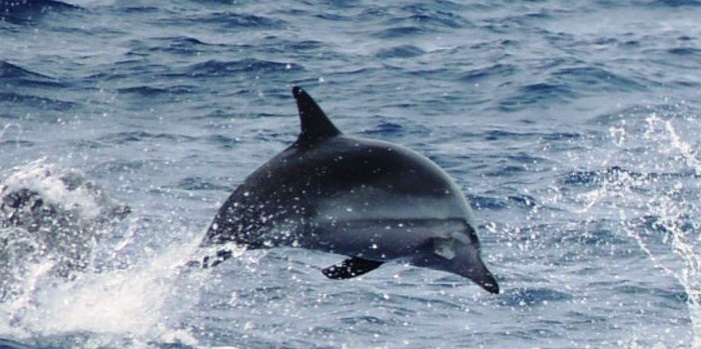
Taiji, Japan – In Defense of Animals denounces the cruel dolphin hunting and killing season that officially opened on September 1 in Taiji, Japan. The hunting season, which goes until March each year, sees the brutal slaughter of hundreds of dolphins.
“The primary motivation for the hunting and killing of dolphins is the captivity industry, where live, trained dolphins fetch a much higher price than dead ones,” says Dr. Toni Frohoff, In Defense of Animals’ Cetacean Scientist. “We call on the captivity industry in the United States to stop contributing to the demand that fuels these cruel hunts.”
Photo- Liz Carter.
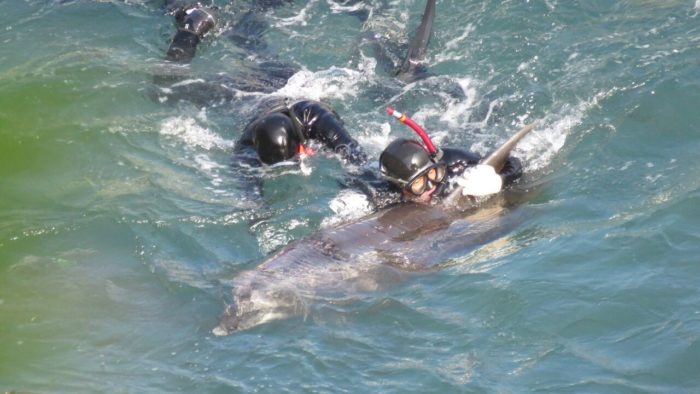
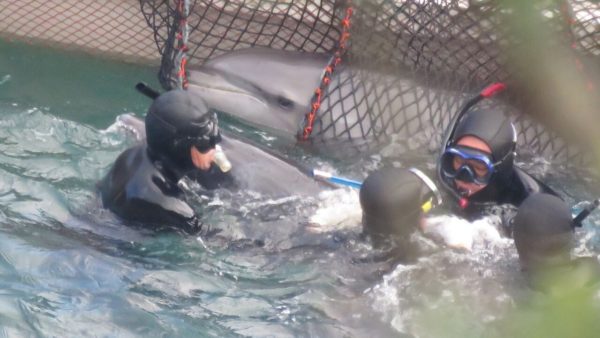
During the hunts, wild dolphins are driven into a cove along the coast of Taiji and held, sometimes for days, while “show-quality” individuals are selected and torn away permanently from their families. These individuals are then trained and sold to aquariums in Japan and around the world. Often, some or all of the remaining dolphins are killed and butchered for their flesh, or turned loose into the ocean where they suffer from the significant trauma of severed familial ties or in some cases witnessing the deaths of their podmates.
While demand for captive dolphin entertainment may be declining in certain places within the United States, in others the industry is attempting to gain foothold. The Mississippi Aquarium, slated for downtown Gulfport, plans on including a new dolphin aquarium.
“Promoting captive dolphin entertainment is tantamount to promoting the brutal killing of dolphins that happens each year in Taiji,” continued Dr. Frohoff. “The only way to stop these slaughters is to stop promoting captivity, which in itself causes enormous stress, suffering and premature death for dolphins.”
The quotas for this year’s dolphin hunting season in Taiji, set by Japan’s Fisheries Agency, total 1,940 individuals, including 414 bottlenose dolphins, 450 striped dolphins and 400 pantropical spotted dolphins, according to Cetabase.
In Defense of Animals is an international animal protection organization with over 250,000 supporters and a 30-year history of fighting for animals, people and the environment through education, campaigns and hands-on rescue facilities in India, Africa, and rural Mississippi. For the Silo, Dr. Toni Frohoff.
All photos- Liz Carter.
IN DEFENSE OF ANIMALS • 3010 KERNER BLVD. • SAN RAFAEL, CA 94901 • 415-448-0048
Mexico City, Mexico – In Defense of Animals has welcomed a landmark bill that prohibits the use of dolphins for entertainment. The Legislative Assembly of Mexico City passed a bill on Tuesday August 1, 2017, that outlaws cetacean performances and training, as well as whale and dolphin use in research or therapy.
“This landmark ban will spare generations of animals from cruelty and sends a clear message that the public increasingly rejects dolphin captivity,” said Dr. Toni Frohoff, Cetacean Scientist for In Defense of Animals. “We thank Mexico City officials for recognizing our Ten Worst Tanks list and acting swiftly to end the abuse. We urge Six Flags to retire the dolphins at a seaside sanctuary where they may recover.”
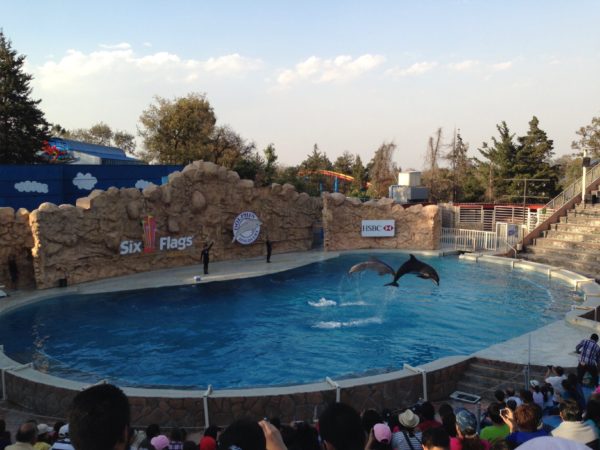
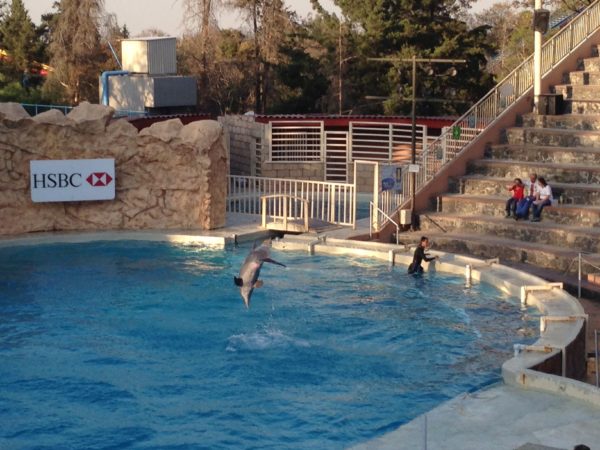
Mexico City Six Flags photo: Martin Lewison
Dolphin advocate Yolanda Alaniz, of Comarino Mexico, held a press conference with Environment Commission President, Xavier López Adame. “All parties, from rights to strong lefts voted just as one,” said Alaniz. “Deputies recognized dolphins as sentient beings who suffer living in concrete tanks. Politics spoke with ethics, and marked a new way to follow for our country, and we will follow this path.”
Two bottlenose dolphins and two sea lions will be directly affected by the new law. The dolphins are confined to a barren tank set in the middle of the Six Flags Mexico amusement park, the only facility in Mexico City that currently holds cetaceans captive. Previously known as Reino Aventura, the park is infamous for holding Keiko, the now-deceased orca used in the film “Free Willy”. The park ranked second worst in Mexico and sixth place overall on In Defense of Animals Ten Worst Tanks list.
photo: Martin Lewison
Dr. Toni Frohoff
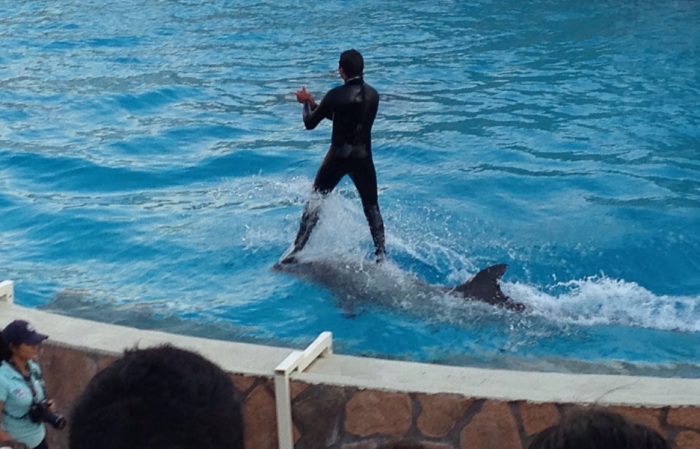
For years, the dolphins have been regularly forced to perform circus acts as loud music blares. The dolphins have also been used for swim-with programs, where they are trained to perform contrived behaviors that simulate affection and sociability toward the paying public. The animals are coerced to give rides where people grab and hang onto their dorsal and pectoral fins and to give “kisses,” “hugs” and “handshakes.”
Six Flags Mexico is owned by Dolphin Discovery, a Mexican company that runs at least 24 captive dolphin facilities internationally. For the Silo, Toni Frohoff, Ph.D.
In Defense of Animals is an international animal protection organization with over 250,000 supporters and a 30-year history of fighting for animals, people and the environment through education, campaigns and hands-on rescue facilities in India, Africa, and rural Mississippi.
IN DEFENSE OF ANIMALS • 3010 KERNER BLVD. • SAN RAFAEL, CA 94901 • 415-448-0048 Please mention the Silo when contacting.
This article contains graphic images. Cascilla, Miss. – Two Mississippi animal protection organizations have joined forces to rescue four neglected horses in Cascilla, Tallahatchie County. In Defense of Animals’ Justice for Animals Campaign and Jackson-based Mississippi Horses seized the starving and wounded animals from a property on Smith Road.
Concerned people who passed the property contacted the Justice for Animals campaign after witnessing the horses in a state of neglect.
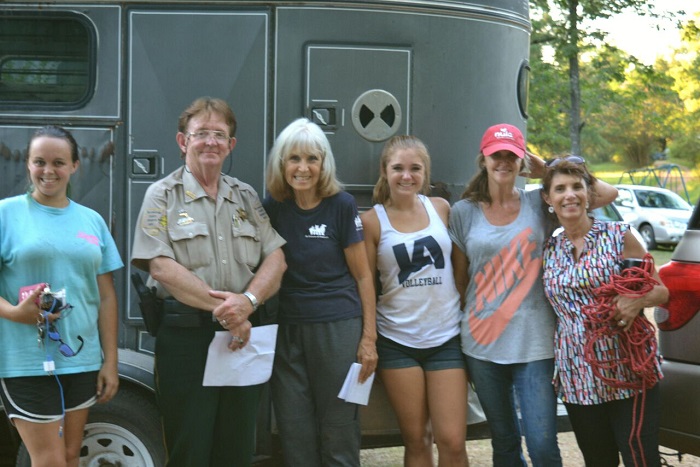
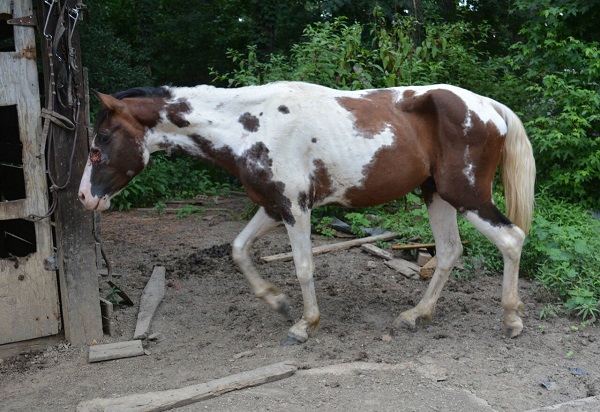
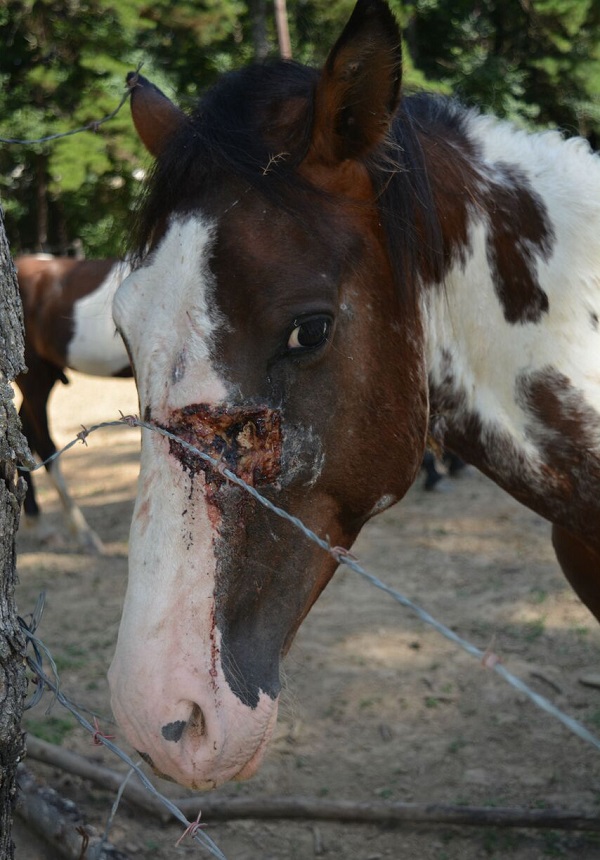
Justice for Animals Director Doll Stanley and Tallahatchie County Deputy Albert Griffin met with the property owner to examine the conditions of the neglected horses. Two stallions, one mare, and her colt were confined to an area with no grass or other food to support the horses and no drinking water. One of the horses had a severe, untreated wound on his face.
A fifth horse was present on the property who seemed well-cared for. The badly-injured stallion had apparently stuck his head through an opening in the stall of the well-cared-for horse in an attempt to reach food, and had been severely bitten. One side of his head and his neck were scraped in the struggle to free himself when the other horse attacked him, leaving a ghastly bite wound that left an exposed section of bone on his face. The horse had not received medical attention.
An order was granted to the Tallahatchie County Sheriff’s Department for the seizure of the four horses on July 14 and was enforced that afternoon. Mississippi Horses immediately transported the injured horse to Mississippi State University Veterinary School for emergency treatment. The three other horses have been taken into the organization’s care for rehabilitation.
“In many cases of unintentional neglect, often in ignorance, we give guidance to animal guardians and monitor the recovery or check on the animals’ improved environment,” said Justice for Animals Director, Doll Stanley. “In this case, friendly guidance was not an option. Failure to provide the basic sustenance for horses and direly needed medical care, and failing to even reach out for help, has caused inexcusable suffering to these poor horses.”
In Defense of Animals has served in Mississippi for 24 years, aiding victims and law enforcement with hundreds of cruelty cases. In Defense of Animals’ Justice for Animals Campaign works with law enforcement to provide guidance on animal cruelty laws, advocate for stronger humane ordinances and statutes, and coordinate aid to rescue neglected and intentionally harmed animals.
Eleven miles south of Grenada, Mississippi, In Defense of Animals operates Hope Animal Sanctuary which rescues and cares for hundreds of animals including many victims of cruelty cases. Hope Animal Sanctuary is currently full and mid-way through a renovation project to replace its 20-year-old facilities with buildings, fencing, and modern amenities so that it may continue to provide hope for Mississippi’s cast-off, neglected, and unwanted animals for many years to come. Please support your local sanctuary www.idausa.org/HASrebuild2
In Defense of Animals’ Justice for Animals Campaign is working tirelessly to advance the cause for justice and show state legislators that the people of Mississippi are united against senseless and horrific animal abuse. Campaign members are aligning with Mississippi judges, prosecuting attorneys, law enforcement officials, legislators, animal advocates and concerned citizens to pass tougher state statutes and meaningful regional ordinances that will protect animals when state statutes fail. For the Silo, Doll Stanley IDA.
In Defense of Animals is an international animal protection organization with over 250,000 supporters and a 30-year history of fighting for animals, people and the environment through education, campaigns and hands-on rescue facilities in India, Africa, and rural Mississippi.
All images- Fleur Dawes (In Defense of Animals)
IN DEFENSE OF ANIMALS • 3010 KERNER BLVD. • SAN RAFAEL, CA 94901 • 415-448-0048
Gulfport, Miss. – Last week, 19 international animal protection organizations joined forces for World Oceans Day to plead for dolphins to be excluded from the new Mississippi Aquarium, slated to open in 2019. People for the Ethical Treatment of Animals, Born Free Foundation, and Sonar are among the organizations that signed In Defense of Animals’ letter on behalf of the dolphins to Gulfport Mayor Billy Hewes and Gulfport Redevelopment Commission Chairperson, Carole Lynn Meadows. Over 175,000 people have now spoken out against the plans to keep captive dolphins at the Mississippi Aquarium.
“Animal organizations are uniting on World Oceans Day to urge Mayor Hewes to keep dolphins in the oceans where they belong,” said In Defense of Animals cetacean scientist, Dr. Toni Frohoff. “There is simply no justification for keeping these highly intelligent and sensitive animals captive. Animal entertainment is quickly going out of fashion, making any new investment into it a very bad idea.”
Major public opposition has been building against the planned dolphin exhibit at the Mississippi Aquarium in recent months. Over 15,000 In Defense of Animals supporters have written to Hewes and Meadows since the plans were revealed. A former dolphin trainer at Gulfport’s Marine Life Oceanarium has amassed almost 160,000 supporters for her petition calling on Mississippi Governor Bryant not to redirect $17 million of BP deepwater drilling disaster restoration funds to build the Aquarium.
Mississippi Aquarium’s choice of President, David Kimmel (formerly CEO of the Georgia Aquarium) is almost as controversial as the plan to display captive dolphins. Under Kimmel’s tenure, Georgia Aquarium made an extremely controversial attempt to capture and import 18 wild beluga whales from Russia.
“So long as Mississippi Aquarium plans to exploit dolphins, opposition will continue to grow,” said Dr. Frohoff. “City planners should heed the alarm bells before it is too late. The Aquarium is burdened with a controversial President, questionable ability to find funding, competition with existing and new aquariums, and is relying on roughly $57usd million of taxpayer dollars before it has even opened its doors. Keeping dolphins alive in captivity presents a significant financial burden, and in light of declining revenues at SeaWorld, it is simply not worth gambling away Gulfport money.”
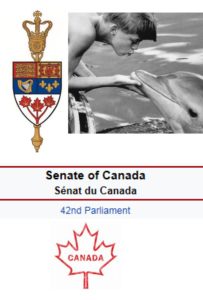
While opposition to dolphin captivity grows in Mississippi, a sea-change is being felt across the country and around the world. SeaWorld ended orca breeding last year and announced that it is phasing out orca captivity in all three of its parks in Florida, Texas, and California. Last month, the Vancouver Aquarium was banned from keeping or breeding cetaceans, and now the Canadian Senate is considering a nationwide ban on cetacean captivity. France and India are among several countries that have put laws in place to protect dolphins and other cetaceans from being held captive in recent years. For the Silo, Fleur Dawes.
International animal protection organization, In Defense of Animals, today released its list of the Ten Worst Tanks for Dolphins and Whales in North America, with Ontario’s Marineland shamed as the worst aquarium in Canada, and second overall.
The facility is listed as having the ‘starkest contrast’ between a ‘solitary orca and beluga whale hoarding’ while Canada’s Vancouver Aquarium appears in ninth place. The Ten Worst Tanks list exposes and represents the misery and suffering of the oceans’ most intelligent and complex mammals in captivity. Whales and dolphins are subject to astonishing rates of premature death, captivity-related injuries, forced removal of babies from mothers, and solitary isolation. Many are confined to swimming endless circles in cramped tanks, deprived of healthy social groups, and forced to endure invasive reproduction techniques, polluted water, dangerous transport, and brutal exploitation of their sociable natures through “swim” and “petting” programs.
The list was selected from over 60 facilities from southern Canada to Mexico where almost 1,000 whales and dolphins are held captive for public display. “Forcing an orca to live in solitary confinement while hoarding so many beluga whales is Marineland’s tragic dichotomy, and a horrific example of cetacean captivity. It plumbs the depths in its exploitation of intelligent and sensitive animals,” said In Defense of Animals President, Dr. Marilyn Kroplick. “Even with the most modern technology, veterinary care, and infrastructure, cetaceans still suffer intensely in captivity and exhibit surprisingly high mortality rates.Please help protect dolphins and whales in the wild where they belong, by pledging to never visit facilities that imprison them.”
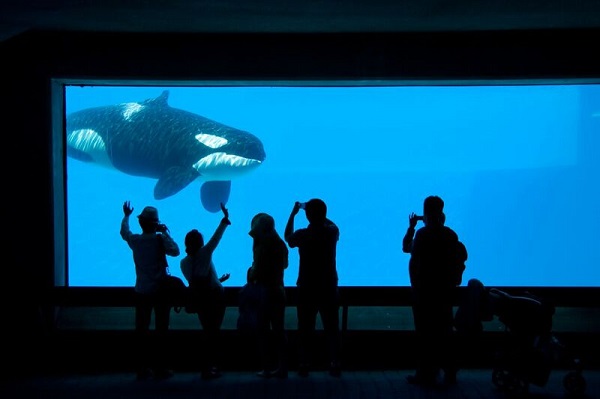
40+ yr old Orca “Kiska” has been in solitary confinement since 2011. photo: Natalie Lucier
Marineland’s Shame: Marineland holds Canada’s last captive orca, 40 or so year-old Kiska, who was ripped away from her family and native Icelandic waters when she was a baby. Kiska has outlived at least seventeen other orcas with whom she has shared the tank over the years. She has also been used to breed for new exhibits, enduring the death of every last one of her five children at Marineland, none of whom lived longer than six years. One of them, Kanuck, was apparently separated from her prematurely and “stored” in a warehouse, where he died at age four. Since 2011, Kiska has been kept in solitary confinement, which has no doubt caused great suffering for this highly social and intelligent cetacean. The last orca Kiska knew was a male named Ikaika, who was “loaned” to Marineland by SeaWorld for breeding in 2006.
SeaWorld became “concerned about Ikaika’s physical and psychological health” and stated that Marineland was “not meeting its obligations in veterinary care, husbandry, or training.” Citing these concerns, SeaWorld successfully sued Marineland in 2011 for Ikaika’s return, leaving Kiska alone once more. Kiska’s physical and psychological condition appears to be poor. Observers point to her severely worn down teeth from self-injurious and compulsive gnawing, dorsal fin deterioration, signs of being underweight, and intermittent bleeding from her tail as indicators of greatly compromised health. Behaviorally, Kiska exhibits lethargy, self-isolation in a tiny medical pool adjacent to the main pool, and repetitive stereotyped behaviors; strong indications of severe psychological distress, depression, and despondency. Kiska is not the only animal suffering at Marineland.
CEO John Holer has also amassed approximately 46 beluga whales, five bottlenose dolphins, 28 black bears and approximately 500 fallow deer. An undercover investigation by Last Chance for Animals in 2015 reportedly exposed belugas suffering from a litany of physical ailments, including eye abnormalities, hypersalivation, regurgitation, and a condition in some of the females causing them to rub chronically against the tank until blood was visible in the water. Lacerations and deep teeth-rake marks indicating inescapable stress-related aggression from other belugas were also noted on many of the belugas. We are also concerned about signs of severe eye irritation perhaps caused by chemically-treated water.
Later in 2015, the Ontario Society for the Prevention of Cruelty to Animals (OSPCA) made a non-public finding that questioned some of Last Chance for Animals’ claims of abuses at Marineland. But Julie Woodyer of Zoocheck has filed a new complaint with the Ontario Society for the Prevention of Cruelty to Animals documenting continued violations of the Captive Animal Care Standards at Marineland.
In Defense of Animals President, Dr. Marilyn Kroplick.
We urge the Ontario Society for the Prevention of Cruelty to Animals to act urgently to enforce minimum standards at Marineland. Belugas have certainly not evolved for millions of years to be packed into a tank – and orcas are among the most social and family-oriented species on the planet.
10 WORST TANKS: 1. SeaWorld, San Antonio, Texas; San Diego, California; Orlando, Florida 2. Marineland, Niagara Falls, Ontario, Canada 3. Puerto Aventuras Dolphin Discovery, Mayan Riviera, Quinta Roo, Mexico 4. Georgia Aquarium, Atlanta, Georgia 5. Miami Seaquarium, Miami, Florida 6. Six Flags Mexico, Mexico City, Mexico 7. Institute for Marine Mammal Studies, Gulfport, Mississippi and Unnamed new facility planned by same owner also in Gulfport, Mississippi 8. Mirage Hotel, Las Vegas, Nevada 9. Vancouver Aquarium, Vancouver, British Columbia, Canada 10. Shedd Aquarium, Chicago, Illinois
Honorable Mention: National Aquarium, Baltimore, Maryland
The Ten Worst Tanks list was produced over the past year by multiple cetacean experts and scientists to represent the myriad horrors faced by cetaceans in captivity. Facilities were examined and investigated in-person; through review of government records, veterinary records, and death reports; and via image and data documentation. For more information please visit: www.idausa.org/10WorstTanks
In Defense of Animals is an international animal protection organization located in San Rafael, Calif. dedicated to protecting animals’ rights, welfare, and habitats through education, outreach, and our hands-on rescue facilities in India, Africa, and rural Mississippi. For the Silo, Toni Frohoff, Ph.D.
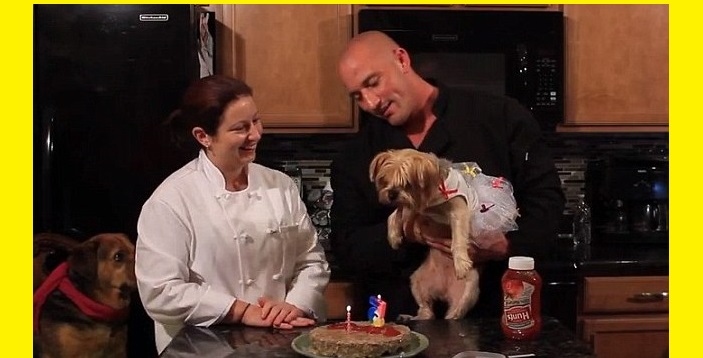
Dinner For Two – You And Your Dog Homemade Meals Provide A Special Treat For Pets,
Says Host Of Doggy Cooking Network
Dinnertime for many dogs involves the owner ripping open a bag, pouring kibbles into a bowl and walking away.
Not the stuff of a meaningful relationship.
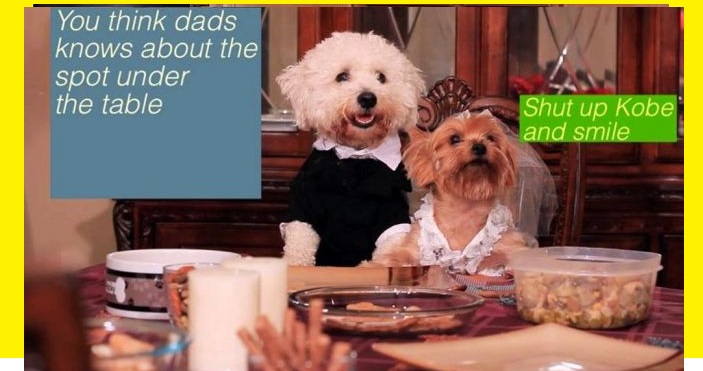
Kris Rotonda likes to take an occasional break from that routine and give his four dogs – Rocky, Coco, Kobe and Jordan – a special treat.
Rotonda and his fiancée, Denise Fernandez, prepare the canine quartet cooked meals using recipes they share on their Doggy Cooking Network on Youtube.
Rotonda sees it as a way to occasionally give his pets what he refers to as the “Royal ‘Treat’-Ment.”
“I started cooking for my dogs because it’s a healthier way to go for meals,” Rotonda says. “Plus, it’s just fun and my dogs are an important part of my life.”
His doggie devotion now has inspired him to develop a creation he calls the PupPot (www.puppot.com), a cooking, serving and storage system for preparing those homemade meals for dogs.
The PupPot consists of a 3.8-quart stainless steel cooking pot, a paw-shaped serving base and two serving and storage bowls. Rotonda and Fernandez also put together an e-book with recipes.
For Rotonda, the PupPot just seemed like the “logical next step.”
“I figured that if Denise and I were teaching people to cook for their dogs, it just made sense to provide them with the right tool,” he says.
Dr. Jena Questen, a holistic veterinarian, says taking that extra time for preparing those meals can be worthwhile. The benefits of feeding a dog homemade dog food include reducing the risk of skin allergies, boosting their immune system, improving their digestive system, as well as giving them renewed energy.
“It’s no different from humans,” Questen says. “We couldn’t eat the same processed food every day and maintain optimum health, and neither can our pets.”
Rotonda shares a few recipes for giving your canine pals the “Royal ‘Treat’-Ment” as well:
Bacon Rice Cakes
Ingredients 1 cup brown rice, cooked
2 slices lean bacon, cooked, finely chopped (Retain bacon fat)
1 large egg
½ cup dried bread crumbs
Directions 1. Mix chopped bacon and rice.
2. Add egg and breadcrumbs to rice and bacon mixture. Combine thoroughly. Wet hands to prevent sticking, and then form the egg-rice mixture into 4 thin patties.
3. Reheat the bacon fat in a skillet over medium heat. Add the rice cakes and cook, turning once until golden brown. About 4 minutes on each side.
St. Puppy’s Day Hash
Ingredients 2 baking potatoes (1-1 ½ lbs.), peeled and shredded
Sea salt
3 tablespoons unsalted butter, cut into small pieces
½ cup shredded carrots
¾ cup chopped corned beef
½ cup of half-and-half
¼ cup grated cheese
Ground pepper
4 large eggs, scrambled
Directions
1. Place the potatoes in a colander, lightly salt and set aside.
2. Melt butter in the PupPot over medium heat. Mix in the potatoes, carrots, and corned beef. Increase the heat to medium-high. Cover pot. Stir every 5 minutes. Cook until potatoes are tender, about 15 minutes.
3. Stir in half-and-half and turn off hear. Season with pepper and cheese.
4. Top hash with the cooked eggs.
Chicken Cakes
Ingredients ½ cup cooked brown rice
¼ cup of peas, thawed
1/3 cup of rotisserie chicken, meat shredded
1 egg
2 Tbsp. plain breadcrumbs
½ tsp of dried parsley
1 Tbsp. extra virgin olive oil
Directions 1. In a medium bowl, stir together the rice, peas, chicken, egg, breadcrumbs and parsley. Form into 4 equally sized patties.
2. In a skillet, heat olive oil over medium-high heat. Add the chicken patties and cook, turning once, until golden-brown for approximately 7-8 minutes. Remove from the skillet and let cool slightly.
About Kris Rotonda
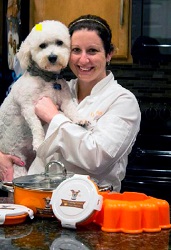
Kris Rotonda, an entrepreneur and creator of the PupPot (www.puppot.com), owns four dogs. He and his fiancée, Denise Fernandez, host the Puppy Cooking Network on Youtube. Rotonda also created YouMustLoveDogsDating.com, a niche dating website that matches dog owners with other dog owners.
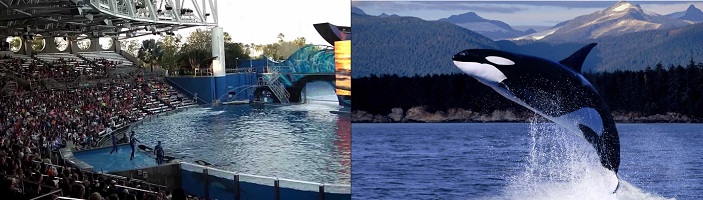
Ontario will be the first province to set specific standards of care for marine mammals
Ontario is moving ahead with enhanced standards of care for marine mammals – such as dolphins, belugas and walruses – to ensure both greater protection and improved treatment.
These new standards of care, reflecting advice from an expert report by University of British Columbia marine biologist Dr. David Rosen, will be among the best in the world.
New standards would be developed in a number of areas including:
The size of pools used to house marine mammals
Environmental considerations such as bacteria content, noise and lighting
Appropriate social groupings
Regulations for the handling and display of marine mammals
The government will establish a technical advisory group composed of veterinarians, animal welfare groups, industry, and enforcement partners to provide advice on the final standards and timing of their implementation. This group will report back with their findings within six months.
The government will also be moving forward with legislation to prohibit the future breeding and acquisition of orcas (killer whales) and establish Animal Welfare Committees at every facility with marine mammals. These committees will provide both oversight and access to additional protections such as veterinarians with expertise in marine mammals.
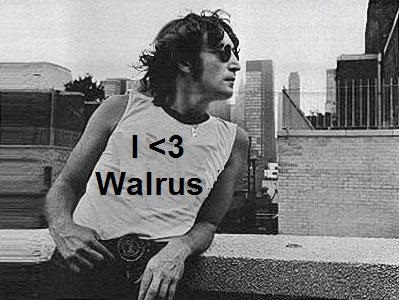
John Lennon “Walrus advocate”
“Our government is moving forward with stronger protections for marine mammals to ensure these unique animals receive the best possible treatment and care. This is something that Ontarians expect and these animals deserve. These higher standards of care, along with prohibiting any future breeding or acquisition of orcas in Ontario, are both the right thing to do and builds on our government’s ongoing efforts to have the strongest animal protection laws in Canada.”
Yasir Naqvi, Minister of Community Safety and Correctional Services
QUICK FACTS
Ontario will be the first province to set specific standards of care for marine mammals.
Ontario has the toughest animal protection laws in Canada.
There are over 60 zoos and aquariums in Ontario — more than any other province.
Ontario provides the Ontario Society for the Prevention of Cruelty to Animals (OSPCA) with $5.5 million annually to strengthen the protection of animals.
L’Ontario renforce la protection des mammifères marins
La province prend des mesures pour mieux protéger les mammifères marins et interdire l’acquisition et la reproduction en captivité des épaulards
L’Ontario va de l’avant avec des normes de soins améliorées pour les mammifères marins – dont les dauphins, les bélugas et les morses – afin d’assurer à ces animaux à la fois une plus grande protection et un meilleur traitement.
Ces nouvelles normes de soins, fondées sur les recommandations d’un rapport d’expert rédigé par David Rosen, un biologiste respecté spécialisé en vie marine de l’Université de Colombie-Britannique, seront parmi les plus rigoureuses au monde De nouvelles normes seront ainsi élaborées sur divers sujets, dont les suivants :
Taille des bassins utilisés pour garder les mammifères marins;
Facteurs environnementaux, comme la teneur en bactéries, le bruit et l’éclairage;
Groupements sociaux appropriés;
Règlements relatifs à la manipulation et à l’exposition des mammifères marins
Le gouvernement mettra en place un groupe consultatif technique, composé de vétérinaires ainsi que de représentants de groupes de protection des animaux, de l’industrie et de partenaires de l’application de la loi, pour fournir des conseils sur les normes définitives et sur le calendrier de leur mise en œuvre. Ce groupe communiquera ses conclusions dans un délai de six mois.
Le gouvernement ira aussi de l’avant avec une nouvelle législation pour interdire la reproduction en captivité et l’acquisition de ces animaux à l’avenir et pour établir des comités pour la protection des animaux dans tous les établissements où se trouvent des mammifères marins.
Ces comités seront chargés de la supervision et fourniront des protections additionnelles, dont l’accès à des vétérinaires spécialisés dans les mammifères marins.
CITATIONS
« Notre gouvernement va de l’avant en renforçant la protection des mammifères marins afin que ces animaux uniques reçoivent les meilleurs soins et traitements possibles. C’est ce à quoi s’attendent les Ontariens et aussi ce que ces animaux méritent. Ces normes de soins plus rigoureuses et l’interdiction d’acquérir et de reproduire en captivité des épaulards à l’avenir en Ontario sont des mesures appropriées qui s’inscrivent dans le cadre des efforts continus de notre gouvernement visant à doter l’Ontario des lois les plus rigoureuses du Canada pour la protection des animaux. »
Yasir Naqvi, ministre de la Sécurité communautaire et des Services correctionnels
FAITS EN BREF
L’Ontario possède la législation la plus rigoureuse du Canada pour la protection des animaux.
Il y a plus de 60 zoos et aquariums en Ontario — plus que dans toute autre province du Canada.
La province accorde à la Société de protection des animaux de l’Ontario une subvention de 5,5 millions de dollars par an pour renforcer la protection des animaux.
POUR EN SAVOIR DAVANTAGE
Renseignez-vous sur le travail de la SPAO (en anglais seulement)
Lisez le Rapport de l’Université de la Colombie-Britannique sur les normes de soins pour les mammifères marins en captivité
Dear Silo, you’ve probably heard me talk about my daughter Hannah in the past. She has been called many things: “The future of social media”, “Eco-Warrior”, “Changemaker” and “Activist”. At 10 years old, she is all of these things. And now, she can add Free The Children’s “We Day” speaker to the list. There will be nine We Days across Canada this school year, plus two in the United States. And the first U.K. We Day will happen in London next spring. [More on what “We Day” is all about below CP]
She created her blog, www.CallMeHannah.ca , at 9 years old, with the goal of sharing her growing knowledge and concern for the environment. Having always loved animals, Hannah made the connection between animals and the effects of environmental destruction on their habitats and lives. Hannah has become an engaged global citizen seeking to further her own understanding of her connection to and responsibility to the world. Believing that even the little things that we do add up to make a difference, her journey and discovery meet her call to action through her blog.
Issues that Hannah has written about in the past year include eco-friendly living, fair trade, bullying, clean water and child labour. She seeks inspiration and motivation from those who have come before her and regularly features the stories of her role models on her blog.
Not limiting herself to her laptop, Hannah has put her words into actions. She organized a shoreline cleanup in her community, was a WWF Earth Hour Team Captain 2013 and spoke at the WWFs Earth Hour event in Toronto, was the official “on the ground eco-blogger” for the JUNO Awards and launched We Create Change. Her impassioned speech at two local schools motivated her peers to collect 97,500 pennies for Free The Children’s clean water projects. An effective communicator, Hannah is comfortable and confident on both sides of the camera or in front of a crowd. She has honed her skills as an interviewer through conducting interviews with Craig Kielburger, Spencer West and Severn Suzuki. Hannah has appeared on CanadaAM, The Marilyn Dennis Show, APP Central, CBC’s Fresh Air and The George Stroumboulopoulos Show. She has been featured in a spotlight from Chickadee Magazine and named as a Champion of the Earth in Owl Magazine and was the youngest team captain for The WWF’s Earth Hour in 2013. As you can see, I am very proud of my daughter and her efforts to improve the world we live in. Her current focus is on We Day.
“We Day is a room that can transform people, where messages about bullying and social issues can resonate and a place where students can find people just like them,” said Free The Children ambassador Demi Lovato. “Growing up I was forced to deal with many personal struggles and I craved a space where I not only belonged but felt powerful enough to make a difference. To me, that‘s what We Day does – it brings people together in a day of celebration for world change, showing them they aren‘t alone in their journey and that it is cool to care. And I am so grateful to be a part of that.”
“As kids, we face different pressures all the time,” said Austin Mahone, Award-Winning American pop singer. “You‘ve got to surround yourself with positive people in your life, and that‘s what We Day does. It brings people together to celebrate the difference we can make for each other. I‘m so excited to be a part of it for the first time this year!”
We Day is a stadium-sized educational event and a movement of young people leading local and global change. We Day is tied to the year-long program, We Act, which supports students and educators with free educational resources, student-led campaigns and support materials to help turn the event‘s inspiration into sustained activation. Since 2007, youth involved in the We Act program have raised $37 million dollars for over 1000 local and global causes and logged more than 9.6 million volunteer hours.
“I had the opportunity this past summer to participate with Free The Children‘s communities in Kenya, and see first-hand the lasting impact that youth in North America are making through their charitable work,” said Joe Jonas from the Grammy® nominated, multi-platinum band the Jonas Brothers. “I understand what it means to these communities to have access to clean water and an education and I was thrilled to get involved by committing to help build two schools overseas with Free The Children. It may seem like a simple assignment to make one local and one global commitment, but these efforts fundamentally impact the lives of people around the world.” Eric Halper.
Free The Children is an international charity and educational partner. Founded in 1995 by international activist Craig Kielburger, Free The Children believes in a world where young people are free to achieve their fullest potential, and empowers youth to remove barriers that prevent them from being active local and global citizens. The organization‘s domestic programs—which includes We Day, Free The Children‘s signature youth empowerment event—educate, engage and empower 1.7 million young people across North America, the UK and around the world to become engaged global citizens. Its international projects have brought more than 650 schools and school rooms to youth and provided clean water and sanitation, health care and food security to one million people around the world, freeing children and their families from the cycle of poverty.
The organization has received the World’s Children’s Prize for the Rights of the Child, the Human Rights Award from the World Association of Non-Governmental Organizations, and has formed successful partnerships with leading school boards and Oprah’s Angel Network. For more information, visit www.freethechildren.com.
The trendy and kitschy Owl. images/photos: Charity Blaine
Blog writers are like Indie music that’s about to become “cool”, or rather, they are the people that enjoy the Indie music before it’s “cool”, in fact, they are most likely part of the reason it eventually becomes popular. Only it’s not just music. It’s everything. Lifestyle bloggers like EVERYTHING before it’s cool. Therefore, I, as a blog reader, know about everything cool before it is cool. I, am a blog world hipster, and I’m only partly ashamed to admit it.
To clarify, it’s not just the blogs themselves that set the trends; it’s also the only shops where bloggers sell their handmade goods, such as etsy.com. Years ago, I remember searching for kitschy little polymer clay earrings shaped like foods at etsy, today, when I no longer want them, they are available for a fraction of the price at popular stores such as Clare’s and Arden’s, although truthfully, they do look cheaper. The handmade versions look more like real food than the store bought versions. You should never believe anything that doesn’t come with proof, so here are three substantial examples of bloggers, not retailers, setting the trends.
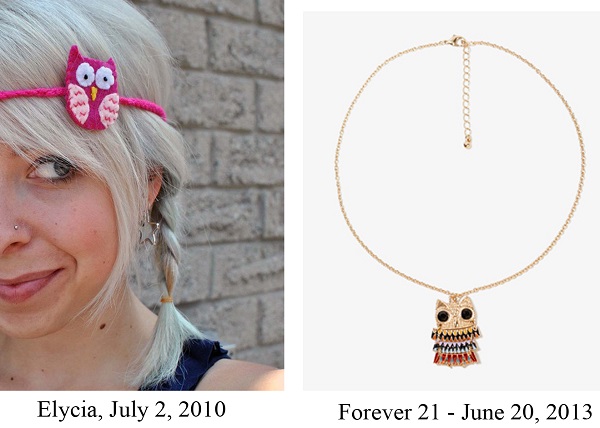
1) Owls. I really hate owls. I don’t think they’re cute. I don’t understand the obsession at all, but so many places these days sell things adorned with owls. Don’t get me wrong, I realize that owls were popular years ago, but this is a reference to the current owl obsession. Forever21.com and http://verified.codes/Forever-21sells more than a dozen owl accessories so does Clare’s. Where did I first see an obsession with owls? In the blog world, for example, blogger Elycia Watson (loveelycia.com) from Hamilton, Ontario posted regularly about owls more than three years ago. All the blogs I initially read as a blogger were full of owls.
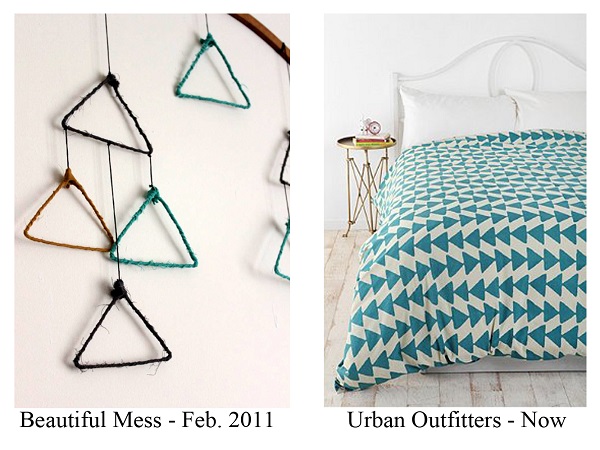
2) Geometric Shapes. Bloggers love chevrons, triangles, lines, squares, any simple shape that can be coloured pink or gold. This isn’t the best example, but two years ago, the Sidney Crosby of blogs, A Beautiful Mess, did a ‘do- it –yourself’ project “making a geometric mobile”. It’s a clothes hanger with dangling wire triangles wrapped in yarn, basic and geometric. Most of the bedding at Urban Outfitters these days is adorned with chevrons and triangles. This also points to the ‘do- it- yourself’ trend. These crafty women have been doing it yourself way before pinterest made it popular. To sound even more hipster, I remember when pinterest first started, in those days, there were no weight loss schemes or a surplus of one direction photos, it really was mostly crafts and home décor, and bloggers used it to find inspiration for new blog posts. I love pinterest, so thanks again bloggers for being cool before it was cool.
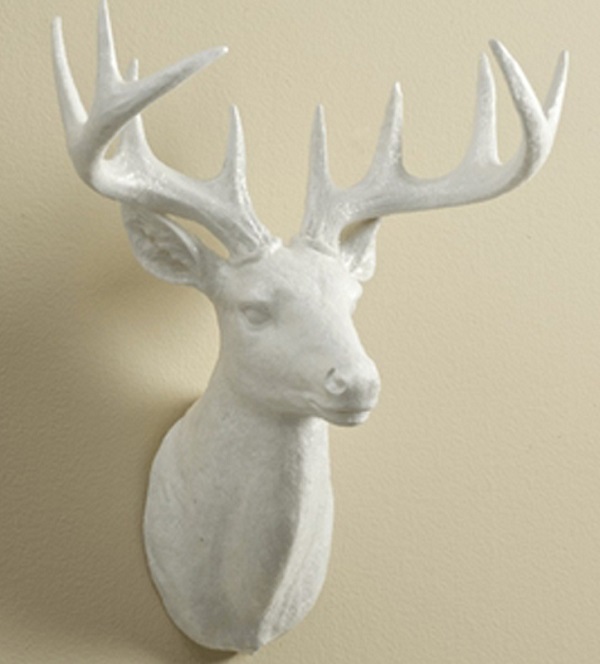
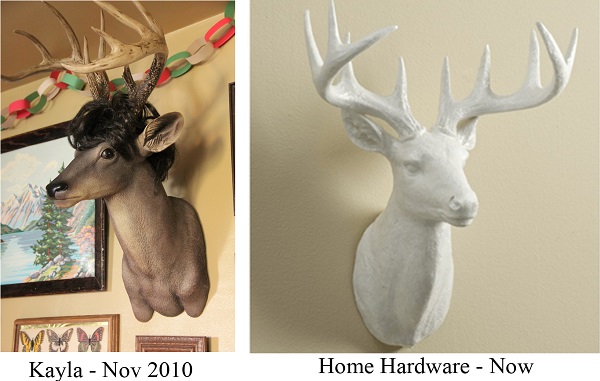
3) Since I’ve already given four substantial examples I don’t really need a number 3, but just in case you still doubt, take a look at Faux Deer Head for your wall. Flipping through a home décor magazine lately, I found a photo of a plaster deer head, in the style of the mounted, taxidermy deer head that hunters would have on their walls. Currently, even Home Hardware sells them. Bloggers have been doing this for years. They even use old piñata heads. They give the deer head hats and jewelery. The Dainty Squid was one of the first places I really remember seeing this phenomenon. Kayla found a plastic deer head more than 3 years ago, plopped a wig on its head and called it beautiful.
So the conclusion is- if you really want to be ahead of the wave, read blogs, small, crafty, lifestyle blogs. By the time any of that stuff hits the mainstream, you’ll be really sick of it and you can officially embrace your inner hipster and tell everyone, while sporting an ironic moustache, that you liked all those things, including ironic moustaches, before they were cool. For the Silo, Charity Blaine.
Time flies. Seven years ago, The Silo visited the AGO’s Picasso exhibition. We were not disappointed. Approximately ¼ of the entire second floor was dedicated for displaying works from Picasso’s private collection. That’s right- these are the pieces that Pablo himself deemed specially significant for archiving and for his personal reflection. We were not disappointed.
Blowup and detail from Portait de Dora Maar (Portrait of Dora Maar), 1937. Oil on canvas, 92x65cm
Organized by the Art Gallery of Ontario (AGO) and the Musee National Picasso , Paris- the exhibition is chronologically organized with each period having its own dedicated gallery space and covers the following phases of Picasso’s VASTLY productive lifetime: From Spain to Paris 1900-1905 Ancient, African and Oceanic Inspirations 1906-1909 Cubism, Collage and Constructions 1909-1915 Classicism, Marriage and Family 1914-1924 Surreal Anxiety and Desire 1924-1934 War Paintings 1936-1951 and lastly The Joy of Life and Last Years 1950-1972
According to the Picasso’s Picassos (Picasso’s Early Life and Art) on pg 2 of the AGO’s exhibition catalog, Pablo Picasso was recognized as “an artistic prodigy and began…formal artistic training when he was only seven years old” with his father, who was a painter and an art teacher. For the next 85 (!) years Picasso would go on to not only change the art world, but would leave behind a vast legacy that is as fresh and relevant today as it ever was. Strolling around this fine exhibition and noticing how the other visitors were dressed is proof enough for this writer that Picasso’s influence on society is far from over. For the Silo, Jarrod Barker.
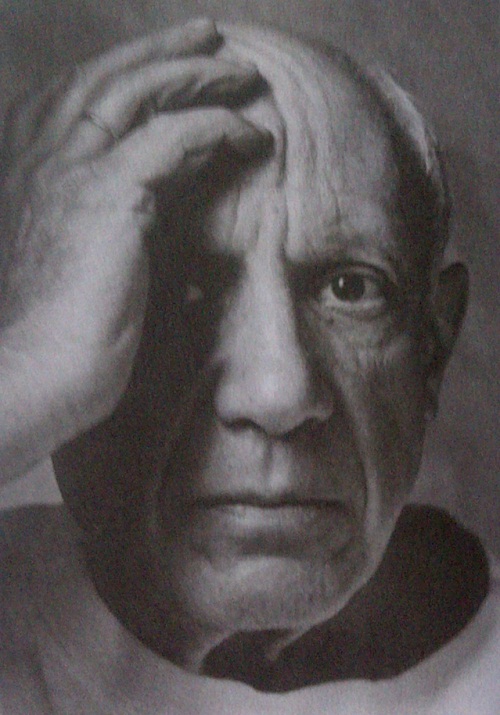
Picasso at 73years of age in 1954. “When I paint I feel that all artists of the past are behind me.”
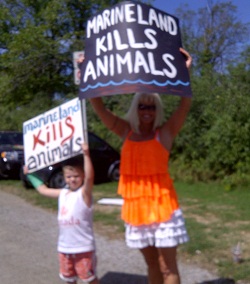
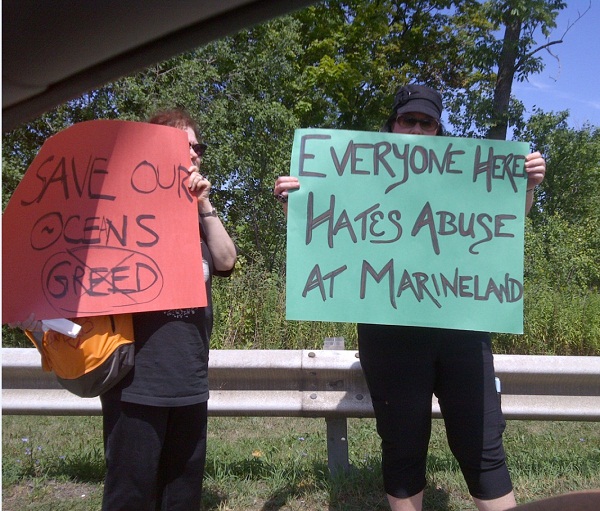
On Saturday August 18th- hundreds of protesters gathered in front of the main entrance gates of Marineland in Niagara Falls, Ontario. At stake was the ethical treatment of animals used for performances and entertainment. Over the past three years there have been increased reports by the media regarding the attacking of trainers by killer whales and other performing animals.
Messages on protest signs were simple, bold and clear. photos:The Silo/Mith Media
Many researchers believe that this sort of behavior is inevitable because killer whales are adversely affected by forcible confinement and pavlovian conditioning and that in turn has many questioning whether theme parks such as Marineland and Seaworld are capitalizing on animal cruelty. It’s not a new topic- zoo’s and circuses are not strangers to demonstration and protest and the relationship between humans and animals is a theme often employed by conscientious artists.
[Warning- the following video contains disturbing images. Viewer discretion is advised CP]
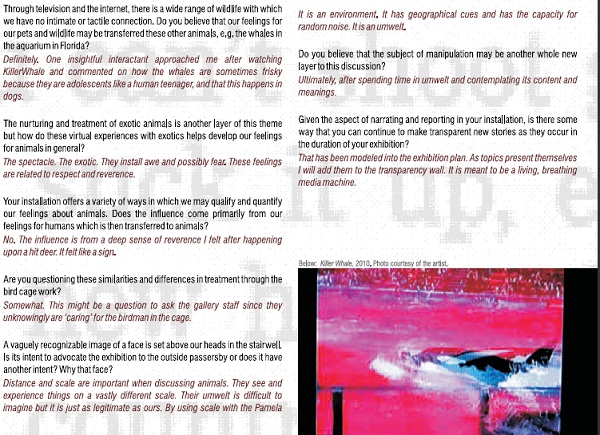
Segment from Umwelt (2010) exhibition catalogue- Jarrod Barker’s installation at the Norfolk Arts Centre explored the connectedness or non-connectedness (ie: the umwelt) of humans and animals. image:courtesy of the artist
Marineland denied our request (along with the Toronto Star’s request) for an interview and requested that the media respect “private [their] property”. That sort of reaction makes it difficult to investigate a story of this magnitude- and many questions remain unanswered. For example, earlier this year an infant beluga whale was attacked repeatedly by two adult belugas until it was killed. Media leaks reveal that the baby whale may have been ill and that the other animals acted out of fear since they may have detected signs of a contagious disease.
image: The Silo
Although no date has been set, The Ontario Society for the Prevention of Cruelty to Animals is planning on bringing independent Sea Mammal experts and Marine Biologists into Marineland for an inspection according to an online report at www.thestar.comCP
Artist Jarrod Barker, was recently invited to take part in MUCA-Roma’s Ala Afuera project. Based in the Roma district of Mexico City, MUCA is a University Museum of science and art. What made this project doubly exciting was the opportunity to show case a part of Barker’s home internationally.
The curators asked for a submission of 3 images and accompanying explanatory write-ups that “from your perspective, show a form of relationship between humans and the rest of nature.” This topic aka- Umwelt is not foreign to Barker who installed an exhibition of that name in 2010 at the Norfolk (nee Lynnwood) Arts Center in Simcoe,Ontario.
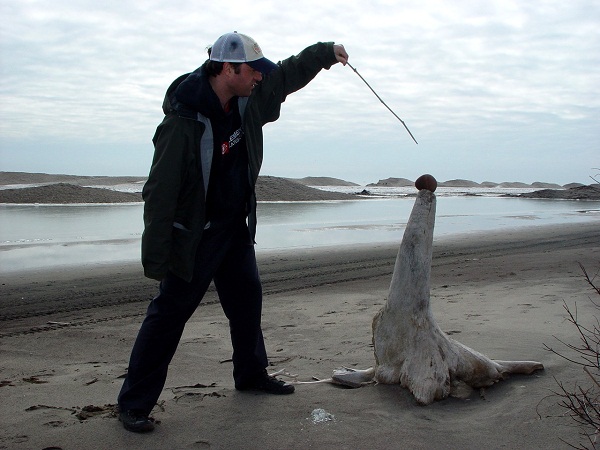
Long Point Seal Tamer Concept- J. Barker Location: Long Point, Norfolk County, Ontario, Canada Long Point is a world biosphere. I know this because the United Nations has told me so. But for several months of the year Long Point is transformed. Under certain winter conditions, Long Point looks less like a marshy, swampy bird watchers paradise and more like an arctic shore. At least on the South West side. When I visit Long Point during these times, I react to the environmental changes. I see things differently. I feel things differently. A sun bleached tree stump becomes a seal. A marsh reed becomes a baton. A flint pebble becomes a ball. Natural transformation through the changes of the seasons is a holistic experience.
After the selection process, if successful- one of the artist submitted images and write-ups was selected for transformation into a postcard and incorporated with the other artist submissions. The goal was for the Ala Afuera team to mail out the postcards to other international Museums of art and science and Contemporary Art institutions as a connective gesture to highlight MUCA and the work of the artists involved in this project and to bring awareness to our human/nature relationships.
“The objective of the project Allá Afuera (Out There) is to gather a mosaic of images that represent ways of understanding the relationship we humans have with the rest of nature. From bucolic or passionate points of view to other more threatening myths and taboos, amazement, fear, the absurd, and maybe even indifference. We do not intend to cover all possibilities, but through images as a direct reading form, show that there are multiple ways of looking at this Bond.
Three times a year we will present a collection of postcards, with 18 images each, gathered in a biombo format. After two years we will complete the edition of six collections, with a total of 108 ways of understanding, 108 points of view, and 108 forms of defining our relationship with what is out there. “
Ala Afuera which translated mean’s “Out there” began mailing out the works a few weeks ago. For the Silo, Stephanie Bordega.
For more information and to request postcards please contact-
Allá Afuera (Out there) project Gonzalo Ortega and Jeronimo Hagerman
MUCA ROMA MUSEUM (University museum of science and art, Roma district, Mexico City) [email protected]





 want and adults should enjoy the same free pass. You should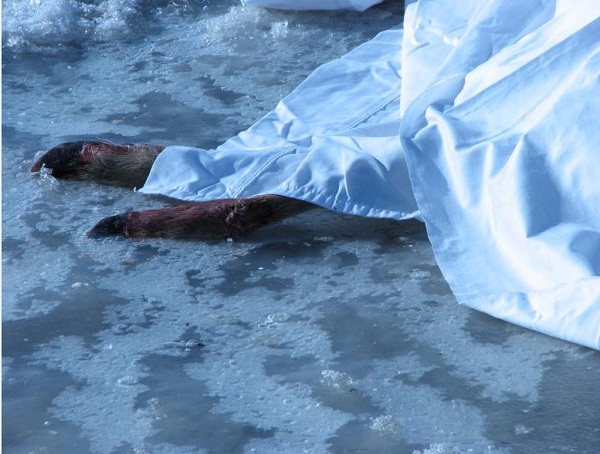


 Major public opposition has been building against the planned dolphin exhibit at the Mississippi Aquarium in recent months. Over 15,000 In Defense of Animals supporters have written to Hewes and Meadows since the plans were revealed. A former dolphin trainer at Gulfport’s Marine Life Oceanarium has amassed almost 160,000 supporters for her petition calling on Mississippi Governor Bryant not to redirect $17 million of BP deepwater drilling disaster restoration funds to build the Aquarium.
 While opposition to dolphin captivity grows in Mississippi, a sea-change is being felt across the country and around the world. SeaWorld ended orca breeding last year and announced that it is phasing out orca captivity in all three of its parks in Florida, Texas, and California. Last month, the Vancouver Aquarium was banned from keeping or breeding cetaceans, and now the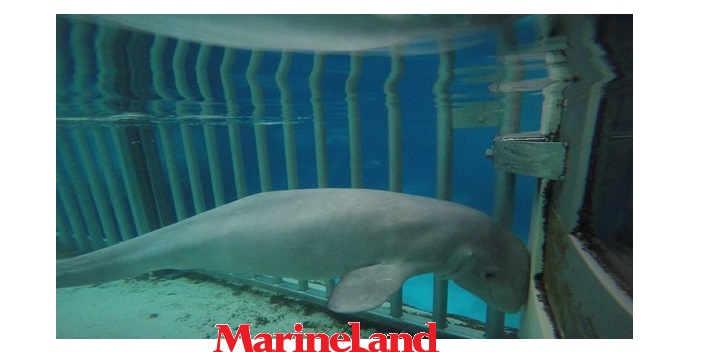

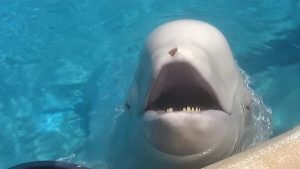 The list was selected from over 60 facilities from southern Canada to Mexico where almost 1,000 whales and dolphins are held captive for public display. “Forcing an orca to live in solitary confinement while hoarding so many beluga whales is Marineland’s tragic dichotomy, and a horrific example of cetacean captivity. It plumbs the depths in its exploitation of intelligent and sensitive animals,” said In Defense of Animals President, Dr. Marilyn Kroplick. “Even with the most modern technology, veterinary care, and infrastructure, cetaceans still suffer intensely in captivity and exhibit surprisingly high mortality rates.Please help protect dolphins and whales in the wild where they belong, by pledging to never visit facilities that imprison them.”