Tag Archives: Soviet

Behind The Scenes: A Look Back at the Cuban Missile Crisis

This article provided by our friends at Share America/ US Department of State.

President John F. Kennedy and others around table (White House/Cecil Stoughton/John F. Kennedy Presidential Library and Museum)
President John F. Kennedy meets with members of the Executive Committee of the National Security Council regarding the crisis in Cuba, in October 1962. (White House/Cecil Stoughton/John F. Kennedy Presidential Library and Museum)

The Cuban missile crisis of October 1962 was the moment that the United States and the Soviet Union came closest to nuclear war. The conventional wisdom is that decision-making occurred “with relatively little input from the respective bureaucracies  typically involved in the foreign policy process.”

In fact, the lawyers in the State Department’s Office of the Legal Adviser played a crucial role in crafting a strategy that would simultaneously project American strength and maximize decision-makers’ political flexibility.

A brewing crisis

In July 1962, the Soviet Union secretly agreed with the Castro regime to place medium and intermediate range ballistic nuclear missiles in Cuba, a mere 90 miles off of the Florida coast, targeting the entire eastern and middle United States and a large portion of Mexico, Central and South America.

A right side view of two vehicle-mounted Soviet R-14 Chusovaya (NATO code name SS-5 Skean) intermediate-range ballistic missiles.

In early September 1962, U.S. intelligence discovered evidence of a general Soviet arms buildup, including IL-28 “Beagle” tactical nuclear bombers.

On September 4, 1962, the White House issued a statement  that “All Americans, as well as all of our friends in this hemisphere, have been concerned over the recent moves of the Soviet Union to bolster the military power of the Castro regime in Cuba,” that approximately 3,500 Soviet military technicians were “in Cuba or en route,” but that there was “no evidence” of “offensive ground-to-ground missiles; or of other significant offensive capability either in Cuban hands or under Soviet direction and guidance. … Were it to be otherwise, the gravest issues would arise.” Then-President John F. Kennedy promised that the United States “shall continue to make information available as fast as is obtained and properly verified.”

On October 3, 1962, the Congress passed a joint resolution  declaring that “the United States is determined to prevent by whatever means may be necessary, including the use of arms, the Marxist-Leninist regime in Cuba from extending, by force or the threat of force, its aggressive or subversive activities to any part of this hemisphere.”

On October 14, 1962, a U.S. U-2 aircraft took several pictures clearly showing sites for nuclear-armed, medium-range and intermediate-range ballistic missiles under construction in Cuba.

Map of Cuba showing locations of Soviet military equipment (John F. Kennedy Presidential Library and Museum)
A map of Cuba, with a partial listing of Soviet military equipment, used during the president’s meetings with political and military advisers. (John F. Kennedy Presidential Library and Museum)

The president and his advisers considered a range of options. Some, including all members of the Joint Chiefs of Staff, argued for an air strike to destroy the missiles followed by a U.S. invasion of Cuba. Others argued for warnings to Cuba and the Soviet Union without action. The president decided upon a middle course. On October 22, 1962, he ordered a naval “quarantine” of Cuba.

The use of the word “quarantine” legally distinguished this action from a blockade, which assumed a state of war existed. The use of “quarantine” instead of “blockade” also enabled the United States to receive the support of the Organization of American States. The goal was to prevent further military deliveries to Cuba and to apply pressure on the Soviet Union to remove the existing missiles and bombers.

That same day, the president sent a letter  to Soviet Premier Nikita Khrushchev declaring that the United States would not permit offensive weapons to be delivered to Cuba and demanding that the Soviets dismantle the missile bases already under construction or completed and return all offensive weapons to the Soviet Union.

The letter was the first in a series of direct and indirect communications  between the White House and the Kremlin throughout the remainder of the crisis. That evening, Kennedy announced to the nation via a televised address  that the United States had confirmed that a series of offensive Soviet missile sites were in “preparation” and that their purpose “can be none other than to provide a nuclear strike capability against the Western Hemisphere.”

On October 23, 1962, the president issued Proclamation 3504 , “Interdiction of the Delivery of Offensive Weapons to Cuba.” The order included “Surface-to-surface missiles; bomber aircraft; bombs, air-to-surface rockets and guided missiles; warheads for any of the above weapons; mechanical or electronic equipment to support or operate the above items; and any other classes of materiel hereafter designated by the Secretary of Defense for the purpose of effectuating this Proclamation” and provided that “to enforce this order, the Secretary of Defense shall take appropriate measures to prevent the delivery of prohibited materiel to Cuba, employing the land, sea and air forces of the United States in cooperation with any forces that may be made available by other American States.”

On October 25, 1962, the U.S. military was ordered to DEFCON 2, the alert state just short of nuclear war and the highest-level alert ever issued in U.S. history.

A Russian IL-28 bomber.

On October 28, 1962, the Soviet Union announced the dismantling of its missiles in Cuba.

On November 20, 1962, following the Soviet Union’s agreement to withdraw the IL-28 nuclear bombers from Cuba, the president terminated the quarantine.

Marked low altitude reconnaissance photo (Department of Defense/John F. Kennedy Presidential Library and Museum)
A low-altitude reconnaissance photograph shows destroyed launch pads at medium-range ballistic missiles site number 2 in San Cristóbal, Cuba. (Department of Defense/John F. Kennedy Presidential Library and Museum)

How the legal adviser empowered U.S. decision-makers

The State Department’s Office of the Legal Adviser played a pivotal role by creating options for the president and other U.S. decision-makers to shape U.S. diplomatic strategy.

In September 1962, after it became clear that the Soviet Union was rapidly building an offensive military capability in Cuba, the White House tasked the State Department’s Office of the Legal Adviser with assessing the United States’ international legal obligations and commitments. The Kennedy administration thought that the best option available — short of military invasion or an aerial campaign — was to prevent any additional military equipment  from reaching Cuba.

A problem was that Secretary of State Dean Rusk and Vice President Lyndon Johnson had both recently testified to Congress that a blockade of Cuba would be “an act of war.” Legal Adviser Abram Chayes advised against such a blockade in a now-declassified legal memo:

Legal memo excerpt (John F. Kennedy Presidential Library and Museum)
An excerpt from September 10, 1962, memorandum  by State Department Legal Adviser Abram Chayes (John F. Kennedy Presidential Library and Museum)

Accordingly, the administration shifted from the idea of a blockade to a “defensive quarantine.” The State Department’s Office of the Legal Adviser had proposed that shift during a meeting of the Executive Committee of the National Security Council on October 19, 1962. While a defensive quarantine would not be an act of war, it would still be a use of force. Thus, a defensive quarantine would be analyzed under Article 2(4) of the United Nations Charter : “All Members shall refrain in their international relations from the threat or use of force against the territorial integrity or political independence of any state, or in any other manner inconsistent with the Purposes of the United Nations.”

The Office of the Legal Adviser analyzed the word “other” in Article 2(4) to mean that only threats or uses of force inconsistent with the purposes of the United Nations were prohibited. In other words, even measures that might impinge on the territorial integrity or political independence of a state would not necessarily violate Article 2(4) as long as such measures were not inconsistent with the purposes of the U.N. The purpose of the quarantine was to safeguard peace and stability in the region, and Article 52 of the U.N. Charter affirms that regional organizations could enact their own solutions for peace and security.

The Office of the Legal Adviser therefore turned to the Organization of American States Charter and the Rio Treaty . Article 6 of the Rio Treaty sets forth a broad authorization for regional security: When a situation “might endanger the peace of America,” the Member States would “meet immediately in order to agree on … the measures which should be taken for the common defense and for the maintenance of the peace and security of the [American] Continent.” Based on that, the State Department concluded that a defensive quarantine — and even a blockade — authorized by the Organization of American States would be consistent with the purposes of the U.N. and international law.

On October 23, 1962, the same day that the president issued Proclamation 3504, the secretary of state presented in person to the Organization of American States  to invoke the Rio Treaty and introduce a draft resolution to authorize a use of force for the quarantine:

Declassified document excerpt (John F. Kennedy Presidential Library and Museum)
Now-declassified Top Secret account  of the critical Organization of American States’ meeting on October 23, 1962 (John F. Kennedy Presidential Library and Museum)

The member states unanimously adopted the U.S. resolution, authorizing them to “take all measures, individually and collectively including the use of armed force which they may deem necessary to ensure that the Government of Cuba cannot continue to receive from the Sino-Soviet powers military material and related supplies which may threaten the peace and security of the Continent and to prevent the missiles in Cuba with offensive capability from ever becoming an active threat to the peace and security of the Continent.” Notably, Cuba had been suspended  from the Organization of American States earlier that year because its communist government threatened the region.

The United States’ deployment of a quarantine consistent with international law proved highly effective. On October 24 and 25, some Soviet ships turned back from the quarantine line, while others were stopped by U.S. naval forces but allowed to proceed after confirming they were not carrying offensive weapons. The quarantine helped convince Soviet dictator Nikita Khrushchev to come to the negotiating table. By October 28, the United States and the Soviet Union reached a deal for the removal of the Cuban missiles, effectively ending the crisis.

Lessons learned

The Cuban missile crisis case study proves that creative legal advice can help counter U.S. adversaries, build international coalitions and preserve peace. Then, the Office of the Legal Adviser developed practical alternatives providing American political and military leaders maximum flexibility in action while at the same time informing and supporting the administration’s public diplomacy strategy. Today, the Office of the Legal Adviser provides the legal advice needed to help our clients advance American interests worldwide, and the results are evident: from Gaza to the Caucasus to eastern Africa and beyond, the president, the secretary of state, and other senior policymakers are leveraging the Office of the Legal Adviser’s innovative ideas to help make America safer, stronger and more prosperous.

For the Silo, Reed D. Rubinstein/ Legal Adviser of the U.S. Department of State.

Supplemental- How Canada was affected by the Crisis
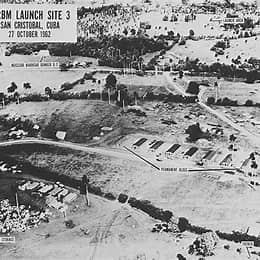
Cuban Missile Crisis

The Cuban Missile Crisis heightened military readiness in Canada, strained U.S. Canada relations, and had lasting political implications for the Canadian government.

Military Readiness and Alert Status

During the crisis, Canada faced a direct threat from the Soviet missiles stationed in Cuba, capable of reaching both the United States and Canada. In response, Canadian armed forces were placed on heightened alert. National Defence Minister Douglas Harkness requested that Canadian military units raise their alert level to the “Ready State”, equivalent to the U.S. DEFCON 3. This decision was delayed due to internal cabinet debates, reflecting the cautious approach of Prime Minister John Diefenbaker, who was hesitant to fully commit Canadian forces without U.S. approval.

Political Implications

Diefenbaker’s indecisiveness during the crisis soured relations with the United States. His reluctance to provide unequivocal support for U.S. actions, such as the naval blockade of Cuba, led to tensions between the two countries. Diefenbaker’s government faced criticism for its handling of the crisis, which contributed to the its downfall in the 1963 election. The crisis highlighted the complexities of Canada-U.S. relations, particularly regarding military cooperation and sovereignty issues, as Diefenbaker sought to assert Canada’s independence in foreign policy.

Military Cooperation and Lessons Learned

The crisis also underscored the importance of military cooperation between Canada and the United States. Canadian naval forces participated in patrols to locate Soviet submarines in the North Atlantic, demonstrating the close coordination between the Royal Canadian Navy (RCN) and the U.S. Navy. The experience gained during the crisis influenced future Canadian military operations and emphasized the need for readiness in the face of potential threats.

Conclusion

Overall, the Cuban Missile Crisis had a profound impact on Canada, affecting its military posture, political landscape, and diplomatic relations with the United States. The events of October 1962 served as a critical moment in Canadian history, sharing its approach to defense and foreign policy in the subsequent Cold War era.
Old School Soviet Digital Watch Is Back

The US and USSR going “Band for Band”

Our friends at kommandostore talk about the Cold War on their site so often, it’s become one of their defining aesthetics…..and that’s a good thing- read on!

Grand armies and weapons are arguably less than half of the story.

Many of the cold war ‘battles’ from the 1950s through the 1990s took place in the minds and on the wrists of millions of people. Some might say they certainly still do…

Rogue media campaigns, protests & activism, black ops — they defined the hottest parts of the Cold War. But what if we told you that the watch you were wearing was just as important? The Soviet Union sure thought so…

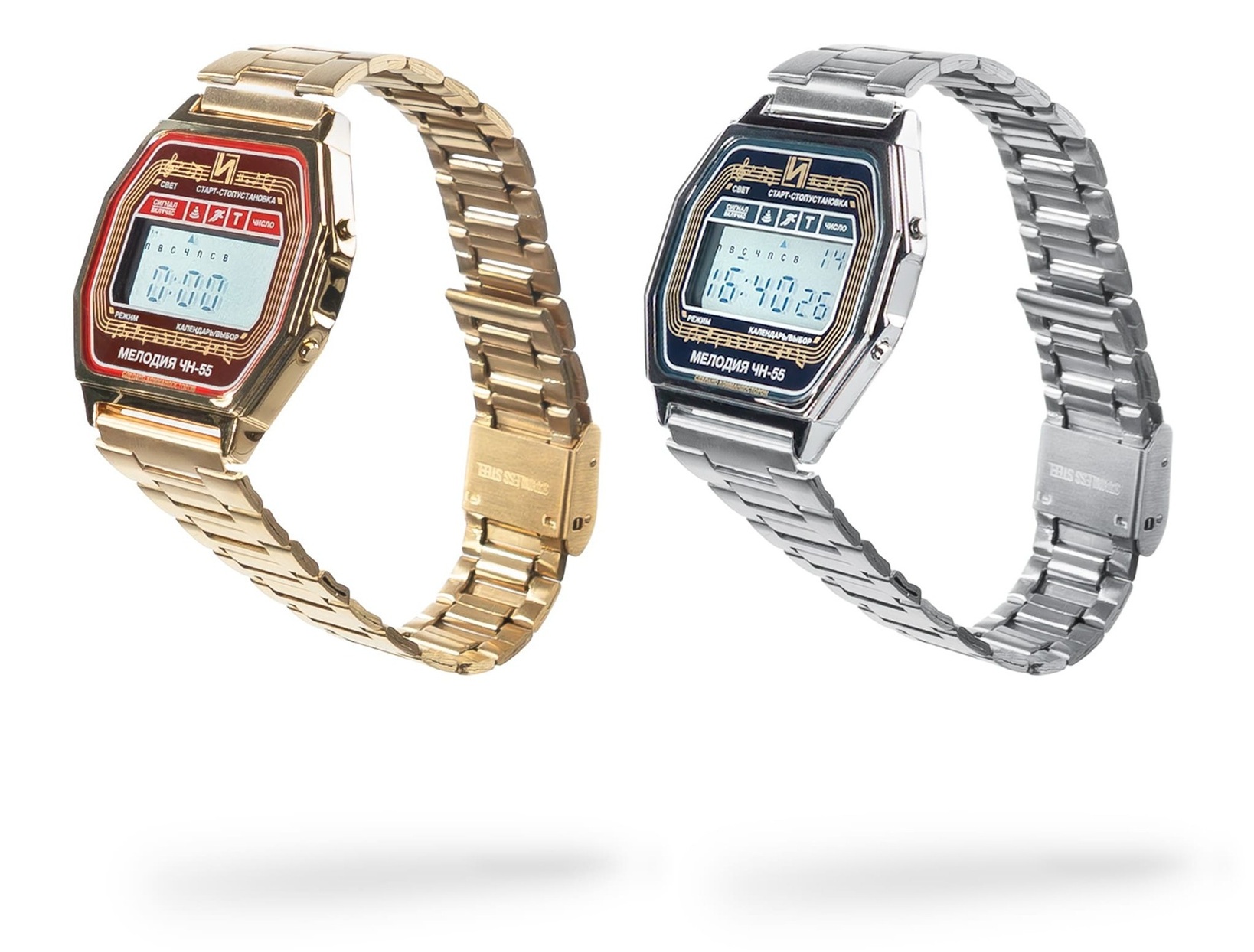
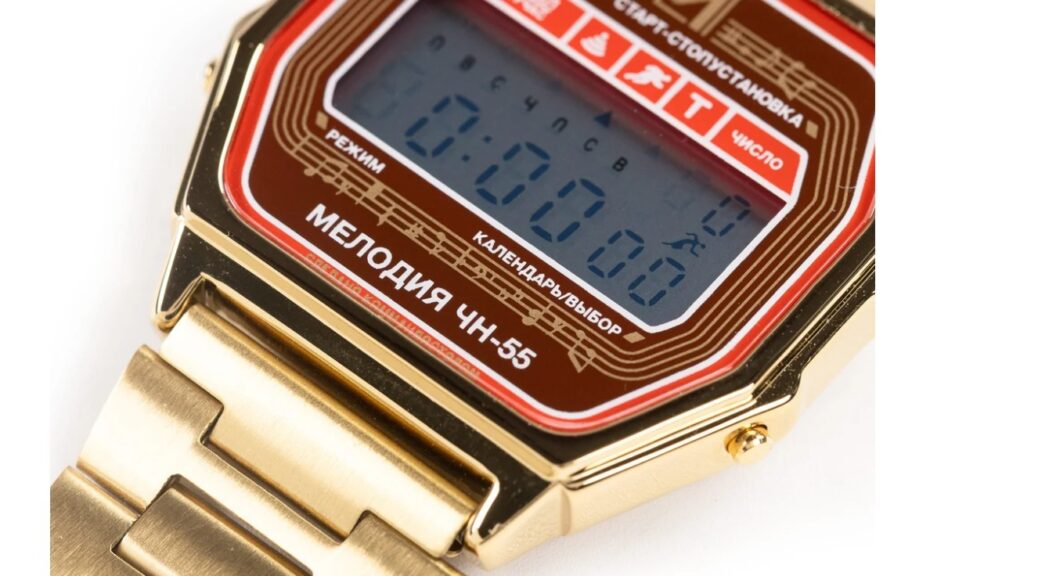
Having gotten sucked into the almost endless lore rabbithole of watches, the first thing that kommandostore sought to bring back from obscurity was the Elektronika 55B — the soviet union’s most popular digital watch that went the way of… well, the Soviet Union… When it collapsed in ’91.

Above all else, there’s one story about this watch that truly stands on its own, a story that will make you realize that there is much more to this little watch that jovially plays chiptune soviet music…

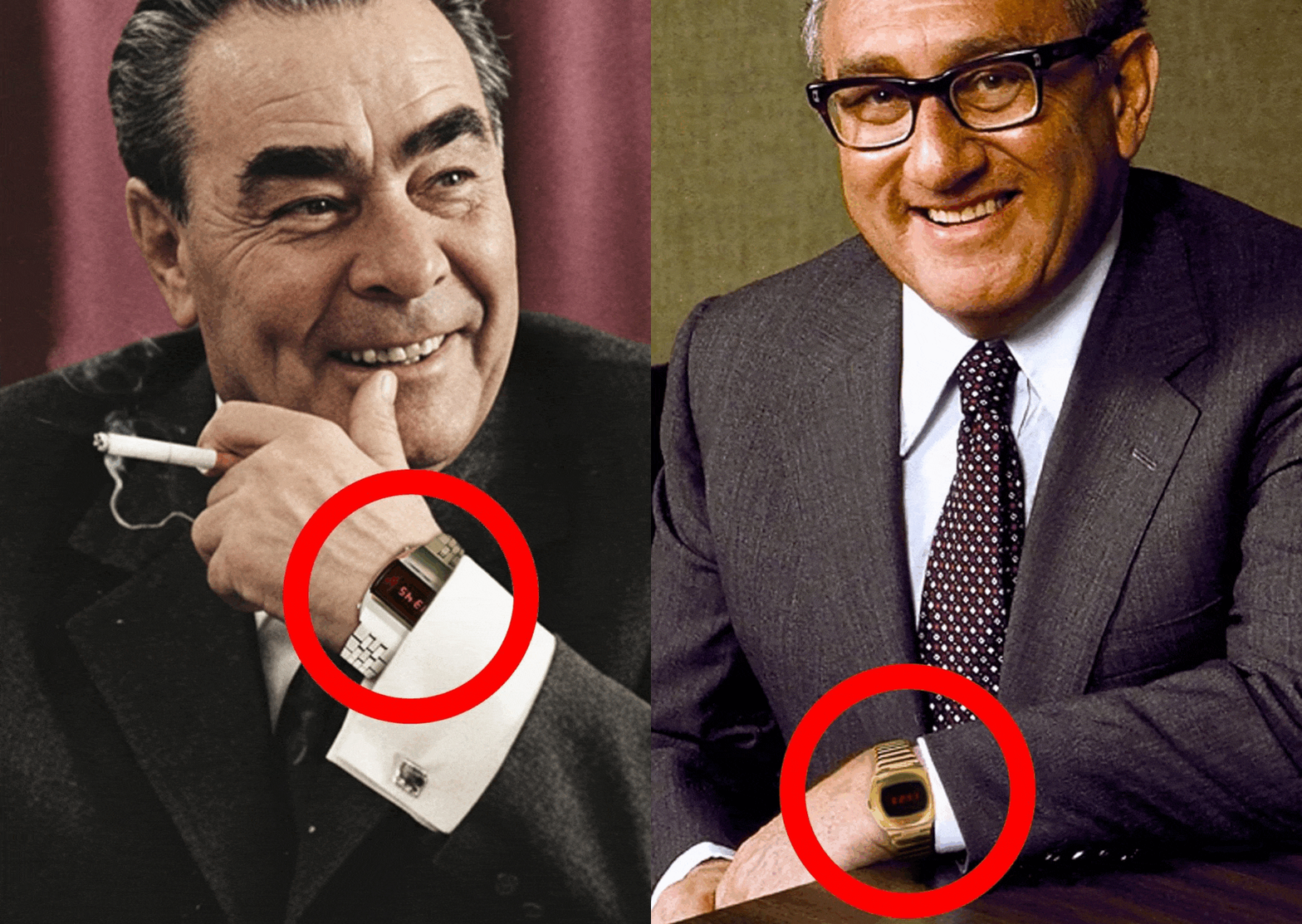
It involves two of the most powerful men in the world, Leonid Brezhnev and Henry Kissinger convening and comparing their new digital watches.

Ok, they weren’t really wearing the watches in that photo, but such an encounter really did happen between the two gentlemen in the early 70s, one that subtly let the United States know that the Soviets were right on the US’s tail for semiconductor technology.

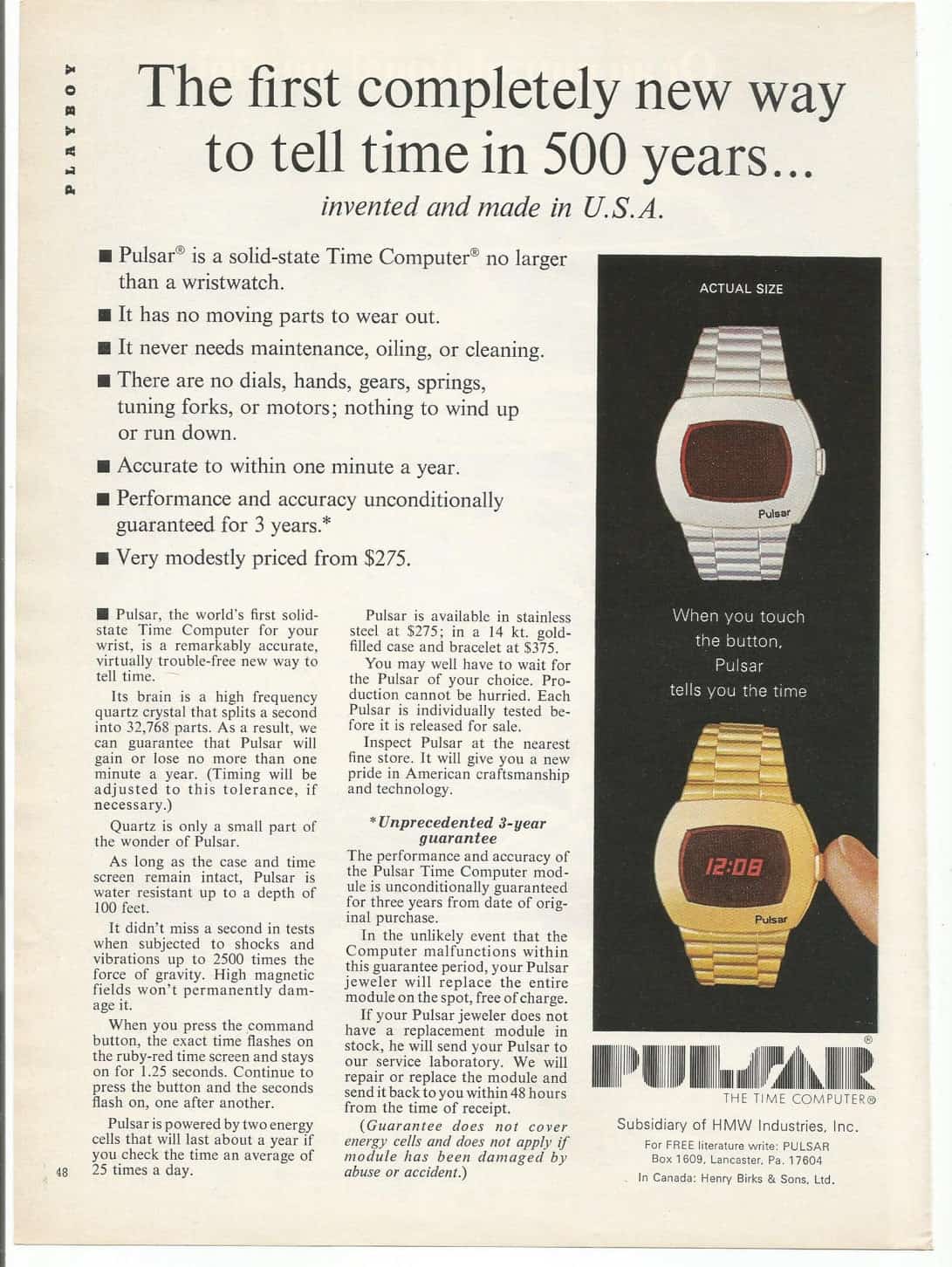
On a somewhat-routine visit to Moscow, US Secretary of State Henry Kissinger wore a Pulsar P2 Watch — one of the very first digital watches. Known for it’s striking red LED display and appearance on the wrist of none other than James bond.

It also carried a hefty price tag, with the 21k gold edition costing enough to buy you a car in today’s money.

You tell us, is $1800 usd/ $2,526 cad in today’s money worth it for one of the two base models? 

The meeting was with Leonid Brezhnev, General Secretary of the Soviet Union. He remarked that he did indeed like Kissinger’s watch, being a man of taste.

Then he told Kissinger that the USSR had already developed a prototype using the very same technology.

Kissinger was reportedly astonished — and was presented with a functioning Soviet-Made digital wristwatch, the Elektronika B6-02. Featuring CMOS circuits, it was blocky, brutalist, and affordable enough for practically anyone to buy when it officially launched.

The whole Elektronika series carried this statement — the latest fancy tech of the west is cool, but when it’s done the soviet way, for way cheaper, it’s not a luxury to be worn by only the elites.

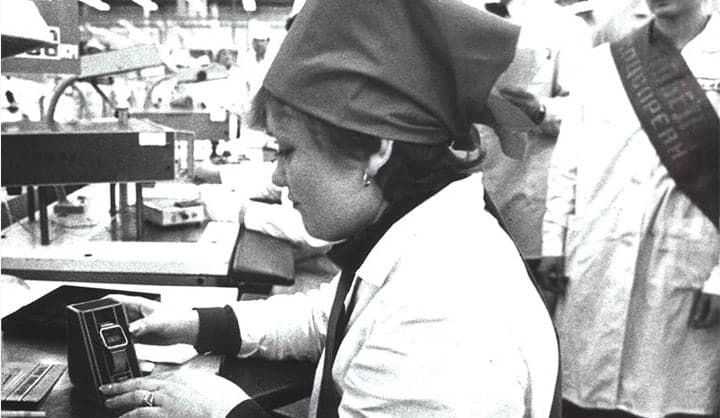
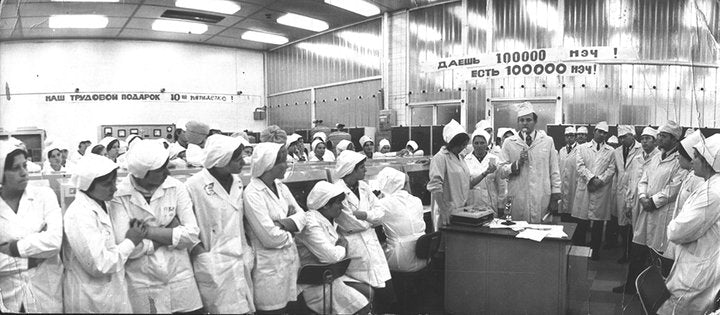
It didn’t take a horology enthusiast to buy and wear this watch. It’s Kalashnikov-esque ubiquity meant it was worn by everyone from party members to coal miners. 

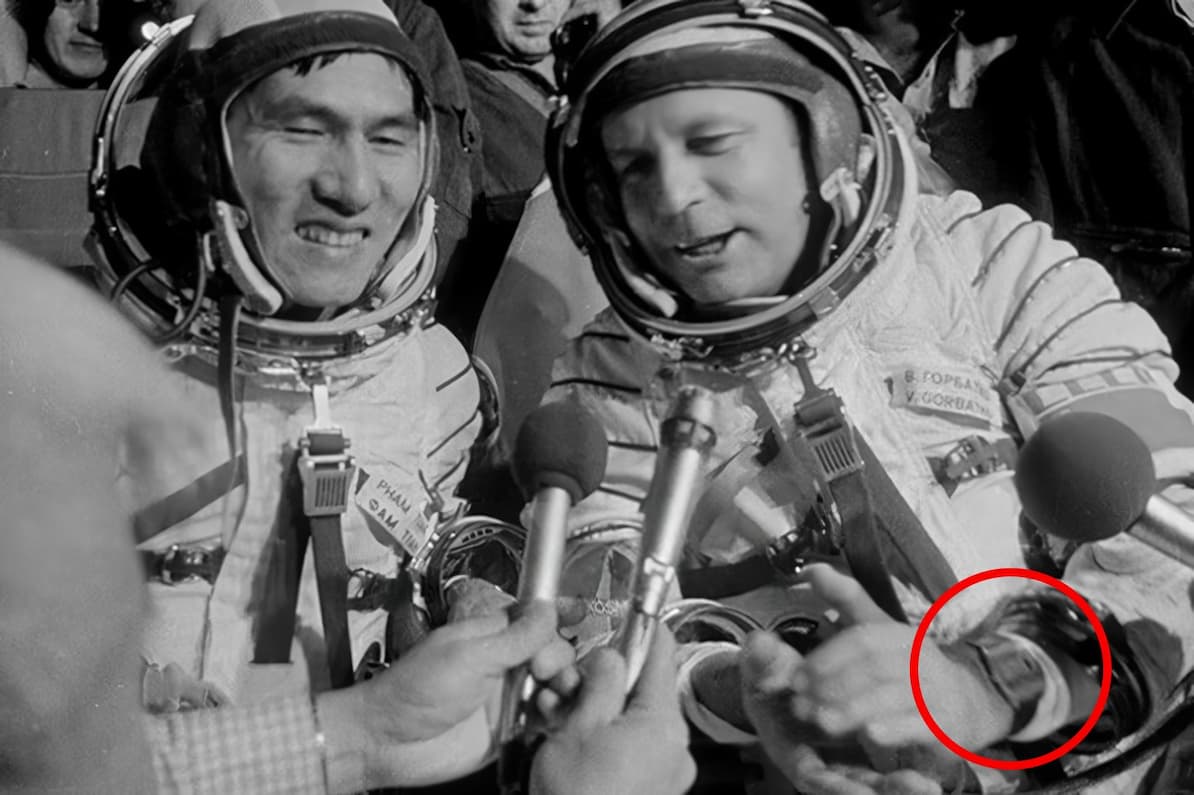
Sure, in 1969 we brought a luxury-watch masterpiece, the Omega Speedmaster, to the Moon before the Soviets were able to. But as a tool of propaganda, the USSR might have had us beat, and the Elektronika 5 appeared in space several more times…

We found it intriguing and somewhat disheartening that Elektronika, what seemed to be the people’s choice, was snuffed out much in the same time period as the Soviet union.

In a world full of Casios & Timexes, who can’t help but succumb to the charm of the plucky Elektronika, so why not give it the wrist time it deserves…because it is now available once again and this time in a near perfect reproduction right down to the packaging.

 A 1:1 functional replica of the original Elektronika with 4 new Slav-approved “Melody” alarms. Sanctioned to the second-hand market (pun intended), thankfully kommandostore thought that the watch deserved a proper revival after its unceremonious disappearance following the collapse of the USSR. 
 Just like the original, it’s an affordable and reliable piece with just enough fun to get even the most uptight horologists asking you questions.  But unlike the OGs, the sad truth of capitalism is that we’re slaves to supply and demand. They are running out fast, and even though there are plans to quickly continue production, there may be a slight gap. So, if you’re interested, this is kind of a last call. 

Click the following link to place your order while supplies last.

Three and Half Decades Ago The Nighthawk Stealth Fighter Was Revealed

35 years ago, a mysterious and strikingly beautiful aircraft touched down on a dusty airfield in the Nevada desert. Can you imagine what kind of advanced aircrafts are being developed now?


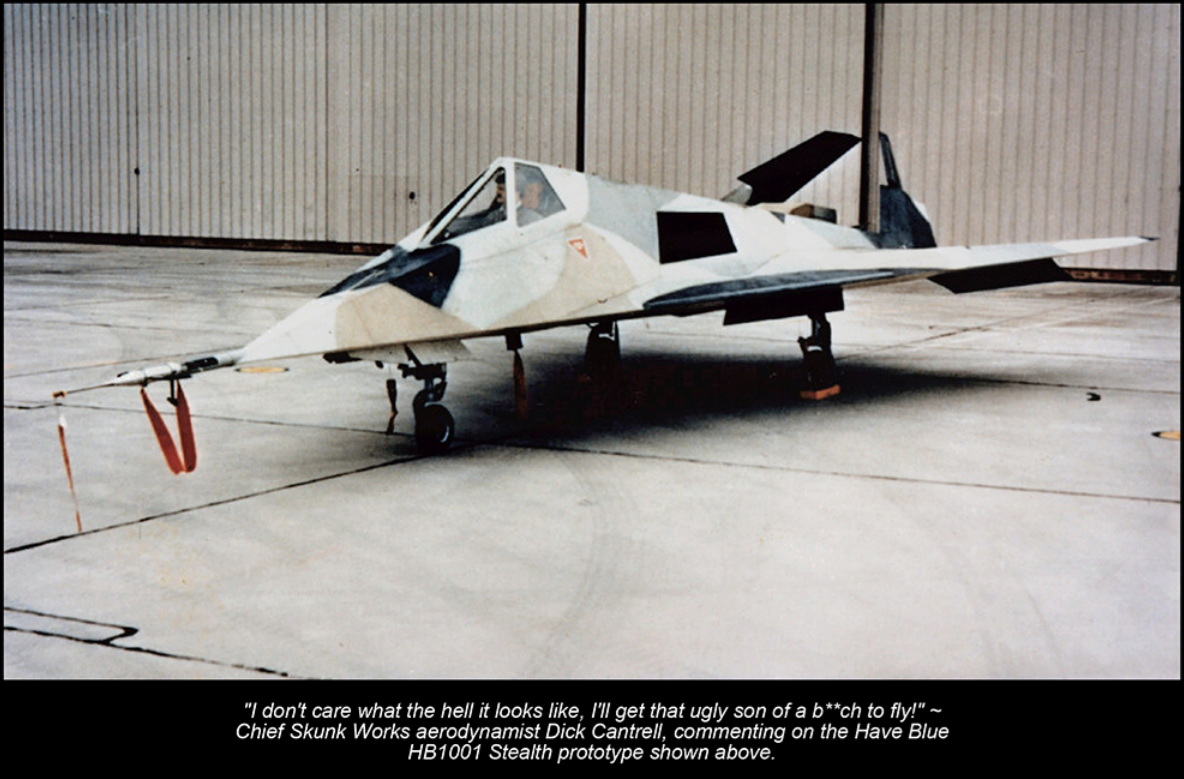
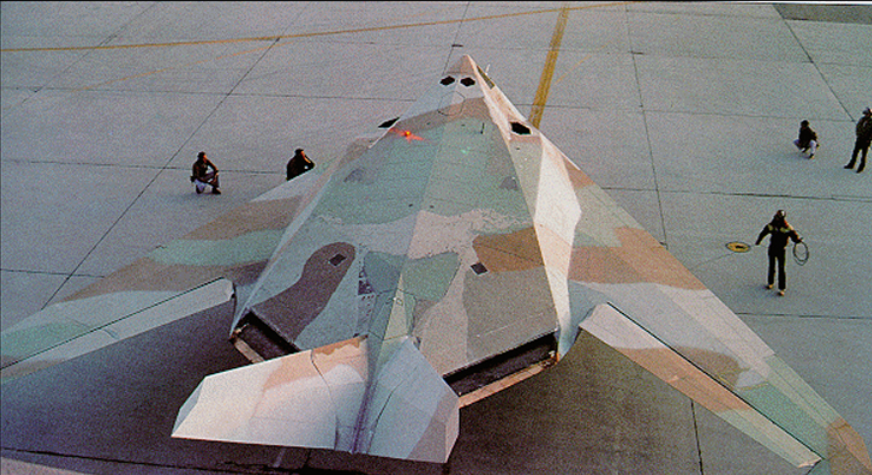
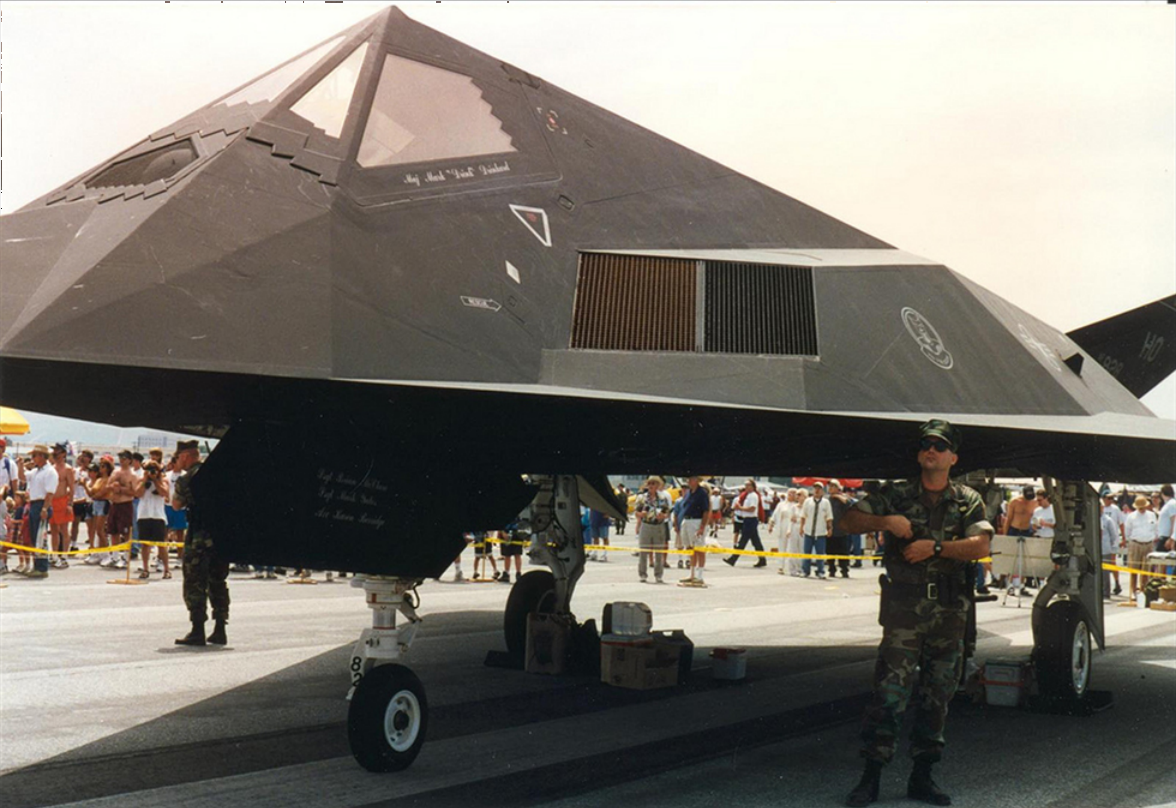
The F-117 Nighthawk


Since its public reveal decades ago (consider that development started in the 1970’s on this amazing machine), the Nighthawk served with quiet distinction through the latter half of the Cold War, the first Gulf War, a kerfuffle in Yugoslavia (bet you don’t remember that one) , and the invasion of Iraq in 2003.
Despite and official ‘retirement’ in 2008, the F-117 still gets spotted in the skies over Nevada where it is rumored to serve as an ‘aggressor aircraft’, helping to train pilots.


What’s the F-117 about?


With it’s cyberpunk like profile and stunning angles, the F-117 Nighthawk instantly captured the public’s imagination and birthed a lot of UFO /UAP stories, especially in the late 1980’s and early 1990’s when it’s unusual shape confused expectations of what an aircraft could and should look like.
A radical departure from the retro-aerodynamic curves of traditional aircraft design, the F-117’s odd shape serves a singular purpose.


Stealth.


The Nighthawk was conceived by Lockheed’s Skunk Works, a secretive development team responsible for some of the most capable aircraft of the 20th century.
Designed to slip through deep Soviet territory, the Nighthawk incorporated radical new technology to achieve an incredibly small radar and thermal signature. Hard edges, radar-absorbing coatings, a unique twin-tail, and special endinge cowlings reduced the aircraft to the size of a sparrow on Soviet radar.
The Nighthawk was deemed fully operational in the early 1980’s and nearly a decade her pilots and crew flight night sorties in complete secrecy.
Seven years later, the USAF and the Department of Defense decided the Nighthawk would work better as a deterrent if the world knew about it and it’s capabilities.


Plans were made to reveal the aircraft to the world at Nellis AFB on April 21, 1990. Those of us who saw this event live on television will always remember the shock and awe inspiring gasp it created- nothing like it had ever been seen before and it surely looked like something from a science fiction novel or movie.
On a hot spring day, a flight of two F-117s landed in front of thousands of cheering spectators, kicking off one of the most memorable air shows in US history. After opening the show, the F-117s sat quietly on the tarmac surrounded by an entourage of armed airmen and curious onlookers.
Although little was said about the new “stealth fighters”- blimps, fighter jets, and mock dog fights continued the day’s entertainment in style.


Even with talks of ‘spending prioritization’ and ‘doctrinal appropriateness’, the Nighthawk has endured, in it’s own special way, for nearly 40 years. Everything about the F-117 that made it great in the 1980’s still captivates us today. It’s razor-sharp edges, futuristic technology, and it’s family tree of stealthy cousins (foreign and domestic). Here is hoping many more years of this little black triangle up in the sky… via our friends at kommandostore.com

Unique Guitar Fraternity In Russia Was In Isolation For Seventy Years

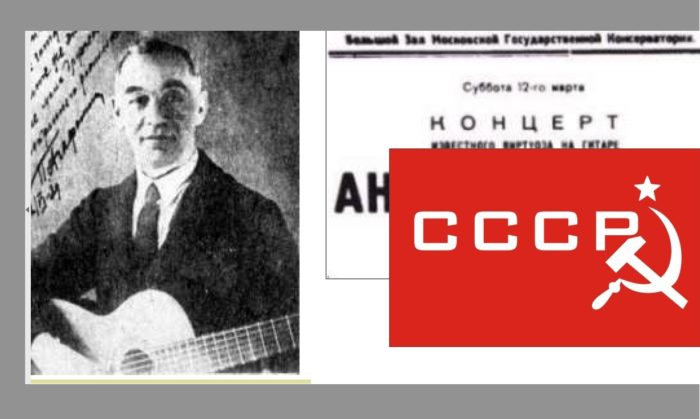
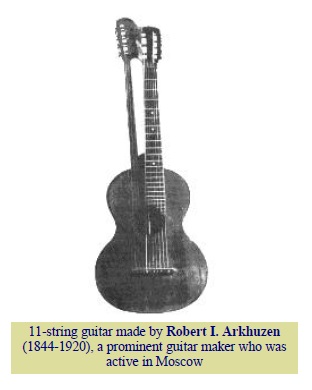
Since the collapse of the Berlin wall in 1989, the countries of eastern European have exploded in a painful big-bang that has changed the geography of Europe and Asia drastically. The new Russia was born, now being part of the Community of Independent States (CIS) that replaces the former USSR. The guitar fraternity in Russia has been living for more than 70 years in total isolation, prevented from being in touch with the West. The presence of many types of the instrument that we call “guitar” has been a constant one in 19th Century Russian 11 string Guitar Russian music life in all periods, having very old origins. But only recently has this guitar world started opening to western Europe, and we still know far too little about Russian composers for guitar and Russian guitarists. It was quite difficult for me to get information about some Russian guitarists, due both to the ever-present difficulties in communication (it is still difficult just to send a fax to Moscow during the day time)and to the problems of language comprehension.
The Guitar of the Czars- a new English summary redaction

In the past, references to the Soviet guitar world in Western music literature were always very scarce, and only in recent years has a subtle breath from that guitar world started blowing beyond the Urals. I wish to thank especially the guitarists Mikhail Goldort from Novosibirsk (central Siberia)and Piero Bonaguri, teacher at the Conservatory of Rovigo (Italy) as well as the composer Umberto Bombardelli, who helped me in collecting more information.

At the beginning there was the domra

The guitar was not the only known plucked instrument in Russia; two other instruments at least are worthy of mention: the domra and the balalaika. The domra is nowadays known in two variants with three or four metallic strings and in different sizes. It has a triangular shape, is tuned by fourths,and is played by means of a plectrum.

It is the most ancient plucked instrument, having been imported by the Mongols during the 13th century. Its tremolo is similar to the one of the Neapolitan mandolin and its range is large, due to its having 16 frets up to the junction of the neck. It is now employed both as a solo instrument and in an orchestra,together with the balalaika .

The balalaika has a peculiar triangular shape and three strings, among which two are tuned in unison and the other a fourth up. It appeared first during the 17th century. It was able to oust the domra in popularity, thanks to the preference of the Czars. It is played both by fingers and with the plectrum; from the last years of the Nineteenth Century it has existed in different sizes which cover all the frequency spectrum of the orchestra.
The guitar appeared in Russia during the 18th century, in a society far behind the European one in development. However, at the first half of the 19th century it was already known as a national instrument: the Russian guitar. Its own peculiarities were the tuning by thirds on the notes of the G scale, and having seven strings. It is known by the tender-sounding name of “semistrunaia” (a composite noun made from
“sem’ ” =seven and “struny” = strings).
Its popularity grew among the people of all ranks, both middle and upper class, as described by many Russian poets and writers. There are also many variants of this main type, in number of strings and dimensions. By studying the surviving photos of Russian guitarists of the last century, re-published in the volume Guitar in Russia and USSR (see photo in the full PDF article linked below), we see that the guitar with 7 strings on the neck and 4 strings outside of the neck was very popular. The famous photograph of  Valerian Rusanov, one of the first Russian guitar historians, with his 11-string guitar is significant in this respect. This instrument shared favor with the six string guitar (the so-called “shestistrunaia“, from “shest,” which means “six” ) tuned as in the West, and many other types. Continue reading full article PDF by clicking here.  For the Silo, Marco Bazzotti.


Raketa’s Three Thousand Euro Russian Made Puppet Watch

Preserving history, creating the future

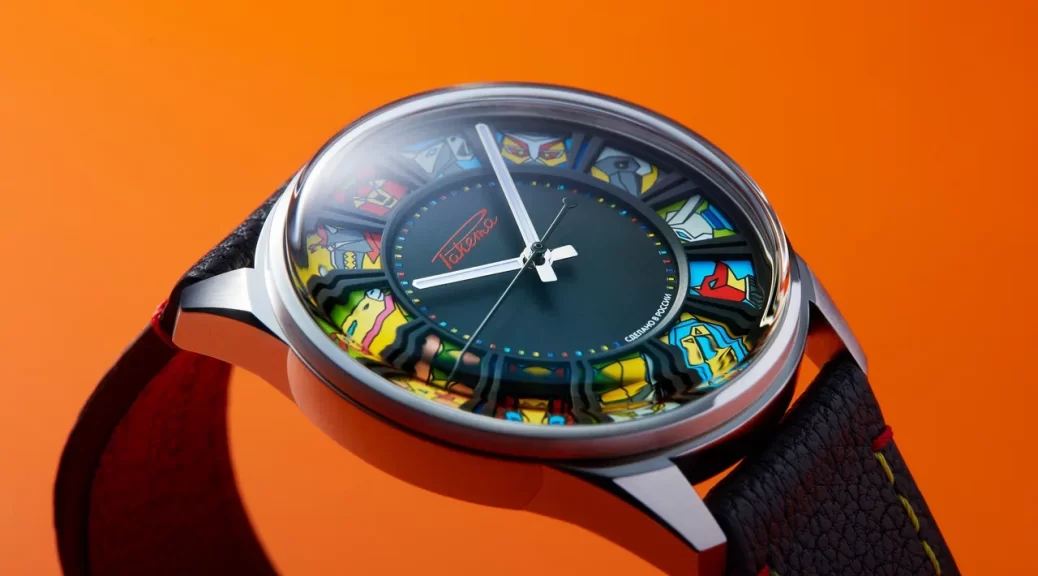
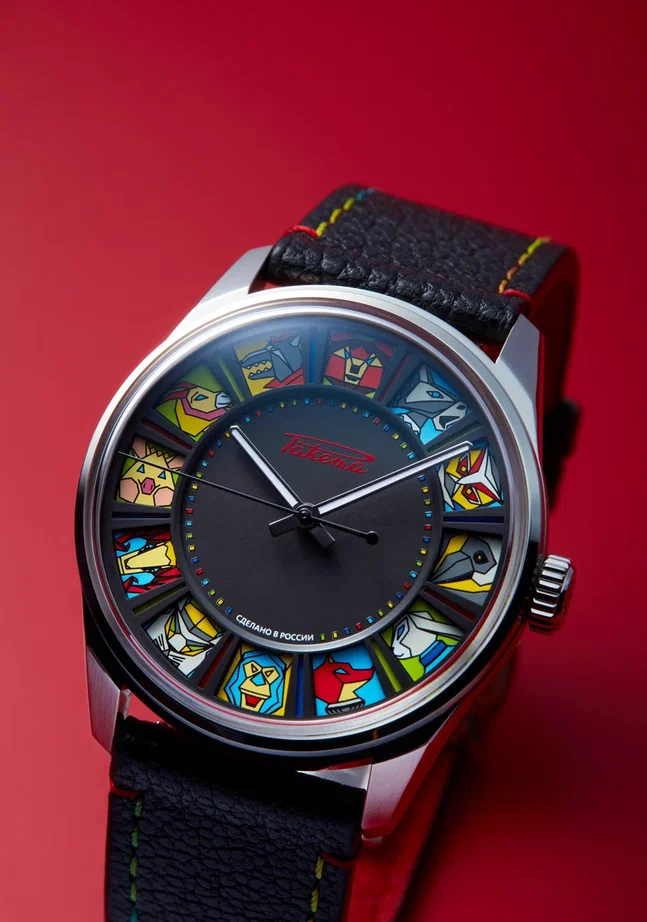
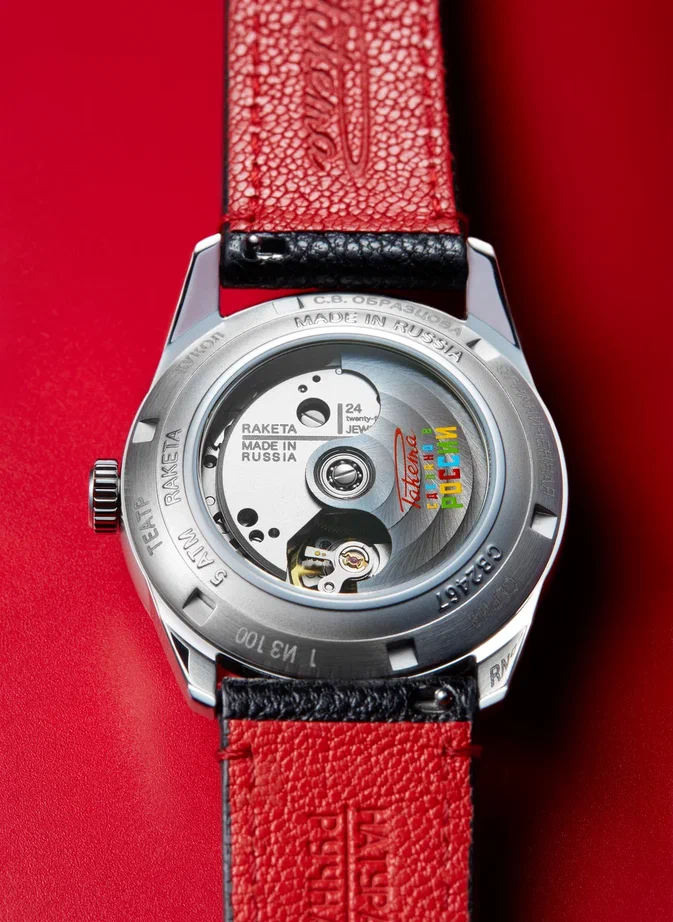
The Raketa Watch Factory in collaboration with the famous Moscow Sergey Obraztsov Puppet Theatre presents an exclusive watch model — Raketa Theatre. The limited series consists of 100 individually numbered pieces. Imagine it’s not just a watch, but a unique ticket to a special performance — where there are only 100 seats in the auditorium. Each watch is like a personalized theatre seat with an engraved number:

1/100, 2/100…100/100.

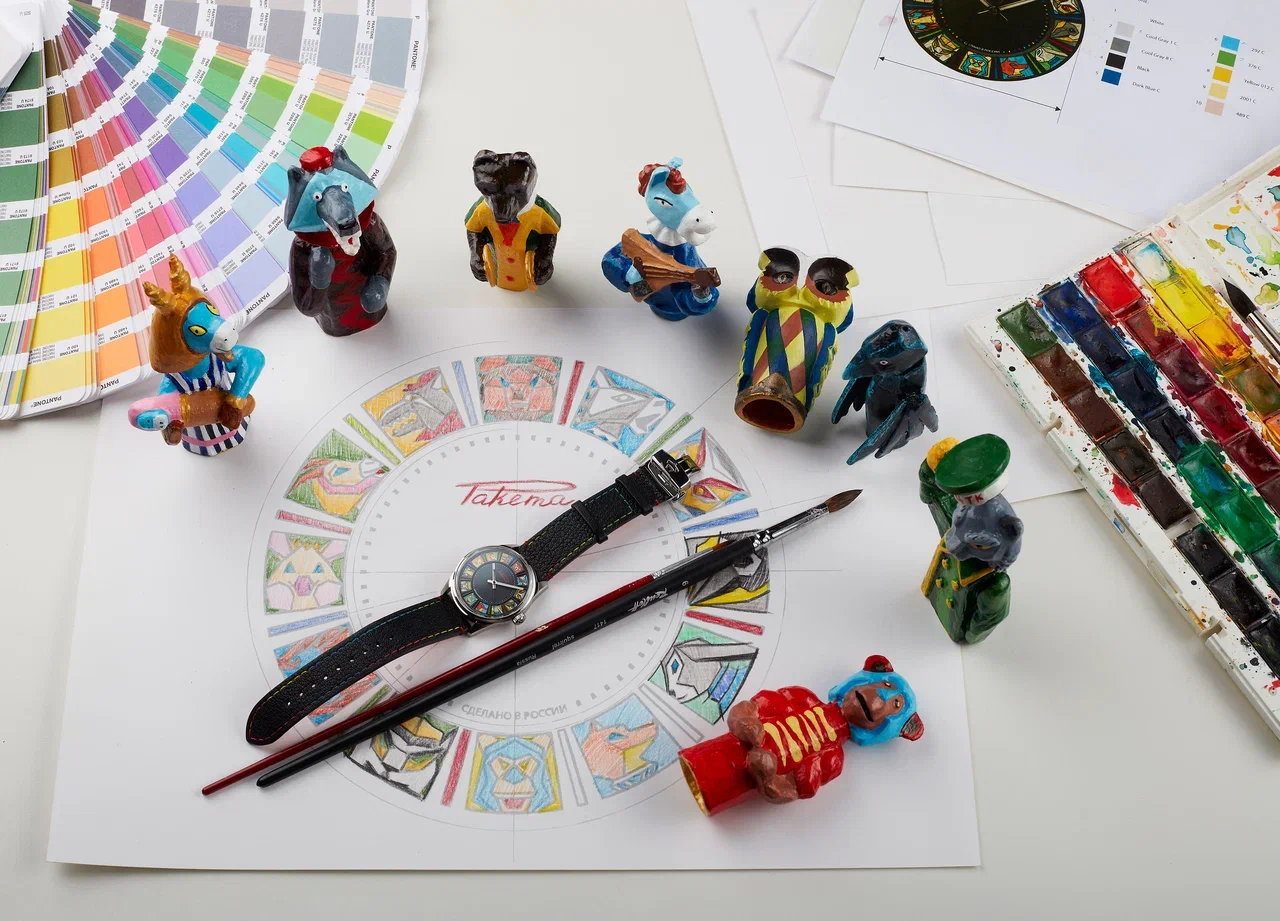
The dial of the model is inspired by the famous pediment clock that decorates the facade of the Sergey Obraztsov Puppet Theatre, where each hour corresponds to the figurine of an animal. Each figurine image has been reinterpreted by the Raketa’s designers in a modern avant-garde aesthetic and applied to the dial.

The restrained design of the Raketa Theatre watches is elegantly enhanced by three stylish accents: an avant-garde dial, multi-colored printing on the rotor, and contrasting stitching on the leather strap. These thoughtful details resonate with each other, creating a stricking balance of restraint and distinctiveness.

New time for the Sergey Obraztsov Puppet Theatre

The partnership with the Sergey Obraztsov Puppet Theatre goes beyond developing an exclusive watch model. Raketa specialists are also consulting the theatre on the restoration of its famous monumental facade clock. This project reflects the brand’s commitment to preserving cultural heritage and its tradition of incorporating art into watch movements.

Elena Bulukova, Director of the Sergey Obraztsov Puppet Theatre

“The clock is under restoration, but time at Obraztsov does not stand still. The clock’s characters have a new look now. Instead of becoming museum exhibits, they remain with us, as part of our living reality. This is how the living history of the puppet theatre continues”.

The art of appreciating time

For many people, the Sergey Obraztsov Puppet Theatre’s pediment clock is not just a mechanism but also a symbol of warm memories of the first time their parents brought them to meet fairy-tale characters. This tradition has become part of the personal history for thousands of families. Raketa’s new model is meant to bring back these touching moments, helping to lay the foundation for new traditions for future generations.

Made in Russia

The heart of the Raketa Theatre model is its automatic movement, manufactured from A to Z at the Raketa Watch Factory in St. Petersburg, one of the few watch manufacturers in the world that produces its own movements, relying on a base of Soviet-era production technology that passed down through generations.

Price

The cost is 3000 EUR (including VAT) / $4,876 CAD at time of posting . For the comfort of customers, Raketa watches are delivered worldwide free of charge by DHL directly up to the front door.

Specifications

Manufacture: Raketa Watch Factory (Saint-Petersburg)

Movement: Calibre: 2615

Functions: Automatic

Number of jewels: 24

Testing positions: 4

Average rate (s/d): 10+20

Average running time (h): 40

Frequency/hour: 18 / 2.5 Hz

Bi-directional automatic winding: Yes

Stopper of self-winding unit activated during manual winding: Yes

Decoration: Neva waves Printing

Case: Material: Stainless steel

Size: 39.5 mm

Dial glass: Sapphire

Back glass: Mineral

Crown: Synthetic ruby inside

Water resistance: 5 bar

Hands: Superluminova

Dial: High-quality printing, embossing

Strap : Material: Stainless steel

Strap width: 22 mm

Sex : Unisex

War Rugs Are The Bomb

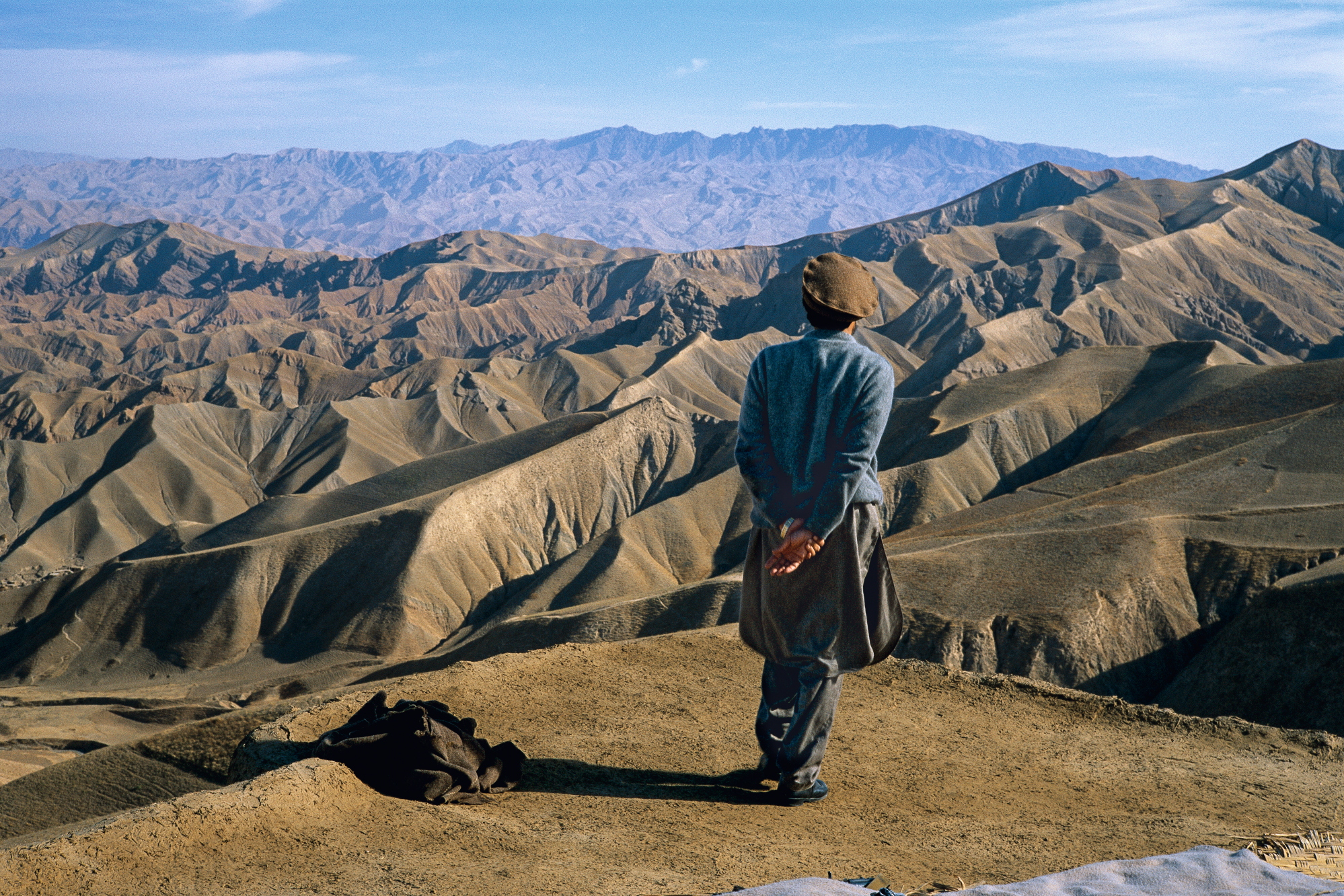
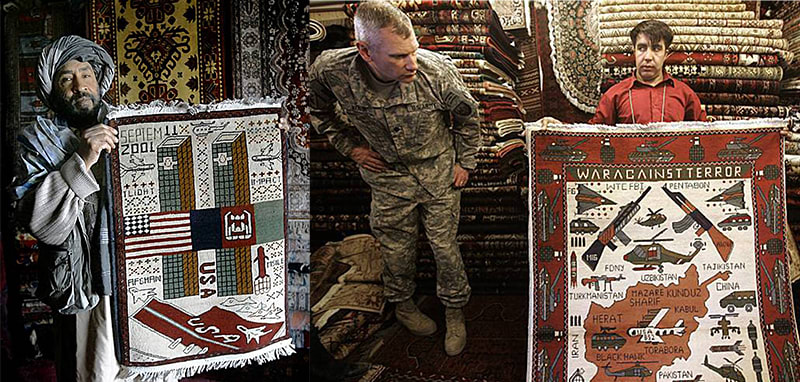
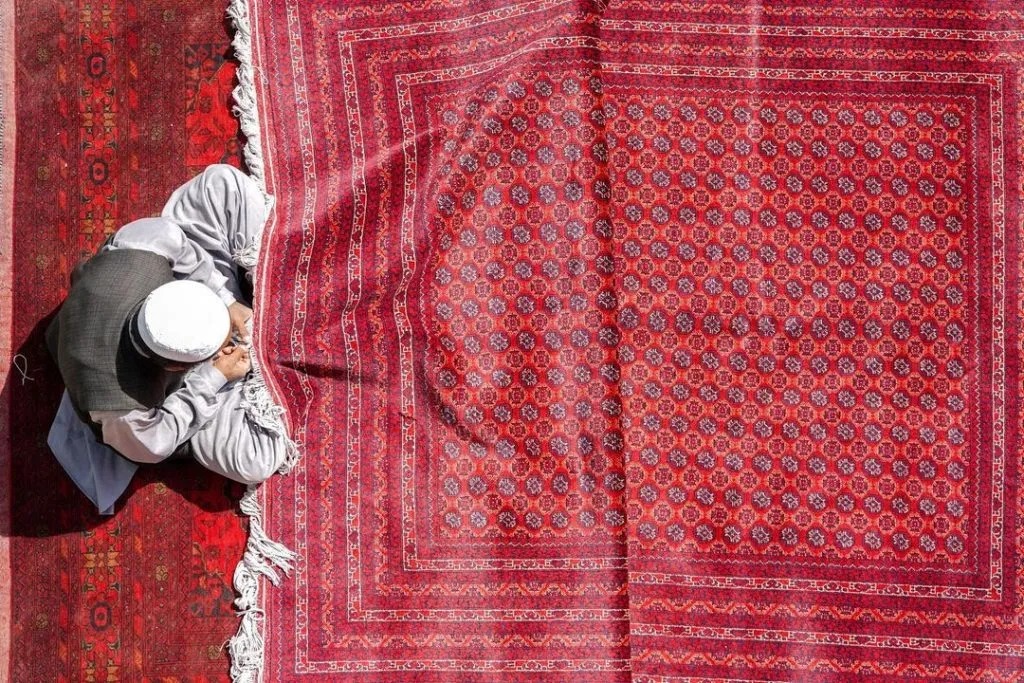
Another fab article from our friends at Kommandostore. Rugmaking has been such a long-standing tradition that historians typically say, “thousands of years”. In other words, it predates the British Monarchy, Roman Empire, and hell, even the Persian Empire’s conquest of Afghanistan. Unfortunately for just as long, the surprising beauty of her landscapes has been blood-stained. For example, many have attempted to invade Afghanistan, and many have died trying.  
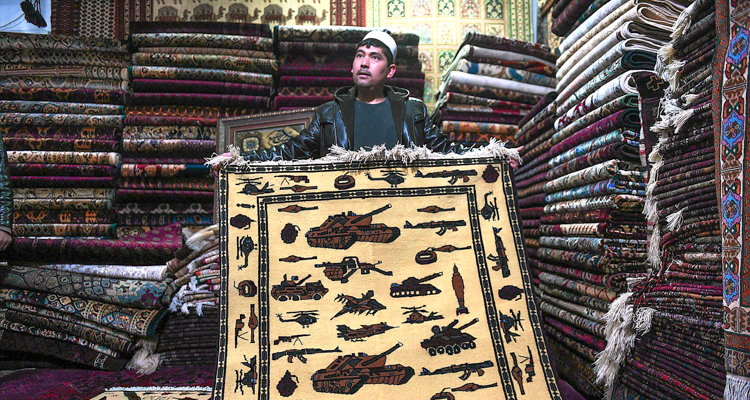
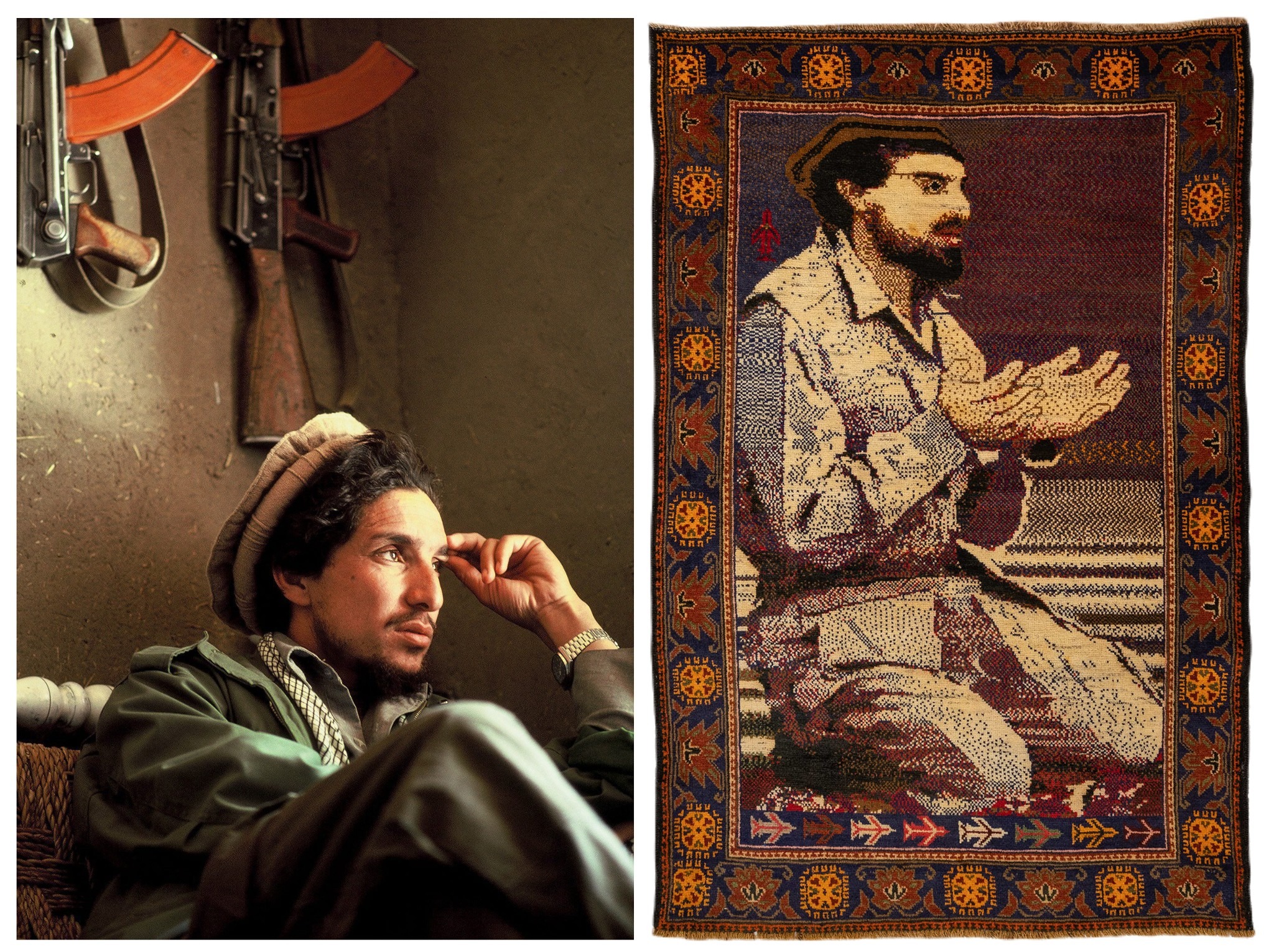
From ancient Alexander the Great’s conquests to the United States “Operation Enduring Freedom” there sure have been a lot of wars, and a lot of rugs. But what began during Soviet occupation of Afghanistan in the USSR’s twilight years was quite odd indeed.  Propaganda rugs with anti-soviet figures like Ahmad Massoud* begun to circulate, and with the soviet occupiers taking great interest in these rugs as bring-back mementos, they got a taste of capitalism.*This guy’s story is a great subject for an email or video on it’s own, let us know if you’d like to see something like that. 
Massoud seen wearing his iconic combo of a Pakol cap, white checkered “shemagh” scarf and military-style jacket. On the right is one of the war rugs that depicts him — definitely one of our favorite designs we’ve been able to source.
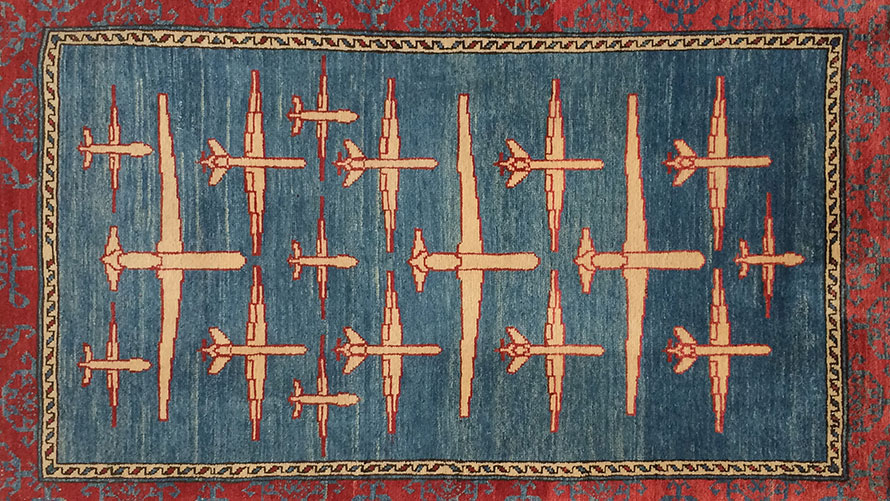
In response to the newfound demand, artisans begun to introduce common sights of the battlefield onto their rugs: Kalashnikovs, Helicopters, BTRs & BRDM-2s, and of course plenty of tanks.  The soviet soldiers, naturally as young lads, couldn’t get enough of it. I mean, come on, who wouldn’t want a beautifully made rug with a tank on it? And so even through Russia’s Irish exit from Afghanistan, patterns were passed down and a whole new style was born: The War Rug. 
 A common misconception about the rugs that we’ve seen is that there’s any form of malice whatsoever from the rug-makers in making these. This is obviously & completely false. And we say that because once the American occupation began, rugs depicting the World Trade Center being hit by the highjacked airplanes began to circulate despite most Afghan people not even knowing what the event or it’s ramifications meant. You guys have certainly spoken the loud part quietly because the 9/11 rugs are our best sellers. We’re just listening to demand, don’t blame us. Skillfully as they do, the rugmakers themselves often have no idea what they’re weaving, they just follow the popular patterns circulating bazaars and embellish with whatever colors, extra elements, and often hilarious mis-woven English words they want. 
Other common (and less controversial) sights include the Opium poppy, American operations like the battle of Tora Bora, and now even the war in Ukraine.  What began as a memento and accidentally controversial form of art has truly blossomed into a celebrated slice of Afghanistan’s culture since the 80s. And luckily, even with increasing popularity, all the rugs are still handmade the way they should be. It’s probably hard to shake a tradition that predates your Grandma’s Grandma’s Grandma’s Grandma’s Grandma’s history book entries after all. 
Browse The Library 📚 and pick out your awesomeness via our friends at Kommando.

Canada’s Original Black Friday- ‘Cancelled Arrow’ Was Cutting Edge 1950s Jet Interceptor

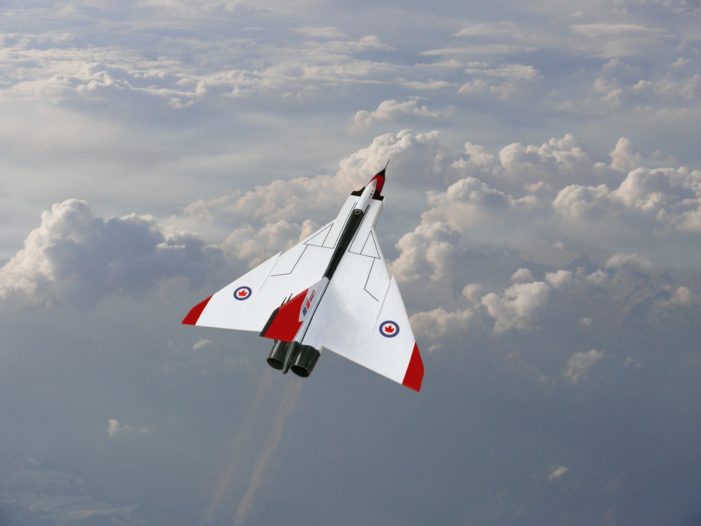
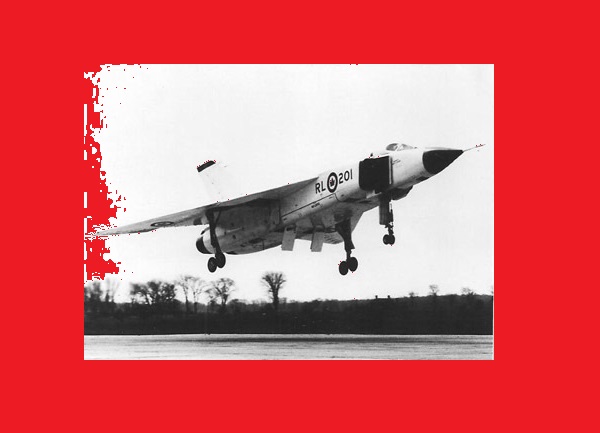
The first Arrow RL-201

I began writing this post after an annual viewing pilgrimage of sorts. Each year on the eve of shopping’s busiest day, I crack open the well worn plastic jewel case and fire up the DVD player. It’s a fictional account but based in fact and is very entertaining and I can’t help but wonder what “might have been” after watching CBC’s 1996 mini-series “the Arrow” again. [You can watch this right here at the end of this post CP]

Over the decades fact and fiction have become tangled but the basic truths remain intact. In the late 1950’s a highly advanced jet interceptor designed to seek (and if necessary destroy) Russian nuclear bombers was conceived, designed, built and flown in Canada by a predominantly Canadian team. Here’s where things get fuzzy. The Arrow was developed when the federal Liberal party were in power but was finished and flown when the Conservatives were in power. It represented not only the technological capability of Canada’s aviation industry- but also the econo-political agenda of the mid-twentieth Century. So what happened at that time to help spell the doom of the Arrow?

-The ICBM- intercontinental ballistic missile was viewed as the future of warfare not the nuclear bomber. This meant that a jet interceptor was obsolete because it would be unable to intercept approaching missiles.

-Bad timing: on the day of the rollout of the very first completed Arrow, the Russians launched Sputnik, the world’s first artificial satellite. In the public eye jets seemed unimportant.

-The American Bomarc missile system was designed to intercept incoming nuclear bombers and ballistic nuclear missiles. The Bomarc had a small nuclear warhead which would detonate in the pathway of approaching missiles (or bombers) and create a nuclear ‘shield’. The Bomarc was highly controversial at the time because our Prime Minister did not want nuclear missiles on Canadian territory. However, our Defence Minister did not agree and eventually resigned over the matter. This defence ‘split’ exacerbated the Arrow program and any chance for an Arrow squadron legacy.

-The Canadian designed Iroquois engines were not  readied in time and were not fitted into the Arrow. These engines were innovative and theoretically could have propelled the Arrow to speeds of Mach 2.5 or possibly Mach 3.0- far beyond every fighter of the time with the exception of secret black technology projects like the American Blackbird SR-71. Had the Canadian engines been readied and proven, there seems little doubt that international orders would have offset some of the Arrow’s mounting costs.

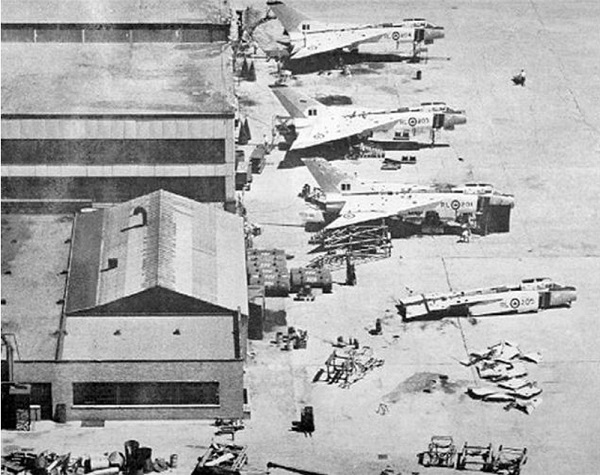
Black Friday…….almost 15,000 workers lose their job.

Canadas Black Friday

There is no official record of just who ordered the destruction of the remaining Arrows. Other than a few recovered test models, an incomplete cockpit and a few seconds of in flight film, nothing remains of this wonderful airplane . For the Silo, Jarrod Barker.


The completed Arrows being cut up and readied for a Hamilton,ON scrap dealer.


Supplemental-

University of Saskatchewan The Nuclear Question in Canada http://www.usask.ca/diefenbaker/galleries/virtual_exhibit/nuclear_question_in_canada/

Post Featured Image- http://plunkettgw.deviantart.com/art/AVRO-ARROW-17-139364086

Boeing’s  Bomarc Missile http://www.boeing.com/boeing/history/boeing/bomarc.page