Tag Archives: iconography

Radiant Geometries Exhibition: Vectors of Knowledge from Indigenous Americas 

Moody Center for the Arts at Rice University  Announces for Fall 2026
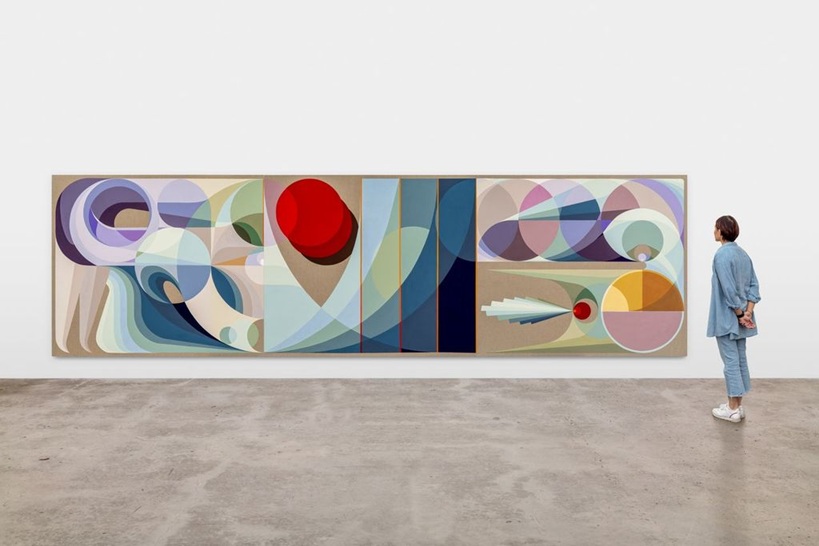
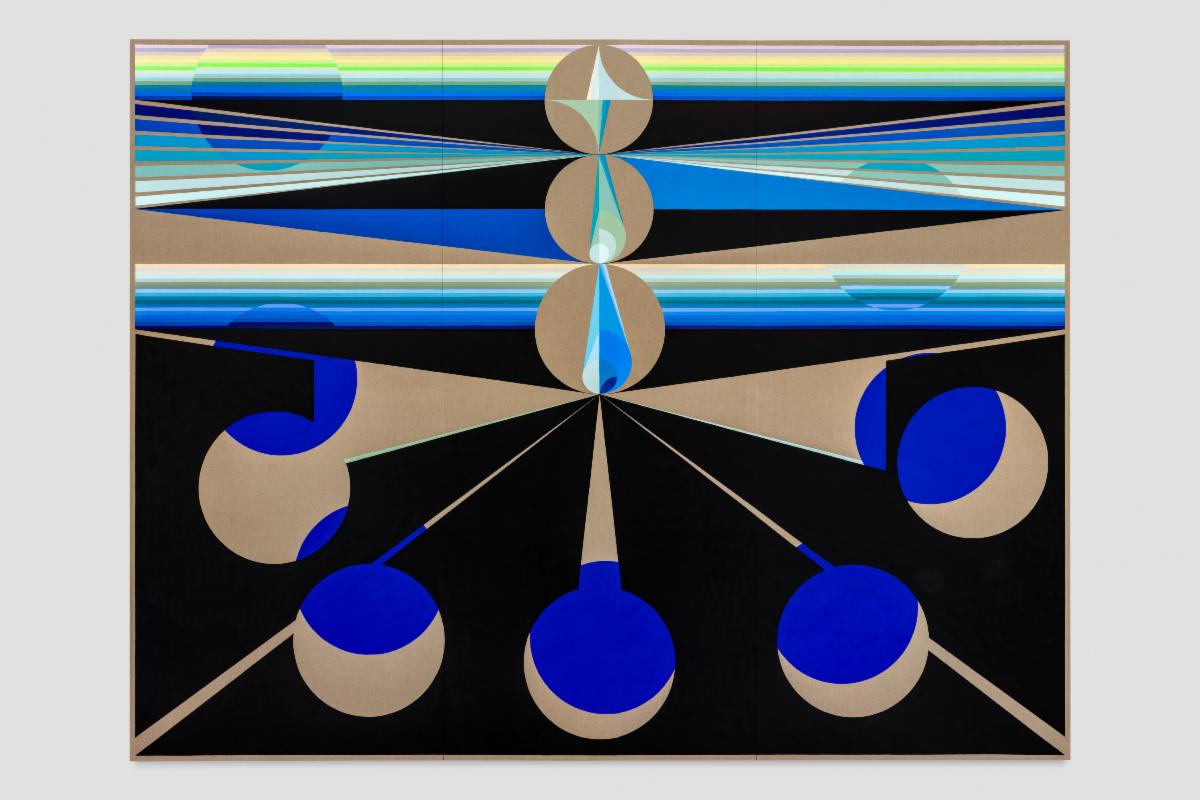
On view September 4 to December 19, 2026, this ambitious group exhibition explores Indigenous knowledge systems and their longstanding relationship with math, science, and technology in the Americas.Eamon Ore-Giron, Black Medallion XIV (Inti), 2022. Mineral paint and flashe on linen, 198 x 258 in. © Eamon Ore-Giron 2022. Courtesy of the artist and James Cohan, New York. Photo: Charles White. 
July, 2026 (Houston, Texas) — Through a framing of North, Central, and South America as interconnected regions, Radiant Geometries: Vectors of Knowledge from the Indigenous Americas brings together contemporary Indigenous and Latin American artists whose practices illuminate knowledge as a living technology, through which the mathematical, metaphysical, and artistic realms converge. At a moment when the social and environmental consequences of technological advancement are prompting global debate, this selection of works—among them paintings, sculptures, textiles, video works, and site-specific commissions—conveys relational teachings rooted in the Americas.

Opening September 4, 2026, the exhibition features national and international artists, including Nanibah Chacon, Melissa Cody, Jordan Ann Craig, Patricia Domínguez, Sara Flores, Natalia Montoya Lecaros, Patrick Martinez, Cisco Merel, Caroline Monnet, and Eamon Ore-Giron, among others. 

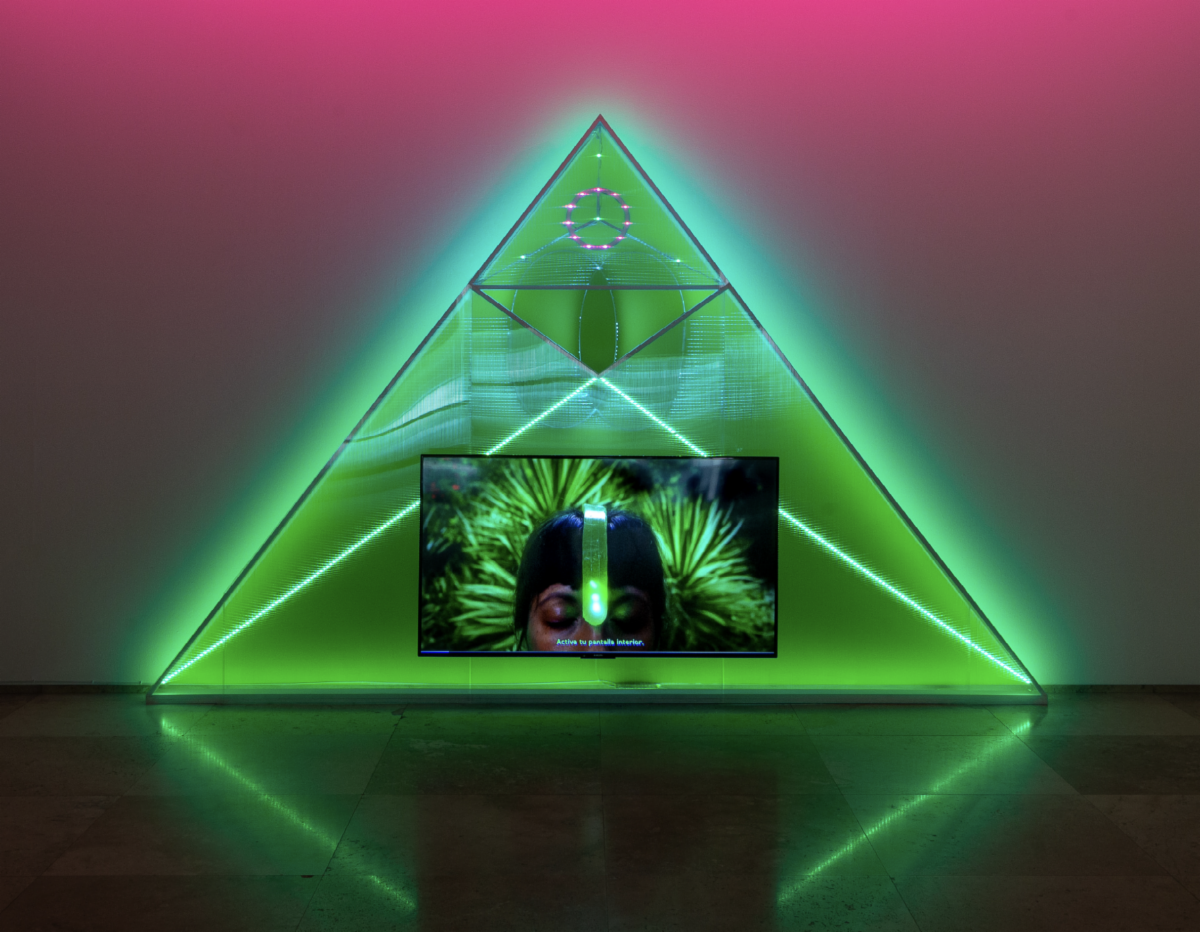
  “At its core, Radiant Geometries centers Indigenous ways of knowing that continue to shape relationships to territories, waterways, and interspecies care,” said Noor Alé, Moody Center for the Arts Associate Curator. “By reconsidering the histories of mathematics, architecture, and science through Indigenous perspectives, the exhibition invites viewers to consider the enduring connections between cosmology, technology, and the living world.” Patricia Domínguez, Matrix Vegetal, 2021-22. Video 4K, 21:12 min. Commissioned by Screen City Biennial, with the support of Cecilia Brunson Projects and Galería Patricia Ready.
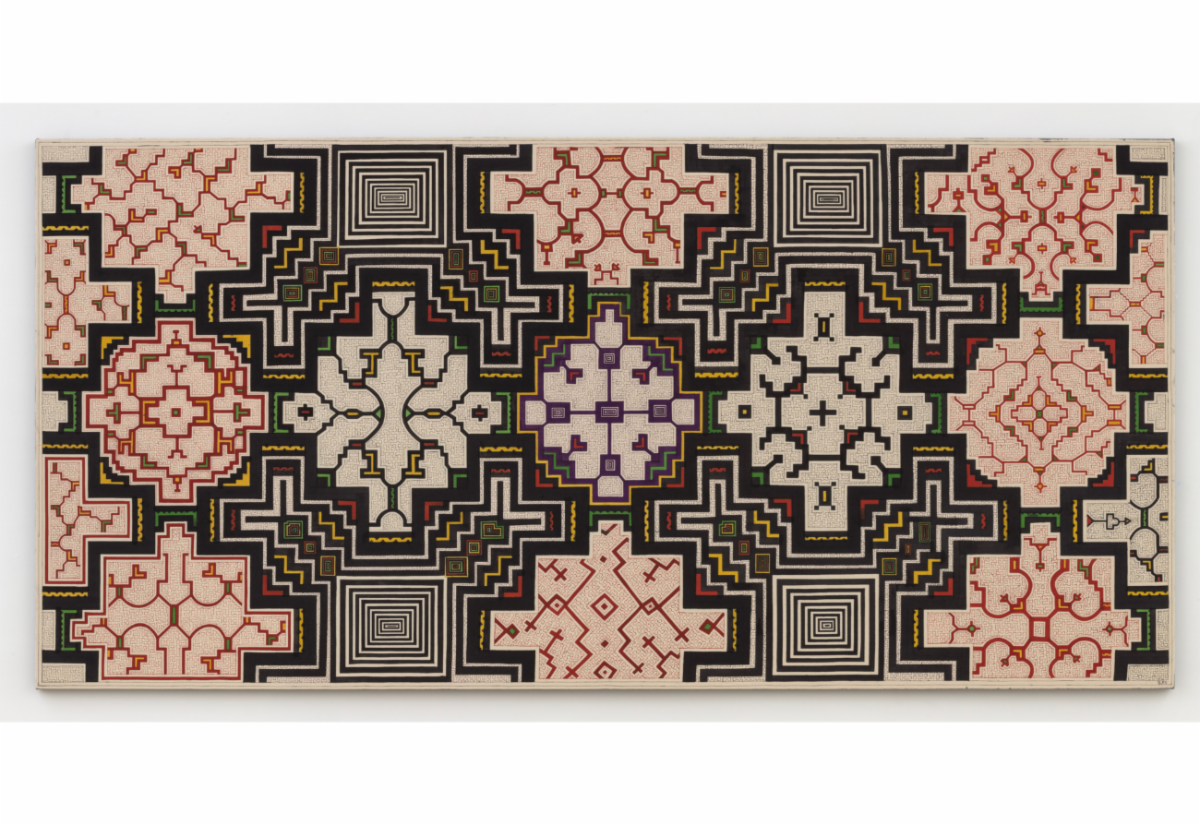
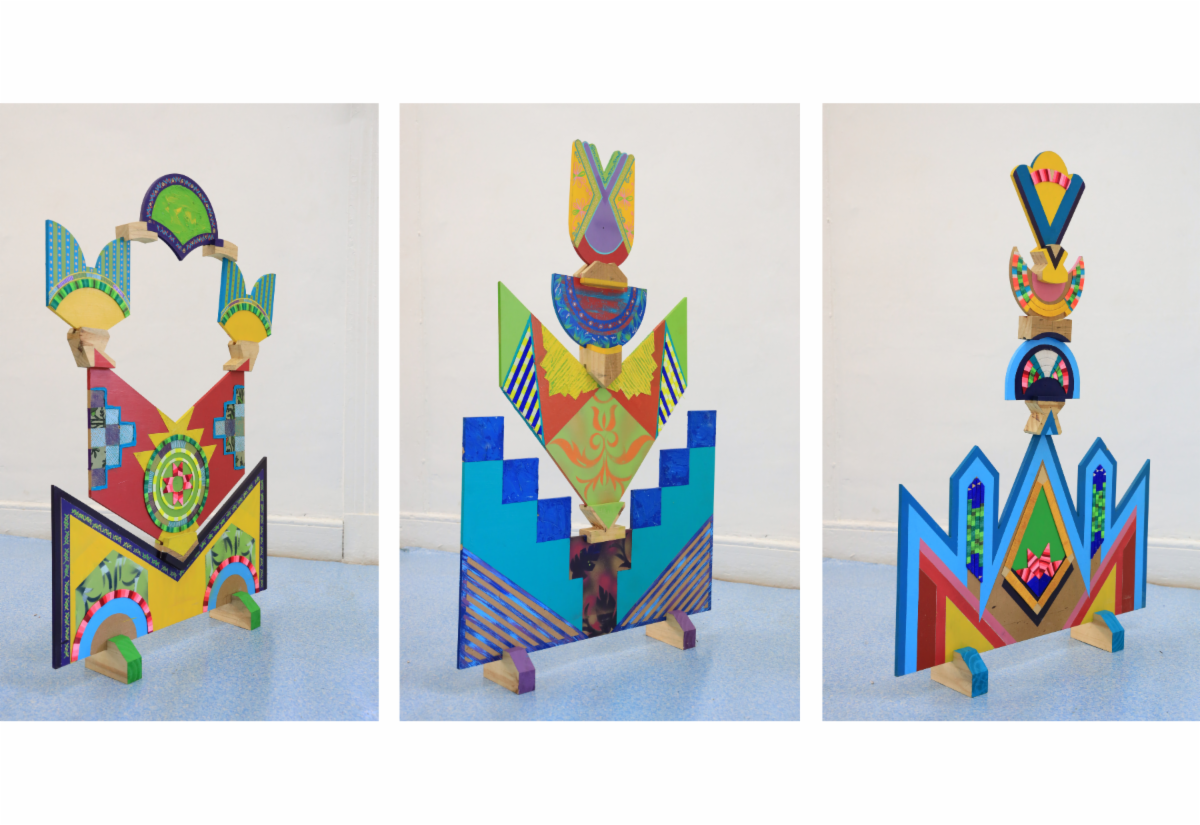
 Set on the campus of a leading research university, the Moody’s presentation includes artists whose works evoke the symbiotic relationship between art, math, technology, and science, often through the language of abstraction. Among them, Sara Flores’s paintings foreground the interdependence of all life forms and call attention to interspecies care; Patrick Martinez’s painted sculpture, inspired by the pre-Columbian murals of Cacaxtla, positions Indigenous architecture as sites of material knowledge and urban intelligence; Natalia Montoya Lecaros’s totemic sculptures draw on an Aymara ceremonial dance that honors agricultural cycles; Caroline Monnet’s Styrofoam installation etched with Anishinaabe iconography, reconsiders colonial legacies in architecture; Patricia Domínguez’s videos explore astronomy and plant intelligence to bridge spiritual and scientific divides; Cisco Merel’s totemic work references protective sigils found in Guna textile traditions; and Melissa Cody’s jacquard tapestry fuses Navajo textile traditions with computational aesthetics.  

In addition, newly commissioned works extend the visibility of knowledge as an evolving technology, illuminating its transmission across generations while continuously responding to the future. These works include an interactive sound installation with Diné designs from Nanibah Chacon; installation and paintings by Jordan Ann Craig that explore Cheyenne beadwork and parfleche designs drawn from museum collections in Texas and Colorado; and new paintings from Eamon Ore-Giron inspired by Maya ceramics in Rice University’s collection.  Sara Flores, Untitled (Shao Maya Punté Kené 1, 2022), 2022. Vegetal dyes on wild-cotton canvas, 59 x 122 3/8 in. Private Collection of Timothy C. Headington. Courtesy of the artist and The Shipibo Conibo Center. Photo © JSP Art Photography.  
“Through this compelling selection of works and complementary programming, we’re able to achieve the Moody’s mission to synthesize Rice’s academic resources and artists’ creative insight into meaningful connections and critical dialogue,” said Joel Thompson, Moody Center for the Arts Deputy Director.  Featured artists include Nanibah Chacon (Diné/Chicana) (b. 1980 in Gallup, New Mexico; lives in Albuquerque, New Mexico), Melissa Cody (Navajo/Diné) (b. 1983 in No Water Mesa, Arizona; lives in Long Beach, California), Jordan Ann Craig (Northern Cheyenne) (b. 1992 in San Jose, California; lives in Santa Fe, New Mexico), Patricia Domínguez (b. 1984 in Santiago de Chile; lives in Puchuncaví, Chile), Sara Flores (Shipibo-Konibo) (b. 1950 in Tambomayo, Peru; lives in Yarinacocha, Peru), Natalia Montoya Lecaros (Aymara) (b. 1994 in Iquique, Chile; lives in Santiago de Chile), Patrick Martinez (b. 1980 in Pasadena, California; lives in Los Angeles), Cisco Merel (b. 1981 in Panama City; lives in Panama City), Caroline Monnet (Anishinaabe/French) (b. 1985 in Ottawa, Canada; lives in Montreal), and Eamon Ore-Giron (b. 1973 in Tucson, Arizona; lives in Los Angeles), among others.    

The exhibition is curated by Noor Alé, Associate Curator. Graphic design is by Sébastien Aubin.    Radiant Geometries: Vectors of Knowledge from the Indigenous Americas is made possible by the Libbie Rice Shearn Moody Fund for the Arts and the Thomas D. and Pamela Riley Smith Endowment for the Moody Center for the Arts. Major support is provided by the City of Houston through the Houston Arts Alliance, the Elizabeth Lee Moody Excellence Fund, the H. Russell Pitman Fund for the Moody Center for the Arts, and the Moody Center for the Arts Founders Circle.     Special ProgrammingNatalia Montoya Lecaros, Tótems de emergencia, 2021. Series of modular MDF sculptures, with tempera paint, acrylic yarn, beads, lined cardboard, and bird feathers, 37 x 33 x 28 in. Courtesy of the artist and Judas Galería. 
For The Silo, Erin Rolfs.

Featured image– ORE-GIRON_Talking Shit with Macha’acuay, the Serpent of the Milky Way_2025_credit-Charles White

War Rugs Are The Bomb

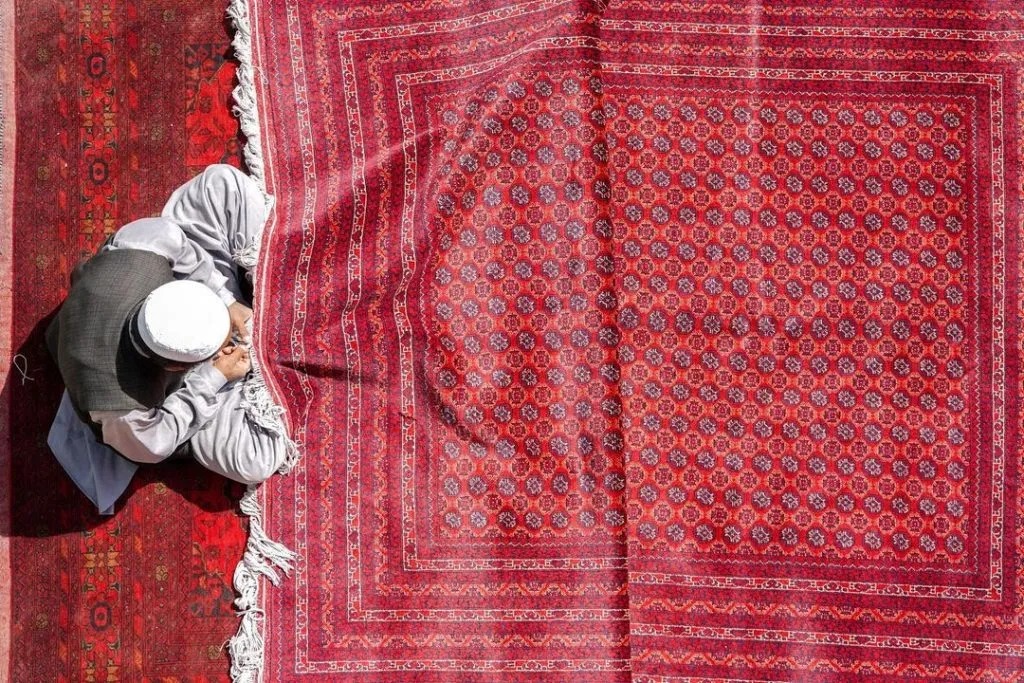
Another fab article from our friends at Kommandostore. Rugmaking has been such a long-standing tradition that historians typically say, “thousands of years”. In other words, it predates the British Monarchy, Roman Empire, and hell, even the Persian Empire’s conquest of Afghanistan. Unfortunately for just as long, the surprising beauty of her landscapes has been blood-stained. For example, many have attempted to invade Afghanistan, and many have died trying.  
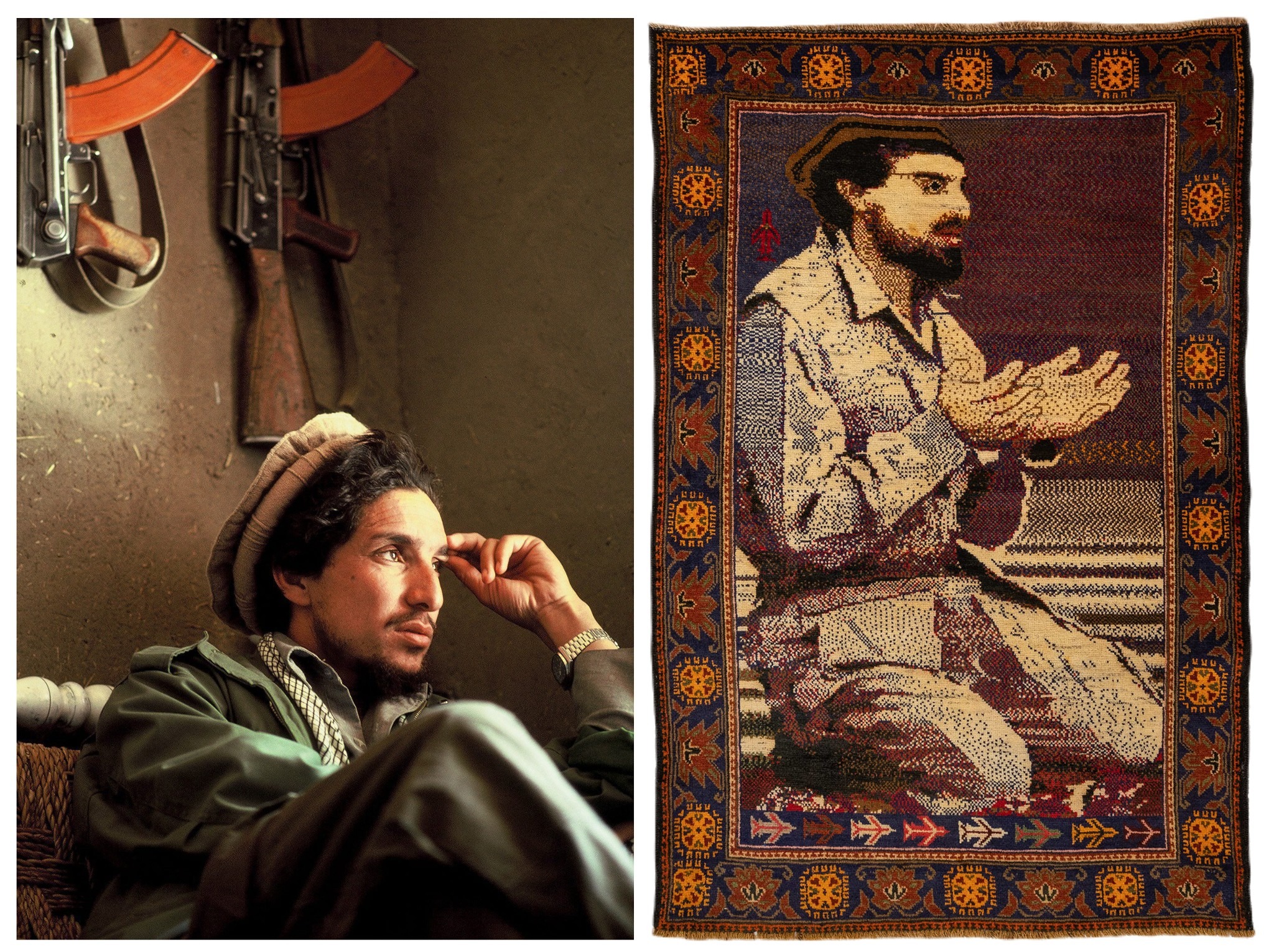
From ancient Alexander the Great’s conquests to the United States “Operation Enduring Freedom” there sure have been a lot of wars, and a lot of rugs. But what began during Soviet occupation of Afghanistan in the USSR’s twilight years was quite odd indeed.  Propaganda rugs with anti-soviet figures like Ahmad Massoud* begun to circulate, and with the soviet occupiers taking great interest in these rugs as bring-back mementos, they got a taste of capitalism.*This guy’s story is a great subject for an email or video on it’s own, let us know if you’d like to see something like that. 
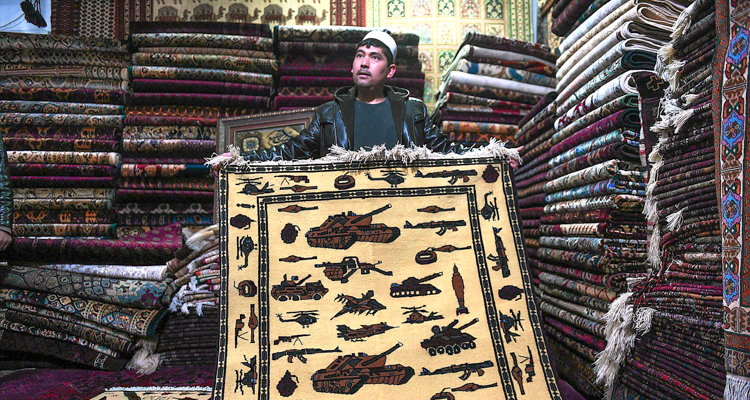
Massoud seen wearing his iconic combo of a Pakol cap, white checkered “shemagh” scarf and military-style jacket. On the right is one of the war rugs that depicts him — definitely one of our favorite designs we’ve been able to source.
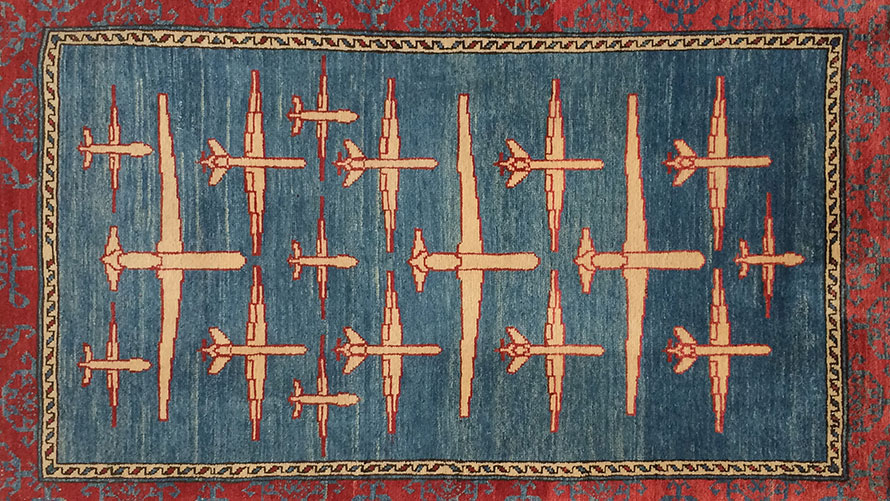
In response to the newfound demand, artisans begun to introduce common sights of the battlefield onto their rugs: Kalashnikovs, Helicopters, BTRs & BRDM-2s, and of course plenty of tanks.  The soviet soldiers, naturally as young lads, couldn’t get enough of it. I mean, come on, who wouldn’t want a beautifully made rug with a tank on it? And so even through Russia’s Irish exit from Afghanistan, patterns were passed down and a whole new style was born: The War Rug. 
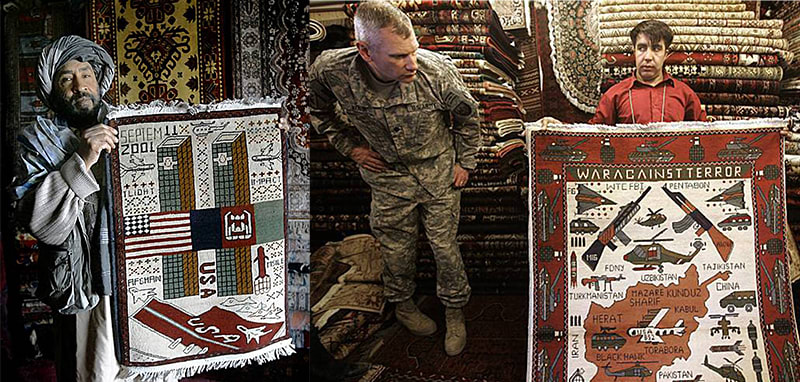
 A common misconception about the rugs that we’ve seen is that there’s any form of malice whatsoever from the rug-makers in making these. This is obviously & completely false. And we say that because once the American occupation began, rugs depicting the World Trade Center being hit by the highjacked airplanes began to circulate despite most Afghan people not even knowing what the event or it’s ramifications meant. You guys have certainly spoken the loud part quietly because the 9/11 rugs are our best sellers. We’re just listening to demand, don’t blame us. Skillfully as they do, the rugmakers themselves often have no idea what they’re weaving, they just follow the popular patterns circulating bazaars and embellish with whatever colors, extra elements, and often hilarious mis-woven English words they want. 
Other common (and less controversial) sights include the Opium poppy, American operations like the battle of Tora Bora, and now even the war in Ukraine.  What began as a memento and accidentally controversial form of art has truly blossomed into a celebrated slice of Afghanistan’s culture since the 80s. And luckily, even with increasing popularity, all the rugs are still handmade the way they should be. It’s probably hard to shake a tradition that predates your Grandma’s Grandma’s Grandma’s Grandma’s Grandma’s history book entries after all. 
Browse The Library 📚 and pick out your awesomeness via our friends at Kommando.

Warhol, Lichtenstein Art Auction look back

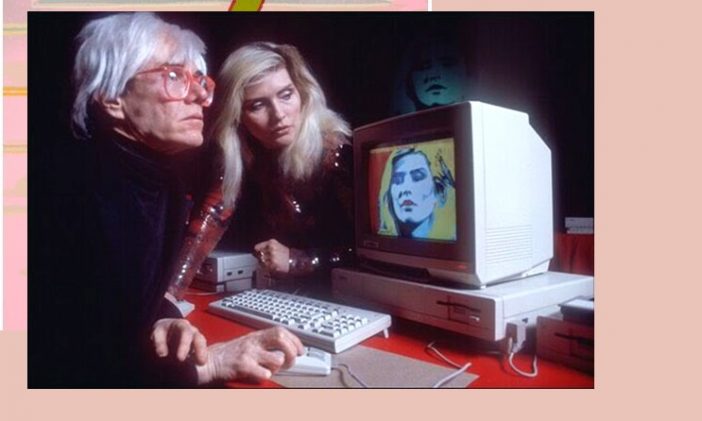
Is it us or is there something 'photoshop' and 'meme'-like to Warhol's work? CP

Almost one decade ago: Andy Warhol’s “Endangered Species and Ads” prints bring a combined $677,000 USD alone at this notable Modern and Contemporary Art event.

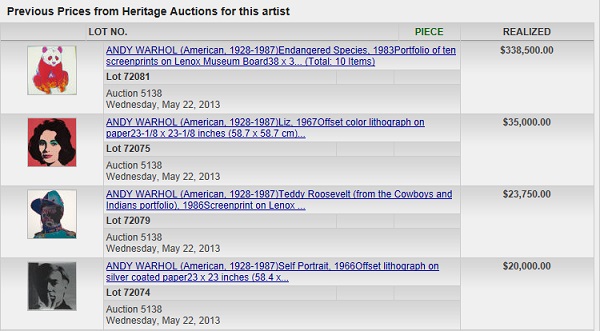
Two complete portfolios by Andy Warhol, Endangered Species, 1983 and Ads, 1985, sold for $338,500 USD each to far exceed their estimates among a field of fresh-to-market iconic works during Heritage Auctions’ $2.9 million USD Modern and Contemporary Art Signature® Auction, May 22 in Dallas.

The auction sold 90% by value and 78% by lot.

Close up of one of the ten screenprints up for auction by ANDY WARHOL (American, 1928-1987) Ads, 1985 Portfolio of ten screenprints on Lenox Museum Board 38 x 38 inches (96.5 x 96.5 cm) Ed. 50/190 Each signed and numbered in pencil Printed by Rupert Jasen Smith, New York Published by Ronald Feldman Fine Arts, Inc., New York PROVENANCE: Private collection, Texas LITERATURE: Feldman & Schellmann, II.350-359 Warhol, Andy:. American painter, photographer, filmaker and publisher, 1928-1987
Close up of one of the ten screenprints up for auction by ANDY WARHOL (American, 1928-1987)
Ads, 1985
Portfolio of ten screenprints on Lenox Museum Board
38 x 38 inches (96.5 x 96.5 cm)
Ed. 50/190
Each signed and numbered in pencil
Printed by Rupert Jasen Smith, New York
Published by Ronald Feldman Fine Arts, Inc., New York
PROVENANCE:
Private collection, Texas
LITERATURE:
Feldman & Schellmann, II.350-359
Warhol, Andy:. American painter, photographer, filmaker and publisher, 1928-1987

Here's a look at some of the other Warhol auctions. Endangered Species earned over 1/3 of a million dollars. CP

ANDY WARHOL (American, 1928-1987)

Ads, 1985

Portfolio of ten screenprints on Lenox Museum Board

38 x 38 inches (96.5 x 96.5 cm)

Ed. 50/190

Each signed and numbered in pencil

Printed by Rupert Jasen Smith, New York

Published by Ronald Feldman Fine Arts, Inc., New York

PROVENANCE:

Private collection, Texas

LITERATURE:

Feldman & Schellmann, II.350-359

Warhol, Andy: American painter, photographer, filmaker and publisher, 1928-1987

Condition Report*:

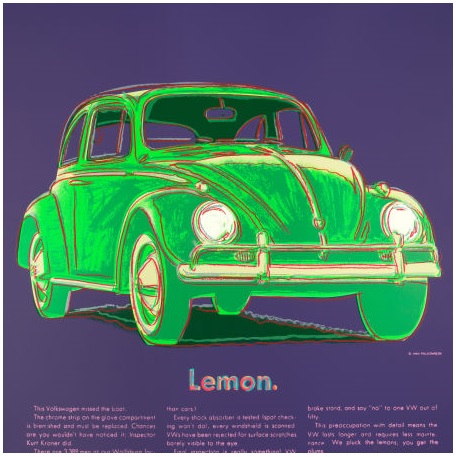
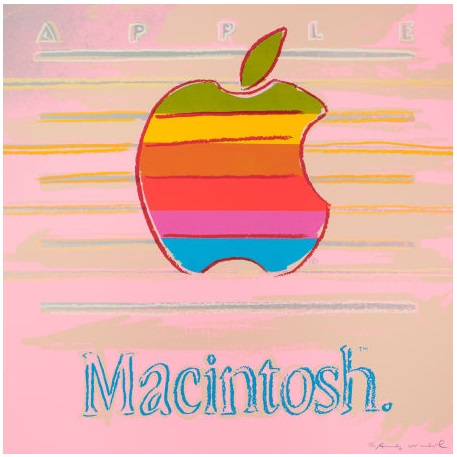
With original Ronald Feldman Fine Arts, Inc. cardboard portfolio box and index print. All screenprints unframed and in good condition with specifics listed below. Mobil: Minor rubbing 3/8″ in due to former frame. A few incidental surface scratches and rubs. One 5/8″ abrasion, resulting in very minor loss. Paramount: Minor rubbing 3/8′ to 1/2″ due to former frame. Very minor bumping to bottom right corner. Chanel: 1/2″ to 1″ light rubbing due to former frame. Slate purple backgrund has hazy toning, beginning about 1/4″ in. Apple: Very minor incidental rubbing to edge. Rebel Without A Cause (James Dean); Van Heusen (Ronald Reagan); Blackglama (Judy Garland): All have only very minor edgewear. Volkswagen; Life Savers: Very minor surface rubbing and edgewear. Donald Duck: Very minor edgewear. Top corners have minor wear. Light handling creases. Some wrinkling and an indentation at end of signature. Left side center shows some moderate wrinkling and creases with some minor loss, beginning at 11″ from the bottom up to 24″, and affecting 3″ into the work. The face and body of Donald Duck is affected somewhat, as well as the background near edge. Light wear in top left corner and a small abrasion on middle right side. Unframed

Two works by Ed Ruscha responded well among buyers as his gunpowder on paper titled Rustic Pines, 1967, realized $290,500 USD and a color screenprint, Double Standard, 1969, sold for $182,500 USD , setting a record for the work. Mel Ramos’ Georgia Peach, 1964, fresh from a Texas collection, sold for $158,500 USD.

“The market for good contemporary art doesn’t seem to have hit any ceiling,” said Frank Hettig, Director of Modern and Contemporary Art at Heritage. “Our focus is presenting fantastic, fresh-to-market discoveries and bidders certainly responded in kind. It gives us high expectations for our November 2 Modern and Contemporary auction in Dallas.”

Among the modern masterpieces in the auction, the magnificent, 7-foot Cobalt Chandelier, 2003, by Dale Chihuly reached $158,500 USD. It is the largest Chihuly chandelier to appear on the secondary market and was offered through a federal court-appointed receivership overseeing the sale of assets previously owned by R. Allen Stanford of Stanford Financial Group.

Forms in Space by Lichtenstein earned $53,125.

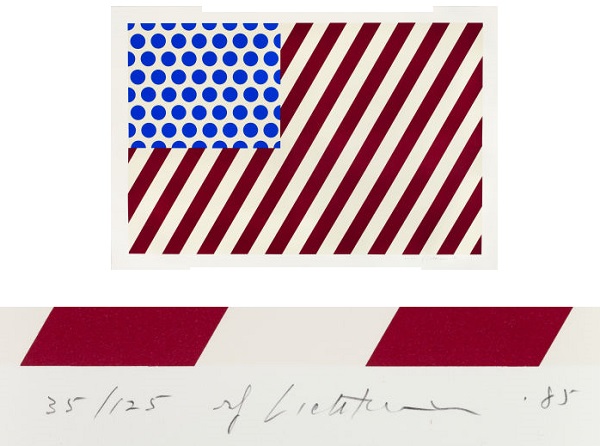
Roy Lichtenstein’s Forms in Space, 1985, a screenprint published by the artist for the Institute of Contemporary Art’s Rally round the Flag benefit, achieved $53,125 USD and Georges Rouault’s Chemineau, 1937, realized $40,625 USD.

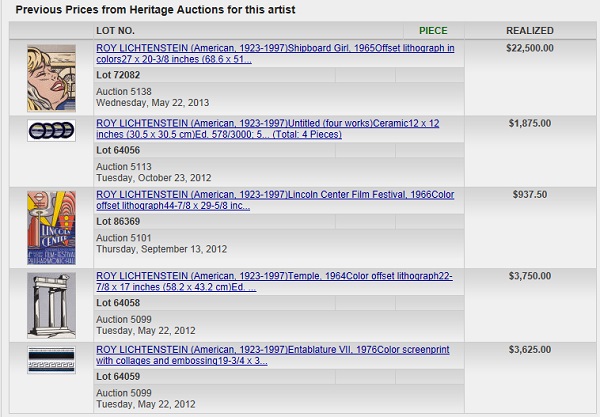
Here's a look at what some Lichtenstein's other pieces sold for.
Here’s a look at what some Lichtenstein’s other pieces sold for.

Sculptural art performed well as Étienne Hajdu’s La Mer, 1964, sold for $35,000 USD and Pablo Picasso’s Vase deux anses hautes, 1953, sold for $30,000 USD while Robert Graham’s Frieze Figure I-G, 1989/1990, brought $21,250 USD.

So what is that Volkswagen Warhol worth today in 2021? It’s hard to pen the value but in Spring 2019 one single print ad brought 30,000 UK Pounds ( 52,000 $ CAD) in a Christie’s auction.


ROY LICHTENSTEIN (American, 1923-1997)

 Forms in Space, 1985

 Screenprint in colors on Rives BFK paper

 31 x 47-1/2 inches (78.7 x 120.7 cm)

 Ed. 35/125

 Signed, dated and numbered in pencil


LITERATURE:

 Corlett, 217

NOTE:

 Published by the artist for the Institute of Contemporary Art, University of Pennsylvania, Philadelphia.

 Forms in Space has been created especially in honor of ICA’s benefit, Rally round the Flag (label on frame verso) .

Lichtenstein, Roy:. American painter, printmaker; born 1923 in New York City, died 1997 in New York City


Condition Report*:

 Sheet: 35.75 x 51.5 A crease in upper center at extreme sheet edge; small pressure mark at lower right corner; lower right corner lightly bumped; paper lightly undulates; framed. Framed Dimensions 36.25 X 52.5 Inches


Supplemental- Apple logo designer dishes on history http://www.macworld.com/article/1142322/logo_design.html