Tag Archives: Poland

Poland Signs Fur Ban Law to End Reign as EU’s Largest Producer

WARSAW, Poland (Dec., 2025) — In a monumental victory for animals and a devastating blow to the global fur trade, Poland has officially enacted a ban on fur farming. The legislation, signed into law by President Karol Nawrocki, marks the end of an era for the European Union’s largest remaining fur producer.

The victory comes after intense international pressure, including a campaign by In Defense of Animals, which rallied supporters to write thousands of letters to President Nawrocki and Marshal of the Senate Małgorzata Kidawa-Błońska. While initial reports suggested leadership might block the ban, the overwhelming global outcry helped ensure the measure was signed into law.

The timing of this legislation sends a shockwave through the fashion industry, arriving just days after activists across the U.S. rallied for Fur Free Friday, and as major fashion institutions, including Vogue, increasingly pivot toward coverage of ethical, cruelty-free alternatives.

Anti-fur demonstrators rally outside the Louis Vuitton flagship store in Beverly Hills, California, on Fur Free Friday, Nov. 28, 2025

“This is a watershed moment in the history of animal protection. By dismantling the fur industry in its largest European stronghold, Poland has effectively dealt a devastating blow to the global fur trade,” said Katie Nolan, Wild Animals Campaign Specialist for In Defense of Animals. “Just last week, Americans marched for Fur Free Friday, and today, we see the results of that global momentum. Whether it is the pages of Vogue or the halls of the Polish Parliament, the message is clear: the future of fashion is fur-free.”

Poland’s exit from the industry holds significant weight for the American market. As the European Union’s largest producer, the country’s ban will drastically reduce the volume of animal pelts available to global fashion houses, disrupting the supply chain and accelerating the industry’s decline in the United States and abroad.

Beyond economics, the ban addresses severe public health risks that transcend borders. Polish fur farms have recently been identified as hotspots for COVID-19 and avian influenza, posing a global threat that this legislation helps mitigate. This victory also reinforces the ethical momentum building stateside, aligning with legislation already passed in California and bans in major fashion cities to further isolate the few remaining supporters of the fur trade.

The new law mandates a phase-out of the industry, ending the confinement of millions of mink, foxes, and raccoon dogs. These animals, in particular the semi-aquatic mink, have historically been forced into barren wire cages, denied their natural needs, and subjected to gruesome deaths via gassing or electrocution.

In Defense of Animals celebrates this victory with its supporters and coalition partners who refused to let this ban die in the US Senate.

America Welcomes a New G20


StateDept

Dec, 2025

Author: U.S. Secretary of State Marco Rubio

Next year, the United States will host the world’s 20 largest economies for the first time since 2009. Coinciding with America’s 250th anniversary, the 2026 G20 will be a chance to recognize the values of innovation, entrepreneurship, and perseverance that made America great, and which provide a roadmap to prosperity for the entire world. We’ll showcase these values and more when we host the G20 Leaders’ Summit in December 2026 in one of America’s greatest cities, Miami, Florida.

Under President Trump’s leadership, the G20 will use four working groups to achieve progress on three key themes: removing regulatory burdens, unlocking affordable and secure energy supply chains, and pioneering new technologies and innovation. The first Sherpa and Finance Track meetings will be held in Washington, DC, on December 15-16, followed by a series of meetings throughout 2026. As the global economy confronts the changes driven by technologies such as Artificial Intelligence, and shakes off ideological preoccupations around green energy, the President is prepared to lead the way.

We will be inviting friends, neighbors, and partners to the American G20. We will welcome the world’s largest economies, as well as burgeoning partners and allies, to America’s table. In particular, Poland, a nation that was once trapped behind the Iron Curtain but now ranks among the world’s 20 largest economies, will be joining us to assume its rightful place in the G20. Poland’s success is proof that a focus on the future is a better path than one on grievances. It shows how partnership with the United States and American companies can promote mutual prosperity and growth.

The contrast with South Africa, host of this year’s G20, is stark.

South Africa entered the post-Cold War era with strong institutions, excellent infrastructure, and global goodwill. It possessed many of the world’s most valuable resources, some of the best agricultural land on the planet, and was located around one of the world’s key trading routes. And in Nelson Mandela, South Africa had a leader who understood that reconciliation and private sector driven economic growth were the only path to a nation where every citizen could prosper.

Sadly, Mandela’s successors have replaced reconciliation with redistributionist policies that discouraged investment and drove South Africa’s most talented citizens abroad. Racial quotas have crippled the private sector, while corruption bankrupts the state.

The numbers speak for themselves. As South Africa’s economy has stagnated under its burdensome regulatory regime driven by racial grievance, and it falls firmly outside the group of the 20 largest industrialized economies.

Rather than take responsibility for its failings, the radical ANC-led South African government has sought to scapegoat its own citizens and the United States. As President Trump has rightly highlighted, the South African government’s appetite for racism and tolerance for violence against its Afrikaner citizens have become embedded as core domestic policies. It seems intent on enriching itself while the country’s economy limps along, all while South Africans are subject to violence, discrimination, and land confiscation without compensation. Its former Ambassador to the United States was openly hostile to America. Its relationships with Iran, its entertainment of Hamas sympathizers, and cozying to America’s greatest adversaries move it from the family of nations we once called close.

The politics of grievance carried over to South Africa’s Presidency of the G20 this month, which was an exercise in spite, division, and radical agendas that have nothing to do with economic growth. South Africa focused on climate change, diversity and inclusion, and aid dependency as central tenets of its working groups. It routinely ignored U.S. objections to consensus communiques and statements. It blocked the U.S. and other countries’ inputs into negotiations. It actively ignored our reasonable faith efforts to negotiate. It doxed U.S. officials working on these negotiations. It fundamentally tarnished the G20’s reputation.

For these reasons, President Trump and the United States will not be extending an invitation to the South African government to participate in the G20 during our presidency. There is a place for good faith disagreement, but not dishonesty or sabotage.

The United States supports the people of South Africa, but not its radical ANC-led government, and will not tolerate its continued behavior. When South Africa decides it has made the tough decisions needed to fix its broken system and is ready to rejoin the family of prosperous and free nations, the United States will have a seat for it at our table. Until then, America will be forging ahead with a new G20.

Marco Rubio was sworn in as the 72nd secretary of state on January 21, 2025. The secretary is creating a Department of State that puts America First.

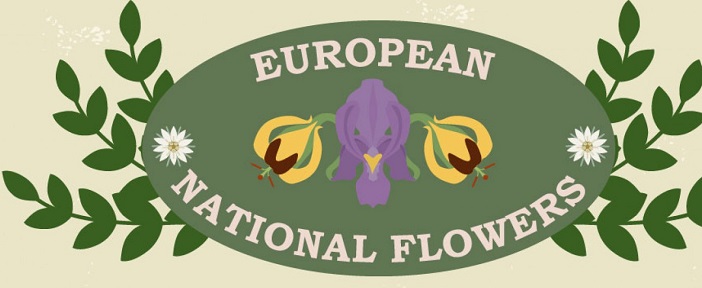
For Many European Countries, National Flower Is Second Only To Flag In Importance

Many non-native plants can happily survive in other regions of the world, which has given gardeners more choice than ever before. However, native flowers and plants can summarize the landscape of a nation, while communicating the identity of a country.

For many countries the national flower is second only to the national flag as the most important national symbol, while communicating the identity of a country.

European National Flowers Infographic

Did you work on this visual? Claim credit here.