Tag Archives: mindfulness

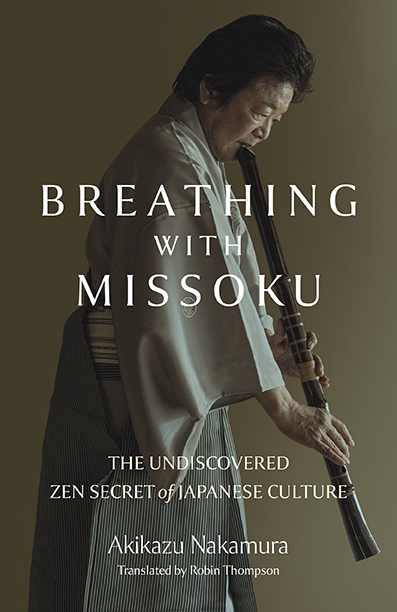
Breathing- The Undiscovered Zen Secret of Japan

What Is Missoku?

Missoku is a traditional Japanese breathing practice rooted in Zen philosophy, emphasizing slow, intentional breaths to cultivate calm, focus, and inner awareness. This article explores its origins, cultural significance, and practical steps for integrating Missoku into modern life.

Akikazu Nakamura began his professional journey as a quantum chemist, having graduated from the Department of Applied Chemistry at Yokohama National University. However, it wasn’t long until he turned to the shakuhachi for his future career.

Akikazu studied under numerous shakuhachi masters, including Katsuya Yokohama. He then went on to study composition and jazz theory at Berklee College of Music, USA, graduating summa cum laude. He finished his tertiary studies at the New England Conservatory of Music as a scholarship student in the Master of Music Composition and the Third Stream program. 

His compositions are diverse and include orchestral music, choral music, chamber music, big band music, and traditional Japanese music.

He has established a performance method that makes full use of overtones, multiphonics, the traditional Japanese breathing technique of ‘Missoku’, and his own originally developed method of circular breathing, which involves exhaling and inhaling at the same time.

The Zen Origins of Missoku

ミソク

While staying true to the traditions of the Komusō monks and collecting, analyzing, and performing their repertoire, he also performs rock, jazz and classical music using a (previously unknown to the English-speaking world) Japanese Zen breathing technique of Missoku. Realizing that others will benefit from this technique and use it to pave a path towards a peaceful and mindful life, he has shared this zen secret of Japanese culture in this comprehensive book.
Final Thoughts: Rediscovering a Cultural Treasure

The interest in all things Japan, as well as the increasing effort to center both physical and mental health as a core value of any flourishing society, leads to the nexus explored in this book, Missoku, a unique breathing method that has been handed down through Japanese Zen tradition.

Missoku is a form of breathing in which the pelvis is tilted and the abdomen is in an expanded state. It’s proven to be effective in sports, martial arts, dance, theatre, and playing musical instruments. The benefits to overall health and stamina are bountiful. One incentive includes an increase in respiration capacity, which in turn stimulates the brain, balances autonomic nerves, and improves immune defenses.

People Also Ask

Q: Is Missoku the same as meditation?

No. Missoku is a breathing technique that can be used within meditation but also stands alone as a physical and mental discipline.

Q: How often should I practice Missoku?

Beginners can start with 5–10 minutes daily, gradually increasing as comfort grows.

Q: Is Missoku used in martial arts?

Yes. Many Japanese martial traditions incorporate controlled breathing to enhance focus, timing, and calmness.

Q: Can Missoku help with stress?

Yes. Slow, intentional breathing activates the parasympathetic nervous system, reducing stress and improving emotional regulation.

Why Missoku Matters in Modern Life

Missoku is a lesser‑known Japanese breathing discipline connected to Zen Buddhism and traditional arts such as tea ceremony, martial arts, and calligraphy. It teaches practitioners to synchronize breath with movement and awareness, promoting emotional regulation, clarity, and a grounded sense of presence. The article explains the cultural roots of Missoku, how it differs from Western breathwork, and why it remains an overlooked but powerful tool for stress reduction and mindfulness.

For the Silo, Jarrod Barker.

What It Means To Be Trauma Free And Truly Grounded

Featured Conversation: In this episode, a talk with Dr. Carlos Canales about his transformative journey from Peru to becoming a pioneering voice in somatic group therapy. 

Dr. Canales shares how his experience of separation and cultural displacement in early life shaped his innovative integration of Somatic Experiencing with group psychotherapy.

Our Bodies Carry Culture

We explore what it means to be truly grounded, how our bodies hold both individual and collective trauma, and why attending to physiological responses deepens rather than diminishes group intensity. Dr. Canales offers powerful insights about cultural difference in groups and demonstrates how recognizing and regulating the body creates space for genuine connection—wisdom born from finding belonging between worlds. Throughout, he makes a compelling case for why attachment theory must evolve to address how our bodies carry culture, while sharing his vision for a future of group therapy that integrates generosity and play alongside rigorous clinical work.

For the Silo, Angelo Ciliberti/The Group Dynamics Dispatch.

The Many Physical, Physiological and Spiritual Benefits from Yoga

(May 12, 2023) Scientific evidence shows that yoga supports stress management, mental health, mindfulness, healthy eating, weight loss and quality sleep. This is according to the National Institutes of Health. On this edition of the Beth Linder-Moss Podcast, Beth specifically describes all those benefits and how to get started with Yoga.

Yoga is not just a form of exercise but a holistic approach to wellness that works on the mind, body, and spirit. From reducing stress and anxiety to building strength and flexibility, yoga offers numerous benefits for people of all ages and fitness levels.

Mind Benefits of Yoga

According to Beth, yoga helps to calm the mind and reduce stress and anxiety. The practice of breathing exercises and meditation during yoga helps to quiet the mind, relax the body, and reduce cortisol levels. Cortisol is associated with higher stress levels. Studies have shown that regular yoga practice can also alleviate symptoms of depression, anxiety, and even PTSD.

Yoga can also help to improve focus, memory, and concentration. “Yoga helps to improve cognitive function, which leads to better decision-making, improved memory and concentration,” says Beth Linder-Moss.

Body Benefits of Yoga

The physical benefits of yoga are well known. Yoga helps to increase strength, flexibility, and balance. Practicing yoga regularly can help to tone muscles and improve overall body composition. Yoga also helps to reduce inflammation and improve digestion.

According to Beth, yoga is one of the best ways to stay fit and healthy, especially as we age. “Yoga is a low-impact exercise that can be practiced by people of all ages and fitness levels. The practice helps to maintain mobility and flexibility in the body, which is essential as we grow older.”

Spiritual Benefits of Yoga

Yoga is not just a physical practice but a spiritual one too. It helps to connect the mind, body, and spirit. Yoga philosophy talks about the interconnectedness of all things and encourages participants to live a life of compassion and kindness.

Beth believes practicing yoga can help to connect with our inner selves and find inner peace. “Yoga helps to inculcate a deep sense of awareness, concentration, and mindfulness. It helps to cultivate a sense of gratitude, compassion, and contentment,” she says.

Finally Beth says, “yoga is a practice that nourishes and sustains us, helping us to live better, healthier, and more fulfilling lives.”

WHY Meditation Is Science Approved Medicine

Ohm! There have been countless anecdotal claims about the benefits of practicing meditation since the Eastern tradition has become more popular in the West.

 Now, there’s plenty of Western-based scientific evidence to support them, says Dr. Matt Mumber, a radiation oncologist and co-director of a non-profit integrative oncology program. 

“Meditation is to the brain what physical activity is to the body. We’ve found meditation to be an important facet of health care, both for prevention and maintenance as well as in the treatment of disease, including cancer,” says Dr. Mumber, co-author with colleague and Yoga instructor Heather Reed of “Sustainable Wellness: An Integrative Approach to Transform Your Mind, Body, and Spirit,” (www.sustainablewellnessonline.com).

Mumber and Reed, who are co-facilitators of non-profit residential retreats for cancer patients, say one can experience sustainable wellness by developing a life practice grounded in the cultivation of awareness. This awareness is paying attention without attachment. The ability to be aware can be increased by a meditation tool called mindfulness.

“Life is a constant series of adjustments, matching your inner being with your outer doing,” Reed says. “One way to heighten your awareness is through practicing meditation.”

Mumber and Reed say there’s plenty of new evidence that the resulting sense of balance and peace is not just a psychological effect:

• Mindfulness meditation leads to increases in regional brain gray matter density: Recently published in Psychiatry Research: Neuroimaging, shows that measurable  changes in gray-matter density in parts of the brain associated with memory, sense of self, empathy, and stress occurred with study participants who meditated for 30 minutes a day for eight weeks.

• Meditation practitioners have longer attention spans: Published by the journal PloS Biology, a study analyzed people with three months of rigorous training and found that they gained a drastically improved attention span – not only longer, but less susceptible to internal or external distraction. They also showed improved memory and enhanced performance in several tasks, from driving a car to playing piano.

• Reduces stress and blood pressure: Presented to the American Heart Association by researchers at the at the Medical College of Wisconsin in Milwaukee and the Institute for Natural Medicine and Prevention, a study including 200 high-risk patients for heart attack found that meditation reduced their chances for heart attack by 50 percent.

Oncologist Matt Mumber co-author of Sustainable Wellness

“Studies involving people seeking to reduce stress and other problems in their lives via meditation will continue, as well as for those who want to enhance performance of various duties,” Mumber says.

“For those skeptical of the medical benefits of this Eastern practice, there’s now plenty of Western proof.” Matt Mumber, MD

Matt Mumber, MD, is a practicing board-certified radiation oncologist with the Harbin Clinic in Rome, Ga. He completed his radiation oncology residency at Wake Forest University Bowman Gray School of Medicine and graduated from the Associate Fellowship Program in Integrative Medicine at the University of Arizona. Dr. Mumber is past president of the Georgia Society of Clinical Oncology. He founded Cancer Navigators Inc, a non-profit organization offering cancer patients access to nurse navigation, social services and educational programs to support and augment the clinical care they receive. Dr. Mumber received the Hamilton Jordan Founders Award for involvement in statewide oncology activities and in 2008 he was named a Health Care Hero by Georgia Trend magazine. He serves on the editorial board for the journals Current Oncology and Journal of Oncology Practice and is on the board for the Society of Integrative Oncology. 


Yoga instructor Heather Reed of “Sustainable Wellness: An Integrative Approach to Transform Your Mind, Body, and Spirit

Heather Reed has been teaching Yoga since 1996. She expresses an integrative, adaptive approach and specializes in using Yoga and meditation techniques for people living with cancer, post-polio syndrome and other chronic illnesses. Heather received an Experienced Teacher Certification from Esther Myers Yoga Teacher Training Program and has had extensive training with senior staff of the Commonweal Cancer Help program and Dr. Dean Ornish’s Program for Reversing Heart Disease. She developed Yoga classes for cancer patients at The Wellness Community, Atlanta. Since 2008, she has been Yoga teacher and co-facilitator for the Residential Retreat Program for Cancer Navigators of Rome, Ga. For the Silo, Ginny Grimsley

Supplemental-  http://well.blogs.nytimes.com/2011/01/28/how-meditation-may-change-the-brain/