Tag Archives: megalith

Clothes From The Future- Sonic Jacket Has 180 Speakers To Subject Body To Sound Resonances

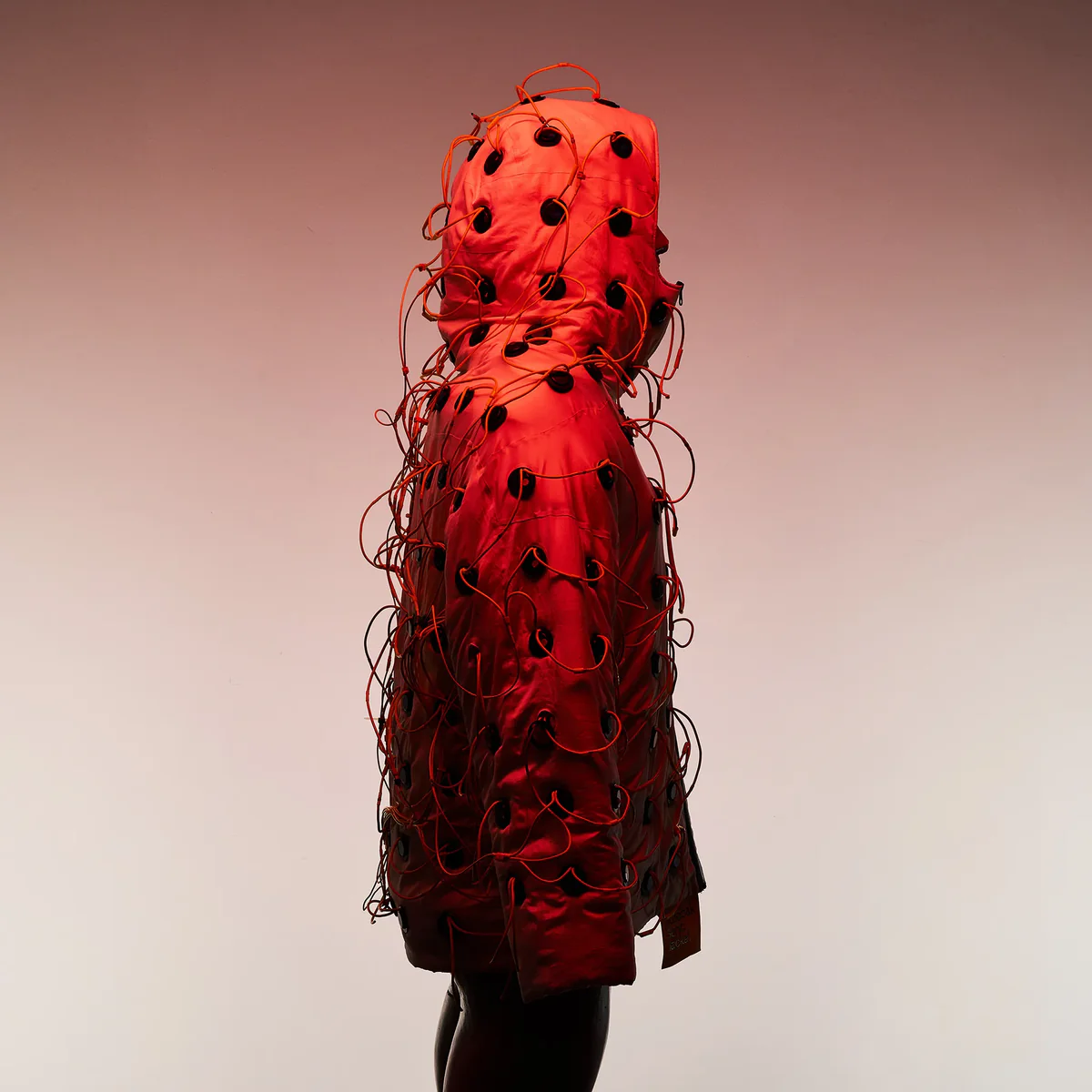
Our friends at Vollebak have taken these ancient ideas and used them in a new kind of transcendental technology. The Sonic Jacket, engineered with 180 speakers that fire frequency directly into your body. Evenly distributed across the jacket’s body, arms and hood, each speaker is just 32mm in diameter and 10mm deep, mounted in laser cut holes and able to generate frequencies from 4 Hz to 20,000 Hz. All fire inward towards the body rather than out into the room. So you don’t listen to this jacket. You feel it.

 The Sonic Jacket is not the first time sound and frequency have been used to alter the human body and mind. But it’s definitely the first time in history that you can walk around while having 4 Hz to 20,000 Hz fired directly into your body… so we decided to be our own guinea pigs

The jacket’s design is deliberately raw and functional. We’ve left the yellow wiring visible, the engineering exposed. “It’s made to look like a science experiment because that’s what it is,” says FBFX co-founder Grant Pearmain. “We’re not hiding the wires. Far from it.”

Patterned Vibration Pathways

Or read on for a short history of frequency in the human story…The earliest uses of sound for wellbeing were embedded in ritual, not medicine. Australian Aboriginal healers use the didgeridoo in ceremonies aimed at restoring spiritual and social balance, its low drones and pulsed rhythms strongly coupled to breath, chest vibration and trance. In ancient Mesopotamian and Egyptian temples, sung prayers and musical incantations were used alongside herbs and amulets. Illness was spiritual imbalance and sound was one route back to alignment. Patterned vibration was the path to group bonding, meaning making and altered states.

Classical Greek philosophy turned experience into theory.

For Pythagoras and his followers, simple musical ratios, octaves, thirds and fifths, were evidence that the cosmos and the body were structured mathematically. This was the “music of the spheres,” the idea that music could tune the soul as you tune a lyre string. Plato and Aristotle developed ideas of ethical acoustics, arguing that particular modes and rhythms encouraged courage, restraint or contemplation. In India and China Nada Yoga treated sustained tones and mantras as a route to meditative absorption while Chinese qigong pairs specific syllables with organs and emotions, using sound to regulate qi.

Musical Pillars?

Temples, cathedrals and megalithic chambers don’t just contain sound, they shape, sustain and amplify it. The room becomes part of the instrument. Recent acoustic studies of Hindu temples show that pillared halls and carved stone surfaces create highly diffuse sound fields, with strong resonance and long reverberation that envelop chanting and bells. At Meenakshi Amman temple, some columns are carved as “musical pillars” that ring with clear notes when struck. Work on Hagia Sophia mosque in Istanbul, built a millennium and half ago, has shown that its enormous dome produces a reverberation time of around 11 seconds, so that chant blends into an almost continuous halo of sound.


Archaeoacousticians study the sophisticated sonic mechanics of sacred spaces. They have found that chambers in many prehistoric sites in Europe and the Mediterranean strongly amplify frequencies around 108 Hz to 110 Hz, the “megalith frequency,” overlapping with male chants and drum tones. The American psychiatrist and neuroscientist Ian Cook found that at 110Hz, the brain shifts from analytical and verbal focus and towards emotion and non-verbal processing. These chambers were machines for generating calm introspection. Whether ancient builders understood this or simply worked until they got a building to sound the way they wanted, the result is the same… spaces that hack our brainwaves.
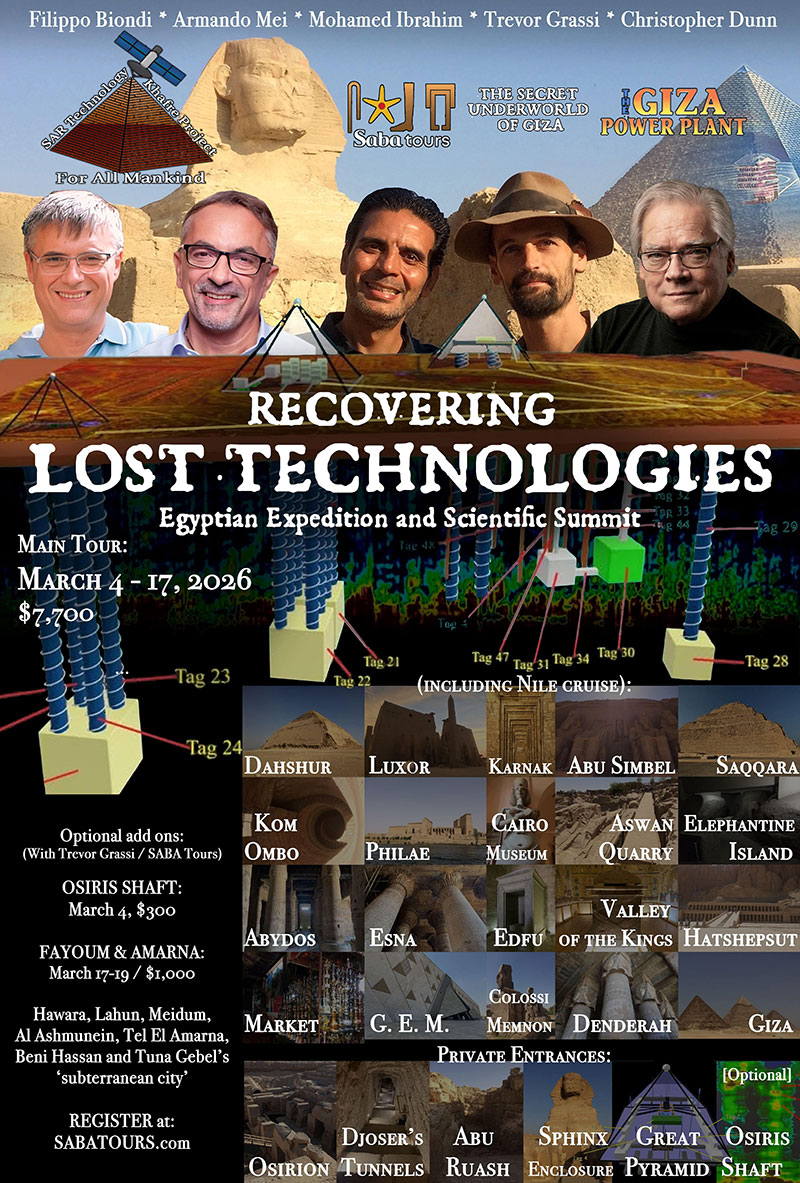
The Great Pyramid of Giza has become a focal point for studies into architecture and sonics. Its internal chambers behave as acoustic resonators, supporting standing waves at particular frequencies. Measurements in the King’s Chamber indicate strong modes in the low-frequency range, with some analyses highlighting a resonance near 117 Hz. The granite coffer inside the chamber has its own resonant frequencies, excited by striking or humming into it. Christopher Dunn’s “Giza Power Plant” theory argues that the whole structure is a coupled oscillator that converts seismic vibration into energy via piezoelectric granite.

Neuroscience has given us a more precise map of how different frequencies affect our mental state. Alpha waves, around 8 Hz to 12 Hz, are associated with relaxed wakefulness, internal focus and reduced sensory distraction. Theta, around 4 Hz to 8 Hz, shows up in drowsiness, early sleep, deep meditation and certain creative tasks. Gamma activity, roughly 30 Hz to 100 Hz, correlates with higher-order cognition and focused attention, working memory. Flow states – the feeling of total absorption in a task – have been linked to increased frontal theta alongside moderate alpha and bursts of gamma.

The brain, it turns out, has frequency signatures for different modes of being.

The idea that external sound can nudge the brain toward specific states is called entrainment. Present a rhythmic stimulus and the brain’s oscillations may start to synchronise with it. Pump slightly different tones into each ear, say 210 Hz and 200 Hz, and the auditory system generates a perceived third beat at the difference frequency, 10 Hz, which the brain allegedly follows. This is called the frequency-following response and it’s the theoretical underpinning of binaural beats and a growing number of apps, wearables and YouTube channels promising alpha for relaxation, theta for meditation, gamma for focus.

The man who came up with binaural beats was Robert Monroe. A radio executive who owned a production company in 1950s Virginia, Monroe began experimenting with sound patterns for learning during sleep. In 1958, he unexpectedly started experiencing powerful vibrational states and episodes of apparent separation from his body, experiences he later documented in the book Journeys Out of the Body and two sequels. Rather than dismiss them, he spent the rest of his life trying to understand and reproduce them. In 1974, he founded the Monroe Institute as a non-profit research centre devoted to the systematic exploration of altering consciousness through sound.


The jacket has a number of different ways to control your frequency feed. A control unit includes an MP3 player delivering 10 pre-set frequencies while a large physical dial lets you explore and fine-tune the frequencies that really make you feel good. The unit is also fitted with a reader for Micro SD cards which can hold up to 1,000 pre-set frequencies so you can create your personalised library. We are also working on a Sonic Jacket app that will connect to the control unit via Bluetooth.

At the lowest frequencies, speakers can overheat. To get over this, the jacket will exploit one of the strange ways we experience frequency. If we are ‘played’ two slightly different frequencies, say 100 Hz and 104 Hz, we hear or feel the difference between the two – which is 4 Hz in this case. That’s how the jacket produces ultra-low frequencies without doing something less fun… like catching fire.

The jacket is not a one-off experiment. The science of frequency and consciousness is still being written. And this jacket will play a part in writing it. Portable, personalised, immersive sound therapy will become an essential tool when we want to feel more, or less, human. And as a wearable resonance chamber, engineered to shift the wearer’s cognitive and physiological state through sound, it marks the start of a new era in wearable technology.  NICK AND STEVE TIDBALL – FOUNDERS   

For the Silo, Jarrod Barker.
Underwater Bimini Road Suggests Advanced Ancient Humans

There is something very strange about the crystal blue waters in the Caribbean Sea, dotted with white sand islands and coconut trees, that seems to attract unsolved mysteries.

But unless the minds behind Wikipedia or mainstream science have a change of heart, the ever-mysterious underwater highway known as Bimini Road will likely remain case-closed.

Thereby hangs a tale common to throngs of mysterious places in the Atlantic Ocean east of the Florida Keys wherein ships, divers, and other witnesses speak of the unexplained—only to be scoffed at, derided, and scorned.

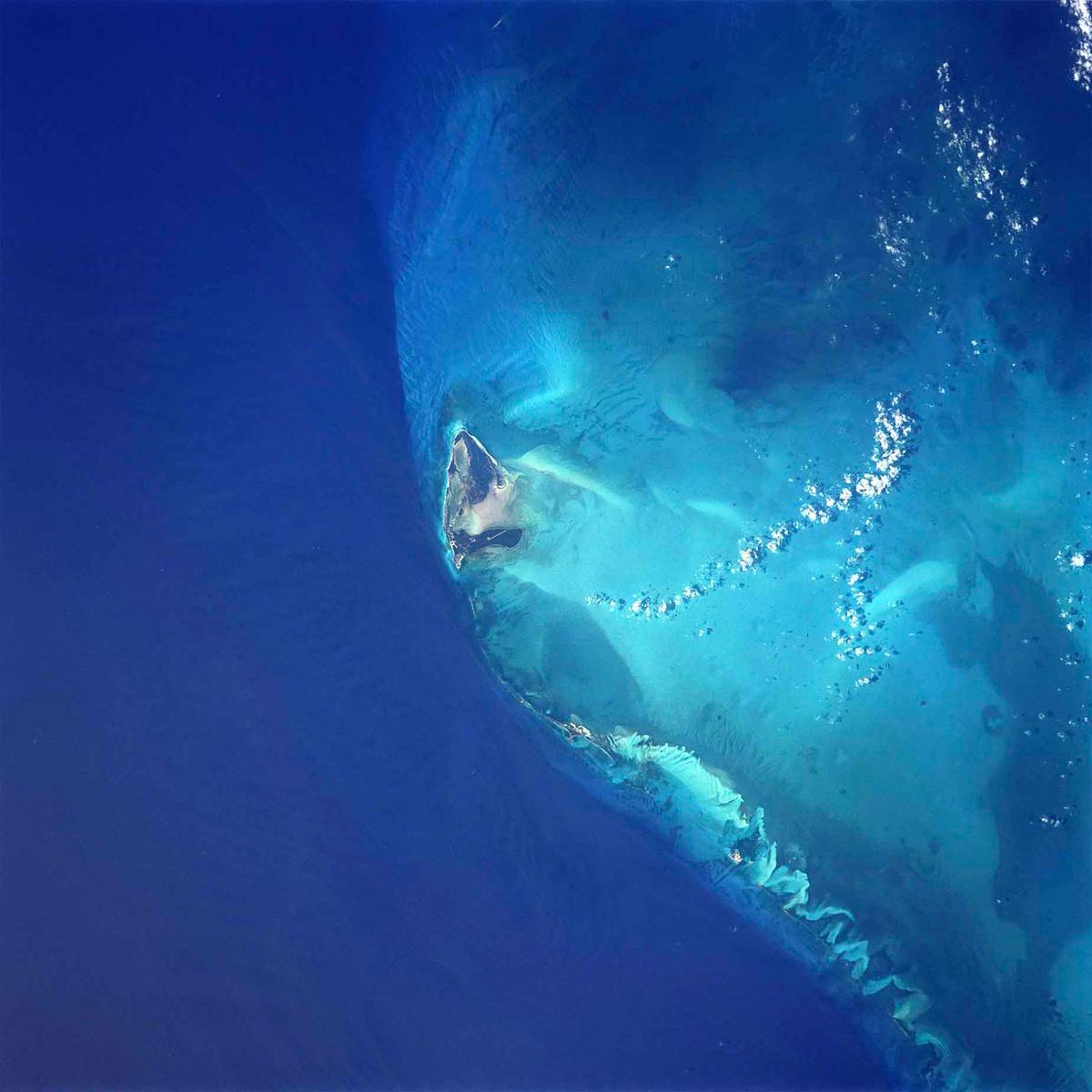
As with the Bermuda Triangle, Atlantis, and the fountain of youth, the Bimini Road joined the list of Caribbean enigmas when, in 1968, Joseph Manson Valentine, Jacques Mayol, and Robert Angove dove 18 feet underwater about a mile off of North Bimini, some 80 miles northwest of the Bahamas, and saw what they described as “pavement” on the ocean floor.

Did Nature produce flawless straight line?

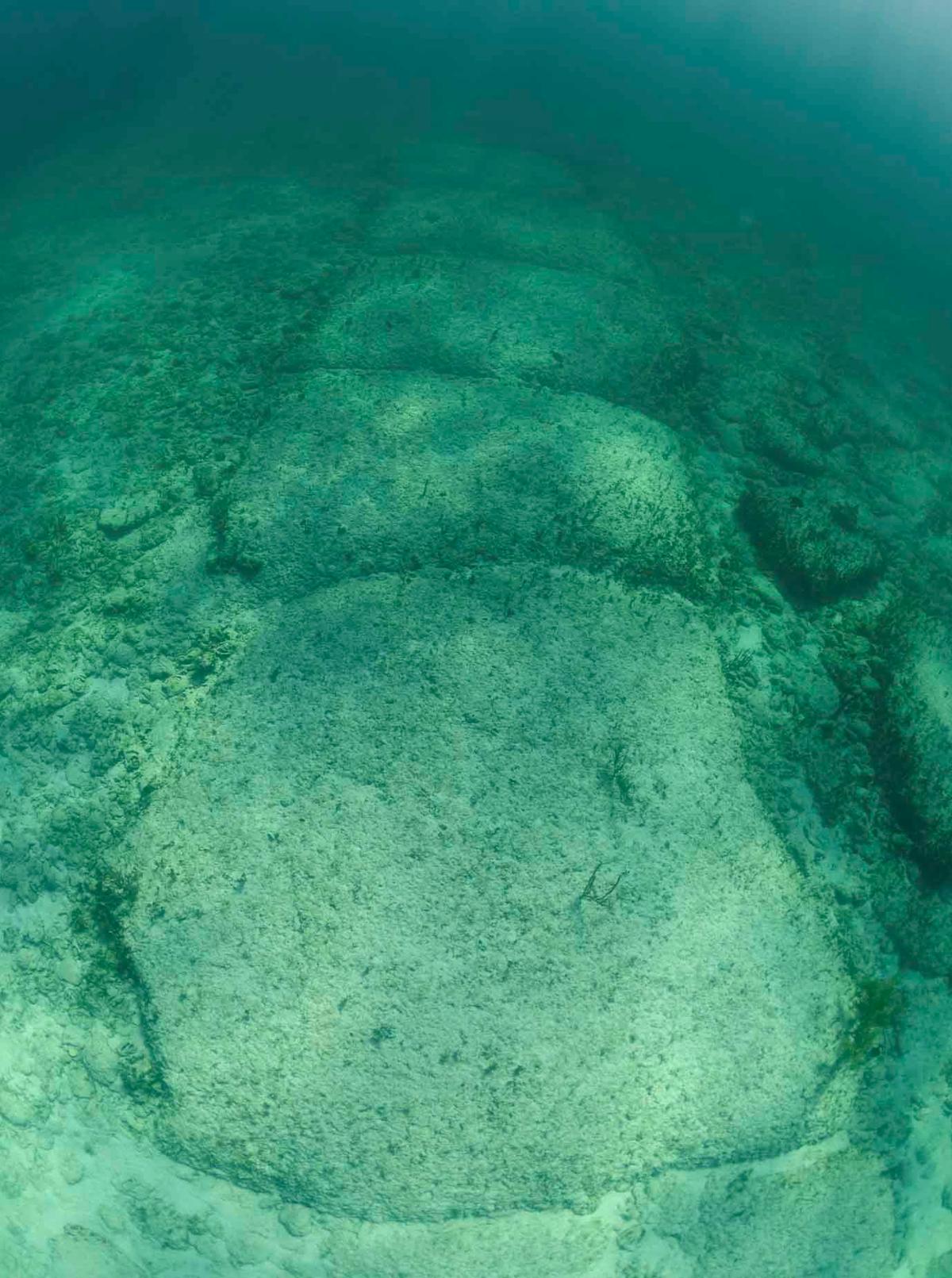
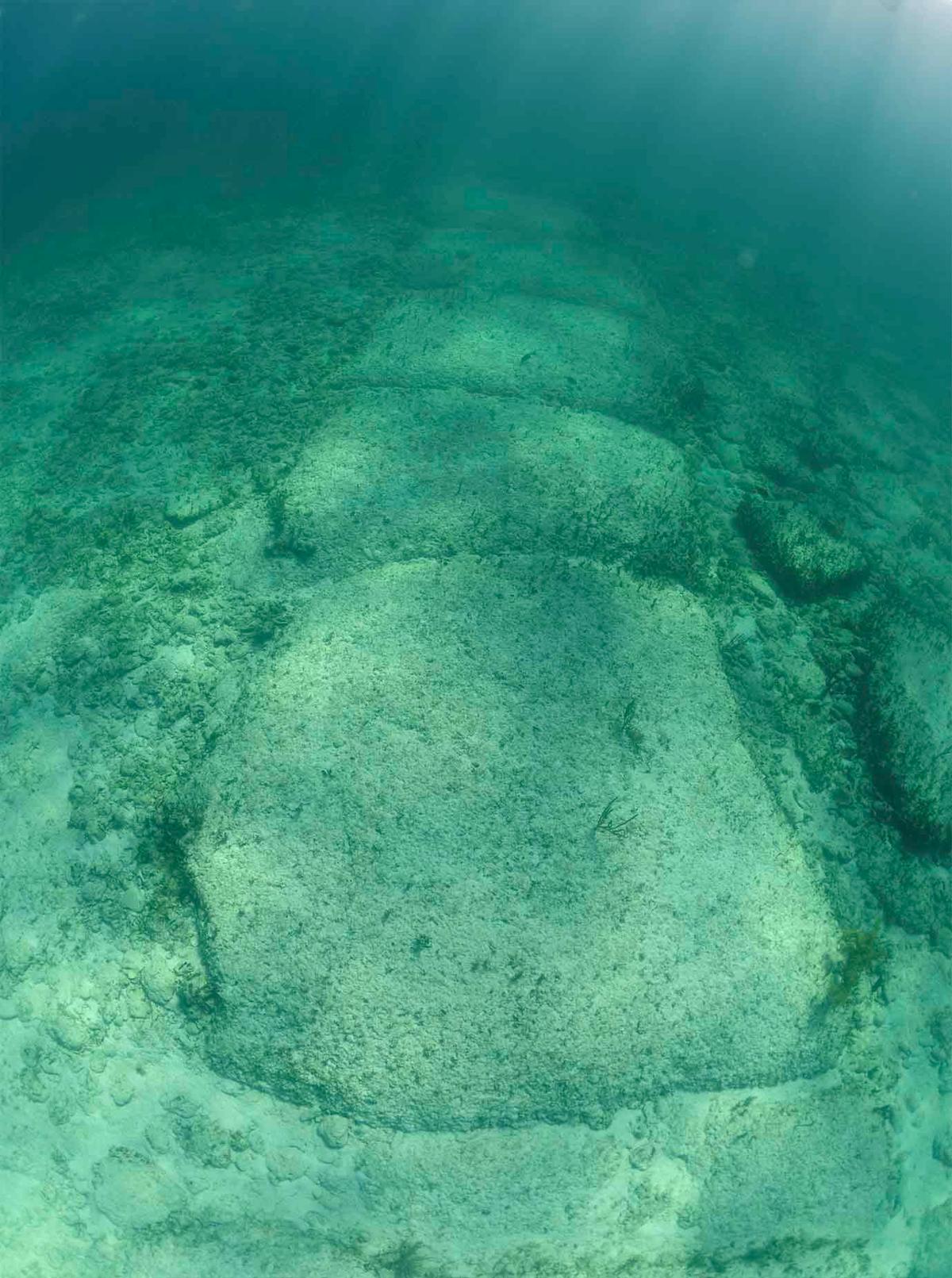
A host of roughly rectangular stone slabs, they reported, rounded like loaves of bread by the sand and current over centuries, formed a flawlessly straight line. Its main feature stretched over 2,600 feet and curved like a “J” at one end. There were two smaller line features. Megalithic in size, the blocks were each 7 to 13 feet wide with right angles and seemed laid level by human hands.

A satellite view of Bimini. (<a href="https://commons.wikimedia.org/wiki/File:Bimini_island.jpg">Public Domain</a>)
A satellite view of Bimini. Public Domain
A map of North Bimini showing Bimini Road. (Rainer Lesniewski/Shutterstock)
A map of North Bimini showing Bimini Road. Rainer Lesniewski/Shutterstock

The anomaly posed many questions to scientists.

How did it form? Was it made by man or nature? Could advanced civilizations have existed so early as to make this—in the Ice Age? Before the region sank beneath the sea 10,000 years ago? Or could nature have created something so fine-tuned? Thus began a clash of ideas.

There were two camps.

One dove down and saw a man-made road. Scientists and amateurs alike looked, and their eyes told them enough: this could not be natural.

The other camp was more skeptical. To avoid rocking the boat (figuratively speaking), they used science to explain the road to fit the foregoing research: it was natural.

As discoveries go, this one saw funded scientists fly in to investigate. Eugene Shinn from the University of Miami’s Department of Geology was foremost among them. Mr. Shinn dove down in 1978 and took radiocarbon core samples. Ultimately, he stated, it was beachrock—a mix of sand, shells, and cement—created by nature.

Megalithic blocks form a line on the seafloor off North Bimini. (FtLaud/Shutterstock)
Megalithic blocks form a line on the seafloor off North Bimini. FtLaud/Shutterstock

The so-called “consensus” of science that grew out of Mr. Shinn’s research, more or less, says this: Bimini Road formed under the surface of the island.

It was exposed by coastal erosion some 2,000 years ago. Its gaps at regular intervals were opened by natural jointing. This view is widely held and amplified on Wikipedia today.

The other camp is less uniform. Visiting Bimini Road, the notion was put forward: there was “overwhelming evidence that the road is made-made.” Their voices spoke from less lavish soapboxes: alternative media, websites, books, anecdotes. Much of it smacks of “New Age” and probably is sprinkled (or drenched) with misinformation to smear those brave voices speaking truth to orthodoxy. And there were voices whose minds changed.

Among the theorists, archaeologist William Donato suggested that Bimini Road isn’t a road; the line of stones forms a wall known as a breakwater, built to protect a prehistoric settlement from waves. This engendered its alter ego: Bimini Wall.

One of the strongest arguments for a man-made Bimini Road comes from Gavin Menzies’s (former British Submarine Commander and amateur historian) book, “1421: The Year China Discovered the World.” He writes: “Small stones are placed underneath larger ones, apparently to make the sea-bed level;” the structure “contains arrow-shaped ‘pointers’ that can only have been man-made;” and “some small square stones have tongue and grooved joints.”

Mr. Menzies, considered an outlier in both camps, believes ancient Chinese explorers anchored here and built the road as a slipway to repair a ship.

In 2022, British author Graham Hancock appeared on Joe Rogan’s podcast to discuss the road. He said it was artificially “propped up” and “leveled out” with smaller rocks. “When you dive on it,” he told Mr. Rogan, “it’s impossible to believe it’s entirely the work of nature.”

And there have been accounts that got their wires crossed.

Stones ranging from 7 to 13 feet in width pave the underwater road at North Bimini. (FtLaud/Shutterstock)
Stones ranging from 7 to 13 feet in width pave the underwater road at North Bimini. FtLaud/Shutterstock

Ironically, both Wikipedia and Mr. Menzies offer polar opposite arguments but cite the same man.

Mr. Menzies noted David Zink, who explored Bimini Road in 1974, mentioning “small stones” under the larger ones being a second layer beneath the Bimini Road. Wikipedia also cited Mr. Zink but with a reversal: the conclusion about this second layer “was likely incorrect.”

Amid all the clashing, we managed to obtain exclusive insight into the debacle.

Bimini Road, also called Bimini Wall, is believed to have been built to protect a prehistoric settlement from waves. (FtLaud/Shutterstock)
Bimini Road, also called Bimini Wall, is believed to have been built to protect a prehistoric settlement from waves. FtLaud/Shutterstock

Psychologist Greg Little, author of “Edgar Cayce’s Atlantis,” revealed to the newspaper another flip-flop. He claims to have evidence of scientists altering core samples to support that Bimini Road was naturally formed. He says they admitted being pressured to do so by “all the craziness” surrounding Bimini Road, that it was “done for fun,” and it was done “to make a good story.”

To verify Mr. Little’s claims, the scientist in question was contacted directly who replied they were “not going to nit-pick over Little’s concerns.”

If true, the claim raises questions: Why would the orthodoxy mislead? What do they stand to gain by disproving ancient man’s involvement in the creation of Bimini Road?

This was posed to Mr. Little, who drew on psychology to explain:

“All contradictions to their beliefs are probably perceived as a direct threat to them professionally and psychologically,“ he said. ”The long history of science has countless examples of widely held beliefs that were proven wrong by research. But even in the face of incontrovertible proof that these beliefs were wrong, many so-called scientists refused to accept the new evidence.”

As for Bimini Road—whether it’s case-closed, as the “consensus” says, or mysterious as ever—there’s perhaps a way to know: Visit Bimini Road. Swim the crystal blue waters. Witness its wonders yourself with your eyes. For the Silo via Michael Wing & friends at theepochtimes.com.

Crop Circles And Sacred Sites Of England Tour

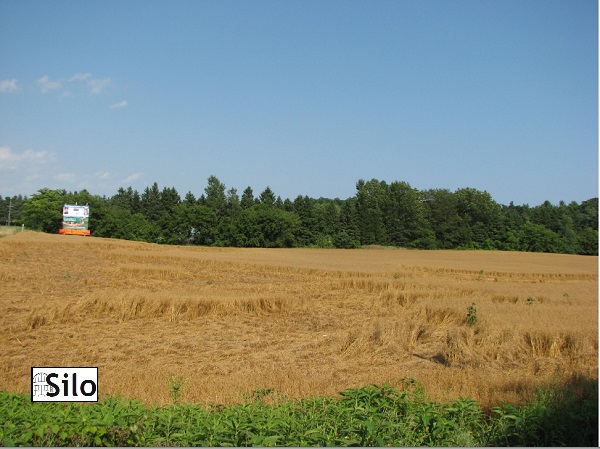
Most patterns in crop circle formations are not readily visible from ground level but details can be noticed and pathways lead to contemplation, relaxation and discovery. Did you know that in Summer 2011 The Silo visited a crop circle in Port Dover,Ontario, Canada? Check back later- we will upload a photo soon CP
Most patterns in crop circle formations are not readily visible from the ground.

Most tangible of Earth mystery
Created anew each year
On underground currents of energy
By sacred sites do appear –
Bedazzle us with your beauty yet again!


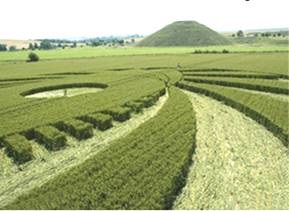
There are few mysteries more accessible than crop circles. Each spring and summer these enigmatic patterns appear overnight in crop fields, particularly around the Avebury landscape temple in Wiltshire, England. Whenever possible we enter these beautiful creations within hours of their forming, when the energy of a genuine formation is at its strongest. Cosmic works of art, ET communications in sacred geometric format, pranksters’ hoaxes, spiritual guidance or a warning voice from Gaia, whatever your opinion crop circles are fascinating and truly remarkable.

We have access to the information network that provides breaking news on the latest formations. Some days expert researchers will join us in the circles to share their knowledge and perspectives with us, showing us what to look for or how to dowse for any energy present. You may want to sit quietly in meditation, try and discover what the pattern is (often difficult to tell from the ground inside a formation) or dance with the flow of the lain stalks. Everyone reacts differently to crop circles but no-one can ignore them.


This part of England is also home to some of the world’s most powerful ancient sacred sites including Stonehenge, Avebury and Glastonbury. We will take time to truly experience these places of power including exclusive access to the world famous Stonehenge for a private visit outside of normal hours. Being based close to the World Heritage Site of Avebury Landscape Temple we have daily access to such sites as Silbury Hill, West Kennet Long Barrow and the Sanctuary. In historic Glastonbury we will visit the Abbey, Chalice Well and the Tor.

We’re also offering a pre-tour extension to attend the prestigious Summer Crop Circle Lectures where you will hear fascinating presentations and meet the presenters as well as all the other ardent ‘croppies’.


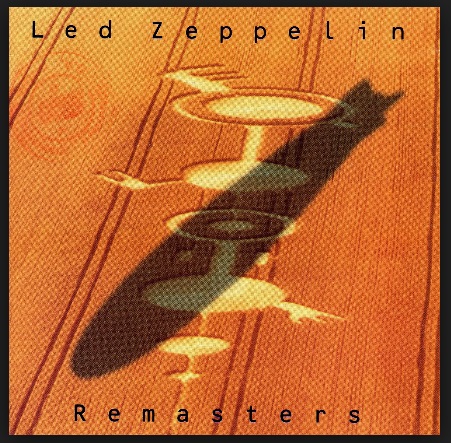
May we recommend Track 7 Disc 2's "Trampled Underfoot" for listening to while walking through your Crop Circle? ;)
Track 7 Disc 2: “Trampled Underfoot”


Tour Highlights:

• Visits into crop circles
• An optional helicopter flight over these exquisite patterns
• Private out-of-hours access into Stonehenge
• Attendance at the world’s leading Crop Circle Conference with International researchers
• Visits to some of England’s most powerful sacred sites

Supplemental- Crop circles discovered West of Port Dover, Ontario?

We would have liked a higher vantage point. We saw geometric patterns in the crops. These patters were not visible the day before. This field was cut within 24 hours of this photo being taken. image: Mith Media/The Silo all rights reserved