

For The Silo, Jarrod Barker.
For The Silo, Jarrod Barker.
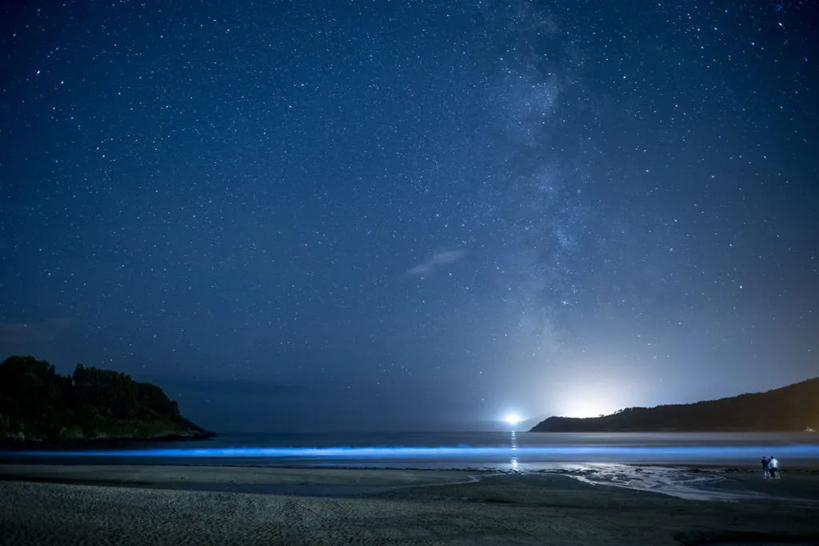
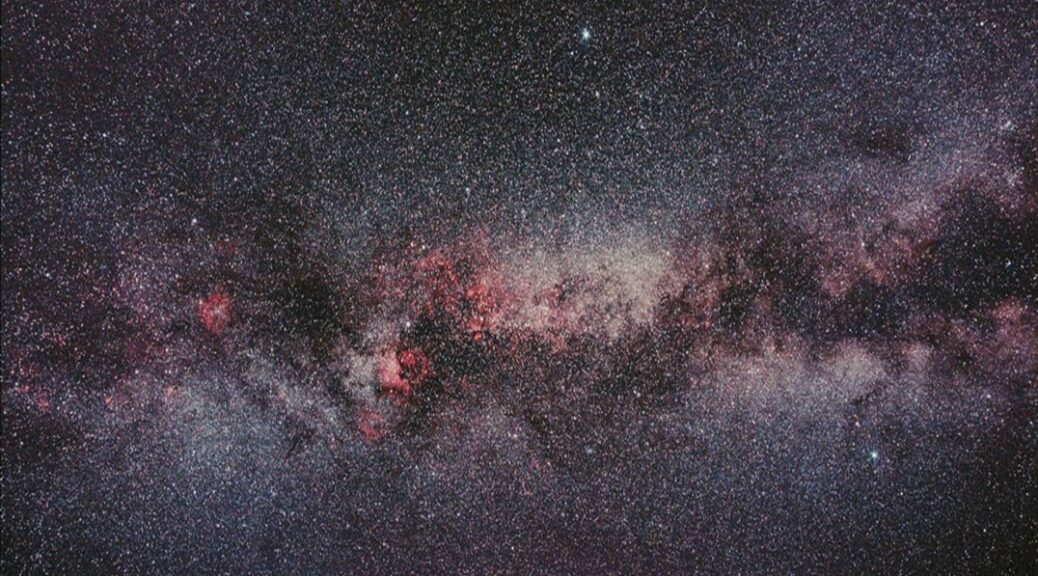
A great night for stargazing. The Milky Way over a bioluminescent sea at Estorde beach, Galicia, Spain. Photo by Brais Lorenzo/Anadolu Agency via Getty Images
What a phenomenal week it’s been here in Almería Spain. If you’ve ever wanted to spend five nights surrounded by brilliant minds talking about the wonders of the universe—all for free—then the 13th Astronomy Days at Teatro Apolo was the place to be.

Every evening from Monday to Friday, I joined a packed house at the Teatro Apolo, right on Rambla Obispo Orbera, for one of the most engaging, inspiring, and surprisingly personal science events I’ve ever attended.
As someone with a love for astronomy (but definitely not a scientist), I wasn’t sure what to expect. Would it be too technical? Would the speakers feel out of reach? Turns out—not at all. The talks were not only fascinating, but the speakers themselves were so kind and approachable. I got to chat with all of them after their presentations, and almost everyone was fluent in both English and Spanish, which made the whole experience super welcoming.

Here’s a recap of this unforgettable journey through the stars:
The week kicked off in the best way imaginable—with John Mather, Nobel Prize winner and NASA legend. He talked about the James Webb Space Telescope (JWST), and let me tell you: hearing about its mission straight from someone who helped design it was something else.
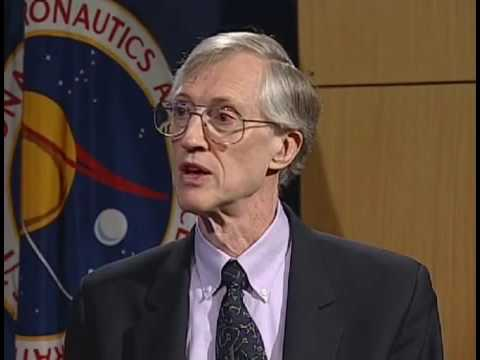
He explained how JWST is literally letting us see the earliest galaxies, basically time-travelling with light, in a way that even I could follow—and I only passed physics with a B.
After the talk, I was lucky enough to have a quick chat with him. He was gracious, humble, and even cracked a joke about how working with ancient starlight makes you feel a little ancient yourself.
Next up was John Beckman from the Institute of Astrophysics of the Canary Islands (IAC). Originally from the UK, he’s spent most of his career here in Spain, and you can tell he really loves sharing his knowledge.
His talk was all about galaxies—how they form, why they behave the way they do—and it was filled with this kind of poetic curiosity about the universe. He made the whole room feel like part of the story.
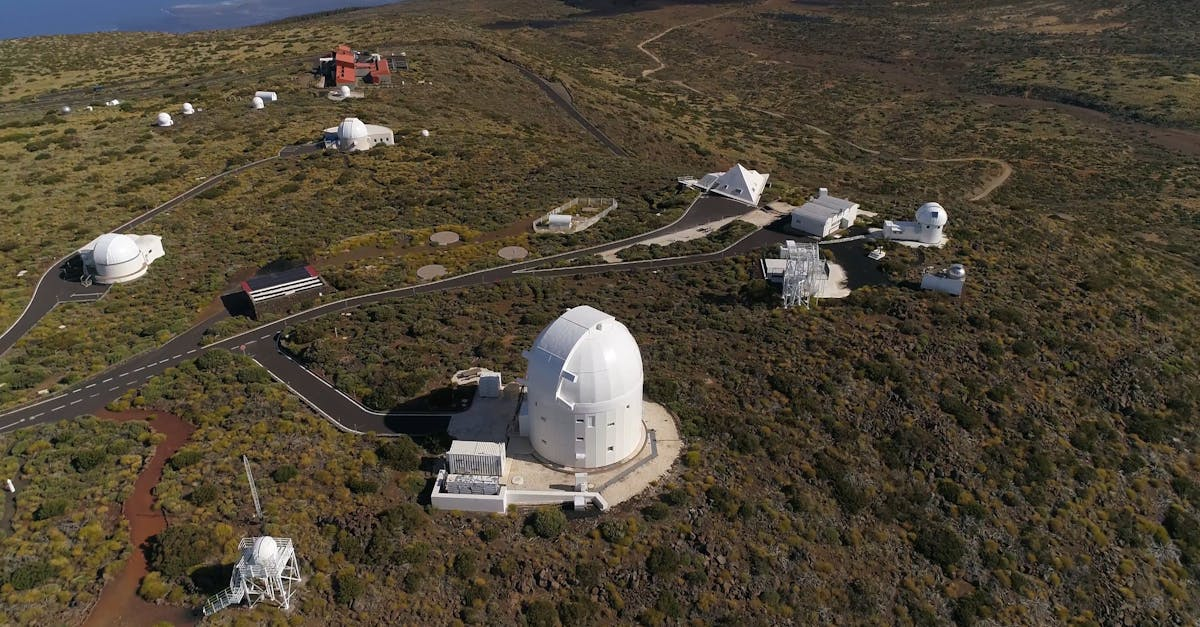
Institute of Astrophysics- The Canary Islands
He stuck around after the lecture, chatting with attendees like we were old friends. I asked him what keeps him inspired after decades of research, and he simply said, “The universe never runs out of surprises.”
Wednesday’s speaker was Martín Guerrero Roncel from the Institute of Astrophysics of Andalusia (IAA), and his passion was contagious. He dove into the bizarre beauty of planetary nebulae—those colourful clouds of gas released by dying stars.
I had no idea how important these structures are in spreading elements across galaxies. His visuals were stunning, and his explanations were super clear, even when things got a little technical.
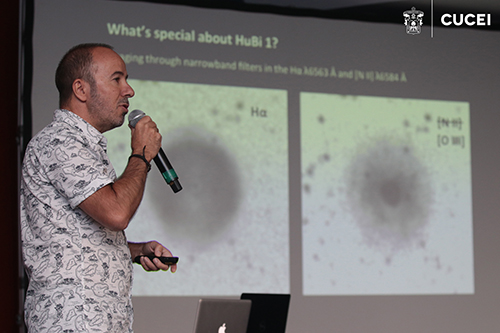
Afterwards, he was more than happy to answer everyone’s questions (and there were a lot), with patience and genuine enthusiasm. Super approachable and just a cool guy overall.
Thursday brought us the incredible Sara García Alonso—astronaut candidate, molecular biologist, and all-around badass. She talked about her scientific work, the future of space missions, and what it’s like being one of the few selected to train as a European astronaut.
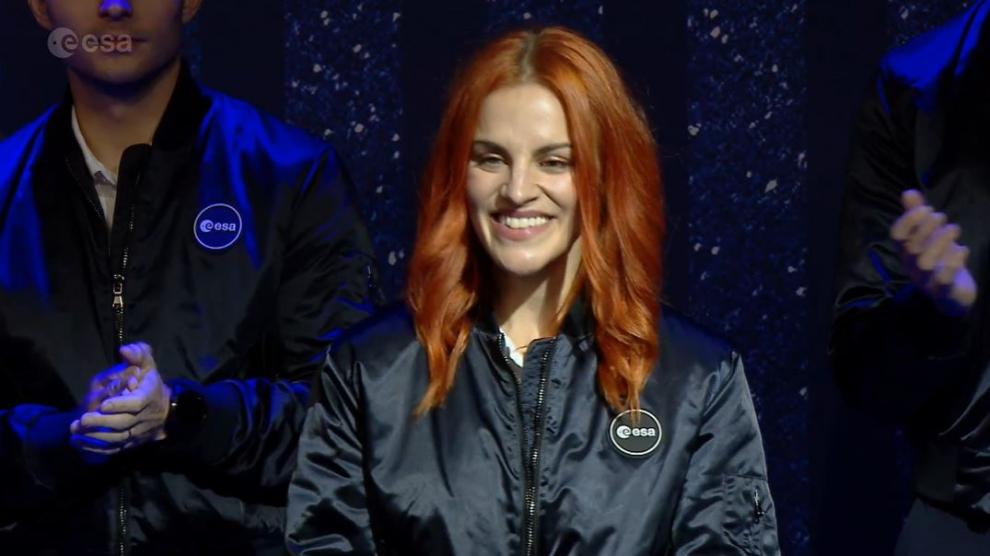
She brought this vibrant energy to the room, blending her love of biology and space exploration into a really inspiring talk. It was especially amazing to see so many young women and girls in the audience visibly lighting up as she spoke.
The week wrapped up with a bang with Eva Villaver Sobrino, the director of Space at the Spanish Space Agency. Her talk was both visionary and grounded—she spoke not just about scientific discoveries, but also about the future of Spain’s role in space exploration, the importance of collaboration across countries, and the ethical responsibilities we have as we reach further into the cosmos.
She’s been involved in some of the biggest European space missions, and her ability to combine scientific rigour with a big-picture vision of humanity’s place in the universe really struck a chord.
Questions afterward felt like chatting with a wise mentor. She encouraged everyone to keep asking questions and stay curious, no matter their background or age.
By the end of the week, I felt like my brain had been stretched in the best possible way. I learned about dying stars, distant galaxies, cutting-edge telescopes, and even the biology of space travel. But more than that, I walked away feeling deeply inspired.
What really made the event special was the human connection. Every speaker stayed around to talk, sign books, take photos, or just share a quiet word. No egos, no academic walls—just real people sharing their love for science.
Huge thanks to the organizers and to Teatro Apolo for making this all happen—and for making it free and open to everyone. Events like this remind us why curiosity matters and how lucky we are to have such brilliant minds willing to share their time and passion.

Already counting down to next year. Until then—keep looking up! For the Silo, Sandia Martin.
When the Earth, Moon, and Sun line up in space, we can see an eclipse. NASA studies eclipses from the ground, in our atmosphere, and in space, influencing solar, planetary, and Earth science.
Today on April 8, the Moon’s shadow will sweep across the United States and Canada, as millions will view a total solar eclipse. For many, preparing for this event brings memories of the magnificent total solar eclipse on Aug. 21, 2017.
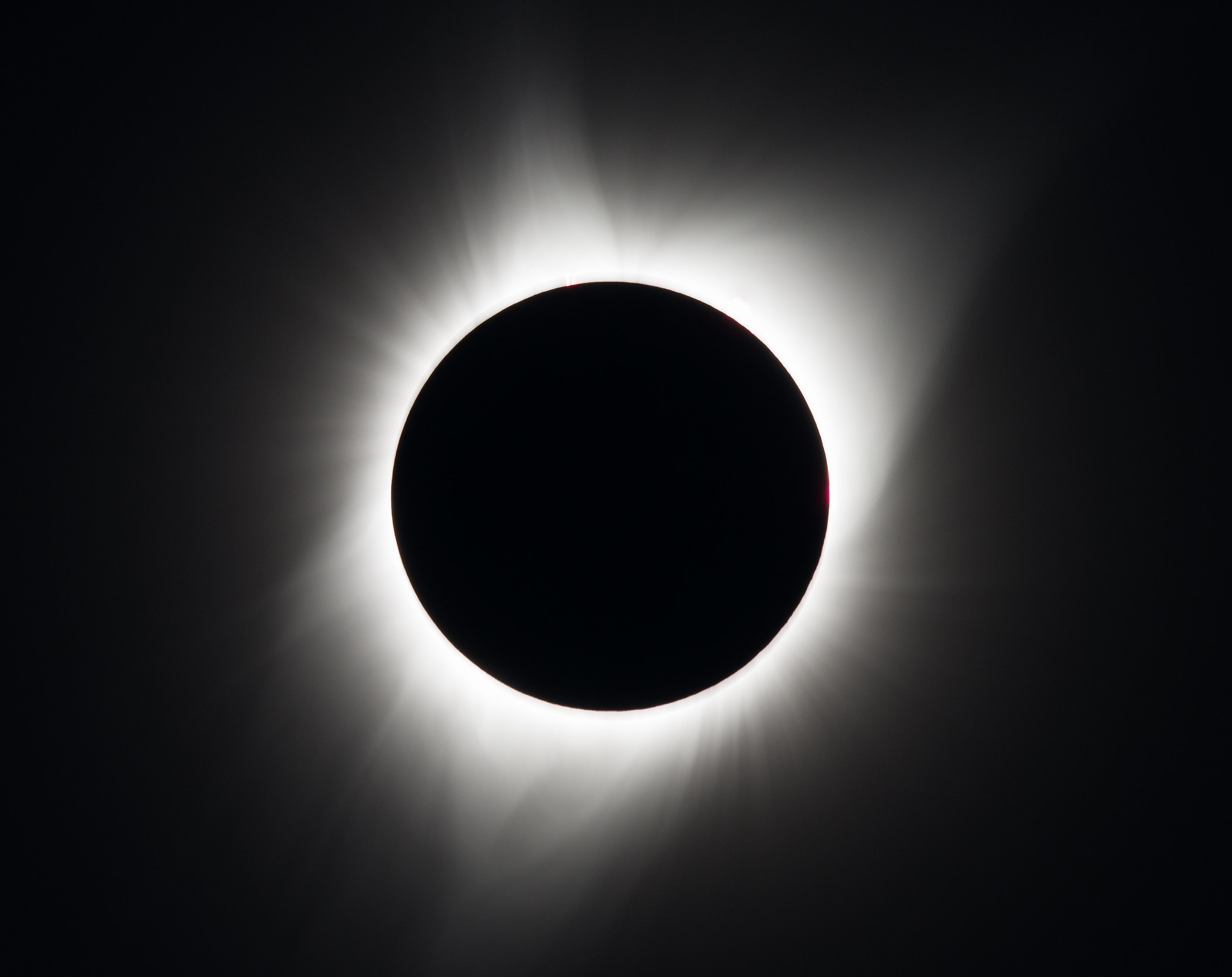
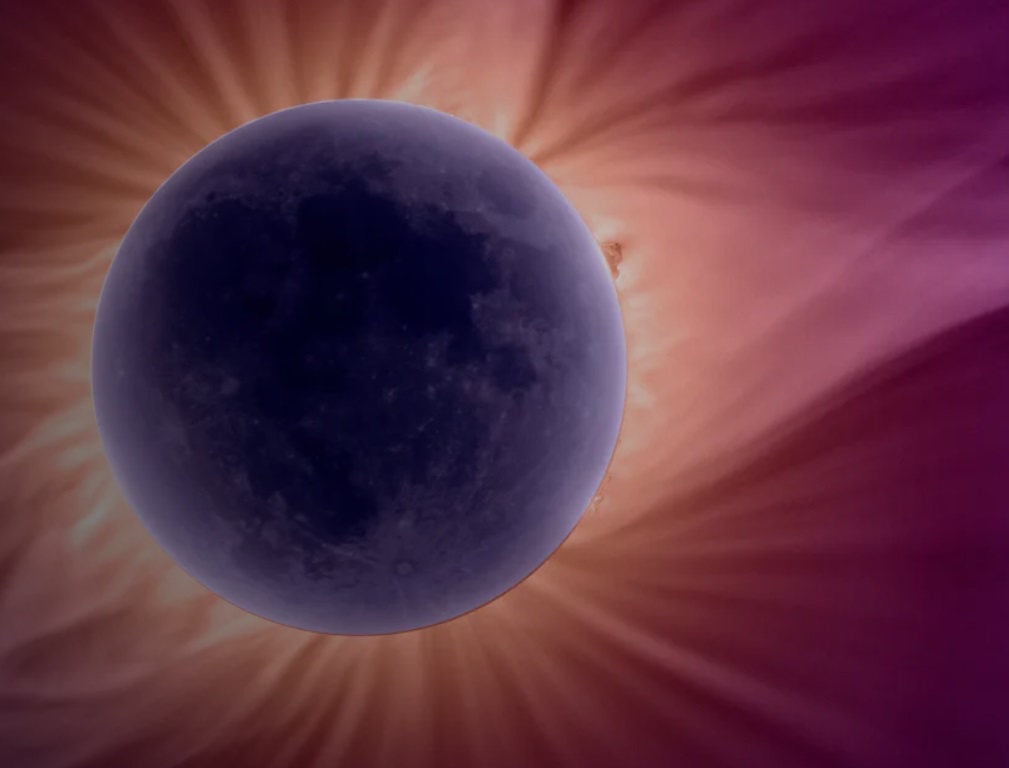
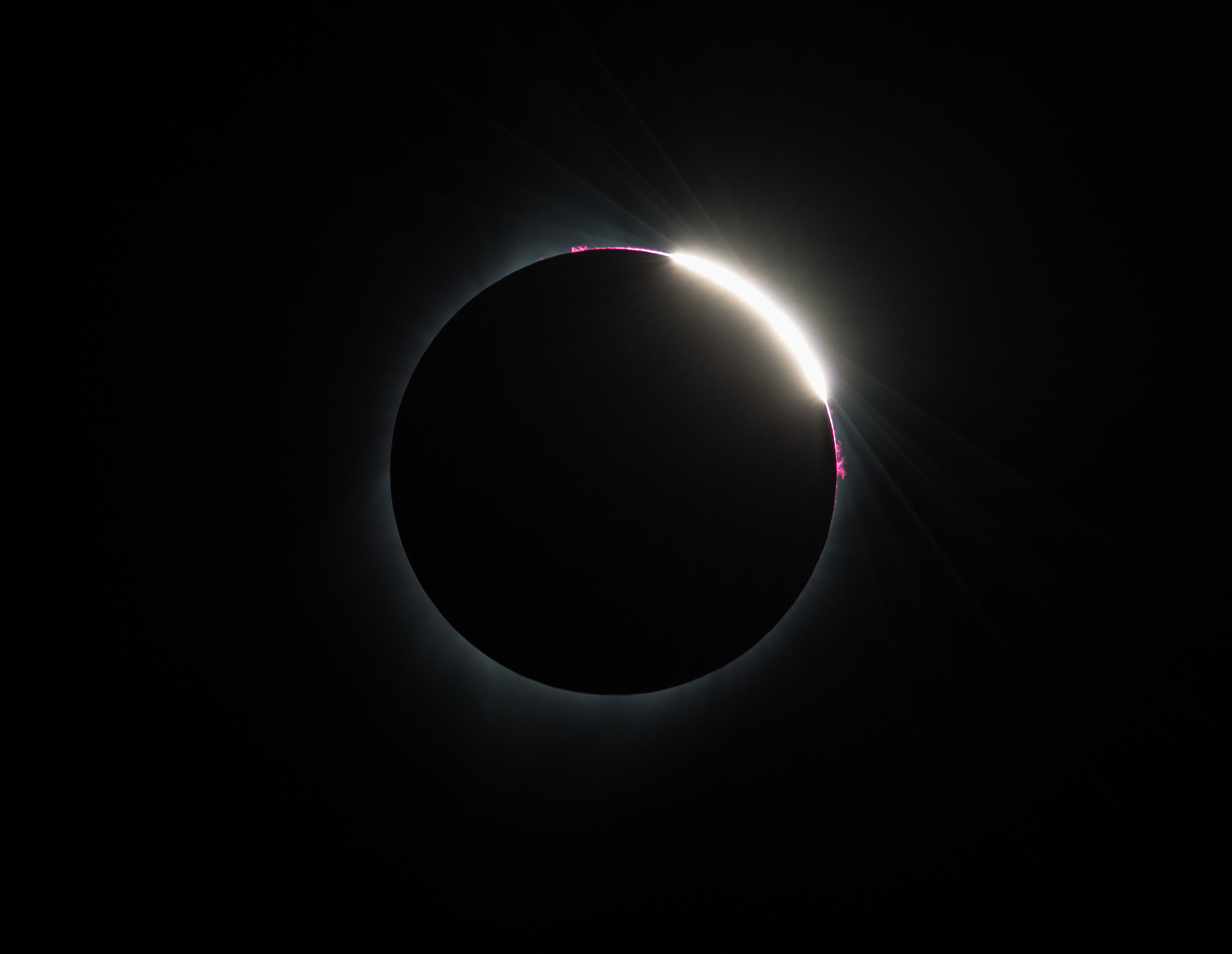
The total solar eclipse on Aug. 21, 2017, was photographed from Madras, Oregon. The black circle in the middle is the Moon. Surrounding it are white streams of light belonging to the Sun’s outer atmosphere, called the corona.
In 2017, an estimated 215 million U.S. and Canadian adults (88% of U.S. adults) viewed the solar eclipse, either directly or electronically. They experienced the Moon pass in front of the Sun, blocking part or all of our closest star’s bright face. The eclipse in 2024 could be even more exciting due to differences in the path, timing, and scientific research.
The path of totality – where viewers can see the Moon totally block the Sun, revealing the star’s outer atmosphere, called the corona – is much wider during the upcoming total solar eclipse than it was during the eclipse in 2017 and is expected to occur for viewers along the Great Lakes at 3:33pm EDT. As the Moon orbits Earth, its distance from our planet varies. During the 2017 total solar eclipse, the Moon was a little bit farther away from Earth than it will be during the upcoming total solar eclipse, causing the path of that eclipse to be a little skinnier. In 2017, the path ranged from about 62 to 71 miles wide. During the April eclipse, the path over North America will range between 108 and 122 miles wide – meaning at any given moment, this eclipse covers more ground.
The 2024 eclipse path will also pass over more cities and densely populated areas than the 2017 path did. This will make it easier for more people to see totality. An estimated 31.6 million people live in the path of totality this year, compared to 12 million in 2017. An additional 150 million people live within 200 miles of the path of totality.
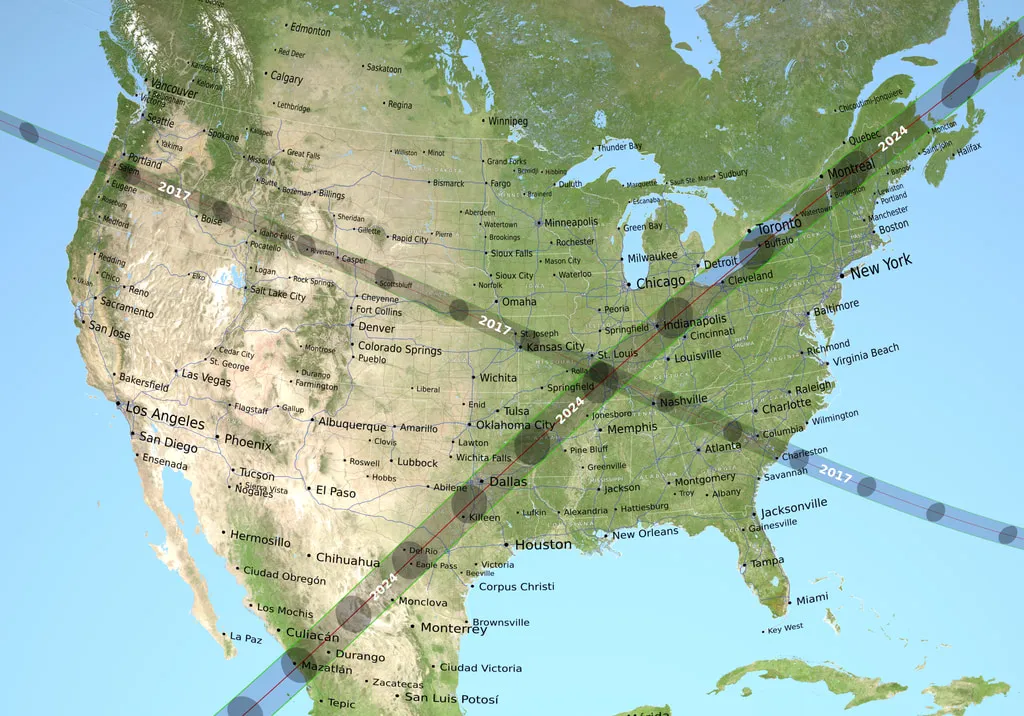
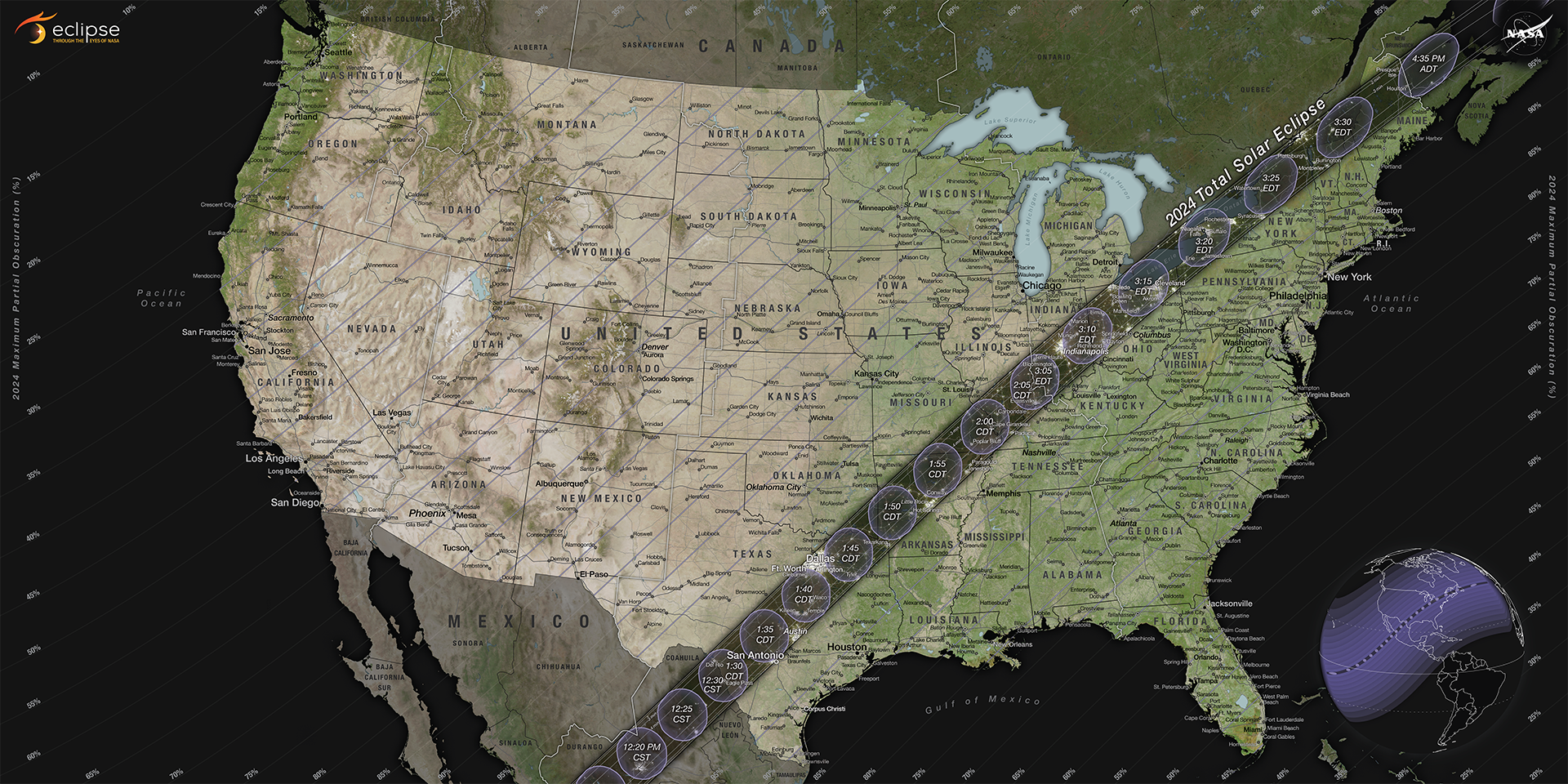
You don’t need to live within the path of totality to see the eclipse – in April, 99% of people who reside in the United States will be able to see the partial or total eclipse from where they live. Every contiguous U.S. state, plus parts of Alaska and Hawaii, will experience at least a partial solar eclipse.
Today, totality will last longer than it did in 2017. Seven years ago, the longest period of totality was experienced near Carbondale, Illinois, at 2 minutes, 42 seconds.
For the upcoming eclipse, totality will last up to 4 minutes, 28 seconds, in an area about 25 minutes northwest of Torreón, Mexico. As the eclipse enters Texas, totality will last about 4 minutes, 26 seconds at the center of the eclipse’s path. Durations longer than 4 minutes stretch as far north as Economy, Indiana. Even as the eclipse exits the U.S. and enters Canada, the eclipse will last up to 3 minutes, 21 seconds.
During any total solar eclipse, totality lasts the longest near the center of the path, widthwise, and decreases toward the edge. But those seeking totality shouldn’t worry that they need to be exactly at the center. The time in totality falls off pretty slowly until you get close to the edge.

Every 11 years or so, the Sun’s magnetic field flips, causing a cycle of increasing then decreasing solar activity. During solar minimum, there are fewer giant eruptions from the Sun, such as solar flares and coronal mass ejections. But during solar maximum, the Sun becomes more active.
In 2017, the Sun was nearing solar minimum. Viewers of the total eclipse could see the breathtaking corona – but since the Sun was quiet, streamers flowing into the solar atmosphere were restricted to just the equatorial regions of the star. The Sun is more magnetically symmetrical during solar minimum, causing this simpler appearance. During today’s 2024 eclipse, the Sun will be in or near solar maximum, when the magnetic field is more like a tangled hairball. Streamers will likely be visible throughout the corona. In addition to that, viewers will have a better chance to see prominences – which appear as bright, pink curls or loops coming off the Sun.
With lucky timing, there could even be a chance to see a coronal mass ejection – a large eruption of solar material – during the eclipse.
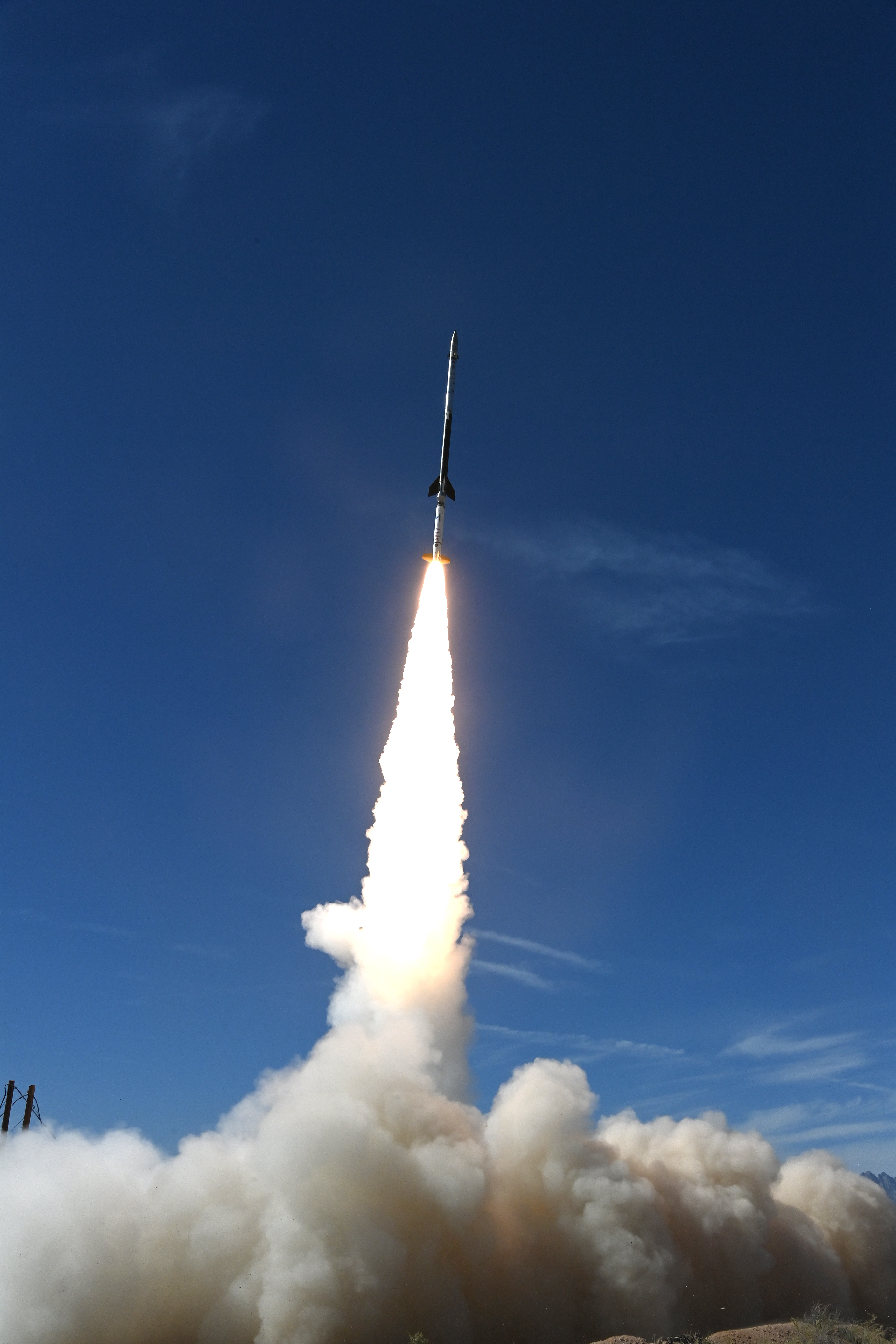
The third rocket launched on Oct. 14, 2023, during the annular solar eclipse leaves the launch pad.
WSMR Army Photo
During the total eclipse in 2024, NASA is funding several research initiatives that build on research done during the 2017 eclipse. The projects, which are led by researchers at different academic institutions, will study the Sun and its influence on Earth with a variety of instruments, including cameras aboard high-altitude research planes, ham radios, and more. In addition to those projects, instruments that were launched during the 2023 annular solar eclipse on three sounding rockets will again be launched during the upcoming total solar eclipse.
Two spacecraft designed to study the Sun’s corona – NASA’s Parker Solar Probe and ESA (European Space Agency) and NASA’s Solar Orbiter – have also launched since the 2017 solar eclipse. These missions will provide insights from the corona itself, while viewers on Earth see it with their own eyes, providing an exciting opportunity to combine and compare viewpoints.
To learn more about the 2024 total solar eclipse and how you can safely watch it, visit NASA’s eclipse website.
By Abbey Interrante
NASA’s Goddard Space Flight Center, Greenbelt, Md.
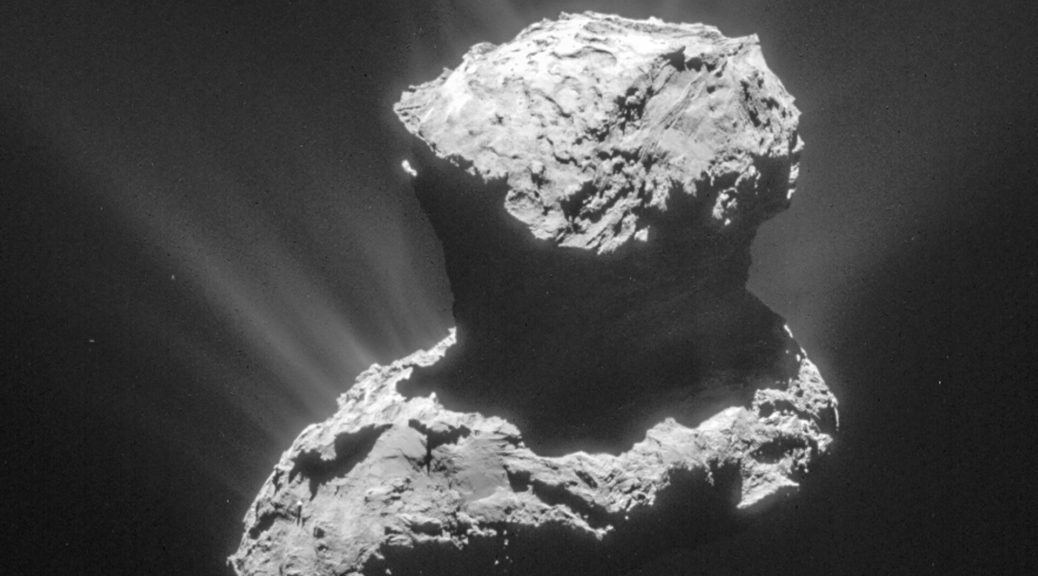
It’s been eight years since an historic landing took place between an European Space Agency drone and a comet.(which looked suspiciously a lot like an asteroid to us!)
At that time a report from Deep Space Industries laid out their business plans up to 2020 and what they had committed to sounded more like science fiction than fact.
A 2019 announcement from NASA stating that it would be the National Space Administration in the lead instead ( NASA will soon begin hunting a nickel laden asteroid ) spoke volumes about not only the possibility of asteroid prospecting- but also to its inevitability in the private sector.
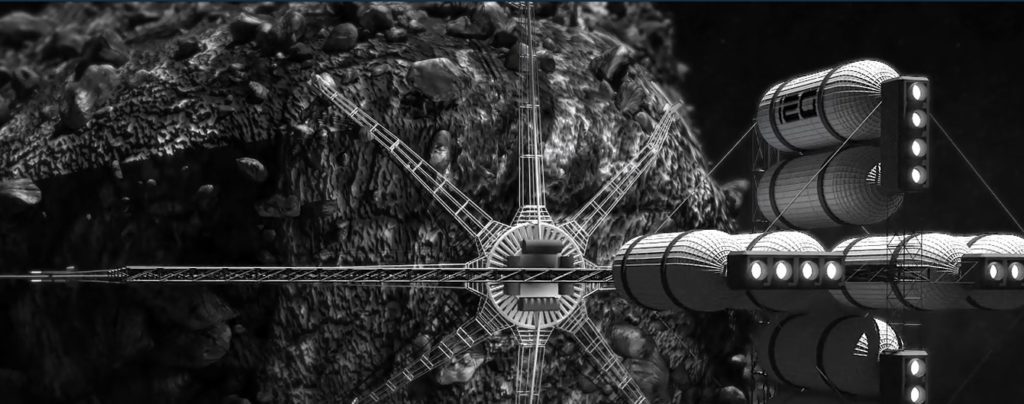
In early 2020 Deep Space Industries (along with the only other asteroid mining company, Planetary Resources) were purchased by Bradford Space Group and ConsenSys Group respectively and all plans for private asteroid mining were shelved indefinitely. Deep Space Industries is now focused on developing space propulsion systems and ConsenSys is now focused on developing blockchain security applications for space technology.
Their plan was to send an entire fleet of prospector spaceships to Near-Earth asteroids in order to harvest them for precious metals and other undisclosed resources. (space rubies anyone?). Starting in 2015, Deep Space Industries were to begin their operation by sending three small spacecraft called FireFlies to selected asteroids near earth for sample taking and photo reconnaissance. One year later, bigger craft called DragonFlies were to leave on four year missions to retrieve asteroid samples and bring them back to Earth. An ambitious project to be sure and not surprisingly, the timeline had been regularly pushed back.
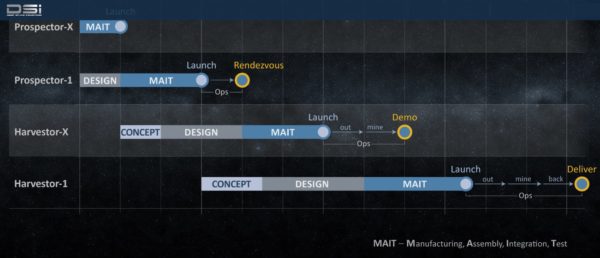
This press release from DSI said a precursor mission was scheduled to launch in 2017: “Recently, Deep Space Industries and its partner, the government of Luxembourg, announced plans to build and fly Prospector-X™, an experimental mission to low-Earth orbit that will test key technologies needed for low-cost exploration spacecraft. This precursor mission is scheduled to launch in 2017. Then, before the end of this decade, Prospector-1 will travel beyond Earth’s orbit to begin the first space mining exploration mission.”
Valuable materials exist in abundance in space and have strong economic potential. Using their tested indicators as investment attractors, Deep Space will move towards securing a commercial space operation and start into the next phase of its business plan. This involves concentrating firstly on processing rocket fuel from asteroid-harvested water.
This fuel, harvested and processed in space will save millions of dollars, since existing communications satellites will no longer be ‘thrown away’ when their fuel supply has been used up. (Satellites that can longer ‘move’ and stay in orbit by using their rocket engines are left to slowly fall towards earth and burn up in the atmosphere ).
Deep Space Industries past-CEO David Gump estimated that a satellite ‘refueled’ and saved from burn up is worth up to $8,000,000 per month. Those figures start to add up when you factor in the number of satellites in use and being launched every year. Another plan during this phase of their business operations is to return precious group metals such as platinum and gold back to earth.
Deep Space believed that other metals harvested from asteroids also have an in-orbit value. They are developing the Microgravity Foundry- a type of 3D printer that will be used to fabricate and machine metal parts in space from pure asteroid metal such as high strength nickel parts.

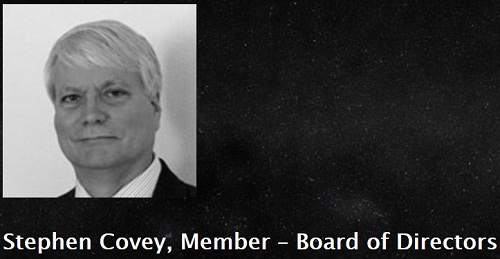
Since this factory will operate in space and in zero gravity and produce parts in space, the idea of permanent space development and human habitation is economically feasible. Stephen Covey co-founder of Deep Space Industries and inventor of the Microgravity Foundry process: “What’s cool about the [3D] printer is that it can take its own parts, grind them up, and recycle them into new parts.”
Deep Space Industries past-CEO David Gump: “Using resources harvested in space is the only way to afford permanent space development. More than 900 new asteroids that pass near Earth are discovered every year. They can be like the Iron Range of Minnesota was for the Detroit car industry last century- a key resource located near where it is needed. In this case, metals and fuel from asteroids can expand the in-space industries of this century. That is our strategy.” Company estimates place a value of 1 ton of raw asteroid material at a worth of $1,000,000 [usd] in orbit.
Buy outs over the last few years have all but ended the dream and it will be the various space agencies such as NASA and ESA that will fulfill Deep Space Industries abandoned plan. For the Silo, Jarrod Barker.
Supplemental: http://www.businessinsider.com/deep-space-industries-asteroid-mining-plans-2013-1#ixzz2Io8Qg8uc
Updates: Deep Space Industries aligns with Luxembourg Government, applauds space commercialization policy.
Mexican commercial space company MXSpace partners with Deep Space Industries.
NASA hunting nickel 16 Psyche asteroid worth quadrillions of dollars.
Cyclones in the Caribbean and Pacific, devastating bushfires in Australia, recurrent floods and droughts in Asia and Africa, increasingly bring tragic loss of life to our nations and communities, inflicting physical and mental trauma on survivors, and causing irreparable damage to centuries old ways of life and undermining prospects for future prosperity and growth.
The total cost to the economy of the bushfires with which Australia is grappling seems likely to run into billions of dollars. Continuous drying of undergrowth creates optimal conditions for bushfires, leading to tragic loss of human lives and destruction of infrastructure. There is devastating impact on the precious biodiversity of flora and fauna, threatening drastically to affect the ecology of the region. Heightened levels of air pollution in the affected and adjoining regions are having adverse impacts on the respiratory health of scores of people.

Such extreme events are occurring with rising frequency, destroying the means of livelihood for millions people in Commonwealth countries, increasing vulnerability and reducing resilience. The Commonwealth collectively recognises that without well-planned and integrated national and international action, natural disasters and extreme events will continue to challenge the resilience of affected communities and smaller countries. The Commonwealth Secretariat is working alongside member nations to protect the environmental health of fragile and susceptible ecosystems, including through increased national preparedness for tackling natural disasters and mobilising resources.
For the arid and drought-prone member countries, which are highly vulnerable to dryness and bushfires, the Commonwealth provides support for governments to develop projects on sustainable and resilient landscape management, with the Commonwealth Climate Finance Access Hub (CCFAH) helping to unlock necessary financial resources. Similarly, by pooling information into a streamlined platform for better and more convenient access to information, the Commonwealth Disaster Risk Finance Portal currently in development will help countries find suitable sources of finance and support to deal with disasters.
On behalf of citizens of all Commonwealth countries, I express my heartfelt condolences to all families and communities who have lost loved ones in the tragic events of recent days. I commend the courage and commitment of firefighters, emergency service personnel and all others who are battling to rescue and protect people and property, wildlife and natural resources, or human infrastructure. In these testing times, the wider Commonwealth family stands in solidarity alongside the Government and people of Australia. For the Silo, by Patricia Scotland, Commonwealth Secretary-General
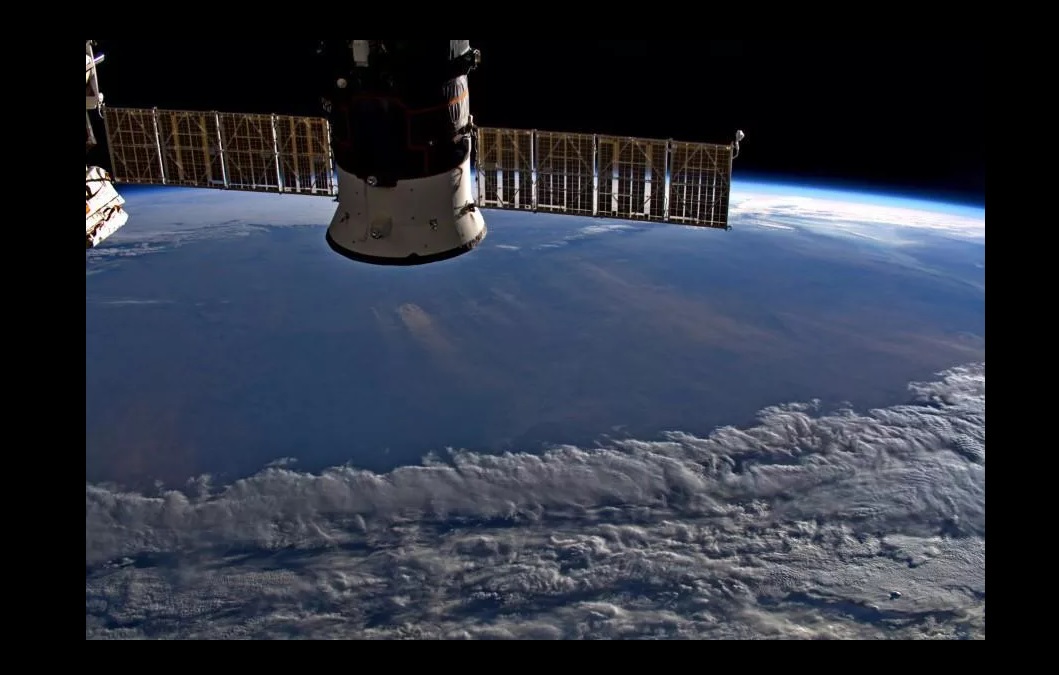
Featured photo- Luca Parmitano ESA Astronaut – Australia “Ash cloud” as viewed from the ISS International Space Station.
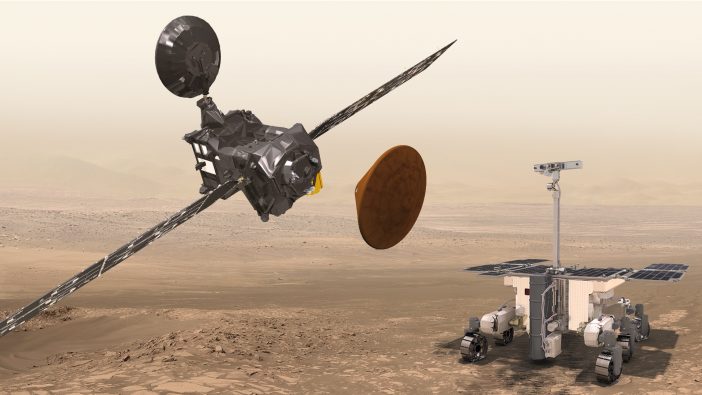
At about 17:30 CEST on 16 October, the data link with the ExoMars/TGO orbiter had still not been fully re-established following separation. Subsequently, at around 18:40 CEST, ESA (the European Space Agency) re-established a full data link with the spacecraft, and the mission control team could confirm that separation had taken place as planned, at 16:42 CEST. Both the Schiaparelli module and the TGO orbiter are in good shape and en route – separately – to arrive at the Red Planet on 19 October. We will be hosting the live video feed from ESA and wish them all the best of success in landing on Mars.
Share your smart device/phone/tablet/laptop/webcam video with us- or upload a Mars or space related file by clicking here: [vidrack align=”left”]