Tag Archives: environment

Chinese Newspaper Baskets

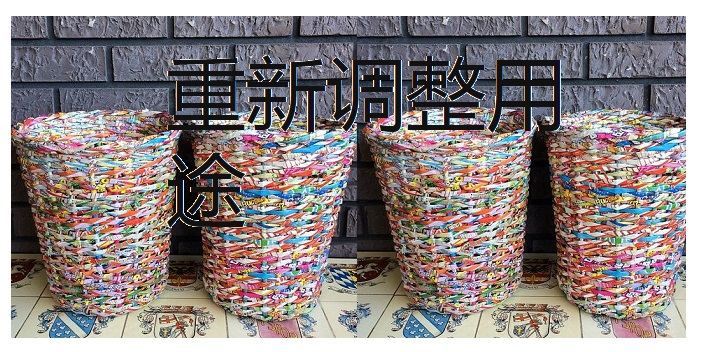
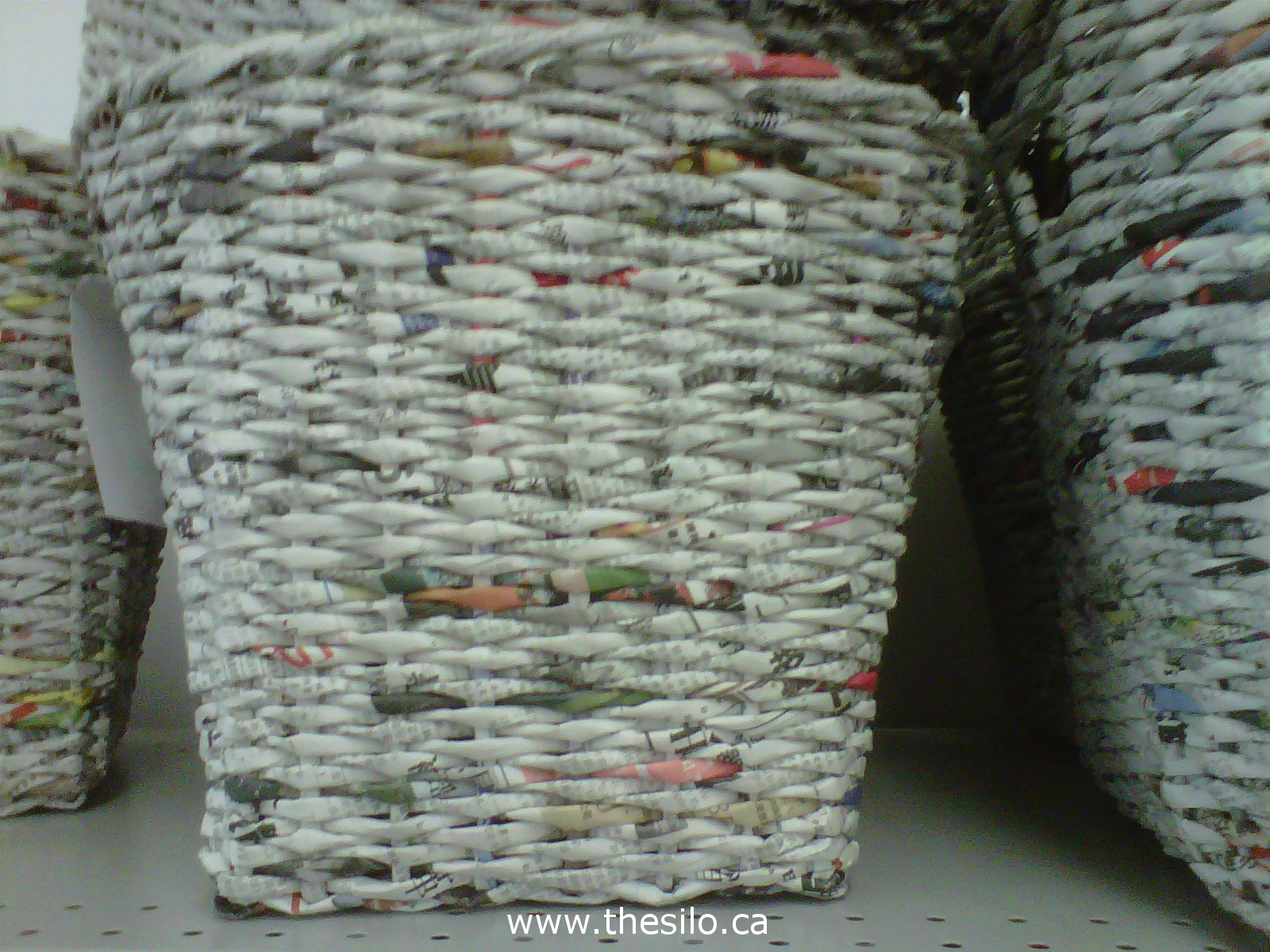
Surprisingly sturdy and functional wastebaskets

Okay I admit it, newspapers are dead. But maybe in China they aren’t. Or are.  Because in a local bargain shop I discovered a cache of wastebaskets in three different sizes made entirely out of newspapers: Chinese newspapers to be exact.  And that started me thinking.

It seems probable that in China, or somewhere near there, an active recycling program is taking place. Instead of shredding or burning them for landfill, some sort of manufacturing facility is turning clean, bright and seemingly unread newspapers into functional everyday objects. Does this mean that the newspaper industry is suffering in China? Is there a surplus of printed newspapers? Are more Chinese people getting their news from digital media than print? Who can say. My phone calls to the Chinese embassy consulate in Toronto about these pressing issues were not returned.

The irony of wastebaskets made out of, well, waste, is not (ahem) wasted on me.

These products are powerful “green” metaphors produced in one of the most polluting nations on the planet. The industrialization of China is full steam ahead and damn the torpedoes. Consumer goods? They want everything we have, so it’s hard to claim any moral high ground. Anyway, there is an environmental statement here, intended or not. I’m just not sure what it is.

On the other hand, they are just really fun and handy wastebaskets that feel great when you pick them up by their long, soft handles. I kind of want one.

Supplemental:

In Jennifer Baichwal’s film Manufacturing Landscapes, about Canadian photographer Edward Burtynsky, we learn there are whole towns in China dedicated to breaking down and “smelting” the useable metals out of discarded electronics. When you choose to buy a new DVD player because it’s cheaper than repairing your old one, this is likely where your old one goes. Apparently you can smell these towns a mile off. The Chinese government sure knows a thing or two about recycling. But what would it cost to do this kind of metal recovery safely? What would it cost to make baskets out of the millions of unread, discarded and obsolete print newspapers in Canada?

Ontario Passes Landmark Climate Change Legislation

Today, Ontario passed landmark climate change legislation that lays a foundation for the province to join the biggest carbon market in North America and ensures that the province is accountable for responsibly and transparently investing proceeds from the cap and trade program into actions that reduce greenhouse gas pollution, create jobs and help people and businesses shift to a low-carbon economy.

Under the Climate Change Mitigation and Low-Carbon Economy Act, money raised from Ontario’s cap and trade program will be deposited into a new Greenhouse Gas Reduction Account. The account will invest every dollar in green projects and initiatives that reduce emissions.

Following extensive consultation with industry and other groups, the legislation was strengthened by now requiring enhanced accountability and public reporting on the province’s upcoming Climate Change Action Plan and investment of cap and trade proceeds.

From J. Magnuson's Book on the approaching post-carbon economy. Link below.
           From J. Magnuson’s Book on the approaching post-carbon economy. Link below.

Ontario will post its final cap and trade regulation upon royal assent of the legislation. The regulation covers detailed rules and obligations for businesses participating in the program. The final design was also informed by extensive consultation https://www.ontario.ca/page/cap-and-trade-consultations-summary with businesses, industry, the public, environmental organizations and Indigenous communities.

Climate change is not a distant threat – it is already costing the people of Ontario. It has damaged our environment, caused extreme weather like floods and droughts, and hurt our ability to grow food in some regions. Over the near term, climate change will increase the cost of food and insurance rates, harm wildlife and nature, and eventually make the world inhospitable for our children and grandchildren.

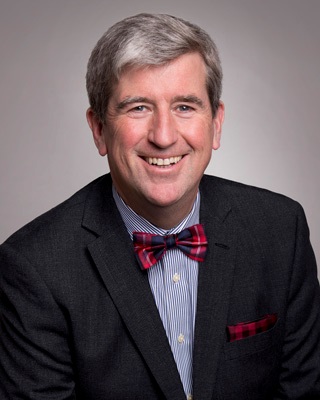
Minister of Climate Change Glen Murray
         Minister of Climate Change Glen Murray

Fighting climate change while supporting growth, efficiency and productivity is part of the government’s economic plan to build Ontario up and deliver on its number-one priority to grow the economy and create jobs. The four-part plan includes investing in talent and skills, including helping more people get and create the jobs of the future by expanding access to high-quality college and university education. The plan is making the largest investment in public infrastructure in Ontario’s history and investing in a low-carbon economy driven by innovative, high-growth, export-oriented businesses. The plan is also helping working Ontarians achieve a more secure retirement.

QUOTES

“Passing the Climate Change Mitigation and Low-Carbon Economy Act marks the start of the next chapter in Ontario’s transformation to an innovative and prosperous low-carbon economy — one that will benefit households, businesses, industry and communities across the province. This legislation is about enshrining in law our resolve and action to protect and strengthen our environment for generations to come.”

— Glen Murray, Minister of the Environment and Climate Change

QUICK FACTS

§ Ontario’s Climate Change Action Plan is the next step in Ontario’s ongoing fight against climate change and is expected to be released in spring 2016. The plan will describe actions that will help more Ontario households and businesses to adopt low- and no-carbon energy in homes, vehicles and workplaces.

§ Ontario’s $325-million Green Investment Fund http://www.ontario.ca/greeninvestment , a down payment on the province’s cap and trade program, is already strengthening the economy, creating good jobs and driving innovation while fighting climate change — a strong signal of what Ontarians can expect from proceeds of the province’s cap and trade program. These investments will help secure a healthy, clean and prosperous low-carbon future and transform the way we live, move and work while ensuring strong, sustainable communities.

§ The Greenhouse Gas Reduction Account will receive proceeds from auctioning allowances under Ontario’s cap and trade program. The first auction will be held in March 2017.

§ Ontario intends to link its cap and trade program with Quebec and California.

LEARN MORE

Ontario’s Climate Change Strategy https://www.ontario.ca/page/climate-change-strategy

Learn How Cap and Trade Works https://www.ontario.ca/page/cap-and-trade

Green Investment Fund https://www.ontario.ca/page/green-investment-fund

Supplemental- Joel Magnuson’s Book- The Approaching Great Transformation: Toward a Livable Post-Carbon Economy

Now Available In Ontario- IF You Can Find It- ‘Environment Friendly’ Boxed Water

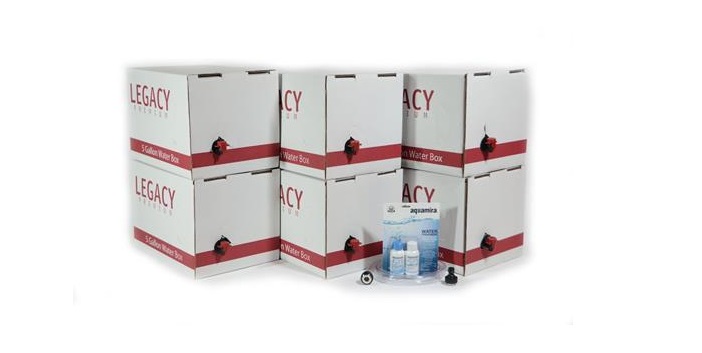
Legacy Boxed Water SinglesWater. It covers the vast majority of the earth’s surface. Likewise, water also comprises the bulk of the human body. The Earth and humans are each as dependent on the existence of water as the other. The earth’s environment graciously provides human beings with water, our most vital means of survival. It is our responsibility to reciprocate such generosity with the compassion we would show for our dearest friend.

Every year, about 50 billion plastic bottles of water are consumed throughout the globe. A whopping 30 billion of which are downed in the United States alone (amounting to about 60 % of the earth’s bottled water consumption) And 80 % of those plastic bottles end up in a landfill wherein the plastic breaks down into smaller fragments that absorb toxins and corrupt waterways, pollute soil and poison animals.

Even the manufacturing of bottled water is an environmental hazard. A single plastic bottle of water requires three times the volume of the water it takes to merely fill that bottle. And most of that water is rendered useless as a result of the chemicals utilized in the production of the plastic bottle. Without question, a more eco-friendly source of water delivery is an absolute necessity to the conservation of our planets resources. And now that solution has arrived in Canada. Boxed Water is an environmentally friendly and conscious brand and the answer to the drastic environmental cost extracted by the excessive consumption of plastic bottled water.

Boxed Water is new to the Canadian market and is distributed throughout the nation by RM Fresh Brands, which is a wholly owned subsidiary of Legacy Ventures International Inc.(OTCQB:LGYV) Boxed Water is already making waves amongst consumers who love the product for being so eco-friendly and delicious. It is a fresh approach to remedying the environmental nightmares associated with the ubiquitous plastic water bottle.

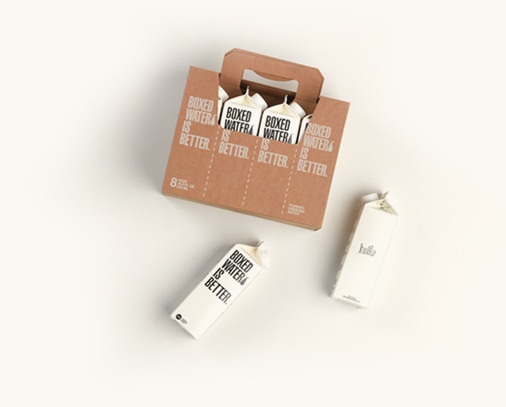
Instead of plastic bottles, Boxed Water is packaged in a biodegradable box that’s reminiscent of a milk carton. The box is also key to the product’s brand identity. Carrying a simple message of ‘Boxed Water is Better’, this inconspicuous packaging effortlessly explains the concept of Boxed Water while attracting the attention of ecologically-aware consumers.

Benefits of Boxed Water:

(a) BPA/BPS FREE: All Boxed Water cartons are BPA/BPS free, which has been suggested as one of the leading causes of certain cancers.

(b) PACKAGING: 76 per cent of the Boxed Water packing is made from of trees, a renewable resource which renders the product a significantly more sustainable delivery source than the ecologically eradicating plastic bottle.

(c) FILTRATION: The water we drink should be healthy and refreshing. Boxed Waters 5 step filtration system process delivers pure hydration to help get the most out of life. Boxed Water is purified with UV, Carbon and reverse osmosis filtration. It is also free from chromium, arsenic, MBTE, chlorine, fluoride and trace pharmaceuticals.

(d) CONSERVATION: The trees used in Boxed Water come from Well Managed Forests.

(e) SHIPPING-WASTE LESS: Additionally, Boxed Water is shipped flat to the filler, lowering our carbon footprint which is much more efficient than shipping empty and glass bottles to be filled. Studies indicate that shipping accounts for 2.1 percent of annual global C02 and that number could increase up to 250 % by 2050. For one truck’s worth of bottled water,

Boxed Water can deliver 26 trucks’ worth of cartoned water. Boxed Water sends its cartons to its filling plants empty. A single pallet can hold some 35,000 empty, flat-packed Boxed Water cartons. Only after they’re shipped to the filling station are the cartons filled. At the plant, one truck’s worth of empty cartons can be filled to supply the 26 trucks. The space-savings ratio may be even more favorable when comparing the rectangular, easily stacked cartons with their rounded, pre-formed plastic water bottle counterparts.

(f) RESPONSIBILITY: Boxed Water donates at least 1 % of revenue annually to restoration and world water relief through partnerships with The National Forest Foundation and Water.org.

(g) RECYCLING Boxed Waters boxes are 100% recyclable at participating facilities (recyclecartons.com)

GIVING BACK: Boxed Water lessens the environmental impact and also gives back in a big way. During 2015, Boxed Water partnered with National Forest Foundation (NFF) to plant one million trees by 2020. This represents the largest single tree-planting commitment to date for the NFF and marked the start of a five year effort to plant trees in areas of our National Forests with highest ecological significance.

In recent months, Legacy Ventures International Inc. has showcased Boxed Water at major events such as the Toronto Film Festival and Holt Renfrew’s Holiday Kick Off. These partnerships, in combination with Boxed Water’s straightforward packaging, are expected to play a key role in getting the word out about the product by getting it into the hands of celebrities and other influencers.

Legacy Boxed Water PosterBoxed Water represents an opportunity for Legacy to disrupt the Canadian bottled water industry with an eco-friendly, easy-to-ship, deceptively simple solution. As the company continues to identify and target additional disruptive brands in both domestic and international markets, Boxed Water represents the first step in a long term strategic plan to maximize shareholder value for the foreseeable future.

Boxed Water is available to consumers across Canada at the following select locations: Sobey’s, Whole Foods, Longos, Metro, Foodland, Pusatari’s, along with many smaller retail chains and independents. The brand has also caught the attention of non-traditional retailers including Ripley’s Aquarium and the Canadian Museum of Nature, who choose to exclusively carry Boxed Water as the only water available to the thousands of visitors who pass through their doors every year. More locations both national and local are signing up by the week to carry the brand and choosing this eco-friendly and healthier solution over traditional bottled water brands.

ABOUT LEGACY VENTURES INTERNATIONAL INC

Boxed Water is distributed in Canada through RM Fresh Brands, which is a wholly owned subsidiary of Legacy Ventures International Inc.(OTCQB:LGYV) a Nevada based multinational conglomerate focused on acquisitions of proven and high-potential businesses across a variety of business sectors.

Through the strategic provision of capital and oversight to companies that have innovative products, category game changers and established fast growth brands, LEGACY VENTURES will hit the market with tremendous impact and traction.
Is Byproduct Coal Ash more Radioactive than Nuclear Waste?

The classification of coal ash is back in the news as US authorities decide on how to label and regulate this byproduct. The following article, first published in Summer 2011 deserves another look CP

 One would never think of taking a bath in sewage, or, for that matter, ‘drinking’ a glass of anything harmful to our system.. Our health care providers, after the fiasco in Walkerton, would be abhored at the presence of anything harmful in our drinking water (water wells, in particular, are stringently monitored by authorities, who are now extremely paranoid of any contaminents whatsoever..) There is one thing, however, that is not monitored, should be at the top of the list for testing of those ground water supplies, and that ‘thing’ is “radioactivity”… It seems the upcoming election, with it’s schism between parties that want to maintain the status quo, and keep the coal-fired electrical generating facilities, and those in the present governing party that want to go ahead with Green Energy electrical production by means of Wind Turbines and Solar Arrays, are at loggerheads with one another… They BOTH have studies, and, arguments (fiscal, as well as, science-based) that have caused massive rifts, shifts, and polarization in the minds of the voters… But, one thing that both parties don’t want the Public, at large, to know, is their dirty, DIRTY, little secret…

Those mountains of fly-ash (pictured above) at the Ontario Power Generation facility in Nanticoke, are, in actuality, huge mountains of toxic waste that must be buried at least 3500 feet below the ground, in order to prevent ground water (drinking water, in other words..) contamination… The reason.. It’s quite simple.. Those hundreds of thousands of tonnes of fly-ash in those small mountains, covered, after a hot, dry, and cruelly humid Summer with weeds, are Highly Radioactive…

If the costs of transporting that, toxic mountain, back to the very coal mines that the raw coal came from, now abandoned, in Kentucky and Tennessee, were ever factored into the costs we pay for electricity today, we could expect to have the costs of building the Pickering/Darlington and Bruce Nuclear plants added as “Debt Reduction” costs (presently what we pay EXTRA for, on our monthly electricity bills, is the debts associated with the building of the Nuclear Energy Plants, that went so far over estimated costs, our children will be paying for them ‘ad eterna’..)… That the Conservative Party of Ontario wants to keep those coal-fired generating plants going, without ‘informing’ the Public of Ontario about the radioactive, toxic byproducts of the process, without informing them of what is common knowledge within the coal and electrical generation industries, just to achieve a state of denial for the neccessity of a Green Energy Initiative, is culpable to a criminal act… What is wrong is that the TRUTH is going to cost us much more than fiscal damage control…

If anyone, living in the downwind footprint of the ashfall from those 550 foot tall smokestacks at Nanticoke, that lost a loved one to CANCER, ever subpoenaed the Ontario Health System for the numbers of deaths by cancer in those areas up to 25 miles East of those smokestacks, AND, determined there existed enough of a cancer “cluster”, and, took those findings to a lawyer….., the Ontario Public would be facing a grievous mega lawsuit that would make ‘Erin Brocovitch’ look pale in comparison… Having run a Convenience Store in Rainham Centre for fifteen years, I often questioned the number of deaths, from cancer, in the families and couples that patronized my business… My wife’s own battle with breast cancer made me even more acutely aware of something naggingly simple that was causing the outrageous numbers of cancers.

It wasn’t until I wound up working with a fellow employee, at a firm I had been with for over 10 years as well as running the Store, who happened to have grown up in Liverpool, England,… and we, one day, were discussing the Nanticoke Generating Facility and it’s mountains of fly-ash, and he said to me, “Bill, they used to make a cinder-block out of that fly-ash that they called ‘fly-brick’.. but, they built a few suburban townhouse complexes with them, and, all the kids started to get cancers,… Mostly throat and lung cancers, but there was a lot of Leukemias as well..”

That got me to thinking about the premise for this article.. and, when I started looking on the internet for some background to his tale, and the corelation to the ‘cancer cluster’ that seems to be in our area down-wind of those stacks, this link was the first hit… Silo Direct Link to coal-ash is more radioactive than nuclear waste YOU, make your own decision in this election… I’m going Green.. Bill Stewart is a writer for The Silo. Search his name from any of our sites pages to read more articles from Bill.

Watershed Forests Returning On Former Farmer Fields

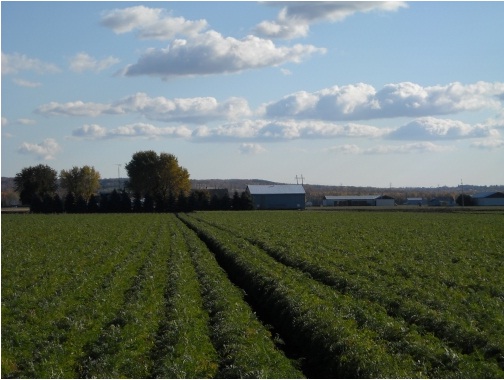
The Grand River watershed was 85 per cent forest 200 years ago. However, tree cover dropped to just five per cent by 1900 as land was cleared for farming and urban areas. Today, the tree cover has rebounded to about 19 per cent. Environment Canada suggests a healthy watershed needs a tree cover of about 30 per cent.

New forests are rising on old farm fields in Mapleton Township  in an effort to improve water quality in streams feeding Conestogo Lake reservoir.  About 70,000 trees are being planted this year and next on two parcels of land totalling 40 hectares (100 acres) on the north side of the reservoir.

The GRCA is planting a variety of species that are native to the area, including spruce, tamarack, white pine, bur oak, silver maple and cottonwood. In addition to the new forests, the GRCA will also do some reshaping of the landscape to create some seasonal wetlands that will also help improve water quality and provide additional habitat.

As the trees grow in coming years, the areas will quickly become home to a variety of animals, such as deer and wild turkeys. Later, as the forests mature, it’s expected that several bird species including scarlet tanagers, ovenbirds and great horned owls will take up residence. A 12 hectare parcel near Wellington Road 10 and Concession Road Five has been planted this year. The second parcel of 28 hectares is near Concession Road 5 and Sideroad 15. About 18 hectares has been planted this year and the rest will be planted in 2015. The land was acquired by the GRCA when it built the reservoir in the 1950s. It has been leased to farmers since then.

These two parcels of land were prone to erosion which sent a lot of sediment down the streams into the reservoir, explained Ron Wu-Winter, watershed forester with the GRCA. In addition, the sediment also carried nutrients – phosphorous and nitrates – which are found in manure and commercial fertilizers. The nutrients would spur algae and plant growth in the reservoir, resulting in lower water quality.

The northwestern part of the Grand River watershed contains some of the best farmland in Ontario. As a result, the forest cover is some of the lowest in the watershed. Forest cover is estimated at 15 per cent or less. A healthy watershed should have forest cover of about 30 per cent. Trees help raise water quality in several ways. They soak up nutrients in the soil, so reduce the volume that runs off the surface into a watercourse. Trees along a stream shade it, keeping it cooler in summer which is good for some coldwater fish species.

The total cost of the project is about $150,000. About $50,000 was contributed by the Grand River Conservation Foundation. It is also supported by the Trees Ontario Foundation which is contributing $65,000. For the Silo, Dave Schultz.
Tree Facts
* Across the entire watershed, the GRCA will plant about 400,000 trees this year, including 95,000 on its own land and 300,000 in partnership with private land owners.
* The GRCA operates a nursery near Burford, in Brant County, where it grows more than 150,000 trees a years from 60 different species.
* Since it was created in 1934, the GRCA has planted more than 27 million trees on both private land and its own land.
* The Grand River watershed was 85 per cent forest 200 years ago. However, tree cover dropped to just five per cent by 1900 as land was cleared for farming and urban areas. Today, the tree cover has rebounded to about 19 per cent. Environment Canada suggests a healthy watershed needs a tree cover of about 30 per cent.
* To learn more about the GRCA’s tree planting program, go to the Tree Planting section of the GRCA website. The GRCA helps private landowners develop planting plans, plant the trees and find grants to offset costs.

Supplemental- Turning farm land back into forest- http://www.udel.edu/PR/Messenger/04/03/PTturning.html

Bird Eats Fruit To Get Drunk

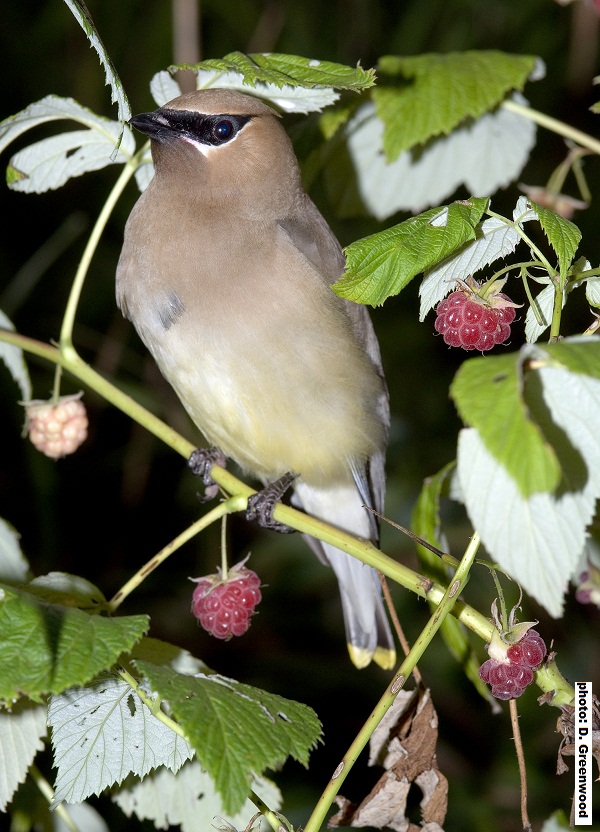
The waxwing-

Cedar Waxwings are sleek, masked birds found year round in our area with unusual red, waxy deposits at the tips of their secondary feathers. They are cinnamon-colored, with grayish wings and tails and yellow terminal tail-bands. They have distinctive crested heads, black throats, and black masks lined with white.
The Cedar Waxwing is one of the few North American birds that specialize in eating fruit. It can survive on fruit alone for several months. They also eat flying insects and can often by seen fly-catching, particularly over Haldimand and Norfolk County streams.

Cedar waxwings are very sociable, non-aggressive birds that often travel in flocks, though they may pair off during breeding season. It is very rare to find solitary waxwings. Because they frequently feast on overripe fruit, these birds can become “drunk” on the fermented juices. For the Silo, Dixie Greenwood.


10 Year Old Eco Blogger Hannah Alper

Eco-blogger and 'kid activist' Hannah Alper.
Eco-blogger and ‘kid activist’ Hannah Alper.

Dear Silo,  you’ve probably heard me talk about my daughter Hannah in the past. She has been called many things: “The future of social media”, “Eco-Warrior”, “Changemaker” and “Activist”.  At 10 years old, she is all of these things. And now, she can add Free The Children’s “We Day” speaker to the list. There will be nine We Days across Canada this school year, plus two in the United States.  And the first U.K. We Day will happen in London next spring.  [More on what “We Day” is all about below CP]

She created her blog, www.CallMeHannah.ca , at 9 years old, with the goal of sharing her growing knowledge and concern for the environment. Having always loved animals, Hannah made the connection between animals and the effects of environmental destruction on their habitats and lives. Hannah has become an engaged global citizen seeking to further her own understanding of her connection to and responsibility to the world. Believing that even the little things that we do add up to make a difference, her journey and discovery meet her call to action through her blog.

Issues that Hannah has written about in the past year include eco-friendly living, fair trade, bullying, clean water and child labour. She seeks inspiration and motivation from those who have come before her and regularly features the stories of her role models on her blog.

Not limiting herself to her laptop, Hannah has put her words into actions. She organized a shoreline cleanup in her community, was a WWF  Earth Hour Team Captain 2013 and spoke at the WWFs Earth Hour event in Toronto, was the official “on the ground eco-blogger” for the JUNO Awards and launched We Create Change. Her impassioned speech at two local schools motivated her peers to collect 97,500 pennies for Free The Children’s clean water projects. An effective communicator, Hannah is comfortable and confident on both sides of the camera or in front of a crowd. She has honed her skills as an interviewer through conducting interviews with Craig Kielburger, Spencer West and Severn Suzuki. Hannah has appeared on CanadaAM, The Marilyn Dennis Show, APP Central, CBC’s Fresh Air and The George Stroumboulopoulos Show.  She has been featured in a spotlight from Chickadee Magazine and named as a Champion of the Earth in Owl Magazine and was the youngest team captain for The WWF’s Earth Hour in 2013. As you can see, I am very proud of my daughter and her efforts to improve the world we live in.  Her current focus is on We Day.

“We Day is a room that can transform people, where messages about bullying and social issues can resonate and a place where students can find people just like them,” said Free The Children ambassador Demi Lovato. “Growing up I was forced to deal with many personal struggles and I craved a space where I not only belonged but felt powerful enough to  make a difference. To me, that‘s what We Day does – it brings people together in a day of celebration for world change, showing them they aren‘t alone in their journey and that it is cool to care. And I am so grateful to be a part of that.”

“As kids, we face different pressures all the time,” said Austin Mahone, Award-Winning American pop singer. “You‘ve got to surround yourself with positive people in your life, and that‘s what We Day does. It brings people together to celebrate the difference we can make for each other. I‘m so excited to be a part of it for the first time this year!”

We Day is a stadium-sized educational event and a movement of young people leading local and global change. We Day is tied to the year-long program, We Act, which supports students and educators with free educational resources, student-led campaigns and support materials to help turn the event‘s inspiration into sustained activation. Since 2007, youth involved in the We Act program have raised $37 million dollars for over 1000 local and global causes and logged more than 9.6 million volunteer hours.
 

“I had the opportunity this past summer to participate with Free The Children‘s communities in Kenya, and see first-hand the lasting impact that youth in North America are making through their charitable work,” said Joe Jonas from the Grammy® nominated, multi-platinum band the Jonas Brothers. “I understand what it means to these communities to have access to clean water and an education and I was thrilled to get involved by committing to help build two schools overseas with Free The Children. It may seem like a simple assignment to make one local and one global commitment, but these efforts fundamentally impact the lives of people around the world.” Eric Halper.

 Stay connected:

– Like We Day on Facebook: facebook.com/WeDay

– Twitter: @Freethechildren; @CraigKielburger

– Official Hashtag: #WeDay

– Visit www.weday.com

About Free The Children

Free The Children is an international charity and educational partner. Founded in 1995 by international activist Craig Kielburger, Free The Children believes in a world where young people are free to achieve their fullest potential, and empowers youth to remove barriers that prevent them from being active local and global citizens. The organization‘s domestic programs—which includes We Day, Free The Children‘s signature youth empowerment event—educate, engage and empower 1.7 million young people across North America, the UK and around the world to become engaged global citizens. Its international projects have brought more than 650 schools and school rooms to youth and provided clean water and sanitation, health care and food security to one million people around the world, freeing children and their families from the cycle of poverty.

The organization has received the World’s Children’s Prize for the Rights of the Child, the Human Rights Award from the World Association of Non-Governmental Organizations, and has formed successful partnerships with leading school boards and Oprah’s Angel Network. For more information, visit www.freethechildren.com.


Fined $2K For Possessing Living Snakehead “Frankenfish”

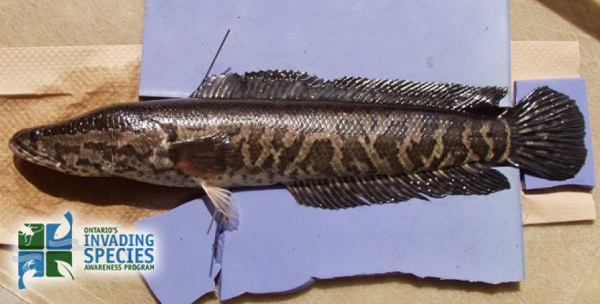
Frankenfish- the other name for the Snakehead. Frankenfish usually refer to genetically modified fish (search genetically modified salmon for more) but due to the 2004 movie "Frankenfish" which starred a Snakehead- this term is being used more and more for The northern snakehead, (Channa argus). This invasive species is now being discovered throughout North America and the United Kingdom. CP
Frankenfish- the other name for the Snakehead. Frankenfish usually refer to genetically modified fish (search genetically modified salmon for more) but due to the 2004 movie “Frankenfish” which starred a Snakehead- this term is being used more and more for The northern snakehead, (Channa argus). This invasive species is now being discovered throughout North America and the United Kingdom. CP

A Chatham man has been fined $2,000 for illegal possession of snakehead fish. Yung-Chieh Liu pleaded guilty to illegally possessing live invasive fish. In addition to the fine, two snakehead fish were also forfeited to the Crown.

Justice of the Peace Malcolm Rogers heard the case in the Ontario Court of Justice, Blenheim, on April 17, 2013.

The Ministry of Natural Resources reminds residents that it is against the law to have certain invasive species in your possession, because they pose a serious threat to native species and ecosystems. 

“The Northern Snakehead might enjoy life in Canada, but it would not be welcome here. This fish, native to eastern Asia, has invaded parts of the United States, where it threatens to disrupt ecosystems and native fish species unaccustomed to its presence. Scientists at Fisheries and Oceans Canada (DFO) want to stop the snakehead from establishing a base in Canadian waters – and building a strong defence is the key to success.

The risk posed by snakeheads is very real. Several of the 36 species have a long history of invasions, and are very hardy. They can even live out of the water for a time – to pursue their prey or find a new home if the former one dries up. They survive winter under the ice of northern lakes; some have even recovered from being frozen! The Northern Snakehead, in particular, thrives on conditions that are similar to many Canadian waters. It is a voracious predator, and it grows rapidly to an adult length of 1.5 metres or more.

In their native waters, some snakehead species are fished for food or used for aquaculture. Many are exported to other countries where they may be sold live in food markets and pet shops. Scientists believe that the Northern Snakeheads found in lakes in some US cities may have originated from food markets. Some may have been released to the wild in an ill-advised attempt at fish stocking or because they were no longer wanted as pets.” Department of Fisheries and Oceans Canada

Be on the lookout for the Snakehead. Report any sightings and help keep this invader out of Ontario's waters.
Be on the lookout for the Snakehead. Report any sightings and help keep this invader out of Ontario’s waters.

For further information about fishing regulations, please consult the 2013 Recreational Fishing Regulations Summary, available at ServiceOntario/Government Information Centres, licence issuers and at ontario.ca/fishing.


To report a natural resources violation, call 1-877-TIPS-MNR (847-7667) toll-free any time or contact your local ministry office during regular business hours.  You can also call Crime Stoppers anonymously at 1-800-222-TIPS (8477).


Our Wildlife: The (Canadian) American Bullfrog


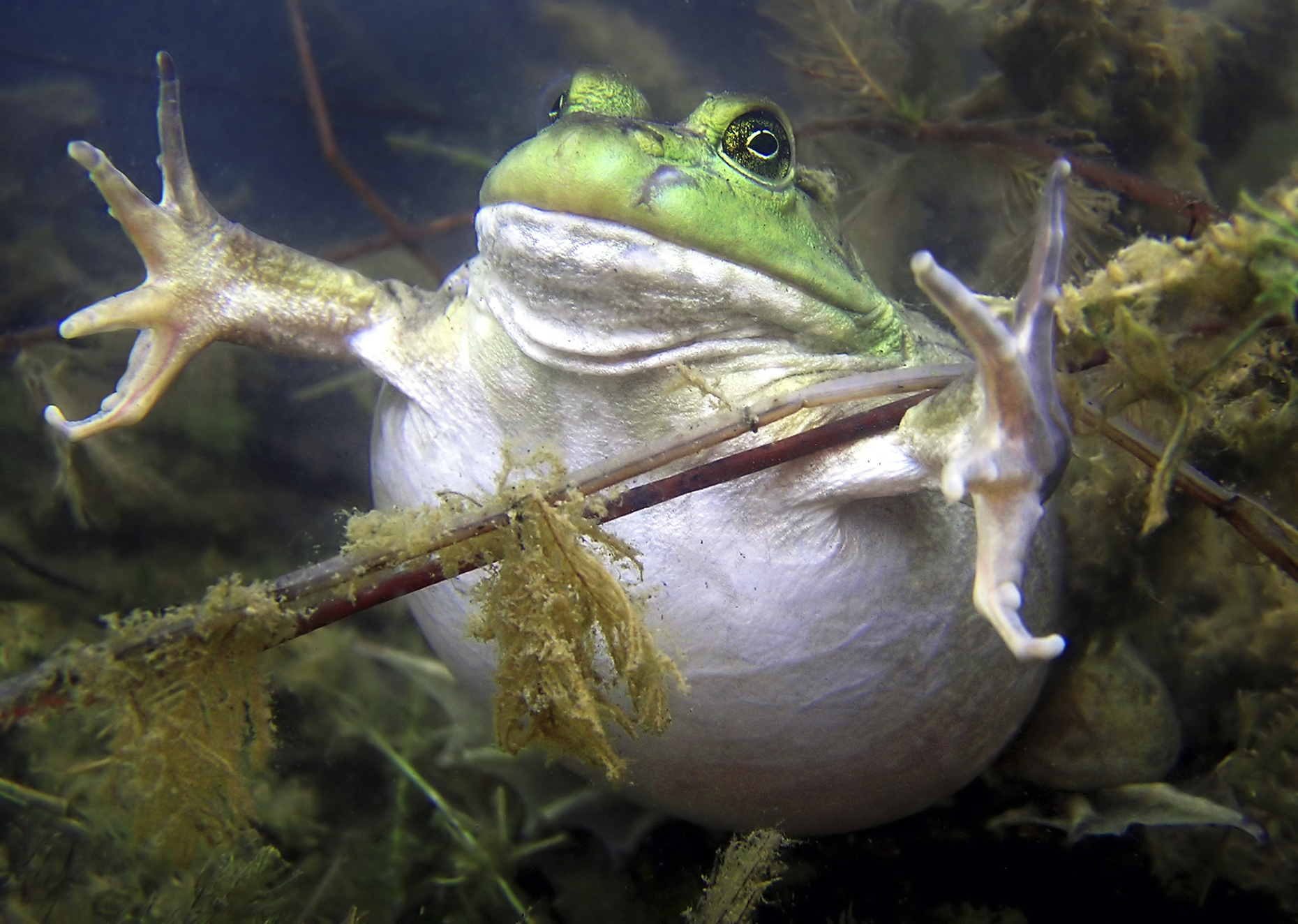
The American Bullfrog (Rana catesbeiana -CP)  is the largest of all North American frogs. They can be  found in freshwater ponds, lakes and marshes  with lots of vegetation, especially water lilies. Photograph by D. Greenwood

Bullfrogs are typically green or gray-brown with brown spots and have easily identifiable circular eardrums, or tympanum, on either side of their heads.

Females are slightly larger than the males, but only the male Bullfrog emits the trademark
baritone bellow Click for sounds of american bullfrog calls and their choruses can be heard during the day or night.

Nocturnal predators, Bullfrogs will ambush and eat just about anything they can fit in their  mouths, including insects, mice, fish, birds, and snakes.  Search “Dixie Greenwood” on the top of any page on our site to view more of Dixie’s nature photographs.

Revamped auto e-testing in Ontario is “ineffective money grab”

The maniacal Hal9000 computer was in charge of operating a spacecraft in Kubrick's 2001:A Space Odyssey.
The maniacal Hal9000 computer was in charge of operating a spacecraft in Kubrick’s 2001:A Space Odyssey.


It’s time to scrap Ontario’s Drive Clean program and the latest reboot of the decade old Drive Clean program should get the boot altogether. I make this claim following the Wynne government’s latest set of changes introducing a bureaucratic and excessively onerous procedure for consumers and car dealers to follow if their vehicle fails the new Drive Clean test. The changes build on a government revamp of the program that now have vehicles undergo an OBD (On-Board Diagnostics) test instead of an emissions test directly at the tailpipe – changes that resulted in an immediate jump in failure rates from 5 per cent up to 10.5 per cent.

[In the scene below- astronaut Dave is refused entry back into the main spaceship after retrieving the body of fellow astronaut Frank. The Hal9000 computer incorrectly diagnosed a failure in the spaceship’s communication antenna array. CP]

When our previous government introduced the program in 1999, emission reduction was both the goal and the result – today numerous drivers are being told their car has failed the test simply because its on-board computer isn’t ‘ready with the only reduction coming to the motorists wallet. It’s clear government introduced a more stringent e-test as a way to justify a program that has obviously outlived its usefulness.

To ensure all monitors/on-board computers are ready, the Ministry of the Environment has suggested motorists should spend a few days driving the vehicle on the highway and around town.

It seems hypocritical that a program geared to emission reduction would also encourage Ontarians to drive around aimlessly to remedy a technical glitch before they can pay more money to take another e-test. The fact that this is an unworkable, ineffective money-grab that has well passed it’s best before date. The Auditor General specifically warned the Liberals last year to delay the implementation of their new e-test in order to ensure that all technical testing was completed and problems were resolved.

In typical Liberal-fashion, the government ignored the advice of the Auditor General and rushed ahead with their new emissions test – neglecting any due diligence whatsoever.  For the Silo by Toby Barrett

Contact Toby for more information at 519-428-0446 or 1-800-903-8629

Scottevest intro’s i-phone interactive tech fleece Jacket

Touch transmissive inner jacket fabric? Hell yeah!

Ketchum, ID – What happens when the greatest thing to ever hit SCOTTEVEST’s electronic shelves gets redesigned? We can’t wait to tell you…

SCOTTEVEST, Inc. has been known for over a decade for our ingenious pocketed clothing marketed toward travelers, gadgetphiles, photographers, and urban adventurers. Over the years, each successive product improves upon previous versions, as indicated by the software-style numeric naming system.

SCOTTEVEST transforms the way you will use your clothing, yet again, with the introduction of the Fleece 7.0 Jacket, available now as a pre-order and shipping October 31, 2012.

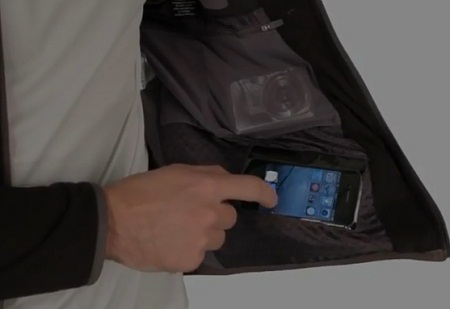
The Fleece 7.0 is the successor to our signature jacket, the Fleece 5.0, which quickly became a staple in many SCOTTEVEST customer wardrobes. The Fleece 7.0 features a revolutionary new patent pending pocket, the Quick Draw pocket, inspired by our good friend and London based blogger, Documentally. [Christian Payne – @Documentally CP]

This allows you to access your iPhone 5 (or other smartphone) through the Clear Touch Fabric in the hand warmer pocket, which is something you truly need to test out for yourself. We believe this will fundamentally change the way you interact with your mobile devices. You can plug it in to your wired in headsets or use Siri and FaceTime right through the clear touch fabric, without ever removing your phone from your pocket.

However, we didn’t stop there. Here are some key features that make the Fleece 7.0 so unique:

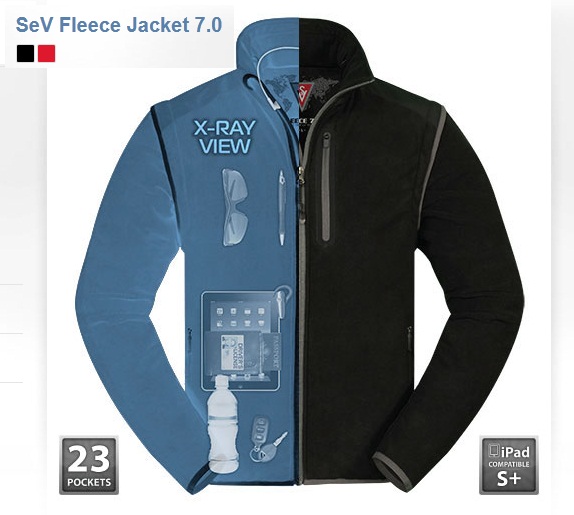
23 innovative, purposeful pockets for are perfect for gadget lovers, travelers and photographers on the move! Speaking of pocket innovations, this updated style also includes a new iPad/tablet pocket design, which adds extra security and better ergonomics when pocketing a large device.

The In-and-Out Pocket debuts on the Fleece 7.0, allowing you to access the interior chest pocket from the exterior of the
jacket. An updated eyeglass pocket with both top and zippered side access contains a cleaning chamois with a map showing each of the jacket’s many pockets.

Wear the jacket of the ‘near future’ right now: SeV Fleece Jacket7.

Since the sleeves are removable with cleverly hidden zippers, a dual-access back lumbar pocket has been included to hold them if
you are wearing the Fleece 7.0 as a vest. Oh, did we mention that the Fleece 7.0 can turn into a vest? Inside, just in case you need to “show your papers” or “stow your papers” in a hurry, we have highlighted the travel documents pocket with a red zipper and a locking zipper pull, making it nearly impossible to pickpocket. No. Making it impossible to pickpocket (unless, perhaps, you are a really sleeper and hang your jacket in the closet).

Our typical level of attention to detail continues inside with a silky lining and a subtle “fractal” design comprised of our logo
in shades of black and gray. Ergonomic zipper pulls make getting into your pockets easy (even with gloves). Totally stealthy, the Fleece 7.0 is black with gray accents and has NO reflective piping. And if stealth isn’t your thing, it’s also available in a limited edition Red version.
The Fleece 7.0 is now available for pre-order on our website www.scottevest.com and is now shipping. This is just the beginning of many more incredible advances in the SCOTTEVEST clothing line. As the weather begins to cool down in your part of the world, things are definitely heating up at SCOTTEVEST…stay tuned!

About SCOTTEVEST
SCOTTEVEST is one of the world’s leading travel clothing companies, and was named the #41 apparel e-commerce site in 2011
by Internet Retailer Magazine and #77 fastest growing Consumer Products & Services Companies by Inc. Magazine. SeV specializes in stylish jackets, shirts and pants with a unique hidden pockets for travelers, and a patented system of conduits
and pockets for carrying, using and enjoying personal electronics. SCOTTEVEST is the first clothing company to provide
a pocket for the iPad®.

Please see the embedded photos to get a better understanding of our patented pocket feature that allows you to utilize your
electronic device without removing it from the pocket, keeping your hands warm at all times. Be sure to test it out for yourself
on the actual garment!

www.SCOTTEVEST.com


Holland Marsh Peaker Plant

The Holland Marsh- photo:friendsofthegreenbelt.ca

“The cost of moving gas power plants for political reasons is more than financial. It erodes confidence in our government and our democracy. It leads to cynicism and turns people off politics.It’s a sad day for democracy when jokes are flying around Queen’s Park that the going rate for a Liberal seat is $40 million. Perhaps the Liberal party should repay the $200 plus million that this fiasco will cost taxpayers or ratepayers.” MIKE SCHREINER, GPO LEADER

The government must be held accountable for such a blatant and obvious example of putting partisan political interests ahead of the public’s interests.
Forgotten in all the talk of gas plants in Mississauga and Oakville is that the Holland Marsh Peaker plant proceeded against local opposition in a PC held riding.

York Enery Centre King Township Peaker Generating Station Construction Progress: 2011-04-21 photos: Greg Locke

That plant is located in Ontario’s protected Greenbelt, adjacent to prime farm land and sensitive wetlands. These compelling reasons and local opposition weren’t enough to stop the plant in a PC riding, yet days before an election local opposition was enough to stop a plant in a Liberal held riding.

Does this new gas plant development contradict Ontario’s 2005 Protecting the GreenBelt plan? check the link below

At a minimum the Premier should issue an unambiguous apology to the people of Ontario for the costs to our finances and democracy that have arisen from his government’s mishandling of siting of gas plants in Ontario.”

GreenBelt Plan 2005

Green Party of Ontario
PO Box 1132
Toronto, ON M4Y 2T8
Canada

Protest at Marineland, Niagara Falls Gains Momentum

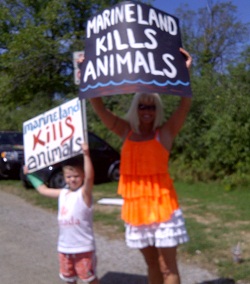
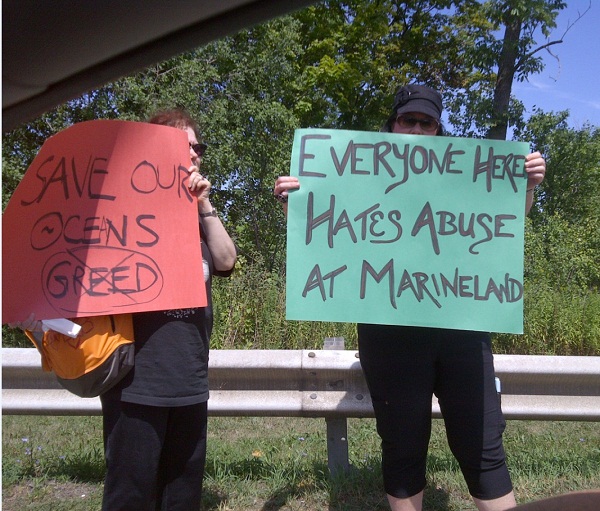
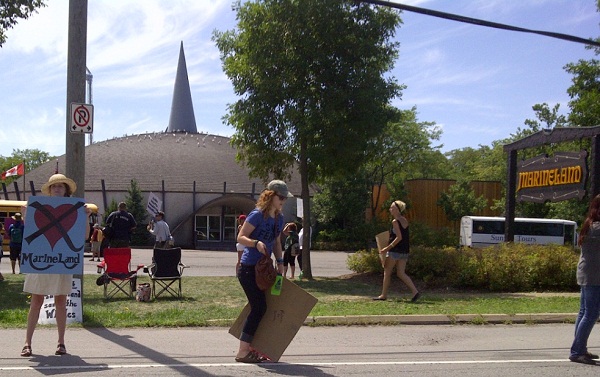
On Saturday August 18th- hundreds of protesters gathered in front of the main entrance gates of Marineland in Niagara Falls, Ontario. At stake was the ethical treatment of animals used for performances and entertainment. Over the past three years there have been increased reports by the media regarding the attacking of trainers by killer whales and other performing animals.

Messages on protest signs were simple, bold and clear. photos:The Silo/Mith Media

Many researchers believe that this sort of behavior is inevitable because killer whales are adversely affected by forcible confinement and pavlovian conditioning and that in turn has many questioning whether theme parks such as Marineland and Seaworld are capitalizing on animal cruelty. It’s not a new topic- zoo’s and circuses are not strangers to demonstration and protest and the relationship between humans and animals is a theme often employed by conscientious artists.

[Warning- the following video contains disturbing images. Viewer discretion is advised CP]

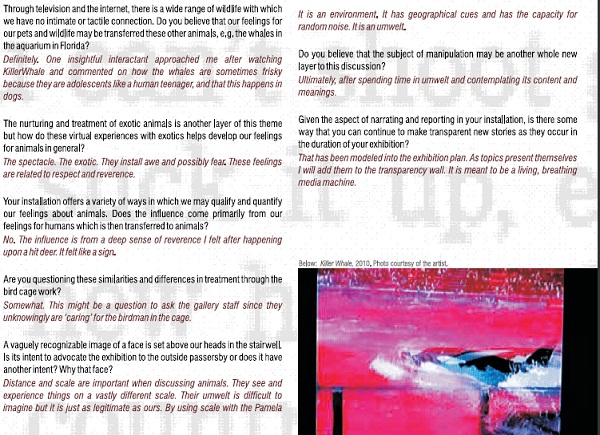
Segment from Umwelt (2010) exhibition catalogue- Jarrod Barker’s installation at the Norfolk Arts Centre explored the connectedness or non-connectedness (ie: the umwelt) of humans and animals. image:courtesy of the artist

Marineland denied our request (along with the Toronto Star’s request) for an interview and requested that the media respect “private [their] property”. That sort of reaction makes it difficult to investigate a story of this magnitude- and many questions remain unanswered. For example, earlier this year an infant beluga whale was attacked repeatedly by two adult belugas until it was killed. Media leaks reveal that the baby whale may have been ill and that the other animals acted out of fear since they may have detected signs of a contagious disease.

image: The Silo

Although no date has been set, The Ontario Society for the Prevention of Cruelty to Animals is planning on bringing independent Sea Mammal experts and Marine Biologists into Marineland for an inspection according to an online report at www.thestar.com CP

image: The Silo

Ontario Beach Zoomorph Profiled In Mexico City University Of Art Publication

Artist Jarrod Barker, was recently invited to take part in MUCA-Roma’s Ala Afuera project. Based in the Roma district of Mexico City, MUCA is a University Museum of science and art. What made this project doubly exciting was the opportunity to show case a part of Barker’s home internationally.

The curators asked for a submission of 3 images and accompanying explanatory write-ups that “from your perspective, show a form of relationship between humans and the rest of nature.” This topic aka- Umwelt is not foreign to Barker who installed an exhibition of that name in 2010 at the Norfolk (nee Lynnwood) Arts Center in Simcoe,Ontario.


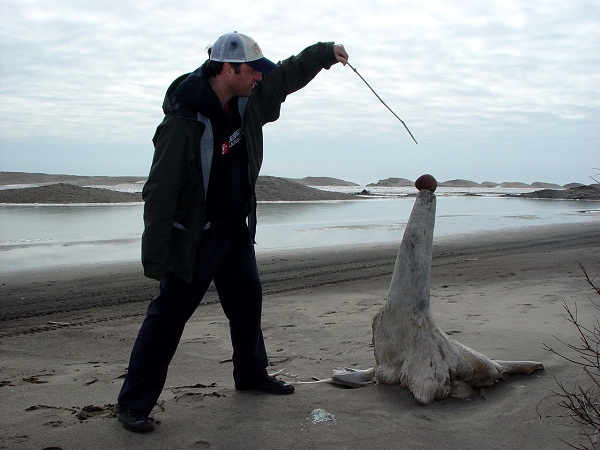
Long Point Seal Tamer Concept- J. Barker
Location: Long Point, Norfolk County, Ontario, Canada
Long Point is a world biosphere. I know this because the United Nations has told me so. But for several months of the year Long Point is transformed. Under certain winter conditions, Long Point looks less like a marshy, swampy bird watchers paradise and more like an arctic shore. At least on the South West side. When I visit Long Point during these times, I react to the environmental changes. I see things differently. I feel things differently. A sun bleached tree stump becomes a seal. A marsh reed becomes a baton. A flint pebble becomes a ball. Natural transformation through the changes of the seasons is a holistic experience.


After the selection process, if successful- one of the artist submitted images and write-ups was selected for transformation into a postcard and incorporated with the other artist submissions. The goal was for the Ala Afuera team to mail out the postcards to other international Museums of art and science and Contemporary Art institutions as a connective gesture to highlight MUCA and the work of the artists involved in this project and to bring awareness to our human/nature relationships.


“The objective of the project Allá Afuera (Out There) is to gather a mosaic of images that represent
ways of understanding the relationship we humans have with the rest of nature. From bucolic or
passionate points of view to other more threatening myths and taboos, amazement, fear, the absurd,
and maybe even indifference. We do not intend to cover all possibilities, but through images as a direct
reading form, show that there are multiple ways of looking at this Bond.

Three times a year we will present a collection of postcards, with 18 images each, gathered in a
biombo format. After two years we will complete the edition of six collections, with a total of 108 ways
of understanding, 108 points of view, and 108 forms of defining our relationship with what is out there. “

Ala Afuera which translated mean’s “Out there” began mailing out the works a few weeks ago.  For the Silo, Stephanie Bordega. 

For more information and to request postcards please contact-
Allá Afuera (Out there) project Gonzalo Ortega and Jeronimo Hagerman
MUCA ROMA MUSEUM (University museum of science and art, Roma district, Mexico City)
allaafueramucaroma@gmail.com

Click me!

Small House Living Is Bliss

From our Facebook page:

Hi ‘Silo’,

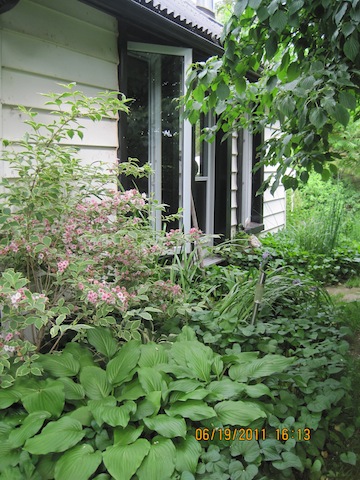
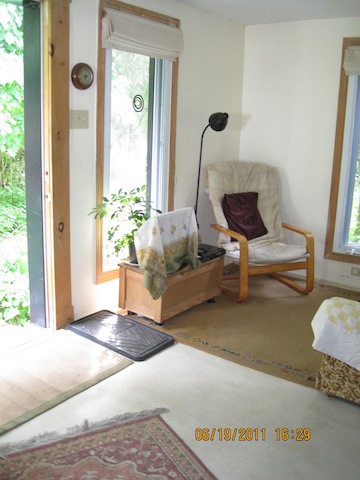
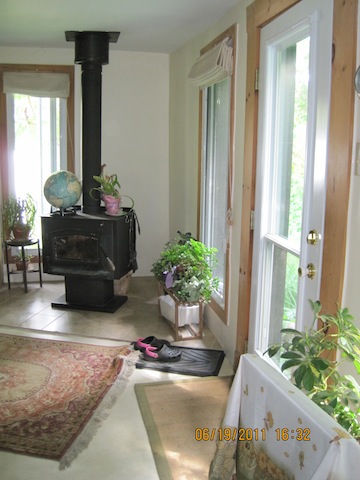
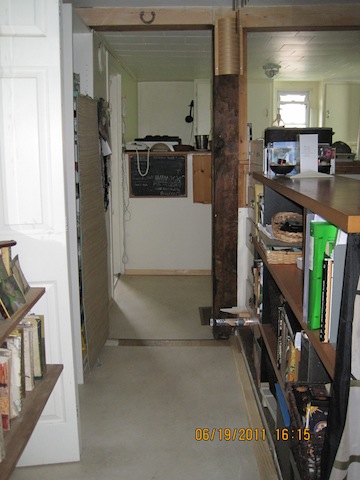
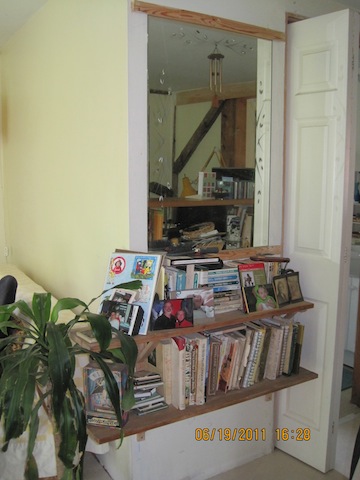
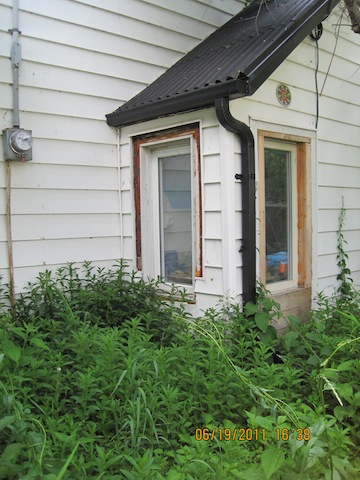
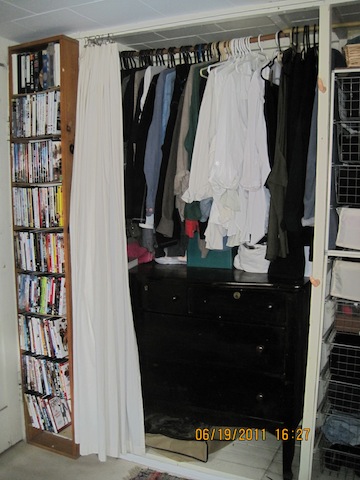
Here are some quick shots I did of our place. For us, the challenge is to use every possible space and yet achieve a feeling of spaciousness. I just did a count of all the space saving/creating measures we have made over the years – about 25 – not counting replacing, enlarging and adding windows and doors – from simple shelves to complex projects involving cutting into walls and making a new room.
It has taken us more than 20 years to do this. We purchased the place and a barren 3/4 acres in 1986 for $20,000. And, it has turned out even better than we dreamed possible.
Even in this tiny space, we can lose each other. David Wells, my partner in all this, has a blog in which he talks about our life here. You may be interested:
http://DavesBackPorch.blogspot.com/p/about-me.html

OUR SMALL HOUSE

EXTERIOR FRONT

INTERIOR – FRONT

INTERIOR FRONT

‘HALL’ FROM FRONT DOOR TO KITCHEN

MIRROR IN ‘HALL’ TO REFLECT MORE LIGHT

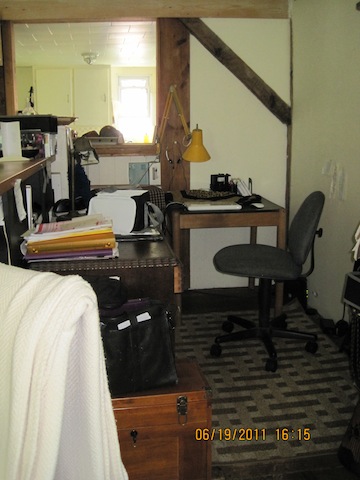
OFFICE/COMPUTER (to the immediate right of above ‘hall’)

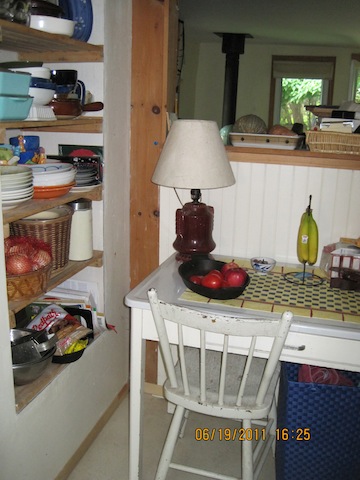
KITCHEN STORAGE AND TABLE  (other side of office above)

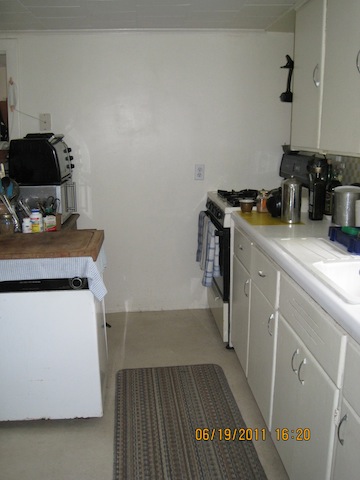
KITCHEN – small but functional. As a former professional
cook, I have found ways to scale equipment way down,
and use my creativity to produce nutritious, interesting meals.

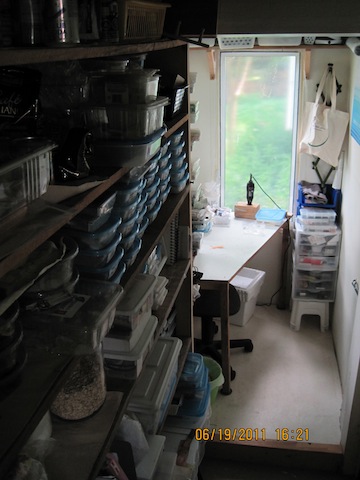
NEW KITCHEN DOOR ENTRY – STAIRS TO JEWELLERY STUDIO AT RIGHT

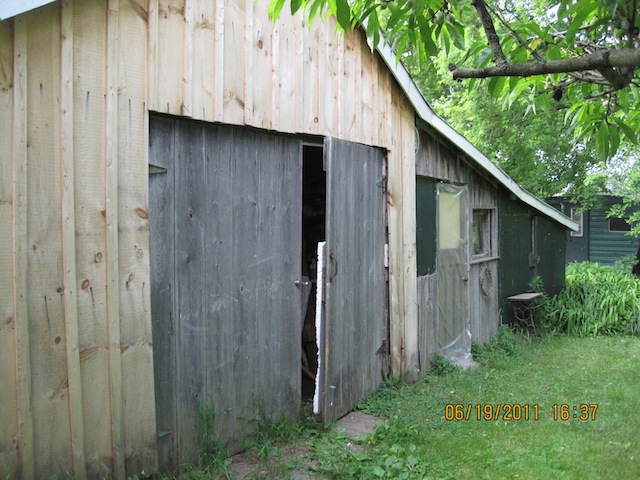
JEWELLERY STUDIO – PREVIOUS ENTRY

NEW BACK ENTRY

BEDROOM (7′ X 11′)

CLOSET – DVD STORAGE – behind door

BATHROOM w CLAWFOOT TUB – AND WINDOW LOOKING
OUT TO ‘WOODLET’ (A Spa at Home)

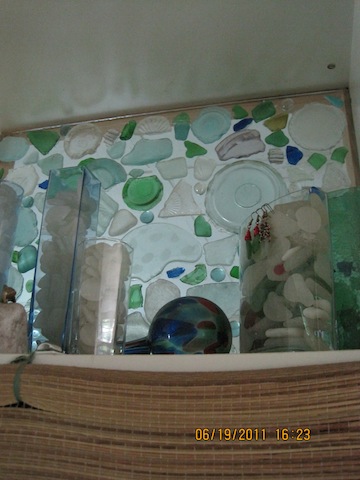
BATHROOM VANITY WITH BEACH GLASS MOSAIC INTERIOR WINDOW
TO LET LIGHT INTO CENTRE OF HOUSE

BEACH GLASS MOSAIC WINDOW

DAVE’S MUSIC STUDIO

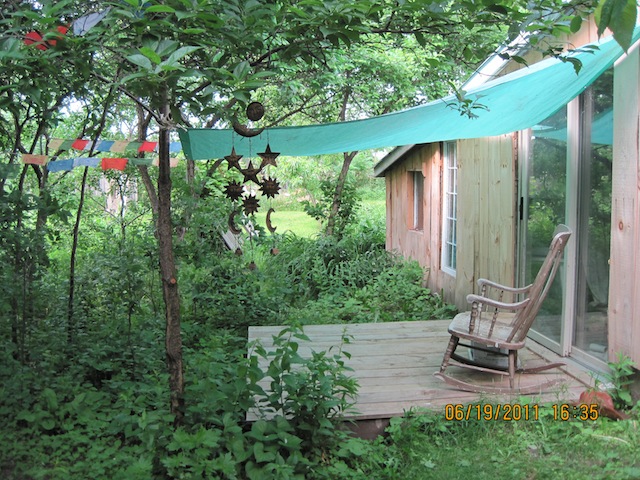
DAVE’S BACK PORCH – entry to his music studio